Book Review: Continuity and Discontinuity edited by John S. Feinberg

Great Discussion of the Relationship Between the Old and New Testaments
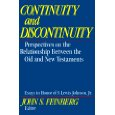
This book contains various perspectives from leading theologians on issues related to that which continues and discontinues from the Old Testament into the New Testament.

Half of the contributors in this book would consider themselves “Covenant Theologians” – including contributions from O. Palmer Robertson, Willem VanGemeren, Knox Chamblin, Bruce K. Waltke, Fred H. Klooster,  Martin H. Woudstra, and Sam Storms. The other half would lean dispensational or in the discontinuity camp – including essays from John S. Feinberg, Paul D. Feinberg, Robert L. Saucy, Walter C. Kaiser, Allen P. Ross, and Douglas J. Moo.

The book is a tribute to S. Lewis Johnson– long time Bible teacher at Dallas Theological Seminary and Teaching pastor at Believer’s Chapel in Dallas, Texas (he went to be with the Lord on January 28, 2004). The beginning of the book and ending of the book contain some well written tributes from Sam Storms and John Sproule to Johnson and expound upon his outstanding attributes as a scholar, exegete of God’s Word, pastor, mentor, friend, and southern gentlemen – he was born in Birmingham, Alabama.

After a wonderful historical essay on the debate of continuity and discontinuity by Rodney Peterson the format of the book addresses issues related to six key areas: 1) Theological Systems and the Testaments; 2) Hermeneutics and the Testaments; 3) Salvation and the Testaments; 4) The Law and the Testaments; 5) The People of God and the Testaments; and 6) Kingdom Promises and the Testaments. Each of these six topics contains an essay from a continuity perspective followed by an essay from a discontinuity perspective.

Here are some of the issues addressed in the book:

Are Christians to see ethical dilemmas such as capital punishment and abortion enforced today?

Are Israel and the Church one or distinct today?

How do believers relate to the Old Testament law in practice today?

One of the points that became increasingly clear to me as I read this book was that the more one moves in the discontinuity direction, the more dispensational he is likely to become, and the more one moves in the direction of continuity, the more covenantal he will become.

This book is simply outstanding. It’s not an easy read – but well worth the effort. In my experience most people from both sides of the continuity/discontinuity continuum have a lot to learn from one another and this book helps people in either camp come closer to the center in balancing how to effectively understand and interpret the two Testaments of the Scriptures. I highly recommend this book to help you become a more effective interpreter of the Scriptures and lover of Jesus Christ at the center of it all.
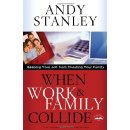
 

Book Review: When Work and Family Collide by Andy Stanley

Helping You Balance God’s Priorities for Your Life

 One of the most difficult things I’ve experienced in life (as a pastor with five kids) is balancing work/ministry and family. Whether you are a dad, mom, single parent, in full time ministry or have a full time job – or no matter how you slice it – it’s hard to balance work and family.

In this book Andy Stanley articulates the modern realities that face us in the market place and in our homes. He does not minimize, rationalize, or make excuses for the break down of families. What he does very well is to show how we can be excellent in the marketplace and serve our families needs in a balanced and biblical manner.

Andy Stanley gives a myriad of practical examples of how we can prioritize our lives biblically and bring glory to God in the workplace and in our homes. I highly recommend this book is a very practical guide and help for you in seeking to be a balanced Christian that prioritizes life in a manner that contributes mightily to what is most pleasing to our Awesome God – for His ultimate glory.

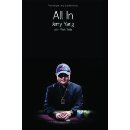
Book Review: All In: Jerry Yang with Mark Tabb

Gripping Story From Beginning to End

 I got this book on a whim because I like Mark Tabb’s writing. I don’t claim to be a poker player or a son of a poker player (as a matter of fact – I don’t think my dad’s ever played poker). Anyway, this is a gripping story of a young boy’s life growing up near Laos and the tragedies and joy’s as his family escaped torture and persecution from the North Viet Nam Communists traveling from their small village in Laos to a refugee camp in Thailand and then to the USA. In the USA Jerry Yang tells the story of how he became the 2007 World Series Poker Champ.

There are 24 chapters in the book and Mark Tabb weaves the story of Jerry and his family’s escape and his rise as poker champion of the world. If you love good stories that end well – you will love this book. It gripped me from the beginning. The story has it all – it will grab your emotions and inspire you (it had me crying and laughing throughout). You will see how God’s providence is weaved throughout the story as well. Whether you like poker or not – you will love this book because it will restore your love for the things that have made the USA such a great country – immigrants fleeing for their lives to have opportunities, working hard, and achieving their dreams.

Jerry Yang is a tremendous role model and I think what he has done with his earnings and life since he won the 2007 championship is amazing and inspiring – not in the world of poker – but in helping other refugees like he was at one time. I highly recommend this book for your reading pleasure and to inspire you to once again believe in the American Dream from someone who has shown that you can be and do anything if you put your mind to it and work hard.

Book Review – Think Christianly: Looking At The Intersection of Faith and Culture by Jonathan Morrow

Every Christian Should Read This Book!

 I hardly ever read a book from cover to cover in one sitting. I was glued to this book from beginning to end because it is so relevant, so logical, so engaging, so insightful, and most of all – full of practical helps and solutions in penetrating culture with the gospel!

Every once in awhile a book comes along that as a pastor I hold it up in front of my congregation and say, “You need to get and read this book and then give it away – or buy two copies so you can use one as a resource and get another to give away.”

Jonathan Morrow’s book is such a book. I think we are living in as James White says, “Serious Times,” and as such it’s important for Christians to think seriously about how our faith and our influence in culture intersect. In this book Morrow takes on a monumental task – in four idea packed sections he addresses how our faith and culture intersect; secondly, how we can prepare ourselves to engage culture; thirdly, particular areas where we must engage; and lastly, ways our churches can engage in culture, and insight into why we think and act the way we do.

The book addresses issues like science, bioethics, relativism, sexual issues, and the stewardship of creation. There are very interesting interviews with experts in nineteen different areas where Christians are already engaging culture, and how we can learn from their examples (e.g., Craig Hazen, William Lane Craig, Scott Klusendorf, Dennis Rainey, Jay Wesley Richards, Scott Rae, and C. John Collins).

Each chapter has helpful statistics, questions, and insights to help you engage the issues. Also, in each chapter there are recommended books, websites, and DVD’s on the topics and as mentioned above – helpful interviews with experts in the different areas covered.

I highly recommend this book for all Christians who desire to penetrate culture intelligently, effectively, and in a gospel-centered manner. It is absolute MUST reading for college students, pastors, youth pastors, and anyone in church leadership. However, I think every Christian who reads this book will benefit from the plethora of helps offered by Morrow and the resources at your fingertips in this very helpful book. I would also recommend that this book be used in small groups, or in discipleship groups for maximum impact – so that some of the ideas will be put into practice and thus our culture really will be impacted with the gospel.

Book Review: I Never Thought I’d See The Day by David Jeremiah

 What to Believe and Do As We Wait For Our King To Return

This is the fourth book written by Dr. Jeremiah based on a prophetic series given at his church in San Diego over the past several years. The author (who has been in ministry for five decades and counting) writes about what he never thought he’d see happening in America and in the World by way of cultural ramifications that impact Christians and the world.

He bases the book on two specific Bible passages. Hosea 4:6, “My people are destroyed for lack of knowledge; because you have rejected knowledge, I reject you from being a priest to me. And since you have forgotten the law of your God, I also will forget your children. And 1 Chronicles 12:32, “Of Issachar, men who had understanding of the times, to know what Israel ought to do.” In other words, Dr. Jeremiah is concerned that we as Christians are not overwhelmed by the times we find ourselves living in – that we are knowledgeable about what is going on; and encouraged in the truth, so that we can effectively apply the Scriptures and make an impact on an ever increasing attack on God and His people around the globe.

Dr. Jeremiah tackles the following 9 specific developments in these times we are living in:

1)    The rise of angry atheists and how they seek to intimidate believers in God at every level of society.

2)    The intensification of spiritual warfare – the more the gospel spreads – the more the enemy attacks.

3)    The dethroning of Jesus Christ as God come in the flesh and King of Kings and Lord of Lords in whom is salvation and the only hope for the world.

4)    The redefining of marriage as articulated by God’s definition in the Bible.

5)    The moral deterioration of society both privately and publicly – especially among our so-called leaders.

6)    Dr. Jeremiah writes, “Intertwined with this free fall in morality is the growing marginalization of the Bible, which has moved from the center of political and cultural discourse to the far edges—from providing the founding principles of our nation to becoming a resource for token verses as ornamental platitudes. Sadly, many Christians and a growing number of churches have followed the lead of the culture and pushed the Word of God away at the center of their lives.”

7)    The growing irrelevance of the Body of Christ in our society.

8)    The growing influence of rogue nations.

9)    The decline of America’s loyalty and allegiance to Israel.

This book is very relevant, and provides historical and biblical ways to be prepared to know what we believe, why we believe it, and how to stand firm in God’s truth and to be transformed by the renewing of our minds, so that we as Christians may be faithful in serving our Lord and Savior – Jesus Christ – until He returns. I highly recommend this book as informative, alarming, but also full of biblically helpful solutions and encouragement from a brilliant communicator of God’s Word and how it applies to the times in which we are living.

Book Review: Four Views On The Spectrum of Evangelicalism – Edited by David Naselli and Collin Hansen

A Scintillating Dialogue on Evangelicalism Historically and in the Present

I love the format of the “Views” books in that they allow the reader to wrestle with and think about crucial issues that oftentimes divide Christians. Instead of having the bias of one author – you get to see an offensive and defensive articulation of each view and weigh the evidence based on the strengths and weaknesses of the evidence given by each author. This new offering in the “Views” series particularly addresses important aspects that unite and divide “evangelicals.” An evangelical is someone who holds to the “good news” as declared from the Scriptures. However, what is the good news? What are the uniting factors of the good news? And what are the boundaries required in disseminating the message, and uniting around the good news in order to penetrate society with the gospel?

The reason this book and the issues are so important is that what is at stake in all of this discussion is the heart of the gospel, and if there is no agreement on the gospel than unity is ultimately a vain pursuit, and the power of the gospel is squelched in isolated enclaves, rather than in a unified front.

In this book the panel of experts specifically focus on three areas in evaluating the spectrum of evangelicalism:

1) They evaluate their views on Christian cooperation with respect to Evangelicals and Catholics in evaluating the Evangelicals and Catholics Together movement led by Charles Colson and the late John Neuhaus, which began in the 1990’s. Also, they address the more recent Manhattan Declaration in order to bring more clarity to cooperation among social and theological concerns.

2) They evaluate doctrinal boundaries – what are the “essentials” that make one a doctrinally sound evangelical – specifically with reference to the recent debates over “open” theism (does God know the future).

3) They explain their specific views on key issues related to the atonement with specific reference what it means that Christ took on God’s wrath meant for sinners.

The Four Distinct Views Presented Are:

View #1: Fundamentalism – Kevin T. Bauder (Research Professor at Central Baptist Theological Seminary in Minneapolis)

View #2: Confessional Evangelicalism – R. Albert Mohler Jr. (President and Joseph Emerson Brown Professor of Christian Theology at The Southern Baptist Theological Seminary in Louisville)

View #3: Generic Evangelicalism – John G. Stackhouse Jr. (Professor of Theology and Culture at Regent College in Vancouver, Canada)

View #4: Postconservative Evangelicalism – Roger E. Olson (Professor of Theology at George W. Truett Theological Seminary of Baylor University)

After each writer presents his view there is a response from each of the others with insightful commentary on the others’ views. I found this book to be historically enriching, doctrinally thought provoking, and challenging in its ecclesiological and sociological implications. I hope this book will summon a wide reading and will help balance the thinking, behavior, and unity of all who care about being an evangelical – and more importantly getting the gospel right so that we may speak it and live it boldly in a world that desperately needs to know Jesus and what it means to be a part of His body on earth.

Book Review: What is The Mission of The Church? By Kevin DeYoung and Greg Gilbert

Balanced Because It’s Biblical In What It Says About The Mission of the Church

As a pastor for over twenty years you see a lot of fads come and go in the way churches seek to make an impact in our communities and culture.  I have never met a pastor (worth his salt) who didn’t want to be pleasing to God and make a difference for the sake of Christ in his community and culture. However, I have become more and more concerned as I see pastors watering down the message of the gospel; focusing more on programs than on the message of the gospel; and being influenced more by the culture, than influencing culture with the message of the Bible. Therefore, I wholeheartedly endorse and applaud this latest offering on the “mission” of the church because I think it is an excellent treatment of the relevant biblical passages and how they bear on the issues we are facing in the 21st century on what the mission/purpose of the church should be. It is missional and Biblical; truthful and loving without compromise; theologically profound and culturally relevant.

Without giving away the mission of the church as defined and defended in this book, I can say that DeYoung and Gilbert do a fantastic job of discussing issues like helping the poor, economics and social justice, the Kingdom, the gospel, and how a church can make an impact on the world without sacrificing the truth and absolutes.

The strengths of this book lie in its simplicity and clarity, exposition and insightful interpretation of the Scriptures, and it’s very clear explanation and application of the gospel as revealed in the 66 books of the Bible. I recommend this book especially for pastor’s young and old, leadership teams of churches, missionaries, and Christians who want to know how they can be purposefully a part of the only organization of which the “gates of hell will not prevail.”

At the end of the day – this book is highly recommended because the author’s build a great case for how to be biblically focused, God-centered, and culturally penetrating without sacrificing the most important truths and main story line of the Bible – the centrality of Jesus Christ as Lord and King to whom is all praise, glory and honor forever.

Book Review: Max on Life by Max Lucado

In this resource, popular pastor and writer, Max Lucado responds to some of the letters he has received from people pursuing answers to some of life’s more important questions. Max answers close to two hundred practical questions based on these letters. The questions along with his subsequent answers – supported by the Scriptures – are handled in the following categories:

 1) Hope: God, Grace, and “Why am I here?” – pages 1-36.

2) Hurt: Conflicts, Calamities, and “Why me?” – pages 37-74.

3) Help: Prayer, Scripture, and “Why church?” – pages 75-118.

4) Him/Her: Sex, Romance, and “Any chance of a second chance?” – pages 119-150.

5) Home: Diapers, Disagreements, and “Any hope for prodigals?” – pages 151-176.

6) Haves/Have-Nots: Work, Money, and “Where’s the lifeline?”  – pages 177-196.

7) Hereafter: Cemeteries, Heaven, Hell, and “Who goes where?” – pages 197-230.

8) Addendum: The Write Suff – helpful and brief advice on: how to write, when to write, who can publish, who can edit. – pages 231-235.

9) Notes – pages 236-238.

10) Topical Index – a helpful index for quick access to the topics addressed in the book beginning with “abortion” and ending with “worship.” – pages 239-245.

Overall, the answers to the questions are gracious, practical, clear, and concise. I’m sure I will consult his answers again as they come up in my own ministries of counseling and life coaching. I think his book is definitely worth having and consulting – especially for new believers in Christ.

I think Max does an adequate job in his answers to these questions, but Max represents what I would deem a “Generic Christianity.” I would prefer to see the questions answered within the framework of a robust Biblical Theology with Christ at the center. I would love to see Tim Keller or D.A. Carson write a book answering the same questions. For those who would prefer a more Theological approach (considering Biblical and Systematic Theology) to frequently asked questions I would recommend R.C. Sproul’s, “Now That’s a Good Question” as a much better resource with more depth of insight into the Christo-centric emphasis of the Scriptures and their connection to life in the 21st century.

Disclosure of Material Connection: I received this book free from the publisher through the BookSneeze®.com book review bloggers program. I was not required to write a positive review. The opinions I have expressed are my own. I am disclosing this in accordance with the Federal Trade Commission’s 16 CFR Part 255: “Guides Concerning the Use of Endorsements and Testimonials in Advertising.”

Book Review: The Fight Of Our Lives by William J. Bennett and Seth Leibsohn

The Big Elephant in Our Country

William Bennett and Seth Leibsohn bravely tackle the big elephant in our country that most people brush aside, are ignorant of, and simply refuse to talk about. The subtitle of the book is “Knowing the Enemy, Speaking the Truth & Choosing to Win the War Against Radical Islam.” This book provides a myriad of facts from history, the Koran and the Bible, and recent events to show the danger that radical Islam poses to our country and the world.

In a balanced and objective manner the author’s do an excellent job of presenting a lot of helpful information in showing that we can’t just stand back and do nothing while Islam presents itself as a “peaceful religion” when it’s own teachings, history, and current events show otherwise. Many of the spokesmen for Islam employ doublespeak with reference to the dark realities of Islam. The authors alert us to the methods they employ and that we need to call evil – evil when we read it, hear it, or see it.

If I could make every American read this book I would. I wish we didn’t have to deal with radical Islam, but we do. We need to remember 9/11 and do our homework and be smart in preventing something much worse. I didn’t enjoy the book – or the subject matter. However, I learned a lot more than I knew about Islam, and how to be proactive and informed in preventing the downfall of our great nation – at least to the advancement of Islam anyway! It all starts with being educated and informed about the truth. We need to know the truth if we are going to respond to the truth in love (Ephesians 4:15).

Disclosure of Material Connection: I received this book free from the publisher through the BookSneeze®.com book review bloggers program. I was not required to write a positive review. The opinions I have expressed are my own. I am disclosing this in accordance with the Federal Trade Commission’s 16 CFR Part 255: “Guides Concerning the Use of Endorsements and Testimonials in Advertising.”