BOOK REVIEW: Max Lucado’s “GOD WILL USE THIS FOR GOOD”

TRUSTING GOD TO TRUMP EVIL
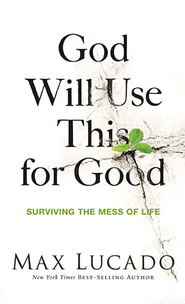
GWUTFG LucadoBook Review by David P. Craig

Oftentimes when we are going through tough times we need some short and quick reminders that everything is going to be okay. In this short treatment of the life of Joseph from the Old Testament Lucado reminds us: “”You’ll get through this. It won’t be painless. It won’t be quick. But God will use this mess for good. In the meantime don’t be foolish or naive. But don’t despair either. With God’s help you will get through this.”

In retelling the story of Joseph the author takes time to provide ample applications (contemporary and ancient) to bring forth the principles that help us as we wait for God to bring forth good out of the messes in our lives whether we made them, inherited them, or we were the object of someone’s evil plans. Ultimately nothing can thwart the plans that God has for us, and that means that all things will work out for our good and God’s glory. The main idea brought out by Lucado in this book is that “in God’s hands intended evil becomes eventual good.”

This short book would make a good gift or recommendation for Christians that are currently going through a rough time. Lucado’s story telling connects well with readers by continually making connections between the biblical subject and the relevant points to our own lives. Lucado has written a helpful manual for believers who need guidance in their pain by helping us trust in the God who always trumps evil for our own good.

BOOK REVIEW: R.C. Sproul’s “WHAT IS THE CHURCH?”

A GREAT PRIMER ON WHAT THE CHURCH IS ALL ABOUT

WITC? SPROUL

Book Review by David P. Craig

R.C. Sproul examines what the Church isn’t, and what it is. In breaking down four key words from the Council of Nicea about what the Church is, Sproul articulates what it means that the church is (1) one, (2) holy, (3) catholic [i.e., universal], and (4) apostolic. Some of the issues addressed in this helpful book are: Why are there so many denominations? What are the essential truths that unite all Christians? What is Liberalism? Why do doctrines divide and unite? What’s an Evangelical? What does it mean for the church to be holy? What is the foundation of the church? What does it mean to be “in Christ”? What is the Gospel? What are the Sacraments? and Why should the church practice discipline?

Sproul covers a lot of ground in this short book. It is full of historical and theological insights, wisdom, and biblically based. I would recommend this book especially for new Christians and as a cogent argument for so-called “Christians” who are not a part of a visible local church. It will help you appreciate what unites Christians throughout history, today, and forever.

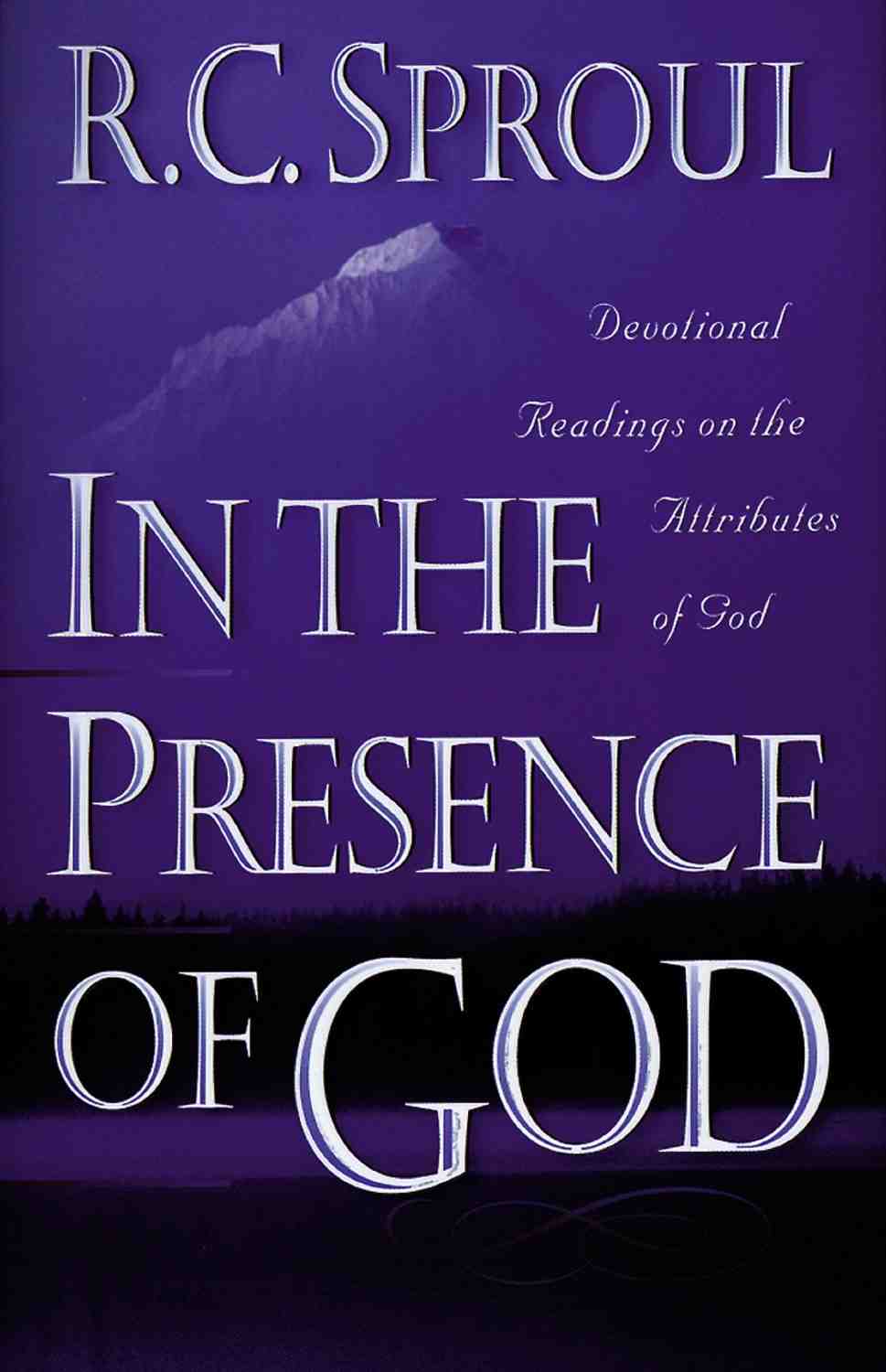
BOOK REVIEW: R.C. Sproul’s “INTO THE PRESENCE OF GOD”

GOD-CENTERED MEDITATIONS

ITPOG

Book Review by David P. Craig

Over the past 30 years I’ve enjoyed the books, lectures, sermons, and writings of R.C. Sproul. This book gathers some of the best devotionals from Ligonier Ministries Magazine – Table Talk. Coram Deo–which means “in the presence of God” is the name of one of the feature columns written by R.C. Sproul. In The Presence of God takes some of the best devotionals from Coram Deo over the past several decades and makes the collection available here in this book.

The devotions selected are encouraging, inspiring, and always based on Scripture. According to R.C. Sproul all of life is to be lived out in the presence of God and for the glory of God. These devotionals remind us daily that God is sovereign, transcendent, and immanent. “To live Coram Deo is to live a life of integrity. It is a life of wholeness that finds unity and coherency in the majesty of God. A fragmented life is a life of disintegration. It is marked by inconsistency, disharmony, confusion, conflict, contradiction, and chaos.” On the other hand, a life of “integrity is found when men and women live their lives in a pattern of consistency. It is a pattern that functions the same way in church and out of church. It is a life in which all that is done is done unto the Lord. It is a life lived by principle, not expediency; by humility before God, not defiance. It is a life lived under the tutelage of a conscience that is held captive by the Word of God.”

There are approximately 150 devotions in this book. Each only a page in length with a short meditation by Sproul, and either a word of encouragement, an application, or a reflection based on each subject. There are 15 Sections in the book with each section containing between 5 and 18 chapters. Here are the subjects addressed by Sproul: (1) Knowing God; (2) Learning God’s Laws; (3) Facing Life’s Challenges with God; (4) Getting Acquainted with God’s Son; (5) Meeting with God; (6) Discerning God’s Will; (7) Understanding God’s Purpose; (8) Becoming Part of God’s Body; (9) Experiencing God’s Best; (10) Journeying with God; (11) Developing a Godly Lifestyle; (12) Using Your Time for God; (13) Confronting the Enemy in God’s Strength; (14) Doing God’s Work; and (15) Facing the Future with God.

You would be hardpressed to find a devotional that is more God-centered and will help you truly live a life that is well-pleasing to God than Sproul’s. I highly recommend this excellent collection as one that will increase your awareness of God, and help you become more intimate in your walk with Him for His glory whether you eat, drink, or whatever you do as you live in His presence.

BOOK REVIEW: R.C. SPROUL’S “HOW CAN I DEVELOP A CHRISTIAN CONSCIENCE?”

 AN ETHICAL PRIMER FOR DEVELOPING A CHRISTIAN CONSCIENCE

HCIDACC? SPROUL

Book Review by David P. Craig

R.C. Sproul begins this book by giving a classical definition of the Christian conscience: “The Christian conscience is thought to be something that God has implanted into our minds…the voice of God within us….The idea is that God created us in such a way that there is a link between the sensitivities of the mind and the conscience with its built-in responsibility to God’s eternal laws.” He then goes on to give several examples of how the conscience and law work together to bring about thoughts and actions that are either in accordance with God’s Word or against God’s Word. The conscience is the “tool that God the Holy Spirit uses to convict us, bring us to repentance, and receive the healing of forgiveness that flows from the gospel.”

In the short chapters of this book Sproul compares and contrasts several important matters with reference to developing a Christian conscience as we deal with what has been clearly revealed in the Scriptures and not clearly revealed in the Scriptures:

(1) Creation ordinances vs. Civil Law – here Sproul cogently and compellingly demonstrates that everyone is responsible to live by the Covenant of Creation and that everything that is legislated by law is “moral legislation” – Sproul writes: “Of course, if you think it through, you realize that moral issues are at the heart of all legislation. The question is not whether the state should legislate morality. The question is what morality should the state be legislating? Natural law states that in nature there are certain principles that we should never violate. But why? Just because nature says it’s wrong? No. Classically and historically, Christianity has said that those laws that we find in nature are the external manifestations of the law of God. Remember that all true and just law is based ultimately on the character of God and His eternal being. From those eternal principles we get a reflection of God in natural law…In the final analysis what the culture does or does not do must not affect my responsibility to God. We are called to be a people of principle. Reformation starts when we begin to live by principle and not by expediency.”

(2) The distinction between ethics and morality  – What are the indicatives (morality) of Scripture and what are the imperatives (ethics)?  Here Sproul answers two important questions: (a) What is good, and what does God require of us that is well pleasing to Him? and (b) How can we have the ethical courage to do what is right? Perhaps the most important issue handled in this section is Sproul’s treatment of major’s, minor’s, and areas of freedom in the Christian life.

(3) Legalism vs. Antinomianism – Here Sproul demonstrates three ancient and modern varieties of those who are “legalistic” and those who are “anti-law.” He demonstrates the importance of balance between these two dangerous extremes in this way, “The essence of Christian theology is grace, and the essence of Christian ethics is gratitude.” Sproul reminds us that where the Scriptures are silent “we have no right to heap up restrictions on people where He has no stated restriction…We are to be concerned with integrity, justice, mercy, and helping a world that is in pain. It is all too simple to distort the biblical ethic by a kind of legalism that majors in minors.”

(4) Degrees of sin. The last topic addressed in the book is the question are some sins worse than others? Sproul does a wonderful job of providing many examples – especially from the Sermon on the Mount – to demonstrate the seriousness of sin, and God’s provision for our sins. Tackling issues of guilt, law, righteousness, and justification this short book is jam packed with great questions and answers to some of the most important issues of our day. If you want to know how to live as a Christian in the 21st Century this book is an excellent primer of how to develop a conscience that is right with God and pleasing to God.

BOOK REVIEW: R.C. SPROUL’S “WHAT IS THE LORD’S SUPPER?’

Why Christians Celebrate The Lord’s Supper

WITLS Sproul

Book Review By David P. Craig

One of the things that all Protestants and Catholics have in common is that we participate either weekly or monthly in the remembrance of the Lord’s Supper or Communion. In this concise and yet very thorough treatment of what the Bible teaches about the Lord’s Supper R.C. Sproul gives several cogent reasons why Christians around the world remember the body and blood of Christ in the past and present and look forward to His coming in the future.

Dr. Sproul looks at the roots of the Lord’s Supper in examining the Old Testament Passover from the Exodus; the Last Supper of Christ in the Gospels; and the Marriage Supper of the Lamb in the Kingdom of Heaven. The history of the Supper is examined, the theology of the Supper is explained, and the meaning of the Supper is articulated so that we can best apply its meaning as we participate in the elements as we remember the death, burial, resurrection, and coming of Christ by worshipping Him in spirit and in truth.

Reading this book will help you to appreciate and value the partaking of the cup and bread all the more as you remember the amazing sacrifice of the Lamb that was slain to save us from God’s wrath, and unto His gracious presence forever. You will come to a deeper understanding of the necessity of a “bloody” sacrifice, and of the “body” that was slain on our behalf. There is much spiritual meat here, to bring you to deeper intimacy with and reflection on the Lamb of God who takes away the sins of the world.

BOOK REVIEW: Erwin Lutzer’s “Where Do We Go From Here?”

HOPE AND DIRECTION IN OUR PRESENT CRISIS

WDWGFH? Lutzer

Book Review by David P. Craig

Anyone who has lived their lives in the United States as a Christian for the past 20-50 years has witnessed a radical change in five major areas: (1) Our economy; (2) Our morality; (3) Our education; (4) Our Legal Rulings; and (5) The gaining privileged position of Islam and the decline and vilification of Christianity.

Lutzer gives ample illustrations to demonstrate the decline of the Judeo-Christian worldview and values that many of us grew up with, but doesn’t stop there. Going back to the Bible and history he gives us examples of how these types of changes and hardships for Christians have always been the norm. Hardship and suffering are certainties in the life of a Christian, but Lutzer reminds the reader “the consistent lesson of 2,000 years of church history is that the church does not need freedom to be faithful…If there is any truly good news in America, it will not be announced in Washington but will be heard through the lips and lives of believers who share the good news of the Gospel wherever God has planted them. Our task, quite simply, is to witness to the truth of the Gospel in a nation that is under judgment.”

Erwin Lutzer writes compellingly about the calling of the Christian as aliens in this world. He doesn’t minimize the hardships or sufferings that lie ahead. However, he uses examples from the Scriptures to demonstrate that our sufferings are purposeful and that we ultimately will win in the end. We have amazing resources and promises from God by which we are to live in the world and make a difference until Jesus returns. Lutzer’s book is more encouraging than depressing, because he reminds us of the sovereignty of God and how we are a part of His plans that cannot be thwarted no matter how bad things look now. Ultimately everything we do for Jesus matters and lasts for eternity.

I highly recommend this book because it offers numerous constructive things to focus our attention on until the return of Christ. It offers biblical thinking, principles to live by, and actions to take that really do make a difference in our society and for the sake of eternity. It offers hope for the present and for the future. You will be encouraged that you can stop being part of the problem, and how you can be part of God’s solution in our culture.

BOOK REVIEW: DENNY BURK’S “WHAT IS THE MEANING OF SEX?”

GOD’S INTENTION FOR SEX

WITMOS BURK

Book Review By David P. Craig

Denny Burk has written both a brilliant critique of errant sexual views and presented a cogent case for the biblical meaning of sex that transcends all cultures and time. Burk’s thesis developed in this book is that sex is a gift from God that is to be enjoyed exclusively within the covenant of marriage so that it might magnify God’s own covenant love for his people and thus bring glory to Him. The glory of God [all of who God is put on display] is the ultimate purpose of everything a Christian does – including sex.

There have been many books written by Christians in the past several years but they usually fall short in applying a teleological view of sex. In other words they address what the Bible has to say about sex, but not necessarily what the purpose of sex is. Burk writes: “What they [with reference to Mark Driscoll’s recent book on sex and marriage – but can be applied to various other authors] never asked, however, is the teleological question: Does this act fulfill God’s purposes for the sexual union? Does this act fulfill Gd’s ultimate purpose for marriage and sexuality–the glory of God? This is where teleology can help us.”

Burk proceeds to write a biblical theology of sex with a God-centered ethical foundation based on virtually everything the Bible has to say about our bodies, our interpretation of the relevant passages pertaining to sex, our marriages, conjugal unions, family planning, gender, sexuality and singleness. In all these areas Burk does a remarkable job of what he describes as blending biblical theology, ethics, and cultural issues pertaining to sex. He writes, “I am favoring a bleded approach that gives a privileged place to teleology within the framework of divine revelation. Scripture is plainly concerned with the formation of moral character as the basis for moral choices (as in character ethics). Scripture is also concerned with rules and divine commands (as in deontology). But Scripture also focuses on the glory of God as the purpose of all things (as in teleology).”

Therefore, Burk argues that the four aspects of sex as defined by God in the context of marriage as a covenant between and man and a woman are designed for (1) the consummation of marriage, (2) procreation, (3) expression of love, and (4) pleasure. However, these four purposes “comprise the means by which we glorify God with our sexuality.” Burk unfolds his thesis methodically, clearly, and with great theological depth that “the ultimate purpose of human sexuality is the glory of God and that the ultimate ethic is to glorify God with our sexuality.” I can’t possibly recommend this book high enough for both Christians and non-Christians to come to grips with the reason, meaning, and purpose for one’s gender, identity, sex, and marriage according to God’s great design.

*I was provided with a copy of this book for review by the publisher and was not required to write a fovorable review.

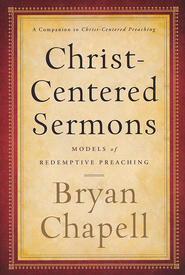
BOOK REVIEW: BRYAN CHAPELL’S “CHRIST-CENTERED SERMONS”

MODELS OF REDEMPTIVE PREACHING

CCS Chapell

 APPLYING CHRIST-CENTERED PREACHING IN YOUR MINISTRY

Book Review by David P. Craig

It’s hard to believe that its already been nineteen years since Bryan Chapell penned his classic text on preaching – Christ-Centered Preaching (CCP). Since that time Christo-centric preaching has been on the rise and pastors have become much more exposed to biblical theology and the redemptive historical method of interpretation in helping the busy pastor with sermon preparation. This new work by Chapell is a wonderful complement and sequel to his seminal text that his been so influential in both Reformed and Non-Reformed circles.

Whereas Chapell laid the foundational ground work for Christo-centric preaching in CCP, here he helps the preacher apply the groundwork by giving various examples of sermons that demonstrate the various genres of Scripture and how they point to Christ. Part One focuses on the structure of the Christo-centric sermon by giving examples of informal, formal, inductive, and expository sermons. Part Two delves into various redemptive approaches of Scripture passages. Part Three focuses on sermons that reveal how a variety of redemptive truths can be used from the Scriptures to apply to our lives.

The common denominator of all the expository sermons found in this book is that they focus on saying what God says in the passage. The preacher is encouraged to proclaim the truths gleaned from the passage in order to convey what was originally intended by the Holy Spirit. “Making sure God’s people know what God has said and why he has said it is the tandem goal of expository preaching.” All of the sermons in this book focus on the empowering power of grace through Christ that is found throughout the Scriptures. The message of the gospel and God’s grace in Christ is what leads us to repentance, salvation, and genuine transformation from darkness to light.

The author masterfully teaches and guides the preacher by showing him that “Christ-centered exposition does not require us to unveil depictions of Jesus by mysterious alchemies of allegory or typology; rather, it identifies how every text functions in furthering our understanding of who Christ is, what the Father sent him to do, and why.” In Christ-centered preaching the listener is helped to apply the biblical text by answering four main questions from the passage: (1) What am I to do? (2) Where am I to do it? (3) Why am I to do it? (4) How am I to do it?

Chapell writes, “In essence, redemptive exposition requires that we identify an aspect of our fallen condition that is addressed by the Holy Spirit in each passage, which he inspired for our edification, and then show God’s way out of the human dilemma.” The way out of the dilemma of our fallen condition is through the motivation of grace and holiness because the realities of the cross. We are enabled to have victory over sin due to our union and communion with Christ as revealed in the Scriptures.

I highly recommend that you read Chapell’s first book on preaching before reading this one. However, it’s not essential that you read his first book because he does a lot of review and explains everything he is doing in each sermon in this new offering. He lays out the foundations and theory in his first book as a solid basis for its application in this new one. Together these two books provide a tour de force of Christo-centric preaching resources for the Christ-centered preacher.

Chapell gives various ways that the same passage can be preached using different strategies without changing the biblical author’s intent. His introductions and demonstration of how the principles work for each sermon are immensely instructive. The sermons in this book are based on the following passages of Scripture: 2 Timothy 4:1-5; Judges 6-8; Psalm 126; Jeremiah 33:14-16; Isaiah 44:9-23; Numbers 20:1-13; Romans 15:4; Luke 17:1-19; Titus 2:11-15; and Romans 6:1-14. By providing sermons on various genres from the Old and New Testament Chapell has provided a wonderful guide for preachers to learn better how to apply the principles of Christ-centered preaching from Genesis to Revelation.

BOOK REVIEW: JASON C. MEYER’S “PREACHING: A BIBLICAL THEOLOGY”

A BIBLICAL THEOLOGY OF THE MINISTRY OF THE WORD

PABT Meyer

Book Review by David P. Craig

I’ve been waiting for a book like this since my calling into the ministry thirty-one years ago. Meyer combines two of my favorite subjects: biblical theology and preaching with my greatest passion – the glory of God as revealed in Jesus. The thesis of this very enjoyable book is that “the ministry of the word in Scripture is stewarding and heralding God’s word in such a way that people encounter God through his word.”

What makes this book unique is that the author shows how “the whole Bible alone can give a holistic answer to what preaching is.” Meyer brilliantly and cogently examines what the whole of the Scriptures have to say broadly about the ministry of the Word and specifically in light of what this means for the expository preacher. The ultimate reason of preaching isn’t for the transfer of information, but to have an encounter with the living God.

Meyer takes the reader on a biblically saturated journey from Genesis to Revelation and unpacks what the entire Scriptures have to say about the ministry of the Word. He does a remarkable job of conveying how preaching the Word is grounded within the big picture story line of the gospel. Christ is the plot-line of the Scriptures and Meyer helps the minister build a foundation for preaching, paradigms for preaching, and demonstrates how biblical and systematic theology guides the preacher in ministering the Word so that we and our hearers encounter the glory of God in Christ.

I highly recommend this book for beginning and seasoned preachers, but also for all Christians. It is packed full with excellent illustrations, robust theological truths, and insightful applications. By helping us to interpret the whole Bible through the lenses of redemption Meyer helps us to see that Jesus is at the forefront of every passage we preach. I believe that any believer reading this book will come to understand the gospel better, and strive to minister the word with Jesus at the center of our proclamation so that we and our listeners will truly encounter our Awesome God.


STRANGE FIRE = STRANGE CHRISTIANITY

A PLEA FOR EVANGELICALS TO MAJOR ON THE MAJOR’S

yea nea

By David P. Craig

The recent John MacArthur “Strange Fire” Conference compelled me to write this article. I don’t want to address Cessationism vs. Non-Cessationism so much, as to wrestle with why major on issues of disagreement in the Body of Christ when we have larger fish to fry? What would happen if evangelicals were known more for our love, cooperation, and unity than for our disagreements? What would happen if we worked more on understanding one another than attacking each other? What would be the results of a Church that is known by our love rather than our animosity towards those who believe differently than we do? What if we were characterized by civility and humility rather than pride and arrogance?

It’s been awhile since I’ve read C.S. Lewis’ classic Mere Christianity – but its basic thesis is something I long for in the Evangelical Community around the globe today. Lewis was trying to get at the core or essence of Christianity. To this day perhaps few thinkers or writers have built as many bridges as Lewis in pointing people to Christ for both believers and non-believers.

In my own journey I have been a follower and lover of Jesus Christ since I was six years old. I have three degrees in theology and have been involved in church ministry since I was seventeen: in Brethren Churches, Baptist Churches, Evangelical Free Churches, Reformed Churches, Charismatic Churches, and various non-denominational churches. I have wrestled mightily, agonizingly, emotionally, subjectively, and objectively with issues of theology and methodology. Here are some of the positions I’ve wrestled with over the years:

Theology Proper – Process Theology? Open Theism? Augustinian-Calvinist? Modified Calvinist? Simple-Foreknowledge? Classical Free Will? Middle-Knowledge? Molinism?

Creation – 7 Literal Days? Young Earth? Old Earth? Day-Age View? Theistic Evolution? Framework Hypothesis? Gap Theory? Restoration View?

Bibliology – Infallibilist? Inerrantist?

Anthropology – Monism? Dichotomy? Trichotomy?

Soteriolgy – Pelagianism? Semi-Pelagianism? Augustinianism? Arminianism? Calvinism?

Predestination and Free Will – God Limits His Power? God Limits His Knowledge? God Ordains All Things? God Knows All Things?

Atonement – Christus Victor? Moral Government? Penal Substitution? Healing? Kaleidoscopic?

Justification – Deification? Traditional Reformed? Progressive Reformed? New Perspective?

Eternal Security – Classical Calvinist? Moderate Calvinist? Reformed Arminian? Wesleyan Arminian?

Sanctification – Wesleyan? Reformed? Pentecostal? Keswick? Augustinian-Dispensational?

Christology – Classical View? Kenotic View?

Eschatology – Amillennialism? Postmillennialism? Dispensational Premilillennialsm? Historic Premillennialism?

Hell – Annihilationism? Purgatory? Metaphorical? Conditional? Literal?

Pneumatology – Reformed? Dimensional Charismatic? Wesleyan? Catholic? Pentecostal?

Baptism – Symbol of Christ’s Saving Work? Sacrament of the Covenant? God’s Baptismal Act as Regenerative? Believer’s Baptism as the Biblical Occasion of Salvation?

Lord’s Supper – Christ’s True, Real, and Substantial Presence? Spiritual Presence of Christ? Christ’s Presence as Memorial?

Apologetics – Classical? Evidential? Cumulative Case? Presuppositional? Reformed Epistemology?

Law and Gospel – Non-Theonomic? Theonomic Reformed? God’s Gracious Guidance? Dispensational? Modified Lutheran?

Biblical Theology – Principalizing? Redemptive-Historical? Drama of Redemption? Redemptive-Movement?

Systematic Theology – Charismatic? Pentecostal? Dispensational? Progressive Dispensationalism? Covenant? Epangelical?

Destiny of the Unevangelized – Pluralism? Inclusivism? Particularism?

Women in Ministry – Egalitarian? Complementarian? Plural Ministry? Male Leadership?

Church Government – Episcopalianism? Presbyterianism? Single-Elder Congregationalism? Plural-Elder Congregationalism?

Counseling – Levels of Explanation? Integration? Christian Psychology? Transformational Psychology? Biblical?

Charismatic Gifts – Cessationism? Open but Cautious? Charismatic? Pentecostal? Third Wave?

I actually have 75 books in my library that have 2-5 views held by professing Christians on these and many more issues. What troubles me about the Strange Fire Conference and forthcoming book by John MacArthur is the time and effort into issues that divide rather than unite the body of Christ. This is a time for bridge building among Christians, not blowing them up! With the onslaught of immorality, relativism, and persecution on Christians around the world it’s more important than perhaps any other time in history that Christians unite and major on the majors and learn to minor on the minors.

The reality is no two theologians will agree on everything. I have a Jewish friend that jokingly says, “If you get three Rabbi’s in a room to debate an issue there will be four opinions.” I think the same can be said among any three random Protestant Pastors. The reality is that when we all get to Heaven we will find out we erred in many of our views. It doesn’t mean that we shouldn’t seek the truth and give up on finding the truth, but it does mean that we should humbly pursue truth and be patient with those who disagree with us. It’s a good thing the thief on the cross didn’t have to pass a theological exam to get into Heaven. He simply acknowledged that he was a sinner, deserved to be punished for his sin, and believed on the Lord Jesus Christ to save him – and we’ll see that guy in Heaven one day!

We need to rally around “Mere Christianity” and work towards being united with those who love Christ, His Word, and pursue His truth in humble and prayerful discussion together. Let’s not shoot our own wounded, but take care of one another’s wounds. Let’s patiently and lovingly pursue the truth together and agree to disagree on minor issues. Let’s unite on the greatness of God, and the glorious gospel, and the return of His Son. Let’s be more concerned about our own sins than the sins of others. Let’s become grace bound, grace oriented, and err on the side of grace. Let’s exalt Jesus and make Him our King, Lord, Savior, and find our satisfaction, joy, and delight in Him.

There’s only one man who had it all down perfectly and that was Jesus. He is and ever will be the lone perfect theologian who has perfect theology. Until He returns or takes us home we need to learn to submit to Him, point others to Him, seek Him, pursue His truth, and learn to get along by majoring on the majors and minoring on the minors. Let’s pursue the big ideas and big doctrines in the Bible and unite around those. There’s too much against us in the world for us to turn on one another.

As a Dodger fan, when I go to the baseball games I don’t focus on the guys political shirt next to me – I don’t argue with him over our differences. There’s simply one goal – cheer for our team to win. When Puig hits a home run – I high-five the guy next to me and we are full of joy because we are focused on what we agree on. Let’s stop arguing about what we’re wearing, how we’re worshipping, what style of music we’re listening to, and work together to win! We have one great commission; one great Book; one great Savior; one great King; one powerful Spirit; one powerful message; and one calling to bring glory to God; and as Paul said, “This one thing I do!” Let’s get out there and do it…together!

The strangest thing about the Strange Fire conference is that it represents a strange Christianity. Christians according to Jesus Himself are to be known by their love, not by burning each other down, but by building each other up. I am grateful for the fellowship, friendships, and learning that I have received from continuationists and non-continuationists. I know that we can’t all be right about everything, but I do know that we can do more together for the sake of Christ and His glory than we can apart. I also know that the fruit of the Spirit never burns but soothes – He is love, joy, peace, longsuffering, gentleness, goodness, faith, meekness, and temperance. As believers, let’s build each other up, not burn each other, let’s be controlled by the Spirit not grieve the Spirit, and let’s proclaim the glory of Christ by the power of the Spirit for our own good and God’s glory. Ironically the closer we get to the Son – the less likely we are to get burned, or burn others.