
Category: R.C. Sproul
Suffering and the Glory of God

By Dr. R.C. Sproul
I once visited with a woman who was dying from uterine cancer. She was greatly distressed, but not only from her physical ailment. She explained to me that she had had an abortion when she was a young woman, and she was convinced that her disease was a direct consequence of that. In short, she believed cancer was the judgment of God on her.
The usual pastoral response to such an agonizing question from someone in the throes of death is to say the affliction is not a judgment of God for sin. But I had to be honest, so I told her that I did not know. Perhaps it was God’s judgment, but perhaps it was not. I cannot fathom the secret counsel of God or read the invisible hand of His providence, so I did not know why she was suffering. I did know, however, that whatever the reason for it, there was an answer for her guilt. We talked about the mercy of Christ and of the cross, and she died in faith.
The question that woman raised is asked every day by people who are suffering affliction. It is addressed in one of the more difficult passages in the New Testament. In John 9, we read: “As he passed by, he saw a man blind from birth. And his disciples asked him, ‘Rabbi, who sinned, this man or his parents, that he was born blind?’ Jesus answered, ‘It was not that this man sinned, or his parents, but that the works of God might be displayed in him’” (vv. 1–3).
Why did Jesus’ disciples suppose that the root cause of this man’s blindness was his sin or his parents’ sin? They certainly had some basis for this assumption, for the Scriptures, from the account of the fall onward, make it clear that the reason suffering, disease, and death exist in this world is sin. The disciples were correct that somehow sin was involved in this man’s affliction. Also, there are examples in the Bible of God causing affliction because of specific sins. In ancient Israel, God afflicted Moses’ sister, Miriam, with leprosy because she questioned Moses’ role as God’s spokesman (Num. 12:1–10). Likewise, God took the life of the child born to Bathsheba as a result of David’s sin (2 Sam. 12:14–18). The child was punished, not because of anything the child did, but as a direct result of God’s judgment on David.
However, the disciples made the mistake of particularizing the general relationship between sin and suffering. They assumed there was a direct correspondence between the blind man’s sin and his affliction. Had they not read the book of Job, which deals with a man who was innocent and yet was severely afflicted by God? The disciples erred in reducing the options to two when there was another alternative. They posed their question to Jesus in an either/or fashion, committing the logical fallacy of the false dilemma, assuming that the sin of the man or the sin of the man’s parents was the cause of his blindness.
The disciples also seem to have assumed that anyone who has an affliction suffers in direct proportion to the sin that has been committed. Again, the book of Job dashes that conclusion, for the degree of suffering Job was called to bear was astronomical compared with the suffering and afflictions of others far more guilty than he was.
We must never jump to the conclusion that a particular incidence of suffering is a direct response or in direct correspondence to a person’s particular sin. The story of the man born blind makes this point.
Our Lord answered the disciples’ question by correcting their false assumption that the man’s blindness was a direct consequence of his or his parents’ sin. He assured them that the man was born blind not because God was punishing the man or the man’s parents. There was another reason. And because there was another reason in this case, there might always be another reason for the afflictions God calls us to endure.
Jesus answered His disciples by saying, “It was not that this man sinned, or his parents, but that the works of God might be displayed in him” (v. 3). What did He mean? Simply put, Jesus said that the man was born blind so that Jesus might heal him at the appointed time, as a testimony to Jesus’ power and divinity. Our Lord displayed His identity as the Savior and the Son of God in this healing.
When we suffer, we must trust that God knows what He is doing, and that He works in and through the pain and afflictions of His people for His glory and for their sanctification. It is hard to endure lengthy suffering, but the difficulty is greatly alleviated when we hear our Lord explaining the mystery in the case of the man born blind, whom God called to many years of pain for Jesus’ glory.
Source: www.ligonier.org (February 1, 1013)
The Sinfulness of Sin

“The sinfulness of sin” sounds like a vacuous redundancy that adds no information to the subject under discussion. However, the necessity of speaking of the sinfulness of sin has been thrust upon us by a culture and even a church that has diminished the significance of sin itself. Sin is communicated in our day in terms of making mistakes or of making poor choices. When I take an examination or a spelling test, if I make a mistake, I miss a particular word. It is one thing to make a mistake. It is another to look at my neighbor’s paper and copy his answers in order to make a good grade. In this case, my mistake has risen to the level of a moral transgression. Though sin may be involved in making mistakes as a result of slothfulness in preparation, nevertheless, the act of cheating takes the exercise to a more serious level. Calling sin “making poor choices” is true, but it is also a euphemism that can discount the severity of the action. The decision to sin is indeed a poor one, but once again, it is more than a mistake. It is an act of moral transgression.
In my book The Truth of the Cross I spend an entire chapter discussing this notion of the sinfulness of sin. I begin that chapter by using the anecdote of my utter incredulity when I received a recent edition of Bartlett’s Familiar Quotations. Though I was happy to receive this free issue, I was puzzled as to why anyone would send it to me. As I leafed through the pages of quotations that included statements from Immanuel Kant, Aristotle, Thomas Aquinas, and others, to my complete astonishment I came upon a quotation from me. That I was quoted in such a learned collection definitely surprised me. I was puzzled by what I could have said that merited inclusion in such an anthology, and the answer was found in a simple statement attributed to me: “Sin is cosmic treason.” What I meant by that statement was that even the slightest sin that a creature commits against his Creator does violence to the Creator’s holiness, His glory, and His righteousness. Every sin, no matter how seemingly insignificant, is an act of rebellion against the sovereign God who reigns and rules over us and as such is an act of treason against the cosmic King.
Cosmic treason is one way to characterize the notion of sin, but when we look at the ways in which the Scriptures describe sin, we see three that stand out in importance. First, sin is a debt; second, it is an expression of enmity; third, it is depicted as a crime. In the first instance, we who are sinners are described by Scripture as debtors who cannot pay their debts. In this sense, we are talking not about financial indebtedness but a moral indebtedness. God has the sovereign right to impose obligations upon His creatures. When we fail to keep these obligations, we are debtors to our Lord. This debt represents a failure to keep a moral obligation.
The second way in which sin is described biblically is as an expression of enmity. In this regard, sin is not restricted merely to an external action that transgresses a divine law. Rather, it represents an internal motive, a motive that is driven by an inherent hostility toward the God of the universe. It is rarely discussed in the church or in the world that the biblical description of human fallenness includes an indictment that we are by nature enemies of God. In our enmity toward Him, we do not want to have Him even in our thinking, and this attitude is one of hostility toward the very fact that God commands us to obey His will. It is because of this concept of enmity that the New Testament so often describes our redemption in terms of reconciliation. One of the necessary conditions for reconciliation is that there must be some previous enmity between at least two parties. This enmity is what is presupposed by the redeeming work of our Mediator, Jesus Christ, who overcomes this dimension of enmity.
The third way in which the Bible speaks of sin is in terms of transgression of law. The Westminster Shorter Catechism answers the fourteenth question, “What is sin?” by the response, “Sin is any want of conformity to, or transgression of, the law of God.” Here we see sin described both in terms of passive and active disobedience. We speak of sins of commission and sins of omission. When we fail to do what God requires, we see this lack of conformity to His will. But not only are we guilty of failing to do what God requires, we also actively do what God prohibits. Thus, sin is a transgression against the law of God.
When people violate the laws of men in a serious way, we speak of their actions not merely as misdemeanors but, in the final analysis, as crimes. In the same regard, our actions of rebellion and transgression of the law of God are not seen by Him as mere misdemeanors; rather, they are felonious. They are criminal in their impact. If we take the reality of sin seriously in our lives, we see that we commit crimes against a holy God and against His kingdom. Our crimes are not virtues; they are vices, and any transgression of a holy God is vicious by definition. It is not until we understand who God is that we gain any real understanding of the seriousness of our sin. Because we live in the midst of sinful people where the standards of human behavior are set by the patterns of the culture around us, we are not moved by the seriousness of our transgressions. We are indeed at ease in Zion. But when God’s character is made clear to us and we are able to measure our actions not in relative terms with respect to other humans but in absolute terms with respect to God, His character, and His law, then we begin to be awakened to the egregious character of our rebellion.
Not until we take God seriously will we ever take sin seriously. But if we acknowledge the righteous character of God, then we, like the saints of old, will cover our mouths with our hands and repent in dust and ashes before Him.
Source: http://www.ligonier.org May 1, 2008 from Table Talk Magazine.
How Sinful Is Man?

By Dr. R.C. Sproul
Imagine a circle that represents the character of mankind. Now imagine that if someone sins, a spot—a moral blemish of sorts—appears in the circle, marring the character of man. If other sins occur, more blemishes appear in the circle. Well, if sins continue to multiply, eventually the entire circle will be filled with spots and blemishes. But have things reached that point? Human character is clearly tainted by sin, but the debate is about the extent of that taint. The Roman Catholic Church holds the position that man’s character is not completely tainted, but that he retains a little island of righteousness. However, the Protestant Reformers of the sixteenth century affirmed that the sinful pollution and corruption of fallen man is complete, rendering us totally corrupt.
There’s a lot of misunderstanding about just what the Reformers meant by that affirmation. The term that is often used for the human predicament in classical Reformed theology is total depravity. People have a tendency to wince whenever we use that term because there’s very widespread confusion between the concept of total depravity and the concept of utter depravity. Utter depravity would mean that man is as bad, as corrupt, as he possibly could be. I don’t think that there’s a human being in this world who is utterly corrupt, but that’s only by the grace of God and by the restraining power of His common grace. As many sins as we have committed individually, we could have done worse. We could have sinned more often. We could have committed sins that were more heinous. Or we could have committed a greater number of sins. Total depravity, then, does not mean that men are as bad as they conceivably could be.
When the Protestant Reformers talked about total depravity, they meant that sin—its power, its influence, its inclination—affects the whole person. Our bodies are fallen, our hearts are fallen, and our minds are fallen—there’s no part of us that escapes the ravages of our sinful human nature. Sin affects our behavior, our thought life, and even our conversation. The whole person is fallen. That is the true extent of our sinfulness when judged by the standard and the norm of God’s perfection and holiness.
Source: This excerpt is from R.C. Sproul’s The Truth of the Cross.
Did God Die on the Cross?

By Dr. R.C. Sproul
The famous hymn of the church “And Can it Be?” contains a line that asks a very poignant question : “How can it be that thou, my God, shouldst die for me?” Is it accurate to say that God died on the cross?
This kind of expression is popular in hymnody and in grassroots conversation. So although I have this scruple about the hymn and it bothers me that the expression is there, I think I understand it, and there’s a way to give an indulgence for it.
We believe that Jesus Christ was God incarnate. We also believe that Jesus Christ died on the cross. If we say that God died on the cross, and if by that we mean that the divine nature perished, we have stepped over the edge into serious heresy. In fact, two such heresies related to this problem arose in the early centuries of the church: theopassianism and patripassianism. The first of these, theopassianism, teaches that God Himself suffered death on the cross. Patripassianism indicates that the Father suffered vicariously through the suffering of His Son. Both of these heresies were roundly rejected by the church for the very reason that they categorically deny the very character and nature of God, including His immutability. There is no change in the substantive nature or character of God at any time.
God not only created the universe, He sustains it by the very power of His being. As Paul said, “In Him we live and move and have our being” (Acts 17:28). If the being of God ceased for one second, the universe would disappear. It would pass out of existence, because nothing can exist apart from the sustaining power of God. If God dies, everything dies with Him. Obviously, then, God could not have perished on the cross.
Some say, “It was the second person of the Trinity Who died.” That would be a mutation within the very being of God, because when we look at the Trinity we say that the three are one in essence, and that though there are personal distinctions among the persons of the Godhead, those distinctions are not essential in the sense that they are differences in being. Death is something that would involve a change in one’s being.
We should shrink in horror from the idea that God actually died on the cross. The atonement was made by the human nature of Christ. Somehow people tend to think that this lessens the dignity or the value of the substitutionary act, as if we were somehow implicitly denying the deity of Christ. God forbid. It’s the God-man Who dies, but death is something that is experienced only by the human nature, because the divine nature isn’t capable of experiencing death.
SOURCE: http://www.ligonier.org (APRIL 14, 2014)
Book Review on R.C. Sproul’s: Everyone’s A Theologian
A PRIMER ON THE MAJOR DOCTRINES OF THE BIBLE

Book Review by David P. Craig
This book is almost a word for word account of R.C. Sproul’s DVD teaching series entitled “Foundations: An Overview of Systematic Theology.” Having watched this video series in the past I immediately recognized the content. I’m glad this series has now been made available in book form.
R.C. is a master teacher and in this book he covers the subject of Theology in its broadest sense. Theology not only refers to the study of God, but to everything that God has revealed to us in the Bible. In sixty short, but jam-packed chapters R.C. unveils with depth and clarity a summary of what the Bible has to say about its most important themes: Theology Proper – The study of God; Anthropology and Creation – The study of man; Christology – The study of Jesus; Pneumatology – The study of the Holy Spirit; Soteriology- The study of salvation; Ecclesiology – The study of the Church; and lastly (no pun intended) – Eschatology – The study of last things.
This book is an excellent introduction to all of these subjects and the sub topics they address. As R.C. Sproul says, “Everyone, is a theologian, but either a good or bad one.” You will come away from reading this book having learned a ton of important truths that will help you become a better theologian. With profound depth, clarity, historical, and practical wisdom Sproul will delight and intrigue you in helping you grow in your journey and intimacy with God – using your head, heart, and hands for His glory and your good.
How Dr. R.C. Sproul Met Jesus Personally
*R.C. Sproul’s Christian Testimony: A Personal Pilgrimage

The quest for the meaning of life was a troublesome problem for me from an early age. The “why” questions were the ones that gripped my mind—not so much physical questions but metaphysical questions. Many children are fascinated by “how” things work. They may even pester their parents with questions like, What makes a car run? How does a clock work? How does a seed turn into a flower? I had childhood friends like that, forever tinkering with cars and lawnmowers and skeletons. Some became engineers, some doctors, one a geologist and one a physicist. But I was bored with those questions. I knew they were very important questions, but they simply were not the ones on my mind.
As a youth I had two consuming passions. One was sports and the other the “why” questions. I saw no relationship between them at the time but in present reflection I think I can see how they fit together in my own circumstances.
I was a wartime child. The earliest question that plagued me was the question of war. I wanted to know why there were wars. They seemed pretty silly to me at the age of four. I couldn’t sit at a table and resolve their differences without using tanks and bombs and ships. Of course I had a personal vested interest in the question. What the war meant to me personally was the absence of my father. From the age of two to age six my father was a picture of a man in uniform. He was the one who wrote air letters to us. He was the one my mother talked about and typed letters to every night. She let me punch the X and O keys at the end of every letter. For some strange reason none of my childhood friends’ fathers were away at war. I kept wondering, “Why does everyone else have a dad at home and I don’t?
The plaguing question of war evaporated for me with a happy ending. Playing stickball on the streets of Chicago I was startled by a sound of people screaming and beating on pots and pans. I watched them hug each other and behave in a strange manner. I was upset that their antics interrupted the stickball game until I understood what it was all about—V.J. Day, 1945.
The full implications of their jubilation did not hit me until I stood in a railroad terminal that looked as if it was filled with a million men in uniform and a lot of weeping women. Then the troop trains came in. In the midst of a multitude of soldiers who all looked the same, one of them caught my eye. Fifty feet away he dropped his duffle bag, dropped to his knees and threw open his arms with a flashing grin on his face. I broke from my mother’s hand and covered fifty feet in Guinness record time. Dodging servicemen and running around duffle bags I flew into the arms of my father. The war didn’t matter anymore.
Then came school. From day one I didn’t like school. It is still something of a mystery to me how I ever ended up in an academic vocation. I remember walking to school on Mondays dreaming about Fridays. The thought that plagued me was why do I have to go to school five days a week and get to play only two? It didn’t make sense to me. My father’s schedule looked even worse. It seemed like he was always working. I wondered what life was all about when you had to spend so much time doing what you don’t like so you could spend so little time doing what you do like.
I was a good student but my heart wasn’t in it. Sports were my passion. Sports made sense to me. I took a sensuous and intellectual pleasure in them. I liked the feel of my body responding to action moves: dodging a would-be tackler, driving through the key for an “unmakeable” lay-up; skirting across the bag at second and firing to first for a double play. I was consumed by sports. I read every book in the town library on sports. I was a walking encyclopedia of sports “trivia.” My hero was the fictional Chip Hilton. He excelled at everything; he was a pristine model of fair play; he was a champion.
Practice for sports was never work. I was never so tired that I wanted practice to end. I loved every second of it. There was a reason for practice. The game. Victory. The game had a starting point, a goal, and an end point. Victory was a real possibility; defeat never entered my mind. When we were behind my thoughts were never “What if we lose?” but rather, “How can we win?” Like Vince Lombardi, I never lost a game but just ran our of time on a few occasions. My coaches were my real life idols because they always pointed ways to victory. We would be willing to die for them on the field as a matter of obvious course.
But something happened that changed all that and changed me so radically that I’m not over it yet. I was 16 years old when my mother came to me and said, “Son, your father has an incurable disease. There is nothing the doctors can do for him. You can still play some sports but you’ll have to cut back and get a part time job. Dad is dying and you have to be the man of the house.” I took the message outwardly with stoic heroism. Inwardly I was enraged. I could not believe there was something as an unsolvable problem. We won the war, didn’t we? We always found a way to win ball games. Why can’t we beat this? There must be a cure. The doctors are wrong. But there was no cure. The doctors were right. Dad didn’t die right away. He died a day at a time. Every night I fireman-dragged his emaciated body to the dinner table.
I still played sports for a while but it was different. They were foolishness. The coach said, “Sproul, I want you to take this football and carry it with you everywhere you go. I want you to take it to dinner ad sleep with it. You have to eat, drink, and sleep football.”
Two weeks earlier if had said that to me I would have loved him for it. Now I wanted to scream at him, “You idiot!” Don’t you know this stuff doesn’t matter at all!” Practice was misery. The games became a nightmare. Sports, like life, were an exercise in futility. Chip Hilton was a myth and life a bitter joke. When the referee blew his whistle and called a foul I pushed his whistle in his mouth. When the umpire called me out I took a swing at him. Bitter, frustrated, confused, I knew only defeat. Now there was no way to win. I quit.
The last time my father fell I picked him up and carried him to bed, unconscious. Twenty hours later he was dead. No tears from me—no emotion. I “quarter-backed” the funeral arrangements. When we put him in the ground my soul went under with him. The next year was a year of unrestrained degeneracy. (Anger can do a lot of things to a young man.) I became the paradigm of the angry young man. In junior high I graduated second in my class, legitimately; from senior high I was one hundred fifty-seventh by every crooked means available.
Sandlot football won me a scholarship to college. Then came radicalizing number two. One week on campus and my life was turned upside down again. The star of the football team called me aside and told me about Jesus. I couldn’t believe this guy. In my eyes ministers were “pansies,” and “Christian” was a synonym for “sissy.” I don’t remember what he said to me; but it drove me to the New Testament. Truth breathed from every page. It was my virgin experience with the Bible. It was a spiritual experience of revolution. I always knew there was a God but I hated Him. In this week my anger and bitterness dissolved into repentance. The result was forgiveness and life.
It would perhaps be appropriate to relate a story of coming to Christ via the route of intellectual inquiry. But that’s not how it happened with me. The intellectual drive came later. For one year I had a consummate passion to learn the Scriptures. I couldn’t understand why everyone didn’t believe them. Most of my professors were skeptics. The campus atmosphere was mostly secular. I was quickly faced with every conceivable objection to Christianity. I was most vulnerable, in light of my past history, to the charge that my faith grew out of my emotional trauma and psychological need for Jesus to be my “Father” and to give me hope in my despair and bitterness.
I wasn’t a Christian long until I had to face the question squarely: Was my conversion rooted in objective reality or was it merely an expression of my own subjective needs? I began to experience what Saint Augustine called, “Faith seeking understanding.” Thus I turned my attention to the study of philosophy as my major academic pursuit.
The study of the history of philosophy exposed me to virtually every serious alternative to Christianity the world has brought forth. I began to see the bankruptcy of secular world views. I found valuable insights in Spinoza, Kant, Sartre, and others. But no one seemed to have a consistent and coherent life and world view. The philosophers themselves were their own best critics. Hume critiqued Locke; Kant critiqued Hume; Hegel critiqued Kant, and so on it went. There emerged no “sure results” of speculative thought. The study of philosophy did provide very important tools for critical analysis which proved very helpful for my own pilgrimage. The more I studied philosophy the more intellectually credible and satisfying Christianity became.
After college came seminary. Naively I expected seminary to be a citadel of scholarly interpretation and defense of Christianity. Instead I found it to be a fortress of skepticism and unbelief. A negative posture toward classical Christianity prevailed which exposed me to a wide variety of contemporary critical theories that rejected orthodox Christianity. Thus seminary exposed me to a wide variety of scholarly criticisms of the Bible. This forced me to face the question of the trustworthiness of Scripture. Fortunately I was blessed with two crucial support systems. On the one hand I was well enough equipped with the tools of analytical philosophy to spot the philosophical assumptions that the negative critics were using. Through philosophical tools I was able, to some degree, to critique the critics. I was intellectually unimpressed by the weak philosophical assumptions of the “liberal” professors. On the other hand I was fortunate to study under one professor who did affirm classical Christianity. He was our toughest professor and most academically demanding. His “bear-trap” mind and singular ability for “close” and “tight” reasoning impressed me. He seemed to tower over the rest of the professors both in knowledge and analytical brilliance.
From seminary I went on to a doctoral program in Europe. It was a difficult and exhilarating experience. Almost al of my work had to be done in foreign languages which required a new kind of intellectual discipline for me. Studying under G. C. Berkouwer of the Free University of Amsterdam exposed me to all the latest theories of theology and biblical studies. The European system exposed me to the method of approaching theology and biblical studies as a technical science. Studying the primary sources in original languages such as Dutch, German and Latin gave new tools for scholarship.
From Europe I returned to America and began my teaching career. Teaching in both college and seminary I had an unusual pattern of teaching assignments. At one college I taught almost exclusively in the field of philosophy. In another college I was responsible to teach theology and biblical studies. My first seminary appointment had me teaching philosophical theology which combined both philosophy and theology. Oddly enough I was also asked to teach New Testament theology. In an age of specialization I was forced into being a “generalist,” working in several different but related fields.
The science of apologetics which offers intellectual defense of the credibility of Christianity finally became my point of “specialty.” That is usually what happens to generalists.
My training was not in a conservative “hothouse.” I have been through the gamut of liberal scholarship. I am a first-generation conservative—by conviction, not heritage or training.
The teaching arena has been the crucible of my thinking. The more I study and the more I teach and engage in dialogue with unbelievers and critics the more confident I have become in the rock-solid intellectual integrity and truth of Christianity. In fact, I am overwhelmed by the profundity, coherency, and intricate internal consistency of Christianity. I am awed by the majesty and brilliance, not to mention the power, of the Scriptures. Take away the Scriptures and you take away Christ. Take away the Christ and you take away life. My conviction is one with that of Luther: Spiritus Sanctus non scepticus: “The Holy Spirit is not a skeptic and the assertions He has given us are surer and more certain than sense and life itself.”
*This article was published in the Introduction to the book Reason To Believe (originally published in 1978 as Objections Answered) by R. C. Sproul, pp. 11-18.

 Dr. R.C. Sproul is the founder and chairman of Ligonier Ministries, an international Christian education ministry located near Orlando, Florida. His teaching can be heard on the program Renewing Your Mind, which is broadcast on hundreds of radio outlets in the United States and in 40 countries worldwide. He is the executive editor of Tabletalk magazine and general editor of The Reformation Study Bible, and the author of more than seventy books (including some of my all time favorites: THE HOLINESS OF GOD; CHOSEN BY GOD; KNOWING SCRIPTURE; REASON TO BELIEVE; and PLEASING GOD) and scores of articles for national evangelical publications. Dr. Sproul also serves as president of Ligonier Academy of Biblical and Theological Studies and Reformation Bible College. He currently serves as senior minister of preaching and teaching at Saint Andrew’s in Sanford, FL. (The picture to the left was taken approximately around the time of Sproul’s conversion as a College student).

THE INCARNATION OF CHRIST: FROM HUMILIATION TO EXALTATION
By Robert Charles Sproul
It just hangs there. It dangles as if it were simply an afterthought attached to the second chapter of Genesis. But we know there are no afterthoughts in the mind and inspiration of the Holy Ghost. Thus, we look at this passage to give us a clue about our condition prior to the misery of sin. Chapter 2, verse 25, reads, “They were both naked, the man and his wife, and were not ashamed.” This tells us that before sin came into the world, there was no shame. There was no embarrassment. The experience of humiliation was completely unknown and foreign to the human race. However, along with the first experience of sin came the awful burden of the weight of personal shame and embarrassment. Shame and embarrassment are feelings and experiences that occur to us in various degrees. The worst kind of shame, the most dreadful form of embarrassment, is that which results in utter and complete humiliation. Humiliation brings with it not merely the reddened face of embarrassment but also the sense of despair as we lose our dignity and our reputations are cast into ruin.
Yet it was precisely into this domain of shame and humiliation that our Savior came voluntarily in the incarnation. The popular hymn, “Ivory Palaces,” depicts this descent from glory — the Son of Man’s voluntary departure from the ivory palace that is His eternal dwelling place. He chose willingly to make Himself of no reputation, to become a man and a servant, obedient even unto death. It is this humiliation that Christ willingly accepted for Himself, which stands at the beginning of the entire progress that He travels on His road to glory and to His final exaltation. The progress, as the New Testament traces it, is one that moves from humiliation in the birth of Jesus to His exaltation in His resurrection, ascension, and return.
The quality of exaltation is the exact opposite, a strong antithesis, to the quality of humiliation. In exaltation, dignity is not only restored, but it is crowned with the glory that only God can bestow. And so when we look at the biblical theme of the exaltation of Jesus, we look at the way in which the Father rewards His Son and declares His glory to the whole creation.
We are told that no one ascends into heaven except the One who descends from heaven, and we are also told that in baptism, we are given the mark and the sign of our participation with Jesus in both His humiliation and His exaltation. The promise of participating in the exaltation of Christ is given to every believer — but there is a catch. There is a warning, and that warning is clear: unless we are willing to participate in the humiliation of Jesus, we would have no reason to expect ever to participate in His exaltation. But that is the crown that is set before us, that we, who have no right to everlasting glory and honor, will nevertheless receive it because of what has been achieved in our stead by our perfect Redeemer.
In 1990, I wrote a book entitled The Glory of Christ. The writing of that book was one of the most thrilling experiences I’ve ever had in writing. My task on that occasion was to demonstrate that while there is a general progression from humiliation to exaltation in the life and ministry of Jesus, this progression does not run in an unbroken line that moves uninterrupted from humiliation to exaltation. Rather, the book explains that even in Jesus’ general progress from humiliation to exaltation, in His worst moments of humiliation, there are interjections by the grace of God, wherein the Son’s glory is also manifest.
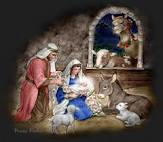
For example, when we consider the nativity of Jesus, it is easy to focus our attention on the sheer impoverishment that went with His being born in a stable and in a place where He was unwelcome in the resident hotel or inn. There was an overwhelming sense of debasement in the lowliness of His birth. Yet, at the very moment that our Lord entered humanity in these debasing circumstances, just a short distance away the heavens broke out with the glory of God shining before the eyes of the shepherds with the announcement of His birth as the King.
Even when He goes to the cross, in the worst moments of His humiliation, there still remains a hint of His triumph over evil, where His body is not thrown into the garbage dump outside of Jerusalem; rather, following the prophetic prediction of Isaiah, chapter 53, Jesus’ body was tenderly laid to rest in the tomb of a wealthy man. His death was ignominious, but His burial was one that was a great honor in ancient terms. His body was adorned with the sweetest spices and most costly perfumes, and He was given the burial plot of honor. Therefore, God, in the midst of the suffering of His obedient servant, would not allow His holy One to see corruption.
And throughout the pages of Scripture, we see these glimpses here and there, breaking through the veil and the cloak of Jesus’ humanity, piercing the armor of the humiliation and debasement that was His lot during His earthly sojourn. These moments, or glimpses, of glory should be for the Christian a foretaste of what lies ahead, not only for the ultimate exaltation of Jesus in the consummation of His kingdom, but also a taste for us of heaven itself, as we become the heirs and joint-heirs of Jesus. Jesus’ final lot, His destiny, His legacy, promised and guaranteed by the Father, is glory, and that glory He shares with all who put their trust in Him.
In common language, the terms exaltation and humiliation stand as polar opposites. One of the most magnificent glories of God’s revealed truth and most poignant ironies is that in the cross of Christ these two polar opposites merge and are reconciled. In His humiliation, we find our exaltation. Our shame is replaced by His glory. The songwriter had it right when he wrote, “My sinful self, my only shame, my glory, all the cross.”
SOURCE: March 1, 2005 @ http://www.ligonier.org/learn/articles/humiliation-exaltation/
BOOK REVIEW: “HOW GREAT IS OUR GOD: Timeless Daily Readings on the Nature of God”
FOCUSING ON THE CHARACTER AND NATURE OF GOD FOR A YEAR

Book Review By David P. Craig
This book contains short devotional excerpts (one page a day) from the writings of Henry and Richard Blackaby’s “Experiencing God”; Jerry Bridges “Trusting God”; Chuck Colson’s “Loving God”; Sinclair Ferguson’s “Heart for God”; Andrew Murray’s “Waiting on God” and Working for God”; John Piper’s “Desiring God”; R.C. Sproul’s “Pleasing God”; A.W. Tozer’s “The Pursuit of God”; and Dallas Willard’s “Hearing God.”
The readings are arranged for each day of the week for Monday – Friday, and then a reading for the weekend. Each reading is based on a verse of Scripture and topic. The back of the devotional features both a subject and Scripture index. After an entire year of going through this devotional here are just a few of my favorite quotes from the book:
“Our greatest need is not freedom from adversity. No calamity in this life could in any way be compared with the absolute calamity of separation from God. In like manner, Jesus said no earthly joy could compare with the eternal joy of our names written in heaven.”
“If we want proof of God’s love for us, then we must look first at the Cross where God offered up His Son as a sacrifice for our sins. Calvary is the one objective, absolute, irrefutable proof of God’s love for us.”
“What God wants from His people is obedience, no matter the circumstances, no matter how unknown the outcome…Knowing how susceptible we are to success’s siren call, God does not allow us to see, and therefore glory in, what is done through us. The very nature of the obedience He demands is that it be given without regard to circumstances or results.”
“In order to trust God, we must view our adverse circumstances through the eyes of faith, not of sense.”
“This is real faith: believing and acting regardless of circumstances or contrary evidence.”
What stands out about this devotional are five positive elements: (1) This book is like reading wisdom from a wise godly grandfather – it is biblical, but lived out on the anvil of many years of godly Christian living; (2) It is saturated with Scripture – each author quotes an abundance of Scriptures in illustrating and applying each truth they present; (3) It is God drenched – all of the meditations elevate your view of God and help you to focus on His glory. (4) It is filled with practical applications. (5) It leads you time and time again to worship the Lord in prayer – particularly – gratitude, thanks, and adoration. For these reasons of balancing the head, heart, and hands for God’s glory I highly recommend this excellent devotional.
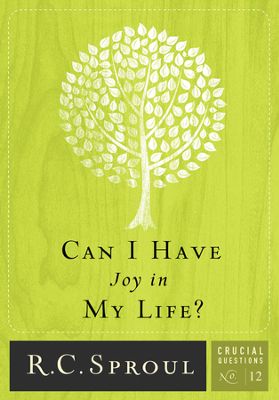
BOOK REVIEW: R.C. SPROUL’S “CAN I HAVE JOY IN MY LIFE?”
WHY PUTTING JESUS FIRST RESULTS IN JOY
 LifeCoach4God