
Category: Bibliology and Bible Interpretation (Hermeneutics)
Bridging the Gap From the Biblical Text From “Then” to “Now”
1 Triangle, 3 Corners, 4 T’s

By Tim Challies
As Christians we have the great privilege of knowing that God speaks to us through his Word, the Bible. There is no other book like it—no other book that rewards us with God’s own words. But to know what God says to us, and how God means for us to live, we need to do a little bit of work. Every Christian, and every preacher in particular, has to go from the text to today. We all wonder, “But what does this mean to me?” or “What does this mean to my congregation?”
Every word of the Bible was written at a certain time and in a certain context. Even the most recent of those times and the nearest of those contexts is at a great distance from us in time and space. Thus, when we read the Bible, we have to determine how those words apply to us today in our very different times and very different contexts. It is not always a simple task.
 We have all seen situations—and many of us have caused situations—where we have been sloppy in going from the text to today. The young man who marches three times around a young woman and waits for her walls of romantic resistance to crumble is not properly understanding how to go from the text to today. Similarly, the muscleman who tears a phone book in half while quoting, “I can do all things through Christ who strengthens me,” is not properly accounting for the context of that verse.
There are different ways Christians attempt to get from the text to today in ways that are faithful and accurate. I’m going to borrow from my friend James Seward and display one of these ways with a triangle that has four T’s on it. Look at figure 1 and you’ll see it: One triangle, three corners, four T’s.
 We will begin with the right side of the triangle. Let’s let the top corner represent our text—any text within the Bible. The bottom-right corner will represent today. You can see this in figure 2. What we are prone to do is to hurry our way from the text to today, just like that young man and that muscleman. We underestimate or under-appreciate our cultural and chronological distance from the text and are too quick to assume we know how to apply the text to our lives today. We sometimes get it right, but often we do not. Every Christian acknowledges this as a potential problem and different traditions attempt to deal with it in different ways.
I am convinced that the most faithful way to deal with it leads us to the bottom-left corner of the triangle. The TT down there stands for them/then—the people for whom the words were originally written (see figure 3). What if, instead of going straight from the text to today we go from the text, to them/then, and only then to today? In this way, before we apply the text to ourselves, we attempt to understand what the words meant to those who first heard them. So when Paul wrote the church in Philippi and said, “I can do all things through Christ who strengthens me,” what did he mean? What did he mean to communicate to them/then? Once we have established what the text meant to them/then, we can more accurately apply it to ourselves—to us/now.
 How can we go from the text to them/then? Broadly, through prayer, through meditation, and through study. We pray and ask the Holy Spirit to illumine the text so we rightly understand it; we meditate on the text, expecting that God will reward this deep contemplation with greater understanding; we study the text through cross-references, word studies, sentence diagraming, commentaries and other resources. We do all of this to understand what the text meant to the original recipients.
Once we have done that—once we have a solid understanding of what the text meant to them/then, we are prepared to visit the third corner of the rectangle. Now we take what we have learned and we ask how it is meant to impact us today. How do we do this? Largely through prayer and meditation, though some further study may be involved. Now we pray and ask God to show us how he can apply his truth to the specifics of our lives and times; we continue to meditate on the text, looking for immediate application, and still trusting that God will use our deep contemplation to give us insights into his Word. You can see this all in figure 4.
 In his book Expositional Preaching, David Helm gives an example of how he, an experienced preacher, was too quick to go from the text to today. He had determined that he would preach 2 Corinthians 8-9 at time when his church needed a financial boost. Even before he began his sermon preparation he knew what he would say—he had a major theme, he had an outline, and everything else he needed to make a great, Bible-based appeal for money. But as he dove into the text he realized that his understanding of the text was too simple: this text isn’t about regular and cheerful giving to meet the church budget, but about a famine relief collection for churches full of Jewish Christians. He came to see that this collection was meant to serve as a test of these Corinthian Christians so that if they gave generously, it would show that they aligned with Paul and the gospel over against the so-called super-apostles. When he went from the text to today he had one sermon, but when he went from the text to them/then to today he had a very different one, and one that more faithfully understood the original meaning of the text. I suspect almost every preacher—every expositional preacher, at least—has had a similar experience at one time or another.
A couple of weeks ago I quoted David Helm and his concern with lectio divina. His concern is exactly this—that lectio divina may too quickly move from the top of the triangle to the bottom-right. It moves from one corner to the other through prayer, meditation and contemplation, but in all of that may not adequately account for the distance between the text and today. This is true, at least, when lectio divina is done apart from serious study and serious work in the text prior to that contemplation. On the other hand, people who value study may be too reliant on their effort while short-changing both prayer and meditation (and I put myself squarely in this camp). And this is why I find this simple triangle so helpful. In three corners and four little T’s it helps us move from the text to today in a way that faithfully captures what God means to communicate to us.
Source: http://www.challies.com (June 2, 2014).
What is an Evangelical?
David Martyn Lloyd-Jones on “What is an Evangelical?”
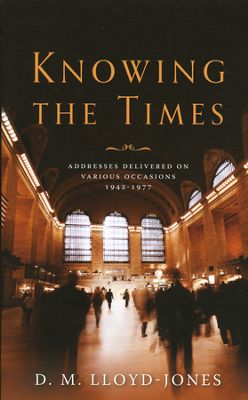
Dr. Lloyd-Jones (20 December 1899 – 1 March 1981) was a minister in the 20th century who spoke concerning the issues within evangelicalism with an almost prophetic character. Lloyd-Jones recognized that evangelicalism, in a desire to influence wider society and academia, was making compromises that would lead to the inevitable decline in gospel preaching and godly living. At the 1971 IFES (International Fellowship of Evangelical Students) conference the doctor spoke on the topic “What is an Evangelical?” While addressing the particulars that an evangelical believes, Lloyd-Jones stated “the first is the doctrine of Scripture.” In the extract below the preacher expands what a true evangelical should believe regarding this central doctrine.
The basis of faith says: ‘We believe in the divine inspiration and entire trustworthiness of holy Scripture as originally given, and its supreme authority in all matters of faith and conduct.’ I contend that it is not enough just to say that; we have got to go further. There are people who claim to subscribe to that doctrine, who, I would suggest, in some of their statements raise very serious doubts as to whether they really do accept it…
It seems to me that we have got to spell out much more clearly the whole notion of revelation. It is difficult to do that in a short statement. The basis speaks of ‘the divine inspiration and entire trustworthiness’, but we must go beyond that. We have got to assert today this category of revelation. We have got to exclude the notion that men have arrived at the truth as a result of searching and thinking, or by means of philosophy. We must affirm that it is entirely given, that ‘holy men of God spake as they were moved by the Holy Ghost’ (2 Pet. 1:21), or, as Paul is constantly reminding his readers, that his gospel is not his own, ‘For I neither received it of man, neither was I taught it, but by the revelation of Jesus Christ’ (Gal. 1:12). We have to underline in a new and very definite way the whole notion of revelation and also, in the same way, of inspiration, showing that by inspiration we do not mean that these men were inspired in the way that certain poets have been ‘inspired’ and given glimpses into truth, but that they were actually controlled by the Holy Spirit. ‘Borne along’, as Peter writes in 2 Peter 1:21, or as Paul puts it in 2 Timothy 3:16: ‘All scripture is given by inspiration of God’; it is ‘God-breathed’. These things we must assert with particularity.
In the same way we have got to assert today that we believe that Scripture contains propositional truth. This has often been the dividing line between evangelicals and pseudo-evangelicals. I have noticed over the years it is one of the first points that indicate a departure from an evangelical position when men begin to object to, and to reject, propositional truth, as Karl Barth did and as most of his followers still do. But we claim that in the Bible there are propositions, truths stated in propositional form, with regard to God and His being and His character, and many other matters. We have got to assert this element of propositional truth.
Likewise we have to assert particularly the supernatural element in the Scripture. What do I mean? Well, we have got to emphasize that we believe in prophecy in the sense of foretelling. The emphasis today is on ‘forthtelling’. We admit that we agree that prophecy is forthtelling but, over and above that, it is foretelling. To me one of the profoundest arguments for the unique inspiration of the Scriptures is the truth of prophecy, the fulfillment of prophecy. We have got to emphasize this extraordinary manifestation of the supernatural.
We have also to insist upon a belief in the literal truth and historicity of the miracles of the Old and the New Testament, because there are people who say that they can still subscribe to our general statement about the inspiration and the authority of the Scriptures, who increasingly are denying the historicity of many of the Old Testament miracles, and indeed are trying to explain away some of the New Testament miracles in terms of science or psychology. We must assert the historicity of these manifestations of the supernatural.
Then the next thing to be said under this heading of Scripture is that we must believe the whole Bible. We must believe the history of the Bible as well as its didactic teaching. Failure here is always an indication of a departure from the true evangelical position. Today there are men who say, Oh yes, we believe in the Bible and its supreme authority in matters of religion, but, of course, we don’t go to the Bible for science; we go to it for help for our souls, for salvation and help and instruction in the way to live the Christian life. They are saying that there are, as it were, two great authorities and two means of revelation: one of them is Scripture and the other is nature. These they say , are complementary, they are collateral, and so you go to the Scriptures for matters concerning your soul, but you do not go to them to seek God’s other revelation of Himself in nature. For that, you go to science.
You are familiar with this view which, it seems to me, is not only extremely dangerous, but tends to undermine our whole position. We have got to contest it, and contest it very strongly. There is one thing about this present tendency which is quite amazing to me, and it is that those who advocate it seem to think that they are saying something quite new; but it is not new. It is precisely what Ritschl and his followers were teaching a hundred years ago. ‘Judgments of fact’ and ‘judgments of value’, as they called them. It is just a return to that. That is how evangelicals in the last century went astray in the 1840s and subsequently. That is precisely how it came about. Their argument was that they were merely out to defend the truth of the gospel against this increasing attack from the realm of natural science. And that was the method they adopted. They hold that the Bible is only concerned with ‘religious’ truth and so, whatever science may discover, it cannot affect this truth.
Our friends today with the same motive- and let us grant that their motive is good and true- are doing exactly the same thing. It seems to me that in so doing they are on the same path as the followers of Ritschl and others, and it always ends in the same result, namely that the gospel itself is compromised. We must assert that we believe in the historicity of the early chapters of Genesis and all other biblical history.
Source: The full manuscript of Lloyd-Jones’ address may be found in Lloyd-Jones, David Martyn. Knowing the Times: Addresses Delivered On Various Occasions 1942-1977. Edinburgh U.K.: The Banner of Truth Trust, 2013. (pages 299-355).
Why Be Thankful for the Bible?
10 Reasons I’m Thankful For a God-Breathed Bible by John Piper

1. The Bible awakens faith, the source of all obedience.
So faith comes from hearing, and hearing by the word of Christ. (Romans 10:17)
2. The Bible frees from sin.
You will know the truth, and the truth will make you free. (John 8:32)
3. The Bible frees from Satan.
The Lord’s bond-servant must not be quarrelsome, but be kind to all, able to teach, patient when wronged, with gentleness correcting those who are in opposition, if perhaps God may grant them repentance leading to the knowledge of the truth, and they may come to their senses and escape from the snare of the devil, having been held captive by him to do his will. (2 Timothy 2:24-26)
4. The Bible sanctifies.
Sanctify them in the truth; Your word is truth. (John 17:17)
5. The Bible frees from corruption and empowers godliness.
His divine power has granted to us everything pertaining to life and godliness, through the true knowledge of Him who called us by His own glory and excellence. For by these He has granted to us His precious and magnificent promises, so that by them you may become partakers of the divine nature, having escaped the corruption that is in the world by lust. (2 Peter 1:3-4)
6. The Bible serves love.
And this I pray, that your love may abound still more and more in real knowledge and all discernment. (Philippians 1:9)
But the goal of our instruction is love from a pure heart and a good conscience and a sincere faith. (1 Timothy 1:5)
7. The Bible saves.
Pay close attention to yourself and to your teaching; persevere in these things, for as you do this you will ensure salvation both for yourself and for those who hear you. (1 Timothy 4:16)
Therefore, I testify to you this day that I am innocent of the blood of all men. For I did not shrink from declaring to you the whole purpose of God. (Acts 20:26)
[They will] perish, because they did not receive the love of the truth so as to be saved. (2 Thessalonians 2:10)
8. The Bible gives joy.
These things I have spoken to you, that my joy may be in you, and that your joy may be full. (John 15:11)
9. The Bible reveals the Lord.
And the Lord appeared again at Shiloh, for the Lord revealed himself to Samuel at Shiloh by the word of the Lord. (1 Samuel 3:21)
10. Therefore, the Bible is the foundation of my happy home and life and ministry and hope of eternity with God.
©2014 Desiring God Foundation. Used by Permission.
Permissions: You are permitted and encouraged to reproduce and distribute this material in its entirety or in unaltered excerpts, as long as you do not charge a fee. For Internet posting, please use only unaltered excerpts (not the content in its entirety) and provide a hyperlink to this page. Any exceptions to the above must be approved by Desiring God.
Please include the following statement on any distributed copy: By John Piper. ©2014 Desiring God Foundation. Website: desiringGod.org
Why So Many Churches Hear So Little of the Bible
By Dr. Albert Mohler and Mark Galli

“It is well and good for the preacher to base his sermon on the Bible, but he better get to something relevant pretty quickly, or we start mentally to check out.” That stunningly clear sentence reflects one of the most amazing, tragic, and lamentable characteristics of contemporary Christianity: an impatience with the Word of God.
The sentence above comes from Mark Galli, senior managing editor of Christianity Today in an essay entitled, “Yawning at the Word.” In just a few hundred words, he captures the tragedy of a church increasingly impatient with and resistant to the reading and preaching of the Bible. We may wince when we read him relate his recent experiences, but we also recognize the ring of truth.
Galli was told to cut down on the biblical references in his sermon. “You’ll lose people,” the staff member warned. In a Bible study session on creation, the teacher was requested to come back the next Sunday prepared to take questions at the expense of reading the relevant scriptural texts on the doctrine. Cutting down on the number of Bible verses “would save time and, it was strongly implied, would better hold people’s interest.”
As Galli reflected, “Anyone who’s been in the preaching and teaching business knows these are not isolated examples but represent the larger reality.”
Indeed, in many churches there is very little reading of the Bible in worship, and sermons are marked by attention to the congregation’s concerns, not by an adequate attention to the biblical text. The exposition of the Bible has given way to the concerns, real or perceived, of the listeners. The authority of the Bible is swallowed up in the imposed authority of congregational concerns.
As Mark Galli notes:
It has been said to the point of boredom that we live in a narcissistic age, where we are wont to fixate on our needs, our wants, our wishes, and our hopes—at the expense of others and certainly at the expense of God. We do not like it when a teacher uses up the whole class time presenting her material, even if it is material from the Word of God. We want to be able to ask our questions about our concerns, otherwise we feel talked down to, or we feel the class is not relevant to our lives.
And Galli continues:
It is well and good for the preacher to base his sermon on the Bible, but he better get to something relevant pretty quickly, or we start mentally to check out. Don’t spend a lot of time in the Bible, we tell our preachers, but be sure to get to personal illustrations, examples from daily life, and most importantly, an application that we can use.
The fixation on our own sense of need and interest looms as the most significant factor in this marginalization and silencing of the Word. Individually, each human being in the room is an amalgam of wants, needs, intuitions, interests, and distractions. Corporately, the congregation is a mass of expectations, desperate hopes, consuming fears, and impatient urges. All of this adds up, unless countered by the authentic reading and preaching of the Word of God, to a form of group therapy, entertainment, and wasted time—if not worse.
Galli has this situation clearly in his sights when he asserts that many congregations expect the preacher to start from some text in the Bible, but then quickly move on “to things that really interest us.” Like . . . ourselves?
One of the earliest examples of what we would call the preaching of the Bible may well be found in Nehemiah 8:1-8 (ESV):
And all the people gathered as one man into the square before the Water Gate. And they told Ezra the scribe to bring the Book of the Law of Moses that the Lord had commanded Israel. So Ezra the priest brought the Law before the assembly, both men and women and all who could understand what they heard, on the first day of the seventh month. And he read from it facing the square before the Water Gate from early morning until midday, in the presence of the men and the women and those who could understand. And the ears of all the people were attentive to the Book of the Law. And Ezra the scribe stood on a wooden platform that they had made for the purpose. And beside him stood Mattithiah, Shema, Anaiah, Uriah, Hilkiah, and Maaseiah on his right hand, and Pedaiah, Mishael, Malchijah, Hashum, Hashbaddanah, Zechariah, and Meshullam on his left hand. And Ezra opened the book in the sight of all the people, for he was above all the people, and as he opened it all the people stood. And Ezra blessed the Lord, the great God, and all the people answered, “Amen, Amen,” lifting up their hands. And they bowed their heads and worshiped the Lord with their faces to the ground. Also Jeshua, Bani, Sherebiah, Jamin, Akkub, Shabbethai, Hodiah, Maaseiah, Kelita, Azariah, Jozabad, Hanan, Pelaiah, the Levites, helped the people to understand the Law, while the people remained in their places. They read from the book, from the Law of God, clearly, and they gave the sense, so that the people understood the reading.
Ezra and his companions stood on a platform before the congregation. They read the scriptural text clearly, and then explained the meaning of the Scripture to the people. The congregation received the Word humbly, while standing. The pattern is profoundly easy to understand: the Bible was read and explained and received.
As Hughes Oliphant Old comments, “This account of the reading of the Law indicates that already at the time of the writing of this text there was a considerable amount of ceremonial framing of the public reading of Scripture. This ceremonial framing is a witness to the authority of the Bible.” The reading and exposition took place in a context of worship as the people listened to the Word of God. The point of the sermon was simple: “to make clear the reading of the Scriptures.”
In many churches, there is almost no public reading of the Word of God. Worship is filled with music, but congregations seem disinterested in listening to the reading of the Bible. We are called to sing in worship, but the congregation cannot live only on the portions of Scripture that are woven into songs and hymns. Christians need the ministry of the Word as the Bible is read before the congregation such that God’s people—young and old, rich and poor, married and unmarried, sick and well—hear it together. The sermon is to consist of the exposition of the Word of God, powerfully and faithfully read, explained, and applied. It is not enough that the sermon take a biblical text as its starting point.
How can so many of today’s churches demonstrate what can only be described as an impatience with the Word of God? The biblical formula is clear: the neglect of the Word can only lead to disaster, disobedience, and death. God rescues his church from error, preserves his church in truth, and propels his church in witness only by his Word—not by congregational self-study.
In the end, an impatience with the Word of God can be explained only by an impatience with God. We all, both individually and congregationally, neglect God’s Word to our own ruin.
As Jesus himself declared, “He who has ears to hear, let him hear.”
Sources: Albert Mohler, May 14, 2014 http://www.albertmohler.com Cf. Mark Galli, “Yawning at the Word,” Christianity Today [online edition], posted November 5, 2009. http://www.christianitytoday.com/ct/2009/novemberweb-only/144-41.0.htmlHughes Oliphant Old, The Reading and Preaching of the Scriptures in the Worship of the Christian Church, Volume 1: The Biblical Period (Grand Rapids: W.B. Eerdmans, 2007).
Jesus in Every Book of the Bible

JESUS THROUGH THE BIBLE BY DR. PHILIP RYKEN
We believe in a Christ-centered Bible. The salvation that was expected in the Old Testament is exhibited in the Gospels and then explained in the rest of the New Testament.
From Genesis we learn that Jesus is the seed of the woman who will crush Satan’s head, and the son of Abraham who will bless all the nations of the earth. From Exodus we learn that Jesus is the Passover Lamb whose blood saves us from the angel of death, and the wilderness tabernacle where God dwells in glory. From Leviticus we learn that He is the atoning sacrifice that takes away our sin. From Numbers we learn that He is the bronze serpent lifted up for everyone who looks to Him in faith. From Deuteronomy we learn that He is the prophet greater than Moses who comes to teach us God’s will.
So much for the Pentateuch.
What do we learn from the historical books? From Joshua we learn that Jesus is our great captain in the fight. From Judges we learn that He is the king who helps us do what is right in God’s eyes, and not our own. From Ruth we learn that Jesus is our kinsman-redeemer. From1 and 2 Samuel we learn that He is our anointed king. From 1 and 2 Kings we learn that He is the glory in the temple. From 1 and 2 Chronicles we learn that He is the Son of David — the rightful king of Judah. From Ezra and Nehemiah we learn that He will restore the city of God. From Esther we learn that He will deliver us from all our enemies.
Then we come to the poetic writings. From Job we learn that Jesus is our living redeemer, who will stand on the earth at the last day. From the Psalms we learn that He is the sweet singer of Israel — the Savior forsaken by God and left to die, yet restored by God to rule the nations. From Proverbs we learn that Jesus is our wisdom. From Ecclesiastes we learn that He alone can give us meaning and purpose. From the Song of Solomon we learn that He is the lover of our souls.
This brings us to the prophets, whose special mission it was to prophesy about the coming of Christ. Isaiah tells that He is the child born of the Virgin, the son given to rule, the shoot from the stump of Jesse, and the servant stricken and afflicted, upon whom God has laid all our iniquity. Jeremiah and Lamentations tell us that Jesus is our comforter in sorrow, the mediator of a new covenant who turns our weeping into songs of joy. Ezekiel tells us that the Spirit of Jesus can breathe life into dry bones and make a heart of stone beat again. Daniel tells us that Jesus is the Son of Man coming in clouds of glory to render justice on the earth.
These are the Major Prophets, but the Minor Prophets also bore witness to Jesus Christ. Hosea prophesied that He would be a faithful husband to His wayward people. Joel prophesied that before He came to judge the nations, Jesus would pour out His Spirit on men and women, Jews and Gentiles, young and old. Amos and Obadiah prophesied that He would restore God’s kingdom. Jonah prophesied that for the sake of the nations, He would be raised on the third day. Micah prophesied that Jesus would be born in Bethlehem. Nahumprophesied that He would judge the world. Habakkuk prophesied that He would justify those who live by faith. Zephaniah prophesied He would rejoice over His people with singing. Haggai prophesied that He would rebuild God’s temple. Zechariah prophesied that He would come in royal gentleness, riding on a donkey, and that when He did, all God’s people would be holy. Malachi prophesied that before He came, a prophet would turn the hearts of the fathers back to their children.
From Genesis to Malachi, the Old Testament is all about Jesus. But of course it is in the New Testament that Jesus actually comes to save His people. Whereas the Old Testament gives us His background, the New Testament presents His biography.
The gospels give us the good news of salvation through His crucifixion and resurrection. The Gospel of Matthew is that Jesus is the Messiah God promised to Israel. The Gospel of Mark is that He is the suffering servant. The Gospel of Luke is that He is a Savior for everyone, including the poor and the weak. The Gospel of John is that He is the incarnate word, the Son of God, the light of the world, the bread of life, and the only way of salvation. But all the gospels end with the same good news: Jesus died on the cross for sinners and was raised again to give eternal life; anyone who believes in Him will be saved.
Then the New Testament turns its attention to the church, which is still about Jesus because the church is His body. The book of Acts shows how Jesus is working in the church today, through the gospel, by the power of the Holy Spirit.
Then come all the letters that were written to the church — letters that tell about Jesus and how to live for Him. In Romans Jesus is righteousness from God for Jews and Gentiles; in 1 and 2 Corinthians He is the one who unifies the church and gives us spiritual gifts for ministry. In Galatians Jesus liberates us from legalism; in Ephesians He is the head of the church; in Philippians He is the joy of our salvation; in Colossians He is the firstborn over all creation. In 1 and 2 Thessalonians Jesus is coming soon to deliver us from this evil age; in 1 and 2 Timothy and Titus He shepherds His people; and in Philemon He reconciles brothers who are separated by sin. This is the gospel according to Paul.
Hebrews is an easy one: Jesus is the great high priest who died for sin once and for all on the cross and who sympathizes with us in all our weakness. In the Epistle of James, Jesus helps us to prove our faith by doing good works. In the Epistles of Peter He is our example in suffering. In the Letters of John He is the Lord of love. In Jude He is our Master and Teacher. Last, but not least, comes the book of Revelation, in which Jesus Christ is revealed as the Lamb of God slain for sinners, Alpha and the Omega, the first and the last, the beginning and the end, the King of kings and Lord of lords, the great Judge over all the earth, and the glorious God of heaven.
The Bible says that in Jesus “all things hold together” (Colossians 1:17) and this is as true of the Bible as it is of anything else. Jesus holds the whole Bible together. From Genesis to Revelation, the Word of God is all about Jesus, and therefore it has the power to bring salvation through faith in Him. It is by reading the Bible that we come to know Jesus, and it is by coming to know Jesus that we are saved. This is why we are so committed to God’s Word, why it is the foundation for everything we do, both as a church and as individual Christians.
We love the Word because it brings us to Christ.
Jesus Through the Bible by Philip Graham Ryken. 2005 Alliance of Confessing Evangelicals. Revised 2007, Alliance of Confessing Evangelicals. All rights reserved. All Scripture from English Standard Version of the Bible, unless otherwise noted.
ABOUT THE AUTHOR: Philip Ryken is the Bible teacher on the Alliance of Confessing Evangelicals’ weekly radio broadcast, Every Last Word, and is a member of the Alliance Council. Dr. Ryken also serves as president of Wheaton College. He was educated at Wheaton College (IL), Westminster Theological Seminary (PA), and the University of Oxford (UK), from which he received his doctorate in historical theology. He is the author or editor of more than 20 books, including Written in Stone: The Ten Commandments and Today’s Moral Crisis and He Speaks to Me Everywhere: Meditations on Christianity and Culture.
Book Review on R.C. Sproul’s: Everyone’s A Theologian
A PRIMER ON THE MAJOR DOCTRINES OF THE BIBLE

Book Review by David P. Craig
This book is almost a word for word account of R.C. Sproul’s DVD teaching series entitled “Foundations: An Overview of Systematic Theology.” Having watched this video series in the past I immediately recognized the content. I’m glad this series has now been made available in book form.
R.C. is a master teacher and in this book he covers the subject of Theology in its broadest sense. Theology not only refers to the study of God, but to everything that God has revealed to us in the Bible. In sixty short, but jam-packed chapters R.C. unveils with depth and clarity a summary of what the Bible has to say about its most important themes: Theology Proper – The study of God; Anthropology and Creation – The study of man; Christology – The study of Jesus; Pneumatology – The study of the Holy Spirit; Soteriology- The study of salvation; Ecclesiology – The study of the Church; and lastly (no pun intended) – Eschatology – The study of last things.
This book is an excellent introduction to all of these subjects and the sub topics they address. As R.C. Sproul says, “Everyone, is a theologian, but either a good or bad one.” You will come away from reading this book having learned a ton of important truths that will help you become a better theologian. With profound depth, clarity, historical, and practical wisdom Sproul will delight and intrigue you in helping you grow in your journey and intimacy with God – using your head, heart, and hands for His glory and your good.
Tim Keller Sermon: The Power of The Gospel
SERIES – Bible: The Whole Story—Redemption and Restoration – Part 6
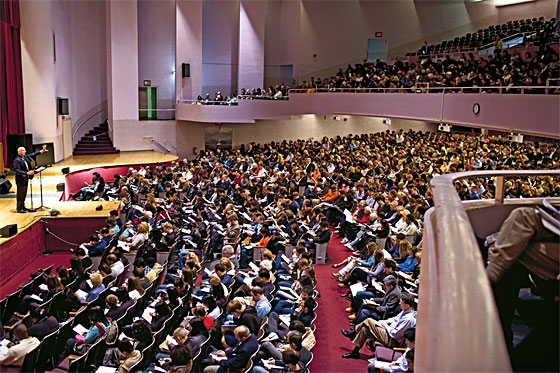
Prached on February 8, 2009 in Manhattan, N.Y.
1 Paul, a servant of Christ Jesus, called to be an apostle and set apart for the gospel of God—2 the gospel he promised beforehand through his prophets in the Holy Scriptures 3 regarding his Son, who as to his human nature was a descendant of David, 4 and who through the Spirit of holiness was declared with power to be the Son of God by his resurrection from the dead: Jesus Christ our Lord.
5 Through him and for his name’s sake, we received grace and apostleship to call people from among all the Gentiles to the obedience that comes from faith. 6 And you also are among those who are called to belong to Jesus Christ. 7 To all in Rome who are loved by God and called to be saints: Grace and peace to you from God our Father and from the Lord Jesus Christ.
14 I am obligated both to Greeks and non-Greeks, both to the wise and the foolish. 15 That is why I am so eager to preach the gospel also to you who are at Rome. 16 I am not ashamed of the gospel, because it is the power of God for the salvation of everyone who believes: first for the Jew, then for the Gentile. 17 For in the gospel a righteousness from God is revealed, a righteousness that is by faith from first to last, just as it is written: “The righteous will live by faith.” – Romans 1:1-7, 14-17
Every week we start by saying we are tracing out the storyline of the Bible, because the Bible is not so much a series of disconnected, individual stories, each with a little lesson or moral telling us how to live. It’s primarily a single story telling us what’s wrong with the human race, what God has done to make things right, and how it’s all going to work out in the end.
We’re drilling down into three places in the Bible. We’ve drilled down into Genesis 1 to 4, where we learned something about what the Bible says about what’s wrong with us. Now we’re going to drill down into Romans 1 through 4, perhaps the single most comprehensive and packed place where, through a letter of Saint Paul, we learn what God did about it.
All scholars and students of Romans believe verses 16 and 17 are Paul’s way of putting the gospel in a nutshell, his message in a kind of thesis statement. Therefore, it’s an extremely important statement. I want to meditate on it with you to help you break through. That’s kind of an odd statement (break through). Let me tell you why I use the phrase.
Martin Luther, founder of Protestantism, actually, later in his life told a story. In the preface to one of his collections of writings, he wrote a little reminisce of a great experience he had (it’s also called the “Tower Experience”) as a young man. Many people would call it his conversion experience. It all had to do with Romans and Romans 1:16 and 17.
He wrote, “I greatly longed to understand Paul’s epistle to the Romans, and nothing stood in the way but that one expression ‘the justice of God,’ because I took it to mean that justice whereby God is just and deals justly in punishing the unjust. My situation was that, although an impeccable monk, I stood before God as a sinner troubled in conscience, and I had no confidence that my merit would assuage him.
Therefore, I did not love a just and angry God, but rather hated and murmured against him. […] Night and day I pondered until I saw the connection between the justice of God and the statement that, ‘the just shall live by his faith.’ Then I grasped that … through gift and sheer mercy God justifies us through faith. Thereupon I felt myself to be reborn and to have gone through open doors into paradise.” “When I saw that Law meant one thing and Gospel another, I broke through.”
That’s interesting. He had this breakthrough. What he means is he was completely transformed … his thinking, his heart, his life, everything … by these verses because he pondered and pondered until he broke through. I would like to help everybody here break through. That is to say if you haven’t, if these two verses have never done to you what they did to Luther, I’m going to try to show you three factors you have to grasp if you’re going to break through.
If it has, if the ideas here of these verses have transformed you, I’d like to give you by telling you the same three things (of course, since you’re all in the same room together) how you could help other people who are open have a breakthrough. There are three factors that have to do with breakthrough.
You have to grasp, according to, I think, this text, the form of the gospel, the content of the gospel, and the power of the gospel. The form, the content, and the power. I’ll give you tests along the way. I’m being very focused. How do we break through? You have to understand …
1. The form of the gospel
You can see, especially if you read all the way through Romans 1:1–17, the word gospel shows up more here than any other place in the book. In fact, I think it may be the word gospel shows up more in these verses per phrase than any other place in the Bible. We have to ask ourselves, “What is so important? Why this word?”
The word gospel, as most of you know, is a Greek word we transliterate euaggelion. That is, eu, the good, and aggelos, an angel. We look at the word angel in English, of course. Right away we think of wings and things like that, which is wrong, because the word aggelos means a herald. What actually is at the very heart of the word gospel is the news media. Did you know that? News media? Okay.
How did news about great historic events get distributed back in those days? What was the news media? No print paper. No audio, video, radio, television. Well, then how was news …? What was the media for the news? The answer is it was heralds. That is, everybody is back in the town because they know there’s a great military battle that’s being fought miles away, so they’re behind the barricades. They don’t know what’s going to happen.
What happens when the general achieves a great military victory? How do we spread the news? He would send heralds. The aggelos. An aggelia, which is a message or a herald. The news. The herald would come in to the town and declare the news, “Victory!” Then he would run to the next town square and proclaim “Victory!” Then everyone would go back home with joy.
If that’s at the very, very heart of the word gospel, if that’s what the message is, the essence of the Christian message is news … good, joyful news … then this is the difference between the gospel and every other philosophy or religion. The gospel is not good advice about what you must do. It’s primarily good news about what’s already been done for you, something that’s already happened.
See, other religions say, “If you really want to meet God, do this, this, and this.” It’s good advice. Only Christianity is not good advice but primarily good news about something that’s already been done for you. This is test one. We’ve talked about this actually not too many weeks ago, so I won’t belabor it, but it’s crucial. One of the breakthroughs is to realize how utterly different Christianity is because it’s good news, not good advice.
If I ask somebody here in New York, “What do you think the essence of Christianity is? What does it mean to be a Christian?” the average person on the street would say, “Well, I think it means to try to live like Jesus and try to love your neighbor, try to live by the Golden Rule.” I want you all to know I think that is an incredibly great idea. Let’s all do that. I’m all for it, but that’s not news. That’s not the heart of Christianity. It can’t be, because it’s not news.
Is that news? Is that news about what has been done for you … outside of you, for you … that inflicts in you such joy that you finally can live according to the Golden Rule? See, that’s Christianity. Something has happened outside you, something momentous. It’s happened outside you for you, and that’s what inflicts into you life-changing joy. Now I can live according to the Golden Rule.
To say being a Christian is the Golden Rule, that’s not news. Therefore, there’s no breakthrough. See, breakthrough, transformation, comes like this. If you say to somebody, “Here’s the essence of the Christian message. You need to live like Jesus and love your neighbor according to the Golden Rule,” there are only three responses to that. One is you say, “Sure, I knew that.” Shrug. Indifference.
The second, like Luther, is, “Oh, that’s very hard. I can’t do that.” Crushed. Discouraged. The third is the Pharisees say, “I do that all the time.” So either shrugged or bugged or smug. No breakthrough. No breakthrough! No, “Oh my word! I never thought of that.” See, that’s what happened. When Luther broke through, he said, “This is a paradigm shift.” Sorry, it’s cliché, but it’s far more than that but it’s not less.
Here’s my question. Here’s the first test. I don’t know what you believe, but whatever you believe about God or how you ought to live, is it mainly about you, or is it mainly about what he has done? Is it mainly about you and what you must do, or mainly about him and what he has done? Which is it? See the breakthrough? The gospel is news, not advice.
2. The content of the gospel
The content of the gospel is that very spot where Luther meditated and meditated, where he says, “For in the gospel, a righteousness from God is revealed. A righteousness that comes by (dia, through) faith. Just as it is written, the one who is righteous through faith, that’s the person who lives.” He was thinking and thinking about this until suddenly he realized, “The righteousness of God is a righteousness that comes to me, and I receive by faith.” That opened everything up.
If we want to understand this term, which isn’t a very ordinary term … It’s a technical term in a way. It’s a term Paul uses, though, so we need to try to figure it out. It changed Luther’s life. It changed mine. We’re justified by faith. Let me use two illustrations to show you. The second one is considerably more poignant than the first.
The first one, though, think about this. Whenever we talk about being justified, we’re talking about not a change in the object but a change in the relationship to the object. Not a change inside the object, but relationship to the object. For example, if you’re speaking to me, and you say something, and I say, “Hmm. Justify that statement,” what do I mean?
I’m not saying, “Change the statement.” What I’m actually saying is, “It’s hard for me to accept that. Do something. Say something to change my relationship to the statement, to change my regard for it so I can accept it.” I’m not saying, “Change the statement.” “Help me get into a new relationship with it because I’m about to reject it.” “Justify that statement” means, “Change my regard for it. Do something.”
That is actually what the word means, especially at certain points here but also in Romans 5 where Paul says in verse 2, “Since we’re justified by faith, we have access to this grace in which we stand.” The word stand there means to stand in the presence of a great God or a great king or judge. This is what Paul is saying. Jesus has done something so God, looking at us, in spite of everything wrong with us … Jesus has done something to change God’s regard for us, his relationship to us.
Something has been done. See, that’s the news. Something has been done so now the Father looks at us and loves us and delights in us and accepts us. Our relationship has been changed. It’s not so much something happened inside, because then that would all be about us. That wouldn’t be gospel. It would all be, “Well, you have to do something.” It’s about something that’s happened outside of us that has changed God’s relationship to us. What is that?
To me, the second factor in what brings a breakthrough over the gospel is when you realize the gospel is about more than just forgiveness. Follow me, please. It’s about more than just forgiveness. Please don’t think I’m saying there’s anything wrong with forgiveness, but most people think that’s what this is. That’s what salvation is. That’s what Jesus did.
The idea is because Jesus died on the cross, when I do something wrong, I can ask God for forgiveness, and I’m forgiven. Isn’t that wonderful? Yes, of course it’s wonderful. It’s more than wonderful, but I want to show you here for a second it would not be enough. It’s way less than what’s being promised here. Yeah!
Because, see, if it’s true that that’s really salvation, that because Jesus died on the cross, now when I ask for forgiveness, I’m forgiven … God forgives me, wipes the slate clean. Do you realize what that means? It means that even though he has forgiven me for what I just did wrong, my relationship with him is still up to me because actually, in a sense, God says, “Hey, I just forgave you for what you did. I’m not going to hold that against you, but now you’d better get it right.” If that’s all forgiveness is, it’s not enough.
You know, for example, here’s a man, let’s just say, and he is in prison. What is going to get him a new life? Well, you could say the first thing that’s going to get him a new life is pardon. The governor writes a pardon, and he is out. Wow! He has a new life. No. He is just back to where all the rest of us slobs are. He is not in prison. Now he has to get a job. Now he has to work. It’s a long haul. He doesn’t have a new life yet.
You say, “Well, what more do you want?” I’ll tell you what’s more. The salvation of the gospel is not so much like simply getting a pardon to get out of prison. It’s besides getting a pardon, forgiveness. It’s also like getting the Congressional Medal of Honor on top of it. It’s a negative and a positive.
There’s a TV series called NCIS. It’s about Naval Criminal Investigative Services. It’s a cop show amongst military and criminal investigators. There’s a really great episode that was done about four years ago. The main character was played by Charles Durning, the great actor. The episode is about a poor broken-down old man, a former Marine, played by Charles Durning. He is in his eighties. He is broken down. He is kind of dowdy, and he is accused of murder. He is accused of murder!
At one point, two big, beefy Marines and a snarling Navy lawyer come after this poor little old man. They’re about to arrest him. They’re overshadowing him. Here he is standing in their presence accused. As they stand and they’re about to cuff him, actually, a friend of the old man pulls his tie aside. Under it is the Congressional Medal of Honor, because on Iwo Jima, he had done acts of extraordinary valor and bravery beyond the call of duty and had been given a Congressional Medal of Honor.
When he pulled that aside, the Marines and the snarling lawyer immediately saw what it was. Instead of looking at the poor little old man, the accused, condemned man, they saw that medal of honor, and they immediately snapped to attention and saluted. They were in awe. Just like that. It’s very, very good drama, and it’s very, very kind of moving to see. It is just an image, however faint, of what Paul is talking about here.
You know, one of the verses I always quote to you but I never explain is 2 Corinthians 5:21. “God made him who had no sin to be sin for us, so that in him we might become the righteousness of God.” What does that mean? “God made him who had no sin to be sin for us, so that in him we might become the righteousness of God.” Well, think.
On the cross, what does it mean to say Jesus was made sin? God made him sin. Does that mean God made him sinful, God put sin in his heart so he became greedy and angry and violent? No! He was up there forgiving his enemies. I mean, no! He was up there loving his Father, even when his Father was turning on him. Absolutely it didn’t mean he became sinful. It means he was treated as our sins deserve. He was given the treatment our record deserves.
So what does it mean to say that when you give your life to Christ, our sins are put on him? “God made him who had no sin to be sin for us, so that in him we might become the righteousness of God.” In him! What does that mean? It can’t mean that automatically the minute you become a Christian, you become righteous in your heart any more than he became sinful on the cross. No, no, no, no.
What it must mean is we are covered with his medals. We are covered with his glory. We’re covered with all the awards and the medals of his valor and his cosmic bravery because he took on evil and he went down to death. All that he deserved is now on us. Here’s where the illustration doesn’t quite work because that old man basically was suddenly given all this … Even though he was condemned, they suddenly saw his medal, which he had won in a former life. In our case, the medals on us were won by Jesus in a former life.
Now the whole universe salutes us. Now God himself delights in us. We have become the righteousness of God in him. Now do you see the test? Do you see where the breakthrough comes? The first breakthrough is when you see it’s not advice but news. The second breakthrough is when you see it’s not just forgiveness, but it’s being clothed in the righteousness of Christ. It’s a righteousness from God given to me by a gift.
No wonder Luther said, “Oh my word! That’s incredible.” It is incredible. When you ask somebody (I do all the time), “Hey, are you a Christian?” and the person says, “Well, I’m trying,” that shows they have no idea about what Christianity is about because Christianity is a standing. We have access to this grace in which we stand. See? It means you have no idea about what it means to be a Christian. You’re still stuck back in the idea it’s good advice.
Some people say, “Well, I hate to call myself a Christian, because I don’t feel worthy of the name.” Of course you don’t feel good enough, but you’re in him if you understand the gospel. He is always good enough. He is utterly good enough. Covered with his medals. Covered with his trophies. Covered with his badges and banners and ribbons in glory.
You know, some people will say, “That’s interesting. I guess the Luther types, religious people … Gosh. He was a monk. How much more religious can you get than that? I guess there are people who are always filled with guilt and shame. They’re religious, and they need this. They need this idea.” No, it’s not just them. Oh no!
I have talked to an awful lot of people recently who have lost an awful lot of money. Do you know what? One of the things you can see (in fact, sometimes they tell me) is it was a lot more than money. They didn’t know. They didn’t know! There’s a disorientation at the center of their being. They’re not sure who they are. There’s a complete loss of identity. There’s a complete loss of confidence. Do you know why? Because that money was their righteousness.
See, irreligious people don’t use the word righteousness. As we said a couple of week ago when we were talking about Cain and Abel, no human being can assure themselves … We cannot assure ourselves of our value and worth. We have to get somebody outside approving us, acclaiming us, declaring us worthy, declaring us a people of value.
Some people do it through, “I want to look beautiful.” Some people say, “I want to make money.” Some people say, “I want to achieve.” Whatever. The fact is, everybody is desperately struggling for righteousness. Here’s the weird thing. Everybody’s righteousness, if it’s not God’s, is going to be blown away. Recession is one way, but it’s going to happen. Old age is another way. Everybody’s righteousness is going to blow away unless this is upon you.
The second breakthrough then that you see is not just forgiveness, wiping the slate clean, but getting the cosmic Medal of Honor. You know, being accepted in the beloved, having the righteousness of God put upon us in Jesus. Being legally righteous even when we’re actually unrighteous. We’ll see more about that. Thirdly, the last thing you have to do if you’re really going to understand and break through is you have to have a sense of …
3. The power of the gospel
Not just the form, not just the content, but the power. Paul says, “For I am not ashamed of the gospel, because it is the power of God that brings salvation …” I guess in my case, of all these … You know, even though it’s brief (verses 16 and 17 are brief), this is my favorite part of this nutshell.
Because, see, it’s not saying that the gospel brings the power of God or it results in the power of God or it’s a means to the power of God, does it? Well, no, it doesn’t. What does it say? It says the gospel is the power of God in verbal form. Therefore, when I believe it, when I hear it, when I understand it, when I grasp its propositions, its meanings, its words, to the degree that I actually get this gospel into my life, the power of God is coursing through me.
It is the power of God! Therefore, the way you know you’re beginning to understand the gospel and breaking through is instead of it just being a set of ideas, you begin to sense it being a power. How is that so? Well, here are a couple of ways. First of all, one of the ways you know you’re breaking through (or perhaps breaking through or have a chance of breaking through) is you feel its offensiveness.
Notice connected to this idea of the power of God, he says, “I am not ashamed. I am not ashamed of the gospel.” When you say something like that, “I am not ashamed of her. I am not ashamed of him. I am not ashamed of that,” that means there are whole lot of other people who are, or you wouldn’t have said that. Okay? There are a whole lot of other people who are offended or they think it’s crazy.
I want you to know everybody who hasn’t broken through or isn’t on the verge of breaking through thinks the gospel is crazy. Everybody! I’ve had two churches: one in a very blue collar, traditional, conservative place (a small southern town) and the opposite place. Here’s what’s so interesting. Everybody is offended by the gospel.
In Hopewell, Virginia, where I was pastor, everybody was hard working. They’re all religious. Even the atheists are Baptists. Everybody! I mean, even the atheists, the God they don’t believe in is the Baptist God. Everybody is religious. Everybody is very traditional. Everybody is hard working. Everybody is conservative. They’re offended by the gospel because they think it’s too easy.
I’ll never forget one of the first people I shared the gospel with was a woman. Right across the parking lot behind our church was a very broken down area. You know, rental property. Bad rental property, by the way. Trailers and things like that. There was a woman there. She was a very unhappy woman. Her name was Joy. In a southern town in the late 70s, she was divorced. She had two children. One was, I think, with no husband. One was with her former husband.
She was living essentially in poverty. She was a mess. She was disgraced. She was ashamed. We went in there. Three of us sat down, and we shared what I just shared with you, almost exactly the same thing. She couldn’t believe it. She said, “You mean, in spite of everything, he can accept me?”
I remember one of the things we talked about was I said, “Well, you know, if you really understand the gospel, that means the minute you believe in Christ and ask God to accept you because of what he has done, the minute your sins are put on him and his righteousness is put on you, God loves you and delights in you as much this very second as he will a billion years from now when you’re perfect and glorious and someone can’t even look at you without sunglasses. You see?” I said, “He won’t love you any more then than now, any less now than then.”
She couldn’t believe it. She cried. She thought it was the greatest thing. She embraced it. She believed it. A week later, we came back. You know, followup. We sat down. She was really upset because she had called her sister. Her sister was a very hard-working woman. She had a husband, three or four children. They were upstanding citizens. They went to church. They were good people.
When Joy called her older sister up and told her she was born again, she was saved, God loved her and all that, the sister said, “What are you talking about? It can’t be that easy. You have to work for this sort of thing. You have to work very hard, years of self-discipline, years of moral effort. I don’t know what kind of God that pastor is talking to you about, but I have no respect for him that he would just take somebody like you like that. It’s too easy.”
You see, it sounds really very dignified to say, “I can’t believe in a God. I have higher standards than that,” except do you know what? That sister had built her identity on being the good daughter, and Joy was the bad daughter. It was incredibly self-justifying to say, “It can’t be that easy.” You know, the gospel was in danger of destroying that wonderful dysfunctional family system in which Joy was the sick one. See?
So we had to go right back with the gospel. It did. I think it did. You see, in a traditional conservative culture, it’s too easy. Now we come up here where everybody is liberal and sophisticated and secular. Up here, it’s offensive not because it’s too easy but because it’s too simplistic. Here’s why. Because, you see, everything here is ambiguous and difficult. Nobody is sure.
See, we like philosophy here. We like ethics. We like discussions. Here are the pros and the cons. We get together, and we have discussions and forums. Everybody is a little bit right, and everybody is a little bit wrong. Nobody is really sure. Then we can go home and live anyway we want. It’s a great, great system, because who is to say. The clarity of the gospel, the absolute clarity of it, you know? They even like religion better because in it, you’re always trying, and you’re trying. You’re never quite sure whether you’ve done it. The clarity of it.
Here’s this first-century carpenter. He dies. Everything changes if you believe in that. You believe in that, and then you’re in. You don’t believe in that, and you’re out. Oh my gosh! The clarity of it! The simplicity of it! Don’t you see? Liberal or conservative, blue collar or white collar, north, south, east, west. The gospel is absolutely unique. It’s absolutely on its own. Everybody hates it. It makes absolutely no sense to anyone. It contradicts every system of thought in the world. It contradicts the heart of every culture in the world, every worldview.
It’s completely on its own. It offends everyone. See, whoever you are, you have to come from somewhere. You have to come from north or south or east or west or conservative or liberal. Something! You’re human beings. Therefore, unless you’ve felt the offense of the gospel, you don’t know yet what it even claims. Unless you’ve wrestled with it, struggled with it, you don’t even know what’s in it. You couldn’t know what’s in it.
When you begin to feel it and you begin to wrestle and struggle, then you at least have the possibility of breaking through. By the way, the gospel is not an academic thing. It’s not a set of bullet points we’re trying to get you to memorize. It’s from a person to a person. Therefore, it feels personal. When you’re really beginning to hear the gospel truly and understand the gospel, you start to sense there’s a power dealing with you, disturbing you, upsetting you. Maybe during this sermon, I hope. Maybe when you think about it or talk to a friend about it.
Do you find the gospel upsetting you, kind of dealing with you? Are you wrestling with it? Is it bothering you? I would rather somebody came to Redeemer for a couple of weeks and was so revolted that they had to leave. At least they were feeling the power rather than just saying, “Well, that’s interesting, but I don’t have much time for that.” Then you’re absolutely, absolutely in no position to ever have a breakthrough.
You have to feel the power of it. You have to feel the offensiveness of it. Here’s the other way in which is the power. Some people would say, “Well, all that matters, I suppose, is that you … Now that you’ve received the righteousness of Christ, that’s all that matters. Now you’re fine. It doesn’t matter how you live.” No, no, no, no, no. You know, what’s so amazing about Paul is he is able to get sound gospel theology everywhere.
Look at verse 7. “To all in Rome who are loved by God and called to be saints …” At the beginning of the memo: “To, From, Re:” He already has the gospel in there. Do you know why? He says, “What is a Christian?” “To all … who are loved by God and called to be saints …” Look at that. What is a Christian? Not primarily someone who is living in a certain way. The first is you’re loved by God. Your relationship has been changed. Something has been done to justify you.
You’re loved, but if you’re loved and if you know you’re loved, then you’re called. That means you’re invited. That means you’re attracted to be saints, which means to be holy. You never, ever, ever have the righteousness of God put upon you without, at the same time, finding it’s beginning to develop in you. You never, ever, ever, ever are loved by God in spite of your bad character without that starting to change your character.
You’re never justified except that you automatically begin to get sanctified. The righteousness of God will never be put upon you without it developed within you. If it’s not developed within you, then you haven’t really received it upon you. That’s the reason why Paul could look at Peter in Galatians 2, where Peter’s old racist sensibilities have begun to come back. He is not eating with Gentile Christians. He won’t even eat with them.
What does Paul say? Paul doesn’t say, “Peter, you broke the ‘no racism’ rule.” (Even though there is a ‘no racism’ rule; Christians shouldn’t be racist.) What he says is, “Peter, you say you’re justified by faith, not by works. You say you’re a sinner saved by grace. How can you be superior to any other race? You say you have the righteousness of Christ on you, but you’re not living in righteousness. Therefore, it’s not upon you if it’s not beginning to develop within you.”
If you are loved, then you are called, you’re attracted, into holiness. You want it. You long for it because, “I want to look like the One who did this for me. I want to please the One who did this for me.” If you don’t want to please, if you don’t want to look like the one who did this for you, then it’s still not personal. You really still don’t know what’s happened.
One of the great things I love about … There’s a passage in Matthew 11 where John the Baptist, in prison, about to be beheaded, sends some messengers to Jesus. The messengers say, “Are you the one who is to come, or should we look for another?” John the Baptist is doubting. I can understand why. You know, he declared Jesus the Messiah. He said, “Behold! The Lamb of God who takes away the sins of the world,” but everything is going wrong. He is in prison.
“Wait a minute. You’re the Messiah, and I’m with you. I’m about to get my head chopped off. Are you really the one who is to come, or should we be looking for somebody else?” He is doubting. Jesus so nicely says, “Go back and tell John the Baptist, ‘The blind see … the poor have good news preached to them.’ ” He gives him some arguments why he is the Messiah. Then he says, “Say this to John: ‘And blessed is he who does not take offense at me.’ ”
What I loved about that is instead of Jesus saying, “How dare you question me! I’m the Messiah,” he says, “Let me give you some answers. I want you to know I am not offended by people who are struggling with my offensiveness. Good luck. Hope you get through it. It’s not very easy. I hope you get the blessedness of people who finally get through that offensiveness and break through.”
What a man. He is not offended that we struggle with his offensiveness. He is not at all upset about the fact that it’s hard. He says, “Here are some answers to questions. If you have any more, please come back.” What a Savior. What a man. Go to him. Let us pray.
Our Father, we thank you for the gospel. We thank you that we’re able to look these few weeks together at what Saint Paul has said that has changed so many lives. It’s changed mine. It’s changed so many here. We ask you would help us to break through. We ask you would help us to grasp the form, the content, and the power of the gospel in such a way that we do so that we, knowing we’re loved by you, sense your calling into a whole new life. We pray this in Jesus’ name, amen.
ABOUT THE PREACHER
In 1989 Dr. Timothy J. Keller, his wife and three young sons moved to New York City to begin Redeemer Presbyterian Church. In 20 years it has grown to meeting for five services at three sites with a weekly attendance of over 5,000. Redeemer is notable not only for winning skeptical New Yorkers to faith, but also for partnering with other churches to do both mercy ministry and church planting. Redeemer City to City is working to help establish hundreds of new multi-ethnic congregations throughout the city and other global cities in the next decades.

Dr. Tim Keller is the author of several phenomenal Christo-centric books including:
Joy for the World: How Christianity Lost Its Cultural Influence and Can Begin Rebuilding It (co-authored with Greg Forster and Collin Hanson (February or March, 2014).
Romans 1-7 For You (God’s Word For You Series). The Good Book Company (2014).
Encounters with Jesus:Unexpected Answers to Life’s Biggest Questions. New York, Dutton (November 2013).
Walking with God through Pain and Suffering. New York, Dutton (October 2013).
Judges For You (God’s Word For You Series). The Good Book Company (August 6, 2013).
Galatians For You (God’s Word For You Series). The Good Book Company (February 11, 2013).
Every Good Endeavor: Connecting Your Work to God’s Plan for the World. New York, Penguin Publishing, November, 2012.
Center Church: Doing Balanced, Gospel-Centered Ministry in Your City. Grand Rapids: Zondervan, September, 2012.
The Freedom of Self Forgetfulness. New York: 10 Publishing, April 2012.
Generous Justice: How God’s Grace Makes Us Just. New York: Riverhead Trade, August, 2012.
The Gospel As Center: Renewing Our Faith and Reforming Our Ministry Practices (editor and contributor). Wheaton: Crossway, 2012.
The Meaning of Marriage: Facing the Complexities of Commitment with the Wisdom of God. New York, Dutton, 2011.
King’s Cross: The Story of the World in the Life of Jesus (Retitled: Jesus the KIng: Understanding the Life and Death of the Son of God). New York, Dutton, 2011.
Gospel in Life Study Guide: Grace Changes Everything. Grand Rapids, Zondervan, 2010.
The Reason For God: Belief in an Age of Skepticism. New York, Dutton, 2009.
Counterfeit Gods: The Empty Priorities of Money, Sex, and Power, and the Only Hope That Matters. New York, Riverhead Trade, 2009.
Heralds of the King: Christ Centered Sermons in the Tradition of Edmund P. Clowney (contributor). Wheaton: Crossway Books, 2009.
The Prodigal God. New York, Dutton, 2008.
Worship By The Book (contributor). Grand Rapids: Zondervan, 2002.
Ministries of Mercy: The Call of the Jericho Road. Phillipsburg: P&R Publishing, 1997.
James Boice Sermon: Genesis Part 13 – “The Seventh Day”
SERIES: GENESIS – PART 13

Thus the heavens and the earth were completed in all their vast array. By the seventh day God had finished the work he had been doing; so on the seventh day he rested from all his work. And God blessed the seventh day and made it holy, because on it he rested from all the work of creating that he had done. – Genesis 2:1-3
What does it mean, God rested on the seventh day? It does not mean that God closed his eyes and went to sleep. He did not take a nap. It does not mean that God rested in the sense that he became indifferent to what the man and woman were doing. We know God was not indifferent because when Adam and Eve sinned he was immediately there in the garden calling them to an accounting. He pronounced judgment and held out hope of a Redeemer to come. Rest is not to be understood in either of those ways.
What is involved here is what St. Augustine had in mind when, with his magnificent use of words, he contrasted the rest of God with our restlessness. He said, “Thou has made us for Thyself, and our hearts are restless until they find their rest in Thee.” Augustine was thinking of the turmoil of the human heart. He was saying that our true destiny is to find the rest that is found in God only.
Is it not the case that what is involved here is this kind of rest? God, having completed his work of creation, rests, as if to say, “This is the destiny of those who are my people; to rest as I rest, to rest in me.”
Rest and Restlessness
One thing that makes our lives restless is the pace of change. I wonder how many people have had the experience of watching a population clock. I did at the first of the world congresses on evangelism in Berlin in 1966 and can report that it is a very disturbing experience. In the Congress Halle in Berlin, where the meetings took place, there was a population clock display. It was a printout of numbers that kept increasing at the rate of the increase of the population of this planet. The numbers went by very rapidly. They were literally flipping by in front of our eyes—ten, twenty, thirty, forty, fifty, a hundred, two hundred, three hundred, a thousand, two thousand, three thousand. … That is the way they went. As I stood watching this clock, I was overwhelmed by the rapid pace of change. On this occasion even the clock was overwhelmed, because the mechanism was unable to keep up with the increase of the population and the poor thing began to slow down. Toward the end of the assembly someone had to announce from the platform that the clock was not keeping up with the population and if you wanted to know what it was, you had to upgrade the numbers by a certain amount.
If we fail to recognize how disturbing this is, we need to think of this further fact: not only are the numbers increasing, indicating that time is quickly marching on, but even the rate of increase is increasing. The population increases are accelerating. Instead of slowing down, the clock should have been speeding up. The speed at which it was going back in 1966 for the World Congress on Evangelism was much slower than it would have to be if it were keeping pace with the increase of the world’s population today.
Moreover, the problem is not just the increase in population. That would not be such a bad thing in itself. It is that everything is changing. This is why Alvin Toffler in his book Future Shock speaks of a pending monumental breakdown of people who live in industrialized lands. It is not a case, as some have said, of our choices being increasingly eliminated and industry forcing us into greater and greater uniformity. Rather, our options are increasing and at an ever faster rate of speed. People cannot keep up with the choices they are compelled to make. We look at such things and conclude, rightly and inescapably, that this is an age of great distress and restlessness.
However, we still have not come to the real cause of restlessness. If we were to go back in history before what we regard as the modern age and the quickly accelerating pace of modern life, we would still find people having the kind of restlessness about which St. Augustine wrote. He lived in an age of change. But if we could have asked him, “Augustine, how can it be that you, living back in what we regard as the early periods of western history, can speak of restlessness? We see our problem as having to do with the fast pace of modern life.” Augustine would have said, “It’s not the fast pace of modern life or the slow pace of life that is your problem; the basic problem is sin, which brings turmoil to the heart.” Perhaps he would have pointed us to those words of Scripture that speak of the wicked having lives that are like the churning sea that never rests. That is what sin causes.
The devil was the first one to sin, and he has as one of his names, Diabolos, which means “the disrupter.” The word diabolos is based on two Greek words: dia, which means “through” or “among,” and ballō, which means “to throw.” We get our word “bowling” from it. Together the words describe one who is always throwing something into the middle of things. He is the one who throws the monkey wrench into the machinery. He disrupts. And so does sin! If we were sinless, we would have the peace of the Lord Jesus Christ within. But because we do not, we are at odds with God (who has become our enemy), with others (with whom we are in constant conflict), and ourselves. Even when we sit by ourselves we are unable to be at peace. An author once said, “The greatest problem with men and women is that they do not know how to sit and be still.”
Sabbath Rest
What is the cure for restlessness? It is interesting that these verses in Genesis are picked up by the author of Hebrews in a chapter that is entirely given over to this subject. He begins in chapter 3, but it is really in chapter 4 that he talks about what he calls “Sabbath-rest” (v. 9). He calls attention to the fact that although God has created rest for his people, we are not at rest. He points out that when God led Israel out of Egypt into the wilderness in their days of wandering, he had as a goal to bring them into the Promised Land. It was to be a place where they would find rest from their wandering. It was a symbol of heaven. But the people rebelled, as we do, and God judged that generation. The author quotes Psalm 95:11 in which God says, “I declared on oath in my anger, ‘They shall never enter my rest.’ ” The author asks how this can be. Here is God, who creates a day of rest and promises rest and yet swears that his people will never enter into that rest. He replies that we do not enter into rest because we will not come to God at that point at which rest may be found, namely, in the Lord Jesus Christ.
The author exhorts the people of his day. He says, in effect, “Don’t go on as those people did who perished in the wilderness, about whom these things were said. Rather strive to enter into God’s rest. Cast off sin. Cast off everything that keeps you from Christ. Come in the fullness of faith to rest in him.”
Jesus himself made that offer. Before his crucifixion when he was with his disciples in the upper room, he recognized that they were bothered by what was happening. They had heard his prophecies of his death, and although they did not understand them fully they knew that things were going to change. They were troubled, but he said, “Do not let your hearts be troubled. Trust in God; trust also in me” (John 14:1). He went on to talk about heaven and the giving of the Holy Spirit and the privilege of prayer, and when he got to the end he gave them something that can rightly be regarded as his legacy: peace. He said, “My peace I give you. I do not give to you as the world gives. Do not let your hearts be troubled and do not be afraid” (v. 27).
How does that come about? It is by finding Christ who has done what we need. Sin is the basic cause of restlessness, and sin is the problem with which we must deal. We cannot handle it. We are the sinners. But the Lord Jesus Christ not only can, he does. He comes; he dies; he pays the penalty for our sin. He opens the door into the presence of God for all who believe in him. Then God, on the basis of the death of Christ, pronounces the believing one justified. That one now stands before the presence of God clothed in the righteousness of Jesus Christ.
As long as we live we will be troubled by sin. But we can begin to enter into God’s rest now and can look forward to that day when we will be made like Jesus and stand before God in holiness.
Holiness and Sin
That leads to the second point. God not only promises rest in these verses, he promises holiness as well. Holiness means to be set apart. So God sets the Sabbath day apart to teach that we are to enter not only into rest but also into holiness.
The two go together, because holiness is the opposite of sin, and sin is what makes us restless. Why is it that when we go out into the world with the gospel the world is not willing to respond to Christ’s teaching? Why is it that when we talk about rest, the world, which is restless, does not rush with open arms to embrace the gospel? The answer is that rest is connected with holiness and the world does not want holiness.
The attributes of God are always an offense to men and women. God is sovereign. That is offensive because we want to be our own sovereign. We want to be lords of our lives. We want to say, as one of the poets did, “I am the master of my fate; I am the captain of my soul.”
God is also omniscient. He knows everything. This is troublesome, too, because it means that God knows us. We do not want to be known, certainly not well. We want to be noticed. We want to be praised, built up. But we do not want to be known as we are because we are ashamed of what we are. Yet God knows us as no other man or woman will ever know us, and to be exposed in the sight of a holy God is frightening.
The most troublesome of all the attributes of God is holiness. God is absolutely holy. He has no place for sin. There is not a sinful thought, not a sinful wish, not a sinful deed or emotion in God. Yet everything we do is marred by sin. It says a little later in the Book of Genesis that the thoughts of people had become “only evil all the time” (Gen. 6:5). We may resist the judgment of God and say that this is not true, but this is the way God sees it. We tend to minimize sin. We say, “Of course, there are times when I do not do everything I should, but generally I’m pretty good.” God says, “Even those good times are so infused with sin that, if you could see as I see, you would abhor yourself in ashes.”
Men and women do not like God for his holiness, and it is this that makes the gospel so hard to preach. People need rest, yes. But they need it in the way it is to be found: by having sin’s penalty removed through the work of Christ; sin’s power broken through the power of the Holy Spirit; sin’s presence eradicated by Christ’s return, when those who believe on him shall be made like him in all his perfections.
For believers there is a sense in which the seventh day is fulfilled in us now. We enter by degrees into the rest and holiness Christ provides. But the ultimate realization of the Sabbath is to be at Christ’s return when we go to be with him and rest with him in holiness forever.
To the Work
In spite of the promise of the seventh day, it is nevertheless the case that the seventh day is succeeded by the first day, which also has importance for us. Donald Grey Barnhouse in his devotional study of the Book of Genesis has an interesting word at this point. Each segment of Genesis is followed by a devotional comment, and at this point, after the words “on the seventh day God finished the work which he had done and rested,” Barnhouse remarks, “But not for long.” Sin entered, and God was soon at work again in Christ to bring redemption. Jesus said, “The Father worketh hitherto, and I work.” That work is still going on. So if God the Father, the Lord Jesus Christ, and the Holy Spirit are working, then we had better be working too, because there is much work to be done.
It is significant that the Christian day of worship is not the Sabbath day of rest (characteristic of the Old Testament period) but the first day of the week, Sunday, which is a day of joy, activity, and expectation. Why is it a day of joy? Because we see the culmination of the gospel in Jesus Christ. Before, God’s people lived in expectation. They looked for the coming of the Messiah. Now the Messiah has come, and we rejoice in him. Christ’s first word to the women after his resurrection was “Rejoice.” They were to rejoice because there was much to rejoice about.
Then let us be done with the long faces and solemn demeanors that so often characterize the people of God on the Lord’s Day. And let us be done with the type of worshiper who comes to church only to go home. If you do not enjoy the worship of God and the fellowship of God’s people, if you do not enjoy the preaching of the Word and the response of the congregation in word and song, stay home! In the early days of the church the apostles did not have to go around ringing doorbells to get people to come out to the service. They did not have to maintain every-member visitation plans to renew flagging interest. In fact, the opposite was true. We read in the second chapter in Acts that the Christians “devoted themselves to the apostles’ teaching and to the fellowship, to the breaking of bread and to prayer. … Every day they continued to meet together in the temple courts. They broke bread in their homes and ate together with glad and sincere hearts, praising God and enjoying the favor of all the people. And the Lord added to their number daily those who were being saved” (vv. 42, 46–47).
These were happy Christians. Other people liked to be with them, perhaps most of all because they were happy. Friendships developed. Then on the basis of these friendships the Lord moved and added to the church daily those who were being saved.
The second characteristic of the Lord’s Day is activity. The first Lord’s Day was a day of activity: the women on the way to the tomb, the appearances of Jesus, the return to Jerusalem of the Emmaus disciples, the sharing of experiences, communion, the Lord’s commission. It is possible that if you have been working hard for the other six days of the week, Sunday might have to be a “day of rest” for you. But this is not an integral part of the Lord’s Day. The Sabbath was the day of rest. If you need to rest, try resting on Saturday. The Lord’s Day should be a day of activity.
This does not mean that just any old activity will reflect the fullest significance of the day. You may mow your grass, if you wish. You are not under law. But this does not have much to do with Christ, nor does it help to express your joy in his resurrection.
Worship is significant. It may strike some persons as strange to speak of worship as an activity; for in many minds worship is conceived in a passive sense, that is, sitting in a pew and letting the words of the day run through one’s head like water. But this is a travesty of real worship. The Lord said that real worship is done “in spirit and in truth” (John 4:24). Truth involves content. So worship is above all else an active, rational activity.
Why do we have Scripture readings in the speech of the people instead of in Hebrew, Greek, or Latin? Why are the words of music in common speech? Why does a sermon stand at the heart of each service? The answer is: to engage our minds.
“We must therefore beware of all forms of emotional, aesthetic or ecstatic worship in which the mind is not fully engaged, and especially of those which even claim that they are superior forms of worship,” writes John R. W. Stott, retired rector of All Souls Church in London. “The only worship pleasing to God is heart-worship, and heart-worship is rational worship. It is the worship of a rational God who has made us rational beings and given us a rational revelation so that we may worship Him rationally, even ‘with all our mind’ ” (John R.W. Stott. Christ the Controversialist. Downers Grove: IL.: IVP, 1978, 165).
Another activity that ought to characterize the Lord’s Day is witness. Jesus revealed this characteristic when he instructed the women, “Go tell my brethren,” and later informed the disciples that they were to carry the good news of his life, death, and resurrection into all the world. You can do that on any day, of course. It is of the essence of our day that anything done on Sunday can also be done (and perhaps should be done) on other days also. But do you at least bear witness on Sunday? This is a day on which to invite your friends to go with you to hear God’s Word. At the very least it is a day on which you should teach what you know about Christ to your children.
There is one thing more: the first day should be characterized by expectation. I love Sunday, and one of the reasons why I love Sunday is that I never know in advance what will happen. As I leave my house on the way to church I never know precisely whom I will meet. I never know who will be present in church or who will respond to the preaching. I never plan messages to preach at problems that I imagine to be present in the congregation, yet it is often the case that what I say is used of the Lord to speak precisely to some problem. Lives are changed. Not infrequently, the day is the turning point in someone’s entire spiritual experience.
We who know the reality of the rest and holiness of God should of all people be most joyful, active, and expectant as we take the gospel’s glorious message to a world that knows neither rest nor holiness, but needs them desperately.
About the Preacher

James Montgomery Boice, Th.D., (July 7, 1938 – June 15, 2000) was a Reformed theologian, Bible teacher, and pastor of Tenth Presbyterian Church in Philadelphia from 1968 until his death. He is heard on The Bible Study Hour radio broadcast and was a well-known author and speaker in evangelical and Reformed circles. He also served as Chairman of the International Council on Biblical Inerrancy for over ten years and was a founding member of the Alliance of Confessing Evangelicals. James Boice was one of my favorite Bible teachers. Thankfully – many of his books and expositions of Scripture are still in print and more are becoming available. The sermon above was adapted from Chapter 13 in Genesis 1-11: An Expositional Commentary. vol. 1: Creation and Fall. Grand Rapids: Baker, 2006.
Under Dr. Boice’s leadership, Tenth Presbyterian Church became a model for ministry in America’s northeastern inner cities. When he assumed the pastorate of Tenth Church there were 350 people in regular attendance. At his death the church had grown to a regular Sunday attendance in three services of more than 1,200 persons, a total membership of 1,150 persons. Under his leadership, the church established a pre-school for children ages 3-5 (now defunct), a high school known as City Center Academy, a full range of adult fellowship groups and classes, and specialized outreach ministries to international students, women with crisis pregnancies, homosexual and HIV-positive clients, and the homeless. Many of these ministries are now free-standing from the church.
Dr. Boice gave leadership to groups beyond his own organization. For ten years he served as Chairman of the International Council on Biblical Inerrancy, from its founding in 1977 until the completion of its work in 1988. ICBI produced three classic, creedal documents: “The Chicago Statement on Biblical Inerrancy,” “The Chicago Statement on Biblical Hermeneutics” and “The Chicago Statement on the Application of the Bible to Contemporary Issues.” The organization published many books, held regional “Authority of Scripture” seminars across the country, and sponsored the large lay “Congress on the Bible I,” which met in Washington, D.C., in September 1987. He also served on the Board of Bible Study Fellowship.
He founded the Alliance of Confessing Evangelicals (Alliance) in 1994, initially a group of pastors and theologians who were focused on bringing the 20th and now 21st century church to a new reformation. In 1996 this group met and wrote the Cambridge Declaration. Following the Cambridge meetings, the Alliance assumed leadership of the programs and publications formerly under Evangelical Ministries, Inc. (Dr. Boice) and Christians United for Reformation (Horton) in late 1996.
Dr. Boice was a prodigious world traveler. He journeyed to more than thirty countries in most of the world’s continents, and he taught the Bible in such countries as England, France, Canada, Japan, Australia, Guatemala, Korea and Saudi Arabia. He lived in Switzerland for three years while pursuing his doctoral studies.
Dr. Boice held degrees from Harvard University (A.B.), Princeton Theological Seminary (B.D.), the University of Basel, Switzerland (D. Theol.) and the Theological Seminary of the Reformed Episcopal Church (D.D., honorary).
A prolific author, Dr. Boice had contributed nearly forty books on a wide variety of Bible related themes. Most are in the form of expositional commentaries, growing out of his preaching: Psalms (1 volume), Romans (4 volumes), Genesis (3 volumes), Daniel, The Minor Prophets (2 volumes), The Sermon on the Mount, John (5 volumes, reissued in one), Ephesians, Phillippians and The Epistles of John. Many more popular volumes: Hearing God When You Hurt, Mind Renewal in a Mindless Christian Life, Standing on the Rock, The Parables of Jesus, The Christ of Christmas, The Christ of the Open Tomb and Christ’s Call to Discipleship. He also authored Foundations of the Christian Faith a 740-page book of theology for laypersons. Many of these books have been translated into other languages, such as: French, Spanish, German, Japanese, Chinese and Korean.
He was married to Linda Ann Boice (born McNamara), who continues to teach at the high school they co-founded.
Source: Taken directly from the Aliance of Confessing Evangelicals’ Website

 LifeCoach4God