Dr. Robert Saucy on the Function of the Church

SERIES: THE CHURCH AND THE KINGDOM

TCIGP Saucy

PART 3 IN A SERIES OF 3

The ways of God in His workings are beyond our final comprehension (Ro 11:33). Nevertheless, they are founded in wisdom, and each phase has been called into being for a purpose. According to the Scripture, the church as a part of that program has many functions to perform which may be divided into those related to the overall kingdom plan, to the world, to itself as a church, and to God.

TOWARD THE KINGDOM PROGRAM

The provocation of Israel to jealousy. The extension of the blessings of salvation to those outside Israel during the age of the church when Israel is judicially blinded is designed by God to effect the final salvation of Israel and the fulfillment of her covenant promises. This in turn will bring the full Messianic blessing upon all nations (Ro 11:11-15). The apostle explains this intent of God when he says of Israel, “They did not stumble so as to fall, did they? May it never be! But by their transgression salvation has come to the Gentiles, to make them jealous” (v. 11, NASB; cf. 10:10). The apostle magnified his ministry as an apostle to the Gentiles according to his testimony that “somehow I might move to jealousy my fellow-countrymen and save some of them” (11:13-14, NASB).

Through the grafting in of the Gentiles into the root of the Abrahamic blessing which initially belonged to Israel, God purposes by the church to bring a jealousy upon Israel which will cause her to desire to return to the place of blessing through repentance and the acknowledgment of Christ as her true Messiah. Unfortunately, the church has often failed to see itself as the “wild branches” which were grafted into the root which belonged to the natural branches and into which they will again be brought back. History shows, rather, that the church for the most part early turned its back on the Jew, treating him as God’s outcast. Failure to demonstrate the true nature of Christianity as the life of the living Christ with His concern for Israel and to proclaim Christ as the one who came according to the promises (Ro 1:2) and will yet fulfill them, has resulted in few of Israel being stirred to jealousy. Nevertheless, in modern times—due perhaps to an increased interest in Israel on behalf of the church, and dissatisfaction “prevalent almost everywhere among religious circles in Jewry”—there is a steadily growing number of Jews who would be prepared to echo Joseph Jacob’s words, ” ‘If the sons of Israel slew Jesus, Israel is greater than any of his sons, and the day will come when he will know thee (Jesus) as his greatest’” (Ellison, p.83)).

Display of God’s grace and wisdom. God’s forbearance in the face of human sin and His provision of salvation in all ages have been by the grace of God. The full manifestation of this grace, however, awaited the church age (Sir Robert Anderson, The Gospel and Its Ministry, pp. 9-23). For not until God’s final and complete revelation in the person of His Son was rejected could grace be seen in all of its glory. In the crucifixion, man had done his worst; he had killed the Lord of glory. (1 Co 1:8) in whom the fulfillment of all promises depended. He deserved nothing but wrath and death. Instead, because of the cross, God extended salvation which not only makes the sinner alive, but raises him to sit with Christ in heavenly places, a son in the family of God “that in the ages to come he might shew the exceeding riches of his grace, in his kindness toward us, through Christ Jesus” (Eph 2:7). The church as the assembly of undeserving sinners redeemed in Christ is therefore the crowning display of God’s grace for all eternity.

The church is also the display of God’s wisdom in bringing Jew and Gentile together in one body in Christ. Writing to the Ephesians, Paul states that the revelation of the mystery “that the Gentiles should be fellow heirs, and of the same body [with Jews] and partakers of his promise in Christ by the gospel” is “to the intent that now unto the principalities and powers in heavenly places might be known by the church the manifold wisdom of God” (Eph 3:6, 10). The manifold wisdom is literally the “very-varied” wisdom displayed in the untraceable ways of the divine program of redemption. In the church God has worked the reconciliation of Jew and Gentile through the cross, which to the Jew was a stumbling block, and to the Gentile, foolishness (1 Co 1:22-25). Angelic beings had seen the wisdom of God displayed in the creation of the material universe, but God’s work in the church is the masterpiece by which He instructs the inhabitants of the heavenlies concerning His incomprehensible wisdom.

Preparation of rulers for the kingdom. The church age is, finally, the time when “sons of the kingdom” are prepared so that when it is established they might “shine forth as the sun in the kingdom of their Father” (Mt 13:43). These, as we have already seen, are to rule in that kingdom with Christ. During this age, through suffering in a hostile world (Ro 8:17; 2 Ti 2:12), and learning the lordship of Christ in this life, the members of the church are fitted to reign with Him in the coming age.

TOWARD THE WORLD

The primary purpose of the church in relation to the world is evangelization. The confusion of the present church concerning her purpose is difficult to understand in light of the unequivocal command of the Lord of the church: “Go therefore and make disciples of all the nations, baptizing them in the name of the Father and the Son and the Holy Spirit, teaching them to observe all that I commanded you” (Mt 28:19-20, NASB). This same exhortation was repeated just prior to the ascension. The church is to witness to her Lord “both in Jerusalem, and in all Judea, and in Samaria, and unto the uttermost part of the earth” (Ac 1:8; cf. Lk 24:46-48). As Christ was sent to the world by the Father, so He sent His disciples (Jn 20:21). If the debatable ending of Mark’s gospel is included (Mk 16:15), the Great Commission is repeated five times in Scripture. That it is given to the church at large and not only to the first apostles is seen in the promise of Christ to be with His witnesses “to the end of the age” (Mt 28:20, NASB). According to the instruction of the Scriptures and the example of the early church in Acts, the witness of the church is accomplished through the total life of the members of the church, both in word and act, as a community and as individuals.

The witness of the Word is prominent in the commission itself. Christ instructed His disciples “that repentance and remission of sins should be preached in his name among all nations” (Lk 24:47). In the original Greek the word for preaching stands in the prominent position at the beginning of the verse, indicative of the place of preaching seen in the ministry of the apostles. From Peter’s initial proclamation at Pentecost, the record shows that the good news of Christ went verbally into all areas of the then-known world so that they “heard … the word of the truth of the gospel” (Col 1:5-6). The spread of the gospel was accomplished not only through special ministers and evangelists but, even with the apostles absent, having remained in Jerusalem in the persecution, the church “went every where preaching the word” (Ac 8:4; cf. v. 1).

The attitude of the early Christians is demonstrated in the words of Peter, who when ordered to stop talking about Christ, replied, “Whether it be right in the sight of God to hearken unto you more than unto God, judge ye. For we cannot but speak the things which we have seen and heard” (Ac 4:19-20). Their witness was characterized by “boldness” (parrēsia), a spirit described by Moule as “no timid beating about the bush, but an ‘uninhibited’ freedom of speech—a literal reckless attitude, which does not stop to reckon what the consequences may be” (C.F.D. Moule, Christ’s Messengers, Part I, World Christian Books No. 19, p.26). The early believers made no secret of their loyalty to Christ (Ac 4:13, 29, 31; 9:27, 29; 14:3; 18:26).

The content of the early witness was the great acts of God’s grace in Christ. There were no exhortations to be good or any moral homilies but, rather, the proclamation of the facts of the gospel and the evidence for their truthfulness, together with a challenge to act accordingly (Bo Reicke, “A Synopsis of Early Christian Preaching” in The Root of the Vine by Anton Johnson Fridricksen et al., pp. 134-43).

Since the Word cannot be separated from the person speaking, witness is also borne through the lives of those in whom the Word manifests itself in Christian action. The joint impact of word and deed is seen in Peter’s counsel to wives of husbands who are disobedient to the Word to be submissive to them that “they may be won without a word by the behavior of their wives, as they observe your chaste and respectful behavior” (1 Pe 3:1-2, NASB). It should be stated, however, that action alone does not fulfill the Great Commission and cannot be used as a substitute for preaching the gospel.

The witness of Acts is accomplished both within the corporate church life and outward in the world. The church is the place where the new life of Christ in the Spirit is manifest. The gospel reconciles man to God but also reconciles man to man. The evidence of this reality in the church is a witness to the world. Jesus told His disciples that all would know them for what they were if they “have love one to another” (Jn 13:35). This love is expressed not only in kindly words but in beneficent action in meeting the needs of fellow believers (See 1 Jn 5:16-18 – The command for love among believers is incessant throughout the New Testament. Cf. John 15:12, 17; Romans 12:10; 1 Thessalonians 4:9; Hebrews 13:1; 1 Peter 1:22; 2:17; 1 John 2:10; 3:11, 14, 18, 23; 4:7, 8, 11, 12, 20, 21; 5:1-2).

The sharing of goods in the church at Jerusalem was undoubtedly an expression of this love, as the Scripture says, “The multitude of them that believed were of one heart and of one soul” (Ac 4:32). Not that this act was to be a pattern for all history, for genuine brotherly love will express itself in different ways, depending upon the circumstances. But it will always manifest the reconciliation of men in the tearing down of barriers and concern for others, no matter of what race or status in life. Stott rightly points out that “a truly inter-racial, inter-social Christian fellowship, whose members evidently care for one another and bear one another’s burdens, is in itself an eloquent witness to the reconciling power of Jesus Christ” (John R.W. Stott, Our Guilty Silence, p. 71). The church has often sought to witness to the world in attempting to heal the breaches of mankind before it has demonstrated a genuine love in its midst. Only as the latter is first manifest will the world be attracted to receive the healing message of the gospel.

The church also witnesses corporately to the world when it meets to worship. The primary end of coming together as a body of believers is Godward in praise and adoration and then toward itself in edification as the various ministries of the Spirit are manifest, especially the preaching and teaching of the Word. Nevertheless, the congregational meeting also serves as a witness to the world. The true manifestation of God’s presence in the church cannot be avoided by the unbelievers who are present, with the result that at least some will worship God (1 Co 14:23-25).

The witness of the church toward the world is accomplished first through the proclamation of the Word. History reveals that the church can fail in its ministry to the world in one of two ways. It may attempt to rule the world through deliberately entering secular forms, or it may withdraw to individual monastic piety. Both result in a faulting of responsibility toward the world. The error of the latter method is obvious, for no witness can be had in isolation. Nevertheless, the church is continually in danger of withdrawing from the world in excessive inward attitudes and so losing contact with the world. Witness can only be effective as the church penetrates the world, not in conformity but in holy worldliness.

The other extreme of leaving the ministry of the Word in an attempt to witness through the more direct secular power has always tempted the church and is again prominent in our time. However, by casting aside its influence through the Word in favor of secular forms such as politics and business, the church loses its function as the servant of God, for only as it proclaims His Word is it His witness to the world. Before the world can experience renewal, the old man which is lord of the world must be judged and put to death by the challenge and judgment of the Word. If the church fails to witness by challenging the world with the Word and instead yields to the world, taking secular forms of power, it loses its holiness and no longer stands separate from the world as God’s minister to it (Regin Prenter, Creation and Redemption, pp. 538-42).

While the church as church refrains from entering secular forms, its influence is felt in these forms through the influence of individuals who have been transformed by the Word. The member of the church lives not only in the church but in the secular forms of the world. In these structures of human society he is called to a supernatural life, witnessing to the world the reality of the power of the gospel to change the characteristics of this fallen life into those of the life to come. Through every member’s attitudes and actions in the world, so different from those of the world that the supernatural is required for their explanation, the church bears witness to her Lord. The effect of this witness is described as being-light to the world and salt to the earth (Mt 5:13-16; Phil 2:15). As such, it will most certainly have a beneficial effect upon society. But the transformation of the world is not the ultimate goal. Neither the Lord in His ministry nor the apostles in theirs set about to reform society as an end in itself. As a matter of fact, if the reformation of the world was envisioned, the injunctions to be separate from it would be pointless. The final end of the church’s witness of good works is revealed everywhere in Scripture as that of causing others to acknowledge God and glorify Him (Mt 5:16; 1 Pe 2:12; 3:1). In this function good works are linked to evangelism in the fulfillment of the Great Commission. Thus the total church witness is born when the Word is proclaimed in all its fullness and application to all areas of men’s lives, and then lived by each believer in the contacts with the world in which the Lord of the church has stationed him for a witness.

In going to the world, the church is sent forth according to the pattern and with the love of Christ. As He was sent, so we are sent (Jn 20:21). As He loved the world enough to leave heaven’s riches and go into the world, so the church cannot fulfill its purpose without the same compassion for a world outside of God’s salvation. Jesus, moreover, was willing to live in the world, mixing freely with men and sharing their experiences, even being criticized for fraternizing with publicans and sinners. Finally, He gave His life for a world which, for the most part, did not respond to His love but repaid it with hatred. The church cannot die for the world in the unique atoning sense of Christ, and yet, it can only truly witness with the love of Christ for the world as it dies to self, sharing the sufferings of Christ (Col 1:24) in bearing the sins of the world and the reproaches directed toward God (cf. Ro 15:3).

TOWARD ITSELF

Edification. The edification of the church, while related to outward growth by the addition of new members, is concerned primarily with the building and developing of the community itself in the life of faith (Eph 4:16; Jude 20; 1 Co 14:26). The goal of the edification is that each member might grow to maturity in all things in Christ (Eph 4:13-16; cf. 2 Pe 3:18). The work of edification is ultimately accomplished by the Lord of the church through the Spirit, first through the special ministries of the leaders (Eph 4:11-12; 1 Co 14:3), but ultimately through every individual (cf. Eph 4:12, 16; 1 Th 5:11). As each member receives edification through the pastoral ministry, he in turn passes it on to his fellow believer. Thus, every member “maketh increase of the body unto the edifying of itself in love” (Eph 4:16b).

The ministry of edification is associated in Scripture with the mutual exhortation and comfort of believer to believer. The apostle encouraged the church at Thessalonica to “comfort yourselves together, and edify one another, even as also ye do” (1 Th 5:11; cf. v. 14). The term “comfort” is used both in the sense of exhortation or admonishing, and comfort or consolation. Sometimes it blends the two together, depending upon the circumstance. While there is an urgency and seriousness in exhortation spoken in the power of the Spirit, there can be no thought of a critical polemic spirit. For this, as well as the comfort, is based upon the saving work of God and His mercies (Otto Schmitz, “parakaleo. paraklesis” in TDNT, 5:794-99). Genuine edification can only be accomplished in love (Eph 4:16) and peace (Ro 14:19).

Purification. Even as edification is possible ultimately by the supply of the Head, so the cleansing of the church is likewise the work of Christ who “gave himself for it; that he might sanctify and cleanse it with the washing of water by the word, that he might present it to himself a glorious church, not having spot, or wrinkle, or any such thing; but that it should be holy and without blemish” (Eph 5:25-27). Although the sanctification of the church is complete and perfect in its positional standing in Christ, it is also a process in the life of the church as the meaning and significance of that complete salvation are continually applied through the operation of the Holy Spirit by means of the Word (The fact that the verb, “sanctify” and the participle “cleansing” are both in the aorist tense does not indicate the length of time involved in the action. It simply looks at the total acts).

So Christ prayed the Father to sanctify His disciples “through thy truth: thy word is truth” (Jn 17:17). This divine cleansing is seen in the work of the husbandman who “purges” (katharidzō, “cleanses”) the branches in the vine (Jn 15:2) and the heavenly Father who disciplines His sons whom He loves (Heb 12:5-12; 1 Co 11:32). The responsibility of the church is to allow the divine purification to work in its midst. This demands not only submission to the discipline of the Father (Heb 12:5-7), but self-discipline in obedience to the numerous commands for purity in the Word (cf. 2 Co 7:1; 1 Jn 3:3; 1 Co 11:31). When the health of the body is endangered by the failure of members to discipline themselves, the church as a community is responsible to exercise the needed correction. The importance of purification cannot be overestimated, for only a church which allows the Spirit of God to cleanse it can be used by Him in any service.

TOWARD GOD

The church’s final goal in all of its responsibilities, whether to the world or itself, is the ascription of glory to the one who has created it through redemption in Christ. The predestination of believers in the church to adoption as sons through Jesus Christ and the obtaining of an inheritance in Him all redounds “to the praise of the glory of his grace” (Eph 1:5-6, 11-14). So amazing is the display of God’s attributes in creating the church and bestowing upon it all blessings in Christ Jesus that the apostle exults in a doxology of praise: “to Him be the glory in the church and in Christ Jesus to all generations forever and ever. Amen” (Eph 3:21).

Glory is first brought to God in the church through a thankful response to His grace: “Whoso offereth the sacrifice of thanksgiving glorifieth me” (Ps 50:23, ASV; cf. Heb 13:15-16). He is further glorified through the lives of believers as they advertise His mighty acts (1 Pe 2:9), yield fruits of righteousness in their lives (Phil 1:10-11), and wholeheartedly devote themselves to the ministry committed to them (1 Pe 4:11). Good works and the presentation of new converts are also sacrifices well pleasing to God and redounding to His glory (Heb 13:16; Phil 4:18). The church as the habitation of God through the Spirit is the temple in which His glory now resides on earth. As this glory shines forth through the transformation of each member into the glorious image of Christ from glory to glory, the church will fulfill it highest purpose.

SOURCE: Saucy, Robert L. (1974-08-21). The Church in Gods Program (Handbook of Bible Doctrine) (Kindle Locations 1950-1961). Moody Publishers. Kindle Edition.

ABOUT THE AUTHOR

Robert Saucy

ROBERT LLOYD SAUCY (B.A., Westmont College; Th. D., Th. M., Dallas Theological Seminary) is a distinguished professor of systematic theology at Talbot Theological Seminary. He previously served as president of the Evangelical Theological Society and addresses that group frequently. He is author of numerous books, including The Church in God’s Program, The Bible: Breathed from God and The Case for Progressive Dispensationalism, and is the editor of Women and Men in Ministry: A Complementary Perspective. He also wrote the “Open But Cautious View” in Are Miraculous Gifts for Today? Four Views, edited by Dr. Wayne Grudem. His shorter works have appeared in many journals including Bibliotheca Sacra, Grace Theological Journal, andJournal of the Evangelical Theological Society. He also was one of only three scholars who worked both on the original 1971 translation of the New American Standard Bible as well as the 1995 update. Dr. Saucy resides in Anaheim, California.

Book Review: “HEART OF THE MATTER”

DAILY REFLECTIONS FOR CHANGING HEARTS AND LIVES

HEART OF THE MATTER

Book Review By David P. Craig

How would you like to spend every day of the year with a wise biblical counselor to encourage you and help you apply the gospel to your life? In this daily devotional that’s exactly what you get. From the writings of Paul David Tripp, Edwin T. Welch, Timothy S. Lane, William P. Smith, Michael R. Emlet, David Powlison, Robert D. Jones, and James C. Petty you will get advice, encouragement, direction, and plenty of gospel centered grace for each day.

The topical meditations in this devotional are all based on passages of Scripture and include a suggested daily reading from the Scriptures to illuminate the subject of the day. All of the authors of this book are a part of the Christian Counseling and Educational Foundation which “exists to teach people how to explore the wisdom and depth of the Bible and apply its grace centered message to the problems of daily living.”

One of the nice features of this devotional is that there is a Scripture index in the back, as well as a source index so you can go to any  one of the author’s writings for more study or advice on the particular subjects that are of interest to you. All of the sources include the page numbers from which the meditations are derived so you can track them down easily.

If you are looking for more grace in your life and want to go deeper in your understanding of, and application of the gospel – look no further than this devotional gem. I highly recommend this outstanding devotional as one that will help you grow in intimacy with our awesome God and change you to become more like Him as you daily center your thinking on who He is and what He has done for you in Christ Jesus.

BOOK REVIEW: B. TYLER ELLIS’ “QUESTION EVERYTHING”

A GREAT WAY TO INTERACT WITH THE BIBLE

QE ELLIS

Book Review by David P. Craig

The Bible is without question the best selling book of all-time. However, it’s also perhaps the most un-read or neglected book of all time as well. J.H. Smith has said, “If all the Christians were to dust their Bibles at the same time, we would have the greatest dust storm in history.” In my opinion nothing is more important than daily intake and interaction with the Bible. As Vance Havner has stated, “If you see a Bible that is falling apart, it probably belongs to someone who isn’t!”

The problem for many people when coming to the Scriptures is they get bogged down with names they can’t pronounce, places they are unfamiliar with, and concepts that are sometimes obtuse and abstract. What Ellis has provided in this very helpful book is a question for every single verse in the New Testament. In other words, he has provided a way for the reader to interact and dialogue with God. He has provided a resource that keeps your mind, heart, and will focused because it is a means of studying the Scriptures relationally by asking great questions of the text.

Ellis has structured the book in several helpful ways:

(1) Each chapter has a question for each verse of the New Testament. For example for Matthew 1:1 the question asked is “Who is Jesus identified as?” There are either “What?”, “Why?”, “Whose?”, “When?”, “How?”, or “Where?” questions for each verse and for every chapter of the New Testament. There is ample room provided for you to write your answer down for each question in the space provided.

(2) The actual verses aren’t included so you can read from whatever translation you prefer and answer the questions accordingly.

(3) At the end of each chapter there is a place to write answers to the following 4 questions: (a) What does the chapter reveal to you about God? (b) What does the chapter reveal to you about yourself? (c) What does the chapter reveal to you about your relationship with others? (d) What difference does it make?

There are several great strengths to studying the Bible in this manner of asking questions:

(1) It is more like a dialogue than a monologue. You are actually interacting and connecting with God in your reading of the Scriptures. It is as though you are sitting across the table from Jesus Himself – listening, asking questions, in relationship with Him through the text.

(2) It helps your mind not to wander off. You are constantly thinking about what the text is saying – making observations; interpreting; and applying the text to your life.

(3) It’s a great way to read the Bible with your family, friends, or in a group Bible study. It allows you to discuss what the Bible is actually saying in the context of community, fellowship, and getting different perspectives on the questions being asked of the text.

(4) It teaches you how to ask good questions and how to become a more observant and obedient student of the Scriptures.

(5) It will bring to the forefront of your life the deepest and profoundest questions and answers of eternal importance: Why did God create humanity? Why am I here? How can I know God personally? And many others.

(6) Simply by learning to ask good questions you will become a better student in all the great subjects of life. It will help you to become a better reader so that your reading and comprehension will improve in whatever subject you take on.

(7) It will remind you daily of how relevant the Scriptures are to your own life and those you work, study, live, and recreate with.

(8) You will become more like Jesus in your thinking and speech – because one of the most brilliant things about Jesus was He was a master of asking great questions. The more you read this book the better you will become at wisely asking questions of Scripture, of others, and of life itself.

(9) My mentor Bobb Biehl has said, “If you ask shallow questions you get shallow answers, if you ask profound questions you get profound answers.” Therefore, this book does a great job of helping you ask profoundly great questions so that you will get profoundly great answers to your questions of the most profound book in the Universe.

(10) Perhaps the greatest aspect of this book is that it helps you to listen to what God has to say to you through the text. So many studies today focus on the question: “What does this mean to me?” rather than focusing on “What does God mean by saying this to me?” It helps us to listen to what God is actually saying, not what we want Him to say. I think that’s the most important aspect of this practical book.

I highly recommend this resource for students, teachers, pastors, and anyone who wants to have a deeper intimacy with God, understanding of His Word, and greater desire to obey Him in all aspects of life. Ellis has provided an outstanding resource that will only enhance and enrich your experience with God through His Word as revealed in the New Testament.

*B. Tyler Ellis is a College Minister in Newark, DE and you can follow him on Twitter @BTylerEllis and has a website: btylerellis.com/tyler-3/

BOOK REVIEW: “A Love Worth Finding” – The Life of Adrian Rogers And His Philosophy of Preaching by Joyce Rogers

ONE PASTOR’S UTOPIA

ALWF Rogers

Book Review By David P. Craig

As a pastor I enjoy reading biographies and auto-biographies of other pastors. I especially can identify with the struggles that other pastors face. Unfortunately this book is written a lot like a Eulogy – even though it was written before Rogers passed away. It is full of Adrian Rogers’ accomplishments and highlights from a very gifted pastor’s life. It’s almost comparable to reading the life of Joseph in the Bible – without the hardships. Rogers almost comes across as a “perfect pastor” – which obviously doesn’t exist. A life full of nothing but successes, victories, grand tributes, and accolades. It reads a lot like a fairy tale – A Pastoral Utopia.

There is one major hardship that Joyce writes about early in the book – the loss of one of their children to SIDS. This was actually the one time in the book where I could identify with this couple. I could identify with their pain, loss, and suffering. But even this episode was glossed over. One almost gets the feeling that 99% of Adrian’s and Joyce’s life together was Camelot. I just don’t think this is reality.

In my own experience of the pastorate with real men and women life consists of hills and valleys – and there are usually more valleys to go through than hills – this book has one valley and the rest is about all the hills. This may be encouraging to some who read it. But I’m concerned for young pastors or young men and women who may read this book and think that ministry is all roses with no thorns.

I would have liked to have read a biography that was less on the surface of  reality and went a little deeper into some of the basic daily realities and hardships of life. It wouldn’t even make a good movie, because there is simply not enough conflict and resolution. It is a book piled with grace on top of grace – and I just don’t think it’s transparent or authentic enough. Honestly, there was precious little to help the average pastor in this book. It read more like the highlights of the greatest pastor of the 20th Century. There were very few things that most pastors could actually relate to. It would be the equivalent of a struggling baseball player trying to figure out how to be a better baseball player and reading a biography of Babe Ruth which only highlighted and focused on all his home runs – without ever talking about any of his strike outs – and how he handled his hitting slumps.

The best part of the book for preachers starts with about 30% of the book left. It’s an extended interview with Adrian Rogers on his homiletical philosophy and sermon preparation. I think this section is very helpful and worth the price of the book. It’s very thorough and yet concise and has many helpful tips in answering some very important questions for sermon preparation like: What is the role of the Holy Spirit in preaching? What is the difference between preaching and unction? What is the nature and central place of preaching? Is Jesus Christ central to preaching? And many others.

I think this book will be especially interesting for pastors (or would-be pastors). It reminds me a lot of “A Man Called Peter” by Catherine Marshall. The difference is that Marshall’s book was more transparent and dealt with more of the tough issues that pastors face. This book may bring a lot of encouragement and inspire many young pastors, but in all honesty – 99% of the pastorates I know of are nothing like the one described in this book.

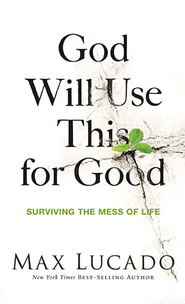
BOOK REVIEW: Max Lucado’s “GOD WILL USE THIS FOR GOOD”

TRUSTING GOD TO TRUMP EVIL

GWUTFG LucadoBook Review by David P. Craig

Oftentimes when we are going through tough times we need some short and quick reminders that everything is going to be okay. In this short treatment of the life of Joseph from the Old Testament Lucado reminds us: “”You’ll get through this. It won’t be painless. It won’t be quick. But God will use this mess for good. In the meantime don’t be foolish or naive. But don’t despair either. With God’s help you will get through this.”

In retelling the story of Joseph the author takes time to provide ample applications (contemporary and ancient) to bring forth the principles that help us as we wait for God to bring forth good out of the messes in our lives whether we made them, inherited them, or we were the object of someone’s evil plans. Ultimately nothing can thwart the plans that God has for us, and that means that all things will work out for our good and God’s glory. The main idea brought out by Lucado in this book is that “in God’s hands intended evil becomes eventual good.”

This short book would make a good gift or recommendation for Christians that are currently going through a rough time. Lucado’s story telling connects well with readers by continually making connections between the biblical subject and the relevant points to our own lives. Lucado has written a helpful manual for believers who need guidance in their pain by helping us trust in the God who always trumps evil for our own good.

BOOK REVIEW: R.C. Sproul’s “WHAT IS THE CHURCH?”

A GREAT PRIMER ON WHAT THE CHURCH IS ALL ABOUT

WITC? SPROUL

Book Review by David P. Craig

R.C. Sproul examines what the Church isn’t, and what it is. In breaking down four key words from the Council of Nicea about what the Church is, Sproul articulates what it means that the church is (1) one, (2) holy, (3) catholic [i.e., universal], and (4) apostolic. Some of the issues addressed in this helpful book are: Why are there so many denominations? What are the essential truths that unite all Christians? What is Liberalism? Why do doctrines divide and unite? What’s an Evangelical? What does it mean for the church to be holy? What is the foundation of the church? What does it mean to be “in Christ”? What is the Gospel? What are the Sacraments? and Why should the church practice discipline?

Sproul covers a lot of ground in this short book. It is full of historical and theological insights, wisdom, and biblically based. I would recommend this book especially for new Christians and as a cogent argument for so-called “Christians” who are not a part of a visible local church. It will help you appreciate what unites Christians throughout history, today, and forever.

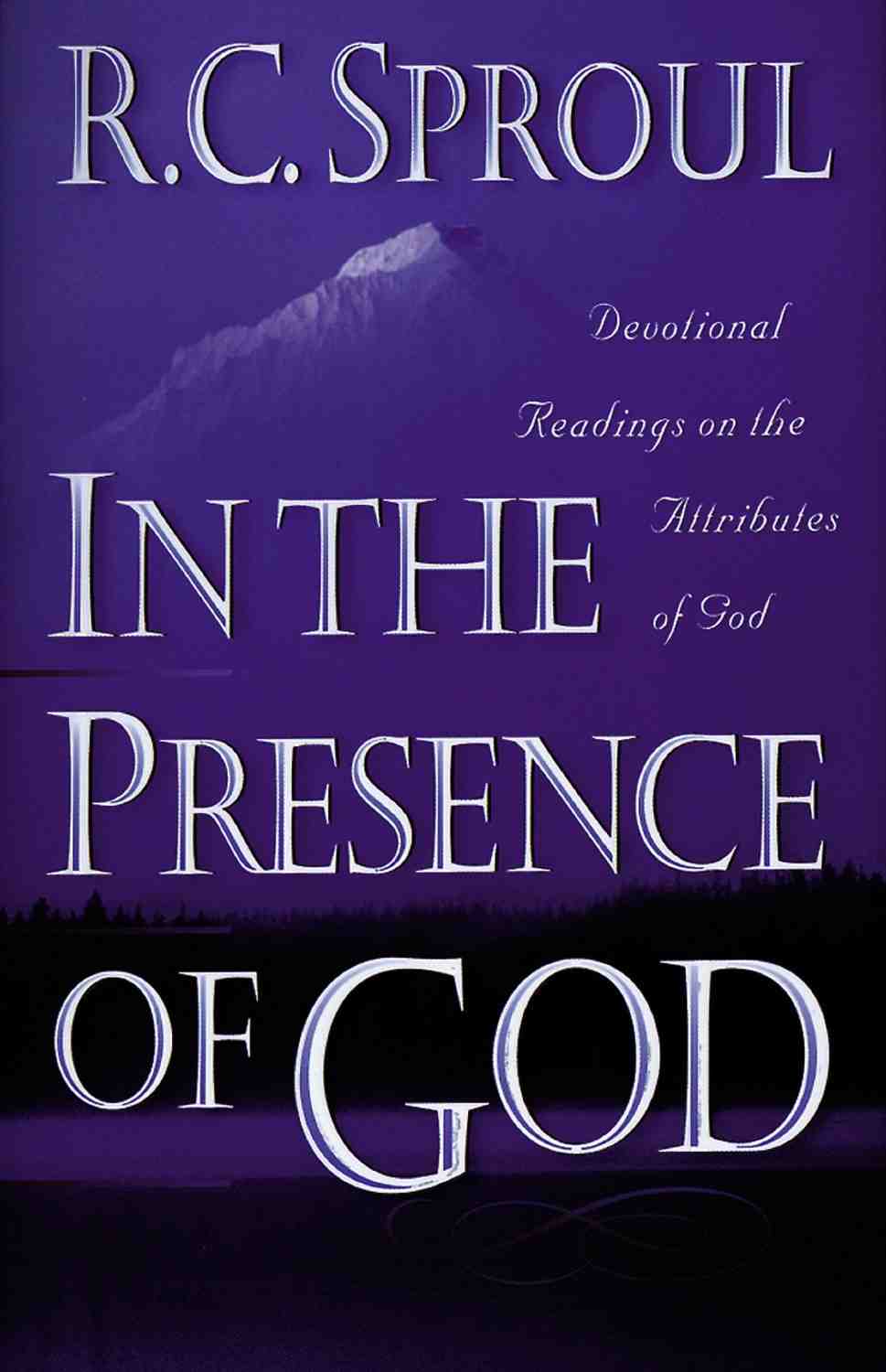
BOOK REVIEW: R.C. Sproul’s “INTO THE PRESENCE OF GOD”

GOD-CENTERED MEDITATIONS

ITPOG

Book Review by David P. Craig

Over the past 30 years I’ve enjoyed the books, lectures, sermons, and writings of R.C. Sproul. This book gathers some of the best devotionals from Ligonier Ministries Magazine – Table Talk. Coram Deo–which means “in the presence of God” is the name of one of the feature columns written by R.C. Sproul. In The Presence of God takes some of the best devotionals from Coram Deo over the past several decades and makes the collection available here in this book.

The devotions selected are encouraging, inspiring, and always based on Scripture. According to R.C. Sproul all of life is to be lived out in the presence of God and for the glory of God. These devotionals remind us daily that God is sovereign, transcendent, and immanent. “To live Coram Deo is to live a life of integrity. It is a life of wholeness that finds unity and coherency in the majesty of God. A fragmented life is a life of disintegration. It is marked by inconsistency, disharmony, confusion, conflict, contradiction, and chaos.” On the other hand, a life of “integrity is found when men and women live their lives in a pattern of consistency. It is a pattern that functions the same way in church and out of church. It is a life in which all that is done is done unto the Lord. It is a life lived by principle, not expediency; by humility before God, not defiance. It is a life lived under the tutelage of a conscience that is held captive by the Word of God.”

There are approximately 150 devotions in this book. Each only a page in length with a short meditation by Sproul, and either a word of encouragement, an application, or a reflection based on each subject. There are 15 Sections in the book with each section containing between 5 and 18 chapters. Here are the subjects addressed by Sproul: (1) Knowing God; (2) Learning God’s Laws; (3) Facing Life’s Challenges with God; (4) Getting Acquainted with God’s Son; (5) Meeting with God; (6) Discerning God’s Will; (7) Understanding God’s Purpose; (8) Becoming Part of God’s Body; (9) Experiencing God’s Best; (10) Journeying with God; (11) Developing a Godly Lifestyle; (12) Using Your Time for God; (13) Confronting the Enemy in God’s Strength; (14) Doing God’s Work; and (15) Facing the Future with God.

You would be hardpressed to find a devotional that is more God-centered and will help you truly live a life that is well-pleasing to God than Sproul’s. I highly recommend this excellent collection as one that will increase your awareness of God, and help you become more intimate in your walk with Him for His glory whether you eat, drink, or whatever you do as you live in His presence.

BOOK REVIEW: R.C. SPROUL’S “HOW CAN I DEVELOP A CHRISTIAN CONSCIENCE?”

 AN ETHICAL PRIMER FOR DEVELOPING A CHRISTIAN CONSCIENCE

HCIDACC? SPROUL

Book Review by David P. Craig

R.C. Sproul begins this book by giving a classical definition of the Christian conscience: “The Christian conscience is thought to be something that God has implanted into our minds…the voice of God within us….The idea is that God created us in such a way that there is a link between the sensitivities of the mind and the conscience with its built-in responsibility to God’s eternal laws.” He then goes on to give several examples of how the conscience and law work together to bring about thoughts and actions that are either in accordance with God’s Word or against God’s Word. The conscience is the “tool that God the Holy Spirit uses to convict us, bring us to repentance, and receive the healing of forgiveness that flows from the gospel.”

In the short chapters of this book Sproul compares and contrasts several important matters with reference to developing a Christian conscience as we deal with what has been clearly revealed in the Scriptures and not clearly revealed in the Scriptures:

(1) Creation ordinances vs. Civil Law – here Sproul cogently and compellingly demonstrates that everyone is responsible to live by the Covenant of Creation and that everything that is legislated by law is “moral legislation” – Sproul writes: “Of course, if you think it through, you realize that moral issues are at the heart of all legislation. The question is not whether the state should legislate morality. The question is what morality should the state be legislating? Natural law states that in nature there are certain principles that we should never violate. But why? Just because nature says it’s wrong? No. Classically and historically, Christianity has said that those laws that we find in nature are the external manifestations of the law of God. Remember that all true and just law is based ultimately on the character of God and His eternal being. From those eternal principles we get a reflection of God in natural law…In the final analysis what the culture does or does not do must not affect my responsibility to God. We are called to be a people of principle. Reformation starts when we begin to live by principle and not by expediency.”

(2) The distinction between ethics and morality  – What are the indicatives (morality) of Scripture and what are the imperatives (ethics)?  Here Sproul answers two important questions: (a) What is good, and what does God require of us that is well pleasing to Him? and (b) How can we have the ethical courage to do what is right? Perhaps the most important issue handled in this section is Sproul’s treatment of major’s, minor’s, and areas of freedom in the Christian life.

(3) Legalism vs. Antinomianism – Here Sproul demonstrates three ancient and modern varieties of those who are “legalistic” and those who are “anti-law.” He demonstrates the importance of balance between these two dangerous extremes in this way, “The essence of Christian theology is grace, and the essence of Christian ethics is gratitude.” Sproul reminds us that where the Scriptures are silent “we have no right to heap up restrictions on people where He has no stated restriction…We are to be concerned with integrity, justice, mercy, and helping a world that is in pain. It is all too simple to distort the biblical ethic by a kind of legalism that majors in minors.”

(4) Degrees of sin. The last topic addressed in the book is the question are some sins worse than others? Sproul does a wonderful job of providing many examples – especially from the Sermon on the Mount – to demonstrate the seriousness of sin, and God’s provision for our sins. Tackling issues of guilt, law, righteousness, and justification this short book is jam packed with great questions and answers to some of the most important issues of our day. If you want to know how to live as a Christian in the 21st Century this book is an excellent primer of how to develop a conscience that is right with God and pleasing to God.

BOOK REVIEW: R.C. SPROUL’S “WHAT IS THE LORD’S SUPPER?’

Why Christians Celebrate The Lord’s Supper

WITLS Sproul

Book Review By David P. Craig

One of the things that all Protestants and Catholics have in common is that we participate either weekly or monthly in the remembrance of the Lord’s Supper or Communion. In this concise and yet very thorough treatment of what the Bible teaches about the Lord’s Supper R.C. Sproul gives several cogent reasons why Christians around the world remember the body and blood of Christ in the past and present and look forward to His coming in the future.

Dr. Sproul looks at the roots of the Lord’s Supper in examining the Old Testament Passover from the Exodus; the Last Supper of Christ in the Gospels; and the Marriage Supper of the Lamb in the Kingdom of Heaven. The history of the Supper is examined, the theology of the Supper is explained, and the meaning of the Supper is articulated so that we can best apply its meaning as we participate in the elements as we remember the death, burial, resurrection, and coming of Christ by worshipping Him in spirit and in truth.

Reading this book will help you to appreciate and value the partaking of the cup and bread all the more as you remember the amazing sacrifice of the Lamb that was slain to save us from God’s wrath, and unto His gracious presence forever. You will come to a deeper understanding of the necessity of a “bloody” sacrifice, and of the “body” that was slain on our behalf. There is much spiritual meat here, to bring you to deeper intimacy with and reflection on the Lamb of God who takes away the sins of the world.

BOOK REVIEW: Erwin Lutzer’s “Where Do We Go From Here?”

HOPE AND DIRECTION IN OUR PRESENT CRISIS

WDWGFH? Lutzer

Book Review by David P. Craig

Anyone who has lived their lives in the United States as a Christian for the past 20-50 years has witnessed a radical change in five major areas: (1) Our economy; (2) Our morality; (3) Our education; (4) Our Legal Rulings; and (5) The gaining privileged position of Islam and the decline and vilification of Christianity.

Lutzer gives ample illustrations to demonstrate the decline of the Judeo-Christian worldview and values that many of us grew up with, but doesn’t stop there. Going back to the Bible and history he gives us examples of how these types of changes and hardships for Christians have always been the norm. Hardship and suffering are certainties in the life of a Christian, but Lutzer reminds the reader “the consistent lesson of 2,000 years of church history is that the church does not need freedom to be faithful…If there is any truly good news in America, it will not be announced in Washington but will be heard through the lips and lives of believers who share the good news of the Gospel wherever God has planted them. Our task, quite simply, is to witness to the truth of the Gospel in a nation that is under judgment.”

Erwin Lutzer writes compellingly about the calling of the Christian as aliens in this world. He doesn’t minimize the hardships or sufferings that lie ahead. However, he uses examples from the Scriptures to demonstrate that our sufferings are purposeful and that we ultimately will win in the end. We have amazing resources and promises from God by which we are to live in the world and make a difference until Jesus returns. Lutzer’s book is more encouraging than depressing, because he reminds us of the sovereignty of God and how we are a part of His plans that cannot be thwarted no matter how bad things look now. Ultimately everything we do for Jesus matters and lasts for eternity.

I highly recommend this book because it offers numerous constructive things to focus our attention on until the return of Christ. It offers biblical thinking, principles to live by, and actions to take that really do make a difference in our society and for the sake of eternity. It offers hope for the present and for the future. You will be encouraged that you can stop being part of the problem, and how you can be part of God’s solution in our culture.