Dr. Aubrey Malphurs on The Meaning of Going and Making Disciples

WHAT DID JESUS MEAN IN MATTHEW 28:19-20 WHEN HE COMMANDED HIS CHURCH TO MAKE DISCIPLES?

Perhaps the most important questions that a church and its leadership can ask are: What does God want us to do? What is our mandate or mission? What are our marching orders? The answer to all three questions isn’t hard to find. More than two thousand years ago, the Savior predetermined the church’s mission-it’s the Great Commission, as found in such texts as Mark 16:15; Luke 24:46-49; John 20:21; and Matthew 28:19-20, where he says, “Make disciples.” This commission raises several important questions, such as what is a disciple and what does it mean to make disciples?

If you asked ten different people in the church (including the pastoral staff) what a disciple is, you might get ten different answers. The same is true at a seminary. If the church is not clear on what Jesus meant, then it will be difficult for it to comply with his expressed will. For the church to understand what the Savior meant in Matthew 28:19-20, we must examine the main verb and its object “make disciples” and then the two participles that follow- “baptizing” and “teaching.” What does all this mean?

 “Make Disciples”

First, let’s examine the main verb and its object: “make disciples.” A common view is that a disciple is a committed believer. Thus a disciple is a believer, but a believer isn’t necessarily a disciple. However, that’s not how the New Testament uses this term. I contend that the normative use of the term disciple is of one who is a convert to or a believer in Jesus Christ (though there are some obvious exceptions – Some exceptions are the disciples of Moses [John 9:28], the disciples of the Pharisees [Matt. 22:16; Mark 2:18], the disciples of John [Mark 2:18; John 1:35], and the disciples of Jesus who left him [John 6:60-66]). Thus the Bible teaches that a disciple isn’t necessarily a Christian who has made a deeper commitment to the Savior but simply a Christian. Committed Christians are committed disciples. Uncommitted Christians are uncommitted disciples. This is clearly how Luke uses the term disciple in the book of Acts and his Gospel. It is evident in passages such as the following: Acts 6:1-2, 7; 9:1, 26; 11:26; 14:21-22; 15:10; 18:23; 19:9. For example, Acts 6:7 tells us that God’s Word kept spreading and the number of disciples continued to increase greatly in Jerusalem. Luke isn’t telling us that the number of deeply committed believers was significantly increasing. He’s telling his readers that the church was making numerous converts to the faith. In Acts 9:1 Luke writes that Saul (Paul) was “breathing out murderous threats against the Lord’s disciples.” It’s most doubtful that Saul was threatening only the mature believers. He was persecuting as many believers as he could locate. A great example is Acts 14:21 where Luke says they “won a large number of disciples” in connection with evangelism. Here they preached the gospel and won or made a large number of disciples or converts, not mature or even growing Christians. (Note that the words “won a large number of disciples” is the one Greek word mathateusantes, the same word as in Matthew 28:19!) Disciples, then, were synonymous with believers. Virtually all scholars acknowledge this to be the case in Acts.

So is the command “make disciples” in Matthew 28:19 to be equated with evangelism? Before we can answer this question, we must also examine a second context. The first had to do with the use of the term disciple in the New Testament; the second has to do with the other Great Commission passages: Mark 16:15 and Luke 24:46-49 (with Acts 1:8). In Mark 16:15 Jesus commands the disciples, “Go into all the world and preach the good news to all creation.” Here “preach” like “make disciples” is the main verb (an aorist imperative) preceded by another circumstantial participle of attendant circumstance translated “go.” This is clearly a proactive command to do evangelism.

In Luke 24:46-48 we have much the same message with the gospel defined: “This is what is written: The Christ will suffer and rise from the dead on the third day, and repentance and forgiveness of sins will be preached in his name to all nations, beginning at Jerusalem. You are witnesses of these things.” Jesus presents the gospel message and the necessity that his witnesses preach that gospel to all nations. In these two Great Commission passages, the emphasis is clearly on evangelism and missions.

Finally, John gives us the least information in his statement of the commission. In John 20:21-22 Jesus tells the disciples that he’s sending them and provides them with the Holy Spirit in anticipation of Pentecost.

We must not stop here. There’s a third context. Much of Jesus’s teaching of the Twelve (who are believers, except for Judas) concerns discipleship or the need for the disciple to grow in Christ (Matt. 16:24-26; 20:26-28; Luke 9:23-25). For example, Matthew 16:24 says, “Then Jesus said to his disciples, `If anyone would come after me, he must deny himself and take up his cross and follow me.”‘

So how does this relate to the passages in Acts and the other commission passages in the Gospels? The answer is that the Great Commission has both an evangelism and an edification or spiritual growth component. To make a disciple, first one has to win a person (a nondisciple) to Christ. At that point he or she becomes a disciple. It doesn’t stop there. Now this new disciple needs to grow or mature as a disciple, hence the edification component.

“Baptizing and Teaching”

Having studied the main verb and its object, “make disciples,” we need to examine the two participles in Matthew 28:20- “baptizing” and “teaching.” The interpretation of these will address whether “make disciples” involves both evangelism and edification. While there are two feasible interpretive options, the better one is that they are circumstantial (adverbial) participles of means (The second option is to treat them as circumstantial [adverbial] participles of attendant circumstance. If this is correct, then the participles baptizing and teaching express an idea not subordinate to as above but coordinate to or on a par with the main verb [make disciples]. You would translate the main verb and the participles as a series of coordinate verbs, the mood of which is dictated by the main verb that in this case is imperative [aorist imperative]. The verse would read: “Go, therefore, and make disciples of all nations, baptize them in the name of the Father and of the Son and of the Holy Spirit, and teach them to obey everything that I have commanded you.” A former Dallas Seminary Greek professor, Philip Williams, takes this view in “Grammar Notes on the Noun and the Verb and Certain Other Items” [unpublished class notes, which were used by Dr. Buist Fanning in his course Advanced Greek Grammar, 1977], 53-54. The conclusion here is that the passage addresses a series of separate, coordinate chronological acts or steps. The first is to go, which implies proactivity. The second is to make disciples. The third is to baptize those disciples, and the fourth is to teach them. However, I believe that Dan Wallace makes the better argument for these being circumstantial participles of means. While I don’t believe that baptizontes and didaskontes are circumstantial participles of attendant circumstance, I do believe that the first participle in verse 19 [poreuthentes] is. It draws its mood from or is coordinate to the main verb [mathateusate], which is imperative. Jesus is commanding them to make disciples and to be proactive about it).

The NIV has taken this interpretation: “Therefore go and make disciples of all nations, baptizing them in the name of the Father and of the Son and of the Holy Spirit, and teaching them to obey everything I have commanded you.” Dan Wallace, a Greek scholar and professor of New Testament at Dallas Seminary, writes: “Finally, the other two participles (haptizontes, didaskontes) should not be taken as attendant circumstance. First, they do not fit the normal pattern for

attendant circumstance participles (they are present tense and follow the main verb). And second, they obviously make good sense as participles of means; i.e., the means by which the disciples were to make disciples was to baptize and then to teach” (Daniel B. Wallace, Greek Grammar Beyond the Basics. Grand Rapids: Zondervan, 1996, 645). If this is the case, then the two participles provide us with the means or the how for growing the new disciples. The way the church makes disciples is by baptizing and teaching its people.

But what is the significance of baptism in the life of a new disciple (believer)? Baptism is mentioned eleven times in Acts (Acts 2:38; 8:12, 16, 36, 38; 9:18; 10:48; 16:15, 33; 19:5; 22:16). In every passage except one (19:5) it’s used in close association with evangelism and immediately follows someone’s conversion to Christ. Baptism was the public means or activity that identified the new disciple with Jesus (See Wilkins, Following the Master, 189). Baptism was serious business, as it could mean rejection by one’s parents and family, even resulting in the loss of one’s life. As we have seen, it both implies or is closely associated with evangelism and was a public confession that one had become a disciple of Jesus. Thus Matthew includes evangelism in the context of disciple making.

And finally, what is the significance of teaching? Luke also addresses teaching in Acts (Acts 2:42; 5:25, 28; 15:35; 18:11; 28:31). Michael Wilkins summarizes this best when he says that “`teaching’ introduces the activities by which the new disciple grows in discipleship” (Ibid., 189-90).The object of our teaching is obedience to Jesus’s teaching. The emphasis on teaching isn’t simply for the sake of knowledge. Effective teaching results in a transformed life or a maturing disciple/believer.

The Conclusion

The conclusion from the evidence above is that the two participles are best treated and translated as circumstantial participles of means. The term make disciples (mathateusante) is a clear reference to both evangelism (baptizing) and maturation (teaching). (Note again the use of mathateusantes in Acts 14:21 in the context of evangelism.) Mark and Luke emphasize the evangelism aspect of the Great Commission (and John the sending out of the disciples). Matthew emphasizes both evangelism and the need to grow disciples in their newfound faith, as he adds the need not only to baptize but to teach these new believers as well to other passages in the New Testament, the latter would lead the new converts to spiritual maturity (1 Cor. 3:1-4; Heb. 5:11-6:3). Therefore, the goal is for them to become mature disciples in time. This would result from a combination of being taught and obeying Jesus’s commandments.

Jesus was clear about his intentions for his church. It wasn’t just to teach or preach the Word, as important as those activities are. Nor was it evangelism alone, although the latter is emphasized as much as teaching. He expects his entire church (not simply a few passionate disciple makers) to move people from prebirth (unbelief) to the new birth (belief) and then to maturity. In fact, this is so important that we can measure a church’s spiritual health and its ultimate success by its obedience to the Great Commission. It is fair to ask of every church’s ministry how many people have become disciples (believers) and how many of these disciples are growing toward maturity. In short, it’s imperative that every church make and mature disciples at home and abroad!

Note: I highly recommend Dr. Michael J. Wilkins’s Following the Master: A Biblical Theology of Discipleship (Zondervan, 1992). Wilkins is professor of New Testament language and literature and dean of the faculty at the Talbot School of Theology, Biola University. (Pictured on below)

About the Author: Aubrey Malphurs (Ph.D., Dallas Theological Seminary) is professor of pastoral ministries at Dallas Theological Seminary and president of The Malphurs Group. He engages in church consulting and training and is the author of numerous books, including Developing a Vision of Ministry in the Twenty-first Century.

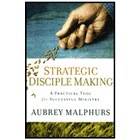
The Article above was adapted from Appendix B: “Make Disciples” by Aubrey Malphurs. Strategic Disciple Making: A Practical Tool for Successful Ministry. Grand Rapids: Baker, 2008 (pp. 159-160). Kindle Edition.

How C.H. Spurgeon Would Have Ended Up In A Lunatic Asylum!

The following excerpt is from “Men Bewitched,” a sermon preached at some indeterminate time in the Metropolitan Tabernacle in London.

hen I was about fifteen or sixteen years of age, I wanted a Savior, and I heard the gospel preached by a poor man, who said in the name of Jesus—”Look unto me and be ye saved, all the ends of the earth.” It was very plain English, and I understood it, and obeyed it and found rest.

I owe all my happiness since then to the same plain doctrine.

Now, suppose that I were to say, “I have read a great many books, and there are a great many people willing to hear me. I really could not preach such a commonplace gospel as I did at the first. I must put it in a sophisticated way, so that none but the elite can understand me.”

I should be—what should I be? I should be a fool, writ large.

I should be worse than that, I should be a traitor to my God; for if I was saved by a simple gospel, then I am bound to preach that same simple gospel till I die, so that others too may be saved by it.

When I cease to preach salvation by faith in Jesus put me into a lunatic asylum, for you may be sure that my mind is gone.

About Charles Haddon Spurgeon – one of the greatest Christian thinkers of all time and undoubtedly the most celebrated preacher of the 19th century, began his ministry as a country-boy with only a year of formal education. But even without much training, his brilliant mind and depth of spiritual insight quickly became legendary throughout the world. During his lifetime Spurgeon is estimated to have preached, in person, to over ten million people. He published over 3,500 sermons, totaling between 20 and 25 million words and more than 38,000 pages. Today, over a century after his death, his sermons and devotional texts continue to challenge and touch Christians and non-Christians alike. It is no wonder that this country-boy became known as the “Prince of Preachers.”

Born on June 19, 1834 in Kelvedon, England, Spurgeon wouldn’t become a Christian until the age of fifteen. It happened one Sunday morning when a snowstorm kept him from reaching the church he usually attended. He ducked down a side street and stumbled across a small building with a sign that read, “Artillery Street Primitive Methodist Chapel.” Regardless of his own misgivings, he entered the small church and while listening to a Methodist layman comment on Isaiah 45:22, he “Saw at once the way of salvation!” Spurgeon immediately committed his life to Christ and became a zealous servant of God.

Desiring to share his new faith, Spurgeon began preaching. He preached his first sermon in 1851, at the age of sixteen, to a group of farmers and wives gathered in the village of Teversham. His text was 1 Peter 2:7, “Unto you therefore which believe he is precious.” Audiences were held spellbound by the young Spurgeon’s speaking power, and he was offered his first pastorate at the Baptist Chapel in Waterbeach when he was only seventeen. The church, which had about ten members when he arrived, was soon bursting at its doors with over four hundred in the congregation. His inspiring style had caught the interest of many, and soon after his twentieth birthday, the country-preacher was called to be the new pastor of the prominent New Park Street Baptist Church in London. New Park Street was a church that had formerly been pastored by such spiritual giants as Benjamin Keach, John Gill, and John Rippon.

In a day when preaching was considered not only a source of spiritual nourishment, but also of entertainment and political commentary, Spurgeon’s powerful and stimulating sermons drew enormous crowds. On a single night in London, preaching at the Crystal Palace, he preached to a congregation of 23, 654 without the use of a microphone! His sermons were published weekly in the “Penny Pulpit,” from 1855 until 1917, twenty-four years after his death. He published many religious books, including Lectures to My Students and Treasury of David, a seven-volume devotional-commentary on the Psalms. He also founded and served as president of the Pastor’s College in London, established the Stockwell Orphanages for boys and girls, and oversaw dozens of evangelistic and charitable enterprises. Spurgeon preached his final sermon at the Metropolitan Tabernacle in June of 1891.

Spurgeon married Susannah Thompson in January of 1856 and late in the following year they had twin sons, Thomas and Charles. Unlike Spurgeon’s mother who had seventeen children, nine of whom died in childbirth, Charles and Susannah had only the two boys.

Charles Spurgeon died at the relatively young age of 57, in January of 1892. His funeral service was held a week later, on February ninth, at the Metropolitan Tabernacle. Over 60,000 people waited in line to file past his casket.

Dr. D.A. Carson on How To Destroy A Church

Some Intense Prophetic Words From D.A. Carson

“The ways of destroying the church are many and colorful. Raw factionalism will do it. Rank heresy will do it. Taking your eyes off the cross and letting other, more peripheral matters dominate the agenda will do it—admittedly more slowly than frank heresy, but just as effectively over the long haul. Building the church with superficial ‘conversions’ and wonderful programs that rarely bring people into a deepening knowledge of the living God will do it. Entertaining people to death but never fostering the beauty of holiness or the centrality of self-crucifying love will build an assembling of religious people, but it will destroy the church of the living God. Gossip, prayerlessness, bitterness, sustained biblical illiteracy, self-promotion, materialism—all of these things, and many more, can destroy a church. And to do so is dangerous: ‘If anyone destroys God’s temple, God will destroy him; for God’s temple is sacred, and you are that temple (1 Cor. 3:17).  It is a fearful thing to fall into the hands of the living God.” – D.A. Carson in The Cross and Christian Ministry

About the Author: D. A. Carson (Ph.D., University of Cambridge) is research professor of New Testament at Trinity Evangelical Divinity School in Deerfield, Illinois. He is the author or coauthor of over 45 books, including The Cross and Christian Ministry from which the quote above is derived; the Gold Medallion Award-winning book The Gagging of God and An Introduction to the New Testament, and is general editor of Telling the Truth: Evangelizing Postmoderns and Worship by the Book. He has served as a pastor and is an active guest lecturer in church and academic settings around the world.

Tim Keller and David Powlison’s Questions For Pastoral Self-Evaluation

Pastor’s Self-Evaluation Questionnaire 

“Pay close attention both to yourself and to your teaching; persevere in these things; for as you do this you will save both yourself and those who hear you.” – 1 Timothy 4:16

The questions that follow help you to pay close attention to yourself and to your teaching. The purpose is to bless you and those you seek to love and serve. For the vast majority of readers, it will help you set a positive, personal agenda for growth as God’s instrument. The Great Shepherd of the sheep will by His grace continue to develop you in His image. Conduct your self-evaluation in the light of His love.

Perhaps for a few readers it will prove to be a pass-fail test for your current ministry. Perhaps God has not given you certain gifts. Perhaps you are walking in some disqualifying pattern of sin. Even in these cases the questionnaire serves a positive purpose. The Lord has another place for those gifts that He has given you. The Lord has a way of repentance and renewal for sins that sabotage pastoral integrity and effectiveness. Remember the grace of the gospel.

So set your heart on Christ, on His gospel of mercy, on His high call, on His abounding riches of grace, on His honor in your life and His church. Here are some suggestions on how to profit from this study.

Read the questions carefully. The questions are posed first, followed by work-sheets. The questions range widely over the pastor’s role. If you are not a pastor, you can still profit. Ignore the questions that do not apply to your situation.

Think hard. Answer each question honestly after taking time to ponder. Set aside a day or several evenings to reflect on your life and ministry. Wherever possible give concrete examples of fruitfulness or failure, of growth or struggle.

Pray. Pray for wisdom to know God and yourself better. Pray for wisdom to serve God more effectively. Pray to know yourself before the eyes of the God who is both light and love.

Seek counsel from others. Many of the questions are difficult to answer about yourself. This self-evaluation questionnaire will be most useful when you combine it with feedback from others. Ask other leaders, friends, spouse, coworkers on a ministry team, and so forth.

Plan. The work-sheets will guide you in practical planning.

Acknowledge that others have gifts that complement yours. The second half of the questionnaire deals with pastoral skills. You may have limitations which God covers by providing others on the pastoral team with complementary gifts. In acknowledging personal weaknesses, ask yourself whether or not your pastoral team as a whole is covering all the bases.

Remember, the goal of this self-evaluation is to guide you in the path of growing holiness and growing pastoral skill. The questions are divided into these two major sections: personal holiness and pastoral skills. Effective ministers demonstrate holiness by humility, love, integrity and spirituality. Effective ministers are skilled in nurture, communication, leadership and mission.

Under each category you will find several questions. Notice that each question is two-sided. This captures that you fail either by omission or by commission. For example, biblical love is neither careless detachment from others nor obsession with others. You will likely find that you tend towards one side of each question. Let the questions stimulate you to ask further questions. They are not exhaustive. Some will apply to you; some won’t.

Part I. Personal Qualifications of Effective Ministers: Holiness

A. Humility

1. Do you acknowledge your limitations and needs out of confidence in Christ’s gracious power?

Are you honest enough? Do you demonstrate a willingness to admit your limits, mistakes, sins and weaknesses? Are you defensive, guarded, hypersensitive? Do you model that the Christian life is the open life? Do you demonstrate that the Christian life is a work in process rather than a completed product? Do you deal forthrightly with the common temptations you face: anger, anxiety, escapism, love of pleasure, self-love, materialism, perfectionism, and the like?

Are you too open? Do you wear your heart on your sleeve, indulging and wallowing in your limits, mistakes, sins and weaknesses? Are you morbidly or ‘exhibitionistically’ confessional? Or have you learned to speak of your weaknesses in ways that (1) point to your confidence in Christ, (2) genuinely seek help from people who can help, and (3) edify others?

2. Do you demonstrate a flexible spirit out of confidence in God’s control over all things, God’s authority over you, and God’s presence with you?

Are you flexible enough? Do you adapt faithfully, flexibly and creatively to the unexpected? Do you value and encourage the ideas and gifts of others? Do you insist on your own way, whether forcefully or through subtle manipulation? Do you exemplify confidence in the sovereign control of God down to the details of life? Are you caught up in the various aggressions and fears produced by a drive to ensure your own control?

Are you willing to try things experimentally and then reevaluate and make changes? Are you evidently a learner?

Are you too flexible? Do you bend too much? Do you blow in the wind of others’ opinions and get overwhelmed by people’s demands and agendas? Do you compromise, under-assert, seek to please, fail to push things that need to be pushed? Do you let people or circumstances control you rather than the Lord?

B. Love

1. Do you have a positive approach to people because of confidence in the power and hope of the Gospel of Jesus Christ?

Do you give grace to others? Do you love and encourage persons, even when under stress or in the face of an attack? Do you exhibit core biblical virtues: love for enemies, gentleness with opponents, patience with people and circumstances when undergoing trial or suffering? Are you able to confront the failings of others—to discipline your children, to admonish wanderers, to conduct church discipline—in a way that is not punitive, irritable, or censorious but breathes the invitations of God’s grace? Can you say hard things lovingly? Is your “speaking the truth” harsh, opinionated, idiosyncratic? Do you create problems by making mountains out of molehills? Do you contribute to destructive conflict or to peacemaking?

Are you too tolerant? Are you naively optimistic about people? Do you massage people’s egos with praise and “unconditional positive regard”? Is your “love” limp and truthless? Do you whitewash or minimize problems rather than tackle them? Because of biblical love are you willing to enter into constructive conflict? Are you a peace-lover and conflict-avoider rather than a peacemaker?

2. Do you show a servant’s heart to people because you are first and foremost a servant of the Lord?

Do you serve willingly? Do you serve yourself or others primarily? Do you truly serve the well-being of others and shepherd them under the Lord? Do you strive for personal glory either aggressively (compulsively driven “on an ego trip”) or passively (preoccupied with your “low self-esteem”)? Do you manifest the combination of forcefulness and sensitivity, commitment and flexibility, which characterizes servants of the Lord’s glory? Do you lord it over other people? Do you resist or avoid serving and loving others?

Do you serve compulsively? Do you serve other people slavishly, kowtowing to their demands, expectations, and whims? Do you let others lord it over you? Are you confused about what it means to serve and love others? Do you know how to say “No” realistically, firmly and graciously? Do you regularly rest and lay aside your work?

C. Integrity

1. Are you responsible to God first and foremost?

Are you irresponsible? Do you follow through on convictions and commitments? Do you speak the truth firmly, confidently, faithfully? Do you “trim” the truth or waffle on your commitments because of convenience or social pressures? Do you fail to demand of yourself and others things that God demands? Do you follow your impulses, moods, and feelings? Are you walking in the grip of a sin: e.g., greed, lust, outbursts of anger, fear of man, drunkenness, pride?

Are you overly demanding? Do you behave in a rigid manner? Do you sledgehammer people because of your commitment to principle? Are you legalistic in your commitments and nit-picking in your convictions? Do you major in minors? Do you make demands of yourself and others which God does not make?

2. Do you demonstrate a disciplined lifestyle under the Lordship of Jesus?

Are you undisciplined? Is your visible life and behavior disciplined, consistent and attractive? Do you manifest the joy, humility, and winsomeness of wisdom and holiness? Would people want to imitate what they see of your faith, your faithfulness, your character? What would people see if they could tag along with you for a week? Do you work diligently or are you lazy?

Are you too rigid? Are you too disciplined, organized, “perfect” on the outside? Does your visible example actually discourage or intimidate people? Are you in effect playing the role of “pastor” or “mature Christian”? Is your visible discipline a mask for hypocrisy, a cover for ignorance of yourself or a denial of a deviant inner life? Are you humbled by conscious awareness that you fight the common besetting temptations of every human heart: pride, fear of man, attachment to money, sexual lust, preoccupation with your own performance, control, judgmentalism, love of various pleasures, and the like? Do you have an active sense of humor? Do you take time to rest or are you consumed with anxious toil?

3. Are your family commitments a proper priority under the Lord?

Do you give yourself to your family? Are you over-committed to your ministry and under-committed to your family? Do you love your family in such a way that they willingly become committed to your ministry and really stand with and behind you? Are they being sacrificed to “ministry”? Are they being dragged along behind you? Do you give to them significantly, substantially, willingly?

Are you over-involved in your family? Are you over-committed to your family so that they provide an improper refuge, distraction and excuse to avoid ministry? Is family life an excuse for selfishness?

D. Spirituality

1. Do you demonstrate personal piety and vigor in your relationship with God?

Is your piety genuine? Is your communion with God rich and growing? Is your personal prayer life both spontaneous and disciplined or are you mostly a public pray-er? Do you apply the Bible searchingly and encouragingly to yourself or only to your hearers? Do you praise, enjoy and thank God with heartfelt integrity? Do you know God, rely on God, seek God, praise God genuinely? What does Christ mean in your life on a day-in, day-out basis? Are you significantly prayer-less, Bible-less, praise-less, God-less, Christ-less?

Are you ‘pietistic’? Do you escape into pious clichés and misuse the spiritual disciplines? Do you use “I’ll pray about it” or “I need to study the Bible” in order to avoid problems for which you feel inadequate? Do you pray too much (Matthew 6:7) or self-centeredly (James 4:3) because you do not know God very well? Is your Bible, praise and prayer life a hypocritical diversion in a life far from God?

2. Do you demonstrate faithfulness to the Bible and sound doctrines?

Are you biblically and theologically careful? Are you orthodox, faithful to the whole counsel of God? Do you have clear, definite, and thought-out biblical positions on the central issues of life? Do you have theological quirks or hobby-horses which upset the balance of truth? Do you articulate core biblical truth clearly and consistently, with a working feel for its personal and pastoral application? Are you ignorant? Fuzzy? In error? Unbalanced?

Are you a theological nit-picker? Are your theological convictions abstract, theoretical, and scholastic? Are you narrowly dogmatic, combative, critical, reductionistic, overly precise in your interpretations and applications of Scripture? Are you simplistic or superficial in your understanding of contemporary life and of human nature? Do you recognize the broad range of questions on which Scripture bears? Do you recognize the many variables which influence the application of Scripture to particular situations?

Part II. Functional Qualifications of Effective Ministers: Pastoral Skill

A. Nurture

1. Do you show involved caring that comes from genuine love in Christ for your brothers and sisters?

Do you involve yourself with the needs of others? Do you keep people at a distance? Are you able to develop relationships of honesty and trust through which you can comfort and challenge persons? Are you approachable? Do you create frequent conflict? Do you approach people warmly? Do you communicate care for people in ways they can sense?

Do you become overly absorbed in people? Do you become overly involved with people, caring too much because of a desire to be liked or a savior-complex or a fear of failure? Do you seek relationships as an end in themselves rather than as a component of pastoring people unto godliness?

2. Do you counsel people the Lord’s way?

Do you counsel biblically? Are you skilled in helping people respond to and solve personal problems using biblical principles? Do you counsel biblically both informally and formally? Do you use unbiblical conceptual categories and methods? Is what you say in your office congruent both with what you say in the pulpit and with how you yourself live? Do you get involved constructively with troubled people, or do you disdain them, refer them, avoid them? Are individuals encouraged in godliness, amid their sufferings and sins, through your personal ministry?

Do you go overboard on counseling? Do you become overly centered on problem people and focus on one-on-one remedial counseling to the detriment of more positive, preventive, building-up and corporate aspects of the ministry? Do you tend to turn the church into a counseling center or therapy group?

3. Do you discipline others into maturity in Christ and use of their gifts?

Do you help others productively serve the Lord? Do you demonstrate skills in nurturing growth in grace in individuals and in developing their gifts? Does your ministry have a positive, equipping thrust to it? Do you develop leaders and team ministries?

Do you focus too much on activism and productivity? Does your focus on gifts and discipleship have an elitist flavor? Are Christians with minimal gifts and energies neglected? Are there certain kinds of gifts which you recognize and encourage to the neglect of other kinds of gifts? Do you tend to move only with the movers?

4. Do you give yourself to discipline and to patrolling the boundaries of the church which God bought with His own blood?

Do you protect Christ’s honor in the church? Are you committed to church discipline? Are you able to confront winsomely and persistently? Do you recognize the limits of the edification ministries of counseling, care and discipling? Do you stand courageously against real errors and falsehoods which encroach into the body of Christ that you shepherd? Are you realistic that the ministry is a savor both of life and death? Do you try to be so positive that you cannot be properly and biblically negative?

Are you over-absorbed in border patrol? Do you demonstrate a nit-picking, sectarian, vigilante spirit? Are you uncompassionate of people’s failings, negativistic rather than upbuilding? Do you create in others a fear of failure and a fear of being found wrong, rather than creating love for ongoing growth in the Lord and love for ever-deepening truth?

B. Communication

1. Do you preach the whole counsel of God?

Are you preaching and teaching the Word of God? Are you skillful in expounding the Word of God publicly so that people are convicted, encouraged, and edified? Do you use the pulpit effectively? Do you downplay the importance of the pulpit and teaching in your attitudes, practice, and theory of ministry? Is what you say in the pulpit congruent both with what you say in your office and with how you yourself live? Do you take adequate time and work hard at preparation, or are you casual and presumptuous?

Are you overly absorbed in your pulpit? Are you overly concerned with pulpit ministry to the detriment of other aspects of pastoral care? Does pride puff you up or does the fear of men tie you in knots? Do you envision yourself as a “pulpiteer,” to the harm of reaching people where they live? Do you take too much time to prepare for public ministry because of perfectionism, self-trust, or fear?

2. Do you provide education for God’s many kinds of people?

Do you educate all? Are you skilled in identifying Christian Education needs and in helping people learn? Does your philosophy of Christian Education reach all age groups and all different kinds of needs? Is biblical and doctrinal knowledge undervalued? Do you tend to ignore, despise, or belittle the educational needs of certain kinds of people? Does your approach to Christian Education effectively combine truth and practice?

Do you overeducate? Do you tend to turn your church into a school? Is education and factual or doctrinal knowledge overvalued in comparison with other aspects of the Christian life? Is the teacher-pupil role the dominant one in the church or only one role among many?

3. Do you lead others to worship the Lord?

Do you lead others to worship God in truth? Do you lead people into the presence of God? Is your worship perfunctory and rote? Do you yourself worship God as you lead, or does worship become a performance and task? Do you undervalue worship, viewing it only as a glorified warm-up for the message?

Are you overly absorbed in worship? Do you over-emphasize the “worship experience” to the detriment of truth and the other aspects of church life? Are you overly subjective, gauging the Christian life by emotions and sentiment? Do you use words, music, and staging to manipulate experience? Is God at the center of your worship or do you worship the worship?

C. Leadership

1. Do you lead God’s people into effective work together?

Do you lead groups of people well? Do you help groups develop a biblical vision, and do you motivate them towards biblical goals? Are you confused about what the goals of groups should be? Are you overly absorbed either in personal one-on-one work with people or in impersonal programs and public ministry? Do you function constructively in groups, or do you hamper and divert groups from achieving God’s ends? Do you value groups and encourage them to take on significant responsibilities?

Are you overly absorbed in groups? Do you tend to see groups, committees, and task forces as a panacea or a substitute for other aspects of ministry? Does a task orientation sabotage other biblical goals such as prayer, worship, caring, and counseling?

2. Do you administer well, creating a church that is wise in its stewardship?

Are you a good administrator? Are you skilled in using time, money, and people efficiently to achieve biblical goals in the church? Do you neglect or despise administration?

Are you overly absorbed in administration? Do you tend to over-administer or retreat to administrative tasks because they are easier or are the squeaky wheel?

3. Do you mediate fellowship among God’s people?

Do you help people come together? Are you skilled in stimulating the congregation to mutual ministry in love? Does your ministry create one-anothering opportunities and activities among God’s people? Do you enhance a family atmosphere in the church? Are you able to teach people how to make significant friendships through your teaching, manner, and example?

Are you overly absorbed with the church’s social life? Are you so oriented towards “fellowship and family feeling” that the church’s fellowship with God and orientation to mission are lost?

4. Do you create cooperative and team ministry within the church and between churches that honor Christ?

Are you a team player? Do you work well as part of a ministry or pastoral team, or do you always insist on leading (in overt or covert ways)? Do you tend to stake out turf? Is your leadership based on true biblical wisdom or on personal drive, clerical status, and political savvy? Do you build unity and mutual respect among different parts of the body of Christ? Can you cooperate with other evangelical churches and pastors, or do you have sectarian instincts? Are you committed in practical ways to see the work of the local congregation as part of the larger work of Christ? Are you too independent and not enough of a “churchman”?

Do you allow the team to shield you from the front lines of ministry? Do you shirk leadership responsibilities out of diffidence or laziness and seek to embed yourself safely within a niche? Do you put your attention too much into the work of presbyteries, synods, general assemblies, conferences, associations, conventions, ministeriums, school boards and the like? Are you a politician and too much a “churchman” rather than a pastor?

D. Mission

1. Do you evangelize those outside of Jesus Christ?

Are you active in evangelism? Are you skilled both in effectively sharing the gospel and in leading the church in outreach? Are you committed in theory and personal practice to evangelize the lost? Do you believe with all your heart that people without Christ remain under the wrath of God? Do you neglect evangelism out of ignorance, love of comfort, fear, prejudice, bad experiences? Do you lead your people to support worldwide missionary efforts?

Are you overly committed to evangelism? Do you overemphasize evangelism or one evangelistic technique to the detriment of the church’s overall ministry? Do you create ministry activists rather than godly people? Do you play a numbers game with evangelism? Do your evangelistic methods hold the message of salvation in Christ in proper balance with God’s sovereignty in grace and with the call for us to demonstrate genuine love for each other and the lost? Are missionaries idolized as a higher species of Christian?

2. Do you show social concern for the many needs of people that God desires to address?

Do you care for the whole person? Are you skilled in applying the resources of the church to the social and material needs of mankind? Do you value diaconal work and the mercy gifts? Do you believe that the gospel addresses the whole man, or do you drift towards a gospel that is a bare verbal message? Do you care in practical ways for justice, or do you tacitly accept the status quo? Can you identify the social needs of your community and mobilize effective modes of addressing these needs?

Are you overly involved in social needs? Do you overemphasize social concerns and drift towards a “social gospel”? Do you ride the hobby-horse or one particular point of view or one particular social policy issue? Do you tend to view people through the eyes of politics, economics or sociology rather than through the eyes of the God of the Bible?

 Application Work Sheet

Part I. Personal Qualifications of Effective Ministers: Holiness

A. Humility

1. Do you acknowledge your limitations and needs out of confidence in Christ’s gracious power?

2. Do you demonstrate a flexible spirit out of confidence in God’s control over all things, God’s authority over you, and God’s presence with you?

B. Love

1. Do you have a positive approach to people because of confidence in the power and hope of the Gospel of Jesus Christ?

2. Do you show a servant’s heart to people because you are first and foremost a servant of the Lord?

C. Integrity

1. Are you responsible to God first and foremost?

2. Do you demonstrate a disciplined lifestyle under the Lordship of Jesus?

3. Are your family commitments a proper priority under the Lord?

D. Spirituality

1. Do you demonstrate personal piety and vigor in your relationship with God?

2. Do you demonstrate faithfulness to the Bible and sound doctrine?

Part II: Functional Qualifications of Effective Ministers: Pastoral Skill

A. Nurture

1. Do you show involved caring that comes from genuine love in Christ for your brothers and sisters?

2. Do you counsel people the Lord’s way?

3. Do you disciple others into maturity in Christ and use of their gifts?

4. Do you give yourself to discipline and to patrolling the boundaries of the church which God bought with His own blood?

B. Communication

1. Do you preach the whole counsel of God?

2. Do you provide education for God’s many kinds of people?

3. Do you lead others to worship the Lord?

C. Leadership

1. Do you lead people into effective work together?

2. Do you administer well, creating a church that is wise in its stewardship?

3. Do you mediate fellowship among God’s people?

4. Do you create cooperative and team ministry within the church and between churches that honor Christ?

D. Mission

1. Do you evangelize those outside of Jesus Christ?

2. Do you show social concern for the many needs of people whom God desires to address?

You have looked at yourself, hopefully through God’s eyes. Now work with what you have seen.

If you could change in one area in the next year, which would it be? Where do you most need to mature in wisdom? What changes in you would bring the greatest glory to God and greatest blessing to other people?

Confess your sins and failings to God. Jesus Christ is your faithful high priest and shepherd. He is the Pastor of pastors. “Come with confidence to the throne of His grace that you may receive mercy and grace to help you in your time of need” (Hebrews 4:16). Believe it and do it. The Lord’s strength is made perfect in your weakness.

Now what must you do? Prayerfully set goals. How will you become a more godly person and pastor? Are there people you must ask to pray for you and hold you accountable? Are there Bible passages or books you must study? Are there plans you must make? Do you need advice from a wise Christian about how to go about changing?

About the Authors: Dr. Tim Keller is the pastor of Redeemer Presbyterian Church in New York City. He is the author of numerous helpful books including: The Prodigal God; Counterfeit Gods; The Meaning of Marriage; The Reason for God & Center Church: Doing Balanced, Gospel-Centered Ministry in Your City. Dr. David Powlison is the editor of The Journal of Biblical Counseling and served for many years as a professor at Westminster Theological Seminary. David is currently faculty member at CCEF and a counselor with over thirty years of experience. He has written many counseling articles, booklets, and books including Seeing with New Eyes; Speaking Truth in Love; and Power Encounters.

Two sources in which these evaluation questions have appeared are The Journal of Biblical Counseling, Vol. XII, No. 1, Fall 1993 & The Appendix in Curtis C. Thomas. Practical Wisdom for Pastors: Words of Encouragement and Counsel for a Lifetime of Ministry. Wheaton: Crossway Books, 2001.

10 Excellent Tips on Personal Evangelism from Dr. Tim Keller

Tim Keller Teaching Below at Redeemer Presbyterian Church in New York:

  1. Let people around you know you are a Christian (in a natural, unforced way)
  2. Ask friends about their faith – and just listen!
  3. Listen to your friends’ problems – maybe offer to pray for them
  4. Share your problems with others – testify to how your faith helps you
  5. Give them a book to read
  6. Share your story
  7. Answer objections and questions
  8. Invite them to a church event
  9. Offer to read the Bible with them
  10. Take them to an explore course

These are arranged from 1-10 as a progression. We too often start with numbers 8-10, but we need to start with 1-4 with most people. In fact, he says, we may need to loop through 1-4 multiple times before getting to the later steps. Not only is it more humble of us to begin with 1-4, but it is more loving.

By being real with our friends (#1), we show we trust them enough to be open with them. By listening to their thoughts about faith (#2) and to any problems they may be facing (#3), we show we value them and are genuinely interested in what they have to say. Showing love for our friends may even open opportunities to serve them by praying for them. #4 comes back full circle to being real and honest with our friends in an unforced way.

If we believe that our life is hidden with Christ in God (Col. 3:3), then we should feel the freedom to share our lives with our neighbors, and to love them enough to take the time to listen and get to know them. It isn’t our life anyway, but Jesus’s (Gal. 2:20). We’re just sharing with others that which doesn’t belong to us.

*This article has been posted on several excellent websites:http://gospeldots.com/2012/06/28/tim-kellers-top-10evangelismtips/;http://faithim.wordpress.com/2012/07/05/572/;http://timchester.wordpress.com/2012/06/05/kellers-top-ten-evangelism-tips/ – The Ten tips originating with Dr. Tim Keller.

About Dr. Tim Keller: He is an a Pastor, Writer, and sought after speaker. He is wonderfully Christocentric and gospel centered in all that he teaches. Some of his well known books are: The Prodigal God; The Reason for God; and Counterfeit Gods. He will soon be releasing a book entitled Center Church based on his missional and gospel centered philosophy of ministry and church planting – this book has been much anticipated by pastors and church planters for several years!

Great Questions to Ask Your Mentoree/Disciple

[Bobb Biehl is a personal and organizational leadership expert – below are some great questions to go over = personally; with your staff, team, mentoree, small group, disicple/s, etc.]

(Adapted from Bobb Biehl, Mentoring, pp. 201-202)

 DREAMING…about the Future in a Practical Way

  1. God: What three changes in me would most please our Eternal God in His Holy Heaven?
  1. Dream/Purpose: What can I do to make the most significant difference for God in my lifetime? Why am I on the earth? What is the very best organizational context for my dream?
  1. Primary Result: What is the single best measurable indicator that I am making progress with my dream?
  1. Life Priorities: If I could accomplish only three measurable priorities before I die, what would I accomplish?
  1. Ten-Year Focus: If I could accomplish only three measurable priorities in the next ten years what would make a 50% difference in my life-long contribution, what would I accomplish?
  1. Annual Focus:
    • Focus – What single word best captures the focus of my next year?
    • Opportunity – Where was my greatest unexpected success last year? Why? What three steps could I take now to take full advantage of this “Window of Opportunity” this coming year?
    • Land Mines – What three land mines or roadblocks need my immediate attention? What have I been praying most about in the past 30 days? What three changes could reduce my “risk” by 50%?
    • 30/10/50% – If I could only accomplish three measurable priorities in the next twelve months that would make a 50% difference in my contribution in the next ten years, which 3 things would I most want to accomplish?
  1. Quarterly Focus: What three measurable priorities could I accomplish in the next ninety days to make a 50% difference in the results I see by the end of the year?
  1. Organization: What three categories could I make to see a 50% difference in our morale as a family or team?
  1. Cash: If I had to cut my budget 21%, what would be the first three things to go? If I got a surprise gift of 21% of my budget, what three things would I do immediately?
  1. Quality: What three changes could improve the quality of my work by 50% in the next twelve months?

Bobb Biehl is an executive mentor. He graduated from Michigan State University (psychology major) in 1964 and received a Master’s degree (counseling) from Michigan State in 1966.

In 1976, Bobb founded Masterplanning Group International. As its president, he has consulted personally with over 400 clients. In that time, he has met one-on-one with over 3,500 executives (board members, senior executives, and staff members) and invested an estimated 40,000 hours in private sessions with some of the finest leaders of our generation. His clients are primarily large or fast-growing churches, nonprofit organizations, for profit corporations, and government agencies.

Based on these thousands of hours of practical “rubber-meets-the-runway” experience, Bobb has originated 35 resources (books, tapes, notebooks) in the area of personal and organizational development. These resources include published books entitled Boardroom Confidence, Dreaming, Leading with Confidence, Masterplanning, Mentoring, Stop Setting Goals, and Why You Do What You Do. His latest book, Dreaming Big, is co-authored with Dr. Paul Swets.

Bobb is a founding member of the board of directors of Focus on the Family. He is also a member of the board of directors of Liquid Metal (publicly traded). Prior to starting Masterplanning Group, Bobb was on the executive staff of World Vision International. While at World Vision he designed and developed the Love Loaf program, which has raised millions of dollars worldwide.

Bobb and his wife, Cheryl, have been married since 1964.

3 Reasons Christians Have Victory Over Death by Warren W. Wiersbe

The 3 P’s of Jesus’ Comfort to Christians in the Face of Death:

 1)    Because of the Price Jesus Paid

1 Thessalonians 5:9-10, For God has not destined us for wrath, but to obtain salvation through our Lord Jesus Christ, who died for us so that whether we are awake or asleep we might live with him.

2)    Because of the Promise Jesus Made

John 14:1-6, “Let not your hearts be troubled. Believe in God; believe also in me. In my Father’s house are many rooms. If it were not so, would I have told you that I go to prepare a place for you? And if I go and prepare a place for you, I will come again and will take you to myself, that where I am you may be also. And you know the way to where I am going.” Thomas said to him, “Lord, we do not know where you are going. How can we know the way?” Jesus said to him, “I am the way, and the truth, and the life. No one comes to the Father except through me.

3)    Because of the Prayer Jesus Prayed

John 17:24, “Father, I desire that they also, whom you have given me, may be with me where I am, to see my glory that you have given me because you loved me before the foundation of the world.”

John Frame on The Importance of Seminary Training

“Learning At Jesus’ Feet: A Case For Seminary Training” 

At some point in their walk with Jesus, many Christians ask whether they should attend seminary — either to earn a degree or just to take a few courses. I’ve been teaching in seminaries for thirty-five years, and I’ve done some thinking about this question. In this article, I’ll encourage you to go to seminary if you can, and I’ll try to help those who are seeking guidance for this important decision.

First of all, what is a seminary? A seminary is, of course, an academic institution that teaches knowledge and skills needed for Christian ministry. By “ministry” here, I mean both the official ministries of the church and ministries independent of churches: “parachurch” campus ministries, missions, mercy ministries, etc. But seminary also offers opportunities for anyone who wants to explore God’s Word in depth. Most seminaries offer master’s programs that are open to people who are not called to full-time ministry, and they offer “special student” status to people who just want to take a course or two, to deepen their knowledge of Scripture.

So a seminary is not just for professionals, not just for those who are seeking a credential for ordination. Its purpose is broader than that: it is a place for people to study God’s Word together. And, since Jesus is the Word made flesh (John 1:14), to study in seminary is to study at Jesus’ feet.

What a time it must have been, when Jesus shared His words and heart with His disciples (students) for the three years of His earthly ministry! They saw His compassionate healings, marveled at His miraculous power, listened to His word, saw His glory (Matt. 17:1- 13), and were humbled by His servant-leadership (Matt. 20:25-28, John 13:1-20). But these great events left them perplexed on the fundamental questions: who was Jesus? Why did He come?

Jesus had often told them that He was to die, as a sacrifice for sins (Matt. 20:28, John 12:33, 18:32), but they did not understand (Mark 9:31-32, Luke 8:33-34). After He was raised, however, there was a mysterious meeting between Jesus and two disciples on the road to Emmaus. The disciples had treated reports of His Resurrection as wild rumors. But “beginning with Moses and all the Prophets, [Jesus] interpreted to them in all the Scriptures the things concerning Himself ” (Luke 24:27). What a time that must have been! Now they saw that Jesus’ resurrection was not a wild rumor, but a divine necessity (verse 26). It not only did happen; it had to happen, so that God could save us from our sins. Afterward, the two disciples said to each other, “Did not our hearts burn within us while He talked to us on the road, while He opened to us the Scriptures?” (verse 32; my quotations are from the ESV).

Luke, who tells us about this mysterious meeting, tells us also that Jesus appeared to His disciples “during forty days… speaking about the kingdom of God” (Acts 1:3). During this time, Jesus evidently taught the whole body of apostles, as He had taught the two on the road to Emmaus, how the Old Testament Scriptures pointed to Him. Afterwards, when the Holy Spirit came upon the church in Acts 2, Peter, and later other disciples, began preaching and teaching the Old Testament in a very different way from the Jewish teachers: everything pointed to Christ! Certainly the apostles had learned from Jesus, during the forty days, how to read and teach the Bible.

Seminary is something like those three years and those forty days. In many ways, of course, it is different. Jesus didn’t need to teach His disciples how to read Hebrew and Greek. He didn’t need to teach them post-canonical church history, because at the time there wasn’t any. Nor, most likely, did He give reading and writing assignments. He knew their hearts, so He knew how much they had learned. And although He didn’t give letter grades, He regularly evaluated their progress, often negatively. To the two on the road to Emmaus, He said, “O foolish ones, and slow of heart to believe all that the prophets have spoken!” (Luke 24:25).

Nor, of course, did Jesus charge tuition in any formal way. But the disciples and Jesus shared expenses and the generosity of supporters in a common fund — managed, unfortunately, by Judas Iscariot, (John 12:6, 13:29). Seminaries also must have money to survive, and they too live from the contributions of students and the generosity of supporters, mostly the latter.

Of course the main difference between Jesus’ teaching and a modern seminary is that most seminaries require college degrees for admission. Seminary, therefore, is not for everybody. It is for those who are intellectually prepared to learn from Jesus at a scholarly level. Does Jesus, then, restrict his teaching to academic types? Certainly not. Jesus today teaches people of all ages, nationalities, educational backgrounds, and socio-economic levels. He teaches through sermons, Sunday schools, missionaries, evangelists, TV and radio ministries, the internet, personal Bible study, and through godly families teaching their children. But He also teaches His church through the discipline of academic courses, and seminary is one place to get teaching at that level.

This is not to say that everything in seminary is abstract and theoretical. Seminaries also teach preaching, counseling, evangelism and church planting, subjects we call “practical theology.” And seminaries usually require students to do “field work,” getting experience in actual ministry, with evaluation. Further, seminaries try their best to maintain a Christian community, where people love and support one another through prayer, communal worship, counseling, and modeling Christ. Seminary, of course, is not the church. Students, like all Christians, should turn to the church as their main place of worship and nurture. But a good seminary will understand that Christians should nurture one another wherever they are, so that even an academic institution, if it is Christian, should be a community of love. So even with tuition and exams and papers, the essence of seminary will be sitting at the feet of Jesus. We learn from Him as He teaches us through His brothers and sisters.

So I ask you to consider the privilege of sitting at Jesus’ feet. Once when He lived on earth, Jesus visited His friends, sisters Mary and Martha, in the town of Bethany. Martha was preoccupied with serving her guests, but Mary “sat at the Lord’s feet and listened to His teaching” (Luke 10:39). Martha was upset that Mary was not helping. That seemed to be a legitimate complaint. But Jesus surprises us by commending Mary. She had “chosen the good portion, which will not be taken away from her” (verse 42). Now normally sisters should help one another out in household tasks. But this was a special occasion. If the Lord were to come to your house, would you want to miss anything? Martha was doing a good thing by working to serve Jesus and her other guests. But she didn’t quite understand what she was missing: the eternal Son of God, teaching in her own living room!

Don’t miss the opportunity to sit at the feet of Jesus. Many other things are important, such as housework, employment, and ministry itself. But we all need to take time away from it all to meditate on the Word.

Facing the temptations of Satan, Jesus said, quoting Deuteronomy 8:3, “Man shall not live by bread alone, but by every word that comes from the mouth of God” (Matt. 4:4). We need to understand that the Word of God is every bit as important to us as food and drink. It is God Himself speaking to us, the words that He has breathed out (2 Tim. 3:16). Without it, we die. But blessed are those who delight in the law of the Lord and meditate on it day and night (Psalm 1:2). They are like trees planted by the streams, who bear fruit and prosper in all they do (verse 3).

So the only question remaining is, how will you sit at the feet of Jesus? Personal Bible study is one way, and God honors that. Listening closely to your pastor’s sermons is also a good thing. Attending Sunday school classes and going to Bible conferences will take you still further. But if you have the academic background for more advanced study, and you have opportunity, shouldn’t you take advantage of that also? Just think what it would mean to be able to read God’s Word in its original languages. Imagine spending several years, getting a systematic survey of all the teachings of the Bible and learning how to communicate them persuasively to this dying world. And imagine getting resources for continuing education —tools that will enable you to continue studying God’s Word in depth for the rest of your life.

Think about the relationships that can develop at seminary: with learned and godly professors who will become friends and mentors or life; with other students, with whom you’ll compare notes. Friends you make at seminary tend to stick closer to you than high school and college buddies. You often meet your seminary classmates in church meetings, common ministries, or just traveling around. (Evangelical circles, for better or worse, are a small world.)

In the process, you’ll also learn a lot about yourself. You’ll probably be surprised to find out how much you don’t know about God’s Word, and that will teach you humility. You’ll learn more about your spiritual strengths and weaknesses, where you are gifted and where you are not. Thus you’ll be better able to pinpoint the place in the kingdom where God wants you to be.

Let me now deal with seven problems people often raise about going to seminary:

(1) Can I afford it?

As I said earlier, seminary is not free. Jesus and His disciples also needed funds to support themselves. But God supplied their needs, and in my experience God has supplied the needs of most people who want in a serious way to attend seminary. Sometimes He does not, for His own various reasons. And for some it is certainly a financial stretch. But that shouldn’t discourage those who really want to study God’s Word at seminary level. The tuition can look expensive, but a careful look at financial aid, loan programs, and work-study opportunities can considerably reduce the sticker shock.

(2) Could seminary be a spiritual danger to me?

This objection is not as strange as it may sound at first hearing. For some, seminary can be a trial of faith. One can become so immersed in academic assignments, papers, technical terminology, Hebrew paradigms and such that he comes to feel far from God. I’ve addressed some of these concerns in another pamphlet, Studying Theology as a Servant of Jesus. Seminary does require a devotional discipline to match our academic discipline, but that challenge, on the whole, is a good thing. And what most students find is that once we face that challenge, the academic and the devotional merge in a wonderful way. The dry periods tend to be at the beginning, when you are struggling to master the basics. But when the theology of the Bible starts to come together in your mind, when you start to see the overall shape of it, your academic study will feed your soul. In the end, sitting at the feet of Jesus cannot be anything other than uplifting.

Further, as I mentioned earlier, a good seminary will seek to help students who are going through dry periods, by being a Christian community.

(3) Will seminary reduce my effectiveness?

Sometimes, it is true, people go to seminary and they come back speaking jargon, making fine distinctions that nobody can under- stand, looking down their noses at folks who have less education than they (but who may be more mature in the Lord) generally making nuisances of themselves. Such people are ineffective, even detrimental to the work of the Lord. It is a shame that people like this are found at seminary and at graduation get unleashed to afflict the church. For what it’s worth, let me say that at our seminary we continually warn our students against this sort of thing, but it does happen. I would say, however, that these theological nuisances would probably be nuisances even if they hadn’t attended seminary. If seminary does not sufficiently deter their pride, at least it probably has the effect of knocking them down a notch or two, showing them a few things that they don’t know. And it may also plant some seeds of biblical self-image that may provoke later reflection. But seminary doesn’t do away with original sin. Only the grace of God in Christ can do that. So your planning for seminary should include a lot of prayer — not only for finances and academic success, but also for your relation to God, that the power of the Word that you study will get deep into your heart.

(4) Is it right to leave my present ministry in order to go to seminary?

Every Christian has his own ministry, right where he is — perhaps as a Sunday school teacher, an elder or deacon, a church staff member, a parachurch worker, or simply one who seeks to witness for Christ on the job. Sometimes you can continue such ministries even while you are at seminary. There may be a seminary in your local area where you can schedule classes that don’t interfere with your current labors. There are also some seminaries that have distance education programs in which you can stay home and take classes by tape or webcast. But often students have to pick up stakes and move to a new place in order to attend seminary.

(5) Is it worth it?

I can’t address every situation of this kind. But I think that in many cases the answer is yes. What you learn at seminary can make you a far more effective Sunday school teacher, campus evangelist, or on-the-job witness than you were before. It can make you a better support to your local pastor. And it can qualify you for an even larger sphere of ministry, and that will be good for the kingdom of God.

Your present ministry may be vital in the lives of many people, as you lead them through the spiritual battle. But a spiritual warrior, like a literal soldier, must be well trained and equipped. You should ask whether you are now able to use the sword of the Spirit, the Word of God, well enough to deal with the enemy. Some time at seminary may make you far better able to continue your ministry at a later point in time. And as for now, remember that if God is calling you to seminary, He is sovereignly able to care for those you have been ministering to.

(6) But I have opportunities for training with my church or ministry organization. Isn’t that sufficient?

For some people it may be. And I would hope that someday, somehow, seminary-level training might be available through every local church and ministry organization. But, as of now, most of them just aren’t at that point. In most cases, seminary training takes you to a whole new level of understanding, beyond local ministry training.

You might think that you can get this level of understanding just by reading books by seminary professors. But if you go to seminary, you’ll be studying with the people who write the books. You can ask them questions, which will help you not only to get answers, but also (and more important) to learn how they think. You’ll get frameworks, paradigms and ways of bringing Bible truth together that just aren’t available elsewhere. Consider these examples:

a. Do you understand the covenant? Jesus came to put the “new covenant” into effect. But what is the new covenant, and how is it different from the old? When we present the Gospel, we teach people to believe in Christ as their personal “Lord and Savior.” But both Lord and Savior are covenantal terms. Lord is the name of God that designates Him as the head of the covenant, and Savior tells us what He does in that office. I’ve written an 850- page book, The Doctrine of God, to show that covenant Lordship is the key to what the Bible says about God and about Jesus. Do you know what covenant Lordship means? If not, are you sure you can present the Gospel as the apostles did? You can learn about this in seminary — at least in the seminary where I teach! I don’t know where else you can study this doctrine in depth.

b. When the apostles were filled with the Spirit to evangelize the world, they presented Jesus as the fulfillment of the Old Testament Scriptures. As Jesus taught the two disciples in Luke 24, the apostles proclaimed from the Old Testament that the death and Resurrection of Christ had to happen. It was not just an accident. So they preached that anyone who really believes the Old Testament must believe in Jesus. Can you do that? That’s a basic part of preaching the Gospel, according to Scripture, but almost nobody knows how to do that today. After His Resurrection, Jesus taught His disciples how to do it (Luke 24:27). You can learn how to do that at seminary, and maybe nowhere else.

c. Do you understand how Jesus fulfills the Old Testament offices of prophet, priest, and king, and what difference this makes to church government and to your personal Christian life? Do you understand why the church is so important to God, as His people, the body of Christ, the bride of Christ, and not just a collection of individuals? Learning about this can revolutionize your mission strategy and the priorities of your own life. But where can you study this in depth other than in seminary?

d. What about just reading and teaching the Bible? Can you imagine how much richer your teaching could be if you could read Scripture in the original languages and learn how to interpret the Greek and Hebrew texts? You could learn the basic grammar from going through a book. But you need also to learn idioms and literary styles. You need to learn about the literary genres in the Bible. You need to learn the difference between synonymous and antithetical parallelism, and where the emphasis falls in a chiastic structure (note: it doesn’t fall at the beginning or the end). Well, I don’t know where you can learn this sort of thing except in seminary.

e. How much do you know about the history of the church? It’s true that Scripture, not church history, is our final authority. But it’s also true that “those who don’t know history are doomed to repeat it,” and “we should not try to re-invent the wheel.” Many of the heresies appearing today are just repetitions of heresies that have appeared before in church history. Many of our questions about worship, nurture, and evangelism have appeared before as well. It’s good to know how the church dealt with these issues in the past. Sometimes they’ve been wrong, sometimes right. But we need to be able to avoid their mistakes and to build on their achievements. Where can you get that kind of knowledge other than in seminary?

(7) But isn’t it better to prepare for ministry while doing ministry?

Yes it is. That is why every seminarian should be involved in ministry while he is at seminary. That is why field work is a requirement in most seminary curricula. There should be a regular dialogue between what you learn in class and what you do in ministry. Your studies should help you to minister, as God drives the Word into your heart and increases your effectiveness. And your ministry should help you to ask good questions in your classes and to tailor your program to be relevant to your ministry. You should not think of seminary as a time-out from ministry.

But of course if you go to seminary you will probably spend less time than you do now in actual ministry. You will have to make time for your classes and assignments. I think that for most of us this temporary change in priorities is a good thing.

Remember the biblical metaphor of warfare. A soldier should always be ready to fight for his country. But good soldiers need periods of training, even classroom instruction, to be at their best, ready for the more difficult challenges. The disciples experienced that training at Jesus’ feet. They ministered with Him and served Him. But like Mary of Bethany, they sometimes just listened, as when Jesus took them away from the crowds for time alone with Him (Matt. 8:18, 13:36, 14:22-23). And for forty days they listened to Jesus’ teaching, waiting for the fullness of the Holy Spirit, before they went on to the great ministry to which God had called them. Remember also that the Apostle Paul spent three years in Arabia and But is God calling me to seminary?

God’s calling can sometimes be spectacular, as when Moses met God in the burning bush and when Paul met the Lord Jesus on the road to Damascus. Isaiah’s calling in Chapter 6 of his prophecy is another case in point. But often God’s calling is spectacularly unspectacular. In 1 Cor. 7, Paul tells the church, “Only let each person lead the life that the Lord has assigned to him, and to which God has called him” (verse 17). Some, when God called them to believe in Christ, were single, others married, some Jews, some Gentiles, some slave, some free. Those were their callings. I doubt that many of them had dramatic encounters with God, telling them what to do with their lives. Their calling was simply to serve God in the place where they were.

So at one level, your calling is to serve Christ wherever you find yourself. That doesn’t mean you can never do anything different from what you’re doing now, though Paul tells the Corinthians generally to avoid major changes in their lives (such as marriage), due to “the present distress” in Corinth (verse 26), (perhaps persecution or famine). Your calling may well change, for any number of reasons. But don’t wait for a dream, a vision, or a sign from heaven. Look prayerfully at your gifts and opportunities, and see how you can best serve the Lord. That will be His calling for you. And that calling may well include seminary.

I hope you will consider what I’ve said prayerfully and that you will search the Scriptures yourself to determine whether what I’ve said is true (see Acts 17:11). Not all of you should conclude that seminary is the right place for you, but I believe many of you should. I think it would be a great benefit to the church, and to the lost, if many more Christians attended good seminaries. That would do much to reduce the appalling ignorance and immaturity in many Christian circles, which brings such discredit on the name of Christ.

Most of all, I want you to have the burning heart that the two disciples had when the risen Christ explained the Scriptures to them (Luke 24:32). I want you to have, at the deepest possible level, the sense that Jesus Himself is speaking to you in His Word, revealing His secrets, renewing your mind, showing you how to love as He loved. Seminary is not the only place where you can experience that burning heart. But at seminary you can sit at Jesus’ feet for several years, immersing yourself in His Word, and thereby getting to know Him personally. If God opens this door to you, you will have a tremendous privilege, one open to few other Christians. I have never known anyone who was not profoundly changed by his seminary experience, most of them very much for the better. I pray that God will help you in making this decision and that He will open the door to bring you to seminary, to sit at Jesus’ feet.

About John Frame: (A.B., Princeton University; B.D., Westminster Theological Seminary; A.M. and M.Phil., Yale University; D.D., Belhaven College) is Professor of Systematic Theology and Apologetics at Reformed Theological Seminary in Orlando, Florida. He is author of The Doctrine of God; Doctrine of the Knowledge of God; The Christian Life; Salvation Belongs to the Lord; Contemporary Worship Music; Worship in Spirit & Truth; Cornelius VanTil: Analysis of His Thought; The Doctrine of the Knowledge of God; Apologetics to the Glory of God and Medical Ethics: Principles, Persons and Problems.

How To Build a Church “Of” Rather Than Just “With” Small Groups

BUILDING A CHURCH OF SMALL GROUPS – Willow Creek Community Church: A Case Study

(These are notes I [DPC]  took from the excellent book pictured above – Building A Church of Small Groups co-authored by Bill Donahue & Russ Robinson. Grand Rapids: Zondervan, 2005)

A PLACE WHERE NOBODY STANDS ALONE – By Bill Donahue & Russ Robinson

Willow Creek CC story –  “The people that we had worked with so hard to win to Christ were having an increasingly difficult time making the church a part of their life and making themselves a part of the church’s life. In many cases people couldn’t connect meaningfully to the church, but only about 10-15% of our congregation could get connected into one of those smaller settings (p. 11).”

Community – “It means first, that a Christian needs others because of Jesus Christ. It means second, that a Christian comes to others only through Jesus Christ. It means, third, that in Jesus Christ we have been chosen from eternity, accepted in time, and united for eternity.” ([Dietrich Bonhoeffer from Life Together, p.21] quoted on pp. 11-12)

New Vision for WCCC: “We began moving from a church where small groups were optional to a church where small groups defined the core organizational strategy (p. 12).”

Elder’s Comment: “We loved the movement of the HS, the changed lives, the catalytic energy, the sense of awe as we saw God at work; but we hated the disorderly organizational dynamics, burned-out staff and lay leadership, displaced people, and undisciplined masses (p. 13).”

The End Result:  “WCCC since 1992 (as of 2001) has gone from a church with small groups—that is, small groups being one of our programs—to being a church of small groups. Instead of 10-15% of the congregation connected into a small group, we have become a place where over 18,000 individuals are connected in 2,700 small groups (p. 14).”

 Part 1: Making the Case for Community

C1 – In the Beginning God: The Theological Evidence

  • “The Theological case for community depends on three basic ideas: First, God exists in community; He has forever existed as and will into eternity remain three persons in One. Second, God was incarnate in Jesus, whose transformational relationships offer a model you cannot ignore. Third, Jesus dreams of oneness for all Christians, which is why you must move your church toward His vision (P. 21).”
  • God is a plurality of oneness – “Then God said, ‘Let us make man in our image, in our likeness…(Gen. 1:26).” And … “The LORD our God, the LORD is one (Deut. 6:4).”
  • The Small Group is a generic form of human community that is transcultural, trans-generational and even transcendent. The call to human gathering in groups is a God-created (ontological) and God-directed (theological) ministry, birthed out of the very nature and purpose of God’s being. God as Being exists in community. The natural and simple demonstration of God’s communal image for humanity is the gathering of the small group (p. 22 quoting Garth Icenogle, from Biblical Foundations for Small Group Ministry, p. 13)
  • True community is both horizontal and vertical – like the bars on the cross…they meet in the center, when we experience God and all of His fullness and His people in all their fullness.
  • The Importance of Jesus’ prayer in John 17:20-21, “I do not ask for these only, but also for those who will believe in me through their word, that they all may be one, just as you, Father, are in me, and I in You, that they also may be in us, so that the world may believe that you have sent me.”
  • “This concern for the survival of the church down through the ages provides the explanation for the anguished tones of Jesus’ prayer. He knew that if the church should fail to demonstrate community to the world. It would fail to accomplish its mission, because the world would have reason to disbelieve the gospel (vv. 21, 23). According to that prayer, the most convincing proof of the truth of the gospel is the perceptible oneness of his followers (Quoting from Gilbert Bilezekian’s, Community 101, p. 37 [p. 32])

C2 – Created for Community: The Sociological Evidence

1)   SG’s provide strength for life’s storms – Many of the heroes of the faith (e.g. David @ Jonathan) survived adversity through faith and community.

  • Ecclesiastes 4:9-10, “Two are better than one…if one falls down, his friend can pick him up.” ; John 16:33, “In this world you will have trouble;” Romans 12:15, “Weep with those who weep;” Galatians 6:2, “Carry each other’s burdens, and in this way you will fulfill the law of Christ;” Leviticus 19:18, “Love your neighbor as yourself.”

2)    SG’s provide wisdom when we face important decisions.

  • Proverbs 15:22, “Plans fail for lack of counsel, but with many advisors they succeed.”

3)   SG’s provide accountability and offer us acceptance while we change.

  • Proverbs 27:17, “Iron sharpens iron, and one man sharpens another.”

4)   SG’s provides acceptance that help heal our wounds.

  • Interesting point: “When you talk to people about their families, you’ll discover a startling truth few want to admit. Many people experience more pain than love and acceptance in their families (p. 42).”
  • John 15:12-13, “My command is this: Love each other as I have loved you. Greater love has no one than this, that he lay down his life for his friends.

C3 – What the Church Needs to Grow: The Organizational Evidence

  • Two Principles: 1) Your church will best meet each member’s needs by honoring each leaders “span of care” (i.e. this principle insures that everyone is cared for, but no one cares for too many people); 2) the church cannot function as God intends unless people see themselves as members of one body.
  • “Reorganizing your congregation into a church of small groups is hard work. You need to present the organizational case to every segment of your church, including your ministries to children and adults, couples and singles, men and women, jocks and computer geeks, the mature and the emotionally unstable, the leaders and the newly converted. But span of care  (Exodus 18) can help your church achieve reorganization.
  • “Coach” is the term that WCCC uses for their leaders of small groups…
  • “We at WC had no way to achieve this level of care until we put span of care to work by organizing everyone into small groups. We designated leaders to care for groups of children, women, men, couples, and families. Coaches care for leaders, and coaches receive care from staff leaders (p.49).”
  •  “As everyone works together, God transforms individual lives, creating the kind of oneness experienced in the Trinity, the kind of community Christ dreams for us (p. 49).” Two key passages: 1 Corinthians 12:12-13 & Ephesians 4:3-7, 11-16
  • “I can tell you this: sizzling services, extra ministry programs, or new curricula will not transform yours into a church where people really do build each other up in love, ‘as each part does its work.’ The churches that come closest to this ideal share a common vision and practice. Their leaders—senior pastor, staff, elders, key volunteers—our bold enough to imagine the seemingly impossible. They believe the church can experience oneness by transforming people through community. And these leaders have recognized that small groups are the key, the common practice, for realizing the vision. They have taken action (p. 51).”

Part 2: Pursuing Community in Small Groups

C4 – Small Groups Are Built on Authentic Relationships

  • “Small groups are microcosms of God’s creation community. Wherever two or more persons come together, they become an actual reflection of the image and likeness of God. Small groups are the basic arena for either imaging the redeeming presence of God or projecting destructive human systems. Every small or large gathering of humanity exists in this tension of manifesting an inhuman structure or embodying divinely redemptive relationships.” – Gareth Icenogle, Biblical Foundations of SG Ministry
  • Key elements of authenticity: Growing in community; Self-disclosure; Care-giving; humility; truth-telling; & affirmation

C5 – Small Groups Are Places Where Truth Meets Life

  • Truth-Focused Groups = Know the right answers to the right questions; Focus on information—“What does it mean? Reward members for being right; Community is built on the principle of agreement; the goal is a well-informed student.
  • Life-Focused Groups = Know the right answers to personal problems; focus on introspection—“How do I feel?” Reward members for being real; Community is built on the principle of acceptance; The goal is a well-understood self
  • Transformation-Focused Groups = Know the truth about God and me; Focus on transformation—How am I becoming like Christ? Reward members for being on honest with God and others; Community is built on the principle of authenticity; The goal is a well-ordered heart.

C6 – Small Groups Experience Healthy Conflict

  • Setting Boundaries for Managing Group Conflict:

1)   If it happens in the Group, Process it in the group.

2)   The Leader is responsible for Process, Not Outcomes

3)   Validate the conflict

4)   The conflict does not need to be resolved at this meeting

5)   Conflict Must be processed with trust and confidentiality

  • Confronting an individual:

1)   Start as soon as possible

2)   Meet face to face

3)   Affirm the relationship

4)   Make observations, not accusations

5)   Get the facts

6)   Promote resolution

  • The “A” Guidelines for Confession:

1)   Address everyone involved (Ps. 32:5; Luke 19:8; James 5:16)

2)   Avoid using “if,” “but,” and “maybe.” What excuses or blaming do you need to avoid?

3)   Admit specifically what was done or said (Ezra 9:5-15)

4)   Apologize: How might others feel as a result of your sin?

5)   Accept the consequences (Luke 15:9; 19:8)

6)   After your behavior. What changes do you intend to make, with God’s help, in the way you think, speak, and behave in the future? (Matt. 3:8; Acts 26:20)

7)   Ask for forgiveness and allow time. What might make the person whom you have wronged reluctant to forgive you?

C7 – Small Groups Provide Well-Balanced Shepherding

  • Bill Hybels, “Of all the things Jesus could have said concerning Peter’s ministry (referring to John 21:15-19), he said, ‘Tend my sheep.’ He told Peter to get some people and train them up in the school of life, to nurture them, and to guide them. Jesus made time in his life to tend a little flock. And if he were here today, above all else, he would make the time to tend a little flock. So, if you are a small group leader, or a leader of leaders, and you are making time to tend a little flock, you are doing Jesus’ work. Any time you wonder whether you are having any impact on the kingdom, remember that tending a flock reflects the very heart of God and his plan of redemption for the world (p. 109).”

Part 3: Developing Leaders of Small Groups

C8 – Enlisting Small Group Leaders

  • Look at who they ARE: Affections; Reputation; & Expectations
  • Affections: People suited to leadership love God, people, truth, and the church. The greatest gifts a leader can give to a small group are a relationship with Christ and the passion to be more like Him.
  • Reputation: A person’s reputation offers clues to that person’s preparation for leadership. Make it a point to meet people close to the potential leader. Inquire what they think of the person’s character, trustworthiness, and way of relating to others. Ask people to assess a candidate’s leadership potential. Do they believe the person could grow toward leadership? Why or why not? Have they served others or the church in ways that produce effective fruits of ministry?
  • Expectations: Make sure candidates understand and support expectations for service. As you discuss what senior staff, elders, or other key lay leaders expect form a small group leader, look especially for people who commit themselves to participating in membership, respect spiritual authority, and pursue life-long learning.
  • Where do you look for leaders? This is a trick question. Rather than look for leaders, we encourage churches to look for people. There’s always a greater supply of people than of obvious leaders. Some of these people will eventually emerge as leaders.

C9 – Training Small Group Leaders

During Meetings:           Between Meetings:

Gather – invite current or potential members into community Build intimacy, transparency, and authentic relationships in the group Build friends with existing group members and seek to invite new ones
Develop – Take each person the next step in spiritual growth or leadership Create a place where truth meets life Shepherd members and develop apprentice leaders
Serve – Complete ministry tasks together Plan and prepare for strategic serving opportunities Serve personally outside the group or serve together as a group

C10 – Coaching and Supporting Leaders

The Role of the Coach


Huddle

Visiting the Group

One-on-One

Leadership Development:

  • Vision casting
  • Skills
  • Apprentices

Lead

Affirm

Care

Pastoral Care:

  • Spiritual
  • Relational
  • Personal

and

and

and

Ministry Support & Expansion:

  • Prayer
  • Affirmation
  • Resources

Model

Observe

Develop

C11 – Make Decisions

5 Questions that Must Be Asked in order to Become a Church of Small Groups:

1)   Will we become a church of small groups?

2)   Who will be the point leader?

3)   What will be our long-term structure?

4)   How will we develop enough leaders?

5)   From where are we starting?

Regardless of your design, you will find that you need a number of leaders equal to 25-30% of the number of people connected in groups. That high percentage includes those who are apprentices or rising apprentices, people who are intentionally being developed as emerging leaders. Thus, a group of 10 will have a leader, an apprentice, and maybe one or two others the leader hopes to develop as future leaders.

  • A church built on SG’s will need a lot of volunteers.
  • You need to invest in many volunteer leaders.
  • You will give away ministry to an increasing corps of lay ministers.
  • There is good news: the ownership of the congregation’s life will expand.

What Are Our Core Values?

  • Building relationships: How much do parishioners naturally care for each other?
  • Loving lost people: Are people inclined toward outsiders?
  • Truth telling: Does your congregation acknowledge and deal with conflict?
  • Mutual ministry: What is the current lay ministry quotient?
  • Accountability: Is there enough vulnerability and submission to grow?
  • Commitment: Do people own the church’s mission and act like it? 

Five Major Types of Small Groups:

Disciple-Making Groups Community Groups Service Groups Seeker Groups Support Groups
Members Believers in a structured discipleship process Believers & non-believers Believers & non-believers Predominantly nonbelievers Believers & non-believers
Curriculum A set curriculum Leaders work with Coaches to choose curriculum Leaders work with Coaches to choose curriculum Determined by questions from the group Determined by the ministry leaders
Open Chair Used at breaks in curriculum Used regularly to add members Used regularly to add members Always has an open chair Used primarily to form new groups
Emphasis Develop spiritual disciplines, memorize Scripture, disciple others Build community, invite new members Complete the task, invite new members Lead people to Christ, disciple new converts To support members as they work through personal difficulties
Multiplication Apprentice leads new disciple-making group Groups grow and birth after 24 to 36 months Groups grow and birth at variable rates depending on the task Apprentice leads new seeker group or new believers group Apprentices are trained to form new groups
Duration 18 to 24 months Continue to grow and birth Continue to grow and birth Average length is about one year Varies depending on personal needs and the purpose of the group
  • “In SG ministry, your strategy must account for span of care. Open groups will aid your journey. Varied entry points will give everyone ways to connect in an aligned ministry. A self-perpetuating leadership corps will grow into shepherding the whole flock effectively, especially as you intentionally cultivate spiritual growth and contextualize your growth model (p. 193).” 

C12 – Choose a Strategy

Stephen Bartman, Hyperculture, “When we come home at the end of the day, it may not be just work we bring with us, but also our high-speed frustrations and electronic expectations. In short, we may come to expect the imperfect human beings in our lives to operate as efficiently as our equipment, quickly losing patience with those we might otherwise love because they do not answer as swiftly, or respond as rapidly, or obey as readily as the machines we know.

Four Lessons for Ministry Alignment (p. 186):

First, communication is critical. “We failed to communicate adequately with leaders of the “church with” version of small groups. We didn’t explain often enough or deeply enough about how they would fit within the new infrastructure. Instead of building on our strong foundation, we alienated a key audience—then we had to win them back.”

Second, stay flexible. “Whatever strategy you choose needs a ‘loose-tight balance.’ You need a uniform set of standards and definite understanding of what constitutes group life and what does not. Yet, the ministry-by-ministry expression of groups must permit increased variety in meeting every person’s need and readiness for community.”

Third, balance patience with restlessness. “It took us seven years to organize every part of the church on a full small groups foundation. Sometimes we made partial gains, backed off until change was accepted, then returned to chip away again. As one minister observed: ‘We are in year twelve of a twenty-year vision, and we are going to have to extend it beyond that.’ Alignment takes time.”

Fourth, Confrontation is essential. Speak the truth in love.

C13 – Phasing in the Small Group Ministry 

The Model Phase: The best way to embed community values into a small group ministry is to model them yourself. If your church is just beginning small groups, start with a few model groups, led (ideally) by the senior pastor and/or other key church leaders.

Turbo Groups: ratchet up the model group concept. Turbo groups are SG’s filled with apprentice leaders. In other words, everyone in the group is expected to someday lead his or her own group. Thus a turbo group functions as both a real small group and a training group. 

The following will help your turbo groups succeed:

  • Turbo groups must build authentic community. This is not simply a training group. These people must understand and practice community or they will never reproduce it in their own groups.
  • Turbo groups must experience all components of a regular group. They need to practice the open chair, identify apprentice leaders, create places where truth meets life, build authentic relationships, and appropriately handle conflict—so that the same things will take place in the next set of groups.
  • Turbo groups must seize teachable moments. In these groups, leadership lessons are often caught, not taught. It is appropriate in the context of a turbo group to pause and say, “Let’s talk about what just happened—and why—in the last ten minutes.” Or, leaders might ask, “Why did I do this? What did you see me doing that was good or needs improving?”
  • Turbo groups take time. Turbo groups probably need at least 9-12 months to appropriately train new leaders. It can happen more quickly if the group meets weekly or if leaders have prior small group experience. However, brand new leaders may need as long as eighteen to twenty-four months of preparation.

The Pilot Phase: After firmly establishing your core values and clarifying your small group development model, you are ready for the pilot group phase. This is a learning phase for a limited number of groups. New to the nature and meaning of small group community, many people will be wary of long-term commitments. During this phase, you start a limited number of small groups that last just 9-12 months. The time limit is a safety net; it gives everyone a chance to pause, evaluate, and redesign.

The Start-Up Group Phase: Your leaders have modeled appropriate values during the model/turbo group phase. You’ve run new groups through a pilot phase to discover difficulties. Now you can give the “green light” to starting small groups throughout the church. The start-up group phase is the final phase before going public. You are now giving permission for interested people to develop groups and explore leadership.

  • During the start-up phase, you will need a training strategy so emerging groups and leaders can learn more skills. You will need regular leadership gatherings and an annual retreat. But this is still not the time to go public. It’s too soon for weekly pulpit exhortations about joining small groups, because your structure isn’t ready for the potential response.

Going Public:

  • Don’t go public until you have enough leaders and infrastructure in place to handle the response.
  • For the traditional groups transition from big groups to more communal and relationally oriented groups.

Preacher: Do You Have A Theology of Preaching?

“A Theology of Preaching”

By Dr. R. Albert Mohler, Jr.,

“Preach the word!” That simple imperative frames the act of preaching as an act of obedience (see 2 Tim. 4:2, NIV). That is where any theology of preaching must begin.

Preaching did not emerge from the church’s experimentation with communication techniques. The church does not preach because preaching is thought to be a good idea or an effective technique. The sermon has not earned its place in Christian worship by proving its utility in comparison with other means of communication or aspects of worship. Rather, we preach because we have been commanded to preach.

Preaching is a commission—a charge. As Paul stated boldly, it is the task of the minister of the gospel to “preach the Word, … in season and out of season” (2 Tim. 4:2,  NIV). Paul begins with the humble acknowledgment that preaching is not a human invention but a gracious creation of God and a central part of His revealed will for the church. Furthermore, preaching is distinctively Christian in its origin and practice. Other religions may include teaching, or even public speech and calls to prayer. However, the preaching act is sui generis, a function of the church established by Jesus Christ.

As John A. Broadus stated: “Preaching is characteristic of Christianity. No other religion has made the regular and frequent assembling of groups of people, to hear religious instruction and exhortation, an integral part of divine worship” (John A. Broadus, On the Preparation and Delivery of Sermons, rev. Vernon L. Stanfield. San Francisco: Harper and Row, 1979, iv.). The importance of preaching is rooted in Scripture and revealed in the unfolding story of the church. The church has never been faithful when it has lacked fidelity in the pulpit. In the words of P. T. Forsyth: “With preaching Christianity stands or falls, because it is the declaration of the gospel” (P. T. Forsyth, Positive Preaching and the Modern Mind. Grand Rapids: Eerdmans, 1964, 5).

The church cannot but preach lest it deny its own identity and abdicate its ordained purpose. Preaching is communication, but not mere communication. It is human speech, but much more than speech. As Ian Pitt-Watson notes, preaching is not even “a kind of speech communication that happens to be about God” (Ian Pitt-Watson, A Primer for Preachers. Grand Rapids: Baker Book House, 1986, 14). Its ground, its goal, and its glory are all located in the sovereign will of God.

The act of preaching brings forth a combination of exposition, testimony, exhortation, and teaching. Still, preaching cannot be reduced to any of these, or even to the sum total of its individual parts combined.

The primary Greek form of the word “preach” (kērusso) reveals its intrinsic rootage in the kerygma—the gospel itself. Preaching is an inescapably theological act, for the preacher dares to speak of God and, in a very real sense, for God. A theology of preaching should take trinitarian form, reflecting the very nature of the self-revealing God. In so doing, it bears witness to the God who speaks, the Son who saves, and the Spirit who illuminates.

The God Who Speaks

True preaching begins with this confession: we preach because God has spoken. That fundamental conviction is the fulcrum of the Christian faith and of Christian preaching. The Creator God of the universe, the omniscient, omnipotent, omnipresent Lord chose of His own sovereign will to reveal Himself to us. Supreme and complete in His holiness, needing in nothing and hidden from our view, God condescended to speak to us—even to reveal Himself to us.

As Carl F. H. Henry suggests, revelation is “a divinely initiated activity, God’s free communication by which He alone turns His personal privacy into a deliberate disclosure of His reality” (Carl F. H. Henry, God, Revelation and Authority, Vol. 2. Waco: Word Books, 1976, 17). In an act of holy graciousness, God gave up His comprehensive privacy that we might know Him. God’s revelation is the radical claim upon which we dare to speak of God—He has spoken!

Our God-talk must therefore begin and end with what God has spoken concerning Himself. Preaching is not the business of speculating about God’s nature, will, or ways, but is bearing witness to what God has spoken concerning Himself. Preaching does not consist of speculation but of exposition.

The preacher dares to speak the Word of truth to a generation which rejects the very notion of objective, public truth. This is not rooted in the preacher’s arrogant claim to have discovered worldly wisdom or to have penetrated the secrets of the universe. To the contrary, the preacher dares to proclaim truth on the basis of God’s sovereign self-disclosure. God has spoken, and He has commanded us to speak of Him.

The Bible bears witness to itself as the written Word of God. This springs from the fact that God has spoken. In the Old Testament alone, the phrases “the Lord said,” “the Lord spoke,” and “the word of the Lord came” appear at least 3,808 times (As cited in Martyn Lloyd-Jones, Authority. London: InterVarsity Press, 1958, 50). This confession brings the preacher face to face with Scripture as divine revelation. The authority of Scripture is none other than the authority of God Himself. As the Reformation formula testifies, “where Scripture speaks, God speaks.” The authority of the preacher is intrinsically rooted in the authority of the Bible as the church’s Book and the unblemished Word of God. Its total truthfulness is a witness to God’s own holiness. We speak because God has spoken, and because He has given us His Word.

As Scripture itself records, God has called the church to speak of Him on the basis of His Word and deeds. All Christian preaching is biblical preaching. That formula is axiomatic. Those who preach from some other authority or text may speak with great effect and attractiveness, but they are preaching “another gospel,” and their words will betray them. Christian preaching is not an easy task. Those who are called to preach bear a heavy duty. As Martin Luther confessed “If I could come down with a good conscience, I would rather be stretched out on a wheel and carry stones than preach one sermon.” Speaking on the basis of what God has spoken is both arduous and glorious.

A theology of preaching begins with the confession that the God who speaks has ultimate claim upon us. He who spoke a word and brought a world into being created us from the dust. God has chosen enlivened dust—and all creation—to bear testimony to His glory.

In preaching, finite, frail, and fault-ridden human beings bear bold witness to the infinite, all-powerful, and perfect Lord. Such an endeavor would smack of unmitigated arrogance and over-reaching were it not for the fact that God Himself has set us to the task. In this light, preaching is not an act of arrogance, but of humility. True preaching is not an exhibition of the brilliance or intellect of the preacher, but an exposition of the wisdom and power of God.

This is possible only when the preacher stands in submission to the text of Scripture. The issue of authority is inescapable. Either the preacher or the text will be the operant authority. A theology of preaching serves to remind those who preach of the danger of confusing our own authority with that of the biblical text. We are called, not only to preach, but to preach the Word.

Acknowledging the God who speaks as Lord is to surrender the preaching event in an act of glad submission. Preaching thus becomes the occasion for the Word of the Lord to break forth anew. This occasion itself represents the divine initiative, for it is God Himself, and not the preacher, who controls His Word.

John Calvin understood this truth when he affirmed that “The Word goeth out of the mouth of God in such a manner that it likewise goeth out of the mouth of men; for God does not speak openly from heaven but employs men as His instruments” (John Calvin, Commentary on Isaiah [55:11], Corpus Reformatorum 37.291, cited in Ronald S. Wallace, “The Preached Word as the Word of God,” in Readings in Calvin’s Theology, ed. Donald McKim. Grand Rapids: Baker Book House, 1984, 231). Calvin understood preaching to be the process by which God uses human instruments to speak what He Himself has spoken. This He accomplishes through the preaching of Scripture under the illumination and testimonium of the Holy Spirit. God uses preachers, Calvin offered, “rather than to thunder at us and drive us away” (John Calvin, Institutes of the Christian Religion, IV.1.5, tr. Floyd Lewis Battles, ed. John T. McNeill, 2 vols. Philadelphia: Westminster Press, 1960, 1018). Further, “it is a singular privilege that He deigns to consecrate to Himself the mouths and toungues [sic] of men in order that His voice may resound in them” (Ibid).

Thus, preaching springs from the truth that God has spoken in word and deed and that He has chosen human vessels to bear witness to Himself and His gospel. We speak because we cannot be silent. We speak because God has spoken.

The Son Who Saves

“In the past,” wrote the author of Hebrews, “God spoke to our forefathers through the prophets at many times and in various ways, but in these last days He has spoken to us by His Son, whom He appointed heir of all things, and through whom He made the universe” (Heb. 1:1–2, NIV). The God who reveals Himself (Deus Revelatus) has spoken supremely and definitively through His Son.

Carl F. H. Henry once stated that only a theology “abreast of divine invasion” could lay claim upon the church. The same holds true for a theology of preaching. All Christian preaching is unabashedly Christological.

Christian preaching points to the incarnation of God in Christ as the stackpole of truth and the core of Christian confession. “God was in Christ, reconciling the world unto Himself” (2 Cor. 5:19). Thus, preaching is itself an act of grace, making clear God’s initiative toward us in Christ. Preaching is one means by which the redeemed bear witness to the Son who saves. That message of divine salvation, the unmerited act of God in Christ, is the criterion by which all preaching is to be judged.

With this in mind, all preaching is understood to be rooted in the incarnation. As the apostle John declared, God spoke to us by means of His Son, the Word, and that Word was made flesh and dwelt among us (1:14). All human speech is rendered mute by the incarnate Word of God. Yet, at the same time, the incarnation allows us to speak of God in the terms He has set for Himself—in the identity of Jesus the Christ.

Preaching is itself incarnational. In the preaching event a human being stands before a congregation of fellow humans to speak the most audacious words ever encountered or uttered by the human species: God has made Himself known in His Son, through whom He has also made provision for our salvation.

As Karl Barth insisted, all preaching must have a thrust. The thrust cannot come from the energy, earnestness, or even the conviction of the preacher. “The sermon,” asserted Barth, “takes its thrust when it begins: The Word became flesh … once and for all, and when account of this is taken in every thought” (Karl Barth, Homiletics, tr. Geoffrey Bromiley and Donald W. Daniels. Louisville: Westminster/John Knox Press, 1991, 52). The power of the sermon does not lie in the domain of the preacher, but in the providence of God. Preaching does not demonstrate the power of the human instrument, but of the biblical message of God’s words and deeds.

Jesus serves as our model, as well as the content of our preaching. As Mark recorded in his Gospel, “Jesus came preaching” (1:14), and His model of preaching as the unflinching forth-telling of God’s gracious salvation is the ultimate standard by which all human preaching is to be judged. Jesus Himself sent His disciples out to preach repentance (Mark 6:12). The church received its charge to “preach the good news to all creation” (Mark 16:15). Preaching is, as Christ made clear, an extension of His own will and work. The church preaches because it has been commanded to do so.

If preaching takes its ground and derives its power from God’s revelation in the Son, then the cross looms as the paramount symbol and event of Christian proclamation. “We preach not ourselves,” pressed Paul, “but Jesus Christ as Lord” (2 Cor. 4:5). That message was centered on the cross as the definitive criterion of preaching. Paul understood that the cross is simultaneously the most divisive and the most unifying event in human history. The preaching of the cross—the proclamation of the substitutionary atonement wrought by the sinless Son of God—“is foolishness to those who are perishing, but to those of us who are being saved, it is the power of God” (1 Cor. 1:18).

Any honest and faithful theology of preaching must acknowledge that charges of foolishness are not incidental to the homiletical task. They are central. Those seeking worldly wisdom or secret signs will be frustrated with what we preach, for the cross is the abolition of both. The Christian preacher dares not speak a message which will appeal to the sign-seekers and wisdom-lovers, “lest the cross of Christ be emptied of its power” (1 Cor. 1:17). As James Denney stated plainly, “No man can give at once the impression that he himself is clever and that Jesus Christ is mighty to save.”

Beyond this, Paul indicated the danger of ideological temptations and the allure of “technique” as threats to the preaching of the gospel. Writing to the church at Corinth, Paul explained: “My message and my preaching were not with wise and persuasive words, but with a demonstration of the Spirit’s power, so that your faith might not rest on men’s wisdom, but on God’s power” (1 Cor. 2:4–5, NIV).

To preach the gospel of the Son who saves is to forfeit all claim or aim to make communication technique or human persuasion the measure of homiletical effectiveness. Preaching is effective when it is faithful. The effect is in the hands of God.

The preacher dares to speak for God, on the basis of what God has spoken concerning Himself and His ways, and that means speaking the word of the cross. That underscores the humility of preaching. As John Piper suggests, the act of preaching is “both a past event of substitution and a present event of execution” (John Piper, The Supremacy of Christ in Preaching. Grand Rapids: Baker Book House, 1990, 35). Only the redeemed, those who know the cross as the power and wisdom of God, understand the glory and the burden of preaching. To the world of unbelief, such words are senseless prattle.

To preach the message of the Son who saves is to spread the world’s most hopeful message. All Christian preaching is resurrection preaching. A theology of preaching includes both a “theology of the cross” and a “theology of glory.” The glory is not the possession of the church, much less the preacher, but of God Himself.

The cross brings the eclipse of all human pretensions and enlightenment, but the empty tomb reveals the radiant sunrise of God’s personal glory. If Christ has not been raised, asserted Paul, “our preaching is useless” (1 Cor. 15:14, NIV). This glimpse of God’s glory does not afford the church or the preacher a sense of triumphalism or self-sufficiency. To the contrary, it points to the sufficiency of God and to the glory only He enjoys—a glory He has shared with us in the person and work of Jesus Christ. The reflection of that revelation is the radiance and glory of preaching.

The Spirit Who Illuminates

The preacher stands before the congregation as the external minister of the Word, but the Holy Spirit works as the internal minister of that same Word. A theology of preaching must take the role of the Spirit into full view, for without an understanding of the work of the Spirit, the task of preaching is robbed of its balance and power.

The neglect of the work of the Spirit is one evidence of the decline of biblical trinitarianism in our midst. Charles H. Spurgeon warned, “You might as well expect to raise the dead by whispering in their ears, as hope to save souls by preaching to them, if it were not for the agency of the Holy Spirit” (Charles H. Spurgeon, New Park Street Pulpit, 5.211). The Spirit performs His work of inspiration, indwelling, regeneration, and sanctification as the inner minister of the Word; it is the Spirit’s ministry of illumination that allows the Word of the Lord to break forth.

Both the preacher and the hearers are dependent upon the illumination granted by the Holy Spirit for any understanding of the text. As Calvin warned, “No one should now hesitate to confess that he is able to understand God’s mysteries only in so far as he is illumined by God’s grace. He who attributes any more understanding to himself is all the more blind because he does not recognize his own blindness” (Calvin, Institutes, II.2.21, 281). This has been the confession of great preachers from the first century to the present, and it will ever remain. Tertullian, for example, called the Spirit his “Vicar” who ministered the Word to himself and his congregation.

The Reformation saw a new acknowledgement of the union of Word and Spirit. This testimonium was understood to be the crucial means by which the Spirit imparted understanding. This trinitarian doctrine produced preaching that was both bold and humble; bold in its content but uttered forth by humble humans who knew their utter dependence upon God.

The same God who called forth human vessels and set them to preach also promised the power of the Spirit. Martyn Lloyd-Jones was aware that preachers often forget this promise:

Seek Him always. But go beyond seeking Him; expect Him. Do you expect anything to happen when you get up to preach in a pulpit? Or do you just say to yourself, “Well, I have prepared my address, I am going to give them this address; some of them will appreciate it and some will not”? Are you expecting it to be the turning point in someone’s life? That is what preaching is meant to do … Seek this power, expect this power, yearn for this power; and when the power comes, yield to Him (Martyn Lloyd-Jones, Preaching and Preachers. Grand Rapids: Zondervan, 1971, 325).

To preach “in the Spirit” is to preach with the acknowledgement that the human instrument has no control over the message—and no control over the Word as it is set loose within the congregation. The Spirit, as John declared, testifies, “because the Spirit is the truth” (1 John 5:6b, NIV).

Conclusion

J. I. Packer defined preaching as “the event of God bringing to an audience a Bible-based, Christ-related, life-impacting message of instruction and direction from Himself through the words of a spokesperson” (J. I. Packer, “Authority in Preaching,” The Gospel in the Modern World, ed. Martyn Eden and David F. Wells. London: InterVarsity Press). That rather comprehensive definition depicts the process of God speaking forth His Word, using human instruments to proclaim His message, and then calling men and women unto Himself. A theological analysis reveals that preaching is deadly business. As Spurgeon confirmed, “Life, death, hell, and worlds unknown may hang on the preaching and hearing of a sermon” (Charles H. Spurgeon, Metropolitan Tabernacle Pulpit 39. London: Alabaster and Passmore, 1862–1917: 170).

The apostle Paul revealed the logic of preaching when he asked, “How, then, can they call upon the one they have not believed in? And how can they believe in the one of whom they have not heard? And how can they hear without someone preaching to them?” (Rom. 10:14, NIV).

The preacher is a commissioned agent whose task is to speak because God has spoken, because the preacher has been entrusted with the telling of the gospel of the Son who saves, and because God has promised the power of the Spirit as the seal and efficacy of the preacher’s calling.

The ground of preaching is none other than the revelation which God has addressed to us in Scripture. The goal of preaching is no more and no less than faithfulness to this calling. The glory of preaching is that God has promised to use preachers and preaching to accomplish His purpose and bring glory unto Himself.

Therefore, a theology of preaching is essentially doxology. The ultimate purpose of the sermon is to glorify God and to reveal a glimpse of His glory to His creation. This is the sum and substance of the preaching task. That God would choose such a means to express His own glory is beyond our understanding; it is rooted in the mystery of the will and wisdom of God.

Yet, God has called out preachers and commanded them to preach. Preaching is not an act the church is called to defend but a ministry preachers are called to perform. Thus, whatever the season, the imperative stands: Preach the Word!


About the Author: R. Albert Mohler Jr. (PhD, Southern Baptist Theological Seminary) serves as the ninth president of Southern Seminary and as the Joseph Emerson Brown Professor of Christian Theology. Considered a leader among American evangelicals by Time and Christianity Today magazines, Dr. Mohler hosts a daily radio program for the Salem Radio Network and also writes a popular daily commentary on moral, cultural, and theological issues. Both can be accessed at http://www.albertmohler.com.

The Article above was adapted from the Handbook of Contemporary Preaching (Chapter One, pp. 13-20) edited by Michael Duduit. Nashville, TN: Broadman and Holman Press, 1992. Dr. Mohler is the author of several excellent books including: He is Not Silent: Preaching in a Postmodern World; Culture Shift: The Battle for the Moral Heart of America; Words From the Fire: Hearing the Voice of God in the 10 Commandments; and The Disappearance of God: Dangerous Beliefs in the New Spiritual Openness.