Book Review: The Elements of Preaching by Warren W. Wiersbe and David Wiersbe

Very Helpful Primer on the Basics of Preaching

 This helpful handbook by father and son preaching veterans – Warren and David Wiersbe is divided into two sections. There are twenty-six preaching principles and fourteen preaching prohibitions that are developed. Each chapter is only one to two pages in length. They really pack this book in with great quotes, wisdom, and the type of advice that you can only get from preachers that have put a lot of mileage in the pulpit.

In the preaching principles section the Wiersbe’s remind us  “Methods are many, principles are few. Methods always change, Principles never do.” Here are just ten of the twenty-six topics they develop:

Preaching is the communicating of God’s truth by God’s servant to meet the needs of people.

The Preacher is a part of the message.

Preaching is an act of worship.

A sermon must have both intent and content if it is to be effective.

The sermon should be based on the essentials of the text and not the accidentals of the translation you are using.

Build your outline on the unique features of the text.

Keep your preaching within the bounds of what the text says and what the people can receive.

Preach to express, not to impress.

Sermons preached as part of a series must be independent and yet related.

Speak the truth in love.

Never be satisfied with your preaching.

At the end of the book they include a very helpful checklist for “Taking Inventory of the Message:”

  1. Is the message solidly based on Scripture?
  2. Does it exalt the Person and work of Jesus Christ?
  3. Will it meet the needs of the people?
  4. Is the theme a timeless truth worth talking about?
  5. Is the message organized so that I can preach it clearly and the people understand it easily? Is there a concise and clear statement of purpose? Is there a clear plan of development? Is there practical application that makes the message personal?
  6. Are all Scripture references and historical facts accurate?
  7. Is the message real to me personally so that I may make it real to others?
  8. Does the message fit into the total “preaching plan” for this church and into the context of the church’s ministry at this time?
  9. Does the message fit into the ministry of the Church at large and Christ’s concern to save a lost world?
  10. Is the message worth preaching again?

I have used this little book (approximately 100 pages) as a refresher, idea generator, and kick-starter for years. It’s well worth having for beginning, intermediate and experienced preachers of the Word. Perhaps the most important asset of this book is the encouragement it will give you from two men who have been faithfully delivering God-centered sermons in the trenches for years.

*Warren W. Wiersbe is the Distinguished Professor of Preaching at Grand Rapids Baptist Seminary, Warren Wiersbe is the author of more than 100 books. Billy Graham calls him “one of the greatest Bible expositors of our generation.” Interestingly, Warren’s earliest works had nothing to do with scriptural interpretation. His interest was in magic, and his first published title was Action with Cards (1944).

“It was sort of imbecilic for a fifteen-year-old amateur magician to have the audacity to write a book and send it to one of the nation’s leading magic houses,” Warren says. But having a total of three books published by the L.L. Ireland Magic Company—before the age of 20—gave him a surge of confidence. In later years, he applied his confidence and writing talent to the Youth for Christ (YFC) ministry.

Warren wrote many articles and guidebooks for YFC over a three-year period, but not all his manuscripts were seen by the public eye. One effort in particular, The Life I Now Live, based on Galations 2:20, was never published. The reason, Warren explains with his characteristic humor, is simple: it was “a terrible book…Whenever I want to aggravate my wife, all I have to say is, ‘I think I’ll get out that Galations 2:20 manuscript and work on it.’” Fortunately, Warren’s good manuscripts far outnumbered the “terrible” ones, and he was eventually hired by Moody Press to write three books.

The much-sought-after author then moved on to writing books for Calvary Baptist Church. It was during his ten years at Calvary that Expository Outlines on the New Testament and Expository Outlines on the Old Testament took shape. These two works later became the foundation of Warren’s widely popular Bible studies known as the Be series, featuring such titles as Be Loyal (a study on Matthew) and Be Delivered (a study on Exodus). Several of these books have been translated into Spanish.

His next avenue of ministry was Chicago’s Moody Memorial Church, where he served for seven years. He wrote nearly 20 books at Moody before moving to Lincoln, Nebraska, where he and his wife, Betty, now live. Prior to relocating, he had been the senior pastor of Moody Church, a teacher at Trinity Evangelical Divinity School, and a producer of the Back to the Bible radio program.

During all these years of ministry, Warren held many more posts and took part in other projects too numerous to mention. His accomplishments are extensive, and his catalog of biblical works is indeed impressive and far-reaching (many of his books have been translated into other languages). But Warren has no intention of slowing down any time soon, as he readily explains: “I don’t like it when people ask me how I’m enjoying my ‘retirement,’ because I’m still a very busy person who is not yet living on Social Security or a pension. Since my leaving Back to the Bible, at least a dozen books have been published, and the Lord willing, more are on the way.”

Wiersbe’s recent books include Your Next MiracleThe 20 Essential Qualities of a Child of GodThe Bumps are What You Climb OnClassic Sermons on the Fruit of the SpiritClassic Sermons on Jesus the ShepherdKey Words of the Christian LifeLonely PeopleA Gallery of GraceReal Peace: Freedom and Conscience in the Christian Life, and On Being a Leader for God.
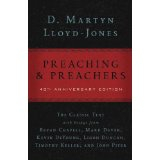
Book Review: Preaching and Preachers (40th Anniversary Edition) by *D. Martyn Lloyd-Jones

A Preaching Classic Just Got Even Better

 In order to introduce a new generation of preachers to “the Doctor” this book published in 1972 has been reissued. All the material from a series of lectures the Doctor gave in 1969 at Westminster Theological Seminary in Philadelphia – and is still very relevant to the times in which we are living in the 21st century. The Doctor was one who knew his cultural climate and ministered in a setting in London, that (especially in comparison with big cities in America) was ahead of its time in terms of a naturalistic worldview and skepticism toward religion and the gospel. However, he never backed down from the primacy and centrality of preaching the gospel of Jesus Christ from the Scriptures.

It’s doubtful that very many preachers will agree with everything Lloyd-Jones has to say in this book, but it’s also very probable that you will gain profound insight, wisdom, and be encouraged in your preaching. You will most certainly be convinced of the importance of preaching, the relevance of preaching, and become a better gospel empowered preacher as a result of reading this book.

What’s different about the 40th edition? Well, the 1972 version has been left in tact, but there are several very welcome features:

Several new essays by modern preachers who share what they have learned and applied from the Doctor – Ligon Duncan writes an essay entitled, “Some things to Look For and Wrestle With;” Tim Keller writes an essay called “A Tract for the Times;” John Piper writes on “Martyn Lloyd-Jones: The Preacher;” Kevin DeYoung writes an essay on “Preaching for Brand New and Tired Old Preachers;” Mark Dever writes on “What I’ve Learned about Preaching From Martyn Lloyd-Jones;” and lastly Bryan Chapell pens “Martyn Lloyd-Jones: An Uncommon Zeal.”

Another new feature is that each chapter contains several questions for study and discussion that can be useful for students, pastors, or church staffs to use in discussion or small group study. I am so glad that this new edition is finally here, and hope that it will inspire a new generation of preachers to proclaim the gospel from Genesis to Revelation with the unction of the Spirit, knowledge of the Scriptures, love for Christ, and passion of “the Doctor.”


*J.I. Packer first heard Dr. D. Martyn Lloyd-Jones preach when he was a 22-year-old student in London. Upon hearing Lloyd-Jones, Packer remarked that he had “never heard such preaching…[delivered] with the force of electric shock, bringing to at least one of his listeners more of a sense of God than any other man.” As Packer’s statement suggests, Lloyd-Jones’s life-long ministry had a profound impact not only on lay-people, but on the very leaders of the Christian church as well.

Although Lloyd-Jones was to become one of the great Christian thinkers of the twentieth century, his career began far removed from the Church. Born in Cardiff, Wales in 1899, Lloyd-Jones moved to London with his family at the age of 14. He was driven by a strong desire to be a doctor and attended medical school at St. Bartholomew’s Teaching Hospital in London. A remarkably bright student, Lloyd-Jones earned his M.D. at the age of 22 and immediately began working as the chief clinical assistant to Sir Thomas Horder, who referred to Lloyd-Jones as, “The most accurate thinker that I ever knew.”

However, at beginning his medical career, Lloyd-Jones began reading the Bible and was soon gripped by the logic of the Christian gospel. In his early twenties, he underwent a quiet but profound conversion to Christianity. Feeling propelled by a new desire to share his faith with others, Lloyd-Jones began to think that preaching would provide the best avenue for him to promote the gospel of Christ. But, at the same time, Lloyd-Jones had fallen in love with a young medical student named Bethan Phillips. He felt torn, knowing that if she were to marry him she would need to share his vision of abandoning medicine to pursue the ministry, and he prayed hard for God to work in her heart. Bethan did come to share Martyn’s vision for preaching and she married him in 1927. Together they shocked the press by making a dramatic move from the elite medical community of Harley Street to a small house in Lloyd-Jones’s native country. There, Dr. D. Martyn Lloyd Jones began his preaching career at the Bethlehem Forward Movement Mission Church in Aberavon, Wales.

In 1938, G. Campbell Morgan, the Minister of Westminster Chapel, heard Lloyd-Jones preach and decided that he wanted to have him as his successor in London. In the following year, Lloyd-Jones, his wife, and two daughters, Elizabeth and Ann, moved to London. Although Lloyd-Jones began his ministry at Westminster on a temporary basis, his stay there would be anything but temporary. His preaching drew in thousands of people and the congregation responded enthusiastically to his sharp, analytical presentation of the Christian faith. He remained at Westminster for thirty years, faithfully preaching through even the bomb raids of the World War II, and retired from there in 1968. While in London, Lloyd-Jones also had a formative influence on the InterVarsity Fellowship of Evangelical Unions by serving as its President for many years. Even today InterVarsity is a thriving world-wide ministry and it owes a large portion of its success to the influential work of Lloyd-Jones.

After leaving the church at the age of 69, Lloyd-Jones was unwilling to simply relax in retirement and he continued to work as hard as he had while he was at Westminster. He published some of his best work during that time and he continued to travel and preach at various engagements. Dr. D. Martyn Lloyd-Jones worked until in 1981, weakened by illness, he died quietly in his sleep at the age of 82.

Book Review: Preaching Christ in All of Scripture By Edmund P. Clowney

How To Preach Sermons Leading You to Worship Jesus

I was trained in an Evangelical University and Seminary where I had an excellent Biblical education and training in Systematic Theology. After being a preaching pastor for about five years I realized that the best preachers I was admiring had been trained in Biblical Theology and so I enrolled in the Doctor of Ministry preaching program at Westminster Theological Seminary in Escondido, California.

I vividly remember one of my professors talking about how the story of David and Goliath wasn’t just about “David and Goliath” but pointed to the greater David – Jesus. It’s taken me years to learn how to preach Christ and not just moralistic sermons. However, one of the masters of preaching Christ from all of the Bible is Edmund P. Clowney. As a matter of fact a lot of preachers today are excited about the teaching ministry of Tim Keller in New York – who really learned most of what he knows (that’s what he will tell you) from the author of the sermons of this book – Dr. Edmund Clowney.

One of the first things I learned about at WTS was Redemptive Historical Preaching – which essentially follows the “big story line” of the Bible with an eye on Jesus and His Person and redemptive work in history. In my opinion, what Clowney does teaches and models in this book is the greatest need of the 21st century – getting back to preaching Christ from all of Scripture.

If you are a pastor who like me – has had trouble with “getting to Christ” from the passage – especially in the Old Testament – you will find some great examples of how to do this from the various genres in the Old and New Testaments from a brilliant and humble preacher who knew the Bible and the “big story” well.

Edmund Clowney’s book is an outstanding contribution in helping preachers do what the prophets and the apostles did – preach Christ. Clowney begins with a chapter demonstrating how all of the Scriptures point to Christ – and he makes a wonderful case for this reality. In the second chapter he gives his methodology for “preparing a sermon that presents Christ.”

The remaining chapters are sample sermons from different genres in the Old and New Testaments showing the application of the principles articulated in the first two chapters. The sermons are as follows:

“Sharing the Father’s Welcome” based on Luke 15:11-32

“See What It Costs” based on Genesis 22:1-19

“When God Came Down” based on Genesis 28:10-22

“The Champion’s Strange Victory” based on Genesis 32

“Can God Be Among Us?” based on Exodus 34:1-9

“Meet the Captain” based on Joshua 5:13-15

“Surprised by Devotion” based on 2 Samuel 23:13-17

“The Lord of the Manger”

“Jesus Preaches Liberty” based on Luke 4:16-22

“The Cry of the God-Forsaken Savior” based on Psalm 22:1

“Our International Anthem” based on Psalm 936:3

“Jesus Christ and the Lostness of Man”

“Hearing Is Believing: The Lord of the Word”

As of the writing of this review you can still hear Edmund P. Clowney and Tim Keller co- teach a class for free called “Preaching Christ in a Postmodern World.” It has 37 lectures and question and answers sessions from RTS and covers the full gamut of issues related to Christ–centered preaching. I highly recommend that you download this course and listen to it until you get it. It will make a huge difference in your teaching and preaching – and you will see real life change in yourself and your hearers as a result.

If you are a preacher, or teacher of the Bible you will definitely benefit from this book. More importantly, I hope that you will be influenced and impacted by this book so that your sermons and Bible lessons will be filled with Christ, lead to Christ, and bring glory to Christ in a way that articulates with passion and excitement – the greatest story ever told. I have been blessed in my own worship of Christ, understanding of Christo-centric preaching, and have become a better preacher and teacher as a result – going from teaching moralistically to Biblically and thus leading others to worship Christ the Lord.

Book Review: Preaching and Teaching the Last Things by Walter Kaiser

Walter Kaiser is a gifted Old Testament scholar who has the keen ability to be able to communicate well among lay people and scholars alike. In this new offering Dr. Kaiser does not disappoint. This book is especially geared toward pastors, but is also extremely helpful for all those who teach and desire to understand the Old Testament and it’s connections to the New Testament and the ultimate promise plan of God.

Dr. Kaiser lands somewhere between a “covenant” and “dispensational” theologian – in my opinion he is very balanced and makes an excellent case for each passage he exegetes. He definitely leans dispensational – taking passages and promises to Israel literally unless there is a textual indicator deeming otherwise.

The book is composed of six parts – covering different aspects of the end times. Each of these parts contains two or three passages of Scripture, and is broken down in this way:

1)   A discussion of the topic.

2)   Specific exegetical and sermonic helps for the specific passage being taught including: the text; title; focal point; homiletical key word; interrogative question; and teaching aim.

3)   A teaching outline for the passage.

4)   An exegetical discussion of the passage.

5)   Practical conclusions based on a thorough exegesis of the passage.

Here are the topics that Kaiser addresses in the book with thorough exegetical and insightful precision:

Part 1: The Individual and General Eschatology of the Old Testament

  1. Life and Death in the Old Testament (Psalm 49:1-20)
  2. The resurrection of Mortals in the Old Testament (Job 19:21-27)

Part 2: The Nation of Israel in Old Testament Eschatology

  1. The Everlasting Promises made to Israel (Jeremiah 32:27-44)
  2. The Future Resurrection and Reunification of the Nation (Ezekiel 37:1-28)
  3. The Future Return of Israel to the Land of Promise (Zechariah 10:2-12)

Part 3: The New Davidic King and the City of the great King in the Old Testament

  1. The Branch of the Lord and the New Zion (Isaiah 2:2-5; 4:2-6)
  2. The Extent of Messiah’s Rule and Reign (Psalm 72:1-17)

Part 4: The Day of the Lord and the Beginning of the Nations’ Struggle with Israel

  1. The Arrival of the Day of the Lord (Joel 2:28-3:21)
  2. God and Magog (Ezekiel 38-39)

Part 5: The Events of the Last Seven Years and the Arrival of the Western Confederacy

10. The Seventy Weeks of Daniel (Daniel 9:24-27)

11. The New Coming Third Temple in Jerusalem (Ezekiel 40:1-41:26; 43:1-11)

12. The Coming Antichrist (Daniel 11:36-45)

13. The Battle of Armageddon (Zechariah 14:1-21)

Part 6: The Coming Millennial Rule of Christ and the Arrival of the Eternal State

14. The Millennial Rule and Reign of God (Isaiah 24:1-23)

15. The New Creation (Isaiah 65:17-25; 66:18-24)

I think this book is a welcome addition to any Bible student’s collection – especially due to the neglect of roughly 20-25% of the Bible being of a prophetic nature. Those of us who teach and preach God’s Word are required to teach the “whole counsel of God.” My only complaint is that I would have liked to have seen him draw more parallels in the passages to Christ and how the gospel applies to believers in the here and now – and not solely in the past or future (read Tim Keller or Paul Tripp for excellence in this matter). Overall, I think it’s an excellent resource with wise insights into God’s Word and how His promise plan will ultimately be fulfilled.

*Walter C. Kaiser Jr. (PhD, Brandeis University) is the distinguished professor emeritus of Old Testament and president emeritus of Gordon-Conwell Theological Seminary in South Hamilton, Massachusetts. Dr. Kaiser has written over 40 books, including Toward an Exegetical Theology: Biblical Exegesis for Preaching and Teaching; A History of Israel; The Messiah in the Old Testament; Recovering the Unity of the Bible; The Promise-Plan of God; Preaching and Teaching The Last Things; and coauthored (with Moises Silva) An Introduction to Biblical Hermeneutics. Dr. Kaiser and his wife, Marge, currently reside at Kerith Farm in Cedar Grove, Wisconsin. Dr. Kaiser’s website: www.walterckaiserjr.com

Tim Keller on The Inadequacy of Preaching Christ

Excellent Illustration of how Gospel/Christ-centered Bible Teachers feel when trying to convey the amazing awesomeness of Jesus in speaking or writing. This is an excerpt from the Atlantic Magazine Online – The article discusses Tim Keller’s new book on the Gospel of Mark.

How Timothy Keller Spreads the Gospel in New York City, and Beyond

FEB 21 2011, 11:30 AM ET

As you were writing King’s Cross, was there anything you learned about the Gospel of Mark that you hadn’t noticed before?

No one thing. I’ll tell you, the thing I struggle with is doing justice to it. When I’m preaching I don’t quite get the same— When you’re writing a book, you feel like you’re putting something down. It’s a little more permanent. And therefore I actually struggled just with a feeling like I’m not doing justice to the material, which is the Gospel of Mark, or more directly, Jesus himself. There’s a true story, evidently, of [Arturo] Toscanini. He was director of the NBC Symphony Orchestra years ago, here in New York. And there was some place where he had just conducted—actually it was just a rehearsal. He conducted a Beethoven symphony. And he did such an incredible job with it that when it was all done, the musicians gave him a standing ovation. And he started to cry. He literally started to cry, and he actually had them sit down, and he wouldn’t let them applaud, and then he said, “It’s not me, it wasn’t me, it was Beethoven.”

Now, what he’s getting across there is a feeling like, “I’m just trying to do justice to the material. And usually I don’t. And if occasionally I do ok, you shouldn’t be applauding me. It’s just, I got out of the way. I just got out of the way and we actually heard how great the music was.”

And I feel the same struggle. I’m just trying to get out of the way. And you can’t. In other words, when you’re actually reading, and you’re getting directly a sense of the greatness and the attractiveness of Jesus—and by the way, to say he’s attractive doesn’t mean he’s warm and toasty all the time. I mean, sometimes he’s scary, but he’s still attractive. I just want to say, I want other people to have the same experience I’ve had as I’ve read. And I never quite get there. So I struggled with that, a lot. And it was a huge struggle to write. It’s a lot harder to write than it is to speak. There’s something about speaking that’s impermanent. You think, “Well, I can do it again next time.” But with a book, I didn’t feel that way.

Sometimes, actually, I have to say, some of the chapters I read and I wept and felt good about. I felt like it wasn’t a great chapter—I let him through. I let Jesus through. But there’s others that I don’t feel that way, and I say, “Agh.” My big struggle was doing justice to him, and doing justice to the material. That sounds a little bit pious, to say it the way I said it there. You understand, I hope.