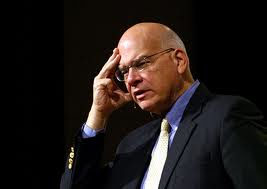
Tim Keller on The Gospel Is NOT Everything

“THE GOSPEL IS NOT EVERYTHING”

(Adapted from Tim Keller’s fantastic Gospel saturated book Center Church: Doing Balanced Gospel-Centered Ministry in Your City. Grand Rapids: Zondervan, 2012, Chapter One [I have written out many of the Scripture references in BOLD ITALIC print for ease of reference from the ESV – DPC])

What do we mean by “the gospel”? Answering this question is a bit more complex than we often assume. Not everything the Bible teaches can be considered “the gospel” (although it can be argued that all biblical doctrine is necessary background for understanding the gospel). The gospel is a message about how we have been rescued from peril. The very word gospel has as its background a news report about some life-altering event that has already happened:

Mark 1:1, “The beginning of the gospel of Jesus Christ, the Son of God.”

Luke 2:10, And the angel said to them, “Fear not, for behold, I bring you good news of great joy that will be for all the people.”

1 Corinthians 1:16-17 & 15:1-11, (I did baptize also the household of Stephanas. Beyond that, I do not know whether I baptized anyone else.) For Christ did not send me to baptize but to preach the gospel, and not with words of eloquent wisdom, lest the cross of Christ be emptied of its power…Now I would remind you, brothers, of the gospel I preached to you, which you received, in which you stand, and by which you are being saved, if you hold fast to the word I preached to you—unless you believed in vain. For I delivered to you as of first importance what I also received: that Christ died for our sins in accordance with the Scriptures, that he was buried, that he was raised on the third day in accordance with the Scriptures, and that he appeared to Cephas, then to the twelve. Then he appeared to more than five hundred brothers at one time, most of whom are still alive, though some have fallen asleep. Then he appeared to James, then to all the apostles. Last of all, as to one untimely born, he appeared also to me. For I am the least of the apostles, unworthy to be called an apostle, because I persecuted the church of God. But by the grace of God I am what I am, and his grace toward me was not in vain. On the contrary, I worked harder than any of them, though it was not I, but the grace of God that is with me. Whether then it was I or they, so we preach and so you believed.

 (1) The gospel is good news, not good advice.

The gospel is not primarily a way of life. It is not something we do, but something that has been done for us and something that we must respond to. In the Greek translation of the Old Testament — the Septuagint — the word euangelizo (proclaim good news) occurs twenty-three times. As we see in Psalm 40: 9 (ESV) — “I have told the glad news of [your] deliverance in the great congregation” — the term is generally used to declare the news of something that has happened to rescue and deliver people from peril. In the New Testament, the word group euangelion (good news), euangelizo (proclaim good news), and euangelistes (one who proclaims good news) occurs at least 133 times.

D. A. Carson draws this conclusion from a thorough study of gospel words:

Because the gospel is news, good news… it is to be announced; that is what one does with news. The essential heraldic element in preaching is bound up with the fact that the core message is not a code of ethics to be debated, still less a list of aphorisms to be admired and pondered, and certainly not a systematic theology to be outlined and schematized. Though it properly grounds ethics, aphorisms, and systematics, it is none of these three: it is news, good news, and therefore must be publicly announced (D.A. Carson, “What Is the Gospel? –Revisited,” in For the Fame of God’s Name: Essays in Honor of John Piper, ed. Sam Storms and Justin Taylor. Wheaton, ILL.: Crossway, 2010, 158.

(2) The gospel is good news announcing that we have been rescued or saved.

And what are we rescued from? What peril are we saved from? A look at the gospel words in the New Testament shows that we are rescued from the “coming wrath” at the end of history (1 Thessalonians 1:10, “and to wait for his Son from heaven, whom he raised from the dead, Jesus who delivers us from the wrath to come”).

But this wrath is not an impersonal force — it is God’s wrath. We are out of fellowship with God; our relationship with him is broken. In perhaps the most thoroughgoing exposition of the gospel in the Bible, Paul identifies God’s wrath as the great problem of the human condition (Rom 1:18–32).

Romans 1:18-32, For the wrath of God is revealed from heaven against all ungodliness and unrighteousness of men, who by their unrighteousness suppress the truth. For what can be known about God is plain to them, because God has shown it to them. For his invisible attributes, namely, his eternal power and divine nature, have been clearly perceived, ever since the creation of the world, in the things that have been made. So they are without excuse. For although they knew God, they did not honor him as God or give thanks to him, but they became futile in their thinking, and their foolish hearts were darkened. Claiming to be wise, they became fools, and exchanged the glory of the immortal God for images resembling mortal man and birds and animals and creeping things.

Therefore God gave them up in the lusts of their hearts to impurity, to the dishonoring of their bodies among themselves, because they exchanged the truth about God for a lie and worshiped and served the creature rather than the Creator, who is blessed forever! Amen.

For this reason God gave them up to dishonorable passions. For their women exchanged natural relations for those that are contrary to nature; and the men likewise gave up natural relations with women and were consumed with passion for one another, men committing shameless acts with men and receiving in themselves the due penalty for their error.

And since they did not see fit to acknowledge God, God gave them up to a debased mind to do what ought not to be done. They were filled with all manner of unrighteousness, evil, covetousness, malice. They are full of envy, murder, strife, deceit, maliciousness. They are gossips, slanderers, haters of God, insolent, haughty, boastful, inventors of evil, disobedient to parents, foolish, faithless, heartless, ruthless. Though they know God’s righteous decree that those who practice such things deserve to die, they not only do them but give approval to those who practice them.

Genesis 3:1-19, Now the serpent was more crafty than any other beast of the field that the Lord God had made. He said to the woman, “Did God actually say, ‘You shall not eat of any tree in the garden’?” And the woman said to the serpent, “We may eat of the fruit of the trees in the garden, but God said, ‘You shall not eat of the fruit of the tree that is in the midst of the garden, neither shall you touch it, lest you die.’ ”

But the serpent said to the woman, “You will not surely die. For God knows that when you eat of it your eyes will be opened, and you will be like God, knowing good and evil.” So when the woman saw that the tree was good for food, and that it was a delight to the eyes, and that the tree was to be desired to make one wise, she took of its fruit and ate, and she also gave some to her husband who was with her, and he ate. Then the eyes of both were opened, and they knew that they were naked. And they sewed fig leaves together and made themselves loincloths.

And they heard the sound of the Lord God walking in the garden in the cool of the day, and the man and his wife hid themselves from the presence of the Lord God among the trees of the garden. But the Lord God called to the man and said to him, “Where are you?” And he said, “I heard the sound of you in the garden, and I was afraid, because I was naked, and I hid myself.” He said, “Who told you that you were naked? Have you eaten of the tree of which I commanded you not to eat?” The man said, “The woman whom you gave to be with me, she gave me fruit of the tree, and I ate.” Then the Lord God said to the woman, “What is this that you have done?” The woman said, “The serpent deceived me, and I ate.”

The Lord God said to the serpent, “Because you have done this, cursed are you above all livestock and above all beasts of the field; on your belly you shall go, and dust you shall eat all the days of your life. I will put enmity between you and the woman, and between your offspring and her offspring; he shall bruise your head, and you shall bruise his heel.”

To the woman he said, “I will surely multiply your pain in childbearing; in pain you shall bring forth children. Your desire shall be for your husband, and he shall rule over you.”

And to Adam he said, “Because you have listened to the voice of your wife and have eaten of the tree of which I commanded you, ‘You shall not eat of it,’ cursed is the ground because of you; in pain you shall eat of it all the days of your life; thorns and thistles it shall bring forth for you; and you shall eat the plants of the field.

By the sweat of your face you shall eat bread, till you return to the ground, for out of it you were taken; for you are dust, and to dust you shall return.”

Here we see that the wrath of God has many ramifications. The background text is Genesis 3:17–19 (Genesis 3 passage above), in which God’s curse lies on the entire created order because of human sin. Because we are alienated from God, we are psychologically alienated within ourselves — we experience shame and fear (Gen 3:10). Because we are alienated from God, we are also socially alienated from one another (v. 7 describes how Adam and Eve must put on clothing, and v. 16 speaks of alienation between the genders; also notice the blame shifting in their dialogue with God in vv. 11–13). Because we are alienated from God, we are also physically alienated from nature itself. We now experience sorrow, painful toil, physical degeneration, and death (vv. 16–19). In fact, the ground itself is “cursed” (v. 17; see Rom 8:18–25 below).

Romans 8:18-25, For I consider that the sufferings of this present time are not worth comparing with the glory that is to be revealed to us. For the creation waits with eager longing for the revealing of the sons of God. For the creation was subjected to futility, not willingly, but because of him who subjected it, in hope that the creation itself will be set free from its bondage to corruption and obtain the freedom of the glory of the children of God. For we know that the whole creation has been groaning together in the pains of childbirth until now. And not only the creation, but we ourselves, who have the firstfruits of the Spirit, groan inwardly as we wait eagerly for adoption as sons, the redemption of our bodies. For in this hope we were saved. Now hope that is seen is not hope. For who hopes for what he sees? But if we hope for what we do not see, we wait for it with patience.

Since the garden, we live in a world filled with suffering, disease, poverty, racism, natural disasters, war, aging, and death — and it all stems from the wrath and curse of God on the world. The world is out of joint, and we need to be rescued. But the root of our problem is not these “horizontal” relationships, though they are often the most obvious; it is our “vertical” relationship with God.

All human problems are ultimately symptoms, and our separation from God is the cause. The reason for all the misery — all the effects of the curse — is that we are not reconciled to God. We see this in such texts as Romans 5:8 and 2 Corinthians 5:20 (below).

Romans 5:8, “but God shows his love for us in that while we were still sinners, Christ died for us.”

2 Corinthians 5:20, “Therefore, we are ambassadors for Christ, God making his appeal through us. We implore you on behalf of Christ, be reconciled to God.”

Therefore, the first and primary focus of any real rescue of the human race — the main thing that will save us — is to have our relationship with God put right again.

(3) The gospel is news about what has been done by Jesus Christ to put right our relationship with God.

Becoming a Christian is about a change of status. First John 3:14 (emphasis added) states that “we have passed from death to life,” not we are passing from death to life ((The verb translated “passed” in 1 John 3:14 is metabaino, which means to “cross over.” In John 5:24, Jesus states, “Whoever hears my word and believes him who went me has eternal life and will not be condemned; he has crossed over [metabaino] from death to life.” A parallel passage is Colosssians 1:13, where it is said that Christ-followers have been transferred from the dominion of darkness into the kingdom of the Son). You are either in Christ or you are not; you are either pardoned and accepted or you are not; you either have eternal life or you don’t. This is why Dr. Martyn Lloyd-Jones often used a diagnostic question to determine a person’s spiritual understanding and condition. He would ask, “Are you now ready to say that you are a Christian?” He recounts that over the years, whenever he would ask the question, people would often hesitate and then say, “I do no feel that I am good enough.” To that, he gives this response:

At once I know that… they are still thinking in terms of themselves; their idea still is that they have to make themselves good enough to be a Christian… It sounds very modest but it is the lie of the devil, it is a denial of the faith… you will never be good enough; nobody has ever been good enough. The essence of the Christian salvation is to say that He is good enough and that I am in Him! (D. Martyn Lloyd-Jones, Spiritual Depression: Its Causes and Cure. Grand Rapids: Eerdmans, 1965, 34).

Lloyd-Jones’s point is that becoming a Christian is a change in our relationship with God. Jesus’ work, when it is believed and rested in, instantly changes our standing before God. We are “in him.”

Ever since reading J. I. Packer’s famous essay introducing John Owen’s Death of Death in the Death of Christ, I have liked “God saves sinners” as a good summary of gospel: God saves sinners. God — the Triune Jehovah, Father, Son and Spirit; three Persons working together in sovereign wisdom, power and love to achieve the salvation of a chosen people, the Father electing, the Son fulfilling the Father’s will by redeeming, the Spirit executing the purpose of Father and Son by renewing. Saves — does everything, first to last, that is involved in bringing man from death in sin to life in glory: plans, achieves and communicates redemption, calls and keeps, justifies, sanctifies, glorifies. Sinners— men as God finds them, guilty, vile, helpless, powerless, unable to lift a finger to do God’s will or better their spiritual lot (J.I. Packer, “Introductory Essay to John Owen’s Death of Death in the Death of Christ” – see this website [verticallivingministries.com] under the category “Soteriology” or “J.I. Packer”).

THE GOSPEL IS NOT THE RESULTS OF THE GOSPEL

The gospel is not about something we do but about what has been done for us, and yet the gospel results in a whole new way of life. This grace and the good deeds that result must be both distinguished and connected. The gospel, its results, and its implications must be carefully related to each other— neither confused nor separated. One of Martin Luther’s dicta was that we are saved by faith alone but not by a faith that remains alone. His point is that true gospel belief will always and necessarily lead to good works, but salvation in no way comes through or because of good works. Faith and works must never be confused for one another, nor may they be separated.

For by grace you have been saved through faith. And this is not your own doing; it is the gift of God, not a result of works, so that no one may boast. For we are his workmanship, created in Christ Jesus for good works, which God prepared beforehand, that we should walk in them (Ephesians 2:8-10).

“What good is it, my brothers, if someone says he has faith but does not have works? Can that faith save him?So also faith by itself, if it does not have works, is dead. But someone will say, “You have faith and I have works.” Show me your faith apart from your works, and I will show you my faith by my works.

Do you want to be shown, you foolish person, that faith apart from works is useless? Was not Abraham our father justified by works when he offered up his son Isaac on the altar? You see that faith was active along with his works, and faith was completed by his works; and the Scripture was fulfilled that says, “Abraham believed God, and it was counted to him as righteousness”—and he was called a friend of God. You see that a person is justified by works and not by faith alone. And in the same way was not also Rahab the prostitute justified by works when she received the messengers and sent them out by another way? For as the body apart from the spirit is dead, so also faith apart from works is dead” (James 2:14, 17-18, 20-26).

I am convinced that belief in the gospel leads us to care for the poor and participate actively in our culture, as surely as Luther said true faith leads to good works. But just as faith and works must not be separated or confused, so the results of the gospel must never be separated from or confused with the gospel itself. I have often heard people preach this way: “The good news is that God is healing and will heal the world of all its hurts; therefore, the work of the gospel is to work for justice and peace in the world.” The danger in this line of thought is not that the particulars are untrue (they are not) but that it mistakes effects for causes. It confuses what the gospel is with what the gospel does. When Paul speaks of the renewed material creation, he states that the new heavens and new earth are guaranteed to us because on the cross Jesus restored our relationship with God as his true sons and daughters. Romans 8:1–25 teaches, remarkably, that the redemption of our bodies and of the entire physical world occurs when we receive “our adoption.” As his children, we are guaranteed our future inheritance, and because of that inheritance, the world is renewed. The future is ours because of Christ’s work finished in the past.

“In him you also, when you heard the word of truth, the gospel of your salvation, and believed in him, were sealed with the promised Holy Spirit, who is the guarantee of our inheritance until we acquire possession of it, to the praise of his glory…having the eyes of your hearts enlightened, that you may know what is the hope to which he has called you, what are the riches of his glorious inheritance in the saints” (Ephesians 1:13-14,18).

“giving thanks to the Father, who has qualified you to share in the inheritance of the saints in light… knowing that from the Lord you will receive the inheritance as your reward. You are serving the Lord Christ” (Colossians 1:12; 3:24).

“Therefore he [Jesus] is the mediator of a new covenant, so that those who are called may receive the promised eternal inheritance, since a death has occurred that redeems them from the transgressions committed under the first covenant” (Hebrews 9:15).

“Blessed be the God and Father of our Lord Jesus Christ! According to his great mercy, he has caused us to be born again to a living hope through the resurrection of Jesus Christ from the dead, to an inheritance that is imperishable, undefiled, and unfading, kept in heaven for you, who by God’s power are being guarded through faith for a salvation ready to be revealed in the last time” (1 Peter 1:3-5).

We must not, then, give the impression that the gospel is simply a divine rehabilitation program for the world, but rather that it is an accomplished substitutionary work. We must not depict the gospel as primarily joining something (Christ’s kingdom program) but rather as receiving something (Christ’s finished work). If we make this error, the gospel becomes another kind of a salvation by works instead of a salvation by faith.

As J. I. Packer writes:

The gospel does bring us solutions to these problems [of suffering and injustice], but it does so by first solving… the deepest of all human problems, the problem of man’s relation with his Maker; and unless we make it plain that the solution of these former problems depends on the settling of this latter one, we are misrepresenting the message and becoming false witnesses of God (J.I. Packer. Knowing God. Downers Grove, ILL.: InterVarsity, 1973, p. 171).

A related question has to do with whether the gospel is spread by the doing of justice. Not only does the Bible say over and over that the gospel is spread by preaching, but common sense tells us that loving deeds, as important as they are as an accompaniment of preaching, cannot by themselves bring people to a saving knowledge of Jesus Christ. Francis Schaeffer argued rightly that Christians’ relationships with each other constitute the criterion the world uses to judge whether their message is truthful — so Christian community is the “final apologetic” (Francis Schaeffer. The Mark of the Christian. Downers Grove, ILL.: InterVarsity, 1977, p. 25; cf. Timothy George and John Woodbridge. The Mark of Jesus: Loving in a Way the World Can See. Chicago: Moody, 2005).

Notice again, however, the relationship between faith and works. Jesus said that a loving community is necessary for the world to know that God sent him (John 17:23, “I in them and you in me, that they may become perfectly one, so that the world may know that you sent me and loved them even as you loved me.” And John 13:35, “By this all people will know that you are my disciples, if you have love for one another”).

Sharing our goods with each other and with the needy is a powerful sign to nonbelievers (see the relationship between witness and sharing in Acts 4:31– 37 and Acts 6). But loving deeds — even though they embody the truths of the gospel and cannot be separated from preaching the gospel — should not be conflated with it. The gospel, then, is preeminently a report about the work of Christ on our behalf — that is why and how the gospel is salvation by grace. The gospel is news because it is about a salvation accomplished for us. It is news that creates a life of love, but the life of love is not itself the gospel (See D.A. Carson, “What Is the Gospel? —Revisited,” in For the Fame of God’s Name, 158).

THE GOSPEL HAS TWO EQUAL AND OPPOSITE ENEMIES

The ancient church father Tertullian is reputed to have said, “Just as Jesus was crucified between two thieves, so the gospel is ever crucified between these two errors” (Having heard and read this in the words of other preachers, I have never been able to track down an actual place in Tertullian’s writings where he says it. I think it may be apocryphal, but the principle is right).

What are these errors to which Tertullian was referring? I often call them religion and irreligion; the theological terms are legalism and antinomianism. Another way to describe them could be moralism and relativism (or pragmatism).

These two errors constantly seek to corrupt the message and steal away from us the power of the gospel. Legalism says that we have to live a holy, good life in order to be saved. Antinomianism says that because we are saved, we don’t have to live a holy, good life.

This is the location of the “tip of the spear” of the gospel. A very clear and sharp distinction between legalism, antinomianism, and the gospel is often crucial for the life-changing power of the Holy Spirit to work. If our gospel message even slightly resembles “you must believe and live right to be saved” or “God loves and accepts everyone just as they are,” we will find our communication is not doing the identity-changing, heart-shaping transformative work described in the next part of this book. If we just preach general doctrine and ethics from Scripture, we are not preaching the gospel. The gospel is the good news that God has accomplished our salvation for us through Christ in order to bring us into a right relationship with him and eventually to destroy all the results of sin in the world.

Still, it can be rightly argued that in order to understand all this — who God is, why we need salvation, what he has done to save us — we must have knowledge of the basic teachings of the entire Bible. J. Gresham Machen, for example, speaks of the biblical doctrines of God and of man to be the “presuppositions of the gospel” ((J. Gresham Machen, Christianity and Liberalism, new ed. Grand Rapids: Eerdmans, 2001, 99).

This means that an understanding of the Trinity, of Christ’s incarnation, of original sin and sin in general — are all necessary. If we don’t understand, for example, that Jesus was not just a good man but the second person of the Trinity, or if we don’t understand what the “wrath of God” means, it is impossible to understand what Jesus accomplished on the cross. Not only that, but the New Testament constantly explains the work of Christ in Old Testament terms — in the language of priesthood, sacrifice, and covenant.

In other words, we must not just preach the Bible in general; we must preach the gospel. Yet unless those listening to the message understand the Bible in general, they won’t grasp the gospel. The more we understand the whole corpus of biblical doctrine, the more we will understand the gospel itself — and the more we understand the gospel, the more we will come to see that this is, in the end, what the Bible is really about. Biblical knowledge is necessary for the gospel and distinct from the gospel, yet it so often stands in when the gospel is not actually present that people have come to mistake its identity.

 THE GOSPEL HAS CHAPTERS

So, the gospel is good news — it is not something we do but something that has been done for us. Simple enough. But when we ask questions like “Good news about what?” or “Why is it good news?” the richness and complexity of the gospel begin to emerge.

There are two basic ways to answer the question “What is the gospel?” One is to offer the biblical good news of how you can get right with God. This is to understand the question to mean, “What must I do to be saved?” The second is to offer the biblical good news of what God will fully accomplish in history through the salvation of Jesus. This is to understand the question as “What hope is there for the world?”

If we conceive the question in the first, more individualistic way, we explain how a sinful human being can be reconciled to a holy God and how his or her life can be changed as a result. It is a message about individuals. The answer can be outlined: Who God is, what sin is, who Christ is and what he did, and what faith is. These are basically propositions.

If we conceive of the question in the second way, to ask all that God is going to accomplish in history, we explain where the world came from, what went wrong with it, and what must happen for it to be mended. This is a message about the world. The answer can be outlined: creation, fall, redemption, and restoration. These are chapters in a plotline, a story. There is no single way to present the biblical gospel. Yet I urge you to try to be as thoughtful as possible in your gospel presentations. The danger in answering only the first question (“What must I do to be saved?”) without the second (“What hope is there for the world?”) is that, standing alone, the first can play into the Western idea that religion exists to provide spiritual goods that meet individual spiritual needs for freedom from guilt and bondage. It does not speak much about the goodness of the original creation or of God’s concern for the material world, and so this conception may set up the listener to see Christianity as sheer escape from the world. But the danger in conceiving the gospel too strictly as a story line of the renewal of the world is even greater. It tells listeners about God’s program to save the world, but it does not tell them how to actually get right with God and become part of that program. In fact, I’ll say that without the first message, the second message is not the gospel. J. I. Packer writes these words:

In recent years, great strides in biblical theology and contemporary canonical exegesis have brought new precision to our grasp of the Bible’s overall story of how God’s plan to bless Israel, and through Israel the world, came to its climax in and through Christ. But I do not see how it can be denied that each New Testament book, whatever other job it may be doing, has in view, one way or another, Luther’s primary question: how may a weak, perverse, and guilty sinner find a gracious God? Nor can it be denied that real Christianity only really starts when that discovery is made. And to the extent that modern developments, by filling our horizon with the great metanarrative, distract us from pursuing Luther’s question in personal terms, they hinder as well as help in our appreciation of the gospel  (J. I. Packer, In My Place Condemned He Stood: Celebrating the Glory of the Atonement. Wheaton, Ill.: Crossway, 2007, 26 – 27).

Still, the Bible’s grand narrative of cosmic redemption is critical background to help an individual get right with God. One way to proceed is to interleave the two answers to the “What is the gospel?” question so that gospel truths are laid into a story with chapters rather than just presented as a set of propositions. The narrative approach poses the questions, and the propositional approach supplies the answers.

How would we relate the gospel to someone in this way? What follows is a “conversational pathway” for presenting the gospel to someone as the chapters in a story. In the Bible, the term gospel is the declaration of what Jesus Christ has done to save us. In light of the biblical usage, then, we should observe that chapters 1 (God and Creation), 2 (Fall and Sin), and 4 (Faith) are not, strictly speaking, “the gospel.” They are prologue and epilogue. Simon Gathercole argues that both Paul and the Gospel writers considered the good news to have three basic elements: the identity of Jesus as Son of God and Messiah, the death of Jesus for sin and justification, and the establishment of the reign of God and the new creation (Simon Gathercole, “The Gospel of Paul and the Gospel of the Kingdom,” in God’s Power to Save, ed. Chris Green. Leicester, UK: Inter-Varsity, 2006, 138 – 54).

The gospel, then, is packed into chapter 3, with its three headings — incarnation, substitution, and restoration. Chapter 1 on God and chapter 2 on sin constitute absolutely critical background information for understanding the meaning of the person and work of Jesus, and chapter 4 helps us understand how we must respond to Jesus’ salvation. Nevertheless, it is reasonable and natural to refer to the entire set of four chapters as “the gospel.”

WHERE DID WE COME FROM?

Answer: God. There is one God. He is infinite in power, goodness, and holiness and yet also personal and loving, a God who speaks to us in the Bible. The world is not an accident, but the creation of the one God (Genesis 1). God created all things, but why did he do that? Why did he create the world and us? The answer is what makes the Christian understanding of God profound and unique. While there is only one God, within God’s being there are three persons — Father, Son, and Holy Spirit —who are all equally God and who have loved, adored, served, and enjoyed one another from all eternity. If God were unipersonal, then he would have not known love until he created other beings. In that case, love and community would not have been essential to his character; it would have emerged later. But God is triune, and therefore love, friendship, and community are intrinsic to him and at the heart of all reality. So a triune God created us (John 1: 1 – 4), but he would not have created us to get the joy of mutual love and service, because he already had that. Rather, he created us to share in his love and service. As we know from John 17: 20– 24, the persons of the Trinity love and serve one another — they are “other-oriented”  (D. A. Carson in The Difficult Doctrine of the Love of God. Wheaton, Ill.: Crossway, 2000, pp. 39 & 43 writes, “What we have, then, is a picture of God whose love, even in eternity past, even before the creation of anything, is other-oriented. This cannot be said [for instance] of Allah. Yet because the God of the Bible is one, this plurality-in-unity does not destroy his entirely appropriate self-focus as God… There has always been an other-orientation to the love of God… We are the friends of God by virtue of the intra-Trinitarian love of God that so worked out in the fullness of time that the plan of redemption, conceived in the mind of God in eternity past, has exploded into our space-time history at exactly the right moment.”).

And thus God created us to live in the same way. In order to share the joy and love that God knew within himself, he created a good world that he cares for, a world full of human beings who were called to worship, know, and serve him, not themselves (See “The Dance of Creation,” in Tim Keller, The Reason for God: Belief in an Age of Skepticism. New York: Dutton, 2008, pp. 225– 26; “The Dance,” in Tim Keller, King’s Cross: The Story of the World in the Life of Jesus. New York: Dutton, 2011, 3– 13).

WHY DID THINGS GO SO WRONG?

Answer: Sin. God created us to adore and serve him and to love others. By living this way, we would have been completely happy and enjoyed a perfect world. But instead, the whole human race turned away from God, rebelling against his authority. Instead of living for God and our neighbors, we live lives of self-centeredness. Because our relationship with God has been broken, all other relationships — with other human beings, with our very selves, and with the created world — are also ruptured. The result is spiritual, psychological, social, and physical decay and breakdown. “Things fall apart; the center cannot hold. Mere anarchy is loosed upon the world” — the world now lies under the power of sin (Quote from the poem “The Second Coming,” 1920 by William Butler Yeats).

Sin reaps two terrible consequences. One consequence is spiritual bondage (Rom 6: 15–18). We may believe in God or we may not believe, but either way, we never make him our greatest hope, good, or love. We try to maintain control of our lives by living for other things — for money, career, family, fame, romance, sex, power, comfort, social and political causes, or something else. But the result is always a loss of control, a form of slavery. Everyone has to live for something, and if that something is not God, then we are driven by that thing we live for — by overwork to achieve it, by inordinate fear if it is threatened, deep anger if it is being blocked, and inconsolable despair if it is lost. So the novelist David Foster Wallace, not long before his suicide, spoke these words to the 2005 graduating class at Kenyon College:

Everybody worships. The only choice we get is what to worship. And the compelling reason for maybe choosing some sort of god or spiritual-type thing to worship… is that pretty much anything else you worship will eat you alive. If you worship money and things, if they are where you tap real meaning in life, then you will never have enough, never feel you have enough… Worship your body and beauty and sexual allure and you will always feel ugly. And when time and age start showing, you will die a million deaths before they finally grieve you… Worship power, you will end up feeling weak and afraid, and you will need ever more power over others to numb you to your own fear. Worship your intellect, being seen as smart, you will end up feeling stupid, a fraud, always on the verge of being found out. But the insidious thing about these forms of worship is… they’re unconscious. They are default settings (Emily Bobrow, “David Foster Wallace, in His Own Words,” taken from his 2005 commencement address at Kenyon College, http:// moreintelligentlife.com/ story/ david-foster-wallace-in-his-own-words; accessed January 4, 2012).

The second basic consequence of sin is condemnation (Rom 6: 23). We are not just suffering because of sin; we are guilty because of sin. Often we say, “Well, I’m not very religious, but I’m a good person — and that is what is most important.” But is it? Imagine a woman —a poor widow —with an only son. She teaches him how she wants him to live — to always tell the truth, to work hard, and to help the poor. She makes very little money, but with her meager savings she is able to put him through college. Imagine that when he graduates, he hardly ever speaks to her again. He occasionally sends a Christmas card, but he doesn’t visit her; he won’t answer her phone calls or letters; he doesn’t speak to her. But he lives just like she taught him — honestly, industriously, and charitably. Would we say this was acceptable? Of course not! Wouldn’t we say that by living a “good life” but neglecting a relationship with the one to whom he owed everything he was doing something condemnable? In the same way, if God created us and we owe him everything and we do not live for him but we “live a good life,” it is not enough. We all owe a debt that must be paid.

WHAT WILL PUT THINGS RIGHT?

Answer: Christ. First, Jesus Christ puts things right through his incarnation. C. S. Lewis wrote that if there is a God, we certainly don’t relate to him as people on the first floor of a building relate to people on the second floor. We relate to him the way Hamlet relates to Shakespeare. We (characters) might be able to know quite a lot about the playwright, but only to the degree that the author chooses to put information about himself in the play (See C. S. Lewis, Christian Reflections. Grand Rapids: Eerdmans, 1967, pp. 167– 76).

In the Christian view, however, we believe that God did even more than simply give us information. Many fans of Dorothy Sayers’s detective stories and mystery novels point out that Sayers was one of the first women to attend Oxford University. The main character in her stories — Lord Peter Wimsey — is an aristocratic sleuth and a single man. At one point in the novels, though, a new character appears, Harriet Vane. She is described as one of the first women who graduated from Oxford — and as a writer of mystery novels. Eventually she and Peter fall in love and marry. Who was she? Many believe Sayers looked into the world she had created, fell in love with her lonely hero, and wrote herself into the story to save him. Very touching! But that is not nearly as moving or amazing as the reality of the incarnation (John 1: 14). God, as it were, looked into the world he had made and saw our lostness and had pity on his people. And so he wrote himself into human history as its main character (John 3: 16). The second person in the Trinity, the Son of God, came into the world as a man, Jesus Christ.

The second way Jesus puts things right is through substitution. Because of the guilt and condemnation on us, a just God can’t simply shrug off our sins. Being sorry is not enough. We would never allow an earthly judge to let a wrongdoer off, just because he was contrite — how much less should we expect a perfect heavenly Judge to do so? And even when we forgive personal wrongs against us, we cannot simply forgive without cost. If someone harms us and takes money or happiness or reputation from us, we can either make them pay us back or forgive them— which means we absorb the cost ourselves without remuneration.

Jesus Christ lived a perfect life — the only human being to ever do so. “For we do not have a high priest who is unable to sympathize with our weaknesses, but one who in every respect has been tempted as we are, yet without sin” (Hebrews 4:15).

At the end of his life, he deserved blessing and acceptance; at the end of our lives, because every one of us lives in sin, we deserve rejection and condemnation. “What then? Are we Jews any better off? No, not at all. For we have already charged that all, both Jews and Greeks [Gentiles], are under sin, as it is written: “None is righteous, no, not one; no one understands; no one seeks for God. All have turned aside; together they have become worthless; no one does good, not even one” (Romans 3:9–12).

Yet when the time had fully come, Jesus received in our place, on the cross, the rejection and condemnation we deserve (“For Christ also suffered once for sins, the righteous for the unrighteous, that he might bring us to God, being put to death in the flesh but made alive in the spirit” – 1 Peter 3:18), so that, when we believe in him, we can receive the blessing and acceptance he deserves (“For our sake he made him to be sin, so that in him we might become the righteousness of God” – 2 Corinthians 5: 21).

There is no more moving thought than that of someone giving his life to save another. In Charles Dickens’s A Tale of Two Cities, two men — Charles Darnay and Sydney Carton — both love the same woman, Lucie Manette, but Lucie chooses to marry Charles. Later, during the French Revolution, Charles is thrown in prison and awaits execution on the guillotine. Sydney visits Charles in prison, drugs him, and has him carried out. When a young seamstress (also on death row) realizes that Sydney is taking Charles’s place, she is amazed and asks him to hold her hand for strength. She is deeply moved by his substitutionary sacrifice — and it wasn’t even for her! When we realize that Jesus did the very same thing for us, it changes everything — the way we regard God, ourselves, and the world.

The third way Jesus will put things right is through the eventual restoration of all that has gone wrong with the world. The first time Jesus came from heaven to earth, he came in weakness to suffer for our sins. But the second time he comes, he will judge the world, putting a final end to all evil, suffering, decay, and death. “For the creation waits with eager longing for the revealing of the sons of God. For the creation was subjected to futility, not willingly, but because of him who subjected it, in hope that the creation itself will be set free from its bondage to corruption and obtain the freedom of the glory of the children of God…But according to his promise we are waiting for new heavens and a new earth in which righteousness dwells” (Romans 8:19–21; 2 Peter 3:13).

This means that Christ’s salvation does not merely save our souls so we can escape the pain of the curse on the physical world. Rather, the final goal is the renewal and restoration of the material world, and the redemption of both our souls and our bodies. Vinoth Ramachandra notes how unique this view is among the religions of the world:

So our salvation lies not in an escape from this world but in the transformation of this world… You will not find hope for the world in any religious systems or philosophies of humankind. The biblical vision is unique. That is why when some say that there is salvation in other faiths I ask them, “What salvation are you talking about?” No faith holds out a promise of eternal salvation for the world the way the cross and resurrection of Jesus do (Vinoth Ramachandra, The Scandal of Jesus. Downers Grove, Ill.: InterVarsity, 2001, 24).

 HOW CAN I BE PUT RIGHT?

Answer: Faith. Jesus died for our sins and rose again from the grave. By faith in him, our sins can be forgiven and we can be assured of living forever with God and one day being raised from the dead like Christ. So what does it mean to believe, to have faith? First, it means to grasp what salvation “by faith” means. Believing in Christ does not mean that we are forgiven for our past, get a new start on life, and must simply try harder to live better than we did in the past. If this is your mind-set, you are still putting your faith in yourself. You are your own Savior. You are looking to your moral efforts and abilities to make yourself right with God. But this will never work. No one lives a perfect life. Even your best deeds are tainted by selfish and impure motives.

The gospel is that when we believe in Christ, there is now “no condemnation for those who are in Christ Jesus” (Romans 8:1). Putting our faith in Christ is not about trying harder; it means transferring our trust away from ourselves and resting in him. It means asking, “Father, accept me not because of what I have done or ever will do but because of what Jesus has done in my place.” When we do that, we are adopted into God’s family and given the right to his eternal, fatherly love (John 1:12–13).

The second thing to keep in mind is that it is not the quality of the faith itself that saves us; it is what Jesus has done for us. It is easy to assume that being “saved by faith” means that God will now love us because of the depth of our repentance and faith. But that is to once again subtly make ourselves our own Savior rather than Jesus. It is not the amount of our faith but the object of our faith that saves us. Imagine two people boarding an airplane. One person has almost no faith in the plane or the crew and is filled with fears and doubts. The other has great confidence in the plane and the crew. They both enter the plane, fly to a destination, and get off the plane safely. One person had a hundred times more faith in the plane than the other did, but they were equally safe. It wasn’t the amount of their faith but the object of their faith (the plane and crew) that kept them from suffering harm and arriving safely at their destination. Saving faith isn’t a level of psychological certainty; it is an act of the will in which we rest in Jesus. We give ourselves wholly to him because he gave himself wholly for us (“And calling the crowd to him with his disciples, he said to them, “If anyone would come after me, let him deny himself and take up his cross and follow me… Behold, I stand at the door and knock. If anyone hears my voice and opens the door, I will come in to him and eat with him, and he with me”– Mark 8:34; Revelation 3:20).

THE RIGHT RELATIONSHIP OF THE GOSPEL TO ALL OF MINISTRY

There is always a danger that church leaders and ministers will conceive of the gospel as merely the minimum standard of doctrinal content for being a Christian believer. As a result, many preachers and leaders are energized by thoughts of teaching more advanced doctrine, or of deeper forms of spirituality, or of intentional community and the sacraments, or of “deeper discipleship,” or of psychological healing, or of social justice and cultural engagement. One of the reasons is the natural emergence of specialization as a church grows and ages. People naturally want to go deeper into various topics and ministry disciplines. But this tendency can cause us to lose sight of the whole. Though we may have an area or a ministry that we tend to focus on, the gospel is what brings unity to all that we do. Every form of ministry is empowered by the gospel, based on the gospel, and is a result of the gospel.

Perhaps an illustration here will help. Imagine you’re in an orchestra and you begin to play, but the sound is horrific because the instruments are out of tune. The problem can’t be fixed by simply tuning them to each other. It won’t help for each person to get in tune to the person next to her because each person will be tuning to something different. No, they will all need to be tuned properly to one source of pitch. Often we go about trying to tune ourselves to the sound of everything else in our lives. We often hear this described as “getting balance.” But the questions that need to be asked are these: “Balanced to what?” “Tuned to what?” The gospel does not begin by tuning us in relation to our particular problems and surroundings; it first re-tunes us to God (Thanks to Michael Thate for this illustration).

If an element of ministry is not recognized as a result of the gospel, it may sometimes be mistaken for the gospel and eventually supplant the gospel in the church’s preaching and teaching. Counseling, spiritual direction, doing justice, engaging culture, doctrinal instruction, and even evangelism itself may become the main thing instead of the gospel. In such cases, the gospel as outlined above is no longer understood as the fountainhead, the central dynamic, from which all other things proceed. It is no longer the center of the preaching, the thinking, or the life of the church; some other good thing has replaced it. As a consequence, conversions will begin to dwindle in number because the gospel is not preached with a kind of convicting sharpness that lays bare the secrets of the heart and gives believers and nonbelievers a sense of God’s reality, even against their wills (“But if all prophesy, and an unbeliever or outsider enters, he is convicted by all, he is called to account by all, the secrets of his heart are disclosed, and so, falling on his face, he will worship God and declare that God is really among you. – 1 Corinthians 14:24–25).

Because the gospel is endlessly rich, it can handle the burden of being the one “main thing” of a church. First Peter 1:12 and its context indicate that the angels never tire of looking into and exploring the wonders of the gospel. It can be preached from innumerable stories, themes, and principles from all over the Bible. But when the preaching of the gospel is either confused with or separated from the other endeavors of the church, preaching becomes mere exhortation (to get with the church’s program or a biblical standard of ethics) or informational instruction (to inculcate the church’s values and beliefs). When the proper connection between the gospel and any aspect of ministry is severed, both are shortchanged.

The gospel is “heraldic proclamation” before it is anything else (D.A. Carson, “What Is the Gospel? —Revisited,” in For the Fame of God’s Name, 158). It is news that creates a life of love, but the life of love is not itself the gospel. The gospel is not everything that we believe, do, or say. The gospel must primarily be understood as good news, and the news is not as much about what we must do as about what has been done. The gospel is preeminently a report about the work of Christ on our behalf — salvation accomplished for us. That’s how it is a gospel of grace. Yet, as we will see in the next chapter, the fact that the gospel is news does not mean it is a simple message. There is no such thing as a “one size fits all” understanding of the gospel.

USE WORDS IF NECESSARY

[*This insert was an interesting aside by Keller, and not in the text: The
popular saying “Preach the gospel; use words if necessary” is helpful but also misleading. If the gospel were primarily about what we must do to be saved, it could be communicated as well by actions (to be imitated) as by words. But it the gospel is primarily about what God has done to save us, and how we can receive it through faith, it can only be expressed through words. Faith cannot come without hearing. This is why we read in Galatians 2:5 that heresy endangers the truth of the gospel, and why Philippians 1:16 declares that a person’s mind must be persuaded of the truth of the gospel. Ephesians 1:13 also asserts that the gospel is the word of truth. Ephesians 6:19 and Colossians 1:23 teach that we advance the gospel through verbal communication, particular preaching.]

The article above was adapted from Keller, Timothy J. (Center Church: Doing Balanced, Gospel-Centered Ministry in Your City (Kindle Locations 761-771). Zondervan. Kindle Edition.

About the Author:

Keller Tim with NY Background

Dr. Tim Keller is the founding pastor of Redeemer Presbyterian Church in Manhattan, New York, and the author of numerous books including The Reason for God: Belief in an age of Skepticism (In my opinion the best book to date on apologetics for a postmodern culture—I think this book will do for post moderns what Mere Christianity by C.S. Lewis did for moderns); and The Prodigal God (in my opinion the most clear presentation of the gospel for a post modern culture based on Luke 15).

What Books Have Influenced Christian Leaders?

What we read affects us deeply, with long-term results. What books have influenced you the most? The following are the responses given to a survey of Christian leaders, sent out by R. Kent Hughes (*note that many of these leaders have entered into the presence of God).

 Specific questions asked on the survey were:

(1) What are the five books, secular or sacred, which have influenced you the most?

(2) Of the spiritual/sacred books which have influenced you, which is your favorite?

(3) What is your favorite novel?

(4) What is your favorite biography?

 JOHN W. ALEXANDER

(1) Charles Sheldon, In His Steps; H. B. Wright, The Will of God and a Man’s Life Work; H. J. Carnell, An Introduction to Christian Apologetics; William Manchester, American Caesar; Garth Lean, God’s Politician.

(2) H.J. Carnell, An Introduction to Christian Apologetics.

(3) Charles Dickens, David Copperfield.

(4) William Manchester, American Caesar

 HUDSON T. ARMERDING

(1) The Bible; Calvin’s Institutes; J. I. Packer, Knowing God; J. O. Buswell, A Systematic Theology of the Christian Religion; S. E. Morison, History of the U.S. Navy in World War Two.

(2) After the Bible, Calvin’s Institutes.

(3) Dostoyevski, Crime and Punishment and Ernest Gordon, Through the Valley of the Kwai.

(4) Pollock, Hudson Taylor.

JAMES M. BOICE

(1) John Calvin, Institutes of the Christian Religion (2 vols.); B. B. Warfield, Inspiration and Authority of the Bible; T. M. Lindsay, History of the Reformation (2 vols.); John Stott, Basic Christianity; Donald Grey Barnhouse, Romans (10 vols.- most recently issued in 4 vols.).

(2) Calvin’s Institutes.

(3) Ernest Hemingway, Over the River and into the Trees.

(4) Arnold Dallimore, George Whitefield (2 vols).

BRYAN CHAPELL

(1) C. S. Lewis, Mere Christianity

(2) Calvin’s Institutes.

(3) J. Oliver Buswell, A Systematic Theology of Christian Religion.

(4) John Bunyan, Pilgrim’s Progress.

(5) Sidney Greidanus, Sola Scriptura.

 RICHARD CHASE

(1) Charles Colson, Loving God; Werner Jaegei Paideia: The Ideals of Greek Culture (3 vols.); Sir Robert Anderson, The Silence of God; David J. Hassel, City of Wisdom; Nathan Hatch, The Democritization of American Christianity.

(2) Charles Colson, Loving God.

(3) Mary Stewart’s novels: The Crystal Cave, The Hollow Hills, The Last Enchantment (favorite).

(4) Charles Colson, Born Again.

 CHARLES COLSON

(1 & 2) C. S. Lewis, Mere Christianity; St. Augustine, Confessions; Armando Valladares, Against All Hope; Alexander Solzhenitsyn, The Gulag Archipelago; Richard John Neuhaus, The Naked Public Square; Donald Bloesch, Crumbling Foundations; Harry Blamires, The Christian Mind; Dietrich Bonhoeffer, The Cost of Discipleship; St. Augustine, The City of God; Jonathan Edwards, Treatise on Religious Affections; R. C. Sproul, Knowing Scripture; William Wilberforce, Real Christianity; Jacques Ellul, The Political Illusion and The Presence of the Kingdom; J. I. Packer, Knowing God; Paul Johnson, Modern Times; John Bunyan, Pilgrim’s Progress.

(3) John Bunyan, Pilgrim’s Progress.

(4) St. Augustine, Confessions

 JAMES C. DOBSON

Rather than select several books which exceed all others in their impact on my life, I prefer to commend the authors whose collection of writings are most highly prized. This is easier because the best writers require several books to state their cases and leave their mark. First, I admire the memory of Dr. Francis Schaeffer and the anthology he left to us. Second, I have great appreciation for the writings of Chuck Colson. His best book, I believe, is Loving God. His life is a demonstration of its theme.

 LYLE DORSETT

(1) Besides the Bible, which I would, of course, rank #1, E. M. Bounds, Power Through Prayer; George Muller, A Life of Trust; G. K. Chesterton, Orthodoxy; Oswald Chambers, My Utmost for His Highest; Robert E. Coleman, The Master Plan of Evangelism.

(2) Oswald Chambers, My Utmost for His Highest.

(3) C. S. Lewis, The Great Divorce.

(4) Catherine Marshall, A Man Called Peter.

 ELISABETH ELLIOT

(1) Romano Guardini, The Lord; George MacDonald, Salted with Fire; Amy Carmichael, Toward Jerusalem; Janet Erskine Stuart, Life and Letters; Evelyn Underhill, The Mystery of Charity.

(2) Impossible to say.

(3) Sigrid Undeset, Kristin Lavransdatter.

(4) St. Augustine, Confessions.

 LTG. HOWARD G. GRAVES

The Bible; Oswald Chambers, My Utmost for His Highest; Francis Schaeffer, How Should We Then Live?; J. I. Packer, Knowing God; James Stockdale, A Vietnam Experience, Ten Years of Reflection; Charles Swindoll, Growing Strong in the Seasons of Life.

(2) Oswald Chambers, My Utmost for His Highest.

(3) Herman Wouk’s series, Winds of War and Remembrance.

(4) The Personal Memoirs of U. S. Grant.

 HOWARD G. HENDRICKS

(1) C. S. Lewis, Mere Christianity.

(2) Adler Mortimer, How to Read a Book.

(3) Calvin’s Institutes.

(4) Lewis Sperry Chafer, He That Is Spiritual.

(5) A.W. Tozer, The Pursuit of God.

 CARL F. H. HENRY

The Bible; James Orr, The Christian View of God and the World; John Calvin, The Institutes of the Christian Religion (this is all Dr. Henry provided).

 DAVID M. HOWARD

(1) John Stott, The Baptism and Fulness of the Holy Spirit; Earle Cairns, Christianity Through the Centuries; Alexander Whyte, Bible Characters; Carolina Maria de Jesus, Child of the Dark; Dwight Eisenhower Crusade in Europe.

(2) Earle Cairns, Christianity Through the Centuries.

(3) Leo Tolstoy, Anna Karenina.

(4) Elisabeth Elliot, Shadow of the Almighty.

 JERRY JENKINS

(1) Roger Kahn, The Boys of Summer.

(2) Charles Colson, How Now Shall We Live?

(3) Charles Colson, Born Again.

(4) Elisabeth Elliot, Shadow of the Almighty.

(5) Elisabeth Elliot, Through Gates of Splendor.

 KENNETH S. KANTZER

(1) St. Augustine, The City of God; John Calvin, Institutes; Jonathan Edwards, The Distinguishing Marks of a Revival of the Spirit of God; James Orr, The Christian View of God and the World; Leo Tolstoy, Anna Karenina.

(2) St. Augustine, The City of God.

(3) Leo Tolstoy, Anna Karenina.

(4) Carl E H. Henry, The Confessions of a Theologian.

 JAY KESLER

(1) Jacques Ellul, The Presence of the Kingdom; John Bright, The Kingdom of God; Alan Paton, Too Late the Phalarope; Carl Sandburg, Lincoln; C. S. Lewis, Mere Christianity; Fyodor Dostoyevski, Crime and Punishment.

(2) Jacques Ellul, The Presence of the Kingdom.

(3) Alan Paton, Too Late the Phalarope.

(4) Carl Sandburg, Lincoln; see also Lee, Jefferson, Sadat, Wesley, Judson, Truman, Churchill.

 DENNIS F. KINLAW

(1) Clarence Hall, Portrait of a Prophet: The Life of Samuel Logan Brengle; Hudson Taylor’s Spiritual Secret; The Standard Sermons of John Wesley; Yehekel Kaufmann, The Religion of Israel; A. W. Tozer, The Pursuit of God.

(2) The Standard Sermons of John Wesley.

(3) Charles Dickens, A Tale of Two Cities.

(4) Clara H. Stuart, Latimer, Apostle to the English.

 HAROLD LINDSELL

(1) John Calvin, Institutes; Oswald Chambers, My Utmost for His Highest; Philip Schaff, History of the Christian Church; Matthew Henry, Commentary; Martyn Lloyd-Jones, Spiritual Depression – Its Causes and Its Cure.

(2) Oswald Chambers, My Utmost for His Highest.

(3) None.

(4) Hudson Taylor, Spiritual Secrets.

DUANE LITFIN

 (Most influential authors rather than most influential books)

(1) C. S. Lewis, The Great Divorce; Mere Christianity; God in the Dock.

(2) A. W. Tozer, The Pursuit of God.

(3) J. I. Packer, Knowing God.

(4) St. Augustine, De Doctrina Christiana (On Christian Doctrine).

(5) Haddon Robinson, Biblical Preaching.

 WAYNE MARTINDALE

C. S. Lewis, The Great Divorce; C. S. Lewis, The Problem of Pain; C. S. Lewis, Mere Christianity; Charles Sheldon, In His Steps; Elisabeth Elliot, Through Gates of Splendor.

Elisabeth Elliot, Through Gates of Splendor.

Fyodor Dostoyevski, Brothers Karamazov.

Elisabeth Elliot, Through Gates of Splendor.

 ROBERTSON MCCUILKIN

(1) Romans, John, Luke, 2 Timothy; C. S. Lewis, Miracles; Warfield, Inspiration and Authority of Scripture; Johnstone, Operation World; Pollock, Course of Time.

(2) Pollock, Course of Time.

(3) C. S. Lewis, Till We Have Faces; Tolkien, Lord of the Rings; many of Shakespeare’s plays.

(4) Robert McQuilkin, Always in Triumph.

 CALVIN MILLER

(1) Dallas Willard, The Spirit of the Disciplines; Bill Moyers, World of Ideas II; Virginia Stem Owens, If You Do Love Old Men; Larsen, Passions; Williams, Islam.

(2) Jean Pierre de Causade, The Sacrament of the Present Moment or Mother Teresa’s Life in the Spirit.

(3) War and Peace, Anna Karenina, anything by Dickens, Dostoyevski, Tolkien.

(4) Troyat’s Tolstoy or Massie’s Nicholas and Alexandra.

 HAROLD MYRA

(1) C. S. Lewis, Mere Christianity; C. S. Lewis, Perelandra; Paul Tourniet, The Meaning of Persons; Helmut Thielicke, The Waiting Father; Thomas a Kempis, The Imitation of Christ; Oswald Chambers books.

(2) C. S. Lewis, Perelandra.

(3) Fyodor Dostoyevski, Brothers Karamazov.

(4) William Manchester, The Last Lion.

 STEPHEN F. OLFORD

(1) Alvin Toffler, Future Shock; Carl Henry, God, Revelation and Authority; Thomas a Kempis, The Imitation of Christ; A. J. Gordon, The Ministry of the Spirit; John Stott, The Cross of Christ.

(2) Dr. and Mrs. Howard Taylor, Hudson Taylor in the Early Years: The Growth of a Soul.

(3) Lloyd Douglas, The Robe and Lew Wallace, Ben Hur.

(4) Dr. and Mrs. Howard Taylor, Hudson Taylor in the Early Years: The Growth of a Soul.

 J. I. PACKER

(1) John Calvin, Institutes; John Bunyan, Pilgrim’s Progress; Goold, John Owen Works (Vols. 3, 6, 7); Richard Baxter, Reformed Pastor; Luther, Bondage of the Will.

(2) John Bunyan, Pilgrim’s Progress.

(3) Fyodor Dostoyevski, The Brothers Karamazov.

(4) Arnold Dallimore, George Whitefield (2 vols.).

PAIGE PATTERSON

(1) F. W. Krummacher, The Suffering Savior.

(2) Leonard Verduin, The Reformers and Their Stepchildren.

(3) Courtney Anderson, To the Golden Shore.

(4) Roland Bainton, Here I Stand.

(5) Francis Schaeffer, Escape from Reason.

 EUGENE H. PETERSON

(1) Karl Barth, Epistle to the Romans; Fyodor Dostoyevski, The Idiot; Charles Williams, Descent of the Dove; Herman Melville, Moby Dick; George Herbert, Country Parson and the Temple.

(2) Karl Barth, Epistle to the Romans.

(3) Fyodor Dostoyevski, The Brothers Karamazov.

(4) Meriol Trevor, 2 volumes on Newman: The Pillar of the Cloud and Light in Winter.

 C. WILLIAM POLLARD

(1) C. S. Lewis, Mere Christianity.

(2) C. S. Lewis, Surprised by joy.

(3) Francis Schaeffer, How Should We Then Live?

(4) Dorothy Sayers, The Mind of the Maker.

(5) Peter Drucker, Managing for Results and Managing for the Future.

 JIM REAPSOME

W. H. Griffith Thomas, Christianity Is Christ; C. S. Lewis, Mere Christianity; A. W. Tozer, The Pursuit of God; Dr. and Mrs. Hudson Taylor, Hudson Taylor’s Spiritual Secret; D. Martyn Lloyd-Jones, Spiritual Depression – Its Causes and Its Cure.

HADDON ROBINSON

(1) Richard C. Halverson, Christian Maturity; H. Grady Davis, Design for Preaching; S. I. Hayakawa, Language in Thought and Action; Robert Alter, The Art of Biblical Narrative; C. S. Lewis, Mere Christianity.

(2) James Stuart, Heralds of God.

(3) Olov Hartman, Holy Masquerade.

(4) Stockford Brooks, Life and Letters of E W Robertson.

 R.C. SPROUL

(1) Jonathan Edwards, Freedom of the Will; M. Luther, Bondage of the Will; J. Calvin, Institutes of the Christian Religion; James Collins, God and Modern Philosophy; William Simon, A Time for Truth; Ben Hogan, Power Golf.

(2) Martin Luther. Bondage of the Will because of its theological insight and its literary style.

(3) H. Melville, Moby Dick.

(4) W. Manchester, American Caesar.

 CHARLES R. SWINDOLL

John Bunyan, Pilgrim’s Progress; A. W. Tozer, The Pursuit of God; J. I. Packer, Knowing God; Elisabeth Elliot, Through Gates of Splendor; J. Oswald Sanders, Spiritual Leadership; Charles H. Spurgeon, Lectures to My Students; Philip Yancey, Where Is God When It Hurts?

 BILL WALDROP

(1) The Bible; A. W. Tozer, The Pursuit of God; A. W. Tozer, Knowledge of the Holy; Elisabeth Elliot, Shadow of the Almighty; Richard Foster, Celebration of Discipline.

(2) A.W. Tozer, Knowledge of the Holy.

(3) Leo Tolstoy, War and Peace.

(4) William Manchester, The Last Lion.

 WARREN WIERSBE

(1) A.W. Tozer, The Pursuit of God; Jill Morgan, Campbell Morgan, A Man and the Word; Thomas a Kempis, The Imitation of Christ; Henry David Thoreau, Walden; Phillips Brooks, Yale Lectures on Preaching.

(2) Thomas a Kempis, The Imitation of Christ.

(3) Herman Melville, Moby Dick.

(4) Boswell’s Life of Samuel Johnson.

 OTHER THAN THE BIBLE, BOOKS MENTIONED MORE THAN ONCE

C. S. Lewis, Mere Christianity (10)

John Calvin, Institutes of the Christian Religion (8)

A.W. Tozer, The Pursuit of God (6)

Oswald Chambers, My Utmost for His Highest (5)

Fyodor Dostoyevski, Brothers Karamazov (5)

Leo Tolstoy, Anna Karenina (5)

John Bunyan, Pilgrim’s Progress (5)

Elisabeth Elliot, Shadow of the Almighty (4)

Dr. and Mrs. Howard Taylor, Hudson Taylor’s Spiritual Secret (3)

Thomas a Kempis, The Imitation of Christ (3)

C. S. Lewis, The Great Divorce (3)

J.I. Packer, Knowing God (3)

Charles Sheldon, In His Steps (2)

James Orr, The Christian View of God and the World (2)

William Manchester, American Caesar (2)

William Manchester, The Last Lion (2)

The Article/Listing of favorite books above was adapted from “Appendix C” in R. Kent Hughes. Disciplines of a Godly Man. Wheaton: Crossway Books, 2001, p. 241.

Dr. Sidney Greidanus Gives 5 Reasons for Preaching Christ Today

Why We Still Need to Preach Christ Today

In response to the question why we should preach Christ today, many might respond by pointing to the example of the apostles: If Peter and Paul preached Christ, then preachers today must preach Christ. But this argument from imitation is rather superficial and flawed. To imitate Paul in preaching Christ is rather selective imitation, for most of us do not imitate Paul in going on missionary journeys to do our preaching. Nor do we imitate Paul in going first to the synagogues to do our preaching. Nor do we imitate Paul in literally making tents to support a “tentmaking ministry.” In all these and other instances we realize that biblical description of what Paul was doing does not necessarily translate into biblical prescription for us today (Reading biblical description as biblical prescription is a common form of the genre mistake, i.e., reading the genre of historical or autobiographical narrative as if it were the genre of law or exhortation (See Sidney Greidanus. Modern Preacher, 17, 165). So we must dig deeper to make the case for preaching Christ today.

We must ask ourselves:

What were the underlying reasons for Paul and the other apostles to preach Christ?

And do these reasons still hold for preachers today?

 Jesus’ Command: “Go … and Make Disciples of All Nations….”

(1) A frequently overlooked but obvious reason why the apostles preached Christ was Jesus’ parting command:

“Go … and make disciples of all nations, baptizing them in the name of the Father and of the Son and of the Holy Spirit, and teaching them to obey everything that I have commanded you. And remember, I am with you always, to the end of the age” (Matt 28:19-20). Although the baptismal formula is trinitarian, the command to make “disciples [of Jesus]” and to “teach … them to obey everything that I have commanded you,” and the promise of Jesus’ presence – all focus specifically on Jesus Christ. The apostle Peter later recalls, “He commanded us to preach to the people and to testify that he is the one ordained by God as judge of the living and the dead” (Acts 10:42).

Even the apostle Paul, who did not receive the original mandate, would later receive the specific command to preach Christ. While he was on the way to Damascus to persecute Christians, the living Lord intercepted him: “I am Jesus, whom you are persecuting. But get up and enter the city, and you will be told what you are to do.” Then Jesus told Ananias to meet Paul, “for he is an instrument whom I have chosen to bring my name before the Gentiles and kings and before the people of Israel” (Acts 9:5-6, 15).

The apostles, then, were commanded by their risen Lord to preach his “name” (the revelation concerning Jesus) among the nations, and they responded by preaching Jesus Christ. A few decades later, the Gospel writers. accepted this original mandate as their mandate. For example, in writing his Gospel, Mark reveals his central concern in his opening verse: “The beginning of the good news of Jesus Christ, the Son of God.” Christian preachers today also live under the command to preach the “name” of Jesus Christ, for the command to preach Christ reaches far beyond the first apostles and Gospel writers – it reaches “to the end of the age.”

Exciting News: The King Has Come!

(2) In addition to obedience to Jesus’ mandate, another major reason for preaching Christ lies in the message itself.

Even today when a President or a Queen visits a city, the arrival itself is a newsworthy event. No one needs to command broadcasters to tell the story, for the story itself begs to be told. If this is true for the arrival of a President or a Queen, how much more for the arrival of “the King of Kings.” After centuries of waiting for God’s promised Messiah, after many high expectations and more dashed hopes, the story of his arrival simply has to be proclaimed.

For example, when Peter’s brother Andrew met Jesus, he found a natural outlet for his excitement: “The first thing Andrew did was to find his brother Simon and tell him, ‘We have found the Messiah’…. And he brought him to Jesus” (John 1:41-42, NIV). Andrew’s need to tell was but a small foretaste of the church’s missionary zeal after Jesus’ resurrection. This story simply has to be told: God has fulfilled his promises; his salvation has become a reality; the kingdom of God has broken into this world in a wonderful new way; the King has come!

Life-Giving News: “Believe on the Lord Jesus, and You Will Be Saved.”

(3) Another major reason for preaching Christ lies in the life-saving character of the message.

When there was an outbreak of polio in British Columbia, Canada, in the 1970s, the government wasted no time getting out the message to all parents to have their children inoculated against polio. It was a vital message; it needed to be broadcast immediately. The need to tell was obvious in the light of the disease and the availability of an antidote. Ever since the fall into sin, humanity has been alienated from God and under the penalty of death. Everyone with discernment can recognize the disease, but not all know the cure. People need to be told about the cure. When the Philippian jailer cried out, “What must I do to be saved?” Paul answered, “Believe on the Lord

Jesus, and you will be saved, you and your household” (Acts 16:30-31). As Paul put it a few years later, “If you confess with your lips that Jesus is Lord and believe in your heart that God raised him from the dead, you will be saved” (Rom 10:9). Faith in Jesus Christ is the antidote for eternal death. In a world dead in sin, alienated from God, headed for death, the life-giving message of Jesus Christ is so urgent that it simply must be told. For it is a message of hope, of reconciliation, of peace with God, of healing, of restoration, of salvation, of eternal life.

 Exclusive News: “There Is Salvation in No One Else.”

(4) A further stimulus for preaching Christ is that Christ is the only way of salvation.

As Peter puts it, “There is salvation in no one else, for there is no other name under heaven given among mortals by which we must be saved” (Acts 4:12). Peter’s hopeful but exclusive message echoes the message of Jesus himself,

“I am the way, and the truth, and the life. No one comes to the Father except through me.” – John 14:6

“I am the vine; you are the branches. Whoever abides in me and I in him, he it is that bears much fruit, for apart from me you can do nothing… These things I command you, so that you will love one another. John 15:5,17

“All things have been handed over to me by my Father, and no one knows the Son except the Father, and no one knows the Father except the Son and anyone to whom the Son chooses to reveal him.”  – Matthew 11:27

“Therefore, we are ambassadors for Christ, God making his appeal through us. We implore you on behalf of Christ, be reconciled to God. For our sake he made him to be sin who knew no sin, so that in him we might become the righteousness of God.” – 2 Corinthians 5:20-21

“For there is one God, and there is one mediator between God and men, the man Christ Jesus, who gave himself as a ransom for all, which is the testimony given at the proper time.” – 1 Timothy 2:5-6

Eternal life is to be found only in Jesus Christ.

If Jesus were one of many ways of salvation, the church could relax a bit, hoping that people might find some other way to be saved from death. But now that Christ is the only way, the urgency of preaching Christ is all the more pressing. There is salvation in no one else but Jesus (See, e.g., Allan Harman, “No Other Name,” Theological Forum 24. November, 1996, 43-53).

All of the above reasons for preaching Christ hold today as much as they did in the times of the New Testament church, for Jesus’ command is valid “till the end of the age.” In a century which counts more Christian martyrs than in all of church history, the good news that the King has come is as significant and encouraging as ever; in a materialistic age in which people despair of the meaning of human life, the vital news that there is salvation from death through faith in Christ is as crucial as ever; and in our relativistic, pluralistic society with its many so-called saviors, the exclusive news that there is salvation in no one else but Jesus Christ is as essential as ever.

Hearers in a Non-Christian Culture

(5) The final reason for preaching Christ is that our hearers are living in a non-Christian culture. The early church, in the nature of the case, addressed people living in a non-Christian culture. People needed to hear about Christ and the difference he makes. But contemporary preachers equally address people living in a non-Christian or post-Christian culture. If contemporary hearers were living in a culture saturated with Christian thinking and action, one might perhaps take for granted that people hearing a sermon would sense how it is related to Christ. For all of life is related to Christ. As Paul writes, “He [Christ] is the image of the invisible God … ; for in him all things in heaven and on earth were created . . . – all things have been created through him and for him. He himself is before all things, and in him all things hold together” (Col 1:15-17). But preachers today cannot assume that their hearers will see these connections; they cannot even assume that their hearers will know the meaning of words like “gospel” and “God” and “Christ.”

 Non-Christian Hearers

Europe and North America have become mission fields. People have lost their way and are searching for the Ultimate, for meaning to their brief existence on earth. Church services are fast-moving from Christian worship to “seeker services.”

Today, both in Christian worship (seeker sensitive, one would hope) and in seeker services, Christ needs to be preached. “One of the most fascinating of all the preacher’s tasks,” John Stott writes, “is to explore both the emptiness of fallen man and the fullness of Jesus Christ, in order then to demonstrate how he can fill our emptiness, lighten our darkness, enrich our poverty, and bring our human aspirations to fulfillment” (John Stott, Between Two Worlds. Grand Rapids: Eeerdmans, 1982, p. 154). For “to encounter Christ is to touch reality and experience transcendence. He gives us a sense of self-worth or personal significance, because he assures us of God’s love for us. He sets us free from guilt because he died for us, from the prison of our own self-centeredness by the power of his resurrection, and from paralyzing fear because he reigns…. He gives meaning to marriage and home, work and leisure, personhood and citizenship” (Ibid, p.

 Christian Hearers

Committed Christians as well as non-Christians will benefit from explicitly Christ-centered preaching today. In a post-Christian culture such preaching will enable Christians to sense the centrality of Christ in their lives and in the world. It will help them to distinguish their specific faith from that of Judaism, Eastern religions, the new age movement, the health-and-wealth gospel, and other competing faiths. It will continually build their faith in Jesus, their Savior and Lord. Preaching Christ in a non-Christian culture sustains Christians as water sustains nomads in the desert. Reu claims, “Genuine Christian faith and life can exist only so long as it remains a daily appropriation of Christ” (Johann Michael Reu. Homiletics: A Manuel of the Theory and Practice of Preaching. Nabu Press, 2010, p. 57).  Even those committed to Christ must continually learn and relearn what it means to serve Jesus their Savior as Lord of their life.

Preaching in a post-Christian culture places a tremendous responsibility on contemporary preachers to preach Christ plainly, genuinely, and perceptively. Preachers can no longer assume that their hearers will discern the connections of the message with Christ in the context of a Christian mind-set and in the context of Christian worship. These connections need to be intentionally exposed for all to see. John Stott brings the goal into focus for contemporary preachers: “The main objective of preaching is to expound Scripture so faithfully and relevantly that Jesus Christ is perceived in all his adequacy to meet human need” (Stott, Between Two Worlds, p. 325) William Hull adds this sound advice, “Let us not mount the pulpit to debate peripheral questions or to speculate on esoteric curiosities. . . . We are there to preach Jesus Christ as Lord…. That is our awesome assignment: to put into words, in such a way that our hearers will put into deeds, the new day that is ours in Jesus Christ our Lord” (William E. Hull, “Called to Preach.” In Heralds to a New Age. Ed. Don M. Aycock. Elgin, IL.: Brethren, 1985. pp. 47-48).

The article above is adapted from Sidney Greidanus. Preaching Christ from the Old Testament: A Contemporary Hermeneutical Method. Grand Rapids: Erredmans, 1999. Kindle Locations 4499-4500.

About the Author: Sidney Greidanus received his B.A. from Calvin College in Grand Rapids, MI, his B.D. from Calvin Theological Seminary, also in Grand Rapids, and his Th.D. from the Free University in Amsterdam, The Netherlands. His dissertation, Sola Scriptura: Problems and Principles in Preaching Historical Texts, was first published in 1970 and reprinted in 1979. Since returning to North America, he served as pastor of two Christian Reformed Churches in Canada, taught at Calvin College in Grand Rapids, MI, The King’s College in Edmonton, AB, Canada, and since 1990 has been professor of preaching at Calvin Theological Seminary.

Besides many articles and sermons, he has published several excellent scholarly and theologically rich books on preaching including:

Preaching Christ from Daniel: Foundations for Expository Sermons. Grand Rapids: Eerdmans, 2012.

Preaching Christ from Ecclesiastes: Foundations for Expository Sermons. Grand Rapids: Eerdmans, 2010.

Preaching Christ from Genesis: Foundations for Expository Sermons. Grand Rapids: Eerdmans, 2007.

Sola Scriptura: Problems and Principles in Preaching Historical Texts. Wipf & Stock Publishers, 2001.

Preaching Christ from the Old Testament: A Contemporary Hermeneutical Method. Grand Rapids: Eerdmans, 1999. (from which the article above is adapted).

The Modern Preacher and the Ancient Text: Interpreting and Preaching Biblical Literature: Grand Rapids: Eerdmans. 1989. Selected “The 1990 Book of the Year” by the Journal Preaching.

10 Wise Reminders on Preaching From Some Of The Best Preachers Of The Last 200 Years

Here are ten reminders for those who preach and teach the Word of God … as confirmed by some of history’s greatest preachers.

1. Effective ministry consists not of fads or gimicks, but of faithfully preaching the truth.

Charles Spurgeon: Ah, my dear friends, we want nothing in these times for revival in the world but the simple preaching of the gospel. This is the great battering ram that shall dash down the bulwarks of iniquity. This is the great light that shall scatter the darkness. We need not that men should be adopting new schemes and new plans. We are glad of the agencies and assistances which are continually arising; but after all, the true Jerusalem blade, the sword that can cut to the piercing asunder of the joints and marrow, is preaching the Word of God. We must never neglect it, never despise it. The age in which the pulpit it despised, will be an age in which gospel truth will cease to be honored. . . . God forbid that we should begin to depreciate preaching. Let us still honor it; let us look to it as God’s ordained instrumentality, and we shall yet see in the world a repetition of great wonders wrought by the preaching in the name of Jesus Christ.

Source: Charles Spurgeon, “Preaching! Man’s Privilege and God’s Power,” Sermon (Nov. 25, 1860).

2. Preaching is a far more serious task than most preachers realize.

Richard Baxter: And for myself, as I am ashamed of my dull and careless heart, and of my slow and unprofitable course of life, so, the Lord knows, I am ashamed of every sermon I preach; when I think what I have been speaking of, and who sent me, and that men’s salvation or damnation is so much concerned in it, I am ready to tremble lest God should judge me as a slighter of His truths and the souls of men, and lest in the best sermon I should be guilty of their blood. Me thinks we should not speak a word to men in matters of such consequence without tears, or the greatest earnestness that possibly we can; were not we too much guilty of the sin which we reprove, it would be so.

Source: Richard Baxter, “The Need for Personal Revival.” Cited from Historical Collections Relating to Remarkable Periods of the Success of the Gospel, ed. John Gillies (Kelso: John Rutherfurd, 1845), 147.

3. Faithfulness in the pulpit begins with the pursuit of personal holiness.

Robert Murray M’Cheyne: Take heed to thyself. Your own soul is your first and greatest care. You know a sound body alone can work with power; much more a healthy soul. Keep a clear conscience through the blood of the Lamb. Keep up close communion with God. Study likeness to Him in all things. Read the Bible for your own growth first, then for your people. Expound much; it is through the truth that souls are to be sanctified, not through essays upon the truth.

Source: Robert Murray M’Cheyne, letter dated March 22, 1839, to Rev W.C. Burns, who had been named to take M’Cheyne’s pulpit during the latter’s trip to Palestine. Andrew Bonar, ed, Memoir and Remains of Robert Murray M’Cheyne (Banner of Truth, 1966), 273-74.

4. Powerful preaching flows from powerful prayer.

E. M. Bounds: The real sermon is made in the closet. The man – God’s man – is made in the closet. His life and his profoundest convictions were born in his secret communion with God. The burdened and tearful agony of his spirit, his weightiest and sweetest messages were got when alone with God. Prayer makes the man; prayer makes the preacher; prayer makes the pastor. . . . Every preacher who does not make prayer a mighty factor in his own life and ministry is weak as a factor in God’s work and is powerless to project God’s cause in this world.

Source: E.M. Bounds, Power Through Prayer. From chapter 1, “Men of Prayer Needed.”

5. Passionate preaching starts with one’s passion for Christ

Phillip Brooks: Nothing but fire kindles fire. To know in one’s whole nature what it is to live by Christ; to be His, not our own; to be so occupied with gratitude for what He did for us and for what He continually is to us that His will and His glory shall be the sole desires of our life . . . that is the first necessity of the preacher.

Source: Phillips Brooks, Lectures on Preaching, originally published in 1877. Republished in 1989 by Kregel under the title The Joy of Preaching. As cited in “The Priority of Prayer in Preaching” by James Rosscup, The Masters Seminary Journal, Spring 1991.

6. The preacher is a herald, not an innovator.

R. L. Dabney: The preacher is a herald; his work is heralding the King’s message. . . . Now the herald does not invent his message; he merely transmits and explains it. It is not his to criticize its wisdom or fitness; this belongs to his sovereign alone. On the one hand, . . . he is an intelligent medium of communication with the king’s enemies; he has brains as well as a tongue; and he is expected so to deliver and explain his master’s mind, that the other party shall receive not only the mechanical sounds, but the true meaning of the message. On the other hand, it wholly transcends his office to presume to correct the tenor of the propositions he conveys, by either additions or change. . . . The preacher’s business is to take what is given him in the Scriptures, as it is given to him, and to endeavor to imprint it on the souls of men. All else is God’s work.

Source: R.L. Dabney, Evangelical Eloquence: A Course of Lectures on Preaching (Banner of Truth, 1999; originally published as Sacred Rhetoric, 1870), 36-37.

7. The faithful preacher stays focused on what matters.

G. Campbell Morgan: Nothing is more needed among preachers today than that we should have the courage to shake ourselves free from the thousand and one trivialities in which we are asked to waste our time and strength, and resolutely return to the apostolic ideal which made necessary the office of the diaconate. [We must resolve that] “we will continue steadfastly in prayer, and in the ministry of the Word.”

Source: G. Campbell Morgan, This Was His Faith: The Expository Letters of G. Campbell Morgan, edited by Jill Morgan (Fleming Revell, Westwood, NJ), 1952.

8. The preacher’s task is to make the text come alive for his hearers.

D. Martyn Lloyd-Jones: As preachers we must not forget this. We are not merely imparters of information. We should tell our people to read certain books themselves and get the information there. The business of preaching is to make such knowledge live. The same applies to lecturers in Colleges. The tragedy is that many lecturers simply dictate notes and the wretched students take them down. That is not the business of a lecturer or a professor. The students can read the books for themselves; the business of the professor is to put that on fire, to enthuse, to stimulate, to enliven. And that is the primary business of preaching. Let us take this to heart. … What we need above everything else today is moving, passionate, powerful preaching. It must be ‘warm’ and it must be ‘earnest’.

Source: D. Martyn Lloyd-Jones, “Jonathan Edwards and the Crucial Importance of Revival.” Lecture delivered at the Puritan and Westminster Conference (1976).

9. The preacher is to be Christ-exalting, not self-promoting.

R. B. Kuiper: The minister must always remember that the dignity of his office adheres not in his person but in his office itself. He is not at all important, but his office is extremely important. Therefore he should take his work most seriously without taking himself seriously. He should preach the Word in season and out of season in forgetfulness of self. He should ever have an eye single to the glory of Christ, whom he preaches, and count himself out. It should be his constant aim that Christ, whom he represents, may increase while he himself decreases. Remembering that minister means nothing but servant, he should humbly, yet passionately, serve the Lord Christ and His church.

Source: R.B. Kuiper, The Glorious Body of Christ (Banner of Truth, 1966), 140-42.

10. Faithful preaching requires great personal discipline and sacrifice.

Arthur W. Pink: The great work of the pulpit is to press the authoritative claims of the Creator and Judge of all the earth—to show how short we have come of meeting God’s just requirements, to announce His imperative demand of repentance. . . . It requires a “workman” and not a lazy man—a student and not a slothful one—who studies to “show himself approved unto God” (2 Tim. 9:15) and not one who seeks the applause and the shekels of men.

Source: A. W. Pink, “Preaching False and True,” Online Source.

These 10 reminders were compiled by Nathan Busenitz on his website June 7, 2012: http://thecripplegate.com/preachers-on-preaching/

Preacher: Do You Have A Theology of Preaching?

“A Theology of Preaching”

By Dr. R. Albert Mohler, Jr.,

“Preach the word!” That simple imperative frames the act of preaching as an act of obedience (see 2 Tim. 4:2, NIV). That is where any theology of preaching must begin.

Preaching did not emerge from the church’s experimentation with communication techniques. The church does not preach because preaching is thought to be a good idea or an effective technique. The sermon has not earned its place in Christian worship by proving its utility in comparison with other means of communication or aspects of worship. Rather, we preach because we have been commanded to preach.

Preaching is a commission—a charge. As Paul stated boldly, it is the task of the minister of the gospel to “preach the Word, … in season and out of season” (2 Tim. 4:2,  NIV). Paul begins with the humble acknowledgment that preaching is not a human invention but a gracious creation of God and a central part of His revealed will for the church. Furthermore, preaching is distinctively Christian in its origin and practice. Other religions may include teaching, or even public speech and calls to prayer. However, the preaching act is sui generis, a function of the church established by Jesus Christ.

As John A. Broadus stated: “Preaching is characteristic of Christianity. No other religion has made the regular and frequent assembling of groups of people, to hear religious instruction and exhortation, an integral part of divine worship” (John A. Broadus, On the Preparation and Delivery of Sermons, rev. Vernon L. Stanfield. San Francisco: Harper and Row, 1979, iv.). The importance of preaching is rooted in Scripture and revealed in the unfolding story of the church. The church has never been faithful when it has lacked fidelity in the pulpit. In the words of P. T. Forsyth: “With preaching Christianity stands or falls, because it is the declaration of the gospel” (P. T. Forsyth, Positive Preaching and the Modern Mind. Grand Rapids: Eerdmans, 1964, 5).

The church cannot but preach lest it deny its own identity and abdicate its ordained purpose. Preaching is communication, but not mere communication. It is human speech, but much more than speech. As Ian Pitt-Watson notes, preaching is not even “a kind of speech communication that happens to be about God” (Ian Pitt-Watson, A Primer for Preachers. Grand Rapids: Baker Book House, 1986, 14). Its ground, its goal, and its glory are all located in the sovereign will of God.

The act of preaching brings forth a combination of exposition, testimony, exhortation, and teaching. Still, preaching cannot be reduced to any of these, or even to the sum total of its individual parts combined.

The primary Greek form of the word “preach” (kērusso) reveals its intrinsic rootage in the kerygma—the gospel itself. Preaching is an inescapably theological act, for the preacher dares to speak of God and, in a very real sense, for God. A theology of preaching should take trinitarian form, reflecting the very nature of the self-revealing God. In so doing, it bears witness to the God who speaks, the Son who saves, and the Spirit who illuminates.

The God Who Speaks

True preaching begins with this confession: we preach because God has spoken. That fundamental conviction is the fulcrum of the Christian faith and of Christian preaching. The Creator God of the universe, the omniscient, omnipotent, omnipresent Lord chose of His own sovereign will to reveal Himself to us. Supreme and complete in His holiness, needing in nothing and hidden from our view, God condescended to speak to us—even to reveal Himself to us.

As Carl F. H. Henry suggests, revelation is “a divinely initiated activity, God’s free communication by which He alone turns His personal privacy into a deliberate disclosure of His reality” (Carl F. H. Henry, God, Revelation and Authority, Vol. 2. Waco: Word Books, 1976, 17). In an act of holy graciousness, God gave up His comprehensive privacy that we might know Him. God’s revelation is the radical claim upon which we dare to speak of God—He has spoken!

Our God-talk must therefore begin and end with what God has spoken concerning Himself. Preaching is not the business of speculating about God’s nature, will, or ways, but is bearing witness to what God has spoken concerning Himself. Preaching does not consist of speculation but of exposition.

The preacher dares to speak the Word of truth to a generation which rejects the very notion of objective, public truth. This is not rooted in the preacher’s arrogant claim to have discovered worldly wisdom or to have penetrated the secrets of the universe. To the contrary, the preacher dares to proclaim truth on the basis of God’s sovereign self-disclosure. God has spoken, and He has commanded us to speak of Him.

The Bible bears witness to itself as the written Word of God. This springs from the fact that God has spoken. In the Old Testament alone, the phrases “the Lord said,” “the Lord spoke,” and “the word of the Lord came” appear at least 3,808 times (As cited in Martyn Lloyd-Jones, Authority. London: InterVarsity Press, 1958, 50). This confession brings the preacher face to face with Scripture as divine revelation. The authority of Scripture is none other than the authority of God Himself. As the Reformation formula testifies, “where Scripture speaks, God speaks.” The authority of the preacher is intrinsically rooted in the authority of the Bible as the church’s Book and the unblemished Word of God. Its total truthfulness is a witness to God’s own holiness. We speak because God has spoken, and because He has given us His Word.

As Scripture itself records, God has called the church to speak of Him on the basis of His Word and deeds. All Christian preaching is biblical preaching. That formula is axiomatic. Those who preach from some other authority or text may speak with great effect and attractiveness, but they are preaching “another gospel,” and their words will betray them. Christian preaching is not an easy task. Those who are called to preach bear a heavy duty. As Martin Luther confessed “If I could come down with a good conscience, I would rather be stretched out on a wheel and carry stones than preach one sermon.” Speaking on the basis of what God has spoken is both arduous and glorious.

A theology of preaching begins with the confession that the God who speaks has ultimate claim upon us. He who spoke a word and brought a world into being created us from the dust. God has chosen enlivened dust—and all creation—to bear testimony to His glory.

In preaching, finite, frail, and fault-ridden human beings bear bold witness to the infinite, all-powerful, and perfect Lord. Such an endeavor would smack of unmitigated arrogance and over-reaching were it not for the fact that God Himself has set us to the task. In this light, preaching is not an act of arrogance, but of humility. True preaching is not an exhibition of the brilliance or intellect of the preacher, but an exposition of the wisdom and power of God.

This is possible only when the preacher stands in submission to the text of Scripture. The issue of authority is inescapable. Either the preacher or the text will be the operant authority. A theology of preaching serves to remind those who preach of the danger of confusing our own authority with that of the biblical text. We are called, not only to preach, but to preach the Word.

Acknowledging the God who speaks as Lord is to surrender the preaching event in an act of glad submission. Preaching thus becomes the occasion for the Word of the Lord to break forth anew. This occasion itself represents the divine initiative, for it is God Himself, and not the preacher, who controls His Word.

John Calvin understood this truth when he affirmed that “The Word goeth out of the mouth of God in such a manner that it likewise goeth out of the mouth of men; for God does not speak openly from heaven but employs men as His instruments” (John Calvin, Commentary on Isaiah [55:11], Corpus Reformatorum 37.291, cited in Ronald S. Wallace, “The Preached Word as the Word of God,” in Readings in Calvin’s Theology, ed. Donald McKim. Grand Rapids: Baker Book House, 1984, 231). Calvin understood preaching to be the process by which God uses human instruments to speak what He Himself has spoken. This He accomplishes through the preaching of Scripture under the illumination and testimonium of the Holy Spirit. God uses preachers, Calvin offered, “rather than to thunder at us and drive us away” (John Calvin, Institutes of the Christian Religion, IV.1.5, tr. Floyd Lewis Battles, ed. John T. McNeill, 2 vols. Philadelphia: Westminster Press, 1960, 1018). Further, “it is a singular privilege that He deigns to consecrate to Himself the mouths and toungues [sic] of men in order that His voice may resound in them” (Ibid).

Thus, preaching springs from the truth that God has spoken in word and deed and that He has chosen human vessels to bear witness to Himself and His gospel. We speak because we cannot be silent. We speak because God has spoken.

The Son Who Saves

“In the past,” wrote the author of Hebrews, “God spoke to our forefathers through the prophets at many times and in various ways, but in these last days He has spoken to us by His Son, whom He appointed heir of all things, and through whom He made the universe” (Heb. 1:1–2, NIV). The God who reveals Himself (Deus Revelatus) has spoken supremely and definitively through His Son.

Carl F. H. Henry once stated that only a theology “abreast of divine invasion” could lay claim upon the church. The same holds true for a theology of preaching. All Christian preaching is unabashedly Christological.

Christian preaching points to the incarnation of God in Christ as the stackpole of truth and the core of Christian confession. “God was in Christ, reconciling the world unto Himself” (2 Cor. 5:19). Thus, preaching is itself an act of grace, making clear God’s initiative toward us in Christ. Preaching is one means by which the redeemed bear witness to the Son who saves. That message of divine salvation, the unmerited act of God in Christ, is the criterion by which all preaching is to be judged.

With this in mind, all preaching is understood to be rooted in the incarnation. As the apostle John declared, God spoke to us by means of His Son, the Word, and that Word was made flesh and dwelt among us (1:14). All human speech is rendered mute by the incarnate Word of God. Yet, at the same time, the incarnation allows us to speak of God in the terms He has set for Himself—in the identity of Jesus the Christ.

Preaching is itself incarnational. In the preaching event a human being stands before a congregation of fellow humans to speak the most audacious words ever encountered or uttered by the human species: God has made Himself known in His Son, through whom He has also made provision for our salvation.

As Karl Barth insisted, all preaching must have a thrust. The thrust cannot come from the energy, earnestness, or even the conviction of the preacher. “The sermon,” asserted Barth, “takes its thrust when it begins: The Word became flesh … once and for all, and when account of this is taken in every thought” (Karl Barth, Homiletics, tr. Geoffrey Bromiley and Donald W. Daniels. Louisville: Westminster/John Knox Press, 1991, 52). The power of the sermon does not lie in the domain of the preacher, but in the providence of God. Preaching does not demonstrate the power of the human instrument, but of the biblical message of God’s words and deeds.

Jesus serves as our model, as well as the content of our preaching. As Mark recorded in his Gospel, “Jesus came preaching” (1:14), and His model of preaching as the unflinching forth-telling of God’s gracious salvation is the ultimate standard by which all human preaching is to be judged. Jesus Himself sent His disciples out to preach repentance (Mark 6:12). The church received its charge to “preach the good news to all creation” (Mark 16:15). Preaching is, as Christ made clear, an extension of His own will and work. The church preaches because it has been commanded to do so.

If preaching takes its ground and derives its power from God’s revelation in the Son, then the cross looms as the paramount symbol and event of Christian proclamation. “We preach not ourselves,” pressed Paul, “but Jesus Christ as Lord” (2 Cor. 4:5). That message was centered on the cross as the definitive criterion of preaching. Paul understood that the cross is simultaneously the most divisive and the most unifying event in human history. The preaching of the cross—the proclamation of the substitutionary atonement wrought by the sinless Son of God—“is foolishness to those who are perishing, but to those of us who are being saved, it is the power of God” (1 Cor. 1:18).

Any honest and faithful theology of preaching must acknowledge that charges of foolishness are not incidental to the homiletical task. They are central. Those seeking worldly wisdom or secret signs will be frustrated with what we preach, for the cross is the abolition of both. The Christian preacher dares not speak a message which will appeal to the sign-seekers and wisdom-lovers, “lest the cross of Christ be emptied of its power” (1 Cor. 1:17). As James Denney stated plainly, “No man can give at once the impression that he himself is clever and that Jesus Christ is mighty to save.”

Beyond this, Paul indicated the danger of ideological temptations and the allure of “technique” as threats to the preaching of the gospel. Writing to the church at Corinth, Paul explained: “My message and my preaching were not with wise and persuasive words, but with a demonstration of the Spirit’s power, so that your faith might not rest on men’s wisdom, but on God’s power” (1 Cor. 2:4–5, NIV).

To preach the gospel of the Son who saves is to forfeit all claim or aim to make communication technique or human persuasion the measure of homiletical effectiveness. Preaching is effective when it is faithful. The effect is in the hands of God.

The preacher dares to speak for God, on the basis of what God has spoken concerning Himself and His ways, and that means speaking the word of the cross. That underscores the humility of preaching. As John Piper suggests, the act of preaching is “both a past event of substitution and a present event of execution” (John Piper, The Supremacy of Christ in Preaching. Grand Rapids: Baker Book House, 1990, 35). Only the redeemed, those who know the cross as the power and wisdom of God, understand the glory and the burden of preaching. To the world of unbelief, such words are senseless prattle.

To preach the message of the Son who saves is to spread the world’s most hopeful message. All Christian preaching is resurrection preaching. A theology of preaching includes both a “theology of the cross” and a “theology of glory.” The glory is not the possession of the church, much less the preacher, but of God Himself.

The cross brings the eclipse of all human pretensions and enlightenment, but the empty tomb reveals the radiant sunrise of God’s personal glory. If Christ has not been raised, asserted Paul, “our preaching is useless” (1 Cor. 15:14, NIV). This glimpse of God’s glory does not afford the church or the preacher a sense of triumphalism or self-sufficiency. To the contrary, it points to the sufficiency of God and to the glory only He enjoys—a glory He has shared with us in the person and work of Jesus Christ. The reflection of that revelation is the radiance and glory of preaching.

The Spirit Who Illuminates

The preacher stands before the congregation as the external minister of the Word, but the Holy Spirit works as the internal minister of that same Word. A theology of preaching must take the role of the Spirit into full view, for without an understanding of the work of the Spirit, the task of preaching is robbed of its balance and power.

The neglect of the work of the Spirit is one evidence of the decline of biblical trinitarianism in our midst. Charles H. Spurgeon warned, “You might as well expect to raise the dead by whispering in their ears, as hope to save souls by preaching to them, if it were not for the agency of the Holy Spirit” (Charles H. Spurgeon, New Park Street Pulpit, 5.211). The Spirit performs His work of inspiration, indwelling, regeneration, and sanctification as the inner minister of the Word; it is the Spirit’s ministry of illumination that allows the Word of the Lord to break forth.

Both the preacher and the hearers are dependent upon the illumination granted by the Holy Spirit for any understanding of the text. As Calvin warned, “No one should now hesitate to confess that he is able to understand God’s mysteries only in so far as he is illumined by God’s grace. He who attributes any more understanding to himself is all the more blind because he does not recognize his own blindness” (Calvin, Institutes, II.2.21, 281). This has been the confession of great preachers from the first century to the present, and it will ever remain. Tertullian, for example, called the Spirit his “Vicar” who ministered the Word to himself and his congregation.

The Reformation saw a new acknowledgement of the union of Word and Spirit. This testimonium was understood to be the crucial means by which the Spirit imparted understanding. This trinitarian doctrine produced preaching that was both bold and humble; bold in its content but uttered forth by humble humans who knew their utter dependence upon God.

The same God who called forth human vessels and set them to preach also promised the power of the Spirit. Martyn Lloyd-Jones was aware that preachers often forget this promise:

Seek Him always. But go beyond seeking Him; expect Him. Do you expect anything to happen when you get up to preach in a pulpit? Or do you just say to yourself, “Well, I have prepared my address, I am going to give them this address; some of them will appreciate it and some will not”? Are you expecting it to be the turning point in someone’s life? That is what preaching is meant to do … Seek this power, expect this power, yearn for this power; and when the power comes, yield to Him (Martyn Lloyd-Jones, Preaching and Preachers. Grand Rapids: Zondervan, 1971, 325).

To preach “in the Spirit” is to preach with the acknowledgement that the human instrument has no control over the message—and no control over the Word as it is set loose within the congregation. The Spirit, as John declared, testifies, “because the Spirit is the truth” (1 John 5:6b, NIV).

Conclusion

J. I. Packer defined preaching as “the event of God bringing to an audience a Bible-based, Christ-related, life-impacting message of instruction and direction from Himself through the words of a spokesperson” (J. I. Packer, “Authority in Preaching,” The Gospel in the Modern World, ed. Martyn Eden and David F. Wells. London: InterVarsity Press). That rather comprehensive definition depicts the process of God speaking forth His Word, using human instruments to proclaim His message, and then calling men and women unto Himself. A theological analysis reveals that preaching is deadly business. As Spurgeon confirmed, “Life, death, hell, and worlds unknown may hang on the preaching and hearing of a sermon” (Charles H. Spurgeon, Metropolitan Tabernacle Pulpit 39. London: Alabaster and Passmore, 1862–1917: 170).

The apostle Paul revealed the logic of preaching when he asked, “How, then, can they call upon the one they have not believed in? And how can they believe in the one of whom they have not heard? And how can they hear without someone preaching to them?” (Rom. 10:14, NIV).

The preacher is a commissioned agent whose task is to speak because God has spoken, because the preacher has been entrusted with the telling of the gospel of the Son who saves, and because God has promised the power of the Spirit as the seal and efficacy of the preacher’s calling.

The ground of preaching is none other than the revelation which God has addressed to us in Scripture. The goal of preaching is no more and no less than faithfulness to this calling. The glory of preaching is that God has promised to use preachers and preaching to accomplish His purpose and bring glory unto Himself.

Therefore, a theology of preaching is essentially doxology. The ultimate purpose of the sermon is to glorify God and to reveal a glimpse of His glory to His creation. This is the sum and substance of the preaching task. That God would choose such a means to express His own glory is beyond our understanding; it is rooted in the mystery of the will and wisdom of God.

Yet, God has called out preachers and commanded them to preach. Preaching is not an act the church is called to defend but a ministry preachers are called to perform. Thus, whatever the season, the imperative stands: Preach the Word!


About the Author: R. Albert Mohler Jr. (PhD, Southern Baptist Theological Seminary) serves as the ninth president of Southern Seminary and as the Joseph Emerson Brown Professor of Christian Theology. Considered a leader among American evangelicals by Time and Christianity Today magazines, Dr. Mohler hosts a daily radio program for the Salem Radio Network and also writes a popular daily commentary on moral, cultural, and theological issues. Both can be accessed at http://www.albertmohler.com.

The Article above was adapted from the Handbook of Contemporary Preaching (Chapter One, pp. 13-20) edited by Michael Duduit. Nashville, TN: Broadman and Holman Press, 1992. Dr. Mohler is the author of several excellent books including: He is Not Silent: Preaching in a Postmodern World; Culture Shift: The Battle for the Moral Heart of America; Words From the Fire: Hearing the Voice of God in the 10 Commandments; and The Disappearance of God: Dangerous Beliefs in the New Spiritual Openness.

Christ-Centered Expositional Commentary Series Coming in the Spring of 2013!

Dr. Danny Akin Commenting on a New Exciting Biblical Commentary Series

At the SBC in Phoenix last year, David Platt, Tony Merida and I sat down with the great folks at Broadman & Holman to dream and brainstorm about the possibility of an expositor’s preaching commentary that would be both expositional and Christ-centered. In other words we talked about how faithful, verse by verse, exposition of the whole Bible could properly point to Christ as Jesus Himself taught us in text like John 5:39, Luke 24:25-27 and Luke 24:44-47. Well, that vision has come to fruition.

In the spring 2013 the 1st of a 40-volume preacher’s commentary entitled “Christ-Centered Exposition” will be published. David Platt, Tony Merida and I have the great honor of serving as the editors of the project as well as authoring together the first volume. The initial volume will be “Exalting Jesus in the Pastoral Epistles.” David will produce 1 Timothy, Tony will write 2 Timothy and I will pen Titus. The goal is for the entire series to be complete in 10 years! We certainly need your prayers for that goal to be met!!!

By God’s grace we have enlisted an incredible array of contributors for the series. We thought you might be encouraged and excited by the list of authors who are currently assigned to help us in this significant project, so I have listed them below. It will be apparent that the authors are all committed evangelicals, the majority are Southern Baptists, and most are on the younger side when it comes to age. That was by intention. Further, the Southern Baptists contributors represent the healthy diversity of theological perspectives that exist within our convention of churches within the parameters of the BF&M 2000. And, 6 of the contributors are African-Americans which is a real plus in my judgment.

Now, we recognize in a project of this magnitude there may be some adjustments along the way, but as of today those are the men who will participate and the book(s) they have been assigned.

Our goals in all of this are several. Above all we want to exalt and honor King Jesus. Second, we want to model faithful, biblical exposition. In this context we are excited to show the appropriate differences that exist within in this preaching model. Third, we want a strong missional thread running throughout the series. Building Christ’s Church and extending the gospel to all the nations will be a consistent focus of this series. Finally, for all who preach and teach the Bible, it is our hope and prayer you will be helped in your own ministry of the Word. These are exciting days for the Church of the Lord Jesus. The faithful preaching of His Word, as always, is essential to the health and vibrancy of His Body. May our Lord by His grace and for His glory, use this series for the fame of His Name and the great good of His people.

                                      The Old Testament

Genesis  Volume I Russ Moore
Genesis Volume II Russ Moore
Exodus Tony Merida
Leviticus Allan Moseley
Numbers David Prince
Deuteronomy Al Mohler
Joshua Robert Smith
Judges / Ruth Eric Redmond / David Platt
1 & 2 Samuel J. D. Greear / Heath Thomas
1 & 2 Kings Tony Merida / Jim Hamilton
1 & 2 Chronicles Danny Akin / Adam Dooley
Ezra / Nehemiah Tony Merida  / Jim Hamilton
Esther Jimmy Scroggins
Job Tullian Tchvidjian
Psalms  Volume I Danny Akin / Josh Smith
Psalms Volume II David Platt/ Jim Shaddix
Psalms Volume III Danny Akin / Tony Merida/ Johnny Hunt
Proverbs Jon Akin / Danny Akin
Ecclesiastes Darrin Patrick
Song of Solomon Danny Akin
Isaiah Andy Davis
Jeremiah / Lamentations Steven Smith
Ezekiel Landon Dowden
Daniel Danny Akin
Hosea / Joel Kevin Smith
Amos / Obadiah Greg Heisler
Jonah / Micah Eric Redmond / Bill Curtis
Nahum / Habakkuk Ken Fentress
Zephaniah / Haggai Micah Fries
Zechariah / Malachi Stephen Rummage / Robby Gallaty


The New Testament

Matthew David Platt
Sermon on the Mount Tony Merida
Mark Danny Akin
Luke Thabiti Anyabwile
John Matt Carter
Acts David Platt / Jimmy Scroggins
Romans David Platt
1 Corinthians James Merritt / Danny Akin
2 Corinthians Eric Mason
Galatians Tony Merida / David Platt
Ephesians Tony Merida
Philippians Tony Merida
Colossians / Philemon Matt Chandler / Danny Akin
1&2 Thessalonians Mark Howell
1&2 Timothy / Titus Tony Merida / David Platt / Danny Akin
Hebrews Al Mohler
James David Platt / Francis Chan
1 Peter Mark Dever
2 Peter / Jude Mark Dever / Danny Akin
1st, 2nd, 3rd John Danny Akin
Revelation Danny Akin

About Danny Akin: Daniel L. Akin [follow on Twitter] is the president of Southeastern Baptist Theological Seminary, where he teaches courses in theology, preaching, and hermeneutics. Danny was previously the senior vice president for academic administration and dean of the School of Theology at The Southern Baptist Theological Seminary. He is the author or editor of a number of books, including A Theology of the Church, God on Sex, and the volume dedicated to 1, 2, 3 John in the New American Commentary Series. He also contributed a chapter to The Great Commission Resurgence: Fulfilling God’s Mandate in Our Time. Danny is married to Charlotte, is the father of four boys, and is a proud grandfather of four. The Akins are members of Wake Cross Roads Baptist Church in Raleigh, North Carolina. Danny’s personal website can be found at DanielAkin.com. The article above is adapted from the June 12, 2012 edition of http://betweenthetimes.com/index.php/2012/06/12/excited-to-announce-the-launch-of-christ-centered-exposition-exalting-jesus-in-every-book-of-the-bible/

Dr. D.A. Carson on 12 Principles of Biblical Interpretation

MUST I LEARN HOW TO INTERPRET THE BIBLE?

 by D. A. Carson

Hermeneutics is the art and science of interpretation; biblical hermeneutics is the art and science of interpreting the Bible. At the time of the Reformation, debates over interpretation played an enormously important role. These were debates over ―interpretation, not just over ―interpretations. In other words, the Reformers disagreed with their opponents not only over what this or that passage meant, but over the nature of interpretation, the locus of authority in interpretation, the role of the church and of the Spirit in interpretation, and much more.

During the last half century, so many developments have taken place in the realm of hermeneutics that it would take a very long article even to sketch them in lightly. Sad to say, nowadays many scholars are more interested in the challenges of the discipline of hermeneutics than in the interpretation of the Bible—the very Bible that hermeneutics should help us handle more responsibly. On the other hand, rather ironically there are still some people who think that there is something slightly sleazy about interpretation. Without being crass enough to say so, they secretly harbor the opinion that what others offer are interpretations, but what they themselves offer is just what the Bible says.

Carl F. H. Henry is fond of saying that there are two kinds of presuppositionalists: those who admit it and those who don‘t. We might adapt his analysis to our topic: There are two kinds of practitioners of hermeneutics: those who admit it and those who don‘t. For the fact of the matter is that every time we find something in the Bible (whether it is there or not!), we have interpreted the Bible. There are good interpretations and there are bad interpretations; there are faithful interpretations and there are unfaithful interpretations. But there is no escape from interpretation.

This is not the place to lay out foundational principles, or to wrestle with the ―new hermeneutic (now becoming long in the tooth) and with ―radical hermeneutics and ―postmodern hermeneutics. [For more information and bibliography on these topics, and especially their relation to postmodernism and how to respond to it, see my book The Gagging of God: Christianity Confronts Pluralism, esp. chaps. 2 and 3 (Grand Rapids: Zondervan, 1996 – in this article will be referred to as GOG).] I shall focus instead on one ―simple problem, one with which every serious Bible reader is occasionally confronted. The issue is this: What parts of the Bible are binding mandates for us, and what parts are not?

Consider some examples. “Greet one another with a holy kiss: the French do it, Arab believers do it, but by and large we do not. Are we therefore unbiblical? Jesus tells his disciples that they should wash one another‘s feet (John 13:14), yet most of us have never done so. Why do we “disobey” that plain injunction, yet obey his injunction regarding the Lord‘s Table (“This do, in remembrance of me)? If we find reasons to be flexible about the “holy kiss (GOG, 19), how flexible may we be in other domains? May we replace the bread and wine at the Lord‘s Supper with yams and goat‘s milk if we are in a village church in Papua New Guinea? If not, why not? And what about the broader questions circulating among theonomists regarding the continuing legal force of law set down under the Mosaic covenant? Should we as a nation, on the assumption that God graciously grants widespread revival and reformation, pass laws to execute adulterers by stoning? If not, why not? Is the injunction for women to keep silent in the church absolute (1 Cor. 14:33–36)? If not, why not? Jesus tells Nicodemus that he must be born again if he is to enter the kingdom; he tells the rich young man that he is to sell all that he has and give it to the poor. Why do we make the former demand absolute for all persons, and apparently fudge a little on the second?

Obviously I have raised enough questions for a dissertation or two. What follows in this article is not a comprehensive key to answering all difficult interpretive questions, but some preliminary guidelines to sorting such matters out. The apostolic number of points that follow are not put into any order of importance.

(1) As conscientiously as possible, seek the balance of Scripture, and avoid succumbing to historical and theological disjunctions.

Liberals have often provided us with nasty disjunctions: Jesus or Paul, the charismatic community or the ―early catholic‖ church, and so forth. Protestants sometimes drop a wedge between Paul‘s faith apart from works (Rom. 3:28) and James‘s faith and works (Jas. 2:4); others absolutize Gal. 3:28 as if it were the controlling passage on all matters to do with women, and spend countless hours explaining away 1 Tim. 2:12 (or the reverse!).

Historically, many Reformed Baptists in England between the middle of the eighteenth century and the middle of the twentieth so emphasized God‘s sovereign grace in election that they became uncomfortable with general declarations of the gospel. Unbelievers should not be told to repent and believe the gospel: how could that be, since they are dead in trespasses and sin, and may not in any case belong to the elect? They should rather be encouraged to examine themselves to see if they have within themselves any of the first signs of the Spirit‘s work, any conviction of sin, any stirrings of shame. On the face of it, this is a long way from the Bible, but a large number of churches thought it was the hallmark of faithfulness. What has gone wrong, of course, is that the balance of Scripture has been lost. One element of biblical truth has been elevated to a position where it is allowed to destroy or domesticate some other element of biblical truth.

In fact, the “balance of Scripture” is not an easy thing to maintain, in part because there are different kinds of balance in Scripture. For example, there is the balance of diverse responsibilities laid on us (e.g. praying, being reliable at work, being a biblically faithful spouse and parent, evangelizing a neighbor, taking an orphan or widow under our wing, and so forth): these amount to balancing priorities within the limits of time and energy. There is the balance of Scripture‘s emphases as established by observing their relation to the Bible‘s central plot-line (more on this in the 12th point); there is also the balance of truths which we cannot at this point ultimately reconcile, but which we can easily distort if do not listen carefully to the text (e.g. Jesus is both God and man; God is both the transcendent sovereign and yet personal; the elect alone are saved, and yet in some sense God loves horrible rebels so much that Jesus weeps over Jerusalem and God cries, “Turn, turn, why will you die? For the Lord has no pleasure in the death of the wicked). In each case, a slightly different kind of biblical balance comes into play, but there is no escaping the fact that biblical balance is what we need.

(2) Recognize that the antithetical nature of certain parts of the Bible, not least some of Jesus’ preaching, is a rhetorical device, not an absolute. The context must decide where this is the case.

Of course, there are absolute antitheses in Scripture that must not be watered down in any way. For example, the disjunctions between the curses and the blessings in Deut. 27–28 are not mutually delimiting: the conduct that calls down the curses of God and the conduct that wins his approval stand in opposite camps, and must not be intermingled or diluted. But on the other hand, when eight centuries before Christ, God says, “For I desire mercy, not sacrifice, and acknowledgment of God rather than burnt offerings” (Hos. 6:6), the sacrifical system of the Mosaic covenant is not thereby being destroyed. Rather, the Hebrew antithesis is a pointed way of saying, “If push comes to shove, mercy is more important than sacrifice. Whatever you do, you must not rank the marks of formal religion—in this case, burnt offerings and other mandated ritual sacrifices—with fundamental acknowledgment of God, or confuse the extent to which God cherishes compassion and mercy with the firmness with which he demands the observance of the formalities of the sacrificial system” (GOG, 20).

Similarly, when Jesus insists that if anyone is to become his disciple, he must hate his parents (Lk. 14:26), we must not think Jesus is sanctioning raw hatred of family members. What is at issue is that the claims of Jesus are more urgent and binding than even the most precious and prized human relationships (as the parallel in Mt. 10:37 makes clear).

Sometimes the apparent antithesis is formed by comparing utterances from two distant passages. On the one hand, Jesus insists that the praying of his followers should not be like the babbling of the pagans who think they are heard because of their many words (Mt. 6:7). On the other hand, Jesus can elsewhere tell a parable with the pointed lesson that his disciples should pray perseveringly and not give up (Lk. 18:1–8). Yet if we imagine that the formal clash between these two injunctions is more than superficial, we betray not only our ignorance of Jesus‘ preaching style, but also our insensitivity to pastoral demands. The first injunction is vital against those who think they can wheedle things out of God by their interminable prayers; the second is vital against those whose spiritual commitments are so shallow that their mumbled one-liners constitute the whole of their prayer life.

(3) Be cautious about absolutizing what is said or commanded only once.

The reason is not that God must say things more than once for them to be true or binding. The reason, rather, is that if something is said only once it is easily misunderstood or misapplied. When something is repeated on several occasions and in slightly different contexts, readers will enjoy a better grasp of what is meant and what is at stake.

That is why the famous “baptism for the dead passage (1 Cor.15:29) is not unpacked at length and made a major plank in, say, the Heidelberg Catechism or the Westminster Confession. Over forty interpretations of that passage have been offered in the history of the church. Mormons are quite sure what it means, of course, but the reason why they are sure is because they are reading it in the context of other books that they claim are inspired and authoritative.

This principle also underlies one of the reasons why most Christians do not view Christ‘s command to wash one another‘s feet as a third sacrament or ordinance. Baptism and the Lord‘s Supper are certainly treated more than once, and there is ample evidence that the early church observed both, but neither can be said about footwashing. But there is more to be said.

(4) Carefully examine the biblical rationale for any saying or command.

The purpose of this counsel is not to suggest that if you cannot discern the rationale you should flout the command. It is to insist that God is neither arbitrary nor whimsical, and by and large he provides reasons and structures of thought behind the truths he discloses and the demands he makes. Trying to uncover this rationale can be a help in understanding what is of the essence of what God is saying, and what is the peculiar cultural expression of it.

Before I give a couple of examples, it is important to recognize that all of Scripture is culturally bound. For a start, it is given in human languages (Hebrew, Aramaic, Greek), and languages are a cultural phenomenon. Nor are the words God speaks to be thought of as, say, generic Greek. Rather, they belong to the Greek of the Hellenistic period (it isn‘t Homeric Greek or Attic Greek or modern Greek). Indeed, this Greek changes somewhat from writer to writer (Paul does not always use words the same way that Matthew does) and from genre to genre (apocalyptic does not sound exactly like an epistle). None of this should frighten us. It is part of the glory of our great God that he has accommodated himself to human speech, which is necessarily time-bound and therefore changing. Despite some postmodern philosophers, this does not jeopardize God‘s capacity for speaking truth. It does mean that we finite human beings shall never know truth exhaustively (that would require omniscience), but there is no reason why we cannot know some truth truly. Nevertheless, all such truth as God discloses to us in words comes dressed in cultural forms. Careful and godly interpretation does not mean stripping away such forms to find absolute truth beneath, for that is not possible: we can never escape our finiteness. It does mean understanding those cultural forms, and by God‘s grace discovering the truth that God has disclosed through them.

So when God commands people to rend their clothes and put on sackcloth and ashes, are these precise actions so much of the essence of repentance (GOG, 21) that there is no true repentance without them? When Paul tells us to greet one another with a holy kiss, does he mean that there is no true Christian greeting without such a kiss?

When we examine the rationale for these actions, and ask whether or not ashes and kissing are integratively related to God‘s revelation, we see the way forward. There is no theology of kissing; there is a theology of mutual love and committed fellowship among the members of the church. There is no theology of sackcloth and ashes; there is a theology of repentance that demands both radical sorrow and profound change.

If this reasoning is right, it has a bearing on both footwashing and on head-coverings. Apart from the fact that footwashing appears only once in the New Testament as something commanded by the Lord, the act itself is theologically tied, in John 13, to the urgent need for humility among God‘s people, and to the cross. Similarly, there is no theology of head- coverings, but there is a profound and recurrent theology of that of which the head-coverings were a first-century Corinthian expression: the proper relationships between men and women, between husbands and wives.

(5) Carefully observe that the formal universality of proverbs and of proverbial sayings is only rarely an absolute universality. If proverbs are treated as statutes or case law, major interpretive—and pastoral!—errors will inevitably ensue.

Compare these two sayings of Jesus: (a) “He who is not with me is against me, and he who does not gather with me scatters (Mt.12:30). (b) “. . . for whoever is not against us is for us(Mk. 9:40; cf. Lk. 9:50). As has often been noted, the sayings are not contradictory if the first is uttered to indifferent people against themselves, and the second to the disciples about others whose zeal outstrips their knowledge. But the two statements are certainly difficult to reconcile if each is taken absolutely, without thinking through such matters.

Or consider two adjacent proverbs in Prov. 26. (a) “Do not answer a fool according to his folly . . .(26:4). (b) “Answer a fool according to his folly . . . (26:5). If these are statutes or examples of case law, there is unavoidable contradiction. On the other hand, the second line of each proverb provides enough of a rationale that we glimpse what we should have seen anyway: proverbs are not statutes. They are distilled wisdom, frequently put into pungent, aphoristic forms that demand reflection, or that describe effects in society at large (but not necessarily in every individual), or that demand consideration of just how and when they apply.

Let us spell out these two proverbs again, this time with the second line included in each case: (a) “Do not answer a fool according to his folly, or you will be like him yourself. (b) “Answer a fool according to his folly, or he will be wise in his own eyes. Side by side as they are, these two proverbs demand reflection on when it is the part of prudence to refrain from answering fools, lest we be dragged down to their level, and when it is the part of wisdom to offer a sharp, “foolish rejoinder that has the effect of pricking the pretensions of the fool. The text does not spell this out explicitly, but if the rationales of the two cases are kept in mind, we will have a solid principle of discrimination.

So when a well-known para-church organization keeps quoting “Train up a child in the way he should go, and when he is old he will not depart from it as if it were case law, what are we to think? This proverbial utterance must not be stripped of its force: it is a powerful incentive to responsible, God-fearing, child-rearing. Nevertheless, it is a proverb; it is not a covenantal promise. Nor does it specify at what point the children will be brought into line. Of course, many children from Christian homes go astray because the parents really have been very foolish or unbiblical or downright sinful; but many of us have witnessed the burdens of unnecessary guilt and shame borne by really godly parents when their grown (GOG, 22) children are, say, 40 years of age and demonstrably unconverted. To apply the proverb in such a way as to engender or reinforce such guilt is not only pastorally incompetent, it is hermeneutically incompetent: it is making the Scriptures say something a little different from what can safely be inferred. Aphorisms and proverbs give insight as to how culture under God works, how relationships work, what are priorities should be; they do not put in all the footnotes as to whether there are any individual exceptions, and under what circumstances, and so forth.

(6) The application of some themes and subjects must be handled with special care, not only because of their intrinsic complexity, but also because of essential shifts in social structures between biblical times and our own day.

“Everyone must submit himself to the governing authorities, for there is no authority except that which God has established. The authorities that exist have been established by God. Consequently, he who rebels against the authority is rebelling against what God has instituted, and those who do so will bring judgment on themselves (Rom.13:1–2). Some Christians have reasoned from this passage that we must always submit to the governing authorities, except in matters of conscience before God (Acts 4:19). Even then, we “submitto the authorities by patiently bearing the sanctions they impose on us in this fallen world. Other Christians have reasoned from this passage that since Paul goes on to say that the purpose of rulers is to uphold justice (Rom.13:3–4), then if rulers are no longer upholding justice the time may come when righteous people should oppose them, and even, if necessary, overthrow them. The issues are exceedingly complex, and were thought through in some detail by the Reformers.

But there is of course a new wrinkle added to the fabric of debate when one moves from a totalitarian régime, or from an oligarchy, or from a view of government bound up with an inherited monarchy, to some form of democracy. This is not to elevate democracy to heights it must not occupy. It is to say, rather, that in theory at least a democracy allows you to “overthrow” a government without violence or bloodshed. And if the causes of justice cannot do so, it is because the country as a whole has slid into a miasma that lacks the will, courage, and vision to do what it has the power to do, but chooses not to do (for whatever reason). What, precisely, are the Christian‘s responsibilities in that case (whatever your view of the meaning of Rom.13 in its own context)?

In other words, new social structures beyond anything Paul could have imagined, though they cannot overturn what he said, may force us to see that valid, thoughtful, application demands that we bring into the discussion some considerations he could not have foreseen. It is a great comfort, and epistemologically important, to remember that God did foresee them—but that does not itself reduce the hermeneutical responsibilities we have.

(7) Determine not only how symbols, customs, metaphors, and models function in Scripture, but also to what else they are tied.

We may agree with conclusions already drawn about sackcloth and ashes, and about holy kissing. But is it then acceptable to lead a group of young people in a California church in a celebration of the Lord‘s Table using coke and chips? And how about yams and goat‘s milk in Papua New Guinea? If in the latter case we use bread and wine, are we not subtly insisting that only the food of white foreigners is acceptable to God?

The problem is one not only of churchmanship, but of linguistic theory: Bible translators face it continuously. How should we translate “bread and “wine in the words of institution? Or consider a text such as Isa.1:18: “Though your sins are like scarlet, they shall be as white as snow; though they are red as crimson, they shall be like wool.Suppose the target group for which you are translating the Bible lives in equatorial rain forests and has never seen snow: would it be better to change the simile? Suppose that the only “wool they have seen is the dirty dun-colored stuff from village goats: could not “faithful’ translation be misleading, while culturally sensitive translation that is nevertheless more distant from the original succeed in communicating the point that God speaking through Isaiah was getting across?

A lot can be said in favor of this sort of flexibility. Certainly in the case of “snow, not a lot seems to be at stake. You might want to check out the other seven biblical occurrences of “white as snow to make sure you are not unwittingly running into some awkward clash or other. But in the case of bread and wine at the Lord‘s Supper, the situation is more complicated. This is because the elements are tied in with other strands of the Bible, and it is almost impossible to disentangle them. Having changed “bread to, say, “yams” in order to avoid any cultural imperialism, what shall we do with the connections between the Lord‘s Supper and the Passover, where only “unleavened bread was to be eaten: can we speak of “unleavened yams?! How about the connection between bread and manna, and then the further connection drawn between bread/manna and Jesus (John.6)? Is Jesus (I say this reverently) now to become the yam of God? And I have not yet begun to exhaust the complications connected with this one.

So what begins as a charitable effort in cross-cultural communication is leading toward major interpretive problems a little farther down the road. Moreover, Bible translations have a much longer shelf-life than the original translators usually think. Fifty years later, once the tribe has become a little more familiar with cultures beyond their own forests, and it seems best in a revision to return to a greater degree of literalism, try and change “yams to “bread and see what kind of ecclesiastical squabbles will break out. The “KJV” of the rain forests has “yams”. . . .

All of these sorts of problems are bound up with the fact that God has not given us a culturally neutral revelation. What he has revealed in words is necessarily tied to specific places and cultures. Every other culture is going to have to do some work to understand what God meant when he said certain things in a particular language at a specific time and place and in a shifting idiom. In the case of some expressions, an analogous idiom may be the best way to render something; in other expressions, especially those that are deeply tied to other elements in the Bible‘s story-line, it is best to render things more literally, and then perhaps include an explanatory note. In this case, for example, it might be wise to say that “bread was a staple food of the people at the time, as yams are to us. A slightly different note would have to be included when leaven or yeast is introduced.

There is almost nothing to be said in favor of California young people using chips and coke as the elements. (I‘m afraid this is not a fictitious example.) Unlike the people of the rain forests, they do not even have in their favor that they have never heard of bread. Nor can it be said that chips and coke are their staples (though doubtless some of them move in that direction). What this represents is the whimsy of what is novel, the love of the iconoclastic, the spirituality of the cutesy—with no connections with either the Lord‘s words or with two thousand years of church history.

(8) Thoughtfully limit comparisons and analogies by observing near and far contexts.

“Jesus Christ is the same yesterday and today and forever (Heb.13:8). Since he never finally refused to heal anyone who approached him during the days of his flesh, and since he is the same yesterday and today and forever, therefore he will heal all who approach him for healing today. I have had that argument put to me more than once. By the same token, of course, Heb.13:8 could be used to prove that since he was mortal before the cross, he must still be mortal today; or since he was crucified by the Romans, and he is the same yesterday and today and forever, he must still be being crucified by the Romans today.

The fact of the matter is that comparisons and analogies are always self-limiting in some respect or other. Otherwise, you would not be dealing with comparisons and analogies, but with two or more things that are identical. What makes a comparison or an analogy possible is that two different things are similar in certain respects. It is always crucial to discover the planes on which the parallels operate—something that is usually made clear by the context—and to refuse further generalization.

A disciple is to be like his master; we are to imitate Paul, as Paul imitates Christ. In what respects? Should we walk on water? Should we clean the local temple with a whip? Should we infallibly heal those who are ill and who petition us for help? Should we miraculously provide food for thousands out of some little boy‘s lunch? Should we be crucified? Such questions cannot all be answered with a simple “yes” or “no.” It is worth observing that most of the injunctions in the Gospels to follow Jesus or to do what he does are bound up with his self- abnegation: e.g. as he is hated, so we must expect to be hated (Jn.15:18); as he takes the place of a servant and washes his disciples‘ feet, so we are to wash one another‘s feet (Jn.13); as he goes to the cross, so we are to take our cross and follow him (Mt.10:38; 16:24; Lk.14:27). Thus the answer to the question, “Should we be crucified?”, is surely ‘yes” and “no”: no, not literally, most of us will have to say, and yet that does not warrant complete escape from the demand to take up our cross and follow him. So in this case the answer is “yes,” but not literally.

(9) Many mandates are pastorally limited by the occasion or people being addressed.

For example, Jesus unambiguously insists, “Do not swear at all: either by heaven, for it is God‘s throne; or by the earth, for it is his footstool; or by Jerusalem, for it is the city of the Great King. . . . Simply let your Yes‘ be ‘Yes,‘ and your  No,‘  No‘; anything beyond this comes from the evil one(Mt. 6:34–36). Yet we find Paul going well beyond a simple “Yes or “No (e.g. Rom. 9:1; 2 Cor. 11:10; Gal. 1:20). In fact, God puts himself under an oath (Heb. 6:17–18). Won‘t pedants have a wonderful time with this?

Yet the particular language of Jesus‘ prohibition, not to mention the expanded parallel in Mt. 23:16–22, shows that what Jesus was going after was the sophisticated use of oaths that became an occasion for evasive lying—a bit like the schoolboy who tells whoppers with his fingers crossed behind his back, as if this device exonerated him from the obligation to tell the truth. At some point, it is best to get to the heart of the issue: simply tell the truth, and let your “Yes” be “Yes” and your “No” be “No.” In other words, the pastoral context is vital. By contrast, the context of Heb. 6–7 shows that when God puts himself under an oath, it is not because otherwise he might lie, but for two reasons: first, to maintain the typological pattern of a priesthood established by oath, and second, to offer special reassurance to the weak faith of human beings who otherwise might be too little inclined to take God‘s wonderful promises seriously.

There are many examples in Scripture of the importance of pastoral context. Paul can say it is good for a man not to touch a woman (1 Cor. 7:1—NIV‘s “not to marry is an unwarranted softening of the Greek). But (he goes on to say) there are also good reasons to marry, and finally concludes that both celibacy and marriage are gifts from God, charismata (1 Cor. 7:7—which I suppose makes us all charismatics). It does not take much reading between the lines to perceive that the church in Corinth included some who were given to asceticism, and others in danger of promiscuity (cf. 1 Cor. 6:12–20). There is a pastoral sensitivity to Paul‘s “Yes, but” argument, one that he deploys more than once in this letter (e.g. 1 Cor. 14:18–19). In other words, there are pastoral limitations to the course advocated, limitations made clear by the context.

In the same way, what Paul says to encourage Christian assurance to the Romans at the end of chap. 8 is not what he says to the Corinthians in 2 Cor. 13:5. Which particular elements of a full-blooded, nuanced, and even complex doctrine need to be stressed at any particular time will be determined, in part, by a pastoral diagnosis of the predominant current ailments.

(10) Always be careful how you apply narratives.

Nowadays most of us are familiar with “postmodern” voices that advocate open-ended meaning—meaning, finally, that you or your interpretive community “finds,” not meaning that is necessarily in the text, and only accidentally what the author intended. Not surprisingly, when these postmodern voices turn to the Bible, they are often attracted to narrative portions, since narratives are generically more open to diverse interpretation than discourse. Admittedly, these narrative portions are usually pulled out of their contexts in the books in which they are embedded, and made to stand on their own. Without the contextual constraints, the interpretive possibilities seem to multiply—which is, of course, what the postmodernists want. Narratives have other virtues, of course: they are evocative, affective, image-enhancing, memorable. But unless care is taken, they are more easily misinterpreted than discourse.

In fact, little narratives should not only be interpreted within the framework of the book in which they are embedded, but within the corpus, and ultimately within the canon. Take, for instance, Gen. 39, the account of Joseph‘s early years in Egypt. One can read that narrative and draw from it excellent lessons on how to resist temptation (e.g. Joseph refers to sexual sin to which he is enticed by Potiphar‘s wife as “sin against God, not some mere weakness or foible; he avoids the woman‘s company, at the crunch, because his purity is more important to him than his prospects). But a careful reading of the opening and closing verses of the chapter also shows that one of the important points of the narrative is that God is with Joseph and blesses him even in the midst of the most appalling circumstances: neither the presence of God nor the blessing of God are restricted to happy lifestyles. Then read the chapter in the context of the preceding narrative: now Judah becomes a foil for Joseph. The one is tempted in circumstances of comfort and plenty, and succumbs to incest; the other is tempted in circumstances of slavery and injustice, and retains his integrity. Now read the same chapter in the context of the book of Genesis. Joseph‘s integrity is bound up with the way God providentially provides famine relief not only for countless thousands, but for the covenant people of God in particular. Now read it within the context of the Pentateuch. The narrative is part of the explanation for how the people of God find themselves in Egypt, which leads to the Exodus. Joseph‘s bones are brought out when the people leave. Enlarge the horizon now to embrace the whole canon: suddenly Joseph‘s fidelity in small matters is part of the providential wisdom that preserves the people of God, leads to the exodus that serves as a type of a still greater release, and ultimately leads to Judah‘s (!) distant son David, and his still more distant son, Jesus.

So if you are applying Gen. 39, although it may be appropriate to apply it simply as a moralizing account that tells us how to deal with temptation, the perspective gained by admitting the widening contexts discloses scores of further connections and significances that thoughtful readers (and preachers) should not ignore.

(11) Remember that you, too, are culturally and theologically located.

In other words, it is not simply a case of each part of the Bible being culturally located, while you and I are neutral and dispassionate observers. Rather, thoughtful readers will acknowledge that they, too, are located in specific culture—they are awash in specific language, unacknowledged assumptions, perspectives on time and race and education and humor, notions of truth and honor and wealth. In postmodern hands, of course, these realities become part of the reason for arguing that all interpretations are relative. I have argued elsewhere that although no finite and sinful human being can ever know exhaustive truth about anything (that would require omniscience), they can know some truth truly. But often this requires some self-distancing of ourselves from inherited assumptions and perspectives.

Sometimes this is achieved unknowingly. The person who has read her Bible right through once or twice a year, loves it dearly, and now in her eightieth year reads it no less, may never have self-consciously engaged in some process of self-distancing from cultural prejudice. But she may now be so steeped in biblical outlooks and perspectives that she lives in a different “world” from her pagan neighbors, and perhaps even from many of her more shallow and less well-informed Christian neighbors. But the process can be accelerated by reading meditatively, self-critically, humbly, honestly, thereby discovering where the Word challenges the outlooks and values of our time and place. It is accelerated by the right kinds of small-group Bible studies (e.g. those that include devout Christians from other cultures), and from the best of sermons.

Does our Western culture place so much stress on individualism that we find it hard to perceive, not only the biblical emphasis on the family and on the body of the church, but also the ways in which God judges entire cultures and nations for the accumulating corruptions of her people? Are the biblical interpretations advanced by ―evangelical feminists‖ compromised by their indebtedness to the current focus on women‘s liberation, or are the interpretations of more traditional exegetes compromised by unwitting enslavement to patriarchal assumptions? Do we overlook some of the ―hard‖ sayings about poverty simply because most of us live in relative wealth?

The examples are legion. But the place to begin is by acknowledging that no interpreter, including you and me, approaches the text tabula rasa, like a razed slate just waiting to have the truth inscribed on them. There is always a need for honest recognition of our biases and assumptions, and progressive willingness to reform them and challenge them as we perceive that the Word of God takes us in quite a different direction. As our culture becomes progressively more secular, the need for this sort of reading is becoming more urgent. How it is done—both theoretically and practically—cannot be elucidated here. But that it must be done if we are not to domesticate Scripture to our own worlds cannot be doubted.

(12) Frankly admit that many interpretive decisions are nestled within a large theological system, which in principle we must be willing to modify if the Bible is to have the final word.

This is, of course, a subset of the preceding point, yet it deserves separate treatment.

Some Christians give the impression that if you learn Greek and Hebrew and get your basic hermeneutics sorted out, then you can forget about historical theology and systematic theology: simply do your exegesis and you will come out with the truth straight from the Word of God. But of course, it is not quite that simple. Inevitably, you are doing your exegesis as an Arminian, or as a Reformed Presbyterian, or as a dispensationalist, or as a theonomist, or as a Lutheran—and these are only some of the predominant systems among believers. Even if you are so ignorant of any one tradition that you are a bit of an eclectic, that simply means your exegesis is likely to be a little more inconsistent than that of others.

Systems are not inherently evil things. They function to make interpretation a little easier and a little more realistic: they mean that you do not have to go back to basics at each point (i.e. inevitably you assume a whole lot of other exegesis at any particular instance of exegesis). If the tradition is broadly orthodox, then the system helps to direct you away from interpretations that are heterodox. But a system can be so tightly controlling that it does not allow itself to be corrected by Scripture, modified by Scripture, or even overturned by Scripture. Moreover, not a few interpretative points of dispute are tied to such massive interlocking structures that to change one‘s mind about the detail would require a change of mind on massive structures, and that is inevitably far more challenging a prospect. This is also why a devout Reformed Presbyterian and a devout Reformed Baptist are not going to sort out what Scripture says about, say, baptism or church government, simply by taking out a couple of lexica and working over a few texts together during free moments some Friday afternoon. What is at stake, for both of them, is how these matters are nestled into a large number of other points, which are themselves related to an entire structure of theology.

And yet, and yet. . . . If this is all that could be said, then the postmodernists would be right: the interpretive community determines everything. But if believers are in principle willing to change their minds (i.e. their systems!), and are humbly willing to bring everything, including their systems, to the test of Scripture, and are willing to enter courteous discussion and debate with brothers and sisters who are similarly unthreatened and are similarly eager to let Scripture have final authority, then systems can be modified, abandoned, reformed.

The number of topics affected by such considerations is very large—not only the old chestnuts (e.g. baptism, the significance of Holy Communion, the understanding of covenant, Sabbath/Sunday issues) but more recent questions as well (e.g. theonomy, the place of “charismatic” gifts). For our purposes, we note that some of these manifold topics have to do with what is mandated of believers today.

Let us take a simple example. In recent years, a number of Christians have appealed to Acts 15:28 (“It seemed good to the Holy Spirit and to us . . .) to serve as a model for how the church comes to difficult decisions involving change in disputed areas—in the case of Acts, circumcision and its significance, and in the modern case, the ordination of women. Is this a fair usage of Acts 15:28? Does it provide a definitive model for how to change things formerly accepted in the church?

But believers with any firm views on the exclusive authority of the canon, or with any sophisticated views on how the new covenant believers were led in the progress of redemption history to re-think the place of circumcision in the light of the cross and resurrection, will not be easily persuaded by this logic. Has every change introduced by various churches across the centuries been justified, simply because it was blessed with the words “it seemed good to the Holy Spirit and to us? Does the church now have the right to change things established in and by the canon in the way that the early church changed things established in and by the Old Testament canon, as if we were similarly located at a strategic turning point in redemptive history? The mind boggles at the suggestions. But what is clear in any case is that such issues cannot properly be resolved without thinking through, in considerable detail, how the parameters of the interpretive decisions are tied to much more substantial theological matters.

One final word: By advancing these dozen points, am I in danger of elevating certain hermeneutical controls above Scripture, controls which themselves serve to domesticate Scripture? Had I time and space, I think I could demonstrate that each of these twelve points is itself mandated by Scripture, whether explicitly or as a function of what Scripture is. It might be a useful exercise to work through the twelve points and think through why this is so. But that would be another essay.

About the Author: Dr. D. A. Carson teaches New Testament at Trinity Evangelical Divinity School and has more than twenty books to his credit. Among them are Showing the Spirit, Exegetical Fallacies, Divine Sovereignty and Human Responsibility, How Long O Lord: Reflections on Suffering and Evil, and Matthew in The Expositor’s Bible Commentary. Article above adapted from: “Must I Learn How to Interpret the Bible?” Modern Reformation 5:3 (May/June 1996): 18–22. Updated 2003.

Notes

1. Allan Bloom, The Closing of The American Mind (Simon & Schuster, 1987), p. 56–57

2. J. Gresham Machen, What Is Faith? (Banner of Truth, 1925), p. 21.

Dr. Tim Keller on the Consistency of the Biblical Message in the Old and New Testaments

“Old Testament Law and The Charge of Inconsistency”

I find it frustrating when I read or hear columnists, pundits, or journalists dismiss Christians as inconsistent because “they pick and choose which of the rules in the Bible to obey.” What I hear most often is “Christians ignore lots of Old Testament texts—about not eating raw meat or pork or shellfish, not executing people for breaking the Sabbath, not wearing garments woven with two kinds of material and so on. Then they condemn homosexuality. Aren’t you just picking and choosing what they want to believe from the Bible?”

It is not that I expect everyone to have the capability of understanding that the whole Bible is about Jesus and God’s plan to redeem his people, but I vainly hope that one day someone will access their common sense (or at least talk to an informed theological advisor) before leveling the charge of inconsistency.

First of all, let’s be clear that it’s not only the Old Testament that has proscriptions about homosexuality. The New Testament has plenty to say about it, as well. Even Jesus says, in his discussion of divorce in Matthew 19:3-12 that the original design of God was for one man and one woman to be united as one flesh, and failing that, (v. 12) persons should abstain from marriage and from sex.

However, let’s get back to considering the larger issue of inconsistency regarding things mentioned in the OT that are no longer practiced by the New Testament people of God. Most Christians don’t know what to say when confronted about this. Here’s a short course on the relationship of the Old Testament to the New Testament:

The Old Testament devotes a good amount of space to describing the various sacrifices that were to be offered in the tabernacle (and later temple) to atone for sin so that worshippers could approach a holy God. As part of that sacrificial system there was also a complex set of rules for ceremonial purity and cleanness. You could only approach God in worship if you ate certain foods and not others, wore certain forms of dress, refrained from touching a variety of objects, and so on. This vividly conveyed, over and over, that human beings are spiritually unclean and can’t go into God’s presence without purification.

But even in the Old Testament, many writers hinted that the sacrifices and the temple worship regulations pointed forward to something beyond them. (cf. 1 Samuel 15:21-22; Psalm 50:12-15; 51:17; Hosea 6:6). When Christ appeared he declared all foods ‘clean’ (Mark 7:19) and he ignored the Old Testament clean laws in other ways, touching lepers and dead bodies.

But the reason is made clear. When he died on the cross the veil in the temple was ripped through, showing that the need for the entire sacrificial system with all its clean laws had been done away with. Jesus is the ultimate sacrifice for sin, and now Jesus makes us “clean.”

The entire book of Hebrews explains that the Old Testament ceremonial laws were not so much abolished as fulfilled by Christ. Whenever we pray ‘in Jesus name’, we ‘have confidence to enter the Most Holy Place by the blood of Jesus’ (Hebrews 10:19). It would, therefore, be deeply inconsistent with the teaching of the Bible as a whole if we were to continue to follow the ceremonial laws.

The New Testament gives us further guidance about how to read the Old Testament. Paul makes it clear in places like Romans 13:8ff that the apostles understood the Old Testament moral law to still be binding on us. In short, the coming of Christ changed how we worship but not how we live. The moral law is an outline of God’s own character—his integrity, love, and faithfulness. And so all the Old Testament says about loving our neighbor, caring for the poor, generosity with our possessions, social relationships, and commitment to our family is still in force. The New Testament continues to forbid killing or committing adultery, and all the sex ethic of the Old Testament is re-stated throughout the New Testament (Matthew 5:27-30; 1 Corinthians 6:9-20; 1 Timothy 1:8-11.) If the New Testament has reaffirmed a commandment, then it is still in force for us today.

Further, the New Testament explains another change between the Testaments. Sins continue to be sins—but the penalties change. In the Old Testament things like adultery or incest were punishable with civil sanctions like execution. This is because at that time God’s people existed in the form of a nation-state and so all sins had civil penalties.

But in the New Testament the people of God are an assembly of churches all over the world, living under many different governments. The church is not a civil government, and so sins are dealt with by exhortation and, at worst, exclusion from membership. This is how a case of incest in the Corinthian church is dealt with by Paul (1 Corinthians 5:1ff. and 2 Corinthians 2:7-11.) Why this change? Under Christ, the gospel is not confined to a single nation—it has been released to go into all cultures and peoples.

Once you grant the main premise of the Bible—about the surpassing significance of Christ and his salvation—then all the various parts of the Bible make sense. Because of Christ, the ceremonial law is repealed. Because of Christ the church is no longer a nation-state imposing civil penalties. It all falls into place. However, if you reject the idea of Christ as Son of God and Savior, then, of course, the Bible is at best a mish-mash containing some inspiration and wisdom, but most of it would have to be rejected as foolish or erroneous.

So where does this leave us? There are only two possibilities. If Christ is God, then this way of reading the Bible makes sense and is perfectly consistent with its premise. The other possibility is that you reject Christianity’s basic thesis—you don’t believe Jesus was the resurrected Son of God—and then the Bible is no sure guide for you about much of anything. But the one thing you can’t really say in fairness is that Christians are being inconsistent with their beliefs to accept the moral statements in the Old Testament while not practicing other ones.

One way to respond to the charge of inconsistency may be to ask a counter-question—“Are you asking me to deny the very heart of my Christian beliefs?” If you are asked, “Why do you say that?” you could respond, “If I believe Jesus is the resurrected Son of God, I can’t follow all the ‘clean laws’ of diet and practice, and I can’t offer animal sacrifices. All that would be to deny the power of Christ’s death on the cross. And so those who really believe in Christ must follow some Old Testament texts and not others.”

About the Author: Dr. Tim Keller was born and raised in Pennsylvania, and educated at Bucknell University, Gordon-Conwell Theological Seminary, and Westminster Theological Seminary. He was first a pastor in Hopewell, Virginia. In 1989 he started Redeemer Presbyterian Church in Manhattan with his wife, Kathy, and their three sons. Today, Redeemer has more than five thousand regular attendees at five services, a host of daughter churches, and is planting churches in large cities throughout the world. He is the author of The Prodigal God, Counterfeit Gods, and the New York Times bestseller The Reason for God. The article above was adapted from the June, 2012 Newsletter of Redeemer Presbyterian Church in Manhatten, N.Y.: http://redeemer.com/new

The Spiritual Importance of Becoming an Emotionally Healthy Preacher

KEY ISSUES TO ADDRESS AS WE LOOK BENEATH THE SURFACE

 Preaching Today Interview with Peter Scazzero

[All preachers know that we need to prepare our souls to preach, but what exactly needs to enter into that preparation? Obviously it is not enough simply to punch the clock in prayer for a certain period of time, so what should we pray about? How do we discern the condition of our own souls? In this insightful interview with Peter Scazzero, author of Emotionally Healthy Spirituality (Nelson) and The Emotionally Healthy Church (Zondervan), we learn specifics about essential places to turn our attention as we prepare our hearts to proclaim God’s Word – I believe the two books mentioned above should be MUST reading for elders, pastors, deacons and leadership teams in churches].

PreachingToday.com: You’ve written two books on what you call emotionally healthy spirituality. Could you provide a brief overview of what you mean by that term and why it’s important?

Peter Scazzero: Basically, it’s a paradigm for how ordinary Christians can experience real transformation in Christ. It’s taking people beyond outward changes and moving into the depths of their interior life in order to be transformed.

We look at this process in two broad strokes. First, we say that every Christian should have a contemplative life. Simply put, that means that each follower of Christ needs to cultivate a deep relationship with Christ—without living off other people’s spiritual lives. That requires slowing down and structuring your whole life in such a way that Christ really becomes your Center.

Secondly, emotionally healthy spirituality means that emotional maturity and spiritual maturity go hand in hand. It’s simply not possible to become spiritually mature while you remain emotionally immature. And emotional maturity really boils down to one thing: love. So if you’re critical, defensive, touchy, unapproachable, insecure—telltale signs of emotional immaturity—you can’t be spiritually mature. It doesn’t matter how “anointed” you are or how much Bible knowledge you have. Love is that indispensable mark of maturity. Emotionally healthy spirituality unpacks what that looks like.

Why is there such a glaring need for this approach to our life in Christ?

I think it addresses some missing components in the way we approach discipleship, especially in the West. We can be very intellectually driven. We can also be driven by success and big numbers, so the idea of living contemplatively—sitting at the feet of Jesus like Mary in Luke 10—feels very counter-cultural to many of us. It’s counter to our church culture as well, especially if you’re a pastor. That’s why this has such a huge impact on preaching: it starts with the transformation of the person in the pulpit.

So how does emotionally healthy spirituality change a pastor’s approach to preaching?

That’s probably best summed up by the 13th-century theologian Thomas Aquinas, who said that all of our preaching or teaching should be the fruit of contemplation. In other words, as a preacher I don’t just study and exegete a text; I don’t just find good stories to illustrate the text; I also let it pass through my life in such a significant way that the Word has transformed me—not just on the surface but in the depths of my heart. I am a different person because I’ve been steeping in this text all week long. I’ve sat at the feet of Jesus. That’s the fruit of contemplation.

To me, that’s the foundational issue for preachers. In my travels throughout North America, I think the great problem with preaching today is that most pastors don’t take the biblical text and sit with Jesus. So we’re preaching “great” sermons—clever, interesting sermons—but I’m not sure those sermons are changing people’s lives on a deep level.

So how do we see real transformation in people’s lives through our preaching?

Again, it begins with the preacher. To change people’s lives deeply through the Word, the preacher’s life has to be transformed first by that Word. At this point in my ministry I rarely preach on a text that I haven’t been meditating on all week long—and the goal is to allow God to transform me, not just write a good sermon. So before I get up to preach, the text needs to have changed me first.

For instance, I went for a four-mile walk today, and the whole time I was meditating and praying about my preaching text—the story from Mark about blind Bartimaeus. At times I was struggling with the text, wrestling with how it intersects with my life. By the time I get in the pulpit, I’ve often memorized the passage. Of course I still do my Greek and my Hebrew word studies, but as I enter my 26th year of preaching, I spend a lot more time praying the Word before God. I spend more time asking and listening to him about how he wants me to approach the text.

In your books you say that our lives are often like an iceberg—there’s a lot underneath the surface, but it’s largely hidden from us. How does that apply to what you’re saying about our preparation for preaching?

As preachers the problem is that we usually don’t take the time to look beneath the surface of our lives, at the rest of the iceberg, the 90 percent that people can’t see. I know that I can easily ignore the immaturity and worldliness in my heart. As a result, I can diminish my preaching text because I’m stunted in my own relationship with Jesus. But when we wrestle with a biblical text, when we let it explore the hidden parts of our lives—that’s when real transformation starts to happen.

“If I’m too concerned about what people think of me and how the sermon is going to come off, I don’t think I’m ready to preach.”

For example, a couple of weeks ago I preached on John 21, where Jesus tells Peter, “I tell you the truth, when you were younger, you dressed yourself and went where you wanted, but when you’re older you will stretch forth your hand and someone else will dress you and lead you where you don’t want to go.” Before I preached that verse, I had to let it sink into my own life. As I prayed about that verse, listening to the voice of Jesus to me through that verse, I realized how often I make plans without consulting him. God started peeling off the layers of my false self: Pete, are you really looking for happiness in security, control, and power, like Peter? Like him, are you just trying to do your own thing and go your own way?

I had to wrestle with the fact that a big chunk of my ministry has been focused on my will. In the end, God brought me to a new place of surrender to him and to his will.

Every week I need to listen to the Lord like that. The Word needs to pass deep into my life—underneath the surface. And that will bear fruit in my preaching. I can’t get that from a book. You can’t read that in a commentary.

Do you think part of our emotional-spiritual immaturity comes from getting too wrapped up in the preacher’s role—that our identity is tied too closely to our sermonic success?

Absolutely. Number one, I need to be preaching to myself first. So every week I need to remind myself that I stand before God based on the righteousness of Christ alone, not on whether I preached a good sermon. So if someone says, “That sermon stunk,” or “That sermon didn’t hit the mark for me,” I don’t need to get depressed or defensive. I can just say, “Okay, tell me why it didn’t hit the mark for you.” I don’t expect to hit a home run every week. I offer God the best I have, and I let the rest go.

One of the best things I have to offer people is what God is doing in my life through this text. I look for a clear outline with solid points and good illustrations, but they’re not my highest priority. My highest priority is to be centered in the love of Christ. If I’m too concerned about what people think of me and how the sermon is going to come off, I don’t think I’m ready to preach that sermon.

Since you started focusing more on transformational preaching, what other changes have you seen in your sermon preparation?

I definitely spend a lot more time thinking and praying through the sermon application. What difference will this make in people’s lives? What does this passage say to the single mom, the stressed-out executive, or the questioning teenager? When people walk out the door, what are they going to do with this text?

Often I see two extremes in sermon application. There’s the ultra-practical, how-to, “Four Steps to a Happy Marriage” type of sermon that’s almost all application. Those sermons are often theologically and historically empty. But then there’s also the exegetically correct sermon that has little practical, everyday application. These preachers haven’t allowed the text to pass through their own lives.

For example, when I’m preaching on blind Bartimaeus, I have to think about the fact that we have six blind people in our congregation. How does this passage apply to their lives? My point can’t just be that Jesus heals the blind, so come and get healed right now. I need to wrestle with this text and apply it to the lives of these real people. That’s hard work—whether your church is rural, suburban, or urban. It takes time. Honestly, I’m not sure how I’m going to apply this text, but I know I need to apply it to myself first. At this point in my sermon prep I can sure relate to the people in the crowd who kept telling Bartimaeus to shut up. I also want to be more like Bartimaeus—desperately crying out to Jesus even when everyone around me is telling me to be quiet. Those are definitely points to explore as I seek to apply this text.

In one of your recent blog posts you wrote, “Unknowingly, some pastors use their flock as extensions of their own needs and ambitions.” How do you think pastors can “use their flock” when it comes to preaching?

I’ve often heard preachers say things like, “I have a fire in my bones, and I have to preach.” But if you look underneath the surface of their lives, they’re preaching has a lot to do with their own issues and needs. They are thinking about how they’re performing: What do people think of me? Did people like my sermon today? If that is the case, the whole process of preaching focuses on us, not God and his people.

It happens in subtle ways, too. A while ago I had to pull aside one of the guys in our preaching team and say, “I have to tell you that you crossed a line in your sermon last week. At one point you were really funny, and you had people rolling, but it seemed like you started working the crowd on a level that wasn’t appropriate.” It wasn’t a terrible issue, but it definitely felt show-offy—and it detracted from the flow of what God wanted to do through him.

As I look back on my own preaching, I wish I would have had someone to pull me aside and help me look underneath the surface of my life as a preacher. I learned so many things the hard way. Now I constantly tell younger preachers, “If you want to be a great preacher, learn Greek and Hebrew, learn a lot about church history; but first and foremost, learn to be with Jesus, develop a deep prayer life, know yourself well and learn to love people.” I’ve heard some brilliant sermons, but it didn’t take a rocket scientist to see that the sermon was more focused on the person in the pulpit.

But how do you preach powerful sermons when you know you haven’t arrived yet, when you know your life is still raw or immature? Let’s say you’re preaching on forgiveness, and you’re struggling to forgive someone as you prepare the sermon. How should you approach that as a preacher?

That’s the real beauty of preaching! Those are the most powerful sermons—when we know we’re still in the process of growing in Christ. That’s when God can really show up. You’re going to preach the truth—the truth about Scripture and the truth about your life. Obviously, you’re not going to say, “I’m struggling to forgive Joe Jones in the fourth row because he sent me a nasty letter this week.” But during my sermon prep I’m going to feel the hurts of life—pastors take a lot of hits—and I’m going to feel how impossible it is to forgive anyone. I can’t do it in my own strength. Left to myself, I don’t love my enemies.

That’s why brokenness before God is so crucial in our preaching. Obviously, I hope I have some spiritual maturity, but on the other hand there are probably people in my church who are further ahead of me on the path of forgiveness—or many other issues. I’m not up in the pulpit saying I have this all figured out. In my preaching I’m always communicating: I’m a fellow traveler just like all of you. God has been teaching me some things through this text, and I’m struggling with this truth just as you are. I stand by the grace of God just as you do. You better not put me on a pedestal because I’m not worthy of being on a pedestal. If you put me on a pedestal, you’ll be disappointed.

But you can still speak God’s Word with authority. You can preach on forgiving your enemies, because it’s true. “Jesus told us to forgive those who trespass against us because we’re going to get hurt every day. So choose to do good to those who hurt you, even when you don’t feel like it.” But I can also say, “Friends, this is impossible. I know because I’ve tried. Only God can help you do it. It will take a miracle—but God wants to give us the miracle of forgiveness.”

So preaching from brokenness and weakness isn’t just a technique or a preaching strategy. It has to flow genuinely from your life.

I’ve been a Christian for 36 years, but I’m still such a beginner. “We’re always beginners,” as Karl Barth said. The cross is starting to make more sense to me these days—that the Christian life is all about being crucified with Jesus so that he might live through me. I love the Apostle Paul’s view in 2 Corinthians 10-13. Paul was clear that he was not a super-apostle. He had a thorn in the flesh, yet he delighted in his weaknesses. That’s a counter-cultural, even un-American approach to preaching.

There are some great speakers in the church today. I’m in awe of the gifts that some people have. But I feel like one of my contributions to the preaching conversation is this idea of preaching from our brokenness and weakness—that God’s power flows through that. If God has given you great eloquence, then use that gift; but don’t ever let that gift cloud where true power comes from. Ultimately, it’s the rawness of your life and your encounter with God’s grace that becomes one of your greatest preaching gifts.

Actually, gifted preachers are the most in danger. They can get by, and people love it, but it’s also possible that nothing significant is taking place. You can draw a crowd of people, but in terms of spiritual transformation little is actually happening.

Here’s the key principle behind preaching that leads to transformation in Christ: You can’t bring people on a journey that you haven’t taken. You can tell them about the journey, but they could read that in a book. But if you go on a journey with Jesus that has real depth, it will come out in your preaching. If you’ve been sidetracked from that journey with Christ—building a big church, or gaining people’s approval, or being so busy you can’t even think straight—I would say that God is telling you to slow down so that you can be with Jesus. Your people need you to spend time in prayer. Your people need you to be with God, so you can bring a real Word from God.

Interview with Preaching Today and Peter Scazzero Adapted from the website below on 2/27/2012 http://www.preachingtoday.com/skills/themes/sermonprep/healthypreacher.html

About Pete Scazzero (MDiv, Gordon-Conwell Theological Seminary) is the founder and senior pastor of New Life Fellowship Church in Queens, New York, a large, multicultural, multiracial church with more than fifty-five nations represented. Today this flagship congregation has grown to an association of churches that includes five different congregations across New York City (four in English, one in Spanish) and two overseas (Dominican Republic and Colombia). Scazzero is also the author of Emotionally Healthy Spirituality and of several highly successful Bible study guides, including Love: The Key to Healthy Relationships and New Life in Christ.

John MacArthur’s Recommended First 750 Books For an Expositor of God’s Word

The First 750 Books for an Expositor’s Library

After the previous discussion of the importance of a solid library for an expository preacher, it seems appropriate to include a suggested list of materials and thereby identify a model library for one who has this goal. The works listed here are only suggestions. Each person will need to adapt the list to fit his own needs. “Books are like clothes: what fits one person’s needs and style may not fit another person’s at all.” Also, this list is limited to a basic collection in the fields of biblical studies and theology, and does not identify other items that an expositor may wish to acquire. The expositor should acquire a number of important items on current biblical and theological issues to assist him in his study and keep himself current. The purpose of this list is to assist a new generation of aspiring expository preachers in gathering a collection of tools for this worthy task. It includes books which have or will stand the test of time and tries to avoid items based on current theological speculation.

The list has a wider purpose, however. It is for a wide spectrum of readers who are seeking to assemble a well-rounded library. Serious expositors should consider the entire list as a model library. A reasonable goal is to acquire the 750 volumes in ten years. The first items to purchase have been marked with an asterisk (*). These same ones can serve as a basic list for a serious layman or devoted pastor who wishes to accumulate fewer than the proposed 750 for assistance in Bible study. The following are clarifications regarding the list:

1.   Some of the volumes listed under individual commentaries are parts of sets that are also included in the list. They have not been counted twice.

2.   When entire sets are recommended, it is understood that individual volumes within each set are of uneven quality because of a variety of authors. The expositor should sometimes buy selectively from sets with this in mind. In other cases, he should own entire sets so that he has resources on the whole Bible.

3.   The expositor may choose to wait to purchase commentaries on individual books of the Bible until he needs them. He should remember, however, that books are in and out of print and that he may not always have the time or be in the right place to secure good materials. The key to building a good library is a good “want list” carefully pursued over a period of time. Books tend to show up when least expected and often cannot be found when needed! They are often cheaper when the need for them is not so urgent.

4.   The list can also be used as a study guide for those with access to a theological library. It can also be modified and made suitable as a basis for a church library in biblical studies.

I. Bibliographic Tools

Badke, William B. The Survivor’s Guide to Library Research. Zondervan, 1990.

*Barber, Cyril J. The Minister’s Library. Moody, 1985–. 2 vols. plus supplements.

*Barker, Kenneth L., Bruce K. Waltke, Roy B. Zuck. Bibliography for Old Testament Exegesis and Exposition. Dallas Theological Seminary, 1979.

Bollier, John A. The Literature of Theology: A Guide for Students and Pastors. Westminster, 1979.

*Carson, D. A. New Testament Commentary Survey. Baker, 1986.

Childs, Brevard S. Old Testament Books for Pastor and Teacher. Westminster, 1977.

Kiehl, Erich H. Building Your Biblical Studies Library. Concordia, 1988.

Martin, Ralph P. New Testament Books for Pastor and Teacher. Westminster, 1984.

*Rosscup, James E. Commentaries for Biblical Expositors. Author, 1983.

Spurgeon, Charles H. Commenting and Commentaries. Banner of Truth, 1969.

*Wiersbe, Warren W. A Basic Library for Bible Students. Baker, 1981.

II. Bibles

American Standard Version. Nelson, 1901.

The Amplified Bible. Zondervan, 1965.

*King James Version (or Authorized Version). Various publishers.

The Living Bible, Paraphrased. Tyndale, 1971.

*New American Standard Bible. Lockman, 1977.

New English Bible. Oxford/Cambridge, 1970.

*New International Version. Zondervan, 1978.

New King James Version. Nelson, 1982.

New Century Version. Word, 1991.

The New Scofield Reference Bible. Oxford, 1967.

The New Testament in Modern English. Macmillan, 1973.

The NIV Study Bible. Zondervan, 1985.

*Ryrie Study Bible. Moody, 1978.

The Scofield Reference Bible. Oxford, 1917.

III. Biblical Texts

*Aland, Kurt. The Greek New Testament. 3d ed. UBS, 1983.

———. The Text of the New Testament. Eerdmans, 1987.

*Biblia Hebraica Stuttgartensia. Ed. by Karl Elliger and Wilhelm Rudolph; Deutsche Biblestiftung, 1984.

*Bruce, F. F. The Books and the Parchments. Revell, 1984.

*———. The Canon of the Scripture. InterVarsity, 1988.

———. History of the English Bible in English. 3d ed. Revell, 1978.

Greenlee, J. Harold. Introduction to New Testament Textual Criticism. Eerdmans, 1964.

*Harris, R. Laird. Inspiration and Canonicity of the Bible. Zondervan, 1969.

Lewis, Jack P. The English Bible From KJV to NIV, A History of Evaluation. Baker, 1982.

Metzger, Bruce M. The Canon of the New Testament. Oxford, 1987.

———. The Text of the New Testament: Its Transmission, Corruption, and Restoration. Oxford, 1968.

*———. A Textual Commentary on the Greek New Testament. UBS, 1971.

*Nestle-Aland. Novum Testamentum Graece. 26th ed. Deutsche Bibelstiftung, 1979.

*Rahlfs, Alfred. Septuaginta. Wuerttembergische, 1962.

Roberts, B. J. The Old Testament Text and Versions. Wales, 1951.

Swete, Henry B. An Introduction to the Old Testament in Greek. KTAV, 1968.

Wurthwein, Ernst. The Text of the Old Testament. Eerdmans, 1979.

IV. Old Testament Tools

*Armstrong, Terry A., Douglas L. Busby, and Cyril F. Carr. A Reader’s Hebrew and English Lexicon of the Old Testament. Zondervan, 1989.

Botterweck, G. Johannes, and Helmer Ringgren, eds. Theological Dictionary of the Old Testament. Vols. 1–. Eerdmans, 1974–.

*Brown, Francis, Samuel R. Driver, and Charles A. Briggs. A Hebrew and English Lexicon of the Old Testament. Oxford, 1907.

Einspahr, Bruce. Index to Brown, Driver, and Briggs Hebrew Lexicon. Moody, 1977.

*The Englishmen’s Hebrew and Chaldee Concordance of the Old Testament. Zondervan, 1970.

*Even-Shoshan, Abraham. A New Concordance of the Old Testament. Baker, 1989.

Girdlestone, Robert Baker. Synonyms of The Old Testament. Eerdmans.

*Harris, R. Laird, Gleason L. Archer, and Bruce K. Waltke, eds. Theological Wordbook of the Old Testament. 2 vols. Moody, 1980.

Hatch, Edwin, and Henry A. Redpath. A Concordance to the Septuagint and the Other Greek Versions of the Old Testament. 2 vols. Akademische, 1955.

*Holladay, William. A Concise Hebrew and Aramaic Lexicon of the Old Testament. Eerdmans, 1971.

Koehler, Ludwig, and Walter Baumgartner. Lexicon in Verteris Testament Libros. 2 vols. Brill, 1958.

Liddell, Henry G., and Robert Scott. A Greek English Lexicon. 9th ed., rev. by. H. S. Jones and R. McKenzie. Oxford, 1968.

*Owens, John Joseph. Analytical Key to the Old Testament. 4 vols. Baker, 1989–.

Seow, C. L. A Grammar for Biblical Hebrew. Abingdon, 1987.

Unger, Merrill F., and William White. Nelson’s Expository Dictionary of the Old Testament. Nelson, 1980.

Waltke, Bruce K. An Intermediate Hebrew Grammar. Eisenbrauns, 1984.

Waltke, Bruce K., and M. O’Connor. An Introduction to Biblical Hebrew Syntax. Eisenbrauns, 1990.

*Weingreen, Jacob. Practical Grammar for Classical Hebrew. Oxford, 1959.

Wilson, William. Old Testament Word Studies. Kregel, 1978.

V. New Testament Tools

*Abbot-Smith, George. A Manual Greek Lexicon of the New Testament. T. & T. Clark, 1936.

Alsop, John R., ed. An Index to the Revised Bauer-Arndt-Gingrich Greek Lexicon. 2d ed. by F. Wilbur Gingrich and Frederick W. Danker. Zondervan, 1981.

Balz, Horst, and Gerhard Schneider, eds. Exegetical Dictionary of the New Testament. Eerdmans, 1978.

Barclay, William. New Testament Words. Westminster, 1974.

*Bauer, Walter, W. F. Arndt, F. W. Gingrich, and F. W. Danker. A Greek-English Lexicon of the New Testament and Other Early Christian Literature. 2d ed. University of Chicago, 1979.

Blass, F. W., A. Debrunner, and Robert W. Funk. A Grammar of New Testament and Other Early Christian Literature. University of Chicago, 1961.

Bromiley, Geoffrey. Theological Dictionary of the New Testament. Ed. by Gerhard Kittel and Gerhard Friedrich. Trans. by Geoffrey W. Bromiley. Abridged in 1 vol. Eerdmans, 1985.

*Brown, Colin, ed. The New International Dictionary of New Testament Theology. 4 vols. Zondervan, 1975–86.

Burton, Ernest DeWitt. Syntax of the Moods and Tenses in New Testament Greek. T. & T. Clark, 1898.

Cremer, Hermann. Biblico-Theological Lexicon of New Testament Greek. 4th ed. T. & T. Clark, 1962.

Dana, H. E., and Julius R. Mantey. A Manual Grammar of the Greek New Testament. Macmillan, 1955.

Gingrich, F. W. A Shorter Lexicon of the Greek Testament. 2d ed. Rev. by Frederick W. Danker. University of Chicago, 1983.

Hanna, Robert. A Grammatical Aid to the Greek New Testament. Baker, 1983.

Kittel, Gerhard, and Gerhard Friedrich. The Theological Dictionary of the New Testament. Trans. by Geoffrey Bromiley. 10 vols. Eerdmans, 1964–76.

Liddell, H. G., and R. Scott, A Greek-English Lexicon. 8th ed. Clarendon, 1897.

*Machen, J. Gresham. New Testament Greek for Beginners. Macmillan, 1923.

Moule, C. F. D. An Idiom Book of the New Testament Greek. Cambridge, 1963.

Moulton, James Hope. A Grammar of New Testament Greek. 4 vols. T. & T. Clark, 1908–.

——— and George Milligan. The Vocabulary of the Greek New Testament Illustrated from the Papyri and Other Non-Literary Sources. Hodder and Stoughton, 1952.

Moulton, William, and A. S. Geden. A Concordance to the Greek Testament. 5th ed. Rev. by H. K. Moulton. T. & T. Clark, 1978.

Richards, Lawrence O. Expository Dictionary of Bible Words. Zondervan, 1985.

*Rienecker, Fritz. A Linguistic Key to the Greek New Testament. Zondervan, 1980.

Robertson, A. T. A Grammar of the Greek New Testament in the Light of Historical Research. Broadman, 1923.

Smith, J. B. Greek-English Concordance to the New Testament. Herald, 1955.

*Thayer, Joseph H. Greek-English Lexicon of the New Testament. Zondervan, 1962.

Trench, Richard Chenevix. Synonyms of the New Testament. Eerdmans, 1953.

Turner, Nigel. Christian Words. Nelson, 1981.

———. Grammatical Insights into the New Testament. T. & T. Clark, 1977.

*Vine, W. E., Merrill F. Unger, and William White. An Expository Dictionary of Biblical Words. Nelson, 1984.

*Wingram, George V. The Englishman’s Greek Concordance of the New Testament. 9th ed. Zondervan, 1970.

Zerwick, Max, and Mary Grosvenor. A Grammatical Analysis of the Greek New Testament. Biblical Institute, 1981.

VI. Hermeneutics and Exegesis

Ferguson, Duncan S. Biblical Hermeneutics, an Introduction. John Knox, 1986.

Kaiser, Walter C., Jr. Toward an Exegetical Theology. Baker, 1981.

Mickelsen, A. Berkeley. Interpreting the Bible. Eerdmans, 1963.

*Ramm, Bernard. Protestant Biblical Interpretation. Baker, 1970.

Sproul, R. C. Knowing Scripture. InterVarsity, 1977.

*Tan, Paul Lee. The Interpretation of Prophecy. BMH, 1974.

*Terry, Milton S. Biblical Hermeneutics. Zondervan, 1974.

*Thomas, Robert L. Introduction to Exegesis. Author, 1987.

Traina, Robert A. Methodical Bible Study. Author, 1952.

Virkler, Henry A. Hermeneutics, Principles and Processes of Biblical Interpretation. Baker, 1981

VII. General Reference Works

*Bromiley, Geoffrey W., ed. The International Standard Bible Encyclopedia. 4 vols. Eerdmans, 1979–88.

Buttrick, George A., and K. Crim, eds. The Interpreter’s Dictionary of the Bible. 5 vols. Abingdon, 1962–76.

Douglas, J. D., ed. The New Bible Dictionary. 2nd ed. Tyndale, 1982.

——— and E. E. Cairns, eds. The New International Dictionary of the Christian Church. Zondervan, 1978.

———, ed. New 20th-Century Encyclopedia of Religious Knowledge. Baker, 1990.

Elwell, Walter A., ed. Encyclopedia of the Bible. 2 vols. Baker, 1988.

*———, ed. Evangelical Dictionary of Theology. Baker, 1984.

Ferguson, Sinclair B., David F. Wright, and J. I. Packer. New Dictionary of Theology. InterVarsity, 1988.

Harrison, R. K. Encyclopedia of Biblical and Christian Ethics. Nelson, 1987.

Hastings, James, ed. Dictionary of the Apostolic Church. 2 vols. T. & T. Clark, 1915.

———. Dictionary of the Bible. 5 vols. T. & T. Clark, 1898.

———. Dictionary of Christ and the Gospels. T. & T. Clark, 1906.

McClintock, John, and James Strong, eds. Cyclopedia of Biblical Theological, and Ecclesiastical Literature. 12 vols. Baker, 1981.

*Orr, James, ed. International Standard Bible Encyclopedia. 5 vols. Eerdmans, 1939.

Reid, Daniel G. Dictionary of Christianity in America. InterVarsity, 1990.

*Tenney, Merrill C., ed. The Zondervan Pictorial Encyclopedia of the Bible. 5 vols. 1975.

*Unger, Merrill F. The New Unger’s Bible Dictionary. Rev. and updated edition. Ed. by R. K. Harrison. Moody, 1988.

VIII. Concordances

Anderson, Ken. The Contemporary Concordance of Bible Topics. Victor, 1984.

Elder, F., ed. Concordance to the New English Bible: New Testament. Zondervan, 1964.

Goodrick, Edward, and John Kohlenberger III. The NIV Complete Concordance. Zondervan, 1981.

———. The NIV Exhaustive Concordance. Zondervan, 1990.

Hill, Andrew E., comp. Baker’s Handbook of Bible Lists. Baker, 1981.

*Monser, Harold E. Topical Index and Digest of the Bible. Baker, 1983.

*Nave, Orville J., ed. Nave’s Topical Bible. Nelson, 1979.

The Phrase Concordance of the Bible. Nelson, 1986.

*Strong, James. Exhaustive Concordance of the Bible. Abingdon, 1980.

*Thomas, Robert L., ed. New American Standard Exhaustive Concordance of the Bible. Holman, 1981.

*Torrey, R. A. The Treasury of Scripture Knowledge. Bagster, n.d.

*———. The New Topical Textbook. Revell, n.d.

*Young, Robert., ed. Analytial Concordance to the Bible. Rev. ed. Nelson, 1980.

IX. Works on Archaeology, Geography, and History

Aharoni, Yohanan. The Land of the Bible: A Historical Geography of the Bible. Westminster, 1979.

*———. The Macmillan Bible Atlas. Macmillan, 1977.

Baly, Denis. The Geography of the Bible. New and rev. ed. Harper, 1974.

Barrett, C. K. The New Testament Background: Selected Documents. S.P.C.K., 1958.

Beitzel, Barry J. The Moody Atlas of Bible Lands. Moody, 1985.

Blaiklock, E. M., and R. K. Harrison, eds. The New International Dictionary of Biblical Archaeology. Zondervan, 1983.

Bouquet, A. C. Everyday Life in New Testament Times. Scribner, 1953.

Bruce, F. F. Israel and the Nations. Eerdmans, 1963.

*———. New Testament History. Doubleday, 1971.

*Edersheim, Alfred. Bible History. 2 vols. Eerdmans, 1954.

*———. The Life and Times of Jesus the Messiah. 2 vols. Eerdmans, 1954.

*Gower, Ralph. The New Manners and Customs of Bible Times. Moody, 1987.

Harrison, Roland K., ed. Major Cities of the Biblical World. Nelson, 1985.

*———. Old Testament Times. Eerdmans, 1990.

Heaton, E. W. Everyday Life in Old Testament Times. Scribner’s, 1956.

Jeremias, Joachim. Jerusalem in the Times of Jesus. Fortress, 1969.

Josephus, Flavius. Complete Works. Kregel, 1960.

Lohse, Eduard. The New Testament Environment. Abingdon, 1976.

Merrill, Eugene H. Kingdom of Priests. Baker, 1987.

Metzger, Bruce Manning. The New Testament, Its Background, Growth, and Content. Abingdon, 1965.

Miller, Madeleine S., and J. Lane. Harper’s Encyclopedia of Bible Life. Rev. by Boyce M. Bennett and David Scott. Harper, 1978.

*Pfeiffer, Charles F. The Biblical World. Baker, 1966.

*———. Old Testament History. Baker, 1973.

*——— and Howard F. Vos. The Wycliffe Historical Geography of Bible Lands. Moody, 1967.

Reicke, Bo. The New Testament Era. Fortress, 1968.

Schultz, Samuel J. The Old Testament Speaks. 3d ed. Harper, 1980.

*Tenney, Merrill C. New Testament Times. Eerdmans, 1965.

Thompson, J. A. The Bible and Archaeology. Eerdmans, 1972.

*———. Handbook of Life in Bible Times. InterVarsity, 1986.

Vos, Howard F. Archaeology in Biblical Lands. Moody, 1987.

Wood, Leon. Israel’s United Monarchy. Baker, 1979.

———. The Prophets of Israel. Baker, 1979.

*———. A Survey of Israel’s History. Rev. by David O’Brien. Zondervan, 1986.

Yamauchi, Edwin M. Pre-Christian Gnosticism. 2d ed. Baker, 1983.

X. Survey and Introduction

*Alexander, David, and Pat Alexander. Eerdman’s Handbook to the Bible. Eerdmans, 1973.

Andrews, Samuel J. The Life of Our Lord Upon the Earth. Zondervan, 1954.

*Archer, Gleason L. A Survey of Old Testament Introduction. Rev. ed. Moody, 1974.

*Bruce, A. B. The Training of the Twelve. Zondervan, 1963.

Bruce, F. F. The Letters of Paul and Expanded Paraphrase. Eerdmans, 1965.

———. Paul: Apostle of the Heart Set Free. Eerdmans, 1977.

Bullock, C. Hassell. An Introduction to the Old Testament Poetic Books. Moody, 1988.

Conybeare, W. J., and J. S. Howsen. The Life and Epistles of Saint Paul. Eerdmans, 1954.

Craigie, Peter C. The Old Testament, Its Background, Growth, and Content. Abingdon, 1986.

*Culver, Robert D. The Life of Christ. Baker, 1976.

Farrar, Frederic W. The Life of Christ. 2 vols. Cassell, 1874.

———. The Life and Work of St. Paul. 2 vols. Cassell, 1879.

Foakes Jackson, F. J., and Kirsopp Lake. The Beginnings of Christianity. 5 vols. Macmillan, 1920.

*Freeman, Hobart E. An Introduction to the Old Testament Prophets. Moody, 1968.

*Gromacki, Robert. New Testament Survey. Baker, 1974.

*Gundry, Robert H. A Survey of the New Testament. Zondervan, 1981.

Guthrie, Donald. The Apostles. Zondervan, 1975.

———. Jesus the Messiah. Zondervan, 1972.

*———. New Testament Introduction. Rev. ed. InterVarsity, 1990.

*Harrison, Everett F. Introduction to the New Testament. Eerdmans, 1964.

Harrison, Roland K. Introduction to the Old Testament. Eerdmans, 1969.

*Hiebert, D. Edmond. An Introduction to the New Testament. 3 vols. Moody, 1975–77.

Kaiser, Walter C. Classical Evangelical Essays in Old Testament Interpretation. Baker, 1972.

Kidner, Derek. An Introduction to Wisdom Literature, The Wisdom of Proverbs, Job, and Ecclesiastes. InterVarsity, 1985.

Kistemaker, Simon. The Parables of Jesus. Baker, 1980.

*LaSor, William Sanford, David Hubbard, and Frederic Bush. Old Testament Survey. Eerdmans, 1982.

Morgan, G. Campell. The Crises of the Christ. Revell, n.d.

———. The Parables and Metaphors of Our Lord. Revell, n.d.

———. The Teaching of Christ. Revell, n.d.

Pentecost, J. Dwight. The Words and Works of Jesus Christ. Zondervan, 1981.

Ramsay, William. The Church in the Roman Empire. Baker, 1954.

———. The Cities of Saint Paul. Baker, 1960.

———. Saint Paul the Traveler and Roman Citizen. Baker, 1949.

Robertson, A. T. A Harmony of the Gospels for Students of the Life of Christ. Harper, 1950.

Schultz, Samuel J. The Old Testament Speaks. Harper, 1970.

Scroggie, William Graham. A Guide to the Gospels. Revell, 1948.

*———. Know Your Bible. Pickering, 1940.

———. The Unfolding Drama of Redemption. Zondervan, 1970.

Shepard, J. W. The Life and Letter of Saint Paul. Eerdmans, 1950.

*Tenney, Merrill C. New Testament Survey. Rev. by Walter M. Dunnett. Eerdmans, 1985.

*Thomas, Robert L., and Stanley N. Gundry. A Harmony of the Gospels with Explanations and Essays. Harper, 1978.

———. The NIV Harmony of the Gospels. Harper, 1988.

Trench, R. C. Notes on the Parables. Pickering, 1953.

Unger, Merrill F. Introductory Guide to the Old Testament. Zondervan, 1951.

*———. Unger’s Guide to the Bible. Tyndale, 1974.

Young, Edward J. An Introduction to the Old Testament. Eerdmans, 1960.

XI. Theological Works

*Berkhof, L. Systematic Theology. Eerdmans, 1941.

Bruce, F. F. New Testament Development of Old Testament Themes. Eerdmans, 1968.

Buswell, James Oliver. A Systematic Theology of the Christian Religion. Zondervan, 1962.

Chafer, Lewis Sperry. Systematic Theology. 8 vols. Dallas Seminary, 1947.

*Erickson, Millard J. Christian Theology. 3 vols. Baker, 1983–85.

Feinberg, Charles L. Millennialism: The Two Major Views. 3d ed. Moody, 1980.

Gill, John. Body of Divinity. Lassetter, 1965.

Guthrie, Donald. New Testament Theology. InterVarsity, 1981.

Hodge, Charles. Systematic Theology. 3 vols. Clarke, 1960.

*Kaiser, Walter C. Toward an Exegetical Theology: Biblical Exegesis for Preaching and Teaching. Baker, 1981.

———. Old Testament Theology. Zondervan, 1978.

*McClain, Alva J. The Greatness of the Kingdom. Moody, 1959.

Murray, John. Collected Writings of John Murray. 4 vols. Banner of Truth, 1976–82.

Oehler, Gustav Friedrich. Theology of the Old Testament. Funk and Wagnalls, 1884.

Packer, J. I., ed. The Best in Theology. Vol. 1 of multi-volume series. Christianity Today, 1987–.

Payne, J. Barton. Encyclopedia of Biblical Prophecy. Harper, 1973.

*Pentecost, J. Dwight. Things to Come: A Study in Biblical Eschatology. Zondervan, 1958.

Ridderbos, Herman. Paul: An Outline of His Theology. Eerdmans, 1975.

Ryrie, Charles C. Biblical Theology of the New Testament. Moody, 1959.

Shedd, William G. T. Dogmatic Theology. 3 vols. Zondervan, (reprint) n.d..

Vos, Gerhardus. Biblical Theology. Eerdmans, 1948.

Warfield, Benjamin B. Biblical and Theological Studies. Presbyterian and Reformed, 1968.

———. Selected Shorter Writings of Benjamin B. Warfield. 2 vols. Presbyterian and Reformed, 1970.

XII. One-Volume Commentaries

Guthrie, Donald, J. A. Motyer, A. M. Stibbs, and D. J. Wiseman, eds. The New Bible Commentary: Revised. 3d ed. Eerdmans, 1970.

*Harrison, E. F., and Charles F. Pfeiffer. The Wycliffe Bible Commentary. Moody, 1962.

XIII. Commentary Sets

*Alford, Henry. The Greek Testament. 4 vols. Moody, 1958.

Barclay, William F. The Daily Bible Series. Rev. ed. 18 vols. Westminster, 1975.

Barker, Kenneth L. The Wycliffe Exegetical Commentary. 56 vols. when complete. Moody, 1988–.

Bruce, F. F., ed. New International Commentary on the New Testament. 20 vols. so far. Eerdmans.

Calvin, John. Calvin’s Commentaries. 22 vols. Baker, 1981.

*Gaebelein, Frank E., general ed. The Expositor’s Bible Commentary. 12 vols. when complete. Zondervan, 1978–.

Harrison, R. K., ed. New International Commentary on the Old Testament. 15 vols. so far. Eerdmans.

*Hendriksen, William, and Simon J. Kistemaker. New Testament Commentary. 12 vols. so far. Baker, 1954–.

*Henry, Matthew. Matthew Henry’s Commentary on the Whole Bible. 6 vols. Revell, n.d.

Hubbard, David, and Glenn W. Barker. Word Biblical Commentary. 52 vols. when complete. Word.

*Keil, C. F., and F. Delitzsch. Biblical Commentary on the Old Testament. 11 vols. Eerdmans, 1968.

Lange, John Peter. Commentary on the Holy Scriptures, Critical, Doctrinal and Homiletical. 12 vols. Zondervan, 1960.

Lenski, R. C. H. Interpretation of the New Testament. 12 vols. Augsburg, 1943.

*MacArthur, John. The MacArthur New Testament Commentary. Moody, 1983–.

Meyer, H. A. W. Critical and Exegetical Handbook to the New Testament. 11 vols. Funk and Wagnalls, 1884.

*Morris, Leon, ed. Tyndale New Testament Commentaries. Various eds. 20 vols. InterVarsity.

*Nicoll, William Robertson. The Expositor’s Greek New Testament. 5 vols. Eerdmans, 1970.

Perowne, J. J. S., gen ed. Cambridge Bible for Schools and Colleges. 60 vols. Cambridge, 1880–.

*Robertson, A. T. Word Pictures in the New Testament. 6 vols. Broadman, 1930.

Vincent, Marvin R. Word Studies in the New Testament. 4 vols. Eerdmans, 1946.

*Walvoord, John F., and Roy B. Zuck. The Bible Knowledge Commentary. 2 vols. Victor, 1983.

*Wiseman, D. J., ed. The Tyndale Old Testament Commentaries. 21 vols. so far. InterVarsity.

Wuest, Kenneth S. Wuest’s Word Studies From the Greek New Testament. 3 vols. Eerdmans, 1973.

XIV. Individual Book Commentaries

Genesis

*Davis, John J. Paradise to Prison. Baker, 1976.

Leupold, H. C. Exposition of Genesis. Baker, 1963.

Stigers, Harold G. A Commentary on Genesis. Zondervan, 1976.

Exodus

Bush, George. Notes, Critical and Practical on the Book of Exodus. 2 vols. Klock and Klock, 1976.

Childs, Brevard. The Book of Exodus: A Critical, Theological Commentary. Westminster, 1974.

*Davis, John J. Moses and the Gods of Egypt. 2d ed. Baker, 1986.

Leviticus

Bonar, Andrew. A Commentary on the Book of Leviticus. Zondervan, 1959.

Bush, George. Notes, Critical and Practical on the Book of Leviticus. Klock and Klock, 1976.

*Wenham, Gordon J. The Book of Leviticus. New International Commentary on the Old Testament. Eerdmans, 1979.

Numbers

Bush, George. Notes, Critical and Practical on the Book of Numbers. Klock and Klock, 1976.

Gray, George G. A Critical and Exegetical Commentary on Numbers. International Critical Commentary. T. & T. Clark, 1912.

*Harrison, R. K. The Wycliffe Exegetical Commentary: Numbers. Moody, 1990.

Deuteronomy

*Craigie, Peter C. The Book of Deuteronomy. New International Critical Commentary on the Old Testament. Eerdmans, 1976.

Driver, S. R. A Critical and Exegetical Commentary on Deuteronomy. International Critical Commentary. T. & T. Clark, 1902.

Reider, Joseph. The Holy Scriptures: Deuteronomy. Jewish Publication Society, 1937.

Joshua

Davis, John J. Conquest and Crisis. Baker, 1969.

Pink, Arthur. Gleanings in Joshua. Moody, 1964.

*Woudstra, Marten H. The Book of Joshua. New International Commentary on the Old Testament. Eerdmans, 1981.

Judges

Bush, George. Notes, Critical and Practical on the Book of Judges. Klock and Klock, 1976.

Moore, George F. A Critical and Exegetical Commentary on Judges. International Critical Commentary. T. & T. Clark, 1901.

*Wood, Leon J. Distressing Days of the Judges. Zondervan, 1975.

Ruth

Atkinson, David. The Message of Ruth. InterVarsity, 1983.

Barber, Cyril J. Ruth: An Expositional Commentary. Moody, 1983.

*Hubbard, Robert L. The Book of Ruth. New International Commentary on the Old Testament. Eerdmans, 1988.

Morris, Leon. Ruth, an Introduction and Commentary. Tyndale Old Testament Commentaries. InterVarsity, 1968.

1 & 2 Samuel

Anderson, A. A. Word Biblical Commentary: II Samuel. Word, 1989.

*Davis, John J., and John C. Whitcomb. A History of Israel: From Conquest to Exile. Baker, 1980.

Gordon, Robert P. I & II Samuel: A Commentary. Zondervan, 1986.

Keil, C. F., and F. Delitzsch. Biblical Commentary on the Books of Samuel. Eerdmans, 1971.

Klein, Ralph W. Word Biblical Commentary: I Samuel. Word, 1983.

1 & 2 Kings

DeVries, Simon J. Word Biblical Commentary: I Kings. Word, 1985.

Hobbs, T. R. Word Biblical Commentary: II Kings. Word, 1985.

*Keil, C. F. Biblical Commentary on the Old Testament: The Books of the Kings. Eerdmans, 1971.

Montgomery, James A. The Book of Kings. International Critical Commentary; T. & T. Clark, 1951.

Newsome, James D., ed. A Synoptic Harmony of Samuel, Kings and Chronicles. Baker, 1986.

1 & 2 Chronicles

Braun, Roddy. Word Biblical Commentary: I Chronicles. Word, 1986.

Dillard, Raymond B. Word Biblical Commentary: II Chronicles. Word, 1987.

*Keil, C. F. Biblical Commentary on the Old Testament: The Book of the Chronicles. Eerdmans, 1971.

Wilcock, Michael. The Message of Chronicles. InterVarsity, 1987.

Ezra, Nehemiah, and Esther

Barber, Cyril J. Nehemiah and the Dynamics of Effective Leadership. Loizeaux, 1976.

Cassel, Paulus. An Explanatory Commentary on Esther. Edinburg, 1881.

Keil, C. F. The Books of Ezra, Nehemiah, and Esther. Eerdmans, 1970.

*Kidner, Derek. Ezra and Nehemiah, An Introduction and Commentary. Tyndale Old Testament Commentaries; InterVarsity, 1979.

*Whitcomb, John C. Esther: Triumph of God’s Sovereignty. Moody, 1979.

Williamson, H. G. M. Word Biblical Commentary: Ezra, Nehemiah. Word, 1985.

Job

*Anderson, Francis I. Job. Tyndale Old Testament Commentaries; InterVarsity, 1976.

Delitzsch, Franz. Biblical Commentary on the Book of Job. 2 vols. Eerdmans, 1970.

Dhorme, Edouard. A Commentary on the Book of Job. Nelson, 1967.

Psalms

Alexander, J. A. The Psalms Translated and Explained. Zondervan, n.d.

Leupold, H. C. Exposition on the Psalms. Baker, 1969.

Scroggie, W. Graham. The Psalms. Pickering, 1965.

*Spurgeon, C. H. The Treasury of David. 3 vols. Zondervan, 1966.

Proverbs

*Alden, Robert L. Proverbs. Baker, 1983.

Bridges, Charles. A Commentary on Proverbs. Banner of Truth, 1968.

Delitzsch, Franz. Biblical Commentary on the Proverbs of Solomon. 2 vols. Eerdmans, 1970.

McKane, William. Proverbs. Old Testament Library; Westminster, 1970.

Ecclesiastes

Eaton, Michael. Ecclesiastes: An Introduction and Commentary. InterVarsity, 1983.

*Kaiser, Walter C. Ecclesiastes: Total Life. Moody, 1979.

Leupold, H. C. Exposition of Ecclesiastes. Baker, 1952.

Song of Solomon

Burrowes, George. A Commentrary on The Song of Solomon. Banner of Truth, 1973.

*Carr, G. Lloyd. The Song of Solomon. InterVarsity, 1984.

Durham, James. The Song of Solomon. Banner of Truth, 1982.

Isaiah

Alexander, Joseph A. Isaiah, Translated and Explained. Zondervan, 1974.

Morgan, G. Campbell. The Prophecy of Isaiah. The Analyzed Bible. 2 vols. Hodder and Stoughton, 1910.

*Young, Edward J. The Book of Isaiah. 3 vols. Eerdmans, 1965–72.

Jeremiah

*Feinberg, Charles L. Jeremiah, A Commentary. Zondervan, 1982.

Laetsch, Theodore. Jeremiah. Concordia, 1952.

Morgan, G. Campbell. Studies in the Prophecy of Jeremiah. Revell, 1969.

Lamentations

*Harrison, R. K. Jeremiah and Lamentations. Tyndale Old Testament Commentaries; InterVarsity, 1973.

Jensen, Irving L. Jeremiah and Lamentations. Moody, 1974.

Kaiser, Walter C., Jr. A Biblical Approach to Personal Suffering. Moody, 1982.

Ezekiel

*Feinberg, Charles L. The Prophecy of Ezekiel. Moody, 1969.

Keil, Carl Friedrich. Biblical Commentary on the Prophecies of Ezekiel. 2 vols. Eerdmans, 1970.

Taylor, John B. Ezekiel, An Introduction and Commentary. Tyndale Old Testament Commentaries; InterVarsity, 1969.

Daniel

*Walvoord, John F. Daniel, The Key to Prophetic Revelation. Moody, 1971.

Wood, Leon J. Commentary on Daniel. Zondervan, 1972.

Young, Edward J. The Messianic Prophecies of Daniel. Eerdmans, 1954.

Minor Prophets

*Feinberg, Charles L. The Minor Prophets. Moody, 1976.

Keil, C. F., and Franz Delitzsch. The Twelve Minor Prophets. 2 vols. Eerdmans, 1961.

Laetsch, Theodore. The Minor Prophets. Concordia, 1956.

Pusey, E. B. The Minor Prophets, a Commentary. Baker, 1956.

Matthew

Broadus, John A. Commentary on the Gospel of Matthew. American Baptist, 1886.

Hendriksen, William. The Gospel of Matthew. Baker, 1973.

MacArthur, John F., Jr. The MacArthur New Testament Commentary: Matthew. 4 vols. Moody, 1985–89.

Morgan, G. Campbell. The Gospel According to Matthew. Revell, n.d.

*Toussaint, Stanley D. Behold the King, A Study of Matthew. Multnomah, 1980.

Mark

Hendriksen, William. The Gospel of Mark. Baker, 1975.

*Hiebert, D. Edmond. Mark, A Portrait of the Servant. Moody, 1974.

Morgan, G. C. The Gospel According to Mark. Revell, n.d.

Swete, Henry Barclay. The Gospel According to Saint Mark. Eerdmans, 1952.

Luke

Hendriksen, William. The Gospel of Luke. Baker, 1978.

Morgan, G. Campbell. The Gospel According to Luke. Revell, n.d.

*Morris, Leon. The Gospel According to St. Luke. Tyndale New Testament Commentaries; Eerdmans, 1974.

Plummer, Alfred. A Critical and Exegetical Commentary on the Gospel According to St. Luke. International Critical Commentary; T. & T. Clark, 1922.

John

Hendriksen, William. Exposition of the Gospel According to John. Baker, 1961.

Morgan, G. Campell. The Gospel According to John. Revell, n.d..

*Morris, Leon. Commentary on the Gospel of John. New International Commentary on the New Testament; Eerdmans, 1970.

Westcott, B. F. The Gospel According to Saint John. Eerdmans, 1950.

Acts

Bruce, F. F. The Book of Acts. New International Commentary on the New Testament; Eerdmans, 1956.

*Harrison, Everett F. Acts: The Expanding Church. Moody, 1976.

Kistemaker, Simon J. New Testament Commentary, Exposition of the Acts of the Apostles. Baker, 1990.

Morgan, G. Campbell. The Acts of the Apostles. Revell, n.d.

Romans

*Cranfield, C. E. B. A Critical and Exegetical Commentary on the Epistle to the Romans. 2 vols. International Critical Commentary; T. & T. Clark, 1975–77.

Lloyd-Jones, D. Martyn. Romans. 6 vols. Zondervan, 1971–76.

MacArthur, John F., Jr. The MacArthur New Testament Commentary: Romans. Multi-volume. Moody, 1991–.

McClain, Alva J. Romans, the Gospel of God’s Grace. Moody, 1973.

Murray, John. The Epistle to the Romans. New International Commentary on the New Testament; Eerdmans, 1968.

1 Corinthians

*Fee, Gordon D. The First Epistle to the Corinthians. New International Commentary on the New Testament; Eerdmans, 1987.

Godet, Franz. Commentary on the First Epistle to the Corinthians. Zondervan, 1957.

MacArthur, John F., Jr. The MacArthur New Testament Commentary: 1 Corinthians. Moody, 1984.

Robertson, Archibald, and A. Plummer. A Critical and Exegetical Commentary on the First Epistle to the Corinthians. International Critical Commentary; T. & T. Clark, 1914.

2 Corinthians

*Hughes, Philip E. Commentary on the Second Epistle to the Corinthians. New International Commentary on the New Testament; Eerdmans, 1962.

Kent, Homer A. A Heart Opened Wide: Studies in II Corinthians. Baker, 1982.

Plummer, Alfred. A Critical and Exegetical Commentary on the Second Epistle to the Corinthians. International Critical Commentary; T. & T. Clark, 1915.

Galatians

Bruce, F. F. The Epistle to the Galatians, A Commentary on the Greek Text. Eerdmans, 1982.

*Kent, Homer A., Jr. The Freedom of God’s Sons: Studies in Galatians. Baker, 1976.

Lightfoot, Joseph Barber. The Epistle of St. Paul to the Galatians. Zondervan, 1966.

MacArthur, John F., Jr. The MacArthur New Testament Commentary: Galatians. Moody, 1987.

Ephesians

*Bruce, F. F. The Epistles to the Colossians, to Philemon, and to the Ephesians. New International Commentary on the New Testament; Eerdmans, 1984.

Hendriksen, William. Epistle to the Ephesians. Baker, 1966.

Lloyd-Jones, D. Martyn. Expositions on Ephesians. 8 vols. Baker, 1972–82.

MacArthur, John F., Jr. The MacArthur New Testament Commentary: Ephesians. Moody, 1986.

Salmond, S. D. F. “The Epistle to the Ephesians.” Vol 3. in Expositor’s Greek Testament. Eerdmans, 1970.

Philippians

Hendriksen, William. A Commentary on the Epistle to the Philippians. Baker, 1962.

*Lightfoot, Joseph B. Commentary on the Epistle of St. Paul Philippians. Zondervan, 1953.

Vincent, Marvin R. A Critical and Exegetical Commentary on the Epistles to the Philippians and to Philemon. International Critical Commentary; T. & T. Clark, 1897.

Colossians

*Bruce, F. F. The Epistles to the Colossians, to Philemon, and to the Ephesians. New International Commentary on the New Testament; Eerdmans, 1984.

Hendriksen, William. Exposition of Colossians and Philemon. Baker, 1964.

Lightfoot, Joseph Barber. St. Paul’s Epistles to the Colossians and to Philemon. Zondervan, 1959.

Philemon

See Philippians and Colossians listings, above.

1 & 2 Thessalonians

Hendriksen, William. Exposition of I and II Thessalonians. Baker, 1955.

Hiebert, D. Edmond. The Thessalonian Epistles. Moody, 1971.

Morris, Leon. The First and Second Epistles to the Thessalonians. New International Commentary on the New Testament; Eerdmans, 1959.

*Thomas, Robert L. “1, 2 Thessalonians.” Vol. 11 in Expositor’s Bible Commentary. Zondervan, 1978.

1 & 2 Timothy, Titus

Fairbairn, Patrick. Commentary on the Pastoral Epistles. Zondervan, 1956.

Hendriksen, William. Exposition of The Pastoral Epistles. Baker, 1957.

*Kent, Homer A. The Pastoral Epistles. Moody, 1982.

Simpson, E. K. The Pastoral Epistles. Tyndale, 1954.

Hebrews

Bruce, F. F. The Epistles to the Hebrews. New International Commentary on the New Testament. Rev. ed. Eerdmans, 1990.

Hughes, Philip Edgcumbe. A Commentary on the Epistle to the Hebrews. Eerdmans, 1977.

*Kent, Homer A. The Epistle to the Hebrews. Baker, 1972.

MacArthur, John F., Jr. The MacArthur New Testament Commentary: Hebrews. Moody, 1983.

Westcott, Brooke Foss. The Epistle to the Hebrews. Eerdmans, 1970.

James

Adamson, James B. The Epistle of James. New International Commentary on the New Testament; Eerdmans, 1976.

———. James, the Man and His Message. Eerdmans, 1989.

*Hiebert, D. Edmond. The Epistle of James, Tests of a Living Faith. Moody, 1979.

Mayor, Joseph Bickersteth. The Epistle of St. James. Zondervan, 1954.

1 Peter

*Hiebert, David Edmond. First Peter. Moody, 1984.

Kistemaker, Simon J. Exposition of the Epistles of Peter and of the Epistle of Jude. Baker, 1987.

Selwin, Edward Gordon. First Epistle of Saint Peter. Macmillan, 1961.

2 Peter, Jude

*Hiebert, David Edmond. Second Peter and Jude. Unusual Publications, 1989.

Kistemaker, Simon J. Exposition of the Epistles of Peter and of the Epistle of Jude. Baker, 1987.

Lawlor, George Lawrence. The Epistle of Jude, a Translation and Exposition. Presbyterian and Reformed, 1972.

Mayor, James B. The Epistle of St. Jude and the Second Epistle of St. Peter. Macmillan, 1907.

1, 2, 3 John

Candlish, Robert Smith. The First Epistle of John. Zondervan, n.d.

Findlay, George G. Fellowship in the Life Eternal. Eerdmans, 1955.

*Kistemaker, Simon J. Exposition of the Epistle of James and the Epistles of John. Baker, 1986.

Westcott, Brooke Foss. The Epistles of Saint John. Eerdmans, 1966.

Revelation

Beckwith, Isbon T. The Apocalypse of John. Macmillan, 1919.

*Swete, Henry Barclay. The Apocalypse of St. John. Eerdmans.

Thomas, Robert L. Revelation 1–7, An Exegetical Commentary. Vol. 1 of 2 vols. Moody, 1992.

Walvoord, John F. The Revelation of Jesus Christ. Moody, 1966.

The Book recommendations above from John MacArthur. Rediscovering Expository Preaching. Dallas: Word, 1997, 108-208.

About the Author: Dr. John MacArthur is the pastor-teacher of Grace Community Church in Sun Valley, California. Grace Church has grown from 450 members in 1969, when MacArthur accepted the pastorate, to over 12,000 today. He is also the president of The Master’s College and Seminary in Newhall, California, a prolific author of more than two dozen books, and the speaker on the worldwide radio broadcast, Grace to You, heard over 700 times daily–every half hour, day and night, somewhere around the world. 

The primary emphasis of MacArthur’s ministry has always been the expository preaching and teaching of God’s Word through a verse-by-verse exposition of the Scripture. His studies pay particular attention to the historical and grammatical aspects of each biblical passage. MacArthur’s recently published book, How to Get the Most from God’s Word, released in conjunction with The MacArthur Study Bible, is designed to fill what he sees as “an increased hunger for the meat of the Word.” He assures the reader that the Bible is trustworthy and that an understanding of Scripture is available to everyone. He then provides guidance on how to study the Bible and how to discern the meaning of Scripture for oneself. Dr. MacArthur explains that the book and the Study Bible have been “in the works for 30 years…the product of 32 hours a week, 52 weeks a year…dedicated to the study of God’s Word.” He asserts that “God’s Word is the only thing that satisfies my appetite, but it also arouses an even deeper hunger for more.”

Among MacArthur’s other books are The MacArthur New Testament Commentary seriesThe Gospel According to JesusThe Master’s Plan for the ChurchSaved Without a DoubtThe Glory of HeavenLord Teach Me to PrayUnleashing God’s Word in Your LifeSafe in the Arms of GodThe Second ComingWhy One Way?, and Truth for Today, and Slave: The Hidden Truth About Your Identity in Christ. His books have been translated into Chinese, Czechoslovakian, French, Finnish, Hungarian, Korean, Polish, Romanian, Spanish, and several Indian languages. Though occasionally viewed by some groups as a controversial figure for strong critiques of freudian psychology, trends in the modern charismatic movement as well as the self-esteem movement, John MacArthur is seen by many as a champion of correcting many of the ills of evangelical Christianity. He is also a champion of helping believers grow stronger in their relationship with God through the committed study of the Word and personal commitment to the local church.
MacArthur spent his first two years of college at Bob Jones University, completed his undergraduate work at Los Angeles Pacific College, and studied for the ministry at Talbot Theological Seminary. John and his wife, Patricia, live in Southern California. They have four grown children — Matt, Marcy, Mark, and Melinda–and eight grandchildren.