Tim Keller on 7 Ministry Applications of the Gospel

These wonderful excerpts from a sermon on 1 Peter 1:1-12 and 1:22-2:12 were given in “The Spurgeon Fellowship Journal – Spring 2008.” I appreciate the wonderful abilities that Tim Keller has to explain, elucidate, and illuminate on the gospel of our Lord and Savior Jesus Christ. There is great food for thought here, and wonderful implications for living out the gospel in ministry – enjoy! – Dr. David P. Craig

 Tim Keller on Gospel-Centered Ministry

I am here to talk to you about what ministry shaped by the gospel, profoundly shaped by the gospel, really looks like . . .
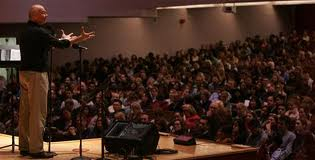
In this letter, Peter was not writing to the same type of situation Paul addressed in his letter to the Corinthians. Paul was writing into a situation where there were doctrinal fractions, divisions, and party divisiveness . . . Peter was speaking to a persecuted church – a church which was both passively and actively persecuted . . . they were being beset by a culture around them with very different values that they do not know how to relate to. So, of course, you can never divide the doctrinal from the practical issues. However, I would say that Peter here was less concerned about expounding on the content of the gospel as Paul was in 1 Corinthians 15. I’ll show how the gospel should shape the way in which we live, our ministry, and how the church operates as a community.

When I was looking through 1 Peter 1 and 2, I found seven features that Peter uses to describe the gospel . . . Since everything in these seven points has already been explicated in the previous sermon, I am simply going to draw out the implications for ministry. I am going to read a nice long section: 1 Peter 1:1-12, 1:22-2:12. Chapters one and two are remarkable at giving you all the features of the gospel and helping us to understand the ministry implications:

“Peter, an apostle of Jesus Christ, to those who are elect exiles of the dispersion in Pontus, Galatia, Cappadocia, Asia, and Bithynia, according to the foreknowledge of God the Father, in the sanctification of the Spirit, for obedience to Jesus Christ and for sprinkling with his blood: may grace and peace be multiplied to you. Blessed be the God and Father of our Lord Jesus Christ!

According to his great mercy, he has caused us to be born again to a living hope through the resurrection of Jesus Christ from the dead, to an inheritance that is imperishable, undefiled, and unfading, kept in heaven for you, who by God’s power are being guarded through faith for a salvation ready to be revealed in the last time. In this you rejoice, though now for a little while, if necessary, you have been grieved by various trials, so that the tested genuineness of your faith— more precious than gold that perishes though it is tested by fire—may be found to result in praise and glory and honor at the revelation of Jesus Christ.

Though you have not seen him, you love him. Though you do not now see him, you believe in him and rejoice with joy that is inexpressible and filled with glory, obtaining the outcome of your faith, the salvation of your souls. Concerning this salvation, the prophets who prophesied about the grace that was to be yours searched and inquired carefully, inquiring what person or time the Spirit of Christ in them was indicating when he predicted the sufferings of Christ and the subsequent glories. It was revealed to them that they were serving not themselves but you, in the things that have now been announced to you through those who preached the good news to you by the Holy Spirit sent from heaven, things into which angels long to look.

Having purified your souls by your obedience to the truth for a sincere brotherly love, love one another earnestly from a pure heart, since you have been born again, not of perishable seed but of imperishable, through the living and abiding word of God; for “All flesh is like grass and all its glory like the flower of grass. The grass withers, and the flower falls, but the word of the Lord remains forever.” And this word is the good news that was preached to you. So put away all malice and all deceit and hypocrisy and envy and all slander. Like newborn infants, long for the pure spiritual milk, that by it you may grow up into salvation— if indeed you have tasted that the Lord is good. As you come to him, a living stone rejected by men but in the sight of God chosen and precious, you yourselves like living stones are being built up as a spiritual house, to be a holy priesthood, to offer spiritual sacrifices acceptable to God through Jesus Christ. For it stands in Scripture:

“Behold, I am laying in Zion a stone, a cornerstone chosen and precious, and whoever believes in him will not be put to shame.” So the honor is for you who believe, but for those who do not believe, “The stone that the builders rejected has become the cornerstone,” and “A stone of stumbling, and a rock of offense.” They stumble because they disobey the word, as they were destined to do. But you are a chosen race, a royal priesthood, a holy nation, a people for his own possession, that you may proclaim the excellencies of him who called you out of darkness into his marvelous light. Once you were not a people, but now you are God’s people; once you had not received mercy, but now you have received mercy. Beloved, I urge you as sojourners and exiles to abstain from the passions of the flesh, which wage war against your soul. Keep your conduct among the Gentiles honorable, so that when they speak against you as evildoers, they may see your good deeds and glorify God on the day of visitation.”

I hate to do what I am about to do, which is a “fly-over.” I hate to go by some of these verses. These verses are deep wells, as we know. I know at least three or four men of God who would probably base their entire lives on one or two of these verses. I thought of Ed Clowney as I went by verses 2 and 9. Nevertheless, we are here for an overview. And therefore, I would suggest to you that Peter shows us in these two chapters that there are seven features of the gospel that we have to tease out of the ministry. I will say them here so you can write them down.

The gospel is: (1) historical, (2) doxological, (3) Christocentrical, (4) personal, (5) cultural, to quote Don Carson, (6) “massively transformational,” and (7) wonderful. Each one has a ministry implication.

(1) The gospel is historical . . . The word “gospel” shows up twice. Gospel actually means “good news.” You see it spelled out a little bit when it says “he has caused us to be born again to a living hope through the resurrection of Jesus Christ”. Why do we say that the gospel is good news? Some years ago, I heard a tape series I am sure was never put into print by Dr. Martin Lloyd-Jones. It was an evening sermon series on 1 Corinthians 15. He clarified how the Gospel is based on historical events in how the religion got its start. He said there was a big difference between advice and news. The Gospel, he would say, is good news, but not good advice. Here’s what he said about that: “Advice is counsel about something that hasn’t happened yet, but you can do something about it. News is a report about something that has happened which you can’t do anything about because it has been done for you and all you can do is to respond to it.”

So he says think this out: here’s a king, and he goes into a battle against an invading army to defend his land. If the king defeats the invading army, he sends back to the capital city messengers, envoys, and very happy envoys. He sends back good newsers. And what they come back with is a report. They come back and they say: It’s been defeated and it’s been all done. Therefore respond with joy and now go about your lives in this peace which has been achieved for you. But if he doesn’t defeat the invading army, and the invading army breaks through, the king sends back military advisers and says . . . “Marksmen over here and the horseman over there, and we will have to fight for our lives.”

Dr. Martin Lloyd-Jones says that every other religion sends military advisers to people. Every other religion says that if you want to achieve salvation, you will have to fight for your life. Every other religion is sending advice saying, “here are the rites, here are the rituals, here’s the transformation of the consciousness and here are the laws and the regulations. Marksmen over here and horsemen over there and we are going to fight for our lives.” We send heralds; we send messengers and not military advisers. Isn’t that clarifying? It’s just incredibly clarifying. And it’s not like there’s nothing to do about it, my goodness. Both the messenger and the military adviser get an enormous response. One is a response of joy and the other one is a response of fear. All other religions give advice and they drive everything you do with fear . . . as you know, when you hear the gospel, when you hear the message that it’s all been done for you, it’s a historical event that has happened, your salvation is accomplished for you, what do you want to do? You want to obey the Ten Commandments, you want to pray, and you want to please the one that did this for you.

If, on the other hand, military advisers say you have to live a really good life if you want to get into heaven, what do you do? You want to pray and you want to obey the Ten Commandments. It looks the same, doesn’t it? But for two radically different reasons: One is joy and the other one is fear. In the short run, they look alike. But in the long run, over here we have burn out and self-righteousness and guilt and all sorts of problems. And that’s fascinating.

But having said that, what’s the ministry implication? The ministry implication is this: the significance of preaching, of proclamation, of declarative preaching, is irreplaceably central in Gospel ministry. Declarative preaching is irreplaceably central.

Why? If basically we are sending people “how to”, if we are saying here’s the “how to” to live the right way, if that’s the primary message, I am not sure words are necessarily the best thing to send. You want to send a model. If I were to teach an advanced seminar on preaching (and I never have) I would make everybody read CS Lewis’ Studies in Words. It’s amazing because we are wordsmiths and he shows you how important it is to craft your words properly. The last chapter is called “At the Fringe of Language” and he says language can’t do everything. He says that one of the things language cannot do is describe complex operations. On the other hand, when it comes to describing how, to explain to somebody that Joshua Chamberlain, without any ammunition, charged down Little Round Top in an incredible, risky adventure at the height of the Battle of Gettysburg, and as a result changed the course of history. You don’t show people that, you tell them that. It’s something that happened, you describe it. You tell them that. If you are going to give them how-tos, very often what you want is modeling and dialogue, action and reflection and so forth.

Therefore, if you believe the gospel is good news, declarative preaching (verbal proclaiming) will always be irreplaceably central to what we do. However, if you subscribe to the assertion that the gospel is simply good advice on how to live a life that changes people and connects to God . . . dialogue would be alright. Stories and modeling and reflection would be more important. In other words, you would believe what some people would quip: “proclaim the gospel, use words if necessary”. You’ve probably heard that. That shows, I think, that they don’t quite understand what the gospel is all about.

(2) The gospel is Doxological. The purpose of the gospel is not merely forgiveness of individuals, but to bring people to full flourishing through glorious worship. Now where do you see that?

Karen Jobs, in her commentary of 1 Peter, points out what all commentators point out, but I like the way she titled it. Chapter 1 verse 3 to verse 12 is all one sentence in Greek. Therefore, there is a main clause. All that follows are subordinate clauses to the main clause. Here is the main clause: “Praise be to the God and Father and our Lord Jesus Christ”. She entitled the whole section, (and that’s what I like about it), “Doxology and Basis for the Christian Life,” because everything in there, even the new birth, is to the praise of the glory of God. Now why is this so important?

One of the most life-changing and especially ministry-changing things in my life was reading Martin Luther’s “Larger Catechism” a few years ago. In “Larger Catechism,” he lays out his understanding of the Ten Commandments. Luther says that the first commandment is first because (he thinks) all the other commandments are based on it. In other words, when you break any of the commandments two through ten, you have already broken or are in the process of breaking commandment one. So, Martin Luther says you don’t lie unless you have already made something else more than God your functional savior; something else is your greatest joy. Why do you lie? You lie either because the approval of other people is more important than God’s or because money is more than the security you have in God. So you wouldn’t lie unless you already have first made something else more important than God in your life . . . something more fundamental to your meaningless in life or happiness or joy. And then Luther went one step further and said underneath every sin is idolatry in general. And underneath every idolatry in general is always some form of work-righteousness in general, in particular some kind of self-salvation project . . . whenever you make something more important than God, that thing is essentially a savior of your making.

Martin Luther says of the first commandment, you have to believe the Gospel. You can’t look to anything else for your justification . . . you have to believe in the Gospel and you can’t look to anything else for your justification . . . If he were here today, he would say that underneath everything from eating disorders to racism is a self-salvation project, a failure to believe in the Gospel, and is some form of idolatry. You have either made an idol of thinness . . . or of your race and your blood . . . your heart’s imagination is captured. Your heart is essentially adoring and dotting on something other than God . . .

Some years ago . . . I was talking to a young woman, a fifteen year-old girl in my church in Virginia . . . she was really struggling and said this: “I really understand this, I am a Christian. I have clothed myself in the righteousness of Christ, I have a guaranteed place in heaven, and I am the delight of the Father. But what good is that when the boys in high school won’t even look at me?” She was absolutely honest. You might say: is she even a Christian? Of course she was a Christian, as far as I can tell. If I look back on it and she looks back on it, there have been changes. Here’s the point: boys were on video, and God was on audio . . . if you have an audio and video happening at the same time, you know which one wins. Right?

Jonathan Edwards would say that the ultimate purpose of preaching is not just to make the truth clear, but also to make it real. Of course for it to be real, it’s got to be clear. If it’s confused . . . sorry, no worship happens. But you can’t stop there. We are, I think, afraid of the spirit of the age, of subjectivism, because we believe in objective truth. As a result, our expository messages are too cognitive. Jonathan Edwards did not tell stories, he was incredibly rational. But he was also unbelievably vivid. He was incredibly logical, and precise, and clear because he knew that unless the truth is clear, it will never be real. It’s got to be crystal clear, amazingly clear. But it also has to be vivid.

I don’t think this is going to be very easy. I see the narrative preaching approach which works superficially on people’s emotions. And you have a kind of an expository preaching that tends to be like a Bible commentary that works more on the head. But the heart is not exclusively the emotions, and certainly not just the intellect . . . Therefore, the preaching has to be gripping . . .

What I love about Edwards is how incredibly rational he is, how logical and persuasive he is and yet at the same time, so vivid. You go into his messages and there’s the sun, the moon, and the stars. There are mountains and dandelions . . . it’s just astounding . . . he understood that telling stories to tweak the emotions, is like putting dynamite on the face of the rock, blowing it up and shearing off the face but not really changing the life.

One the other hand, if you bore down into it with the truth, and put dynamite in there, if you are able to preach Christ vividly, and you are able to preach the truth practically and you are able to preach it out of a changed life and heart in yourself (which obviously isn’t the easiest thing by any means) then when there is an explosion, it really changes people’s lives. I don’t think we have the right end of the stick in general, either in the movement of the people who are working towards telling stories because they want to get people emotionally or working towards giving people the truth because they want to be sure that people are doctrinally sound.

The Doctor, Martyn Lloyd-Jones, was not a touchy-feely type . . . based on his understanding of Edwards, he asserts that the first and primary object of preaching is not to give information. It is, as Jonathan Edwards said, to produce an impression. This is the Doctor, now. It is the impression at the time that matters, even more than what you can remember subsequently. Edwards, in my opinion, understood the true notion of preaching. It is not primarily to impart information . . . while you write your notes, you may be missing something that will impact your spirit.

As preachers, we must not forget this. We should tell our people to read books at home and to take notes at home; the business of preaching is to make such knowledge live. Now, by the way, I don’t mind if people are taking notes in my sermons, in the first part of the sermon. But if you are still taking notes at the end of the sermon, I don’t think that I have made it home . . .

Thomas Chalmers puts it like this:

“It is seldom that any of our bad habits or flaws disappear by a mere nature process of natural extinction. At least it is very seldom it is done by the instrumentality of reasoning or by the force of mental determination. What cannot be destroyed however may be dispossessed. One case may be made to give away to another and to lose its power entirely has the reigning affect of the mind. Here’s an example: A youth may cease to idolize sensual pleasure but it is because of the idol of wealth. The desire to make money has gotten ascendancy, so he becomes disciplined. But the love of money might have ceased to be in his heart if he was draw to ideology and politics. Now he is lorded over by the love of power and moral superiority instead of wealth. But there is not one of these transformations in which the heart is left without an object. The human heart’s desire for one particular object is conquered. But its desire to have some object of adoration is unconquerable. The only way to dispossess the heart of all its affection is by the explosive power of a new one. Thus is it not enough to hold out to the world the mirror of its own imperfections, it is not enough to come forth with the demonstration . . . of the character of their enjoyment, it is not enough to just simply speak the conscience, to speak its follies. Rather, you must seek, as a preacher, every legitimate method of finding access to the heart for the love of Him who is greater than the world.”

(3) The gospel is Christocentrical. The gospel, as Don [D.A. Carson] pointed out, in a certain sense, the gospel is just Jesus. What is the gospel? It is who Jesus is and what He did for us. The Gospel is Jesus. Of course, you see this in 1 Peter 1:10 where it says, “About which salvation the prophets sought out and searched out, prophesying concerning the grace for you; searching for what, or what manner of time, the Spirit of Christ made clear within them, testifying beforehand of the sufferings of Christ, and the glories that should follow.”

What’s intriguing to me is this: reading in Luke and Acts how Jesus got His disciples together during the forty days before He ascended after He was resurrected. What was He doing? I am sure He was doing more than what we are told. But if you look in Luke 24, it looks like He was giving them a New Testament hermeneutical seminar. This should give professors a lot of hope . . . even Jesus thought running a seminar on hermeneutics was a good idea! If he was running them in those forty days, maybe it is a good idea to run them now. Basically, He was saying that everything in the Old Testament points to Him . . .

He told Cleopas and the other disciples on the road to Emmaus and in the upper room that everything in the Prophets and the Psalms and the Law points to Him. It’s intriguing, we see that in Luke and now here in 1 Peter we have an echo of it. Peter was in on that seminar . . . now he is explaining that concerning this salvation, the salvation of the gospel of Christ, the Prophets had the Holy Spirit in them pointing them towards Jesus . . . Peter is saying what Jesus was saying . . . that everything pointed towards Jesus. Every text in the Old Testament was pointing toward Jesus.

Now my ministry implication is this: The basic subject of every sermon ought to be Jesus, regardless of what passage is at hand. It doesn’t matter whether it is Old or New Testament; it’s got to be about Jesus. By the way, you might say this is only about Old Testament hermeneutics; no, you need to know that my friend Sinclair Ferguson says most evangelical ministers don’t preach Christ. Not only do they not preach Christ in the Old Testament . . . they don’t preach Christ in the New Testament. I will get back to this in a second.

I know this is somewhat of an internal debate here and I’ve got to be careful. I don’t want to be a party guy and say, “I follow Chapell, or I follow Goldsworthy.” And you know there are people who say that you preach everything in the Bible pointing to Jesus and there are other good men that just don’t think that’s right. You shouldn’t preach Christ from Jacob wrestling with God . . . you should preach about wrestling with God in prayer or suffering or something like that. Honestly, I believe those good and sincere men are wrong on the basis of reading the Bible and the understanding of hermeneutics and so on.

But part of this goes back, I remember, some years ago, to when I sat down with my wife. You know what that’s like – on the way home – after the sermon. First you are hoping she will say: “Great sermon, honey.” But if she doesn’t say anything, you fear the worst. I remember one day we really got into it. I said, “Let me ask you, how often do you think it was a great sermon? How many weeks out of the month?” And she said “no more than one in every four or five weeks.” So, we sat down and here’s what she said: “For a good part of your sermon, your sermons are great. They are rational and biblical, and they are exegetical. They show me how I should live, and what I should believe. But every so often – suddenly at the end – Jesus shows up. And when Jesus shows up, it suddenly becomes not a lecture but a sermon for me, because when you say this is what you ought to do, I think to myself, ‘I know, I know, okay. Now I am a little clearer about it and I am a little more guilty about it. Fine.’ But sometimes you get to the place where you say, ‘This is what you ought to do, though you really probably can’t do it; but there is one who did. And because He did it on our behalf, and because He did it in our place, we believe in Him. We will begin to be able to do it.’” This is true only to the degree that we understand what He did for us. And she says: “That’s different. One time out of four or five, your lecture becomes a sermon when Jesus shows up and I want to do that. I have hope. And I begin to see how I can do it.”

I really didn’t understand . . . but basically, now I do. Here’s the thing. Your preaching will never be doxological and it won’t be central unless it is Christocentric. Here’s why: if you tell people they need to be generous, and ask why they aren’t being more generous . . . I happen to know about people being generous. Sometimes you don’t know about the lust in someone’s heart week to week, but you know if people are being generous week to week.

Why aren’t people being more generous? Are they just being sinners? Let’s go back to Martin Luther. Let’s go back to the catechism. If you are not being generous, then there is something going on there, is there not? You are saying your status or your security, which is based on money, is very important to you. You need to be able to buy certain cloths and live in certain circles and go to certain places. Human approval, security, there’s idols underneath the lack of generosity. The money is more than just money. It’s security, it’s significance, it’s status. You’ve got to make more money, and then you will give it away.

How do you do that? You have to show that Jesus Christ is their true wealth. You have to show them what their idols are. You have to get to Jesus. As a result, if you don’t get there, you are going to find that you are wailing on people’s wills. You are beating on wills. Sinclair Ferguson wrote a book . . . called Preaching Christ in the Old Testament. And this is what he says: Not only do most ministers not preach Christ in the Old Testament; they don’t preach Christ from the New Testament. The preacher has looked into the text, even in the New Testament, to find himself and the congregation . . . not to find Christ. You can do this even in the New Testament, in the Gospels. The sermon, therefore, is consequently about the people in the Gospels and not the Christ in that Gospel. The more fundamental issue is this question: What is the Bible really about? Is the Bible basically about me and what I must do or is it about Jesus and what He has done? Is the Bible about the objective and indicative?

Here’s an example. Hermeneutics is important. You can’t just find Jesus in every little twig. And there needs to be a way where you are following the trajectory of the text no matter what that text is to Jesus. You have to show how Jesus is the ultimate fulfillment of that particular trajectory of the text. You’ve got to be responsible. And yet, like Sinclair said, it’s more like an instinct. It’s not so much just the right hermeneutical principles; it’s an instinct. Do you believe the Bible is basically about you or basically about Him? Is David and Goliath basically about you and how you can be like David and Goliath or about Him, the One that took on the only giants in life who can kill us? You see. And His victory is imputed on us. Who is this all about? That’s the fundamental question.

And when that happens, you start to read the bible anew. Jesus is the true and better Adam who passed the test in the garden. His garden is a much tougher garden and his obedience is imputed on us. Jesus is the true and better Abel, who though innocently slain has blood that cries out: not for our condemnation but for our acquittal. Jesus is the true and better Abraham, who answers the call of God, who leaves all the familiar comforts of the world into the void, not knowing where He went. Jesus is the true and better Isaac who is not only offered by his father on the mount but who was truly sacrificed for us all. While God said to Abraham: “Now I know you truly love me, because you did not withhold your son, your only son, from me.” Now we, at the foot of the cross, can say to God: “Now we know you love us because you did not withhold your Son, your only Son, whom you love, from us.”

Jesus is the true and better Jacob, who wrestled and took the blows of justice that we deserved so we like Jacob only receive the wounds of grace that wake us up and disciple us. Jesus is the true and better Joseph, who is at the right hand of the king, and forgives those who betrayed and sold him and uses his power to save them. Jesus is the true and better Moses, who stands in the gap between the people and the LORD and mediates the new covenant. Jesus is the true and better rock of Moses who struck with the rod of God’s justice now gives us water in the desert. Jesus is the true and better Job, He is the truly innocent sufferer who then intercedes for and saves His stupid friends. Is that a type? That’s not typology. That’s an instinct.

Jesus is the true and better David, whose victory becomes the people’s victory even though they didn’t lift a stone to accomplish it themselves. Jesus is the true and better Esther, who didn’t just risk losing an earthly palace but lost ultimately the heavenly one, who didn’t just risk His life but gave His life, who didn’t say if I perish I perish but when I perish, I perish for them . . . to save my people. Jesus is the true and better Jonah who was cast out into the storm so we can be brought in. He’s the real Passover Lamb; He’s the true temple, the true prophet, the true priest, the true king, the true sacrifice, the true lamb, the true life, the true bread. The Bible is not about you. And that’s an instinct.

Until that shows up in your sermons, it will be lectures and not sermons. It won’t be doxological, it won’t be central.

(4) The gospel is personal and individual. Don [D.A. Carson] already said this. In 1 Peter 1 and 2, we see a lot of references to the new birth. What does the new birth mean – think about the metaphor of the birth – you can’t make yourself a Christian? You can make yourself a Buddhist. You can make yourself a Muslim. You can make yourself an Atheist. But you can’t make yourself a Christian. To become a Christian, you have to be converted . . . notice that’s a passive. You don’t convert yourself, something happens to you. Through faith you’re born again. You are confronted with you sin in front of a holy and jealous God. And you see the provision. Now, that’s individual conversion. This is very important, at this moment, in all our lives as Christians, especially in North America, but I am sure in other places as well. There is an erosion in the confidence of the thing that I just said. It is the idea that we have sinned against a holy and jealous God, the wrath of God has to be satisfied, Jesus Christ stood in our place, substitutionary atonement is provided, and when we believe in this, both in His suffering and obedience is imputed to us . . .

J.I. Packer, in his little chapter on grace in Knowing God, said there are two things you have to know in order to understand the concept of grace. Grace isn’t the opposite of Law. First of all, you have to understand how lost you are, how bad you are, how dire your condition is, and how big the debt is. You have to understand that . . .

Now if somebody says, “I believe Jesus died for me, He shed His blood for me and I have given my life to Christ. I accepted Him; I walked forward and invited Him into my life,” but you don’t see any change in that person’s life, you don’t see identify shifting, behavior transformation and joy, what’s the problem? It’s clear that this person doesn’t understand the size of the debt, and therefore the size of the payment . . . Jim Packer used to say to understand grace, and for grace to be transforming, first you have to understand the debt.

The second thing you have to understand, besides the size of the debt, is the magnitude of the provision. There are people who do understand that they are pretty bad. They do understand how flawed they are. They do understand how far short they fall. But they aren’t convinced of the magnitude, sufficiency, freeness, and fullness of the provision. They may only believe that Jesus died the death that we should have died. And maybe they also don’t believe Jesus lived the life that we should have lived . . . And you also see Pharisees – people who are really under the burden of guilt. As a result, they are withdrawn and hostile and moralistic and legalistic. And we look at these two groups of people and the evangelical world is filled with them. Easy-Believeism is really deadly. The Cost of Discipleship book by Bonhoeffer explains why Easy-Believeism was the reason Nazism could come into power. That’s pretty dangerous. Why Easy-Believesim? Why the Moralism? Because they don’t understand the gospel; the old gospel, the historic gospel. The gospel of salvation by grace through faith and the work of Jesus Christ alone, and substitutionary atonement . . . they don’t get it.

So what’s the solution to all the Easy-Believeism? Why is it that we don’t have people living the life they ought to live? Why do we see people culturally withdraw, being really negative and narrow? Because people think the solution is “let’s change the gospel” . . . I can’t imagine that anybody is going to write a hymn that goes like this: “my chains fell off and my heart was free, I rose forth and followed thee.” It’s just not going to happen . . .

(5) The gospel is cultural. What do I mean by cultural? The gospel creates a culture called The Church. It’s not just an aggregation of saved individuals. It’s a culture. The gospel is so different in what it says about God, you, and your standing with God. It’s so identity transforming; every other religion or system motivates you through fear and pride to do the right thing. Only the gospel motivates you through joy . . . the fear and trembling joy . . . the fear of God joy. That doesn’t mean that now we are a bunch of saved individuals with wonderful internal fulfillment. It means that when we get together we want to do things differently. We will do everything differently. The gospel is massively transformational and it creates a counter culture but it also makes us as people relate to the culture around us. And this comes out especially in 1 Peter 2. I will be brief on this but it’s crucial.

Those of us who believe in that individual gospel often miss the communal aspects of the gospel. And in 1 Peter 2:12, he says “Keep your conduct among the Gentiles honorable, so that when they speak against you as evildoers, they may see your good deeds and glorify God on the day of visitation.” Right before this, he says, “Beloved, I urge you as aliens and strangers.” In 1 Peter 1:1, “Peter, an apostle of Jesus Christ, To God’s elect, strangers in the world.” There’s been a lot of discussion about this. There’s pretty much a consensus. The word “strangers” there means not a tourist who’s just passing through the world briefly, but not a citizen of the world either. Somebody who’s going to be there a long time whose true citizenship and value belongs somewhere else.

Peter makes an amazingly balanced statement and we have to understand this. The gospel, I believe, is radical. The nature of the gospel, on the one hand, does say “you need to engage” to the legalists who are afraid to be polluted by the culture and have the tendency to bolster their fragile sense of righteousness by feeling superior to the sinners around them. On the other hand, the gospel also confronts the secular, irreligious, liberal Christian, who asserts that we really can’t believe in sin or the holiness of God and hell because it offends people.

The gospel says that there are dangers on both sides: cultural accommodation, culture withdrawal. Most of us as Christians today think that most of the dangers today are on one side. We tend to get together with a group of people and say: the main danger, the main danger today is cultural accommodation. On the other side, there are Christians who think the main danger is cultural isolation and irrelevance. No one will see the good deeds of those who withdraw from the world and just hate the world. They don’t glorify God. They are not involved with caring for the poor; they are not engaged. On the other hand, people who accommodate the culture are never persecuted. How do we know that the radical gospel is turning us into a counter-culture for the common good? This counter-culture should be distinct, very different from the side we have inside of us, but a side that shows that we love the world and care about the world. We love our enemies because we are saved by a man who died loving His enemies.

Therefore, this balance is awfully hard to maintain. In Jeremiah 29, the exiles, wanted to stay outside of Babylon and remain pure. The Babylonians wanted to come in to Babylon, and lose their cultural identity. God told them through Jeremiah to do the hardest thing possible. In a sense, He said, “I don’t want you to stay out and be different. I don’t want you to go in and become like them. I want you to go deeply in and stay very different.” And that’s exactly what 1 Peter is talking about. Peter calls them exiles. He knows that the relationship with the culture around them has to be the same relationship as the Jewish exiles had with the Babylonians. We need to seek the welfares of the city. We need to care about that. We need to follow in the footsteps of the one who serves His enemies and forgave His enemies and died for His enemies.

At the same time, we have to be telling people that they are going to hell. Now, generally speaking, by and large, the people who want to be prophetic don’t want to be priestly. The people that want to talk about going to hell do not just sacrificially pour out themselves and say we are going to love you and we are going to serve you, whether you really like what we do or not. And the people who are serving like that are afraid of talking about things like hell or wrath. I don’t know whether we can become a movement of people who understand what 1 Peter is saying: that the gospel creates a counter culture, but a culture that engages the community around us at the expense of persecution . . .

New Yorkers love what the Bible says about forgiveness and reconciliation and caring about the poor. They hate what it says about sex and gender and family. Go on to the Middle East and find people who love what the Bible says about sex and gender and family, but abhor the idea of forgiving people, 70 times 7. I think what 1 Peter 2:12 is trying to say is in every single culture, if you actually live distinctively in an engaged way, you will get persecution AND you will get approval. It will always be different depending on the culture. You will attract people, you will influence people. You will be salt and light and at the same time you will get punched in the mouth.

If you are only getting punched in the mouth, or if you are only getting praise, you are not living the gospel life. Either you are falling into legalism and withdrawal or you are falling into accommodation.

(6) The gospel is massively transformational. When I say the gospel is massively transformational, I am just saying the gospel creates a worldview, a basis of worldview that actually touches every area of life; the way you do business, the way you do art, the way you conduct your family life. What do I mean when I say the gospel is wonderful? 1 Peter 1:12, “It was revealed to them that they were not serving themselves but you, when they spoke of the things that have now been told you by those who have preached the gospel to you by the Holy Spirit sent from heaven. Even angels long to look into these things.”

Angels love to look into the gospel. They never get tired of it. So what does that mean? It means gospel ministry is endlessly creative. It means you can preach the gospel and never have to be afraid of boring people . . .

(7) The gospel is wonderful. Isn’t that amazing? The gospel is not the ABC’s of Christianity, it’s A to Z. It’s not just the elementary and introductory truths. The gospel is what drives everything that we do. The gospel is pretty much the solution to every problem. The gospel is what every theological category should be expounding when we do our systematic theology. It should be very much a part of everything.

Even angels long to look into it. And you should. Let’s pray.

About Dr. Tim Keller: He was born and raised in Pennsylvania, and educated at Bucknell University, Gordon-Conwell Theological Seminary, and Westminster Theological Seminary. He was first a pastor in Hopewell, Virginia. In 1989 he started Redeemer Presbyterian Church in Manhattan with his wife, Kathy, and their three sons. Today, Redeemer has more than five thousand regular attendees at five services, a host of daughter churches, and is planting churches in large cities throughout the world. He is the author of a study of Mark entitled King’s Cross; The Prodigal God based on Luke 15; The Freedom of Self-Forgetfulness; Generous Justice; Counterfeit Gods; Ministries of Mercy: The Call of the Jericho RoadThe Meaning of Marriage; a wonderful small group study entitled Gospel In Life; and the New York Times bestseller The Reason for God; & the forthcoming Center Church (August 2012). Tim has a passion for Jesus Christ, making the Gospel clear, church planting, and reaching cities for Christ. If you really want to understand the gospel, and how grace applies to all of life I urge you to devour his books and sermons!

What Are the Basics of Bible Study? By John MacArthur

There is nothing more important for the Christian than to seek Jesus, hear from Him, obey Him, and proclaim Him daily. Few people that I know of have been more faithful in doing these four things than Pastor John MacArthur in our generation. Therefore, who better to write about on how to study the Bible than someone who has been doing it with great passion and great effectiveness for over fifty years. Enjoy this article by Pastor John MacArthur. – Dr. David P. Craig

Personal Bible study, in precept, is simple. I want to share with you 5 steps to Bible study which will give you a pattern to follow:

STEP 1—Reading. Read a passage of Scripture repeatedly until you understand its theme, meaning the main truth of the passage. Isaiah said, “Whom will he teach knowledge? And whom will he make to understand the message? Those just weaned from milk? Those just drawn from the breasts? For precept must be upon precept, precept upon precept, line upon line, here a little, there a little” (Is. 28:9,10).

Develop a plan on how you will approach reading through the Bible. Unlike most books, you will probably not read it straight through from cover to cover. There are many good Bible reading plans available, but here is one that I have found helpful.

Read through the Old Testament at least once a year. As you read, note in the margins any truths you particularly want to remember, and write down separately anything you do not immediately understand. Often as you read you will find that many questions are answered by the text itself. The questions to which you cannot find answers become the starting points for more in-depth study using commentaries or other reference tools.

Follow a different plan for reading the New Testament. Read one book at a time repetitiously for a month or more. This will help you to retain what is in the New Testament and not always have to depend on a concordance to find things.

If you want to try this, begin with a short book, such as 1 John, and read it through in one sitting every day for 30 days. At the end of that time, you will know what is in the book. Write on index cards the major theme of each chapter. By referring to the cards as you do your daily reading, you will begin to remember the content of each chapter. In fact, you will develop a visual perception of the book in your mind.

Divide longer books into short sections and read each section daily for 30 days. For example, the gospel of John contains 21 chapters. Divide it into 3 sections of 7 chapters. At the end of 90 days, you will finish John. For variety, alternate short and long books, and in less than 3 years you will have finished the entire New Testament—as you will really know it!

STEP 2—Interpreting. In Acts 8:30, Philip asked the Ethiopian eunuch, “Do you understand what you are reading?” Or put another way, “What does the Bible mean by what it says?” It is not enough to read the text and jump directly to the application; we must first determine what it means, otherwise the application may be incorrect.

As you read Scripture, always keep in mind one simple question: “What does this mean?” To answer that question requires the use of the most basic principle of interpretation, called the analogy of faith, which tells the reader to “interpret the Bible with the Bible.” Letting the Holy Spirit be your teacher (1 John 2:27), search the Scripture He has authored, using cross-references, comparative passages, concordances, indexes, and other helps. For those passages that yet remain unclear, consult your pastor or godly men who have written in that particular area.

Errors to Avoid – As you interpret Scripture, several common errors should be avoided.

Do not draw any conclusions at the price of proper interpretation. That is, do not make the Bible say what you want it to say, but rather let it say what God intended when He wrote it.

Avoid superficial interpretation. You have heard people say, “To me, this passage means,” or “I feel it is saying. . . .” The first step in interpreting the Bible is to recognize the four gaps we have to bridge: language, culture, geography, and history (see below).

Do not spiritualize the passage. Interpret and understand the passage in its normal, literal, historical, grammatical sense, just like you would understand any other piece of literature you were reading today.

Gaps to Bridge – The books of the Bible were written many centuries ago.

For us to understand today what God was communicating then, there are several gaps that need to be bridged: the language gap, the cultural gap, the geographical gap, and the historical gap. Proper interpretation, therefore, takes time and disciplined effort.

Language. The Bible was originally written in Greek, Hebrew, and Aramaic. Often, understanding the meaning of a word or phrase in the original language can be the key to correctly interpreting a passage of Scripture.

Culture. The culture gap can be tricky. Some people try to use cultural differences to explain away the more difficult biblical commands. Realize that Scripture must first be viewed in the context of the culture in which it was written. Without an understanding of first-century Jewish culture, it is difficult to understand the gospel. Acts and the epistles must be read in light of the Greek and Roman cultures.

Geography. A third gap that needs to be closed is the geography gap. Biblical geography make the Bible come alive. A good Bible atlas is an invaluable reference tool that can help you comprehend the geography of the Holy Land.

History. We must also bridge the history gap. Unlike the scriptures of most other world religions, the Bible contains the records of actual historical persons and events. An understanding of Bible history will help us place the people and events in it in their proper historical perspective. A good Bible dictionary or Bible encyclopedia is useful here, as are basic historical studies.

Principles to Understand

Four principles should guide us as we interpret the Bible: literal, historical, grammatical, and synthesis.

The Literal Principle. Scripture should be understood in its literal, normal, and natural sense. While the Bible does contain figures of speech and symbols, they were intended to convey literal truth. In general, however, the Bible speaks in literal terms, and we must allow it to speak for itself.

The Historical Principle. This means that we interpret in its historical context. We must ask what the text meant to the people to whom it was first written. In this way we can develop a proper contextual understanding of the original intent of Scripture.

The Grammatical Principle. This requires that we understand the basic grammatical structure of each sentence in the original language. To whom do the pronouns refer? What is the tense of the main verb? You will find that when you ask some simple questions like those, the meaning of the text immediately becomes clearer.

The Synthesis Principle. This is what the Reformers called the analogia scriptura. It means that the Bible does not contradict itself. If we arrive at an interpretation of a passage that contradicts a truth taught elsewhere in the Scriptures, our interpretation cannot be correct. Scripture must be compared with Scripture to discover its full meaning.

STEP 3—Evaluating. You have been reading and asking the question, “What does the Bible say?” Then you have interpreted, asking the question, “What does the Bible mean?” Now it is time to consult others to insure that you have the proper interpretation. Remember, the Bible will never contradict itself.

Read Bible introductions, commentaries, and background books which will enrich your thinking through that illumination which God has given to other men and to you through their books. In your evaluation, be a true seeker. Be one who accepts the truth of God’s Word even though it may cause you to change what you always have believed, or cause you to alter your life pattern.

STEP 4—Applying. The next question is: “How does God’s truth penetrate and change my own life?” Studying Scripture without allowing it to penetrate to the depths of your soul would be like preparing a banquet without eating it. The bottom-line question to ask is, “How do the divine truths and principles contained in any passage apply to me in terms of my attitude and actions?”

Jesus made this promise to those who would carry their personal Bible study through to this point: “If you know these things, blessed are you if you do them” (John 13:17).

Having read and interpreted the Bible, you should have a basic understanding of what the Bible says, and what it means by what it says. But studying the Bible does not stop there. The ultimate goal should be to let it speak to you and enable you to grow spiritually. That requires personal application.

Bible study is not complete until we ask ourselves, “What does this mean for my life and how can I practically apply it?” We must take the knowledge we have gained from our reading and interpretation and draw out the practical principles that apply to our personal lives.

If there is a command to be obeyed, we obey it. If there is a promise to be embraced, we claim it. If there is a warning to be followed, we heed it. This is the ultimate step: we submit to Scripture and let it transform our lives. If you skip this step, you will never enjoy your Bible study and the Bible will never change your life.

STEP 5—Correlating. This last stage connects the doctrine you have learned in a particular passage or book with divine truths and principles taught elsewhere in the Bible to form the big picture. Always keep in mind that the Bible is one book in 66 parts, and it contains a number of truths and principles, taught over and over again in a variety of ways and circumstances. By correlating and cross-referencing, you will begin to build a sound doctrinal foundation by which to live.

What Now?

The psalmist said, “Blessed is the man who walks not in the counsel of the ungodly, nor stands in the path of sinners, nor sits in the seat of the scornful; But his delight is in the law of the Lord, and in His law he meditates day and night” (Ps. 1:1,2).

It is not enough just to study the Bible. We must meditate upon it. In a very real sense we are giving our brain a bath; we are washing it in the purifying solution of God’s Word.

“This Book of the Law shall not depart from your mouth, but you shall meditate in it day and night, that you may observe to do according to all that is written in it. For then you will make your way prosperous, and then you will have good success” (Joshua 1:8).

Here is the spring where waters flow,

To quench our heat of sin:

Here is the tree where truth doth grow,

To lead our lives therein:

Here is the judge that stints the strife,

When men’s devices fail:

Here is the bread that feeds the life,

That death cannot assail.

The tidings of salvation dear,

Comes to our ears from hence:

The fortress of our faith is here,

And shield of our defense.

Then be not like the swine that hath

A pearl at his desire,

And takes more pleasure from the trough

And wallowing in the mire.

Read not this book in any case,

But with a single eye:

Read not but first desire God’s grace,

To understand thereby.

Pray still in faith with this respect,

To bear good fruit therein,

That knowledge may bring this effect,

To mortify thy sin.

Then happy you shall be in all your life,

What so to you befalls:

Yes, double happy you shall be,

When God by death you calls.

(From the first Bible printed in Scotland—1576)

Adapted from the “Introduction” to John MacArthur. ESV MacArthur Study Bible. Wheaton: Crossway Books, 2010.

About the Author: Dr. John MacArthur is the pastor-teacher of Grace Community Church in Sun Valley, California. Grace Church has grown from 450 members in 1969, when MacArthur accepted the pastorate, to over 12,000 today. He is also the president of The Master’s College and Seminary in Newhall, California, a prolific author of more than two dozen books, and the speaker on the worldwide radio broadcast, Grace to You, heard over 700 times daily–every half hour, day and night, somewhere around the world. 

The primary emphasis of MacArthur’s ministry has always been the expository preaching and teaching of God’s Word through a verse-by-verse exposition of the Scripture. His studies pay particular attention to the historical and grammatical aspects of each biblical passage. MacArthur’s recently published book, How to Get the Most from God’s Word, released in conjunction with The MacArthur Study Bible, is designed to fill what he sees as “an increased hunger for the meat of the Word.” He assures the reader that the Bible is trustworthy and that an understanding of Scripture is available to everyone. He then provides guidance on how to study the Bible and how to discern the meaning of Scripture for oneself. Dr. MacArthur explains that the book and the Study Bible have been “in the works for 30 years…the product of 32 hours a week, 52 weeks a year…dedicated to the study of God’s Word.” He asserts that “God’s Word is the only thing that satisfies my appetite, but it also arouses an even deeper hunger for more.”

Among MacArthur’s other books are The MacArthur New Testament Commentary series, The Gospel According to Jesus, The Master’s Plan for the Church, Saved Without a Doubt, The Glory of Heaven, Lord Teach Me to Pray, Unleashing God’s Word in Your Life, Safe in the Arms of God, The Second Coming, Why One Way?, and Truth for Today, and Slave: The Hidden Truth About Your Identity in Christ. His books have been translated into Chinese, Czechoslovakian, French, Finnish, Hungarian, Korean, Polish, Romanian, Spanish, and several Indian languages. Though occasionally viewed by some groups as a controversial figure for strong critiques of freudian psychology, trends in the modern charismatic movement as well as the self-esteem movement, John MacArthur is seen by many as a champion of correcting many of the ills of evangelical Christianity. He is also a champion of helping believers grow stronger in their relationship with God through the committed study of the Word and personal commitment to the local church.
MacArthur spent his first two years of college at Bob Jones University, completed his undergraduate work at Los Angeles Pacific College, and studied for the ministry at Talbot Theological Seminary. John and his wife, Patricia, live in Southern California. They have four grown children — Matt, Marcy, Mark, and Melinda–and eight grandchildren.

How Does Dr. Tim Keller Write His Sermons?

Dr. Tim Keller on Writing a Sermon

“Two weeks ahead I sit down with a text of the passage of the Bible I’m going to preach on and I spend about four hours figuring out what the outline of the text is. I also spend some time figuring out the meaning of the text and sometimes it’s necessary for me to look up in some commentaries verses that may be problematic. I usually come up with an exegetical outline of the passage itself. I then writes this up and send it to my musicians so they can be preparing the music for worship, and so they can get my outline in the bulletin. I also send my outline to other preachers that I know who will be preaching from the same text.

Then three days before Sunday I sit down with my outline and I seek to turn the Bible study [exegetical work] into a sermon. The Bible study is more abstract – here I’m asking the question “What does the text say?” The sermon I’m asking a question that is more life related “What does this text mean to me?”

So I spend four hours two weeks ahead of time on the text, then another four hours turning it into a life related sermon. And that’s usually on the Friday before the sermon is preached. And then on Saturday I spend another six hours working on the sermon. I’m seeking to make it shorter. It’s always initially too long unless I take the time to make it shorter. In total I spend between 14-16 hours writing the sermon. And then on Sunday I spend all day preaching it because I deliver it four times on a Sunday.

Therefore, I spend approximately 25 hours per week in order to produce one public sermon…before I do anything else in my job as a pastor.

This is a transcript of a 2:02 video from You Tube entitled “Tim Keller on Writing a Sermon” based on his answering the question “What is the process you use when writing a sermon?”

About Dr. Tim Keller: He was born and raised in Pennsylvania, and educated at Bucknell University, Gordon-Conwell Theological Seminary, and Westminster Theological Seminary. He was first a pastor in Hopewell, Virginia. In 1989 he started Redeemer Presbyterian Church in Manhattan with his wife, Kathy, and their three sons. Today, Redeemer has more than five thousand regular attendees at five services, a host of daughter churches, and is planting churches in large cities throughout the world. He is the author of a study of the Gospel of Mark entitled King’s Cross; The Prodigal God based on Luke 15; Generous Justice; Counterfeit Gods; Ministries of Mercy: The Call of the Jericho RoadThe Meaning of Marriage; a wonderful small group study entitled Gospel In Life;  and the New York Times bestseller The Reason for God; The Freedom of Self-Forgetfulness & the forthcoming Center Church (August 2012). Tim has a passion for Jesus Christ, making the Gospel clear, church planting, and reaching cities for Christ. If you really want to understand the gospel, and how grace applies to all of life I urge you to devour his books and sermons!

Tim Keller: 5 Practical Habits To Keep Your Ministry Strong

Tim Keller in my humble opinion is the finest communicator of the gospel today. He has the ability to preach and teach at a deep theological and practical level at the same time. I especially appreciate his ability to lead you to worshipping Jesus whether he is preaching form the Old or the New Testaments. He is also extremely effective at reaching postmodern lost people with the Gospel of Jesus Christ – without watering it down. So whenever Tim talks – I listen! – Dr. David P. Craig

Tim Keller recently spoke at the City-to-City Conference in New York on the difference between ‘inner power’ that which flows out of our relationship with the Lord and ‘external power’ that which comes from position, status or prestige. Focusing on ‘external power’ is deadly, but ‘inner power’ brings life and vitality to you and your ministry.

Here are Tim’s 5 practical habits we have to work at, plan for, and be disciplined at in order to have an inner source of power (through the vehicle of the Holy Spirit) to live out and proclaim the Gospel of Jesus Christ:

(1) Private Devotions – Regular and consistent; morning  (40 minutes), lunch-time (5 minutes – recap), evening (40 minutes), bed-time (prays with his wife Kathy)

(2) Spiritual Friendship – Christian brothers & sisters who encourage you and hold you accountable through intimate friendship. Who have you given the right to do that?

(3) Right kind of Pastoral Counseling – Regular evangelism, discipleship, helping others, and some form of serving.

(4) Study & Reading – You’ve got to read your head off! You can’t preach Christ from Genesis to Revelation like Tim does unless you know your Bible inside and out!

(5) Corporate Worship – Do you really worship in your services or are you merely the producer and director?

DR. TIMOTHY KELLER was born and raised in Pennsylvania, and educated at Bucknell University, Gordon-Conwell Theological Seminary, and Westminster Theological Seminary. He was first a pastor in Hopewell, Virginia. In 1989 he started Redeemer Presbyterian Church in Manhattan with his wife, Kathy, and their three sons. Today, Redeemer has more than five thousand regular attendees at five services, a host of daughter churches, and is planting churches in large cities throughout the world. He is the author of King’s Cross (on the Gospel of Mark), Counterfeit God’s, The Prodigal God (on Luke 15), and the New York Times bestseller The Reason for God & the forthcoming Center Church (August 2012).

Wisdom on Bible Study and Biblical Peaching From John R.W. Stott

An Interview With John Stott and Albert Mohler on Preaching Today

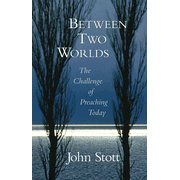
John R.W. Stott was arguably one of the most able preachers of the late 2oth into the 21st century until his death in July of 2011. Here is a very good interview with the President of Southern Baptist Seminary – Dr. Albert Mohler (an excellent preacher in his own right) and John Stott. A lot of the material in this interview can be gleaned from Stott’s classic text book on preaching enitled “Between Tow World’s.” Though this interview took place over twenty years ago – it doesn’t change the wisdom herein contained for preachers, and those who love to study, hear, and seek to obey God’s Word – great stuff from Stott and Mohler – enjoy! – Dr. David P. Craig

“Between Two Worlds”

[Albert Mohler: In honor of John Stott (who passed away on July 11, 2011 and would have been 91 on this day – April 27, 2012), I here republish an interview I conducted with the great preacher in 1987. The interview was first published in Preaching magazine, for which I was then Associate Editor.]

John R. W. Stott has emerged in the last half of the twentieth century as one of the leading evangelical preachers in the world. His ministry has spanned decades and continents, combining his missionary zeal with the timeless message of the Gospel.

For many years the Rector of All Souls Church, Langham Place, in London, Stott is also the founder and director of the London Institute for Contemporary Christianity. His preaching ministry stands as a model of the effective communication of biblical truth to secular men and women.

The author of several worthy books, Stott is perhaps best known in the United States through his involvement with the URBANA conferences. His voice and pen have been among the most determinative forces in the development of the contemporary evangelical movement in the Church of England and throughout the world.

Preaching Associate Editor R. Albert Mohler interviewed Stott during one of the British preacher’s frequent visits to the United States.

Mohler: You have staked your ministry on biblical preaching and have established a world-wide reputation for the effective communication of the gospel. How do you define ‘biblical preaching’?

Stott: I believe that to preach or to expound the scripture is to open up the inspired text with such faithfulness and sensitivity that God’s voice is heard and His people obey Him. I gave that definition at the Congress on Biblical Exposition and I stand by it, but let me expand a moment.

My definition deliberately includes several implications concerning the scripture. First, it is a uniquely inspired text. Second, the scripture must be opened up. It comes to us partially closed, with problems which must be opened up.

Beyond this, we must expound it with faithfulness and sensitivity. Faithfulness relates to the scripture itself. Sensitivity relates to the modern world. The preacher must give careful attention to both.

We must always be faithful to the text, and yet ever sensitive to the modern world and its concerns and needs. When this happens the preacher can come with two expectations. First, that God’s voice is heard because He speaks through what He has spoken. Second, that His people will obey Him – that they will respond to His Word as it is preached.

Mohler: You obviously have a very high regard for preaching. In Between Two Worlds you wrote extensively of the glory of preaching, even going so far as to suggest that “preaching is indispensable to Christianity.”

We are now coming out of an era in which preaching was thought less and less relevant to the church and its world. Even in those days you were outspoken in your affirmation of the preaching event and its centrality. Has your mind changed?

Stott: To the contrary! I still believe that preaching is the key to the renewal of the church. I am an impenitent believer in the power of preaching.

I know all the arguments against it: that the television age has rendered it useless; that we are a spectator generation; that people are bored with the spoken word, disenchanted with any communication by spoken words alone. All these things are said these days.

Nevertheless, when a man of God stands before the people of God with the Word of God in his hand and the Spirit of God in his heart, you have a unique opportunity for communication.

I fully agree with Martyn Lloyd-Jones that the decadent periods in the history of the church have always been those periods marked by preaching in decline. That is a negative statement. The positive counterpart is that churches grow to maturity when the Word of God is faithfully and sensitively expounded to them.

If it is true that a human being cannot live by bread only, but by every word which proceeds out of the mouth of God, then it also is true of churches. Churches live, grow, and thrive in response to the Word of God. I have seen congregations come alive by the faithful and systematic unfolding of the Word of God.

The Text Means What the Author Meant

Mohler: You have pictured the great challenge of preaching as creating a bridge between two worlds – the world of the biblical text and the world of the contemporary hearer. That chasm seems ever more imposing in the modern world. How can the preacher really bridge that chasm?

Stott: Any bridge, if it is to be effective, must be firmly grounded on both sides of the canyon. To build a bridge between the modern world and the biblical world we must first be careful students of both. We must be ever engaged in careful biblical exegesis, conscientiously and continually, and yet also involved in careful study of the contemporary context. Only this will allow us to relate one to the other.

I find it helpful in my own study to ask two questions of the text – and in the right order. First, “What does it mean?” and second, “What does it say?”

The answer to the first is determined by the original author. I am fond of citing E. D. Hirsch in his book Validity in Interpretation, when he wrote: “The text means what its author meant.”

That is my major quarrel with the existentialists, who say that the text means what it means to me – the reader – independent of what the author meant. We must say “no” to that. A text means primarily what its author meant. It is the author who establishes the meaning of the text.

Beyond that, we must accept the discipline of grammatical and historical exegesis, of thinking ourselves back into the historical, geographical, cultural, and social situation in which the author was writing. We must do this to understand what the text means. It cannot be neglected.

The second question moves us from the original meaning of the text to its contemporary message – “What does it say?” If we ask the first question without asking the second, we lapse into antiquarianism, unrelated to modern reality.

On the other hand, if we leap to the second question, “What does it say today?,” we lapse into existentialism, unrelated to the reality of biblical revelation. We have to relate the past revelation of God to the present reality of the modern world.

Mohler: That requires a double exegesis – an exegesis of the text and also an exegesis of life. Is it your opinion that most evangelicals are better exegetes of the text than they are of life?

Stott: Oh, I am sure of it. I am myself and always have been a better student of scripture than of the present reality. We love the Bible, read it and study it, and all of our preaching comes out of the Bible. Very often it does not land on the other side of that chasm, it is never earthed in reality.

The attractiveness of liberal or radical preaching, whatever it is called these days, is that it tends to be done by genuinely modern people who live in the modern world, understand it, and relate to it. But their message often does not come from the Bible. Their message is never rooted in the textual side of the chasm. We must combine the two relevant questions.

Mohler: Most of us think of ourselves as modern persons, and yet we may lack a suitable hermeneutic of the contemporary. What have you found to be helpful as you seek to be a better student of the contemporary world?

Stott: I mentioned in Between Two Worlds how very helpful I found involvement in a reading group I founded about fifteen years ago. They are graduates and professional people – doctors, an architect, an attorney, teachers and so on. All are committed to Christ and the Scripture and yet anxious to be modern and contemporary people. We meet every month or so when I am in London.

We decide to read a particular book, or see a particular play or exhibition, and spend the evening discussing it. We give most attention to books. We go around the circle and give our immediate impression before eventually turning and asking “Now, what has the Gospel to say to this?” I have found it enormously helpful to be forced to think biblically about modern issues.

Mohler: So you would point biblical preachers not only to the biblical text, but to a very wide reading?

Stott: Absolutely. I think wide reading is essential. We need to listen to modern men and women and read what they are writing. We need to go to the movies, to watch television, to go to the theater. The modern screen and stage are mirrors of the modern world. I seldom go on my own. I go with friends committed to the same kind of careful understanding.

Mohler: You have made it clear that you see preaching as a glorious calling and vocation. What do you see as the greatest contemporary need in preaching? Where is biblical preaching falling tragically short?

Stott: Well, in the more liberal churches, it falls woefully short of being fully biblical. Amongst the evangelical churches it falls short by being less than fully contemporary. I can only repeat the great need of struggling to understand the issues of the modern world. Nevertheless, there is a tremendous correlation between the issues of the biblical world and the modern world.

People are actively seeking the very answers Jesus provides. People are asking the very questions Jesus can answer, if only we understand the questions the world is asking.

I Began with a Very Strong Commitment to Scripture

Mohler: Your service over many years at All Souls Church in London had a tremendous impact throughout much of the world. There, in the midst of London’s busiest retail area, you presented the gospel with great effectiveness and power. Did your preaching change at all during your ministry at All Souls?

Stott: I began with a very strong commitment to Scripture, a very high view of its authority and inspiration. I have always loved the Word of God – ever since I was converted. Therefore, I have always sought to exercise an expository or exegetical ministry.

In my early days I used to think that my business was to expound and exegete the text; I am afraid I left the application to the Holy Spirit. It is amazing how you can conceal your laziness with a little pious phraseology! The Holy Spirit certainly can and does apply the Word for the people. But it is wrong to deny our own responsibility in the application of the Word.

All great preachers understand this. They focus on the conclusion, on the application of the text. This is what the Puritans called “preaching through to the heart.” This is how my own preaching has changed. I have learned to add application to exposition – and this is the bridge-building across the chasm.

Mohler: You have recently published a major volume on the cross [The Cross of Christ, InterVarsity Press, 1986]. This has always been central to your preaching – and all genuinely Christian preaching. Do you perceive an inadequate focus on the cross in the pulpit today?

Stott: Indeed, so far as I can see, it is inadequate. I think we need to get back to the fact that the cross is the center of biblical Christianity. We must not allow those on the one hand to put the incarnation as primary, nor can we allow those on the other hand to put the primary focus on the resurrection.

Of course, the cross, the incarnation, and the resurrection belong together. There could have been no atonement without the incarnation or without the resurrection. The incarnation prepares for the atonement and the resurrection endorses the atonement, so they belong always together.

Yet the New Testament is very clear that the cross stands at the center. It worries me that some evangelicals do not focus on Christ crucified as the center. Of course, we preach the whole of biblical religion, but with the cross as central.

One of the surprises which came as a product of the research for the book was the discovery that most books on the cross focus only on the atonement. There is much the New Testament has to say about the cross which is not focused on the atonement.

We are told, for example, to take up our cross and follow Christ. Communion is a cross-centered festival. There is the whole question of balance in the modern world. The problems of suffering and self-image are addressed by the cross. These issues appear quite differently when our world-view is dominated by the cross.

We Belong in a Study, Not an Office

Mohler: You are probably as well known in America as in England. Furthermore, you know America – its churches and its preachers. What would be your word to the Servants of the Word on this side of the Atlantic?

Stott: I think my main word to American preachers is, as Stephen Olford has often said, that we belong in a study, not in an office. The symbol of our ministry is a Bible – not a telephone. We are ministers of the Word, not administrators, and we need to relearn the question of priority in every generation.

The Apostles were in danger of being diverted from the ministry to which they had been called by Jesus – the ministry of Word and prayer. They were almost diverted into a social ministry for squabbling widows.

Now both are important, and both are ministries, but the Apostles had been called to the ministry of the Word and not the ministry of tables. They had to delegate the ministry of the tables to other servants. We are not Apostles, but there is the work of teaching that has come to us in the unfolding of the apostolic message of the New Testament. This is our priority as pastors and preachers.

Jesus preached to the crowds, to the group, and to the individual. He had the masses, the disciples, and individuals coming to Him. He preached to crowds, taught the disciples, and counseled individuals. We must also have this focus. It is all in the ministry of the Word.

Adapted from R. Albert Mohler Jr.’s weblog at www.albertmohler.com.

R. Albert Mohler, Jr. is president of The Southern Baptist Theological Seminary in Louisville, Kentucky. For more articles and resources by Dr. Mohler, and for information on The Albert Mohler Program, a daily national radio program broadcast on the Salem Radio Network, go to www.albertmohler.com. For information on The Southern Baptist Theological Seminary, go to www.sbts.edu. Send feedback to mail@albertmohler.com. Original Source: www.albertmohler.com.

Book Review: The Explicit Gospel by Matt Chandler

The Antidote to Gospel Inoculation

When Saint Augustine was living a life of licentiousness many generations ago he was hearing some children playing near where he was seated, playing a game with the refrain “Take up and read, take up and read.” He picked up his Bible and opened it to the book of Romans and proceeded to read about his sin and his desperate need of the provision of Christ’s imputed righteousness by faith in his death, burial, and resurrection in exchange for his sin. He was convicted of his sin and powerfully drawn by the work of the Holy Spirit toward faith and repentance in the person and work of Christ.

Whether you are a rebel, or someone who has heard the gospel (or what may pass for the gospel today) – you are well advised to take up this book and read it. In the past men like Augustine, Luther, and Calvin understood with passion and clarity our need to comprehend the richness and depth of the gospel, and proclaim it with passionate urgency – because souls are hanging in the balance. In this book Chandler definitively understands and articulates the power of the gospel and the desperate need we all have to understand the depth of our sin before a Holy God, and the just requirements He has that we have failed to meet, and thus our desperate need for what Christ came to save us from and unto.

In three parts Chandler clearly articulates the gospel essentials (God, Man, Christ, and our response); the gospel’s theological underpinnings (Creation, Fall, Reconciliation, and Consummation); and lastly its implications and applications for all of the aspects of our lives. The author is to be commended for writing a book that is passionate about the gospel; clearly articulates the gospel; calls for a response to the gospel; and demonstrates how to communicate and live out the gospel.

I highly recommend this book especially for preachers who proclaim the word of God week in and week out. He will inspire you to NOT compromise the gospel and to rest in the work of the Holy Spirit in applying it’s power in the lives of your people. My hope and prayer is that in reading this book your passion will be stirred to unflinchingly proclaim the gospel powerfully in truth and love – resulting in the saving of many lives. I think that the Apostle Paul would wholeheartedly agree with all that Chandler articulates in this book and would add, “For I am not ashamed of the gospel (as conveyed in this book), for it is the power of God for salvation to everyone who believes, to the Jew first and also to the Greek” (Rom. 1:16).

Matt Chandler is the lead pastor of The Village Church, a multi-campus church in the Dallas metroplex of over 10,000 people. He has recently taken the post as President of the Acts 29 Church Planting Network. His sermons are among the top selling (free) podcasts on itunes and he speaks at conferences worldwide. Prior to accepting the pastorate at The Village, Matt had a vibrant itinerant ministry for over ten years where he spoke to hundreds of thousands of people in America and abroad about the glory of God and beauty of Jesus. He lives in Texas with his wife, Lauren, and their three children: Audrey, Reid and Norah.

Dr. Zack Eswine’s Sermon Preparation Help For Preaching in a Post-Everything World

 *Adapted from Appendix 1 in Zach Eswine’s outstanding award winning book

Preaching to a Post-Everything World: Crafting Biblical Sermons that Connect with our Culture (Grand Rapids, MI.: Baker, 2008).

Use the Four Stories in Six Steps


^Day/Hour – (explanation: Some might use one day for each step. For these preachers I have broken steps down into days. Others might use each step in one day. For these preachers I have broken the steps down into hours.)

 ^Monday/Hour One – Step One

 Story #1 – Goal = What does this text teach me about God?

Identify the textual manner (word type and mood).

Locate parrot words. Connecting words, and divine comments.

Interrogate the big idea with questions (who, what, when, where, why, how)

Show and tell from the text.

Identify the echoes of redemption (armor, promise, fruit, gift, diaconal, miracle, community, divine silence, himself).

Find the illustrative path (picture, sensory, and creation words).

^Tuesday/Hour Two – Step Two

 Story #2 – Goal = What does this text teach me about people?

Identify echoes of creation (worship, relationship, vocation, conscience)

Identify echoes of the fall (fallen, finite, fragile, faltering)

Identify idol noise (superstition, skepticism, suspicion, stardom, stealing, squandering, sophistry).

Expose my moralistic responses to fallen echoes and idol noise.

Locate the vine.

^Wednesday/Hour Three – Step Three

 Story #3 – Goal = What does this text teach me about life under the sun?

Identify the Context of Reality (COR) (life situations, life seasons).

Discern my expository bans (censoring, muting, equivocating, evicting).

Expose my simplistic response to life under the sun.

Account for the accents of my hearers (memoir, marketplace, lore, land).

Translate cultural connections with biblical redirection (“You have heard it said…, but I say to you…”).

Describe the third way.

Account for the consciences of my hearers (hard-hearted and soft-hearted).

Bring echoes of heaven and hell into these features as appropriate.

^Thursday/Hour Four – Step Four

 Story #4 – Goal = What does this text say to me?

Receive instruction (grieving and quenching the Spirit).

Locate the vine.

Seek repentance.

Find forgiveness.

Give thanks and praise.

Testify.

^Friday/Hour Five – Step Five

 Goal: Place the four stories into a deductive or inductive sermon form


^Saturday/Sunday/Hour Six – Step Six

 Goal = Pray the four stories

Pray for illumination = Psalm 119:18, “Open my eyes, that I may behold wondrous things out of your law.”

Pray for a message = Ephesians 6:19, “and also for me, that words may be given to me in opening my mouth boldly to proclaim the mystery of the gospel.”

Pray for an open door = Colossians 4:3-4, “At the same time, pray for us, that God may open to us a door for the word, to declare the mystery of Christ, on account of which I am in prison.”

Pray for effectiveness = 2 Thessalonians 3:1, “Finally, brothers, pray for us, that the word of the Lord may speed ahead and be honored, as happened among you,”

Pray for clarity = Colossians 4:4, “that I may make it clear, which is how I ought to speak.”

Pray for boldness = Ephesians 6:20, “for which I am an ambassador in chains, that I may declare it boldly, as I ought to speak.”

Pray for a deliverance = 2 Thessalonians 3:2, “and that we be delivered from wicked and evil men. For not all have faith.”

*Zack Eswine serves as the Senior Pastor of Riverside Community Church in St. Louis, Missouri. His role focuses his time on setting vision, preaching, spiritual formation and pastoral care.

Dr. Eswine has served in pastoral roles for over twenty years. He served as Assistant Professor of Homiletics and Director for Doctor of Ministry for six years at Covenant Theological Seminary.  Zack’s most recent book, won Preaching Today’s Book of the Year Award in 2009. It is entitled, Preaching to a Post-Everything World: Crafting Biblical Sermons that Connect with our Culture (Baker, 2008).  He has also written, Kindled Fire: How the Methods of C.H. Spurgeon can help your Preaching (Mentor, 2006). His forthcoming books are entitled, Preaching Barefoot: Life and Ministry as a Human Being (Crossway) and Spurgeon’s Sorrows: Handling the Darker Sides of Life and Ministry (Christian Focus).

David Martyn Lloyd-Jones on Authority in Preaching by Iain H. Murray

During the Second World War a Scot who was in the services and visiting London went to Westminster Chapel but the Chapel was closed, damaged by bombing, but on a piece of paper visitors were directed to a nearby hall. He described a ‘thin man’ wearing a tie calling the people to worship. He thought the man was a church officer, and he appreciated his prayer, but then the man began to preach, beginning quietly enough. “This must be Lloyd-Jones,” he thought. But for the next 40 minutes he was unconscious of anything else in the world, hearing only this man’s words. He had been caught up in the mystery of preaching. That man later became a well-known Church of Scotland minister called Tom Allen.

When he left that service Tom Allen was taken up with the message, not the preacher. DMLJ would have thought little of conferences addresses like this one about himself. He thought messages about contemporary men had done great injury especially during the Victorian period. With man-centeredness being the terrible bane of today’s church there is a danger in drawing attention to personalities. DMLJ would quote the words of God, “My servant Moses is dead so arise and go over to Jordan.” DMLJ prevented several would-be biographers writing anything, and reluctantly consented to Iain Murray’s official biography if only something could be written which would encourage those who were entering the gospel ministry.

DMLJ believed that God was the God of tomorrow who would raise up servants who would enjoy blessings that he himself had not known. Frequently when he prayed it was particularly for a recovery of authority and power in preaching.

One must add another observation, that preaching was not DMLJ’s exclusive concern. He was concerned with the church fellowship, prayer meetings, and the promotion of foreign missionaries, but he was convinced that the spiritual health of the church depended on the state of the pulpit. On behalf of Christ the true preacher speaks and the Lord himself is building his church in his sovereign way. So DMLJ was conscious of what he spoke of as the romance of preaching. The preacher is but an instrument in the Lord’s hands: the preacher is not in control. Preaching is the highest and most glorious calling to which anyone could be called.

So when we come to the subject of authority in preaching there are a number of ways this could be addressed and the New Testament terminology on this theme should be studied, e.g. that ‘Jesus spoke with authority’, the phrase ‘the word came with power’, and the word ‘boldness’ which is surprisingly frequent in the NT. Iain Murray’s approach was to take the characteristics of preaching with power.

(1) It always is attended by a consciousness of the presence of God.

Though a worshipper may be meeting in the midst of a large congregation of people when the preaching is with authority the individual forgets the person he has come with, and the building they are sitting in, and even the one who is preaching. He is conscious that he is being spoken to by the living God. Thus it was in Acts 2. A remarkable illustration of this is the spiritualist woman in Sandfields, drawn to hear DMLJ and conscious that she was surrounded by ‘clean’ power. For the first time she was conscious she was in the presence of God. Thomas Hooker had such a sense of God about him that it was said that he could have put a king in his pocket.

(2) There is no problem of holding the attention of the people.

It is a problem to keep people’s attention. The preacher has his chain of thought, and all the people also may have theirs which are all very different so that they are taking in very little from the preaching. But authoritative preaching gets inside people because it speaks to the heart, conscience and will. Skillful oratory cannot come anywhere near to that preaching. It made a moral and emotional earthquake in those who heard the word at Thessalonica. The well-remembered ship builder who built ships in his mind during Sundays’ sermon could not lay the first plank when he was listening to George Whitefield preach. Conviction of sin and the reality of the living God became far more important to him than his business.

One Friday night in his series of lectures on theology DMLJ was preaching from Revelation on the final judgment on Babylon and listening to that exultant message it would have been impossible to have been occupied with any other subject, the great reality was such that awareness of anything else disappeared. The very date of that occasion was accurately quoted, easily memorable to the speaker because the next day he was getting married, but all thoughts of that were gone as he saw the overthrow of great Babylon.

(3) Even children can understand it.

There is a mistake in thinking that preaching is chiefly to address the intellect, and thus the will. Rather preaching is to address the heart and soul of men and women. Preaching which accomplishes that can arrest a child as easily as a grown-up. Children did listen to DMLJ because of the character of the preaching and the sense of God about it.

(4) It is preaching that results in a change in those who listen.

It may be repentance; it may be restoration, or reconciliation; it may be strength given for those in the midst of trials, but powerful preaching brings that change. Sometimes they went away indignant and some of them were later converted. You cannot be apathetic under true preaching. Felix trembled. There was no certainty of conversions but there was a degree of certainty that there will be power in that preaching. In Mrs Bethan Lloyd-Jones’ book on Sandfields there is a reference to a professor of law at Liverpool who said that there were two men who kept the country from communism – Aneurin Bevan and DMLJ. His preaching affected communities. On November 15 1967 he was preaching in Aberfan a year after the disaster. His text was Romans 8:18 “the sufferings of the present time are not worthy to be compared to the glory to be revealed in us.” It had a great impact on the perplexed little religious community in the Taff valley.

What is Necessary for Powerful Preaching? What elements produce it?

(1) Sermons will not be marked by authority and power unless they are marked by truth that the Holy Spirit can honor.

The word of God is to be exegeted and explained. That has to be the heart of the sermon. There is a real danger that we become over concerned about such things as delivery, while the New Testament is insistent on the content: “let him speak as the oracles of God.” The authority of the preaching comes from the text of Scripture. It is God- given power which honours his own word.

Dr Lloyd-Jones grew up in a vague sentimental era with churches fascinated with the personalities and quirks of famous men. DMLJ as a man was absorbed with the glory and the greatness of the truth. A preacher lives in the truth. DMLJ expected the preacher to go through the whole Bible in his personal devotions once each year. He expected him to continue to read theology as long as he lived. The more he read the better. Preaching is theology coming through a man who is on fire.

In the latter part of his ministry there was a change in emphasis. In the first 30 years there was a stress on the importance of the historic faith, and then in the last decades a new emphasis emerged, not now on the recovery of truth but with the accompanying need of power to proclaim it.

(2) The man himself is a part of the message. He can read all the best books and give out a whole rounded exegesis of the text, but somehow the man himself has not become a part of the truth.

The less we say of ourselves in preaching the better, but the Holy Spirit does not work in preaching except through the man, and so, inevitably, not only does the message compel attention but the man himself. The man becomes a part of the message. What does that mean?

The preacher must know the power of the message he is bringing to others.

When DMLJ was 25 and at the cross-roads of his life, he became engaged to Bethan Philips, and she became conscious that her future husband was considering becoming a preacher. She was very concerned because she had never heard him preach. At that point a letter came from a missionary society inviting them to become medical missionaries in India. She was challenged by this invitation but DMLJ had no interest at all. Bethan said to him, “But how do you know that you can preach?” “I know I can preach to myself” he replied. He knew the power of the truth in his own heart.

When he was preaching on Ephesians 2 on fulfilling the lusts of the flesh and the mind he raised the question what they were? He interjected that “as I was preparing this sermon it filled me with a loathing and hatred of myself. I look back and I think of the hours I have wasted in mere talk and argumentation. And it was with one end only, simply to gain my point and to show how clever I was” (“God’s Way of Reconciliation” p.65). So DMLJ was preaching to himself before he spoke to others.

The Holy Spirit must produce the feelings in the preacher’s heart that must be in harmony with what the Spirit has breathed out.

Paul writes, “Knowing the terror of the Lord we persuade men.” Again he speaks of some “with tears” that they are enemies of the cross. One finds phrases like, “I tell you weeping …I am glad and rejoice with you all.” There was something in the way these preachers used by God spoke – “I preached what I smartingly did feel,” said Bunyan. A most important part of preaching is exhortation. In preaching we move people to do what they are listening to, and to this end there has to be a felt consciousness in the preacher of the truth of what he is saying. We have to bring our feelings into harmony with the stupendous nature of what we are saying. The men most used of God in their pulpits are those who know they had fallen far short of the wonder that should characterise the preaching.

The more he becomes part of his message then the more he forgets himself.

What is the main feeling in the preacher? It should be love – to God and to man. It is the very opposite of self-centredness. Love seeks not her own. The needs of the people spoken to take over. We forget ourselves. A baptism of Holy Spirit love gives us a love for people.

Preaching Under the Influence of the Holy Spirit.

There is a total insufficiency in ourselves or in anyone else in the world, so that we cannot preach without the Holy Spirit. 1 Corinthians 2:3 – is the key text, “And I was with you in weakness, and in fear, and in much trembling.” God makes us weak and so enables us to become true preachers. Real authority always comes out of felt weakens, and then God uses us. The preacher is the last person to be praised. To be clapped when he had finished would have horrified him.

Bethan Lloyd-Jones once listed to some men speaking about her husband and she interjected, “No one will understand my husband who does not realise that he was first an evangelist and a man of prayer.” DMLJ loved the hymn of Oswald Allen, “Today thy mercy calls us…” especially these final lines:

When all things seem against us,


To drive us to despair,


We know one gate is open,


One ear will hear our prayer

That is what he believed. His public pastoral prayer lifted many burdens long before the preaching began. He rested ultimately on the Holy Spirit being given to them that ask him. The real preacher is a mere voice sounding in the wilderness. DMLJ was criticized for being too dogmatic and authoritarian. If we are preaching from God then that has to be delivered with faith and confidence that we knows what God is saying. You have to believe definite truths in order to be saved. Men have to know that they are condemned before they can be saved. There is the utter certainty of a preacher in what he is preaching. Paul says, “We have the same spirit of faith … we also believe and we speak.” That is the fundamental thing. We are going against all that the natural man believes.

DMLJ’s faith came out in what he preached, that man was under the wrath of God, depraved and lost. He preached this with absolute conviction, and he followed it up with the cross, week by week. That authority was given by the Holy Spirit. It influenced DMLJ’s whole way of looking at things. He was a man who stood alone for most of his life and one reason was that he was conscious that the problem with man was far deeper than people in the church were prepared to acknowledge They were thinking of ‘communication to the modern man’ etc. DMLJ believed that we face not the problem of communication but what was wrong in the church itself. One of the reasons that he did not take part in the big crusades was because there was something wrong in the churches themselves. He quietly stood aside, God having kept him in the way he did, he preached evangelistically each Sunday.

The test of the presence of the Holy Spirit’s work is the presence of Christ himself in the assembly and known by the congregation. A maid worked in a Manse and there was great anticipation for the coming of the powerful preacher, Mr Cook. One maid was not enthusiastic, and she told the butcher she was fed up, “with all this fuss you would think Jesus Christ himself was coming.” Mr Cook duly came and preached and as she heard him something happened in her life. The butcher said to her with a grin on the following Tuesday, “Did Jesus Christ come?” “Yes, he did come,” she said seriously.

William Williams of Pantycelyn said, “Love is the greatest thing in religion, and without it religion is nothing.” DMLJ often quoted those words. Love has to lead the way. He thought the people were not ready to hear extended series of systematic expository sermons for the first 20 years he was in the ministry. The needs of the people were paramount because love is in our hearts.

*Summary of an Address given by Iain H. Murray at the Carey Conference 2001 at Swanwick. Iain Hamish Murray (b. 1931; Lancashire, England) was educated in the Isle of Man and at the University of Durham. He entered the Christian ministry in 1955. He served as assistant to Martyn Lloyd-Jones at Westminster Chapel(1956–59) and subsequently at Grove Chapel, London (1961–69) and St. Giles Presbyterian Church, Sydney, Australia, (1981–84). In 1957 he and Jack Cullum founded the Reformed publishing house, the Banner of Truth Trust, where he has periodically worked full-time and remains the Editorial Director.

*David Martyn Lloyd-Jones (December 20, 1899 – March 1, 1981) was a Welsh Protestant minister, preacher and medical doctor who was influential in the Reformed wing of the British evangelical movement in the 20th century. For almost 30 years, he was the minister of Westminster Chapel in London. Lloyd-Jones was strongly opposed to Liberal Christianity, which had become a part of many Christian denominations; he regarded it as aberrant. He disagreed with the broad church approach and encouraged evangelical Christians (particularly Anglicans) to leave their existing denominations. He believed that true Christian fellowship was possible only amongst those who shared common convictions regarding the nature of the faith. One of his classic works has been republished as a 40th Edition – with many new features –  (reviewed on this blog) and is entitled Preaching and Preachers.

Dr. Tim Keller On The Importance of Gospel Repentance

*Dr. Tim Keller: “All of Life is Repentance”

Martin Luther opened the Reformation by nailing “The Ninety-Five Theses” to the door of Wittenberg Cathedral. The very first of the theses was: “Our Lord and Master Jesus Christ…willed the entire life of believers to be one of repentance.” On the surface this looks a little bleak! Luther seems to be saying Christians will never be making much progress in the Christian life. Indeed, pervasive, all-of-life-repentance is the best sign that we are growing deeply into the character of Jesus.

The Transformation of Repentance:

It is important to consider how the gospel affects and transforms the act of repentance. In ‘religion’ the purpose of repentance is basically to keep God happy so he will continue to bless you and answer your prayers. This means that ‘religious repentance’ is a) selfish, b) self-righteous, c) and bitter all the way to the bottom. But in the gospel the purpose of repentance is to repeatedly tap into the joy of union with Christ in order to weaken our need to do anything contrary to God’s heart.

“Religious” repentance is selfish:

In religion we only are sorry for sin because of its consequences to us. It will bring us punishment – and we want to avoid that. So we repent. But the gospel tells us that sin can’t ultimately bring us into condemnation (Rom. 8:1) its heinousness is therefore what it does to God-it displeases and dishonors him. Thus in religion, repentance is self-centered; the gospel makes it God-centered. In religion we are mainly sorry for the consequences of sin, but in the gospel we are sorry for the sin itself.

Furthermore, ‘religious’ repentance is self-righteous. Repentance can easily become a form of ‘atoning’ for the sin. Religious repentance often becomes a form of self-flagellation in which we convince God (and ourselves) that we are truly miserable and regretful that we deserve to be forgiven. In the gospel, however, we know that Jesus suffered and was miserable for our sin. We do not have to make ourselves suffer in order to merit forgiveness. We simply receive the forgiveness earned by Christ. 1 John 1:8 says that God forgives us because he is ‘just.’ That is a remarkable statement. It would be unjust of God to ever deny us forgiveness, because Jesus earned our acceptance! In religion we earn forgiveness with our repentance, but in the gospel we just receive it.

Last, religious repentance is “bitter all the way down.” In religion our only hope is to live a good enough life for God to bless us. Therefore every instance of sin and repentance is traumatic, unnatural, and horribly threatening. Only under great duress does a religious person admit they have sinned-because their only hope is their moral goodness. But in the gospel the knowledge of our acceptance in Christ makes it easier to admit we are flawed (because we know we won’t be cast off if we confess the true depths of our sinfulness).

Our hope is in Christ’s righteousness, not our own-so it is not so traumatic to admit our weaknesses and lapses. In religion we repent less and less often. But the more accepted and loved in the gospel we feel the more and more often we will be repenting. And though of course there is always some bitterness in any repentance, in the gospel there is ultimately sweetness. This creates a radical new dynamic for personal growth. The more you see your own flaws and sins, the more precious, electrifying, and amazing God’s grace appears to you. But on the other hand, the more aware you are of God’s grace and acceptance in Christ, the more able you are to drop your denials and self-defenses and admit the true dimensions of your sin. The sin under all other sins is a lack of joy in Christ.

The Disciplines of Gospel-Repentance:

If you clearly understood these two different ways to go about repentance, then (and only then!) you can profit greatly from a regular and exacting discipline of self-examination and repentance. I’ve found that the practices of the 18th century Methodist leaders George Whitefield and John Wesley have been helpful to me here. In January 9, 1738, in a letter to a friend, George Whitefield laid out an order for regular repentance. (He ordinarily did his inventory at night) He wrote: “God give me a deep humility and a burning love, a well-guided zeal and a single eye, and then let men and devils do their worst!” Here is one way to use this order in gospel-grounded repentance.

Deep Humility vs. Pride:

Have I looked down on anyone? Have I been too stung by criticism? Have I felt snubbed and ignored?

Repent like this: Consider the free grace of Jesus until I sense a) decreasing disdain (since I am a sinner too), b) decreasing pain over criticism (since I should not value human approval over God’s love). In light of his grace I can let go of the need to keep up a good image-it is too great a burden and now unnecessary. Consider free grace until I experience grateful, restful joy.

Burning love vs. Indifference:

Have I spoken or thought unkindly of anyone? Am I justifying myself by caricaturing (in my mind) someone else? Have I been impatient and irritable? Have I been self-absorbed and indifferent and inattentive to people?

Repent like this: Consider the free grace of Jesus until there is a) no coldness or unkindness (think of the sacrificial love of Christ for you), b) no impatience (think of his patience with you), and c) no indifference. Consider free grace until I show warmth and affection. God was infinitely patient and attentive to me, out of grace.

Wise Courage vs. Anxiety:

Have I avoided people or tasks that I know I should face? Have I been anxious and worried? Have I failed to be circumspect or have I been rash and impulsive?

Repent like this: Consider the free grace of Jesus until there is a) no cowardly avoidance of hard things (since Jesus faced evil for me), b) no anxious or rash behavior (since Jesus’ death proves God cares and will watch over me). It takes pride to be anxious – I am not wise enough to know how my life should go. Consider free grace until I experience calm thoughtfulness and strategic boldness.

Godly motivations (a ‘single eye’):

Am I doing what I am doing for God’s glory and the good of others or am I being driven by fears, need for approval, love of comfort and ease, need for control, hunger for acclaim and power, or the ‘fear of man?’ Am I looking at anyone with envy? Am I giving in to any of even the first motions of lust or gluttony? Am I spending my time on urgent things rather than important things because of these inordinate desires?

Repent like this: How does Jesus provide for me in what I am looking for in these other things? Pray: “O Lord Jesus, make me happy enough in you to avoid sin and wise enough in you to avoid danger, that I may always do what is right in your sight, in your name I pray, Amen.”

*Dr. Tim Keller is the founding pastor of Redeemer Presbyterian Church in Manhattan, New York, and the author of The Reason for God: Belief in an age of Skepticism (In my opinion the best book to date on apologetics for a postmodern culture—I think this book will do for post moderns what Mere Christianity by C.S. Lewis did for moderns).

Preachers: 10 Questions To Ask in Taking Inventory of Your Sermon by David and Warren Wiersbe

(Adapted form Elements of Biblical Preaching by David and Warren Wiersbe, Wheaton: Tyndale House, 1986)

(1) Is the message solidly based on Scripture?

(2) Does it exalt the Person and work of Jesus Christ?

(3) Will it meet the needs of the people?

(4) Is the theme a timeless truth worth talking about?

(5) Is the message organized so that I can preach it clearly and the people understand it easily? Is there a concise and clear statement of purpose? Is there a clear plan of development? Is there practical application that makes the message personal?

(6) Are all Scripture references and historical facts accurate?

(7) Is the message real to me personally so that I may make it real to others?

(8) Does the message fit into the total “preaching plan” for this church and into the context of the church’s ministry at this time?

(9) Does the message fit into the ministry of the Church at large and Christ’s concern to save a lost world?

(10) Is the message worth preaching again?

*Warren W. Wiersbe is the Distinguished Professor of Preaching at Grand Rapids Baptist Seminary, Warren Wiersbe is the author of more than 100 books. Billy Graham calls him “one of the greatest Bible expositors of our generation.” Interestingly, Warren’s earliest works had nothing to do with scriptural interpretation. His interest was in magic, and his first published title was Action with Cards (1944).

“It was sort of imbecilic for a fifteen-year-old amateur magician to have the audacity to write a book and send it to one of the nation’s leading magic houses,” Warren says. But having a total of three books published by the L.L. Ireland Magic Company—before the age of 20—gave him a surge of confidence. In later years, he applied his confidence and writing talent to the Youth for Christ (YFC) ministry.

Warren wrote many articles and guidebooks for YFC over a three-year period, but not all his manuscripts were seen by the public eye. One effort in particular, The Life I Now Live, based on Galations 2:20, was never published. The reason, Warren explains with his characteristic humor, is simple: it was “a terrible book…Whenever I want to aggravate my wife, all I have to say is, ‘I think I’ll get out that Galations 2:20 manuscript and work on it.’” Fortunately, Warren’s good manuscripts far outnumbered the “terrible” ones, and he was eventually hired by Moody Press to write three books.

The much-sought-after author then moved on to writing books for Calvary Baptist Church. It was during his ten years at Calvary that Expository Outlines on the New Testament and Expository Outlines on the Old Testament took shape. These two works later became the foundation of Warren’s widely popular Bible studies known as the Be series, featuring such titles as Be Loyal (a study on Matthew) and Be Delivered (a study on Exodus). Several of these books have been translated into Spanish.

His next avenue of ministry was Chicago’s Moody Memorial Church, where he served for seven years. He wrote nearly 20 books at Moody before moving to Lincoln, Nebraska, where he and his wife, Betty, now live. Prior to relocating, he had been the senior pastor of Moody Church, a teacher at Trinity Evangelical Divinity School, and a producer of the Back to the Bible radio program.

During all these years of ministry, Warren held many more posts and took part in other projects too numerous to mention. His accomplishments are extensive, and his catalog of biblical works is indeed impressive and far-reaching (many of his books have been translated into other languages). But Warren has no intention of slowing down any time soon, as he readily explains: “I don’t like it when people ask me how I’m enjoying my ‘retirement,’ because I’m still a very busy person who is not yet living on Social Security or a pension. Since my leaving Back to the Bible, at least a dozen books have been published, and the Lord willing, more are on the way.”

Wiersbe’s recent books include Your Next MiracleThe 20 Essential Qualities of a Child of GodThe Bumps are What You Climb OnClassic Sermons on the Fruit of the SpiritClassic Sermons on Jesus the ShepherdKey Words of the Christian LifeLonely PeopleA Gallery of GraceReal Peace: Freedom and Conscience in the Christian Life, and On Being a Leader for God.