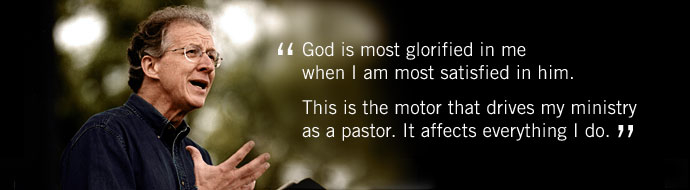
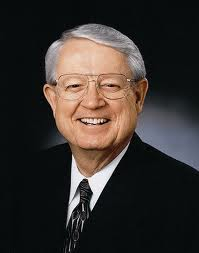
Warren Wiersbe on the Question: How Can We Trust God When Going Through the Furnace of Pain?

“Through The Furnace of Pain”

Nearly two hundred years ago, Thomas Jefferson wrote a letter to his friend Mrs. Cosway, and in it he said, “The art of life is the avoiding of pain.” Thomas Jefferson was a great man and a brilliant thinker, but I disagree. When we first hear that statement, it appears to be true. None of us deliberately looks for pain as we go about our daily activities. When it comes time for our six-month’s dental checkup or our annual visit to the doctor, we really wish we didn’t have to go. After all, the dentist might have to fill a cavity, or the doctor might order an operation or a diet! Generally speaking, all of us do our best to avoid pain.

But when you take a deeper look at the statement, you see that it fails to live up to the facts of history. Thomas Jefferson himself paid a price to help bring the American independence! Many of the patriots of that day lost their names, their homes, their fortunes, and some their lives, in order to win liberty. Our liberty was purchased by pain and death; and our liberty has been protected by pain and death. History itself shows us that human progress can only be made when somebody suffers for that which is true and right.

Even apart from history, our own personal experience teaches us the folly of this statement. The deepest pains are not physical; they are emotional and spiritual. All of us have suffered pain during our pilgrimage of life. We could have avoided the pain, but we have learned that the most important things in life usually involve suffering. If people lived to avoid pain, they would never want to grow up. But just think of what they would miss!

Take the matter of human birth. To be sure, we have modern scientific methods to protect mothers, but there is still a certain amount of pain. Jesus Himself used this as an illustration of His own suffering when He said, “A woman when she is in travail hath sorrow, because her hour is come: but as soon as she is delivered of the child, she remembereth no more the anguish, for joy that a man is born into the world” (John 16:2 1).

Think, too, of the pain and sorrow that the mother and father experience as they seek to raise that child. The old proverb says, “When they are little, children step on your feet; but when they are older, they step on your heart.” Often this is true. In my ministry I have met dedicated Christian parents whose hearts have been broken because of wayward children who failed to heed their instruction and example. If everybody really lived to avoid pain, nobody would get married and raise a family; yet people do it all the time.

We must never think that pain is something sinful. Some suffering comes because of disobedience; but not all pain is the result of sin. If Adam in the Garden of Eden had tripped over a rock, he would have felt it. To be sure, the pain of sickness and physical decline is ultimately caused by sin; but even the pain of sickness can have a good result. If you and I never felt pain when something was wrong in our bodies, we would die from neglect. A pain somewhere in the body is a danger signal, and we ought to be thankful for it. But for the Christian believer, pain has much higher ministries. I often hear people say that Christians suffer more than other people do, but I’m not so sure this can be proved. As I visit hospitals and nursing homes, I meet many unsaved people who are suffering. In fact, I believe that the dedicated Christian probably avoids a lot of the physical suffering that comes to a person who defiles and destroys his body through sin and selfishness.

What are the higher ministries of pain? Well, for one thing, pain can have a purifying power. The apostle Peter writes in 1 Peter 4:1, “For he that hath suffered in the flesh hath ceased from sin.” One of the modern translations puts it, “You must realize then that to be dead to sin inevitably means pain.” I once went through intense physical suffering, and it very definitely had a purifying effect on my heart and mind. It made me see spiritual things a lot more clearly. My priorities were rearranged. Granted, pain by itself can never accomplish this; but when we yield to Christ and ask for His help, pain can purify us.

A secondary ministry of pain is that of fellowship with Christ. In Philippians 3:10 Paul writes about “the fellowship of his [Christ’s] sufferings.” Some people turn against God when they go through suffering, but this need not be so. You and I can be drawn closer to God by faith when we are going through the furnace of pain. None of us has ever experienced all that Jesus experienced on the cross. The unsaved person has no idea of the wonderful joy and peace the believer experiences in his heart even in the midst of constant pain.

A third ministry of pain is bringing glory to God. This doesn’t mean that God deliberately makes us suffer just so He can receive glory. But it does mean that God can use our suffering to glorify His name. When Jesus faced the hour of His death, He said, “Father, glorify thy name.” And God was glorified in the suffering and death of His Son, and God honored Christ and raised Him from the dead in great glory. I have visited Christians in hospitals and homes whose lives were glorifying God even in their suffering.

Pain purifies. Pain draws the Christian closer to Christ. Pain glorifies God. But we must also remember that pain today means glory and honor tomorrow. Paul wrote, “The sufferings of this present time are not worthy to be compared with the glory which shall be revealed in us” (Rom. 8:18). God doesn’t always settle His accounts in this life. In fact, no Christian should expect to receive much reward in this world. Jesus said, “In the world you shall have tribulation.” A man said to me one day, “I don’t believe in hell or heaven. You have your hell or heaven here on earth.” That man was wrong. The unsaved person had better enjoy this world all he can, because it’s the only heaven he will ever see! “It is appointed unto men once to die but after this the judgment.”

But the Christian is looking forward to the glory of heaven. Jim Elliot, one of the martyred missionaries of Ecuador, wrote in his journal: “He is no fool to give what he cannot keep, to gain what he cannot lose.” If we suffer with Christ today, it only means glory with Christ tomorrow. For the Christian, the best is yet to come.

Have you surrendered your pain to Christ and asked Him to use it for your good and His glory? I suggest that you do so by faith. God doesn’t promise to remove our pain, or even to relieve our pain; but He does promise to transform it and use it for His eternal purposes.

The great apostle Paul was in pain. He had a thorn in the flesh, given to him by God to help keep him humble and useful. Paul did what any Christian would have done-he prayed for the pain to be removed. God did not answer his prayer, but He did meet his need. He gave Paul all the grace he needed to transform that weakness into strength, that suffering into glory. And God will give grace to you and me if only we will yield our all to Him.

About the Author:

Warren W. Wiersbe is the Distinguished Professor of Preaching at Grand Rapids Baptist Seminary, and is the author of more than 100 books. Billy Graham calls him “one of the greatest Bible expositors of our generation.” Interestingly, Warren’s earliest works had nothing to do with scriptural interpretation. His interest was in magic, and his first published title was Action with Cards (1944).

“It was sort of imbecilic for a fifteen-year-old amateur magician to have the audacity to write a book and send it to one of the nation’s leading magic houses,” Warren says. But having a total of three books published by the L.L. Ireland Magic Company—before the age of 20—gave him a surge of confidence. In later years, he applied his confidence and writing talent to the Youth for Christ (YFC) ministry.

Warren wrote many articles and guidebooks for YFC over a three-year period, but not all his manuscripts were seen by the public eye. One effort in particular, The Life I Now Live, based on Galatians 2:20, was never published. The reason, Warren explains with his characteristic humor, is simple: it was “a terrible book…Whenever I want to aggravate my wife, all I have to say is, ‘I think I’ll get out that Galatians 2:20 manuscript and work on it.’” Fortunately, Warren’s good manuscripts far outnumbered the “terrible” ones, and he was eventually hired by Moody Press to write three books.

The much-sought-after author then moved on to writing books for Calvary Baptist Church. It was during his ten years at Calvary that Expository Outlines on the New Testament and Expository Outlines on the Old Testament took shape. These two works later became the foundation of Warren’s widely popular Bible studies known as the Be series, featuring such titles as Be Loyal (a study on Matthew) and Be Delivered (a study on Exodus). Several of these books have been translated into Spanish.

His next avenue of ministry was Chicago’s Moody Memorial Church, where he served for seven years. He wrote nearly 20 books at Moody before moving to Lincoln, Nebraska, where he and his wife, Betty, now live. Prior to relocating, he had been the senior pastor of Moody Church, a teacher at Trinity Evangelical Divinity School, and a producer of the Back to the Bible radio program.

During all these years of ministry, Warren held many more posts and took part in other projects too numerous to mention. His accomplishments are extensive, and his catalog of biblical works is indeed impressive and far-reaching (many of his books have been translated into other languages). But Warren has no intention of slowing down any time soon, as he readily explains: “I don’t like it when people ask me how I’m enjoying my ‘retirement,’ because I’m still a very busy person who is not yet living on Social Security or a pension. Since my leaving Back to the Bible, at least a dozen books have been published, and the Lord willing, more are on the way.”

Wiersbe’s recent books include Your Next MiracleThe 20 Essential Qualities of a Child of GodClassic Sermons on the Fruit of the SpiritClassic Sermons on Jesus the ShepherdKey Words of the Christian LifeLonely PeopleA Gallery of GraceReal Peace: Freedom and Conscience in the Christian Life, and On Being a Leader for God.

The article above was adapted from Warren W. Wiersbe’s classic encouraging devotional: The Bumps Are What You Climb On: Encouragement For Difficult Days. Tappan, N.J.: Fleming H. Revell, 1996.

6 Reasons I’m Grateful for My Cancer by Dr. David P. Craig

A Positive Acronym for C.A.N.C.E.R.

C – is for Christ – Jesus Christ chose to be my cancer. He chose to be the spiritual good cells I needed to make me right with the Father – his righteousness in exchange for my sin (justification); and He chose to be the bad cells (cancer cells – my sin) that were rightly punished by a Holy God (propitiation). In short Jesus took my chemotherapy (His Goodness killed my idolatrous religiosity and evil thoughts and deeds) on Himself so I can have the righteousness of God imputed to my account.

2 Corinthians 5:21, “For our sake he made him to be sin (cancerous cells) who knew no sin (good and perfect cells), so that in him we might become the righteousness of God.

A – is for Attitude – I truly believe that there are too many benefits to list in regards to having cancer. However, maybe the best benefit is that I know God is sovereign and good. He has demonstrated this time and again throughout my life and all throughout the Scriptures. I know two big things about God – He’s sovereign and has a plan in my cancer; and secondly He is always good. I know that cancer is evil and that the cancer wants to kill me. I also know that to God cancer is evil and He will use it for His purpose and for my good and the good of others.

Genesis 50:20, “As for you, you meant evil (cancer) against me, but God meant it (cancer) for good, to bring it about that many people should be kept alive, as they are today.”

N – is for New Focus – The Christian life is a continuous battle against the world, the flesh, and the devil. I like to illustrate my cancer this way – If you ever played the Atari Classic video game “Asteroids,” you have these big asteroids coming at you and you are in a little space ship that moves about killing the asteroids and they break up into more asteroids coming at you quickly until you kill them all. I feel like with cancer, my past concerns of finding work, overcoming financial setbacks, and so forth were like a bunch of little asteroids coming at me. Now I have the ability to focus on a big asteroid (cancer) coming at me slowly. However, I have a God that’s bigger and in control of how He chooses to use that cancer for His glory. He can and will destroy it in His perfect time. My job right now is to seek His glory and it’s easier to hone in and focus on the battle with the cancer.

1 Corinthians 10:31, “So, whether you eat or drink, or whatever you do (fight cancer), do all to the glory of God.”

C – is for Community – I am so grateful for the body of Christ and the community of cancer over comers and those in the fight with me. I have never experienced such care and concern from others and the outpouring of love from family and friends who are going to battle for and with me in prayer.

James 5:15, “And the prayer of faith will save the one who is sick (with cancer), and the Lord will raise him up. And if he has committed sins, he will be forgiven.”

E – is for Encouragement – I am daily receiving cards, emails, and calls that display an outpouring of camaraderie and the urge to be courageous in my plight. I am spurred on to want to live well for my Lord and Savior and do well for His glory while I have breath.

Hebrews 6:10 and 10:23-25, “For God is not unjust so as to overlook your work and the love that you have shown for his name in serving the saints, as you still do…Let us hold fast the confession of our hope without wavering, for he who promised is faithful. And let us consider how to stir up one another to love and good works, not neglecting to meet together, as is the habit of some, but encouraging one another, and all the more as you see the Day drawing near.”

R – is for Repentance and Restoration. I believe that I am a huge idolater. God is continually bringing to mind things that I’ve put before Him – even good things like food and family. However, with cancer I have no idols that can save me. Only the love of God can deliver me from fear. Only the worship of God satisfies my cravings. Only the promises of God give me hope. Only the Gospel gives me pleasure all day long. Only the Word of God sustains me and gives me courage. Only the Holy Spirit convicts me of my sin and comforts and counsels me. I am a sinner in desperate need of God’s grace and endless pleasures that in He alone satisfy my soul. I repent of my worthless and powerless idolatries and I find my satisfaction in Christ my Lord and Savior – my Healer and restorer! He will make me strong when I am weak and He will use my total dependence on Him to point others to His glory in Christ!

Acts 3:19, “Repent therefore, and turn again, that your sins may be blotted out.”

Hebrews 12:11-13, “Being disciplined isn’t enjoyable while it’s happening – it hurts! But afterwards we can see the result, a quiet growth in grace and character. So take a new grip with your tired hands, stand firm on your shaky legs, and mark out a straight, smooth path for your feet so that those who follow you, though weak and lame, will not fall and hurt themselves, but become STRONG.”  (Living Translation)

Jeremiah 30:17a, “For I will restore health to you, and your wounds I will heal, declares the LORD.”

*I am not taking these verses and exegeting and interpreting them in context – that’s not my purpose here. I’m merely applying them to my circumstances. I believe that God speaks to us corporately and individually – and I take comfort in and through the Holy Spirit through the various amazing applications of the Gospel found throughout the Scriptures daily!

Zig Ziglar on The Power of Having a Positive Attitude

“The Power of Attitude”

My friend and associate John Maxwell says, “Never underestimate the power of your attitude. It is the advance man of our true selves. Its roots are inward, but its fruit is outward. It is our best friend, or our worst enemy. It is more honest and more consistent than our words. It has an outward look based on past experiences. It is the thing which draws people to us or repels them. It is never content until it is expressed. It is the librarian of our past; it’s the speaker of our present, and it’s the prophet of our future.”

Many people have stated that attitudes are more important than facts, and research establishes that something like 85 percent of the reason we get jobs and get ahead in those jobs has to do with our attitudes. Unfortunately, among too many of our youth today, when someone speaks of attitude, it’s invariably a reference to a bad one.

Attitude is the key to education. It’s the key to getting along with others and moving ahead in life. The student with a right attitude is more than willing to study to accomplish the objective of passing. A worker with the right attitude will learn to do the job better and proceed cheerfully in doing that job. The husband or wife with the right attitude will handle difficult situations in a much more effective way and enhance the relationship substantially The physician with the right attitude will have a leg up in administering care to patients.

When everything else is equal or if there is any doubt, the coach will always choose the athlete with the best attitude. So will the employer or the man or woman seeking a mate.

Message: Develop a winning attitude.

Article adapted from the always encouraging and optimistic: Zig Ziglar. Something to Smile About: Encouragement and Inspiration for Life’s Ups and Downs.

 About Zig Ziglar:

Zig Ziglar was born in Coffee County, Alabama on November 26, 1926 and was the tenth of 12 children. In 1931, when Ziglar was five years old, his father took a management position at a Mississippi farm, and family moved to Yazoo City, Mississippi, where he spent his early childhood. In 1932, his father died of a stroke, and his younger sister died two days later.

Zigler served in the Navy during World War II (circa 1943-1945). He was in the Navy V-12 College Training Program, attending the University of South Carolina. In 1944 he met his wife Jean, in Jackson, Mississippi; he was 17 and she was 16. They married in late 1946.

Ziglar later worked as a salesman in a succession of companies. In 1968 he became the vice president and training director for the Automotive Performance company, moving to Dallas, Texas.

In 1970, Ziglar went into the business of motivational speaking full-time, with an emphasis on Christian values. Until then, he called himself by his given name, Hilary, but now satarted using his nickname, Zig, instead.

Until 2010 (aged 86) Ziglar traveled around the world taking part in motivational seminars, but has been somewhat limited recently due to a fall down a flight of stairs in 2007 that has impaired his short-term memory and physical abilities.

Through the ups and downs of life Ziglar has maintained his optimism and encouraged thousands of people to be their best in the particular endeavors to which God has called them. Zig Ziglar is one of the most inspirational people on the planet today and is a terrific example of someone who has embraced the struggle of life giving God the glory each step of the way.

 Zig Ziglar’s Encouraging and Attitude Helping Books:

Ziglar, Zig; Ziglar, Tom. Born to Win: Find Your Success Code. Dallas: SUCCESS Media (2012).

Something Else To Smile About: More Encouragement and Inspiration for Life’s Ups and Downs. Nashville: Thomas Nelson (2010).

Ziglar, Zig; Norman, Julie Ziglar. Embrace the Struggle: Living Life on Life’s Terms. New York: Howard Books (2009).

The One-Year Daily Insights with Zig Ziglar. Tyndale House Publishers (2009)

Inspiration 365 Days a Year with Zig Ziglar. SIM (2008)

God’s Way is Still the Best Way. Nashville: Thomas Nelson  (2007).

Better Than Good: Creating a Life You Can’t Wait to Live. Nashville: Thomas Nelson Publishers (2006).

Conversations with My Dog. B&H Books (2005).

The Autobiography of Zig Ziglar. New York: Random House (2004).

Confessions of a Grieving Christian. Nashville: B&H Publishing Group 2004).

Courtship After Marriage: Romance Can Last a Lifetime. Nashville: Thomas Nelson  (2004).

Staying Up, Up, Up in a Down, Down World. Nashville: Thomas Nelson  (2004).

Zig Ziglar’s Life Lifters: Moments of Inspiration for Living Life Better. B&H (2003).

Selling 101: What Every Successful Sales Professional Needs to Know. Nashville: Thomas Nelson Publishers (2003).

Ziglar, Zig and Hayes, John P. Network Marketing For Dummies. Foster City, Calif: IDG Books (2001).

Success for Dummies. Foster City, Calif: IDG Books (1998).

Something to Smile About: Encouragement and Inspiration for Life’s UPS and DOWNS. Nashville: Thomas Nelson (1997).

Great Quotes from Zig Ziglar. Career Press (1997)

Over the Top. Nashville: Thomas Nelson Publishers (1994).

Five Steps to Successful Selling. Nigtingale-Conant Corp. (1987).

Top Performance: How to Develop Excellence in Yourself and Others. New York: Berkley Books (1986).

Raising Positive Kids in a Negative World. Nashville: Oliver Nelson (1985).

Zig Ziglar’s Secrets of Closing the Sale. New York: Berkley Books (1982).

See You at the Top. Gretna: Pelican (1975).

“Where Is Your Faith?” Dr. David Martyn Lloyd-Jones Exposition on Luke 8:22-25

(*Disclaimer: There is much that Lloyd-Jones writes here and elsewhere that is to be commended. However, in this case I wholeheartedly disagree with his view that a Christian should “never be depressed.” Many godly men and women have battled with depression their entire lives – Martin Luther and Charles H. Spurgeon to name two (not to mention – David and Moses in the Bible). I think that certain personalities are prone to depression and some people are clinically depressed and can be helped tremendously with the aid of medication and biblically based counseling. If you are severely depressed and have battled chronic depression I think you would be wise to seek medical attention. I agree with Lloyd-Jones that the Holy Spirit is powerful to help anyone overcome anything, and that all Christians can and should grow in their faith in the Omnipotence, Omniscience, and Omnipresence of God. The reality is that yes, Christians should never sin, but we do; and thanks to the work of the Trinity we are saved by grace and sanctified by grace. Sanctification is a journey of ups and downs and God-willing this sermon will help you to increase your faith – no matter what your doubts and struggles may be! – DPC) 
One day he got into a boat with his disciples, and he said to them, “Let us go across to the other side of the lake.” So they set out, and as they sailed he fell asleep. And a windstorm came down on the lake, and they were filling with water and were in danger. And they went and woke him, saying, “Master, Master, we are perishing!” And he awoke and rebuked the wind and the raging waves, and they ceased, and there was a calm. He said to them, “Where is your faith?” And they were afraid, and they marveled, saying to one another, “Who then is this, that he commands even winds and water, and they obey him?” – Luke 8:22-25

I WANT to call attention particularly to this question which was addressed by our Lord and Savior Jesus Christ to the disciples. He said to them: `Where is your faith?’ Indeed I would call your attention to this entire incident as a part of our consideration of the subject of spiritual depression. We have already considered a number of causes of the condition and this particular incident in the life and ministry of our Lord brings us face to face with yet another cause.

The one that is dealt with here is the whole problem and question of the nature of faith. In other words, there are many Christians who get into difficulty and are unhappy from time to time because they clearly have not understood the nature of faith. `Well’, you may say, `if they have not understood the nature of faith, how can they be Christians?’ The answer is that what makes one a Christian is that one is given the gift of faith. We are given the gift of faith by God through the Holy Spirit and we believe on the Lord Jesus Christ and that saves us; but that does not mean that we have fully understood the nature of faith. So it comes to pass that, while we may be truly Christian and genuinely saved through receiving this gift of faith, we may subsequently get into trouble with our spiritual experience because we have not understood what faith really is. It is given as a gift, but from there on we have to do certain things about it.

Now this very striking incident brings out the vital importance of distinguishing between the original gift of faith and the walk of faith, or the life of faith which comes subsequently. God starts us off in this Christian life and then we have to walk in it. `We walk by faith, not by sight’, is the theme that we are now considering.

Before I come actually to that particular theme, I must say a few words about this great incident in and of itself. Looked at from any standpoint it is a very interesting and important incident. It has a great deal to tell us, for instance, about the Person of our Lord Himself. It brings us face to face with what is described as a paradox, the seeming contradiction in the Person of our Lord Jesus Christ. There He was, weary and tired, so tired, in fact, that He fell asleep. Now this incident is recorded by the three so-called synoptic Gospels, Matthew, Mark and Luke, and it is really important from the standpoint of understanding the Person of the Lord Jesus Christ. Look at Him. There is no doubt about His humanity, He is fatigued, He is tired and weary, so much so that He just falls asleep, and, though the storm has arisen, He still goes on sleeping. He is subject to infirmity, He is a man in the body and flesh like all the rest of us. Ah, yes, but wait a minute. They came to Him and awoke Him saying:

`Master, carest Thou not that we perish?’ Then He arose and rebuked the wind and the raging of the sea, and they ceased and there was a calm-one of the others describes it as `a great calm’. Now it is not surprising that the disciples, seeing all this, wondered and said one to another: `What manner of Man is this! For He commandeth even the winds and water and they obey Him’.

Man, and yet obviously God. He could command the elements, He could silence the wind and stop the raging of the sea. He is the Lord of nature and of creation, He is the Lord of the universe. This is the mystery and the marvel of Jesus Christ-God and Man, two natures in One Person, two natures unmixed yet resident in the same Person.

We must start here, because if we are not clear about that there is no purpose in our going on. If you do not believe in the unique deity of the Lord Jesus Christ, you are not a Christian, whatever else you may be. We are not looking at a good Man only, we are not interested merely in the greatest Teacher the world has ever seen; we are face to face with the fact that God, the Eternal Son, has been in this world and that He took upon Him human nature and dwelt amongst us, a Man amongst men-God-Man. We are face to face with the mystery and the marvel of the Incarnation and of the Virgin Birth. It is all here, and it shines out in all the fullness of its amazing glory. `What manner of Man is this?’ He is more than Man. That is the answer-He is also God.

However, that is not, it seems to me, the special purpose of this particular incident. You get that revelation in other places also, it shines out right through all the Gospels; but the separate particular incidents in which it is seen, generally also have some special and peculiar message of their own to teach us. In this case there can be no doubt that that message is the lesson with regard to the disciples and their condition at this point-it is the great lesson concerning faith and the nature or the character of faith. I do not know what you feel, but I never cease to be grateful to these disciples. I am grateful for the record of every mistake they ever made, and for every blunder they ever committed, because I see myself in them. How grateful we should be to God that we have these Scriptures, how grateful to Him that He has not merely given us the gospel and left it at that. How wonderful it is that we can read accounts like this and see ourselves depicted in them, and how grateful we should be to God that it is a divinely inspired Word which speaks the truth, and shows and pictures every human frailty.

So we find our Lord rebuking these men. He rebukes them because of their alarm, because of their terror, because of their lack of faith. Here they were in the boat with Him, and the storm arose, and soon they were in difficulties. They baled out the water, but the boat was filling up and they could see that in a few moments it was going to sink. They had done everything they could but it did not seem to be of any avail, and what amazed them was that the Master was still sleeping soundly in the stern of the vessel. So they awoke Him and said: `Master, Master, carest Thou not that we perish?’ -are You unconcerned about it all? And He arose, and having rebuked the wind and the sea, He rebuked them.

Now we must be careful to observe this rebuke and to understand what He was saying. In the first place, He was rebuking them for being in such a state at all. `Where is your faith?’ He says. Matthew puts it: `O ye of little faith!’ Here as elsewhere `He marvelled at their unbelief’. He rebuked them for being in that state of agitation and terror and alarm while He was with them in the boat.

That is the first great lesson we have to apply to ourselves and to one another. It is very wrong for a Christian ever to be in such a condition. I do not care what the circumstances may be, the Christian should never be agitated, the Christian should never be beside himself like this, the Christian should never be at his wit’s end, the Christian should never be in a condition in which he has lost control of himself. That is the first lesson, a lesson we have emphasized before because it is an essential part of the New Testament teaching. A Christian should never, like the worldly person, be depressed, agitated, alarmed, frantic, not knowing what to do. It is the typical reaction to trouble of those who are not Christian, that is why it is so wrong to be like that.

The Christian is different from other people, the Christian has something which the non-Christian does not possess, and the ideal for the Christian is that which is stated so perfectly by the Apostle Paul in the fourth chapter of the Epistle to the Philippians : `I have learned, in whatsoever state I am, therewith to be content . . . I can do all things through Christ which strengtheneth me’. That is the Christian position, that is what the Christian is meant to be like. The Christian is never meant to be carried away by his feelings, whatever they are-never. That is always wrong in a Christian. He is always to be controlled, as I hope to show you. The trouble with these men was that they were lacking in self-control. That is why they were miserable, that is why they were unhappy, that is why they were alarmed and agitated, though the Son of God was with them in the boat. I cannot emphasize this point too strongly. I lay it down as a simple proposition that a Christian should never lose self-control, should never be in a state of agitation or terror or alarm, whatever the circumstances. That is obviously our first lesson.

The position of these people was alarming. They were in jeopardy and it looked as if they were going to be drowned the next moment, but our Lord says in effect: `You should not be in that condition. As My followers you have no right to be in such a state even though you are in jeopardy’. That is the first great lesson, and the second is, that what is so wrong about being in this condition is that it implies a lack of trust and of confidence in Him. That is the trouble and that is why it is so reprehensible. That is why He reprimanded these men at that point. He said in effect: `Do you feel like this in spite of the fact that I am with you? Do you not trust Me?’ Mark reports them as saying: `Master, carest Thou not that we perish?’ Now I do not think that they were referring only to themselves or to their own safety. I do not think that they were so self-centred.

I do not think that they simply meant: Don’t You care that we are going to drown? without considering Him at all. I believe they were including Him as well, that they thought they were all going to be drowned. `Master, carest Thou not that we perish?’ But still, this agitation and alarm always carries with it a lack of implicit trust and confidence in Him. It is a lack of faith in His concern for us and in His care for us. It means that we take charge and are going to look after the situation ourselves, feeling either that He does not care, or perhaps that He cannot do.

It means that we take charge and are going to look after the situation ourselves, feeling either that He does not care, or perhaps that He cannot do anything. That is what makes this so terrible, but I wonder whether we always realize it. It seems obvious as we look at it objectively in the case of these disciples; but when you and I are agitated or disturbed and do not know what to do, and are giving the impression of great nervous tension, anybody looking at us is entitled to say : `That person has not much faith in his or her Lord. There does not seem to be much point in being a Christian after all, there is not much value in Christianity as I see it in that person’.

Now during the war we were all subject to these trials in an exceptional way, but even now in days of peace anything that comes across our path and puts us in difficulty, at once shows whether we believe in Him and trust in Him, by our response and reaction to it. There seems to me, therefore, on the very surface to be these two great lessons.

We must never allow ourselves to be agitated and disturbed whatever the circumstances because to do so implies a lack of faith, a lack of trust, a lack of confidence in our blessed Lord and God. However, let us look at the passage in detail, let us now draw some general principles out of the incident and its great teaching.

First of all, in looking at this whole question of faith, let me say a word about what I might call `the trial of faith’. Scripture is full of this idea of the trial of one’s faith. Take the eleventh chapter of the Epistle to the Hebrews. That is, in a sense, nothing but a great exposition of this theme of the trial of faith. Every one of those men was tried. They had been given great promises and they had accepted them, and then everything seemed to go wrong. It is true of all of them. Think of the trial of a man like Noah, the trial of a man like Abraham, the trials that men like Jacob and especially Moses had to endure. God gives the gift of faith and then the faith is tried.

Peter, in his First Epistle in the first chapter, says exactly the same thing. He says : `Though ye are in heaviness for a season’ because of certain circumstances, the object of that is `that the trial of your faith which is more precious than of gold that perisheth, though it be tried with fire, might be found unto praise and honor and glory at the appearing of Jesus Christ’. That is the theme of all the Scriptures. You find it in the history of the Patriarchs and of all the Old Testament saints, you find it running through the New Testament. Indeed, it is peculiarly the theme of the last book of the Bible, the Book of Revelation.

Let us then be clear about this. We must start by understanding that we may well find ourselves in a position in which our faith is going to be tried. Storms and trials are allowed by God. If we are living the Christian life, or trying to live the Christian life, at the moment, on the assumption that it means just come to Christ and you will never have any more worry in the whole of your life, we are harboring a terrible fallacy. In fact it is a delusion and it is not true. Our faith will be tried, and James goes so far as to say: `Count it all joy when ye fall into divers temptations (trials)’ (James 1:2). God permits storms, He permits difficulties, He permits the wind to blow and the billows to roll, and everything may seem to be going wrong and we ourselves to be in jeopardy. We must learn and realize that God does not take His people and lead them into some kind of Elysium in which they are protected from all `the slings and arrows of outrageous fortune’. Not at all, we are living in the same world as everybody else. Indeed, the Apostle Paul seems to go further than that.

He tells the Philippians: `Unto you it is given in the behalf of Christ, not only to believe on Him, but also to suffer for His sake’ (Philippians 1. 29). `In the world’, says our Lord, `ye shall have tribulation but be of good cheer; I have overcome the world’ (John 16:33) `Be of good cheer’-yes, but remember that you will have the tribulation. Paul and Barnabas going on their missionary journey visited the churches and warned them, `that we must through much tribulation enter into the Kingdom of God’ (Acts 14:22).

We must start by realizing that `to be forewarned is to be forearmed’ in this matter. If we have a magical conception of the Christian life, we are certain to find ourselves in trouble, because, when difficulties come, we shall be tempted to ask: `Why is this allowed?’ And we should never ask such a question. If we but realized this fundamental truth, we never would ask it. Our Lord goes to sleep and allows the storm to come. The position may indeed become quite desperate and we may appear to be in danger of our lives. Everything may seem to be against us, yet-well here it is, a Christian poet has said it for us:

`When all things seem against us To drive us to despair’ .. .

But it does not drive him to despair because he goes on to say:

`We know one gate is open One ear will hear our prayer’.

But things may be desperate: `All things seem against us, to drive us to despair’. Let us then be prepared for that. Yes, but we must go further. While all this is happening to us, our Lord appears to be utterly unconcerned about us. That is where the real trial of faith comes in. The wind and the billows were bad enough and the water coming into the ship. That was terrible, but the thing that to them was most terrible of all was His apparent unconcern. Still sleeping and not apparently caring. `Master, carest Thou not that we perish?’ He appears to be unconcerned, unconcerned about us, unconcerned about Himself, unconcerned about His cause, unconcerned about His Kingdom.

Just imagine the feelings of these men. They had followed Him and listened to His teaching about the coming of the Kingdom, they had seen His miracles and were expecting marvelous things to happen; and now it looked as if everything was going to come to an end in shipwreck and drowning. What an anti-climax and all because of His unconcern! We must be very young indeed in the Christian life if we do not know something about this. Do we not all know something of this position of trial and difficulty, yes, and of a feeling that God somehow does not seem to care? He does not do anything about it. `Why does He allow me, a Christian, to suffer at the hands of a non-Christian?’ says many a person. `Why does He allow things to go wrong with me and not with the other person?’ `Why is that man successful while I am unsuccessful? Why does not God do something about it?’ How often do Christian people ask such questions. They have asked it about the whole state of the Church today. `Why does He not send revival? Why does He allow these rationalists and atheists to take the ascendancy? Why does He not break in and do something, and revive His work?’ How often we are tempted to say such things, exactly as these disciples in the boat were!

The fact that God permits these things and that He often appears to be quite unconcerned about it all really constitutes what I am describing as the trial of faith. Those are the conditions in which our faith is tried and tested, and God allows it all, God permits it all. James even tells us to `count it all joy’ when these things happen to us. This is a great subject-the trial of faith. We do not talk much about it these days, do we? But if we went back to the seventeenth or eighteenth century we would find that it was then a very familiar theme. I suppose that in many ways it was the central theme of the Puritans. It was certainly prominent later on in the evangelical awakening of the eighteenth century. The trial of man’s faith and how to overcome these things, the walk of faith, and the life of faith, was their constant theme.

Let us now go on to the second question–What is the nature of faith, the character of faith? This is above everything the particular message of this incident and I feel that it is brought out especially clearly in this record of it in the Gospel according to St. Luke. That is why I am taking the incident from that particular Gospel and emphasizing the way in which our Lord puts the question: `Where is your faith?’ There is the key to the whole problem. You observe our Lord’s question. It seems to imply that He knows perfectly well that they have faith. The question He asks them is: `Where is it? You have got faith, but where is it at this moment? It ought to be here, where is it?’ Now that gives us the key to the understanding of the nature of faith.

Let me first of all put it negatively. Faith, obviously, is not a mere matter of feeling. It cannot be, because one’s feelings in this kind of condition can be very changeable. A Christian is not meant to be dejected when everything goes wrong. He is told to `rejoice’. Feelings belong to happiness alone, rejoicing takes in something much bigger than feelings; and if faith were a matter of feelings only, then when things go wrong and feelings change, faith will go. But faith is not a matter of feelings only, faith takes up the whole man including his mind, his intellect and his understanding. It is a response to truth, as we shall see.

The second thing is still more important. Faith is not something that acts automatically, faith is not something that acts magically. This, I think, is the blunder of which we have all, at some time or another, been guilty. We seem to think that faith is something that acts automatically. Many people, it seems to me, conceive of faith as if it were something similar to those thermostats which you have in connection with a heating apparatus, you set your thermostat at a given level, you want to maintain the temperature at a certain point and it acts automatically. If the temperature is tending to rise above that, the thermostat comes into operation and brings it down; if you use your hot water and the temperature is lowered, the thermostat comes into operation and sends it up, etc. You do not have to do anything about it, the thermostat acts automatically and it brings the temperature back to the desired level automatically. Now there are many people who seem to think that faith acts like that. They assume that it does not matter what happens to them, that faith will operate and all will be well. Faith, however, is not something that acts magically or automatically. If it did, these men would never have been in trouble, faith would have come into operation and they would have been calm and quiet and all would have been well. But faith is not like that and those are utter fallacies with respect to it.

What is faith? Let us look at it positively. The principle taught here is that faith is an activity, it is something that has to be exercised. It does not come into operation itself, you and I have to put it into operation. It is a form of activity.

Now let me divide that up a little. Faith is something you and I have to bring into operation. That is exactly what our Lord said to these men. He said: `Where is your faith?’ which means, `Why are you not taking your faith and applying it to this position?’ You see, it was because they did not do so, because they did not put their faith into operation, that the disciples had become unhappy and were in this state of consternation. How then does one put faith into operation? What do I mean by saying that faith is something we have to apply? I can divide my answer in this way. The first thing I must do when I find myself in a difficult position is to refuse to allow myself to be controlled by the situation. A negative, you see. These men were in the boat, the Master was asleep and the billows were rolling, the water was coming in, and they could not bale it out fast enough. It looked as if they were going to sink, and their trouble was that they were controlled by that situation. They should have applied their faith and taken charge of it, and said: `No, we are not going to panic’. They should have started in that way, but they did not do so. They allowed the position to control them.

Faith is a refusal to panic. Do you like that sort of definition of faith? Does that seem to be too earthly and not sufficiently spiritual? It is of the very essence of faith. Faith is a refusal to panic, come what may. Browning, I think had that idea when he defined faith like this: `With me, faith means perpetual unbelief kept quiet, like the snake ‘neath Michael’s foot’. Here is Michael and there is the snake beneath his foot, and he just keeps it quiet under the pressure of his foot. Faith is unbelief kept quiet, kept down. That is what these men did not do, they allowed this situation to grip them, they became panicky. Faith, however, is a refusal to allow that. It says: `I am not going to be controlled by these circumstances-I am in control’. So you take charge of yourself, and pull yourself up, you control yourself. You do not let yourself go, you assert yourself.

That is the first thing, but it does not stop at that. That is not enough, because that may be nothing but resignation. That is not the whole of faith. Having taken that first step, having pulled yourself up, you then remind yourself of what you believe and what you know. That again is something these foolish disciples did not do. If only they had stopped a moment and said:

`Now then what about it? Is it possible that we are going to drown with Him in the boat? Is there anything He cannot do? We have seen His miracles, He turned the water into wine, He can heal the blind and the lame, He can even raise the dead, is it likely that He is going to allow us and Himself to be drowned in this way? Impossible! In any case He loves us, He cares for us, He has told us that the very hairs of our head are all numbered!’ That is the way in which faith reasons. It says: `All right, I see the waves and the billows but’-it always puts up this `but’. That is faith, it holds on to truth and reasons from what it knows to be fact. That is the way to apply faith.

These men did not do that and that is why they became agitated and panic stricken. And you and I will become panic stricken and agitated if we fail to do the same. Whatever the circumstances, therefore, stand, wait for a moment. Say: `I admit it all, but–‘ But what? But God! but the Lord Jesus Christ! But what? The whole of my salvation! That is what faith does. All things may seem to be against me `to drive me to despair’, I do not understand what is happening; but I know this, I know that God has so loved me that He sent His only begotten Son into this world for me, I know that while I was an enemy, God sent His only Son to die on the Cross on Calvary’s Hill for me. He has done that for me while I was an enemy, a rebellious alien. I know that the Son of God `loved me and gave Himself for me’. I know that at the cost of His life’s blood I have salvation and that I am a child of God and an heir to everlasting bliss. I know that. Very well, then, I know this, that `if when we were enemies, we were reconciled to God by the death of His Son, much more, being reconciled, we shall be saved by His life’ (Romans 5:10). It is inevitable logic, and faith argues like that. Faith reminds itself of what the Scripture calls ‘the exceeding great and precious promises’.

Faith says: ‘I cannot believe that He who has brought me so far is going to let me down at this point. It is impossible, it would be inconsistent with the character of God’. So faith, having refused to be controlled by circumstances, reminds itself of what it believes and what it knows.

And then the next step is that faith applies all that to the particular situation. Again, that was something these men did not do, and that is why our Lord puts it to them in this way: `Where is your faith?’ –`You have got it, why don’t you apply it, why don’t you bring all you know to bear on this situation, why don’t you focus it on this particular problem?’ That is the next step in the application of faith. Whatever your circumstances at this moment, bring all you know to be true of your relationship to God to bear upon it. Then you will know full well that He will never allow anything to happen to you that is harmful. `All things work together for good to them that love God.‘ Not a hair of your head shall be harmed, He loves you with an everlasting love.

I do not suggest that you will be able to understand everything that is happening. You may not have a full explanation of it; but you will know for certain that God is not unconcerned. That is impossible. The One who has done the greatest thing of all for you, must be concerned about you in everything, and though the clouds are thick and you cannot see His face, you know He is there. `Behind a frowning providence He hides a smiling face.’ Now hold on to that. You say that you do not see His smile. I agree that these earthborn clouds prevent my seeing Him, but He is there and He will never allow anything finally harmful to take place. Nothing can happen to you but what He allows, I do not care what it may be, some great disappointment, perhaps, or it may be an illness, it may be a tragedy of some sort, I do not know what it is, but you can be certain of this, that God permits that thing to happen to you because it is ultimately for your good. `Now no chastening for the present seemeth to be joyous, but grievous; nevertheless afterward it yieldeth the peaceable fruit of righteousness’ (Hebrews 12:11).

That is the way faith works. But you and I have to exercise it. It does not come into operation automatically. You have to focus your faith on to events and say: `All right, but I know this about God, and because that is true I am going to apply it to this situation. This, therefore, cannot be what I think it is, it must have some other explanation’. And you end by seeing that it is God’s gracious purpose for you, and having applied your faith, you then hold on. You just refuse to be moved. The enemy will come and attack you, the water will seem to be pouring into the boat, but you say: `It is all right, let the worst come to the worst’. You stand on your faith. You say to yourself: `I believe this, I am resting on this, I am certain of this and though I do not understand what is happening to me I am holding on to this!’

That brings me to my final word, which is my third principle –the value of even the weakest or smallest faith. We have looked at the trial of faith, we have looked at the nature of faith, let me say a closing word on the value of even the weakest and smallest faith. However poor and small and however incomplete the faith of these disciples was on this occasion, they at any rate had a sufficient amount of faith to make them do the right thing in the end. They went to Him. Having been agitated and distressed and alarmed and exhausted, they went to Him. They still had some kind of feeling that He could do something about it, and so they woke Him and said: `Master, are you not going to do something about it?’ That is very poor faith you may say, very weak faith, but it is faith, thank God. And even faith `like a grain of mustard seed’ is valuable because it takes us to Him. And when you do go to Him this is what you will find. He will be disappointed with you and He will not conceal that. He will rebuke you, He will say: `Why did you not reason it out, why did you not apply your faith, why do you appear agitated before that worldly person, why do you behave as if you were not a Christian at all, why didn’t you apply your faith as you should have done? I would have been so pleased if I could have watched you standing like a man in the midst of the hurricane or stormy why didn’t you?’ He will let us know that He is disappointed in us and He will rebuke us; but, blessed be His Name, He will nevertheless still receive us. He does not drive us away. He did not drive these disciples away, He received them and He will receive us. Yes, and He will not only receive us, He will bless us and He will give us peace. `He rebuked the wind and the sea and there was a great calm.’ He produced the condition they were so anxious to enjoy, in spite of their lack of faith. Such is the gracious Lord that you and I believe in and follow. Though He is disappointed in us often and though He rebukes us, He will never neglect us; He will receive us, He will bless us, He will give us peace, indeed He will do for us what He did for these men.

With this peace He gave them a still greater conception of Himself than they had had before. They marveled, and were full of amazement at His wonderful power. He, as it were, threw that into the bargain on top of all the blessings. If you find yourself in this position of trial and trouble and testing, take it as a wonderful opportunity of proving your faith, of showing your faith, of manifesting your faith and bringing glory to His great and Holy Name. But if you should fail to do that, if you should apparently be too weak to apply your faith, if you are being so besieged and attacked by the devil and by hell and by the world, well, then, I say, just fly to Him at once and He will receive you and will bless you, He will give you deliverance, He will give you peace. But remember always that faith is an activity, it is something that has to be applied. `Where is your faith?’ Let us make certain that it is always at the place and at the point of need and of testing.

The Article/Sermon above was adapted from Chapter 10 in the Classic book of Sermons by Dr. David Martyn Lloyd-Jones. Spiritual Depression: It’s Causes and Cure. Grand Rapids: Eerdmans, 1965.

 About the Preacher:
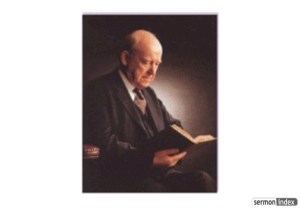
Dr. David Martyn Lloyd-Jones (1899-1981) [hereafter – DMLJ] was a British evangelical born and brought up within Welsh Calvinistic Methodism, he is most noted for his pastorate and expository preaching career at Westminster Chapel in London.

In addition to his work at Westminster Chapel, he published books and spoke at conferences and, at one point, presided over the Inter-Varsity Fellowship of Students (now known as UCCF). Lloyd-Jones was strongly opposed to the liberal theology that had become a part of many Christian denominations in Wales and England.

DMLJ’s most popular writings are collections of his sermons edited for publication, as typified by his multi-volume series’ on Acts, Romans, Ephesians, 1 John, and Philippians. My favorite writings are his expositions on the Sermon on the Mount; Revival; Joy Unspeakable; Spiritual Depression; and his recently revised 40th Anniversary edition of Preaching and Preachers.

Born in Wales, Lloyd-Jones was schooled in London. He then entered medical training at Saint Bartholomew’s Hospital, better known simply as Bart’s. Bart’s carried the same prestige in the medical community that Oxford did in the intellectual community. Martyn’s career was medicine. He succeeded in his exams so young that he had to wait to take his MD, by which time he was already chief clinical assistant to Sir Thomas Horder, one of the best and most famous doctors of the day. By the age of 26 he also had his MRCP (Member of the Royal College of Physicians).

Although he had considered himself a Christian, the young doctor was soundly converted in 1926. He gave up his medical career in 1927 and returned to Wales to preach and pastor his first church in Sandfields, Aberavon.

In 1935, Lloyd-Jones preached to an assembly at Albert Hall. One of the listeners was 72-year-old Dr. Campbell Morgan, pastor of Westminster Chapel in London. When he heard Martyn Lloyd-Jones, he wanted to have him as his colleague and successor in 1938. But it was not so easy, for there was also a proposal that he be appointed Principal of the Theological College at Bala; and the call of Wales and of training a new generation of ministers for Wales was strong. In the end, however, the call from Westminster Chapel prevailed and the Lloyd-Jones family finally committed to London in April 1939.

After the war, under Lloyd-Jones preaching, the congregation at Westminster Chapel grew quickly. In 1947 the balconies were opened and from 1948 until 1968 when he retired, the congregation averaged perhaps 1500 on Sunday mornings and 2000 on Sunday nights.

In his 68th year, he underwent a major medical operation. Although he fully recovered, he decided to retire from Westminster Chapel. Even in retirement, however, Lloyd-Jones worked as a pastor of pastors an itinerant speaker and evangelist. “The Doctor”, as he became known, was one of the major figureheads of British evangelicalism and his books and published sermons continue to be appreciated by many within the United Kingdom and beyond. DMLJ believed that the greatest need of the church was revival.

Zig Ziglar on Having a Mature Attitude Amidst Difficult Challenges

“The Best News”


There are many different attitudes. Roberto De Vincenzo, a golfer from Argentina, beautifully displayed one of the best ones many years ago when he won the Masters golf tournament but was denied the coveted green jacket.

I say he won it because he had the lowest score at the end of four days. But his playing partner who kept the score had inadvertently written that he had made a five in on one of the holes when in reality he had made a four.

De Vincenzo signed the card, and when an incorrect card is signed, the player is disqualified. He had not cheated, but the rules stood. What was his reaction when he learned he was disqualified? Did he blame his playing partner? No, he said he made a stupid mistake. He accepted full responsibility himself. Now what kind of man is he?

Some time later he won another tournament. After they gave him the check, he spent a great deal of time in the dressing room. He was in no particular hurry. When he got out to the parking lot, it was empty except for a young woman. She approached him saying she didn’t have a job, her sick baby was at the point of death, and she didn’t have the money to pay the hospital or the doctors. De Vincenzo signed his tournament winnings over to the young woman and went on his way.

The next week he was in a country club. One of the PGA officials told him he had been a victim of fraud—that the woman didn’t have a baby and was not even married. De Vincenzo said, “You mean there is not a sick baby at all?” The official said, “That’s right.” De Vincenzo said, “You have just given me the best news I’ve heard all year.”

Where’s your heart? What’s your attitude? How would you have felt under those circumstances? Who had the greater problem—the golfer or the young woman? I think it is obvious isn’t it? How many of you think De Vincenzo really brooded the rest of his life over that woman who had beaten him out of that check? I don’t think he gave it another thought. He was truly glad that there had not been an ill child. Now that takes compassion, it takes heart, but it also takes wisdom.

When is maturity in attitude reached? Is attitude a head thing, a heart thing, or both? Maturity in attitude is reached when you fully understand what you can change and what you can’t change, and you respond accordingly. De Vincenzo couldn’t change the figures on his score card retrieve the money he had signed over to the lying woman. Fussing and fuming would not change the reality of either mistake. He chose to accept what had happened and move forward. By doing so he saved his partner any further embarrassment and grief over the mistake. He showed everyone who witnessed the other incident his true character and was not made to look like a naïve fool by an official who was all too proud to have the scoop.

People with a good heart are exposed most readily in times of stress and ill fortune. De Vincenzo was more interested in the needs of his golfing partner and the wlfare of a baby than he was in claiming to have been wronged. A heart like his, one that is honest, expects the best and holds no malice. It is developed over a lifetime.

Roberto De Vincenzo at some point decided he was responsible for his circumstances in life, that he had control over how he responded to disappointment, and that a good attitude and a trusting heart offered many more rewards than their counterparts. Make the same decisions for yourself and relax into a more fulfilling life.

 Message! 

It’s not what happens to you; it’s how you handle it that will determine whether you are happy or miserable.

 About Zig Ziglar:

Zig Ziglar was born in Coffee County, Alabama on November 26, 1926 and was the tenth of 12 children. In 1931, when Ziglar was five years old, his father took a management position at a Mississippi farm, and family moved to Yazoo City, Mississippi, where he spent his early childhood. In 1932, his father died of a stroke, and his younger sister died two days later.

Zigler served in the Navy during World War II (circa 1943-1945). He was in the Navy V-12 College Training Program, attending the University of South Carolina. In 1944 he met his wife Jean, in Jackson, Mississippi; he was 17 and she was 16. They married in late 1946.

Ziglar later worked as a salesman in a succession of companies. In 1968 he became the vice president and training director for the Automotive Performance company, moving to Dallas, Texas.

In 1970, Ziglar went into the business of motivational speaking full-time, with an emphasis on Christian values. Until then, he called himself by his given name, Hilary, but now satarted using his nickname, Zig, instead.

Until 2010 (aged 86) Ziglar traveled around the world taking part in motivational seminars, but has been somewhat limited recently due to a fall down a flight of stairs in 2007 that has impaired his short-term memory and physical abilities.

Through the ups and downs of life Ziglar has maintained his optimism and encouraged thousands of people to be their best in the particular endeavors to which God has called them. Zig Ziglar is one of the most inspirational people on the planet today and is a terrific example of someone who has embraced the struggle of life giving God the glory each step of the way.

The article above was adapted from Chapter 5 in the very encouraging book by Zig Ziglar entitled Zig Ziglar’s Life Lifters: Moments of Inspiration for Living Life Better. Nashville, TN.: B&H, 2003.

 Zig Ziglar’s Books:

Ziglar, Zig; Ziglar, Tom. Born to Win: Find Your Success Code. Dallas: SUCCESS Media (2012).

Something Else To Smile About: More Encouragement and Inspiration for Life’s Ups and Downs. Nashville: Thomas Nelson (2010).

Ziglar, Zig; Norman, Julie Ziglar. Embrace the Struggle: Living Life on Life’s Terms. New York: Howard Books (2009).

The One-Year Daily Insights with Zig Ziglar. Tyndale House Publishers (2009)

Inspiration 365 Days a Year with Zig Ziglar. SIM (2008)

God’s Way is Still the Best Way. Nashville: Thomas Nelson  (2007).

Better Than Good: Creating a Life You Can’t Wait to Live. Nashville: Thomas Nelson Publishers (2006).

Conversations with My Dog. B&H Books (2005).

The Autobiography of Zig Ziglar. New York: Random House (2004).

Confessions of a Grieving Christian. Nashville: B&H Publishing Group 2004).

Courtship After Marriage: Romance Can Last a Lifetime. Nashville: Thomas Nelson  (2004).

Staying Up, Up, Up in a Down, Down World. Nashville: Thomas Nelson  (2004).

Zig Ziglar’s Life Lifters: Moments of Inspiration for Living Life Better. B&H (2003).

Selling 101: What Every Successful Sales Professional Needs to Know. Nashville: Thomas Nelson Publishers (2003).

Ziglar, Zig and Hayes, John P. Network Marketing For Dummies. Foster City, Calif: IDG Books (2001).

Success for Dummies. Foster City, Calif: IDG Books (1998).

Something to Smile About: Encouragement and Inspiration for Life’s UPS and DOWNS. Nashville: Thomas Nelson (1997).

Great Quotes from Zig Ziglar. Career Press (1997)

Over the Top. Nashville: Thomas Nelson Publishers (1994).

Five Steps to Successful Selling. Nigtingale-Conant Corp. (1987).

Top Performance: How to Develop Excellence in Yourself and Others. New York: Berkley Books (1986).

Raising Positive Kids in a Negative World. Nashville: Oliver Nelson (1985).

Zig Ziglar’s Secrets of Closing the Sale. New York: Berkley Books (1982).

See You at the Top. Gretna: Pelican (1975).

 About Golfer Roberto De Vincenzo

The world will always remember Roberto De Vicenzo for what he lost, not for what he won-for that careless mistake he made at the 1968 Masters, signing an incorrect scorecard that had him making a par and not a birdie on the 17th hole that Sunday afternoon-and, thus, his uttering of the immortal golf quote, “What a stupid I am.” Yet there is so much more to De Vicenzo’s career and the contributions he made to golf around the world than what occurred in the scorer’s tent at Augusta National that should not overshadow the man’s legacy. Roberto De Vicenzo won more than 230 golf tournaments, including the 1967 Open Championship at Hoylake, where he held off the Sunday charges of Jack Nicklaus and Gary Player to become, at 44, the oldest winner of the world’s oldest golf championship.

Facing success and catastrophe and treating those twin imposters the same inspired British golf writer Peter Dobereiner to use the Rudyard Kipling quote when giving De Vicenzo his due. In Dobereiner’s words, “By that standard, De Vicenzo is a giant of a man because he faced the greatest triumph and the most devastating disaster which the game of golf can provide.” The United States Golf Association and the Golf Writers Association of America agreed, presenting De Vicenzo with the Bob Jones and William Richardson Awards, respectively, in 1970.

All the trophies he captured didn’t mean as much to De Vicenzo as the friends he made traveling the globe. He won national opens in Belgium, Brazil, Chile, Colombia, Holland, France, Germany, Jamaica, Mexico, Panama, Peru, Spain, Uruguay, Venezuela and Argentina, a country he represented 17 times in the World Cup. Essayist Jack Whitaker once said that if golf were war, Roberto would have conquered more countries than Alexander the Great. But golf was not war to De Vicenzo. And that is what made him so loved.

Born in Buenos Aires April 14, 1923, De Vicenzo learned the game as a caddy’s assistant. He turned professional at age 15 and won his first of nine Argentine Open titles six years later. Three-time Open Championship winner Henry Cotton once said there were very few professionals in the business who would not take the play through the green of Argentine golfing master Roberto De Vicenzo, and his game never left him. At 51 he won the PGA Seniors’ Championship and in 1980, at age 57, the inaugural U.S. Senior Open.

He believed in hard practice, routinely hitting 400 balls a day and maintaining a slow pace. “If you hurry,” he would say, “then nothing seems to go right.” He’d visualize a shot, pick a club and hit. His method was simple to watch, and it held up under pressure.

It did that final round at the Masters in 1968. What’s lost behind that staggering mistake made by fellow competitor Tommy Aaron and signed for by De Vicenzo is that Roberto shot what has been called one of the greatest rounds in major championship history. He took only 65 strokes around Augusta National that day, including a bogey at the 18th, on his 45th birthday. His 31 on the front side started with an eagle 2 at the first and tied the course record. It should have been good enough to tie Bob Goalby and set up a playoff which, had he won, would have given Roberto De Vicenzo both the Open Championship and Masters titles at the same time.

Stephen W. Brown on Overcoming Discouragement

“The Demon of Discouragement”

Charles Spurgeon often dealt with the problem of discouragement. He told his students:

“One crushing stroke has sometimes laid the minister very low. The brother most relied upon becomes a traitor. Judas lifts up his heel against the man who trusted him, and the preacher’s heart for the moment fails him. . . . Strife, also, and division, and slander, and foolish censures, have often laid holy men prostrate, and made them go ‘as with a sword in their bones.’ Hard words wound some delicate minds very keenly…. By experience the soul is hardened to the rough blows which are inevitable in our warfare; but at first these things utterly stagger us, and send us to our homes wrapped in a horror of great darkness….

“When troubles multiply, and discouragements follow each other in long succession, like Job’s messengers, then, too, amid the perturbation of soul occasioned by evil tidings, despondency despoils the heart of all its peace. Constant dropping wears away stones, and the bravest minds feel the fret of repeated afflictions. If a scanty cupboard is rendered a severer trial by the sickness of a wife or the loss of a child, and if ungenerous remarks of hearers are followed by the opposition of deacons and the coolness of members, then, like Jacob, we are apt to cry, ‘All these things are against me’… Accumulated distresses increase each other’s weight; they play into each other’s hands, and like bands of robbers, ruthlessly destroy our comfort. Wave upon wave is severe work for the strongest swimmer. The place where two seas meet strains the most seaworthy keel. If there were regulated pause between the buffetings of adversity, the spirit would stand prepared; but when they come suddenly and heavily, like the battering of great hailstones, the pilgrim may well be amazed. The last ounce is laid upon us, what wonder if we for awhile are ready to give up the ghost!” (Charles H. Spurgeon. Lectures to My Students. London: Marshall, Morgan & Scott, 1969, 161-162).

Spurgeon, of course, was talking to ministers, but everyone can identify with his comments. One of the great problems with broken ropes is the inevitable discouragement which follows. How does one deal with the demon of discouragement? Let’s talk about it.

The Great Cloud of Witnesses

One of the keys to dealing with discouragement is found in Hebrews 12:1-3:

Therefore, since we are surrounded by so great a cloud of witnesses, let us also lay aside every weight, and sin which clings so closely, and let us run with endurance the race that is set before us, looking to Jesus, the founder and perfecter of our faith, who for the joy that was set before him endured the cross, despising the shame, and is seated at the right hand of the throne of God. Consider him who endured from sinners such hostility against himself, so that you may not grow weary or fainthearted.

The writer of Hebrews first suggests that we are surrounded by witnesses. The eleventh chapter of Hebrews lists a number of Old Testament characters who endured great suffering and who persevered through faith. Talk about broken ropes! The writer ends that chapter talking about people of God who were mocked and beaten, who were stoned, imprisoned, sawn in half, and who had no homes (see Heb. 11:36-39).

The twelfth chapter of Hebrews opens by saying that we are surrounded by a cloud of witnesses; that is, “You are not by yourself. If your rope has broken, look at the broken ropes of others who have gone on to successfully complete their race. Be encouraged by them.”

The apostle Paul wrote the Christians in Corinth about the trials he and his friends had experienced-trials so great that they “despaired even of life” (2 Cor. 1:8). I wouldn’t wish that kind of hurt on anyone, but I’m glad Paul went through it. It makes me feel better about my own discouragement.

Discouragement, you see, is almost always marked by a feeling of aloneness. You feel that no one could possibly understand, no one could possibly have had the kind of troubles you have, no one could possibly be as discouraged as you are at the moment. It helps sometimes to remember that others have indeed shared the occasion of suffering.

An old spiritual says, “When I’ve done the best I can and my friends misunderstand, / Thou Who know-est all about me, stand by me.” But, you see, all of your friends don’t misunderstand. You just think they do. Discouragement is a part of living.

In the early part of the sixteenth century a man by the name of Thomas Bilney became convinced of the need for the Bible in the lives of believers. Because he was vocal about those convictions, he was burned at the stake in Norwich, England, in 1531. His story is not uncommon. Many people have burned at the stake because of their convictions.

Standing in the crowd on the day Bilney was executed was a young man named Hugh Latimer. A graduate of Cambridge, Latimer was so influenced by the life and death of Bilney that he committed his life to the propagation of Bilney’s faith. Later, Latimer became a bishop of the church. When “Bloody” Mary came to the throne, Hugh Latimer was among those who were tortured and killed. While he was burning at the stake, he turned to a fellow bishop and friend being executed with him and said, “Be of good comfort, Master Ridley. We shall this day light such a candle by God’s grace in England as, I trust, shall never be put out.”

I think of Bilney and Latimer when I get discouraged. They are a few of the witnesses who minister to me when my rope has broken. I have also asked God to give me enough grace to “keep on trucking” so that I may be a witness to others whose rope has broken.

The Demon of Guilt

The passage quoted from Hebrews 12 not only suggests that we have company, but also reminds us that we have been forgiven. The writer says, “Let us lay aside every weight, and the sin which so easily ensnares us.” I don’t know about you, but when I’m discouraged, the first thing I do is evaluate my sin-and I find a whole lot. Guilt, you see, is part of the demonic element in discouragement. How do you lay aside the weight and sin? You do it with confession, resting in the promise that “if we confess our sins, He is faithful and just to forgive us our sins and to cleanse us from all unrighteousness” (1 John 1:9). Discouragement hardly ever grows in the soil of forgiveness.

When I was in high school, a group of my friends and I had an all-night party. About three in the morning someone suggested that we go swimming in the pool of an exclusive club and hotel in town. It was very dark when we climbed the fence and approached the pool. We were having a good time until one of my friends jumped off the high diving board, sitting on an inner tube. When he hit the water, it sounded like a shotgun blast. Before we knew what was happening the lights started going on in the hotel, and the night watchman came out of his office with his gun and a flashlight. We ran.

As I was climbing over the fence and running to the car, I looked back over my shoulder to see my friend-the one who had jumped off the high diving board-trying to climb the fence holding on to the inner tube. “Bill,” I yelled back, “drop the inner tube or the sucker’s going to get you!”

Guilt is like that inner tube. If your rope has broken, you already have enough trouble without adding guilt to the pile. You’ve already seen that there is no absolute correlation between your sin and your broken ropes. So, don’t forget to throw away the inner tube. Examine your life, accept your forgiveness, and don’t keep carrying around the inner tube of guilt.

Power to Endure

The author of Hebrews says that we are empowered to endure our broken ropes by “looking unto Jesus, the author and finisher of our faith, who for the joy that was set before Him endured the cross, despising the shame, and has sat down at the right hand of the throne of God” (Heb.12:2). Hopelessness is the twin sister of discouragement. No Christian need ever feel hopeless, because we have the choice of looking to

Jesus rather than at our circumstances. Do you remember when Jesus told Peter to walk on the waves? At first the disciples thought Jesus was a ghost, but Jesus quickly told them who He was and settled their fears. Peter, evidently, still had some doubt that Jesus was who He said He was, so he made a simple request:

“Lord, if it is You, command me to come to You on the water.” So He said, “Come.” And when Peter had come down out of the boat, he walked on the water to go to Jesus. But when he saw that the wind was boisterous, he was afraid; and beginning to sink he cried out, saying, “Lord, save me!” And immediately Jesus stretched out His hand and caught him, and said to him, “O you of little faith, why did you doubt?” And when they got into the boat, the wind ceased. – Matthew 14:28-32

Peter’s problem was that he began to look at the waves instead of at Jesus. I don’t know about you, but if the waves had been big, I would have looked at them too. When waves are big, the danger is real, and we think about them to the exclusion of anything else. Some broken ropes are so devastating, it’s hard to look at anything except the broken rope. When you’re going through a divorce, when you have cancer, when you’re losing your children, others may easily say look at Jesus, but it’s very hard to do.

All of that granted, there is still a difference when Jesus is with us. Looking to Jesus may not be easy, and we can’t ignore the waves altogether. However, the point of Peter’s experience was not to show that waves exist or how big they get but to show that Jesus was there. He was there for Peter, and He is there for us.

One of the many nice things about my wife, Anna, is that she always puts little notes in and around the clothes I pack when I leave home for a speaking engagement. Anna knows that I get nervous in academic settings (I ran away from kindergarten, and I struggled through the next twenty years of education) and that I have a great desire to do well and to have people like me and a great fear of failure. As I was dressing before a lecture I was to give at Denver Seminary, I found a note in my shoe: “Just remember that nothing is going to happen today that Jesus can’t handle. ” That note reminded me about the One who owns me and for whom I speak. Because Anna helped me to focus on Jesus instead of myself and the situation, I felt a lot better.

“But  you don’t understand,” you are saying. “My broken rope is a lot more than a little fear about speaking in a seminary. I am really going through a very difficult time. I’m so discouraged that I don’t think I can go on.”

Let me tell you something: The principle is the same
no matter what the circumstances. Either Jesus is there or He isn’t. Either Jesus does have something to do with your situation or He doesn’t. If He doesn’t, you have a whole lot bigger problem than discouragement. But the Scripture is clear about His involvement: “And we know that all things work together for good to those who love God, to those who are called according to His purpose” (Romans 8:28). Focus on Him. It can make a big difference.

I want to remind you of four important items we often forget when we’re discouraged.

(1) Remember the Past

First, don’t forget the past. The past is the informer of the present. Not everything said by Job’s friends was wrong. A case in point is Bildad’s first speech to job:

“For inquire, please, of the former age, And consider the things discovered by their fathers; For we are but of yesterday, and know nothing, Because our days on earth are a shadow. Will they not teach you and tell you, And utter words from their heart?” (Job 8:8-10)

When you look at the history of God’s people, you see God’s faithfulness and love. When you look to your own past, you can also see God’s faithfulness and love.

God has been building memorials in your life from the time you were born. What’s a memorial? It’s a memory of times when God has been faithful. If He was faithful in the past, He won’t stop being faithful now or in the future.

If I had been standing on the side of the boat, watching Peter go under the waves, I would have shouted to him, “Hey Peter! You were walking. You were really walking on the water before you got so overwhelmed by the waves. You aren’t going to drown. Jesus won’t let you.” If I could have gotten Peter’s attention, maybe he would have climbed back up on the wave and ridden it to Jesus. Of course, he didn’t. That’s why Jesus reached down and pulled him out.

I’ll bet Peter recorded in his memory those waves and Jesus’ faithfulness on that day. I’ll bet Peter thought about it the rest of his life.

I keep a diary. I must admit that I don’t write in it very often. In fact, I don’t write in it unless one of my ropes has broken. The diary records not my life but those places in my life when I was hurt and discouraged. When I think I’ve finally gotten into a hole from which I will never escape, I get out the diary and read about the other times when I thought I was in the same place. Then, I remember that I got out of the hole. It may have hurt, but by God’s grace I got out of the hole. God always says to me on those occasions of diary reading, “Child, if I was faithful then, I will be faithful now.”

(2) Remember the Facts

Second, when you are discouraged, don’t forget the facts. Paul instructed the people at Ephesus how to stand in the midst of a

spiritual battle: “Therefore take up the whole armor of God, that you may be able to withstand in the evil day, and having done all, to stand. Stand therefore, having girded your waist with truth” (Eph. 6:13-14). Please note that Paul said we need to depend on truth for support; facts are the reality, not our feelings about the facts. One of the marks of discouragement is the “feeling” that God has gone away-that you aren’t important and that you’ve been kidding yourself about your relationship with Him. I heard the story of a man whose wife left him, children disowned him, and business failed. As he was walking down the street, he was hit by an automobile and left bruised and battered, a number of bones broken. In his agony he called out to God, “Why me? What have I done to deserve all of this?” He thought he heard a voice from heaven saying, “Sam, you haven’t done anything wrong. There is just something about you that ticks me off.” Discouragement can make you believe that you’ve offended God. Is that true? Of course not. God doesn’t act in that kind of capricious manner. How do I know that? Because the Bible is clear on the subject. When you were a teenager did you go to one of those Christian camps where there was a closing campfire? If you did, you’ll remember how you took a pine cone or a stick, which represented your sin, and you threw it in the fire. If you were like me, you then told God that from that point on you were going to be obedient and different. You were going to be God’s person. Those are good experiences, and I don’t want to say anything against them. But you can easily make promises of obedience sitting by a campfire in the mountains, with all your friends singing hymns about Jesus. When you come back home and your mother wants you to carry out the garbage, though, the promises aren’t so easy to keep. It took me a long time to recognize that feelings are changeable and a decision made on the basis of feelings, even a good one, probably would change. There is, of course, nothing wrong with decisions based on feelings except that those kinds of decisions hardly ever last unless they are reinforced with facts. If you are encouraged by certain feelings, you will be discouraged by others. If you are encouraged by facts, no matter how discouraged you become, the facts won’t change.

Someone has said, “Never doubt in the dark what God has taught you in the light.” That’s good advice. Some of my friends find great comfort in prayer and studying the Scriptures when they are going through a difficult time, but that isn’t the way it works for me. When my rope breaks, the Scriptures seem as dry as dust and my prayers never seem to get any further than my front teeth. I study the Scriptures and pray when
things are going reasonably well. Then, when the darkness comes, I remember the truth I discovered in the light, and I hang on to that with everything I’ve got.

In your dealing with discouragement, knowing Bible doctrine is essential because it gives you eternal truths, facts that are constant in spite of what your feelings are at any particular moment. Sometimes I don’t feel like a Christian; sometimes I feel that God could not possibly be a God of love; sometimes I feel that there could not possibly be any meaning in my broken rope; sometimes I feel that God has cast me aside and that my life has been wasted. But, you see, feelings are just that—feelings. They have no reality of their own. That is why I remember in the dark the truth that I learned in the light.

(3) Remember the Process

Third, when your rope is broken and you are discouraged, don’t forget that God works out His purpose in the process. The psalmist wrote: The steps of a good man are ordered by the LORD, And He delights in his way. Though he fall, he shall not be utterly cast down; For the LORD upholds him with His hand” (Psalm 37:23-24).

Let me tell you a secret. When you’re up, you think you’ll never be down, and when you’re down, you think you’ll never be up. But in the process of living you will go through times of success and joy and times of failure and discouragement.

In New England folks have a saying about the weather: If you don’t like it, just wait a couple of minutes and it will change. Discouragement is like that. It comes and it goes, so you need not assume that a state of discouragement, or encouragement for that matter, is permanent. When God decides that your broken rope has accomplished its purpose, He will fix the rope, and the discouragement will be fixed too.

My brother, Ron, spent a summer with us on Cape Cod to make some money to pay for his college education. He started out as a waiter because someone had told him that, with the big tips, he would make as much as two or three thousand dollars. That job lasted about two days. After numerous botched orders, broken plates, and angry customers, both Ron and his employer decided that Ron was not cut out to be a waiter. He then got a construction job. The construction contract ran out and he was laid off.

He came into my study one day and said, “Brother, this whole summer was a mistake. I should have stayed at home” I tried to encourage him, but in fact, I agreed with him. The summer hadn’t turned out the way either one of us had expected. But when I got home for dinner that evening, Ron was in a much better mood. I figured that he had found another job, but that wasn’t the case.

“Steve,” he told me, “I got to thinking this afternoon and decided that my life could change in the next five minutes. Why get discouraged?” He was right. The next day he got a job as a ranger on a golf course, and it was one of the best summer jobs he ever had.

Ron understood something we all ought to remember: the only thing that doesn’t change is the fact that change happens. Remember, every day the world rolls over on top of someone who was just sitting on top of it.

Let me repeat one of my favorite axioms: You can stand almost anything if you know it isn’t permanent. As a pastor, I am constantly amazed at the resilience of God’s people. The worst tragedy bringing the most terrible depression eventually dissipates
through the power of God’s grace. It doesn’t always fade quickly or easily, but it does fade away. Just accept your discouragement now as a part of God’s purpose, and be still until the light of understanding and grace shines.

(4) Look to the Future

Finally, when your rope has broken and you are discouraged, don’t forget the future. Paul wrote about what we can look forward to as believers:

Behold, I tell you a mystery: We shall not all sleep, but we shall all be changed-in a moment, in the twinkling of an eye, at the last trumpet. For the trumpet will sound, and the dead will be raised incorruptible, and we shall be changed. For this corruptible must put on incorruption, and this mortal must put on immortality …. then shall be brought to pass the saying that is written: “Death is swallowed up in victory” (I Corinthians 15:51-54).

Richard Wurmbrand, who has dealt often with broken ropes, is a voice of hope in the midst of discouragement. He spent some fourteen years in communist prisons and is an example of a follower of Christ who, with hope and love, survived the worst that one man could do to another.

Wurmbrand, discussing the atheism of communism, spoke of the hope we have for the future. He suggested that if someone were to speak to an embryo, he or she might say that there was a wonderful life beyond the womb. If the embryo should answer the way an atheist would, it would say, “Don’t bother me with this kind of religious superstition. This is my world, and it’s the only one I know. I cannot see beyond it, and it is pure opiate to suggest that there is anything beyond.”

“But suppose,” Wurmbrand wrote,

this embryo could think with greater discernment than our academicians. It would say to itself: “Eyes develop in my head. To what purpose? There is nothing to see. Legs grow. I do not even have room to stretch them. Why should they grow? And why do arms and hands grow? I have to keep them folded over my breast. They embarrass me and my mother. My whole development in the womb is senseless unless there follows a life with light and color and many objects for my eyes to see. The place in which I’ll spend this other life must be large and varied. I will have to run in it. Therefore my legs grow. It will be a life of work and struggle. Therefore I grow arms and fists, which are of no use here”  (Richard Wurmbrand. My Answer to Moscow Atheists. New Rochelle: Arlington House, 1975, 156-157).

Broken ropes and the accompanying discouragement remind us that this life isn’t the way it ought to be. Thirst may not prove there is water, and hunger may not prove there is food. But thirst and hunger are very good indicators that there is something somewhere to fulfill those needs, something for resolution and completion, pointing to the future and to a promise.

“Let not your heart be troubled; you believe in God, believe also in Me. In My Father’s house are many mansions; if it were not so, I would have told you. I go to prepare a place for you” (John 14:1-2). When your rope is broken and you are discouraged, remember the memorials God has given you in the past and look to the future with the confidence that He has prepared a place for you.

About the Author:

Dr. Steve Brown is one of the most sought after preachers and conference speakers in the country. Having had extensive radio experience before entering the ministry, he is now heard weekdays on the national radio program, Key Life, and one minute feature, “Think Spots”. Steve also hosts a weekly radio talk show, “Steve Brown, Etc.”. He served as the senior pastor of Key Biscayne Presbyterian Church for 17 years before joining the Reformed Theological Seminary (RTS) faculty as Professor of Preaching. After teaching full time for almost two decades at RTS, Dr. Brown retired and is Emeritus Professor of Preaching but remains an Adjunct Professor of Preaching teaching occasional classes each year.

Dr. Brown is the author of many (16 and counting) books and also serves on the Board of the National Religious Broadcasters and Harvest USA (He earned his B.A. from High Point College; an S.T.B. from Boston University School of Theology; and an Litt.D. from King College). Steve is one of my favorite writers and speakers because he is authentic, a great story-teller, is a theologian in disguise, and really knows how to address the realities of how sinful humans can experience the amazing grace of God. The article above was adapted from Chapter 8 in his excellent book on surviving and thriving in a tough world: When Your Rope Breaks: Christ-centered advice on how to go on living—when making it through another day is the hardest thing in the world. Nashville: Thomas Nelson, 1988.

He Has Authored These Outstanding Books:

Three Free Sins: God’s Not Mad at You. New York: Simon and Schuster/ Howard Books, 2012.

A Scandalous Freedom. New York: Simon and Schuster/ Howard Books, 2009.

What Was I Thinking? Things I’ve learned Since I Knew It All. New York: Simon and Schuster/ Howard Books, 2006.

Follow the Wind: Our Lord, the Holy Spirit. Grand Rapids: Baker, 1999.

Approaching God: How to Pray. New York: Howard, 1996.

Living Free: How to Live a Life of Radical Freedom and Infectious Joy. Grand Rapids: Baker, 1994.

Born Free: How to Find Radical Freedom and Infectious Joy in an Authentic Faith. Grand Rapids: Baker, 1993.

How To Talk So People Will Listen. Grand Rapids: Baker, 1993.

If Jesus Has Come: Thoughts on the Incarnation for Skeptics, Christians and Skeptical Christians by a Former Skeptic. Grand Rapids: Baker, 1992.

Jumping Hurdles, Hitting Glitches, Overcoming Setbacks. Colorado Springs: NavPress, 1992.

No More Mr. Nice Guy! Saying Goodbye to “Doormat” Christianity. Nashville: Thomas Nelson, 1991.

When Being Good Isn’t Good Enough. Nashville: Thomas Nelson, 1990.

Welcome to the Family: A Handbook for Living the Christian Life. Old Tappan, New Jersey: Fleming H. Revell, 1990.

When Your Rope Breaks: Christ-centered advice on how to go on living—when making it through another day is the hardest thing in the world. Nashville: Thomas Nelson, 1988.

Heirs with the Prince. Nashville: Thomas Nelson, 1985.

If God is in Charge: Thoughts On The Nature of God For Skeptics, Christians, and Skeptical Christians. Grand Rapids: Baker 1983.

Dr. John Piper on Why Christians are Called to Suffer

“Called to Suffer and Rejoice: That We Might Gain Christ” 

A Sermon Delivered by Dr. John Piper on August 23, 1992

“Finally, my brethren, rejoice in the Lord. To write the same things again is no trouble to me, and it is a safeguard for you. Beware of the dogs, beware of the evil workers, beware of the false circumcision; for we are the true circumcision, who worship in the Spirit of God and glory in Christ Jesus and put no confidence in the flesh, although I myself might have confidence even in the flesh. If anyone else has a mind to put confidence in the flesh, I far more: circumcised the eighth day, of the nation of Israel, of the tribe of Benjamin, a Hebrew of Hebrews; as to the law, a Pharisee; as to zeal, a persecutor of the church; as to the righteousness which is in the law, found blameless. But whatever things were gain to me, those things I have counted as loss for the sake of Christ. More than that, I count all things to be loss in view of the surpassing value of knowing Christ Jesus my Lord, for whom I have suffered the loss of all things, and count them but rubbish in order that I may gain Christ, and may be found in him, not having a righteousness of my own derived from the Law, but that which is through faith in Christ, the righteousness which comes from God on the basis of faith, that I may know him, and the power of his resurrection and the fellowship of his sufferings, being conformed to his death; in order that I may attain to the resurrection from the dead. Not that I have already obtained it, or have already become perfect, but I press on in order that I may lay hold of that for which also I was laid hold of by Christ Jesus. Brethren, I do not regard myself as having laid hold of it yet; but one thing I do: forgetting what lies behind and reaching forward to what lies ahead, I press on toward the goal for the prize of the upward call of God in Christ Jesus.” – Philippians 3:1-14

 The Bible Promises Suffering for God’s People

We are focusing in these weeks on the need to prepare for suffering. The reason for this is not just my sense that the days are evil and the path of righteousness costly, but the promise of the Bible that God’s people will suffer.

For example,

Acts 14:22 says that Paul told all his young churches, “Through many tribulations we must enter the kingdom.”

And Jesus said, “If they persecuted me, they will persecute you” (John 15:20).

And Peter said, “Do not be surprised at the fiery ordeal among you, which comes upon you for your testing, as though some strange thing were happening to you” (1 Peter 4:12). In other words it is not strange; it is to be expected.

And Paul said (in 2 Timothy 3:12), “Indeed, all who desire to live godly in Christ Jesus will be persecuted.”

So I take it to be a biblical truth that the more earnest we become about being the salt of the earth and the light of the world, and reaching the unreached peoples of the world, and exposing the works of darkness, and loosing the bonds of sin and Satan, the more we will suffer. That’s why we should prepare. And that’s why I am preaching in these weeks from texts that will help us prepare.

The messages deal with four purposes that God has in our suffering in his service. One is the moral or spiritual purpose: in suffering we come to hope more fully in God and put less confidence in the things of the world. Second, there is the intimacy purpose: we come to know Christ better when we share his sufferings. That is our focus today.

The Purpose of Greater Intimacy with Christ

God helps us prepare for suffering by teaching us and showing us that through suffering we are meant to go deeper in our relationship with Christ. You get to know him better when you share his pain. The people who write most deeply and sweetly about the preciousness of Christ are people who have suffered with him deeply.

Suffering in the Life of Jerry Bridges

For example, Jerry Bridges’ book, Trusting God, Even When Life Hurts, is a deep and helpful book about suffering and going deep with God through affliction. And so it’s not surprising to learn that when he was 14 years old, he heard his mother call out in the next room, totally unexpectedly, and arrived to see her take her last breath. He also has physical conditions that keep him from normal sports. And just a few years ago his wife died of cancer. Serving God with the Navigators has not spared him pain. He writes with depth about suffering because he has gone deep with Christ in suffering.

Suffering in the Life of Horatius Bonar

Over a hundred years ago Horatius Bonar, the Scottish pastor and hymn-writer, wrote a little book called Night of Weeping, or, “When God’s Children Suffer.” In it he said his goal was, “to minister to the saints . . . to seek to bear their burdens, to bind up their wounds, and to dry up at least some of their many tears.” It is a tender and deep and wise book. So it’s not surprising to hear him say,

It is written by one who is seeking himself to profit by trial, and trembles lest it should pass by as the wind over the rock, leaving it as hard as ever; by one who would in every sorrow draw near to God that he may know Him more, and who is not unwilling to confess that as yet he knows but little.

Bridges and Bonar show us that suffering is a path deep into the heart of God. God has special revelations of his glory for his suffering children.

The Words of Job, Stephen, and Peter

After months of suffering, Job finally says to God, “I had heard of Thee by the hearing of the ear, but now my eye sees Thee” (Job 42:5). Job had been a godly and upright man, pleasing to God, but the difference between what he knew of God in prosperity and what he knew of him through adversity was the difference between hearing about and seeing.

When Stephen was arrested and put on trial for his faith and given a chance to preach, the upshot was that the religious leaders were enraged and ground their teeth at him. They were just about to drag him out of the city and kill him. At just that moment, Luke tells us, “Stephen was full of the Holy Spirit and gazed into heaven and saw the glory of God and Jesus standing at the right hand of God” (Acts 7:55). There is a special revelation, a special intimacy, prepared for those who suffer with Christ.

Peter put it this way, “If you are reproached for the name of Christ, you are blessed, because the Spirit of glory and of God rests upon you” (1 Peter 4:14). In other words God reserves a special coming and resting of his Spirit and his glory on his children who suffer for his name.

Three Observations from the Text (Philippians 3:5-11)

So the focus of today’s message is on this intimacy factor in suffering. One of the purposes of the suffering of the saints is that their relationship with God might become less formal and less artificial and less distant, and become more personal and more real and more intimate and close and deep.

In our text (Philippians 3:5–11) I want us to see at least three things:

  1. First, Paul’s preparation to suffer by reversing his values;
  2. Second, Paul’s experience of suffering and loss as the cost of his obedience to Christ;
  3. Third, Paul’s aim in all of this, namely, to gain Christ: to know him and be in him and fellowship with more intimacy and reality than he knew with his best friends Barnabas and Silas.

Paul’s Preparation to Suffer

In verses 5 and 6 Paul lists the distinctives he enjoyed before he became a Christian. He gives his ethnic pedigree as a thoroughbred child of Abraham, a Hebrew of Hebrews. This brought him great gain, a great sense of significance and assurance. He was an Israelite. Then he mentions three things that go right to the heart of Paul’s life before he was a Christian (at the end of verse 5): “as to the law, a Pharisee; as to zeal, a persecutor of the church; as to the righteousness which is in the law, found blameless.”

Paul’s Values Before He Met Christ

This was Paul’s life. This was what gave him meaning and significance. This was his gain, his fortune, his joy. Different strokes for different folks—and Paul’s was that he belonged to the upper-echelon of law-keepers, the Pharisees, and that among them he was so zealous that he led the way in persecuting the enemies of God, the church of Jesus, and that he kept the law meticulously. He got strokes from belonging, he got strokes from excelling, he got strokes from God—or so he thought—for his blameless law-keeping.

And then he met Christ, the Son of the living God, on the Damascus road. Christ told him how much he would have to suffer (Acts 9:16). And Paul prepared himself.

Paul Counted His Prior Values as Loss

The way he prepared himself is described in verse 7. “But whatever things were gain to me, those things I have counted as loss for the sake of Christ.” Paul looks at his standing in the upper-echelons of religious society, the Pharisees; he looks at the glory of being at the very top of that group with all its strokes and applause; he looks at the rigor of his law-keeping and the sense of moral pride he enjoyed; and he prepares to suffer by taking his whole world and turning it upside down, by reversing his values: “Whatever things were gain to me [that’s verses 5–6], those things I have counted as loss.”

Before he was a Christian he had a ledger with two columns: one that said, gains, and another that said, losses. On the gain side was the human glory of verses 5–6. On the loss side was the terrible prospect that this Jesus movement might get out of hand and Jesus prove real and win the day. When he met the living Christ on the Damascus road, Paul took a big red pencil and wrote “LOSS” in big red letters across his gains column. And he wrote “GAIN” in big letters over the loss column that only had one name in it: Christ.

And not only that, the more Paul thought about the relative values of life in the world and the greatness of Christ, he moved beyond the few things mentioned in verses 5–6 and put everything but Christ in that first column: Verse 8: “More than that, I count all things to be loss in view of the surpassing value of knowing Christ Jesus my Lord.” He started by counting his most precious accomplishments as loss, and he ended by counting everything as loss, except Christ.

Normal Christianity

That’s what it meant for Paul to become a Christian. And lest anyone of us think he was unique or peculiar, notice that in verse 17 he says with his full apostolic authority, “Brethren, join in following my example.” This is normal Christianity.

What Paul is doing here is showing how the teaching of Jesus is to be lived out. For example, Jesus said, “The kingdom of heaven is like a treasure hidden in a field, which a man found and hid; and from joy over it he goes and sells all that he has, and buys that field” (Matthew 13:44). Becoming a Christian means discovering that Christ (the King) is a Treasure Chest of holy joy and writing “LOSS” over everything else in the world in order to gain him. “He sold all that he had to buy that field.”

Or again in Luke 14:33 Jesus said, “No one of you can be my disciple who does not take leave of all his own possessions.” In other words, becoming a disciple of Jesus means writing “LOSS” in big red letters over all your possessions—and everything else this world offers.

What This Means Practically

Now what does that mean practically? I think it means four things

  1. It means that whenever I am called upon to choose between anything in this world and Christ, I choose Christ.
  2. It means that I will deal with the things of this world in ways that draw me nearer to Christ so that I gain more of Christ and enjoy more of him by the way I use the world.
  3. It means that I will always deal with the things of this world in ways that show that they are not my treasure, but rather show that Christ is my treasure.
  4. It means that if I lose any or all the things this world can offer, I will not lose my joy or my treasure or my life, because Christ is all.

Now that was the reckoning that Paul reckoned in his soul (v. 8): “I count all things to be loss in view of the surpassing value of knowing Christ Jesus my Lord.” Christ is all and all else is loss.

Why Is This a Way of Preparing to Suffer?

Now let’s stand back a minute and get our bearings. I am still dealing with the first point: namely, that this is Paul’s way of preparing to suffer. Why do I say that? Why is becoming a Christian, and writing “LOSS” across everything in your life but Christ a way of preparing to suffer?

The answer is that suffering is nothing more than the taking away of bad things or good things that the world offers for our enjoyment—reputation, esteem among peers, job, money, spouse, sexual life, children, friends, health, strength, sight, hearing, success, etc. When these things are taken away (by force or by circumstance or by choice), we suffer. But if we have followed Paul and the teaching of Jesus and have already counted them as loss for the surpassing value of gaining Christ, then we are prepared to suffer.

If when you become a Christian you write a big red “LOSS” across all the things in the world except Christ, then when Christ calls you to forfeit some of those things, it is not strange or unexpected. The pain and the sorrow may be great. The tears may be many, as they were for Jesus in Gethsemane. But we will be prepared. We will know that the value of Christ surpasses all the things the world can offer and that in losing them we gain more of Christ.

Paul’s Experience of Suffering

So in the second half of verse 8 Paul moves from preparing for suffering to actual suffering. He moves from counting all things as loss in the first half of verse 8 to actually suffering the loss of all things in the second half of the verse. “…for whom [that is, Christ] I have suffered the loss of all things, and count them as rubbish in order that I might gain Christ.” We are going to see this next week: Paul had experienced so much actual loss of the normal benefits and comforts of the world that he could say that he was not merely counting things loss; he was suffering loss. He had prepared by turning his values upside down, and now he was being tested. Did he value Christ above all?

Paul’s Goal (and God’s Purpose) in Suffering

So let me close by riveting our attention on Paul’s goal and God’s purpose in this suffering. Why did God ordain and Paul accept the losses that it meant for him to be a Christian?

Paul gives the answer again and again in these verses so that we cannot miss the point. He is not passive in this suffering loss. He is purposive. And his purpose is to gain Christ.

Verse 7: “I counted them loss for the sake of Christ.”

Verse 8a: “I count all things to be loss for the surpassing value of knowing Christ Jesus my Lord.”

Verse 8b: “For him I have suffered the loss of all things.”

Verse 8c: “And I count them but rubbish in order that I may gain Christ…”

Verse 9: “…and that I may be found in him [so as to have God’s righteousness, not my own]…”

Verse 10a: (still giving his aim in accepting the loss of all things) “…that I may know him”

Verses 10b–11: (followed by four specifics of what it means to know Christ)

  1. ” . . . [to know] the power of his resurrection”; and
  2. “the fellowship of his sufferings”;
  3. “being conformed to his death”;
  4. “in order that I may attain to the resurrection from the dead.”

In other words, what sustains Paul in suffering the loss of all things is the confidence that in his losing precious things in the world he is gaining something more precious—Christ.

And two times that gaining is called a knowing—verse 8a: “…in view of the surpassing value of knowing Christ Jesus my Lord.” Verse 10: “That I might know him.” This is the intimacy factor in suffering. Do we want to know him? Do we want to be more personal with him and deep with him and real with him and intimate with him—so much so that we count everything as loss to gain this greatest of all treasures?

If we do, we will be ready to suffer. If we don’t, it will take us by surprise and we will rebel. May the Lord open our eyes to the surpassing worth of knowing Christ!

Sermon/ Article Above Used by Permission. By Dr. John Piper. © 2012 Desiring God Foundation. Website: desiringGod.org


Are You a Worrier? Zig Ziglar on The Problem of Worrying

Therefore do not be anxious, saying, ‘What shall we eat?’ or ‘What shall we drink?’ or ‘What shall we wear?’ For the Gentiles seek after all these things, and your heavenly Father knows that you need them all. But seek first the kingdom of God and his righteousness, and all these things will be added to you.“Therefore do not be anxious about tomorrow, for tomorrow will be anxious for itself. Sufficient for the day is its own trouble” (Matthew 6:31-34, ESV). 

 Why Worry?

 Worry has been described as “interest paid on trouble before it comes due.”

One of America’s worst enemies is worry. Worry is like a rocking chair; it requires a lot of energy, and it gets you nowhere. Leo Buscaglia said, “Worry never robs tomorrow of its sorrow, it only saps today of its joy.”

 Question: Are you a Worrier?

Americans take more pills to forget more worries about more things than ever before and more than people in any other nation in history. That’s bad. According to Dr. Charles Mayo, “Worry affects the circulation and the whole nervous system. I’ve never know a man who died from overwork, but I’ve known many who have died from doubt.”

Mathematically speaking, it really doesn’t make sense to worry. Psychologists and other researchers tell us that roughly 40 percent of what we worry about will never happen and 30 percent has already happened. Additionally, 12 percent of our worries are over unfounded health concerns. Another 10 percent of our worries involve the daily miscellaneous fretting that accomplishes nothing. That leaves only 8 percent. Plainly speaking. Americans are worrying 92 percent of the time for no good reason, and if Dr. Mayo is right, it’s killing us.

One solution that will reduce your worry is this: Don’t worry about what you can’t change. Example: For a number of years I’ve flown in excess of two hundred thousand miles a year. On occasion, flights are canceled or delayed. As I write this, I’m sitting on the runway waiting for my gate to clear. If I worry or get angry, nothing will change. If I take constructive action and finish this chapter, I’m ahead of the game. That’s a positive way to use energy that I would have wasted on anger, frustration, or worrying.

The message is clear: If you don’t like your situation in life, don’t fret or worry—do something about it. Worry less, and act more.

 About Zig Ziglar:

Zig Ziglar was born in Coffee County, Alabama on November 26, 1926 and was the tenth of 12 children. In 1931, when Ziglar was five years old, his father took a management position at a Mississippi farm, and family moved to Yazoo City, Mississippi, where he spent his early childhood. In 1932, his father died of a stroke, and his younger sister died two days later.

Zigler served in the Navy during World War II (circa 1943-1945). He was in the Navy V-12 College Training Program, attending the University of South Carolina. In 1944 he met his wife Jean, in Jackson, Mississippi; he was 17 and she was 16. They married in late 1946.

Ziglar later worked as a salesman in a succession of companies. In 1968 he became the vice president and training director for the Automotive Performance company, moving to Dallas, Texas.

In 1970, Ziglar went into the business of motivational speaking full-time, with an emphasis on Christian values. Until then, he called himself by his given name, Hilary, but now satarted using his nickname, Zig, instead.

Until 2010 (aged 86) Ziglar traveled around the world taking part in motivational seminars, but has been somewhat limited recently due to a fall down a flight of stairs in 2007 that has impaired his short-term memory and physical abilities.

Through the ups and downs of life Ziglar has maintained his optimism and encouraged thousands of people to be their best in the particular endeavors to which God has called them. Zig Ziglar is one of the most inspirational people on the planet today and is a terrific example of someone who has embraced the struggle of life giving God the glory each step of the way.

The article above was adapted from one of Zig’s many encouraging books: Something to Smile About: Encouragement and Inspiration for Life’s UPS and DOWNS. Nashville: Thomas Nelson, 1997.

 Zig Ziglar’s Books:

  • Ziglar, Zig; Ziglar, Tom. Born to Win: Find Your Success Code. Dallas: SUCCESS Media (2012).
  • Something Else To Smile About: More Encouragement and Inspiration for Life’s Ups and Downs. Nashville: Thomas Nelson (2010).
  • Ziglar, Zig; Norman, Julie Ziglar. Embrace the Struggle: Living Life on Life’s Terms. New York: Howard Books (2009).
  • The One-Year Daily Insights with Zig Ziglar. Tyndale House Publishers (2009)
  • Inspiration 365 Days a Year with Zig Ziglar. SIM (2008)
  • God’s Way is Still the Best Way. Nashville: Thomas Nelson  (2007).
  • Better Than Good: Creating a Life You Can’t Wait to Live. Nashville: Thomas Nelson Publishers (2006).
  • Conversations with My Dog. B&H Books (2005).
  • The Autobiography of Zig Ziglar. New York: Random House (2004).
  • Confessions of a Grieving Christian. Nashville: B&H Publishing Group 2004).
  • Courtship After Marriage: Romance Can Last a Lifetime. Nashville: Thomas Nelson  (2004).
  • Staying Up, Up, Up in a Down, Down World. Nashville: Thomas Nelson  (2004).
  • Zig Ziglar’s Life Lifters: Moments of Inspiration for Living Life Better. B&H (2003).
  • Selling 101: What Every Successful Sales Professional Needs to Know. Nashville: Thomas Nelson Publishers (2003).
  • Ziglar, Zig and Hayes, John P. Network Marketing For Dummies. Foster City, Calif: IDG Books (2001).
  • Success for Dummies. Foster City, Calif: IDG Books (1998).
  • Something to Smile About: Encouragement and Inspiration for Life’s UPS and DOWNS. Nashville: Thomas Nelson (1997).
  • Great Quotes from Zig Ziglar. Career Press (1997)
  • Over the Top. Nashville: Thomas Nelson Publishers (1994).
  • Five Steps to Successful Selling. Nigtingale-Conant Corp. (1987).
  • Top Performance: How to Develop Excellence in Yourself and Others. New York: Berkley Books (1986).
  • Raising Positive Kids in a Negative World. Nashville: Oliver Nelson (1985).
  • Zig Ziglar’s Secrets of Closing the Sale. New York: Berkley Books (1982).
  • See You at the Top. Gretna: Pelican (1975).

Dr. Charles R. Swindoll on The Messiah Who Understands Your Pain

“Getting Through The Tough Stuff of Pain” By Chuck Swindoll

HAVE YOU SEEN Mel Gibson’s movie The Passion of the Christ? It’s like none other I’ve seen. It details the horrifying pain and anguish Jesus suffered in the final hours of His earthly life. By now, millions of viewers around the world have been moved beyond words by the graphic depiction of that violent and shockingly torturous ordeal. People of all ages, cultures, and races have looked on in alarm and disbelief as vivid scenes from the sacred story relentlessly rolled on, growing increasingly more bloody and intense. The film has stirred controversy that is unprecedented in recent history. But why? Why such shock at a story that has been told for centuries? Why the outrage over Gibson’s violent interpretation of Christ’s final days?

I would answer, because the film depicts and supports God’s revealed Word.

Many prefer to think of Jesus as meek and mild and gentle at heart. They find quiet rest in the loving Shepherd of Israel, who smiles at children, heals the sick, feeds the hungry, and speaks softly of a kingdom not of this world. Few wish to go much further. They resist embracing His inconceivable pain—His excruciating humiliation, that culminated in a horrible death at the hands of unjust men bent on cursing, cruelty, misery, and murder. No one wishes to dwell on such abject evil.

Yet that is precisely how the Scriptures portray Jesus—a “man of sorrows and acquainted with grief ” (Isaiah 53:3).

The Bible swells with more appealing and endearing prospects of the Savior. They are the names we love to let fall from our lips in song and in prayerful devotion: Prince of Peace, Lord of Hosts, the Good Shepherd, the Great Physician, Morning Star, Lion of Judah, Lamb of God.

But Man of Sorrows? That doesn’t sound like anyone we’d care to get close to, does it? Until we find ourselves in the crucible of the tough stuff of pain. Enveloped in a world of hurt, broken by life’s brutal blows, we discover He’s everything we need.

COMING TO AN UNDERSTANDING OF PAIN

Long before Mel Gibson even thought about making a movie that dramatically focused on the passion of Christ, the prophet Isaiah wrote his original script. It would serve as the basis of a drama to unfold nearly eight centuries later. Isaiah, under the inspiration of the Holy Spirit, wrote of God’s promised Messiah—the One above all others who understands your pain and mine—the Man of Sorrows.

As It Relates to Jesus’s Life

Normally we don’t think of the Messiah in terms of weakness, sadness, deep sorrow, and grief. Yet Isaiah describes Him precisely in that manner, using just about every synonym available for suffering. Read slowly and thoughtfully the ancient prophet’s penetrating prophecy.

He was despised and rejected of men, a man of sorrows and acquainted with grief; and like one from whom men hide their face He was despised, and we did not esteem Him. Surely our griefs He Himself bore, and our sorrows He carried; yet we ourselves esteemed Him stricken, Smitten of God, and afflicted. But He was pierced through for our transgressions, He was crushed for our iniquities; the chastening for our well-being fell upon Him, and by His scourging we are healed. (Isaiah 53:3–5)

He was oppressed and He was afflicted, yet He did not open His mouth; like a lamb that is led to slaughter, and like a sheep that is silent before its shearers, so He did not open His mouth. (v.7)

But the Lord was pleased to crush Him, putting Him to grief. . . . As a result of the anguish of His soul, He will see it and be satisfied; by His knowledge the Righteous One, My Servant, will justify the many, as He will bear their iniquities. (vv. 10–11) That doesn’t sound like a milquetoast Messiah to me, wouldn’t you agree? No, Jesus endured, and therefore He understands the depth of human pain and suffering. Look again at a list of Isaiah’s words: despised, griefs, sorrows, crushed, oppressed, afflicted, scourged, pierced through, smitten, stricken, like a lamb led to slaughter. Today we would say, He’s been there . . . done that, even though we don’t like to think about it. We like to think of Messiah as winning, not losing. We want to see Him in white garments coming on a white horse. We like Him to be conquering and victorious. But that is not the way He was predicted to be.

The writer of the New Testament book of Hebrews picks up the theme of Christ’s suffering when he writes, “In the days of His flesh, He offered up both prayers and supplications with loud crying and tears to the One able to save Him from death, and he was heard because of His piety” (Hebrews 5:7). I find that to be a remarkably comforting thought. The Son of God, in all His deity, being also fully human, felt the sting of impending death and called on His heavenly Father for comfort and help.

Stop and think about what you’ve just read. All of it has to do with pain—that four-letter word from which we try our best to escape. But Jesus deliberately did not choose that route. He accepted the pain, He endured it, and He embraced it. Webster’s Dictionary defines physical pain as “a basic bodily sensation induced by a noxious stimulus, received by naked nerve endings, characterized by physical discomfort . . . acute mental or emotional distress” (Webster’s New Collegiate Dictionary, s.v. “pain”). Jesus knew such physical and emotional pain, as we shall discover in the pages that follow. Being the Man of Sorrows that he was, He understands and identifies with our deepest hurts and struggles.

If there is anyone who can meet you in your pain, you have found Him in the prophet Isaiah’s Man of Sorrows.

As It Relates to Our Lives

You and I enter this world screaming. Physicians tell us that one of the first signs of good, healthy lungs in newborns is that initial, piercing cry. The tiny child whose little frame has only moments before squeezed its way through a narrow birth canal screeches in pain when it leaves the warmth of the womb and emerges with a gush into the cold, cruel world—a world of pain.

From the moments we’re born until our final breaths, pain is our companion, albeit one we’d choose to abandon. Still, pain does have its benefits. Physically, for instance, pain signals unseen trouble, and it helps caring mothers and physicians pinpoint the problem. Personally, just like Christ, we learn obedience from the things we suffer (Hebrews 5:8). Spiritually, the pain of adversity helps us grow into mature people of faith (James 1:2–4).

Philip Yancey, in his insightful work Where Is God When It Hurts? writes,

“I have never read a poem extolling the virtues of pain, nor seen a statue erected in its honor, nor heard a hymn dedicated to it. Pain is usually defined as “unpleasantness.” Christians don’t really know how to interpret pain. If you pinned them against the wall, in a dark, secret moment, many Christians would probably admit that pain was God’s one mistake. He really should have worked a little harder and invented a better way of coping with the world’s dangers. I am convinced that pain gets a bad press. Perhaps we should see statues, hymns, and poems to pain. Why do I think that? Because up close, under a microscope, the pain network is seen in an entirely different light. It is perhaps the paragon of creative genius (Philip Yancey. Where Is God When It Hurts? Grand Rapids: Zondervan, 1977, 1990, pp. 22-23).

Emotional or mental pain is not quite as objective. Almost always on target, C. S. Lewis adds this comment, “Mental pain is less dramatic than physical pain, but it is more common and also more hard to bear. It is easier to say ‘My tooth is aching’ than to say ‘My heart is broken.’ . . . Sometimes, however, it persists, and the effect is devastating” (C.S. Lewis. The Problem of Pain. New York: Collier Books, Macmillan Publishing Company, 1962, p. 156).

I love that quote! In other words, it’s hard enough to go to a dentist when I have a bad tooth, but where do I go with this broken heart? I suggest the answer is not that difficult: We go to Jesus, the Man of Sorrows, who is acquainted with grief, who understands our brokenness and pain. Pain has a way of turning us back to the Savior. That makes it essential for our growth and spiritual well-being. If you’re feeling despised, forsaken, rejected, crushed, or afflicted, Jesus understands (Hebrews 4:15). To what degree does He understand?

To answer that, let’s revisit those final hours of Jesus’s life and look closely at the categories of pain He suffered.

THE PAIN OF GETHSEMANE AND THE ANGUISH OF THE CROSS

At the commencement of Christ’s ministry John the Baptist pointed to Him and said, “Behold, the Lamb of God who takes away the sin of the world!” (John 1:29). I’ve often imagined the dull sense of dread those words must have sent through Christ’s soul—knowing He’d one day be the actual “Lamb led to the slaughter.” Yet His physical suffering was only a portion of the cup of suffering He would be compelled to drink.

 Relational Pain

Matthew 26:30 tells us that Jesus and His disciples had just completed their final meal together, which they ended by singing a hymn. That must have been an extremely emotional time for the Savior, as He reflected on the torturous anguish He’d soon endure and those He’d be forced to leave behind. The men He had lived among for so many months knew nothing of what would soon unfold. But Jesus knew what was ahead of Him from that moment all the way to the cross. If there was ever a time when He needed the strong support of His closest friends, it was in those ominous hours in Gethsemane.

Then Jesus came with them to a place called Gethsemane, and said to His disciples, “Sit here while I go over there and pray.” And He took with Him Peter and the two sons of Zebedee, and began to be grieved and distressed. Then He said to them, “My soul is deeply grieved, to the point of death; remain here and keep watch with Me” (Matthew 26:36–38).

Gethsemane. The word means “oilpress.” Symbolically it is easy to see how it represents those places of deep, pressing pain and mental agony. We each have our own Gethsemane to endure. Perhaps you are in the depth of yours today. Maybe not; for you it could be in the future. Maybe you’ve passed through one and before you could catch your breath you’ve entered another. It’s always something! It’s at those times that having a few close friends means the most. We lean on them and draw strength from them.

In one of the most intimate scenes from Jesus’s life, Matthew writes of the Savior inviting His closest friends to remain with Him as a ready source of encouragement and support: “And He went a little beyond them, and fell on His face and prayed, saying, ‘My Father, if it is possible, let this cup pass from Me; yet not as I will, but as You will’ ” (v. 39). Christ’s pain was so intense He pleaded with His Father for a way out of it. Don’t hurry over that. In Luke’s Gospel, we’re told that Jesus prayed with such intensity that He dripped sweat that “became like drops of blood” oozing from his skin and falling to the ground (Luke 22:44).

Drenched in pain’s agony, Jesus returned to His friends in hopes of finding some needed encouragement. But in that time, when He needed them the most, His disciples failed Him miserably. Read carefully through this tender but convicting scene, and allow Matthew’s words to touch you deeply. Let your heart be broken.

And He came to the disciples and found them sleeping, and said to Peter, “So, you men could not keep watch with Me for one hour? Keep watching and praying that you may not enter into temptation; the spirit is willing, but the flesh is weak.” He went away again a second time and prayed, saying, “My Father, if this cannot pass away unless I drink it, Your will be done.” Again He came and found them sleeping for their eyes were heavy. And He left them again, and went away and prayed a third time, saying the same thing once more. Then He came to the disciples and said to them, “Are you still sleeping and resting? Behold, the hour is at hand and the Son of Man is being betrayed into the hands of sinners. Get up, let us be going; behold the one who betrays Me is at hand!” (Matthew 26:40–46).

Each time Jesus returned to His friends, they lay snoozing in the grass. What a pathetic scene. To make things worse, as we saw in the previous chapter, one of His close companions stood ready to betray Him publicly. Jesus knelt in Gethsemane, broken in spirit and betrayed, anguished of soul and grieving, missing the comfort of those He had mentored for over three years. Truly alone, He now experienced the deep, relational pain of failed friendships and would soon feel the kiss of the traitor.

There is no place more alone than one’s own Gethsemane. Support groups are great. I believe in them and encourage every one of them in our church. But there are personal Gethsemanes you must walk through completely alone. You’ll always feel a deep loneliness while you’re getting through the tough stuff of pain. That’s when Christ will be there. Your best friends may fail you. Some will try to understand, but often they can’t. A few, frankly, will forget you. Some may turn against you. In the agony of your need for relational support, you’ll have all you need with Christ. You will find Him at those times closer than a brother. I know. He has met me in my own Gethsemanes, and He will do so again and again and yet again.

Internal Pain

A good friend of mine and former fellow church staff team member, David Carder, has spent years counseling brokenhearted people. Dave offers a rare insight into the reality of internal pain as he observes, “Knowing doesn’t automatically fix feelings.” Isn’t that an excellent insight?

In spite of the fact that Jesus knew all His life He would suffer a horrible death on the cross, such knowledge did not remove the internal agony
He endured when the zero hour arrived.

Jesus had known for thirty-three years that the cup of suffering would come. Knowing all of that for so long didn’t fix His feelings of intense pain. When the full weight landed on Him at Gethsemane, He pleaded for relief.

Herein lies a vital lesson for all of us: we are never more presumptuous than when we try to give hurting people the feelings we think they ought to have in their anguish. Don’t dare invade that tender, internal space! There are occasions when another’s anguish is essential for the accomplishment of God’s plan. Even though some of us wish to rescue others from pain, we need to restrain ourselves from doing so. Let’s guard against cutting in on God’s plan. Don’t try to fix people’s feelings. Our best involvement is usually to “keep watch and pray.” To stay near and be silent. To be available and to support.

Jesus understands better than anyone the silent cries of your internal pain.

 Physical Pain

For those who have seen The Passion of the Christ, I need not rehearse in detail the depth of physical pain Christ endured. The brutalities were horrific and like none experienced by anyone before or since. A quick glance at Matthew’s list provides an overview of the intensity of what Christ experienced physically.

  • He was seized and treated harshly like a common criminal (Matthew 26:57).
  • He was spit on in the face, slapped, and beaten (26:67).
  • He was bound and scourged, according to the other Gospel writers (27:2; Mark 15:15; John 19:1).
  • He was spit on again and mercilessly beaten with a reed (Matthew 27:30).
  • He was crucified, spikes driven into His hands and feet, and later a sword was thrust into His side (27:33–35; John 19:34).

Imagine the horror of having iron spikes pounded into your hands and into your feet. Or the excruciating humiliation of being hung naked in plain view of a gawking crowd. Insects no doubt swarmed His bloodsoaked body. It must have been a horrible event to witness, to say nothing of personally enduring it!

Christ’s body had been so mutilated He didn’t even look human. The physical pain He must have borne is nothing short of mind-boggling. Still there was a pain more severe than that which He felt physically. Thankfully because of Christ it’s a pain you and I will never know.

The Ultimate Pain—Separation from God

Though Christ’s relational, internal, and physical pain were horribly intense, the pain of being separated from His Father goes far beyond our ability to imagine. Matthew writes, “Now from the sixth hour darkness fell upon all the land until the ninth hour. About the ninth hour Jesus cried out with a loud voice, saying, ‘Eli, Eli, Lama Sabachthani?’ that is, ‘My God, My God, why have You forsaken Me?’” (Matthew 27:45–46).

For the first and only time, God turned His back on His Son. It was at that moment Christ bore all our sin. That’s why the Father could not look on Him—because of the affront of our iniquities. Christ experienced the ultimate pain—separation from God the Father. In absolute loneliness and pain Jesus screamed, “Why have You forsaken Me?”

Let me assure you, you cannot have a heartache that Jesus doesn’t understand and with which He doesn’t identify. You cannot have a physical pain that somehow escapes His awareness. You cannot have a crippling disease, a disability, a grief, a heart attack…not even a debilitating fear or panic attack that He cannot understand or feel.

He’s felt it all. Therefore He’s there to walk with you through your most profound depths of pain, if you’ll only let Him.

Do you have a lingering scar on your heart that won’t heal? Look at His hands, His feet, and His side. Feeling humiliated and alone? He knows what that feels like. Are you so confused by your circumstances that you’re tempted to bargain with God for relief? No need. Without one word from your lips, He understands. He’s touched with the feelings of our weaknesses, and therefore He identifies with them.

Perhaps you’re lonely. Your lifelong mate has gone to be with the Lord. You face an uncertain future—all alone. You may have recently been forgotten. Your parents told you to get out of their lives. Perhaps your husband or your wife just walked out for good, rejecting you for someone else. Or you may have just read a cruel letter from an adult child that included seven words you cannot bear to believe: “I never want to see you again.” Relationally, you need somebody. Internally, you’re in anguish. Physically, you’ve reached your threshold.

You may be confused, living with deep emotional scars as a result of being abused. You may suffer from such a horrible and shameful addiction that you fear rejection by anyone who might discover your secret. The pain of shame grips your soul and ambushes your thoughts. Perhaps you feel helpless, enraged, confused, disappointed, depressed, misunderstood, humiliated, and at the end.

Ultimately you wonder, as Jesus did, why God has forsaken you. You may feel that, but hear this: you are not alone. There is hope. There is help with the Savior by your side.

GETTING THROUGH THE TOUGH STUFF OF PAIN . . . WITH CHRIST

I want to close this chapter [article] with several analogies I hope will provide you a measure of comfort as you walk with Christ through the tough stuff of your pain.

Relationally, no one stays closer than Christ. Christ is better than the most faithful husband, more understanding than the most comforting wife, more reliable than the choicest friend. No one stays closer than Christ. There is no friend more caring. There is no person more unconditionally accepting. There is no one more available or more interested whom you can talk to in the middle of the night, or at any other time, simply by calling out in prayer. He even understands your groanings—He’s able to put correct meanings to your inexpressible moans! He has promised never to leave you. He will not walk out on you. No one stays closer than Christ. I’ll say it again: no one.

Internally, no one heals deeper than Christ. You may say, “I’ll never be able to get over this grief.” Yes you can, but not on your own. That’s where Christ is the Master Comforter. He’s the “Man of Sorrows.” Remember, He is intimately “acquainted with grief.” He understands what there is to lose. He lost everything for you. His own family thought He was insane. Right in the middle of His ministry they came to take Him away because they were convinced He was losing his senses. He knows what it feels like to suffer in silence, to be the brunt of unfair criticism, to feel helpless when no one understands, when no one remains in
your corner. His balm of comfort penetrates. No one heals deeper than Christ.

Physically, no one comforts better than Christ. In the midst of your deepest physical pain, His presence brings comfort and strength. He may choose to restore your physical health, but frankly, He may not. Regardless, His grace is abundantly sufficient for you. His hand is on your life at this time of your affliction. It’s better than the hand of any friend, any partner, any parent, or any child, because when He touches, He brings great compassion and lasting relief. No one comforts better than Christ. Ultimately, no one sees the benefits of our pain clearer than Christ. He sees through the dark, winding tunnel of your Gethsemane all the way to the end. You see only the unrelenting, frightening, thick darkness. He sees beyond it into the shining light of eternity. Maturity, growth, stability, wisdom, and ultimately the crown of life await the one who trusts His unseen hand. Keep in mind, He owns the map that gets you through your Gethsemane. No one sees the benefits of our pain clearer than Christ.

Whatever you’re facing today, please remind yourself that your pain is no mistake. It is no accident. In fact, your suffering may be precisely what Christ will use to bring you to your knees, to draw you back to His heart and discover His peace. “Man of Sorrows,” what a name! It’s the name of the Son of God. His name is Jesus. It’s the name that represents the extremes of pain and understanding, companionship and relief. Perhaps you have never recognized your need for a personal relationship with God, through faith in Christ. You’ve gripped the reins of your life tightly in your own hands. I suggest you release them and turn them over to God. Come to His Son, Jesus. Admit where you are and express to him what you need. A simple prayer is all it takes to begin this life-transforming relationship with Him. I close with a simple prayer you may use to speak in the quietness of your heart to the One who longs to walk with you through the tough stuff of personal pain.

A Salvation Prayer:

Father, thanks for sending Your Son – the Lord Jesus to empathize with my pain.

 I know that I’m a sinner. I’ve made a royal mess of my life.

 I’m tire of the fight. I’m tired of the pain I’ve added to my life as if You didn’t exist.

 Today, I come to You (Lord Jesus),

  believing that You died for me and that You rose from the dead.

 I turn my back on my stubborn ways as I surrender all to You.

 Take the reings, Lord Jesus. I release them to You.

 I accept Your forgiveness, and I claim Your grace.

 As I repent of my sins, especially my idolatry in putting other things before You.

 I believe that only Your grace through Your perfect life, death,

 and resurrection can save me, as I accept your gift of eternal life. Amen.

 “Hallelujah, What a Savior!” by Philip R. Bliss

“Man of Sorrows!” what a name

For the Son of God, who came

Ruined sinners to reclaim!

Hallelujah, what a Savior!

Bearing shame and scoffing rude,

In my place condemned He stood—

Sealed my pardon with His blood:

Hallelujah, what a Savior!

Guilty, vile and helpless we,

Spotless Lamb of God was he;

Full atonement! Can it be?

Hallelujah, what a Savior!

*The article above was adapted from the excellent book by Charles R. Swindoll. Getting Through the Tough Stuff: It’s Always Something. Nashville: Thomas Nelson, 2004.

 About the Author:

Dr. Charles R. Swindoll is senior pastor of Stonebriar Community Church, chancellor of Dallas Theological Seminary, and the Bible teacher on the internationally syndicated radio program Insight for Living.

Charles Swindoll’s Books:

  • You And Your Child, Thomas Nelson (1977)
  • Hand Me Another Brick, Thomas Nelson (1978)
  • Three Steps Forward, Two Steps Back: Persevering Through Pressure, Thomas Nelson (1980)
  • Strike The Original Match, Multnomah (1980)
  • Improving Your Serve: The Art Of Unselfish Living, Word (1981)
  • Strengthening Your Grip: Essentials In An Aimless World, Word (1982)
  • Growing Strong In The Seasons Of Life, Multnomah (1983)
  • Dropping Your Guard: The Value Of Open Relationships, Word (1983)
  • Come Before Winter – And Share My Hope, Multnomah (1985)
  • Living On The Ragged Edge: Coming To Terms With Reality, Word (1985)
  • Growing Deep In The Christian Life: Returning To Our Roots, Multnomah (1986)
  • The Quest For Character, Multnomah (1987)
  • Living Above The Level Of Mediocrity : A Commitment To Excellence, Word (1987)
  • Growing Wise In Family Life, Multnomah (1988)
  • Living Beyond The Daily Grind: Reflections On The Songs And Sayings In Scripture, Word (1988)
  • Rise & Shine: A Wake-Up Call, Multnomah (1989)
  • The Grace Awakening, Word (1990)
  • Sanctity Of Life: The Inescapable Issue, Word (1990)
  • Stress Fractures, Multnomah (1990)
  • Simple Faith, Word (1991)
  • Laugh Again, Word (1992)
  • Flying Closer To The Flame (Re-issued as Embraced by The Spirit: The Untold Blessings of Intimacy with God, Word in 1993 & Zondervan in 2010)
  • The Finishing Touch, Word (1994)
  • Paw Paw Chuck’s Big Ideas in the Bible, Word (1995)
  • Hope Again, Word (1996)
  • The Road To Armageddon (with John F Walvoord; J Dwight Pentecost), Word (1999)
  • Start Where You Are: Catch A Fresh Vision For Your Life, Word (1999)
  • The Mystery Of God’s Will: What Does He Want For Me?, Word (1999)
  • Perfect Trust: Ears To Hear, Hearts To Trust, And Minds To Rest In Him, J. Countryman (2000 & 2012)
  • The Darkness And The Dawn : Empowered By The Tragedy And Triumph Of The Cross, Word (2001)
  • Why, God?: Calming Words For Chaotic Times, Word (2001)
  • Wisdom For The Way: Wise Words For Busy People, J. Countryman (2001)
  • Understanding Christian Theology (with Roy B Zuck), Thomas Nelson (2003)
  • Behold—The Man!: The Pathway Of His Passion, Word (2004)
  • Getting Through the Tough Stuff: It’s Always Something! Thomas Nelson (2004)
  • So, You Want To Be Like Christ?: Eight Essentials To Get You There, Word (2005)
  • When God Is Silent (Choosing To Trust In Life’s Trials), J. Countryman (2005)
  • Great Attitudes For Graduates!: 10 Choices For Success In Life (with Terri A Gibbs), J. Countryman (2006)
  • Encouragement For Life: Words Of Hope And Inspiration, J. Countryman (2006)
  • The Strength Of Character: 7 Essential Traits Of A Remarkable Life (with Terri A Gibbs), J. Countryman (2007)
  • A Bethlehem Christmas: Celebrating The Joyful Season, Thomas Nelson (2007
  • The Owner’s Manual for Christians: The Essential Guide for a God-Honoring Life, Thomas Nelson (2009)
  • The Church Awakening: An Urgent Call for Renewal, FaithWords (2010 & 2012)
  • Meet Me In The Library: Readings From 8 Writers Who Shaped My Life, IFL (2011)
  • Saying It Well: Touching Others with Your Words, FaithWords (2012)
  • Living the Psalms: Encouragement for the Daily Grind, Worthy (2012)
  • Living the Proverbs: Living in the Daily Grind, Worthy (2013)

Swindoll’s New Testament Insights Commentary Series

  • Insights on Romans, Zondervan (2010)
  • Insights on John, Zondervan (2010)
  • Insights on James and 1 & 2 Peter, Zondervan (2010)
  • Insights on 1 & 2 Timothy and Titus, Zondervan (2011)
  • Insights on Revelation, Zondervan (2012)
  • Insights on Luke, Zondervan (2012)
  • Insights on Galatians & Ephesians, Zondervan (2013)

 Profiles in Character series

  • David: A Man Of Passion & Destiny, Word (1997)
  • Esther: A Woman Of Strength & Dignity, Word (1997)
  • Joseph: A Man Of Integrity And Forgiveness, Word (1998)
  • Moses: A Man Of Selfless Dedication, Word (1999)
  • Elijah: A Man Of Heroism And Humility, Word (2000)
  • Paul: A Man Of Grace And Grit, Word (2002)
  • Job: A Man Of Heroic Endurance, Word (2004)
  • Fascinating Stories Of Forgotten Lives: Rediscovering Some Old Testament Characters, Word (2005)
  • Jesus: The Greatest Life Of All, Thomas Nelson (2008)

Honors and Awards

Motivation To Last a Lifetime: Learning from the Ingenuity of Benjamin Franklin

An old article in Newsweek titled “Advice to a (Bored) Young Man” sheds light on the life of one individual whose life was one of exploration and discovery.

Many people reading this page are doing so with the aid of bifocals. Inventor? Benjamin Franklin, age 79.

The presses that printed this page were powered by electricity. One of the first harnessers? B. Franklin, age 40.

Some are reading this on the campus of one of the Ivy League universities. Founder? B. Franklin, age 45.

Others, in a library. Who founded the first library in America? B. Franklin, age 25.

Who started the first fire department? B. Franklin, age 31.

Who invented the lightning rod? B. Franklin, age 43.

Who designed a heating stove still in use today? B. Franklin, age 36.

Wit. Conversationalist. Economist. Philosopher. Diplomat. Printer. Publisher. Linguist (he spoke and wrote five languages). Advocate of paratroopers (from balloons) a century before the airplane was invented. All this until age 84. And he had exactly two years of formal schooling. It’s a good bet that you already have more sheer knowledge than

Franklin ever had when he was your age. Perhaps you think there’s no use trying to think of anything new, that everything’s been done.

Wrong…. Go do something about it.

-Ted Engstrom, Motivation to Last a Lifetime.

Source: Charles R. Swindoll. Swindoll’s Ultimate Book of Illustrations & Quotes. Nashville: Thomas Nelson, 2007.