Category: Relationships
BOOK REVIEW: B. TYLER ELLIS’ “QUESTION EVERYTHING”
A GREAT WAY TO INTERACT WITH THE BIBLE
Book Review by David P. Craig
The Bible is without question the best selling book of all-time. However, it’s also perhaps the most un-read or neglected book of all time as well. J.H. Smith has said, “If all the Christians were to dust their Bibles at the same time, we would have the greatest dust storm in history.” In my opinion nothing is more important than daily intake and interaction with the Bible. As Vance Havner has stated, “If you see a Bible that is falling apart, it probably belongs to someone who isn’t!”
The problem for many people when coming to the Scriptures is they get bogged down with names they can’t pronounce, places they are unfamiliar with, and concepts that are sometimes obtuse and abstract. What Ellis has provided in this very helpful book is a question for every single verse in the New Testament. In other words, he has provided a way for the reader to interact and dialogue with God. He has provided a resource that keeps your mind, heart, and will focused because it is a means of studying the Scriptures relationally by asking great questions of the text.
Ellis has structured the book in several helpful ways:
(1) Each chapter has a question for each verse of the New Testament. For example for Matthew 1:1 the question asked is “Who is Jesus identified as?” There are either “What?”, “Why?”, “Whose?”, “When?”, “How?”, or “Where?” questions for each verse and for every chapter of the New Testament. There is ample room provided for you to write your answer down for each question in the space provided.
(2) The actual verses aren’t included so you can read from whatever translation you prefer and answer the questions accordingly.
(3) At the end of each chapter there is a place to write answers to the following 4 questions: (a) What does the chapter reveal to you about God? (b) What does the chapter reveal to you about yourself? (c) What does the chapter reveal to you about your relationship with others? (d) What difference does it make?
There are several great strengths to studying the Bible in this manner of asking questions:
(1) It is more like a dialogue than a monologue. You are actually interacting and connecting with God in your reading of the Scriptures. It is as though you are sitting across the table from Jesus Himself – listening, asking questions, in relationship with Him through the text.
(2) It helps your mind not to wander off. You are constantly thinking about what the text is saying – making observations; interpreting; and applying the text to your life.
(3) It’s a great way to read the Bible with your family, friends, or in a group Bible study. It allows you to discuss what the Bible is actually saying in the context of community, fellowship, and getting different perspectives on the questions being asked of the text.
(4) It teaches you how to ask good questions and how to become a more observant and obedient student of the Scriptures.
(5) It will bring to the forefront of your life the deepest and profoundest questions and answers of eternal importance: Why did God create humanity? Why am I here? How can I know God personally? And many others.
(6) Simply by learning to ask good questions you will become a better student in all the great subjects of life. It will help you to become a better reader so that your reading and comprehension will improve in whatever subject you take on.
(7) It will remind you daily of how relevant the Scriptures are to your own life and those you work, study, live, and recreate with.
(8) You will become more like Jesus in your thinking and speech – because one of the most brilliant things about Jesus was He was a master of asking great questions. The more you read this book the better you will become at wisely asking questions of Scripture, of others, and of life itself.
(9) My mentor Bobb Biehl has said, “If you ask shallow questions you get shallow answers, if you ask profound questions you get profound answers.” Therefore, this book does a great job of helping you ask profoundly great questions so that you will get profoundly great answers to your questions of the most profound book in the Universe.
(10) Perhaps the greatest aspect of this book is that it helps you to listen to what God has to say to you through the text. So many studies today focus on the question: “What does this mean to me?” rather than focusing on “What does God mean by saying this to me?” It helps us to listen to what God is actually saying, not what we want Him to say. I think that’s the most important aspect of this practical book.
I highly recommend this resource for students, teachers, pastors, and anyone who wants to have a deeper intimacy with God, understanding of His Word, and greater desire to obey Him in all aspects of life. Ellis has provided an outstanding resource that will only enhance and enrich your experience with God through His Word as revealed in the New Testament.
*B. Tyler Ellis is a College Minister in Newark, DE and you can follow him on Twitter @BTylerEllis and has a website: btylerellis.com/tyler-3/
BOOK REVIEW: DENNY BURK’S “WHAT IS THE MEANING OF SEX?”
GOD’S INTENTION FOR SEX
Book Review By David P. Craig
Denny Burk has written both a brilliant critique of errant sexual views and presented a cogent case for the biblical meaning of sex that transcends all cultures and time. Burk’s thesis developed in this book is that sex is a gift from God that is to be enjoyed exclusively within the covenant of marriage so that it might magnify God’s own covenant love for his people and thus bring glory to Him. The glory of God [all of who God is put on display] is the ultimate purpose of everything a Christian does – including sex.
There have been many books written by Christians in the past several years but they usually fall short in applying a teleological view of sex. In other words they address what the Bible has to say about sex, but not necessarily what the purpose of sex is. Burk writes: “What they [with reference to Mark Driscoll’s recent book on sex and marriage – but can be applied to various other authors] never asked, however, is the teleological question: Does this act fulfill God’s purposes for the sexual union? Does this act fulfill Gd’s ultimate purpose for marriage and sexuality–the glory of God? This is where teleology can help us.”
Burk proceeds to write a biblical theology of sex with a God-centered ethical foundation based on virtually everything the Bible has to say about our bodies, our interpretation of the relevant passages pertaining to sex, our marriages, conjugal unions, family planning, gender, sexuality and singleness. In all these areas Burk does a remarkable job of what he describes as blending biblical theology, ethics, and cultural issues pertaining to sex. He writes, “I am favoring a bleded approach that gives a privileged place to teleology within the framework of divine revelation. Scripture is plainly concerned with the formation of moral character as the basis for moral choices (as in character ethics). Scripture is also concerned with rules and divine commands (as in deontology). But Scripture also focuses on the glory of God as the purpose of all things (as in teleology).”
Therefore, Burk argues that the four aspects of sex as defined by God in the context of marriage as a covenant between and man and a woman are designed for (1) the consummation of marriage, (2) procreation, (3) expression of love, and (4) pleasure. However, these four purposes “comprise the means by which we glorify God with our sexuality.” Burk unfolds his thesis methodically, clearly, and with great theological depth that “the ultimate purpose of human sexuality is the glory of God and that the ultimate ethic is to glorify God with our sexuality.” I can’t possibly recommend this book high enough for both Christians and non-Christians to come to grips with the reason, meaning, and purpose for one’s gender, identity, sex, and marriage according to God’s great design.
*I was provided with a copy of this book for review by the publisher and was not required to write a fovorable review.
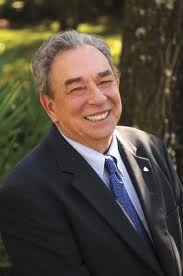
R.C. SPROUL’S TESTIMONY: INTERVIEW CONDUCTED BY DICK STAUB
How did you first become a Christian?
I had actually gone to a church-related college, but I went on a football scholarship, not because of any interest in the church. And at the end my first week, which had been spent in freshman orientation, my roommate and I decided to head out to town to hit some of the bars across the border. We come to the parking lot and I realized that I was out of cigarettes. So I went back in the dorm and went to the cigarette machine. I can still remember it was 25 cents for a pack of Luckys. And I got my Luckys and turned around and saw the captain of the football team sitting at a table. And he spoke to me and to my roommate and invited us to come over and chat. And we did. And this was the first person I ever met in my life that talked about Christ as a reality.
I’d never heard anything like it. And I was just absorbed, sat there for two or three hours, and he was talking. He didn’t give a traditional evangelism talk to me, he just kept talking to me about the-the wisdom of the word of God. And he quoted Ecclesiastes 11:3: “Whether a tree falls to the south or to the north, in the place where it falls, there will it lie.” I just feel certain I’m the only person in church history that was converted by that verse. God just took that verse and struck my soul with it. I saw myself as a log that was rotting in the woods. And I was going nowhere.
When I left that guy’s table I went up to my room. And into my room by myself, in the dark, and got on my knees and cried out to God to forgive me.
What was it that made you head down this highfalutin, rigorous academic preparation for your life?
To tell the truth, I hated school from first grade all the way through high school. The last thing I wanted to do was even go to college. But because it was a church-related college I had to take a course in the introduction to the Old Testament, first semester, and second semester an introduction to the New Testament. I’ll tell you, I just absolutely devoured the scripture. I just read it all day. At the end of the first semester I had an A in gym because I was on an athletic scholarship, an A in Bible, and all the rest Ds.
At the beginning of my sophomore year I had almost like a second conversion. And it was a strange thing. I had a required course in introduction to philosophy. The first assignment was on David Hume. I just thought this was so much nonsense, and I was so bored. I sat in the back of the class and I had Billy Graham sermons stuffed in behind my notebook. And while the professor was droning on about this stuff, I was getting edified by the Reverend Billy Graham sermons.
And then this one day he started to lecture on Augustine’s view of creation. And he got my attention. And I sat there, and I had an experience that was almost as powerful as my conversion where all of a sudden my understanding of the nature of God just had exploded. I went downstairs and changed my major to philosophy just so that I could learn a more in-depth understanding of God.
After I graduated from college then I went to seminary for three years, and then I went and did doctoral studies at the University of Amsterdam.
What was it that made you decide that you were called specifically to try to fill this gap, as you say, “between Sunday school and seminary” for everyday Christians?
Well, actually, when I went to graduate school my life’s ambition was to teach at seminary. And that came to pass when I was still in my 20s. I got an appointment at a seminary, and it was fun, but I was also involved in the local church. The pastor of the church asked me to teach an adult course on the person and work of Christ to the laypeople. I had doctors and lawyers and housewives and farmers and all kinds of adults in that class. And what I discovered was they were more interested in these things than my seminary students.
When our seminary left town, I had an opportunity to go with the seminary or I had an opportunity to teach laymen in a large church situation. And I took that route. And I always wanted to keep my hand in the academic world, but I always felt like if we were ever going to make a difference, we had to get to the people.
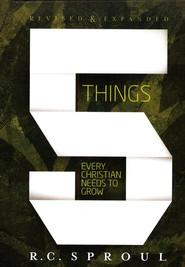
Tell me about the inspiration behind Five Things Every Christian Needs to Grow. You’ve written 50 books, some of them very scholarly, And now we get to this little volume that really is back to the basics.
We have a lady that works at Ligonier Ministries, who is our chief financial officer. And really she’s a genius. I’ve never seen anybody so bright in her field. Yet she has a simple faith. And she said to me at a meeting a couple of years ago, “I like to hear you teach, but your books are too heavy for me. Can’t you write something for people that are just starting their Christian walk?”
I thought about the basic means of grace that God gives us, the ways in which he has provided for his people to grow from infancy, spiritual infancy, in the maturity and in the conformity to Jesus. And so I tried to make a very basic, practical, tool. Not just a teaching tool, but one for training.
You’ve recently started to learn the violin?
One of my dreams for heaven was to learn how to play the violin. And we started this church a few years ago. And we have a string quartet, and they’re so beautiful. I listen to violin music all the time. And I said, why wait? Why not get started now?
My teacher is this world-class performer from Russia. And she trained with some of the best teachers in Russia, so she tries to impose the same rigid Russian strictness on me that she went through. And so when I’m doing it wrong she smacks my hand and says, nyet, nyet, nyet. I’m learning more Russian than I am violin from this woman, but I am having an absolute ball. And when I have the opportunity, I’ll practice three hours a day. I just love it. It is so hard. And I screech so much. But it is so beautiful and worth it when you do get it right, you know?
It is a discipline, and we are called to be disciples. Millions of people start on piano lessons. They play one note with one finger and then they go to two fingers, and then two hands. There are different plateaus. And at each plateau another percentage of people get off the boat and give it up.
With people who start out in learning the Bible, it’s the same thing. I’ll frequently ask people if they have read the whole Bible cover to cover? Not just new Christians—we’re talking about people who have been Christians 20/30 years. And a very small minority say that they’ve read the whole Bible.
Almost everyone has read Genesis because it is narrative. People start off with good intentions to read the Bible through, but when they get into the technical dimensions of the Levitical purification codes and that sort of thing, it’s so foreign to the world they’re living that they’re confused, they get lost, they lose their interest, then they give up.
So what’s your advice to them?
What I do is I give them an outline in this book on how to get the skeletal overview of the Bible. You read Genesis and Exodus and then you skip over to Joshua. Stay with the history. And read Judges. It’s like a novel. Then 1 Samuel. I get them to get an historical overview of the whole of the Old Testament. And I’ll have them read one major prophet, one minor prophet, a few psalms, a few proverbs, just to get a taste of it. Because if they get that overview, that overall structure and then they can go back and fill in the gaps.
[In violin,] if you’re not trained yourself, you have to get under the discipline of somebody else. I have to see this teacher every week and put up with her smacking my hand and saying, nyet, nyet, nyet, because if I didn’t I’d never get anywhere. For people who start out in learning the Bible, it’s the same thing. If you have trouble being disciplined, get in a Bible study group.
*Source: http://www.christianitytoday.com/ct/2002/decemberweb-only/12-30-21.0.html

MORE ABOUT SPROUL AND STAUB
Dr. R.C. Sproul was born in 1939 in Pittsburgh Pennsylvania. He is president of Ligonier Academy of Biblical and Theological Studies and the founder and chairman of the ministry that began in 1971 as the Ligonier Valley Study Center in Ligonier, Pennsylvania. In an effort to respond more effectively to the growing demand for Dr. Sproul’s teachings and the ministry’s othereducational resources, the general offices were moved to Orlando, Florida, in 1984, and the ministry was renamed “Ligonier Ministries.”
Ligonier Ministries is an international multimedia ministry located near Orlando, Florida. Dr. Sproul’s teaching can be heard on the programRenewing Your Mind with Dr. R. C. Sproul which is broadcast onhundreds of radio outlets in the United States and in more than 40 countries worldwide. He is executive editor of Tabletalk magazine and general editor ofThe Reformation Study Bible, also known as The New Geneva Study Bible. Dr. Sproul currently serves as the director of Serve International and senior minister of preaching and teaching at Saint Andrew’s in Sanford, FL.He is ordained as a teaching elder in the Presbyterian Church in America. He is the author of more than eighty books and scores of articles for national evangelical publications.
Dr. Sproul has produced more than 300 lecture seriesand has recorded more than 80 video series on subjects such as the history of philosophy, theology, Bible study, apologetics, and Christian living. He signed the 1978 Chicago Statement on Biblical Inerrancy, which affirms the traditional view of biblical inerrancy, and he wrote a commentary on that document titled Explaining Inerrancy.
Dr. Sproul holds degrees from Westminster College, Pittsburgh Theological Seminary, and the Free University of Amsterdam, and he has had a distinguished academic teaching career at various colleges and seminaries, including Reformed Theological Seminary in Orlando, Florida, and Jackson, Mississippi.
Dick Staub was host of a eponymous daily radio show on Seattle’s KGNW and is the author of Too Christian, Too Pagan and The Culturally Savvy Christian. He currently runs The Kindlings, an effort to rekindle the creative, intellectual, and spiritual legacy of Christians in culture. His interviews appeared weekly on our site (CHRISTIANITY TODAY) from 2002 to 2004.
How Do Adults Learn Best?
Malcolm Knowles identifies four principles unique to adult learning that can be applied to mentoring and discipleship:
1. Adults generally have a deep need for sellf directed learning, even if that need varies between adults. Implication: The mentor needs to understand this principle and capitalize on it as learning and growth are pursued. The mentoree should participate in designing his or her own development tasks. The mentor helps focus the learning/growth goal(s) and provides the resources, ideas, and feedback necessary for a sense of progress.
2. Adults increasingly appreciate learning that takes place through experience. Implication: For adult mentorees, experience is always a great teacher, as it draws upon their relevant knowledge and experience and stimulates the learning process. The alert mentor will use tasks and methods that are experience-based and/or include self-discovery experiences. Case studies, observation and design, discussion, experiment, simulation, field participation (activities that require application of concepts being learned), and evaluation are experience-based learning approaches.
3. The learning readiness of adults arises primarily from the need to accomplish tasks and solve problems that real life creates. Implication: Real-life situations create the questions and challenges that motivate mentorees to learn and grow in order to successfully deal with them. The wise mentor will take advantage of this motivation by helping the mentoree identify the appropriate solution (learning, personal growth, skill development, etc.) to his or her real-life need(s).
4. Adults see learning as a process through which they can raise their competence in order to reach full potential in their lives. They want to apply tomorrow what they learn today. Implication: Adults are motivated in the learning process by the results they perceive will benefit them personally. Therefore, the mentoree must perceive that there is significant personal growth in valued areas ahead and appropriate applications to present situations, otherwise he or she will abandon the process. The mentor needs to ensure that the connection between the mentoree’s desires for growth and anticipated results is clear, personal, and realistic; then the mentor can facilitate such growth. Adults are goal-oriented in their learning.
*Source: Malcolm Knowles. Modern Practice of Adult Education. From Pedagogy to Andagogy. Chicago: Foliet Publishing (1980:43-44).
SCHOLARSHIP AND WARMTH: AN INTERVIEW WITH BRUCE WALTKE
Interview Originally Conducted on May 8, 2013 with Darryl Dash
Dr, Bruce Waltke is a preeminent Old Testament scholar. His teaching career has earned him a reputation of being a master teacher with a pastoral heart. Dr. Waltke has also pastored several churches, lectured at many evangelical seminaries in North America and has spoken at numerous Bible conferences.

I’ve been impressed by Dr. Waltke’s scholarship, as well as his pastoral warmth. I’m grateful to Dr. Waltke for agreeing to answer some of my questions.
As Professor of Old Testament, what brings you the greatest joy? Is it studying, writing, teaching, or something else?
I wish I could say that I find my greatest joy in my students. Though I do delight in them and in their ministries, I find my greatest joys in writing and publishing and in teaching. I used to get the most joy out of teaching and preaching, but as I got older I realized more and more how transitory verbal ministries are. As I got older I came to value teaching more and more for what it built into the lives of my students and its multiplication and its continuation in their ministries. That reward, however, is less direct and seemingly more restricted than that of writing, for writings touch more lives for more time than students in a classroom. But writings, like all things, will pass away, as publishers undoubtedly will cease to publish my dated works. But unlike Qoheleth I know there will always be a residue of eternal profit, for all ministry participates in the eternal kingdom of God.
Your exegetical work seems to me to combine scholarship and worship, which aren’t found together as often as one might wish. How have you been able to maintain both together?
Others note an alleged combination of scholarship and worship. It must be relative, for I am unconscious of it. My scholarship always seems to be inadequate because knowledge is always imperfect–there is always another book to read on a subject or is being written on it. As for worship, though I do not know the full depths of my depravity, I know it well enough to know that my motives are always tarnished by self-interest, not by worship. My spiritual flaw is a carnal perfectionism. I believe God is taking that flaw and sanctifying it by his Spirit in me. Quintillius said: “Ambition is a vice but it can be the mother of virtue.” To become a vrtue must be the work of God’s grace. I have nothing of which to boast. This process of holiness is true of all healthy Christians, isn’t it?
Pastors often feel pushed away from theology to be more “practical.” What advice would you give to a pastor who aspires to be a pastor and scholar?
I cannot distinguish between theology and practical theology. If my theology does not change my life, it is not good theology, but an idol. I hope every pastor who stands behind the sacred lectern is a scholar. By that I mean, I hope the teacher of God’s Word will teach it as responsibly as possible within the time available. Very few are so gifted they can be both an academic in a university or seminary and a pastor. There is by the restraint of time and being human a less than perfect scholarship and of pastoring. What is needed is both humility, a recognition of our limitations, and a commitment to give God the best of what he has given to us. We need to keep our priorities straight, lest we make Success our god. It’s hard not to envy those who worship Success and receive worldly rewards.
Knowledge is both a virtue and a vice. It is necessary and certainly better than ignorance. Paul frequently says he doesn’t want us to be ignorant. On the other hand, it is a vice: it always puffs up and is imperfect. By God’s grace I overcome its endemic tendency to pride the pure virtue of love and its imperfection by the pure virtues of faith and hope.
It’s a joy to see the warmth between you and your friend Haddon Robinson. It’s a good example of friendship maintained through years of life and ministry. How have friendships like this sustained you?

Photo courtesy of Chris Brauns
Haddon is so uniquely gifted that I feel unworthy of his friendship. His warm friendship toward our family is a mark of his truly godly character. His brilliant conversation always refreshes me. Bonnie’s love is peerless. Elaine and I treasure their friendship. The sustenance of their friendship brings delight, psychic joy that cannot be fully verbalized. When the four of us are together we seem to feed on each others thoughts, commitments and basic disposition toward God and others, though Elaine is now suffering dementia. Haddon or Bonnie never interpret us negatively; they truly believe and hope all things; I do not think they ever think of enduring us.
How can we pray for you?
I have taken a leave of absence from teaching at Knox, to test how I can best serve God without a contract to teach. Pray that I will finish well and have the wisdom to prioritize my time well in this new context.
Source: http://dashhouse.com/dashhouse/2013/5/8/scholarship-and-warmth-an-interview-with-bruce-waltke
ABOUT BRUCE WALTKE
Bruce K. Waltke is an Old Testament scholar and Professor Emeritus of Old Testament Studies at Regent College. He has doctorates from Dallas Theological Seminary (ThD) and Harvard University (PhD). He has had a distinguished career as Professor of Old Testament at Dallas Theological Seminary, Westminster Theological Seminary, Reformed Theological Seminary (Orlando), and Regent College (Vancouver).
Waltke’s writings and publications include, Introduction to Biblical Hebrew Syntax, Finding the Will of God: A Pagan Notion? and commentaries on the books of Micah, Genesis, and Proverbs. He served as Old Testament editor for the “Expositor’s Bible Commentary”, the “New Geneva Study Bible”, the “Spirit of the Reformation Study Bible”, and co-edited the Theological Wordbook of the Old Testament. Waltke is also a member of the translation committee for TNIV and served a term as president of the Evangelical Theological Society.
Selected publications
- A Commentary on Micah. Eerdmans, 2007. ISBN 0802849334
- An Old Testament Theology: A Canonical and Thematic Approach, Zondervan, 2006. ISBN 0310218977
- The Book of Proverbs: 15-31, NICOT. Eerdmans, 2005.
- The Book of Proverbs: 1-15, NICOT. Eerdmans, 2004.
- Theological Wordbook of the Old Testament (co-author) Moody, 2003. ISBN 0802486495
- Finding the Will of God: A Pagan Notion?. Eerdmans, 2002. ISBN 0802839746
- Genesis: A Commentary, with Cathi J. Fredricks. Zondervan, 2001. ISBN 0310224586
- Knowing the Will of God, with Jerry MacGregor. Harvest House, 1998.
- An Introduction to Biblical Hebrew Syntax. Eisenbrauns, 1990. ISBN 0931464315
- Creation and chaos: An exegetical and theological study of biblical cosmogony. Western Conservative Baptist Seminary, 1981.
BOOK REVIEW: “THE MAKING OF A LEADER” BY DR. J. ROBERT CLINTON
RECOGNIZING THE LESSONS AND STAGES OF LEADERSHIP DEVELOPMENT
A PRIMER ON THE PROCESS OF BECOMING A LEADER
Book Review By David P. Craig
Knowing where one is at is crucial in moving forward in life. Nothing is more helpful when one is lost than having a map of where one is, and how to get to where we need to go. Recently, I experienced going through a difficult bout with cancer. The treatment and side effects of the treatment were absolutely brutal. However, I had a guide along the way to help me get through it. He was a man who had the exact same cancer and treatment as me, but he was already “cancer free” and a year ahead of me in the process. He helped me in my journey in two ways: (1) He helped me realize that what I was going through was normal and miserable, but necessary for the cancer to be killed; (2) He gave me a “living hope” that I would be cancer free like him if I endured to the end of the treatment without giving up. The process was excruciating, but now that I look back a year later – like him – I want to help people in their journey with cancer.
In the same vein as my illustration above Dr. Clinton helps emerging leaders understand the process of becoming a mature leader by evaluating the lives of biblical and modern leaders journeys. He identifies six primary processes’ that all leaders must go through on the way to becoming a healthy and mature leader of leaders. Some of the examples used in this book are the Prophets Jeremiah and Daniel, the Apostles Paul and Barnabas, and modern examples: Dawson Trotman, Warren Wiersbe, A.W. Tozer, Watchman Nee, Amy Carmichael and several others.
In his study Clinton articulates six phases or stages of a leaders development:
(1) Phase One is called “Sovereign Foundations” – This is where a leader starts to become aware of his or her calling to leadership. It is a time where character issues are developing, skills are developing, and one’s calling is being wrestled with. There is a deep sense of God’s calling and purpose and the building blocks for the emerging leader’s life are starting to lay the foundations for a life of leadership.
(2) Phase Two is called “Inner Life Growth” – This is a time where the leader is learning to hear and obey God’s leading. It is a time of deep spiritual growth and intimacy with God. The leader is often put through several major tests during this process – will he or she obey and submit wholeheartedly to God?
(3) Phase Three is called “Ministry Maturing” – In this stage the leader is reaching out to others and discovering and practicing ones spiritual gifts. Both positive and negative lessons are being learned during this phase. The leader is learning his or her own strengths and weaknesses in working with others. Oftentimes there is a strong desire to get more training during this time to minimize one’s weaknesses and enhance one’s strengths. In the first three phases God is primarily working “in” the leader not through him or her. In the next three phases God is working “through” the leader. As Clinton articulates “Many emerging leaders don’t recognize this, and become frustrated. They are constantly evaluating productivity and activities, while God is quietly evaluating their leadership potential. He wants to teach us that we minister out of what we are.”
(4) Phase Four is called “Life Maturing” – This is a time in the leaders life where the leader “is using his or her spiritual gifts in a ministry that is satisfying. He gains a sense of priorities concerning the best use of his gifts and understands that learning what not to do is as important as learning what to do. A mature fruitfulness is the result. Isolation, crisis, and conflict take on new meaning. The principle that ‘ministry flows out of being’ has new significance as the leader’s character mellows and matures.” Communion and intimacy with God becomes immensely more important than one’s ‘success’ in ministry.
(5) Phase Five is called “Convergence” – God takes the leader and matches him or her with a role that matches his or her gift-mix and experience so that ministry is maximized. Life maturing and ministry maturing peak together during this phase. Many leaders never get to experience this phase. Some leaders like Dawson Trotman and Jim Elliott were taken to Heaven before entering this phase. Some leaders don’t get to experience this phase because of their own sin, or other providential circumstances. For those who experience convergence it is a time of transitional leadership where the baton is passed down to other faithful leaders who will continue to develop the leaders’ vision for the church or organization they have developed.
(6) The final phase is called “Afterglow” or “Celebration” – Clinton describes this stage as “The fruit of a lifetime of ministry growth culminates in an era of recognition and indirect influence at broad levels. Leaders in Afterglow have built up a lifetime of contacts and continue to exert influence in these relationships. Others will seek them out because of their consistent track record of following God. Their storehouse of wisdom gathered over a lifetime of leadership will continue to bless and benefit many.”
Clinton defines leadership as “a dynamic process in which a man or woman with God-given capacity influences a specific group of God’s people toward His purposes for the group.” This book is written for leaders and potential leaders who are (a) wondering what God is doing in their lives – asking the question “Is God calling me into Christian ministry?”; (b) are beginning to discover ministry opportunities; (c) need a fresh challenge from God; (d) need to understand how to select and develop younger leaders; (e) are at a crossroads, facing a major decision; (f) want to know how God develops leaders; (g) want to know where you are at in the process of your leadership development – is what you are experiencing normal for a leader?
I think all emerging and veteran leaders will benefit immensely from reading this book. It is packed with useful examples, illustrations, charts, and principles to help you become a godly leader. Also, it is immensely helpful to help you understand the process’ of leadership and how to invest in other emerging leaders. If you believe God is calling you to leadership, or has already entrusted you with a leadership role, you will most definitely benefit from Clinton’s wisdom – from one leader to another.
9 GOD-CENTERED EVALUATION QUESTIONS FOR LEADERS
AM I LEADING IN A GOD-CENTERED MANNER?
-
Do people understand more of God’s mercy because of the way I respond to their mistakes?
-
Do people understand more of God’s holiness because of my high ethical standards?
-
Do people understand more of God’s patience because of the time I give to grow and develop?
-
Do people understand more of God’s truthfulness because of the way I communicate honestly?
-
Do people understand more of God’s more of God’s faithfulness because they see me keep my promises?
-
Do people understand more of God’s kindness because of the tone of my voice?
-
Do people understand more of God’s love because I go out of my way to help and serve them as I lead?
-
Do people understand more of God’s grace because I avoid being harsh and unreasonably demanding?
-
To what extent does my leadership actually model and teach something about the character of God?
“SOURCE: Stephen Viars. Leadership: How to Guide Others Integrity. New Growth Press, 2012.
Jonathan Merritt Interview with Jefferson Bethke on Faith and Culture
‘Jesus (still) hates religion’: An interview with YouTube sensation Jefferson Bethke with Jonathan Merritt on October 8, 2013
Yes, he’s from Tacoma, Washington. Yes, he played baseball in college. Yes, he loves Frosted Flakes. But, if you’re like over 25 million other YouTube viewers, you probably know Jefferson Bethke from his viral video, “Why I Hate Religion, But Love Jesus.” Bethke’s new book, Jesus > Religion: Why He is So Much Better Than Trying Harder, Doing More and Being Good Enough explores some of the themes from the 2012 sensation. Here, we talk about religion, his critics, and why he still thinks Jesus hates religion.
JM: Jeff, your spoken word YouTube video has had over 25 million views. Why do you think it resonated with so many?
JB: That’s a great question. I still am not entirely sure. But if I had to speculate I think it resonated because I think there’s this constantly growing chasm in the 21st century western evangelicalism and this vibrant, beautiful, revolutionary, new creation oriented world Jesus launched at the resurrection you see more predominantly in the scriptures. Even though it seems like a caricature, reading YouTube comments on many religious oriented videos, would show that many people’s Christianity doesn’t go much farther than “don’t get tattoos, don’t drink beer, and never swear or curse.” I think my generation has constantly felt this almost awkward vibe when reading the New Testament and then looking up into the landscape of modern evangelicalism and saying, “really? This is the same thing?”
JM: Not every Youtube sensation can or should write a book like you have. Can you say something about the thinkers who have influenced you and why people should listen to what you have to say?
JB: Amen to that first sentence! And to be honest I thought that same thing about myself at first. But when I dug around in my own heart, passions, and desires, I realized the reason I did poetry in the first place was because I love to teach. In school, I studied politics and government and my plan was to be a lawyer, and then that evolved into becoming a high school social studies teacher. So I love to teach and think analytically (I’m left handed, which makes me a little corky as well). I think poetry is an outflow of that, rather than my main passion. In fact, I don’t know how much longer I’ll do spoken word, as I don’t think it’s necessarily my gift or passion. Writing seems more up my alley.
Some of the thinkers who’ve shaped my faith pretty significantly have been Tim Keller, Dietrich Bonhoeffer, NT Wright, A.W. Tozer, Charles Spurgeon, C.S. Lewis, Ann Voskamp, Francine Rivers, Watchman Nee, Francis Schaeffer, Beth Moore, and Andrew Murray. I really owe each of them for particular seasons of life, struggles, joys and events. Their writings have all given me a unique perspective about Jesus and His message that I hadn’t seen before and that had a profound impact on this book.
JM: How do you see today’s 20-somethings taking a new approach to faith? Has there been a cultural shift among this demographic in your opinion?
Book cover courtesy of Thomas Nelson
JB: Well, I think if you study church history you definitely see each generation having to figure it out on their own. It seems to be the way God has weaved mystery into depths of Christian faith. It’s every generation’s job to figure out what it means to follow Jesus in that particular context and culture. If you simply adopt your parent’s methodology and don’t wrestle it out yourself, it almost self destructs. So yes, I’d definitely say there is a shift.
There’s issues our parents raved about that we might not seem to be making much of a big deal of, and then there are some things that might have not been championed by our parents that we are taking a keen interest in. When I look out at the landscape of my peers, I see a lot of desire for authenticity. I think because of systemic injustices like fatherlessness being more prevalent in our generation than ever before, we’re keenly aware of fakery and deceit. We can tell if someone is authentic or the real deal pretty quickly.
Also, with the wide spread nature of technology, news, and the internet, it’s impossible for my generation to turn a blind eye to the suffering of the world (both in our back yards and abroad). It’s too much in our face to not care, which is why you see the idea of justice and setting the world to right, and joining God in his redemptive mission, as another key component of the 20-somethings faith.
The one thing that does scare me though is our complacency about community. I see a lot of 20-somethings, myself included, who are okay with living in isolation. We substitute Facebook, Twitter, and email for real face-to-face interaction. We forget the importance of sharing meals together, which has been a deep sacred rhythm in the Christian faith since the beginning, and serving one another. So I pray that we’d come to grips with the depth and need for community. For life on life existences. For reflecting the image of God when we gather as the people of God—loving, serving, giving to one another. That’s a thing our parents did well. We need to realize that our faith is built on their shoulders, and we need to learn from them.
JM: Can you say something about how faith-messages are communicated today? How has rise of social media impacted conversations about faith?
JB: Technology is a double-edged sword. I think social media, and YouTube specifically, has really forced the Church to cultivate and reclaim it’s creativity. We have the Creator as our Dad, so we should have the uttermost creativity. Social media has a very harsh “weeding out” aspect. If it’s dry and unengaging, then no one will listen or engage with it. But the other side is that we continually are reducing the size of our messages to fit shrinking attention spans. I know for me, social media is great but I also have to just completely shut down sometimes because it prevents me from doing simple things like quieting down, reading, studying the scriptures and journaling for more than 30 seconds. Social media has transformed the Bible from a beautiful narrative, written over thousands of years, by different authors, ranging from poetry to historical narrative, to 140 characters or less.
JM: You contrast “moralistic man-made religion” and a “divinely-designed relationship of grace.” What are the signs of a moralistic man-made religion?
JB: One thing I’d say first is what they are not. Moralistic man-made religion is not the same as discipline, church attendence, rhythms, and routine. There’s this weird sphere, especially among my age group, where if something requires grace-driven discipline then someone cries “legalism.” That’s simply not true. I mean Hebrews goes as far to say that Jesus learned obedience through suffering. But, signs of true man-made religion would be pride, power grabbing (usually through violence—physically or of the heart), and making yourself the center of the story rather than Jesus. Jesus didn’t seem to get so upset with the Pharisees over their basic theology or Torah interpretation. But he got pretty upset over them for how they applied it or added to it–the reflection they were giving of who God is and what God is like.
JM: Some criticized your video saying it was theologically inaccurate and filled with false dichotomies. How do you respond?
JB: The initial craze and critique of the video taught me so many things. I’m so thankful for it and how much it taught me, shaped me, and made me think about things I wouldn’t otherwise consider. And if I can be honest, when I read most of the critiques, I couldn’t help but say, “Amen!” I think technology has completely flattened any sense of geographical or regional contextualization. The word “religion” might mean something different to someone in Seattle than it does someone in Nashville. Or Bangkok for that matter. So for me, when someone comes up to me and says they hate religion, I want to first know what they mean by “religion.” That pretty much gives away their trajectory.
In my context, there is a good group of people that use the word to describe moral behaviors that place you in right standing with God. And if that’s the case, well that seems pretty upside-down of what Jesus came to preach. His gospel is about Him doing something we couldn’t. But, all-in-all my critics taught me that language is multi-faceted, it can mean different things to different people, and before I critique someone I first like to ask, “What do you mean by that?” before I start pushing further.
HOWARD HENDRICKS ON TEN MARKS OF A MENTOR
The IDEAL MENTOR is a person who:
1. Seems to have what you personally need.
2. Cultivates relationships.
3. Is willing to take a chance on you.
4. Is respected by other Christians.
5. Has a network of resources.
6. Is consulted by others.
7. Both talks and listens.
8. Is consistent in his lifestyle.
9. Is able to diagnose your needs.
10. Is concerned with your interests.
Source: Howard Hendricks and William Hendricks. As Iron Sharpens Iron (Kindle Locations 713-715). Kindle Edition. Chicago: Moody Press, 1995.