As Christians We Should Be Fresh and Flourishing

A DEVOTIONAL BASED ON PSALM 92:7-15

PPP Wiersbe

By Warren W. Wiersbe

Someone has said that there are three stages in life: childhood, adolescence, and “My, you’re looking good.” We can’t stop aging. But no matter how old we grow, we ought to continue growing in the Lord. “The righteous shall flourish like a palm tree; he shall grow like a cedar in Lebanon. Those who are planted in the hous of the Lord shall flourish in the courts of our God. They shall still bear fruit in old age; they shall be fresh and flourishing” (vv. 12-14). I am greatly encouraged by those words, because as I get older, I want my life to count more and more for Jesus.

God tells us to be like palm trees. That means we should be planted–“planted in the house of the Lord.” We must abide in Christ, whose roots are spiritual. What a tragedy it is to get older and move into the world and into sin, abandoning what you were taught from the Word of God.

We should also be productive. “They shall be fresh and floursihing” — fruitful trees to the glory of God. Palm trees stand a lot of abuse, storms, and wind. The wind that breaks other trees bends the palm tree, but then it comes back up. Palm trees have roots that go down deep to draw up the water in the desert area. They can survive when other trees are dying. And palm trees just keep on prodicing fruit. The fruit doesn’t diminish; it gets better and sweeter.

Finally, we should be flourishing “in the courts of our God.” When some people get old, they get grouchy, mean, and critical. Let’s not be like that. Allow the Lord to make you fresh and flourishing. Have roots that go deep. You can stand the storms and still be fruitful, feeding others from the blessing of the Lord.

God wants you to grow strong, productive trees that bear much fruit. He wants your roots to grow deep to draw nourishment from His hidden resources. Are you planted and feeding on the Word of God daily? Are you producing fruit and bringing glory to Him? Are you flourishing and feeding others?

*SOURCE: Warren W. Wiersbe. Prayer, Praise & Promises: A Daily Walk Through the Psalms. Grand Rapids: Baker, 2011.

Creating A Positive Environment With Our Words

ENCOURAGE ONE ANOTHER

Encourage each other

By Dane Ortlund

Our words to one another about one another not only describe reality. They also create reality.

“You idiot!” does not simply assess what is objectively true to the speaker. It also produces, in the one spoken to, death and darkness. Not only do our words reveal what is true of us, they also generate reality for another. Specifically, our words are either death-bringing or life-giving. Either depleting or nourishing, draining or filling.

The gospel is a message of life, of nourishing, of filling. Because of Christ’s work in our behalf, we are set free from sin, adopted into God’s family, welcomed in. The “word of truth, the gospel of your salvation” (Eph. 1:13) is a word that gives life. And the great privilege we have when we gather with other believers—other obnoxious believers, other theologically imprecise believers, other spiritually sleepy believers, other frustrating believers, other sinning believers—is of passing on horizontally a taste of what we’ve been given vertically. Amid all my sin and messiness, in Jesus, God has given me a word of welcome, a word of love—“the word of life” (Phil. 2:161 John 1:1). Loved with this word of grace, I love others with words of grace.

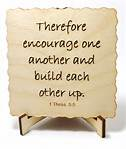
After all, when Paul says, “Therefore encourage one another and build one another up,” what is the “therefore” referring to? What is fueling such encouragement? One of the greatest exultations in all the New Testament about the hope of the gospel: “God has not destined us for wrath, but to obtain salvation through our Lord Jesus Christ, who died for us so that whether we are awake or asleep we might live with him” (1 Thess. 5:9–10).

Having been shown life through the word of the gospel, we give life through the words we use.

That’s easier said than done. All day long, words are flowing out of us. Passing another and saying hello in the hallway at work, chatting over lunch, greeting our spouse at the end of the day, tucking a child in with a good night story, speaking with a salesperson at Best Buy, talking on the phone while driving. We also use words without employing the larynx: emails, tweets, Facebook comments, handwritten notes stuck on the fridge. Even in this article I am using words: Are they bringing life?

In the hurricane of words that make up any given day, how do we walk in wisdom such that our words inject sanity, calm, and life rather than destruction? In two ways.

First, by saying nothing.

One major way we give life to others with our words is by not using any. It feels awkward to sit with someone depressed or overwhelmed with life and to say nothing. But what comes out of our mouth as medicine can, in fact, sicken rather than strengthen another’s heart (Prov. 23:8). A sufferer, when the pain is raw, needs warm presence, not fixing words. Paul said, “Weep with those who weep” (Rom. 12:15), not “provide theological answers to those who weep.” That Romans 8:28 comes before Romans 12:15 in the canon does not mean it should in our counseling and friendships.

Second, by saying something.

All our words tumble out impelled by one of two motives. I am using words either for myself or for you. All my speech is either fueled by self (no matter how smiling it is) or by love (no matter how painful it is).

The question, then, is why do you speak the words you do? Why do you speak the way you do? What is the aroma of your words? Are you spraying bullets, forgetting God has set down the gun rightly aimed at you? Do you speak to others the way you wish to be spoken to? What kind of speech has given you life as you consider meaningful relationships in your past? Do you ever—ever—look another human being in the face and say to them the following words: “May I tell you something I admire about you?” (It is one of the great secrets to Christian community that speaking a word of grace to another builds up you as much as the other.)

In your short life, you have a million tiny opportunities, including a hundred today, to inject a small but potent dose of life and light into another. As you consider doing this, you will immediately find a good reason presenting itself that seems to clearly mitigate your impulse to build another up. Some weakness, some corresponding fault, will arise in your mind, cancelling out your reason to encourage that person. Indeed, with some people in our lives, we honestly have difficulty finding anything encouraging to say.

Once more we remember the gospel. God did not allow our own faults to mitigate His word of gospel life to us. We have given Him every reason to withhold that precious word from us. Instead He lavishes us with assurances of undeserved love. We come alive. We breathe again.

John Owen wrote that God “loves life into us.” Will you love life into another?

*SOURCE: July 1st, 2013 @ http://www.ligonier.org/learn/articles/encourage-another/

ABOUT THE AUTHOR

Dr. Dane Ortlund serves as Bible publishing director at Crossway Books in Wheaton, Illinois. He is the author of Defiant Grace: The Surprising Message and Mission of Jesus.

Brad Johnston on The “Learning” in Contentment

content

My favorite weekly meeting is Wednesday at 6 a.m. at Perkins Restaurant.

There I recently had one of those jump-off-the-page-of-your-Bible experiences. Call me dumb, but I had never processed the fact that three times in Paul’s famous “contentment passage” in Philippians 4 – which I have quoted anecdotally dozens of times – the Apostle specifically uses the word “learned” (in Philippians 4:9 and 11, 12 ).

The men’s prayer breakfast is not a big one, as prayer breakfasts go. But it is a faithful one, an intimate one. Men from our church gather like clockwork each week for the sole purpose of lifting our hearts together before the Throne of Grace. We make 3-4 specific prayer requests for the week, and then lift one another’s burdens to the Lord in prayer before a hearty breakfast. Our prayers are far ranging, kingdom focused prayers for the advance of God’s reign in this world. It is not a place where we sit on our hands, but where we take the Kingdom by storm.

But recently  God has landed the prayer breakfast guys in the school of contentment. He has simply overwhelmed us with his presence and blessings and pressed us to “come back” to a place of joy and satisfaction — of thanksgiving! In my analysis, the Lord has been teaching us a contentment that can be described as intense pleasure in who Jesus is, and what he has done/is doing/will do for his people. We have been discovering something of the end that Paul has in mind when he calls to learn contentment. Three observations about how God leads us into biblical contentment.

First, he has called each one of us to action. Contentment is not passivity. Each of the men at prayer breakfast wear various hats: in the church, as the head their families, and in their professional labors. Men must sometimes leave early because of pressing matters on their plate. We aspire to be like the Apostle Paul, who was engaged in the work to which he was called. What he believed was visible in his lifestyle and he called those to whom he ministered to “learn by practice” what they had seen Paul practice.

Second, God has called each of us to flexibility. In a variety of ways each of us has had unexpected developments in our lives recently. It has really pushed us to understand better what Paul meant in Phil. 4:11 that “whatever situation” is a place where God will minister his grace by prompting me to trust in his wisdom and rest in his provision. The guys have discussed in recent weeks the places of apparent chaos and of disappointment. The wonder of Paul’s Calvinistic convictions is that he could never step outside of God’s personal and transformative gaze. Whether in Tarsus, Jerusalem, or the far flung wilderness of Asia Minor Paul knew that because God was God, therefore Paul could never step off his grid. His heavenly Father was intent on teaching him the positive aspects of the Tenth Commandment every day and in every — at a very personal level!

Finally, God has called us to be fixated on Christ. Paul no doubt had specific episodes from his ministry in mind when he said “I have learned the secret of facing plenty and hunger, abundance and need” (Phil. 4:12). As he pushed forward in his itinerant ministry year after year things didn’t always go as planned. Colleagues abandoned him. Logistics did not work out. Travel plans were stymied. And yet through it all the Apostle’s faith shone through: “all things through Christ who strengthens me.”

It has been such an intense pleasure to explore this theme of contentment with the guys over our waffles and eggs recently. Through different circumstances and at different times he has brought each of us to that place of peaceful contentment. We are simply overwhelmed at the blessings the Lord has poured out into our lives. It doesn’t usually mean we stay there. But we are learning, learning, learning that instead of grasping and fighting for what we desire, we can rest contentedly in God’s absolute sovereignty. Instead of fixating on something material, or urgent, or created, we can reorient our fixation upon Jesus Christ. Then we can quietly do what we can in God’s kingdom, and leave the results up to him.

Soli Deo gloria.

SOURCE” http://gentlereformation.com/?p=336235

Jon Bloom on YOUR MOST COURAGEOUS RESOLUTION FOR 2014

Permalink

Pursue love. (1 Corinthians 14:1)

Resolutions are good things. They’re biblical: “may [God] fulfill every resolve for good” (2 Thessalonians 1:11). And I think developing New Year’s resolutions is a very good idea. A year is a defined timeframe long enough to make progress on difficult things and short enough to provide some incentive to keep moving.

A resolve is not a vague intention, like “one of these days I’m going to get that garage cleaned” or “I’m going to read the Bible through this year,” but without any clear plan to do it. Resolves are intentions with strategies attached to them. You don’t just hope something is going to happen; you are planning to make it happen. To be resolved is to be determined.

Make Love Your Aim

But resolves can either be rooted in our selfish ambitions or in the love of God. We must think them through carefully. So as we make our resolutions for 2014, God wants them to all serve this one great end: “pursue love” (1 Corinthians 14:1).

“Pursue” is a very purposeful word. The Greek verb has an intensity to it. It means to “seek after eagerly,” like a runner in a race seeks eagerly to win a prize.

The RSV’s translation of this phrase is clearer: “Make love your aim.” It has a sense of single-minded focus to it. The NIV falls short: “Follow the way of love.” It has no edge to it. It sounds like a platitude that the most polite company could smile and nod to without feeling unnerved. It does not capture Paul’s intensity.

No, this is an aggressive verb. In fact, it can mean to “pursue with hostile intent.” That’s why in the New Testament, it is frequently used to mean persecuting or harassing someone.

That sounds like Paul, the former persecutor who became the persecuted. What he is saying to us is that we should pursue love with no less fervency and determination that he once pursued Christians to Damascus — only our aim is not to stop love, but to unleash it and be captured by it, or, I should say, by Him (1 John 4:8).

Plan to Make Love Your Aim

Let this be the year that we pursue love. Let this be the year that we stop talking about love, that we do less regretful moaning about how little we love and how much we need to grow in love and actually be determined to love more the way Jesus loved (John 15:12). Let this be the year we actually put into place some strategies to help us love.

Each person’s situation is so unique that we can’t craft strategies for each other to grow in love. It’s something that we must each do with God, though some feedback and counsel from those who know us best are helpful.

But here are some of the Bible’s great love texts to soak in during 2014 that can help loving strategies emerge:

  • 1 Corinthians 13: soak in or memorize it and let each “love is . . .” statement in verses 4–7 search your heart. With whom can you show greater patience, kindness, and more?

  • John chapters 13–15: soak in or memorize them. Ninety-five verses are very doable. You can memorize them in 3–6 months and be transformed.

  • The First Epistle of John: Soak in or memorize it. You can do it! Forcing yourself to say the verses over and over will yield insights you’ve never seen before.

  • Take 2–4 weeks and simply meditate on the two greatest commandments according to Jesus (Matthew 22, Mark 12, Luke 10). Look and look at them and pray and pray over them. You will be surprised at what the Lord shows you.

  • Read Hebrews 13:1–7, take one verse per day and prayerfully meditate on what you might put into place to grow in each area of loving obedience. It may be one thing or ten things.

You get the idea. We don’t need all our strategies in place by January 1st. But we can make 2014 a year where we pursue love with more intentionality than we ever have before. And as we meditate, letting the word of Christ dwell in us richly (Colossians 3:16), the Holy Spirit will guide us in creating the strategies we should use.

The Most Courageous Resolution

But let’s also be clear: making love our aim in 2014 will demand more courage and faith than any other resolution we can make. Nothing exposes the depth of our sin like really seeking to love God with our entire being and loving our neighbors as ourselves (Luke 10:27).

So we must let our pursuit of love drive us to the gospel. None of us has ever perfectly kept either of the two great commandments. Ever. Our very best efforts have been polluted by our prideful sin. And we have rarely been at our very best.

We can only love because God first loved us (1 John 4:19) and sent his Son to become sin for us so that we could become the righteousness of God in him (2 Corinthians 5:21). Christ has kept the greatest commandments (and the rest) perfectly for us! So we are forgiven of our constant failure to love as we ought and are given grace to grow in the grace of love. And because of Jesus, someday we will love perfectly just as we have been loved.

So let’s make our resolution to pursue love this year more than we ever have, knowing that we have been loved with an everlasting love (Psalm 103:17).

SOURCE: December 27, 2013 by Jon Bloom. (@Bloom_Jon) is the author of Not by Sight: A Fresh Look at Old Stories of Walking by Faith and serves as the President of Desiring God, which he and John Piper launched together in 1994. He lives in the Twin Cities with his wife, Pam, their five children, and one naughty dog.

©2013 Desiring God Foundation. Used by Permission.

Permissions: You are permitted and encouraged to reproduce and distribute this material in its entirety or in unaltered excerpts, as long as you do not charge a fee. For Internet posting, please use only unaltered excerpts (not the content in its entirety) and provide a hyperlink to this page. Any exceptions to the above must be approved by Desiring God.

Please include the following statement on any distributed copy: By John Piper. ©2013 Desiring God Foundation. Website: desiringGod.org

JOHN PIPER ON “Thinking Deeply and Clearly”

Think over what I say, for the Lord will grant you understanding in everything.

Timothy: Wait a minute, Paul. You tell me to think, but isn’t the organ of our thinking fallen and unreliable?

Paul: Yes, your mind is fallen and fallible. Yes, it is prone to self-justifying errors. But Christ is in the business of “renewing the mind” (Romans 12:2Ephesians 4:23). Do you think there is some unfallen part of you that you could substitute for your mind? We are fallen and depraved in every part. You can’t retreat from thinking into some other safe, untainted faculty of knowing. Take note, Timothy: even in raising the objection against thinking you are thinking! You can’t escape the necessity of thinking. God’s call is to do it well.

Timothy: But, Paul, I don’t want to become a cold, impersonal intellectual.

Paul: There is danger on both sides, Timothy. There is cold knowledge, and there is a red hot zeal that “is not according to knowledge” (Romans 10:2). But thinking does not have to cool your zeal. In fact, in my life the vigorous exercise of my mind in spiritual things causes me to boil inside, not to freeze. You are right not to want to become “impersonal.” That happens when thinking is emphasized to the exclusion of feeling about people; and reason is exalted above love. But note this, Timothy: the abandonment of thinking is the destruction of persons. Yes, there is more to personal relationships than thinking, but they are less human without it. God honored his image in us when he said, “Come, let us reason together” (Isaiah 1:18). Should we do less?

Timothy: But, Paul, shouldn’t I just take you at your word, and not ask so many questions? You’re an apostle, and speak for God.

Paul: Take what, Timothy?

Timothy: Your words, what you say in your letters.

Paul: Do you mean the black marks on the parchment?

Timothy: No. What they stand for. You know. What they mean.

Paul: How do you know what I mean, Timothy?

Timothy: I read what you write.

Paul: You mean you pass your eyes over the black marks on the parchment?

Timothy: No, I . . . I think about it. I ask how the words and sentences fit together. I look for what it means.

Paul: That’s right, Timothy. Thinking and asking questions is the only way you will ever understand what I want to communicate in my letters. And either you do it poorly, or you do it well. So “do not be a child in your thinking: be a babe in evil, but in thinking be mature” (1 Corinthians 14:20). As the Master said, “wise as serpents and innocent as doves” (Matthew 10:16).

Timothy: But, Paul, won’t I become arrogant and boastful if by using my mind I discover things on my own?

Paul: Timothy, you never have and never will discover anything “on your own.” And you would know this if you had thought more deeply about what I said. What I said was: “Think over what I say, for the Lord will grant you understanding in everything.” The Lord, Timothy, the Lord! “From him, through him, and to him are all things. To him be the glory!” (Romans 11:36) He is the ground and goal of all thought. So think, Timothy. Gird up your mind and think!

Praying Psalm 119:66 with you,

Pastor John

©2013 Desiring God Foundation. Used by Permission.

Permissions: You are permitted and encouraged to reproduce and distribute this material in its entirety or in unaltered excerpts, as long as you do not charge a fee. For Internet posting, please use only unaltered excerpts (not the content in its entirety) and provide a hyperlink to this page. Any exceptions to the above must be approved by Desiring God.

Please include the following statement on any distributed copy: By John Piper. ©2013 Desiring God Foundation. Website: desiringGod.org

The Real Meaning of Christmas

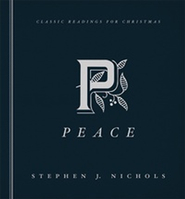
By Stephen Nichols

One of the most remarkable stories of Christmas comes from one of the darkest moments of modern history. World War I ravaged a continent, leaving destruction and debris in its wake. The human cost, well in the millions, staggers us. But from the midst of this dark conflict comes the story of the Christmas Truce of 1914. The Western Front, only a few months into the war, was a deplorable scene of devastation. Perhaps as if to give the combatants one day to breathe again, a truce was called from Christmas Eve through Christmas Day.

As darkness settled over the front like a blanket, the sound of exploding shells and the rat-tat-tat of gunfire faded. Faint carols, in French or English voices on one side and in German voices on the other, rose to fill the silence of the night.

By morning, soldiers, at first hesitantly, began filing out of the maze of trenches into the dreaded and parched soil of No Man’s Land. There was more singing. Gifts of rations and cigarettes were exchanged. Family photos were passed around. Soccer balls appeared. Up and down the Western Front, soldiers, who only hours before had been locked in deathly combat, now faced off in soccer games.

For one brief but entirely remarkable day, there was peace on earth. Some have called the Christmas Truce of 1914 “the Miracle on the Western Front.”

Anxious to print some good news, The Times of London reported on the events of the Christmas Truce. Soldiers recorded the day in letters home and in diaries. Some of those lines made it to newspapers, while others remained unknown until later brought to light. Here’s one such line from the diary of a German infantryman:

The English brought a soccer ball from the trenches, and pretty soon a lively game ensued. How marvelously wonderful, yet how strange it was. The English officers felt the same way about it. Thus Christmas, the celebration of Love, managed to bring mortal enemies together as friends for a time.

“Friends for a time,” “the celebration of love,” “peace on earth”—this is the meaning of Christmas. But these celebrations, these truces, don’t last. After Christmas Day, the soccer balls and the soldiers went back into the trenches. The Christmas carols subsided and the war carried on. And even though World War I eventually ended, a few decades later, Europe’s countryside and cities became the field of battle once again, as did Africa and the Pacific, during World War II.

Events like the Christmas Truce are worth celebrating. But they lack something. They lack permanence. Such impermanent peace is what we often find in our quest for the real meaning of Christmas. If we are looking for permanent and ultimate goodwill, love, and peace, we must look beyond our gift-giving, get-togethers, and office parties. We must look to no other place than to a manger.

We must look to a baby born not with fanfare, pomp, and circumstance, but to poor parents in desperate times. Joseph and Mary, and the Baby Jesus for that matter, were real historical figures. But in a way, Joseph and Mary extend beyond themselves, beyond their particular place and time. They represent all of us. We are all poor and living in desperate times. Some of us are better than others at camouflaging it. Nevertheless, we are all poor and desperate, so we all need the promise bound up in that baby.

We are in need of a way out of our poverty of soul and the desperate state of our human condition. We find it in this child lying in a manger, who was and is Jesus Christ, the long-promised Messiah, Seed, Redeemer, and King.

The birth of Jesus so many centuries ago might have been a slightly-out-of-the-ordinary birth. Even in ancient times, stalls didn’t typically double as birthing rooms and mangers didn’t typically double as cribs for new-born babies. And that newborn baby was very much out of the ordinary. Of course, in some respects, He was perfectly ordinary. He was a human being, a baby. He got hungry. He got thirsty. He got tired. When He was born, He was wrapped in swaddling clothes—the ancient equivalent of Pampers.

An infant. Helpless, hungry, cold, and tired.

Yet, this child was the Son of God incarnate. He was Immanuel, which translated means “God with us.” According to the Apostle Paul’s account, this infant created all things. This infant created His own manger. And this infant, this King, brings peace on earth, ultimate and permanent peace.

Peace

An excerpt from Peace: Classic Readings for Christmas by Stephen Nichols.

JERRY BRIDGES: “The Resurrection of Jesus” (Yes, At Christmas Time!)

Jesus' empty tomb and resurrection image

This article on the resurrection of Jesus appears at the time of year when we are focusing on His birth, not His death and resurrection. To stop and think about the resurrection may seem like an unnecessary aside to the beautiful story of our Savior’s birth.

To think only about the birth of Jesus, however, fails to do justice to the incarnation. It fails to consider the purpose of Jesus’ coming to earth. At the occasion of His birth, the angel said to the shepherds, “For unto you is born this day in the city of David a Savior, who is Christ the Lord” (Luke 2:11). The meaning of Savior is clarified before His birth when the angel instructed Joseph: “You shall call his name Jesus, for he will save his people from their sins” (Matt. 1:21). How will He save His people? Paul answers in 1 Corinthians 15:3: “Christ died for our sins in accordance with the Scriptures.” And on the eve of His crucifixion Jesus Himself said, “But for this purpose I have come to this hour” (John 12:27). As we celebrate His birth, let us keep in mind that He came to die.

This article, based on the account in Matthew 28:8–15, focuses, not on His birth or death, but on His resurrection. However, there is actually a seamless connection between the four major events of Jesus’ life: His birth, death, resurrection, and ascension. All four events stand or fall together. At the same time each event had its own unique role to play. What role, then, does the resurrection of Jesus play in the overall story of redemption? There are at least four major truths about the resurrection that teach us about its absolute necessity.

First, it proved that Jesus was indeed the divine Son of God. Paul wrote that “[He] was declared to be the Son of God in power according to the Spirit of holiness by his resurrection from the dead” (Rom. 1:4). Actually it was impossible for Jesus’ body to remain in the grave. Just as it was impossible for the divine nature of Jesus to die because God cannot die, so it was impossible for the human nature of Jesus to remain dead because of its union with His divine nature. Peter said on the day of Pentecost: “God raised him up, loosing the pangs of death, because it was not possible for him to be held by it” (Acts 2:24). So it was not possible for Jesus’ body to remain in the grave. And in raising Him from the grave, God declared beyond all shadow of doubt that this Jesus whom lawless men crucified was indeed the divine Son of God.

Second, the resurrection of Jesus assures us of our justification. Paul wrote, “And if Christ has not been raised, your faith is futile and you are still in your sins” (I Cor. 15:17). If Christ were still in the tomb it would mean God’s wrath was not satisfied, and we would still stand guilty before God. But as Paul also wrote in Romans 4:25: “[Jesus] was delivered up for our trespasses and raised for our justification.” It is not that the resurrection accomplished our justification — Jesus’ sinless life and sin-bearing death did that — but rather it assures us of our justification. It was God the Father who raised Jesus from the dead (Rom. 8:11), and by that act God declared that Christ’s atoning sacrifice had been accepted. The penalty for our sins was paid in full. The resurrection was God’s declaration that He had cancelled the record of debt that stood against us with its legal demands (Col. 2:14).

Third, the resurrection assures us that we serve a living Savior who even now is interceding for us. The writer of Hebrews wrote that He always lives to make intercession for us (Heb. 7:25). Paul was even more emphatic when he wrote, “Who is to condemn? Christ Jesus is the one who died — more than that, who was raised — who is at the right hand of God, who indeed is interceding for us” (Rom. 8:34). The One who died for us now lives to intercede for us. When you are going through struggles of any kind, be it adversity that you face, or sin you are struggling with, remember that Jesus is interceding for you.

Fourth, the resurrection of Christ guarantees our future resurrection. In his extensive treatment of the resurrection in 1 Corinthians 15:12–58, Paul wrote, “But in fact Christ has been raised from the dead, the firstfruits of those who have fallen asleep. For as by a man came death, by a man has come also the resurrection of the dead. For as in Adam all die, so also in Christ shall all be made alive. But each in his own order: Christ the firstfruits, then at his coming those who belong to Christ” (vv. 20–23).

So as you celebrate the birth of Christ this Christmas, remember His birth is only the first of the four major events of His life. Not only can we say, “He is risen indeed,” but we can also say with Paul: “For the Lord himself will descend from heaven with a cry of command. …And the dead in Christ will rise first. Then we who are alive…will be caught up together with them…and so we will always be with the Lord” (1 Thess. 4:16–17). Maranatha! “Our Lord, come!” (1 Cor. 16:22).

SOURCE: DECEMBER 1ST, 2008 BY JERRY BRIDGES @ http://www.ligonier.org/learn/articles/resurrection-jesus/

© Tabletalk magazine
Permissions: You are permitted and encouraged to reproduce and distribute this material in any format provided that you do not alter the wording in any way, you do not charge a fee beyond the cost of reproduction, and you do not make more than 500 physical copies. For web posting, a link to this document on our website is preferred (where applicable). If no such link exists, simply link to http://www.ligonier.org/tabletalk. Any exceptions to the above must be formally approved by Tabletalk.

Please include the following statement on any distributed copy: From Ligonier Ministries and R.C. Sproul. © Tabletalk magazine. Website: http://www.ligonier.org/tabletalk. Email: tabletalk@ligonier.org. Toll free: 1-800-435-4343.

UNDER THE SHELTER OF GOD’S WINGS

ENCOURAGEMENT FOR DIFFICULT DAYS

TBAWYCO Wiersbe

By Warren W. Wiersbe

In 1892, after a year of intensive work in Great Britain, D. L. Moody sailed for home, eager to get back to his family and his work. The ship left Southampton amid many farewells. About three days out into the ocean, the ship ground to a halt with a broken shaft; and before long, it began to take water. Needless to say, the crew and passengers were desperate, because nobody was sure whether the vessel would sink or not, and nobody knew of any rescue ships in the area. After two days of anxiety, Moody asked for permission to hold a meeting, and to his surprise, nearly every passenger attended. He opened his Bible to Psalm 91 and, holding to a pillar to steady himself, he read: “He that dwelleth in the secret place of the most High shall abide under the shadow of the Almighty.”

Moody wrote later, “It was the darkest hour of my life … relief came in prayer. God heard my cry, and enabled me to say, from the depth of my soul, `Thy will be done.’ I went to bed and fell asleep almost immediately….” Well, God answered prayer and saved the ship and sent another vessel to tow it to port. Psalm 91 became a vibrant new Scripture to D. L. Moody, and he discovered, as you and I must also discover, that the safest place in the world is in the shadow of the Almighty, “under His wings.” “He that dwelleth in the secret place of the most High shall abide under the shadow of the Almighty… He shall cover thee with his feathers, and under his wings shalt thou trust.” So promises the Lord in Psalm 91:1, 4. What does God mean by “under His wings”? Of course, we know that this is symbolical language, because God does not have wings. Some think that this has reference to the way the mother hen shelters and protects her brood. You will remember that Jesus used a similar comparison when He said, “How oft would I have gathered you, as a hen gathers her chickens under her wings, and you would not.”

My own conviction is that Psalm 91 is talking about another kind of wings. Where is that secret place of the Most High? To every Old Testament Jew, there was only one secret place-the holy of holies in the tabernacle. You will recall that the tabernacle was divided into three parts: an outer court where the sacrifices were offered; a holy place where the priests burned the incense; and then the holy of holies where the ark of the covenant was kept. And you will remember that over the ark of the covenant, on the mercy seat, were two cherubim, and their wings overshadowed the ark. This, I believe, is what the psalmist was referring to: the “secret place” is the holy of holies, and “the shadow of the Almighty” is under the wings of the cherubim at the mercy seat.

In Old Testament days, no one was permitted to enter that holy of holies, except the high priest; and he could do it only once a year. If anyone tried to force his way in, he was killed. But today, all of God’s children, saved by faith in Jesus Christ, can enter the holy of holies, because Jesus Christ has opened the way for us. When Jesus died on the cross, the veil in the temple was torn in two and the way was opened into the very presence of God. You and I are privileged to dwell in the holy of holies-to live under the shadow of His wings. We don’t simply make occasional visits into God’s presence; we live there because of Jesus Christ!

Would you believe it if I told you that the safest place in the world is under a shadow? It is–provided that the shadow is the shadow of the Almighty! I would rather be overshadowed by Almighty God than protected by the mightiest army in the world.

As you read Psalm 91, you discover that God makes some marvelous promises to those who will live under His wings, in the holy of holies. For one thing, He promises divine protection. This doesn’t mean that we Christians never experience accidents or sickness, because you and I know that we do. God does not promise to protect us from trials, but to protect us in trials. The dangers of life may hurt us but they can never harm us. We can claim His promise that these things are working for us and not against us.

Listen to one of these promises: “He shall give his angels charge over thee, to keep thee in all thy ways. They shall bear thee up in their hands, lest thou dash thy foot against a stone” (Ps. 9:11-12). A modern scientific world laughs at the idea of angels, but not the child of God. Jesus taught that the angels of God watch over God’s children. The angels don’t run ahead of us and pick up the stones, because sometimes we need these stones in the path to teach us to depend more on the Lord. What the angels do is help us use the stones for stepping-stones, not stumbling blocks. I firmly believe that when we get to heaven, we will discover how many times God’s angels have watched over us and saved our lives. This is not an encouragement to be careless or to tempt God, but it is an encouragement to worry less.

Believers are immortal in the will of God, until their work is done. Out of the will of God there is danger, but in the will of God there is a divine protection that gives us peace in our hearts, no matter how trying life may be. “Under His wings,” abiding in Christ-this is where we are safest during the storms of life. We do not, however, run into the holy of holies to hide from life. I’m afraid too many people misinterpret the Scriptures and the hymns that talk about hiding in God and finding Him a refuge in the storm. We go in for strength and help, and then go back to life to do His will. God’s divine protection is not simply a luxury we enjoy; it is a necessity that we want to share with others. God’s protection is preparation for God’s service. We go in that we might go out. We worship that we might work; we rest that we might serve.

Are you living in the shadow of the Lord, under His wings? Have you trusted Christ as your Savior? Do you spend time daily in worship and prayer? I trust that you do, because the safest life and most satisfying life is under His wings.

The person who lives under His wings not only enjoys the safest life possible, but also the most satisfying life possible. Psalm 91 closes with this promise. “With long life I will satisfy him, and show him my salvation.” This doesn’t mean all Christians will live to be a hundred; the facts prove otherwise. Some of the choicest Christians died before age thirty. A long life refers to quality, not just quantity: it means a full and satisfying life. You can live for eighty years and only exist if you leave Christ out. On the other hand, if you yield to Christ, you can pour into forty years or four lifetimes of service and enjoyment. There is a heart satisfaction that comes only to those who live under His wings, in the the place of surrender and fellowship.

The place of satisfaction is the secret place of the Most High. When you yield to Jesus Christ and link your life with Him, then you find the kind of satisfaction that is worth living for and worth dying for–not the shallow masquerades of this world, but the deep abiding peace and joy that can come only from Jesus Christ.

Turn your back on sin and the cheap trinkets that this world offers, and let me invite you to enter the secret place of the Most High. Surrender to Christ; trust Him as your Savior; answer His gracious invitation. When you do this, you will enter into a new kind of life–a life under the shadow of God–a life in the secret place of safety and satisfaction.

*Source: Warren W. Wiersbe. The Bumps Are What You Climb On. “Under His Wings” – Chapter 10. Grand Rapids: Baker Books, 2006.

BOOK REVIEW: “HOW GREAT IS OUR GOD: Timeless Daily Readings on the Nature of God”

FOCUSING ON THE CHARACTER AND NATURE OF GOD FOR A YEAR

HGIOG

Book Review By David P. Craig

This book contains short devotional excerpts (one page a day) from the writings of Henry and Richard Blackaby’s “Experiencing God”; Jerry Bridges “Trusting God”; Chuck Colson’s “Loving God”; Sinclair Ferguson’s “Heart for God”; Andrew Murray’s “Waiting on God” and Working for God”; John Piper’s “Desiring God”; R.C. Sproul’s “Pleasing God”; A.W. Tozer’s “The Pursuit of God”; and Dallas Willard’s “Hearing God.”

The readings are arranged for each day of the week for Monday – Friday, and then a reading for the weekend. Each reading is based on a verse of Scripture and topic. The back of the devotional features both a subject and Scripture index. After an entire year of going through this devotional here are just a few of my favorite quotes from the book:

“Our greatest need is not freedom from adversity. No calamity in this life could in any way be compared with the absolute calamity of separation from God. In like manner, Jesus said no earthly joy could compare with the eternal joy of our names written in heaven.”

“If we want proof of God’s love for us, then we must look first at the Cross where God offered up His Son as a sacrifice for our sins. Calvary is the one objective, absolute, irrefutable proof of God’s love for us.”

“What God wants from His people is obedience, no matter the circumstances, no matter how unknown the outcome…Knowing how susceptible we are to success’s siren call, God does not allow us to see, and therefore glory in, what is done through us. The very nature of the obedience He demands is that it be given without regard to circumstances or results.”

“In order to trust God, we must view our adverse circumstances through the eyes of faith, not of sense.”

“This is real faith: believing and acting regardless of circumstances or contrary evidence.”

What stands out about this devotional are five positive elements: (1) This book is like reading wisdom from a wise godly grandfather – it is biblical, but lived out on the anvil of many years of godly Christian living; (2) It is saturated with Scripture – each author quotes an abundance of Scriptures in illustrating and applying each truth they present; (3) It is God drenched – all of the meditations elevate your view of God and help you to focus on His glory. (4) It is filled with practical applications. (5) It leads you time and time again to worship the Lord in prayer – particularly – gratitude, thanks, and adoration. For these reasons of balancing the head, heart, and hands for God’s glory I highly recommend this excellent devotional.

THE SECRET TO DEALING WITH FEAR AND ANXIETY

prayer before a cross

By Ed Welch

“Humble yourselves.” That’s the secret. It has been there all along, but we rarely use it.

Humble yourselves, therefore, under the mighty hand of God so that at the proper time he may exalt you, casting all your anxieties on him, because he cares for you. (1 Peter 5:6-7)

Fear and anxiety sufferers like myself have tried on a number of Scripture passages over the years. We might start with Jesus’ words from the Sermon on the Mount, “Therefore I tell you, do not be anxious about your life . . .” (Matthew 6:26). When we need something easier to memorize we move on to Philippians 4:6, “do not be anxious about anything, but in everything by prayer and supplication with thanksgiving let your requests be made known to God.”

These passages work very well as counters to low-level anxiety. But, in the face of an anxiety assault—they aren’t enough. At those times, they can sound like mantras that are devoid of power, which is actually a good thing. Anxious and fearful people can easily slip into taking Scripture as a pill. Take one passage twice a day for two weeks and your symptoms will be gone. When the pill doesn’t work we have two choices. We search for another treatment, or we confess that we are using Scripture as a self-help book for symptom relief, in which case it is time to get back to basics. If you choose to get back to biblical basics, Peter’s exhortation to humble ourselves is a great place to start.

I had an anxiety assault recently. I was facing perhaps the worst fear I could imagine, and there was nothing I could do about it. What a mercy that I was confronted with the call to be humbled before the Lord. It resulted in a simple prayer.

“Lord, you are God and King. I am your servant. I know you owe me nothing. For some reason you have given me everything in Jesus. I trust you. And please give me grace to trust you.”

A few minutes later, my prayer moved even closer to Scripture.

“Father, forgive me for always wanting things my way. By your mighty hand you have created all things. And by your mighty hand you have rescued your people. I want to live under your mighty hand. Please have mercy.”

It sounds very simple—and it is—but it changes everything. This is the secret to dealing with fears and anxiety. The words of God, and the comfort of the Spirit, become much more obvious when we are repentant and humble before him. No deals—“if you spare me from this suffering then I will . . .” Just simple trust. We trust him because he is God, not because he is going to immediately remove our anxieties or our fear-provoking situation.

This passage has been a secret because we have typically entered it at verse 7, “cast all your anxieties on him because he cares for you.” But to understand its meaning, you need to start with the preceding verse, “Humble yourselves.”

“Humble yourselves” is the only exhortation in the passage. This is what Peter wants us to hear (and obey). If we jump in at the middle—it makes no sense. We can’t cast our cares on him until we have recognized that he is God and we are his servants who have also been elevated to become his children. A paraphrase could read like this (and I highly recommend putting Scripture into your own words.)

Humble yourself before the Lord. This shouldn’t be too difficult. After all, he is God and King, Lord of all. He is the Creator. You belong to him. The creature is the possession of the Creator. Humble yourself before your King. And here is one way to express this new-found posture of humility: cast your cares on him. Did you catch that? When you come humbly before the King he reveals his unlimited love. Who would have thought? He actually wants you to cast your burden on him. You were never intended to carry those burdens alone. He is the mighty God who never leaves. You can trust him. And this casting is no mere act of your will. It comes as you know that he is God and you are not. Oh, and you can be sure that he will lift you up from your kneeling position and give you more than you ever expected.

A little wordy, in contrast to Peter’s more succinct version, but rambling and embellishment give us more time to meditate on the logic of the passage.

The secret is to
…pause before you head into your favorite passage on fear,
…consider the greatness of God,
…add some of your own confession and repentance as a way to drive the message of humility home, and         then
…remember some of those sweet words of God to fearful people.

*Source: http://www.ccef.org/blog/secret-dealing-fear-and-anxiety – April 19, 2011

If you want to read more on fear, Ed has written two books on the subject: Running Scared andWhen I Am Afraid.


Edward T. Welch, M.Div., Ph.D., is a counselor and faculty member at CCEF and holds a Ph.D. in Counseling Psychology with a neuro-psychology specialty from the University of Utah as well as a Master of Divinity degree from Biblical Theological Seminary. Ed has been counseling for over twenty-six years and has written many books and articles on biblical counseling.