Ep. 6: “How To Develop A Vertical Life Plan” – Part 5 – “Valuing Work”

Vertical Christianity

June 7, 2025 – Dr. David P. Craig, Founder, Vertical Living Ministries 

Valuing Work: Key Scriptures

Genesis 2:15, Then Yahweh God took the man and set him in the garden of Eden to cultivate it and keep it.

Colossians 3:17 & 23-24, And whatever you do in word or deed, do all in the name of the Lord Jesus, giving thanks to God the Father through Him…Whatever you do, do your work heartily, as for the Lord rather than for men, knowing that from the Lord you will receive the reward of the inheritance. Serve the Lord Christ.

Valuing Work Statement: There are two extremes that some people battle with work: Laziness and workaholism. Neither of these are good. We want to strike a balance of being the best workers we can be, but also knowing when its time to stop. Work is God’s invention and God’s expectation is that we should work hard and smart and get rest. He doesn’t want us to be lazy or over worked and be constantly stressed. God wants us, like in everything, to have a balanced work week.

Statements of How NOT to work:

  • Peter Drucker “There is nothing so useless as doing efficiently that which should not be done at all.”
  • Tim Keller, “You cannot have a proper work theology unless you have a proper rest theology…To violate the rhythm of work and rest leads to chaos in our life and the world around us.” 
  • Lou Holtz, “Winners embrace hard work. They love the discipline of it, the tradeoff they’re making to win. Losers, on the other hand, see it as punishment. And that’s the difference.”

Statements of How To Work as a Christian:

  • Tim Keller, ““Work is as much a basic human need as food, beauty, rest, friendship, prayer, and sexuality; it is not simply medicine but food for our soul. Without meaningful work we sense significant inner loss and emptiness. People who are cut off from work because of physical or other reasons quickly discover how much they need work to thrive emotionally, physically, and spiritually…The way to do work as a Christian is to do it well.”
  • C.S. Lewis, “I don’t believe that good work is ever done in a hurry.”
  • Pele, “Success is no accident. It is hard work, perseverance, learning, studying, sacrifice and most of all, love what you are doing and learning to do.”
  • John Owen, “God hath work to do in this world; and to desert it because of its difficulties and entanglements, is to cast off His authority. It is not enough that we be just, that we be righteous, and walk with God in holiness; but we must also serve our generation, as David did before he fell asleep. God hath a work to do; and not to help Him is to oppose Him.”
  • Dorothy Sayers wrote, “What is the Christian understanding of work?. . . It is that work is not, primarily, a thing one does to live, but the thing one lives to do. It is, or it should be, the full expression of the worker’s faculties . . . the medium in which he offers himself to God.” 
  • Roy Zuck, “There are four main bones in every organization: The wishbones: Wishing somebody would do something about the problem. The jawbones: Doing all the talking but very little else. The knucklebones: Those who knock everything. The backbones: Those who carry the brunt of the load and do most of the work.”

Aligning Your Work With Your Strengths:

No matter what you do there are going to be days you wish you did something else for a living. I love being a pastor most of the time because I get to operate primarily in my areas of passion and strengths and get to delegate my weaknesses – things that I can do – but that I’m not passionate about so I can devote more time to what I am passionate about. But those things still need to get done. It wasn’t until I was about forty years old that I recognized what I do best. Studies show that satisfied and effective workers need to spend about 70% of their time in their sweet spot – operating in their areas of greatest skills and passion in order to enjoy and be effective in their job.

In my Vertical Life Plan, since I am a pastor, I have a few particular areas where I write down my goals for each year and how I will achieve them. My particular strengths involve preaching & teaching, leadership development, discipleship and mentoring, and shepherding and counseling – so that’s where I spend over 70% of my time. You should also identify your 3-5 greatest strengths and set goals for how you will achieve effectiveness in your work by maximizing your strengths and seek to delegate your weaknesses to those who are strong in your areas of weakness.

In the past decade I have spent more time in these areas and I have never been more excited or more effective than I am in my current work situation. Because I know my strengths and weaknesses I am able to staff my work team in a way where everyone operates 70% of the time or more in their sweet spots. Whether you are a bread maker, car salesman, engineer or whatever it is you do for a living its important to figure out what your particular skills are – what you are good at and enjoy about your work; and what you are passionate about. Sometimes you have to pay your dues before you can make a living working at the 70% satisfaction standard. This should be a goal for you to find satisfaction in your work.

I hope that you are the best worker where you work for the glory of God. As Christians the vertical worker is the person that works hard, smart, efficiently, effectively, and has integrity. I hope that you see your work as unto the Lord and that those you work with know that you are a follower of Jesus – and as a result are attracted to Him because of your work ethic and how you make your work environment better for everyone – this was God’s intention in Eden and its the same today. God made work good and its still good when we work as unto the Lord and we are good stewards of what He has given us to do.

John Rushkin wrote, “When love and skill work together, expect a masterpiece.” Master chef Gordon Ramsey said, “If you want to become a great chef, you have to work with great chefs. And that’s exactly what I did.” I hope that you love what you do and that you are always seeking to improve in your work. One of the best things you can do to improve in your work is to strive to be the best at what you do. Be intentional and schedule how you will continue to learn and grow in 70% of what you do. Your work is significant and God made us to work. Read good books, get more education, and seek mentors to help you in areas of skill and character that will help you enjoy your work, and strive to do your best as unto Christ for the glory of God.

Three Great Resources on the subject of Work from a Christian Perspective:

  • Wayne Grudem. Business for the Glory of God: The Bible’s Teaching on the Moral Goodness of Business.
  • Tim Keller. Every Good Endeavor: Connecting Your Work to God’s Work.
  • Patrick Morley. A Man’s Guide to Work: 12 Ways To Honor God On The Job.

Episode One: “Living Vertically in a Horizontal Culture”

Check Out New YouTube Channel: Vertical Living Ministries

Episode One: “Living Vertically in a Horizontal Culture”

April 21, 2025 – Dr. David P. Craig, Founder, Vertical Living Ministries 

This week (God-willing) I will be launching the first of (hopefully) many videos on helping followers of Jesus live a more intentional life of discipleship. I hope that you will check out the brand new YouTube Channel: Vertical Living Ministries. I also hope that you are encouraged by the video and will do three things: hit the like button, subscribe to the channel so you will not miss any upcoming videos, and share it with someone who can benefit from the content.

I want to address the importance of what it means to live vertically in a horizontal culture. Vertical meaning Christ-centered and living for the glory of God and not horizontally centered which means man-centered and living according to the worlds values that conflict with God’s Word!

First, a little about me. I was born in Long Beach, CA in 1965 and lived my formative years (ages 6-27) in Huntington Beach, in Southern California. My parents came to California from Argentina in the mid 1950’s. My parents had a huge impact on me as a child, teenager, and the greater part of my life as an adult as well. I have been very happily married for 33 years to my best friend and partner in ministry and have five adult children and 11 grand children. I am the lead pastor at Marin Bible Church in San Rafael in the heart of Marin County – just 20 miles north of San Francisco and the founder of Vertical Living Ministries. In both of these ministries my greatest passion is to intentionally make and multiply disciples of Jesus in Marin County and beyond for the glory of God.

It’s because of the teaching and modeling of my parents that I am a follower or disciple of the Lord Jesus Christ. At the early age of six I learned that I needed to repent of my sin and trust in Jesus in order to be reconciled to a Holy God. My parents modeled following Jesus with joy and lived life to the fullest. They manifested all of the fruit of the Spirit described in Galatians 5:22: But the fruit of the Spirit is love, joy, peace, patience, kindness, goodness, faithfulness, gentleness, and self-control. They exemplified these characteristics of the Holy Spirit for the 68 years they were married before my dad and mom departed this life to their eternal home to be with Jesus just a few years ago.

I have no recollection in my life of a before and after experience with Jesus. He has always been a huge part of my life. I grew up learning about Jesus daily from the Bible, being part of a vibrant Bible teaching church, and my parents modeling loving and serving Jesus in our home and church along with my two older brothers and sister.

However, I was a pretty typical teenager in that I was selfish and idolatrous – but I was unaware of this until the spring of my junior year of High School. Even though I loved Jesus, His Word, and sharing with others about Him; my highest priority was sports: Football, baseball, basketball, and soccer were really my greatest passion (depending on what season it was) and I played all these sports with great passion – and followed the local Los Angeles sports teams as a diehard fan – the Lakers, Dodgers, Rams, and Aztecs with equal devotion. I definitely spent more time reading the L.A. Times Sports page than I spent in the Bible – knowing much more about standings and statistics than Bible verses.

Like many young men…I had the aspiration of becoming a professional baseball player. This ambition was about to radically change. In hindsight – what appeared to be a tragic day in the spring of my junior year of HS turned out to be the day that God really called me from living in darkness to living in the light. From living for the trivial and temporal, to living for that which will last forever – what the Bible calls making disciples – the great commission in Matthew 28.

I don’t remember the time or exact date – but the event that would change the trajectory of my life transpired after the first day of baseball practice in the spring of 1983. My best friend and teammate – Corey Stejskal and I were driving to a Christian Bookstore in Fountain Valley. I was getting a book for a research paper I was writing for my Bible class at Liberty Christian HS in Huntington Beach. Corey picked me up at my house and about two miles from my house at the intersection of Heil and Bolsa Chica a drunk driver cut us off (we found out later that he was arrested for causing the accident while driving under the influence and fleeing the scene). 

In that accident I experienced what I’ve heard many people express – my life flashed before me in the twinkling of an eye. We were in a jeep and the last thing I knew – my friend turned to the right dodge the driver that was about to slam into us and when we turned away from that car we were about to hit a telephone pole off the side of the road…and that’s the last thing I remember.

The next memory I had was riding in an ambulance on the way to a hospital. When I came to, the Paramedic started asking me questions. I remember the only thing I could see was a puddle of blood on the pillow upon which my head was resting. I was in tremendous pain but I was impressed by the concern and compassion of the Paramedic. He asked me the usual: name, birthday, address, how many fingers he was holding up, and so forth. But what I remember, like it was yesterday, were three things he said.

First of all he asked me if I was a Christian. I immediately said “yes”…and then I said, “Why do you ask?” And he answered, “because I think God intervened on your behalf either directly or He sent an angel to save you.” He then went on to say, “When you get out of the hospital I want you to go see the jeep. I thought for certain that when we arrived at the crash site and saw the jeep – and even told my partner – I hope there were no passengers in that jeep – because if there is – we will have to pull out some dead bodies. He then went on to tell me that with the exception of the the drivers side of the jeep the rest of it was a third of its size due to the impact of it hitting the telephone pole. The passenger side had only half an inch between the glove box and the back of the seat where I was sitting. It was an old early 1970’s model jeep with no seat belts. Had the seat belt law been in effect in 1983 I would have been almost certainly been crushed by the impact and dead.

The next thing he said also stands out in my memory. He said, “God must have some great plans for you … because He obviously and miraculously saved your life!” And he continued, “Don’t waste your life kid. God wants to use you big time…I’m going to pray that He uses your recovery time to make your calling in life to follow and serve jesus as your number one priority.”

While recovering in the hospital (which seemed like forever) I had nothing to do but think. Think about how much time I had wasted in my life; think about how selfish I had been; thinking about how my life was full of idols – things and priorities, I put before God. I also had a recurring nightmare as I tried to sleep with a non-stop continual migraine headache. In the dream I would see (like deja vu) people that had been in my life – neighbors, teammates from my sports teams, and acquaintances that I didn’t really know well, but recognized. In the dream each of these people were in darkness and engulfed in flames and I could see their faces and hear their voices and they all said the same thing to me: “Why didn’t you tell me about Jesus?”

This recurring dream coupled with the time I had wasted absolutely haunted me. I kept rehearsing the words of the paramedic in my mind, and kept thinking to myself: “What if I had died… I know I would be in heaven…but what a shame to have stored up so little treasure there…and left all these useless weeds in my life behind on earth.” For the first time in my life I really felt convicted over my sin and how I had wasted my life and knew that I had not been living for the glory of God. 

I grieved and wept over my sin. Its not like I was doing really bad things, sports aren’t bad in and of themselves. But I came to the belief and conviction that I had mixed up priorities. My priorities selfishly were man-centered and not God-centered – I clearly could see that I was an ego-maniac. I lived for my own glory and not for the glory of Christ. For the first time in my life I was compelled to turn away from the idols in my life that I had been prioritizing over treasuring Jesus and what He deems most important.

The summer between my junior and senior year of High School. God was doing a major overhaul in my thinking and transforming my soul… and this began a journey that continues to this very day – some forty years later. The consuming thought of my life has been – “What does it mean to live for the glory of God?” A verse that I have meditated and thought about deeply and profoundly since the age of 17 has been 1 Corinthians 10:31 where the apostle Paul wrote, “So whether you eat, or drink, or whatever you, do all for the glory of God.”

My senior year I lost my passion for sports – I decided not to play football, basketball, baseball, or soccer. My passion for sports was replaced by a passion to know Jesus and make Him known. Since the age of seventeen my ultimate goal in life has been to learn to live for the glory of God. As a pastor of a local church and life coach to Christian leaders around the world it’s also to help others do the same: the biblical metaphor continually on my mind is to help those I mentor and disciple to eliminate the temporal and trivial weeds and intentionally live for producing wheat by making and multiplying disciples of Jesus for the Kingdom of God which is eternal.

Two of the parables of Jesus are worth exploring in light of this desire I have to live for God’s glory and help others do the same. They involve what I call being a V.I.P. follower or disciple of Jesus. Which I will briefly explain as I wind up this video.

Let me read these two parables and then explain how we can apply these teachings of Jesus by learning how to become V.I.P followers of Jesus – or how we can learn to live vertically in a horizontal world:

In Matthew 13:1-9 and verses 18-30 Jesus gives these two parables: 

That same day Jesus went out of the house and sat beside the sea. And great crowds gathered about Him, so that He got into a boat and sat down. And the whole crowd stood on the beach. And He told them many things in parables, saying: “A sower went out to sow. And as He sowed, some seeds fell along the path, and the birds came and devoured them. Other seeds fell on rocky ground, where they did not have much soil, and immediately they sprang up, since they had no depth of soil, but when the sun rose they were scorched. And since they had no root, they withered away. Other seeds fell among thorns, and the thorns grew up and choked them. Other seeds fell on good soil and produced grain, some a hundredfold, some sixty, some thirty. He who has ears, let him hear.” 

Explanation: “Hear then the parable of the sower: When anyone hears the word of the kingdom and does not understand it, the evil one comes and snatches away what has been sown in his heart. This is what was sown along the path. As for what was sown on rocky ground, this is the one who hears the word and immediately receives it with joy, yet he has no root in himself, but endures for a while, and when tribulation or persecution arises on account of the word, immediately he falls away. As for what was sown among thorns, this is the one who hears the word, but the cares of the world and the deceitfulness of riches choke the word, and it proves unfruitful. As for what was sown on good soil, this is the one who hears the word and understands it. He indeed bears fruit and yields, in one case a hundredfold, in another sixty, and in another thirty.” 

He put another parable before them, saying, “The kingdom of heaven may be compared to a man who sowed good seed in his field, but while his men were sleeping, his enemy came and sowed weeds among the wheat and went away. So when the plants came up and bore grain, then the weeds appeared also. And the servants of the master of the house came and said to him, ‘Master, did you not sow good seed in your field? How then does it have weeds?’ He said to them, ‘An enemy has done this.’ So the servants said to him, ‘Then do you want us to go and gather them?’ But he said, ‘No, lest in gathering the weeds you root up the wheat along with them. Let both grow together until the harvest, and at harvest time I will tell the reapers, “Gather the weeds first and bind them in bundles to be burned, but gather the wheat into my barn.” ’ 

In 2003 I completed my doctoral dissertation with the title: “Living Vertically in a Horizontal Culture.” My thesis was that in order to best live for the glory of God we need to have a vision of Jesus ever before us – and the best way to do that is to spend time in the Bible; we need to intentionally have the same priorities He had – and we find His priorities by daily reading His word and finding out what He’s like and what He wants us be and do; and we need to make plans to integrate that vision by intentionally living for His glory out of obediently applying His word daily.

In 2008 I started a nonprofit ministry helping pastors and Christian leaders learn how to become V.I.P disciples of Jesus. My ultimate goal for myself and others is that we would be men and woman who have a Vision of Jesus, Intentionally live out our calling, and make Intentional Plans and goals to live for the glory of Christ.

I want you to know that I am not an expert in these matters. I don’t always live according to this vision of Jesus…I’m not always intentional in following Jesus, nor does my life always go according to the plans that I want to carry out. However, I do believe that intentional living makes a huge difference in this pursuit of maturing as a follower of Jesus. I am much further along having this vertical vision and I want to help you do the same!

I personally want to eliminate the weeds in my life, and I want to help you do the same. I personally want to invest disciple making – producing wheat that multiplies. I want to be a mature and multiplying wheat producer. In John 15 Jesus says that if we abide in Him we will produce fruit. In these parables Jesus is saying the same thing – we either live for our own glory or His – we either send wheat ahead or leave weeds behind. We either live for ourselves or for the glory of Christ and making disciples who make disciples. 

God saved you and me because of the life, death, burial and resurrection of Christ to live abundant fruit producing lives. In this video and God-willing many videos to come – my goal is to live for Jesus and help you live a Christ centered life. I want to live in intimacy with Jesus and help you do the same. I want to be a fruit producing follower of Jesus who produces spiritual fruit that feeds me and others. I want to produce a hundred fold of wheat and help you do the same. My days and your days are numbered – let’s make them count by storing up our treasures in God’s heavenly barn; rather than an earthly field that will eventually be burned.

Let’s strive to be good soil for God to do His good work in us so we can produce wheat and fruit that will last forever by investing our time with Him and sharing with others out of the overflow of our joyful walk with Jesus. Let’s be fertile soil, with roots that go deep into God’s truth as revealed in His Word. Let’s be intentional about spending time developing a greater vision of Jesus and His glory. Let’s be intentional about doing those things that will bear fruit for the Kingdom that will last forever. In my next video I’m going to help you develop what I call a Vertical Life Plan. We are going to get more specific about developing a vision for Jesus and living for His glory by intentionally planning to invest your thinking, how you spend your time, and use your talents for Jesus and His kingdom.

Until next time: Let me leave you with this amazing promise from Psalm 16:11, ”You make known to me the path of life; in Your presence there is fullness of joy; at Your right hand are pleasures forevermore.”

May God’s presence and peace in your life be foremost, His Spirit fill you to the uttermost, and may your satisfaction and security be in Jesus so that you can   reflect Him in your life so that He gets all the glory! 

In His grip of grace,

Dr. David P. Craig

*LAST WORDS OF THE DYING

(*ADAPTED FROM: Life’s Choices by John Lawrence, Pages 54-59)

Non-Believers:

Talleyrand Perigord (1754–1838), achieved distinction as a French statesman and diplomat): “I am suffering the pangs of the damned!”

Victor de Riqueti, Marquis de Mirabeau (October 5, 1715, Pertuis – July 13, 1789, Argenteuil; was a French economist of the Physiocratic school): “Give me laudanum that I may not think of eternity.”

Francis Newport (1st Earl of Bradford, February 23, 1620 – September 19, 1708): “Oh, that I was to lie a thousand years upon the fire that never is quenched, to purchase the favor of God, and be united to Him again! But it is a fruitless wish. Millions of millions of years would bring me no nearer to the end of my torments than one poor hour. Oh, eternity, eternity! forever and forever! Oh the insufferable pangs of hell!”

Thomas Hobbs (1588–1679, English philosopher): “If I had the whole world, I would give it to live one day. I shall be glad to find a hole to creep out of the world at. About to take a leap into the dark!”

Thomas Paine (1737–1809, English American political writer. His pamphlet Common Sense [1776] called for American independence, and The Rights of Man [1791] defended the French Revolution. His radical views prompted the British government to indict him for treason, and he fled to France. He also wrote The Age of Reason [1794]): “I would give words if I had them, that The Age of Reason had never been published. O Lord, help me! Christ, help me! O God, what have I done to suffer so much? But there is no God! But if there should be, what will become of me hereafter? Stay with me, for God’s sake! Send even a child to stay with me, for it is hell to be alone. If ever the Devil had an agent, I have been that one.”

Francois Voltaire (French writer, philosopher, historian; November 21, 1694-May 30, 1778): He was one of the most fertile and talented writers and strove to retard and demolish Christianity. His cry in health concerning Christ  was, ‘Curse the wretch!’ He once said, ‘In twenty years, Christianity will be no more. My single handshake destroy the edifice it took twelve apostles to rear.’ Some years after his death, his very printing press was employed in the printing of New Testaments. 

The Christian physician who attended Voltaire during his last illness, has left a testimony concerning the departure of this poor lost soul. He wrote to a friend as follows: “When I compare the death of a righteous man, which is like the close of a beautiful day, with that of Voltaire, I see the difference between bright, serene weather and a black thunderstorm. It was my lot that this man should die under my hands. Often did I tell him the truth.

‘Yes, my friend,’ he would often say to me, ‘you are the only one who has given me good advice. Had I but followed it I would not be in this horrible condition in which I now am. I have swallowed nothing but smoke. I have intoxicated myself with the incense that turned my head. You can do nothing for me. Send me a mad doctor! Have compassion on me—I am mad!”

The physician goes on to say: I cannot think of it without shuddering. As soon as he saw that all the means he had employed to increase his strength had just the opposite effect, death was constantly before his eyes. From this moment, madness took possession of his soul. He expired under the torments of the furies.”

At another time his doctor quoted Voltaire as saying: “I am abandoned by God and man! I will give you half of what I’m worth if you will give me six months’ life. Then I shall go to hell; and you will go with me. O Christ! O Jesus Christ!”

Charles IX (Charles Maximilien; 27 June 1550 – 30 May 1574, was King of France from 1560 until his death in 1574. He ascended the French throne upon the death of his brother Francis II in 1560, and as such was the penultimate monarch of the House of Valois): This cruel monarch urged by his inhumane mother, gave the order for the massacre of the Huguenots in which 15,000 souls were slaughtered in Paris alone, and 100,000 in other sections of France, for no other reason than that they owned Christ as their master. He died bathed in his own blood bursting from his own veins. To his physicians he said in his last hours: “Asleep or wake, I see the mangled forms of the Huguenots passing before me. They drip with blood. They point at their open wounds. Oh! that I had spared at least the little infants at the breast! What blood! I know not where I am. How will all this end? What shall I do? I am lost forever! I know it. Oh, I have done wrong. God pardon me!”

David Friedrich Strauss (January 27,1808 – February 8, 1874)was a German liberal Protestant theologian and writer, who influenced Christian Europe with his portrayal of the “historical Jesus”, whose divine nature he denied. His work was connected to the Tübingen School, which revolutionized study of the New Testament, early Christianity, and ancient religions. Strauss was a pioneer in the historical investigation of Jesus. After spending years trying to dispense with his belief in God wrote: “My philosophy leaves me utterly forlorn!I feel like one caught in the merciless jaws of an automatic machine, not knowing at what time one of its great hammers may crush me!”

Sir Thomas Scott: “Until this moment I thought there was neither a God nor a hell. Now I know and feel that there are both, and I am doomed to perdition by the just judgment of the Almighty.”

M.F. Rich (an atheist): “I would rather lie on a stove and broil for a million years than go into eternity with eternal horrors that hand over my soul!I have given my immortality for gold; and its weight sinks me into an endless, hopeless helpless hell.”

Believers:

Notice the huge contrast between non-believers and believers. Here are believers in the Lord Jesus Christ who have accepted the grace of God for salvation.

Jordan Antie: “The chariot has come, and I am ready to step in.”

Margaret Prior (1773 – April 7, 1842) was an American humanitarian, urban missionary, moral reform worker, and writer who established a school and a soup kitchen in New York City): “Eternity rolls up before me like a sea of glory.”

Martha McCracken: “How bright the room! How full of angels!”

Dr. Culen: “I wish I had the power of writing: I would describe how pleasant it is to die.”

B.S. Bangs: “The sun is setting: mine is rising. I go from this bed to a crown. Farewell.”

John Arthur Lyth: “Can this be death? Why, it is better than living! Tell themI die happy in  Jesus.”

Trotter: “I am in perfect peace, resting alone on the blood of Christ. I find this amply sufficient with which to enter the presence of God.”

Mary Frances: “Oh, that I can tell you what joy I possess! I am full of rapture. The Lord doth shine with such power on my soul. He is come! He is come!

Philip Heck: “How beautiful! The opening heavens around me shine!”

Sir David Brewster (December 11, 1781- February 10, 1868, was a Scottish scientist, inventor of the kaleidoscope, author, and academic administrator): “I will see Jesus: I shall see Him as He is. I have had the light for many years. Oh how bright it is! I feel so safe and satisfied!”

Charles Wesley (December 18, 1707 – March 29, 1788, was an English leader of the Methodist Movement and the prolific writer of over 6500 hymns including “And Can It Be” and “Christ the Lord is Risen Today”): “I shall be satisfied with Thy likeness. Satisfied!”

John Wesley (June 28, 1703 – March 2, 1791, was an English evangelist and pastor who was mightily used to bring about revival in Europe and America and found the Methodist movement): “The best of all, is God is with me.”

Abbott: “Glory to God! I see heaven sweetly opened before me.”

Augustus Montague Toplady (November 4, 1740 – August 11, 1778, was an English Anglican pastor and hymn writer. He is best known for his hymn “Rock of Ages): “The consolations of God to such an unworthy wretch are so abundant that He leaves me nothing to pray for but a continuance of them. I enjoy heaven already in my soul.”

John Quincy Adams (July 11, 1767 – February 23, 1848, served as the sixth president of the United States from 1817 to 1825): When he was eighty years of age a friend said to him: ‘Wel, how is John Quincy Adams?’ ‘Thank you,’ he said, ‘John Quincy Adams is quite well. But the house where he lives is becoming dilapidated. It is tottering. Time and the seasons have nearly destroyed it, and it is becoming quite uninhabitable. I shall have to move out soon. But John Quincy Adams is quite well, thank you.’ At death he said, ‘This is the last of earth. I am content.”

Elizabeth B Browning (March 6, 1806 – June 29, 1861, was an English poet): She sated about her writing: “We want the touch of Christ’s hand upon our literature.” At death’s door, she said: “It is beautiful.”

John Bunyan (November 30, 1628 – August 31, 1688, was an English Pastor and the author who is most remembered for his outstanding allegory The Pilgrim’s Progress): “Weep not for yourselves. I go to the Father of our Lord Jesus Christ, who will, through the mediation of His blessed Son, receive me, though a sinner, where I hope we shall meet to sing a new song, and remain everlastingly happy, world without end.”

John Calvin (July 10, 1509 – May 27, 1564, was a French Theologian and Pastor famous for his reforming work in Geneva and his outstanding classic Theological work Institutes of the Christian Religion and commentaries on almost every book of the Bible): “Thou, Lord, bruising me, but I am abundantly satisfied, since it is from Thy hand.”

Adoniram Judson (August 9, 1788 – April 12, 1850, was the first American Missionary to go overseas [Burma – He translated the Bible into Burmese]): “I go with the gladness of a boy bounding from school. I feel so strong in Christ.”

A.J. Gordon (1836-1895 was an American Baptist preacher who was named after Adoniram Judson [above]): “Victory, Victory!” and then he breathed his last and went home to Heaven.

Dr. William Anderson: of Dallas, Texas. He seemed better though still very ill. His mother was sitting in the room with him. He gently called her, “Come over here a minute.” As she approached his bed, he said, “I want to tell you something. I am going to beat you to heaven.” And with a smile he shut his eyes and was gone.

Dr. Sewall (An Old Methodist Doctor): When dying shouted the praises of God. His friends said, “Dr. Sewall, do not exert yourself, whisper, doctor, whisper.” “Let the angels whisper,” he said, “but the soul cleansed from death and hell, just on the threshold of eternal glory—oh, if I had a voice that would reach from pole to pole, I would proclaim it to all the world: Victory! Victory! through the blood of the Lamb!”

Samuel Rutherford (1600-1661, was a Scottish Presbyterian pastor and theologian and one of the Scottish commissioners to the the Westminster Assembly): When he was dying said: “I am in the happiest pass to which man ever came. Christ is mine, and I am His; and there is nothing now between me and resurrection, except—Paradise.” 

A Matrix of OT Prophecy Regarding Israel

(From The Last 7 Chapters of Deuteronomy, Adapted from David L. Larsen, Jews, Gentiles and The Church, pp. 23-24)

The conditions of blessing to follow obedience26:3-13; 28:1-14
The coming apostasy31:16-21
The affliction that God would bring upon Israel, while still in the land, because of her apostasy28:15-60
Israel will be taken captive28:32-39, 48-57
The enemies of Israel will possess her land for a time27; 32
The land itself will remain desolate28:38-42; 29:23
Israel will be scattered among the nations28:63-67; 32:26
The time will come when Israel will be “few in number”28:62
Though punished, Israel will not be destroyed if she repents28:44-45
Israel will repent in her tribulation28:40-41; 30:1-2
Israel will be gathered from the nations and brought back to her divinely given land30:3-10

Resources on Bibliology: The Study of the Bible

(Compiled by Pastor David Craig)

Authority, Canonicity, Study, Translations and Application:

(1) Can We Have Confidence the Bible Is The Inerrant Word of God?

For The Beginner:

John Ankerberg and Dillon Burroughs. Taking A Stand for the Bible: Today’s Leading Experts Answer Critical Questions About God’s Word.

John Ankerberg and John Weldon. The Reliability of the Bible.

Gleason L. Archer. New International Encyclopedia of Bible Difficulties.

Matthew Barrett. God’s Word Alone: The Authority of Scripture.

Craig L. Blomberg. Can We Still Believe The Bible?

Darrell L. Bock. Can I Trust The Bible?

F.F. Bruce. The New Testament Documents: Are They Reliable?

Charlie H. Campbell. Archaeological Evidence for the Bible: Discoveries that Verify People, Places, and Events in the World’s Most Influential Book.

Barry Cooper. Can I Really Trust The Bible? 

Steven B. Cowan and Terry L. Wilder. In Defense of the Bible: A Comprehensive Apologetic for the Authority of Scripture.

John Dickson. A Doubter’s Guide To The Bible: Inside History’s Bestseller for Believers and Skeptics.

Norman L. Geisler and Thomas Howe. Making Sense of Bible Difficulties: Clear and Concise Answers From Genesis to Revelation.

Greg Gilbert. Why Trust The Bible?

Michael Guillen. Amazing Truths: How Science and The Bible Agree.

Hank Hanegraaf. Has God Spoken? Proof of the Bible’s Divine Inspiration.

J. Daniel Hays. A Christian’s Guide To Evidence For The Bible: 101 Proofs From History and Archaeology.

Joseph M. Holden and Norman L. Geisler. The Popular Handbook of Archaeology and The Bible: Discoveries That Confirm the Reliability of Scripture.

David Jackman. Opening Up The Bible.

Timothy Paul Jones. Why Should I Trust The Bible?

Walter C. Kaiser Jr. The Old Testament Documents: Are They Reliable & Relevant?

Titus Kennedy. Unearthing The Bible: 101 Archaeological Discoveries That Bring The Bible To Life.

D. James Kennedy and Jerry Newcombe. What If The Bible Had Never Been Written?

Don Kistler, ed. Sola Scriptura: The Protestant Position On The Bible.

Erwin W. Lutzer. 7 Reasons You Can Trust The Bible.

John MacArthur. Why Believe The Bible?

John MacArthur. Final Word: Why We Need The Bible.

Josh McDowell and Dave Sterrett. Is The Bible True…Really? A Dialogue on Skepticism, Evidence, and Truth.

Jonathan Morrow. Questioning The Bible: 11 Major Challenges to the Bible’s Authority

J.I. Packer. Fundamentalism And The Word of God.

Rene Pache. The Inspiration and Authority of Scripture.

A.W. Pink. The Divine Inspiration of the Bible.

Vern Sheridan Poythres. Inerrancy And The Gospels.

R.C. Sproul. Can I Trust The Bible?

R.C. Sproul. Scripture Alone: The Evangelical Doctrine. 

Don Stewart. 10 Reasons To Trust The Bible.

James R. White. Scripture Alone: Exploring The Bible’s Accuracy, Authority, And Authenticity.

Peter J. Williams. Can We Trust The Gospels?

Intermediate to Advanced:

Richard Bauckham. Jesus and the Eyewitnesses: The Gospels as Eyewitness Testimony (Second Edition). 

Craig L. Blomberg. The Historical Reliability of the Gospels.

Craig L. Blomberg. The Historical Reliability of the New Testament.

D.A. Carson. Collected Writings On Scripture.

D.A. Carson, ed. The Enduring Authority of the Christian Scriptures.

D.A. Carson and John D. Woodbridge, eds. Hermeneutics, Authority, and Canon.

D.A. Carson and John D. Woodbridge, eds. Scripture And Truth.

John D. Currid. The Case For Biblical Archaeology: Uncovering the Historical Record Of God’s Old Testament People.

F. David Farnell, ed. Vital Issues in the Inerrancy Debate.

John Frame. The Doctrine of The Word Of God.

Paul Helm and Carl R. Trueman. The Trustworthiness of God: Perspectives on the Nature of Scripture.

K.A. Kitchen. On The Reliability of the Old Testament.

Eta Linnemann (translated by Robert Yarbrough). Biblical Criticism On Trial: How Scientific Is Scientific Theology?

John MacArthur and many other contributors. The Inerrant Word: Biblical, Historical, and Pastoral Perspectives.

John Warwick Montgomery, ed. God’s Inerrant Word: An International Symposium On The Trustworthiness Of Scripture.

(2) How The Bible Was Formed: The Canon of Scripture

For The Beginner:

Richard Brash. A Christian’s Pocket Guide To How God Preserved The Bible.

J. Danie Hays and J. Scott Duvall. How The Bible Came To Be.

Timothy Paul Jones. How We Got the Bible.

Jeff Lasseigne. Unlocking the Scriptures: What the Bible Is, How We Got It, and Why We Can Trust It.

Charles Leach and R.A. Torrey. Our Bible: How We Got It and Ten Reasons I Believe The Bible Is The Word Of God.

Greg Lanier. A Christian’s Pocket Guide To How We Got The Bible.

Neil R. Lightfoot. How We Got The Bible (Revised and Expanded 3rd Edition).

John Piper. A Peculiar Glory: How The Christian Scriptures reveal Their Complete Truthfulness.

Ryan M. Reeves and Charles E. Hill. Know How We Got Our Bible.

Lawrence H. Schiffman and Jerry Pattengale. The World’s Greatest Book: The Story of How The Bible Came To Be.

W.H. Griffith Thomas. How We Got Our Bible and Why We Believe It Is God’s Word.

Intermediate to Advanced:

F.F. Bruce. The Canon Of Scripture.

F.F. Bruce. The Books and The Parchments: Original Languages, Canon, Transmission and How We Got Our English Bible.

F.F. Bruce, J.I. Packer, Philip Comfort, and Carl F. H. Henry. The Origin of the Bible.

John S. Feinberg. Light In A Dark Place: The Doctrine of Scripture.

Norman L. Geisler. Biblical Inerrancy: The Historical Evidence.

Norman L. Geisler and R.C. Sproul. Explaining Biblical Inerrancy: Official Commentary on the ICBI Statements.

Norman L. Geisler, ed. Inerrancy.

Norman L. Geisler and William C. Roach. Defending Inerrancy: Affirming The Accuracy Of Scripture For A New Generation.

Norman L. Geisler and William E. Nix. From God To US: How We Got Our Bible.

Stanley N. Gundry, ed. Five Views on Biblical Inerrancy.

Cahrels E. Hill and Michael J. Kruger. The Early Text of the New Testament.

Michael J. Kruger. Canon Revisited: Establishing the Origins and  Authority of the New Testament Books.

Michael J. Kruger. The Question of Canon: Challenging the Status Quo in the New Testament Debate.

Arthur G. Patzia. The Making of the New Testament: Origin, Collection, Text & Canon.

John H. Walton and D. Brent Sandy. The Lost World of Scripture: Ancient Literary Culture and Biblical Authority.

(3) How To Study Your Bible: Biblical Hermeneutics/Interpretation

For The Beginner:

T. Desmond Alexander & David W. Baker. Dictionary of the Old Testament: Pentateuch: A Compendium of Contemporary Biblical Scholarship.

Max Anders. 30 Days To Understanding The Bible (Revised and Updated). 

Bill T. Arnold & Hugh G.M. Williamson. Dictionary of the Old Testament: Historical Books: A Compendium of Contemporary Biblical Scholarship.

Clinton E. Arnold, ed. Zondervan Illustrated Bible Backgrounds Commentary: New Testament (4 vols.).

Kenneth E. Bailey. Jesus Through Middle Eastern Eyes: Cultural Studies in The Gospels.

Kenneth E. Bailey. Paul Through Middle Eastern Eyes: Cultural Studies in 1 Corinthians.

Richard Bauckham. The Bible In The Contemporary World: Hermeneutical Ventures.

David R. Bauer and Robert A. Traina. Inductive Bible Study: A Comprehensive Guide to the Practice of Hermeneutics.

Craig G. Bartholomew and Michael W. Goheen. The Drama of Scripture: Finding Our Place In The Biblical Story.

John A. Beck. Zondervan Dictionary of Biblical Imagery.

John A. Beck. The Basic Bible Atlas: A Fascinating Guide to the Land of the Bible.

Barry J. Betzel. The New Moody Atlas of The Bible.

Craig Blomberg. Interpreting The Parables (Second Edition).

Darrell L. Bock and Buist M. Fanning. Interpreting The New Testament Text.

Mark J. Boda & J. Gordon McConville. Dictionary of the Old Testament: Prophets (The IVP Bible Dictionary Series).

James Montgomery Boice. The Parables of Jesus.

Chad Brand, Eric Mitchell, et al. Holman Illustrated Bible Dictionary.

Thomas V. Brisco. Holman Bible Atlas: A Complete Guide to the Expansive Geography  of Biblical History.

D.A. Carson. Exegetical Fallacies.

Mitchell Chase. 40 Questions About Typology and Allegory.

Tim Chester. Bible Matters: Making Sense of Scripture.

John D Currid and David P. Barrett. Crossway ESV Bible Atlas.

Jason S. DeRouchie. How To Understand And Apply The Old Testament: Twelve Steps From Exegesis To Theology.

J.D. Douglas, Merrill C. Tenney, et al. Zondervan Illustrated Bible Dictionary.

J. Scott Duvall and J. Daniel Hays. The Baker Illustrated Bible Background Commentary.

ESV Exhaustive Concordance.

ESV Expository Commentary (volumes on the whole Bible – still not complete).

ESV Gospel Transformation Bible.

ESV Study Bible.

ESV Systematic Theology Study Bible.

Craig A. Evans & Stanley E. Porter, eds. Dictionary of New Testament Background.

Gordon D. Fee and Douglas Stuart. How To Read The Bible For All Its Worth.

Gordon D. Fee and Douglas Stuart. How To Read The Bible Book By Book.

Hans Finzel. Unlocking The Bible: Three Steps To Personal Bible Study.

Al Fuhr and Andreas J. Kostenberger. Inductive Bible Study: Observation, Interpretation, and Application through the Lenses of History, Literature and Theology.

Frank E. Gaebelein, ed. The Expositor’s Bible Commentary (12 volumes).

Scott M. Gibson and Matthew D. Kim, eds. Homiletics and Hermeneutics: Four Views On Preaching Today.

Joel B. Green, ed. Dictionary of the New Testament: Gospels (The IVP Bible Dictionary Series).

Steve & Jackie Green. This Dangerous Book: How The Bible Shaped Our World And Why It Still Matters Today.

Nancy Guthrie. Even Better Than Eden: Nine Ways The Bible’s Story Changes Everything About Your Story.

Gerald F. Hawthorne, Ralph P. Martin, and Daniel G. Reid. Dictionary of Paul And His Letters.

Michael S. Heiser. Brief Insights on Mastering The Bible: 80 Expert Insights on the Bible, Explained in a Single Minute.

Michael S. Heiser. Brief Insights on Mastering Bible Study: 80 Expert Insights on the Bible, Explained in a Single Minute.

Holman New Testament Commentary (12 volumes).

Holman New Testament Commentary (19 volumes).

R. Kent Hughes. Preaching the Word: New Testament Set (many volumes).

Trent Hunter and Stephen Wellum. Christ From Beginning To End: How The Full Story of Scripture Reveals The Full Glory Of Christ.

David Jeremiah. Study Bible ESV.

Dennis E. Johnson. Walking With Jesus Through His Word: Discovering Christ In All The Scriptures.

Walter C. Kaiser Jr., Peter H. Davids, F.F. Bruce, and Manfred T. Brauch. Hard Sayings of the Bible.

Walter C. Kaiser Jr., and Moises Silva. Introduction To Biblical Hermeneutics.

Craig S. Keener. The IVP Bible Background Commentary: New Testament.

William W. Klein, Craig L. Blomberg, and Robert L. Hubbard Jr. Introduction To Biblical Interpretation. (Third Edition).

Woodrow Kroll. How To Find God In The Bible: A Personal Plan For The Encounter Of Your Life.

Woodrow Kroll. Taking Back The Good Book.

C.S. Lewis. The C.S. Lewis Study Bible.

Tremper Longman III, & Peter Enns. Dictionary of the Old Testament: Wisdom, Poetry & Writings: A Compendium of Contemporary Biblical Scholarship.

John F. MacArthur. How To Study The Bible.

John F. MacArthur. The ESV MacArthur Study Bible.

John F. MacArthur. The MacArthur New Testament Set (33 volumes).

Vishal Mangalwadi. The Book That Made Your World: How The Bible Created The Soul Of Western Civilization.

I. Howard Marshall, A.R. Millard, et al. New Bible Dictionary.

Ralph P. Martin & Peter H. Davids. Dictionary of the Later New Testament & Its Developments: A Compendium of Contemporary Biblical Scholarship (The IVP Bible Dictionary Series).

Dan McCartney and Charles Clayton. Let The reader Understand: A Guide To Interpreting And Applying The Bible.

J. Vernon McGee. Briefing The Bible: A Trusted Tool To Get You Started Studying Every Book of the Bible.

J. Vernon McGee. Thru The Bible: Genesis through Revelation (5 volumes).

Henrietta C. Mears. What The Bible Is All About.

Chuck Missler. Learn The Bible In 24 Hours.

D.L. Moody. How To Study The Bible.

Andrew David Naselli. How To Understand And Apply The New Testament: Twelve Steps From Exegesis To Theology.

Lindsay Olesberg. The Bible Study Handbook: A Comprehensive Guide To Essential Practice.

James Orr. The International Standard Bible Encyclopedia (5 Volume Set).

Grant R. Osborne. The Hermeneutical Spiral: A Comprehensive Introduction to Biblical Interpretation.

Charles Pfeiffer and Everett Harrison. The Wycliffe Bible Commentary.

Pillar New Testament Commentary Set (Eerdmans, Incomplete – 15 volumes).

John Piper. Reading The Bible Supernaturally.

Robert L. Plummer. 40 Questions About Interpreting the Bible.

Vern S. Poythress. Reading The Word Of God In The Presence of God: A Handbook For Biblical Interpretation.

Michael Rydelnik, Michael Vanlaningham, et al. The Moody Bible Commentary.

Leland Ryken, James C. Wilhoit, and Tremper Longman III. Dictionary of Biblical Imagery.

James S. Sire. Scripture Twisting: 20 Ways the Cults Misread The Bible.

Matt Smethurst. Before You Open Your Bible: Nine Heart Postures For Approaching God’s Word.

Colin S. Smith. Unlock The Bible in 30 Days.

Wilbur M. Smith. The Incomparable Book: To Guide You As You Read It Through.

Klyne R. Snodgrass. Stories with Intent: A Comprehensive Guide to the Parables of Jesus.

R.C. Sproul. Knowing Scripture.

R.C. Sproul. ESV Reformation Study Bible.

R.C. Sproul and Robert Wolgemuth. What’s In The Bible? A Tour Of Scripture From The Dust Of Creation To The Glory of Revelation.

Robert H. Stein. A Basic Guide to Interpreting the Bible.

John R.W. Stott. The Bible (God’s Word For Today).

John R.W. Stott. Understanding The Bible (Expanded Edition).

James Strong. The New Expanded Exhaustive Concordance of the Bible.

Charles R. Swindoll. Searching The Scriptures: Find The Nourishment Your Soul Needs.

Charles R. Swindoll. The Swindoll Study Bible (NLT).

Merrill C. Tenney. The Zondervan Pictorial Encyclopedia of The Bible (5 Volume Set).

The Apologetics Study Bible (CSB).

R.A. Torrey. How To Study The Bible Intentionally.

Merrill F. Unger. The New Unger’s Bible Disctionary.

Merrill F. Unger. The New Unger’s Bible Handbook.

Douglas Van Dorn. Christ In The Old Testament: Promised, Patterned, and Present.

Kevin J. Vanhoozer, Craig G. Bartholomew, et al. Dictionary for Theological Interpretation of the Bible.

Kevin J. Vanhoozer. Is There Meaning In This Text? The Bible, the Reader, and the Morality of Literary Knowledge.

W.E. Vine. Vine’s Complete Expository Dictionary Of Old and New Testament Words.

Henry A. Virkler. Hermeneutics: Principles and Processes of Biblical Interpretation.

John H. Walton, Victor H. Matthews & Mark W. Chvalas.  The IVP Bible Background Commentary: New Testament.

John H. Walton, ed. Zondervan Illustrated Bible Backgrounds Commentary: Old Testament (multiple volumes).

John F. Walvoord and Roy B. Zuck, eds. Bible Knowledge Commentary (2 vols.).

Rick Warren. Bible Study Methods: Twelve Ways You Can Unlock God’s Word.

Warren W. Wiersbe. Wiersbe Bible Commentary, 2 Vol. Set.

Warren W. Wiersbe. Delights & Disciplines Of Bible Study.

Warren W. Wiersbe. Wiersbe Study Bible (NKJV).

Michael Williams. How To Read The Bible Through The Jesus Lens: A Guide to Christ- Focused Reading of Scripture.

Paul H. Wright. Rose Then And Now Bible Map Atlas With Biblical Backgrounds and Culture.

Mark Yarbrough. How To Read The Bible Like A Seminary Professor.

Intermediate to Advanced:

John S. Feinberg, ed. Continuity and Discontinuity (Essays in Honor of S. Lewis Johnson, Jr.: Perspectives on the Relationship Between the Old and New Testaments. (Advanced)

Graeme Goldsworthy. According To Plan: The Unfolding Revelation of God In The Bible.

Graeme Goldsworthy. Gospel-Centered Hermeneutics: Foundations of Evangelical Biblical Interpretation.

Michael Graves. The Inspiration and Interpretation of Scripture: What The Eary Church Can Teach Us.

Christopher A. Hall. Reading Scripture With The Church Fathers.

Elliot Johnson. Expository Hermeneutics: An Introduction.

Andres J. Kostenbeger, Darrell L. Bock, and Josh D. Chatraw. Truth in a Culture of Doubt: Engaging Skeptical Challenges to the Bible.

Stanley E. Porter, ed. Biblical Hermeneutics: Five Views.

Rhynne R. Putnam. In Defense of Doctrine: Evangelicalism, Theology, and Scripture.

E. Randolph Richards and Brandon J. O’Brian. Misreading Scripture With Western Eyes: Removing Cultural Blinders To Better Understand The Bible.

E. Randolph Richards and Richard James. Misreading Scripture With Individualist Eyes: Patronage, Honor, and Shame in the Biblical World.

Anthony C. Thistelton. Hermeneutics: An Introduction.

Robert L. Thomas. Evangelical Hermeneutics: The New Versus the Old.

Timothy Ward. Words of Life: Scripture As The Living And Active Word Of God.

(4) Translations of the Bible and Language Helps

For The Beginner:

D.A. Carson. The King James Version Debate: A Plea for Realism.

Kevin DeYoung. Why Our Church Switched to the ESV.

Leland Ryken. Choosing a Bible: Understanding Bible Translation Differences.

Leland Ryken. The ESV And The English Bible Legacy.

Leland Ryken. The Word of God in English: Criteria for Excellence in Bible Translation.

Leland Ryken. Understanding English Bible Translation: The Case For An Essentially Literal Approach.

Mark Ward. Authorized: The Use & Misuse of the King James Bible.

Paul D. Wegner. The Journey from Texts to Translations: The Origin and Development of the Bible.

James R. White. The King James Only Controversy: Can You Trust Modern Translations?

Intermediate to Advanced:

Barbara Aland, Kurt Aland et al. The Greek New Testament: With Dictionary (Greek and English Edition)

Robert Alter. The Hebrew Bible: A Translation with Commentary.

Biblia Hebraica Stuttgatensia.

Colin Brown. The New International Dictionary of New Testament Theology (4 volumes).

Philip Comfort. The Text of the Earliest New Testament Manuscripts (2 Volumes).

ESV English-Greek Reverse Interlinear New Testament: English Standard Version (English and Ancient Greek Edition)

ESV Greek-English New Testament: Nestle-Aland 28th Edition and English Standard Version (English and Ancient Greek Edition)

Greek-English Interlinear ESV New Testament: Nestle-Aland Novum Testamentum Graece (NA28) and English Standard Version (ESV) (English and Ancient Greek Edition)

Greek-English Parallel New Testament ebook: NA28-ESV: Nestle-Aland 28th Edition and English Standard Version

J.P. Green. The Interlinear Hebrew/Greek-English Bible (4 volumes).

R. Laird Harris, Gleason L. Archer., et al. Theological Wordbook of the Old Testament.

Hebrew-English Interlinear Old Testament: Bible Hebraica Stuttgartensia (BHS)/(ESV).

Gerhard Kittel and Gerhard Friedrich. Theological Dictionary of the New Testament (10 Volumes).

John R. Kohlenberger III, Edward W. Goodrich, et al. Greek-English Concordance to the New Testament.

John R. Kohlenberger III. The Interlinear NIV Hebrew-English Old Testament.

Bruce Metzger. A Textual Commentary on the Greek New Testament.

Barclay M. Newman and Florian Voss. The Text of UBS 5, readers Edition (English and Greek Edition)

The Hebrew-English Interlinear ESV Old Testament: Biblia Hebraic Sttgartensia (BHS) and English Standard Version (ESV) (English and Hebrew Edition)

The Zondervan Greek and English Interlinear New Testament (NASB/NIV)

(5) How To Read and Apply Your Bible

Kay Arthur, David Arthur, et al. How To Study Your Bible Workbook: Discover the Life- Changing Approach to God’s Word.

Mike Bullmore. The Gospel and Scripture: How To Read The Bible.

Kevin DeYoung. Taking God At His Word: Why The Bible Is Knowable, Necessary, and Enough, and What That Means for You and Me.

Daniel M. Doriani. Getting The Message: A Plan for Interpreting and Applying The Bible.

Daniel M. Doriani. Putting The Truth To Work: The Theory and Practice of Biblical Application.

J. Scott Duvall and J. Daniel Hays. Grasping God’s Word: A Hand-On Approach to Reading, Interpreting, and Applying the Bible (4th Edition).

Sinclair B. Ferguson. From the Mouth of God: Trusting, Reading and Applying the Bible

George Guthrie. Read the Bible for Life: Your Guide to Understanding and Living God’s Word.

Brian Hardin. Passages: How Reading the Bible in a Year Will Change Everything for You.

Matthew S. Harmon. Asking The Right Questions: A Practical Guide to Understanding and Applying the Bible.

Howard G. Hendricks and William D. Hendricks. Living By The Book: The Art and Science of Reading the Bible.

Life Application Study Bible (Available in NIV, KJV, Living, NAS, and NKJV – has a plethora of notes focused on understanding and applying the Scriptures).

R.T. Kendall. The Parables of Jesus: A Guide to Understanding and Applying the Stories Jesus Taught.

Jack Kuhatschek. Applying The Bible.

Robertson McQuilkin. Understanding and Applying the Bible (Revised and Expanded Edition).

NIV Application Commentary: New Testament Set (20 volumes).

NIV Application Commentary: Old Testament Set (available in 12 volumes).

Nick Pickowicz. How To Eat Your Bible: A Simple Approach to Learning and Loving the Word of God.

Charles F. Stanley. Charles F. Stanley Life Principles Bible, 2nd Edition (NASB).

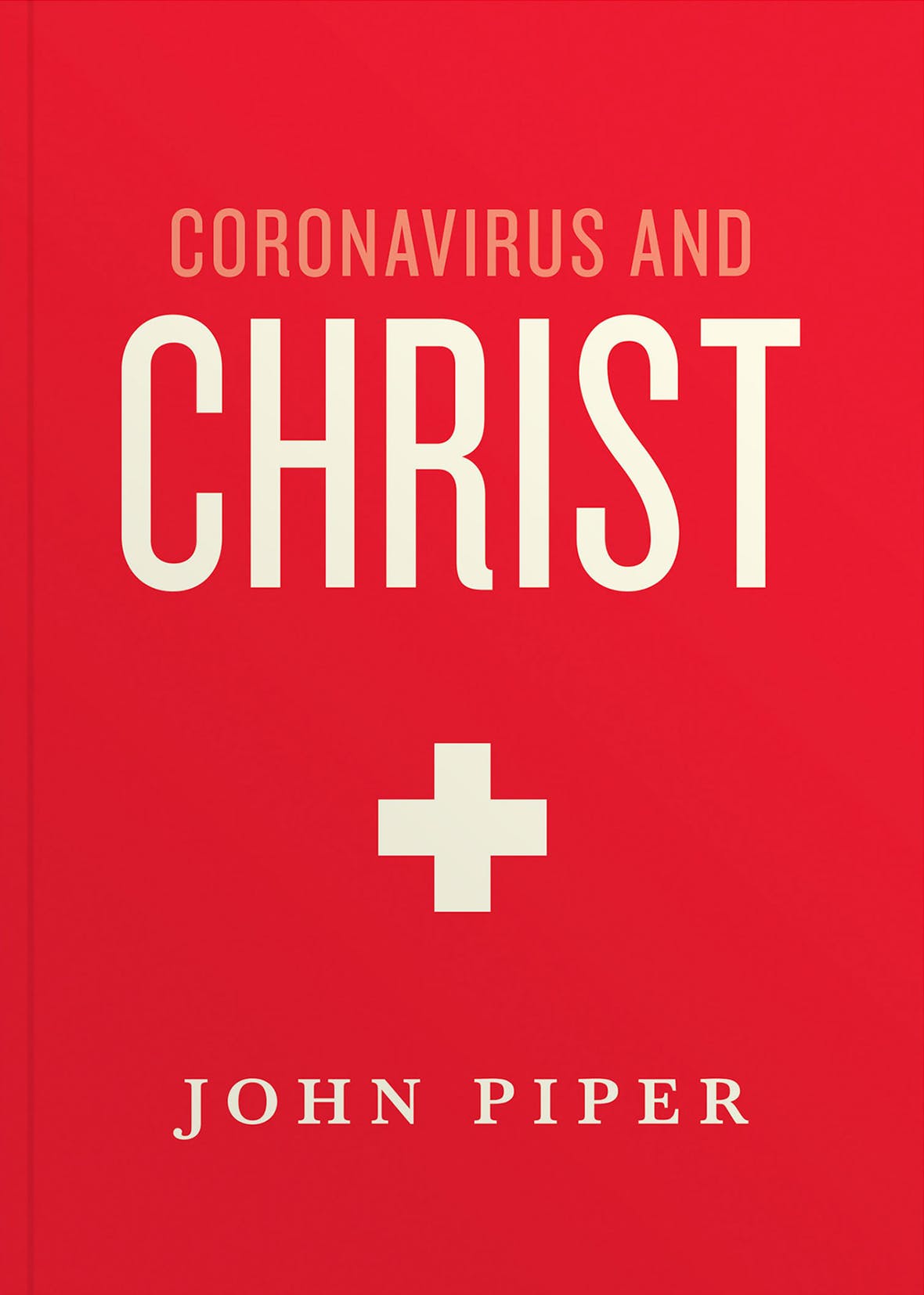
Book Review of John Piper’s “Coronavirus and Christ”

coronavirus-and-christ-wognfmz8-b8adb18521805aa76a17470a1553748e.png.jpeg

Jesus is Our Rock of Certainty At This Moment of History

Book Review by Dr. David Craig

I am so glad to have John Piper’s theologically sound and biblically based wisdom in the midst of grappling with the Coronavirus. In this short book Piper shares from personal storms he has gone through in his own life (cancer) and the storms that all humanity must endure when living in a fallen and sinful world. 

Part One: The God Who Reigns over coronavirus gives a theological and biblical foundation for going through suffering based on a robust examination of God and His attributes of Holiness, righteousness, wisdom, and sovereignty. His stated aim in this section is to “show why God in Christ is the Rock at this moment in history—in this pandemic of the coronavirus—and what it is like to stand on his mighty love.” He also repeats this statement in several of the chapters and substantiates every statement he makes like it with a plethora of scriptures and theological illustrations to back it up: “The same sovereignty that could stop the coronavirus, yet doesn’t, is the very sovereignty that sustains the soul in it.”

In Part Two Piper answers this question “What Is God Doing through the Coronavirus?” with the following six answers: (1) God is giving the world in the coronavirus outbreak, as in all other calamities, a physical picture of the moral horror and spiritual ugliness of God-belittling sin; (2) Some (not all) people will be infected with coronavirus as a specific judgment from God because of their sinful attitudes and actions; (3) The coronavirus is a God-given wake-up call to be ready for the second coming of Christ; (4)  The coronavirus is God’s thunderclap call for all of us to repent and realign our lives with the infinite worth of Christ; (5) The coronavirus is God’s call to his people to overcome self-pity and fear, and with courageous joy, to do good works of love that glorify God; (6) In the coronavirus God is loosening the roots of settled Christians, all over the world, to make them free for something new and radical and to send them with the gospel of Christ to the unreached peoples of the world.

Each answer is supported by Scripture, sound theology, and supplemented with various useful applications. Overall, Piper’s treatment is deep, concise, profound, and eminently helpful. I highly recommend his book as a very positive treatment of our biblical and theological response to the coronavirus. 

The Peace Which Christ Gives His True Followers – Jonathan Edwards (1750)

More good stuff on Edwards from my buddy Dave Steele

davidsteele1966's avatarVeritas et Lux

Jonathan_Edwards_engraving

On this day in 1758, Jonathan Edwards breathed his last breath. His next breath was in glory where he appeared before the Savior he loved during his earthly days as a converted man.

The coronavirus crisis has led many people down a path of anxiety, fear, and despondency. Edwards was familiar each of these maladies. In fact, he endured many challenging season over the course of his life and ministry. One of those seasons is described in this post.

—-

Imagine shepherding a congregation of people, only to find yourself
expelled from the church. That is exactly what happened to Jonathan Edwards – America’s greatest intellectual. Within a month of his dismissal, Edwards pens a series of sermons – one of which is entitledThe Peace Which Christ Gives His True Followers.

The Text: John 14:27

Peace I leave with you; my peace I give to you. Not as the…

View original post 498 more words

God the Best Portion of the Christian – Jonathan Edwards (1736)

Excellent article on Edwards from Dr. David Steele

davidsteele1966's avatarVeritas et Lux

Two hundred years after Calvin published his first edition ofThe jonathan-edwardsInstitutes,Jonathan Edwards preached a sermon about being content in God. The title of the sermon wasGod the Best Portion of the Christian. Edwards’s text is Psalm 73:25:

Whom have I in heaven but thee? and there is none upon earth that I desire besides thee.

The central truth is set forth at the beginning of the sermon, in deductive fashion:It is the spirit of a truly godly man, to prefer God before all other things, either in heaven or on earth.

Two propositions comprise this short sermon

1. A godly man prefers God before anything else in heaven.

Edwards presents the God-centered paradigm in this section by leading readers on the correct biblical path. He notes, “Every godly man hath his heart in heaven; his affections are mainly set on what is to be had there…

View original post 354 more words

The Preciousness of Time – Jonathan Edwards (1734)

Great post from my friend David Steele on the greatest “Time Manager” of all “time”!

davidsteele1966's avatarVeritas et Lux

Time is a precious commodity that must be treasured. Such is the argument in jonathan-edwardsJonathan Edward’s piece entitled,The Preciousness of Time and the Importance of Redeeming It.

The subject of time was no stranger to Edwards. He thought about the “improvement” of time often. Even in his famous 70 resolutions, he addressed the matter of time.

Resolution # 5

Resolved, never to lose one moment of time; but improve it the most

profitable way I possibly can.

It would serve us well, then, to consider the precious matter of time from Jonathan Edwards’ perspective.

Section 1: Why Time is Precious

Jonathan Edwards states four reasons why time is precious.

  1. Because a happy or miserable eternity depends on the good or ill improvement of it.
  2. Time is very short, which is another thing that renders it very precious.
  3. Time ought to be esteemed by us very precious, because…

View original post 580 more words

THE BUCKET LIST

Great article from my good friend Dr. David S. Steele

davidsteele1966's avatarVeritas et Lux

The Bucket List, starring Morgan Freeman and Jack Nicholson is about two very different men who are both diagnosed with terminal diseases. One of the men, upon learning of his condition, decides to draft a “bucket list.” The list would include achievements and things to see before he “kicks the bucket.” After viewing the film, I began to re-visit my bucket list:

  • Attend a baseball game at every major league park in America
  • Visit the Metropolitan Tabernacle in London
  • Walk the streets of Geneva where John Calvin ministered
  • Stand at the Castle Door in Wittenberg
  • Climb the stairs of the Lincoln Memorial

A bucket list is an important tool because it helps a person discern what is most important in life. What is on your bucket list? Who would you want to see? What would you want to accomplish? Where would you travel?

We know that the Apostle Paul had…

View original post 2,290 more words