The A to Z’s of the Christian

Our Spiritual ABC’s

Ask the Father daily in prayer and He will answer

Believe God is always sovereign and works all things for our good and His glory!

Christ must be the center of your life

Dare to be a disciple of Jesus

Even you can make a difference in the lives of others by acting out God’s revealed will

Friends are special gifts from God

Give to others cheerfully

Harmony is what you should strive for in your relationships with others

Interest in others will make you a broader minded person

Judge others with love and compassion

Knowledge and wisdom come from the Lord

Live in such a way that others will be attracted to Jesus because of you

Make sure to always love others as Jesus does

New life comes to you via a personal relationship with Jesus by repentance and faith

Obedience of God’s will leads to God’s blessings

Please God in all of your actions

Question your priorities often – make sure God is in the center of all of them

Read God’s Word daily

Shepherd’s protect God’s sheep – be grateful that the Lord is my Shepherd

Talk with God often

Use your heart to show concern for others

Vent feelings, but always with the love of Christ

eXult the Lord always!

Yesterday’s sins are already paid for by the grace of Jesus Christ

Zeal in living my spiritual ABC’s will help me grow in the Lord.

*Author of “Our Spiritual ABC’s” unknown

An Excellent Overview of World Missions by Hampton Keathley IV

Missions Outline (adapted from hamptonk@bible.org)

Introduction

Over 7 billion people on earth

  • 60% in Asia
  • 15% in Europe
  • 12% in Africa
  • 8% in Latin America
  • 5% in America – but we (Americans) consume 60% of the world’s goods.

Missions is not an elective course—a tack on. It is the heartbeat of the church. If it weren’t for missions, God might as well come now. It is the main purpose of the church.

The Great Commandment 
(Matthew 22:34-40)

Matthew 22:34-40 But when the Pharisees heard that He had put the Sadducees to silence, they gathered themselves together. 35 And one of them, a lawyer, asked Him a question, testing Him, 36 “Teacher, which is the great commandment in the Law?” 37 And He said to him, “‘You shall love the Lord your God with all your heart, and with all your soul, and with all your mind.’ 38 “This is the great and foremost commandment. 39 “The second is like it, ‘You shall love your neighbor as yourself.’ 40 “On these two commandments depend the whole Law and the Prophets.” (NASB)

The Saducees were “sad you see” because they didn’t believe in the resurrection.

LOVE:

  • For God
  • 
For our Neigbor

Our society twists this. You need to love yourself or you can’t love your neighbor. Our society starts with self. We are supposed to start with God.

The Great Commission 
(Matthew 28:19-20)

Matthew 28:19-20 “Go therefore and make disciples of all the nations, baptizing them in the name of the Father and the Son and the Holy Spirit, 20 teaching them to observe all that I commanded you; and lo, I am with you always, even to the end of the age.”

  • Disciple Go is a command but the heart of the commission is to make disciples.
  • Baptizing – rooting and grounding them
  • Teaching – what? – to observe all things. The emphasis on observing.

Verse 20 ends with the fact that we will have help. Christ is with us.

Myths of Missions

1. Myth of the Closed door – there are no closed doors to God

2. Nationalism – This is true. Most of the world is independent. Prior to WWII 99.5% of the world was under Western Domination. By 1969 99.5% of the world was independent.

3. Indigenous churches are self-sufficient – No church should really be self-sufficient. The universal church should help take care of all its members.

4. The hungry heart – the heart is deceitful and loves its sin everywhere.

5. The specialist – you need to be a doctor or a pilot to go to missionfield

6. The unfulfilled life – people who go to the mission field couldn’t find anything better in the real world.

How Can We Be 
True World Christians?

1. We need information about the rest of the world

2. That should lead to intercession.

3. Intercession will lead to involvement.

4. That leads to more interest.

5. Then you will want more information.

Acts 2:42-45 And they were continually devoting themselves to the apostles’ teaching and to fellowship, to the breaking of bread and to prayer. 43 And everyone kept feeling a sense of awe; and many wonders and signs were taking place through the apostles. 44 And all those who had believed were together, and had all things in common; 45 and they began selling their property and possessions, and were sharing them with all, as anyone might have need. (NASB)

We have already seen that the church should love and disciple from Matt 22:34 and 28:19. Here we see a model that expands on these principles.

  • Worship
  • Instruction
  • Fellowship
  • Evangelism

The wife acronym is helpful for remembering what the church should be doing, but we can divide these four things into two areas

  • Love = Worship and Fellowship – Love for God and love for Neighbor
  • Discipleship = Evangelism and Instruction

Evangelism is essential. What if you went to a football game and the players never left the huddle. That’s what many churches are like. We are too comfortable and self-satisfied. We never hear the word “self-sacrifice.”

What is church planting?

Drawing together a group of believers into a corporate community for joint worship, mutual fellowship, continuing training and constant outreach.

Missions – the sending forth of authorized persons (those designed by God, empowered by the H.S. and sent by the church) beyond the borders of the church and the immediate gospel influence (this includes geographical and social or economic influence) to proclaim the gospel of J.C. to win converts and to establish functioning, multiplying local congregations. (Peters p. 11)

  • Purpose in Progress
  • God’s Concern = mission
  • God’s Communication = missions

Missions in the Old Testament 
5-12-5-5-12

Gen 11: 2 sins

  • Pride
  • Disobedience – “lest we be scattered over the face of the earth. Man has never wanted to go out into the unknown.

Gen 12:1-3

With context of 11: in mind we have Abraham’s call.

INDIVIDUAL

ASPECT

NATIONAL

ASPECT

INTERNATIONAL ASPECT

LAND

NATION

BLESSING

Gen 13

Gen 15

Gen 17

Palestinian

Davidic

New

Deut 30:3-5

2Sam 7:11-16

Jer 31:31-40

Poetry

  • Ps 2:
  • A Rebellious World – 1-3 — look around
  • A Righteous God 4-6 — look above
  • A Redeeming King 7-12 — look ahead

Retribution or refuge

  • vv. 1-5 = Praise = God’s Goodness to the earth
  • vv. 6-12 = Ponder = God’s Greatness over the eath
  • v. 13 = Pursue = God’s Guidance for the earth
  • A Prayer for God’s grace
, goodness & glory
  • With a Purpose for World redemption
World reverence
World rejoicing
  • Unto Praise for God’s person
, provision,
 & preeminence
  • Our Worship vv. 1-6 = Sing to the Lord because of:
  • who = all the earth
  • what = bless His name
  • when = from day to day
  • where = among the nations
  • why = for God is great
  • Our Witness vv. 7-10 = Ascribe to the Lord:
  • Say He reigns
  • among the nations
  • among the world
  • among the people
  • Our Wonder vv, 11-13
  • Say He rules:
  • the earth
  • the world
  • the peoples
 Prophets
  • Isaiah
  • Chapters 1-39 
= God’s Condemnation
  • Chapters 40-66
 = God’s Consolation
  • OT 
39 books
  • NT 
27 books

Our World 5:8-23

Woe – Materialism: possessions v 8-10

  • “Get all you can, can all you get , sit on the can”
 One beg reason we don’t want to go to missions is we don’t want to give up our stuff.

Woe – Hedonism: pleasure v 11-17

  • Philosophy that “pleasure is the chief end of man”

Woe – Humanism: presumption vs 18-19

  • Pulling ourselves up by our bootstraps – “I don’t need God. I’m doing fine without Him.”

Woe – Relativism: perversion v 20

  • No absolutes – who’s to say what’s right or wrong – “homosexuality is just an alternate lifestyle”

Woe – Intellectualism: pride v21

Woe – Imperialism: persecution v 22-23

  • What is the Solution to our world’s poblems?

Look up! In Isa 6:1 Isaiah looked up.

Our Worship 6:1-4

Our Witness 6:5-8

God’s preeminence v1 Conviction v5
God’s purity v2-3 Cleansing v6-7
God’s power v4 Commission v8

Verse 5: Isaiah had been saying woe is the world around him, but when he sees God, he says Woe is me!. I myself am awful.

  • Jonah

Chapter 1: Jonah Runs = God Chastens

Chapter 2: Jonah Prays = God Cleanses

Chapter 3: Jonah Preaches = God Converts

Chapter 4: Jonah Pouts = God Cares

1. We need to find our place in the world

2. We need to pray for the world

3. We need to proclaim to the world

4. We need to care for the world

Missions in the New Testament

History = 5 Gospels and Acts

Letters = 21 Letters

Prophecy = 1 Revelation

At the end of each gospel the writer gives us a homework assignment:

Emphasis is on scripture over experience – not like today. Beware of any movement that stresses experience over the Scriptures.

“You are witnesses” – good or bad, you are it.

THE SOURCE

THE CONTENT

THE AGENTS

God’s Word

Christ’s Work

Our Witness

God prophesied Salvation

Christ Procured Salvation

We Proclaim Salvation

Disciples had fear – Christ met needs – peace

Communion with Christ = Joy

He had the peace treaty in his hands – nail scars

They were sent but they had to have the Spirit before they could accomplish their mission. was this the filling of the HS. Probably not since He filled them in Acts 2: This was probably similar to Jn

Peace of Christ

Power of the Spirit

Pardon of God

v 19-21

v 22

v 23

We Rest in Him

We Rely on Him

We Reach Out for Him

GREAT COMMISSION PASSAGES

MATT

MARK

LUKE

JOHN

Make Disciples Preach the Gospel You are my Wtnesses So Send I You
All the Nations All the World All Nations The World Jn 3:16
Purpose Preaching People Process
We are Disciples Heralds Witnesses Ambassadors
Imperative Imperative Indicative Indicative

ACTS 
THE CHURCH

STARTS

SCATTERS

SENDS

1-7

8-12

13-28

  • Cross cultural expansion is emphasis in acts
  • Jerusalem, Judea, Samaria and uttermost part of the earth
  • Romans 10:14f

Four questions and the bottom line is that we need senders. Without senders, no one can go. There are plenty of people who are willing to go but raising support kills many endeavors.

(1) Can we reach the world in this generation? 2 Tim 2:1f is foundational. Vs 2 says faithfulness is only requirement.

Value of multiplication: 1 – 2 – 4 – 8 – 16 – 32 – 64 – 128 – 256 – 512 – 1024 – etc at end of 33 years we could have reached 9 billion

(2) Are the heathen lost?

See “Untold Billions: are they really lost.” Ron Blue, Bib Sac

Questions involved:

  • Is God Just?
  • Character of GodTheology Proper

(3) Is Christ the only way?

Sufficiency of Christ—Christology

(4) Did Christ have to die?

  • Necessity of the cross—Sotieriology
  • Is not evil relative? Judgment of sin—Amartiology
  • Is Man inherently sinful? Depravity of man—Anthropology
  • Is the church God’s unique witness? Role of the church—Ecclessiology
  • Is there a future reckoning?—Eschatology

God has revealed himself in creation and conscience.

What is man’s response to the Glory of God?

  • No praise. Notice: If you do nothing you will be moving.
    • No thanks—away from God
      • Vain thought:
        • Darkened heart—Dark in the heart – Dead in the head.
          • Pride
          • Foolish
          • Idolatry

Sacrificing chickens to a rock is not reaching out to God. It is the last stage in rejection of God.

Man has suppressed the truth. What does God do? He lets them go. He gives them over to their lusts and passions and depraved mind. These three areas correspond and are contrasted with the three areas we should love God with – our heart and soul and mind.

History of missions

  • Europe
  • Paul and Barnabas—Antioch
  • Patrick—Ireland
  • Augustine—England
  • Boniface—Germany
  • Asia
  • Francis Xavier—Japan
  • William Carey—India
  • Adoniram Judson—Burma
  • Hudson Taylor—China
  • Africa
  • Robert Moffat—South Africa
  • David Livingstone—Congo
  • Mary Slessor—Nigeria
  • C.T. Studd—Belgian Congo
  • Latin America
  • Bartolome De Las Casas
  • Cam Townsend—Guatemala – started Wycliffe Bible Translators
  • Jim Elliot—Equador (martyred)
  • Chet Bitterman—Columbia – martyred

Carey starts first sweep – Pioneer – coastal emphasis – 1800-1900

Taylor starts 2nd sweep – Inland emphasis – 1900’s

Townsend starts 3rd sweep – Hidden Peoples 1934 ->

Good Acronym for Life Applications from the Bible by Rick Warren

The “S.P.A.C.E.  P.E.T.S” Acronym

 WHEN STUDYING THE BIBLE ASK THE FOLLOWING 9 QUESTIONS: “Is There Any?”

Sin to confess? Do I need to make restitution with anyone?

Promise to claim? Is it a universal promise? Have I met the conditions of the promise?

Attitude to change? Am I willing to work on changing my attitude to a Christ-like one?

Command to obey? Am I willing to do it no matter how I feel?

Example to follow? Is there a positive example to copy or a negative one to avoid?

Prayer to pray? Is there anything I need to pray back to God?

Error to avoid? Is there any problem that I should be aware of, or alert to?

Truth to believe? What can I learn about the character or nature of God?

Something to praise God for? What can I be thankful or grateful for?

7 Reasons to Believe The Bible is God’s Word and Inerrant

7 REASONS FOR BELIEVING THE BIBLE IS THE WORD OF GOD AND TOTALLY TRUSTWORTHY

ACRONYM: “H.I.S. L.A.W.S” – Developed By Pastor Bob Sears

Harmony Though written over 1600 years by 40 plus authors in different locations and in 3 different languages about scores of controversial subjects, the Bible’s teachings are supernaturally harmonious from cover to cover.
Impact Countless millions of people from diverse cultures all over the world have had their personal lives changed forever for the good and found spiritual meaning in life from the message of the Bible.
Seers The Old and New Testament prophets (“seers”) spoke dozens of general and specific predictions which have been historically fulfilled. Among the most significant are Isaiah 53 (O.T) and Matthew 24 (N.T).
Longevity In spite of repeated attempts throughout history both to destroy and discredit the Bible, it still exists in virtually its original form and is still revered and circulated more widely than any other book on earth.
Accuracy The Bible’s detailed record of historical data has been repeatedly shown (by other writings and archeological discoveries) to be accurate to an exact degree. This testifies to its writers’ reliability.
Writers The biblical writers obviously meant their readers to accept their writings as a message from God (e.g.: O.T.: the repeated instances of “Thus says the LORD…” N.T.: 1 Th. 2:13; 2 Tim. 3:16; 2 Pet. 1:20-21).
Son of God Jesus, reported to be the authoritative Son of God by the biblical writers, plainly taught the full inspiration of both the Old and New Testaments (e.g.: O.T.: Matthew 5:17-18. N.T.: John 14:23-26, and 16:13).

An Acrostic For Remembering the Book of Exodus by Barry Huddleston

EXODUS THEME:

 FROM EGYPTS BONDAGE TO SINAIS TEN COMMANDMENTS

 CHAPTER:             TITLE

C1            Forced labor for Israel

C2            Royal training for Moses

C3            Obstinate Moses resists God

C4            Moses’ excuses are answered

C5            Egyptian oppression is increased

C6            God’s deliverance is promised

C7            Yahweh smites the Nile

C8            Plagues of frogs, insects

C9            Three plagues harden Pharaoh

C10          Swarming locusts and darkness

C11           Blood required for firstborn

C12           Observance of the Passover

C13           National exodus from Egypt

C14           Division of Red Sea

C15           Adoration song to God

C16           Gathering manna six days

C17           Extracting water from rock

C18           Tribal organization for ruling

C19           Orders at Mount Sinai

C20           Statement of Ten Commandments

C21           Injunctions for moral justice

C22           Numerous laws of restitution

C23           Angelic assistance is promised

C24           Instructing Moses on Sinai

C25           Sketch of tabernacle plans

C26           Tabernacle curtains and boards

C27           Exact measurements for tabernacle

C28           Necessary garments for priests

C29           Consecrations of the priests

C30           Offerings for sin’s atonement

C31           Mandate to keep Sabbath

C32           Molten calf brings judgment

C33           Anguished intercession of Moses

C34           New covenant is given

C35           Desire rekindled for tabernacle

C36           Making curtains and boards

C37           Explanation of furniture making

C38           New court for tabernacle

C39           Tabernacle and garments finished

C40           Shekinah glory fills tabernacle

About the Author: Barry Huddleston got the idea for The Acrostic Summarized Bible when taking a class taught by Terry Hall (a member of Walk Thru The Bible Ministries) in the 1980’s. The Acrostic Summarized Bible was last published in 1992 in Grand Rapids, by Baker. See the Introduction to his book on this blog under the  “Acronym” category in the article by Bruce H. Wilkinson – entitled “Why Use Acrostics For Biblical Retention?” https://verticallivingministries.wordpress.com/wp-admin/post.php?post=1612&action=edit

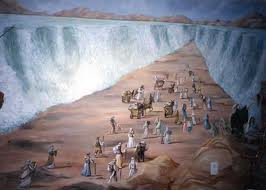
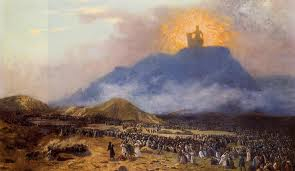
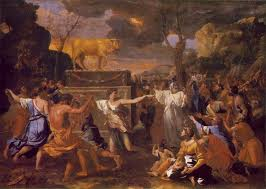
Paintings above in order: (1) Moses Holding Ten Commandments – source unknown; (2) Israel in Egypt by John Poynter; (3) Plagues of Egypt by Josesph Turner; (4) Christ Our Passover by Louie Monteith; (5) Moses parting the Red Sea – source unknown;(6) Moses on Mount Sinai by Jean Leon Gerome; (7) Molten Calf – source unknown; (8) Tabernacle image – source unknown.

How the A-C-T-S Acronym Can Help Us In Balancing Prayer By Dr. R.C. Sproul

A helpful structure for personal prayer is provided by the acrostic A-C-T-S: Adoration, Confession, Thanksgiving, and Supplication. Adoration as the place where prayer must start. When we begin by adoring God and seeing him in his majesty and holiness, we naturally become aware of our sins. Thus, the next step in prayer is confession of sins.

We should always pray in a spirit of confession. Psalm 66:18 says that if we harbor unconfessed sins in our hearts, God will not hear us. Thus, we may never enter into a conversation with God while we are in a state of sin. Just as believers under the old covenant could only draw near to God by bringing a sacrifice, so we may not draw near without confessing our sins and approaching him through the shed blood of Jesus Christ, the final sacrifice for sins. We are commanded to come boldly, but we must come contritely as well.

The third part of prayer is “supplication with thanksgiving.” We should begin with thanksgiving for what Jesus has done for us and for what God has done in our lives. The attitude of thanksgiving is wanting in our lives. The traditional worship service of the church is called the Eucharist, from the Greek word for “thanksgiving.” The idea of worship is thanksgiving to God. We tend to forget what God has done for us, which is why God set up memorials and rituals for Israel to remind them. We need to make the effort in our prayers to show that we have not forgotten God’s mercies.

Finally, we bring our petitions. The Protestant doctrine of the priesthood of all believers says that we need not go to an ordained clergyman for prayer, and we certainly don’t need to ask dead saints to do it. We can ask any believer.

The other side of this is that, just as we need to ask others to pray for us, so we need to pray for others. The tendency is for us to be self-centered in our petitions, to pray mostly for ourselves. We need to reverse this emphasis and exercise our priesthood properly. We need to be priests for others, and have them be priests for us.

Try this A-C-T-S prayer outline. If you find that you stammer, keep going. Prayer, like learning to talk to anyone else, takes both focused interest and practice. Ask God to help you learn to pray better. Open the psalms and use them to help guide your prayers and your thoughts.

Adapted from Dr. R.C. Sproul. Vol. 4Before the Face of God: Book 4: A daily guide for living from Ephesians, Hebrews, and James. Grand Rapids: Baker Book House; Ligonier Ministries, 1994, 478-479.

One of the ways I like to use the A-C-T-S acronym is to write down on a sheet of paper or journal each letter; then a corresponding verse; and then write down a short prayer on each aspect of adoration, confession, thanksgiving, and supplication based on each verse or passage of Scripture that I am reading through. One of the ways this really helps you grow in the Christian walk is in the area of confession and repentance. It’s easy to say your sorry for a particular sin, but when you write it down and it stares you back in the face – it really forces you to deal with it. For example, if I write down I was short and curt with my wife – and I write down what I said specifically – it helps me not only confess it to God, but also to my spouse, and then ask her to forgive me as well, and then we can work together on how I can speak more kindly to her. Prayer doesn’t change God – He’s perfect and always acts perfectly in accordance with His sovereign plans, but prayer is a wonderful means to help us become more like Jesus, and therefore, prayer is a great medium for us to change and conform into the image of Christ. – Dr. David P. Craig


About the Author: Dr. R.C. Sproul is the founder and chairman of Ligonier Ministries, an international Christian education ministry located near Orlando, Florida. His teaching can be heard on the program Renewing Your Mind, which is broadcast on hundreds of radio outlets in the United States and in 40 countries worldwide. He is the executive editor of Tabletalk Magazine and general editor of The Reformation Study Bible, and the author of more than seventy books (including some of my all time favorites: THE HOLINESS OF GOD; CHOSEN BY GOD; KNOWING SCRIPTURE; WILLING TO BELIEVE; REASON TO BELIEVE; and PLEASING GOD) and scores of articles for national evangelical publications. Dr. Sproul also serves as president of Ligonier Academy of Biblical and Theological Studies and Reformation Bible College. He currently serves as senior minister of preaching and teaching at Saint Andrew’s in Sanford, FL.

“How Can I Become a Christian?” By Dr. James Montgomery Boice

The ABC’s of Salvation

How does a person become a Christian? There are three points—two things we must believe and one thing we must do. They are as simple as ABC.

A stands for “admit.” We must admit that we are sinners and that we are therefore under God’s judgment.

B stands for “believe.” We must believe that God loves us in spite of our sin and that he has acted in Jesus Christ to remove sin and restore us to himself.

C stands for “commit.” This is an act of faith by which we give up trying to run our own life and instead place ourselves in the hands of the Lord Jesus Christ, who died for us and rose again.

Admitting Sin

First, God demands that we admit without reservation that we are sinners and that we should therefore be separated from his presence forever. We are in rebellion against him, either consciously or unconsciously, and we deserve not grace but judgment.

Sin is an everyday experience and the number one problem of mankind. What is more, they recognize that the Bible everywhere insists upon this.

The Scripture declares that the whole world is a prisoner of sin,” wrote Paul in the book of Galatians (Gal. 3:22).

In 1 Kings, chapter 8, King Solomon declared, “There is no one who does not sin” (v. 46).

Psalm 143:2 says, “No one living is righteous before you.”

Isaiah observed, “We all, like sheep, have gone astray, each of us has turned to his own way” (Isa. 53:6).

In the first letter of the apostle John, we are admonished, “If we claim we have not sinned, we make him out to be a liar and his word has no place in our lives” (I John 1:10).

This is also the burden of the first chapters of Paul’s letter to the Romans, where we find the doctrine of the universality of man’s sin stated in its most comprehensive form.

According to the first three chapters of Romans there are three types of people.

The first type is what we would call hedonists, those whose basis for life is materialism. Paul discusses them in Romans 1:18-32. Hedonists have determined to live for their own enjoyment and for whatever pleasures they can find. “Why is this man a sinner?” Paul asks. “He is a sinner because he is on a path that is leading him away from God and therefore away from any real beauty, truth or inner satisfaction.” As Paul describes it, this path is marked by empty imaginings, darkened intellects, a profession of wisdom by one who is actually foolish and, finally, a perversion of the worship of God which leads to a final debasement (vv. 21-23).

The second type of person, the type discussed in Romans 2:1-16, is what we would call a moral man. In Paul’s day, this was the Greek philosopher or professor of ethics. In our day, it would be anyone who has high ethical standards but who does not believe in the Lord Jesus Christ as his Savior. Why does God consider this person a sinner? The answer has two parts. First, he is a sinner because he has come short of God’s standard of righteousness. God’s standard is perfection. It is the standard of the life of the Lord Jesus Christ, the only perfect man who ever lived. All fall short of it. Second, he is a sinner because he falls short of his own standards no matter how high or low they may be.

What is your standard of morality? You may say, “My standard is the Sermon on the Mount. Isn’t that a good standard?” Yes, that is a good standard; but the question is: Do you live up to it? In the Sermon on the Mount Jesus said, “Be perfect, therefore, as your heavenly Father is perfect” (Matt. 5:48). Are you perfect? Of course not! In that case, you are condemned by the standard of your own choosing.

You may not like that conclusion, or course. So you may say, “Well, I’ll just lower my standard and make it the Golden Rule—‘In everything, do to others what you would have them do to you.’” Do you keep that standard? Do you always do to other people all that you would like done by them to yourself? Once again, the answer is no! The point is that all of us are condemned by whatever standard we erect, for none of us is able to live up to even the lowest standards of morality. We are all sinners, and deep within we know it.

There is one more type of person. Paul describes him in Romans 2:17-29. This is the man who would admit most if not all of what Paul has been saying and yet who would attempt to escape the conclusions by pleading his religion. “I have been baptized,” he would say. “I am confirmed. I have given large sums of money to the church’s support and have served on its committees.”

“Good for you,” Paul answers. “But you are still a sinner, because God’s requirement of perfection includes a change of the heart, and none of the outward things of religion—church membership, the sacraments, service or stewardship—can do anything about this most basic problem.” At the end of this section of Romans Paul sums his teaching up by saying, “There is no one righteous, not even one; there is no one who understands, no one who seeks God. All have turned away, they have together become worthless; there is not one who does good, not even one” (Rom 3:10-12).

 Believing on Jesus

The second point to becoming a Christian is to believe that God loves you in spite of your sin and that he has acted in Jesus Christ to remove that sin and to begin to make you perfect once more by conforming you to Christ’s image.

“God demonstrates his own love for us in this: While we were still sinners, Christ died for us” (Rom. 5:8).

“For God so loved the world that he gave his one and only Son, that whoever believes in him shall not perish but have eternal life” (John 3:16).

In the Bible, there are three great terms for what God does in salvation. The first is propitiation, a word that occurs in Romans 3:23-26, Hebrews 2:17, 1 John 2:2 and 4:10 (the NIV translates this as sacrifice of atonement”). Propitiation is the act of performing a sacrifice by which the wrath of God against sin is averted. It refers to what Jesus accomplished in relation to God by his death.

Propitiation presupposes the wrath of God. Right here many modern thinkers would stop, arguing that the term should not be used. “We can understand,” such a person might say, “how the idea of propitiation would be appropriate in paganism where God was assumed to be capricious, easily offended and therefore often angry. But this is not the biblical picture of God. According to the Christian revelation, God is not angry. Rather, he is gracious and loving. Moreover, it is not God who is separated from us because of sin, but rather we who are separated from God.” Those who have argued this way have either rejected the idea of propitiation entirely, considering its presence in the Bible to be merely a carry-over from paganism, or they have interpreted the basic Greek word for propitiation to mean, not Christ’s propitiation of the wrath of God, but rather the covering over or expiation of our guilt by his sacrifice.

We must be appreciative of those who have distinguished the pagan idea of propitiation from the Christian idea. For it is quite true that God is not capricious. We do not propitiate him in order to keep in his good graces, for God is a God of grace and love.

Still, this is not the whole of the matter. In the first place, we do not want to forget what the Bible tells us about God’s just wrath against sin in accordance with which sin will be punished either in Christ or in the person of the sinner. We may feel that the wrath of God and the love of God are incompatible. But this is not the biblical perspective. Rather, the Bible teaches that God is wrath and love at the same time. What is more, the wrath is not just a small and insignificant element that somehow is there alongside the far more significant and overwhelming love of God. Actually, it is a major element that may be traced all the way from God’s judgment against sin in the Garden of Eden to the final cataclysmic judgments prophesied in the Book of Revelation.

Second, although the word “propitiation” is used in biblical writings, it is not used in precisely the same way it is used in pagan writings. In pagan rituals, sacrifice was the means by which man placated an offended deity. But in Christianity, it is never the man who takes the initiative or makes the sacrifice, but God himself who out of his great love for the sinner provides the way by which his own wrath against sin may be averted. Moreover, he is himself the way—in Jesus. This is the true explanation of why God is never the explicit object of the propitiation in the biblical writings. He is not the object because he is, even more importantly, the subject. In other words, God himself placates his wrath against sin so that his love may go out to embrace and fully save the sinner.

The second great term for God’s work of salvation is redemption. Redemption speaks of what Jesus Christ did for us in salvation and of what it cost him to do it. It also occurs in Romans 3:23-26, and in many other places.

The Greek word translated as “redeem,” “Redeemer” or “redemption” in our Bibles has to do with loosing someone’s bonds so that, for example, a prisoner becomes free. At times it was used of procuring the release of a prisoner by means of a ransom. Spiritually, the idea is that, though we have fallen into desperate slavery through sin and are held as by a cruel tyrant, Christ has nevertheless purchased our freedom from sin by his own blood. He paid the price to free us.

We have what is perhaps the greatest biblical illustration of redemption in the story of Hosea. Hosea was a minor prophet whose marriage was unfortunate from a human viewpoint, for the woman proved unfaithful to him. But it was a special marriage from the viewpoint of God. God had told Hosea that the marriage would work out in this fashion. Nevertheless, he was to go through with it in order to provide an illustration of how God loves his people, even when they prove unfaithful by committing spiritual adultery with the world and its gods. The marriage was to be a pageant in which Hosea was to play the part of God and his wife would play the part of unfaithful Israel.

The climax comes at the point at which Gomer fell into slavery, probably because of debt. Hosea was told to buy her back as a demonstration of the way by which the faithful God loves and saves his people. Slaves were always sold naked in the ancient world, and this would have been true of Gomer as she was put up on the auction block in the city of Samaria. She apparently was a beautiful woman. So when the bidding started the offers were high, as the men of the city bid for the body of the female slave.

The bidding was competitive. But as the low bidders dropped out, someone added, “Fifteen pieces of silver and a bushel of barley.” “Fifteen pieces of silver and a bushel and a half of barley,” said Hosea. The auctioneer must have looked around for a higher bid and seeing none, would have said, “Sold to Hosea for fifteen pieces of silver and a bushel and a half of barley.” Now Hosea owned his wife. He could have killed her if he had wished. He could have made a public spectacle of her in any way he might have chosen. But instead, he put her clothes back on her, led her away into the anonymity of the crowd, and demanded love of her while promising the same from himself. Here is the way he tells it. “The LORD said to me, ‘Go, show your love to your wife again, though she is loved by another and is an adulteress. Love her as the LORD loves the Israelites, though they turn to other gods and love the sacred raisin-cakes.’ So I bought her for fifteen shekels of silver and about a homer and a lethech of barley” (a “shekel” was about 2/5 ounce or 11 grams; a “homer” was about 6 bushels or 220 liters; a “lethech” was about 3 bushels or 110 liters).

Then I told her, ‘You are to live with me many days; you must not be a prostitute or be intimate with any man, and I will live with you’” (Hos. 3:1-3). Hosea had the right to demand what she had formerly been unwilling to give. But as he demands it he promises love from himself. For it is thus that God loves all who are his true spiritual children.

The third word for describing God’s work in salvation is justification, the central doctrine of Christianity. Why is it central? Because justification by faith is God’s answer to the most basic of all religious questions, namely, “How can a man or woman become right with God?”

We are not right with him in ourselves; this is what the doctrine of sin means. Sin means that we are in rebellion against God, and if we are against God we cannot be right with God. We are all transgressors. The doctrine of justification by faith is the most important of all Christian doctrines because it tells how one who is in rebellion against God may become right with him. It says that we may be justified by the work of Christ alone received by faith, and not by our own works-righteousness.

Paul puts it like this: “All who believe . . . are justified freely by his [that is, God’s] grace through the redemption that came by Christ Jesus” (Rom. 3:22-24); “A man is justified by faith apart from observing the law” (v. 28); “To the man who does not work but trusts God who justifies the wicked, his faith is credited as righteousness” (Rom. 4:5). These verses teach that justification is God’s work and that it flows from God’s grace.

The Christian doctrine of justification is, therefore, actually God’s declaring the believing individual to be righteous, not on the basis of his own works or irrespective of works, but on the basis of Christ’s sacrifice. In justification, God declares that he has accepted the sacrifice of Christ as the payment of our debt to the divine justice and his imputed Christ’s righteousness to us in place of the sin.

Paul’s own conversion is an illustration of these points. He was not a hedonist; far from it. He was better than that, having effected in his life a combination of the second and third types of men he described in the opening chapters of Romans. He was religious and moral, and he trusted for his salvation to what he could achieve in these areas. He tells about it in Philippians 3:4-8: “If anyone else thinks he has reasons to put confidence in the flesh, I have more: circumcised on the eighth day, of the people of Israel, of the tribe of Benjamin, a Hebrew of Hebrews; in regard to the law, a Pharisee; as for zeal, persecuting the church; as for legalistic righteousness, faultless. But whatever was to my profit I now consider loss for the sake of Christ.”

What Paul is saying is that in the days before he met Christ, he had something like a balance sheet in his life. It had assets and liabilities, and he thought that being saved consisted in having more in the column of assets than in the column of liabilities. Moreover, he thought there were considerable assets, some inherited and some earned. Among the inherited assets was the fact that Paul had been born into a Jewish family and had been circumcised according to Jewish law on the eighth day of life. He was a pure-blooded Jew, born of Jewish parents (“a Hebrew of Hebrews”). He was also an Israelite, that is, a member of God’s covenant people. Moreover, he was of the loyal tribe of Benjamin. Then, too, Paul had advantages that he had won for himself. In regard to the law, he was a Pharisee, the most faithful of all Jewish sects in adherence to the law. Moreover, he had been a zealous Pharisee, which he had proved by his persecution of the infant church.

These were real assets from a man’s point of view. But the day came when Paul saw to what these amounted in the sight of the righteous God. It was the day Jesus appeared to him on the road to Damascus. Before that time, Paul thought he was attaining righteousness by keeping the law. But when he saw Christ, he discerned that these acts of righteousness were actually like filthy rags. Before this, he had said, “As for legalistic righteousness, faultless.” Now he said, “I am the worst of sinners,” and he rejected any attempts to justify himself. He turned to God who on the basis of Christ’s death freely justifies the ungodly. So far as his balance sheet was concerned, Paul recognized that all he had accumulated as an asset was in reality not an asset at all. It was a liability, for it had kept him from Christ. This is where he placed it. He called it “loss.” Then, under assets he entered: “Jesus Christ alone.”

It is the glory of the Christian gospel that when a person who has been made alive by God turns from his own works, which can only condemn him, and instead by faith embraces the Lord Jesus Christ as his Savior, God declares his sins to have been punished at Calvary and imputes the righteousness of Christ to his account.

Commitment

Finally, there must be an act by which you actually commit yourself to Christ. Or, to put it another way, you open the gate of your heart and admit him. This does not mean that you are responsible for your own salvation. If you do open the door, it is only because Christ is there beforehand moving you to do it. Still, from your own point of view, the act itself is absolutely indispensable.

What matters is the reality of your own personal commitment to Jesus. Are you a Christian? That is the question. Is it real? The answer to that question does not depend upon your good works but rather upon your relationship to the Savior. Have you asked Jesus Christ to be your Savior?

You must say,

“Lord Jesus Christ, I admit that I am a sinner and stand under your judgment, that I deserve nothing, that I have no claims upon you. Nevertheless, I believe that you love me and died for me, and that now by grace I can stand before you clothed in your righteousness. I commit my life to you. Receive me now as one of your followers.”

This has been the heart of Christian experience. It has been embodied in many of our hymns. One of them says:

Nothing in my hand I bring,

Simply to thy cross I cling;

Naked, come to thee for dress,

Helpless, look to thee for grace;

Foul, I to the Fountain fly;

Wash me, Savior, or I die.

 Rock of ages, cleft for me,

Let me hide myself in thee.

If you will pray that prayer, God will wash you, and he will give you that righteousness which is above anything you can personally attain.

Author: James Montgomery Boice, Th.D., (July 7, 1938 – June 15, 2000) was a Reformed theologian, Bible teacher, and pastor of Tenth Presbyterian Church in Philadelphia from 1968 until his death. He is heard on The Bible Study Hour radio broadcast and was a well known author and speaker in evangelical and Reformed circles. He also served as Chairman of the International Council on Biblical Inerrancy for over ten years and was a founding member of the Alliance of Confessing Evangelicals. He is the author of numerous Bible expositions and one of my favorite Systematic Theologies called Foundations of the Christian Faith. The article above “How To Become a Christian?” was adapted from Chapter One in the book How to Live the Christian Life, Chicago: Moody Press, 1982.

How To Keep Growing as A Christian By Using the Acronym GROWTH

The Acronym GROWTH*

G – Go to God in Prayer Daily

R – Read God’s Word Daily

O – Obey God, moment by moment

W – Witness for Christ by your life and words

T – Trust God for every detail of your life

H – Holy Spirit – allow God to control and empower your daily life

*Adapted from Jamie Buckingham’s book Power for Living Arthur S. DeMoss

Foundation]; 3rd edition (November 1998). I don’t necessarily recommend this book – (it’s an average book on spiritual growth & sanctification – there are much better books on this subject under the category “Spiritual Life” on this website) but I think the acrostic for GROWTH is helpful.

An Acrostic for Remembering the Book of Genesis By Barry Huddleston

TITLE FOR THE BOOK OF GENESIS:

 “IN THE BEGINNING GOD CREATED THE HEAVEN AND THE EARTH AND MAN”

CHAPTER:        TITLE

C1             Inception of the world

C2            Newlyweds placed in Eden


C3            Temptation and man’s fall

C4            Hatred and first murder

C5            Entire genealogy of Adam


C6            Building of the ark

C7            Eruption of the flood

C8            Going from the ark

C9            Initiation of rainbow promise

C10          Noah’s sons and grandsons

C11          Nations scattered from Babel

C12          Immigration of Abram’s family

C13          Nephew Lot leaves Abram

C14          Gifts for Priest Melchizedek


C15          God counts Abram righteous

C16          Offspring Ishmael from Hagar

C17          Designation changed to Abraham


C18          Compassion for Sodom’s righteous

C19          Removal of Sodom, Gomorrah

C20          Egyptian escaped of Abraham

C21          Arrival of promised Isaac

C22          Test of Abraham’s faith

C23          End of Sarah’s life

C24          Denoting Rebekah as bride


C25          Twins Esau, Jacob born

C26          Hostility between Isaac, Philistines

C27          Esau robbed of birthright


C28          Heavenly ladder at Bethel

C29          Earning Leah and Rachel

C30          Additions to Jacob’s family

C31          Venture away from Laban

C32          Endeavoring to wrestle God

C33          New friendship with Esau


C34          Avenge for Dinah’s defilement

C35          Name changed to Israel

C36          Descendents of Esau listed


C37          Treachery of Joseph’s brothers

C38          Harlot Tamar deceives Judah

C39          Enraged Potiphar jails Joseph


C40          Explanation of two dreams

C41          Appointing Joseph as ruler

C42          Reuben held in Egypt

C43          Trek to Egypt again

C44          Holding Benjamin for cup


C45          Announcement of Joseph’s identity

C46          New home in Egypt

C47          Design to save Egypt


C48          Manasseh and Ephraim adopted

C49          Announcement of Jacob’s blessing

C50          New relationship among brothers

Barry Huddleston got the idea for The Acrostic Summarized Bible when taking a class taught by Terry Hall (a member of Walk Thru The Bible Ministries) in the 1980’s. The Acrostic Summarized Bible was last published in 1992 in Grand Rapids, by Baker. See the Introduction to his book on this blog under the  “Acronym” category in the article by Bruce H. Wilkinson – entitled “Why Use Acrostics For Biblical Retention?”

Why Use Acrostics For Biblical Retention? By Bruce H. Wilkinson

*Article Adapted from the Introduction to The Acrostic Summarized Bible by Barry Huddleston, Grand Rapids: Baker, 1992.
Acrostics are nothing new. They are as timeless as the pages of Scripture and as contemporary as the morning newspaper. An acrostic is “a poem, word puzzle, or other composition in which certain letters in each line form a word or words.” Origin late 16th cent.: from French acrostiche, from Greek akrostikhis, from akron ‘end’ + stikhos ‘row, line of verse.’

Even in Bible times acrostics were known and used. The Old Testament contains fourteen acrostic poems, the most notable being Psalm 119. Though there are no acrostics in the New Testament, the early Christians identified one another by drawing the sign of the fish—in Greek ichthus—an acrostic for the Greek words meaning “Jesus Christ God’s Son, Savior.”

Chances are you use acrostics nearly every day of your life. Piano students often learn the lines of the treble clef with the aid of the acrostic: “Every Good Boy Does Fine” –EGBDF.

Acrostics have rescued many a grocery shopper who has arranged the list of needed items in such a way as to spell an easily remembered word. For example, here is a list of seven items. Read it over, close your eyes, and then try to recall all seven:

Onions

Watermelon

Soup

Flour

Relish

Eggs

Lettuce

Now try it again, this time with the aid of an acrostic. By rearranging these seven items into a particular order, you will find that their first letters spell the word FLOWERS. Now can you recall all seven using the acrostic?

Flour

Lettuce

Onions

Watermelon

Eggs

Relish

Soup

In much the same way, Bible readers down through the centuries have sought ways to remember the contents of Scripture. Ever since Stephen Langton hot upon the idea of dividing the Bible into chapters in A.D. 1228, men have searched for newer and better techniques for summarizing and memorizing God’s inspired Word. What Sunday School teacher hasn’t used the acrostic GRACE (God’s Riches At Christ’s Expense) and FAITH (Forsaking All I Trust Him) to help the learning process. You hold in your hands perhaps the most significant contribution yet to that continuing search. Barry Huddleston has created a unique approach that meets the three greatest needs of the serious Bible Student:

(1) A chapter by chapter summary of the Bible;

(2) A thematic overview of each of the sixty-six books; and

(3) A topical index that aids quick location of every chapter in the Bible dealing with a particular subject.

In the Acrostic Summarized Bible, short four-word phrases introduce each chapter of the Bible—from Genesis to Revelation. Then, reading down the page, the first letter of each chapter phrase forms another word, phrase, or sentence that accurately—yet succinctly—captures the theme of the book. The vocabulary is pungent and pithy.

*The Cold War was at its height; there was no such thing as a space shuttle, a PC, or the Internet; cars ran on leaded gas…and a Dallas Theological Seminary student named Bruce Wilkinson was wondering, “How can Christians teach a written Word in a visual age? How are we to present 66 books to a world that would rather watch 66 channels?” He answered his question by drawing from a concept in his master’s thesis and developed Walk Thru the Bible, a program by which, in just one day, just about anyone can learn the geography, characters, and key concepts of every book of the Old Testament in chronological order.

Twenty-five years later, Dr. Wilkinson’s teachings have helped thousands of Christians draw closer to God’s Word. Walk Thru the Bible is the largest conductor of live seminars in the world, religious or secular, and the world’s largest publisher of devotional magazines. Materials are available in more than 40 countries and 25 languages.

As the author of many books (including Personal Holiness in Times of Temptation, Talk Thru the Bible, and the best-sellers The 7 Laws of the Learner and The Prayer of Jabez), Wilkinson is an in-demand speaker, and makes frequent appearances at Promise Keeper rallies and the National Association of Christian Schools conventions. He is also a regular contributor to Dr. James Dobson’s radio program.

He is a “teacher’s teacher,” and sees everyone as a teacher of something to someone—for Christians, that “something” is God’s truth. The 7 Laws of the Learner shows parents, pastors, business professionals, and teachers how to expect and encourage the best from their children, congregations, colleagues, and students; apply what they’re teaching to their own lives; discover students’ needs and meet them; and overcome their own sins so they can help others grow in Christ.

His little book The Prayer of Jabez has taken the country by storm since it’s release. With 4 million copies in print since its first appearance in April 2000, the book has, indeed, become a call to live a more blessed life for countless readers. This master teacher does not avoid the prayer’s “name it and claim it” allusions, but puts them in proper biblical perspective. His conversational writing style persuades and challenges even the most cynical reader to seek God’s protection, blessing, and guidance—and watch God work! Jabez has been released in multiple forms for all age groups. The follow-up, Secrets of the Vine, which explores John 15 to show readers how to make maximum impact for God, is doing much the same thing with versions for adults through toddlers.

Other recent books by Wilkinson include 30 Days to Experiencing Spiritual Breakthroughs, The Dream Giver, 30 Days to Discovering Personal Victory Through Holiness, and Set Apart.

Dr. Wilkinson and his wife, Darlene, live near Atlanta, Georgia. They have two children, David, Jennifer, and Jessica, and four grandsons. A New Jersey native, he has degrees from Northeastern Bible College, Dallas Seminary, and Western Conservative Baptist Seminary. He is listed in Who’s Who in the World, Men of Achievement, and Personalities of America. He continues to pursue biblical answers to his life-long ministry question: “How can we fulfill the Great Commission in modern culture?

In the months to come I will be posting Acrostics from each book of the Bible from this fabulous resource as a helpful memory device – since it is no longer in print [Dr. David P. Craig].