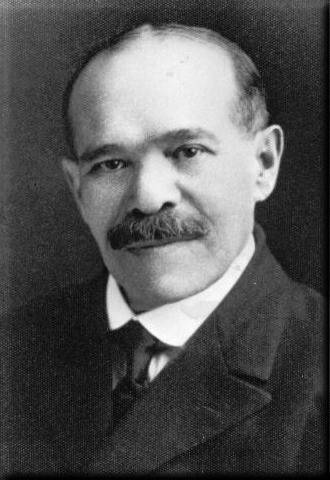
From Mecca to Calvary: The Testimony of Thabiti Anyabwile

Interview with Thabiti Anyabwile – on his book “The Gospel for Muslims”

 By Matt Svoboda
From the Bible belt, to Islam, to following Jesus, to going into the ministry, and now he has a nationwide stage. Thabiti Anyabwile is a gospel-centered pastor who has preached at the last several Together for the Gospel conferences.  He served under Mark Dever at Capitol Hill Baptist Church in Washington DC before becoming the Senior Pastor at First Baptist Church in Grand Cayman in the Cayman Islands.  I can’t forget to mention that he doesn’t even like the beach!  He has written a few other books, all of which I have read, and I have been greatly blessed by his preaching and writing ministry.

Thabiti Anyabwile has written a book that I have not read, but have ordered it and am very much looking forward to reading. The Gospel for Muslims appears to be a great book for helping Christians to share Christ with confidence to Muslims. I am grateful that Thabiti agreed to do this interview.  Admittedly, I have not really studied Islam or how to share the gospel with Muslims.  This interview and book will be as beneficial for me as anyone. Enjoy the interview below and you can buy the book at the link above:

1) Could you summarize your testimony of how you converted from Islam to Christianity? What were a couple of “milestones” in your process of conversion?

I grew up in small town North Carolina, smack in the middle of the Bible belt.  My family was nominally Christian, attending church at Easter, Christmas, and few times during the year.  The first turning point came for me when I was arrested after my sophomore year in high school.  I’d never been in trouble before; so I did what my big brothers sometimes did when they got in trouble—I went to church.  But sadly, I didn’t have ears to hear the gospel, and I don’t think the gospel was always preached clearly.

So, I went off to college an angry young man.  There, I began friendships with a number of Muslim men.  By my sophomore year in college, I became a practicing Muslim, zealous for Islam.  I practiced Islam through the rest of undergraduate school and a short time after.  The next turning point came near the end of undergraduate school.  During Ramadan, the Muslim month of prayer and fasting, while reading the Qur’an, I was suddenly aware that the Qur’an admitted too much about Jesus on the one hand (virgin birth, miracles, prophet, gospels are signs from God, etc.) but denied too much on the other hand (not the Son of God, not crucified, etc.).  After a year of trying to find satisfactory answers, I finally concluded that the inconsistencies couldn’t be explained.  Islam was false.

About the same time, a casual conversation with co-workers exposed a nagging problem I’d had all along.  We were discussing various people from world history who we respected.  And a co-worker look at the group and said she couldn’t think of anyone more righteous than me.  After my protests, she continued to insist and to list off the reasons why she thought that.  In that conversation I could see that the righteousness she described was all external behaviors.  But inside, I knew my heart was corrupt and sinful, full of unrighteousness.  I knew I didn’t have the kind of righteousness that would satisfy a holy God.

Rather than turn to Christ, I went further in despair.  Around that time, my wife and I found out we were pregnant with what would have been our first child.  We lost the child three months into the pregnancy.  The Lord dealt us a kind blow.  He humbled us.  And in that period of humbling, we heard the preaching of the gospel with faith for the first time.  The preacher, expounding Exodus 32, explained the sinfulness of sin, and I was deeply convicted.  And the preacher held out Jesus Christ, the only Savior, who not only took God’s wrath against sin but also supplied the perfect righteousness we need to satisfy a holy God.  In God’s amazing kindness, my wife and I both came to faith in the Lord that morning.

2) What is the main reason that you wanted to write this book “The Gospel for Muslims?”

I’m often asked by people who know my testimony, “How can we share the gospel with Muslims?”  When they ask this, they’re really asking, “Is there any special knowledge I need or technique that will be effective in evangelizing Muslims?”  But when you think about it, that’s the wrong question.  The question suggests that we lack confidence in the gospel itself to change the hardest hearts or to save our Muslim neighbors.  So, I wrote the book to remind Christians that “the gospel is the power of God unto salvation for everyone who believes, to the Jew first but also to the Gentile,” including the Muslim.  What we need is fresh confidence in Christ and the news of His salvation through His death, burial, resurrection, and coming.  If we know the gospel, we know everything we need to know to see our Muslim friends, coworkers, and neighbors saved from the coming wrath of God, and saved to love and enjoy the Savior forever.

3) What are some common misconceptions that Christians have about Muslims?

There are many.  We sometimes think that every Muslim is a terrorist.  Television images and our own fear have a lot to do with that.  But the chances are overwhelming that our Muslim friend or neighbor is not a terrorist.  They’re people with the same concerns, ambitions, and needs as our non-Muslim neighbors.

Also, many people tend to think that every Muslim has memorized the Qur’an by three years old and is able to give extended and sophisticated explanations of their faith.  But in reality, most Muslims don’t know the Qur’an very well at all.  And Islam itself is not one thing all over the world.  Arab Islam differs significantly from Islam in Indonesia (the largest Muslim country in the world) and North Africa and North America.  You’re more likely to meet a nominal Muslim, much like my nominal Christian family back in NC, than you are to meet a Muslim with the entire Qur’an committed to memory.

But perhaps the biggest myth is that Muslims do not convert.  That simply is not true.  Many, many Muslims are saved by God’s sovereign grace through faith in Christ all the time!  They pay significant costs—losing family, friends and sometimes jobs.  But this is exactly what Jesus tells His followers to expect, and it’s worth it.  As those who already believe, we should expect that the same gospel that saved us will save our Muslim friends.  And we should be ready to help them pay the costs of following our Lord.

4) What are the key passages in Scripture that you use when sharing the gospel with Muslims?  Is there a certain “method” that you use?

I don’t use a certain method in evangelism.  Rather, I concentrate on explaining the gospel clearly, making distinctions in terms so that things like “repentance” and “faith” are seen to be distinct from those things in Islam.  Also, I want to make sure that distinctively Christian realities—like the Trinity, the crucifixion and resurrection, the necessity of turning from sin, abandoning our righteousness, and trusting Jesus alone to save us—are driven home.  I want to make sure my Muslim friend knows that these are personal issues, not just abstract theological issues.  His sin is real.  He has personally offended the holy God of all creation.  His rejection of Jesus means He is abiding in His sin and in God’s wrath.  And unless he repents and trusts Christ, he will suffer eternal judgment.

In my experience, most Muslims are eager to either hear what we think about Jesus, or to try and disprove the gospel.  To do that, they often turn to the gospels themselves.  That puts us on home turf, familiar ground.  Normally, I start where they start and I make sure to read the five verses before and after the verse they usually misquote.  It’s amazing how often the gospel is right there in the context!  So, simply modeling good Bible reading and explaining what’s there tends to “work” as an evangelistic approach.  The Spirit blesses the word.

5) Along with reading your book, how can Christians get trained in order to better share the gospel with Muslims?

There are many good books out there on evangelism.  Continue to read books that encourage in a biblical approach to evangelism.  I’d recommend Mark Dever’s The Gospel and Personal Evangelism and Mack Stiles’ Marks of the Messenger and Speaking of Jesus (which has a video training resource as well).  Those would be wonderful works to study.  Also, reading good books on the gospel itself, including: Greg Gilbert’s What is the Gospel?, and John Murray’s Redemption Accomplished and Applied.

But there’s really no training like actually sharing your faith.  Don’t worry about “having all the answers.”  In the process of sharing and being questioned, God gives us grace and teaches us things we won’t likely learn any other way.  Consider Philemon 6: “I pray that you may be active in sharing your faith, so that you will have a full understanding of every good thing we have in Christ.”  Isn’t it awesome of God to tie our evangelism together with granting us “a full understanding of every good thing we have in Christ”?  The Lord simultaneously reaches the sinner and rewards the evangelist!

6) Are there any “pitfalls” that Christians often fall into when sharing the gospel with Muslims?

There are several, most of them connected with the misconceptions we have of Muslims.  We sometimes give in to the fear of man.  We sometimes find ourselves playing Bible “ping pong,” lobbing verses back and forth in an effort to win an argument.  Sometimes we try to make unpleasant aspects of the gospel more appealing by leaving them out or softening them.  Or, we’re lured into accepting the claims and premises of Islam as though they were true.  All of these can be pitfalls.

7) What are some “things to avoid” when sharing the gospel with Muslims?

I don’t think it’s helpful to get into discussions of politics, to attack the Qur’an or Prophet Muhammad, or to be disrespectful.  When we’re fearful, feeling under-prepared, and lose sight of the fact that we’re trying to win people to the truth that is in Christ, our flesh exerts enormous control and we tend to do things we’d probably be better off avoiding.

Also, it’s important to avoid serving pork products (or having them in your home) if you’re inviting a Muslim friend or neighbor over.  Avoid immodest clothing and cross-gender conversations.  Many Muslims associate Christianity with the decadence and moral decay of the West.  We want to avoid those associations.

Try your best to avoid assumptions, like: they’d never be interested in attending my church.  Actually, your Muslim neighbor or friend may find themselves with freedoms and interests that they couldn’t pursue in other countries.  Don’t assume they’re not interested in the faith and the church.

8) What are some good ways Christians can lovingly engage Muslims in their community?

Love Muslims the way you’d love anyone.  They’re people made in God’s image, and they experience the same burdens, needs, ambitions, and cares as everyone else.  So, in general, simply move toward them in intentional love.  As we pay attention to them, opportunities for specific acts of kindness and love will emerge.

But some general things also come to mind.  Volunteer in an English-as-Second-Language class or group.  Invite them to your home for a meal or to watch a game.  Most internationals will live in the United States without ever entering an American home.  Practice hospitality.  Also, if you both have children, ask them how they and the kids are adjusting to the culture and ways of the U.S.  Invite your Muslim neighbor and their children to participate in a ball game or some other activity you share with your children.  Be something of a cultural broker, empathizing with their struggles and helping them negotiate life in your community.

9) Any final thoughts or advice that you would like to share with Christians who would like to better engage Muslims with the gospel?

Let the gospel do the work!  Be confident in the power of God encased in the gospel.  Get out there are share the good news and trust the Spirit to use you for the glory of Christ!

More About Thabiti Anyabwile: He is the Senior Pastor of First Baptist Church of Grand Cayman in the Grand Cayman Islands and a Council member with The Gospel Coalition. In his own words, “I love the Lord because He first loved me. I love His people because He has given me a new heart. I have received God’s favor in the form of my wife, Kristie. And together we know His blessing through three children. I was once a Muslim, and by God’s grace I have been saved through faith in Jesus Christ. By God’s unfathomable grace I am a preacher of the Gospel of Jesus Christ, in which I hope to serve Him until He returns or calls me home!”

He earned his B. A. and M. S. degrees in psychology from North Carolina State University in Raleigh, NC. Before moving to minister in the Caribbean, he served with Dr. Mark Dever at Capitol Hill Baptist Church in Washington, D.C. He is married to Kristie and they have three children: Afiya, Eden, and Titus. As a native of Lexington, North Carolina, he has an affinity for Western-NC-BBQ. Thabiti writes regularly at Pure Church as part of The Gospel Coalition blog crew. He has also authored several books, The Gospel for Muslims: An Encouragement to Share Christ with Confidence (Thabiti converted to Christianity from Islam); Finding Faithful Elders and Deacons; Ephesians: God’s Big Plan for Christ’s New People; May We Meet in the Heavenly World: The Piety of Lemuel Haynes; What Is A Healthy Church Member?; The Decline of African American Theology: From Biblical Faith to Cultural Captivity; The Faithful Preacher: Recapturing the Vision of Three Pioneering African American Pastors. He has also contributing chapters to the following books: For the Fame of God’s Name: Essays in Honor of John Piper; Holy, Holy, Holy: Proclaiming the Perfections of God; Proclaiming a Cross-Centered Theology; Glory Road: The Journeys of 10 African-Americans into Reformed Christianity; and John Calvin: A Heart for Devotion, Doctrine & Doxology.

The Interview above took place on About the Author: Thabiti Anyabwile is the Senior Pastor of First Baptist Church of Grand Cayman in the Grand Cayman Islands and a Council member with The Gospel Coalition. In his own words, “I love the Lord because He first loved me. I love His people because He has given me a new heart. I have received God’s favor in the form of my wife, Kristie. And together we know His blessing through three children. I was once a Muslim, and by God’s grace I have been saved through faith in Jesus Christ. By God’s unfathomable grace I am a preacher of the Gospel of Jesus Christ, in which I hope to serve Him until He returns or calls me home!”

He earned his B. A. and M. S. degrees in psychology from North Carolina State University in Raleigh, NC. Before moving to minister in the Caribbean, he served with Dr. Mark Dever at Capitol Hill Baptist Church in Washington, D.C. He is married to Kristie and they have three children: Afiya, Eden, and Titus. As a native of Lexington, North Carolina, he has an affinity for Western-NC-BBQ. Thabiti writes regularly at Pure Church as part of The Gospel Coalition blog crew. He has also authored several books, The Gospel for Muslims: An Encouragement to Share Christ with Confidence (Thabiti converted to Christianity from Islam); Finding Faithful Elders and Deacons; Ephesians: God’s Big Plan for Christ’s New People; May We Meet in the Heavenly World: The Piety of Lemuel Haynes; What Is A Healthy Church Member?; The Decline of African American Theology: From Biblical Faith to Cultural Captivity; The Faithful Preacher: Recapturing the Vision of Three Pioneering African American Pastors. He has also contributing chapters to the following books: For the Fame of God’s Name: Essays in Honor of John Piper; Holy, Holy, Holy: Proclaiming the Perfections of God; Proclaiming a Cross-Centered Theology; Glory Road: The Journeys of 10 African-Americans into Reformed Christianity; and John Calvin: A Heart for Devotion, Doctrine & Doxology.

The interview above took place on May 7, 2010 and can be found on SBC Voices: http://sbcvoices.com/interview-thabiti-anyabwile-the-gospel-for-muslims/
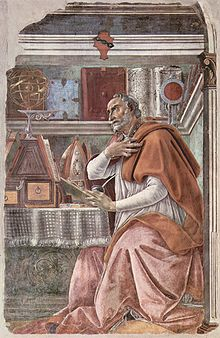
St. Augustine Was Baptized On This Day – April 25 in 387

Series: On This Day in Christian History – “Raised to New Life”

 By A. Kenneth Curtis and Daniel Graves

“And we were baptized and all anxiety for our past life vanished away.” With these joyous words Augustine recorded his entrance into the church on this day in 387.

It had taken Augustine thirty-three years to get to the public confession of Christ that was represented by his baptism. He was born in North Africa in 354 to a Christian mother and a pagan father. He became a student in Carthage at twelve years of age. At sixteen, he began to teach grammar.

While he was young, he became promiscuous. He tells in his famous Autobiography that he boasted of sins he had not had the opportunity to commit, rather than seem to have fallen behind his peers.

His mother, Monica, was determined to see him converted. He was equally determined to have pleasures. He took a mistress, and she bore him a son, whom they named Adeodatus, which means “gift of God.” For awhile Augustine resented the lad but soon became inseparable from him.

When he was twenty-nine, Augustine’s restless spirit drove him to Italy. His mother decided to accompany him so that her prayers might be reinforced by her presence. But Augustine gave her the slip, sailing away while she knelt praying in a chapel.

In Rome he taught rhetoric for a year, but was cheated of his fees. And so he looked for a more fertile field of labor and settled on Milan. His mother caught up with him and prevailed upon him to attend the church of St. Ambrose. Augustine found that Christian singing moved him deeply, and in spite of himself he began to drift toward his mother’s faith. He found the writings of the Apostle Paul deeply stirring and more satisfying than the cool abstractions of philosophy. He wrestled with deep conviction but was unable to yield himself to God because of his strong attachment to the flesh.

Finally he reached a day when his inner struggles were too great to bear. He tried reading Scripture but abandoned the effort. Unable to act on the truth he knew, he began to weep and threw himself behind a fig tree. “How long, O Lord,” he cried. And his heart answered “Why not now?” A child’s sing song voice came clearly to him, repeating over and over, “Take it and read it.” It seemed a message from God. Augustine snatched up the Bible and read Paul’s words:

“Let us behave decently…not in orgies and drunkenness, not in sexual immorality and debauchery, not in dissension and jealousy. Rather, clothe yourselves with the Lord Jesus Christ, and do not think about how to gratify the desires of the flesh” (Romans 13:13-14).

Faith flooded upon him. He immediately thrust aside the sins of the flesh that had held him in bondage. “But faith would not let me be at ease about my past sins, since these had not yet been forgiven me by means of your baptism.” He entered the water and was relieved.

After his mother’s death, Augustine returned to Africa, where he founded a monastery and became the bishop of Hippo and a brilliant and prolific theologian. More than any other man, his imprint was stamped upon the medieval Church.

Other Significant Events on April 25th in Church History:

799: Pope St. Leo III’s eyes were stabbed and his tongue torn out in a conspiracy by the nephews of an earlier pope. He recovered and crowned Charlemagne emperor.

974: Ratherius, who raised a ruckus to end clergy marriages, died on this day.

1475: A young Savonarola left home and walked to Bologna, taking the family Bible with him. He became a monk and later a reformer. He was eventually martyred for his faith.

1800: William Cowper, a depressed but original poet and hymn writer, died. He is remembered for his friendship with ex-slaver John Newton and for his hymn “There is a Fountain Filled with Blood.”

1879: Joseph Barber Lightfoot, considered the greatest biblical scholar of his day, was consecrated as bishop of Durham. He was a godly man and became one of the greatest bishops of the day.

1911: A rare Gutenberg Bible sold for $50,000, the equivalent of at least $500,000 today.

Adapted from the April 25th entry in This Day In Christian History, edited by A Kenneth Curtis and Daniel Graves, Camp Hill, PA: Christian Publications

John Harper – The Unsung Hero of The Titanic – April 15, 1912

Series: On This Day in Christian History

 “John Harper’s Last Words as the Titanic Sank”

John Harper was born in Scotland in 1872 to a Christian family. When he was presented with the message of John 3:16 at the age of thirteen, he believed in Jesus and received everlasting life. When he was eighteen, he had a powerful vision of the cross of Christ. At that moment he committed his life to bringing the message of the cross to others. The very next day he began to preach in his village, urging all his hearers to be reconciled to God. He made every street corner his pulpit.

His desire to win souls to Christ was unmatched, becoming his all-consuming purpose. An evangelist friend, W.D. Dunn, recalled often seeing Harper lying on his face before God, pleading with him to “give me souls, or I die,” sobbing as if his heart would break.

At the age of thirty-two he had a near-drowning experience when he was caught on a leaky ship in the Mediterranean. He said of the experience, “The fear of death did not for one minute disturb me. I believed that sudden death would be sudden glory.”

In 1911 he spent three months preaching at Moody Memorial Church in Chicago during a revival and received an enthusiastic response. He was asked to return for three months of meetings beginning in April 1912. Originally scheduled to sail on the Lusitania, he sailed on the Titanic after a schedule change.

When he informed his church of intent to return to Chicago, a parishioner begged him not to go, saying that he had been praying and felt strongly that something ominous would happen if he went. He pleaded with Harper but to no avail. Harper felt there was a divine purpose for his trip, and Harper went ahead with his plans. The night before the ship sank, Harper was seen leading a man to Christ on the deck. Afterward, he looked to the west, and seeing a glint of red in the sunset he said, “It will be beautiful in the morning.”

The clear April night sky was filled with sparkling stars as the largest and finest steamship in the world sped through the calm waters of the icy North Atlantic. Many of the passengers had gone to bed, but some were still in the lounges, enjoying the Titanic’s many luxuries. No one was alarmed by the slight jar felt around 11:15 p.m., but many noticed when they no longer felt the vibration of the engines.

The crew of the Titanic had ignored iceberg warnings and had the ship steaming full speed ahead. Suddenly, the great vessel struck a large iceberg, which ripped the ship’s side open. Within fifteen minutes the captain realized the danger of the situation, and he had the wireless operator put out a call for assistance. Lifeboats were quickly made ready, and women and children were ordered to get to them first (Christian culture had stamped the ideas of chivalry into men, making them willing to give up their lives for women and children). There were twelve honeymooning couples aboard the ship. Though all of the new wives were saved, only one of the husbands survived.

The captain ordered the band to play to keep up the spirits of the passengers. It began playing a ragtime tune, but the musicians soon changed to playing hymns.

There were only twenty lifeboats on the huge ocean liner—barely enough for one-third of the passengers and crew. Not even all of them could be lowered. All eighty-five of the ship’s engineers continued to work to keep the ship afloat as long as possible. At the end, many people knelt together in prayer until the waters covered them.

Throughout the mournful evacuation, as loved ones were tearfully separated, the band continued to play. There is some dispute about what they played that night. Several people in the lifeboats heard “Nearer, My God, to Thee.”

One of the passengers traveling on the ship was evangelist John Harper. He put his six-year-old daughter into a lifeboat and then ran through the ship warning others of the danger and talking to them about the eternal destiny of their souls. When he was finally forced to jump into the icy water, he clung to a piece of wreckage and asked another man, “Are you saved?” When the man answered “no,” Harper said to him, “Believe on the Lord Jesus Christ and you will be saved” (quoting Acts 16:31). The man did not respond, and they lost sight of each other. Harper asked the same question again, urging the man to believe in Jesus, and received the same answer again. Harper then slipped beneath the water, never to resurface. The man did put his faith in Jesus Christ and was later rescued by a lifeboat. He testified that he was John Harper’s last convert.

When the Titanic sank early in the morning on this day in 1912, Harper was among the 1,522 people who died. The band went down with the ship. The last hymn they played was “Autumn,” which concludes with this prayer:

Hold me up in mighty waters

Keep my eyes on things above

Righteousness, divine Atonement,

Peace, and everlasting Love.

After the sinking of the ship, relatives and friends of the passengers gathered outside the White Star office in Liverpool, England. As news came in about the passengers, names were placed on one of two lists, “Known to Be Saved” or “Known to be Lost.” The voyage had begun with three classes of passengers, but now it was reduced to only two—saved or lost. John Harper’s name was placed on the list for those “Known to Be Lost,” but it was on the “Saved” list in heaven.

For Reflection:

John Harper faced death heroically and without fear because he never lost sight of his passionate purpose in life—to win souls for Christ. Imagine those last horrifying moments aboard the Titanic. If you had been there, what do you think you would have done?

“Perfect love expels all fear…” -1 John 4:18


*Significant Events on April 15th in Church History:

1729: Johann Sebastian Bach produced his St. Matthew Passion for its first and only performance during his lifetime (unless it was also performed in 1727 as some scholars think). The piece is considered his greatest work, possibly the pinnacle of Baroque music because it fused spirituality and art. Even Nietzche praised it for having the power to convey the gospel afresh to one who had forgotten it.

1950: Thirty-six leading members of religious orders in Hungary sent a protest letter to their government for abuses done to their orders.

1958: Dayuma, An Auca woman, was baptized. Her people had killed the missionaries who came to bring them the gospel.

1983: Corrie Ten Boom died on this day, her ninety-first. She protected Jews from the Nazis and was incarcerated in a concentration camp. After the war, she became an internationally known evangelist.

*Adapted from the April 15th entries in This Day In Christian History, edited by A Kenneth Curtis and Daniel Graves, Camp Hill, PA: Christian Publications. And Mike and Sharon Rusten, The One Year Book of Christian History, Carol Stream, IL: Tyndale, 2003.

From LSD to PH.D By Michael L. Brown

How A Rebellious, Heroin-Shooting, Rock-Drumming Jewish Teen Found Out That Jesus Was the Messiah – By *Dr. Michael L. Brown

 “I’m, burning in hell! I’m, burning in hell!”

 It was 1:30 in the morning, the first week of September 1971. I was only sixteen years old, but already I had earned the nicknames “Drug Bear” and “Iron Man.” I could do greater quantities of drugs than any of my friends — and live to brag about it! Whether I was shooting heroin or using hallucinogenics like LSD and mescaline, taking mega doses of drugs had become my lifestyle. But this time I went too far. I took enough mescaline for thirty people, and my friends put me on a bus alone, sending me home to fend for myself. They thought it was a big joke! Actually it was a matter of life and death.

I became delirious on the bus and got off too soon, more than a mile from my family’s home on Long Island, New York. As I walked slowly towards the house, I thought the journey would never end. I became disoriented and got lost just two blocks from home. I sat down on the ground in mental torment, feeling like I had entered a maze from which I could never get out. I thought I had died and gone to hell.

Then, at that late hour of the night, a friend of my parents came by, walking his dog. He looked at me with shock as I screamed, “I’m burning in hell!” I was shocked too. “Why is he walking his dog in hell?” I wondered.

As soon as he walked away, I made a decision: “I’m going to jump in front of the next car that comes by. I can’t take it any longer.” I was losing my mind.

Within minutes, a car came racing around the corner. I jumped into the road directly in front of the car and threw my hands in the air. The car came to screeching halt just inches from my body. It was my parents! The man with the dog had gone to my house and, deeply shaken, told them what he had seen. They came looking for me. They were ready to stop at that very corner. If it had been any other car I would have been killed.

But what was I doing there anyway, stoned out of my head? How did a nice Jewish boy like me get so messed up? And why was I thinking about hell? Let me tell you the story. I think you’ll be interested to hear what happened!

I was born in New York City in 1955. My father was the senior lawyer in the New York Supreme Court, and he and my mother were as happily married as any couple that I have ever known. My upbringing was typical of many New York, Conservative Jewish children. We moved to Long Island, I did well in school, I played lots of sports, and, like all my friends, and I basically stayed out of trouble. But something changed. It all began innocently enough . . .

When I was eight years old I started to play drums. There was no question that I had ability. In fact by the time I was fifteen I had played on a studio album. But my favorite music was rock, and after my Bar Mitzvah in 1968, I got interested in playing in a band. I wanted to be a rock drummer, and all my role models were known for their heavy drug use, rebellion, and flagrant immorality. I wanted to be like them!

In 1969, at the age of fourteen, when I was asked if I wanted to try smoking pot, I was only too happy to oblige. Soon I tried smoking hash too. But neither one had any effect on me. So I tried harder drugs until I started using ups, downs, and LSD. “But I’ll never do anything worse than that,” I thought. Yet I was deceived. Soon I starting using speed, then I started shooting speed. (Of course, I had been sure I would never put a needle in my arm!). Then, I got the opportunity to try heroin. I loved it! I was fifteen years old.

By the time I was sixteen, my grades began to go down in school, and drugs, rock music, and filthy living were my daily portion. For fun, my friends and I even broke into some homes and a doctor’s office. We experimented with the drugs we found and almost killed ourselves. But after all, we were cool! We were doing “our thing.” And one day we would be famous rock stars!

Less than one year later, I was living for God and telling people about Jesus, the Messiah and Lord of both Gentile and Jew. Today, I have traveled around the world preaching and teaching. I have had the privilege of speaking on university campuses (including Harvard and Yale), written books and articles that have been translated into more than a dozen languages, debated and dialogued with rabbis on radio and TV, and earned a Ph.D. in Near Eastern Languages and Literatures from New York University, lectured as a visiting professor at leading theological institutes, and served as president of two Bible colleges. The Creator of the universe is now my Father, Jesus the Messiah is my best and closest Friend, I live my life free of anxiety and fear, and the peace and joy of God renew me every day.

“Well,” you might say, “you were just messed up. You were looking for something. You needed to change.”

To be perfectly truthful, I was messed up, and I was looking for something — but it was not God! And I absolutely did not want to change. I had found my lifestyle, and I loved it! I enjoyed using drugs. I enjoyed my music. I enjoyed fulfilling the lusts of the flesh. What I was looking for was more sinful pleasure and more musical excellence, leading to more recognition as a rock drummer.

As for Jesus, he was no more important to me than Muhammad or any other foreign religious figure. After all, I was Jewish! And, I thought, if there really is a God, He knows that, deep down, I have a good heart. If there is a heaven, He’ll surely accept me. In spite of my lying, my drugs, my drinking, my pride, my rebellion, my stealing, my immorality, my filthy mouth and mind, I thought that I really was a pretty good person. Little did I know then that the Bible said: “All a man’s ways seem innocent to him, but it is the LORD who weighs the hearts.” And, “There is a way that seems right to a man, but in the end it leads to death.” Human nature always tries to justify itself!

During the spring of 1971, my two best friends (and members of my band) began attending a little gospel-preaching church. Why? Because they liked two girls who went there! And why did the girls go? Because their uncle was the pastor and their father was praying for them. Then, in August, I went to the church too. Why? Because I wanted to pull my friends out! They were beginning to change, and I didn’t like that. They weren’t partying the way they used to. I had to stop them before it was too late. You can guess what happened. I lost the fight! The love of the people began to break down my stubborn pride, and, totally unknown to me, their prayers began to have an impact. Something started to get under my skin! I actually began to feel guilty about the filthy things I was doing.

Amazingly enough, until that time, I had never experienced the slightest remorse for stealing money from my own father, or putting my parents through all kinds of grief because of my drug use, or double-crossing my best friends, or viciously cutting down anyone I didn’t like with my sharp, cruel sharp tongue. Now, something was happening. When I couldn’t sleep at night after pumping myself up with methadrine or swallowing several tabs of amphetamine-laced LSD, I started to feel uncomfortable with my lifestyle, seeing myself as more of a jerk than a cool teenager, and I began to dread those long night hours, alone with a feeling of being unclean, alone with my sin.

Of course, at that time, I had no idea that this was something called “conviction,” a wonderful process through which God shows us just how sick we really are – in order to make us whole. And I made no connection between this sudden change in my attitude and the prayers of these sincere Christians. Instead, I made a decision: I won’t use any drugs that keep me up at night! And I stayed away from the church for the next three months.

When I finally returned there in November, something completely unexpected happened to me. It was not what I was anticipating! For the first time in my life I believed that Jesus died for me (in other words, He paid the penalty that I deserved, He died in my place) and that He rose from the dead.

This did not strike me as especially good news! How can I say that? Simple. It was one thing for my friends to truly put their faith in Jesus. After all, one was Methodist and the other was Russian Orthodox. Even though they were only Christian in name, becoming a Christian in truth didn’t seem to me like such a big religious jump. I thought the different Christian religions were close enough!

But for me, a Jew (even a non-religious Jew), how could I believe in Jesus? (Please remember: At that time, I didn’t realize that his Hebrew name was Yeshua and that his mother’s Hebrew name was Miriam, or that “Christ” meant “Messiah,” or that he came into the world to save his Jewish people, or that he lived and died as a faithful Jew.) For me, Jesus was only for the Gentiles. (Again, you have to excuse my ignorance!)

But there was a much bigger problem I faced: Following Jesus and getting into a right relationship with God meant I had to turn away from my sins. I didn’t want to do that! There was too much pleasure in my sin. And how could I be a famous rock drummer and a good, clean churchgoer at the same time? Plus, I was too proud to admit that I could be wrong. (Some people would rather die than admit they are wrong.) I was as stubborn as they come. And how I loved to argue. (After all, I was the son of an excellent lawyer!) Yet somehow, God’s goodness and patience overcame my stubbornness, my pride, my sinful habits, and my religious misunderstandings. By the end of 1971 I was a new man! The heavenly Father intervened in my affairs, making me to know that I was guilty in his sight, exposing the corruption of my heart, and showing me a new and better way.

What does all this have to do with you? Let me explain. You see, I was not a sinner because I was shooting heroin. I was shooting heroin because I was a sinner. Sin takes on many forms. But in God’s sight, all of us are sinners. In other words, all of us stand guilty in the light of His standards and laws. And, deep down, most of recognize His laws are right. Yet we still break them. Why? Because by nature we are a fallen race. No one had to teach us to lie, to lust, to be selfish, to hate, to hold a grudge, to deceive, to cheat, to be greedy, to envy. These things came naturally to us — even to the best of us!

According to the Scriptures, the first and greatest commandment is, “Love the Lord your God with all your heart, all your soul, all your mind, and all your strength.” Instead, we find time for business, or pleasure, or family, or friends, or sports, or entertainment, or relaxation, or hobbies, or education, or whatever else is important to us. But God is not that important to us! He is certainly not the one around whom our lives revolve. If He were, we would find more time and energy for Him. He is supposed to come first.

What about the second commandment? Both Moses and Jesus taught that the next great commandment was, “Love your neighbor as yourself.” We have failed here too! Think of all the murderers, and rapists, and drug pushers, and child abusers, and warlords, and crime bosses, and thieves — the list goes on and on. It is clear that they have not loved their neighbors as themselves. But let’s not be so quick to condemn. You can get a speeding ticket for going 100 miles per hour in a 40 mph zone, or you can get a ticket for going 70 in that same zone. Either way, you’re guilty. And you can drown in 20 feet of water just as easily as you can drown in the ocean. Either way, you’re dead.

It’s the same with God’s laws. Maybe you haven’t killed someone. But have you hated them? Then you’re guilty of not loving your neighbor as yourself! Maybe you haven’t committed adultery with that good-looking spouse of your friend or boss. But if you’re burning with lust for them, then you’ve committed adultery in your heart. In the sight of God, you’re guilty! And the penalty for those guilty of breaking God’s laws is death.

“In that case,” you say, “we’re in trouble! Everyone is guilty.” Exactly. That’s why God sent His Son into the world. Although we didn’t deserve it, and although it is more than we could ever ask for or imagine, God did something incredible. The Bible says He loved this world so much — and that means He loved you — that He gave His one and only Son, that whoever believes in Him should not perish but have eternal life.

Jesus died for you! Instead of you and I having to pay for our sins (and it would be perfectly fair if God required us to pay up), Jesus paid for our sins. Instead of you and I having to suffer the death penalty, Jesus suffered it for us. That’s what He meant when He said, “Greater love has no one than this, that he lay down his life for his friends.” He also said, “I am the good shepherd. The good shepherd lays down His life for His sheep.”

And that’s what the Jewish prophet Isaiah meant when he wrote about the Messiah’s death hundreds of years in advance:

He was pierced because of our rebellious deeds, He was crushed for our sins; the punishment that brought us peace was upon Him, and at the cost of His wounds there is healing for us. All of us like sheep have gone astray, but the LORD has laid on Him (Jesus!) the sins of us all.

Is this making sense to you now? Do you understand why Jesus died on the cross? He carried your sins so that you don’t have to carry them any more!

Turn back to God and ask Him to forgive you. Acknowledge your guilt and say, “God, have mercy on me! I turn away from my sins.” Ask Him to cleanse you and wash you through the blood that Jesus shed. Put your faith in the Son of God. He died for you and rose from the dead. Believe in Him and submit to Him as your Lord. You will never be the same! And you will never have a regret.

What He did for me – in a unique and personal way – He can do for you. He died so you could live. He became guilty so you could go free. He came down to earth so that one day you could go to heaven. But if you refuse Him, the door will be shut. You will die in your guilt, without excuse. Almighty God will say to you, “Depart from Me into eternal fire!” Then it will be too late!

That’s why I took the time to tell you my story. It can become your story too! You can experience the greatest love the world has ever seen. Through Jesus, you can know the God who made you. Then you will truly live — in this world, and in the world to come. Serving God is worth it all!

*Michael L. Brown, (PhD, New York University) is president and professor of practical theology at Fellowship for International Revival and Evangelism School of Ministry. He has also served as adjunct professor of Old Testament at Trinity Evangelical Divinity School in Deerfield and adjunct professor of Jewish apologetics at Fuller Theological Seminary School of World Mission. He has contributed to the Oxford Dictionary of Jewish Religion, and the Theological Dictionary of the Old Testament. He has written scores of books – my favorites are his four volume series (soon to be five) on Answering Jewish Objections to Jesus (all published recently by Baker Books in Grand Rapids):

Volume 1: General and Historical Objections

Volume 2: Theological Objections

Volume 3: Messianic Prophecy Objections

Volume 4: New Testament Objections

Volume 5: Objections Raised By Traditional Judaism (forthcoming)

You can watch Dr. Brown share his testimony on Video at http://askdrbrown.org/about-dr-brown/personal-testimony

He also has an outstanding web site jam packed with terrific resources: www.realmessiah.org

World Renowned Classical Guitarist Shares How Christ Changed His Life

Christopher Parkening: Life Story and Christian Testimony  


For over a quarter century, I have been known in the classical music world as a concert guitarist, following the tradition of the great Spanish guitarist Andrés Segovia. However, there was a time in my life when I stopped concertizing and recording, and even gave up practicing the instrument. Apart from a small amount of teaching at Montana State University, I quit the guitar completely. This is the story of why I decided to perform once again.

Growing Up in Los Angeles

I grew up in Los Angeles and started playing the guitar at the age of 11, inspired by my cousin, Jack Marshall, who was staff guitarist at MGM Studios. I loved the way he played the guitar, and I asked him about studying the instrument. He recommended that I learn classical technique first to establish solid technical skills. He also suggested I purchase the recordings of Andrés Segovia, the greatest guitarist in the world. I was so impressed with Segovia’s playing that I started classical, loved it, and stayed with it.

Even before I began playing the guitar, I had a great love of the outdoors, in particular, fly-fishing for trout. My dad taught me the art of dry fly-fishing when I was six years old. The most enjoyable times of my life were spent on a trout stream in the High Sierras of Northern California. My goal in life was to some day own my own ranch with my own private trout stream.

As I grew up, I became convinced that my aim should be to make a lot of money, retire early and enjoy the good life. Since my father had retired at 47, I decided that 30 would be a good retirement age for me. And as I became more proficient with the guitar, I wondered if my musical ability might somehow help me achieve that goal.

Working Toward Early Retirement

I grew up in a home that taught me the value of hard work and discipline. With my father’s encouragement, I would get up at 5:00 a.m. and practice for an hour and a half before school and again in the afternoon. You can imagine what a conflict that created for a young man with a keen interest in sports.

However, with the support of my parents, the hard work began to pay off. Four years later, at age 15, I was invited to attend Andrés Segovia’s first United States master class held at the University of California at Berkeley. It was a great honor to play for the man who had inspired me for so many years. He told me I had the potential for a wonderful career with the classical guitar and encouraged me to work “very hard.” It was my good fortune to continue private study with Segovia and later, when I attended the University of Southern California, to study musical interpretation with the world renowned cellist Gregor Piatigorsky.

At age 19, I signed with Capitol Records for a series of six albums, and was asked to start a guitar department at the University of Southern California. The following year I signed with Columbia Artists Management for a rigorous concert schedule touring the United States, Canada, Europe, and Asia, eventually performing over 90 concerts a year!

Needless to say, as I added a grueling concert schedule to my teaching and recording obligations, my life became ever more stressful. Frankly, I was miserable on tour. I hated the hotel rooms, the airplanes, the monotony of one concert after the next. But, I thought, There will come a day when I will be happy. I’ll have my own ranch with my own trout stream and I can retire. I can do what I want to do, go where I want to go, and be content. And that was the goal I pursued.

At 30, I achieved my goal. I stopped playing the guitar, I found a ranch with a beautiful trout stream in Montana, and I moved there from Southern California. I called Capitol Records, USC, and Columbia Artists Management to thank them, and to let them know that I wouldn’t be playing the guitar anymore. I had achieved my life’s dream.

For the next four years I was doing everything I wanted to do. I was fishing to my heart’s content, learning every trout stream in the area, and going back to Southern California in the winter to escape the snow and cold weather. I was living the good life—or so I thought.


Searching for Truth

There’s an old proverb: “Be careful what you wish for, you might get it.” Well, that was the case with me. Soon after retirement, I became bored with my life and began to feel empty inside. It was like Solomon said in the Bible, “Vanity of vanities! All is vanity” (Ecclesiastes 1:1). My “ideal” life was turning out to be not so ideal after all. I needed something more, something to provide the fulfillment my success wasn’t giving me.

During one of my winter visits to Southern California a neighbor leaned over the backyard fence and invited me to Grace Community Church. I decided to go. John MacArthur preached a sermon entitled “Examine Yourself Whether You Be in the Faith,” and he read this passage from the Bible:

Not every one that saith unto me, Lord, Lord, shall enter into the kingdom of heaven; but he that doeth the will of my Father which is in heaven. Many will say to me in that day, Lord, Lord, have we not prophesied in thy name? and in thy name have cast out devils? and in thy name done many wonderful works? And then will I profess unto them, I never knew you: depart from me, ye that work iniquity (Matthew 7:21-23).

Now, when I was a young child my parents took me to Sunday school every week and even had me baptized. I had read the Bible occasionally during my boyhood and had been lead to believe I was a Christian. I was convinced that because I knew the “facts” about Jesus Christ, I would get into heaven one day. But, as I listened to the words that Pastor MacArthur was reading I felt something cutting deep into my heart. “That’s me!” I thought, “I would be one of those who would say, ‘Lord, Lord, I believe who You are. I went to Sunday school. My parents even had me baptized!’” In my heart I knew that Jesus would answer me, “You never cared to glorify Me with your life or with your music. All you cared about were your ranches and your trout streams. Depart from Me, I never knew you!” It was in that sudden, terrible moment I realized that I was not a Christian. I thought I had faith and yet my lifestyle had been characterized by total selfishness and disobedience. (I supposed I had wanted a Savior to save me from hell, but I had never wanted a Lord of my life whom I should follow, trust, and obey.)

That night I lay awake, broken over my sins. I realized that my life was a total washout. I had lived very selfishly and it had not made me happy. Knowing I was a sinner before God, I prayed and asked Him to forgive me. It was then that I asked Jesus Christ to come into my life, to be my Lord and Savior. For the first time, I remember telling Him, “Whatever You want me to do with my life, Lord, I’ll do it.”


Performing for God’s Glory

My new commitment to Christ gave me a great desire to read the Bible and learn more about the Word of God. One day I read a passage from 1 Corinthians which said, “Whatsoever ye do, do all to the glory of God” (1 Corinthians 10:31). Well, there were only two things I knew how to do: one was fly-fishing for trout, and the other was playing the guitar. The latter seemed the better option to pursue. The great composer J.S. Bach said, “The aim and final reason of all music is none else but the glory of God.” Bach signed many of his compositions with the initials S.D.G., which stands for Soli Deo Gloria (to God alone the glory). I thought, If Bach could use his great ability for that purpose, that would be the least I could do with whatever ability or talent the Lord had given me. It became evident that the Lord wanted me to return to playing the guitar again, but this time with a different purpose—to honor and glorify my Lord and Savior Jesus Christ.

Shortly after making my decision to return to playing, I sold my ranch in Montana and returned to California. Initially, I had a rude awakening when I contacted my former manager in New York. He told me flatly that I had thrown away a very valuable career and that it would be extremely difficult, if not impossible, to return to the concert stage after a four year absence. I knew that all things are according to God’s will and that it would be only by His grace that I would be able to return to a professional music career. The Lord has been gracious! Since my return to the music world I have played with every major orchestra in the nation, traveled the world on countless concert tours and have even played for the President of the United States at the White House!

Andrés Segovia was my musical inspiration growing up, and I still desire to follow with excellence the musical tradition he left us. However, my true goal in life now is to be a good and faithful servant of the Lord Jesus Christ. My career is only a means to an end, and that end is to glorify the Lord with my life and with the music that I play. Pursuing that goal gives me great joy and contentment; the fulfillment which eluded me so many years ago has at last been found and the emptiness I once felt has gone forever.


Sharing the Good News

One day I had the opportunity to share with my 11-year-old niece, Christi, what it means to be a Christian. I said, “Christi, if you were to die tonight and stand before God and He were to say to you, ‘Why should I let you into My heaven?’ what would you say?”

“Well,” she replied, “I would say ‘Because I’ve been a good girl.’”

“How good have you been?,” I asked, “Have you been perfect?”

“No,” she admitted, “I haven’t been perfect.”

“That’s true,” I said, “No, no one is perfect. In fact, the Bible says, ‘For all have sinned and come short of the glory of God (Romans 3:23).’ But God requires us to be perfect (James 2:10), and who can be perfect? Nobody, right? Nobody can be perfect.”

I told her that salvation is a free gift received by faith. Ephesians 2:8-9 says, “For by grace are ye saved through faith; and that not of yourselves: it is the gift of God: Not of works, lest any man should boast.” I said, “You’re not saved by your good deeds; you are saved by grace, and grace means God is freely giving you something you don’t deserve.”

I also told her the Bible says that God is holy and just. Hebrews 10:31 says, “It is a fearful thing to fall into the hands of the living God.” And Exodus 34:7 says that God “will by no means clear the guilty.” Since God is just, He will judge those who sin. 1 Peter 1:16 says, “Be ye holy; for I am holy.”

I went on to say that God is also a loving God. That famous Bible verse, John 3:16, says, “For God so loved the world, that he gave his only begotten Son, that whosoever believeth in him should not perish, but have everlasting life.” God judges those who sin, but in love He gave His Son to die on a cross to bear our sin and judgment.

How can God judge sinners and yet love them? To illustrate the answer, I told her a story about a king who was a wise and just ruler of his people:

Someone was embezzling from the king’s treasury, so the king issued an edict throughout all the land, saying, “Whoever is guilty, come forward and receive a just punishment of 10 public lashings.” But no one came forward.

The second week someone was continuing to steal from the king’s treasury, so the king set the punishment at 20 public lashings. But still no one came forward.

The third and fourth weeks went by and the thievery continued. On the fifth week the king set the punishment at 50 public lashings.

Finally, the guilty person was discovered. The one embezzling from the king’s treasury turned out to be the king’s own mother! The whole kingdom turned out to see what the king was going to do because they knew he was in a real dilemma: On the one hand he loved his mother, yet he knew that 50 lashes would very likely kill her. On the other hand he had a reputation for being a just king who would certainly punish the crime.

On the day for sentencing to be carried out, his mother was tied to a stake and a big man was ready to flog her with a whip. Then the king gave his order: “Render the punishment!” Just as he spoke, he took off his own robe, baring his own back, and putting his arms around his mother, he then took the lashes that she deserved, thereby satisfying the demand for justice.

The Bible says:

But he was wounded for our transgressions, he was bruised for our iniquities: the chastisement of our peace was upon him; and with his stripes we are healed. All we like sheep have gone astray; we have turned every one to his own way; and the Lord hath laid on him the iniquity of us all (Isaiah 53:5-6). Who his own self bare the sins in his own body on the tree, that we, being dead to sins, should live unto righteousness: by whose stripes ye were healed (1 Peter 2:24).

As I told little Christi, that’s exactly what Jesus Christ did for us. Jesus Christ, by His death and physical resurrection, paid for our sins and purchased a place in heaven for us, which He offers as a gift that may be received by faith. I told her, “You have a choice in this life: You can stand before God when you die and say, ‘I’ve been a good girl,’ but you will fall short. You could say, ‘The good I’ve done outweighs the bad,’ but you will still fall short. You can even invent your own standard for heaven and achieve that, but God’s standard is perfect righteousness! Or, you can humble yourself and receive the gift that God has described in the Bible: ‘Neither is there salvation in any other: for there is none other name under heaven given among men, whereby we must be saved’ (Acts 4:12). Jesus said, ‘I am the way, the truth, and the life: no man cometh unto the Father, but by me’ (John 14:6).

“Apart from the death of Christ on the cross for your sins, no one has access to the Father, no one has access to heaven. That’s what the Bible says. True saving faith, then, is trusting in Jesus Christ alone for your salvation—and the response to true faith will be an overwhelming desire to be obedient to the Lord. Jesus said in Luke 6:46, ‘And why call ye me, Lord, Lord, and do not the things which I say?’ That’s what it means to make Him ‘Lord and Savior.’”

In conclusion, I’m very thankful I had the opportunity that day to share with Christi what the Bible says about true salvation. But what about you? Are you willing to humble yourself before God and confess to Him that you are a sinner? Are you willing to repent, turn from your sins and receive Christ as your Savior and Lord? If so, you might wish to pray the following prayer from your heart:

Lord Jesus, I know that I’m a sinner. I’ve been trusting in my own good deeds to save me, but now I’m putting my trust in You. I accept You as my personal Savior. I believe You died for me. I receive You as Lord and Master over my life. Help me to turn from my sins and follow You. In Jesus’ name I pray. Amen.

I hope that you will make this prayer your own so that you can join with me in living life for God’s glory. If you have any questions, I hope you will contact a Bible teaching church in your area or write to me at:

Christopher Parkening

PO Box 2067, Malibu, CA 90265-7067

Website: http://www.parkening.com/

How Jesus Transformed An Intellectual Philosophy Major Named R.C. Sproul

*R.C. Sproul’s Christian Testimony: A Personal Pilgrimage

The quest for the meaning of life was a troublesome problem for me from an early age. The “why” questions were the ones that gripped my mind—not so much physical questions but metaphysical questions. Many children are fascinated by “how” things work. They may even pester their parents with questions like, What makes a car run? How does a clock work? How does a seed turn into a flower? I had childhood friends like that, forever tinkering with cars and lawnmowers and skeletons. Some became engineers, some doctors, one a geologist and one a physicist. But I was bored with those questions. I knew they were very important questions, but they simply were not the ones on my mind.

As a youth I had two consuming passions. One was sports and the other the “why” questions. I saw no relationship between them at the time but in present reflection I think I can see how they fit together in my own circumstances.

I was a wartime child. The earliest question that plagued me was the question of war. I wanted to know why there were wars. They seemed pretty silly to me at the age of four. I couldn’t sit at a table and resolve their differences without using tanks and bombs and ships. Of course I had a personal vested interest in the question. What the war meant to me personally was the absence of my father. From the age of two to age six my father was a picture of a man in uniform. He was the one who wrote air letters to us. He was the one my mother talked about and typed letters to every night. She let me punch the X and O keys at the end of every letter. For some strange reason none of my childhood friends’ fathers were away at war. I kept wondering, “Why does everyone else have a dad at home and I don’t?

The plaguing question of war evaporated for me with a happy ending. Playing stickball on the streets of Chicago I was startled by a sound of people screaming and beating on pots and pans. I watched them hug each other and behave in a strange manner. I was upset that their antics interrupted the stickball game until I understood what it was all about—V.J. Day, 1945.

The full implications of their jubilation did not hit me until I stood in a railroad terminal that looked as if it was filled with a million men in uniform and a lot of weeping women. Then the troop trains came in. In the midst of a multitude of soldiers who all looked the same, one of them caught my eye. Fifty feet away he dropped his duffle bag, dropped to his knees and threw open his arms with a flashing grin on his face. I broke from my mother’s hand and covered fifty feet in Guinness record time. Dodging servicemen and running around duffle bags I flew into the arms of my father. The war didn’t matter anymore.

Then came school. From day one I didn’t like school. It is still something of a mystery to me how I ever ended up in an academic vocation. I remember walking to school on Mondays dreaming about Fridays. The thought that plagued me was why do I have to go to school five days a week and get to play only two? It didn’t make sense to me. My father’s schedule looked even worse. It seemed like he was always working. I wondered what life was all about when you had to spend so much time doing what you don’t like so you could spend so little time doing what you do like.

I was a good student but my heart wasn’t in it. Sports were my passion. Sports made sense to me. I took a sensuous and intellectual pleasure in them. I liked the feel of my body responding to action moves: dodging a would-be tackler, driving through the key for an “unmakeable” lay-up; skirting across the bag at second and firing to first for a double play. I was consumed by sports. I read every book in the town library on sports. I was a walking encyclopedia of sports “trivia.” My hero was the fictional Chip Hilton. He excelled at everything; he was a pristine model of fair play; he was a champion.

Practice for sports was never work. I was never so tired that I wanted practice to end. I loved every second of it. There was a reason for practice. The game. Victory. The game had a starting point, a goal, and an end point. Victory was a real possibility; defeat never entered my mind. When we were behind my thoughts were never “What if we lose?” but rather, “How can we win?” Like Vince Lombardi, I never lost a game but just ran our of time on a few occasions. My coaches were my real life idols because they always pointed ways to victory. We would be willing to die for them on the field as a matter of obvious course.

But something happened that changed all that and changed me so radically that I’m not over it yet. I was 16 years old when my mother came to me and said, “Son, your father has an incurable disease. There is nothing the doctors can do for him. You can still play some sports but you’ll have to cut back and get a part time job. Dad is dying and you have to be the man of the house.” I took the message outwardly with stoic heroism. Inwardly I was enraged. I could not believe there was something as an unsolvable problem. We won the war, didn’t we? We always found a way to win ball games. Why can’t we beat this? There must be a cure. The doctors are wrong. But there was no cure. The doctors were right. Dad didn’t die right away. He died a day at a time. Every night I fireman-dragged his emaciated body to the dinner table.

I still played sports for a while but it was different. They were foolishness. The coach said, “Sproul, I want you to take this football and carry it with you everywhere you go. I want you to take it to dinner ad sleep with it. You have to eat, drink, and sleep football.”

Two weeks earlier if had said that to me I would have loved him for it. Now I wanted to scream at him, “You idiot!” Don’t you know this stuff doesn’t matter at all!” Practice was misery. The games became a nightmare. Sports, like life, were an exercise in futility. Chip Hilton was a myth and life a bitter joke. When the referee blew his whistle and called a foul I pushed his whistle in his mouth. When the umpire called me out I took a swing at him. Bitter, frustrated, confused, I knew only defeat. Now there was no way to win. I quit.

The last time my father fell I picked him up and carried him to bed, unconscious. Twenty hours later he was dead. No tears from me—no emotion. I “quarter-backed” the funeral arrangements. When we put him in the ground my soul went under with him. The next year was a year of unrestrained degeneracy. (Anger can do a lot of things to a young man.) I became the paradigm of the angry young man. In junior high I graduated second in my class, legitimately; from senior high I was one hundred fifty-seventh by every crooked means available.

Sandlot football won me a scholarship to college. Then came radicalizing number two. One week on campus and my life was turned upside down again. The star of the football team called me aside and told me about Jesus. I couldn’t believe this guy. In my eyes ministers were “pansies,” and “Christian” was a synonym for “sissy.” I don’t remember what he said to me; but it drove me to the New Testament. Truth breathed from every page. It was my virgin experience with the Bible. It was a spiritual experience of revolution. I always knew there was a God but I hated Him. In this week my anger and bitterness dissolved into repentance. The result was forgiveness and life.

It would perhaps be appropriate to relate a story of coming to Christ via the route of intellectual inquiry. But that’s not how it happened with me. The intellectual drive came later. For one year I had a consummate passion to learn the Scriptures. I couldn’t understand why everyone didn’t believe them. Most of my professors were skeptics. The campus atmosphere was mostly secular. I was quickly faced with every conceivable objection to Christianity. I was most vulnerable, in light of my past history, to the charge that my faith grew out of my emotional trauma and psychological need for Jesus to be my “Father” and to give me hope in my despair and bitterness.

I wasn’t a Christian long until I had to face the question squarely: Was my conversion rooted in objective reality or was it merely an expression of my own subjective needs? I began to experience what Saint Augustine called, “Faith seeking understanding.” Thus I turned my attention to the study of philosophy as my major academic pursuit.

The study of the history of philosophy exposed me to virtually every serious alternative to Christianity the world has brought forth. I began to see the bankruptcy of secular world views. I found valuable insights in Spinoza, Kant, Sartre, and others. But no one seemed to have a consistent and coherent life and world view. The philosophers themselves were their own best critics. Hume critiqued Locke; Kant critiqued Hume; Hegel critiqued Kant, and so on it went. There emerged no “sure results” of speculative thought. The study of philosophy did provide very important tools for critical analysis which proved very helpful for my own pilgrimage. The more I studied philosophy the more intellectually credible and satisfying Christianity became.

After college came seminary. Naively I expected seminary to be a citadel of scholarly interpretation and defense of Christianity. Instead I found it to be a fortress of skepticism and unbelief. A negative posture toward classical Christianity prevailed which exposed me to a wide variety of contemporary critical theories that rejected orthodox Christianity. Thus seminary exposed me to a wide variety of scholarly criticisms of the Bible. This forced me to face the question of the trustworthiness of Scripture. Fortunately I was blessed with two crucial support systems. On the one hand I was well enough equipped with the tools of analytical philosophy to spot the philosophical assumptions that the negative critics were using. Through philosophical tools I was able, to some degree, to critique the critics. I was intellectually unimpressed by the weak philosophical assumptions of the “liberal” professors. On the other hand I was fortunate to study under one professor who did affirm classical Christianity. He was our toughest professor and most academically demanding. His “bear-trap” mind and singular ability for “close” and “tight” reasoning impressed me. He seemed to tower over the rest of the professors both in knowledge and analytical brilliance.

From seminary I went on to a doctoral program in Europe. It was a difficult and exhilarating experience. Almost al of my work had to be done in foreign languages which required a new kind of intellectual discipline for me. Studying under G. C. Berkouwer of the Free University of Amsterdam exposed me to all the latest theories of theology and biblical studies. The European system exposed me to the method of approaching theology and biblical studies as a technical science. Studying the primary sources in original languages such as Dutch, German and Latin gave new tools for scholarship.

From Europe I returned to America and began my teaching career. Teaching in both college and seminary I had an unusual pattern of teaching assignments. At one college I taught almost exclusively in the field of philosophy. In another college I was responsible to teach theology and biblical studies. My first seminary appointment had me teaching philosophical theology which combined both philosophy and theology. Oddly enough I was also asked to teach New Testament theology. In an age of specialization I was forced into being a “generalist,” working in several different but related fields.

The science of apologetics which offers intellectual defense of the credibility of Christianity finally became my point of “specialty.” That is usually what happens to generalists.

My training was not in a conservative “hothouse.” I have been through the gamut of liberal scholarship. I am a first-generation conservative—by conviction, not heritage or training.

The teaching arena has been the crucible of my thinking. The more I study and the more I teach and engage in dialogue with unbelievers and critics the more confident I have become in the rock-solid intellectual integrity and truth of Christianity. In fact, I am overwhelmed by the profundity, coherency, and intricate internal consistency of Christianity. I am awed by the majesty and brilliance, not to mention the power, of the Scriptures. Take away the Scriptures and you take away Christ. Take away the Christ and you take away life. My conviction is one with that of Luther: Spiritus Sanctus non scepticus: “The Holy Spirit is not a skeptic and the assertions He has given us are surer and more certain than sense and life itself.”

*This article was published in the Introduction to the book Reason To Believe (originally published in 1978 as Objections Answered) by R. C. Sproul, pp. 11-18.

Dr. R.C. Sproul is the founder and chairman of Ligonier Ministries, an international Christian education ministry located near Orlando, Florida. His teaching can be heard on the program Renewing Your Mind, which is broadcast on hundreds of radio outlets in the United States and in 40 countries worldwide. He is the executive editor of Tabletalk magazine and general editor of The Reformation Study Bible, and the author of more than seventy books (including some of my all time favorites: THE HOLINESS OF GOD; CHOSEN BY GOD; KNOWING SCRIPTURE; REASON TO BELIEVE; and PLEASING GOD) and scores of articles for national evangelical publications. Dr. Sproul also serves as president of Ligonier Academy of Biblical and Theological Studies and Reformation Bible College. He currently serves as senior minister of preaching and teaching at Saint Andrew’s in Sanford, FL. (The picture to the left was taken approximately around the time of Sproul’s conversion as a College student).

How a Rabbi Found Peace: Personal Testimony of Dr. Max Wertheimer

Born of orthodox Jewish parents, my earliest childhood impression was of my parents rising in the morning very early in order to spend a long time reading the Hebrew prayers. Even in the cold winter, before fires were kindled for their physical comfort, they carried on faithfully these early devotions. Insofar as their knowledge of God was concerned, they were a devout and God-fearing couple.

From the age of five to fifteen my training was in a Jewish school, in orthodox Judaism. A scholarly Hebrew instructed me in the five books of Moses. I went to the Gymnasium for my classical training and later was apprenticed to a manufacturer, doing office work. My associates at that time led me into the sinful pleasures of the world, and although I attended synagogue and read my Hebrew prayers on the Sabbath, I drifted from the faith of my fathers.

A parental decision to send me to America to pursue my classical education brought me to Hebrew Union College in Cincinnati, Ohio. I graduated in seven years, having meanwhile taken my degrees in letters and Hebrew literature, and four years later my Master’s degree. We studied the Old Testament, translated it from Hebrew into the vernacular, went through Jewish history from beginning to the present day, and learned the oral laws.

After finishing the rabbinical course we were publicly ordained and inducted into the rabbinical office. My first call was to Dayton, Ohio, where I officiated as rabbi for ten years, during which I made many friends and received many tokens of love which I treasure highly. In my Friday evening lectures I spoke on social, industrial and economic questions, monotheism, ethical culture, the moral systems of the Jews, etc. In the Saturday morning addresses I took weekly sections of the Pentateuch, followed by a corresponding section of the prophets. On Sunday I taught Sunday School from eight in the morning until five in the evening, with one hour intermission for dinner.

In 1895, a series of meetings was held in the Christian Church of Dayton, with various denominational pastors giving addresses on their religion. I stood proudly before that audience of professing Christians and told them why I was a Jew and would not believe in their Christ as my Messiah and Savior. I gloried in Reform Judaism that acknowledged no need of an atoning sacrifice for sin, a religion of ethics which quieted qualms of conscience through a smug self-righteousness. In the audience sat an humble aged woman, a devout Christian, who was deeply stirred as she listened. “O God,” she prayed, “bring Dr. Wertheimer to realize his utter need of that Savior he so boastingly rejects. Bring him if necessary to the very depths in order that he may know his need of my Lord Jesus Christ.”

What unforeseen forces were brought into action as a result of that unknown woman’s heart-cry! How perfectly satisfied with life I was that day: I had a young, attractive, accomplished wife, was rabbi of the B’nai Yeshorun Synagogue, had a beautiful home, a comfortable income, a place of prominence in the community, had become an honorary member of the ministerial association, was a member of the Present-Day Club, served as chaplain in the Masonic lodge, and was a popular speaker before women’s clubs, schools, civic organizations, etc. Had you visited my library at that time you would have found a wide range of reading. I had every book Bob Ingersoll wrote, read them, and corresponded with the author. I was an oft-invited guest speaker in every denominational church in the city. I was satisfied with life! My wife and I enjoyed the musical treats, we had a large home, two servants, and a beautiful baby boy and daughter, Rose.

Suddenly there came a change! My wife was taken seriously ill, and in spite of many physicians and specialists, she died, leaving me a distraught widower with two little children. After the funeral I put Rose in the care of my mother-in-law, advertised for a housekeeper for myself and boy, and found myself the most miserable of men. I could not sleep. I walked the streets, striving to forget the void, the vacancy in my heart and life. My dreams of a successful career and serene domestic life were all shattered. Where was comfort to be found? The heavens were brass when I called on the God of my fathers! How could I speak as a rabbi words of comfort to others when my own sorrow had brought me to despair? I investigated Spiritism but found it utter fallacy. I attended meetings and read the literature of Theosophy and Christian Science, only to find it futile and hopeless. My experience was comparable to Job’s when he cried, “My days are swifter than a weaver’s shuttle, and are spent without hope” (Job 7:6). The tenth year of my rabbinical office drew to its close. I decided not to accept re-election, and resigned. I wanted to think over things! I would study! Where is the spirit and soul of one who was such a gifted pianist, who gave charm to life, who made existence so sweet? What had become of all the faculties, the intents and purposes of that active, keen mind? I turned to my Bible!

I studied about Judaism, but it answered no questions, satisfied no craving of my heart. Then I began reading the New Testament and comparing it with the Old Testament. Many passages were read, pondered, meditated upon. One made a definite impression: the fifty-third chapter of Isaiah, eleventh verse, last clause: “By his knowledge shall my righteous servant justify many; for he shall bear their iniquities” (Isaiah 53:11). Here was the only mention of that phrase “My righteous servant” I could find. It is found nowhere else in the Word of God, in either testament. We have “David my servant,” “Isaiah my servant,” “Daniel my servant,” but here it is “my righteous servant.” I said to myself: “Who is that righteous servant? To whom does the prophet refer?” I argued, “Whoever that ‘righteous servant’ of Jehovah is, of one thing I am sure: he is not Israel, because the prophet declares Israel to be a sinful nation, a people laden with iniquity, a leprous nation. The righteous servant of Jehovah must be One Who is holy. If it isn’t Israel, who could it be?” I decided it must be Isaiah. But in Isaiah 6 I found it could never be the prophet, for he confesses himself to be a guilty sinner and a man of unclean lips in God’s sight. “My righteous servant.” Who could it be? Then I began to study the context of the fifty-third chapter and in Isaiah 50:6 I found, “I gave my back to the smiters.” I pondered that: Who gave his back to the smiters? In the beginning of the chapter it says, “Thus saith Jehovah.” Jehovah is the only speaker in the chapter. Jehovah gave His back to the smiters? Had God a back? When and why was it smitten? Who smote it? Further I read: “Who gave his cheeks to them that plucked off the hair.” And still further: “I hid not my face from shame and spitting.” What did all this mean? Who had been so abused? When? Why? Did Jehovah have all these human characteristics?

I studied more and more various prophetic utterances. In Psalm 110:1 it is written: “The LORD said unto my Lord, Sit thou at my right hand, until I make thine enemies thy footstool.” Here was David himself, speaking of his own seed and calling Him “Lord.” How did He get up there? Why didn’t God specify? Why didn’t He speak so plainly to Israel that every Jew could understand?

In confusion I decided to begin at the first chapter of Isaiah and read the book through. I was stopped at the ninth: “For unto us a child is born, unto us a son is given: and the government shall be upon his shoulder: and his name shall be called Wonderful, Counsellor, The mighty God, The everlasting Father, The Prince of Peace” (Isaiah 9:6). Here was a most incomprehensible thing!

I was faced with the doctrine of the trinity. We Jews have a popular monotheistic slogan: “Sh’ma Yisroel, Adonai Eloheynu, Adonai echod” (Hear, O Israel, the LORD our God is one LORD, Deuteronomy 6:4). The word echod means one. Upon that word the doctrine of unity of Jehovah is rooted and grounded, the entire philosophy of Judaism is based. Taught by the rabbis for ages, that word echod means absolute unity. Now I could not believe it; my teaching was wrong! I began to study the word and I discovered it meant not absolute unity but composite unity. Let me illustrate: Adam and Eve became one flesh; the Hebrew for one flesh is bosor echod, a composite unity. Moses sent twelve spies into Canaan, and they returned bearing a gigantic bunch of grapes. That cluster of grapes is called in Hebrew eschol-echod. With hundreds of grapes on the stem it could not have been an absolute unity; they are called in Hebrew “one cluster,” composite unity. There was wickedness committed in Gibeah of Benjamin which disgraced Jehovah and His name and character. The other tribes were indignant and “all the people arose as one man.” That is what I want you to see: at that time the men of Israel, beside Benjamin, were 400,000 men of war, yet they were “knit together as one man” (in Hebrew: ish echod). Here again composite unity: thousands acted as one! These and other Scriptures showed conclusively that echod cannot be an absolute unity.

God revealed Himself to Abraham as Almighty (El Shaddai). The first letter of this word is schin; it has three strokes joined as one. This letter is on the top of the phylacteries and on the casing of the door posts. Jews have always taken this letter as symbolical of the godhead because it had three strokes (one for each Person in the trinity), joined together as one to show unity. But another question troubled me: if He Who was on the cross was truly an incarnation of Jehovah, then who was in heaven? I turned to the eighteenth of Genesis. Abraham had three visitors; two angels, and the third he addressed fourteen times as Jehovah. Later, two went away, but the third said to Abraham: “Shall I hide from Abraham that which I shall do? I am going down to Sodom and Gommorah to see whether or not they have done altogether according to the report which has come to me. If not, I will know I am going to destroy the cities.” Abraham interceded for them, the Lord went His way, and Abraham went home. Now here is the point: We find Jehovah inspecting the moral condition of Sodom and Gomorrah and refusing to spare them because not even ten righteous citizens could be found within their borders. But in this same chapter we have this statement: “Then Jehovah rained upon Sodom and upon Gomorrah brimstone and fire from Jehovah out of heaven.” How and why could there be two Jehovahs, one walking the streets of Sodom and another in heavenly places? It must be one omnipresent Jehovah! Then if that were true, He could be simultaneously both in heaven and with and in Jesus on the cross.

Another problem succeeded it: “Why is the name Jesus never mentioned in the Hebrew Scriptures?” I studied this question. Imagine my surprise when I found that 275 years before Christ, King Ptolemy Philadelphus summoned men from Palestine and bade them translate the Hebrew Scriptures into Greek vernacular. They took the Pentateuch first and when they came to the name “Joshua” they translated it the book of “Yesous,” written with a circumflex over it to show there had been a suppression of Hebrew that could not be expressed in Greek. When Joshua went into Canaan with the other eleven spies he was called “Yehoshua” (Jehovah is the Savior). That is exactly what the word “Jesus” means.

I could hold out in unbelief no longer; I was convinced of the truth of God as it is in Christ Jesus. I cried, “Lord, I believe that Thou as Jehovah Yesous hast made the atonement for me. I believe that Jehovah Yesous died for me! I believe Thou hast made provision for me! I believe Thou hast the ability and power! From henceforth I will publicly confess Yeshua as my Savior and Lord!” Thus after months of searching I was convinced that Jesus was the righteous servant of Jehovah—Jehovah-tsidkenu, “The LORD our righteousness!”

On March 30, 1904, I publicly confessed Christ in the Central Baptist Church, and having been licensed to preach, doors readily opened to me. I was persuaded to enter Southern Baptist Seminary in Louisville, Kentucky, from which I graduated after a year of study. Mr. Icenbarger, at my request, called a council of Dayton Association of ministers, and 35 Baptist pastors assembled in Central Church questioned me relative to my personal faith and doctrine. My ordination took place that evening, and my first call came from Ada, Ohio, where I served as pastor for five years. From there the New Covenant Mission in Pittsburgh, of which Maurice Ruben was founder and superintendent for many years, called me to be their pastor-evangelist. After two and a half years of this ministry I was convinced that God was calling me to a wider sphere in preaching the Gospel to both Jew and Gentile, depending upon the Lord for the support of myself and family. In 1913 we returned to Ada, the little flock over which I had been under-shepherd for five years being very dear to our hearts.

I started out in Bible teaching, and God was ever faithful. Were I to write of all the manifestations of His goodness and grace, it would fill a book. Critical operations, publication of my books, supplying all our needs—He never failed to care and provide. In Christ I have found my only abiding comfort for every sorrow.

As a rabbi I had yearned to give the bereaved some hope on which to lean, but how could I give that which I did not possess? I gave sympathy, but in times of heart-aching grief and tragedy, sympathy is of little comfort. But to the heartbroken how satisfying and glorious are the words of our Lord Jesus Christ, “I am the resurrection, and the life: he that believeth in me, though he were dead, yet shall he live” (John 11:25). And again, “Verily, verily, I say unto you, He that heareth my word, and believeth on him that sent me, hath [possesses now] everlasting life, and shall not come into condemnation; but is passed from death unto life” (John 5:24).

There is but one eternal life. There is but one source of eternal life; that is God’s Son. What a great and glorious message we, His redeemed ones, are commissioned to deliver today!

*Max Wertheimer (1863-1941) was born in the province of Baden, Germany, to an Orthodox Jewish family. He received a strictly Jewish education, and beginning the age of five was required to study the Torah in Hebrew with Rashi’s commentary as well as parts of the Talmud. He eventually immigrated to the United States to Buffalo, New York, where he met the rabbi of the local synagogue who was instrumental in his attending Hebrew Union College (HUC) in the fall of 1882.

Wertheimer became an outstanding student, finishing the eight year program in only seven years. He also won the favor of the president who took the young man under his wing. Wertheimer graduated with his doctorate from Cincinnati University in 1887 and from the rabbinical seminary in 1889. Following graduation he became the rabbi of Bnai Yeshurun Temple in Dayton, Ohio – the first American-trained rabbi of the congregation, where he served for 10 years.

Dr. Wertheimer’s reputation as a lecturer, teacher, and preacher led him to be frequently called upon to speak in literary societies and in schools. As a distinguished rabbi he also addressed Christian gatherings of various denominations, including some Roman Catholic institutions. In short, he was loved and esteemed not only by Jews, but also by Christians.

Despite his success, however, Rabbi Wertheimer was still searching for something he felt was missing. He often locked himself in his library studying and praying to HaShem for light. As he searched the Scriptures his thoughts were repeatedly directed to Isaiah 53. Again and again his attention focused on the central figure of the chapter—“the righteous servant.”

On March 30, 1904, Dr. Wertheimer publicly confessed his faith in Yeshua and for the remainder of his life traveled around the country as a speaker and teacher.