
Category: Evangelism Helps

Why the Resurrection Changes Everything
By Dr. Matthew Barrett
Does the resurrection of Christ matter? Does it truly make a difference? The apostle Paul sure thought so. In writing to the Corinthians, Paul was faced with the startling news that some in Corinth denied the future resurrection of the body. Such a view was adopted by many in the Greco-Roman world. Death was the end. Actually, not much has changed since the first century. Today, the same view is held by skeptics of the faith.

What was so shocking, however, is that in Paul’s day, some Christians, who affirmed the bodily resurrection of Jesus, nonetheless denied the future resurrection of the body. Paul responds with boldness, arguing that you cannot have one without the other. If there is no future resurrection for believers, then Christ himself has not been raised! And if Christ has not been raised, then everything changes. Let’s explore the consequences of the resurrection of Christ for the Christian life.
1. The resurrection of Christ is inseparable from the gospel of Christ.
In 1 Corinthians 15 Paul begins by reminding his brothers of the “gospel I preached to you . . . by which you are being saved” (15:2). This gospel, Paul says, revolves around the death of Christ, who “died for our sins in accordance with the Scripture” (15:3). But notice, Paul does not end there. Christ did not remain dead, but he was also “raised on the third day in accordance with the Scriptures” (15:4), before appearing to his disciples.
Have we, as gospel-centered, gospel-saturated believers, left the resurrection out of our gospel message? I know I am guilty. After reflecting on an opportunity I had to share the gospel with an unbeliever, I suddenly realized that not once had I mentioned, at least in any depth, the resurrection of Christ. I fear that my experience is not my own, but that of evangelicals everywhere. But Paul teaches us that we must come to grips with the biblical reality that the resurrection of Christ cannot be divorced from the death of Christ when we speak about the gospel. Should we separate the two, we will seriously miss the significance of the resurrection for our salvation. As Thomas Schreiner states, “Christ’s death and resurrection are inseparable in effecting salvation.”
2. The resurrection of Christ is the fuel that ignites our preaching to a lost world.
Ask yourself this: Would your preaching look any different if Christ had not risen from the dead? If your answer to that question is no, then there is a serious problem. For Paul, the resurrection of Christ made all the difference in the world when it came to preaching. If Christ has not been raised, Paul says, “then our preaching is in vain” (15:14).
The reason is simple: you are misrepresenting God, for you are preaching that he raised Christ when he did no such thing (15:15). In short, if Christ did not rise from the grave, we have no good news.
3. The resurrection of Christ saves.
Perhaps the most sobering statement Paul makes in 1 Corinthians 15 is that “if Christ has not been raised, your faith is futile and you are still in your sins” (15:17). So often we limit our understanding of salvation to the death of Christ. And certainly the death of Christ, as Paul says in Romans 3:25-26, is the very basis of our justification. It is through his “one act of righteousness” (Rom. 5:18), the “propitiation by his blood” (Rom. 3:25-26), that sinners are declared righteous in God’s sight. But there is more, much more, to be said. Not only does the substitutionary death of Christ save, but so also does his resurrection. For example, Paul states in Romans 4:24-25 that like Abraham we are counted righteous for we believe in him “who raised from the dead Jesus our Lord, who was delivered up for our trespasses and raised for our justification.”
By raising Jesus from the dead, God declared his satisfaction and approval of the payment Christ made on our behalf, for our sins, on the cross. And as those who are in Christ (Rom. 6:6-11; Eph. 2:6; Col. 2:12; 3:1), God’s approval of Christ’s substitutionary death, demonstrated in raising Jesus from the dead, is likewise directed towards us, so that when we believe we receive the favor of God. Therefore, our justification is a real consequence of Christ’s resurrection. No wonder Paul can say that “if Christ has not been raised, your faith is futile and you are still in your sins” (1 Cor. 15:17). And if we are still in our sins, we have no confidence, no assurance of our salvation whatsoever. It is no overstatement to say, then, that the resurrection of Christ saves.
4. The resurrection of Christ is the basis for future hope.
How practical Christ’s resurrection is—precisely because Christ has been raised, we can tell those looking into the casket of their loved ones that this is not the end of the story.
If your loved ones believe in Christ then even though they have “fallen asleep” they have fallen asleep “in Christ” (1 Cor. 15:18). And since they are united to this resurrected Christ, they have not perished but their soul has gone to be with Christ (Phil. 1:23), and they await that day when they will receive their resurrected body. As Paul tells the Corinthians, Christ’s resurrection is the firstfruits of that great harvest to come. Though death came by the first Adam, in the second Adam “shall all be made alive” (15:22).
Apart from the resurrection of Christ, we have no future hope. As Paul says in no uncertain terms, if Christ has not been raised then we, out of all people, are to be “pitied,” for our hope in Christ fails to extend beyond this present life (1 Cor. 15:19). But since Christ has been raised, we are those who can look death in the face knowing that it has no final victory, no lasting sting (1 Cor. 15:54-55).
I love how Paul ends 1 Corinthians 15. “Therefore, my beloved brothers, be steadfast, immovable, always abounding in the work of the Lord, knowing that in the Lord your labor is not in vain” (15:58). Because Christ is risen, we, as those who are in Christ, have every assurance that our labor in sharing this gospel of the risen Christ is not pointless or without purpose, but will matter for all eternity. Therefore, do not forget this Easter that the resurrection of Christ changes everything. Without it, we have no gospel, no salvation, no saving message, and certainly no future hope.
Source: http://www.thegospelcoalition.org March 29, 2013
Matthew Barrett (PhD, The Southern Baptist Theological Seminary) is assistant professor of Christian studies at California Baptist University (OPS), as well as the founder and executive editor of Credo Magazine. He is the author of Salvation by Grace: The Case for Effectual Calling and Regeneration (P&R) and co-editor of Four Views on the Historical Adam (Zondervan). He also edited Whomever He Wills: A Surprising Display of Sovereign Mercy. He is the author of several other forthcoming books, which you can read about at matthewmbarrett.com.
REACHING TEENAGERS WITH THE GOSPEL

BY *LYNN H. PRYOR
So, how does the gospel message change when talking with teenagers and college students? The message never changes–it is the same for all people in all places–but our approach in sharing the gospel with students can leave a great impact on how they receive the message. Keep the following in mind as you reach out to this generation:
Don’t assume they will accept your definition of truth. Students have been immersed in a postmodern culture that says, What is true for you may not be true for me. They can accept that there are multiple truths, even if those truths are diametrically opposed to each other. Simply quoting Scripture to them may not be the place to start because they may not initially accept that the truth of Scripture is a truth that applies to them.
Tell them your story. They might want you to argue with Scripture, but they can’t argue with your life story. Share your testimony. Tell them who you were before becoming a Christian and how Christ changed your life. What will speak most to them is the difference Christ is making in your life right now. Teenagers don’t think about the long-term future or eternity; they focus on today. Focus on the earthly benefits (avoid the churchy word “blessings”!) and what it cost you to follow Christ. Your beliefs can be interwoven in your life story; but they are more interested in your experience.
Listen to their story first. We first have to earn the right to tell our story. We do this by listening more than talking. Ask a lot of questions. This is not an interview, but a way to show genuine interest in them. As you hear their story, you will also discern what makes them tick–what their worldview is, what’s a part of their belief system.
Find common ground. As you get to know a student, you will likely find some aspects of his life==family, background, interests, questions they ponder–that you can relate to. You don’t have to force these or manufacture these. To do so can sound condescending to a teenager just getting to know you. Just run with what’s obvious. When you are able to tell your own story, you can include these points of intersection.
Build a relationship. Relationships are significant to this generation of students, and you will not earn the right to be heard simply because of one evangelistic encounter. It is likely to take several encounters with a student to hear his story fully, get to know him, and to earn the right to tell your story. Students are flooded with messages and sales pitches, and a quick evangelistic encounter may be viewed cynically as just another sales pitch.
Be prepared to invest some time in the relationship. The more a student knows you, the more she can see your character–that you live what you believe–and the more she will listen to the truth when you present it.
Be real. If you’re not an adolescent, don’t try to act like one. Be yourself. We can understand the youth subculture without looking like them and acting like them. Students need adult relationships and, while they may never admit this openly, they want adult relationships. Your openness and integrity–as an adult–will go a long way in moving a student from seeing your evangelistic efforts as just another sales pitch.
Present the gospel story. To a non-religious, unchurched youth, the facts of the gospel will seem foreign. Present those truths within the context of the whole story of redemption. Students are hit with a myriad of different world-views–both secular and religious. They might not express it explicitly, but inherent in all these world-views is a way to explain three things:
(1) Where did we come from?
(2) Why are we here?
(3) Where are we going?
Take time to answer these three questions through the biblical story. By helping students see the full picture, the propositional truths of the gospel become clearer.
Avoid confusing language. If they don’t know the biblical story, it’s not likely they’re going to understand. In the left column are some good words–rich in meaning–but often needing clarification. Consider using phrases such as those in the right column.
| Instead of saying… | You could say something like… |
| Asked Christ into my heart/Received Jesus | Asked Christ to take control of my life |
| Believe | Believed what I heard and committed my life to following the truth |
| Faith | Knew it to be true |
| Forgiven | Christ removed the guilt of all the wrong I had done |
| Lost | Without hope |
| Messiah | God’s Chosen One to bring us to Him |
| Pray | Talk to God |
| Redeemed/Saved | Christ set me free from the way I had been living |
| Sacrifice for sins | Jesus paid the price for all the wrong I have done |
| Sin | Wrong actions, wrong thoughts, rebellious attitude |
Integrate them into a group. Postmodern teenagers are not the individualists of previous generations. A sense of community is important to them. They will become more receptive to the gospel message as they see it lived out in a community of believers. The gospel moves from being truths that you believe to being something they see experienced and lived out by a community of believers. Don’t hesitate to invite them to a small group Bible study or Sunday School class.
Trust God to work. Some students, in spite of the cultural stew in which they’ve grown up, readily see and acknowledge the truth of the gospel. Others will take their time. But the same God who transformed the fanitical Pharisaical Saul, the cultured Apollos, and thousands of questioning, confused, and searching teenagers for generations, can also work through you to reach this generation of teenagers.
*SOURCE: Adapted from the Holman CSB Minister’s Bible. Nashville: TN.: Holman Bible Publishers, 2005, pp. 1719-1721.
DOES DEFINITE ATONEMENT UNDERMINE OUR ZEAL FOR EVANGELISM?
*The Achilles Heel of Reformed Theology?

The doctrine of definite atonement, known historically as “limited atonement” or “particular redemption”, has always courted controversy. It has been called a grim and textless doctrine, the Achilles heel of Reformed theology (see, for example, Karl Barth and Broughton Knox). Of the many objections to the doctrine, one of the strongest is that definite atonement undermines a zeal for evangelism. If Christ died only for the elect, can we sincerely offer the gospel to everyone?
However, when definite atonement is placed alongside other biblical truths, the question does not follow. Particularity of grace in election or atonement does not mitigate a universal gospel offer. This is where we should follow Christ’s example.
Biblical Examples
In Matthew 11, Jesus explains that no one knows the Father except the Son and those to whom the Son chooses to reveal him (v. 27). The particularity is explicit. Yet in the very next verse, Jesus gives a universal offer to everyone to come to him and find rest (v. 28). In John 6, Jesus claims that he has come from heaven to do his Father’s will, which is to lose none of those given to him but to raise them up on the last day (v. 39). This is actually the reason why (“For”) whoever comes to him will never be turned away (v. 38). The Father’s will is that “everyone” who looks to the Son and believes will have eternal life (v. 40). Christ’s purpose in coming was particular; the work he performed in his life, death, resurrection, and ascension was particular (cf. John 17); and yet his invitation was universal. It was also sincere.
Did Christ know all those whom the Father had given him as he encountered the many crowds during his ministry? Of course. Did he still sincerely offer himself to everyone in the crowd? Yes. So we should be like Christ in relation to this issue. Calvin put it well: “Since we do not know who belongs to the number of the predestined, and who does not, it befits us so to feel as to wish that all be saved. So it will come about that, whoever we come across, we shall study to make him a sharer of peace.”
Why It Matters
But here’s the take-home value in definite atonement. When we offer Christ to sinners, we aren’t offering them the mere opportunity or possibility of salvation (as those who hold to an unlimited atonement can only do if they are consistent); rather, we offer them a Christ whose first name really means “Savior” (Matt. 1:21). And this is only so because God presented him as a propitiation for sinners—not potentially or possibly or hypothetically, but actually.
Let’s get even more practical. If one believes in definite atonement, can we say to people, “Christ died for you”? What’s interesting is that the phrase “Christ died for you” does not appear in the NT and yet the Apostles turned the world up-side-down with their preaching, as did many “Calvinist” ministers and missionaries: George Whitefield, Jonathan Edwards, Charles Spurgeon, William Carey, David Brainerd—to name but a few. So the efficacy of gospel preaching is not dependent on including the phrase “Christ died for you”. J. I. Packer is most helpful here:
The gospel is not, ‘believe that Christ died for everybody’s sins, and therefore for yours,’ any more than it is, ‘believe that Christ died only for certain people’s sins, and so perhaps not for yours.’ The gospel is, ‘believe on the Lord Jesus Christ, who died for sins, and now offers you Himself as your Saviour.’ This is the message which we need to take to the world. We have no business to ask them to put their faith in any view of the extent of the atonement; our job is to point them to the living Christ, and summon them to trust in Him.
Embracing the Tension
When it comes to definite atonement and evangelism, it’s not either/or but both/and. Christ made a definite atoning sacrifice for those whom the Father had given to him; and we are commanded to proclaim Christ indiscriminately to all people.
How should we live between these two points of tension? On our knees, as we plead with our Triune God to do for others what he has so graciously done for us.
*SOURCE: http://www.crossway.org/blog/2014/01/does-definite-atonement-undermine-our-zeal-for-evangelism/

Jonathan Gibson (PhD, Cambridge University) is the is author of historical and biblical articles in Themelios and Journal of Biblical Literature, as well as “Obadiah” in the NIV Proclamation Bible, and is a coeditor of From Heaven He Came and Sought Her: Definite Atonement in Historical, Biblical, Theological, and Pastoral Perspective (excerpt).
DON WHITNEY ON HOW TO PREPARE FOR EVANGELISM
AN OUTLINE TO HAVE IN MIND WHEN SHARING THE GOSPEL
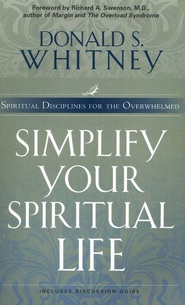
MANY CHRISTIANS THINK THEY CANNOT ADEQUATELY SHARE THE gospel unless they’ve had formal training in evangelism. I’m for evangelism training, but training is not necessary before you can tell someone about Jesus and give your own testimony about how you came to know Him. In John 9 we read of a man born blind who, within an hour after his conversion, is witnessing to Ph.D.s in religion (the Pharisees). Obviously, he’d had no evangelism training, but he was able to talk about Jesus and his own conversion. As Martyn Lloyd-Jones used to say, after being saved and after hearing countless presentations of the gospel in sermons, if Christians still believe they cannot evangelize without massive amounts of training, then either they’ve heard very poor preaching or they’ve been very poor listeners. However, it does boost one’s confidence in sharing the gospel to know a general outline of what to say and to have some appropriate verses of Scripture committed to memory. Several years ago I developed an outline to hang my thoughts on, along with at least two key verses for each section. I don’t follow it woodenly in every situation, for each evangelistic encounter is unique. And sometimes I condense it a bit. But having a full presentation of the gospel ready on my lips does give me a sense of direction and a feeling of preparedness. You’re welcome to adapt the outline for use in your own personal evangelism.
1. There is one God, He is the Creator, He is holy, and He is worth knowing. See Deuteronomy 4:39; Isaiah 46:9; Genesis 1: 1; 1 Peter 1: 16. Such a God is worthy of our pursuit!
2. Everyone is a sinner separated from God. See Romans 3:23; Isaiah 59:2. We have no idea how unholy we are in comparison to God.
3. There is a penalty for sin. See Romans 6:23; Hebrews 9:27; Romans 14:10; Matthew 25:46. The penalty is judgment and Hell.
4. Jesus paid that penalty for all who believe. See Romans 5:8; I Peter 3:18. Jesus took God’s judgment so believers could have mercy.
5. No one can earn God’s forgiveness and favor. See Ephesians 2:8-9; Titus 3:5. We’re not saved by our works, but by faith in Jesus’ work.
6. We should respond with repentance and faith. See Mark 1:15; John 3:16. We should turn from sin and turn to Jesus for forgiveness.
7. We can have assurance of eternal life with God. See 1 John 5:13. Jesus’ resurrection and God’s Word assure believers of forgiveness.
Responding to this great message from the Bible
A. It is not only right for you to live for the God who created you and owns you, but you will find your greatest fulfillment only when you fulfill the purpose for which you were made, and that is to know God and live for Him.
B. Do you believe this great message of the Bible? Genuine belief in its truth is demonstrated by turning from living for yourself and believing that because of His death and resurrection Jesus Christ can make you right with God.
C. Are you willing to express repentance and faith in prayer to God right now?
*SOURCE: Donald S. Whitney. Simplify Your Spiritual Life: Disciplines for the Overwhelmed. Colorado Springs: NavPress, 2003.
ABOUT DONALD S. WHITNEY

Since 2005, Don Whitney has been Associate Professor of Biblical Spirituality at The Southern Baptist Theological Seminary in Louisville, Kentucky, where he also serves as Senior Associate Dean. Before that, he held a similar position (the first such position in the six Southern Baptist seminaries) at Midwestern Baptist Theological Seminary in Kansas City, Missouri, for ten years. He is the founder and president of The Center for Biblical Spirituality.
Don grew up in Osceola, Arkansas, where he came to believe in Jesus Christ as Lord and Savior. He was active in sports throughout high school and college, and worked in the radio station his dad managed.
After graduating from Arkansas State University, Don planned to finish law school and pursue a career in sportscasting. While at the University of Arkansas School of Law, he sensed God’s call to preach the Gospel of Jesus Christ. He then enrolled at Southwestern Baptist Theological Seminary in Fort Worth, Texas, graduating with a Master of Divinity degree in 1979. In 1987, Don completed a Doctor of Ministry degree at Trinity Evangelical Divinity School in Deerfield, Illinois. Currently, he is completing his Doctor of Theology with Specialization in Christian Spirituality at the University of South Africa.
Prior to his ministry as a seminary professor, Don was pastor of Glenfield Baptist Church in Glen Ellyn, Illinois (a suburb of Chicago), for almost fifteen years. Altogether, he has served local churches in pastoral ministry for twenty-four years. His books include: Spiritual Disciplines for the Christian Life; Ten Questions to Diagnose Your Spiritual Health; How Can I Be Sure I’m a Christian?; and Spiritual Disciplines within the Church.
Do you REALLY CARE about the Lost?
A PARABLE OF SAVING LIVES

By Charles R. Swindoll
On a dangerous seacoast notorious for shipwrecks, there was a crude little lifesaving station. Actually, the station was merely a hut with only one boat…but the few devoted members kept a constant watch over the turbulent sea. With little thought for themselves, they would go out day and night tirelessly searching for those in danger as well as the lost. Many, many lives were saved by this brave band of men who faithfully worked as a team in and out of the lifesaving station. By and by, it became a famous place.
Some of those who had been saved as well as others along the seacoast wanted to become associated with this little station. They were willing to give their time and energy and money in support of its objectives. New boats were purchased. New crews were trained. The station that was once obscure and crude and virtually insignificant began to grow. Some of its members were unhappy that the hut was so unattractive and poorly equipped. They felt a more comfortable place should be provided. Emergency cots were replaced with lovely funrniture. Rough, hand-made equipment was discarded and sophisticated, classy systems, and appointments. By its completion, the life-saving station had become a popular gathering place, and its objectives had begun to shift. It was now used as sort of a clubhouse, an attractive gathering place for public gatherings. Saving lives, feeding the hungry, strengthening the fearful, and calming the disturbed rarely occurred by now.
Fewer members were now interested in braving the sea on lifesaving missions, so they hired professional lifeboat crews to do this work. The original goal of the station wasn’t altogether forgotten, however. The lifesaving motifs still prevailed in the club’s decorations. In fact, there was a liturgical lifeboat preserved in the Room of Sweet Memories with soft, indirect lighting, which helped hide the layer of dust upon the once-used vessel.
About this time a large ship was wrecked off the coast and the boat crews brought in loads of cold, wet, half-drowned people. They were dirty, some terribly sick and lonely. Others were black and “different” from the majority of the club members. The beautiful new club suddenly became messy and cluttered. A special committee saw to it that a shower house was immediately built outside and away from the club so victims of shipwreck could be cleaned up before coming inside.
At the next meeting there were strong words and angry feelings, which resulted in a division among the members. Most of the people wanted to stop the club’s lifesaving activities and all involvements with shipwreck victims…(it’s too unpleasant, it’s a hindrance to our social life, it’s opening the door to folks who are not our kind“). As you’d expect, some still insisted on saving lives, that this was their primary objective–that their only reason for existence was ministering to anyone needing help regardless of their club’s beauty or size or decorations. They were voted down and told if they wanted to save the lives of various kinds of people who were shipwrecked in those waters, they could begin their own lifesaving station down the coast! They did.
As years passed, the new station experienced the same old changes. It evolved into another club…and yet another lifesaving station was begun. History continued to repeat itself…and if you visit that coast today you’ll find a large number of exclusive, impressive clubs along the shoreline owned and operated by slick professionals who have lost all involvement with the saving or lives. Shipwrecks still occur in those waters, but now,most of the victims are not saved. Every day they drown at sea, and so few seem to care…so very few.
Do you?
Deepening Your Roots
Read: Colossians 4:2-6; Matthew 5:13-16; and Ephesians Chapter 5
Branching Out
(1) Take time today to pray for someone you know is shipwrecked.
(2) Look for someone in need this week and be his “salvation” by meeting his need.
(3) Keep your porch light on all week (day and night) to remind yourself that you and your home are to be a lighthouse for the world.
*Article adapted from Chuck Swindoll. Growing Strong In The Seasons of LIfe. Portland, OR.: Multnomah Press, 1983, pp. 98-99.
An Exposition of the Gospel: D.A. Carson on 1 Corinthians 15:1-19
Series: Gospel Presentations #8

THE GOSPEL OF JESUS CHRIST – AN EXPOSITION OF 1 CORINTHIANS 15:1-19 BY DON CARSON
Many have commented on the fact that the church in the western world is going through a time of remarkable fragmentation. This fragmentation extends to our understanding of the gospel. For some Christians, “the gospel” is a narrow set of teachings about Jesus and his death and resurrection which, rightly believed, tip people into the kingdom. After that, real discipleship and personal transformation begin, but none of that is integrally related to “the gospel.” This is a far cry from the dominant New Testament emphasis that understands “the gospel” to be the embracing category that holds much of the Bible together, and takes Christians from lostness and alienation from God all the way through conversion and discipleship to the consummation, to resurrection bodies, and to the new heaven and the new earth.
Other voices identify the gospel with the first and second commandments—the commandments to love God with heart and soul and mind and strength, and our neighbors as ourselves. These commandments are so central that Jesus himself insists that all the prophets and the law hang on them (Matthew 22:34- 40)—but most emphatically they are not the gospel.
A third option today is to treat the ethical teaching of Jesus found in the Gospels as the gospel—yet it is the ethical teaching of Jesus abstracted from the passion and resurrection narrative found in each Gospel. This approach depends on two disastrous mistakes. First, it overlooks the fact that in the first century, there was no “Gospel of Matthew,” “Gospel of Mark,” and so forth. Our four Gospels were called, respectively, “The Gospel According to Matthew,” “The Gospel According to Mark,” and so forth. In other words, there was only one gospel, the gospel of Jesus Christ, according to Matthew, Mark, Luke, and John. This one gospel, this message of news that was simultaneously threatening and promising, concerned the coming of Jesus the Messiah, the long-awaited King, and included something about his origins, the ministry of his forerunner, his brief ministry of teaching and miraculous transformation, climaxing in his death and resurrection. These elements are not independent pearls on a string that constitutes the life and times of Jesus the Messiah. Rather, they are elements tightly tied together. Accounts of Jesus’ teaching cannot be rightly understood unless we discern how they flow toward and point toward Jesus’ death and resurrection. All of this together is the one gospel of Jesus Christ, to which the canonical Gospels bear witness. To study the teaching of Jesus without simultaneously reflecting on his passion and resurrection is far worse than assessing the life and times of George Washington without reflecting on the American Revolution, or than evaluating Hitler’s Mein Kampf without thinking about what he did and how he died. Second, we shall soon see that to focus on Jesus’ teaching while making the cross peripheral reduces the glorious good news to mere religion, the joy of forgiveness to mere ethical conformity, the highest motives for obedience to mere duty. The price is catastrophic.
Perhaps more common yet is the tendency to assume the gospel, whatever that is, while devoting creative energy and passion to other issues—marriage, happiness, prosperity, evangelism, the poor, wrestling with Islam, wrestling with the pressures of secularization, bioethics, dangers on the left, dangers on the right—the list is endless. This overlooks the fact that our hearers inevitably are drawn toward that about which we are most passionate. Every teacher knows that. My students are unlikely to learn all that I teach them; they are most likely to learn that about which I am most excited. If the gospel is merely assumed, while relatively peripheral issues ignite our passion, we will train a new generation to downplay the gospel and focus zeal on the periphery. It is easy to sound prophetic from the margins; what is urgently needed is to be prophetic from the center. What is to be feared, in the famous words of W. B. Yeats in “The Second Coming,” is that “the centre does not hold.” Moreover, if in fact we focus on the gospel, we shall soon see that this gospel, rightly understood, directs us how to think about, and what to do about, a substantial array of other issues. These issues, if they are analyzed on their own, as important as they are, remain relatively peripheral; ironically, if the gospel itself is deeply pondered and remains at the center of our thinking and living, it powerfully addresses and wrestles with all these other issues.
There are many biblical texts and themes we could usefully explore to think more clearly about the gospel. But for our purposes we shall focus primarily on 1 Cor 15:1-19.
Now, brothers, I want to remind you of the gospel I preached to you, which you received and on which you have taken your stand. 2 By this gospel you are saved, if you hold firmly to the word I preached to you. Otherwise, you have believed in vain. 3 For what I received I passed on to you as of first importance: that Christ died for our sins according to the Scriptures, 4 that he was buried, that he was raised on the third day according to the Scriptures, 5 and that he appeared to Peter, and then to the Twelve. 6 After that, he appeared to more than five hundred of the brothers at the same time, most of whom are still living, though some have fallen asleep. 7 Then he appeared to James, then to all the apostles, 8 and last of all he appeared to me also, as to one abnormally born. 9 For I am the least of the apostles and do not even deserve to be called an apostle, because I persecuted the church of God. 10 But by the grace of God I am what I am, and his grace to me was not without effect. No, I worked harder than all of them– yet not I, but the grace of God that was with me. 11 Whether, then, it was I or they, this is what we preach, and this is what you believed. 12 But if it is preached that Christ has been raised from the dead, how can some of you say that there is no resurrection of the dead? 13 If there is no resurrection of the dead, then not even Christ has been raised. 14 And if Christ has not been raised, our preaching is useless and so is your faith. 15 More than that, we are then found to be false witnesses about God, for we have testified about God that he raised Christ from the dead. But he did not raise him if in fact the dead are not raised. 16 For if the dead are not raised, then Christ has not been raised either. 17 And if Christ has not been raised, your faith is futile; you are still in your sins. 18 Then those also who have fallen asleep in Christ are lost. 19 If only for this life we have hope in Christ, we are to be pitied more than all men. (NIV)
I shall try to bring things to clarity by focusing on eight summarizing words (six of which were first suggested by John Stott), five clarifying sentences, and one evocative summary.
A. Eight summarizing words:
What Paul is going to talk about in these verses, he says, is “the gospel”: “Now, brothers, I want to remind you of the gospel I preached to you” (v. 1). “By this gospel you were saved, if you hold firmly to the word I preached to you” (v. 2). Indeed, what Paul had passed on to them was “of first importance”—a rhetorically powerful way of telling his readers to pay attention, for what he is going to say about the gospel lies at its very center. These prefatory remarks completed, the first word that appears in Paul’s summary is “Christ”: “I passed on to you as of first importance that Christ died for our sins” and so forth. That brings me to the first of my eight summarizing words.
(1) The gospel is Christological; it is Christ-centered. The gospel is not a bland theism, still less an impersonal pantheism. The gospel is irrevocably Christ-centered. The point is powerfully articulated in every major New Testament book and corpus. In Matthew’s Gospel, for instance, Christ himself is Emmanuel, God with us; he is the long-promised Davidic king who will bring in the kingdom of God. By his death and resurrection he becomes the mediatorial monarch who insists that all authority in heaven and earth is his alone. In John, Jesus alone is the way, the truth, and the life: no one comes to the Father except through him, for it is the Father’s solemn intent that all should honor the Son even as they honor the Father. In the sermons reported in Acts, there is no name but Jesus given under heaven by which we must be saved (cf. Acts 4:12). In Romans and Galatians and Ephesians, Jesus is the last Adam, the one to whom the law and the prophets bear witness, the one who by God’s own design propitiates God’s wrath and reconciles Jews and Gentiles to his heavenly Father and thus also to each other. In the great vision of Revelation 4-5, the Son alone, emerging from the very throne of God Almighty, is simultaneously the lion and the lamb, and he alone is qualified to open the seals of the scroll in the right hand of God, and thus bring about all of God’s matchless purposes for judgment and blessing. So also here: the gospel is Christological. John Stott is right: “The gospel is not preached if Christ is not preached.”
Yet this Christological stance does not focus exclusively on Christ’s person; it embraces with equal fervor his death and resurrection. As a matter of first importance, Paul writes, “Christ died for our sins” (15:3). Earlier in this letter, Paul does not tell his readers, “I resolved to know nothing while I was with you except Jesus Christ”; rather, he says, “I resolved to know nothing while I was with you except Jesus Christ and him crucified” (1 Cor 2:2). Moreover, Paul here ties Jesus’ death to his resurrection, as the rest of the chapter makes clear. This is the gospel of Christ crucified and risen again.
In other words, it is not enough to make a splash of Christmas, and downplay Good Friday and Easter. When we insist that as a matter of first importance, the gospel is Christological, we are not thinking of Christ as a cypher, or simply as the God-man who comes along and helps us like a nice insurance agent: “Jesus is a nice God-man, he’s a very, very nice God-man, and when you break down, he comes along and fixes you.” The gospel is Christological in a more robust sense: Jesus is the promised Messiah who died and rose again.
(2) The gospel is theological. This is a short-hand way of affirming two things. First, as 1 Corinthians 15 repeatedly affirms, God raised Christ Jesus from the dead (e.g. 5:15). More broadly, New Testament documents insist that God sent the Son into the world, and the Son obediently went to the cross because this was his Father’s will. It makes no sense to pit the mission of the Son against the sovereign purpose of the Father. If the gospel is centrally Christological, it is no less centrally theological.
Second, the text does not simply say that Christ died and rose again; rather, it asserts that “Christ died for our sins” and rose again. The cross and resurrection are not nakedly historical events; they are historical events with the deepest theological weight.
We can glimpse the power of this claim only if we remind ourselves how sin and death are related to God in Scripture. In recent years it has become popular to sketch the Bible’s story-line something like this: Ever since the fall, God has been active to reverse the effects of sin. He takes action to limit sin’s damage; he calls out a new nation, the Israelites, to mediate his teaching and his grace to others; he promises that one day he will send the promised Davidic king to overthrow sin and death and all their wretched effects. This is what Jesus does: he conquers death, inaugurates the kingdom of righteousness, and calls his followers to live out that righteousness now in prospect of the consummation still to come.
Much of this description of the Bible’s story-line, of course, is true. Yet it is so painfully reductionistic that it introduces a major distortion. It collapses human rebellion, God’s wrath, and assorted disasters into one construct, namely, the degradation of human life, while depersonalizing the wrath of God. It thus fails to wrestle with the fact that from the beginning, sin is an offense against God. God himself pronounces the sentence of death (Gen 2-3). This is scarcely surprising, since God is the source of all life, so if his image bearers spit in his face and insist on going their own way and becoming their own gods, they cut themselves off from their Maker, from the One who gives life. What is there, then, but death? Moreover, when we sin in any way, God himself is invariably the most offended party. That is made clear from David’s experience. After he has sinned by seducing Bathsheba and arranging the execution of her husband, David is confronted by the prophet Nathan. In deep contrition, he pens Psalm 51. There he address God and says, “Against you, you only, have I sinned and done what is evil in your sight” (51:4). At one level, of course, that is a load of codswollop. After all, David has certainly sinned against Bathsheba. He has sinned horribly against her husband. He has sinned against the military high command by corrupting it, against his own family, against the baby in Bathsheba’s womb, against the nation as a whole, which expects him to act with integrity. In fact, it is difficult to think of anyone against whom David did not sin. Yet here he says, “Against you, you only, have I sinned and done what is evil in your sight.” In the most profound sense, that is exactly right. What makes sin sin, what makes it so vile, what gives it its horrific transcendental vileness, is that it is sin against God. In all our sinning, God is invariably the most offended party. That is why we must have his forgiveness, or we have nothing. The God the Bible portrays as resolved to intervene and save is also the God portrayed as full of wrath because of our sustained idolatry. As much as he intervenes to save us, he stands over against us as Judge, an offended Judge with fearsome jealousy.
Nor is this a matter of Old Testament theology alone. When Jesus announced the imminence of the dawning of the kingdom, like John the Baptist he cried, “Repent, for the kingdom of heaven is near” (Matt 4:17; cf. Mark 1:15). Repentance is necessary, because the coming of the King promises judgment as well as blessing. The Sermon on the Mount, which encourages Jesus’ disciples to turn the other cheek, repeatedly warns them to flee the condemnation to the gehenna of fire. The Sermon warns the hearers not to follow the broad road that leads to destruction, and pictures Jesus pronouncing final judgment with the words, “I never knew you. Away from me, you evildoers!” (7:23). The parables are replete with warnings of final judgment; a significant percentage of them demonstrate the essential divisiveness of the dawning of the kingdom. Images of hell—outer darkness, furnace of fire, weeping and gnashing of teeth, undying worms, eternal fire—are too ghastly to contemplate long, but we must not avoid the fact that Jesus himself uses all of them. After Jesus’ resurrection, when Peter preaches on the day of Pentecost, he aims to convince his hearers that Jesus is the promised Messiah, that his death and resurrection are the fulfillment of Scripture, and that God “has made this Jesus, whom you crucified [he tells them], both Lord and Christ” (Acts 2:36). That is every bit as much threat as promise: the hearers are “cut to the heart” and cry, “What shall we do?” (2:37). That is what elicits Peter’s “Repent and believe” (3:38). When Peter preaches to Cornelius and his household (10:23-48), the climax of his moving address is that in fulfillment of Scripture God appointed Jesus “as judge of the living and the dead”—and thus not of Jews only. Those who believe in him receive “forgiveness of sins through his name”: transparently, that is what is essential if we are to face the judge and emerge unscathed. When he preaches to the Athenian pagan intellectuals (17:16-34), Paul, as we all know, fills in some of the great truths that constitute the matrix in which alone Jesus makes sense: monotheism, creation, who human beings are, God’s aseity and providential sovereignty, the wretchedness and danger of idolatry. Before he is interrupted, however, Paul gets to the place in his argument where he insists that God has set a day “when he will judge the world with justice”—and his appointed judge is Jesus, whose authoritative status is established by his resurrection from the dead. When Felix invites the apostle to speak “about faith in Christ Jesus” (Acts 24:24), Paul, we are told, discourses “on righteousness, self-control and the judgment to come” (24:15): apparently such themes are an irreducible part of faithful gospel preaching. Small wonder, then, that Felix was terrified (24:25). How often when we preach the gospel are people terrified? The Letter to the Romans, which many rightly take to be, at very least, a core summary of the apostle’s understanding of the gospel, finds Paul insisting that judgment takes place “on the day when God will judge everyone’s secrets through Jesus Christ, as my gospel declares” (Rom 2:16). Writing to the Thessalonians, Paul reminds us that Jesus “rescues us from the coming wrath” (1 Thess 1:10). This Jesus will be “revealed from heaven in blazing fire with his powerful angels. He will punish those who do not know God and do not obey the gospel of our Lord Jesus. They will be punished with everlasting destruction and shut out from the presence of the Lord and from the majesty of his power on the day he comes to be glorified in his holy people and to be marveled at among all those who have believed” (2 Thess 1:7-10). We await “a Savior from [heaven], the Lord Jesus Christ”—and what this Savior saves us from (the context of Philippians 3:19-20 shows) is the destiny of destruction. “Like the rest, we were by nature objects of wrath” (Eph 2:3), for we gratified “the cravings of our sinful nature . . . following its desires and thoughts” (2:3)—but now we have been saved by grace through faith, created in Christ Jesus to do good works (Eph 2:8-10). This grace thus saves us both from sins and from their otherwise inevitable result, the wrath to come. Jesus himself is our peace (Eph 2; Acts 10:36). “The wrath of God is being revealed from heaven against all the godlessness and wickedness of human beings who suppress the truth by their wickedness” (Rom 1:18). But God “presented Christ as a propitiation in his blood” (3:25), and now “we have peace with God through our Lord Jesus Christ, through whom we have gained access by faith into this grace in which we now stand” (5:1-2).
Time and space fail to reflect on how the sacrifice of Christ in the Letter to the Hebrews is what alone enables us to escape the terror of those who fall into the hands of the living God, who is a consuming fire, or on how the Apocalypse presents the Lamb as the slaughtered sacrifice, even while warning of the danger of falling under the wrath of the Lamb.
This nexus of themes—God, sin, wrath, death, judgment—is what makes the simple words of 1 Corinthians 15:3 so profoundly theological: as a matter of first importance, “Christ died for our sins.” Parallel texts instantly leap to mind: “[Christ] was delivered over to death for our sins, and was raised to life for our justification” (Rom 4:25). “Christ died for the ungodly” (Rom 5:6). The Lord Jesus Christ “gave himself for our sins, to rescue us from the present evil age” (Gal 1:4). “Christ died for sins once for all, the righteous for the unrighteous, to bring you to God” (1 Pet 3:18). Or, as Paul puts it here in 1 Corinthians 15:2, “By this gospel you are saved.” To be saved from our sins is to be saved not only from their chaining power but from their consequences—and the consequences are profoundly bound up with God’s solemn sentence, with God’s holy wrath. Once you see this, you cannot fail to see that whatever else the cross achieves, it must rightly set aside God’s sentence, it must rightly satisfy God’s wrath, or it achieves nothing. The gospel is theological.
(3) The gospel is biblical. “Christ died for our sins according to the Scriptures, . . . he was buried, . . . he was raised on the third day according to the Scriptures” (15:3-4). What biblical texts Paul has in mind, he does not say. He may have had the kind of thing Jesus himself taught, after his resurrection, when “he explained to them what was said in all the Scriptures concerning himself” (Luke 24:27; cf. vv. 44-46). Perhaps he was thinking of texts such as Psalm 16 and Isaiah 53, used by Peter on the day of Pentecost, or Psalm 2, used by Paul himself in Pisidian Antioch, whose interpretation depends on a deeply evocative but quite traceable typology. Elsewhere in 1 Corinthians Paul alludes to Christ as “our Passover . . . sacrificed for us” (5:5)—so perhaps he could have replicated the reasoning of the author of the Letter to the Hebrews, who elegantly traces out some of the ways in which the Old Testament Scriptures, laid out in a salvation-historical grid, announce the obsolescence of the old covenant and the dawning of the new covenant, complete with a better tabernacle, a better priesthood, and a better sacrifice. What is in any case very striking is that the apostle grounds the gospel, the matters of first importance, in the Scriptures—and of course he has what we call the Old Testament in mind—and then in the witness of the apostles—and thus what we call the New Testament. The gospel is biblical.
(4) The gospel is thus apostolic. Of course, Paul cheerfully insists that there were more than five hundred eyewitnesses to the resurrection of the Lord Jesus. Nevertheless he repeatedly draws attention to the apostles: Jesus “appeared to Peter, and then to the Twelve” (15:5); “he appeared to James, then to all the apostles, and last of all he appeared to me” (15:8), “the least of the apostles” (15:9). Listen carefully to the sequence of pronouns in 15:11: “Whether, then, it was I or they, this is what we preach, and this is what you believed” (15:11). The sequence of pronouns, I, they, we, you, becomes a powerful way of connecting the witness and teaching of the apostles with the faith of all subsequent Christians. The gospel is apostolic.
(5) The gospel is historical. Here four things must be said.
First, 1 Corinthians 15 specifies both Jesus’ burial and his resurrection. The burial testifies to Jesus’ death, since (normally!) we bury only those who have died; the appearances testify to Jesus’ resurrection. Jesus’ death and his resurrection are tied together in history: the one who was crucified is the one who was resurrected; the body that came out of the tomb, as Thomas wanted to have demonstrated, had the wounds of the body that went into the tomb. This resurrection took place on the third day: it is in datable sequence from the death. The cross and the resurrection are irrefragably tied together. Any approach, theological or evangelistic, that attempts to pit Jesus’ death and Jesus’ resurrection against each other, is not much more than silly. Perhaps one or the other might have to be especially emphasized to combat some particular denial or need, but to sacrifice one on the altar of the other is to step away from the manner in which both the cross and resurrection are historically tied together.
Second, the manner by which we have access to the historical events of Jesus’ death, burial, and resurrection, is exactly the same as that by which we have access to almost any historical event: through the witness and remains of those who were there, by means of the records they left behind. That is why Paul enumerates the witnesses, mentions that many of them are still alive at his time of writing and therefore could still be checked out, and recognizes the importance of their reliability. In God’s mercy, this Bible is, among many other things, a written record, an inscripturation, of those first witnesses.
Third, we must see that, unlike other religions, the central Christian claims are irreducibly historical. If somehow—I have no idea how—you could prove that Gautama the Buddha never lived, would you destroy the credibility of Buddhism? No, of course not. The plausibility and credibility of Buddhism depends on the internal coherence and attractiveness of Buddhism as a system with all its variations. It depends not a whit on any historical claim. If somehow—I have no idea how—you could prove that the great Hindu god Krishna never existed, would you destroy Hinduism? No, of course not. If the ancient Greeks had thousands of gods, Hindus have millions, and the complex vision of Hinduism in which all reality is enmeshed in one truth with its infinite variations and its karmic system of retribution and cyclic advance and falling away depends in no way on the existence of any one of them. If Krishna were to disappear from the Hindu pantheon, you could always go down the street to a Shiva temple instead. Suppose, then, that you approach your friendly neighborhood mullah and seek to explore how tightly Islam is tied to historical claims. You will discover that history is important in Islam, but not the same way in which it is important in biblically faithful Christianity. You might ask the mullah, “Could Allah, had he chosen to do so, given his final revelation to someone other than Muhammed?” Perhaps the mullah will initially misunderstand your question. He might reply, “We believe that God gave great revelation to his prophet Abraham, and great revelation to his prophet Moses, and great revelation to his prophet Jesus. But we believe Allah gave his greatest and final revelation to Muhammed.” You might reply, “With respect, sir, I understand that that is what Islam teaches; and of course you will understand that I as a Christian do not see things quite that way. But that is not my question. I am not asking if Muslims believe that God gave his greatest and final revelation to Muhammed: of course you believe that. I am asking, rather, a hypothetical question: Could God have given his greatest and final revelation to someone other than Muhammed, had he chosen to do so?” Your thoughtful Mullah will doubtless say, “Of course! Allah, blessed be he, is sovereign. He can do whatever he wishes. The revelation is not Muhammed! Revelation is entirely in the gift of Allah. Allah could have given it to anyone to whom he chose to give it. But we believe that in fact Allah gave it to Muhammed.”
In other words, although it is important to Muslims to believe and teach that the ultimate revelation of Allah was given, in history, to Muhammed, and Islam’s historical claims regarding Muhammed are part and parcel of its apologetic to justify Muhammed’s crucial place as the final prophet, there is nothing intrinsic to Muhammed himself that is bound up with the theological vision of Islam. Otherwise put, a Muslim must confess that there is no god but Allah, and that Muhammed is his prophet, but Muhammed’s historical existence does not, in itself, determine the Muslim’s understanding of God.
But suppose you were to ask a similar question of an informed Christian pastor: “Do you believe that the God of the Bible might have given his final revelation to someone other than Jesus of Nazareth?” The question is not even coherent—for Jesus is the revelation, the revelation that entered history in the incarnation. As John puts it in his first Letter, “That which was from the beginning, which we have heard, which we have seen with our eyes, which we have looked at and our hands have touched—this we proclaim concerning the Word of life. The life appeared, we have seen it and testify to it” (1 John 1:1-2). This is an historical revelation. Moreover, there are specific historical events in Jesus’ life that are essential to the most elementary grasp of Christianity—and here, pride of place goes to Jesus’ death and resurrection.
A little over two years ago, a reporter put a crucial question to the then Anglican Archbishop of Perth, at the time the Anglican Primate of Australia. The reporter asked, “If we discovered the tomb of Jesus, and could somehow prove that the remains in the tomb were Jesus’ remains, what would that do to your faith?” The Archbishop replied that it wouldn’t do anything to his faith: Jesus Christ has risen in his heart. The apostle Paul understands the issues with much more straightforward clarity: “if Christ has not risen, your faith is futile” (1 Cor 15:17). In other words, part of the validation of faith is the truthfulness of faith’s object—in this case, Jesus’ resurrection. If Jesus has not risen, they can believe it ‘till the cows come home, but it is still a futile belief that makes them look silly: they “are to be pitied more than all men” (15:17). There is no point getting angry with the former Archbishop of Perth: he and his opinions on this matter are painfully pitiful.
Many in our culture believe that the word “faith” is either a synonym for “religion” (e.g. “there are many faiths” means “there are many religions”), or it refers to a personal, subjective, religious choice. It has nothing to do with truth. But in this passage, Paul insists that if Christ is not risen, then faith that believes Christ is risen is merely futile. Part of the validation of genuine faith is the reliability, the truthfulness, of faith’s object. If you believe something is true when in reality it is not true, your faith is not commendable; rather, it is futile, valueless, worthless, and you yourself are to be pitied. Part of the validation of faith is the truthfulness of faith’s object—and in this case, the object is an historical event, the resurrection of Jesus Christ. The Bible never asks us to believe what is not true. By the same token, one of the principal ways the Bible has of increasing and strengthening faith is by articulating and defending the truth.
There is another way of clarifying the relationship between a biblically faithful Christianity and history. Not too long ago, the members of the NT Department here at Trinity were interviewing a possible addition to our Department. The candidate was a fine man with years of fruitful pastoral ministry behind him, and an excellent theological education. A problem came to light, however, when we inquired how he would respond to students raising questions about a variety of perceived historical difficulties in the Gospels. In every case, he thought the way forward was to talk about the theological themes of Matthew, or the biblical theology of Mark, or the literary structure of Luke, and so forth. He simply set aside the historical questions; he ignored them, preferring to talk exclusively in terms of literary and theological themes. In due course we told him that he did not have a ghost of a chance of joining our Department as long as he held to such an approach. For although it is entirely right to work out the theology of Matthew’s Gospel, that must not be at the expense of refusing to talk about the historical person of Jesus Christ. The candidate’s procedure gives the impression we are saved by theological ideas about Christ; it is an intellectualist approach, almost a gnostic approach, to salvation. But we are not saved by theological ideas about Christ; we are saved by Christ himself. The Christ who saves us is certainly characterized by the theological realities embraced by Matthew, Mark, Luke, and John, but this Christ is extra-textual; he is the historical God-man to whom the text bears witness.
Fourth, we must face the fact that in contemporary discussion the word “historical” is sometimes invested with a number of slippery assumptions. For some who are heavily invested in philosophical naturalism, the word “historical” can be applied only to those events that have causes and effects entirely located in the ordinary or “natural” or time-based stream of sequence of events. If that is the definition of “historical,” then Jesus’ resurrection was not historical, for such a definition excludes the miraculous, the spectacular intervention of the power of God. But it is far better to think that “historical” rightly refers to events that take place within the continuum of space and time, regardless of whether God has brought about those events by ordinary causes, or by a supernatural explosion of power. We insist that in this sense, the resurrection is historical: it takes place in history, even if it was caused by God’s spectacular power when he raised the man Christ Jesus from the dead, giving him a resurrection body that had genuine continuity with the body that went into the tomb. This resurrection body could be seen, touched, handled; it could eat ordinary food. Nevertheless, it is a body that could suddenly appear in a locked room, a body that Paul finds hard to describe, ultimately calling it a spiritual body or a heavenly body (1 Cor 15:35-44). And that body was raised from the tomb by the spectacular, supernatural, power of God—operating in history.
In short, the gospel is historical.
(6) The gospel is personal. The death and resurrection of Jesus Christ are not merely historical events; the gospel is not merely theological in the sense that it organizes a lot of theological precepts. It sets out the way of individual salvation, of personal salvation. “Now, brothers,” Paul writes at the beginning of this chapter, “I want to remind you of the gospel I preached to you, which you received and on which you have taken your stand. By this gospel you are saved” (1 Cor 15:1-2). An historical gospel that is not personal and powerful is merely antiquarian; a theological gospel that is not received by faith and found to be transforming is merely abstract. In reality, the gospel is personal.
(7) The gospel is universal. If we step farther into 1 Corinthians 15, we find Paul demonstrating that Christ is the new Adam (vv. 22, 47-50). In this context, Paul does not develop the move from Jew to Gentile, or from the Israelites as a national locus of the people of God to the church as in international community of the elect. Nevertheless, Christ as the new Adam alludes to a comprehensive vision. The new humanity in him draws in people from every tongue and tribe and people and nation. The gospel is universal in this sense. It is not universal in the sense that it transforms and saves everyone without exception, for in reality, those whose existence is connected exclusively to the old Adam are not included. Yet this gospel is gloriously universal in its comprehensive sweep. There is not a trace of racism here. The gospel is universal.
(8) The gospel is eschatological. This could be teased out in many ways, for the gospel is eschatological in more ways than one. For instance, some of the blessings Christians receive today are essentially eschatological blessings, blessings belonging to the end, even if they have been brought back into time and are already ours. Already God declares his blood-bought, Spirit-regenerated people to be justified: the final declarative sentence from the end of the age has already been pronounced on Christ’s people, because of what Jesus Christ has done. We are already justified—and so the gospel is in that sense eschatological. Yet there is another sense in which this gospel is eschatological. In the chapter before us, Paul focuses on the final transformation: “I declare to you, brothers,” he says in vv. 50 and following, “that flesh and blood cannot inherit the kingdom of God, nor does the perishable inherit the imperishable. Listen, I tell you a mystery: We will not all sleep, but we will all be changed—in a flash, in the twinkling of an eye, at the last trumpet. For the trumpet will sound, the dead will be raised imperishable, and we will be changed. For the perishable must clothe itself with the imperishable, and the mortal with immortality. When the perishable has been clothed with the imperishable, and the mortal with immortality, then the saying that is written will come true: ‘Death has been swallowed up in victory.” It is not enough to focus narrowly on the blessings Christians enjoy in Christ in this age: the gospel is eschatological.
So what Paul preaches, as a matter of first importance, is that the gospel is Christological, theological, biblical, apostolic, historical, personal, universal, and eschatological.
Now the passage in front of us includes several wonderful truths that further unpack this gospel before our eyes. I can summarize them in five clarifying sentences.
(1) This gospel is normally disseminated in proclamation. This gospel, Paul say, “I preached to you” (1 Cor 15:1), and then adds that it is “the word I preached to you” (15:2). This way of describing the dissemination of the gospel is typical of the New Testament. The gospel that was preached was what the Corinthians believed (15:11). Look up every instance of the word “gospel” and discover how often, how overwhelmingly often, this news of Jesus Christ is made known through proclamation, through preaching. Earlier in this same letter Paul insists that in God’s unfathomable wisdom “God was pleased through the foolishness of what was preached to save those who believe” (1:21). The content was “what was preached”; the mode of delivery was “what was preached.” There are plenty of texts that talk about the importance of being salt and light, of course, or of doing good to all people, especially those of the household of God, or of seeking the good of the city. Yet when dissemination of the gospel is in view, overwhelmingly the Bible specifies proclamation. The good news must be announced, heralded, explained; God himself visits and revisits human beings through his word. This gospel is normally disseminated in proclamation.
(2) This gospel is fruitfully received in authentic, persevering faith. “[T]his is what we preach,” Paul writes, “and this is what you believed” (1 Cor 15:11). Toward the beginning of the chapter, Paul tells the Corinthians, “By this gospel you are saved, if you hold firmly to the word I preached to you. Otherwise, you have believed in vain” (15:2). In other words, their faith in the word Paul preached, in the gospel, must be of the persevering type. Many other passages carry the same emphasis. For instance, Paul tells the Colossians, “[God] has reconciled you by Christ’s physical body through death to present you holy in his sight, without blemish and free from accusation—if you continue in your faith, established and firm, not moved from the hope held out in the gospel” (Col 1:22-23). This gospel is fruitfully received in authentic, persevering faith.
(3) This gospel is properly disclosed in personal self-humiliation. When the gospel is properly understood and received in persevering faith, people properly respond the way the apostle does. Yes, the risen Christ appeared last of all to him (15:8). Yet far from becoming a source of pride, this final resurrection appearance evokes in Paul a sense of his own unworthiness: “For I am the least of the apostles,” he writes, “and do not even deserve to be called an apostle, because I persecuted the church of God. But by the grace of God I am what I am” (15:9-10). How could it be otherwise? Jesus had purchased Paul’s redemption at the cost of his own blood, he had graciously forgiven him of his sins, including the sin of persecuting the church of God, he had confronted the apostle on the Damascus Road and revealed himself to him at the very moment Paul was expanding his efforts to damage Christ’s people! Even if in the wake of his conversion, Paul confesses he has worked harder than the other apostles, he insists that this can only be true because of the grace of God that was with him (15:10). Humility, gratitude, dependence on Christ, contrition—these are the characteristic attitudes of the truly converted, the matrix out of which Christians experience joy and love. When the gospel truly does its work, “proud Christian” is an unthinkable oxymoron. This gospel is properly disclosed in personal self-humiliation.
(4) This gospel is rightly asserted to be the central confession of the whole church. At numerous points in 1 Corinthians Paul reminds his readers that the Corinthian church is not the only church—or, better put, that there are many other churches with common beliefs and practices, such that at some point the independence of the Corinthians, far from being a virtue, is merely evidence that they are out of step. In 4:17, Paul tells them that Timothy will remind the Corinthians of Paul’s way of life, “which agrees with what I teach everywhere in every church.” When he is dealing with marriage and divorce, Paul stipulates, “This is the rule I lay down in every church” (7:17). After laying down what believers are to think about headship and relationships between men and women, Paul closes his discussion with the words, “If anyone wants to be contentious about this, we have no other practice—nor do the churches of God” (11:16). However we understand the restriction found in 14:34, Paul introduces it with the words, “As in all the congregations of the saints” (14:33). There is no explicit formula of this sort in 1 Corinthians 15. Nevertheless, Paul repeatedly alludes to what he preaches everywhere, not just in Corinth. Passive expressions like “if it is preached” (15:11) give the impression that this is the common content, not something that was reserved for Corinth—as also Paul’s reference to his service in Ephesus for the sake of this same gospel (15:32), and his many earlier references to his common practices in preaching the gospel (esp. chaps. 1-2).
Of course, what “the whole church” or “all the churches” are doing is not necessarily right: just ask Athansius or Luther. One must test everything by Scripture. Moreover, one must grimly admit that there is a kind of traditionalism that loses its way, that preserves form while sacrificing authenticity and power. In Corinth, however, that does not seem to have been the problem. Corinth speaks to the lust for endless innovation that casually cuts a swath away from the practices and beliefs of other churches, while quietly side-stepping the careful instruction of the apostle. Paul insists that the gospel is rightly asserted to be the central confession of the whole church. Always be suspicious of churches that proudly flaunt how different they are from what has gone before.
(5) The gospel is boldly advancing under the contested reign and inevitable victory of Jesus the king. This side of Jesus’ death and resurrection, all of God’s sovereignty is mediated exclusively through King Jesus. That is amply taught elsewhere in the New Testament, of course. Matthew concludes with Jesus’ claim, “All authority is given to me in heaven and on earth” (Matt 28:20). Philippians rejoices that “the name that is above every name” has been given to him (Phil 2:9-11). So also—and dramatically—here: Christ “must reign until he has put all his enemies under his feet” (15:25). That presupposes the reign is still contested, and still advances. This is of a piece with Jesus’ claim, “I will build my church, and the gates of hell shall not prevail against it” (Matt 16:18). But one day, the final enemy, death itself, will die, and Jesus’ mediatorial kingship will end. God will be all in all (15:28).
It is in the light of this gospel—all that the death and resurrection of Jesus have achieved, all that the advancing kingdom of King Jesus is accomplishing, all that we will inherit in resurrection existence on the last day—that Paul writes to these Corinthian believers, and to us, and says, “Therefore my dear brothers and sisters, stand firm. Let nothing move you. Always give yourselves fully to the work of the Lord, because you know that your labor in the Lord is not in vain” (15:58). The gospel is boldly advancing under the contested reign and inevitable victory of Jesus the king.
It is time to take stock. One of the striking results of this summary of the gospel—eight defining words and five clarifying sentences, all emerging from one New Testament chapter—is how cognitive the gospel is.
Here is what is to be understood, believed, obeyed; here is what is promised, taught, explained. All of this must be said, loudly and repeatedly, in a generation that feels slightly embarrassed when it has to deal with the cognitive and the propositional.
Yet something else must also be said. This chapter comes at the end of a book that repeatedly shows how the gospel rightly works out in the massive transformation of attitudes, morals, relationships, and cultural interactions. As everyone knows, Calvin insists that justification is by faith alone, but genuine faith is never alone; we might add that the gospel focuses on a message of what God has done and is doing, and must be cast in cognitive truths to be believed and obeyed, but this gospel never properly remains exclusively cognitive.
Thus in the first two chapters of 1 Corinthians, the gospel, the word of the cross, is not only God’s wisdom which the world judges to be folly, but it is God’s power which the world judges to be weakness. The first four chapters find Paul pained at the divisions in the Corinthian church, different factions associating themselves exclusively with one hero or another—Peter, Apollos, Paul, and, probably the most sanctimonious of the lot, the “I follow Christ” party. What the apostle works out is how this is a betrayal of the gospel, a misunderstanding of the nature of Christian leadership, a tragic and bitter diminution of the exclusive place of Christ, the crucified Christ who is the focus of the gospel. Chapter four shows in a spectacular way that there is no place for triumphalism in the church of the blood-bought, in the church led by apostles who eat everyone’s dirt at the end of the procession. In chapters 5 and 6, the gospel of Christ the Passover lamb prescribes that believers must, in line with Passover, get rid of all “yeast”—and this works out in terms of church discipline were there is grievous sexual sin. Where the gospel triumphs, relationships are transformed, with the result that lawsuits bringing brothers into conflict with each other before pagan courts becomes almost unthinkable, and casual sex is recognized as a massive denial of Christ’s lordship. In chap. 7, complex questions about divorce and remarriage are worked out in the context of the priorities of the gospel and the transformed vision brought about by the dawning of the eschatological age and the anticipation of the end. Chapters 8-10 wrestle with how believers must interact with the broader pagan culture over the matter of food offered to idols, with the central example of the apostle Paul himself demonstrating in dramatic fashion what cheerful and voluntary self-restraint for the sake of the advance of the gospel actually looks like—and even how such a stance is tied to a proper understanding of the relationship between the new covenant and the old. Relationships between men and women are tied, in 1 Cor 11:2-16, not only to relationships in the Godhead, but also to what it means to live “in the Lord”—and thus in the gospel. The blistering condemnation of Corinthian practices at the Lord’s Supper (“In the following directives I have no praise for you, for your meetings do more harm than good,” 11:17) is tied not only to the barbarous insensitivity some Christians were displaying toward other Christians, but also to the massive failure to take the cross seriously and use this Christ-given rite as an occasion for self-examination and repentance. The ways in which the charismata or pneumatika of 1 Cor 12-14 are to be exercised is finally predicated on the fact that all believers confess that Jesus is Lord, all believers have been baptized in one Spirit into one body, and above all that the most excellent “way” mandated of all believers without exception is the way of love. Love is the most important member of the Pauline triad of faith, hope, and love—this triplet of virtues that are deeply intrinsic to the working out of the gospel of Jesus Christ. A Christianity where believers are not patient and kind, a Christianity where believers characteristically envy, are proud and boastful, rude, easily angered, and keep a record of wrongs, is no Christianity at all. What does this say, in concrete terms, about the communion of saints, the urgent need to create a Christian community that is profoundly counter-cultural? What will this say about inter-generational relationships? About race? About how we treat one another in the local church? About how we think of brothers and sisters in highly diverse corners of our heavenly Father’s world?
Just as Paul found it necessary to hammer away at the outworking of the gospel in every domain of the lives of the Corinthians, so we must do the same today. Recently at Trinity, a very wise worker on an Ivy League campus told us what, in her experience drives most of the young women whom she disciples every week. She mentioned three things. First, from parents, never get less than an A. Of course, this is an Ivy League campus! Still, even on an Ivy League campus, grades are distributed on a bell curve, so this expectation introduces competition among the students. Second, partly from parents, partly from the ambient culture, be yourself, enjoy yourself, live a rich and full life, and include in this some altruism such as helping victims of Katrina. Third, from peers, from Madison avenue, from the media, be hot—and this, too, is competitive, and affects dress, relationships, what you look for in the opposite sex, what you want them to look for in you. These demands drum away incessantly. There is no margin, no room for letting up; there is only room for failure. The result is that about 80% of women during their undergraduate years will suffer eating disorders; close to the same percentage will at some point be clinically depressed. The world keeps telling them that they can do anything, and soon this is transmuted into the demand that they must do everything, or be a failure both in their own eyes and in the eyes of others. Even when they become Christians, it is not long before they feel the pressure to become the best Christians, as measured by attendance at Bible studies, leading prayer meetings, faithfully recording their daily devotions.
But where is the human flourishing that springs from the gospel of grace, God’s image-bearers happily justified before God on the ground of what Christ has done, powerfully regenerated so that they respond in faith, obedience, joy, and gratitude? The conventions and expectations of the world are pervasive and enslaving. The gospel must be worked out for these women, and demonstrated in the life of the church, so that it issues in liberation from the wretched chains of idolatry too subtle to be named and too intoxicating to escape, apart from the powerful word of the cross.
Of course, I have picked on one small demographic. It does not take much to think through how the gospel must also transform the business practices and priorities of Christians in commerce, the priorities of young men steeped in indecisive but relentless narcissism, the lonely anguish and often the guilty pleasures of single folk who pursue pleasure but who cannot find happiness, the tired despair of those living on the margins, and much more. And this must be done, not by attempting to abstract social principles from the gospel, still less by endless focus on the periphery in a vain effort to sound prophetic, but precisely by preaching and teaching and living out in our churches the glorious gospel of our blessed Redeemer.
“Therefore my dear brothers and sisters, stand firm. Let nothing move you. Always give yourselves fully the work of the Lord, because you know that your labor in the Lord is not in vain” (15:58).
Don Carson, Ph. D., is Research Professor of New Testament at Trinity Evangelical Divinity School in Deerfield, Illinois. He is a frequent guest lecturer in academic and church settings around the world and has authored or edited more than forty-five books.
Article Reprinted with permission from The Gospel Coalition (http://www.thegospelcoalition.org/articles.php?a=81n)
The Spurgeon Fellowship Journal Feature – Spring 2008 11
The Simple Gospel: “Saved by God, From God, For God”
Series: Gospel Presentations #7

“SAVED BY GOD, FROM GOD, FOR GOD”
Christians are notorious for using a vocabulary that is not always understood by those around them. There’s no doubt that we have our own lingo and jargon.
One such word is the word “saved.” Often, Christians ask unsuspecting neighbors, colleagues and friends the question, “are you saved?” and usually receive only puzzled expressions in response. These folk are desperately trying to understand the question, but have no reference point whatsoever from which to make an assessment of how to answer. The Christian, on the other hand, seeing this as a wonderful opportunity to evangelize, usually pounces on this hesitation, though just how much is communicated in such times is open to debate. Though the Christian is usually sincere in desiring to share his faith, he needs to provide some foundation for the person to understand what he is seeking to communicate.
Yet in saying this, the word “saved” is very much a biblical word. The scripture says, “whoever will call on the name of the Lord will be saved.” (Romans 10:13)
But what exactly is this referring to? What is it that those who call on the name of the Lord are saved from?
Well let’s take a look at the word “saved.” It is a word we use quite often, especially in the world of sports. We talk of a goalkeeper making a great “save,” or a boxer being “saved” by the bell. When used in this context, the word “saved” does not have any eternal significance to it whatsoever, but refers instead to a present day deliverance or rescue from calamity. The goalkeeper doesn’t provide eternal life for his team mates when he makes a save, but merely prevents a calamity – conceding a goal to the opposing team. The boxer doesn’t gain heavenly bliss because the bell rings, but the sounding of the bell signalled the end of a round when it looked certain that the fighter was about to lose the fight. Again, the word saved refers to being rescued from a calamity.
So what exactly does the Bible mean then when it talks of our need to be saved? What is the calamity from which we need to be rescued?
The Bible’s answer is a very clear one. God is holy and He is just. That’s not good news if we happen to be sinners, which the Bible declares that we are. “All of us have sinned and fall short of God’s glory” (Romans 3:23). But thank God, that’s not the end of the story. But it gets a lot worse before it gets better!
God is good. God is also just. God is therefore a good judge and must punish sin. God’s justice will be meted out precisely as justice demands it – which when you think about it, is the worst of all possible news for us. We won’t be able to get away with anything – all the secrets of our hearts will be exposed, and we will be called to give an account of our lives. What is worse is that the sins we have committed are so grievous to Him that the punishment for sin is eternal in duration. In fact, rather than the judgment we will face being merely being left or abandoned by God, God is actually active in pouring out His wrath against our sin.
So what exactly does the Bible mean by the phrase, “the wrath of God?”
Well one thing we notice very clearly when we study the Bible on this issue is that wrath is not an isolated concept made up by merely one “out of sorts and grumpy prophet.” There are in fact over 600 references to God’s wrath in the Old Testament alone.
Two incidents in Exodus will help our understanding at this point. In Exodus 22:22-24, God says, “You shall not mistreat any widow or fatherless child. If you do mistreat them, and they cry out to me, I will surely hear their cry, and my wrath will burn, and I will kill you with the sword, and your wives shall become widows and your children fatherless.”
Then later on when the children of Israel make for themselves a golden calf to worship, the scripture records God as saying, “Now therefore let me alone, that my wrath may burn hot against them and I may consume them, in order that I may make a great nation of you.” But Moses implored the LORD his God and said, “O LORD, why does your wrath burn hot against your people, whom you have brought out of the land of Egypt with great power and with a mighty hand? Why should the Egyptians say, ‘With evil intent did he bring them out, to kill them in the mountains and to consume them from the face of the earth’? Turn from your burning anger and relent from this disaster against your people.” (Exodus 32:10-12)
Regarding this, Dr. James Montgomery Boice writes, “it is evident in this passage that Moses’ appeal to God is not based either on imagined innocence of the people (they were not innocent, and Moses knew it), nor on the thought that wrath was unworthy of God. Moses appeals only on the basis of God’s name and how his acts would be misconstrued by the heathen. No doubt is expressed that wrath is a proper reaction of God’s holy character against sin.” Dr. Boice goes on to say, “God’s wrath is not arbitrary, as if God for some minor matter or according to his own caprice simply turns against those whom he formerly loved and favored. On the contrary, wrath is God’s consistent and unyielding resistance to sin and evil. In the first passage it is wrath brought on by sin against others, widows and orphans. In the second passage it is wrath brought on by sins against God.” (Foundations of the Christian Faith, p. 248)
Nahum 1:2-3, 6-8 declares, “The LORD is a jealous and avenging God; the LORD is avenging and wrathful; the LORD takes vengeance on his adversaries and keeps wrath for his enemies. The LORD is slow to anger and great in power, and the LORD will by no means clear the guilty. His way is in whirlwind and storm, and the clouds are the dust of his feet. Who can stand before his indignation? Who can endure the heat of his anger? His wrath is poured out like fire, and the rocks are broken into pieces by him. The LORD is good, a stronghold in the day of trouble; he knows those who take refuge in him. But with an overflowing flood he will make a complete end of the adversaries, and will pursue his enemies into darkness.”
Again, many more scriptures would verify the reality and nature of the wrath of Almighty God. Psalm 2:5-9 says, “Then he will speak to them in his wrath, and terrify them in his fury, saying, “As for me, I have set my King on Zion, my holy hill.” I will tell of the decree: The LORD said to me, “You are my Son; today I have begotten you. Ask of me, and I will make the nations your heritage, and the ends of the earth your possession. You shall break them with a rod of iron and dash them in pieces like a potter’s vessel.”
In the New Testament, the wrath of God is also clearly seen. Two main words for wrath are used. The first, thymos (in Greek) means “to rush along fiercely,” “to be in the heat of violence,” or “to breath violently.” It refers to a panting rage.
The second Greek word, orge, means “to grow ripe for something” with the noun form revealing that this wrath has been slowly building over a long space of time. It is a gradually building anger that rises in intensity, and therefore is not so much a sudden flare up of hostility, which is soon over, but rather as Leon Morris defines it, “a strong and settled opposition to all that is evil arising out of God’s very nature” (Leon Morris, The Apostolic Preaching of the Cross).
Romans 1:18-20 reveals the present day reality of this wrath. “For the wrath of God is revealed from heaven against all ungodliness and unrighteousness of men, who by their unrighteousness suppress the truth. For what can be known about God is plain to them, because God has shown it to them. For his invisible attributes, namely, his eternal power and divine nature, have been clearly perceived, ever since the creation of the world, in the things that have been made. So they are without excuse.”
Romans 2:5 “But because of your hard and impenitent heart you are storing up wrath for yourself on the day of wrath when God’s righteous judgment will be revealed.”
Are we all feeling the weight of this bad news yet? I don’t believe we will appreciate the amazing good news of the Gospel until we do.
Jesus is also coming back to rule and reign. When He does so, it will not be like His first coming when He came as a humble baby, born in a manger, but He’s coming back as King of Kings and Lord of Lords, to enforce His rule in our world.
Revelation 19:15 declares, “From his mouth comes a sharp sword with which to strike down the nations, and he will rule them with a rod of iron. He will tread the winepress of the fury of the wrath of God the Almighty.”
Although this refers to a future event, the scripture reveals that the wrath of God is a present reality, as we’ve already seen through Romans 1:18. The scripture also says, “Whoever believes in the Son has eternal life; whoever does not obey the Son shall not see life, but the wrath of God remains on him.” (John 3:36)
I can’t think of a worse calamity than this one – facing the full fury of the wrath of God against our sin.
But is it just for God to punish sinners for eternity?
Let me respond with a quote from the great theologian, Jonathan Edwards, “Our obligation to love, honor, and obey any being, is in proportion to his loveliness, honorableness, and authority; for that is the very meaning of the words. When we say any one is very lovely, it is the same as to say, that he is one very much to be loved. Or if we say such a one is more honorable than another, the meaning of the words is, that he is one that we are more obliged to honor. If we say any one has great authority over us, it is the same as to say, that he has great right to our subjection and obedience. But God is a being infinitely lovely, because he has infinite excellency and beauty. To have infinite excellency and beauty, is the same thing as to have infinite loveliness. He is a being of infinite greatness, majesty, and glory; and therefore he is infinitely honorable. He is infinitely exalted above the greatest potentates of the earth, and highest angels in heaven; and therefore he is infinitely more honorable than they. His authority over us is infinite; and the ground of his right to our obedience is infinitely strong; for he is infinitely worthy to be obeyed himself, and we have an absolute, universal, and infinite dependence upon him. So that sin against God, being a violation of infinite obligations, must be a crime infinitely heinous, and so deserving of infinite punishment. The eternity of the punishment of ungodly men renders it infinite” (THE JUSTICE OF GOD IN THE DAMNATION OF SINNERS, Works, vol. 1; 669).
In light of this, it is merely the pleasure of God Himself that His wrath did not fall on us last night, or last week, or last year. In fact, it is very evident that God has been remarkably patient with us all.
So then, if facing the full brunt of the wrath of God for all eternity is the worst possible calamity, then the greatest deliverance becomes immediately clear. To be saved, is to be rescued from the wrath of Almighty God.
In His love, God sent His Son to deliver us or rescue us from His eternally fierce wrath against our sin. John 3:16 says, “For God so loved the world, that he gave his only Son, that whoever believes in him should not perish but have eternal life.”
1 Thessalonians 1:9-10 declares, “For they themselves report concerning us the kind of reception we had among you, and how you turned to God from idols to serve the living and true God, and to wait for his Son from heaven, whom he raised from the dead, Jesus who delivers us from the wrath to come.”
Romans 5:6-9 “For while we were still weak, at the right time Christ died for the ungodly. For one will scarcely die for a righteous person – though perhaps for a good person one would dare even to die – but God shows his love for us in that while we were still sinners, Christ died for us. Since, therefore, we have now been justified by his blood, much more shall we be saved by him from the wrath of God.”
Question: Whose love is it?
Answer: God’s
Question: Whose wrath is it?
Answer: God’s
It was God’s idea to save all who believe in Christ from the ultimate calamity, the fierceness of the wrath of God.
What a deliverance! What a rescue! God sent His Son to save us from His wrath. To put it in clear terms – we are saved by God, from God, for God!
On the cross, Jesus bore our sin, and God poured out His wrath on Him, in our place. He took the punishment we deserved as He bore our sins in His body on the tree (1 Peter 2:24). Jesus bore the wrath of God on behalf of His people. All who believe in Him as Savior and Lord are forever rescued from this wrath. But for those who do not receive the Son of God, God’s wrath is being revealed (Romans 1:18) and the full brunt of that wrath will be meted out in judgement.
To these, Jesus says, “Behold, I am coming soon, bringing my recompense with me, to repay everyone for what he has done. I am the Alpha and the Omega, the first and the last, the beginning and the end.” (Revelation 22:12-13)
The scripture declares, “How shall we escape if we neglect such a great salvation?” (Hebrews 2:3) The answer to this rhetorical question is clear. If we neglect this great salvation, there will be no escape. Indeed, “It is a fearful thing to fall into the hands of the living God.” (Hebrews 10:31)
So again, here’s the good news: “if you confess with your mouth that Jesus is Lord and believe in your heart that God raised him from the dead, you will be saved. For with the heart one believes and is justified, and with the mouth one confesses and is saved. For the Scripture says, “Everyone who believes in him will not be put to shame.” For there is no distinction between Jew and Greek; the same Lord is Lord of all, bestowing his riches on all who call on him. For “everyone who calls on the name of the Lord will be saved.” Romans 10:9-13
Call out to Him now.
A SUMMARY OF THE GOSPEL
Man was created to glorify God and enjoy Him forever.
“Worthy are you, our Lord and our God to receive glory and honor and power, for You created all things.” (Rev 4:11) “Do all to the glory of God” (1 Cor 10:31).
Man has failed to glorify God and is under His just condemnation.
“For all have sinned…” (Rom 3:23). “The wages of sin is death…” (Rom 6:23). “These will pay the penalty of eternal destruction” (2 Thes 1:9).
Jesus fully bore the wrath and suffered the punishment sinners deserve. Not wishing that sinners perish forever, God determined to save a people for Himself in the Eternal Son who became a man and lived the life we should have lived and died the death we justly deserve. God loves sinners and sent His Son to be the wrath absorbing sacrifice for their sin. (1 John 4:10; John 6:37) He gave His life “as a ransom for many” (Mk 10:45) and “rose again” from the dead (2 Cor 5:15) on their behalf.
All who, by the grace of God, turn to Jesus in repentant submissive faith are forgiven and begin a life-changing, eternally satisfying relationship with God! “Repent and believe the gospel” (Mk 1:5). “in Your presence is fullness of joy” (Ps 16:11).
“”Saved by God, from God, For God” by Pastor John Samson of King’s Church in Phoenix, AZ – http://www.kingschurchaz.com/Gospel.html


S. Lewis Johnson, Jr. on Preaching the Grace of the Spirit’s Calling
Lecture #3 Delivered at Toronto Baptist Seminary and Bible College — March 1988
 Introduction. One of the memorable things uttered by Abraham Booth (1734-1806) in his useful book, The Reign of Grace, is this one, “The indelible motto inscribed by the hand of Jehovah on all the blessings of the unchangeable covenant, is, to the praise of the glory of His grace.”1 The question that is before us in this lecture is, “Preaching the Grace of the Spirit’s Calling,” and it, too, has the indelible motto of to the praise of the glory of His grace inscribed upon it. It has its origin in the absolutely free favour of God.

In simple terms the question is, “How and why do we come to Christ?” There are two sides to the matter, but in this lecture we are concerned only with one. From the human side it is plain to evangelical readers of God’s Word that we come to the Son of God by the instrumentality of faith (cf. Rom. 3:21–26; Eph. 2:8–10).
From the divine side of the matter many and different answers have been given. Pelagians have said, “I came by myself,” denying grace altogether. Semi-Pelagians have said, “I wanted to come, and God helped me,” denying prevenient grace, but admitting cooperative grace, if man first chooses to come. Arminians of evangelical stripe have said, “God gave me sufficient grace to come, because Christ died, and I cooperated, admitting total inability, but claiming sufficient grace becomes efficient when we cooperate.” Lutherans have answered, “God brought me, and I did not resist,” reserving for man only the power of resisting grace. Calvinists, those who believe in sovereign grace, have answered simply, “God brought me to Christ” (cf. Gal. 4:9, “are known”).
It is difficult to understand why the Arminians are attracted to sufficient grace. Sufficient grace of itself enables a sinner, not to believe, but to be morally responsible to believe. Without sufficient grace Arminians believe the sinner, dead in sins, is not responsible for a condition in which he does not have the ability to extricate himself. To free man from his natural inability of will and make him responsible is the reason for the invention of the doctrine. It is, of course, not taught by any text of the Bible.
However, since it does not have the power to save without the exercise of man’s free will, how does this help matters? The individual with sufficient grace is now responsible by the Arminian doctrine, but in himself he is still without the power to turn to God, for evangelical Arminians believe in man’s total inability as Wesley did. If, however, the man who was totally unable to turn to God is not responsible without sufficient grace, but now with sufficient is responsible, although still totally unable of Himself to turn to God, how is this bestowal of sufficient grace an act of divine grace? Would it not be better to not have sufficient grace, for then men would not be responsible and, thus, assured to God’s salvation? God, to be most gracious, ought to give no grace! To illustrate, let us suppose a convicted murderer awaiting execution in jail contracts tuberculosis. His constant coughing convinces his prison doctor that he will cough himself to death before the day of his execution. The doctor comes to him and says, “I am pained that you are suffering so. I am giving you some medicine to take. It will not cure you, but it will strengthen you and keep you alive until you can be hanged”! Sufficient grace is similar. It gives men strength of will sufficient to make them responsible and thus to justify God in sending them to perdition. I fail to see the grace that the doctrine conveys. In fact, it seems clearly to underline the fact that by this system man is only saved by his own free will act. In other words, God can do nothing for a man until that man does something for himself. The ground of God’s salvation is shared by man with God. Is that New Testament teaching?
The teaching of both John and Paul makes distinct contributions to the debate over calling (cf. John 6:37, 43–45, 65; Rom. 8:30; I Cor. 12:3; 2 Thess. 2:13–15), and we turn now to the Scriptures.
I. THE THEOLOGICAL BACKGROUND OF EFFICACIOUS GRACE
External calling and internal calling. External calling, also called General Calling, is the declaration of the plan of salvation, with its command to repent, its appeal to motivations (such as fear, hope, gratitude), and its promise of acceptance through faith.
Internal calling is the effectual work of the Spirit, by which men are savingly influenced to salvation. Grace is the initiation of the work; calling is the result of the action of grace. The calling comes from the Spirit, as distinguished from the Word (cf. John 3:27; 6:37, 45, 64–65; I Thess. 1:5–6)). The Bible teaches the two calls. Of the objects of the one it is said, “Many are called, but few are chosen,” but of the other it is said, “whom he called, them he also justified “ (cf. Prov. 1:24 [1st]; John 6:45 [2nd]; Rom. 8:29–30).
The description of efficacious grace. Efficacious grace, which secures the saving internal call, is a divine influence on the human spirit. The Apostle Peter refers to efficacious grace when he writes of the scattered saints, describing them as “chosen according to the foreknowledge of God the Father, by the sanctifying work of the Spirit, that you may obey Jesus Christ and be sprinkled with His blood” (I Pet. 1:1–2). The sanctifying work of the Spirit that precedes the obedience and sprinkling of the blood, as the order of the words indicates, is the work of the Spirit that sets apart the elect to faith and salvation. Our Lord speaks of this work as the drawing of the Father, who does the work through the Spirit (cf. John 6:44).
The term “draw” in John 6:44 is a key-word in the doctrine, being, in fact, the biblical word for the work of efficacious grace. Bernard’s comments are excellent. “elknein is used in the LXX of Jer. 31:3 of the Divine attraction: ‘With lovingkindness have I drawn thee.’ It is used of the attractive power of Christ Crucified in Jn. 12:32, occurring elsewhere in the N. T. only at Jn. 18:10 (of drawing a sword), Jn. 21:6, 11 (of dragging a net ashore), and Acts 16:19 (of dragging Paul and Silas to the magistrates). It seems generally to connote a certain resistance on the part of that which is ‘dragged’ or ‘drawn,’ and this may be involved in its use in the present verse (but cf. Cant. 1:4).”2 Astoundingly, William Barclay, after giving all of this data from Bernard, comments, “Always there is this idea of resistance. God can and does draw men, but man’s resistance can defeat the pull of God.”3 Not one of the uses of the verb suggests this.4 Calvin’s comment is clarifying, “As far as the manner of the hearing goes, it is not violent so as to compel men by an external force; but yet it is an effectual movement of the Holy Spirit, turning men from being unwilling and reluctant into willing.”5
As Donald Grey Barnhouse used to say, “If you have made a decision of the will that is according to God’s will, it is because God has first jiggled your willer! “
The words, “the Father who sent me,” in verse forty-four should be noted. “The correlation between the subject: He who sent me, and the verb draw should be observed,” Godet says, “the same God who sends Jesus for souls, draws each soul to Jesus.”6 Should He have waited until asked to come? The final clause, “and I will raise him up on the last day,” refers to the consummation of the process that the Father’s drawing began. Between the two events lies the growth and development of the believer’s spiritual experience.
Efficacious grace operates immediately upon the human spirit, although usually in the context of the consideration of the Word of God (cf. I Cor. 2:12–15). It is supernatural, an overcoming of man’s deadness, blindness, deafness, and hardness of heart.
Some years ago when I was giving a series of lectures in Believers Chapel in Dallas, Texas, on soteriology, one of the members of the class, a young woman, came to me after the meeting and asked a number of questions that indicated that she did not understand very well the lesson that evening, which happened to be on efficacious grace. She spoke of “a very good man” she knew, a Roman Catholic, who “had everything going for him.” She went on to tell me how difficult she was finding it to reach him for the Lord. And then she said, “The only thing that will move him is a bolt from the blue.” I replied, “Kris, that is efficacious grace!” I tried to encourage her to wait for God’s necessary “jiggling” of his will.7
The infallibility of efficacious grace. The elect is subject to moral and mediate influences upon the will, common to him and to the unconverted, which he may and does resist because of sin. He is also subject to a special influence from the Spirit within the will, which is neither resistible nor irresistible, according to Hodge, because it acts from within and carries the will spontaneously with it. For this reason Hodge prefers the term, “effectual grace.8
II THE NEW TESTAMENT TEACHING ON EFFICACIOUS GRACE
The Johannine teaching. One of the important sources of the Johannine teaching, to which we have already made reference in discussing the use of the word draw, is found in John six. The Jews were murmuring over the great revelation concerning the Bread of Life who had come down from heaven (cf. John 6:38, 42). The Lord does not answer their objection, based upon His known parentage, but goes right to the heart of the matter. They must be “taught of God” to respond to His teaching on His heavenly origin.9 Whispering will not help; teaching from God will.
The forty-fifth verse spells it all out, it is repeated in verse sixty-five. “Here is a fundamental doctrine of the Fourth Gospel,” Bernard points out, “viz. that the approach of the soul to God or Christ is not initiated by the man himself, but by a movement of Divine grace.”10 The truth is adumbrated in 4:23, where the Father is said to seek His true worshippers (cf. 12:39: the dark side of predestination). The impossibility of anyone coming to Christ without the Father’s drawing was implied in the statement of verse thirty-seven, but it is stated in the forty-fourth verse. We will not go over again the plain statement of the necessity of the Father’s drawing for salvation, except to reiterate that the drawing is an effectual drawing in which the Father turns men from unwillingness to willingness.
The significance of the forty-fifth verse is sometimes overlooked. There a citation from Isaiah 54:13 is found, and it serves to explain that the drawing is scriptural teaching. In context the text refers to the messianic covenant community of Israel, the recipients of the covenantal blessings. They who belong to the Messiah need no instruction from men; they carry within themselves the effects of the divine instruction. The “all” must be understood in the context of the prophet. It is the “all” of the messianic community. The following “everyone who has heard” simply individualizes the specific “all.” Our Lord, then, makes an application of a timeless principle in the divine dealing with men. To be taught of God is to be drawn by God (cf. I Cor. 2:13; Phil. 3:15).
The Father’s drawing involves three steps, the next sentence affirms: (a) hearing; (2) learning; (3) coming. The Father takes the initiative and teaches. Everyone who listens and learns will come. The hymn, “0 Happy Day,” has at least one stanza that I like,
“Tis done: the great transactions’s done, I am my Lord’s, and He is mine; He drew me, and I followed on, Charmed to confess the voice divine”
It is Calvin’s contention that verse forty-five overthrows free will, for he comments, “The whole faculty of free will which the Papists (and Arminians, we might add) dream about is utterly overthrown by these two clauses. For if we begin to come to Christ only when the Father has drawn us, neither the beginning of faith, nor any preparation for it, lies in us. On the other hand, if all come whom the Father has taught, He gives them not only the freedom to believe but faith itself. When therefore we willingly obey the Spirit’s guiding, it is a part, as it were, sealing, of grace. For God would not draw us if He only stretched out His hand and left our will in a state of suspense. But He is properly said to draw us when He extends the power of His Spirit to the full completing of faith. They are said to hear God who willingly submit to God when He speaks within them, because the Spirit reigns in their hearts.”11
The Pauline teaching. In Romans 8:30 two points may be made that apply to the matter in hand. First of all, in the order of the steps in the divine continuing providential purpose it is important to notice that calling is given a place before justification, effectively indicating its place in time as a pre-salvation work.
And second, it should be remembered that the root, kaleo, meaning to call, in the epistles of Paul always refers to an effectual call (cf. I Cor. 1:1, 2, 26; Gal. 1:16; 2 Tim. 1:9–10). The aorist tenses look at the actions as complete and, thus certain, without reference to time.
An important passage for the subject of efficacious grace is 2 Thessalonians 2:13–14, concerning which James Denney has said, “The thirteenth and fourteenth verses of this chapter are a system of theology in miniature.”12 In the main that is correct. The thanksgiving is meant to encourage the Thessalonians, especially those agitated by the reports mentioned in 2:1–2.13 The verb heilato (NASB, “has chosen“) is used nowhere else in the New Testament of the doctrine of election, although it is so used in the Old Testament (cf. Deut. 6:18; 7:6–7; 10:15; cf. Phil. 1:22). Normally in its New Testament uses it refers to man’s choosing, not God’s (cf. Phil. 1:22; Heb. 11:25). If the reading ap’arches is genuine (NASB, “from the beginning”), then it refers clearly to eternal election here.14 The tense and voice of the verb lay stress on the choice as an event (in the past here) in which God has a personal interest. He chose us for Himself.15
The choice is from eternity, not from the time the gospel was preached in Thessalonica, as some would have it. Cf. I John 2:13; Matt. 19:4; Eph. 1:4.
The soterian, the purpose of the choice, is in this context final salvation, inclusive, of course, of the initial salvation from the penalty of sin. The method of accomplishment is important for the subject of efficacious grace, or effectual calling, and here Paul says that the salvation is “through (lit., in) sanctification by the Spirit and faith in the truth” (NASB). The sanctification is pre-salvation sanctification, or effectual calling, as the order of words suggests. The same order we have seen in I Peter 1:2. The “Spirit” is the Holy Spirit. Paul, then, as John insists on a pre-salvation gracious work of the Spirit before salvation. One does not come to our Lord or to salvation apart from it.
Two passages from I Corinthians complete our brief survey of Pauline teaching. The first is I Corinthians 8:3, where we read, “But if any one loves God, he is known by Him.” The construction of the original text is such that God’s knowing of the one who loves Him precedes the believer’s love of Him.16
The second passage is I Corinthians 12:3, and the important clause for our purposes is the final one, “except by the Holy Spirit.” Lenski comments, “Whoever confesses Jesus as ‘Lord’ has the Holy Spirit in his heart.”17 Calvin follows along the same line, saying that all things pertaining to the knowledge of God are gifts of the Holy Spirit, and then, “Hence, too we perceive how great our weakness is, as we cannot so much as move our tongue for the celebration of God’s praise, unless it be governed by his Spirit.”18 Unless He opens our mouths, we are not fit to be the heralds of His praise (cf. Isa. 6:5, “man of unclean lips”). Cf. Jer. 20:7.
Commenting on John 6:45, Berkouwer says, “This absoluteness of giving, drawing, and learning we meet not only in John, but also in the radical and exclusive testimony of Paul when he says, for instance, that ‘no man can say, Jesus is Lord, but in the Holy Spirit’” (I Cor. 12:3). The message of Scripture repeatedly accentuates that human inability. The impotence of man is not something pessimism has discovered; it is most literally described in Scripture (cf. John 3:27, I Cor. 2:14, Rom. 8:5, 6, 7, 8.”19
There are many illustrations in Scripture of the working of efficacious grace, but two stand out, one in the Gospel of Luke (14:16–23) and the other in the Acts of the Apostles (16:11–15), the latter incident in which the Lord “opened” Lydia’s heart to the things spoken by Paul being an almost perfect illustration of the truth. We do not have space in this paper to expound the texts.
III THE PRACTICAL EFFECTS OF EFFICACIOUS GRACE
The magnification of the divine purpose. Salvation is the work of God. It, therefore, is not hurried along, or effectuated, by stronger appeals, mightier arguments, more sparkling personalities, more telling illustrations, longer invitations, keener psychological insight, better eye-catching pedagogical helps or methods, and we must not forget it. On the other hand, we do not contend that it is helped by insipid thinking, windowless sermons, shunning of aids in teaching that the Spirit lays before our eyes. Salvation is the work of God, and His purpose shall be accomplished in His time (cf. John 6:39–40).
The senselessness of discouragement. The sense of discouragement, so frequently felt when the response is slight, is often a form of self-centeredness ultimately. Our need is faithfulness in our faith in His Word. May the Lord enable us to persevere in it.
Endnotes
-
Abraham Booth, The Reign of Grace (Grand Rapids: Wm. B. Eerdmans Publishing Company, 1949 [reprint of 16th London ed.]), pp. 47–48. H. Bernard, A Critical and Exegetical Commentary on the Gospel According to St.John, ed. by A. H. McNeile (Edinburgh: T. & T. Clark,1928), I, 204.
-
William Barclay, The Gospel of John (Edinburgh: The Saint Andrew Press, 1955), I, 226.
-
Leon Morris, The Gospel According to John (Grand Rapids: Wm. B. Eerdmans Publishing Co., 1971), p. 371.
-
John Calvin, The Gospel According to St John: 1-10, ed. by David W. Torrance and Thomas F. Torrance, trans. by T. H. L. Parker (Grand Rapids: Wm. B. Eerdmans Publishing Company, 1959), I, 164.
-
Godet, Commentary on the Gospel of St. John, trans. by M. D. Cusin and S. Taylor (3rd. ed; Edinburgh: T. & T. Clark, 1887), II 238. Believers Chapel, Dallas, Texas, March 24, 1970. A. Hodge, Outlines of Theology (Grand Rapids: Zondervan Publishing House, 1972 [orig. enlarged ed., 1879]), pp. 449–53. Bernard, I, 203.
-
Ibid., I, 204.
-
Calvin, I, 165.
-
James Denney, “The Epistles to the Thessalonians,” The Expositor’s Bible, p. 342.
-
James Everett Frame, A Critical and Exegetical Commentary on the Epistles of St. Paul to the Thessalonians (Edinburgh: T. & T. Clark, 1912), p. 276.
-
George Milligan, St Paul’s Epistle to the Thessalonians (London: Macmillan and Co., Limited, 1908), p. 106. Other recent commentators, such as Marshall and Morris favor “from the beginning,” arguing that, in spite of several things that may be said for “as a firstfruits,” it is difficult to make good sense of it here. The ap_arxhs is probably the correct reading (AV; NASB, “from the beginning”), since Paul never uses it elsewhere, and it has good manuscript support. WH accepts it, but the Aland text has aparxhn, largely because ap_ arxhs occurs nowhere else in the Pauline corpus and, when arxh does, it usually has a different sense, and aparxh occurs six other times in Paul. Cf. Bruce M. Metzger, A Textual Commentary on the Greek New Testament (London: United Bible Societies, 1971), p–p. 636–67. The decision in this instance is not an easy one.
-
One would expect the middle voice of the verb to be prominent from the verbal idea of election itself. Cf. Eph. 1:4 (also a verb in the middle voice).
-
The tense of the verb “loves” is a present tense, while that of the verb “is known” is a perfect passive, clearly showing that the knowing by God precedes our loving of Him. “The sense rather is, If a man loves God, this is a sign that God has taken the initiative,” Barrett says (C. K. Barrett, A Commentary on the First Epistle to the Corinthians [New York and Evanston: Harper & Row, Publishers, 1968], p. 190).
-
C. H. Lenski, The Interpretation of St. Paul’s First and Second Epistles to the Corinthians (Columbus: Wartburg Press, 1946), p. 494.
-
John Calvin, The First Epistle to the Corinthians (Grand Rapids: Wm. B. Eerdmans Publishing Co., 1960), p. Cf. Gordon D. Fee, The First Epistle to the Corinthians (Grand Rapids: William B. Eerdmans Publishing Company, 1987), “As in 2:10–13, only one who has the Spirit can truly make such a confession because only the Spirit can reveal its reality” (p. 582).
-
C. Berkouwer, Divine Election, trans. by Hugo Bekker (Grand Rapids: Wm. B. Eerdmans Publishing Company, 1960), p. 49.
 LifeCoach4God