APOLOGETICS & EVANGELISM RESOURCES

Compiled by David P. Craig, August 2023

*Recommended; **Very Highly Recommended

Agnostics and Atheists

  • *Andy Bannister. The Atheist Who Didn’t Exist: Or the Dreadful Consequences of Bad Arguments.
  • *David Berlinski. The Devil’s Delusion: Atheism and its Scientific Pretensions.
  • **Guillaume Bignon. Confessions of a French Atheist: How God Hijacked My Quest to Disprove the Christian Faith.
  • *Justin Brierley. Unbelievable?: Why After Ten Years of Talking with Atheists, I’m still a Christian.
  • *Paul Copan and William Lane Craig, eds. Contending with Christianity’s Critics: Answering New Atheists and Other Objectors.
  • *Anthony DeStefano. Inside the Atheist Mind: Unmasking the Religion of Those Who Say There Is No God.
  • Jim Jacob Esq. A Lawyer’s Case for God: Does God exist? Is the Bible true? Examine the evidence. Render your verdict.
  • *Michael Guillen. Can a Smart Person Believe in God?
  • *Eric Hedin. Canceled Science: What Some Atheists Don’t Want You to See.
  • *Antony Flew with Roy Abraham Varghese. There Is a God: How the World’s Most Notorious Atheist Changed His Mind.
  • *Norman L. Geisler and Daniel J. McCoy. The Atheist’s Fatal Flaw: Exposing Conflicting Beliefs.
  • *Michael Guillen. Believing Is Seeing: A Physicist Explains How Science Shattered His Atheism and Revealed the Necessity of Faith.
  • Jeffrey D. Johnson. The Absurdity of Unbelief: A Worldview Apologetic of the Christian Faith.
  • *Phillip E. Johnson. Against All Gods: What’s Right and Wrong About the New Atheism.
  • *W. Mark Lanier. Atheism on Trial: A Lawyer Examines the Case for Unbelief.
  • *John C. Lennox. Gunning for God: Why the New Atheists are Missing the Target.
  • *Louis Markos. Atheism on Trial: Refuting the Modern Arguments Against God.
  • *Alister McGrath. The Twilight of Atheism: The Rise and Fall of Disbelief in the Modern World.
  • *Eric Metaxas. Is Atheism Dead?
  • *R. Albert Mohler Jr. Atheism Remix: A Christian Confronts the New Atheists.
  • *Timothy Morgan. Thank God for Atheists: How The Greatest Skeptics Led Me To Faith.
  • **Nancy Pearcey. Finding Truth: 5 Principles for Unmasking Atheism, Secularism, and Other God Substitutes.
  • *Ron Rhodes. Answering the Objections of Atheists, Agnostics, and Skeptics.
  • *David Robertson. Engaging with Atheists: Understanding Their World; Sharing Good News.
  • *Mary Jo Sharp. Why I Still Believe: A Former Atheist’s Reckoning with the Bad Reputation Christians Give a Good God.
  • **R.C. Sproul. If There’s a God Why Are There Atheists?: Why Atheists Believe in Unbelief.
  • *Mitch Stokes. A Shot of Faith (to the Head): Be a Confident Believer in an Age of Cranky Atheists.
  • *Mitch Stokes. How to Be an Atheist: Why Many Skeptics Aren’t Skeptical Enough.
  • *Frank Turek. Stealing from God: Why Atheists Need God to Make Their Case.
  • *Peter S. Williams. C.S. Lewis vs the New Atheists.
  • *Richard Wurmbrand. The Answer to the Atheist’s Handbook.

Answering Objections 

  • **Gleason Leonard Archer. New International Encyclopedia of Bible Difficulties.
  • *Craig Blomberg. Can We Still Believe in God?: Answering Ten Contemporary Challenges to Christianity.
  • Charlie H. Campbell. One Minute Answers to Skeptics: Concise Responses to the Top 50 Questions & Objections.
  • **Ray Comfort. Faith Is for Weak People: Responding to the Top 20 Objections to the Gospel.
  • *Paul Copan. How Do You Know You’re Not Wrong? Responding To Objections That Leave Christians Speechless.
  • *Paul Copan. True for You, But Not for Me: Overcoming Objections to Christian Faith.
  • William Lane Craig. Hard Questions Real Answers.
  • **Norman L. Geisler and Thomas Howe. The Big Book of Bible Difficulties: Clear and Concise Answers from Genesis to Revelation.
  • **Norman L. Geisler and Ronald M. Brooks. When Skeptics Ask: A Handbook on Christian Evidences.
  • *Norman L. Geisler and Jason Jimenez. The Bible’s Answers to 100 of Life’s Biggest Questions.
  • *Chip Ingram. Why I Believe: Straight Answers to Honest Questions about God, the Bible, and Christianity.
  • *Jeremiah J. Johnston. Unanswered: Lasting Truth for Trending Questions.
  • **Timothy Keller. The Reason For God.
  • **Gregory Koukl. Street Smarts: Using Questions to Answer Christianity’s Toughest Challenges.
  • **Josh D. McDowell and Don Stewart. Answers to Tough Questions Skeptics Ask About the Christian Faith.
  • *Rebecca McLaughlin. Confronting Christianity: 12 Hard Questions for the World’s Largest Religion.
  • Mark Mittelberg. The Questions Christians Hope No One Will Ask: (With Answers).
  • Jeffrey Burton Russell. Exposing Myths About Christianity: A Guide to Answering 145 Viral Lies and Legends.
  • *Kenneth Samples. Christianity Cross-Examined: Is It Rational, Relevant, and Good?
  • *Kenneth Samples. Without a Doubt: Answering the 20 Toughest Faith Questions.
  • **R.C. Sproul. Now, That’s A Good Question.
  • **R.C. Sproul. Reason to Believe: A Response to Common Objections to Christianity.
  • *Lee Strobel. The Case for Faith: A Journalist Investigates the Toughest Objections to Christianity.
  • *James Emery White. Christianity for People Who Aren’t Christians: Uncommon Answers to Common Questions .

Apologetics With Children and Teenagers

  • **Natasha Crain. Keeping Your Kids on God’s Side: 40 Conversations to Help Them Build a Lasting Faith.
  • **Natasha Crain. Talking with Your Kids about God: 30 Conversations Every Christian Parent Must Have. 
  • **Natasha Crain. Talking with Your Kids about Jesus: 30 Conversations Every Christian Parent Must Have.
  • **Norman Geisler and Joseph Holden. Living Loud: An Introduction to Apologetics for Students (Updated Edition).
  • **Sean McDowell. A Rebel’s Manifesto: Choosing Truth, Real Justice, and Love amid the Noise of Today’s World.
  • **Sean McDowell. Apologetics for a New Generation: A Biblical and Culturally Relevant Approach to Talking About God.
  • **Sean McDowell and J. Warner Wallace. So the Next Generation Will Know: Preparing Young Christians for a Challenging World.
  • Rebecca McLaughlin. 10 Questions Every Teen Should Ask (and Answer) about Christianity.
  • **Hillary Morgan Ferrer. Mama Bear Apologetics: Empowering Your Kids to Challenge Cultural Lies.
  • **Hillary Morgan Ferrer. Mama Bear Apologetics Guide to Sexuality: Empowering Your Kids to Understand and Live Out God’s Design.
  • **John Stonestreet and Brett Kunkle. A Practical Guide to Culture: Helping the Next Generation Navigate Today’s World.
  • **John Stonestreet and Brett Kunkle. A Student’s Guide to Culture.
  • **Thaddeus J. Williams. Don’t Follow Your Heart: Boldly Breaking the Ten Commandments of Self-Worship.

Archaeology

  • Clive Anderson and Brian Edwards. Evidence for the Bible.
  • **Lisetter Bassett-Brody. Etched in Stone: Archeological Discoveries that Prove the Bible.
  • *Charlie Campbell. Archaeological Evidence for the Bible: Discoveries that Verify People, Places, and Events in the World’s Most Influential Book.
  • *John D. Currid. The Case for Biblical Archaeology: Uncovering the Historical Record of God’s Old Testament People.
  • **J. Daniel Hays. A Christian’s Guide to Evidence for the Bible: 101 Proofs from History and Archaeology.
  • **Joseph M. Holden and Norman Geisler. The Popular Handbook of Archaeology and the Bible: Discoveries That Confirm the Reliability of Scripture.
  • **Walter C. Kaiser Jr., ed. Archaeological Study Bible: An Illustrated Walk Through Biblical History and Culture (NIV or KJV).
  • *Titus M. Kennedy. Excavating the Evidence for Jesus: The Archaeology and History of Christ and the Gospels.
  • *Titus M. Kennedy. Unearthing the Bible: 101 Archaeological Discoveries That Bring the Bible to Life.
  • **Joel P. Kramer. Where God Came Down: The Archaeological Evidence.

Bibliology: Defending The Bible As God’s Inerrant & Infallible Word

  • *John Ankerberg and John Weldon. The Facts On The Bible.
  • *John Ankerberg and John Weldon. The Reliability of the Bible.
  • *Craig Blomberg. The Historical Reliability of the New Testament: Countering the Challenges to Evangelical Christian Beliefs.
  • **F.F. Bruce. The Canon of Scripture.
  • **F.F. Bruce.The New Testament Documents: Are They Reliable?
  • *Barry Cooper. Can I really trust the Bible?: and other questions about Scripture, truth and how God speaks.
  • **Norman L. Geisler and William E. NIx. From God To Us: How We Got Our Bible (Revised and Expanded).
  • *Timothy Paul Jones. Why Should I Trust the Bible?
  • *Walter C. Kaiser Jr. The Old Testament Documents: Are They Reliable & Relevant?
  • *Michael J. Kruger. Canon Revisited: Establishing the Origins and Authority of the New Testament Books.
  • *Michael J. Kruger. The Question of Canon: Challenging the Status Quo in the New Testament Debate.
  • **L. Scott Kellum and Charles L. Quarles. 40 Questions About the Text and Canon of the New Testament.
  • *Neil R. Lightfoot. How We Got Our Bible (3rd Edition).
  • **Erwin W. Lutzer. 7 Reasons Why You Can Trust The Bible.
  • **John MacArthur. Why Believe the Bible?
  • **William D. Mounce. Why I Trust the Bible: Answers to Real Questions and Doubts People Have about the Bible.

Buddhism

  • Tenzin Lahkpa with Eugene Bach. Leaving Buddha: A Tibetan Monk’s Encounter with the Living God.
  • *J. Isamu Yamamoto. Buddhism: Buddhism, Taoism and Other Far Eastern Religions (Zondervan Guide to Cults and Religious Movements).

Catholicism

  • **Gregg Allison. 40 Questions About Roman Catholicism.
  • **Gregg Allison and Christopher A. Castaldo. The Unfinished Reformation: What Unites and Divides Catholics and Protestants After 500 Years.
  • *John Ankerberg and John Weldon. The Facts On Roman Catholicism.
  • Richard Bennet and Martin Buckingham, compilers. Far From Rome Near To God: Fifty Priests who found their way, by the grace of God, out of the labyrinth of Roman Catholic theology and practice into the light of the gospel of Christ.
  • *Chris Castaldo. Holy Ground: Walking with Jesus as a Former Catholic.
  • *Chris Castaldo. Talking With Catholics About The Gospel: A Guide for Evangelicals.
  • **James G. McCarthy. The Gospel According to Rome: Comparing Catholic Tradition and the Word of God.
  • *Ron Rhodes. Reasoning from the Scriptures with Catholics.
  • *Ron Rhodes. The 10 Most Important Things You Can Say to a Catholic.
  • **R.C. Sproul. Are We Together?: A Protestant Analyzes Roman Catholicism.
  • *James R. White. Answers to Catholic Claims: A Discussion of Biblical Authority.
  • *James R. White. Mary—Another Redeemer?
  • *James R. White. The Fatal Flaw: Do the teachings of Roman Catholicism Deny the Gospel?
  • *James R. White. The Roman Catholic Controversy.

Christology: Defending Jesus’ Humanity, Divinity, and Historicity

  • *Darrell L. Bock. Jesus According to Scripture: Restoring the Portrait from the Gospels.
  • Darrell L. Bock. Jesus the God-Man: The Unity and Diversity of the Gospel Portrayals.
  • **Ray Comfort. Why Would Anyone Follow Jesus?: 12 Reasons to Trust What the Bible Says about Jesus.
  • John Dickson. Is Jesus History?
  • Paul Rhodes Eddy and Gregory A. Boyd. The Jesus Legend: A Case for the Historical Reliability of the Synoptic Jesus Tradition.
  • **Gary Habermas. The Historical Jesus: Ancient Evidence For The Life of Christ.
  • **Peter Jones. Stolen Identity: The Conspiracy to Reinvent Jesus.
  • *Craig S. Keener. The Historical Jesus of the Gospels.
  • **D. James Kennedy. What if Jesus Had Never Been Born?
  • **J. Ed Komoszewski, M. James Sawyer, and Daniel B. Wallace. Reinventing Jesus: How Contemporary Skeptics Miss the Real Jesus and Mislead Popular Culture.
  • *Josh D. McDowell and Sean McDowell. Evidence for Jesus: Timeless Answers for Tough Questions about Christ.
  • **Josh D. McDowell. More Than A Carpenter.
  • Ron Rhodes. Christ Before the Manger: The Life and Times of the Preincarnate Christ.
  • Graham Stanton. The Gospels and Jesus.
  • *Lee Strobel. Finding the Real Jesus: A Guide for Curious Christians and Skeptical Seekers.
  • *Lee Strobel. The Case for Christ, Revised & Updated: A Journalist’s Personal Investigation of the Evidence for Jesus.
  • **J. Warner Wallace. Person of Interest: Why Jesus Still Matters in a World that Rejects the Bible.
  • **Michael J. Wilkins and J.P. Moreland, eds. Jesus Under Fire: Modern Scholarship Reinvents the Historical Jesus.
  • *Peter S. Williams. Getting at Jesus: A Comprehensive Critique of Neo-Atheist Nonsense about the Jesus of History.

Classical Apologetics

  • *William Lane Craig. On Guard: Defending Your Faith with Reason and Precision.
  • *William Lane Craig. Reasonable Faith, Third Edition: Christian Truth and Apologetics.
  • **Norman L. Geisler. Christian Apologetics (2nd Edition).
  • **Norman L. Geisler and Frank Turek. I Don’t Have Enough Faith to Be an Atheist.
  • **Norman L. Geisler. Twelve Points That Show Christianity Is True: A Handbook On Defending The Christian Faith.
  • **Douglas Groothuis. Christian Apologetics: A Comprehensive Case For Biblical Faith (Second Edition).
  • **Douglas Groothuis. The Knowledge of God in the World and the Word: An Introduction to Classical Apologetics.
  • **Paul E. Little. Know Why You Believe.
  • **J.P. Moreland. Scaling the Secular City: A Defense of Christianity.
  • *R.C. Sproul, John Gerstner, and Arthur Lindsley. Classical Apologetics: A Rational Defense of the Christian Faith and a Critique of Presuppositional Apologetics.
  • **R.C. Sproul. Defending Your Faith: An Introduction.
  • *Dan Story. Defending Your Faith, Revised and Expanded: Reliable Answers for a New Generation of Seekers and Skeptics.

Cults

  • *E. Calvin Beisner. Jesus Only Churches (Zondervan Guide to Cults and Religious Movements).
  • *Todd Ehrenborg. Mind Sciences: Christian Science, Religious Science, Unity School of Christianity (Zondervan Guide to Cults and Religious Movements).
  • *Alan W. Gomes. Truth and Error: Comparative Charts of Cults and Christianity (Zondervan Guide to Cults and Religious Movements).
  • *Alan W. Gomes. Unitarian Universalism (Zondervan Guide to Cults and Religious Movements).
  • *Alan W. Gomes. Unmasking the Cults (Zondervan Guide to Cults and Religious Movements).
  • *Walter Martin. The Kingdom of the Cults Handbook: Quick Reference Guide to Alternative Belief Systems.
  • **Walter Martin. The Kingdom of the Cults: The Definitive Work on the Subject.
  • *Ron Rhodes. Find It Quick Handbook on Cults and New Religions.
  • *Ron Rhodes. The Challenge of the Cults and New Religions: The Essential Guide to Their History, Their Doctrine, and Our Response.

Cultural Engagement

  • **Randy Alcorn. Pro-Life Answers to Pro-Choice Arguments.
  • *Darrell L. Bock. Cultural Intelligence: Living for God in a Diverse, Pluralistic World.
  • **Rosaria Butterfield. Five Lies of Our Anti-Christian Age.
  • **Alisa Childers. Live Your Truth and Other Lies: Exposing Popular Deceptions That Make Us Anxious, Exhausted, and Self-Obsessed.
  • *Charles Colson and Nancy Pearcey. How Now Shall We Live?
  • *Natasha Crain. Faithfully Different: Regaining Biblical Clarity in a Secular Culture.
  • *Joe Dallas. Christians in a Cancel Culture: Speaking with Truth and Grace in a Hostile World.
  • **Kevin DeYoung. Do Not Be True to Yourself: Countercultural Advice for the Rest of Your Life.
  • William Edgar. Created and Creating: A Biblical Theology of Culture.
  • *Douglas Groothius. Fire in the Streets: How You Can Confidently Respond to Incendiary Cultural Topics.
  • *Phillip E. Johnson. Reason in the Balance: The Case Against Naturalism in Science, Law Education.
  • **Peter Jones. Capturing the Pagan Mind: Paul’s Blueprint for Thinking and Living in the New Global Culture.
  • **Peter Jones. On Global Wizardry: Techniques of Pagan Spirituality and a Christian Response.
  • **Peter Jones. Spirit Wars: Pagan Revival in Christian America.
  • **Peter Jones. The God of Sex: How Spirituality Defines Your Sexuality.
  • **Peter Jones. The Pagan Heart of Today’s Culture (Christian Answers to Hard Questions).
  • **Peter Jones. Whose Rainbow: God’s Gift of Sexuality: A Divine Calling.
  • **Gregory Koukl. Tactics, 10th Anniversary Edition: A Game Plan for Discussing Your Christian Convictions.
  • Michael J. Kruger. The Ten Commandments of Progressive Christianity.
  • *John MacArthur. Stand Firm: Living in a Post-Christian Culture.
  • **Rebecca McLaughlin. The Secular Creed: Engaging Five Contemporary Claims.
  • *Jeff Myers. Understanding the Culture: A Survey of Social Engagement.
  • *Nancy Pearcey. Love Thy Body: Answering Hard Questions about Life and Sexuality.
  • *Nancy Pearcey. Saving Leonardo: A Call To Resist The Secular Assault On Mind, Morals & Meaning.
  • *Nancy Pearcey. The Toxic War on Masculinity: How Christianity Reconciles the Sexes.
  • **Nancy Pearcey. Total Truth: Liberating Christianity from Its Cultural Captivity.
  • **James K.A. Smith. How (Not) to Be Secular: Reading Charles Taylor.
  • *Steven D. Smith. Pagans and Christians in the City: Culture Wars from the Tiber to the Potomac.
  • **Owen Strachan. Christianity and Wokeness: How the Social Justice Movement Is Hijacking the Gospel – and the Way to Stop It.
  • **Owen Strachan. The Grand Design: Male and Female He Made Them.
  • **Owen Strachan. The War on Men: Why Society Hates Them and Why We Need Them.
  • *Charles Taylor. A Secular Age.
  • **Carl Trueman. Strange New World: How Thinkers and Activists Redefined Identity and Sparked the Sexual Revolution. 
  • **Carl Trueman. The Rise and Triumph of the Modern Self: Cultural Amnesia, Expressive Individualism, and the Road to Sexual Revolution.
  • *Christopher Watkin. Biblical Critical Theory: How the Bible’s Unfolding Story Makes Sense of Modern Life and Culture.
  • *Christopher West. Our Bodies Tell God’s Story: Discovering the Divine Plan for Love, Sex, and Gender.
  • *Thaddeus J. Williams. Confronting Injustice without Compromising Truth: 12 Questions Christians Should Ask About Social Justice

Discernment and False Teaching

  • **Mike S. Adams. Letters To a Young Progressive: How to Avoid Wasting Your Life Protesting Things You Don’t Understand.
  • *Robert M. Bowman. Orthodoxy & Heresy: A Biblical Guide to Doctrinal Discernment.
  • **Harold O.J. Brown. Heresies: Heresy and Orthodoxy in the History of the Church.
  • **Harold O.J. Brown. Heresies: The Image of Christ in the Mirror of Heresy and Orthodoxy from the Apostles to the Present.
  • **Ron Carlson and Ed Decker. Fast Facts on False Teachings.
  • *Tim Challies. The Discipline of Spiritual Discernment.
  • **Alisa Childers. Another Gospel?: A Lifelong Christian Seeks Truth in Response to Progressive Christianity.
  • *R. Douglas Geivett and Holly Pivec. A New Apostolic Reformation?: A Biblical Response to a Worldwide Movement.
  • *R. Douglas Geivett and Holly Pivec. God’s Super-Apostles: Encountering the Worldwide Prophets and Apostles Movement.
  • *Justin S. Holcomb. Know The Heretics.
  • **Peter R. Jones. Gospel Truth/Pagan Lies: Can You Tell the Difference?
  • **Ligonier Ministries. A Field Guide on False Teaching.
  • **Erwin Lutzer. 10 Lies About God: And the Truths That Shatter Deception.
  • **Erwin Lutzer. Who Are You to Judge?: Learning to Distinguish Between Truths, Half-Truths, and Lies.
  • **Alister E. McGrath. Heresy: A History of Defending the Truth.
  • **Allen Parr. Misled: 7 Lies That Distort the Gospel (and How You Can Discern the Truth).
  • *Holly Pivec and R. Douglas Geivett. Counterfeit Kingdom: The Dangers of New Revelation, New Prophets, and New Age Practices in the Church.
  • *Shane Pruitt. 9 Common Lies Christians Believe: And Why God’s Truth Is Infinitely Better.
  • **Ken Wilson. Heresy of the Grace Evangelical Society: Become a Christian without Faith in Jesus as God and Savior.

Doubt

  • Lina Abujamra. Fractured Faith: Finding Your Way Back to God in an Age of Deconstruction.
  • *Joshua D. Chawtraw and Jack Carson. Surprised by Doubt: How Disillusionment Can Invite Us into a Deeper Faith.
  • Domininc Done. When Faith Fails: Finding God in the Shadow of Doubt.
  • *Os Guinness. God in the Dark: The Assurance of Faith Beyond a Shadow of Doubt.
  • *Gary Habermas. Dealing With Doubt.
  • Sean McDowell and John Marriott. Set Adrift: Deconstructing What You Believe Without Sinking Your Faith.

Evangelism: How To Share The Gospel

  • Andy Bannister. How to Talk about Jesus without Looking like an Idiot: A Panic-Free Guide to Having Natural Conversations about Your Faith.
  • **Ray Comfort. School Of Biblical Evangelism: 101 Lessons: How To Share Your Faith Simply, Effectively, Biblically… The Way Jesus Did.
  • **Michael Green. Evangelism in the Early Church.
  • **Michael Green. Evangelism: Learning from the Past.
  • **Michael Green. Evangelism Through The Local Church: A Comprehensive Guide to All Aspects of Evangelism.
  • **John MacArthur. Evangelism: How to Share the Gospel Faithfully.
  • Alister E. McGrath. Narrative Apologetics: Sharing the Relevance, Joy, and Wonder of the Christian Faith.
  • *Randy Newman. Bringing the Gospel Home: Witnessing to Family Members, Close Friends, and Others Who Know You Well.
  • *Randy Newman. Mere Evangelism: 10 Insights From C.S. Lewis to Help You Share Your Faith.
  • *Randy Newman. Questioning Evangelism, Third Edition.
  • **J.I. Packer. Evangelism and the Sovereignty of God.
  • Rebecca Manley Pippert. Out of the Saltshaker and Into the World: Evangelism as a Way of Life (The IVP Signature Collection).
  • Rebecca Manley Pippert. Stay Salt: The World Has Changed: Our Message Must Not.
  • Rico Tice. Honest Evangelism: How: How to talk about Jesus even when it’s tough (Outreach training, how to present the gospel).
  • **Will Metzger. Tell the Truth: The Whole Gospel Wholly by Grace Communicated Truthfully Lovingly.
  • **J.P. Moreland and Tim Muehlhoff. The God Conversation: Using Stories and Illustrations to Explain Your Faith.
  • **J.P. Moreland. The God Question: An Invitation to a Life of Meaning.

Evidential Apologetics

  • *Jason A. Crook. The Rational Faith: A Review of the Evidence for Christianity.
  • **W. Mark Lanier. Christianity on Trial: A Lawyer Examines the Christian Faith.
  • **Josh McDowell. Evidence That Demands a Verdict: Life-Changing Truth for a Skeptical World.
  • *John Warwick Montgomery. Always Be Ready: A Primer on Defending the Christian Faith.
  • *John Warwick Montgomery. Christianity for the Tough Minded: Essays Written by a Group of Young Scholars Who are Totally Convinced That A Spiritual Commitment Is Intellectually Defensible.
  • *John Warwick Montgomery. Defending the Faith in a Messy World: A Christian Apologetics Primer.
  • *John Warwick Montgomery. Faith Founded on Fact: Essays in Evidential Apologetics.
  • *John Warwick Montgomery. How Do We Know There is a God?: And Other Questions Inappropriate in Polite Society.

Evil, Pain, and Suffering

  • **Randy Alcorn. If God Is Good: Faith in the Midst of Suffering and Evil.
  • **D.A. Carson. How Long, O Lord? Reflections On Suffering And Evil.
  • **Scott Christensen. What about Evil?: A Defense of God’s Sovereign Glory.
  • **Elisabeth Elliot. Suffering Is Never For Nothing.
  • **John S. Feinberg. The Many Faces of Evil: Theological Systems and the Problems of Evil.
  • **John S. Feinberg. When There Are No Easy Answers: Thinking Differently about God, Suffering, and Evil.
  • *Norman L. Geisler. If God, Why Evil?: A New Way to Think About the Question.
  • **Timothy Keller. Walking With God Through Pain and Suffering.
  • **C.S. Lewis. The Problem of Pain.
  • Chad Meister and James K. Dew Jr. God and the Problem of Evil: Five Views.
  • **Edith Schaeffer. Affliction: A Compassionate Look at Pain and Suffering.
  • **R.C. Sproul. Surprised By Suffering: The Role of Pain and Death in the Christian Life.
  • *R.C. Sproul. Why Is There Evil?
  • **Paul David Tripp. Suffering: Gospel Hope When Life Doesn’t Make Sense.
  • *Greg Welty. Why Is There Evil In The World (and so much of it).

Evolution

  • *Michael J. Behe. A Mousetrap for Darwin: Michael J. Behe Answers His Critics.
  • **Michael J. Behe. Darwin’s Black Box: The Biochemical Challenge to Evolution.
  • *Michael J. Behe. Darwin Devolves: The New Science About DNA That Challenges Evolution.
  • *Michael J. Behe. The Edge of Evolution: The Search for the Limits of Darwinism.
  • *Ray Comfort. Nothing Created Everything: The Scientific Impossibility of Atheistic Evolution.
  • **Michael Denton. Evolution: A Theory In Crisis.
  • **Michael Denton. Evolution: Still A Theory In Crisis.
  • *Roger G. Gallop. Evolution: The Greatest Deception in Modern History.
  • *Werner Gitt. Did God Use Evolution?
  • *Duane Gish. Letter To A Theistic Evolutionist.
  • **Nathaniel T. Jeanson. Replacing Darwin: The New Origin of Species.
  • *Phillip E. Johnson. Darwin on Trial.
  • *Phillip E. Johnson. Defeating Darwinism by Opening Minds.
  • *Phillip E. Johnson. The Wedge of Truth: Splitting the Foundations of Naturalism.
  • *Kethley, Kenneth D., and Mark F. Rooker. 40 Questions About Creation and Evolution.
  • Kinson, John M. God & Evolution: How An Atheist Scientist Changed His Mind.
  • *Jason Lisle. Discerning Truth: Exposing Errors in Evolutionary Arguments.
  • Meyer, Stephen C. Paul A Nelson, et al. Explore Evolution: The Arguments For and Against Neo-Darwinism.
  • **J.P. Moreland, Stephen C. Meyer, Christopher Shaw, and Ann K. Gauger, eds. Theistic Evolution: A Scientific, Philosophical, and Theological Critique.
  • Moore, David T. Five Lies Of The Century (Evolution is an established scientific fact).
  • **Norman C. Nevin. Should Christians Embrace Evolution?: Biblical and Scientific Responses.
  • Morrison John.Evolution’s Final Days: The Mounting Evidence Disproving Evolution.
  • *Rhodes, Ron. The 10 Things You Should Know About the Creation vs. Evolution Debate.
  • Richards, Jay, editor. God And Evolution
  • Richards, Lawrence O. It Couldn’t Just Happen: Fascinating Facts About God’s World.
  • Ross, Hugh. What Darwin Didn’t Know.
  • Sarfati, Jonathan. Refuting Evolution.
  • Sarfati, Jonathan. The Greatest Hoax on Earth? Refuting Dawkins on Evolution.
  • *Geoffrey Simmons. Billions of Missing Links: A Rational Look at the Mysteries Evolution Can’t Explain.
  • *Geoffrey Simmons. What Darwin Didn’t Know: A Doctor Dissects the Theory of Evolution. 
  • Sivanesan, Nirushan. Objections to Evolution.
  • Spetner, Lee M. Not by Chance! Shattering the Modern Theory of Evolution.
  • Spetner, Lee M. The Evolution Revolution: Why Thinking People Are Rethinking the Theory of Evolution.
  • *James Stump, ed. Four Views on Creation, Evolution, and Intelligent Design (Counterpoints: Bible and Theology).
  • **Neil Thomas. Taking Leave of Darwin: A Longtime Agnostic Discovers the Case for Design.
  • **J. Warner Wallace. God’s Crime Scene: A Cold-Case Detective Examines the Evidence for a Divinely Created Universe.
  • Woodward, Thomas. Doubts About Darwin.

General Apologetics

  • *John Ankerberg and John Weldon. Fast Facts On Defending Your Faith.
  • *Voddie Baucham Jr. Expository Apologetics: Answering Objections with the Power of the Word.
  • *James K. Beilby. Thinking About Christian Apologetics: What It Is and Why We Do It.
  • *Don Bierle. Surprised by Faith: A Skeptic Discovers More to Life than What We Can See, Touch, and Measure.
  • **Ted Cabal, ed. The Apologetics Study Bible (CSB): Understand Why You Believe.
  • Edward J. Carnell. An Introduction to Christian Apologetics: A Philosophic Defense of the Trinitarian-Theistic Faith.
  • *Joshua D. Chatraw and Mark D. Allen. Apologetics at the Cross: An Introduction for Christian Witness.
  • **Ray Comfort. NKJV Complete Evidence Study Bible.
  • *Paul Copan. When God Goes to Starbucks: A Guide to Everyday Apologetics.
  • **William Edgar and K. Scott Oliphint. Christian Apologetics Past and Present (Volume 1, To 1500): A Primary Source Reader.
  • **William Edgar and K. Scott Oliphint.Christian Apologetics Past and Present (Volume 2, From 1500): A Primary Source Reader.
  • **John S. Feinberg. Can You Believe It’s True? Christian Apologetics in a Modern and Postmodern Era.
  • *Mark M. Hanna. Biblical Christianity: Truth or Delusion?
  • *Ed Hindson and Ergun Caner. The Popular Encyclopedia of Apologetics: Surveying the Evidence for the Truth of Christianity.
  • **Joseph M. Holden, ed. The Comprehensive Guide to Apologetics.
  • *H. Wayne House and Dennis W. Jowers. Reasons for Our Hope.
  • *D. James Kennedy. Why I Believe.
  • *Norman L. Geisler and Patrick Zukeran. The Apologetics of Jesus: A Caring Approach to Dealing with Doubters.
  • **Norman L. Geisler. The Big Book of Christian Apologetics: An A to Z Guide (A to Z Guides).
  • *Paul Gould, Travis Dickinson, and Keith Loftin. Stand Firm: Apologetics and the Brilliance of the Gospel.
  • **Timothy Keller. Making Sense of God: An Invitation to the Skeptical.
  • **C.S. Lewis. Mere Christianity.
  • *Jeff Myers. Understanding the Faith: A Survey of Christian Apologetics.
  • *Bernard Lawrence Ramm. Protestant Christian Evidences: A Textbook Of The Evidences Of The Truthfulness Of The Christian Faith For Conservative Protestants.
  • *Ron Rhodes. A Popular Survey of Apologetics for Today: Fast Facts Every Christian Should Know.
  • *Ron Rhodes. 5-Minute Apologetics for Today.
  • **Francis Schaeffer. Escape From Reason.
  • **Francis Schaeffer. He Is There and He Is Not Silent: Does it Make Sense to Believe in God?
  • **Francis Schaeffer. The God Who Is There.
  • **Khaldoun A. Sweis and Chad V. Meister. Christian Apologetics: An Anthology of Primary Sources.

Gospel: Understanding the Gospel

  • **Bill Hull. Conversion and Discipleship: You Can’t Have One without the Other.
  • **Bill Hull and Brandon Cook. The False Promise of Discipleship: Rescuing Discipleship from the American Gospel by Asking the Right Questions.
  • **Timothy Keller. The Prodigal God.
  • **John MacArthur. The Gospel According to the Apostles: The Roll of Works in a Life of Faith.
  • **John MacArthur. The Gospel According to Jesus: What Is Authentic Faith?
  • **John MacArthur. The Gospel According to Paul: Embracing the Good News at the Heart of Paul’s Teachings.
  • **John MacArthur. Saved Without A Doubt: Be Sure of Your Salvation.
  • *John Piper. God is the Gospel.
  • **Richard Owen Roberts. Repentance: The First Word of the Gospel.
  • **R.C. Sproul. Chosen By God.
  • **R.C. Sproul. Faith Alone: The Evangelical Doctrine of Justification.
  • **R.C. Sproul. Getting the Gospel Right: The Tie That Binds Evangelicals Together.
  • *R.C. Sproul. Saved From What?
  • *R.C. Sproul. What Does It Mean To Be Born Again?
  • *R.C. Sproul. What Is Repentance?
  • **R.C. Sproul. Willing to Believe: The Controversy over Free Will.
  • **Charles F. Stanley. Eternal Security: Can You Be Sure?
  • *Paul Washer. Gospel Assurance and Warnings.
  • *Paul Washer. The Gospel Call and True Conversion.
  • *Paul Washer. The Gospel of Jesus Christ.
  • *Paul Washer. The Gospel’s Power and Message.
  • **Donald S. Whitney. How Can I Be Sure I’m a Christian?: What the Bible Says About Assurance of Salvation.

Gospels: Reliability & Historical Accuracy

  • *Paul W. Barnett. Making the Gospels: Mystery or Conspiracy?
  • **Richard Bauckam. Jesus and the Eyewitnesses: The Gospels as Eyewitness Testimony.
  • *David Alan Black. Why Four Gospels? The Historical Origins of the Gospels.
  • *Craig L. Blomberg. Jesus and the Gospels.
  • *Craig L. Blomberg. The Historical Reliability of the Gospels.
  • **Craig Evans. Fabricating Jesus: How Modern Scholars Distort the Gospels.
  • *Simon Greenleaf. The Testimony of the Evangelists: The Gospels Examined by the Rules of Evidence.
  • **Craig S. Keener. Christobiography: Memory, History, and the Reliability of the Gospels.
  • *Michael R. Licona. Why Are There Differences in the Gospels?: What We Can Learn from Ancient Biography.
  • *Stanley E. Porter and Bryan R. Dyer, eds. The Synoptic Problem: Four Views.
  • *Vern S. Poythress. Inerrancy and the Gospels: A God-Centered Approach to the Challenges of Harmonization.
  • *Mark D. Roberts. Can We Trust the Gospels?: Investigating the Reliability of Matthew, Mark, Luke, and John.
  • *Robert L. Thomas. Three Views on the Origins of the Synoptic Gospels.
  • **J. Warner Wallace. Cold-Case Christianity: A Homicide Detective Investigates the Claims of the Gospels.
  • **Michael Wilkins, Craig Evans, Darrell L. Bock, and Andreas J. Kostenberger. The Gospels and Acts (The Holman Apologetics Commentary on the Bible Book 1).
  • **Peter J. Williams. Can We Trust the Gospels?

Hinduism

  • *John Ankerberg and John Weldon. The Facts On Hinduism in America.
  • Robin Thomson. Engaging with Hindus: Understanding Their World; Sharing Good News.
  • J. Isamu Yamamoto. Hinduism, TM, and Hare Krishna (Zondervan Guide to Cults and Religious Movements).

Islam

  • Andy Bannister. Do Muslims and Christians Worship the Same God?
  • *John Klaassen. Engaging with Muslims: Understanding Their World; Sharing Good News.
  • **Nabeel Qureshi. Answering Jihad: A Better Way Forward.
  • **Nabeel Qureshi. No God but One: Allah or Jesus?: A Former Muslim Investigates the Evidence for Islam and Christianity.
  • **Nabeel Qureshi. Seeking Allah, Finding Jesus: A Devout Muslim Encounters Christianity.
  • *Ron Rhodes. Reasoning from the Scriptures with the Muslims.
  • *Ron Rhodes. The 10 Things You Need to Know About Islam.
  • *R.C. Sproul and Abdul Saleeb. The Dark Side of Islam.
  • *James R. White. What Every Christian Needs to Know About the Qur’an.

Jehovah’s Witnesses

  • *John Ankerberg and John Weldon. The Facts On Jehovah’s Witnesses.
  • *Robert M. Bowman Jr. Jehovah’s Witnesses (Zondervan Guide to Cults and Religious Movements).
  • *David A. Reed. Answering Jehovah’s Witnesses: Subject by Subject.
  • *David A. Reed. Jehovah’s Witnesses Answered Verse by Verse.
  • Ron Rhodes. Reasoning from the Scriptures with the Jehovah’s Witnesses.
  • *Ron Rhodes. The 10 Most Important Things You Can Say to a Jehovah’s Witness.

Jewish People

  • **Darrell L. Bock and Mitch Glaser. To the Jew First: The Case for Jewish Evangelism in Scripture and History.
  • **Michael L. Brown. 60 Questions Christians Ask About Jewish Beliefs and Practices.
  • **Michael L. Brown. Answering Jewish Objections to Jesus: General and Historical Objections, Vol. 1.
  • **Michael L. Brown. Answering Jewish Objections to Jesus: Theological Objections Vol. 2.
  • **Michael L. Brown. Answering Jewish Objections to Jesus: Messianic Prophecy Objections, Vol. 3.
  • **Michael L. Brown. Answering Jewish Objections to Jesus: New Testament Objections, Vol. 4.
  • **Michael L. Brown. Answering Jewish Objections to Jesus: Traditional Jewish Objections, Vol. 5.
  • **Michael L. Brown. The Real Kosher Jesus: Revealing the Mysteries of the Hidden Messiah.
  • *Steven Barry Kaplan. The Green Velvet Missionary: God Stories From a Jewish Believer.
  • **David L. Larsen. Jews, Gentiles and the Church: A New Perspective on History and Prophecy.
  • *Randy Newman. Engaging with Jewish People: Understanding Their World; Sharing Good News.
  • *Moishe Rosen. Yshua: The Jewish Way to Say Jesus.
  • *Barry Rubin. You Bring the Bagels, I’ll Bring the Gospel: Sharing the Messiah with Your Jewish Neighbor.
  • Jennifer M. Rosner. Finding Messiah: A Journey into the Jewishness of the Gospel.
  • *Avi Snyder. Jews Don’t Need Jesus & other Misconceptions: Reflections of a Jewish Believer.
  • *Stan Telchin. Abandoned: What Is God’s Will for the Jewish People and the Church.
  • *Stan Telchin. Betrayed!

Logic

  • *Forrest E. Baird. How Do We Reason?: An Introduction to Logic.
  • *Travis Dickinson. Logic and the Way of Jesus: Thinking Critically and Christianly.
  • *Norman L. Geisler and Ronald M. Brooks. Come, Let Us Reason: An Introduction to Logical Thinking.
  • *Vern S. Poythress. Logic: A God-Centered Approach to the Foundation of Western Thought.

Life After Death: Evidence for Heaven and Hell

  • **Randy Alcorn. Heaven: A Comprehensive Guide to Everything the Bible Says About Our Eternal Home (Clear Answers to 44 Real Questions About the Afterlife, Angels, Resurrection, … and the Kingdom of God).
  • *John Ankerberg and John Weldon. The Facts On Life After Death.
  • **Gary Habermas and J.P. Moreland. Beyond Death: Exploring the Evidence for Immortality.
  • **Peter Kreeft. Heaven, the Heart’s Deepest Longing.
  • *Ron Rhodes. What Happens After Life?: 21 Amazing Revelations About Heaven and Hell.
  • *Lee Strobel. The Case for Heaven: A Journalist Investigates Evidence for Life After Death.

Methodology

  • *James K. Beilby. Thinking About Christian Apologetics: What It Is and Why We Do It. 
  • **Kenneth D. Boa & Robert M. Bowman Jr. Faith Has Its Reasons: Integrative Approaches to Defending the Christian Faith. 
  • Scott R. Burson & Jerry L. Walls. C. S. Lewis & Francis Schaeffer: Lessons for a New Century from the Most Influential Apologists of Our Time.
  • *Steven B. Cowan, ed. Five Views on Apologetics (Zondervan Counterpoints Series).
  • *Phil Fernandes. The Fernandes Guide to Apologetic Methods.
  • *Gordon R. Lewis. Testing Christianitys Truth Claims: Approaches to Christiian Apologetics.
  • **Brian K. Morley. Mapping Apologetics: Comparing Contemporary Approaches.
  • *Bernard Ramm. Varieties Of Christian Apologetics.

Miracles: Evidence For the Supernatural Intervention of God

  • **Colin Brown. Miracles and the Critical Mind.
  • *Norman L. Geisler. Miracles and the Modern Mind: A Defense of Biblical Miracles.
  • **R. Douglas Geivett, Gary Habermas, eds. In Defense of Miracles: A Comprehensive Case for God’s Action in History.
  • **Craig Keener. Miracles: The Credibility of the New Testament Accounts.
  • **Craig Keener. Miracles Today: The Supernatural Work of God in the Modern World.
  • *Erwin W. Lutzer. 7 Convincing Miracles: Understanding the Claims of Christ in Today’s Culture.
  • **J.P. Moreland. A Simple Guide to Experience Miracles: Instruction and Inspiration for Living Supernaturally in Christ.
  • **Lee Strobel. The Case for Miracles: A Journalist Investigates Evidence for the Supernatural.

Mormons

  • *Eric Johnson and Micah Wilder. Introducing Christianity to Mormons: A Practical and Comparative Guide to What the Bible Teaches.
  • *Eric Johnson and Sean McDowell. Sharing the Good News with Mormons: Practical Strategies for Getting the Conversation Started.
  • *Corey Miller. Engaging with Mormons: Understanding Their World; Sharing Good News.
  • *Corey Miller, Lynn K. Wilder, Vince Eccles, and Latayne C. Scott. Leaving Mormonism: Why Four Scholars Changed their Minds.
  • *Corey Miller and Ross Anderson. Responding to the Mormon Missionary Message: Confident Conversations with Mormon Missionaries (and Other Latter-day Saints).
  • *Ron Rhodes. Reasoning from the Scriptures with the Mormons.
  • *Ron Rhodes. The 10 Most Important Things You Can Say to a Mormon.
  • *Kurt Van Gorden. Mormonism (Zondervan Guide to Cults and Religious Movements).
  • **Lynn K. Wilder. Unveiling Grace: The Story of How We Found Our Way out of the Mormon Church.
  • **Micah Wilder. Passport to Heaven: The True Story of a Zealous Mormon Missionary Who Discovers the Jesus He Never Knew.
  • **Michael Wilder and Lynn Wilder. 7 Reasons We Left Mormonism.

New Age

  • **Chris Berg. The New Age Trojan Horse: What Christians Should Know About Yoga And The Enneagram.
  • *Craig Hawkins. Goddess Worship, Witchcraft, and Neo-Paganism (Zondervan Guide to Cults and Religious Movements).
  • **Peter Jones. The Gnostic Empire Strikes Back: An Old Heresy for the New Age.
  • *Andre Kole and Terry Holley. Astrology and Psychic Phenomena (Zondervan Guide to Cults and Religious Movements).
  • *Douglas Groothuis. Confronting the New Age: How to Resist a Growing Religious Movement.
  • *Douglas Groothuis. Revealing the New Age Jesus: Challenges to Orthodox Views of Christ.
  • *Douglas Groothuis. Unmasking the New Age.
  • *Elliot Miller. A Crash Course on the New Age Movement: Describing and Evaluating a Growing Social Force.
  • *Ron Rhodes. New Age Movement (Zondervan Guide to Cults and Religious Movements).
  • **Doreen Virtue. Deceived No More: How Jesus Led Me out of the New Age and into His Word.

Occult

  • *John Ankerberg and John Weldon. The Facts On the Occult.
  • **Walter Martin. The Kingdom of the Occult.
  • **John Warwick Montgomery, ed. Demon Possession: Papers Presented at the University of Notre Dame.
  • **Johanna Michaelson. The Beautiful Side of Evil.
  • Bob and Gretchen Passantino. Satanism (Zondervan Guide to Cults and Religious Movements).
  • *Ron Rhodes. The Truth Behind Ghosts, Mediums, and Psychic Phenomena.

Philosophical Apologetics

  • Steven B. Cowan, ed. Problems in Epistemology and Metaphysics: An Introduction to Contemporary Debates. 
  • John M. DePoe and Tyler Dalton McNabb. Debating Christian Religious Epistemology: An Introduction to Five Views on the Knowledge of God.
  • Paul M. Gould, ed. Four Views On Christianity and Philosophy (Counterpoints: Bible and Theology). 
  • Joel B. Green and Stuart L. Palmer. In Search of the Soul: Four Views of the Mind-Body Problem. 
  • J.P. Moreland, Khaldoun A. Sweis, and Chad V. Meister, eds. Debating Christian Theism.
  • Anthony C. Thiselton. Approaching Philosophy of Religion: An introduction to Key Thinkers, Concepts, Methods and Debates. 
  • Steve Wilkins, ed. Faith and Reason: Three Views.

Presuppositional Apologetics

  • **Greg Bahnsen. Always Ready: Directions for Defending the Faith.
  • **Greg Bahnsen. Pushing the Antithesis: The Apologetic Methodology of Greg L. Bahnsen.
  • *Greg Bahnsen. The Apologetic Implications of Self-Deception.
  • **John M. Frame. Apologetics: A Justification of Christian Belief.
  • John M. Frame. Cornelius Van Til: An Analysis of His Thought.
  • *John M. Frame. Nature’s Case for God: A Brief Biblical Argument.
  • *K. Scott Oliphint. Covenantal Apologetics: Principles and Practice in Defense of Our Faith.
  • *K. Scott Oliphint and Lane G. Tipton. Revelation and Reason: New Essays in Reformed Apologetics.
  • *K. Scott Oliphint. The Faithful Apologist: Rethinking the Role of Persuasion in Apologetics.**Richard L. Pratt. Every Thought Captive: a Study Manual for the Defense of the Truth.
  • Cornelius Van Til. Christian Apologetics.
  • Cornelius Van Til. Christian Theistic Evidences.
  • Cornelius Van Til. The Defense of the Faith.

Resurrection: Defending the Bodily Resurrection of Jesus

  • Justin Bass. The Bedrock of Christianity: The Unalterable Facts of Jesus’ Death and Resurrection.
  • W. David Beck and Michael R. Licona, eds. Raised on the Third Day: Defending the Historicity of the Resurrection of Jesus.
  • John Bombaro. The Resurrection Fact: Responding to Modern Critics.
  • *Pamela Binnings Ewen. Faith On Trial: An Attorney Analyzes The Evidence For The Death and Resurrection.
  • *Michael Green. The Empty Cross of Jesus: Seeing the Cross in the Light of the Resurrection.
  • *Gary Habermas and Antony Flew. Did the Resurrection Happen?: A Conversation with Gary Habermas and Antony Flew (Veritas Books).
  • *Gary Habermas. Risen Indeed: A Historical Investigation Into the Resurrection of Jesus.
  • **Gary Habermas and Michael R. Licona. The Case for the Resurrection of Jesus.
  • **Michael R. Licona. The Resurrection of Jesus: A New Historiographical Approach.
  • David Limbaugh and Christen Limbaugh Bloom. The Resurrected Jesus: The Church in the New Testament.
  • **Frank Morison. Who Moved The Stone?
  • *Graeme Smith. Was the Tomb Empty?: A Lawyer Weighs the Evidence for the Resurrection.
  • **N.T. Wright. The Resurrection of the Son of God (Christian Origins and the Question of God, Vol. 3).

Science

  • Michael J. Behe and T.D. Singh. God, Intelligent Design and Fine-Tuning: A Dialogue between T. D. Singh and Michael J. Behe.
  • Michael J. Behe, William Dembski, Stephen Meyer, et. al. Science and Evidence for Design in the Universe.
  • Ardel B. Caneday, ed. Four Views on the Historical Adam (Counterpoints: Bible and Theology).
  • Richard F. Carlson, ed. Science & Christianity: Four Views.
  • **Ray Comfort. Scientific Facts In The Bible: 100 Reasons To Believe The Bible Is Supernatural In Origin.
  • Paul Copan and Christopher L. Reese, eds. Three Views on Christianity and Science. (Counterpoints: Bible and Theology).
  • William A. Dembski and Michael Ruse. Debating Design: From Darwin to DNA.
  • **Michael Guillen. Amazing Truths: How Science and the Bible Agree.
  • David G. Hagopian, ed. The Genesis Debate: Three Views on the Days of Creation.
  • Preston Jones, ed. Is Belief in God Good, Bad or Irrelevant?: A Professor and a Punk Rocker Discuss Science, Religion, Naturalism Christianity.
  • Kenneth Keathley, J.B. Stump and Joe Aguirre, eds. Old Earth or Evolutionary Creation? Discussing Origins With Reason To Believe and Biologos.
  • *John Lennox. Can Science Explain Everything?
  • Alister McGrath, John Wilson, et. al. The Origins Debate: Evangelical Perspectives on Creation, Evolution, and Intelligent Design.
  • *Stephen C. Meyer. Return of the God Hypothesis: Three Scientific Discoveries That Reveal the Mind Behind the Universe.
  • *J.P. Moreland. Christianity and the Nature of Science.
  • J.P. Moreland, Stephen C. Meyer, Christopher Shaw, Ann K. Gauger and Wayne Grudem, eds. Theistic Evolution: A Scientific, Philosophical, and Theological Critique.
  • *J.P. Moreland and John Mark Reynolds, eds. Three Views on Creation and Evolution (Counterpoints: Bible and Theology).
  • *J.P. Moreland. Scientism and Secularism: Learning to Respond to a Dangerous Ideology.
  • *Nagel, Thomas. Mind And Cosmos: Why The Materialist Neo-Darwinian Conception of Nature Is Almost Certainly False.
  • *Plantinga, Alvin. Where The Conflict Really Lies: Science, Religion, & Naturalism.
  • Shepardson, Andrew J. Who’s Afraid of the Unmoved Mover?: Postmodernism and Natural Theology.
  • Gerald Rau. Mapping the Origins Debate: Six Models of the Beginning.
  • *F. LaGard Smith. Darwin’s Secret Sex Problem: Exposing Evolution’s Fatal Flaw—The Origin of Sex.
  • James Stump, ed. Four Views on Creation, Evolution, and Intelligent Design  (Counterpoints: Bible and Theology).
  • **Lee Strobel. The Case for Creation: A Journalist Investigates Scientific Evidence That Points Toward God.
  • Todd Charles Wood and Darrel R. Falk. The Fool and the Heretic: How Two Scientists Moved Beyond Labels to a Christian Dialogue About Creation and Evolution.

Soul: Evidence For the Existence of the Spirit/Soul

  • Mark C. Baker and Stewart Goetz, eds. The Soul Hypothesis: Investigations into the Existence of the Soul.
  • *John W. Cooper. Body, Soul, and Life Everlasting: Biblical Anthropology and the Monism-Dualism Debate.
  • Mark Cosgrove. The Brain, the Mind, and the Person Within: The Enduring Mystery of the Soul.
  • *Sharon Dirckx. Am I Just My Brain? (Questioning Faith).
  • Stewart Goetz and Charles Taliaferro, eds. A Brief History of the Soul.
  • *Joel B. Green, ed. In Search Of The Soul: Four Views Of The Mind-body Problem.
  • Eric Austin Lee and Samuel Kimbriel, eds. The Resounding Soul: Reflections on the Metaphysics and Vivacity of the Human Person.
  • *J.P. Moreland & Scott B. Rae. Body & Soul: Human Nature the Crisis in Ethics.
  • *J.P. Moreland. The Soul: How We Know It’s Real and Why It Matters.
  • Richard Swinburne. Are We Bodies or Souls?

Thinking Biblically

  • *Harry Blamires. The Christian Mind: How Should a Christian Think?
  • *David S. Dockery and Timothy George. The Great Tradition of Christian Thinking: A Student’s Guide.
  • **John MacArthur and Nathan Busenitz. Right Thinking for a Culture in Chaos: Responding Biblically to Today’s Most Urgent Needs.
  • **John MacArthur. Right Thinking in a World Gone Wrong: A Biblical Response to Today’s Most Controversial Issues.
  • **John MacArthur, ed. Think Biblically!: Recovering a Christian Worldview.
  • **J.P. Moreland. Love Your God with All Your Mind: The Role of Reason in the Life of the Soul.
  • *Jonathan Morrow. Think Christianly: Looking at the Intersection of Faith and Culture.
  • **John Piper. Think: The Life of Mind and the Love of God.
  • **David W. Saxton. God’s Battle Plan for the Mind: The Puritan Practice of Biblical Meditation.
  • **John R.W. Stott. Your Mind Matters: the Place of the Mind in the Christian Life.
  • *Gene Edward Veith Jr. Loving God with All Your Mind: Thinking as a Christian in the Postmodern World.

Truth (Absolute and Objective)

  • **Francis J. Beckwith and Gregory Koukl. Relativism: Feet Firmly Planted in Mid-Air.
  • **D.A. Carson. The Gagging of God: Christianity Confronts Pluralism.
  • *Douglas Groothuis. Truth Decay: Defending Christianity Against the Challenges of Postmodernism.
  • *Andreas J. Kostenberger, Darrell L. Bock, and Joshua D. Chatraw. Truth in a Culture of Doubt: Engaging Skeptical Challenges to the Bible.
  • *Andreas J. Kostenberger, Darrell L. Bock, and Joshua D. Chatraw.Truth Matters: Confident Faith in a Confusing World.
  • *Gregory Koukl. The Story of Reality: How the World Began, How It Ends, and Everything Important That Happens in Between.
  • *Art Lindsley. True Truth: Defending Absolute Truth in a Relativistic World.
  • **John MacArthur. The Truth War: Fighting for Certainty in an Age of Deception.
  • *Christopher W. Morgan and Robert A. Peterson, eds. Faith Comes by Hearing: A Response to Inclusivism.
  • *Abdu Murray. Saving Truth: Finding Meaning and Clarity in a Post-Truth World.
  • *Jeff Myers. Truth Changes Everything: How People of Faith Can Transform the World in Times of Crisis.
  • *David F. Wells. Above All Earthly Powers: Christ in a Postmodern World.
  • *David F. Wells. God in the Wasteland: The Reality of Truth in a World of Fading Dreams.
  • *David F. Wells. God in the Whirlwind: How the Holy-Love of God Reorients Our World.
  • *David F. Wells. No Place for Truth: or Whatever Happened to Evangelical Theology?
  • *David F. Wells. The Courage to Be Protestant: Reformation Faith in Today’s World.

World Religions

  • *John Ankerberg and John Weldon. The Facts On World Religions.
  • *George Braswell. Understanding World Religions: Hinduism, Buddhism, Taoism, Confucianism, Judaism, Islam.
  • *Ray Comfort. World Religions in a Nutshell.
  • *Winfried Corduan. Neighboring Faiths: A Christian Introduction to World Religions.
  • *John Dickson. A Doubter’s Guide to World Religions: A Fair and Friendly Introduction to the History, Beliefs, and Practices of the Big Five.
  • *Michael Green. “But Don’t All Religions Lead to God?”
  • Bodie Hodge and Roger Patterson. World Religions and Cults: Counterfeits of Christianity (Volumes 1-3) .
  • **Peter Jones. One or Two: Seeing a World of Difference.
  • **W. Mark Lanier. Religions on Trial: A Lawyer Examines Buddhism, Hinduism, Islam, and More.
  • *Daniel J. McCoy. The Popular Handbook of World Religions.
  • *Gerald R. McDermott. World Religions: An Indispensable Introduction.
  • *Josh McDowell and Don Stewart. Handbook of Today’s Religions.
  • *Marvin Olasky. The Religions Next Door: How Journalist Misreport Religion and What They Should Be Telling Us.
  • **Fritz Ridenour. So What’s The Difference: A Look At 20 World Views, Faiths And Religions And How They Compare To Christianity.
  • *Daniel Strange. Their Rock Is Not Like Our Rock: A Theology of Religions.

World Views

  • Francis J. Beckwith, William Lane Craig, and J.P. Moreland, eds. To Everyone an Answer: A Case for the Christian Worldview.
  • *J. Mark Bertrand. Rethinking Worldview: Learning to Think, Live, and Speak in This World.
  • Ronnie P. Campbell Jr. Worldviews and the Problem of Evil: A Comparative Approach.
  • Mark P. Cosgrove. Foundations of Christian Thought: Faith, Learning, and the Christian Worldview.
  • **Peter Jones. The Other Worldview: Exposing Christianity’s Greatest Threat.
  • **J. P. Moreland and William Lane Craig. Philosophical Foundations for a Christian Worldview.
  • *Jeff Myers. The Secret Battle of Ideas About God: Overcoming the Outbreak of Five Fatal Worldviews.
  • *Jeff Myers. Understanding the Times: A Survey of Competing Worldviews.
  • *Ronald H. Nash. Worldviews in Conflict: Choosing Christianity in the World of Ideas.
  • *David K. Naugle. Worldview: The History of a Concept.
  • Myron B. Penner, ed. Christianity and the Postmodern Turn (Six Views).
  • *W. Gary Phillips, Willam E. Brown and John Stonestreet. Making Sense of Your World: A Biblical Worldview.
  • **James W. Sire. The Universe Next Door: A Basic Worldview Catalog (Sixth Edition).
  • *James W. Sire. Why Should Anyone Believe Anything at All? 
  • C. Fred Smith. Developing a Biblical Worldview: Seeing Things God’s Way.
  • *R.C. Sproul. The Consequences of Ideas: Understanding the Concepts that Shaped Our World.
  • Glenn S. Sunshine. Why You Think the Way You Do: The Story of Western Worldviews from Rome to Home.
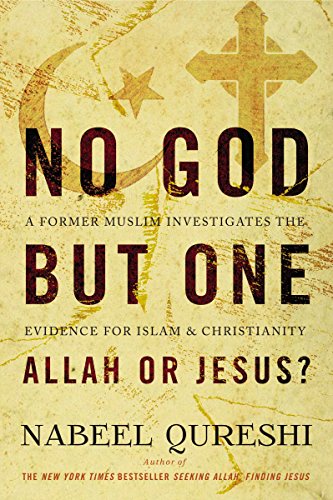
No God But One: Allah or Jesus? by Nabeel Qureshi

51SbZbeolML.jpg

Excellent Analysis Comparing Christianity and Islam

Book Review by Dr. David P. Craig

In this sequel to his fantastic autobiography (Seeking Allah, Finding Jesus) Nabeel Quereshi continues where he left off. Nabeel recounts how he decided to put Christianity to total scrutiny over a period of four years before he put his beloved Islam to the same kind of evidential scrutiny. In this book Nabeel compares his findings in regard to the two largest religions of the world: Christianity and Islam.

In Part One the author compares islam’s way of salvation (Sharia) with Christianity’s way of salvation (Grace). In Part Two he compares the two different God’s of Islam (Tawhid) and Christianity (Trinity). Part 3 is an examination of the two founders of each religion: Muhammed versus Jesus. Part 4 Compares the Quran with the Bible. Part 5 is an examination of Jihad and the Crusades. 

After examining the major distinctions of Islam and Christianity he then goes on to examine why he became a believer in Jesus. He evaluates the following important questions: (1) Did Jesus Die on the Cross?; (2) Did Jesus Rise from the Dead?; (3) Did Jesus claim to be God; (4) Is Muhammad a Prophet of God; and (5) Is the Quran the Word of God?

I think that Nabeel builds a strong case for Christianity and shows that the Islam he grew up with has many problematic beliefs. As a former Muslim, Nabeel is gracious in his approach, very clear in his articulation of Islam and Christianity, and very convincing in demonstrating why Jesus is the right choice.

How Do Jesus and Muhammed Compare?


32227.jpg

Series: Comparing Christianity & Islam – Jesus versus Muhammed

Chart Compiled by Dr. David P. Craig

JESUS MUHAMMAD
IDENTITY Creator (Col. 1:16) Creature
CLAIMED TO BE God & Son of God Prophet
SINCE Eternal (John 1:1,14) Khadija (wife) said he must be a prophet because he was hearing voices
CLAIM IS Proven by the Resurrection Disproven by false prophecies
RAISED The dead to life (Luke 7:12-15) An army to put many to death
LIED TO None Many (taqiyya) – lying to infidels to advance and protect Isalm – considered a virtue and a duty
MISTOOK None Satan’s voice as Allah’s
ROBBED None Many
FORGAVE Everyone None who offended
HEALED Thousands None
WALKED ON Water (Matt. 14:25) The blood of those he slaughtered
HISTORY His life is rooted in historically documented facts Mixed with myth and legend
SAID OF OTHER Warned of his kind (Matt. 7:15-17) Praised Jesus
SINNED Never (2 Cor. 5:20-21) Constantly
EPITOMIZED Love (John 15:13; 1 John 4:10) Violence
SACRIFICED Himself to save others Others to save himself
KILLED No one Thousands. For example, when the Jews of Banu Qurayza surrendered to him in 627 AD after a 25 day siege, Muhammed had all of the approximately 900 male captives bound and beheaded.
NATURE God Incarnate (John 1:14,18) Merely Human
MISSION Redeem Sinners (Mark 10:45) Promote Submission to Allah
PROPHECY Fulfillment of hundreds None
WIVES None 12+ 595 AD: Married Khadijah, the daughter of Khuwailid (she died in 619 AD); 619 AD: Married Ai’sha, the daughter of Abu Bakr (she was 6 years old, when he was 50); 619 AD: Married Sawdah, the daughter of Zama; 624 AD: Married Hafsah, the daughter of Omar; 625 AD: Married Zaynab, the daughter of Gahsh and the wife of Zayd (see above);

626 AD: Married Salmah, the daughter of Abu Ummaiah Sohail; 627 AD: Married Zainab, the daughter of Khuzaima; 628 AD: Married Ramlah, the daughter of Abu Sufyan; & Married Gawariah, the daughter of al-Harith; 629 AD: Married Hind, the daughter of Abu Umayah; & Married Safiah, the daughter of Huyay; 630 AD: Married Maimunah, the daughter of al-Harith; 631 AD: Married Maria, a gift from the king of Egypt

MESSAGE “Come to me, all who labor and are heavy laden, and I will give you rest. Take my yoke upon you, and learn from me, for I am gentle and lowly in heart, and you will find rest for your souls. For my yoke is easy, and my burden is light.” ~  Matt. 11:28-30 (1) There is only one God (Allah); (2) All people must live in submission to God; (3) Humans will be held accountable at the last judgment
ROLE Servant, Savior, and Lord Orphan, Caravan Driver, Husband & Father, Spiritual Seeker, Prophet, Soldier, Governor, Ruler
CURRENTLY Resurrected (1 Cor. 15:4) Dead
FUTURE Eternally Enthroned as King (Revelation 22) Divine Judgment

Do Christians, Muslims, and Jews Worship the Same God? Four Views

538035_1_ftc.jpg

A THOUGHT PROVOKING EXPLORATION ON THE DOCTRINE OF GOD

Book Review By Dr. David P. Craig  

If the latest world religions statistics are accurate the questions and answers that are raised, debated, and defended in this book are of monumental significance. In this “Counterpoints” book (a growing series of books on important topics by Zondervan Publishing in Grand Rapids, MI.) four views are defended and debated by five top notch theologian/philosophers.

The first two views promote the idea that Muslims, Jews, and Christians do indeed worship the same God. In the first essay of this book Wm. Andrew Schwartz (professor of process and comparative theology at Claremont School of Theology) and John Cobb, Jr., (professor emeritus at Claremont School of Theology) give several reasons for why they believe that these three major religions worship the same God by defending what they call the “Religious Pluralistic View.” Some of their main points in defense of their argument our as follows:

(1) Theology is not static. Theology is not uniform. Neither are the world’s traditions. In other words (as they are process theologians) they say that it is impossible to nail down any theological absolutes – because of the continual changes in God and in our studying, knowing, and worship of Him.

(2) The Fallacy of the Perfect Dictionary and Problem of Sameness. In addition to recognizing the complexity of Jewish, Muslim, and Christian identity, we should take note of the same ambiguity surrounding the words worship, same, and God. In other words the author’s suggest that it is impossible to agree upon the exactness of what or who God is when there is no perfect definition to be agreed upon. They write, “We should assume that YHWH of Judaism, Allah of Islam, and the God of Christianity are different ways of referring to one and the same divine ultimate…So, in one sense ‘same’ can imply no difference, and in another sense it can incorporate difference.” 

(3) They articulate that from a historical perspective all three religions worship the God of Abraham.

(4) Schwartz and Cobb also argue that all three religions worship a “Loving Creator” – what they call “The Divine Character Argument.” They affirm that in all three religions it is agreed upon that (a) God is One; (b) God is knowledgeable and relational; (c) God is loving and merciful; (d) God is creator; and (e) God is mysterious. They conclude in this section: “we find that parallel descriptions of God across the traditions greatly strengthen the likelihood that the God described and revered in Islam, Christianity, and Judaism is one in the same—the one and only loving and merciful Creator who knows our innermost beings.”

(5) Schwartz and Cobb defend the Ontological Argument – that there is only one being we call God. Here’s there summation of this reality, “If we begin with this declaration, the question as to whether all three worship the same God is strange indeed. After all, what would it mean for them to worship different Gods if there is only one God? From an ontological perspective, if there is, in fact, only one God available to worship, then it is reasonable to conclude that Muslims, Christians, and Jews worship the same God—that is, the only God…If there is only one God, then, for Christians, Muslims, and Jews to worship some God is to worship the same God.”

(6) The Singular Ultimate Reality. Scwartz and Cobb say that all three religions worship the same ultimate reality that they all call “God.” 

(7) Lastly, Schwartz and Cobb write that if Muslims, Jews, and Christians were to agree that we worship the same God it would result in the following: (a) A more peaceful world; (b) Generosity and humility; (c) Mutual transformation; and the (d) Importance of dialogue.

As with most of the Counterpoint books each essay is then responded to by the other essay writers, followed by a rejoinder in response to the other essayists critiques. I have to say that I thought the essayists in the first view wrote well and used some good analogies and arguments and yet I found their argument unpersuasive for two primary reasons: (1) I think their own view of “God” was defective and lacking. It was the equivalent of describing an object in only one dimension – when in reality God is multi-faceted. (2) It articulated a relativistic approach to truth and reality. In honing in on the “sameness” of beliefs of the three religions they left out the multiplicity of “differences” and contradictions of the three religions – which the final two essayists brought into play so very well.

The second view (essay) is presented by Francis Beckwith (professor of philosophy at Baylor University) and is entitled: “All Worship The Same God: Referring to the Same God View.” Beckwith bases his whole essay on a fictional group of students who are atheists and then who ultimately become a Jew, Muslim, and Christian for different reasons based on believing more or less the same things about God: “He is the absolute, uncaused, perfect, rational, unchanging, self-subsistent, eternal creator and sustainer of all that which receives its being from another…He who is metaphysically ultimate and has underived existence.”

Beckwith proceeds to give some historical and biblical points of agreement between the three religions and concludes: “because Christianity, Judaism, and Islam get the divine nature right (based on his definition of God above)—the absolute underived unconditional source of all contingent existence—their disagreements over the Trinity and the incarnation are appropriately viewed as contrary beliefs about the same God to which each faith refers…I am arguing that because there can only in principle be one God——the absolute underived unconditional source of all contingent existence—and because the theologies of each of these faith conditions refer to that one God, it stands to reason that they all worship the same God, even though they disagree about aspects of that God as a result of what each believes is special revelation.” In the final analysis Beckwith concludes his essay: “in recognizing that the three distinct religious traditions refer to the same God one is not contending that they share the same faith.”

Between the first two essays I would be more inclined to say that Beckwith’s was more logical and less abstract – yet still found that he made the same mistake as Schwartz and Cobb. He emphasized that which was similar in the beliefs of the three religions and minimized their radical differences. His last sentence was very telling: “the three distinct religious traditions refer to the same God one is not contending that they share the same faith.” However, those differences in faith most definitely point to a very different God – especially the “God” of Muslims and that of Jews and Christians – which we find defended in the last two essays.

The third essay by Gerald R. McDermott (Chair of Divinity at Beeson Divinity School) is called “Jews and Christians Worship The Same God: Shared Revelation View.” I found this essay to be the most profound and interesting of the four. 

McDermott straight away emphasizes the differences of beliefs related to the character and nature of God between Muslims and Jews/Christians:

(1) The first thing that must be said is that the love for God is never commanded by the Qur’an and rarely even mentioned. McDermott writes, “Daud Rahbar and other scholars agree that the Qur’an mentions love for God, it never commands it. Instead of love, fear of God is commanded by the Qur’an…Rahbar argued that the central theme of the Qur’an is God’s justice, and its most common exhortation is to ‘guard yourselves fearfully against God’s wrath.’” On the other hand the emphasis in the Bible is that God is love. According to both Sufi and non-Sufi Muslims, God does not have unconditional love for humans generally. God’s love is conditional, expressed only toward those who do righteous deeds.

(2) Another huge difference is the contrast of love for one’s neighbor in the Qur’an and what the Bible consistently teaches. The first is that the Qur’an contains repeated admonitions to Muslim believers not to make friends with non-Muslims (3:118). Whereas the greatest commandment in the Bible is to love God and love your neighbor as yourself (Mark 12:30-31). God models love for us in the Bible especially in the greatest act of history where the second person of the Trinity is sent by the Father to model the ultimate act of love – to be punished for our sin in exchange for His righteousness “In this is love, not that we have loved God but that he loved us and sent his Son to be the propitiation for our sins.” ~ 1 John 4:10

(3) At the heart of the dispute between Muslims and Christians in particular is the deity of Jesus Christ. The triune nature of God helps us understand the essence of God as One and yet the distinction of God in His persons. McDermott writes, “the works of the triune God are not divided [among the persons] is helpful. It reminds us that the Father’s works are not to be divided from the Son’s. The Son helps identify the character of the Father, for the Father’s character is revealed by the Son: ‘Whoever has seen me has seen the Father’ (John 14:9). If the Son told his disciples that God loved the world (John 3:16), that they should love God with all their hearts (Matt. 22:37), and that they should love everyone including their enemies (Matt. 5:44), we can infer that the Father has said and commanded the same. This Father is clearly different, then, from Allah of the Qur’an.” 

(4) McDermott then goes on to talk about the Jewishness of Jesus and Paul. With reference to Jesus he writes, “In sum, Jesus was not rejecting the Judaism of his day but illustrating its inner meaning. Therefore the Gospels do not support the notion that Christians worshiping Jesus as the Son of God are worshiping a God different from the God of biblical Judaism.” In respect to Paul he writes, “In one respect, Paul was even more Jewish than Jesus: he took a more positive approach to Pharisees than we see in the Gospels. He proudly presented himself as a Pharisee (Acts 23:6). 

(5) Christianity is not a new religion but the continuation or fulfillment of Judaism. The whole Old Testament. McDermott states, “I have tried to show that Jesus and Paul did not think they were starting a new religion to replace the Judaism they grew up with. They did indeed teach that the Messiah had finally come in Jesus, and that for that reason the Judaism of the first century had reached an epochal moment when the greatest promises had begun to be fulfilled.” 

Continuing in this vein he writes, “Judaism was finding its inner meaning and great climax because the perfect Israelite [Jesus] had appeared as the embodiment of the Law and of Israel herself. But this does not mean that Judaism was being replaced by another religion of a fundamentally different character, it means instead that the God of Israel was bringing the people of Israel to their promised apogee when their messiah was revealed as the Son of God, the meaning of all they had ever known. Rather than opposing Jewish law, Jesus and Paul observed it, even as they testified that Jesus was its living embodiment.”

In the final part of the essay McDermott talks about how some rabbi’s and Jewish traditions allow for the possibilities of the distinct doctrines related to God as revealed in the New Testament: the incarnation, resurrection, and Trinity. He concludes, “The God of Israel had long been known to be one being with internal differentiation. Hence the early church could claim that it was worshiping the God of Israel, but with new clarity about the identities within that differentiation….”

He closes his provocative essay in this manner, “Yet Paul regarded even those Jews who differed on Jesus but worshiped the God of Israel as having a zeal for the same God but ‘without knowledge’ (Rom. 10:2). They needed to hear and receive the gospel (Rom. 1:16), but they were worshipping the same God…

While the God of Israel is the Father of Jesus Christ and shares the same being and character as Jesus, Allah does not. YHWH forgives and saves through sacrifice as prescribed by Torah, and then through the perfect Sacrifice that was foreshadowed in the sacrifices of Torah. He shows in both Testaments that his people should forgive and love their enemies. He is Father to his people, love in his essence. This is true of the God revealed in both Testaments. None of this character can be found in Allah. While Christians and Jews share all (for Jews) or the vast majority (for Christians) of their scriptures, Christians and Muslims share none. For all these reasons, we must say that Christians do not worship the same God designated by Allah, but that Christians worship the same God as those Jews who regard the Old Testament as the Word of God.”

McDermott has written a very thought provoking and provocative essay. I am inclined to say that I agree with most of what he has written – In essence he is saying that those who are completed Jews – Messianic Jews – like the Apostle Paul, indeed worship the exact same God. Jews who have yet to believe in God as revealed in the New Testament via the explicit teachings of the incarnation, life, death, resurrection, and Triune nature of God have the genesis of these teachings in the Old Testament but need the New Testament to complete the Painting or Puzzle that centers on the Person and Work of Jesus as divine and thus worthy of worship.

I think the most logical, theologically precise, biblically based and philosophically cogent view is the final essay presented by Jerry L. Walls (professor of philosophy at Houston Baptist University). The view Walls espouses is entitled: “None Worship The Same God: Different Conceptions View.” 

Walls grapples with the following questions: (a) Do Muslims and Christians refer to the same God? (b) Is it necessary for Muslims and Christians to refer to the same God in order to worship the same God? (c) Do Jews, Christians, and Muslims believe essentially the same thing about God? (d) If they do not, are these differences of belief about God necessarily reflected in essentially different forms and expressions of worship? (e) Can Jews and Muslims be saved even if they are not worshiping the same God as Christians?

(1) Walls first of all makes a powerful case that if Christianity is true, there had been a reference shift in the Muslim use of “God” from God to fiction. He writes, “just as the name Santa Clause originated with a historical character (Saint Nicholas) and underwent a radical reference shift to a fictional character, in a similar way ‘Allah’ underwent a profound reference shift in Islam to the point that ‘Allah’ no longer referred to God, but rather to fiction, which is to say it refers to nothing at all.” 

Walls continues, “As someone who thinks Christianity is true, I am inclined to think there has in fact been a reference shift in the case of Islam but not of Christianity. That is, the dossier for ‘Allah’ includes claims that are so radically at odds with core Christian truth claims that a reference shift has occurred such that ‘Allah’ does not refer to God. Since Christians and Muslims do not even refer to the same God, they do not worship the same God.”

(2) Walls second major point is that “Sameness of Reference Is Not Enough for Sameness of Worship.” He demonstrates this principle in the idolatrous worship of the golden calf and the breaking of the first two commandments from Exodus 20. The point is that to worship a false god – or anything that is not true of God – is idolatry. Only Yahweh is “the one to be praised and worshiped for this signal act of salvation [God’s love revealed in delivering the Israelites from slavery as depicted yearly in the Passover], but Yahweh must never be confused with a golden calf. To worship him and to honor him for this act of salvation requires refraining from even the making of idols, let alone confusing them with Yahweh or bowing down to them and worshiping them.”

(3) The New Testament revelation of God is a game changer. In the New Testament Walls writes, “The God of the Old Testament has revealed to us in the New Testament revelation that he has an eternal Son who was incarnate in Jesus, and who provided salvation on our behalf through his death and resurrection. Indeed, this is God’s supreme act of love on our behalf. Walls continues, “Starting with the resurrection of Jesus and ending with the Trinity, Jews and Muslims deny all distinctively Christian revelation about God. The hard fact of the matter is that the fundamental claims of these three religions  are simply logically incompatible, and they cannot all be true. At least two of these religions are profoundly mistaken in what they believe about God and what he requires of us in terms of obedience and worship.”

(4) In the fourth major point of Walls’ essay he states this, “It is noteworthy that the most ecumenically central act of Christian worship, namely, the sacrament of communion, is a celebration of the death of Christ for our salvation and a looking forward to his return.”

(5) Walls goes on to show biblically how impossible it is to worship God unless you are fully worshiping who He is: the Triune God of the New Testament. He explains, “The radically different beliefs that Jews, Christians, and Muslims have about God do entail essentially different forms and expressions of worship. Stressing this point is imperative. It is precisely the fact that these different expressions of worship are praised on radically different beliefs about who God is and how he has revealed himself most clearly that lead us to conclude that Jews, Christians, and Muslims do not worship the same God.”

(6) I will quote Walls at length on his final argument which is very persuasive: “New Testament worship requires that all worshipers of the God who is fully revealed only in the New Testament humbly acknowledge that he has an eternal Son who was incarnate in Jesus, and that Jesus provided salvation in our behalf through his death and resurrection, and they offer grateful praise for this when properly informed of these truths…

The notion that our response to the incarnate Son is decisive for determining whether we truly know and worship God is major theme of the Gospel and Epistles of John…While it is true that the God who is the Father of Jesus is the same God who called Abraham and spoke to Moses, and that those who worship both the Father and Son are worshiping the same God who spoke to Abraham and Moses, it is no less true that those who refuse to believe and worship Jesus are not worshiping the God who called Abraham and revealed himself to Moses. The coming of Jesus has radically altered the terms of what is required to worship and obey the God of Abraham. This is the same point Paul makes in Romans 9-11, where he draws a distinction between ethnic and true Israel. The chief issue is that ethnic Israel has stumbled over the stumbling stone, which is Christ. It is highly significant that in the context of Romans 9:33, Paul is quoting passages from the Old Testament in reference to Yahweh himself and applying them to Christ. So, to reject Christ is to reject Yahweh!

(7) Walls finishes his essay with a formal agreement and then goes on to defend his formal argument. Here is the formal argument he presents:

  1. No properly informed worshiper who consciously rejects the incarnation and resurrection of Jesus is a worshiper of the God who is fully revealed only in the New Testament.
  2. All properly informed Jews and Muslims consciously reject the incarnation and resurrection of Jesus.
  3. No properly informed Jews and Muslims are worshipers of the God who is fully revealed only in the New Testament.
  4. If no properly informed Jews and Muslims worship the God who is fully revealed only in the New Testament, no properly informed Jews and Muslims worship the same God as those who worship the God who is fully revealed only in the New Testament.
  5. No properly informed Jews and Muslims worship the same God as those who worship the God who is fully revealed only in the New Testament.
  6. All properly informed Christians worship the God who is fully revealed only in the New Testament.
  7. No properly informed Jews and Muslims worship the same God as those who worship the God whom properly informed Christians worship.

In the final analysis one’s salvation hinges on the narrow door and the narrow way that is through Jesus. As Peter preached in Acts 4:12, “And there is salvation in no one else, for there is no other name under heaven given among men by which we must be saved.” Or as the Apostle shared with the Christians in Corinth, “Now I would remind you, brothers, of the gospel I preached to you, which you received, in which you stand, and by which you are being saved, if you hold fast to the word I preached to you—unless you believed in vain. For I delivered to you as of first importance what I also received: that Christ died for our sins in accordance with the Scriptures, that he was buried, that he was raised on the third day in accordance with the Scriptures, and that he appeared to Cephas, then to the twelve. Then he appeared to more than five hundred brothers at one time, most of whom are still alive, though some have fallen asleep” (1 Corinthians 15:1-6); or as Jesus himself said in John 14:6, “I am the way, the truth, and the life. No one comes to the Father except through me.” The only way to really know the God who has made Himself known is to believe the REAL God as He revealed Himself from Genesis to Revelation. 

I highly recommend this book as a thought provoking and deep study in the doctrine of God. No matter where you are coming from in your world view, this book will challenge you, make you think, and hopefully help you make a life changing decision leading you into accepting the truth that can change your life both now and for eternity.

ISLAM & CHRISTIANITY – “Tawhid or the Trinity?” 

538035_1_ftc.jpg

ISLAM & CHRISTIANITY – “Tawhid or the Trinity?” 

Do Christians and Muslims Worship the Same God?

Outlined By Dr. David P. Craig

Tawhid (Pronounced Taa Heed) – The “god” of Islam

(1) Muslims and Christians agree there is one God but disagree as to His name, nature, and attributes.

(2) The god of Islam is Allah, meaning “the god” in Arabic. In the days of Islam’s founder, Muhammad, this meant that of all the tribal gods worshiped on the Arabian Peninsula, Allah was the only true deity.

(3) Key to the Islamic concept of God is the doctrine of tawhid, or absolute oneness. It’s more than strict monotheism. Tawhid celebrates Allah as singular, indivisible, and monolithic.

(4) Muslims insist that Allah has no “partners.” To ascribe partners to Allah – for example, to say that Jesus is the Son of God, or that God exists as a Trinity – is to commit the unpardonable sin of shirk, which damns a soul to hell.

(5) The Qur’an makes it clear that Allah stands apart from his creation and does not engage in personal relationships. For example, Surah 17:111 reads: “Praise be to Allah, who begets no son, and has no partner in (His) dominion …”

(6) The Qur’an instructs its readers to reject any notion that God exists as more than one person. It wrongly implies that Christians worship a Trinity consisting of God, Jesus, and Mary (Surah 4:171; 5:73, 116).

(7) Islam understands these to be three separate gods, and the Qur’an strongly warns Muslims against worshiping anyone but Allah. Here, Muslims and Christians may find some common ground, for Christians both reject the notion of Mary as a god, as well as the idea that three separate gods make up the Trinity.

(8) In No God But One, Nabeel Qureshi points out that the Qur’an clearly denounces polytheism but does not exclude the possibility of Allah existing in tri-unity. Put another way, Qureshi says the Qur’an does not explicitly say Allah cannot exist as one God in three persons, even though Muslims strongly reject the biblical doctrine of the Trinity.

Defining the Trinity

(1) The Christian doctrine of the Trinity means that there is one God who eternally exists as three distinct persons – Father, Son, and Holy Spirit. The Baptist Faith & Message explains, “The eternal triune God reveals Himself to us as Father, Son, and Holy Spirit, with distinct personal attributes, but without division of nature, essence, or being.”

(2) This immediately prompts our Muslim friends to cry foul. “How can one possibly equal three?” they ask. “How can Christians say they worship one God while worshiping three separate persons?” This gives us an opportunity to biblically define the Trinity.

(3) Christians do not worship three gods; that’s polytheism. We do not worship a “freakish-looking, three-headed god,” as Jehovah’s Witnesses accuse us of doing. Nor do we exalt one God who shows up consecutively, not simultaneously, as Father, Son, and Holy Spirit; that’s modalism.

(4) We worship one God who exists as three distinct, co-equal, co-eternal persons, sharing all the attributes of deity, agreeing completely in will and purpose, and existing eternally in divine, loving relationships with one another.

(5) While it’s challenging to fully grasp the doctrine of the Trinity, it may advance our understanding to distinguish between “person” and “being.” As Nabeel Qureshi explains, “Your being is the quality that makes you what you are, but your person is the quality that makes you who you are.”

(6) If someone asks you who you are, you don’t reply, “I’m a human.” You respond by sharing your name, which identifies you as a person.

(7) When we say God is a Trinity, we are describing the what of God. When we speak of the Father, Son, and Holy Spirit, we are referring to the who of God — His three persons, indivisible in substance and nature, but distinct in identity.

(8) Qureshi continues: “God … is one being, Yahweh, in three persons: Father, Son, and Spirit. He’s more than able to exist like that because he is God. If we say God must have only one person, like humans, then we are making God in our image. Who are we to limit God? It is up to God to tell us who he is.”

(9) Why we believe God is Triune is because it’s what the Bible teaches: (1) There is only One God (Rom. 3:30); (2) The Father is God (John 6:27); (3) Jesus is God (John 20:28; Rom. 9:5; 2 Pet. 1:1); (4) The Holy Spirit is God (Acts 5:3-5); (5) These three are distinct persons (John 14:16-17). So if there are three distinct persons that are God, but there is only one God, we are naturally led to the doctrine of the Trinity: one God who subsists in three persons (see Matthew 28:19).

(10) While it should be clear that Christians and Muslims do not worship the same God, we may have a common point of beginning: We share a belief in one God who is eternal, transcendent, all-knowing, all-powerful, the Creator and sustainer of all things.

(11) If we begin here, we may then explore the deeper questions: What is God like? How does He reveal Himself, and His will, to people? Is He relational? And, if so, does He desire a relationship with us?

RESOURCES COMPARING CHRISTIANITY AND ISLAM 

951326.jpg

Compiled by Dr. David P. Craig

Understanding Islam

John Ankerberg, John Weldon, and Dillon Burroughs. The Facts on Islam. Eugene, OR. Harvest House, 2008.

Ron Carlson and Ed Decker. Chapter 7 on “Islam” in Fast Facts On False Teachings. Eugene, OR. Harvest House, 1994.

Windried Corduan. Chapters 3 and 4 – “Islam: Basics and Issues” & “Islam: Understanding 9/11 and Radical Islam” in Neighboring Faiths: A Christian Introduction to World Religions. Downers Grove, IL., InterVarsity Press, 2013.

Charles Dyer and Mark Tobey. Clash of Kingdoms: What The Bible Says About Russia, ISIS, Iran, and the End Times. Nashville, TN., Thomas Nelson, 2017.

Craig Evans and Jeremiah J. Johnston. Jesus and the Jihadis: Confronting The Rage of ISIS: The Theology Driving The Ideology. Shippensburg, PA., 2015.

Dean C. Halverson. Chapter 7 on “Islam” in The Compact Guide to World Religions. Minneapolis, MN., 1996.

Erwin Lutzer. The Cross In The Shadow of The Crescent. Eugene, OR. Harvest House, 2013.

Gerald R. McDermott.  Chapter 7 “Islam” in World Religions. Nashville, TN. Thomas Nelson, 2011.

Marvin Olasky. Chapter on “Islam Attachment” in The Religions Next Door: What We Need To Know about Judaism, Hinduism, Buddhism, and Islam – and what reporters are missing. Nashville, TN., Broadman & Holman, 2004.

Nabeel Qureshi. Answering Jihad: A Better Way Forward. Grand Rapids, MI., Zondervan, 2016.

The Voice of the Martyrs. I Am N: Inspiring Stories of Christians Facing Islamic Extremists. 

Walk Thru The Bible. “Tenets of Islam” in World Religions From A Christian Perspective. WTTB, 2013.

James R. White. What Every Christian Needs To Know About The Quran. Bloomington, MN., Bethany, 2013.

Michael Youssef. The Hidden Enemy: Aggressive Secularism, Radical Isalm, and The Fight For Our Future. Wheaton, IL., Tyndale, 2018.

Comparing Christianity and Islam

Ronnie P. Campbell, Christopher Gnanakan, Wm. Andrew Schwartz, John B. Cobb Jr., Francis J. Beckwith, Gerald R. McDermott, Jerry L. Walls. Do Christians, Muslims, and Jews Worship The Same God? Four Views. Grand Rapids, MI., Zondervan, 2019.

Norman L. Geisler and Abdul Saleeb. Answering Islam: The Crescent In The Light of The Cross. Grand Rapids, MI., Baker, 2002.

Nabeel Qureshi. No God But One: Allah or Jesus? Grand Rapids, MI., Zondervan, 2016.

Fritz Ridnour. Chapter 5 on “Islam” in So What’s The Difference? A Look At 20 Worldviews, Faiths and Religions and How They Compare With Christianity. Grand Rapids, MI., Baker, 2001.

R. Gino Santa Maria. Chapters on “Islam”, “Comparing Sunni and Shi’a Islam”, and “Nation of Islam” in Christianity, Cults & Religions. Rose Publishing, n.d.

R.C. Sproul and Abdul Saleeb. The Dark Side of Islam. Wheaton, IL., Crossway, 2003.

Timothy C. Tennent. Chapters 6 & 7 on “Christianity and Islam” in Christianity at the Religious RoundTable: Evangelicalism in Conversation with Hinduism, Buddhism, and Islam. Grand Rapids, MI., Baker, 2013.

Sharing the Gospel With Muslims 

Thabiti Anyabwile. The Gospel For Muslims: An Encouragement to Share Christ with Confidence. Chicago, IL., 2010.

Micah Fries and Keith Whitfield. Islam and North America: Loving Our Muslim Neighbors. Nashville, TN., B&H, 2018.

J.D. Greear. Breaking The Islam Code. Eugene, OR. Harvest House, 2010.

Ernest Hahn. How To Respond to Muslims. St. Louis, MO., CPH, 1995.

John Klaassen. Engaging With Muslims: Understanding their world; sharing good news. UK., The Good Book Company. 2015.

Carl Medearis. Muslims, Christians, and Jesus. Bloomington, MN., Bethany, 2008.

___________. Simple Ways To Reach Out To Muslims. Bloomington, MN., Bethany, 2012. (This book is a shorter selection Medearis’ book above)

Ron Rhodes. Reasoning From the Scriptures With Muslims. Eugene, OR. Harvest House, 2002.

__________. The Ten Things You Need To Know About Islam. Eugene, OR. Harvest House, 2007.

Shirin Taber. Muslims Next Door: Uncovering Myths and Creating Friendships. Grand Rapids, MI., Zondervan, 2004.

Testimonies of Those Who Have Converted From Islam to Christianity

Esther Ahmad with Craig Borlase. Defying Jihad: The Dramatic True Story of a Woman Who Volunteered to Kill Infidels—and Then Faced Death For Becoming One. Wheaton, IL., Tyndale, 2019.

Abu Atallah and Kent A. Van Til. From Cairo to Christ: How One Muslim’s Faith Journey Shows The Way For Others. Downers Grove, IL., InterVarsity Press, 2017.

Rifqa Bary. Hiding in the Light: Why I Risked Everything to Leave Islam and Follow Jesus. Colorado Springs, CO., 2015.

Tom Doyle with Greg Webster. Dreams and Visions: Is Jesus Awakening The Muslim World? Nashville, TN., Thomas Nelson, 2012.

Naeem Fazal with Kitti Murray. Ex-Muslim: How One Daring Prayer To Jesus Changed A Life Forever. Nashville, TN., Thomas Nelson, 2014.

David Garrison. A Wind In The House of Islam: How God is Drawing Muslims Around The World To Faith In Jesus Christ. Monument, CO., WiGTake Resources,  2014.

Reema Goode. Which None Can Shut: Remarkable True Stories of God’s  Miraculous Work in the Muslim World. Wheaton, IL., Tyndale, 2010.

Charles Morris & Craig Borlase. Fleeing ISIS, Finding Jesus: The Real Story of God At Work. Colorado Springs, CO., David C. Cook, 2017.

Annahita Parsan with Craig Borlase. Stranger No More: A Muslim Refugee’s Story of Harrowing Escape, Miraculous Rescue, and the Quiet Call of Jesus. Nashville, TN., Harper Collins, 2017.

Maryam Rostampour & Marziyeh Amirizadeh. Captive In Iran: A Remarkable True Story of Hope And Triumph Amid The Horror Of Tehran’s Brutal Evian Prison. Wheaton, IL., Tyndale, 2013.

Bilquis Sheikh with Richard H. Schneider. I Dared To Call Him Father: The Miraculous Story of Muslim Woman’s Encounter With God. Grand Rapids, MI., Chosen Books, 2011.

Jerry Trousdale. Miraculous Movements: How Hundreds of Thousands of Muslims Are Falling in Love With Jesus. Nashville, TN. Thomas Nelson, 2012.

Nabeel Qureshi. Seeking Allah, Finding Jesus. Grand Rapids, MI., Zondervan, 2018.

YouTube Videos On Islam and Christianity

Thabiti Anyabwile: “A Christian Response to Islam” (39:36); “Loving Our Muslim Neighbors” (53:26); “The Gospel For Muslims” (33:17).

William Lane Craig: “Did the Resurrection Really Happen? (1:21:02); “William Lane Craig vs Shabir Ally – Did Jesus Rise From The Dead?” (2:25:39); “Christianity & Islam: What Must I Do to Be Saved?” (1:50:17).

Gary Habermas: “The Resurrection Argument – The Historical Evidence for Jesus’ Resurrection That Even Skeptics Believe” (1:20:42); “Gary Habermas: The Resurrection” (1:14:31); “Gary Habermas Proves the Resurrection” (30:25).

Mike Licona: “Did Jesus Rise From The Dead? (48:58); “Shabir Ally vs. Mike Licona – 2004” (2:35:59); “Debate: Did Jesus Rise from the Dead? Licona vs. Shapiro 2018” (1:34:53). “Jesus Resurrected or Rescued?” – Licona vs. Ally (2:01:29).

Nabeel Qureshi: “Engaging Islam: The Gospel & Nabeel’s Testimony” (37:41); “Sharia, Hadith, and Islamic History – Apologetics” (48:10); “My Journey to Christ” (50:34); “Nabeel Qureshi on Islam and Christianity” (52:16); “Understanding the Violence in Islam” (1:01:48); “Jesus in Islam vs. Jesus in Christianity” (1:13:04); “Islam Through The Eyes of Muslims” (1:14:32); “Islamic Practices and Beliefs” (1:27:37); “Difficulties with the Historical Muhammad” (1:31:18); “The Text of the Qu’ran – Apologetics to Isalm (1:54:49); “Seeking Allah, Finding Jesus” (1:55:33); “What Is God Really Like: Tawhid or Trinity?” (2:55:44); “Answering Jihad: A Better Way Forward” (1:47:02); “Reaching Muslims Through Jesus – Q&A (23:41); “Why Believe Jesus Christ is God? #Apologetics” (18:48); “Nabeel Qureshi at Georgia Tech” (1:47:25); “Can A Scientist Believe in the Resurrection?” (2:01:37); “Nabeel Qureshi’s Memorial Service” (1:12:17 – Featuring Dr. James Tour and Ravi Zacharias)

James White: “James White on Islam” (1:31:17); “The Resurrection of Jesus Christ – Luke 24” (51:53); “The Forgotten Trinity” (1:02:38); “Is The Quran a Reliable Record of the Teachings of Muhammad? (1:33:16); “Muhammad’s Errors About Jesus” (1:36:51);  “The Jesus Debate – Adnan Rashid vs. James White” (1:31:16); “An Islam Christian Debate: Was the Quran# Reliably Transmitted from the Prophet? Part 1” (1:26:13); “An Islam Christian Debate: Was the Quran# Reliably Transmitted from the Prophet? Part 2” (1:26:13); “Christian Muslim Dialogue Pt. 1 Dr. James White & Dr. Yasir Qadhi (1:56:24); “10/7/2013 Sin and Salvation – White vs. Ally” (2:31:04); “Debate: Was Jesus Crucified? James White & Zakir Hussain” (2:22:03); “10/4/2013 The Trinity & Tawid Debate – White vs. Bux (1:43:52); “Do We Need The Cross For Salvation? A Debate with Adnin Rashid & Dr. James White” (2:29:20); “Is Jesus Christ God? James White vs. Jalal Abualrub” (1:34:42); “Is Jesus Christ God? James White vs. Jalal Abualrub – Part 2” (45:48); “Has the Qur’an Eternally Existed – Dr. James White vs. Yusuf Ismail (2:19:42); “Is God One or Three Divine Persons? Shabir Ally debates James White” (2:38:22).

“Seeking Allah, Finding Jesus” by Nabeel Qureshi

092640.jpg

Riveting Testimony of God’s Redeeming Grace

Book Review by Dr. David P. Craig

I had no idea what kind of a treat I was in for in reading this book. I don’t think I’ve ever read such a riveting auto biography. Nabeel Quereshi tells his story of what it is like to grow up in Scotland and America as a a second generation immigrant from Pakistan. It took me two days to read the book because it is close to 400 pages and I’m a slow reader, but I had a hard time putting it down. Nabeel is a phenomenal story teller and has a witty and fantastic intellect.

This book has it all: drama, humor, depth, pathos, wisdom, and fantastic spiritual truths.  Nabeel has a way of bringing you into the story so that you feel like you are in each scene. I laughed, cried, and laughed and cried some more.

This book helped me immensely in the following ways: (1) It gave me tremendous insight into what it’s like to be a second generation Muslim living in America; (2) It helped me to better understand the beliefs, culture, sociology, and religious practices of Islam; (3) It gave me a greater compassion for people of the Muslim faith; (4) It motivated me to befriend, understand, and help Muslims; (5) It motivated me to know what I believe and why I believe it (as a Christian) more than I do; (6) It gave me an excitement to go deeper in my study of Islam and Christianity and how they are similar and different; (7) It made me want to delve deeper into being able to give numerous reasons for and evidences of the infallibility and inerrancy of the Scriptures, the death, burial, and resurrection of Jesus, and evidences for the Deity of Jesus and why this matters immensely for everyone.

I think any Christian, Muslim, or a person of any belief can benefit from reading this book. It will stir in you a desire to know what you believe, why you believe it, and motivate you to seek the truth. Nabeel has a story that will motivate you, liberate you, excite you, and can radically change your life! I can’t recommend this book highly enough – absolutely outstanding. It’s a book I will read again and again for encouragement, motivation, and transformation.


From Mecca to Calvary: The Testimony of Thabiti Anyabwile

Interview with Thabiti Anyabwile – on his book “The Gospel for Muslims”

 By Matt Svoboda

From the Bible belt, to Islam, to following Jesus, to going into the ministry, and now he has a nationwide stage. Thabiti Anyabwile is a gospel-centered pastor who has preached at the last several Together for the Gospel conferences.  He served under Mark Dever at Capitol Hill Baptist Church in Washington DC before becoming the Senior Pastor at First Baptist Church in Grand Cayman in the Cayman Islands.  I can’t forget to mention that he doesn’t even like the beach!  He has written a few other books, all of which I have read, and I have been greatly blessed by his preaching and writing ministry.

Thabiti Anyabwile has written a book that I have not read, but have ordered it and am very much looking forward to reading. The Gospel for Muslims appears to be a great book for helping Christians to share Christ with confidence to Muslims. I am grateful that Thabiti agreed to do this interview.  Admittedly, I have not really studied Islam or how to share the gospel with Muslims.  This interview and book will be as beneficial for me as anyone. Enjoy the interview below and you can buy the book at the link above:

1) Could you summarize your testimony of how you converted from Islam to Christianity? What were a couple of “milestones” in your process of conversion?

I grew up in small town North Carolina, smack in the middle of the Bible belt.  My family was nominally Christian, attending church at Easter, Christmas, and few times during the year.  The first turning point came for me when I was arrested after my sophomore year in high school.  I’d never been in trouble before; so I did what my big brothers sometimes did when they got in trouble—I went to church.  But sadly, I didn’t have ears to hear the gospel, and I don’t think the gospel was always preached clearly.

So, I went off to college an angry young man.  There, I began friendships with a number of Muslim men.  By my sophomore year in college, I became a practicing Muslim, zealous for Islam.  I practiced Islam through the rest of undergraduate school and a short time after.  The next turning point came near the end of undergraduate school.  During Ramadan, the Muslim month of prayer and fasting, while reading the Qur’an, I was suddenly aware that the Qur’an admitted too much about Jesus on the one hand (virgin birth, miracles, prophet, gospels are signs from God, etc.) but denied too much on the other hand (not the Son of God, not crucified, etc.).  After a year of trying to find satisfactory answers, I finally concluded that the inconsistencies couldn’t be explained.  Islam was false.

About the same time, a casual conversation with co-workers exposed a nagging problem I’d had all along.  We were discussing various people from world history who we respected.  And a co-worker look at the group and said she couldn’t think of anyone more righteous than me.  After my protests, she continued to insist and to list off the reasons why she thought that.  In that conversation I could see that the righteousness she described was all external behaviors.  But inside, I knew my heart was corrupt and sinful, full of unrighteousness.  I knew I didn’t have the kind of righteousness that would satisfy a holy God.

Rather than turn to Christ, I went further in despair.  Around that time, my wife and I found out we were pregnant with what would have been our first child.  We lost the child three months into the pregnancy.  The Lord dealt us a kind blow.  He humbled us.  And in that period of humbling, we heard the preaching of the gospel with faith for the first time.  The preacher, expounding Exodus 32, explained the sinfulness of sin, and I was deeply convicted.  And the preacher held out Jesus Christ, the only Savior, who not only took God’s wrath against sin but also supplied the perfect righteousness we need to satisfy a holy God.  In God’s amazing kindness, my wife and I both came to faith in the Lord that morning.

2) What is the main reason that you wanted to write this book “The Gospel for Muslims?”

I’m often asked by people who know my testimony, “How can we share the gospel with Muslims?”  When they ask this, they’re really asking, “Is there any special knowledge I need or technique that will be effective in evangelizing Muslims?”  But when you think about it, that’s the wrong question.  The question suggests that we lack confidence in the gospel itself to change the hardest hearts or to save our Muslim neighbors.  So, I wrote the book to remind Christians that “the gospel is the power of God unto salvation for everyone who believes, to the Jew first but also to the Gentile,” including the Muslim.  What we need is fresh confidence in Christ and the news of His salvation through His death, burial, resurrection, and coming.  If we know the gospel, we know everything we need to know to see our Muslim friends, coworkers, and neighbors saved from the coming wrath of God, and saved to love and enjoy the Savior forever.

3) What are some common misconceptions that Christians have about Muslims?

There are many.  We sometimes think that every Muslim is a terrorist.  Television images and our own fear have a lot to do with that.  But the chances are overwhelming that our Muslim friend or neighbor is not a terrorist.  They’re people with the same concerns, ambitions, and needs as our non-Muslim neighbors.

Also, many people tend to think that every Muslim has memorized the Qur’an by three years old and is able to give extended and sophisticated explanations of their faith.  But in reality, most Muslims don’t know the Qur’an very well at all.  And Islam itself is not one thing all over the world.  Arab Islam differs significantly from Islam in Indonesia (the largest Muslim country in the world) and North Africa and North America.  You’re more likely to meet a nominal Muslim, much like my nominal Christian family back in NC, than you are to meet a Muslim with the entire Qur’an committed to memory.

But perhaps the biggest myth is that Muslims do not convert.  That simply is not true.  Many, many Muslims are saved by God’s sovereign grace through faith in Christ all the time!  They pay significant costs—losing family, friends and sometimes jobs.  But this is exactly what Jesus tells His followers to expect, and it’s worth it.  As those who already believe, we should expect that the same gospel that saved us will save our Muslim friends.  And we should be ready to help them pay the costs of following our Lord.

4) What are the key passages in Scripture that you use when sharing the gospel with Muslims?  Is there a certain “method” that you use?

I don’t use a certain method in evangelism.  Rather, I concentrate on explaining the gospel clearly, making distinctions in terms so that things like “repentance” and “faith” are seen to be distinct from those things in Islam.  Also, I want to make sure that distinctively Christian realities—like the Trinity, the crucifixion and resurrection, the necessity of turning from sin, abandoning our righteousness, and trusting Jesus alone to save us—are driven home.  I want to make sure my Muslim friend knows that these are personal issues, not just abstract theological issues.  His sin is real.  He has personally offended the holy God of all creation.  His rejection of Jesus means He is abiding in His sin and in God’s wrath.  And unless he repents and trusts Christ, he will suffer eternal judgment.

In my experience, most Muslims are eager to either hear what we think about Jesus, or to try and disprove the gospel.  To do that, they often turn to the gospels themselves.  That puts us on home turf, familiar ground.  Normally, I start where they start and I make sure to read the five verses before and after the verse they usually misquote.  It’s amazing how often the gospel is right there in the context!  So, simply modeling good Bible reading and explaining what’s there tends to “work” as an evangelistic approach.  The Spirit blesses the word.

5) Along with reading your book, how can Christians get trained in order to better share the gospel with Muslims?

There are many good books out there on evangelism.  Continue to read books that encourage in a biblical approach to evangelism.  I’d recommend Mark Dever’s The Gospel and Personal Evangelism and Mack Stiles’ Marks of the Messenger and Speaking of Jesus (which has a video training resource as well).  Those would be wonderful works to study.  Also, reading good books on the gospel itself, including: Greg Gilbert’s What is the Gospel?, and John Murray’s Redemption Accomplished and Applied.

But there’s really no training like actually sharing your faith.  Don’t worry about “having all the answers.”  In the process of sharing and being questioned, God gives us grace and teaches us things we won’t likely learn any other way.  Consider Philemon 6: “I pray that you may be active in sharing your faith, so that you will have a full understanding of every good thing we have in Christ.”  Isn’t it awesome of God to tie our evangelism together with granting us “a full understanding of every good thing we have in Christ”?  The Lord simultaneously reaches the sinner and rewards the evangelist!

6) Are there any “pitfalls” that Christians often fall into when sharing the gospel with Muslims?

There are several, most of them connected with the misconceptions we have of Muslims.  We sometimes give in to the fear of man.  We sometimes find ourselves playing Bible “ping pong,” lobbing verses back and forth in an effort to win an argument.  Sometimes we try to make unpleasant aspects of the gospel more appealing by leaving them out or softening them.  Or, we’re lured into accepting the claims and premises of Islam as though they were true.  All of these can be pitfalls.

7) What are some “things to avoid” when sharing the gospel with Muslims?

I don’t think it’s helpful to get into discussions of politics, to attack the Qur’an or Prophet Muhammad, or to be disrespectful.  When we’re fearful, feeling under-prepared, and lose sight of the fact that we’re trying to win people to the truth that is in Christ, our flesh exerts enormous control and we tend to do things we’d probably be better off avoiding.

Also, it’s important to avoid serving pork products (or having them in your home) if you’re inviting a Muslim friend or neighbor over.  Avoid immodest clothing and cross-gender conversations.  Many Muslims associate Christianity with the decadence and moral decay of the West.  We want to avoid those associations.

Try your best to avoid assumptions, like: they’d never be interested in attending my church.  Actually, your Muslim neighbor or friend may find themselves with freedoms and interests that they couldn’t pursue in other countries.  Don’t assume they’re not interested in the faith and the church.

8) What are some good ways Christians can lovingly engage Muslims in their community?

Love Muslims the way you’d love anyone.  They’re people made in God’s image, and they experience the same burdens, needs, ambitions, and cares as everyone else.  So, in general, simply move toward them in intentional love.  As we pay attention to them, opportunities for specific acts of kindness and love will emerge.

But some general things also come to mind.  Volunteer in an English-as-Second-Language class or group.  Invite them to your home for a meal or to watch a game.  Most internationals will live in the United States without ever entering an American home.  Practice hospitality.  Also, if you both have children, ask them how they and the kids are adjusting to the culture and ways of the U.S.  Invite your Muslim neighbor and their children to participate in a ball game or some other activity you share with your children.  Be something of a cultural broker, empathizing with their struggles and helping them negotiate life in your community.

9) Any final thoughts or advice that you would like to share with Christians who would like to better engage Muslims with the gospel?

Let the gospel do the work!  Be confident in the power of God encased in the gospel.  Get out there are share the good news and trust the Spirit to use you for the glory of Christ!

More About Thabiti Anyabwile: He is the Senior Pastor of First Baptist Church of Grand Cayman in the Grand Cayman Islands and a Council member with The Gospel Coalition. In his own words, “I love the Lord because He first loved me. I love His people because He has given me a new heart. I have received God’s favor in the form of my wife, Kristie. And together we know His blessing through three children. I was once a Muslim, and by God’s grace I have been saved through faith in Jesus Christ. By God’s unfathomable grace I am a preacher of the Gospel of Jesus Christ, in which I hope to serve Him until He returns or calls me home!”

He earned his B. A. and M. S. degrees in psychology from North Carolina State University in Raleigh, NC. Before moving to minister in the Caribbean, he served with Dr. Mark Dever at Capitol Hill Baptist Church in Washington, D.C. He is married to Kristie and they have three children: Afiya, Eden, and Titus. As a native of Lexington, North Carolina, he has an affinity for Western-NC-BBQ. Thabiti writes regularly at Pure Church as part of The Gospel Coalition blog crew. He has also authored several books, The Gospel for Muslims: An Encouragement to Share Christ with Confidence (Thabiti converted to Christianity from Islam); Finding Faithful Elders and Deacons; Ephesians: God’s Big Plan for Christ’s New People; May We Meet in the Heavenly World: The Piety of Lemuel Haynes; What Is A Healthy Church Member?; The Decline of African American Theology: From Biblical Faith to Cultural Captivity; The Faithful Preacher: Recapturing the Vision of Three Pioneering African American Pastors. He has also contributing chapters to the following books: For the Fame of God’s Name: Essays in Honor of John Piper; Holy, Holy, Holy: Proclaiming the Perfections of God; Proclaiming a Cross-Centered Theology; Glory Road: The Journeys of 10 African-Americans into Reformed Christianity; and John Calvin: A Heart for Devotion, Doctrine & Doxology.

The Interview above took place on About the Author: Thabiti Anyabwile is the Senior Pastor of First Baptist Church of Grand Cayman in the Grand Cayman Islands and a Council member with The Gospel Coalition. In his own words, “I love the Lord because He first loved me. I love His people because He has given me a new heart. I have received God’s favor in the form of my wife, Kristie. And together we know His blessing through three children. I was once a Muslim, and by God’s grace I have been saved through faith in Jesus Christ. By God’s unfathomable grace I am a preacher of the Gospel of Jesus Christ, in which I hope to serve Him until He returns or calls me home!”

He earned his B. A. and M. S. degrees in psychology from North Carolina State University in Raleigh, NC. Before moving to minister in the Caribbean, he served with Dr. Mark Dever at Capitol Hill Baptist Church in Washington, D.C. He is married to Kristie and they have three children: Afiya, Eden, and Titus. As a native of Lexington, North Carolina, he has an affinity for Western-NC-BBQ. Thabiti writes regularly at Pure Church as part of The Gospel Coalition blog crew. He has also authored several books, The Gospel for Muslims: An Encouragement to Share Christ with Confidence (Thabiti converted to Christianity from Islam); Finding Faithful Elders and Deacons; Ephesians: God’s Big Plan for Christ’s New People; May We Meet in the Heavenly World: The Piety of Lemuel Haynes; What Is A Healthy Church Member?; The Decline of African American Theology: From Biblical Faith to Cultural Captivity; The Faithful Preacher: Recapturing the Vision of Three Pioneering African American Pastors. He has also contributing chapters to the following books: For the Fame of God’s Name: Essays in Honor of John Piper; Holy, Holy, Holy: Proclaiming the Perfections of God; Proclaiming a Cross-Centered Theology; Glory Road: The Journeys of 10 African-Americans into Reformed Christianity; and John Calvin: A Heart for Devotion, Doctrine & Doxology.

The interview above took place on May 7, 2010 and can be found on SBC Voices: http://sbcvoices.com/interview-thabiti-anyabwile-the-gospel-for-muslims/