The Power of the Gospel in Kirsten Powers Life

Kirsten Powers

She is a political analyst, blogger, columnist and commentator. She is a Democrat who regularly contributes to USA Today, Newsweek, The Daily Beast, Fox News and the Wall Street Journal among other publications. She formerly served under the Clinton administration from 1993-1998 and was appointed Deputy Assistant U.S Trade Representative for Public Affairs.

In an interview with Focus on the Family, she shares how she converted from atheism to Christianity. She said: “I was not looking to be a Christian. The last thing in the world I wanted to be was a Christian. I had grown up as an Episcopalian, but not evangelical, born again, or any of those kinds of things. It was very high church, kind of mainline, protestant, episcopalian. I did believe in God, but it wasn’t anywhere near what would come to happen to me later in life.

“When I went away to college, whatever little faith I had, I lost. I ended up graduating from college. I worked in the Clinton administration. All my friends were secular liberals. At this point, I really got even more deeply into an incredibly secular world because now, all my friends were basically atheists, or if they had any kind of spirituality, they were very hostile towards religion, Christianity in particular. So, I really didn’t have any interest in it.

“I started dating someone who went to Tim Keller’s church, Redeemer Presbyterian in New York City. Out of curiosity, I went with him. But I told him upfront that I would never become a Christian; that it’s never going to happen. After about six or seven months, I began to think that the weight of history is more on the side of what [I was hearing at this church] than not. Tim Keller had made such a strong case, that I began to think it’s not even smart to reject this. It just doesn’t seem like a good intellectual decision.

“Really, it was like God sort of invaded my life. It was very unwelcome. I didn’t like it. Obviously, I started having a lot of different experiences where I felt God was doing a lot of things in my life. It’s kind of hard to describe, but I did have this moment where the scales just fell off of my eyes, where I was saying, ‘this is just totally true, I don’t even have any doubt.’ …I don’t really feel like I had any courage when I became a Christian, I just gave in. I wasn’t courageous; I didn’t have any choice. I kept trying to not believe but I just couldn’t avoid [accepting Christ]. If I could have avoided it, I would have. There is nothing convenient about it in my life or in the world I live in. It’s not like living in the South where everybody is a Christian. I live in a world where nobody is a believer. But God pursued me.” Her name is Kirsten Powers.

Article adapted from: Kirsten Powers: How a Liberal Democrat and Former Atheist Came to Know Jesus Christ as her Savior – Gospel Light Minute ^ | 2 June 2013 – Posted on July 14, 2013 5:59:59 AM PDT by Gamecock

Dan DeWitt on How is Evil Compatible with the Gospel?

Dan DeWitt

LOUISVILLE, Ky. (BP) — “There are man-eating sharks in every ocean. But we still swim. Every second somewhere in the world lightning strikes. But we still play in the rain. Poisonous snakes can be found in 49 of the 50 states. But we still go looking for adventure. A car can crash. A house can crumble. But we still drive. And love coming home.

“Because I think deep down we know all the bad things that can happen in life they can’t stop us from making our lives good.”

The preceding words are from an All State Insurance commercial. The line “People live for good” appears on the screen at the end.

Believers and unbelievers face the fatal force of a cruel and uncaring cosmos every day. Atheist author Alex Rosenberg makes this point: “Reality is rough. But it could have been worse. We could have been faced with reality in all its roughness plus a God who made it that way.”

He’s right. It could have been worse, especially if God really did make it this way. For Rosenberg, the universe was born from chance headed toward certain doom that doesn’t care about what happens on the frail surface of one of its planets.

Rosenberg admits that from a naturalistic perspective there is no objective category of evil. But a critique often leveled against the Christian faith is that the existence of evil is incompatible with belief in a loving and all-powerful God.

I believe God is sovereign. I totally get it when we say that God does all things for His glory. But how does this jive with our day to day encounters with evil?

I’m not sure that I will ever be able to exhaust all of what that means and how all it all works out. I believe God is all-loving and all-powerful. I believe He could stop evil. And everyday reality reminds me that He hasn’t. Yet. I believe there is a timeline, that the Father alone knows, when evil will be extinguished.

But there are some foundational truths that frame the way I think about evil in our world that keep me from despair and actually enable human suffering to point to the goodness of God.

I know that God created the universe as good (Genesis 1). I believe what the psalmist said that to be near to God is our good (Psalm 73:28). And I also know that from the very beginning of time humanity has chosen to go the opposite direction.

We have to see Adam’s fall (and ours) against the backdrop of God’s providence. An all-wise Creator made a creature who possessed the ability to make meaningful decisions. Adam chose unwisely, and so do we.

As John Lennox has pointed out, parents take the same risk when they choose to have children. Kids can choose to reject their parents or to love them. God reveals Himself as Father, and even when Jesus told a story of God’s great love He packed it in a parable about a rebellious son who received astounding grace from his father upon returning home.

So here we are in a fallen and cursed world facing natural and moral evil as we serve a Heavenly Father we can’t see. God never promised it would be easy. But we can experience His goodness even in the midst of the bitterness of this life.

God has promised to bring an end to evil and to reverse the curse. God promised Adam and Eve that one of their descendants would crush the head of the serpent. This was inaugurated by Jesus’ life and ministry but it will not be fully realized until His return.

So we live in the “already — not yet” of this reality.

We should be careful not to too quickly appropriate certain promises that belong to the “not yet” of the Christian faith. A passage we often quote at funerals is that Jesus has removed the sting from death (1 Corinthians 15). In context, this is part of the culmination of history when Jesus destroys all of His enemies, including His final enemy, which is death.

So for now death does sting. For now the grave feels victorious. Consequently, we grieve. But we don’t grieve as those without hope (1 Thessalonians 4:13). This is the power of the Gospel at work in the life of the Christian.

Dark times may tempt us to doubt the reality of God’s power and goodness. But God expressed His love for us by entering our suffering. In the incarnation Christ took on the form of a servant to be mocked, whipped and nailed to a tree.

And Christ’s resurrection was God’s validation stamp on the expiration date of the grave. Death is not final. Thanks be to God who gives us the victory through our Lord Jesus Christ (1 Corinthians 15:57).

I’m not sure how the problem of evil could be considered incompatible with Christian faith if it is viewed through a biblical framework of creation, separation, incarnation and regeneration.

We rebelled against our Creator, He responded in love when He entered our despair, died in our place and defeated the grave so that we might have new life. This is the Gospel.

Like the commercial, I believe people live for good. I believe this is the image of God stamped on every individual, and I believe it is, in part, a result of the common grace bestowed upon all of humanity.

But I don’t think we can muster the kind of confidence we need to face a shark and snake infested world by placing ourselves in the good hands of an insurance company. I believe our good will be found in the hands of a loving God who will one day crush the snake and kill death itself.

Article adapted from Baptist Press: First Person, July 15, 2013. Dan DeWitt is dean of Boyce College, the undergraduate school of Southern Baptist Theological Seminary. Get Baptist Press headlines and breaking news on Twitter (@BaptistPress), Facebook (Facebook.com/BaptistPress ) and in your email (baptistpress.com/SubscribeBP.asp).

R.C. Sproul on What Happens To The Person Who Never Heard of Jesus?

Objection #3 To Christianity Answered: “What About the Poor Native Who Never Heard of Christ?”

Objections Answered image

As a teacher of theology I am regularly faced with a plethora of questions raised by inquiring students. Though I’ve never tabulated these queries with a computer, I am convinced there is one question that heads the list in terms of numerical frequency. The question most often raised is, “What happens to the poor innocent native in Africa who has never heard of Christ?” The query expresses a deep concern for the person who dwells in remote parts of the earth, far removed from the exposure of modern media or communication. This person lives and dies without hearing a single word of the biblical message. Where does that person stand with God?

Why is this question asked so frequently? Why are so many students plagued by it? Perhaps there are several factors that stimulate the inquiry. First of all, people in the Western world are acquainted enough with Christianity to have some idea of the central motif of the love of God. Add to that the common understanding that at the core of the Christian faith is the assertion of the unique importance of the person and work of Christ. If Christ is unique and necessary for redemption, how can one avail himself of this redemption if he has no knowledge of it? If God is so loving, why does He not light up the skies with a celestial message that is broadcast so clearly that none could possibly miss it? Why is the “good news” of redemption in Christ limited to those living in cultures that have access to it?

The question is stimulated not only by matters of speculative theology but also by a spirit of human compassion. if compassion resides within us at all, we must be ever sensitive to those who live in less privileged circumstances than we. We are not concerned here with a paternalistic or imperialistic sense of cultural privilege but with an ultimate sense of redemptive privilege. There can be found no intrinsic sense of righteousness within us that would induce God to make the means of redemption available to us in a privileged way. It might even be argued that our “privilege” is rooted in our greater need for redemption owing to our greater corruption. However, since sin is universal and not restricted to either civilized or uncivilized, Western or non-Western humanity, we can hardly find the answer there.

What Happens to the Innocent Person Who Never Heard of Christ?

Regardless of the motivations for it, we are still faced with the question. What does happen to the innocent person who has never heard of Christ? The way the question is phrased will affect the answer given. When we ask, “What happens to the innocent person who has never heard?” we are loading the question with significant assumptions. If the question, however, is asked in this manner the answer is easy and is obvious. The innocent native who never hears of Christ is in excellent shape, and we need not be anxious about his redemption. The innocent person does not need to hear of Christ. He has no need of redemption. God never punishes innocent people. The innocent person needs no Savior; he can save himself by his innocence.

When the question is framed in this way, however, it betrays the assumption that there are innocent people in this world. If that is so (an assumption which Christianity emphatically denies), then we need not be concerned about them. But we are faced still with the larger question, “What happens to the guilty person who has never heard?”

The question of innocence often slips into the question unnoticed. What is often meant is not a perfect innocence, but a relative innocence. We observe that some persons are more wicked than others. The wickedness appears all the more wicked when it occurs within a context of privilege. When a person lives wickedly knowing the details of God’s commandments and has been instructed in them repeatedly, his wickedness appears heinous when measured against those who live in relative ignorance.

On the other hand, if the remote native is guilty, wherein lies his guilt? Is he punished for not believing in a Christ of whom he has never heard? If God is just, that cannot be the case. If God were to punish a person for not responding to a message he had no possibility of hearing, that would be a gross injustice; it would be radically inconsistent with God’s own revealed justice. We can rest assured that no one is ever punished for rejecting Christ if they’ve never heard of Him.

Before we sigh too deep a breath of relief, let us keep in mind that the native is still not off the hook. Some have stopped at this point in their consideration of the question and allowed their sigh of relief to lull them too quickly into a comfortable ease about the question. The unspoken assumption at this point is that the only damnable offense against God is rejection of Christ. Since the native is not guilty of this we ought to let him alone. In fact letting him alone would be the most helpful and redemptive thing we could do for him. If we go to the native and inform him of Christ, we place his soul in eternal jeopardy. For now he knows of Christ, and if he refuses to respond to Him, he can no longer claim ignorance as an excuse. Hence, the best service we can render is silence.

But what if the assumption above is incorrect? What if there are damnable offenses against God? That would change the situation and rouse us from our dogmatic slumbers. What if the person who has never heard of Christ has heard of God the Father and has rejected Him? Is rejection of God the Father as serious as a rejection of God the Son? It would seem to be at least as serious if not more serious.

What About the Person Who Knows About God?

It is precisely at this point that the New Testament locates the universal guilt of man. The New Testament announces the coming of Christ to a world that had already rejected God the Father. Christ Himself said, “I came not to call the righteous, but the sinner to repentance. Those who are well have no need of a physician” (see Matthew 9:12-13).

The biblical response to the question of the person who never heard of Christ is found in Romans 1, beginning with verse 18. The section begins with an awesome announcement of the wrath of God:

For the wrath of God is revealed from heaven against all the ungodliness and unrighteousness of men, who by their unrighteousness suppress the truth.

Notice that God’s wrath is revealed not against innocence or ignorance but against ungodliness and wickedness. What kind of wickedness? Both the word “ungodliness” and the word “wickedness” are generic terms describing general classes of activity. What is the specific act that is provoking the divine wrath? The answer is clear, the suppressing of truth. We must ask, “What truth i being suppressed?” The rest of the text provides the answer:

For what can be known about God is plain to them, because God has shown it to them. For his invisible attributes, namely, his eternal power and divine nature, have been clearly perceived, ever since the creation of the world, in the things that have been made. So they are without excuse. For although they knew God, they did not honor him as God or give thanks to him, but they became futile in their thinking, and their foolish hearts were darkened (Romans 1:19-21).

Here the apostle gives us a description of what theologians call “general revelation.” This means simply that God has revealed something generally. The “general” character of the revelation refers to two things, content and audience. The content is general in that it does not provide a detailed description of God. The trinity is not a part of this revelation. God reveals that He is, that He has eternal power and deity. The audience is general in  that all men receive this revelation. God does not reveal Himself only to a small elite group of scholars or priests but to all mankind.

What else does this text teach about general revelation?

First, we learn that it is clear and unambiguous. This knowledge is said to be plain (manifest) to them; that God has shown it to them; that it has been clearly perceived. Thus, this knowledge is not obscure.

Secondly, we learn that the knowledge “gets through” and finds its mark. God does not merely provide an available objective revelation of Himself that may or may not be subjectively received. We read “they knew God.” Man’s problem is not that he doesn’t know God but that he refuses to acknowledge what he knows to be true.

Thirdly, we learn that this revelation has been going on since the foundation of the world. It is not a once-for-all event but continues in a constant way.

Fourthly, we learn that revelation comes by way of creation. God’s invisible nature is revealed “through the things that are made.” The whole creation is a glorious theater which gives a magnificent display of its creation.

Fifthly, we learn that the revelation is sufficient to render man inexcusable. The passage says, “So they are without excuse.” What excuse do you suppose the apostle had in mind? What excuse does general revelation eliminate? Obviously the excuse eliminated is that of ignorance. If the apostle is correct about general revelation then none will ever say to God, “I’m sorry I didn’t worship and serve you. I didn’t know you existed. If only I had known I most certainly would have been your obedient servant. I wasn’t a militant atheist; I was an agnostic. I didn’t think there was sufficient evidence to affirm your existence.” If God has in fact clearly revealed Himself to all men, no man can plead ignorance as an excuse for not worshiping Him.

Ignorance may function as an excuse for certain things under certain circumstances. The Roman Catholic Church, in developing their moral theology, adopted a distinction between vincible ignorance and invincible ignorance. Vincible ignorance is that ignorance which could and should be overcome. It does not excuse. Invincible ignorance is that ignorance which could not possibly be overcome. It does excuse.

Suppose a person from Texas drove his care to California and came to San Francisco. Upon entering the city limits of San Francisco the motorist promptly ran a red light. A police officer accosted him and gave him a ticket for going through a red light. The motorist protested saying, “I did not know it was against the law to go through a red light in California. I am from Texas.” Would this appeal to ignorance excuse the man? Certainly not. If the Texan presumes to drive his car in California, he is responsible to know the traffic laws. The laws are readily available and are not concealed by being locked up in a secret vault. This man’s ignorance would be vincible, leaving him without excuse.

Suppose on the other hand, that the city council of San Francisco were desperate for accumulating money quickly. Hence they meet in a secret conclave and pass a local municipal ordinance that outlaws driving through green lights and stopping at red lights. They decide the penalty for violating the law is a $100 fine. The catch is they decide not to notify the press or make any mention of the new secret law. The plan is to have a policeman at every intersection arresting motorists who stop on red and go on green. Could the arrested motorists plead ignorance as an excuse? Yes, their ignorance would be invincible and should excuse them.

Thus, the person who has never heard of Christ can plead ignorance at that point but cannot plead ignorance with respect to God the Father.

But aren’t the people who live in remote areas of the world religious? Doesn’t their religious activity remove them from any danger of the wrath of God? Isn’t it true that many anthropologists tell us that man is homo religiosus, that religion is universal? Such people may not be educated or sophisticated in their religious activity. Perhaps they worship totem poles, cows, or bee trees. But at least they are trying and doing the best they can. They surely don’t know any better. If they are born and raised in a culture that worships cows, how can they be expected to do any differently?

It is precisely at this point that the notion of general revelation is devastating. If Paul is correct, the practice of religion does not excuse the pagan but in fact compounds his guilt. How can that be? Paul continues his treatment of general revelation by saying:

Claiming to be wise, they became fools, and exchanged the glory of the immortal God for images resembling mortal man and birds and animals and creeping things. Therefore God gave them up in the lusts of their hearts to impurity, to the dishonoring of their bodies among themselves, because they exchanged the truth about God for a lie and worshiped and served the creature rather than the Creator, who is blessed forever! Amen (Romans 1:22-25).

Here the apostle examines pagan religion. He views it as a distortion of truth. An “exchange” takes place between the truth of God and the lie. God’s glory is replaced by the substitution of the “glory” of the creature. Creature worship is religion, but it is the religion of idolatry. To be zealous in the worship of idols is to be zealous in the insulting of the glory and dignity of God. If God clearly reveals His glory and that glory is replaced by the worship of creatures, the ensuing religion is not pleasing, but displeasing to God.
Thus the fact that people are religious does not in itself mean that God is pleased with them. Idolatry represents the ultimate insult to God. To reduce God to the level of a creature is to strip God of His deity. This is particularly odious to God in light of the fact that all men have received enough revelation about Him to know that He is not a creature. Pagan religion is viewed then not as growing out of an honest attempt to search for God, but out of a fundamental rejection of God’s self-revelation.
How Are the Pagans Judged?
The New Testament makes it clear that people will be judged according to the light that they have. All the elements of the Old Testament Law are not known by people living in remote parts of the world. But we read that they do have a law “written on their hearts” (Romans 2:15). They are judged by the law they do not know and are found wanting. No one keeps the ethic he has even if he invents it himself.
I counseled once with a college student who was in my office as a “captive audience.” He had come at his mother’s insistence. His mother was a zealous Christian who continuously sought to persuade her son to become a Christian. The son was deeply alienated and resisted her persuasion. His rebellion was radical as he opted for a life-style that was on a collision course with his family values. As he spoke to me he argued that everyone had the right to develop his own ethic. He believed in a “do your own thing” morality. He complained that his mother had no right to “shove religion down my throat.”
I asked him why he objected to his mother’s tactics. If his mother followed his ethic she would have every right to shove religion down his throat. His mother’s “thing” was shoving religion down people’s throats. I explained to him that his mother was not being consistent with her own Christian ethic because she was so insensitive to her son. Yet she was being consistent with her son’s ethic. As we talked, he came to realize that what he really believed was that people could do their own thing as long as their own thing did not impinge on his own thing. He wanted one ethic for himself but quite another for everybody else. It is when we complain about other people’s behavior that we reveal what our deepest views of ethics are.
The pagan in Africa has an ethic. But even that ethic is violated. Thus, he remains exposed to the judgment of God. So often the primitive is idealized as being untainted by the corruption of civilization. Such idealized descriptions, however, do not fit the facts.
Thus if a person in a remote area has never heard of Christ, he will not be punished for that. What he will be punished for is the rejection of the Father of whom he has heard and for the disobedience to the law that is written on his heart. Again, we must remember that people are not rejected for what they haven’t heard but for what they have heard.
If all men have heard of the Father but naturally reject Him, then it follows that all men need to know of the redemption offered in Christ. To have no knowledge of Christ is to be in jeopardy because of the prior rejection of the revelation of the Father. But to hear of Christ and reject Him is to be in a state of double jeopardy. Now not only has the Father been rejected but the Son as well. Thus every time the gospel is proclaimed it bears a two-edged sword. To those who believe, it is the savor of glory. To those who reject, it is death.
How Can the Native Hear?
If the person who never heard of Christ is in serious jeopardy, how can his plight be alleviated? The answer comes in a simple statement made by the apostle Paul:
How then will they call on him in whom they have not believed? And how are they to believe in him of whom they have never heard? And how are they to hear without someone preaching? And how are they to preach unless they are sent? As it is written, “How beautiful are the feet of those who preach the good news!” (Romans 10:14-15).
Here the apostle reiterates the need for the mission of the church. Mission (from the Latin “to send”) begins with the love of God. It is because God so loved the world that He “sent” His Son into the world. The mission of Christ was in behalf of those who rejected the Father. The rejected Father sent the Son sent His church. That is the basis for the world mission of the church. It is the mandate of Christ that those who have not heard do hear. They cannot hear without a preacher, and there cannot be a preacher without a “sending.” The mandate of Christ is that the gospel be preached in every land and nation, to every tribe and tongue, to every living person. If this mandate were carried out by the church, the question of what happens to those who never heard would be a moot one.
The Christian must ask a second question after he has dealt with the question of those who have never heard. The Christian must ask, “What happens to me if I never do anything to promote the world mission of the church?” If the Christian takes this question seriously then his response must be equally serious. His concern for the remote native must begin with compassion, and it must also culminate in a response of compassion.
The question of the fate of the person who never hears of Christ is one that must not only be answered with words but by action as well. The action of mission must be prompted not by paternalism nor by imperialism but by obedience to the “sending” of Christ. All men need Christ, and it is the duty of the church to meet the need.

Key Points to Remember:

(1) All men know God the Father (Romans 1:18ff). The problem of the pagan who has never heard the gospel is the problem of our universal fallenness. We must emphasize that God has revealed Himself to all men. All men know there is a God. Thus, no one can plead ignorance as an excuse for denying God.

(2) All men distort and reject true knowledge of God. Since all men know God and all distort or reject that knowledge, they are not innocent.

(3) There are no innocent people in the world. People who die without hearing the gospel  will be judged according to the knowledge they have. They will be judged guilty for rejecting God the Father. God never condemns innocent people.

(4) God judges according to the knowledge people have. Idolatry as a “religion” does not please God but adds insult to injury to the glory of God (see Isa. 42:8). Idolatry does not represent man’s search for God but rather man’s flight from God.

(5) The gospel is God’s gift of redemption for the lost. God sends Christ to give people an opportunity for redemption from the guilt  they already have. If men reject Christ they face the double judgment of rejecting both the Father and the Son (see Colossians 1:13-17).

(6) The pagan needs Christ to reconcile him to God the Father. Christ Himself viewed the pagan as being in a “lost” condition.

(7) Christ commands the Church to make sure everyone hears the gospel (see Mark 16:15).

(8) Rejection of Christ brings a double judgment (see 2 Tim. 4:1).

(9) “Religion” does not redeem people but may add to their guilt.

About The Author:

Sproul R C image seated with Bible

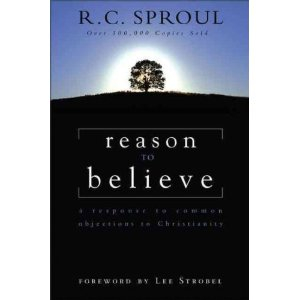
Dr. R.C. Sproul has been a professor of Apologetics, Philosophy, and Theology at numerous Seminaries. He is the Founder of Ligonier Ministries, President of Reformation Bible College, and the Senior Minister of St. Andrews Presbyterian Church in Sanford, Fl. He has authored over 70 books including the following books on Apologetics: The Psychology of AtheismDefending the FaithNot a Chance; and a contributor to Classical Apologetics. The article above was adapted from Chapter 3 in his book Reason to Believe (previously – Objections Answered. Grand Rapids: Zondervan, 1982).

Book Review on Richard D. Phillips’ “Can We Know Truth?”

Truth Starts With God Himself: Review by David P. Craig

CWKTT Phillips

There is a crisis of truth in our postmodern times. However, as Phillips points out, “our society dogmatically rejects truth in theory but cannot live that way in practice…The crisis of the postmodern position is that it cannot believe or live out its own claims. Postmodernity has nothing to believe, including its own unbelief, despite the aching need of humans to know and believe.”

Phillips proceeds to give several practical examples of how modernism defined and developed its own epistemology (theory of knowledge), and how postmoderns struggled with modernistic thought and what has resulted from that is a full-blown relativism where “we can’t know truth.” Instead of downright playing down the postmodern critique of truth, Phillips argues that Christians can apply some of the strengths of postmodernism in four ways:

First, Christians should acknowledge the role that context plays in anyone’s understanding and belief. “Truth” is always held by actual persons, and those persons are deeply shaped by culture, language, heritage, and community.

Second, we should share postmodernity’s concern that truth may become more an object of power than a mans for enlightenment.

Third, if postmodern critiques cause Christians (among others) to challenge doctrines and views that have become traditional, we can be thankful for the opportunity to reconsider, reformulate, and restate teachings that may have become stale in our practice.

Fourth, Christians may be cobelligerent with postmodernity’s assaults against modernism.

The problems with both modernism and postmodernism essentially boils down to the same thing: they both deny the existence of God – Who is truth, reveals the truth, and is the way to truth through Jesus Christ (John 14:6).

Phillips writes, “Evangelical Christians, in particular, believe that truth derives from and is revealed by God. Thus, truth is authoritative. Here is where postmodernity parts company with historic Christianity, for the postmodern view rejects the reality of truth, positing an implicit (and in some cases, explicit) relativism in which nothing is really and finally true.” The author gives several examples of how this theory does not work in actual practice. Here is one example from the book:

“One professor made this point after his college class had united against him in insisting that nothing is ultimately true or morally wrong in an objective sense. The next day the professor informed the students that regardless of their performance on the exam they were all going to receive an F. The students objected in unison, ‘But that’s wrong!’ and the professor’s point against relativism was made. No one can live it, and therefore no one really believes it.”

The author articulates and expands on a third way of understanding truth based on what God has revealed to us in the Bible that is consistent with our experience – i.e., it corresponds to reality. He writes, “Christianity presents a legitimate third way over against the modern and the postmodern. With the moderns we believe that truth exists and is accessible, though we steadfastly reject that we can exhaustively know truth by our unaided reason. With the postmoderns we are skeptical that finite, fallible humans are the agents of truth, though we insist that truth is real and that we can know it. A successful Christian epistemology, then, not only responds to evangelical Christian belief but also enables us to communicate our doctrine of knowing to a world that both doubts and greatly desires to know truth.”

In this essay Phillips has brilliantly and cogently argued for the reality of truth, how one can know the truth, defend truth, and live by and for the truth. You will find many examples of how modernism and postmodernism fall short in their theories of epistemology, and how a Christian epistemology is simply the most logical way of discovering the truth – because our belief and practice emanates from the Way, the Truth, and the Life – the Lord Jesus Christ. The salient point is made by Phillips, “Love divorced from truth is not love, and truth divorced from love is not truth.” As Jesus perfectly modeled, spoke, and loved in truth, so must we. We are called to “speak the truth in love” just as we have heard it and experienced it in the person and work of Jesus Christ.

Book Review on Will Metzger’s “Tell The Truth”

How To Share the Gospel in Truth and with Love: Book Review by David P. Craig

TTT Metzger

Tell the Truth fills a huge void in the literature on the subject of evangelism – sharing the good news of Jesus Christ with others. Most books on evangelism focus on techniques and methods. Metzger on the other hand focuses primarily on developing a theology of evangelism. Metzger does a phenomenal job of tackling the question: What truth or key truths are essential to the gospel message? After spending time on the key elements of doctrinal truth of our message (understanding the gospel) – Metzger gives abundant examples of how to share the truth/s of the gospel message with others.

In this thorough handbook on evangelism Metzger addresses the following issues with great theological depth, biblical support and commentary, and practical applications: The importance of doctrine and theology in evangelism; Distinguishing our role from God’s role in evangelism; Man-centered verses God-centered methods in evangelism; The five primary points of evangelism; Myths and facts about God’s grace; God’s sovereignty and our responsibility; How worship is the motivation for evangelism; Challenges for evangelism amid pluralism; How to communicate the gospel personally with different types of people; and how to bloom with the gospel where you are planted.

This book also contains a plethora of resources for training material on every aspect of evangelism including: How to prepare your testimony; How to develop a theological methodology of evangelism; How to say what you mean; How to ask good questions; Doing friendship evangelism; Questions non-Christians ask; Sharing the gospel using stories; and many other helpful templates, Charts, outlines, guides, questions to ask, and so forth. There is also a schedule for doing a God-centered evangelism training seminar in your church, school, or small group; and a study guide containing twelve sessions for individuals or groups.

I believe Metzger’s book is arguably the best resource on evangelism available today from a God-centered perspective. It is the equivalent of a seminary course in evangelism and is a book that you will come to again and again for its depth of insight and practical wisdom as you seek to better understand and declare the good news of the gospel for life. I am so grateful for this exceptional resource that guides the beginner or seasoned veteran in “speaking the truth in love.”

Why is God So Narrow-Minded About Salvation? By Dr. R.C. Sproul

Answer to Objection #2 To Christianity: “All Religions Are Good. It Doesn’t Matter What You Believe.”

RTB sproul image

America is a melting pot. People from every conceivable ethnic and religious background come together to form one nation–e pluribus unum, from the many, one. At the heart of our national sense of unity stands the crucial principle of religious toleration. Under the principle of religious toleration, all religious systems are guaranteed freedom of expression and equal treatment under the law. No one religion has exclusive claim to legal rights and government establishment. The government of the United States of America expresses the will of the founding fathers that there will be no “established national religion.: Thus, we have no state church that enjoys exclusive privilege under the law.

With the principle of equal toleration has come the idea that no religion has exclusive claims to truth. Though the concept of legal religious toleration says nothing at all about the validity of truth claims, many have drawn the implication that equal toleration means equal validity. Thus, when Christians or advocates of any religion make claims of exclusivity, their claims are often met with shock or anger at such a narrow-minded posture. To make exclusive religious claims is to fly in the face of national sentiment. It is like attacking baseball, hot dogs, motherhood, and apple pie (not to mention Chevrolet).

In the sixties the uplifted index finger became a symbol not only of a number one ranking for a football team, but also a popular sign of the members of the “Jesus movement” that there is but “one way” to God, the way of Christ. The zeal of the Jesus People met great resistance and hostility at this point.

One of the most embarrassing moments I ever experienced came in a freshman class in college. it was a time of painful public humiliation. The professor was a former war correspondent who was outwardly hostile to Christianity. In the middle of a class she looked at me and said, “Mr. Sproul, do you believe that Jesus is the only way to God?” I gasped as I felt the weight of he question and knew that every eye in the room was on me. My mind raced for a way to escape my dilemma. I knew that if I said yes people would be angry. At the same time, I knew that if I said no I would be betraying Christ. Finally, I mumbled almost inaudibly, “Yes, I do.” The teacher responded with unmitigated fury. She said in front of the whole class, “That’s the most narrow-minded, bigoted, and arrogant statement I have ever heard. You must be a supreme egotist to believe your way of religion is the only way.” I made no reply but slouched rather meekly in my chair.

After the class was dismissed, I went to speak with my teacher privately. In the conversation I tried to explain to her why I believed that Christ was the only way. I asked her if she thought it was at least theoretically  possible that Christ be one way to God. She allowed the possibility. I asked if she thought it were possible that without being narrow-minded or bigoted a person could come to the belief that Jesus was God. Though she did not believe in the deity of Christ, she recognized that people could, in fact, believe that without being bigoted. Then I explained to her that the reason I believed that Christ was the only way because Jesus Himself taught that.

I reminded her that Jesus said, “I am the way, and the truth, and the life; no one comes to the Father, but by me” (John 14:6). I also pointed out that the New Testament refers to Christ as the “only-begotten” of the Father, and that “there is no other name under heaven by which we must be saved” (Acts 4:12). I said to her, “Can you see that I am torn between my loyalty to Christ and the modern spirit of pluralism?” I said, “Do you see that it is possible for me to believe in the uniqueness of Christ because He taught it? If I believed Christ was the only way because I believe that my way must be the only way because it is my way, that would be an act of arrogance and egotism.” She finally acknowledged that it was possible for someone to believe in the uniqueness of Christ without being arrogant and apologized sincerely to me. However, she went on to raise a more serious question than the question of my arrogance. She said, “How can you believe in a God who only allows one way to Himself?” Isn’t it narrow-minded of God to restrict redemption to one Savior and one faith?”

Aren’t All Religions Basically the Same?

In the final analysis this is the issue that must be faced: Is God so narrow-minded that He provides only one way of redemption?

Part of the reason we struggle so deeply with a question like this is due to the impact of the results of the nineteenth century approach to the study of comparative religion. In the nineteenth century there was a concerted effort by scholars to examine closely the distinctive characteristics of the major religions of the world. The “buzz word” of the day was “essence.” Many serious studies of religion were published which contained titles like The Essence of Religion or The Essence of Christianity. These books reflected an attempt to get at the basic core of religious truth that was found in all religion.

Religion was often reduced to its lowest common denominator. Frequently the distilled essence of religion was pinpointed by the phrase “the universal fatherhood of God and universal brotherhood of man.” Thus it was seen that at the heart, all religions were working for the same thing. The outward trappings of religious belief and practice differed from culture to culture but at the root their goals were the same. Thus, if all religions were essentially the same then no one of them could ever make exclusive claims to validity.

Out of this quest for the essence of religion came the now famous and popular “mountain analogy.” The mountain analogy pictures God at the peak of the mountain with man down at the base. The story of religion is the account of man’s effort to move from the base of the mountain to the peak of fellowship and communion with God. The mountain has many roads. Some of the roads go up the mountain by a very direct route. Other roads go up the mountain in a circuitous fashion, but eventually reach the top. Thus, according to the proponents of this analogy, all religious roads, though they differ in route, ultimately arrive at the same place.

Out of this conviction that all roads lead to God has come a considerable number of ecumenical movements, pan-religious endeavors, and even new religions such as Bahai which seek a total synthesis and amalgamation of all the world religions into one new unified religion.

I once had a conversation with a Bahai priest. He told me that all religions were equally valid. I began to interrogate him concerning the points of conflict that exist between islam and Buddhism, between Confucianism and Judaism, and between Christianity and Taoism. The man responded by saying that he didn’t know anything about Islam, Judaism, or the rest but that he did know they were all the same. I wondered aloud how anyone could assert that all religions were the same when he had no knowledge of what those religions professed or denied/ How can Buddhism be true when it denies the existence of a personal God and at the same time Christianity be true when it affirms the existence of a personal God? Can there be a personal God and not be a personal God at the same time and in the same relationship? Can Orthodox Judaism be right when it denies life after death and Christianity be equally right when it affirms life after death? Can classical Islam have a valid ethic that endorses the killing of infidels while at the same time the Christian ethic of loving your enemies be equally valid?

There are only two possible ways to maintain the equal validity of all religions. One is by ignoring the clear contradictions between them by a flight into irrationality; the other is by assigning these contradictions to the level of insignificant nonessentials. The latter approach involves us in a systematic process of reductionism. Reductionism strips each religion of elements considered vital by the adherents of the religion themselves and reduces the religion to its lowest common denominator. The distinctives of each  religion are obscured and watered down to accommodate religious peace.

Why does this kind of reductionism take place? Perhaps there are many motivating factors for it. Certainly one of the most powerful factors is the desire to end religious controversies and the upheaval they bring. Differences in religious conviction have led again and again to passionate disputes between people, family alienation, violent forms of religious persecution, and in many cases even war. Thus if we were able to achieve a universal religious essence perhaps we can end these very costly disputes. The goal is peace. The price is truth.

if religion deals with matters of ultimate concern, there is little wonder that religious debates produce so much passion. But if we are interested in truth we can never discover it by denying real differences of truth claims. The peace that is produced by reductionism is a false and carnal peace. We recall the false prophets of Israel who, in their desperate attempts to avoid conflict, cried, “Peace, peace,” when there was no peace. Jeremiah’s lament remains relevant, “These men heal the wounds of the daughters of Zion, slightly” (see Jeremiah 11).

It is one thing to seek an atmosphere of religious debate that is characterized by charity. It is quite another thing to say the matters under debate are not important. It is one thing to protect the right of every religious person to follow the dictates of his conscience without fear of persecution; it is another to say that opposing convictions are both true. We must note the difference between equal toleration under the law and equal validity according to truth.

Why is God So Narrow-MInded?

We are still left with a problem, however, of a narrow-minded God who provides only one way of redemption. Does this not mean that people who live in a culture where that one religion is proclaimed have a decisive advantage over people living in other cultures? Let’s examine the deeper question of the narrow-mindedness of God who provides only one way of redemption.

We remember the words of Jesus when he said, “Enter by the narrow gate. For the gate is wide and the way is easy that leads to destruction, and those who enter by it are many. For the gate is narrow and the way is hard that leads to life, and those who find it are few( Matthew 7:13-14).”

What kind of a God would have such a narrow gate? The question implies a serious accusation; that God has not done enough to provide redemption for mankind. Let us examine the accusation from a hypothetical perspective. Let us suppose that there is a God who is altogether holy and righteous. Suppose that God freely creates mankind and gives to mankind the gift of life.

Suppose He sets His creatures in an ideal setting and gives them the freedom to participate in all of the glories of the created order with freedom. Suppose, however, that God imposes one small restriction upon them, warning them that if they violate that restriction, they will die. Would such a God have the right to impose such a restriction with the penalty of forfeiture of the gift of life if His authority is violated?

Suppose that for no just cause the ungrateful creatures disobeyed the restriction the moment God’s back was turned. Suppose when He discovered their violation instead of killing them, He redeemed them. Suppose the descendents of the first transgressors broadly and widely increased their disobedience and hostility toward their creator to the point that the whole world became rebellious to God, and each person in it, “did what was right in his own eyes” (Judg. 21:25).

Suppose God still determined to redeem these people and freely gave special gifts to one nation of people in order that, through them, the whole world would be blessed. Suppose God delivered this people from poverty and enslavement to a ruthless Egyptian Pharoah. Suppose this privileged nation, as soon as it was liberated, rose up in further rebellion against their God and their liberator. Suppose they took His law and violated it consistently.

Suppose that God, still intent upon redemption, sent specially endowed messengers or prophets to plead with His people to return to Him. Suppose the people killed the divine messengers and mocked their message. Suppose the people then began to worship idols of stone and things fashioned by their own hands. Suppose these people invented religions that were contrary to the real God and worshiped creatures rather than the Creator.

Suppose in an ultimate act of redemption God Himself became incarnate in the person of His Son. Suppose this Son came into the world not to condemn the world, but to redeem the world. But suppose this Son of God were rejected, slandered, mocked, tortured, and murdered. Yet, suppose that God accepted the murder of His own Son as punishment for the sins of the very persons who murdered Him.

Suppose this God offered to His Son’s murderers total amnesty, complete forgiveness, transcendent peace that comes with the cleansing of all guilt, victory over death and an eternal life of complete felicity.

Suppose God gave these people as a free gift the promise of a future life that would be without pain, without sickness, without death, and without tears. Suppose that God said to these people, “There is one thing that I demand. I demand that you honor my only-begotten Son and that you worship and serve Him alone.” Suppose God did all of that, would you be willing to say to Him, “God, that’s not fair, you haven’t done enough”?

If man has in fact committed cosmic treason against God, what reason could we possibly have that God should provide any way of redemption? In light of the universal rebellion against God, the issue is not why is there only one way, but why is there any way at all? I know of no way of answering that question.

Why Do Christians Say that Christ is God Incarnate?

At the heart of Christianity stands the person and work of Jesus Christ. His person and work are part of the essence of Christianity. It is in who He is and what He has done that the essence of Christianity can be discovered. Both in His person and work we find elements of utter uniqueness. The Christian claim is that in the person of Jesus of Nazareth we meet God incarnate. Buddha never claimed to be anything more than a man. Mohammed never claimed to be anything more than a prophet. Moses and Confucius were mortals. If Christ was in fact God incarnate, then it is a travesty of justice to ascribe equal honor to Him and to the others. To do so would necessitate either falsely attributing to mortal man the attributes of deity or stripping Christ of His divine nature.

In the truth claims of Christianity we find the notion of the sinlessness of Christ. If Jesus was in fact without sin, this would put Him in a class by Himself. If He had no other uniqueness, this one factor would set Him apart from every religious leader the world has ever known. Though claiming something does not make it true, nevertheless the fact that Jesus claimed to be sinless is significant. By that claim the religious stakes are established. If the claim is true, then Jesus’ uniqueness is assured. If the claim is not true then Jesus fails to qualify as even one of many great religious teachers. He would only qualify as a hypocrite and a charlatan.

The claim of resurrection is vital to Christianity. If Christ has been raised from the dead by God, then He has the credentials and certification that no other religious leader possesses. Buddha is dead. Mohammed is dead. Moses is dead. Confucius is dead. But, according to the truth claim of Christianity, Christ is alive. If Christ has been vindicated by resurrection, His uniqueness as an object of religious devotion is established.

Another dimension of the uniqueness of Christ that is vital to Christianity is His work of atonement. Moses could mediate on the law; Mohammed could brandish a sword; Buddha could give personal counsel; Confucius could offer wise sayings; but none of these men was qualified to offer an atonement for the sins of the world.

It is not only the resurrection of Christ that makes Him unique but it is His death that puts Him in a class by Himself. His death was made as a payment for the sins of mankind. His sacrifice was perfect. Here we see the direct correlation between the uniqueness of His person, of His sinlessness, of His atoning death, and of His resurrection. Together these factors describe the only-begotten of the Father.

It is a mistake, indeed a fatal mistake, to assume that God is pleased by “religion.” The cliche that “it doesn’t matter what you believe as long as you are sincere” involves a devastating error. We can be sincerely wrong and miss the way of redemption offered by God. What we believe in makes an ultimate difference to our destiny. “Religion” can be a substitute for truth; a man-made system of distorting the revelation of God.

Christ alone is worthy of unlimited devotion and service. His total value sets Him apart from all pretenders to the throne. He alone is able to redeem. He alone is worthy of worship.

The exclusiveness of the Christian truth-claim must always rest on the uniqueness of Christ. Christians are not immune from arrogance and bigotry. Yet arrogance and bigotry have no ally in Christ. Christ’s critique of these evil practices is more severe than any critic of Christianity can muster. At the same time this one who is so critical of arrogance and bigotry calls us to a single-minded devotion to truth. He claims to be that truth.

Key Points To Remember:

Are all religions good? Does it matter what you believe?

(1) Religious toleration does not mean equal validity of truth. The problem of exclusive claims to truth are deeply rooted in our culture. We must keep in mind the difference between religious toleration as a matter of legal rights and the concept of equal validity of truth.

(2) Objective evidence, not arrogance, must be the basis for Christian truth- claims. Christians must guard against communicating a sense of arrogance about their convictions. The uniqueness of Christ must be established on the basis of objective evidence rather than by personal preference.

(3) All religions do not teach the same thing but differ at key points. Attempts to make all religions “basically the same” involves the serious problem of reductionism–reducing everything to a broad common denominator. Analogies such as the “mountain analogy” obscure the real and crucial differences between world religions.

(4) The uniqueness of Christ and His own exclusive claims are the heart of the issue. To understand that uniqueness we must understand the whole pattern of biblical history. If the biblical history is true, then we can never suppose that God “has not done enough” to provide for our redemption.

(5) In light of biblical history it is easy to see why there is only “one way.”

(6) In spite of the fact that the world has been in constant rebellion to Him, God has provided a way of redemption. The ultimate question of redemption is the question why God would bother to provide any way of redemption for us. The wonderful truth is that even though we don’t deserve it, in Christ “we have redemption through his blood…the forgiveness of sins…according to the riches of his grace” (Eph. 1:7).

About the Author:

Sproul RC laughing over podium image

Dr. R.C. Sproul (Founder of Ligonier Ministries; Bible College and Seminary President and Professor; and Senior Minister at Saint Andrews in Sanford, Florida) is an amazingly gifted communicator. Whether he is teaching, preaching, or writing – he has the ability to make the complex easy to understand and apply. He has been used more than any other person in my life to deepen my walk with Christ and help me to be more God-centered than man-centered. His book the Holiness of God has been the most influential book in my life – outside of the Bible. The article above is adapted from Chapter Two in another one of his excellent books: Reason to Believe. Grand Rapids, Zondervan, 1982 (It was originally entitled: Objections Answered, 1978).

Joe Aldrich on Some Marks of Maturity For a Pastor

LE Aldrich

Some Marks of Maturity for a Pastor

To help identify the kind of shepherd who stimulates beauty, let’s look now at some marks of maturity for a pastor. These are goals to shoot for, a direction to move. Since pupils are to become like their teachers, they are really goals for all of us.

The Mark of an Expanding Faith

Faith is that God-given ability to take the promises of God out of mothballs and apply them to the challenges of everyday living. Men of faith dream God-sized dreams and then move out to transform those dreams into reality. God has said that without faith, it is impossible to please him (Hebrews 11:6). Pleasing him is believing him. Faith as belief is affirming who he is while faith as action is responsible behavior in the light of who he is and what he has promised.

Sometimes it is behavior which overcomes overwhelming odds. By faith men of God “conquered kingdoms … shut the mouths of lions … became powerful in battle” (11:33-34). More often it is a tenacious behavior which endures in the midst of intense struggle and personal loss. “Others were tortured and refused to be released, so that they might gain a better resurrection” (11:35). Some accepted joyfully the seizure of their property because they knew they had a better and an eternal possession (10:34). Faith is not shrinking back, whether one faces opportunity or oppression. Our Lord warned against the leaven of the Sadducees (rationalism). Rationalism—eliminating the supernatural—becomes the great enemy of faith. The deceptive thing about the leaven of the Sadducees is its reasonableness. Rationalism is reasonable and safe. Faith often appears unreasonable and risky. It was both unreasonable and risky for Peter to attempt to walk on water. It was unreasonable for Noah to build a boat, for Abraham to expect a son, for Moses to abandon the prestige of Egypt, and for George Mueller to care for orphans. We must all grow in faith if we are to please him. Certainly we want to do that! The great faith chapter (Hebrews 11) gives us three clues for faith building.

1. Belief in the Invisible. These faith giants saw through the problems of the natural world to a supernatural Being. They saw him who is invisible (11:27). The writer to the Hebrews exhorts us to do the same: “Let us run with perseverance the race marked out for us. Let us fix our eyes on Jesus, the author and perfecter of our faith” (12:1-2). Our eyes must move from the waves to the Master of the waves, from the storm to the Savior, from the fire to the Father. Abraham left the familiar and went out into the unfamiliar, the new, the untested, the uncharted, because he saw that God was the architect and builder of his future (11:10). Cultivation of our relationship with him who is invisible is the first key for building faith.

2. Faith in What Has Been Promised. The heroes of faith not only saw him who was invisible, but they welcomed his promises from a distance (11:13). As we cultivate a relationship with God we are able to claim with assurance (faith) the promises which grow out of that relationship. Sarah was enabled to conceive because Abraham believed God would be faithful to what he had promised (11:11). He believed God was reliable. Our pastor must know both the person of God and the promises of God if he is to be a man of faith.

Two things hinder this process: 1) A lack of knowledge of the promises of God, and 2) a lack of faith in the person and character of God. Men and women of faith welcome the promises of God from a distance. That is, their major expectations are in the future, in life beyond the veil. Moses claimed the promises of God and turned his back on the prestige, power, and wealth of Egypt because “he was looking ahead to his reward” (11:26). Others joyfully accepted the confiscation of their property knowing that they had “better and lasting possessions” (10:34). They will be winners; they will not be ashamed for the choices they made because God is faithful, his promises are true, and “he has prepared a city for them” (11:16). An expanding faith must be marked by confidence in God’s promises.

3. Living a Faith Life Style. A real winner feels the gold medal around his neck before he enters the race. So should the pastor. He should run to win, and motivate by his courageous example a multitude to run with him. The promises of God should be the fabric of his future. Faith begins with the person of God, moves to his promises, and then to a pattern for living. Ours is a living faith and a faith to be lived.

There is a faith life style summed up in Hebrews 11:13: “All these people were still living by faith when they died. They did not receive the things promised; they only saw them and welcomed them from a distance.” And they admitted that they were aliens and strangers on earth.

Pastors of all people must make this confession. It is the Magna Carta of Christian living. These heroes of the faith abandoned any hope of ultimate fulfillment in this life. They determined to ever be foreigners in their own countries, to live as aliens in their own land.

No city on this earth, no geographical location, no second home in the mountains has foundations which will last. We should abandon all hope of being satisfied and fulfilled with what is temporal. Our heartache is eternal, and no temporal bicarbonate will ease it. Nothing less than seeing Jesus face to face and dwelling in his presence will ever satisfy our deep longing. It’s a longing for home, and this world will never be our home.

Much of the Christian community acts as though this world is its home. Materialism is rampant. We have followed the gospel of the worldling who hopes that by doubling the cost of his new home he can double his happiness. This perverted gospel cripples the impact of countless Christians. The visible mark of faith is an alignment with an eternal home which creates an attitude and life style marked by its contrast with the secularism of our day. This alignment refocuses everything else. It changes our goals and objectives. It redirects our gifts and abilities and resources. It redefines our mission. Suddenly eternity with the Lord is everything, and his purposes become critical as we prepare for that great day. The “alien and stranger” lives for the possibility of hearing his Master say, “Well done, good and faithful servant.” Like Moses, he looks forward to the reward.

Pastors must be examples to the church of total stewardship. They should richly enjoy all that God has given, but their heavenly citizenship should be obvious. The deceitfulness of wealth, of any treasure but God himself, is a dangerous time bomb. Some pastors err in the other direction. They parade their poverty and continually let their needs be known, and then praise God for his wonderful provision. Be careful, and pray for balance.

Faith is the essential ingredient that pleases God. Faith is fueled as the pastor cultivates the presence of God. As D. L. Moody used to say, “I am a leaky vessel, and I need to keep under the tap.” Faith is freed as the pastor develops confidence in the promises of God. It is properly focused as he adopts God’s pattern of living. The man of faith is an alien sent by God as an agent of reconciliation. An ad in a secular magazine stated, “Once you discover you can change the world you’ll never be the same.” How true! Faith moves mountains.

The Marks of a Positive Ministry

Faith and hope are inseparable friends. The gospel itself is literally “good news.” A pastor should both be and communicate good news. It’s largely a matter of attitude. Many pastors gravitate toward a negative, critical, condemning pattern of life and ministry. Such a life style is not from God.

It is often thought that the Christian faith is a deprivation of joy in living, or that it is a mere pattern of religious observances, or that it is a hairsplitting system of beliefs. Christianity does involve some of these elements but they are only incidental. The modern evangelist has to sell the biblical point of view that the Christian faith is God’s way to undreamed of personal fulfillment. This will necessitate a shift to a more positive point of view in order to change this false but popular image of Christianity (James Jauncy, Psychology for Successful Evangelism [Chicago: Moody Press, 1972], 39).

Pastors need to be ministers of hope. It should permeate their lives and their preaching. Recently I heard a speaker say that the one who brings the most hope gains the most authority. That’s an amazing and scary thought. Lenin came with a message of hope and changed the world. As his “Utopia” unfolded, people gave everything, even their very lives, to further the cause. People rally around the bearer of hope and submit themselves to him. Hope is a vital quality for pastors.

Peter reminds us that we are to be ready to give an answer, with “gentleness and respect,” to everyone who asks us the reason for our hope (1 Peter 3:15). This is not “pumping sunshine.” Ministry is tough. It involves heartache, tragedy, and despair. The shepherd needs to have a faith which produces a hope that encourages, comforts, and strengthens even as the dark clouds gather. Those who worship Jesus Christ have reason for hope.

A ministry founded on and giving rise to hope is composed of several positive factors:

1. An Unveiled Face—Authenticity. One of the joys of the new covenant is that the veils can come off. Moses came down from the mountain and veiled his face so that his people could not see his glory fade away. In 2 Corinthians 3:12-18 Paul tells us that we no longer have to function as did Moses. When one “turns to the Lord, the veil is taken away” (3:16). Let’s not bring back what God has taken away. The Christian pilgrimage is not one sanctifying experience after which we put on the veil. We don’t reach a point where a veil becomes necessary. The longer we walk with him, the less a veil should be needed. Paul encourages us to look at him with unveiled face as we “are being transformed into his likeness with ever-increasing glory” (3:18).

People are attracted by authenticity. The pastor must guard himself against accepting the illusions, fantasies, or distorted expectations of his congregation. Integrity is the critical element. It is so easy to deceive from the pulpit, to preach about things we have not experienced and do not consistently practice. It is so easy to overstate, to play on guilt, and to imply that we solved a particular problem long ago. If we haven’t and imply that we have (often by what we don’t say), we are inauthentic.

2. A Diligent Student of the Word. The demands of ministry are great, but they must not take the pastor away from the Book. Since when should the pastor do the calling, teach Sunday school, chair three or four committees, fold the bulletins, oversee the youth ministries, plan the retreats, and on and on? His job has never been to do the work of the ministry. He is to equip others to do it.

Bible study, however, is hard work. There are plenty of things to keep a pastor “busy” and to provide an excuse for his lack of preparation. Poor preaching keeps most churches poor. Poor preaching in most cases is the result of poor priorities and procrastination. The minister who is going to build a contagious congregation must handle truth skillfully, knowing that truth is the foundation of beauty. Besides direct study of Scripture, the pastor must continue to learn. Seminars, books, retreats, and significant fellowship should have high priority in his schedule. Many secular management training programs are excellent. Each local church should set aside a substantial sum for its pastor’s continuing enrichment. It is money well spent.

3. A Liberator of the Body. The marvelous doctrine of reconciliation helps us see that ultimately evangelism is what Jesus Christ is doing through his church to reach his world. The pattern looks like this. At Christ’s incarnation, God was “reconciling the world to himself in Christ” (2 Corinthians 5:19). Since Christ ascended to his Father’s right hand, the Father “has committed to us the message of reconciliation. We are therefore Christ’s ambassadors, as though God were making his appeal through us” (5:19-20). That’s what Christ is doing today. He entreats a lost world to be reconciled through his church, which is his body. Christ sows his good seed (beautiful seed) in the world, where his work is to take place.

The pastor must focus his church outward, not inward. His motto should be, “When the saints, go marching out!” The church is not a holy huddle, it is a task force whose primary focus must always be the “fields ripe for harvest.” Unfortunately, bigger buildings, larger programs, and more staff dictate church mission. We must justify our large expenditures, and the basic evangelism strategy becomes herding fish toward our expensive, stained-glass trap. Instead, the church should be God’s family extending itself to meet needs in the name of Jesus. Evangelism is what Jesus is actually doing through the preaching, the worship and fellowship, and the service of the church.

The pastor more than any other individual determines the character of the church’s preaching, fellowship, worship, and service. The content and style of his preaching is critical to the church’s health and beauty. If a church is to be a learning center, the pastor must make diligent preparation so that what is delivered is biblical, balanced, relevant, and liberating. Likewise, the pastor is the key to liberating the church to be a healing communion as he gives himself to building up the body so that it moves toward health. The pastor is also the key to whether or not the church is free to worship and to respond as a family to the presence of God in its midst. Finally, the service of the church is conditioned by the pastor’s vision (or lack of it). Liberating a congregation to be God’s people in service can be threatening. It often involves a rethinking of the pastoral and leadership roles. In most cases it means seeking a lower profile and elevating the gifts and abilities of others.

Jesus desires to explode himself through the lives of his people and do greater works than he did while on earth. He wants once again to touch the untouchables, feed the hungry, bring light where there is darkness and life where there is death. He wants to invite the thirsty—whoever they are, wherever they are—to discover living water. In the counsels of eternity, God decided for a time to link himself (and in a sense limit himself) to the frailties of his creatures. Why he has not evangelized with the hosts of heaven we do not know. What we do know is that Jesus’ mission today is done through us, his ambassadors. We are now members of the second incarnation called to make visible the invisible God. His impact, his mission, is linked to our obedience and vision. If we draw limits he has not drawn, he becomes limited in his outreach. If our hearts have no compassion for the lost, we neglect our commission and Christ’s mission is aborted.

Who do you think God wants to use to reach your neighborhood? Is he doing it? Why not? Pastor, you are God’s instrument to set people free—to encourage them, to liberate them, to give them your blessing to mark the lost for Christ. It may mean you will have to change your attitudes toward the unsaved. You may need to realign your understanding of separation with biblical truth. Perhaps you will have to eliminate some programs, change the thrust and tone of your preaching, focus again on the essentials, and start reaching your own neighborhood. People may need to be encouraged not to attend the programs and activities of the church so they can spend time with the unsaved. Your church may need, with your firm leadership, to move out into the community and serve it. Neglected widows may need help, injustice in your community may need to be confronted, programs may need to be implemented to care for the poor and needy … with no strings attached. You may need to brainstorm with your leadership team about where Jesus would go in your community to meet needs, and then direct resources and people into that area. Christianity in action under qualified leadership is always effective evangelistically.

4. A Builder of Men. Men attract men, especially in a church context. A primary part of the pastor’s job is the building of men. To nudge men on toward maturity takes time and commitment. His must help others to minister—not do the work of ministry himself. The minister is like the foreman in a machine shop, or the coach of a team. He does not do all the work, nor does he make all the plays. (Though he is a working foreman and a playing coach!) If a man can’t operate a lathe, the foreman rolls up his sleeves and shows him how. If a player can’t carry out an assignment, the coach demonstrates how to make the play (Leighton Ford, The Christian Persuaders [New York: Harper & Row, 1969], 49).

Even though the pastor is a shepherd who loves the entire body, a ministry to men must have a special place in his heart. While in the pastorate I met with at least five groups of men each week. I met one on one with a dentist friend, with two other board members, with a group of twenty or thirty businessmen, with the entire board, and with the pastoral staff (seven men). Although the group dynamics were different, the purposes were similar. With mutual accountability we shared the Word, prayer, schedules, and relationships. Each year, at my request, the board of elders met without me to evaluate my ministry, my marriage and family, and anything else they desired. This information, often painful, was shared in love and resulted in growth and encouragement. It also set a precedent. As they saw the value of evaluation, the board members requested that each of them be evaluated too.

We as a board recognized our need to be a redemptive community. We structured our weekly board meetings so that the first hour focused on instruction and worship. Board members rotated the teaching assignment among themselves. I spent hours working with some of the men helping prepare them to preach and teach. What an exciting experience to sit on the front row as one of them delivers the morning message! Men, help your pastor by being honest with him. I remember so well the evening a man in my congregation said to me, “Joe, you’ve been my pastor for two years. I’m disappointed you haven’t built into my life more effectively.” It was a time of soul searching … and growth. You may need to pose a similar question to your pastor to nudge him into one of his most important responsibilities. An effective pastor builds into his leaders to establish the base for a healthy and attractive ministry. Before a church is ready to add members, it must increase the quality and quantity of its leadership. A wise pastor learns how to be a builder of men, then makes this challenge central to his ministry.

5. A Family Specialist. Focus on the family! Target sermons regularly on marriage and family living. Take advantage of the excellent video series and printed materials available. People are hurting desperately in this area. Meet these needs and evangelism problems are practically solved. If your church cannot accept the wreckage of broken homes and shattered dreams, it is not a place where Jesus lives. Your church should be the greatest garbage dump in town—a place where the broken, oppressed, misplaced, abandoned, and unloved can come and find a family where they are accepted and loved … as is. “As is” people are Jesus’ kind of people. The Pharisees despised them. They still do. “As is” people become great disciples and great soul winners. Those who have been forgiven the most love the most. The effective church ministers effectively to families because it is a family. Pastor, you’re the key. Father the fatherless, rebuke the offenders, encourage the discouraged, rejoice with those who rejoice, and weep, weep, weep. If your heart is not broken by broken people, you don’t have Jesus’ heart. If your heart is not compelled to go when lost men stumble in darkness, you don’t have Jesus’ heart. Pray that his mission will recapture the hearts of his children and of their leaders.

6. A Careful Planner. The old adage is true: If you fail to plan, you plan to fail. A goal is a statement of faith about the future. Visions remain visions unless goals are established as steps to the visions’ realization. Aim at nothing and you’ll hit it every time. A careful planner simply puts a foundation under his fantasy.

Some years ago I put together a document which has been very influential in shaping my life. It contains my personal objectives, goals, and standards. I established objectives and goals in five areas: spiritual, intellectual, physical, family, and ministry. Objectives became broad statements of purpose. Suppose one objective in my spiritual life is to be conformed to the image of Christ. That is a broad, unmeasurable purpose. To achieve it I must establish several goals. One goal would be to maintain a regular Bible study program. Another might be to develop a significant prayer life. Reading Christian biographies could be another goal. If I meet these goals I will be well on my way toward my objective of Christ-likeness. Unfortunately, these goals are still too general and unmeasurable. Therefore, I must establish standards to quantify my goals and make them measurable. Here is a sample:

I. Objective: To be conformed to the image of Christ.

Goal: Regular Bible study Standard:

30 minutes each day in Bible study

Standard: 10 minutes each day in devotional literature

Standard: Weekly reading of pertinent journals, such as Christianity Today

Goal: Develop a significant prayer life

Standard: 30 minutes each day

Standard: Written requests with answers recorded

Standard: Daily prayer with wife and family

Standard: Daily prayer with staff

Goal: Read significant Christian biographies

Standard: One biography per month

Such an exercise is invaluable. The more you plan, the more efficient is your time spent in working. Perhaps the greatest value of planning is the “self-fulfilled prophecy” effect Planning plants seeds which enable visions to grow into realities. Planning is simply taxing the mind to solve the problems that keep us from a fruitful future. Not to plan is not to set in operation the incredible resources of the human mind, a resource which when linked with faith can move mountains. A man of vision plans … so does an effective shepherd.

Our fifth and final question is one only the pastor can answer: “What changes must take place in the life of the pastor to make him that kind of a person?” It is a critical question. Pastors need the insight and the feedback of their leaders to answer it effectively. The question cannot be answered unless it’s asked. My prayer is that many pastors will take the risk … and ask.

Article adapted from the ‘Pastor and Evangelism” in Joe Aldrich. Lifestyle Evangelism: Learning to Open Your Life to Those Around You (pp. 149-160). Random House, Inc.. Kindle Edition.

About the Author:

Dr. Joe Aldrich (Th.D – Dallas Theological Seminary) was the Senior Pastor of Mariners Church in Newport Beach in the 1970’s, and the President of Multnomah School of the Bible in Portland, Oregon in the 1980’s and early 90’s.

James Montgomery Boice on the Distinction Between the Rapture and the Lord’s Day

Two Great Days: The Day of the Lord and the Day of Christ

What The Bible Has To Say About The Future: Part 3 in a Series of 9 – By Dr. James M. Boice

To the people of the ancient east the stars had great significance. They were the means by which people determined the hours of the night and the seasons of the year. The morning star was particularly important for it heralded the rising of the sun and the coming of a new day. The Lord Jesus Christ is our morning star, according to the book of Revelation (Revelation 22:16). He is coming. The dark night of human history may be long and filled with grim terrors, but the Daystar is coming and with Him the dawning of a new age.

We will consider the importance of this theme in biblical prophecy, to distinguish between two important aspects of Christ’s coming under the descriptive phrases “the day of the Lord” and “the day of Jesus Christ,” and to develop the relevance of the theme of the Lord’s return.

A Prominent Doctrine

It is unfortunate that in our day the second coming of Jesus Christ has faded to a remote and sometimes irrelevant doctrine in the opinion of many persons, even, it seems, within large segments of the evangelical church. That may be true in part because many extravagant, foolish, and utterly unscriptural  teachings have been linked to the doctrine of the Lord’s return. But that has been true of all biblical doctrines at some point of history, and that alone should not deter us from seeking to appreciate a theme which is prominent in the Word of God.

How prominent is this doctrine? In the New Testament 1 verse in 25 deals with the Lord’s return. It is mentioned 318 times in the 260 chapters of the New Testament. It occupies a prominent place in the Old Testament, inasmuch as the greater part of the prophecies concerning the coming of Christ in the Old Testament deal, not with His first advent in which He died as our sin-bearer, but with His second advent in which He is to rule as King. The return of Jesus Christ is mentioned in every one of the New Testament books except Galatians (which deals with a particular problem that had emerged within the churches of Galatia) and the very short books of the New Testament such as 2 and 3 John and Philemon.

The various New Testament writers obviously believed in the Lord’s return. Mark traced the origins  of his belief to the very words of Jesus. The first reference to the return of Jesus in Mark occurs in chapter 8. There is recorded Peter’s great confession of faith – “You are the Christ” – which was in turn the occasion of a greater revelation by Christ of the most important events that were to come in His ministry. First, He foretold His death and resurrection. He spoke of discipleship. Then, at the very end of the chapter, He spoke of His coming again.   Jesus said, “For whoever is ashamed of me and my words in this adulterous and sinful generation, of him will the Son of Man also be ashamed when he comes in the glory of his Father with the holy angels.”

Mark 13, where Jesus outlined what would come in the last days, is also full of this doctrine. Jesus spoke of the horror of the days immediately preceding His return, then added, “And then they will see the Son of Man coming in the clouds with great power and glory. And then he will send out the angels and gather his elect from the four winds, from the ends of the earth to the ends of heaven.” At this point the discourse moved on to teach that the disciples should be watching for this return; Jesus emphasized the point by an illustration: “It is like a man going on a journey, when he leaves home and puts his servants in charge, each with his work, and commands the doorkeeper to stay awake. Therefore stay awake — for you do not know when the master of the house will come, in the evening, or at midnight, or when the rooster crows, or in the morning– lest he come suddenly and find you asleep” (34-36).

Finally, this doctrine is mentioned in the account of Christ’s trial before the Jewish high priest (Mark 14). Jesus answered a question about whether or not He was the Messiah by saying, “I am, and you will see the Son of Man seated at the right hand of Power, and coming with the clouds of heaven” (Mark 14:62). Here are three expressions of the truth of Christ’s return in a book which most scholars consider to be the oldest of the four gospels.

In the other three gospels the same doctrine is prominent. Matthew and Luke repeated most of the sayings about the second coming given by Mark, sometimes with additions and variations, and John added others. For instance, John recorded a number of lengthy farewell discourses given by Jesus just before His crucifixion. In one of these Jesus declared, “Let not your hearts be troubled. Believe in God; believe also in me. In my Father’s house are many rooms. If it were not so, would I have told you that I go to prepare a place for you? And if I go and prepare a place for you, I will come again and will take you to myself, that where I am you may be also” (John 14:1-3). Christ’s return is also referred to in the last chapter of John’s gospel, in the record of Jesus’ conversation with Peter after His resurrection. The reference is incidental to Jesus’ point, but is all the more authentic on that account. Jesus had been encouraging Peter to faithfulness in discipleship, but Peter with his usual impetuosness turned and saw John. He asked Jesus, “Lord, what about this man?’ Jesus said to him, “If it is my will that he remain until I come, what is that to you? You follow me!” (John 21:21-22). John himself then points out that although many of the Christians of his day had interpreted that to mean that John would not die until Christ came back, that was not what Jesus had said. He had said only that even if that were the case, it should not affect Peter’s call to faithful service.

In all four gospels, then, there are unmistakable quotations from Jesus Christ to the effect that He would return to this earth a second time in glory, and these are quoted in such a way that we cannot doubt that the early church believed that these promises were to be fulfilled literally and in detail, possibly within its lifetime.

Paul’s letters are also full of this doctrine. To the church at Thessalonica he wrote, “For the Lord himself will descend from heaven with a cry of command, with the voice of an archangel, and with the sound of the trumpet of God. And the dead in Christ will rise first. Then we who are alive, who are left, will be caught up together with them in the clouds to meet the Lord in the air, and so we will always be with the Lord” (1 Thessalonians 4:16-17). To the Philippians Paul wrote: “But our citizenship is in heaven, and from it we await a Savior, the Lord Jesus Christ, who will transform our lowly body to be like his glorious body, by the power that enables him even to subject all things to himself” (Philippians 3:2–21).

Peter called the return of Jesus Christ our “living hope” (1 Pet. 1:3). Paul called it our “blessed hope” (Titus 2:13), John declared with conviction: “Behold, he is coming with the clouds, and every eye will see him” (Rev. 1:7a). The same author ended the New Testament with the words, “He who testifies to these things says, ‘Surely I am coming soon.’ Amen. Come, Lord Jesus!” (Revelation 22:20).

In these verses and in many others the early Christians expressed their belief in a personal return of Jesus Christ, a return  which would be the first of the unfolding events prophesied in the end time. The return of Jesus would be associated with a time of great wickedness on earth, the resurrection and transformation of their own bodies, an earthly rule of Jesus, and a final concluding judgment upon all men and nations. They comforted themselves with these truths in the midst of persecution or some while attempting to live their lives on a moral plane that would be honoring to the returning One.

The Day of the Lord

In the picture I have just presented, however, two important ideas have been merged. Therefore, to paint the prophetic picture for the end times in clearer detail and to have a basis for understanding some of the most important New Testament prophesies we must distinguish between them.

The first idea is associated with the phrase “the day of the Lord.” This phrase is quite prominent in the Old Testament, but it occurs frequently in the New Testament too, even in the context of some of the passages I have been quoting. This phrase is a technical phrase used initially by the Old Testament prophets to designate a future period of catastrophic judgment. Literally, it the day of Jehovah, the day in which Jehovah will break silence and intervene in history to judge Israel and the Gentile nations. The characteristics of this day can be seen in the following quotations:

“For the LORD of hosts has a day against all that is proud and lofty, against all that is lifted up–and it shall be brought low” (Isaiah 2:12).

“Wail, for the day of the LORD is near; as destruction from the Almighty it will come!…Behold, the day of the LORD comes, cruel, with wrath and fierce anger, to make the land a desolation and to destroy its sinners from it. For the stars of the heavens and their constellations will not give their light; the sun will be dark at its rising, and the moon will not shed its light” (Isaiah 13:6, 9-10).

“Woe to you who desire the day of the LORD! Why would you have the day of the LORD? It is darkness, and not light, as if a man fled from a lion, and a bear met him, or went into the house and leaned his hand against the wall, and a serpent bit him. Is not the day of the LORD darkness, and not light, and gloom with no brightness in it?”  (Amos 5:18-20).

It is obvious from the reference to the darkening of the sun, moon, and stars that this is the event referred to by Jesus in Matthew 24, where Jesus taught that He would exercise judgment. It is also the event of which Peter spoke when he wrote,

“But the day of the Lord will come like a thief, and then the heavens will pass away with a roar, and the heavenly bodies will be burned up and dissolved, and the earth and the works that are done on it will be exposed” (2 Peter 3:10).

In the liturgy of the church this is expressed by the Dies Irae, which means the day of the wrath of God. From an examination of these and other texts (Jer. 46:10; Lam. 2:22; Ezek. 30:3ff.; Joel 1:15; 2:1-11; 3:14-16; Zeph. 1:7-2:3; Zech. 14:1-7; Mal. 4:5) several things are clear.

  • First, the day of the Lord is the day of God’s judgment.
  • Second, the day is still future.
  • Third, it is preceded by a time of great trouble on earth.
  • Fourth, it is followed by the earthly rule of the Messiah.
  • Fifth, it has nothing to do with the church of Jesus Christ, for the church is not in these prophecies and was, in fact, completely unknown to the Old Testament writers who compiled them.

To be sure, as Kenneth S. Wuest, who summarized much of the data in his collection of Word Studies in the Greek New Testament, observed, “Some of the references to the day of the Lord in the Old Testament have a fulfillment in the past, and are precursors of the day of the Lord to follow (Kenneth S. Wuest, Wuest’s Word Studies From the Greek New Testament, vol. 3 [Grand Rapids: Eerdmans, 1966, p. 35]). But that does not alter the fact that the strict fulfillment of most of these prophecies awaits a future day.

That day is coming. The disasters of this life — pestilence, famine, wars, natural catastrophes — are only little judgments which come in the most part from man’s activities. When the day of God’s wrath is revealed, these things will pale by comparison, and no one who is not united to Christ by faith will be able to stand against Him.

No one can be sure of defending himself even from man-made destruction. For instance, there is an extensive military radar network called DEW line (Distant Early Waning), which stretches across the North American Continent. This line of defense has cost the United States billions of dollars. It was designed to limit to a minimum  the breakthrough of Soviet long-range bombers coming to wreak nuclear destruction on the United States; but today it is outmoded by missiles. Man can never defend himself adequately against the possibility of future destruction.

Thus, too, does he stand before God. Man has run away from God, and God has pursued him. God came to die for him in Jesus Christ. God has warned us of judgment — distant warnings and near warnings, early warnings, and late warnings — and He has warned us that He can penetrate any defense which we may try to throw up against Him. Man stands naked before God. The day of judgment is near. If you are not yet a believer, let me encourage you to turn to Christ. Martin Luther looked at this day and wrote for those of his time:

Great God, what do I see and hear!

The end of things created!

The Judge of mankind doth appear

On clouds of glory seated!

The trumpet sounds, the graves restore

The dead which they contained before:

Prepare, my soul, to meet him.

If you are a believer in Christ, let me encourage you to look up and be faithful to Him.

The Day of Christ (The Rapture)

The second major idea is associated with the phrase “the day of Jesus Christ.” That is not the same as “The day of the Lord.” The day of Jesus Christ is a happy day rather than a day of judgment. Moreover, far from warning men to fear it, the New Testament actually speaks of it as an event to be warmly anticipated. Christians are to be ready and watching, and they are to encourage one another because of it.

What is the nature of this day? The clearest answer to this question is in the verses already quoted from Paul’s first letter to the Christians at Thessalonica. They were in sorrow over certain of their number who had died, and Paul wrote to them to comfort them with the thought that they would see their departed friends once again at the day of Jesus Christ. He describes it thus:

“For the Lord himself will descend from heaven with a cry of command, with the voice of an archangel, and with the sound of the trumpet of God. And the dead in Christ will rise first. Then we are alive, who are left, will be caught up together with them in the clouds to meet the Lord in the air, and so we will always be with the Lord” (1 Thessalonians 4:16-17).

Quite obviously, this day does not concern Christ’s earthly rule. It is an aspect of His coming to draw believers out of this world to Himself. He will come in the air and gather His church up to meet Him, first those who have died and then — almost in the same instant — those who are living.

Jesus described this event, also stressing its unexpected and selective nature:

“Then two men will be in the field; one will be taken and one left. Two women will be grinding at the mill; one will be taken and one left. Therefore, stay awake, for you do not know on what day your Lord is coming” (Matthew 24:40-42).

In biblical theology this event is generally called the rapture. It is the first in the whole series of events prophesied for the end times. It is possible that at this point some of this teaching has become confusing. So let me elaborate upon the distinction between the day of Jesus Christ and the day of the Lord by looking at the way the Apostle Paul dealt with a similar confusion in his day.

Wherever he went, Paul apparently preached the full body of Christian doctrine as it had been revealed to him. And that included, quite naturally, the doctrine of the Lord’s imminent return to be followed, after certain events, by God’s judgment. These events  included persecution and great tribulation. We know that this doctrine had been accepted by the church at Thessalonica, for Paul alluded to it in his first letter, reminding the Christians there that they were to be comforted by the doctrine of the Lord’s return in face of the death of their friends. Some time after he had written this letter, however, a time of persecution broke out in the church at Thessalonica. Because the persecution seemed terrible and intense, someone began to teach that the persecutions were those leading to the day of the Lord, with its ultimate judgements, and that the Christians in Thessalonica, therefore, had missed the rapture. The Thessalonians may actually have received a letter purporting to be from Paul which affirmed this idea (2 Thessalonians 2:2).

News of their distress reached Paul, and he immediately wrote to the Thessalonians again, attempting to explain the meaning of their present persecution assuring them that they had not missed the coming again of the Lord Jesus Christ for those who believe in Him. First, he dealt with the meaning of present persecution. This occupies the first chapter. Then, in the second chapter, he begins to deal with the view that Christians might already be going through days of tribulation.

“Now concerning the coming of our Lord Jesus Christ and our being gathered together to him, we ask you, brothers, not to be quickly shaken in mind or alarmed, either by a spirit or a spoken word, or a letter seeming to be from us, to the effect that the day of the Lord has come. Let no one deceive you in any way. For that day will not come, unless the rebellion comes first, and the man of lawlessness is revealed, the son of destruction, who opposes and exalts himself against every so-called god or object of worship, so that he takes his seat in the temple of God, proclaiming to be God. Do you not remember that when I was still with you I told you these things?”  (2 Thessalonians 2:1-5).

Paul’s main points clearly were that the present suffering of the Christians at Thessalonica was not the tribulation prophesied  in the Old Testament and taught by himself, that the final tribulation would not come until after the Christians were caught up to meet the Lord Jesus Christ in the air, therefore, that the coming of Christ rather than the final judgment should be uppermost in the minds of believers.

(Note: There is a view in prophetic theology known at “posttribulationism.” According to this view, the church of Jesus Christ will go through the great tribulation, after which Jesus will return for those believers who are remaining. In reply, it is enough to note that, although the church has gone through periods of great persecution in the past and undoubtedly may go through intense persecutions before Christ’s return, nevertheless, the view of a posttribulation rapture is impossible for the simple reason that it makes meaningless the very argument that Paul was presenting in the Thessalonian letters. Paul was arguing for the imminence of Christ’s return. That is to be a major source of comfort for suffering believers. If Christ will not come until after the great tribulation [that is, a specific time of unusual and intense suffering still in the future], then the return of the Lord is not imminent and tribulation rather than deliverance is what we must anticipate. In view of the Bible’s message we must be careful not to adopt any view which turns our minds from Christ. If anything must occur before we see Christ personally, then the anticipation of that event will turn our eyes from Him to it. We may even guess that Satan will try to turn the believers’ eyes from Christ to events or signs that are supposed to precede Him and we should be warned accordingly).

All these themes will be treated in later articles, but even at this point we need to note the importance of the two events which Paul says must take place before the day of God’s judgment. The second event is the appearance of one whom he calls “the man of lawlessness” (2 Thess. 2:3). This person will attempt to centralize all human worship in himself, and will actually sit in the temple at Jerusalem, claiming that he is God. Since that has not happened, says Paul, the day of the Lord is yet future.

The first event that must take place before the day of the Lord comes is called “the falling away” in the Authorized Version of the Bible (2 Thess. 2:3). This is an unfortunate translation. The basis for this translation lies in the fact that elsewhere in the Bible a time of great apostasy or “falling away” from true Christian doctrine is prophesied for the time preceding the Lord’s return. Although this is true in itself, however, it is not the meaning of the Greek word here. The word apostasia, preceded by the definite article. Apostasia has given us our word “apostasy,” but the word itself simply means “a departure.” In a context where the truth or falsity of doctrine is in view, the word would naturally mean, “a departure from true doctrine” or “apostasy.” But here, where the issue is the past or future coming of Jesus Christ for his saints and where a particular event is specified by the use of the article, the word can mean equally well “the departure of believers to be with Jesus” or “the rapture.”

In Kenneth S. Wuest’s study, referred to earlier, these following additional facts are elaborated. Apostasia occurs in the New Testament only twice. But it is based on the verb aphistemi which occurs fifteen times. Eleven times it is translated “depart,” never “a falling away.” Unfortunately, most of the English versions follow the leading of the Authorized text (The ESV translates apostasia as “rebellion”). But it is significant that in the versions that precede the publication of the King James Bible — those of Tyndale (1534), Coverdale (1535), Cranmer (1539), and the Geneva Bible (1560) — apostasia was translated as “departure,” and the reference was obviously to the much-anticipated rapture of God’s saints.

It is worth pointing out that precisely the same order of events is presented in 1 Thessalonians. Once again the two different days — the day of the Lord and the day of Jesus Christ — are in view, as well as two distinct classes of people. The day of the Lord is a day that should concern unbelievers. Paul speaks of this group as “they” and “them.” The day of Jesus Christ is for believers only. Paul speaks of this class as “us” and “you.”

“For you yourselves are fully aware that the day of the Lord will come like a thief in the night. While people are saying, ‘There is peace and security,’ then sudden destruction will come upon them as labor pains come upon a pregnant woman, and they will not escape. But you are not in darkness, brothers, for that day to surprise you like a thief…So then let us not sleep, as others do, but let us keep awake and be sober…For God has not destined us for wrath, but to obtain salvation through our Lord Jesus Christ” (1 Thessalonians 5:2-4, 6, 9).

Paul’s teaching clearly indicates that the rapture, “the day of Jesus Christ,” must come first. Then will come the unfolding of the other events of prophecy, beginning with a period of great tribulation and continuing though Christ’s return to earth to judge Israel and the nations, the millennium, the final judgment, and a complete transition from the life of this world to the life of eternity.

These are the two greatest days of future world history — the day of Jesus Christ and the day of the Lord. Every man who has ever lived must stand before the Lord Jesus Christ on one of these two days. Which will it be in your case? Will it be the day of the Lord with its judgments? Or will it be the day of Jesus Christ with the joy of seeing Him and the glorification and rewarding of believers? Believers wait only for the coming of Jesus Christ, and they rejoice, knowing that this the next event in the unfolding of God’s prophetic timetable.

A Practical Doctrine

Thus far in our study of the return of Jesus Christ we have dealt with the importance of the doctrine of the New Testament books and with the precise meaning of His return as it is related to the catching away of believers first and to God’s judgment. It would be wrong to stop at this point, however, for we must go on to see that the doctrine of the Lord’s return is practical. In other words, it should have a bearing on our lives.

(1) First of all, the imminent return of the Lord Jesus Christ should be an incentive to godly living. That is the point Jesus Himself made when talking about His return in Matthew 24. The chapter is filled with imperatives: “See that no one leads you astray” (v. 4); “See that you are not alarmed” (v. 6), “flee to the mountains” (v. 16); “pray” (v. 20); “do not believe it” (vv. 23, 26); “learn” (v. 32); “know” (v. 33). Jesus concluded with the warning, “Therefore you also must be ready, for the Son of Man is coming at an hour you do not expect” (Matthew 24:44). The apostle John, who undoubtedly heard the Lord on this occasion, later made the identical point in one of his letters, “Beloved, we are God’s children now, and what we will be has not yet appeared; but we know that when he appears we shall be like him, because we shall see him as he is. And everyone who this hopes in him purifies himself as he is pure” (1 John 3:2-3).

This thought should affect every aspect of your personal life — your prayer life, your choices in the area of ethics and morals, even your social concerns. Lord Shaftesbury, the great English social reformer and a mature Christian, said near the end of his life, “I do not think that in the last forty years I have ever lived one conscious hour that was not influenced by the thought of our Lord’s return.” In his case, the expectation of meeting Jesus was undoubtedly one of the strongest motives behind his social programs.

Are you looking for Christ’s return? In an earlier study of this same subject I once wrote:

If you are motivated by prejudice against other Christians or others in general, whether they are black or white, rich or poor, cultured or culturally naive, or whatever they may be–then the return of Jesus Christ has not made its proper impression on you. If you are contemplating some sin, perhaps a dishonest act in business, perhaps trifling with sex outside marriage, perhaps cheating on your income tax return–then the return of Jesus Christ has not made its proper impression on you. If your life is marked by a contentious, divisive spirit in which you seek to tear down the work of another person instead of building it up–then the return of Jesus Christ has not made its proper impression on you. If you first protect your own interests and neglect to give food, water, or nothing to the needy as we are instructed to do in Christ’s name–then the return of Jesus Christ has not made its proper impression on you (James Montgomery Boice, Philippians: An Expositional Commentary [Grand Rapids: Zondervan, 1971], p. 249).

(2) The second result of a belief in the imminent return of the Lord Jesus Christ should be an effort on our part to comfort Christians who are suffering, particularly those who are suffering the close loss of a friend or relative. We have already seen how the Apostle Paul did this in the case of his friends at Thessalonica. They suffered persecution. They had lost friends through death. Paul wrote to them, reminding them of the blessed hope of Christians. He then observed, “Therefore encourage one another with these words” (1 Thessalonians 4:18).

Dr. R.A. Torrey, a former president of the Bible Institute of Los Angeles (BIOLA) and a great Bible teacher, wrote along the same line: “Time and again in writing those who have lost for a time those whom they love, I have obeyed God’s commandment and used the truth of our Lord’s return to comfort them, and many have told me afterwards how full of comfort this truth has proven when everything else has failed” (R.A. Torrey, The Return of the Lord Jesus [Grand Rapids: Baker, 1966], p. 15). The return of the Lord Jesus Christ is the one doctrine with which God commands us to comfort suffering saints.

(3) Finally, the return of the Lord Jesus Christ should make us more and more energetic in evangelism. If it is true that the Lord is coming, then it is not true, as scoffers say, that all things will “continue as they were from the beginning” (2 Peter 3:4). The end is in sight. The days for evangelism are numbered. Is it not a lesson for our own time that, when the disciples began to ask Jesus Christ for specific details of the time of His coming after His resurrection and before His ascension, He brushed their requests aside and instead reiterated the church’s great commission to evangelize throughout the duration of this age? They were not to look for a precise timetable. They were to go into the world with the Gospel.

He said to them “It is not for you to know times or seasons that the Father has fixed by his own authority. But you will receive power when the Holy Spirit has come upon you, and you will be my witnesses in Jerusalem and in all Judea and Samaria, and to the end of the earth” (Acts 1:7-8).

These were Jesus’ last words on earth. The next words we hear may well be the question: “How well have you carried out my commission?”
James Montgomery Boice, Th.D., (July 7, 1938 – June 15, 2000) was a Reformed theologian, Bible teacher, and pastor of Tenth Presbyterian Church in Philadelphia from 1968 until his death. He is heard on The Bible Study Hour radio broadcast and was a well-known author and speaker in evangelical and Reformed circles. He also served as Chairman of the International Council on Biblical Inerrancy for over ten years and was a founding member of the Alliance of Confessing Evangelicals.James Boice was one of my favorite Bible teachers. Thankfully – many of his books and expositions of Scripture are still in print and more are becoming available. He was one of only a handful of reformed theologians that was premillennial in his eschatology (Steven J. Lawson, John MacArthur, Erwin W. Lutzer, S. Lewis Johnson, Rodney Stordtz, John Hannah and John Piper also come to mind). However, what makes him really unique is that he was not Historic Premillennial – but leaned Dispensational (Held to a pre-tribulation rapture) as well. This article was adapted from Chapter Three in one of the first of James Boice’s plethora of books, and is entitled: The Last and Future World, Grand Rapids, MI.: Zondervan, 1974 (currently out of print). This book is based on 9 sermons that Dr. Boice preached at Tenth Presbyterian Church in Philadelphia in 1972. Though this book was written almost 40 years ago – it is just as relevant as when it was first written since many of the prophecies taught in the Scriptures and addressed by Dr. Boice in this book have yet to be fulfilled. Scripture verses are quoted from the more modern English Standard Version – DPC.




The Goodness of God and the Reality of Evil by Dr. Albert Mohler

lightning striking 7 times

Every thoughtful person must deal with the problem of evil. Evil acts and tragic events come to us all in this vale of tears known as human life. The problem of evil and suffering is undoubtedly the greatest theological challenge we face.

Most persons face this issue only in a time of crisis. A senseless accident, a wasting disease, or an awful crime demands some explanation. Yesterday, evil showed its face again as a giant tornado brought death and destruction to Moore, Oklahoma.

For the atheist, this is no great problem. Life is a cosmic accident, morality is an arbitrary game by which we order our lives, and meaning is non-existent. As Oxford University’s Professor Richard Dawkins explains, human life is nothing more than a way for selfish genes to multiply and reproduce. There is no meaning or dignity to humanity.

For the Christian Scientist, the material world and the experience of suffering and death are illusory. In other religions suffering is part of a great circle of life or recurring incarnations of spirit.

Some Christians simply explain suffering as the consequence of sins, known or unknown. Some suffering can be directly traced to sin. What we sow, so shall we reap, and multiple millions of persons can testify to this reality. Some persons suffer innocently by the sinful acts of others.

But Jesus rejected this as a blanket explanation for suffering, instructing His disciples in John 9 and Luke 13 that they could not always trace suffering back to sin. We should note that the problem of evil and suffering, the theological issue of theodicy, is customarily divided into evil of two kinds, moral and natural. Both are included in these passages. In Luke 13, the murder of the Galileans is clearly moral evil, a premeditated crime–just like the terrorist acts in New York and Washington. In John 9, a man is blind from birth, and Jesus tells the Twelve that this blindness cannot be traced back to this man’s sin, or that of his parents.

Natural evil comes without a moral agent. A tower falls, an earthquake shakes, a tornado destroys, a hurricane ravages, a spider bites, a disease debilitates and kills. The world is filled with wonders mixed with dangers. Gravity can save you or gravity can kill you. When a tower falls, it kills.

People all over the world are demanding an answer to the question of evil. It comes only to those who claim that God is mighty and that God is good. How could a good God allow these things to happen? How can a God of love allow killers to kill, terrorists to terrorize, and the wicked to escape without a trace?

No superficial answer will do. Our quandary is well known, and the atheists think they have our number. As a character in Archibald MacLeish’s play, J.B. asserts, “If God is God He is not good, if God is good He is not God; take the even, take the odd . . . .” As he sees it, God can be good, or He can be powerful, but He cannot be both.

We will either take our stand with God’s self-revelation in the Bible, or we are left to invent a deity of our own imagination. The Bible quickly excludes two false understandings.

First, the Bible reveals that God is omnipotent and omniscient. These are unconditional and categorical attributes. The sovereignty of God is the bedrock affirmation of biblical theism. The Creator rules over all creation. Not even a sparrow falls without His knowledge. He knows the number of hairs upon our heads. God rules and reigns over all nations and principalities. Not one atom or molecule of the universe is outside His active rule.

The sovereignty of God was affirmed by King Nebuchadnezzar, who confessed that God “does according to His will in the host of heaven and among the inhabitants of the earth; and no one can ward off His hand or say to Him, ‘What have You done?’” [Daniel 4:36]. Process theologians have attempted to cut God’s power down to size, rendering the Creator as one power among others. The evangelical revisionists pushing open theism have attempted to cut God’s omniscience down to size, rendering Him as one mind among others.

Rabbi Harold Kushner argues that God is doing the best He can under the circumstances, but He lacks the power to either kill or cure. The openness theists argue that God is always ready with Plan B when Plan A fails. He is infinitely resourceful, they stress, just not really sovereign.

These are roads we dare not take, for the God of the Bible causes the rising and falling of nations and empires, and His rule is active and universal. Limited sovereignty is no sovereignty at all.

The second great error is to ascribe evil to God. But the Bible does not allow this argument. God is absolute righteousness, love, goodness, and justice. Most errors related to this issue occur because of our human tendency to impose an external standard–a human construction of goodness–upon God. But good does not so much define God as God defines good.

How then do we speak of God’s rule and reconcile this with the reality of evil? Between these two errors the Bible points us to the radical affirmation of God’s sovereignty as the ground of our salvation and the assurance of our own good. We cannot explain why God has allowed sin, but we understand that God’s glory is more perfectly demonstrated through the victory of Christ over sin. We cannot understand why God would allow sickness and suffering, but we must affirm that even these realities are rooted in sin and its cosmic effects.

How does God exercise His rule? Does He order all events by decree, or does He allow some evil acts by His mere permission? This much we know–we cannot speak of God’s decree in a way that would imply Him to be the author of evil, and we cannot fall back to speak of His mere permission, as if this allows a denial of His sovereignty and active will.

A venerable confession of faith states it rightly: “God from eternity, decrees or permits all things that come to pass, and perpetually upholds, directs, and governs all creatures and all events; yet so as not in any way to be the author or approver of sin nor to destroy the free will and responsibility of intelligent creatures.”

God is God, and God is good. As Paul affirms for the church, God’s sovereignty is the ground of our hope, the assurance of God’s justice as the last word, and God’s loving rule in the very events of our lives: “And we know that God causes all things to work together for good to those who love God, who are the called according to His purpose.” [Romans 8:28]

We dare not speak on God’s behalf to explain why He allowed these particular acts of evil to happen at this time to these persons and in this manner. Yet, at the same time, we dare not be silent when we should testify to the God of righteousness and love and justice who rules over all in omnipotence. Humility requires that we affirm all that the Bible teaches, and go no further. There is much we do not understand. As Charles Spurgeon explained, when we cannot trace God’s hand, we must simply trust His heart.

And so, we weep with those who weep, and we reach out with acts of care and compassion. We pray for those who are grieving and have experienced such loss. We cry for the children lost in this storm, even as we are so thankful for brave people who did their best to save lives as the winds raged. And, we pray: Even so, Lord come quickly.

Article originally appeared on August 20, 2005 and reposted again @ http://www.albertmohler.com/2013/05/21/the-goodness-of-god-and-the-reality-of-evil-4/

About Dr. Albert Mohler:

R Albert Mohler

Dr. R. Albert Mohler Jr. serves as president of The Southern Baptist Theological Seminary – the flagship school of the Southern Baptist Convention and one of the largest seminaries in the world.

Dr. Mohler has been recognized by such influential publications as Time and Christianity Today as a leader among American evangelicals. In fact, Time.com called him the “reigning intellectual of the evangelical movement in the U.S.”

In addition to his presidential duties, Dr. Mohler hosts two programs: “The Briefing,” a daily analysis of news and events from a Christian worldview; and “Thinking in Public,” a series of conversations with the day’s leading thinkers. He also writes a popular blog and a regular commentary on moral, cultural and theological issues. All of these can be accessed through Dr. Mohler’s website, http://www.AlbertMohler.com. Called “an articulate voice for conservative Christianity at large” by The Chicago Tribune, Dr. Mohler’s mission is to address contemporary issues from a consistent and explicit Christian worldview.

Widely sought as a columnist and commentator, Dr. Mohler has been quoted in the nation’s leading newspapers, including The New York Times, The Wall Street Journal, USA Today, The Washington Post, The Atlanta Journal/Constitution and The Dallas Morning News. He has also appeared on such national news programs as CNN’s “Larry King Live,” NBC’s “Today Show” and “Dateline NBC,” ABC’s “Good Morning America,” “The NewsHour with Jim Lehrer” on PBS, MSNBC’s “Scarborough Country” and Fox’s “The O’Reilly Factor.”

Dr. Mohler is a theologian and an ordained minister, having served as pastor and staff minister of several Southern Baptist churches. He came to the presidency of Southern Seminary from service as editor of The Christian Index, the oldest of the state papers serving the Southern Baptist Convention.

A native of Lakeland, Fla., Dr. Mohler was a Faculty Scholar at Florida Atlantic University before receiving his Bachelor of Arts degree from Samford University in Birmingham, Ala. He holds a master of divinity degree and the doctor of philosophy (in systematic and historical theology) from Southern Seminary. He has pursued additional study at the St. Meinrad School of Theology and has done research at University of Oxford (England).

Dr. Mohler also serves as the Joseph Emerson Brown Professor of Christian Theology at Southern Seminary. His writings have been published throughout the United States and Europe. In addition to contributing to a number of collected volumes, he is the author of several books, including Culture Shift: Engaging Current Issues with Timeless Truth (Multnomah); Desire & Deceit: The Real Cost of the New Sexual Tolerance (Multnomah); Atheism Remix: A Christian Confronts the New Atheists (Crossway); He Is Not Silent: Preaching in a Postmodern World (Moody); The Disappearance of God: Dangerous Beliefs in the New Spiritual Openness (Multnomah); and Words From the Fire: Hearing the Voice of God in the Ten Commandments (Moody). From 1985 to 1993, he served as associate editor of Preaching, a journal for evangelical preachers, and is currently editor-in-chief of The Southern Baptist Journal of Theology.

A leader within the Southern Baptist Convention, Dr. Mohler has served in several offices including a term as Chairman of the SBC Committee on Resolutions, which is responsible for the denomination’s official statements on moral and doctrinal issues. He also served on the seven-person Program and Structure Study Committee, which recommended the 1995 restructuring of the nation’s largest Protestant denomination. In 2000, Dr. Mohler served on a blue-ribbon panel that made recommendations to the Southern Baptist Convention for revisions to the Baptist Faith and Message, the statement of faith most widely held among Southern Baptists. Most recently, he served on the Great Commission Task Force, a denominational committee that studied the effectiveness of SBC efforts to fulfill the Great Commission. He currently serves as chairman of the Southern Baptist Convention’s Council of Seminary Presidents.

Dr. Mohler has presented lectures or addresses at institutions including Columbia University, the University of Virginia, Wheaton College, Samford University, Trinity Evangelical Divinity School, the University of Richmond, Mercer University, Cedarville University, Beeson Divinity School, Reformed Theological Seminary, The Master’s Seminary, Geneva College, Biola University, Covenant Theological Seminary, The Cumberland School of Law, The Regent University School of Law, Grove City College, Vanderbilt University and the historic Chautauqua Institution, among many others.

Dr. Mohler is listed in Who’s Who in America and other biographical reference works and serves on the boards of several organizations including Focus on the Family. He is a member of the Council for Biblical Manhood and Womanhood and serves as a council member for The Gospel Coalition.

He is married to Mary, and they have two children, Katie and Christopher.

How Long Would it Take to Reach The World for Christ?

C&C David Watson

If you were an outstanding gifted evangelist with an international reputation, and if, under God, you could win 1,000 persons for Christ every night of every year, how long would it take you to win the whole world for Christ?

Answer: Ignoring the population explosion over 10,000 years.

But if you are a true disciple of Christ, and if you are able under God to win just one person to Christ each year; and if you could then train that person to win one other person to Christ; and if you could then train that person to win one other person for Christ each year, how long would it take to win the world for Christ?

 Answer: just 32 years!

– David Watson, speaking of James Kennedy’s illustration