Dr. James M. Boice on the Importance of God’s Wrath in The Gospel

“For the wrath of God is revealed from heaven against all ungodliness and unrighteousness of men, who by their unrighteousness suppress the truth.” – Romans 1:18

“The Angry God” – A Biblical Exposition of Romans 1:18 – Dr. James M. Boice

Today’s preaching is deficient at many points. But there is no point at which it is more evidently inadequate and even explicitly contrary to the teachings of the New Testament than in its neglect of “the wrath of God.” God’s wrath is a dominant Bible teaching and the point in Romans at which Paul begins his formal exposition of the gospel. Yet, to judge from most contemporary forms of Christianity, the wrath of God is either an unimportant doctrine, which is an embarrassment, or an entirely wrong notion, which any enlightened Christian should abandon.

Weakness of Contemporary Preaching

Where do most people begin when making a presentation of Christian truth, assuming that they even speak of it to others? Where does most of today’s Christian “preaching” begin?

Many begin with what is often termed “a felt need,” a lack or a longing that the listener will acknowledge. The need may involve feelings of inadequacy; a recognition of problems in the individual’s personal relationships or work or aspirations; moods; fears; or simply bad habits. The basic issue may be loneliness, or it may be uncontrollable desires. According to this theory, preaching should begin with felt needs, because this alone establishes a point of contact with a listener and wins a hearing. But does it? Oh, it may establish a contact between the teacher and the listener. But this is not the same thing as establishing contact between the listener and God, which is what preaching is about. Nor is it even necessarily a contact between the listener and the truth, since felt needs are often anything but our real needs; rather, they can actually be a means of suppressing them.

Here is the way Paul speaks of a felt need in another letter: “For the time will come when men will not put up with sound doctrine. Instead, to suit their own desires, they will gather around them a great number of teachers to say what their itching ears want to hear” (2 Timothy 4:3). “What their itching ears want to hear” is a classic example of a felt need. In this passage the apostle warns Timothy not to cater to it. Obviously he himself did not structure the presentation of his gospel around such “needs.”

Another way we present the gospel today is by promises. We offer them like a carrot, a reward to be given if only the listener accepts Jesus. Through this approach, becoming a Christian is basically presented as a means of getting something. Sometimes this is propounded in a frightfully unbiblical way, so that what emerges is a “prosperity gospel” in which God is supposed to be obliged to grant wealth, health, and success to the believer.

We also commonly offer the gospel by the route of personal experience, stressing what Jesus has done for us and commending it to the other person for that reason.

The point I am making is that Paul does not do this in Romans, and in this matter he rebukes us profitably. D. Martyn Lloyd-Jones puts it like this:

Why is he [Paul] ready to preach the gospel in Rome or anywhere else? He does not say it is because he knows that many of them [the Romans] are living defeated lives and that he has got something to tell them that will give them victory. He does not say to them, “I want to come and preach the gospel to you in Rome because I have had a marvelous experience and I want to tell you about it, in order that you may have the same experience—because you can if you want it; it is there for you.”

This is not what Paul does.… There is no mention here of any experience. He is not talking in terms of their happiness or some particular state of mind, or something that might appeal to them, as certain possibilities do—but this staggering, amazing thing, the wrath of God! And he puts it first; it is the thing he says at once (D. M. Lloyd-Jones, Romans: An Exposition of Chapter 1, The Gospel of God. Grand Rapids: Zondervan, 1985, p. 325).

The reason, of course, is that Paul was God-centered, rather than man-centered, and he was concerned with that central focus. Most of us are weak, fuzzy, or wrong at this point. Paul knew that what matters in the final analysis is not whether we feel good or have our felt needs met or receive a meaningful experience. What matters is whether we come into a right relationship with God. And to have that happen we need to begin with the truth that we are not in a right relationship to him. On the contrary, we are under God’s wrath and are in danger of everlasting condemnation at his hands.

Wrath: A Biblical Idea

There is a problem at this point, of course, and the problem is that most people think in human categories rather than in the terms of Scripture. When we do that, “wrath” inevitably suggests something like capricious human anger or malice. God’s wrath is not the same thing as human anger, of course. But because we fail to appreciate this fact, we are uneasy with the very idea of God’s wrath and think that it is somehow unworthy of God’s character. So we steer away from the issue.

The biblical writers had no such reticence. They spoke of God’s wrath frequently, obviously viewing it as one of God’s great “perfections”—alongside his other attributes. Says J. I. Packer, “One of the most striking things about the Bible is the vigor with which both Testaments emphasize the reality and terror of God’s wrath.” Arthur W. Pink wrote, “A study of the concordance will show that there are more references in Scripture to the anger, fury, and wrath of God than there are to His love and tenderness” (J.I Packer. Knowing God. Downers Grove, ILL.: IVP, 1973, pp.134-35; A.W. Pink. The Attributes of God. Grand Rapids: Baker, 1975, p. 82).

In the Old Testament more than twenty words are used to refer to God’s wrath. (Other, very different words relate to human anger.) There are nearly six hundred important passages on the subject. These passages are not isolated or unrelated, as if they had been added to the Old Testament at some later date by a particularly gloomy redactor. They are basic and are integrated with the most important themes and events of Scripture.

The earliest mentions of the wrath of God are in connection with the giving of the law at Sinai. The first occurs just two chapters after the account of the giving of the Ten Commandments: “[The Lord said,] ‘Do not take advantage of a widow or an orphan. If you do and they cry out to me, I will certainly hear their cry. My anger [wrath] will be aroused, and I will kill you with the sword; your wives will become widows and your children fatherless’” (Exodus 22:22-24).

Ten chapters later in Exodus, in a very important passage about the sin of Israel in making and worshiping the golden calf (a passage to which we will return), God and Moses discuss wrath. God says, “Now leave me alone so that my anger [wrath] may burn against them and that I may destroy them.…” But Moses pleads, “Why should your anger burn against your people, whom you brought out of Egypt with great power and a mighty hand? Why should the Egyptians say, ‘It was with evil intent that he brought them out, to kill them in the mountains and to wipe them off the face of the earth’? Turn from your fierce anger; relent and do not bring disaster on your people” (Exodus 32:10-12).

In this early and formative passage, Moses does not plead with God on the grounds of some supposed innocence of the people—they were not innocent, and Moses knew it—nor with the fantasy that wrath is somehow unworthy of God’s character. Rather Moses appeals only on the grounds that God’s judgment would be misunderstood and that his name would be dishonored by the heathen.

There are two main words for wrath in the New Testament. One is thymos, from a root that means “to rush along fiercely,” “to be in a heat of violence,” or “to breathe violently.” We can capture this idea by the phrase “a panting rage.” The other word is orgē which means “to grow ripe for something.” It portrays wrath as something that builds up over a long period of time, like water collecting behind a great dam.

In his study of The Apostolic Preaching of the Cross, Leon Morris notes that apart from the Book of Revelation, which describes the final outpouring of God’s wrath in all its unleashed fury, thumos is used only once of God’s anger. The word used in every other passage is orgẽ. Morris observes, “The biblical writers habitually use for the divine wrath a word which denotes not so much a sudden flaring up of passion which is soon over, as a strong and settled opposition to all that is evil arising out of God’s very nature” (Leon Morris, The Apostolic Preaching of the Cross. Grand Rapids: Eerdmans, 1955, pp. 162, 163).

John Murray describes wrath in precisely this way when he writes in his classic definition: “Wrath is the holy revulsion of God’s being against that which is the contradiction of his holiness” (John Murray. The Epistle to the Romans. Grand Rapids: Eerdmans. 1968, p. 35).

We find this understanding of the wrath of God in Romans. In this letter Paul refers to wrath ten times. But in each instance the word he uses is orgẽ, and his point is not that God is suddenly flailing out in petulant anger against something that has offended him momentarily, but rather that God’s firm, fearsome hatred of all wickedness is building up and will one day result in the eternal condemnation of all who are not justified by Christ’s righteousness. Romans 1:17 says, on the basis of Habakkuk 2:4, that “the righteous will live by faith.” But those who do not live by faith will not live; they will perish. Thus, in Romans 2:5 we find Paul writing, “Because of your stubbornness and your unrepentant heart, you are storing up wrath against yourself for the day of God’s wrath, when his righteous judgment will be revealed.”

Wrath Revealed

But it is not only a matter of God’s wrath being “stored up” for a final great outpouring at the last day. There is also a present manifesting of this wrath, which is what Paul seems to be speaking of in our text when he says, using the present rather than the future tense of the verb, “The wrath of God is being revealed from heaven against all the godlessness and wickedness of men who suppress the truth by their wickedness.” How is this so? In what way is the wrath of God currently being made manifest?

Commentators on Romans suggest a number of observations at this point, listing ways in which God’s wrath against sin seems to be disclosed. Charles Hodge speaks of three such manifestations: “the actual punishment of sin,” “the inherent tendency of moral evil to produce misery,” and “the voice of conscience” (Charles Hodge, A Commentary on Romans. Edinburgh and Carlisle, Pa.: The Banner of Truth Trust, 1972, p. 35. Original edition – 1935).

D. Martyn Lloyd-Jones lists “conscience,” “disease and illness,” “the state of creation,” “the universality of death,” “history,” and (the matter he thinks Paul mainly had in view) “the cross” and “resurrection of Christ” (Lloyd-Jones. Romans: An Exposition of Chapter One, pp. 342-350).

Robert Haldane has a comprehensive statement:

The wrath of God … was revealed when the sentence of death was first pronounced, the earth cursed and man driven out of the earthly paradise, and afterward by such examples of punishment as those of the deluge and the destruction of the cities of the plain by fire from heaven, but especially by the reign of death throughout the world. It was proclaimed by the curse of the law on every transgression and was intimated in the institution of sacrifice and in all the services of the Mosaic dispensation. In the eighth chapter of this epistle the apostle calls the attention of believers to the fact that the whole creation has become subject to vanity and groaneth and travaileth together in pain. This same creation which declares that there is a God, and publishes his glory, also proves that he is the enemy of sin and the avenger of the crimes of men.… But above all, the wrath of God was revealed from heaven when the Son of God came down to manifest the divine character, and when that wrath was displayed in his sufferings and death in a manner more awful than by all the tokens God had before given of his displeasure against sin (Robert Haldane. An Exposition of the Epistle to the Romans. MacDill AFB: MacDonald Publishing, 1958, pp. 55, 56).

Each of these explanations of the present revelation of the wrath of God is quite accurate. But in my opinion Paul has something much more specific in view here, the matter that Charles Hodge alone mentions specifically: “the inherent tendency of moral evil to produce misery.” This is what Paul goes on to develop in Romans 1. In verses 21 through 32 Paul speaks of a downward inclination of the race by which the world, having rejected God and therefore being judicially abandoned by God, is given up to evil. It is set on a course that leads to perversions and ends in a debasement in which people call good evil and evil good. Human depravity and the misery involved are the revelation of God’s anger.

A number of years ago, Ralph L. Keiper was speaking to a loose-living California hippie about the claims of God on his life. The man was denying the existence of God and the truths of Christianity, but he was neither dull nor unperceptive. So Keiper directed him to Romans 1, which he described as an analysis of the hippie’s condition. The man read it carefully and then replied, “I think I see what you’re driving at. You are saying that I am the verifying data of the revelation.”

That is exactly it! The present revelation of God’s wrath, though limited in its scope, should be proof to us that we are indeed children of wrath and that we need to turn from our present evil path to the Savior.

Turning Aside God’s Wrath

Here I return to that great Old Testament story mentioned earlier. Moses had been on the mountain for forty days, receiving the law. As the days stretched into weeks, the people waiting below grew restless and prevailed upon Moses’ brother Aaron to make a substitute god for them. It was a golden calf. Knowing what was going on in the valley, God interrupted his giving of the law to tell Moses what the people were doing and to send him back down to them.

It was an ironic situation. God had just given the Ten Commandments. They had begun: “I am the Lord your God, who brought you out of Egypt, out of the land of slavery. You shall have no other gods before me. You shall not make for yourself an idol in the form of anything in heaven above or on the earth beneath or in the waters below. You shall not bow down to them or worship them; for I, the Lord your God, am a jealous God, punishing the children for the sin of the fathers to the third and fourth generation of those who hate me, but showing love to thousands who love me and keep my commandments” (Exodus 20:2–6). While God was giving these words, the people whom he had saved from slavery were doing precisely what he was prohibiting. Not only that, they were lying, coveting, dishonoring their parents, committing adultery, and no doubt also breaking all the other commandments.

God declared his intention to judge the people immediately and totally, and Moses interceded for them in the words referred to earlier (Exodus 32:11–12).

At last Moses started down the mountain to deal with the people. Even on a human level, quite apart from any thought of God’s grace, sin must be judged. So Moses dealt with the sin as best he knew how. First he rebuked Aaron publicly. Then he called for any who still remained on the side of the Lord to separate themselves from the others and stand beside him. The tribe of Levi responded. At Moses’ command they were sent into the camp to execute the leaders of the rebellion. Three thousand men were killed, approximately one-half of one percent of the six hundred thousand who had left Egypt at the Exodus (Exodus 32:28; cf. 12:37—with women and children counted, the number may have been more than two million). Moses also destroyed the golden calf. He ground it up, mixed it with water, and made the people drink it.

From a human standpoint, Moses had dealt with the sin. The leaders were punished. Aaron was rebuked. The allegiance of the people was at least temporarily reclaimed. But Moses stood in a special relationship to God, as Israel’s representative, as well as to the people as their leader. And God still waited in wrath on the mountain. What was Moses to do?

For theologians sitting in an ivory-tower armchair, the idea of the wrath of God may seem to be no more than an interesting speculation. But Moses was no armchair theologian. He had been talking with God. He had heard his voice. He had receive his law. Not all the law had been given by this time, but Moses had received enough of it to know something of the horror of sin and of the uncompromising nature of God’s righteousness. Had God not said, “You shall have no other gods before me”? Had he not promised to punish sin to the third and fourth generation of those who disobey him? Who was Moses to think that the judgment he had imposed would satisfy a God of such holiness?

Night passed, and the morning came when Moses was to ascend the mountain again. He had been thinking, and during the night a way that might possibly divert the wrath of God had come to him. He remembered the sacrifices of the Hebrew patriarchs and the newly instituted rites of the Passover. God had shown by such sacrifices that he was prepared to accept an innocent substitute in place of the just death of the sinner. God’s wrath could sometimes fall on the substitute. Moses thought, “Perhaps God would accept.… ”

When morning came, Moses ascended the mountain with great determination. Reaching the top, he began to speak to God. It must have been in great anguish, for the Hebrew text is uneven and Moses’ second sentence breaks off without ending (indicated by a dash in the middle of Exodus 32:32). This is the strangled sob welling up from the heart of a man who is asking to be damned if his own judgment could mean the salvation of those he had come to love. The text reads: “So Moses went back to the Lord and said, ‘Oh, what a great sin these people have committed! They have made themselves gods of gold. But now, please forgive their sin—but if not, then blot me out of the book you have written” (Exodus 32:31–32). Moses was offering to take the place of the people and accept judgment on their behalf.

On the preceding day, before Moses had come down from the mountain, God had said something that could have been a great temptation. If Moses would agree, God would destroy the people and start again to make a new Jewish nation from Moses (Exodus 32:10). Even then Moses had rejected the offer. But, after having been with his people and being reminded of his love for them, his answer, again negative, rises to even greater heights. God had said, “I will destroy the people and save you.”

Now Moses replies, “Rather destroy me and save them.”

Moses lived in the early years of God’s revelation and at this point probably had a very limited understanding of God’s plan. He did not know, as we know, that what he prayed for could not be. He had offered to go to hell for his people. But Moses could not save even himself, let alone Israel. He, too, was a sinner. He, too, needed a savior. He could not die for others.

But there is One who could. Thus, “But when the time had fully come, God sent his Son, born of a woman, born under law, to redeem those under law, that we might receive the full rights of sons” (Gal. 4:4–5). That person is Jesus, the Son of God. His death was for those who deserve God’s wrath. And his death was fully adequate, because Jesus did not need to die for his own sins—he was sinless—and because, being God, his act was of infinite magnitude.

That is the message Paul will expound in this epistle. It is the Good News, the gospel. But the place to begin is not with your own good works, since you have none, but by knowing that you are an object of God’s wrath and will perish in sin at last, unless you throw yourself upon the mercy of the One who died for sinners, even Jesus Christ (Material in this article sometimes closely parallels the chapter on “The Wrath of God” in James Montgomery Boice. Foundations of the Christian Faith: A Comprehensive and Readable Theology. Downers Grove, Ill.: InterVarsity Press, 1986, pp. 246–255).

 About the Author:

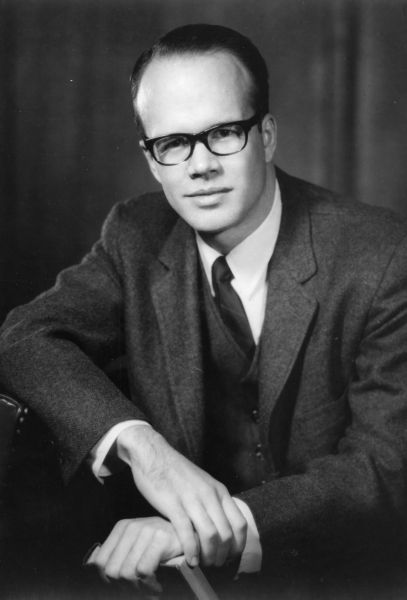
James Montgomery Boice, Th.D., (July 7, 1938 – June 15, 2000) was a Reformed theologian, Bible teacher, and pastor of Tenth Presbyterian Church in Philadelphia from 1968 until his death. He is heard on The Bible Study Hour radio broadcast and was a well known author and speaker in evangelical and Reformed circles. He also served as Chairman of the International Council on Biblical Inerrancy for over ten years and was a founding member of the Alliance of Confessing Evangelicals. The article/sermon above was adapted from Chapter 14 in Dr. James Montgomery Boice. The Boice Commentary Series: Romans Expositions vol. 1: Justification by Faith. Grand Rapids: Baker, 2005 (reprinted).

Dr. Charles R. Swindoll on The Messiah Who Understands Your Pain

“Getting Through The Tough Stuff of Pain” By Chuck Swindoll

HAVE YOU SEEN Mel Gibson’s movie The Passion of the Christ? It’s like none other I’ve seen. It details the horrifying pain and anguish Jesus suffered in the final hours of His earthly life. By now, millions of viewers around the world have been moved beyond words by the graphic depiction of that violent and shockingly torturous ordeal. People of all ages, cultures, and races have looked on in alarm and disbelief as vivid scenes from the sacred story relentlessly rolled on, growing increasingly more bloody and intense. The film has stirred controversy that is unprecedented in recent history. But why? Why such shock at a story that has been told for centuries? Why the outrage over Gibson’s violent interpretation of Christ’s final days?

I would answer, because the film depicts and supports God’s revealed Word.

Many prefer to think of Jesus as meek and mild and gentle at heart. They find quiet rest in the loving Shepherd of Israel, who smiles at children, heals the sick, feeds the hungry, and speaks softly of a kingdom not of this world. Few wish to go much further. They resist embracing His inconceivable pain—His excruciating humiliation, that culminated in a horrible death at the hands of unjust men bent on cursing, cruelty, misery, and murder. No one wishes to dwell on such abject evil.

Yet that is precisely how the Scriptures portray Jesus—a “man of sorrows and acquainted with grief ” (Isaiah 53:3).

The Bible swells with more appealing and endearing prospects of the Savior. They are the names we love to let fall from our lips in song and in prayerful devotion: Prince of Peace, Lord of Hosts, the Good Shepherd, the Great Physician, Morning Star, Lion of Judah, Lamb of God.

But Man of Sorrows? That doesn’t sound like anyone we’d care to get close to, does it? Until we find ourselves in the crucible of the tough stuff of pain. Enveloped in a world of hurt, broken by life’s brutal blows, we discover He’s everything we need.

COMING TO AN UNDERSTANDING OF PAIN

Long before Mel Gibson even thought about making a movie that dramatically focused on the passion of Christ, the prophet Isaiah wrote his original script. It would serve as the basis of a drama to unfold nearly eight centuries later. Isaiah, under the inspiration of the Holy Spirit, wrote of God’s promised Messiah—the One above all others who understands your pain and mine—the Man of Sorrows.

As It Relates to Jesus’s Life

Normally we don’t think of the Messiah in terms of weakness, sadness, deep sorrow, and grief. Yet Isaiah describes Him precisely in that manner, using just about every synonym available for suffering. Read slowly and thoughtfully the ancient prophet’s penetrating prophecy.

He was despised and rejected of men, a man of sorrows and acquainted with grief; and like one from whom men hide their face He was despised, and we did not esteem Him. Surely our griefs He Himself bore, and our sorrows He carried; yet we ourselves esteemed Him stricken, Smitten of God, and afflicted. But He was pierced through for our transgressions, He was crushed for our iniquities; the chastening for our well-being fell upon Him, and by His scourging we are healed. (Isaiah 53:3–5)

He was oppressed and He was afflicted, yet He did not open His mouth; like a lamb that is led to slaughter, and like a sheep that is silent before its shearers, so He did not open His mouth. (v.7)

But the Lord was pleased to crush Him, putting Him to grief. . . . As a result of the anguish of His soul, He will see it and be satisfied; by His knowledge the Righteous One, My Servant, will justify the many, as He will bear their iniquities. (vv. 10–11) That doesn’t sound like a milquetoast Messiah to me, wouldn’t you agree? No, Jesus endured, and therefore He understands the depth of human pain and suffering. Look again at a list of Isaiah’s words: despised, griefs, sorrows, crushed, oppressed, afflicted, scourged, pierced through, smitten, stricken, like a lamb led to slaughter. Today we would say, He’s been there . . . done that, even though we don’t like to think about it. We like to think of Messiah as winning, not losing. We want to see Him in white garments coming on a white horse. We like Him to be conquering and victorious. But that is not the way He was predicted to be.

The writer of the New Testament book of Hebrews picks up the theme of Christ’s suffering when he writes, “In the days of His flesh, He offered up both prayers and supplications with loud crying and tears to the One able to save Him from death, and he was heard because of His piety” (Hebrews 5:7). I find that to be a remarkably comforting thought. The Son of God, in all His deity, being also fully human, felt the sting of impending death and called on His heavenly Father for comfort and help.

Stop and think about what you’ve just read. All of it has to do with pain—that four-letter word from which we try our best to escape. But Jesus deliberately did not choose that route. He accepted the pain, He endured it, and He embraced it. Webster’s Dictionary defines physical pain as “a basic bodily sensation induced by a noxious stimulus, received by naked nerve endings, characterized by physical discomfort . . . acute mental or emotional distress” (Webster’s New Collegiate Dictionary, s.v. “pain”). Jesus knew such physical and emotional pain, as we shall discover in the pages that follow. Being the Man of Sorrows that he was, He understands and identifies with our deepest hurts and struggles.

If there is anyone who can meet you in your pain, you have found Him in the prophet Isaiah’s Man of Sorrows.

As It Relates to Our Lives

You and I enter this world screaming. Physicians tell us that one of the first signs of good, healthy lungs in newborns is that initial, piercing cry. The tiny child whose little frame has only moments before squeezed its way through a narrow birth canal screeches in pain when it leaves the warmth of the womb and emerges with a gush into the cold, cruel world—a world of pain.

From the moments we’re born until our final breaths, pain is our companion, albeit one we’d choose to abandon. Still, pain does have its benefits. Physically, for instance, pain signals unseen trouble, and it helps caring mothers and physicians pinpoint the problem. Personally, just like Christ, we learn obedience from the things we suffer (Hebrews 5:8). Spiritually, the pain of adversity helps us grow into mature people of faith (James 1:2–4).

Philip Yancey, in his insightful work Where Is God When It Hurts? writes,

“I have never read a poem extolling the virtues of pain, nor seen a statue erected in its honor, nor heard a hymn dedicated to it. Pain is usually defined as “unpleasantness.” Christians don’t really know how to interpret pain. If you pinned them against the wall, in a dark, secret moment, many Christians would probably admit that pain was God’s one mistake. He really should have worked a little harder and invented a better way of coping with the world’s dangers. I am convinced that pain gets a bad press. Perhaps we should see statues, hymns, and poems to pain. Why do I think that? Because up close, under a microscope, the pain network is seen in an entirely different light. It is perhaps the paragon of creative genius (Philip Yancey. Where Is God When It Hurts? Grand Rapids: Zondervan, 1977, 1990, pp. 22-23).

Emotional or mental pain is not quite as objective. Almost always on target, C. S. Lewis adds this comment, “Mental pain is less dramatic than physical pain, but it is more common and also more hard to bear. It is easier to say ‘My tooth is aching’ than to say ‘My heart is broken.’ . . . Sometimes, however, it persists, and the effect is devastating” (C.S. Lewis. The Problem of Pain. New York: Collier Books, Macmillan Publishing Company, 1962, p. 156).

I love that quote! In other words, it’s hard enough to go to a dentist when I have a bad tooth, but where do I go with this broken heart? I suggest the answer is not that difficult: We go to Jesus, the Man of Sorrows, who is acquainted with grief, who understands our brokenness and pain. Pain has a way of turning us back to the Savior. That makes it essential for our growth and spiritual well-being. If you’re feeling despised, forsaken, rejected, crushed, or afflicted, Jesus understands (Hebrews 4:15). To what degree does He understand?

To answer that, let’s revisit those final hours of Jesus’s life and look closely at the categories of pain He suffered.

THE PAIN OF GETHSEMANE AND THE ANGUISH OF THE CROSS

At the commencement of Christ’s ministry John the Baptist pointed to Him and said, “Behold, the Lamb of God who takes away the sin of the world!” (John 1:29). I’ve often imagined the dull sense of dread those words must have sent through Christ’s soul—knowing He’d one day be the actual “Lamb led to the slaughter.” Yet His physical suffering was only a portion of the cup of suffering He would be compelled to drink.

 Relational Pain

Matthew 26:30 tells us that Jesus and His disciples had just completed their final meal together, which they ended by singing a hymn. That must have been an extremely emotional time for the Savior, as He reflected on the torturous anguish He’d soon endure and those He’d be forced to leave behind. The men He had lived among for so many months knew nothing of what would soon unfold. But Jesus knew what was ahead of Him from that moment all the way to the cross. If there was ever a time when He needed the strong support of His closest friends, it was in those ominous hours in Gethsemane.

Then Jesus came with them to a place called Gethsemane, and said to His disciples, “Sit here while I go over there and pray.” And He took with Him Peter and the two sons of Zebedee, and began to be grieved and distressed. Then He said to them, “My soul is deeply grieved, to the point of death; remain here and keep watch with Me” (Matthew 26:36–38).

Gethsemane. The word means “oilpress.” Symbolically it is easy to see how it represents those places of deep, pressing pain and mental agony. We each have our own Gethsemane to endure. Perhaps you are in the depth of yours today. Maybe not; for you it could be in the future. Maybe you’ve passed through one and before you could catch your breath you’ve entered another. It’s always something! It’s at those times that having a few close friends means the most. We lean on them and draw strength from them.

In one of the most intimate scenes from Jesus’s life, Matthew writes of the Savior inviting His closest friends to remain with Him as a ready source of encouragement and support: “And He went a little beyond them, and fell on His face and prayed, saying, ‘My Father, if it is possible, let this cup pass from Me; yet not as I will, but as You will’ ” (v. 39). Christ’s pain was so intense He pleaded with His Father for a way out of it. Don’t hurry over that. In Luke’s Gospel, we’re told that Jesus prayed with such intensity that He dripped sweat that “became like drops of blood” oozing from his skin and falling to the ground (Luke 22:44).

Drenched in pain’s agony, Jesus returned to His friends in hopes of finding some needed encouragement. But in that time, when He needed them the most, His disciples failed Him miserably. Read carefully through this tender but convicting scene, and allow Matthew’s words to touch you deeply. Let your heart be broken.

And He came to the disciples and found them sleeping, and said to Peter, “So, you men could not keep watch with Me for one hour? Keep watching and praying that you may not enter into temptation; the spirit is willing, but the flesh is weak.” He went away again a second time and prayed, saying, “My Father, if this cannot pass away unless I drink it, Your will be done.” Again He came and found them sleeping for their eyes were heavy. And He left them again, and went away and prayed a third time, saying the same thing once more. Then He came to the disciples and said to them, “Are you still sleeping and resting? Behold, the hour is at hand and the Son of Man is being betrayed into the hands of sinners. Get up, let us be going; behold the one who betrays Me is at hand!” (Matthew 26:40–46).

Each time Jesus returned to His friends, they lay snoozing in the grass. What a pathetic scene. To make things worse, as we saw in the previous chapter, one of His close companions stood ready to betray Him publicly. Jesus knelt in Gethsemane, broken in spirit and betrayed, anguished of soul and grieving, missing the comfort of those He had mentored for over three years. Truly alone, He now experienced the deep, relational pain of failed friendships and would soon feel the kiss of the traitor.

There is no place more alone than one’s own Gethsemane. Support groups are great. I believe in them and encourage every one of them in our church. But there are personal Gethsemanes you must walk through completely alone. You’ll always feel a deep loneliness while you’re getting through the tough stuff of pain. That’s when Christ will be there. Your best friends may fail you. Some will try to understand, but often they can’t. A few, frankly, will forget you. Some may turn against you. In the agony of your need for relational support, you’ll have all you need with Christ. You will find Him at those times closer than a brother. I know. He has met me in my own Gethsemanes, and He will do so again and again and yet again.

Internal Pain

A good friend of mine and former fellow church staff team member, David Carder, has spent years counseling brokenhearted people. Dave offers a rare insight into the reality of internal pain as he observes, “Knowing doesn’t automatically fix feelings.” Isn’t that an excellent insight?

In spite of the fact that Jesus knew all His life He would suffer a horrible death on the cross, such knowledge did not remove the internal agony
He endured when the zero hour arrived.

Jesus had known for thirty-three years that the cup of suffering would come. Knowing all of that for so long didn’t fix His feelings of intense pain. When the full weight landed on Him at Gethsemane, He pleaded for relief.

Herein lies a vital lesson for all of us: we are never more presumptuous than when we try to give hurting people the feelings we think they ought to have in their anguish. Don’t dare invade that tender, internal space! There are occasions when another’s anguish is essential for the accomplishment of God’s plan. Even though some of us wish to rescue others from pain, we need to restrain ourselves from doing so. Let’s guard against cutting in on God’s plan. Don’t try to fix people’s feelings. Our best involvement is usually to “keep watch and pray.” To stay near and be silent. To be available and to support.

Jesus understands better than anyone the silent cries of your internal pain.

 Physical Pain

For those who have seen The Passion of the Christ, I need not rehearse in detail the depth of physical pain Christ endured. The brutalities were horrific and like none experienced by anyone before or since. A quick glance at Matthew’s list provides an overview of the intensity of what Christ experienced physically.

  • He was seized and treated harshly like a common criminal (Matthew 26:57).
  • He was spit on in the face, slapped, and beaten (26:67).
  • He was bound and scourged, according to the other Gospel writers (27:2; Mark 15:15; John 19:1).
  • He was spit on again and mercilessly beaten with a reed (Matthew 27:30).
  • He was crucified, spikes driven into His hands and feet, and later a sword was thrust into His side (27:33–35; John 19:34).

Imagine the horror of having iron spikes pounded into your hands and into your feet. Or the excruciating humiliation of being hung naked in plain view of a gawking crowd. Insects no doubt swarmed His bloodsoaked body. It must have been a horrible event to witness, to say nothing of personally enduring it!

Christ’s body had been so mutilated He didn’t even look human. The physical pain He must have borne is nothing short of mind-boggling. Still there was a pain more severe than that which He felt physically. Thankfully because of Christ it’s a pain you and I will never know.

The Ultimate Pain—Separation from God

Though Christ’s relational, internal, and physical pain were horribly intense, the pain of being separated from His Father goes far beyond our ability to imagine. Matthew writes, “Now from the sixth hour darkness fell upon all the land until the ninth hour. About the ninth hour Jesus cried out with a loud voice, saying, ‘Eli, Eli, Lama Sabachthani?’ that is, ‘My God, My God, why have You forsaken Me?’” (Matthew 27:45–46).

For the first and only time, God turned His back on His Son. It was at that moment Christ bore all our sin. That’s why the Father could not look on Him—because of the affront of our iniquities. Christ experienced the ultimate pain—separation from God the Father. In absolute loneliness and pain Jesus screamed, “Why have You forsaken Me?”

Let me assure you, you cannot have a heartache that Jesus doesn’t understand and with which He doesn’t identify. You cannot have a physical pain that somehow escapes His awareness. You cannot have a crippling disease, a disability, a grief, a heart attack…not even a debilitating fear or panic attack that He cannot understand or feel.

He’s felt it all. Therefore He’s there to walk with you through your most profound depths of pain, if you’ll only let Him.

Do you have a lingering scar on your heart that won’t heal? Look at His hands, His feet, and His side. Feeling humiliated and alone? He knows what that feels like. Are you so confused by your circumstances that you’re tempted to bargain with God for relief? No need. Without one word from your lips, He understands. He’s touched with the feelings of our weaknesses, and therefore He identifies with them.

Perhaps you’re lonely. Your lifelong mate has gone to be with the Lord. You face an uncertain future—all alone. You may have recently been forgotten. Your parents told you to get out of their lives. Perhaps your husband or your wife just walked out for good, rejecting you for someone else. Or you may have just read a cruel letter from an adult child that included seven words you cannot bear to believe: “I never want to see you again.” Relationally, you need somebody. Internally, you’re in anguish. Physically, you’ve reached your threshold.

You may be confused, living with deep emotional scars as a result of being abused. You may suffer from such a horrible and shameful addiction that you fear rejection by anyone who might discover your secret. The pain of shame grips your soul and ambushes your thoughts. Perhaps you feel helpless, enraged, confused, disappointed, depressed, misunderstood, humiliated, and at the end.

Ultimately you wonder, as Jesus did, why God has forsaken you. You may feel that, but hear this: you are not alone. There is hope. There is help with the Savior by your side.

GETTING THROUGH THE TOUGH STUFF OF PAIN . . . WITH CHRIST

I want to close this chapter [article] with several analogies I hope will provide you a measure of comfort as you walk with Christ through the tough stuff of your pain.

Relationally, no one stays closer than Christ. Christ is better than the most faithful husband, more understanding than the most comforting wife, more reliable than the choicest friend. No one stays closer than Christ. There is no friend more caring. There is no person more unconditionally accepting. There is no one more available or more interested whom you can talk to in the middle of the night, or at any other time, simply by calling out in prayer. He even understands your groanings—He’s able to put correct meanings to your inexpressible moans! He has promised never to leave you. He will not walk out on you. No one stays closer than Christ. I’ll say it again: no one.

Internally, no one heals deeper than Christ. You may say, “I’ll never be able to get over this grief.” Yes you can, but not on your own. That’s where Christ is the Master Comforter. He’s the “Man of Sorrows.” Remember, He is intimately “acquainted with grief.” He understands what there is to lose. He lost everything for you. His own family thought He was insane. Right in the middle of His ministry they came to take Him away because they were convinced He was losing his senses. He knows what it feels like to suffer in silence, to be the brunt of unfair criticism, to feel helpless when no one understands, when no one remains in
your corner. His balm of comfort penetrates. No one heals deeper than Christ.

Physically, no one comforts better than Christ. In the midst of your deepest physical pain, His presence brings comfort and strength. He may choose to restore your physical health, but frankly, He may not. Regardless, His grace is abundantly sufficient for you. His hand is on your life at this time of your affliction. It’s better than the hand of any friend, any partner, any parent, or any child, because when He touches, He brings great compassion and lasting relief. No one comforts better than Christ. Ultimately, no one sees the benefits of our pain clearer than Christ. He sees through the dark, winding tunnel of your Gethsemane all the way to the end. You see only the unrelenting, frightening, thick darkness. He sees beyond it into the shining light of eternity. Maturity, growth, stability, wisdom, and ultimately the crown of life await the one who trusts His unseen hand. Keep in mind, He owns the map that gets you through your Gethsemane. No one sees the benefits of our pain clearer than Christ.

Whatever you’re facing today, please remind yourself that your pain is no mistake. It is no accident. In fact, your suffering may be precisely what Christ will use to bring you to your knees, to draw you back to His heart and discover His peace. “Man of Sorrows,” what a name! It’s the name of the Son of God. His name is Jesus. It’s the name that represents the extremes of pain and understanding, companionship and relief. Perhaps you have never recognized your need for a personal relationship with God, through faith in Christ. You’ve gripped the reins of your life tightly in your own hands. I suggest you release them and turn them over to God. Come to His Son, Jesus. Admit where you are and express to him what you need. A simple prayer is all it takes to begin this life-transforming relationship with Him. I close with a simple prayer you may use to speak in the quietness of your heart to the One who longs to walk with you through the tough stuff of personal pain.

A Salvation Prayer:

Father, thanks for sending Your Son – the Lord Jesus to empathize with my pain.

 I know that I’m a sinner. I’ve made a royal mess of my life.

 I’m tire of the fight. I’m tired of the pain I’ve added to my life as if You didn’t exist.

 Today, I come to You (Lord Jesus),

  believing that You died for me and that You rose from the dead.

 I turn my back on my stubborn ways as I surrender all to You.

 Take the reings, Lord Jesus. I release them to You.

 I accept Your forgiveness, and I claim Your grace.

 As I repent of my sins, especially my idolatry in putting other things before You.

 I believe that only Your grace through Your perfect life, death,

 and resurrection can save me, as I accept your gift of eternal life. Amen.

 “Hallelujah, What a Savior!” by Philip R. Bliss

“Man of Sorrows!” what a name

For the Son of God, who came

Ruined sinners to reclaim!

Hallelujah, what a Savior!

Bearing shame and scoffing rude,

In my place condemned He stood—

Sealed my pardon with His blood:

Hallelujah, what a Savior!

Guilty, vile and helpless we,

Spotless Lamb of God was he;

Full atonement! Can it be?

Hallelujah, what a Savior!

*The article above was adapted from the excellent book by Charles R. Swindoll. Getting Through the Tough Stuff: It’s Always Something. Nashville: Thomas Nelson, 2004.

 About the Author:

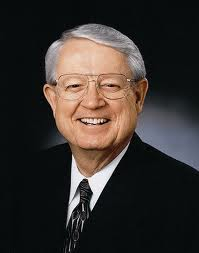
Dr. Charles R. Swindoll is senior pastor of Stonebriar Community Church, chancellor of Dallas Theological Seminary, and the Bible teacher on the internationally syndicated radio program Insight for Living.

Charles Swindoll’s Books:

  • You And Your Child, Thomas Nelson (1977)
  • Hand Me Another Brick, Thomas Nelson (1978)
  • Three Steps Forward, Two Steps Back: Persevering Through Pressure, Thomas Nelson (1980)
  • Strike The Original Match, Multnomah (1980)
  • Improving Your Serve: The Art Of Unselfish Living, Word (1981)
  • Strengthening Your Grip: Essentials In An Aimless World, Word (1982)
  • Growing Strong In The Seasons Of Life, Multnomah (1983)
  • Dropping Your Guard: The Value Of Open Relationships, Word (1983)
  • Come Before Winter – And Share My Hope, Multnomah (1985)
  • Living On The Ragged Edge: Coming To Terms With Reality, Word (1985)
  • Growing Deep In The Christian Life: Returning To Our Roots, Multnomah (1986)
  • The Quest For Character, Multnomah (1987)
  • Living Above The Level Of Mediocrity : A Commitment To Excellence, Word (1987)
  • Growing Wise In Family Life, Multnomah (1988)
  • Living Beyond The Daily Grind: Reflections On The Songs And Sayings In Scripture, Word (1988)
  • Rise & Shine: A Wake-Up Call, Multnomah (1989)
  • The Grace Awakening, Word (1990)
  • Sanctity Of Life: The Inescapable Issue, Word (1990)
  • Stress Fractures, Multnomah (1990)
  • Simple Faith, Word (1991)
  • Laugh Again, Word (1992)
  • Flying Closer To The Flame (Re-issued as Embraced by The Spirit: The Untold Blessings of Intimacy with God, Word in 1993 & Zondervan in 2010)
  • The Finishing Touch, Word (1994)
  • Paw Paw Chuck’s Big Ideas in the Bible, Word (1995)
  • Hope Again, Word (1996)
  • The Road To Armageddon (with John F Walvoord; J Dwight Pentecost), Word (1999)
  • Start Where You Are: Catch A Fresh Vision For Your Life, Word (1999)
  • The Mystery Of God’s Will: What Does He Want For Me?, Word (1999)
  • Perfect Trust: Ears To Hear, Hearts To Trust, And Minds To Rest In Him, J. Countryman (2000 & 2012)
  • The Darkness And The Dawn : Empowered By The Tragedy And Triumph Of The Cross, Word (2001)
  • Why, God?: Calming Words For Chaotic Times, Word (2001)
  • Wisdom For The Way: Wise Words For Busy People, J. Countryman (2001)
  • Understanding Christian Theology (with Roy B Zuck), Thomas Nelson (2003)
  • Behold—The Man!: The Pathway Of His Passion, Word (2004)
  • Getting Through the Tough Stuff: It’s Always Something! Thomas Nelson (2004)
  • So, You Want To Be Like Christ?: Eight Essentials To Get You There, Word (2005)
  • When God Is Silent (Choosing To Trust In Life’s Trials), J. Countryman (2005)
  • Great Attitudes For Graduates!: 10 Choices For Success In Life (with Terri A Gibbs), J. Countryman (2006)
  • Encouragement For Life: Words Of Hope And Inspiration, J. Countryman (2006)
  • The Strength Of Character: 7 Essential Traits Of A Remarkable Life (with Terri A Gibbs), J. Countryman (2007)
  • A Bethlehem Christmas: Celebrating The Joyful Season, Thomas Nelson (2007
  • The Owner’s Manual for Christians: The Essential Guide for a God-Honoring Life, Thomas Nelson (2009)
  • The Church Awakening: An Urgent Call for Renewal, FaithWords (2010 & 2012)
  • Meet Me In The Library: Readings From 8 Writers Who Shaped My Life, IFL (2011)
  • Saying It Well: Touching Others with Your Words, FaithWords (2012)
  • Living the Psalms: Encouragement for the Daily Grind, Worthy (2012)
  • Living the Proverbs: Living in the Daily Grind, Worthy (2013)

Swindoll’s New Testament Insights Commentary Series

  • Insights on Romans, Zondervan (2010)
  • Insights on John, Zondervan (2010)
  • Insights on James and 1 & 2 Peter, Zondervan (2010)
  • Insights on 1 & 2 Timothy and Titus, Zondervan (2011)
  • Insights on Revelation, Zondervan (2012)
  • Insights on Luke, Zondervan (2012)
  • Insights on Galatians & Ephesians, Zondervan (2013)

 Profiles in Character series

  • David: A Man Of Passion & Destiny, Word (1997)
  • Esther: A Woman Of Strength & Dignity, Word (1997)
  • Joseph: A Man Of Integrity And Forgiveness, Word (1998)
  • Moses: A Man Of Selfless Dedication, Word (1999)
  • Elijah: A Man Of Heroism And Humility, Word (2000)
  • Paul: A Man Of Grace And Grit, Word (2002)
  • Job: A Man Of Heroic Endurance, Word (2004)
  • Fascinating Stories Of Forgotten Lives: Rediscovering Some Old Testament Characters, Word (2005)
  • Jesus: The Greatest Life Of All, Thomas Nelson (2008)

Honors and Awards

Leslie Flynn on Why We Owe The Messiah To The Jews

“The Messiah” By Leslie B. Flynn

During the early persecution of the Jews in Nazi Germany, some Jews began going to churches on Sunday. The Nazis sent orders to church leaders to ask the Jews to leave. Someone has related that in the middle of one service a pastor asked the folks to bow their heads and all who had Jewish fathers to leave. There was some rustling. Then the pastor asked all who had Jewish mothers to leave. Louder commotion. When the congregation looked up, someone had removed the form on the cross.

We owe the Messiah to the Jews. In His humanity He was Jewish. He was born in the Jewish city of Bethlehem, David’s city, of a Jewish mother. He was a descendent of Abraham, Isaac, Jacob, and David. He was called “The Lion of the Tribe of Judah.” He bore the Jewish name of Jesus.

He never left the confines of Palestine, except briefly as an infant carried in flight by his parents to Egypt. He spoke the Hebrew dialect of His day. He attended the Jewish synagogue and temple services and participated in the yearly festivals. For thirty years He lived in a Jewish home. When He began His ministry, He was recognized as a Jew. The Samaritan woman at Jacob’s well asked in surprise, “You are a Jew and I am a Samaritan woman. How can you ask me for a drink?” (Jhn. 4:9). The superscription on the cross read, “Jesus of Nazareth, the king of the Jews” (Jhn. 19:19). He was bone of their bone, and flesh of their flesh. Paul said that from the patriarchs “is traced the human ancestry of Christ, who is God over all, forever praised!” (Rom. 9:5).

Max I. Reich, a Jewish professor during my student days at Moody Bible Institute, penned these words,

They meant to shame me, calling me a Jew!

I pity them. They know not what they do.

They little think the name which they deride,

Each time I hear it fills my heart with pride.

Since Jesus bore that name when here on earth

No princely title carries half such worth.”

HANDEL’S MESSIAH

Recently my wife and I were looking around a gift shop filled with Christmas decorations. Suddenly above the din of friendly conversation I heard the strains of faint music over the store’s sound system. I caught these words, “unto us a Child is born; unto us a Son is given, and the government shall be upon His shoulder, and His name shall be called Wonderful, Counselor, the Mighty God, the Everlasting Father, the Prince of Peace.” I knew I was listening to The Messiah. I rejoiced in the almost universal acclaim given this oratorio sung every December in countless churches and played in shopping malls everywhere. I thought of how its composer, Handel, at the lowest ebb in his life, sequestered in his attic study for 24 days, often going without food and sleep, wrote almost continuously to capture the glorious music often called “The Greatest Story Ever Sung.”

Every word of The Messiah is from the Bible. Listening to this oratorio, you hear only God’s Word sung, for it’s a compilation of verses drawn entirely from Holy Writ, predictions or fulfillments of the Anointed One. More verses come from the Old Testament than from the New. More than one-fifth of the Bible books are quoted, seven from the Old, and seven from the New. Most quoted Old Testament books are Isaiah and Psalms. The Messiah is about the Messiah.

Two strains of seeming opposing thought run throughout this oratorio. First is the suffering, the humiliation, and the disavowal of the Messiah. “He was despised and rejected of men; a man of sorrows, and acquainted with grief. He gave His back to smiters, and His cheeks to them that plucked off the hair. He hid not His face from shame and spitting…. He was wounded for our transgressions; He was bruised for our iniquities.” Reportedly, a visitor who arrived while Handel was writing this section found the composer shaking with emotion.

The second strain found in The Messiah is a glorious one, predicting the ultimate triumph and reign of the Lord Jesus Christ. The resurrection is promised in these lines, “But Thou didst not leave His soul in hell; nor didst Thou suffer Thy Holy one to see corruption.” Also in “I know that my Redeemer liveth, and that He shall stand at the latter day upon the earth.” But the most thrilling section of The Messiah for most folks is the “Hallelujah Chorus” as it exclaims over and over again, “And He shall reign for ever and ever, King of Kings, and Lord of Lords.”

How sad that people, hearing The Messiah sung, fail to grasp the significance of these verses from the Bible. John Newton, once a slave trader and best known for his hymn “Amazing Grace,” was converted seven years after the composition of this famous work. He grew to admire this oratorio, but with its rising popularity recoiled at the thought of people finding enjoyment in the music while totally heedless of the message. As a pastor, he delivered a series of “Fifty Expository Discourses on the Scriptural Oratorio,’ praying that audiences would respond with a sense of obligation to the divine love that sent the Messiah.

THE MESSIAH-PREDICTION AND FULFILLMENT

The inspiring compilation of texts in The Messiah doesn’t begin to exhaust the Old Testament predictions about His coming. The Old Testament contains dozens and dozens of such prophecies. Dr. John Gerstner, professor at Pittsburgh Theological Seminary, quoted Church of England Canon Liddon as stating that “there are in all more than three hundred prophecies in the Old Testament concerning the coming Messiah. All have been fulfilled, more or less fully and clearly, in Jesus of Nazareth” (John Gerstner. Reasons For Faith. New York: Harper & Row. 1960, p. 115).

Many times in the Gospels, events in the life of Jesus are mentioned as specifically fulfilling an Old Testament prophecy. For example, the account of His virgin birth (Matt. 1:22,23) is said “to fulfill what the Lord had said through the prophet.” Then follows a quote from Isaiah 7:14, “The virgin will be with child and will give birth to a son, and they will call him Immanuel.” The birthplace of Jesus-Bethlehem-was predicted over 500 years in advance. When the wise men came to Jerusalem seeking a newborn king, King Herod was disturbed at the mention of a rival, and asked the teachers of the law where the Christ was to be born. “In Bethlehem in Judea,” they replied, “for this is what the prophet

has written.” To Herod they then quoted Micah 5:2: “But you, Bethlehem, in the land of Judah, are by no means least among the rulers of Judah; for out of you will come a ruler who will be the shepherd of my people Israel” (Matt. 2:1-6).

The flight of Joseph and Mary with baby Jesus to escape Herod’s slaughter of innocent infants (Matt. 2:13-15) is said to fulfill what the Lord had said through the prophet Hosea (11:1), “Out of Egypt I called my son.”

The senseless murder of baby boys (Matt. 2:16,17) fulfilled Jer. 31:15, which Matthew quoted. (From here on, we’ll give just the reference of the prophecy and omit the quote.) In a Sabbath service in his hometown synagogue of Nazareth, Jesus read a prophecy about the Spirit’s anointing of the Messiah for a ministry to the poor, to prisoners, and to the blind and the oppressed (Luke 4:16-21). Then with all eyes focused on Him, Jesus declared, “Today this Scripture is fulfilled in your hearing.” He had quoted the prophet Isaiah (61:1,2).

The moving of Jesus from Nazareth to Capernaum, which was situated by the lake near Zebulun and Naphtali (Matt. 4:12-16) fulfilled a prophecy by Isaiah (9:1,2).

His plentiful use of parables (Matt. 13:34,35) was predicted in Ps. 78:2. Failure of the people to believe in Jesus even after performing many miracles in their presence (John 12:37), fulfilled Isaiah’s prophecy (53:1).

Betrayal by one of His own (John 13:18-39) fulfilled a prophecy of David (Psalm 41:9).

Hatred against Jesus without any cause (John 15:24) was predicted by David in two Psalms (35:19; 69:4).

Jesus riding into Jerusalem on a colt in His so-called triumphal entry on the day we call Palm Sunday (Matt. 21:4,5) was foretold hundreds of years before by the prophet Zechariah (9:9).

The use of the thirty pieces of silver given Judas for betraying Jesus to purchase a potter’s field (Matt. 27:3-10) was also foretold by the prophet Zechariah (11:12,13).

The division of Jesus’ garments by the soldiers into four shares, and the casting of lots for His seamless robe (Jhn. 19:23,24) was foretold in another of David’s Psalms (22:18)

The apostle John related that Jesus’ cry, “I am thirsty” was uttered on purpose “so that the Scripture would be fulfilled” (19:28). The prophecy came from David’s Psalm (69:21).

It was customary to break the legs of victims of crucifixion to hasten their death. Though the soldiers broke the legs of the thieves on either side of Jesus, they did not break His for they saw He was already dead. Instead, a soldier pierced His side with a spear, bringing a sudden flow of blood and water (John 19: 31-37). These actions, sparing His bones and piercing His side, fulfilled two prophecies (Psalm 22:17 and Zechariah 12:10).

Many predictions about Jesus are found in certain Psalms, termed by scholars “Messianic Psalms.” Twice on the first Easter, first to the couple on the Emmaus road, and then to the disciples in the Upper Room, Jesus showed how the law of Moses, the Psalms, and the Prophets, predicted not only His death, but His glory as well (Luke 24:25-27, 44).

In Peter’s sermon on the Day of Pentecost (Acts 2:24- 35) he clearly declared that the resurrection of Jesus from the dead and His exaltation to the right hand of God had been prophesied by David (Psalm 16:8-11;110:1). Two Messiahs had not been prophesied, one to suffer, and another to reign; rather, the one same Messiah was to both suffer and then be exalted. Paul’s strategy in preaching in synagogues on his missionary journeys was to reason with his hearers from the Scriptures that the Messiah, when He came, had to suffer and rise from the dead. Then he would declare, “This Jesus I am proclaiming to you is the Christ” (Acts 17:1-3). His presentation rested strongly on Jesus’ fulfillment of Old Testament prophecies.

Available in many Christian bookstores is the New Testament Prophecy Edition which notes in bold print verses that fulfill Old Testament prophecies about the Messiah. The Old Testament says, “The Messiah will come.” The New Testament says, “The Messiah has come.” Despite all the evidence to the Messiahship of Jesus, many believe that the Messiah has not yet come.

To those who hold that His coming is still future, Joseph Rabinowitz, pioneer of a Messianic congregation in 1885 in Russia, used to relate “The Parable of the Wheel,” which went like this. Some people driving in a four-wheel wagon happened to lose a wheel. Finding that the wagon lurched along clumsily, they looked about and discovered that a wheel was missing. One of the men jumped down and ran forward in search of the missing wheel. To everyone he met he said, “We’ve lost a wheel. Have you seen a wheel?” Finally a wise bystander said, “You are looking in the wrong direction. Instead of looking in front for your wheel, you ought to be looking behind.”

Then Rabinowitz commented that this was the same mistake Jews have been making for centuries. They have been looking ahead for the Messiah instead of looking back. The Messiah has already come. The four wheels of Hebrew history are Abraham, Moses, David, and Jesus. The Jews by looking in front, instead of behind, have failed to find their fourth wheel. Abraham, Moses and David are but beautiful types and symbols of Jesus. But thank God, “the Israelites of the New Covenant” have found Y’shua, our Brother Jesus, our All, “who of God has been made unto us, wisdom, righteousness, sanctification, and redemption;” from whom alone we have found divine light, life, liberty, and love, for the great Here and the greater Hereafter (Kai Kjaer. Joseph Rabinowitz and the Messianic Movement. Grand Rapids: Eerdmans, pp. 57-58).

THE BLOOD OF THE LAMB

The Old Testament not only gave direct predictions of the coming Messiah, but also foreshadowed His death on the cross in many events involving sacrifices.

Right after Adam and Eve had sinned and stood in naked shame before a righteous God, the “Lord God made garments of skin for the pair and clothed them” (Gen. 3:21). They then learned that the covering for their sin came at a price-the death of an innocent substitute-the shedding of some animal’s lifeblood.

Adam’s sons, Cain and Abel, each brought an offering to the Lord. The Lord rejected Cain’s, but accepted Abel’s. Abel had offered portions of his flock. Through the shedding of blood, “by faith Abel offered God a better sacrifice than Cain did” (Heb. 11:4).

When the Lord was about to deliver the Israelites from Egyptian bondage, he directed the Jews to slay a lamb, and sprinkle its blood on their doorframes. The Lord said, “when I see the blood, I will pass over you” (Ex. 12:12,13). At midnight the Lord struck all the firstborn in Egypt. But every house that had the blood on the doorposts was passed over, and no one “under the blood” died. The lambs had died, but the sons were alive-saved by the blood of the lambs. This story foreshadowed the deliverance from sin’s bondage for all who put their trust in the blood of the Messiah shed on Calvary. Paul wrote that “Christ, our Passover lamb, has been sacrificed” (I Cor. 5:7).

On Yom Kippur, the day of atonement, the High Priest required two goats. He would sacrifice one and sprinkle its blood on the Mercy Seat atop the Ark which contained the tablets of the Ten Commandments which the people had broken. On the head of the other goat the High Priest would lay both hands, confess the wickedness of the Israelites, and send it off into the desert. This annual ceremony anticipated the redemptive work of Jesus Christ who would first offer up Himself, shedding His blood as a sacrifice for our sins, and who also would carry away our sins never to be remembered against us again. The book of Hebrews points out the finality of Jesus’ sacrifice on the cross. Once He had offered Himself at Calvary and entered heaven to appear for us in God’s presence, no further sacrifice was needed. “Nor did he enter heaven to offer himself again and again, the way the high priest enters the Most Holy Place every year with blood that is not his own….But now he has appeared once for all at the end of the ages to do away with sin by the sacrifice of himself” (9:25,26). The once-for-allness of Jesus’ sacrifice was indicated by the ripping of the veil in front of the Holy Place. Just at the moment Jesus died, the curtain was torn from top to bottom (Matt. 27:51).

The downward direction indicated a heavenly hand. Not only the Day of Atonement ceremony, but also the entire Levitical sacrificial system with its daily sacrifices, was done away with through the final, all-sufficient offering of the Lamb of God. Priests must have sewed the curtain back together and used it till the temple was destroyed 40 years later. But other priests evidently saw a relationship between the tearing of the veil and the death of Jesus and became believers (Acts 6:7). Of the various animals offered in Old Testament sacrifices, the lamb was probably the most frequent. So, it’s not strange that “the Lamb” was a favorite title for the Lord Jesus. John the Baptist pointed Him out, “Look, the Lamb of God, who takes away the sin of the world!” (Jhn. 1:29). In the book of Revelation, He is called the Lamb over 25 times. John has a vision of “a lamb, looking as if it had been slain” (5:6). Revelation speaks of “the song of Moses the servant of God and the song of the Lamb” (15:3). Also of “the wedding supper of the Lamb” (19:9). Perhaps the most thrilling picture is that of the ten thousand times ten thousand circling the throne of God, where Jesus now sits, singing, “Worthy is the Lamb, who was slain, to receive power and wealth and wisdom and strength and honor and wealth and wisdom and strength and honor and glory and praise.”

Recently Messianic believers in Israel have pioneered the placing of full-page advertisements in the nation’s leading Hebrew newspapers. The first, just before Yom Kippur in 1988, pictured a slain lamb on the Temple altar, and was headlined, “Who Is The Sacrifice?” It explained to a potential audience of half the population of Israel how Y’shua the Messiah atones for sin.

ISAIAH 53

Probably no Old Testament chapter speaks more clearly beforehand of the humiliation, suffering and victory of the Messiah than Isaiah 53. Here are snatches of the chapter:

“He was despised and rejected by men, a man of sorrows, and familiar with suffering…. we considered him stricken by God, smitten by him, and afflicted. But he was pierced for our transgressions, he was crushed for our iniquities; the punishment that brought us peace was upon him, and by his wounds we are healed. We all, like sheep, have gone astray, each of us has turned to his own way; and the Lord has laid on him the iniquity of us all. He was oppressed and afflicted, yet he did not open his mouth; he was led like a lamb to the slaughter, and as a sheep before her shearers is silent, so he did not open his mouth …. He was assigned a grave with the wicked, and with the rich in his death, though he had done no violence, nor was any deceit in his mouth …. my righteous servant will justify many … For he bore the sin of many, and made intercession for the transgressors.”

Rabbinical scholars have tried to identify the Suffering Servant of Isaiah 53 as the nation of Israel. But there are some problems with this view. Isaiah 53 speaks of the Suffering Servant’s perfect innocence, whereas Israel could never be characterized as innocent. Also, the Servant suffers vicariously for the sins of others, whereas in the Old Testament Israel suffers because of its own sin. Again, the Servant suffers willingly, but the Old Testament never describes the sufferings of Israel as a willing sacrifice for the sins of others, especially for the sins of Gentile people.

The language is so descriptive that it seems as though the prophet was standing by the cross reporting the proceedings. Interestingly, a few years ago some of our church teenagers told me of an incident in their high school where a section of the Bible was read over the loudspeaker each morning before classes. Because of a large Jewish enrollment, the agreement was that only the Old Testament would be read. One morning someone read Isaiah 53. A howl of protest went up from students claiming that the reading was from the New Testament and about Jesus!

The Ethiopian

It was Isaiah 53 that an important Ethiopian official was reading on his way home after worship in Jerusalem. Sitting in his chariot in the desert of Gaza, he was met by Philip, an evangelist, who had been diverted by an angel from evangelism in Samaria and directed to the Ethiopian’s chariot.

Philip asked the Ethiopian if he understood what he was reading. “How can I,” he said, “unless someone explains it to me,” and then invited Philip to join him. The Ethiopian was reading the passage, “He was led like a sheep to the slaughter, and as a lamb before the shearer is silent, so he did not open his mouth.” He asked who the prophet was talking about. “Philip began with that very passage of scripture and told him the good news about Jesus” (Acts 8:35). The Ethiopian believed and was baptized.

A Rabbi Believes

Through the centuries Isaiah 53 has led many to trust in Jesus as their Messiah. Harold A. Sevener details the conversion story of the founder of Chosen People Ministries.Leopold Cohn, an orthodox rabbi from Hungary, in his search for the Messiah, left his wife and family to come to America. On his third Sunday in New York City, out for a walk, he saw a church sign in Hebrew saying, “Meeting for Jews.” About to walk in, he was warned by friends not to enter a building with a cross on top, “There are some apostates in that church who mislead our Jewish brethren. They say that the Messiah has already come.” But since he was searching for the Messiah he went in (Harold A. Sevener. Vision. Chosen People Ministries, pp. 7-11).

Inside on the platform 24 Jewish girls, dressed in blue frocks with white sleeves, were singing in Yiddish with great sincerity and enthusiasm, “At the cross, at the cross, where I first saw the light.” While he was pondering the enigma of Jewish girls singing about Jesus, the rabbi noticed that the room grew quiet, as if something exciting was about to happen. Suddenly, as if out of nowhere, a young man sprang onto the platform and without introduction began preaching about the Messiah. He ran back and forth across the platform with the force of a political orator. Suddenly he leaped to one side, disappeared into the wings, and in a few seconds came out again, carrying in his arms a little live lamb. The audience gasped. He went on with his sermon about the Lamb of God and the Lamb in Isaiah 53. Then the speaker, who was a Jew, went to the wings of the platform, handed the lamb over to another person, then came running out, shouting at the top of his voice, “The Messiah has come! The Messiah has come!” Though both fascinated and disgusted, the rabbi heard for the first time how salvation was available to all who believed in the Lamb of God, the Messiah.

Sometime later Leopold Cohn accepted Jesus as his Messiah and started a mission to Jews which, after a hundred years, is still going strong.

The book Testimonies: of Jews who believe In Jesus contains the full accounts of how sixteen Jews came to believe in Jesus as their Messiah. Edited by Ruth Rosen, she chose to begin with the account of her mother’s journey to faith:

Losing her mother in infancy, Ceil Rosen was raised in an Orthodox Jewish home by foster parents who loved her and treated her as their own. They were strict about the dietary laws, kept all the holidays and forbad picking up a needle, scissors or even a pencil on Saturdays. She knew that being Jewish meant knowing the real God who expected things to be done in a certain way. She knew that unlike Jews, the goyim (non-Jews) had strange ideas about God. As observant as her foster parents were, she didn’t hear much about God at home.

When she was 13, her mother moved to Denver because of her need for a better climate. At the age of questioning authority, Ceil tired under the restrictions of her Orthodox upbringing. When she was 14, she answered a knock at the door and found a boy named Moishe Rosen standing there, who was selling house numbers. Her mother didn’t buy any, but Moishe asked her out on a date. She refused. A year later he asked again. At age 15 she went for a walk with him. They lived on the same block, went to the same school, and they began going steady. His family were nominally Orthodox, members of an Orthodox synagogue, but his mother didn’t keep kosher. Ceil could eat bacon at his house and not feel guilty.

As a member of the high school girls’ chorus, Ceil recalls them dressing up as Israeli women for a Christmas program, gliding across the floor in flowing gowns, and singing, “O come, O come Immanuel/ And ransom captive Israel.” She suddenly realized that Jesus was Jewish, and briefly wondered if He could be for Jewish people after all.

Moishe and Ceil married when she was 18. They decided not to have an Orthodox home, but be modern American Jews without religious hang-ups. With pride in their heritage they maintained their roots, but the compulsion to be religious was lifted. Having her first baby at 19, she began saying prayers of thanks to God. Any doubts as to the existence of God evaporated. Though she didn’t know what to believe about God, she knew He was the giver of life and in charge of things.

She and Moishe went to the movies a lot. The picture “Quo Vadis” made a lasting impression on her. Something about Jesus nabbed her attention. After Moishe gave her an album of Christmas carols which she listened to over and over, she asked herself, “Was it possible God really wanted her to believe in Jesus?” She began to wonder about the New Testament. She asked her cousin to buy a copy of the whole Bible at Newberry’s 5 & 10. She read the four gospels, and then started all over again. She knew Jesus was real, and just couldn’t read enough about Him. It was so obvious he was Jewish, and she was impressed with the down-to-earth, authoritative, compassionate way He talked.

Ceil knew that to confess Christ had the potential of disrupting family relationships. But she also knew that if Jesus’ claims were true, then to deny Him would be to deny God. If she came to the conviction that Jesus was truly the Messiah, she would not be able to deny it, inconvenient and disruptive as it might be.

She wanted to talk to someone but didn’t know where to turn. On a snowy day Mrs. Hannah Wago, a missionary, knocked on the door. A Christian lady, totally unaware of Ceil’s search, had asked the missionary to visit the Rosens. Mrs. Wago began teaching every week but Moishe wanted no part of Ceil’s growing interest. Finally, he told Ceil that Mrs. Wago was not welcome in their home. Ceil shifted their Bible studies to the telephone. One day Moishe came home to find Ceil engaged in one of their phone Bible studies. Moishe, who ordinarily would not deny Ceil anything, became so infuriated that he ripped the phone out of the wall. Embarrassed at his flash of anger, Moishe later apologized, but made no attempt to call a repairman. Ceil discreetly continued her studies with Mrs. Wago.

On Easter Sunday 1953, Ceil walked into a church for the first time in her life. She responded to the invitation and came forward to pray with the minister. After that she prayed for her husband every day, weeping as she asked the Lord to show him the truth about Jesus. Seeing Ceil’s deep interest, Moishe began reading about Jesus and could make quite a case against Christianity. But the information he had read had taken root. They both were surprised one Saturday night when Moishe confessed his faith. They both prayed for him to accept Jesus as his Messiah. He told Ceil he wanted to go to church the next day. He went forward at the minister’s invitation, just as Ceil had on Easter.

They told both sets of parents who could not understand nor accept their children for believing in Jesus. Ceil’s folks told her to forget that she was their daughter. They left town, and Ceil never saw them or heard from them again. She did hear that they moved to Israel, but could never discover any trace of them. Moishe’s parents threatened to disown them, but did not cut them out of their lives for more than a year or so.

Says Ceil, “When I began praying that Moishe would accept Jesus as his Messiah, I had no idea what I was asking. Once my husband committed his life to Y’shua, he could not bear to stand idly by while the majority of our people wnet on believing that Jesus is only for Gentiles. My husband eventually became the founder and executive director of Jews for Jesus, a team of people who have challenged literally millions to think about Jesus.”

Moishe Rosen says, “Witnessing to Jews is like Philip who, becoming a follower of Jesus, went and found Nathaniel. Like Philip, we want to find our brothers and sisters and tell them, “We have found the one Moses wrote about in the Law, and about whom the prophets also wrote—Jesus of Nazareth, the son of Joseph.’”

Rosen has a suggested prayer to help Jews or Gentiles who wish to become followers of Jesus:

“God of Abraham, I know that I have sinned against You, and I want to turn from my sins. I believe you provided Jesus (Y’shua when speaking to Jews) as a once-and-for-all atonement for me. With this prayer I receive Jesus as my Savior and my Lord. I thank You for cleansing me of sin and making me a new person. Amen.”

A well-to-do businessman was entertaining a devout believer in his palatial home. In the course of the evening, while the two of them were sitting in the living room before the glowing fireplace, the wealthy host, a nominal Christian, made a biased remark, “I want nothing Jewish in my home.” The surprised guest said nothing at first. Then slowly rising from his chair, he approached a painting on the wall. It was the apostle Paul preaching to the Athenians on Mars Hill. Carefully he took the painting down and laid it by the crackling fireplace. Then spotting a lovely leather Bible on the marble table, he walked over, picked it up, and placed it beside the painting. Looking around, he saw a paitning of the crucifixion, painstakingly removed it and laid it beside the Bible and the other painting. Then picking up all three items, and moving in the direction of the fireplace, he paused, “You said you want nothing Jewish in your home. Would you like me to put these in the fire?”

In a flash the host jumped to his feet. “Stop! Stop! May God forgive me! I never thought of it in this light before. I never realized how indebted I am for things Jewish—especially my Savior” (Testimonies: of Jews who believe In Jesus, ed. Ruth Rosen. San Francisco: Purple Pomegranate Productions, 1992, pp. 1-11).

*The article above was adapted from Chapter 7 in the excellent book by Leslie B. Flynn. What the Church Owes the Jew. Magnus Press. Carlsbad, CA: 1998.

About the Author

Leslie B. Flynn, pastor, author, teacher, radio broadcaster, husband, father, grandfather, and great-grandfather, died at home in Nanuet, New York on August 11, 2006, at age 87. Reverend Flynn was the pastor of the Grace Baptist Church in Nanuet, New York for 40 years, from 1949 until he retired in 1989, and he had been Pastor Emeritus there from 1989 until his death. At the age of 15, Leslie Flynn claimed Psalm 37:4 as his life verse: “Delight yourself in the Lord and he shall give you the desires of your heart.”

Reverend Flynn often said that this verse proved to be true in his life. He dedicated himself to trying to answer God’s call for his life and in return he felt blessed beyond measure. Reverend Flynn enjoyed a rewarding career doing meaningful work that he loved, an active retirement, and a rich family life. Married for 61 years, he and his wife raised seven daughters. Upon his retirement from Grace Baptist Church at the age of 70, he invoked Psalm 23:6, saying “Surely goodness and mercy have followed me all the days of my life.”

Born in Hamilton, Ontario, Canada on October 3, 1918, Reverend Flynn graduated from a five-year high school at the age of 16. He completed the pastor’s course at Moody Bible Institute and earned a Bachelor of Arts degree from Wheaton College, a Bachelor of Divinity degree from Eastern Baptist Seminary, and a Master of Arts degree in philosophy from the University of Pennsylvania. He was also granted an honorary Doctor of Divinity degree from Denver Seminary. Before coming to Nanuet, he was the pastor of Bethlehem Baptist Church in St. Clair, Pennsylvania from 1944–1949.

During his 40-year pastorate at Grace Baptist Church in Nanuet, Reverend Flynn was dedicated to his parishioners. He started each workday praying for members of his congregation individually by name. He was faithful in his visitation, making approximately 1,000 calls a year to homes and hospitals. Under his leadership, two new buildings were erected to accommodate the needs of the growing congregation. When asked how he survived 40 years in the same church, he answered, “Ultimately, through the goodness of God and the support of a kind congregation.”

Reverend Flynn’s ministry was not confined to his church. A prolific writer, he authored 43 books and hundreds of articles for religious magazines. His last book, Laugh, he completed at age 87. His most popular book, 19 Gifts of the Spirit, sold over 250,000 copies since its publication in 1973. His most widely published tract, Through the Bible in a Year, has had more than nine million copies printed. In addition to pastoring and writing, Reverend Flynn taught pastoral methods, journalism, and evangelism at Nyack College for 21 years. He also had weekly broadcasts on three local New York radio stations for 24 years. In addition, he filled an average of 40 speaking engagements outside the church each year. Reverend Flynn was a member of the Board of Trustees of Denver Seminary for 15 years and a member of the Board of Directors of the World Relief Commission for 20 years. Through the generosity of his church and in his capacity as a World Relief board member, he traveled extensively, visiting mission fields worldwide.

Through his ministry at the church, on the radio, in writing and in person, Reverend Flynn touched countless lives and worked tirelessly to spread God’s message of love and forgiveness to all people. He was gentle, hard-working, humble, disciplined, and soft-spoken. He had both an encyclopedic knowledge of the Bible and a winning sense of humor. Nothing made him happier than to see someone’s life change for the better through Christ’s teachings. When asked how he would like to be remembered, he answered, “Simply, that I preached the word of God.” Reverend Flynn is survived by his wife, Bernice Carlson Flynn; seven daughters, Dr. Linnea Carlson-Sabelli, of Chicago, Illinois, Rev. Janna Roche of Williamsburg, Virginia, Marilee Lee of Jensen Beach, Florida, Annilee Oppenheimer of Potomac, Maryland, Donna McGrath of Ravena, New York, Carol Mellema of Sioux Falls, South Dakota, and Susan Symington of Bethesda, Maryland; 22 grandchildren; and five great-grandchildren. Published in the Journal News: Friday, August 18th, 2006.

Dr. David P. Craig on Cancer and God’s Glory

“Peace in Cancer, Because Christ is Bigger!”

I’m in good company – John Piper and Tim Keller have both battled cancer – and there are many other less known Christians who have faced the battle. As of today, Piper and Keller have been freed from any trace of cancer. Perhaps my greatest pastoral hero was Dr. James Montgomery Boice. When he was diagnosed with cancer he continued to minister in his church in Philadelphia as he always had – being faithful to the gospel, emphasizing God’s glory and sovereignty – and the Lord took him home within six months of his being diagnosed with cancer. He was steadfast and brave because all he had known and preached for forty years was the sovereignty and goodness of his Savior – the Lord Jesus Christ.

Tomorrow, I go to the hospital for a PET scan. When I first found out recently that the lump in my neck was cancer (and not an infection – as I had hoped) – I didn’t take the news too well. After receiving the news I came home and went for a long walk – cried, prayed, got angry with God, confessed every known sin, and got extremely tired, depressed, and discouraged. A few days after the news I settled down and realized that this is where the gospel meets the road of life – when faced with our mortality.

In the excellent book Suffering and the Goodness of God edited by Christopher W. Morgan and Robert A. Peterson, Robert W. Yarborough writes an excellent illustration in the first chapter that articulates the realities of life and death and the integration of the gospel that gives us hope in the face of our mortality:

Suffering is a bracing slap in the face that drives God’s people again and again to clarify and purify the fundamental terms of acknowledgment and worship of their God. It drives us to turn our hearts to God in truer prayer. The rediscovery and application of a brutally realist God-centeredness is an urgent need in an era of much crass human-centeredness—typified recently in the ego-centered absurdity of Episcopal priest Ann Holmes Redding’s simultaneous profession of both Christian and Muslim faith (Cf. Eric Young, “Episcopal Priest Suspended over Muslim-Christian Identity,” Christian Post Reporter, July 7, 2007, http://www.christianpost.com/article/20070707/28350_Episcopal_Priest_Suspended_Over_Muslim-Christian_Identity.htm – July 9, 2007).

Nor have we explored implications of the fact that whatever suffering Christians and everybody else must endure in this world, it pales next to scriptural predictions of what awaits the divinely accursed both in this age and in the age to come (Cf. Stephen Keillor, God’s Judgments: Interpreting History and the Christian Faith. Downers Grove: IVP Academic, 2007. 40. See Christopher W. Morgan and Robert A. Peterson, eds., Hell Under Fire. Grand Rapids, MI: Zondervan, 2004).

This has contemporary significance in that contemplation of both current and eschatological woe is an important incentive to cultivate a seemly sense of urgency in personal pursuit of God, in ecclesial labors including evangelism, and in mission generally. But the last word of this introductory chapter belongs not to one more thesis or argument but to a story. We began speaking of a boy’s death by crocodile in Costa Rica. No one could save him [he was killed by the crocodile].

A second story, very similar, has a different ending. In the Nseleni River near subtropical Empangeni, South Africa, two third-graders released from school with pinkeye decided to slip away for a secret swim. As they were leaving the water, a hidden crocodile’s jaws closed on Msomi’s leg. He shouted frantically for help. Companions wisely and understandably fled. Except for Themba. He grabbed his friend Msomi in a tug-of-war with the determined reptile. Matters hung in the balance for a long turbulent moment. Suddenly Msomi broke free. He scampered out of the water, bleeding from his left leg and arm and from a cut across his chest. But he was saved. And Themba the noble rescuer, a third-grade kid with the heart of a grizzled warrior? Msomi, visibly shaken, lamented from his hospital bed: “I ran out of the water, but as Themba tried to get out, the crocodile caught him and he disappeared under the water. That was the last time I saw my friend alive. I’ll never forget what happened that day—he died while trying to save me” (Sibusiso Ngalwa, “Boy Dies Saving Friend from Crocodile,” April 4, 2004, http://www.io l. co.za/?click_id= 14&art_id=vn20040404110517366C649996&set_id=1 – July 10, 2007).

The crocodiles of crises and calamities beset us all. Eventually we wander into the kill zone where the unwanted lurks, biding its time.

Suffering is ubiquitous and finally terminal in this age. But there is a God, and he is good, and those who seek him are saved. We are all Msomi, but there is a Themba (Christopher W. Morgan and Robert A. Peterson, eds., Suffering and the Goodness of God. Wheaton, IL.: Crossway Books, 2008).

I praise God that Jesus is my Savior – my Themba. Although Themba’s death for his friend was an incredible act of love it was not salvific in a spiritual sense. Only Jesus’ perfect life and purposeful atoning death propitiated the wrath of God that my sin deserves. Therefore, whether this cancer takes my life or not – I’m covered by the blood of Christ’s death as payment for my sins. His perfect love casts out my fear!

I’m sure I’ll have ups and downs along the way. However, I hope that whether I live or die soon, or in several years that I can live like Keller, Piper, and Boice who have paved the way for me – at peace with God because of Jesus – my Themba!

My heart’s desire is that whether God chooses to take me home or spare my life mercifully and graciously that I will be able (with Christ’s help) to bring Him the glory that He deserves for already sparing my life and rescuing me from eternal separation from Him.

May I be able to say with the apostle Paul, “For me to live is Christ, and to die is gain”…and “So whether we [I] eat or drink, or whatever we [I] do, may all be to the glory of God” (Philippians 1:21; 1 Corinthians 10:31).

Why? because of passages like 2 Corinthians 5:21 and Romans 8:1,11, 18, 28-39:

“For our sake [my sake] he made him [Jesus] to be sin who knew no sin, so that in him we might become the righteousness of God…There is therefore now no condemnation for those who are in Christ Jesus…If the Spirit of him who raised Jesus from the dead dwells in you, he who raised Christ Jesus from the dead will also give life to your mortal bodies through his Spirit who dwells in you…For I consider that the sufferings of this present time are not worth comparing with the glory that is to be revealed to us… And we know that for those who love God all things work together for good, for those who are called according to his purpose. For those whom he foreknew he also predestined to be conformed to the image of his Son, in order that he might be the firstborn among many brothers. And those whom he predestined he also called, and those whom he called he also justified, and those whom he justified he also glorified.

What then shall we say to these things? If God is for us, who can be against us? He who did not spare his own Son but gave him up for us all, how will he not also with him graciously give us all things? Who shall bring any charge against God’s elect? It is God who justifies. Who is to condemn? Christ Jesus is the one who died—more than that, who was raised—who is at the right hand of God, who indeed is interceding for us. Who shall separate us from the love of Christ? Shall tribulation, or distress, or persecution, or famine, or nakedness, or danger, or sword? As it is written, “For your sake we are being killed all the day long; we are regarded as sheep to be slaughtered.”

No, in all these things we are more than conquerors through him who loved us. For I am sure that neither death nor life, nor angels nor rulers, nor things present nor things to come, nor powers, nor height nor depth, nor anything else in all creation, will be able to separate us from the love of God in Christ Jesus our Lord.”

Biblical Connections To Israel and Jerusalem From the Old Testament

(Adapted from Appendix “D” in the book Israel: The Will to Prevail by Danny Danon. New York: Palgrave MacMillian. 2012.

THE FOLLOWING ARE JUST SOME OF THE PASSAGES FROM THE BIBLE that indicate that Jerusalem is part of Israel.

GENESIS 12:7A: “The Lord appeared to Abram and said, ‘To your descendants I will give this land.’

GENESIS 13:15: “. . . for all the land which you see, I will give it to you and to your descendants forever.”

GENESIS 15:18: “To your descendants I have given this land.”

GENESIS 17:7–8: “And I will establish My covenant between Me and you and your descendants after you throughout their generations for an everlasting covenant, to be God to you and to your descendants after you. And I will give to you and to your descendants after you, the land of your sojourning, all the land of Canaan, for an everlasting possession; and I will be their God.”

JEREMIAH 31:35–36: “This is what the Lord says, ‘He who appoints the sun to shine by day, Who decrees the moon and stars to shine by night, Who stirs up the sea so that its waves roar— the Lord Almighty is His Name; Only if these ordinances vanish from My sight,’ declares the Lord, ‘will the descendants of Israel ever cease to be a nation before Me.’”

GENESIS 12:1–3: “The Lord has said to Abram, ‘Leave your country, your people and your father’s household and go to the land I will show you. I will make you into a great nation and I will bless you; I will make your name great, and you will be a blessing. I will bless those who bless you and whoever curses you I will curse; and all the peoples on earth will be blessed through you.

GENESIS 17:18: Abraham said to God, “Oh that Ishmael might live before You.” In Genesis 17:19, God answered Abraham: “No, but Sarah, your wife shall bear you a son, and you shall call his name Isaac; and I will establish My covenant with him for an everlasting covenant for his descendants after him.”

GENESIS 28:13–15: “I am the Lord, the God of your father Abraham and the God of Isaac; the land on which you lie, I will give it to you and to your descendants. Your descendants shall also be like the dust of the earth, and you shall spread out to the west and to the east and to the north and to the south; and in you and in your descendants shall all the families of the earth be blessed. And behold, I am with you, and will keep you wherever you go, and will bring you back to this land; for I will not leave you until I have done what I have promised you.”

DEUTERONOMY 1:8: “See, I have placed the land before you; go in and possess the land which the Lord swore to give to your fathers, to Abraham, to Isaac, and to Jacob, to them and their descendants after them.”

JOSHUA 1:2– 4,6: “Moses My servant is dead. Now then, you and all these people, get ready to cross the Jordan river into the land I am about to give to them— to the Israelites. I will give you every place where you set your foot, as I promised Moses. Your territory will extend from the desert and from Lebanon to the great river, the Euphrates— all the Hittite country— and to the Great Sea on the west. Be strong and courageous, because you will lead these people to inherit the land I swore to their forefathers to give them.”

LEVITICUS 26:44–45: “Yet in spite of this, when they are in the land of their enemies, I will not reject them, nor will I so abhor them as to destroy them, breaking My covenant with them; for I am the Lord their God. But I will remember for them the covenant with their ancestors, whom I brought out of the land of Egypt in the sight of the nations, that I might be their God. I am the Lord.”

DEUTERONOMY 30:3–5: “Then the Lord your God will restore you from captivity, and have compassion on you, and will gather you again from all the peoples where the Lord your God has scattered you. If your outcasts are at the ends of the earth, from there the Lord your God will gather you, and from there He will bring you back. And the Lord your God will bring you into the land which your fathers possessed, and you shall possess it; and He will prosper you and multiply you more than your fathers.”

AMOS 9:14–15: “Also I will restore the captivity of My people Israel, and they will rebuild the ruined cities and live in them. They will also plant vineyards and drink their wine, and make gardens and eat their fruit. I will also plant them on their land, and they will not again be rooted out from their land which I have given them, says the Lord your God.”

EZEKIEL 36:24: “I will take you from the nations and gather you from all the countries and bring you to your land.”

EZEKIEL 37:11–12: “Then He said to me, ‘Son of man, these bones are the whole house of Israel; behold, they say, Our bones are dried up, and our hope has perished. We are completely cut off.’ Therefore prophesy, and say to them, ‘thus says the Lord God, Behold, I will open your graves and cause you to come up out of your graves. My people; and I will bring you into the land of Israel.”

J. I. Packer on a God-Centered Vs. Man-Centered Gospel

J. I. Packer’s Brilliant Introductory Essay to John Owen’s Classic Book: The Death of Death in the Death of Christ

(It is my hope that many will read this introduction to the Biblical Gospel by J.I. Packer and that some who read this masterful introduction will actually work their way through John Owen’s classic book written in 1648 based on the “definite” or “efficacious” atonement of Jesus for His sheep. Keep in mind that I have “Americanized” the English – because 90% of my readers are Americans – I apologize to my readers in the United Kingdom. – In my humble opinion even though Dr. Packer wrote this cogent essay in 1959 it’s even more crucial and relevant to a proper understanding and articulation of the Biblical Gospel today than when it was originally composed – DPC)

I.

The Death of Death in the Death of Christ is a polemical work, designed to show, among other things, that the doctrine of universal redemption is unscriptural and destructive of the gospel. There are many, therefore, to whom it is not likely to be of interest. Those who see no need for doctrinal exactness and have no time for theological debates, which show up in divisions between so-called Evangelicals, may well regret its reappearance. Some may find the very sound of Owen’s thesis so shocking that they will refuse to read his book at all; so passionate a thing is prejudice, and so proud are we of our theological shibboleths. But it is hoped that this reprint will find itself readers of a different spirit. There are signs today of a new upsurge of interest in the theology of the Bible: a new readiness to test traditions, to search the Scriptures and to think through the faith. It is to those who share this readiness that Owen’s treatise is offered, in the belief that it will help us in one of the most urgent tasks facing Evangelical Christendom today—the recovery of the gospel. This last remark may cause some raising of eyebrows, but it seems to be warranted by the facts.

There is no doubt that Evangelicalism today is in a state of perplexity and unsettlement. In such matters as the practice of evangelism, the teaching of holiness, the building up of local church life, the pastor’s dealing with souls and the exercise of discipline, there is evidence of widespread dissatisfaction with things as they are and of equally widespread uncertainty as to the road ahead. This is a complex phenomenon, to which many factors have contributed; but, if we go to the root of the matter, we shall find that these perplexities are all ultimately due to our having lost our grip on the biblical gospel.

Without realizing it, we have during the past century bartered that gospel for a substitute product, which though it looks similar enough in points of detail, is as a whole a decidedly different thing. Hence our troubles; for the substitute product does not answer the ends for which the authentic gospel has in past days proved itself so mighty. The new gospel conspicuously fails to produce deep reverence, deep repentance, deep humility, a spirit of worship, and a concern for the church. Why? We would suggest that the reason lies in its own character and content. It fails to make men God-centered in their thoughts and God-fearing in their hearts because this is not primarily what it is trying to do. One way of stating the difference between it and the old gospel is to say that it is too exclusively concerned to be “helpful” to man—to bring peace, comfort, happiness, satisfaction—and too little concerned to glorify God.

The old gospel was “helpful,” too—more so, indeed, than is the new—but (so to speak) incidentally, for its first concern was always to give glory to God. It was always and essentially a proclamation of Divine sovereignty in mercy and judgment, a summons to bow down and worship the mighty Lord on whom man depends for all good, both in nature and in grace. Its center of reference was unambiguously God. But in the new gospel the center of reference is man. This is just to say that the old gospel was religious in a way that the new gospel is not. Whereas the chief aim of the old was to teach men to worship God, the concern of the new seems limited to making them feel better. The subject of the old gospel was God and His ways with men; the subject of the new is man and the help God gives him. There is a world of difference. The whole perspective and emphasis of gospel preaching has changed.

From this change of interest has sprung a change of content, for the new gospel has in effect reformulated the biblical message in the supposed interests of “helpfulness.” Accordingly, the themes of man’s natural inability to believe, of God’s free election being the ultimate cause of salvation, and of Christ dying specifically for His sheep, are not preached. These doctrines, it would be said, are not “helpful”; they would drive sinners to despair, by suggesting to them that it is not in their own power to be saved through Christ. (The possibility that such despair might be salutary is not considered; it is taken for granted that it cannot be, because it is so shattering to our self-esteem.) However this may be (and we shall say more about it later), the result of these omissions is that part of the biblical gospel is now preached as if it were the whole of that gospel; and a half-truth masquerading as the whole truth becomes a complete untruth.

Thus, we appeal to men as if they all had the ability to receive Christ at any time; we speak of His redeeming work as if He had done no more by dying than make it possible for us to save ourselves by believing; we speak of God’s love as if it were no more than a general willingness to receive any who will turn and trust; and we depict the Father and the Son, not as sovereignly active in drawing sinners to themselves, but as waiting in quiet impotence “at the door of our hearts” for us to let them in. It is undeniable that this is how we preach; perhaps this is what we really believe. But it needs to be said with emphasis that this set of twisted half-truths is something other than the biblical gospel. The Bible is against us when we preach in this way; and the fact that such preaching has become almost standard practice among us only shows how urgent it is that we should review this matter. To recover the old, authentic, biblical gospel, and to bring our preaching and practice back into line with it, is perhaps our most pressing present need. And it is at this point that Owen’s treatise on redemption can give us help.

II.

“But wait a minute,” says someone, “it’s all very well to talk like this about the gospel; but surely what Owen is doing is defending limited atonement—one of the five points of Calvinism? When you speak of recovering the gospel, don’t you mean that you just want us all to become Calvinists?”

These questions are worth considering, for they will no doubt occur to many. At the same time, however, they are questions that reflect a great deal of prejudice and ignorance. “Defending limited atonement”—as if this was all that a Reformed theologian expounding the heart of the gospel could ever really want to do! “You just want us all to become Calvinists”—as if Reformed theologians had no interest beyond recruiting for their party, and as if becoming a Calvinist was the last stage of theological depravity, and had nothing to do with the gospel at all. Before we answer these questions directly, we must try to remove the prejudices which underlie them by making clear what Calvinism really is; and therefore we would ask the reader to take note of the following facts, historical and theological, about Calvinism in general and the “five points” in particular.

First, it should be observed that the “five points of Calvinism,” so-called, are simply the Calvinistic answer to a five-point manifesto (the Remonstrance) put out by certain “Belgic semi-Pelagians” in the early seventeenth century. The theology which it contained (known to history as Arminianism) stemmed from two philosophical principles: first, that divine sovereignty is not compatible with human freedom, nor therefore with human responsibility; second, that ability limits obligation. (The charge of semi-Pelagianism was thus fully justified.) From these principles, the Arminians drew two deductions: first that since the Bible regards faith as a free and responsible human act, it cannot be caused by God, but is exercised independently of Him; second, that since the Bible regards faith as obligatory on the part of all who hear the gospel, ability to believe must be universal. Hence, they maintained, Scripture must be interpreted as teaching the following positions:

(1) Man is never so completely corrupted by sin that he cannot savingly believe the gospel when it is put before him, nor

(2) Is he ever so completely controlled by God that he cannot reject it.

(3) God’s election of those who shall be saved is prompted by His foreseeing that they will of their own accord believe.

(4) Christ’s death did not ensure the salvation of anyone, for it did not secure the gift of faith to anyone (there is no such gift); what it did was rather to create a possibility of salvation for everyone if they believe.

(5) It rests with believers to keep themselves in a state of grace by keeping up their faith; those who fail here fall away and are lost. Thus, Arminianism made man’s salvation depend ultimately on man himself, saving faith being viewed throughout as man’s own work and, because his own, not God’s in him.

The Synod of Dort was convened in 1618 to pronounce on this theology, and the “five points of Calvinism” represent its counter-affirmations. They stem from a very different principle—the biblical principle that “salvation is of the Lord”; and they may be summarized thus:

(1) Fallen man in his natural state lacks all power to believe the gospel, just as he lacks all power to believe the law, despite all external inducements that may be extended to him.

(2) God’s election is a free, sovereign, unconditional choice of sinners, as sinners, to be redeemed by Christ, given faith and brought to glory.

(3) The redeeming work of Christ had as its end and goal the salvation of the elect.

(4) The work of the Holy Spirit in bringing men to faith never fails to achieve its object.

(5) Believers are kept in faith and grace by the unconquerable power of God till they come to glory. The mnemonic TULIP conveniently denotes these five points: Total depravity, Unconditional election, Limited atonement, Irresistible grace, and Preservation of the saints.

Now, here are two coherent interpretations of the biblical gospel, which stand in evident opposition to each other. The difference between them is not primarily one of emphasis, but of content. One proclaims a God who saves; the other speaks of a God Who enables man to save himself. One view presents the three great acts of the Holy Trinity for the recovering of lost mankind—election by the Father, redemption by the Son, calling by the Spirit—as directed towards the same persons, and as securing their salvation infallibly. The other view gives each act a different reference (the objects of redemption being all mankind, of calling, those who hear the gospel, and of election, those hearers who respond), and denies that any man’s salvation is secured by any of them. The two theologies thus conceive the plan of salvation in quite different terms. One makes salvation depend on the work of God, the other on a work of man; one regards faith as part of God’s gift of salvation, the other as man’s own contribution to salvation; one gives all the glory of saving believers to God, the other divides the praise between God, Who, so to speak, built the machinery of salvation, and man, who by believing operated it. Plainly, these differences are important, and the permanent value of the “five points,” as a summary of Calvinism, is that they make clear the points at which, and the extent to which, these two conceptions are at variance.

However, it would not be correct simply to equate Calvinism with the “five points.” Five points of our own will make this clear.

In the first place, Calvinism is something much broader than the “five points” indicate. Calvinism is a whole world-view, stemming from a clear vision of God as the whole world’s Maker and King. Calvinism is the consistent endeavor to acknowledge the Creator as the Lord, working all things after the counsel of His will. Calvinism is a theocentric way of thinking about all life under the direction and control of God’s own Word. Calvinism, in other words, is the theology of the Bible viewed from the perspective of the Bible—the God-centered outlook which sees the Creator as the source, and means, and end, of everything that is, both in nature and in grace. Calvinism is thus theism (belief in God as the ground of all things), religion (dependence on God as the giver of all things), and evangelicalism (trust in God through Christ for all things), all in their purest and most highly developed form. And Calvinism is a unified philosophy of history which sees the whole diversity of processes and events that take place in God’s world as no more, and no less, than the outworking of His great preordained plan for His creatures and His church. The five points assert no more than that God is sovereign in saving the individual, but Calvinism, as such, is concerned with the much broader assertion that He is sovereign everywhere.

Then, in the second place, the “five points” present Calvinistic soteriology in a negative and polemical form, whereas Calvinism in itself is essentially expository, pastoral and constructive. It can define its position in terms of Scripture without any reference to Arminianism, and it does not need to be forever fighting real or imaginary Arminians in order to keep itself alive. Calvinism has no interest in negatives, as such; when Calvinists fight, they fight for positive Evangelical values. The negative cast of the “five points” is misleading chiefly with regard to the third (limited atonement, or particular redemption), which is often read with stress on the adjective and taken as indicating that Calvinists have a special interest in confining the limits of divine mercy. But in fact the purpose of this phraseology, as we shall see, is to safeguard the central affirmation of the gospel—that Christ is a Redeemer who really does redeem. Similarly, the denials of an election that is conditional and of grace that is resistible, are intended to safeguard the positive truth that it is God Who saves. The real negations are those of Arminianism, which denies that election, redemption and calling are saving acts of God. Calvinism negates these negations in order to assert the positive content of the gospel, for the positive purpose of strengthening faith and building up the church.

Thirdly, the very act of setting out Calvinistic soteriology in the form of five distinct points (a number due, as we saw, merely to the fact that there were five Arminian points for the Synod of Dort to answer) tends to obscure the organic character of Calvinistic thought on this subject. For the five points, though separately stated, are really inseparable. They hang together; you cannot reject one without rejecting them all, at least in the sense in which the Synod meant them. For to Calvinism there is really only one point to be made in the field of soteriology: the point that God saves sinners. God—the Triune Jehovah, Father, Son and Spirit; three Persons working together in sovereign wisdom, power and love to achieve the salvation of a chosen people, the Father electing, the Son fulfilling the Father’s will by redeeming, the Spirit executing the purpose of Father and Son by renewing. Saves—does everything, first to last, that is involved in bringing man from death in sin to life in glory: plans, achieves and communicates redemption, calls and keeps, justifies, sanctifies, glorifies. Sinners—men as God finds them, guilty, vile, helpless, powerless, unable to lift a finger to do God’s will or better their spiritual lot. God saves sinners—and the force of this confession may not be weakened by disrupting the unity of the work of the Trinity, or by dividing the achievement of salvation between God and man and making the decisive part man’s own, or by soft-pedaling the sinner’s inability so as to allow him to share the praise of his salvation with his Savior. This is the one point of Calvinistic soteriology which the “five points” are concerned to establish and Arminianism in all its forms to deny: namely, that sinners do not save themselves in any sense at all, but that salvation, first and last, whole and entire, past, present and future, is of the Lord, to whom be glory for ever; amen.

This leads to our fourth remark, which is this: the five-point formula obscures the depth of the difference between Calvinistic and Arminian soteriology. There seems no doubt that it seriously misleads many here. In the formula, the stress falls on the adjectives, and this naturally gives the impression that in regard to the three great saving acts of God the debate concerns the adjectives merely—that both sides agree as to what election, redemption, and the gift of internal grace are, and differ only as to the position of man in relation to them: whether the first is conditional upon faith being foreseen or not; whether the second intends the salvation of every man or not; whether the third always proves invincible or not. But this is a complete misconception. The change of adjective in each case involves changing the meaning of the noun. An election that is conditional, a redemption that is universal, an internal grace that is resistible, is not the same kind of election, redemption, internal grace, as Calvinism asserts. The real issue concerns, not the appropriateness of adjectives, but the definition of nouns. Both sides saw this clearly when the controversy first began, and it is important that we should see it too, for otherwise we cannot discuss the Calvinist-Arminian debate to any purpose at all. It is worth setting out the different definitions side by side.

(i) God’s act of election was defined by the Arminians as a resolve to receive sonship and glory a duly qualified class of people: believers in Christ. This becomes a resolve to receive individual persons only in virtue of God’s foreseeing the contingent fact that they will of their own accord believe. There is nothing in the decree of election to ensure that the class of believers will ever have any members; God does not determine to make any man believe. But Calvinists define election as a choice of particular undeserving persons to be saved from sin and brought to glory, and to that end to be redeemed by the death of Christ and given faith by the Spirit’s effectual calling. Where the Arminian says: “I owe my election to my faith,” the Calvinist says: “I owe my faith to my election.” Clearly, these two concepts of election are very far apart.

(ii) Christ’s work of redemption was defined by the Arminians as the removing of an obstacle (the unsatisfied claims of justice) which stood in the way of God’s offering pardon to sinners, as He desired to do, on condition that they believe. Redemption, according to Arminianism, secured for God a right to make this offer, but did not of itself ensure that anyone would ever accept it; for faith, being a work of man’s own, is not a gift that comes to him from Calvary. Christ’s death created an opportunity for the exercise of saving faith, but that is all it did. Calvinists, however, define redemption as Christ’s actual substitutionary endurance of the penalty of sin in the place of certain specified sinners, through which God was reconciled to them, their liability to punishment was forever destroyed, and a title to eternal life was secured for them. In consequence of this, they now have in God’s sight a right to the gift of faith, as the means of entry into the enjoyment of their inheritance. Calvary, in other words, not merely made possible the salvation of those for whom Christ died; it ensured that they would be brought to faith and their salvation made actual. The Cross saves. Where the Arminian will only say: “I could not have gained my salvation without Calvary,” the Calvinist will say: “Christ gained my salvation for me at Calvary.” The former makes the Cross the sine qua non of salvation, the latter sees it as the actual procuring cause of salvation, and traces the source of every spiritual blessing, faith included, back to the great transaction between God and His Son carried through on Calvary’s hill. Clearly, these two concepts of redemption are quite at variance.

(iii.) The Spirit’s gift of internal grace was defined by the Arminians as “moral suasion,” the bare bestowal of an understanding of God’s truth. This, they granted—indeed, insisted—does not of itself ensure that anyone will ever make the response of faith. But Calvinists define this gift as not merely an enlightening, but also a regenerating work of God in men, “taking away their heart of stone, and giving unto them a heart of flesh; renewing their wills, and by His almighty power determining them to that which is good; and effectually drawing them to Jesus Christ; yet so as they come most freely, being made willing by his grace.” Grace proves irresistible just because it destroys the disposition to resist. Where the Arminian, therefore, will be content to say: “I decided for Christ,” “I made up my mind to be a Christian,” the Calvinist will wish to speak of his conversion in more theological fashion, to make plain whose work it really was:

“Long my imprisoned spirit lay


Fast bound in sin and nature’s night:


Thine eye diffused a quickening ray;


I woke; the dungeon flamed with light;


My chains fell off: my heart was free:


I rose, went forth, and followed thee.”

Clearly, these two notions of internal grace are sharply opposed to each other.

Now, the Calvinist contends that the Arminian idea of election, redemption and calling as acts of God which do not save cuts at the very heart of their biblical meaning; that to say in the Arminian sense that God elects believers, and Christ died for all men, and the Spirit quickens those who receive the word, is really to say that in the biblical sense God elects nobody, and Christ died for nobody, and the Spirit quickens nobody. The matter at issue in this controversy, therefore, is the meaning to be given to these biblical terms, and to some others, which are also soteriologically significant, such as the love of God, the covenant of grace, and the verb “save” itself, with its synonyms. Arminians gloss them all in terms of the principle that salvation does not directly depend on any decree or act of God, but on man’s independent activity in believing. Calvinists maintain that this principle is itself unscriptural and irreligious, and that such glossing demonstrably perverts the sense of Scripture and undermines the gospel at every point where it is practiced. This, and nothing less than this, is what the Arminian controversy is about.

There is a fifth way in which the five-point formula is deficient. Its very form (a series of denials of Arminian assertions) lends color to the impression that Calvinism is a modification of Arminianism; that Arminianism has a certain primacy in order of nature, and developed Calvinism is an offshoot from it. Even when one shows this to be false as a matter of history, the suspicion remains in many minds that it is a true account of the relation of the two views themselves. For it is widely supposed that Arminianism (which, as we now see, corresponds pretty closely to the new gospel of our own day) is the result of reading the Scriptures in a “natural,” unbiased, unsophisticated way, and that Calvinism is an unnatural growth, the product less of the texts themselves than of unhallowed logic working on the texts, wresting their plain sense and upsetting their balance by forcing them into a systematic framework which they do not themselves provide.

Whatever may have been true of individual Calvinists, as a generalization about Calvinism nothing could be further from the truth than this. Certainly, Arminianism is “natural” in one sense, in that it represents a characteristic perversion of biblical teaching by the fallen mind of man, who even in salvation cannot bear to renounce the delusion of being master of his fate and captain of his soul. This perversion appeared before in the Pelagianism and semi-Pelagianism of the Patristic period and the later Scholasticism, and has recurred since the seventeenth century both in Roman theology and, among Protestants, in various types of rationalistic liberalism and modern Evangelical teaching; and no doubt it will always be with us. As long as the fallen human mind is what it is, the Arminian way of thinking will continue to be a natural type of mistake. But it is not natural in any other sense. In fact, it is Calvinism that understands the Scriptures in their natural, one would have thought, inescapable meaning; Calvinism that keeps to what they actually say; Calvinism that insists on taking seriously the biblical assertions that God saves, and that He saves those whom He has chosen to save, and that He saves them by grace without works, so that no man may boast, and that Christ is given to them as a perfect Savior, and that their whole salvation flows to them from the Cross, and that the work of redeeming them was finished on the Cross. It is Calvinism that gives due honor to the Cross. When the Calvinist sings:

“There is a green hill far away,


Without a city wall,


Where the dear Lord was crucified,


Who died to save us all;


He died the we might be forgiven,


He died to make us good;


That we might go at last to Heaven,


Saved by His precious blood.”

—he means it. He will not gloss the italicized statements by saying that God’s saving purpose in the death of His Son was a mere ineffectual wish, depending for its fulfillment on man’s willingness to believe, so that for all God could do Christ might have died and none been saved at all. He insists that the Bible sees the Cross as revealing God’s power to save, not His impotence. Christ did not win a hypothetical salvation for hypothetical believers, a mere possibility of salvation for any who might possibly believe, but a real salvation for His own chosen people. His precious blood really does “save us all”; the intended effects of His self-offering do in fact follow, just because the Cross was what it was. Its saving power does not depend on faith being added to it; its saving power is such that faith flows from it. The Cross secured the full salvation of all for whom Christ died. “God forbid,” therefore, “that I should glory, save in the cross of our Lord Jesus Christ.”

Now the real nature of Calvinistic soteriology becomes plain. It is no artificial oddity, nor a product of over-bold logic. Its central confession, that God saves sinners, that Christ redeemed us by His blood, is the witness both of the Bible and of the believing heart. The Calvinist is the Christian who confesses before men in his theology just what he believes in his heart before God when he prays. He thinks and speaks at all times of the sovereign grace of God in the way that every Christian does when he pleads for the souls of others, or when he obeys the impulse of worship which rises unbidden within him, prompting him to deny himself all praise and to give all the glory of his salvation to his Savior. Calvinism is the natural theology written on the heart of the new man in Christ, whereas Arminianism is an intellectual sin of infirmity, natural only in the sense in which all such sins are natural, even to the regenerate. Calvinistic thinking is the Christian being himself on the intellectual level; Arminian thinking is the Christian failing to be himself through the weakness of the flesh. Calvinism is what the Christian church has always held and taught when its mind has not been distracted by controversy and false traditions from attending to what Scripture actually says; that is the significance of the Patristic testimonies to the teaching of the “five points,” which can be quoted in abundance. (Owen appends a few on redemption; a much larger collection may be seen in John Gill’s The Cause of God and Truth.) So that really it is most misleading to call this soteriology “Calvinism” at all, for it is not a peculiarity of John Calvin and the divines of Dort, but a part of the revealed truth of God and the catholic Christian faith. “Calvinism” is one of the “odious names” by which down the centuries prejudice has been raised against it. But the thing itself is just the biblical gospel. In the light of these facts, we can now give a direct answer to the questions with which we began.

“Surely all that Owen is doing is defending limited atonement?” Not really. He is doing much more than that. Strictly speaking, the aim of Owen’s book is not defensive at all, but constructive. It is a biblical and theological enquiry; its purpose is simply to make clear what Scripture actually teaches about the central subject of the gospel—the achievement of the Savior. As its title proclaims, it is “a treatise of the redemption and reconciliation that is in the blood of Christ: with the merit thereof, and the satisfaction wrought thereby.” The question which Owen, like the Dort divines before him, is really concerned to answer is just this: what is the gospel? All agree that it is a proclamation of Christ as Redeemer, but there is a dispute as to the nature and extent of His redeeming work: well, what saith the Scripture? What aim and accomplishment does the Bible assign to the work of Christ? This is what Owen is concerned to elucidate. It is true that he tackles the subject in a directly controversial way, and shapes his book as a polemic against the “spreading persuasion…of a general ransom, to be paid by Christ for all; that he dies to redeem all and every one.” But his work is a systematic expository treatise, not a mere episodic wrangle. Owen treats the controversy as providing the occasion for a full display of the relevant biblical teaching in its own proper order and connection. As in Hooker’s Laws of Ecclesiastical Polity, the polemics themselves are incidental and of secondary interest; their chief value lies in the way that the author uses them to further his own design and carry forward his own argument.

That argument is essentially very simple. Owen sees that the question which has occasioned his writing—the extent of the atonement—involves the further question of its nature, since if it was offered to save some who will finally perish, then it cannot have been a transaction securing the actual salvation of all for whom it was designed. But, says Owen, this is precisely the kind of transaction that the Bible says it was. The first two books of his treatise are a massive demonstration of the fact that according to Scripture the Redeemer’s death actually saves His people, as it was meant to do. The third book consists of a series of sixteen arguments against the hypothesis of universal redemption, all aimed to show, on the one hand, that Scripture speaks of Christ’s redeeming work as effective, which precludes its having been intended for any who perish, and, on the other, that if its intended extent had been universal, then either all will be saved (which Scripture denies, and the advocates of the “general ransom” do not affirm), or else the Father and the Son have failed to do what they set out to do—“which to assert,” says Owen, “seems to us blasphemously injurious to the wisdom, power and perfection of God, as likewise derogatory to the worth and value of the death of Christ.”

Owen’s arguments ring a series of changes on this dilemma. Finally, in the fourth book, Owen shows with great cogency that the three classes of texts alleged to prove that Christ died for persons who will not be saved (those saying that He died for “the world,” for “all,” and those thought to envisage the perishing of those for whom He died), cannot on sound principles of exegesis be held to teach any such thing; and, further, that the theological inferences by which universal redemption is supposed to be established are really quite fallacious. The true evangelical evaluation of the claim that Christ died for every man, even those who perish, comes through at point after point in Owen’s book. So far from magnifying the love and grace of God, this claim dishonors both it and Him, for it reduces God’s love to an impotent wish and turns the whole economy of “saving” grace, so-called (“saving” is really a misnomer on this view), into a monumental divine failure.

Also, so far from magnifying the merit and worth of Christ’s death, it cheapens it, for it makes Christ die in vain. Lastly, so far from affording faith additional encouragement, it destroys the Scriptural ground of assurance altogether, for it denies that the knowledge that Christ died for me (or did or does anything else for me) is a sufficient ground for inferring my eternal salvation; my salvation, on this view, depends not on what Christ did for me, but on what I subsequently do for myself. Thus this view takes from God’s love and Christ’s redemption the glory that Scripture gives them, and introduces the anti-scriptural principle of self-salvation at the point where the Bible explicitly says: “not of works, lest any man should boast.” You cannot have it both ways: an atonement of universal extent is a depreciated atonement. It has lost its saving power; it leaves us to save ourselves. The doctrine of the general ransom must accordingly be rejected, as Owen rejects it, as a grievous mistake. By contrast, however, the doctrine which Owen sets out, as he himself shows, is both biblical and God honoring. It exalts Christ, for it teaches Christians to glory in His Cross alone, and to draw their hope and assurance only from the death and intercession of their Savior. It is, in other words, genuinely Evangelical. It is, indeed, the gospel of God and the catholic faith.

It is safe to say that no comparable exposition of the work of redemption as planned and executed by the Triune Jehovah has ever been done since Owen published his. None has been needed. Discussing this work, Andrew Thomson notes how Owen “makes you feel when he has reached the end of his subject, that he has also exhausted it.” That is demonstrably the case here. His interpretation of the texts is sure; his power of theological construction is superb; nothing that needs discussing is omitted, and (so far as the writer can discover) no arguments for or against his position have been used since his day, which he has not himself noted and dealt with.

One searches his book in vain for the leaps and flights of logic by which Reformed theologians are supposed to establish their positions; all that one finds is solid, painstaking exegesis and a careful following through of biblical ways of thinking. Owen’s work is a constructive, broad-based biblical analysis of the heart of the gospel, and must be taken seriously as such. It may not be written off as a piece of special pleading for a traditional shibboleth, for nobody has a right to dismiss the doctrine of the limitedness of atonement as a monstrosity of Calvinistic logic until he has refuted Owen’s proof that it is part of the uniform biblical presentation of redemption, clearly taught in plain text after plain text. And nobody has done that yet.

“You talked about recovering the gospel,” said our questioner; “don’t you mean that you just want us all to become Calvinists?”

This question presumably concerns, not the word, but the thing. Whether we call ourselves Calvinists hardly matters; what matters is that we should understand the gospel biblically. But that, we think, does in fact mean understanding it as historic Calvinism does. The alternative is to misunderstand and distort it. We said earlier that modern Evangelicalism, by and large, has ceased to preach the gospel in the old way, and we frankly admit that the new gospel, insofar as it deviates from the old, seems to us a distortion of the biblical message. And we can now see what has gone wrong. Our theological currency has been debased.

Our minds have been conditioned to think of the Cross as a redemption which does less than redeem, and of Christ as a Savior who does less than save, and of God’s love as a weak affection which cannot keep anyone from hell without help, and of faith as the human help which God needs for this purpose. As a result, we are no longer free either to believe the biblical gospel or to preach it. We cannot believe it, because our thoughts are caught in the toils of synergism. We are haunted by the Arminian idea that if faith and unbelief are to be responsible acts, they must be independent acts; hence we are not free to believe that we are saved entirely by divine grace through a faith which is itself God’s gift and flows to us from Calvary. Instead, we involve ourselves in a bewildering kind of doublethink about salvation, telling ourselves one moment that it all depends on God and next moment that it all depends on us. The resultant mental muddle deprives God of much of the glory that we should give Him as author and finisher of salvation, and ourselves of much of the comfort we might draw from knowing that God is for us.

And when we come to preach the gospel, our false preconceptions make us say just the opposite of what we intend. We want (rightly) to proclaim Christ as Savior; yet we end up saying that Christ, having made salvation possible, has left us to become our own saviors. It comes about in this way. We want to magnify the saving grace of God and the saving power of Christ. So we declare that God’s redeeming love extends to every man, and that Christ has died to save every man, and we proclaim that the glory of divine mercy is to be measured by these facts. And then, in order to avoid universalism, we have to depreciate all that we were previously extolling, and to explain that, after all, nothing that God and Christ have done can save us unless we add something to it; the decisive factor that actually saves us is our own believing. What we say comes to this—that Christ saves us with our help; and what that means, when one thinks it out, is this—that we save ourselves with Christ’s help. This is a hollow anticlimax.

But if we start by affirming that God has a saving love for all, and Christ died a saving death for all, and yet balk at becoming universalists, there is nothing else that we can say. And let us be clear on what we have done when we have put the matter in this fashion. We have not exalted grace and the Cross; we have cheapened them. We have limited the atonement far more drastically than Calvinism does, for whereas Calvinism asserts that Christ’s death, as such, saves all whom it was meant to save, we have denied that Christ’s death, as such, is sufficient to save any of them. We have flattered impenitent sinners by assuring them that it is in their power to repent and believe, though God cannot make them do it. Perhaps we have also trivialized faith and repentance in order to make this assurance plausible (“it’s very simple—just open your heart to the Lord…”). Certainly, we have effectively denied God’s sovereignty, and undermined the basic conviction of religion—that man is always in God’s hands. In truth, we have lost a great deal. And it is, perhaps, no wonder that our preaching begets so little reverence and humility, and that our professed converts are so self-confident and so deficient in self-knowledge, and in the good works, which Scripture regards as the fruit of true repentance.

It is from degenerate faith and preaching of this kind that Owen’s book could set us free. If we listen to him, he will teach us both how to believe the Scripture gospel and how to preach it. For the first: he will lead us to bow down before a sovereign Savior Who really saves, and to praise Him for a redeeming death which made it certain that all for whom He died will come to glory. It cannot be over-emphasized that we have not seen the full meaning of the Cross till we have seen it as the divines of Dort display it—as the centre of the gospel, flanked on the one hand by total inability and unconditional election, and on the other by irresistible grace and final preservation. For the full meaning of the Cross only appears when the atonement is defined in terms of these four truths. Christ died to save a certain company of helpless sinners upon whom God had set His free saving love. Christ’s death ensured the calling and keeping—the present and final salvation—of all whose sins He bore. That is what Calvary meant, and means. The Cross saved; the Cross saves. This is the heart of true Evangelical faith; as Cowper sang—

“Dear dying Lamb,

Thy precious blood


Shall never lose its power,


Till all the ransomed church of God


Be saved to sin no more.”

This is the triumphant conviction, which underlay the old gospel, as it does the whole New Testament. And this is what Owen will teach us unequivocally to believe.

Then, secondly, Owen could set us free, if we would hear him, to preach the biblical gospel. This assertion may sound paradoxical, for it is often imagined that those who will not preach that Christ died to save every man are left with no gospel at all. On the contrary, however, what they are left with is just the gospel of the New Testament. What does it mean to preach “the gospel of the grace of God”? Owen only touches on this briefly and incidentally, but his comments are full of light. Preaching the gospel, he tells us, is not a matter of telling the congregation that God has set His love on each of them and Christ has died to save each of them, for these assertions, biblically understood, would imply that they will all infallibly be saved, and this cannot be known to be true. The knowledge of being the object of God’s eternal love and Christ’s redeeming death belongs to the individual’s assurance, which in the nature of the case cannot precede faith’s saving exercise; it is to be inferred from the fact that one has believed, not proposed as a reason why one should believe. According to Scripture, preaching the gospel is entirely a matter of proclaiming to men, as truth from God which all are bound to believe and act on, the following four facts:

(1) That all men are sinners, and cannot do anything to save themselves;

(2) That Jesus Christ, God’s Son, is a perfect Savior for sinners, even the worst;

(3) That the Father and the Son have promised that all who know themselves to be sinners and put faith in Christ as Savior shall be received into favor, and none cast out (which promise is “a certain infallible truth, grounded upon the superabundant sufficiency of the oblation of Christ in itself, for whomsoever [few or more] it be intended”);

(4) That God has made repentance and faith a duty, requiring of every man who hears the gospel “a serious full recumbency and rolling of the soul upon Christ in the promise of the gospel, as an all-sufficient Savior, able to deliver and save to the utmost them that come to God by him; ready, able and willing, through the preciousness of his blood and sufficiency of his ransom, to save every soul that shall freely give up themselves unto him for that end.”

The preacher’s task, in other words, is to display Christ: to explain man’s need of Him, His sufficiency to save, and His offer of Himself in the promises as Savior to all who truly turn to Him; and to show as fully and plainly as he can how these truths apply to the congregation before him. It is not for him to say, nor for his hearers to ask, for whom Christ died in particular. “There is none called on by the gospel once to enquire after the purpose and intention of God concerning the particular object of the death of Christ, every one being fully assured that his death shall be profitable to them that believe in him and obey him.” After saving faith has been exercised, “it lies on a believer to assure his soul, according as he find the fruit of the death of Christ in him and towards him, of the good-will and eternal love of God to him in sending his Son to die for him in particular”; but not before. The task to which the gospel calls him is simply to exercise faith, which he is both warranted and obliged to do by God’s command and promise.

Some comments on this conception of what preaching the gospel means are in order.

First, we should observe that the old gospel of Owen contains no less full and free an offer of salvation than its modern counterpart. It presents ample grounds of faith (the sufficiency of Christ, and the promise of God), and cogent motives to faith (the sinner’s need, and the Creator’s command, which is also the Redeemer’s invitation). The new gospel gains nothing here by asserting universal redemption. The old gospel, certainly, has no room for the cheap sentimentalizing which turns God’s free mercy to sinners into a constitutional soft-heartedness on His part which we can take for granted; nor will it countenance the degrading presentation of Christ as the baffled Savior, balked in what He hoped to do by human unbelief; nor will it indulge in maudlin appeals to the unconverted to let Christ save them out of pity for His disappointment. The pitiable Savior and the pathetic God of modern pulpits are unknown to the old gospel. The old gospel tells men that they need God, but not that God needs them (a modern falsehood); it does not exhort them to pity Christ, but announces that Christ has pitied them, though pity was the last thing they deserved. It never loses sight of the Divine majesty and sovereign power of the Christ whom it proclaims, but rejects flatly all representations of Him, which would obscure His free omnipotence. Does this mean, however, that the preacher of the old gospel is inhibited or confined in offering Christ to men and inviting them to receive Him? Not at all. In actual fact, just because he recognizes that Divine mercy is sovereign and free, he is in a position to make far more of the offer of Christ in his preaching than is the expositor of the new gospel; for this offer is itself a far more wonderful thing on his principles than it can ever be in the eyes of those who regard love to all sinners as a necessity of God’s nature, and therefore a matter of course.

To think that the holy Creator, who never needed man for His happiness and might justly have banished our fallen race for ever without mercy, should actually have chosen to redeem some of them! And that His own Son was willing to undergo death and descend into hell to save them! And that now from His throne He should speak to ungodly men as He does in the words of the gospel, urging upon them the command to repent and believe in the form of a compassionate invitation to pity themselves and choose life! These thoughts are the focal points round which the preaching of the old gospel revolves. It is all wonderful, just because none of it can be taken for granted. But perhaps the most wonderful thing of all—the holiest spot in all the holy ground of gospel truth—is the free invitation, which “the Lord Christ” (as Owen loves to call Him) issues repeatedly to guilty sinners to come to Him and find rest for their souls. It is the glory of these invitations that it is an omnipotent King who gives them, just as it is a chief part of the glory of the enthroned Christ that He condescends still to utter them. And it is the glory of the gospel ministry that the preacher goes to men as Christ’s ambassador, charged to deliver the King’s invitation personally to every sinner present and to summon them all to turn and live. Owen himself enlarges on this in a passage addressed to the unconverted.

“Consider the infinite condescension and love of Christ, in his invitations and calls of you to come unto him for life, deliverance, mercy, grace, peace and eternal salvation. Multitudes of these invitations and calls are recorded in the Scripture, and they are all of them filled up with those blessed encouragements which divine wisdom knows to be suited unto lost, convinced sinners…. In the declaration and preaching of them, Jesus Christ yet stands before sinners, calling, inviting, and encouraging them to come unto him.

“This is somewhat of the word which he now speaks unto you: Why will ye die? Why will ye perish? Why will ye not have compassion on your own souls? Can your hearts endure, or can your hands be strong, in the day of wrath that is approaching?… Look unto me, and be saved; come unto me, and I will ease you of all sins, sorrows, fears, burdens, and give rest unto your souls. Come, I entreat you; lay aside all procrastinations, all delays; put me off no more; eternity lies at the door…do not so hate me as that you will rather perish than accept of deliverance by me.

“These and the like things doth the Lord Christ continually declare, proclaim, plead and urge upon the souls of sinners…. He doth it in the preaching of the word, as if he were present with you, stood amongst you, and spake personally to every one of you…. He hath appointed the ministers of the gospel to appear before you, and to deal with you in his stead, avowing as his own the invitations which are given you in his name,” 2 Cor. v. 19, 20.

These invitations are universal; Christ addresses them to sinners, as such, and every man, as he believes God to be true, is bound to treat them as God’s words to him personally and to accept the universal assurance which accompanies them, that all who come to Christ will be received. Again, these invitations are real; Christ genuinely offers Himself to all who hear the gospel, and is in truth a perfect Savior to all who trust Him. The question of the extent of the atonement does not arise in evangelistic preaching; the message to be delivered is simply this—that Christ Jesus, the sovereign Lord, who died for sinners, now invites sinners freely to Himself. God commands all to repent and believe; Christ promises life and peace to all who do so. Furthermore, these invitations are marvellously gracious; men despise and reject them, and are never in any case worthy of them, and yet Christ still issues them. He need not, but He does. “Come unto me…and I will give you rest” remains His word to the world, never cancelled, always to be preached. He whose death has ensured the salvation of all His people is to be proclaimed everywhere as a perfect Savior, and all men invited and urged to believe on Him, whoever they are, whatever they have been. Upon these three insights the evangelism of the old gospel is based.

It is a very ill-informed supposition that evangelistic preaching which proceeds on these principles must be anaemic and half-hearted by comparison with what Arminians can do. Those who study the printed sermons of worthy expositors of the old gospel, such as Bunyan (whose preaching Owen himself much admired), or Whitefield, or Spurgeon, will find that in fact they hold forth the Savior and summon sinners to Him with a fullness, warmth, intensity and moving force unmatched in Protestant pulpit literature. And it will be found on analysis that the very thing which gave their preaching its unique power to overwhelm their audiences with broken-hearted joy at the riches of God’s grace-and still gives it that power, let it be said, even with hard-boiled modern readers—was their insistence on the fact that grace is free. They knew that the dimensions of Divine love are not half understood till one realises that God need not have chosen to save nor given his Son to die; nor need Christ have taken upon him vicarious damnation to redeem men, nor need He invite sinners indiscriminately to Himself as He does; but that all God’s gracious dealings spring entirely from His own free purpose. Knowing this, they stressed it, and it is this stress that sets their evangelistic preaching in a class by itself.

Other Evangelicals, possessed of a more superficial and less adequate theology of grace, have laid the main emphasis in their gospel preaching on the sinner’s need of forgiveness, or peace, or power, and of the way to get them by “deciding for Christ.” It is not to be denied that their preaching has done good (for God will use His truth, even when imperfectly held and mixed with error), although this type of evangelism is always open to the criticism of being too man-centred and pietistic; but it has been left (necessarily) to Calvinists and those who, like the Wesleys, fall into Calvinistic ways of thought as soon as they begin a sermon to the unconverted, to preach the gospel in a way which highlights above everything else the free love, willing condescension, patient long-suffering and infinite kindness of the Lord Jesus Christ. And, without doubt, this is the most Scriptural and edifying way to preach it; for gospel invitations to sinners never honour God and exalt Christ more, nor are more powerful to awaken and confirm faith, than when full weight is laid on the free omnipotence of the mercy from which they flow. It looks, indeed, as if the preachers of the old gospel are the only people whose position allows them to do justice to the revelation of Divine goodness in the free offer of Christ to sinners.

Then, in the second place, the old gospel safeguards values which the new gospel loses. We saw before that the new gospel, by asserting universal redemption and a universal Divine saving purpose, compels itself to cheapen grace and the Cross by denying that the Father and the Son are sovereign in salvation; for it assures us that, after God and Christ have done all that they can, or will, it depends finally on each man’s own choice whether God’s purpose to save him is realized or not. This position has two unhappy results. The first is that it compels us to misunderstand the significance of the gracious invitations of Christ in the gospel of which we have been speaking; for we now have to read them, not as expressions of the tender patience of a mighty sovereign, but as the pathetic pleadings of impotent desire; and so the enthroned Lord is suddenly metamorphosed into a weak, futile figure tapping forlornly at the door of the human heart, which He is powerless to open. This is a shameful dishonor to the Christ of the New Testament.

The second implication is equally serious: for this view in effect denies our dependence on God when it comes to vital decisions, takes us out of His hand, tells us that we are, after all, what sin taught us to think we were—masters of our fate, captain of our souls—and so undermines the very foundation of man’s religious relationship with his Maker. It can hardly be wondered at that the converts of the new gospel are so often both irreverent and irreligious, for such is the natural tendency of this teaching. The old gospel, however, speaks very differently and has a very different tendency. On the one hand, in expounding man’s need of Christ, it stresses something which the new gospel effectively ignores—that sinners cannot obey the gospel, any more than the law, without renewal of heart. On the other hand, in declaring Christ’s power to save, it proclaims Him as the author and chief agent of conversion, coming by His Spirit as the gospel goes forth to renew men’s hearts and draw them to Himself. Accordingly, in applying the message, the old gospel, while stressing that faith is man’s duty, stresses also that faith is not in man’s power, but that God must give what He commands. It announces, not merely that men must come to Christ for salvation, but also that they cannot come unless Christ Himself draws them. Thus it labors to overthrow self-confidence, to convince sinners that their salvation is altogether out of their hands, and to shut them up to a self-despairing dependence on the glorious grace of a sovereign Savior, not only for their righteousness but for their faith too.

It is not likely, therefore, that a preacher of the old gospel will be happy to express the application of it in the form of a demand to “decide for Christ,” as the current phrase is. For, on the one hand, this phrase carries the wrong associations. It suggests voting a person into office—an act in which the candidate plays no part beyond offering himself for election, and everything then being settled by the voter’s independent choice. But we do not vote God’s Son into office as our Savior, nor does He remain passive while preachers campaign on His behalf, whipping up support for His cause. We ought not to think of evangelism as a kind of electioneering. And then, on the other hand, this phrase obscures the very thing that is essential in repentance and faith—the denying of self in a personal approach to Christ. It is not at all obvious that deciding for Christ is the same as coming to Him and resting on Him and turning from sin and self-effort; it sounds like something much less, and is accordingly calculated to instill defective notions of what the gospel really requires of sinners. It is not a very apt phrase from any point of view.

To the question: what must I do to be saved? the old gospel replies: believe on the Lord Jesus Christ. To the further question: what does it mean to believe on the Lord Jesus Christ? its reply is: it means knowing oneself to be a sinner, and Christ to have died for sinners; abandoning all self-righteousness and self-confidence, and casting oneself wholly upon Him for pardon and peace; and exchanging one’s natural enmity and rebellion against God for a spirit of grateful submission to the will of Christ through the renewing of one’s heart by the Holy Ghost. And to the further question still: how am I to go about believing on Christ and repenting, if I have no natural ability to do these things? it answers: look to Christ, speak to Christ, cry to Christ, just as you are; confess your sin, your impenitence, your unbelief, and cast yourself on His mercy; ask Him to give you a new heart, working in you true repentance and firm faith; ask Him to take away your evil heart of unbelief and to write His law within you, that you may never henceforth stray from Him. Turn to Him and trust Him as best you can, and pray for grace to turn and trust more thoroughly; use the means of grace expectantly, looking to Christ to draw near to you as you seek to draw near to Him; watch, pray, read and hear God’s Word, worship and commune with God’s people, and so continue till you know in yourself beyond doubt that you are indeed a changed being, a penitent believer, and the new heart which you desired has been put within you. The emphasis in this advice is on the need to call upon Christ directly, as the very first step.

“Let not conscience make you linger,


Nor of fitness fondly dream;


All the fitness He requireth


Is to feel your need of Him”

—so do not postpone action till you think you are better, but honestly confess your badness and give yourself up here and now to the Christ who alone can make you better; and wait on Him till His light rises in your soul, as Scripture promises that it shall do. Anything less than this direct dealing with Christ is disobedience of the gospel. Such is the exercise of spirit to which the old evangel summons its hearers. “I believe—help thou mine unbelief”: this must become their cry.

And the old gospel is proclaimed in the sure confidence that the Christ of whom it testifies, the Christ who is the real speaker when the Scriptural invitations to trust Him are expounded and applied, is not passively waiting for man’s decision as the word goes forth, but is omnipotently active, working with and through the word to bring His people to faith in Himself. The preaching of the new gospel is often described as the task of “bringing men to Christ” if only men move, while Christ stands still. But the task of preaching the old gospel could more properly be described as bringing Christ to men, for those who preach it know that as they do their work of setting Christ before men’s eyes, the mighty Savior whom they proclaim is busy doing His work through their words, visiting sinners with salvation, awakening them to faith, drawing them in mercy to Himself.

It is this older gospel which Owen will teach us to preach: the gospel of the sovereign grace of God in Christ as the author and finisher of faith and salvation. It is the only gospel which can be preached on Owen’s principles, but those who have tasted its sweetness will not in any case be found looking for another. In the matter of believing and preaching the gospel, as in other things, Jeremiah’s words still have their application: “Thus saith the Lord, Stand ye in the ways, and see, and ask for the old paths, where is the good way, and walk therein, and ye shall find rest for your souls.” To find ourselves debarred, as Owen would debar us, from taking up with the fashionable modern substitute gospel may not, after all, be a bad thing, either for us, or for the Church.

More might be said, but to go further would be to exceed the limits of an introductory essay. The foregoing remarks are made simply to show how important it is at the present time that we should attend most carefully to Owen’s analysis of what the Bible says about the saving work of Christ.

III.

It only remains to add a few remarks about this treatise itself. It was Owen’s second major work, and his first masterpiece. (Its predecessor, A Display of Arminianism, published in 1642, when Owen was twenty-six, was a competent piece of prentice-work, rather of the nature of a research thesis.)

The Death of Death is a solid book, made up of detailed exposition and close argument, and requires hard study, as Owen fully realized; a cursory glance will not yield much. (“READER…. If thou art, as many in this pretending age, a sign or title gazer, and comest into books as Cato into the theatre, to go out again—thou has had thy entertainment; farewell!”) Owen felt, however, that he had a right to ask for hard study, for his book was a product of hard work (“a more than seven-years’ serious inquiry…into the mind of God about these things, with a serious perusal of all which I could attain that the wit of man, in former or latter days, hath published in opposition to the truth”), and he was sure in his own mind that a certain finality attached to what he had written. (“Altogether hopeless of success I am not; but fully resolved that I shall not live to see a solid answer given unto it.”) Time has justified his optimism.

Something should be said about his opponents. He is writing against three variations on the theme of universal redemption: that of classical Arminianism, noted earlier; that of the theological faculty at Saumur (the position known as Amyraldism, after its leading exponent); and that of Thomas More, a lay theologian of East Anglia. The second of these views originated with a Scots professor at Saumur, John Cameron; it was taken up and developed by two of his pupils, Amyraut (Amyraldus) and Testard, and became the occasion of a prolonged controversy in which Amyraut, Daillé and Blondel were opposed by Rivet, Spanheim and Des Marets (Maresius). The Saumur position won some support among Reformed divines in Britain, being held in modified form by (among others) Bishops Usher and Davenant, and Richard Baxter. None of these, however, had advocated it in print at the time when Owen wrote.

Goold’s summary of the Saumur position may be quoted. “Admitting that, by the purpose of God, and through the death of Christ, the elect are infallibly secured in the enjoyment of salvation, they contended for an antecedent decree, by which God is free to give salvation to all men through Christ, on the condition that they believe on him. Hence their system was termed hypothetic[al] universalism. The vital difference between it and the strict Arminian theory lies in the absolute security asserted in the former for the spiritual recovery of the elect. They agree, however, in attributing some kind of universality to the atonement, and in maintaining that, on a certain condition, within the reach of fulfillment by all men…all men have access to the benefits of Christ’s death.” From this, Goold continues, “the readers of Owen will understand…why he dwells with peculiar keenness and reiteration of statement upon a refutation of the conditional system…. It was plausible; it had many learned men for its advocates; it had obtained currency in the foreign churches; and it seems to have been embraced by More.”

More is described by Thomas Edwards as “a great Sectary, that did much hurt in Lincolnshire, Norfolk, and Cambridgeshire; who was famous also in Boston, (King’s) Lynn, and even in Holland, and was followed from place to place by many.” Baxter’s description is kinder: “a Weaver of Wisbitch and Lyn, of excellent Parts.” (More’s doctrine of redemption, of course, was substantially Baxter’s own.) Owen, however, has a poor view of his abilities, and makes no secret of the fact. More’s book, The Universality of God’s Free Grace in Christ to Mankind, appeared in 1646 (not, as Goold says, 1643), and must have exercised a considerable influence, for within three years it had evoked four weighty works which were in whole or part polemics against it: A Refutation…of Thomas More, by Thomas Whitfield, 1646; Vindiciae Redemptionis, by John Stalham, 1647; The Universalist Examined and Convicted, by Obadiah Howe, 1648; and Owen’s own book, published in the same year.

More’s exposition seems to be of little intrinsic importance; Owen, however, selects it as the fullest statement of the case for universal redemption that had yet appeared in English and uses it unmercifully as a chopping-block. The modern reader, however, will probably find it convenient to skip the sections devoted to refuting More (I. viii., the closing pages of II. iii. and IV. vi.) on his first passage through Owen’s treatise.

Finally, a word about the style of this work. There is no denying that Owen is heavy and hard to read. This is not so much due to obscure arrangement as to two other factors. The first is his lumbering literary gait. “Owen travels through it (his subject) with the elephant’s grace and solid step, if sometimes also with his ungainly motion.” says Thomson. That puts it kindly. Much of Owen’s prose reads like a roughly-dashed-off translation of a piece of thinking done in Ciceronian Latin. It has, no doubt, a certain clumsy dignity; so has Stonehenge; but it is trying to the reader to have to go over sentences two or three times to see their meaning, and this necessity makes it much harder to follow an argument. The present writer, however, has found that the hard places in Owen usually come out as soon as one reads them aloud.

The second obscuring factor is Owen’s austerity as an expositor. He has a lordly disdain for broad introductions which ease the mind gently into a subject, and for comprehensive summaries which gather up scattered points into a small space. He obviously carries the whole of his design in his head, and expects his readers to do the same. Nor are his chapter divisions reliable pointers to the structure of his discourse, for though a change of subject is usually marked by a chapter division, Owen often starts a new chapter where there is no break in the thought at all. Nor is he concerned about literary proportions; the space given to a topic is determined by its intrinsic complexity rather than its relative importance, and the reader is left to work out what is basic and what is secondary by noting how things link together. The reader will probably find it helpful to use a pencil and paper in his study of the book and jot down the progress of the exposition; and it is hoped that the subjoined Analysis will also be of service in helping him keep his bearings.

We would conclude by repeating that the reward to be reaped from studying Owen is worth all the labour involved, and by making the following observations for the student’s guidance.

(1) It is important to start with the epistle “To the Reader,” for there Owen indicates in short compass what he is trying to do, and why.

(2) It is important to read the treatise as a whole, in the order in which it stands, and not to jump into parts III. and IV. before mastering the contents of Parts I. and II., where the biblical foundations of Owen’s whole position are laid.

(3) It is hardly possible to grasp the strength and cogency of this massive statement on a first reading. The work must be read and re-read to be appreciated. – J. I. PACKER

The article above was adapted from the post on: http://www.all-of-grace.org/pub/others/deathofdeath.html & adapted from the Introduction by J.I. Packer in John Owen’s classic book The Death of Death in the Death of Christ – reissued various times by the Banner of Truth Trust – if you end up getting a copy of the book – it’s not easy reading (originally written in the 17th century – but arguably the definitive work – by arguably the finest theologian of the English language) – but make sure the book includes J.I. Packer’s introduction!

About J.I. Packer:

James Innell Packer (born in Gloucester, England) is a British-born Canadian Christian theologian in the Calvinistic Anglican tradition. He currently serves as the Board of Governors’ Professor of Theology at Regent College in Vancouver, British Columbia. He is considered to be one of the most important evangelical theologians of the late 20th century.The son of a clerk for the Great Western Railway, Packer won a scholarship to Oxford University. He was educated at Corpus Christi College, obtaining the degrees of Bachelor of Arts (1948), Master of Arts (1952), and Doctor of Philosophy (1955).

It was as a student at Oxford where he first met C.S. Lewis whose teachings would become a major influence in his life. In a meeting of the Oxford Inter-Collegiate Christian Union, Packer committed his life to Christian service. He spent a brief time teaching Greek at Oak Hill Theological College in London, and in 1949 entered Wycliffe Hall, Oxford to study theology. He was ordained a deacon (1952) and priest (1953) in the Church of England, within which he became recognized as a leader in the Evangelical movement. He was Assistant Curate of Harborne Heath in Birmingham 1952-54 and Lecturer at Tyndale Hall, Bristol 1955-61. He was Librarian of Latimer House, Oxford 1961-62 and Principal 1962-69. In 1970 he became Principal of Tyndale Hall, Bristol, and from 1971 until 1979 he was Associate Prinicipal of Trinity College, Bristol, which had been formed from the amalgamation of Tyndale Hall with Clifton College and Dalton House-St Michael’s.

In 1978, he signed the Chicago Statement on Biblical Inerrancy, which affirmed a conservative position on Biblical inerrancy. In 1979, Packer moved to Vancouver to take up a position at Regent College, eventually being named the first Sangwoo Youtong Chee Professor of Theology, a title he held until his retirement. A prolific writer and frequent lecturer, although best known for a single book, “Knowing God,” Packer is widely regarded in conservative Protestant circles as one of the most important theologians of the modern era. He is a frequent contributor to and an executive editor of Christianity Today. Since arriving at Regent he has published a book every year. Together his books have sold more than three million copies. His wife Kit is quick to point out the source of his success, “His devotion to the Lord is the reason for everything he’s done. His writing, his preaching, his lecturing, his living are all centered on the Lord.”

Packer served as general editor for the English Standard Version of the Bible (2001), an Evangelical revision of the Revised Standard Version of 1971. He is now at work on his magnum opus, a systematic theology. To read more about Packer, a recent biography by Alister McGrath, entitled J. I. Packer, gives a careful and sensitive examination of his life.

Obama’s Dream vs. The American Dream: Why Americans Should See The Movie “Obama’s America – 2016”

The American Dream In Danger of Becoming a “Nightmare” By Dr. David P. Craig


(I very seldom write about politics on this site – and don’t consider myself anywhere close to a “political  junkie.” However, I love the United States of America and I firmly believe that D’Souza’s perspective on the Obama presidency deserves a wide viewing/reading. I still believe in the American experiment/dream – and hope that D’Souza’s books and movie will influence the undecided about Obama’s dream for the USA – “Obama’s America: 2016” is extremely well done – the balance of dialogue, visuals, scenery, facts, interviews, philosophical/worldview discussion, etc., makes the movie intriguing and enjoyable despite the disturbing foundational belief’s and the ongoing implementation of Obama’s changing dream for America. The movie is produced by the same man who produced the academy award-winning “Schindler’s List” – Note: I don’t believe the answer for the world or own country is “The American Dream.” The only hope for individuals wherever they live in the world, and for true and lasting transformation is to be found only in the gospel of Jesus Christ which makes possible your reconciliation with God and provides the remedy for your sin and objective peace – DPC)

Yesterday I reluctantly went with my wife to see the movie “Obama’s America: 2016.” Honestly, I didn’t want to see the movie. Politics isn’t my thing – as a matter of fact I like politician’s or anything related to politics about as much as I enjoy getting my teeth drilled at the dentist. However, I never really understood the philosophy behind Obama’s foreign policies (especially his anti-Israel stance); the rising debt in America (more than all the other presidents before him combined) and why he seems to be so “down” on “Christianity;” “NASA;” “The Military” and just about anything that’s made America the envy of many nations in its short history.  I am so glad that my wife persisted in my seeing this movie. I am so glad and appreciative to people like my parents that have made the United States such a wonderful place to live – by the people, for the people, and of the people.

I have traveled all over the world: places as diverse and varied as Cuba, India, Argentina, Israel, and Spain (I’ve been to over 40 countries around the world). I’m always intrigued to talk to people who have a different perspective on America looking at it through the lenses of another culture, history, economy, and worldview. Why do so many people want to leave family, friends, and their roots behind to come to the USA?

My parents left Argentina and spent 3 years in England before coming to America to live the American dream in 1955. My dad sacrificed an executive career working for one of the wealthiest men in South America at the time – the equivalent of America’s William Randolph Hearst. However, even more difficult than starting a career over from scratch and leaving all his possessions – was leaving his family behind to provide a better future for his own young family (my three siblings were all born in Argentina – I was the only child born in the USA).

My dad and mom left Argentina for the same reason millions of people have left their possessions, careers, families, and countries behind to come to the United States of America. They have usually come because of governmental and social/religious oppression in exchange for economic and social/religious opportunities. In recent days I have had conversations with people from Iran, Syria, Cuba, and Argentina. In each of these conversations these individuals talked about the difference of why they came to America and what they see happening with Obama’s America and it absolutely terrifies them. Enter Dinesh D’Souza’s two books: The Roots of Obama’s Rage and Obama’s America, that have now become a major motion picture. If you want to understand the philosophy and world view of Obama – this is a great place to start.

Dinesh D’Souza the author of the two books the movie “Obama’s America: 2016” is based on, also came to America from India to experience the freedom and opportunities afforded him that he never would have experienced in India. It’s interesting that D’Souza and Obama have a lot in common: born the same year; both graduated from Ivy League schools; both are considered minorities; and both married in the same year. There are other similarities brought out in the movie and books as well.

“Obama’s America: 2016” helps one grasp the contrasting and diametrically opposing world-views of Obama and D’Souza and how Obama’s worldview specifically has and will continue to shape the future of America and the World – if re-elected. Everyone in America needs to decide which direction we will go, and our part in voting for our future and that of our progeny. D’Souza came to America and desires what our founding father’s desired – among them: life, liberty, and the pursuit of happiness. On the other hand, Obama has a different dream for America. Obama has a vision that has been shaped by his past – from his absentee father; his associations; his life experiences; and education. It is a unique and foreign dream to any other president we’ve had in American history.

Whether D’Souza is “dead on” in his articulation of Obama’s dream for America based on his past can be debated. However, the facts – Obama’s continued deficit spending, weakening of the military, denial of American exceptionalism, globalization, limiting of religious freedoms, taxation, regulations, and the expansion of government – among many other things – are the very reasons D’Souza, my parents, and millions of Americans came to the United States of America and left their homelands behind.

Our founding fathers, and many of our parents and grandparents came to America to be freed from Obama’s dream that has been inhabited in the likes of Peron, Castro, and Ahmajinedad (and myriads of others from one extreme to another). They came here to be freed from the bondage and coercion of regulations and governmental control. They came here to be free to worship, free to speak their minds, free to pursue opportunities that can become realities only in a country like the United States of America. In my opinion, Obama’s dream is in reality a “Nightmare!” Take my advice and see this movie or read the books by D’Souza, and decide for yourself whether you want the American dream or Obama’s nightmare in 2016. We owe it to ourselves to understand the foundational and philosophical underpinnings of arguably the most influential leader in the world: the current and possibly future president of the United States of America.

 About Dinesh D’Souza

NY Times Bestselling Author, Speaker and President of The King’s College in NYC. . You can follow Dinesh on Twitter @dineshdsouza and his website: http://www.dineshdsouza.com/

 Biography

In the fall of 2010 Dinesh D’Souza was named the President of The King’s College, a Christian College located in the Empire State Building in New York City. The mission of The King’s College is to transform society by educating students so that they are prepared to shape and lead the strategic institutions.D’Souza brings to King’s a distinguished 25 year career as a writer, scholar and intellectual. A former policy analyst in the Reagan White House, D’Souza also served as an Olin Fellow at the American Enterprise Institute as well as a Rishwain Scholar at the Hoover Institution at Stanford.

Called one of the “top young public-policy makers in the country” by Investor’s Business Daily, D’Souza quickly became a major influence on public policy through his writings. Illiberal Education, his first book publicized the phenomenon of political correctness in America’s colleges and universities and was on the best seller list for 15 weeks. Subsequent best sellers, include Ronald Reagan: How an Ordinary Man Became an Extraordinary Leader, The Virtue of Prosperity, Finding Values in an Age of Techno Affluence, What’s So Great About America, Letters to a Young Conservative and What’s So Great About Christianity, The Roots of Obama’s Rage, Godforsaken, and his latest book Obama’s America.

A prolific, writer, persuasive debater, and sought after speaker on college campuses as well as many other venues, D’Souza has been named one of America’s most influential conservative thinkers by the New York Times.

List of Some of Dinesh D’Souza’s Books

Obama’s America: Unmasking the American Dream; The Roots of Obama’s Rage; Life After Death: The Evidence; What’s So Great about Christianity; The Enemy at Home: The Cultural Left and Its Responsibility for 9/11; Letters to a Young Conservative; What’s So Great about America; The Virtue of Prosperity: Finding Values in an Age of Techno-Affluence; Ronald Reagan: How an Ordinary Man Became and Extraordinary Leader; Illiberal Education: The Politics of Race and Sex on Campus; The End of Racism: Principles for a Multiracial Society.

Dr. James Montgomery Boice on God’s Amazing Grace

There is no difference, for all have sinned and fall short of the glory of God, and are justified freely by his grace through the redemption that came by Christ Jesus. –Romans 3:22-24 (condensed)

In the last study I introduced four doctrines found in Romans 3:21–31:

(1) God has provided a righteousness of his own for men and women, a righteousness we do not possess ourselves;

(2) this righteousness is by grace;

(3) it is the work of the Lord Jesus Christ in dying for his people, redeeming them from their sin, that has made this grace on God’s part possible; and

(4) this righteousness, which God has graciously provided, becomes ours through simple faith. We have already looked at the first of these four doctrines: the righteousness that God has made available to us apart from law. Now we will examine the second doctrine: that this righteousness becomes ours by the grace of God alone, apart from human merit.

That is the meaning of grace, of course. It is God’s favor to us apart from human merit. Indeed, it is favor when we deserve the precise opposite. D. Martyn Lloyd-Jones has written, “There is no more wonderful word than ‘grace.’ It means unmerited favor or kindness shown to one who is utterly undeserving.… It is not merely a free gift, but a free gift to those who deserve the exact opposite, and it is given to us while we are ‘without hope and without God in the world.’ ”

But how are we to do justice to this great concept today? We have too high an opinion of ourselves even to understand grace, let alone to appreciate it. We speak of it certainly. We sing, “Amazing grace—how sweet the sound—That saved a wretch like me!” But we do not think of ourselves as wretches needing to be saved. Rather, we think of ourselves as quite worthy. One teacher has said, “Amazing grace is no longer amazing to us.” In our view, it is not even grace.

There is No Difference

This is why the idea expressed in Romans 3:23 is inserted at this point. For many years, whenever I came to this verse, I had a feeling that it was somehow in the wrong place. It was not that Romans 3:23 is untrue. Obviously it is, for that is what Romans 1:18–3:20 is all about. What bothered me is that the verse did not seem to belong here. I felt that the words “there is no difference, for all have sinned and fall short of the glory of God” belonged with that earlier section. The verse seemed somehow an intrusion here, because Romans 3:21–31 is not talking about sin but about the way of salvation.

I think differently now, however. And the reason I think differently is that I now understand the connection between this verse and grace. The reason we do not appreciate grace is that we do not really believe Romans 3:23. Or, if we do, we believe it in a far lesser sense than Paul intended.

Let me use a story to explain what I mean. In his classic little book All of Grace, Charles Haddon Spurgeon begins with the story of a preacher from the north of England who went to call on a poor woman. He knew that she needed help. So, with money from the church in his hand, he made his way through the poor section of the city to where she lived, climbed the four flights of stairs to her tiny attic apartment, and then knocked at the door. There was no answer. He knocked again. Still no answer. He went away. The next week he saw the woman in church and told her that he knew of her need and had been trying to help her. “I called at your room the other day, but you were not home,” he said.

“At what time did you call, sir?” she asked.

“About noon.”

“Oh, dear,” she answered. “I was home, and I heard you knocking. But I did not answer. I thought it was the man calling for the rent.”

This is a good illustration of grace and of our natural inability to appreciate it. But isn’t it true that, although most of us laugh at this story, we unfortunately also fail to identify with it? In fact, we may even be laughing at the poor woman rather than at the story, because we consider her to be in a quite different situation from ourselves. She was unable to pay the rent. We know people like that. We feel sorry for them. But we think that is not our condition. We can pay. We pay our bills here, and we suppose (even though we may officially deny it) that we will be able to pay something—a down payment even if not the full amount—on our outstanding balance in heaven. So we bar the door, not because we are afraid that God is coming to collect the rent, but because we fear he is coming with grace and we do not want a handout. We do not consider our situation to be desperate.

But, you see, if the first chapters of Romans have meant anything to us, they have shown that spiritually “there is no difference” between us and even the most destitute of persons. As far as God’s requirements are concerned, there is no difference between us and the most desperate or disreputable character in history.

I have in my library a fairly old book entitled Grace and Truth, written by the Scottish preacher W. P. Mackay. Wisely, in my judgment, the first chapter of the book begins with a study of “there is no difference.” I say “wisely,” because, as the author shows, until we know that in God’s sight there is no difference between us and even the wildest profligate, we cannot be saved. Nor can we appreciate the nature and extent of the grace needed to rescue us from our dilemma.

Mackay illustrates this point with an anecdote. Someone was once speaking to a rich English lady, stressing that every human being is a sinner. She replied with some astonishment, “But ladies are not sinners!”

“Then who are?” the person asked her.

“Just young men in their foolish days,” was her reply.

When the person explained the gospel further, insisting that if she was to be saved by Christ, she would have to be saved exactly as her footman needed to be saved—by the unmerited grace of God in Christ’s atonement—she retorted, “Well, then, I will not be saved!” That was her decision, of course, but it was tragic.

If you want to be saved by God, you must approach grace on the basis of Romans 1:18–3:20—on the grounds of your utter ruin in sin—and not on the basis of any supposed merit in yourself.

Common Grace

It is astonishing that we should fail to understand grace, of course, because all human beings have experienced it in a general but nonsaving way, even if they are not saved or have not even the slightest familiarity with Christianity. We have experienced what theologians call “common grace,” the grace that God has shown to the whole of humanity. Jesus spoke of it when he reminded his listeners that God “causes his sun to rise on the evil and the good, and sends his rain on the righteous and the unrighteous” (Matt. 5:45b).

When Adam and Eve sinned, the race came under judgment. No one deserved anything good. If God had taken Adam and Eve in that moment and cast them into the lake of fire, he would have been entirely just in doing so, and the angels could still have sung with great joy: “Holy, holy, holy is the Lord God Almighty, who was, and is, and is to come” (Rev. 4:8). Or, if God had spared Adam and Eve, allowing them to increase until there was a great mass of humanity in the world and then had brushed all people aside into everlasting torment, God would still have been just. God does not owe us anything. Consequently, the natural blessings we have are due not to our own righteousness or abilities but to common grace.

Let me try to state this clearly once more. If you are not a believer in Jesus Christ, you are still a recipient of God’s common grace, whether you acknowledge it or not. If you are alive and not in hell at this moment, it is because of God’s common grace. If you are in good health and not wasting away in some ward of hopeless patients in a hospital, it is because of common grace. If you have a home and are not wandering about on city streets, it is because of God’s grace. If you have clothes to wear and food to eat, it is because of God’s grace. The list could be endless. There is no one living who has not been the recipient of God’s common grace in countless ways. So, if you think that it is not by grace but by your merits alone that you possess these blessings, you show your ignorance of spiritual matters and disclose how far you are from God’s kingdom.

Unmerited Grace

But it is not common grace that Paul is referring to in our Romans text, important as common grace is. It is the specific, saving grace of God in salvation, which is not “common” (in the sense that all persons experience it regardless of their relationship to God), but rather is a gift received only by some through faith in Jesus Christ, apart from merit.

This is the point we need chiefly to stress, of course, for it takes us back to the story of the preacher’s visit to the poor woman and reminds us that the reason we do not appreciate grace is that we think we deserve it. We do not deserve it! If we did, it would not be grace. It would be our due, and we have already seen that the only thing rightly due us in our sinful condition is a full outpouring of God’s just wrath and condemnation. So I say again: Grace is apart from good works. Grace is apart from merit. We should be getting this by now, because each of the blessings enumerated in this great chapter of Romans is apart from works, law, or merit—which are only various ways of saying the same thing.

The righteousness of God, which is also from God, is apart from works.

Grace, which is the source of that righteousness, is apart from works.

Redemption, which makes grace possible, is apart from works.

Justification is apart from works.

Salvation from beginning to end is apart from works. In other words, it is free. This must have been the chief idea in Paul’s mind when he wrote these verses, for he emphasizes the matter by repeating it. He says that we are “justified freely by his grace through the redemption that came by Christ Jesus” (v. 24, italics mine).

One of the most substantial works on grace that I have come across is by Lewis Sperry Chafer, the founder of Dallas Theological Seminary, and it goes by that title: Grace. In the very first chapter Chafer has a section captioned “Seven Fundamental Facts About Grace.” I am not happy with everything he says in this section, particularly the last two of these points. But I refer to him here because of what he says about grace and demerit:

1.      “Grace is not withheld because of demerit” and

2.      “Grace cannot be lessened because of demerit.”

These are important points, since they emphasize the bright side of what usually appears to us as undesirable teaching.

Most of us resent the thought of “free” grace. We want to earn our own way, and we resent the suggestion that we are unable to scale the high walls of heaven by our own devices. We must be humbled before we will even give ear to the idea.

But if we have been humbled—if God has humbled us—the doctrine of grace becomes a marvelous encouragement and comfort. It tells us that the grace of God will never be withheld because of anything we may have done, however evil it was, nor will it be lessened because of that or any other evil we may do. The self-righteous person imagines that God scoops grace out of a barrel, giving much to the person who has sinned much and needs much, but giving only a little to the person who has sinned little and needs little. That is one way of wrongly mixing grace with merit. But the person who is conscious of his or her sin often imagines something similar, though opposite in direction. Such people think of God’s withholding grace because of their great sin, or perhaps even putting grace back into his barrel when they sin badly.

Thank God grace is not bestowed on this principle! As Chafer says:

God cannot propose to do less in grace for one who is sinful than he would have done had that one been less sinful. Grace is never exercised by him making up what may be lacking in the life and character of a sinner. In such a case, much sinfulness would call for much grace, and little sinfulness would call for little grace. [Instead] the sin question has been set aside forever, and equal exercise of grace is extended to all who believe. It never falls short of being the measureless saving grace of God. Thus, grace could not be increased, for it is the expression of his infinite love; it could not be diminished, for every limitation that human sin might impose on the action of a righteous God has, through the propitiation of the cross, been dismissed forever.

Grace humbles us, because it teaches that salvation is apart from human merit. At the same time, it encourages us to come to God for the grace we so evidently need. There is no sin too great either to turn God from us or to lessen the abundance of the grace he gives.

Abounding Grace

That word abundance leads to the final characteristic of grace to be included in this study. It is taught two chapters further on in a verse that became the life text of John Newton: Romans 5:20. Our version reads, “.… But where sin increased, grace increased all the more.” But the version Newton knew rendered this, “But where sin abounded, grace did much more abound,” (kjv.)

John Newton was an English clergyman who lived from 1725 to 1807. He had a wide and effective ministry and has been called the second founder of the Church of England. He is best known to us for his hymns.

Newton was raised in a Christian home in which he was taught many great verses of the Bible. But his mother died when he was only six years old, and he was sent to live with a relative who mocked Christianity. One day, at an early age, Newton left home and joined the British Navy as an apprenticed seaman. He was wild and dissolute in those years, and he became exceedingly immoral. He acquired a reputation of being able to swear for two hours without repeating himself. Eventually he deserted the navy off the coast of Africa. Why Africa? In his memoirs he wrote that he went to Africa for one reason only and that was “that I might sin my fill.”

In Africa he fell in with a Portuguese slave trader in whose home he was cruelly treated. This man often went away on slaving expeditions, and when he was gone the power in the home passed to the trader’s African wife, the chief woman of his harem. This woman hated all white men, and she took out her hatred on Newton. He tells us that for months he was forced to grovel in the dirt, eating his food from the ground like a dog and beaten unmercifully if he touched it with his hands. For a time he was actually placed in chains. At last, thin and emaciated, Newton made his way through the jungle, reached the sea, and there attracted a British merchant ship making its way up the coast to England.

The captain of the ship took Newton aboard, thinking that he had ivory to sell. But when he learned that the young man knew something about navigation as a result of his time in the British Navy, he made him ship’s mate. Even then Newton fell into trouble. One day, when the captain was ashore, Newton broke out the ship’s supply of rum and got the crew drunk. He was so drunk himself that when the captain returned and struck him in the head, Newton fell overboard and would have drowned if one of the sailors had not grabbed him and hauled him back on deck in the nick of time.

Near the end of the voyage, as they were approaching Scotland, the ship ran into bad weather and was blown off course. Water poured in, and she began to sink. The young profligate was sent down into the hold to pump water. The storm lasted for days. Newton was terrified, sure that the ship would sink and he would drown. But there in the hold of the ship, as he pumped water, desperately attempting to save his life, the God of grace, whom he had tried to forget but who had never forgotten him, brought to his mind Bible verses he had learned in his home as a child. Newton was convicted of his sin and of God’s righteousness. The way of salvation opened up to him. He was born again and transformed. Later, when the storm had passed and he was again in England, Newton began to study theology and eventually became a distinguished evangelist, preaching even before the queen.

Of this storm William Cowper, the British poet who was a close friend of John Newton’s, wrote:

God moves in a mysterious way,

His wonders to perform;

He plants his footsteps in the sea

And rides upon the storm.

And Newton? Newton became a poet as well as a preacher, writing some of our best-known hymns. This former blasphemer wrote:

How sweet the Name of Jesus sounds

In a believer’s ear!

It soothes his sorrows, heals his wounds,

And drives away his fear.

He is known above all for “Amazing Grace”:

Amazing grace—how sweet the sound—

That saved a wretch like me!

I once was lost, but now am found—

Was blind, but now I see.

’Twas grace that taught my heart to fear,

And grace my fears relieved;

How precious did that grace appear

The hour I first believed.

Through many dangers, toils, and snares,

I have already come;

’Tis grace has brought me safe thus far,

And grace will lead me home.

Newton was a great preacher of grace. And no wonder! He had learned what all who have ever been saved have learned: namely, that grace is from God, apart from human merit. He deserved nothing. But he found grace through the work of Jesus.

 About the Author:

James Montgomery Boice, Th.D., (July 7, 1938 – June 15, 2000) was a Reformed theologian, Bible teacher, and pastor of Tenth Presbyterian Church in Philadelphia from 1968 until his death. He is heard on The Bible Study Hour radio broadcast and was a well known author and speaker in evangelical and Reformed circles. He also served as Chairman of the International Council on Biblical Inerrancy for over ten years and was a founding member of the Alliance of Confessing Evangelicals.The article/sermon above was adapted from Dr. James Montgomery Boice. The Boice Commentary Series: Romans Expositions vol. 1: Justification by Faith. Grand Rapids: Baker, 2005 (reprinted). Pages 355-362.

Dr. Ron Nash on What It Means To Have a Christian Worldview

[Adapted from Ronald H. Nash. Worldviews in Conflict: Choosing Christianity in the World of Ideas. Grand Rapids: Zondervan, pp. 34-45). 

“The Christian Worldview”

 GOD

The Christian worldview is theistic in the sense that it believes in the existence of one supremely powerful and personal God. Theism differs from polytheism in its affirmation that there is only one God (Deut. 6:4). It parts company with the various forms of pantheism by insisting that God is personal and must not be confused with the world that is his creation. Theism must also be distinguished from panentheism, the position that regards the world as an eternal being that God needs in much the same way a human soul needs a body. Theists also reject panentheistic attempts to limit God’s power and knowledge, which have the effect of making the God of panentheism a finite being (For a fuller discussion, see Ronald Nash, ed., Process Theology. Panentheism can be thought of as a position somewhere between theism’s belief in a personal, almighty, all-knowing God and the impersonal god of pantheism that is identical in some way with nature or the world order. While the god of panentheism is not identical with the world, this god and the world necessarily co-exist eternally Another basic feature of panentheism is the denial of the view that God can act as an efficient cause, a belief that precludes any belief in either creation or in such miracles as the Incarnation or the Resurrection).

Other important attributes of God, such as his holiness, justice, and love are described in Scripture. Historical Christian theism is also trinitarian. The doctrine of the Trinity reflects the Christian conviction that the Father, the Son, and the Holy Spirit are three distinct centers of consciousness sharing fully in the one divine nature and in the activities of the other persons of the Trinity. An important corollary of the doctrine is the Christian conviction that Jesus Christ is both fully God and fully man (It is important for Christians to realize that the belief that Jesus is fully God and fully man does not involve them in a logical contradiction. Critics of Christianity like to deceive people into thinking that this Christian claim is similar to believing that something is a square circle. It is not). Christians use the word incarnation to express their belief that the birth of Jesus Christ marked the entrance of the eternal and divine Son of God into the human race.

 ULTIMATE REALITY

The Bible begins with the words, “In the beginning God created the heavens and the earth.” Many early Christian thinkers found it important to draw out certain implications of the biblical view of God and stipulate that God created the world ex nihilo (from nothing), which is an important metaphysical tenet of the Christian worldview. This was necessary, they believed, to show the contrast between the Christian understanding of Creation and an account of the world’s origin found in Plato’s philosophy, a view held by a number of intellectuals in the early centuries of the Christian church (For more on this see Ron Nash. The Gospel and the Greeks). Plato had suggested that a godlike being, the Craftsman, had brought the world into being by fashioning an eternal or matter after the pattern of eternal ideas that existed independently of the Craftsman. Moreover, this creative activity took place in a space-time receptacle or box that also existed independently of the Craftsman. Such early Christian thinkers as Augustine wanted the world to know that the Christian God and the Christian view of Creation differed totally from this platonic picture. Plato’s god (if indeed that is an appropriate word for his Craftsman) was not the infinite, all-powerful, and sovereign God of the Christian Scriptures. Plato’s god was finite and limited. In the Christian account of Creation, nothing existed prior to Creation except God.

There was no time or space; there was no preexisting matter. Everything else that exists besides God depends totally upon God for its existence. If God did not exist, the world would not exist. The cosmos is not eternal, self-sufficient, or self-explanatory. It was freely created by God. The existence of the world, therefore, is not a brute fact; nor is the world a purposeless machine. The world exists as the result of a free decision to create by a God who is eternal, transcendent, spiritual (that is, nonmaterial), omnipotent, omniscient, omnibenevolent, loving, and personal. Because there is a God-ordained order to the creation, human beings can discover that order. It is this order that makes science possible; it is this order that scientists attempt to capture in their laws. The Christian worldview should be distinguished from any version of deism. This theory dared to suggest that although God created the world, he absents himself from the creation and allows it to run on its own. This view and several twentieth-century varieties seem to present the picture of a God (or god) who is incapable of acting causally within nature (This certainly appears to have been the view of such twentieth-century theologians as Paul Tillich and Rudolf Bultmann. While the term naturalism will be explained later, there is some justification for describing thinkers like Tillich and Bultmann as religious naturalists. They may have believed in God, but their God was effectively precluded from any providential or miraculous activity within the natural order). While no informed Christian will argue with the assured results of such sciences as physics, biology, and geology, the Christian worldview insists that divine activities such as miracles, revelation, and providence remain possible.

KNOWLEDGE

The study of epistemology can quickly involve one in fairly sticky problems. In fact, one should admit that on many epistemological issues (for example, the dispute between rationalists and empiricists – For the reader unfamiliar with these terms, an empiricist is a person who believes that all human knowledge can be traced back to bodily experience. A rationalist, on the other hand, believes that some human knowledge can originate in something other than sense experience) a wide variety of options seems to be consistent with other aspects of the Christian worldview. But there do seem to be limits to this tolerance. For example, the Christian worldview is clearly incompatible with universal skepticism, the self-defeating claim that no knowledge about anything is attainable. The fact that this kind of skepticism self-destructs becomes clear whenever one asks such a skeptic whether he knows that knowledge is unattainable.

It also seems obvious that a well-formed Christian worldview will exclude views suggesting that humans cannot attain knowledge about God. Christianity clearly proclaims that God has revealed information about himself (I defend this claim in Ron Nash. The Word of God and the Mind of Man). Nor will an informed Christian deny the importance of the senses in supplying information about the world. As St. Augustine observed, the Christian “believes also the evidence of the senses which the mind uses by aid of the body; for if one who trusts his senses is sometimes deceived, he is more wretchedly deceived who fancies he should never trust them” (Augustine. City of God, tran. Marcus Dods. New York: Modern Library, 1950, 19.18.). In his own theory of knowledge, Augustine was a rationalist in the sense that he gave priority to reason over sense experience. Augustine probably had a good theological reason for defending the general reliability of sense experience.

He undoubtedly realized that many claims made in the Bible depended upon eyewitness testimony. If the senses are completely unreliable, we cannot trust the reports of witnesses who say that they heard Jesus teach or saw him die or saw him alive three days after the Crucifixion. If the experiences of those who saw and heard a risen Christ were necessarily deceptive and unreliable, an important truth of the Christian faith is compromised. In recent Christian writings about the theory of knowledge, philosophers apparently operating on different tracks have found agreement on an important point. In the case of my own track (a kind of Christian rationalism that received its first formulation in the writings of St. Augustine), it is a mistake to accept an extreme form of empiricism that claims all human knowledge rises from sense experience. Older advocates of this empiricism used to illustrate their basic claim by arguing that the human mind at birth is like a tabula rasa, a blank tablet. At birth, the human mind is like a totally clean blackboard; absolutely nothing is written on it. In other words, human beings are born with no innate ideas or knowledge. As the human being grows and develops, the senses supply the mind with an ever-increasing stock of information. All human knowledge results, in this model, from what the mind does with ideas supplied through the senses—the basic building blocks of knowledge.

My alternative to this extreme kind of empiricism can be summarized in the claim that some human knowledge does not rise from sense experience (I consciously reject an extreme type of rationalism that claims no human knowledge rises from sense experience. Plato held this latter view. But as explained earlier, Augustine did not; nor do I). As many philosophers have noted, human knowledge of the sensible world is possible because human beings bring certain ideas, categories, and dispositions to their experience of the world. The impotence of empiricism is especially evident in the case of human knowledge of universal and necessary truth. Many things in the world could have been otherwise. The typewriter I am using at this moment happens to be brown, but it could have been red. Whether it is brown or not is a purely contingent feature of reality. Regardless of the color my typewriter happens to be, it could have been colored differently. But it is necessarily the case that my typewriter could not have been brown all over and red (or any other color) all over at the same time and in the same sense. The necessary truth that my typewriter is brown all over and not at the same time red all over cannot be a function of sense experience. Sense experience may be able to report what is fact at a particular time. But sense experience is incapable of grasping what must be the case at all times. The notions of necessity and universality can never be derived from our experience. Rather, they are notions (among others) that we bring to sense experience and use in making judgments about reality.

How do we account for the human possession of these categories of thought or innate ideas or dispositions that play such an indispensable role in human knowledge? According to a long and honored philosophical tradition that includes Augustine, Descartes, and Leibniz, human beings have these innate ideas, dispositions, and categories of thought by virtue of their creation by God. In fact, this may well be part of what is meant by the phrase the image of God (I have explored the roots of this theory in the writings of St. Augustine in my book The Light of the Mind: St. Augustine’s Theory of Knowledge. Lexington, Ky.: University Press of Kentucky, 1969). After all (Christians believe). God created the world. It is reasonable to assume that he created humans in such a way as to make them capable of attaining knowledge of his creation. To go even further, it is reasonable to believe that he endowed the human mind with the ability to attain knowledge of himself.

Philosopher Alvin Plantinga has noted an important similarity between the role that God-given categories and dispositions play in human knowledge and what Reformed thinkers like John Calvin said about belief in God:

Reformed Theologians such as Calvin…have held that God has implanted in us a tendency…to accept belief in God under certain conditions. Calvin speaks, in this connection, of a “sense of deity inscribed in the hearts of all.” Just as we have a natural tendency to form perceptual beliefs under certain conditions, so says Calvin, we have a natural tendency to form such beliefs as God is speaking to me and God has created all this or God disapproves of what. I’ve done under certainly widely realized conditions (Alvin Plantinga, “Self-Profile,” in Alvin Plantinga, ed. James E. Tomberlin and Peter van Inwagen (Boston: D. Reidel, 1985), 63, 64. Plantinga’s quote comes from Calvin’s Institutes of the Christian Religion, bk. 1, chap. 3, 43–44).

Plantinga shows no reluctance to describe the idea of God as “innate,” that is, present in the mind from birth, not derived from experience. These are complex issues. But it is clear that the Christian worldview is no ally of skepticism. Human beings can know God’s creation; they are also capable of attaining knowledge about God. Nor should this surprise anyone. It is exactly what we should have expected.

 ETHICS

The fact that all human beings carry the image of God (another of Christianity’s claims about human nature) explains why human beings are creatures capable of reasoning, love, and God-consciousness; it also explains why we are moral creatures. Of course, sin (yet another of Christianity’s important presuppositions about human beings) has distorted the image of God and explains why humans turn away from God and the moral law; why we sometimes go wrong with regard to our emotions, conduct, and thinking.

Because of the image of God, we should expect to find that the ethical recommendations of the Christian worldview reflect what all of us at the deepest levels of our moral being know to be true. As C. S. Lewis pointed out,

Christ did not come to preach any brand new morality… Really great moral teachers never do introduce new moralities; it is quacks and cranks who do that… The real job of every moral teacher is to keep on bringing us back, time after time, to the old simple principles which we are all so anxious not to see (C.S. Lewis. Mere Christianity, 78).

When one examines the moralities of different cultures and religions, certain differences do stand out. But Lewis was more impressed by the basic, underlying similarities:

Think of a country where people were admired for running away in battle, or where a man felt proud of doublecrossing all the people who had been kindest to him. You might just as well try to imagine a country where two and two made five. Men have differed as regards what people you ought to be unselfish to—whether it was only your own family, or your fellow countrymen, or everyone. But they have always agreed that you ought not to put yourself first. Selfishness has never been admired (Ibid., 19).

According to the Christian worldview, God is the ground of the laws that govern the physical universe and that make possible the order of the cosmos. God is also the ground of the moral laws that ought to govern human behavior and that make possible order between humans and within humans (Each of the areas dealing with God, ultimate reality, knowledge, ethics, and humankind includes its share of important but different questions that cannot be pursued in this study. One such problem in ethics is the precise relationship between God and morality. For some technical discussions of the topic, see Philip L. Quinn, Divine Commands and Moral Requirements. Oxford: Clarendon Press, 1978, and Robert Merrihew Adams, “A Modified Divine Command Theory of Ethical Wrongness” in Religion and Morality, Gene Outka and John P. Reeder, Jr., eds. Garden City, N.Y.: Anchor Press, Doubleday, 1973).

Christian theism insists on the existence of universal moral laws. In other words, the laws must apply to all humans, regardless of when or where they have lived. They must also be objective in the sense that their truth is independent of human preference and desire.

Much confusion surrounding Christian ethics results from a failure to observe the important distinction between principles and rules. Let us define moral principles as more general moral prescriptions, general in the sense that they cover a large number of instances. Moral rules, on the other hand, will be regarded as more specific moral prescriptions that are, in fact, applications of principles to more concrete situations.

The difference between principles and rules has advantages and disadvantages. One advantage of moral principles is the fact that they are less subject to change. Because of the larger number of instances where they are applicable, they possess a greater degree of universality. One disadvantage of any moral principle is its vagueness. Because principles cover so many situations, it is often difficult to know exactly when a particular principle applies. Rules, however, have the advantage of being much more specific. Their problem is their changeableness. Because they are so closely tied to specific situations, changes in circumstances usually require changes in the appropriate rule. For example, St. Paul warned the Christian women of Corinth not to worship with their heads uncovered. Some Christians have mistakenly regarded Paul’s advice as a moral principle that should be observed by Christian women in every culture at all times. But a study of the conditions that prevailed in ancient Corinth reveals that the city’s prostitutes identified themselves to their prospective customers by keeping their heads uncovered. In the light of this, it seems likely that Paul’s advice was not a moral principle intended to apply to Christians of all generations but a rule that applied only to the specific situation of the Christian women of Corinth and to other women in similar situations (Even if my particular interpretation of 1 Corinthians 11 is challenged, my point can be made in terms of other New Testament passages. See, for example, Paul’s remarks in Romans 14 concerning Christians eating meat that had been offered to pagan gods).

 The following chart may help clarify the points of the last paragraph:

 Advantage                         Disadvantage

Principles                                  Universal                                 Vague

Rules                                          Specific                               Situational

I recognize that the distinction I am drawing here suffers from impreciseness. This is due in part to the fact that the difference between principles and rules is sometimes relative. That is, Scripture actually presents a hierarchy of moral prescriptions beginning at the most general level with the duty to love. This duty to love is then further broken down into the duties to love God and love people (Matt. 22:37–40), and then still further into the more specific duties of the Decalogue (Rom. 13:9–10). And, of course, the still more specific duties spelled out in the New Testament, such as the prohibition against the lustful look and hatred, are further specifications of the Ten Commandments (Matt. 5:21–30). The distinction between principles and rules suggests that whenever you have two scriptural injunctions, where a more specific command is derived from the more general, you can regard the more specific injunction as the rule and the other as the principle. It is possible to read 1 Corinthians 13 in this way. First, Paul proposes love as a moral duty binding on all. Then he proceeds to provide more specific rules about how a loving person will behave; for example, he will be kind and patient. Based on our distinction between principles and rules plus a careful study of the New Testament, we can draw several conclusions:

(1) The New Testament gave first-century Christians plenty of rules. But, of course, the rules cover situations that may no longer confront twentieth-century Christians, such as Paul’s injunction against eating meat offered to idols.

(2) The New Testament does not provide twentieth-century Christians with any large number of rules regarding our specific situations. The reason is obvious. The rules were given to cover first-century situations. A first-century book that attempted to give moral rules to cover specific twentieth-century situations would have become unintelligible or irrelevant to readers in the intervening nineteen hundred years. What moral help could the first-century Christians in Rome or Ephesus have derived from such a moral rule as “thou shalt not make a first strike with nuclear weapons” or “it is wrong to use cocaine”?

(3) At the same time, some of the New Testament rules apply to situations that have existed throughout time. Passages dealing with acts of hating, stealing, lying, and the like continue to be relevant because the acts are similar.

(4) But often what many people miss is the importance of searching out the moral principles behind the New Testament rules. These principles are equally binding on humans of all generations. A careful consideration of the Bible’s first-century rules enables us to infer the more general principles behind them, principles that apply to us today. It may be unimportant today whether Christian women keep their heads covered, but it is important that they avoid provocative dress and behavior. Though few Christians in our generation are bothered by pagan butchers who have offered their wares as a sacrifice to a false god, we can profit from the principle that we should do nothing that causes a spiritually weaker person to stumble (Another qualification may help some readers. I am not suggesting that Scripture presents us with a casuistic system of morality in which specific moral duties can always be deduced from more general moral statements. Casuistry always leads to a type of legalism that is condemned by Scripture. But I do think a recognition of a biblical hierarchy of rules and principles can help us determine our duty).

While a properly formed Christian worldview allows a great deal of leeway regarding the positions sincere Christians may take on many of the tough problems that rise in the formulation of an ethical theory, informed Christians will have to reject certain views. One such view is the position called situation ethics, which asserts that Christian ethics imposes no duty other than the duty to love. In determining what he should do, the situationist declares, the Christian should face the moral situation and ask himself what the loving thing to do is in this particular case. No rules or principles prescribe how love will act. Indeed, each loving individual is free to act in any way he thinks is consistent with love as he understands it. The point to situation ethics is, then, that Christian ethics provides no universal principles and no specific rules. Nothing is intrinsically good except love; nothing intrinsically bad except nonlove. One can never prescribe in advance what a Christian should or should not do. Depending on the situation, love may find it necessary to lie, to steal, even presumably to fornicate, to blaspheme, and to worship false gods. The only absolute is love.

A proper response to situation ethics will begin by pointing out that love is insufficient in itself to provide moral guidance for each and every moral action. Love requires the further specification of principles or rules that suggest the proper ways in which love should be manifested. Because human beings are fallen creatures whose judgments on moral matters may be affected by moral weakness, love needs guidance from divinely revealed moral truth. Fortunately, Christians believe, this content is provided in the moral principles revealed in Scripture.

In spite of all this, life often confronts us with ambiguous moral situations in which even the most sincere among us may agonize over what to do. At times we simply do not know enough about ourselves, the situation, or the moral principle that applies to be sure we are doing the right thing. As many of us also know, weakness of will can hinder moral decision making.

In the unambiguous situations of life, Scripture teaches, God judges us in terms of our obedience to his revealed moral law. But how does God judge us in the more ambiguous situations where the precise nature of our duty is unclear? God looks upon the heart, Scripture advises. We are judged if we break God’s commandments. This is certain. But in those cases where we may not know which commandment applies or where we may have incomplete knowledge of the situation, God’s judgment will take into account not merely the rightness of the consequences of our act (something that we ourselves are often unable to determine in ambiguous situations) but the goodness of our intentions.

HUMANKIND

 William J. Abraham provides us with an introduction to the complex subject of what the Christian worldview teaches about human beings:

Human beings are made in the image of God, and their fate depends on their relationship with God. They are free to respond to or reject God and they will be judged in accordance with how they respond to him. This judgment begins now but finally takes place beyond death in a life to come. Christians furthermore offer a diagnosis of what is wrong with the world. Fundamentally, they say, our problems are spiritual: we need to be made anew by God. Human beings have misused their freedom; they are in a state of rebellion against God; they are sinners. These conclusions lead to a set of solutions to this ill. As one might expect, the fundamental solution is again spiritual…[I]n Jesus of Nazareth God has intervened to save and remake mankind. Each individual needs to respond to this and to become part of Christ’s body, the church, where they are to grow in grace and become more like Christ. This in turn generates a certain vision of the future. In the coming of Jesus, God has inaugurated his kingdom, but it will be consummated at some unspecified time in the future when Christ returns (Abraham, An Introduction to the Philosophy of Religion. Englewood Cliffs, N.J.: Prentice-Hall, 1985, 104-5).

What a paradox human beings are! The only bearers of the image of God on this planet are also capable of the most heinous acts. As Pascal put it, “What a freak, what a monster, what a chaos, what a subject of contradiction, what a marvel! Judge of all things, and imbecile earthworm; possessor of the truth, and sink of uncertainty and error; glory and rubbish of the universe” (Blaise Pascal. Selections from The Thoughts, trans. Athur H. Beattie. New York: Appleton-Century-Crofts, 1965, p. 68).

In another passage, Pascal wrote,

Man is but a reed, the weakest in nature, but he is a thinking reed. The whole universe need not arm itself to crush him; a vapor, a drop of water is enough to kill him. But even though the universe should crush him, man would still be nobler than what kills him since he knows that he dies, and the advantage that the universe has over him, the universe knows nothing of it (Ibid., 30).

The essential paradox here—the greatness and the misery of humankind—flows out of two important truths. God created humans as the apex of his creation; our chief end, in the words of the Westminster Catechism, is to glorify God and enjoy him forever. But each human being is fallen, is in rebellion against the God who created him and loves him.

Christianity simply will not make sense to people who fail to understand and appreciate the Christian doctrine of sin. Every human being lives in a condition of sin and alienation from his or her Creator. Each has sinned and fallen short of God’s standard (Rom. 3:23). As John Stott counsels, sin “is not a convenient invention of parsons to keep them in their job; it is a fact of human experience” (John Stott. Basic Christianity. Grand Rapids: Eerdmans, 1967, p. 61).

The sin that separates us from God and enslaves us is more than an unfortunate outward act of habit; it is a deep-seated inward corruption. In fact, the sins we commit are merely outward and visible manifestations of this inward and invisible malady, the symptoms of a moral disease…Because sin is an inward corruption of human nature we are in bondage. It is not so much certain acts or habits which enslave us, but rather the evil infection from which these spring (Ibid., 75-76).

In the writings of the nineteenth-century Christian writer Søren Kierkegaard, human alienation from God often rises to the surface in the form of moods like despair. As Kierkegaard described it in his technical way, two aspects of human existence (the finite/temporal and the infinite/eternal) compete for dominance in the life of every human being. Unless a person succeeds in getting these two dimensions into proper relation and manages somehow to unify them, he or she will never really be a self. Apart from God, each human being is a divided self.

Clearly, each of us is finite in many respects. We are limited and restricted by our bodies, our circumstances, our surroundings, our weakness of will. A constant and unavoidable reminder of the limitations of our existence is provided by death—the actual death of others and the realization of the inevitability of our own death. But there is also another side to our existence, a side that takes on dimensions of infinity or eternity. For one thing, our desires seem to transcend the finite limitations of our bodies. We always desire more than we have; we always want more than we can possibly achieve. No matter what we have accomplished or attained in the way of fame, fortune, pleasure, or happiness, we want more. In a very real sense, our appetites are never satisfied. This is not to ignore times when thoroughly satiated individuals pause, momentarily content with the most recent satisfaction of their desires. But the contentment soon disappears, and they are back on the trail, searching for more.

The frustration resulting from the human inability ultimately to satisfy all desires is just one manifestation of the tension between the finite and infinite poles of our being. Another example is the tendency of many to seek escape from reality through flights of fantasy. Rather than confront the truth about the closed frontiers of their existence, many people prefer to live in a world of dreams and illusions. In spite of their age, such people suffer from lifelong immaturity. They never really grow up.

Because most people never succeed in pulling the finite and infinite sides of their being together, they go through life suffering the spiritual and emotional consequences of being divided selves. Despair is one result of the failure to put the various parts of one’s life together. Despair is essentially enthusiasm that has gone astray, that has lost its bearings; it is a zeal for things that either disappear when they are most wanted or fail to deliver all that they seem to promise. If, in a person’s unconscious, he or she begins to feel that all the deepest yearnings of the soul will eventually end up unsatisfied, the onset of despair makes a kind of perverse sense. It is perfectly understandable how one’s unconscious, under these conditions, might react by repressing enthusiasm, thus producing the mood of despair.

The victim of moods like despair is frequently unaware of the problem. Kierkegaard clearly thought that despair is often unconscious. The individual senses dimly that something is wrong, without ever being able to put a finger on it. The great extent to which despair functions in human lives below the level of consciousness may be one more result of the refusal of many people to face the truth about themselves and their world. The truly unhappy person who mistakenly believes himself or herself happy tends to regard as an enemy everyone who threatens that illusion.

Moods like despair are also indications that the major source of human trouble lies within, not in external circumstances. Consider the contrast in the writings of St. Paul between sins, the overt acts, and sin, the depraved nature within. Human beings are not self-sufficient; we cannot cure ourselves. We can become selves, we can grow up and develop into complete human beings only through a proper relationship with God. The finite and infinite must be joined from without, by God himself. Despair is only one symptom of estrangement from God and consequently from the self. Divided selves can achieve the unity of selfhood only in a faith-relationship with God.

One final aspect of Kierkegaard’s analysis deserves attention. Moods like despair indicate that people are not wholly or ultimately made for this world. There is “something eternal” in us. We are to find the fulfillment of our passion for meaning and security, which is expressed in a distorted way by our typical immersion in these worldly projects, in a realm which is not subject to disappearance. A human being is not an absurdity, a futile passion, doomed either to repression or the most poignant unhappiness. He is, rather, a wayward child of God, whose restlessness and anxiety and despair can and should drive him into the arms of his Father. His despair is indeed a sickness, but it is curable when he finds his true home (Robert C. Roberts, “The Transparency of Faith,” The Reformed Journal. June, 1979, p. 11).

The eternal factor that God has implanted within leaves all of us ultimately frustrated, unhappy, and restless until we finally enter into his rest. As Augustine put it, God has made us for himself, and our hearts are restless until they rest in him. Human beings are driven to seek an eternal peace, in which everything will finally be in its proper place, in which perfect order both in the world and in the soul will be attained. Despair may be one way God informs us that we are to look beyond ourselves for our ultimate peace. It is one of several moods and affective states that ought to remind alert people that we should know better than to think that our highest good can be found in this life. The Christian worldview recognizes the human need for forgiveness and redemption and stresses that the blessings of salvation are possible because of Jesus’ death and resurrection. Christ’s redemptive work is the basis of human salvation. But human beings are required to repent of sins (be sorry for and turn from sins) and believe. Accepting Christ as one’s Lord and Savior brings about a new birth, a new heart, a new relationship with God, and a new power to live (See John 3:3-21; Galatians 2:20; Hebrews 8:10-12; and 1 John 3:1-2).

Christian conversion does not suddenly make the new Christian perfect. But the Christian has God’s nature and Spirit within and is called to live a particular kind of life in obedience to God’s will. Finally, the Christian worldview teaches that physical death is not the end of personal existence.

 CHRISTIANITY’S “TOUCHSTONE PROPOSITION”

Even my short outline of the Christian worldview may seem involved to some readers. Is it possible to boil everything down to one proposition? In this connection, William Halverson makes an interesting observation:

At the center of every worldview is what might be called the “touchstone proposition” of that worldview, a proposition that is held to be the fundamental truth about reality and serves as a criterion to determine which other propositions may or may not count as candidates for belief. If a given proposition P is seen to be inconsistent with the touchstone proposition or one’s worldview, then so long as one holds that worldview, proposition P must be regarded as false (William H. Halverson, A Concise Introduction to Philosophy, 3d. ed. New York: Random House, 1976, p. 384).

There is value in seeing how Halverson’s suggestion applies to what has already been said about the Christian worldview. Does one touchstone proposition or control belief or ultimate presupposition that is the fundamental truth of this particular worldview also serve as the test that any belief must pass before it can be included as part of the worldview?

One proposition that may fill the bill is the following: “Human beings and the universe in which they reside are the creation of the God who has revealed himself in Scripture” (By Scripture I mean the 39 books of the Old Testament and the 27 books of the New Testament deemed canonical by the Protestant Church).

The basic presupposition of the Christian worldview is the existence of God revealed in Scripture. This linkage between God and the Scripture is proper. It is true, naturally, that this particular touchstone proposition allows the Christian ready access to all that Scripture says about God, the world, and humankind. While that is certainly an advantage, it is hardly an unfair advantage. What would be both unwise and unfair would be any attempt to separate the Christian God from his self-disclosure.

As Carl F. H. Henry points out, God is not “a nameless spirit awaiting post-mortem examination in some theological morgue. He is a very particular and specific divinity, known from the beginning solely on the basis of his works and self-declaration as the one living God” (Carl F. H. Henry, God. Revelation and Authority, vol. 2: God Who Speaks and Shows. Waco: Word, 1976, p. 7).

Any final decision regarding the existence of the Christian God and the truth Christian worldview will necessarily involve decisions about issues related to the Christian Scriptures. Since details of that worldview flow from the Christian’s ultimate authority, the Bible, any negative reaction to one will likely produce a negative reaction to the other. Of course, to turn the coin over, a positive evaluation of one side of this equation should bear positively on the other. The Christian cannot pretend that his worldview was formulated in a revelational vacuum.

CONCLUSION

While all mature, thinking persons have a worldview, many of them are unaware of the fact. People often evidence great difficulty attaining consciousness of key elements of their worldview. Most of us know individuals who seldom think deeply enough to ask the right questions about God, metaphysics, epistemology, ethics, and humankind. As I have said, one of the important tasks for philosophers, theologians, and, indeed, for anyone interested in helping people in this important matter, is first to get people to realize that they do have a conceptual system. The second step is to help people get a clearer fix on the content of their worldview. What do they believe about the existence and nature of God, about humankind, morality, knowledge, and ultimate reality? The third step is to help people evaluate their worldview and either improve it (by removing inconsistencies and filling in gaps) or replace it with a better worldview. In the next chapter, I will examine recommendations regarding the best or most promising way to go about making a choice among competing worldviews.

The article above was adapted from Chapter 2 in Ronald H. Nash. Worldviews in Conflict: Choosing Christianity in the World of Ideas. Grand Rapids: Zondervan, 2010.

About the Author: Ronald H. Nash (PhD, Syracuse University; 1936-2006) was professor of philosophy at Southern Baptist Theological Seminary in Louisville, Kentucky. He also was a professor of philosophy and theology at Reformed Theological Seminary in Orlando, Florida. He previously served for 25 years as Head of the Department of Philosophy and Religion at Western Kentucky University. Nash was strongly influenced by such evangelical thinkers as Gordon H. Clark and Carl F.H. Henry. He influenced and mentored many young Christian philosophers and apologists during his life. He was a Fellow of the Christianity Today Institute, and a prolific author. He wrote hundreds of magazine and journal articles, as well as authoring or editing over thirty books, including:

Worldviews in Conflict: Choosing Christianity in the World of Ideas. Grand Rapids: Zondervan, 2010.

Is Jesus the Only Savior? Grand Rapids: Zondervan, 2010.

Life’s Ultimate Questions: An Introduction to Philosophy. Grand Rapids: Zondervan, 2010.

The Gospel and the Greeks: Did the New Testament Borrow from Pagan Thought? (Student Library). Phillipsburg, N.J.: P&R Publishing, 2003.

The Light of The Mind: Saint Augustine’s Theory of Knowledge. Phillipsburg, N.J.: P&R Publishing, 2003.

Great Divides: Understanding the Controversies That Come Between Christians. Colorado Springs: NavPress, 1993 (Republished by Academic Renewal Press, 2003).

Social Justice and the Christian Church. CCS Publishing, 2002.

When a Baby Dies. Grand Rapids: Zondervan, 1999.

The Meaning of History. B&H Academic, 1998.

Faith and Reason: Searching for a Rational Faith. Grand Rapids: Zondervan, 1999.

Christian Faith and Historical Understanding. Grand Rapids: Zondervan, 1999.

The Word of God and Mind of Man (Student Library). Phillipsburg, N.J.: P&R Publishing, 1992.

Poverty and Wealth: The Christian Debate over Capitalism. Grand Rapids: Zondervan, 1986.

The Concept of God. Grand Rapids: Zondervan, 1983.


Is God Tolerant?

No One Is More Tolerant Than God by Jonathan Parnell

Gay rights activists across the country plan to descend upon Chick-fil-A this evening (August 3,, 2012)  in response to Wednesday’s “Appreciation Day.” Here will be a real-life test of tolerance for many professing Christians.

Now, as political and newsy as it may seem, the main thing to understand about tolerance is this: It is profoundly theological. Yes, tolerance is defensible on the basis of mere reason, and no, you don’t have to be a Christian to practice it — or even a theist. But the firmest ground for why we would bother being tolerant goes back to God. We look to the one who has revealed himself ultimately in Jesus Christ and authoritatively in the Bible.

God is the most tolerant being ever. Not in terms of the “new tolerance,” but as Don Carson points out, according to the truest and best notions of tolerance. Think about God’s patience and forbearance. Carson explains that God has ordained a world in which “conflict, idolatry, confrontation, and wildly disparate systems of thought, even about God himself, persist” (Tolerance of Intolerance, 5).

In other words, God tolerates a world of bad ideas (among other things). He doesn’t have to do this. It’s his prerogative to shut the whole thing down anytime he wants. Yet he hasn’t. He endures it. He puts up with it in his perfect timing and patience. God forbears the foolishness and restrains his wrath. And a God that holy with a world this unholy requires more tolerance than we can quantify.

But why? Why does God do this? Here are two swings, one from Scripture and one as a good and necessary consequence.

For Our Sake

First, God is tolerant for our sake. The Bible is clear: God is patient so that we sinners would repent (2 Peter 3:9). He is kind and forbearing so that we would turn to him (Romans 2:4). We still have time to believe. And there are still many who will, God willing.

With the cross in view, God is able to righteously endure the sin of his unregenerate elect (and even the indwelling sin of the regenerate). Jesus absorbed the wrath we deserved so God could stop “passing over” the former sins of his people. Our sins were atoned for, God’s anger propitiated. Now, because of the cross, he is “just and the justifier of the one who has faith in Jesus” (Romans 3:24–27). He is tolerant now because he knows he doesn’t have to be tolerant forever. In the end, his wrath will be satisfied, either at the cross or in the lake of fire. Jesus died, God endures, we believe — he is tolerant for our sake.

For His Glory

Secondly, God is tolerant for his glory. He tolerates “wildly disparate systems of thought” because he is seen as great when he trumps the wisdom of man (1 Corinthians 1:20). This means that if God will trump worldly wisdom, he must forbear its existence. God tolerates man’s wisdom to show his foolishness is wiser; God tolerates man’s strength to show his weakness is stronger (1 Corinthians 1:25).

The point is the contrast. It’s one of the many ways God accommodates the knowledge of his worth to our little minds. He gets more glory in a world of differing ideas and disparate beliefs because against this background his beauty and worth is more clearly manifest. A creation full of almost innumerable ideas puts more money in the pot for that one “good idea” that outlasts the rest. And yes, there is one — one message of good news that gets God all the glory.

For our sake and his glory, no one is more truly tolerant than God.

The article above was posted on August 3, 2012 on the Desiring God Website: http://www.desiringgod.org/blog/posts/no-one-is-more-tolerant-than-god.

About the Author: Jonathan Parnell (@jonathanparnell) is a content strategist and blogger at Desiring God. He lives in the Twin Cities with his wife, Melissa, and their three children: Elizabeth, Hannah, and Micah.