Book Review on Richard D. Phillips’ “Can We Know Truth?”

Truth Starts With God Himself: Review by David P. Craig
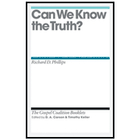
CWKTT Phillips

There is a crisis of truth in our postmodern times. However, as Phillips points out, “our society dogmatically rejects truth in theory but cannot live that way in practice…The crisis of the postmodern position is that it cannot believe or live out its own claims. Postmodernity has nothing to believe, including its own unbelief, despite the aching need of humans to know and believe.”

Phillips proceeds to give several practical examples of how modernism defined and developed its own epistemology (theory of knowledge), and how postmoderns struggled with modernistic thought and what has resulted from that is a full-blown relativism where “we can’t know truth.” Instead of downright playing down the postmodern critique of truth, Phillips argues that Christians can apply some of the strengths of postmodernism in four ways:

First, Christians should acknowledge the role that context plays in anyone’s understanding and belief. “Truth” is always held by actual persons, and those persons are deeply shaped by culture, language, heritage, and community.

Second, we should share postmodernity’s concern that truth may become more an object of power than a mans for enlightenment.

Third, if postmodern critiques cause Christians (among others) to challenge doctrines and views that have become traditional, we can be thankful for the opportunity to reconsider, reformulate, and restate teachings that may have become stale in our practice.

Fourth, Christians may be cobelligerent with postmodernity’s assaults against modernism.

The problems with both modernism and postmodernism essentially boils down to the same thing: they both deny the existence of God – Who is truth, reveals the truth, and is the way to truth through Jesus Christ (John 14:6).

Phillips writes, “Evangelical Christians, in particular, believe that truth derives from and is revealed by God. Thus, truth is authoritative. Here is where postmodernity parts company with historic Christianity, for the postmodern view rejects the reality of truth, positing an implicit (and in some cases, explicit) relativism in which nothing is really and finally true.” The author gives several examples of how this theory does not work in actual practice. Here is one example from the book:

“One professor made this point after his college class had united against him in insisting that nothing is ultimately true or morally wrong in an objective sense. The next day the professor informed the students that regardless of their performance on the exam they were all going to receive an F. The students objected in unison, ‘But that’s wrong!’ and the professor’s point against relativism was made. No one can live it, and therefore no one really believes it.”

The author articulates and expands on a third way of understanding truth based on what God has revealed to us in the Bible that is consistent with our experience – i.e., it corresponds to reality. He writes, “Christianity presents a legitimate third way over against the modern and the postmodern. With the moderns we believe that truth exists and is accessible, though we steadfastly reject that we can exhaustively know truth by our unaided reason. With the postmoderns we are skeptical that finite, fallible humans are the agents of truth, though we insist that truth is real and that we can know it. A successful Christian epistemology, then, not only responds to evangelical Christian belief but also enables us to communicate our doctrine of knowing to a world that both doubts and greatly desires to know truth.”

In this essay Phillips has brilliantly and cogently argued for the reality of truth, how one can know the truth, defend truth, and live by and for the truth. You will find many examples of how modernism and postmodernism fall short in their theories of epistemology, and how a Christian epistemology is simply the most logical way of discovering the truth – because our belief and practice emanates from the Way, the Truth, and the Life – the Lord Jesus Christ. The salient point is made by Phillips, “Love divorced from truth is not love, and truth divorced from love is not truth.” As Jesus perfectly modeled, spoke, and loved in truth, so must we. We are called to “speak the truth in love” just as we have heard it and experienced it in the person and work of Jesus Christ.

Book Review on Bear Grylls “To My Sons: Lessons For the Wild Adventure Called LIfe”

Inspiring Quotes From an Inspirational Dad – Reviewed by David P. Craig

TMS Grylls

Anyone who has ever watched Bear Grylls’ adventures on “Man vs. Wild” can’t help but amazed at his spirit of adventure, ingenuity, courage, wisdom, and passion for life. In this little book Bear Grylls gives his favorite Bible verses, life quotes, and wisdom and dedicates this collection to his boys. It is a wonderful compilation for any Father to seek to implement in his own life and emulate for the lives of his children. Grylls emphasizes a love for Jesus Christ, a love for others, and maximizing your time in life by serving others. Let me share some of my favorite quotes from the book:

“Aim to live a wild, generous, full, exciting life–blessing those around you and seeing the good in all.”

“Have a few close friends who you see often–their friendship matters more than having many shallow acquaintances.”

“Choose your job carefully–do work that excites you. It is where you will spend so much of your time.”

“Cheerfulness in adversity is a key character trait in the game of life.”

“Moments of doubt are part of life. Accept them and remember that Jesus Himself said, ‘My power is made perfect in weakness’ (2 Corinthians 12:9).”

“Understand that failure is an essential stepping-stone on the road to success.”

“Give more than you take, especially with friends and family. See the best in people–as Christ does with you.”

“Spend more time with your family and less at work–no one on their deathbed says they wish thye had spent more time in the office!”

“No one cares how much you know until they know how much you care.”

“You have two ears and one mouth–use them in proportion: Listen twice as much as you speak!

“But remember the LORD your God, for it is he who gives you the ability to produce wealth” (Deuteronomy 8:18).

Thank God for your many blessings; then go out there and blossom. It is okay to succeed.”

I recommend this little book – especially for dads to share with their children. It would make an excellent gift for Father’s day, and a great gift for father’s to give to their sons when they become dads someday.

Book Review on D.A. Carson and Tim Keller’s “Gospel-Centered Ministry”

How The Gospel is Central to Everything: Review by David P. Craig

GCM Carson and Keller

One of the most exciting developments in the Twenty-first century has been the development of the Gospel Coalition. The Gospel Coalition provides blogs, audio and video resources, books, provides conferences, and a plethora of various helps for believers and churches that desire to be gospel centered and gospel driven.

In this brief introduction to the whats and whys of the Gospel Coalition – Tim Keller and D.A. Carson have written a wonderful primer of why this organization was established, and what makes it tick. It’s really an amazing phenomenon that has brought together pastors, missionaries, and lay workers from many different non-denominational and denominational evangelical churches and ministries.

The common denominator that makes up the Gospel Coalition is a biblically robust view that the Gospel from Genesis to Revelation is the central theme of the Bible and that all ministry endeavors are to be bathed in Gospel waters. The gospel is focuses on the necessity of the new birth, justification by faith alone, atonement through propitiation, the substitutionary death of Christ on the cross, and His resurrection from the dead. However, it’s more than that. The gospel is more than what’s tacked on at the end of the sermon, or a devotional that’s shared once a month before we partake of the Lord’s Supper.

Carson and Keller contend that all of ministry must operate from and lead to, and everything in-between is saturated by the Gospel. For example, in our preaching, they write, “Expository preaching fails if it does not tie every text, even the most discursive, into the great story of the gospel and mission of Jesus Christ.” Another example is in ministering to the poor, where they use the example of Jonathan Edwards’ ministry, “Edwards saw a concern for the poor that was rooted not only in a doctrine of creation and the imago Dei but also in the doctrine of the substitutionary death of Christ and justification by faith alone….We  should be willing to give our funds even to the ‘undeserving poor’ since we are the spiritually undeserving poor who receive the free mercy of God.”

The theological vision of the Gospel Coalition is huge in stating that the gospel should: “produce churches filled with winsome and theologically substantial preaching, dynamic evangelism and apologetics, and church growth and church planting. They will emphasize repentance, personal renewal, and holiness of life. At the same time, and in the same congregations, there will be an engagement with the social structures of ordinary people, and cultural engagement with art, business, scholarship, and government. There will be calls for radical Christian community in which all members share wealth and resources and make room for the poor and marginalized. These priorities will all mutually strengthen one another in each local church.”

Carson and Keller make a great case for why the gospel at the center of all of ministry brings balance to our churches, and how “everything is secured by Jesus’ death and resurrection; everything is empowered by the Spirit, whom God bequeaths; and how everything unfolds as God Himself has ordained.” Ultimately, “gospel-centered ministry is biblically mandated. It is the only ministry that simultaneously addresses human need as God sees it, reaches out in unbroken lines to gospel-ministry in other centuries and cultures, and makes central what Jesus himself establishes as central.”

This is a short read but theologically dense, insightful, and thought provoking. I am so grateful for the development of the Gospel Coalition and have and continue to be the beneficiary of their wonderful resources for the church and for the glory of Christ and His gospel. I can’t recommend Gospel Coalition resources like this booklet enough. It well definitely lead you to be more gospel saturated, and Christ focused in all aspects of your life.

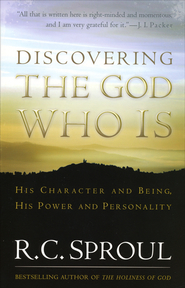
Book Review on R.C. Sproul’s “Discovering the God Who Is”

‘One Holy Passion” Book Review by David P. Craig

DTGWI Sproul

One of the highlights of my life as a follower of Christ has been learning from the teaching and writing ministry of Dr. R.C. Sproul. R.C. has an amazing ability to make complex truths simple and comprehensible. The first book that R.C. Sproul wrote on the character and nature of God was entitled “The Holiness of God.” I think that book and J.I. Packer’s “Knowing God” and A.W. Tozer’s “The Knowledge of the Holy” were the three best practical books on the character and nature of God in the twentieth century. “Discovering The God Who Is” is a reprint of Sproul’s second book on the character and nature of God originally entitled “One Holy Passion.”

In my opinion it is the finest book on the major attributes of God ever written for a general Christian audience. There is simply no grandeur theme in life than that of Theology Proper (the study of God). Sproul takes 12 attributes of God including His omnipotence, self-existence, omnipresence, omniscience – and 8 others – and gives penetrating insight and practical applications concerning each one. R.C. does a masterful job of heightening, illuminating, and glorifying our understanding of God. He has the ability to write with penetrating insight and skillfully stretch one’s thinking on the greatness of God, without delving into the abstract or obscure. He keeps you on the edge of your seat as you read about our amazing relational and yet totally transcendent God.

If you have never read a book on God’s attributes before this is a wonderful place to start. However, even if you’ve read Charnock’s massive treatise on the “Attributes of God” you will still be instructed and encouraged by Sproul’s practical theology. I have read this book several times over the years, and it is one of a few books I come to again and again. I think the reason I love this book so much is because Sproul has an ability to convey the realities of God’s nature in such an attractive way. He writes in a way that makes God warm up to you, and you to Him. Sproul is passionate about God and when he writes about God he stirs in the reader a passion for God as well. He conveys the “warmth” of God and the “Holy otherness” of God without watering down His immanence (nearness) or transcendence (otherness).

I think Sproul and C.S. Lewis are similar in this fashion. They have a way of taking you deep and into complex waters of truth, without sinking you. You always feel safe and grounded while they take you into the depths of reality. There are no greater depths to delve into, than the depths of God’s nature and character. R.C. is a wise, trustworthy, and safe guide who takes you into the deep waters of truth where you will find the infinite treasures of a Holy God, and he will help you to develop your own holy passion to know Him and to make Him known.

Book Review on E.K. Bailey’s “The Preacher and the Prostitute”

God Loves The Unlovely – Book Review by David P. Craig

TPATP Bailey

One of the most amazing stories in the Bible is where God asks his prophet Hosea to marry the prostitute Gomer. In this first person narrative story of Hosea, Bailey does a masterful job of bringing this theologically rich story to life in the 21st century. Bailey does a wonderful job of telling the story from Hosea’s perspective as he involves the reader in his thought process as he wrestles with God’s sovereignty and trying to make sense on his own life in light of it.

At one point Hosea asks the question “What glory would you get from a prophet marrying a prostitute?” Hosea says to God, “What glory would You get when there is a union between piety and promiscuity? What glory would You get when there is confluence of the devilish and the divine? What glory would You get from joining the sacred and the secular? What glory would You get from an intercourse of the celestial and the terrestrial? What glory would You get from an allegiance between the horizontal and the perpendicular, from a coupling of the heavenly and the hellish?”

Hosea comes to realize his own sinfulness before a holy God, “As I walked in the illuminating light of obedience, God quickly began to unravel the seemingly nonsensical nature of this paradoxical command. God told me that this improbable partnership that wedded the prophet and the prostitute was a dramatization of the extraordinary reality that God loves the unlovely.”

Hosea continues, “God chose Gomer so that He could point to one of the most debased and despicable of all human activities to show us that His unfailing love is never ending and the reach of His love has no limits. God would use the life of an unfaithful wife to demonstrate the reality that you can break God’s heart byt you can never break His love.”

The narrator goes on to demonstrate the beauty of the gospel. “The good news of the Gospel that your New Testament declares is that no Gomer, regardless how godless her (or his) sin, can fall so deep and hard that they fall outside the realms and reach of God’s love. Hosea and Gomer represent Israel and her unfaithfulness to God. God uses Hosea and Gomer as a real life analogy of sinners and how God can forgive us through a mediator – Jesus Christ.

Hosea and Gomer is a story of love, adultery, betrayal, forgiveness and restoration. It leads to the big story of the Bible – our unfaithfulness and betrayal toward God, and yet how He sent His son Jesus to pay for our sins and purchase our redemption as Hosea did with Gomer. E.K. Bailey does a wonderful job tying in our story with the story of the Bible and makes you marvel at the mercy and grace of a God who gives us second chances and never gives up on us because of His everlasting love.

Book Review on Will Metzger’s “Tell The Truth”

How To Share the Gospel in Truth and with Love: Book Review by David P. Craig

TTT Metzger

Tell the Truth fills a huge void in the literature on the subject of evangelism – sharing the good news of Jesus Christ with others. Most books on evangelism focus on techniques and methods. Metzger on the other hand focuses primarily on developing a theology of evangelism. Metzger does a phenomenal job of tackling the question: What truth or key truths are essential to the gospel message? After spending time on the key elements of doctrinal truth of our message (understanding the gospel) – Metzger gives abundant examples of how to share the truth/s of the gospel message with others.

In this thorough handbook on evangelism Metzger addresses the following issues with great theological depth, biblical support and commentary, and practical applications: The importance of doctrine and theology in evangelism; Distinguishing our role from God’s role in evangelism; Man-centered verses God-centered methods in evangelism; The five primary points of evangelism; Myths and facts about God’s grace; God’s sovereignty and our responsibility; How worship is the motivation for evangelism; Challenges for evangelism amid pluralism; How to communicate the gospel personally with different types of people; and how to bloom with the gospel where you are planted.

This book also contains a plethora of resources for training material on every aspect of evangelism including: How to prepare your testimony; How to develop a theological methodology of evangelism; How to say what you mean; How to ask good questions; Doing friendship evangelism; Questions non-Christians ask; Sharing the gospel using stories; and many other helpful templates, Charts, outlines, guides, questions to ask, and so forth. There is also a schedule for doing a God-centered evangelism training seminar in your church, school, or small group; and a study guide containing twelve sessions for individuals or groups.

I believe Metzger’s book is arguably the best resource on evangelism available today from a God-centered perspective. It is the equivalent of a seminary course in evangelism and is a book that you will come to again and again for its depth of insight and practical wisdom as you seek to better understand and declare the good news of the gospel for life. I am so grateful for this exceptional resource that guides the beginner or seasoned veteran in “speaking the truth in love.”

Book Review on Sinclair Ferguson’s “The Grace of Repentance”

Our Entire Lives Should Be One of Repentance: Book Review by David P. Craig

TGOR Ferguson

How can Sinclair Ferguson equate grace and repentance together? Martin Luther made this statement, “When our Lord and Master, Jesus Christ, said ‘repent,’ he meant that the entire life of believers should be one of repentance.” In this little booklet Ferguson reiterates Luther’s great discovery from the reformation: “Repentance is a characteristic of the whole life, not the action of a single moment.”

Ferguson defines repentance as “turning away from rebellion against God, and turning to God.” Biblical repentance is made possible by God’s grace and mercy and result in two things: (1) Recognizing that offenses have been committed against God and the covenant He has made with his people; and (2) Turning away from sin in view of the gracious provisions that the Lord has made for us in His covenant. “Repentance means returning to a spirit of creatureliness before the Creator in recognition of His mercy to penitent believers. Ungodliness is thus rejected and righteousness is embraced.”

Repentance isn’t a one time act, but is a change of mind that leads to a continual change of one’s lifestyle. It is impossible to be saved without repentance. Ferguson writes, “Justification is by faith, not by repentance. But faith (and therefore justification) cannot exist where there is no repentance. Repentance is as necessary to salvation by faith as the ankle is to walking. The one does not act apart from the other. I cannot come to Christ in faith without turning from sin in repentance. Faith is trusting in Christ; repentance is turning from sin. They are two sides of the same coin of belonging to Jesus.”

In the last several years the doctrine of biblical repentance as necessary for salvation and for sanctification has been radically neglected in our churches. Ferguson gives a robust theology of, and for repentance as the starting point for our justification and our ongoing sanctification. The Grace of Repentance is a thorough, clear, and concise primer on the biblical doctrine and application of the doctrine of repentance that is so neglected in our day. Ferguson does a wonderful job of showing how ongoing repentance changes our hearts, attitudes, and purposes as we seek to be formed and conformed to the image of Christ by the God who has begun a good work in us. Belief and ongoing repentance in Christ are essential habits for believers who are promised that “He who began a good work in us, will carry it on to completion until the day of Christ” by His mercy and grace in the power of the Holy Spirit (see Philippians 1:6).

Book Review on David Hocking’s “Israel’s Right to the Land!”

Book Review by David P. Craig: 12 Biblical Reasons Why Israel Has a Right to It’s Land

IRTTL Hocking

In this brief biblical study David Hocking does an excellent job of giving twelve compelling reasons why Israel has a right to her land. The bottom line in this argument is what does God have to say about this issue? Hocking gives hundreds of passages in this study of God’s specific promises to the people of Israel. He lays out the biblical facts with biblical support, and then lets the reader decide. Here is a summary of the 12 biblical facts of what God has said about Israel and her land:

(1) This Land belongs to God! Leviticus 25:23 states, “The land, moreover, shall not be sold permanently, for the land is Mine; for you are but aliens and sojourners with Me.”

(2) The Land was given by God to the Descendants of Abraham! Genesis 12:7, says, The Lord appeared to Abram and said, “To your descendants I will give this land.”

(3) The Gift of this Land to Abraham and his descendants was based on an Unconditional Covenant from God Himself! Genesis 17:7-8 sates: “And I will establish My covenant between Me and you and your descendants after you throughout their generations for an everlasting covenant, to be God to you and to your descendants after you. And I will give to you and to your descendants after you, the land of your sojourning, all the land of Canaan, for an everlasting possession; and I will be their God.”

(4) This Land was not given to the Descendants of Ishmael, but rather to the Descendants of Isaac! In Genesis 17:19 God promises, “No, but Sarah your wife shall bear you a son, and you shall call his name Isaac; and I will establish My covenant with him for an everlasting covenant for his descendants after him.”

(5) This Land was not given to the other Sons of Abraham, but only to Isaac! In Genesis 26:3 God said, “Sojourn in this land and I will be with you and bless you, for to you and to your descendants I will give all these lands, and I will establish the oath which I swore to your father Abraham.”

(6) This Land was not given to the Descendants of Esau, but only to Jacob! In Romans 9:10-13 we read, “And not only this, but there was Rebekah also, when she had conceived twins by one man, our father Isaac; for though the twins were not yet born, and had not done anything good or bad, in order that God’s purpose according to His choice might stand, not because of works, but because of Him who calls, it was said to her, “The older will serve the younger. Just as it is written, “Jacob I loved, but Esau I hated.”

(7) God continued to remind the Children of Israel of this Covenant during their bondage in Egypt and wilderness wanderings! Exodus 2:24, “So God heard their groaning; and God remembered His covenant with Abraham, Isaac, and Jacob.”

(8) God told Israel to conquer the Land which He had given them! Deuteronomy 1:8 reads, “See, I have placed the land before you; go in and possess the land which the Lord swore to give to your fathers, to Abraham, to Isaac, and to Jacob, to them and their descendants after them.”

(9) Israel’s sin and captivity did not change their divine right to this Land! In Leviticus 26:44-45 God promises to bring them back, “Yet in spite of this, when they are in the land of their enemies, I will not reject them, nor will I so abhor them as to destroy them, breaking My covenant with them; for I am the Lord their God. But I will remember for them the covenant with their ancestors, whom I brought out of the land of Egypt in the sight of the nations, that I might be their God. I am the Lord.”

(10) God’s Promise to Israel is certain as the existence and order of the universe! Jeremiah 31:35-37 sates, “Thus says the Lord, Who gives the sun for light by day and the fixed order of the moon and the stars for light by night, Who stirs up the sea so that its waves roar; The Lord of hosts is His name: “If this fixed order departs from Me,” declares the Lord, “then the offspring of Israel also shall cease from being a nation before Me forever.” Thus says the Lord, “If the heavens above can be measured, and the foundations of the earth searched out below, then I will also cast off all the offspring of Israel for all that they have done,” declares the Lord.

(11) The Name of this Land is not Palestine, but Israel! Ezekiel 37:11-12 makes this clear, “Then He said to me, “Son of man, these bones are the whole house of Israel; behold, they say, ‘Our bones are dried up, and our hope has perished. We are completely cut off.’ Therefore prophesy, sand say to them, ‘Thus says the Lord God, “Behold, I will open your graves and case you to come up out of your graves, My people; and I will bring you into the land of ISRAEL.”

(12) The full restoration of Israel to its Land with complete peace and security will require the coming of the Messiah! Isaiah 59:20-21 declares, “And a Redeemer will come to Zion, and to those who turn from transgression in Jacob,” declares the Lord. “And as for Me, this is My covenant with them,” says the Lord: “My Spirit which is upon you, and My words which I have put in your mouth shall not depart from your mouth, nor from the mouth of your offspring, nor from the mouth of your offspring’s offspring,” says the Lord, “from now and forever.”

For all twelve of these facts Hocking provides many more Scriptures with insightful commentary. The reality is that the Bible is full of passages, plans, and promises for and about Israel and her right to the Land. Hocking’s study is very compelling because of the plethora of biblical evidence in support of God’s plans and promises for Israel and her land.

Book Review on Alistair Begg’s “Preaching for God’s Glory”

A Case for Expository Preaching: Book Review By David P. Craig

PFGG Begg

There are many methods that pass for “expository” preaching today. Alistair Begg (one of the finest preachers today) argues that the nature of true expository preaching benefits the body of Christ more than any other kind of preaching, and that it also results in brining glory to God.

In chapters one and two Begg critiques the different types of preaching in our day. He isolates the many problems down to really one thing: that preachers are not preaching the message of the Bible, but their own message. Scholars call this eisogesis “reading into the text what’s not actually there.” Most preaching today either errs on the side of total pragmatism “all application with no theology,” or on the side of all doctrine with very little application. Therefore, to counteract these deficiencies Begg gives a powerful defense for the efficacy of expository preaching.

Begg defines expository preaching as “the unfolding of the text of Scripture in a way that makes contact with the listeners’ world while exalting Christ and confronting them with the need of action.” He continues, “When the Bible is not being systematically expounded, congregations often learn a little about a lot but usually do not understand how everything fits together.”

The key elements of expository preaching are as follows:

(1) Expository preaching always begins with the text of Scripture. This doesn’t necessarily mean that you always begin the sermon reading the text “but it does mean that even when we begin by referring to some current event or the lyric of a contemporary song, it is the text of Scripture that establishes the agenda for the sermon. The verses under consideration always establish and frame the content of the sermon.”

(2) Expository preaching seeks to fuse the two horizons of the biblical text and the contemporary world. “The preacher must learn not simply to fuse the horizons in his teaching, but to do so in such a way that people are learning by example how to integrate the Bible with their own experience.”

(3) The expositor needs to be under the control of the Scriptures. In his summary of expository preaching Begg quotes the Westminster Directory for Public Worship “(a) The matter we preach should be true; that is, in the genral doctrines of Scripture; (b) It should be the truth contained in the text or passage we are expounding; (3) It should be the truth preached under the control of the rest of Scripture.”

The benefits of expository preaching expanded upon by Begg are as follows:

(1) Expository preaching gives glory to God, which ought to be the ultimate end of all we do. “Since expository preaching begins with the text of Scripture, it starts with God and is in itself an act of worship, for it is a declaration of the mighty acts of God. It establishes the focus of the people of God and his glory before any consideration of man and his need.”

(2) Expository preaching demands that the preacher himself become a student of the Word of God. “The first heart God’s Word needs to reach is that of the preacher. There will be no benefit to our people from expository preaching unless we ourselves are being impacted by the Scriptures we are preparing to preach.” As John Owen declared, “A man only preaches a sermon well to others if he has first preached it to himself. If he does not thrive on the ‘food’ he prepares, he will not be skilled at making it appetizing for others. If the Word does not dwell in power in us, it will not pass in power from us.”

(3) Expository preaching enables the congregation to learn the Bible in the most obvious and natural way. By our preaching we either help or hinder our people in the task of interpreting Scripture. If we merely show them the results of our study without at least to some degree including them in the process, they may be ‘blessed’ but will remain untaught.

(4) Expository preaching prevents the preacher from avoiding difficult passages or from dwelling on his favorite texts. By committing himself to an exposition of Scripture that is systematic in its pattern, the preacher will avoid the pitfalls of neglecting tough truths, and preaching on only “pet” doctrines.

(5) Expository preaching assures the congregation of enjoying a balanced diet of God’s Word. We serve our people best when we make clear that we are committed to teaching the Bible by teaching the whole Bible – all 66 books.

(6) Expository preaching liberates the preacher from the pressure of last-minute sermon preparation on Saturday night. Preaching that is systematic and consecutive in its pattern means that a congregation does not approach church asking themselves, “I wonder what the minister will preach about today?”

Alistair concludes his book by giving some helpful pointers on how the preacher can prepare excellent expository sermons by doing the following:

(1) Think yourself empty.

(2) Read yourself full.

(3) Write yourself clear.

(4) Pray yourself hot.

(5) Be yourself, but don’t preach yourself.

Alistair Begg has done a great service to the Church by providing an excellent primer of the pitfalls of preaching, and has made a great case for the value and effectiveness of expository preaching. I recommend this little book for beginning and experienced preachers. It is full of great quotes, biblical advice, sound wisdom, and if applied diligently will result in preaching God’s glory to His Church and benefit the body of Christ richly.

Book Review on Dr. John Huffman’s Memoirs “A Most Amazing Call”

The Pastorate Can Be A Wonderful Life: Review By David P. Craig

AMAC Huffman

In this book John Huffman has written his memoirs highlighting five particular areas of his life as a pastor: his education, family life, ministry in the local church, international ministry, and working with the Boards of several  successful para-church ministries. Dr. Huffman does not deal with the day-to-day minutia of ministry – counseling, visitation, sermon preparation, and so forth. He primarily highlights the big issues, people, and events of over 50 years in pastoral ministry and his 70 years of life.

John writes about his education from growing up in Boston to attending Wheaton College and Princeton University. He went to school with several very influential politicians and ministers and recounts some great stories involving sports, politics, and his world-wide adventures in travel.

In local ministry John began working as a pastor with Dr. Norman Vincent Peale in New York, as well as pastorates in Tulsa, Oklahoma; Key Biscayne, Florida; Pittsburgh, Pennsylvania; and his last 31 years as the Senior  Minister at St. Andrews Presbyterian in Newport Beach, California. It’s interesting to hear about some of his conflicts and struggles with parishioners, as well as some of the amazing things God did in each of these ministries. He talks a lot in the book about being an evangelical in a main-line denomination – the Presbyterian Church U.S.A. He gives some wonderful commentary and insights into what he loves about the denomination (like their governmental structure) and what has been difficult (sexual/political issues). No matter what side you land on these issues – his diplomatic skills have been appreciated by both the liberal and conservative elements in his denomination.

Sprinkled throughout this book are fascinating accounts of his relationships with some amazing people like Richard Nixon, Norman Vincent Peale, Mark Hatfield, Chuck Colson, Billy Graham, Harold Ockenga, Carl F. Henry, Charles Pew, and many others. John traveled extensively in his ministry and has been to the Middle East over thirty times leading tours to Israel and Europe when he was only 18 years old!

John has been a Board member of World Vision, Christianity Today International, Gordon Conwell Seminary, and many other significant organizations. It’s fascinating to hear his stories of Board involvement and the different decisions he’s been involved in making over the years.

Dr. Huffman gives us a little glimpse into the family life of a busy pastor and gives some good insights and wisdom of what to do, and not to do scattered throughout the book. Overall, I really enjoyed reading about the highs and lows of this gifted pastors faithful ministry over the years and how God has used and is continuing to use him for the good of the Church in the United States and around the world. He retells the painful story of the loss of his eldest daughter to cancer – which is absolutely gut wrenching. Even though, most of his ministry and life have been full of blessings, the reality is that suffering visits every person and every family at some point in life. John shares with great empathy and compassion how he and his wife Anne dealt with their loss – and gives some sage advice on dealing with tragedy and loss when it knocks on our front door.

As a pastor myself I enjoyed hearing his story and different tidbits of advice and wisdom throughout the book. John has been a tireless worker for the sake of the Gospel around the globe. He has also been very influential in the local churches where he has served and abroad in missions work. He has traversed smooth and turbulent waters and has passed on much good here to be learned by pastors for future generations. Even if you aren’t a pastor you will enjoy this autobiography. Huffman is a very gifted story-teller and every story in this memoir has a few nuggets thrown in that can benefit a person in any walk of life. Huffman has truly lived an amazing calling that deserves to be read, gleaned from, and emulated.