Book Review: Change Your Life Not Your Wife – Marriage Saving Advice for Success Driven People by Tony Ferretti and Peter J. Weiss

Good Solutions to Common Marriage Problems By Dr. David P. Craig

Tony Ferretti and Peter J. Weiss have combined their efforts to write a very readable and practically helpful handbook on marriage for success driven people. Early into the book the author’s write their thesis: “The power failure syndrome happens because the same traits that propel people to the top in business cause turmoil in their personal lives.”

I’ve witnessed this reality time and time again as a pastor and life coach. It’s mind boggling to me how many men and women are successful in their careers and woefully unsuccessful in their relationships at home with their spouse and children. The bulk of this book is designed to counteract this trend by honing in on four key areas in a marriage: 1) Working toward the marriage you want to have – it does take work; 2) Achieving balance between your career and your relationships; 3) Establishing an ease in your relationships; and 4) All you need to do is change yourself!

The main aspects of deteriorization in a marriage result from trying to bring two personalities together; having differing expectations; and being unable to talk through conflict resolution. This results in conflicts growing, frustration being built; chronic anger being developed; resentments being formed and intensified; and ultimately detachment and crisis.

The author’s give many real life examples of how marriages deteriorate, as well as steps that can be taken in order to avert a crisis, and even develop a successful and happy marriage. They talk about relational killers, and give wonderful advice in the areas of communication and nurturing your marriage. I recommend this book as a good guidebook for couples to detect their emotional and character blind spots. They have provided many practical questions, assessments, and strategies throughout the book.

The one weakness of the book relates to not addressing the worldview of the couple. For example – My wife and I are Christians and thus share the same Biblical values, goals, purposes, objectives, etc. So in our roles as a husband and wife, as well as in our parenting, and balancing all aspects of life we have the same worldview foundation. I think the danger of this book is that it focuses too much on behavioral changes (symptoms – fruit) without getting at the cause or the foundations of behavior (cause/sin/idolatry/selfishness/root of all problems).

Therefore, my recommendation would be to read this book along with a marriage book that has a good basis and foundation for marriage like R.C. Sproul’s “The Intimate Marriage,” or Tim Keller’s “The Meaning of Marriage.” Overall, it’s well written, full of practical help, and recommended for pre and post married couples of all ages.

About the Author’s of Change Your Life, Not Your Wife:

Dr. Tony Ferretti is a licensed psychologist who has helped clients recognize the addictive nature of power, control, and “success” for over twenty years. A Ph.D. graduate of the University of Southern Mississippi, he’s appeared on Dr. Phil and hosted his own popular radio talk show, “Talk to Tony.”

Dr. Peter Weiss is a physician and healthcare executive with a passion for helping others to health and wellness. A graduate of Washington University in St. Louis, Dr. Weiss currently serves as an executive for the Adventist Health System in Orlando, Florida.

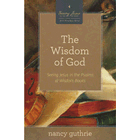
Book Review: The Wisdom of God by Nancy Guthrie

Jesus Only Wise – Jesus in the Wisdom Literature

One of the most exciting things about living in the times in which we are living is the anticipation of the return of Christ and the ushering in of His kingdom. Along with this prophetic reality is the intensification of our study of God’s Word to look for Christ from Genesis to Revelation. According to the author this study is “uniquely designed to help you look into the wonder of the wisdom literature of the Old Testament (covering 10 weeks of studies in Job, Psalms, Proverbs, Ecclesiastes, and Song of Solomon) and see how it prepares us for and points us toward Christ.

This book will help you:

(1) Learn how to study the Bible inductively (each chapter contains questions for personal Bible study);

(2) Understand the Bible and how the different books of the Bible fit together as a whole (each lesson contains a teaching chapter on the core truths of the Biblical Book being studied);

(3) Interact with the central truths of each Wisdom Literature Book and how they relate to the whole Bible (each chapter has a discussion starter and a dozen or so questions of exposition based on the passage of study;

(4) Apply the relevant applications from each passage in your life (each chapter has one or more questions to put the passage into action in one’s life);

(5) Love and worship Jesus Christ (each lesson is loaded with cross references, charts, discussion, and a “Looking Forward” section highlighting Jesus as the central figure, hero, and theme of each passage of study and of the entire Scriptures).

I don’t know of a small group study out there today that has more depth, more of Jesus, is more fun to study and discuss than this new series by Nancy Guthrie. It is simply outstanding in its depth of Biblical exposition, helpful in its applications, and highlights the fact that Jesus is what the Bible and life is all about. It’s about time that someone has put together a series of books designed for serious lay people about, by, and for Christ at the center of all of the Scriptures. If you are looking for a phenomenal Bible study that is theologically deep, practically relevant, and will help you to worship and love Jesus more than ever then this is the Bible study for you!

Note: I was provided with a free copy of this book from the publisher for review and was not required to write a positive review.

About the Author: Life can knock the wind out of you, taking with it your confidence in God. Or at least who you thought he was. Perhaps this explains why those who survive heart-breaking tragedy with their hope intact, and their faith expanded, have the power to inspire us. We want to hear from those people, we want to learn what they’ve learned. This may be why so many people love hearing from Nancy Guthrie. In burying two of her three children, Nancy has endured the kind of loss most of us hope we never have to face. Yet her hope has not dimmed, and her easy laugh has not disappeared.

Those who have watched Nancy and David Guthrie walk through the loss of two infant children, and the millions who have read their story worldwide inTIME Magazine and USA Today, have wondered at their ability to emerge from such sorrow with joy for life and passion for God. In reality, this deep place of pain caused Nancy to dig into the scriptures like she never had before, looking for answers to her questions and a deeper relationship to God. She offered many of the lessons she learned from this sorrowful experience in her 2002 book, Holding On to Hope: A Pathway of Suffering to the Heart of God (Tyndale House Publishers) which has helped thousands of people pursue God in the midst of their suffering. She regularly hears from readers book from all around the world who have been touched by the as the book as it has been translated into numerous languages including German, Danish, Norwegian, Korean and Chinese.

Her second book, The One Year Book of Hope (also Tyndale), a daily devotional for people who are hurting or grieving, released in 2005. The Guthries have seen God continue to use their loss to minister to other people going through loss in a variety of ways, including serving as co-hosts for a new production of the GriefShare video series. GriefShare is a 13-week video curriculum series that is used to facilitate weekly grief groups in more than 4,000 churches nationwide.

Today, Nancy’s energies and passions are focused on her growing Bible teaching ministry, Her newest book comes out of the study of Hebrews she taught for the women at her church in the fall of 2005. Hoping for Something Better: Refusing to Settle for Life as Usual (July 2007, Tyndale House Publishers), provides readers and small groups with a 10-week journey through the book of Hebrews and includes study questions for a weekly discussion.

Nancy’s previous books have received significant media coverage includingUSA Today, Christianity Today, Beliefnet, and stories syndicated nationally by Religion News Service and Associated Press. Nancy has been a guest on radio and television programs such as “FamilyLife Today,” “The Bible Answerman,” “Back to the Bible,” Moody Radio, “Life Today with James Robison,” “The 700 Club,” and many more. Her books have been promoted by international ministries including Focus on the Family, New Life Ministries, Insight for Living, the Christian Research Institute, and Rick Warren’s Ministry Toolbox.

In addition to teaching a weekly Bible class at her church, Nancy speaks regularly at women’s retreats and evangelistic events nationally and internationally including recent events at The Brooklyn Tabernacle, Second Baptist Church of Houston, a Ravi Zacharias International Ministries Conference, and a women’s conference in Scotland. Nancy has worked in the Christian publishing industry for over twenty years as a publicist and special project editor. She currently handles media relations for CBA: The Association for Christian Retail, and the ministry of Anne Graham Lotz.

Nancy and her husband, David, and son, Matt, make their home in Nashville, Tennessee, where they attend Christ Presbyterian Church (Presbyterian Church in America).

Book Review: The Mormon Faith – A Theological Assessment by Dr. William W. Wells

A Concise and Cogent Comparison of Mormon and Christian Theology 

In this short book Dr. William W. Wells has done a superb job of honing in on the essential theological differences of Mormonism and the Historic Christian faith. John Maxwell has made the statement, “Everything rises or falls on leadership.” Dr. Wells wastes precious little time in demonstrating in his book that in religion everything rises or falls on its theological underpinnings.

After a brief introduction, and history of the Mormon faith – Wells defines Christianity by focusing on its essence or ontology. He brilliantly illustrates historically and theologically what indeed suffices for the reality of Christianity. He clearly and concisely illustrates the theological foundations of Christianity centering on three core affirmations: (1) The character and nature of God as Triune; (2) The person and work of Jesus Christ; and (3) The creation and nature of humanity.

Wells compares and contrasts the theology of the Mormon faith with that of the Christian faith by using their own statements of doctrine from their founders using their own words from the primary sources of theological belief consisting of the King James translation of The Bible, The Book of Mormon, The Pearl of Great Price, and the Doctrine and Covenants – what Mormon theologians refer to as “The Standard Works of the Church.”

In comparing and contrasting the foundations of Historical Orthodox Christianity from the Bible and Church history with the Mormon teachings on their understanding of the nature of God, man, Christ, creation, and salvation the only similarities are the terms or language used by each. The definitions, doctrines, and practices of Mormonism and Christianity could not be further apart. Wells does very little by way of interpretation or application – he allows the authoritative documents of Mormonism and Orthodox Christianity to speak for themselves.

I highly recommend this book for anyone who wants to understand what makes Mormonism tick, and how it is absolutely unrecognizable from anything that resembles what C.S. Lewis called “Mere Christianity.” Mormonism as articulated by its own authoritative documents is actually a total departure from the core foundational doctrines of the Christian faith. It is not mere Christianity – it is mere heresy. The Mormon faith is not Christian based on its theology in any way shape or form.

This isn’t to say that Mormons and Christians share many of the same values and even beliefs. However, when it comes to all of the key elements that make one a “Christian” – the facts in this book speak for themselves – Christian theology and Mormon theology are about as close as Hawaiian weather and Antarctic weather are alike.

Wells with the uttermost graciousness has simply provided the cardinal theological beliefs of Mormonism and Christianity side by side and in a very compelling way has shown that they are distinct, different, and not remotely close. I highly recommend this book as a resource to find out the truth about what Mormons really believe (from their own authoritative documents) and what Christians really believe (from the Bible and Church History) and why this is of eternal significance.

Dr. Wells has shown that theology – what people believe about God, creation, mankind, salvation, and eternity is of massive importance. I hope that this book receives a wide reading by Christians, Mormons, and anyone concerned about their own soul, and the souls of others.

About the Author of The Mormon Faith: Dr. William Wells completed an undergraduate degree in Anthropology at Wheaton College and graduated from Trinity Evangelical Divinity School in Deerfield, IL. He also earned a Ph.D. in Philosophy and Religion from Syracuse University in NY. Upon completing his doctorate in 1970, he taught at the University of Hawaii, Hilo College and later at Regent College in Vancouver, B.C. & the Graduate School of Theology at Wheaton College. In his forties, Dr. Wells left academia and a few years later joined Wycliffe Bible Translators. Now retired after twenty years of service with Wycliffe, he lives in Southern California where he continues to teach and write. He has also written A Brief Introduction to the Bible; and Faith of Our Fathers: An Introduction to the Evangelicals.


Book Review: The 7% Solution by John H. Graves

How To Develop A Strategic Plan for Income in Your Later Years

I’d never heard of John H. Graves before reading this book, but I will be highly recommending this book to my clients from now on as a Life Coach. One of the seven key areas of life that all people need advice in is how to handle personal finances. As a matter of fact, I was doing a conference overseas and had to counsel an accountant for a major corporation who knew how to keep the books for a multi-million dollar company but her own personal debt was mounting out of control. I truly wish I could have handed her this book two years ago – it has everything you need to develop more confidence and have less stress in the financial arena of your life.

The proper handling and investing of money is a huge issue that makes or breaks many marriages, the quality of life, and high stress factors, which can lead to dangerous addictions, and various diseases of all shapes and forms. Enter in this book.

At the outset Graves’ assures the reader that no matter what the economy looks life, and no matter how bleak the future looks among various prognosticators, it is up to us to take control of our finances. The reality is that no one will care for your financial needs, and know what you will need in your latter years more than you do.

The big idea of this book to show you a myriad of ways – with a plethora of helpful examples, illustrations, and various strategies – to develop an investment portfolio in your retirement years that will net you a 7% distribution of income. In reading this book you will learn:

(1) How to determine the amount of income needed during retirement.

(2) How to identify different sources of income in retirement (the pros and cons of each)

(3) How to evaluate, select, monitor, and manage a variety of investments, from the most simple, to the more complex.

In layman’s terms Graves shows you how to get a clear picture of what you will need in your retirement years by explaining clearly, concisely, cogently, and coherently the following:

Helping you to develop a worksheet that will lay out the reality of your current financial situation and where that will take you. This will help you practical realize whether or not you are heading in the right direction towards the “7% solution” in your retirement years. You will be able to discern and determine where the strengths and weaknesses in your portfolio lie and what adjustments can be made to get the desired results.

(1) How to gather your expense and income data for retirement.

(2) Responsibilities of a financial advisor (what they actually do); versus your own responsibilities.

(3) How to pick stocks for the long term – with a focus on the importance of getting value.

(4) How bonds work – how to determine bonds with good value.

(5) An overview of low maintenance investments.

(6) An examination of annuities and how they fit into an income-producing retirement portfolio.

(7) Looking beyond cookie-cutter portfolios – how limited partnertships and business development companies can fit into your portfolio.

(8) How REIT’s, real estate, proceeds from sale of a business, and structured settlements can add sources of income to your portfolio.

(9) Proven strategies for designing your 7% portfolio.

(10) How to manage your portfolio during the accumulation and distribution stages.

(11) How to reduce your tax burden.

(12) Getting the most from your retirement years. How to develop a trust, and various ways you can give back to your church, synagogue, or community.

This is truly a great book for understanding strategic portfolio depth, sources of income, decreasing debt, and alleviating the stress of retirement, by being responsible, strategic, and intentionally proactive in developing a plan that works for you and providing for your family in your latter years. No matter what age you are, income level you have achieved, or your goals for the future are – the 7% solution will work for you.

About the Author: John Graves, ChFC, CLU has spent 26 years advising people how to become
better stewards of their resources. As an indepedent financial advisor, he focuses on designing and maintaing clients’ portfolios consistent with their needs, rather than some market paradigm. John is a Chartered Life Underwriter and Chartered Financial Consultant through The American College in Bryn, Mawr Pennsylvania.
He has traveled extensively, with more than 80 countries’ stamps in his passport. His avocation is adventure. He has sailed to Hawaii several times as well as across the Atlantic and throughout the Mediterranean and Caribbean. He has trekked the Andes, the Sahara, the Taklamakan, the Serengeti, and the Namib.
In his previous career, John was a chef. He does enjoy a fine meal with a nice Bordeaux or Montalcino.
John agrees with Benjamin Graham that the search for value is far more interesting than a brief joy ride in the markets. His passion is sharing knowledge with others so that they, too, might embrace all that life has to offer.

Book Review: God’s Names By Sally Michael

The Real Hero of the Story

The influence of John Piper in the late 20th and early 21st century has been incalculable for the good of the resurgence of the centrality of Christ and the glory of God – in a culture and church that has been centered on humanity.

Finally, the co-founder of Children Desiring God – Sally Michael – is making her curriculum available in book-form for parents and young people. Sally is the Minister for Program Development and Resources in the Family Discipleship Department at Bethlehem Baptist Church (Where John Piper has pastored for the past 30 years), in Minneapolis, Minnesota.

Traditionally (in the past 100 years) curriculum and books for children have focused on mankind being the hero’s of the biblical stories – “Dare to be a Daniel,” or “Be a Ruth in your generation.” What Children Desiring God resources have done is make theology – the Triune God – in the Person of the Father, Son, and Holy Spirit the rightful heroes of each story in the Bible. The Bible is a book about God, not us. It’s about our need for Him, not His need for us. It’s a book that shows that History is His-story, not ours.

This book honing in on God’s character and nature revealed through His names is relational, interactive, understandable, theological, applicational, and encourages prayer, Bible study and worship in each lesson. There are 26 short lessons that are packed with God at the center of it all.

If you want your children to be God-focused, and others oriented, then look no further than this book. I hope that more books from Children Desiring God are coming soon. In a man-centered culture and church, it is absolutely essential that we get back to the core teaching of the Bible – the centrality of Christ, the Gospel, and God at the center of all things.

10 Hindrances to Prayer By Dr. David P. Craig

Just as we have a hard time communicating with someone we have hurt, or who has hurt us, oftentimes we sense that our prayers our bouncing off the ceiling and God is far away. When God seems distant and we are out of fellowship with Him it appears that our prayers are being hindered – because they are! The problem in this case is NEVER with God – it’s ALWAYS with us. God is perfect, transcendent and immanent [near, operating within] in His presence and activity. Therefore, when we feel that God is distant – it’s very important that we evaluate every possible hindrance to our prayers. Here are several passages of Scripture that elucidate hindrances to our effective communication and fellowship with our Heavenly Father. Take the time to prayerfully consider and evaluate your walk with Him. Remember that God is quick to forgive and wants to draw near to you as you draw near to Him.

“Draw near to God, and He will draw near to you.” – James 4:8a

(1) Carnal motives – “You ask and do not receive, because you ask wrongly, to spend it on your passions” (James 4:3).

(2) Cherishing Sin“If I had cherished iniquity in my heart, the Lord would not have listened” (Psalm 66:18).

(3) Concealing Sin“Whoever conceals his transgressions will not prosper, but he who confesses and forsakes them will obtain mercy” (Proverbs 28:13).

(4) Domestic Disputing“Likewise, husbands, live with your wives in an understanding way, showing honor to the woman as the weaker vessel, since they are heirs with you of the grace of life, so that your prayers may not be hindered” (1 Peter 3:7).

(5) Hypocrisy“And when you pray, you must not be like the hypocrites. For they love to stand and pray in the synagogues and at the street corners, that they may be seen by others. Truly, I say to you, they have received their reward” (Matthew 6:5).

(6) Ignoring God’s Law“If one turns away his ear from hearing the law, even his prayer is an abomination” (Proverbs 28:9).

(7) Pride  – “Two men went up into the temple to pray, one a Pharisee and the other a tax collector. The Pharisee, standing by himself, prayed thus: ‘God, I thank you that I am not like other men, extortioners, unjust, adulterers, or even like this tax collector. I fast twice a week; I give tithes of all that I get.’ But the tax collector, standing far off, would not even lift up his eyes to heaven, but beat his breast, saying, ‘God, be merciful to me, a sinner!’ I tell you, this man went down to his house justified, rather than the other. For everyone who exalts himself will be humbled, but the one who humbles himself will be exalted” (Luke 18:10-14)

(8) Robbing God“Will man rob God? Yet you are robbing me. But you say, ‘How have we robbed you?’ In your tithes and contributions. You are cursed with a curse, for you are robbing me, the whole nation of you. Bring the full tithe into the storehouse, that there may be food in my house. And thereby put me to the test, says the Lord of hosts, if I will not open the windows of heaven for you and pour down for you a blessing until there is no more need” (Malachi 3:8-10).

(9) Unbelief“If any of you lacks wisdom, let him ask God, who gives generously to all without reproach, and it will be given him. But let him ask in faith, with no doubting, for the one who doubts is like a wave of the sea that is driven and tossed by the wind” (James 1:5-6).

(10) Withholding Forgiveness“and forgive us our debts, as we also have forgiven our debtors. And lead us not into temptation, but deliver us from evil. For if you forgive others their trespasses, your heavenly Father will also forgive you, but if you do not forgive others their trespasses, neither will your Father forgive your trespasses” (Matthew 6:12-15).

14 Things To Pray For – By Dr. David P. Craig

(1) Pray for the glory of the LORD and that His glory may fill our land:

“Ascribe to the LORD, O clans of the peoples, ascribe to the LORD glory and strength! Ascribe to the LORD the glory due His name; bring an offering and come before Him! Ascribe to the LORD the glory due his name and worship the LORD in the splendor of holiness…Surely His salvation is near those who fear Him, that glory may dwell in our land”  (1 Chronicles 16:28-29; Psalm 29:2; 85:9).

(2) Pray that God’s name would be made Holy:

“Our Father in heaven, hallowed be your name” (Matthew 6:9).

(3) Pray that God’s kingdom will come:

“Your kingdom come” (Matthew 6:10a).

(4) Pray that God’s people would do God’s will on earth:

“Your will be done, on earth as it is in heaven” (Matthew 6:10b).

(5) Pray for God to meet your daily provision:

“Give us this day our daily bread” (Matthew 6:11).

(6) Pray that God will forgive you of your sins:

“And forgive us our debts, as we also have forgiven our debtors…if we confess our sins He is faithful and just to forgive us of our sins and to cleanse us from all unrighteousness” (Matthew 6:12 & 1 John 1:9).

(7) Pray that God will deliver you from doing evil:

“And lead us not into temptation but deliver us from evil” (Matthew 6:13).

(8) Pray that God would open doors and empower believers to declare the gospel:

“At the same time, pray also for us, that God may open to us a door for the word, to declare the mystery of Christ…that I may make it clear, which is how I ought to speak…and also for me, that words may be given to me in opening my mouth boldly to proclaim the mystery of the gospel…that I may declare it boldly, as I ought” (Colossians 4:3-4 & Ephesians 6:19, 20b).

(9) Pray that all kinds of people (from rulers to servants) will be saved:

“First of all, then, I urge that supplications, prayers, intercessions, and thanksgivings be made for all people, for kings and all who are in high positions, that we may lead a peaceful and quiet life, godly and dignified in every way. This is good, and it is pleasing in the sight of God our Savior, who desires all people to be saved and to come to the knowledge of the truth” (1 Timothy 2:1-4).

(10) Pray for your enemies:

“But I [Jesus] say to you, Love your enemies and pray for those who persecute you” (Matthew 5:44; see Stephen’s example in Acts 7:59-60; and Jesus’ example in Luke 23:34).

(11) Pray for sick believers to be healed:

“He heals the brokenhearted and binds up their wounds…Is anyone among you sick? Let him call for the elders of the church, and let him pray over him, anointing him with oil in the name of the Lord. And the prayer of faith will save the one who is sick, and the Lord will raise him up. And if he has committed sins, he will be forgiven” (Psalm 147:3; James 5:14-15).

(12) Pray for one another’s sins:

“Therefore, confess your sins to one another and pray for one another, that you may be healed. The prayer of a righteous person has great power as it is working” (James 5:16).

(13) Pray for Israel:

“Pray for the peace of Jerusalem! May they be secure who love you!” (Psalm 122:6)

(14) Pray for justice and deliverance for Christian martyrs:

“They cried out with a loud voice, “O Sovereign Lord, holy and true, how long before you will judge and avenge our blood on those who dwell on the land?” (Revelation 6:10)

Will Everyone Ultimately Be Saved? Sermon Outline on Colossians 1:20 – May 1, 2011 – Dr. David P. Craig Preached at Whidbey Evangelical Free Church

Universalism states that sooner or later all people will be saved. This position holds that the concepts of hell and punishment are inconsistent with a loving God. The older form of universalism, originating in the second century, taught that salvation would come after a temporary period of punishment. The newer form of universalism declares that all men are now saved, though all do not realize it. – Ron Rhodes (Christian Apologist and author of the “Reasoning With…” series of books)

Here Are Some Excerpts from Robb Bell that Suggest Universalism

“A staggering number of people have been taught that a select few Christians will spend forever in a peaceful, joyous place called heaven, while the rest of humanity spends forever in torment and punishment in hell with no chance for anything better…. This is misguided and toxic and ultimately subverts the contagious spread of Jesus’ message of love, peace, forgiveness, and joy that our world desperately needs to hear.”

“As soon as the door is opened to Muslims. Hindus, Buddhists, and Baptists from Cleveland, many Christians become very uneasy, saying that then Jesus doesn’t matter anymore, the cross is irrelevant, it doesn’t matter what you believe, and so forth.”

“Not true. Absolutely, unequivocally, unalterably not true…What Jesus does is declare that he, and he alone, is saving everybody. And then he leaves the door way, way open. Creating all sorts of possibilities. He is as narrow as himself and as wide as the universe.”

“People come to Jesus in all sorts of ways…Sometimes people use his name; other times they don’t…Some people have so much baggage with regard to the name “Jesus” that when they encounter the mystery present in all of creation–grace, peace, love, acceptance, healing, forgiveness–the last thing they are inclined to name it is ‘Jesus.'”

“What we see Jesus doing again and again–in the midst of constant reminders about the seriousness of following him living like him, and trusting him–is widening the scope and expanse of his saving work.” – Robb Bell in Love Wins.

The Bible and Universalism

1)    Universalism teaches that sooner or later all people will be saved.

2)    The verse at hand: “and through him to reconcile to himself all things, whether on earth or in heaven, making peace by the blood of his cross.” Col. 1:20

3)    There is no hope for reconciliation and peace with God apart from the blood of the cross of Christ (Acts 4:12; John 14:6; Romans 5:1-2)

Acts 4:12, “And there is salvation in no one else, for there is no other name [“This Jesus” from v. 11] under heaven given among men by which we must be saved.”

John 14:6, Jesus said to him, “I am the way, and the truth, and the life. No one comes to the Father except through me.”

Romans 5:1-2, “Therefore, since we have been justified by faith, we have peace with God through our Lord Jesus Christ. Through him we have also obtained access by faith into this grace in which we stand, and we rejoice in hope of the glory of God.”

4)    Reconciliation is the finished work of God bringing men from the position and attitude of enmity to the position of attitude and amity by the work of Christ on the cross – propitiation (God-ward) and redemption (sin-ward) result in reconciliation (man-ward). – S. Lewis Johnson (see Romans 5:10-11)

Romans 5:10-11, “For if while we were enemies we were reconciled to God by the death of his Son, much more, now that we are reconciled, shall we be saved by his life. More than that, we also rejoice in God through our Lord Jesus Christ, through whom we have now received reconciliation.”

5)    Paul is not speaking about universal salvation here, but simply of the universal sovereignty of Jesus Christ (Matt. 28:18).

Matthew 28:18, And Jesus came and said to them, [His disciples] “All authority in heaven and earth has been given to me.

6)    By virtue of the fact of His death and resurrection, Christ as the last Adam is Lord over all that was lost by the First Adam (cf. 1 Cor. 15:45-49).

1 Corinthians 15:45-49, Thus it is written, “The first man Adam became a living being”; the last Adam became a life-giving spirit. But it is not the spiritual that is first but the natural, and then the spiritual. The first man was from was from the earth, a man of dust; the second man is from heaven.

As was the man of dust, so also are those who are of the dust, and as is the man of heaven, so also are those who are of heaven. Just as we have been born of the image of the man of dust, we shall also bear the image of the man of heaven.

7)    The Scriptures continually make a distinction between the saved and the lost (see Matt. 7:13-14; 25:41; Rev. 20:10-15; Luke 16:19-31; 2 Thess. 1:7-9)

Matthew 7:13-14, “Enter by the narrow gate. For the gate is wide and the way is easy that leads to destruction, and those who enter by it are many. For the gate is narrow and the way is hard that leads to life, and those who find it are few.”

Paul used similar language in Ephesians 1:10 when he described God’s eternal purpose as the “summing up” or the “uniting” of “all things” in Christ, “things in heaven and things on earth” (1:10). His final purpose will have been achieved:

1) God’s grace and mercy will have been glorified by the salvation of his people,

2) God’s holiness and justice will have been glorified by the condemnation of his enemies ,

3) and heaven and earth will have been restored under God’s created and determined order, the universe placed once again under His reign without the corruption of sin (Romans 8:19-23).

Romans 8:19-23, “For the creation waits with eager longing for the revealing of the sons of God. For the creation was subjected to futility, not willingly, but because of him who subjected it, in hope that the creation itself will be set free from its bondage to corruption and obtain the freedom of the glory of the children of God. For we know that the whole creation has been groaning together in the pains of childbirth until now. And not only the creation, but we ourselves, who have the firstfruits of the Spirit, groan inwardly as we wait eagerly for adoption as sons, the redemption of our bodies.”

“However we may describe it in the various designations Scripture provides, is one from which all conflict, enmity, disharmony, warfare will be excluded; it will mean the final triumph of righteousness and peace, in a word, of reconciliation. The powers of darkness will be cast out and by the judgment executed made to ‘confess that Jesus Christ is Lord to the glory of God the Father’ (Phil. 2:11). Bowing the knee in compulsive submission, this will be the reconciliation as it bears upon them; it will constitute the ultimate unconditional surrender, the confessed defeat of age-long assault upon the kingdom of God. We can and must see in this grand climax of victory the fruit of the blood of Christ’s cross” (Dr. John Murray, “The Reconciliation,” Westminster Theological Journal, 9).

“Paul thinks cosmically, the whole world is out of proper adjustment since the fall.  There are, in heaven, beings that are fallen beings, who are enemies of God and hostile to him, Satan and the evil angels, the demons.  All of these intelligences in this universe, as well as the physical universe itself, are touched by the saving work of the Lord Jesus Christ on Calvary’s cross.  What a cosmic event the cross really was, touching not simply men, not simply the creation about us, but all of the intelligences of the universe.  So reconciliation then refers, ultimately, to the bringing into proper harmony all of God’s creation.” – S. Lewis Johnson

We remember the words of Jesus when he said, “Enter by the narrow gate. For the gate is wide and the way is easy that leads to destruction, and those who enter by it are many. For the gate is narrow and the way is hard that leads to life, and those who find it are few (Matthew 7:13-14).”

What kind of a God would have such a narrow gate? The question implies a serious accusation; that God has not done enough to provide redemption for mankind. Let us examine the accusation from a hypothetical perspective. Let us suppose that there is a God who is altogether holy and righteous. Suppose that God freely creates mankind and gives to mankind the gift of life.

Suppose He sets His creatures in an ideal setting and gives them the freedom to participate in all of the glories of the created order with freedom. Suppose, however, that God imposes one small restriction upon them, warning them that if they violate that restriction, they will die. Would such a God have the right to impose such a restriction with the penalty of forfeiture of the gift of life if His authority is violated?

Suppose that for no just cause the ungrateful creatures disobeyed the restriction the moment God’s back was turned. Suppose when He discovered their violation instead of killing them, He redeemed them. Suppose the descendents of the first transgressors broadly and widely increased their disobedience and hostility toward their creator to the point that the whole world became rebellious to God, and each person in it, “did what was right in his own eyes” (Judg. 21:25).

Suppose God still determined to redeem these people and freely gave special gifts to one nation of people in order that, through them, the whole world would be blessed. Suppose God delivered this people from poverty and enslavement to a ruthless Egyptian Pharoah. Suppose this privileged nation, as soon as it was liberated, rose up in further rebellion against their God and their liberator. Suppose they took His law and violated it consistently.

Suppose that God, still intent upon redemption, sent specially endowed messengers or prophets to plead with His people to return to Him. Suppose the people killed the divine messengers and mocked their message. Suppose the people then began to worship idols of stone and things fashioned by their own hands. Suppose these people invented religions that were contrary to the real God and worshiped creatures rather than the Creator.

Suppose in an ultimate act of redemption God Himself became incarnate in the person of His Son. Suppose this Son came into the world not to condemn the world, but to redeem the world. But suppose this Son of God were rejected, slandered, mocked, tortured, and murdered. Yet, suppose that God accepted the murder of His own Son as punishment for the sins of the very persons who murdered Him.

Suppose this God offered to His Son’s murderers total amnesty, complete forgiveness, transcendent peace that comes with the cleansing of all guilt, victory over death and an eternal life of complete felicity.

Suppose God gave these people as a free gift the promise of a future life that would be without pain, without sickness, without death, and without tears. Suppose that God said to these people, “There is one thing that I demand. I demand that you honor my only-begotten Son and that you worship and serve Him alone.” Suppose God did all of that, would you be willing to say to Him, “God, that’s not fair, you haven’t done enough”?

If man has in fact committed cosmic treason against God, what reason could we possibly have that God should provide any way of redemption? In light of the universal rebellion against God, the issue is not why is there only one way, but why is there any way at all? I know of no way of answering that question. (R.C. Sproul, Reason to Believe, pp. 41-43).

Guide For Community Group Discussion: Will Everyone Ultimately Be Saved?

May 1, 2011 – Colossians 1:20

1)    Certain passages – John 12:32, Colossians 1:20, Philippians 2:11, and 1 Timothy 2:4 – are typically twisted out of context in support of universalism. Look each of these up and interpret them in their context (as well as in the light of other Scriptures) – how would you answer a Universalist based on these passages – one-by-one?

2)    The Scriptures consistently categorize people into one of two classes (saved/unsaved, also called believers/unbelievers), and portray the final destiny of every person as being one of two realities (heaven or hell). Write a brief summary of these passages:

  • Matthew 7:13-14; 13:30, 49
  • Matthew 25:32, 41
  • Luke 16:19-31
  • 2 Thess. 1:7-9

3)    What do the following passages have to say about Hell?

  • Rev. 14:9-11; 20:11-15
  • Matt. 5:21-22, 27-30
  • Matt. 23:15, 33
  • Matt. 25:41,46

4)    Read Col. 1:13-23 and then the following passages. Why does the Bible teach that Jesus is the only way that God provided for us to be saved?

  • John 14:6; Acts 4:12 & 16:31
  • Romans 5:1-2
  • Romans 10:9-13
  • Hebrews 9:27-28
  • 2 Cor. 5:10-21
Children and Good Books Go Together – My Top 25 – By Dr. David P. Craig

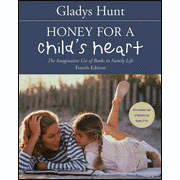
“Children and books go together in a special way. I can’t imagine any pleasure greater than bringing to the uncluttered, supple mind of a child the delight of knowing God and the many rich things He has given us to enjoy. This is every parent’s privilege, and books are his keenest tools. Children don’t stumble onto good books by themselves; they must be introduced to the wonder of words put together in such a way that they spin out pure joy and magic.” – Gladys Hunt, Honey For A Child’s Heart. Grand Rapids: Zondervan, 2002. (This book is a good resource for choosing books for children)

Having raised five children – all of whom enjoy reading immensely – and now having two grand children – I believe strongly in reading daily with our children and that there are tremendous benefits – especially books that convey Biblical values and a Christ centered world-view. Here are my top 25 books for reading to your children – ages 2-11:

(1) The Jesus Storybook Bible: Every Story Whispers His Name By Sally Lloyd-Jones & illustrated by Jago. Grand Rapids: Zondervan, 2007. Product description: A Bible like no other, The Jesus Storybook Bible invites children to join in the greatest of all adventures, to discover for themselves that Jesus is at the center of God’s great story of salvation–and at the center of their own story too! The Jesus Storybook Bible tells the story beneath all the stories in the Bible. At the center of all is a baby, the child upon whom everything will depend. From Noah, to Moses, to the great King David–every story points to him. He is the missing piece to the puzzle–the piece that makes all the other pieces fit together. From the Old Testament through the New Testament, as the story unfolds, children will pick up the clues and piece together the puzzle. The Jesus Storybook Bible makes an excellent gift at Christmas, when we all remember that he is the puzzle piece that makes all the other pieces in our lives fit. Recommended for ages 4 to 8.

(2) 3 in 1: A Picture of God By Jonne Marxhausen. Saint Louis: Concordia Publishing House, 2004. Product description: This book effectively explains the Trinity to young children by using an apple. Just as the apple consists of three parts: the skin, the flesh, the seeds…it is still one apple. God had three persons: Father, Son, Holy Spirit…but He is one God. Ages 2-9.

(3) My ABC Bible Verses: Hiding God’s Word in Little Hearts By Susan Hunt & Illustrated by Yvetter Banek. Wheaton, Crossway, 1998. Product description: Knowing God’s Word helps anyone of any age know Him better. With this colorful book Susan Hunt has developed a fun way to help kids learn His truths. Each letter of the alphabet has a corresponding Bible verse, and each verse is accompanied by a story to illustrate the scriptural passage. Presented in an easy to use format, it’s perfect for use in family devotions, churches, Christian schools or Bible clubs. Recommended for ages 3 to 7.

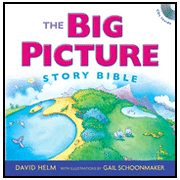
(4) The Big Picture Story Bible By David Helm & Illustrated By Gail Schoonmaker. Wheaton: Crossway, 2010. Product description: Everyone loves a good story especially children! But what we sometimes overlook is that the Bible is more than a collection of great stories. It is the real account of God’s love for the world. The Big Picture Story Bible presents this remarkable true story. Simple words and striking illustrations unfold the story line of God’s Word and His love for the world from Genesis to Revelation. All ages will enjoy this exciting discovery of a God who keeps his big promise! Especially recommended for ages 2—7.

(5) The King Without a Shadow By R.C. Sproul & Illustrated By Liz Bonham. Philipsburg, New Jersey, 2000. When a little boy asks a powerful king, “Why do we have shadows?” the ruler doesn’t know—and neither do his wise men. But then the king hears about somebody who’s so great that he’s only light, with no darkness—and no shadow! A wonderful story about the holiness of God for your children ages 4 and up.

(6) The Lightlings By R.C. Sproul, & Illustrated By Justin Gerard. Orlando, FL: Reformation Trust, 2006. Product description: The Lightlings, Dr. R.C. Sproul weaves an allegorical tale that captures the essence of the biblical story of redemption in a manner that will fascinate and delight children. A race of tiny beings known as Lightlings represent humanity as they pass through all the stages of the biblical drama–creation, fall, and redemption. In the end, children will understand why some people fear light more than darkness, but why they need never fear darkness again. With richly detailed illustrations by Justin Gerard, this picture book also has discussion questions and Scripture references that will help parents guide children into the deeper meaning of the story. Recommended for ages 4 and up.

(7) The Prince’s Poison Cup By R.C. Sproul & Illustrated By Justin Gerard. Orlando, FL: Reformation Trust, 2008. Product description: With The Prince’s Poison Cup, Dr. R. C. Sproul continues his series of books designed to present deep biblical truths to children on their own level. In this work, he focuses on the atonement to show that Jesus had to endure the curse of sin in order to redeem His people from their spiritual death. When Ella gets sick and has to take yucky medicine, she wonders why something that will help her get well has to taste so bad. When she puts the question to Grandpa, he tells her the story of a great King and His subjects who enjoyed wonderful times together until the people rebelled against the King and drank from a forbidden well. To their horror, they found that the beautiful water in the well made their hearts turn to stone. To reclaim His people, the King asks His Son, the Prince, to drink from a well of horrid poison. The poison will surely kill the Prince but He is willing to drink it to please His Father and help His people. Richly illustrated, The Prince’s Poison Cup will help children appreciate the great love of God for His people and the awful price Jesus had to pay because of sin. A For Parents section provides assistance in unfolding the biblical elements of the story.  Recommended for ages 4 and up.

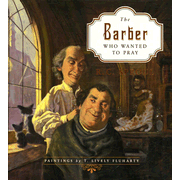
(8) The Barber Who Wanted to Pray By R.C. Sproul & Illustrated By T. Lively Fluharty. Wheaton: Crossway, 2011. Product description: An excellent gift for children of all ages and a wonderful addition to any family’s library, this new story by R.C. Sproul will help open you and your children’s minds to prayer. Follow this story as you meet a Barber who discovers that his last customer for the day is the outlaw Martin Luther. Rather than turning him in, he asks him a simple question, “How can I pray better?” Discover, along with the Barber, the simple ways that you can pray better through The Lord’s Prayer, The Apostle’s Creed, and The Ten Commandments. All three prayers are listed in the back for reference. Ages 4 and up.

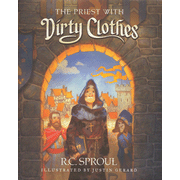
(9) The Priest with Dirty Clothes By R.C. Sproul & Illustrated By Justin Gerard. Orlando, FL: Reformation Trust, 2011. Product description: Darby and Campbell decided to make mud pies outside, and have made a mess of their clothes and ruined them. When Grandpa comes to visit and sees their muddy clothes, he remembers an amazing story. The story that he tells Darby and Campbell is about a young priest who, on his way to preach his sermon to the royal family, falls from his horse and ruins his robes. Unable to preach before the King with dirty clothes he is sent away, but must return in a weeks time with clean clothing. Unfortunately, nothing will get the mud out of the clothes and they are ruined. But when the young priest goes to see the great prince, he is given a wonderful gift. Teach your children the love, grace, and kindness forgiveness that God gives us with this beautifully illustrated book. Included in the back is a section “For the Parents” with questions to help guide discussion of this book with your young ones. Ages 4 and above.

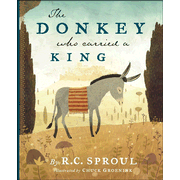
(10) The Donkey Who Carried a King By R.C. Sproul & Illustrated By Justin Gerard. Orlando, FL: Reformation Trust, 2012. Product description: Give kids a unique perspective on the events of Jesus’ Passion Week with this illustrated story by R.C. Sproul, The Donkey Who Carried a King. Davey was a young donkey who never had anything to do . . . until one day some strangers arrived and Davey was given a very special task: to carry the King, Jesus, into Jerusalem. Davey sees things that he doesn’t understand, until another donkey helps him see that the King is willingly a Servant on behalf of His people. Ages 6-12.

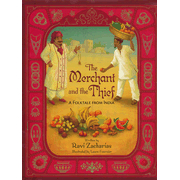
(11) The Merchant and the Thief By Ravi Zacharias & Illustrated By Laure Fournier. Grand Rapids: Zondervan, 2010. Product description: When Raj left the room, Mohan tiptoed over to his belongings and searched hurriedly under Raj’s pillow. Again he found nothing. Mohan longs for Raj’s treasure. He plots and he schemes and his plan seems perfect! But along the way, he discovers an important lesson about wanting what someone else has … and about the most important treasure of all. From bestselling author Ravi Zacharias comes a retelling of a classic Indian folktale that teaches powerful truths about faith. Ages 4 and up.

(12) The Topsy-Turvy Kingdom By Dottie McDowell, Josh McDowell and David N. Weiss.  Product description: This colorful book will fascinate children as they learn the significance of right and wrong. The McDowell’s focus on the importance of truth and the chaos of relativism so that your children can understand how to worship God in spirit and in truth. Ages 2 and up.

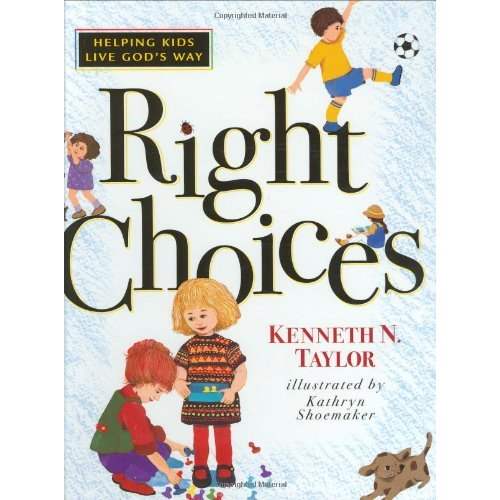
(13) Right Choices: Helping Kids Live God’s Way By Kenneth N. Taylor & Illustrated By Kathryn Shoemaker, Wheaton, Tyndale, 1999. Product description: One of the toughest jobs parents face is teaching children to make right choices. In Right Choices, Dr. Taylor’s grandfatherly chats can help you with that job. Poems, Bible verses, prayers, and delightful pictures work together to make the job fun. Your kids will learn that it is WRONG to lie, steal, go with a stranger, fight, make fun of other people, cheat, throw a tempter tantrum, and more. They will learn that it is RIGHT to be thankful and polite, to talk to God, forgive people; control their temper, and more.  Recommended for ages 3-7.

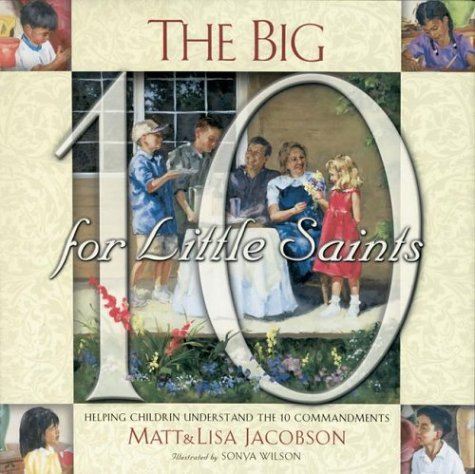
(14) The Big 10 for Little Saints By Matt & Lisa Jacobson. Sisters, OR: Multnomah Books, 2000. Product description: In a chaotic, increasingly immoral world, this important volume enables parents to teach their children God’s Ten Commandments. These simple, yet clear explanations, along with incredible artistry make an indelible mark on young impressionable minds. Ages 3 and up.

(15) Cows In The House By Beverly Lewis & Illustrated By Chi Chung. Minneapolis: Bethany, 1998. Product description: The lighthearted tale of a little barefoot boy who struggles to live with five quarreling sisters and learns a valuable lesson in contentment from his grandfather based on Philippians 4:11. Captivating stories and verses for children ages 4 to 8.

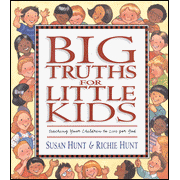
(16) Big Truth For Little Kids: Teaching Your Children to Live For God By Susan Hunt & Richard Hunt. Wheaton: Crossway, 1999. Product description: Your children are a blessing from God. A gift that brings an abundance of joy and the privilege of teaching them God’s ways. When they’re young their potential to learn is amazing. And because actions and beliefs go hand in hand, the lessons they learn from you now will shape their lives forever. How we live is based upon what we believe. Susan Hunt wants to help parents systematically teach their kids the basic truths of faith so that they live for the Lord. This wonderful book, with its easy-to-use story format, can help you teach the basic truths of the Christian faith to your children. Each lesson in this devotional for children begins with simple questions and answers about a biblical principle and is followed by a story of two youngsters, Caleb and Cassie, that portrays how that truth can be applied. You’re children will learn right along with Caleb and Cassie that God’s ways are best–and that even as kids, they can live for His glory every day. Recommended for ages 5 to 9.

(17) Big Truths for Young Hearts: Teaching and Learning the Greatness of God By Bruce A. Ware, Wheaton: Crossway, 2009. Product description: Big Truths for Young Hearts encourages and enables parents of children 6 to14 years of age to teach through the whole of systematic theology in an understandable, chapter-a-day format. Parents can teach their children the great truths of the faith and shape their worldviews early, based on these truths. The book covers ten topics of systematic theology, devoting several brief chapters to each subject, making it possible for parents to read one chapter per day with their children. With this non-intimidating format, parents will be emboldened to be their children’s primary faith trainers – and perhaps learn a few things themselves along the way.

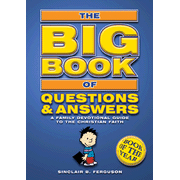
(18) The Big Book of Questions and Answers By Sinclair B. Ferguson, Genies House, Fearn, Tain, Ross-shire, Scotland: Christian Focus, 1997. Product Description: Questions! Questions! Questions! Children are full of them. Where did I come from? What is God like? Is there only one God? This book is a family guide to the Christian Faith that will help you to answer these questions. This is a book for families to discover the key doctrines of Christianity in a way that stimulates discussion and helps children want to know more. Each page is set out in a clear child friendly way with A Question, The Answer, A Memory Verse, Reading Time, Talking Time, Action Time and Prayer Time. Ages 5-10.

(19) The Big Book of Questions and Answers about Jesus By Sinclair B. Ferguson, Genies House, Fearn, Tain, Ross-shire, Scotland: Christian Focus, 2000. Product Description: Following on from the success of the original Big Book of Questions and Answers, this book tackles the many questions that children have about Jesus, including: What was so special about Jesus? Why did Jesus heal sick people? Why did Jesus have to die? How can I give my life to Jesus? An invaluable tool for introducing children to Jesus and helping them to get to know Him better, in an enjoyable and interactive way. Recommended for ages 5 to 10.

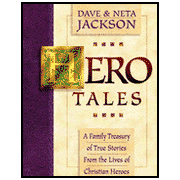
(20) Hero Tales: A Family Treasury of True Stories from the Lives of Christian Heroes, Volume 1 By David and Neta Jackson. Minneapolis: Bethany, 2005. Product description:  Drawn from the lives of fifteen key Christian heroes, Hero Tales is a beautifully illustrated treasury of forty-five exciting and educational readings designed to help foster Christian character qualities in families with elementary-age children. This inspiring collection presents a short biography and three true stories for each hero, including: Amy Carmichael, Martin Luther, Dwight L. Moody, Samuel Morris, Harriet Tubman, William Tyndale and John Wesley. Whether read together at family devotions or alone, Hero Tales is an ideal way to acquaint children ages six to twelve with historically important Christians while imparting valuable lessons.

(21) Hero Tales: A Family Treasury of True Stories from the Lives of Christian Heroes, Volume 2 By David and Neta Jackson. Minneapolis: Bethany, 2005. Product description:  Drawn from the lives of fifteen key Christian heroes, Hero Tales is a beautifully illustrated treasury of forty-five exciting and educational readings designed to help foster Christian character qualities in families with elementary-age children. This inspiring collection presents a short biography and three true stories for each hero, including: Dietrich Bonhoeffer, Eric Liddell, John Bunyan, Jim Elliot, Florence Nightingale, Amanda Smith, John Newton, and Corrie ten Boom. Whether read together at family devotions or alone, Hero Tales is an ideal way to acquaint children ages six to twelve with historically important Christians while imparting valuable lessons.

(22) Hero Tales: A Family Treasury of True Stories from the Lives of Christian Heroes, Volume 3 By David and Neta Jackson. Minneapolis: Bethany, 2005. Product description: Drawn from the lives of fifteen key Christian heroes, Hero Tales: Volume III is a beautifully illustrated treasury of forty-five exciting and educational readings designed to help foster Christian character qualities in families with elementary-age children. This inspiring collection presents a short biography and three true stories for each hero, including: Billy Graham, Luis Palau, Mother Theresa, Brother Andrew, Lottie Moon, and Jonathan & Rosalind Goforrth. Read together at family devotions or alone, Hero Tales: Volume III is an ideal way to introduce children ages six to twelve to historically important Christians while imparting valuable lessons.

(23) Hero Tales: A Family Treasury of True Stories from the Lives of Christian Heroes, Volume 4 By David and Neta Jackson. Minneapolis: Bethany, 2005. Product description: Drawn from the lives of fifteen key Christian heroes, Hero Tales: Volume IV is a beautifully illustrated treasury of forty-five exciting and educational readings designed to help foster Christian character qualities in families with elementary-age children. This inspiring collection presents a short biography and three true stories for each hero, including: C. S. Lewis, Joy Ridderhof, Ricky and Sherialyn Byrdsong, William J. Seymour, John and Betty Stam, and William Wilberforce Whether read together at family devotions or alone, Hero Tales: Volume IV is an ideal way to introduce children ages six to twelve to historically important Christians while imparting valuable lessons.

(24-25) Bible Doctrine For Older Children, Books A & B, By James W. Beeke. Grand Rapids: Reformation Heritage/Soli Deo Gloria, 2009. Product description: Bible Doctrine for Older Children is a two volume series consisting of twenty chapter which contain simple explanations of all major biblical doctrines. Book A contains chapters 1-10 and Book B chapters 11-20. The explanations were written for children eleven years of age and older. This series contains more than 150 stories and illustrations to help explain the doctrinal concepts being taught. These books were written for home, personal, or family reading; school Bible doctrine teaching; or church catechetical instruction. Ages 9 and up.

12 Benefits of Attending Church Each Week: By Dr. David P Craig

(1) It shows respect for the best day of the week – the Lord’s Day, the day on which Jesus rose from the dead.

(2) It is a great step toward spiritual growth and Christ-likeness.

(3) It makes you a covenant keeper in your commitment to God and to the local church where you are a member.

(4) It demonstrates your strong support for the future of your church.

(5) It is an excellent example and witness to unbelievers when they see your consistency in church attendance.

(6) It is an encouragement to others in the body when they see how changed and energized you are through Christ and fellowship in His body.

(7) It is an encouragement to the leaders and workers in the church who serve you.

(8) It encourages and pleases God the Holy Spirit who has equipped us to serve in His church.

(9) It provides hope and strength to press on for Christ throughout the week.

(10) It shows a spirit of submission and obedience to God.

(11) It shows love and affection for God by wanting to spend the first day of the week with Him.

(12) It makes the family of God more effective and complete when all the members of the family are present.

(Not to mention all the Biblical references to giving, hearing the preaching of the Word, baptism, participating in the ordinances of baptism and the Lord’s Supper, fellowship, using your spiritual gifts, making disciples, etc.)

Also this is perhaps one of the best reasons I’ve heard from Dr. Paul Tripp: “Why should you go to church this morning? Because corporate worship is designed to counteract the false gospels you hear every day with the true gospel of the Lord Jesus Christ.”