
The 25th Anniversary Sermon, Delivered at Tenth Presbyterian Church in Philadelphia on May 23, 1993, by Dr. James Montgomery Boice
But as for you, continue in what you have learned and have become convinced of, because you know those from whom you learned it, and how from infancy you have known the holy Scriptures, which are able to make you wise for salvation through faith in Christ Jesus— 2 Timothy 3:14, 15.
On a morning like this it is a temptation to reminisce over the quarter century of ministry I have had at Tenth Presbyterian Church. And I would do it, except for the fact that others have been doing it all weekend and in a much more complimentary way than I could myself— at least if I were to be honest. I could reveal a lot of things that the others are not aware of, including the disappointments and failures. But that would spoil things, and it is not what this weekend is about. It is certainly not what a worship service such as this should accomplish.
I remember that when John, the author of Revelation, fell at the feet of the angel of God to worship him, the angel replied, “Do not do it! I am a fellow servant with you and with your brothers who hold to the testimony of Jesus. Worship God!” (Revelation 19:10). So I remind you and myself that this is what we are about this morning.
And I direct you to God’s Word.
Our text is 2 Timothy 3:14,15. “But as for you, continue in what you have learned and have become convinced of, because you know those from whom you learned it, and how from infancy you have known the holy Scriptures, which are able to make you wise for salvation through faith in Christ Jesus.”
The Priority of God’s Word
I want to talk about the most important thing that Tenth Presbyterian Church has stood for over the one hundred sixty-four years of its distinguished history, and that is the priority of the Bible as the Word of God. That priority has been both doctrinal and practical. It is doctrinal because we believe the Bible to be the Word of God, the only infallible rule of faith and practice, and it is practical because we believe the Bible must be the treasure most valued and attended to in the church’s life.
This has been a factor from the very beginning— from the days of Thomas A. McAuley, the first pastor (1829- 1833), and Henry Augustus Boardman, the first minister to serve a long pastorate (1833-1876). But it is best illustrated by an incident from the early days of the ministry of Donald Grey Barnhouse (1927-1960), who had a profound and personal influence on my own idea of what the ministry should be.
A week or two after Barnhouse became pastor of Tenth Church, he entered the pulpit one Sunday morning and opened the great pulpit Bible to a point near the middle, where he then placed his sermon notes, his Bible and a hymn book. As he looked down he noticed that the words on the pages of the Bible were part of a curse upon those nations that do not know God. It occurred to him that he would like to have before him a passage containing words of a great promise.
He opened the Bible to Isaiah 55:10, 11, which says, “As the rain and the snowcome down from heaven, and do not return to it without watering the earth and making it bud and flourish, so that it yields seed for the sower and bread for the eater, So is my word that goes out from my mouth: It will not return to me empty, but will accomplish what I desire and achieve the purpose for which I sent it.”
To his surprise he discovered that for decades his predecessors had apparently done the same thing. The edges of the Bible were worn in half circles curving inward from the bindings at that text, and the pages were torn and mended. As he later observed, those pages “containing the great fifty-fifth chapter of Isaiah and the preceding page with the fifty-third chapter of Isaiah concerning the Lord Jesus Christ as God’s Lamb, give mute evidence that the men who have stood in the pulpit of Tenth Church for more than a century were men of the Living Word and the written Word.” (Donald Grey Barnhouse, “Isaiah 55:11” in Holding Forth the Word: 1927-1952. Manuscript Collection of the Tenth Presbyterian Church).
Later Barnhouse discovered that there was another section of the Bible that was similarly worn. It was the great psalm of the Bible, Psalm 119. Evidently, his predecessors, finding it difficult to keep their notes on the Isaiah pages, looked for another passage that would remind them of the power and priority of God’s Word.
Barnhouse told this story in a memorial booklet marking the twenty-fifth anniversary of his pastorate at Tenth Church, concluding this way: “It is my prayer that no man shall ever stand in this pulpit as long as time shall last who does not desire to have all that he does based upon this Book. For this Book does not contain the Word of God, it is the Word of God. And though we may preach the Word with all the stammering limitations of our human nature, the grace of God does the miracle of the ministry, and though human lips speak the divine Word, and the hearts of the people are refreshed. There is no other explanation for the continuing power of a church that is poorly located, that is without endowment, but which continues to draw men and women to the capacity of its seating arrangements, morning and evening, summer and winter, and which sends its sons and daughters by the score to preach the unsearchable riches of Christ throughout the world.” (Ibid).
The Inerrancy of God’s Word
About ten years into my pastorate, at the end of 1977 and the beginning of 1978, I helped start an organization that was also concerned with the priority of the Word of God but which focused its efforts on the important matter we perceived to be under attack at that time, namely, the Bible’s inerrancy. Our organization was called the International Council on Biblical Inerrancy, and it had within it such outstanding evangelical leaders as Francis Schaeffer, J. I. Packer, A. Wetherell Johnson, R. C. Sproul, John Gerstner, Roger Nicole and many others. It had as its purpose the task of “elucidating, vindicating and applying the doctrine of biblical inerrancy as an essential element for the authority of Scripture and a necessity for the health of the church of God.”
In the 1970s the evangelical church was drifting from its roots, and professors in prominent evangelical institutions were teaching that the Bible contains errors of historical and scientific fact but that it does not matter that it does. We believed that it does matter and tackled this deviation head on.
We held three gatherings of prominent evangelical scholars to hammer out three documents of “affirmation and denial.” They became nearly creedal in some quarters. The first was on inerrancy itself (“The Chicago Statement on Biblical Inerrancy”), the second on principles of interpretation (“The Chicago Statement on Biblical Hermeneutics”), and the third on application (“The Chicago Statement on the Application of the Bible to Contemporary Issues”). We also held two large lay conferences, the first in San Diego in the spring of 1982 and the second in Washington in the fall of 1988.
In the early days we were often asked why inerrancy was important since “it should be enough merely to believe that the Bible is trustworthy in areas of faith and morals.” But it is not that simple. To begin with, the Bible is an historical book and Christianity is an historical religion. So if the Bible errs in matters of historical fact, Christianity itself is affected. One hundred years of German “historical Jesus” research proved that. The scholars involved in this movement wanted to separate the Christ of faith from the Jesus of history, finding out who the true Jesus was. But as Albert Schweitzer proved in his classic study, The Quest for the Historical Jesus, all they succeeded in doing was making Jesus into the scholars’ own images. Rationalists produced a rationalist Jesus, socialists a socialistic Jesus, moralists a moralistic Jesus, and so on. The attempt to have Christianity without its historical base was a failure.
Besides, if part of the Bible is true and part is not, who is to tell us what the true parts are? There are only two answers to that question. Either we must make the decision ourselves, in which case the truth becomes subjective.
The thing that is true becomes merely what appeals to me. Or else, it is the scholar who tells us what we can believe and what we cannot believe. We argued that God has not left us either to our own whims or to the whims of scholars. He has given us a reliable book that we can read and understand ourselves.
The inerrancy of the Bible is what I wrestled with during my seminary years. It is not that I questioned it. Anyone who had been raised with the teaching of Donald Grey Barnhouse and others like him could hardly doubt that God has given us an inerrant revelation. My problem was that my teachers did not believe this, and much of what I was hearing in the classroom was meant to reveal the Bible’s errors so students would not depend on it too deeply. What was a student to do? The professors seemed to have all the facts. How were professors to be challenged when they argued that recent scholarship has shown that the old simplistic views about the Bible being inerrant are no longer valid and we have to admit that the Bible is filled with errors?
As I worked on this I discovered some interesting things. First, the problems imagined to be in the Bible were hardly new problems. For the most part they were known centuries ago, even by such ancient theologians as Saint Augustine and Saint Jerome. They debated problems of apparent contradictions in their correspondence.
I also discovered that results of sound scholarship have not tended to uncover more and more problems, as my professors were suggesting, still less disclose more and more “errors.” Rather they have tended to resolve problems and show that what were once thought to be errors are not errors at all. Let me give some illustrations.
Second Kings 15:29 speaks of a king of Assyria named Tiglath-Pileser. He is said to have conquered the Israelites of the northern kingdom and to have taken many of them into captivity. A generation ago liberal scholars were saying that this king never existed, because they had no independent record of him, and that the fall of the northern kingdom to Assyria was mythology. But then archaeologists excavated Tiglath-Pileser’s capital city and found his name pressed into bricks which read: “I, Tiglath-Pileser, king of Assyria, . . . am a conqueror from the Great Sea which is in the country of Amurru as far as the Great Sea which is in the Nairi country,” that is, the Mediterranean. In other words, archaeologists have found evidence not only of Tiglath-Pileser’s existence, but even of the very campaign 2 Kings describes. The English reader can find accounts of these battles in James B. Prichard’s Ancient Near Eastern Texts Relating to the Old Testament.
Here is another example. A generation ago scholars were saying that Moses could not have written the Pentateuch, the first five books of the Old Testament, because, so the argument went, writing was not known in Moses day. That seemed irrefutable at the time because, if writing was not known in Moses day, Moses could not have known how to write, and if Moses did not know how to write, he could not have written the Pentateuch. But in this case, it was the underlying premise that was wrong. As it turns out, not only was writing known in Moses day, there were actually many written languages. Today we know of at least six different languages from the very area of the world in which Moses led the Israelites for forty years.
My favorite example is a personal one. At the end of 1974 Time magazine ran a cover story entitled “How True Is the Bible?” It surveyed the liberal attacks on the Bible’s reliability and concluded, somewhat as I did after my study of what the evidence in this area has proved, that the credibility of the Bible has actually grown in recent decades. Time wrote,
The breadth, sophistication and diversity of all this biblical investigation are impressive, but it begs a question: Has it made the Bible more credible or less? Literalists who feel the ground move when a verse is challenged would have to say that credibility has suffered. Doubt has been sown, faith is in jeopardy. But believers who expect something else from the Bible may well conclude that its credibility has been enhanced. After more than two centuries of facing the heaviest scientific guns that could be brought to bear, the Bible has survived— and is perhaps the better for the siege. Even on the critics’ own terms— historical fact— the Scriptures seem more acceptable now than they did when the rationalists began the attack (Time, December 30, 1974, p. 41).
I found it interesting that the Bible was being defended by a secular magazine. But I said to myself, “I’m going to have to wait two weeks to see the letters that come in reaction to this, because I can’t believe that the liberal scholars will ignore it.” Sure enough. Two weeks later there were two strong letters from two of the most prominent critics: Martin Marty, a regular writer for the Christian Century, and Harvey Cox of the Harvard Divinity School. One of them ended— I do not remember which one— “The faith of your Bible believers is the opposite of biblical faith!”
I was offended. I said to myself, “That’s terribly unfair. Time has presented a balanced article. It hasn’t even claimed inerrancy, only historical reliability, and these men can’t even stand to have the Bible called reliable.” I got so angry, I had to stop and pray. I think the Lord answered me by saying, “Don’t worry about it. It’s not bothering me, why should it bother you. Go on and read the magazine.”
So I did. The letters were on page 38, and I read on to page 65, which turned out to be the section on science. On that page there was a report of an archeological expedition in the southern area of the Sinai Peninsula under the direction of a Jewish archeologist named Beno Rothenberg. He had been working at a place called “Solomon’s mines” because an ancient smelting operation had been there, and he wanted to find out if the area had really been worked by Jews, and who had begun it.
Rothenberg discovered that the area had been occupied by Jewish workmen at the time of Solomon. So it may truly have been where Solomon melted down his gold for the temple. But then he pushed back through the strata at the site and discovered that this ancient foundry had been developed originally by the Midianites. Midianites? Time knew that few of its readers would have any idea who the Midianites were. So the writer explained, “. . . the Midianites, a little-known people who dwelled in the area and are identified in Genesis as the first metal workers” (Time, January 13, 1975, p. 65).
At that point I began to understand why the Lord was urging me to go on and read the magazine. Because of all the places where that little bit of Bible verification could have appeared, it was in the very issue in which the liberal scholars were objecting, “The faith of your Bible believers is the opposite of biblical faith.”
The Holy Spirit really does have a sense of humor.
The Sufficiency of God’s Word
I want to say here, however, that important as I believe the matter of inerrancy is— and I do believe it. I believe churches will flounder and die if this is forgotten. Important as this is, I do not think it is the most critical issue about the Bible facing the American church today. The issue I would pinpoint today is the sufficiency of God’s Word.
I would ask the questions: Do we really believe that God has given us what we need in this book? Or do we think we have to supplement the Bible with other man-made things? Do we need sociological techniques to do evangelism? Do we need psychology and psychiatry for Christian growth? Do we need extra-biblical signs or miracles for guidance? Is the Bible’s teaching adequate for achieving social progress and reform?
The reason I believe this is important is that it is possible to believe that the Bible is the inerrant Word of God, the only infallible rule of faith and practice, and yet neglect it and effectually repudiate it just because we think that it is not great enough for today’s tasks and that other things need to be brought in to supplement the revelation. I think this is exactly what many evangelicals and evangelical churches are doing.
Have you ever realized that this is the point of each of the three great passages about Scripture that were read this morning. These three passages (Psalm 19, Matthew 4 and 2 Timothy 3) are probably the three most important passages in the Bible about the nature of the Word of God. The first contrasts it with God’s general revelation. The second shows how Jesus used the Bible to overcome temptation. The third is Paul’s advice to Timothy in view of the terrible times he saw coming. But notice. Each passage stresses that it is the Word of God alone that is sufficient for these challenges.
Psalm 19 speaks of the wonderful revelation of God in nature. But then it continues,
The law of the Lord is perfect, reviving the soul.
The statues of the Lord are trustworthy. making wise the simple.
The precepts of the Lord are right, giving joy to the heart.
The commands of the Lord are radiant, giving light to the eyes.
The fear of the Lord is pure, enduring forever.
The ordinances of the Lord are sure and altogether righteous.
They are more precious than gold, than much pure gold;
They are sweeter than honey, than honey from the comb.
By them is your servant warned, and in keeping them there is great reward. (vv. 7-11)
The revelation of God in nature is wonderful, but it is limited. By contrast, the revelation of God in Scripture is perfect, trustworthy, right, radiant, pure, sure, precious, sweet and rewarding. By what language would it be possible for the psalmist more effectively to emphasize the complete and utter sufficiency of God’s Word?
In Matthew 4 we discover the sufficiency of the Word of God in times of temptation, for it was by quotations from Deuteronomy 8:3; 6:16 and 6:13 that Jesus withstood Satan. Jesus did not reason with Satan without Scripture. He did not resort to supernatural power or ask God for some special sign or intervention. He knew the Bible, stood on it and used it forcefully.
Second Timothy 3 is the same. Paul is warning his young protege against the terrible times coming in the last days. They will be days like ours, in which “people will be lovers of themselves, lovers of money, boastful, proud, abusive, disobedient to their parents, ungrateful, unholy, without love, unforgiving, slanderous, without self-control, brutal, not lovers of the good, treacherous, rash, conceited, lovers of pleasure rather than lovers of God.” And if that is not terrible enough, they will be days in which these vices will be found even in the churches.
For they will be found among those “having a form of godliness but denying its power” (vv. 1-5).
What is Timothy to do when such days come? Surely Paul must have some secret new weapon, some unexpected trick for him to use. No, that is not what we find. Instead of something new, we find Paul recommending what Timothy has had all along— the Word of God— because the Bible is sufficient even for terrible times like these. “But as for you, continue in what you have learned and have become convinced of, because you know those from whom you learned it, and how from infancy you have known the holy Scriptures, which are able to make you wise for salvation through faith in Christ Jesus” (2 Timothy 3:12, 15).
Sufficient in All Areas
But it is not only that the Word of God is sufficient for all times, even times like ours. It is also sufficient in all areas, that is, it is able to do all we need it to do and are commissioned to do as Christians.
Let me list a few of these areas.
1. Evangelism. The Word of God is sufficient for evangelism. Indeed, it is the only thing that works in evangelism. Everything else— captivating music, personal testimonies, emotional appeals, even coming forward to make a commitment to Jesus Christ— all that is at best supplementary. And if it is used or depended upon apart from the faithful preaching and teaching of the Word of God, the “conversions” that result are spurious conversions, which is to say that those who respond do not actually become Christians. They become Christians in name only. The only way the Holy Spirit works to regenerate lost men and women is through the Word of God.
Peter said it: “You have been born again, not of perishable seed, but of imperishable, through the living and enduring word of God” (1 Peter 1:23).
2. Sanctification. I have been preaching on the book of Romans for seven years. I have discovered many interesting things in that time. But the most significant for me has been Paul’s approach to sanctification, which is not at all what we would expect or what many people today desire. When we think of sanctification today, most of us think of either one of two things. Either we think of a method (“Here are three steps to sanctification; do this and you will be holy”), or else we think of an experience (“You need a second work of grace, a baptism of the Holy Spirit,” or something). Paul’s approach is to know the Bible and its teaching about what has been done for us by God in our salvation.
Paul makes this clear in the sixth chapter where he says, “In the same way, count yourselves dead to sin but alive to God in Christ Jesus” (v. 11). This is the first time in the letter that Paul tells his readers to do something, and what they are to do is “count” or “reckon upon” the fact that God has done an irreversible work in their lives as a result of which they have died to sin (the verb is in the past tense, an aorist) and have been made alive to God in Christ Jesus. The only way they can understand what has happened to them is to know the Bible, which teaches them what has happened. But then, because they know it, they are to go on with God, acting on the basis of what has been done. In other words, they cannot go back to being what they were before. They are new creatures in Christ. So the only thing they can do is get on with living the Christian life. There is no way for them to go but forward.
That is the Bible’s approach to sanctification, and it has nothing to do with either a method or an experience. It has everything to do with knowing and living by the sufficient Word of God.
3. Guidance. Not long ago we had Phillip D. Jensen, the minister of St. Matthias Church in Sydney, Australia, with us for the Philadelphia Conferences on Reformed Theology. It was his first time in the United States, and it was my privilege to introduce him to American Christians this way. Mr. Jensen has written a book called The Last Word on Guidance whose sole point is that this “last word on guidance” is the Bible. That is what God has given us to indicate how we are to live and what we are to do to please him. All we need is in the Bible. So if there is something we want or think we need that is not in the Bible— what job we should take, who we should marry, where we should live— it doesn’t matter what we do as long as we are obeying what God teaches about living a godly life.
That doesn’t mean that God does not have a detailed plan for our lives. He does. He has a detailed plan for all things, ordering “whatsoever comes to pass,” as the Westminster Confession of Faith has it. But it does mean that we do not have to know this plan in advance and, indeed, cannot. What we can know and need to know is what God has told us in the Bible.
4. Social reform. The final area in which we need to be reminded that the Word of God is sufficient is for social renewal and reform. We are very concerned about this today and rightly so, because we live in a declining culture and we want to see the lordship of Jesus acknowledged and justice and true righteousness prevail. We want to see the poor relieved of bitter want and suffering. How is this to happen? I want to suggest that what is needed is not more government programs or increased emphasis on social work, but first and above all the teaching and practice of the Word of God.
Geneva under Calvin: A Case Study
I want to close with this important example, what happened in Geneva, Switzerland, in the sixteenth century through the ministry of John Calvin. In August of 1535 the Council of Two Hundred, which governed Geneva, voted to reject Catholicism and align the city with the Protestant Reformation. They had very little idea what that meant. Up to this point the city had been notorious for its riots, gambling, indecent dancing, drunkenness, adultery and other vices. People would literally run around the streets naked, singing indecent songs and blaspheming God. The people expected this state of affairs to continue, even after they had become Protestants, and the Council did not know what to do. The Council passed regulation after regulation designed to restrain vice and remedy the situation. Nothing they tried worked. Public discipline and morals continued their decline.
Calvin came to Geneva in August of 1536, a year after the change. He was practically ignored. He was not even paid the first year. Besides, as everybody knows, his first attempts to preach proved so unpopular that he was dismissed by the Council in early 1538, and went to Strasbourg. Calvin was happy in Strasbourg and had no desire to go back. When the situation got so bad in Geneva that public opinion turned to him again in desperation, he told his friend William Farel, “I should prefer a hundred other deaths than this cross on which I should have to die a thousand times a day.”
Nevertheless, driven by a sense of duty, Calvin returned to Geneva on September 13, 1541.
Calvin had no weapon but the Word of God. From the very first his emphasis had been on Bible teaching, and he returned to it now, picking up his exposition of Scripture at precisely the place he had left it three and a half years earlier. He preached from the Word every day, and under the power of that preaching the city began to change. As the Genevan people acquired knowledge of God’s Word and allowed it to influence their behavior, their city became almost a New Jerusalem from which the gospel spread to the rest of Europe, Great Britain and the New World.
Moreover, this change made other changes possible. One student of this historical period wrote,
Cleanliness was practically unknown in towns of his generation and epidemics were common and numerous. He moved the Council to make permanent regulations for establishing sanitary conditions and supervision of markets. Beggars were prohibited from the streets, but a hospital and poorhouse were provided and well conducted. Calvin labored zealously for the education of all classes and established the famous Academy, whose influence reached all parts of Europe and even to the British Isles. He urged the council to introduce the cloth and silk industry and thus laid the foundation for the temporal wealth of Geneva. This industry . . . proved especially successful in Geneva because Calvin, through the gospel, created within the individual the love of work, honesty, thrift and cooperation. He taught that capital was not an evil thing, but the blessed result of honest labor and that it could be used for the welfare of mankind. Countries under the influence of Calvinism were invariably connected with growing industry and wealth…It is no mere coincidence that religious and political liberty arose in those countries where Calvinism had penetrated most deeply (Marcellus Kik, Church and State: The Story of Two Kingdoms. New York: Thomas Nelson & Sons, 1963, p. 83. See pp. 71-85).
There has probably never been a clearer example of extensive moral and social reform than the transformation of Geneva under John Calvin, and it was accomplished almost entirely by the preaching of God’s Word.
Conclusion
I take you back to 2 Timothy. Paul encouraged Timothy to continue on the path of ministry he has been walking because “from infancy you have known the holy Scriptures, which are able to make you wise for salvation through faith in Christ Jesus.” Why is the Bible able to do that? It is because it is “God-breathed.” That is, it is the very Word of God and therefore carries with it the authority and power of God. Yes, and it is useful too. It is useful for “teaching, rebuking, correcting and training in righteousness, so that the man of God may be thoroughly equipped for every good work” (vv. 14-17).
That is exactly it. That is what we need. It is what everybody needs. And only the Word of God is sufficient for it.
Category: James Montgomery Boice

James Montgomery Boice on “The Return of Jesus Christ”
An Exposition of Matthew 24:29–35

“Immediately after the distress of those days ‘the sun will be darkened, and the moon will not give its light;the stars will fall from the sky, and the heavenly bodies will be shaken.’
“At that time the sign of the Son of Man will appear in the sky, and all the nations of the earth will mourn. They will see the Son of Man coming on the clouds of the sky, with power and great glory. And he will send his angels with a loud trumpet call, and they will gather his elect from the four winds, from one end of the heavens to the other.
“Now learn this lesson from the fig tree: As soon as its twigs get tender and its leaves come out, you know that summer is near. Even so, when you see all these things, you know that it is near, right at the door. I tell you the truth, this generation will certainly not pass away until all these things have happened. Heaven and earth will pass away, but my words will never pass away.”
I do not think there is any great difficulty understanding what Jesus says in the Olivet Discourse up to verse 28 of chapter 24. He has warned the disciples about disruptive world events that will not be signs of his return, and he has predicted the fall of Jerusalem, which, though an exceptionally traumatic event, would be merely another example of the kind of tragedies that will occur throughout history. But the easy part is over. Now we come to the part of the discourse that has given the most trouble to Bible students and commentators.
Was Jesus Mistaken?
The difficulties mostly have to do with timing. Jesus has spoken of the destruction of Jerusalem, which occurred in a.d. 70 by the Roman armies under the command of Titus. But then he continues, “Immediately after the distress of those days ‘the sun will be darkened, and the moon will not give its light; the stars will fall from the sky, and the heavenly bodies will be shaken’ ” (v. 29). This could refer to something in the future, but if that is the case, why did Jesus use the word immediately, as in “immediately after the distress of those days”? Immediately should mean close in time to the destruction of Jerusalem. But if these portents are tied to the destruction of Jerusalem, we must admit candidly that they do not seem to have happened.
Nor is that all. The next verses begin “at that time” and go on to describe how the Son of Man will come in the clouds, with power and great glory, accompanied by the blast of a trumpet and the appearance of angels to gather the elect from the far corners of the earth. Again, that could be future. Most people have assumed it is. But if that is the case, why does Jesus say, “at that time”? And if he meant what he said, that he would return at the time of or soon after the destruction of Jerusalem, what he predicted did not happen.
We have a nearly identical problem in verse 33, where Jesus says, “When you see all these things, you know that it is near, right at the door.” His second coming cannot be the sign of itself. “These things” must refer to things that will precede his return. But what can they be? If they are the tragedies leading up to the fall of Jerusalem, the second coming of the Lord did not follow those events, and Jesus would seem to have been mistaken.
The most apparent and (for some) the worst problem of all is Jesus’ solemn affirmation: “I tell you the truth, this generation will certainly not pass away until all these things have happened” (v. 34). What can “this generation” be but the generation then living? Yet if that is what the words mean, Jesus must have been wrong, since many generations have come and gone since that time and Jesus has still not returned. The acclaimed English philosopher and social critic Bertrand Russell said Jesus’ teaching about his return was one reason why he could not be a Christian. “He certainly thought that his second coming would occur in clouds of glory before the death of all the people who were living at that time,” wrote Russell. But he added, “In that respect, clearly he was not so wise as some other people have been, and he was certainly not superlatively wise.” (Bertrand Russell, Why I Am Not a Christian: And Other Essays on Religion and Related Subjects, ed. Paul Edwards [New York: Simon & Schuster, 1957], 16–17).
Attempts at a Solution
There are two easy ways to solve these problems, but they have not been accepted by all commentators.
First, we can place all these events together at one point in time and locate that point at the end of history. One advantage of this view is that we can take the time references literally. The fall of Jerusalem, the signs in the sky, and the return of Jesus occur in tight chronological sequence. All are yet future, and the fall of Jerusalem fits events outlined in other biblical books such as Revelation. This is an understanding common among dispensationalists, for whom the distress of Jerusalem is linked to the great tribulation and precedes the battle of Armageddon and the subsequent reign of Jesus Christ on earth for a thousand years, the millennium. In this view, “this generation” refers to the generation living at the time of the final attack on Jerusalem or is understood to mean “this race,” meaning that the Jews will not cease to exist as a race until this happens.
The main reason many people have not been persuaded by this handling of the details of Matthew 24 is that they believe verses 15–22 describe the destruction of Jerusalem by the Romans in a.d. 70. But they also have a problem with “this generation.” Most commentators believe this can hardly mean anything other than the generation living at the time Jesus spoke these words.
The other easy way to solve the problem of the time references in Matthew 24 is to put these events together but to place them in the first Christian century in connection with the fall of Jerusalem to the Romans. In this view, the coming of Christ mentioned in verses 30 and 31 refers to his return in judgment on Jerusalem, and the signs of his coming are understood as Old Testament images of historical but earthshaking events. The “end of the age” (v. 3) means the end of the Jewish age, which is followed by the age of the church. This means that nearly everything in Matthew 24 and 25 is about God’s judgment on Jerusalem, even Jesus’ strong, reiterated warnings to watch and be ready for his return. The same is true for nearly the whole of the Book of Revelation. This view is known as preterism, which means “what has already taken place.” Preterism has been affirmed recently in a guarded way by R. C. Sproul, but it has a history of defenders going back quite a few years. One early proponent is J. Stuart Russell, on whose work Sproul largely depends (R. C. Sproul, The Last Days according to Jesus [Grand Rapids: Baker, 1998]; J. Stuart Russell, The Parousia: A Study of the New Testament Doctrine of Our Lord’s Second Coming [Grand Rapids: Baker, 1983]).
Why hasn’t everyone accepted this view? One obvious reason is that it is difficult to see how Christ’s coming on the clouds, with power and great glory, with the angels gathering his elect from the far corners of the earth, was fulfilled at the time of the destruction of Jerusalem.
There is this problem too—probably the most significant of all. If everything (or nearly everything) in these chapters is about the fall of Jerusalem, then the disciples’ question about the end of the age is not really answered, at least not as almost anyone, including the disciples, would have understood it. The chapters most Christians have always looked to for assurance of the Lord’s return and encouragement to be ready and watch for it are not about the Lord’s future return at all. In fact, Jesus has virtually nothing to say about his second coming. Nor do any of the other biblical writers, including the author of Revelation.
The Flow of the Chapter
How do we solve these difficulties? History suggests that we probably cannot, at least not to everyone’s satisfaction, since disagreements about this chapter have existed throughout church history. But let me try anyway, starting with the flow of thought in the chapter.
Verse 3. As I pointed out in the last study, Matthew 24 begins with the disciples’ two important questions: (1) “When will this happen?” and (2) “What will be the sign of your coming and of the end of the age?” (v. 3). The first question was about the destruction of Jerusalem, which Jesus had predicted, and the second was about his glorious return, which he had also predicted—two events, though the disciples probably held them together in their minds. Jesus began by answering the second: “What will be the sign of your coming and of the end of the age?”
Verses 4–14. The first thing he told them is that there will be many earth-shaking events that might be thought of as signs, but they will not be. The disciples were not to be troubled by them. They will include false messiahs, wars and rumors of wars, famines and earthquakes, persecutions, apostasy, and false prophets. These are “the beginnings of birth pains” (v. 8), but they are not signs of his return. This is because the gospel of the kingdom must be preached in the whole world before the end will come.
Verses 15–22. The next point Jesus makes is that there is going to be one particularly dreadful event, the destruction of Jerusalem, but even this will not be a sign of his return. The disciples should flee the city when they see these things beginning to happen, but this is still not the end.
Verses 23–28. At this point Jesus makes clear that the destruction of Jerusalem is only one example of the bad things that will happen to people in the course of world history. He does so by returning to what he said earlier about false messiahs. They will appear at this time, as at other times. They will not be true messiahs, and the disciples are not to be taken in by them. How will the disciples know that these pretenders are not the true Messiah? By the fact that they will appear in secret (“in the desert” or “in the inner rooms”), while Jesus’ appearance will be sudden, unannounced, and immediately visible to all, just like lightning that flashes suddenly and is seen at once by everyone.
Verses 29–35. This leads to Jesus’ specific teaching about the second coming. There will be signs in the sky, including “the sign of the Son of Man” (whatever that may be), a loud trumpet call, and the work of angels in gathering the elect from the far reaches of the earth. But the point of these “signs” is not that they will precede Jesus’ coming, as if they will be given to enable people to see them and get ready. On the contrary, they will coincide with Christ’s coming and will be sudden. If a person is not ready beforehand, there will be nothing he or she will be able to do when Jesus actually returns. Such a person will be lost.
Verses 36–51. In the last section of the chapter, Jesus stresses the suddenness of his return by a historical reference and several images. His coming will be like the flood in the days of Noah, or like a thief that enters a house at an unexpected time, or a master who suddenly returns home. Jesus’ servants must be ready since “the master of that servant will come on a day when he does not expect him and at an hour he is not aware of” (v. 50).
The Difficult Time References
So far so good. But what about the time references, the problem that has led some commentators to the dispensational or preterist positions? I would argue that these must be fitted to the other statements, namely, that distressful times are not signs of Christ’s second coming and that his coming will be so unexpected that no one, not even the angels in heaven nor Jesus himself, can say when it will be. Let’s take the references one at a time.
1. What do we do with the words “immediately after the distress of those days” (v. 29)? The answer is that “the distress of those days” must refer to all the many distressful times throughout history, though perhaps culminating in a time of unusual distress just prior to the Lord’s return. Certainly the earlier statements about false Christs, false prophets, and apostasy support what other Bible writers have to say about the end of history. In fact, when we read passages such as 2 Peter 3:3–13, we hear deliberate echoes of what Jesus taught in Matthew. And why not? It was from Jesus that Peter and the other writers learned it.
What about the sun being darkened, the moon failing to give light, and the stars falling from heaven? Although preterists rightly point out that this is common Old Testament imagery for any cataclysmic historical event—drawn from texts such as Isaiah 13:9–10; Ezekiel 32:7–8; Joel 2:30, 31; 3:15; Amos 8:9—it is also the case that words such as these occur in New Testament passages where they are clearly associated with Christ’s coming at the end of the age. D. A. Carson cites as examples texts such as Matthew 13:40–41; 16:27; 25:31; 1 Corinthians 15:52; 1 Thessalonians 4:14–17; 2 Thessalonians 1:7; 2:1–8; 2 Peter 3:10–12; Revelation 1:7 (D. A. Carson, “Matthew,” in The Expositor’s Bible Commentary, vol. 8, Matthew, Mark, Luke [Grand Rapids: Zondervan, 1984], 493).
Moreover, in the parallel passage in Luke 21, the reference to the sun, moon, and stars is prefaced by the prediction that “Jerusalem will be trampled on by the Gentiles until the times of the Gentiles are fulfilled” (v. 24). That must refer to the Gentile domination of Jerusalem from the time of its fall until at least the present age. But it is only after this that Jesus says he will appear the second time. Paul expresses similar ideas about the Gentile age in Romans 11:11–25.
2. “At that time the sign of the Son of Man will appear in the sky” (v. 30). I haven’t the faintest idea what the sign of the Son of Man is, nor should I. That is something only those who actually see it will know. But if what I have said about the word immediately is correct, this particular time reference is not difficult. It simply links the actual appearance of Jesus to the astronomical irregularities described in verse 29. At the end of the times of distress, which is all of human history, the sun, moon, and stars will be darkened, and at that time Jesus will appear in heaven with his holy angels. That is when the angels will gather the elect.
3. “When you see all these things” and “this generation will certainly not pass away until all these things have happened” (vv. 33–34). These two references go together because they are part of the same paragraph and occur one right after the other. There is a slight change of tone with verse 32. Jesus has spoken of his sudden return in glory, but now he is giving a lesson for those who will be living in the period between his first coming and his second. They are to learn from the fig tree, which signals summer by developing tender twigs and by putting out leaves. “All these things” are compared to those tender twigs and leaves, which means that the distressful things of verses 2–28 show that the Lord’s return is imminent, which it always is!
What about “this generation”? In this view it really is the generation living at the time Christ spoke these words, because that generation actually did see “all these things.”
(NOTE: There are three ways to understand “this generation.”
(1) It can be the generation then living, which is what I maintain.
(2) It might refer to the Jews or to “this kind of people,” the view of most dispensationalists.
(3) Or it can refer to the generation living at the end of history. John Broadus, like most modern commentators, argues that it must refer to the people living in Jesus’ day, though he still regards verses 29–31 as referring to the final, second coming of Christ. “All the things predicted in vv. 4–31 would occur before or in immediate connection with the destruction of Jerusalem. But like events might again occur in connection with another and greater coming of the Lord, and such seems evidently to be his meaning” (John A. Broadus, Commentary on Matthew [Grand Rapids: Kregel, 1990], 492).
William Hendriksen regards “this generation” as the Jews, and one reason he gives is that “things that will take place” are things spread out over the centuries, such as the preaching of the gospel throughout the whole world. The following section, which clearly describes the final return of Jesus, picks up on the coming in verses 29–31; hence, Jesus must be talking about a generation living at least at that time (William Hendriksen, New Testament Commentary: Exposition of the Gospel according to Matthew [Grand Rapids: Baker, 1985], 868–69).
They knew of many false Christs, heard of wars and rumors of wars, experienced famines and earthquakes, witnessed apostasy, and heard of false prophets. So has every generation since. Therefore, we have all seen everything we need to see or can see prior to Jesus’ return. We have nothing to look forward to except the second coming. The bottom line of this is that we need to be ready, because “no one knows about that day or hour” when the Lord will come (v. 36).
The Lessons to Be Drawn
Let me go back and review the lessons we should draw from the first thirty-five verses of Matthew 24. The coming of Christ and the end of the world are imminent, meaning that they can occur at any moment. Therefore, our present responsibilities must be:
1. To watch out that no one deceives us (vv. 4, 26). Jesus has a great deal to say about deception in this discourse. In fact, having warned against false Christs at the very beginning of the chapter, he returns to this same point after speaking of the fall of Jerusalem, saying, “If anyone says to you, ‘Look, here is the Christ!’ or ‘There he is!’ do not believe it. For false Christs and false prophets will appear and perform great signs and miracles to deceive even the elect—if that were possible” (vv. 23–24). He repeats this again in verse 26, where he warns against expecting to find the Christ “out in the desert” or “in the inner rooms.”
It would be possible to write a history of the church in terms of the errors that have been foisted upon it, sometimes from without but more often from within, and of how believers have either resisted such errors or have been taken in by them. We have deceivers today, but we are warned here not to be fooled by them.
2. To be settled even in times of war or threats of war (v. 6). This warning includes all political and historical events and is a reminder that the city of God is distinct from man’s city and will survive regardless of what happens in the world. We are not to be unduly encouraged by political events, nor unduly frightened by them. Charles Colson once wisely reminded the delegates to one of the Christian Booksellers conventions after the president of the United States had spoken and they were cheering wildly, “We must remember that the kingdom of God does not arrive on Air Force One.”
3. To stand firm to the end (v. 13). We speak of the perseverance of the saints, meaning that God perseveres with his people so that none of those he has elected to salvation will be lost. Jesus taught this clearly in John 10, saying, “My sheep listen to my voice; I know them, and they follow me. I give them eternal life, and they shall never perish; no one can snatch them out of my hand” (vv. 27–28). But while it is true that God perseveres with us, it is also true that we must persevere. That is what Jesus is speaking of here. He is encouraging us to keep on keeping on, since there is no promise of salvation for those who abandon the faith or deny Christ.
The apostle Paul certainly believed in and taught the security of every genuine believer, but he also wrote, “If we endure, we will also reign with him. If we disown him, he will also disown us” (2 Tim. 2:12). Those words seem to have been based on Jesus’ teaching in Matthew 10:32–33.
4. To preach the gospel throughout the world (v. 14). This is the chief task of the church in the present age. The followers of Christ will be persecuted, and the love of many will grow cold. But throughout the ages of church history, however long they may be, Christians must be strong, faithful, and determined in the task of carrying the gospel to the lost. In fact, this is the note on which the Gospel ends. Jesus’ last words to his disciples were, “Therefore go and make disciples of all nations, baptizing them in the name of the Father and of the Son and of the Holy Spirit, and teaching them to obey everything I have commanded you. And surely I am with you always, to the very end of the age” (Matt. 28:19–20).
As we read this chapter, rather than wondering about the specific moment when Jesus will return, we should be asking ourselves if we are ready for it, whenever it might be. The next section of the chapter warns us to be ready precisely because we do not know the time of Jesus’ return.
About the Author

James Montgomery Boice, Th.D., (July 7, 1938 – June 15, 2000) was a Reformed theologian, Bible teacher, and pastor of Tenth Presbyterian Church in Philadelphia from 1968 until his death. He is heard on The Bible Study Hour radio broadcast and was a well-known author and speaker in evangelical and Reformed circles. He also served as Chairman of the International Council on Biblical Inerrancy for over ten years and was a founding member of the Alliance of Confessing Evangelicals.James Boice was one of my favorite Bible teachers. Thankfully – many of his books and expositions of Scripture are still in print and more are becoming available. He was one of only a handful of reformed pastor/theologians that was premillennial in his eschatology (Steven J. Lawson, John MacArthur, Erwin W. Lutzer, S. Lewis Johnson, Rodney Stordtz, John Hannah and John Piper also come to mind). The sermon above was adapted from Chapter 56 in The Gospel of Matthew: The Triumph of the King, Matthew 18-28. Grand Rapids: Baker, 2006.
James M. Boice on When is Jesus Coming Back?
What The Bible Has To Say About The Future: Part 4 in a Series of 9 – “The Days of Noah”

If the Lord Jesus is coming back to this earth as He promised and as the prophets foretold, the most natural next question is: When is Jesus coming? This is not just a question for time-conscious, twenty-first century man, as though he more than others has a special concern for the timing or for the end of human history. It flows naturally from belief in Christ’s second coming itself and is, therefore, a question which has been asked by Christians ever since Christ first spoke of His return, elaborating on the Old Testament prophecies.
The question was in the minds of Christ’s disciples. Toward the end of Jesus’ three-year ministry, shortly before His crucifixion, the disciples asked Him, “Tell us, when will these things be, and what will be the sign of your coming and of the end of the age?” (Matthew 24:3). Part of Christ’s answer was that no one, not even Christ Himself, could know the precise moment at which the prophesied events would unfold. He said, “But concerning that day and hour no one knows, not even the angels of heaven, nor the Son, but the Father only” (Matthew 24:36). Later, after His resurrection, He gave a similar answer to an almost identical question. The disciples had asked, “Lord, will you at this time restore the kingdom to Israel?” Jesus said to them, “It is not for you to know times or seasons that the Father has fixed by his own authority” (Acts 1:6,7).
The disciples could not know. We cannot know. Still, this is not the whole story. For we can hardly fail to notice that when Jesus told the disciples that they could not know the time of His return, He nevertheless went on at some length to describe the conditions that would prevail in the world before He came again. These signs occupy at least two of the twenty-eight chapters of Matthew (24-25), one of the sixteen chapters of Mark (13), and one chapter of Luke (21). Moreover, in the last of these chapters a listing of some of the signs is followed by the challenge: “Now when these things begin to take place, straighten up and raise your heads, because your redemption is drawing near” (Luke 21:28).
Perhaps I can illustrate what Christ was saying by this illustration, borrowed from one of the unpublished writings of Dr. Donald Grey Barnhouse. Suppose a Shakespearean scholar enters a theater one evening not knowing what masterpiece of Shakespeare is to be presented. Before the curtain goes up, he is taken behind the scenes. On stage is a castle with ramparts looking out over a wooded countryside. At once he knows that he will not see Othello, which is set in Venice, not Julius Caesar, which begins with a street scene in Rome. He knows that he not see Macbeth; for although there is a castle scene in Macbeth, the play opens not with the castle but with the witches gathered around their caldron. Finally, our drama critic notices two soldiers with shields bearing the arms of the king of Denmark. He sees two other actors dressed up as a king and queen. There is an actor who is supposed to be a ghost. Now no one has to tell the critic what he will see, for he knows it will be Hamlet.
In the same way today, you and I who are Christians sit in the theater of world events awaiting the opening of God’s apocalyptic drama. We don not know when the play is to start, but, like the drama critic, we know more about it than many. Many stare at the future as at a curtain. For them the future is veiled because they do not have the knowledge of the plan of God. Nor can they go behind curtain where the scene is being set. The Christian is not left in such ignorance. We see behind the scenes. Thus, while it is true that we do not know the precise moment at which the play will begin, we do know the play itself and can begin to sense it beginning as we see the actors starting to take their proper places on the great world stage.
We will understand Christ’s remarks in this light when we realize that they were intended to be indefinite enough to keep anyone from self-satisfaction or complacency but precise enough to encourage Christians to examine history, asking whether the conditions of the Lord’s return may not be entering into their final stages through the developments of their lifetime.
The Days of Noah
But how are we to do this? Where should we begin? One answer to these questions is in Matthew 24, in the verses immediately following Jesus’s statement that no one knows the precise day or hour of His return. These verses contain a reference to the days of Noah, and the point is that the terrible moral conditions that prevailed on the earth just before the flood in Noah’s day will be repeated prior to Christ’s return and the ensuing judgment upon men and nations.
[Note: It might be argued that the emphasis of Matthew 24 is on the sudden and unexpected nature of Christ’s return rather than on the conditions that will prevail at that time. This is partly correct. Certainly Jesus did stress the suddenness of His return: “For as the lightning comes from the east and shines as far as the west, so will be the coming of the Son of Man” (v.27); “Therefore, stay awake, for you do not know on what day your Lord is coming” (v. 42). But that is not the sole message of these verses. And it does not negate the position taken here. Another prominent theme in this chapter is unbelief both in Noah’s day and in the day of Christ’s second coming, and unbelief in itself would lead to the conditions recorded. It may also be noted that the view that conditions of Noah’s day will be repeated before Christ’s return is reinforced by other New Testament passages which speak in similar terms of those days (e.g., 1 Tim. 4:1-4; 2 Tim. 3:1-7; 2 Pet. 2:4-9). Jesus stated elsewhere that conditions before His return would be similar to “the days of Lot” in Sodom, which was noted for its sexual perversions and excesses (Luke 17:28-30).
“For as were the days of Noah, so will be the coming of the Son of Man. For as in those days before the flood they were eating and drinking, marrying and giving in marriage, until the day when Noah entered the ark, and they were unaware until the flood came and swept them all away, so will be the coming of the Son of Man” (Matthew 24:37-39).
(1) Since the days of Noah are described in Genesis 6, we may turn to that chapter and see precisely what Jesus was referring to. One characteristic of the days of Noah was a rapid increase in population: “And it came to pass, when men began to multiply on the face of the earth…” (v. 1). Naturally, an increase in population is in itself without moral overtones. It is neither good nor bad. And yet, men being what they are, it is also natural that an increase in population was then and may again be accompanied by moral decadence.
There is a parallel here with developments of our own age. The world’s population is now approximately three billion people [in 1972 – Now in 2013 it’s more in the ballpark of 6-7 billion!]. That figure is double what it was in 1900m and it is expected to double again by the year 2000 or earlier [It has doubled again since 1972]. With the rapid increase in the world’s population there has been an accompanying increase in suffering, particularly in the area of hunger and malnutrition and related diseases. Some experts predict worldwide famine by the year 1985 [there have been and continue to be famines around the globe – malnutrition and starvation is the number one cause of death in the world today]. Another indication of this same general trend is that the movements of world history today seem to be less under the control of individual political leaders than of the mass movements of nationalism, ethnic consciousness, labor, and consumer activity.
We do not want to make the mistake of imagining that, because we have had a sharp increase in the world’s population in recent years, this is proof in itself that the Lord’s return is imminent. We are to look for trends in the history of our times that may be leading up to His return not for events that foretell it precisely. This is only one trend. Nevertheless, we can hardly overlook the fact that the rapid increase of the world’s population in our day has assumed a scale never before duplicated in known history and has caused even secular observers of the world scene to speak in apocalyptic terms when describing it.
(2) The days of Noah were also characterized by an unprecedented accumulation of knowledge. Genesis 4 speaks of the construction of cities, of developments in metallurgy, the arts, and other sciences. If we are to judge by the size of the ark itself — about 450 feet long with a beam of 75 feet, the size of many modern ocean liners — there was also considerable engineering knowledge and skill coupled with an ability to construct the objects designed. This knowledge contributed to a great indulgence in luxury, as it has for many in our day. It was not to the moral advantage of the age.
(3) In addition to the increases in population, knowledge, and luxury, there was also a rapid acceleration of vice and lawlessness. The account of Genesis says “The LORD saw that the wickedness of man was great on the earth, and that every intention of the thoughts of his heart was only evil continually…Now the earth was corrupt in God’s sight, and the earth was filled with violence. And God saw the earth, and behold, it was corrupt, for all flesh had corrupted their way on the earth” (Genesis 6:5, 11-12). Such wickedness was the cause of the great judgment that befell the earth in Noah’s time and was a primary basis for Christ’s warning that the conditions of Noah’s day would be repeated.
One picture that emerges from this description of wickedness in the early chapters of Genesis is of a world characterized by crime. We too are experiencing this. During the 1960’s, crime in the United States rose 148 percent, while arrests of persons under eighteen nearly doubled. In 1969, the number of reported crimes was 4,989,700, which made the crime rate 2,471 per 100,000 persons’ this compares to 2,234 one year earlier . An average of 9 major crimes per minute were committed during the same period [I shudder to think what the statistics are now in 2013!].
In New York City in 1971, the FBI reported an increase in crime of 11 percent, while homicides in the city increased 30 percent. In 1971 New York City, with a population of only 8 million persons, recorded more crimes than England, Scotland, Wales, Ireland, Switzerland, Spain, Sweden, the Netherlands, Norway, and Denmark combined. In that city there are over 300,000 alcoholics, affecting the lives of 1,500,000 people and costing more than 1 billion dollars annually. The loss approaches 2 billion dollars for the upward of 100,000 hard-core heroin addicts, who must continually steal to support their habit.
In Los Angeles crime has increased 60 percent in 6 years, or 7 times faster than the population of the city.
More alarming even than these figures are the growing permissiveness and disrespect for law that have characterized the last decade. These trends have affected even the police, as various “crime probes” have indicated. Courts are affected. Among the forerunners in open defiance of laws that they consider unjust have been clergymen; there is no lack of others to follow or excel their example.
Another example of vice and lawlessness given in the opening chapters of Genesis is an increase in sexual perversions and crimes. This too is reflected in our society. In one recent year, for instance, forcible rape rose 17 percent. Divorce and remarriage are rampant. Many, including clergymen, speak in favor of “term” rather than lifetime marriages. Venereal disease is reaching epidemic proportions. In an ultimate gesture of moral degeneracy and defiance of all former norms, homosexuality and lesbianism have burst from the darkness of the back alleys onto the front pages of newspapers and to televised talk shows. Recently, a new religious order was founded by members of a so-called homosexual church named the “Church of the Beloved Disciple.” The order is called the Oblate Companions of St. John, who in turn is honored as “the disciple whom Jesus loved (John 21:20), thus implying a homosexual relationship between John and the Lord. Similar churches now exist in more than a dozen U.S. cities. Recently, national papers and magazines carried stories of the decision of delegates from nineteen United Churches of Christ in the San Francisco area to ordain a confessed homosexual to the gospel ministry [The increase of the homosexual population and influence in culture, politics, and the church is absolutely staggering from the time of Boice’s writing this in 1972].
Again, we dare not make the error of arguing that because these crimes and perversions are appearing to such alarming degrees in our age and society, therefore, the coming of Jesus Christ must occur immediately. We have no warrant for that. Nevertheless, we must ask: Are the alarming moral and economic conditions of our age not more than adequate fulfillment of the conditions that Jesus taught must prevail before His return? Are not our days equal in their vice to the days of Noah? Are they not equally lawless? If they are, then we dare not imagine that Christ cannot or will not appear. Nor dare we neglect His warning: “Therefore, stay awake, for you do not know on what day your Lord is coming” (Matthew 24:42).
Demonism
(4) There is one more characteristic of the times that is especially significant. That is the phenomenon of demonism. Genesis 6 relates that there was a time on earth when some of the angels who had fallen in Satan’s rebellion cohabited with the daughters of men, thereby producing a race of extraordinary beings, half demon and half human. This characteristic of the days of Noah is disclosed in the opening verses of the chapter:
“When men began to multiply on the face of the land and daughters were born to them, the sons of God saw that the daughters of man were attractive. And they took as their wives any they chose…The Nephilim were on the earth in those days, and also afterward, when the sons of God came in to the daughters of man and they bore children to them. These were the mighty men who were of old, the men of renown” (Genesis 6:1-2, 4).
Many who have studied this passage interpret it to mean that the godly descendants of Seth, called “sons of God,” married unbelievers [Note: That is the interpretation given to Genesis 6 by most of the older Protestant commentators–Calvin, Lange, Keil and Delitzch, Scofield and others. More recent interpreters–Simpson, Skinner, Von Rad, Pember, E.W. Bullinger, A.C. Gaebalein, DeHaan–favor the view that the marriages were between human women and demonic beings. Naturally there have been commentators on both sides f the issue at most periods of history]. That would explain the unusual corruption and decadence that existed in the world in Noah’s time and would make good sense of the passage. Nevertheless, there are several reasons why I feel this an inadequate interpretation of these verses.
First, the contrast in the verses is not between the descendants of Seth (both men and women) and the ungodly descendants of Cain. The contrast is between the daughters of men, meaning daughters of the whole human race, and the sons of God, whoever they may be.
Second, in the Old Testament, the phrase “sons of God” is never used of believers. The fact that believers become sons of God or children of God by faith in Jesus Christ is entirely a New Testament concept.
Third, the phrase “sons of God,” when it does occur in the Old Testament, seems to refer not to human beings who believe in God but to angels, that is, to beings not born of others like men but created directly by God. That would be the case with all angels, whether fallen or not. And it would explain the use of the phrase in a new way in New Testament times to refer to those who have experienced a new, direct birth by God through faith in Jesus Christ (Note: The one apparent exception to this usage, an application of the term to Adam in Luke 3:38, actually proves the point being made. For Adam alone, of all the Old Testament characters, was the result of the direct creative activity of God. It should be noted, however, that in the Greek text only phrase “of God” occurs).
The phrase “sons of God” occurs four times in the other parts of the Old Testament — three times in the Book of Job and once in Daniel. In Daniel the phrase was used by King Nebuchadnezzar after he looked into the burning furnace into which he had thrown the Hebrew captives, Shadrach, Meschach, and Abednego. He said, “But I see four men unbound, walking in the midst of the fire, and they are not hurt; and the appearance of the fourth is like a son of the gods” (Daniel 3:25). Nebuchadnezzar clearly meant that the fourth figure looked like an angel. In Job the phrase “the sons of God” occurs in two contexts. In chapter 38 God asked Job where he was at the beginning of creation “when the morning stars sang together, and all the sons of God shouted for joy” (Job 38:7). This is apparently a reference to the angels who witnessed the creation of the earth. In the first two chapters of Job we are twice told of a day when “the sons of God” appeared with Satan to present themselves before the Lord (Job 1:6; 2:1). It is in this sense that we must interpret the reference to “the sons of God” in Genesis.
The conclusive argument to this interpretation of Genesis 6 is that, historically, this was also the view held by the Jews before the time of Christ and expressed in various Jewish documents and apocalyptic literature. One outstanding example is in the book of Enoch, a pseudepigraphical work compiled during the time of the Maccabees or earlier.
And it came to pass when the children of men had multiplied that in those days were born unto them beautiful and comely daughters. And the angels, the children of heaven, saw and lusted after them, and said to one another: “Come let is choose us wives from among the children of men and beget us children” (1 Enoch 6:1,2).
After a description of how this happened and of the wickedness that resulted, the book then gives an account of the objection by the righteous angels.
They have gone to the daughters of men upon the earth, and have slept with the women, and have defiled them -selves, and revealed to them all kinds of sins. And the women have born giants, and the whole earth has thereby been filled with blood and unrighteousness. And now, behold, the souls of those who have died are crying and make their suit to the gates of heaven, and their lamentations have ascended; and cannot cease because of the lawless deeds which are wrought on the earth (1 Enoch 9:8-10).
An account of the punishment of the fallen angels and a brief reference to the flood follows.
This interpretation of Genesis 6 is also found in the writings of Josephus and Philo, in The Testament of the Twelve Patriarchs, and in the Septuagint, which renders the phrase “sons of God” as “angels of God.”
Moreover, the New Testament seems to support the view also in those few passages which link God’s punishment of certain fallen angels to the time of the flood. Thus Peter writes, “For if God did not spare angels when they sinned, but cast them into hell and committed them to chains of gloomy darkness to be kept until the judgment; if he did not spare the ancient world, but preserved Noah, a herald of righteousness, with seven others, when he brought a flood upon the world of the ungodly; then the Lord knows how to rescue the godly from trials, and to keep the unrighteous under punishment until the day of judgment” (2 Peter 2:4-5, 9 cf. Jude 6).
What shall we say about the duplication or the possibility of the duplication of such things in our day? At the very least, we see an extraordinary revival of spiritism, witchcraft, magic, and Satanism in this country and around the world. Many cities possess hundreds, if not thousands, of spiritualists and mediums. Stories of news interest, particularly gruesome stories, frequently make the front page of the newspapers. Some years ago Swiss papers carried accounts of the murder of a young girl by a group of older people who beat her to death while attempting to exorcise a demon. In America papers carried exhaustive accounts of the Sharon Tate murders by a self-styled devil named Charles Manson and members of his so-called family. Some of the accounts of these murders, such as that which appeared in Esquire magazine (November, 1971), detailed the most horrible practices, including murder, animal and human sacrifice, ritual sex, and sexual perversions.
These practices often involve young people. In 1971, a twenty-year-old was drowned at his request by two friends (aged seventeen and nineteen) because, as he believed, a worshiper of Satan who dies violently is assured command of forty legions of demons in the life to come. He was part of a Satan cult that reportedly involved as many as seventy high school students in his area. Recently another young person who was apparently associated with this group committed suicide.
Are these merely tragic eccentricities? Or are they evidence of a widespread outbreak of genuine Satan worship and demonism in our time? Unfortunately, the extent of Satan worship suggests the latter. And, if the idea precedes the act and theme of the popular book and movie Rosemary’s Baby, which told the conception of a child by a demon father and a human mother, is any indication, the worst may be yet to come.
On the basis of all such evidence, David H.C. Read, minister of the Madison Avenue Presbyterian Church in New York City, recently wrote:
This kind of experience is spreading rapidly and has to be taken much more seriously than we have in the past. The time for ignoring it or laughing it off is over. For too long we have lived with a comfortable, rationalized religion, leaving the mystic, the emotional, and what we call the “spooky” to the ecclesiastical underworld or psychiatrists. In the main-line churches there has been little room for the supernatural of any hue, divine or demonic. Both angels and devils have evaporated from our consciousness. They have disappeared into a little box labeled “primitive superstitions.” Now the lid is off, and it is obvious that the sedate, sensible, secularized religion of the recent past is unable to cope with the storm that is bursting upon us.
According to the Bible, all these things — a rapid increase in the world’s population, an unprecedented accumulation of knowledge, the acceleration of vice and lawlessness, and demonism — will exist side by side with a worldwide proclamation of the Gospel of Jesus Christ before His return. Jesus said, “And this gospel of the kingdom will be proclaimed throughout the whole world as a testimony to tall the nations, and then the end will come” (Matthew 24:14).
Therefore Stand
One more point is in order here. Many are inclined to take lightly te so-called “spiritualist” phenomena — rappings, Ouija boards, witchcraft, seances, and even demonism — particularly as such things are portrayed in popular writings or on television. But the Christian should not do this, nor should he participate in seances or any other form of attempted communication with the spirit world. We have our knowledge of the life to come through Scripture. God has told us many things in the Bible, certainly everything we need to know. To indulge in spiritualist phenomena is really to dishonor and disobey God.
We must remember at this point that God ordered the people of Israel to avoid the various forms of devil worship practiced by the nations around them:
“There shall not be found among you anyone who burns his son or his daughter as an offering, anyone who practices divination or tells fortunes or interprets omens, or a sorcerer or a charmer or a medium or a necromancer or one who inquirers of the dead, for whoever does these things is an abomination to the LORD. And because of these abominations the LORD your God is driving them out before you” (Deuteronomy 18:10–12).
At the same time, we need to be careful not to take the various evidences of demonism too seriously, in the sense that we might be tempted to fear these things and forget the power of our God. It is the demons, not Christians, who should fear.
It is significant that the demonic activity recorded in the Bible is not scattered throughout the years of biblical history but rather is concentrated at the four focal points of history at which God has been or will be particularly active.
(1) We find demonism at the creation of the world and in the generations immediately following creation. The days of Noah belong to this period.
(2) Again we find demonism at the time of the Exodus of the Israelites from Egypt. Ancient Egyptian worship was demon worship; the plagues at the time of the Exodus were directed against the supposed power of these “gods.”
(3) Third, there was a remarkable outcropping of demonic activity during the lifetime of Jesus Christ. Many writers have expressed the idea that in this period particularly the demonic powers gathered themselves together in a major effort to prevent the destruction of their kingdom.
(4) The fourth period is one in which the Lord Jesus Christ will return.
“Is it possible that rising evidence of demonism in various forms has an eschatological import?” wrote Russell T. Hitt in a recent booklet. “Is it because the Second Coming of Christ is near, that we are witnessing stepped-up Satanic activity? Perhaps we have a clue here to present worldwide unrest in every area of life. (Russell T. Hitt, “Demons Today” [Philadelphia: The Evangelical Foundation, 1969, p. 12).
If that is true — and the other periods of unusual demonic activity would suggest that it is — then the phenomena we are witnessing today are much more an evidence of fear and frenzy on the part of Satan and his followers than they are of confidence by Satan in the outcome. Those who are followers of Jesus Christ and know their Bible are not ignorant of Satan and his devices. In fact, armed with such knowledge and with the Word of the living God, we can stand against him: “Put on the whole armor of God, that you may be able to stand against the schemes of the devil” (Ephesians 6:11). We cannot do this in our own strength, of course, but we can in the power of the Lord Jesus Christ, who “disarmed the principalities and powers and made a public example of them, triumphing over them” (Colossians 2:15).
The Return of Jesus Christ
Well, then, is the Lord coming soon? That is the question with which we began, and again we must repeat our first answer. We do not know. Certainly it could be at any moment. It could be delayed.
We should not close this particular article without mentioning a final condition which must precede the return of Jesus. This condition has nothing to do with the days of Noah, yet it is mentioned several times in the Bible as being of great significance. It is the return of the Jews to their homeland, which began to take place in 1948, and especially the repossession of the old city of Jerusalem, which took place as a result of the Six Day War in 1967.
There are statements in the Bible by Jesus Christ that seem to date the second coming within a generation of these events. Two of the most significant statements are in Luke’s version of the Olivet discourse. After an opening section of the discourse listing events that will take place but which are not signs of His immediate return, Jesus refers to the repossession of Jerusalem by the Jews after a long period of Gentile domination. “Jerusalem will be trampled underfoot by the Gentiles, until the times of the Gentiles are fulfilled” (Luke 21:24). The implication is that His return will take place shortly after this time of Gentile domination. Several verses later He adds, “So also, when you see these things taking place, you know that the kingdom of God is near. Truly, I say to you, this generation will not pass away until all has taken place” (Luke 21:31-32). These verses seem to indicate that the Lord Jesus Christ will return within one generation of the repossession of Palestine and the reconquest of Jerusalem by the Jews. If that is so, the biblical length of a generation being about forty years of 1948 (the year of the reestablishment of the state of Israel) or of 1967 (the year in which the old city of Jerusalem once again came into Jewish hands).
All this makes the necessity of belief in the Lord Jesus Christ more urgent. People have always said, “Well, if things get bad enough, I’ll believe in Christ then.” They say that in our time.
It does not work that way. When conditions in the world become more and more like those prophesied for the end times, it is easier to postpone belief rather than harder. It is easy to do what you please when there is no longer a respect for law or popular opinion to restrain you or any regard for sound preaching. Do not think that if these things are true, you will find it easy to arrange a last-minute repentance. The Bible says, “In favorable time I listened to you, and in a day of salvation I have helped you. Behold, now is the favorable time; behold, now is the day of salvation” (2 Corinthians 6:2).
About the Author
James Montgomery Boice, Th.D., (July 7, 1938 – June 15, 2000) was a Reformed theologian, Bible teacher, and pastor of Tenth Presbyterian Church in Philadelphia from 1968 until his death. He is heard on The Bible Study Hour radio broadcast and was a well-known author and speaker in evangelical and Reformed circles. He also served as Chairman of the International Council on Biblical Inerrancy for over ten years and was a founding member of the Alliance of Confessing Evangelicals.James Boice was one of my favorite Bible teachers. Thankfully – many of his books and expositions of Scripture are still in print and more are becoming available. He was one of only a handful of reformed theologians that was premillennial in his eschatology (Steven J. Lawson, John MacArthur, Erwin W. Lutzer, S. Lewis Johnson, Rodney Stordtz, John Hannah and John Piper also come to mind). However, what makes him really unique as a Reformed Theologian is that he was not Historic Premillennial – but leaned Dispensational (Held to a pre-tribulation rapture) as well. This article was adapted from Chapter Three in one of the first of James Boice’s plethora of books, and is entitled: The Last and Future World, Grand Rapids, MI.: Zondervan, 1974 (currently out of print). This book is based on 9 sermons that Dr. Boice preached at Tenth Presbyterian Church in Philadelphia in 1972. Though this book was written almost 40 years ago – it is just as relevant as when it was first written since many of the prophecies taught in the Scriptures and addressed by Dr. Boice in this book have yet to be fulfilled. Scripture verses are quoted from the more modern English Standard Version – DPC.
James Montgomery Boice on the Distinction Between the Rapture and the Lord’s Day
Two Great Days: The Day of the Lord and the Day of Christ
What The Bible Has To Say About The Future: Part 3 in a Series of 9 – By Dr. James M. Boice
To the people of the ancient east the stars had great significance. They were the means by which people determined the hours of the night and the seasons of the year. The morning star was particularly important for it heralded the rising of the sun and the coming of a new day. The Lord Jesus Christ is our morning star, according to the book of Revelation (Revelation 22:16). He is coming. The dark night of human history may be long and filled with grim terrors, but the Daystar is coming and with Him the dawning of a new age.
We will consider the importance of this theme in biblical prophecy, to distinguish between two important aspects of Christ’s coming under the descriptive phrases “the day of the Lord” and “the day of Jesus Christ,” and to develop the relevance of the theme of the Lord’s return.
A Prominent Doctrine
It is unfortunate that in our day the second coming of Jesus Christ has faded to a remote and sometimes irrelevant doctrine in the opinion of many persons, even, it seems, within large segments of the evangelical church. That may be true in part because many extravagant, foolish, and utterly unscriptural teachings have been linked to the doctrine of the Lord’s return. But that has been true of all biblical doctrines at some point of history, and that alone should not deter us from seeking to appreciate a theme which is prominent in the Word of God.
How prominent is this doctrine? In the New Testament 1 verse in 25 deals with the Lord’s return. It is mentioned 318 times in the 260 chapters of the New Testament. It occupies a prominent place in the Old Testament, inasmuch as the greater part of the prophecies concerning the coming of Christ in the Old Testament deal, not with His first advent in which He died as our sin-bearer, but with His second advent in which He is to rule as King. The return of Jesus Christ is mentioned in every one of the New Testament books except Galatians (which deals with a particular problem that had emerged within the churches of Galatia) and the very short books of the New Testament such as 2 and 3 John and Philemon.
The various New Testament writers obviously believed in the Lord’s return. Mark traced the origins of his belief to the very words of Jesus. The first reference to the return of Jesus in Mark occurs in chapter 8. There is recorded Peter’s great confession of faith – “You are the Christ” – which was in turn the occasion of a greater revelation by Christ of the most important events that were to come in His ministry. First, He foretold His death and resurrection. He spoke of discipleship. Then, at the very end of the chapter, He spoke of His coming again. Jesus said, “For whoever is ashamed of me and my words in this adulterous and sinful generation, of him will the Son of Man also be ashamed when he comes in the glory of his Father with the holy angels.”
Mark 13, where Jesus outlined what would come in the last days, is also full of this doctrine. Jesus spoke of the horror of the days immediately preceding His return, then added, “And then they will see the Son of Man coming in the clouds with great power and glory. And then he will send out the angels and gather his elect from the four winds, from the ends of the earth to the ends of heaven.” At this point the discourse moved on to teach that the disciples should be watching for this return; Jesus emphasized the point by an illustration: “It is like a man going on a journey, when he leaves home and puts his servants in charge, each with his work, and commands the doorkeeper to stay awake. Therefore stay awake — for you do not know when the master of the house will come, in the evening, or at midnight, or when the rooster crows, or in the morning– lest he come suddenly and find you asleep” (34-36).
Finally, this doctrine is mentioned in the account of Christ’s trial before the Jewish high priest (Mark 14). Jesus answered a question about whether or not He was the Messiah by saying, “I am, and you will see the Son of Man seated at the right hand of Power, and coming with the clouds of heaven” (Mark 14:62). Here are three expressions of the truth of Christ’s return in a book which most scholars consider to be the oldest of the four gospels.
In the other three gospels the same doctrine is prominent. Matthew and Luke repeated most of the sayings about the second coming given by Mark, sometimes with additions and variations, and John added others. For instance, John recorded a number of lengthy farewell discourses given by Jesus just before His crucifixion. In one of these Jesus declared, “Let not your hearts be troubled. Believe in God; believe also in me. In my Father’s house are many rooms. If it were not so, would I have told you that I go to prepare a place for you? And if I go and prepare a place for you, I will come again and will take you to myself, that where I am you may be also” (John 14:1-3). Christ’s return is also referred to in the last chapter of John’s gospel, in the record of Jesus’ conversation with Peter after His resurrection. The reference is incidental to Jesus’ point, but is all the more authentic on that account. Jesus had been encouraging Peter to faithfulness in discipleship, but Peter with his usual impetuosness turned and saw John. He asked Jesus, “Lord, what about this man?’ Jesus said to him, “If it is my will that he remain until I come, what is that to you? You follow me!” (John 21:21-22). John himself then points out that although many of the Christians of his day had interpreted that to mean that John would not die until Christ came back, that was not what Jesus had said. He had said only that even if that were the case, it should not affect Peter’s call to faithful service.
In all four gospels, then, there are unmistakable quotations from Jesus Christ to the effect that He would return to this earth a second time in glory, and these are quoted in such a way that we cannot doubt that the early church believed that these promises were to be fulfilled literally and in detail, possibly within its lifetime.
Paul’s letters are also full of this doctrine. To the church at Thessalonica he wrote, “For the Lord himself will descend from heaven with a cry of command, with the voice of an archangel, and with the sound of the trumpet of God. And the dead in Christ will rise first. Then we who are alive, who are left, will be caught up together with them in the clouds to meet the Lord in the air, and so we will always be with the Lord” (1 Thessalonians 4:16-17). To the Philippians Paul wrote: “But our citizenship is in heaven, and from it we await a Savior, the Lord Jesus Christ, who will transform our lowly body to be like his glorious body, by the power that enables him even to subject all things to himself” (Philippians 3:2–21).
Peter called the return of Jesus Christ our “living hope” (1 Pet. 1:3). Paul called it our “blessed hope” (Titus 2:13), John declared with conviction: “Behold, he is coming with the clouds, and every eye will see him” (Rev. 1:7a). The same author ended the New Testament with the words, “He who testifies to these things says, ‘Surely I am coming soon.’ Amen. Come, Lord Jesus!” (Revelation 22:20).
In these verses and in many others the early Christians expressed their belief in a personal return of Jesus Christ, a return which would be the first of the unfolding events prophesied in the end time. The return of Jesus would be associated with a time of great wickedness on earth, the resurrection and transformation of their own bodies, an earthly rule of Jesus, and a final concluding judgment upon all men and nations. They comforted themselves with these truths in the midst of persecution or some while attempting to live their lives on a moral plane that would be honoring to the returning One.
The Day of the Lord
In the picture I have just presented, however, two important ideas have been merged. Therefore, to paint the prophetic picture for the end times in clearer detail and to have a basis for understanding some of the most important New Testament prophesies we must distinguish between them.
The first idea is associated with the phrase “the day of the Lord.” This phrase is quite prominent in the Old Testament, but it occurs frequently in the New Testament too, even in the context of some of the passages I have been quoting. This phrase is a technical phrase used initially by the Old Testament prophets to designate a future period of catastrophic judgment. Literally, it the day of Jehovah, the day in which Jehovah will break silence and intervene in history to judge Israel and the Gentile nations. The characteristics of this day can be seen in the following quotations:
“For the LORD of hosts has a day against all that is proud and lofty, against all that is lifted up–and it shall be brought low” (Isaiah 2:12).
“Wail, for the day of the LORD is near; as destruction from the Almighty it will come!…Behold, the day of the LORD comes, cruel, with wrath and fierce anger, to make the land a desolation and to destroy its sinners from it. For the stars of the heavens and their constellations will not give their light; the sun will be dark at its rising, and the moon will not shed its light” (Isaiah 13:6, 9-10).
“Woe to you who desire the day of the LORD! Why would you have the day of the LORD? It is darkness, and not light, as if a man fled from a lion, and a bear met him, or went into the house and leaned his hand against the wall, and a serpent bit him. Is not the day of the LORD darkness, and not light, and gloom with no brightness in it?” (Amos 5:18-20).
It is obvious from the reference to the darkening of the sun, moon, and stars that this is the event referred to by Jesus in Matthew 24, where Jesus taught that He would exercise judgment. It is also the event of which Peter spoke when he wrote,
“But the day of the Lord will come like a thief, and then the heavens will pass away with a roar, and the heavenly bodies will be burned up and dissolved, and the earth and the works that are done on it will be exposed” (2 Peter 3:10).
In the liturgy of the church this is expressed by the Dies Irae, which means the day of the wrath of God. From an examination of these and other texts (Jer. 46:10; Lam. 2:22; Ezek. 30:3ff.; Joel 1:15; 2:1-11; 3:14-16; Zeph. 1:7-2:3; Zech. 14:1-7; Mal. 4:5) several things are clear.
- First, the day of the Lord is the day of God’s judgment.
- Second, the day is still future.
- Third, it is preceded by a time of great trouble on earth.
- Fourth, it is followed by the earthly rule of the Messiah.
- Fifth, it has nothing to do with the church of Jesus Christ, for the church is not in these prophecies and was, in fact, completely unknown to the Old Testament writers who compiled them.
To be sure, as Kenneth S. Wuest, who summarized much of the data in his collection of Word Studies in the Greek New Testament, observed, “Some of the references to the day of the Lord in the Old Testament have a fulfillment in the past, and are precursors of the day of the Lord to follow (Kenneth S. Wuest, Wuest’s Word Studies From the Greek New Testament, vol. 3 [Grand Rapids: Eerdmans, 1966, p. 35]). But that does not alter the fact that the strict fulfillment of most of these prophecies awaits a future day.
That day is coming. The disasters of this life — pestilence, famine, wars, natural catastrophes — are only little judgments which come in the most part from man’s activities. When the day of God’s wrath is revealed, these things will pale by comparison, and no one who is not united to Christ by faith will be able to stand against Him.
No one can be sure of defending himself even from man-made destruction. For instance, there is an extensive military radar network called DEW line (Distant Early Waning), which stretches across the North American Continent. This line of defense has cost the United States billions of dollars. It was designed to limit to a minimum the breakthrough of Soviet long-range bombers coming to wreak nuclear destruction on the United States; but today it is outmoded by missiles. Man can never defend himself adequately against the possibility of future destruction.
Thus, too, does he stand before God. Man has run away from God, and God has pursued him. God came to die for him in Jesus Christ. God has warned us of judgment — distant warnings and near warnings, early warnings, and late warnings — and He has warned us that He can penetrate any defense which we may try to throw up against Him. Man stands naked before God. The day of judgment is near. If you are not yet a believer, let me encourage you to turn to Christ. Martin Luther looked at this day and wrote for those of his time:
Great God, what do I see and hear!
The end of things created!
The Judge of mankind doth appear
On clouds of glory seated!
The trumpet sounds, the graves restore
The dead which they contained before:
Prepare, my soul, to meet him.
If you are a believer in Christ, let me encourage you to look up and be faithful to Him.
The Day of Christ (The Rapture)
The second major idea is associated with the phrase “the day of Jesus Christ.” That is not the same as “The day of the Lord.” The day of Jesus Christ is a happy day rather than a day of judgment. Moreover, far from warning men to fear it, the New Testament actually speaks of it as an event to be warmly anticipated. Christians are to be ready and watching, and they are to encourage one another because of it.
What is the nature of this day? The clearest answer to this question is in the verses already quoted from Paul’s first letter to the Christians at Thessalonica. They were in sorrow over certain of their number who had died, and Paul wrote to them to comfort them with the thought that they would see their departed friends once again at the day of Jesus Christ. He describes it thus:
“For the Lord himself will descend from heaven with a cry of command, with the voice of an archangel, and with the sound of the trumpet of God. And the dead in Christ will rise first. Then we are alive, who are left, will be caught up together with them in the clouds to meet the Lord in the air, and so we will always be with the Lord” (1 Thessalonians 4:16-17).
Quite obviously, this day does not concern Christ’s earthly rule. It is an aspect of His coming to draw believers out of this world to Himself. He will come in the air and gather His church up to meet Him, first those who have died and then — almost in the same instant — those who are living.
Jesus described this event, also stressing its unexpected and selective nature:
“Then two men will be in the field; one will be taken and one left. Two women will be grinding at the mill; one will be taken and one left. Therefore, stay awake, for you do not know on what day your Lord is coming” (Matthew 24:40-42).
In biblical theology this event is generally called the rapture. It is the first in the whole series of events prophesied for the end times. It is possible that at this point some of this teaching has become confusing. So let me elaborate upon the distinction between the day of Jesus Christ and the day of the Lord by looking at the way the Apostle Paul dealt with a similar confusion in his day.
Wherever he went, Paul apparently preached the full body of Christian doctrine as it had been revealed to him. And that included, quite naturally, the doctrine of the Lord’s imminent return to be followed, after certain events, by God’s judgment. These events included persecution and great tribulation. We know that this doctrine had been accepted by the church at Thessalonica, for Paul alluded to it in his first letter, reminding the Christians there that they were to be comforted by the doctrine of the Lord’s return in face of the death of their friends. Some time after he had written this letter, however, a time of persecution broke out in the church at Thessalonica. Because the persecution seemed terrible and intense, someone began to teach that the persecutions were those leading to the day of the Lord, with its ultimate judgements, and that the Christians in Thessalonica, therefore, had missed the rapture. The Thessalonians may actually have received a letter purporting to be from Paul which affirmed this idea (2 Thessalonians 2:2).
News of their distress reached Paul, and he immediately wrote to the Thessalonians again, attempting to explain the meaning of their present persecution assuring them that they had not missed the coming again of the Lord Jesus Christ for those who believe in Him. First, he dealt with the meaning of present persecution. This occupies the first chapter. Then, in the second chapter, he begins to deal with the view that Christians might already be going through days of tribulation.
“Now concerning the coming of our Lord Jesus Christ and our being gathered together to him, we ask you, brothers, not to be quickly shaken in mind or alarmed, either by a spirit or a spoken word, or a letter seeming to be from us, to the effect that the day of the Lord has come. Let no one deceive you in any way. For that day will not come, unless the rebellion comes first, and the man of lawlessness is revealed, the son of destruction, who opposes and exalts himself against every so-called god or object of worship, so that he takes his seat in the temple of God, proclaiming to be God. Do you not remember that when I was still with you I told you these things?” (2 Thessalonians 2:1-5).
Paul’s main points clearly were that the present suffering of the Christians at Thessalonica was not the tribulation prophesied in the Old Testament and taught by himself, that the final tribulation would not come until after the Christians were caught up to meet the Lord Jesus Christ in the air, therefore, that the coming of Christ rather than the final judgment should be uppermost in the minds of believers.
(Note: There is a view in prophetic theology known at “posttribulationism.” According to this view, the church of Jesus Christ will go through the great tribulation, after which Jesus will return for those believers who are remaining. In reply, it is enough to note that, although the church has gone through periods of great persecution in the past and undoubtedly may go through intense persecutions before Christ’s return, nevertheless, the view of a posttribulation rapture is impossible for the simple reason that it makes meaningless the very argument that Paul was presenting in the Thessalonian letters. Paul was arguing for the imminence of Christ’s return. That is to be a major source of comfort for suffering believers. If Christ will not come until after the great tribulation [that is, a specific time of unusual and intense suffering still in the future], then the return of the Lord is not imminent and tribulation rather than deliverance is what we must anticipate. In view of the Bible’s message we must be careful not to adopt any view which turns our minds from Christ. If anything must occur before we see Christ personally, then the anticipation of that event will turn our eyes from Him to it. We may even guess that Satan will try to turn the believers’ eyes from Christ to events or signs that are supposed to precede Him and we should be warned accordingly).
All these themes will be treated in later articles, but even at this point we need to note the importance of the two events which Paul says must take place before the day of God’s judgment. The second event is the appearance of one whom he calls “the man of lawlessness” (2 Thess. 2:3). This person will attempt to centralize all human worship in himself, and will actually sit in the temple at Jerusalem, claiming that he is God. Since that has not happened, says Paul, the day of the Lord is yet future.
The first event that must take place before the day of the Lord comes is called “the falling away” in the Authorized Version of the Bible (2 Thess. 2:3). This is an unfortunate translation. The basis for this translation lies in the fact that elsewhere in the Bible a time of great apostasy or “falling away” from true Christian doctrine is prophesied for the time preceding the Lord’s return. Although this is true in itself, however, it is not the meaning of the Greek word here. The word apostasia, preceded by the definite article. Apostasia has given us our word “apostasy,” but the word itself simply means “a departure.” In a context where the truth or falsity of doctrine is in view, the word would naturally mean, “a departure from true doctrine” or “apostasy.” But here, where the issue is the past or future coming of Jesus Christ for his saints and where a particular event is specified by the use of the article, the word can mean equally well “the departure of believers to be with Jesus” or “the rapture.”
In Kenneth S. Wuest’s study, referred to earlier, these following additional facts are elaborated. Apostasia occurs in the New Testament only twice. But it is based on the verb aphistemi which occurs fifteen times. Eleven times it is translated “depart,” never “a falling away.” Unfortunately, most of the English versions follow the leading of the Authorized text (The ESV translates apostasia as “rebellion”). But it is significant that in the versions that precede the publication of the King James Bible — those of Tyndale (1534), Coverdale (1535), Cranmer (1539), and the Geneva Bible (1560) — apostasia was translated as “departure,” and the reference was obviously to the much-anticipated rapture of God’s saints.
It is worth pointing out that precisely the same order of events is presented in 1 Thessalonians. Once again the two different days — the day of the Lord and the day of Jesus Christ — are in view, as well as two distinct classes of people. The day of the Lord is a day that should concern unbelievers. Paul speaks of this group as “they” and “them.” The day of Jesus Christ is for believers only. Paul speaks of this class as “us” and “you.”
“For you yourselves are fully aware that the day of the Lord will come like a thief in the night. While people are saying, ‘There is peace and security,’ then sudden destruction will come upon them as labor pains come upon a pregnant woman, and they will not escape. But you are not in darkness, brothers, for that day to surprise you like a thief…So then let us not sleep, as others do, but let us keep awake and be sober…For God has not destined us for wrath, but to obtain salvation through our Lord Jesus Christ” (1 Thessalonians 5:2-4, 6, 9).
Paul’s teaching clearly indicates that the rapture, “the day of Jesus Christ,” must come first. Then will come the unfolding of the other events of prophecy, beginning with a period of great tribulation and continuing though Christ’s return to earth to judge Israel and the nations, the millennium, the final judgment, and a complete transition from the life of this world to the life of eternity.
These are the two greatest days of future world history — the day of Jesus Christ and the day of the Lord. Every man who has ever lived must stand before the Lord Jesus Christ on one of these two days. Which will it be in your case? Will it be the day of the Lord with its judgments? Or will it be the day of Jesus Christ with the joy of seeing Him and the glorification and rewarding of believers? Believers wait only for the coming of Jesus Christ, and they rejoice, knowing that this the next event in the unfolding of God’s prophetic timetable.
A Practical Doctrine
Thus far in our study of the return of Jesus Christ we have dealt with the importance of the doctrine of the New Testament books and with the precise meaning of His return as it is related to the catching away of believers first and to God’s judgment. It would be wrong to stop at this point, however, for we must go on to see that the doctrine of the Lord’s return is practical. In other words, it should have a bearing on our lives.
(1) First of all, the imminent return of the Lord Jesus Christ should be an incentive to godly living. That is the point Jesus Himself made when talking about His return in Matthew 24. The chapter is filled with imperatives: “See that no one leads you astray” (v. 4); “See that you are not alarmed” (v. 6), “flee to the mountains” (v. 16); “pray” (v. 20); “do not believe it” (vv. 23, 26); “learn” (v. 32); “know” (v. 33). Jesus concluded with the warning, “Therefore you also must be ready, for the Son of Man is coming at an hour you do not expect” (Matthew 24:44). The apostle John, who undoubtedly heard the Lord on this occasion, later made the identical point in one of his letters, “Beloved, we are God’s children now, and what we will be has not yet appeared; but we know that when he appears we shall be like him, because we shall see him as he is. And everyone who this hopes in him purifies himself as he is pure” (1 John 3:2-3).
This thought should affect every aspect of your personal life — your prayer life, your choices in the area of ethics and morals, even your social concerns. Lord Shaftesbury, the great English social reformer and a mature Christian, said near the end of his life, “I do not think that in the last forty years I have ever lived one conscious hour that was not influenced by the thought of our Lord’s return.” In his case, the expectation of meeting Jesus was undoubtedly one of the strongest motives behind his social programs.
Are you looking for Christ’s return? In an earlier study of this same subject I once wrote:
If you are motivated by prejudice against other Christians or others in general, whether they are black or white, rich or poor, cultured or culturally naive, or whatever they may be–then the return of Jesus Christ has not made its proper impression on you. If you are contemplating some sin, perhaps a dishonest act in business, perhaps trifling with sex outside marriage, perhaps cheating on your income tax return–then the return of Jesus Christ has not made its proper impression on you. If your life is marked by a contentious, divisive spirit in which you seek to tear down the work of another person instead of building it up–then the return of Jesus Christ has not made its proper impression on you. If you first protect your own interests and neglect to give food, water, or nothing to the needy as we are instructed to do in Christ’s name–then the return of Jesus Christ has not made its proper impression on you (James Montgomery Boice, Philippians: An Expositional Commentary [Grand Rapids: Zondervan, 1971], p. 249).
(2) The second result of a belief in the imminent return of the Lord Jesus Christ should be an effort on our part to comfort Christians who are suffering, particularly those who are suffering the close loss of a friend or relative. We have already seen how the Apostle Paul did this in the case of his friends at Thessalonica. They suffered persecution. They had lost friends through death. Paul wrote to them, reminding them of the blessed hope of Christians. He then observed, “Therefore encourage one another with these words” (1 Thessalonians 4:18).
Dr. R.A. Torrey, a former president of the Bible Institute of Los Angeles (BIOLA) and a great Bible teacher, wrote along the same line: “Time and again in writing those who have lost for a time those whom they love, I have obeyed God’s commandment and used the truth of our Lord’s return to comfort them, and many have told me afterwards how full of comfort this truth has proven when everything else has failed” (R.A. Torrey, The Return of the Lord Jesus [Grand Rapids: Baker, 1966], p. 15). The return of the Lord Jesus Christ is the one doctrine with which God commands us to comfort suffering saints.
(3) Finally, the return of the Lord Jesus Christ should make us more and more energetic in evangelism. If it is true that the Lord is coming, then it is not true, as scoffers say, that all things will “continue as they were from the beginning” (2 Peter 3:4). The end is in sight. The days for evangelism are numbered. Is it not a lesson for our own time that, when the disciples began to ask Jesus Christ for specific details of the time of His coming after His resurrection and before His ascension, He brushed their requests aside and instead reiterated the church’s great commission to evangelize throughout the duration of this age? They were not to look for a precise timetable. They were to go into the world with the Gospel.
He said to them “It is not for you to know times or seasons that the Father has fixed by his own authority. But you will receive power when the Holy Spirit has come upon you, and you will be my witnesses in Jerusalem and in all Judea and Samaria, and to the end of the earth” (Acts 1:7-8).
These were Jesus’ last words on earth. The next words we hear may well be the question: “How well have you carried out my commission?”

James Montgomery Boice, Th.D., (July 7, 1938 – June 15, 2000) was a Reformed theologian, Bible teacher, and pastor of Tenth Presbyterian Church in Philadelphia from 1968 until his death. He is heard on The Bible Study Hour radio broadcast and was a well-known author and speaker in evangelical and Reformed circles. He also served as Chairman of the International Council on Biblical Inerrancy for over ten years and was a founding member of the Alliance of Confessing Evangelicals.James Boice was one of my favorite Bible teachers. Thankfully – many of his books and expositions of Scripture are still in print and more are becoming available. He was one of only a handful of reformed theologians that was premillennial in his eschatology (Steven J. Lawson, John MacArthur, Erwin W. Lutzer, S. Lewis Johnson, Rodney Stordtz, John Hannah and John Piper also come to mind). However, what makes him really unique is that he was not Historic Premillennial – but leaned Dispensational (Held to a pre-tribulation rapture) as well. This article was adapted from Chapter Three in one of the first of James Boice’s plethora of books, and is entitled: The Last and Future World, Grand Rapids, MI.: Zondervan, 1974 (currently out of print). This book is based on 9 sermons that Dr. Boice preached at Tenth Presbyterian Church in Philadelphia in 1972. Though this book was written almost 40 years ago – it is just as relevant as when it was first written since many of the prophecies taught in the Scriptures and addressed by Dr. Boice in this book have yet to be fulfilled. Scripture verses are quoted from the more modern English Standard Version – DPC.
God or Man? By James Montgomery Boice

“Enoch, the seventh from Adam, prophesied about these men – Jude 14.
Jude tells us that Enoch was a preacher who lived in the time before the flood and who preached against the ungodliness of his generation. Enoch had a message of judgment that centered on the ungodliness of his contemporaries. The text uses the word ungodly four times. It was a true message, since his was a particularly wicked culture, but the message was also unpopular.
Genesis tells the secret of Enoch’s success in such a dismal time. Genesis 5:24 says, “Enoch walked with God.” This was an age in which hardly anyone else was walking with God. Certainly his ungodly cousins (Irad, Mehujael, Methushael, Lamech and his sons), of whom we read in Genesis 4, were not. Like Joseph, Enoch lived in a time and place when sin was ascendant. People were undoubtedly saying, “Why should you stand apart? Why should you think you’re better than other people? Come down off your high horse! Do what others do!” Enoch did not yield to that argument because he was walking with God, and this was the most important factor in his life. As long as he was walking with God, well—not everyone was sinning. As long as he was standing for righteousness, others might stand for righteousness too. Hebrews 11:5 adds: “By faith Enoch was taken from this life, so that he did not experience death; he could not be found, because God had taken him away. For before he was taken, he was commended as one who pleased God.”
Enoch pleased God! As long as you and I are in this world, we must serve God first and hope that in pleasing him and receiving his blessings we also please men and women and find their favor. For most of us this is the story of a lifetime. But let us observe that there are times when it is not possible to serve or please both God and man. When that happens, we must be clear in our minds that we are to please God first of all and then actually choose for him, whatever the consequences. Enoch was undoubtedly despised by his contemporaries; he was certainly ridiculed. But he stood for God and was vindicated in due time. We need a generation of men and women like that today. We need Christians who serve humanity as they serve Jesus, but who serve Jesus above all and listen for his commendation: “Well done, good and faithful servant! You have been faithful with a few things; I will put you in charge of many things. Come and share your master’s happiness!” (Matt. 25:23).
Sermon Excerpt adapted from: Boice, James Montgomery (2011-09-01). Come to the Waters: Daily Bible Devotions for Spiritual Refreshment (Kindle Locations 9585-9605). Baker Book Group. Kindle
James M. Boice: The Lord Almighty is With Us
“The Lord Almighty is with us; the God of Jacob is our fortress.” – Psalm 46:11

The conclusion and proper application of Psalm 46 is this statement in verse 11. Who is he, this God who is his people’s refuge? The answer is given in the two names of God in this refrain.
First, he is “the Lord Almighty.” The words are literally “the Lord of Hosts (Jehovah Sabaoth).” “Hosts” refers to the armies of Israel, on the one hand, and to the angelic armies of God, on the other. This makes the name especially apt in this psalm, since the psalm is based on a historical deliverance of the people from earthly armies, whatever their origin, and also looks forward to a final deliverance when God will subdue the hostile forces of rebellious man forever. We have a wonderful insight into the power of God’s hosts in the story of Elisha at Dothan. The city of Dothan had been surrounded by the armies of Ben-Hadad of Syria in an attempt to capture Elisha, and they were discovered early in the morning by Elisha’s young servant. When he saw the soldiers and chariots positioned around the city, he rushed back inside and cried out to Elisha, saying, “Oh, my lord, what shall we do?” (2 Kings 6:15). Elisha prayed that God would open the eyes of his servant to see the heavenly hosts protecting him, and when God did, the servant saw that the hills were filled with horses and chariots of fire around Elisha. Elisha reminded his servant that “Those who are with us are greater than those who are with them” (v. 16).
Second, God is the God of Jacob. Jacob was the third of the three Jewish patriarchs and the least outstanding of the three. He was a schemer, as his name implies. It took him a lifetime to learn to trust God. Yet the God of Abraham was his God no less than he was the God of Abraham. This is your God too, if you have come to him through faith in Jesus Christ. And if he is your God, then he is with you at all times, which is what this important couplet says. On the day he died, John Wesley had already nearly lost his voice and could be understood only with difficulty. But at the last with all the strength he could summon, Wesley suddenly called out, “The best of all is, God is with us.” Then, raising his hand slightly and waving it in triumph, he exclaimed again with thrilling effect, “The best of all is, God is with us.” Is the Lord Almighty with you? Is the God of Jacob your refuge? Make sure that he is. The storms of life will come, and the greatest storm of all will be the final judgment. Make Christ your refuge now, while there is still time.
About Dr. James Montgomery Boice
*Dr. James Montgomery Boice, just 8 weeks after being diagnosed with a fatal liver cancer, died in his sleep on June 15, 2000. The senior pastor of Tenth Presbyterian Church in Philadelphia, he was a world-famous Bible teacher, author, and statesman for Reformed theology. He informed his congregation of 32 years of his condition on May 7, proclaiming his complete confidence in God’s sovereignty and goodness.
In the past 72 years, historic Tenth Presbyterian Church had two senior pastors, Donald Grey Barnhouse and James Montgomery Boice – previous to Dr. Philip Graham Ryken (Currently the President at Wheaton College). Founded in 1828, the church itself predates their tenure by another hundred years. Tenth Presbyterian Church lies in the very heart of the city and today has about 1,200 members.
James Montgomery Boice accepted the position as senior pastor in 1968, and was the teacher of the Bible Study Hour since 1969 and the more recent God’s Word Today broadcast as well. Dr. Boice held degrees from Harvard, Princeton Theological Seminary, and the University of Basel, Switzerland. He had written or contributed to nearly 50 books, including Foundations of the Christian Faith, Living by the Book, and exegetical commentaries on Genesis, Psalms, Acts, and Romans.
He was no less involved in the preserving of the fundamentals of the faith than his predecessor, Dr. Barnhouse. In 1985, Boice assumed the presidency of Evangelical Ministries, Inc., the parent organization of the Bible Study Hour, Bible Study Seminars, Bible Studies magazine, and other teaching ministries. In 1997, Evangelical Ministries merged with Christians United for Reformation and the Alliance of Confessing Evangelicals, taking the latter as the new organization’s name, and Dr. Boice assumed the presidency. In 1997, he was a founding member of, and chaired, the International Council on Biblical Inerrancy.
Of particular concern to Boice was the matter of the church and her relationship to and engagement of society. His recent book, Two Cities, Two Loves, maintains that Christians are citizens of the kingdom of this world and the kingdom of heaven and that they have responsibilities in each. He urged Christians to “participate in secular life rather than merely shoot from the sidelines at secular people.”
His wife, Linda, and three daughters survive Dr. Boice. Characteristic of his ministry was his pushing Christians to commit themselves to staying in one place. He lived what he preached, committing to the church and his downtown neighborhood for 30 years. A gifted pastor and leader, he turned down many attractive opportunities in order to build a sense of permanence and belonging. And he urged his parishioners to do the same. The article above was adapted from Boice’s commentary on the Pslams.
Why Not Be Anxious? A Great Quote From Dr. James M. Boice
James Montgomery Boice on Faith NOT Seeking Understanding:
“Whether you can see it or not – and often we cannot – everything is being used of God for your good as well as the good of others…This knowledge is by faith. It is not always by sight. But it is nevertheless certain, because it is based on the character of God, who reveals himself to us as both sovereign and benevolent…We are not to be anxious about the unknown future or to fret about it. We are to live in a moment-by-moment dependence upon God.” – excerpt from notes I took from a late 1980’s sermon of Dr. Boice
About Dr. James Montgomery Boice
*Dr. James Montgomery Boice, just 8 weeks after being diagnosed with a fatal liver cancer, died in his sleep on June 15, 2000. The senior pastor of Tenth Presbyterian Church in Philadelphia, he was a world-famous Bible teacher, author, and statesman for Reformed theology. He informed his congregation of 32 years of his condition on May 7, proclaiming his complete confidence in God’s sovereignty and goodness.
In the past 72 years, historic Tenth Presbyterian Church had two senior pastors, Donald Grey Barnhouse and James Montgomery Boice – previous to Dr. Philip Graham Ryken (Currently the President at Wheaton College). Founded in 1828, the church itself predates their tenure by another hundred years. Tenth Presbyterian Church lies in the very heart of the city and today has about 1,200 members.
James Montgomery Boice accepted the position as senior pastor in 1968, and was the teacher of the Bible Study Hour since 1969 and the more recent God’s Word Today broadcast as well. Dr. Boice held degrees from Harvard, Princeton Theological Seminary, and the University of Basel, Switzerland. He had written or contributed to nearly 50 books, including Foundations of the Christian Faith, Living by the Book, and exegetical commentaries on Genesis, Psalms, Acts, and Romans.
He was no less involved in the preserving of the fundamentals of the faith than his predecessor, Dr. Barnhouse. In 1985, Boice assumed the presidency of Evangelical Ministries, Inc., the parent organization of the Bible Study Hour, Bible Study Seminars, Bible Studies magazine, and other teaching ministries. In 1997, Evangelical Ministries merged with Christians United for Reformation and the Alliance of Confessing Evangelicals, taking the latter as the new organization’s name, and Dr. Boice assumed the presidency. In 1997, he was a founding member of, and chaired, the International Council on Biblical Inerrancy.
Of particular concern to Boice was the matter of the church and her relationship to and engagement of society. His recent book, Two Cities, Two Loves, maintains that Christians are citizens of the kingdom of this world and the kingdom of heaven and that they have responsibilities in each. He urged Christians to “participate in secular life rather than merely shoot from the sidelines at secular people.”
His wife, Linda, and three daughters survive Dr. Boice. Characteristic of his ministry was his pushing Christians to commit themselves to staying in one place. He lived what he preached, committing to the church and his downtown neighborhood for 30 years. A gifted pastor and leader, he turned down many attractive opportunities in order to build a sense of permanence and belonging. And he urged his parishioners to do the same.
Dr. James Montgomery Boice on Laying Your Burdens Before The Throne
“He drew me up from the pit of destruction, out of the miry bog, and set my feet upon a rock, making my steps secure.” – Psalm 40:2
“If You’re Defeated, Bring Your Defeats to God”
What is your slimy pit? Some people are caught in the mud and mire of sin. David himself was an example of this at one point in his life. He began his descent into this pit by staying home from battle in the season when kings were supposed to be at war. While enjoying himself in Jerusalem, he saw a woman named Bathsheba bathing herself on the roof of a home close to the palace. David brought her to the palace, slept with her, and then, when he learned she was pregnant, arranged to have her husband Uriah abandoned in battle so that he was killed by enemy soldiers. David continued nearly a year in this condition. The story is in 2 Samuel 11.
Maybe you are caught in just such a sin. Perhaps one sin has led to another. You know what is happening but you can’t get out of it. That is no surprise. Sin is like that. Romans Chapter One describes the downward pull of sin on all people. When you are caught in this way, there is no point beyond which you may not go. You need help. Where is your help to come from if not from God?
Some people have a very different kind of pit from which they need to be lifted. It is the pit of personal defeat, whether at work or school or in the home or in some other setting or relationship. Some people would say that their entire lives have been one long and unending defeat. They have never succeeded at anything.
I do not want to trivialize your discouragement. But I can tell you this. God does have things he wants you to succeed at, and he will enable you to succeed at those, even though they may be different from what you are doing now. The place to begin is where David began. He began by laying his problem before the Lord. There was a time early in his life when he could have spoken very graphically of his defeats. No matter what he did, he was unable to please King Saul, and Saul in his hatred and jealousy of David ruthlessly hounded the young man from place to place. It was many years before the Lord intervened to remove Saul and eventually bring David to the throne. If you are defeated, bring your defeats to God. Wait on God. David “waited patiently for the Lord.” That is how Psalm 40:1 begins: “I waited patiently for the Lord; He inclined to me and heard my cry.”
If you wait patiently, you too will learn that God has important things for you to do, and he will give you significant victories in his own perfect time.
About James Montgomery Boice:

Dr. James Montgomery Boice, just 8 weeks after being diagnosed with a fatal liver cancer, died in his sleep on June 15, 2000. The senior pastor of Tenth Presbyterian Church in Philadelphia, he was a world-famous Bible teacher, author, and statesman for Reformed theology. He informed his congregation of 32 years of his condition on May 7, proclaiming his complete confidence in God’s sovereignty and goodness.
In the past 72 years, historic Tenth Presbyterian Church had two senior pastors, Donald Grey Barnhouse and James Montgomery Boice – previous to Dr. Philip Graham Ryken (Currently the President at Wheaton College). Founded in 1828, the church itself predates their tenure by another hundred years. Tenth Presbyterian Church lies in the very heart of the city and today has about 1,200 members.
James Montgomery Boice accepted the position as senior pastor in 1968, and was the teacher of the Bible Study Hour since 1969 and the more recent God’s Word Today broadcast as well. Dr. Boice held degrees from Harvard, Princeton Theological Seminary, and the University of Basel, Switzerland. He had written or contributed to nearly 50 books, including Foundations of the Christian Faith, Living by the Book, and exegetical commentaries on Genesis, Psalms, Acts, and Romans.
He was no less involved in the preserving of the fundamentals of the faith than his predecessor, Dr. Barnhouse. In 1985, Boice assumed the presidency of Evangelical Ministries, Inc., the parent organization of the Bible Study Hour, Bible Study Seminars, Bible Studies magazine, and other teaching ministries. In 1997, Evangelical Ministries merged with Christians United for Reformation and the Alliance of Confessing Evangelicals, taking the latter as the new organization’s name, and Dr. Boice assumed the presidency. In 1997, he was a founding member of, and chaired, the International Council on Biblical Inerrancy.
Of particular concern to Boice was the matter of the church and her relationship to and engagement of society. His recent book, Two Cities, Two Loves, maintains that Christians are citizens of the kingdom of this world and the kingdom of heaven and that they have responsibilities in each. He urged Christians to “participate in secular life rather than merely shoot from the sidelines at secular people.”
His wife, Linda, and three daughters survive Dr. Boice. Characteristic of his ministry was his pushing Christians to commit themselves to staying in one place. He lived what he preached, committing to the church and his downtown neighborhood for 30 years. A gifted pastor and leader, he turned down many attractive opportunities in order to build a sense of permanence and belonging. And he urged his parishioners to do the same.
The article above is adapted from a Book of Sermons by Dr. Boice entitled: Psalm 1-41: An Exposition of the Psalms, Volume 1. Grand Rapids: Baker, 1994/2004, pages 348-349.
Dr. James M. Boice on the Importance of God’s Wrath in The Gospel
“For the wrath of God is revealed from heaven against all ungodliness and unrighteousness of men, who by their unrighteousness suppress the truth.” – Romans 1:18

“The Angry God” – A Biblical Exposition of Romans 1:18 – Dr. James M. Boice
Today’s preaching is deficient at many points. But there is no point at which it is more evidently inadequate and even explicitly contrary to the teachings of the New Testament than in its neglect of “the wrath of God.” God’s wrath is a dominant Bible teaching and the point in Romans at which Paul begins his formal exposition of the gospel. Yet, to judge from most contemporary forms of Christianity, the wrath of God is either an unimportant doctrine, which is an embarrassment, or an entirely wrong notion, which any enlightened Christian should abandon.
Weakness of Contemporary Preaching
Where do most people begin when making a presentation of Christian truth, assuming that they even speak of it to others? Where does most of today’s Christian “preaching” begin?
Many begin with what is often termed “a felt need,” a lack or a longing that the listener will acknowledge. The need may involve feelings of inadequacy; a recognition of problems in the individual’s personal relationships or work or aspirations; moods; fears; or simply bad habits. The basic issue may be loneliness, or it may be uncontrollable desires. According to this theory, preaching should begin with felt needs, because this alone establishes a point of contact with a listener and wins a hearing. But does it? Oh, it may establish a contact between the teacher and the listener. But this is not the same thing as establishing contact between the listener and God, which is what preaching is about. Nor is it even necessarily a contact between the listener and the truth, since felt needs are often anything but our real needs; rather, they can actually be a means of suppressing them.
Here is the way Paul speaks of a felt need in another letter: “For the time will come when men will not put up with sound doctrine. Instead, to suit their own desires, they will gather around them a great number of teachers to say what their itching ears want to hear” (2 Timothy 4:3). “What their itching ears want to hear” is a classic example of a felt need. In this passage the apostle warns Timothy not to cater to it. Obviously he himself did not structure the presentation of his gospel around such “needs.”
Another way we present the gospel today is by promises. We offer them like a carrot, a reward to be given if only the listener accepts Jesus. Through this approach, becoming a Christian is basically presented as a means of getting something. Sometimes this is propounded in a frightfully unbiblical way, so that what emerges is a “prosperity gospel” in which God is supposed to be obliged to grant wealth, health, and success to the believer.
We also commonly offer the gospel by the route of personal experience, stressing what Jesus has done for us and commending it to the other person for that reason.
The point I am making is that Paul does not do this in Romans, and in this matter he rebukes us profitably. D. Martyn Lloyd-Jones puts it like this:
Why is he [Paul] ready to preach the gospel in Rome or anywhere else? He does not say it is because he knows that many of them [the Romans] are living defeated lives and that he has got something to tell them that will give them victory. He does not say to them, “I want to come and preach the gospel to you in Rome because I have had a marvelous experience and I want to tell you about it, in order that you may have the same experience—because you can if you want it; it is there for you.”
This is not what Paul does.… There is no mention here of any experience. He is not talking in terms of their happiness or some particular state of mind, or something that might appeal to them, as certain possibilities do—but this staggering, amazing thing, the wrath of God! And he puts it first; it is the thing he says at once (D. M. Lloyd-Jones, Romans: An Exposition of Chapter 1, The Gospel of God. Grand Rapids: Zondervan, 1985, p. 325).
The reason, of course, is that Paul was God-centered, rather than man-centered, and he was concerned with that central focus. Most of us are weak, fuzzy, or wrong at this point. Paul knew that what matters in the final analysis is not whether we feel good or have our felt needs met or receive a meaningful experience. What matters is whether we come into a right relationship with God. And to have that happen we need to begin with the truth that we are not in a right relationship to him. On the contrary, we are under God’s wrath and are in danger of everlasting condemnation at his hands.
Wrath: A Biblical Idea
There is a problem at this point, of course, and the problem is that most people think in human categories rather than in the terms of Scripture. When we do that, “wrath” inevitably suggests something like capricious human anger or malice. God’s wrath is not the same thing as human anger, of course. But because we fail to appreciate this fact, we are uneasy with the very idea of God’s wrath and think that it is somehow unworthy of God’s character. So we steer away from the issue.
The biblical writers had no such reticence. They spoke of God’s wrath frequently, obviously viewing it as one of God’s great “perfections”—alongside his other attributes. Says J. I. Packer, “One of the most striking things about the Bible is the vigor with which both Testaments emphasize the reality and terror of God’s wrath.” Arthur W. Pink wrote, “A study of the concordance will show that there are more references in Scripture to the anger, fury, and wrath of God than there are to His love and tenderness” (J.I Packer. Knowing God. Downers Grove, ILL.: IVP, 1973, pp.134-35; A.W. Pink. The Attributes of God. Grand Rapids: Baker, 1975, p. 82).
In the Old Testament more than twenty words are used to refer to God’s wrath. (Other, very different words relate to human anger.) There are nearly six hundred important passages on the subject. These passages are not isolated or unrelated, as if they had been added to the Old Testament at some later date by a particularly gloomy redactor. They are basic and are integrated with the most important themes and events of Scripture.
The earliest mentions of the wrath of God are in connection with the giving of the law at Sinai. The first occurs just two chapters after the account of the giving of the Ten Commandments: “[The Lord said,] ‘Do not take advantage of a widow or an orphan. If you do and they cry out to me, I will certainly hear their cry. My anger [wrath] will be aroused, and I will kill you with the sword; your wives will become widows and your children fatherless’” (Exodus 22:22-24).
Ten chapters later in Exodus, in a very important passage about the sin of Israel in making and worshiping the golden calf (a passage to which we will return), God and Moses discuss wrath. God says, “Now leave me alone so that my anger [wrath] may burn against them and that I may destroy them.…” But Moses pleads, “Why should your anger burn against your people, whom you brought out of Egypt with great power and a mighty hand? Why should the Egyptians say, ‘It was with evil intent that he brought them out, to kill them in the mountains and to wipe them off the face of the earth’? Turn from your fierce anger; relent and do not bring disaster on your people” (Exodus 32:10-12).
In this early and formative passage, Moses does not plead with God on the grounds of some supposed innocence of the people—they were not innocent, and Moses knew it—nor with the fantasy that wrath is somehow unworthy of God’s character. Rather Moses appeals only on the grounds that God’s judgment would be misunderstood and that his name would be dishonored by the heathen.
There are two main words for wrath in the New Testament. One is thymos, from a root that means “to rush along fiercely,” “to be in a heat of violence,” or “to breathe violently.” We can capture this idea by the phrase “a panting rage.” The other word is orgē which means “to grow ripe for something.” It portrays wrath as something that builds up over a long period of time, like water collecting behind a great dam.
In his study of The Apostolic Preaching of the Cross, Leon Morris notes that apart from the Book of Revelation, which describes the final outpouring of God’s wrath in all its unleashed fury, thumos is used only once of God’s anger. The word used in every other passage is orgẽ. Morris observes, “The biblical writers habitually use for the divine wrath a word which denotes not so much a sudden flaring up of passion which is soon over, as a strong and settled opposition to all that is evil arising out of God’s very nature” (Leon Morris, The Apostolic Preaching of the Cross. Grand Rapids: Eerdmans, 1955, pp. 162, 163).
John Murray describes wrath in precisely this way when he writes in his classic definition: “Wrath is the holy revulsion of God’s being against that which is the contradiction of his holiness” (John Murray. The Epistle to the Romans. Grand Rapids: Eerdmans. 1968, p. 35).
We find this understanding of the wrath of God in Romans. In this letter Paul refers to wrath ten times. But in each instance the word he uses is orgẽ, and his point is not that God is suddenly flailing out in petulant anger against something that has offended him momentarily, but rather that God’s firm, fearsome hatred of all wickedness is building up and will one day result in the eternal condemnation of all who are not justified by Christ’s righteousness. Romans 1:17 says, on the basis of Habakkuk 2:4, that “the righteous will live by faith.” But those who do not live by faith will not live; they will perish. Thus, in Romans 2:5 we find Paul writing, “Because of your stubbornness and your unrepentant heart, you are storing up wrath against yourself for the day of God’s wrath, when his righteous judgment will be revealed.”
Wrath Revealed
But it is not only a matter of God’s wrath being “stored up” for a final great outpouring at the last day. There is also a present manifesting of this wrath, which is what Paul seems to be speaking of in our text when he says, using the present rather than the future tense of the verb, “The wrath of God is being revealed from heaven against all the godlessness and wickedness of men who suppress the truth by their wickedness.” How is this so? In what way is the wrath of God currently being made manifest?
Commentators on Romans suggest a number of observations at this point, listing ways in which God’s wrath against sin seems to be disclosed. Charles Hodge speaks of three such manifestations: “the actual punishment of sin,” “the inherent tendency of moral evil to produce misery,” and “the voice of conscience” (Charles Hodge, A Commentary on Romans. Edinburgh and Carlisle, Pa.: The Banner of Truth Trust, 1972, p. 35. Original edition – 1935).
D. Martyn Lloyd-Jones lists “conscience,” “disease and illness,” “the state of creation,” “the universality of death,” “history,” and (the matter he thinks Paul mainly had in view) “the cross” and “resurrection of Christ” (Lloyd-Jones. Romans: An Exposition of Chapter One, pp. 342-350).
Robert Haldane has a comprehensive statement:
The wrath of God … was revealed when the sentence of death was first pronounced, the earth cursed and man driven out of the earthly paradise, and afterward by such examples of punishment as those of the deluge and the destruction of the cities of the plain by fire from heaven, but especially by the reign of death throughout the world. It was proclaimed by the curse of the law on every transgression and was intimated in the institution of sacrifice and in all the services of the Mosaic dispensation. In the eighth chapter of this epistle the apostle calls the attention of believers to the fact that the whole creation has become subject to vanity and groaneth and travaileth together in pain. This same creation which declares that there is a God, and publishes his glory, also proves that he is the enemy of sin and the avenger of the crimes of men.… But above all, the wrath of God was revealed from heaven when the Son of God came down to manifest the divine character, and when that wrath was displayed in his sufferings and death in a manner more awful than by all the tokens God had before given of his displeasure against sin (Robert Haldane. An Exposition of the Epistle to the Romans. MacDill AFB: MacDonald Publishing, 1958, pp. 55, 56).
Each of these explanations of the present revelation of the wrath of God is quite accurate. But in my opinion Paul has something much more specific in view here, the matter that Charles Hodge alone mentions specifically: “the inherent tendency of moral evil to produce misery.” This is what Paul goes on to develop in Romans 1. In verses 21 through 32 Paul speaks of a downward inclination of the race by which the world, having rejected God and therefore being judicially abandoned by God, is given up to evil. It is set on a course that leads to perversions and ends in a debasement in which people call good evil and evil good. Human depravity and the misery involved are the revelation of God’s anger.
A number of years ago, Ralph L. Keiper was speaking to a loose-living California hippie about the claims of God on his life. The man was denying the existence of God and the truths of Christianity, but he was neither dull nor unperceptive. So Keiper directed him to Romans 1, which he described as an analysis of the hippie’s condition. The man read it carefully and then replied, “I think I see what you’re driving at. You are saying that I am the verifying data of the revelation.”
That is exactly it! The present revelation of God’s wrath, though limited in its scope, should be proof to us that we are indeed children of wrath and that we need to turn from our present evil path to the Savior.
Turning Aside God’s Wrath
Here I return to that great Old Testament story mentioned earlier. Moses had been on the mountain for forty days, receiving the law. As the days stretched into weeks, the people waiting below grew restless and prevailed upon Moses’ brother Aaron to make a substitute god for them. It was a golden calf. Knowing what was going on in the valley, God interrupted his giving of the law to tell Moses what the people were doing and to send him back down to them.
It was an ironic situation. God had just given the Ten Commandments. They had begun: “I am the Lord your God, who brought you out of Egypt, out of the land of slavery. You shall have no other gods before me. You shall not make for yourself an idol in the form of anything in heaven above or on the earth beneath or in the waters below. You shall not bow down to them or worship them; for I, the Lord your God, am a jealous God, punishing the children for the sin of the fathers to the third and fourth generation of those who hate me, but showing love to thousands who love me and keep my commandments” (Exodus 20:2–6). While God was giving these words, the people whom he had saved from slavery were doing precisely what he was prohibiting. Not only that, they were lying, coveting, dishonoring their parents, committing adultery, and no doubt also breaking all the other commandments.
God declared his intention to judge the people immediately and totally, and Moses interceded for them in the words referred to earlier (Exodus 32:11–12).
At last Moses started down the mountain to deal with the people. Even on a human level, quite apart from any thought of God’s grace, sin must be judged. So Moses dealt with the sin as best he knew how. First he rebuked Aaron publicly. Then he called for any who still remained on the side of the Lord to separate themselves from the others and stand beside him. The tribe of Levi responded. At Moses’ command they were sent into the camp to execute the leaders of the rebellion. Three thousand men were killed, approximately one-half of one percent of the six hundred thousand who had left Egypt at the Exodus (Exodus 32:28; cf. 12:37—with women and children counted, the number may have been more than two million). Moses also destroyed the golden calf. He ground it up, mixed it with water, and made the people drink it.
From a human standpoint, Moses had dealt with the sin. The leaders were punished. Aaron was rebuked. The allegiance of the people was at least temporarily reclaimed. But Moses stood in a special relationship to God, as Israel’s representative, as well as to the people as their leader. And God still waited in wrath on the mountain. What was Moses to do?
For theologians sitting in an ivory-tower armchair, the idea of the wrath of God may seem to be no more than an interesting speculation. But Moses was no armchair theologian. He had been talking with God. He had heard his voice. He had receive his law. Not all the law had been given by this time, but Moses had received enough of it to know something of the horror of sin and of the uncompromising nature of God’s righteousness. Had God not said, “You shall have no other gods before me”? Had he not promised to punish sin to the third and fourth generation of those who disobey him? Who was Moses to think that the judgment he had imposed would satisfy a God of such holiness?
Night passed, and the morning came when Moses was to ascend the mountain again. He had been thinking, and during the night a way that might possibly divert the wrath of God had come to him. He remembered the sacrifices of the Hebrew patriarchs and the newly instituted rites of the Passover. God had shown by such sacrifices that he was prepared to accept an innocent substitute in place of the just death of the sinner. God’s wrath could sometimes fall on the substitute. Moses thought, “Perhaps God would accept.… ”
When morning came, Moses ascended the mountain with great determination. Reaching the top, he began to speak to God. It must have been in great anguish, for the Hebrew text is uneven and Moses’ second sentence breaks off without ending (indicated by a dash in the middle of Exodus 32:32). This is the strangled sob welling up from the heart of a man who is asking to be damned if his own judgment could mean the salvation of those he had come to love. The text reads: “So Moses went back to the Lord and said, ‘Oh, what a great sin these people have committed! They have made themselves gods of gold. But now, please forgive their sin—but if not, then blot me out of the book you have written” (Exodus 32:31–32). Moses was offering to take the place of the people and accept judgment on their behalf.
On the preceding day, before Moses had come down from the mountain, God had said something that could have been a great temptation. If Moses would agree, God would destroy the people and start again to make a new Jewish nation from Moses (Exodus 32:10). Even then Moses had rejected the offer. But, after having been with his people and being reminded of his love for them, his answer, again negative, rises to even greater heights. God had said, “I will destroy the people and save you.”
Now Moses replies, “Rather destroy me and save them.”
Moses lived in the early years of God’s revelation and at this point probably had a very limited understanding of God’s plan. He did not know, as we know, that what he prayed for could not be. He had offered to go to hell for his people. But Moses could not save even himself, let alone Israel. He, too, was a sinner. He, too, needed a savior. He could not die for others.
But there is One who could. Thus, “But when the time had fully come, God sent his Son, born of a woman, born under law, to redeem those under law, that we might receive the full rights of sons” (Gal. 4:4–5). That person is Jesus, the Son of God. His death was for those who deserve God’s wrath. And his death was fully adequate, because Jesus did not need to die for his own sins—he was sinless—and because, being God, his act was of infinite magnitude.
That is the message Paul will expound in this epistle. It is the Good News, the gospel. But the place to begin is not with your own good works, since you have none, but by knowing that you are an object of God’s wrath and will perish in sin at last, unless you throw yourself upon the mercy of the One who died for sinners, even Jesus Christ (Material in this article sometimes closely parallels the chapter on “The Wrath of God” in James Montgomery Boice. Foundations of the Christian Faith: A Comprehensive and Readable Theology. Downers Grove, Ill.: InterVarsity Press, 1986, pp. 246–255).
About the Author:

James Montgomery Boice, Th.D., (July 7, 1938 – June 15, 2000) was a Reformed theologian, Bible teacher, and pastor of Tenth Presbyterian Church in Philadelphia from 1968 until his death. He is heard on The Bible Study Hour radio broadcast and was a well known author and speaker in evangelical and Reformed circles. He also served as Chairman of the International Council on Biblical Inerrancy for over ten years and was a founding member of the Alliance of Confessing Evangelicals. The article/sermon above was adapted from Chapter 14 in Dr. James Montgomery Boice. The Boice Commentary Series: Romans Expositions vol. 1: Justification by Faith. Grand Rapids: Baker, 2005 (reprinted).
Dr. James Montgomery Boice on God’s Amazing Grace
There is no difference, for all have sinned and fall short of the glory of God, and are justified freely by his grace through the redemption that came by Christ Jesus. –Romans 3:22-24 (condensed)

In the last study I introduced four doctrines found in Romans 3:21–31:
(1) God has provided a righteousness of his own for men and women, a righteousness we do not possess ourselves;
(2) this righteousness is by grace;
(3) it is the work of the Lord Jesus Christ in dying for his people, redeeming them from their sin, that has made this grace on God’s part possible; and
(4) this righteousness, which God has graciously provided, becomes ours through simple faith. We have already looked at the first of these four doctrines: the righteousness that God has made available to us apart from law. Now we will examine the second doctrine: that this righteousness becomes ours by the grace of God alone, apart from human merit.
That is the meaning of grace, of course. It is God’s favor to us apart from human merit. Indeed, it is favor when we deserve the precise opposite. D. Martyn Lloyd-Jones has written, “There is no more wonderful word than ‘grace.’ It means unmerited favor or kindness shown to one who is utterly undeserving.… It is not merely a free gift, but a free gift to those who deserve the exact opposite, and it is given to us while we are ‘without hope and without God in the world.’ ”
But how are we to do justice to this great concept today? We have too high an opinion of ourselves even to understand grace, let alone to appreciate it. We speak of it certainly. We sing, “Amazing grace—how sweet the sound—That saved a wretch like me!” But we do not think of ourselves as wretches needing to be saved. Rather, we think of ourselves as quite worthy. One teacher has said, “Amazing grace is no longer amazing to us.” In our view, it is not even grace.
There is No Difference
This is why the idea expressed in Romans 3:23 is inserted at this point. For many years, whenever I came to this verse, I had a feeling that it was somehow in the wrong place. It was not that Romans 3:23 is untrue. Obviously it is, for that is what Romans 1:18–3:20 is all about. What bothered me is that the verse did not seem to belong here. I felt that the words “there is no difference, for all have sinned and fall short of the glory of God” belonged with that earlier section. The verse seemed somehow an intrusion here, because Romans 3:21–31 is not talking about sin but about the way of salvation.
I think differently now, however. And the reason I think differently is that I now understand the connection between this verse and grace. The reason we do not appreciate grace is that we do not really believe Romans 3:23. Or, if we do, we believe it in a far lesser sense than Paul intended.
Let me use a story to explain what I mean. In his classic little book All of Grace, Charles Haddon Spurgeon begins with the story of a preacher from the north of England who went to call on a poor woman. He knew that she needed help. So, with money from the church in his hand, he made his way through the poor section of the city to where she lived, climbed the four flights of stairs to her tiny attic apartment, and then knocked at the door. There was no answer. He knocked again. Still no answer. He went away. The next week he saw the woman in church and told her that he knew of her need and had been trying to help her. “I called at your room the other day, but you were not home,” he said.
“At what time did you call, sir?” she asked.
“About noon.”
“Oh, dear,” she answered. “I was home, and I heard you knocking. But I did not answer. I thought it was the man calling for the rent.”
This is a good illustration of grace and of our natural inability to appreciate it. But isn’t it true that, although most of us laugh at this story, we unfortunately also fail to identify with it? In fact, we may even be laughing at the poor woman rather than at the story, because we consider her to be in a quite different situation from ourselves. She was unable to pay the rent. We know people like that. We feel sorry for them. But we think that is not our condition. We can pay. We pay our bills here, and we suppose (even though we may officially deny it) that we will be able to pay something—a down payment even if not the full amount—on our outstanding balance in heaven. So we bar the door, not because we are afraid that God is coming to collect the rent, but because we fear he is coming with grace and we do not want a handout. We do not consider our situation to be desperate.
But, you see, if the first chapters of Romans have meant anything to us, they have shown that spiritually “there is no difference” between us and even the most destitute of persons. As far as God’s requirements are concerned, there is no difference between us and the most desperate or disreputable character in history.
I have in my library a fairly old book entitled Grace and Truth, written by the Scottish preacher W. P. Mackay. Wisely, in my judgment, the first chapter of the book begins with a study of “there is no difference.” I say “wisely,” because, as the author shows, until we know that in God’s sight there is no difference between us and even the wildest profligate, we cannot be saved. Nor can we appreciate the nature and extent of the grace needed to rescue us from our dilemma.
Mackay illustrates this point with an anecdote. Someone was once speaking to a rich English lady, stressing that every human being is a sinner. She replied with some astonishment, “But ladies are not sinners!”
“Then who are?” the person asked her.
“Just young men in their foolish days,” was her reply.
When the person explained the gospel further, insisting that if she was to be saved by Christ, she would have to be saved exactly as her footman needed to be saved—by the unmerited grace of God in Christ’s atonement—she retorted, “Well, then, I will not be saved!” That was her decision, of course, but it was tragic.
If you want to be saved by God, you must approach grace on the basis of Romans 1:18–3:20—on the grounds of your utter ruin in sin—and not on the basis of any supposed merit in yourself.
Common Grace
It is astonishing that we should fail to understand grace, of course, because all human beings have experienced it in a general but nonsaving way, even if they are not saved or have not even the slightest familiarity with Christianity. We have experienced what theologians call “common grace,” the grace that God has shown to the whole of humanity. Jesus spoke of it when he reminded his listeners that God “causes his sun to rise on the evil and the good, and sends his rain on the righteous and the unrighteous” (Matt. 5:45b).
When Adam and Eve sinned, the race came under judgment. No one deserved anything good. If God had taken Adam and Eve in that moment and cast them into the lake of fire, he would have been entirely just in doing so, and the angels could still have sung with great joy: “Holy, holy, holy is the Lord God Almighty, who was, and is, and is to come” (Rev. 4:8). Or, if God had spared Adam and Eve, allowing them to increase until there was a great mass of humanity in the world and then had brushed all people aside into everlasting torment, God would still have been just. God does not owe us anything. Consequently, the natural blessings we have are due not to our own righteousness or abilities but to common grace.
Let me try to state this clearly once more. If you are not a believer in Jesus Christ, you are still a recipient of God’s common grace, whether you acknowledge it or not. If you are alive and not in hell at this moment, it is because of God’s common grace. If you are in good health and not wasting away in some ward of hopeless patients in a hospital, it is because of common grace. If you have a home and are not wandering about on city streets, it is because of God’s grace. If you have clothes to wear and food to eat, it is because of God’s grace. The list could be endless. There is no one living who has not been the recipient of God’s common grace in countless ways. So, if you think that it is not by grace but by your merits alone that you possess these blessings, you show your ignorance of spiritual matters and disclose how far you are from God’s kingdom.
Unmerited Grace
But it is not common grace that Paul is referring to in our Romans text, important as common grace is. It is the specific, saving grace of God in salvation, which is not “common” (in the sense that all persons experience it regardless of their relationship to God), but rather is a gift received only by some through faith in Jesus Christ, apart from merit.
This is the point we need chiefly to stress, of course, for it takes us back to the story of the preacher’s visit to the poor woman and reminds us that the reason we do not appreciate grace is that we think we deserve it. We do not deserve it! If we did, it would not be grace. It would be our due, and we have already seen that the only thing rightly due us in our sinful condition is a full outpouring of God’s just wrath and condemnation. So I say again: Grace is apart from good works. Grace is apart from merit. We should be getting this by now, because each of the blessings enumerated in this great chapter of Romans is apart from works, law, or merit—which are only various ways of saying the same thing.
The righteousness of God, which is also from God, is apart from works.
Grace, which is the source of that righteousness, is apart from works.
Redemption, which makes grace possible, is apart from works.
Justification is apart from works.
Salvation from beginning to end is apart from works. In other words, it is free. This must have been the chief idea in Paul’s mind when he wrote these verses, for he emphasizes the matter by repeating it. He says that we are “justified freely by his grace through the redemption that came by Christ Jesus” (v. 24, italics mine).
One of the most substantial works on grace that I have come across is by Lewis Sperry Chafer, the founder of Dallas Theological Seminary, and it goes by that title: Grace. In the very first chapter Chafer has a section captioned “Seven Fundamental Facts About Grace.” I am not happy with everything he says in this section, particularly the last two of these points. But I refer to him here because of what he says about grace and demerit:
1. “Grace is not withheld because of demerit” and
2. “Grace cannot be lessened because of demerit.”
These are important points, since they emphasize the bright side of what usually appears to us as undesirable teaching.
Most of us resent the thought of “free” grace. We want to earn our own way, and we resent the suggestion that we are unable to scale the high walls of heaven by our own devices. We must be humbled before we will even give ear to the idea.
But if we have been humbled—if God has humbled us—the doctrine of grace becomes a marvelous encouragement and comfort. It tells us that the grace of God will never be withheld because of anything we may have done, however evil it was, nor will it be lessened because of that or any other evil we may do. The self-righteous person imagines that God scoops grace out of a barrel, giving much to the person who has sinned much and needs much, but giving only a little to the person who has sinned little and needs little. That is one way of wrongly mixing grace with merit. But the person who is conscious of his or her sin often imagines something similar, though opposite in direction. Such people think of God’s withholding grace because of their great sin, or perhaps even putting grace back into his barrel when they sin badly.
Thank God grace is not bestowed on this principle! As Chafer says:
God cannot propose to do less in grace for one who is sinful than he would have done had that one been less sinful. Grace is never exercised by him making up what may be lacking in the life and character of a sinner. In such a case, much sinfulness would call for much grace, and little sinfulness would call for little grace. [Instead] the sin question has been set aside forever, and equal exercise of grace is extended to all who believe. It never falls short of being the measureless saving grace of God. Thus, grace could not be increased, for it is the expression of his infinite love; it could not be diminished, for every limitation that human sin might impose on the action of a righteous God has, through the propitiation of the cross, been dismissed forever.
Grace humbles us, because it teaches that salvation is apart from human merit. At the same time, it encourages us to come to God for the grace we so evidently need. There is no sin too great either to turn God from us or to lessen the abundance of the grace he gives.
Abounding Grace
That word abundance leads to the final characteristic of grace to be included in this study. It is taught two chapters further on in a verse that became the life text of John Newton: Romans 5:20. Our version reads, “.… But where sin increased, grace increased all the more.” But the version Newton knew rendered this, “But where sin abounded, grace did much more abound,” (kjv.)
John Newton was an English clergyman who lived from 1725 to 1807. He had a wide and effective ministry and has been called the second founder of the Church of England. He is best known to us for his hymns.
Newton was raised in a Christian home in which he was taught many great verses of the Bible. But his mother died when he was only six years old, and he was sent to live with a relative who mocked Christianity. One day, at an early age, Newton left home and joined the British Navy as an apprenticed seaman. He was wild and dissolute in those years, and he became exceedingly immoral. He acquired a reputation of being able to swear for two hours without repeating himself. Eventually he deserted the navy off the coast of Africa. Why Africa? In his memoirs he wrote that he went to Africa for one reason only and that was “that I might sin my fill.”
In Africa he fell in with a Portuguese slave trader in whose home he was cruelly treated. This man often went away on slaving expeditions, and when he was gone the power in the home passed to the trader’s African wife, the chief woman of his harem. This woman hated all white men, and she took out her hatred on Newton. He tells us that for months he was forced to grovel in the dirt, eating his food from the ground like a dog and beaten unmercifully if he touched it with his hands. For a time he was actually placed in chains. At last, thin and emaciated, Newton made his way through the jungle, reached the sea, and there attracted a British merchant ship making its way up the coast to England.
The captain of the ship took Newton aboard, thinking that he had ivory to sell. But when he learned that the young man knew something about navigation as a result of his time in the British Navy, he made him ship’s mate. Even then Newton fell into trouble. One day, when the captain was ashore, Newton broke out the ship’s supply of rum and got the crew drunk. He was so drunk himself that when the captain returned and struck him in the head, Newton fell overboard and would have drowned if one of the sailors had not grabbed him and hauled him back on deck in the nick of time.
Near the end of the voyage, as they were approaching Scotland, the ship ran into bad weather and was blown off course. Water poured in, and she began to sink. The young profligate was sent down into the hold to pump water. The storm lasted for days. Newton was terrified, sure that the ship would sink and he would drown. But there in the hold of the ship, as he pumped water, desperately attempting to save his life, the God of grace, whom he had tried to forget but who had never forgotten him, brought to his mind Bible verses he had learned in his home as a child. Newton was convicted of his sin and of God’s righteousness. The way of salvation opened up to him. He was born again and transformed. Later, when the storm had passed and he was again in England, Newton began to study theology and eventually became a distinguished evangelist, preaching even before the queen.
Of this storm William Cowper, the British poet who was a close friend of John Newton’s, wrote:
God moves in a mysterious way,
His wonders to perform;
He plants his footsteps in the sea
And rides upon the storm.
And Newton? Newton became a poet as well as a preacher, writing some of our best-known hymns. This former blasphemer wrote:
How sweet the Name of Jesus sounds
In a believer’s ear!
It soothes his sorrows, heals his wounds,
And drives away his fear.
He is known above all for “Amazing Grace”:
Amazing grace—how sweet the sound—
That saved a wretch like me!
I once was lost, but now am found—
Was blind, but now I see.
’Twas grace that taught my heart to fear,
And grace my fears relieved;
How precious did that grace appear
The hour I first believed.
Through many dangers, toils, and snares,
I have already come;
’Tis grace has brought me safe thus far,
And grace will lead me home.
Newton was a great preacher of grace. And no wonder! He had learned what all who have ever been saved have learned: namely, that grace is from God, apart from human merit. He deserved nothing. But he found grace through the work of Jesus.
About the Author:
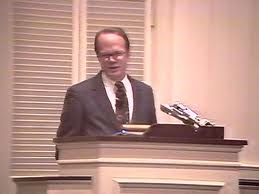
James Montgomery Boice, Th.D., (July 7, 1938 – June 15, 2000) was a Reformed theologian, Bible teacher, and pastor of Tenth Presbyterian Church in Philadelphia from 1968 until his death. He is heard on The Bible Study Hour radio broadcast and was a well known author and speaker in evangelical and Reformed circles. He also served as Chairman of the International Council on Biblical Inerrancy for over ten years and was a founding member of the Alliance of Confessing Evangelicals.The article/sermon above was adapted from Dr. James Montgomery Boice. The Boice Commentary Series: Romans Expositions vol. 1: Justification by Faith. Grand Rapids: Baker, 2005 (reprinted). Pages 355-362.
 LifeCoach4God