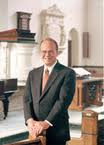
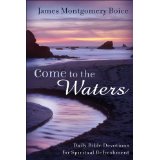
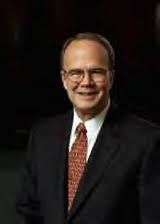
Dr. James M. Boice Makes An Excellent Case For Premillennialism

A Presbyterian Who Was Premillennial!

“Earth’s Golden Age: The Future Coming Kingdom Reign of Christ on Earth”

[James Boice was one of my favorite Bible teachers. Thankfully – many of his books and expositions of Scripture are still in print and more are becoming available. He was one of only a handful of reformed theologians (that I know of, Steven J. Lawson, John MacArthur, Erwin W. Lutzer, S. Lewis Johnson, Rodney Stordtz, John Hannah and John Piper also come to mind) that was premillennial in his eschatology. However, what makes him really unique is that he was not Historic Premillennial – but Dispensational (Held to a pre-tribulation rapture) as well. This article was adapted from Chapter Two in one of the first of James Boice’s plethora of books (currently out of print), and is entitled: The Last and Future World, Grand Rapids, MI.: Zondervan, 1974. Though this book was written almost 40 years ago – it is just as relevant today as when it was first written since most of the prophecies taught in the Scriptures and addressed by Dr. Boice in this book have yet to be fulfilled – DPC] 

What The Bible Has To Say About The Future: Part 2 in a Series of 9

 By Dr. James M. Boice

At the heart of biblical prophecy lies the statement that the same Jesus of Nazareth who came to this earth to die for salvation will one day come again to establish perfect social order – a golden age. To be sure, His coming is a complex affair, as we shall see. His return, in part, will be to take his followers to be with Him in heaven. Shortly after that He will appear on earth bodily to set up an earthly kingdom. He will appear once again as a judge of men and nations. Nevertheless, at the heart of these prophecies lies the promise of a golden age for mankind which will be established by the Lord Jesus Christ at His coming.

This thought should be of great interest to us all, of course, for one of the dreams shared by thinking people from all periods of history and all cultures is of an age in which men and women can live in peace and prosperity and find life meaningful.

The idea of a golden age exists in the philosophical writings and myths of most of the world’s great civilizations. Plato wrote of a perfect age in his Republic. Virgil popularized the theme for the Romans in his Fourth Eclogue. In more recent history the dream of a utopia has been voiced by Thomas More, Samuel Butler, and Edward Bellamy, as well as by Henry David Thoreau, Robert Owen, and Leo Tolstoy, all of whom actually tried to create one. In our day communists express the same vision as “the classless state,” by western governments in terms of material prosperity, and by the youth of most countries as a time of universal love, brotherhood, peace, and understanding. The difficulty is that no person or culture has ever achieved this ideal and even the future, which has always been the bright hope of dreamers, does not look promising.

Even though men dream of a golden age and have some idea of what it should be like, nothing in actual history gives us any ground for hoping that anything like a utopia is forthcoming. One writer concluded:

The rule of man…has been characterized with irreconcilable ambitions and conflicts of interests. The brains of man have been dedicated to the production of military machines and accouterments for the scattering of death and desolation among the inhabitants of the earth. The highest considerations and culture of the race have been blown to pieces by the withering blasting of bursting shells. Man has looked for peace and found war. He has talked of brotherhood and love and seen hatred and persecution. He has boasted of his civilization, enlightenment, and progress, and the so-called heathen have upbraided him for his godless practices. He has bowed down to the god of gold and broken the backs of old and young, and starved millions to get it. He has spent billions of dollars for war; millions for pleasure; and only a few paltry thousands of spreading the gospel of Christ. He has professedly worshiped in his mosques, cathedrals, temples, synagogues, and churches, and over many of them God has since written “Ichabod”—“the glory of God has departed,” due to formalism and ritualism, which have been substituted for the blood of Christ, and to the sinful denials of the faith. Everywhere and in every age, the rule of man has been characterized by greed, avarice, covetousness, robbery, plunder, rebellion, confusion, pride, presumption, boastings, poverty, pestilence, disease, suffering, and sin. It is no better now and gives no promise of improvement. As it was, so it is, and will be until the King comes back. There has not been a period since the fall of man in which the race has enjoyed or witnesses the condition which prophecy declares shall obtain in the Kingdom of the Lord Jesus Christ  (Note 1: Quoted in W.H. Rogers, The End From the Beginning. New York: Arno C. Gaebelein, Inc., 1938, 262-263).

Some people would think these words too harsh. But they are a far more accurate description today than in the day when they were written. For Rogers wrote in 1938, before World War II, the Korean War, the Vietnamese conflict, or any of the other social upheavals and problems that characterize our time. We dream of a golden age. But if there is ever to be such an age, it seems certain that God Himself must establish it.

 God’s Rule

This, of course, is exactly what we find in the Bible. One of the prophets who had the clearest vision of the golden age was Isaiah. He lived in a period of great social upheaval, witnessing the overthrow of the southern kingdom of Judah by the Babylonians in 586 B.C. In Isaiah’s day events were growing worse and worse. Yet even as they did, he wrote prophetically of a better and, indeed, perfect day to come.

The theme first occurs in the second chapter of Isaiah’s prophecy.

It shall come to pass in the latter days

that the mountain of the house of the Lord

shall be established as the highest of the mountains,

and shall be lifted up above the hills;

and all the nations shall flow to it,

and many peoples shall come, and say:

“Come, let us go up to the mountain of the Lord,

to the house of the God of Jacob,

that he may teach us his ways

and that we may walk in his paths.”

For out of Zion shall go the law,

and the word of the Lord from Jerusalem.

He shall judge between the nations,

and shall decide disputes for many peoples;

and they shall beat their swords into plowshares,

and their spears into pruning hooks;

nation shall not lift up sword against nation,

neither shall they learn war anymore. (Isaiah 2:2-4)

According to these verses, there will come a time when God Himself will rule the earth from Jerusalem and war will cease.

In chapter 4 Isaiah speaks of the golden age again, referring on this occasion to the rule of the messiah, whom he terms “the branch of the Lord” (v.2). Chapter 9, which speaks of the birth of this Messiah, also foretells His eventual reign.

Then, in chapter 11, the theme is developed in much greater detail.

There shall come forth a shoot from the stump of Jesse,

and a branch from his roots shall bear fruit.

And the Spirit of the Lord shall rest upon him,

the Spirit of wisdom and understanding,

the Spirit of counsel and might,

the Spirit of knowledge and the fear of the Lord.

And his delight shall be in the fear of the Lord.

He shall not judge by what his eyes see,

or decide disputes by what his ears hear,

but with righteousness he shall judge the poor,

and decide with equity for the meek of the earth;

and he shall strike the earth with the rod of his mouth,

and with the breath of his lips he shall kill the wicked.

Righteousness shall be the belt of his waist,

and faithfulness the belt of his loins.

The wolf shall dwell with the lamb,

and the leopard shall lie down with the young goat,

and the calf and the lion and the fattened calf together;

and a little child shall lead them.

The cow and the bear shall graze;

their young shall lie down together;

and the lion shall eat straw like the ox.

The nursing child shall play over the hole of the cobra,

and the weaned child shall put his hand on the adder’s den.

They shall not hurt or destroy

in all my holy mountain;

for the earth shall be full of the knowledge of the Lord

as the waters cover the sea. (Isaiah 11:1-9)

From this point on the idea of a golden age is repeated again and again, almost as leitmotif throughout the prophecy (in chapters 25, 32, 42, 49, and 52), until near the end of the book the tempo picks up again.

Arise, shine, for your light has come,

and the glory of the Lord has risen upon you.

For behold, darkness shall cover the earth,

and thick darkness the peoples;

but the Lord will arise upon you,

and his glory will be seen upon you.

And nations shall come to your light,

and kings to the brightness of your rising. (Isaiah 60:1-3)

In these final chapters the prosperity of the earth under the rule of the Messiah is emphasized, as well as the special blessing that will come upon the Jewish nation.

It is impossible to give here all the references in Scripture to the coming age of God’s rule. But in addition to these full prophecies of Isaiah, several other significant passages should be mentioned.

First, in the Book of Micah there is a prophecy of great material prosperity during the same period. Micah writes, “But they shall sit every man under his vine and under his fig tree, and not one shall make them afraid, for the mouth of the LORD of hosts has spoken” (Micah 4:4). This is Micah’s way of describing individual prosperity in an age when neither life not possessions will be threatened by warfare.

Second, in Jeremiah 33 there is a lengthy description of the blessing that will come upon Jerusalem in that age. The special and solemn emphasis upon the literal nature f the promises is noteworthy. The opening verses say that God will return the captivity of Judah—that is, He will bring those who were exiled from Judah back to their own land – and He will cleanse them of sin. The middle verses speak of the rule of the Messiah. Then God says, “If you can break my covenant with the day and my covenant with the night, so that day and night will not come at their appointed time, then also my covenant with David my servant may be broken, so that he shall not have a son to reign on his throne, and my covenant with the Levitical priests my ministers” (Jeremiah 33:20-21). In other words, God vows by the regularity of the day and night that the promise to David of an heir to reign upon his throne forever will be fulfilled.

The third passage that deserves special mention is in Revelation 20. In this chapter two new ideas are introduced. First, the chapter tells us that in the golden age the devil, who has long deceived the nations, will be bound that he might do no more harm. And adds that this binding of Satan will last one thousand years, after which he will be loosed for a little time. “Then I saw an angel coming down from heaven, holding in his hand the key to the bottomless pit and a great chain. And he seized the dragon, that ancient serpent, who is the devil and Satan, and bound him for a thousand years, and threw him into the pit, and shut it and sealed it over him, so that he might not deceive the nations any longer, until the thousand years were ended. After that he must be released for a little while” (Revelation 20:1-3). This phrase “thousand years” occurs six times in the first seven verses of this chapter and has given us, as an Anglicization of the Latin word for thousand, the important theological term “millennium.”

A Literal Millennium?

At this point we must stop and ask a question which has become prominent in biblical interpretation: Is the promise of a golden age to be understood literally or is it only a symbol of something spiritual? In discussions about the millennium there have been three major views, two of which regard the millennium as literal and one which sees it as symbolic. They are premillennial, postmillennial, and amillennial interpretations.

Literally, the term postmillennial means that Jesus Christ will return after the millennium. But the heart of the postmillennial position lies in its view of history. According to those who have held this view, the church will, little by little, bring truth and righteousness to the whole earth so that all will eventually be converted. During this time Jesus will reign in and through the church. He will return to the earth bodily as judge only after the church’s mission is accomplished. The great Catholic theologian Thomas Aquinas and reformed theologians Charles Hodge and B.B. Warfield were proponents of this view.

One who holds the view in our day is Loraine Boettner, author of the valuable studies The Reformed Doctrine of Predestination, Studies in Theology, Immortality, and The Millennium. Several years ago in an article for Christianity Today he wrote,

The redemption of the world, then, is a long, slow process, extending through the centuries, yet surely approaching an appointed goal. We live in the day of advancing victory and see the conquest taking place. From the human viewpoint there are many apparent setbacks, and it often looks as though the forces of evil are about to gain the upper hand. But as one age succeeds another, there is progress. Looking back across the nearly two thousand years that have elapsed since the coming of Christ, we see that there has been marvelous progress. All over the world, pagan religions have had their day and are disintegrating. None of them can stand the open competition of Christianity. They wait only the coup de grace of an aroused and energetic Christianity to send them into oblivion…The Church must conquer the world, or the world will destroy the Church. Christianity is the system of truth, the only one that through the ages has had the blessing of God upon it. We shall not expect the final fruition within our lifetime, nor within this century. But the goal is certain and the outcome sure. The future is as bright as the promises of God. The great requirement is faith that the Great Commission of Christ will be fulfilled through the outpouring of the Holy Spirit and preaching of the everlasting Gospel (Note 2: Quoted from Loraine Boettner, “Christian Hope and the Millennium,’ Christianity Today, September 29, 1958, p. 14).

What should be said about this view? One objection to it is clearly that this does not seem to be happening, as Boettner admits. In fact, the pagan religions are actually experiencing a resurgence, though they were not in 1958 when these words were written. One may argue, as Boettner does, that we must judge by faith rather than sight. But the reply is surely that the kingdom, even according to postmillennialists, is literal and therefore must be literally seen. If we do not see it, it is not irreligious or faithless to doubt that it is coming.

A second objection to the postmillennial position is that, if these views are right, then all the promises of literal blessing upon Israel in the future age (some of which we have outlined) must either be forgotten or else spiritualized; that is, applied not to Israel but to the church.

The third, and, in my opinion, the decisive objection is that the Scriptures themselves teach something entirely different for the course of this age. For instance, Jesus warned the disciples against supposing that, as the result of their preaching, the whole world would eventually come to believe in the Gospel and that, therefore, truth and righteousness would prevail.

In Matthew 13 is a collection of parables called “the parables of the kingdom,” by which Jesus forecast the developments of the church during the present church age. The first parable is the parable of the sower. A certain man went out to sow seed, and the seed fell on different types of soil. Some of it fell by the wayside where it was quickly eaten up by the birds. Some seed fell on stony ground where it sprang up quickly, only to be scorched by the sun. Some fell among thorns and the growing plants were choked. The rest fell on good ground and produced in some cases a hundred bushels of grain for one bushel of seed and, in others, sixty for one or thirty for one (v.8).

Jesus then explained the parable, showing that the seed stood for the Gospel. The Gospel would always be received in four distinct ways by those who heard it. The devil would quickly snatch away the seed of the Gospel from those without understanding. Others who heard the Gospel would apparently receive it with joy, but it would not penetrate deeply and so would easily be scorched out by persecution. For still others, the cares of the world would choke out the message. Only a fourth part would actually hear the Gospel and have it take root and produce fruit in them.

This parable must mean that the church age is to be a seed-growing age in which only a part of the preaching of the Gospel will be successful. This parable alone dispels the idea that the preaching of the Gospel will be more and more successful as time goes on and that it will eventually bring a total triumph for the church.

The second parable makes the same point. It is the story of a man who had sowed grain in his field but discovered that an enemy had come and sown tares. The servants of the owner of the field wanted to root out the tares, but they were told not to do so lest they tear up some of the wheat in their zeal to exterminate the weeds. Instead, they were to let both grow together until the harvest, at which time the entire field would be harvested, the wheat separated from the chaff and gathered into the barns, and the tares burned. When Jesus explained this parable to the disciples, He showed that the field was the world and that the world would always contain believers and unbelievers mixed together until the day of His judgment.

The rest of Christ’s parables in this chapter are unexplained. The explanation of the first two, however, gives us the clue by which the rest of the parables are to be understood. Thus, the parable of the mustard seed points to the unnatural growth of church structures. The parable of the leaven shows that in this age the kingdom of heaven will always have evil present within it, since leaven is a symbol of evil in the Bible. The stories of the field with treasure in it and the pearl of great price tell of the sacrifice Jesus made to redeem a people for Himself, while implying at the same time that He did not die to save everyone. Finally, the parable of the dragnet points to the day in which Jesus will be the judge of all men, separating those who have been made righteous through His death and resurrection from those who have not and who will be put away from Him forever.

In our age God is calling out a group of people to Himself – people from every walk of life and with every imaginable ethnic and intellectual background – and is changing them into men and women who are becoming more and more like the Lord Jesus Christ.

It is worth adding that whatever our particular view of Christ’s parables, this was nevertheless the message that got through to the disciples. For there is very little in their writing that can be interpreted as optimistic regarding the course of human history. Thus Peter wrote of the last days: “But false prophets also arose among the people, just as there will be false teachers among you, who will secretly bring in destructive heresies, even denying the Master who bought them, bringing upon themselves swift destruction. And many will follow their sensuality, and because of them the way of truth will be blasphemed” (2 Peter 2:1-2). Jude wrote “In the last time there will be scoffers, following their own ungodly passions” (Jude 18). Paul declared, “Now the Spirit expressly says that in later times some will depart from the faith by devoting themselves to deceitful spirits and teachings of demons, through the insincerity of liars whose consciences are seared” (1 Timothy 4:1-2). He added later, “For the time is coming when people will not endure sound teaching, but having itching ears they will accumulate for themselves teachers to suit their own passions, and will turn away from listening to the truth and wander off into myths” (2 Timothy 4:3-4).

None of these verses envisions an increasingly successful expansion of the gospel message. Rather, they encourage a faithful adherence to and preaching of the Gospel in spite of the fact that it will not be universally received and that there will be a period of increasing unbelief and lawlessness. It is significant that the period of recent history culminating in two world wars has witnessed the death of any widespread enthusiasm for the postmillennial position.

Amillennialism

In the place of the old postmillennialism, there developed in some important circles a new interest in a view known to be amillennialism. This means there is to be no literal millennium, as we have already indicated. There were individuals who spoke along such lines previously, but many of them assumed the amillennial position non-critically. That is, they tended to be amillennial by default. It is not until fairly recent times that this view has had any great development (Note 3: The Reformers were apparently amillennialists, but their views on prophecy must not be overstated inasmuch as they tended to view most prophetic ideas as referring to the struggles of their own day. Thus, the Pope became the Antichrist, the Roman Catholic Church became the great whore of Babylon, and so on. Augustine has also been cited as an amillennialist, largely due to his heavy polemic against the Chiliasts, who were excessively literal in their views. However, since he went on to identify the millennium with the history of the church on earth – in his City of God – he seems to me much more of a post-millennialist).

According to amillennialists, much of what has been said in criticism of the postmillennial position is right. There will be no gradually unfolding triumph for the church militant before Christ’s return. But, on the other hand, there will be no literal reign of Christ either. According to this view, the millennium (if it is even right to speak of it as “the” millennium) must be spiritualized.

Now we must say that most amillennialists hold to important doctrines of conservative biblical theology. The doctrine of man is correct. There is a genuine expectation of Christ’s literal, second coming. Salvation is of grace. The period of the offer of God’s grace is followed by judgment. All this is good. Yet I cannot help but feel that the spiritualizing of the prophecies concerning Christ’s rule is inadequate.

The amillennial view cannot answer the problem of unfulfilled prophecy, for example, the promise of God to Abraham that his descendents would possess the land from the river of Egypt to the Euphrates. This promise is contained in Genesis 15 and is set in the context of the most solemn and unconditional pledge of the truth of the promise to Abraham. We are told that God commanded Abraham to prepare animals in the form of a ceremony often used in antiquity (“And the men who transgressed my covenant and did not keep the terms of the covenant that they made before me, I will make them like the calf that they cut in two and passed between its parts—the officials of Judah, the officials of Jerusalem, the eunuchs, the priests, and all the people of the land who passed between the parts of the calf. And I will give them into the hand of their enemies and into the hand of those who seek their lives. Their dead bodies shall be food for the birds of the air and the beasts of the earth” – Jeremiah 34:18-20).

He then appeared to Abraham to renew His promises and to forecast the next four hundred years of Jewish history. The Lord reiterated His promise of blessing, saying, “On that day the Lord made a covenant with Abram, saying, “To your offspring I give this land, from the river of Egypt to the great river, the river Euphrates, the land of the Kenites, the Kenizzites, the Kadmonites, the Hittites, the Perizzites, the Rephaim, the Amorites, the Canaanites, the Girgashites and the Jebusites” (Genesis 15:18-21).

It is not possible to identify precisely all the territory possessed by the people listed in these verses, but it is certain that it covered an enormous expanse of land involving at least all of what we would today call Sinai, Israel, Jordan, Lebanon, Iran, Iraq, and portions of Turkey, and it is fairly certain that the Jews have never literally possessed all of it (Note 4: it has been argued persuasively by proponents of the amillennial position that Israel has possessed the land promised to Abraham, as a comparison of Genesis 15:18-21 with 1 Kings 4:20, 21 and 2 Chronicles 9:26 is supposed to show. We may agree that there is a resemblance between these descriptions of the borders of the land possessed by Solomon and God’s original promises of the land to Abraham. However, there are three difficulties:

(1) even at the height of his great power Solomon did not actually possess all the land described in these verses but only a part of it, receiving tribute from the rest;

(2) the word used for “river” in the phrase “the river of Egypt” does not mean “wadi” or “stream” [there is another word in Hebrew for that] but actually denotes a river. Thus the reference is to the Nile rather than the Wadi el Arish, and this marks off territory which Israel has never possessed;

(3) if the land of the Hittites is in view in Genesis 15:18-20, then this area also lies outside any land previously occupied by the Jewish nation. This point is negated, of course, if the reference is only to the Hittite people or there were Hittites in Canaan [Exodus 3:8; Deut. 7:1; 20:17]).

What are we to do with such promises? We cannot dismiss them, for there is nothing in the words of God to Abraham to suggest that they were conditional, as some other promises were. We cannot apply them to the church, for there is no relationship between these precise geographic boundaries and the church’s nature, growth, or commission. The promises must be literal. Thus, if they have not yet been fulfilled in history, then they must be fulfilled in the future. The obvious time for that is in the period immediately following the return of the Lord Jesus Christ in power at the end of this age.

God’s Rule

The third of the three major views on the millennium is premillennialism. Premillennialists hold that the millennium is literal, that Christ will rule, and that this will follow and indeed be the direct result of His return in power to this earth, as He has promised.

Some of my reasons for interpreting the promises concerning the earth’s golden age in this way are already obvious.

First, there is an obligation to interpret Scripture as literally as possible; that is, to take a passage in the literal sense unless it is demonstrably poetic or unless it simply will not bear a literal interpretation. Thus, to give one example, when this principle is applied to Revelation 20, it is hard to escape the feeling that a definite time sequence is envisioned, whatever one may think of the actual figure of one thousand years. We come to the chapter after a description of the proclamation of the marriage supper of the Lamb (Rev. 19:7-10), the vision of the Lord Jesus Christ riding forth in glory to conquer the nations (Rev. 19:11-16), and the account of Armageddon (Rev. 19:17-21). The description of this period is then followed by an account of the final judgment and of the establishment of a new heaven and a new earth (Rev. 20:11-22:5). Clearly, there is no reason why this cannot be a listing of a series of literal events.

The second reason for anticipating a literal millennium has already been given in part. It is the unfulfilled nature of some of the promises made to Israel during the Old Testament period. It is true, of course, that some of the promises made are conditional; but not all of them are. Among these unconditional promises are some that have not been fulfilled, such as the promises regarding the land. We may remind ourselves here that Paul lived after Jesus Christ’s first coming and was quite aware of the fact that, temporarily at least, Israel had forfeited her heritage. But it was Paul above all the other New Testament writers who stressed a future period of national blessing for Israel (Rom. 11:26-32).

To my mind, however, the best and ultimate reason why there must be a literal millennium is that only in a literal millennium do we have a meaningful culmination of world history.

We must realize at this point that one of the reasons for the continuation of history as we know it is God’s desire to demonstrate man’s utter ruin in sin and man’s total responsibility for the state of the world as we find it. God has told us that before Him “every mouth will be stopped” (Rom. 3:19), and yet men’s mouths have never yet stopped finding excuses for themselves and for encouraging sin.

The first obvious excuse men had for their conduct must have been voiced shortly after Cain had killed Abel and God had responded by marking Cain so no one would kill him (Gen. 4:15). We are told that the state of affairs in the world then grew so bad there were multiple murders and other evil acts. Now if God had approached men at this time and had asked them, “What have you done? Why is there so much wickedness?” men could have replied by throwing the blame back upon God. They could have said, “It’s your fault, God. When Cain killed his brother, You protected him. Since nothing happened to Cain, others thought they could get away with murder too, and that’s why things are as they are. Why, if You had let us make an example of Cain, we’d have dealt so roughly with him that no one would ever have done such a thing again!”

“Well,” God may have said then, “we’ll try it your way. We’ll institute capital punishment.” So we read several chapters later in God’s message to Noah after the flood, “Whoever sheds the blood of man, by man shall his blood be shed, for God made man in his own image” (Genesis 9:6). Obviously conditions did not improve. Thus, while capital punishment may be a deterrent to crime in some instances, no one would dare to argue that even the most rigid enforcement of capital punishment would bring in the age we long for.

At this point men had what we could call the powers of human government. But when the world did not improve by the exercise of such powers, there was “True, we now have the power. But the difficulty lies in the fact that we do not know where to apply it. In short, we do not know what You want us to do.”

“All right,” says God, “I’ll tell you what to do.” So the law of Moses was given, but  the unanimous and united testimony of the race is that law, even the law of Moses, cannot bring the millennium.

“Well,” says another, “the problem now is that the law is abstract. It is full of do’s and don’ts. If only we could see an example of what You want to be done.” So God sent the Lord Jesus Christ, the only perfect Man who ever lived, the Man who could say to His enemies and leave them speechless, “Which of you can convict me of sin?” And what was the result? Christ so exposed the moral and spiritual failures of even the best men of His day that they hated Him for it and eventually had Him executed on false charges.

Following the death of Jesus Christ and His resurrection, God gave His own Spirit to those who believed in Christ, so that today we may be said to be living in an age of great grace out of which God provides for all the needs of His children. But still men will not accept God’s way and continue to devise their excuses.

Some of the excuses are merely repetitions of those which have already been given, but there is one excuse that has not been exposed. Today, while men can no longer truly blame God for the present state of the world – and will not blame themselves – a little thought will show anyone who really seeks an escape that he can still blame the devil. “Satan must be responsible,” he can argue. Those who know the Bible know, of course, that is untrue. James, the Lord’s brother, wrote his brief letter, “What causes quarrels and what causes fights among you? Is it not this, that your passions are at war within you?” (James 4:1). Jesus Himself declared, “For from within, out of the heart of man, come evil thoughts, sexual immorality, theft, murder, adultery, coveting, wickedness, deceit, sensuality, envy, slander, pride, foolishness. All these evil things come from within, and they defile a person” (Mark 7:21-23). The Bible clearly declares that the blame lies on man. And yet, men still have a chance to blame the devil and the environment they declare he created.

The millennium, then, will be the final proof of man’s total depravity and full responsibility. God says He will establish a perfect age, a golden age. He will begin by eliminating the devil as a factor in world affairs (Rev. 20:2,3). Satan will be bound for one thousand years. God will establish a perfect government on this earth under Jesus Christ, who will rule in and through the redeemed of all ages. The earth itself will be transformed, experiencing an increase in fertility.

That will mean the abolition of the “curse” to which the earth was subjected as the result of God’s initial judgments upon sin (Rom. 8:19-23). It will mean the end of the predatory nature of the animal kingdom (Isa. 11:6-9). Out of this change great prosperity will come. There will be no more war. All the desirable elements that the philosophers, sociologists, historians, theologians, and dreamers have ever envisioned for the earth’s golden age will appear – literally and abundantly. There should then be total and eternal gratitude to the Lord Jesus Christ, who has brought such conditions to the earth. And yet, to prove the totally perverse nature of the human heart, when Satan is released at the end of the thousand years, men will immediately cry out upon seeing him, “Thank God for the devil.” And they will rebel against Christ.

This rebellion is the great purpose of the millennium. We know from the scriptural account that this final, great rebellion will not succeed. In fact, we know it will be brief and will be followed at once by God’s final judgment upon sin and by the entrance of all things into the eternal state. Nevertheless, the fact will have been demonstrated. Men cannot run their affairs by themselves and are, in fact, themselves the reason why they cannot.

Teaching for Today

We must not lose sight of the fact that several important doctrines for the present follow from this millennium teaching. First, if we really understand the purpose of the millennium, as I have outlined it, then called in reformed the “total depravity” of man. We will do what we can in this world. We will always work to see that truth and righteousness prevail. Nevertheless, we will not be fooled by the futile belief that men will solve their own problems; men are the source of their problems. So they need a Savior.

Second, we will be increasingly dependent upon God. Salvation does not come by men or through men. So if they will ever be even a limited amount of truth and righteousness in this age, it will come only through those whose lives are yielded to God. This gives us a great present role as His children.

Third, it teaches us patience. It is true that history has continued without significant moral change for thousands of years. It may continue much longer. But if it does, we may be sure that God has His own definite purposes in it all. What are these purposes?

One of them is to draw out people to Himself. If you are a Christian, aren’t you glad that the Lord Jesus did not return to establish His reign before you were born and grew old enough to understand these things and become a thinking believer? That is exactly what Peter was talking about in his second letter when he wrote, “The Lord is not slow to fulfill his promise as some count slowness, but is patient toward you, not wishing that any should perish, but that all should reach repentance” (2 Peter 3:9). That does not mean that all men will be saved, but that God is delaying the return of Jesus Christ until all whom He has chosen in Christ will be born and be saved. You are among this great company if you are a Christian.

On the other hand, if you have not yet believed, the very fact that Christ has not returned is your hope. Won’t you turn to Him who alone is your Savior? Commit yourself to Him. Say, “Lord Jesus Christ, I admit that I have fallen short of what You require, that I am a sinner; but I also know that You died for me and are able to give me new life. Take me now as one of Your children and give me assurance of salvation.”

About the Author: James Montgomery Boice, Th.D., (July 7, 1938 – June 15, 2000) was a brilliant Reformed theologian, Bible teacher, and pastor of Tenth Presbyterian Church in Philadelphia from 1968 until his death. He is heard on The Bible Study Hour radio broadcast and was a well-known author and speaker in evangelical and Reformed circles. He also served as Chairman of the International Council on Biblical Inerrancy for over ten years and was a founding member of the Alliance of Confessing Evangelicals. He is the author of numerous Bible expositions and one of my favorite Systematic Theologies called Foundations of the Christian Faith.
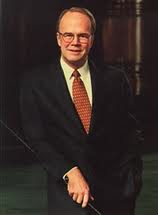
Dr. James Boice on How We Can Find Fulfillment and Happiness in Life

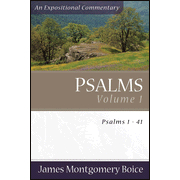
The sermon below “The Fast Lane or the Right Path” was excerpted from James Boice. Psalms 1-41: An Exposition of the Psalms. Grand Rapids: Baker, Grand Rapids, 2003. Today, July 7th is Dr. Boice’s birthday in Heaven!

“The Fast Lane or the Right Path” – A Sermon on Psalm 1

Blessed is the man who does not walk in the counsel of the wicked

or stand in the way of sinners

or sit in the seat of mockers.

But his delight is in the law of the Lordand on his law he meditates day and night.

He is like a tree planted by streams of water,

which yields its fruit in season

and whose leaf does not wither.

Whatever he does prospers.

Not so the wicked!

They are like chaff

that the wind blows away.

Therefore the wicked will not stand in the judgment,

nor sinners in the assembly of the righteous.

For the Lord watches over the way of the righteous,

but the way of the wicked will perish. – Psalm 1:1-6

The first psalm is among the best known, if not the best known, psalm in the entire Psalter, and rightly so, for it stands as a magnificent gateway to this extraordinary ancient collection of Hebrew religious verse. To use another image, it is a text of which the remaining psalms are essentially exposition. Psalm 1 is a practical psalm. Since it leads the collection, we are taught at once that study of the Psalter must have practical effects if the psalms are to achieve the purpose for which God gave them to us. Psalm 1 introduces us to the way in which we may find happiness and fulfillment in life. It is by meditation on and delight in the law of God. The psalm also warns us of sure, eventual, and eternal ruin if we do not.

Divergent Ways

Psalm 1 introduces us to the doctrine of the two ways, which is a very common concept. Most Americans are acquainted with Robert Frost’s use of the idea in the poem “The Road Not Taken.”

Two roads diverged in a wood, and I—

I took the one less traveled by,

And that has made all the difference.

Those who know literature a bit more thoroughly are aware that the idea of paths diverging in a wood is also found in Dante Alighieri, the Florentine poet of the Middle Ages, whose Divine Comedy begins,

Midway this way of life we’re bound upon,

I woke to find myself in a dark wood,

Where the right road was wholly lost and gone.

But there are biblical examples too. The most important is the use of the idea by Jesus toward the end of the Sermon on the Mount as recorded by Matthew. The last section of the sermon lists a series of contrasts, between which choices must be made: two gates and two roads, two trees and their two types of fruit, two houses and two foundations. The part regarding the two ways says, “Enter through the narrow gate. For wide is the gate and broad is the road that leads to destruction, and many enter through it. But small is the gate and narrow the road that leads to life, and only a few find it” (Matt. 7:13–14). Psalm 1 is the clearest, most carefully developed, and first full expression of this idea in the Bible.

But let me back up slightly.

The psalms have been classified in a variety of types or genres, about seven of them, and one of them is “wisdom psalm,” which is what this is. It portrays the way the wise man chooses. But Psalm 1 is more than this. It is the father of all the wisdom psalms. Saint Jerome, the translator of the Latin Vulgate, calls Psalm 1 “the preface of the Holy Spirit” to the Psalter. The great Baptist preacher Charles Haddon Spurgeon, who also calls Psalm 1 a “Preface Psalm,” adds, “It is the psalmist’s desire to teach us the way to blessedness, and to warn us of the sure destruction of sinners. This then, is the matter of the first psalm, which may be looked upon in some respects, as the text upon which the whole of the psalms make up a divine sermon.”

In his helpful introduction to the psalms Tremper Longman III, an associate professor of Old Testament at Westminster Theological Seminary, writes, “Psalm 1 deliberately [draws] two portraits in our minds: the portrait of the wicked man and the portrait of the wise man. The question then is posed: Which are we? As we enter the sanctuary of the psalms to worship and petition the Lord, whose side are we on?”

The Two Ways Described

The first verse of Psalm 1, and therefore also the first verse of the Psalter, begins with the word blessed. This is important certainly, for it is a way of saying that the psalms (as well as all Scripture) have been given to us by God to do us good. Blessed means supremely happy or fulfilled. In fact, in Hebrew the word is actually a plural, which denotes either a multiplicity of blessings or an intensification of them. The verse might correctly be translated, “O the blessednesses of the man who does not walk in the counsel of the wicked.”

At first glance it might seem surprising that the idea of the blessed or the happy man is followed immediately by a description of the wicked man, particularly since a description of the way of the wicked also appears later in verses 4 and 5. But it is actually an excellent device. By starting in this way the poet achieves three important things.

First, he begins where we are. None of us automatically starts out being righteous. We start out being sinners, and if we do eventually enter by the straight gate upon the narrow road that leads to life, it is by God’s grace. No one, either in the Old Testament or in the New Testament period, was saved in any other way.

Second, the poet is able to introduce the doctrine of the two ways from the start. We do not have to wait until verse 4 to read that there is a way other than the way of the godly.

Third and finally, the author says something important about godliness. He is going to present godliness positively as the way of the one who delights in the law of the Lord. But any positive affirmation, to have meaning, must have a negative to go with it. Thus, in order to say what the way of the godly man is, we must also be able to say what it is not, and that is what the first verse of the first psalm accomplishes.

How beautifully it does it! The most striking feature of Hebrew poetry is what is known as parallelism, that is, saying the same thing or a variety of the same thing, in two linked lines. That is what we have here, only in this verse there are three linked lines and there are three parallel terms in each line: set 1, “walk, stand, sit”; set 2, “counsel, way, seat”; and set 3, “wicked, sinners, mockers.”

Because of this common feature of Hebrew poetry, a number of writers are reluctant to see any special progression in these terms. But it is hard to believe that the phrases are not saying that the way of the wicked is downhill and that sinners always go from bad to worse. Certainly Spurgeon thought so. He said, “When men are living in sin they go from bad to worse. At first they merely walk in the counsel of the careless and ungodly, who forget God—the evil is rather practical than habitual—but after that, they become habituated to evil, and they stand in the way of open sinners who willfully violate God’s commandments; and if let alone, they go one step further, and become themselves pestilent teachers and tempters of others, and thus they sit in the seat of the scornful. They have taken their degree in vice, and as true Doctors of Damnation they are installed.”

This interpretation is built into the psalm. The psalm does not merely describe the lifestyle of the wicked; it shows the fruit of that way of life and its end. To the unsaved, “the way of sinners” may seem wonderful and exciting. It is the track they want to be on. But the psalmist warns that it is actually a fast track to emptiness and frustration here as well as judgment in the life to come.

What about the other way, the way of the righteous? We might expect, since the wicked man has been described in terms of his associations, that the godly man will now be described in terms of his associations too, that is, as a person who associates with the godly. But that is not the case. Instead, he is described as one whose “delight is in the law of the Lord” on which “he meditates day and night” (v. 2).

That is a powerful expression: to “delight” in the law of the Lord. But it is also somewhat puzzling, at least at first glance. The British scholar and Christian apologist C. S. Lewis found it to be so. In Reflections on the Psalms he describes how at first he found the psalmist’s delight in God’s law “utterly bewildering” and “mysterious.” Lewis said he could understand how one could delight in God’s mercies, visitations, and attributes, but not how one could delight in God’s law. You do not delight in law, not really. Rather law is something you respect and (one hopes) obey.

I would argue that it is possible to delight in a good law, one that is both well written and effective in promoting righteousness. But I think Lewis is also right when he suggests that more than this is involved. He finds the clue to the psalmist’s meaning in the idea of meditation on God’s law. This makes the law a subject of the righteous man’s study. So, for the ancient Jew, saying that he delights in the law is much like what we might mean if we said that we love history or physics or archaeology. But, of course, it is even more than that. For when we study the Bible—the word law is used to refer to the whole of God’s inscripturated revelation—we are really learning, not about human beings or nature primarily (which is what the other disciplines teach us), but about God. And, as Lewis says, “The Order of the Divine mind, embodied in the Divine Law, is beautiful.” The language of the poet is “not priggery nor even scrupulosity; it is the language of a man ravished by a moral beauty.”

John R. W. Stott adds wisely that this delight “is an indication of the new birth, for ‘… the sinful mind is hostile to God. It does not submit to God’s law, nor can it do so’ (Rom. 8:7). As a result of the inward, regenerating work of the Holy Spirit, however, the godly find that they love the law of God simply because it conveys to them the will of their God. They do not rebel against its exacting demands; their whole being approves and endorses it. … Delighting in it, the godly will meditate in it, or pore over it, constantly, day and night.”

The contrast between the two ways may be put like this. It is the difference between those who are in love with sin and those who love God. The first class love sin’s ways and follow it. The second love God and seek him in Scripture, where he may be found.

Flourishing or Fruitless

When most people think of the results of upright or godly living they think of rewards. That is, they think that if they do what God tells them to do, he will reward them, but that if they do not, they will be punished. There is an element of truth in this; it is what is involved in the doctrine of the final judgment. But what the psalmist actually says here is quite different. He is talking about “blessedness,” the blessedness of the man “who does not stand in the way of sinners” but whose “delight is in the law of the Lord.” His point is that this is not a reward but rather “the result of a particular type of life.”

The poet uses two images to show the result of these two ways. The first is a fruitful tree. It describes the man who delights in the law of God and draws his spiritual nourishment from it as a tree that draws its nourishment from an abundantly flowing stream. The land about might be quite dry and barren. The winds might be hot. But if the tree is planted by the stream, so that it can sink its roots down and draw nourishment, it will prosper and yield fruit. This is the godly man.

He is like a tree planted by streams of water,

which yields its fruit in season

and whose leaf does not wither.

Whatever he does prospers.

Years ago a couple who had gone to China as missionaries used this image to describe their life there after the communists had taken over China at the end of the Second World War. Their name was Matthews, and they were the last missionaries of the China Inland Mission to escape from that country. They were under communism for two years, during which time they lived with their young daughter Lilah in a small room. Their only furniture was a stool. They could not contact their Christian friends for fear of getting them into trouble. Except for the smallest trickle, their funds were cut off by the government. Heat came from a small stove which they lit once a day to boil rice for dinner. The only fuel they had was dried animal refuse that Art Matthews collected from the streets. These were indeed dry times. But afterward, when they wrote their testimony to God’s grace in the midst of such privations, they called their book Green Leaf in Drought Time, because they found that those who delight in the Word of God do not wither but instead produce the Holy Spirit’s fruit.

The second illustration the psalmist uses is chaff, to which he compares the wicked. The picture here is of a threshing floor at the time of the grain harvest. The threshing floors of Palestine are on hills that catch the best breezes. Grain is brought to them, is crushed by animals or by threshing instruments that are drawn over it, then is pitched high into the air where the wind blows the chaff away. The heavier grain falls back to the threshing floor and is collected. The chaff is scattered or burned, and it is what the psalmist says those who live wickedly are like.

The wicked are like chaff in two senses. Chaff is worthless, and chaff is burned. This pictures the futile, empty, worthless life of the godless, as well as their inevitable judgment.

If only those who are running away from God could see this! But they cannot, because they will not listen to God and the world is shouting the exact opposite of the Bible’s teaching. The world says that to be religious is foolishness. Religious people never have any fun or accomplish anything, the wicked say. If you want to amount to something and enjoy yourself doing it, get on the fast track of sin, reach out for whatever you want, and take it. Be happy. That is what the world teaches. But it is all a lie, which is exactly what Paul calls it in Romans 1 where he analyzes this fast downward spiral (v. 25).

In Eden, the devil told Eve that if she disobeyed God by eating of the forbidden tree, her eyes would be “opened” and she would be “like God, knowing good and evil” (Gen. 3:5). But she did not become like God; she became like Satan. And her eyes were not opened; they had been open. Now she (and her husband) became blind to spiritual realities.

Do not believe the devil’s lie. Do not follow the world when it tries to draw you from righteous living by beguiling falsehoods.

Two Final Ends

Verse 6 is a fitting end to the psalm and a proper thematic statement from which to proceed on into the Psalter. It distinguishes between the final end of the righteous and the final end of the wicked, saying,

For the Lord watches over the way of the righteous, but the way of the wicked will perish.

The verse describes the destiny of these two groups of people. Wise King Solomon wrote,

There is a way that seems right to a man, but in the end it leads to death (Prov. 14:12).

That is the way of the wicked. The way of the righteous is the way of the Lord Jesus Christ, who described himself as “the way and the truth and the life” (John 14:6) and promised to keep those who follow him (Matt. 28:20).

I do not want to read too much prophecy into the psalms, though there is some, and I do not want to suggest that the author of this psalm, whoever he may have been, was looking forward to the coming of the Lord Jesus Christ when he wrote it. I do not believe he was. Nevertheless, it is hard not to notice, as Arno C. Gaebelein, an excellent devotional writer on the psalms, has said, that “the perfect man portrayed in the opening verses … is … the Lord Jesus.” He is the only one who was really like this.

Let me close with this story. Harry Ironside, the Bible teacher, told of a visit to Palestine years ago by a man named Joseph Flacks. He had an opportunity to address a gathering of Jews and Arabs and took for the subject of his address the first psalm. He read it and then asked the question: “Who is this blessed man of whom the psalmist speaks? This man never walked in the counsel of the wicked or stood in the way of sinners or sat in the seat of mockers. He was an absolutely sinless man.”

Nobody spoke. So Flacks said: “Was he our great father Abraham?”

One old man said, “No, it cannot be Abraham. He denied his wife and told a lie about her.”

“Well, how about the lawgiver Moses?”

“No,” someone said. “It cannot be Moses. He killed a man, and he lost his temper by the waters of Meribah.”

Flacks suggested David. It was not David.

There was silence for a long while. Then an elderly Jew arose and said, “My brothers, I have a little book here; it is called the New Testament. I have been reading it; and if I could believe this book, if I could be sure that it is true, I would say that the man of the first Psalm was Jesus of Nazareth.”

Jesus is that man, of course. He is the only perfect man who ever lived, and he is the sinner’s Savior. It is he who stands at the portal of this book to show us the way to live and help us do it.

Author: James Montgomery Boice, Th.D., (July 7, 1938 – June 15, 2000) was a Reformed theologian, Bible teacher, and pastor of Tenth Presbyterian Church in Philadelphia from 1968 until his death. He is heard on The Bible Study Hour radio broadcast and was a well known author and speaker in evangelical and Reformed circles. He also served as Chairman of the International Council on Biblical Inerrancy for over ten years and was a founding member of the Alliance of Confessing Evangelicals. He is the author of numerous Bible expositions and one of my favorite Systematic Theologies called Foundations of the Christian Faith.

“How Can I Become a Christian?” By Dr. James Montgomery Boice

The ABC’s of Salvation

How does a person become a Christian? There are three points—two things we must believe and one thing we must do. They are as simple as ABC.

A stands for “admit.” We must admit that we are sinners and that we are therefore under God’s judgment.

B stands for “believe.” We must believe that God loves us in spite of our sin and that he has acted in Jesus Christ to remove sin and restore us to himself.

C stands for “commit.” This is an act of faith by which we give up trying to run our own life and instead place ourselves in the hands of the Lord Jesus Christ, who died for us and rose again.

Admitting Sin

First, God demands that we admit without reservation that we are sinners and that we should therefore be separated from his presence forever. We are in rebellion against him, either consciously or unconsciously, and we deserve not grace but judgment.

Sin is an everyday experience and the number one problem of mankind. What is more, they recognize that the Bible everywhere insists upon this.

The Scripture declares that the whole world is a prisoner of sin,” wrote Paul in the book of Galatians (Gal. 3:22).

In 1 Kings, chapter 8, King Solomon declared, “There is no one who does not sin” (v. 46).

Psalm 143:2 says, “No one living is righteous before you.”

Isaiah observed, “We all, like sheep, have gone astray, each of us has turned to his own way” (Isa. 53:6).

In the first letter of the apostle John, we are admonished, “If we claim we have not sinned, we make him out to be a liar and his word has no place in our lives” (I John 1:10).

This is also the burden of the first chapters of Paul’s letter to the Romans, where we find the doctrine of the universality of man’s sin stated in its most comprehensive form.

According to the first three chapters of Romans there are three types of people.

The first type is what we would call hedonists, those whose basis for life is materialism. Paul discusses them in Romans 1:18-32. Hedonists have determined to live for their own enjoyment and for whatever pleasures they can find. “Why is this man a sinner?” Paul asks. “He is a sinner because he is on a path that is leading him away from God and therefore away from any real beauty, truth or inner satisfaction.” As Paul describes it, this path is marked by empty imaginings, darkened intellects, a profession of wisdom by one who is actually foolish and, finally, a perversion of the worship of God which leads to a final debasement (vv. 21-23).

The second type of person, the type discussed in Romans 2:1-16, is what we would call a moral man. In Paul’s day, this was the Greek philosopher or professor of ethics. In our day, it would be anyone who has high ethical standards but who does not believe in the Lord Jesus Christ as his Savior. Why does God consider this person a sinner? The answer has two parts. First, he is a sinner because he has come short of God’s standard of righteousness. God’s standard is perfection. It is the standard of the life of the Lord Jesus Christ, the only perfect man who ever lived. All fall short of it. Second, he is a sinner because he falls short of his own standards no matter how high or low they may be.

What is your standard of morality? You may say, “My standard is the Sermon on the Mount. Isn’t that a good standard?” Yes, that is a good standard; but the question is: Do you live up to it? In the Sermon on the Mount Jesus said, “Be perfect, therefore, as your heavenly Father is perfect” (Matt. 5:48). Are you perfect? Of course not! In that case, you are condemned by the standard of your own choosing.

You may not like that conclusion, or course. So you may say, “Well, I’ll just lower my standard and make it the Golden Rule—‘In everything, do to others what you would have them do to you.’” Do you keep that standard? Do you always do to other people all that you would like done by them to yourself? Once again, the answer is no! The point is that all of us are condemned by whatever standard we erect, for none of us is able to live up to even the lowest standards of morality. We are all sinners, and deep within we know it.

There is one more type of person. Paul describes him in Romans 2:17-29. This is the man who would admit most if not all of what Paul has been saying and yet who would attempt to escape the conclusions by pleading his religion. “I have been baptized,” he would say. “I am confirmed. I have given large sums of money to the church’s support and have served on its committees.”

“Good for you,” Paul answers. “But you are still a sinner, because God’s requirement of perfection includes a change of the heart, and none of the outward things of religion—church membership, the sacraments, service or stewardship—can do anything about this most basic problem.” At the end of this section of Romans Paul sums his teaching up by saying, “There is no one righteous, not even one; there is no one who understands, no one who seeks God. All have turned away, they have together become worthless; there is not one who does good, not even one” (Rom 3:10-12).

 Believing on Jesus

The second point to becoming a Christian is to believe that God loves you in spite of your sin and that he has acted in Jesus Christ to remove that sin and to begin to make you perfect once more by conforming you to Christ’s image.

“God demonstrates his own love for us in this: While we were still sinners, Christ died for us” (Rom. 5:8).

“For God so loved the world that he gave his one and only Son, that whoever believes in him shall not perish but have eternal life” (John 3:16).

In the Bible, there are three great terms for what God does in salvation. The first is propitiation, a word that occurs in Romans 3:23-26, Hebrews 2:17, 1 John 2:2 and 4:10 (the NIV translates this as sacrifice of atonement”). Propitiation is the act of performing a sacrifice by which the wrath of God against sin is averted. It refers to what Jesus accomplished in relation to God by his death.

Propitiation presupposes the wrath of God. Right here many modern thinkers would stop, arguing that the term should not be used. “We can understand,” such a person might say, “how the idea of propitiation would be appropriate in paganism where God was assumed to be capricious, easily offended and therefore often angry. But this is not the biblical picture of God. According to the Christian revelation, God is not angry. Rather, he is gracious and loving. Moreover, it is not God who is separated from us because of sin, but rather we who are separated from God.” Those who have argued this way have either rejected the idea of propitiation entirely, considering its presence in the Bible to be merely a carry-over from paganism, or they have interpreted the basic Greek word for propitiation to mean, not Christ’s propitiation of the wrath of God, but rather the covering over or expiation of our guilt by his sacrifice.

We must be appreciative of those who have distinguished the pagan idea of propitiation from the Christian idea. For it is quite true that God is not capricious. We do not propitiate him in order to keep in his good graces, for God is a God of grace and love.

Still, this is not the whole of the matter. In the first place, we do not want to forget what the Bible tells us about God’s just wrath against sin in accordance with which sin will be punished either in Christ or in the person of the sinner. We may feel that the wrath of God and the love of God are incompatible. But this is not the biblical perspective. Rather, the Bible teaches that God is wrath and love at the same time. What is more, the wrath is not just a small and insignificant element that somehow is there alongside the far more significant and overwhelming love of God. Actually, it is a major element that may be traced all the way from God’s judgment against sin in the Garden of Eden to the final cataclysmic judgments prophesied in the Book of Revelation.

Second, although the word “propitiation” is used in biblical writings, it is not used in precisely the same way it is used in pagan writings. In pagan rituals, sacrifice was the means by which man placated an offended deity. But in Christianity, it is never the man who takes the initiative or makes the sacrifice, but God himself who out of his great love for the sinner provides the way by which his own wrath against sin may be averted. Moreover, he is himself the way—in Jesus. This is the true explanation of why God is never the explicit object of the propitiation in the biblical writings. He is not the object because he is, even more importantly, the subject. In other words, God himself placates his wrath against sin so that his love may go out to embrace and fully save the sinner.

The second great term for God’s work of salvation is redemption. Redemption speaks of what Jesus Christ did for us in salvation and of what it cost him to do it. It also occurs in Romans 3:23-26, and in many other places.

The Greek word translated as “redeem,” “Redeemer” or “redemption” in our Bibles has to do with loosing someone’s bonds so that, for example, a prisoner becomes free. At times it was used of procuring the release of a prisoner by means of a ransom. Spiritually, the idea is that, though we have fallen into desperate slavery through sin and are held as by a cruel tyrant, Christ has nevertheless purchased our freedom from sin by his own blood. He paid the price to free us.

We have what is perhaps the greatest biblical illustration of redemption in the story of Hosea. Hosea was a minor prophet whose marriage was unfortunate from a human viewpoint, for the woman proved unfaithful to him. But it was a special marriage from the viewpoint of God. God had told Hosea that the marriage would work out in this fashion. Nevertheless, he was to go through with it in order to provide an illustration of how God loves his people, even when they prove unfaithful by committing spiritual adultery with the world and its gods. The marriage was to be a pageant in which Hosea was to play the part of God and his wife would play the part of unfaithful Israel.

The climax comes at the point at which Gomer fell into slavery, probably because of debt. Hosea was told to buy her back as a demonstration of the way by which the faithful God loves and saves his people. Slaves were always sold naked in the ancient world, and this would have been true of Gomer as she was put up on the auction block in the city of Samaria. She apparently was a beautiful woman. So when the bidding started the offers were high, as the men of the city bid for the body of the female slave.

The bidding was competitive. But as the low bidders dropped out, someone added, “Fifteen pieces of silver and a bushel of barley.” “Fifteen pieces of silver and a bushel and a half of barley,” said Hosea. The auctioneer must have looked around for a higher bid and seeing none, would have said, “Sold to Hosea for fifteen pieces of silver and a bushel and a half of barley.” Now Hosea owned his wife. He could have killed her if he had wished. He could have made a public spectacle of her in any way he might have chosen. But instead, he put her clothes back on her, led her away into the anonymity of the crowd, and demanded love of her while promising the same from himself. Here is the way he tells it. “The LORD said to me, ‘Go, show your love to your wife again, though she is loved by another and is an adulteress. Love her as the LORD loves the Israelites, though they turn to other gods and love the sacred raisin-cakes.’ So I bought her for fifteen shekels of silver and about a homer and a lethech of barley” (a “shekel” was about 2/5 ounce or 11 grams; a “homer” was about 6 bushels or 220 liters; a “lethech” was about 3 bushels or 110 liters).

Then I told her, ‘You are to live with me many days; you must not be a prostitute or be intimate with any man, and I will live with you’” (Hos. 3:1-3). Hosea had the right to demand what she had formerly been unwilling to give. But as he demands it he promises love from himself. For it is thus that God loves all who are his true spiritual children.

The third word for describing God’s work in salvation is justification, the central doctrine of Christianity. Why is it central? Because justification by faith is God’s answer to the most basic of all religious questions, namely, “How can a man or woman become right with God?”

We are not right with him in ourselves; this is what the doctrine of sin means. Sin means that we are in rebellion against God, and if we are against God we cannot be right with God. We are all transgressors. The doctrine of justification by faith is the most important of all Christian doctrines because it tells how one who is in rebellion against God may become right with him. It says that we may be justified by the work of Christ alone received by faith, and not by our own works-righteousness.

Paul puts it like this: “All who believe . . . are justified freely by his [that is, God’s] grace through the redemption that came by Christ Jesus” (Rom. 3:22-24); “A man is justified by faith apart from observing the law” (v. 28); “To the man who does not work but trusts God who justifies the wicked, his faith is credited as righteousness” (Rom. 4:5). These verses teach that justification is God’s work and that it flows from God’s grace.

The Christian doctrine of justification is, therefore, actually God’s declaring the believing individual to be righteous, not on the basis of his own works or irrespective of works, but on the basis of Christ’s sacrifice. In justification, God declares that he has accepted the sacrifice of Christ as the payment of our debt to the divine justice and his imputed Christ’s righteousness to us in place of the sin.

Paul’s own conversion is an illustration of these points. He was not a hedonist; far from it. He was better than that, having effected in his life a combination of the second and third types of men he described in the opening chapters of Romans. He was religious and moral, and he trusted for his salvation to what he could achieve in these areas. He tells about it in Philippians 3:4-8: “If anyone else thinks he has reasons to put confidence in the flesh, I have more: circumcised on the eighth day, of the people of Israel, of the tribe of Benjamin, a Hebrew of Hebrews; in regard to the law, a Pharisee; as for zeal, persecuting the church; as for legalistic righteousness, faultless. But whatever was to my profit I now consider loss for the sake of Christ.”

What Paul is saying is that in the days before he met Christ, he had something like a balance sheet in his life. It had assets and liabilities, and he thought that being saved consisted in having more in the column of assets than in the column of liabilities. Moreover, he thought there were considerable assets, some inherited and some earned. Among the inherited assets was the fact that Paul had been born into a Jewish family and had been circumcised according to Jewish law on the eighth day of life. He was a pure-blooded Jew, born of Jewish parents (“a Hebrew of Hebrews”). He was also an Israelite, that is, a member of God’s covenant people. Moreover, he was of the loyal tribe of Benjamin. Then, too, Paul had advantages that he had won for himself. In regard to the law, he was a Pharisee, the most faithful of all Jewish sects in adherence to the law. Moreover, he had been a zealous Pharisee, which he had proved by his persecution of the infant church.

These were real assets from a man’s point of view. But the day came when Paul saw to what these amounted in the sight of the righteous God. It was the day Jesus appeared to him on the road to Damascus. Before that time, Paul thought he was attaining righteousness by keeping the law. But when he saw Christ, he discerned that these acts of righteousness were actually like filthy rags. Before this, he had said, “As for legalistic righteousness, faultless.” Now he said, “I am the worst of sinners,” and he rejected any attempts to justify himself. He turned to God who on the basis of Christ’s death freely justifies the ungodly. So far as his balance sheet was concerned, Paul recognized that all he had accumulated as an asset was in reality not an asset at all. It was a liability, for it had kept him from Christ. This is where he placed it. He called it “loss.” Then, under assets he entered: “Jesus Christ alone.”

It is the glory of the Christian gospel that when a person who has been made alive by God turns from his own works, which can only condemn him, and instead by faith embraces the Lord Jesus Christ as his Savior, God declares his sins to have been punished at Calvary and imputes the righteousness of Christ to his account.

Commitment

Finally, there must be an act by which you actually commit yourself to Christ. Or, to put it another way, you open the gate of your heart and admit him. This does not mean that you are responsible for your own salvation. If you do open the door, it is only because Christ is there beforehand moving you to do it. Still, from your own point of view, the act itself is absolutely indispensable.

What matters is the reality of your own personal commitment to Jesus. Are you a Christian? That is the question. Is it real? The answer to that question does not depend upon your good works but rather upon your relationship to the Savior. Have you asked Jesus Christ to be your Savior?

You must say,

“Lord Jesus Christ, I admit that I am a sinner and stand under your judgment, that I deserve nothing, that I have no claims upon you. Nevertheless, I believe that you love me and died for me, and that now by grace I can stand before you clothed in your righteousness. I commit my life to you. Receive me now as one of your followers.”

This has been the heart of Christian experience. It has been embodied in many of our hymns. One of them says:

Nothing in my hand I bring,

Simply to thy cross I cling;

Naked, come to thee for dress,

Helpless, look to thee for grace;

Foul, I to the Fountain fly;

Wash me, Savior, or I die.

 Rock of ages, cleft for me,

Let me hide myself in thee.

If you will pray that prayer, God will wash you, and he will give you that righteousness which is above anything you can personally attain.

Author: James Montgomery Boice, Th.D., (July 7, 1938 – June 15, 2000) was a Reformed theologian, Bible teacher, and pastor of Tenth Presbyterian Church in Philadelphia from 1968 until his death. He is heard on The Bible Study Hour radio broadcast and was a well known author and speaker in evangelical and Reformed circles. He also served as Chairman of the International Council on Biblical Inerrancy for over ten years and was a founding member of the Alliance of Confessing Evangelicals. He is the author of numerous Bible expositions and one of my favorite Systematic Theologies called Foundations of the Christian Faith. The article above “How To Become a Christian?” was adapted from Chapter One in the book How to Live the Christian Life, Chicago: Moody Press, 1982.

Dr. James M. Boice on “Whatever Happened To God?”

A Strong Call To Reformation in Our Churches By Dr. James Boice

In any discussion of reformation in doctrine one must come to the realization that the real problem of our time is that there is hardly any doctrine at all to reform. So when we talk about reformation we must focus on a recovery of theology, period. Certainly in the liberal churches there is a lack of exposition of Scripture and sound doctrine, and unfortunately, this is rapidly becoming the case in evangelical circles as well.

Now you might ask which doctrines are missing? I argue that primarily what we need is a recovery of the doctrine of God. You have to have some kind of starting point and that’s the point where I think we should begin. People have lost any real sense of the fact that when we come to church we come to worship and learn about God. Years ago I spoke at a conference and my topic was on a number of the attributes of God. Later I got some feedback from a gentleman who was listening to my presentation. He had been in the church for thirty years, and in fact was now an elder, and that was the first time that he ever heard a series of messages on the attributes of God. And after hearing this his friend asked him, ‘Well, whom did you think you were worshiping all that time?’ But he hadn’t really thought about those things and I’m convinced that we have literally thousands of people in our churches today who really seldom, if ever, think about who it is they are worshiping, if they think about God at all.

Now, I think there are some reasons for this. One reason is the terrible impact of television on our culture which has produced a virtually mindless age. Television is not a medium which shares information well, it is primarily an entertainment medium. It puts pictures on the screen onto which people project their own aspirations and desires, and because it works so powerfully and is so pervasive it has the tendency to transform anything it touches into entertainment, and it does it very quickly. One of the most significant books I’ve read in the last few years in terms of what is actually happening to the mind is Neil Postman’s, Amusing Ourselves to Death: Public Discourse in the Age of Show-Business. It’s not that entertainment itself is bad. But television is most damaging when it tries to be serious. So when you put news on TV, you get brief little sound bites encased in slick images, and this is not really information, it is entertainment.

This happens to politics, it happens to education, and according to Postman, it happens to religion. Postman even raises the question of what one loses when one puts religion on television. It is obvious what there is to gain: a mass audience, money. But what do you lose? He argues you lose everything that is important: tradition, creeds, theology, etc. And he says above all, you lose a sense of the transcendent. And what he means is that you lose a sense of the presence of God. When Christians meet together to worship God, whether it is in a cathedral or a simple chapel, typically there will be prayers and open Bibles for the study of God’s Word. There is a sense that God is present in these activities. And you lose that when religion is put on TV. All you have on television is the picture of the star of the show who is the ‘entertainer.’ Postman says God necessarily, in that kind of medium, comes out second banana. And when the preacher becomes the star of the show he begins to think and act as if he is a Hollywood star then you have the kind of tragedies that we’ve seen in the industry. Postman has a very serious comment at this point. He says, ‘Now, I’m not a theologian and maybe I don’t have the right word for it, but I think the word for it is ‘blasphemy.”

All of this would be irrelevant if it were not for the fact that all this has a significant impact on our churches. So just as God is absent from televised religion, there is tremendous pressure to push him out of our church services in favor of a more upbeat entertainment-oriented Sunday morning visit. We do all kinds of things to fill in that vacuum, but as Augustine said, “we are made for God and our hearts are restless until they rest in him.” In my judgment, we have a hollow core at the heart of evangelicalism, and that is the cause of all the restlessness.

 The Sovereignty of God

If we want to recover the doctrine of God we have to recover the attributes of God, and one attribute that is sorely missing in our time is the attribute of God’s sovereignty. What happens in the Christian world if you don’t give attention to the sovereign God? Human sovereignty comes in to take the true God’s place. Idols always replace the true if the true is not kept there. So you have human beings becoming sovereign in their own estimation in a variety of ways.

Theologically: we are the ones who elect God rather than God electing us.

Programmatically: we are the ones who determine what should be done in our worship rather than following the statements of Scripture.

In this sort of business God gets relegated to the sidelines, we really don’t need him. But really, when you think about it, this is secularism.

I think the best illustration of this in the Bible is the story of Nebuchadnezzar when he stood on the roof of his palace in Babylon and he looked over that magnificent city with its famous hanging gardens and he said, ‘Is not this the great Babylon I have built as the royal residence, by my mighty power and for the glory of my majesty?’ That is probably the best statement in all of literature of what we call secular humanism, because he is claiming that the world he observed was of him, by him and for his own glory. But the sad thing is that it is not just secular humanism, but is becoming ‘evangelical’ humanism as well. If we’re the ones who conceive of what should be done and we’re the ones who accomplish it by our skills, whatever they may be, often without prayer (because we are not a prayerful people), then I guess the glory should go to ourselves. So we find ourselves right back where Nebuchadnezzar was, right around the time God judged him with insanity. And as I look at the evangelical world I’d say a lot of it is insane. In addition, Nebuchadnezzar was driven out to live with the animals to behave in a bestial way. And when I read the polls that tell me that evangelicals behave virtually no different from their secular counter-parts, and I recognize the bestial manner that the world around us is behaving, I think that maybe the judgment of Nebuchadnezzar has come home to us as well.

Fortunately, Nebuchadnezzar got the message. For his final testimony reads:

At the end of that time, I, Nebuchadnezzar, raised my eyes toward heaven, and my sanity was restored. Then I praised the Most High; I honored and glorified him who lives forever. His dominion is an eternal dominion; his kingdom endures from generation to generation. All the peoples of the earth are regarded as nothing. He does as he pleases with the powers of heaven and the peoples of the earth. No one can hold back his hand or say to him: ‘What have you done?’ …Now I, Nebuchadnezzar, praise and exalt and glorify the King of heaven, because everything he does is right and all his ways are just. And those who walk in pride he is able to humble. (Dan 4:34-35, 37)

God is not only able to humble them. He does humble them, and perhaps that ought to be a good starting point for renewal in our churches. We evangelicals need it especially.

The Holiness of God

If there is any doctrine that rivals God’s sovereignty in importance it is the holiness of God. But do we have any sense or appreciation of the holiness of God in our churches today? David Wells writes that God’s holiness weighs ‘lightly upon us.’ Why? Holiness involves God’s transcendence. It involves majesty, the authority of sovereign power, stateliness or grandeur. It embraces the idea of God’s sovereign majestic will, a will that is set upon proclaiming himself to be who he truly is: God alone, who will not allow his glory to be diminished by another. Yet we live in an age when everything is exposed, where there are no mysteries and no surprises, where even the most intimate personal secrets of our lives are blurted out over television to entertain the masses. We are contributing to this frivolity when we treat God as our celestial buddy who indulges us in the banalities of our day-to-day lives.

Perhaps the greatest problem of all in regard to our neglect of God’s holiness is that holiness is a standard against which human sin is exposed, which is why in Scripture exposure to God always produces feelings of shame, guilt, embarrassment and terror in the worshiper. These are all painful emotions, and we are doing everything possible in our culture to avoid them. One evidence of this is the way we have eliminated sin as a serious category for describing human actions. Karl Menninger asked the question years ago with his classic book, Whatever Became of Sin? He answered his own question by arguing that when we banished God from our cultural landscape we changed sin into crime (because it is now no longer an offense against God but rather an offense against the state) and then we changed crimes into symptoms. Sin is now something that is someone else’s fault. It is caused by my environment, my parents or my genes.

But once again, this is not simply a problem outside the church. We too have bought into today’s therapeutic approach so that we no longer call our many and manifold transgressions sin or confront sin directly, calling for repentance before God. Instead we send our people to counselors to work through why they are acting in an ‘unhealthy’ manner, to find ‘healing.’

David Wells claims that ‘holiness fundamentally defines the character of God.’ But ‘robbed of such a God, worship loses its awe, the truth of his Word loses its ability to compel, obedience loses its virtue, and the church loses its moral authority.’ It is time for the evangelical churches to recover the Bible’s insistence that God is holy above all things and explore what that must mean for our individual and corporate lives. To begin with we need to preach from those great passages of the Bible in which people were exposed to God’s awe-inspiring majesty and holiness. If nothing else, we need to preach the Law without which preaching the Gospel loses its power and eventually even its meaning.

Reformation in Worship

John R. W. Stott has written a book on some essentials of evangelical religion in which he affirms “that true worship is the highest and noblest activity of which man, by the grace of God, is capable.” But that highlights our weakness, namely, that for large segments of the evangelical church, perhaps the majority, true worship is almost non-existent.

A. W. Tozer, a wise pastor and perceptive Bible student, saw the problem nearly fifty years ago. He wrote in 1948, “Thanks to our splendid Bible societies and to other effective agencies for the dissemination of the Word, there are today many millions of people who hold ‘right opinions,’ probably more than ever before in the history of the church. Yet I wonder if there was ever a time when true spiritual worship was at a lower ebb. To great sections of the church the art of worship has been lost entirely, and in its place has come that strange and foreign thing called the ‘program.’ This word has been borrowed from the stage and applied with sad wisdom to the type of public service which now passes for worship among us.”

It is not unusual to read in books dealing with worship that worship is hard to define, but I do not find that actually to be the case. I think it is very easy to define. The problems-and there are many of them-are in different areas.

To worship God is to ascribe to Him supreme worth, for He alone is supremely worthy. Therefore, the first thing to be said about worship is that it is to honor God. Worship also has bearing on the worshiper. It changes him or her, which is the second important thing to be said about it.

William Temple defined worship very well:

“To worship is to quicken the conscience by the holiness of God,

to feed the mind with the truth of God,

to purge the imagination by the beauty of God,

to open the heart to the love of God,

to devote the will to the purpose of God.”

In defining worship, William Temple also gives us a good description of the true godliness throughout the Christian life.

John H. Armstrong is editor of a journal called Reformation and Revival, and he devoted the 1993 winter issue to worship. In the introduction Armstrong calls what passes for the worship of God today ‘Mc-Worship,’ meaning that worship has been made common, cheap or trivial. What is the problem? Why is so little of that strong worship that characterized past ages seen among us? There are several reasons.

First, ours is a trivial age, and the church has been deeply affected by this pervasive triviality. Ours is not an age for great thoughts or even great actions. Our age has no heroes. It is a technological age, and the ultimate objective of our popular technological culture is entertainment.

I argue that the chief cause of today’s mindlessness is television, as I discussed earlier. Because it is so pervasive-the average American household has the television on more than seven hours a day-it is programming us to think that the chief end of man is to be entertained. How can people whose minds are filled with the brainless babble of the evening sitcoms have anything but trivial thoughts when they come to God’s house on Sundays morning if, in fact, they have thoughts of God at all? How can they appreciate his holiness if their heads are full of the moral muck of the afternoon talk shows? All they can look for in church, if they look for anything, is something to make them feel good for a short while before they go back to the television culture.

Second, ours is a self-absorbed, man-centered age, and the church has become sadly, even treasonously, self-centered. We have seen something like a Copernican revolution. In the past true worship may not have taken place all the time or even often. It may have been crowded out by the ‘program,’ as Tozer maintained it was in his day. But worship was at least understood to be the praise of God and to be something worth aiming at. Today we do not even aim at it, at least not much or in many places.

Pastor R. Kent Hughes, the former Senior Pastor of the College Church in Wheaton, is on target when he says, “The unspoken but increasingly common assumption of today’s Christendom is that worship is primarily for us-to meet our needs. Such worship services are entertainment focused, and the worshipers are uncommitted spectators who are silently grading the performance.”

From this perspective preaching becomes a homiletics of consensus-preaching to felt needs-man’s conscious agenda instead of God’s. Such preaching is always topical and never textual. Biblical information is minimized, and the sermons are short and full of stories. Anything and everything that is suspected of making the marginal attender uncomfortable is removed from the service, whether it be a registration card or a ‘mere’ creed. Taken to the nth degree, this philosophy instills a tragic self-centeredness. That is, everything is judged by how it affects man. This terribly corrupts one’s theology.

As I have been arguing all along, we are oblivious to God. In recent years, as I have traveled around the country speaking in various churches, I have noticed the decreasing presence and in some cases the total absence of service elements that have always been associated with the worship of God. These desperately need to be recovered.

Whatever Happened to Prayer?

It is almost inconceivable to me that something that is called a worship service can be held without any significant prayer, but that is precisely what is happening. I mean really, what do you go to a church service for if it is not to pray? And yet, you can go to evangelical services filled with thousands of people and hear virtually no prayers at all. There is usually a very short prayer at the beginning of the service and another prayer at the time the offering is received. But longer prayers-pastoral prayers-have all but vanished. Whatever happened to the ACTS acrostic in which ‘A’ stands for adoration, ‘C’ for confession of sin, ‘T’ for thanksgiving, and ‘S’ for supplication? Now and then a few supplications are tacked onto the offering prayer, but most all other prayers have been thrown out. How can we say we are worshipping when we do not even pray?

The Reading of the Word

The reading of any substantial portion of the Bible is also vanishing. In the Puritan age ministers regularly read one long chapter of the Old Testament and one chapter of the New Testament in every service. In some services I’ve attended there are no Scripture readings at all, other times it is a reading of only one or two verses. Sometimes it just precedes the sermon and very often it is only a pretext because the sermon has nothing whatsoever to do with the passage. I’m not talking about liberal churches, mind you. I’m talking about the lack of Scripture readings in our evangelical churches. We must again recover the apostle’s command to ‘devote [ourselves] to the public reading of Scripture’ (1Tim. 4:13).

The Exposition of the Word

In this television age of ours, preachers are expected to be charming and entertaining. And so your sermons have to be shortened because people have short attention spans, they are funny if they can be, and you have to eliminate any theological material that would cause people to think, and you most certainly do not bring up negative theological material like sin because that makes people feel uncomfortable. Preachers want to be liked, and in order to be liked today you have to be entertaining. I am reminded of Jesus’ harsh words to the Pharisees about wanting to be popular, seeing the smiles from the folks in the market place. As our Lord said, ‘They have their reward.’ But for pastors who are looking for more than smiles, and parishioners who are looking for more than to have their ears tickled, our Lord gave a very simple explanation of what the exposition of the Word is really all about. ‘You search the Scriptures thinking that in them you have eternal life: yet these are they which testify of me’ (John 5:39). The preaching of God’s Word is about Christ, and him crucified. This central message is food for our souls. But we are settling for junk food.

Confession of Sin

Who confesses sin today-anywhere, not to mention in church as God’s humble, repentant people? It is not happening, because there is so little awareness of both God and sin. Instead of coming to church to admit our transgressions and seek forgiveness, we come to church to be told that we are really all right, we want to be affirmed.

Hymns

One of the saddest features of contemporary worship is that the great hymns of the church are on the way out. They are not gone entirely, but they are going. And in their place have come trite jingles that have more in common with contemporary advertising ditties than the psalms. Now, not all of them are bad and I would even argue that there is a place for some of them, like when you’re having a fun night with the Jr. High. But what place do they have in serious worship? The problem here is not so much the style of the music, though trite words fit best with trite tunes and harmonies. Rather it is with the content of the songs. The old hymns expressed the theology of the church in profound and perceptive ways and with winsome memorable language. Today’s songs reflect only our shallow or non-existent theology and do almost nothing to elevate one’s thoughts about God.

Worst of all are songs that merely repeat a trite idea, word or phrase over and over again. Songs like this are not worship, though they may give the churchgoer a religious feeling. They are mantras, which belong more in a gathering of New Agers than among the worshipping people of the triune God.

Reformation in The Church

The disaster that has overtaken the church in our day in regard to worship is not going to be cured overnight. But we ought to make a beginning, and one way to begin is to study what Jesus said about worship. He had been traveling with his disciples and had stopped at the well of Sychar while the disciples went into the city to buy food. A woman came to draw water and Jesus got into a discussion with her. As the discussion progressed he touched on her loose moral life, revealing his insight into her way of living, and she tried to change the topic by asking him a religious question. ‘Sir,’ she said, ‘I can see that you are a prophet. Our fathers worshipped on this mountain, but you Jews claim that the place where we must worship is in Jerusalem’ (John 4:20).

Jesus’ answer is the classic biblical statement of what worship is all about: ‘Believe me, woman, a time is coming when you will worship the Father neither on this mountain nor in Jerusalem. You Samaritans worship what you do not know; we worship what we do know, for salvation is from the Jews. Yet a time is coming and has now come when the true worshipers will worship the Father in spirit and truth, for they are the kind of worshipers the Father seeks. God is spirit, and his worshipers must worship in spirit and in truth’ (vv. 21-24). There are several important things about this.

First, there is but one true God, and true worship must be of this true God and none other. This is the point of Jesus saying that the Samaritans did not know whom they were worshipping but that the Jews did, that ‘salvation is from the Jews.’ He meant that the true God is the God who had revealed himself to Israel at Mount Sinai and who established the only acceptable way of worshipping him, which is what much of the Old Testament is about. Other worship is invalid, because it is worship of an imaginary god.

We need to think about this carefully because we live in an age in which everyone’s opinion about anything, especially his or her opinion about God, is thought to be as valid as any other. That is patently impossible. If there is a God, which is basic to any discussion about worship, then God is what he is. That is, he is one thing and not another. So the question is not whether any or all opinions are valid but rather what this one true existing God is like. Who is he? What is his name? What kind of a God is he? Christianity teaches that this one true God has made himself known through creation, at Mount Sinai, through the subsequent history of the Jewish people, and in the incarnation, life, death and resurrection of his Son Jesus Christ. In addition, he has given us a definitive revelation of what he is like and what he requires of us in the Bible. So that is the point at which we start. There is one God, and he has revealed himself to us. That is why there can be no true worship of God without a faithful teaching of the Bible.

Second, the only way this one true God can be truly worshipped is ‘in spirit and in truth.’ Jesus was indicating a change in worship when he said this. Before this time worship was centered in the temple at Jerusalem. Every Jew had to make his way there three times annually for the festivals. What took place in the local synagogues was more like a Bible school class than a worship service. But this has been changed. Jesus has come. He has fulfilled all that the temple worship symbolized. Therefore, until the end of the age worship is not to be by location, either in Jerusalem or Samaria, but in spirit and according to the truth of God.

Worship should not be confused with feelings. It is true that the worship of God will affect us, and one thing it will frequently affect is our emotions. At times tears will fill our eyes as we become aware of God’s great love and grace toward us. Yet it is possible for our eyes to fill with tears and for there still to be no real worship simply because we have not come to a genuine awareness of God and a fuller praise of God’s nature and ways.

True worship occurs only when we actually meet with God and find ourselves praising him for his love, wisdom, beauty, truth, holiness, compassion, mercy, grace, power, and all his other attributes.

Reformation in Life

Surveys of contemporary Christian conduct tell us that most Christians do not act significantly different from non-Christian people. This is not surprising since little contemporary preaching teaches anything that might actually make a difference. But we obviously should be different, at least if we take the Bible seriously. Christians are to be the new humanity, a community of those who “love…God, even to the contempt of self’ as opposed to those who ‘love…self, even to the contempt of God” (Augustine).

Where should we start? The scope of this subject is analogous to that of the reformation of the church in doctrine with which this article began. I asked what doctrines needed to be recovered, and I answered ‘all the major doctrines of all the creeds.’ Here I ask, what areas of Christian life and conduct need to be recovered, and the answer is: all areas of life both for ourselves as individuals and the church. We need the Ten Commandments, the Sermon on the Mount and the ethical teaching of the epistles. It is all needed. In short, we need to recover what it means to ‘love the Lord your God with all your heart and with all your soul and with all your mind’ and to ‘love your neighbor as yourself’ since ‘all the Law and the Prophets hang on these two commandments’ (Matt. 22:37-40). We need to live out our faith, not to obtain grace, but because we have obtained God’s grace in Christ.

To God Alone Be Glory

This article began with God, and it is appropriate that it end with God, too, for a recovery of the sense of the reality, presence, will and glory of God is what it is about. It is significant that Paul’s conclusion to the great doctrinal section of the book of Romans ends with a doxology. The last words are: “For from him and through him and to him are all things. To him be the glory forever! Amen (Rom. 11:36).

Moreover, after the closing application section of the letter, the entire epistle ends similarly: “To the only wise God be glory forever through Jesus Christ! Amen” (Rom. 16:27).

I would argue that the reason the evangelical church is so weak today and why we do not experience renewal, though we talk about our need for it, is that the glory of God has been largely forgotten by the church. We are not likely to see revival again until the truths that exalt and glorify God in salvation are recovered. How can we expect God to move among us until we can again truthfully say, ‘To God alone be the glory’?

The world cannot say this. It is concerned for its own glory instead. Like Nebuchadnezzar, it says, ‘Look at this great Babylon I have built by my power and for my glory.’ Arminians cannot say it. They can say, ‘to God be glory,’ but they cannot say, ‘to God alone be glory,’ since Arminian theology takes some of the glory of God in salvation and gives it to man. Even those in the Reformed camp cannot say it if what they are chiefly trying to do in their ministries is build their own kingdoms and become important people on the religious scene. We will never experience renewal in doctrine, worship and life until we are honestly able to say, ‘to God alone be glory’ in all that we do.

To those who do not know God that is perhaps the most foolish of all statements. But to those who do know God, to those who are being saved, it is not only a right statement, it is a happy, true, inescapable, necessary and highly desirable confession.


Author: *James Montgomery Boice, Th.D., (July 7, 1938 – June 15, 2000) was a Reformed theologian, Bible teacher, and pastor of Tenth Presbyterian Church in Philadelphia from 1968 until his death. He is heard on The Bible Study Hour radio broadcast and was a well known author and speaker in evangelical and Reformed circles. He also served as Chairman of the International Council on Biblical Inerrancy for over ten years and was a founding member of the Alliance of Confessing Evangelicals. He is the author of numerous Bible expositions and one of my favorite Systematic Theologies called Foundations of the Christian Faith.

©1996, 1999 Alliance of Confessing Evangelicals

What Can We Learn About the Resurrection of Jesus from the Life of Job? By Dr. James M. Boice

 *“He Lives!”

I do not know if you have had the experience of gaining an insight or receiving a revelation so important that you wished it could be preserved forever. If you have, or if you have even experienced that in a partial way, you will understand the tone in which Job spoke his most widely quoted lines, beginning, I know my Redeemer lives.” We hear something said in a particularly vivid way, and we say, “If I could just remember that!” Or we have an insight and say, “If I could just get that written down so I won’t forget it!”

That was the feeling that Job experienced. He had suffered a great deal, first by the loss of his possessions, then by the loss of his ten children and eventually his own health. His friends came to comfort but actually abused him, charging that his misfortunes were the result of some particularly outstanding sin in his life. In the midst of one reply Job gave vent to the insight to which I am referring.

Job perceived that his story was not being told completely in this life and that a later day would vindicate him. In fact, he perceived that there was an individual who would vindicate him, even Jesus Christ, whom Job calls “my Redeemer.” This individual would stand on the earth in some future day, would raise Job from death, and would enable him to see God.

Can you imagine Job’s excitement as he gave expression to this hope? There were many who shared it in Job’s day; few understood it. So Job said that he wished his words might be preserved. “Oh, that my words were recorded, that they were written on a scroll, that they were inscribed with an iron tool on lead, or engraved in rock forever!” (Job 19:23-24). Fortunately for us, Job’s wish was fulfilled. Not only were his words preserved in a book; they have been preserved in the Book of books, the Bible.

A Kinsman-Redeemer

“I know that my Redeemer lives, and that in the end he will stand upon the earth” (Job 19:25).

The first thing we shall look at in Job’s statement is its key word: “Redeemer.” This is a rich and particularly illuminating term. In Hebrew the word is goel, which refers to a relative who performs the office of a redeemer for his kin. We must visualize a situation in which a Hebrew has lost his inheritance through debt. He has mortgaged his estate and, because of a lack of money to meet the debt, is about to lose it. This happened in the case of Naomi and Ruth so that, although they had once possessed the land, they had become impoverished. In such a situation was the goel’s duty, as the next of kin, to buy the inheritance; that is to pay the mortgage and restore the land to his relative. Boaz did that for Ruth.

That custom is what Job refers to in his expression of faith in a divine Redeemer, and it is why this passage must refer to Job’s own resurrection. As Job spoke those words he was in a dire physical condition. He had lost his family and health. He must have imagined that he was about to lose his life, too. He would die. Worms would destroy his body. But that was not the end of the story. For his body, like the land, was his inheritance; and there is one who will redeem it for him. Years may go by, but at the latter day the Redeemer will stand upon the earth and will perform the office of a goel in raising his body. He will bring Job into the presence of God.

I recognize that there are different ways of translating the phrase “Yet in my flesh I will see God” (19:26). Some versions read, “Yet without my flesh.” But those fail to make full sense of the passage. What is redeemed if it is not Job’s body? Not the soul or the spirit certainly, for those are never forfeited. And not Job’s physical possessions, for the passage is not even considering them. It is the body that will be redeemed. Consequently, it is in this body and with his own physical eyes that Job expects to see God.

A second duty of the goel was to redeem by power, if that should be necessary. Abraham performed this duty when Lot had been captured by the four kings who made war against the king of Sodom and his allies. Abraham armed his household, pursued the four kings and their prisoners, and then, attacking by night, recovered both prisoners and spoil. That is what the Lord Jesus Christ did, was it not? He attacked in power—we speak rightly of resurrection power—and broke death’s hold.

Finally, the goal had a duty to avenge a death. Imagine that an Israelite has been attacked and is dying. The goal learns who has struck his relative. He snatches up his own sword and dashes off to avenge his own sword and dashes off to avenge the murder. Our Christ is likewise our avenger. We are dying people, but we have a Redeemer. We read of Him: “For he must reign until he has put all his enemies under his feet. The last enemy to be destroyed is death…Where, O death, is your victory? Where, O death, is your sting? The sting of death is sin, and the power of sin is the law. But thanks be to God! He gives us the victory through our Lord Jesus Christ” (1 Corinthians 15:25-26, 55-57).

A Living Redeemer

As we think about his words in greater detail, we discover next that Job took confidence, not only in the fact that he had a Redeemer, but that he had a living Redeemer. That is important, because a redeemer must be living to perform his function.

If Job had been able to say merely that he had a Redeemer, that would have been wonderful. If he could have said further that the Redeemer of whom he was speaking was the Christ, that would have been even more wonderful. To have known such a one, to have been related to him, to have been able to look back to what he had done—all that would have been both pleasant and comforting. But so far as the present need was concerned it would have been inadequate. A person in that position could say, “I had a Redeemer, and I value that.” But he would undoubtedly add, “But I wish I had him now.” A redeemer must be living if he is to buy back the estate, recover the prisoners, and defeat the enemy.

Job does not say that he had a Redeemer. He says that he has a Redeemer and he is living. We too have a living Redeemer, the same Redeemer, who is Jesus.

That is the thrust of our testimony on Easter Sunday. And indeed on every other Lord’s Day. We testify that Jesus rose from the dead and that he ever lives to help all who call upon him. The evidences for this are overwhelming. There is the evidence of the narratives themselves. They are quite evidently four separate and independent accounts, for if they were not, there would not be so many apparent discrepancies—the time at which the women went to the tomb, the number of angels and so on. At the same time, it is also obvious that there is a deep harmony among them—not a superficial harmony but rather a detailed harmony that is increasingly evident as the accounts are analyzed. In fact, the situation is precisely what we would expect if the accounts are four independent records of those who were eyewitnesses.

One writer summarized the evidence like this:

It is plain that these accounts must be either a record of facts that actually occurred, or else fictions. If fictions, they must have been fabricated in one of two ways, either independently of one another, or in collusion with one another. They cannot have been made up independently; the agreements are too marked and too many. They cannot have been made up in collusion…the apparent discrepancies are too numerous and too noticeable. Not made up independently, not made up in collusion, therefore, it is evident they were not made up at all. They are a true relation of facts as they actually occurred (R.A. Torrey, The Bible and Its Christ: Being Noonday Talks with Business Men on Faith and Unbelief, New York: Revell, 1904-1906, pp. 60-61).

The resurrection of the Lord Jesus Christ is also proved by the transformed lives of the disciples. Before the resurrection two negative charges could be made against them; and these by their own confession. First, they had failed to understand Jesus’ teaching about the crucifixion and resurrection. Second, they were cowardly. Peter had said that he would defend Jesus to the death and never deny him. But on the night of the arrest he did deny Him. He abandoned Him, as did the other disciples. On the day of the resurrection, but before Jesus had appeared to them in the upper room, we find them hiding in fear of the Jews. Yet hours later they were standing up boldly in Jerusalem to denounce the execution of Jesus and call for faith in Him. Moreover, when they were arrested later we do not find them cowering in fear of the future but rather giving full testimony to Christian faith and doctrine. What made the difference? What made cowards bold, a scattering body of individuals a cohesive force, a disillusioned following evangelists? Only one thing accounts for it: the resurrection of Jesus Christ.

There are many evidences, but I cannot help but mention a third—the change in the day of worship. Before the resurrection the followers of Christ worshipped, as did all Jews, on Saturday. The need to do this would not even have been questioned—it had been practiced for centuries. Yet from that time on we find the newly formed body of Christians meeting, not on Saturday, but on the first day of the week, Sunday. Clearly it was because of Jesus’ resurrection.

A Personal Redeemer

There is a third point to Job’s statement. Not only does Job declare that he has a Redeemer, not only does he affirm that He is living Redeemer—he adds, quite properly, that He is his Redeemer. “My” is the word he uses. “I know that my Redeemer lives.” Do you know that “my” in relationship to Jesus Christ? It is a reminder of the need for personal religion.

This is what we desire, is it not? We are persons, and we desire personal relationships. We are made in God’s image, as persons; so we desire a personal relationship with God.

In my church I notice that the young people often have a great deal of appreciation for one another. There are young women, for instance, who greatly appreciate certain young men. And there are young men who appreciate certain young women, even though they sometimes fail to say so. That is a wonderful thing. I am glad that virtue and good looks are noticed. But I have observed that in addition there are also many young women who would like to be able to say, not only, “Look at that fellow; how handsome he is!” but also, “Look at my fellow.” And some of the young men would like to say, “Look at my girl.” Admiration is good, but personal involvement is better.

That is our privilege in relation to Christ. It is good to admire Him. He is the risen Lord of glory after all; it would be foolish not to do so. But how much better to know Him personally, as Job did. Jesus came to earth to die for sin and to rise again. Can you say, “My God came as my Redeemer to die for my sin and to rise again for my justification? You give no real evidence of being a Christian until you can.

Do not delay. Do not say, “I’ll do it next year.” I can give no guarantee that you will be here next year. On the contrary, some who read these words will not be. Even tomorrow may be too late. The Bible says, “Now is the time of God’s favor, now is the day of salvation” (2 Corinthians 6:2).

Assurance

I would also like you to possess Job’s assurance. That is the fourth point. Not only does Job refer to his Redeemer and declare that he is both a living and personal Redeemer, he also says that he knows all these things: “I know that my Redeemer lives, and that in the end he will stand upon the earth.”  You should possess such assurance if you are a Christian.

I do not know why some people think that it is meritorious to express doubt in matters of religion. They think that it is somehow vain or impolite to be certain and that it is humble and therefore desirable to say, “I do not know…I hope so…I would like to believe…I think…” Nothing could be more faulty. The humble person is the one who bows before God’s revelation and accepts it because of who God is. It is the proud man who thinks he knows enough about anything to doubt God. Besides, God says that doubt is the equivalent of calling Him a liar; it is as much to say that His word is untrustworthy (cf. 1 John 5:10). Jesus lives! Believe it! Declare it! Act upon it! Say with Job, “I know that my Redeemer lives, we shall live. His resurrection is the pledge of our own.

Then, too, we shall see God. This is the second benefit. We shall live again and in that living form shall see God. What a wonderful thought. And how much more wonderful than anything else that might be said. Notice that Job did not say, “I shall see heaven.” That was true, but it was relatively unimportant compared to the fact that he would see God. Spurgeon wrote, “He does not say, ‘I shall see the pearly gates, I shall see the walls of jasper, I shall see the crowns of gold and the harps of harmony,’ but ‘I shall see God’; as if that were the sub and substance of heaven” (Charles Haddon Spurgeon, “I know that My Redeemer Lives,” in the Metropolitan Tabernacle Pulpit, vol.9, Pasadena, Tex.: Pilgrim, Tex.: Pilgrim Publications, 1969, 214.) Nor does he say, “I shall see the holy angels.” That would have been a magnificent sight, at least it seems so to us we look through the eyes of John the evangelist, who wrote the book of Revelation. I find  few scenes more thrilling than John’s description. But that too pales beside the gaze of the soul on God. Notice, finally, that Job did not even say, ”I shall see those of this world who have gone before me,” even though that would be a great joy and his departed children would be among them. Job would see all these things: the pearly gates, the holy angels, and his children. But over and above and infinitely more glorious than any of those, he would see God.

Do not think that this is a narrow vista, wonderful but small, like looking at one of those old-fashioned pastoral scenes within a candy egg. God is infinite. To see God is to experience perfect contentment and to be satisfied in all one’s faculties.

 Living Memorials

Our conclusion is this: If Job, who lived at the dawn of recorded history, centuries before the time of the Lord Jesus Christ—if Job knew these things, how much more should we know them, we who are aware of Christ’s resurrection and have witnessed his power in our lives. Job lived in a dark and misty time, before the dawning of the Lord Jesus Christ, that sun of righteousness. Job lived in an age before Jesus brought life and immortality to light through the gospel. If he had failed to understand about the resurrection and had failed to believe in it, who could blame him? Nobody. Yet he believed. How much more than should we?

Can you say with Job, “I know that my Redeemer lives, and that in the end he will stand upon the earth. And after my skin has been destroyed, yet in my flesh I will see God”? If so, then live in that assurance. Do not fear death. During the next twelve months death will certainly come for some, but there will also be a resurrection. Besides, Jesus is also coming; and if that should happen soon, He will receive us all.

I add one more thought. We believe these truths, yes. But let us not only believe them; let us pass them on so that others may share in this resurrection faith also. What was Job’s desire after all? It was that his words might be preserved and that his faith in the resurrection might be saved for coming generations. The resurrection hope has come down to us through many centuries of church history. Let it pass to our children and to our children’s children until the living Lord Jesus Christ returns in His glory. Jesus Christ lives. He lives! Then let us tell others, and let us shout with Job, “I know that my Redeemer lives, and that in the end he will stand upon the earth.”

*”He Lives” is an Easter Sermon excerpted from Chapter One in James Boice, The Christ of the Empty Tomb, Chicago, Moody Press, 1985; reprinted in 2008. James Montgomery Boice, Th.D., (July 7, 1938 – June 15, 2000) was a Reformed theologian, Bible teacher, and pastor of Tenth Presbyterian Church in Philadelphia from 1968 until his death. He is heard on The Bible Study Hour radio broadcast and was a well known author and speaker in evangelical and Reformed circles. He also served as Chairman of the International Council on Biblical Inerrancy for over ten years and was a founding member of the Alliance of Confessing Evangelicals.

“Prophecy and the Bible” By James Montgomery Boice

What The Bible Has To Say About The Future:

Part 1 in a Series of 9 By *James M. Boice

Years ago the noted English agnostic Thomas Huxley was in Dublin, Ireland, for some speaking engagements. On one occasion he left his hotel in a hurry to catch a train, taking one of the city’s famous horse drawn taxis. Huxley thought that the doorman at the hotel had told the driver where he was going, so he simply settled back in the cab and told the man at the reins to drive fast. The driver set off at a vigorous pace. In a few minutes Huxley realized that the cab was headed away from the station. “Do you know where you are going?” he shouted to the driver, “No, your honor,” the driver answered, “but I’m driving fast.”

This story seems to sum up more than just the spirit of Huxley and his followers toward the end of the nineteenth century. It is also an illustration of the outlook of many in our tumultuous age. There is much motion, much speed. Yet few in our day seem to know where they are or where they are headed. For most of our contemporaries, life is as Franklin Delano Roosevelt described it in his inaugural address: “We don’t know where we are going but we are on our way.”

This state of affairs is completely abnormal, of course. Or, to put another way, the confusion is not God’s fault. In fact, God’s revelation in the Bible exists to accomplish just the opposite. The Bible is God’s revelation to men of where we have been, where we are, and where we are headed. It is a revelation of our past, present, and future; and these are revealed, not only in reference to the individual, but also as the concern nations and the movements of history. What will happen to us in the years to come? Where is history headed? How will it end? Is God in control or has He forgotten us? Do the events of our life have significance?

If you are interested in these questions and have not been satisfied with the predictions of politicians or pollsters, then this series of studies of what the Bible has to say about the future is for you.

 Why Study Prophecy?

 I must admit that for many years I have been reluctant to write on this subject – for two reasons. First, I believe that in the last generation there has been an overemphasis on prophecy in the writings of certain evangelical leaders. Prophecy is a part of the Bible. It should be studied. Yet sometimes prophecy has been discussed to the exclusion of many other vital and urgent doctrines. That is inexcusable when some still do not know about sin or about Christ’s atonement.

The second reason that I have hesitated to write on this subject has been an inner suspicion that much teaching on prophecy has been directed toward a wrong level of involvement both for the teacher and for the listener. Many are interested in prophecy solely because of a desire to know something that no one else knows, to have the final word on things to come in the future. In some circles this has led to a certain smugness which has destroyed the very compassion and outreach to humanity that a true understanding of the subject is intended to produce.

Since in the face of such misgivings, I have decided to write a series on biblical prophecy, it would be well to give you my reasons. There are four of them.

Four Reasons To Study Biblical Prophecy

First, for anyone who has determined, as I have, to explore the whole counsel of God by means of a thorough exposition of the Bible, it is impossible to avoid prophecy, for the Bible is full of it. In fact, from one point of view, the Bible is almost entirely prophecy. It is the record of God’s promises of a Redeemer and of the salvation of the human race, together with a record of the fulfillment of those promises insofar as they occurred. One-fourth of the Bible is specifically prophetic. Whole books, both in the Old Testament and the New Testament, are devoted to prophecy. It is a recognition of this fact that has led most good Bible students to treat the subject at least to some degree. A list of them would include such names as Sir Isaac Newton, Blaise Pascal, Jonathan Edwards, H.A. Ironside, I.M. Haldeman, C.I Scofield, Arno C. Gaebelein, G.H. Pember, and, in our day, J. Dwight Pentecost, Hal Lindsey, Billy Graham, and many others.

It is relevant here to point out that 2 Timothy 3:16-17 does not let us regard prophecy, any more than any other part of Scripture, as unprofitable. For we are told, “all Scripture is given by inspiration of God and profitable for doctrine, for reproof, for correction, for instruction in righteousness, that the man of God may be perfect, thoroughly furnished unto all good works.”

My second reason for treating prophetic themes at this time is the current secular interest in the future, particularly as shown by the involvement of many with astrology and spiritualism. It is true that humanity has had an interest in the future throughout history. The Babylonians, Egyptians, Greeks, and Romans all had fortune-telling priests and astrologers. Although condemned by Christianity, astrology was popular in the western world until after the Renaissance, when increased scientific study discredited it. However, the study of astrology has revived in recent years. Today an interest in the future is everywhere apparent. Astrological signs abound. Newstands are filled with books and pamphlets on what is to come. Astrology was brought to the popular level by the rock musical Hair, with its highly successful song “Aquarius.” Millions consult their horoscopes daily. In fact, according to Hal Lindsey, a new and popular writer on prophecy, columns on astrology now run in 1220 of 1750 daily newspapers in the United States. Twenty years ago only 100 papers ran astrology columns.

There is also an interest in the more popular prophets of the day such as Jeanne Dixon, Carroll Righter, and Syndey Omarr. In Europe there are literally thousands of mediums. According to one estimate, there is a fortune-teller for every 120 Parisians. I have been told that there are over 200 mediums in the city of Zurich, Switzerland, alone. Certainly, this kind of interest needs to be countered by the legitimate biblical approach to the events associated with the culmination of our age.

The third reason is the current renewed interest in biblical eschatology by established theologians. The best known of these is the German theologian named Juergen Moltmann, a professor of systematic theology at the University of Tuebingen. His first widely successful book, The Theology of Hope, is an attempt to look at all Christian doctrine from the perspective of God’s future promises, and it has set off a wide range of related studies by others. Thus, although a generation ago many scholars laughed at any interest on the part of conservatives in biblical prophecy, today many would agree with Henry P. Van Dusen who has argued that “the problem of eschatology my shortly become, if it is not already, the framework of American theological discussion,” and perhaps indeed of theological discussion generally (Henry P. Van Dusen, “A Preview of Evanston,” Union Seminary Quarterly Review, March, 1954, p.8).

God’s Challenge

My fourth and final reason for writing this series of studies is the most important one, however. It completely overshadows the others. The reason is this: God Himself appeals to the fulfillment of prophecy as evidence that He alone is God and that He is faithful to all who follow Him. In fact, He challenges those who do not yet believe to investigate personally the fulfillment of biblical prophecy.

I know that some will say, “But I have never heard of that. Where in the Bible does God make such an appeal?” God does so in many places, but the greatest appeal is in a section of nine chapters from the heart of the book of Isaiah, chapters 40-48. The theme of these chapters is the greatness and majesty of the true God, and the appeal is to prophecy.

In chapter 40 God begins by contrasting His own performance on behalf of His people with the performance of idols. The point is that the idols can do nothing.

To who then will you liken God?

Or what likeness will you compare with Him?

As for the idol, a craftsman casts it,

A goldsmith plates it with gold,

And a silversmith fashions chains of silver.

He who is too impoverished for such an offering

Selects a tree that does not rot:

He seeks out for himself a skillfull craftsman

To prepare an idol that will not totter. (Isaiah 40:18-20, NASB)


In the next chapter an appeal is made to the idols:

“Present your case,” the LORD says.

“Bring forward your strong arguments,”

The King of Jacob says.

Let them bring forth and declare to us what is going to take place;

As for the former events, declare what they were,

That we may consider them, and know their outcome;

Or announce to us what is coming.

Declare the things that are going to come afterward,

That we may know that you are gods;

Indeed, do good or evil,

that we may anxiously look about us and fear together.

Behold, you are of no account,

And your work amounts to nothing;

He who chooses you is an abomination. (Isaiah 41:21-24, NASB)

The point of these verses is that the idols are ineffective. No one but God Himself can tell the future, since no one but God can control it. The argument continues in this vein for several chapters until it is summed up in chapter 48, “Who can foretell the future?” God asks.

I declared the former things long ago

And they went forth from My mouth, and I proclaimed them.

Suddenly I acted, and they came to pass. (Isaiah 48:3, NASB)

This is the test of the true God and of the one who claims to speak in His name. No one in biblical times – or today, for that matter – doubts that there are people in every age who will pretend to possess insight into future events. The idols, as well as Jehovah, had their prophets. There have always been astrologers and mystics. But the question is not “Are there prophets?” The question is “Whose prophecies come true?” By this standard, it is the claim of God and of the Bible that all that is prophesied in the Bible has either come to pass or is coming to pass and that men should believe on the God of the Bible because of it.

God’s Spokesman

In this series we will be looking primarily at the biblical prophecies of things that have not yet come to pass. Yet it would be inadequate to look at prophecies that relate to the future without at least considering some of the many prophecies that are also part of the biblical revelation. For one thing, we need to look at the past to meet God’s challenge to Isaiah. For another, only as we do this will we be able to approach the future prophecies, not as guesses by reasonably intelligent men, but rather as further divine revelations, through those who have already been tested, of what awaits this race and the individuals in it.

An excellent place to begin is with a little known prophet, Micaiah. His story is told in 1 Kings 22. Micaiah was a prophet of God in Israel during the days of the divided monarchy when Ahab was king of Israel and Jehoshaphat was king of Judah. At one point in their reigns Jehoshaphat went north to visit Ahab, and the two kings got into a discussion about an area of ancient Palestine called Ramoth-gilead, which bordered on Israel. Ahab had wanted the land for some time, and he saw an opportunity in Jehoshaphat’s visit to possess it. He suggested, “We could take Ramoth-gilead if we did it together, you and I. Shall we do it?”

Jehoshaphat answered, “I am as thou art, my people as thy people, my horses as thy horses.” Ahab was not a worshiper of Jehovah and, in fact, was quite wicked, while Jehoshaphat was more or less a believer in God. So, before they went to battle, Jehoshaphat said, “Let’s consult the Lord before we break camp.” Ahab responded by producing four hundred of his court prophets and asking them, “Shall I go against Ramoth-gilead to battle, or shall I forbear?” The prophets gave the answer that the king wanted to hear.

“Go up; for the Lord shall deliver it into the hand of the king.” This word from the prophets satisfied king Ahab (actually, he would gone even without consulting the prophets) but Jehoshaphat was not satisfied. These men were paid mouthpieces, and Jehoshaphat knew it. So he said to Ahab, “But isn’t there a real prophet, a prophet of the Lord, that we may ask the outcome from him?” Ahab replied that there was one, a man named Micaiah, but that he hated Micaiah because Micaiah never prophesied anything good about him, only evil. Nevertheless, at Jehoshaphat’s insistence, Micaiah was called.

Now if ever there was a situation in which the deck was stacked against one poor prophet, this was it. First, Micaiah was warned as to what he should say. Second, he was brought into the capital city and into the marketplace where all the troops, the false prophets, and the two kings were assembled. Third, he was confronted by the king who hated and feared him. The question was asked: Micaiah, shall we go against Ramoth-gilead to battle; or shall we forbear?”

At first Micaiah ridiculed the kings. He said, “Go and prosper; for the LORD shall deliver it into the hand of the king.” What Micaiah said was a direct quotation of the false prophets, and everyone knew it. Ahab became angry. He literally roared at Micaiah: “I adjure thee that thou tel me nothing but that which is true in the name of the LORD.” So Micaiah replied, “I saw all Israel scattered upon the hills, as sheep that have not a shepherd. And the LORD said, These have no master; let them return every man to his house in peace.”

Ahab recognized that this was a prophecy of his death. He turned to Jehoshaphat and said, “See? What did I tell you? Didn’t I say that he would prophesy no good about me, only evil?” Ahab then disguised himself. But in the fighting one of the Syrian soldiers shot an arrow at random which entered a joint in Ahab’s armor and killed him. So the king died and the people of Israel were scattered, as Micaiah had prophesied.

Isaiah

A much better known prophet is Isaiah. Isaiah had a long life, prophesying over a period of sixty years, during the lifetimes of four successive kings of Judah. Many of his prophecies have been fulfilled, some during and others after his lifetime.

In the year 701 B.C., in the fourteenth year of the reign of King Hezekiah (the third king under whom Isaiah prophesied), the Assyrian king Sennacherib besieged the city of Jerusalem, threatening its total destruction. Sennacherib later wrote that he shut up Hezekiah “like a caged bird…in…his royal city.”

In the midst of the siege, which dragged on and on because of the city’s strong fortifications, Sennacherib sent one of his deputies named Rabshaketh to Jerusalem with a speech intended to weaken the morale of the defenders and perhaps lead to a revolt within the city and subsequent surrender. Rabshaketh spoke in Hebrew, rehearsing all that had happened to other cities and then threatening the same fate for the inhabitants of Jerusalem. The speech had a deadly effect, so much so, in fact, that the city officials asked Rabshaketh to speak Aramaic, the language of international diplomacy, lest the people be further discouraged by hearing him. At this confession of weakness, the deputy merely kept on with his destructive propaganda.

Word came to Hezekiah of what was happening, and he was dismayed. He sent to Isaiah and asked him to pray for the people and the city. Instead, Isaiah immediately sent back a prediction of what would happen. He said, “Thus saith the LORD, Be not afraid of the words which thou hast heard, with which the servants of the king of Assyria have blasphemed me. Behold, I will send a blight upon him, and he shall hear a rumor, and shall return to his own land; and I will cause him to fall by the sword in his own land” (2 Kings 19:6, 7; Is. 37:6,7).

That is precisely what happened. Soon a plague swept through Sennacherib’s army. Then the king apparently heard rumors of rebellion and insurrection at home, and the army left Palestine. Sennacherib was assassinated by two of his sons when he returned to Nineveh (2 Kings 19:35-37).

Later Isaiah predicted the fall of Jerusalem to the armies of Babylon, the captivity of the people, the overthrow of Babylon by the Medes and the Persians, and the eventual return of the Jewish exiles to their homeland. All these events took place roughly one hundred, one hundred fifty, and two hundred years after Isaiah had foretold them.

Prophecies of the Messiah

Spectacular as these specific prophecies relating to Jewish history are, however, the most important of Isaiah’s prophecies are not those relating to the nation at all. They are the prophecies of the Messiah. Here, however, the testimony of Isaiah is supplemented by the predictions of many other prophets who lived both before and after his time.

These men told a great deal about the Messiah and they told it in exquisite detail. The Old Testament tells us that the Messiah was to be a descendent of Abraham through King David (2 Sam. 7:12, 13; 1 Chron. 17:11-14; Jer. 23:5). Micah, one of the so-called Minor Prophets, wrote that the Messiah would be born in Bethlehem (Mic. 5:2). This prophecy was quoted by the Jewish leaders in Jerusalm as an answer to the Wise Men, who came to the city inquiring where the King of the Jews had been born. Isaiah revealed that the Messiah would be the child of a virgin (Isa. 7:14). He also foretold the King’s rejection by Israel and described His suffering (Isa. 53). Zechariah spoke of the price of the Messiah’s betrayal: “So they weighed for my price thirty pieces of silver” (Zech 11:12). Parts of the Psalms describe the crucifixion and intense suffering of the Chosen One; Psalm 22 contains prophecies of the mocking of the Messiah, the piercing of His hands and feet, and the division of His garments by those who carried out his execution.

In Daniel there is even a prophecy of the time at which this would take place. The Messiah was to come shortly before the destruction of the temple built by Herod; that is, before A.D. 70 (Dan. 9:24-26). Moreover, Daniel foretold that the time between the publishing of the decree permitting the rebuilding of the temple after the destruction of the first temple by the Babylonians and the “cutting off” of the Messiah would not exceed 483 years (69 weeks of years or 69 times 7). Since the date of the decree to permit the building of the temple has been fixed from several sources at 445 B.C., the latest possible date for the death of the Messiah is fixed at A.D. 38, meaning that if the prophecies of the Bible are correct, all the events foretold about the Messiah had to be fulfilled before that time (note: The prophecy may be even more accurate than these figures show. For if, as Charles C. Ryrie argues, the “years” of Daniel are based upon 360 rather than 365 days, the prophecy spans 173,880 days and the cutoff date for the Messiah falls on 6 April A.D. 32, the most probable date for Christ’s crucifixion. Justification for a 360-day year lies in the fact that the Scriptures seem to equate 1260 days with 42 months or 31/2 years in prophetic passages, See Ryrie, “The Bible and Tommorow’s News”, Wheaton, ILL.: Scripture Press, n.d., pp.52-56).

Were these prophecies fulfilled? Of course, they were fulfilled. They were fulfilled in the genealogy, birth, life, death, and resurrection of Jesus of Nazareth, who is thereby identified as the Messiah, the Son of God.

A Future World

In Part Two of our series we will begin to look at the biblical prophecies of things to come. But before we do that, we need to take note of the following three conclusions. First, if the prophecies we have already looked at have been fulfilled, as the Bible and history reveal them to have been fulfilled, then the  God of the Bible is the true God and we should worship Him. That is the conclusion that must be reached if we take God’s own challenge through the prophet Isaiah seriously.

Second, if these prophecies have been fulfilled, as we know them to have been fulfilled, then the Bible is a supernaturally trustworthy and totally authoritative book. This will guide our approach as we turn to future things. The Bible is a record of prophecy. If the prophecies have been fulfilled, then what Peter said about this Book is true. “No prophecy of the Scripture is of any private interpretation. For the prophecy came not at any time by the will of man, but holy men of God spoke as they were moved by the Holy Spirit” (2 Pet. 1:20, 21). God Himself stands behind this Book. It follows that we can trust the Bible for what it has to say about our own condition and about God’s plan of salvation through the death and resurrection of Jesus Christ.

Finally, if the biblical prophecies about the past events have come true and if we may expect the biblical prophecies about future events to come true, then the future is bright for those who believe in the Lord Jesus Christ and are His followers. One day the rays of the sun will rise on that last and future world that has been spoken of so much by our contemporaries. But it will not be a world devastated by an atomic holocaust, as some are predicting. It will not be a world decimated by the inevitable encroachment of worldwide famine, which others are warning about. It will not even be a dehumanized world composed of machines and the men who serve them. These things may come. The Bible even predicts that some of them will come. But this will not be the end. The Bible teaches that there is a future beyond them when the Lord Jesus Christ, the Messiah who came once to suffer and will return again, will reign in righteousness and will establish a social order in which love and justice will prevail.

[This article was adapted from Chapter One in one of the first of James Boice’s plethora of books, and is entitled: The Last and Future World, Grand Rapids, MI.: Zondervan, 1974. Though this book was written almost 40 years ago – it’s contents are just as relevant today as when it was first written, since most of the prophecies taught in the Scriptures and addressed by Dr. Boice have yet to be fulfilled.]

*Dr. James Montgomery Boice (July 7, 1938 – June 15, 2000) was a Reformed theologian, Bible teacher, and pastor of Tenth Presbyterian Church in Philadelphia from 1968 until his death. He is heard on The Bible Study Hour radio broadcast and was a well known author and speaker in evangelical and Reformed circles. He also served as Chairman of the International Council on Biblical Inerrancy for over ten years and was a founding member of the Alliance of Confessing Evangelicals. He was the author of numerous expositions of the Bible (e.g. Genesis and Romans), Theological writings (e.g. Whatever Happened to Grace? & Foundations of the Christian Faith), and on the practical Christian life (e.g. Living By The Book & The Cost of Discipleship).

6 Evidences Verifying The Resurrection of Jesus by Dr. James Boice

Solid Evidence For The Bodily Resurrection of Jesus Christ

(Article adapted from: Foundations of the Christian Faith. *James Montgomery Boice, Downers Grove, IL: Inter Varsity Press. 1986. Chapter 17, pages 348-360)

If the bodily resurrection of Jesus Christ is true it is obviously the best news the world has ever heard. But we ask, “Can any news that good be believed?” That question leads to an investigation of the evidences for the resurrection.

Some modern theologians maintain that we have no need for historical evidences for the resurrection of Jesus Christ or evidences of any other point of Christian belief for that matter. Such things are supposed to be authenticated by the logic of faith alone. There is, of course, a sense in which that is true. Christians know that their faith rests not on their ability to demonstrate the truthfulness of the biblical narratives but rather on supernatural activity of the Holy Spirit within their hearts leading them to faith. Yet many come to faith through the various evidences for the resurrection, and the substance and form of the Christian faith rests upon those evidences. Apart from them our experiences of Christ could be mystical and even quite wrong.

We have every right to investigate the evidences, for the Bible itself speaks of “many infallible proofs” of the resurrection (Acts 1:3 KJV). We want to look at six of them here:

(1) The Resurrection Narratives

A first important evidence for the resurrection of Jesus Christ is that of the resurrection narratives themselves. There are four of them, one in each Gospel; they are more or less independent. Yet they are also harmonious, and that suggests their reliability as historical documents.

That the accounts are basically independent is evident from the considerable variations of detail. Of course there might be some overlap simply be-cause reports of a given incident would have been circulating throughout the Christian church when these books were being written. An account could have been told by different people at times in nearly identical language. But the four writers obviously did not sit down together and conspire to make up the story of Christ’s resurrection. If four people had sat down together and said, “Let’s invent an account of a resurrection of Jesus Christ” and had then worked out the details of their stories, there would be far more agreement than we find. We would not find the many small apparent contradictions. Yet if the story were not true and they had somehow separately made it up, it is impossible that we should have the essential agreement we find. In other words, the nature of the narratives is what we would expect from four separate accounts prepared by eyewitnesses.

Here are two examples. First, there is the variety of statements about the moment at which the women first arrived at the tomb. Matthew says that it was “toward the dawn of the first day of the week” (Mt. 28:1). Mark says that it was “very early on the first day of the week … when the sun had risen” (Mk. 16:2). Luke says that it was “at early dawn” (Lk. 24:1). John says that “it was still dark” (Jn. 20:1). These phrases are the kind of thing the authors would have standardized if they had been working on their accounts together. But they are in no real contradiction. For one thing, although John says that it was “still dark,” he obviously does not mean that it was pitch black; the next phrase says that Mary Magdalene “saw that the stone had been taken away from the tomb.” Presumably, the women started out while it was yet dark but arrived at the garden as day was breaking.

A second example of variation in detail in the midst of essential harmony is the listing of the women who made the first visit to the garden. Matthew says there were two Marys, “Mary Magdalene and the other Mary” (Mt. 28:1). Mark writes, “Mary Magdalene, and Mary the mother of James, and Salome” (Mk. 16:1). Luke refers to “Mary Magdalene and Jo–Anna and Mary the mother of James and the other women with them” (Lk. 24:10). John mentions only “Mary Magdalene” (Jn. 20:1). Actually, one reference throws light on the others. Mark and Luke, for example, explain who Matthew’s “other Mary” was. When we put them together we find that on that first Easter morning, when it was still dark, at least five women set out for the tomb: Mary Magdalene (who is mentioned by each of the writers), Mary the mother of James, Salome, Jo-Anna, and at least one other unnamed woman (who fits into Luke’s reference to “other women,” which includes Salome). The purpose of their trip is to anoint Christ’s body. They already know of the difficulty they face, for the tomb had been sealed by a large stone and they have no idea how they can move it. It begins to lighten a bit as they travel, so when they finally draw close to the tomb they see that the stone has been moved. That is something they were not expecting; so, although it suits their purpose, they are nevertheless upset and uncertain what to do. Apparently, they send Mary Magdalene back to tell Peter and John about the new development, which John himself records, although he does not mention the presence of the other women (Jn. 20:2). As the women wait for her to return, the morning grows lighter; eventually, emboldened by daybreak, the women go forward. Now they see the angels and are sent back into the city by them to tell the other disciples (Mt. 28:5-7; Mk. 16:5-7; Lk. 24:4-7).

In the meantime, Mary Magdalene has found Peter and John, who immediately leave her behind them and run to the tomb. John records their view of the graveclothes and points out that it was at this moment that he personally believed (Jn. 20:3-9). Finally, Mary Magdalene arrives back at the tomb again and is the first to see Jesus (Jn. 20:11-18; compare Mk. 16:9). On the same day Jesus also appears to the other women as they are returning from the tomb, to Peter, to the Emmaus disciples, and to the others as they are gathered together that evening in Jerusalem.

Two other factors also strongly suggest that these are accurate historical accounts. The first is that they leave problems for the reader that would have been eliminated were they fictitious. For example, there is the problem, repeated several times over, that the disciples did not always recognize Jesus when he appeared to them. Mary did not recognize him in the garden (Jn. 20:14). The Emmaus disciples did not know who he was (Lk. 24:16). Even much later, when he appeared to many of the disciples in Galilee, we are told that “some doubted” (Mt. 28:17). From the point of view of persuasion, the inclusion of such details is foolish. The skeptic who reads them will say, “It is obvious that the reason why the disciples did not immediately recognize Jesus is that he was actually someone else. Only the gullible believed, and that was because they wanted to believe. They were self-deluded.” Whatever can be said for that argument, the point is that the reason why such problems were allowed to remain in the narrative is that they are, in fact, the way the appearances happened. Consequently, they at least provide strong evidence that these are honest reports of what the writers believed to have transpired.

Another example of a problem is Christ’s statement to Mary that she was not to touch him because he was “not yet ascended to the Father” (Jn. 20:17). Yet Matthew tells us that, when Jesus appeared to the other women, presumably within minutes of his appearance to Mary, they “took hold of his feet and worshiped him” (Mt. 28:9). In the whole history of the Christian church no one has given a thoroughly convincing explanation of that anomaly. But it is allowed to stand because, whatever the reason, that is what happened.

Finally, the accounts evidence a fundamental honesty and accuracy through what we can only call their natural simplicity. If we were setting out to write an account of Christ’s resurrection and resurrection appearances, could we have resisted the urge to describe the resurrection itself-the descent of the angel, the moving of the stone, the appearance of the Lord from within the recesses of the tomb? Could we have resisted the urge to recount how he appeared to Pilate and confounded him? Or how he appeared to Caiaphas and the other members of the Jewish Sanhedrin? The various apocryphal Gospels (the Gospel according to the Hebrews, the Gospel of Peter, the Acts of Pilate and others) contain these elements. Yet the Gospel writers include none, because either they did not happen or else the writers themselves did not witness them. The Gospels do not describe the resurrection because no one actually witnessed it. It would have made good copy, but the disciples all arrived at the tomb after Jesus had been raised.

(2) The Empty Tomb

A second major evidence for the resurrection of Jesus Christ is the empty tomb. We might deny that an actual resurrection took place, but we can hardly deny that the tomb was empty. The disciples began soon after the crucifixion and burial to preach about the resurrection, at a time when those to whom they preached could simply walk to the tomb to see if the body of the supposedly resurrected Lord still lay there.

The empty tomb has been so formidable an argument for the resurrection throughout history that unbelievers have invented a number of theories to account for it. One theory is that the women and later the disciples went to the wrong place. It is conceivable that in the dark the women might have made such an error. But, as we have seen, it was not entirely dark, and besides they had been there earlier and thus were acquainted with its location. Again, we cannot suppose that John and Peter and then all the others would make an identical error.

Another theory is the so-called swoon theory. According to that view, Jesus did not die on the cross but rather swooned––as a result of which he was taken for dead and then buried alive. In the cool of the tomb he revived, moved the stone, and went forth to appear as resurrected. But that explanation has numerous problems. There are the difficulties in believing that a Roman guard entrusted with an execution could be fooled in such a manner; or that the spear thrust into Christ’s side would not have killed him even if he had been swooning; or that a weak, barely surviving Christ could have had the strength to move the large stone and overcome Roman guards. Further, one would have to suppose that a Christ in such a condition could convince his disciples that he had overcome death triumphantly.

Finally, there are the views that someone either stole or simply moved the body. But who? Certainly not the disciples, for if they had removed the body, they would later hardly have been willing to die for what they knew to be a fabrication. Nor would the Jewish or Roman authorities have taken the body. We might imagine that they could have moved it initially in order better to guard it––for the same reasons they sealed the tomb and posted a watch: “We remember how that imposter said, while he was still alive, ‘After three days I will rise again.’ Therefore order the sepulcher to be made secure until the third day, lest his disciples go and steal him away, and tell the people, ‘He has risen from the dead'” (Mt. 27:63-64). If that had happened, they would certainly have produced the body later when the disciples began their preaching. The authorities hated the gospel and did everything in their power to stop its spread. They arrested the apostles, threatened them and eventually killed some of them. None of that would have been necessary if they could have produced the body. The obvious reason why they did not is that they could not. The tomb was empty. The body was gone (The evidence of the empty tomb is discussed by John Stott, Basic Christianity, Downers Grove, IL: IVP,  pp.46-50; Merrill C. Tenney, The Reality of the Resurrection, Chicago: Moody Press. 1963, pp. 113-16; James Orr, The Resurrection of Jesus, London: Hodder and Stoughton, n.d., pp. 111-39; and others).

(3) A Not Quite Empty Tomb

According to John, the tomb was not quite empty. The body of Jesus was gone but the graveclothes remained behind. The narrative suggests that there was something about them so striking that at least John saw them and believed in Jesus’ resurrection.

Every society has its distinct modes of burial, and that was true in ancient cultures as today. In Egypt bodies were embalmed. In Italy and Greece they were often cremated. In Palestine they were wrapped in linen bands that enclosed dry spices and were placed face up without a coffin in tombs generally cut from the rock in the Judean and Galilean hills. Many such tombs still exist and can be seen by any visitor to Palestine.

Another aspect of Jewish burial in ancient times is of special interest for understanding John’s account of Jesus’ resurrection. In a book called The Risen Master (1901), Henry Latham calls attention to a unique feature of Eastern burials, which he noticed when in Constantinople during the last century. He says that the funerals he witnessed there varied in many respects, depending upon whether the funeral was for a poor or rich person. But in one respect all the arrangements were identical. Latham noticed that the bodies were wrapped in linen cloths in such a manner as to leave the face, neck and upper part of the shoulders bare. The upper part of the head was covered by a cloth that had been twirled about it like a turban. Latham concluded that since burial styles change slowly, particularly in the East, that mode of burial may well have been practiced in Jesus’ time.

Luke tells us that when Jesus was approaching the village of Nain earlier in his ministry, he met a funeral procession leaving the city. The only son of a widow had died. Luke says that when Jesus raised him from death two things happened. First, the young man sat up, that is, he was lying on his back on the bier without a coffin. And second, he at once began to speak. Hence, the graveclothes did not cover his face. Separate coverings for the head and body were also used in the burial of Lazarus (Jn. 11:44).

It must have been in a similar manner that Joseph of Arimathea and Nicodemus buried Jesus Christ. The body of Jesus was removed from the cross before the beginning of the Jewish Sabbath, was washed, and then was wrapped in linen bands. One hundred pounds of dry spices were carefully inserted into the folds of the linen. One of them, aloes, was a powdered wood like fine sawdust with an aromatic fragrance; another, myrrh, was a fragrant gum that would be carefully mixed with the powder. Jesus’ body was thus encased. His head, neck and upper shoulders were left bare. A linen cloth was wrapped about the upper part of his head like a turban. The body was then placed within the tomb where it lay until sometime on Saturday night or Sunday morning.

What would we have seen had we been there at the moment at which Jesus was raised from the dead? Would we have seen him stir, open his eyes, sit up, and begin to struggle out of the bandages? We must remember that it would have been difficult to escape from the bandages. Is that what we would have seen? Not at all. That would have been a resuscitation, not a resurrection. It would have been the same as if he had recovered from a swoon. Jesus would have been raised in a natural body rather than a spiritual body, and that was not what happened.

If we had been present in the tomb at the moment of the resurrection, we would have noticed that all at once the body of Jesus seemed to disappear. John Stott says that the body was” ‘vaporized,’ being transmuted into something new and different and wonderful” (Stott, Basic Christianity, p.52). Latham says that the body had been “exhaled,” passing “into a phase of being like that of Moses and Elias on the Mount” (Henry Latham, The Risen Master. Cambridge Deighton Bell and Company, 1901, pp.36, 54). We would have seen only that it was gone.

What would have happened then? The linen cloths would have collapsed once the body was removed, because of the weight of the spices, and would have been lying undisturbed where the body of Jesus had been. The cloth which surrounded the head, without the weight of spices, might well have retained its concave shape and have lain by itself separated from the other cloths by the space where the neck and shoulders of the Lord had been.

That is exactly what John and Peter saw when they entered the sepulcher, and the eyewitness account reveals it perfectly. John was the first at the tomb, and as he reached the open sepulcher in the murky light of early dawn he saw the graveclothes lying there. Something about them attracted his attention. First, it was significant that they were lying there at all. John places the word for “lying” at an emphatic position in the Greek sentence. We might translate it, “He saw, lying there, the graveclothes” (Jn 20 5) further the cloths were undisturbed. The word that John uses (keimena) is used in the Greek papyri of things that have been carefully placed in order. (One document speaks of legal papers saying, “I have not yet obtained the documents, but they are lying collated.” Another speaks of clothes that are “lying [in order] until you send me word.”) Certainly John noticed that there had been no disturbance at the tomb.

At that point Peter arrived and went into the sepulcher. Undoubtedly Peter saw what John saw, but in addition he was struck by something else. The cloth that had been around the head was not with the other cloths. It was lying in a place by itself (Jn. 20:7). And what was more striking, it had retained a circular shape. John says that it was “wrapped together” (KJV). We might say that it was “twirled about itself.” And there was a space between it and the cloths that had enveloped the body. The narrative says, “Then Simon Peter came, following him and went into the tomb he saw the linen cloths lying, and the napkin, which had been on his head not lying with the linen cloths but rolled up in a place by itself” (20 6 7) Finally John too entered the sepulcher and saw what Peter saw. When he saw it he believed.

What did John believe? He might have explained it to Peter like this “Don’t you see, Peter, that no one has moved the body or disturbed the graveclothes? They are lying exactly as Nicodemus and Joseph of Arimathea left the eve of the Sabbath. Yet the body is gone. It has not been stolen. It has not been moved. Clearly it must have passed through the clothes, leaving them as we see them now. Jesus must be risen.” Stott says, “A glance at these graveclothes proved the reality, and indicated the nature, of the resurrection” ((Stott, Basic Christianity, p. 53).

(4) The Post Resurrection Appearances

A fourth evidence for the resurrection is the obvious fact that Jesus was seen by the disciples. According to the various accounts he appeared to Mary Magdalene first of all, then to the other women who were returning from the tomb, afterward to Peter, to the Emmaus disciples, to the ten gathered in the upper room, then (a week later) to the eleven disciples including Thomas, to James, to five hundred brethren at once (1 Cor. 15:6, perhaps on a mountainside in Galilee), to a band of disciples who had been fishing on the lake of Galilee, to those who witnessed the ascension from the Mount of Olives near Jerusalem, and last of all to Paul, who claimed to have seen Christ in his vision on the road to Damascus. During the days following the resurrection, all these persons moved from blank, enervating despair to firm conviction and joy. Nothing accounts for that but the fact that they had indeed seen Jesus.

During the last century a well-known critic of the Gospels, Ernest Renan, wrote that belief in Christ’s resurrection arose from the passion of a hallucinating woman, meaning that Mary Magdalene was in love with Jesus and deluded herself into thinking that she had seen him alive when she had actually only seen the gardener. That is preposterous. The last person in the world that Mary (or any of the others) expected to see was Jesus. The only reason she was in the garden was to anoint his body. Moreover, even if Mary had believed in some sort of resurrection through the power of love, there is no evidence that the disciples could have been so deluded or that they anticipated anything of the kind. Many despaired; some, like the Emmaus disciples, were scattering. Thomas, for one, was adamant in his disbelief. Yet we find that within a matter of days after the Lord’s alleged resurrection, all of them were convinced of what beforehand they would have judged impossible. And they went forth to tell about it, persisting in their conviction even in the face of threats, persecution and death.

One clear example of unbelieving disciples being convinced of the resurrection solely by the appearance of Jesus is that of the Emmaus disciples. One of them is identified. He is Cleopas (Lk. 24:18). If he is to be identified with the Clopas (slight variation in spelling) mentioned in John 19:25, then we know that his wife’s name was Mary, that she was in Jerusalem, had witnessed the crucifixion along with the other women and was therefore probably the one returning to Emmaus with him on the first Easter morning.

The importance of this identification lies in the fact that Mary, and perhaps Cleopas too, had witnessed the crucifixion and therefore had not the slightest doubt that Jesus was dead. Mary had seen the nails driven into Christ’s hands. She had seen the cross erected. She saw the blood. Finally, she saw the spear driven into his side. Afterwards Mary undoubtedly went back to where she was staying. The Passover came, and Mary and Cleopas observed it like good Jews. They waited in sadness over the holidays––from the day of the crucifixion until the day of the resurrection––for the same Sabbath restraints on travel that had kept the women from going to the sepulcher to anoint the body would also have kept Cleopas and Mary from returning home to Emmaus. The morning after the Saturday Sabbath finally came. It is possible that Mary is one who went to the tomb to anoint the body. If that is the case, she saw the angels, returned to tell Cleopas about it, and then––look how remarkable this is––joined him in preparing to leave. So far from their thinking was any idea of the literal truth of Christ’s bodily resurrection!

What is more, during the time that Cleopas and Mary were getting ready to leave, Peter and John set out for the sepulcher. They entered the tomb. Right then John believed in some sense, although he may not have understood all that the resurrection meant. Peter and John returned, told Cleopas, Mary and the others what they had seen. And then––again this is most remarkable––Cleopas and Mary went right on packing. As soon as they were ready, they left Jerusalem. Did that Palestinian peasant couple believe in Christ’s resurrection? Certainly not. Did they come to believe, as they eventually did, because of their own or someone else’s wishful thinking or a hallucination? No. They were so sad at the loss of Jesus, so miserable, so preoccupied with the reality of his death, that they would not even take twenty or thirty minutes personally to investigate the reports of his resurrection.

If someone should say, “But surely they must not have heard the reports; you are making that part of the story up,” the objection is answered by the words of Cleopas. When Jesus appeared to them on the road and asked why they were so sad, Cleopas answered by telling him first about the crucifixion and then adding, “Moreover, some women of our company amazed us. They were at the tomb early in the morning and did not find his body; and they came back saying that they had even seen a vision of angels, who said that he was alive. Some of those who were with us [Peter and John] went to the tomb, and found it just as the women had said; but him they did not see” (Lk. 24:22-24).

What accounts for a belief in the resurrection on the part of Christ’s disciples? Nothing but the resurrection itself. If we cannot account for the belief of the disciples in that way, we are faced with the greatest enigma in history. If we account for it by a real resurrection and real appearances of the risen Lord, then Christianity is understandable and offers a sure hope to all.

(5) The Transformed Disciples

A fifth evidence for the resurrection flows from what has just been said: the transformed character of the disciples.

Take Peter as an example. Before the resurrection Peter is in Jerusalem going along quietly behind the arresting party. That night he denies Jesus three times. Later he is in Jerusalem, fearful, shut up behind closed doors along with the other disciples. Yet all is changed following the resurrection. Then Peter is preaching boldly. He says in his first sermon on the day of Pentecost, “Men of Israel, hear these words: Jesus of Nazareth, a man attested to you by God with mighty works and wonders and signs which God did through him in your midst, as you yourselves know––this Jesus, delivered up according to the definite plan and foreknowledge of God, you crucified and killed by the hands of lawless men. But God raised him up, having loosed the pangs of death, because it was not possible for him to be held by it” (Acts 2:22-24). A few chapters farther on in Acts we find him before the Jewish Sanhedrin (the body that condemned Jesus to death), saying, “Whether it is right in the sight of God to listen to you rather than to God, you must judge; for we cannot but speak of what we have seen and heard” (Acts 4:19-20).

“Something tremendous must have happened to account for such a radical and astounding moral transformation as this. Nothing short of the fact of the resurrection, of their having seen the risen Lord, will explain it” (R. A. Torrey, The Bible and Its Christ, p. 92).

Another example is James, Jesus’ brother. At one point none of Jesus brothers believed in him (Jn. 7:5). Jesus once declared, “A prophet is not without honor except in his own country and in his own house” (Mt. 13:57). But later James does believe (compare Acts 1:14). What made the difference? Obviously, only the appearance of Jesus to him, which is recorded in 1 Corinthians 15:7.

(6) The New Day of Christian Worship

The final though often overlooked evidence for the resurrection of Jesus Christ is the change of the day of regular Christian worship from the Jewish Sabbath (Saturday) to Sunday, the first day of the week Could anything be more fixed in religious tradition than the setting aside of the seventh day for worship as practiced in Judaism? Hardly. The sanctification of the seventh day was embodied in the Law of Moses and had been practiced for centuries. Yet from the very beginning we see Christians though Jews disregarding the Sabbath as their day of worship and instead worshiping on Sunday. What can account for that? There is no prophecy to that effect, no declaration of an early church council. The only adequate cause is the resurrection of Jesus Christ, an event so significant that it immediately produced the most profound changes, not only in the moral character of the early believers, but in their habits of life and forms of worship as well.

I was once speaking to another minister about his spiritual experience when the conversation turned to the resurrection. The minister said that when he came out of seminary he possessed no real convictions concerning the gospel of Christ. He probably believed some things intellectually, but they had not gripped his heart. He said that he began to reflect on the resurrection. I asked, “What did you find?” First of all, he replied, he discovered a strange happiness and internal rest as he struggled with the accounts and the questions that they forced to his mind. That indicated to him that, although he did not have the answers yet, at least he was on the right track. As he studied he came to see the importance of the issue. He saw that if Jesus really rose from the dead, everything else recorded about him in the New Testament is true––at least there is no sound reason for rejecting it. And he concluded that if Jesus was not raised from the dead, he should leave the ministry.

So he read books. He visited the seminary where he had studied. He talked with his professors. He said that he became convinced that Jesus is indeed risen, as the Bible declares, and that all the other doctrines of the faith stand with it. Interestingly enough, he came to that conclusion several weeks before Easter that particular year, and on Easter he therefore stood up in church to proclaim his personal faith in these things. Afterward members of his congregation said that they had never heard preaching like that before, and several believed in Christ as a result of his preaching.

That has happened to many: to jurists like Frank Morison, Gilbert West, Edward Clark and J.N.D. Anderson; to scholars like James Orr, Michael Ramsey, Arnold H.M. Lunn, Wolfhart Pannenburg and Michael Green. Green says that “the evidence in favor of this astonishing fact is overwhelming” (Michael Green, Runaway World, Downer Grove Ill.: InterVarsity Press, 1968, p. 09. Michael Ramsey wrote, “So utterly new and foreign to the expectations of men was this doctrine, that it seems hard to doubt that only historical events could have created it” (A.M. Ramsey, The Resurrection of Christ, London: Geoffrey Bles, 1945, p.19).

Did Jesus rise from the dead? If he did, then he is the Son of God and our Savior. It is for us to believe and follow him.

*James Montgomery Boice, Th.D., (July 7, 1938 – June 15, 2000) was a Reformed theologian, Bible teacher, and pastor of Tenth Presbyterian Church in Philadelphia from 1968 until his death. He is heard on The Bible Study Hour radio broadcast and was a well known author and speaker in evangelical and Reformed circles. He also served as Chairman of the International Council on Biblical Inerrancy for over ten years and was a founding member of the Alliance of Confessing Evangelicals. He is the author of numerous Bible expositions on Genesis, Joshua, Nehemiah, Daniel, The Minor Prophets, Matthew, John, Romans and one of my favorite Systematic Theologies called Foundations of the Christian Faith from which this article is derived.

Book Review: Come To The Waters by James Montgomery Boice

Be Blessed By Boice’s Best From the Bible

I am a teaching pastor who was deeply grieved by the earth’s loss (Heaven’s gain) of *Dr. James Montgomery Boice just over a decade ago to cancer. He was a gifted theologian who happened to pastor a large church in Philadelphia where he faithfully preached the Bible expositionally for over thirty years. I have read all of his published books – most of which are sermons – and what’s great about this book is that it compiles the best of most of his published works and some unpublished works that the editor was able to find at the Princeton Theological Library.

Organized from January to December and from Genesis to Revelation this daily devotional is like getting the best of Boice from the Scriptures every day – sort of like a mini sermon – but packed with solid theology, exegesis, and life application. For Boice fans this book is a “must have” and hopefully for those of you who have never been exposed to Boice – you will not only “come to the waters” in this book – but go deeper into the waters of the plethora of Boice’s books and be blessed in your pursuit of the knowledge of and reflection of our Lord Jesus Christ. Thanks and Kudos to the editor for giving us more Boice, so we can get more of Jesus in our lives!


*Dr. James Montgomery Boice, just 8 weeks after being diagnosed with a fatal liver cancer, died in his sleep on June 15, 2000. The senior pastor of Tenth Presbyterian Church in Philadelphia, he was a world-famous Bible teacher, author, and statesman for Reformed theology. He informed his congregation of 32 years of his condition on May 7, proclaiming his complete confidence in God’s sovereignty and goodness.

In the past 72 years, historic Tenth Presbyterian Church has had two senior pastors, Donald Grey Barnhouse and James Montgomery Boice. Founded in 1828, the church itself predates their tenure by another hundred years. Tenth Presbyterian Church lies in the very heart of the city and today has about 1,200 members.

James Montgomery Boice accepted the position as senior pastor in 1968, and was the teacher of the Bible Study Hour since 1969 and the more recent God’s Word Today broadcast as well. Dr. Boice held degrees from Harvard, Princeton Theological Seminary, and the University of Basel, Switzerland. He had written or contributed to nearly 50 books, including Foundations of the Christian FaithLiving by the Book, and exegetical commentaries on Genesis, Psalms, Acts, and Romans.

He was no less involved in the preserving of the fundamentals of the faith than his predecessor, Dr. Barnhouse. In 1985, Boice assumed the presidency of Evangelical Ministries, Inc., the parent organization of the Bible Study Hour, Bible Study Seminars, Bible Studies magazine, and other teaching ministries. In 1997, Evangelical Ministries merged with Christians United for Reformation and the Alliance of Confessing Evangelicals, taking the latter as the new organization’s name, and Dr. Boice assumed the presidency. In 1997, he was a founding member of, and chaired, the International Council on Biblical Inerrancy.

Of particular concern to Boice was the matter of the church and her relationship to and engagement of society. His recent book, Two Cities, Two Loves, maintains that Christians are citizens of the kingdom of this world and the kingdom of heaven and that they have responsibilities in each. He urged Christians to “participate in secular life rather than merely shoot from the sidelines at secular people.”

Dr. Boice is survived by his wife, Linda, and three daughters. Characteristic of his ministry was his pushing Christians to commit themselves to staying in one place. He lived what he preached, committing to the church and his downtown neighborhood for 30 years. A gifted pastor and leader, he turned down many attractive opportunities in order to build a sense of permanence and belonging. And he urged his parishioners to do the same.

Book Review: Foundations of the Christian Faith by James Montgomery Boice

First of all – *Dr. James Montgomery Boice (He could have easily been a theologian – with degrees from Harvard and Basel – but chose to be the senior pastor at the Historic Tenth Presbyterian Church in Philadelphia, PA) was a theologian/pastor extraordinaire. All his writings are worth reading for their clarity, depth of theological insight and precision, cogent exposition of the Scriptures, and exaltation of Christ. I have read everything Dr. Boice has written and I can’t recommend him highly enough. Heaven’s gain was certainly our loss (he died of cancer in 2000) – but at least we can still benefit from his many books on theology and various books of the Bible that have been left behind.

This “Systematic Theology” was originally released as four distinct books on: 1) The Sovereignty of God; 2) God the Redeemer; 3) Awakening to God; and 4) God and History. Dr. Boice was a tremendous gift to the Body of Christ. He was one of the few Biblical Expositors and Scholars that had the ability to build bridges among the Dispensational and Reformed camps and do so with scholarly and pastoral integrity. There is virtually no discussion of angels, demons, or Satan in this book. The weakest part of this book is in the area of eschatology – but I think his intent was merely to focus on the Sovereignty of God in salvation and history with the emphasis on being primarily on God’s redemptive plan for mankind. I hope that IVP or some other publishing company reprints this book – its simply too good to miss – it’s God-centered; practical; concise; clear and elevates and exalts Jesus Christ like few theologies today. I can’t recommend Boice’s theology highly enough. I have included below all that Dr. Boice covers in these four books in one place, so you can see what a big bang for your buck you are getting.

BOOK 1: THE SOVEREIGN GOD

PART I – The Knowledge of God

Chapter 1 – On Knowing God

Chapter 2 – The Unknown God

PART II: The Word of God

Chapter 3 – The Bible

Chapter 4 – The Authority of the Scriptures

Chapter 5 – The Proof of the Scriptures

Chapter 6 – How True is the Bible?

Chapter 7 – Modern Biblical Criticism

Chapter 8 – How To Interpret the Bible

PART III: The Attributes of God

Chapter 9 – The True God

Chapter 10 – God in Three Persons

Chapter 11 – Our Sovereign God

Chapter 12 – Holy, Holy, Holy

Chapter 13 – The God Who Knows

Chapter 14 – God Who Changes Not

PART IV: God’s Creation

Chapter 15 – The Creation of Man

Chapter 16 – Nature

Chapter 17 – The Spirit World

Chapter 18 – God’s Providence

BOOK 2: GOD THE REDEEMER

PART I – The Fall of the Race

Chapter 1 – The Fall

Chapter 2 – The Results of the Fall

Chapter 3 – The Bondage of the Will

PART II – Law And Grace

Chapter 4 – The Purpose of God’s Law

Chapter 5 – The Ten Commandments: Love of God

Chapter 6 – The Ten Commandments: Love of Others

Chapter 7 – The Wrath of God

Chapter 8 – Salvation in the Old Testament

PART III – The Person of Christ

Chapter 9 – The Deity of Jesus Christ

Chapter 10 – The Humanity of Jesus Christ

Chapter 11 – Why Christ Became Man

PART IV – The Work of Christ

Chapter 12 – Prophet, Priest, and King

Chapter 13 – Quenching God’s Wrath

Chapter 14 – Paid In Full

Chapter 15 – The Greatness of God’s Love

Chapter 16 – The Pivotal Doctrine: Resurrection

Chapter 17 – Verifying The Resurrection

Chapter 18 – He Ascended Into Heaven

BOOK 3: AWAKENING TO GOD

PART I – The Spirit of God

Chapter 1 – Personal Christianity

Chapter 2 – The Work of the Holy Spirit

Chapter 3 – Union With Christ

PART II – How God Saves Sinners

Chapter 4 – The New Birth

Chapter 5 – Faith And Repentance

Chapter 6 – Justification By Faith: The Hinge of Salvation

Chapter 7 – Justification By Faith: The Place of Works

Chapter 8 – The Tests of Faith

Chapter 9 – A New Family

Chapter 10 – The Upward Way

PART III – The Life of the Christian

Chapter 11 – Embrace The Negative

Chapter 12 – Freedom, Freedom

Chapter 13 – Knowing The Will of God

Chapter 14 – Talking To God

Chapter 15 – God Talking To Us

Chapter 16 – Serving

PART IV: The Work of God

Chapter 17 – Called By God

Chapter 18 – The Keeping Power of God

 BOOK 4: GOD AND HISTORY

PART I – Time And History

Chapter 1 – What’s Wrong With Me?

Chapter 2 – The March Of Time

Chapter 3 – Christ, The Focal Point of History

PART II: The Church of God

Chapter 4 – Christ’s Church

Chapter 5 – The Marks Of The Church

Chapter 6 – How To Worship God

Chapter 7 – Salvation’s Signs And Seals

Chapter 8 – Spiritual Gifts

Chapter 9 – Equipping The Saints

Chapter 10 – Church Government

Chapter 11 – Body Life

Chapter 12 – The Great Commission

PART III: A Tale Of Two Cities

Chapter 13 – The Secular City

Chapter 14 – The Secular Church

Chapter 15 – God’s City

Chapter 16 – Church And State

PART IV: The End of History

Chapter 17 – How Will It End

Chapter 18 – Home At Last

Subject Index

Scripture Index

*Dr. James Montgomery Boice, just 8 weeks after being diagnosed with a fatal liver cancer, died in his sleep on June 15, 2000. The senior pastor of Tenth Presbyterian Church in Philadelphia, he was a world-famous Bible teacher, author, and statesman for Reformed theology. He informed his congregation of 32 years of his condition on May 7, proclaiming his complete confidence in God’s sovereignty and goodness.

In the past 72 years, historic Tenth Presbyterian Church has had two senior pastors, Donald Grey Barnhouse and James Montgomery Boice. Founded in 1828, the church itself predates their tenure by another hundred years. Tenth Presbyterian Church lies in the very heart of the city and today has about 1,200 members.

James Montgomery Boice accepted the position as senior pastor in 1968, and was the teacher of the Bible Study Hour since 1969 and the more recent God’s Word Today broadcast as well. Dr. Boice held degrees from Harvard, Princeton Theological Seminary, and the University of Basel, Switzerland. He had written or contributed to nearly 50 books, including Foundations of the Christian FaithLiving by the Book, and exegetical commentaries on Genesis, Psalms, Acts, and Romans.

He was no less involved in the preserving of the fundamentals of the faith than his predecessor, Dr. Barnhouse. In 1985, Boice assumed the presidency of Evangelical Ministries, Inc., the parent organization of the Bible Study Hour, Bible Study Seminars, Bible Studies magazine, and other teaching ministries. In 1997, Evangelical Ministries merged with Christians United for Reformation and the Alliance of Confessing Evangelicals, taking the latter as the new organization’s name, and Dr. Boice assumed the presidency. In 1997, he was a founding member of, and chaired, the International Council on Biblical Inerrancy.

Of particular concern to Boice was the matter of the church and her relationship to and engagement of society. His recent book, Two Cities, Two Loves, maintains that Christians are citizens of the kingdom of this world and the kingdom of heaven and that they have responsibilities in each. He urged Christians to “participate in secular life rather than merely shoot from the sidelines at secular people.”

Dr. Boice is survived by his wife, Linda, and three daughters. Characteristic of his ministry was his pushing Christians to commit themselves to staying in one place. He lived what he preached, committing to the church and his downtown neighborhood for 30 years. A gifted pastor and leader, he turned down many attractive opportunities in order to build a sense of permanence and belonging. And he urged his parishioners to do the same.