
Category: Authors
All of the author’s on this site have a few things in common – they are evangelical; have a High view of God; believe in the literal bodily resurrection and future return of the Lord Jesus Christ; adhere to the inerrancy, authority, and sufficiency of the Scriptures; hold to the vicarious and substitutionary atonement of Jesus Christ; hold to the solas of the reformation – sola gratia; sola fide; sola scriptura; solus Christus; and soli deo gloria; and love the Church for whom Christ died. Almost all of them adhere to the “Doctrines of Grace”

SUNDAY SERMON: Dr. Tim Keller on “CHRIST OUR HEAD”
SERIES: THE KING AND THE KINGDOM – PART 1 – EPHESIANS 1:15-23
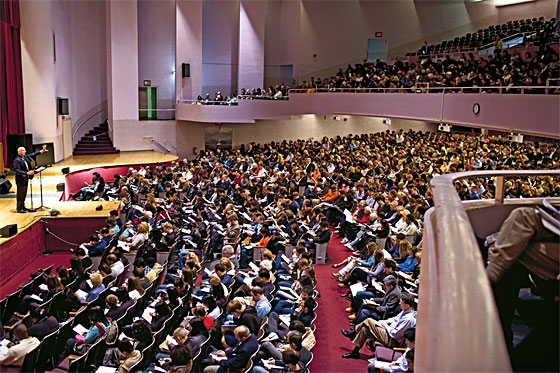
15 For this reason, ever since I heard about your faith in the Lord Jesus and your love for all the saints, 16 I have not stopped giving thanks for you, remembering you in my prayers. 17 I keep asking that the God of our Lord Jesus Christ, the glorious Father, may give you the Spirit of wisdom and revelation, so that you may know him better. 18 I pray also that the eyes of your heart may be enlightened in order that you may know the hope to which he has called you, the riches of his glorious inheritance in the saints, 19 and his incomparably great power for us who believe.
That power is like the working of his mighty strength, 20 which he exerted in Christ when he raised him from the dead and seated him at his right hand in the heavenly realms, 21 far above all rule and authority, power and dominion, and every title that can be given, not only in the present age but also in the one to come. 22 And God placed all things under his feet and appointed him to be head over everything for the church, 23 which is his body, the fullness of him who fills everything in every way.
I keep reading articles and books about New York. This week I read that whereas New York has to compete with Los Angeles as media capital of the world, has to compete with Tokyo as financial capital of the world, has to compete with London as theater capital of the world, and has to compete with Paris as fashion capital of the world, there is one area where there is no competition.
The article said New York is the power capital of the world, not just because it’s the only city that competes in all those categories, but because this is the place where people who want power and where the people who have power come to live. When I looked up the word power in the dictionary, I found all the dictionaries say the same thing. Power is the ability to act, the ability to do. This week again I saw an interesting quote that said people do not come to New York City to think or to reflect; they come to do.
In fact, when I read the interviews of famous people around here and I listen to what they’re saying, the interviewers are basically trying to find what makes you tick. When it comes down to it, though there are hundreds of different answers, I think you can reduce them. Basically the people are saying, “Do you know what makes me tick? Power. Why do I build this skyscraper? Why do I throw this party? Why do I hold this concert? I want to show you what I can do. Look what I can do. Look at the power I have. Look how I count.”
Paul here talks about power that makes all the power of New York combined look like a pop gun, a power that makes all of the power of New York comparatively look like a soggy paper airplane. It says here in verse 19 (and this is what the passage is about) God has “incomparably great power.” That’s a great phrase. Great power in Greek is completely understandable in English. Did you know that? The word greatness is the word megethos, and the word power is the word dunameōs. So what you have there is the megaton dynamite of God. It’s a great phrase, and everybody knows what it’s talking about. It doesn’t need translation. It talks about the megaton dynamite of God.
The real kicker word is the word incomparably. If you have an older translation, it might say, “The exceeding power of God.” The word incomparably is a good word. What Paul is saying is, “It can’t be compared.” Ordinarily the way in which we would measure or try to describe power is we try to describe it by comparing it to something else you know. So you can say, “A hurricane has one thousandth of the power of a nuclear warhead. A nuclear warhead has one millionth of the power of an explosion on the surface of the sun. The sun has one billionth of the power of an exploding supernova.”
How do we describe the power of God? Do we say, “His power is the power of 100 supernovas, a million supernovas, or a billion billion?” Paul is saying here, “No, no, no. God is not at the top of a scale. God has never been on the scale, so he is not even off the scale. He utterly transcends scales.” The reason for that we’re told again and again in the Psalms. The Psalms tell us, “… power belongs to God.” Now look at that. Look and wonder. “… power belongs to God” means not that God has more power than anything or anyone else, but that anyone or anything that has even an atom of power has it because God has delegated it to him. God has all the power.
Now this is an extremely practical teaching. How could Jesus Christ look Pilate right in the eye with calmness and with serenity when he knew Pilate was about to tear him apart and he had the power? Did he have the power? That’s what Pilate was saying: “I have the power to crush you.” Jesus looks at him calmly, not flippantly, because he knew Pilate had power. What did he say? Where did he get his calmness? He said, “You would have no power over me if it were not given to you from above.” Jesus says, “I know you have power. I respect that power, but you don’t have one atom more of it than what has been given to you.” All power belongs to him. That’s what we’re being told here. It’s incomparably great power.
Take a look at all the big power brokers of the world. I don’t mean the ones even now. Look at Alexander the Great, absolute monarch of all the Western world. Look at all the Caesars. Look at Hitler. Look at the incredibly wealthy people we’ve had in the history of the world. Do they really have power? Can they really determine the course of events in the world? It says here, “Jesus Christ is above every title.” Isaiah 40: “He brings the rulers to nothing.” Now that’s power. That’s power.
Friends, my question to you here is … Do you believe that? Now most of you have backgrounds where you have heard this. I think many of you probably do. If your background is Jewish, if your background is Roman Catholic, if your background is Protestant, you’ve heard this. That’s not what Paul is praying for here. Do you see what Paul is praying for? He is saying, “I pray also that the eyes of your heart may be enlightened in order that you may know the hope … the riches … and his incomparably great power.”
You might know about this power, but do you know it the way Jesus knew it? Do you grasp it? Has it sunk in? Do you act on it? Does it affect the way in which you deal with powerful people? Does it affect the way in which you deal with your fears? Has it radically changed your priorities?
Even further, is it flowing through you? Because it says here in verse 19, “… his incomparably great power for us who believe.” For us. It’s the little Greek word eis, which means through or within. Paul means here that the power of God can come through us. You can thrill under it. It can surge through you, and you can become effective, because that’s what power is: the ability to act, the ability to bring about effect, the ability to bring about impact. Now the question is … Do you know this and not just know about it? That’s a pretty good question. Could you look at Pilate in the eye like Jesus did?
If you’re going to know it, you need to take a look at the passage. The passage tells you a lot, but it tells you three things we’re going to look at tonight. Those three things are first of all this is resurrection power. Secondly, it tells us this is headship power. It only comes to people through the headship of Jesus. Thirdly, it’s power that only comes to people born again by the Spirit. It’s resurrection power, it’s headship power, and it’s spiritual power. I’ll explain that as we go along. Let’s roll.
1. Resurrection power
Paul says, “Let me tell you about the incomparably great power of God. This is the power he used to do what? To raise Jesus Christ from the dead and seat him at the right hand above all rule and authority and power and dominion.” Now why does Paul use that illustration? After all, why didn’t he say, “This is the great power God used to put the planets in orbit?” Now that’s pretty powerful. “This is the power God used to scatter the stars across the heavens.” That’s pretty powerful.
No, he goes to the resurrection of Jesus, and here’s why. Of all the powers you can find in the world, there is no power like death. Why does a hurricane have power at all? Why do we say a hurricane is powerful? Because it has some of the power of death. It can kill. Mankind can harness some of the power of creation. We can split the atom. We can do all that, but we will always die.
Don’t you realize, therefore, death is the main power that is arrayed against us? The Bible calls it the last enemy. If you could lick that power, the power of death, don’t you realize there would be no other power that would be a match for you? If you could lick the power of death … do you want a sunny vacation? You could go to the sun and camp out there for the weekend. If you licked that, there would be no other power.
That’s exactly what God did. He snapped the power of death. In Acts 2, Peter says, “But God raised him from the dead, freeing him from the agony of death, because it was impossible for death to keep its hold on him.” It was impossible. That’s why Paul can say, “O death, where is thy sting? O grave, where is thy victory?” That is a taunt, and that is incredible. That’s absolutely incredible that someone can taunt death. There are all kinds of other things which are very, very powerful. A supernova is nothing like death.
This is a letter from a young Lutheran German minister who was put to death in a Nazi death camp. This letter was published after the war. He is not famous. You’ve never heard of him. His name is Hermann. This is what he wrote to his parents the day he died. Listen to this.
When this letter comes into your hands I shall no longer be among the living. The thing that has occupied our thoughts constantly for many months … is now about to happen. If you ask me what state I am in I can only answer: I am, first, in a joyous mood and, second, filled with a great anticipation. ‘God shall wipe away every tear from their eyes.’ What consolation, what marvelous strength emanates from Christ. I am amazed. In Christ I have put my faith, and precisely today I have faith in him more firmly than ever.
My parents, look up the following passages: 1 Corinthians 15 and Romans 14:8. Look anywhere you want in the Bible, and everywhere I find jubilation over the grace that makes us children of God. What can really happen to a child of God? Of what indeed should I be afraid? Everything that till now I have done, struggled for, and accomplished, has at bottom been directed to this one goal, whose barrier I shall penetrate today. “Eye hath not seen nor ear heard, neither has entered into the heart of man the things which God has prepared for them that love him.”
For me, believing will become seeing; hope will become possession, and I shall forever share in Him who is love. Should I not, then, be filled with anticipation? What is it all going to be like? The things that up to this time I have been permitted to preach about, I shall now see. There will be no more secrets nor tormenting puzzles. Today is the great day … From the very beginning I have put everything into the hands of God, and now he demands this end of me. Good. His will be done. And so, until we meet again above, in the presence of the Father of light. Your joyful, Hermann.
I don’t know. I hope I could write a letter like that. What kind of power can enable a human being to laugh in the face of death? When Paul says, “O death, where is thy sting? O grave, where is thy victory?” that’s mockery. That is scorn. That’s humor. That’s incredible. That’s why Paul picks out the resurrection.
Here’s the weird part, and here’s the staggering part. He is trying to show us that the power that is working eis (in us, through us), that’s surging through us if we have Jesus Christ as our Savior, is this resurrection power. What Paul is saying is, “This is the way you measure it. The resurrection is the unit by which you can measure the power in us.” That is incredible.
A unit of measurement is important. If I say, “Do you know how much this book weighs?” and you say, “How much?” and I say, “It weighs five,” that doesn’t help you much, does it? You say, “I want to know what your terms of measurement are. Do you mean five ounces? Do you mean five tons? Wow. Do you mean five pounds?” You have to know what the unit of measurement is.
Paul is saying right here, “This is the unit. This is the only way you can measure it. Death-breaking resurrection power, the same stuff that raised Jesus from the dead when death itself, with all of its fury and all of its power and all of its inevitable strength, tried to bind Jesus up. He broke the bands of death like a thread. That’s what’s in your life now. It’s the only way to measure it.”
That means the things of death in your life, the decay, the destructive emotions and habits, the addictions, the confusions, the brokenness … Even though the power of death is gradually being broken so sometimes it’s here, sometimes it’s greater, and sometimes it’s less, eventually the power of the resurrection will be ascendant in your life.” Will be ascendant in your life.
Why do you think Paul can write the whole Philippian church and he can say, “[I am sure] that he who began a good work in you will carry it on to completion until the day of Christ Jesus?” How can he be so sure about that? A lot of you aren’t sure at all about that, are you? You say, “I know God began a good work in me, but I have screwed up so badly. I don’t have the confidence God will ever bring it to completion.”
Do you know why? Do you know why Paul is sure and why you’re not? Because Paul knows the power of God, the incomparably great power of God, and you don’t. At least you’re not thinking it out. You might know about it, but you don’t know it. Do you rejoice in that? Do you understand that? Do you realize that’s what’s in you? Death-breaking power?
2. Headship power
Verse 22: “And God placed all things under his feet and appointed him to be head over everything for the church, which is his body, the fullness of him who fills everything in every way.” If you look carefully you’ll see something very interesting. Jesus is said here to be a head over the world and over the church. It says here he is ruling over everything. He is head over all things for us. So there is a sense in which he is directing everything for us. Yet this verse also tells us we are part of his body. It’s talking about the very important Pauline teaching that Jesus is the head and we are part of his body, the church.
So we see here two kinds of power. There’s a power God exercises for us by ordering everything in the world for us, and there’s a power God exercises in us. There’s an external kind of power, and there’s an internal kind. There’s a power he operates in the world, and there’s a power he operates in us. Look at those. They’re both kinds of headship.
First of all, do you see what it says? Let’s drink this one in. “God placed all things under his feet and appointed him to be head over everything for the church …” This is nothing less than Romans 8:28, that great promise, “All things work together for good to them that love God, to them who are the called according to his purpose.” All things work together for good. This is saying if you belong to him, everything that happens out there is happening is for you.
Now it’s very seldom we can see how that works. Occasionally God pulls the curtain back and we get a glimpse of him. I remember when I first came to my first church in Virginia. It was a little Presbyterian church that was struggling, and they were so happy to get a pastor. I was so desperate that I took the church. They were just amazed they got a pastor. Of course there were just one or two desperate enough people to take it.
I remember one day getting up, trying to explain this passage, and saying to them, “Listen, friends, do you know why I’m here? I’m glad I’m here. You’re glad I’m here. I’m glad I’m here. It has worked out beautifully. It’s because at the very end of my seminary career I decided to become a Presbyterian. That’s why I could go to a Presbyterian church. Do you know why I decided to be Presbyterian?
Because I fell under the influence of a particular teacher my last semester at seminary. Do you know why I fell under that man’s influence? He came from England after having tremendous visa problems (and probably wasn’t going to get there until the following year). At the last minute somebody cut through the red tape. He came, and I fell under his influence. Do you know why the red tape was cut? The dean of my seminary was on his knees praying about how we were going to get this guy over here when Mike Ford, Gerald Ford’s son, walked in and asked him what he was praying for. Mike Ford was a student at the seminary at that time.
Do you know why Mike Ford was able to cut the red tape? Because his father was the president. Do you know why his father was the president? Because Nixon had resigned. Do you know why Nixon resigned? Because of the Watergate scandal. Do you know why there was a Watergate scandal? Because one day a guard noticed in the Watergate building a particular door ajar that should have been closed.
Who knows why? Maybe that day he took a drink at the water fountain he shouldn’t have, and he just happened to notice it.” I looked at my people, and I said, “What am I doing here? Watergate was for you. Watergate was for me.” Occasionally God rips aside the veil, and you begin to see this very fact: All things happen for you. All things. Everything is knit together.
Christianity is a unique religion. The Bible tells us the way in which God operates is utterly different than what either Western religions or Eastern religions say. Just give me a minute about this. That’s all. Western religions in general have said, “You are in charge of your own destiny. You make your choices. If they’re good choices you ascend; if they’re bad choices you descend.” The people who really like that approach to life say, “Yeah. I get where I get because of my choices.” The successful, famous, and well-off people have always believed that, and of course poor people have always been uptight about that.
Have any of you been reading the New York Times magazine recently? There was an interesting article about Oprah Winfrey a few weeks ago. She said, “I got up there because I made the right choices. I got in touch with who I was.” Just this week there have already been letters saying, “She is giving us the impression that those of us who haven’t come to the top just weren’t as wonderful and as in touch with ourselves as she was.”
The people who have always hit that free will stuff and said, “Yeah, it’s all a matter of free will,” are always the ones on the top. The people who are underneath realize an awful lot of it seems to be breaks, an awful lot of it seems to be who you know, where you were, where you born, who your parents were and all that, and they get irked at that theory of why some people are on the top and some people are on the bottom.
Eastern religions have always been very fatalistic. They’ve always had a tendency to say, “Look. There is this great thing called fate. Nobody can do anything about it. All your choices are for naught because where you go is just determined by the faceless fate.” Christianity will have neither of those things.
Christianity says, “The answer to what Oprah Winfrey is talking about, the answer to what the Eastern religions are talking about, the thing that liberates and brings it all together is the incomparably great power of God.” God is so great that he works out a plan, a plan to work everything out for your good if you belong to him, and his glory, which takes into consideration your choices, and still works his plan out infallibly.
Jacob lied to his father, Isaac, and wanted his birthright. He cheated his older brother out of it. Because he cheated, because he lied, he had to flee from his family. Was he guilty? Yes. Did he experience pain in his life because of that choice? Yes. Was he punished for it? Yes. But because he sinned he went and found his wife, Rachel, through whom the Messiah came. Was it all right then that he sinned?
No, but don’t you see because Jacob sinned, though God held him responsible for that choice, did that put him on an eternal plan B? Did he say, “I’ve ruined it from now on because of this sin. God will never give me the best?” My friends, no. When he sinned he went into the best for him. God is far greater than your stupid choices.
Peter says in Acts 2:23 to the people he is talking to, “[Jesus Christ] was handed over to you by God’s set purpose and foreknowledge; and you, with the help of wicked men, put him to death …” Now wait a minute. You’re wicked for putting him to death, and yet it was all purposed by God. How could they both be? Because we don’t have a mechanistic, impersonal universe; we have a God who’s infinitely wise and incomparably powerful, who is able to work all things together for you.
Now my friends, don’t you see? Yeah, you can scratch your head a little bit and say, “I don’t see how it all connects,” but this liberates, because if I really thought it was all a matter of my choices, that all of my destiny, everything that happened depended on my good choices, I wouldn’t get out of bed in the morning. I’d be afraid. “Which side of the bed should I get up out of?” The guard who found the Watergate door open … That was just because maybe he was 10 seconds later that day or something. I’d be scared to death. If I thought it was all fate, why get out of bed? If I feel like killing and maiming and raping, why not do that? Who cares?
By the way those famous people, when you see them interviewed, go one side or the other. They either say, “It was because I was so brilliant and I made the right choices,” or they’ll say, “I was destined for greatness.” Neither of those is a Christian understanding. Neither of those takes into consideration the incomparably great power of God. Fear gnaws those people because if it was because of your great choices, you ought to always be scared. What if you can’t keep it up? If you’ve made it as a great comic, you ought to be always gnawed with fear because what if tomorrow you can’t think of any more good jokes?
On the other hand, if you think it’s just destiny, you would be always gnawed with fear because what happens if fate just turns you away? “Is it me or is it impersonal fate?” It’s the incomparably great power of God, and that power is bent on your joy and benefit. “All things work together for good …” That gives us responsibility, but man does that give us security. Do you know the power of God? Do you not just know about it? Do you build your life on it? Do you draw your strength from it? That’s what Paul is talking about here. Do you see he is head over all things for the church? Do you have that?
There is another kind of headship: We are his body. That is something amazing. This image is my head, my body. I know it’s not a really good example, but it’s the one I have in hand. The head relates to the body, first of all in the sense of authority. Of course your body does what your head tells you. If it doesn’t it’s a disease. It’s a pathology. But that’s not all headship means.
Headship doesn’t just mean authority; it also means intimacy, because the body and the head participate in the same life. A head is not sewn on to the body nor a body sewn on to a head. It’s not stapled together, but it’s combined by living tissue. Now this gets to the essence of what a Christian is. I don’t know what you think the essence of a Christian is. I’ll tell you what it’s not. Some people say, “The essence of being a Christian is being American or European or Western.”
There are international people who come here all the time to study, and they come to church. Why? Because they’re studying American culture. They say, “Well I come from a Muslim land,” or, “I come from a Hindu land, and you’re in a Christian land. So if I want to understand your culture, I have to understand your religion,” because they see Christianity as being an aspect of culture. Not at all. Christianity can be the heart of any culture, but Christianity is not simply a sociological phenomenon.
Some people think the essence of Christianity is to believe the truth. Of course that is a big part of being a Christian, but there are plenty of people who are orthodox in their doctrine all for the wrong reasons. I know plenty of people who were taught good theology and doctrine as children. They grew up, and the reason I believe they adhere to that doctrine is because of nostalgia. It reminds them of a time when they were cared for. They think of their parents, and so they just feel good listening to the words come out. “I believe in the Ten Commandments. I believe in the Sermon on the Mount. I believe in the Bible.” There is no power in the person’s life.
Some people say, “Being a Christian is following the ideals of Christ.” That’s part of it too, but none of these things get at the essence of what it means to be a Christian. It’s silly to say, “A Christian is someone who follows Jesus’ example or who believes Jesus’ words,” as to say, “A doctor is somebody who wears a white coat.” Now it’s true that a lot of doctors wear white coats, but that’s not the definition of a doctor because there are a lot of other people who wear white coats besides doctors. It’s an incidental thing.
The essence of being a Christian is you’re in the body. I’ll put it another way. There was an old Scotsman named Scougal who wrote a book 200 years ago titled The Life of God in the Soul of Man. That is the essence of being a Christian. The essence of Christianity is the life of God, the power of God, the nature of God, has actually come into your life.
It says in 2 Peter 1:4, “[We are made] partakers of the divine nature …” Now that’s incredible. That means the lifeblood of God comes in. That’s the reason the Bible sometimes talks about Christians being people who are reborn, regenerated, living. The lifeblood, the life-substance of God comes into our lives so we’re renewed. It’s so stupid to do what some people do, and that is to talk about two kinds of Christians. You have the kind who believe and they follow the teachings of Christ, and then there are the “born again” variety. The “born again” variety is the intense types who insist on an emotional experience.
My friends, the Bible says you’re not a Christian at all unless he is your head. That means his life has come into you so his heart now beats through your heart so you feel what he feels, you love what he loves, and you hate what he hates. His mind penetrates your mind so you see what he sees with clarity. His character comes in so you begin to act like him. He is your head. The power comes through. That’s the only kind of Christian there is, and that’s the essence of it: the life of God in the soul of man.
That’s the reason why you have this incredible word right here: “… which is his body, the fullness of him who fills everything in every way.” Do you know what that is? Fullness is the word pleroma. The best way I can do this quickly is to tell you fullness means we are his glory. One of the best ways to translate it is to say, “He comes into his own through us.” When you say, “A ballplayer has come into his own,” what you mean is his talent was always there, but now everybody sees it. He has come into his own. What this is saying is Jesus Christ is glorified by revealing who he is through us. That is a remarkable statement. That’s scary.
Here’s the best illustration I can give you. When your children do something that is praiseworthy (if you haven’t had children, you have no idea), it astonishes you how good you feel about yourself. It’s totally irrational, but you feel, “Hey, it makes me feel great. They’re beautiful. I feel beautiful.” When your children do something shameful, you’re so cast down because if your children are ugly, it says to the world, “He is ugly.” If your children are beautiful, it says to the world, “He is beautiful.” There is that link. “They’re my fullness.”
This claim is both exciting and also scary. It means, on the one hand, God can reproduce Jesus’ glory in you, breath of Spirit, infectious joy. Nobility and love can happen in you. It also means the way in which you act tells the world what Jesus looks like. He chooses for it to be like that. That means when you’re ugly you’re saying to the world, “This is what Jesus is like.” Let me underline something … let me even say it loud. To the extent that you grasp this truth, you will receive power not to sin. Do you hear it? I have to get your attention. I know it’s late here. To the extent that you understand that and grasp that truth, you receive power not to sin. Fullness.
Paul says, “I don’t want you to just know about this; I want you to know it.” Do you know how you know something? You work it in two ways. Number one, you work it in by thinking it out, living in a holy consciousness of it, praying over it, and reflecting it until your heart gets big with it.
I’ll tell you another way in which you know something is you step out and act on it. Philippians 2 says, “… work out your salvation with fear and trembling, for it is God who works in you to will and to act according to his good purpose.” What that means is don’t sit here and say, “I’ll do it as soon as I feel the power surge.” It says, “Work out, for God is at work.” It says, “Go do it. Step out. The power comes in the doing. Don’t wait to feel the power. The power comes in the obedience.”
In Romans and in Hebrews when Abraham was told by God to offer Isaac up, we’re told Abraham looked and he was persuaded that God had the power to raise Isaac up from the dead. So he gave glory to God, and he did not stagger at the Word of God. Now what do you think Abraham did there? Do you feel like Abraham got up that morning ready to sacrifice his son and said, “Ah, I just feel the power of God surging through me. I can’t wait to get up there and see what God is going to do in the mountain?” No. What he did was he thought about it.
This is what you have to do. There is no excuse here. Don’t you dare go away saying, “Look, this is a lot of great talk, but frankly I know about the power of God. It’s all abstract, but I don’t know this kind of power in my life. I guess I’ll just have to wait around until the bolt hits.” No. We’re told Abraham got up and he was persuaded. He thought it out. He saw how God’s power bore on his situation, and he acted on it.
Do you think he felt good? It wasn’t until he got to the mountain. When he got up there, he was about to sacrifice Isaac, God showed him the provision, and he gave him the ram to sacrifice instead of Isaac, they named that place The Lord Will Provide. What is that? Jehovah-jireh. In the mouth of the Lord it will be revealed. You won’t find the power until you get to the mountain. You have to be willing to go. You have to be willing to act. Stretch, act.
If you do, you’ll know an honor you’ve never known before. You’ll see growth you’ve never known before. This is the power of God in you, and it has his holiness in you. I don’t care how bad your problems are. I don’t care how bad your habits are. This life that comes in is potent. It’s omnipotent. It’s like acid. Acid must turn whatever it touches into its own image. The holy life of God must overcome the distorted and the evil parts of you.
3. Spiritual power
Friends, this power belongs to those who do what I said, but also it belongs only to people who are born again by the Spirit. Let me just read you verses 15 and 16. Paul says, “… since I heard about your faith in the Lord Jesus … I have not stopped giving thanks for you … I keep asking that the God of our Lord Jesus Christ, the glorious Father, may give you the Spirit of wisdom and revelation …”
Do you see he doesn’t pray for them and he is not praying for you until he heard about their faith in Jesus Christ? Don’t you see this is only for people with faith in Jesus? What does that mean? It’s nothing mysterious. Some churches teach if you want to be right with God you need Jesus and the sacraments. Some say you need Jesus and good works. Some say you need Jesus and my course on how to be filled with God. Paul says, “It’s faith in Jesus. A Christian is somebody who says, ‘Jesus is my all. The reason I belong to God is because of what Jesus did for me and nothing else.’ If that’s your condition, this is available. It’s available.”
Not one of his promises will fall to the ground because of this power. His promises are so strange. They say, “I’ll give you the bright morning star. All things work out together for good to them who love God. Anyone who gives up lands and family and riches on earth, I’ll give you land and family and riches here and in the world to come, eternal life.” All these promises are incredible, and frankly I don’t know what the heck they mean. But who cares? We’ll never find out what they mean until we trust. The reason they look so strange to us is because we’re sitting back and waiting. Do you know the incomparably great power of God?
*Sermon delivered at Redeemer Presbyterian Church on July 9, 1989.
ABOUT THE PREACHER
In 1989 Dr. Timothy J. Keller, his wife and three young sons moved to New York City to begin Redeemer Presbyterian Church. In 20 years it has grown to meeting for five services at three sites with a weekly attendance of over 5,000. Redeemer is notable not only for winning skeptical New Yorkers to faith, but also for partnering with other churches to do both mercy ministry and church planting. Redeemer City to City is working to help establish hundreds of new multi-ethnic congregations throughout the city and other global cities in the next decades.
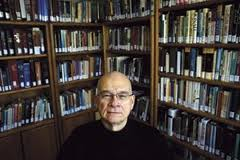
Dr. Tim Keller is the author of several phenomenal Christo-centric books including:
Joy for the World: How Christianity Lost Its Cultural Influence and Can Begin Rebuilding It (co-authored with Greg Forster and Collin Hanson (February or March, 2014).
Encounters with Jesus:Unexpected Answers to Life’s Biggest Questions. New York, Dutton (November 2013).
Walking with God through Pain and Suffering. New York, Dutton (October 2013).
Judges For You (God’s Word For You Series). The Good Book Company (August 6, 2013).
Galatians For You (God’s Word For You Series). The Good Book Company (February 11, 2013).
Every Good Endeavor: Connecting Your Work to God’s Plan for the World. New York, Penguin Publishing, November, 2012.
Center Church: Doing Balanced, Gospel-Centered Ministry in Your City. Grand Rapids: Zondervan, September, 2012.
The Freedom of Self Forgetfulness. New York: 10 Publishing, April 2012.
Generous Justice: How God’s Grace Makes Us Just. New York: Riverhead Trade, August, 2012.
The Gospel As Center: Renewing Our Faith and Reforming Our Ministry Practices (editor and contributor). Wheaton: Crossway, 2012.
The Meaning of Marriage: Facing the Complexities of Commitment with the Wisdom of God. New York, Dutton, 2011.
King’s Cross: The Story of the World in the Life of Jesus (Retitled: Jesus the KIng: Understanding the Life and Death of the Son of God). New York, Dutton, 2011.
Gospel in Life Study Guide: Grace Changes Everything. Grand Rapids, Zondervan, 2010.
The Reason For God: Belief in an Age of Skepticism. New York, Dutton, 2009.
Counterfeit Gods: The Empty Priorities of Money, Sex, and Power, and the Only Hope That Matters. New York, Riverhead Trade, 2009.
Heralds of the King: Christ Centered Sermons in the Tradition of Edmund P. Clowney (contributor). Wheaton: Crossway Books, 2009.
The Prodigal God. New York, Dutton, 2008.
Worship By The Book (contributor). Grand Rapids: Zondervan, 2002.
Ministries of Mercy: The Call of the Jericho Road. Phillipsburg: P&R Publishing, 1997.
BOOK REVIEW: Erwin Lutzer’s “Where Do We Go From Here?”
HOPE AND DIRECTION IN OUR PRESENT CRISIS

Book Review by David P. Craig
Anyone who has lived their lives in the United States as a Christian for the past 20-50 years has witnessed a radical change in five major areas: (1) Our economy; (2) Our morality; (3) Our education; (4) Our Legal Rulings; and (5) The gaining privileged position of Islam and the decline and vilification of Christianity.
Lutzer gives ample illustrations to demonstrate the decline of the Judeo-Christian worldview and values that many of us grew up with, but doesn’t stop there. Going back to the Bible and history he gives us examples of how these types of changes and hardships for Christians have always been the norm. Hardship and suffering are certainties in the life of a Christian, but Lutzer reminds the reader “the consistent lesson of 2,000 years of church history is that the church does not need freedom to be faithful…If there is any truly good news in America, it will not be announced in Washington but will be heard through the lips and lives of believers who share the good news of the Gospel wherever God has planted them. Our task, quite simply, is to witness to the truth of the Gospel in a nation that is under judgment.”
Erwin Lutzer writes compellingly about the calling of the Christian as aliens in this world. He doesn’t minimize the hardships or sufferings that lie ahead. However, he uses examples from the Scriptures to demonstrate that our sufferings are purposeful and that we ultimately will win in the end. We have amazing resources and promises from God by which we are to live in the world and make a difference until Jesus returns. Lutzer’s book is more encouraging than depressing, because he reminds us of the sovereignty of God and how we are a part of His plans that cannot be thwarted no matter how bad things look now. Ultimately everything we do for Jesus matters and lasts for eternity.
I highly recommend this book because it offers numerous constructive things to focus our attention on until the return of Christ. It offers biblical thinking, principles to live by, and actions to take that really do make a difference in our society and for the sake of eternity. It offers hope for the present and for the future. You will be encouraged that you can stop being part of the problem, and how you can be part of God’s solution in our culture.
BOOK REVIEW: DENNY BURK’S “WHAT IS THE MEANING OF SEX?”
GOD’S INTENTION FOR SEX

Book Review By David P. Craig
Denny Burk has written both a brilliant critique of errant sexual views and presented a cogent case for the biblical meaning of sex that transcends all cultures and time. Burk’s thesis developed in this book is that sex is a gift from God that is to be enjoyed exclusively within the covenant of marriage so that it might magnify God’s own covenant love for his people and thus bring glory to Him. The glory of God [all of who God is put on display] is the ultimate purpose of everything a Christian does – including sex.
There have been many books written by Christians in the past several years but they usually fall short in applying a teleological view of sex. In other words they address what the Bible has to say about sex, but not necessarily what the purpose of sex is. Burk writes: “What they [with reference to Mark Driscoll’s recent book on sex and marriage – but can be applied to various other authors] never asked, however, is the teleological question: Does this act fulfill God’s purposes for the sexual union? Does this act fulfill Gd’s ultimate purpose for marriage and sexuality–the glory of God? This is where teleology can help us.”
Burk proceeds to write a biblical theology of sex with a God-centered ethical foundation based on virtually everything the Bible has to say about our bodies, our interpretation of the relevant passages pertaining to sex, our marriages, conjugal unions, family planning, gender, sexuality and singleness. In all these areas Burk does a remarkable job of what he describes as blending biblical theology, ethics, and cultural issues pertaining to sex. He writes, “I am favoring a bleded approach that gives a privileged place to teleology within the framework of divine revelation. Scripture is plainly concerned with the formation of moral character as the basis for moral choices (as in character ethics). Scripture is also concerned with rules and divine commands (as in deontology). But Scripture also focuses on the glory of God as the purpose of all things (as in teleology).”
Therefore, Burk argues that the four aspects of sex as defined by God in the context of marriage as a covenant between and man and a woman are designed for (1) the consummation of marriage, (2) procreation, (3) expression of love, and (4) pleasure. However, these four purposes “comprise the means by which we glorify God with our sexuality.” Burk unfolds his thesis methodically, clearly, and with great theological depth that “the ultimate purpose of human sexuality is the glory of God and that the ultimate ethic is to glorify God with our sexuality.” I can’t possibly recommend this book high enough for both Christians and non-Christians to come to grips with the reason, meaning, and purpose for one’s gender, identity, sex, and marriage according to God’s great design.
*I was provided with a copy of this book for review by the publisher and was not required to write a fovorable review.
BOOK REVIEW: BRYAN CHAPELL’S “CHRIST-CENTERED SERMONS”
MODELS OF REDEMPTIVE PREACHING
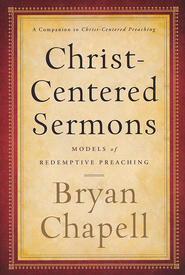
APPLYING CHRIST-CENTERED PREACHING IN YOUR MINISTRY
Book Review by David P. Craig
It’s hard to believe that its already been nineteen years since Bryan Chapell penned his classic text on preaching – Christ-Centered Preaching (CCP). Since that time Christo-centric preaching has been on the rise and pastors have become much more exposed to biblical theology and the redemptive historical method of interpretation in helping the busy pastor with sermon preparation. This new work by Chapell is a wonderful complement and sequel to his seminal text that his been so influential in both Reformed and Non-Reformed circles.
Whereas Chapell laid the foundational ground work for Christo-centric preaching in CCP, here he helps the preacher apply the groundwork by giving various examples of sermons that demonstrate the various genres of Scripture and how they point to Christ. Part One focuses on the structure of the Christo-centric sermon by giving examples of informal, formal, inductive, and expository sermons. Part Two delves into various redemptive approaches of Scripture passages. Part Three focuses on sermons that reveal how a variety of redemptive truths can be used from the Scriptures to apply to our lives.
The common denominator of all the expository sermons found in this book is that they focus on saying what God says in the passage. The preacher is encouraged to proclaim the truths gleaned from the passage in order to convey what was originally intended by the Holy Spirit. “Making sure God’s people know what God has said and why he has said it is the tandem goal of expository preaching.” All of the sermons in this book focus on the empowering power of grace through Christ that is found throughout the Scriptures. The message of the gospel and God’s grace in Christ is what leads us to repentance, salvation, and genuine transformation from darkness to light.
The author masterfully teaches and guides the preacher by showing him that “Christ-centered exposition does not require us to unveil depictions of Jesus by mysterious alchemies of allegory or typology; rather, it identifies how every text functions in furthering our understanding of who Christ is, what the Father sent him to do, and why.” In Christ-centered preaching the listener is helped to apply the biblical text by answering four main questions from the passage: (1) What am I to do? (2) Where am I to do it? (3) Why am I to do it? (4) How am I to do it?
Chapell writes, “In essence, redemptive exposition requires that we identify an aspect of our fallen condition that is addressed by the Holy Spirit in each passage, which he inspired for our edification, and then show God’s way out of the human dilemma.” The way out of the dilemma of our fallen condition is through the motivation of grace and holiness because the realities of the cross. We are enabled to have victory over sin due to our union and communion with Christ as revealed in the Scriptures.
I highly recommend that you read Chapell’s first book on preaching before reading this one. However, it’s not essential that you read his first book because he does a lot of review and explains everything he is doing in each sermon in this new offering. He lays out the foundations and theory in his first book as a solid basis for its application in this new one. Together these two books provide a tour de force of Christo-centric preaching resources for the Christ-centered preacher.
Chapell gives various ways that the same passage can be preached using different strategies without changing the biblical author’s intent. His introductions and demonstration of how the principles work for each sermon are immensely instructive. The sermons in this book are based on the following passages of Scripture: 2 Timothy 4:1-5; Judges 6-8; Psalm 126; Jeremiah 33:14-16; Isaiah 44:9-23; Numbers 20:1-13; Romans 15:4; Luke 17:1-19; Titus 2:11-15; and Romans 6:1-14. By providing sermons on various genres from the Old and New Testament Chapell has provided a wonderful guide for preachers to learn better how to apply the principles of Christ-centered preaching from Genesis to Revelation.
BOOK REVIEW: JASON C. MEYER’S “PREACHING: A BIBLICAL THEOLOGY”
A BIBLICAL THEOLOGY OF THE MINISTRY OF THE WORD

Book Review by David P. Craig
I’ve been waiting for a book like this since my calling into the ministry thirty-one years ago. Meyer combines two of my favorite subjects: biblical theology and preaching with my greatest passion – the glory of God as revealed in Jesus. The thesis of this very enjoyable book is that “the ministry of the word in Scripture is stewarding and heralding God’s word in such a way that people encounter God through his word.”
What makes this book unique is that the author shows how “the whole Bible alone can give a holistic answer to what preaching is.” Meyer brilliantly and cogently examines what the whole of the Scriptures have to say broadly about the ministry of the Word and specifically in light of what this means for the expository preacher. The ultimate reason of preaching isn’t for the transfer of information, but to have an encounter with the living God.
Meyer takes the reader on a biblically saturated journey from Genesis to Revelation and unpacks what the entire Scriptures have to say about the ministry of the Word. He does a remarkable job of conveying how preaching the Word is grounded within the big picture story line of the gospel. Christ is the plot-line of the Scriptures and Meyer helps the minister build a foundation for preaching, paradigms for preaching, and demonstrates how biblical and systematic theology guides the preacher in ministering the Word so that we and our hearers encounter the glory of God in Christ.
I highly recommend this book for beginning and seasoned preachers, but also for all Christians. It is packed full with excellent illustrations, robust theological truths, and insightful applications. By helping us to interpret the whole Bible through the lenses of redemption Meyer helps us to see that Jesus is at the forefront of every passage we preach. I believe that any believer reading this book will come to understand the gospel better, and strive to minister the word with Jesus at the center of our proclamation so that we and our listeners will truly encounter our Awesome God.
R.C. SPROUL’S TESTIMONY: INTERVIEW CONDUCTED BY DICK STAUB
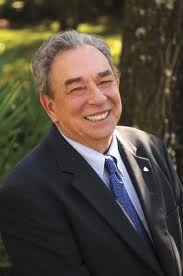
How did you first become a Christian?
I had actually gone to a church-related college, but I went on a football scholarship, not because of any interest in the church. And at the end my first week, which had been spent in freshman orientation, my roommate and I decided to head out to town to hit some of the bars across the border. We come to the parking lot and I realized that I was out of cigarettes. So I went back in the dorm and went to the cigarette machine. I can still remember it was 25 cents for a pack of Luckys. And I got my Luckys and turned around and saw the captain of the football team sitting at a table. And he spoke to me and to my roommate and invited us to come over and chat. And we did. And this was the first person I ever met in my life that talked about Christ as a reality.
I’d never heard anything like it. And I was just absorbed, sat there for two or three hours, and he was talking. He didn’t give a traditional evangelism talk to me, he just kept talking to me about the-the wisdom of the word of God. And he quoted Ecclesiastes 11:3: “Whether a tree falls to the south or to the north, in the place where it falls, there will it lie.” I just feel certain I’m the only person in church history that was converted by that verse. God just took that verse and struck my soul with it. I saw myself as a log that was rotting in the woods. And I was going nowhere.
When I left that guy’s table I went up to my room. And into my room by myself, in the dark, and got on my knees and cried out to God to forgive me.
What was it that made you head down this highfalutin, rigorous academic preparation for your life?
To tell the truth, I hated school from first grade all the way through high school. The last thing I wanted to do was even go to college. But because it was a church-related college I had to take a course in the introduction to the Old Testament, first semester, and second semester an introduction to the New Testament. I’ll tell you, I just absolutely devoured the scripture. I just read it all day. At the end of the first semester I had an A in gym because I was on an athletic scholarship, an A in Bible, and all the rest Ds.
At the beginning of my sophomore year I had almost like a second conversion. And it was a strange thing. I had a required course in introduction to philosophy. The first assignment was on David Hume. I just thought this was so much nonsense, and I was so bored. I sat in the back of the class and I had Billy Graham sermons stuffed in behind my notebook. And while the professor was droning on about this stuff, I was getting edified by the Reverend Billy Graham sermons.
And then this one day he started to lecture on Augustine’s view of creation. And he got my attention. And I sat there, and I had an experience that was almost as powerful as my conversion where all of a sudden my understanding of the nature of God just had exploded. I went downstairs and changed my major to philosophy just so that I could learn a more in-depth understanding of God.
After I graduated from college then I went to seminary for three years, and then I went and did doctoral studies at the University of Amsterdam.
What was it that made you decide that you were called specifically to try to fill this gap, as you say, “between Sunday school and seminary” for everyday Christians?
Well, actually, when I went to graduate school my life’s ambition was to teach at seminary. And that came to pass when I was still in my 20s. I got an appointment at a seminary, and it was fun, but I was also involved in the local church. The pastor of the church asked me to teach an adult course on the person and work of Christ to the laypeople. I had doctors and lawyers and housewives and farmers and all kinds of adults in that class. And what I discovered was they were more interested in these things than my seminary students.
When our seminary left town, I had an opportunity to go with the seminary or I had an opportunity to teach laymen in a large church situation. And I took that route. And I always wanted to keep my hand in the academic world, but I always felt like if we were ever going to make a difference, we had to get to the people.
Tell me about the inspiration behind Five Things Every Christian Needs to Grow. You’ve written 50 books, some of them very scholarly, And now we get to this little volume that really is back to the basics.
We have a lady that works at Ligonier Ministries, who is our chief financial officer. And really she’s a genius. I’ve never seen anybody so bright in her field. Yet she has a simple faith. And she said to me at a meeting a couple of years ago, “I like to hear you teach, but your books are too heavy for me. Can’t you write something for people that are just starting their Christian walk?”
I thought about the basic means of grace that God gives us, the ways in which he has provided for his people to grow from infancy, spiritual infancy, in the maturity and in the conformity to Jesus. And so I tried to make a very basic, practical, tool. Not just a teaching tool, but one for training.
You’ve recently started to learn the violin?
One of my dreams for heaven was to learn how to play the violin. And we started this church a few years ago. And we have a string quartet, and they’re so beautiful. I listen to violin music all the time. And I said, why wait? Why not get started now?
My teacher is this world-class performer from Russia. And she trained with some of the best teachers in Russia, so she tries to impose the same rigid Russian strictness on me that she went through. And so when I’m doing it wrong she smacks my hand and says, nyet, nyet, nyet. I’m learning more Russian than I am violin from this woman, but I am having an absolute ball. And when I have the opportunity, I’ll practice three hours a day. I just love it. It is so hard. And I screech so much. But it is so beautiful and worth it when you do get it right, you know?
It is a discipline, and we are called to be disciples. Millions of people start on piano lessons. They play one note with one finger and then they go to two fingers, and then two hands. There are different plateaus. And at each plateau another percentage of people get off the boat and give it up.
With people who start out in learning the Bible, it’s the same thing. I’ll frequently ask people if they have read the whole Bible cover to cover? Not just new Christians—we’re talking about people who have been Christians 20/30 years. And a very small minority say that they’ve read the whole Bible.
Almost everyone has read Genesis because it is narrative. People start off with good intentions to read the Bible through, but when they get into the technical dimensions of the Levitical purification codes and that sort of thing, it’s so foreign to the world they’re living that they’re confused, they get lost, they lose their interest, then they give up.
So what’s your advice to them?
What I do is I give them an outline in this book on how to get the skeletal overview of the Bible. You read Genesis and Exodus and then you skip over to Joshua. Stay with the history. And read Judges. It’s like a novel. Then 1 Samuel. I get them to get an historical overview of the whole of the Old Testament. And I’ll have them read one major prophet, one minor prophet, a few psalms, a few proverbs, just to get a taste of it. Because if they get that overview, that overall structure and then they can go back and fill in the gaps.
[In violin,] if you’re not trained yourself, you have to get under the discipline of somebody else. I have to see this teacher every week and put up with her smacking my hand and saying, nyet, nyet, nyet, because if I didn’t I’d never get anywhere. For people who start out in learning the Bible, it’s the same thing. If you have trouble being disciplined, get in a Bible study group.
*Source: http://www.christianitytoday.com/ct/2002/decemberweb-only/12-30-21.0.html

MORE ABOUT SPROUL AND STAUB
Dr. R.C. Sproul was born in 1939 in Pittsburgh Pennsylvania. He is president of Ligonier Academy of Biblical and Theological Studies and the founder and chairman of the ministry that began in 1971 as the Ligonier Valley Study Center in Ligonier, Pennsylvania. In an effort to respond more effectively to the growing demand for Dr. Sproul’s teachings and the ministry’s othereducational resources, the general offices were moved to Orlando, Florida, in 1984, and the ministry was renamed “Ligonier Ministries.”

Ligonier Ministries is an international multimedia ministry located near Orlando, Florida. Dr. Sproul’s teaching can be heard on the programRenewing Your Mind with Dr. R. C. Sproul which is broadcast onhundreds of radio outlets in the United States and in more than 40 countries worldwide. He is executive editor of Tabletalk magazine and general editor ofThe Reformation Study Bible, also known as The New Geneva Study Bible. Dr. Sproul currently serves as the director of Serve International and senior minister of preaching and teaching at Saint Andrew’s in Sanford, FL.He is ordained as a teaching elder in the Presbyterian Church in America. He is the author of more than eighty books and scores of articles for national evangelical publications.

Dr. Sproul has produced more than 300 lecture seriesand has recorded more than 80 video series on subjects such as the history of philosophy, theology, Bible study, apologetics, and Christian living. He signed the 1978 Chicago Statement on Biblical Inerrancy, which affirms the traditional view of biblical inerrancy, and he wrote a commentary on that document titled Explaining Inerrancy.
Dr. Sproul holds degrees from Westminster College, Pittsburgh Theological Seminary, and the Free University of Amsterdam, and he has had a distinguished academic teaching career at various colleges and seminaries, including Reformed Theological Seminary in Orlando, Florida, and Jackson, Mississippi.
Dick Staub was host of a eponymous daily radio show on Seattle’s KGNW and is the author of Too Christian, Too Pagan and The Culturally Savvy Christian. He currently runs The Kindlings, an effort to rekindle the creative, intellectual, and spiritual legacy of Christians in culture. His interviews appeared weekly on our site (CHRISTIANITY TODAY) from 2002 to 2004.
SUNDAY SERMON: Dr. Martyn Lloyd-Jones on “The Person of the Holy Spirit”

THE PERSON OF THE HOLY SPIRIT
In our consideration of these biblical doctrines, our method has been to follow the order and the plan of salvation, so we come now, by a logical sequence, to the great doctrine of the Holy Spirit. Now I cannot begin to talk about this doctrine without pausing for a moment to express again my sense of wonder and amazement at the plan of salvation. I believe that people who are not interested in the plan of salvation as such, are robbing themselves of a great deal. When you try to stand back and look at it as a whole, you must at once be impressed by its glory, its greatness, its perfection in every part; each doctrine leads to the next until there it is, the complete whole.
It is a very good thing in the Christian life to stand back periodically and look at this great plan. That is why I think it is important to observe Christmas Day and Good Friday and Easter Sunday, and to preach on those days. They are convenient occasions for reminding ourselves of the whole plan of salvation. Look at it as a whole, look at the separate parts; but always remember that the parts must be kept in their relationship to the whole.
So it is very important that we should be studying the Bible in this particular way. I would always recommend that you read the Bible chapter by chapter, that you go steadily through it—that is also good. But in addition I do suggest that it is of vital importance to take out the great doctrines that are taught there, and look at them according to the plan or the scheme of salvation. The Church has done this from the very beginning, and it is a tragedy that it is done so infrequently at this present time because if you are content only with reading through the Scriptures, there is a danger of missing the wood for the trees. As you read through, you become so immersed in the details, getting the right translation, and so on, that you tend to forget the big, outstanding doctrines. So the reason for taking a series like this is to remind ourselves that the purpose of the Bible is to tell us God’s plan for the salvation of this world.
Another thing which I must emphasise is this: I know nothing which is such a wonderful proof of the unique, divine inspiration of the Scriptures as the study of Christian doctrine because we see then that this book is one, that it has one message though it was written at different times by different men in different circumstances. There is great unity in the message, one theme running from the beginning to the end. From the moment mankind fell, God began to put the plan of salvation into operation, and we can follow the steps and the stages right through the Bible. And so as we come to consider the doctrine of the Holy Spirit, we are reminded that here again is a doctrine that appears both in the Old and the New Testaments. We find a reference to the Holy Spirit in the second verse of the Bible, and the teaching goes right the way through. This amazing unity, I repeat, is proof of the unique, divine inspiration and infallibility of the Scriptures.
So, then, we find that in this great plan the Holy Spirit is the applier of salvation. It is His work to bring to us, and to make actual in us, in an experiential manner, that great salvation which we have been considering together and which the Son of God came into the world in order to work out. In the Godhead, the Holy Spirit is the executive, the executor. I shall have to come back to this again when we deal particularly and specifically with His work, but that is His great function in the plan.
Now it is a remarkable and an astonishing thing that this doctrine of the Holy Spirit, His person and His work, has been so frequently neglected in the Church—yet that is an actual fact of history. It is quite clear that the first Christians believed the doctrine, they almost took it for granted. Then you come to the early centuries of the Christian era and you find very little reference, comparatively speaking, to this doctrine. That is not surprising, in fact it was more or less inevitable, because the Church was constantly engaged, in those first centuries, in defending the doctrine concerning the Son. The Son of God had become incarnate: He had been here in this world. Jesus was preached, Jesus as the Christ, and, of course, the enemy was constantly attacking the person of Christ. This was the linchpin in the whole of the gospel and if it could be discredited, the whole scheme would collapse. So the attack was upon the person of the Son and the Church had to give herself in defence of that doctrine in order to establish it.
Tragically, the result was that the doctrine of the Holy Spirit was comparatively neglected, until the time of the Protestant Reformation. Now it is our custom to say that the Protestant Reformation is primarily the epoch in the history of the Church in which the great doctrine of justification by faith only was rediscovered in the Bible, and that is perfectly true. But let us never forget that it is equally true that the doctrine of the Holy Spirit was also rediscovered in a most amazing manner, and the great Dr B. B. Warfield is surely right when he says that John Calvin was the great theologian of the Holy Spirit. With the whole Roman system the Holy Spirit was ignored; the priesthood, the priests, the Church, Mary and the saints were put into the position of the Holy Spirit.
So the Protestant Reformation rediscovered this mighty doctrine; and let us, in Britain, take partial credit for that. The doctrine of the Holy Spirit was, beyond any question whatsoever, worked out most thoroughly of all by a Puritan divine who lived in this country in the seventeenth century. There is still no greater work on the doctrine of the Holy Spirit than the two volumes by the mighty Dr John Owen, who preached in London and who was also at one time, during the period of Cromwell, the Vice Chancellor of the University of Oxford. And not only John Owen. Thomas Goodwin and other Puritans also worked out the doctrine of the Holy Spirit. It has never been done so thoroughly since, and certainly had never been done before.
Now generally speaking, the position today is that the doctrine of the Holy Spirit is either neglected or it tends to be emphasised and exaggerated in a false manner. And I have no doubt at all that the second is partly the cause of the first. The doctrine of the Holy Spirit is neglected because people are so afraid of the spurious, the false and the exaggerated that they avoid it altogether. No doubt this is why many people also neglect the doctrine of prophecy, the last things and the second coming. ‘The moment you start on that,’ they say, ‘you get into these extravagances and these disputes.’ So they leave the whole thing alone and the doctrine is entirely neglected.
So it is with the doctrine of the Holy Spirit. Because of certain exaggerations, excesses and freak manifestations, and the crossing of the border line from the spiritual to the scientific, the political and the merely emotional, there are many people who are afraid of the doctrine of the Holy Spirit, afraid of being too subjective. So they neglect it altogether. I would also suggest that others have neglected the doctrine because they have false ideas with regard to the actual teaching concerning the person of the Holy Spirit.
In view of all this, therefore, it is obviously essential that we should consider this great doctrine very carefully. If we had no other reason for doing so, this is more than enough—that it is a part of the great doctrine of the blessed Holy Trinity. Let me put it very plainly like this: you would all agree that to neglect or to ignore the doctrine about the Father would be a terrible thing. We would all agree that it is also a terrible thing to neglect the doctrine and the truth concerning the blessed eternal Son. Do we always realise that it is equally sinful to ignore or neglect the doctrine of the blessed Holy Spirit? If the doctrine of the Trinity is true—and it is true—then we are most culpable if in our thinking and in our doctrine we do not pay the same devotion and attention to the Holy Spirit as we do to the Son and to the Father. So whether we feel inclined to do so or not, it is our duty as biblical people, who believe the Scripture to be the divinely inspired word of God, to know what the Scripture teaches about the Spirit. And, furthermore, as it is the teaching of the Scripture that the Holy Spirit is the one who applied salvation, it is of the utmost practical importance that we should know the truth concerning Him. I am very ready to agree with those who say that the low spiritual life of the Church, today or at any time, is largely due to the fact that so many fail to realise the truth concerning the person and the work of the Holy Spirit.
One other thing under this heading. I wonder whether you have ever noticed, those of you who are interested in hymns and in hymnology, that in most hymnbooks no section is so weak as the section devoted to the Holy Spirit? Here the hymns are generally weak, sentimental and subjective. For that reason, I have always found myself in great difficulties on Whit Sunday. We are lacking in great doctrinal hymns concerning the Holy Spirit and His work. Indeed, there are those who would say (and I am prepared to agree with them) that in many hymnbooks a vast majority of the hymns under the section of the Holy Spirit—these hymns that beseech Him to come into the Church and to come upon us, and to do this and that—are thoroughly unscriptural. That is another way of showing you again that this great doctrine has been neglected, that people have fought shy of it, and there is confusion concerning it.
The best way to approach the doctrine of the Holy Spirit is to start by noticing the names or the descriptive titles that are given to this blessed person. First of all, there are the many names that relate Him to the Father; let me enumerate some of them: the Spirit of God (Gen. 1:2); the Spirit of the Lord (Luke 4:18); the Spirit of our God (1 Cor. 6:11). Then another is, the Spirit of the Lord God, which is in Isaiah 61:1. Our Lord speaks, in Matthew 10:20, of the Spirit of your Father, while Paul refers to the Spirit of the living God (2 Cor. 3:3). My Spirit, says God, in Genesis 6:3, and the psalmist asks, ‘Whither shall I go from thy Spirit?’ (Ps. 139:7). He is referred to as his Spirit—God’s Spirit—in Numbers 11:29; and Paul, in Romans 8:11, uses the phrase the Spirit of him [God the Father] that raised up Jesus from the dead. All these are descriptive titles referring to the Holy Spirit in terms of His relationship to the Father.
In the second group are the titles that relate the Holy Spirit to the Son. First, ‘If any man have not the Spirit of Christ he is none of his’ (Rom. 8:9), which is a most important phrase. The word ‘Spirit’ here refers to the Holy Spirit. In Philippians 1:19, Paul speaks about the Spirit of Jesus Christ, and in Galatians 4:6 he says, ‘God hath sent forth the Spirit of his Son’. Finally He is referred to as the Spirit of the Lord (Acts 5:9).
Finally, the third group comprises the direct or personal titles, and first and foremost here, of course, is the name Holy Spirit or Holy Ghost. Some people are confused by these two terms but they mean exactly the same thing. The English language is a hybrid which has borrowed from other languages, and ‘Ghost’ is an old Anglo-Saxon word while ‘Spirit’ is derived from the Latin spiritus.
A second title in this group is the Spirit of holiness. Romans 1:4 reads, ‘Declared to be the Son of God with power, according to the spirit of holiness, by the resurrection from the dead.’ A further title is the Holy One: ‘But ye have an unction from the Holy One’ (1 John 2:20). In Hebrews 9:14 He is referred to as the eternal Spirit and Paul says in Romans 8:2, ‘For the law of the Spirit of life in Christ Jesus hath made me free from the law of sin and death.’ In John 14:17 He is called the Spirit of truth, and in chapters 14, 15 and 16 of John’s Gospel, He is referred to as the Comforter.
Those, then, are the main names, or descriptive titles, that are applied to Him. But have you ever thought of asking why He is called the Holy Spirit? Now if you put that question to people, I think you will find that they will answer, ‘He is described like that because He is holy.’ But that cannot be the true explanation because the purpose of a name is to differentiate someone from others, but God the Father is holy and God the Son is equally holy.
Why, then, is He called holy? Surely, the explanation is that it is His special work to produce holiness and order in all that He does in the application of Christ’s work of salvation. His objective is to produce holiness and He does that in nature and creation, as well as in human beings. But His ultimate work is to make us a holy people, holy as the children of God. It is also probable that He is described as the Holy Spirit in order to differentiate Him from the other spirits—the evil spirits. That is why we are told to test the spirits and to prove them, and to know whether they are of God or not (1 John 4:1).
Then the next great question is the personality or the person of the Spirit. Now this is vital because it is essential that I should put it like this. The person of the Holy Spirit is not only forgotten by those whom we describe as liberals or modernists in their theology (that is always true of them), but we ourselves are often guilty of precisely the same thing. I have heard most orthodox people referring to the Holy Spirit and His work as ‘it’ and ‘its’ influence and so on, as if the Holy Spirit were nothing but an influence or a power. And hymns, too, frequently make the same mistake. There is a confusion about the Holy Spirit and I am sure there is a sense in which many of us find it a little more difficult to conceive of the third person in the blessed Holy Trinity than to conceive of the Father or the Son. Now why is that? Why is there this tendency to think of Him as a force, or an influence, or an emanation?
There are a number of answers to that question. They are not good reasons, but we must consider them. The first is that His work seems to be impersonal, because it is a kind of mystical and secret work. He produced graces and fruits; He gives us gifts and He gives us various powers. And because of that, we tend to think of Him as if He were some influence. I am sure that this is a great part of the explanation.
But, furthermore, the very name and title tends to produce this idea. What does Spirit mean? It means breath or wind or power—it is the same word—and because of that, I think, we tend, almost inevitably and very naturally, unless we safeguard ourselves, to think of Him as just an influence rather than a person.
Then a third reason is that the very symbols that are used in speaking of Him and in describing Him tend to encourage us in that direction. He descended upon our Lord, as John baptised Him in the Jordan, in the semblance of a dove (Matt. 3:16). And again, the symbols that are used to describe Him and His work are oil and water and fire. In particular, there is the phrase in the prophecy of Joel, which was quoted by Peter in Jerusalem, on the Day of Pentecost, about the Spirit being poured out (Acts 2:17). That makes us think of liquid, something like water, something that can be handled—certainly not a person. So unless we are very careful and remember that we are dealing with the symbols only, the symbolic language of the Scripture tends to make us think of Him impersonally.
Another reason why it is that we are frequently in difficulties about the personality of the Holy Spirit is that very often, in the preliminary salutations to the various New Testament epistles, reference is made to the Father and the Son, and the Holy Spirit is not mentioned. Our Lord in the great high priestly prayer says, ‘And this is life eternal, that they might know thee, the only true God, and Jesus Christ, whom thou hast sent’ (John 17:3)—He makes no specific reference to the Holy Spirit. And then John says the same thing in his first epistle: ‘And truly our fellowship is with the Father, and with His Son Jesus Christ’ (1 John 1:3). He does not mention the Spirit specifically at that point.
Then also, the word Spirit in the Greek language is a neuter word, and, therefore, we tend to think of Him and of His work in this impersonal, neutral sense. And for that reason, the King James Version, I am sorry to say, undoubtedly fell into the trap at this point. In Romans 8:16 we have that great statement which reads, ‘The Spirit itself beareth witness with our Spirit, that we are the children of God.’ You notice the word ‘itself’, not ‘Himself’. Again in the same chapter we read, ‘Likewise the Spirit also helpeth our infirmities: for we know not what we should pray for as we ought; but the Spirit itself maketh intercession for us’ (Rom. 8:26). At this point the Revised Version is altogether superior since in both instances it gives the correct translation: ‘Himself’, even though in the Greek the pronoun, as well as the noun, is in the neuter.
And thus we have, it seems to me, these main reasons why people have found it difficult to realise that the Holy Spirit is a person. People have argued—many theologians would argue—that the Scripture itself says the ‘Spirit of Christ’. The Holy Spirit, they say, is not a distinct person; He is the Spirit of Christ, the Spirit of the Son, or of the Father, and thus they deny His personality.
How, then, do we answer all this? What is the scriptural reply to these reasons that are often adduced? Well, first of all, the personal pronoun is used of Him. Take John 16:7–8 and 13–15 where the masculine pronoun ‘He’ is used twelve times with reference to the Holy Spirit. Now that is a very striking thing. Jesus says, ‘Howbeit when he, the Spirit of truth, is come, he will guide you into all truth’ (v. 13)—and so on. And this, of course, is of particular importance when we remember that the noun itself is a neuter noun, so the pronoun attached to it should be in the neuter. Now this is not always the case but it is in the vast majority of instances. It is most interesting and it shows how important it is to realise that the inspiration of Scripture goes down even to words like pronouns! So that is the first argument, and those who do not believe in the person of the Spirit will have to explain why almost the whole Scripture uses the masculine pronoun.
The second reply to those who query the personality of the Spirit is that the Holy Spirit is identified with the Father and the Son in such a way as to indicate personality.
There are two great arguments here; the first is the baptismal formula: ‘baptizing them in the name of the Father, and of the Son, and of the Holy Ghost’ (Matt. 28:19). Here He is associated with the Father and the Son in a way that of necessity points to His personality. And notice, incidentally, that this baptismal formula does not say, ‘baptizing them in the names’ but ‘in the name’. It uses the unity of the three Persons—the Three in One—one name, one God, but still Father, Son and Holy Spirit. And so if you do not believe in the person and personality of the Holy Spirit, and think that He is just a power or a breath, you would have to say, ‘Baptizing them in the name of the Father, and of the Son, and of the breath’ or of ‘the power’. And at once it becomes impossible. The second argument is based on the apostolic benediction in 2 Corinthians 13:14: ‘The grace of the Lord Jesus Christ, and the love of God, and the communion of the Holy Ghost …’—obviously the Holy Spirit is a person in line with the person of the Father and of the Son.
The third reply is that in a most interesting way we can prove the personality of the Spirit by showing that He is identified with us, with Christians, in a way that indicates that He is a person. In Acts 15:28 we read, ‘For it seemed good to the Holy Ghost, and to us, to lay upon you no greater burden than these necessary things.’ This was a decision arrived at by members of the early Church, and as they were persons, so He must be a person. You cannot say, ‘It seemed good to a power and to us,’ because the power would be working in us. But here is someone outside us—‘It seemed good to him and to us’.
The fourth reply is that personal qualities are ascribed to Him in the Scriptures. He is said, for example, to have knowledge. Paul argues, ‘For what man knoweth the things of a man, save the spirit of man which is in him? even so the things of God knoweth no man, but the Spirit of God’ (1 Cor. 2:11).
But—and this is very important—He has a will also, a sovereign will. Read carefully 1 Corinthians 12 where Paul is writing about spiritual gifts, and the diversity of the gifts. This is what we are told: ‘But all these worketh that one and the selfsame Spirit, dividing to every man severally as he will’ (v. 11). Now that is a very important statement in the light of all the interest in spiritual healing. People say, ‘Why have we not got this gift in the Church, and why has every Christian not got it?’ To which the simple answer is that this is not a gift that anybody should claim. It is the Spirit who gives and who dispenses these gifts, according to His own will. He is a sovereign Lord, and he decides to whom and when and where and how and how much to give His particular gifts.
Then the next point is that He clearly has a mind. In Romans 8:27 we read, ‘And he that searcheth the hearts knoweth what is the mind of the Spirit’—this is in connection with prayer. He is also one who loves, because we read that ‘the fruit of the Spirit is love’ (Gal. 5:22); and it is His function to shed abroad the love of God in our hearts (Rom. 5:5). And, likewise, we know He is capable of grief, because in Ephesians 4:30, we are warned not to ‘grieve’ the Holy Spirit. The doctrine of the Holy Spirit, and especially this aspect of the doctrine which emphasises His personality, is of supreme importance. The ultimate doctrine about the Spirit, from the practical, experiential standpoint, is that my body is the temple of the Holy Spirit, so that whatever I do, wherever I go, the Holy Spirit is in me. I know nothing which so promotes sanctification and holiness as the realisation of that. If only we realised, always, in anything we do with our bodies, the Holy Spirit is involved! Remember, also, that Paul teaches that in the context of a warning against fornication. He writes, ‘Know ye not that your body is the temple of the Holy Ghost which is in you …?’ (1 Cor. 6:19). That is why fornication should be unthinkable in a Christian. God is in us, in the Holy Spirit: not an influence, not a power, but a person whom we can grieve.
So we are going through all these details not out of an academic interest, nor because I may happen to have a theological type of mind. No, I am concerned about these things, as I am a man trying myself to live the Christian life, and as I am called of God to be a pastor of souls, and feel the responsibility for the souls and the conduct and behavior of others. God forbid that anybody should regard this matter as remote and theoretical. It is vital, practical doctrine. Wherever you are, wherever you go, if you are a Christian, the Holy Spirit is in you and if you really want to enjoy the blessings of salvation, you do so by knowing that your body is His temple.
ABOUT THE PREACHER:

Dr. David Martyn Lloyd-Jones (1899-1981) [hereafter – DMLJ] was a British evangelical born and brought up within Welsh Calvinistic Methodism, he is most noted for his pastorate and expository preaching career at Westminster Chapel in London.
In addition to his work at Westminster Chapel, he published books and spoke at conferences and, at one point, presided over the Inter-Varsity Fellowship of Students (now known as UCCF). Lloyd-Jones was strongly opposed to the liberal theology that had become a part of many Christian denominations in Wales and England.
DMLJ’s most popular writings are collections of his sermons edited for publication, as typified by his multi-volume series’ on Acts, Romans, Ephesians, 1 John, and Philippians. My favorite writings are his expositions on the Sermon on the Mount; Revival; Joy Unspeakable; Spiritual Depression; and his recently revised 40th Anniversary edition of Preaching and Preachers. The sermon above is from Volume Two, Chapter One in the compilation of sermons entitled Great Doctrines of the Bible.
Born in Wales, Lloyd-Jones was schooled in London. He then entered medical training at Saint Bartholomew’s Hospital, better known simply as Bart’s. Bart’s carried the same prestige in the medical community that Oxford did in the intellectual community. Martyn’s career was medicine. He succeeded in his exams so young that he had to wait to take his MD, by which time he was already chief clinical assistant to Sir Thomas Horder, one of the best and most famous doctors of the day. By the age of 26 he also had his MRCP (Member of the Royal College of Physicians).
Although he had considered himself a Christian, the young doctor was soundly converted in 1926. He gave up his medical career in 1927 and returned to Wales to preach and pastor his first church in Sandfields, Aberavon.
In 1935, Lloyd-Jones preached to an assembly at Albert Hall. One of the listeners was 72-year-old Dr. Campbell Morgan, pastor of Westminster Chapel in London. When he heard Martyn Lloyd-Jones, he wanted to have him as his colleague and successor in 1938. But it was not so easy, for there was also a proposal that he be appointed Principal of the Theological College at Bala; and the call of Wales and of training a new generation of ministers for Wales was strong. In the end, however, the call from Westminster Chapel prevailed and the Lloyd-Jones family finally committed to London in April 1939.
After the war, under Lloyd-Jones preaching, the congregation at Westminster Chapel grew quickly. In 1947 the balconies were opened and from 1948 until 1968 when he retired, the congregation averaged perhaps 1500 on Sunday mornings and 2000 on Sunday nights.
In his 68th year, he underwent a major medical operation. Although he fully recovered, he decided to retire from Westminster Chapel. Even in retirement, however, Lloyd-Jones worked as a pastor of pastors an itinerant speaker and evangelist. “The Doctor”, as he became known, was one of the major figureheads of British evangelicalism and his books and published sermons continue to be appreciated by many within the United Kingdom and beyond. DMLJ believed that the greatest need of the church was revival.
STRANGE FIRE = STRANGE CHRISTIANITY
A PLEA FOR EVANGELICALS TO MAJOR ON THE MAJOR’S

By David P. Craig
The recent John MacArthur “Strange Fire” Conference compelled me to write this article. I don’t want to address Cessationism vs. Non-Cessationism so much, as to wrestle with why major on issues of disagreement in the Body of Christ when we have larger fish to fry? What would happen if evangelicals were known more for our love, cooperation, and unity than for our disagreements? What would happen if we worked more on understanding one another than attacking each other? What would be the results of a Church that is known by our love rather than our animosity towards those who believe differently than we do? What if we were characterized by civility and humility rather than pride and arrogance?
It’s been awhile since I’ve read C.S. Lewis’ classic Mere Christianity – but its basic thesis is something I long for in the Evangelical Community around the globe today. Lewis was trying to get at the core or essence of Christianity. To this day perhaps few thinkers or writers have built as many bridges as Lewis in pointing people to Christ for both believers and non-believers.
In my own journey I have been a follower and lover of Jesus Christ since I was six years old. I have three degrees in theology and have been involved in church ministry since I was seventeen: in Brethren Churches, Baptist Churches, Evangelical Free Churches, Reformed Churches, Charismatic Churches, and various non-denominational churches. I have wrestled mightily, agonizingly, emotionally, subjectively, and objectively with issues of theology and methodology. Here are some of the positions I’ve wrestled with over the years:
Theology Proper – Process Theology? Open Theism? Augustinian-Calvinist? Modified Calvinist? Simple-Foreknowledge? Classical Free Will? Middle-Knowledge? Molinism?
Creation – 7 Literal Days? Young Earth? Old Earth? Day-Age View? Theistic Evolution? Framework Hypothesis? Gap Theory? Restoration View?
Bibliology – Infallibilist? Inerrantist?
Anthropology – Monism? Dichotomy? Trichotomy?
Soteriolgy – Pelagianism? Semi-Pelagianism? Augustinianism? Arminianism? Calvinism?
Predestination and Free Will – God Limits His Power? God Limits His Knowledge? God Ordains All Things? God Knows All Things?
Atonement – Christus Victor? Moral Government? Penal Substitution? Healing? Kaleidoscopic?
Justification – Deification? Traditional Reformed? Progressive Reformed? New Perspective?
Eternal Security – Classical Calvinist? Moderate Calvinist? Reformed Arminian? Wesleyan Arminian?
Sanctification – Wesleyan? Reformed? Pentecostal? Keswick? Augustinian-Dispensational?
Christology – Classical View? Kenotic View?
Eschatology – Amillennialism? Postmillennialism? Dispensational Premilillennialsm? Historic Premillennialism?
Hell – Annihilationism? Purgatory? Metaphorical? Conditional? Literal?
Pneumatology – Reformed? Dimensional Charismatic? Wesleyan? Catholic? Pentecostal?
Baptism – Symbol of Christ’s Saving Work? Sacrament of the Covenant? God’s Baptismal Act as Regenerative? Believer’s Baptism as the Biblical Occasion of Salvation?
Lord’s Supper – Christ’s True, Real, and Substantial Presence? Spiritual Presence of Christ? Christ’s Presence as Memorial?
Apologetics – Classical? Evidential? Cumulative Case? Presuppositional? Reformed Epistemology?
Law and Gospel – Non-Theonomic? Theonomic Reformed? God’s Gracious Guidance? Dispensational? Modified Lutheran?
Biblical Theology – Principalizing? Redemptive-Historical? Drama of Redemption? Redemptive-Movement?
Systematic Theology – Charismatic? Pentecostal? Dispensational? Progressive Dispensationalism? Covenant? Epangelical?
Destiny of the Unevangelized – Pluralism? Inclusivism? Particularism?
Women in Ministry – Egalitarian? Complementarian? Plural Ministry? Male Leadership?
Church Government – Episcopalianism? Presbyterianism? Single-Elder Congregationalism? Plural-Elder Congregationalism?
Counseling – Levels of Explanation? Integration? Christian Psychology? Transformational Psychology? Biblical?
Charismatic Gifts – Cessationism? Open but Cautious? Charismatic? Pentecostal? Third Wave?
I actually have 75 books in my library that have 2-5 views held by professing Christians on these and many more issues. What troubles me about the Strange Fire Conference and forthcoming book by John MacArthur is the time and effort into issues that divide rather than unite the body of Christ. This is a time for bridge building among Christians, not blowing them up! With the onslaught of immorality, relativism, and persecution on Christians around the world it’s more important than perhaps any other time in history that Christians unite and major on the majors and learn to minor on the minors.
The reality is no two theologians will agree on everything. I have a Jewish friend that jokingly says, “If you get three Rabbi’s in a room to debate an issue there will be four opinions.” I think the same can be said among any three random Protestant Pastors. The reality is that when we all get to Heaven we will find out we erred in many of our views. It doesn’t mean that we shouldn’t seek the truth and give up on finding the truth, but it does mean that we should humbly pursue truth and be patient with those who disagree with us. It’s a good thing the thief on the cross didn’t have to pass a theological exam to get into Heaven. He simply acknowledged that he was a sinner, deserved to be punished for his sin, and believed on the Lord Jesus Christ to save him – and we’ll see that guy in Heaven one day!
We need to rally around “Mere Christianity” and work towards being united with those who love Christ, His Word, and pursue His truth in humble and prayerful discussion together. Let’s not shoot our own wounded, but take care of one another’s wounds. Let’s patiently and lovingly pursue the truth together and agree to disagree on minor issues. Let’s unite on the greatness of God, and the glorious gospel, and the return of His Son. Let’s be more concerned about our own sins than the sins of others. Let’s become grace bound, grace oriented, and err on the side of grace. Let’s exalt Jesus and make Him our King, Lord, Savior, and find our satisfaction, joy, and delight in Him.
There’s only one man who had it all down perfectly and that was Jesus. He is and ever will be the lone perfect theologian who has perfect theology. Until He returns or takes us home we need to learn to submit to Him, point others to Him, seek Him, pursue His truth, and learn to get along by majoring on the majors and minoring on the minors. Let’s pursue the big ideas and big doctrines in the Bible and unite around those. There’s too much against us in the world for us to turn on one another.
As a Dodger fan, when I go to the baseball games I don’t focus on the guys political shirt next to me – I don’t argue with him over our differences. There’s simply one goal – cheer for our team to win. When Puig hits a home run – I high-five the guy next to me and we are full of joy because we are focused on what we agree on. Let’s stop arguing about what we’re wearing, how we’re worshipping, what style of music we’re listening to, and work together to win! We have one great commission; one great Book; one great Savior; one great King; one powerful Spirit; one powerful message; and one calling to bring glory to God; and as Paul said, “This one thing I do!” Let’s get out there and do it…together!
The strangest thing about the Strange Fire conference is that it represents a strange Christianity. Christians according to Jesus Himself are to be known by their love, not by burning each other down, but by building each other up. I am grateful for the fellowship, friendships, and learning that I have received from continuationists and non-continuationists. I know that we can’t all be right about everything, but I do know that we can do more together for the sake of Christ and His glory than we can apart. I also know that the fruit of the Spirit never burns but soothes – He is love, joy, peace, longsuffering, gentleness, goodness, faith, meekness, and temperance. As believers, let’s build each other up, not burn each other, let’s be controlled by the Spirit not grieve the Spirit, and let’s proclaim the glory of Christ by the power of the Spirit for our own good and God’s glory. Ironically the closer we get to the Son – the less likely we are to get burned, or burn others.
BOOK REVIEW: RANDY ALCORN’S “SEEING THE UNSEEN”
A DAILY DOSE OF ETERNAL PERSPECTIVE

 LifeCoach4God