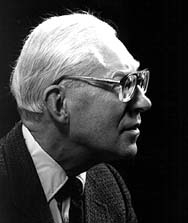
Dr. John F. Walvoord on “Is a Posttribulational Rapture Revealed in Matthew 24?”

Matthew 24 is a crucial passage in the debate between pre- and posttribulationists. The context of Matthew 24 and especially vv 40–41  argues that a posttribulational rapture is not being taught. Rather Christ, on the analogy of Noahs flood, spoke of some being taken in judgment. Thus it can be concluded that no biblical text places the rapture after the tribulation (The article below is adapted from the Grace Theological Journal [Fall 85], p.258ff).
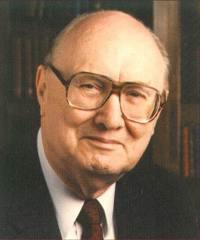
Walvoord J F image

Among premillenarians, the question as to whether the rapture of the church occurs before or after the end time tribulation continues to be a live subject for debate. Among other eschatological points of view such as postmillennialism and amillennialism, it is assumed that the rapture is a part of the second coming of Christ and therefore is posttribulational. Postmillenarians and amillenarians accept almost without question a posttribulational rapture because they interpret prophecies of the events leading up to the second coming nonliterally. By contrast premillenialism depends upon a literal interpretation of prophecy.

Among premillenarians, however, the issue of pretribulationism continues to be discussed, and books continue to be published on the issues involved. The differences of opinion stem largely from the question as to whether end time prophecies are to be interpreted literally, especially as they distinguish Israel’s future from that of the church, the body of Christ.

Both pretribulationists and posttribulationists are confronted with the fact that the Scripture does not expressly state either view. Pretribulationists find what approximates a direct teaching of their view in 2 Thessalonians 2 where the lawless one is said to be revealed only after the restrainer is removed. The traditional interpretation among pretribulationists is that the restrainer is the Holy Spirit who indwells the church. Thus, it is the Holy Spirit (and by implication the church) who must be removed before the lawless one can be revealed (E.g., see D. Edmond Hiebert, The Thessalonian Epistles [Chicago: Moody, 1971] 313-14; J. Dwight Pentecost, Things to Come [Grand Rapids: Zondervan, 1958] 259-63; and John F. Walvoord, “Is the Tribulation before the Rapture in 2 Thessalonians,” BSac 134 [1977]107-13).

If the lawless one is the end time ruler, he would be revealed at least seven years before the second coming of Christ. According to this interpretation of 2 Thessalonians 2, then, the rapture occurs prior to the tribulation. Posttribulationists, of course, dispute this interpretation and interpret the passage in a manner that does not yield a pretribulational sequence of end time events (E.g., see Robert H. Gundry, The Church and the Tribulation [Grand Rapids: Zondervan, 1973] 122-28. For a recent discussion of the passage from pre-, mid-, and posttribulational perspectives see Gleason L. Archer, Paul D. Feinberg, Douglas J. Moo, and Richard D. Reiter, The Rapture: Pre-, Mid-, or Post-tribulational? [Grand Rapids: Zondervan, 1984] 126-27,189-90,228-29.

What is often overlooked in the discussion by posttribulationists is that they also lack a specific statement that the rapture of the church occurs at the time of Christ’s second coming to set up his kingdom. It is quite common for posttribulationists to challenge pretribulationists to offer a single verse in the Bible that teaches their position. Pretribulationism counters by offering passages that imply it, such as 2 Thessalonians 2. Pretribulationists also point out that all the passages clearly identified as referring to the rapture name no preceding events. On the other hand, passages dealing with the second coming of Christ to set up his kingdom predict a complicated series of world-shaking events such as are described in Revelation 6–18  and other passages dealing with the end time.

Posttribulationists are also embarrassed by the fact that the most detailed account of the second coming of Christ, found in Revelation 19–20 , nowhere mentions either a rapture or a resurrection in connection with Christ’s coming from heaven to earth, and there is no legitimate place to insert the events of 1 Thessalonians 4. Accordingly posttribulationists recognize the need for a specific passage that will support the posttribulational view. This for many posttribulationists is found in Matthew 24. This chapter of the Bible, therefore, becomes a strategic crux interpretum in the debate between the two views. Those who hold a midtribulational view, that is, that the rapture will occur three and one-half years before the second coming of Christ, also turn to Matthew 24. The discussion of this portion of Scripture and its proper exegesis, therefore, becomes quite determinative in any conclusion as to where the rapture fits into the prophetic scheme. Practically every author who attempts to refute the pretribulational view discusses in some detail Matthew 24 in an effort to find support for posttribulationalism (E.g., see Gundry, The Church and the Tribulation, 135–39, 158; George E. Ladd, The Blessed Hope [Grand Rapids: Eerdmans, 1956] 144-45; and Alexander Reese, The Approaching Advent of Christ [London: Marshall, Morgan, and Scott, 1932] 29, 208, 214-15).

The Context of Matthew 24

As the Gospels make clear, the Olivet Discourse, contained in Matthew 24–25 , occurred only days before the death and crucifixion of Christ. Opposition to Christ and efforts to kill him on the part of religious leaders of the day intensified as the time approached for the death and crucifixion of Christ. All of this troubled the disciples because it did not fit into their expectation that Jesus Christ was their Messiah and Savior, the Son of God, who would deliver them from the oppression of the Roman Empire. They were further troubled by Christ’s own statement that he was to die by crucifixion. This had been implied in his comparison of his own death and resurrection to the experience of Jonah (Matt 12:38–41). Then he had explicitly predicted his death and resurrection three times as recorded in all three Gospels (Matt 16:21; 17:22–23 ; 19:18–19 ; Mark 8:31–33; 9:30–32 ; 10:32–34 ; Luke 9:22; 9:43–45 ; 18:31–34 ). These predictions did not harmonize with the disciples’ expectation that Christ would deliver Israel from the oppression of Rome.

The disciples were further disturbed by Christ’s denunciation of the Pharisees (Matthew 23) when he pronounced seven woes upon them. He denounced them as hypocrites, as whitewashed tombs, and as vipers. He closed his denunciation with the reminder that their forefathers had killed the prophets God had sent them. Accordingly, because they rejected Christ, Jerusalem would also be left desolate. These prophecies did not fit in with the anticipation of a glorious kingdom on earth in which Christ would reign.

It was in this context that the disciples reminded Christ of the beauty of their temple, the symbol of their religion and national solidarity. Here again they were dismayed when Christ announced “not one stone here will be left upon another; every one will be thrown down” (Matt 24:2).

Things came to a head after Christ had crossed the brook Kidron with his disciples and had stopped on the western slope of the Mount of Olives. It was then that the inner circle of the twelve disciples (Peter, James, John, and Andrew, according to Mark 13:3) came to Christ privately with three major questions (Matt 24:3). These questions were (1) “when will this happen,” (2) “what will be the sign of your coming,” and (3) “(what will be) the sign…of the end of the age”? The first question, referring to the destruction of the temple, is answered in Luke 21:20–24 by a prophecy which was fulfilled in the destruction of Jerusalem in A.D. 70. Matthew does not record Christ’s answer to the first question but does record the answers to questions (2) and (3) which both deal with the second coming of Christ. At this time the disciples did not understand the difference between the first and second coming of Christ. What they were really questioning was, what were the signs of the approaching kingdom? Their questions were prompted by their attempt to harmonize in some way the OT prophecies of the Messiah’s death and resurrection with the promises of his glorious reign and the deliverance of Israel.

It is most significant that saints in the OT (including the writers of Scripture [1 Pet 1:10–12]) as well as the twelve disciples in the NT never understood clearly the difference between the first and second coming of Christ. It was only after Christ’s ascension into heaven that the distinction was made clear. With the help of historical hindsight, today the difference between the first and second coming of Christ can be sorted out because in the first coming of Christ the prophecies relating to his birth, life on earth, miracles, death and resurrection were all literally fulfilled while the prophecies of his glorious kingdom reign still await future fulfillment. If major events like the first coming and second coming of Christ could be so mingled in the OT and even in the Gospels, it is not surprising that there should be confusion today between a pretribulational rapture and a second coming of Christ to set up his kingdom.

However, in contrast to the universal confusion of the first and second coming of Christ prior to Christ’s ascension, many students of prophecy today firmly believe that the rapture of the church will be pretribulational. They do this on much the same grounds that the first and second coming of Christ are separated today—that is, they distinguish the two events because they are so different in many characteristics, including the events which precede the event itself, and the events which follow.

Taking all the facts available, it can be determined that the setting for the questions of the disciples was that they did not know how to harmonize events relating to the first and second coming of Christ. It is to this crucial question that Christ gave the answers recorded in Matthew 24–25.

Contemporary Confusion on the Interpretation of Matthew 24

An examination of major commentaries on Matthew 24 demonstrates that there is disagreement as to what the passage really teaches.

Conservative scholars who accept a literal second coming of Christ are usually united in their interpretation that the passage in general refers to the second coming of Christ. This is because the passage is very explicit. The events described will climax in Christ’s coming as stated by Christ himself—”they will see the Son of Man coming on the clouds of the sky, with power and great glory” (Matt 24:30).

The confusion arises in interpreting what Christ said about events leading up to the second coming. G. Campbell Morgan divides the Olivet Discourse into three divisions. He considers Matt 24:5–35 to be talking about Israel. He relates Matt 24:36–25:30  to the church “as the spiritual Israel of God.” He interprets Matt 25:31–46 as a judgment that Christ pronounced on the nations (G. Campbell Morgan, The Gospel According to Matthew [New York: Revell, 1929] 284). He holds that Matt 24:6–22 was fulfilled in the fall of Jerusalem, but in his exegesis he skips almost completely the problems of interpretation that exist in Matt 24:1–44.

Robert Gundry illustrates the posttribulational interpretation of this passage. He directs attention away from the subject matter to the hypothetical question, “To whom is the passage directed?” He writes, “To what group of redeemed do the Jewish saints addressed by Jesus and represented by the Apostles belong, Israel or the church?” (Gundry, The Church and the Tribulation, 129).

In his complicated answer to this problem, he needlessly misdirects attention. This point of view is adopted by other posttribulationists and midtribulationists. They also insert the hypothesis that the prophecies had to be fulfilled in the lifetime of the apostles—an erroneous approach since the second coming of Christ and the course of the entire preceding age is predicted.

The disciples were both Jews and the initial members of the church, the body of Christ. The answers to their questions concerned anyone who was interested in the events of the end of the age, and they are not limited to the apostolic age. While the disciples obviously were interested in how this related to the Jews, as illustrated by their questions, the answer that Christ gave is largely non-Jewish. It involves prophecies which affect the whole world with the Olivet Discourse specifically concluding with the judgment of the Gentiles. The issue at hand is not to whom Christ’s answer is addressed, but the question of the content of the prophecy itself. Gundry never even mentions the three questions that are being answered in this discourse of Christ.

A typical amillennial interpretation is offered by R. C. H. Lenski. He holds that many of the prophecies of this passage, including the great tribulation, have already been fulfilled in connection with the destruction of Jerusalem and the events which preceded it. In general he finds that the prophecies are largely fulfilled already historically, but that they obviously lead up to the second coming of Christ. He does not consider the question as to whether the subject of the rapture is being presented. Everything is related to the second coming of Christ as far as the consummation is concerned (R. C. H. Lenski, The Interpretation of St. Matthews Gospel [Minneapolis: Augsburg, 1943] 956).

The great variety of opinions on Matthew 24 indicate that this passage is difficult to interpret. The present discussion will focus on the contribution of Matt 24:31 and Matt 24:37–42 toward understanding the time relationship between the rapture and the tribulation.

The Gathering of the Elect

Immediately following predictions of catastrophic interference with the sun, moon, and stars, Christ states,

At that time the sign of the Son of Man will appear in the sky, and all nations of the earth will mourn. They will see the Son of Man coming on the clouds of the sky with power and great glory. And He will send His angels with a loud trumpet call, and they will gather His elect from the four winds, from one end of the heavens to the other [Matt 24:30–31].

Among conservative interpreters of Scripture, there is general agreement that this prophecy concerns a gathering of the elect in connection with the second coming of Christ. Some premillenarians limit the “elect” to the Jewish people because Christ is addressing the apostles in this passage. Others view the “elect” as including all the saved, whether OT or NT saints. Premillenarians, whether pretribulational or posttribulational, recognize that there will be a gathering of all the saints at the time of the second coming of Christ in order that they may all participate in the millennial kingdom. Amillenarians would agree with this, but they would add the resurrection of the wicked as indicated in Rev 20:11–15. Postmillenarians would have essentially the same view as the amillenarians.

The major question raised by premillenarians, whether pretribulationists or posttribulationists, is whether this event includes the rapture of the church. Even if the church is raptured earlier in the sequence of events, it nevertheless would be included in this gathering.

The two essentials of the rapture of the church are resurrection of the dead in Christ and translation of living Christians, as brought out clearly in central passages such as 1 Thess 4:13–18 and 1 Cor 15:51–58. The prophecy in Matthew, however, says nothing of either resurrection or translation and refers only to the gathering of the elect. It may be assumed that the elect so gathered have been either translated or resurrected, but it is not indicated when this occurs. Accordingly the passage cannot properly be used by either the pretribulationists or the posttribulationists as positive proof of their position, although the silence relative to resurrection and translation here would be in favor of the pretribulational position.

Most of the attention between pretribulational and posttribulational arguments, however, has centered on Matt 24:36–42. Here the time factor is specifically discussed. Christ states, “No one knows about that day or hour, not even the angels in heaven, nor the Son, but only the Father” (Matt 24:36). This presents a problem for all eschatological views in that Christ states that he does not know the day or the hour, but that only the Father knows. Christ is emphasizing that the time has not been revealed. If Christ did not know it, neither can anyone else.

In the interpretation of end time prophecy, many premillenarians hold that the last seven years referred to in Dan 9:27 will culminate in the second coming of Christ. Even if prophetic years of 360 days are used, it is not clear what day or hour will actually signal the second coming of Christ. The final period of great tribulation leading up to the second coming of Christ is defined as one-half of the last seven years in Dan 9:27. In Dan 7:25 and 12:7  the expression “a time, times and half a time” is usually interpreted as three and one-half years. The same expression occurs in Rev 12:14. In Rev 13:5 the period is referred to as forty-two months. In Dan 12:11–12, the period is described as 1290 and 1335 days. Here the forty-two month period is extended thirty and seventy-five days to uncertain termini. While all of these should be interpreted as literal time periods, they do not reveal the day or the hour of Christ’s return.

Expanding on the uncertainty of the day and the hour, Christ declares it will be like the days of Noah (Matt 24:37). While Noah was building the ark, it was obvious that the flood would not come until he had completed the project. Once the ark was completed the situation changed radically. As observers saw the animals going into the ark by two in a manner contrary to nature, it was obvious that this was a sign that something was about to happen. But the day or the hour still was not clear. Then as they observed Noah’s family enter the ark and the door shutting, they still could not know the day or the hour, but it was obvious that the flood could come at any time.

Because of the uncertainty of the time of the flood and their skepticism as to whether the flood was even going to occur, Christ describes them as continuing in the normal course of life “eating and drinking, marrying and giving in marriage, up to the day Noah entered the ark” (Matt 24:38). Christ goes on to say that when the flood came it “took them all away” (Matt 24:39).

Using this OT illustration, Christ compares it to the events which will occur at the second coming of Christ. Like the flood, the second coming will be preceded by specific signs which indicate the approach but not the day or the hour of the coming of the Lord. Like the flood, it will be a time of judgment. This is summarized in Matt 24:40–41, “Two men will be in the field; one will be taken and the other left. Two women will be grinding with a hand mill; one will be taken and the other left.”

The similarity of this to the rapture of the church has caused many expositors, especially posttribulationists, to liken this to what will take place at the time of the second coming. Alexander Reese, whose major work is The Approaching Advent of Christ, cites these verses as proof that the rapture occurs in connection with the second coming of Christ. His book, on which he spent twenty-five years, has been the regularly-cited classic work on posttribulationism ever since it was published. There is a major problem, however, with this interpretation.

In the illustration of the flood which Christ himself used, the one who is taken is drowned whereas those who are left, that is, Noah’s family, are safe in the ark. To view the one taken as the righteous one and the one left as the judged one is to reverse the illustration completely.

Reese, however, believes he has solved this problem and makes this a major argument for his posttribulational position. He notes that there are two different Greek words used for “taken.” In Matt 24:39 the verb used is ἧρεν from αἴρω. In vv 40–41  the verb παραλαμβάνεται from παραλαμβάνω is used. Reese claims that παραλαμβάνω is used in Scripture only in a friendly sense. In taking this position, he opposes Darby:

Darby, in one of the few instances where he allowed views to influence (and mar) his admirable literal translation, translated paralambanō in Luke xvii:34–5  by seize. The use of this word in the NT is absolutely opposed to this; it is a good word; a word used exclusively in the sense of ‘take away with,’ or ‘receive,’ or ‘take home.’ (Reese, Approaching Advent, 215).

Reese and others have pointed out that παραλαμβάνω is used of the rapture in John 14:3. This is an illustration, however, that even a careful scholar may make mistakes. Reese evidently failed to check John 19:16 (“the soldiers took charge of [παρέλαβον] Jesus”), where “took charge of” is hardly a reference to a friendly taking. As a matter of fact, it refers to taking Christ to the judgment of the cross.

Gundry is aware of this problem and attempts to settle the matter dogmatically by stating,

But granting that the context indicates judgment, we are not forced to conclude that ‘one will be taken’ in judgment and ‘one will be left’ in safety. The reverse may just as easily be understood: ‘one will be taken’ in rapture and ‘one will be left’ for judgment (Gundry, The Church and the Tribulation, 138).

However, the context completely contradicts Reese and Gundry. The context here is more determinative than the fact that the word παραλαμβάνω is used for the rapture in John 14:3 by a different author.

Interestingly, after additional study, Gundry changed his mind. In his later work (Matthew) he reversed his opinion. He states, “But Matthew’s parallelistic insertion of airen in v. 39 , where judgment is in view, makes the taking judgmental in his gospel. Hence, being left means being spared from instead of exposed to judgment” (Robert H. Gundry, Matthew: A Commentary on His Literary and Theological Art [Grand Rapids: Eerdmans, 1982] 494).

In other words, he concedes what he formerly refuted and agrees with the pretribulational interpretation of this passage.

If there is any doubt as to the interpretation here, it should be settled by a parallel reference in Luke 17 where Christ, predicting the same event in the same context states, “I tell you, on that night, two people will be in one bed; one will be taken and the other left. Two will be grinding grain together; one will be taken and the other left” (Luke 17:34–35). Gundry also cites this passage but significantly stops before 37, which would have made the matter clear. Here the disciples asked the question, “Where, Lord?” Christ replied, “Where there is a dead body, there the vultures will gather.” It is clear that the ones taken are put to death. This actually is a preliminary stage of the judgment that is later detailed in Matt 25:31–46 where the unsaved Gentiles are destroyed.

Conclusion

Posttribulationists and midtribulationists as well have misread the immediate context of Matt 24:40–41 and have reached an unwarranted conclusion that there is a rapture in this passage. Instead, the passage teaches that the righteous will be left as Noah and his family were left alive in the ark, whereas all others will be taken away in judgment. The argument for posttribulationism based upon this text, which even posttribulationists admit is the only passage approximating a direct statement of a posttribulation rapture, collapses upon careful analysis. Even Gundry has reversed his former view of this passage.

The fact that those who are left, are left alive to enter the millennial kingdom because they are saved is further confirmed by Christ in Matt 25:31–46 where the sheep are ushered into the kingdom and the goats are cast into everlasting fire. This indicates the separation of the saved from the unsaved at the time of the second coming. There is no rapture at the second coming because those who survive the period after this purging judgment of God enter the millennium in their natural bodies so that they can fulfill the Scriptures that describe them as living natural lives, bearing children, living, dying, and even sinning. All of these factors would be impossible if every saved person were raptured at the time of the second coming.

A careful study of the passage relating to the second coming of Christ in Matthew 24, therefore, gives no ground for a posttribulational rapture. In fact it confirms the concept that those who are caught up at the rapture are caught up to heaven to the Father’s house as Christ promised in John 14. This will occur at a time preceding the events of Matthew 24–25  which must be fulfilled prior to the second coming of Christ. The rapture therefore is an imminent event which today may be expected momentarily.

in judgment. The argument for posttribulationism based upon this text, which even posttribulationists admit is the only passage approximating a direct statement of a posttribulation rapture, collapses upon careful analysis. Even Gundry has reversed his former view of this passage.

The fact that those who are left, are left alive to enter the millennial kingdom because they are saved is further confirmed by Christ in Matt 25:31–46 where the sheep are ushered into the kingdom and the goats are cast into everlasting fire. This indicates the separation of the saved from the unsaved at the time of the second coming. There is no rapture at the second coming because those who survive the period after this purging judgment of God enter the millennium in their natural bodies so that they can fulfill the Scriptures that describe them as living natural lives, bearing children, living, dying, and even sinning. All of these factors would be impossible if every saved person were raptured at the time of the second coming.

A careful study of the passage relating to the second coming of Christ in Matthew 24, therefore, gives no ground for a posttribulational rapture. In fact it confirms the concept that those who are caught up at the rapture are caught up to heaven to the Father’s house as Christ promised in John 14. This will occur at a time preceding the events of Matthew 24–25  which must be fulfilled prior to the second coming of Christ. The rapture therefore is an imminent event which today may be expected momentarily.

About Dr. John F. Walvoord

John Flipse Walvoord, theologian, writer, and teacher, seminary president, and defender of dispensational pretribulational premillennialism, was born on May 1, 1910, in Sheboygan, Wisconsin. He was the youngest of three children.  John was raised in a home that valued education in general and religious training in particular. His father, John Garrett Walvoord, was a school teacher.  During his mother Mary Flipse Walvoord’s difficult pregnancy, her doctors advised an abortion; however, because of their conviction that the child was a gift from the Lord, they brought John to term. The child proved to be robust, and Mary lived to be 102. The family were members of the First Presbyterian Church, his father an elder and Sunday school superintendent. His parents determined that their children would be reared on the Westminster Shorter Catechism and Scripture memory.

When John was fifteen, the family moved to Racine where his father was a junior high school superintendent. During his high school years, John excelled in academics and athletics but continued to have only a nominal interest in Christianity, although he had committed his life to Christian work when he was twelve. His family joined the Union Gospel Tabernacle (now the nondenominational Racine Bible Church). While attending a study of the book of Galatians, he became assured of God’s mercy toward him. Three years later (1928), he entered Wheaton College. John continued to excel in academics and athletics, though he also distinguished himself as a member of the debate team that won state championships in 1930 and 1931. Additionally, he was president of the college’s Christian Endeavor where he made a commitment to foreign missions. He completed his undergraduate degree in 1931 with honors having accelerated his progress due to summer school work at the University of Colorado.

Wedding photo of John and Geraldine (Lundgren) Walvoord in 1939

Wedding photo of John and Geraldine (Lundgren) Walvoord in 1939

He married Geraldine Delores Lundgren in her hometown of Geneva, Illinois. Geraldine was the fifth of six children born to native SwedesGustaf Edward Lundgren and Emily Skoglund.

Geraldine was born September 6, 1914 in Geneva, Illinois. Geraldine made a personal decision to accept Christ as her Savior at an early age. After developing avenues of ministry in music and youth programs in her church, Geraldine continued her education at Wheaton College and Northern Illinois University. It was during this time that Geraldine`s sister Harriet Lundgren began dating Ellwood Evans, a student from Evangelical Theological College (later renamed Dallas Theological Seminary). One Christmas holiday, another theology student traveled with Ellwood as he headed north to visit Harriet. When they arrived, Ellwood made the simple introduction, “Geraldine, I want you to meet my friend John Walvoord.”

John accepted the invitation to stay for dinner before traveling on to his parents’ home in Wisconsin and over the next several years more than a few letters and visits cultivated their friendship into a lifelong romance. Deeply in love and convinced of God’s will for their lives, John and Geraldine were married on June 28, 1939.


“What I covet for you is the same experience that I had — and that is discovering God’s perfect will for your life — nothing less, nothing more, nothing else.”

– John F. Walvoord


Blessed Hope: The Autobiography of John F. WalvoordBlessed Hope: The Autobiography of John F. Walvoord

John graduated from Dallas Theological Seminary in 1934. He wanted to go to China as a missionary. At the time he couldn’t believe that everyone didn’t want to go to China. But the Lord had different plans for him. As he launched into his doctoral studies in Dallas in 1934, the young graduate was called to the Rosen Heights Presbyterian Church in nearby Fort Worth where he served as a pastor for sixteen years. Then in 1936 more responsibility came. He was asked to temporarily fill the position of registrar at the Seminary and in a short time he did much to organize and structure the office. In 1945, after nine years of faculty service, Dr. Walvoord was asked to assume the role of assistant to the president, a position he held until the death of Dr. Chafer seven years later. On February 6, 1953, John F. Walvoord was inaugurated as the second president of Dallas Theological Seminary.

SAVE TIME AND MONEY WITH EMEALS MEAL PLANSDr. John F. Walvoord is considered perhaps the world’s foremost interpreter of biblical prophecy. He was a member of the Dallas Theological Seminary faculty for fifty years from 1936 to 1986. He served as president and professor of systematic theology at Dallas Theological Seminary from 1952 to 1986. He has served as chancellor at that institution since that time. He holds A.B. and D.D. degrees from Wheaton College; an A. M. degree from Texas Christian University; a Th.B., Th.M., and Th.D. from Dallas Theological Seminary; and a Litt.D. from Liberty Baptist Seminary.

Under Dr. Walvoord’s leadership, Dallas Theological Seminary enrollment grew from 300 to over 1,700, four major educational buildings were erected on campus, and the degree programs increased from three to six. Dr. Walvoord is known worldwide for his evangelical scholarship in Christology, pneumatology (the doctrine of the Holy Spirit), and Bible prophecy. Dallas Theological Seminary, one of the world’s largest, is recognized for its commitment to the inerrancy of the Scriptures, premillennial theology, and biblical preaching and teaching.

Dr. Walvoord is the author of nearly thirty books including:

  • The Bible Knowledge Commentary* (co-editor of two volumes).
  • The Holy Spirit,
  • The Rapture Question* ,
  • Israel in Prophecy,
  • The Nations In Prophecy
  • The Church In Prophecy
  • The Return of the Lord,
  • The Millennial Kingdom,
  • To Live Is Christ,
  • The Thessalonian Epistle,
  • The Revelation Of Jesus Christ,
  • Jesus Christ Our Lord,
  • Daniel, The Key to Prophetic Revelation
  • The Holy Spirit At Work Today,
  • Major Bible Themes* ,
  • Matthew: Thy Kingdom Come,
  • The Blessed Hope And The Tribulation,
  • Major Bible Prophecies: 37 Crucial Prophecies That Affect You Today,
  • The Final Drama: 14 Essential Keys To Understanding the Prophetic Scriptures,
  • The End Times: An Explanation of World Events in Biblical Prophecy
  • What We Believe: Understanding & Applying The Basics Of The Christian Life,
  • Four Views On Hell (co-author), and
  • Every Prophecy of the Bible* .
  • Blessed Hope: The Autobiography of John F. Walvoord*

.

Book Review on E.K. Bailey’s “The Preacher and the Prostitute”

God Loves The Unlovely – Book Review by David P. Craig

TPATP Bailey

One of the most amazing stories in the Bible is where God asks his prophet Hosea to marry the prostitute Gomer. In this first person narrative story of Hosea, Bailey does a masterful job of bringing this theologically rich story to life in the 21st century. Bailey does a wonderful job of telling the story from Hosea’s perspective as he involves the reader in his thought process as he wrestles with God’s sovereignty and trying to make sense on his own life in light of it.

At one point Hosea asks the question “What glory would you get from a prophet marrying a prostitute?” Hosea says to God, “What glory would You get when there is a union between piety and promiscuity? What glory would You get when there is confluence of the devilish and the divine? What glory would You get from joining the sacred and the secular? What glory would You get from an intercourse of the celestial and the terrestrial? What glory would You get from an allegiance between the horizontal and the perpendicular, from a coupling of the heavenly and the hellish?”

Hosea comes to realize his own sinfulness before a holy God, “As I walked in the illuminating light of obedience, God quickly began to unravel the seemingly nonsensical nature of this paradoxical command. God told me that this improbable partnership that wedded the prophet and the prostitute was a dramatization of the extraordinary reality that God loves the unlovely.”

Hosea continues, “God chose Gomer so that He could point to one of the most debased and despicable of all human activities to show us that His unfailing love is never ending and the reach of His love has no limits. God would use the life of an unfaithful wife to demonstrate the reality that you can break God’s heart byt you can never break His love.”

The narrator goes on to demonstrate the beauty of the gospel. “The good news of the Gospel that your New Testament declares is that no Gomer, regardless how godless her (or his) sin, can fall so deep and hard that they fall outside the realms and reach of God’s love. Hosea and Gomer represent Israel and her unfaithfulness to God. God uses Hosea and Gomer as a real life analogy of sinners and how God can forgive us through a mediator – Jesus Christ.

Hosea and Gomer is a story of love, adultery, betrayal, forgiveness and restoration. It leads to the big story of the Bible – our unfaithfulness and betrayal toward God, and yet how He sent His son Jesus to pay for our sins and purchase our redemption as Hosea did with Gomer. E.K. Bailey does a wonderful job tying in our story with the story of the Bible and makes you marvel at the mercy and grace of a God who gives us second chances and never gives up on us because of His everlasting love.

J.I. Packer on How Can God Be One and Three?

GOD IS ONE AND THREE by J.I. Packer

CT Packer

“This is what the Lord says—
Israel’s King and Redeemer, the Lord Almighty: I am the first and I am the last; apart from me there is no God. – ISAIAH 44:6

The Old Testament constantly insists that there is only one God, the self-revealed Creator, who must be worshiped and loved exclusively (Deut. 6:4-5; Isa. 44:6– 45:25). The New Testament agrees (Mark 12:29-30; 1 Cor. 8:4; Eph. 4:6; 1 Tim. 2:5) but speaks of three personal agents, Father, Son, and Holy Spirit, working together in the manner of a team to bring about salvation (Rom. 8; Eph. 1:3-14; 2 Thess. 2:13-14; 1 Pet. 1:2). The historic formulation of the Trinity (derived from the Latin word trinitas, meaning “threeness”) seeks to circumscribe and safeguard this mystery (not explain it; that is beyond us), and it confronts us with perhaps the most difficult thought that the human mind has ever been asked to handle. It is not easy; but it is true.

The doctrine springs from the facts that the New Testament historians report, and from the revelatory teaching that, humanly speaking, grew out of these facts. Jesus, who prayed to his Father and taught his disciples to do the same, convinced them that he was personally divine, and belief in his divinity and in the rightness of offering him worship and prayer is basic to New Testament faith (John 20:28-31; cf. 1:18; Acts 7:59; Rom. 9:5; 10:9-13; 2 Cor. 12:7-9; Phil. 2:5-6; Col. 1:15-17; 2:9; Heb. 1:1-12; 1 Pet. 3:15). Jesus promised to send another Paraclete (he himself having been the first one), and Paraclete signifies a many-sided personal ministry as counselor, advocate, helper, comforter, ally, supporter (John 14:16-17, 26; 15:26-27; 16:7-15). This other Paraclete, who came at Pentecost to fulfill this promised ministry, was the Holy Spirit, recognized from the start as a third divine person: to lie to him, said Peter not long after Pentecost, is to lie to God (Acts 5:3-4).

So Christ prescribed baptism “in the name (singular: one God, one name) of the Father and of the Son and of the Holy Spirit”—the three persons who are the one God to whom Christians commit themselves (Matt. 28:19). So we meet the three persons in the account of Jesus’ own baptism: the Father acknowledged the Son, and the Spirit showed his presence in the Son’s life and ministry (Mark 1:9-11). So we read the trinitarian blessing of 2 Corinthians 13:14, and the prayer for grace and peace from the Father, the Spirit, and Jesus Christ in Revelation 1:4-5 (would John have put the Spirit between the Father and the Son if he had not regarded the Spirit as divine in the same sense as they are?). These are some of the more striking examples of the trinitarian outlook and emphasis of the New Testament. Though the technical language of historic trinitarianism is not found there, trinitarian faith and thinking are present throughout its pages, and in that sense the Trinity must be acknowledged as a biblical doctrine: an eternal truth about God which, though never explicit in the Old Testament, is plain and clear in the New.

The basic assertion of this doctrine is that the unity of the one God is complex. The three personal “subsistences” (as they are called) are coequal and coeternal centers of self-awareness, each being “I” in relation to two who are “you” and each partaking of the full divine essence (the “stuff” of deity, if we may dare to call it that) along with the other two. They are not three roles played by one person (that is modalism), nor are they three gods in a cluster (that is tritheism); the one God (“he”) is also, and equally, “they,” and “they” are always together and always cooperating, with the Father initiating, the Son complying, and the Spirit executing the will of both, which is his will also. This is the truth about God that was revealed through the words and works of Jesus, and that undergirds the reality of salvation as the New Testament sets it forth.

The practical importance of the doctrine of the Trinity is that it requires us to pay equal attention, and give equal honor, to all three persons in the unity of their gracious ministry to us. That ministry is the subject matter of the gospel, which, as Jesus’ conversation with Nicodemus shows, cannot be stated without bringing in their distinct roles in God’s plan of grace (John 3:1-15; note especially vv. 3, 5-8, 13-15, and John’s expository comments, which NIV renders as part of the conversation itself, vv. 16-21). All non-Trinitarian formulations of the Christian message are by biblical standards inadequate and indeed fundamentally false, and will naturally tend to pull Christian lives out of shape.

Article adapted from J.I. Packer. Concise Theology: Downers Grove, IVP, 1998.

About the Author:

Packer J I image 2

Dr. J.I. Packer is a British Theologian and has written over 50 books and numerous contributions to theological journals, reference works, and compilations. He is a a brilliant humble scholar who is best known for his works on Theology Proper – The Study of God. His classic work on the attributes and character of God – Knowing God is “must reading” for the Christian.


Book Review on Will Metzger’s “Tell The Truth”

How To Share the Gospel in Truth and with Love: Book Review by David P. Craig

TTT Metzger

Tell the Truth fills a huge void in the literature on the subject of evangelism – sharing the good news of Jesus Christ with others. Most books on evangelism focus on techniques and methods. Metzger on the other hand focuses primarily on developing a theology of evangelism. Metzger does a phenomenal job of tackling the question: What truth or key truths are essential to the gospel message? After spending time on the key elements of doctrinal truth of our message (understanding the gospel) – Metzger gives abundant examples of how to share the truth/s of the gospel message with others.

In this thorough handbook on evangelism Metzger addresses the following issues with great theological depth, biblical support and commentary, and practical applications: The importance of doctrine and theology in evangelism; Distinguishing our role from God’s role in evangelism; Man-centered verses God-centered methods in evangelism; The five primary points of evangelism; Myths and facts about God’s grace; God’s sovereignty and our responsibility; How worship is the motivation for evangelism; Challenges for evangelism amid pluralism; How to communicate the gospel personally with different types of people; and how to bloom with the gospel where you are planted.

This book also contains a plethora of resources for training material on every aspect of evangelism including: How to prepare your testimony; How to develop a theological methodology of evangelism; How to say what you mean; How to ask good questions; Doing friendship evangelism; Questions non-Christians ask; Sharing the gospel using stories; and many other helpful templates, Charts, outlines, guides, questions to ask, and so forth. There is also a schedule for doing a God-centered evangelism training seminar in your church, school, or small group; and a study guide containing twelve sessions for individuals or groups.

I believe Metzger’s book is arguably the best resource on evangelism available today from a God-centered perspective. It is the equivalent of a seminary course in evangelism and is a book that you will come to again and again for its depth of insight and practical wisdom as you seek to better understand and declare the good news of the gospel for life. I am so grateful for this exceptional resource that guides the beginner or seasoned veteran in “speaking the truth in love.”

Dr. Charles C. Ryrie on What is God Like?

ASOBD Ryrie

In the midst of the knowledge explosion of the past half century, it is astounding how many have forgotten that the greatest knowledge they could possess is the knowledge of God. Suppose inhabitants of other planets were discovered; this would not be as great as knowing about the one who inhabits heaven. The fact that we have sent men to the moon is not so amazing as sending men to heaven. The knowledge of God is certainly top priority.

 Does God Exist?

Traditionally there have been two lines of argument used to demonstrate the existence of God.

NATURALISTIC ARGUMENTS

The traditional line of proof is philosophical and may or may not satisfy an unbeliever. But the arguments go like this: The first is an argument from cause and effect and simply reminds people that everywhere they look in the world around them they are faced with an effect. In other words, the natural world is a result or an effect, and this forces them to account for that which caused such an effect. Actually there are two possible answers. Either (1) nothing caused this world (but the uncaused emergence of something has never been observed), or (2) something caused this world. This something may be an “eternal cosmic process,” or it may be chance, or one might conclude that God was the cause. While we have to admit that this cause-and-effect argument does not in itself “prove” that the God of the Bible exists, it is fair to insist that the theistic answer is less complex to believe than any other. It takes more faith to believe that evolution or blind intelligence (whatever such a contradictory phrase might mean) could have accounted for the intricate and complex world in which we live than it does to believe that God could.

The second philosophical argument concerns the purpose we see in the world. In other words, we are not only faced with a world (the first argument) but that world seems to have purpose in it. How do you account for this? The nontheist answers that this happens by chance and/or through the processes of natural selection (which are by chance too). The question remains, however: Can random “by chance” actions result in the highly integrated organization which is evident in the world about us? To say it can is possible, but it requires a great deal of faith to believe. The Christian answer may also involve faith, but it is not less believable.

The third argument concerns the nature of man. Man’s conscience, moral nature, intelligence, and mental capacities have to be accounted for in some way. Again the nontheist answers that all of this evolved, and he has proposed very elaborate explanations of how this has happened. A tendency today seems to be to consider man as a biological or organic and cultural or superorganic creature and to account for the evolving of both these aspects totally by chance. But does this explain conscience or that reaching out for a belief in a higher being which seems to be universal (though terribly defective as far as understanding what that being is like)? Or does the very existence of man point to the existence of a personal God? Paul put the question this way to the philosophers of Athens: “Forasmuch then as we are the offspring of God, we ought not to think that the Godhead is like unto gold or silver, or stone, graven by art and man’s device” (Ac 17:29).

In connection with this anthropological argument, the moral argument is sometimes delineated. It poses the question, How did the idea of good and bad, right and wrong ever come into human culture? Man seems to have a sense of what is desirable as opposed to what is not. Where does this sense come from, and on what basis does man decide what ought to be desired or what ought not to be? Some argue that man’s recognition of good and his quest for a moral ideal point to the existence of a God who gives reality to that ideal. Others have emphasized that the ethical systems advanced by philosophers always contain contradiction and paradox if Christian theism is left out, which argues for the necessity of theism to explain satisfactorily man’s idea of good and evil. For instance, the humanist declares that he does not accept any absolute standard, yet in the next breath he exhorts you to do better.

A fourth line of reasoning seems much more sophisticated and much less easy to comprehend. It is called the ontological argument (from the present participle form of the Greek verb “to be”). The idea is that God has to be since man commonly has the idea of a most perfect Being and that idea must include the existence of such a Being. The reason is simply that a being, otherwise perfect, who did not exist would not be so perfect as a being who was perfect and who did exist. Therefore, since this concept does exist in the minds of men, such a most perfect Being must exist. Or to put it another way, since God is the greatest Being who can be thought of, He cannot be conceived as not existing; for if He could, then it would be possible to conceive of a being greater than God who does exist; therefore, God must exist. Many (including Immanuel Kant) do not feel this argument has any value. It originated with Anselm in the twelfth century.

One has to face the fact that these philosophical arguments do not of themselves prove the existence of the true God. But we do not minimize them. They may be used to establish a presumption in favor of the existence of the God of the Bible, and they produce sufficient evidence to place the unregenerated man under a responsibility to accept further knowledge from God or to reject intelligently this knowledge and thus to relieve God of further obligation on his behalf. You may find that using these lines of reasoning may trigger the thinking or open the way to present the gospel more clearly to a fellow student or friend.

The entire theistic world view has come under massive attack because of the rise of mechanistic science and its questioning of the possibility of miracles and because of the popular acceptance of evolution. Evolution is discussed in chapter 7, but a word about miracles is in order here.

If a miracle is defined (as Hume did) as a violation of the laws of nature, then, of course, the possibility of a miracle happening is slim if not nil. But if a miracle is contrary to what we know as the laws of nature, then the possibility of introducing a new factor into the known laws of nature is not eliminated. This new miraculous factor does not contradict nature because nature is not a self-contained whole; it is only a partial system within total reality, and a miracle is consistent within that greater system which includes the supernatural. It is true, however, that a miracle is something which nature, if left to its own resources, could not produce. If one admits the postulate of God, miracles are possible. If one adds the postulates of sin and salvation and sign-evidence, then they seem necessary.

The Christian does not view miracles as an easy way out of difficulties, but as an important part of the real plot of the story of the world. Most historians will not admit the occurrence of a miracle until they have tried every other possible and less probable explanation. But the admitted improbability of a miracle happening at a given time and place does not make the story of its happening untrue or unbelievable. It is improbable that you should be the millioneth customer to enter a store and thus receive a prize, but if you are, your friends should not refuse to believe that you were simply because it was unlikely that you would be.

The dimension of the supernatural is essential to Christianity and is often seen in history. Beware when considering specific miracles that you do not slip into naturalistic explanations for them. Remember, too, that to deny miracles is to deny also the resurrection of Christ, which would mean that our faith is empty.

BIBLICAL ARGUMENTS

The other line of proof is what the Bible presents, and this may be summarized very quickly. Often it is said that the Bible does not argue for the existence of God; it simply assumes it throughout. It is true that the opening words of the Bible assume His being, and this assumption underlies and pervades every book. But it is not the whole story to say that the Bible assumes but does not argue God’s existence. Look at Psalm 19 and notice that David says clearly that God has revealed His existence in the world around us. Isaiah told backslidden people who were making and worshiping idols to consider the world around them and then think whether or not idols that they made with their hands could fashion such a world. The answer is obviously negative. Then he said, “Lift up your eyes on high, and behold who hath created these things” (Is 40:26). The apostle Paul argued before a non-Christian audience that the rain and change of seasons witness to the existence of God (Ac 14:17). So the Bible does argue for as well as assume the existence of God.

How Has God Revealed Himself?

Liberalism teaches that man knows God through his own efforts. In contrast to this, one of the “good” things that Barth did when he thundered on the world his new theology was to remind men that there can be no revelation of God unless God Himself takes the initiative to make Himself known. In other words, the question is the one which Zophar asked a few thousand years before, “Canst thou by searching find out God?” (Job 11:7). The liberal says yes; the conservative says no (this is not intended to imply that Barth was a conservative, because he also said no; his view of the Bible demonstrates that he was not one).

If God has taken the initiative to reveal Himself, in what ways has He done this? We may think immediately of Christ and the Bible as answers to this question. But there are other answers too, like nature and history. These latter two ways are obviously different from the former in that they do not tell us as much about God. In other words, there seem to be general ways and special ways in which God has revealed Himself; the revelation of God through nature and history is called general revelation, while other means are labeled special revelation.

What are the characteristics of general revelation? Look at Psalm 19:1–6. Verse 1 states the content of that revelation as being the glory and handiwork of God. Verse 2 affirms the continuousness of it—day and night (since the sky is always there for man to behold). Verse 3 states the character of that revelation in nature as being a silent revelation (the word “where” is not in the original text). Verses 4–6 tell that the coverage of that revelation is worldwide (v. 4) and to every man (note v. 6 which intimates that even a blind man can feel the heat of the sun). Romans 1:18–20, which is the other central passage on this doctrine, adds the fact that the revelation of God in nature contains a revelation of His “eternal power and Godhead.” God’s revelation of Himself through history comes in various ways. He gives all people rain and productive seasons (Ac 14:17); He especially revealed a variety of aspects of His being and power to the nation Israel (Ps 78—His miraculous power, v. 13; His anger, v. 21; His control of nature, v. 26; His love, v. 38). In many ways the revelation of God through history is more explicit than that through nature.

Through Jesus Christ, God revealed Himself (“exegeted” is the word in Jn 1:18) in clarity and detail. The miracles of Christ showed things like the glory of God (Jn 2:11); His words told of the Father’s care (Jn 14:2); His person showed the Father (Jn 14:9). The way to know God is to know His Son; and apart from the revelation through the Son, little is known of God.

The other avenue of special revelation is the Bible. Today some are saying that the Bible is a lesser revelation than the Son, and to make too much of it is to worship the Bible (bibliolatry). But if we do not make much of the Bible, then we cannot know much of the Son, for our only source of information about the Son (and hence about the Father) is through the Bible. Furthermore, if the Bible is not to be trusted, then again we cannot know truth about the Son. Or if only certain parts of the Bible are trustworthy, we will end up with as many pictures of Christ as there are people picking the parts of the biography which they think are reliable. In other words, if the Bible is not completely true, we end up with either misinformation or subjective evaluation. Jesus Himself asserted that the Bible revealed Him (Lk 24:27, 44–45; Jn 5:39). And, of course, the Bible reveals many other things about God. Think, for instance, of the many aspects of His plan which are known only through the Bible and which tell us about Him. You might say that the Bible is an inexhaustible source of information about God.

What Is God Like?

With all these channels of revelation we ought to be able to learn something about what God is like. Traditionally, the characteristics of God stated formally and systematically are called the attributes of God; and traditionally, they have been divided into two categories. There are some ways in which God is like us (for instance, God is just, and man can be just too); and there are some ways in which God is unique (for instance, He is infinite, which finds no correspondence in us). However, these categories are not hard and fast, and some of the choices as to which attributes to place within which category are debatable. The important thing to study is the attribute itself to learn not only what it reveals about God but also what implications that it has for one’s personal outlook and life.

1. God is omniscient. Omniscience means that God knows everything, and this includes the knowledge not only of things that actually happen but also of things which might happen. This kind of knowledge God had by nature and without the effort of learning. Jesus claimed omniscience when He said, “If the mighty works, which were done in you, had been done in Tyre and Sidon, they would have repented long ago in sackcloth and ashes” (Mt 11:21). Here is a display of the knowledge of things that might have happened. God “telleth the number of the stars; he calleth them all by their names” (Ps 147:4), and “known unto God are all his works from the beginning of the world” (Ac 15:18).

The practical ramifications of the omniscience of God are many. Think, for instance, what this means in relation to the eternal security of the believer. If God knows all, then obviously nothing can come to light subsequent to our salvation which He did not know when He saved us. There were no skeletons in the closet which He did not know about when He offered to give us eternal salvation. Think again what omniscience means when something tragic occurs in our lives. God knows and has known all about it from the beginning and is working all things out for His glory and our ultimate good. Consider what omniscience ought to mean in relation to living the Christian life. Here is Someone who knows all the pitfalls as well as the ways to be happy and who has offered to give us this wisdom. If we would heed what He says then we could avoid a lot of trouble and experience a lot of happiness.

2. God is holy. The word holiness is very difficult to define. The dictionary does not help much since it just defines holiness as absence of evil, and it is usually measured against a relative standard. In God, holiness is certainly absence of evil, but it must also include a positive righteousness and all of this measured against Himself as an absolute standard. Holiness is one of the most important, if not the most important, attributes of God, and certainly nothing that God does can be done apart from being in complete harmony with His holy nature. Peter declares that “he which hath called you is holy” (1 Pe 1:15), and then he goes on to state what effect that should have in our lives, namely, “so be ye holy in all manner of conversation [life].”

An analogy may help in understanding this concept of holiness. What does it mean to be healthy? It means more than not being sick. Likewise, holiness is more than absence of sin; it is a positive, healthy state of being right. This is what John meant when he said that God is light (1 Jn 1:5).

The ramification of this is obvious: “Walk in the light,” A proper concept of holiness as a requirement for Christian living would end a lot of discussion about what is permitted to the Christian and what is not. It seems as though many are trying to discover how close they can come to sin without being cut off from their particular Christian group or clique instead of determining the propriety of things on the simple basis of “Is it holy?” Don’t be tempted to be a leader in or follower of the “let’s skate on as thin ice as possible” group; instead, be a leader in holiness. This will please God because it imitates Him.

3. God is just (or righteousness). While holiness principally concerns the character of God, justice or righteousness has more to do with the character expressed in His dealings with men. It means that God is equitable, or, as the Bible puts it, He is no respecter of persons. David said, “The judgments of the Lord are true and righteous altogether” (Ps 19:9; see also Ps 116:5; 145:17; Jer 12:1).

The most obvious application of the justice of God is in connection with judgment. When men stand before God to be judged they will receive full justice. This is both a comfort (for those who have been wronged in life) and a warning (for those who think they have been getting away with evil). Before an unsaved audience Paul emphatically warned of the coming righteous judgment: “He hath appointed a day, in the which he will judge the world in righteousness by that man whom he hath ordained; whereof he hath given assurance unto all men, in that he hath raised him from the dead” (Ac 17:31).

If you think a little further you might ask if God can save sinners and still be just. This is a good question and is answered by Paul in Romans 3:21–26 in the affirmative, but only because (as he explains) Jesus died to pay the penalty for sin which a just God required. But the price having been paid, God can be just (not compromising His holiness) and at the same time justify the one who believes in Jesus.

4. God is love (1 Jn 4:8). What is love? This is one of the most often used and most infrequently defined words in our vocabulary today. Here is one way of arriving at a proper concept of what love is. When young people think of love they think first and quite naturally of a pleasant emotional experience. And this is love, but it is not the whole concept. When those same young people grow up, marry, and have children, they soon learn that they have to discipline those children. The couple that first cuddles a baby and then soon after corrects that baby who, for instance, reaches out to touch a hot stove, is expressing two aspects of love. So any definition of love must be broad enough to include both the cuddling and correcting aspects of love. Therefore, we might tentatively propose the definition that love is that which seeks good for the object loved. But anyone who rears children knows that there are as many experts on child-rearing as there are grandmothers and aunts. What is good in the opinion of one is not good in the judgment of another. For the Christian this problem of what is good is easily solved. Good is the will of God. So, putting that in our tentative definition, we may say that love is that which seeks the will of God in the object loved. Will such a definition work? Let’s test it. God is love, meaning that He seeks His own will or glory, and we know that this is true. God loves the world, meaning that He seeks to have His will followed by the world. God loves sinners, meaning He wants them to know His will, and it is His desire that they believe on His Son. We are to love one another, meaning that we are to endeavor to see that the will of God is done in each other. So the definition seems to work.

The love of God seems to be of such a nature as to interest itself in the welfare of creatures in a measure beyond any normal human conception (1 Jn 3:16; Jn 3:16). It is almost beyond human comprehension to think of God allowing Himself to become emotionally involved with human beings. Of course the great manifestation of this was in the sacrifice of His Son for the salvation of men (1 Jn 4:9–10). The Bible also teaches that the love of God is shed abroad in the hearts of the children of God (Ro 5:8).

There is a very popular teaching today that says that because God is love and always acts in a loving manner toward His creatures, eventually all men will be saved. This teaching is called universalism. The trouble with the doctrine is not only that it contradicts direct statements of the Bible which say that men will be cast into hell forever (Mk 9:45–48), but it misunderstands the concept of love and its relation to the other attributes of God. Love may have to punish, and the attribute of love does not operate in God apart from His other attributes, particularly the attributes of holiness and justice.

5. God is true. Truth is another concept which is difficult to define. The dictionary says that it is agreement which is represented; if applied to God, it means that God is consistent with Himself and thus everything He does is true also. The Bible asserts that God is true (Ro 3:4) and Jesus claimed to be the truth (Jn 14:6), thus making Himself equal with God. The ramifications of the truthfulness of God lie chiefly in the area of His promises. He cannot be false to any one of the promises He has made. This includes broad and inclusive promises as, for instance, to the nation Israel and it affects with equal certainty the promises made to believers for daily living. The truth of God also affects His revelation, for He who is true cannot and has not revealed anything false to us.

6. God is free. Freedom in God means that He is independent of all His creatures, but it obviously could not mean that He is independent of Himself. Often we hear it said that the only restrictions on God are those inherent in His own person (e.g., God cannot sin because His holiness restricts Him from doing that). Perhaps it would be better to consider the matter in this fashion: the only restrictions on God’s freedom are the restrictions of perfection, and since perfection is no restriction, in reality, then, God is not restricted in any way. When Isaiah asked the people, Who has directed the Lord or who has taught Him anything or who has instructed Him? (Is 40:13–14), He expected the answer “no one,” because God is free (independent of His creatures). If this be true, then anything God has done for His creatures is not out of a sense of obligation to them, for He has none. What He has done for us is out of His love and compassion for us.

7. God is omnipotent. Fifty-six times the Bible declares that God is the almighty one (and this word is used of no one but God, cf. Rev 19:6). When students talk about the omnipotence of God they often joke about it along the line of asking if God could make two plus two equal six. The trouble with such a question is simply that it is not in the realm which omnipotence is concerned with. You might as well ask if dynamite could make two plus two equal six. The truths of mathematics are not in the area of omnipotence. But the security of the believer certainly is, and we are kept secure in our salvation by an omnipotent God (1 Pe 1:5). In fact, our salvation comes because the gospel is the power of God unto salvation (Ro 1:16). So rather than meditating on the ridiculous, let’s be thankful for the basics of our redemption which are effected by the power of God. Furthermore, God’s omnipotence is seen in His power to create (Gen 1:1), in His preservation of all things (Heb 1:3), and in His providential care for us.

8. God is infinite and eternal. Since there is nothing in our human natures which corresponds to infinity (only the opposite, finitude), it is difficult, if not impossible, for us to comprehend the term. Indeed, most dictionaries resort to defining it by negatives—without termination or without finitude. Eternity is usually defined as infinity related to time. Whatever is involved in these concepts, we can see that they must mean God is not bound by the limitations of finitude and He is not bound by the succession of events, which is a necessary part of time. Also His eternality extends backward from our viewpoint of time as well as forward forever. Nevertheless, this concept does not mean that time is unreal to God. Although He sees the past and future as clearly as the present, He sees them as including a succession of events, without being Himself bound by that succession. “Before the mountains were brought forth, or ever thou hadst formed the earth and the world, even from everlasting to everlasting, thou art God” (Ps 90:2; cf. Gen 21:33; Ac 17:24).

9. God is immutable. Immutability means that God is unchanging and unchangeable. God never differs from Himself, and thus in our concept of God there can be no idea of a growing or developing being. He is the one in whom is no variableness (Ja 1:17; cf. Mal 3:6; Is 46:9–10).

There is a problem in connection with the immutability of God, and it concerns verses which say that God repented (Gen 6:6; Jon 3:10). If these verses are understood to mean that there actually was a change in God’s plans, then He is either not immutable or not sovereign. But if such verses refer only to the revelation or unfolding of God’s plans to men, then it can be said that although His plan does not change, as man views its unfolding it seems to involve change. In other words, God’s “repentance” is only from our viewpoint; therefore, it is only apparent repentance as His eternal and unchanging plan is worked out in history.

10. God is omnipresent. Omnipresence means simply that God is everywhere present. That concept is not difficult, but some aspects related to it are. For instance, what is the difference between omnipresence and pantheism? Essentially, it is this: Omnipresence says God is everywhere present (though separate from the world and the things in it), while pantheism says that God is in everything. Omnipresence says that God is present in the room where you are reading this, while pantheism affirms that God is in the chair and in the window, etc. Another important distinction is this: Even though God is everywhere (though not in everything), this does not contradict the fact that there are varying degrees of the manifestation of His presence. God’s presence in the Shekinah glory was an immediate and localized manifestation of His presence, while His presence in relation to unredeemed men is scarcely realized by them. Furthermore, the presence of God is not usually in visible or bodily form. Occasionally He has appeared so that His glory was seen, but omnipresence is a spiritual manifestation of God. Psalm 139 teaches His omnipresence in a most vivid way, and of course this doctrine means that no one can escape God. If people try throughout their entire lifetime, they still cannot escape Him at death. On the other hand, it also means that a believer may experience the presence of God at all times and know the blessing of walking with Him in every trial and circumstance of life.

11. God is sovereign. The word sovereign means chief, highest, or supreme. When we say that God is sovereign we are saying that He is the number one Ruler in the universe. Actually, the word itself does not tell anything about how that Ruler may rule, although this is described in the Bible. The word itself means only that He is the supreme Being in the universe. Of course, the position brings with it a certain amount of authority, and in God’s case that authority is total and absolute. This does not mean, however, that He rules His universe as a dictator, for God is not only sovereign, He is also love and holiness. He can do nothing apart from the exercise of all His attributes acting harmoniously together. The concept of sovereignty involves the entire plan of God in all of its intricate details of design and outworking. Although He often allows things to take their natural course according to laws which He designed, it is the sovereign God who is working all things according to His wise plan.

That the Bible teaches the sovereignty of God there can be no doubt. Just read Ephesians 1 and Romans 9 (and don’t worry about all the ramifications). For the Christian the idea of sovereignty is an encouraging one, for it assures him that nothing is out of God’s control, and that His plans do triumph.

These are the principal attributes or characteristics of God, and this is the only God that exists. The God of the Bible is not a god of man’s own making or thinking or choosing, but He is the God of His own revelation.

What Does God Call Himself?

A person’s names always tell something about him or about the relationship he has to those who use the names. Often names grow out of experiences people have. So it is with God. He has revealed aspects of His nature by the names He uses with men, and some of them have grown out of specific experiences men have had with God.

PRIMARY OLD TESTAMENT NAMES

1. Elohim. The most general (and least specific in significance) name for God in the Old Testament is Elohim, Although its etymology is not clear, it apparently means “Strong One,” and it is used not only of the true God but also of heathen gods (Gen 31:30; Ex 12:12). The im ending indicates that the word is plural, and this has given rise to considerable speculation as to the significance of the plural. Some have suggested that it is an indication of polytheism, which would be difficult to sustain since the singular (Eloah) is rarely used and since Deuteronomy 6:4 clearly says that God is one. Others have attempted to prove the concept of the Trinity from this plural word. While the doctrine of the Trinity is of course a biblical one, it is very doubtful that it can be proved on the basis of this name for God. Nevertheless, this is not to say that the plural Elohim in no way indicates some distinctions within the Godhead. Though the plural does allow for the subsequent clear revelation of the Trinity in the New Testament, it most likely is best understood as indicating fullness of power. Elohim, the strong one, is the powerful Governor of the universe and of all the affairs of mankind. This name for God occurs over 2,500 times in the Old Testament. Take time to read verses like Genesis 1:1 and remember that this one is your God in all the circumstances of life.

2. Jehovah. This is the most specific name for God in the Old Testament, though Jehovah is not a real word! It is actually an artificial English word put together from the four Hebrew consonants YHWH and the vowels from another name for God, Adonai. Thus Jehovah was concocted this way: YaHoWaH, or Jehovah. The Jews had a superstitious dread of pronouncing the name YHWH, so whenever they came to it they said Adonai. We probably ought to pronounce it Yahweh.

The meaning of the word is also a matter of much discussion. There seems to be agreement that it is connected somehow with the Hebrew verb, to be, or some variant or earlier form of it, so that it does have the idea of God’s eternal self-existence (Ex 3:14). In its use in Exodus 6:6, however, there seems to be an added idea that connects this name in a special way with God’s power to redeem Israel out of Egyptian bondage. We have already seen that a name usually tells something about a person and some relationship that person has. In the name Yahweh these two features of a name are evident: Yahweh is eternal, and Yahweh bore a special relationship to Israel as her Redeemer.

The name occurs nearly 7,000 times in the Old Testament and is especially associated with Yahweh’s holiness (Lev 11:44–45), with His hatred of sin (Gen 6:3–7) and with His gracious provision of redemption (Is 53:1, 5, 6, 10).

3. Adonai. This is the name of God which the Jews substituted for the Tetragrammaton (the four letters YHWH, Yahweh) when they read the Scriptures. Yet it, too, is a basic designation for God and means Lord (master). It is used, as one might expect, of the relationship between men (like master and slave, as in Ex 21:1–6); thus when it refers to God’s relationship with men it conveys the idea of His absolute authority. Notice its occurrences in Joshua 5:14 (where Joshua recognized the authority of the captain of the Lord’s hosts) and Isaiah 6:8–11 (where Isaiah was commissioned by his Master).

There are two sides to a master-servant relationship. On the one hand, the servant must give absolute obedience to his master. On the other hand the master obligates himself to take care of the servant. If the believer truthfully calls God by His name, Lord, then he can expect God to take care of him, and God in turn can expect the believer to obey Him in everything.

COMPOUND OLD TESTAMENT NAMES

Frequently the Old Testament reveals something about the character or activity of God by using some designation in compound with Yahweh or El (which is the singular of Elohim). Here are some examples:

1. El Elyon—“The most high” (Gen 14:22). Notice its use in connection with Lucifer’s desire to be like the Most High (Is 14:14).

2. El Olam—“The everlasting God” (Gen 21:33). Notice this use in connection with God’s inexhaustible strength (Is 40:28).

3. El Shaddai—“The Almighty God” (Gen 17:1). This probably derives from a related word which means “mountain” and pictures God as the overpowering almighty one standing on a mountain. The name is often used in connection with the chastening of God’s people, as in Ruth 1:20–21 and the thirty-one times it is used in the book of Job.

4. Yahweh Jireh—The Lord provides (Gen 22:14). This is the only occurrence. After the angel of the Lord pointed to a ram as a substitute for Isaac, Abraham named the place, “the Lord provides.”

5. Yahweh Nissi—The Lord is my Banner (Ex 17:15). Similarly, after the defeat of the Amalekites, Moses erected an altar and called it Yahweh Nissi. Actually this and the other compounds are not really names of God, but designations that grew out of commemorative events.

6. Yahweh Shalom—The Lord is peace (Judg 6:24).

7. Yahweh Sabbaoth—“The Lord of hosts” (1 Sa 1:3). The hosts are the angels of heaven which are ready to obey the Lord’s commands. This title was often used by the prophets (Isaiah and Jeremiah) during times of national distress to remind the people that Yahweh was still their Protector.

8. Yahweh Maccaddeshcem—The Lord thy Sanctifier (Ex 31:13).

9. Yahweh Roi—“The Lord … my shepherd” (Ps 23:1).

10. Yahweh Tsidkenu—The Lord our Righteousness (Jer 23:6). This title was a direct thrust against King Zedekiah (which means Yahweh is righteousness) who was a completely unrighteous king (2 Ch 36:12–13).

11. Yahweh Shammah—“The Lord is there” (Eze 48:35).

12. Yahweh Elohim Israel—“The Lord God of Israel” (Judg 5:3). This is a designation frequently used by the prophets (Is 17:6), similar to the God of Abraham, Isaac, and Jacob.

13. Qadosh Israel—“The Holy One of Israel” (Is 1:4).

This list might go on and on because these compounds are not really distinct names but are more designations or titles. Yet they need to be included in our study since they do reveal some things about God. Remember, in the East a name is more than an identification; it is descriptive of its bearer, often revealing some characteristic or activity of that person. “O Lord, our Lord, how excellent is thy name in all the earth!” (Ps 8:1, 9).

To review: The knowledge of the true God is the highest knowledge any person can have. There are certain logical arguments which can at least tip the balance in favor of theism (though they do not tell us who God is or what He is like). The world around us tells us of the power of God, but it is from the Bible that we learn the full facts about God. Specifically we learn about Him through what the Bible says about His character (attributes) and His names.

What Is the Trinity?

The word trinity is not found in the Bible; indeed, many think it is a poor word to use to try to describe this particular teaching of the Bible. Actually, it describes only half the teaching; the reason will become clear shortly.

When you study a book like this, it may appear to you that the writer, or the church, or somebody else is saying to you, “Here are the doctrines—believe them!” If that’s the case it is only because you are looking at the results of someone’s study, not the process of it. We are not saying, “Here are some doctrines to be believed whether you like it or not,” but rather, “Here are some facts to be faced. How would you harmonize and organize them?”

The teaching on the Trinity is a good illustration of this point. You have probably heard lessons on the Trinity in which you were taught only the results: that the one God exists in three Persons. Then you asked for illustrations and got none that were satisfying. So you concluded that there was a doctrine you were expected to believe—regardless! Actually, the way we ought to go about it is this: as we read the Bible, certain astounding facts confront us and demand our attention. Specifically, the Bible seems to say clearly that there is only one true God. But it also seems to say with equal clarity that there was a man Jesus Christ who claimed equality with God and there is Someone called the Holy Spirit who is also equal with God. Now how do you put those facts together? The way conservatives have put them together results in the doctrine of the Trinity. Others have put these facts together and have come up with a different idea of the Trinity (the Persons being modes of expression of God and not distinct persons), and still others, rejecting the claims of Christ and the Spirit to be God, become Unitarians. But the claims are still there in the Bible, and the need for packaging them is what we study in this section.

Any concept of the Trinity must be carefully balanced, for it must maintain on the one side the unity of God, and on the other, the distinctness and equality of the Persons. That is why the word trinity only tells half of the doctrine—the “threeness” part and not the unity. Perhaps the word tri-unity is better since it contains both ideas—the “tri” (the threeness) and the “unity” (the oneness).

EVIDENCE FOR ONENESS

Deuteronomy 6:4 may be translated various ways (e.g., Yahweh our God is one Yahweh,” or “Yahweh is our God, Yahweh alone”), but in any case it is a strong declaration of monotheism. So are Deuteronomy 4:35 and 32:39 as well as Isaiah 45:14 and 46:9. The first of the so-called Ten Commandments shows that Israel was expected to understand that there is only one true God (Ex 20:3; Deu 5:7). The New Testament is equally clear in passages like 1 Corinthians 8:4–6, Ephesians 4:3–6 and James 2:19, all of which state emphatically that there is only one true God. Therefore, the doctrine of the Trinity must not imply in any way that there might be three Gods. God is single and unique, demanding the exclusion of all pretended rivals and removing any hint of tritheism.

EVIDENCE FOR THREENESS

Nowhere does the New Testament explicitly state the doctrine of triunity (since 1 Jn 5:7 is apparently not a part of the genuine text of Scripture), yet the evidence is overwhelming.

1. The Father is recognized as God. Notice, among many Scripture verses, John 6:27 and 1 Peter 1:2. This point is seldom debated.

2. Jesus Christ is recognized as God. Doubting Thomas recognized Him as such (Jn 20:28). He Himself claimed some of the attributes which only God has, like omniscience (Mt 9:4), omnipotence (Mt 28:18) and omnipresence (Mt 28:20). Further, He did things which only God can do (and the people recognized this) (Mk 2:1–12—healing the paralytic was done to prove that Christ had the power to forgive sins, which was acknowledged as something only God can do).

3. The Holy Spirit is recognized as God. He is spoken of as God (Ac 5:3–4—lying to the Spirit is the same as lying to God). He possesses the same attributes as God and those which belong exclusively to God (omniscience, 1 Co 2:10; omnipresence, Ps 139:7). It is the Spirit who regenerates man (Jn 3:5–6, 8).

This New Testament evidence is quite clear and explicit. Is there any similar evidence in the Old Testament? The answer is no, because what the Old Testament reveals concerning the Trinity is not clear and explicit but intimating and implicit. It is probably best to say that the Old Testament, although it does not reveal the triunity of God, does allow for the later New Testament revelation of it. Passages which use the plural word for God, Elohim, and plural pronouns of God allow for this subsequent revelation (Gen 1:1, 26). The Angel of Yahweh is recognized as God and yet is distinct from God (Gen 22:15–16), indicating two equal Persons. The Messiah is called the mighty God (Is 9:6 and note eternality ascribed to Him in Mic 5:2) again indicating two equal yet distinct Persons. Probably Isaiah 48:16 is the clearest intimation of the Trinity in the Old Testament because “I”—the Lord—is associated with God and the Spirit in an apparently equal relationship. But still these are only intimations and are not so explicit as the New Testament evidences.

THE EVIDENCE FOR TRIUNITY

Probably the verse that best states the doctrine of the triunity of God balancing both aspects of the concept, the unity and the Trinity, is Matthew 28:19, “baptizing them in the name of the Father, and of the Son, and of the Holy Ghost.” There is no question about the “threeness” aspect, for the Father, Son, and Spirit are mentioned—and only three. The unity is strongly indicated in the singular “name” rather than “names.” There are other verses similar to this one where the three are associated in equality and yet distinguished (like the benediction in 2 Co 13:14 and the presence of the Trinity at the baptism of Christ, Mt 3:16–17), but they do not also contain the strong emphasis on unity as indicated in the singular “name” in Matthew 28:19.

Having looked at the evidence and having concluded that there is one God and yet three Persons in the Godhead, is it possible to formalize this concept in a definition? Warfield’s is one of the best: “The doctrine that there is one only and true God, but in the unity of the Godhead there are three eternal and co-equal Persons, the same in substance but distinct in subsistence.” Subsistence means being or existence. The word person is really not so good, because it seems to indicate separate individuals in the Godhead; but, though we all recognize deficiency in the word, what better one is there?

Can the Trinity be illustrated? Not perfectly, nor probably very well, because most illustrations cannot include the idea that the three fully possess all the qualities of the one equally and without separation. One illustration from psychology notes that the innermost being of man—his soul—can carry on dialogue with itself, noting both sides of the debate and making judgments. Another uses the sun (like the Father) and notes that we only see the light of the sun, not the sun itself, which yet possesses all the properties of the sun (like the Son who came to earth), and observing further that the chemical power of the sun (which also possesses all the qualities of the sun and yet is distinct) is what makes plants grow. The sun, its light, and its power may give some help in illustrating the Trinity.

It is no wonder that a difficult doctrine like this has been the focal point of many errors throughout church history. One error that crops up again and again sees the Spirit as a mere influence and not a living person who is God. Sometimes Christ, too, is regarded as inferior to the Father, even as is some created being (dynamic Monarchianism, Arianism, present-day Unitarianism). Another error regards the concept of the Trinity as merely modes or manifestations of God (Sabellianism, after Sabellius, c. a.d. 250, or modalism). Karl Barth was for all intents and purposes a modalist, though he often rejected the label.

Is the teaching important? How else could one conceive of our atonement being accomplished apart from a triune God? God becoming man, living, dying, raised from the dead is pretty hard to conceive of if you are a Unitarian. Does not this doctrine illuminate the concept of fellowship? The fact that God is Father, Son, and Spirit emphasizes the fact that He is a God of love and fellowship within His own being. And this is the one with whom we as believers can enjoy fellowship as well.

The Father

Since the Son and the Holy Spirit are considered in detail later, we need to add a word here concerning the particular relationships and works of the Father.

THE PARTICULAR RELATIONSHIPS OF THE FATHER

1. All people are called the offspring of God (Ac 17:29); therefore, there is a sense in which God is the Father of all men as their Creator. This is simply a creature-Creator relationship and is in no sense a spiritual one.

2. God is the Father of the nation Israel (Ex 4:22). Not all in Israel were redeemed, so this relationship was both spiritual (with believers) and governmental (with all in Israel, whether believers or not).

3. God is the Father of the Lord Jesus Christ (Mt 3:17).

4. In a very special way God is the Father of all who believe in Christ (Gal 3:26).

THE PARTICULAR WORKS OF THE FATHER

Almost everything God does involves in some way or other all the Members of the Trinity. So when we speak of the particular works of the Father we are not excluding the other Persons, but simply delineating those things which seem to be the prerogative of the Father in a special way.

1. It is the Father who was the Author of the decree or plan of God (Ps 2:7–9).

2. The Father was related to the act of election as its Author (Eph 1:3–6).

3. The Father sent the Son to this world (Jn 5:37).

4. The Father is the disciplinarian of His children (Heb 12:9).

Important Ramifications of the Doctrine of God

Two final thoughts:

1. There is no other God but the one we have been trying to describe. Gods of our making, whether radically different from the God of the Bible or akin to Him, are false. Even good Christians can fall into the trap of trying to mold God according to their own thinking or wishes or pleasure. The result may be a god not dissimilar to the God of the Bible, but it will not be the true God. We know God not because we can initiate or generate such knowledge, but because He has revealed Himself. Therefore, what we know does not come from our minds but from His revelation. Beware of creating a god!

2. If the true God is as He is revealed to be, then it shouldn’t be hard for us to believe that He could perform miracles, give us an inspired Bible, become incarnate, or take over the kingdoms of this world. In other words, if we accept the facts about the true God which have been revealed, then it shouldn’t be difficult to believe He could and can do what is claimed of Him. That is why the knowledge of God takes first priority in the study of doctrine.

About the Author:

Ryrie

Charles Caldwell Ryrie (born 1925) is a Christian writer and theologian. He graduated from Haverford College (B.A.), Dallas Theological Seminary (Th.M., Th.D.) and the University of Edinburgh, Scotland (Ph.D.). For many years he served as professor of systematic theology and dean of doctoral studies at Dallas Theological Seminary and as president and professor at Philadelphia College of Bible, now Philadelphia Biblical University. He is a premillennial dispensationalist, though irenic in his approach. He is also the editor of the popular Ryrie Study Bible.

Book Review on Sinclair Ferguson’s “The Grace of Repentance”

Our Entire Lives Should Be One of Repentance: Book Review by David P. Craig

TGOR Ferguson

How can Sinclair Ferguson equate grace and repentance together? Martin Luther made this statement, “When our Lord and Master, Jesus Christ, said ‘repent,’ he meant that the entire life of believers should be one of repentance.” In this little booklet Ferguson reiterates Luther’s great discovery from the reformation: “Repentance is a characteristic of the whole life, not the action of a single moment.”

Ferguson defines repentance as “turning away from rebellion against God, and turning to God.” Biblical repentance is made possible by God’s grace and mercy and result in two things: (1) Recognizing that offenses have been committed against God and the covenant He has made with his people; and (2) Turning away from sin in view of the gracious provisions that the Lord has made for us in His covenant. “Repentance means returning to a spirit of creatureliness before the Creator in recognition of His mercy to penitent believers. Ungodliness is thus rejected and righteousness is embraced.”

Repentance isn’t a one time act, but is a change of mind that leads to a continual change of one’s lifestyle. It is impossible to be saved without repentance. Ferguson writes, “Justification is by faith, not by repentance. But faith (and therefore justification) cannot exist where there is no repentance. Repentance is as necessary to salvation by faith as the ankle is to walking. The one does not act apart from the other. I cannot come to Christ in faith without turning from sin in repentance. Faith is trusting in Christ; repentance is turning from sin. They are two sides of the same coin of belonging to Jesus.”

In the last several years the doctrine of biblical repentance as necessary for salvation and for sanctification has been radically neglected in our churches. Ferguson gives a robust theology of, and for repentance as the starting point for our justification and our ongoing sanctification. The Grace of Repentance is a thorough, clear, and concise primer on the biblical doctrine and application of the doctrine of repentance that is so neglected in our day. Ferguson does a wonderful job of showing how ongoing repentance changes our hearts, attitudes, and purposes as we seek to be formed and conformed to the image of Christ by the God who has begun a good work in us. Belief and ongoing repentance in Christ are essential habits for believers who are promised that “He who began a good work in us, will carry it on to completion until the day of Christ” by His mercy and grace in the power of the Holy Spirit (see Philippians 1:6).

R.C. Sproul on Do Our Prayers Change God’s Mind?

OSG Boice and Sproul

One of those perennial questions that all Calvinists face from time to time and that you hear quite frequently is: If God is sovereign, then why pray? If that is the case, would not prayer be a superfluous activity, at best an exercise in meditation or some form if inspiring soliloquy? I am sure we have all had to wrestle with this question at times. Moreover, I think that it is not unlike a similar question that Calvinists also hear frequently. That is, if God is sovereign and predestination is true, why should we be involved in evangelism?

Why Pray? Why Evangelize?

In seminary I had the privilege of being in one of Dr. John Gerstner’s classrooms when he was holding forth on the subject of predestination. After he had given his lecture he began his Socratic method of discourse and started to ask up questions. That class was a seminar of about eighteen men, and we were in a semicircle. I was sitting on one end, and he started on the other end by asking that gentleman, “Now, sir, if predestination is true, why should we be involved in evangelism?”

The student looked up at Gerstner and said, “I don’t know.”

Gerstner went down the line to the next fellow, who said, “Beats me.”

The next student said, “I always wondered about that myself, Dr. Gerstner.”

Our professor kept going around the semicircle, knocking us off one by one, and I was sitting over there in the corner feeling like Socrates in one of Plato’s dialogues. Plato had raised the difficult question. He had heard from all the lesser stars. Now Socrates was to give the lofty answer to the impenetrable mysteries of the question that had been raised. I was frightened. Finally Dr. Gerstner came to me. “Well, Mr. Sproul, if predestination is true, why should we be involved in evangelism?”

I slid down in the chair and prefaced my answer with all kinds of apologies, saying to him, “Well, Dr. Gerstner, I know this isn’t what you’re looking for, and I know that you must be seeking for some profound, intellectual response which I am not prepared to give. But just in passing, one small point that I think we ought to notice here is that God does command us to be involved in evangelism.”

Dr. Gerstner laughed and said, “Yes, Mr. Sproul. God does command us to be involved in evangelism. And of course, Mr. Sproul, what could be more insignificant than the fact that the Lord of glory, the Savior of your soul, the Lord God omnipotent, has commanded you to be involved in evangelism?” I got the point in a hurry! So it is with prayer. One reason to pray is that we are commanded to pray. But in addition to being commanded to pray we are also given the privilege of prayer. Prayer for the Christian is both a duty and an unspeakable privilege.

About ten years ago, I had an experience with another theologian—Dr. Nicole—regarding this question. At that time, whenever students at Gordon College asked me questions about prayer I would say to them, “Well, the way I do it is this: I preach like a Calvinist, but I pray like an Arminian.” I said this in Dr. Nicole’s presence, and I looked at him to see what he would say. He looked at me in his warm fashion and said, “Brother Sproul, I think perhaps that God would be more pleased if you would preach like a Calvinist and pray like a Calvinist as well.” I did not forget that! And I thought I had better learn what it means to pray like a Calvinist.

When I began to pay attention to what Calvin had written on the question of prayer, I noticed something very unusual. As I turned to the Institutes I found that Calvin prefaces his treatment of the doctrine of election and predestination (Book III, chapter 21) with a lengthy treatment of the nature and significance of prayer. I have always required that students in my courses on Calvin read Book III, chapter 20, of the Institutes before they even start the first chapter of Book I, so that they should be disarmed of the host of prejudices that surround the figure of John Calvin and that they might see the warmth of his heart and the passion that he had to converse in dialogue with his Creator and Lord.

Let me give a brief quotation from that chapter. Calvin writes, “But, someone will say, does God not know, even without being reminded, both in what respect we are troubled and what is expedient for us, so that it may seem in a sense superfluous that he should be stirred up by our prayers—as if he were drowsily blinking or even sleeping until he is aroused by our voice? But they who thus reason do not observe to what end the Lord instructed his people to pray, for he ordained it not so much for his sake as for ours.”

So the first point in response to the question, “Does prayer change things?” is simply this: Yes, indeed prayer changes things. If nothing else, it changes us. When we come into the presence of God in conversation with him, one of the immediate benefits of that conversation is what happens to us.

The essence of prayer is adoration, confession, and thanksgiving. What happens to a person who comes daily and regularly to the throne of grace with a broken and a contrite heart? Does God’s forgiveness change him? What happens to the heart that experiences gratitude and in the posture of prayer is able to recall what God has done for him? Does a grateful heart change a person? Certainly. People are changed through spending time with God.

Spiritual Treasures

But what of the thorny question concerning that kind of prayer we call supplication? What about intercession? Calvin again, in his own style, says that when we are involved in intercession and supplication we are actively involved in digging up those treasures that God has stored up for us in heaven. I like that image. The business of prayer, the prayer of supplication, is digging up those treasures that God has laid away for us. Do you remember what James said? “You have not, because you ask not” (James 4:2).

Prayer Unlimited

Certainly the New Testament finds no conflict between the sovereignty of God and the effectual power of supplication for his people. But is there any sense in which God’s sovereignty limits the power of prayer? Or is the power of prayer unlimited? I know that when we see answers to our prayers right before our eyes we often get very excited and sometimes overstate our position. We try to encourage everybody to pray, and we sometimes make statements like: “The power of prayer is limitless! We can do anything if we just pray right!” But that is not true. In our enthusiasm and zeal for the power of prayer we sometimes get carried away and attribute to prayer more power than it actually has. Prayer is powerful and rich. But God’s sovereignty places certain limitations on our prayers.

Not too long ago a woman asked me in class, “Mr. Sproul, does prayer change God’s mind?” Do you notice the difference between that question and the question we are dealing with here? It is one thing to ask, “Does prayer change things?” It is quite another thing to ask, “Does prayer change God’s mind?” I looked at the woman and said, “I don’t think so, if you mean by the mind of God his determinate counsel, his eternal decrees.”

I would never presume to ask God to change his eternal decrees. For example, it is foolishness to think that our prayers could change the ultimate blueprint of the plan of redemption. Suppose we went before the throne of grace and said to God, “We would ask you, please, never to send Jesus back to this planet.” Do you think we could change God’s mind? God has decreed that his Son will return in glory, and if you pray against that from now until kingdom come, he still will come. So there are certain limitations. People have said to me, “If we really want to change the world, shouldn’t we get together and pray for the conversion of Satan?” Do not waste your time! The Word of God has made it clear that God has other plans for Satan. Besides, he does not have a mediator. So how could he be saved even if we did pray for him? These are, I hope, obvious illustrations of the way in which God’s sovereignty does at least to some degree limit our prayers.

Another thing that I think we need to look at is the question of the relationship between my will and the will of God. We understand that creatures in this world are volitional beings. We have wills of our own. We have desires and requests and the ability to exercise those desires and make those requests at the throne of grace. But when we are dealing with God, we also think of God as a volitional being. We talk of our freedom, but it is limited by God’s freedom. Do we think for a moment that if there is a conflict of interests between the will of God and my will, my will could possibly prevail? Certainly not! But this is the way the humanist thinks in our day, and these humanistic views often infiltrate the Christian community. A fundamental postulate of humanism is that God’s sovereignty may never impinge upon or overrule human freedom. The Calvinist looks at it another way: man is free, but his freedom can never overrule God’s sovereignty. Do you see the difference? It is a radical difference. It is the difference between God and no God, when it comes right down to it.

Again, we often hear Christians say, “I believe that the Holy Spirit is a gentleman and will never intrude into the life of a person without an invitation.” But that is a monstrous lie! And I am glad that it is a lie, because if God the Holy Spirit had not intruded upon me, if God the Holy Spirit had not come into my heart before I ever thought of inviting him, I would not be a Christian.

Was the Holy Spirit a gentleman with Jeremiah? Jeremiah said, “O God, you have overwhelmed me, and I am overwhelmed.” Jeremiah knew that he was overwhelmed. He never asked to be overwhelmed, but God overwhelmed him. He overwhelmed him in the power and efficacy of his freedom, freedom to take this fallen and destroyed creature and bring him from death into life. If God waited for us to ask him for every droplet of mercy and grace that we receive, we would be spiritually impoverished.

Again, prayer cannot manipulate God. I sometimes hear Christians saying, “If you pray like this or that or if you claim this or that, God is obliged to answer your prayer.” I hear them say, “If I claim the answer to my prayer before I have any evidence that God is pleased to give it to me [I am not talking about an explicit promise in God’s Word], God will grant it.” I see them stand up before others in church and say, “I know that God is going to do such and such for me,” and it sounds like an exercise in faith. Moreover, it sounds as if (now that they have said it publicly) God is going to get a bad reputation if he doesn’t do it. But God does not have to do it.

You cannot manipulate God. You cannot manipulate him by incantations, repetition, public utterances, or your own predictions. God is sovereign. So when you bring your requests to God he may say Yes, and he may say No.

If It Be Your Will

This raises the next big question—the relationship of the will of God and the will of man. Is it proper to pray, “Not my will, but yours be done”? There are evangelicals who believe that to say “If it be your will” in the context of prayer is unbelief. But if that is unbelief, then our Lord was guilty of unbelief in the Garden of Gethsemane, for he came to his Father in precisely this way. It is as simple as that. So if it is proper and fitting for our Lord to pray that way, it is certainly proper and fitting for us to pray that way.

I must add, however, there are times when we should not say, “If it be your will.” There are times where God has made it abundantly clear that, if we do certain things, he will do certain things. In these cases we do not have to say, “If it be your will.” He has revealed that it is his will.

Let me illustrate what I am talking about. I was out in California a few years ago, and a little old woman came up to me in a spirit of great distress. She said, “Mr. Sproul, would you please help me? I’m desperately trying to figure out the will of God for my life. Can you please help me?”

I said, “Well, what’s your problem?”

She said, “I’ve been married to a man for over forty years, and all the time I’ve been married to him I’ve been a Christian. He’s never been a Christian. He still isn’t a Christian. He’s been a good husband as far as the world is concerned. He’s provided a living. He’s been wonderful to the children. He’s been faithful to me. He tolerates my religious devotion. But the things that are precious to me are not important to him, and the things that are vital to him are not important to me. I can’t stand another day of this incompatibility. So two weeks ago I left my husband. Now every night he’s been calling me on the phone, and he’s been weeping and saying, ‘Oh, Mabel, come home. I can’t live without you after forty-two years.’ I don’t know what to do. I can’t go back to him, but I can’t stand his weeping and crying. Please help me find the will of God in this matter.”

I said, “I’ll solve your problem. The first thing to do is stop praying.”

“What do you mean?”

I said, “You can stop because God has already answered your question. What does the Bible say on the question of the marriage of a believer and an unbeliever? If the unbeliever wants to depart, let him go. But if he doesn’t want to depart, the believer must not depart. God’s will is that you go back to your husband.”

Suddenly this woman’s sweet demeanor changed to outright fury. She looked at me and she said, “You wouldn’t say that if you had to live with him!”

I answered, “Well, I don’t know what I would say or what I wouldn’t say. But, you see, you didn’t ask me what I would do if I were in your situation. It’s quite possible that if I had been unequally yoked to an unbeliever twenty-five, thirty, or forty years ago, I would have broken God’s law long before you have. I might have bailed out in sin years ago. But you did not ask me what I would do in the frailty of my fallen nature. You asked me what the will of God is.”

That woman did not want to know what the will of God is. She wanted God to change his mind. She wanted God to change his prescriptive will. She wanted God to set aside his commandment for his people and make a special case for her. And you know, she was even telling her friends that the Lord had led her to leave her husband, that she had prayed about it and felt peace. That peace did not come from God the Holy Spirit. She was praying against God’s sovereignty, not within it.

I must add, however, that this woman was a Christian and that she eventually came to herself and went home, because she had ears to hear.

Last year I saw a television program on which a certain gentleman was being interviewed. He had become very prosperous by running a brothel which had by this time been open for something like eight years. The news commentator was asking him how he ever became involved in prostitution in the first place, and he said, “Well, I was tired of scratching about for a living, and I decided that I should try some new enterprises. I thought of opening up a brothel and hiring prostitutes to work for me. I made a covenant with God. I said, ‘God, if you will bless my business for ten years, then after ten years I will give you the rest of my life in service.’ And look how God has prospered me.” He was serious, absolutely serious. He had asked God to bless him in his business of prostitution, and he thought God had blessed him. But he prayed against what is the clear revelation of God’s Word.

I say all this in order to point out that when the biblical writers give us statements such as, “If two people agree on anything, it will be done,” or “Seek and you shall find; knock and it shall be opened,” these statements must be understood as they are qualified by other passages. We have to be careful how we deal with them.

Personal Petitions

God has invited us to come to him with our personal requests. We are to come with our supplications in a spirit of humility, as Calvin says, and yet with confidence. That is the ironic posture of prayer, the attitude of humility and boldness.

Many people come into the pastor’s study and say, “Oh, please pray for me. I’m driven to despair by guilt.”

“What’s the problem?”

“Well, I did such and such.” They then tell of a dark crime they have committed.

“Have you asked God to forgive you?”

“Yes, I’ve prayed for forgiveness many times, but I still feel guilty.”

“Let’s pray one more time.”

“Why should we pray one more time? I’ve already prayed many times, and I still feel guilty. One more time is not going to do any good.”

“Wait a minute. You’ve prayed for God to forgive you for that sin. This time I’m going to ask God to forgive you for something else.”

“What?”

“For your arrogance.”

“Arrogance? Now wait a minute. I may be guilty of stealing, murder, anger and adultery, but I am certainly humble enough to ask God to forgive me.”

“But does God say that if you confess your sins he will forgive you your sins?”

“Yes, he says that.”

“Does God lie? Are you suggesting for a minute that the God of heaven and earth, in whom there is no shadow of turning whatsoever, could possibly make a promise to you that he would break and violate? Are you attributing to him the same characteristics of covenant-breaking that are so typical of you? How dare you suggest that the God of glory would break an explicit promise to his people! Let’s get down and pray again, because you are determining your confidence of forgiveness on the basis of your feelings rather than on what God has said in his Word.” Do you see? People confuse forgiveness and the feeling of forgiveness, just as they confuse guilt and guilt feelings. So while we pray with humility, we also are to pray with confidence that what God has promised he will certainly do. We know that if we confess our sins, God is “faithful and just to forgive us our sins, and to cleanse us from all unrighteousness” (1 John 1:9).

God’s Hidden Counsel

Finally, what about the big problem? What about the problem of what theologians call concurrence, the relationship between the ultimate providence of God and our human desires and activities? What about God’s hidden counsel? I am not talking now about what he reveals, but about what he chooses to keep hidden. Does not Calvin say, “All events so proceed from his determinate counsel that nothing happens fortuitously”? Does not Augustine say, “In a certain sense God wills everything that takes place”? Does not Basil, that great Calvinist, say, “Fortune and chance are heathen terms, the meaning of which ought not to occupy pious minds”? Here is where the crunch comes. And that is really what this question is about. Does prayer change things? What we really want to know is the connection between what the philosophers call secondary causality and primary causality. What is the relationship?

I can answer that question, and I can answer it clearly and easily: I do not know. I have not a clue!

I used to worry about that. So I went to college and took all the courses I could take in religion. But nobody seemed to know the answer to that question. I went to seminary. I even studied under John Gerstner, and I figured that if anybody would know the answer to that question, he would. I asked him. And he said, “I don’t know.” I went to Europe to see Dr. Berkhouwer, and I asked him. He said, “I don’t know.” In fact, I have not been able to find any university that offers courses in the secret counsels of God. So when I say that “there is just one thing I do not understand,” I am not playing Columbo. I am not pretending that I do not know only to unravel the riddle for you ten minutes later. I really do not know. And all the raincoats in the world are not going to give me the answer.

But I do know that God is sovereign. I know that he invites me to bring my petitions to him, those that are not against his prescribed will. I am invited to come into his presence, and more than that, I am even provided with a mediator who intercedes for me day and night, carrying my weak, stuttering petitions to the very presence of God. I am assisted by God’s Spirit, who does know something of the secret counsels of God and who aids me in prayer. As a result, whenever I am not sure what the will of God is, I come with what the Father has given me and I leave my request with him. That is when I say, “Not my will but your will be done.”

In the final analysis, that is the only answer I can give beyond what Luther said when he declared, “If God told me to eat the dung off the street, not only would I eat it, but I would know that it was good for me.” That was not a stupid statement. That was a statement from a man who knew the trustworthiness of God and who was not afraid of his sovereignty. He knew that anything that God wills in the ultimate sense is redemptive, and he trusted him to that end. This was not blind trust. It was not a leap of faith. It was trust that had been acquired over a period of time in a life which had repeatedly witnessed the manifestation of God’s perfect trustworthiness.

So you ask me about God’s hidden counsel? I say with Luther, “Let God be God.” I say with Calvin, “Wherever God has closed his holy mouth I will desist from inquiry, but where he has spoken I will speak.” The Bible says that the secret things belong to the Lord our God, but that the things which he has revealed belong to us and to our seed forever.

Article above adapted from “Prayer and God’s Sovereignty.” Our Sovereign God: Addresses Presented to the Philadelphia Conference on Reformed Theology, 1974–1976. James M. Boice, ed. Grand Rapids: Baker, 1977.

About the Author:

Sproul in his forties

Dr. R.C. Sproul (Founder of Ligonier Ministries; Bible College and Seminary President and Professor; and Senior Minister at Saint Andrews in Sanford, Florida) is an amazingly gifted communicator. Whether he is teaching, preaching, or writing – he has the ability to make the complex easy to understand and apply. He has been used more than any other person in my life to deepen my walk with Christ and help me to be more God-centered than man-centered. His book the Holiness of God has been the most influential book in my life – outside of the Bible.

Book Review on David Hocking’s “Israel’s Right to the Land!”

Book Review by David P. Craig: 12 Biblical Reasons Why Israel Has a Right to It’s Land

IRTTL Hocking

In this brief biblical study David Hocking does an excellent job of giving twelve compelling reasons why Israel has a right to her land. The bottom line in this argument is what does God have to say about this issue? Hocking gives hundreds of passages in this study of God’s specific promises to the people of Israel. He lays out the biblical facts with biblical support, and then lets the reader decide. Here is a summary of the 12 biblical facts of what God has said about Israel and her land:

(1) This Land belongs to God! Leviticus 25:23 states, “The land, moreover, shall not be sold permanently, for the land is Mine; for you are but aliens and sojourners with Me.”

(2) The Land was given by God to the Descendants of Abraham! Genesis 12:7, says, The Lord appeared to Abram and said, “To your descendants I will give this land.”

(3) The Gift of this Land to Abraham and his descendants was based on an Unconditional Covenant from God Himself! Genesis 17:7-8 sates: “And I will establish My covenant between Me and you and your descendants after you throughout their generations for an everlasting covenant, to be God to you and to your descendants after you. And I will give to you and to your descendants after you, the land of your sojourning, all the land of Canaan, for an everlasting possession; and I will be their God.”

(4) This Land was not given to the Descendants of Ishmael, but rather to the Descendants of Isaac! In Genesis 17:19 God promises, “No, but Sarah your wife shall bear you a son, and you shall call his name Isaac; and I will establish My covenant with him for an everlasting covenant for his descendants after him.”

(5) This Land was not given to the other Sons of Abraham, but only to Isaac! In Genesis 26:3 God said, “Sojourn in this land and I will be with you and bless you, for to you and to your descendants I will give all these lands, and I will establish the oath which I swore to your father Abraham.”

(6) This Land was not given to the Descendants of Esau, but only to Jacob! In Romans 9:10-13 we read, “And not only this, but there was Rebekah also, when she had conceived twins by one man, our father Isaac; for though the twins were not yet born, and had not done anything good or bad, in order that God’s purpose according to His choice might stand, not because of works, but because of Him who calls, it was said to her, “The older will serve the younger. Just as it is written, “Jacob I loved, but Esau I hated.”

(7) God continued to remind the Children of Israel of this Covenant during their bondage in Egypt and wilderness wanderings! Exodus 2:24, “So God heard their groaning; and God remembered His covenant with Abraham, Isaac, and Jacob.”

(8) God told Israel to conquer the Land which He had given them! Deuteronomy 1:8 reads, “See, I have placed the land before you; go in and possess the land which the Lord swore to give to your fathers, to Abraham, to Isaac, and to Jacob, to them and their descendants after them.”

(9) Israel’s sin and captivity did not change their divine right to this Land! In Leviticus 26:44-45 God promises to bring them back, “Yet in spite of this, when they are in the land of their enemies, I will not reject them, nor will I so abhor them as to destroy them, breaking My covenant with them; for I am the Lord their God. But I will remember for them the covenant with their ancestors, whom I brought out of the land of Egypt in the sight of the nations, that I might be their God. I am the Lord.”

(10) God’s Promise to Israel is certain as the existence and order of the universe! Jeremiah 31:35-37 sates, “Thus says the Lord, Who gives the sun for light by day and the fixed order of the moon and the stars for light by night, Who stirs up the sea so that its waves roar; The Lord of hosts is His name: “If this fixed order departs from Me,” declares the Lord, “then the offspring of Israel also shall cease from being a nation before Me forever.” Thus says the Lord, “If the heavens above can be measured, and the foundations of the earth searched out below, then I will also cast off all the offspring of Israel for all that they have done,” declares the Lord.

(11) The Name of this Land is not Palestine, but Israel! Ezekiel 37:11-12 makes this clear, “Then He said to me, “Son of man, these bones are the whole house of Israel; behold, they say, ‘Our bones are dried up, and our hope has perished. We are completely cut off.’ Therefore prophesy, sand say to them, ‘Thus says the Lord God, “Behold, I will open your graves and case you to come up out of your graves, My people; and I will bring you into the land of ISRAEL.”

(12) The full restoration of Israel to its Land with complete peace and security will require the coming of the Messiah! Isaiah 59:20-21 declares, “And a Redeemer will come to Zion, and to those who turn from transgression in Jacob,” declares the Lord. “And as for Me, this is My covenant with them,” says the Lord: “My Spirit which is upon you, and My words which I have put in your mouth shall not depart from your mouth, nor from the mouth of your offspring, nor from the mouth of your offspring’s offspring,” says the Lord, “from now and forever.”

For all twelve of these facts Hocking provides many more Scriptures with insightful commentary. The reality is that the Bible is full of passages, plans, and promises for and about Israel and her right to the Land. Hocking’s study is very compelling because of the plethora of biblical evidence in support of God’s plans and promises for Israel and her land.

Dr. Walter Kaiser on Can We Believe in Bible Miracles?

HSOTB Kaiser Bruce Davids Brauch

Without Miracles, Biblical Faith is Meaningless – by Walter C. Kaiser Jr.

In the New Testament we read about numerous miracles. Did these really happen, or are they simply legends or perhaps the way ancient people described what they could not explain?

First we need to look at what is at stake in this question. Both Old Testament and New Testament belief are based on miracles. In the Old Testament the basic event is that of the exodus, including the miracles of the Passover and the parting of the Red Sea. These were miracles of deliverance for Israel and judgment for her enemies. Without them the faith of the Old Testament has little meaning. In the New Testament the resurrection of Jesus is the basic miracle. Every author in the New Testament believed that Jesus of Nazareth had been crucified and on the third day had returned to life. Without this miracle there is no Christian faith; as Paul points out, “If Christ has not been raised, your faith is futile; you are still in your sins” (1 Cor 15:17). Thus in both Old and New Testaments, without miracles, biblical faith is meaningless.

The fact that miracles are at the root of biblical faith, however, does not mean that they happened. Thus we need to ask if it is possible that they did occur. Some people take a philosophical position that miracles cannot happen in that the “laws of nature” are fixed and that God, if he exists, either cannot or will not “violate” them. While this is an honestly held position, it is also outdated. The idea of firmly fixed “laws of nature” belongs to Newtonian physics, not the world of relativity, which views laws as generalities covering observations to date. The issue for us, then, is whether there is evidence that there is a force (a spiritual force) which creates those irregularities in our observations of events that we term miracles.

The response of the Bible in general and the New Testament in particular is that there is. The basic spiritual force is that of God. He, Scripture asserts, is the only fully adequate explanation for the existence of the world. His personality is the only adequate explanation for the existence of personality in human beings. What is more, because he is personal he has remained engaged with this world. Some of his engagement we see in the regular events of “nature” (Col 1:16–17; Heb 1:3), while at other times he reveals his presence by doing something differently. It is those events that we call miracles.

A miracle has two parts: event and explanation. The event is an unusual occurrence, often one which cannot be explained by the normally occurring forces which we know of. Sometimes the event itself is not unique, but its timing is, as is the case in the Old Testament with the parting of the Jordan River and at least some of the plagues of Egypt. At other times, as in the resurrection of the dead, the event itself is unique.

The explanation part of the miracle points out who stands behind the event and why he did it. If a sick person suddenly recovers, we might say, “Boy, that was odd. I wonder what happened?” Or we might say, “Since I’ve never seen such a thing happen, perhaps he or she was not really sick.” We might even say, “This is witchcraft, the operation of a negative spiritual power.” Yet if the event happens when a person is praying to God the Father in the name of Jesus, the context explains the event. So we correctly say, “God worked a miracle.” Thus in the New Testament we discover that the resurrection of Jesus is explained as an act of God vindicating the claims of Jesus and exalting him to God’s throne.

How do we know that such a miracle happened? It is clear that we cannot ever know for certain. On the one hand, I cannot be totally sure even of what I experience. I could be hallucinating that I am now typing this chapter on this computer keyboard. I certainly have had dreams about doing such things. Yet generally I trust (or have faith in) my senses, even though I cannot be 100 percent sure of their accuracy. On the other hand, we did not directly experience biblical miracles, although it is not unknown for Christians (including us) to have analogous experiences now, including experiences of meeting the resurrected Jesus. Still, none of us were present when the biblical events happened. Therefore we cannot believe on the basis of direct observation; we have to trust credible witnesses.

When it comes to the resurrection, we have more documents from closer to the time of the event than we have for virtually any other ancient event. The witnesses in those New Testament documents subscribe to the highest standards of truthfulness. Furthermore, most of them died on behalf of their witness, hardly the actions of people who were lying. They claim to have had multiple personal experiences that convinced them that Jesus had indeed risen from the dead (see 1 Cor 15:1–11). None of this absolutely proves that this central miracle happened. There could have been some type of a grand illusion. Yet it makes the resurrection believable enough for it to be a credible basis for faith. We see enough evidence for us to commit ourselves to, which is something that we do in everyday life constantly when we commit ourselves to something that someone has told us.

If the central miracle of the New Testament actually happened, then we have much less of a problem with any of the other miracles. Some of those same witnesses are claiming to have observed them, or to have known others who did. After the resurrection of a dead person, a healing or even the calming of a storm appear to be relatively minor. After all, if God is showing himself in one way, it would not be surprising for him to show himself in many other ways.

Miracles in the Bible have several functions. First, they accredit the messengers God sends, whether that person be Moses or a prophet or Jesus or an apostle or an ordinary Christian. Miracles are how God gives evidence that this person who claims to be from him really is from him. He “backs up their act” with his spiritual power.

Second, miracles show the nature of God and his reign. They may work God’s justice, but more often they show his character as full of mercy and forgiveness. Jesus proclaimed that the kingdom of God had come. The people might rightly ask what that rule of God looked like. Jesus worked miracles which showed the nature of that reign. The blind see, the lame walk, the outcasts are brought into community, and the wild forces of nature are tamed. That is what the kingdom of God is like.

Third, miracles actually do the work of the kingdom. When one reads Luke 18, he or she discovers that it is impossible for a rich person to be saved, although with God all things are possible. Then in Luke 19:1–10 Zacchaeus, a rich man, is parted from his wealth and is saved. Clearly a miracle has happened, and the kingdom of God has come even to a rich man. The same is true of the demons being driven out, for each time this happens the borders of Satan’s kingdom are driven back. Similarly, many other miracles also have this function.

So, did miracles really happen? The answer is that, yes, a historical case can be made for their happening. Furthermore, we have seen that it is important to establish that they happened. A miracle is central to Christian belief. And miracles serve important functions in certifying, explaining and doing the work of the kingdom of God.

Miracles are not simply nice stories for Sunday school. They are a demonstration of the character of God, not only in the past but also in the present.

In the New Testament we read about numerous miracles. Did these really happen, or are they simply legends or perhaps the way ancient people described what they could not explain?

First we need to look at what is at stake in this question. Both Old Testament and New Testament belief are based on miracles. In the Old Testament the basic event is that of the exodus, including the miracles of the Passover and the parting of the Red Sea. These were miracles of deliverance for Israel and judgment for her enemies. Without them the faith of the Old Testament has little meaning. In the New Testament the resurrection of Jesus is the basic miracle. Every author in the New Testament believed that Jesus of Nazareth had been crucified and on the third day had returned to life. Without this miracle there is no Christian faith; as Paul points out, “If Christ has not been raised, your faith is futile; you are still in your sins” (1 Cor 15:17). Thus in both Old and New Testaments, without miracles, biblical faith is meaningless.

The fact that miracles are at the root of biblical faith, however, does not mean that they happened. Thus we need to ask if it is possible that they did occur. Some people take a philosophical position that miracles cannot happen in that the “laws of nature” are fixed and that God, if he exists, either cannot or will not “violate” them. While this is an honestly held position, it is also outdated. The idea of firmly fixed “laws of nature” belongs to Newtonian physics, not the world of relativity, which views laws as generalities covering observations to date. The issue for us, then, is whether there is evidence that there is a force (a spiritual force) which creates those irregularities in our observations of events that we term miracles.

The response of the Bible in general and the New Testament in particular is that there is. The basic spiritual force is that of God. He, Scripture asserts, is the only fully adequate explanation for the existence of the world. His personality is the only adequate explanation for the existence of personality in human beings. What is more, because he is personal he has remained engaged with this world. Some of his engagement we see in the regular events of “nature” (Col 1:16–17; Heb 1:3), while at other times he reveals his presence by doing something differently. It is those events that we call miracles.

A miracle has two parts: event and explanation. The event is an unusual occurrence, often one which cannot be explained by the normally occurring forces which we know of. Sometimes the event itself is not unique, but its timing is, as is the case in the Old Testament with the parting of the Jordan River and at least some of the plagues of Egypt. At other times, as in the resurrection of the dead, the event itself is unique.

The explanation part of the miracle points out who stands behind the event and why he did it. If a sick person suddenly recovers, we might say, “Boy, that was odd. I wonder what happened?” Or we might say, “Since I’ve never seen such a thing happen, perhaps he or she was not really sick.” We might even say, “This is witchcraft, the operation of a negative spiritual power.” Yet if the event happens when a person is praying to God the Father in the name of Jesus, the context explains the event. So we correctly say, “God worked a miracle.” Thus in the New Testament we discover that the resurrection of Jesus is explained as an act of God vindicating the claims of Jesus and exalting him to God’s throne.

How do we know that such a miracle happened? It is clear that we cannot ever know for certain. On the one hand, I cannot be totally sure even of what I experience. I could be hallucinating that I am now typing this chapter on this computer keyboard. I certainly have had dreams about doing such things. Yet generally I trust (or have faith in) my senses, even though I cannot be 100 percent sure of their accuracy. On the other hand, we did not directly experience biblical miracles, although it is not unknown for Christians (including us) to have analogous experiences now, including experiences of meeting the resurrected Jesus. Still, none of us were present when the biblical events happened. Therefore we cannot believe on the basis of direct observation; we have to trust credible witnesses.

When it comes to the resurrection, we have more documents from closer to the time of the event than we have for virtually any other ancient event. The witnesses in those New Testament documents subscribe to the highest standards of truthfulness. Furthermore, most of them died on behalf of their witness, hardly the actions of people who were lying. They claim to have had multiple personal experiences that convinced them that Jesus had indeed risen from the dead (see 1 Cor 15:1–11). None of this absolutely proves that this central miracle happened. There could have been some type of a grand illusion. Yet it makes the resurrection believable enough for it to be a credible basis for faith. We see enough evidence for us to commit ourselves to, which is something that we do in everyday life constantly when we commit ourselves to something that someone has told us.

If the central miracle of the New Testament actually happened, then we have much less of a problem with any of the other miracles. Some of those same witnesses are claiming to have observed them, or to have known others who did. After the resurrection of a dead person, a healing or even the calming of a storm appear to be relatively minor. After all, if God is showing himself in one way, it would not be surprising for him to show himself in many other ways.

Miracles in the Bible have several functions. First, they accredit the messengers God sends, whether that person be Moses or a prophet or Jesus or an apostle or an ordinary Christian. Miracles are how God gives evidence that this person who claims to be from him really is from him. He “backs up their act” with his spiritual power.

Second, miracles show the nature of God and his reign. They may work God’s justice, but more often they show his character as full of mercy and forgiveness. Jesus proclaimed that the kingdom of God had come. The people might rightly ask what that rule of God looked like. Jesus worked miracles which showed the nature of that reign. The blind see, the lame walk, the outcasts are brought into community, and the wild forces of nature are tamed. That is what the kingdom of God is like.

Third, miracles actually do the work of the kingdom. When one reads Luke 18, he or she discovers that it is impossible for a rich person to be saved, although with God all things are possible. Then in Luke 19:1–10 Zacchaeus, a rich man, is parted from his wealth and is saved. Clearly a miracle has happened, and the kingdom of God has come even to a rich man. The same is true of the demons being driven out, for each time this happens the borders of Satan’s kingdom are driven back. Similarly, many other miracles also have this function.

So, did miracles really happen? The answer is that, yes, a historical case can be made for their happening. Furthermore, we have seen that it is important to establish that they happened. A miracle is central to Christian belief. And miracles serve important functions in certifying, explaining and doing the work of the kingdom of God.

Miracles are not simply nice stories for Sunday school. They are a demonstration of the character of God, not only in the past but also in the present.

About The Author:

Kaiser W image w books in background

Walter C. Kaiser Jr. (PhD, Brandeis University) is the distinguished professor emeritus of Old Testament and president emeritus of Gordon-Conwell Theological Seminary in South Hamilton, Massachusetts. Dr. Kaiser has written over 40 books, including Toward an Exegetical TheologyBiblical Exegesis for Preaching and TeachingA History of IsraelThe Messiah in the Old TestamentRecovering the Unity of the BibleThe Promise-Plan of GodPreaching and Teaching The Last Things; and coauthored (with Moises Silva) An Introduction to Biblical Hermeneutics. Dr. Kaiser and his wife, Marge, currently reside at Kerith Farm in Cedar Grove, Wisconsin. Dr. Kaiser’s website is www.walterckaiserjr.com. The article above was adapted from the book The Hard Sayings of the Bible – Chapter 2.

Book Review on Alistair Begg’s “Preaching for God’s Glory”

A Case for Expository Preaching: Book Review By David P. Craig

PFGG Begg

There are many methods that pass for “expository” preaching today. Alistair Begg (one of the finest preachers today) argues that the nature of true expository preaching benefits the body of Christ more than any other kind of preaching, and that it also results in brining glory to God.

In chapters one and two Begg critiques the different types of preaching in our day. He isolates the many problems down to really one thing: that preachers are not preaching the message of the Bible, but their own message. Scholars call this eisogesis “reading into the text what’s not actually there.” Most preaching today either errs on the side of total pragmatism “all application with no theology,” or on the side of all doctrine with very little application. Therefore, to counteract these deficiencies Begg gives a powerful defense for the efficacy of expository preaching.

Begg defines expository preaching as “the unfolding of the text of Scripture in a way that makes contact with the listeners’ world while exalting Christ and confronting them with the need of action.” He continues, “When the Bible is not being systematically expounded, congregations often learn a little about a lot but usually do not understand how everything fits together.”

The key elements of expository preaching are as follows:

(1) Expository preaching always begins with the text of Scripture. This doesn’t necessarily mean that you always begin the sermon reading the text “but it does mean that even when we begin by referring to some current event or the lyric of a contemporary song, it is the text of Scripture that establishes the agenda for the sermon. The verses under consideration always establish and frame the content of the sermon.”

(2) Expository preaching seeks to fuse the two horizons of the biblical text and the contemporary world. “The preacher must learn not simply to fuse the horizons in his teaching, but to do so in such a way that people are learning by example how to integrate the Bible with their own experience.”

(3) The expositor needs to be under the control of the Scriptures. In his summary of expository preaching Begg quotes the Westminster Directory for Public Worship “(a) The matter we preach should be true; that is, in the genral doctrines of Scripture; (b) It should be the truth contained in the text or passage we are expounding; (3) It should be the truth preached under the control of the rest of Scripture.”

The benefits of expository preaching expanded upon by Begg are as follows:

(1) Expository preaching gives glory to God, which ought to be the ultimate end of all we do. “Since expository preaching begins with the text of Scripture, it starts with God and is in itself an act of worship, for it is a declaration of the mighty acts of God. It establishes the focus of the people of God and his glory before any consideration of man and his need.”

(2) Expository preaching demands that the preacher himself become a student of the Word of God. “The first heart God’s Word needs to reach is that of the preacher. There will be no benefit to our people from expository preaching unless we ourselves are being impacted by the Scriptures we are preparing to preach.” As John Owen declared, “A man only preaches a sermon well to others if he has first preached it to himself. If he does not thrive on the ‘food’ he prepares, he will not be skilled at making it appetizing for others. If the Word does not dwell in power in us, it will not pass in power from us.”

(3) Expository preaching enables the congregation to learn the Bible in the most obvious and natural way. By our preaching we either help or hinder our people in the task of interpreting Scripture. If we merely show them the results of our study without at least to some degree including them in the process, they may be ‘blessed’ but will remain untaught.

(4) Expository preaching prevents the preacher from avoiding difficult passages or from dwelling on his favorite texts. By committing himself to an exposition of Scripture that is systematic in its pattern, the preacher will avoid the pitfalls of neglecting tough truths, and preaching on only “pet” doctrines.

(5) Expository preaching assures the congregation of enjoying a balanced diet of God’s Word. We serve our people best when we make clear that we are committed to teaching the Bible by teaching the whole Bible – all 66 books.

(6) Expository preaching liberates the preacher from the pressure of last-minute sermon preparation on Saturday night. Preaching that is systematic and consecutive in its pattern means that a congregation does not approach church asking themselves, “I wonder what the minister will preach about today?”

Alistair concludes his book by giving some helpful pointers on how the preacher can prepare excellent expository sermons by doing the following:

(1) Think yourself empty.

(2) Read yourself full.

(3) Write yourself clear.

(4) Pray yourself hot.

(5) Be yourself, but don’t preach yourself.

Alistair Begg has done a great service to the Church by providing an excellent primer of the pitfalls of preaching, and has made a great case for the value and effectiveness of expository preaching. I recommend this little book for beginning and experienced preachers. It is full of great quotes, biblical advice, sound wisdom, and if applied diligently will result in preaching God’s glory to His Church and benefit the body of Christ richly.