Randy Alcorn on the Question: “Will There Be Animals on the New Earth?”

(When Randy Alcorn wrote his Biblical Theology of Heaven in 2004 simply entitled “Heaven” I preached a series at my church on the subject for three months. I read half a dozen books in my series preparation, and His book was by far the best of the bunch. It’s Theologically deep; contains every passage in the Bible that addresses Heaven and the New Earth; extremely well organized; thought provoking; and full of good argumentation for his interpretations and ideas based on his extensive study.  Honestly, I was never that excited about Heaven until I read his book! Now I can barely contain myself about how awesome it will be to be with Jesus for eternity! Alcorn’s writings are always saturated with Scripture, cogently articulated, and interesting. Here is a sampling of his thoughts on animals on the New Earth – enjoy! – By the way, another excellent thought provoking book on this topic is Peter Kreeft’s Heaven: The Heart’s Deepest Longing –  DPC)

Animals in Heaven?

I have included two full chapters on this fascinating subject in the book Heaven but I will try to summarize the main points here (Randy Alcorn. Heaven. Wheaton: Tyndale 2004 – pictured above). Animals were part of God’s perfect original design for Earth and mankind. “God made the wild animals according to their kinds, the livestock according to their kinds, and all the creatures that move along the ground according to their kinds. And God saw that it was good” (Genesis 1:25).

Because animals were a significant part of life on the original Earth and Scripture makes it clear that God will remake the earth just as he will remake mankind, it stands to reason that animals will be part of the New Earth. (Why wouldn’t they be?)

We’re told that animals, along with all creation, long for the deliverance that will be theirs at the time of the redemption of our bodies, at the resurrection (Romans 8:19, 23). They await and long for it, because they will be part of it.

As the entire creation, including animals, plants, and nature itself, fell on humanity’s coattails, so shall the entire creation rise on our coattails, as beneficiaries of Christ’s redemptive work.

Isaiah 11, 60, and 65 depict animals on the New Earth. (For reasons I explain in the book – Heaven, the application of these passages cannot be restricted only to the millennial kingdom.)

God’s plan for a renewed Earth after the Flood—the judgment of water—prominently involved animals. Wouldn’t we expect his plan for a renewed Earth after the future judgment of fire to likewise include animals? The rescue of mankind and animals in the ark is a picture of the resurrection, through which people and animals are rescued to live on the New Earth. Since according to Romans 8 it is those presently suffering and groaning who will be delivered, it’s likely that some of the same animals on the present Earth will be remade to live on the New Earth.

Because the New Earth will be earthly, we shouldn’t be surprised to realize it will have animals. Like all of God’s other creations, they will declare his attributes and we will find joy in God by finding joy in them.

 About Randy Alcorn

Randy Alcorn is a versatile and prolific author, and the founder and director of Eternal Perspective Ministries (EPM), a nonprofit ministry dedicated to teaching principles of God’s Word and assisting the church in ministering to the unreached, unfed, unborn, uneducated, unreconciled, and unsupported people around the world. His ministry focus is communicating the strategic importance of using our earthly time, money, possessions and opportunities to invest in need-meeting ministries that count for eternity. He accomplishes this by analyzing, teaching, and applying the biblical truth.

Before starting EPM in 1990, Randy served as a pastor for fourteen years. He has an MA degree in Biblical Studies from Multnomah University and an Honorary Doctorate from Western Seminary in Portland, Oregon and has taught on the adjunct faculties of both.

A New York Times bestselling author, Randy has written more than forty books, including the bestsellers Heaven, The Treasure Principle, and the Gold Medallion winner Safely Home.His books in print exceed seven million and have been translated into over thirty languages.Randy has written for many magazines including EPM’s quarterly issues-oriented magazine Eternal Perspectives. He is active daily on Facebook and Twitter, has been a guest on more than 700 radio, television and online programs including Focus on the Family, FamilyLife Today, Revive Our Hearts, The Bible Answer Man, and The Resurgence.

Randy resides in Gresham, Oregon, with his wife, Nanci. They have two married daughters and are the proud grandparents of five grandsons. Randy enjoys hanging out with his family, biking, tennis, research, and reading.

The short article above was adapted from Randy Alcorn. Heaven: Biblical Answers to Common Questions (booklet). Tyndale House Publishers. Wheaton, 2009. Check out Randy’s excellent website featuring all kinds of fantastic resources: http//www.epm.org.

Deidre Maloney on 10 Tough Truths About Leadership

“The Ten Leadership Lessons We Don’t Talk About”

Truth #1: Politics are Everywhere

(*DPC [see below] – would add stick to the truth and your convictions and seek to be a bridge builder. The apostle Paul sates it this way in Romans 12:18-3:1, “Repay no one evil for evil, but give thought to do what is honorable in the sight of all. If possible, so far as it depends on you, live peaceably with all. Beloved, never avenge yourselves, but leave it to the wrath of God, for it is written, “Vengeance is mine, I will repay, says the Lord.” To the contrary, “if your enemy is hungry, feed him; if he is thirsty, give him something to drink; for by so doing you will heap burning coals on his head.” Do not be overcome by evil, but overcome evil with good. Let every person be subject to the governing authorities. For there is no authority except from God, and those that exist have been instituted by God.”)

 Truth #2: Great Leaders Aren’t Liked Very Much

(DPC – you can’t please all of the people all of the time, only some of the people some of the time – it goes with the territory – some will not like your mission/vision/ some will be jealous and want your job; and some people are just rebels! As Rick Warren often likes to say, “Live for an Audience of One.” Ultimately if you are seeking to please God and uphold the Gospel you will be well pleasing to Him and be benefiting everyone around you. The important thing is that you seek to bring glory and honor to God as the Apostle Paul specifies, “So whether you eat, or drink, or whatever you do, do it all to the glory of God.”– 1 Corinthians 10:31).

 Truth #3: Nobody Will Find You as Interesting as You Do

(DPC – The reality is everyone likes to be encouraged, praised, and appreciated for his or her talents, skills, accomplishments, and so forth. People know if you care more about your own agenda, or if you are genuinely interested in their welfare. In the famous “golden rule” Jesus states, “You shall love the Lord your God with all your heart and with all your soul and with all your strength and with all your mind, and your neighbor as yourself” – Luke 10:27 – Nobody can ever question Jesus’ love for them – as the Apostle John states in his version of the golden rule based on Christ’s death on the cross for our sins, “This is my commandment, that you love one another as I have loved you. Greater love has no one than this, that someone lay down his life for his friends – John 15:12-13).

Truth #4: Every Single Person, Even the Greatest Leader Out There, is Afraid

(DPC – God’s Word says that perfect love; God’s providential dealings; and meditating on and applying His Scriptures help us to overcome fear: “There is no fear in love, but perfect love casts out fear. For fear has to do with punishment, and whoever fears has not been perfected in love… “Fear not, for I have redeemed you; I have called you by name, you are mine. When you pass through the waters, I will be with you; and through the rivers, they shall not overwhelm you; when you walk through fire you shall not be burned, and the flame shall not consume you… This Book of the Law shall not depart from your mouth, but you shall meditate on it day and night, so that you may be careful to do according to all that is written in it. For then you will make your way prosperous, and then you will have good success. Have I not commanded you? Be strong and courageous. Do not be frightened, and do not be dismayed, for the Lord your God is with you wherever you go” [1 John 4:18 to all Disciples of Jesus; Isaiah 43:1a-2, to the people of Israel; and Joshua 1:8-9, God to Moses’ successor – Joshua]).

Truth #5: Someone is Always Watching You

(“But let each one test his own work, and then his reason to boast will be in himself alone and not in his neighbor. For each will have to bear his own load. Let the one who is taught the word share all good things with the one who teaches. Do not be deceived: God is not mocked, for whatever one sows, that will he also reap. For the one who sows to his own flesh will from the flesh reap corruption, but the one who sows to the Spirit will from the Spirit reap eternal life. And let us not grow weary of doing good, for in due season we will reap, if we do not give up. So then, as we have opportunity, let us do good to everyone, and especially to those who are of the household of faith.” – The Apostle Paul in Galatians 6:5-10).

Truth #6: Great Leaders Diligently Protect Their Energy

(The Prophet Isaiah is helpful here: “but they who wait for the Lord shall renew their strength; they shall mount up with wings like eagles; they shall run and not be weary; they shall walk and not faint”– Isaiah 40:31).

Truth #7: Great Leaders Possess Supreme, Undying Confidence

(DPC – I would add: in the Gospel and in the power of the Holy Spirit – as the Apostle Paul says – “Put no confidence in the flesh” – and “it is the power of God unto salvation for everyone who believes”– Philippians 3:3a & Romans 1:16a).

Truth #8: Great Leaders Never, Ever Talk Trash

(DPC – It’s hard to beat what the Apostle Paul says about the power of encouraging words in Ephesians 4:26-29, “Be angry and do not sin; do not let the sun go down on your anger, and give no opportunity to the devil. Let the thief no longer steal, but rather let him labor, doing honest work with his own hands, so that he may have something to share with anyone in need. Let no corrupting talk come out of your mouths, but only such as is good for building up, as fits the occasion, that it may give grace to those who hear.”

And what James says about the power of words: “Not many of you should become teachers, my brothers, for you know that we who teach will be judged with greater strictness. For we all stumble in many ways. And if anyone does not stumble in what he says, he is a perfect man, able also to bridle his whole body. If we put bits into the mouths of horses so that they obey us, we guide their whole bodies as well. Look at the ships also: though they are so large and are driven by strong winds, they are guided by a very small rudder wherever the will of the pilot directs. So also the tongue is a small member, yet it boasts of great things. How great a forest is set ablaze by such a small fire! And the tongue is a fire, a world of unrighteousness. The tongue is set among our members, staining the whole body, setting on fire the entire course of life, and set on fire by hell. For every kind of beast and bird, of reptile and sea creature, can be tamed and has been tamed by mankind, but no human being can tame the tongue. It is a restless evil, full of deadly poison. With it we bless our Lord and Father, and with it we curse people who are made in the likeness of God. From the same mouth come blessing and cursing. My brothers, these things ought not to be so. Does a spring pour forth from the same opening both fresh and salt water? Can a fig tree, my brothers, bear olives, or a grapevine produce figs? Neither can a salt pond yield fresh water.

Who is wise and understanding among you? By his good conduct let him show his works in the meekness of wisdom. But if you have bitter jealousy and selfish ambition in your hearts, do not boast and be false to the truth. This is not the wisdom that comes down from above, but is earthly, unspiritual, demonic. For where jealousy and selfish ambition exist, there will be disorder and every vile practice. But the wisdom from above is first pure, then peaceable, gentle, open to reason, full of mercy and good fruits, impartial and sincere. And a harvest of righteousness is sown in peace by those who make peace” – James 3:1-18).

Truth #9: Great Leaders Know What They Want and Go After it Relentlessly

(DPC – The greatest Person whoever lived – Jesus – focused on one thing: “For the Son of Man did not come to be served, but to give His life as a ransom for many” – Matthew 20:28. In Luke 19:10 Jesus put it this way, “For the Son of Man came to seek and to save the lost.” In John 14:6 Jesus said, “I am the way, the truth, and the life; no one comes to the Father except through me.” In other words, Jesus came to earth and lived the perfect life we could never live in order to give us His righteousness in exchange for our sin, so that we can be saved from the just punishment of our sins before a Holy God, and give us eternal life through repentance and faith in His life, death, burial, and resurrection – His paying the death penalty that we rightly deserved and giving us His righteousness so that we can have a relationship with God forever. Paul summarizes our salvation made possible by Jesus’ mission in this way, “For our sake he made him to be sin who knew no sin, so that in him we might become the righteousness of God” – 2 Corinthians 5:21. The Apostle Peter describes it this way in 1 Peter 2:24 & 3:18, “For Christ also suffered once for sins, the righteous for the unrighteous, that he might bring us to God, being put to death in the flesh but made alive in the spirit, He himself bore our sins in his body on the tree, that we might die to sin and live to righteousness. By his wounds you have been healed”).

The greatest church planter and leader of all time and author of half the New Testament – The Apostle Paul – summed up his mission this way: “But whatever gain I had, I counted as loss for the sake of Christ. Indeed, I count everything as loss because of the surpassing worth of knowing Christ Jesus my Lord. For his sake I have suffered the loss of all things and count them as rubbish, in order that I may gain Christ and be found in him, not having a righteousness of my own that comes from the law, but that which comes through faith in Christ, the righteousness from God that depends on faith—that I may know him and the power of his resurrection, and may share his sufferings, becoming like him in his death, that by any means possible I may attain the resurrection from the dead.

Not that I have already obtained this or am already perfect, but I press on to make it my own, because Christ Jesus has made me his own. Brothers, I do not consider that I have made it my own. But one thing I do: forgetting what lies behind and straining forward to what lies ahead, I press on toward the goal for the prize of the upward call of God in Christ Jesus”).

Truth #10: Great Leaders Insist On Excellent, Pristine Communication

 (DPC – There is a ton of Biblical guidance on communication. Here is a small sampling:

Titus 3:1-7, “Remind them to be submissive to rulers and authorities, to be obedient, to be ready for every good work, to speak evil of no one, to avoid quarreling, to be gentle, and to show perfect courtesy toward all people. For we ourselves were once foolish, disobedient, led astray, slaves to various passions and pleasures, passing our days in malice and envy, hated by others and hating one another. But when the goodness and loving kindness of God our Savior appeared, he saved us, not because of works done by us in righteousness, but according to his own mercy, by the washing of regeneration and renewal of the Holy Spirit, whom he poured out on us richly through Jesus Christ our Savior, so that being justified by his grace we might become heirs according to the hope of eternal life.”

The Apostle Paul in Colossians 4:1-6, “Masters, treat your bondservants justly and fairly, knowing that you also have a Master in heaven. Continue steadfastly in prayer, being watchful in it with thanksgiving. At the same time, pray also for us, that God may open to us a door for the word, to declare the mystery of Christ, on account of which I am in prison—that I may make it clear, which is how I ought to speak. Walk in wisdom toward outsiders, making the best use of the time. Let your speech always be gracious, seasoned with salt, so that you may know how you ought to answer each person.”

James 4:11-12, “Do not speak evil against one another, brothers. The one who speaks against a brother or judges his brother, speaks evil against the law and judges the law. But if you judge the law, you are not a doer of the law but a judge. There is only one lawgiver and judge, he who is able to save and to destroy. But who are you to judge your neighbor?”

1 Thessalonians 5:12-18, “We ask you, brothers, to respect those who labor among you and are over you in the Lord and admonish you, and to esteem them very highly in love because of their work. Be at peace among yourselves. And we urge you, brothers, admonish the idle, encourage the fainthearted, help the weak, be patient with them all. See that no one repays anyone evil for evil, but always seek to do good to one another and to everyone. Rejoice always, pray without ceasing, give thanks in all circumstances; for this is the will of God in Christ Jesus for you.”

1 Peter 4:8-11, “Above all, keep loving one another earnestly, since love covers a multitude of sins. Show hospitality to one another without grumbling. As each has received a gift, use it to serve one another, as good stewards of God’s varied grace:  whoever speaks, as one who speaks oracles of God; whoever serves, as one who serves by the strength that God supplies—in order that in everything God may be glorified through Jesus Christ. To him belong glory and dominion forever and ever. Amen.”)

*DPC – stands for David P. Craig – A Pastoral Life Coach who views everything through the lenses of Scripture and a Christ Centered Perspective. All the Scripture references are from the English Standard Version (ESV). I think her book stands alone and will help any leader – whether non-profit; business; or even in the home. The verses and comments are DPC’s are not to be associated or attributed to Deidre Maloney. Deidra Maloney’s “10 truths” are elaborated on in her new book Tough Truth’s mentioned below.

 About Deidre Maloney:

Deidre is a nationally recognized speaker and author who uses her brand of “mild audacity” to validate and inspire. She passionately runs Momentum LLC, which helps organizations meet their goals…and their leaders sleep better at night. Her first book, The Mission Myth, helps nonprofits meet their missions through better business. Maloney currently resides in San Diego with her husband Jason. You can follow Deidre on twitter @Deidre_Maloney. The 10 leadership lessons listed above are elaborated on in her excellent new 100-page book: Tough Truths: The Ten Leadership Lessons We Don’t Talk About. Business Solutions Press: San Diego, 2012.

6 Reasons I’m Grateful for My Cancer by Dr. David P. Craig

A Positive Acronym for C.A.N.C.E.R.

C – is for Christ – Jesus Christ chose to be my cancer. He chose to be the spiritual good cells I needed to make me right with the Father – his righteousness in exchange for my sin (justification); and He chose to be the bad cells (cancer cells – my sin) that were rightly punished by a Holy God (propitiation). In short Jesus took my chemotherapy (His Goodness killed my idolatrous religiosity and evil thoughts and deeds) on Himself so I can have the righteousness of God imputed to my account.

2 Corinthians 5:21, “For our sake he made him to be sin (cancerous cells) who knew no sin (good and perfect cells), so that in him we might become the righteousness of God.

A – is for Attitude – I truly believe that there are too many benefits to list in regards to having cancer. However, maybe the best benefit is that I know God is sovereign and good. He has demonstrated this time and again throughout my life and all throughout the Scriptures. I know two big things about God – He’s sovereign and has a plan in my cancer; and secondly He is always good. I know that cancer is evil and that the cancer wants to kill me. I also know that to God cancer is evil and He will use it for His purpose and for my good and the good of others.

Genesis 50:20, “As for you, you meant evil (cancer) against me, but God meant it (cancer) for good, to bring it about that many people should be kept alive, as they are today.”

N – is for New Focus – The Christian life is a continuous battle against the world, the flesh, and the devil. I like to illustrate my cancer this way – If you ever played the Atari Classic video game “Asteroids,” you have these big asteroids coming at you and you are in a little space ship that moves about killing the asteroids and they break up into more asteroids coming at you quickly until you kill them all. I feel like with cancer, my past concerns of finding work, overcoming financial setbacks, and so forth were like a bunch of little asteroids coming at me. Now I have the ability to focus on a big asteroid (cancer) coming at me slowly. However, I have a God that’s bigger and in control of how He chooses to use that cancer for His glory. He can and will destroy it in His perfect time. My job right now is to seek His glory and it’s easier to hone in and focus on the battle with the cancer.

1 Corinthians 10:31, “So, whether you eat or drink, or whatever you do (fight cancer), do all to the glory of God.”

C – is for Community – I am so grateful for the body of Christ and the community of cancer over comers and those in the fight with me. I have never experienced such care and concern from others and the outpouring of love from family and friends who are going to battle for and with me in prayer.

James 5:15, “And the prayer of faith will save the one who is sick (with cancer), and the Lord will raise him up. And if he has committed sins, he will be forgiven.”

E – is for Encouragement – I am daily receiving cards, emails, and calls that display an outpouring of camaraderie and the urge to be courageous in my plight. I am spurred on to want to live well for my Lord and Savior and do well for His glory while I have breath.

Hebrews 6:10 and 10:23-25, “For God is not unjust so as to overlook your work and the love that you have shown for his name in serving the saints, as you still do…Let us hold fast the confession of our hope without wavering, for he who promised is faithful. And let us consider how to stir up one another to love and good works, not neglecting to meet together, as is the habit of some, but encouraging one another, and all the more as you see the Day drawing near.”

R – is for Repentance and Restoration. I believe that I am a huge idolater. God is continually bringing to mind things that I’ve put before Him – even good things like food and family. However, with cancer I have no idols that can save me. Only the love of God can deliver me from fear. Only the worship of God satisfies my cravings. Only the promises of God give me hope. Only the Gospel gives me pleasure all day long. Only the Word of God sustains me and gives me courage. Only the Holy Spirit convicts me of my sin and comforts and counsels me. I am a sinner in desperate need of God’s grace and endless pleasures that in He alone satisfy my soul. I repent of my worthless and powerless idolatries and I find my satisfaction in Christ my Lord and Savior – my Healer and restorer! He will make me strong when I am weak and He will use my total dependence on Him to point others to His glory in Christ!

Acts 3:19, “Repent therefore, and turn again, that your sins may be blotted out.”

Hebrews 12:11-13, “Being disciplined isn’t enjoyable while it’s happening – it hurts! But afterwards we can see the result, a quiet growth in grace and character. So take a new grip with your tired hands, stand firm on your shaky legs, and mark out a straight, smooth path for your feet so that those who follow you, though weak and lame, will not fall and hurt themselves, but become STRONG.”  (Living Translation)

Jeremiah 30:17a, “For I will restore health to you, and your wounds I will heal, declares the LORD.”

*I am not taking these verses and exegeting and interpreting them in context – that’s not my purpose here. I’m merely applying them to my circumstances. I believe that God speaks to us corporately and individually – and I take comfort in and through the Holy Spirit through the various amazing applications of the Gospel found throughout the Scriptures daily!

Zig Ziglar on The Power of Having a Positive Attitude

“The Power of Attitude”

My friend and associate John Maxwell says, “Never underestimate the power of your attitude. It is the advance man of our true selves. Its roots are inward, but its fruit is outward. It is our best friend, or our worst enemy. It is more honest and more consistent than our words. It has an outward look based on past experiences. It is the thing which draws people to us or repels them. It is never content until it is expressed. It is the librarian of our past; it’s the speaker of our present, and it’s the prophet of our future.”

Many people have stated that attitudes are more important than facts, and research establishes that something like 85 percent of the reason we get jobs and get ahead in those jobs has to do with our attitudes. Unfortunately, among too many of our youth today, when someone speaks of attitude, it’s invariably a reference to a bad one.

Attitude is the key to education. It’s the key to getting along with others and moving ahead in life. The student with a right attitude is more than willing to study to accomplish the objective of passing. A worker with the right attitude will learn to do the job better and proceed cheerfully in doing that job. The husband or wife with the right attitude will handle difficult situations in a much more effective way and enhance the relationship substantially The physician with the right attitude will have a leg up in administering care to patients.

When everything else is equal or if there is any doubt, the coach will always choose the athlete with the best attitude. So will the employer or the man or woman seeking a mate.

Message: Develop a winning attitude.

Article adapted from the always encouraging and optimistic: Zig Ziglar. Something to Smile About: Encouragement and Inspiration for Life’s Ups and Downs.

 About Zig Ziglar:

Zig Ziglar was born in Coffee County, Alabama on November 26, 1926 and was the tenth of 12 children. In 1931, when Ziglar was five years old, his father took a management position at a Mississippi farm, and family moved to Yazoo City, Mississippi, where he spent his early childhood. In 1932, his father died of a stroke, and his younger sister died two days later.

Zigler served in the Navy during World War II (circa 1943-1945). He was in the Navy V-12 College Training Program, attending the University of South Carolina. In 1944 he met his wife Jean, in Jackson, Mississippi; he was 17 and she was 16. They married in late 1946.

Ziglar later worked as a salesman in a succession of companies. In 1968 he became the vice president and training director for the Automotive Performance company, moving to Dallas, Texas.

In 1970, Ziglar went into the business of motivational speaking full-time, with an emphasis on Christian values. Until then, he called himself by his given name, Hilary, but now satarted using his nickname, Zig, instead.

Until 2010 (aged 86) Ziglar traveled around the world taking part in motivational seminars, but has been somewhat limited recently due to a fall down a flight of stairs in 2007 that has impaired his short-term memory and physical abilities.

Through the ups and downs of life Ziglar has maintained his optimism and encouraged thousands of people to be their best in the particular endeavors to which God has called them. Zig Ziglar is one of the most inspirational people on the planet today and is a terrific example of someone who has embraced the struggle of life giving God the glory each step of the way.

 Zig Ziglar’s Encouraging and Attitude Helping Books:

Ziglar, Zig; Ziglar, Tom. Born to Win: Find Your Success Code. Dallas: SUCCESS Media (2012).

Something Else To Smile About: More Encouragement and Inspiration for Life’s Ups and Downs. Nashville: Thomas Nelson (2010).

Ziglar, Zig; Norman, Julie Ziglar. Embrace the Struggle: Living Life on Life’s Terms. New York: Howard Books (2009).

The One-Year Daily Insights with Zig Ziglar. Tyndale House Publishers (2009)

Inspiration 365 Days a Year with Zig Ziglar. SIM (2008)

God’s Way is Still the Best Way. Nashville: Thomas Nelson  (2007).

Better Than Good: Creating a Life You Can’t Wait to Live. Nashville: Thomas Nelson Publishers (2006).

Conversations with My Dog. B&H Books (2005).

The Autobiography of Zig Ziglar. New York: Random House (2004).

Confessions of a Grieving Christian. Nashville: B&H Publishing Group 2004).

Courtship After Marriage: Romance Can Last a Lifetime. Nashville: Thomas Nelson  (2004).

Staying Up, Up, Up in a Down, Down World. Nashville: Thomas Nelson  (2004).

Zig Ziglar’s Life Lifters: Moments of Inspiration for Living Life Better. B&H (2003).

Selling 101: What Every Successful Sales Professional Needs to Know. Nashville: Thomas Nelson Publishers (2003).

Ziglar, Zig and Hayes, John P. Network Marketing For Dummies. Foster City, Calif: IDG Books (2001).

Success for Dummies. Foster City, Calif: IDG Books (1998).

Something to Smile About: Encouragement and Inspiration for Life’s UPS and DOWNS. Nashville: Thomas Nelson (1997).

Great Quotes from Zig Ziglar. Career Press (1997)

Over the Top. Nashville: Thomas Nelson Publishers (1994).

Five Steps to Successful Selling. Nigtingale-Conant Corp. (1987).

Top Performance: How to Develop Excellence in Yourself and Others. New York: Berkley Books (1986).

Raising Positive Kids in a Negative World. Nashville: Oliver Nelson (1985).

Zig Ziglar’s Secrets of Closing the Sale. New York: Berkley Books (1982).

See You at the Top. Gretna: Pelican (1975).

How Can A Pastor Prepare His Church for the Inevitability of Suffering?

“You will Have Tribulation” (by Dr. David P. Craig)

I think that only in “good times” can anything that resembles a so-called “prosperity gospel” develop. Dr. Ron Carlson made a very important point in a lecture twenty plus years ago that I’ve never forgotten. He said, “If the gospel can’t be preached in the same way to every person in every tribe, country, and people group on the face of the earth – then it’s not the Gospel.” He was making reference to the teaching of Robert Schuller, whose “prosperity gospel” was failing miserably at the time in Russia in the 1980’s. People in Russia who had been under communist rule for so many years couldn’t relate to “health, wealth, and prosperity.” It was as abstract to them as living on Mars would be to us earthlings.

Over my 25 years in the ministry I’ve learned a few lessons about life. One of the most difficult lessons I’ve learned is in the furnace of suffering: emotionally, physically, financially, and spiritually. Life is tough and it seems to be getting tougher all the time. I am convinced that one of the most important ways a pastor can love his church is by preparing her with a deep and robust Biblical theology of suffering. A theology of suffering should be biblical, systematic (what the whole Bible teaches about suffering – not just isolated passages), deal with the problems of sin and evil, be Christo-centric, and be holistic (involving the promises and plans of God; practical ramifications; grapple with the emotions and pain of suffering, and so forth). A sound theology of suffering must ultimately lead to the peace, hope, and even joy that is to be found only in the Gospel.

 Should we be surprised, shocked, or indignant when we suffer?

In the 20th century more Christians were persecuted than in all of history combined. Conservative estimates place the martyrs at between 40-50 million. In the 21st century the martyrs are piling up and look like that number will double to over 100 million! Here is just a sampling of some Scriptures having to do with the “normal” Christian life – a life full of trials, tribulations, pain, and death:

Joseph as an elderly man who endured torture, exile, abandonment, and years spent in prison for crimes he did not commit said to his brothers who sold him into slavery, “As for you, you meant evil against me, but God meant it for good, to bring it about that many people should be kept alive, as they are today” (Genesis 50:20).

Job – who was the original “poster boy for suffering” said, “Though he slay me, I will hope in him; yet I will argue my ways to his face” (Job 13:15).

Peter tells the “elect exiles” scattered throughout Pontus, Galatia, Cappadocia, Asia, and Bithynia, “Beloved, do not be surprised at the fiery trial when it comes upon you to test you, as though something strange were happening to you. But rejoice insofar as you share Christ’s sufferings, that you may also rejoice and be glad when his glory is revealed” (1 Peter 4:12-13).

Paul writes to the believers at Philippi, “But whatever gain I had, I counted as loss for the sake of Christ. Indeed, I count everything as loss because of the surpassing worth of knowing Christ Jesus my Lord. For his sake I have suffered the loss of all things and count them as rubbish, in order that I may gain Christ and be found in him, not having a righteousness of my own that comes from the law, but that which comes through faith in Christ, the righteousness from God that depends on faith—that I may know him and the power of his resurrection, and may share his sufferings, becoming like him in his death, that by any means possible I may attain the resurrection from the dead” (Philippians 3:7-11).

James issues this declaration to the twelve tribes in the Dispersion: “Count it all joy, my brothers, when you meet trials of various kinds, for you know that the testing of your faith produces steadfastness. And let steadfastness have its full effect, that you may be perfect and complete, lacking in nothing” (James 1:2-4).

Jesus told his disciples after telling them that they would be scattered and persecuted for their faith after His crucifixion, “I have said these things to you, that in me you may have peace. In the world you will have tribulation. But take heart; I have overcome the world” (John 16:33).

Pain, agony, trials, and tribulation – these are synonymous with the Gospel and the Christian life. There would be no Christians without the gospel. And there would be gospel without suffering. The testimony of the Bible is not “if” but “when” we will suffer. Evil, suffering, and death are tackled head-on by the triune God in bringing about our salvation. Look closely at the following Scriptures as they clearly reveal the Father, Son, and Spirit’s own travail and suffering in brining about our own deliverance from suffering and death:

“Working together with him, then, we appeal to you not to receive the grace of God in vain. For he says, “In a favorable time I listened to you, and in a day of salvation I have helped you.” Behold, now is the favorable time; behold, now is the day of salvation. We put no obstacle in anyone’s way, so that no fault may be found with our ministry, but as servants of God we commend ourselves in every way: by great endurance, in afflictions, hardships, calamities, beatings, imprisonments, riots, labors, sleepless nights, hunger; by purity, knowledge, patience, kindness, the Holy Spirit, genuine love; by truthful speech, and the power of God; with the weapons of righteousness for the right hand and for the left; through honor and dishonor, through slander and praise. We are treated as impostors, and yet are true; as unknown, and yet well known; as dying, and behold, we live; as punished, and yet not killed; as sorrowful, yet always rejoicing; as poor, yet making many rich; as having nothing, yet possessing everything” (2 Corinthians 6:1-10).

For to set the mind on the flesh is death, but to set the mind on the Spirit is life and peace. For the mind that is set on the flesh is hostile to God, for it does not submit to God’s law; indeed, it cannot. Those who are in the flesh cannot please God. You, however, are not in the flesh but in the Spirit, if in fact the Spirit of God dwells in you. Anyone who does not have the Spirit of Christ does not belong to him. But if Christ is in you, although the body is dead because of sin, the Spirit is life because of righteousness. If the Spirit of him who raised Jesus from the dead dwells in you, he who raised Christ Jesus from the dead will also give life to your mortal bodies through his Spirit who dwells in you (Romans 8:6-11).

For I consider that the sufferings of this present time are not worth comparing with the glory that is to be revealed to us. For the creation waits with eager longing for the revealing of the sons of God. For the creation was subjected to futility, not willingly, but because of him who subjected it, in hope that the creation itself will be set free from its bondage to corruption and obtain the freedom of the glory of the children of God. For we know that the whole creation has been groaning together in the pains of childbirth until now. And not only the creation, but we ourselves, who have the firstfruits of the Spirit, groan inwardly as we wait eagerly for adoption as sons, the redemption of our bodies.

For in this hope we were saved. Now hope that is seen is not hope. For who hopes for what he sees? But if we hope for what we do not see, we wait for it with patience. Likewise the Spirit helps us in our weakness. For we do not know what to pray for as we ought, but the Spirit himself intercedes for us with groanings too deep for words. And he who searches hearts knows what is the mind of the Spirit, because the Spirit intercedes for the saints according to the will of God. 

And we know that for those who love God all things work together for good, for those who are called according to his purpose. For those whom he foreknew he also predestined to be conformed to the image of his Son, in order that he might be the firstborn among many brothers. And those whom he predestined he also called, and those whom he called he also justified, and those whom he justified he also glorified.

What then shall we say to these things? If God is for us, who can be against us? He who did not spare his own Son but gave him up for us all, how will he not also with him graciously give us all things? Who shall bring any charge against God’s elect? It is God who justifies. Who is to condemn? Christ Jesus is the one who died—more than that, who was raised—who is at the right hand of God, who indeed is interceding for us. Who shall separate us from the love of Christ? Shall tribulation, or distress, or persecution, or famine, or nakedness, or danger, or sword?

As it is written, “For your sake we are being killed all the day long; we are regarded as sheep to be slaughtered.” No, in all these things we are more than conquerors through him who loved us. For I am sure that neither death nor life, nor angels nor rulers, nor things present nor things to come, nor powers, nor height nor depth, nor anything else in all creation, will be able to separate us from the love of God in Christ Jesus our Lord” (Romans 8:18-39).

“All this is from God, who through Christ reconciled us to himself and gave us the ministry of reconciliation; that is, in Christ God was reconciling the world to himself, not counting their trespasses against them, and entrusting to us the message of reconciliation. Therefore, we are ambassadors for Christ, God making his appeal through us. We implore you on behalf of Christ, be reconciled to God. For our sake he made him to be sin who knew no sin, so that in him we might become the righteousness of God” (1 Corinthians 5:18-21).

 How does a pastor prepare a church for suffering? (by Tony Reinke)

This was one question addressed at the recent T4G conference in Louisville. Jointly, C.J. and Matt Chandler provided answers to this often-neglected pastoral topic.

C.J. opened the session with a brief explanation of why this topic is critical in the life of the local church. He then invited Matt to share the story of the Thanksgiving Day seizure that led to his hospitalization, the discovery of a mass in his brain, and his surgery eight days later to remove a portion of his right frontal lobe. Before the 7,000 attendees Chandler recounted this unexpected and frightening time of his life and looked back at God’s grace in the midst of his recent suffering.

What sustained me through it all? Where did I find my feet landing over and over again? In the doctrines, in the theology, and in the beauty and magnificence of Christ and his salvation. There my feet could rest and there I had the ability to put my confidence in him and him alone. This has had ripple effects in the Village Church, which has had ripple effects in the evangelical community at large, where men and women who have not theologically lined up with necessarily where I am and where my heart is, all of the sudden are drawn in and want to have discussions around the beauty of God’s sovereign will.

Matt’s testimony and example were moving. Later, when reflecting on Matt’s role at the conference, C.J. said, “God’s grace is evident in Matt’s life in a profound way. His personal example of trusting God in the midst of severe suffering is compelling. I experienced this with Matt in private conversation at the conference and I think everyone experienced it as he shared publicly. His time with us was unforgettable and it will serve conference participants in an enduring way, long after the other conference messages are only a distant memory.”

C.J. followed Matt’s segment, briefly addressing an important question: How do pastors provide this foundation for their people before suffering arrives? In the remaining time allotted for the session, C.J. encouraged pastors to consider five points:

(1) Prepare your church for suffering through the preaching diet. For the task C.J. commended the books of Job, Habakkuk, and 1 Peter.

(2) Draw your church’s attention to living illustrations of people suffering well in the church.

(3) Develop a curriculum of supplemental books, chapters, articles, and audio messages on the topic. C.J. recommended:

(4) Point your church to the suffering Savior in the gospel. C.J.: “The great mystery is not why do I suffer? The great mystery is why would the sinless Son of God suffer as my substitute on the cross for my sins, receiving the wrath that I deserve, so that I might be forgiven and declared righteous?”

(5) When suffering arrives, be at their side. C.J.: “By God’s grace, when we care for people in the midst of suffering, they will never forget the difference we make. Their gratefulness will be deep and it will be profound and it will be unending.”

Part of the article above was adapted from C.J. Mahaney’s “View from the Cheap Seats” blog: http://www.sovereigngraceministries.org/blogs/cj-mahaney/post/2010/04/23/cj-mahaney-matt-chandler-t4g-Prepare-Your-Church-for-Suffering.aspx (David P. Craig, Tony Reinke, C.J. Mahaney, and Matt Chandler – April 23, 2010).

 About the Authors:

 Matt Chandler: Matt serves as Lead Pastor of Teaching at The Village Church in the Dallas Fort Worth area. He has served in that role since December 2002 and describes his tenure at The Village as a re-planting effort where he was involved in changing the theological and philosophical culture of the congregation. The church has witnessed a tremendous response growing from 160 people to over 11,000 with campuses in Flower Mound, Dallas and Denton.
Alongside his current role as lead pastor, Matt is involved in church planting efforts both locally and internationally through The Village and various strategic partnerships. Prior to accepting the pastorate at The Village, Matt had a vibrant itinerant ministry for over 10 years where he spoke to thousands of people in America and abroad about the glory of God and beauty of Jesus. His greatest joy outside of Jesus is being married to Lauren and being a dad to their three children, Audrey, Reid and Norah.
Recently, Matt was named president of Acts 29, a worldwide church-planting organization.Over the last 10 years, Acts 29 has emerged from a small band of brothers to over 400 churches in the United States and networks of churches in multiple countries.
Matt speaks at conferences throughout the world and has written a couple of books, The Explicit Gospel, published in April 2012, and Creature of the Word, coming out in October 2012. Matt has been a tremendous example to countless thousands in his hope in the Gospel in his own struggle with cancer (currently in remission – thanks to the miraculous working of God).

David P Craig: is a Pastoral Life Coach residing in Tustin, CA. He specializes in helping young pastors and leaders with personal and organizational balance by focusing on the Gospel at the center of all of life. He has a special heart for those dealing with emotional and physical pain, and is currently trusting in the God of the Gospel in his own battle with cancer. He has been married to his best friend and lover for twenty years and has five fantastic children and two grand sons.

C.J. Mahaney: C.J. Mahaney leads Sovereign Grace Ministries in its mission to establish and support local churches. After 27 years of pastoring Covenant Life Church in Gaithersburg, Maryland, C.J. handed the senior pastor role to Joshua Harris on September 18, 2004, allowing C.J. to devote his full attention to Sovereign Grace. He serves on the Council of the Alliance of Confessing Evangelicals, and on the board of the Council on Biblical Manhood and Womanhood. He is author of The Cross Centered Life; Christ Our Mediator; Sex, Romance, and the Glory of God: What Every Christian Husband Needs to Know; Humility: True Greatness; Living the Cross Centered Life and Don’t Waste Your Sports. He is the editor of Worldliness: Resisting the Seduction of a Fallen World. He also contributed to Dear Timothy: Letters on Pastoral Ministry, and to two additional volumes in the Foundations for the Family Series (Crossway). He has also edited or co-authored four books in the Pursuit of Godliness book series, published by Sovereign Grace Ministries: Why Small Groups?, This Great Salvation, How Can I Change?, and Disciplines for Life. C.J. and his wife Carolyn have three married daughters and one son. They make their home in Gaithersburg, Maryland.

Tony Reinke: is a former journalist now serving as a theological researcher, writer, and blogger. He lives in Maryland with his wife and three children. He is the author of the fantastic book: Lit! A Christian Guide to Reading Books. Wheaton: Crossway, 2011.

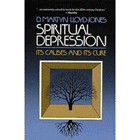
“Where Is Your Faith?” Dr. David Martyn Lloyd-Jones Exposition on Luke 8:22-25

(*Disclaimer: There is much that Lloyd-Jones writes here and elsewhere that is to be commended. However, in this case I wholeheartedly disagree with his view that a Christian should “never be depressed.” Many godly men and women have battled with depression their entire lives – Martin Luther and Charles H. Spurgeon to name two (not to mention – David and Moses in the Bible). I think that certain personalities are prone to depression and some people are clinically depressed and can be helped tremendously with the aid of medication and biblically based counseling. If you are severely depressed and have battled chronic depression I think you would be wise to seek medical attention. I agree with Lloyd-Jones that the Holy Spirit is powerful to help anyone overcome anything, and that all Christians can and should grow in their faith in the Omnipotence, Omniscience, and Omnipresence of God. The reality is that yes, Christians should never sin, but we do; and thanks to the work of the Trinity we are saved by grace and sanctified by grace. Sanctification is a journey of ups and downs and God-willing this sermon will help you to increase your faith – no matter what your doubts and struggles may be! – DPC) 
One day he got into a boat with his disciples, and he said to them, “Let us go across to the other side of the lake.” So they set out, and as they sailed he fell asleep. And a windstorm came down on the lake, and they were filling with water and were in danger. And they went and woke him, saying, “Master, Master, we are perishing!” And he awoke and rebuked the wind and the raging waves, and they ceased, and there was a calm. He said to them, “Where is your faith?” And they were afraid, and they marveled, saying to one another, “Who then is this, that he commands even winds and water, and they obey him?” – Luke 8:22-25

I WANT to call attention particularly to this question which was addressed by our Lord and Savior Jesus Christ to the disciples. He said to them: `Where is your faith?’ Indeed I would call your attention to this entire incident as a part of our consideration of the subject of spiritual depression. We have already considered a number of causes of the condition and this particular incident in the life and ministry of our Lord brings us face to face with yet another cause.

The one that is dealt with here is the whole problem and question of the nature of faith. In other words, there are many Christians who get into difficulty and are unhappy from time to time because they clearly have not understood the nature of faith. `Well’, you may say, `if they have not understood the nature of faith, how can they be Christians?’ The answer is that what makes one a Christian is that one is given the gift of faith. We are given the gift of faith by God through the Holy Spirit and we believe on the Lord Jesus Christ and that saves us; but that does not mean that we have fully understood the nature of faith. So it comes to pass that, while we may be truly Christian and genuinely saved through receiving this gift of faith, we may subsequently get into trouble with our spiritual experience because we have not understood what faith really is. It is given as a gift, but from there on we have to do certain things about it.

Now this very striking incident brings out the vital importance of distinguishing between the original gift of faith and the walk of faith, or the life of faith which comes subsequently. God starts us off in this Christian life and then we have to walk in it. `We walk by faith, not by sight’, is the theme that we are now considering.

Before I come actually to that particular theme, I must say a few words about this great incident in and of itself. Looked at from any standpoint it is a very interesting and important incident. It has a great deal to tell us, for instance, about the Person of our Lord Himself. It brings us face to face with what is described as a paradox, the seeming contradiction in the Person of our Lord Jesus Christ. There He was, weary and tired, so tired, in fact, that He fell asleep. Now this incident is recorded by the three so-called synoptic Gospels, Matthew, Mark and Luke, and it is really important from the standpoint of understanding the Person of the Lord Jesus Christ. Look at Him. There is no doubt about His humanity, He is fatigued, He is tired and weary, so much so that He just falls asleep, and, though the storm has arisen, He still goes on sleeping. He is subject to infirmity, He is a man in the body and flesh like all the rest of us. Ah, yes, but wait a minute. They came to Him and awoke Him saying:

`Master, carest Thou not that we perish?’ Then He arose and rebuked the wind and the raging of the sea, and they ceased and there was a calm-one of the others describes it as `a great calm’. Now it is not surprising that the disciples, seeing all this, wondered and said one to another: `What manner of Man is this! For He commandeth even the winds and water and they obey Him’.

Man, and yet obviously God. He could command the elements, He could silence the wind and stop the raging of the sea. He is the Lord of nature and of creation, He is the Lord of the universe. This is the mystery and the marvel of Jesus Christ-God and Man, two natures in One Person, two natures unmixed yet resident in the same Person.

We must start here, because if we are not clear about that there is no purpose in our going on. If you do not believe in the unique deity of the Lord Jesus Christ, you are not a Christian, whatever else you may be. We are not looking at a good Man only, we are not interested merely in the greatest Teacher the world has ever seen; we are face to face with the fact that God, the Eternal Son, has been in this world and that He took upon Him human nature and dwelt amongst us, a Man amongst men-God-Man. We are face to face with the mystery and the marvel of the Incarnation and of the Virgin Birth. It is all here, and it shines out in all the fullness of its amazing glory. `What manner of Man is this?’ He is more than Man. That is the answer-He is also God.

However, that is not, it seems to me, the special purpose of this particular incident. You get that revelation in other places also, it shines out right through all the Gospels; but the separate particular incidents in which it is seen, generally also have some special and peculiar message of their own to teach us. In this case there can be no doubt that that message is the lesson with regard to the disciples and their condition at this point-it is the great lesson concerning faith and the nature or the character of faith. I do not know what you feel, but I never cease to be grateful to these disciples. I am grateful for the record of every mistake they ever made, and for every blunder they ever committed, because I see myself in them. How grateful we should be to God that we have these Scriptures, how grateful to Him that He has not merely given us the gospel and left it at that. How wonderful it is that we can read accounts like this and see ourselves depicted in them, and how grateful we should be to God that it is a divinely inspired Word which speaks the truth, and shows and pictures every human frailty.

So we find our Lord rebuking these men. He rebukes them because of their alarm, because of their terror, because of their lack of faith. Here they were in the boat with Him, and the storm arose, and soon they were in difficulties. They baled out the water, but the boat was filling up and they could see that in a few moments it was going to sink. They had done everything they could but it did not seem to be of any avail, and what amazed them was that the Master was still sleeping soundly in the stern of the vessel. So they awoke Him and said: `Master, Master, carest Thou not that we perish?’ -are You unconcerned about it all? And He arose, and having rebuked the wind and the sea, He rebuked them.

Now we must be careful to observe this rebuke and to understand what He was saying. In the first place, He was rebuking them for being in such a state at all. `Where is your faith?’ He says. Matthew puts it: `O ye of little faith!’ Here as elsewhere `He marvelled at their unbelief’. He rebuked them for being in that state of agitation and terror and alarm while He was with them in the boat.

That is the first great lesson we have to apply to ourselves and to one another. It is very wrong for a Christian ever to be in such a condition. I do not care what the circumstances may be, the Christian should never be agitated, the Christian should never be beside himself like this, the Christian should never be at his wit’s end, the Christian should never be in a condition in which he has lost control of himself. That is the first lesson, a lesson we have emphasized before because it is an essential part of the New Testament teaching. A Christian should never, like the worldly person, be depressed, agitated, alarmed, frantic, not knowing what to do. It is the typical reaction to trouble of those who are not Christian, that is why it is so wrong to be like that.

The Christian is different from other people, the Christian has something which the non-Christian does not possess, and the ideal for the Christian is that which is stated so perfectly by the Apostle Paul in the fourth chapter of the Epistle to the Philippians : `I have learned, in whatsoever state I am, therewith to be content . . . I can do all things through Christ which strengtheneth me’. That is the Christian position, that is what the Christian is meant to be like. The Christian is never meant to be carried away by his feelings, whatever they are-never. That is always wrong in a Christian. He is always to be controlled, as I hope to show you. The trouble with these men was that they were lacking in self-control. That is why they were miserable, that is why they were unhappy, that is why they were alarmed and agitated, though the Son of God was with them in the boat. I cannot emphasize this point too strongly. I lay it down as a simple proposition that a Christian should never lose self-control, should never be in a state of agitation or terror or alarm, whatever the circumstances. That is obviously our first lesson.

The position of these people was alarming. They were in jeopardy and it looked as if they were going to be drowned the next moment, but our Lord says in effect: `You should not be in that condition. As My followers you have no right to be in such a state even though you are in jeopardy’. That is the first great lesson, and the second is, that what is so wrong about being in this condition is that it implies a lack of trust and of confidence in Him. That is the trouble and that is why it is so reprehensible. That is why He reprimanded these men at that point. He said in effect: `Do you feel like this in spite of the fact that I am with you? Do you not trust Me?’ Mark reports them as saying: `Master, carest Thou not that we perish?’ Now I do not think that they were referring only to themselves or to their own safety. I do not think that they were so self-centred.

I do not think that they simply meant: Don’t You care that we are going to drown? without considering Him at all. I believe they were including Him as well, that they thought they were all going to be drowned. `Master, carest Thou not that we perish?’ But still, this agitation and alarm always carries with it a lack of implicit trust and confidence in Him. It is a lack of faith in His concern for us and in His care for us. It means that we take charge and are going to look after the situation ourselves, feeling either that He does not care, or perhaps that He cannot do.

It means that we take charge and are going to look after the situation ourselves, feeling either that He does not care, or perhaps that He cannot do anything. That is what makes this so terrible, but I wonder whether we always realize it. It seems obvious as we look at it objectively in the case of these disciples; but when you and I are agitated or disturbed and do not know what to do, and are giving the impression of great nervous tension, anybody looking at us is entitled to say : `That person has not much faith in his or her Lord. There does not seem to be much point in being a Christian after all, there is not much value in Christianity as I see it in that person’.

Now during the war we were all subject to these trials in an exceptional way, but even now in days of peace anything that comes across our path and puts us in difficulty, at once shows whether we believe in Him and trust in Him, by our response and reaction to it. There seems to me, therefore, on the very surface to be these two great lessons.

We must never allow ourselves to be agitated and disturbed whatever the circumstances because to do so implies a lack of faith, a lack of trust, a lack of confidence in our blessed Lord and God. However, let us look at the passage in detail, let us now draw some general principles out of the incident and its great teaching.

First of all, in looking at this whole question of faith, let me say a word about what I might call `the trial of faith’. Scripture is full of this idea of the trial of one’s faith. Take the eleventh chapter of the Epistle to the Hebrews. That is, in a sense, nothing but a great exposition of this theme of the trial of faith. Every one of those men was tried. They had been given great promises and they had accepted them, and then everything seemed to go wrong. It is true of all of them. Think of the trial of a man like Noah, the trial of a man like Abraham, the trials that men like Jacob and especially Moses had to endure. God gives the gift of faith and then the faith is tried.

Peter, in his First Epistle in the first chapter, says exactly the same thing. He says : `Though ye are in heaviness for a season’ because of certain circumstances, the object of that is `that the trial of your faith which is more precious than of gold that perisheth, though it be tried with fire, might be found unto praise and honor and glory at the appearing of Jesus Christ’. That is the theme of all the Scriptures. You find it in the history of the Patriarchs and of all the Old Testament saints, you find it running through the New Testament. Indeed, it is peculiarly the theme of the last book of the Bible, the Book of Revelation.

Let us then be clear about this. We must start by understanding that we may well find ourselves in a position in which our faith is going to be tried. Storms and trials are allowed by God. If we are living the Christian life, or trying to live the Christian life, at the moment, on the assumption that it means just come to Christ and you will never have any more worry in the whole of your life, we are harboring a terrible fallacy. In fact it is a delusion and it is not true. Our faith will be tried, and James goes so far as to say: `Count it all joy when ye fall into divers temptations (trials)’ (James 1:2). God permits storms, He permits difficulties, He permits the wind to blow and the billows to roll, and everything may seem to be going wrong and we ourselves to be in jeopardy. We must learn and realize that God does not take His people and lead them into some kind of Elysium in which they are protected from all `the slings and arrows of outrageous fortune’. Not at all, we are living in the same world as everybody else. Indeed, the Apostle Paul seems to go further than that.

He tells the Philippians: `Unto you it is given in the behalf of Christ, not only to believe on Him, but also to suffer for His sake’ (Philippians 1. 29). `In the world’, says our Lord, `ye shall have tribulation but be of good cheer; I have overcome the world’ (John 16:33) `Be of good cheer’-yes, but remember that you will have the tribulation. Paul and Barnabas going on their missionary journey visited the churches and warned them, `that we must through much tribulation enter into the Kingdom of God’ (Acts 14:22).

We must start by realizing that `to be forewarned is to be forearmed’ in this matter. If we have a magical conception of the Christian life, we are certain to find ourselves in trouble, because, when difficulties come, we shall be tempted to ask: `Why is this allowed?’ And we should never ask such a question. If we but realized this fundamental truth, we never would ask it. Our Lord goes to sleep and allows the storm to come. The position may indeed become quite desperate and we may appear to be in danger of our lives. Everything may seem to be against us, yet-well here it is, a Christian poet has said it for us:

`When all things seem against us To drive us to despair’ .. .

But it does not drive him to despair because he goes on to say:

`We know one gate is open One ear will hear our prayer’.

But things may be desperate: `All things seem against us, to drive us to despair’. Let us then be prepared for that. Yes, but we must go further. While all this is happening to us, our Lord appears to be utterly unconcerned about us. That is where the real trial of faith comes in. The wind and the billows were bad enough and the water coming into the ship. That was terrible, but the thing that to them was most terrible of all was His apparent unconcern. Still sleeping and not apparently caring. `Master, carest Thou not that we perish?’ He appears to be unconcerned, unconcerned about us, unconcerned about Himself, unconcerned about His cause, unconcerned about His Kingdom.

Just imagine the feelings of these men. They had followed Him and listened to His teaching about the coming of the Kingdom, they had seen His miracles and were expecting marvelous things to happen; and now it looked as if everything was going to come to an end in shipwreck and drowning. What an anti-climax and all because of His unconcern! We must be very young indeed in the Christian life if we do not know something about this. Do we not all know something of this position of trial and difficulty, yes, and of a feeling that God somehow does not seem to care? He does not do anything about it. `Why does He allow me, a Christian, to suffer at the hands of a non-Christian?’ says many a person. `Why does He allow things to go wrong with me and not with the other person?’ `Why is that man successful while I am unsuccessful? Why does not God do something about it?’ How often do Christian people ask such questions. They have asked it about the whole state of the Church today. `Why does He not send revival? Why does He allow these rationalists and atheists to take the ascendancy? Why does He not break in and do something, and revive His work?’ How often we are tempted to say such things, exactly as these disciples in the boat were!

The fact that God permits these things and that He often appears to be quite unconcerned about it all really constitutes what I am describing as the trial of faith. Those are the conditions in which our faith is tried and tested, and God allows it all, God permits it all. James even tells us to `count it all joy’ when these things happen to us. This is a great subject-the trial of faith. We do not talk much about it these days, do we? But if we went back to the seventeenth or eighteenth century we would find that it was then a very familiar theme. I suppose that in many ways it was the central theme of the Puritans. It was certainly prominent later on in the evangelical awakening of the eighteenth century. The trial of man’s faith and how to overcome these things, the walk of faith, and the life of faith, was their constant theme.

Let us now go on to the second question–What is the nature of faith, the character of faith? This is above everything the particular message of this incident and I feel that it is brought out especially clearly in this record of it in the Gospel according to St. Luke. That is why I am taking the incident from that particular Gospel and emphasizing the way in which our Lord puts the question: `Where is your faith?’ There is the key to the whole problem. You observe our Lord’s question. It seems to imply that He knows perfectly well that they have faith. The question He asks them is: `Where is it? You have got faith, but where is it at this moment? It ought to be here, where is it?’ Now that gives us the key to the understanding of the nature of faith.

Let me first of all put it negatively. Faith, obviously, is not a mere matter of feeling. It cannot be, because one’s feelings in this kind of condition can be very changeable. A Christian is not meant to be dejected when everything goes wrong. He is told to `rejoice’. Feelings belong to happiness alone, rejoicing takes in something much bigger than feelings; and if faith were a matter of feelings only, then when things go wrong and feelings change, faith will go. But faith is not a matter of feelings only, faith takes up the whole man including his mind, his intellect and his understanding. It is a response to truth, as we shall see.

The second thing is still more important. Faith is not something that acts automatically, faith is not something that acts magically. This, I think, is the blunder of which we have all, at some time or another, been guilty. We seem to think that faith is something that acts automatically. Many people, it seems to me, conceive of faith as if it were something similar to those thermostats which you have in connection with a heating apparatus, you set your thermostat at a given level, you want to maintain the temperature at a certain point and it acts automatically. If the temperature is tending to rise above that, the thermostat comes into operation and brings it down; if you use your hot water and the temperature is lowered, the thermostat comes into operation and sends it up, etc. You do not have to do anything about it, the thermostat acts automatically and it brings the temperature back to the desired level automatically. Now there are many people who seem to think that faith acts like that. They assume that it does not matter what happens to them, that faith will operate and all will be well. Faith, however, is not something that acts magically or automatically. If it did, these men would never have been in trouble, faith would have come into operation and they would have been calm and quiet and all would have been well. But faith is not like that and those are utter fallacies with respect to it.

What is faith? Let us look at it positively. The principle taught here is that faith is an activity, it is something that has to be exercised. It does not come into operation itself, you and I have to put it into operation. It is a form of activity.

Now let me divide that up a little. Faith is something you and I have to bring into operation. That is exactly what our Lord said to these men. He said: `Where is your faith?’ which means, `Why are you not taking your faith and applying it to this position?’ You see, it was because they did not do so, because they did not put their faith into operation, that the disciples had become unhappy and were in this state of consternation. How then does one put faith into operation? What do I mean by saying that faith is something we have to apply? I can divide my answer in this way. The first thing I must do when I find myself in a difficult position is to refuse to allow myself to be controlled by the situation. A negative, you see. These men were in the boat, the Master was asleep and the billows were rolling, the water was coming in, and they could not bale it out fast enough. It looked as if they were going to sink, and their trouble was that they were controlled by that situation. They should have applied their faith and taken charge of it, and said: `No, we are not going to panic’. They should have started in that way, but they did not do so. They allowed the position to control them.

Faith is a refusal to panic. Do you like that sort of definition of faith? Does that seem to be too earthly and not sufficiently spiritual? It is of the very essence of faith. Faith is a refusal to panic, come what may. Browning, I think had that idea when he defined faith like this: `With me, faith means perpetual unbelief kept quiet, like the snake ‘neath Michael’s foot’. Here is Michael and there is the snake beneath his foot, and he just keeps it quiet under the pressure of his foot. Faith is unbelief kept quiet, kept down. That is what these men did not do, they allowed this situation to grip them, they became panicky. Faith, however, is a refusal to allow that. It says: `I am not going to be controlled by these circumstances-I am in control’. So you take charge of yourself, and pull yourself up, you control yourself. You do not let yourself go, you assert yourself.

That is the first thing, but it does not stop at that. That is not enough, because that may be nothing but resignation. That is not the whole of faith. Having taken that first step, having pulled yourself up, you then remind yourself of what you believe and what you know. That again is something these foolish disciples did not do. If only they had stopped a moment and said:

`Now then what about it? Is it possible that we are going to drown with Him in the boat? Is there anything He cannot do? We have seen His miracles, He turned the water into wine, He can heal the blind and the lame, He can even raise the dead, is it likely that He is going to allow us and Himself to be drowned in this way? Impossible! In any case He loves us, He cares for us, He has told us that the very hairs of our head are all numbered!’ That is the way in which faith reasons. It says: `All right, I see the waves and the billows but’-it always puts up this `but’. That is faith, it holds on to truth and reasons from what it knows to be fact. That is the way to apply faith.

These men did not do that and that is why they became agitated and panic stricken. And you and I will become panic stricken and agitated if we fail to do the same. Whatever the circumstances, therefore, stand, wait for a moment. Say: `I admit it all, but–‘ But what? But God! but the Lord Jesus Christ! But what? The whole of my salvation! That is what faith does. All things may seem to be against me `to drive me to despair’, I do not understand what is happening; but I know this, I know that God has so loved me that He sent His only begotten Son into this world for me, I know that while I was an enemy, God sent His only Son to die on the Cross on Calvary’s Hill for me. He has done that for me while I was an enemy, a rebellious alien. I know that the Son of God `loved me and gave Himself for me’. I know that at the cost of His life’s blood I have salvation and that I am a child of God and an heir to everlasting bliss. I know that. Very well, then, I know this, that `if when we were enemies, we were reconciled to God by the death of His Son, much more, being reconciled, we shall be saved by His life’ (Romans 5:10). It is inevitable logic, and faith argues like that. Faith reminds itself of what the Scripture calls ‘the exceeding great and precious promises’.

Faith says: ‘I cannot believe that He who has brought me so far is going to let me down at this point. It is impossible, it would be inconsistent with the character of God’. So faith, having refused to be controlled by circumstances, reminds itself of what it believes and what it knows.

And then the next step is that faith applies all that to the particular situation. Again, that was something these men did not do, and that is why our Lord puts it to them in this way: `Where is your faith?’ –`You have got it, why don’t you apply it, why don’t you bring all you know to bear on this situation, why don’t you focus it on this particular problem?’ That is the next step in the application of faith. Whatever your circumstances at this moment, bring all you know to be true of your relationship to God to bear upon it. Then you will know full well that He will never allow anything to happen to you that is harmful. `All things work together for good to them that love God.‘ Not a hair of your head shall be harmed, He loves you with an everlasting love.

I do not suggest that you will be able to understand everything that is happening. You may not have a full explanation of it; but you will know for certain that God is not unconcerned. That is impossible. The One who has done the greatest thing of all for you, must be concerned about you in everything, and though the clouds are thick and you cannot see His face, you know He is there. `Behind a frowning providence He hides a smiling face.’ Now hold on to that. You say that you do not see His smile. I agree that these earthborn clouds prevent my seeing Him, but He is there and He will never allow anything finally harmful to take place. Nothing can happen to you but what He allows, I do not care what it may be, some great disappointment, perhaps, or it may be an illness, it may be a tragedy of some sort, I do not know what it is, but you can be certain of this, that God permits that thing to happen to you because it is ultimately for your good. `Now no chastening for the present seemeth to be joyous, but grievous; nevertheless afterward it yieldeth the peaceable fruit of righteousness’ (Hebrews 12:11).

That is the way faith works. But you and I have to exercise it. It does not come into operation automatically. You have to focus your faith on to events and say: `All right, but I know this about God, and because that is true I am going to apply it to this situation. This, therefore, cannot be what I think it is, it must have some other explanation’. And you end by seeing that it is God’s gracious purpose for you, and having applied your faith, you then hold on. You just refuse to be moved. The enemy will come and attack you, the water will seem to be pouring into the boat, but you say: `It is all right, let the worst come to the worst’. You stand on your faith. You say to yourself: `I believe this, I am resting on this, I am certain of this and though I do not understand what is happening to me I am holding on to this!’

That brings me to my final word, which is my third principle –the value of even the weakest or smallest faith. We have looked at the trial of faith, we have looked at the nature of faith, let me say a closing word on the value of even the weakest and smallest faith. However poor and small and however incomplete the faith of these disciples was on this occasion, they at any rate had a sufficient amount of faith to make them do the right thing in the end. They went to Him. Having been agitated and distressed and alarmed and exhausted, they went to Him. They still had some kind of feeling that He could do something about it, and so they woke Him and said: `Master, are you not going to do something about it?’ That is very poor faith you may say, very weak faith, but it is faith, thank God. And even faith `like a grain of mustard seed’ is valuable because it takes us to Him. And when you do go to Him this is what you will find. He will be disappointed with you and He will not conceal that. He will rebuke you, He will say: `Why did you not reason it out, why did you not apply your faith, why do you appear agitated before that worldly person, why do you behave as if you were not a Christian at all, why didn’t you apply your faith as you should have done? I would have been so pleased if I could have watched you standing like a man in the midst of the hurricane or stormy why didn’t you?’ He will let us know that He is disappointed in us and He will rebuke us; but, blessed be His Name, He will nevertheless still receive us. He does not drive us away. He did not drive these disciples away, He received them and He will receive us. Yes, and He will not only receive us, He will bless us and He will give us peace. `He rebuked the wind and the sea and there was a great calm.’ He produced the condition they were so anxious to enjoy, in spite of their lack of faith. Such is the gracious Lord that you and I believe in and follow. Though He is disappointed in us often and though He rebukes us, He will never neglect us; He will receive us, He will bless us, He will give us peace, indeed He will do for us what He did for these men.

With this peace He gave them a still greater conception of Himself than they had had before. They marveled, and were full of amazement at His wonderful power. He, as it were, threw that into the bargain on top of all the blessings. If you find yourself in this position of trial and trouble and testing, take it as a wonderful opportunity of proving your faith, of showing your faith, of manifesting your faith and bringing glory to His great and Holy Name. But if you should fail to do that, if you should apparently be too weak to apply your faith, if you are being so besieged and attacked by the devil and by hell and by the world, well, then, I say, just fly to Him at once and He will receive you and will bless you, He will give you deliverance, He will give you peace. But remember always that faith is an activity, it is something that has to be applied. `Where is your faith?’ Let us make certain that it is always at the place and at the point of need and of testing.

The Article/Sermon above was adapted from Chapter 10 in the Classic book of Sermons by Dr. David Martyn Lloyd-Jones. Spiritual Depression: It’s Causes and Cure. Grand Rapids: Eerdmans, 1965.

 About the Preacher:
Dr. David Martyn Lloyd-Jones (1899-1981) [hereafter – DMLJ] was a British evangelical born and brought up within Welsh Calvinistic Methodism, he is most noted for his pastorate and expository preaching career at Westminster Chapel in London.

In addition to his work at Westminster Chapel, he published books and spoke at conferences and, at one point, presided over the Inter-Varsity Fellowship of Students (now known as UCCF). Lloyd-Jones was strongly opposed to the liberal theology that had become a part of many Christian denominations in Wales and England.

DMLJ’s most popular writings are collections of his sermons edited for publication, as typified by his multi-volume series’ on Acts, Romans, Ephesians, 1 John, and Philippians. My favorite writings are his expositions on the Sermon on the Mount; Revival; Joy Unspeakable; Spiritual Depression; and his recently revised 40th Anniversary edition of Preaching and Preachers.

Born in Wales, Lloyd-Jones was schooled in London. He then entered medical training at Saint Bartholomew’s Hospital, better known simply as Bart’s. Bart’s carried the same prestige in the medical community that Oxford did in the intellectual community. Martyn’s career was medicine. He succeeded in his exams so young that he had to wait to take his MD, by which time he was already chief clinical assistant to Sir Thomas Horder, one of the best and most famous doctors of the day. By the age of 26 he also had his MRCP (Member of the Royal College of Physicians).

Although he had considered himself a Christian, the young doctor was soundly converted in 1926. He gave up his medical career in 1927 and returned to Wales to preach and pastor his first church in Sandfields, Aberavon.

In 1935, Lloyd-Jones preached to an assembly at Albert Hall. One of the listeners was 72-year-old Dr. Campbell Morgan, pastor of Westminster Chapel in London. When he heard Martyn Lloyd-Jones, he wanted to have him as his colleague and successor in 1938. But it was not so easy, for there was also a proposal that he be appointed Principal of the Theological College at Bala; and the call of Wales and of training a new generation of ministers for Wales was strong. In the end, however, the call from Westminster Chapel prevailed and the Lloyd-Jones family finally committed to London in April 1939.

After the war, under Lloyd-Jones preaching, the congregation at Westminster Chapel grew quickly. In 1947 the balconies were opened and from 1948 until 1968 when he retired, the congregation averaged perhaps 1500 on Sunday mornings and 2000 on Sunday nights.

In his 68th year, he underwent a major medical operation. Although he fully recovered, he decided to retire from Westminster Chapel. Even in retirement, however, Lloyd-Jones worked as a pastor of pastors an itinerant speaker and evangelist. “The Doctor”, as he became known, was one of the major figureheads of British evangelicalism and his books and published sermons continue to be appreciated by many within the United Kingdom and beyond. DMLJ believed that the greatest need of the church was revival.

Zig Ziglar on Having a Mature Attitude Amidst Difficult Challenges

“The Best News”


There are many different attitudes. Roberto De Vincenzo, a golfer from Argentina, beautifully displayed one of the best ones many years ago when he won the Masters golf tournament but was denied the coveted green jacket.

I say he won it because he had the lowest score at the end of four days. But his playing partner who kept the score had inadvertently written that he had made a five in on one of the holes when in reality he had made a four.

De Vincenzo signed the card, and when an incorrect card is signed, the player is disqualified. He had not cheated, but the rules stood. What was his reaction when he learned he was disqualified? Did he blame his playing partner? No, he said he made a stupid mistake. He accepted full responsibility himself. Now what kind of man is he?

Some time later he won another tournament. After they gave him the check, he spent a great deal of time in the dressing room. He was in no particular hurry. When he got out to the parking lot, it was empty except for a young woman. She approached him saying she didn’t have a job, her sick baby was at the point of death, and she didn’t have the money to pay the hospital or the doctors. De Vincenzo signed his tournament winnings over to the young woman and went on his way.

The next week he was in a country club. One of the PGA officials told him he had been a victim of fraud—that the woman didn’t have a baby and was not even married. De Vincenzo said, “You mean there is not a sick baby at all?” The official said, “That’s right.” De Vincenzo said, “You have just given me the best news I’ve heard all year.”

Where’s your heart? What’s your attitude? How would you have felt under those circumstances? Who had the greater problem—the golfer or the young woman? I think it is obvious isn’t it? How many of you think De Vincenzo really brooded the rest of his life over that woman who had beaten him out of that check? I don’t think he gave it another thought. He was truly glad that there had not been an ill child. Now that takes compassion, it takes heart, but it also takes wisdom.

When is maturity in attitude reached? Is attitude a head thing, a heart thing, or both? Maturity in attitude is reached when you fully understand what you can change and what you can’t change, and you respond accordingly. De Vincenzo couldn’t change the figures on his score card retrieve the money he had signed over to the lying woman. Fussing and fuming would not change the reality of either mistake. He chose to accept what had happened and move forward. By doing so he saved his partner any further embarrassment and grief over the mistake. He showed everyone who witnessed the other incident his true character and was not made to look like a naïve fool by an official who was all too proud to have the scoop.

People with a good heart are exposed most readily in times of stress and ill fortune. De Vincenzo was more interested in the needs of his golfing partner and the wlfare of a baby than he was in claiming to have been wronged. A heart like his, one that is honest, expects the best and holds no malice. It is developed over a lifetime.

Roberto De Vincenzo at some point decided he was responsible for his circumstances in life, that he had control over how he responded to disappointment, and that a good attitude and a trusting heart offered many more rewards than their counterparts. Make the same decisions for yourself and relax into a more fulfilling life.

 Message! 

It’s not what happens to you; it’s how you handle it that will determine whether you are happy or miserable.

 About Zig Ziglar:

Zig Ziglar was born in Coffee County, Alabama on November 26, 1926 and was the tenth of 12 children. In 1931, when Ziglar was five years old, his father took a management position at a Mississippi farm, and family moved to Yazoo City, Mississippi, where he spent his early childhood. In 1932, his father died of a stroke, and his younger sister died two days later.

Zigler served in the Navy during World War II (circa 1943-1945). He was in the Navy V-12 College Training Program, attending the University of South Carolina. In 1944 he met his wife Jean, in Jackson, Mississippi; he was 17 and she was 16. They married in late 1946.

Ziglar later worked as a salesman in a succession of companies. In 1968 he became the vice president and training director for the Automotive Performance company, moving to Dallas, Texas.

In 1970, Ziglar went into the business of motivational speaking full-time, with an emphasis on Christian values. Until then, he called himself by his given name, Hilary, but now satarted using his nickname, Zig, instead.

Until 2010 (aged 86) Ziglar traveled around the world taking part in motivational seminars, but has been somewhat limited recently due to a fall down a flight of stairs in 2007 that has impaired his short-term memory and physical abilities.

Through the ups and downs of life Ziglar has maintained his optimism and encouraged thousands of people to be their best in the particular endeavors to which God has called them. Zig Ziglar is one of the most inspirational people on the planet today and is a terrific example of someone who has embraced the struggle of life giving God the glory each step of the way.

The article above was adapted from Chapter 5 in the very encouraging book by Zig Ziglar entitled Zig Ziglar’s Life Lifters: Moments of Inspiration for Living Life Better. Nashville, TN.: B&H, 2003.

 Zig Ziglar’s Books:

Ziglar, Zig; Ziglar, Tom. Born to Win: Find Your Success Code. Dallas: SUCCESS Media (2012).

Something Else To Smile About: More Encouragement and Inspiration for Life’s Ups and Downs. Nashville: Thomas Nelson (2010).

Ziglar, Zig; Norman, Julie Ziglar. Embrace the Struggle: Living Life on Life’s Terms. New York: Howard Books (2009).

The One-Year Daily Insights with Zig Ziglar. Tyndale House Publishers (2009)

Inspiration 365 Days a Year with Zig Ziglar. SIM (2008)

God’s Way is Still the Best Way. Nashville: Thomas Nelson  (2007).

Better Than Good: Creating a Life You Can’t Wait to Live. Nashville: Thomas Nelson Publishers (2006).

Conversations with My Dog. B&H Books (2005).

The Autobiography of Zig Ziglar. New York: Random House (2004).

Confessions of a Grieving Christian. Nashville: B&H Publishing Group 2004).

Courtship After Marriage: Romance Can Last a Lifetime. Nashville: Thomas Nelson  (2004).

Staying Up, Up, Up in a Down, Down World. Nashville: Thomas Nelson  (2004).

Zig Ziglar’s Life Lifters: Moments of Inspiration for Living Life Better. B&H (2003).

Selling 101: What Every Successful Sales Professional Needs to Know. Nashville: Thomas Nelson Publishers (2003).

Ziglar, Zig and Hayes, John P. Network Marketing For Dummies. Foster City, Calif: IDG Books (2001).

Success for Dummies. Foster City, Calif: IDG Books (1998).

Something to Smile About: Encouragement and Inspiration for Life’s UPS and DOWNS. Nashville: Thomas Nelson (1997).

Great Quotes from Zig Ziglar. Career Press (1997)

Over the Top. Nashville: Thomas Nelson Publishers (1994).

Five Steps to Successful Selling. Nigtingale-Conant Corp. (1987).

Top Performance: How to Develop Excellence in Yourself and Others. New York: Berkley Books (1986).

Raising Positive Kids in a Negative World. Nashville: Oliver Nelson (1985).

Zig Ziglar’s Secrets of Closing the Sale. New York: Berkley Books (1982).

See You at the Top. Gretna: Pelican (1975).

 About Golfer Roberto De Vincenzo

The world will always remember Roberto De Vicenzo for what he lost, not for what he won-for that careless mistake he made at the 1968 Masters, signing an incorrect scorecard that had him making a par and not a birdie on the 17th hole that Sunday afternoon-and, thus, his uttering of the immortal golf quote, “What a stupid I am.” Yet there is so much more to De Vicenzo’s career and the contributions he made to golf around the world than what occurred in the scorer’s tent at Augusta National that should not overshadow the man’s legacy. Roberto De Vicenzo won more than 230 golf tournaments, including the 1967 Open Championship at Hoylake, where he held off the Sunday charges of Jack Nicklaus and Gary Player to become, at 44, the oldest winner of the world’s oldest golf championship.

Facing success and catastrophe and treating those twin imposters the same inspired British golf writer Peter Dobereiner to use the Rudyard Kipling quote when giving De Vicenzo his due. In Dobereiner’s words, “By that standard, De Vicenzo is a giant of a man because he faced the greatest triumph and the most devastating disaster which the game of golf can provide.” The United States Golf Association and the Golf Writers Association of America agreed, presenting De Vicenzo with the Bob Jones and William Richardson Awards, respectively, in 1970.

All the trophies he captured didn’t mean as much to De Vicenzo as the friends he made traveling the globe. He won national opens in Belgium, Brazil, Chile, Colombia, Holland, France, Germany, Jamaica, Mexico, Panama, Peru, Spain, Uruguay, Venezuela and Argentina, a country he represented 17 times in the World Cup. Essayist Jack Whitaker once said that if golf were war, Roberto would have conquered more countries than Alexander the Great. But golf was not war to De Vicenzo. And that is what made him so loved.

Born in Buenos Aires April 14, 1923, De Vicenzo learned the game as a caddy’s assistant. He turned professional at age 15 and won his first of nine Argentine Open titles six years later. Three-time Open Championship winner Henry Cotton once said there were very few professionals in the business who would not take the play through the green of Argentine golfing master Roberto De Vicenzo, and his game never left him. At 51 he won the PGA Seniors’ Championship and in 1980, at age 57, the inaugural U.S. Senior Open.

He believed in hard practice, routinely hitting 400 balls a day and maintaining a slow pace. “If you hurry,” he would say, “then nothing seems to go right.” He’d visualize a shot, pick a club and hit. His method was simple to watch, and it held up under pressure.

It did that final round at the Masters in 1968. What’s lost behind that staggering mistake made by fellow competitor Tommy Aaron and signed for by De Vicenzo is that Roberto shot what has been called one of the greatest rounds in major championship history. He took only 65 strokes around Augusta National that day, including a bogey at the 18th, on his 45th birthday. His 31 on the front side started with an eagle 2 at the first and tied the course record. It should have been good enough to tie Bob Goalby and set up a playoff which, had he won, would have given Roberto De Vicenzo both the Open Championship and Masters titles at the same time.

Dr. Erwin W. Lutzer on The Literal Millennial Kingdom Reign of Christ on Earth

“The King Reins in His Kingdom” 

The messianic Kingdom on earth is a vindication of God’s creative activity…. The triumph of God over the satanic dominion of this planet is necessary for the glory of God. If there were no messianic age, if God simply picked up the redeemed remnant and took them to heaven, then we would have to conclude that God was unable to complete what he began. —William S. LaSor

He shall judge between the nations, and shall decide disputes for many peoples; and they shall beat their swords into plowshares, and their spears into pruning hooks; nation shall not lift up sword against nation, neither shall they learn war anymore. – Isaiah 2:4

When we pray “Thy kingdom come,” what are we praying for? What did Jesus have in mind when He asked us to pray for His coming kingdom, and how would we recognize this kingdom if it were to appear? And what would our role be in it?

The idea of utopia exists in every human heart. Every generation has looked forward to an idyllic time when men and women live in peace and prosperity. This has been the goal of every civilization, every political philosophy, and every sincere Christian. Thomas More invented the word utopia in 1516 when he wrote a book by that title, but the vision of a time of harmony and freedom was in existence long before then.

The Bible describes a future utopia, but one very different from worldly descriptions that have come to us throughout history. The biblical vision includes the intervention of God, namely, the coming of Christ to earth to personally establish His kingdom. History has proven conclusively that man cannot bring in any form of utopia because sin permeates human nature. Selfishness, dishonesty, and distrust make the possibility of any such a golden age impossible. But when Jesus returns, the King of Kings will do what man cannot. And, incredibly, we as believers will be given a part to play in this new world order.

Thankfully, God will complete what He began. The devil will not have the last word on this planet. The very place where Satan was given authority to rule will eventually be ruled by Jesus Christ. God subjected the rule of this world to Adam who dropped the scepter, and God let Satan pick it up.

And so, the second Adam—that is, Jesus—will reverse this sequence of events and claim the title to rule in triumph. “You made him a little lower than the angels; you crowned him with glory and honor and put everything under his feet” (Hebrews 2:7–8). In putting everything under Him, God left nothing that is not subject to Him. Yet at present we do not see everything “subject to him” (v. 8). Yes, eventually all things will again be subject to man, specifically the one man named Jesus. Where Satan won a victory, Jesus will triumph.

 OLD TESTAMENT PREDICTIONS OF THE COMING KINGDOM

The prediction of a coming kingdom on earth ruled by Christ was clearly revealed to David. God gave him this startling revelation saying that he would have a son who would build a temple, and who would be disciplined when he did evil. But there was much more to this prediction: “When your days are over and you rest with your fathers, I will raise up your offspring to succeed you, who will come from your own body, and I will establish his kingdom. He is the one who will build a house for my Name, and I will establish the throne of his kingdom forever” (2 Samuel 7: 12–13). Solomon fulfilled the first part of that verse, but most assuredly, the throne of his kingdom was not established forever. That word house means “genealogy” and the word kingdom means “territory” in Israel where David ruled.

Has this promise ever been fulfilled? I think not. David certainly did not rule “forever.” God was speaking about a kingdom that would transcend David’s and Solomon’s era, and He predicted a coming king who would rule forever.

As further proof that this promise was not fulfilled in Old Testament times, we are again reminded that the angel Gabriel said to Mary, “You will be with child and give birth to a son, and you are to give him the name Jesus. He will be great and will be called the Son of the Most High. The Lord God will give him the throne of his father David, and he will reign over the house of Jacob forever; his kingdom will never end” (Luke 1:31–33). Has Jesus ever ruled over the house of David and over the tribe of Jacob? Certainly we must agree He has never ruled from Jerusalem and the territory over which David ruled. Clearly, this is a reference to the coming kingdom age.

In the Old Testament prophets there are many chapters devoted to the idea of a utopia where God’s special king rules, and we have descriptions of a kingdom, the likes of which we have never seen. For example, Isaiah 2:2–4 says:

In the last days the mountain of the Lord’s temple will be established as the chief among the mountains; it will be raised above the hills, and all nations will stream to it. Many peoples will come and say, “Come, let us go up to the mountain of the Lord, to the house of the God of Jacob. He will teach us his ways, so that we may walk in his paths.” The law will go out from Zion, the word of the Lord from Jerusalem. He will judge between the nations and will settle disputes for many peoples. They will beat their swords into plowshares and their spears into pruning hooks. Nation will not take up sword against nation, nor will they train for war anymore.

If you visit the United Nations building in New York and then walk cross the street to the plaza, you will see a wall with an inscription of only the last half of verse 4, which reads, “And they shall beat their swords into plowshares, their spears into pruning hooks; nation shall not lift up sword against nation, neither shall they learn war anymore.” Why wasn’t the first part of the verse included in this inscription? Obviously, it is because the first part of the verse predicts that Messiah shall usher in this rule (judge) and bring peace to the nations. The point to be made is that the United Nations thinks it can accomplish the heady goal of peace without Christ’s intervention and help.

Tellingly, on the wall there is no chapter and verse given for this quotation, but under it is simply the name Isaiah. The wall itself is called the “Isaiah Wall,” but there is no hint that his prophecy necessitates the coming of Messiah in order for it to be fulfilled. Quite possibly the architects did not give the reference in Isaiah, lest someone look it up in the Bible and discover that it was a Messianic passage! The United Nations may be doing many good things, but trust me, their agenda does not include establishing peace on earth under the authority of Jesus! Let’s consider another similar prediction of Isaiah:

And he will delight in the fear of the Lord. He will not judge by what he sees with his eyes, or decide by what he hears with his ears; but with righteousness he will judge the needy, with justice he will give decisions for the poor of the earth. He will strike the earth with the rod of his mouth; with the breath of his lips he will slay the wicked. Righteousness will be his belt and faithfulness the sash around his waist. The wolf will live with the lamb, the leopard will lie down with the goat, the calf and the lion and the yearling together; and a little child will lead them. (11:3–6)

The phrases, “the wolf will live with the lamb” and the “leopard will lie down with the goat” remind us that we are not yet in the era of the millennial kingdom. Today if a wolf were to lie down with the lamb, when the wolf got up we would discover that the lamb is missing! Isaiah is speaking about the rule of Jesus on earth in the coming kingdom. Peace will come—but only Christ can bring it to earth.

 WHO’S IN AND WHO’S OUT?

Who will qualify to enter into this kingdom? All those who pass the test at “The judgment of the nations” discussed by Jesus in Matthew 25. To quote the words of Jesus, “When the Son of Man comes in his glory, and all the angels with him, he will sit on his throne in heavenly glory. All the nations will be gathered before him, and he will separate the people one from another as a shepherd separates the sheep from the goats. He will put the sheep on his right and the goats on his left” (vv. 31–33).

We should note in passing that this text is further proof of the pretribulation rapture of the church. If the rapture and the glorious appearing happened simultaneously, there would be no need to have a judgment of the “sheep and the goats.” That separation would have already occurred when all believers were caught up into the clouds to meet King Jesus. The only plausible explanation is that there is a period of time between the rapture and the glorious return when people do come to trust in Messiah Jesus. Thus this judgment does not take place at the rapture, but rather it takes place after the tribulation just before the millennium.

The imagery of sheep and goats would have been familiar to the first-century listeners. Sheep and goats, I’m told, don’t get along well. Sheep are usually quite docile whereas goats are very unruly, so in this context, the sheep enter the kingdom and the goats are cast out. Jesus explains the terms of the judgment: Then the King will say to those on his right, “Come, you who are blessed by my Father; take your inheritance, the kingdom prepared for you since the creation of the world. For I was hungry and you gave me something to eat, I was thirsty and you gave me something to drink, I was a stranger and you invited me in, I needed clothes and you clothed me, I was sick and you looked after me, I was in prison and you came to visit me.” (Matthew 25:34-36)

Has Jesus changed the terms of salvation? Is He now teaching that we are saved by our deeds of kindness to the poor and those who are imprisoned? After all, He commends those who fed the hungry and visited the oppressed in prison and invites these to enter the kingdom, whereas those who neglected these good works go into everlasting destruction. “Then he will say to those on his left, ‘Depart from me, you who are cursed, into the eternal fire prepared for the devil and his angels’” (v. 41).

There is a better explanation for these verses than to say that deeds of kindness save us. Remember that during the tribulation period the faithful do not take the mark of the beast, whether Jew or Gentile. These people will endure persecution; they will be jailed, and many killed. The Jews especially

The Jews especially will be targeted for persecution and martyrdom. The righteous Gentiles will want to support their fellow brethren, the Jews, and will do whatever is needed to stand in solidarity with the Jewish people. These Gentiles will have proved their loyalty to Christ by the way they treated His “brothers” (v. 40). Their sacrificial kindness is not the root of their faith, but the fruit of their faith.

The bottom line is that only believers will enter into the kingdom that is about to be established. Both Jews and Gentiles who refused the mark of the beast will be found worthy to enter the kingdom and hear words of welcome from Jesus. As for the others, “They will go away to eternal punishment, but the righteous to eternal life” (v. 46).

 WHAT WILL WE FIND IN THE KINGDOM?

What are some of the characteristics of this kingdom? One of them is most assuredly that Jesus rules. “I have installed my King on Zion, my holy hill” (Psalm 2:6). During this kingdom age the curse will be partially lifted, but not totally. “Never again will there be in it an infant who lives but a few days, or an old man who does not live out his years; he who dies at a hundred will be thought a mere youth; he who fails to reach a hundred will be considered accursed” (Isaiah 65:20). The point is that if you die at the age of a hundred in the kingdom, you’re dying young; whereas today to die at the age of a hundred is to die very old. In the kingdom there will be health and longevity, but death itself will not be avoided. These predictions do not depict heaven as some interpreters allege. In heaven all people will have eternal, indestructible bodies that will not die; whereas in the kingdom, people live in natural bodies and die.

At Christmas one of our favorite carols is “Joy to the World.” Most of us only know the first stanza, “Joy to the world, the Lord is come! Let earth receive her King.” But when you read through stanzas two through four, you find a beautiful description of the millennial reign of Jesus. The third stanza reads, “No more let sins and sorrows grow, nor thorns infest the ground.” Verse four includes, “He rules the world with truth and grace, and makes the nations prove the glories of His righteousness, and wonder of His love.”

Today Jesus is not making the nations “prove” anything. Look carefully at a crop growing in a field and you will see plenty of weeds; perhaps even thorns will be infesting the ground. Read the newspapers and you will soon discover that no one is ruling the world with “truth and grace.”

So when we sing this carol, we should realize that the author, Isaac Watts, was not only thinking about the first coming of Jesus in Bethlehem but also His second coming when He will redeem the earth.

 SATAN IS THROWN INTO THE ABYSS

Read this critical passage that sheds additional light on the nature and length of the kingdom reign. Note especially the binding of Satan and the time frame:

And I saw an angel coming down out of heaven, having the key to the Abyss and holding in his hand a great chain. He seized the dragon, that ancient serpent, who is the devil, or Satan, and bound him for a thousand years. He threw him into the Abyss, and locked and sealed it over him, to keep him from deceiving the nations anymore until the thousand years were ended. After that, he must be set free for a short time (Revelation 20:1–3).

Satan is thrown into the Abyss, a holding place for evil spirits which for now will include Satan. Recall that demons asked Jesus to not cast them into the abyss. The lake of fire still awaits these evil creatures; for now they are being held for judgment. In being confined here, Satan is not yet being punished, but he is simply prevented from deceiving the nations. As the millennial kingdom is about to begin, Jesus in effect says to an angel, “I have a job for you to do. I’m going to empower you so that you can bind Satan with a chain and throw him into the pit.” The chain is probably symbolic, but the point is that this angel has the key (authority) to open the Abyss and throw the devil into this bottomless pit. All that the angel has to do is say, “Satan, I am under God’s authority. Come over here. We have a place for you. You’re going to be incarcerated for a thousand years. Get into the pit right now!” We salute the absolute authority of Jesus and His angels over Satan! An unnamed angel, acting under divine authority can bind the evil one and put him away for a thousand years! So much for his vaunted pride and power.

Six times in this chapter we read the phrase “a thousand years.” Have you ever wondered where the idea arose that the kingdom is going to last a thousand years? It is based on this chapter which repeatedly mentions this length of time—hence the term millennium (meaning a thousand years). And if you believe as I do that Jesus will return in glory before the millennium, you are a premillennialist. There is another popular view called amillennialism, which teaches there will be no millennial reign as such. These Bible teachers tend to spiritualize the Old Testament promises regarding the kingdom and believe that the church (not Israel) will inherit these promises. They assume that the “throne of David” is actually Jesus ruling in heaven rather than on earth. Certainly David would have never understood God’s promise in that way. And when the angel said to Mary that her son would inherit the throne of his father David, and “reign over the house of Jacob forever” she certainly could never have imagined that this was to be fulfilled in heaven and not on earth.

 BELIEVERS RULE WITH CHRIST

During this millennium, Satan is bound and believers rule with Christ: “I saw thrones on which were seated those who had been given authority to judge” (v. 4). Who will rule with Jesus in the millennial kingdom? I believe there will be four different categories of people.

First, there will be the Old Testament saints. Daniel predicted that His holy ones were going to be ruling with him (7:27). This will include Abraham, Moses, David, and a whole host of other unnamed people saved in ancient times who will join in the rule with Christ during the millennial kingdom. I expect that Enoch who walked with God before the flood will also be raised to enter the kingdom.

Second, the apostles certainly will be ruling with Jesus. He gave them this special promise: “Jesus said to them, ‘I tell you the truth, at the renewal of all things, when the Son of Man sits on his glorious throne, you who have followed me will also sit on twelve thrones, judging the twelve tribes of Israel’” (Matthew 19:28). We know that the eleven apostles will certainly rule with Christ.

And, lest you think we will be left out, the good news is that all present believers will also rule with Jesus. Paul writes, “If we endure, we will also reign with him” (2 Timothy 2:12). Jesus said to the churches of the book of Revelation, “He who overcomes, to him I shall grant to sit with me on my throne, even as I overcame and sat with my father on his throne.” It also says in Revelation 5:10 that “You have made them to be a kingdom and priests to serve our God, and they will reign on the earth.” We will be sitting with Jesus and carrying out the responsibilities that He gives us.

Finally, there is a fourth category: those believers who accepted Christ during the tribulation period and then either died a natural death or were martyred for their faith—these will be resurrected to reign with Christ. “I saw the souls of those who had been beheaded because of their testimony for Jesus and because of the word of God…. They came to life and reigned with Christ a thousand years…. This is the first resurrection” (Revelation 20:4–5). So, these saints join the others who will reign with Christ in the kingdom.

A point of clarification: When you read the above passage, just note that the word this in the phrase, “this is the first resurrection” actually refers back to the martyrs in verse 4 and does not include the dead who will be raised after the millennium to face judgment. In other words, the phrase, “The rest of the dead did not come to life until the thousand years were ended” (v. 5) is actually a parenthesis.

So, in John’s mind, there are basically two resurrections. All those who participate in the “first resurrection” are believers: these include Jesus who was the first to be raised, then also the saints who were raised at the rapture, and now we can add to these those who died as martyrs in the tribulation period. And at some later period, there no doubt will be a resurrection of those who die in the millennium as believers. Obviously, the “first resurrection” is not just a one-time event but includes several resurrections. No wonder he writes “blessed and holy are those who have participated in the first resurrection.”

The “second resurrection” is the resurrection of the unrighteous, those who will appear at the great white throne judgment. “The rest of the dead did not come to life until the thousand years were ended” (v. 5). These belong to the second resurrection, that is, the resurrection of those who will experience the “second death.” The bottom line is that at one time or another all who die will be raised, either to everlasting life or everlasting damnation. All human beings will be eternal beings; all will have indestructible bodies, either enjoying eternal bliss or suffering eternal damnation.

Are you troubled when you realize that in the millennial kingdom, those who have their eternal/resurrected bodies will be ruling over people who still have their earthly bodies? This interaction between the two kinds of people should not trouble us. After His resurrection, Jesus was able to interact with His disciples, and although in a glorified body, He ate fish with them (Luke 24:40–43; John 21:11–13). So, while it is difficult for us to imagine what life will be like in an entirely different sphere, we can trust the promises of God. We will rule with Christ in the kingdom and apparently intermingle with those who still struggle with the challenges of an earthly existence.

THERE IS A FINAL REBELLION

Incredibly, at the end of the millennium, Satan is released and foments a rebellion against God. “When the thousand years are over, Satan will be released from his prison and will go out to deceive the nations in the four corners of the earth—Gog and Magog—to gather them for battle” (Revelation 20:7–8). Gog and Magog are sometimes used generally to refer to nations that are rebellious against God.

How could this rebellion happen in a peaceful environment under the leadership of Christ? Does this mean that believers can lose their eternal salvation and end in rebellion against Christ? A better explanation is that these people, the “sheep” who enter the millennial kingdom in their earthly bodies, will have children, and those children will grow up and some of them will trust King Jesus and others won’t. Given their sin nature, they will be given the opportunity to express their opposition to Christ. This brief rebellion will be the final proof that human nature, even with Satan bound, will express itself in self-will and sustained rebellion. We don’t need the devil to help us do evil, though he is glad to oblige.

As a contingent of rebels in this final battle arrives near the city of Jerusalem, God ends their foolishness by sending fire from heaven to destroy His enemies. Satan is then thrown into the lake of fire where the Beast and the false prophet already are, and “they will be tormented day and night for ever and ever” (v. 10). Never again will there be a rebellion on Planet Earth. The millennial kingdom is coming to an end, and a new era is about to begin.

 THE KINGDOM BECOMES ETERNAL

What next? With the era of the millennium now over, Paul tells us what happens: “Then the end will come, when he hands over the kingdom to God the Father after he has destroyed all dominion, authority and power” (1 Cointhians 15:24). In eternity past, God the Father in effect saidto God the Son, “I’m going to give You a people to redeem.” These are referred to as the elect; Jesus referred to them as “those you have given me.” (See His repeated use of this phrase in John 17.) Jesus then comes and redeems His people by dying for them; He wins a massive victory over Satan, proving His superiority over all rivals. And, having completed His mission, and with all enemies now under His feet, He now triumphantly submits the kingdom to God the Father. And what does the Father do? Apparently the Father, deeply gratified by the Son’s obedience, returns the kingdom back to the Son, because we are told that Jesus will rule forever and ever, “The kingdom of the world has become the kingdom of our Lord and of his Christ, and he will reign for ever and ever” (Revelation 11:15).

Perhaps it is better to say that God the Father and God the Son will share the eternal throne in Trinitarian glory and splendor. And we will be invited to join them and participate in this unimaginable honor. And to think, at this point in our experience, eternity will hardly have begun.

 STRENGTH FOR TOMORROW

It is easy for us to read about the millennial kingdom, but it is quite different for us to grasp its reality. And, how can these truths transform us today? All of the Bible is relevant for us, and this is no exception. We must prepare for our distant future with the same diligence with which we plan for retirement, only more so.

First, let us remember what we learned about rewards. If we are faithful, we will be generously rewarded with a more honorable position in the kingdom. In a parable (Luke 19:11–27), Jesus indicated that there were differences of levels of faithfulness and therefore different levels of reward. In summary, after giving each servant a mina (about three month’s wages), the king returned for an accounting: “The first one came and said, ‘Sir your mina has earned ten more.’ ‘Well done, my good servant!’ the master replied. ‘Because you have been trustworthy in a very small matter, take charge often cities’” (vv. 16–17).

Then as the parable continues, the man whose mina made five more was put in charge of five cities. But the unfaithful servant, who hid his mina and refused to invest it, had his taken away from him and it was given to the servant whose mina had made ten minas. “I will judge you by your own words, you wicked servant! … Take his mina away from him and give it to the one who has ten minas” (vv. 22, 24). The point is that if you are faithful in this life you will be rewarded with special honors in the next. To live for one’s self after Jesus has given His life for us is an insult to our Savior that will not go unnoticed.

Don’t take it for granted that in the kingdom and the eternity that follows you will have the same honors as everyone else. The way we live in this life affects our position in the kingdom and, for that matter, all of eternity. Let us repent of our lack of passion in serving Christ. A victor at an ancient Greek Olympic game is said to have been asked, “Spartan, what will you gain by this victory?” He replied, “Sir, I shall have the honor to fight on the front line for my king.” That determination should be ours as we fight for the King of Kings.

There is a second lesson, and that is the incorrigible nature of evil. A thousand years of incarceration do not change Satan’s nature. He will come out of the Abyss just as evil and with just as much intent to fight against God as he had before he enters. He was probably even more enraged, because an evil being (or, for that matter, an evil person) doesn’t change simply because he/she has been defeated. Hell is perfectly just for Satan who both will not and cannot repent of his rebellion against God. And those individuals who harden their own hearts and follow him will receive the same fate.

We’ve also seen that the children of human beings, though living under the authority of Jesus, will also rebel. In effect they will say, “Who is Jesus to rule over us? Yes, we took that field trip to Jerusalem. We saw that He is reigning there, and we see His far-reaching authority, but why should He be the one to choose what mansion we get to live in? We don’t want Him to reign over us. We’d rather be free in hell than servants in the millennium!”

Think about this: As indicated, some of the children who grow up in the millennial kingdom will be “gospel hardened,” as the saying goes. Living under the rule of Jesus, they will have heard it all and seen it all. They will reject His offer of eternal life in favor of their own rebellious ways. We must beware that we are not like them. “Today, if you hear his voice, do not harden your hearts…. See to it, brothers, that none of you has a sinful, unbelieving heart that turns away from the living God” (Hebrews 3:7–8, 12).

Things are not always what they appear to be. Satan, freed from his abyss, anxious to fight against Jesus one more time, will receive a whiff of satisfaction when he is released and foments a last rebellion against God. He will try to recruit as many as he can to join him in this last revolt against Jesus. But he and his accomplices will be defeated by Jesus using simply “the breath of his mouth.” One breath and it will all be over. Let us never forget that time is short and eternity is long.

 About the Author:

Since 1980, Erwin W. Lutzer has served as senior pastor of the world-famous Moody Church in Chicago, where he provides leadership to Chicago pastors. Dr. Lutzer earned his B.Th. from Winnipeg Bible College, a Th.M. from Dallas Theological Seminary, an M.A. in philosophy from Loyola University, an LL.D. from Simon Greenleaf School of Law, and a D.D. from Western Conservative Baptist Seminary.

Dr. Lutzer is a featured radio speaker on the Moody Broadcasting Network and the author of numerous books, including 10 Lies About God: And the Truths That Shatter Deception; The Vanishing Power of Death, Cries from the Cross, the best-selling One Minute Before You Die and Hitler’s Cross, which received the Evangelical Christian Publishers Association (EPCA) Gold Medallion Book Award. He speaks both nationally and internationally at Bible conferences and tours and has led tours of the cities of the Protestant Reformation in Europe. The article above was adapted from the excellent and practical book on the End Times and Prophecy in Erwin W. Lutzer with Dillon Burroughs. The King is Coming: Preparing to Meet Jesus. Chicago: Moody Publishers. 2012 (Chapter 8).

Chuck Swindoll on Memorizing Scripture: 7 Tips

7 Tips on Scripture Memorization

I know of no other single practice in the Christian life more rewarding, practically speaking than memorizing Scripture. That’s right. No other single discipline is more useful and rewarding than this. No other single exercise pays greater spiritual dividends! Your prayer life will be strengthened. Your witnessing will be sharper and more effective. Your counseling will be in demand. Your attitudes and outlook will begin to change. Your mind will become alert and observant. Your confidence and assurance will be enhanced. Your faith will be solidified.

God’s Word is filled with exhortations to implant His truth in our hearts. David says that a young man can keep his way pure by treasuring God’s Word in his heart.

Psalm 37:31, “The law of his God is in his heart; his steps do not slip.”

Psalm 119:9-11, “How can a young man keep his way pure? By guarding it according to your word. With my whole heart I seek you; let me not wander from your commandments! I have stored up your word in my heart, that I might not sin against you.”

Solomon refers to this in Proverbs 4:4, “Let your heart hold fast my words; keep my commandments, and live.”

The words “hold fast” come from a single Hebrew term, meaning “to grasp, seize, lay hold of.” Scripture memory gives you a firm grasp of the Word—and allows the Word to get a firm grasp of you! Solomon also mentions writing the Word “on the tablet of your heart” and having Scriptures kept within you so “they may be on your lips” (Proverbs 7:3 & 22:18).

Now, I know you’ve been challenged to do this before. But is it happening? Perhaps you have procrastinated because you have mental blocks against it. Maybe you tried, but you either did not see the value or could not get beyond the method that was demanded by some memory program—little cards, booklets, check-up techniques, hearers, etc. Perhaps that seemed elementary and insulted your intelligence, I understand.

Okay…forget the methods…but don’t throw the baby out with the bath water. Take your Bible, turn to a passage that’s been especially helpful…and commit that passage to memory—all on your own. Don’t learn just isolated verses here and there. Bite off whole chunks of Scripture. That way you can get the flow of thought God had in mind.

Here are seven things I have found helpful:

(1)  Choose a time when your mind is free from outside distractions…perhaps soon after getting up in the morning.

(2)  Learn the reference by repeating it every time you say the verse(s). Numbers are more difficult to remember than words.

(3)  Read each verse through several times—both whisper and aloud. Hearing yourself say the words help cement them into your mind.

(4)  Break the passage into its natural phrases. Learn the reference and then the first phrase. Then repeat the reference and first phrase as you go to the second phrase. Continue adding phrases one by one.

(5)  Learn a little bit perfectly rather than a great deal poorly. Do not go on to the next verse until you can say the previous one(s) perfectly, without a glance at your Bible.

(6)  Review the verse(s) immediately after you have gone through this process. Twenty to thirty minutes later, repeat what you’ve memorized. Before the day has ended has ended, firmly fix the verse(s) in your mind by going over it fifteen to twenty times. (You can do this as you drive or do your job.)

(7)  Use the verse(s) orally as soon as possible. After all, the purpose of Scripture memory is a practical one, not academic. Use the verses in conversation, in correspondence, in teaching, in counseling, in everyday opportunities. Relate what you’ve learned to your daily situation. You’ll be thrilled with the results.

Article above adapted from Charles R. Swindoll. Growing Strong In The Seasons of Life. Portland, OR.: Multnomah Books, 1983, pp. 53-54.

About The Author:

Charles R. Swindoll has devoted his life to the clear, practical teaching and application of God’s Word and His grace. A pastor at heart, Chuck has served as senior pastor to congregations in Texas, Massachusetts, and California. Since 1998, he has served as the senior pastor-teacher of Stonebriar Community Church in Frisco, Texas, but Chuck’s listening audience extends far beyond a local church body. As a leading program in Christian broadcasting since 1979, Insight for Living airs in major Christian radio markets around the world, reaching people groups in languages they can understand. Chuck’s extensive writing ministry has also served the body of Christ worldwide and his leadership as president and now chancellor of Dallas Theological Seminary has helped prepare and equip a new generation for ministry. Chuck and Cynthia, his partner in life and ministry, have four grown children and ten grandchildren.

Chuck’s prolific writing ministry has blessed the body of Christ for over thirty years. Beginning with You and Your Child in 1977, Chuck has contributed more than seventy titles to a worldwide reading audience. His most popular books in the Christian Bookseller’s Association include: Strengthening Your Grip, Improving Your Serve, Dropping Your Guard, Living on the Ragged Edge, Living Above the Level of Mediocrity, The Grace Awakening, Simple Faith, Laugh Again, The Finishing Touch, Intimacy with the Almighty, Suddenly One Morning, The Mystery of God’s Will, Wisdom for the Way, The Darkness and the Dawn, A Life Well Lived, and the Great Lives from God’s Word series, which includes Joseph, David, Esther, Moses, Elijah, Paul, Job, Jesus: The Greatest Life of All, and his most recent addition, The Church Awakening: An Urgent Call for Renewal. As a writer, Chuck has received the following awards: Gold Medallion Lifetime Achievement Award, Evangelical Press Association, 1997 and Twelve Gold Medallion Awards.

Book Review By Dr. David P. Craig: Robert Murray McCheyne: Life Is An Adventure by Irene Howat

The Grace of the Gospel Fleshed Out in the Life of Robert Murray McCheyne

In Acts 20:22-24 the apostle Paul exclaimed that he was going into affliction and yet he would testify to the gospel of God’s grace in his life, “And now, behold, I am going to Jerusalem, constrained by the Spirit, not knowing what will happen to me there, except that the Holy Spirit testifies to me in every city that imprisonment and afflictions await me. But I do not account my life of any value nor as precious to myself, if only I may finish my course and the ministry that I received from the Lord Jesus, to testify to the gospel of the grace.”

In this account of R.M. McCheyne’s brief life (he didn’t even live to see his 30th birthday): Howat does a good job showing the times in which McCheyne ministered in Dundee, Scotland – the early 1800’s. They were hard times. There was a lot of suffering, poverty, and death. They were also times where God was faithful to McCheyne’s ministry of visitation and preaching the gospel. While away in Israel – then Palestine – researching the potential missions and ministry with the Jews – revival broke out in Dundee and beyond.

McCheyne’s life is a great inspiration to those who would do ministry especially among the poor, the sick, the dying. Howat briefly writes about some of the things he is famous for: his holiness, the love for his people he shepherded, and his faithfulness in preaching God’s Word despite much personal suffering that led to his own young death. One legacy that still remains for almost 200 years now – are McCheyne’s Daily Bible readings (still used today by the likes of John Piper and D.A. Carson) that he wrote for his own people to read through the Bible in a year.

McCheyne’s life in this book is much like those of biblical characters portrayed in the Bible: Joseph, Daniel, Paul, and our Lord Jesus. It was a life of great difficulty, sacrifice, and suffering – and used mightily for the purposes of God. I think the book is a good reminder of the fact that someone that is very heavenly minded can be of earthly good. MCCheyne brought tastes of heaven to his people through his life lived out in the gospel with words and actions that spoke clearly and loudly. McCheyne was a model of compassion and grace – mercy and action in total dependence on God.

*Note – this book is designed for children to read, but is still a wonderful book for adults!

**This book was given to me by the publisher and I was not required to write a favorable review.