Motivation To Last a Lifetime: Learning from the Ingenuity of Benjamin Franklin

An old article in Newsweek titled “Advice to a (Bored) Young Man” sheds light on the life of one individual whose life was one of exploration and discovery.

Many people reading this page are doing so with the aid of bifocals. Inventor? Benjamin Franklin, age 79.

The presses that printed this page were powered by electricity. One of the first harnessers? B. Franklin, age 40.

Some are reading this on the campus of one of the Ivy League universities. Founder? B. Franklin, age 45.

Others, in a library. Who founded the first library in America? B. Franklin, age 25.

Who started the first fire department? B. Franklin, age 31.

Who invented the lightning rod? B. Franklin, age 43.

Who designed a heating stove still in use today? B. Franklin, age 36.

Wit. Conversationalist. Economist. Philosopher. Diplomat. Printer. Publisher. Linguist (he spoke and wrote five languages). Advocate of paratroopers (from balloons) a century before the airplane was invented. All this until age 84. And he had exactly two years of formal schooling. It’s a good bet that you already have more sheer knowledge than

Franklin ever had when he was your age. Perhaps you think there’s no use trying to think of anything new, that everything’s been done.

Wrong…. Go do something about it.

-Ted Engstrom, Motivation to Last a Lifetime.

Source: Charles R. Swindoll. Swindoll’s Ultimate Book of Illustrations & Quotes. Nashville: Thomas Nelson, 2007.


Dr. David P. Craig on Cancer and God’s Glory

“Peace in Cancer, Because Christ is Bigger!”

I’m in good company – John Piper and Tim Keller have both battled cancer – and there are many other less known Christians who have faced the battle. As of today, Piper and Keller have been freed from any trace of cancer. Perhaps my greatest pastoral hero was Dr. James Montgomery Boice. When he was diagnosed with cancer he continued to minister in his church in Philadelphia as he always had – being faithful to the gospel, emphasizing God’s glory and sovereignty – and the Lord took him home within six months of his being diagnosed with cancer. He was steadfast and brave because all he had known and preached for forty years was the sovereignty and goodness of his Savior – the Lord Jesus Christ.

Tomorrow, I go to the hospital for a PET scan. When I first found out recently that the lump in my neck was cancer (and not an infection – as I had hoped) – I didn’t take the news too well. After receiving the news I came home and went for a long walk – cried, prayed, got angry with God, confessed every known sin, and got extremely tired, depressed, and discouraged. A few days after the news I settled down and realized that this is where the gospel meets the road of life – when faced with our mortality.

In the excellent book Suffering and the Goodness of God edited by Christopher W. Morgan and Robert A. Peterson, Robert W. Yarborough writes an excellent illustration in the first chapter that articulates the realities of life and death and the integration of the gospel that gives us hope in the face of our mortality:

Suffering is a bracing slap in the face that drives God’s people again and again to clarify and purify the fundamental terms of acknowledgment and worship of their God. It drives us to turn our hearts to God in truer prayer. The rediscovery and application of a brutally realist God-centeredness is an urgent need in an era of much crass human-centeredness—typified recently in the ego-centered absurdity of Episcopal priest Ann Holmes Redding’s simultaneous profession of both Christian and Muslim faith (Cf. Eric Young, “Episcopal Priest Suspended over Muslim-Christian Identity,” Christian Post Reporter, July 7, 2007, http://www.christianpost.com/article/20070707/28350_Episcopal_Priest_Suspended_Over_Muslim-Christian_Identity.htm – July 9, 2007).

Nor have we explored implications of the fact that whatever suffering Christians and everybody else must endure in this world, it pales next to scriptural predictions of what awaits the divinely accursed both in this age and in the age to come (Cf. Stephen Keillor, God’s Judgments: Interpreting History and the Christian Faith. Downers Grove: IVP Academic, 2007. 40. See Christopher W. Morgan and Robert A. Peterson, eds., Hell Under Fire. Grand Rapids, MI: Zondervan, 2004).

This has contemporary significance in that contemplation of both current and eschatological woe is an important incentive to cultivate a seemly sense of urgency in personal pursuit of God, in ecclesial labors including evangelism, and in mission generally. But the last word of this introductory chapter belongs not to one more thesis or argument but to a story. We began speaking of a boy’s death by crocodile in Costa Rica. No one could save him [he was killed by the crocodile].

A second story, very similar, has a different ending. In the Nseleni River near subtropical Empangeni, South Africa, two third-graders released from school with pinkeye decided to slip away for a secret swim. As they were leaving the water, a hidden crocodile’s jaws closed on Msomi’s leg. He shouted frantically for help. Companions wisely and understandably fled. Except for Themba. He grabbed his friend Msomi in a tug-of-war with the determined reptile. Matters hung in the balance for a long turbulent moment. Suddenly Msomi broke free. He scampered out of the water, bleeding from his left leg and arm and from a cut across his chest. But he was saved. And Themba the noble rescuer, a third-grade kid with the heart of a grizzled warrior? Msomi, visibly shaken, lamented from his hospital bed: “I ran out of the water, but as Themba tried to get out, the crocodile caught him and he disappeared under the water. That was the last time I saw my friend alive. I’ll never forget what happened that day—he died while trying to save me” (Sibusiso Ngalwa, “Boy Dies Saving Friend from Crocodile,” April 4, 2004, http://www.io l. co.za/?click_id= 14&art_id=vn20040404110517366C649996&set_id=1 – July 10, 2007).

The crocodiles of crises and calamities beset us all. Eventually we wander into the kill zone where the unwanted lurks, biding its time.

Suffering is ubiquitous and finally terminal in this age. But there is a God, and he is good, and those who seek him are saved. We are all Msomi, but there is a Themba (Christopher W. Morgan and Robert A. Peterson, eds., Suffering and the Goodness of God. Wheaton, IL.: Crossway Books, 2008).

I praise God that Jesus is my Savior – my Themba. Although Themba’s death for his friend was an incredible act of love it was not salvific in a spiritual sense. Only Jesus’ perfect life and purposeful atoning death propitiated the wrath of God that my sin deserves. Therefore, whether this cancer takes my life or not – I’m covered by the blood of Christ’s death as payment for my sins. His perfect love casts out my fear!

I’m sure I’ll have ups and downs along the way. However, I hope that whether I live or die soon, or in several years that I can live like Keller, Piper, and Boice who have paved the way for me – at peace with God because of Jesus – my Themba!

My heart’s desire is that whether God chooses to take me home or spare my life mercifully and graciously that I will be able (with Christ’s help) to bring Him the glory that He deserves for already sparing my life and rescuing me from eternal separation from Him.

May I be able to say with the apostle Paul, “For me to live is Christ, and to die is gain”…and “So whether we [I] eat or drink, or whatever we [I] do, may all be to the glory of God” (Philippians 1:21; 1 Corinthians 10:31).

Why? because of passages like 2 Corinthians 5:21 and Romans 8:1,11, 18, 28-39:

“For our sake [my sake] he made him [Jesus] to be sin who knew no sin, so that in him we might become the righteousness of God…There is therefore now no condemnation for those who are in Christ Jesus…If the Spirit of him who raised Jesus from the dead dwells in you, he who raised Christ Jesus from the dead will also give life to your mortal bodies through his Spirit who dwells in you…For I consider that the sufferings of this present time are not worth comparing with the glory that is to be revealed to us… And we know that for those who love God all things work together for good, for those who are called according to his purpose. For those whom he foreknew he also predestined to be conformed to the image of his Son, in order that he might be the firstborn among many brothers. And those whom he predestined he also called, and those whom he called he also justified, and those whom he justified he also glorified.

What then shall we say to these things? If God is for us, who can be against us? He who did not spare his own Son but gave him up for us all, how will he not also with him graciously give us all things? Who shall bring any charge against God’s elect? It is God who justifies. Who is to condemn? Christ Jesus is the one who died—more than that, who was raised—who is at the right hand of God, who indeed is interceding for us. Who shall separate us from the love of Christ? Shall tribulation, or distress, or persecution, or famine, or nakedness, or danger, or sword? As it is written, “For your sake we are being killed all the day long; we are regarded as sheep to be slaughtered.”

No, in all these things we are more than conquerors through him who loved us. For I am sure that neither death nor life, nor angels nor rulers, nor things present nor things to come, nor powers, nor height nor depth, nor anything else in all creation, will be able to separate us from the love of God in Christ Jesus our Lord.”

J. I. Packer on a God-Centered Vs. Man-Centered Gospel

J. I. Packer’s Brilliant Introductory Essay to John Owen’s Classic Book: The Death of Death in the Death of Christ

(It is my hope that many will read this introduction to the Biblical Gospel by J.I. Packer and that some who read this masterful introduction will actually work their way through John Owen’s classic book written in 1648 based on the “definite” or “efficacious” atonement of Jesus for His sheep. Keep in mind that I have “Americanized” the English – because 90% of my readers are Americans – I apologize to my readers in the United Kingdom. – In my humble opinion even though Dr. Packer wrote this cogent essay in 1959 it’s even more crucial and relevant to a proper understanding and articulation of the Biblical Gospel today than when it was originally composed – DPC)

I.

The Death of Death in the Death of Christ is a polemical work, designed to show, among other things, that the doctrine of universal redemption is unscriptural and destructive of the gospel. There are many, therefore, to whom it is not likely to be of interest. Those who see no need for doctrinal exactness and have no time for theological debates, which show up in divisions between so-called Evangelicals, may well regret its reappearance. Some may find the very sound of Owen’s thesis so shocking that they will refuse to read his book at all; so passionate a thing is prejudice, and so proud are we of our theological shibboleths. But it is hoped that this reprint will find itself readers of a different spirit. There are signs today of a new upsurge of interest in the theology of the Bible: a new readiness to test traditions, to search the Scriptures and to think through the faith. It is to those who share this readiness that Owen’s treatise is offered, in the belief that it will help us in one of the most urgent tasks facing Evangelical Christendom today—the recovery of the gospel. This last remark may cause some raising of eyebrows, but it seems to be warranted by the facts.

There is no doubt that Evangelicalism today is in a state of perplexity and unsettlement. In such matters as the practice of evangelism, the teaching of holiness, the building up of local church life, the pastor’s dealing with souls and the exercise of discipline, there is evidence of widespread dissatisfaction with things as they are and of equally widespread uncertainty as to the road ahead. This is a complex phenomenon, to which many factors have contributed; but, if we go to the root of the matter, we shall find that these perplexities are all ultimately due to our having lost our grip on the biblical gospel.

Without realizing it, we have during the past century bartered that gospel for a substitute product, which though it looks similar enough in points of detail, is as a whole a decidedly different thing. Hence our troubles; for the substitute product does not answer the ends for which the authentic gospel has in past days proved itself so mighty. The new gospel conspicuously fails to produce deep reverence, deep repentance, deep humility, a spirit of worship, and a concern for the church. Why? We would suggest that the reason lies in its own character and content. It fails to make men God-centered in their thoughts and God-fearing in their hearts because this is not primarily what it is trying to do. One way of stating the difference between it and the old gospel is to say that it is too exclusively concerned to be “helpful” to man—to bring peace, comfort, happiness, satisfaction—and too little concerned to glorify God.

The old gospel was “helpful,” too—more so, indeed, than is the new—but (so to speak) incidentally, for its first concern was always to give glory to God. It was always and essentially a proclamation of Divine sovereignty in mercy and judgment, a summons to bow down and worship the mighty Lord on whom man depends for all good, both in nature and in grace. Its center of reference was unambiguously God. But in the new gospel the center of reference is man. This is just to say that the old gospel was religious in a way that the new gospel is not. Whereas the chief aim of the old was to teach men to worship God, the concern of the new seems limited to making them feel better. The subject of the old gospel was God and His ways with men; the subject of the new is man and the help God gives him. There is a world of difference. The whole perspective and emphasis of gospel preaching has changed.

From this change of interest has sprung a change of content, for the new gospel has in effect reformulated the biblical message in the supposed interests of “helpfulness.” Accordingly, the themes of man’s natural inability to believe, of God’s free election being the ultimate cause of salvation, and of Christ dying specifically for His sheep, are not preached. These doctrines, it would be said, are not “helpful”; they would drive sinners to despair, by suggesting to them that it is not in their own power to be saved through Christ. (The possibility that such despair might be salutary is not considered; it is taken for granted that it cannot be, because it is so shattering to our self-esteem.) However this may be (and we shall say more about it later), the result of these omissions is that part of the biblical gospel is now preached as if it were the whole of that gospel; and a half-truth masquerading as the whole truth becomes a complete untruth.

Thus, we appeal to men as if they all had the ability to receive Christ at any time; we speak of His redeeming work as if He had done no more by dying than make it possible for us to save ourselves by believing; we speak of God’s love as if it were no more than a general willingness to receive any who will turn and trust; and we depict the Father and the Son, not as sovereignly active in drawing sinners to themselves, but as waiting in quiet impotence “at the door of our hearts” for us to let them in. It is undeniable that this is how we preach; perhaps this is what we really believe. But it needs to be said with emphasis that this set of twisted half-truths is something other than the biblical gospel. The Bible is against us when we preach in this way; and the fact that such preaching has become almost standard practice among us only shows how urgent it is that we should review this matter. To recover the old, authentic, biblical gospel, and to bring our preaching and practice back into line with it, is perhaps our most pressing present need. And it is at this point that Owen’s treatise on redemption can give us help.

II.

“But wait a minute,” says someone, “it’s all very well to talk like this about the gospel; but surely what Owen is doing is defending limited atonement—one of the five points of Calvinism? When you speak of recovering the gospel, don’t you mean that you just want us all to become Calvinists?”

These questions are worth considering, for they will no doubt occur to many. At the same time, however, they are questions that reflect a great deal of prejudice and ignorance. “Defending limited atonement”—as if this was all that a Reformed theologian expounding the heart of the gospel could ever really want to do! “You just want us all to become Calvinists”—as if Reformed theologians had no interest beyond recruiting for their party, and as if becoming a Calvinist was the last stage of theological depravity, and had nothing to do with the gospel at all. Before we answer these questions directly, we must try to remove the prejudices which underlie them by making clear what Calvinism really is; and therefore we would ask the reader to take note of the following facts, historical and theological, about Calvinism in general and the “five points” in particular.

First, it should be observed that the “five points of Calvinism,” so-called, are simply the Calvinistic answer to a five-point manifesto (the Remonstrance) put out by certain “Belgic semi-Pelagians” in the early seventeenth century. The theology which it contained (known to history as Arminianism) stemmed from two philosophical principles: first, that divine sovereignty is not compatible with human freedom, nor therefore with human responsibility; second, that ability limits obligation. (The charge of semi-Pelagianism was thus fully justified.) From these principles, the Arminians drew two deductions: first that since the Bible regards faith as a free and responsible human act, it cannot be caused by God, but is exercised independently of Him; second, that since the Bible regards faith as obligatory on the part of all who hear the gospel, ability to believe must be universal. Hence, they maintained, Scripture must be interpreted as teaching the following positions:

(1) Man is never so completely corrupted by sin that he cannot savingly believe the gospel when it is put before him, nor

(2) Is he ever so completely controlled by God that he cannot reject it.

(3) God’s election of those who shall be saved is prompted by His foreseeing that they will of their own accord believe.

(4) Christ’s death did not ensure the salvation of anyone, for it did not secure the gift of faith to anyone (there is no such gift); what it did was rather to create a possibility of salvation for everyone if they believe.

(5) It rests with believers to keep themselves in a state of grace by keeping up their faith; those who fail here fall away and are lost. Thus, Arminianism made man’s salvation depend ultimately on man himself, saving faith being viewed throughout as man’s own work and, because his own, not God’s in him.

The Synod of Dort was convened in 1618 to pronounce on this theology, and the “five points of Calvinism” represent its counter-affirmations. They stem from a very different principle—the biblical principle that “salvation is of the Lord”; and they may be summarized thus:

(1) Fallen man in his natural state lacks all power to believe the gospel, just as he lacks all power to believe the law, despite all external inducements that may be extended to him.

(2) God’s election is a free, sovereign, unconditional choice of sinners, as sinners, to be redeemed by Christ, given faith and brought to glory.

(3) The redeeming work of Christ had as its end and goal the salvation of the elect.

(4) The work of the Holy Spirit in bringing men to faith never fails to achieve its object.

(5) Believers are kept in faith and grace by the unconquerable power of God till they come to glory. The mnemonic TULIP conveniently denotes these five points: Total depravity, Unconditional election, Limited atonement, Irresistible grace, and Preservation of the saints.

Now, here are two coherent interpretations of the biblical gospel, which stand in evident opposition to each other. The difference between them is not primarily one of emphasis, but of content. One proclaims a God who saves; the other speaks of a God Who enables man to save himself. One view presents the three great acts of the Holy Trinity for the recovering of lost mankind—election by the Father, redemption by the Son, calling by the Spirit—as directed towards the same persons, and as securing their salvation infallibly. The other view gives each act a different reference (the objects of redemption being all mankind, of calling, those who hear the gospel, and of election, those hearers who respond), and denies that any man’s salvation is secured by any of them. The two theologies thus conceive the plan of salvation in quite different terms. One makes salvation depend on the work of God, the other on a work of man; one regards faith as part of God’s gift of salvation, the other as man’s own contribution to salvation; one gives all the glory of saving believers to God, the other divides the praise between God, Who, so to speak, built the machinery of salvation, and man, who by believing operated it. Plainly, these differences are important, and the permanent value of the “five points,” as a summary of Calvinism, is that they make clear the points at which, and the extent to which, these two conceptions are at variance.

However, it would not be correct simply to equate Calvinism with the “five points.” Five points of our own will make this clear.

In the first place, Calvinism is something much broader than the “five points” indicate. Calvinism is a whole world-view, stemming from a clear vision of God as the whole world’s Maker and King. Calvinism is the consistent endeavor to acknowledge the Creator as the Lord, working all things after the counsel of His will. Calvinism is a theocentric way of thinking about all life under the direction and control of God’s own Word. Calvinism, in other words, is the theology of the Bible viewed from the perspective of the Bible—the God-centered outlook which sees the Creator as the source, and means, and end, of everything that is, both in nature and in grace. Calvinism is thus theism (belief in God as the ground of all things), religion (dependence on God as the giver of all things), and evangelicalism (trust in God through Christ for all things), all in their purest and most highly developed form. And Calvinism is a unified philosophy of history which sees the whole diversity of processes and events that take place in God’s world as no more, and no less, than the outworking of His great preordained plan for His creatures and His church. The five points assert no more than that God is sovereign in saving the individual, but Calvinism, as such, is concerned with the much broader assertion that He is sovereign everywhere.

Then, in the second place, the “five points” present Calvinistic soteriology in a negative and polemical form, whereas Calvinism in itself is essentially expository, pastoral and constructive. It can define its position in terms of Scripture without any reference to Arminianism, and it does not need to be forever fighting real or imaginary Arminians in order to keep itself alive. Calvinism has no interest in negatives, as such; when Calvinists fight, they fight for positive Evangelical values. The negative cast of the “five points” is misleading chiefly with regard to the third (limited atonement, or particular redemption), which is often read with stress on the adjective and taken as indicating that Calvinists have a special interest in confining the limits of divine mercy. But in fact the purpose of this phraseology, as we shall see, is to safeguard the central affirmation of the gospel—that Christ is a Redeemer who really does redeem. Similarly, the denials of an election that is conditional and of grace that is resistible, are intended to safeguard the positive truth that it is God Who saves. The real negations are those of Arminianism, which denies that election, redemption and calling are saving acts of God. Calvinism negates these negations in order to assert the positive content of the gospel, for the positive purpose of strengthening faith and building up the church.

Thirdly, the very act of setting out Calvinistic soteriology in the form of five distinct points (a number due, as we saw, merely to the fact that there were five Arminian points for the Synod of Dort to answer) tends to obscure the organic character of Calvinistic thought on this subject. For the five points, though separately stated, are really inseparable. They hang together; you cannot reject one without rejecting them all, at least in the sense in which the Synod meant them. For to Calvinism there is really only one point to be made in the field of soteriology: the point that God saves sinners. God—the Triune Jehovah, Father, Son and Spirit; three Persons working together in sovereign wisdom, power and love to achieve the salvation of a chosen people, the Father electing, the Son fulfilling the Father’s will by redeeming, the Spirit executing the purpose of Father and Son by renewing. Saves—does everything, first to last, that is involved in bringing man from death in sin to life in glory: plans, achieves and communicates redemption, calls and keeps, justifies, sanctifies, glorifies. Sinners—men as God finds them, guilty, vile, helpless, powerless, unable to lift a finger to do God’s will or better their spiritual lot. God saves sinners—and the force of this confession may not be weakened by disrupting the unity of the work of the Trinity, or by dividing the achievement of salvation between God and man and making the decisive part man’s own, or by soft-pedaling the sinner’s inability so as to allow him to share the praise of his salvation with his Savior. This is the one point of Calvinistic soteriology which the “five points” are concerned to establish and Arminianism in all its forms to deny: namely, that sinners do not save themselves in any sense at all, but that salvation, first and last, whole and entire, past, present and future, is of the Lord, to whom be glory for ever; amen.

This leads to our fourth remark, which is this: the five-point formula obscures the depth of the difference between Calvinistic and Arminian soteriology. There seems no doubt that it seriously misleads many here. In the formula, the stress falls on the adjectives, and this naturally gives the impression that in regard to the three great saving acts of God the debate concerns the adjectives merely—that both sides agree as to what election, redemption, and the gift of internal grace are, and differ only as to the position of man in relation to them: whether the first is conditional upon faith being foreseen or not; whether the second intends the salvation of every man or not; whether the third always proves invincible or not. But this is a complete misconception. The change of adjective in each case involves changing the meaning of the noun. An election that is conditional, a redemption that is universal, an internal grace that is resistible, is not the same kind of election, redemption, internal grace, as Calvinism asserts. The real issue concerns, not the appropriateness of adjectives, but the definition of nouns. Both sides saw this clearly when the controversy first began, and it is important that we should see it too, for otherwise we cannot discuss the Calvinist-Arminian debate to any purpose at all. It is worth setting out the different definitions side by side.

(i) God’s act of election was defined by the Arminians as a resolve to receive sonship and glory a duly qualified class of people: believers in Christ. This becomes a resolve to receive individual persons only in virtue of God’s foreseeing the contingent fact that they will of their own accord believe. There is nothing in the decree of election to ensure that the class of believers will ever have any members; God does not determine to make any man believe. But Calvinists define election as a choice of particular undeserving persons to be saved from sin and brought to glory, and to that end to be redeemed by the death of Christ and given faith by the Spirit’s effectual calling. Where the Arminian says: “I owe my election to my faith,” the Calvinist says: “I owe my faith to my election.” Clearly, these two concepts of election are very far apart.

(ii) Christ’s work of redemption was defined by the Arminians as the removing of an obstacle (the unsatisfied claims of justice) which stood in the way of God’s offering pardon to sinners, as He desired to do, on condition that they believe. Redemption, according to Arminianism, secured for God a right to make this offer, but did not of itself ensure that anyone would ever accept it; for faith, being a work of man’s own, is not a gift that comes to him from Calvary. Christ’s death created an opportunity for the exercise of saving faith, but that is all it did. Calvinists, however, define redemption as Christ’s actual substitutionary endurance of the penalty of sin in the place of certain specified sinners, through which God was reconciled to them, their liability to punishment was forever destroyed, and a title to eternal life was secured for them. In consequence of this, they now have in God’s sight a right to the gift of faith, as the means of entry into the enjoyment of their inheritance. Calvary, in other words, not merely made possible the salvation of those for whom Christ died; it ensured that they would be brought to faith and their salvation made actual. The Cross saves. Where the Arminian will only say: “I could not have gained my salvation without Calvary,” the Calvinist will say: “Christ gained my salvation for me at Calvary.” The former makes the Cross the sine qua non of salvation, the latter sees it as the actual procuring cause of salvation, and traces the source of every spiritual blessing, faith included, back to the great transaction between God and His Son carried through on Calvary’s hill. Clearly, these two concepts of redemption are quite at variance.

(iii.) The Spirit’s gift of internal grace was defined by the Arminians as “moral suasion,” the bare bestowal of an understanding of God’s truth. This, they granted—indeed, insisted—does not of itself ensure that anyone will ever make the response of faith. But Calvinists define this gift as not merely an enlightening, but also a regenerating work of God in men, “taking away their heart of stone, and giving unto them a heart of flesh; renewing their wills, and by His almighty power determining them to that which is good; and effectually drawing them to Jesus Christ; yet so as they come most freely, being made willing by his grace.” Grace proves irresistible just because it destroys the disposition to resist. Where the Arminian, therefore, will be content to say: “I decided for Christ,” “I made up my mind to be a Christian,” the Calvinist will wish to speak of his conversion in more theological fashion, to make plain whose work it really was:

“Long my imprisoned spirit lay


Fast bound in sin and nature’s night:


Thine eye diffused a quickening ray;


I woke; the dungeon flamed with light;


My chains fell off: my heart was free:


I rose, went forth, and followed thee.”

Clearly, these two notions of internal grace are sharply opposed to each other.

Now, the Calvinist contends that the Arminian idea of election, redemption and calling as acts of God which do not save cuts at the very heart of their biblical meaning; that to say in the Arminian sense that God elects believers, and Christ died for all men, and the Spirit quickens those who receive the word, is really to say that in the biblical sense God elects nobody, and Christ died for nobody, and the Spirit quickens nobody. The matter at issue in this controversy, therefore, is the meaning to be given to these biblical terms, and to some others, which are also soteriologically significant, such as the love of God, the covenant of grace, and the verb “save” itself, with its synonyms. Arminians gloss them all in terms of the principle that salvation does not directly depend on any decree or act of God, but on man’s independent activity in believing. Calvinists maintain that this principle is itself unscriptural and irreligious, and that such glossing demonstrably perverts the sense of Scripture and undermines the gospel at every point where it is practiced. This, and nothing less than this, is what the Arminian controversy is about.

There is a fifth way in which the five-point formula is deficient. Its very form (a series of denials of Arminian assertions) lends color to the impression that Calvinism is a modification of Arminianism; that Arminianism has a certain primacy in order of nature, and developed Calvinism is an offshoot from it. Even when one shows this to be false as a matter of history, the suspicion remains in many minds that it is a true account of the relation of the two views themselves. For it is widely supposed that Arminianism (which, as we now see, corresponds pretty closely to the new gospel of our own day) is the result of reading the Scriptures in a “natural,” unbiased, unsophisticated way, and that Calvinism is an unnatural growth, the product less of the texts themselves than of unhallowed logic working on the texts, wresting their plain sense and upsetting their balance by forcing them into a systematic framework which they do not themselves provide.

Whatever may have been true of individual Calvinists, as a generalization about Calvinism nothing could be further from the truth than this. Certainly, Arminianism is “natural” in one sense, in that it represents a characteristic perversion of biblical teaching by the fallen mind of man, who even in salvation cannot bear to renounce the delusion of being master of his fate and captain of his soul. This perversion appeared before in the Pelagianism and semi-Pelagianism of the Patristic period and the later Scholasticism, and has recurred since the seventeenth century both in Roman theology and, among Protestants, in various types of rationalistic liberalism and modern Evangelical teaching; and no doubt it will always be with us. As long as the fallen human mind is what it is, the Arminian way of thinking will continue to be a natural type of mistake. But it is not natural in any other sense. In fact, it is Calvinism that understands the Scriptures in their natural, one would have thought, inescapable meaning; Calvinism that keeps to what they actually say; Calvinism that insists on taking seriously the biblical assertions that God saves, and that He saves those whom He has chosen to save, and that He saves them by grace without works, so that no man may boast, and that Christ is given to them as a perfect Savior, and that their whole salvation flows to them from the Cross, and that the work of redeeming them was finished on the Cross. It is Calvinism that gives due honor to the Cross. When the Calvinist sings:

“There is a green hill far away,


Without a city wall,


Where the dear Lord was crucified,


Who died to save us all;


He died the we might be forgiven,


He died to make us good;


That we might go at last to Heaven,


Saved by His precious blood.”

—he means it. He will not gloss the italicized statements by saying that God’s saving purpose in the death of His Son was a mere ineffectual wish, depending for its fulfillment on man’s willingness to believe, so that for all God could do Christ might have died and none been saved at all. He insists that the Bible sees the Cross as revealing God’s power to save, not His impotence. Christ did not win a hypothetical salvation for hypothetical believers, a mere possibility of salvation for any who might possibly believe, but a real salvation for His own chosen people. His precious blood really does “save us all”; the intended effects of His self-offering do in fact follow, just because the Cross was what it was. Its saving power does not depend on faith being added to it; its saving power is such that faith flows from it. The Cross secured the full salvation of all for whom Christ died. “God forbid,” therefore, “that I should glory, save in the cross of our Lord Jesus Christ.”

Now the real nature of Calvinistic soteriology becomes plain. It is no artificial oddity, nor a product of over-bold logic. Its central confession, that God saves sinners, that Christ redeemed us by His blood, is the witness both of the Bible and of the believing heart. The Calvinist is the Christian who confesses before men in his theology just what he believes in his heart before God when he prays. He thinks and speaks at all times of the sovereign grace of God in the way that every Christian does when he pleads for the souls of others, or when he obeys the impulse of worship which rises unbidden within him, prompting him to deny himself all praise and to give all the glory of his salvation to his Savior. Calvinism is the natural theology written on the heart of the new man in Christ, whereas Arminianism is an intellectual sin of infirmity, natural only in the sense in which all such sins are natural, even to the regenerate. Calvinistic thinking is the Christian being himself on the intellectual level; Arminian thinking is the Christian failing to be himself through the weakness of the flesh. Calvinism is what the Christian church has always held and taught when its mind has not been distracted by controversy and false traditions from attending to what Scripture actually says; that is the significance of the Patristic testimonies to the teaching of the “five points,” which can be quoted in abundance. (Owen appends a few on redemption; a much larger collection may be seen in John Gill’s The Cause of God and Truth.) So that really it is most misleading to call this soteriology “Calvinism” at all, for it is not a peculiarity of John Calvin and the divines of Dort, but a part of the revealed truth of God and the catholic Christian faith. “Calvinism” is one of the “odious names” by which down the centuries prejudice has been raised against it. But the thing itself is just the biblical gospel. In the light of these facts, we can now give a direct answer to the questions with which we began.

“Surely all that Owen is doing is defending limited atonement?” Not really. He is doing much more than that. Strictly speaking, the aim of Owen’s book is not defensive at all, but constructive. It is a biblical and theological enquiry; its purpose is simply to make clear what Scripture actually teaches about the central subject of the gospel—the achievement of the Savior. As its title proclaims, it is “a treatise of the redemption and reconciliation that is in the blood of Christ: with the merit thereof, and the satisfaction wrought thereby.” The question which Owen, like the Dort divines before him, is really concerned to answer is just this: what is the gospel? All agree that it is a proclamation of Christ as Redeemer, but there is a dispute as to the nature and extent of His redeeming work: well, what saith the Scripture? What aim and accomplishment does the Bible assign to the work of Christ? This is what Owen is concerned to elucidate. It is true that he tackles the subject in a directly controversial way, and shapes his book as a polemic against the “spreading persuasion…of a general ransom, to be paid by Christ for all; that he dies to redeem all and every one.” But his work is a systematic expository treatise, not a mere episodic wrangle. Owen treats the controversy as providing the occasion for a full display of the relevant biblical teaching in its own proper order and connection. As in Hooker’s Laws of Ecclesiastical Polity, the polemics themselves are incidental and of secondary interest; their chief value lies in the way that the author uses them to further his own design and carry forward his own argument.

That argument is essentially very simple. Owen sees that the question which has occasioned his writing—the extent of the atonement—involves the further question of its nature, since if it was offered to save some who will finally perish, then it cannot have been a transaction securing the actual salvation of all for whom it was designed. But, says Owen, this is precisely the kind of transaction that the Bible says it was. The first two books of his treatise are a massive demonstration of the fact that according to Scripture the Redeemer’s death actually saves His people, as it was meant to do. The third book consists of a series of sixteen arguments against the hypothesis of universal redemption, all aimed to show, on the one hand, that Scripture speaks of Christ’s redeeming work as effective, which precludes its having been intended for any who perish, and, on the other, that if its intended extent had been universal, then either all will be saved (which Scripture denies, and the advocates of the “general ransom” do not affirm), or else the Father and the Son have failed to do what they set out to do—“which to assert,” says Owen, “seems to us blasphemously injurious to the wisdom, power and perfection of God, as likewise derogatory to the worth and value of the death of Christ.”

Owen’s arguments ring a series of changes on this dilemma. Finally, in the fourth book, Owen shows with great cogency that the three classes of texts alleged to prove that Christ died for persons who will not be saved (those saying that He died for “the world,” for “all,” and those thought to envisage the perishing of those for whom He died), cannot on sound principles of exegesis be held to teach any such thing; and, further, that the theological inferences by which universal redemption is supposed to be established are really quite fallacious. The true evangelical evaluation of the claim that Christ died for every man, even those who perish, comes through at point after point in Owen’s book. So far from magnifying the love and grace of God, this claim dishonors both it and Him, for it reduces God’s love to an impotent wish and turns the whole economy of “saving” grace, so-called (“saving” is really a misnomer on this view), into a monumental divine failure.

Also, so far from magnifying the merit and worth of Christ’s death, it cheapens it, for it makes Christ die in vain. Lastly, so far from affording faith additional encouragement, it destroys the Scriptural ground of assurance altogether, for it denies that the knowledge that Christ died for me (or did or does anything else for me) is a sufficient ground for inferring my eternal salvation; my salvation, on this view, depends not on what Christ did for me, but on what I subsequently do for myself. Thus this view takes from God’s love and Christ’s redemption the glory that Scripture gives them, and introduces the anti-scriptural principle of self-salvation at the point where the Bible explicitly says: “not of works, lest any man should boast.” You cannot have it both ways: an atonement of universal extent is a depreciated atonement. It has lost its saving power; it leaves us to save ourselves. The doctrine of the general ransom must accordingly be rejected, as Owen rejects it, as a grievous mistake. By contrast, however, the doctrine which Owen sets out, as he himself shows, is both biblical and God honoring. It exalts Christ, for it teaches Christians to glory in His Cross alone, and to draw their hope and assurance only from the death and intercession of their Savior. It is, in other words, genuinely Evangelical. It is, indeed, the gospel of God and the catholic faith.

It is safe to say that no comparable exposition of the work of redemption as planned and executed by the Triune Jehovah has ever been done since Owen published his. None has been needed. Discussing this work, Andrew Thomson notes how Owen “makes you feel when he has reached the end of his subject, that he has also exhausted it.” That is demonstrably the case here. His interpretation of the texts is sure; his power of theological construction is superb; nothing that needs discussing is omitted, and (so far as the writer can discover) no arguments for or against his position have been used since his day, which he has not himself noted and dealt with.

One searches his book in vain for the leaps and flights of logic by which Reformed theologians are supposed to establish their positions; all that one finds is solid, painstaking exegesis and a careful following through of biblical ways of thinking. Owen’s work is a constructive, broad-based biblical analysis of the heart of the gospel, and must be taken seriously as such. It may not be written off as a piece of special pleading for a traditional shibboleth, for nobody has a right to dismiss the doctrine of the limitedness of atonement as a monstrosity of Calvinistic logic until he has refuted Owen’s proof that it is part of the uniform biblical presentation of redemption, clearly taught in plain text after plain text. And nobody has done that yet.

“You talked about recovering the gospel,” said our questioner; “don’t you mean that you just want us all to become Calvinists?”

This question presumably concerns, not the word, but the thing. Whether we call ourselves Calvinists hardly matters; what matters is that we should understand the gospel biblically. But that, we think, does in fact mean understanding it as historic Calvinism does. The alternative is to misunderstand and distort it. We said earlier that modern Evangelicalism, by and large, has ceased to preach the gospel in the old way, and we frankly admit that the new gospel, insofar as it deviates from the old, seems to us a distortion of the biblical message. And we can now see what has gone wrong. Our theological currency has been debased.

Our minds have been conditioned to think of the Cross as a redemption which does less than redeem, and of Christ as a Savior who does less than save, and of God’s love as a weak affection which cannot keep anyone from hell without help, and of faith as the human help which God needs for this purpose. As a result, we are no longer free either to believe the biblical gospel or to preach it. We cannot believe it, because our thoughts are caught in the toils of synergism. We are haunted by the Arminian idea that if faith and unbelief are to be responsible acts, they must be independent acts; hence we are not free to believe that we are saved entirely by divine grace through a faith which is itself God’s gift and flows to us from Calvary. Instead, we involve ourselves in a bewildering kind of doublethink about salvation, telling ourselves one moment that it all depends on God and next moment that it all depends on us. The resultant mental muddle deprives God of much of the glory that we should give Him as author and finisher of salvation, and ourselves of much of the comfort we might draw from knowing that God is for us.

And when we come to preach the gospel, our false preconceptions make us say just the opposite of what we intend. We want (rightly) to proclaim Christ as Savior; yet we end up saying that Christ, having made salvation possible, has left us to become our own saviors. It comes about in this way. We want to magnify the saving grace of God and the saving power of Christ. So we declare that God’s redeeming love extends to every man, and that Christ has died to save every man, and we proclaim that the glory of divine mercy is to be measured by these facts. And then, in order to avoid universalism, we have to depreciate all that we were previously extolling, and to explain that, after all, nothing that God and Christ have done can save us unless we add something to it; the decisive factor that actually saves us is our own believing. What we say comes to this—that Christ saves us with our help; and what that means, when one thinks it out, is this—that we save ourselves with Christ’s help. This is a hollow anticlimax.

But if we start by affirming that God has a saving love for all, and Christ died a saving death for all, and yet balk at becoming universalists, there is nothing else that we can say. And let us be clear on what we have done when we have put the matter in this fashion. We have not exalted grace and the Cross; we have cheapened them. We have limited the atonement far more drastically than Calvinism does, for whereas Calvinism asserts that Christ’s death, as such, saves all whom it was meant to save, we have denied that Christ’s death, as such, is sufficient to save any of them. We have flattered impenitent sinners by assuring them that it is in their power to repent and believe, though God cannot make them do it. Perhaps we have also trivialized faith and repentance in order to make this assurance plausible (“it’s very simple—just open your heart to the Lord…”). Certainly, we have effectively denied God’s sovereignty, and undermined the basic conviction of religion—that man is always in God’s hands. In truth, we have lost a great deal. And it is, perhaps, no wonder that our preaching begets so little reverence and humility, and that our professed converts are so self-confident and so deficient in self-knowledge, and in the good works, which Scripture regards as the fruit of true repentance.

It is from degenerate faith and preaching of this kind that Owen’s book could set us free. If we listen to him, he will teach us both how to believe the Scripture gospel and how to preach it. For the first: he will lead us to bow down before a sovereign Savior Who really saves, and to praise Him for a redeeming death which made it certain that all for whom He died will come to glory. It cannot be over-emphasized that we have not seen the full meaning of the Cross till we have seen it as the divines of Dort display it—as the centre of the gospel, flanked on the one hand by total inability and unconditional election, and on the other by irresistible grace and final preservation. For the full meaning of the Cross only appears when the atonement is defined in terms of these four truths. Christ died to save a certain company of helpless sinners upon whom God had set His free saving love. Christ’s death ensured the calling and keeping—the present and final salvation—of all whose sins He bore. That is what Calvary meant, and means. The Cross saved; the Cross saves. This is the heart of true Evangelical faith; as Cowper sang—

“Dear dying Lamb,

Thy precious blood


Shall never lose its power,


Till all the ransomed church of God


Be saved to sin no more.”

This is the triumphant conviction, which underlay the old gospel, as it does the whole New Testament. And this is what Owen will teach us unequivocally to believe.

Then, secondly, Owen could set us free, if we would hear him, to preach the biblical gospel. This assertion may sound paradoxical, for it is often imagined that those who will not preach that Christ died to save every man are left with no gospel at all. On the contrary, however, what they are left with is just the gospel of the New Testament. What does it mean to preach “the gospel of the grace of God”? Owen only touches on this briefly and incidentally, but his comments are full of light. Preaching the gospel, he tells us, is not a matter of telling the congregation that God has set His love on each of them and Christ has died to save each of them, for these assertions, biblically understood, would imply that they will all infallibly be saved, and this cannot be known to be true. The knowledge of being the object of God’s eternal love and Christ’s redeeming death belongs to the individual’s assurance, which in the nature of the case cannot precede faith’s saving exercise; it is to be inferred from the fact that one has believed, not proposed as a reason why one should believe. According to Scripture, preaching the gospel is entirely a matter of proclaiming to men, as truth from God which all are bound to believe and act on, the following four facts:

(1) That all men are sinners, and cannot do anything to save themselves;

(2) That Jesus Christ, God’s Son, is a perfect Savior for sinners, even the worst;

(3) That the Father and the Son have promised that all who know themselves to be sinners and put faith in Christ as Savior shall be received into favor, and none cast out (which promise is “a certain infallible truth, grounded upon the superabundant sufficiency of the oblation of Christ in itself, for whomsoever [few or more] it be intended”);

(4) That God has made repentance and faith a duty, requiring of every man who hears the gospel “a serious full recumbency and rolling of the soul upon Christ in the promise of the gospel, as an all-sufficient Savior, able to deliver and save to the utmost them that come to God by him; ready, able and willing, through the preciousness of his blood and sufficiency of his ransom, to save every soul that shall freely give up themselves unto him for that end.”

The preacher’s task, in other words, is to display Christ: to explain man’s need of Him, His sufficiency to save, and His offer of Himself in the promises as Savior to all who truly turn to Him; and to show as fully and plainly as he can how these truths apply to the congregation before him. It is not for him to say, nor for his hearers to ask, for whom Christ died in particular. “There is none called on by the gospel once to enquire after the purpose and intention of God concerning the particular object of the death of Christ, every one being fully assured that his death shall be profitable to them that believe in him and obey him.” After saving faith has been exercised, “it lies on a believer to assure his soul, according as he find the fruit of the death of Christ in him and towards him, of the good-will and eternal love of God to him in sending his Son to die for him in particular”; but not before. The task to which the gospel calls him is simply to exercise faith, which he is both warranted and obliged to do by God’s command and promise.

Some comments on this conception of what preaching the gospel means are in order.

First, we should observe that the old gospel of Owen contains no less full and free an offer of salvation than its modern counterpart. It presents ample grounds of faith (the sufficiency of Christ, and the promise of God), and cogent motives to faith (the sinner’s need, and the Creator’s command, which is also the Redeemer’s invitation). The new gospel gains nothing here by asserting universal redemption. The old gospel, certainly, has no room for the cheap sentimentalizing which turns God’s free mercy to sinners into a constitutional soft-heartedness on His part which we can take for granted; nor will it countenance the degrading presentation of Christ as the baffled Savior, balked in what He hoped to do by human unbelief; nor will it indulge in maudlin appeals to the unconverted to let Christ save them out of pity for His disappointment. The pitiable Savior and the pathetic God of modern pulpits are unknown to the old gospel. The old gospel tells men that they need God, but not that God needs them (a modern falsehood); it does not exhort them to pity Christ, but announces that Christ has pitied them, though pity was the last thing they deserved. It never loses sight of the Divine majesty and sovereign power of the Christ whom it proclaims, but rejects flatly all representations of Him, which would obscure His free omnipotence. Does this mean, however, that the preacher of the old gospel is inhibited or confined in offering Christ to men and inviting them to receive Him? Not at all. In actual fact, just because he recognizes that Divine mercy is sovereign and free, he is in a position to make far more of the offer of Christ in his preaching than is the expositor of the new gospel; for this offer is itself a far more wonderful thing on his principles than it can ever be in the eyes of those who regard love to all sinners as a necessity of God’s nature, and therefore a matter of course.

To think that the holy Creator, who never needed man for His happiness and might justly have banished our fallen race for ever without mercy, should actually have chosen to redeem some of them! And that His own Son was willing to undergo death and descend into hell to save them! And that now from His throne He should speak to ungodly men as He does in the words of the gospel, urging upon them the command to repent and believe in the form of a compassionate invitation to pity themselves and choose life! These thoughts are the focal points round which the preaching of the old gospel revolves. It is all wonderful, just because none of it can be taken for granted. But perhaps the most wonderful thing of all—the holiest spot in all the holy ground of gospel truth—is the free invitation, which “the Lord Christ” (as Owen loves to call Him) issues repeatedly to guilty sinners to come to Him and find rest for their souls. It is the glory of these invitations that it is an omnipotent King who gives them, just as it is a chief part of the glory of the enthroned Christ that He condescends still to utter them. And it is the glory of the gospel ministry that the preacher goes to men as Christ’s ambassador, charged to deliver the King’s invitation personally to every sinner present and to summon them all to turn and live. Owen himself enlarges on this in a passage addressed to the unconverted.

“Consider the infinite condescension and love of Christ, in his invitations and calls of you to come unto him for life, deliverance, mercy, grace, peace and eternal salvation. Multitudes of these invitations and calls are recorded in the Scripture, and they are all of them filled up with those blessed encouragements which divine wisdom knows to be suited unto lost, convinced sinners…. In the declaration and preaching of them, Jesus Christ yet stands before sinners, calling, inviting, and encouraging them to come unto him.

“This is somewhat of the word which he now speaks unto you: Why will ye die? Why will ye perish? Why will ye not have compassion on your own souls? Can your hearts endure, or can your hands be strong, in the day of wrath that is approaching?… Look unto me, and be saved; come unto me, and I will ease you of all sins, sorrows, fears, burdens, and give rest unto your souls. Come, I entreat you; lay aside all procrastinations, all delays; put me off no more; eternity lies at the door…do not so hate me as that you will rather perish than accept of deliverance by me.

“These and the like things doth the Lord Christ continually declare, proclaim, plead and urge upon the souls of sinners…. He doth it in the preaching of the word, as if he were present with you, stood amongst you, and spake personally to every one of you…. He hath appointed the ministers of the gospel to appear before you, and to deal with you in his stead, avowing as his own the invitations which are given you in his name,” 2 Cor. v. 19, 20.

These invitations are universal; Christ addresses them to sinners, as such, and every man, as he believes God to be true, is bound to treat them as God’s words to him personally and to accept the universal assurance which accompanies them, that all who come to Christ will be received. Again, these invitations are real; Christ genuinely offers Himself to all who hear the gospel, and is in truth a perfect Savior to all who trust Him. The question of the extent of the atonement does not arise in evangelistic preaching; the message to be delivered is simply this—that Christ Jesus, the sovereign Lord, who died for sinners, now invites sinners freely to Himself. God commands all to repent and believe; Christ promises life and peace to all who do so. Furthermore, these invitations are marvellously gracious; men despise and reject them, and are never in any case worthy of them, and yet Christ still issues them. He need not, but He does. “Come unto me…and I will give you rest” remains His word to the world, never cancelled, always to be preached. He whose death has ensured the salvation of all His people is to be proclaimed everywhere as a perfect Savior, and all men invited and urged to believe on Him, whoever they are, whatever they have been. Upon these three insights the evangelism of the old gospel is based.

It is a very ill-informed supposition that evangelistic preaching which proceeds on these principles must be anaemic and half-hearted by comparison with what Arminians can do. Those who study the printed sermons of worthy expositors of the old gospel, such as Bunyan (whose preaching Owen himself much admired), or Whitefield, or Spurgeon, will find that in fact they hold forth the Savior and summon sinners to Him with a fullness, warmth, intensity and moving force unmatched in Protestant pulpit literature. And it will be found on analysis that the very thing which gave their preaching its unique power to overwhelm their audiences with broken-hearted joy at the riches of God’s grace-and still gives it that power, let it be said, even with hard-boiled modern readers—was their insistence on the fact that grace is free. They knew that the dimensions of Divine love are not half understood till one realises that God need not have chosen to save nor given his Son to die; nor need Christ have taken upon him vicarious damnation to redeem men, nor need He invite sinners indiscriminately to Himself as He does; but that all God’s gracious dealings spring entirely from His own free purpose. Knowing this, they stressed it, and it is this stress that sets their evangelistic preaching in a class by itself.

Other Evangelicals, possessed of a more superficial and less adequate theology of grace, have laid the main emphasis in their gospel preaching on the sinner’s need of forgiveness, or peace, or power, and of the way to get them by “deciding for Christ.” It is not to be denied that their preaching has done good (for God will use His truth, even when imperfectly held and mixed with error), although this type of evangelism is always open to the criticism of being too man-centred and pietistic; but it has been left (necessarily) to Calvinists and those who, like the Wesleys, fall into Calvinistic ways of thought as soon as they begin a sermon to the unconverted, to preach the gospel in a way which highlights above everything else the free love, willing condescension, patient long-suffering and infinite kindness of the Lord Jesus Christ. And, without doubt, this is the most Scriptural and edifying way to preach it; for gospel invitations to sinners never honour God and exalt Christ more, nor are more powerful to awaken and confirm faith, than when full weight is laid on the free omnipotence of the mercy from which they flow. It looks, indeed, as if the preachers of the old gospel are the only people whose position allows them to do justice to the revelation of Divine goodness in the free offer of Christ to sinners.

Then, in the second place, the old gospel safeguards values which the new gospel loses. We saw before that the new gospel, by asserting universal redemption and a universal Divine saving purpose, compels itself to cheapen grace and the Cross by denying that the Father and the Son are sovereign in salvation; for it assures us that, after God and Christ have done all that they can, or will, it depends finally on each man’s own choice whether God’s purpose to save him is realized or not. This position has two unhappy results. The first is that it compels us to misunderstand the significance of the gracious invitations of Christ in the gospel of which we have been speaking; for we now have to read them, not as expressions of the tender patience of a mighty sovereign, but as the pathetic pleadings of impotent desire; and so the enthroned Lord is suddenly metamorphosed into a weak, futile figure tapping forlornly at the door of the human heart, which He is powerless to open. This is a shameful dishonor to the Christ of the New Testament.

The second implication is equally serious: for this view in effect denies our dependence on God when it comes to vital decisions, takes us out of His hand, tells us that we are, after all, what sin taught us to think we were—masters of our fate, captain of our souls—and so undermines the very foundation of man’s religious relationship with his Maker. It can hardly be wondered at that the converts of the new gospel are so often both irreverent and irreligious, for such is the natural tendency of this teaching. The old gospel, however, speaks very differently and has a very different tendency. On the one hand, in expounding man’s need of Christ, it stresses something which the new gospel effectively ignores—that sinners cannot obey the gospel, any more than the law, without renewal of heart. On the other hand, in declaring Christ’s power to save, it proclaims Him as the author and chief agent of conversion, coming by His Spirit as the gospel goes forth to renew men’s hearts and draw them to Himself. Accordingly, in applying the message, the old gospel, while stressing that faith is man’s duty, stresses also that faith is not in man’s power, but that God must give what He commands. It announces, not merely that men must come to Christ for salvation, but also that they cannot come unless Christ Himself draws them. Thus it labors to overthrow self-confidence, to convince sinners that their salvation is altogether out of their hands, and to shut them up to a self-despairing dependence on the glorious grace of a sovereign Savior, not only for their righteousness but for their faith too.

It is not likely, therefore, that a preacher of the old gospel will be happy to express the application of it in the form of a demand to “decide for Christ,” as the current phrase is. For, on the one hand, this phrase carries the wrong associations. It suggests voting a person into office—an act in which the candidate plays no part beyond offering himself for election, and everything then being settled by the voter’s independent choice. But we do not vote God’s Son into office as our Savior, nor does He remain passive while preachers campaign on His behalf, whipping up support for His cause. We ought not to think of evangelism as a kind of electioneering. And then, on the other hand, this phrase obscures the very thing that is essential in repentance and faith—the denying of self in a personal approach to Christ. It is not at all obvious that deciding for Christ is the same as coming to Him and resting on Him and turning from sin and self-effort; it sounds like something much less, and is accordingly calculated to instill defective notions of what the gospel really requires of sinners. It is not a very apt phrase from any point of view.

To the question: what must I do to be saved? the old gospel replies: believe on the Lord Jesus Christ. To the further question: what does it mean to believe on the Lord Jesus Christ? its reply is: it means knowing oneself to be a sinner, and Christ to have died for sinners; abandoning all self-righteousness and self-confidence, and casting oneself wholly upon Him for pardon and peace; and exchanging one’s natural enmity and rebellion against God for a spirit of grateful submission to the will of Christ through the renewing of one’s heart by the Holy Ghost. And to the further question still: how am I to go about believing on Christ and repenting, if I have no natural ability to do these things? it answers: look to Christ, speak to Christ, cry to Christ, just as you are; confess your sin, your impenitence, your unbelief, and cast yourself on His mercy; ask Him to give you a new heart, working in you true repentance and firm faith; ask Him to take away your evil heart of unbelief and to write His law within you, that you may never henceforth stray from Him. Turn to Him and trust Him as best you can, and pray for grace to turn and trust more thoroughly; use the means of grace expectantly, looking to Christ to draw near to you as you seek to draw near to Him; watch, pray, read and hear God’s Word, worship and commune with God’s people, and so continue till you know in yourself beyond doubt that you are indeed a changed being, a penitent believer, and the new heart which you desired has been put within you. The emphasis in this advice is on the need to call upon Christ directly, as the very first step.

“Let not conscience make you linger,


Nor of fitness fondly dream;


All the fitness He requireth


Is to feel your need of Him”

—so do not postpone action till you think you are better, but honestly confess your badness and give yourself up here and now to the Christ who alone can make you better; and wait on Him till His light rises in your soul, as Scripture promises that it shall do. Anything less than this direct dealing with Christ is disobedience of the gospel. Such is the exercise of spirit to which the old evangel summons its hearers. “I believe—help thou mine unbelief”: this must become their cry.

And the old gospel is proclaimed in the sure confidence that the Christ of whom it testifies, the Christ who is the real speaker when the Scriptural invitations to trust Him are expounded and applied, is not passively waiting for man’s decision as the word goes forth, but is omnipotently active, working with and through the word to bring His people to faith in Himself. The preaching of the new gospel is often described as the task of “bringing men to Christ” if only men move, while Christ stands still. But the task of preaching the old gospel could more properly be described as bringing Christ to men, for those who preach it know that as they do their work of setting Christ before men’s eyes, the mighty Savior whom they proclaim is busy doing His work through their words, visiting sinners with salvation, awakening them to faith, drawing them in mercy to Himself.

It is this older gospel which Owen will teach us to preach: the gospel of the sovereign grace of God in Christ as the author and finisher of faith and salvation. It is the only gospel which can be preached on Owen’s principles, but those who have tasted its sweetness will not in any case be found looking for another. In the matter of believing and preaching the gospel, as in other things, Jeremiah’s words still have their application: “Thus saith the Lord, Stand ye in the ways, and see, and ask for the old paths, where is the good way, and walk therein, and ye shall find rest for your souls.” To find ourselves debarred, as Owen would debar us, from taking up with the fashionable modern substitute gospel may not, after all, be a bad thing, either for us, or for the Church.

More might be said, but to go further would be to exceed the limits of an introductory essay. The foregoing remarks are made simply to show how important it is at the present time that we should attend most carefully to Owen’s analysis of what the Bible says about the saving work of Christ.

III.

It only remains to add a few remarks about this treatise itself. It was Owen’s second major work, and his first masterpiece. (Its predecessor, A Display of Arminianism, published in 1642, when Owen was twenty-six, was a competent piece of prentice-work, rather of the nature of a research thesis.)

The Death of Death is a solid book, made up of detailed exposition and close argument, and requires hard study, as Owen fully realized; a cursory glance will not yield much. (“READER…. If thou art, as many in this pretending age, a sign or title gazer, and comest into books as Cato into the theatre, to go out again—thou has had thy entertainment; farewell!”) Owen felt, however, that he had a right to ask for hard study, for his book was a product of hard work (“a more than seven-years’ serious inquiry…into the mind of God about these things, with a serious perusal of all which I could attain that the wit of man, in former or latter days, hath published in opposition to the truth”), and he was sure in his own mind that a certain finality attached to what he had written. (“Altogether hopeless of success I am not; but fully resolved that I shall not live to see a solid answer given unto it.”) Time has justified his optimism.

Something should be said about his opponents. He is writing against three variations on the theme of universal redemption: that of classical Arminianism, noted earlier; that of the theological faculty at Saumur (the position known as Amyraldism, after its leading exponent); and that of Thomas More, a lay theologian of East Anglia. The second of these views originated with a Scots professor at Saumur, John Cameron; it was taken up and developed by two of his pupils, Amyraut (Amyraldus) and Testard, and became the occasion of a prolonged controversy in which Amyraut, Daillé and Blondel were opposed by Rivet, Spanheim and Des Marets (Maresius). The Saumur position won some support among Reformed divines in Britain, being held in modified form by (among others) Bishops Usher and Davenant, and Richard Baxter. None of these, however, had advocated it in print at the time when Owen wrote.

Goold’s summary of the Saumur position may be quoted. “Admitting that, by the purpose of God, and through the death of Christ, the elect are infallibly secured in the enjoyment of salvation, they contended for an antecedent decree, by which God is free to give salvation to all men through Christ, on the condition that they believe on him. Hence their system was termed hypothetic[al] universalism. The vital difference between it and the strict Arminian theory lies in the absolute security asserted in the former for the spiritual recovery of the elect. They agree, however, in attributing some kind of universality to the atonement, and in maintaining that, on a certain condition, within the reach of fulfillment by all men…all men have access to the benefits of Christ’s death.” From this, Goold continues, “the readers of Owen will understand…why he dwells with peculiar keenness and reiteration of statement upon a refutation of the conditional system…. It was plausible; it had many learned men for its advocates; it had obtained currency in the foreign churches; and it seems to have been embraced by More.”

More is described by Thomas Edwards as “a great Sectary, that did much hurt in Lincolnshire, Norfolk, and Cambridgeshire; who was famous also in Boston, (King’s) Lynn, and even in Holland, and was followed from place to place by many.” Baxter’s description is kinder: “a Weaver of Wisbitch and Lyn, of excellent Parts.” (More’s doctrine of redemption, of course, was substantially Baxter’s own.) Owen, however, has a poor view of his abilities, and makes no secret of the fact. More’s book, The Universality of God’s Free Grace in Christ to Mankind, appeared in 1646 (not, as Goold says, 1643), and must have exercised a considerable influence, for within three years it had evoked four weighty works which were in whole or part polemics against it: A Refutation…of Thomas More, by Thomas Whitfield, 1646; Vindiciae Redemptionis, by John Stalham, 1647; The Universalist Examined and Convicted, by Obadiah Howe, 1648; and Owen’s own book, published in the same year.

More’s exposition seems to be of little intrinsic importance; Owen, however, selects it as the fullest statement of the case for universal redemption that had yet appeared in English and uses it unmercifully as a chopping-block. The modern reader, however, will probably find it convenient to skip the sections devoted to refuting More (I. viii., the closing pages of II. iii. and IV. vi.) on his first passage through Owen’s treatise.

Finally, a word about the style of this work. There is no denying that Owen is heavy and hard to read. This is not so much due to obscure arrangement as to two other factors. The first is his lumbering literary gait. “Owen travels through it (his subject) with the elephant’s grace and solid step, if sometimes also with his ungainly motion.” says Thomson. That puts it kindly. Much of Owen’s prose reads like a roughly-dashed-off translation of a piece of thinking done in Ciceronian Latin. It has, no doubt, a certain clumsy dignity; so has Stonehenge; but it is trying to the reader to have to go over sentences two or three times to see their meaning, and this necessity makes it much harder to follow an argument. The present writer, however, has found that the hard places in Owen usually come out as soon as one reads them aloud.

The second obscuring factor is Owen’s austerity as an expositor. He has a lordly disdain for broad introductions which ease the mind gently into a subject, and for comprehensive summaries which gather up scattered points into a small space. He obviously carries the whole of his design in his head, and expects his readers to do the same. Nor are his chapter divisions reliable pointers to the structure of his discourse, for though a change of subject is usually marked by a chapter division, Owen often starts a new chapter where there is no break in the thought at all. Nor is he concerned about literary proportions; the space given to a topic is determined by its intrinsic complexity rather than its relative importance, and the reader is left to work out what is basic and what is secondary by noting how things link together. The reader will probably find it helpful to use a pencil and paper in his study of the book and jot down the progress of the exposition; and it is hoped that the subjoined Analysis will also be of service in helping him keep his bearings.

We would conclude by repeating that the reward to be reaped from studying Owen is worth all the labour involved, and by making the following observations for the student’s guidance.

(1) It is important to start with the epistle “To the Reader,” for there Owen indicates in short compass what he is trying to do, and why.

(2) It is important to read the treatise as a whole, in the order in which it stands, and not to jump into parts III. and IV. before mastering the contents of Parts I. and II., where the biblical foundations of Owen’s whole position are laid.

(3) It is hardly possible to grasp the strength and cogency of this massive statement on a first reading. The work must be read and re-read to be appreciated. – J. I. PACKER

The article above was adapted from the post on: http://www.all-of-grace.org/pub/others/deathofdeath.html & adapted from the Introduction by J.I. Packer in John Owen’s classic book The Death of Death in the Death of Christ – reissued various times by the Banner of Truth Trust – if you end up getting a copy of the book – it’s not easy reading (originally written in the 17th century – but arguably the definitive work – by arguably the finest theologian of the English language) – but make sure the book includes J.I. Packer’s introduction!

About J.I. Packer:

James Innell Packer (born in Gloucester, England) is a British-born Canadian Christian theologian in the Calvinistic Anglican tradition. He currently serves as the Board of Governors’ Professor of Theology at Regent College in Vancouver, British Columbia. He is considered to be one of the most important evangelical theologians of the late 20th century.The son of a clerk for the Great Western Railway, Packer won a scholarship to Oxford University. He was educated at Corpus Christi College, obtaining the degrees of Bachelor of Arts (1948), Master of Arts (1952), and Doctor of Philosophy (1955).

It was as a student at Oxford where he first met C.S. Lewis whose teachings would become a major influence in his life. In a meeting of the Oxford Inter-Collegiate Christian Union, Packer committed his life to Christian service. He spent a brief time teaching Greek at Oak Hill Theological College in London, and in 1949 entered Wycliffe Hall, Oxford to study theology. He was ordained a deacon (1952) and priest (1953) in the Church of England, within which he became recognized as a leader in the Evangelical movement. He was Assistant Curate of Harborne Heath in Birmingham 1952-54 and Lecturer at Tyndale Hall, Bristol 1955-61. He was Librarian of Latimer House, Oxford 1961-62 and Principal 1962-69. In 1970 he became Principal of Tyndale Hall, Bristol, and from 1971 until 1979 he was Associate Prinicipal of Trinity College, Bristol, which had been formed from the amalgamation of Tyndale Hall with Clifton College and Dalton House-St Michael’s.

In 1978, he signed the Chicago Statement on Biblical Inerrancy, which affirmed a conservative position on Biblical inerrancy. In 1979, Packer moved to Vancouver to take up a position at Regent College, eventually being named the first Sangwoo Youtong Chee Professor of Theology, a title he held until his retirement. A prolific writer and frequent lecturer, although best known for a single book, “Knowing God,” Packer is widely regarded in conservative Protestant circles as one of the most important theologians of the modern era. He is a frequent contributor to and an executive editor of Christianity Today. Since arriving at Regent he has published a book every year. Together his books have sold more than three million copies. His wife Kit is quick to point out the source of his success, “His devotion to the Lord is the reason for everything he’s done. His writing, his preaching, his lecturing, his living are all centered on the Lord.”

Packer served as general editor for the English Standard Version of the Bible (2001), an Evangelical revision of the Revised Standard Version of 1971. He is now at work on his magnum opus, a systematic theology. To read more about Packer, a recent biography by Alister McGrath, entitled J. I. Packer, gives a careful and sensitive examination of his life.

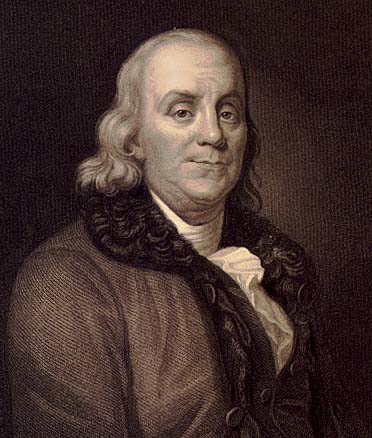
Obama’s Dream vs. The American Dream: Why Americans Should See The Movie “Obama’s America – 2016”

The American Dream In Danger of Becoming a “Nightmare” By Dr. David P. Craig


(I very seldom write about politics on this site – and don’t consider myself anywhere close to a “political  junkie.” However, I love the United States of America and I firmly believe that D’Souza’s perspective on the Obama presidency deserves a wide viewing/reading. I still believe in the American experiment/dream – and hope that D’Souza’s books and movie will influence the undecided about Obama’s dream for the USA – “Obama’s America: 2016” is extremely well done – the balance of dialogue, visuals, scenery, facts, interviews, philosophical/worldview discussion, etc., makes the movie intriguing and enjoyable despite the disturbing foundational belief’s and the ongoing implementation of Obama’s changing dream for America. The movie is produced by the same man who produced the academy award-winning “Schindler’s List” – Note: I don’t believe the answer for the world or own country is “The American Dream.” The only hope for individuals wherever they live in the world, and for true and lasting transformation is to be found only in the gospel of Jesus Christ which makes possible your reconciliation with God and provides the remedy for your sin and objective peace – DPC)

Yesterday I reluctantly went with my wife to see the movie “Obama’s America: 2016.” Honestly, I didn’t want to see the movie. Politics isn’t my thing – as a matter of fact I like politician’s or anything related to politics about as much as I enjoy getting my teeth drilled at the dentist. However, I never really understood the philosophy behind Obama’s foreign policies (especially his anti-Israel stance); the rising debt in America (more than all the other presidents before him combined) and why he seems to be so “down” on “Christianity;” “NASA;” “The Military” and just about anything that’s made America the envy of many nations in its short history.  I am so glad that my wife persisted in my seeing this movie. I am so glad and appreciative to people like my parents that have made the United States such a wonderful place to live – by the people, for the people, and of the people.

I have traveled all over the world: places as diverse and varied as Cuba, India, Argentina, Israel, and Spain (I’ve been to over 40 countries around the world). I’m always intrigued to talk to people who have a different perspective on America looking at it through the lenses of another culture, history, economy, and worldview. Why do so many people want to leave family, friends, and their roots behind to come to the USA?

My parents left Argentina and spent 3 years in England before coming to America to live the American dream in 1955. My dad sacrificed an executive career working for one of the wealthiest men in South America at the time – the equivalent of America’s William Randolph Hearst. However, even more difficult than starting a career over from scratch and leaving all his possessions – was leaving his family behind to provide a better future for his own young family (my three siblings were all born in Argentina – I was the only child born in the USA).

My dad and mom left Argentina for the same reason millions of people have left their possessions, careers, families, and countries behind to come to the United States of America. They have usually come because of governmental and social/religious oppression in exchange for economic and social/religious opportunities. In recent days I have had conversations with people from Iran, Syria, Cuba, and Argentina. In each of these conversations these individuals talked about the difference of why they came to America and what they see happening with Obama’s America and it absolutely terrifies them. Enter Dinesh D’Souza’s two books: The Roots of Obama’s Rage and Obama’s America, that have now become a major motion picture. If you want to understand the philosophy and world view of Obama – this is a great place to start.

Dinesh D’Souza the author of the two books the movie “Obama’s America: 2016” is based on, also came to America from India to experience the freedom and opportunities afforded him that he never would have experienced in India. It’s interesting that D’Souza and Obama have a lot in common: born the same year; both graduated from Ivy League schools; both are considered minorities; and both married in the same year. There are other similarities brought out in the movie and books as well.

“Obama’s America: 2016” helps one grasp the contrasting and diametrically opposing world-views of Obama and D’Souza and how Obama’s worldview specifically has and will continue to shape the future of America and the World – if re-elected. Everyone in America needs to decide which direction we will go, and our part in voting for our future and that of our progeny. D’Souza came to America and desires what our founding father’s desired – among them: life, liberty, and the pursuit of happiness. On the other hand, Obama has a different dream for America. Obama has a vision that has been shaped by his past – from his absentee father; his associations; his life experiences; and education. It is a unique and foreign dream to any other president we’ve had in American history.

Whether D’Souza is “dead on” in his articulation of Obama’s dream for America based on his past can be debated. However, the facts – Obama’s continued deficit spending, weakening of the military, denial of American exceptionalism, globalization, limiting of religious freedoms, taxation, regulations, and the expansion of government – among many other things – are the very reasons D’Souza, my parents, and millions of Americans came to the United States of America and left their homelands behind.

Our founding fathers, and many of our parents and grandparents came to America to be freed from Obama’s dream that has been inhabited in the likes of Peron, Castro, and Ahmajinedad (and myriads of others from one extreme to another). They came here to be freed from the bondage and coercion of regulations and governmental control. They came here to be free to worship, free to speak their minds, free to pursue opportunities that can become realities only in a country like the United States of America. In my opinion, Obama’s dream is in reality a “Nightmare!” Take my advice and see this movie or read the books by D’Souza, and decide for yourself whether you want the American dream or Obama’s nightmare in 2016. We owe it to ourselves to understand the foundational and philosophical underpinnings of arguably the most influential leader in the world: the current and possibly future president of the United States of America.

 About Dinesh D’Souza

NY Times Bestselling Author, Speaker and President of The King’s College in NYC. . You can follow Dinesh on Twitter @dineshdsouza and his website: http://www.dineshdsouza.com/

 Biography

In the fall of 2010 Dinesh D’Souza was named the President of The King’s College, a Christian College located in the Empire State Building in New York City. The mission of The King’s College is to transform society by educating students so that they are prepared to shape and lead the strategic institutions.D’Souza brings to King’s a distinguished 25 year career as a writer, scholar and intellectual. A former policy analyst in the Reagan White House, D’Souza also served as an Olin Fellow at the American Enterprise Institute as well as a Rishwain Scholar at the Hoover Institution at Stanford.

Called one of the “top young public-policy makers in the country” by Investor’s Business Daily, D’Souza quickly became a major influence on public policy through his writings. Illiberal Education, his first book publicized the phenomenon of political correctness in America’s colleges and universities and was on the best seller list for 15 weeks. Subsequent best sellers, include Ronald Reagan: How an Ordinary Man Became an Extraordinary Leader, The Virtue of Prosperity, Finding Values in an Age of Techno Affluence, What’s So Great About America, Letters to a Young Conservative and What’s So Great About Christianity, The Roots of Obama’s Rage, Godforsaken, and his latest book Obama’s America.

A prolific, writer, persuasive debater, and sought after speaker on college campuses as well as many other venues, D’Souza has been named one of America’s most influential conservative thinkers by the New York Times.

List of Some of Dinesh D’Souza’s Books

Obama’s America: Unmasking the American Dream; The Roots of Obama’s Rage; Life After Death: The Evidence; What’s So Great about Christianity; The Enemy at Home: The Cultural Left and Its Responsibility for 9/11; Letters to a Young Conservative; What’s So Great about America; The Virtue of Prosperity: Finding Values in an Age of Techno-Affluence; Ronald Reagan: How an Ordinary Man Became and Extraordinary Leader; Illiberal Education: The Politics of Race and Sex on Campus; The End of Racism: Principles for a Multiracial Society.

Dr. James Montgomery Boice on God’s Amazing Grace

There is no difference, for all have sinned and fall short of the glory of God, and are justified freely by his grace through the redemption that came by Christ Jesus. –Romans 3:22-24 (condensed)

In the last study I introduced four doctrines found in Romans 3:21–31:

(1) God has provided a righteousness of his own for men and women, a righteousness we do not possess ourselves;

(2) this righteousness is by grace;

(3) it is the work of the Lord Jesus Christ in dying for his people, redeeming them from their sin, that has made this grace on God’s part possible; and

(4) this righteousness, which God has graciously provided, becomes ours through simple faith. We have already looked at the first of these four doctrines: the righteousness that God has made available to us apart from law. Now we will examine the second doctrine: that this righteousness becomes ours by the grace of God alone, apart from human merit.

That is the meaning of grace, of course. It is God’s favor to us apart from human merit. Indeed, it is favor when we deserve the precise opposite. D. Martyn Lloyd-Jones has written, “There is no more wonderful word than ‘grace.’ It means unmerited favor or kindness shown to one who is utterly undeserving.… It is not merely a free gift, but a free gift to those who deserve the exact opposite, and it is given to us while we are ‘without hope and without God in the world.’ ”

But how are we to do justice to this great concept today? We have too high an opinion of ourselves even to understand grace, let alone to appreciate it. We speak of it certainly. We sing, “Amazing grace—how sweet the sound—That saved a wretch like me!” But we do not think of ourselves as wretches needing to be saved. Rather, we think of ourselves as quite worthy. One teacher has said, “Amazing grace is no longer amazing to us.” In our view, it is not even grace.

There is No Difference

This is why the idea expressed in Romans 3:23 is inserted at this point. For many years, whenever I came to this verse, I had a feeling that it was somehow in the wrong place. It was not that Romans 3:23 is untrue. Obviously it is, for that is what Romans 1:18–3:20 is all about. What bothered me is that the verse did not seem to belong here. I felt that the words “there is no difference, for all have sinned and fall short of the glory of God” belonged with that earlier section. The verse seemed somehow an intrusion here, because Romans 3:21–31 is not talking about sin but about the way of salvation.

I think differently now, however. And the reason I think differently is that I now understand the connection between this verse and grace. The reason we do not appreciate grace is that we do not really believe Romans 3:23. Or, if we do, we believe it in a far lesser sense than Paul intended.

Let me use a story to explain what I mean. In his classic little book All of Grace, Charles Haddon Spurgeon begins with the story of a preacher from the north of England who went to call on a poor woman. He knew that she needed help. So, with money from the church in his hand, he made his way through the poor section of the city to where she lived, climbed the four flights of stairs to her tiny attic apartment, and then knocked at the door. There was no answer. He knocked again. Still no answer. He went away. The next week he saw the woman in church and told her that he knew of her need and had been trying to help her. “I called at your room the other day, but you were not home,” he said.

“At what time did you call, sir?” she asked.

“About noon.”

“Oh, dear,” she answered. “I was home, and I heard you knocking. But I did not answer. I thought it was the man calling for the rent.”

This is a good illustration of grace and of our natural inability to appreciate it. But isn’t it true that, although most of us laugh at this story, we unfortunately also fail to identify with it? In fact, we may even be laughing at the poor woman rather than at the story, because we consider her to be in a quite different situation from ourselves. She was unable to pay the rent. We know people like that. We feel sorry for them. But we think that is not our condition. We can pay. We pay our bills here, and we suppose (even though we may officially deny it) that we will be able to pay something—a down payment even if not the full amount—on our outstanding balance in heaven. So we bar the door, not because we are afraid that God is coming to collect the rent, but because we fear he is coming with grace and we do not want a handout. We do not consider our situation to be desperate.

But, you see, if the first chapters of Romans have meant anything to us, they have shown that spiritually “there is no difference” between us and even the most destitute of persons. As far as God’s requirements are concerned, there is no difference between us and the most desperate or disreputable character in history.

I have in my library a fairly old book entitled Grace and Truth, written by the Scottish preacher W. P. Mackay. Wisely, in my judgment, the first chapter of the book begins with a study of “there is no difference.” I say “wisely,” because, as the author shows, until we know that in God’s sight there is no difference between us and even the wildest profligate, we cannot be saved. Nor can we appreciate the nature and extent of the grace needed to rescue us from our dilemma.

Mackay illustrates this point with an anecdote. Someone was once speaking to a rich English lady, stressing that every human being is a sinner. She replied with some astonishment, “But ladies are not sinners!”

“Then who are?” the person asked her.

“Just young men in their foolish days,” was her reply.

When the person explained the gospel further, insisting that if she was to be saved by Christ, she would have to be saved exactly as her footman needed to be saved—by the unmerited grace of God in Christ’s atonement—she retorted, “Well, then, I will not be saved!” That was her decision, of course, but it was tragic.

If you want to be saved by God, you must approach grace on the basis of Romans 1:18–3:20—on the grounds of your utter ruin in sin—and not on the basis of any supposed merit in yourself.

Common Grace

It is astonishing that we should fail to understand grace, of course, because all human beings have experienced it in a general but nonsaving way, even if they are not saved or have not even the slightest familiarity with Christianity. We have experienced what theologians call “common grace,” the grace that God has shown to the whole of humanity. Jesus spoke of it when he reminded his listeners that God “causes his sun to rise on the evil and the good, and sends his rain on the righteous and the unrighteous” (Matt. 5:45b).

When Adam and Eve sinned, the race came under judgment. No one deserved anything good. If God had taken Adam and Eve in that moment and cast them into the lake of fire, he would have been entirely just in doing so, and the angels could still have sung with great joy: “Holy, holy, holy is the Lord God Almighty, who was, and is, and is to come” (Rev. 4:8). Or, if God had spared Adam and Eve, allowing them to increase until there was a great mass of humanity in the world and then had brushed all people aside into everlasting torment, God would still have been just. God does not owe us anything. Consequently, the natural blessings we have are due not to our own righteousness or abilities but to common grace.

Let me try to state this clearly once more. If you are not a believer in Jesus Christ, you are still a recipient of God’s common grace, whether you acknowledge it or not. If you are alive and not in hell at this moment, it is because of God’s common grace. If you are in good health and not wasting away in some ward of hopeless patients in a hospital, it is because of common grace. If you have a home and are not wandering about on city streets, it is because of God’s grace. If you have clothes to wear and food to eat, it is because of God’s grace. The list could be endless. There is no one living who has not been the recipient of God’s common grace in countless ways. So, if you think that it is not by grace but by your merits alone that you possess these blessings, you show your ignorance of spiritual matters and disclose how far you are from God’s kingdom.

Unmerited Grace

But it is not common grace that Paul is referring to in our Romans text, important as common grace is. It is the specific, saving grace of God in salvation, which is not “common” (in the sense that all persons experience it regardless of their relationship to God), but rather is a gift received only by some through faith in Jesus Christ, apart from merit.

This is the point we need chiefly to stress, of course, for it takes us back to the story of the preacher’s visit to the poor woman and reminds us that the reason we do not appreciate grace is that we think we deserve it. We do not deserve it! If we did, it would not be grace. It would be our due, and we have already seen that the only thing rightly due us in our sinful condition is a full outpouring of God’s just wrath and condemnation. So I say again: Grace is apart from good works. Grace is apart from merit. We should be getting this by now, because each of the blessings enumerated in this great chapter of Romans is apart from works, law, or merit—which are only various ways of saying the same thing.

The righteousness of God, which is also from God, is apart from works.

Grace, which is the source of that righteousness, is apart from works.

Redemption, which makes grace possible, is apart from works.

Justification is apart from works.

Salvation from beginning to end is apart from works. In other words, it is free. This must have been the chief idea in Paul’s mind when he wrote these verses, for he emphasizes the matter by repeating it. He says that we are “justified freely by his grace through the redemption that came by Christ Jesus” (v. 24, italics mine).

One of the most substantial works on grace that I have come across is by Lewis Sperry Chafer, the founder of Dallas Theological Seminary, and it goes by that title: Grace. In the very first chapter Chafer has a section captioned “Seven Fundamental Facts About Grace.” I am not happy with everything he says in this section, particularly the last two of these points. But I refer to him here because of what he says about grace and demerit:

1.      “Grace is not withheld because of demerit” and

2.      “Grace cannot be lessened because of demerit.”

These are important points, since they emphasize the bright side of what usually appears to us as undesirable teaching.

Most of us resent the thought of “free” grace. We want to earn our own way, and we resent the suggestion that we are unable to scale the high walls of heaven by our own devices. We must be humbled before we will even give ear to the idea.

But if we have been humbled—if God has humbled us—the doctrine of grace becomes a marvelous encouragement and comfort. It tells us that the grace of God will never be withheld because of anything we may have done, however evil it was, nor will it be lessened because of that or any other evil we may do. The self-righteous person imagines that God scoops grace out of a barrel, giving much to the person who has sinned much and needs much, but giving only a little to the person who has sinned little and needs little. That is one way of wrongly mixing grace with merit. But the person who is conscious of his or her sin often imagines something similar, though opposite in direction. Such people think of God’s withholding grace because of their great sin, or perhaps even putting grace back into his barrel when they sin badly.

Thank God grace is not bestowed on this principle! As Chafer says:

God cannot propose to do less in grace for one who is sinful than he would have done had that one been less sinful. Grace is never exercised by him making up what may be lacking in the life and character of a sinner. In such a case, much sinfulness would call for much grace, and little sinfulness would call for little grace. [Instead] the sin question has been set aside forever, and equal exercise of grace is extended to all who believe. It never falls short of being the measureless saving grace of God. Thus, grace could not be increased, for it is the expression of his infinite love; it could not be diminished, for every limitation that human sin might impose on the action of a righteous God has, through the propitiation of the cross, been dismissed forever.

Grace humbles us, because it teaches that salvation is apart from human merit. At the same time, it encourages us to come to God for the grace we so evidently need. There is no sin too great either to turn God from us or to lessen the abundance of the grace he gives.

Abounding Grace

That word abundance leads to the final characteristic of grace to be included in this study. It is taught two chapters further on in a verse that became the life text of John Newton: Romans 5:20. Our version reads, “.… But where sin increased, grace increased all the more.” But the version Newton knew rendered this, “But where sin abounded, grace did much more abound,” (kjv.)

John Newton was an English clergyman who lived from 1725 to 1807. He had a wide and effective ministry and has been called the second founder of the Church of England. He is best known to us for his hymns.

Newton was raised in a Christian home in which he was taught many great verses of the Bible. But his mother died when he was only six years old, and he was sent to live with a relative who mocked Christianity. One day, at an early age, Newton left home and joined the British Navy as an apprenticed seaman. He was wild and dissolute in those years, and he became exceedingly immoral. He acquired a reputation of being able to swear for two hours without repeating himself. Eventually he deserted the navy off the coast of Africa. Why Africa? In his memoirs he wrote that he went to Africa for one reason only and that was “that I might sin my fill.”

In Africa he fell in with a Portuguese slave trader in whose home he was cruelly treated. This man often went away on slaving expeditions, and when he was gone the power in the home passed to the trader’s African wife, the chief woman of his harem. This woman hated all white men, and she took out her hatred on Newton. He tells us that for months he was forced to grovel in the dirt, eating his food from the ground like a dog and beaten unmercifully if he touched it with his hands. For a time he was actually placed in chains. At last, thin and emaciated, Newton made his way through the jungle, reached the sea, and there attracted a British merchant ship making its way up the coast to England.

The captain of the ship took Newton aboard, thinking that he had ivory to sell. But when he learned that the young man knew something about navigation as a result of his time in the British Navy, he made him ship’s mate. Even then Newton fell into trouble. One day, when the captain was ashore, Newton broke out the ship’s supply of rum and got the crew drunk. He was so drunk himself that when the captain returned and struck him in the head, Newton fell overboard and would have drowned if one of the sailors had not grabbed him and hauled him back on deck in the nick of time.

Near the end of the voyage, as they were approaching Scotland, the ship ran into bad weather and was blown off course. Water poured in, and she began to sink. The young profligate was sent down into the hold to pump water. The storm lasted for days. Newton was terrified, sure that the ship would sink and he would drown. But there in the hold of the ship, as he pumped water, desperately attempting to save his life, the God of grace, whom he had tried to forget but who had never forgotten him, brought to his mind Bible verses he had learned in his home as a child. Newton was convicted of his sin and of God’s righteousness. The way of salvation opened up to him. He was born again and transformed. Later, when the storm had passed and he was again in England, Newton began to study theology and eventually became a distinguished evangelist, preaching even before the queen.

Of this storm William Cowper, the British poet who was a close friend of John Newton’s, wrote:

God moves in a mysterious way,

His wonders to perform;

He plants his footsteps in the sea

And rides upon the storm.

And Newton? Newton became a poet as well as a preacher, writing some of our best-known hymns. This former blasphemer wrote:

How sweet the Name of Jesus sounds

In a believer’s ear!

It soothes his sorrows, heals his wounds,

And drives away his fear.

He is known above all for “Amazing Grace”:

Amazing grace—how sweet the sound—

That saved a wretch like me!

I once was lost, but now am found—

Was blind, but now I see.

’Twas grace that taught my heart to fear,

And grace my fears relieved;

How precious did that grace appear

The hour I first believed.

Through many dangers, toils, and snares,

I have already come;

’Tis grace has brought me safe thus far,

And grace will lead me home.

Newton was a great preacher of grace. And no wonder! He had learned what all who have ever been saved have learned: namely, that grace is from God, apart from human merit. He deserved nothing. But he found grace through the work of Jesus.

 About the Author:

James Montgomery Boice, Th.D., (July 7, 1938 – June 15, 2000) was a Reformed theologian, Bible teacher, and pastor of Tenth Presbyterian Church in Philadelphia from 1968 until his death. He is heard on The Bible Study Hour radio broadcast and was a well known author and speaker in evangelical and Reformed circles. He also served as Chairman of the International Council on Biblical Inerrancy for over ten years and was a founding member of the Alliance of Confessing Evangelicals.The article/sermon above was adapted from Dr. James Montgomery Boice. The Boice Commentary Series: Romans Expositions vol. 1: Justification by Faith. Grand Rapids: Baker, 2005 (reprinted). Pages 355-362.

Dr. Paul David Tripp on God’s Plan For Your LIfe

That I may dwell in the house of the LORD all the days of my life, to gaze upon the beauty of the LORD and to inquire in his temple. – PSALM 27:4

Now, admit it—you love yourself, and you have a wonderful plan for your life. Somehow, someway we all are too focused on our own lives. All of us get captured by what we want, what we feel, and what we have determined we need. Every one of us is a dreamer. We have all been given the amazing capacity to envision the future and to plan toward it. A dream is imagination coupled with desire and projected into the future. There are things that you would love to have as part of your life. There are things that you would like to accomplish. There are locations you would love to experience. There are relationships you would like to enjoy. There are situations you would like to avoid. Every day you get up and you work toward some kind of dream.

But dreamers don’t just dream their dream; they also dream to be sovereign. In some way, at some time, all of us have wished that we had enough control over our lives to guarantee that we could experience the things we have dreamed. We would like to control people and situations just enough to ensure that the “good things” we’ve dreamed would actually come true. What does the Bible call all of this? The Bible calls it worship.

You see, you and I are worshipers. This is one of the things that separates us from the rest of creation. As worshipers we are always living for something. Something is always laying claim to the affection and rulership of our hearts. There is always something that commands our dreams. There is something that we look to for identity, meaning, and purpose, and that inner sense of well-being that everyone seeks.

Scripture says that there are only two choices (Rom. 1:25). Either you are living in pursuit of the creation or you are living in pursuit of the Creator. You are looking for your satisfaction and meaning in the physical, created world, or you are finding it in the Lord.

This means that there is a war of dreams that rages in our hearts, and in the middle of the fog of this war it is so easy to get it wrong. It is so easy to think that because we have our theology in the right place, because we are biblically literate and functioning members of a good church, that our lives are shaped by worship of the Lord. But that may not be the case at all. On closer inspection, it may actually be the case that underneath all of those things we are driven by personal success, or material things, or the respect of others, or power and control. I am deeply persuaded that there’s a whole lot of idolatrous Christianity out there. The most dangerous idols are those that fit well within the culture of external Christianity.

It’s here that Psalm 27 is so helpful and convicting. What is David’s dream for his life? What is his plan? Well, the answer sounds so spiritual as to be impractical, but it gets right to the heart of why we were created in the first place. David says, in Old Testament language, “I want to spend my life in worship of the Lord. I want to dwell in his temple and gaze upon his beauty.” The shekinahglory presence of the Lord filled the holy place of the temple, like a cloud. It was a physical picture of God dwelling with his people. David was saying, “I want to be where God is. I want to do what I was created to do.”

No, David isn’t some super-spiritual mystic. David gets it right. His quest is for a life shaped and directed by a daily worship of the Lord. David knows who he is: a creature created for worship. David knows who God is: the only “thing” in the universe truly worthy of worship. His dream is the best dream that you could ever dream. Far from being impractical, this dream, if lived out at street level, will bring purity and peace to your life.

What is your plan for your life? How close is your plan to the plan God had for you when he gave you life and breath? Is there, perhaps, something in your plan that competes for the place that only God should have?

May your plan for you be identical to his plan for you!

 Take a Moment

1. How close is your dream for your life to the plan for life to which God has called you?

2. Is God calling you to let go of a dream so that his plan for you may flourish?
*The article above adapted from the excellent book by Paul David Tripp. A Shelter in the Time of Storm: Meditations on God and Trouble. Wheaton: Good News Publishers/Crossway Books. 2009, pp. 149-150.

 About the Author:

Dr. Paul David Tripp is the president of Paul Tripp Ministries (www.paultrippministries.org), a nonprofit organization, whose mission statement is “Connecting the transforming power of Jesus Christ to everyday life.” This mission leads Paul to weekly speaking engagements around the world. In addition to being a gifted communicator and sought after conference speaker with Paul Tripp Ministries, Paul is the Executive Director of the Center for Pastoral Life and Care in Fort Worth, Texas, and has taught at respected institutions worldwide. As an author, Paul has written many books on Christian Living that are read and distributed internationally. He has been married for many years to Luella and they have four grown children.

 He is the author of the following excellent Christ-centered books:

Dangerous Calling: Confronting The Unique Challenges of Pastoral Ministry. Wheaton: Crossway Books, 2012.

Forever: Why You Can’t Live Without It. Grand Rapids: Zondervan, 2011.

What Did You Expect? Redeeming The Realities of Marriage. Wheaton: Crossway, 2010.

The Power of Words and the Wonder of God (contributor). Wheaton: Crossway, 2009.

A Shelter in the Time of Storm: Meditations on God and Trouble. Wheaton: Crossway, 2009.

Broken Down House: Living Productively in a World Gone Bad. Shepherd Press, 2009.

Helping People Change (with Timothy S. Lane). Greensboro, N.C.: New Growth Press, 2008.

Whiter Than Snow: Meditations on Sin and Mercy. Wheaton: Crossway, 2008.

Helping Your Adopted Child. Greensboro, N.C.: New Growth Press, 2008.

Peer Pressure. Greensboro, N.C.: New Growth Press, 2008.

A Quest for More: Living For Something Bigger Than You. Greensboro, N.C.: New Growth Press, 2007.

Grief: Finding Hope Again. Greensboro, N.C.: New Growth Press, 2005.

Lost in the Middle: Midlife and the Grace of God. Shepherd Press, 2004.

Pastoral Leadership for Manhood and Womanhood (contributor). Wheaton: Crossway, 2003.

Instruments in the Redeemer’s Hands: People in Need of Change Helping People in Need of Change. Phillipsburg, NJ: P&R, 2002.

Age of Opportunity: A Biblical Guide to Parenting Teens. Phillipsburg, NJ: P&R, 2001.

War of Words: Getting to the Heart of Communication Struggles. Phillipsburg, NJ P&R, 2001.

What Books Have Influenced Christian Leaders?

What we read affects us deeply, with long-term results. What books have influenced you the most? The following are the responses given to a survey of Christian leaders, sent out by R. Kent Hughes (*note that many of these leaders have entered into the presence of God).

 Specific questions asked on the survey were:

(1) What are the five books, secular or sacred, which have influenced you the most?

(2) Of the spiritual/sacred books which have influenced you, which is your favorite?

(3) What is your favorite novel?

(4) What is your favorite biography?

 JOHN W. ALEXANDER

(1) Charles Sheldon, In His Steps; H. B. Wright, The Will of God and a Man’s Life Work; H. J. Carnell, An Introduction to Christian Apologetics; William Manchester, American Caesar; Garth Lean, God’s Politician.

(2) H.J. Carnell, An Introduction to Christian Apologetics.

(3) Charles Dickens, David Copperfield.

(4) William Manchester, American Caesar

 HUDSON T. ARMERDING

(1) The Bible; Calvin’s Institutes; J. I. Packer, Knowing God; J. O. Buswell, A Systematic Theology of the Christian Religion; S. E. Morison, History of the U.S. Navy in World War Two.

(2) After the Bible, Calvin’s Institutes.

(3) Dostoyevski, Crime and Punishment and Ernest Gordon, Through the Valley of the Kwai.

(4) Pollock, Hudson Taylor.

JAMES M. BOICE

(1) John Calvin, Institutes of the Christian Religion (2 vols.); B. B. Warfield, Inspiration and Authority of the Bible; T. M. Lindsay, History of the Reformation (2 vols.); John Stott, Basic Christianity; Donald Grey Barnhouse, Romans (10 vols.- most recently issued in 4 vols.).

(2) Calvin’s Institutes.

(3) Ernest Hemingway, Over the River and into the Trees.

(4) Arnold Dallimore, George Whitefield (2 vols).

BRYAN CHAPELL

(1) C. S. Lewis, Mere Christianity

(2) Calvin’s Institutes.

(3) J. Oliver Buswell, A Systematic Theology of Christian Religion.

(4) John Bunyan, Pilgrim’s Progress.

(5) Sidney Greidanus, Sola Scriptura.

 RICHARD CHASE

(1) Charles Colson, Loving God; Werner Jaegei Paideia: The Ideals of Greek Culture (3 vols.); Sir Robert Anderson, The Silence of God; David J. Hassel, City of Wisdom; Nathan Hatch, The Democritization of American Christianity.

(2) Charles Colson, Loving God.

(3) Mary Stewart’s novels: The Crystal Cave, The Hollow Hills, The Last Enchantment (favorite).

(4) Charles Colson, Born Again.

 CHARLES COLSON

(1 & 2) C. S. Lewis, Mere Christianity; St. Augustine, Confessions; Armando Valladares, Against All Hope; Alexander Solzhenitsyn, The Gulag Archipelago; Richard John Neuhaus, The Naked Public Square; Donald Bloesch, Crumbling Foundations; Harry Blamires, The Christian Mind; Dietrich Bonhoeffer, The Cost of Discipleship; St. Augustine, The City of God; Jonathan Edwards, Treatise on Religious Affections; R. C. Sproul, Knowing Scripture; William Wilberforce, Real Christianity; Jacques Ellul, The Political Illusion and The Presence of the Kingdom; J. I. Packer, Knowing God; Paul Johnson, Modern Times; John Bunyan, Pilgrim’s Progress.

(3) John Bunyan, Pilgrim’s Progress.

(4) St. Augustine, Confessions

 JAMES C. DOBSON

Rather than select several books which exceed all others in their impact on my life, I prefer to commend the authors whose collection of writings are most highly prized. This is easier because the best writers require several books to state their cases and leave their mark. First, I admire the memory of Dr. Francis Schaeffer and the anthology he left to us. Second, I have great appreciation for the writings of Chuck Colson. His best book, I believe, is Loving God. His life is a demonstration of its theme.

 LYLE DORSETT

(1) Besides the Bible, which I would, of course, rank #1, E. M. Bounds, Power Through Prayer; George Muller, A Life of Trust; G. K. Chesterton, Orthodoxy; Oswald Chambers, My Utmost for His Highest; Robert E. Coleman, The Master Plan of Evangelism.

(2) Oswald Chambers, My Utmost for His Highest.

(3) C. S. Lewis, The Great Divorce.

(4) Catherine Marshall, A Man Called Peter.

 ELISABETH ELLIOT

(1) Romano Guardini, The Lord; George MacDonald, Salted with Fire; Amy Carmichael, Toward Jerusalem; Janet Erskine Stuart, Life and Letters; Evelyn Underhill, The Mystery of Charity.

(2) Impossible to say.

(3) Sigrid Undeset, Kristin Lavransdatter.

(4) St. Augustine, Confessions.

 LTG. HOWARD G. GRAVES

The Bible; Oswald Chambers, My Utmost for His Highest; Francis Schaeffer, How Should We Then Live?; J. I. Packer, Knowing God; James Stockdale, A Vietnam Experience, Ten Years of Reflection; Charles Swindoll, Growing Strong in the Seasons of Life.

(2) Oswald Chambers, My Utmost for His Highest.

(3) Herman Wouk’s series, Winds of War and Remembrance.

(4) The Personal Memoirs of U. S. Grant.

 HOWARD G. HENDRICKS

(1) C. S. Lewis, Mere Christianity.

(2) Adler Mortimer, How to Read a Book.

(3) Calvin’s Institutes.

(4) Lewis Sperry Chafer, He That Is Spiritual.

(5) A.W. Tozer, The Pursuit of God.

 CARL F. H. HENRY

The Bible; James Orr, The Christian View of God and the World; John Calvin, The Institutes of the Christian Religion (this is all Dr. Henry provided).

 DAVID M. HOWARD

(1) John Stott, The Baptism and Fulness of the Holy Spirit; Earle Cairns, Christianity Through the Centuries; Alexander Whyte, Bible Characters; Carolina Maria de Jesus, Child of the Dark; Dwight Eisenhower Crusade in Europe.

(2) Earle Cairns, Christianity Through the Centuries.

(3) Leo Tolstoy, Anna Karenina.

(4) Elisabeth Elliot, Shadow of the Almighty.

 JERRY JENKINS

(1) Roger Kahn, The Boys of Summer.

(2) Charles Colson, How Now Shall We Live?

(3) Charles Colson, Born Again.

(4) Elisabeth Elliot, Shadow of the Almighty.

(5) Elisabeth Elliot, Through Gates of Splendor.

 KENNETH S. KANTZER

(1) St. Augustine, The City of God; John Calvin, Institutes; Jonathan Edwards, The Distinguishing Marks of a Revival of the Spirit of God; James Orr, The Christian View of God and the World; Leo Tolstoy, Anna Karenina.

(2) St. Augustine, The City of God.

(3) Leo Tolstoy, Anna Karenina.

(4) Carl E H. Henry, The Confessions of a Theologian.

 JAY KESLER

(1) Jacques Ellul, The Presence of the Kingdom; John Bright, The Kingdom of God; Alan Paton, Too Late the Phalarope; Carl Sandburg, Lincoln; C. S. Lewis, Mere Christianity; Fyodor Dostoyevski, Crime and Punishment.

(2) Jacques Ellul, The Presence of the Kingdom.

(3) Alan Paton, Too Late the Phalarope.

(4) Carl Sandburg, Lincoln; see also Lee, Jefferson, Sadat, Wesley, Judson, Truman, Churchill.

 DENNIS F. KINLAW

(1) Clarence Hall, Portrait of a Prophet: The Life of Samuel Logan Brengle; Hudson Taylor’s Spiritual Secret; The Standard Sermons of John Wesley; Yehekel Kaufmann, The Religion of Israel; A. W. Tozer, The Pursuit of God.

(2) The Standard Sermons of John Wesley.

(3) Charles Dickens, A Tale of Two Cities.

(4) Clara H. Stuart, Latimer, Apostle to the English.

 HAROLD LINDSELL

(1) John Calvin, Institutes; Oswald Chambers, My Utmost for His Highest; Philip Schaff, History of the Christian Church; Matthew Henry, Commentary; Martyn Lloyd-Jones, Spiritual Depression – Its Causes and Its Cure.

(2) Oswald Chambers, My Utmost for His Highest.

(3) None.

(4) Hudson Taylor, Spiritual Secrets.

DUANE LITFIN

 (Most influential authors rather than most influential books)

(1) C. S. Lewis, The Great Divorce; Mere Christianity; God in the Dock.

(2) A. W. Tozer, The Pursuit of God.

(3) J. I. Packer, Knowing God.

(4) St. Augustine, De Doctrina Christiana (On Christian Doctrine).

(5) Haddon Robinson, Biblical Preaching.

 WAYNE MARTINDALE

C. S. Lewis, The Great Divorce; C. S. Lewis, The Problem of Pain; C. S. Lewis, Mere Christianity; Charles Sheldon, In His Steps; Elisabeth Elliot, Through Gates of Splendor.

Elisabeth Elliot, Through Gates of Splendor.

Fyodor Dostoyevski, Brothers Karamazov.

Elisabeth Elliot, Through Gates of Splendor.

 ROBERTSON MCCUILKIN

(1) Romans, John, Luke, 2 Timothy; C. S. Lewis, Miracles; Warfield, Inspiration and Authority of Scripture; Johnstone, Operation World; Pollock, Course of Time.

(2) Pollock, Course of Time.

(3) C. S. Lewis, Till We Have Faces; Tolkien, Lord of the Rings; many of Shakespeare’s plays.

(4) Robert McQuilkin, Always in Triumph.

 CALVIN MILLER

(1) Dallas Willard, The Spirit of the Disciplines; Bill Moyers, World of Ideas II; Virginia Stem Owens, If You Do Love Old Men; Larsen, Passions; Williams, Islam.

(2) Jean Pierre de Causade, The Sacrament of the Present Moment or Mother Teresa’s Life in the Spirit.

(3) War and Peace, Anna Karenina, anything by Dickens, Dostoyevski, Tolkien.

(4) Troyat’s Tolstoy or Massie’s Nicholas and Alexandra.

 HAROLD MYRA

(1) C. S. Lewis, Mere Christianity; C. S. Lewis, Perelandra; Paul Tourniet, The Meaning of Persons; Helmut Thielicke, The Waiting Father; Thomas a Kempis, The Imitation of Christ; Oswald Chambers books.

(2) C. S. Lewis, Perelandra.

(3) Fyodor Dostoyevski, Brothers Karamazov.

(4) William Manchester, The Last Lion.

 STEPHEN F. OLFORD

(1) Alvin Toffler, Future Shock; Carl Henry, God, Revelation and Authority; Thomas a Kempis, The Imitation of Christ; A. J. Gordon, The Ministry of the Spirit; John Stott, The Cross of Christ.

(2) Dr. and Mrs. Howard Taylor, Hudson Taylor in the Early Years: The Growth of a Soul.

(3) Lloyd Douglas, The Robe and Lew Wallace, Ben Hur.

(4) Dr. and Mrs. Howard Taylor, Hudson Taylor in the Early Years: The Growth of a Soul.

 J. I. PACKER

(1) John Calvin, Institutes; John Bunyan, Pilgrim’s Progress; Goold, John Owen Works (Vols. 3, 6, 7); Richard Baxter, Reformed Pastor; Luther, Bondage of the Will.

(2) John Bunyan, Pilgrim’s Progress.

(3) Fyodor Dostoyevski, The Brothers Karamazov.

(4) Arnold Dallimore, George Whitefield (2 vols.).

PAIGE PATTERSON

(1) F. W. Krummacher, The Suffering Savior.

(2) Leonard Verduin, The Reformers and Their Stepchildren.

(3) Courtney Anderson, To the Golden Shore.

(4) Roland Bainton, Here I Stand.

(5) Francis Schaeffer, Escape from Reason.

 EUGENE H. PETERSON

(1) Karl Barth, Epistle to the Romans; Fyodor Dostoyevski, The Idiot; Charles Williams, Descent of the Dove; Herman Melville, Moby Dick; George Herbert, Country Parson and the Temple.

(2) Karl Barth, Epistle to the Romans.

(3) Fyodor Dostoyevski, The Brothers Karamazov.

(4) Meriol Trevor, 2 volumes on Newman: The Pillar of the Cloud and Light in Winter.

 C. WILLIAM POLLARD

(1) C. S. Lewis, Mere Christianity.

(2) C. S. Lewis, Surprised by joy.

(3) Francis Schaeffer, How Should We Then Live?

(4) Dorothy Sayers, The Mind of the Maker.

(5) Peter Drucker, Managing for Results and Managing for the Future.

 JIM REAPSOME

W. H. Griffith Thomas, Christianity Is Christ; C. S. Lewis, Mere Christianity; A. W. Tozer, The Pursuit of God; Dr. and Mrs. Hudson Taylor, Hudson Taylor’s Spiritual Secret; D. Martyn Lloyd-Jones, Spiritual Depression – Its Causes and Its Cure.

HADDON ROBINSON

(1) Richard C. Halverson, Christian Maturity; H. Grady Davis, Design for Preaching; S. I. Hayakawa, Language in Thought and Action; Robert Alter, The Art of Biblical Narrative; C. S. Lewis, Mere Christianity.

(2) James Stuart, Heralds of God.

(3) Olov Hartman, Holy Masquerade.

(4) Stockford Brooks, Life and Letters of E W Robertson.

 R.C. SPROUL

(1) Jonathan Edwards, Freedom of the Will; M. Luther, Bondage of the Will; J. Calvin, Institutes of the Christian Religion; James Collins, God and Modern Philosophy; William Simon, A Time for Truth; Ben Hogan, Power Golf.

(2) Martin Luther. Bondage of the Will because of its theological insight and its literary style.

(3) H. Melville, Moby Dick.

(4) W. Manchester, American Caesar.

 CHARLES R. SWINDOLL

John Bunyan, Pilgrim’s Progress; A. W. Tozer, The Pursuit of God; J. I. Packer, Knowing God; Elisabeth Elliot, Through Gates of Splendor; J. Oswald Sanders, Spiritual Leadership; Charles H. Spurgeon, Lectures to My Students; Philip Yancey, Where Is God When It Hurts?

 BILL WALDROP

(1) The Bible; A. W. Tozer, The Pursuit of God; A. W. Tozer, Knowledge of the Holy; Elisabeth Elliot, Shadow of the Almighty; Richard Foster, Celebration of Discipline.

(2) A.W. Tozer, Knowledge of the Holy.

(3) Leo Tolstoy, War and Peace.

(4) William Manchester, The Last Lion.

 WARREN WIERSBE

(1) A.W. Tozer, The Pursuit of God; Jill Morgan, Campbell Morgan, A Man and the Word; Thomas a Kempis, The Imitation of Christ; Henry David Thoreau, Walden; Phillips Brooks, Yale Lectures on Preaching.

(2) Thomas a Kempis, The Imitation of Christ.

(3) Herman Melville, Moby Dick.

(4) Boswell’s Life of Samuel Johnson.

 OTHER THAN THE BIBLE, BOOKS MENTIONED MORE THAN ONCE

C. S. Lewis, Mere Christianity (10)

John Calvin, Institutes of the Christian Religion (8)

A.W. Tozer, The Pursuit of God (6)

Oswald Chambers, My Utmost for His Highest (5)

Fyodor Dostoyevski, Brothers Karamazov (5)

Leo Tolstoy, Anna Karenina (5)

John Bunyan, Pilgrim’s Progress (5)

Elisabeth Elliot, Shadow of the Almighty (4)

Dr. and Mrs. Howard Taylor, Hudson Taylor’s Spiritual Secret (3)

Thomas a Kempis, The Imitation of Christ (3)

C. S. Lewis, The Great Divorce (3)

J.I. Packer, Knowing God (3)

Charles Sheldon, In His Steps (2)

James Orr, The Christian View of God and the World (2)

William Manchester, American Caesar (2)

William Manchester, The Last Lion (2)

The Article/Listing of favorite books above was adapted from “Appendix C” in R. Kent Hughes. Disciplines of a Godly Man. Wheaton: Crossway Books, 2001, p. 241.

Is God Responsible for Natural Disasters? By Dr. Erwin Lutzer

Why let the nations say, “Where is their God?” Our God is in the heavens, and he does as he wishes. – Psalm 115:2-3

I’m told that after an earthquake in California a group of ministers met for a prayer breakfast. As they discussed impassable expressways and ruined buildings, they agreed that God had very little to do with the disaster. They concluded that since the earth is under the Curse from Creation, earthquakes and other natural disasters simply happen according to laws of nature. But even after they made that conclusion, one of the ministers closed in prayer, thanking God for the timing of the earthquake that came at five o’clock in the morning when there were fewer people out on the roads.

So did God have anything to do with that earthquake or didn’t He? How can a person conclude that God is not involved and then thank Him for His involvement? It can’t be both ways.

Hurricanes, tornadoes, tsunamis, earthquakes. Our earth is not immune to disasters. So how does God fit in? Intuitively, people know God is in charge. When tragedy strikes, people call out to Him. We know that when something is outside of our control, we need to call upon a higher power for help. But if people intuitively know that God is in charge, how do we explain the heart-wrenching suffering that accompanies such disasters?

 Who Is Responsible?

There’s no doubt about it—natural disasters aren’t very good for God’s reputation. As a result, many Christians try to absolve Him of any and all responsibility for these horrific events. They want to “get Him off the hook” in order to help Him maintain His loving image. Some do this by saying that God is weak—He can’t really stop these disasters from happening, but He will work really hard to bring something good out of them. Others try to give the devil all the blame, saying God is not involved at all in any of the bad things that happen—He’s just a bystander.

Is God Weak?

Let’s begin with people who try to protect God’s reputation by claiming that He is unable to prevent our planet from getting pounded by one calamity after another. These folks fear that if we say God is responsible for natural disasters or that He allows them because of a higher purpose, we will drive people away from the Christian faith. “Why would people want to come to a God who would do such horrible things?” they ask. When we glibly say that “God will bring good out of it” or that “in the end we win,” it does little to comfort those who have lost loved ones or possessions in a disaster.

I agree that glib statements about suffering being part of God’s plan will not immediately comfort the grieving. In fact, it probably is true that giving such answers without any compassion or understanding could indeed drive people away from God rather than toward Him. As Christians, we do need to be very careful what we say to those who are grieving from great loss. Sometimes it is best to remain silent, not pretending that we have the right to speak on God’s behalf, but to act benevolently on His behalf instead. I will talk more about this later in this chapter.

To take the approach that God is weak, unable to handle the forces of nature, is to believe that God is finite. If it is true that God is not all-powerful and must deal with natural disasters as best as He can after they happen, how can a God like that be trusted? If God is helpless in the face of a hurricane, how confident can we be that He can one day subdue all evil? To believe that God is finite might get Him off the hook for natural disasters, but it also puts end-time victories in jeopardy. The Bible does not describe a weak God, however. In fact, just the opposite. God is omnipotent—all-powerful. Consider just a sampling of Scripture that focuses on God’s power over His creation:

In the beginning God created the heavens and the earth. – Genesis 1:1

You formed the mountains by your power and armed yourself with mighty strength. You quieted the raging oceans with their pounding waves and silenced the shouting of the nations. – Psalm 65:6-7

The heavens are yours, and the earth is yours; everything in the world is yours—you created it all. You created north and south. Mount Tabor and Mount Hermon praise your name. Powerful is your arm! Strong is your hand! Your right hand is lifted high in glorious strength. – Psalm 89:11-13

Look up into the heavens. Who created all the stars? He brings them out like an army, one after another, calling each by its name. Because of his great power and incomparable strength, not a single one is missing. – Isaiah 40:26

[Jesus] got up and rebuked the wind and waves, and suddenly there was a great calm. – Matthew 8:26

For ever since the world was created, people have seen the earth and sky. Through everything God made, they can clearly see his invisible qualities—his eternal power and divine nature. So they have no excuse for not knowing God. – Romans 1:20

It would be strange indeed if the God who created the world were unable to control it. To describe God as too weak to handle natural disasters doesn’t help God’s reputation, it doesn’t get Him off the hook, and it isn’t biblical. The answer to the question, “Is God weak?” is a resounding no! God is all-powerful and completely able to control nature.

 Are Disasters the Devil’s Fault?

The second way some Christians try to exempt God from involvement in natural disasters is to simply blame everything on the devil. God is not responsible for what happens, they say. He created the world and lets it run; nature is fallen, and Satan, who is the god of this world, wreaks havoc with the natural order.

Scripture clearly tells us that nature is under a curse just as people are: “The ground is cursed because of you. All your life you will struggle to scratch a living from it” (Genesis 3:17). It follows, then, that Satan might indeed be involved in natural disasters. We have an example of this in the book of Job, when God gave Satan the power to destroy Job’s children. Acting under God’s direction and within certain set limitations, Satan used lightning to kill the sheep and the servants and a powerful wind to kill all ten of Job’s children (Job 1). Clearly the devil takes great pleasure in causing havoc and destruction. Take a moment to look at the wretched life of the demon-possessed man before Jesus commanded the legion of demons to leave him. The Gospel of Luke describes him as homeless and naked, living in a cemetery, shrieking, breaking chains and shackles, completely alone, and without hope (Luke 8:26-29). This is a snapshot of Satan’s ultimate goal for living things. Here is proof, if proof is needed, that satanic powers might indeed be connected to the natural disasters that afflict our planet.

So if the devil is involved, does this mean that God is removed from Does He really have a “hands-off policy” when it comes to disasters? Does this absolve God of responsibility? Is it all the devil’s fault? Clearly the answer to all of these questions is no. God has not relegated calamities to His hapless archrival the devil without maintaining strict supervision and ultimate control of nature. No earthquake comes, no tornado rages, and no tsunami washes villages away but that God signs
off on it.

But that conclusion creates its own set of questions…

So What Does It Mean That God Is in Control?

If God isn’t too weak to deal with His creation, and if we cannot put all the blame on Satan, then where does that leave us? It leaves us with the fact that God is all-powerful and in control—and that applies to natural disasters. We must think carefully at this point.

We must distinguish between the secondary cause of disastrous events and their ultimate cause. The secondary cause of the lightning and the wind that killed Job’s children was the power of Satan. But follow carefully: it was God who gave Satan the power to wreak the havoc. It was God who set the limits of what Satan could or could not do. In effect, God said, “Satan, you can go this far, no further. I’m setting the boundaries here.” That’s why Job, quite rightly, did not say that the death of his children was the devil’s doing. Instead, Job said, “The LORD gave me what I had, and the LORD has taken it away. Praise the name of the LORD!” (Job 1:21).

Scientifically speaking, we know that the secondary cause of an earthquake is due to a fault beneath the earth’s crust; the top of the earth’s crust moves in one direction while the levels under the earth’s crust gradually move in the opposite direction. The secondary causes of a tornado are unstable atmospheric conditions combined with warm, moist air. The secondary cause of a hurricane is a large air mass heated and fueled by the warmth of the ocean. All of these weather patterns might or might not receive their momentum from Satan, yet we can be sure that the ultimate cause of these events is God. He rules through intermediate causes and at times by direct intervention, but either way, He is in charge. After all, He is the Creator, the Sustainer, of all things. We sing with Isaac Watts,

There’s not a plant or flower below,

But makes Thy glories known;

And clouds arise, and tempests blow,

By order from Thy throne.

So what does it mean for us that God is in control, even when natural disasters occur? How do we begin to process this?

First, many theologians who agree that God is in charge of nature emphasize that God does not decree natural disasters but only permits them to happen. Understanding the difference between these words is helpful, especially since in the book of Job God permitted Satan to bring about disasters to test Job. However, keep in mind that the God who permits natural disasters to happen could choose to not permit them to happen. In the very act of allowing them, He demonstrates that they fall within the boundaries of His providence and will. The devil is not allowed to act beyond the boundaries God sets.

Second—and this is important—God is sometimes pictured as being in control of nature even without secondary or natural causes. When the disciples were at their wits’ end, expecting to drown in a stormy sea, Christ woke up from a nap and said to the waves, “Silence! Be still!” The effect was immediate: “Suddenly the wind stopped, and there was a great calm” (Mark 4:39). Christ could have spoken similar words to the tidal wave in Papua New Guinea or the rain that triggered the mudslides in Venezuela, and they would have obeyed Him. At the word of Christ, the tsunami in Southeast Asia would have ended before it hit the coastlines. Notice how the Scriptures credit tidal waves and tsunamis to God: “The LORD’s home reaches up to the heavens, while its foundation is on the earth. He draws up water from the oceans and pours it down as rain on the land. The LORD is his name!” (Amos 9:6).

Third, if the heavens declare the glory of God, if it is true that the Lord reveals His character through the positive side of nature, doesn’t it make sense that the calamities of nature also reveal something about Him too? If nature is to give us a balanced picture of God, we must see His judgment, too. “The LORD does whatever pleases him throughout all heaven and earth, and on the seas and in their depths. He causes the clouds to rise over the whole earth. He sends the lightning with the rain and releases the wind from his storehouses” (Psalm 135:6-7).

 God’s Signature

After the tsunami in Southeast Asia, a supposed Christian cleric was asked whether God had anything to do with the disaster. “No,” he replied. “The question as to why it happened demands a geological answer, not a theological answer.” Is he reading the same Bible I am? Or has he read the Bible and simply chosen not to believe it?

Who sent the Flood during the time of Noah? God said, “I am about to cover the earth with a flood that will destroy every living thing that breathes. Everything on earth will die” (Genesis 6:17).

God determined the timing, the duration, and the intensity of the rain. And it happened according to His word. It would have been difficult to convince Noah that God had nothing to do with the weather, that all He could do was weep when the Flood came.

Who sent the plagues on Egypt? Who caused the sun to stand still so that Joshua could win a battle? Who first sealed the heavens and then brought rain in response to Elijah’s prayer? Who sent the earthquake when the sons of Korah rebelled against Moses? This event recorded in the Bible is of special interest:

[Moses] had hardly finished speaking the words when the ground suddenly split open beneath them. The earth opened its mouth and swallowed the men, along with their households and all their followers who were standing with them, and everything they owned. So they went down alive into the grave, along with all their belongings. The earth closed over them, and they all vanished from among the people of Israel (Numbers 16:31-33).

Can anyone say that God is not the ultimate cause of these disasters? In the story of Jonah, the biblical writer leaves no doubt as to who caused the storm that forced the sailors to throw the stowaway overboard. “The LORD hurled a powerful wind over the sea, causing a violent storm that threatened to break the ship apart” (Jonah 1:4, italics added). The sailors agonized about unloading their unwanted cargo, but we read that they “picked Jonah up and threw him into the raging sea, and the storm stopped at once!” (Jonah 1:15). It appears that the Bible is not as concerned about God’s reputation as some theologians are. It puts God clearly in charge of the wind, the rain, and the calamities of the earth.

What do all these stories have in common? Notice that God is meticulously involved. Whether an earthquake, a raging wind, or a rainstorm, the events came and left according to God’s word. In addition, many of these calamities were acts of judgment by which God expressed how much He hated disobedience. In Old Testament times, these judgments generally separated godly people from wicked people (this is not the case today, as we shall see in the next chapter). However, even back then, sometimes the godly were also victims of these judgments. Job’s children were killed not because they were wicked, but because God wanted to test their father.

On the other hand, we should also note that in both the Old and New Testaments God sometimes sent a natural disaster to help His people. During a battle when Saul’s son Jonathan killed a Philistine, we read, “Then panic struck the whole [enemy] army—those in the camp and field, and those in the outposts and raiding parties—and the ground shook. It was a panic sent by God” (1 Samuel 14:15, NIV, italics added). And in the New Testament, an earthquake delivered Paul and Silas from prison: “Around midnight Paul and Silas were praying and singing hymns to God, and the other prisoners were listening. Suddenly, there was a massive earthquake, and the prison was shaken to its foundations. All the doors immediately flew open, and the chains of every prisoner fell off!” (Acts 16:25-26).

Both of these earthquakes had God’s signature on them.

God uses nature to do His bidding. Directly or indirectly, He can cause an earthquake to happen at five in the morning. God does as He wills.

Is Our God Really Good?

If God is the ultimate cause of all things and if He does as He wills on this earth—including with nature and natural disasters—can we put the blame on Him for the evil and suffering that these disasters cause? How can God be good when He permits (or does) things that seem so destructive and hurtful to human beings? Surely if we had the power to prevent an earthquake, if we could have stopped the tsunami, we would have done so.

Natural disasters are not “evil” in the usual sense of the word. If a tsunami took place in the middle of the ocean and did not affect any people, we would not think of it as evil. It’s when humans are affected, and when death and suffering occur, that such disasters become “evil.”

In light of what I’ve said, should God be blamed for such destructive disasters that create unfathomable human suffering? The word blame implies wrongdoing, and I don’t believe such a word should ever be applied to God. But even asking if God is responsible for natural disasters also might not be best, since the word responsibility usually implies accountability, and God is accountable to no one: “Our God is in the heavens, and he does as he wishes” (Psalm 115:3).

Let’s begin by agreeing that God plays by a different set of rules. If you were standing beside a swimming pool and watched a toddler fall in and did nothing to help, you could be facing a lawsuit for negligence. Yet God watches children drown—or, for that matter, starve—every day and does not intervene. He sends drought to countries in Africa, creating scarcity of food; He sends tsunamis, wiping out homes and crops.

We are obligated to keep people alive as long as possible, but if God were held to that standard, no one would ever die. Death is a part of the Curse: “You were made from dust, and to dust you will return” (Genesis 3:19). What for us would be criminal is an everyday occurrence for God.

Why the difference? God is the Creator; we are the creatures. Because God is the giver of life, He also has the right to take life. He has a long-term agenda that is much more complex than keeping people alive as long as possible. Death and destruction are a part of His plan. “‘My thoughts are nothing like your thoughts,’ says the LORD. ‘And my ways are far beyond anything you could imagine. For just as the heavens are higher than the earth, so my ways are higher than your ways and my thoughts higher than your thoughts’” (Isaiah 55:8-9).

The philosopher John Stuart Mill wrote that natural disasters prove that God cannot be both good and all-powerful. If He were, suffering and happiness would be carefully meted out to all people, each person getting exactly what he or she deserved. Since natural disasters appear to be random, affecting both good and evil people, God therefore cannot be both good and all-powerful. Mill forgets, however, that we don’t receive our final rewards and punishments in this life. Indeed, the Scriptures teach that the godly often endure the most fearful calamities. God always acts from the standpoint of eternity rather than time; His decisions are made with an infinite perspective. Therefore, it comes down to this: we believe that God has a good and all-wise purpose for the heartrending tragedies disasters bring.

Speaking of the earthquake in Turkey that took thousands of lives, pastor and author John Piper says, “[God] has hundreds of thousands of purposes, most of which will remain hidden to us until we are able to grasp them at the end of the age” (John Piper, “Whence and Why?” World Magazine, September 4, 1993, 33). God has a purpose for each individual. For some, His purpose is that their days on earth end when disaster strikes; for the survivors there are other opportunities to rearrange priorities and focus on what really matters. The woman who said she lost everything but God during Hurricane Katrina probably spoke for thousands of people who turned to Him in their utter despair. God does not delight in the suffering of humanity. He cares about the world and its people: “But you, O Lord, are a God of compassion and mercy, slow to get angry and filled with unfailing love and faithfulness” (Psalm 86:15). God does not delight in the death of the wicked but is pleased when they turn from their wicked ways (Ezekiel 18:23). We finite beings cannot judge our infinite God. He is not obligated to tell us everything He is up to. As Paul described it, the clay has no right to tell the potter what to do (Romans 9:19-21). It is not necessary for us to know God’s purposes before we bow to His authority. And the fact that we trust God even though He has not revealed the details is exactly the kind of faith that delights His heart. “It is impossible to please God without faith” (Hebrews 11:6). In chapter 5 we shall see that this sovereign God has given us reasons to trust Him. Faith will always be necessary, but our faith has strong supports. We do not believe clever fables but rather a credible account of God’s will, God’s power, and God’s dealings with us in the Bible.

Responding to the Hurting with Compassion

The God who created the laws of nature and allows them to “take their course” is the very same God who commands us to fight against these natural forces. Before the Fall, God gave Adam and Eve the mandate to rule over nature. After the Fall, the mandate continued even though the ground would yield thorns and thistles and childbearing would mean struggling with pain. The desire to live would become the fight to live.

We’ve seen it over and over—the relentless compassion of people reaching out to help others who have been faced with calamity. People offer money, goods, services, and their time and labor to bring aid where it is most needed. Charitable giving to the American Red Cross for Haiti relief set a record for mobile-generated donations, raising seven million dollars in twenty-four hours when Red Cross allowed people to send ten-dollar donations by text messages (Doug Gross, “Digital Fundraising Still Pushing Haiti Relief,” CNN, January 15, 2010, http://articles.cnn.com/2010-01-15/tech/online.donations.haiti_1_earthquake-haiti-haiti-relief-twitter-andfacebook?_s=PM:TECH). This is when God’s glory shines through even in the darkest times.

God uses nature both to bless and challenge us, to feed and instruct us. He wants us to fight against the devastation of natural disasters, even as we fight against the devil, so that we might become overcomers in this fallen world. Although nature is under God’s supervision, we are invited to fight disease and plagues.

We can and should strive for better medical care and clean water and food for the starving in Third World countries. We should be willing to help those who are in distress—even at great personal risk.

Martin Luther, when asked whether Christians should help the sick and dying when the plague came to Wittenberg, said that each individual would have to answer the question for himself. He believed that the epidemic was spread by evil spirits, but added, “Nevertheless, this is God’s decree and punishment to which we must patiently to which we must patiently submit and serve our neighbor, risking our lives in this manner John the apostle teaches, “If Christ laid down his life for us, we ought to lay down our lives for the brethren’” (1 John 3:16 and for more on Martin Luther see Timothy Lull, ed., Martin Luther’s Basic Theological Writings. Minneapolis, MN: Augsburg Fortress Publishers, 1989, 744).

In recent years, the news media have carried stories of virulent flu viruses that have infected humans in epidemic proportions. Some Christians might wonder if they should help those who are sick, risking their own lives for the sake of others. Disasters such as these make Luther’s comments about Wittenberg plague relevant. Martin Luther continued:

If it be God’s will that evil come upon us, none of our precautions will help us. Everybody must take this to heart: first of all, if he feels bound to remain where death rages in order to serve his neighbor, let him commend himself to God and say, “Lord, I am in thy hands; thou hast kept me here; they will be done. I am thy lowly creature. Thou canst kill me or preserve me in the pestilence in the same way if I were in fire, water, drought or any other danger”  (Ibid, 742).

Yes the plague was “God’s decree,” but we also must do what we can to save the lives of the sick and minister to the dying, We should thank God when He gives us the opportunity to rescue the wounded when a disaster strikes. Tragedies give us the opportunity to serve the living and comfort the dying all around us. Through the tragedies of others, we have the opportunity to leave our comfortable lifestyles and enter the suffering of the world.

Historically, the church has always responded to tragedies with sacrifice and courage. During the third century, the writer Tertullian recorded that when plagues deserted their nearest relatives in the plague, Christians stayed and ministered to the sick.

When Hurricane Katrina hit the Gulf Coast, churches rose to the occasion to help the victims. Church members prepared tens of thousands of meals for people left homeless and scattered in shelters. One church would help another begin the painful process of relocation and reconstruction. Even the secular press had to admit that governmental red tape did not stop the churches from sacrificially helping in time of need. What the government and the Red Cross could not do, the people of God did. This is how it should be. This is how we become Jesus’ hands and feet in the world.

In the days after the 2011 Joplin tornado, one pastor’s wife wrote to a friend, “It [the tornado and its aftermath] has certainly stretched us. All the things that pastors deal with on a day-today basis—marriages in crisis, pettiness, misunderstandings, sins of all varieties—do not go away when the storms come. They do get put on the back burner. They catch fire. Other things that pastors deal with on a day-today basis—tireless, selfless, tenderhearted servants who are constantly seeking to please God and serve His church—do not go away either. They catch fire. I am amazed at these people.”

Jesus was touched by the plight that the curse of sin brought to this world. We see Him weep at the tomb of Lazarus, and we hear His groans. “Jesus, once more deeply moved, came to the tomb. It was a cave with a stone laid across the entrance” (John 11:38). After the stone was removed, Jesus shouted, “Lazarus, come out!” (v. 43) and the dead man came to life in the presence of the astonished onlookers. The Jesus who stayed away for a few extra days so Lazarus would die is the very same Jesus who raised him from the dead.

Like Jesus, we mourn for the horrendous pain people experience on this planet. Like the weeping prophet Jeremiah, we find ourselves saying, “Rise during the night and cry out. Pour out your hearts like water to the Lord. Lift up your hands to him in prayer, pleading for your children, for in every street they are faint with hunger” (Lamentations 2:19).

Although modern medicine and technology allow us to stave off death as long as possible, eventually we will all be overcome by its power. Yet in the end, we sin! Christ has conquered death.

Responding to God in Faith

If there is still some doubt in your mind that ultimately God has control of nature, let me ask you: Have you ever prayed for beautiful weather for a wedding? Have you ever prayed for rain at a time of drought? Have you ever asked God to protect you during a severe storm? Many people who claim God has no control over the weather change their minds when a funnel cloud comes toward them. The moment we call out to Him in desperate prayer, we are admitting that He is in charge.

It is also vital to understand that if nature is out of God’s hands, then we are also out of God’s hands. We should be nothing more than victims of nature and thus die apart from His will. Jesus, however, assures His children that He will take care of us. “What is the price of five sparrows—two copper coins? Yet God does not forget a single one of them. And the very hairs on your head are all numbered. So don’t be afraid; you are more valuable to God than a whole flock of sparrows” (Luke 12:6-7). The God who cares for the tiny sparrows and counts the hairs on our heads is in charge of nature.

The ministers in California were right in thanking God that the earthquake came early in the morning when there was little traffic on the expressways. They were wrong, however, for saying that God was not in charge of the tragedy. Of course He was—both biblically and logically.

There is, perhaps, no greater mystery than human suffering, so let us humbly admit that we can’t determine God’s ways.

The eighteenth-century English poet William Cowper put the mysteries of God in perspective:

God moves in a mysterious way

His wonders to perform;

He plants His footsteps in the sea,

And rides upon the storm.

Deep in unfathomable mines

Of never-failing skill

He treasures up His bright designs,

And works His sovereign will.

Ye fearful saints, fresh courage take;

The clouds ye so much dread

Are big with mercy, and shall break

In blessing on your head.

Judge not the Lord by feeble sense,

But trust Him for His grace;

Behind a frowning providence

He hides a smiling face.

His purposes will ripen fast,

Unfolding every hour;

The bud may have a bitter taste,

But sweet will be the flower.

Blind unbelief is sure to err,

And scan His work in vain;

God is His own interpreter,

And He will make it plain (William Cowper, “God Moves in a Mysterious Way,” Cowper’s Poems, ed. Hugh I’Anson Fausset. New York: Everyman’s Library, 1966, 188-189).

“Grieve not because thou understand not life’s mystery,” wrote a wise man. “Behind the veil is concealed many a delight” (Quoted in Charles Swindoll, The Mystery of God’s Will. Nashville, TN: Thomas Nelson, 1999, 115).

The trusting believer knows this is so.

 About the Author:

Since 1980, Erwin W. Lutzer has served as senior pastor of the world-famous Moody Church in Chicago, where he provides leadership to Chicago pastors. Dr. Lutzer earned his B.Th. from Winnipeg Bible College, a Th.M. from Dallas Theological Seminary, an M.A. in philosophy from Loyola University, an LL.D. from Simon Greenleaf School of Law, and a D.D. from Western Conservative Baptist Seminary.

Dr. Lutzer is a featured radio speaker on the Moody Broadcasting Network and the author of numerous books, including The Vanishing Power of Death, Cries from the Cross, the best-selling One Minute Before You Die and Hitler’s Cross, which received the Evangelical Christian Publishers Association (EPCA) Gold Medallion Book Award. He speaks both nationally and internationally at Bible conferences and tours and has led tours of the cities of the Protestant Reformation in Europe.

Dr. Lutzer and his wife, Rebecca, live in the Chicago area and are the parents of three grown children. The article above was adapted from Chapter 2 in the short and insightful book by Erwin W. Lutzer. An Act of God: Answers to Tough Questions about God’s Role in Natural Disasters. Wheaton: Illinois, Tyndale House Publishers, 2011.

A.W. Tozer on Our Incomprehensible God

“God Incomprehensible”

 Lord, how great is our dilemma! In Thy Presence silence best becomes us, but love inflames our hearts and constrains us to speak. Were we to hold our peace the stones would cry out; yet if we speak, what shall we say? Teach us to know that we cannot know, for the things of God knoweth no man, but the Spirit of God. Let faith support us where reason fails, and we shall think because we believe, not in order that we may believe. In Jesus’ name. Amen.    

The child, the philosopher, and the religionist have all one question: “What is God like?” This book is an attempt to answer that question. Yet at the outset I must acknowledge that it cannot be answered except to say that God is not like anything; that is, He is not exactly like anything or anybody. We learn by using what we already know as a bridge over which we pass to the unknown. It is not possible for the mind to crash suddenly past the familiar into the totally unfamiliar. Even the most vigorous and daring mind is unable to create something out of nothing by a spontaneous act of imagination. Those strange beings that populate the world of mythology and superstition are not pure creations of fancy. The imagination created them by taking the ordinary inhabitants of earth and air and sea and extending their familiar forms beyond their normal boundaries, or by mixing the forms of two or more so as to produce something new. However beautiful or grotesque these may be, their prototypes can always be identified. They are like something we already know.

The effort of inspired men to express the ineffable has placed a great strain upon both thought and language in the Holy Scriptures. These being often a revelation of a world above nature, and the minds for which they were written being a part of nature, the writers are compelled to use a great many “like” words to make themselves understood.

When the Spirit would acquaint us with something that lies beyond the field of our knowledge, He tells us that this thing is like something we already know, but He is always careful to phrase His description so as to save us from slavish literalism. For example, when the prophet Ezekiel saw heaven opened and beheld visions of God, he found himself looking at that which he had no language to describe. What he was seeing was wholly different from anything he had ever known before, so he fell back upon the language of resemblance. “As for the likeness of the living creatures, their appearance was like burning coals of fire.”

The nearer he approaches to the burning throne the less sure his words become: “And above the firmament that was over their heads was the likeness of a throne, as the appearance of a sapphire stone: and upon the likeness of the throne was the likeness as the appearance of a man above upon it. And I saw as the colour of amber, as the appearance of fire round about within it…. This was the appearance of the likeness of the glory of the Lord.” Strange as this language is, it still does not create the impression of unreality. One gathers that the whole scene is very real but entirely alien to anything men know on earth.

So, in order to convey an idea of what he sees, the prophet must employ such words as “likeness,” “appearance,” “as it were,” and “the likeness of the appearance.” Even the throne becomes “the appearance of a throne” and He that sits upon it, though like a man, is so unlike one that He can be described only as “the likeness of the appearance of a man.” When the Scripture states that man was made in the image of God, we dare not add to that statement an idea from our own head and make it mean “in the exact image.” To do so is to make man a replica of God, and that is to lose the unicity of God and end with no God at all. It is to break down the wall, infinitely high, that separates That-which-is- God from that-which-is-not-God. To think of creature and Creator as alike in essential being is to rob God of most of His attributes and reduce Him to the status of a creature. It is, for instance, to rob Him of His infinitude: there cannot be two unlimited substances in the universe. It is to take away His sovereignty: there cannot be two absolutely free beings in the universe, for sooner or later two completely free wills must collide. These attributes, to mention no more, require that there be but one to whom they belong.

When we try to imagine what God is like we must of necessity use that-which-is-not- God as the raw material for our minds to work on; hence whatever we visualize God to be, He is not, for we have constructed our image out of that which He has made and what He has made is not God. If we insist upon trying to imagine Him, we end with an idol, made not with hands but with thoughts; and an idol of the mind is as offensive to God as an idol of the hand. ”The intellect knoweth that it is ignorant of Thee,” said Nicholas of Cusa, “because it knoweth Thou canst not be known, unless the unknowable could be known, and the invisible beheld, and the inaccessible attained.”

”If anyone should set forth any concept by which Thou canst be conceived,” says Nicholas again, “I know that that concept is not a concept of Thee, for every concept is ended in the wall of Paradise…. So too, if any were to tell of the understanding of Thee, wishing to supply a means whereby Thou mightest be understood, this man is yet far from Thee…. forasmuch as Thou art absolute above all the concepts which any man can frame.”

Left to ourselves we tend immediately to reduce God to manageable terms. We want to get Him where we can use Him, or at least know where He is when we need Him. We want a God we can in some measure control. We need the feeling of security that comes from knowing what God is like, and what

He is like is of course a composite of all the religious pictures we have seen, all the best people we have known or heard about, and all the sublime ideas we have entertained.

If all this sounds strange to modern ears, it is only because we have for a full half century taken God for granted. The glory of God has not been revealed to this generation of men. The God of contemporary Christianity is only slightly superior to the gods of Greece and Rome, if indeed He is not actually inferior to them in that He is weak and helpless while they at least had power.

If what we conceive God to be He is not, how then shall we think of Him? If He is indeed incomprehensible, as the Creed declares Him to be, and unapproachable, as Paul says He is, how can we Christians satisfy our longing after Him? The hopeful words, “Acquaint now thyself with him, and be at peace,” still stand after the passing of the centuries; but how shall we acquaint ourselves with One who eludes all the straining efforts of mind and heart? And how shall we be held accountable to know what cannot be known?

”Canst thou by searching find out God?” asks Zophar the Naamathite; “canst thou find out the Almighty unto perfection? It is high as heaven; what canst thou do? deeper than hell; what canst thou know?” ”Neither knoweth any man the Father, save the Son,” said our Lord, “and he to whomsoever the Son will reveal him.” The Gospel according to John reveals the helplessness of the human mind before the great Mystery which is God, and Paul in First Corinthians teaches that God can be known only as the Holy Spirit performs in the seeking heart an act of self-disclosure.

The yearning to know What cannot be known, to comprehend the Incomprehensible, to touch and taste the Unapproachable, arises from the image of God in the nature of man. Deep calleth unto deep, and though polluted and landlocked by the mighty disaster theologians call the Fall, the soul senses its origin and longs to return to its Source. How can this be realized?

The answer of the Bible is simply “through Jesus Christ our Lord.” In Christ and by Christ, God effects complete self-disclosure, although He shows Himself not to reason but to faith and love. Faith is an organ of knowledge, and love an organ of experience. God came to us in the incarnation; in atonement He reconciled us to Himself, and by faith and love we enter and lay hold on Him.

”Verily God is of infinite greatness,” says Christ’s enraptured troubadour, Richard Rolle; “more than we can think; … unknowable by created things; and can never be comprehended by us as He is in Himself. But even here and now, whenever the heart begins to burn with a desire for God, she is made able to receive the uncreated light and, inspired and fulfilled by the gifts of the Holy Ghost, she tastes the joys of heaven. She transcends all visible things and is raised to the sweetness of eternal life….taught the same thing. In his Spiritual Guide he says that God will take the soul by the hand and lead her through the way of pure faith, “and causing the understanding to leave behind all considerations and reasonings He draws her forward…. Thus He causes her by means of a simple and obscure knowledge of faith to aspire only to her Bridegroom upon the wings of love.”

For these and similar teachings Molinos was condemned as a heretic by the Inquisition and sentenced to life imprisonment. He soon died in prison, but the truth he taught can never die. Speaking of the Christian soul he says: “Let her suppose that all the whole world and the most refined conceptions of the wisest intellects can tell her nothing, and that the goodness and beauty of her Beloved infinitely surpass all their knowledge, being persuaded that all creatures are too rude to inform her and to conduct her to the true knowledge of God…. She ought then to go forward with her love, leaving all her understanding behind. Let her love God as He is in

Himself, and not as her imagination says He is, and pictures Him.” ”What is God like?” If by that question we mean “What is God like in Himself?” there is no answer. If we mean “What has God disclosed about Himself that the reverent reason can comprehend?” there is, I believe, an answer both full and satisfying. For while the name of God is secret and His essential nature incomprehensible, He in condescending love has by revelation declared certain things to be true of Himself. These we call His attributes.

Sovereign Father, heavenly King, Thee we now presume to sing; Glad thine attributes confess, Glorious all, and numberless. – Charles Wesley

*Article above adapted from A.W. Tozer. The Knowledge of the Holy. Chapter 2. Harper One, 1978.

About the Author:

Aiden Wilson Tozer was born April 21, 1897, on a small farm among the spiny ridges of Western Pennsylvania. Within a few short years, Tozer, as he preferred to be called, would earn the reputation and title of a “20th-century prophet.”

Able to express his thoughts in a simple but forceful manner, Tozer combined the power of God and the power of words to nourish hungry souls, pierce human hearts, and draw earthbound minds toward God.

When he was 15 years old, Tozer’s family moved to Akron, Ohio. One afternoon as he walked home from his job at Goodyear, he overheard a street preacher say, “If you don’t know how to be saved . . . just call on God.” When he got home, he climbed the narrow stairs to the attic where, heeding the preacher’s advice, Tozer was launched into a lifelong pursuit of God.

In 1919, without formal education, Tozer was called to pastor a small storefront church in Nutter Fort, West Virginia. That humble beginning thrust him and his new wife Ada Cecelia Pfautz, into a 44-year ministry with The Christian and Missionary Alliance.

Thirty-one of those years were spent at Chicago’s Southside Alliance Church. The congregation, captivated by Tozer’s preaching, grew from 80 to 800.

In 1950 Tozer was elected editor of the Alliance Weekly now called Alliance Life. The circulation doubled almost immediately. In the first editorial dated June 3, 1950, he set the tone: “It will cost something to walk slow in the parade of the ages while excited men of time rush about confusing motion with progress. But it will pay in the long run and the true Christian is not much interested in anything short of that.”

Tozer’s forte was his prayer life which often found him walking the aisles of a sanctuary or lying face down on the floor. He noted, “As a man prays, so is he.” To him the worship of God was paramount in his life and ministry. “His preaching as well as his writings were but extensions of his prayer life,” comments Tozer biographer James L. Snyder. An earlier biographer noted, “He spent more time on his knees than at his desk.”

Tozer’s love for words also pervaded his family life. He quizzed his children on what they read and made up bedtime stories for them. “The thing I remember most about my father,” reflects his daughter Rebecca, “was those marvelous stories he would tell.”

Son Wendell, one of six boys born before the arrival of Rebecca, remembers that, “We all would rather be treated to the lilac switch by our mother than to have a talking-to by our dad.”

Tozer’s final years of ministry were spent at Avenue Road Church in Toronto, Canada. On May 12, 1963, his earthly pursuit of God ended when he died of a heart attack at age 66. In a small cemetery in Akron, Ohio, his tombstone bears this simple epitaph: “A Man of God.”

Some wonder why Tozer’s writings are as fresh today as when he was alive. It is because, as one friend commented, “He left the superficial, the obvious and the trivial for others to toss around. . . . [His] books reach deep into the heart.”

His humor, written and spoken, has been compared to that of Will Rogers–honest and homespun. Congregations could one moment be swept by gales of laughter and the next sit in a holy hush.

For almost 50 years, Tozer walked with God. Even though he is gone, he continues to speak, ministering to those who are eager to experience God. As someone put it, “This man makes you want to know and feel God.”

Dr. Tim Keller on The Worship Wars

(The article by Tim Keller below is a little dated as far as stats, dates, labels, etc., go, but the principles and points are still valid, important, and thought provoking no matter where you stand on the “worship wars” in my opinion – DPC)

 THE WORSHIP WARS

One of the basic features of church life in the U.S. today is the proliferation of worship and music forms. This in turn has caused many severe conflicts both within individual congregations and whole denominations. Most books and articles about recent worship trends tend to fall into one of two broad categories (As one of many examples, see Michael S. Hamilton, “The Triumph of the Praise Songs,” Christianity Today (July 12, 1999) vol.43, no.8, p.28. He speaks of ‘Reformers’ who value tradition and look for greater unity among churches through common liturgical forms and of ‘Revolutionaries’ who promote contemporary music and who encourage broad diversity in worship style).

“Contemporary Worship” (hereafter CW) advocates often make rather sweeping statements, such as “pipe organs and choirs will never reach people today.” “Historic Worship” (hereafter HW) advocates often speak similarly about how incorrigibly corrupt popular music and culture is, and how they make contemporary worship completely unacceptable (Representative figures who emphasize historic continuity, tradition, high culture, and theological exposition in worship are Marva Dawn, Reaching Out without Dumbing Down. Eerdmans, 1995; and David Wells, “A Tale of Two Spiritualities” in Losing Our Virtue. Eerdmans, 1998. See also the web page for “Church Music at a Crossroads”: http://www.xlgroup.net/cmac. Examples of those urging a move to contemporary worship with emphasis “visual communication, music, sensations, and feelings” are Lyle Schaller “Worshipping with New Generations” in 21 Bridges to the 21st Century. Abingdon, 1994 and C. Peter Wagner, The New Apostolic Churches. Regal, 1998).

 Contemporary Worship: Plugging In?

One CW advocate writes vividly that we must ‘plug in’ our worship in to three power sources: “the sound system, the Holy Spirit, and contemporary culture” (See C. Peter Wagner, who says that contemporary worship: “is ‘plugged in’ to three important power sources: the sound system, the Holy Spirit, and contemporary culture” p. 3 of “Another New Wineskin–the New Apostolic Reformation” in Next Leadership Network: Jan-Mar, 1999. That is a good description of tradition-eschewing contemporary worship). But several problems attend the promotion of strictly contemporary worship.

First, some popular music does have severe limitations for worship. Critics of popular culture argue that much of it is the product of mass-produced commercial interests. As such, it is often marked by sentimentality, a lack of artistry, sameness, and individualism in a way that traditional folk art was not.

Second, when we ignore historic tradition we break our solidarity with Christians of the past. Part of the richness of our identity as Christians is that we are saved into a historic people. An unwillingness to consult tradition is not in keeping with either Christian humility or Christian community. Nor is it a thoughtful response to the post-modern rootlessness which now leads so many to seek connection to ancient ways and peoples.

Finally, any worship that is strictly contemporary will become ‘dated’ very, very quickly.

Also, it will necessarily be gauged to a very narrow ‘market niche.’ When Peter Wagner says we should ‘plug in’ to contemporary culture, which contemporary culture does he mean? White, black, Latin, urban, suburban, ‘Boomer,’ or ‘GenX’ contemporary culture?

Just ten years ago, Willow Creek’s contemporary services were considered to be ‘cutting edge.’ Today, most younger adults find them dated and ‘hokey,’ and Willow Creek has had to begin a very different kid of “Buster” service in order to incorporate teenagers and people in their twenties (The critique of Willow Creek as a ‘dated’ and ‘Boomer’ model can be found in Sally Morganthaler, “Out of the Box: Authentic Worship in a Postmodern Culture,” Worship Leader, May-June, 1998, p.24ff. This and an interview with musician Fernando Ortega in Prism Nov/Dec 1997 are indications of some major cracks in the foundation of evangelical assumptions about what kind of services will reach young secular people. However, if a church abandons ‘Boomer’ contemporary music for more alternative rock, won’t it be in the same position in another 10-15 years that Willow Creek is in now? More historic worship forms have a better claim to durability).

Hidden (but not well!) in the arguments of contemporary worship enthusiasts is the assumption that culture is basically neutral. Thus there is no reason why we cannot wholly adapt our worship to any particular cultural form. But worship that is not rooted in any particular historic tradition will often lack the critical distance to critique and avoid the excesses and distorted sinful elements of the particular surrounding, present culture. For example, how can we harness contemporary Western culture’s accessibility and frankness, but not its individualism and psychologizing of moral problems?

 Historic Worship–Pulling Out?

HW advocates, on the other hand, are strictly ‘high culture’ promoters, who defend themselves from charges of elitism by arguing that modern pop music is inferior to traditional folk art (Marva Dawn does an excellent job of distilling Ken Myer’s concerns about pop music in her chapter “Throwing the Baby Out with the Bath Water” in Reaching Out, p.183ff).  But problems also attend the promotion of strictly traditional, historic worship.

First, HW advocates cannot really dodge the charge of cultural elitism. A realistic look at the Christian music arising from the grassroots folk cultures of Latin America, Africa, and Asia (not commercially produced pop music centers) reveals many of the characteristics of contemporary praise and worship music–simple and accessible tunes, driving beat, repetitive words, and emphasis on experience (See “The Triumph of the Praise Songs,” Ibid). Much of high culture music takes a great deal of instruction to appreciate, so that especially in the United States a strong emphasis on strictly high culture music and art will probably only appeal to college educated elites.

Second, any proponent of ‘historic’ worship will have to answer the question–‘whose’ history? Much of what is called ‘traditional’ worship is rooted in northern European culture. While strict CW advocates bind worship too heavily to one present culture, strict HW advocates bind it too heavily to a past culture. Do we really believe that the 16th century Northern European approach to emotional expression and music (incarnate in the Reformation tradition) was completely Biblically informed and must be preserved?

Hidden (but not well!) in the arguments of traditional worship advocates is the assumption that certain historic forms are more pure, Biblical, and untainted by human cultural accretions. Those who argue against cultural relativism must also remember the essential relativity of all traditions. Just as it is a lack of humility to disdain tradition, it is also a lack of humility (and a blindness to the ‘noetic’ effects of sin) to elevate any particular tradition or culture’s way of doing worship. A refusal to adapt a tradition to new realities may come under Jesus’ condemnation of making our favorite human culture into an idol, equal to the Scripture in normativity (See Mark 7:8-9 – Too often, advocates for ‘high culture’ or ‘pop culture’ worship music try to make their advocacy a matter of theological principle, when their conviction is really more a matter of their own tastes and cultural preferences. For example, when pressed, HW advocates admit that jazz is not really a product of commercial pop culture, but qualifies as a high culture medium which grew out of genuine folk roots and requires great skill and craft and can express a fuller range of human experience than rock and pop music. See Calvin M.Johansson, Music and Ministry: A Biblical Counterpoint. Hendrickson, 1984, pp.59-62 on “Folk Music and Jazz.” On their own principles, then, there is no reason for traditionalists not to allow jazz music in worship, yet I see no Tradition-worship proponents encouraging jazz liturgies! Why not? I think that they are going on their own aesthetic preferences).

While CW advocates do not seem to recognize the sin in all cultures, the HW advocates do not seem to recognize the amount of (common) grace in all cultures.

Bible, Tradition, and Culture

At this point, the reader will anticipate that I am about to unveil some grand ‘Third Way’ between two extremes. Indeed, many posit a third approach called “Blended” worship (Unfortunately, for many people ‘blended’ worship consists of a simple, wooden 50-50 division between contemporary songs and traditional hymns. This is often quite jarring and unhelpful. It is more of a political compromise than the result of reflection about your community’s culture and your church’s tradition. A far better example of a ‘Third Way’ is Robert E. Webber, Blended Worship: Achieving Substance and Relevance in Worship. Hendrickson, 1996. Webber is talking of a more organic blend of liturgical elements, content-ful preaching, and a variety of music forms. In many ways my essay agrees with Webber’s basic thrust). We would not use the term ‘blended worship,’ however, because it usually connotes the political compromise mentioned above. On the problems of 50-50 music division, see comments at end of the paper, under “Selecting Worship Music”. But it is not so simple as that. My major complaint is that both sides are equally simplistic in the process by which they shape their worship.

CW advocates consult a) the Bible and b) contemporary culture, while HW advocates consult a) the Bible and b) historic tradition. But we forge worship best when we consult all three:

a) the Bible,

b) the cultural context of our community (A good case for a balanced view of consulting culture within an evangelical view of the authority of Scripture is made by Andrew F. Walls in “The Gospel as Prisoner and Liberator of Culture” and “The Translation Principle in Christian History” in his The Missionary Movement in Christian History: Studies in the Transmission of the Faith (Edinburgh: T&T Clark, 1996.), and

c) the historic condition of our church (A good case for a balanced view consulting tradition within an evangelical view of Scripture is made by Richard Lints, The Fabric of Theology: A Prolegomena for Evangelical Theology. Grand Rapids: Eerdmans, 1993. Pages  83-101. He (Richard Lints) writes that Christian humility makes us recognize the reality of our biases and prejudices when coming to Scripture. This means it is unbliblical (in our doctrine of sin) to think we can find the biblical “way” without consulting our own tradition and other traditions to check our own scriptural findings. See also John Leith, Introduction to the Reformed Tradition. Atlanta: John Knox, 1981, ch.1: “Traditioning the Faith.”).

The result of this more complex process will not be simply a single, third “middle way.” There are at least nine worship traditions in Protestantism alone (James F. White, A Brief History of Christian Worship (Abingdon, 1993) p.107, identifies the Protestant worship traditions as follows: 16th century: Anabaptist, Continental, Reformed, Anglican, Lutheran; 17th century: Quaker, Puritan/Reformed; 18th century: Methodist;  19th century: Frontier;  20th century: Pentecostal). That is why the [article and other chapters in the book edited by Carson and Keller] you are reading provides examples of culturally relevant worship that nonetheless deeply appreciates and reflects its historic tradition.

This more complex approach is extremely important to follow. The Bible simply does not give us enough details to shape an entire worship service. When the Bible calls us to sing God’s praises, we are not given the tunes or the rhythm. We are not told how repetitive the lyrics are to be or not to be, nor how emotionally intense the singing should be. When we are commanded to do corporate prayer, we are not told whether those prayers should be written, unison prayers or extemporary prayers (John M. Frame. Worship in Spirit and Truth, Presbyterian and Reformed, 1996 – does a good job of showing how great a variety of forms the basic Biblical elements can take. Some have argued against the use of choirs and solos on the basis of the ‘Regulative Principle’, namely, that they are not prescribed by Scripture. But Frame asks, if some are allowed to pray aloud, while the rest of the congregation meditates, why can’t some be allowed to sing or play aloud, while the rest of the congregation meditates? (p.129) Why would song be regulated in a different way than prayer and preaching? Some have argued against using hymns and non-Scriptural songs on the basis of the Regulative Principle. But Frame asks, if we are allowed to pray or to preach using our own words (based on Scripture), why can we not sing using our own words (based on Scripture)? (p.127) Why would song be regulated in a different way than prayer and preaching? Some have argued against the use of dance in worship, but aside from many apparent references to dance in worship in the Psalter, Frame asks, if we are exhorted to raise hands (Neh.2:8; Ps.28:2; 1 Tim.2:8), clap hands (Ps.47:1), and fall down (1 Cor.14:25) is it not expected and natural that we accompany words with actions? (p.131) We can’t preach, surely, without using our bodies to express our thoughts and words, so how can we arbitrarily ‘draw the line’ to exclude dance? Frame points out that the real way to make decisions about these issues (such as dance) is wisdom and love–namely, what will edify? In other words, if you think that dancers in leotards will be too distracting and sexually provocative for your congregation, just say so–don’t try to prove that the Bible forbids it. It is a bad habit of mind to seek to label “forbidden” what is really just unwise).

So to give any concrete form to our worship, we must “fill in the blanks” that the Bible leaves open. When we do so, we will have to draw on a) tradition, b) the needs, capacities and cultural sensibilities of our people, and c) our own personal preferences. Though we cannot avoid drawing on our own preferences, this should never be the driving force (cf. Romans 15:1-3.) Thus, if we fail to do the hard work of consulting both tradition and culture, we will–wittingly or unwittingly–just tailor music to please ourselves.

 THE SEEKER-SENSITIVE WORSHIP MOVEMENT

Sally Morgenthaler’s interview with young pastors (Chris Seay, Mark Driscoll, Ron Johnson, Doug Pagitt, Clark Crebar) in Worship Leader (May/June 1998) “Authentic Worship in a Postmodern Culture” and Fernando Ortega’s interview in Prism in Nov/Dec 1997 are indications of some major cracks in the foundation of evangelical assumptions about what kind of services will reach ‘secular’ people.

The crisis (that is here? coming?) in the church growth movement due to the fact that the attack on seeker-sensitive worship is coming from inside, that is, from the pastors of fast growing ‘mega-churches’ (though the name and category is eschewed) filled with under-30’s. These pastors claim that the Willow Creek inspired services supposedly adapted for the unchurched were calibrated for a very narrow and transitory kind of unchurched person: namely, college educated, white, Baby Boomers, suburbanites. The increasingly multi-ethnic, less rational/word-oriented, urban oriented and more secular generations under the age of 35 are not the same kind of ‘unchurched’ people. The critique is that Willow Creek ‘over- adapted’ to the rational, a-historical ‘high modern’ world-view.

The younger pastors say that Willow Creek services do several things that alienate the seekers of their generations:

a) It removed transcendence from its services by utilizing light, happy music and tone, complete accessibility of voice, using dramatic sketches that create a nightclub or TV-show atmosphere. But their generations hunger for awe.

b) It ditched connection to history and tradition and went completely contemporary in all cultural references, from sermon illustrations to decoration to antiseptic ‘suburban mall/office building’ setting. But their generations hunger for rootedness, and love a pastiche of ancient and modern.

c) It emphasized polish and technical excellence and slick professionalism and management technique, while their generations hunger for authenticity and community rather than programs.

d) It emphasizes rationality and practical ‘how-to’ maps, while their generations hunger for narrative and the personal.

 A SOLUTION: EVANGELISTIC WORSHIP

 Two models, with problems

The most thoughtful members of the Seeker Friendly Service movement agree that the straight “seeker service” is not really worship, and therefore new believers are brought out of the seeker service into a weekly worship service for believers. The critics, on the other hand, generally see the worship service as the place for renewing and edifying believers who then go out into the world to do evangelism. The two models then, seem to be:

Seeker service (evangelism)–> Worship service (edification)

Worship service (edification)–> World (evangelism)

There are pragmatic problems with both models. The SFC model is financially very expensive, it is hard to assimilate new Christians out of seeker services into real worship services. And if the main worship service is very oriented toward seekers, the Christians often feel under-fed.

Some disadvantages of the SFC approach:

1) Expense issue. It is extremely expensive and difficult to do seeker services well. Essentially, they don’t “work”unless the unchurched person feels the art is as good as what they could pay to see in a theater. Many SFC attempts are mediocre, and unless you hit a “home rum” every time, the effect is quite discouraging.

2) Sunday issue. Also, when Sunday is the day for seeker-focused services, it gives the world the impression that this is the people of God in worship, that “this is all there is.” And it isn’t good for Christians to have to squeeze their weekly worship into a weeknight evening, between two busy days of labor. It robs Christians of a whole day for worship and renewal (I Cor 16:1).

3) Assimilation issue. Regular weekly seeker-focused services can also create a large assimilation problem. If a person comes to Christianity through a seeker service, he or she may settle into that environment for weekly worship. Supposedly, the new Christian is to be invited out of the “seeker” service into worship, but the jump is not easy to accomplish. In one church, new believers through the seeker service could not be assimilated into the regular worship, because the “believers worship” was so cannot avoid the charge that they are not proposing any alternative to the current evangelistically ineffective church.

4) Friendship evangelism issue. The most effective way to reach a non-believer is for a Christian to share the gospel with him or her in the context of a friendship. But if a Christian wants to bring a non-Christian friend to a seeker-focused weekly service, he or she will have to come out twice a week, once to take the friend to church, and once to get his or her own nurture. And if the seeker service becomes the worship service of the new believers, either those new Christians will not be fed properly, or the service will inch over into becoming more of a contemporary worship service, and will lose its effectiveness in outreach.

5) Nurture issue. We said a church may have one seeker-sensitive service that is heavily focused on the unchurched, but which serves as the weekly worship for believers. As time goes on, however, the Christians often hunger for something “deeper”. In response to complaints, the pastor often “gets more meaty” and begins to lose the non-Christians.

One critic is very typical when he writes: “While we [the seeker-friendly church] try to entice the world to come to church to hear the Gospel, the New Testament proclaims a powerful church worshipping God going out into the world in order to reach the lost (cf. The book of Acts.) True revivals have historically proved…that a revived and healthy church reaches a dying and lost world through its own awakened people” (John H. Armstrong, “The Mad Rush to Seeker Sensitive Worship”, Modern Reformation, Jan/Feb 1995, p.25. Harry S. Stout, The Divine Dramatist: George Whitefield and the Rise of Modern Evangelicalism. Eerdmans, 1991). This view says, “evangelism will take care of itself as long as we have great worship”. But the history of revivals also shows us innovations in outreach.

The Great Awakening was marked by two men who were remarkable innovators–George Whitefield in evangelism and John Wesley in organization. Many criticize seeker services because they are “not worship” and contain many elements of “entertainment”. Often they call us to look, instead at the revivals of the past. But they do not criticize George Whitefield for attracting huge crowds to his own “seeker programs”. He drew people into open air meetings with a kind of preaching that was unparalleled at the time in its popular appeal–his humor, his stories, his dramatically acted-out illustrations, and his astounding oratorical gifts drew tens of thousands.At the time he was labeled an “entertainer”. His meetings were not worship nor did they replace worship, but they were certainly critical to the revival. They provided Christians with a remarkable place to do friendship evangelism. His meetings were all over the city on virtually everyday of the week. Whitefield’s evangelism was enormously aggressive and passionate. His preaching was racy and popular yet pointed toward the transcendent and holy God. Yet his public meetings shared many of the characteristics (and criticisms) of seeker services today. Whitefield and Wesley did not become instruments of revival by simply being great expository preachers and renewing historic worship.

My main problem with the two models, however, is theological. They both assume that worship cannot be highly evangelistic. I want to show that this is a false premise. Churches would do best to make their “main course” an evangelistic worship service, supplemented by both a) numerous, variegated, creative, even daily (but not weekly) seeker-focused events, and b) intense meetings for Bible study and corporate prayer for revival and renewal.

 Theological and Biblical Basis

God commanded Israel to invite the nations to join in declaring his glory. Zion is to be the center of world-winning worship (Isaiah 2:2-4; 56:6-8.) “Let this be written for a future generation, that a people not yet created may praise the Lord…so the name of the Lord will be declared in Zion, and his praise in Jerusalem when the peoples and the kingdoms assemble to worship the Lord” (Psalm 102:18.) Psalm 105 is a direct command to believers engage in evangelistic worship. The Psalmist challenges them to “make known among the nations what he has done” (v.1.) How? “Sing to him, sing praise to him; tell of his wonderful acts” (v.2) Thus believers are continually told to sing and praise God before the unbelieving nations. (See also Psalm 47:1; 100:1-5.) God is to be praised before all the nations, and as he is praised by his people, the nations are summoned and called to join in song.

Peter tells a Gentile church, “But you are a chosen people, a royal priesthood, a holy nation, a people belonging to God, that you may declare the praises of him who called you out of darkness into his marvelous light.” (I Peter 2:9.) This shows us that the church is challenged to the same witness that Israel was called to–evangelistic worship. A key difference: in the Old Testament, the center of world-winning worship was Mt. Zion, but now, wherever we worship Jesus in spirit and in truth (John 4:21-26) we have come to the heavenly Zion (Heb.12:18-24.) In other words, the risen Lord now sends his people out singing his praises in mission, calling the nations to join both saints and angels in heavenly doxology. Jesus himself stands in the midst of the redeemed and leads us in the singing of God’s praises (Hebrews 2:12), even as God stands over his redeemed and sings over us in joy (Zeph. 2:17).

In I Corinthians 14:24-25 Paul is addressing the misuse of the gift of tongues. He complains that tongues speaking will cause unbelievers to say they are out of their minds (v.23.) He insists that the worship service must be comprehensible to them. He says that if an unbeliever “or unlearned one” (an uninitiated inquirer) comes in, and worship is being done “unto edification”, “he will be convinced by all that he is a sinner and will be judged by all” (v.24.) Of what does this conviction consist? “The secrets of his heart will be laid bare” (v.25.) It may mean he realizes that the worshippers around him are finding in God what his heart had been secretly searching for, but in the wrong ways. It may mean the worship shows him how his heart works. The result: “so falling on his face, he will worship God, exclaiming, ‘God is really among you'” (v.25.)

In Acts 2 when the Spirit falls on those in the upper room, a crowd gathers (v.5) because a) they are hearing the disciples praising God (“we hear them declaring the wonders of God” v.11), and b) and also because this worship is “in our own tongues” (v.11.) As a result, they are first made very interested (“amazed and perplexed they asked one another, ‘what does this mean'” v.11), and later they are convicted deeply (“they were cut to the heart and said…’Brethren, what shall we do?'” v.37.) Comparison There are obvious differences between the two situations. I Cor 14 pictures conversion happening on the spot (which is certainly possible.) In Acts 2 the non-believers are shaken out of their indifference (v.12), but the actual conversions (v.37-41) occurred at the end of an “after meeting” in which Peter explained the gospel (v.14-36) and showed them how to individually receive Christ (v.38-39.) It is often pointed out that the tongues in the two situations are different. But students usually are looking so carefully at what the two passages teach about tongues and prophecy that they fail to note what they teach about worship and evangelism.

 We can learn this:

1. Non-believers are expected to be present in Christian worship. In Acts 2 it happens by word-of-mouth excitement. In I Cor 14 it is probably the result of personal invitation by Christian friends. But Paul in 14:23 expects both “unbelievers” and “the unlearned” (literally “a seeker”– “one who does not understand”) to be present in worship.

2. Non-believers must find the praise of Christians to be comprehensible. In Acts 2 it happens by miraculous divine intervention. In I Cor 14 it happens by human design and effort. But it cannot be missed that Paul directly tells a local congregation to adapt its worship because of the presence of unbelievers. It is a false dichotomy to insist that if we are seeking to please God we must not ask what the unchurched feel or think about our worship.

3. Non-believers can fall under conviction and be converted through comprehensible worship. In I Cor 14 it happens during the service, but in Acts 2 it is supplemented by “after meetings” and follow-up evangelism. God wants the world to overhear us worshipping him. God directs his people not to simply worship, but to sing his praises “before the nations.” We are not to simply communicate the gospel to them, but celebrate the gospel before them.

 Three practical tasks

2. Getting unbelievers into worship. The numbering is not a mistake. This task is actually comes second, but nearly everyone thinks it come first! It is natural to believe that they must get non-Christians into worship before they can begin “doxological evangelism”. But the reverse is the case. Non-Christians do not get invited into worship unless the worship is already evangelistic. The only way they will have non-Christians in attendance is through personal invitation by Christians. Just as in the Psalms, the “nations” must be directly asked to come. But the main stimulus to building bridges and invitation is the comprehensibility and quality of the worship experience.

Christians will instantly sense if a worship experience will be attractive to their non-Christian friends. They may find a particular service wonderfully edifying for them, and yet know that their non-believing neighbors would react negatively. Therefore, a vicious cycle persists. Pastors see only Christians present, so they lack incentive to make their worship comprehensible to outsiders. But since they fail to make the adaptations, Christians who are there (though perhaps edified themselves) do not think to bring their skeptical and non-Christian friends to church. They do not think they will be impressed. So no outsiders come. And so the pastors respond only to the Christian audience. And so on and on. Therefore, the best way to get Christians to bring non-Christians is to worship as if there are dozens and hundreds of skeptical onlookers. And if you worship as if, eventually they will be there in reality.

1. Making worship comprehensible to unbelievers. Our purpose is not to make the unbeliever “comfortable”. (In I Cor. 14:24-25 or Acts 2:12 and 37–they are cut to the heart!) We aim to be intelligible to them. We must address their “heart secrets” (I Cor 14:25.) That means we must remember what it is like to not believe; we must remember what an unbelieving heart is like. How do we do that?

a) Worship and preaching in the “vernacular”. It is hard to overstate how ghetto-ized our preaching is. It is normal to make all kinds of statements that appear persuasive to us but are based upon all sorts of premises that the secular person does not hold. It is normal to make all sorts of references using terms and phrases that mean nothing outside or our Christian sub-group. So avoid unnecessary theological or evangelical sub-culture “jargon”, and explain carefully the basic theological concepts, such as confession of sin, praise, thanksgiving, and so on. In the preaching, showing continual willingness to address the questions that the unbelieving heart will ask. Speak respectfully and sympathetically to people who have difficulty with Christianity. As you write the sermon, imagine an particular skeptical non-Christian in the chair listening to you. Add the asides, the qualifiers, the extra explanations necessary. Listen to everything said in the worship service with the ears of someone who has doubts or troubles with belief.

b) Explain the service as you go along. Though there is danger of pastoral verbosity, learn to give 1 or 2 sentence, non-jargony explanations of each new part of the service. “When we confess our sins, we are not groveling in guilt, but dealing with our guilt. If you deny your sins you will never get free from them.” It is good to begin worship services as the Black church often does, with a “devotional”–a brief talk that explains the meaning of worship. This way you continually instruct newcomers in worship.

c) Directly address and welcome them. Talk regularly to “those of you who aren’t sure you believe this, or who aren’t sure just what you believe.” Give them many asides, even expressing the language of their hearts. Articulate their objections to Christian living and belief better than they can do it themselves. Express sincere sympathy for their difficulties, even when challenging them severely for their selfishness and unbelief. Admonish with tears (literally or figuratively.) Always grant whatever degree of merit their objections have. It is extremely important that the unbeliever feel you understand them. “I’ve tried it before and it did not work.” “I don’t see how my life could be the result of the plan of a loving God.” “Christianity is a straightjacket.” “It can’t be wrong if it feels so right.” “I could never keep it up.” “I don’t feel worthy; I am too bad.” “I just can’t believe.”

d) Quality aesthetics. The power of art draws people to behold it. Good art and its message enters the soul through the imagination and begins to appeal to the reason, for art makes ideas plausible. The quality of music and speech in worship will have a major impact on its evangelistic power. In many churches, the quality of the music is mediocre or poor, but it does not disturb the faithful. Why? Their faith makes the words of the hymn or the song meaningful despite its artistically poor expression, and further, they usually have a personal relationship with the music-presenter. But any outsider who comes in, who is not convinced of the truth and who does not have any relationship to the presenter, will be bored or irritated by the poor offering. In other words, excellent aesthetics includes outsiders, while mediocre or poor aesthetics exclude. The low level of artistic quality in many churches guarantees that only insiders will continue to come. For the non-Christian, the attraction of good art will have a major part in drawing them in.

e) Celebrate deeds of mercy and justice. We live in a time when public esteem of the church is plummeting. For many outsiders or inquirers, the deeds of the church will be far more important than words in gaining plausibility. The leaders of most towns see “word-only” churches as costs to their community, not a value. Effective churches will be so involved in deeds of mercy and justice that outsiders will say, “we cannot do without churches like this. This church is channeling so much value into our community through its services to people that if it went out of business, we’d have to raise everybody’s taxes.” Mercy deeds give the gospel words plausibility (Acts 4:32 followed by v.33.) Therefore, evangelistic worship services should highlight offerings for deed ministry and should celebrate through reports and testimonies and prayer what is being done. It is best that offerings for mercy ministry be separate, attached (as traditional) to the Lord’s Supper. This brings before the non-Christian the impact of the gospel on people’s hearts (it makes us generous) and the impact of lives poured out for the world.

f) Present the sacraments so as to make the gospel clear. Baptism, and especially adult baptism, should be made a much more significant event if worship is to be evangelistic. There may need to be opportunity for the baptized to offer personal testimony as well as assent to questions. The meaning of baptism should be made clear. A moving, joyous, personal charge to the baptized (and to all baptized Christians present) should be made. In addition, the Lord’s Supper can become a converting ordinance. If it is explained properly, the unbeliever will have a very specific and visible way to see the difference between walking with Christ and living for oneself. The Lord’s Supper will confront every individual with the question: “are you right with God today? now?” There is no more effective way to help a person to do a spiritual inventory. Many seekers in U.S. churches will only realize they are not Christians during the fencing of the table after an effective sermon on the meaning of the gospel. (See below for more on addressing unbelievers during communion).

g) Preach grace. The one message that both believers and unbelievers need to hear is that salvation and adoption are by grace alone. A worship service that focuses too much and too often on educating Christians in the details of theology will simply bore or confuse the unbelievers present. For example, a sermon on abortion will generally assume the listener believes in the authority of the word and the authority of Jesus, and does not believe in individual moral autonomy. In other words, abortion is “doctrine D”, and it is based on “doctrines A, B, and C.” Therefore, people who don’t believe or understand doctrines ABC will find such a sermon un-convicting and even alienating. This does not mean we should not preach the whole counsel of God, but we must major on the “ABC’s” of the Christian faith.

If the response to this is “then Christians will be bored”, it shows an misunderstanding of the gospel. The gospel of free, gracious justification and adoption is not just the way we enter the kingdom, but also the way we grow into the likeness of Christ. Titus 2:11-13 tells us how it is the original, saving message of “grace alone” that consequently leads us to sanctified living: “For the grace of God that brings salvation has appeared to all men. It teaches us to say “no” to ungodliness and worldly passions, and to live self- controlled, upright and godly lives in the present age, while we wait for the blessed hope–the appearing of our great God and savior Jesus Christ.

Many Christians are “defeated” and stagnant in their growth because they try to be holy for wrong motives. They say “no” to temptation by telling themselves “God will get me” or “people will find out” or “I’ll hate myself in the morning” or “it will hurt my self-esteem” or “it will hurt other people” or “it’s against the law–I’ll be caught” or “it’s against my principles” or “I will look bad”. Some or all of these may be true, but Titus tells us they are inadequate. Only the grace of God, the logic of the gospel will work. Titus says it “teaches” us, it argues with us.

Therefore, the one basic message that both Christians and unbelievers need to hear is the gospel of grace. It can then be applied to both groups, right on the spot and directly. Sermons which are basically moralistic will only be applicable to either Christians OR non-Christians. But Christo-centric preaching, preaching the gospel both grows believers and challenges non-believers. If the Sunday service and sermon aim primarily at evangelism, it will bore the saints. If they aim primarily at education, they’ll bore and confuse unbelievers. If they aim at praising the God who saves by grace they’ll both instruct insiders and challenge outsiders.

3. Leading to commitment. We have seen that unbelievers in worship actually “close with Christ” in two basic ways. Some may come to Christ during the service itself (I Cor. 14:24-25.) Others must be “followed up” very specifically.

a) During the service. One major way to invite people to receive Christ during the service is as the Lord’s Supper is distributed. We say: “if you are not in a saving relationship with God through Christ today, do not take the bread and the cup, but, as they come around, take Christ. Receive him in your heart as those around you receive the food. Then immediately afterwards, come up here and tell an officer or a pastor about what you’ve done, so we can get you ready to receive the Supper the next time as a child of God.” Another way to invite commitment during the service is to give people a time of silence after the sermon. A “prayer of belief” could be prayed by the pastor (or printed in the bulletin at that juncture in the order of worship) to help people reach out to Christ (“Heavenly Father, I admit that I am weaker and more sinful than I ever before believed, but, through your Son Jesus, I can be more loved and accepted than I ever dared hope. I thank you that he lived the life I should have lived, and paid the debt and punishment I owed. Receive me now for his sake. I turn from my sins and receive him as Savior. Amen”).

Sometimes it may be good to put a musical interlude or an offering after the sermon but before the final hymn. This affords people time to think and process what they have heard and offer themselves to God in prayer. If, however, the preacher ends his sermon, prays very briefly, and moves immediately into the final hymn, no time is given to people who are under conviction for offering up their hearts.

b) After meetings. Acts 2 seems to show us an “after meeting.” In v.12 and 13 we are told that some folks mocked upon hearing the apostles praise and preach, but others were disturbed and asked “what does this mean?” Then Peter very specifically explained the gospel, and, in response to a second question “what shall we do?” (v.37), explained very specifically how to become Christians. Historically, it has been found very effective to offer such meetings to unbelievers and seekers immediately after evangelistic worship. Convicted seekers have just come from being in the presence of God, and they are often most teachable and open. To seek to “get them into a small group” or even to merely return next Sunday is asking a lot of them. They may be also “amazed and perplexed” (Acts 2:12), and it is best to “strike while the iron is hot”. This is not to doubt that God is infallibly drawing his elect! That knowledge helps us to relax as we do evangelism, knowing that conversions are not dependent on our eloquence. But the Westminster Confession tells us that God ordinarily works through secondary causes, normal social and psychological processes. Therefore, to invite people into a follow-up meeting immediately is usually more conducive to “conserving the fruit of the Word.”

After meetings may consist:

first of one or more persons who wait at the front of the auditorium to pray with and talk with any seekers who come forward to make inquiries right on the spot.

A second after meeting can consist of a simple question-and-answer session with the preacher in some room near the main auditorium or even in the auditorium (after the postlude).

Third, after meetings should also consist of one or two classes or small group experiences targeted to specific questions non-Christians ask about the content, relevance, and credibility of the Christian faith. After meetings should be attended by skilled lay evangelists who can come alongside of newcomers and answer spiritual questions and provide guidance as to their next steps.

*This article was written by Tim Keller in June 2001. A much more extensive and thorough article on the same subject appears in the book edited by D.A. Carson called Worship by the Book. Grand Rapids: Zondervan, 2002. The Chapter in this book written by Dr. Keller is entitled, “Reformed Worship in the Global City.”

 About the Author:

Dr. Tim Keller is the founding pastor of Redeemer Presbyterian Church in Manhattan, New York, and the author of numerous books including The Reason for God: Belief in an age of Skepticism (In my opinion the best book to date on apologetics for a postmodern culture—I think this book will do for post moderns what Mere Christianity by C.S. Lewis did for moderns); and The Prodigal God (in my opinion the most clear presentation of the gospel for a post modern culture based on Luke 15).