Warren W. Wiersbe on How To Pray Effectively: 5 Principles from John 17

Today, May 3rd, 2012 is the National Day of Prayer. On this day I’m posting an excellent excerpt from a book on how to pray from Dr. Warren W. Wiersbe. He bases this book on the “real Lord’s prayer.” What we have traditionally called “The Lord’s Prayer” in Matthew 6 is the way Jesus taught his disciples to pray. However, in John 17 we get a glimpse into the prayer life of Jesus on His way to the cross and back to glory with the Father. The best way we can learn about prayer, is to do a careful study of John 17, and see firsthand how, what, and why Jesus prayed. Without further ado – enjoy Wiersbe’s observations about our Lord’s famous prayer from John chapter 17.

These things Jesus spoke; and lifting up His eyes to heaven, He said. ’’Father, the hour has come; glorify Thy Son, that the Son may glorify Thee.” – John 17:1

“Lord, teach us to pray!”

This request from one of the disciples (Luke 11:1) gave evidence of real spiritual insight. We must learn how to pray. While praying is as natural to the Christian as breathing is to a mammal, even breathing must be studied and practiced if it is to be correct. Singers and public speakers work on their breathing so that they get the most out of their voice and don’t injure it. The fact that we have been praying since childhood is no guarantee that we really know how to pray effectively.

John 17:1 Gives us some Guidelines to Follow for Effective Praying:

(1) Posture is not important

Was our Lord kneeling or standing when he offered this prayer? We don’t know. All we do know is that He lifted up His eyes to heaven (see John 11:41). Most people bow their heads and close their eyes when they pray, but Jesus lifted His head and focused His eyes on heaven. Many people fold their hands when they pray, but I don’t find this practice anywhere in Scripture. In fact, the Jews were accustomed to lifting up their hands, open to God, expecting to receive something! (Note 1 Kings 8:22; Nehemiah 8:6; Psalm 28:2; and 1 Timothy 2:8.)

Many different prayer postures are recorded in the Bible, and all of them are acceptable. Some people bowed their knees when they prayed (Genesis 24:52; 2 Chronicles 20:18; Ephesians 3:14). When Jesus prayed in Gethsemane, He began by bowing His knees (Luke 22:41); He then fell on His face as He talked to the Father (Matthew 26:39). It was Daniel’s practice to kneel when he prayed (Daniel 6:10), but King David sat when he talked to God about the promised kingdom (2 Samuel 7:18). Abraham stood when he interceded for Sodom (Genesis 18:22). So there are many postures for prayer.

The important thing is the posture of the heart. It is much easier to bow the knees than to bow the heart in submission to God. While the outward posture can be evidence of the inward spiritual attitude, it is not always so. Again, the important thing is the posture of the heart.

(2) We Pray to the Father

The biblical pattern for prayer is to the Father, in the name of the Son, in the power of the Spirit. Jesus addressed His Father six times in this prayer. (Some people say “Father” or “Lord” with every sentence that they pray. This is a bad habit that should be cured.) Four times He simply said “Father”; the other two times, He called Him “Holy Father” and “righteous Father” (verses 11 and 25). From this, I gather that it is not wrong for us to use suitable adjectives when we address our Father in heaven. However, we must be careful to mean what we say and not overdo it.

We address the Father, of course, because prayer is based on sonship. In what we traditionally call “The Lord’s Prayer” (Matthew 6:9-13), Jesus taught His disciples to pray, “Our Father….” Jesus never prayed “Our Father.” We noted in chapter 1 that Jesus had a different relationship to the Father because He is the eternal Son of God. He said, “I ascend to My Father and your Father, and My God and your God” (John 20:17).

We hear people addressing their prayers to the Son and even to the Holy Spirit. Is this wrong? When Stephen gave his life for Christ, he saw Jesus in heaven and addressed his prayer to him: “Lord Jesus, receive my spirit!” (Acts 7:59). I know of no prayer in the Bible addressed to the Holy Spirit. Since our prayers are addressed to God, and since Father and Son and Holy Spirit are all in the Godhead, technically we can address our prayers to each of them. However, the biblical pattern seems to be that we pray to the Father, in the name of the Son, and through the power of the Spirit.

Nowhere in this prayer does our Lord mention the Holy Spirit. He had in His Upper Room discourse taught the disciples about the Holy Spirit (John 14:16,17, 26; 15:26; 16:7-13). Jude 20 instructs us to pray “in the Holy Spirit,” which seems to relate to Romans 8:26, 27, verses that every serious prayer warrior should ponder. We cannot expect God to answer unless we pray in His will (1 John 5:14, 15). We discover the will of God primarily through the Word of God (Colossians 1:9, 10), and it is one of the ministries of the Spirit to teach us from the Word (John 16:13, 14).

The fact that prayer is based on sonship suggests that the Father is obligated to listen when His children call. In fact, it is more than an obligation: it is the Father’s delight when His children fellowship with Him and share their needs. “If you then, being evil, know how to give good gifts to your children, how much more shall your Father who is in heaven give what is good to those who ask Him!” (Matthew 7:11). The Father’s heart reaches out in love to His own, and He longs to share good things with them. And the better we know our Father, the easier it is to pray in His will.

(3) We must be Yielded to the Father’s Will

A storm passed over the Florida coast and left a great deal of wreckage behind. The next day, as the men were cleaning up their little town, one man said, “I’m not ashamed to admit that I prayed during that storm last night.” One of his friends replied, “Yes, I’m sure the Lord heard many new voices last night.”

Prayer is not like those little red boxes we see in buildings and occasionally on street corners, marked USE ONLY IN EMERGENCY. I enjoy sharing good things with my children, but if they only spoke to me when they were in trouble or in need of something, our relationship would quickly deteriorate. Unless we do the will of God, our living will negate our praying.

“Father, the hour has come….” What hour? The hour for which He had come into the world. The hour when He would die on the cross, be buried, rise again, and finish the great work of redemption. You may trace this “hour” in John’s Gospel.

John 2:4 – Woman, what have I to do with you? My hour has not yet come.

John 7:30 – They were seeking therefore to seize Him; and no man laid his hand on Him, because His hour had not yet come.

John 8:20 – These words He spoke in the treasury, as He taught in the temple; and no one seized Him, because His hour had not yet come.

John 12:23 – And Jesus answered them, saying, “The hour has come for the Son of Man to be glorified.”

John 13:1 – Now before the Feast of the Passover, Jesus knowing that His hour had come that He should depart out of this world to the Father, having loved His own who were in the world, He loved them to the end.

John 17:1- Father, the hour has come….

I think it was Phillips Brooks who said, “The purpose of prayer is not to get man’s will done in heaven, but to get God’s will done on earth.” If we want to pray in the will of God, then we must live in the will of God. Prayer is not something that we do; it is something that we are. It is the highest and deepest expression of the inner person.

It is this profound relationship between practice and prayer that helps us understand such promises as Psalm 37:4: “Delight yourself in the Lord; and He will give you the desires of your heart.” A superficial reading of this promise would lead you to believe that God is a doting Father who plays favorites with those who pamper Him. But that is not what this promise says. If we delight in the Lord, and seek to please Him in everything, then something is going to happen to our own desires. His desires become our desires. We start to say with our Lord, “My food is to do the will of Him who sent Me, and to accomplish His work” (John 4:34). Our praying, then, is simply the reflection of God’s desires in our own heart.

There is a price to pay when we sincerely pray in the will of God. Jesus was about to receive the cup from His Father’s hand (John 18:10, 11). The Father had prepared the cup, and the hour had come. But Jesus was not afraid. Peter tried to protect the Master, but Jesus rebuked him. “The cup which the Father has given Me, shall I not drink it?” (John 18:11). We need never fear the will of God; and, if we are in the will of God, we need never fear the answers He gives to our prayers. If a son asks for bread, will he receive a stone? If he asks for a fish, will his father give him a snake?

Living in the will of God makes it possible for us to “pray without ceasing” (1 Thessalonians 5:17). This command obviously doesn’t mean that we are to go around mumbling prayers. Our real praying is expressed by the desires of our heart. If our lips frame requests that are different from the desires in our heart, then we are praying hypocritically. God does not hear words; He sees hearts. So, when we live in the will of God, the desires of our heart should become more and more godly; and these desires are really prayers that constantly ascend to the Lord.

Jesus lived on a divine timetable. When He told His disciples He was going back to Judea to help Mary and Martha and Lazarus, the disciples protested. “Rabbi, the Jews were just now seeking to stone You, and are You going there again?” What was our Lord’s reply? “Are there not twelve hours in the day?” (John 11:8, 9). He knew that He was safe in the Father’s will, and that they could not kill Him until His hour had come.

God in his mercy can and does answer “emergency prayers,” but He prefers that we be in constant communion with Him. (In fact, if we seek to live in His will, we will have fewer emergencies!) If prayer is an interruption to our lives, then something is wrong.

The fact that we sustain an attitude of prayer does not mean we avoid regular times of prayer. It is the regular occasion of prayer that makes possible the constant attitude of prayer. We do not enjoy Thanksgiving dinners or holiday feasts at every meal; but we are able to enjoy those special times because we have eaten our regular meals three times a day. We begin the day with prayer; we pray at mealtime; we lift prayers to God during the day as the Spirit prompts us; we close the day in prayer. Like our breathing, our praying becomes so much a part of our lives that we are often not conscious of it.

(4) The Glory of God should be our Primary Concern

“Father, the hour has come; glorify Thy Son, that the Son may glorify Thee.”

The word glory is used in one form or another eight times in this prayer. What does it mean?

In the Old Testament, the Hebrew word translated “glory” means “weight, that which is important and honorable.” (Paul’s phrase “an eternal weight of glory” in 2 Corinthians 4:17 carries this idea.) In the New Testament, the Greek word translated “glory” means “opinion, fame.” Theologians tell us that the “glory of God” is the sum total of all that He is, the manifestation of His character. The glory of God is not an attribute of God, but rather is an attribute of all His attributes! He is glorious in wisdom and power, glorious in His mighty works, and glorious in the grace He bestows upon us.

You have probably noticed that “The Lord’s Prayer” teaches us to put God’s concerns before our own. We pray “Hallowed be Thy Name, Thy kingdom come, Thy will be done” before we bring up our own needs-daily bread, forgiveness, and protection from sin. When our praying centers on the glory of God, we see our needs and requests in proper perspective. Matters that seemed so important have a tendency to shrink to their proper size when measured by the glory of God.

Whatever we pray about, in the will of God and for the glory of God, will be granted by our heavenly Father. When we are available to bring glory to God “on the earth” (verse 4), then God is available to provide what we need.

Was Jesus praying selfishly when He said, “Glorify Thy Son”? No, he was not. To begin with, He had shared that glory with the Father “before the world was” (verse 5). When He came to earth in His body of flesh, He veiled that glory. Peter, James, and John saw it on the Mount of Transfiguration (John 1:14; Matthew 17:1-8), but it was not revealed to anyone else. When our Lord asked the Father to glorify Him, He was only requesting the return of that which was already His.

But something more is involved. The glorification of Jesus Christ meant the completion of the great work of salvation. In this prayer, Jesus spoke as though His work on the cross were already finished. “I glorified Thee on the earth, having accomplished the work which Thou hast given me to do” (verse 4). If Jesus Christ had not been glorified, there could be no salvation for sinners today. The Holy Spirit would not have been given. There would be no church, no New Testament, no Christian life. While our Lord did pray for Himself, it was not a selfish prayer; for He also had us in mind.

And, after all, it cost Him His life on the cross for this prayer to be answered. By no stretch of the imagination could you call it selfish.

God answered the prayer of His Son. “The God of Abraham, Isaac, and Jacob, the God of our fathers, has glorified His servant Jesus…” (Acts 3:13). In Peter 1:21 we are told that the Father “raised Him from the dead and gave Him glory….” There is a glorified Man in heaven today! In Jesus Christ, deity and humanity share glory. This assures us that one day we shall share God’s glory, for “we shall be like Him, because we shall see Him just as He is” (1 John 3:2).

Jesus Christ has already given His church the glory (verse 22). The tense of the verb in Romans 8:30 has always astounded me: “…whom He justified, these He also glorified.” We are just as much glorified as we are justified, but the glory has not yet been revealed. All of creation, now travailing because of sin, is eagerly awaiting “the revealing of the sons of God” (Romans 8:19); for only then will creation be set free to enjoy “the freedom of the glory of the children of God” (Romans 8:21).

“If God answers this request,” we should ask ourselves, “will it bring Him glory? And what will this answer look like when Jesus comes again?” I have discovered that testing my prayers by the glory of God is a good way to detect requests that are selfish and short-sighted.

(5) We must Pray in Faith

Suppose the Master had looked at His situation through human eyes alone. Could He have prayed as He did? No; it would have been impossible.

Suppose He looked back on His years of ministry and evaluated that ministry from a human point of view. It would have looked like failure. He had very few followers, and His own nation had rejected Him. Humanly speaking, His work had failed. Yet He prayed, “I glorified Thee on the earth, having accomplished the work which Thou hast given me to do” (verse 4). By faith, He would be that “grain of wheat” planted in the ground, and He would produce much fruit (John 12:24).

Or, suppose He had looked around. What would He have seen? A small band of men, all of whom would fail Him in one way or another. Peter would deny Him three times. At that very hour, Judas was bargaining with the Jewish council and selling the Master like a common slave. Peter, James, and John would go to sleep in the Garden when they should be encouraging their Lord. And all of the men would forsake Him and flee.

Yet by faith, Jesus prayed, “I have been glorified in them” (verse 10). By faith, He prayed for them as they would be sent into the world to share the Gospel message. In spite of their past failures, these men would succeed! “I do not ask in behalf of these alone,” He said to the Father, “but for those also who believe in Me through their word” (verse 20). These weak men would invade a world that hated them and bring many to the feet of the Savior. Jesus saw all of this by faith.

If our Lord had looked ahead, He would have seen arrest, conviction, and death on a cross. Humanly speaking, it was defeat; but by faith, He saw it as it really was-victory! He said to Andrew and Philip, “The hour has come for the Son of Man to be glorified” (John 12:23). Glorified! We would have said, crucified. But he looked beyond the cross to the glory that would come. “Who for the joy set before Him endured the cross, despising the shame, and has sat down at the right hand of the throne of God” (Hebrews 12:2).

When we pray by faith, we start seeing things from the divine perspective. Faith enables us to see the invisible. Faith treats as present and accomplished that which God will do in the future. “For we walk by faith, not by sight” (2 Corinthians 5:7).

In my own prayer life, God is constantly seeking to bring me back to these fundamentals. It is easy for me to get detoured by some external thing, and my Father has to remind me that effective praying must come from the heart. I must repeatedly examine my relationship to the Father to make sure I am in His will, and that I want to be in His will. (“Doing the will of God from the heart,” Ephesians 6:6.) I must examine my motives: Am I praying so that the Father will be glorified or so that I might have my own comfortable way? Am I praying by faith, basing my requests on His Word?

Perhaps all of this seems to make praying appear very complex and difficult. Really, it is not. True prayer is the by-product of our personal “love relationship” with the Father.

“He who has My commandments and keeps them, he it is who loves Me; and he who loves Me shall be loved by My Father, and I will love him, and will disclose Myself to him” (John 14:21).

About the Author: Warren W. Wiersbe is the Distinguished Professor of Preaching at Grand Rapids Baptist Seminary, Warren Wiersbe is the author of more than 100 books. Billy Graham calls him “one of the greatest Bible expositors of our generation.” The article above was adapted from Warren W. Wiersbe. Prayer: Basic Training. Wheaton, IL: Tyndale, 1988, 23-32.

Four Ways God Leads His People By John Piper

“Thoughts on How to Know God’s Will”

I see at least four methods that God uses to lead us in his will. I put them in four D’s to help me remember them.

The 4 D’s

(1) Decree. God sovereignly decrees and designs circumstances so that we end up where he wants us to be even if we don’t have any conscious part in getting there. For example, Paul and Silas found themselves in jail, and the result was the salvation of the jailer and his household (Acts 16:24–34). This was God’s plan, not Paul’s. God does this often—putting us in places we did not plan or decide to be. This is the leading of decree. It is unique above the other three leadings because it includes them (since God’s decrees include all our decisions) and because it happens infallibly (since “no purpose of [God’s] can be thwarted” [Job 42:2]). The other three leadings of God involve our being consciously led.

(2) Direction. This is simply what God does for us by giving us the commands and teachings of the Bible. They direct us specifically what to do and what not to do. The Ten Commandments are one example. Don’t steal. Don’t kill. Don’t lie. The Sermon on the Mount is another: Love your enemies. The Epistles are another: Be filled with the Holy Spirit. Put on humility. This is the leading of direction. God reveals his directions in the Bible.

(3) Discernment. Most of the decisions we make are not spelled out specifically in the Bible. Discernment is how we follow God’s leading through the process of spiritually sensitive application of biblical truth to the specifics of our situation. Romans 12:2 describes this: “Do not be conformed to this world, but be transformed by the renewing of your mind, so that you may prove what the will of God is, that which is good and acceptable and perfect.” In this case, God does not declare a specific word about what to do, but his Spirit shapes the mind and heart through the Word and prayer so that we have inclinations toward what would be most glorifying to him and helpful to others.

(4) Declaration. This is the least-common means of God’s leading. He simply declares to us what we should do. For example, according to Acts 8:26, “An angel of the Lord spoke to Philip saying, ‘Get up and go south to the road that descends from Jerusalem to Gaza.’ ” And according to Acts 8:29, “The Spirit said to Philip, ‘Go up and join this chariot.’ ”

Notice three implications:

First, we should always rest in the decrees of God. They will always be for our good if we love him and are called according to his purpose (Romans 8:28). This should remove worry from our lives and put us at peace as we seek the directed, discerned, and declared leading of the Lord.

Second, there is the implication that God’s leading of decree may bring about acts that are contrary to his leading of direction, discernment, or declaration. In other words, he may direct, “Thou shalt not kill,” but decree the murderous death of his Son (Acts 4:28). There are mysteries here, but it is manifest in dozens of places in the Bible that God wills that some things come to pass which he forbids in his Word.

Finally, our confidence that we are tracking accurately with God in each of these leadings increases as we move from the bottom to the top of this list. Subjectively perceived declarations from God are the least common and most easily abused of all the ways God leads. Our confidence that we have known the will of God in this method will not be as great as in the other methods that relate directly to God’s written Word. Discerning what to do on the basis of biblical principle when we do not have a specific command for our exact decision will yield less confidence than when we have an explicit direction in the Bible. And the truth that God is sovereign and guides all things is the rock-bottom confidence under all others.

It is a good place to rest.

About the Author: Dr. John Piper is the Pastor for Preaching at Bethlehem Baptist Church in Minneapolis, Minnesota. He grew up in Greenville, South Carolina, and studied at Wheaton College, where he first sensed God’s call to enter the ministry. He went on to earn degrees from Fuller Theological Seminary (B.D.) and the University of Munich (D.theol.). For six years he taught Biblical Studies at Bethel College in St. Paul, Minnesota, and in 1980 accepted the call to serve as pastor at Bethlehem. John is the author of more than 30 books, including Desiring God, The Pleasures of God, Recovering Biblical Manhood and Womanhood, What Jesus Demands from the World, and Don’t Waste Your Life. DesiringGod.org provides a huge selection of God-centered resources from the prolific ministry of John Piper with free sermons, books, conference teachings, and articles like this one. Article Above adapted from John Piper. A Godward Life: Savoring the Supremacy of God in All Life. Sisters, Or.: Multnomah Publishers, 1997, 217-219.

May 1st In Christian History – Joseph Addison and John Brown

Series: On This Day In Christian History

 Significant Events on This Day:

1551: The eleventh session of the Council of Trent opened. The council, which began in December 1545, was interrupted so many times as it dealt with deep issues that it took eighteen years to accomplish its work on the Counter-Reformation, finally closing in December 1563.

1873: Missionary-Explorer David Livingstone died in Africa near Lake Bangweolo (now within Zambia).

1939: The popular radio series that has featured Theodore Epp, Warren W. Wiersbe, and currently Woodrow Kroll (pictured on the left) – Back to the Bible began broadcasting from Nebraska.

 “Raised Up to Remake English Morals”

God raised up Mr. Addison and his associates to lash the prevailing vices and ridiculous and profane customs of this country, and to show the excellence of Christ and Christian institutions. – John Wesley

To win such praise from John Wesley, Joseph Addison must have been a good influence indeed.

God “raised up” Addison on May 1st in 1672. He was born in England near Amesbury in Wiltshire, in the heart of Old Wessex, not far from the Avon River. His health at birth did not give much assurance that he would survive long, so he was baptized the same day. Despite his early poor health, he survived and grew into a young man, surrounded by strong moral influences. He was related to clergymen on both sides of his family. Hs mother was sister to the bishop of Bristol, and his father became the dean of Lichfield while Joseph was a youngster. Richard Steele visited the Addison home and considered its air of affectionate peace worthy of writing about in an issue of The Tatler.

Addison became one of the great stylists of the English language. His Latin poetry was also among the best written by an Englishman. But his real fame comes from the periodicals he and Richard Steele produced together: The Tatler, The Spectator and The Guardian.

The papers enjoyed a wide readership. Addison’s stated purpose in The Tatler was “to enliven morality with wit, and to temper wit with morality.” The papers introduced the middle-class readership to recent developments in philosophy and literature. It is said that Addison and Steele’s works in the three papers were responsible for raising the general cultural level of the English middle class.

One of the most popular sections of the papers was Addison’s tales about a fictional character named Sir Roger de Coverly. Lively anecdotes about him exposed folly and suggested better behavior:

My friend Sir Roger has often told me, with a great deal of mirth, that at his first coming to his estate, he found three parts of his house altogether useless: that the best room in it had the reputation of being haunted, and by that means was locked up; that noises had been heard in his long gallery, so that he could not get a servant to enter it after 8 o’clock at night; that the door of one of his chambers was nailed up, because there went a story in the family that a butler had formerly hanged himself in it; and that his mother, who lived to a great age, had shut up half the rooms in the house, in which either her husband, a son, or daughter had died. The knight, seeing his habitation reduced to so small a compass and himself a manner shut our of his own house…ordered all the apartments to be flung open and exorcised by his chaplain, who lay in every room one after another, and by that means dissipated the fears which had so long reigned in the family.

I should not have been thus particular upon these ridiculous harrows, did not I find them to very much prevail in all parts of the country.

Although he trained to become a priest, Addison never became one. It would have been a difficult path for him, for he was painfully shy. Instead of preaching to the public in a church, the press became his pulpit. In addition to his satires, Addison wrote hymns such as “When All Thy Mercies, O My God”:

When all Thy mercies, O my God,

My rising soul surveys,

Transported with the view, I’m lost

In wonder, love and praise.

(Addison pictured on left)

On his deathbed, Addison was calm and courageous. He urged his nephew to “see how a Christian can die.” The excellence of his writing ensures that his memory will not perish soon, for his essays are often included in anthologies of English literature.

Author’s of the Above Article: A. Kenneth Curtis and Daniel Graves edited This Day In Christian History. Camp Hill, PA: Christian Publications Inc., 2005. The article above was adapted from the entry for May 1st.

A. Kenneth Curtis, Ph.D, is president of the Christian History Institute and the founding editor of Christian History magazine. He has written and produced several award winning historical films for Gateway Films/Vision Video’s Church history collection. He is also coauthor of 100 Most Important Dates in Christian History and From Christ to Constantine: The Trial and Testimony of the Early Church. He and his wife, Dorothy, reside in eastern Pennsylvania.

Daniel Graves is the Webmaster for the Christian History Institute and holds a master’s degree in library science from Western Michigan University. He is the author of Doctors Who Followed Christ and Scientists of Faith. Dan and wife, Pala reside in Jackson, Michigan.


John Brown Finds A Wife

The mid-1680s is remembered as the Killing Time in Scotland. Royal regiments martyred Scottish Presbyterians at will. Despite the danger, Presbyterian John Brown fell in love with Isabel Weir. He proposed to her, but warned that he would one day seal his testimony with blood. Isabel replied, “If it be so, I will be your comfort. The Lord has promised me grace.” They were married in a secret glen by the outlawed minister, Alexander Peden. “These witnesses of your vows,” said Peden, beginning the illegal ceremony, “have come at risk of their lives to hear God’s word and his ordinance of marriage.” The vows were spoken, and then Peden drew Isabel aside, saying, “You have got a good husband. Keep linen for a winding-sheet beside you; for in a day when you least expect it, thy master shall be taken.”

The Brown home soon included two children. It was happy, filled with prayer and godly conversation. Fugitive preachers were hidden and cared for there. But on May 1, 1685 John rose at dawn, singing Psalm 27, to find the house surrounded by soldiers. The family filed onto the lawn. The commander, Claverhouse, shouted to John, “Go to your prayers; you shall immediately die.” Kneeling, John prayed earnestly for his wife, pregnant again, and for his children. Then he rose, embraced Isabel, and said, “The day is come of which I told you when I first proposed to you.”

“Indeed, John. If it must be so, I can willingly part with you.”

“This is all I desire,” replied John. “I have no more to do but to die.” He kissed his children, then Claverhouse ordered his men to shoot. The soldiers hesitated. Snatching a pistol, Claverhouse placed it to John’s head and blew out his brains. “What thinkest thou of thy husband now, woman?” he snarled. Isabel, fixing Claverhouse in her gaze, told him she had never been so proud of him. Claverhouse mounted his horse and sped away, troops in tow. Isabel tied John’s head in a napkin and sat on the ground weeping with her children until friends arrived to comfort them.

“Armies may surround me, but I won’t be afraid; War may break out, but I will trust you. I ask only one thing, Lord: Let me live in your house every day of my life to see how wonderful you are and to pray in your temple.”Psalm 27:3,4

About the Author: Robert J. Morgan, is the pastor of Donelson Fellowship in Nashville, Tennessee and the author of the best-selling Then Sings My Soul, From This Verse, Red Sea Rules, and On This Day – this article was adapted from the May 1st entry in this excellent book. He conducts Bible conferences, parenting and marriage retreats, and leadership seminars across the country.


“The Death of John Brown”

 The child on the moss she laid 

And she stretched the cold limbs of the dead,

And drew the eyelid’s shade,

And bound the corpse’s shattered head,

And shrouded the martyr in his plaid;

And where the dead and living slept,

Sat in the wilderness and wept.

This POEM, written by Henry Inglis, tells the story of death of John Brown, Covenater martyr.

The Covenanters were Scottish Presbyterians who resisted the Episcopal system that Charles I, Charles II, and James VI imposed upon Scotland from 1637 to 1690. They opposed the divine right of kings, believing that limitless sovereignty belongs to God alone. When Presbyterianism was outlawed and replaced by episcopacy, the situation became very serious for the Covenanters, who were forced to choose between obedience to God or to the king. During the reign of Charles II they were haunted, jailed, and killed in large numbers.

John Brown was a poor farmer in Priesthill, Scotland, who aspired to be a Covenanter minister, but felt hampered by a problem with stammering. A brilliant man, Brown instead put his intellect and love of the Bible to work at home—teaching theology classes to local youth at his farm. Being a Covenanter meant being willing to give up his life for Christ at any moment, and Brown taught his students not to fear persecution but rather to consider it joy to suffer for Christ. Students came from miles around to be inspired by the gifted teacher (John Brown pictured on left).

In 1682 Covenanter pastor Alexander Peden performed the wedding ceremony for John Brown and Isabel Weir. After the ceremony Peden said to the bride, “Isabel, you have got a good man; but you will not enjoy him long. Prize his company and keep linen by you to he his winding sheet; for you will need it when you are not looking for it, and it will be a bloody one.”

On May 1, 1685, the king’s troops came to Priesthill looking for Peden. They surprised Brown in his field and brought him back to his house and ransacked it. Finding some Covenanter literature, they began to interrogate him. Speaking in a clear, stammer-free voice, Brown’s confident answers made the chief officer ask whether he was a preacher. When told no, the officer replied, “Well, if he has never preached, much has he prayed in his time. Go to your prayers, for you shall immediately die.”

John Brown fell on his knees, asking God to spare a remnant of believers in Scotland. The officer, cut him short, accusing him of preaching rather than praying. The officer later confessed that he could never forget John Brown’s powerful prayer.

Brown then said to his wife, “Now Isabel, the day is come that I told you would come when I spoke to you first of marrying me.”

She said, “Indeed, John, I can willingly part with you.”

He replied, “That is all I desire. I have no more to do but die. I have been ready to meet death for years past.”

As he said his good-byes and kissed his wife and baby, the officer broke in and ordered the troops to shoot him. The soldiers were so moved by the scene that they would not comply. The officer angrily pulled out his pistol, walked over, and shot John Brown in the head.

“What do you think of your fine husband now?” he asked Isabel.

Through her tears she answered, “I ever thought much good of him, and more than ever now.”

As the poem tells, Isabel laid her baby on the ground, bound up her beloved husband’s head, straightened his body, covered him with a plaid blanket, and sat down and wept.

Peden was in a nearby Covenanter home and described seeing a meteor that morning, “a bright, clear, shining light [that] fell from heaven to the earth.” He told his fellow believers, “And indeed there is a clear, shining light fallen this day, the greatest Christian that I ever conversed with.”

 Reflection

John and Isabel Brown’s marriage was filled with love and yet accompanied by the awful reality of the constant threat of death. Can you imagine what it would be like to live with martyrdom as a continual possibility? How would you live differently?

“You refused to deny me even when Antipas, my youthful witness, was martyred among you by Satan’s followers.” Revelation 2:13

Author’s of the Article Above: Mike and Sharon Rusten are not only marriage and business partners; they also share a love for history. Mike studied at Princeton (B.A.), the University of Minnesota (M.A.), Westminster Theological Seminary (M.Div.), Trinity Evangelical Divinity School (Th.M.), and New York University (Ph.D.). Sharon studied at Beaver College, Lake Forest College, and the University of Minnesota (B.A.), and together with Mike has attended the American Institute of Holy Land Studies (now Jerusalem University College). The Rustens have two grown children and live in Minnetonka, Minnesota. This article was adapted from the May 1st entry in their wonderful book The One Year Book of Christian History, Carol Stream, IL: Tyndale, 2003.

What Are the Basics of Bible Study? By John MacArthur

There is nothing more important for the Christian than to seek Jesus, hear from Him, obey Him, and proclaim Him daily. Few people that I know of have been more faithful in doing these four things than Pastor John MacArthur in our generation. Therefore, who better to write about on how to study the Bible than someone who has been doing it with great passion and great effectiveness for over fifty years. Enjoy this article by Pastor John MacArthur. – Dr. David P. Craig

Personal Bible study, in precept, is simple. I want to share with you 5 steps to Bible study which will give you a pattern to follow:

STEP 1—Reading. Read a passage of Scripture repeatedly until you understand its theme, meaning the main truth of the passage. Isaiah said, “Whom will he teach knowledge? And whom will he make to understand the message? Those just weaned from milk? Those just drawn from the breasts? For precept must be upon precept, precept upon precept, line upon line, here a little, there a little” (Is. 28:9,10).

Develop a plan on how you will approach reading through the Bible. Unlike most books, you will probably not read it straight through from cover to cover. There are many good Bible reading plans available, but here is one that I have found helpful.

Read through the Old Testament at least once a year. As you read, note in the margins any truths you particularly want to remember, and write down separately anything you do not immediately understand. Often as you read you will find that many questions are answered by the text itself. The questions to which you cannot find answers become the starting points for more in-depth study using commentaries or other reference tools.

Follow a different plan for reading the New Testament. Read one book at a time repetitiously for a month or more. This will help you to retain what is in the New Testament and not always have to depend on a concordance to find things.

If you want to try this, begin with a short book, such as 1 John, and read it through in one sitting every day for 30 days. At the end of that time, you will know what is in the book. Write on index cards the major theme of each chapter. By referring to the cards as you do your daily reading, you will begin to remember the content of each chapter. In fact, you will develop a visual perception of the book in your mind.

Divide longer books into short sections and read each section daily for 30 days. For example, the gospel of John contains 21 chapters. Divide it into 3 sections of 7 chapters. At the end of 90 days, you will finish John. For variety, alternate short and long books, and in less than 3 years you will have finished the entire New Testament—as you will really know it!

STEP 2—Interpreting. In Acts 8:30, Philip asked the Ethiopian eunuch, “Do you understand what you are reading?” Or put another way, “What does the Bible mean by what it says?” It is not enough to read the text and jump directly to the application; we must first determine what it means, otherwise the application may be incorrect.

As you read Scripture, always keep in mind one simple question: “What does this mean?” To answer that question requires the use of the most basic principle of interpretation, called the analogy of faith, which tells the reader to “interpret the Bible with the Bible.” Letting the Holy Spirit be your teacher (1 John 2:27), search the Scripture He has authored, using cross-references, comparative passages, concordances, indexes, and other helps. For those passages that yet remain unclear, consult your pastor or godly men who have written in that particular area.

Errors to Avoid – As you interpret Scripture, several common errors should be avoided.

Do not draw any conclusions at the price of proper interpretation. That is, do not make the Bible say what you want it to say, but rather let it say what God intended when He wrote it.

Avoid superficial interpretation. You have heard people say, “To me, this passage means,” or “I feel it is saying. . . .” The first step in interpreting the Bible is to recognize the four gaps we have to bridge: language, culture, geography, and history (see below).

Do not spiritualize the passage. Interpret and understand the passage in its normal, literal, historical, grammatical sense, just like you would understand any other piece of literature you were reading today.

Gaps to Bridge – The books of the Bible were written many centuries ago.

For us to understand today what God was communicating then, there are several gaps that need to be bridged: the language gap, the cultural gap, the geographical gap, and the historical gap. Proper interpretation, therefore, takes time and disciplined effort.

Language. The Bible was originally written in Greek, Hebrew, and Aramaic. Often, understanding the meaning of a word or phrase in the original language can be the key to correctly interpreting a passage of Scripture.

Culture. The culture gap can be tricky. Some people try to use cultural differences to explain away the more difficult biblical commands. Realize that Scripture must first be viewed in the context of the culture in which it was written. Without an understanding of first-century Jewish culture, it is difficult to understand the gospel. Acts and the epistles must be read in light of the Greek and Roman cultures.

Geography. A third gap that needs to be closed is the geography gap. Biblical geography make the Bible come alive. A good Bible atlas is an invaluable reference tool that can help you comprehend the geography of the Holy Land.

History. We must also bridge the history gap. Unlike the scriptures of most other world religions, the Bible contains the records of actual historical persons and events. An understanding of Bible history will help us place the people and events in it in their proper historical perspective. A good Bible dictionary or Bible encyclopedia is useful here, as are basic historical studies.

Principles to Understand

Four principles should guide us as we interpret the Bible: literal, historical, grammatical, and synthesis.

The Literal Principle. Scripture should be understood in its literal, normal, and natural sense. While the Bible does contain figures of speech and symbols, they were intended to convey literal truth. In general, however, the Bible speaks in literal terms, and we must allow it to speak for itself.

The Historical Principle. This means that we interpret in its historical context. We must ask what the text meant to the people to whom it was first written. In this way we can develop a proper contextual understanding of the original intent of Scripture.

The Grammatical Principle. This requires that we understand the basic grammatical structure of each sentence in the original language. To whom do the pronouns refer? What is the tense of the main verb? You will find that when you ask some simple questions like those, the meaning of the text immediately becomes clearer.

The Synthesis Principle. This is what the Reformers called the analogia scriptura. It means that the Bible does not contradict itself. If we arrive at an interpretation of a passage that contradicts a truth taught elsewhere in the Scriptures, our interpretation cannot be correct. Scripture must be compared with Scripture to discover its full meaning.

STEP 3—Evaluating. You have been reading and asking the question, “What does the Bible say?” Then you have interpreted, asking the question, “What does the Bible mean?” Now it is time to consult others to insure that you have the proper interpretation. Remember, the Bible will never contradict itself.

Read Bible introductions, commentaries, and background books which will enrich your thinking through that illumination which God has given to other men and to you through their books. In your evaluation, be a true seeker. Be one who accepts the truth of God’s Word even though it may cause you to change what you always have believed, or cause you to alter your life pattern.

STEP 4—Applying. The next question is: “How does God’s truth penetrate and change my own life?” Studying Scripture without allowing it to penetrate to the depths of your soul would be like preparing a banquet without eating it. The bottom-line question to ask is, “How do the divine truths and principles contained in any passage apply to me in terms of my attitude and actions?”

Jesus made this promise to those who would carry their personal Bible study through to this point: “If you know these things, blessed are you if you do them” (John 13:17).

Having read and interpreted the Bible, you should have a basic understanding of what the Bible says, and what it means by what it says. But studying the Bible does not stop there. The ultimate goal should be to let it speak to you and enable you to grow spiritually. That requires personal application.

Bible study is not complete until we ask ourselves, “What does this mean for my life and how can I practically apply it?” We must take the knowledge we have gained from our reading and interpretation and draw out the practical principles that apply to our personal lives.

If there is a command to be obeyed, we obey it. If there is a promise to be embraced, we claim it. If there is a warning to be followed, we heed it. This is the ultimate step: we submit to Scripture and let it transform our lives. If you skip this step, you will never enjoy your Bible study and the Bible will never change your life.

STEP 5—Correlating. This last stage connects the doctrine you have learned in a particular passage or book with divine truths and principles taught elsewhere in the Bible to form the big picture. Always keep in mind that the Bible is one book in 66 parts, and it contains a number of truths and principles, taught over and over again in a variety of ways and circumstances. By correlating and cross-referencing, you will begin to build a sound doctrinal foundation by which to live.

What Now?

The psalmist said, “Blessed is the man who walks not in the counsel of the ungodly, nor stands in the path of sinners, nor sits in the seat of the scornful; But his delight is in the law of the Lord, and in His law he meditates day and night” (Ps. 1:1,2).

It is not enough just to study the Bible. We must meditate upon it. In a very real sense we are giving our brain a bath; we are washing it in the purifying solution of God’s Word.

“This Book of the Law shall not depart from your mouth, but you shall meditate in it day and night, that you may observe to do according to all that is written in it. For then you will make your way prosperous, and then you will have good success” (Joshua 1:8).

Here is the spring where waters flow,

To quench our heat of sin:

Here is the tree where truth doth grow,

To lead our lives therein:

Here is the judge that stints the strife,

When men’s devices fail:

Here is the bread that feeds the life,

That death cannot assail.

The tidings of salvation dear,

Comes to our ears from hence:

The fortress of our faith is here,

And shield of our defense.

Then be not like the swine that hath

A pearl at his desire,

And takes more pleasure from the trough

And wallowing in the mire.

Read not this book in any case,

But with a single eye:

Read not but first desire God’s grace,

To understand thereby.

Pray still in faith with this respect,

To bear good fruit therein,

That knowledge may bring this effect,

To mortify thy sin.

Then happy you shall be in all your life,

What so to you befalls:

Yes, double happy you shall be,

When God by death you calls.

(From the first Bible printed in Scotland—1576)

Adapted from the “Introduction” to John MacArthur. ESV MacArthur Study Bible. Wheaton: Crossway Books, 2010.

About the Author: Dr. John MacArthur is the pastor-teacher of Grace Community Church in Sun Valley, California. Grace Church has grown from 450 members in 1969, when MacArthur accepted the pastorate, to over 12,000 today. He is also the president of The Master’s College and Seminary in Newhall, California, a prolific author of more than two dozen books, and the speaker on the worldwide radio broadcast, Grace to You, heard over 700 times daily–every half hour, day and night, somewhere around the world. 

The primary emphasis of MacArthur’s ministry has always been the expository preaching and teaching of God’s Word through a verse-by-verse exposition of the Scripture. His studies pay particular attention to the historical and grammatical aspects of each biblical passage. MacArthur’s recently published book, How to Get the Most from God’s Word, released in conjunction with The MacArthur Study Bible, is designed to fill what he sees as “an increased hunger for the meat of the Word.” He assures the reader that the Bible is trustworthy and that an understanding of Scripture is available to everyone. He then provides guidance on how to study the Bible and how to discern the meaning of Scripture for oneself. Dr. MacArthur explains that the book and the Study Bible have been “in the works for 30 years…the product of 32 hours a week, 52 weeks a year…dedicated to the study of God’s Word.” He asserts that “God’s Word is the only thing that satisfies my appetite, but it also arouses an even deeper hunger for more.”

Among MacArthur’s other books are The MacArthur New Testament Commentary series, The Gospel According to Jesus, The Master’s Plan for the Church, Saved Without a Doubt, The Glory of Heaven, Lord Teach Me to Pray, Unleashing God’s Word in Your Life, Safe in the Arms of God, The Second Coming, Why One Way?, and Truth for Today, and Slave: The Hidden Truth About Your Identity in Christ. His books have been translated into Chinese, Czechoslovakian, French, Finnish, Hungarian, Korean, Polish, Romanian, Spanish, and several Indian languages. Though occasionally viewed by some groups as a controversial figure for strong critiques of freudian psychology, trends in the modern charismatic movement as well as the self-esteem movement, John MacArthur is seen by many as a champion of correcting many of the ills of evangelical Christianity. He is also a champion of helping believers grow stronger in their relationship with God through the committed study of the Word and personal commitment to the local church.
MacArthur spent his first two years of college at Bob Jones University, completed his undergraduate work at Los Angeles Pacific College, and studied for the ministry at Talbot Theological Seminary. John and his wife, Patricia, live in Southern California. They have four grown children — Matt, Marcy, Mark, and Melinda–and eight grandchildren.

How the A-C-T-S Acronym Can Help Us In Balancing Prayer By Dr. R.C. Sproul

A helpful structure for personal prayer is provided by the acrostic A-C-T-S: Adoration, Confession, Thanksgiving, and Supplication. Adoration as the place where prayer must start. When we begin by adoring God and seeing him in his majesty and holiness, we naturally become aware of our sins. Thus, the next step in prayer is confession of sins.

We should always pray in a spirit of confession. Psalm 66:18 says that if we harbor unconfessed sins in our hearts, God will not hear us. Thus, we may never enter into a conversation with God while we are in a state of sin. Just as believers under the old covenant could only draw near to God by bringing a sacrifice, so we may not draw near without confessing our sins and approaching him through the shed blood of Jesus Christ, the final sacrifice for sins. We are commanded to come boldly, but we must come contritely as well.

The third part of prayer is “supplication with thanksgiving.” We should begin with thanksgiving for what Jesus has done for us and for what God has done in our lives. The attitude of thanksgiving is wanting in our lives. The traditional worship service of the church is called the Eucharist, from the Greek word for “thanksgiving.” The idea of worship is thanksgiving to God. We tend to forget what God has done for us, which is why God set up memorials and rituals for Israel to remind them. We need to make the effort in our prayers to show that we have not forgotten God’s mercies.

Finally, we bring our petitions. The Protestant doctrine of the priesthood of all believers says that we need not go to an ordained clergyman for prayer, and we certainly don’t need to ask dead saints to do it. We can ask any believer.

The other side of this is that, just as we need to ask others to pray for us, so we need to pray for others. The tendency is for us to be self-centered in our petitions, to pray mostly for ourselves. We need to reverse this emphasis and exercise our priesthood properly. We need to be priests for others, and have them be priests for us.

Try this A-C-T-S prayer outline. If you find that you stammer, keep going. Prayer, like learning to talk to anyone else, takes both focused interest and practice. Ask God to help you learn to pray better. Open the psalms and use them to help guide your prayers and your thoughts.

Adapted from Dr. R.C. Sproul. Vol. 4Before the Face of God: Book 4: A daily guide for living from Ephesians, Hebrews, and James. Grand Rapids: Baker Book House; Ligonier Ministries, 1994, 478-479.

One of the ways I like to use the A-C-T-S acronym is to write down on a sheet of paper or journal each letter; then a corresponding verse; and then write down a short prayer on each aspect of adoration, confession, thanksgiving, and supplication based on each verse or passage of Scripture that I am reading through. One of the ways this really helps you grow in the Christian walk is in the area of confession and repentance. It’s easy to say your sorry for a particular sin, but when you write it down and it stares you back in the face – it really forces you to deal with it. For example, if I write down I was short and curt with my wife – and I write down what I said specifically – it helps me not only confess it to God, but also to my spouse, and then ask her to forgive me as well, and then we can work together on how I can speak more kindly to her. Prayer doesn’t change God – He’s perfect and always acts perfectly in accordance with His sovereign plans, but prayer is a wonderful means to help us become more like Jesus, and therefore, prayer is a great medium for us to change and conform into the image of Christ. – Dr. David P. Craig


About the Author: Dr. R.C. Sproul is the founder and chairman of Ligonier Ministries, an international Christian education ministry located near Orlando, Florida. His teaching can be heard on the program Renewing Your Mind, which is broadcast on hundreds of radio outlets in the United States and in 40 countries worldwide. He is the executive editor of Tabletalk Magazine and general editor of The Reformation Study Bible, and the author of more than seventy books (including some of my all time favorites: THE HOLINESS OF GOD; CHOSEN BY GOD; KNOWING SCRIPTURE; WILLING TO BELIEVE; REASON TO BELIEVE; and PLEASING GOD) and scores of articles for national evangelical publications. Dr. Sproul also serves as president of Ligonier Academy of Biblical and Theological Studies and Reformation Bible College. He currently serves as senior minister of preaching and teaching at Saint Andrew’s in Sanford, FL.

How Does Dr. Tim Keller Write His Sermons?

Dr. Tim Keller on Writing a Sermon

“Two weeks ahead I sit down with a text of the passage of the Bible I’m going to preach on and I spend about four hours figuring out what the outline of the text is. I also spend some time figuring out the meaning of the text and sometimes it’s necessary for me to look up in some commentaries verses that may be problematic. I usually come up with an exegetical outline of the passage itself. I then writes this up and send it to my musicians so they can be preparing the music for worship, and so they can get my outline in the bulletin. I also send my outline to other preachers that I know who will be preaching from the same text.

Then three days before Sunday I sit down with my outline and I seek to turn the Bible study [exegetical work] into a sermon. The Bible study is more abstract – here I’m asking the question “What does the text say?” The sermon I’m asking a question that is more life related “What does this text mean to me?”

So I spend four hours two weeks ahead of time on the text, then another four hours turning it into a life related sermon. And that’s usually on the Friday before the sermon is preached. And then on Saturday I spend another six hours working on the sermon. I’m seeking to make it shorter. It’s always initially too long unless I take the time to make it shorter. In total I spend between 14-16 hours writing the sermon. And then on Sunday I spend all day preaching it because I deliver it four times on a Sunday.

Therefore, I spend approximately 25 hours per week in order to produce one public sermon…before I do anything else in my job as a pastor.

This is a transcript of a 2:02 video from You Tube entitled “Tim Keller on Writing a Sermon” based on his answering the question “What is the process you use when writing a sermon?”

About Dr. Tim Keller: He was born and raised in Pennsylvania, and educated at Bucknell University, Gordon-Conwell Theological Seminary, and Westminster Theological Seminary. He was first a pastor in Hopewell, Virginia. In 1989 he started Redeemer Presbyterian Church in Manhattan with his wife, Kathy, and their three sons. Today, Redeemer has more than five thousand regular attendees at five services, a host of daughter churches, and is planting churches in large cities throughout the world. He is the author of a study of the Gospel of Mark entitled King’s Cross; The Prodigal God based on Luke 15; Generous Justice; Counterfeit Gods; Ministries of Mercy: The Call of the Jericho RoadThe Meaning of Marriage; a wonderful small group study entitled Gospel In Life;  and the New York Times bestseller The Reason for God; The Freedom of Self-Forgetfulness & the forthcoming Center Church (August 2012). Tim has a passion for Jesus Christ, making the Gospel clear, church planting, and reaching cities for Christ. If you really want to understand the gospel, and how grace applies to all of life I urge you to devour his books and sermons!

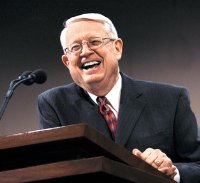
You Are NOT a NOBODY! By Chuck Swindoll

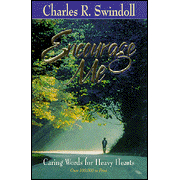
One of the realities that motivates me more than anything as I seek to teach, make disciples, counsel, coach, and live out the gospel is that those I invest in will surpass me for the purposes of Christ in this world. Here is an excellent article by Charles R. Swindoll that can be found in several books he’s written – this article is from his book Encourage Me. Zondervan: Grand Rapids, 1993. When you wonder whether history will be different because of your service for Christ, remember these words. You may have the next John Stott, R.C. Sproul, John Piper, Ann Graham Lotz, Kay Arthur, or Elizabeth Elliott in your Sunday school class, small group, or they may even be your neighbors! – Dr. David P. Craig

You are YOU. There is only one YOU. And YOU are important. Want to start feeling better? Really desire to dispel discouragement? I can say it all in three words” start being YOU.

Pull a sheet of scratch paper out of your memory bank and see how well you do with the following questions.

Who taught Martin Luther his theology and inspired his translation of the New Testament?

Who visited Dwight L. Moody at a shoe store and spoke to him about Christ?

Who worked alongside and encouraged Harry Ironside as his associate pastor?

Who was the wife of Charles Haddon Spurgeon?

Who was the elderly woman who prayed faithfully for Billy Graham for over twenty years?

Who financed William Carey’s ministry in India?

Who refreshed the apostle Paul in that Roman dungeon as he wrote his last letter to Timothy?

Who helped Charles Wesley to get underway as a composer of hymns?

Who found the Dead Sea Scrolls?

Who personally taught G. Campbell Morgan, the peerless expositor,” his techniques in the pulpit?

Who followed Hudson Taylor and gave the China Inland Mission its remarkable vision and direction?

Who discipled George Muller and snatched him as a young man from a sinful lifestyle?

Who were the parents of the godly and gifted prophet Daniel?

Okay, how did you do? Over fifty percent? Maybe twenty-five percent? Not quite that good? Before you excuse your inability to answer the questions by calling the quiz “trivia,” better stop and think. Had it not been for those unknown people—those “nobodies”—a huge chunk of church history would be missing. And a lot of lives would have been untouched.

Nobodies.

What a necessary band of men and women…servants of the King…yet nameless in the kingdom! Men and women who, with silent heroism, yet faithful diligence, relinquish the limelight and live in the shade of public figures.

What was it Jim Elliot, the martyred messenger of the gospel to the Aucas, once called missionaries? Something like a bunch of nobodies trying to exalt Somebody. But don’t mistake anonymous for unnecessary. Otherwise, the whole Body gets crippled…even paralyzed…or, at best, terribly dizzy as the majority of the members within the Body become diseased with self-pity and discouragement. Face it, friend, the Head of the Body calls the shots. It is His prerogative to publicize some and hide others. Don’t ask me why He chooses who He chooses.

If it’s His desire to use you as a Melanchthon rather than a Luther…or a Kimball rather than a Moody…or an Onesiphores rather than a Paul…or a Hoste rather than a Taylor, relax!

Better than that, give God praise! You’re among that elite group mentioned in 1 Corinthians 12 as:

…some of the parts that seem weakest and least important are really the most necessary…so God has put the body together in such a way that extra honor and care are given to those parts that might otherwise seem less important (vv.22, 24, TLB).

If it weren’t for the heroic “nobodies,” we wouldn’t have top-notch officers to give a church its leadership. Or quality sound when everyone shows up to worship. Or janitors who clean when everyone is long gone. Or communities to provided dozens of services beyond the scenes. Of mission volunteers who staff offices as home or work in obscurity

overseas with only a handful of people.

Nobodies…exalting Somebody.

Are you one? Listen to me! It’s the “nobodies” Somebody chooses so carefully. And when He has selected you for that role, He does not consider you a nobody.

Be encouraged!

“For God is not unjust so as to overlook your work and the love that you have shown for his name in serving the saints, as you still do” (Hebrews 6:10).

About the Author: Dr. Charles R. Swindoll is senior pastor of Stonebriar Community Church, chancellor of Dallas Theological Seminary, and the Bible teacher on the internationally syndicated radio program Insight for Living. He has written more than thirty best-selling books, including STRENGTHENING YOUR GRIP, IMPROVING YOUR SERVE, THE CHRISTIAN LIFE, COME BEFORE WINTER, GROWING STRONG IN THE SEASONS OF LIFE, STRESS FRACTURES, HOPE AGAIN,  LAUGH AGAIN, THE GRACE AWAKENING, the million-selling GREAT LIVES FROM GOD’S WORD series; and his newest offering SAYING IT WELL. Chuck and his wife, Cynthia, live in Frisco, Texas.

Are You Waiting For The Lord?

I don’t know that there is anything more difficult than being blind or in the dark about what God is doing in your life. What I do know is that God is sovereign and is working behind the scenes always working to bring about His purposes for the glory of Christ. One of my favorite Bible teachers is Warren Wiersbe – here is a helpful devotional on the subject of waiting on God based on Psalm 40:1-3 from his wonderful devotional book on the Psalms called Prayer, Praise & Promises: A Daily Walk Through the Psalms. Grand Rapids: Baker, reprinted 2011. – Dr. David P. Craig

“I waited patiently for the LORD; He inclined to me and heard my cry.He drew me up from the pit of destruction, out of the miry bog, and set my feet upon a rock, making my steps secure. He put a new song in my mouth, a song of praise to our God. Many will see and fear,and put their trust in the LORD.” – Psalm 40:1-3 (ESV)

“From Mire To Choir”

 By Warren W. Wiersbe

When we wait for the Lord and wait on Him, we aren’t being idle. In this Psalm David cries out to the Lord and asks for help. He drew me up from the pit of destruction,

out of the miry bog, and set my feet upon a rock, making my steps secure” (v.2). Waiting on the Lord is worthwhile because of what He is going to do for us. It is not idleness, nor is it carelessness. And certainly isn’t complacency. Instead, waiting is that divine activity of expecting God to work. And He never disappoints us.

Figuratively, David had been down in a horrible pit. He was sinking in the mire. But he waited on the Lord. And God not only pulled him out of the pit, but He put him on a rock and established his footing. He said, “David, I’m going to take you out of the mire and put you in the choir.” “He put a new song in my mouth, a song of praise to our God” (v.3).

Are you waiting on the Lord? Are you praying about something and asking, “O God, when are You going to do this? When are You going to work?” Remember, one of these days your praying will turn to singing. Your sinking will turn to standing. Your fear will turn security as He puts you on the rock. Just wait on the Lord. He’s patient with you. Why not be patient with Him and let Him work in His time?

Waiting for the Lord’s help sometimes forces you to your limits. But take comfort in knowing that while you wait on Him, God is working out His purposes in your life. Are you in a difficult situation, waiting for God to do something? Leave your burden with the Lord and trust Him to act. He never disappoints you when wait on Him.

About the Author: Warren W. Wiersbe is the Distinguished Professor of Preaching at Grand Rapids Baptist Seminary, Warren Wiersbe is the author of more than 100 books. Billy Graham calls him “one of the greatest Bible expositors of our generation.” Some of Wiersbe’s recent books include Your Next MiracleThe 20 Essential Qualities of a Child of GodThe Bumps are What You Climb OnClassic Sermons on the Fruit of the SpiritClassic Sermons on Jesus the ShepherdKey Words of the Christian LifeLonely PeopleA Gallery of GraceReal Peace: Freedom and Conscience in the Christian Life, and On Being a Leader for God.

Tim Keller: 5 Practical Habits To Keep Your Ministry Strong

Tim Keller in my humble opinion is the finest communicator of the gospel today. He has the ability to preach and teach at a deep theological and practical level at the same time. I especially appreciate his ability to lead you to worshipping Jesus whether he is preaching form the Old or the New Testaments. He is also extremely effective at reaching postmodern lost people with the Gospel of Jesus Christ – without watering it down. So whenever Tim talks – I listen! – Dr. David P. Craig

Tim Keller recently spoke at the City-to-City Conference in New York on the difference between ‘inner power’ that which flows out of our relationship with the Lord and ‘external power’ that which comes from position, status or prestige. Focusing on ‘external power’ is deadly, but ‘inner power’ brings life and vitality to you and your ministry.

Here are Tim’s 5 practical habits we have to work at, plan for, and be disciplined at in order to have an inner source of power (through the vehicle of the Holy Spirit) to live out and proclaim the Gospel of Jesus Christ:

(1) Private Devotions – Regular and consistent; morning  (40 minutes), lunch-time (5 minutes – recap), evening (40 minutes), bed-time (prays with his wife Kathy)

(2) Spiritual Friendship – Christian brothers & sisters who encourage you and hold you accountable through intimate friendship. Who have you given the right to do that?

(3) Right kind of Pastoral Counseling – Regular evangelism, discipleship, helping others, and some form of serving.

(4) Study & Reading – You’ve got to read your head off! You can’t preach Christ from Genesis to Revelation like Tim does unless you know your Bible inside and out!

(5) Corporate Worship – Do you really worship in your services or are you merely the producer and director?

DR. TIMOTHY KELLER was born and raised in Pennsylvania, and educated at Bucknell University, Gordon-Conwell Theological Seminary, and Westminster Theological Seminary. He was first a pastor in Hopewell, Virginia. In 1989 he started Redeemer Presbyterian Church in Manhattan with his wife, Kathy, and their three sons. Today, Redeemer has more than five thousand regular attendees at five services, a host of daughter churches, and is planting churches in large cities throughout the world. He is the author of King’s Cross (on the Gospel of Mark), Counterfeit God’s, The Prodigal God (on Luke 15), and the New York Times bestseller The Reason for God & the forthcoming Center Church (August 2012).

Wisdom on Bible Study and Biblical Peaching From John R.W. Stott

An Interview With John Stott and Albert Mohler on Preaching Today

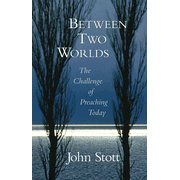
John R.W. Stott was arguably one of the most able preachers of the late 2oth into the 21st century until his death in July of 2011. Here is a very good interview with the President of Southern Baptist Seminary – Dr. Albert Mohler (an excellent preacher in his own right) and John Stott. A lot of the material in this interview can be gleaned from Stott’s classic text book on preaching enitled “Between Tow World’s.” Though this interview took place over twenty years ago – it doesn’t change the wisdom herein contained for preachers, and those who love to study, hear, and seek to obey God’s Word – great stuff from Stott and Mohler – enjoy! – Dr. David P. Craig

“Between Two Worlds”

[Albert Mohler: In honor of John Stott (who passed away on July 11, 2011 and would have been 91 on this day – April 27, 2012), I here republish an interview I conducted with the great preacher in 1987. The interview was first published in Preaching magazine, for which I was then Associate Editor.]

John R. W. Stott has emerged in the last half of the twentieth century as one of the leading evangelical preachers in the world. His ministry has spanned decades and continents, combining his missionary zeal with the timeless message of the Gospel.

For many years the Rector of All Souls Church, Langham Place, in London, Stott is also the founder and director of the London Institute for Contemporary Christianity. His preaching ministry stands as a model of the effective communication of biblical truth to secular men and women.

The author of several worthy books, Stott is perhaps best known in the United States through his involvement with the URBANA conferences. His voice and pen have been among the most determinative forces in the development of the contemporary evangelical movement in the Church of England and throughout the world.

Preaching Associate Editor R. Albert Mohler interviewed Stott during one of the British preacher’s frequent visits to the United States.

Mohler: You have staked your ministry on biblical preaching and have established a world-wide reputation for the effective communication of the gospel. How do you define ‘biblical preaching’?

Stott: I believe that to preach or to expound the scripture is to open up the inspired text with such faithfulness and sensitivity that God’s voice is heard and His people obey Him. I gave that definition at the Congress on Biblical Exposition and I stand by it, but let me expand a moment.

My definition deliberately includes several implications concerning the scripture. First, it is a uniquely inspired text. Second, the scripture must be opened up. It comes to us partially closed, with problems which must be opened up.

Beyond this, we must expound it with faithfulness and sensitivity. Faithfulness relates to the scripture itself. Sensitivity relates to the modern world. The preacher must give careful attention to both.

We must always be faithful to the text, and yet ever sensitive to the modern world and its concerns and needs. When this happens the preacher can come with two expectations. First, that God’s voice is heard because He speaks through what He has spoken. Second, that His people will obey Him – that they will respond to His Word as it is preached.

Mohler: You obviously have a very high regard for preaching. In Between Two Worlds you wrote extensively of the glory of preaching, even going so far as to suggest that “preaching is indispensable to Christianity.”

We are now coming out of an era in which preaching was thought less and less relevant to the church and its world. Even in those days you were outspoken in your affirmation of the preaching event and its centrality. Has your mind changed?

Stott: To the contrary! I still believe that preaching is the key to the renewal of the church. I am an impenitent believer in the power of preaching.

I know all the arguments against it: that the television age has rendered it useless; that we are a spectator generation; that people are bored with the spoken word, disenchanted with any communication by spoken words alone. All these things are said these days.

Nevertheless, when a man of God stands before the people of God with the Word of God in his hand and the Spirit of God in his heart, you have a unique opportunity for communication.

I fully agree with Martyn Lloyd-Jones that the decadent periods in the history of the church have always been those periods marked by preaching in decline. That is a negative statement. The positive counterpart is that churches grow to maturity when the Word of God is faithfully and sensitively expounded to them.

If it is true that a human being cannot live by bread only, but by every word which proceeds out of the mouth of God, then it also is true of churches. Churches live, grow, and thrive in response to the Word of God. I have seen congregations come alive by the faithful and systematic unfolding of the Word of God.

The Text Means What the Author Meant

Mohler: You have pictured the great challenge of preaching as creating a bridge between two worlds – the world of the biblical text and the world of the contemporary hearer. That chasm seems ever more imposing in the modern world. How can the preacher really bridge that chasm?

Stott: Any bridge, if it is to be effective, must be firmly grounded on both sides of the canyon. To build a bridge between the modern world and the biblical world we must first be careful students of both. We must be ever engaged in careful biblical exegesis, conscientiously and continually, and yet also involved in careful study of the contemporary context. Only this will allow us to relate one to the other.

I find it helpful in my own study to ask two questions of the text – and in the right order. First, “What does it mean?” and second, “What does it say?”

The answer to the first is determined by the original author. I am fond of citing E. D. Hirsch in his book Validity in Interpretation, when he wrote: “The text means what its author meant.”

That is my major quarrel with the existentialists, who say that the text means what it means to me – the reader – independent of what the author meant. We must say “no” to that. A text means primarily what its author meant. It is the author who establishes the meaning of the text.

Beyond that, we must accept the discipline of grammatical and historical exegesis, of thinking ourselves back into the historical, geographical, cultural, and social situation in which the author was writing. We must do this to understand what the text means. It cannot be neglected.

The second question moves us from the original meaning of the text to its contemporary message – “What does it say?” If we ask the first question without asking the second, we lapse into antiquarianism, unrelated to modern reality.

On the other hand, if we leap to the second question, “What does it say today?,” we lapse into existentialism, unrelated to the reality of biblical revelation. We have to relate the past revelation of God to the present reality of the modern world.

Mohler: That requires a double exegesis – an exegesis of the text and also an exegesis of life. Is it your opinion that most evangelicals are better exegetes of the text than they are of life?

Stott: Oh, I am sure of it. I am myself and always have been a better student of scripture than of the present reality. We love the Bible, read it and study it, and all of our preaching comes out of the Bible. Very often it does not land on the other side of that chasm, it is never earthed in reality.

The attractiveness of liberal or radical preaching, whatever it is called these days, is that it tends to be done by genuinely modern people who live in the modern world, understand it, and relate to it. But their message often does not come from the Bible. Their message is never rooted in the textual side of the chasm. We must combine the two relevant questions.

Mohler: Most of us think of ourselves as modern persons, and yet we may lack a suitable hermeneutic of the contemporary. What have you found to be helpful as you seek to be a better student of the contemporary world?

Stott: I mentioned in Between Two Worlds how very helpful I found involvement in a reading group I founded about fifteen years ago. They are graduates and professional people – doctors, an architect, an attorney, teachers and so on. All are committed to Christ and the Scripture and yet anxious to be modern and contemporary people. We meet every month or so when I am in London.

We decide to read a particular book, or see a particular play or exhibition, and spend the evening discussing it. We give most attention to books. We go around the circle and give our immediate impression before eventually turning and asking “Now, what has the Gospel to say to this?” I have found it enormously helpful to be forced to think biblically about modern issues.

Mohler: So you would point biblical preachers not only to the biblical text, but to a very wide reading?

Stott: Absolutely. I think wide reading is essential. We need to listen to modern men and women and read what they are writing. We need to go to the movies, to watch television, to go to the theater. The modern screen and stage are mirrors of the modern world. I seldom go on my own. I go with friends committed to the same kind of careful understanding.

Mohler: You have made it clear that you see preaching as a glorious calling and vocation. What do you see as the greatest contemporary need in preaching? Where is biblical preaching falling tragically short?

Stott: Well, in the more liberal churches, it falls woefully short of being fully biblical. Amongst the evangelical churches it falls short by being less than fully contemporary. I can only repeat the great need of struggling to understand the issues of the modern world. Nevertheless, there is a tremendous correlation between the issues of the biblical world and the modern world.

People are actively seeking the very answers Jesus provides. People are asking the very questions Jesus can answer, if only we understand the questions the world is asking.

I Began with a Very Strong Commitment to Scripture

Mohler: Your service over many years at All Souls Church in London had a tremendous impact throughout much of the world. There, in the midst of London’s busiest retail area, you presented the gospel with great effectiveness and power. Did your preaching change at all during your ministry at All Souls?

Stott: I began with a very strong commitment to Scripture, a very high view of its authority and inspiration. I have always loved the Word of God – ever since I was converted. Therefore, I have always sought to exercise an expository or exegetical ministry.

In my early days I used to think that my business was to expound and exegete the text; I am afraid I left the application to the Holy Spirit. It is amazing how you can conceal your laziness with a little pious phraseology! The Holy Spirit certainly can and does apply the Word for the people. But it is wrong to deny our own responsibility in the application of the Word.

All great preachers understand this. They focus on the conclusion, on the application of the text. This is what the Puritans called “preaching through to the heart.” This is how my own preaching has changed. I have learned to add application to exposition – and this is the bridge-building across the chasm.

Mohler: You have recently published a major volume on the cross [The Cross of Christ, InterVarsity Press, 1986]. This has always been central to your preaching – and all genuinely Christian preaching. Do you perceive an inadequate focus on the cross in the pulpit today?

Stott: Indeed, so far as I can see, it is inadequate. I think we need to get back to the fact that the cross is the center of biblical Christianity. We must not allow those on the one hand to put the incarnation as primary, nor can we allow those on the other hand to put the primary focus on the resurrection.

Of course, the cross, the incarnation, and the resurrection belong together. There could have been no atonement without the incarnation or without the resurrection. The incarnation prepares for the atonement and the resurrection endorses the atonement, so they belong always together.

Yet the New Testament is very clear that the cross stands at the center. It worries me that some evangelicals do not focus on Christ crucified as the center. Of course, we preach the whole of biblical religion, but with the cross as central.

One of the surprises which came as a product of the research for the book was the discovery that most books on the cross focus only on the atonement. There is much the New Testament has to say about the cross which is not focused on the atonement.

We are told, for example, to take up our cross and follow Christ. Communion is a cross-centered festival. There is the whole question of balance in the modern world. The problems of suffering and self-image are addressed by the cross. These issues appear quite differently when our world-view is dominated by the cross.

We Belong in a Study, Not an Office

Mohler: You are probably as well known in America as in England. Furthermore, you know America – its churches and its preachers. What would be your word to the Servants of the Word on this side of the Atlantic?

Stott: I think my main word to American preachers is, as Stephen Olford has often said, that we belong in a study, not in an office. The symbol of our ministry is a Bible – not a telephone. We are ministers of the Word, not administrators, and we need to relearn the question of priority in every generation.

The Apostles were in danger of being diverted from the ministry to which they had been called by Jesus – the ministry of Word and prayer. They were almost diverted into a social ministry for squabbling widows.

Now both are important, and both are ministries, but the Apostles had been called to the ministry of the Word and not the ministry of tables. They had to delegate the ministry of the tables to other servants. We are not Apostles, but there is the work of teaching that has come to us in the unfolding of the apostolic message of the New Testament. This is our priority as pastors and preachers.

Jesus preached to the crowds, to the group, and to the individual. He had the masses, the disciples, and individuals coming to Him. He preached to crowds, taught the disciples, and counseled individuals. We must also have this focus. It is all in the ministry of the Word.

Adapted from R. Albert Mohler Jr.’s weblog at www.albertmohler.com.

R. Albert Mohler, Jr. is president of The Southern Baptist Theological Seminary in Louisville, Kentucky. For more articles and resources by Dr. Mohler, and for information on The Albert Mohler Program, a daily national radio program broadcast on the Salem Radio Network, go to www.albertmohler.com. For information on The Southern Baptist Theological Seminary, go to www.sbts.edu. Send feedback to mail@albertmohler.com. Original Source: www.albertmohler.com.