God’s Sovereignty in Our Suffering

365010.jpg

*Sovereignty, Suffering, and Open Theism

By Thomas R. Schreiner

Intense suffering provokes questions about God’s sovereignty and love. When we suffer deeply, we ask the question, “Why?” Why does God allow such pain in the lives of his children, and why is the world wracked with so much misery? Christians have asked these questions for centuries, and philosophers and theologians have reflected on these matters, attempting to provide answers to what is often called “the problem of evil.” I do not want to minimize in the least the importance of such answers, and some of our contributors in this issue help us in this regard. At the outset, however, I do want to point to the crucified Christ. Whatever solution we suggest for the problem of evil (and thinking rightly on this matter is of vital importance), we need to remind ourselves that we worship one who suffered, died, and was buried. We do not know a Savior who is untouched by human misery, who gazes at us from afar and did not share our plight. We worship one who shared our infirmities and weakness (though he was without sin), so that he sympathizes “with our weaknesses” and our temptations (Heb 4:15). He voluntarily took our sin and suffering upon himself, so that we can be free from sin and suffering in the world to come. The crucifixion of God’s Christ demonstrates to us God’s love and mercy in a suffering world.

James Montgomery Boice, who was once the pastor of Tenth Presbyterian Church in Philadelphia, Pennsylvania, when diagnosed with liver cancer (and who died within a few months of his diagnosis) reminded the congregation of God’s sovereignty in the situation, rejecting the idea that God was not in control. But he said that what struck him even more powerfully is the goodness of God. God is sovereign and he loves us. God is in control and he has a tender and ardent love for his children.

Christians have always taught that God foresees what his people will suffer, and that he is sovereign over this world. Recently, however, “open theism” has called this truth into question. Open theists argue that God does not and cannot know the future free will decisions of human beings. If he did, they claim, then human beings would not be truly free. In their view, human beings cannot be free if God knows in advance what we will choose to do. They see another advantage in their paradigm, namely, God is not responsible for the suffering we experience, for he did not know or ordain that it would occur. It is fair to say that open theists think that one of the great advantages of this new paradigm is that it solves the problem of evil.

Some of our readers, perhaps, have not even heard of open theism. If so, they might be surprised to learn that “evangelical” scholars are promulgating it and urging its acceptance. Remarkably enough, even Christianity Today in an editorial (“God vs. God,” Christianity Today, February 7, 2000, 34-35) urged both open theists and their traditional evangelical opponents to study the scriptures carefully before criticizing the other side. What is astonishing about this is not that Christianity Today urged both sides to study the Bible. We all, of course, agree with that injunction. What is surprising is that the editorial begins by speaking very negatively of the classical view of God (ironically quoting Pascal, who had a very strong view of divine sovereignty as a Jansenist!) and a very positive estimation of the benefits of open theism. Indeed, despite some closing words about the importance of church history, we are given the impression that both open theism and classical theology are equally plausible. The bulk of the editorial is written as if there were no context for such a study, as if we do not already have twenty centuries of careful Christian reflection upon the scriptures, as if Christians have not studied issues pertaining to the very questions posed for centuries. It is instructive that no branch of Christendom, whether Roman Catholic, Orthodox, or Protestant, has ever embraced open theism.

This is not to say that we have arrived theologically, that everything the church has agreed on historically is true, or that every new idea should be jettisoned from the outset. But a responsible editorial on the matter should say that the burden of proof is strongly against a theological position that has been rejected for all of church history by every segment of the Christian church. The Reformers believed that the scriptures were the final authority, but they often cited church fathers to demonstrate that their theology was not wholly new. When I read an editorial like this, I wonder if some segments of evangelical Christianity are rootless, lacking any sense of the teaching of the church through the ages. We should study our Bibles, realizing that our ancestors were imperfect and may need correction. And yet we do not dismiss lightly the wisdom of those who preceded us, lest we be guilty of what C. S. Lewis called “chronological snobbery.”

Some openness theologians claim to be radical biblical literalists, contending that traditional evangelicals have failed to interpret the scriptures in accord with its most likely meaning. Hence, open theists insist that when scripture says, “God repents,” the text means exactly what it says. God really and truly changes his mind. This claim should be examined seriously since we are summoned to review our hermeneutical approach. The biblical strength of their view, however, is exaggerated. The hermeneutical method of open theists would be more convincing if they were consistent. Open theists should argue, if they were consistent, that God does not know the present either. After all, God asks Adam, “Where are you?” (Gen 3:8). A radical biblical literalist would say, “God must not know where Adam is since he asks the question.” Further, the Lord had to go down to Sodom and Gomorrah to know what was happening in those cities according to Genesis 18:20-21. As radical biblical literalists, open theists should say God did not know the present state of affairs in Sodom and Gomorrah since he needed to travel there to discover what was going on. If they respond by saying, “Many other verses teach us that God is omniscient and that he knows the present perfectly,” then I reply, “That is the same answer we give to the verses they cited to prove that God does not know the future.” I conclude, therefore, that the Christianity Today editorial is wrong on another score. The biblical support for open theism is not remarkably strong. On the contrary, they can only advance their cause by being hermeneutically inconsistent. We do not need to begin at ground zero to determine the plausibility of this new hypothesis. Nevertheless, the debate will continue. I am confident that forthcoming work, such as Bruce Ware’s anticipated book on the topic from Crossway, will demonstrate that open theism’s hermeneutic, biblical exegesis, and theology are faulty.

Why is this new movement dangerous and harmful? It is pernicious precisely because it removes the sovereignty of God from suffering. We may not understand why we are suffering, and we know that the pain in this world is staggering. Nonetheless, we do not surrender what the scriptures teach. Our God is good and he is sovereign. Our God cares and he is in control. Our God loves and he reigns. Our Father works everything for good to those who love him and who are called according to his gracious purpose (Rom 8:28). The judge of all the earth always does what is right (Gen 18:25). Our trust in him and love for him will not be increased if we surrender his lordship and kingship. Such an option may be tempting to some, but it is unbiblical and pastorally irresponsible.

About the author: Dr. Thomas R. Schreiner is the James Harrison Professor of New Testament Interpretation at the Southern Baptist Theological Seminary. He holds an MDiv and ThM from Western Conservative Baptist Seminary and a PhD from Fuller Theological Seminary. He has published a number of articles and book reviews in scholarly journals, as well as many great books.

Last Hour: An Israeli Insider Looks At The End Times by Amir Tsarfati 

71VZ99-EriL._AC_UY436_QL65_ML3_.jpg

Fascinating Israeli Perspective on the End Times 

Book Reviewed by Dr. David P. Craig

This book is a good introduction to how the Bible culminates prophetically with a special emphasis on doctrines on the Rapture; God’s plan for Israel; and Armageddon and the last battle according to Ezekiel Chapters 36-39.

Amir Tsafarti has some fascinating takes on the key players of the last days and has some good insights of what is transpiring concurrently on the prophetic calendar in the Middle East and in Europe. Without using the theological terms – he is staunchly pre-millennial and pre-tribulational and defends this position throughout the book. In other words, he believes that the church (all believers in Jesus) will be raptured before the Tribulation period and that after the duration of seven years the church will return with Christ to reign for a literal thousand years before the final rebellion known as Armageddon.

I think Amir is especially insightful in talking about some key players in the end times: Israel, Russia, Iran, Damascus, Iran, Saudi Arabia, and others. He also makes a good case for the Antichrist coming from Europe. At several points in the book he makes an excellent case for God’s plan for Israel as distinct from the Church – especially with reference to their land promises from the Old Testament. Tsafarti writes, “How the Church treats Israel is a litmus test of its temperature, readiness and doctrine. A rejected Israel reveals a sick Church. You cannot love God and hate that which God loves, you will end up loving that which God hates.”

I recommend this book to anyone who is interested in biblical prophecy. It’s especially written for beginners. What makes this book unique is his grasp of Middle East and European current events in relationship to the Bible from an Israeli perspective. 

An Encouraging Sermon by John Piper on Today’s Mercies for Today’s Troubles

61P45+ToLrL._BG245,245,245_US500_SCLZZZZZZZZ_.jpg

“Today’s Mercies for Today’s Troubles; Tomorrow’s Mercies for Tomorrow’s Troubles.”

A Sermon By Dr. John Piper

“Therefore do not be anxious about tomorrow, for tomorrow will be anxious for itself. Sufficient for the day is its own trouble.” ~ Matthew 6:34

“The steadfast love of the LORD never ceases; his mercies never come to an end; they are new every morning; great is your faithfulness.” ~ Lamentations 3:22-23

Sometimes I have reinforced a sermon by following it up with a STAR article (The STAR is Bethlehem Baptist’s weekly newsletter). Today I want to reinforce a STAR article with a following sermon. The STAR article last week was called, “Today’s Mercies for Today’s Troubles; Tomorrow’s Mercies for Tomorrow’s Troubles.” There were several points. One was this: 

(1) Every day God appoints a measure of pleasure and pain for that day—like the old Swedish hymn says:

He whose heart is kind beyond all measure,

Gives unto each day what he deems best—

Lovingly, its part of pain and pleasure,

Mingling toil with peace and rest.

Kind beyond all measure, the Lord gives pain and pleasure to each day as he deems best. We don’t always agree enthusiastically with what God deems best for us. It is hard for us to feel that he is kind beyond all measure when he gives us pain. Causing pain is not generally equated with showing kindness, especially if God’s measure for one day is a lot more than another day. But it’s true, as we will see more fully in a moment. God gives each day his wise and loving measure of pain and pleasure. That was the first point of the STAR article.

(2) The second was that there is fresh mercy from God for each day’s appointed pain. 

Today’s mercies are not designed to carry tomorrow’s burdens. There will be mercies tomorrow for that. Today’s mercies are for today’s burdens. But tomorrow? What about tomorrow? What will become of our children? Will they believe? Or will they forsake the way of righteousness? What will become of our health? Will we go blind or deaf or lose our memories? Who will take care of us? Will we spend the last 10 years of our lives out-living all our friends and family, abandoned, slumped over in a wheel chair at a rural nursing home? What will become of our marriages? Will we ever trust again? Will we laugh and play and pray and talk in peace? Will we be there for the children? Will we be there for each other? Will it be sad and strained and dissatisfying for 30 or 40 more years? What will it be like tomorrow and tomorrow and tomorrow? What will become of our church? What will tomorrow bring? Or Wednesday? Or next Sunday? Or a year from now? Or ten years from now? Will we be together? Will we be winning the lost, and standing for righteousness, and delivering the oppressed, and sending more and more missionaries to the unreached peoples, and resting in the care of 17 district elders, and worshiping with white-hot zeal for the glory and grace of our great God? What about tomorrow? Will we have the strength to live tomorrow when it comes? And to live it well and wisely and even joyfully, no matter what God’s measure of pain and pleasure?

The point of the STAR article was that the strength to live tomorrow will be given tomorrow, not today. And it will be given. Our task today is not to have the strength needed for tomorrow’s burdens. Our task today is to live by the mercies given for today, and to believe that there will be new mercies for tomorrow. Today’s mercies do not include strength for tomorrow; they include faith that tomorrow’s unseen mercies will be sufficient for tomorrow.

I can’t express how important I believe this is for the living of the Christian life—for children, for teenagers, for college students and young adults in the work world, for middle-aged people facing major life changes, for older people with tremendous uncertainties before them, for single people and married people. It’s important because of how natural and strong is the impulse in our hearts to want to feel sufficient today for tomorrow’s challenges. We don’t like it when the gauge reads “empty” at the end of the day, and we have to go to sleep— if we can—not feeling the power for tomorrow’s troubles.

The Christian’s Secret of Dealing with Trouble

There is a secret to the Christian life here that I want you to get a handle on. If you don’t—if you go on desperately needing to feel today the strength for tomorrow, then it seems to me that either you will cave in under the pressure of excessive anxieties, or you will find a worldly strategy for developing immense ego strength and persuade yourself that you really are sufficient for tomorrow’s troubles. Neither of those is God’s way. God’s way is summed up in two passages of scripture. One is Matthew 6:34, “Do not be anxious for tomorrow; for tomorrow will care for itself. Each day has enough trouble of its own.” (The other text is Lamentations 3:22-23. See below.)

Let me tell you what I think that text does not mean. It does not mean: Make no preparations for tomorrow’s needs. If you’re a farmer, the thought about tomorrow’s empty silos should cause you to sow your field with corn months before you need the corn. Almost everything that is worth doing requires some forethought, planning, and preparation. Jesus said, “Which of you desiring to build a tower does not first sit down and count the cost, whether he has enough to complete it?” (Luke 14:28). The point of Matthew 6:34 is not—don’t make wise preparations. The point is—don’t bring the troubles and uncertainties of carrying out those preparations tomorrow into today. “Each day has enough trouble of its own.”

What does Jesus mean by “enough”? Or as the old Authorized Version says, “Sufficient to the day is the evil thereof.” What does he mean by “sufficient”? He means that your sovereign heavenly Father, who is kind and wise beyond all measure, lov- ingly gives unto each day what he deems best, including both its pain and pleasure. Each day’s troubles are “enough”—they are “sufficient”—because God determines their limit. God decides what is enough and what is sufficient (cf. 1 Cor 10:13).

You can know some of the pressures that are coming tomorrow. And part of your job may be to make some preparations for them. Those preparations are part of today’s “sufficient” trouble. But how those preparations will turn out tomorrow, and whether you feel strong enough today to do your part tomorrow—that is not something God wants you to carry today. Those are tomorrow’s burdens. God does not give mercies today for bearing tomorrow’s burdens.

For example, we on the staff must now plan and design worship services ahead of time. It’s like the farmer: we know that if there is going to be a harvest of corporate worship on Sunday, there needs to be some plowing, sowing, and watering earlier in the week. That’s OK. Jesus wants us to do that.

But what about the questions that start to arise from the flesh: How will it go on Sunday? Will the people be there? Will God meet us? Will it be real and deep and earnest and life-changing and soul-winning and Christ-exalting? Will the people be disappointed? With these questions we can cross the line from faithful preparation to unfaithful anxiety. We cross over from dealing with today’s sufficient burden (preparation) and begin to borrow tomorrow’s troubles (how will it be received?). And that is spiritually very dangerous because today’s mercies are given by God for today’s burdens not tomorrow’s.

Or the danger can happen another way. Not only can we start to fret about how our preparations will turn out, but we can start to fret over whether we will have the resources to handle all the preparations after this. What about Palm Sunday and Maundy Thursday and Easter and then April and May and June and July and August? Will the spiritual resources be there? That too can be a crossing over the line between faithful planning and unfaithful anxiety. The strength to plan worship for July 10, will be given on July 5th and 6th. And probably not before.

Now where in scripture do I get this confidence that God not only gives the trouble to each day that is sufficient for that day, but also the mercies which are tailor-made to carry that day’s trouble? I get it from (among other places) Lamentations 3:22-23, “The Lord’s lovingkindnesses indeed never cease, for His compassions never fail. They are new every morning; great is Thy faithfulness.”

It’s the phrase “they are new every morning” that gives me this great confidence that each day’s mercies—each day’s kindnesses—are given specifically for that day. Ponder that with me. Let it sink in. “His mercies . . . are new every morning.”

Why are they new every morning? Why does God do it that way? It’s not because yesterday’s mercies were bad or weak. It’s because they were yesterday’s. Yesterday’s mercies were for yesterday’s burdens. Today’s mercies are for today’s burdens. They are new every morning. They are like the manna in the wilderness: you can’t keep it overnight. Enough comes for each day. You live on God day by day, or you don’t live on God.

The Swedish hymn gets it right again. The second verse says, “Every day the Lord himself is near me, With a special mercy for each hour.” A special mercy for each hour. The mercy to carry you through this hour is given in this hour. This truth will save your life again and again, if you grasp it and live it. Because how many times in life do we come to the end of our resources and say. “There isn’t anything in here anymore. I am depleted. One more straw and this camel’s back will break.” And we despair that tomorrow will just be rolled on to today’s depleted condition. And at that moment we desperately need this truth: God will not expect you to carry one more straw with these present mercies. When the next straw is added the mercies will be new.

So we must not compound today’s load with fretting over tomorrow’s. We must not doubt God and say, “I have no more strength; so tomorrow will be impossible to live.” That’s not true. You will not be asked to live tomorrow on today’s strength. What you need today is not tomorrow’s strength, but today’s faith that tomorrow’s mercies will be new and will be enough.

And there’s something different between the experience of faith for tomorrow’s power, and the actual experience of that power itself. Faith stands on the promise of God and waits and hopes in weakness and peace. And, of course, that waiting and hoping is part of today’s mercy. Part of today’s mercy is the ability to trust that there will be sufficient mercy for tomorrow. And we trust in that because God promises it in Lamentations 3:23 (cf. Phil 4:19; 2 Cor 9:8-11).

But in spite of all the peace that faith can bring about today, it is not yet tomorrow’s mercy or tomorrow’s power. There’s a difference. And that’s why there is such a battle that goes on. We want the feeling of adequacy today for what we will have to go through tomorrow. But God says, “Trust me. I will give it to you when you need it.”

Let me illustrate what I am saying by the following story. In 1931 a missionary named John Vinson was working in North China. An army of bandits swooped down on his village looting, burning, and killing. They took 150 Chinese and Vinson captive. When the government troops pursued, the bandits offered Vinson his freedom if he would write a letter to the commanding officer of the government troops asking him to withdraw.

Vinson said, “Will you let the Chinese prisoners go free?” “Certainly not” was the reply. “Then I refuse to go free,” he said. That night the bandits tried to flee, taking Vinson with them. Many bandits were killed, and many of the captives escaped. Vinson could not run because of a recent surgery. A little Chinese girl later reported that a bandit pointed a gun at Vinson’s head and said, “I’m going to kill you. Aren’t you afraid?”

Now at this point how do you feel? Are you projecting yourself into Vinson’s place? If so, do you feel rising within you the power to respond with great serenity and to die with peace? The point of what I have been saying is this: you don’t have to feel that right now. What God wants from you now as you sit there is not the strength to die that death. That is not today’s trouble for you. It may be tomorrow’s. What God calls you to now is not to have the power to do what Vinson did, but to have the trust in God that when your time comes he will give what you need.

Vinson looked up and said, “No, I am not afraid. If you kill me, I will go straight to God.” Which he did (This story is taken from The Elizabeth Elliot Newsletter, March/April 1994).

Today’s mercies for today’s troubles; tomorrow’s mercies for tomorrow’s troubles. “As your days so shall your strength be” (Deut 33:25). Don’t be anxious about tomorrow. The troubles and the mercies are appointed day by day.

*This sermon as well as all of John Piper’s sermons are available at desiringgod.org 

An Infectious Disease Doctor and Pastor Explains the Coronavirus

photo-1580458072512-96ced1f43991.jpeg

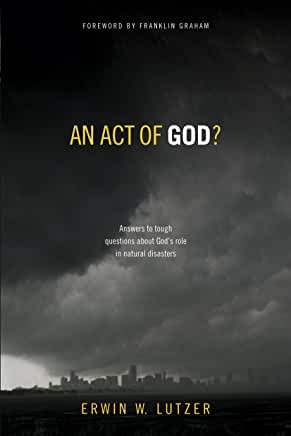
Is God Responsible for Natural Disasters?

81f8WUFFOeL._AC_UY436_QL65_ML3_.jpg

Why let the nations say, “Where is their God?” Our God is in the heavens, and he does as he wishes. ~ Psalm 115:2-3

BY *DR. ERWIN LUTZER

I’m told that after an earthquake in California a group of ministers met for a prayer breakfast. As they discussed impassable expressways and ruined buildings, they agreed that God had very little to do with the disaster. They concluded that since the earth is under the Curse from Creation, earthquakes and other natural disasters simply happen according to laws of nature. But even after they made that conclusion, one of the ministers closed in prayer, thanking God for the timing of the earthquake that came at five o’clock in the morning when there were fewer people out on the roads.

So did God have anything to do with that earthquake or didn’t He? How can a person conclude that God is not involved and then thank Him for His involvement? It can’t be both ways.

Hurricanes, tornadoes, tsunamis, earthquakes. Our earth is not immune to disasters. So how does God fit in? Intuitively, people know God is in charge. When tragedy strikes, people call out to Him. We know that when something is outside of our control, we need to call upon a higher power for help. But if people intuitively know that God is in charge, how do we explain the heart-wrenching suffering that accompanies such disasters?

Who Is Responsible?

There’s no doubt about it—natural disasters aren’t very good for God’s reputation. As a result, many Christians try to absolve Him of any and all responsibility for these horrific events. They want to “get Him off the hook” in order to help Him maintain His loving image. Some do this by saying that God is weak—He can’t really stop these disasters from happening, but He will work really hard to bring something good out of them. Others try to give the devil all the blame, saying God is not involved at all in any of the bad things that happen—He’s just a bystander.

Is God Weak?

Let’s begin with people who try to protect God’s reputation by claiming that He is unable to prevent our planet from getting pounded by one calamity after another. These folks fear that if we say God is responsible for natural disasters or that He allows them because of a higher purpose, we will drive people away from the Christian faith. “Why would people want to come to a God who would do such horrible things?” they ask. When we glibly say that “God will bring good out of it” or that “in the end we win,” it does little to comfort those who have lost loved ones or possessions in a disaster.

I agree that glib statements about suffering being part of God’s plan will not immediately comfort the grieving. In fact, it probably is true that giving such answers without any compassion or understanding could indeed drive people away from God rather than toward Him. As Christians, we do need to be very careful what we say to those who are grieving from great loss. Sometimes it is best to remain silent, not pretending that we have the right to speak on God’s behalf, but to act benevolently on His behalf instead. I will talk more about this later in this chapter.

To take the approach that God is weak, unable to handle the forces of nature, is to believe that God is finite. If it is true that God is not all-powerful and must deal with natural disasters as best as He can after they happen, how can a God like that be trusted? If God is helpless in the face of a hurricane, how confident can we be that He can one day subdue all evil? To believe that God is finite might get Him off the hook for natural disasters, but it also puts end-time victories in jeopardy. The Bible does not describe a weak God, however. In fact, just the opposite. God is omnipotent—all-powerful. Consider just a sampling of Scripture that focuses on God’s power over His creation:

“In the beginning God created the heavens and the earth.” ~ Genesis 1:1

“You formed the mountains by your power and armed yourself with mighty strength. You quieted the raging oceans with their pounding waves and silenced the shouting of the nations.” ~ Psalm 65:6-7

“The heavens are yours, and the earth is yours; everything in the world is yours—you created it all. You created north and south. Mount Tabor and Mount Hermon praise your name. Powerful is your arm! Strong is your hand! Your right hand is lifted high in glorious strength.” ~ Psalm 89:11-13

“Look up into the heavens. Who created all the stars? He brings them out like an army, one after another, calling each by its name. Because of his great power and incomparable strength, not a single one is missing.” ~ Isaiah 40:26

[Jesus] got up and rebuked the wind and waves, and suddenly there was a great calm.” ~ Matthew 8:26

“For ever since the world was created, people have seen the earth and sky. Through everything God made, they can clearly see his invisible qualities—his eternal power and divine nature. So they have no excuse for not knowing God.” ~ Romans 1:20

It would be strange indeed if the God who created the world were unable to control it. To describe God as too weak to handle natural disasters doesn’t help God’s reputation, it doesn’t get Him off the hook, and it isn’t biblical. The answer to the question, “Is God weak?” is a resounding no! God is all-powerful and completely able to control nature.

 Are Disasters the Devil’s Fault?

The second way some Christians try to exempt God from involvement in natural disasters is to simply blame everything on the devil. God is not responsible for what happens, they say. He created the world and lets it run; nature is fallen, and Satan, who is the god of this world, wreaks havoc with the natural order.

Scripture clearly tells us that nature is under a curse just as people are: “The ground is cursed because of you. All your life you will struggle to scratch a living from it” (Genesis 3:17). It follows, then, that Satan might indeed be involved in natural disasters. We have an example of this in the book of Job, when God gave Satan the power to destroy Job’s children. Acting under God’s direction and within certain set limitations, Satan used lightning to kill the sheep and the servants and a powerful wind to kill all ten of Job’s children (Job 1). Clearly the devil takes great pleasure in causing havoc and destruction. Take a moment to look at the wretched life of the demon-possessed man before Jesus commanded the legion of demons to leave him. The Gospel of Luke describes him as homeless and naked, living in a cemetery, shrieking, breaking chains and shackles, completely alone, and without hope (Luke 8:26-29). This is a snapshot of Satan’s ultimate goal for living things. Here is proof, if proof is needed, that satanic powers might indeed be connected to the natural disasters that afflict our planet.

So if the devil is involved, does this mean that God is removed from Does He really have a “hands-off policy” when it comes to disasters? Does this absolve God of responsibility? Is it all the devil’s fault? Clearly the answer to all of these questions is no. God has not relegated calamities to His hapless archrival the devil without maintaining strict supervision and ultimate control of nature. No earthquake comes, no tornado rages, and no tsunami washes villages away but that God signs off on it.

But that conclusion creates its own set of questions…

So What Does It Mean That God Is in Control?

If God isn’t too weak to deal with His creation, and if we cannot put all the blame on Satan, then where does that leave us? It leaves us with the fact that God is all-powerful and in control—and that applies to natural disasters. We must think carefully at this point.

We must distinguish between the secondary cause of disastrous events and their ultimate cause. The secondary cause of the lightning and the wind that killed Job’s children was the power of Satan. But follow carefully: it was God who gave Satan the power to wreak the havoc. It was God who set the limits of what Satan could or could not do. In effect, God said, “Satan, you can go this far, no further. I’m setting the boundaries here.” That’s why Job, quite rightly, did not say that the death of his children was the devil’s doing. Instead, Job said, “The LORD gave me what I had, and the LORD has taken it away. Praise the name of the LORD!” (Job 1:21).

Scientifically speaking, we know that the secondary cause of an earthquake is due to a fault beneath the earth’s crust; the top of the earth’s crust moves in one direction while the levels under the earth’s crust gradually move in the opposite direction. The secondary causes of a tornado are unstable atmospheric conditions combined with warm, moist air. The secondary cause of a hurricane is a large air mass heated and fueled by the warmth of the ocean. All of these weather patterns might or might not receive their momentum from Satan, yet we can be sure that the ultimate cause of these events is God. He rules through intermediate causes and at times by direct intervention, but either way, He is in charge. After all, He is the Creator, the Sustainer, of all things. We sing with Isaac Watts,

There’s not a plant or flower below,

But makes Thy glories known;

And clouds arise, and tempests blow,

By order from Thy throne.

So what does it mean for us that God is in control, even when natural disasters occur? How do we begin to process this?

First, many theologians who agree that God is in charge of nature emphasize that God does not decree natural disasters but only permits them to happen. Understanding the difference between these words is helpful, especially since in the book of Job God permitted Satan to bring about disasters to test Job. However, keep in mind that the God who permits natural disasters to happen could choose to not permit them to happen. In the very act of allowing them, He demonstrates that they fall within the boundaries of His providence and will. The devil is not allowed to act beyond the boundaries God sets.

Second—and this is important—God is sometimes pictured as being in control of nature even without secondary or natural causes. When the disciples were at their wits’ end, expecting to drown in a stormy sea, Christ woke up from a nap and said to the waves, “Silence! Be still!” The effect was immediate: “Suddenly the wind stopped, and there was a great calm” (Mark 4:39). Christ could have spoken similar words to the tidal wave in Papua New Guinea or the rain that triggered the mudslides in Venezuela, and they would have obeyed Him. At the word of Christ, the tsunami in Southeast Asia would have ended before it hit the coastlines. Notice how the Scriptures credit tidal waves and tsunamis to God: “The LORD’s home reaches up to the heavens, while its foundation is on the earth. He draws up water from the oceans and pours it down as rain on the land. The LORD is his name!” (Amos 9:6).

Third, if the heavens declare the glory of God, if it is true that the Lord reveals His character through the positive side of nature, doesn’t it make sense that the calamities of nature also reveal something about Him too? If nature is to give us a balanced picture of God, we must see His judgment, too. “The LORD does whatever pleases him throughout all heaven and earth, and on the seas and in their depths. He causes the clouds to rise over the whole earth. He sends the lightning with the rain and releases the wind from his storehouses” (Psalm 135:6-7).

God’s Signature

After the tsunami in Southeast Asia, a supposed Christian cleric was asked whether God had anything to do with the disaster. “No,” he replied. “The question as to why it happened demands a geological answer, not a theological answer.” Is he reading the same Bible I am? Or has he read the Bible and simply chosen not to believe it?

Who sent the Flood during the time of Noah? God said, “I am about to cover the earth with a flood that will destroy every living thing that breathes. Everything on earth will die” (Genesis 6:17). God determined the timing, the duration, and the intensity of the rain. And it happened according to His word. It would have been difficult to convince Noah that God had nothing to do with the weather, that all He could do was weep when the Flood came.

Who sent the plagues on Egypt? Who caused the sun to stand still so that Joshua could win a battle? Who first sealed the heavens and then brought rain in response to Elijah’s prayer? Who sent the earthquake when the sons of Korah rebelled against Moses? This event recorded in the Bible is of special interest:

[Moses] had hardly finished speaking the words when the ground suddenly split open beneath them. The earth opened its mouth and swallowed the men, along with their households and all their followers who were standing with them, and everything they owned. So they went down alive into the grave, along with all their belongings. The earth closed over them, and they all vanished from among the people of Israel (Numbers 16:31-33).

Can anyone say that God is not the ultimate cause of these disasters? In the story of Jonah, the biblical writer leaves no doubt as to who caused the storm that forced the sailors to throw the stowaway overboard. “The LORD hurled a powerful wind over the sea, causing a violent storm that threatened to break the ship apart” (Jonah 1:4, italics added). The sailors agonized about unloading their unwanted cargo, but we read that they “picked Jonah up and threw him into the raging sea, and the storm stopped at once!” (Jonah 1:15). It appears that the Bible is not as concerned about God’s reputation as some theologians are. It puts God clearly in charge of the wind, the rain, and the calamities of the earth.

What do all these stories have in common? Notice that God is meticulously involved. Whether an earthquake, a raging wind, or a rainstorm, the events came and left according to God’s word. In addition, many of these calamities were acts of judgment by which God expressed how much He hated disobedience. In Old Testament times, these judgments generally separated godly people from wicked people (this is not the case today, as we shall see in the next chapter). However, even back then, sometimes the godly were also victims of these judgments. Job’s children were killed not because they were wicked, but because God wanted to test their father.

On the other hand, we should also note that in both the Old and New Testaments God sometimes sent a natural disaster to help His people. During a battle when Saul’s son Jonathan killed a Philistine, we read, “Then panic struck the whole [enemy] army—those in the camp and field, and those in the outposts and raiding parties—and the ground shook. It was a panic sent by God” (1 Samuel 14:15, NIV, italics added). And in the New Testament, an earthquake delivered Paul and Silas from prison: “Around midnight Paul and Silas were praying and singing hymns to God, and the other prisoners were listening. Suddenly, there was a massive earthquake, and the prison was shaken to its foundations. All the doors immediately flew open, and the chains of every prisoner fell off!” (Acts 16:25-26). Both of these earthquakes had God’s signature on them. God uses nature to do His bidding. Directly or indirectly, He can cause an earthquake to happen at five in the morning. God does as He wills.

Is Our God Really Good?

If God is the ultimate cause of all things and if He does as He wills on this earth—including with nature and natural disasters—can we put the blame on Him for the evil and suffering that these disasters cause? How can God be good when He permits (or does) things that seem so destructive and hurtful to human beings? Surely if we had the power to prevent an earthquake, if we could have stopped the tsunami, we would have done so.

Natural disasters are not “evil” in the usual sense of the word. If a tsunami took place in the middle of the ocean and did not affect any people, we would not think of it as evil. It’s when humans are affected, and when death and suffering occur, that such disasters become “evil.”

In light of what I’ve said, should God be blamed for such destructive disasters that create unfathomable human suffering? The word blame implies wrongdoing, and I don’t believe such a word should ever be applied to God. But even asking if God is responsible for natural disasters also might not be best, since the word responsibility usually implies accountability, and God is accountable to no one: “Our God is in the heavens, and he does as he wishes” (Psalm 115:3).

Let’s begin by agreeing that God plays by a different set of rules. If you were standing beside a swimming pool and watched a toddler fall in and did nothing to help, you could be facing a lawsuit for negligence. Yet God watches children drown—or, for that matter, starve—every day and does not intervene. He sends drought to countries in Africa, creating scarcity of food; He sends tsunamis, wiping out homes and crops.

We are obligated to keep people alive as long as possible, but if God were held to that standard, no one would ever die. Death is a part of the Curse: “You were made from dust, and to dust you will return” (Genesis 3:19). What for us would be criminal is an everyday occurrence for God.

Why the difference? God is the Creator; we are the creatures. Because God is the giver of life, He also has the right to take life. He has a long-term agenda that is much more complex than keeping people alive as long as possible. Death and destruction are a part of His plan. “‘My thoughts are nothing like your thoughts,’ says the LORD. ‘And my ways are far beyond anything you could imagine. For just as the heavens are higher than the earth, so my ways are higher than your ways and my thoughts higher than your thoughts’” (Isaiah 55:8-9).

The philosopher John Stuart Mill wrote that natural disasters prove that God cannot be both good and all-powerful. If He were, suffering and happiness would be carefully meted out to all people, each person getting exactly what he or she deserved. Since natural disasters appear to be random, affecting both good and evil people, God therefore cannot be both good and all-powerful. Mill forgets, however, that we don’t receive our final rewards and punishments in this life. Indeed, the Scriptures teach that the godly often endure the most fearful calamities. God always acts from the standpoint of eternity rather than time; His decisions are made with an infinite perspective. Therefore, it comes down to this: we believe that God has a good and all-wise purpose for the heartrending tragedies disasters bring.

Speaking of the earthquake in Turkey that took thousands of lives, pastor and author John Piper says, “[God] has hundreds of thousands of purposes, most of which will remain hidden to us until we are able to grasp them at the end of the age” (John Piper, “Whence and Why?” World Magazine, September 4, 1993, 33). God has a purpose for each individual. For some, His purpose is that their days on earth end when disaster strikes; for the survivors there are other opportunities to rearrange priorities and focus on what really matters. The woman who said she lost everything but God during Hurricane Katrina probably spoke for thousands of people who turned to Him in their utter despair. God does not delight in the suffering of humanity. He cares about the world and its people: “But you, O Lord, are a God of compassion and mercy, slow to get angry and filled with unfailing love and faithfulness” (Psalm 86:15). God does not delight in the death of the wicked but is pleased when they turn from their wicked ways (Ezekiel 18:23). We finite beings cannot judge our infinite God. He is not obligated to tell us everything He is up to. As Paul described it, the clay has no right to tell the potter what to do (Romans 9:19-21). It is not necessary for us to know God’s purposes before we bow to His authority. And the fact that we trust God even though He has not revealed the details is exactly the kind of faith that delights His heart. “It is impossible to please God without faith” (Hebrews 11:6). In chapter 5 we shall see that this sovereign God has given us reasons to trust Him. Faith will always be necessary, but our faith has strong supports. We do not believe clever fables but rather a credible account of God’s will, God’s power, and God’s dealings with us in the Bible.

Responding to the Hurting with Compassion

The God who created the laws of nature and allows them to “take their course” is the very same God who commands us to fight against these natural forces. Before the Fall, God gave Adam and Eve the mandate to rule over nature. After the Fall, the mandate continued even though the ground would yield thorns and thistles and childbearing would mean struggling with pain. The desire to live would become the fight to live.

We’ve seen it over and over—the relentless compassion of people reaching out to help others who have been faced with calamity. People offer money, goods, services, and their time and labor to bring aid where it is most needed. Charitable giving to the American Red Cross for Haiti relief set a record for mobile-generated donations, raising seven million dollars in twenty-four hours when Red Cross allowed people to send ten-dollar donations by text messages (Doug Gross, “Digital Fundraising Still Pushing Haiti Relief,” CNN, January 15, 2010, http://articles.cnn.com/2010-01-15/tech/online.donations.haiti_1_earthquake-haiti-haiti-relief-twitter-andfacebook?_s=PM:TECH). This is when God’s glory shines through even in the darkest times.

God uses nature both to bless and challenge us, to feed and instruct us. He wants us to fight against the devastation of natural disasters, even as we fight against the devil, so that we might become overcomers in this fallen world. Although nature is under God’s supervision, we are invited to fight disease and plagues.

We can and should strive for better medical care and clean water and food for the starving in Third World countries. We should be willing to help those who are in distress—even at great personal risk.

Martin Luther, when asked whether Christians should help the sick and dying when the plague came to Wittenberg, said that each individual would have to answer the question for himself. He believed that the epidemic was spread by evil spirits, but added, “Nevertheless, this is God’s decree and punishment to which we must patiently to which we must patiently submit and serve our neighbor, risking our lives in this manner John the apostle teaches, “If Christ laid down his life for us, we ought to lay down our lives for the brethren’” (1 John 3:16 and for more on Martin Luther see Timothy Lull, ed., Martin Luther’s Basic Theological Writings. Minneapolis, MN: Augsburg Fortress Publishers, 1989, 744).

In recent years, the news media have carried stories of virulent flu viruses that have infected humans in epidemic proportions. Some Christians might wonder if they should help those who are sick, risking their own lives for the sake of others. Disasters such as these make Luther’s comments about Wittenberg plague relevant. Martin Luther continued:

If it be God’s will that evil come upon us, none of our precautions will help us. Everybody must take this to heart: first of all, if he feels bound to remain where death rages in order to serve his neighbor, let him commend himself to God and say, “Lord, I am in thy hands; thou hast kept me here; they will be done. I am thy lowly creature. Thou canst kill me or preserve me in the pestilence in the same way if I were in fire, water, drought or any other danger”  (Ibid, 742).

Yes the plague was “God’s decree,” but we also must do what we can to save the lives of the sick and minister to the dying, We should thank God when He gives us the opportunity to rescue the wounded when a disaster strikes. Tragedies give us the opportunity to serve the living and comfort the dying all around us. Through the tragedies of others, we have the opportunity to leave our comfortable lifestyles and enter the suffering of the world.

Historically, the church has always responded to tragedies with sacrifice and courage. During the third century, the writer Tertullian recorded that when plagues deserted their nearest relatives in the plague, Christians stayed and ministered to the sick.

When Hurricane Katrina hit the Gulf Coast, churches rose to the occasion to help the victims. Church members prepared tens of thousands of meals for people left homeless and scattered in shelters. One church would help another begin the painful process of relocation and reconstruction. Even the secular press had to admit that governmental red tape did not stop the churches from sacrificially helping in time of need. What the government and the Red Cross could not do, the people of God did. This is how it should be. This is how we become Jesus’ hands and feet in the world.

In the days after the 2011 Joplin tornado, one pastor’s wife wrote to a friend, “It [the tornado and its aftermath] has certainly stretched us. All the things that pastors deal with on a day-today basis—marriages in crisis, pettiness, misunderstandings, sins of all varieties—do not go away when the storms come. They do get put on the back burner. They catch fire. Other things that pastors deal with on a day-today basis—tireless, selfless, tenderhearted servants who are constantly seeking to please God and serve His church—do not go away either. They catch fire. I am amazed at these people.”

Jesus was touched by the plight that the curse of sin brought to this world. We see Him weep at the tomb of Lazarus, and we hear His groans. “Jesus, once more deeply moved, came to the tomb. It was a cave with a stone laid across the entrance” (John 11:38). After the stone was removed, Jesus shouted, “Lazarus, come out!” (v. 43) and the dead man came to life in the presence of the astonished onlookers. The Jesus who stayed away for a few extra days so Lazarus would die is the very same Jesus who raised him from the dead.

Like Jesus, we mourn for the horrendous pain people experience on this planet. Like the weeping prophet Jeremiah, we find ourselves saying, “Rise during the night and cry out. Pour out your hearts like water to the Lord. Lift up your hands to him in prayer, pleading for your children, for in every street they are faint with hunger” (Lamentations 2:19).

Although modern medicine and technology allow us to stave off death as long as possible, eventually we will all be overcome by its power. Yet in the end, we sin! Christ has conquered death.

Responding to God in Faith

If there is still some doubt in your mind that ultimately God has control of nature, let me ask you: Have you ever prayed for beautiful weather for a wedding? Have you ever prayed for rain at a time of drought? Have you ever asked God to protect you during a severe storm? Many people who claim God has no control over the weather change their minds when a funnel cloud comes toward them. The moment we call out to Him in desperate prayer, we are admitting that He is in charge.

It is also vital to understand that if nature is out of God’s hands, then we are also out of God’s hands. We should be nothing more than victims of nature and thus die apart from His will. Jesus, however, assures His children that He will take care of us. “What is the price of five sparrows—two copper coins? Yet God does not forget a single one of them. And the very hairs on your head are all numbered. So don’t be afraid; you are more valuable to God than a whole flock of sparrows” (Luke 12:6-7). The God who cares for the tiny sparrows and counts the hairs on our heads is in charge of nature.

The ministers in California were right in thanking God that the earthquake came early in the morning when there was little traffic on the expressways. They were wrong, however, for saying that God was not in charge of the tragedy. Of course He was—both biblically and logically.

There is, perhaps, no greater mystery than human suffering, so let us humbly admit that we can’t determine God’s ways.

The eighteenth-century English poet William Cowper put the mysteries of God in perspective:

God moves in a mysterious way

His wonders to perform;

He plants His footsteps in the sea,

And rides upon the storm.

Deep in unfathomable mines

Of never-failing skill

He treasures up His bright designs,

And works His sovereign will.

Ye fearful saints, fresh courage take;

The clouds ye so much dread

Are big with mercy, and shall break

In blessing on your head.

Judge not the Lord by feeble sense,

But trust Him for His grace;

Behind a frowning providence

He hides a smiling face.

His purposes will ripen fast,

Unfolding every hour;

The bud may have a bitter taste,

But sweet will be the flower.

Blind unbelief is sure to err,

And scan His work in vain;

God is His own interpreter,

And He will make it plain (William Cowper, “God Moves in a Mysterious Way,” Cowper’s Poems, ed. Hugh I’Anson Fausset. New York: Everyman’s Library, 1966, 188-189).

“Grieve not because thou understand not life’s mystery,” wrote a wise man. “Behind the veil is concealed many a delight” (Quoted in Charles Swindoll, The Mystery of God’s Will. Nashville, TN: Thomas Nelson, 1999, 115).

The trusting believer knows this is so.

*Article/Sermon above adapted from the excellent book by Dr. Erwin Lutzer, An Act of God?, Chapter 2.

Book Review on Dr. Emerson Eggerichs – “Love and Respect”

41xodAvnpPL._SX331_BO1,204,203,200_.jpg

Your One-Stop Handbook for a Biblically Based Marriage

Book Reviewed by Dr. David P. Craig 

As someone who has been happily married for 28 years my wife and I have made a habit on reading and discussing at least one book on marriage a year. It’s a shame that so many people will spend 8-11 years getting graduate degrees and studying for thousands of hours and yet do not make the slightest effort to prepare for and make the best of their marriages. This was our third time reading through this book – which I can say without hesitation is the best single book on marriage I’ve ever read (and I’ve read around 50 books on marriage).

What makes this book worth reading? It’s based on a biblical principle from Ephesians 5:22-33. The principle is that what a husband needs most from his wife is respect; and what a wife needs most from her husband is love. Eggerichs fleshes this principle out thoroughly, clearly, and practically. He was a pastor who after writing this book ended up devoting his whole ministry to teaching the principle of “Love and Respect.” 

In Part One of the Book Eggerichs discusses what he calls the “Crazy Cycle.” The crazy cycle is what happens to a couple when the wife is not respecting her husband and the husband is not loving his wife. This results in a habitual punishing cycle where lack of love (what the wife most needs) and a lack of respect (what the husband most needs) are perpetuated in a vicious circle. In seven chapters Eggerichs discusses why, how, and when this happens. He gives an abundant amount of real life examples to show how both husbands and wives get on the crazy cycle and how this cycle spins around and around as a result.

In Part Two Eggerichs discusses how to get off the crazy cycle and onto the “Energizing Cycle.” In chapters 8-14 he uses the acronym: C-O-U-P-L-E to show the husband how he can get off the crazy cycle by specific ways to meet her greatest need to be loved. Each chapter takes each letter of C-O-U-P-L-E to help the man practically and actively love his wife. The letters stand for: (1) Closeness – She wants you to be close; (2) Openness – She wants you to open up to her; (3) Understanding – Don’t try to “fix” her, just listen to her; (4) Peacemaking – She wants you to say, “I’m sorry” (5) Loyalty – She needs to know you are committed; (6) Esteem – She wants you to honor and cherish her.

In chapters 15-22 Eggerichs specifically addresses the wife and how by using the acronym C-H-A-I-R-S she can demonstrate respect to her husband (what he most needs from her). The letters in C-H-A-I-R-S stand for (1) Conquest – Appreciate his desire to work and achieve; (2) Hierarchy – Appreciate his desire to protect and provide for you; (3) Authority – Appreciate his desire to serve and lead ; (4) Insight – Appreciate his desire to analyze and counsel; (5) Relationship – Appreciate his desire for shoulder-to-shoulder friendship ; (6). Sexuality – Appreciate his desire for sexual intimacy.

The book closes with what he calls the “Rewarded Cycle”. Ultimately, as a Christian whether you are single or married you live in submission and obedience to Jesus. He encourages those in lousy marriages to be obedient to Jesus in unconditionally loving or respecting your spouse regardless of whether or not your spouse responds to you. In most cases spouses do respond better when we unconditionally and habitually love or respect them. However, no matter how our spouse reacts or responds to the way we treat them, it’s important to know that God is pleased with our obedience to Him.

Love and Respect in my opinion is the best book on marriage available today. If you only read and apply one book on marriage, this is your one-stop handbook for taking a bad marriage to good, and a good marriage to great! I can give testimony after 28 great years of marriage that God’s principles work – a husband was designed by God to need respect and a wife was designed by her Maker to need love. Eggerichs gives a plethora of illustrations, examples, and biblically fleshes out how to do these things in a way that is pleasing to God and beneficial to the flourishing health of a biblical marriage based on God’s perfect design of “Love and Respect.”

John Piper Wise Biblical Perspective on the Corona Virus Pandemic

Unknown.jpeg

Audio Transcript

Hello, everyone. This is Tony Reinke with Pastor John Piper in studio for a special episode of Ask Pastor John. As I’m sure you’re aware, the coronavirus continues to grab headlines as it spreads across the globe, now in 53 different countries. Infection numbers globally are over 83,000. Fatalities are nearing 3,000. It’s a multi-national epidemic moving toward a global pandemic.

Wednesday morning, the president tasked the vice president with stopping the virus here in the States. Some are hopeful this can be done. Others claim this is futile. It won’t be stopped, and will continue to spread for months. Some experts are going so far as to say a majority of Americans will be exposed to the virus before this is all said and done. There’s a lot of speculation afoot. Less theoretically, world markets are tumbling. The Dow Jones continues to nosedive this week as international work stoppages interrupt imports, exports, and global trade.

In situations like this, it’s very easy to lose faith and to live in fear of the headlines and the unknowns. And this global uncertainty has now reached into the States. But several days ago we began hearing from podcast listeners around Southeast Asia who offered updates on the situation there. That includes a man in Singapore who wrote us this.

“Dear Pastor John, hello! I’d like to ask you about the unfolding coronavirus outbreak that started in China and has gone on to infect many more around the world. When it reached Singapore, the government and citizens responded well, and our collective efforts won international praise. But church responses are mixed. Several continued with Sunday services, with added precautions. Some suspended church services altogether. Some pastors are promising: ‘If you are a believer, God will not allow the virus to touch you!’ Other pastors are saying: ‘This is God’s judgment on sinful cities and arrogant nations.’ Pastor John, how do Christians, with open Bibles, make sense of a viral epidemic like this one?”

Well, I’m going to try to answer the question that was asked — “How do you make sense of this? How do you get understanding?” — with an open Bible in front of me. But before I do, let me just say I have misgivings, because I make a distinction between helping people get ready to suffer by making sense of biblical teaching about suffering — that’s one thing. And then another thing is physically, emotionally embodying that theology in the moment when somebody is suffering. And we’ve got thousands of people now who are dying, which means hundreds of thousands of people who are grieving. And what I’m about to say might not be well-timed in some of their lives, because if I were on the ground, in a church, I would be discerning whether there’s a time to speak here or not.

None Stronger Than Jesus

With that preface, let me try to own what I’ve been asked to do: make sense of a deadly virus. Let’s start with an empirical, historical fact, and a clear Bible fact. The empirical fact is that on the Lord’s Day, Sunday, December 26, 2004, over 200,000 people were killed by a tsunami in the Indian Ocean, including whole churches gathered for worship on the Lord’s Day, swept away in death. That’s the historical fact. That sort of thing has happened to Christians, as long as there have been Christians. Now, the biblical fact is Mark 4:41: “Even the wind and the sea obey [Jesus].” That is as true today as it was then. “Jesus Christ is the same yesterday and today and forever” (Hebrews 13:8).

So, put those two facts together — the historical fact and the biblical fact — and you get this truth: Jesus could have stopped the natural disaster, and he did not in 2004. Since he always does what is wise and right and just and good, therefore, he had wise and good purposes in that deadly disaster.

I would say the same thing, therefore, about the coronavirus. Jesus has all knowledge and all authority over the natural and supernatural forces of this world. He knows exactly where the virus started, and where it’s going next. He has complete power to restrain it or not. And that’s what’s happening. Neither sin, nor Satan, nor sickness, nor sabotage is stronger than Jesus. He’s never backed into a corner; he is never forced to tolerate what he does not will. “The counsel of the Lord stands forever, the plans of his heart to all generations” (Psalm 33:11).

“I know that you can do all things,” Job says in his own repentance, “and that no purpose of yours can be thwarted” (Job 42:2). So the question is not whether Jesus is overseeing, limiting, guiding, governing all the disasters and all the diseases of the world, including all their sinful and satanic dimensions. He is. The question is, with our Bibles open, how are we to understand this? Can we make sense out of it?

Here are four biblical realities that we can use as building blocks in our effort to understand and make sense of it.

1. Subjected to Futility

When sin entered the world through Adam and Eve, God ordained that the created order, including our physical bodies, as persons created in his image, would experience corruption and futility, and that all living things would die.

Christians, by being saved through the gospel of God’s grace, do not escape this physical corruption, futility, and death. The basis of this point is Romans 8:20–23:

The creation was subjected to futility, not willingly, but because of him [God] who subjected it, in hope that the creation itself will be set free from its bondage to corruption and obtain the freedom of the glory of the children of God. For we know that the whole creation has been groaning together in the pains of childbirth until now. [And here’s the key verse for Christians.] And not only the creation, but we ourselves, who have the firstfruits of the Spirit, grown inwardly as we wait eagerly for adoption as sons, the redemption of our bodies.

The day is coming when all creation will be set free from its bondage to disease and disaster and death, and inherit the freedom of the glory of the children of God. Until then, Christians — Paul says, “even we who have the Spirit” — groan with all creation, sharing in the corruption and futility and disease and disasters and death, as we wait with groaning for the redemption of our bodies (that happens at the resurrection).

The difference for Christians, who trust Christ, is that our experience of this corruption is not condemnation. Romans 8:1: “There is therefore now no condemnation.” The pain for us is purifying, not punitive. “God has not destined us for wrath” (1 Thessalonians 5:9). We die of disease like all men, not necessarily because of any particular sin — that’s really important. We die of disease like all people because of the fall. But for those who are in Christ, the sting of death is removed (1 Corinthians 15:55). That’s building block number one for understanding what’s going on.

2. Sickness as Mercy

God sometimes inflicts sickness on his people as a purifying and rescuing judgment, which is not a condemnation, but an act of mercy for his saving purposes. And that point is based on 1 Corinthians 11:29–32. That text deals with misusing the Lord’s Supper, but the principle is broader. Here it is:

Anyone who eats and drinks without discerning the body eats and drinks judgment on himself [this is referring to Christians at the Lord’s Table]. That is why many of you [you Christians] are weak and ill, and some have died. But if we judged ourselves truly, we would not be judged. But when we are judged by the Lord [with this illness and weakness and death], we are disciplined [disciplined like a child] so that we may not be condemned along with the world.

Now, let that sink in. The Lord Jesus takes the life of his loved ones through weakness and illness — the very same words, by the way, used to describe the weaknesses and illnesses that Jesus heals in his earthly life (Matthew 4:23; 8:17; 14:14) — and brings them to heaven. He brings them to heaven because of the trajectory of their sin that he was cutting off and saving them from. Not to punish them, but to save them.

In other words, some of us die of illnesses “so that we may not be condemned along with the world” (verse 32). If he can do that in a few of his loved ones in Corinth, he can do it to many, including by the coronavirus. And not just because of abusing the Lord’s Supper, but also for other kinds of sinful trajectories — though not all death is for a particular sin. That’s building block number two.

3. Sickness as Judgment

God sometimes uses disease to bring particular judgments upon those who reject him and give themselves over to sin. I’ll give two examples. In Acts 12, Herod the king exalted himself in being called a god. “Immediately an angel of the Lord struck him down, because he did not give God the glory, and he was eaten by worms and breathed his last” (Acts 12:23). God can do that with all who exalt themselves. Which means we should be amazed that more of our rulers do not drop dead every day because of their arrogance before God and man. Sheer common grace and mercy.

Another example is the sin of homosexual intercourse. In Romans 1:27, it says, “The men likewise gave up natural relations with women and were consumed with passion for one another, men committing shameless acts with men and receiving in themselves the due penalty for their error.” Now, that’s an example of the wrath of God in Romans 1:18, where it says, “The wrath of God is [being now] revealed from heaven against all ungodliness and unrighteousness of men, who by their unrighteousness suppress the truth.” That’s building block number three, that God can and does use illnesses to bring judgment sometimes upon those who reject him and his way.

4. God’s Thunderclap

All natural disasters — whether floods, famines, locusts, tsunamis, or diseases — are a thunderclap of divine mercy in the midst of judgment, calling all people everywhere to repent and realign their lives, by grace, with the infinite worth of the glory of God. And the basis for that building block is Luke 13:1–5. Pilate had slaughtered worshipers in the temple. And the tower in Siloam had collapsed and killed eighteen bystanders. And the crowds want to know from Jesus, just like I’ve been asked, “Okay, make sense of this, Jesus. Tell us what you think about these natural disasters and this cruelty. These people were just standing there, and now they’re dead.”

Here’s Jesus’s answer in Luke 13:4–5: “Those eighteen on whom the tower in Siloam fell and killed them: do you think that they were worse offenders than all the others who lived in Jerusalem? No, I tell you; but unless you repent [he shifts from them to you], you will all likewise perish.”

Now, that’s the message of Jesus to the world at this moment in history, under the coronavirus — a message to every single human being. Me, and you, Tony, and everybody who’s listening, and every ruler on the planet, every person who hears about this, is receiving a thunderclap message of God, saying, “Repent.” (And I think the Chinese authorities should especially pay attention, who have recently — and I just read another article yesterday — become so increasingly harsh and repressive against the followers of Christ.) Repent and seek God’s mercy to bring your lives — our lives — into alignment with his infinite worth.


7 Deadly Flaws of Relativism

58066.jpg

“Seven Fatal Flaws of Moral Relativism”

BY GREG KOUKL

Moral relativism is a type of subjectivism which holds that moral truths are preferences much like our tastes in ice-cream. Moral relativism teaches that when it comes to morals, that which is ethically right or wrong, people can and should do what ever feels right for them. Ethical truths depend on the individuals, groups and cultures who hold them. Because they believe that ethical truth is subjective, the words ought and should are meaningless because everybody’s morality is equal; no one has a claim to an objective morality that is incumbent on others. Relativism does not require a particular standard of behavior for every person in similar moral situations. When faced with exactly the same ethical situation, one person may choose one response while another may choose the opposite. No universal rules of conduct apply to everyone.

Flaw 1

Moral relativists can’t accuse others of wrongdoing. Relativism makes it impossible to criticize the behavior of others, because relativism ultimately denies such a thing a ‘wrongdoing’. If one believes that morality is a matter of personal definition, then you surrender the possibility of making objective moral judgments about the actions of others, no matter how offensive they are to your intuitive sense of right or wrong. This means that a relativist cannot rationally object to murder, rape, child abuse, racism, sexism or environmental destruction if those actions are consistent with the perpetrator’s personal moral understanding of what is right and good. When right and wrong are a matter of personal choice, we surrender the privilege of making moral judgments about the actions of others. However if we are certain that some things must be wrong and that some judgments against another’s conduct are justified – then relativism is false.

Flaw 2

Relativists can’t complain about the problem of evil. The reality of evil in the world is one of the first objections raised against the existence of God. This entire objection hinges on the observation that true evil exists. Objective evil cannot exist if moral values are relative to the observer. Relativism is inconsistent with the concept that true moral evil exists because it denies that anything can be objectively wrong. If there is no moral standard, then there can be no departure from the standard. Thus relativists must surrender the concept of true evil and, ironically, must also surrender the problem of evil as an argument against the existence of God.

Flaw 3

Relativists can’t place blame or accept praise. Relativism renders the concepts of praise and blame meaningless, because no external standard of measurement defines what should be applauded or condemned. Without absolutes, nothing is ultimately bad, deplorable, tragic or worthy of blame. Neither is anything ultimately good, honorable, noble or worthy of praise. Relativists are almost always inconsistent here, because they seek to avoid blame, but readily accept praise. Since morality is a fiction, so too relativists must remove the words praise and blame from their vocabularies. If the notions of praise and blame are valid, then relativism is false.

Flaw 4

Relativists can’t make charges of unfairness or injustice. Under relativism, the notions of fairness and justice are incoherent as both concepts dictate that people should receive equal treatment based on some agreed external standard. However relativism does away with any notion of external binding standards. Justice entails punishing those who are guilty of a misdemeanor. But under relativism, guilt and blame do not exist – if nothing is ultimately immoral, there is no blame and therefore no guilt worthy of punishment. If relativism is true, then there is no such thing as justice or fairness because both concepts depend on an objective standard of what is right. If the notions of justice and fairness make sense, then relativism is defeated.

Flaw 5

Relativists can’t improve their morality. Relativists can change their personal ethics, but they can never become better people. Under relativism, one’s ethics can never become more ‘moral’. Ethics and morals can change, but they can never improve, as there is no objective standard to improve against. If, however, moral improvement seems to be a concept that makes sense, then relativism is false.

Flaw 6

Relativists can’t hold meaningful moral discussions. What’s there to talk about? If morals are entirely relative and all views are equal, then no way of thinking is better than another. No moral position can be judged as adequate or deficient, unreasonable, acceptable, or even barbaric. If ethical disputes make sense only when morals are objective, then relativism can only be consistently lived out in silence. For this reason, it is rare to meet a rational and consistent relativist, as most are quick to impose their own moral rules like “It’s wrong to push your own morality on others”. This puts relativists in an untenable position – if they speak up about moral issues, they surrender their relativism; if they do not speak up, they surrender their humanity. If the notion of moral discourse makes sense intuitively, then moral relativism is false.

Flaw 7

Relativists can’t promote the obligation of tolerance. The relativist’s moral obligation to be tolerant is self-refuting. Ironically the principle of tolerance is considered one of the key virtues of relativism. Morals are individual, so they say, and therefore we ought to tolerate the viewpoints of others and not pass judgment on their behavior and attitudes. However, if there are no objective moral rules, there can be no rule that requires tolerance as a moral principle that applies equally to all. In fact, if there are no moral absolutes, why be tolerant at all? Relativists violate their own principle of tolerance when they fail to tolerate the views of those who believe in moral objective standards. They are, therefore, just as intolerant as they frequently charge the moral objectivist of being. The principle of tolerance is foreign to relativism. If, however, tolerance seems to be a virtue, then relativism is false.

The Bankruptcy of Relativism

Moral relativism is bankrupt. It is not a true moral system. It is self-refuting. It is hypocritical. It is logically inconsistent and irrational. It is seriously undermined by simple practical examples. It makes morality unintelligible. It is not even tolerant! The principle of tolerance makes sense only in a world in which moral absolutes exist, and only if one of those absolute standards for conduct is “All people should respect the rights of others to differ in conduct or opinion”. The ethic of tolerance can be rational only if moral truth is objective and absolute, not subjective and relative. Tolerance is a principle at home in moral absolutism and is irrational from any perspective of ethical relativism.

People are drowning in a sea of moral relativism. Relativism destroys the conscience. It produces people without scruples, because it provides no moral impulse to improve. This is why we don’t teach relativism to our children – in fact, we labour to teach them just the opposite. Ultimately, relativism is self-centered, egoistic and hypocritical. “Doing our own thing” is fine for us, but we don’t want others to be relativists. We expect them to treat us according to an accepted moral standard.

“I have freed Germany from the stupid and degrading fallacies of conscience and morality… We will train young people before whom the world will tremble.” Adolf Hitler

Moral relativism, in a practical sense, is completely unliveable. What kind of world would it be if relativism was true? It would be a world in which nothing was wrong – nothing is considered evil or good, nothing worthy or praise or blame. It would be a world in which justice and fairness are meaningless concepts, in which there would be no accountability, no possibility of moral improvement, no moral discourse. And it would be a world in which there is no tolerance. Moral relativism produces this kind of world.

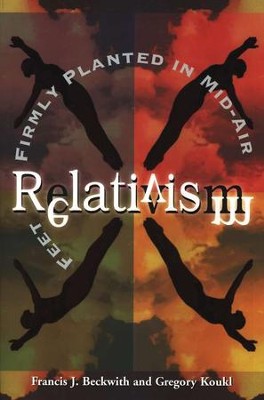
The late Dr Francis Schaeffer’s remark could well apply to moral relativists, who “…have both feet firmly planted in mid-air.”

*Article above adapted from the excellent and highly recommended book by  Francis Beckwith and Greg Koukl, Relativism – Feet Firmly Planted in Mid-Air, Grand Rapids, MI.: Baker Books, 2002.

The Greatest Introduction to a Theology Book Ever Written!

91pNKDTmv6L._AC_UY436_QL65_ML3_.jpg

Here is what my favorite modern-day theologian has to say about John Owen’s Death of Death in The Death of Christ: “If you have never read John Owen’s The Death of Death in the Death of Christ, I strongly commend it to you. It is a magnificent treatment of the grace of God, and it is rich in biblical exposition and deals in great detail and with great brilliance with some of the difficult passages that we encounter in the New Testament.” ~ Dr. R.C. Sproul

Below is perhaps one of the greatest introductions to a book of theology ever written by another great theologian – J.I. Packer. I know of no doctrine that is more mis-understood and yet so repudiated as what’s known as Limited or Definite Atonement. You owe it to yourself to read this amazing introduction by J.I. Packer and then hopefully it will motivate you to read the greatest book ever written on the atonement of Jesus Christ (keep in mind that J.I, Packer is British and thus all the spelling in the essay below is in the KIng’s English). ~ Dr. David P. Craig

Introductory Essay to John Owen’s Death of Death in the Death of Christ 

by J. I. Packer

  1. The Death of Death in the Death of Christ is a polemical work, designed to show, among other things, that the doctrine of universal redemption is unscriptural and destructive of the gospel. There are many, therefore, to whom it is not likely to be of interest. Those who see no need for doctrinal exactness and have no time for theological debates which show up divisions between so-called Evangelicals may well regret its reappearance. Some may find the very sound of Owen’s thesis so shocking that they will refuse to read his book at all; so passionate a thing is prejudice, and so proud are we of our theological shibboleths. But it is hoped that this reprint will find itself readers of a different spirit. There are signs today of a new upsurge of interest in the theology of the Bible: a new readiness to test traditions, to search the Scriptures and to think through the faith. It is to those who share this readiness that Owen’s treatise is offered, in the belief that it will help us in one of the most urgent tasks facing Evangelical Christendom today—the recovery of the gospel.

This last remark may cause some raising of eyebrows, but it seems to be warranted by the facts.

There is no doubt that Evangelicalism today is in a state of perplexity and unsettlement. In such matters as the practice of evangelism, the teaching of holiness, the building up of local church life, the pastor’s dealing with souls and the exercise of discipline, there is evidence of widespread dissatisfaction with things as they are and of equally widespread uncertainty as to the road ahead. This is a complex phenomenon, to which many factors have contributed; but, if we go to the root of the matter, we shall find that these perplexities are all ultimately due to our having lost our grip on the biblical gospel. Without realising it, we have during the past century bartered that gospel for a substitute product which, though it looks similar enough in points of detail, is as a whole a decidedly different thing. Hence our troubles; for the substitute product does not answer the ends for which the authentic gospel has in past days proved itself so mighty. The new gospel conspicuously fails to produce deep reverence, deep repentance, deep humility, a spirit of worship, a concern for the church. Why? We would suggest that the reason lies in its own character and content. It fails to make men God-centred in their thoughts and God-fearing in their hearts because this is not primarily what it is trying to do. One way of stating the difference between it and the old gospel is to say that it is too exclusively concerned to be “helpful” to man—to bring peace, comfort, happiness, satisfaction—and too little concerned to glorify God. The old gospel was “helpful,” too—more so, indeed, than is the new—but (so to speak) incidentally, for its first concern was always to give glory to God. It was always and essentially a proclamation of Divine sovereignty in mercy and judgment, a summons to bow down and worship the mighty Lord on whom man depends for all good, both in nature and in grace. Its centre of reference was unambiguously God. But in the new gospel the centre of reference is man. This is just to say that the old gospel was religious in a way that the new gospel is not. Whereas the chief aim of the old was to teach men to worship God, the concern of the new seems limited to making them feel better. The subject of the old gospel was God and His ways with men; the subject of the new is man and the help God gives him. There is a world of difference. The whole perspective and emphasis of gospel preaching has changed.

From this change of interest has sprung a change of content, for the new gospel has in effect reformulated the biblical message in the supposed interests of “helpfulness.” Accordingly, the themes of man’s natural inability to believe, of God’s free election being the ultimate cause of salvation, and of Christ dying specifically for His sheep, are not preached. These doctrines, it would be said, are not “helpful”; they would drive sinners to despair, by suggesting to them that it is not in their own power to be saved through Christ. (The possibility that such despair might be salutary is not considered; it is taken for granted that it cannot be, because it is so shattering to our self-esteem.) However this may be (and we shall say more about it later), the result of these omissions is that part of the biblical gospel is now preached as if it were the whole of that gospel; and a half-truth masquerading as the whole truth becomes a complete untruth. Thus, we appeal to men as if they all had the ability to receive Christ at any time; we speak of His redeeming work as if He had done no more by dying than make it possible for us to save ourselves by believing; we speak of God’s love as if it were no more than a general willingness to receive any who will turn and trust; and we depict the Father and the Son, not as sovereignly active in drawing sinners to themselves, but as waiting in quiet impotence “at the door of our hearts” for us to let them in. It is undeniable that this is how we preach; perhaps this is what we really believe. But it needs to be said with emphasis that this set of twisted half-truths is something other than the biblical gospel. The Bible is against us when we preach in this way; and the fact that such preaching has become almost standard practice among us only shows how urgent it is that we should review this matter. To recover the old, authentic, biblical gospel, and to bring our preaching and practice back into line with it, is perhaps our most pressing present need. And it is at this point that Owen’s treatise on redemption can give us help.

II. “But wait a minute,” says someone, “it’s all very well to talk like this about the gospel; but surely what Owen is doing is defending limited atonement—one of the five points of Calvinism? When you speak of recovering the gospel, don’t you mean that you just want us all to become Calvinists?”

These questions are worth considering, for they will no doubt occur to many. At the same time, however, they are questions that reflect a great deal of prejudice and ignorance. “Defending limited atonement”—as if this was all that a Reformed theologian expounding the heart of the gospel could ever really want to do! “You just want us all to become Calvinists”—as if Reformed theologians had no interest beyond recruiting for their party, and as if becoming a Calvinist was the last stage of theological depravity, and had nothing to do with the gospel at all. Before we answer these questions directly, we must try to remove the prejudices which underlie them by making clear what Calvinism really is; and therefore we would ask the reader to take note of the following facts, historical and theological, about Calvinism in general and the “five points” in particular.

First, it should be observed that the “five points of Calvinism,” so-called, are simply the Calvinistic answer to a five-point manifesto (the Remonstrance) put out by certain “Belgic semi-Pelagians” in the early seventeenth century. The theology which it contained (known to history as Arminianism) stemmed from two philosophical principles: first, that divine sovereignty is not compatible with human freedom, nor therefore with human responsibility; second, that ability limits obligation. (The charge of semi-Pelagianism was thus fully justified.) From these principles, the Arminians drew two deductions: first that since the Bible regards faith as a free and responsible human act, it cannot be caused by God, but is exercised independently of Him; second, that since the Bible regards faith as obligatory on the part of all who hear the gospel, ability to believe must be universal. Hence, they maintained, Scripture must be interpreted as teaching the following positions: (1.) Man is never so completely corrupted by sin that he cannot savingly believe the gospel when it is put before him, nor (2.) is he ever so completely controlled by God that he cannot reject it. (3.) God’s election of those who shall be saved is prompted by His foreseeing that they will of their own accord believe. (4.) Christ’s death did not ensure the salvation of anyone, for it did not secure the gift of faith to anyone (there is no such gift); what it did was rather to create a possibility of salvation for everyone if they believe. (5.) It rests with believers to keep themselves in a state of grace by keeping up their faith; those who fail here fall away and are lost. Thus, Arminianism made man’s salvation depend ultimately on man himself, saving faith being viewed throughout as man’s own work and, because his own, not God’s in him.

The Synod of Dort was convened in 1618 to pronounce on this theology, and the “five points of Calvinism” represent its counter-affirmations. They stem from a very different principle—the biblical principle that “salvation is of the Lord”; and they may be summarized thus: (1.) Fallen man in his natural state lacks all power to believe the gospel, just as he lacks all power to believe the law, despite all external inducements that may be extended to him. (2.) God’s election is a free, sovereign, unconditional choice of sinners, as sinners, to be redeemed by Christ, given faith and brought to glory. (3.) The redeeming work of Christ had as its end and goal the salvation of the elect. (4.) The work of the Holy Spirit in bringing men to faith never fails to achieve its object. (5.) Believers are kept in faith and grace by the unconquerable power of God till they come to glory. These five points are conveniently denoted by the mnemonic TULIP: Total depravity, Unconditional election, Limited atonement, Irresistible grace, Preservation of the saints.

Now, here are two coherent interpretations of the biblical gospel, which stand in evident opposition to each other. The difference between them is not primarily one of emphasis, but of content. One proclaims a God who saves; the other speaks of a God Who enables man to save himself. One view presents the three great acts of the Holy Trinity for the recovering of lost mankind—election by the Father, redemption by the Son, calling by the Spirit—as directed towards the same persons, and as securing their salvation infallibly. The other view gives each act a different reference (the objects of redemption being all mankind, of calling, those who hear the gospel, and of election, those hearers who respond), and denies that any man’s salvation is secured by any of them. The two theologies thus conceive the plan of salvation in quite different terms. One makes salvation depend on the work of God, the other on a work of man; one regards faith as part of God’s gift of salvation, the other as man’s own contribution to salvation; one gives all the glory of saving believers to God, the other divides the praise between God, Who, so to speak, built the machinery of salvation, and man, who by believing operated it. Plainly, these differences are important, and the permanent value of the “five points,” as a summary of Calvinism, is that they make clear the points at which, and the extent to which, these two conceptions are at variance.

However. it would not be correct simply to equate Calvinism with the “five points.” Five points of our own will make this clear.

In the first place, Calvinism is something much broader than the “five points” indicate. Calvinism is a whole world-view, stemming from a clear vision of God as the whole world’s Maker and King. Calvinism is the consistent endeavour to acknowledge the Creator as the Lord, working all things after the counsel of His will. Calvinism is a theocentric way of thinking about all life under the direction and control of God’s own Word. Calvinism, in other words, is the theology of the Bible viewed from the perspective of the Bible—the God-centred outlook which sees the Creator as the source, and means, and end, of everything that is, both in nature and in grace. Calvinism is thus theism (belief in God as the ground of all things), religion (dependence on God as the giver of all things), and evangelicalism (trust in God through Christ for all things), all in their purest and most highly developed form. And Calvinism is a unified philosophy of history which sees the whole diversity of processes and events that take place in God’s world as no more, and no less, than the outworking of His great preordained plan for His creatures and His church. The five points assert no more than that God is sovereign in saving the individual, but Calvinism, as such, is concerned with the much broader assertion that He is sovereign everywhere.

Then, in the second place, the “five points” present Calvinistic soteriology in a negative and polemical form, whereas Calvinism in itself is essentially expository, pastoral and constructive. It can define its position in terms of Scripture without any reference to Arminianism, and it does not need to be forever fighting real or imaginary Arminians in order to keep itself alive. Calvinism has no interest in negatives, as such; when Calvinists fight, they fight for positive Evangelical values. The negative cast of the “five points” is misleading chiefly with regard to the third (limited atonement, or particular redemption), which is often read with stress on the adjective and taken as indicating that Calvinists have a special interest in confining the limits of divine mercy. But in fact the purpose of this phraseology, as we shall see, is to safeguard the central affirmation of the gospel—that Christ is a Redeemer who really does redeem. Similarly, the denials of an election that is conditional and of grace that is resistible, are intended to safeguard the positive truth that it is God Who saves. The real negations are those of Arminianism, which denies that election, redemption and calling are saving acts of God. Calvinism negates these negations in order to assert the positive content of the gospel, for the positive purpose of strengthening faith and building up the church.

Thirdly, the very act of setting out Calvinistic soteriology in the form of five distinct points (a number due, as we saw, merely to the fact that there were five Arminian points for the Synod of Dort to answer) tends to obscure the organic character of Calvinistic thought on this subject. For the five points, though separately stated, are really inseparable. They hang together; you cannot reject one without rejecting them all, at least in the sense in which the Synod meant them. For to Calvinism there is really only one point to be made in the field of soteriology: the point that God saves sinners. God—the Triune Jehovah, Father, Son and Spirit; three Persons working together in sovereign wisdom, power and love to achieve the salvation of a chosen people, the Father electing, the Son fulfilling the Father’s will by redeeming, the Spirit executing the purpose of Father and Son by renewing. Saves—does everything, first to last, that is involved in bringing man from death in sin to life in glory: plans, achieves and communicates redemption, calls and keeps, justifies, sanctifies, glorifies. Sinners—men as God finds them, guilty, vile, helpless, powerless, unable to lift a finger to do God’s will or better their spiritual lot. God saves sinners—and the force of this confession may not be weakened by disrupting the unity of the work of the Trinity, or by dividing the achievement of salvation between God and man and making the decisive part man’s own, or by soft-pedaling the sinner’s inability so as to allow him to share the praise of his salvation with his Saviour. This is the one point of Calvinistic soteriology which the “five points” are concerned to establish and Arminianism in all its forms to deny: namely, that sinners do not save themselves in any sense at all, but that salvation, first and last, whole and entire, past, present and future, is of the Lord, to whom be glory for ever; amen.

This leads to our fourth remark, which is this: the five-point formula obscures the depth of the difference between Calvinistic and Arminian soteriology. There seems no doubt that it seriously misleads many here. In the formula, the stress falls on the adjectives, and this naturally gives the impression that in regard to the three great saving acts of God the debate concerns the adjectives merely—that both sides agree as to what election, redemption, and the gift of internal grace are, and differ only as to the position of man in relation to them: whether the first is conditional upon faith being foreseen or not; whether the second intends the salvation of every man or not; whether the third always proves invincible or not. But this is a complete misconception. The change of adjective in each case involves changing the meaning of the noun. An election that is conditional, a redemption that is universal, an internal grace that is resistible, is not the same kind of election, redemption, internal grace, as Calvinism asserts. The real issue concerns, not the appropriateness of adjectives, but the definition of nouns. Both sides saw this clearly when the controversy first began, and it is important that we should see it too, for otherwise we cannot discuss the Calvinist-Arminian debate to any purpose at all. It is worth setting out the different definitions side by side.

(i.) God’s act of election was defined by the Arminians as a resolve to receive sonship and glory a duly qualified class of people: believers in Christ. This becomes a resolve to receive individual persons only in virtue of God’s foreseeing the contingent fact that they will of their own accord believe. There is nothing in the decree of election to ensure that the class of believers will ever have any members; God does not determine to make any man believe. But Calvinists define election as a choice of particular undeserving persons to be saved from sin and brought to glory, and to that end to be redeemed by the death of Christ and given faith by the Spirit’s effectual calling. Where the Arminian says: “I owe my election to my faith,” the Calvinist says: “I owe my faith to my election.” Clearly, these two concepts of election are very far apart.

(ii.) Christ’s work of redemption was defined by the Arminians as the removing of an obstacle (the unsatisfied claims of justice) which stood in the way of God’s offering pardon to sinners, as He desired to do, on condition that they believe. Redemption, according to Arminianism, secured for God a right to make this offer, but did not of itself ensure that anyone would ever accept it; for faith, being a work of man’s own, is not a gift that comes to him from Calvary. Christ’s death created an opportunity for the exercise of saving faith, but that is all it did. Calvinists, however, define redemption as Christ’s actual substitutionary endurance of the penalty of sin in the place of certain specified sinners, through which God was reconciled to them, their liability to punishment was for ever destroyed, and a title to eternal life was secured for them. In consequence of this, they now have in God’s sight a right to the gift of faith, as the means of entry into the enjoyment of their inheritance. Calvary, in other words, not merely made possible the salvation of those for whom Christ died; it ensured that they would be brought to faith and their salvation made actual. The Cross saves. Where the Arminian will only say: “I could not have gained my salvation without Calvary,” the Calvinist will say: “Christ gained my salvation for me at Calvary.” The former makes the Cross the sine qua non of salvation, the latter sees it as the actual procuring cause of salvation, and traces the source of every spiritual blessing, faith included, back to the great transaction between God and His Son carried through on Calvary’s hill. Clearly, these two concepts of redemption are quite at variance.

(iii.) The Spirit’s gift of internal grace was defined by the Arminians as “moral suasion,” the bare bestowal of an understanding of God’s truth. This, they granted—indeed, insisted—does not of itself ensure that anyone will ever make the response of faith. But Calvinists define this gift as not merely an enlightening, but also a regenerating work of God in men, “taking away their heart of stone, and giving unto them a heart of flesh; renewing their wills, and by His almighty power determining them to that which is good; and effectually drawing them to Jesus Christ; yet so as they come most freely, being made willing by his grace.” Grace proves irresistible just because it destroys the disposition to resist. Where the Arminian, therefore, will be content to say: “I decided for Christ,” “I made up my mind to be a Christian,” the Calvinist will wish to speak of his conversion in more theological fashion, to make plain whose work it really was:

“Long my imprisoned spirit lay

Fast bound in sin and nature’s night:

Thine eye diffused a quickening ray;

I woke; the dungeon flamed with light;

My chains fell off: my heart was free:

I rose, went forth, and followed thee.”

Clearly, these two notions of internal grace are sharply opposed to each other.

Now, the Calvinist contends that the Arminian idea of election, redemption and calling as acts of God which do not save cuts at the very heart of their biblical meaning; that to say in the Arminian sense that God elects believers, and Christ died for all men, and the Spirit quickens those who receive the word, is really to say that in the biblical sense God elects nobody, and Christ died for nobody, and the Spirit quickens nobody. The matter at issue in this controversy, therefore, is the meaning to be given to these biblical terms, and to some others which are also soteriologically significant, such as the love of God, the covenant of grace, and the verb “save” itself, with its synonyms. Arminians gloss them all in terms of the principle that salvation does not directly depend on any decree or act of God, but on man’s independent activity in believing. Calvinists maintain that this principle is itself unscriptural and irreligious, and that such glossing demonstrably perverts the sense of Scripture and undermines the gospel at every point where it is practised. This, and nothing less than this, is what the Arminian controversy is about.

There is a fifth way in which the five-point formula is deficient. Its very form (a series of denials of Arminian assertions) lends colour to the impression that Calvinism is a modification of Arminianism; that Arminianism has a certain primacy in order of nature, and developed Calvinism is an offshoot from it. Even when one shows this to be false as a matter of history, the suspicion remains in many minds that it is a true account of the relation of the two views themselves. For it is widely supposed that Arminianism (which, as we now see, corresponds pretty closely to the new gospel of our own day) is the result of reading the Scriptures in a “natural,” unbiased, unsophisticated way, and that Calvinism is an unnatural growth, the product less of the texts themselves than of unhallowed logic working on the texts, wresting their plain sense and upsetting their balance by forcing them into a systematic framework which they do not themselves provide. Whatever may have been true of individual Calvinists, as a generalisation about Calvinism nothing could be further from the truth than this. Certainly, Arminianism is “natural” in one sense, in that it represents a characteristic perversion of biblical teaching by the fallen mind of man, who even in salvation cannot bear to renounce the delusion of being master of his fate and captain of his soul. This perversion appeared before in the Pelagianism and semi-Pelagianism of the Patristic period and the later Scholasticism, and has recurred since the seventeenth century both in Roman theology and, among Protestants, in various types of rationalistic liberalism and modern Evangelical teaching; and no doubt it will always be with us. As long as the fallen human mind is what it is, the Arminian way of thinking will continue to be a natural type of mistake. But it is not natural in any other sense. In fact, it is Calvinism that understands the Scriptures in their natural, one would have thought, inescapable meaning; Calvinism that keeps to what they actually say; Calvinism that insists on taking seriously the biblical assertions that God saves, and that He saves those whom He has chosen to save, and that He saves them by grace without works, so that no man may boast, and that Christ is given to them as a perfect Saviour, and that their whole salvation flows to them from the Cross, and that the work of redeeming them was finished on the Cross. It is Calvinism that gives due honour to the Cross. When the Calvinist sings:

“There is a green hill far away,

Without a city wall,

Where the dear Lord was crucified,

Who died to save us all;

He died the we might be forgiven,

He died to make us good;

That we might go at last to Heaven,

Saved by His precious blood.”

—he means it. He will not gloss the italicised statements by saying that God’s saving purpose in the death of His Son was a mere ineffectual wish, depending for its fulfilment on man’s willingness to believe, so that for all God could do Christ might have died and none been saved at all. He insists that the Bible sees the Cross as revealing God’s power to save, not His impotence. Christ did not win a hypothetical salvation for hypothetical believers, a mere possibility of salvation for any who might possibly believe, but a real salvation for His own chosen people. His precious blood really does “save us all”; the intended effects of His self-offering do in fact follow, just because the Cross was what it was. Its saving power does not depend on faith being added to it; its saving power is such that faith flows from it. The Cross secured the full salvation of all for whom Christ died. “God forbid,” therefore, “that I should glory, save in the cross of our Lord Jesus Christ.”

Now the real nature of Calvinistic soteriology becomes plain. It is no artificial oddity, nor a product of over-bold logic. Its central confession, that God saves sinners, that Christ redeemed us by His blood, is the witness both of the Bible and of the believing heart. The Calvinist is the Christian who confesses before men in his theology just what he believes in his heart before God when he prays. He thinks and speaks at all times of the sovereign grace of God in the way that every Christian does when he pleads for the souls of others, or when he obeys the impulse of worship which rises unbidden within him, prompting him to deny himself all praise and to give all the glory of his salvation to his Saviour. Calvinism is the natural theology written on the heart of the new man in Christ, whereas Arminianism is an intellectual sin of infirmity, natural only in the sense in which all such sins are natural, even to the regenerate. Calvinistic thinking is the Christian being himself on the intellectual level; Arminian thinking is the Christian failing to be himself through the weakness of the flesh. Calvinism is what the Christian church has always held and taught when its mind has not been distracted by controversy and false traditions from attending to what Scripture actually says; that is the significance of the Patristic testimonies to the teaching of the “five points,” which can be quoted in abundance. (Owen appends a few on redemption; a much larger collection may be seen in John Gill’s The Cause of God and Truth.) So that really it is most misleading to call this soteriology “Calvinism” at all, for it is not a peculiarity of John Calvin and the divines of Dort, but a part of the revealed truth of God and the catholic Christian faith. “Calvinism” is one of the “odious names” by which down the centuries prejudice has been raised against it. But the thing itself is just the biblical gospel. In the light of these facts, we can now give a direct answer to the questions with which we began.

“Surely all that Owen is doing is defending limited atonement?” Not really. He is doing much more than that. Strictly speaking, the aim of Owen’s book is not defensive at all, but constructive. It is a biblical and theological enquiry; its purpose is simply to make clear what Scripture actually teaches about the central subject of the gospel—the achievement of the Saviour. As its title proclaims, it is “a treatise of the redemption and reconciliation that is in the blood of Christ: with the merit thereof, and the satisfaction wrought thereby.” The question which Owen, like the Dort divines before him, is really concerned to answer is just this: what is the gospel? All agree that it is a proclamation of Christ as Redeemer, but there is a dispute as to the nature and extent of His redeeming work: well, what saith the Scripture? what aim and accomplishment does the Bible assign to the work of Christ? This is what Owen is concerned to elucidate. It is true that he tackles the subject in a directly controversial way, and shapes his book as a polemic against the “spreading persuasion…of a general ransom, to be paid by Christ for all; that he dies to redeem all and every one.” But his work is a systematic expository treatise, not a mere episodic wrangle. Owen treats the controversy as providing the occasion for a full display of the relevant biblical teaching in its own proper order and connection. As in Hooker’s Laws of Ecclesiastical Polity, the polemics themselves are incidental and of secondary interest; their chief value lies in the way that the author uses them to further his own design and carry forward his own argument.

That argument is essentially very simple. Owen sees that the question which has occasioned his writing—the extent of the atonement—involves the further question of its nature, since if it was offered to save some who will finally perish, then it cannot have been a transaction securing the actual salvation of all for whom it was designed. But, says Owen, this is precisely the kind of transaction that the Bible says it was. The first two books of his treatise are a massive demonstration of the fact that according to Scripture the Redeemer’s death actually saves His people, as it was meant to do. The third book consists of a series of sixteen arguments against the hypothesis of universal redemption, all aimed to show, on the one hand, that Scripture speaks of Christ’s redeeming work as effective, which precludes its having been intended for any who perish, and, on the other, that if its intended extent had been universal, then either all will be saved (which Scripture denies, and the advocates of the “general ransom” do not affirm), or else the Father and the Son have failed to do what they set out to do—“which to assert,” says Owen, “seems to us blasphemously injurious to the wisdom, power and perfection of God, as likewise derogatory to the worth and value of the death of Christ.”

Owen’s arguments ring a series of changes on this dilemma. Finally, in the fourth book, Owen shows with great cogency that the three classes of texts alleged to prove that Christ died for persons who will not be saved (those saying that He died for “the world,” for “all,” and those thought to envisage the perishing of those for whom He died), cannot on sound principles of exegesis be held to teach any such thing; and, further, that the theological inferences by which universal redemption is supposed to be established are really quite fallacious. The true evangelical evaluation of the claim that Christ died for every man, even those who perish, comes through at point after point in Owen’s book. So far from magnifying the love and grace of God, this claim dishonours both it and Him, for it reduces God’s love to an impotent wish and turns the whole economy of “saving” grace, so-called (“saving” is really a misnomer on this view), into a monumental divine failure. Also, so far from magnifying the merit and worth of Christ’s death, it cheapens it, for it makes Christ die in vain. Lastly, so far from affording faith additional encouragement, it destroys the Scriptural ground of assurance altogether, for it denies that the knowledge that Christ died for me (or did or does anything else for me) is a sufficient ground for inferring my eternal salvation; my salvation, on this view, depends not on what Christ did for me, but on what I subsequently do for myself. Thus this view takes from God’s love and Christ’s redemption the glory that Scripture gives them, and introduces the anti-scriptural principle of self-salvation at the point where the Bible explicitly says: “not of works, lest any man should boast.” You cannot have it both ways: an atonement of universal extent is a depreciated atonement. It has lost its saving power; it leaves us to save ourselves. The doctrine of the general ransom must accordingly be rejected, as Owen rejects it, as a grievous mistake. By contrast, however, the doctrine which Owen sets out, as he himself shows, is both biblical and God-honouring. It exalts Christ, for it teaches Christians to glory in His Cross alone, and to draw their hope and assurance only from the death and intercession of their Saviour. It is, in other words, genuinely Evangelical. It is, indeed, the gospel of God and the catholic faith.

It is safe to say that no comparable exposition of the work of redemption as planned and executed by the Triune Jehovah has ever been done since Owen published his. None has been needed. Discussing this work, Andrew Thomson notes how Owen “makes you feel when he has reached the end of his subject, that he has also exhausted it.” That is demonstrably the case here. His interpretation of the texts is sure; his power of theological construction is superb; nothing that needs discussing is omitted, and (so far as the writer can discover) no arguments for or against his position have been used since his day which he has not himself noted and dealt with. One searches his book in vain for the leaps and flights of logic by which Reformed theologians are supposed to establish their positions; all that one finds is solid, painstaking exegesis and a careful following through of biblical ways of thinking. Owen’s work is a constructive, broad-based biblical analysis of the heart of the gospel, and must be taken seriously as such. It may not be written off as a piece of special pleading for a traditional shibboleth, for nobody has a right to dismiss the doctrine of the limitedness of atonement as a monstrosity of Calvinistic logic until he has refuted Owen’s proof that it is part of the uniform biblical presentation of redemption, clearly taught in plain text after plain text. And nobody has done that yet.

“You talked about recovering the gospel,” said our questioner; “don’t you mean that you just want us all to become Calvinists?”

This question presumably concerns, not the word, but the thing. Whether we call ourselves Calvinists hardly matters; what matters is that we should understand the gospel biblically. But that, we think, does in fact mean understanding it as historic Calvinism does. The alternative is to misunderstand and distort it. We said earlier that modern Evangelicalism, by and large, has ceased to preach the gospel in the old way, and we frankly admit that the new gospel, insofar as it deviates from the old, seems to us a distortion of the biblical message. And we can now see what has gone wrong. Our theological currency has been debased. Our minds have been conditioned to think of the Cross as a redemption which does less than redeem, and of Christ as a Saviour who does less than save, and of God’s love as a weak affection which cannot keep anyone from hell without help, and of faith as the human help which God needs for this purpose. As a result, we are no longer free either to believe the biblical gospel or to preach it. We cannot believe it, because our thoughts are caught in the toils of synergism. We are haunted by the Arminian idea that if faith and unbelief are to be responsible acts, they must be independent acts; hence we are not free to believe that we are saved entirely by divine grace through a faith which is itself God’s gift and flows to us from Calvary. Instead, we involve ourselves in a bewildering kind of double-think about salvation, telling ourselves one moment that it all depends on God and next moment that it all depends on us. The resultant mental muddle deprives God of much of the glory that we should give Him as author and finisher of salvation, and ourselves of much of the comfort we might draw from knowing that God is for us.

And when we come to preach the gospel, our false preconceptions make us say just the opposite of what we intend. We want (rightly) to proclaim Christ as Saviour; yet we end up saying that Christ, having made salvation possible, has left us to become our own saviours. It comes about in this way. We want to magnify the saving grace of God and the saving power of Christ. So we declare that God’s redeeming love extends to every man, and that Christ has died to save every man, and we proclaim that the glory of divine mercy is to be measured by these facts. And then, in order to avoid universalism, we have to depreciate all that we were previously extolling, and to explain that, after all, nothing that God and Christ have done can save us unless we add something to it; the decisive factor which actually saves us is our own believing. What we say comes to this—that Christ saves us with our help; and what that means, when one thinks it out, is this—that we save ourselves with Christ’s help. This is a hollow anticlimax. But if we start by affirming that God has a saving love for all, and Christ died a saving death for all, and yet balk at becoming universalists, there is nothing else that we can say. And let us be clear on what we have done when we have put the matter in this fashion. We have not exalted grace and the Cross; we have cheapened them. We have limited the atonement far more drastically than Calvinism does, for whereas Calvinism asserts that Christ’s death, as such, saves all whom it was meant to save, we have denied that Christ’s death, as such, is sufficient to save any of them. We have flattered impenitent sinners by assuring them that it is in their power to repent and believe, though God cannot make them do it. Perhaps we have also trivialised faith and repentance in order to make this assurance plausible (“it’s very simple—just open your heart to the Lord…”). Certainly, we have effectively denied God’s sovereignty, and undermined the basic conviction of religion—that man is always in God’s hands. In truth, we have lost a great deal. And it is, perhaps, no wonder that our preaching begets so little reverence and humility, and that our professed converts are so self-confident and so deficient in self-knowledge, and in the good works which Scripture regards as the fruit of true repentance.

It is from degenerate faith and preaching of this kind that Owen’s book could set us free. If we listen to him, he will teach us both how to believe the Scripture gospel and how to preach it. For the first: he will lead us to bow down before a sovereign Saviour Who really saves, and to praise Him for a redeeming death which made it certain that all for whom He died will come to glory. It cannot be over-emphasised that we have not seen the full meaning of the Cross till we have seen it as the divines of Dort display it—as the centre of the gospel, flanked on the one hand by total inability and unconditional election, and on the other by irresistible grace and final preservation. For the full meaning of the Cross only appears when the atonement is defined in terms of these four truths. Christ died to save a certain company of helpless sinners upon whom God had set His free saving love. Christ’s death ensured the calling and keeping—the present and final salvation—of all whose sins He bore. That is what Calvary meant, and means. The Cross saved; the Cross saves. This is the heart of true Evangelical faith; as Cowper sang—

“Dear dying Lamb, Thy precious blood

Shall never lose its power,

Till all the ransomed church of God

Be saved to sin no more.”

This is the triumphant conviction which underlay the old gospel, as it does the whole New Testament. And this is what Owen will teach us unequivocally to believe.

Then, secondly, Owen could set us free, if we would hear him, to preach the biblical gospel. This assertion may sound paradoxical, for it is often imagined that those who will not preach that Christ died to save every man are left with no gospel at all. On the contrary, however, what they are left with is just the gospel of the New Testament. What does it mean to preach “the gospel of the grace of God”? Owen only touches on this briefly and incidentally, but his comments are full of light. Preaching the gospel, he tells us, is not a matter of telling the congregation that God has set His love on each of them and Christ has died to save each of them, for these assertions, biblically understood, would imply that they will all infallibly be saved, and this cannot be known to be true. The knowledge of being the object of God’s eternal love and Christ’s redeeming death belongs to the individual’s assurance, which in the nature of the case cannot precede faith’s saving exercise; it is to be inferred from the fact that one has believed, not proposed as a reason why one should believe. According to Scripture, preaching the gospel is entirely a matter of proclaiming to men, as truth from God which all are bound to believe and act on, the following four facts:

(1.) that all men are sinners, and cannot do anything to save themselves;

(2.) that Jesus Christ, God’s Son, is a perfect Saviour for sinners, even the worst;

(3.) that the Father and the Son have promised that all who know themselves to be sinners and put faith in Christ as Saviour shall be received into favour, and none cast out (which promise is “a certain infallible truth, grounded upon the superabundant sufficiency of the oblation of Christ in itself, for whomsoever [few or more] it be intended”);

(4.) that God has made repentance and faith a duty, requiring of every man who hears the gospel “a serious full recumbency and rolling of the soul upon Christ in the promise of the gospel, as an all-sufficient Saviour, able to deliver and save to the utmost them that come to God by him; ready, able and willing, through the preciousness of his blood and sufficiency of his ransom, to save every soul that shall freely give up themselves unto him for that end.”

The preacher’s task, in other words, is to display Christ: to explain man’s need of Him, His sufficiency to save, and His offer of Himself in the promises as Saviour to all who truly turn to Him; and to show as fully and plainly as he can how these truths apply to the congregation before him. It is not for him to say, nor for his hearers to ask, for whom Christ died in particular. “There is none called on by the gospel once to enquire after the purpose and intention of God concerning the particular object of the death of Christ, every one being fully assured that his death shall be profitable to them that believe in him and obey him.” After saving faith has been exercised, “it lies on a believer to assure his soul, according as he find the fruit of the death of Christ in him and towards him, of the good-will and eternal love of God to him in sending his Son to die for him in particular”; but not before. The task to which the gospel calls him is simply to exercise faith, which he is both warranted and obliged to do by God’s command and promise.

Some comments on this conception of what preaching the gospel means are in order.

First, we should observe that the old gospel of Owen contains no less full and free an offer of salvation than its modern counterpart. It presents ample grounds of faith (the sufficiency of Christ, and the promise of God), and cogent motives to faith (the sinner’s need, and the Creator’s command, which is also the Redeemer’s invitation). The new gospel gains nothing here by asserting universal redemption. The old gospel, certainly, has no room for the cheap sentimentalising which turns God’s free mercy to sinners into a constitutional soft-heartedness on His part which we can take for granted; nor will it countenance the degrading presentation of Christ as the baffled Saviour, balked in what He hoped to do by human unbelief; nor will it indulge in maudlin appeals to the unconverted to let Christ save them out of pity for His disappointment. The pitiable Saviour and the pathetic God of modern pulpits are unknown to the old gospel. The old gospel tells men that they need God, but not that God needs them (a modern falsehood); it does not exhort them to pity Christ, but announces that Christ has pitied them, though pity was the last thing they deserved. It never loses sight of the Divine majesty and sovereign power of the Christ whom it proclaims, but rejects flatly all representations of Him which would obscure His free omnipotence. Does this mean, however, that the preacher of the old gospel is inhibited or confined in offering Christ to men and inviting them to receive Him? Not at all. In actual fact, just because he recognises that Divine mercy is sovereign and free, he is in a position to make far more of the offer of Christ in his preaching than is the expositor of the new gospel; for this offer is itself a far more wonderful thing on his principles than it can ever be in the eyes of those who regard love to all sinners as a necessity of God’s nature, and therefore a matter of course. To think that the holy Creator, who never needed man for His happiness and might justly have banished our fallen race for ever without mercy, should actually have chosen to redeem some of them! and that His own Son was willing to undergo death and descend into hell to save them! and that now from His throne He should speak to ungodly men as He does in the words of the gospel, urging upon them the command to repent and believe in the form of a compassionate invitation to pity themselves and choose life! These thoughts are the focal points round which the preaching of the old gospel revolves. It is all wonderful, just because none of it can be taken for granted. But perhaps the most wonderful thing of all—the holiest spot in all the holy ground of gospel truth—is the free invitation which “the Lord Christ” (as Owen loves to call Him) issues repeatedly to guilty sinners to come to Him and find rest for their souls. It is the glory of these invitations that it is an omnipotent King who gives them, just as it is a chief part of the glory of the enthroned Christ that He condescends still to utter them. And it is the glory of the gospel ministry that the preacher goes to men as Christ’s ambassador, charged to deliver the King’s invitation personally to every sinner present and to summon them all to turn and live. Owen himself enlarges on this in a passage addressed to the unconverted.

“Consider the infinite condescension and love of Christ, in his invitations and calls of you to come unto him for life, deliverance, mercy, grace, peace and eternal salvation. Multitudes of these invitations and calls are recorded in the Scripture, and they are all of them filled up with those blessed encouragements which divine wisdom knows to be suited unto lost, convinced sinners…. In the declaration and preaching of them, Jesus Christ yet stands before sinners, calling, inviting, encouraging them to come unto him.

“This is somewhat of the word which he now speaks unto you: Why will ye die? why will ye perish? why will ye not have compassion on your own souls? Can your hearts endure, or can your hands be strong, in the day of wrath that is approaching?… Look unto me, and be saved; come unto me, and I will ease you of all sins, sorrows, fears, burdens, and give rest unto your souls. Come, I entreat you; lay aside all procrastinations, all delays; put me off no more; eternity lies at the door…do not so hate me as that you will rather perish than accept of deliverance by me.

“These and the like things doth the Lord Christ continually declare, proclaim, plead and urge upon the souls of sinners…. He doth it in the preaching of the word, as if he were present with you, stood amongst you, and spake personally to every one of you…. He hath appointed the ministers of the gospel to appear before you, and to deal with you in his stead, avowing as his own the invitations which are given you in his name, 2 Cor. v. 19, 20.”

These invitations are universal; Christ addresses them to sinners, as such, and every man, as he believes God to be true, is bound to treat them as God’s words to him personally and to accept the universal assurance which accompanies them, that all who come to Christ will be received. Again, these invitations are real; Christ genuinely offers Himself to all who hear the gospel, and is in truth a perfect Saviour to all who trust Him. The question of the extent of the atonement does not arise in evangelistic preaching; the message to be delivered is simply this—that Christ Jesus, the sovereign Lord, who died for sinners, now invites sinners freely to Himself. God commands all to repent and believe; Christ promises life and peace to all who do so. Furthermore, these invitations are marvellously gracious; men despise and reject them, and are never in any case worthy of them, and yet Christ still issues them. He need not, but He does. “Come unto me…and I will give you rest” remains His word to the world, never cancelled, always to be preached. He whose death has ensured the salvation of all His people is to be proclaimed everywhere as a perfect Saviour, and all men invited and urged to believe on Him, whoever they are, whatever they have been. Upon these three insights the evangelism of the old gospel is based.

It is a very ill-informed supposition that evangelistic preaching which proceeds on these principles must be anaemic and half-hearted by comparison with what Arminians can do. Those who study the printed sermons of worthy expositors of the old gospel, such as Bunyan (whose preaching Owen himself much admired), or Whitefield, or Spurgeon, will find that in fact they hold forth the Saviour and summon sinners to Him with a fulness, warmth, intensity and moving force unmatched in Protestant pulpit literature. And it will be found on analysis that the very thing which gave their preaching its unique power to overwhelm their audiences with broken-hearted joy at the riches of God’s grace-and still gives it that power, let it be said, even with hard-boiled modern readers—was their insistence on the fact that grace is free. They knew that the dimensions of Divine love are not half understood till one realises that God need not have chosen to save nor given his Son to die; nor need Christ have taken upon him vicarious damnation to redeem men, nor need He invite sinners indiscriminately to Himself as He does; but that all God’s gracious dealings spring entirely from His own free purpose. Knowing this, they stressed it, and it is this stress that sets their evangelistic preaching in a class by itself. Other Evangelicals, possessed of a more superficial and less adequate theology of grace, have laid the main emphasis in their gospel preaching on the sinner’s need of forgiveness, or peace, or power, and of the way to get them by “deciding for Christ.” It is not to be denied that their preaching has done good (for God will use His truth, even when imperfectly held and mixed with error), although this type of evangelism is always open to the criticism of being too man-centred and pietistic; but it has been left (necessarily) to Calvinists and those who, like the Wesleys, fall into Calvinistic ways of thought as soon as they begin a sermon to the unconverted, to preach the gospel in a way which highlights above everything else the free love, willing condescension, patient long-suffering and infinite kindness of the Lord Jesus Christ. And, without doubt, this is the most Scriptural and edifying way to preach it; for gospel invitations to sinners never honour God and exalt Christ more, nor are more powerful to awaken and confirm faith, than when full weight is laid on the free omnipotence of the mercy from which they flow. It looks, indeed, as if the preachers of the old gospel are the only people whose position allows them to do justice to the revelation of Divine goodness in the free offer of Christ to sinners.

Then, in the second place, the old gospel safeguards values which the new gospel loses. We saw before that the new gospel, by asserting universal redemption and a universal Divine saving purpose, compels itself to cheapen grace and the Cross by denying that the Father and the Son are sovereign in salvation; for it assures us that, after God and Christ have done all that they can, or will, it depends finally on each man’s own choice whether God’s purpose to save him is realised or not. This position has two unhappy results. The first is that it compels us to misunderstand the significance of the gracious invitations of Christ in the gospel of which we have been speaking; for we now have to read them, not as expressions of the tender patience of a mighty sovereign, but as the pathetic pleadings of impotent desire; and so the enthroned Lord is suddenly metamorphosed into a weak, futile figure tapping forlornly at the door of the human heart, which He is powerless to open. This is a shameful dishonour to the Christ of the New Testament. The second implication is equally serious: for this view in effect denies our dependence on God when it comes to vital decisions, takes us out of His hand, tells us that we are, after all, what sin taught us to think we were—masters of our fate, captain of our souls—and so undermines the very foundation of man’s religious relationship with his Maker. It can hardly be wondered at that the converts of the new gospel are so often both irreverent and irreligious, for such is the natural tendency of this teaching. The old gospel, however, speaks very differently and has a very different tendency. On the one hand, in expounding man’s need of Christ, it stresses something which the new gospel effectively ignores—that sinners cannot obey the gospel, any more than the law, without renewal of heart. On the other hand, in declaring Christ’s power to save, it proclaims Him as the author and chief agent of conversion, coming by His Spirit as the gospel goes forth to renew men’s hearts and draw them to Himself. Accordingly, in applying the message, the old gospel, while stressing that faith is man’s duty, stresses also that faith is not in man’s power, but that God must give what He commands. It announces, not merely that men must come to Christ for salvation, but also that they cannot come unless Christ Himself draws them. Thus it labours to overthrow self-confidence, to convince sinners that their salvation is altogether out of their hands, and to shut them up to a self-despairing dependence on the glorious grace of a sovereign Saviour, not only for their righteousness but for their faith too.

It is not likely, therefore, that a preacher of the old gospel will be happy to express the application of it in the form of a demand to “decide for Christ,” as the current phrase is. For, on the one hand, this phrase carries the wrong associations. It suggests voting a person into office—an act in which the candidate plays no part beyond offering himself for election, and everything then being settled by the voter’s independent choice. But we do not vote God’s Son into office as our Saviour, nor does He remain passive while preachers campaign on His behalf, whipping up support for His cause. We ought not to think of evangelism as a kind of electioneering. And then, on the other hand, this phrase obscures the very thing that is essential in repentance and faith—the denying of self in a personal approach to Christ. It is not at all obvious that deciding for Christ is the same as coming to Him and resting on Him and turning from sin and self-effort; it sounds like something much less, and is accordingly calculated to instil defective notions of what the gospel really requires of sinners. It is not a very apt phrase from any point of view.

To the question: what must I do to be saved? the old gospel replies: believe on the Lord Jesus Christ. To the further question: what does it mean to believe on the Lord Jesus Christ? its reply is: it means knowing oneself to be a sinner, and Christ to have died for sinners; abandoning all self-righteousness and self-confidence, and casting oneself wholly upon Him for pardon and peace; and exchanging one’s natural enmity and rebellion against God for a spirit of grateful submission to the will of Christ through the renewing of one’s heart by the Holy Ghost. And to the further question still: how am I to go about believing on Christ and repenting, if I have no natural ability to do these things? it answers: look to Christ, speak to Christ, cry to Christ, just as you are; confess your sin, your impenitence, your unbelief, and cast yourself on His mercy; ask Him to give you a new heart, working in you true repentance and firm faith; ask Him to take away your evil heart of unbelief and to write His law within you, that you may never henceforth stray from Him. Turn to Him and trust Him as best you can, and pray for grace to turn and trust more thoroughly; use the means of grace expectantly, looking to Christ to draw near to you as you seek to draw near to Him; watch, pray, read and hear God’s Word, worship and commune with God’s people, and so continue till you know in yourself beyond doubt that you are indeed a changed being, a penitent believer, and the new heart which you desired has been put within you. The emphasis in this advice is on the need to call upon Christ directly, as the very first step.

“Let not conscience make you linger,

Nor of fitness fondly dream;

All the fitness He requireth

Is to feel your need of Him”

—so do not postpone action till you think you are better, but honestly confess your badness and give yourself up here and now to the Christ who alone can make you better; and wait on Him till His light rises in your soul, as Scripture promises that it shall do. Anything less than this direct dealing with Christ is disobedience of the gospel. Such is the exercise of spirit to which the old evangel summons its hearers. “I believe—help thou mine unbelief”: this must become their cry.

And the old gospel is proclaimed in the sure confidence that the Christ of whom it testifies, the Christ who is the real speaker when the Scriptural invitations to trust Him are expounded and applied, is not passively waiting for man’s decision as the word goes forth, but is omnipotently active, working with and through the word to bring His people to faith in Himself. The preaching of the new gospel is often described as the task of “bringing men to Christ” if only men move, while Christ stands still. But the task of preaching the old gospel could more properly be described as bringing Christ to men, for those who preach it know that as they do their work of setting Christ before men’s eyes, the mighty Saviour whom they proclaim is busy doing His work through their words, visiting sinners with salvation, awakening them to faith, drawing them in mercy to Himself.

It is this older gospel which Owen will teach us to preach: the gospel of the sovereign grace of God in Christ as the author and finisher of faith and salvation. It is the only gospel which can be preached on Owen’s principles, but those who have tasted its sweetness will not in any case be found looking for another. In the matter of believing and preaching the gospel, as in other things, Jeremiah’s words still have their application: “Thus saith the Lord, Stand ye in the ways, and see, and ask for the old paths, where is the good way, and walk therein, and ye shall find rest for your souls.” To find ourselves debarred, as Owen would debar us, from taking up with the fashionable modern substitute gospel may not, after all, be a bad thing, either for us, or for the Church.

More might be said, but to go further would be to exceed the limits of an introductory essay. The foregoing remarks are made simply to show how important it is at the present time that we should attend most carefully to Owen’s analysis of what the Bible says about the saving work of Christ.

III. It only remains to add a few remarks about this treatise itself. It was Owen’s second major work, and his first masterpiece. (Its predecessor, A Display of Arminianism, published in 1642, when Owen was twenty-six, was a competent piece of prentice-work, rather of the nature of a research thesis.)

The Death of Death is a solid book, made up of detailed exposition and close argument, and requires hard study, as Owen fully realised; a cursory glance will not yield much. (“READER…. If thou art, as many in this pretending age, a sign or title gazer, and comest into books as Cato into the theatre, to go out again—thou has had thy entertainment; farewell!”) Owen felt, however, that he had a right to ask for hard study, for his book was a product of hard work (“a more than seven-years’ serious inquiry…into the mind of God about these things, with a serious perusal of all which I could attain that the wit of man, in former or latter days, hath published in opposition to the truth”), and he was sure in his own mind that a certain finality attached to what he had written. (“Altogether hopeless of success I am not; but fully resolved that I shall not live to see a solid answer given unto it.”) Time has justified his optimism.

Something should be said about his opponents. He is writing against three variations on the theme of universal redemption: that of classical Arminianism, noted earlier; that of the theological faculty at Saumur (the position known as Amyraldism, after its leading exponent); and that of Thomas More, a lay theologian of East Anglia. The second of these views originated with a Scots professor at Saumur, John Cameron; it was taken up and developed by two of his pupils, Amyraut (Amyraldus) and Testard, and became the occasion of a prolonged controversy in which Amyraut, Daillé and Blondel were opposed by Rivet, Spanheim and Des Marets (Maresius). The Saumur position won some support among Reformed divines in Britain, being held in modified form by (among others) Bishops Usher and Davenant, and Richard Baxter. None of these, however, had advocated it in print at the time when Owen wrote.

Goold’s summary of the Saumur position may be quoted. “Admitting that, by the purpose of God, and through the death of Christ, the elect are infallibly secured in the enjoyment of salvation, they contended for an antecedent decree, by which God is free to give salvation to all men through Christ, on the condition that they believe on him. Hence their system was termed hypothetic[al] universalism. The vital difference between it and the strict Arminian theory lies in the absolute security asserted in the former for the spiritual recovery of the elect. They agree, however, in attributing some kind of universality to the atonement, and in maintaining that, on a certain condition, within the reach of fulfilment by all men…all men have access to the benefits of Christ’s death.” From this, Goold continues, “the readers of Owen will understand…why he dwells with peculiar keenness and reiteration of statement upon a refutation of the conditional system…. It was plausible; it had many learned men for its advocates; it had obtained currency in the foreign churches; and it seems to have been embraced by More.”

More is described by Thomas Edwards as “a great Sectary, that did much hurt in Lincolnshire, Norfolk, and Cambridgeshire; who was famous also in Boston, (King’s) Lynn, and even in Holland, and was followed from place to place by many.” Baxter’s description is kinder: “a Weaver of Wisbitch and Lyn, of excellent Parts.” (More’s doctrine of redemption, of course, was substantially Baxter’s own.) Owen, however, has a poor view of his abilities, and makes no secret of the fact. More’s book, The Universality of God’s Free Grace in Christ to Mankind, appeared in 1646 (not, as Goold says, 1643), and must have exercised a considerable influence, for within three years it had evoked four weighty works which were in whole or part polemics against it: A Refutation…of Thomas More, by Thomas Whitfield, 1646; Vindiciae Redemptionis, by John Stalham, 1647; The Universalist Examined and Convicted, by Obadiah Howe, 1648; and Owen’s own book, published in the same year.

More’s exposition seems to be of little intrinsic importance; Owen, however, selects it as the fullest statement of the case for universal redemption that had yet appeared in English and uses it unmercifully as a chopping-block. The modern reader, however, will probably find it convenient to skip the sections devoted to refuting More (I. viii., the closing pages of II. iii. and IV. vi.) on his first passage through Owen’s treatise.

Finally, a word about the style of this work. There is no denying that Owen is heavy and hard to read. This is not so much due to obscure arrangement as to two other factors. The first is his lumbering literary gait. “Owen travels through it (his subject) with the elephant’s grace and solid step, if sometimes also with his ungainly motion.” says Thomson. That puts it kindly. Much of Owen’s prose reads like a roughly-dashed-off translation of a piece of thinking done in Ciceronian Latin. It has, no doubt, a certain clumsy dignity; so has Stonehenge; but it is trying to the reader to have to go over sentences two or three times to see their meaning, and this necessity makes it much harder to follow an argument. The present writer, however, has found that the hard places in Owen usually come out as soon as one reads them aloud. The second obscuring factor is Owen’s austerity as an expositor. He has a lordly disdain for broad introductions which ease the mind gently into a subject, and for comprehensive summaries which gather up scattered points into a small space. He obviously carries the whole of his design in his head, and expects his readers to do the same. Nor are his chapter divisions reliable pointers to the structure of his discourse, for though a change of subject is usually marked by a chapter division, Owen often starts a new chapter where there is no break in the thought at all. Nor is he concerned about literary proportions; the space given to a topic is determined by its intrinsic complexity rather than its relative importance, and the reader is left to work out what is basic and what is secondary by noting how things link together. The reader will probably find it helpful to use a pencil and paper in his study of the book and jot down the progress of the exposition; and it is hoped that the subjoined Analysis will also be of service in helping him keep his bearings.

We would conclude by repeating that the reward to be reaped from studying Owen is worth all the labour involved, and by making the following observations for the student’s guidance. (1.) It is important to start with the epistle “To the Reader,” for there Owen indicates in short compass what he is trying to do, and why. (2.) It is important to read the treatise as a whole, in the order in which it stands, and not to jump into parts III. and IV. before mastering the contents of Parts I. and II., where the biblical foundations of Owen’s whole position are laid. (3.) It is hardly possible to grasp the strength and cogency of this massive statement on a first reading. The work must be read and re-read to be appreciated.

J. I. PACKER.

 Tim Keller’s – Preaching: Communicating Faith in an Age of Skepticism

91U7OilrosL._AC_UY436_QL65_ML3_.jpg

A “Must Have” Handbook for the Modern Preacher

Book Review by Dr. David P. Craig

Tim Keller is as Bostonians say “Wicked Smart.” He has also demonstrated humility, wisdom, and faithfulness through much suffering and success in planting one of the most successful and model ministries for City Churches of the world – Redeemer Presbyterian in Manhattan, New York. He has also blessed Christians around the world with wonderful Christ centered and gospel centered resources.

I have read this book twice – in English and Spanish, I am also taking several bi-vocational pastors and elders in my church through this book. In my opinion it is the first go-to handbook for preachers in the 21st Century. Why? Let me give five reasons:

(1) Tim Keller practices what he preaches (a) Tim Keller preaches the Word – he has been preaching for over 45 years in both a semi-rural context and a large city context and knows how to preach to “blue-collar” and “white-collar” congregations; (b) He always preaches the gospel in every sermon; (c) He always preaches Christ whether he’s preaching from the Old or New Testaments; (d) He preaches culturally relevant messages without compromising biblical truth; (e) He preaches so as to help you love Christ with your mind; (f) He preaches so as to stir the soul/heart, which leads to real life change and Christ-like transformation; (g) He preaches with the unction or power of the Holy Spirit.

(2) Tim Keller gives examples, illustrations, principles, and theological reasons for why and how to do all of what he models in his own preaching (see #1 above).

(3) The extensive footnotes are worth gold. Make sure you don’t only read the book – read the footnotes! About 30% of the material in this book is in the notes. There is great stuff in the notes – you will feel like you are sitting with Tim over coffee with what he shares in the notes!

(4) Much of what Tim writes about you will not get in Bible college or Seminary. I didn’t get 80% of what he writes about in Bible college or seminary – I did get about 50% of what he talks about with a month sabbatical I spent taking preaching courses at Westminster Seminary. However, if you didn’t attend a seminary that is reformed you most likely missed how to get to Christ from all of the Scriptures.

(5) The last chapter of the book is also extremely helpful – he gives ample example, principles, and illustrations to help you write and preach an expository sermon.

Tim Keller knows what he’s talking about – when he’s pretty much talking about anything. However, what Keller is best at is preaching. You have the opportunity in reading and studying this book to learn from one of the best preacher’s of our time.