Book Review – Heralds of the King: Christ-Centered Sermons in the Tradition of Edmund P. Clowney, Edited by Dennis E. Johnson

Sermons that Manifest the Centrality of the Person, Work, and Presence of Christ

 One of my greatest concerns in the times in which we are living is seeing more pastors, theologians, and the rank and file Christian allowing cultural pressures to influence them more than the influence of Christ from the Scriptures. As I am currently looking for a church to become a part of I am astounded by how many “protestant” pastors can preach a sermon that neither begins or ends with Christ. As a matter of fact, most of the sermons I’m hearing could be preached by a non-Christian, and in what even passes for “church” God doesn’t even have to show up at all.

I would urge, plead, and even pay preachers to read this book. What people need – including Christians – is more of Jesus – His death, life, teachings, work as Prophet, Priest, and King – in short His person and work. Jesus said that all of the Scriptures pointed to Him (that means all of the Old Testament and New Testament, see John 5 and Luke 24).

In this book we have some excellent examples of former students of Dr. Edmund P. Clowney who preach in the Christ-centered mold. The book has a good balance in that it incorporates sermons from the Law, the Prophets, the Psalms, and Several New Covenant genres. Before each sermon begins there is a brief tribute to Edmund Clowney demonstrating how he influenced the preacher in his pursuit of personally loving Christ and preaching sermons that show us the Savior’s Person and work on our behalf.

In Part 1: “The Law” we have the following sermons –

“Living in the Gap” based on Genesis 17:1-14 by Joseph V. Novenson

“The Girl Nobody Wanted” based on Genesis 29:15-35 by Tim Keller (this is my favorite sermon in the book – it is a masterpiece on how to preach Christ from the Old Testament and how to apply it to our lives in the 21st century)

“Lord and Servant” from Genesis 43 by Brian Vos

“Rock of Ages” based on Exodus 17:1-7 by Julius J. Kim

In Part 2: “The Prophets” we have these sermons –

“Surprising Love:” on 2 Samuel 9 by Charles D. Drew

“Thorns and Fir Trees” based on Isaiah 55:13 by the late Harvie M. Conn

“No Condemnation” from Zechariah 3 by Iain M. Duguid

In Part 3: “The Psalms” we have only one sermon (I would have liked to have had at least two or three from this large section of Scripture including “Lament” and “Praise” genres) –

“Beauty in the Sand” by William Edgar based on Psalm 90

Part 4: “The New Covenant” we have the following sermons –

From Luke 1:5-25 “When God Promises the Impossible” by Dennis E. Johnson

“Soul-Ravishing Sightings” based on Luke 9:28-36 by Joseph F. Ryan

Arturo G. Azurdia III preaches the final sermon in the book based on Hebrews 1:1-3 entitled “The Greatness of God’s Ultimate Word.”

I highly recommend this book for all preachers, and for those who listen to preachers and love Jesus. I would encourage you if you are reading this review, to ask your pastor if he has read this book, and if not, to get him a copy – to encourage him in preaching in a more Christ-centered manner. Christ-centered preaching is hard work. However, when you hear it, or do it – you sense the presence of God in a powerful way. When I started preaching in Christ-centered manner it was as if a huge millstone was taken off my back. I think most preachers want to please God and help their flock from God’s Word – but they have not been well trained in Biblical Theology, or in Christo-centric preaching.

Edmund Clowney and all the preachers represented in this book are preaching to give glory to God and to let their hearers experience Jesus in worship. I think most preachers today are preaching to be liked, and meet felt needs – but no one can meet our needs like Jesus – and what we need more than anything is what these preachers do in this book – lead us to worshipping Jesus!

I constantly find myself when listening to modern preachers asking the question, “Where’s Jesus in this message?” Edmund Clowney always asked, “Where is my Savior?” His primary concern was always to reveal the presence of Christ in all of the Scriptures – since this is what Jesus mandated. I believe that if you ask these questions of yourself, or your preacher and Jesus is nowhere to be found, then it is not “Christian” preaching. What we desperately need today is to hear Jesus speaking to us from the Word of God by the voice of his heralds. All the preachers in this book do a wonderful job of leading us to the presence of Jesus and to worshipping Him.

Other Books that I would recommend to help you in Christo-centric preaching are:

Edmund P. Clowney’s: “Preaching Christ in All of Scripture;” “The Unfolding Mystery: Discovering Christ in the Old Testament;” and “How Jesus Transforms The Ten Commandments.”

Alec Motyer’s “Look to the Rock: An Old Testament Background to Our Understanding of Christ.”

All of Tim Keller’s books (e.g. “King’s Cross” based on his expositions on the Gospel of Mark). And anything by Sidney Greidanus (e.g., “Preaching Christ from the Old Testament”), or Graeme Goldsworthy (e.g.,“Preaching the Whole Bible as Christian Scripture”).

I hope that this movement of Christ-centered preaching continues to spread, and grow and bring about a new reformation of the gospel, and the desperately needed revival that is needed around the globe.
Book Review: Still – Notes On A Mid-Faith Crisis by Lauren F. Winner

Would Be Much More Helpful if Centered on Christ, and Not on Self

Every once in a while I randomly pick a book simply because the topic intrigues me. As a Christian pastor and professional life coach, one of the issues I specialize in is helping Christians transition into what’s been termed as the “new normal.” In other words, what used to be normal in one’s life is gone and lost forever, and for some it becomes a very serious conundrum. What do I do now that I lost my job? My marriage? My kids? My health? My money? And the list and litany of life changing questions demand answers and solutions.

I was hoping that this book would be helpful to me – as a pastor who is transitioning myself – from being a senior pastor – to a life coach; from having five kids at home – to being an empty nester; from having a very comfortable life – to one that is very financially uncertain. As well as a help to those I counsel, disciple, and coach in transition.

The book was interesting, transparent and authentic, well written, worth reading, but in the final analysis – unhelpful and leaves you without the hope that we are offered in Jesus Christ. The most disappointing thing to me was the that the writer never really arrives at answers, nor the hope, and help of the gospel that is found in Jesus Christ. She finds her “answers” in the community of faith, poetry, daily meanderings to varied places, and various encounters with strangers.

Winner drew me in to her world and when I finished the book I wanted to help her. Instead of helping me, I was drawn to come alongside her as a friend, counselor, pastor, and coach. Her understanding of what it means to have a relationship with Jesus appears to be much like that of a teenager trying to get into the “cool” group of peers. I believe that Lauren is sincere, smart, a very talented writer, but she appears to be directionless and lost – and a lost person who has no directions – is ill equipped to genuinely help people who are “lost and directionless.”

I can sympathize and empathize with Winner. I like her – I think we would be good friends. I think she would make a good listener, and empathizer herself. What’s missing is her own security in Christ, in the truth, in the authority of God’s Word, and in the gospel.

The book I would recommend that Winner and anyone else reading this review would devour on the topic Winner addresses is Paul David Tripp’s book “Lost in the Middle: Midlife and the Grace of God.” Whether you are in mid-life or mid-faith crises, Tripp’s book wonderfully articulates the realities of sin, redemption, reconciliation, and redemption in such a way that you can find real grace, hope, and solutions by putting your trust in Jesus Christ and in Him alone for your salvation, and sanctification – resulting in significance, present and eternal security, and life long solutions – for the “new normals” of your life.

Booklet Review: Four Views of the End Times by Timothy Paul Jones

Comprehensive and Concise Primer on End Time Events

 There are so many differing views and interpretations related to Biblical prophecy and the end times. Dr. Jones has provided a great service to the church by providing a clear, short, and very complete guide to the key Bible passages, definition of terms, key views, and the strengths and insights on four of the most popular views on the end times: Dispensational Premillennialism, Historical Premillennialism, Amillennialism, and Postmillennialism and objectively gives the answers the following questions for each view:

What does this view emphasize?

What does this view teach according to the main proponents (historically and modern) of the view?

What Scriptures are used to support this view?

When has this particular view been popular in church history?

Who are the most prominent Biblical Scholars (past and current) who hold to this particular view?

How does this particular view interpret the book of Revelation?

There is also a printable PDF available that charts each particular view, as well as a concluding section that answers how each of the four views answer the following crucial questions related to the end times:

Will Jesus return physically?

When will Jesus return?

Do the rapture and second coming occur at the same time?

Will there be a great tribulation?

Will Christians suffer during the tribulation?

Will there be a literal 1,000-year millennium?

Who is saved during the millennial period?

When was this particular view most held historically?

If you are looking for an objective, concise, and comprehensive overview of the end time views – this is a great place to start. I especially recommend this little booklet for people who have never studied “eschatology” (the study of the end times) before. It will be a good objective guide for you to see the “big picture” and then be able to hone in on more specific studies related to eschatology when you see the major players (scholars) that hole to the particular views, so you can do more study on your own.

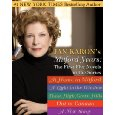
Book Review – Jan Karon’s Mitford Years: The First Five Novels

Finally – All Together in One Volume!

 I first read this series of books about a decade ago while I was (at that time) a solo pastor in a setting much like the central character in the series – “Father Tim.” Father Tim is the beloved rector of an Episcopal church in the small town of Mitford. In the series you are introduced to wonderful characters that you will recognize with different names from your own life. It’s sort of a “Pollyanna” type setting that will bring you to joy, laughter, sadness, and tears, and will take you on a journey where you are whisked into the arms of your loving Savior.

I would say that this is definitely my favorite series of novels by far. Jan Karon has a way of writing that takes your imagination away into Mitford and allows you to experience the stories as if you were really there. I recommend that you read this series while on vacation if possible, but if you can’t get away – you will feel like you are on vacation when you read this series. I think that Karon has a very good grasp of grace and redemption and conveys these great theological truths in the characters of these books in a wonderful way. Reading Karon will enlarge your view of God’s love, and how He sovereignly works in the lives of individuals to carry out His purposes. You will have a greater appreciation of the “church” and an enlarged worldview of all things theological via reading these books.

The best compliment I can give of Karon’s Mitford series is that in reading them you will be relaxed by her stories. She has a way of writing that calms and takes away your anxiety. You are truly able to bask in the realities of a world that truly is controlled by a loving God – even when you don’t see or understand it. These books are filled with stories that soothe the soul and bring hope into how you can make a difference in the lives of those around you for the sake of Christ and His glory.

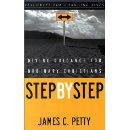
Book Review – Step by Step: Divine Guidance for Ordinary Christians by James C. Petty

Good Pastoral Wisdom For Biblical Decision Making

If you are looking for a non-charismatic, non-traditional, presentation of the wisdom view articulated in a more condensed format than Gary Friesen’s book – “Decision Making and the Will of God” – this book is an excellent choice. Even if you disagree with some of Petty’s conclusions, his understanding of God’s sovereignty and providential working in the Bible, history, and our individual lives is very insightful and exegetically sound.

Some of the helpful statements Petty makes on divine guidance are as follows:

“I believe that guidance comes when you learn to apply the Word of God to your life in the wisdom provided by the Holy Spirit.”

“Knowing God’s will is the fruit of a transformed mind.”

“God, I believe, does far more than reveal his general purposes and then leave us to link ourselves to them or pragmatically calculate the most edifying outcomes”

“Guidance is given by God when he gives us insight into issues and choices so that we make the decisions with divinely inspired wisdom. Guidance comes, in short, by God making us wise.”

“He chooses to guide mediately because of the illuminating power of that Spirit.”

“The Bible, properly understood and applied by the Holy Spirit, is completely sufficient for the guidance of the believer.”

“Guidance is knowledge of the will of God, which comes by wisdom and understanding.”

One of the most helpful sections in the book is in part four where he delineates seven ways to apply biblical wisdom in the process of decision-making. There is a very solid emphasis on obeying the delineated moral will of God, and when you do that – it’s much easier to narrow our choices and decide. He gives some very practical illustrations of how to handle real life decisions that we all have to make. Petty is very pastoral, and comes across as a wise counselor himself in this book. I highly recommend that you make this one of your top reads as you seek to be wiser in the process of seeking God’s guidance and direction in your life – especially in the “hard” decisions you need to make.

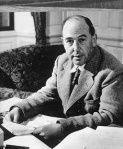
Is Jesus Christ – Lord, Liar, or a Lunatic? by *C.S. Lewis

This Famous Quote is Taken from The Book “Mere Christianity” – It is perhaps the most famous quote on Jesus outside of the Bible! 

“I am trying here to prevent anyone saying the really foolish thing that people often say about Him: ‘I’m ready to accept Jesus as a great moral teacher, but I don’t accept His claim to be God.’ That is the one thing we must not say. A man who was merely a man and said the sort of things Jesus said would not be a great moral teacher. He would be either a lunatic — on a level with the man who says he is a poached egg — or else he would be the Devil of Hell. You must make your choice. Either this man was, and is, the Son of God: or else a madman or something worse. You can shut Him up for a fool, you can spit at Him and kill Him as a demon; or you can fall at His feet and call Him Lord and God. But let us not come with any patronising nonsense about His being a great human teacher. He has not left that open to us. He did not intend to.” – C.S. Lewis

ABOUT CLIVE STAPLES LEWIS

*”Paging through 40 years of Christianity Today . . . one author’s books indisputably affected American evangelicals during this period more than any other. And that author was neither American nor quintessentially evangelical . . . C.S. Lewis.” (Christianity Today 9/16/96). Lewis had an enormous impact on more than a generation of readers who sought “practical wisdom, digestible theology, wit, verve, logic, and imagination.”

Clive Staples (“Jack”) Lewis was born in Belfast, Northern Ireland, on November 29, 1898. Raised in a bookish home, Lewis and his older brother, Warren, were more at home in the world of ideas of the past, than with the real world of the 20th century. Coping with the tragedy of his mother’s death when he was 10, Jack sought refuge in composing stories and studying. The rest of his life might have been a sad search for the security he felt as a child before his mother’s death, if not for the joy he experienced in his conversion to Christianity in September of 1931. After long conversations with J.R.R. Tolkien (a devout Catholic), Lewis records in his spiritual autobiography, Surprised by Joy (1950), “When we [Warren and Jack] set out [by motorcycle to the Whipsnade Zoo] I did not believe that Jesus Christ was the Son of God, and when we reached the zoo I did.”

In 1933, he published his first theological work, The Pilgrim’s Regress, a lively allegory detailing his flight from skepticism to faith and a parody of John Bunyan’s The Pilgrim’s Progress. In a varied and comprehensive career, C.S. Lewis wrote with three very different voices. There was Lewis, the distinguished Oxbridge literary scholar and critic; Lewis, the highly acclaimed author of science fiction and children’s literature; and Lewis, the popular writer and broadcaster of Christian apologetics. Although his most notable critical and commercial success is certainly his seven-volume Chronicles of Narnia, published between 1950 and 1956, he is at his most articulate, and winsome in his theological works: The Problem of Pain (1940), a defense of pain — and the doctrine of hell — as evidence of an ordered universe; and The Screwtape Letters (1942), a senior devil’s correspondence with a junior devil who is fighting Christ the Enemy for the soul of an unsuspecting believer.

During World War II, he emerged as a religious broadcaster and became famous as the “apostle to skeptics.” Mere Christianity is a compilation of his wartime radio essays defending and explaining the Christian faith. C.S. Lewis died on November 22, 1963, a week before his 65th birthday and on the same day President John F. Kennedy was assassinated. His grave is in the yard of Holy Trinity Church in Headington Quarry, Oxford. The headstone bears the inscription from Shakespeare, “Men must endure their going hence.” All who read, both evangelical and skeptic, are richer for Jack Lewis having come.

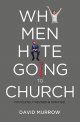
Book Review: Why Men Hate Going to Church by David Murrow

Weak Theologically, Decent Practically

From the time I started this book, until the time I finished it – I read and reviewed 25 other books. I just couldn’t get into it at all. I think it’s because though the subject is important – Why do more women than men go and participate in church? I think the theological underpinnings of the book were so weak that the book just couldn’t hold my interest. I think he actually totally missed the point of why men don’t go to church, and it’s the same reason why women, or even teenagers don’t go to church – the Bible calls it “idolatry.”

In this book the author spends most of the time giving statistics, talking about the feminization of the church, and issues related to gender, masculinity, and men’s needs.

The book is one that I think most Christians or marketers could have written, and Murrow has capitalized on it. However, I don’t think that he has really given foundational solutions. The solution isn’t just about growing churches by giving men what they want; it’s focusing on the gospel and loving men by applying the gospel to men’s idolatries – what they really need. It’s offering what Jesus offered men and women in the New Testament – the abundant life in Him that’s better than anything the world has to offer. In other words, what difference does it make if you have a lot of men coming to church, but they aren’t being told to repent and have faith in Christ – change from the inside out. You don’t get men into church by feeding their idolatries, but by giving them the gospel and showing how Jesus is better than their idolatries.

On a positive note I do think Murrow gives some good practical suggestions and statistics to spark discussion among pastors or church staffs that are seeking to be effective in their outreach and discipleship of men. Over this book I would recommend the following books for men and reaching men: “Disciplines of a Godly Man” by R. Kent Hughes, “Tender Warrior” by Stu Weber, “No Man Left Behind” and “The Man in the Mirror” by Patrick Morley (anything by Morley on or for Men), “The Masculine Mandate” by Richard D. Phillips, or “Men of God” edited by Trevor Archer and Tim Thornborough.

I received this book free from Thomas Nelson Publishers as part of their BookSneeze.com book review bloggers program. I am under no compulsion to write a positive or negative review of this book. The opinions expressed are exclusively my own. I am disclosing this in accordance with the Federal Trade Commission’s 16 CFR, Part 255.


Book Review: The Holy Trinity by Robert Letham

The Complex Made Simpler

One of the long standing “cardinal” doctrines of Orthodox Christianity is the teaching that God is one in essence and three in person, and yet it is one of the most difficult of doctrines to comprehend of the whole lot. Robert Letham writes, “For the vast majority of Christians, including most ministers and theological students, the Trinity is still a mathematical conundrum, full of imposing philosophical jargon, relegated to an obscure alcove, remote from daily life.”

However, due to this lack of understanding and grappling with the ramifications of this doctrine most Christians view God in the abstract and as a result have a detached and almost deistic relationship with the God of the Bible who is actually transcendent and immanent in our world. In this book the author seeks to bring about a new revitalization to the church and its witness to the world by having a deeper understanding of the Triune God as revealed in the Scriptures.

In this very cogent book Dr. Letham seeks to give a broad overview of the Triune doctrine by canvassing the Scriptures, church history, modern discussions with contemporary theologians of the past few centuries (their orthodox and unorthodox views), and Critical Issues – including the incarnation, worship, prayer, missions, and union with Christ.

This book is a challenging read, but I think Dr. Letham maintains a good balance between the scholarly aspects of the discussion and its practical applications – which ultimately lead us to worship. Many of the chapters end in prayer and focus on actually worshipping God, not just discussing Him. Two excellent articles reviewing books by Gilbert Bilezikian and Kevin Giles on the Trinity conclude the work as appendixes. A helpful glossary and bibliography conclude the work.

I am grateful to the Triune God of Scripture for Dr. Letham’s excellent contribution to theological reflection in this book. It is a readable and comprehensive study of the doctrine of the Trinity in the unfolding revelation of the Bible, in its breadth of reflection from church history, amid the loci of influential systematic theologians, and in the life and application of the evangelical community. I think anyone will benefit from reading this book. It will definitely sharpen your understanding of the Triune God we worship and inform and influence the way you relate to Him in your daily life.

Book Review: The Elements of Preaching by Warren W. Wiersbe and David Wiersbe

Very Helpful Primer on the Basics of Preaching

 This helpful handbook by father and son preaching veterans – Warren and David Wiersbe is divided into two sections. There are twenty-six preaching principles and fourteen preaching prohibitions that are developed. Each chapter is only one to two pages in length. They really pack this book in with great quotes, wisdom, and the type of advice that you can only get from preachers that have put a lot of mileage in the pulpit.

In the preaching principles section the Wiersbe’s remind us  “Methods are many, principles are few. Methods always change, Principles never do.” Here are just ten of the twenty-six topics they develop:

Preaching is the communicating of God’s truth by God’s servant to meet the needs of people.

The Preacher is a part of the message.

Preaching is an act of worship.

A sermon must have both intent and content if it is to be effective.

The sermon should be based on the essentials of the text and not the accidentals of the translation you are using.

Build your outline on the unique features of the text.

Keep your preaching within the bounds of what the text says and what the people can receive.

Preach to express, not to impress.

Sermons preached as part of a series must be independent and yet related.

Speak the truth in love.

Never be satisfied with your preaching.

At the end of the book they include a very helpful checklist for “Taking Inventory of the Message:”

  1. Is the message solidly based on Scripture?
  2. Does it exalt the Person and work of Jesus Christ?
  3. Will it meet the needs of the people?
  4. Is the theme a timeless truth worth talking about?
  5. Is the message organized so that I can preach it clearly and the people understand it easily? Is there a concise and clear statement of purpose? Is there a clear plan of development? Is there practical application that makes the message personal?
  6. Are all Scripture references and historical facts accurate?
  7. Is the message real to me personally so that I may make it real to others?
  8. Does the message fit into the total “preaching plan” for this church and into the context of the church’s ministry at this time?
  9. Does the message fit into the ministry of the Church at large and Christ’s concern to save a lost world?
  10. Is the message worth preaching again?

I have used this little book (approximately 100 pages) as a refresher, idea generator, and kick-starter for years. It’s well worth having for beginning, intermediate and experienced preachers of the Word. Perhaps the most important asset of this book is the encouragement it will give you from two men who have been faithfully delivering God-centered sermons in the trenches for years.

*Warren W. Wiersbe is the Distinguished Professor of Preaching at Grand Rapids Baptist Seminary, Warren Wiersbe is the author of more than 100 books. Billy Graham calls him “one of the greatest Bible expositors of our generation.” Interestingly, Warren’s earliest works had nothing to do with scriptural interpretation. His interest was in magic, and his first published title was Action with Cards (1944).

“It was sort of imbecilic for a fifteen-year-old amateur magician to have the audacity to write a book and send it to one of the nation’s leading magic houses,” Warren says. But having a total of three books published by the L.L. Ireland Magic Company—before the age of 20—gave him a surge of confidence. In later years, he applied his confidence and writing talent to the Youth for Christ (YFC) ministry.

Warren wrote many articles and guidebooks for YFC over a three-year period, but not all his manuscripts were seen by the public eye. One effort in particular, The Life I Now Live, based on Galations 2:20, was never published. The reason, Warren explains with his characteristic humor, is simple: it was “a terrible book…Whenever I want to aggravate my wife, all I have to say is, ‘I think I’ll get out that Galations 2:20 manuscript and work on it.’” Fortunately, Warren’s good manuscripts far outnumbered the “terrible” ones, and he was eventually hired by Moody Press to write three books.

The much-sought-after author then moved on to writing books for Calvary Baptist Church. It was during his ten years at Calvary that Expository Outlines on the New Testament and Expository Outlines on the Old Testament took shape. These two works later became the foundation of Warren’s widely popular Bible studies known as the Be series, featuring such titles as Be Loyal (a study on Matthew) and Be Delivered (a study on Exodus). Several of these books have been translated into Spanish.

His next avenue of ministry was Chicago’s Moody Memorial Church, where he served for seven years. He wrote nearly 20 books at Moody before moving to Lincoln, Nebraska, where he and his wife, Betty, now live. Prior to relocating, he had been the senior pastor of Moody Church, a teacher at Trinity Evangelical Divinity School, and a producer of the Back to the Bible radio program.

During all these years of ministry, Warren held many more posts and took part in other projects too numerous to mention. His accomplishments are extensive, and his catalog of biblical works is indeed impressive and far-reaching (many of his books have been translated into other languages). But Warren has no intention of slowing down any time soon, as he readily explains: “I don’t like it when people ask me how I’m enjoying my ‘retirement,’ because I’m still a very busy person who is not yet living on Social Security or a pension. Since my leaving Back to the Bible, at least a dozen books have been published, and the Lord willing, more are on the way.”

Wiersbe’s recent books include Your Next MiracleThe 20 Essential Qualities of a Child of GodThe Bumps are What You Climb OnClassic Sermons on the Fruit of the SpiritClassic Sermons on Jesus the ShepherdKey Words of the Christian LifeLonely PeopleA Gallery of GraceReal Peace: Freedom and Conscience in the Christian Life, and On Being a Leader for God.

Book Review: Finding Faithful Elders and Deacons by Thabiti M. Anyabwile

A Useful Primer For Biblical Leadership in the Church

 In this book experienced pastor Thabiti Anyabwile writes three sections on how to find deacons, elders, and specify what their roles are in the church. Pastor Anyabwile gives the pertinent biblical requirements for deacons and elders, and gives numerous helps on biblical qualifications, traits to watch for, and questions and observations for examining whether or not those under consideration are wise choices for the respective offices of elder and deacon.

I think the best way to use this book is to use it as Thabiti Anyabwile intended it to be used:

 “First, use it prayerfully. Pray for pastors and elders as they shepherd and serve the sheep. Pray for more men to be raised up in the congregation for this important work. Pray that the Lord would pour out his grace on those serving these tasks. Pray that the members of the church would show genuine appreciation, love, and care for their shepherds. Pray that all the men in the church would grow in the qualities that elders should possess. Pray that men would have a godly desire to give their lives in serving the body of Christ as servant-leaders.

Second, use this book practically. The book does not delve into a lot of detailed argumentation, hoping instead to make application easily and quickly. I want the book to help in actually doing something—identifying and training elders—not just considering something. Put the suggestions into practice, and improve them with the experience and wisdom that come from your particular church setting and other faithful leaders.

Finally, use the book pedagogically. That is, use it to teach and instruct. Perhaps a church needs to select its first elders after a period of planning and study. Pastors may wish to use these brief chapters to ‘flesh out’ for the average church member which qualities the congregation as a whole needs to be looking and praying for in their prospective elders. Examination and pastoral search committees may find similar help.”

Take it from my own experience in over twenty years of pastoring – you want to get all the help you can in the wise selection of, praying for, training of, and role implementation of your elders and deacons – because the church will ultimately rise to great heights or fall to low depths based on the quality, character, and biblical execution of it’s leaders.

I highly recommend this book for church planters, existing leadership teams, solo pastors, deacons, and elders. It serves as a concise handbook that you can use to strengthen your existing leadership, develop future leaders, and most certainly add health and value to Christ’s church as you seek to be a good steward of its most valuable resources.