Jesus in 1 Corinthians – Chart by Dr. Michael Williams

Reading The Bible Through The Jesus Lens in the Book of 1 Corinthians

From Biblical Book to Biblical Hook

Chart adapted from *Dr. Michael Williams Book: How To Read The Bible Through The Jesus Lens

Title for 1 Corinthians

1 Corinthians: Theme

1 Corinthians 3:3

“Maturing”

God gives guidance to the spiritually gifted but immature Corinthian church.

“For you are still of the flesh. For while there is jealousy and strife among you, are you not of the flesh and behaving only in a human way?”

Christ-Focus in 1 Corinthians

Implications from 1 Corinthians

Hooks from 1 Corinthians

 Jesus shows us that Christian maturity is other-focused, not self-focused.

 And he gave the apostles, the prophets, the evangelists, the shepherds and teachers,

 to equip the saints for the work of ministry, for building up the body of Christ,

 until we all attain to the unity of the faith and of the knowledge of the Son of God, to mature manhood, to the measure of the stature of the fullness of Christ,

 so that we may no longer be children, tossed to and fro by the waves and carried about by every wind of doctrine, by human cunning, by craftiness in deceitful schemes.

 Rather, speaking the truth in love, we are to grow up in every way into him who is the head, into Christ, 

 from whom the whole body, joined and held together by every joint with which it is equipped, when each part is working properly, makes the body grow so that it builds itself up in love.

 – Ephesians 4:11-16

 Let us grow in spiritual maturity by using our divinely bestowed gifts to build up the body of Christ.

Pursue love, and earnestly desire the spiritual gifts, especially that you may prophesy. For one who speaks in a tongue speaks not to men but to God; for no one understands him, but he utters mysteries in the Spirit. On the other hand, the one who prophesies speaks to people for their upbuilding and encouragement and consolation. The one who speaks in a tongue builds up himself, but the one who prophesies builds up the church.

 Now I want you all to speak in tongues, but even more to prophesy. The one who prophesies is greater than the one who speaks in tongues, unless someone interprets, so that the church may be built up.

 Now, brothers, if I come to you speaking in tongues, how will I benefit you unless I bring you some revelation or knowledge or prophecy or teaching? If even lifeless instruments, such as the flute or the harp, do not give distinct notes, how will anyone know what is played? And if the bugle gives an indistinct sound, who will get ready for battle?

So with yourselves, if with your tongue you utter speech that is not intelligible, how will anyone know what is said? For you will be speaking into the air. There are doubtless many different languages in the world, and none is without meaning, but if I do not know the meaning of the language, I will be a foreigner to the speaker and the speaker a foreigner to me. So with yourselves, since you are eager for manifestations of the Spirit, strive to excel in building up the church.

 – 1 Corinthians 14:1-12


 Are you a mature Christian?

 Do you focus more on satisfying yourself or on the needs of others?

 Which is more important, the presence of spiritual gifts or the use toward which those gifts are put?

 How do you measure maturity?

 How does God measure it?

 Would there even be new life in Christ if Jesus focused His life on the same things you do?

About the Author: Michael James Williams in his own words: “After my conversion in the U. S. Navy (in a submarine beneath the North Atlantic!), I entered Columbia Bible College, where I received a B.A. (1985). This was followed by an M.A. in Religion at Westminster Theological Seminary (1987) and a Ph.D. in Biblical Studies at the University of Pennsylvania (1999). In 2000, I was ordained in the Christian Reformed Church, and since 1995 have been teaching at Calvin Theological Seminary. I have also taught courses at Westminster Theological Seminary, the University of Pennsylvania, and brief stints in Limuru, Kenya; Donetsk, Ukraine; and Warsaw, Poland. In addition to articles on Old Testament topics in various reference works and academic journals, and contributing to and editing Mishneh Todah: Studies in Deuteronomy and Its Cultural Environment in Honor of Jeffrey H. Tigay (2009); I have authored Deception in Genesis: A Comprehensive Analysis of a Unique Biblical Phenomenon (2001); The Prophet and His Message: Reading Old Testament Prophecy Today (2003); and, most recently, How to Read the Bible through the Jesus Lens: A Guide to Christ-Focused Reading of Scripture. Grand Rapids, Zondervan (2012). My amazing wife, Dawn, and I enjoy hiking and all things outdoors.”

An Acrostic For Remembering the Book of Exodus by Barry Huddleston

EXODUS THEME:

 FROM EGYPTS BONDAGE TO SINAIS TEN COMMANDMENTS

 CHAPTER:             TITLE

C1            Forced labor for Israel

C2            Royal training for Moses

C3            Obstinate Moses resists God

C4            Moses’ excuses are answered

C5            Egyptian oppression is increased

C6            God’s deliverance is promised

C7            Yahweh smites the Nile

C8            Plagues of frogs, insects

C9            Three plagues harden Pharaoh

C10          Swarming locusts and darkness

C11           Blood required for firstborn

C12           Observance of the Passover

C13           National exodus from Egypt

C14           Division of Red Sea

C15           Adoration song to God

C16           Gathering manna six days

C17           Extracting water from rock

C18           Tribal organization for ruling

C19           Orders at Mount Sinai

C20           Statement of Ten Commandments

C21           Injunctions for moral justice

C22           Numerous laws of restitution

C23           Angelic assistance is promised

C24           Instructing Moses on Sinai

C25           Sketch of tabernacle plans

C26           Tabernacle curtains and boards

C27           Exact measurements for tabernacle

C28           Necessary garments for priests

C29           Consecrations of the priests

C30           Offerings for sin’s atonement

C31           Mandate to keep Sabbath

C32           Molten calf brings judgment

C33           Anguished intercession of Moses

C34           New covenant is given

C35           Desire rekindled for tabernacle

C36           Making curtains and boards

C37           Explanation of furniture making

C38           New court for tabernacle

C39           Tabernacle and garments finished

C40           Shekinah glory fills tabernacle

About the Author: Barry Huddleston got the idea for The Acrostic Summarized Bible when taking a class taught by Terry Hall (a member of Walk Thru The Bible Ministries) in the 1980’s. The Acrostic Summarized Bible was last published in 1992 in Grand Rapids, by Baker. See the Introduction to his book on this blog under the  “Acronym” category in the article by Bruce H. Wilkinson – entitled “Why Use Acrostics For Biblical Retention?” https://verticallivingministries.wordpress.com/wp-admin/post.php?post=1612&action=edit

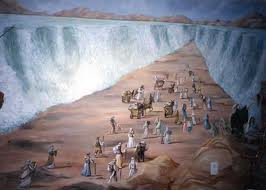
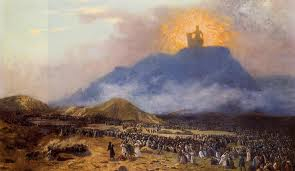
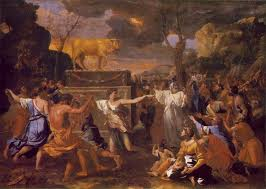
Paintings above in order: (1) Moses Holding Ten Commandments – source unknown; (2) Israel in Egypt by John Poynter; (3) Plagues of Egypt by Josesph Turner; (4) Christ Our Passover by Louie Monteith; (5) Moses parting the Red Sea – source unknown;(6) Moses on Mount Sinai by Jean Leon Gerome; (7) Molten Calf – source unknown; (8) Tabernacle image – source unknown.

Book Review: The Wisdom of God by Nancy Guthrie

Jesus Only Wise – Jesus in the Wisdom Literature

One of the most exciting things about living in the times in which we are living is the anticipation of the return of Christ and the ushering in of His kingdom. Along with this prophetic reality is the intensification of our study of God’s Word to look for Christ from Genesis to Revelation. According to the author this study is “uniquely designed to help you look into the wonder of the wisdom literature of the Old Testament (covering 10 weeks of studies in Job, Psalms, Proverbs, Ecclesiastes, and Song of Solomon) and see how it prepares us for and points us toward Christ.

This book will help you:

(1) Learn how to study the Bible inductively (each chapter contains questions for personal Bible study);

(2) Understand the Bible and how the different books of the Bible fit together as a whole (each lesson contains a teaching chapter on the core truths of the Biblical Book being studied);

(3) Interact with the central truths of each Wisdom Literature Book and how they relate to the whole Bible (each chapter has a discussion starter and a dozen or so questions of exposition based on the passage of study;

(4) Apply the relevant applications from each passage in your life (each chapter has one or more questions to put the passage into action in one’s life);

(5) Love and worship Jesus Christ (each lesson is loaded with cross references, charts, discussion, and a “Looking Forward” section highlighting Jesus as the central figure, hero, and theme of each passage of study and of the entire Scriptures).

I don’t know of a small group study out there today that has more depth, more of Jesus, is more fun to study and discuss than this new series by Nancy Guthrie. It is simply outstanding in its depth of Biblical exposition, helpful in its applications, and highlights the fact that Jesus is what the Bible and life is all about. It’s about time that someone has put together a series of books designed for serious lay people about, by, and for Christ at the center of all of the Scriptures. If you are looking for a phenomenal Bible study that is theologically deep, practically relevant, and will help you to worship and love Jesus more than ever then this is the Bible study for you!

Note: I was provided with a free copy of this book from the publisher for review and was not required to write a positive review.

About the Author: Life can knock the wind out of you, taking with it your confidence in God. Or at least who you thought he was. Perhaps this explains why those who survive heart-breaking tragedy with their hope intact, and their faith expanded, have the power to inspire us. We want to hear from those people, we want to learn what they’ve learned. This may be why so many people love hearing from Nancy Guthrie. In burying two of her three children, Nancy has endured the kind of loss most of us hope we never have to face. Yet her hope has not dimmed, and her easy laugh has not disappeared.

Those who have watched Nancy and David Guthrie walk through the loss of two infant children, and the millions who have read their story worldwide inTIME Magazine and USA Today, have wondered at their ability to emerge from such sorrow with joy for life and passion for God. In reality, this deep place of pain caused Nancy to dig into the scriptures like she never had before, looking for answers to her questions and a deeper relationship to God. She offered many of the lessons she learned from this sorrowful experience in her 2002 book, Holding On to Hope: A Pathway of Suffering to the Heart of God (Tyndale House Publishers) which has helped thousands of people pursue God in the midst of their suffering. She regularly hears from readers book from all around the world who have been touched by the as the book as it has been translated into numerous languages including German, Danish, Norwegian, Korean and Chinese.

Her second book, The One Year Book of Hope (also Tyndale), a daily devotional for people who are hurting or grieving, released in 2005. The Guthries have seen God continue to use their loss to minister to other people going through loss in a variety of ways, including serving as co-hosts for a new production of the GriefShare video series. GriefShare is a 13-week video curriculum series that is used to facilitate weekly grief groups in more than 4,000 churches nationwide.

Today, Nancy’s energies and passions are focused on her growing Bible teaching ministry, Her newest book comes out of the study of Hebrews she taught for the women at her church in the fall of 2005. Hoping for Something Better: Refusing to Settle for Life as Usual (July 2007, Tyndale House Publishers), provides readers and small groups with a 10-week journey through the book of Hebrews and includes study questions for a weekly discussion.

Nancy’s previous books have received significant media coverage includingUSA Today, Christianity Today, Beliefnet, and stories syndicated nationally by Religion News Service and Associated Press. Nancy has been a guest on radio and television programs such as “FamilyLife Today,” “The Bible Answerman,” “Back to the Bible,” Moody Radio, “Life Today with James Robison,” “The 700 Club,” and many more. Her books have been promoted by international ministries including Focus on the Family, New Life Ministries, Insight for Living, the Christian Research Institute, and Rick Warren’s Ministry Toolbox.

In addition to teaching a weekly Bible class at her church, Nancy speaks regularly at women’s retreats and evangelistic events nationally and internationally including recent events at The Brooklyn Tabernacle, Second Baptist Church of Houston, a Ravi Zacharias International Ministries Conference, and a women’s conference in Scotland. Nancy has worked in the Christian publishing industry for over twenty years as a publicist and special project editor. She currently handles media relations for CBA: The Association for Christian Retail, and the ministry of Anne Graham Lotz.

Nancy and her husband, David, and son, Matt, make their home in Nashville, Tennessee, where they attend Christ Presbyterian Church (Presbyterian Church in America).

Learning Scripture Memory From One Who Mastered The Bible: Dr. John G. Mitchell

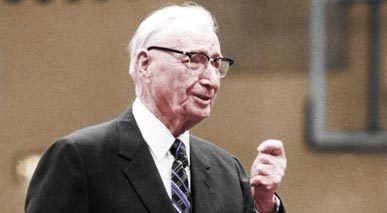
I had the privilege of attending Multnomah University (was Multnomah School of the Bible) from 1985-1988. I went there at the recommendation of Luis Palau and was drawn by their motto, “If it’s Bible you want, then you want Multnomah.” One of the highlights for me as a student at Multnomah was taking classes like “Spiritual Life,” and “Acts and Romans” from an old Scottish preacher (and the founder of the school) by the name of Dr. John G. Mitchell. I had never been around a man that was so in love with Jesus, and that loved the Bible like him. I was glad to see the article below by a fellow Multnomah and Talbot alumnus on memorizing Scripture based on advice from Dr. Mitchell. I had the same conversation with Dr. Mitchell that Dr. Berding had as a student. I don’t know that there is any greater need of the moment than the two things that Dr. Mitchell stood for and modeled: a love for Jesus and for his Word. I hope that you will join me in heeding these words of wisdom by one of the greatest men of God who ever walked on this planet (and that’s no exaggeration whatsoever). He was great because he was humbled and awed by the greatness of His God – and he lived to tell others of His Majesty. Dr. Mitchell was very special to me because he not only mastered the Bible, but more importantly, the Bible for God’s glory mastered him. Dr. Berding gives a very helpful strategy for memorizing Scripture based on principles gleaned from Dr. Mitchell in this excellent article. (Dr. Mitchell pictured above). – Dr. David P. Craig

 “The Easiest Way to Memorize the Bible”

One of my professors in college was really old. I can hear everyone asking: “How old was he?” (No, his social security number wasn’t 7 …) Let’s put it this way: he was the founder of the college at which I was studying (Multnomah in Portland, Ore.), and the school was celebrating the half-century mark of its founding while I was there! In fact, Dr. John Mitchell was over the age of 90 when he taught the two classes I took from him. He continued to teach well into his mid-90’s.

Not surprisingly, he was getting forgetful about some things by the time I had him as a teacher, but what he definitely was not forgetting were the Bible verses he had memorized. His ability to recall Bible verses was astounding. I do not know this for a fact, but I would guess that he had all of the New Testament and large sections of the Old Testament committed to memory. All of his students were profoundly impacted by his immersion in the Scriptures.

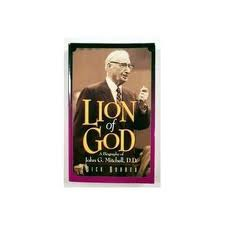
I only had one opportunity to sit and talk with him while I was a student. I had a single question to ask him that day: “How did you come to memorize so much of the Bible?” he answered, “Well, I never really tried to memorize.” (Oh no, I thought, this isn’t going to be very helpful …) “But before I prepare to preach a series of sermons on a book of the Bible, I first read it aloud *50 times before preaching it.” (OK, this might be helpful.) “Since I preached a lot in my younger years,” (now that is an understatement; read his biography! [Dick Bohrer. Lion of God: A biography of John G. Mitchell, D.D. Portland, OR: Multnomah Bible College, 1994], book cover and Dr. Mitchell pictured on left). “I had lots of opportunities to read passages over and over again.”

Dr. Mitchell’s comments that day were a helpful turning point for me in my own commitment to memorize the Scriptures. I had already tackled some large chunks of the Bible and committed them to memory, but the process of getting there had been rather painful. Rote memory (“look at the verse, cover it with your hand, look into the air and try to quote it by memory, uncover the verse with your hand to see what you missed, fix whatever mistakes you made, try again”) was hard work, and the results were not always satisfying from a long-term, remember-what-you-memorized standpoint.

After that single conversation with Dr. Mitchell, I changed tactics. From then on, before traveling down the “rote road,” I would read the passage I wanted to memorize 50 times out loud with great emphasis. Then – and only then – I would try the rote method.

I learned three things by doing it this way:

(1) I discovered that I had already memorized most of the passage I was trying to learn  before I ever really started to try to memorize it.

(2) I found out that the process of reading a passage over and over again in-and-of itself became a wonderful means of God working his grace in my life. I wasn’t just learning words, I was thinking about where the passage was going. God used it to help me understand the passage better, to think about its implications in my life, and to impact my actions and affections.

(3) I discovered that this process helped immensely in holding in my long-term memory the passages I had memorized. It is a far better process for retention. So, why don’t you try it yourself? Here is a summary of the process.

STEP 1: Begin by selecting a passage of Scripture that takes approximately 15 minutes to read out loud. Here is a short list of New Testament passages that would fall into this category that also would probably yield you a lot of personal spiritual fruit: Matthew 5-7; John 14-17; Romans 6-8; Philippians (all); Colossians (all); 2 Timothy (all); Hebrews 11-13; James (all); 1 Peter (all); 1 John (though this one is tough because of how cyclical it is).

STEP 2: Read your passage through once or twice a day aloud. Keep track of how how many times you have read it through.

STEP 3: Once you have read it aloud 50 times, then try to rote memorize it. Keep working on it faithfully until you can get through the entire passage by memory.

STEP 4: Quote through it at least 25 times without looking to fix it in your memory. An additional step you can take that would ease the process would be to read your passage onto a digital recorder and listen to it whenever you can as you drive, walk, cook or wait for something. Your own recorded voice will work a little better than someone else’s voice, since it will match the intonation of your daily oral readings, but you can use a prerecorded section if you prefer.

I’ll close with this thought: If you started today, red aloud through Philippians once a day for 50 days, spent the following 15 days doing the rote-memory thing, reviewed for another 25 days, you could have all of Philippians memorized in three or four months by only spending a relatively painless 15 minutes a day doing it. Wouldn’t that be amazing?

This column [adapted] above was first published in thegoodbookblog.com on January 28, 2012 & again in the Biola University Magazine, Spring Edition 2012, 39.

About the Author: Ken Berding is a professor of New Testament at Talbot School of Theology and the author of several books, most recently Walking in the Spirit (Crossway, 2011). He holds an M.A from Talbot, and a Ph.D. in hermeneutical and biblical interpretation from Westminster Seminary in Philadelphia.

*Note: Dr. Mitchell told me when I was at Multnomah that he learned this from the great preacher from Westminster Chapel in London – G. Campbell Morgan – the great preacher that preceded and handpicked Dr. David Martyn Lloyd-Jones [DPC])

What Are the Basics of Bible Study? By John MacArthur

There is nothing more important for the Christian than to seek Jesus, hear from Him, obey Him, and proclaim Him daily. Few people that I know of have been more faithful in doing these four things than Pastor John MacArthur in our generation. Therefore, who better to write about on how to study the Bible than someone who has been doing it with great passion and great effectiveness for over fifty years. Enjoy this article by Pastor John MacArthur. – Dr. David P. Craig

Personal Bible study, in precept, is simple. I want to share with you 5 steps to Bible study which will give you a pattern to follow:

STEP 1—Reading. Read a passage of Scripture repeatedly until you understand its theme, meaning the main truth of the passage. Isaiah said, “Whom will he teach knowledge? And whom will he make to understand the message? Those just weaned from milk? Those just drawn from the breasts? For precept must be upon precept, precept upon precept, line upon line, here a little, there a little” (Is. 28:9,10).

Develop a plan on how you will approach reading through the Bible. Unlike most books, you will probably not read it straight through from cover to cover. There are many good Bible reading plans available, but here is one that I have found helpful.

Read through the Old Testament at least once a year. As you read, note in the margins any truths you particularly want to remember, and write down separately anything you do not immediately understand. Often as you read you will find that many questions are answered by the text itself. The questions to which you cannot find answers become the starting points for more in-depth study using commentaries or other reference tools.

Follow a different plan for reading the New Testament. Read one book at a time repetitiously for a month or more. This will help you to retain what is in the New Testament and not always have to depend on a concordance to find things.

If you want to try this, begin with a short book, such as 1 John, and read it through in one sitting every day for 30 days. At the end of that time, you will know what is in the book. Write on index cards the major theme of each chapter. By referring to the cards as you do your daily reading, you will begin to remember the content of each chapter. In fact, you will develop a visual perception of the book in your mind.

Divide longer books into short sections and read each section daily for 30 days. For example, the gospel of John contains 21 chapters. Divide it into 3 sections of 7 chapters. At the end of 90 days, you will finish John. For variety, alternate short and long books, and in less than 3 years you will have finished the entire New Testament—as you will really know it!

STEP 2—Interpreting. In Acts 8:30, Philip asked the Ethiopian eunuch, “Do you understand what you are reading?” Or put another way, “What does the Bible mean by what it says?” It is not enough to read the text and jump directly to the application; we must first determine what it means, otherwise the application may be incorrect.

As you read Scripture, always keep in mind one simple question: “What does this mean?” To answer that question requires the use of the most basic principle of interpretation, called the analogy of faith, which tells the reader to “interpret the Bible with the Bible.” Letting the Holy Spirit be your teacher (1 John 2:27), search the Scripture He has authored, using cross-references, comparative passages, concordances, indexes, and other helps. For those passages that yet remain unclear, consult your pastor or godly men who have written in that particular area.

Errors to Avoid – As you interpret Scripture, several common errors should be avoided.

Do not draw any conclusions at the price of proper interpretation. That is, do not make the Bible say what you want it to say, but rather let it say what God intended when He wrote it.

Avoid superficial interpretation. You have heard people say, “To me, this passage means,” or “I feel it is saying. . . .” The first step in interpreting the Bible is to recognize the four gaps we have to bridge: language, culture, geography, and history (see below).

Do not spiritualize the passage. Interpret and understand the passage in its normal, literal, historical, grammatical sense, just like you would understand any other piece of literature you were reading today.

Gaps to Bridge – The books of the Bible were written many centuries ago.

For us to understand today what God was communicating then, there are several gaps that need to be bridged: the language gap, the cultural gap, the geographical gap, and the historical gap. Proper interpretation, therefore, takes time and disciplined effort.

Language. The Bible was originally written in Greek, Hebrew, and Aramaic. Often, understanding the meaning of a word or phrase in the original language can be the key to correctly interpreting a passage of Scripture.

Culture. The culture gap can be tricky. Some people try to use cultural differences to explain away the more difficult biblical commands. Realize that Scripture must first be viewed in the context of the culture in which it was written. Without an understanding of first-century Jewish culture, it is difficult to understand the gospel. Acts and the epistles must be read in light of the Greek and Roman cultures.

Geography. A third gap that needs to be closed is the geography gap. Biblical geography make the Bible come alive. A good Bible atlas is an invaluable reference tool that can help you comprehend the geography of the Holy Land.

History. We must also bridge the history gap. Unlike the scriptures of most other world religions, the Bible contains the records of actual historical persons and events. An understanding of Bible history will help us place the people and events in it in their proper historical perspective. A good Bible dictionary or Bible encyclopedia is useful here, as are basic historical studies.

Principles to Understand

Four principles should guide us as we interpret the Bible: literal, historical, grammatical, and synthesis.

The Literal Principle. Scripture should be understood in its literal, normal, and natural sense. While the Bible does contain figures of speech and symbols, they were intended to convey literal truth. In general, however, the Bible speaks in literal terms, and we must allow it to speak for itself.

The Historical Principle. This means that we interpret in its historical context. We must ask what the text meant to the people to whom it was first written. In this way we can develop a proper contextual understanding of the original intent of Scripture.

The Grammatical Principle. This requires that we understand the basic grammatical structure of each sentence in the original language. To whom do the pronouns refer? What is the tense of the main verb? You will find that when you ask some simple questions like those, the meaning of the text immediately becomes clearer.

The Synthesis Principle. This is what the Reformers called the analogia scriptura. It means that the Bible does not contradict itself. If we arrive at an interpretation of a passage that contradicts a truth taught elsewhere in the Scriptures, our interpretation cannot be correct. Scripture must be compared with Scripture to discover its full meaning.

STEP 3—Evaluating. You have been reading and asking the question, “What does the Bible say?” Then you have interpreted, asking the question, “What does the Bible mean?” Now it is time to consult others to insure that you have the proper interpretation. Remember, the Bible will never contradict itself.

Read Bible introductions, commentaries, and background books which will enrich your thinking through that illumination which God has given to other men and to you through their books. In your evaluation, be a true seeker. Be one who accepts the truth of God’s Word even though it may cause you to change what you always have believed, or cause you to alter your life pattern.

STEP 4—Applying. The next question is: “How does God’s truth penetrate and change my own life?” Studying Scripture without allowing it to penetrate to the depths of your soul would be like preparing a banquet without eating it. The bottom-line question to ask is, “How do the divine truths and principles contained in any passage apply to me in terms of my attitude and actions?”

Jesus made this promise to those who would carry their personal Bible study through to this point: “If you know these things, blessed are you if you do them” (John 13:17).

Having read and interpreted the Bible, you should have a basic understanding of what the Bible says, and what it means by what it says. But studying the Bible does not stop there. The ultimate goal should be to let it speak to you and enable you to grow spiritually. That requires personal application.

Bible study is not complete until we ask ourselves, “What does this mean for my life and how can I practically apply it?” We must take the knowledge we have gained from our reading and interpretation and draw out the practical principles that apply to our personal lives.

If there is a command to be obeyed, we obey it. If there is a promise to be embraced, we claim it. If there is a warning to be followed, we heed it. This is the ultimate step: we submit to Scripture and let it transform our lives. If you skip this step, you will never enjoy your Bible study and the Bible will never change your life.

STEP 5—Correlating. This last stage connects the doctrine you have learned in a particular passage or book with divine truths and principles taught elsewhere in the Bible to form the big picture. Always keep in mind that the Bible is one book in 66 parts, and it contains a number of truths and principles, taught over and over again in a variety of ways and circumstances. By correlating and cross-referencing, you will begin to build a sound doctrinal foundation by which to live.

What Now?

The psalmist said, “Blessed is the man who walks not in the counsel of the ungodly, nor stands in the path of sinners, nor sits in the seat of the scornful; But his delight is in the law of the Lord, and in His law he meditates day and night” (Ps. 1:1,2).

It is not enough just to study the Bible. We must meditate upon it. In a very real sense we are giving our brain a bath; we are washing it in the purifying solution of God’s Word.

“This Book of the Law shall not depart from your mouth, but you shall meditate in it day and night, that you may observe to do according to all that is written in it. For then you will make your way prosperous, and then you will have good success” (Joshua 1:8).

Here is the spring where waters flow,

To quench our heat of sin:

Here is the tree where truth doth grow,

To lead our lives therein:

Here is the judge that stints the strife,

When men’s devices fail:

Here is the bread that feeds the life,

That death cannot assail.

The tidings of salvation dear,

Comes to our ears from hence:

The fortress of our faith is here,

And shield of our defense.

Then be not like the swine that hath

A pearl at his desire,

And takes more pleasure from the trough

And wallowing in the mire.

Read not this book in any case,

But with a single eye:

Read not but first desire God’s grace,

To understand thereby.

Pray still in faith with this respect,

To bear good fruit therein,

That knowledge may bring this effect,

To mortify thy sin.

Then happy you shall be in all your life,

What so to you befalls:

Yes, double happy you shall be,

When God by death you calls.

(From the first Bible printed in Scotland—1576)

Adapted from the “Introduction” to John MacArthur. ESV MacArthur Study Bible. Wheaton: Crossway Books, 2010.

About the Author: Dr. John MacArthur is the pastor-teacher of Grace Community Church in Sun Valley, California. Grace Church has grown from 450 members in 1969, when MacArthur accepted the pastorate, to over 12,000 today. He is also the president of The Master’s College and Seminary in Newhall, California, a prolific author of more than two dozen books, and the speaker on the worldwide radio broadcast, Grace to You, heard over 700 times daily–every half hour, day and night, somewhere around the world. 

The primary emphasis of MacArthur’s ministry has always been the expository preaching and teaching of God’s Word through a verse-by-verse exposition of the Scripture. His studies pay particular attention to the historical and grammatical aspects of each biblical passage. MacArthur’s recently published book, How to Get the Most from God’s Word, released in conjunction with The MacArthur Study Bible, is designed to fill what he sees as “an increased hunger for the meat of the Word.” He assures the reader that the Bible is trustworthy and that an understanding of Scripture is available to everyone. He then provides guidance on how to study the Bible and how to discern the meaning of Scripture for oneself. Dr. MacArthur explains that the book and the Study Bible have been “in the works for 30 years…the product of 32 hours a week, 52 weeks a year…dedicated to the study of God’s Word.” He asserts that “God’s Word is the only thing that satisfies my appetite, but it also arouses an even deeper hunger for more.”

Among MacArthur’s other books are The MacArthur New Testament Commentary series, The Gospel According to Jesus, The Master’s Plan for the Church, Saved Without a Doubt, The Glory of Heaven, Lord Teach Me to Pray, Unleashing God’s Word in Your Life, Safe in the Arms of God, The Second Coming, Why One Way?, and Truth for Today, and Slave: The Hidden Truth About Your Identity in Christ. His books have been translated into Chinese, Czechoslovakian, French, Finnish, Hungarian, Korean, Polish, Romanian, Spanish, and several Indian languages. Though occasionally viewed by some groups as a controversial figure for strong critiques of freudian psychology, trends in the modern charismatic movement as well as the self-esteem movement, John MacArthur is seen by many as a champion of correcting many of the ills of evangelical Christianity. He is also a champion of helping believers grow stronger in their relationship with God through the committed study of the Word and personal commitment to the local church.
MacArthur spent his first two years of college at Bob Jones University, completed his undergraduate work at Los Angeles Pacific College, and studied for the ministry at Talbot Theological Seminary. John and his wife, Patricia, live in Southern California. They have four grown children — Matt, Marcy, Mark, and Melinda–and eight grandchildren.

Wisdom on Bible Study and Biblical Peaching From John R.W. Stott

An Interview With John Stott and Albert Mohler on Preaching Today

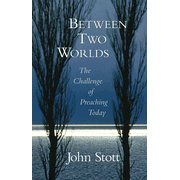
John R.W. Stott was arguably one of the most able preachers of the late 2oth into the 21st century until his death in July of 2011. Here is a very good interview with the President of Southern Baptist Seminary – Dr. Albert Mohler (an excellent preacher in his own right) and John Stott. A lot of the material in this interview can be gleaned from Stott’s classic text book on preaching enitled “Between Tow World’s.” Though this interview took place over twenty years ago – it doesn’t change the wisdom herein contained for preachers, and those who love to study, hear, and seek to obey God’s Word – great stuff from Stott and Mohler – enjoy! – Dr. David P. Craig

“Between Two Worlds”

[Albert Mohler: In honor of John Stott (who passed away on July 11, 2011 and would have been 91 on this day – April 27, 2012), I here republish an interview I conducted with the great preacher in 1987. The interview was first published in Preaching magazine, for which I was then Associate Editor.]

John R. W. Stott has emerged in the last half of the twentieth century as one of the leading evangelical preachers in the world. His ministry has spanned decades and continents, combining his missionary zeal with the timeless message of the Gospel.

For many years the Rector of All Souls Church, Langham Place, in London, Stott is also the founder and director of the London Institute for Contemporary Christianity. His preaching ministry stands as a model of the effective communication of biblical truth to secular men and women.

The author of several worthy books, Stott is perhaps best known in the United States through his involvement with the URBANA conferences. His voice and pen have been among the most determinative forces in the development of the contemporary evangelical movement in the Church of England and throughout the world.

Preaching Associate Editor R. Albert Mohler interviewed Stott during one of the British preacher’s frequent visits to the United States.

Mohler: You have staked your ministry on biblical preaching and have established a world-wide reputation for the effective communication of the gospel. How do you define ‘biblical preaching’?

Stott: I believe that to preach or to expound the scripture is to open up the inspired text with such faithfulness and sensitivity that God’s voice is heard and His people obey Him. I gave that definition at the Congress on Biblical Exposition and I stand by it, but let me expand a moment.

My definition deliberately includes several implications concerning the scripture. First, it is a uniquely inspired text. Second, the scripture must be opened up. It comes to us partially closed, with problems which must be opened up.

Beyond this, we must expound it with faithfulness and sensitivity. Faithfulness relates to the scripture itself. Sensitivity relates to the modern world. The preacher must give careful attention to both.

We must always be faithful to the text, and yet ever sensitive to the modern world and its concerns and needs. When this happens the preacher can come with two expectations. First, that God’s voice is heard because He speaks through what He has spoken. Second, that His people will obey Him – that they will respond to His Word as it is preached.

Mohler: You obviously have a very high regard for preaching. In Between Two Worlds you wrote extensively of the glory of preaching, even going so far as to suggest that “preaching is indispensable to Christianity.”

We are now coming out of an era in which preaching was thought less and less relevant to the church and its world. Even in those days you were outspoken in your affirmation of the preaching event and its centrality. Has your mind changed?

Stott: To the contrary! I still believe that preaching is the key to the renewal of the church. I am an impenitent believer in the power of preaching.

I know all the arguments against it: that the television age has rendered it useless; that we are a spectator generation; that people are bored with the spoken word, disenchanted with any communication by spoken words alone. All these things are said these days.

Nevertheless, when a man of God stands before the people of God with the Word of God in his hand and the Spirit of God in his heart, you have a unique opportunity for communication.

I fully agree with Martyn Lloyd-Jones that the decadent periods in the history of the church have always been those periods marked by preaching in decline. That is a negative statement. The positive counterpart is that churches grow to maturity when the Word of God is faithfully and sensitively expounded to them.

If it is true that a human being cannot live by bread only, but by every word which proceeds out of the mouth of God, then it also is true of churches. Churches live, grow, and thrive in response to the Word of God. I have seen congregations come alive by the faithful and systematic unfolding of the Word of God.

The Text Means What the Author Meant

Mohler: You have pictured the great challenge of preaching as creating a bridge between two worlds – the world of the biblical text and the world of the contemporary hearer. That chasm seems ever more imposing in the modern world. How can the preacher really bridge that chasm?

Stott: Any bridge, if it is to be effective, must be firmly grounded on both sides of the canyon. To build a bridge between the modern world and the biblical world we must first be careful students of both. We must be ever engaged in careful biblical exegesis, conscientiously and continually, and yet also involved in careful study of the contemporary context. Only this will allow us to relate one to the other.

I find it helpful in my own study to ask two questions of the text – and in the right order. First, “What does it mean?” and second, “What does it say?”

The answer to the first is determined by the original author. I am fond of citing E. D. Hirsch in his book Validity in Interpretation, when he wrote: “The text means what its author meant.”

That is my major quarrel with the existentialists, who say that the text means what it means to me – the reader – independent of what the author meant. We must say “no” to that. A text means primarily what its author meant. It is the author who establishes the meaning of the text.

Beyond that, we must accept the discipline of grammatical and historical exegesis, of thinking ourselves back into the historical, geographical, cultural, and social situation in which the author was writing. We must do this to understand what the text means. It cannot be neglected.

The second question moves us from the original meaning of the text to its contemporary message – “What does it say?” If we ask the first question without asking the second, we lapse into antiquarianism, unrelated to modern reality.

On the other hand, if we leap to the second question, “What does it say today?,” we lapse into existentialism, unrelated to the reality of biblical revelation. We have to relate the past revelation of God to the present reality of the modern world.

Mohler: That requires a double exegesis – an exegesis of the text and also an exegesis of life. Is it your opinion that most evangelicals are better exegetes of the text than they are of life?

Stott: Oh, I am sure of it. I am myself and always have been a better student of scripture than of the present reality. We love the Bible, read it and study it, and all of our preaching comes out of the Bible. Very often it does not land on the other side of that chasm, it is never earthed in reality.

The attractiveness of liberal or radical preaching, whatever it is called these days, is that it tends to be done by genuinely modern people who live in the modern world, understand it, and relate to it. But their message often does not come from the Bible. Their message is never rooted in the textual side of the chasm. We must combine the two relevant questions.

Mohler: Most of us think of ourselves as modern persons, and yet we may lack a suitable hermeneutic of the contemporary. What have you found to be helpful as you seek to be a better student of the contemporary world?

Stott: I mentioned in Between Two Worlds how very helpful I found involvement in a reading group I founded about fifteen years ago. They are graduates and professional people – doctors, an architect, an attorney, teachers and so on. All are committed to Christ and the Scripture and yet anxious to be modern and contemporary people. We meet every month or so when I am in London.

We decide to read a particular book, or see a particular play or exhibition, and spend the evening discussing it. We give most attention to books. We go around the circle and give our immediate impression before eventually turning and asking “Now, what has the Gospel to say to this?” I have found it enormously helpful to be forced to think biblically about modern issues.

Mohler: So you would point biblical preachers not only to the biblical text, but to a very wide reading?

Stott: Absolutely. I think wide reading is essential. We need to listen to modern men and women and read what they are writing. We need to go to the movies, to watch television, to go to the theater. The modern screen and stage are mirrors of the modern world. I seldom go on my own. I go with friends committed to the same kind of careful understanding.

Mohler: You have made it clear that you see preaching as a glorious calling and vocation. What do you see as the greatest contemporary need in preaching? Where is biblical preaching falling tragically short?

Stott: Well, in the more liberal churches, it falls woefully short of being fully biblical. Amongst the evangelical churches it falls short by being less than fully contemporary. I can only repeat the great need of struggling to understand the issues of the modern world. Nevertheless, there is a tremendous correlation between the issues of the biblical world and the modern world.

People are actively seeking the very answers Jesus provides. People are asking the very questions Jesus can answer, if only we understand the questions the world is asking.

I Began with a Very Strong Commitment to Scripture

Mohler: Your service over many years at All Souls Church in London had a tremendous impact throughout much of the world. There, in the midst of London’s busiest retail area, you presented the gospel with great effectiveness and power. Did your preaching change at all during your ministry at All Souls?

Stott: I began with a very strong commitment to Scripture, a very high view of its authority and inspiration. I have always loved the Word of God – ever since I was converted. Therefore, I have always sought to exercise an expository or exegetical ministry.

In my early days I used to think that my business was to expound and exegete the text; I am afraid I left the application to the Holy Spirit. It is amazing how you can conceal your laziness with a little pious phraseology! The Holy Spirit certainly can and does apply the Word for the people. But it is wrong to deny our own responsibility in the application of the Word.

All great preachers understand this. They focus on the conclusion, on the application of the text. This is what the Puritans called “preaching through to the heart.” This is how my own preaching has changed. I have learned to add application to exposition – and this is the bridge-building across the chasm.

Mohler: You have recently published a major volume on the cross [The Cross of Christ, InterVarsity Press, 1986]. This has always been central to your preaching – and all genuinely Christian preaching. Do you perceive an inadequate focus on the cross in the pulpit today?

Stott: Indeed, so far as I can see, it is inadequate. I think we need to get back to the fact that the cross is the center of biblical Christianity. We must not allow those on the one hand to put the incarnation as primary, nor can we allow those on the other hand to put the primary focus on the resurrection.

Of course, the cross, the incarnation, and the resurrection belong together. There could have been no atonement without the incarnation or without the resurrection. The incarnation prepares for the atonement and the resurrection endorses the atonement, so they belong always together.

Yet the New Testament is very clear that the cross stands at the center. It worries me that some evangelicals do not focus on Christ crucified as the center. Of course, we preach the whole of biblical religion, but with the cross as central.

One of the surprises which came as a product of the research for the book was the discovery that most books on the cross focus only on the atonement. There is much the New Testament has to say about the cross which is not focused on the atonement.

We are told, for example, to take up our cross and follow Christ. Communion is a cross-centered festival. There is the whole question of balance in the modern world. The problems of suffering and self-image are addressed by the cross. These issues appear quite differently when our world-view is dominated by the cross.

We Belong in a Study, Not an Office

Mohler: You are probably as well known in America as in England. Furthermore, you know America – its churches and its preachers. What would be your word to the Servants of the Word on this side of the Atlantic?

Stott: I think my main word to American preachers is, as Stephen Olford has often said, that we belong in a study, not in an office. The symbol of our ministry is a Bible – not a telephone. We are ministers of the Word, not administrators, and we need to relearn the question of priority in every generation.

The Apostles were in danger of being diverted from the ministry to which they had been called by Jesus – the ministry of Word and prayer. They were almost diverted into a social ministry for squabbling widows.

Now both are important, and both are ministries, but the Apostles had been called to the ministry of the Word and not the ministry of tables. They had to delegate the ministry of the tables to other servants. We are not Apostles, but there is the work of teaching that has come to us in the unfolding of the apostolic message of the New Testament. This is our priority as pastors and preachers.

Jesus preached to the crowds, to the group, and to the individual. He had the masses, the disciples, and individuals coming to Him. He preached to crowds, taught the disciples, and counseled individuals. We must also have this focus. It is all in the ministry of the Word.

Adapted from R. Albert Mohler Jr.’s weblog at www.albertmohler.com.

R. Albert Mohler, Jr. is president of The Southern Baptist Theological Seminary in Louisville, Kentucky. For more articles and resources by Dr. Mohler, and for information on The Albert Mohler Program, a daily national radio program broadcast on the Salem Radio Network, go to www.albertmohler.com. For information on The Southern Baptist Theological Seminary, go to www.sbts.edu. Send feedback to mail@albertmohler.com. Original Source: www.albertmohler.com.

Will Everyone Ultimately Be Saved? Sermon Outline on Colossians 1:20 – May 1, 2011 – Dr. David P. Craig Preached at Whidbey Evangelical Free Church

Universalism states that sooner or later all people will be saved. This position holds that the concepts of hell and punishment are inconsistent with a loving God. The older form of universalism, originating in the second century, taught that salvation would come after a temporary period of punishment. The newer form of universalism declares that all men are now saved, though all do not realize it. – Ron Rhodes (Christian Apologist and author of the “Reasoning With…” series of books)

Here Are Some Excerpts from Robb Bell that Suggest Universalism

“A staggering number of people have been taught that a select few Christians will spend forever in a peaceful, joyous place called heaven, while the rest of humanity spends forever in torment and punishment in hell with no chance for anything better…. This is misguided and toxic and ultimately subverts the contagious spread of Jesus’ message of love, peace, forgiveness, and joy that our world desperately needs to hear.”

“As soon as the door is opened to Muslims. Hindus, Buddhists, and Baptists from Cleveland, many Christians become very uneasy, saying that then Jesus doesn’t matter anymore, the cross is irrelevant, it doesn’t matter what you believe, and so forth.”

“Not true. Absolutely, unequivocally, unalterably not true…What Jesus does is declare that he, and he alone, is saving everybody. And then he leaves the door way, way open. Creating all sorts of possibilities. He is as narrow as himself and as wide as the universe.”

“People come to Jesus in all sorts of ways…Sometimes people use his name; other times they don’t…Some people have so much baggage with regard to the name “Jesus” that when they encounter the mystery present in all of creation–grace, peace, love, acceptance, healing, forgiveness–the last thing they are inclined to name it is ‘Jesus.'”

“What we see Jesus doing again and again–in the midst of constant reminders about the seriousness of following him living like him, and trusting him–is widening the scope and expanse of his saving work.” – Robb Bell in Love Wins.

The Bible and Universalism

1)    Universalism teaches that sooner or later all people will be saved.

2)    The verse at hand: “and through him to reconcile to himself all things, whether on earth or in heaven, making peace by the blood of his cross.” Col. 1:20

3)    There is no hope for reconciliation and peace with God apart from the blood of the cross of Christ (Acts 4:12; John 14:6; Romans 5:1-2)

Acts 4:12, “And there is salvation in no one else, for there is no other name [“This Jesus” from v. 11] under heaven given among men by which we must be saved.”

John 14:6, Jesus said to him, “I am the way, and the truth, and the life. No one comes to the Father except through me.”

Romans 5:1-2, “Therefore, since we have been justified by faith, we have peace with God through our Lord Jesus Christ. Through him we have also obtained access by faith into this grace in which we stand, and we rejoice in hope of the glory of God.”

4)    Reconciliation is the finished work of God bringing men from the position and attitude of enmity to the position of attitude and amity by the work of Christ on the cross – propitiation (God-ward) and redemption (sin-ward) result in reconciliation (man-ward). – S. Lewis Johnson (see Romans 5:10-11)

Romans 5:10-11, “For if while we were enemies we were reconciled to God by the death of his Son, much more, now that we are reconciled, shall we be saved by his life. More than that, we also rejoice in God through our Lord Jesus Christ, through whom we have now received reconciliation.”

5)    Paul is not speaking about universal salvation here, but simply of the universal sovereignty of Jesus Christ (Matt. 28:18).

Matthew 28:18, And Jesus came and said to them, [His disciples] “All authority in heaven and earth has been given to me.

6)    By virtue of the fact of His death and resurrection, Christ as the last Adam is Lord over all that was lost by the First Adam (cf. 1 Cor. 15:45-49).

1 Corinthians 15:45-49, Thus it is written, “The first man Adam became a living being”; the last Adam became a life-giving spirit. But it is not the spiritual that is first but the natural, and then the spiritual. The first man was from was from the earth, a man of dust; the second man is from heaven.

As was the man of dust, so also are those who are of the dust, and as is the man of heaven, so also are those who are of heaven. Just as we have been born of the image of the man of dust, we shall also bear the image of the man of heaven.

7)    The Scriptures continually make a distinction between the saved and the lost (see Matt. 7:13-14; 25:41; Rev. 20:10-15; Luke 16:19-31; 2 Thess. 1:7-9)

Matthew 7:13-14, “Enter by the narrow gate. For the gate is wide and the way is easy that leads to destruction, and those who enter by it are many. For the gate is narrow and the way is hard that leads to life, and those who find it are few.”

Paul used similar language in Ephesians 1:10 when he described God’s eternal purpose as the “summing up” or the “uniting” of “all things” in Christ, “things in heaven and things on earth” (1:10). His final purpose will have been achieved:

1) God’s grace and mercy will have been glorified by the salvation of his people,

2) God’s holiness and justice will have been glorified by the condemnation of his enemies ,

3) and heaven and earth will have been restored under God’s created and determined order, the universe placed once again under His reign without the corruption of sin (Romans 8:19-23).

Romans 8:19-23, “For the creation waits with eager longing for the revealing of the sons of God. For the creation was subjected to futility, not willingly, but because of him who subjected it, in hope that the creation itself will be set free from its bondage to corruption and obtain the freedom of the glory of the children of God. For we know that the whole creation has been groaning together in the pains of childbirth until now. And not only the creation, but we ourselves, who have the firstfruits of the Spirit, groan inwardly as we wait eagerly for adoption as sons, the redemption of our bodies.”

“However we may describe it in the various designations Scripture provides, is one from which all conflict, enmity, disharmony, warfare will be excluded; it will mean the final triumph of righteousness and peace, in a word, of reconciliation. The powers of darkness will be cast out and by the judgment executed made to ‘confess that Jesus Christ is Lord to the glory of God the Father’ (Phil. 2:11). Bowing the knee in compulsive submission, this will be the reconciliation as it bears upon them; it will constitute the ultimate unconditional surrender, the confessed defeat of age-long assault upon the kingdom of God. We can and must see in this grand climax of victory the fruit of the blood of Christ’s cross” (Dr. John Murray, “The Reconciliation,” Westminster Theological Journal, 9).

“Paul thinks cosmically, the whole world is out of proper adjustment since the fall.  There are, in heaven, beings that are fallen beings, who are enemies of God and hostile to him, Satan and the evil angels, the demons.  All of these intelligences in this universe, as well as the physical universe itself, are touched by the saving work of the Lord Jesus Christ on Calvary’s cross.  What a cosmic event the cross really was, touching not simply men, not simply the creation about us, but all of the intelligences of the universe.  So reconciliation then refers, ultimately, to the bringing into proper harmony all of God’s creation.” – S. Lewis Johnson

We remember the words of Jesus when he said, “Enter by the narrow gate. For the gate is wide and the way is easy that leads to destruction, and those who enter by it are many. For the gate is narrow and the way is hard that leads to life, and those who find it are few (Matthew 7:13-14).”

What kind of a God would have such a narrow gate? The question implies a serious accusation; that God has not done enough to provide redemption for mankind. Let us examine the accusation from a hypothetical perspective. Let us suppose that there is a God who is altogether holy and righteous. Suppose that God freely creates mankind and gives to mankind the gift of life.

Suppose He sets His creatures in an ideal setting and gives them the freedom to participate in all of the glories of the created order with freedom. Suppose, however, that God imposes one small restriction upon them, warning them that if they violate that restriction, they will die. Would such a God have the right to impose such a restriction with the penalty of forfeiture of the gift of life if His authority is violated?

Suppose that for no just cause the ungrateful creatures disobeyed the restriction the moment God’s back was turned. Suppose when He discovered their violation instead of killing them, He redeemed them. Suppose the descendents of the first transgressors broadly and widely increased their disobedience and hostility toward their creator to the point that the whole world became rebellious to God, and each person in it, “did what was right in his own eyes” (Judg. 21:25).

Suppose God still determined to redeem these people and freely gave special gifts to one nation of people in order that, through them, the whole world would be blessed. Suppose God delivered this people from poverty and enslavement to a ruthless Egyptian Pharoah. Suppose this privileged nation, as soon as it was liberated, rose up in further rebellion against their God and their liberator. Suppose they took His law and violated it consistently.

Suppose that God, still intent upon redemption, sent specially endowed messengers or prophets to plead with His people to return to Him. Suppose the people killed the divine messengers and mocked their message. Suppose the people then began to worship idols of stone and things fashioned by their own hands. Suppose these people invented religions that were contrary to the real God and worshiped creatures rather than the Creator.

Suppose in an ultimate act of redemption God Himself became incarnate in the person of His Son. Suppose this Son came into the world not to condemn the world, but to redeem the world. But suppose this Son of God were rejected, slandered, mocked, tortured, and murdered. Yet, suppose that God accepted the murder of His own Son as punishment for the sins of the very persons who murdered Him.

Suppose this God offered to His Son’s murderers total amnesty, complete forgiveness, transcendent peace that comes with the cleansing of all guilt, victory over death and an eternal life of complete felicity.

Suppose God gave these people as a free gift the promise of a future life that would be without pain, without sickness, without death, and without tears. Suppose that God said to these people, “There is one thing that I demand. I demand that you honor my only-begotten Son and that you worship and serve Him alone.” Suppose God did all of that, would you be willing to say to Him, “God, that’s not fair, you haven’t done enough”?

If man has in fact committed cosmic treason against God, what reason could we possibly have that God should provide any way of redemption? In light of the universal rebellion against God, the issue is not why is there only one way, but why is there any way at all? I know of no way of answering that question. (R.C. Sproul, Reason to Believe, pp. 41-43).

Guide For Community Group Discussion: Will Everyone Ultimately Be Saved?

May 1, 2011 – Colossians 1:20

1)    Certain passages – John 12:32, Colossians 1:20, Philippians 2:11, and 1 Timothy 2:4 – are typically twisted out of context in support of universalism. Look each of these up and interpret them in their context (as well as in the light of other Scriptures) – how would you answer a Universalist based on these passages – one-by-one?

2)    The Scriptures consistently categorize people into one of two classes (saved/unsaved, also called believers/unbelievers), and portray the final destiny of every person as being one of two realities (heaven or hell). Write a brief summary of these passages:

  • Matthew 7:13-14; 13:30, 49
  • Matthew 25:32, 41
  • Luke 16:19-31
  • 2 Thess. 1:7-9

3)    What do the following passages have to say about Hell?

  • Rev. 14:9-11; 20:11-15
  • Matt. 5:21-22, 27-30
  • Matt. 23:15, 33
  • Matt. 25:41,46

4)    Read Col. 1:13-23 and then the following passages. Why does the Bible teach that Jesus is the only way that God provided for us to be saved?

  • John 14:6; Acts 4:12 & 16:31
  • Romans 5:1-2
  • Romans 10:9-13
  • Hebrews 9:27-28
  • 2 Cor. 5:10-21

Dr. R.C. Sproul Answers the Question: “Can We Trust the Bible?”

Objection #1 Answered: “The Bible is Full of Myths and Contradictions. It’s just a Fairy Tale.”

(This is #1 in a series of book excerpts from Objections to Christianity derived from Chapter 1 in *Dr. R.C. Sproul’s fantastic book Reason To Believe, [originally entitled Objections Answered] Grand Rapids: Zondervan, 1982, pp.19-34)

Christians, to support their claim of revealed truth, appeal to a book that was written hundreds of years ago. This book—the Bible—has been a subject of an enormous amount of study and criticism which has left the integrity of its trustworthiness seriously in doubt. If the Bible were universally regarded as an authoritarian source book for religious truth, many of the questions we will deal with in Reason to Believe would be easily resolved. But the authority and trustworthiness of the Bible is presently the question.

It is well beyond the scope of this [article] to give a comprehensive defense of the integrity of Scripture. Such a comprehensive defense would involve so many complex matters that it deserves a separate treatment. A large number of such works have been published in recent years (e.g., F.F. Bruce, The Canon of Scripture, The Defense of the Gospel in the New Testament, The New Testament Documents: Are they Reliable?; and Walter Kaiser, The Old Testament Documents: Are They Reliable?). But, several common questions about the integrity of Scripture are dealt with briefly here.

Is the Bible Full of Myths?

That the Bible is a book of myths is a common charge leveled by its critics. Since myths have no counterpart in historical truth, they are considered to be worthless sources of truth. One dictionary of myth terms it as “any fictitious story.”

Why is it so often said that the Bible is full of myths? A chief reason is because of the numerous accounts of miracles that are found in its pages. Another reason is because of parallel accounts between such things as the biblical view of the flood and that found, for example, in Babylonian mythology.A third reason why the presence of myth is suspected is because there exist similarities between events surrounding Jesus and portraits of the gods found in Greek mythology. These three reasons serve as the substantial basis for attributing a mythological character to biblical literature.

A question of miracle is not merely a question of literary style but it involves important questions of history and philosophy. If a miracle is rejected as a myth then the issue becomes one of the philosophy of nature and history rather than one of literary analysis. Before miracles can be rejected out of hand as ipso facto impossible, the critic must first establish that we are living in a closed mechanistic universe in which there exists no possibility of divine or supernatural intrusion. On the other hand, if there is a God who is omnipotent, then miracles are possible and accounts of them cannot be gratuitously dismissed as myths.

If we allow that miracles are possible that does not mean that every claim to them is valid. It is one thing to say that miracles could have happened; it is quite another to say that miracles could have happened; it is quite another to say that they did happen. As we deal with the question of an alleged miracle we must deal with it not only on the grounds of the possibility, but on the evidence that is offered to support its claim.

One of the interesting elements of biblical miracles involves the sobriety of the accounts. Compare, for example, miracle narratives of the New Testament with those found in the Gnostic literature of the second century. The Gnostic “miracles” display a flavor and atmosphere of the bizarre and frivolous. New Testament miracles take place in a context of a sober view of history and redemption. Those who claim them are men of obvious profound ethical integrity and men who are willing to die for their veracity. When evaluating the claims of biblical miracles it is important to understand the total value system of those who are making the claims. The biblical writers, in the Judeo-Christian tradition, write with a constraint that involves a profound commitment to the sanctity of truth. Peter for example writes, “We do not declare unto you cleverly devised myths or fables but rather what we have seen with our eyes and heard with our ears” (1 Peter 1:16).

Because there are parallel accounts of ancient events found in the Bible as well as in ancient mythological literature, this is no justification for impugning the writers of Scripture on the basis of the fallacy of guilt by association. If we assume, for example, that there was a natural catastrophe such as the flood in the ancient world, it should not surprise us that the event is reflected on the writings of other ancient people. The Christian welcomes a close study of comparison between the biblical account of the flood and that found, for example, in the Gilgamesh Epic (The Babylonian account of the Flood that covered the earth). That the biblical account is already demythologized appears self-evident.

The charge that the New Testament surrounds the person of Christ with mythology is often inferred from similarities of dying and rising gods in Greek mythology such as fond in Ovid’s Metamorphoses. However, in a comparative examination of any object or event under analysis the scientific method demands that we note not only the similarities but the differences as well. Mythic creatures that are half man and half beast, for example, are noticeably absent from the Scriptures. Bizarre stories about the creation of the universe are also conspicuously absent. The world, for example, is nowhere described in Scriptures as an appendage of a god; nor do we see notions of the world coming into being as the result of sexual acts of procreation among the gods. Though Jesus is virgin born, He does not spring anew out of the head of Zeus.

At the heart of the difference between Greek mythology and biblical literature is a radically different view of the significance of history. For the Greek there is no overt attempt to ground myth within the framework of history. Indeed, for the gods to become actually incarnate in the realm of space and time is utterly repugnant to the Greek mind. On the other hand that which is non-historical is relegated to the level of falsehood by the Hebrew. This radical opposing view of history is essential to understanding the Jewish-Greek antithesis with respect to the question of myth.

Does the Bible Conflict with Science?

Perhaps nothing has contributed more to the loss of credibility of Scripture than the conflicts between religion and science that have come out in the scientific and technological revolution. We remember the condemnation of Galileo and the circus atmosphere of the Scopes “Monkey Trials.” Galileo was condemned for teaching that the sun was the center of our solar system (heliocentricity) over against the accepted view that the earth was the center (geocentricity). The bishops of the church in Galileo’s day refused to look into his telescope and examine the empirical evidence that the earth is not the center of our solar system. The church is still feeling the embarrassment of that episode.

Some argue that the Bible teaches a view of reality that is utterly in conflict with the assured results of modern scientific inquiry. Some allege that the Bible teaches a primitive, prescientific view of the universe which is no longer tenable to modern man. The Bible describes the universe as being “three-storied” with heaven above, the earth in the middle, and hell underneath the earth. It describes a world of demons and angels which is considered in conflict with modern theories of physics and biology.

How does the Christian respond to such allegations? In the first place, it must be acknowledged that the church indeed has made grievous errors in drawing scientific inferences from Scripture that are unwarranted. Nowhere does the Bible “teach” that the earth is the center of the universe. The Scripture describes nature from a phenomenological perspective. That is, the world of nature is described as it appears to the naked eye. The sun is described as moving across the heavens. The Bible speaks of sunrises and sunsets. And in popular speech modern scientists still speak in the same manner. One only needs to observe the daily weather forecast to see this taking place. The weather report, or “meteorological” survey, is couched in technical scientific jargon. We hear about high pressure systems, barometric pressure, precipitation probability quotients, and the like. Yet at the end of the forecast we are told that the sun will rise at a given time and will set at another time. We do not phone the news station and angrily demand that such antiquated notions of geocentricity be deleted from the weather forecast. We do not charge the scientists with being unscientific when the describe things phenomenologically. We shouldn’t do that with the biblical writers either.

That the Bible speaks of a demonic world is evident. The Bible does not, however, teach that diseases and other mysterious maladies are caused by demonic activity. The Scriptures recognize and endorse the practice of medicine. I might add that the notion of the existence of a demonic world conflicts with no known natural scientific law.

The Bible is not a textbook of science. It does not purport to instruct us in matters of calculus, physics, or chemistry. There are times, however, when serious conflicts do emerge between theories inferred from science and biblical teaching. If, for example, a scientist concludes that the origin of man is a cosmic accident, then the scientist holds a position that is antithetical to the teaching of Scripture. But the question of man’s origin can never be determined by the study of biology. The question of origin is a question of history. The biologist can describe how things could have happened, but can never tell us how they did happen.

Is the Bible Filled with Contradictions?

People accept without hesitation the charge that the Bible is full of contradictions. Yet the charge is completely inaccurate and misleading. Why, then, if the charge is so inaccurate, do we hear it so often repeated? Apart from the problem of prejudice, there are reasons why this misconception is propagated. There is a problem not only of ignorance of what the Bible says, but perhaps even more so, a problem of ignorance of the laws of logic. The word “contradiction” is used all too loosely with respect to biblical content. That there are divergences of biblical accounts, that biblical writers describe the same things from different perspectives, is not in dispute. Whether, those varied accounts are, in fact, contradictory is in dispute.

It would be a serious overstatement to say that all discrepancies within the biblical text have been easily and satisfactorily resolved. There are serious discrepancies that have not yielded full and satisfactory resolutions. But these problems are few and far between. To say that the Bible is full of contradictions is a radical exaggeration and reflects a misunderstanding of the law of contradiction. For example, critics have alleged repeatedly that the Gospel writers contradict each other with respect to the number of angels present at the tomb of Jesus. One writer mentions one angel and the other mentions two angels. However, the writer who mentions one angel does not say there was only one angel. He merely speaks of one angel. There is no contradiction in that. Now, if one writer said there was only one angel and the other writer said there were two, at the same time and in the same relationship, there would be a bonafide contradiction.

The problem of the loose use of the word contradiction came home to me in a discussion I had with a seminary student. He repeated the charge, “The Bible is full of contradictions.” I said to him, “The Bible is a large book. If it is full of contradictions you should have no problem finding 50 clear violations of the law of contradiction in the next 24 hours. Why don’t you go home and write down 50 contradictions and we’ll discuss them at the same time tomorrow.” He accepted the challenge.

The next day he returned bleary-eyed with a list of 30 contradictions. He admitted that he had work long into the night and could come up with only 30. But he presented me a list of the most blatant contradictions he could find. (He made use of critical books that listed such contradictions.) He went through his list, one at a time, applying the test of formal logic to each alleged contradiction. We used syllogisms, the laws of immediate inference, truth tables, and even Venn diagrams to test for logical inconsistency and contradictions. In every single incident we proved objectively, not only to my satisfaction, but to his, that not a single violation of the law of contradiction was made.

Not every biblical discrepancy has been resolved. But the direction of the evidence is very encouraging. As biblical scholarship increases and knowledge of language, text, and context increases, the problem of discrepancy becomes smaller and smaller. There is less reason today to believe that the Bible is full of contradictions than at any time in the history of the church. Prejudice and critical philosophical theories, however, die a very slow and hard death. 

Is The Bible Inaccurate Historically?

If any area of biblical scholarship has given us reason for optimism concerning the reliability of Scripture, it is the area of historical investigation. To be sure there are certain dimensions of biblical content that are difficult to either verify or falsify by means of historical research. For example, the existence of angels can hardly be verified through archaeological research. Unless we can dig up some petrified angel wings we must deal with these matters on other grounds. But where biblical material touches on areas where historical research is possible it has come out remarkably well.

Twentieth-century discoveries such as those at Ugarit, Qumran and Ebla have done much to enhance our understanding of antiquity. The Nuzi tablets and the Armana tablets have resolved a host of Old Testament problems. The work of Ramsey tracing the journeys of Paul recorded by Luke has so vindicated Luke’s accuracy as a historian, that modern historians have called him the finest historian of antiquity. The biblical historians have fared considerably better under close scrutiny and critique than have other ancient historians such as Josephus and Herodotus.

The Christian has nothing to fear from righteous historical research. Rather, we have everything to gain. To illustrate the weight of historical research let us note one of the last statements in print by the dean of archaeological scholarship in the twentieth century, Dr. William Foxwell Albright:

For much too long a time the course of New Testament scholarship has been dedicated to theological, quasitheological, and philosophical presupposition. In far too many cases commentaries on New Testament books have neglected such basic requirements as up-to-date historical and philological analysis of the text itself. In many ways this preoccupation with theological and metaphysical interpretation is the unacknowledged child of Hegelianism. To this should be added the continuing and baleful influence of Schleiermacher and his successors on the whole treatment of historical material. The result has often been steadfast refusal to take seriously the findings of archaeological and linguistic research. We believe that there is less and less excuse for the resulting confusion in this latter half of the twentieth century. Closely allied with these presuppositions is the ever-present fog of existentialism, casting ghostly shadows over an already confused landscape. Existentialism as a method of interpreting the New Testament is based upon a whole series of undemonstrable postulates of Platonic, Neo-Platonic, left-wing scholastic, and relativistic origins. So anti-historical is this approach that it fascinates speculative minds which prefer clichés to factual data, and shifting ideology to empirical research and logical demonstration (W.F. Albright and C.S. Mann, Matthew, Anchor Bible Series, New York, Doubleday, 1971, vol. 26, 5-6). 

Why Is Some of the Bible Offensive?

Apart from questions of mythology, contradiction, conflict with science, and historical inaccuracy, people have rejected the Bible because the content of it is considered offensive. In particular, biblical expressions of the wrath of God have been singled out for criticism. The Old Testament is criticized for portraying a God who is merciless and arbitrary in His judgment. It is frequently stated, “I have no problems with the loving God of the New Testament, it is the angry God of the Old Testament I reject.”

In such reactions to the Old Testament, we find serious misunderstandings of the wrath of God. Nowhere do we find God involved in capricious or arbitrary acts of judgment. His wrath is never directed against the innocent. His anger never flows without reason. It is always directed against human rebellion and sin.

It is ironic that the two Testaments are so often placed in contrast to each other. The irony may be seen in light of the cross. It is the cross of the New Testament that reveals the most violent and mysterious outpouring of the wrath of God that we find anywhere in the Scripture. Here an innocent man does suffer but only after he willingly takes upon Himself, by imputation, the sins of the world. Without this act of wrath there is no grace. But it is precisely through this act of wrath that grace is made available. The New Testament knows no disjunction between the God of Jesus and the God of Abraham. Jesus appeals to the God of the Old Testament fathers as the God He is serving and revealing.

The Old Testament, in spite of its manifestations of the wrath of God, remains a history of God’s grace and long-suffering with a rebellious people. There is wrath unparalleled in the New Testament and grace overwhelming in the Old Testament. A false dichotomy between the Testaments is foreign to the biblical writers themselves.

When we examine the law code of Israel, however, do we not see a legal ethic that is in fact bloodthirsty? Does not this list of over 35 crimes which require capital punishment reflect a barbarian ethic? Are not the punitive measures of the Old Testament manifestations of what we would regard as cruel and unusual punishment?

The law code of the Old Testament seems harsh to us in light of our present societal standards. But we live in an age where serious sin is not taken seriously. We live in an age where the holiness of God and the sanctity of human life have been sadly eclipsed. If we compare the law of the Old Testament with the law of creation, we see not the cruelty of God but the mercy of God. In creation all sin against God is regarded as a capital offense. In the slightest act of rebellion we commit cosmic treason. Any sin against a perfectly holy and righteous God may justly culminate in death. This the Old Testament law represents a massive reduction of capital crimes which reveals not the bloodthirsty vengeance of an angry God, but the long-suffering mercy of a holy and loving God.

It is precisely at the point of offense in Scripture that we meet a special opportunity for supernatural instruction. By studying the parts of Scripture that are offensive to us we have the opportunity to discover those values and concepts we hold that are out of harmony with the wisdom of God. If we are offended by the Bible perhaps the fault is not with God but our own corrupt and distorted sense of values. I wonder what would happen if we called a moratorium on our criticism of the Bible and allowed the Bible to criticize us!

Are Scriptures Infallible?

It is one thing to argue that the Bible is a basically reliable source of history and religious instruction; it is quite another thing to assert that the Bible is inspired, inerrant, and infallible. It is one thing to maintain that the Bible has great value as a treasury of human insight into religious truth; it is quite another to maintain that it provides us with divine revelation and can justly be called the Word of God.

Why do Christians go beyond asserting general reliability of the Bible to conviction that the Bible is the infallible Word of God? What follows is not an attempt to present an argument for the infallibility of Scripture, but rather an attempt to outline the procedure by which such a conclusion is reached. It is beyond the scope of this article to provide a defense of biblical infallibility. Rather the aim is to explain and clarify the process by which the conclusion is reached.

The case for the infallibility of Scripture proceeds along both deductive and inductive lines. It moves from the premise of general trustworthiness to the conclusion of infallibility. The reasoning process proceeds as follows:

Premise A – The Bible is a basically reliable and trustworthy document.

Premise B – On the basis of this reliable document we have sufficient evidence to believe confidently that Jesus Christ is the Son of God.

Premise C – Jesus Christ being the Son of God is an infallible authority.

Premise D – Jesus Christ teaches that the Bible is more than generally trustworthy; it is the very Word of God.

Premise E – The word, in that it comes from God, is utterly trustworthy because God is utterly trustworthy.

Conclusion – On the basis of the infallible authority of Jesus Christ, the church believes the Bible to be utterly trustworthy, i.e., infallible.

Note that this progression does not involve circular reasoning. Circular reasoning occurs when the conclusion is already present in the first presence. Rather this method follows the linear pattern of development. The argument itself is not infallible as each premise involves matters of inductive or deductive reasoning that is done by fallible human beings. But there is no subjective leap of faith found in the method. Rather the process involves careful historical, empirical investigation as well as logical inferences.

That the Bible claims to be the Word of God is not enough to authenticate the claim. Any book can make such a claim. But the fact that the claim is made is significant indeed. If the Bible is trustworthy then we must take seriously the claim that it is more than trustworthy. If we are persuaded that Christ is the sinless Son of God then we must take seriously His view of Holy Scripture. If the church submits to the authority of Christ then it must regard His view of Scripture as being authoritative. It is from the impetus of Christ Himself that the church is led to confess her faith in the divine authority and infallibility of Scripture.

In a symposium of biblical scholars and theologians that was held in the Ligonier Valley in Pennsylvania in the fall of 1973, a joint team of scholars issued a statement on Scripture that focuses on the authority of Christ as the ground-basis for biblical authority. This “Ligonier Statement” says:

We believe the Holy Scriptures of the Old and New Testaments to be the inspired and inerrant Word of God: We hold the Bible, as originally given through human agents of revelation, to be infallible and see this as a crucial article of faith with implications for the entire life and practice of all Christian people. With the great fathers of Christian history we declare our confidence in the total trustworthiness of Scriptures, urging that any view which imputes to them a lesser degree of inerrancy than total, is in conflict with the Bibles’ self-testimony in general and with the teaching of Jesus Christ in particular. Out of obedience to the Lord Jesus Christ we submit ourselves unreservedly to his authoritative view of Holy Writ.

 Key Points to Remember:

Why should you trust the Bible? You should trust the Bible because the Bible has been proven trustworthy.

(1) The Bible does not have a mythical literary style as compared with other ancient literature. The frequent charge that the Bible is “full of myths” is not warranted by the facts. People should be encouraged to read the biblical accounts of miracles, the flood, and other controversial areas and compare them with other ancient sources that do use mythology as a literary style.

(2) Jewish-Christian history differs from the Greek view. This significant difference is a crucial one to understand before we evaluate the historical credibility of the Bible.

(3) The Bible is not a science text but describes the world as it appears to the naked eye. Biblical “conflicts” with science must be understood in terms of common-sense approaches to the “phenomenal” world. The concept of phenomenological description is important to master to be able to deal with this question. We should learn from the church’s mistakes in the past—such as the case of Galileo.

(4) Variant accounts are not the same as contradictory accounts. The charge that the Bible is “full of contradictions” is unwarranted. An understanding of the Law of Contradiction is vital to this question. Close scrutiny of biblical texts will show a difference between variant accounts and contradictory accounts.

(5) Modern historical research adds to biblical credibility. Historical research and archaeology have done much to vindicate the historical reliability and accuracy of the Bible. Important discoveries at Qumran, Ebla, Amarna and elsewhere have exploded the “assured results” of negative nineteenth-century criticism.

(6) The church’s faith in the infallibility of Scripture is established on the basis of Christ’s view of Scripture. It involves a reasoning process which is linear, not circular. It moves from general reliability to a knowledge of Christ’s “infallible” view of Scripture.

*Dr. R.C. Sproul (1939-2017) was the founder and chairman of Ligonier Ministries, an international Christian education ministry located near Orlando, Florida. His teaching can be heard on the program Renewing Your Mind, which is broadcast on hundreds of radio outlets in the United States and in 40 countries worldwide. He is the executive editor of Tabletalk Magazine and general editor of The Reformation Study Bible, and the author of more than seventy books (including some of my all time favorites: THE HOLINESS OF GOD; CHOSEN BY GOD; KNOWING SCRIPTURE; WILLING TO BELIEVE; REASON TO BELIEVE; and PLEASING GOD) and scores of articles for national evangelical publications. Dr. Sproul also serves as president of Ligonier Academy of Biblical and Theological Studies and Reformation Bible College. He currently serves as Senior Minister of preaching and teaching at Saint Andrew’s in Sanford, FL

An Acrostic for Remembering the Book of Genesis By Barry Huddleston

TITLE FOR THE BOOK OF GENESIS:

 “IN THE BEGINNING GOD CREATED THE HEAVEN AND THE EARTH AND MAN”

CHAPTER:        TITLE

C1             Inception of the world

C2            Newlyweds placed in Eden


C3            Temptation and man’s fall

C4            Hatred and first murder

C5            Entire genealogy of Adam


C6            Building of the ark

C7            Eruption of the flood

C8            Going from the ark

C9            Initiation of rainbow promise

C10          Noah’s sons and grandsons

C11          Nations scattered from Babel

C12          Immigration of Abram’s family

C13          Nephew Lot leaves Abram

C14          Gifts for Priest Melchizedek


C15          God counts Abram righteous

C16          Offspring Ishmael from Hagar

C17          Designation changed to Abraham


C18          Compassion for Sodom’s righteous

C19          Removal of Sodom, Gomorrah

C20          Egyptian escaped of Abraham

C21          Arrival of promised Isaac

C22          Test of Abraham’s faith

C23          End of Sarah’s life

C24          Denoting Rebekah as bride


C25          Twins Esau, Jacob born

C26          Hostility between Isaac, Philistines

C27          Esau robbed of birthright


C28          Heavenly ladder at Bethel

C29          Earning Leah and Rachel

C30          Additions to Jacob’s family

C31          Venture away from Laban

C32          Endeavoring to wrestle God

C33          New friendship with Esau


C34          Avenge for Dinah’s defilement

C35          Name changed to Israel

C36          Descendents of Esau listed


C37          Treachery of Joseph’s brothers

C38          Harlot Tamar deceives Judah

C39          Enraged Potiphar jails Joseph


C40          Explanation of two dreams

C41          Appointing Joseph as ruler

C42          Reuben held in Egypt

C43          Trek to Egypt again

C44          Holding Benjamin for cup


C45          Announcement of Joseph’s identity

C46          New home in Egypt

C47          Design to save Egypt


C48          Manasseh and Ephraim adopted

C49          Announcement of Jacob’s blessing

C50          New relationship among brothers

Barry Huddleston got the idea for The Acrostic Summarized Bible when taking a class taught by Terry Hall (a member of Walk Thru The Bible Ministries) in the 1980’s. The Acrostic Summarized Bible was last published in 1992 in Grand Rapids, by Baker. See the Introduction to his book on this blog under the  “Acronym” category in the article by Bruce H. Wilkinson – entitled “Why Use Acrostics For Biblical Retention?”

Why Use Acrostics For Biblical Retention? By Bruce H. Wilkinson

*Article Adapted from the Introduction to The Acrostic Summarized Bible by Barry Huddleston, Grand Rapids: Baker, 1992.

Acrostics are nothing new. They are as timeless as the pages of Scripture and as contemporary as the morning newspaper. An acrostic is “a poem, word puzzle, or other composition in which certain letters in each line form a word or words.” Origin late 16th cent.: from French acrostiche, from Greek akrostikhis, from akron ‘end’ + stikhos ‘row, line of verse.’

Even in Bible times acrostics were known and used. The Old Testament contains fourteen acrostic poems, the most notable being Psalm 119. Though there are no acrostics in the New Testament, the early Christians identified one another by drawing the sign of the fish—in Greek ichthus—an acrostic for the Greek words meaning “Jesus Christ God’s Son, Savior.”

Chances are you use acrostics nearly every day of your life. Piano students often learn the lines of the treble clef with the aid of the acrostic: “Every Good Boy Does Fine” –EGBDF.

Acrostics have rescued many a grocery shopper who has arranged the list of needed items in such a way as to spell an easily remembered word. For example, here is a list of seven items. Read it over, close your eyes, and then try to recall all seven:

Onions

Watermelon

Soup

Flour

Relish

Eggs

Lettuce

Now try it again, this time with the aid of an acrostic. By rearranging these seven items into a particular order, you will find that their first letters spell the word FLOWERS. Now can you recall all seven using the acrostic?

Flour

Lettuce

Onions

Watermelon

Eggs

Relish

Soup

In much the same way, Bible readers down through the centuries have sought ways to remember the contents of Scripture. Ever since Stephen Langton hot upon the idea of dividing the Bible into chapters in A.D. 1228, men have searched for newer and better techniques for summarizing and memorizing God’s inspired Word. What Sunday School teacher hasn’t used the acrostic GRACE (God’s Riches At Christ’s Expense) and FAITH (Forsaking All I Trust Him) to help the learning process. You hold in your hands perhaps the most significant contribution yet to that continuing search. Barry Huddleston has created a unique approach that meets the three greatest needs of the serious Bible Student:

(1) A chapter by chapter summary of the Bible;

(2) A thematic overview of each of the sixty-six books; and

(3) A topical index that aids quick location of every chapter in the Bible dealing with a particular subject.

In the Acrostic Summarized Bible, short four-word phrases introduce each chapter of the Bible—from Genesis to Revelation. Then, reading down the page, the first letter of each chapter phrase forms another word, phrase, or sentence that accurately—yet succinctly—captures the theme of the book. The vocabulary is pungent and pithy.

*The Cold War was at its height; there was no such thing as a space shuttle, a PC, or the Internet; cars ran on leaded gas…and a Dallas Theological Seminary student named Bruce Wilkinson was wondering, “How can Christians teach a written Word in a visual age? How are we to present 66 books to a world that would rather watch 66 channels?” He answered his question by drawing from a concept in his master’s thesis and developed Walk Thru the Bible, a program by which, in just one day, just about anyone can learn the geography, characters, and key concepts of every book of the Old Testament in chronological order.

Twenty-five years later, Dr. Wilkinson’s teachings have helped thousands of Christians draw closer to God’s Word. Walk Thru the Bible is the largest conductor of live seminars in the world, religious or secular, and the world’s largest publisher of devotional magazines. Materials are available in more than 40 countries and 25 languages.

As the author of many books (including Personal Holiness in Times of Temptation, Talk Thru the Bible, and the best-sellers The 7 Laws of the Learner and The Prayer of Jabez), Wilkinson is an in-demand speaker, and makes frequent appearances at Promise Keeper rallies and the National Association of Christian Schools conventions. He is also a regular contributor to Dr. James Dobson’s radio program.

He is a “teacher’s teacher,” and sees everyone as a teacher of something to someone—for Christians, that “something” is God’s truth. The 7 Laws of the Learner shows parents, pastors, business professionals, and teachers how to expect and encourage the best from their children, congregations, colleagues, and students; apply what they’re teaching to their own lives; discover students’ needs and meet them; and overcome their own sins so they can help others grow in Christ.

His little book The Prayer of Jabez has taken the country by storm since it’s release. With 4 million copies in print since its first appearance in April 2000, the book has, indeed, become a call to live a more blessed life for countless readers. This master teacher does not avoid the prayer’s “name it and claim it” allusions, but puts them in proper biblical perspective. His conversational writing style persuades and challenges even the most cynical reader to seek God’s protection, blessing, and guidance—and watch God work! Jabez has been released in multiple forms for all age groups. The follow-up, Secrets of the Vine, which explores John 15 to show readers how to make maximum impact for God, is doing much the same thing with versions for adults through toddlers.

Other recent books by Wilkinson include 30 Days to Experiencing Spiritual Breakthroughs, The Dream Giver, 30 Days to Discovering Personal Victory Through Holiness, and Set Apart.

Dr. Wilkinson and his wife, Darlene, live near Atlanta, Georgia. They have two children, David, Jennifer, and Jessica, and four grandsons. A New Jersey native, he has degrees from Northeastern Bible College, Dallas Seminary, and Western Conservative Baptist Seminary. He is listed in Who’s Who in the World, Men of Achievement, and Personalities of America. He continues to pursue biblical answers to his life-long ministry question: “How can we fulfill the Great Commission in modern culture?

In the months to come I will be posting Acrostics from each book of the Bible from this fabulous resource as a helpful memory device – since it is no longer in print [Dr. David P. Craig].