Creation by Word – Genesis 1 and 2
In the beginning God created everything that exists. He made Adam and Eve and placed them in the Garden of Eden. God spoke to them and gave them certain tasks in the world. For food he allowed them the fruit of all the trees in the garden except one. He warned them that they would die if they ate of that one tree.
The Fall – Genesis 3
The snake persuaded Eve to disobey God and to eat the forbidden fruit. She gave some to Adam and he ate also. Then God spoke to them in judgment, and sent them out of the garden into a world that came under the same judgment.
First Revelation of Redemption – Genesis 4–11
Outside Eden, Cain and Abel were born to Adam and Eve. Cain murdered Abel and Eve bore another son, Seth. Eventually the human race became so wicked that God determined to destroy every living thing with a flood. Noah and his family were saved by building a great boat at God’s command. The human race began again with Noah and his three sons with their families. Sometime after the flood a still unified human race attempted a godless act to assert its power in the building of a high tower. God thwarted these plans by scattering the people and confusing their language.
Abraham Our Father – Genesis 12–50
Sometime in the early second millennium BC God called Abraham out of Mesopotamia to Canaan. He promised to give this land to Abraham’s descendants and to bless them as his people. Abraham went, and many years later he had a son, Isaac. Isaac in rum had two sons, Esau and Jacob. The promises of God were established with Jacob and his descendants. He had twelve sons, and in time they all went to live in Egypt because of famine in Canaan.
Exodus: Our Pattern of Redemption – Exodus 1–15
In time the descendants of Jacob living in Egypt multiplied to become a very large number of people. The Egyptians no longer regarded them with friendliness and made them slaves. God appointed Moses to be the one who would lead Israel out of Egypt to the promised land of Canaan. When the moment came for Moses to demand the freedom of his people, the Pharaoh refused to let them go. Though Moses worked ten miracle–plagues which brought hardship, destruction, and death to the Egyptians. Finally, Pharaoh let Israel go, but then pursued them and trapped them at the Red Sea (or Sea of Reeds). The God opened a way in the sea for Israel to cross on dry land, but closed the water over the Egyptian army, destroying it.
New Life: Gift and Task – Exodus 16–40; Leviticus
After their release from Egypt, Moses led the Israelites to Mount Sinai. There God gave them his law which they were commanded to keep. At one point Moses held a covenant renewal ceremony in which the covenant arrangement was sealed in blood. However, while Moses was away on the mountain, the people persuaded Aaron to fashion a golden calf. Thus they showed their inclination to forsake the covenant and to engage in idolatry. God also commanded the building of the tabernacle and gave all the rules of sacrificial worship by which Israel might approach him.
The Temptation in the Wilderness – Numbers; Deuteronomy
After giving the law to the Israelites at Sinai, God directed them to go in and take possession of the promised land. Fearing the inhabitants of Canaan, they refused to do so, thus showing lack of confidence in the promises of God. The whole adult generation that had come out of Egypt, with the exception of Joshua and Caleb, was condemned to wander and die in the desert. Israel was forbidden to dispossess its kinsfolk, the nation of Edom, Moab, and Ammon, but was given victory over other nations that opposed it. Finally, forty years after leaving Egypt, Israel arrived in the Moabite territory on the east side of the Jordan. Here Moses prepared the people for their possession of Canaan, and commissioned Joshua as their new leader.
Into the Good Land – Joshua; Judges; Ruth
Under Joshua’s leadership the Israelites crossed the Jordan and began the task of driving out the inhabitants of Canaan. After the conquest the land was divided between the tribes, each being allotted its own region. Only the tribe of Levi was without an inheritance of land because of its special priestly relationship to God. There remained pockets of Canaanites in the land and, from time to time, these threatened Israel’s hold on their new possession. From the one–man leaderships of Moses and Joshua, the nation moved into a period of relative instability during which judges exercised some measure of control over the affairs of the people.
God’s Rule in God’s Land –1 and 2 Samuel; 1 Kings 1–10; 1&2 Chronicles 1–9
Samuel became judge and prophet in all Israel at a time when the Philistines threatened the freedom of the nation. An earlier movement for kingship was received and the demand put to a reluctant Samuel. The first king, Saul, had a promising start to his reign but eventually showed himself unsuitable as the ruler of the covenant people. While Saul still reigned, David was anointed to succeed him. Because of Saul’s jealousy David became an outcast, but when Saul died in battle David returned and became king (about 1000 BC).
Due to his success Israel became a powerful and stable nation. He established a central sanctuary at Jerusalem, and created a professional bureaucracy and permanent army. David’s son Solomon succeeded him (about 961 BC) and the prosperity of Israel continued. The building of the temple at Jerusalem was one of Solomon’s most notable achievements.
The Fading Shadow – 1 Kings 11–22; 2 Kings
Solomon allowed political considerations and personal ambitions to sour his relationship with God, and this in turn had a bad effect on the life of Israel. Solomon’s son began an oppressive rule which led to the rebellion of the northern tribes and the division of the kingdom. Although there were some political and religious high points, both kingdoms went into decline, A new breed of prophets warned against the direction of national life, but matters went from bad to worse. In 722 BC the northern kingdom of Israel fell to the power of the Assyrian empire. Then, in 586 BC the southern kingdom of Judah was devastated by the Babylonians. Jerusalem and its temple were destroyed, and a large part of the population was deported to Babylon.
There Is a New Creation- Jeremiah; Ezekiel; Daniel; Esther
The prophets of Israel warned of the doom that would befall the nation. When the first exiles were taken to Babylon in 597 BC, Ezekiel was among them. Both prophets ministered to the exiles. Life for the Jews (the people of Judah) in Babylon was not all bad, and in time many prospered. The books of Jeremiah and Ezekiel indicate a certain normality to the experience, while Daniel and Esther highlight some of the difficulties and suffering experienced in an alien and oppressive culture.
The Second Exodus – Ezra; Nehemiah; Haggai
In 539 BC Babylon fell to the Medo–Persian empire. The following year, Cyrus the king allowed the Jews to return home and to set up a Jewish state within the Persian empire. Great difficulty was experienced in re–establishing the nation. There was local opposition to the rebuilding of Jerusalem and the temple. Many of the Jews did not return but stayed on in the land of their exile. In the latter part of the fourth century BC, Alexander the Great conquered the Persian empire. The Jews entered a long and difficult period in which Greek culture and religion challenged their trust in God’s covenant promises. In 63 BC Pompey conquered Palestine and the Jews found themselves a province of the Roman empire.
The New Creation for Us – Matthew; Mark; Luke; John
The province of Judea, the homeland of the Jews, came under Roman rule in 63 BC. During the reign of Caesar Augustus, Jesus was born at Bethlehem, probably about the year 4 BC. John, known as the Baptist, prepared the way for the ministry of Jesus. This ministry of preaching, teaching, and healing began with Jesus’ baptism and lasted about three years. Growing conflict with the Jews and their religious leaders led eventually to Jesus being sentenced to death by the Roman governor, Pontius Pilate. He was executed by the Romans just outside Jerusalem, but rose from death two days afterward and appealed to his followers on a number of occasions. After a period with them, Jesus was taken up to heaven.
The New Creation in Us Initiated – Acts
After Jesus had ascended, his disciples waited in Jerusalem. On the day of Pentecost the Holy Spirit came upon them and they began the task of proclaiming Jesus. As the missionary implications of the gospel became clearer to the first Christians, the local proclamation was extended to world evangelization. The apostle Paul took the gospel to Asia Minor and Greece, establishing many churches as he went. Eventually a church flourished at the heart of the empire of Rome.
The New Creation in Us Now – New Testament Epistles
As the gospel made inroads into pagan societies it encountered many philosophies and non–Christian ideas which challenged the apostolic message. The New Testament epistles shows that the kind of pressures to adopt pagan ideas that had existed for the people of God in Old Testament times were also a constant threat to the churches. The real danger to Christian teaching was not so much in direct attacks upon it, but rather in the subtle distortion of Christian ideas. Among the troublemakers were the Judaizers who added Jewish law–keeping to the gospel. The Gnostics also undermined the gospel with elements of Greek philosophy and religion.
The New Creation Consummated – The New Testament
God is Lord over history and therefore, when he so desires, he can cause the events of the future to be recorded. All section of the New Testament contain references to things which have not yet happened, the most significant being the return of Christ and the consummation of the kingdom of God. No clues to the actual chronology are given, but it is certain that Christ will return to judge the living and the dead. The old creation will be undone and the new creation will take its place.
 Bruce K. Waltke (PhD, Dallas Theological Seminary; PhD, Harvard Divinity School), acknowledged to be one of the outstanding contemporary Old Testament scholars, is professor of Old Testament at Reformed Theological Seminary in Orlando, Florida, and professor emeritus of biblical studies at Regent College in Vancouver. He has authored and coauthored numerous books, commentaries, and articles, and contributed to dictionaries and encyclopedias.
*Note – one of the highlights of my education was taking a one-week intensive doctoral class with Bruce Waltke at Westminster Theological Seminary on the Book of Proverbs. Dr. Waltke is a humble scholar with a brilliant mind and a deep love for Christ and His Word.

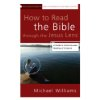
 *Michael James Williams in his own words: “After my conversion in the U. S. Navy (in a submarine beneath the North Atlantic!), I entered Columbia Bible College, where I received a B.A. (1985). This was followed by an M.A. in Religion at Westminster Theological Seminary (1987) and a Ph.D. in Biblical Studies at the University of Pennsylvania (1999). In 2000, I was ordained in the Christian Reformed Church, and since 1995 have been teaching at Calvin Theological Seminary. I have also taught courses at Westminster Theological Seminary, the University of Pennsylvania, and brief stints in Limuru, Kenya; Donetsk, Ukraine; and Warsaw, Poland. In addition to articles on Old Testament topics in various reference works and academic journals, and contributing to and editing “Mishneh Todah: Studies in Deuteronomy and Its Cultural Environment in Honor of Jeffrey H. Tigay” (2009); I have authored “Deception in Genesis: A Comprehensive Analysis of a Unique Biblical Phenomenon” (2001); “The Prophet and His Message: Reading Old Testament Prophecy Today” (2003); and, most recently, “How to Read the Bible through the Jesus Lens: A Guide to Christ-Focused Reading of Scripture” (2012). My amazing wife, Dawn, and I enjoy hiking and all things outdoors.”

 LifeCoach4God