Dr. Gleason L. Archer on Armageddon and the Future of Israel

How Can We Make Sense of Daniel’s Prophecy of the 70 Weeks?

The prophecy of the Seventy Weeks in Daniel 9:24–27 is one of the most remarkable long-range predictions in the entire Bible. It is by all odds one of the most widely discussed by students and scholars of every persuasion within the spectrum of the Christian church. And yet when it is carefully examined in the light of all the relevant data of history and the information available from other parts of Scripture, it is quite clearly an accurate prediction of the time of Christ’s coming advent and a preview of the thrilling final act of the drama of human history before that advent.

Daniel 9:24 reads: “Seventy weeks have been determined for your people and your holy city [i.e., for the nation Israel and for Jerusalem].” The word for “week” is šāûCac, which is derived from šea’, the word for “seven.” Its normal plural is feminine in form: še ûC’ŏ. Only in this chapter of Daniel does it appear in the masculine plural šāûC‘îCm. (The only other occurrence is in the combination [“heptads of weeks”] in Ezek. 21:28 [21:23 English text]). Therefore, it is strongly suggestive of the idea “heptad” (a series or combination of seven), rather than a “week” in the sense of a series of seven days. There is no doubt that in this case we are presented with seventy sevens of years rather than of days. This leads to a total of 490 years.

At the completion of these 490 years, according to v.24b, there will be six results: (1) “to finish or bring transgression [or ‘the sin of rebellion’] to an end”; (2) “to finish [or ‘seal up’] sins”; (3) “to make atonement for iniquity”; (4) “to bring in everlasting righteousness”; (5) “to seal up vision and prophecy”; and (6) “to anoint the holy of holies.” By the end of the full 490 years, then, the present sin-cursed world order will come to an end (1 and 2), the price of redemption for sinners will have been paid (3); the kingdom of God will be established on earth, and all the earth will be permanently filled with righteousness, as the waters cover the sea (4); and the Most Holy One (Christ?), or the Most Holy Sanctuary (which seems more probable, since Christ was already anointed by the Holy Spirit at His first advent), will be solemnly anointed and inaugurated for worship in Jerusalem, the religious and political capital of the world during the Millennium (5 and 6). Daniel 9:25 reads: “And you are to know and understand, from the going forth of the command [or ‘decree’; lit., ‘word’—āār] to restore and [re] build Jerusalem until Messiah the Prince [nāgîCd] will be [or ‘there are; the Hebrew omits the verb ‘to be’ in this case] seven heptads and sixty-two heptads.” This gives us two installments, 49 years and 434 years, for a total of 483 years. Significantly, the seventieth heptad is held in abeyance until v.27. Therefore we are left with a total of 483 between the issuance of the decree to rebuild Jerusalem and the coming of the Messiah.

As we examine each of the three decrees issued in regard to Jerusalem by kings subsequent to the time Daniel had this vision (538 B.C., judging from Dan. 9:1), we find that the first was that of Cyrus in 2 Chronicles 36:23: “The LORD, the God of heaven,… has appointed me to build Him a house in Jerusalem, which is in Judah” (NASB). This decree, issued in 538 or 537, pertained only to the rebuilding of the temple, not of the city of Jerusalem. The third decree is to be inferred from the granting of Nehemiah’s request by Artaxerxes I in 446 B.C., as recorded in Nehemiah 2:5–8. His request was “Send me to Judah, to the city of my fathers’ tombs, that I may rebuild it.” Then we read, “So it pleased the king to send me, and I gave him a definite time [for my return to his palace]” (NASB). The king also granted him a requisition of timber for the gates and walls of the city.

It should be noted that when Nehemiah first heard from his brother Hanani that the walls of Jerusalem had not already been rebuilt, he was bitterly disappointed and depressed—as if he had previously supposed that they had been rebuilt (Neh. 1:1–4). This strongly suggests that there had already been a previous decree authorizing the rebuilding of those city walls. Such an earlier decree is found in connection with Ezra’s group that returned to Jerusalem in 457, the seventh year of Artaxerxes I. Ezra 7:6 tells us: “This Ezra went up from Babylon,… and the king granted him all he requested because the hand of the LLORD his God was upon him” (NASB; notice the resemblance to Neh. 2:8, the last sentence). According to the following verse, Ezra was accompanied by a good-sized group of followers, including temple singers, gatekeepers, temple servants, and a company of laymen (“some of the sons of Israel”). After arriving at Jerusalem, he busied himself first with the moral and spiritual rebuilding of his people (Ezra 7:10). But he had permission from the king to employ any unused balance of the offering funds for whatever purpose he saw fit (v. 18); and he was given authority to appoint magistrates and judges and to enforce the established laws of Israel with confiscation, banishment, or death (v.26). Thus he would appear to have had the authority to set about rebuilding the city walls, for the protection of the temple mount and the religious rights of the Jewish community.

In 9:9 Ezra makes reference to this authority in his public, penitential prayer: “For we are slaves; yet in our bondage, our God has not forsaken us, but has extended lovingkindness to us in the sight of the kings of Persia, to give us reviving to raise up the house of our God, to restore its ruins, and to give us a wall in Judah and Jerusalem” (NASB; italics mine). While this “wall” may have been partly a metaphor for “protection,” it seems to have included the possibility of restoring the mural defenses of Jerusalem itself. Unfortunately, we are given no details as to the years that intervened before 446; but it may be that an abortive attempt was made under Ezra’s leadership to replace the outer wall of the city, only to meet with frustration—perhaps from a lack of self-sacrificing zeal on the part of the Jewish returnees themselves or because of violent opposition from Judah’s heathen neighbors. This would account for Nehemiah’s keen disappointment (as mentioned above) when he heard that “the wall of Jerusalem is broken down and its gates are burned with fire” (Neh. 1:3, NASB).

If, then, the decree of 457 granted to Ezra himself is taken as the terminus a quo for the commencement of the 69 heptads, or 483 years, we come out to the precise year of the appearance of Jesus of Nazareth as Messiah (or Christ): 483 minus 457 comes out to A.D. 26. But since a year is gained in passing from 1 B.C. to A.D.1 (there being no such year as zero), it actually comes out to A.D. 27. It is generally agreed that Christ was crucified in A.D. 30, after a ministry of a little more than three years. This means His baptism and initial ministry must have taken place in A.D. 27—a most remarkable exactitude in the fulfillment of such an ancient prophecy. Only God could have predicted the coming of His Son with such amazing precision; it defies all rationalistic explanation.

Daniel 9:25 goes on to say, “It will again be built with street and moat, even when times are difficult.” It is fair to deduce from this that the actual completion of the reconstruction of the city, both walls and interior appointments of the city, would take up about seven heptads, or forty-nine years. Soon after 400 B.C., then, the walls, the defensive moat, and all the streets and buildings behind those walls had been completely restored.

Daniel 9:26 goes on to foretell the tragic death of the Messiah: “And subsequent to the sixty-two heptads [ensuing upon the earlier installment of forty-nine], the Messiah will be cut off and shall have no one [or ‘nothing’].” This suggests that the Messiah would be violently put to death, without any faithful followers to protect Him. He would die alone! This refers to the great event that took place on Golgotha in A.D. 30. There are some able scholars who prefer the date 33 but the calendrical data seem to favor the earlier date. At all events, the earlier statement “until Messiah the Prince” in v.25 refers to His first appearance to Israel as the baptized and anointed Redeemer of Israel; it does not refer to the year of His death, since His “cutting off” is not mentioned until v.26.

Daniel 9:26b then foretells what will happen by way of retribution to the “holy city” that has rejected Jesus and voted to have Him “cut off”: “And the people of the prince who shall come [i.e., Titus, the victorious commander of the Roman troops in A.D. 70] will destroy the holy city, and its end will come with a flood [of disaster], and war is determined down to the [very] end, with devastation.” These vivid terms point to the total destruction that overtook Jerusalem in that fateful year.

Daniel 9:27 reads: “And he will confirm a covenant with the many for one heptad [i.e., seven years], but in the middle of the heptad he will terminate sacrifice and offering.” The subject of “confirm” is indefinite in the Hebrew, for no subject is expressed; but it is easily inferred from the last personal subject mentioned in the previous verse: “the prince who shall come,” that ruler who will establish a covenant or concordat with the Jewish community (“the many”—a term originating in Isa. 53:11–12) is an antitype of the Roman general who destroyed Jerusalem after the termination of the sixty-ninth heptad (i.e., Titus in A.D. 70). That antitype has already appeared back in Daniel 7:25 as the Little Horn of the last days who will persecute “the saints of the Most High” for “a time [Aramaic ‘iddān], times, and half a time,” i.e., for three and a half years. This same period recurs in Daniel 12:7, where the mighty angel swears to Daniel that “it will be for a time [Heb. môC’ēd), times, and a half; and as soon as they finish shattering the power [lit., ‘hand’] of the holy people, all these things will come to an end”—i.e., that final heptad of years will be over. The data of v.26 indicate that a long but indeterminable interval is intended between A.D. 27 (the end of the sixty-ninth heptad)—after Messiah appears; then the Crucifixion occurs; Jerusalem is destroyed by the Romans; and finally there is a period of overwhelming disaster, war, and desolation—and the inception of the final seven years of the last days (v.27), in the midst of which the antitypical prince or supreme dictator covenants with the Jewish people for seven years of religious tolerance, only to revoke his promise after three and a half years.

By the use of proper grammatical exegesis, then, it is possible to make perfect sense of the Seventy Weeks prophecy of Daniel 9 and see a remarkable correspondence with subsequent history up through the sixty-ninth heptad and the events that have ensued between then and now. But the reference to “sacrifice and offering” in 9:26 does seem to presuppose the prior erection of a valid temple and altar on the Temple Mount as a feature at the inception of the final seven years before the Battle of Armageddon and the establishment of the kingdom of God on earth in the millennial rule of Christ on the throne of David.

Article above adapted from Gleason L. Archer, Jr. New International Encyclopedia of Bible Difficulties (Zondervan’s Understand the Bible Reference Series). Grand Rapids: Zondervan, 2011.

 About the Author

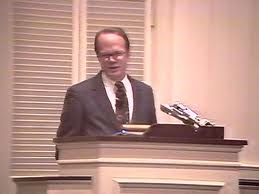
Gleason L. Archer Jr. (1916-2004 – B.A., M.A., Ph.D., Harvard University; B.D., Princeton Theological Seminary; L.L.B., Suffolk Law School) was a biblical scholar, theologian, educator, and author. He served as an assistant pastor of Park Street Church in Boston from 1945 to 1948. He was a Professor at Fuller Theological Seminary for 16 years, teaching New Testament, Greek, Hebrew, and Arabic. From 1965 to 1986 he served as a Professor of Old Testament and Semitics at Trinity Evangelical Divinity School, Deerfield, Illinois. He became an emeritus faculty member in 1989. He also served for many years as a minister of the Evangelical Free Church of America. The remainder of his life was spent researching, writing, and lecturing. Archer served as one of the 50 original translators of the NASB published in 1971. He also worked on the team which translated the NIV Bible published in 1978. I give this introduction, because many people are not familiar with Archer (unfortunately), but he was a brilliant Christian scholar who could have excelled as a lawyer (his father was the founder and president of Suffolk Law School), and chose to use his exceptional gifts to defend the inerrancy and integrity of the Scriptures over the span of his entire adult life. I would say that along with Bruce Waltke and Walter Kaiser Jr., he was one of the most influential Old Testament Evangelical Scholars at the end of the Twentieth Century. Legend has it, (I have not been able to verify whether this is 100% true or not) that he was so gifted in languages that for fun (and as a challenge) he would study the Bible in a different language every year to continue to grow and develop mentally.

Tim Keller on The Gospel Is NOT Everything

“THE GOSPEL IS NOT EVERYTHING”

(Adapted from Tim Keller’s fantastic Gospel saturated book Center Church: Doing Balanced Gospel-Centered Ministry in Your City. Grand Rapids: Zondervan, 2012, Chapter One [I have written out many of the Scripture references in BOLD ITALIC print for ease of reference from the ESV – DPC])

What do we mean by “the gospel”? Answering this question is a bit more complex than we often assume. Not everything the Bible teaches can be considered “the gospel” (although it can be argued that all biblical doctrine is necessary background for understanding the gospel). The gospel is a message about how we have been rescued from peril. The very word gospel has as its background a news report about some life-altering event that has already happened:

Mark 1:1, “The beginning of the gospel of Jesus Christ, the Son of God.”

Luke 2:10, And the angel said to them, “Fear not, for behold, I bring you good news of great joy that will be for all the people.”

1 Corinthians 1:16-17 & 15:1-11, (I did baptize also the household of Stephanas. Beyond that, I do not know whether I baptized anyone else.) For Christ did not send me to baptize but to preach the gospel, and not with words of eloquent wisdom, lest the cross of Christ be emptied of its power…Now I would remind you, brothers, of the gospel I preached to you, which you received, in which you stand, and by which you are being saved, if you hold fast to the word I preached to you—unless you believed in vain. For I delivered to you as of first importance what I also received: that Christ died for our sins in accordance with the Scriptures, that he was buried, that he was raised on the third day in accordance with the Scriptures, and that he appeared to Cephas, then to the twelve. Then he appeared to more than five hundred brothers at one time, most of whom are still alive, though some have fallen asleep. Then he appeared to James, then to all the apostles. Last of all, as to one untimely born, he appeared also to me. For I am the least of the apostles, unworthy to be called an apostle, because I persecuted the church of God. But by the grace of God I am what I am, and his grace toward me was not in vain. On the contrary, I worked harder than any of them, though it was not I, but the grace of God that is with me. Whether then it was I or they, so we preach and so you believed.

 (1) The gospel is good news, not good advice.

The gospel is not primarily a way of life. It is not something we do, but something that has been done for us and something that we must respond to. In the Greek translation of the Old Testament — the Septuagint — the word euangelizo (proclaim good news) occurs twenty-three times. As we see in Psalm 40: 9 (ESV) — “I have told the glad news of [your] deliverance in the great congregation” — the term is generally used to declare the news of something that has happened to rescue and deliver people from peril. In the New Testament, the word group euangelion (good news), euangelizo (proclaim good news), and euangelistes (one who proclaims good news) occurs at least 133 times.

D. A. Carson draws this conclusion from a thorough study of gospel words:

Because the gospel is news, good news… it is to be announced; that is what one does with news. The essential heraldic element in preaching is bound up with the fact that the core message is not a code of ethics to be debated, still less a list of aphorisms to be admired and pondered, and certainly not a systematic theology to be outlined and schematized. Though it properly grounds ethics, aphorisms, and systematics, it is none of these three: it is news, good news, and therefore must be publicly announced (D.A. Carson, “What Is the Gospel? –Revisited,” in For the Fame of God’s Name: Essays in Honor of John Piper, ed. Sam Storms and Justin Taylor. Wheaton, ILL.: Crossway, 2010, 158.

(2) The gospel is good news announcing that we have been rescued or saved.

And what are we rescued from? What peril are we saved from? A look at the gospel words in the New Testament shows that we are rescued from the “coming wrath” at the end of history (1 Thessalonians 1:10, “and to wait for his Son from heaven, whom he raised from the dead, Jesus who delivers us from the wrath to come”).

But this wrath is not an impersonal force — it is God’s wrath. We are out of fellowship with God; our relationship with him is broken. In perhaps the most thoroughgoing exposition of the gospel in the Bible, Paul identifies God’s wrath as the great problem of the human condition (Rom 1:18–32).

Romans 1:18-32, For the wrath of God is revealed from heaven against all ungodliness and unrighteousness of men, who by their unrighteousness suppress the truth. For what can be known about God is plain to them, because God has shown it to them. For his invisible attributes, namely, his eternal power and divine nature, have been clearly perceived, ever since the creation of the world, in the things that have been made. So they are without excuse. For although they knew God, they did not honor him as God or give thanks to him, but they became futile in their thinking, and their foolish hearts were darkened. Claiming to be wise, they became fools, and exchanged the glory of the immortal God for images resembling mortal man and birds and animals and creeping things.

Therefore God gave them up in the lusts of their hearts to impurity, to the dishonoring of their bodies among themselves, because they exchanged the truth about God for a lie and worshiped and served the creature rather than the Creator, who is blessed forever! Amen.

For this reason God gave them up to dishonorable passions. For their women exchanged natural relations for those that are contrary to nature; and the men likewise gave up natural relations with women and were consumed with passion for one another, men committing shameless acts with men and receiving in themselves the due penalty for their error.

And since they did not see fit to acknowledge God, God gave them up to a debased mind to do what ought not to be done. They were filled with all manner of unrighteousness, evil, covetousness, malice. They are full of envy, murder, strife, deceit, maliciousness. They are gossips, slanderers, haters of God, insolent, haughty, boastful, inventors of evil, disobedient to parents, foolish, faithless, heartless, ruthless. Though they know God’s righteous decree that those who practice such things deserve to die, they not only do them but give approval to those who practice them.

Genesis 3:1-19, Now the serpent was more crafty than any other beast of the field that the Lord God had made. He said to the woman, “Did God actually say, ‘You shall not eat of any tree in the garden’?” And the woman said to the serpent, “We may eat of the fruit of the trees in the garden, but God said, ‘You shall not eat of the fruit of the tree that is in the midst of the garden, neither shall you touch it, lest you die.’ ”

But the serpent said to the woman, “You will not surely die. For God knows that when you eat of it your eyes will be opened, and you will be like God, knowing good and evil.” So when the woman saw that the tree was good for food, and that it was a delight to the eyes, and that the tree was to be desired to make one wise, she took of its fruit and ate, and she also gave some to her husband who was with her, and he ate. Then the eyes of both were opened, and they knew that they were naked. And they sewed fig leaves together and made themselves loincloths.

And they heard the sound of the Lord God walking in the garden in the cool of the day, and the man and his wife hid themselves from the presence of the Lord God among the trees of the garden. But the Lord God called to the man and said to him, “Where are you?” And he said, “I heard the sound of you in the garden, and I was afraid, because I was naked, and I hid myself.” He said, “Who told you that you were naked? Have you eaten of the tree of which I commanded you not to eat?” The man said, “The woman whom you gave to be with me, she gave me fruit of the tree, and I ate.” Then the Lord God said to the woman, “What is this that you have done?” The woman said, “The serpent deceived me, and I ate.”

The Lord God said to the serpent, “Because you have done this, cursed are you above all livestock and above all beasts of the field; on your belly you shall go, and dust you shall eat all the days of your life. I will put enmity between you and the woman, and between your offspring and her offspring; he shall bruise your head, and you shall bruise his heel.”

To the woman he said, “I will surely multiply your pain in childbearing; in pain you shall bring forth children. Your desire shall be for your husband, and he shall rule over you.”

And to Adam he said, “Because you have listened to the voice of your wife and have eaten of the tree of which I commanded you, ‘You shall not eat of it,’ cursed is the ground because of you; in pain you shall eat of it all the days of your life; thorns and thistles it shall bring forth for you; and you shall eat the plants of the field.

By the sweat of your face you shall eat bread, till you return to the ground, for out of it you were taken; for you are dust, and to dust you shall return.”

Here we see that the wrath of God has many ramifications. The background text is Genesis 3:17–19 (Genesis 3 passage above), in which God’s curse lies on the entire created order because of human sin. Because we are alienated from God, we are psychologically alienated within ourselves — we experience shame and fear (Gen 3:10). Because we are alienated from God, we are also socially alienated from one another (v. 7 describes how Adam and Eve must put on clothing, and v. 16 speaks of alienation between the genders; also notice the blame shifting in their dialogue with God in vv. 11–13). Because we are alienated from God, we are also physically alienated from nature itself. We now experience sorrow, painful toil, physical degeneration, and death (vv. 16–19). In fact, the ground itself is “cursed” (v. 17; see Rom 8:18–25 below).

Romans 8:18-25, For I consider that the sufferings of this present time are not worth comparing with the glory that is to be revealed to us. For the creation waits with eager longing for the revealing of the sons of God. For the creation was subjected to futility, not willingly, but because of him who subjected it, in hope that the creation itself will be set free from its bondage to corruption and obtain the freedom of the glory of the children of God. For we know that the whole creation has been groaning together in the pains of childbirth until now. And not only the creation, but we ourselves, who have the firstfruits of the Spirit, groan inwardly as we wait eagerly for adoption as sons, the redemption of our bodies. For in this hope we were saved. Now hope that is seen is not hope. For who hopes for what he sees? But if we hope for what we do not see, we wait for it with patience.

Since the garden, we live in a world filled with suffering, disease, poverty, racism, natural disasters, war, aging, and death — and it all stems from the wrath and curse of God on the world. The world is out of joint, and we need to be rescued. But the root of our problem is not these “horizontal” relationships, though they are often the most obvious; it is our “vertical” relationship with God.

All human problems are ultimately symptoms, and our separation from God is the cause. The reason for all the misery — all the effects of the curse — is that we are not reconciled to God. We see this in such texts as Romans 5:8 and 2 Corinthians 5:20 (below).

Romans 5:8, “but God shows his love for us in that while we were still sinners, Christ died for us.”

2 Corinthians 5:20, “Therefore, we are ambassadors for Christ, God making his appeal through us. We implore you on behalf of Christ, be reconciled to God.”

Therefore, the first and primary focus of any real rescue of the human race — the main thing that will save us — is to have our relationship with God put right again.

(3) The gospel is news about what has been done by Jesus Christ to put right our relationship with God.

Becoming a Christian is about a change of status. First John 3:14 (emphasis added) states that “we have passed from death to life,” not we are passing from death to life ((The verb translated “passed” in 1 John 3:14 is metabaino, which means to “cross over.” In John 5:24, Jesus states, “Whoever hears my word and believes him who went me has eternal life and will not be condemned; he has crossed over [metabaino] from death to life.” A parallel passage is Colosssians 1:13, where it is said that Christ-followers have been transferred from the dominion of darkness into the kingdom of the Son). You are either in Christ or you are not; you are either pardoned and accepted or you are not; you either have eternal life or you don’t. This is why Dr. Martyn Lloyd-Jones often used a diagnostic question to determine a person’s spiritual understanding and condition. He would ask, “Are you now ready to say that you are a Christian?” He recounts that over the years, whenever he would ask the question, people would often hesitate and then say, “I do no feel that I am good enough.” To that, he gives this response:

At once I know that… they are still thinking in terms of themselves; their idea still is that they have to make themselves good enough to be a Christian… It sounds very modest but it is the lie of the devil, it is a denial of the faith… you will never be good enough; nobody has ever been good enough. The essence of the Christian salvation is to say that He is good enough and that I am in Him! (D. Martyn Lloyd-Jones, Spiritual Depression: Its Causes and Cure. Grand Rapids: Eerdmans, 1965, 34).

Lloyd-Jones’s point is that becoming a Christian is a change in our relationship with God. Jesus’ work, when it is believed and rested in, instantly changes our standing before God. We are “in him.”

Ever since reading J. I. Packer’s famous essay introducing John Owen’s Death of Death in the Death of Christ, I have liked “God saves sinners” as a good summary of gospel: God saves sinners. God — the Triune Jehovah, Father, Son and Spirit; three Persons working together in sovereign wisdom, power and love to achieve the salvation of a chosen people, the Father electing, the Son fulfilling the Father’s will by redeeming, the Spirit executing the purpose of Father and Son by renewing. Saves — does everything, first to last, that is involved in bringing man from death in sin to life in glory: plans, achieves and communicates redemption, calls and keeps, justifies, sanctifies, glorifies. Sinners— men as God finds them, guilty, vile, helpless, powerless, unable to lift a finger to do God’s will or better their spiritual lot (J.I. Packer, “Introductory Essay to John Owen’s Death of Death in the Death of Christ” – see this website [verticallivingministries.com] under the category “Soteriology” or “J.I. Packer”).

THE GOSPEL IS NOT THE RESULTS OF THE GOSPEL

The gospel is not about something we do but about what has been done for us, and yet the gospel results in a whole new way of life. This grace and the good deeds that result must be both distinguished and connected. The gospel, its results, and its implications must be carefully related to each other— neither confused nor separated. One of Martin Luther’s dicta was that we are saved by faith alone but not by a faith that remains alone. His point is that true gospel belief will always and necessarily lead to good works, but salvation in no way comes through or because of good works. Faith and works must never be confused for one another, nor may they be separated.

For by grace you have been saved through faith. And this is not your own doing; it is the gift of God, not a result of works, so that no one may boast. For we are his workmanship, created in Christ Jesus for good works, which God prepared beforehand, that we should walk in them (Ephesians 2:8-10).

“What good is it, my brothers, if someone says he has faith but does not have works? Can that faith save him?So also faith by itself, if it does not have works, is dead. But someone will say, “You have faith and I have works.” Show me your faith apart from your works, and I will show you my faith by my works.

Do you want to be shown, you foolish person, that faith apart from works is useless? Was not Abraham our father justified by works when he offered up his son Isaac on the altar? You see that faith was active along with his works, and faith was completed by his works; and the Scripture was fulfilled that says, “Abraham believed God, and it was counted to him as righteousness”—and he was called a friend of God. You see that a person is justified by works and not by faith alone. And in the same way was not also Rahab the prostitute justified by works when she received the messengers and sent them out by another way? For as the body apart from the spirit is dead, so also faith apart from works is dead” (James 2:14, 17-18, 20-26).

I am convinced that belief in the gospel leads us to care for the poor and participate actively in our culture, as surely as Luther said true faith leads to good works. But just as faith and works must not be separated or confused, so the results of the gospel must never be separated from or confused with the gospel itself. I have often heard people preach this way: “The good news is that God is healing and will heal the world of all its hurts; therefore, the work of the gospel is to work for justice and peace in the world.” The danger in this line of thought is not that the particulars are untrue (they are not) but that it mistakes effects for causes. It confuses what the gospel is with what the gospel does. When Paul speaks of the renewed material creation, he states that the new heavens and new earth are guaranteed to us because on the cross Jesus restored our relationship with God as his true sons and daughters. Romans 8:1–25 teaches, remarkably, that the redemption of our bodies and of the entire physical world occurs when we receive “our adoption.” As his children, we are guaranteed our future inheritance, and because of that inheritance, the world is renewed. The future is ours because of Christ’s work finished in the past.

“In him you also, when you heard the word of truth, the gospel of your salvation, and believed in him, were sealed with the promised Holy Spirit, who is the guarantee of our inheritance until we acquire possession of it, to the praise of his glory…having the eyes of your hearts enlightened, that you may know what is the hope to which he has called you, what are the riches of his glorious inheritance in the saints” (Ephesians 1:13-14,18).

“giving thanks to the Father, who has qualified you to share in the inheritance of the saints in light… knowing that from the Lord you will receive the inheritance as your reward. You are serving the Lord Christ” (Colossians 1:12; 3:24).

“Therefore he [Jesus] is the mediator of a new covenant, so that those who are called may receive the promised eternal inheritance, since a death has occurred that redeems them from the transgressions committed under the first covenant” (Hebrews 9:15).

“Blessed be the God and Father of our Lord Jesus Christ! According to his great mercy, he has caused us to be born again to a living hope through the resurrection of Jesus Christ from the dead, to an inheritance that is imperishable, undefiled, and unfading, kept in heaven for you, who by God’s power are being guarded through faith for a salvation ready to be revealed in the last time” (1 Peter 1:3-5).

We must not, then, give the impression that the gospel is simply a divine rehabilitation program for the world, but rather that it is an accomplished substitutionary work. We must not depict the gospel as primarily joining something (Christ’s kingdom program) but rather as receiving something (Christ’s finished work). If we make this error, the gospel becomes another kind of a salvation by works instead of a salvation by faith.

As J. I. Packer writes:

The gospel does bring us solutions to these problems [of suffering and injustice], but it does so by first solving… the deepest of all human problems, the problem of man’s relation with his Maker; and unless we make it plain that the solution of these former problems depends on the settling of this latter one, we are misrepresenting the message and becoming false witnesses of God (J.I. Packer. Knowing God. Downers Grove, ILL.: InterVarsity, 1973, p. 171).

A related question has to do with whether the gospel is spread by the doing of justice. Not only does the Bible say over and over that the gospel is spread by preaching, but common sense tells us that loving deeds, as important as they are as an accompaniment of preaching, cannot by themselves bring people to a saving knowledge of Jesus Christ. Francis Schaeffer argued rightly that Christians’ relationships with each other constitute the criterion the world uses to judge whether their message is truthful — so Christian community is the “final apologetic” (Francis Schaeffer. The Mark of the Christian. Downers Grove, ILL.: InterVarsity, 1977, p. 25; cf. Timothy George and John Woodbridge. The Mark of Jesus: Loving in a Way the World Can See. Chicago: Moody, 2005).

Notice again, however, the relationship between faith and works. Jesus said that a loving community is necessary for the world to know that God sent him (John 17:23, “I in them and you in me, that they may become perfectly one, so that the world may know that you sent me and loved them even as you loved me.” And John 13:35, “By this all people will know that you are my disciples, if you have love for one another”).

Sharing our goods with each other and with the needy is a powerful sign to nonbelievers (see the relationship between witness and sharing in Acts 4:31– 37 and Acts 6). But loving deeds — even though they embody the truths of the gospel and cannot be separated from preaching the gospel — should not be conflated with it. The gospel, then, is preeminently a report about the work of Christ on our behalf — that is why and how the gospel is salvation by grace. The gospel is news because it is about a salvation accomplished for us. It is news that creates a life of love, but the life of love is not itself the gospel (See D.A. Carson, “What Is the Gospel? —Revisited,” in For the Fame of God’s Name, 158).

THE GOSPEL HAS TWO EQUAL AND OPPOSITE ENEMIES

The ancient church father Tertullian is reputed to have said, “Just as Jesus was crucified between two thieves, so the gospel is ever crucified between these two errors” (Having heard and read this in the words of other preachers, I have never been able to track down an actual place in Tertullian’s writings where he says it. I think it may be apocryphal, but the principle is right).

What are these errors to which Tertullian was referring? I often call them religion and irreligion; the theological terms are legalism and antinomianism. Another way to describe them could be moralism and relativism (or pragmatism).

These two errors constantly seek to corrupt the message and steal away from us the power of the gospel. Legalism says that we have to live a holy, good life in order to be saved. Antinomianism says that because we are saved, we don’t have to live a holy, good life.

This is the location of the “tip of the spear” of the gospel. A very clear and sharp distinction between legalism, antinomianism, and the gospel is often crucial for the life-changing power of the Holy Spirit to work. If our gospel message even slightly resembles “you must believe and live right to be saved” or “God loves and accepts everyone just as they are,” we will find our communication is not doing the identity-changing, heart-shaping transformative work described in the next part of this book. If we just preach general doctrine and ethics from Scripture, we are not preaching the gospel. The gospel is the good news that God has accomplished our salvation for us through Christ in order to bring us into a right relationship with him and eventually to destroy all the results of sin in the world.

Still, it can be rightly argued that in order to understand all this — who God is, why we need salvation, what he has done to save us — we must have knowledge of the basic teachings of the entire Bible. J. Gresham Machen, for example, speaks of the biblical doctrines of God and of man to be the “presuppositions of the gospel” ((J. Gresham Machen, Christianity and Liberalism, new ed. Grand Rapids: Eerdmans, 2001, 99).

This means that an understanding of the Trinity, of Christ’s incarnation, of original sin and sin in general — are all necessary. If we don’t understand, for example, that Jesus was not just a good man but the second person of the Trinity, or if we don’t understand what the “wrath of God” means, it is impossible to understand what Jesus accomplished on the cross. Not only that, but the New Testament constantly explains the work of Christ in Old Testament terms — in the language of priesthood, sacrifice, and covenant.

In other words, we must not just preach the Bible in general; we must preach the gospel. Yet unless those listening to the message understand the Bible in general, they won’t grasp the gospel. The more we understand the whole corpus of biblical doctrine, the more we will understand the gospel itself — and the more we understand the gospel, the more we will come to see that this is, in the end, what the Bible is really about. Biblical knowledge is necessary for the gospel and distinct from the gospel, yet it so often stands in when the gospel is not actually present that people have come to mistake its identity.

 THE GOSPEL HAS CHAPTERS

So, the gospel is good news — it is not something we do but something that has been done for us. Simple enough. But when we ask questions like “Good news about what?” or “Why is it good news?” the richness and complexity of the gospel begin to emerge.

There are two basic ways to answer the question “What is the gospel?” One is to offer the biblical good news of how you can get right with God. This is to understand the question to mean, “What must I do to be saved?” The second is to offer the biblical good news of what God will fully accomplish in history through the salvation of Jesus. This is to understand the question as “What hope is there for the world?”

If we conceive the question in the first, more individualistic way, we explain how a sinful human being can be reconciled to a holy God and how his or her life can be changed as a result. It is a message about individuals. The answer can be outlined: Who God is, what sin is, who Christ is and what he did, and what faith is. These are basically propositions.

If we conceive of the question in the second way, to ask all that God is going to accomplish in history, we explain where the world came from, what went wrong with it, and what must happen for it to be mended. This is a message about the world. The answer can be outlined: creation, fall, redemption, and restoration. These are chapters in a plotline, a story. There is no single way to present the biblical gospel. Yet I urge you to try to be as thoughtful as possible in your gospel presentations. The danger in answering only the first question (“What must I do to be saved?”) without the second (“What hope is there for the world?”) is that, standing alone, the first can play into the Western idea that religion exists to provide spiritual goods that meet individual spiritual needs for freedom from guilt and bondage. It does not speak much about the goodness of the original creation or of God’s concern for the material world, and so this conception may set up the listener to see Christianity as sheer escape from the world. But the danger in conceiving the gospel too strictly as a story line of the renewal of the world is even greater. It tells listeners about God’s program to save the world, but it does not tell them how to actually get right with God and become part of that program. In fact, I’ll say that without the first message, the second message is not the gospel. J. I. Packer writes these words:

In recent years, great strides in biblical theology and contemporary canonical exegesis have brought new precision to our grasp of the Bible’s overall story of how God’s plan to bless Israel, and through Israel the world, came to its climax in and through Christ. But I do not see how it can be denied that each New Testament book, whatever other job it may be doing, has in view, one way or another, Luther’s primary question: how may a weak, perverse, and guilty sinner find a gracious God? Nor can it be denied that real Christianity only really starts when that discovery is made. And to the extent that modern developments, by filling our horizon with the great metanarrative, distract us from pursuing Luther’s question in personal terms, they hinder as well as help in our appreciation of the gospel  (J. I. Packer, In My Place Condemned He Stood: Celebrating the Glory of the Atonement. Wheaton, Ill.: Crossway, 2007, 26 – 27).

Still, the Bible’s grand narrative of cosmic redemption is critical background to help an individual get right with God. One way to proceed is to interleave the two answers to the “What is the gospel?” question so that gospel truths are laid into a story with chapters rather than just presented as a set of propositions. The narrative approach poses the questions, and the propositional approach supplies the answers.

How would we relate the gospel to someone in this way? What follows is a “conversational pathway” for presenting the gospel to someone as the chapters in a story. In the Bible, the term gospel is the declaration of what Jesus Christ has done to save us. In light of the biblical usage, then, we should observe that chapters 1 (God and Creation), 2 (Fall and Sin), and 4 (Faith) are not, strictly speaking, “the gospel.” They are prologue and epilogue. Simon Gathercole argues that both Paul and the Gospel writers considered the good news to have three basic elements: the identity of Jesus as Son of God and Messiah, the death of Jesus for sin and justification, and the establishment of the reign of God and the new creation (Simon Gathercole, “The Gospel of Paul and the Gospel of the Kingdom,” in God’s Power to Save, ed. Chris Green. Leicester, UK: Inter-Varsity, 2006, 138 – 54).

The gospel, then, is packed into chapter 3, with its three headings — incarnation, substitution, and restoration. Chapter 1 on God and chapter 2 on sin constitute absolutely critical background information for understanding the meaning of the person and work of Jesus, and chapter 4 helps us understand how we must respond to Jesus’ salvation. Nevertheless, it is reasonable and natural to refer to the entire set of four chapters as “the gospel.”

WHERE DID WE COME FROM?

Answer: God. There is one God. He is infinite in power, goodness, and holiness and yet also personal and loving, a God who speaks to us in the Bible. The world is not an accident, but the creation of the one God (Genesis 1). God created all things, but why did he do that? Why did he create the world and us? The answer is what makes the Christian understanding of God profound and unique. While there is only one God, within God’s being there are three persons — Father, Son, and Holy Spirit —who are all equally God and who have loved, adored, served, and enjoyed one another from all eternity. If God were unipersonal, then he would have not known love until he created other beings. In that case, love and community would not have been essential to his character; it would have emerged later. But God is triune, and therefore love, friendship, and community are intrinsic to him and at the heart of all reality. So a triune God created us (John 1: 1 – 4), but he would not have created us to get the joy of mutual love and service, because he already had that. Rather, he created us to share in his love and service. As we know from John 17: 20– 24, the persons of the Trinity love and serve one another — they are “other-oriented”  (D. A. Carson in The Difficult Doctrine of the Love of God. Wheaton, Ill.: Crossway, 2000, pp. 39 & 43 writes, “What we have, then, is a picture of God whose love, even in eternity past, even before the creation of anything, is other-oriented. This cannot be said [for instance] of Allah. Yet because the God of the Bible is one, this plurality-in-unity does not destroy his entirely appropriate self-focus as God… There has always been an other-orientation to the love of God… We are the friends of God by virtue of the intra-Trinitarian love of God that so worked out in the fullness of time that the plan of redemption, conceived in the mind of God in eternity past, has exploded into our space-time history at exactly the right moment.”).

And thus God created us to live in the same way. In order to share the joy and love that God knew within himself, he created a good world that he cares for, a world full of human beings who were called to worship, know, and serve him, not themselves (See “The Dance of Creation,” in Tim Keller, The Reason for God: Belief in an Age of Skepticism. New York: Dutton, 2008, pp. 225– 26; “The Dance,” in Tim Keller, King’s Cross: The Story of the World in the Life of Jesus. New York: Dutton, 2011, 3– 13).

WHY DID THINGS GO SO WRONG?

Answer: Sin. God created us to adore and serve him and to love others. By living this way, we would have been completely happy and enjoyed a perfect world. But instead, the whole human race turned away from God, rebelling against his authority. Instead of living for God and our neighbors, we live lives of self-centeredness. Because our relationship with God has been broken, all other relationships — with other human beings, with our very selves, and with the created world — are also ruptured. The result is spiritual, psychological, social, and physical decay and breakdown. “Things fall apart; the center cannot hold. Mere anarchy is loosed upon the world” — the world now lies under the power of sin (Quote from the poem “The Second Coming,” 1920 by William Butler Yeats).

Sin reaps two terrible consequences. One consequence is spiritual bondage (Rom 6: 15–18). We may believe in God or we may not believe, but either way, we never make him our greatest hope, good, or love. We try to maintain control of our lives by living for other things — for money, career, family, fame, romance, sex, power, comfort, social and political causes, or something else. But the result is always a loss of control, a form of slavery. Everyone has to live for something, and if that something is not God, then we are driven by that thing we live for — by overwork to achieve it, by inordinate fear if it is threatened, deep anger if it is being blocked, and inconsolable despair if it is lost. So the novelist David Foster Wallace, not long before his suicide, spoke these words to the 2005 graduating class at Kenyon College:

Everybody worships. The only choice we get is what to worship. And the compelling reason for maybe choosing some sort of god or spiritual-type thing to worship… is that pretty much anything else you worship will eat you alive. If you worship money and things, if they are where you tap real meaning in life, then you will never have enough, never feel you have enough… Worship your body and beauty and sexual allure and you will always feel ugly. And when time and age start showing, you will die a million deaths before they finally grieve you… Worship power, you will end up feeling weak and afraid, and you will need ever more power over others to numb you to your own fear. Worship your intellect, being seen as smart, you will end up feeling stupid, a fraud, always on the verge of being found out. But the insidious thing about these forms of worship is… they’re unconscious. They are default settings (Emily Bobrow, “David Foster Wallace, in His Own Words,” taken from his 2005 commencement address at Kenyon College, http:// moreintelligentlife.com/ story/ david-foster-wallace-in-his-own-words; accessed January 4, 2012).

The second basic consequence of sin is condemnation (Rom 6: 23). We are not just suffering because of sin; we are guilty because of sin. Often we say, “Well, I’m not very religious, but I’m a good person — and that is what is most important.” But is it? Imagine a woman —a poor widow —with an only son. She teaches him how she wants him to live — to always tell the truth, to work hard, and to help the poor. She makes very little money, but with her meager savings she is able to put him through college. Imagine that when he graduates, he hardly ever speaks to her again. He occasionally sends a Christmas card, but he doesn’t visit her; he won’t answer her phone calls or letters; he doesn’t speak to her. But he lives just like she taught him — honestly, industriously, and charitably. Would we say this was acceptable? Of course not! Wouldn’t we say that by living a “good life” but neglecting a relationship with the one to whom he owed everything he was doing something condemnable? In the same way, if God created us and we owe him everything and we do not live for him but we “live a good life,” it is not enough. We all owe a debt that must be paid.

WHAT WILL PUT THINGS RIGHT?

Answer: Christ. First, Jesus Christ puts things right through his incarnation. C. S. Lewis wrote that if there is a God, we certainly don’t relate to him as people on the first floor of a building relate to people on the second floor. We relate to him the way Hamlet relates to Shakespeare. We (characters) might be able to know quite a lot about the playwright, but only to the degree that the author chooses to put information about himself in the play (See C. S. Lewis, Christian Reflections. Grand Rapids: Eerdmans, 1967, pp. 167– 76).

In the Christian view, however, we believe that God did even more than simply give us information. Many fans of Dorothy Sayers’s detective stories and mystery novels point out that Sayers was one of the first women to attend Oxford University. The main character in her stories — Lord Peter Wimsey — is an aristocratic sleuth and a single man. At one point in the novels, though, a new character appears, Harriet Vane. She is described as one of the first women who graduated from Oxford — and as a writer of mystery novels. Eventually she and Peter fall in love and marry. Who was she? Many believe Sayers looked into the world she had created, fell in love with her lonely hero, and wrote herself into the story to save him. Very touching! But that is not nearly as moving or amazing as the reality of the incarnation (John 1: 14). God, as it were, looked into the world he had made and saw our lostness and had pity on his people. And so he wrote himself into human history as its main character (John 3: 16). The second person in the Trinity, the Son of God, came into the world as a man, Jesus Christ.

The second way Jesus puts things right is through substitution. Because of the guilt and condemnation on us, a just God can’t simply shrug off our sins. Being sorry is not enough. We would never allow an earthly judge to let a wrongdoer off, just because he was contrite — how much less should we expect a perfect heavenly Judge to do so? And even when we forgive personal wrongs against us, we cannot simply forgive without cost. If someone harms us and takes money or happiness or reputation from us, we can either make them pay us back or forgive them— which means we absorb the cost ourselves without remuneration.

Jesus Christ lived a perfect life — the only human being to ever do so. “For we do not have a high priest who is unable to sympathize with our weaknesses, but one who in every respect has been tempted as we are, yet without sin” (Hebrews 4:15).

At the end of his life, he deserved blessing and acceptance; at the end of our lives, because every one of us lives in sin, we deserve rejection and condemnation. “What then? Are we Jews any better off? No, not at all. For we have already charged that all, both Jews and Greeks [Gentiles], are under sin, as it is written: “None is righteous, no, not one; no one understands; no one seeks for God. All have turned aside; together they have become worthless; no one does good, not even one” (Romans 3:9–12).

Yet when the time had fully come, Jesus received in our place, on the cross, the rejection and condemnation we deserve (“For Christ also suffered once for sins, the righteous for the unrighteous, that he might bring us to God, being put to death in the flesh but made alive in the spirit” – 1 Peter 3:18), so that, when we believe in him, we can receive the blessing and acceptance he deserves (“For our sake he made him to be sin, so that in him we might become the righteousness of God” – 2 Corinthians 5: 21).

There is no more moving thought than that of someone giving his life to save another. In Charles Dickens’s A Tale of Two Cities, two men — Charles Darnay and Sydney Carton — both love the same woman, Lucie Manette, but Lucie chooses to marry Charles. Later, during the French Revolution, Charles is thrown in prison and awaits execution on the guillotine. Sydney visits Charles in prison, drugs him, and has him carried out. When a young seamstress (also on death row) realizes that Sydney is taking Charles’s place, she is amazed and asks him to hold her hand for strength. She is deeply moved by his substitutionary sacrifice — and it wasn’t even for her! When we realize that Jesus did the very same thing for us, it changes everything — the way we regard God, ourselves, and the world.

The third way Jesus will put things right is through the eventual restoration of all that has gone wrong with the world. The first time Jesus came from heaven to earth, he came in weakness to suffer for our sins. But the second time he comes, he will judge the world, putting a final end to all evil, suffering, decay, and death. “For the creation waits with eager longing for the revealing of the sons of God. For the creation was subjected to futility, not willingly, but because of him who subjected it, in hope that the creation itself will be set free from its bondage to corruption and obtain the freedom of the glory of the children of God…But according to his promise we are waiting for new heavens and a new earth in which righteousness dwells” (Romans 8:19–21; 2 Peter 3:13).

This means that Christ’s salvation does not merely save our souls so we can escape the pain of the curse on the physical world. Rather, the final goal is the renewal and restoration of the material world, and the redemption of both our souls and our bodies. Vinoth Ramachandra notes how unique this view is among the religions of the world:

So our salvation lies not in an escape from this world but in the transformation of this world… You will not find hope for the world in any religious systems or philosophies of humankind. The biblical vision is unique. That is why when some say that there is salvation in other faiths I ask them, “What salvation are you talking about?” No faith holds out a promise of eternal salvation for the world the way the cross and resurrection of Jesus do (Vinoth Ramachandra, The Scandal of Jesus. Downers Grove, Ill.: InterVarsity, 2001, 24).

 HOW CAN I BE PUT RIGHT?

Answer: Faith. Jesus died for our sins and rose again from the grave. By faith in him, our sins can be forgiven and we can be assured of living forever with God and one day being raised from the dead like Christ. So what does it mean to believe, to have faith? First, it means to grasp what salvation “by faith” means. Believing in Christ does not mean that we are forgiven for our past, get a new start on life, and must simply try harder to live better than we did in the past. If this is your mind-set, you are still putting your faith in yourself. You are your own Savior. You are looking to your moral efforts and abilities to make yourself right with God. But this will never work. No one lives a perfect life. Even your best deeds are tainted by selfish and impure motives.

The gospel is that when we believe in Christ, there is now “no condemnation for those who are in Christ Jesus” (Romans 8:1). Putting our faith in Christ is not about trying harder; it means transferring our trust away from ourselves and resting in him. It means asking, “Father, accept me not because of what I have done or ever will do but because of what Jesus has done in my place.” When we do that, we are adopted into God’s family and given the right to his eternal, fatherly love (John 1:12–13).

The second thing to keep in mind is that it is not the quality of the faith itself that saves us; it is what Jesus has done for us. It is easy to assume that being “saved by faith” means that God will now love us because of the depth of our repentance and faith. But that is to once again subtly make ourselves our own Savior rather than Jesus. It is not the amount of our faith but the object of our faith that saves us. Imagine two people boarding an airplane. One person has almost no faith in the plane or the crew and is filled with fears and doubts. The other has great confidence in the plane and the crew. They both enter the plane, fly to a destination, and get off the plane safely. One person had a hundred times more faith in the plane than the other did, but they were equally safe. It wasn’t the amount of their faith but the object of their faith (the plane and crew) that kept them from suffering harm and arriving safely at their destination. Saving faith isn’t a level of psychological certainty; it is an act of the will in which we rest in Jesus. We give ourselves wholly to him because he gave himself wholly for us (“And calling the crowd to him with his disciples, he said to them, “If anyone would come after me, let him deny himself and take up his cross and follow me… Behold, I stand at the door and knock. If anyone hears my voice and opens the door, I will come in to him and eat with him, and he with me”– Mark 8:34; Revelation 3:20).

THE RIGHT RELATIONSHIP OF THE GOSPEL TO ALL OF MINISTRY

There is always a danger that church leaders and ministers will conceive of the gospel as merely the minimum standard of doctrinal content for being a Christian believer. As a result, many preachers and leaders are energized by thoughts of teaching more advanced doctrine, or of deeper forms of spirituality, or of intentional community and the sacraments, or of “deeper discipleship,” or of psychological healing, or of social justice and cultural engagement. One of the reasons is the natural emergence of specialization as a church grows and ages. People naturally want to go deeper into various topics and ministry disciplines. But this tendency can cause us to lose sight of the whole. Though we may have an area or a ministry that we tend to focus on, the gospel is what brings unity to all that we do. Every form of ministry is empowered by the gospel, based on the gospel, and is a result of the gospel.

Perhaps an illustration here will help. Imagine you’re in an orchestra and you begin to play, but the sound is horrific because the instruments are out of tune. The problem can’t be fixed by simply tuning them to each other. It won’t help for each person to get in tune to the person next to her because each person will be tuning to something different. No, they will all need to be tuned properly to one source of pitch. Often we go about trying to tune ourselves to the sound of everything else in our lives. We often hear this described as “getting balance.” But the questions that need to be asked are these: “Balanced to what?” “Tuned to what?” The gospel does not begin by tuning us in relation to our particular problems and surroundings; it first re-tunes us to God (Thanks to Michael Thate for this illustration).

If an element of ministry is not recognized as a result of the gospel, it may sometimes be mistaken for the gospel and eventually supplant the gospel in the church’s preaching and teaching. Counseling, spiritual direction, doing justice, engaging culture, doctrinal instruction, and even evangelism itself may become the main thing instead of the gospel. In such cases, the gospel as outlined above is no longer understood as the fountainhead, the central dynamic, from which all other things proceed. It is no longer the center of the preaching, the thinking, or the life of the church; some other good thing has replaced it. As a consequence, conversions will begin to dwindle in number because the gospel is not preached with a kind of convicting sharpness that lays bare the secrets of the heart and gives believers and nonbelievers a sense of God’s reality, even against their wills (“But if all prophesy, and an unbeliever or outsider enters, he is convicted by all, he is called to account by all, the secrets of his heart are disclosed, and so, falling on his face, he will worship God and declare that God is really among you. – 1 Corinthians 14:24–25).

Because the gospel is endlessly rich, it can handle the burden of being the one “main thing” of a church. First Peter 1:12 and its context indicate that the angels never tire of looking into and exploring the wonders of the gospel. It can be preached from innumerable stories, themes, and principles from all over the Bible. But when the preaching of the gospel is either confused with or separated from the other endeavors of the church, preaching becomes mere exhortation (to get with the church’s program or a biblical standard of ethics) or informational instruction (to inculcate the church’s values and beliefs). When the proper connection between the gospel and any aspect of ministry is severed, both are shortchanged.

The gospel is “heraldic proclamation” before it is anything else (D.A. Carson, “What Is the Gospel? —Revisited,” in For the Fame of God’s Name, 158). It is news that creates a life of love, but the life of love is not itself the gospel. The gospel is not everything that we believe, do, or say. The gospel must primarily be understood as good news, and the news is not as much about what we must do as about what has been done. The gospel is preeminently a report about the work of Christ on our behalf — salvation accomplished for us. That’s how it is a gospel of grace. Yet, as we will see in the next chapter, the fact that the gospel is news does not mean it is a simple message. There is no such thing as a “one size fits all” understanding of the gospel.

USE WORDS IF NECESSARY

[*This insert was an interesting aside by Keller, and not in the text: The
popular saying “Preach the gospel; use words if necessary” is helpful but also misleading. If the gospel were primarily about what we must do to be saved, it could be communicated as well by actions (to be imitated) as by words. But it the gospel is primarily about what God has done to save us, and how we can receive it through faith, it can only be expressed through words. Faith cannot come without hearing. This is why we read in Galatians 2:5 that heresy endangers the truth of the gospel, and why Philippians 1:16 declares that a person’s mind must be persuaded of the truth of the gospel. Ephesians 1:13 also asserts that the gospel is the word of truth. Ephesians 6:19 and Colossians 1:23 teach that we advance the gospel through verbal communication, particular preaching.]

The article above was adapted from Keller, Timothy J. (Center Church: Doing Balanced, Gospel-Centered Ministry in Your City (Kindle Locations 761-771). Zondervan. Kindle Edition.

About the Author:

Keller Tim with NY Background

Dr. Tim Keller is the founding pastor of Redeemer Presbyterian Church in Manhattan, New York, and the author of numerous books including The Reason for God: Belief in an age of Skepticism (In my opinion the best book to date on apologetics for a postmodern culture—I think this book will do for post moderns what Mere Christianity by C.S. Lewis did for moderns); and The Prodigal God (in my opinion the most clear presentation of the gospel for a post modern culture based on Luke 15).

Dr. James M. Boice on the Importance of God’s Wrath in The Gospel

“For the wrath of God is revealed from heaven against all ungodliness and unrighteousness of men, who by their unrighteousness suppress the truth.” – Romans 1:18

“The Angry God” – A Biblical Exposition of Romans 1:18 – Dr. James M. Boice

Today’s preaching is deficient at many points. But there is no point at which it is more evidently inadequate and even explicitly contrary to the teachings of the New Testament than in its neglect of “the wrath of God.” God’s wrath is a dominant Bible teaching and the point in Romans at which Paul begins his formal exposition of the gospel. Yet, to judge from most contemporary forms of Christianity, the wrath of God is either an unimportant doctrine, which is an embarrassment, or an entirely wrong notion, which any enlightened Christian should abandon.

Weakness of Contemporary Preaching

Where do most people begin when making a presentation of Christian truth, assuming that they even speak of it to others? Where does most of today’s Christian “preaching” begin?

Many begin with what is often termed “a felt need,” a lack or a longing that the listener will acknowledge. The need may involve feelings of inadequacy; a recognition of problems in the individual’s personal relationships or work or aspirations; moods; fears; or simply bad habits. The basic issue may be loneliness, or it may be uncontrollable desires. According to this theory, preaching should begin with felt needs, because this alone establishes a point of contact with a listener and wins a hearing. But does it? Oh, it may establish a contact between the teacher and the listener. But this is not the same thing as establishing contact between the listener and God, which is what preaching is about. Nor is it even necessarily a contact between the listener and the truth, since felt needs are often anything but our real needs; rather, they can actually be a means of suppressing them.

Here is the way Paul speaks of a felt need in another letter: “For the time will come when men will not put up with sound doctrine. Instead, to suit their own desires, they will gather around them a great number of teachers to say what their itching ears want to hear” (2 Timothy 4:3). “What their itching ears want to hear” is a classic example of a felt need. In this passage the apostle warns Timothy not to cater to it. Obviously he himself did not structure the presentation of his gospel around such “needs.”

Another way we present the gospel today is by promises. We offer them like a carrot, a reward to be given if only the listener accepts Jesus. Through this approach, becoming a Christian is basically presented as a means of getting something. Sometimes this is propounded in a frightfully unbiblical way, so that what emerges is a “prosperity gospel” in which God is supposed to be obliged to grant wealth, health, and success to the believer.

We also commonly offer the gospel by the route of personal experience, stressing what Jesus has done for us and commending it to the other person for that reason.

The point I am making is that Paul does not do this in Romans, and in this matter he rebukes us profitably. D. Martyn Lloyd-Jones puts it like this:

Why is he [Paul] ready to preach the gospel in Rome or anywhere else? He does not say it is because he knows that many of them [the Romans] are living defeated lives and that he has got something to tell them that will give them victory. He does not say to them, “I want to come and preach the gospel to you in Rome because I have had a marvelous experience and I want to tell you about it, in order that you may have the same experience—because you can if you want it; it is there for you.”

This is not what Paul does.… There is no mention here of any experience. He is not talking in terms of their happiness or some particular state of mind, or something that might appeal to them, as certain possibilities do—but this staggering, amazing thing, the wrath of God! And he puts it first; it is the thing he says at once (D. M. Lloyd-Jones, Romans: An Exposition of Chapter 1, The Gospel of God. Grand Rapids: Zondervan, 1985, p. 325).

The reason, of course, is that Paul was God-centered, rather than man-centered, and he was concerned with that central focus. Most of us are weak, fuzzy, or wrong at this point. Paul knew that what matters in the final analysis is not whether we feel good or have our felt needs met or receive a meaningful experience. What matters is whether we come into a right relationship with God. And to have that happen we need to begin with the truth that we are not in a right relationship to him. On the contrary, we are under God’s wrath and are in danger of everlasting condemnation at his hands.

Wrath: A Biblical Idea

There is a problem at this point, of course, and the problem is that most people think in human categories rather than in the terms of Scripture. When we do that, “wrath” inevitably suggests something like capricious human anger or malice. God’s wrath is not the same thing as human anger, of course. But because we fail to appreciate this fact, we are uneasy with the very idea of God’s wrath and think that it is somehow unworthy of God’s character. So we steer away from the issue.

The biblical writers had no such reticence. They spoke of God’s wrath frequently, obviously viewing it as one of God’s great “perfections”—alongside his other attributes. Says J. I. Packer, “One of the most striking things about the Bible is the vigor with which both Testaments emphasize the reality and terror of God’s wrath.” Arthur W. Pink wrote, “A study of the concordance will show that there are more references in Scripture to the anger, fury, and wrath of God than there are to His love and tenderness” (J.I Packer. Knowing God. Downers Grove, ILL.: IVP, 1973, pp.134-35; A.W. Pink. The Attributes of God. Grand Rapids: Baker, 1975, p. 82).

In the Old Testament more than twenty words are used to refer to God’s wrath. (Other, very different words relate to human anger.) There are nearly six hundred important passages on the subject. These passages are not isolated or unrelated, as if they had been added to the Old Testament at some later date by a particularly gloomy redactor. They are basic and are integrated with the most important themes and events of Scripture.

The earliest mentions of the wrath of God are in connection with the giving of the law at Sinai. The first occurs just two chapters after the account of the giving of the Ten Commandments: “[The Lord said,] ‘Do not take advantage of a widow or an orphan. If you do and they cry out to me, I will certainly hear their cry. My anger [wrath] will be aroused, and I will kill you with the sword; your wives will become widows and your children fatherless’” (Exodus 22:22-24).

Ten chapters later in Exodus, in a very important passage about the sin of Israel in making and worshiping the golden calf (a passage to which we will return), God and Moses discuss wrath. God says, “Now leave me alone so that my anger [wrath] may burn against them and that I may destroy them.…” But Moses pleads, “Why should your anger burn against your people, whom you brought out of Egypt with great power and a mighty hand? Why should the Egyptians say, ‘It was with evil intent that he brought them out, to kill them in the mountains and to wipe them off the face of the earth’? Turn from your fierce anger; relent and do not bring disaster on your people” (Exodus 32:10-12).

In this early and formative passage, Moses does not plead with God on the grounds of some supposed innocence of the people—they were not innocent, and Moses knew it—nor with the fantasy that wrath is somehow unworthy of God’s character. Rather Moses appeals only on the grounds that God’s judgment would be misunderstood and that his name would be dishonored by the heathen.

There are two main words for wrath in the New Testament. One is thymos, from a root that means “to rush along fiercely,” “to be in a heat of violence,” or “to breathe violently.” We can capture this idea by the phrase “a panting rage.” The other word is orgē which means “to grow ripe for something.” It portrays wrath as something that builds up over a long period of time, like water collecting behind a great dam.

In his study of The Apostolic Preaching of the Cross, Leon Morris notes that apart from the Book of Revelation, which describes the final outpouring of God’s wrath in all its unleashed fury, thumos is used only once of God’s anger. The word used in every other passage is orgẽ. Morris observes, “The biblical writers habitually use for the divine wrath a word which denotes not so much a sudden flaring up of passion which is soon over, as a strong and settled opposition to all that is evil arising out of God’s very nature” (Leon Morris, The Apostolic Preaching of the Cross. Grand Rapids: Eerdmans, 1955, pp. 162, 163).

John Murray describes wrath in precisely this way when he writes in his classic definition: “Wrath is the holy revulsion of God’s being against that which is the contradiction of his holiness” (John Murray. The Epistle to the Romans. Grand Rapids: Eerdmans. 1968, p. 35).

We find this understanding of the wrath of God in Romans. In this letter Paul refers to wrath ten times. But in each instance the word he uses is orgẽ, and his point is not that God is suddenly flailing out in petulant anger against something that has offended him momentarily, but rather that God’s firm, fearsome hatred of all wickedness is building up and will one day result in the eternal condemnation of all who are not justified by Christ’s righteousness. Romans 1:17 says, on the basis of Habakkuk 2:4, that “the righteous will live by faith.” But those who do not live by faith will not live; they will perish. Thus, in Romans 2:5 we find Paul writing, “Because of your stubbornness and your unrepentant heart, you are storing up wrath against yourself for the day of God’s wrath, when his righteous judgment will be revealed.”

Wrath Revealed

But it is not only a matter of God’s wrath being “stored up” for a final great outpouring at the last day. There is also a present manifesting of this wrath, which is what Paul seems to be speaking of in our text when he says, using the present rather than the future tense of the verb, “The wrath of God is being revealed from heaven against all the godlessness and wickedness of men who suppress the truth by their wickedness.” How is this so? In what way is the wrath of God currently being made manifest?

Commentators on Romans suggest a number of observations at this point, listing ways in which God’s wrath against sin seems to be disclosed. Charles Hodge speaks of three such manifestations: “the actual punishment of sin,” “the inherent tendency of moral evil to produce misery,” and “the voice of conscience” (Charles Hodge, A Commentary on Romans. Edinburgh and Carlisle, Pa.: The Banner of Truth Trust, 1972, p. 35. Original edition – 1935).

D. Martyn Lloyd-Jones lists “conscience,” “disease and illness,” “the state of creation,” “the universality of death,” “history,” and (the matter he thinks Paul mainly had in view) “the cross” and “resurrection of Christ” (Lloyd-Jones. Romans: An Exposition of Chapter One, pp. 342-350).

Robert Haldane has a comprehensive statement:

The wrath of God … was revealed when the sentence of death was first pronounced, the earth cursed and man driven out of the earthly paradise, and afterward by such examples of punishment as those of the deluge and the destruction of the cities of the plain by fire from heaven, but especially by the reign of death throughout the world. It was proclaimed by the curse of the law on every transgression and was intimated in the institution of sacrifice and in all the services of the Mosaic dispensation. In the eighth chapter of this epistle the apostle calls the attention of believers to the fact that the whole creation has become subject to vanity and groaneth and travaileth together in pain. This same creation which declares that there is a God, and publishes his glory, also proves that he is the enemy of sin and the avenger of the crimes of men.… But above all, the wrath of God was revealed from heaven when the Son of God came down to manifest the divine character, and when that wrath was displayed in his sufferings and death in a manner more awful than by all the tokens God had before given of his displeasure against sin (Robert Haldane. An Exposition of the Epistle to the Romans. MacDill AFB: MacDonald Publishing, 1958, pp. 55, 56).

Each of these explanations of the present revelation of the wrath of God is quite accurate. But in my opinion Paul has something much more specific in view here, the matter that Charles Hodge alone mentions specifically: “the inherent tendency of moral evil to produce misery.” This is what Paul goes on to develop in Romans 1. In verses 21 through 32 Paul speaks of a downward inclination of the race by which the world, having rejected God and therefore being judicially abandoned by God, is given up to evil. It is set on a course that leads to perversions and ends in a debasement in which people call good evil and evil good. Human depravity and the misery involved are the revelation of God’s anger.

A number of years ago, Ralph L. Keiper was speaking to a loose-living California hippie about the claims of God on his life. The man was denying the existence of God and the truths of Christianity, but he was neither dull nor unperceptive. So Keiper directed him to Romans 1, which he described as an analysis of the hippie’s condition. The man read it carefully and then replied, “I think I see what you’re driving at. You are saying that I am the verifying data of the revelation.”

That is exactly it! The present revelation of God’s wrath, though limited in its scope, should be proof to us that we are indeed children of wrath and that we need to turn from our present evil path to the Savior.

Turning Aside God’s Wrath

Here I return to that great Old Testament story mentioned earlier. Moses had been on the mountain for forty days, receiving the law. As the days stretched into weeks, the people waiting below grew restless and prevailed upon Moses’ brother Aaron to make a substitute god for them. It was a golden calf. Knowing what was going on in the valley, God interrupted his giving of the law to tell Moses what the people were doing and to send him back down to them.

It was an ironic situation. God had just given the Ten Commandments. They had begun: “I am the Lord your God, who brought you out of Egypt, out of the land of slavery. You shall have no other gods before me. You shall not make for yourself an idol in the form of anything in heaven above or on the earth beneath or in the waters below. You shall not bow down to them or worship them; for I, the Lord your God, am a jealous God, punishing the children for the sin of the fathers to the third and fourth generation of those who hate me, but showing love to thousands who love me and keep my commandments” (Exodus 20:2–6). While God was giving these words, the people whom he had saved from slavery were doing precisely what he was prohibiting. Not only that, they were lying, coveting, dishonoring their parents, committing adultery, and no doubt also breaking all the other commandments.

God declared his intention to judge the people immediately and totally, and Moses interceded for them in the words referred to earlier (Exodus 32:11–12).

At last Moses started down the mountain to deal with the people. Even on a human level, quite apart from any thought of God’s grace, sin must be judged. So Moses dealt with the sin as best he knew how. First he rebuked Aaron publicly. Then he called for any who still remained on the side of the Lord to separate themselves from the others and stand beside him. The tribe of Levi responded. At Moses’ command they were sent into the camp to execute the leaders of the rebellion. Three thousand men were killed, approximately one-half of one percent of the six hundred thousand who had left Egypt at the Exodus (Exodus 32:28; cf. 12:37—with women and children counted, the number may have been more than two million). Moses also destroyed the golden calf. He ground it up, mixed it with water, and made the people drink it.

From a human standpoint, Moses had dealt with the sin. The leaders were punished. Aaron was rebuked. The allegiance of the people was at least temporarily reclaimed. But Moses stood in a special relationship to God, as Israel’s representative, as well as to the people as their leader. And God still waited in wrath on the mountain. What was Moses to do?

For theologians sitting in an ivory-tower armchair, the idea of the wrath of God may seem to be no more than an interesting speculation. But Moses was no armchair theologian. He had been talking with God. He had heard his voice. He had receive his law. Not all the law had been given by this time, but Moses had received enough of it to know something of the horror of sin and of the uncompromising nature of God’s righteousness. Had God not said, “You shall have no other gods before me”? Had he not promised to punish sin to the third and fourth generation of those who disobey him? Who was Moses to think that the judgment he had imposed would satisfy a God of such holiness?

Night passed, and the morning came when Moses was to ascend the mountain again. He had been thinking, and during the night a way that might possibly divert the wrath of God had come to him. He remembered the sacrifices of the Hebrew patriarchs and the newly instituted rites of the Passover. God had shown by such sacrifices that he was prepared to accept an innocent substitute in place of the just death of the sinner. God’s wrath could sometimes fall on the substitute. Moses thought, “Perhaps God would accept.… ”

When morning came, Moses ascended the mountain with great determination. Reaching the top, he began to speak to God. It must have been in great anguish, for the Hebrew text is uneven and Moses’ second sentence breaks off without ending (indicated by a dash in the middle of Exodus 32:32). This is the strangled sob welling up from the heart of a man who is asking to be damned if his own judgment could mean the salvation of those he had come to love. The text reads: “So Moses went back to the Lord and said, ‘Oh, what a great sin these people have committed! They have made themselves gods of gold. But now, please forgive their sin—but if not, then blot me out of the book you have written” (Exodus 32:31–32). Moses was offering to take the place of the people and accept judgment on their behalf.

On the preceding day, before Moses had come down from the mountain, God had said something that could have been a great temptation. If Moses would agree, God would destroy the people and start again to make a new Jewish nation from Moses (Exodus 32:10). Even then Moses had rejected the offer. But, after having been with his people and being reminded of his love for them, his answer, again negative, rises to even greater heights. God had said, “I will destroy the people and save you.”

Now Moses replies, “Rather destroy me and save them.”

Moses lived in the early years of God’s revelation and at this point probably had a very limited understanding of God’s plan. He did not know, as we know, that what he prayed for could not be. He had offered to go to hell for his people. But Moses could not save even himself, let alone Israel. He, too, was a sinner. He, too, needed a savior. He could not die for others.

But there is One who could. Thus, “But when the time had fully come, God sent his Son, born of a woman, born under law, to redeem those under law, that we might receive the full rights of sons” (Gal. 4:4–5). That person is Jesus, the Son of God. His death was for those who deserve God’s wrath. And his death was fully adequate, because Jesus did not need to die for his own sins—he was sinless—and because, being God, his act was of infinite magnitude.

That is the message Paul will expound in this epistle. It is the Good News, the gospel. But the place to begin is not with your own good works, since you have none, but by knowing that you are an object of God’s wrath and will perish in sin at last, unless you throw yourself upon the mercy of the One who died for sinners, even Jesus Christ (Material in this article sometimes closely parallels the chapter on “The Wrath of God” in James Montgomery Boice. Foundations of the Christian Faith: A Comprehensive and Readable Theology. Downers Grove, Ill.: InterVarsity Press, 1986, pp. 246–255).

 About the Author:

James Montgomery Boice, Th.D., (July 7, 1938 – June 15, 2000) was a Reformed theologian, Bible teacher, and pastor of Tenth Presbyterian Church in Philadelphia from 1968 until his death. He is heard on The Bible Study Hour radio broadcast and was a well known author and speaker in evangelical and Reformed circles. He also served as Chairman of the International Council on Biblical Inerrancy for over ten years and was a founding member of the Alliance of Confessing Evangelicals. The article/sermon above was adapted from Chapter 14 in Dr. James Montgomery Boice. The Boice Commentary Series: Romans Expositions vol. 1: Justification by Faith. Grand Rapids: Baker, 2005 (reprinted).

Dr. James Montgomery Boice on God’s Amazing Grace

There is no difference, for all have sinned and fall short of the glory of God, and are justified freely by his grace through the redemption that came by Christ Jesus. –Romans 3:22-24 (condensed)

In the last study I introduced four doctrines found in Romans 3:21–31:

(1) God has provided a righteousness of his own for men and women, a righteousness we do not possess ourselves;

(2) this righteousness is by grace;

(3) it is the work of the Lord Jesus Christ in dying for his people, redeeming them from their sin, that has made this grace on God’s part possible; and

(4) this righteousness, which God has graciously provided, becomes ours through simple faith. We have already looked at the first of these four doctrines: the righteousness that God has made available to us apart from law. Now we will examine the second doctrine: that this righteousness becomes ours by the grace of God alone, apart from human merit.

That is the meaning of grace, of course. It is God’s favor to us apart from human merit. Indeed, it is favor when we deserve the precise opposite. D. Martyn Lloyd-Jones has written, “There is no more wonderful word than ‘grace.’ It means unmerited favor or kindness shown to one who is utterly undeserving.… It is not merely a free gift, but a free gift to those who deserve the exact opposite, and it is given to us while we are ‘without hope and without God in the world.’ ”

But how are we to do justice to this great concept today? We have too high an opinion of ourselves even to understand grace, let alone to appreciate it. We speak of it certainly. We sing, “Amazing grace—how sweet the sound—That saved a wretch like me!” But we do not think of ourselves as wretches needing to be saved. Rather, we think of ourselves as quite worthy. One teacher has said, “Amazing grace is no longer amazing to us.” In our view, it is not even grace.

There is No Difference

This is why the idea expressed in Romans 3:23 is inserted at this point. For many years, whenever I came to this verse, I had a feeling that it was somehow in the wrong place. It was not that Romans 3:23 is untrue. Obviously it is, for that is what Romans 1:18–3:20 is all about. What bothered me is that the verse did not seem to belong here. I felt that the words “there is no difference, for all have sinned and fall short of the glory of God” belonged with that earlier section. The verse seemed somehow an intrusion here, because Romans 3:21–31 is not talking about sin but about the way of salvation.

I think differently now, however. And the reason I think differently is that I now understand the connection between this verse and grace. The reason we do not appreciate grace is that we do not really believe Romans 3:23. Or, if we do, we believe it in a far lesser sense than Paul intended.

Let me use a story to explain what I mean. In his classic little book All of Grace, Charles Haddon Spurgeon begins with the story of a preacher from the north of England who went to call on a poor woman. He knew that she needed help. So, with money from the church in his hand, he made his way through the poor section of the city to where she lived, climbed the four flights of stairs to her tiny attic apartment, and then knocked at the door. There was no answer. He knocked again. Still no answer. He went away. The next week he saw the woman in church and told her that he knew of her need and had been trying to help her. “I called at your room the other day, but you were not home,” he said.

“At what time did you call, sir?” she asked.

“About noon.”

“Oh, dear,” she answered. “I was home, and I heard you knocking. But I did not answer. I thought it was the man calling for the rent.”

This is a good illustration of grace and of our natural inability to appreciate it. But isn’t it true that, although most of us laugh at this story, we unfortunately also fail to identify with it? In fact, we may even be laughing at the poor woman rather than at the story, because we consider her to be in a quite different situation from ourselves. She was unable to pay the rent. We know people like that. We feel sorry for them. But we think that is not our condition. We can pay. We pay our bills here, and we suppose (even though we may officially deny it) that we will be able to pay something—a down payment even if not the full amount—on our outstanding balance in heaven. So we bar the door, not because we are afraid that God is coming to collect the rent, but because we fear he is coming with grace and we do not want a handout. We do not consider our situation to be desperate.

But, you see, if the first chapters of Romans have meant anything to us, they have shown that spiritually “there is no difference” between us and even the most destitute of persons. As far as God’s requirements are concerned, there is no difference between us and the most desperate or disreputable character in history.

I have in my library a fairly old book entitled Grace and Truth, written by the Scottish preacher W. P. Mackay. Wisely, in my judgment, the first chapter of the book begins with a study of “there is no difference.” I say “wisely,” because, as the author shows, until we know that in God’s sight there is no difference between us and even the wildest profligate, we cannot be saved. Nor can we appreciate the nature and extent of the grace needed to rescue us from our dilemma.

Mackay illustrates this point with an anecdote. Someone was once speaking to a rich English lady, stressing that every human being is a sinner. She replied with some astonishment, “But ladies are not sinners!”

“Then who are?” the person asked her.

“Just young men in their foolish days,” was her reply.

When the person explained the gospel further, insisting that if she was to be saved by Christ, she would have to be saved exactly as her footman needed to be saved—by the unmerited grace of God in Christ’s atonement—she retorted, “Well, then, I will not be saved!” That was her decision, of course, but it was tragic.

If you want to be saved by God, you must approach grace on the basis of Romans 1:18–3:20—on the grounds of your utter ruin in sin—and not on the basis of any supposed merit in yourself.

Common Grace

It is astonishing that we should fail to understand grace, of course, because all human beings have experienced it in a general but nonsaving way, even if they are not saved or have not even the slightest familiarity with Christianity. We have experienced what theologians call “common grace,” the grace that God has shown to the whole of humanity. Jesus spoke of it when he reminded his listeners that God “causes his sun to rise on the evil and the good, and sends his rain on the righteous and the unrighteous” (Matt. 5:45b).

When Adam and Eve sinned, the race came under judgment. No one deserved anything good. If God had taken Adam and Eve in that moment and cast them into the lake of fire, he would have been entirely just in doing so, and the angels could still have sung with great joy: “Holy, holy, holy is the Lord God Almighty, who was, and is, and is to come” (Rev. 4:8). Or, if God had spared Adam and Eve, allowing them to increase until there was a great mass of humanity in the world and then had brushed all people aside into everlasting torment, God would still have been just. God does not owe us anything. Consequently, the natural blessings we have are due not to our own righteousness or abilities but to common grace.

Let me try to state this clearly once more. If you are not a believer in Jesus Christ, you are still a recipient of God’s common grace, whether you acknowledge it or not. If you are alive and not in hell at this moment, it is because of God’s common grace. If you are in good health and not wasting away in some ward of hopeless patients in a hospital, it is because of common grace. If you have a home and are not wandering about on city streets, it is because of God’s grace. If you have clothes to wear and food to eat, it is because of God’s grace. The list could be endless. There is no one living who has not been the recipient of God’s common grace in countless ways. So, if you think that it is not by grace but by your merits alone that you possess these blessings, you show your ignorance of spiritual matters and disclose how far you are from God’s kingdom.

Unmerited Grace

But it is not common grace that Paul is referring to in our Romans text, important as common grace is. It is the specific, saving grace of God in salvation, which is not “common” (in the sense that all persons experience it regardless of their relationship to God), but rather is a gift received only by some through faith in Jesus Christ, apart from merit.

This is the point we need chiefly to stress, of course, for it takes us back to the story of the preacher’s visit to the poor woman and reminds us that the reason we do not appreciate grace is that we think we deserve it. We do not deserve it! If we did, it would not be grace. It would be our due, and we have already seen that the only thing rightly due us in our sinful condition is a full outpouring of God’s just wrath and condemnation. So I say again: Grace is apart from good works. Grace is apart from merit. We should be getting this by now, because each of the blessings enumerated in this great chapter of Romans is apart from works, law, or merit—which are only various ways of saying the same thing.

The righteousness of God, which is also from God, is apart from works.

Grace, which is the source of that righteousness, is apart from works.

Redemption, which makes grace possible, is apart from works.

Justification is apart from works.

Salvation from beginning to end is apart from works. In other words, it is free. This must have been the chief idea in Paul’s mind when he wrote these verses, for he emphasizes the matter by repeating it. He says that we are “justified freely by his grace through the redemption that came by Christ Jesus” (v. 24, italics mine).

One of the most substantial works on grace that I have come across is by Lewis Sperry Chafer, the founder of Dallas Theological Seminary, and it goes by that title: Grace. In the very first chapter Chafer has a section captioned “Seven Fundamental Facts About Grace.” I am not happy with everything he says in this section, particularly the last two of these points. But I refer to him here because of what he says about grace and demerit:

1.      “Grace is not withheld because of demerit” and

2.      “Grace cannot be lessened because of demerit.”

These are important points, since they emphasize the bright side of what usually appears to us as undesirable teaching.

Most of us resent the thought of “free” grace. We want to earn our own way, and we resent the suggestion that we are unable to scale the high walls of heaven by our own devices. We must be humbled before we will even give ear to the idea.

But if we have been humbled—if God has humbled us—the doctrine of grace becomes a marvelous encouragement and comfort. It tells us that the grace of God will never be withheld because of anything we may have done, however evil it was, nor will it be lessened because of that or any other evil we may do. The self-righteous person imagines that God scoops grace out of a barrel, giving much to the person who has sinned much and needs much, but giving only a little to the person who has sinned little and needs little. That is one way of wrongly mixing grace with merit. But the person who is conscious of his or her sin often imagines something similar, though opposite in direction. Such people think of God’s withholding grace because of their great sin, or perhaps even putting grace back into his barrel when they sin badly.

Thank God grace is not bestowed on this principle! As Chafer says:

God cannot propose to do less in grace for one who is sinful than he would have done had that one been less sinful. Grace is never exercised by him making up what may be lacking in the life and character of a sinner. In such a case, much sinfulness would call for much grace, and little sinfulness would call for little grace. [Instead] the sin question has been set aside forever, and equal exercise of grace is extended to all who believe. It never falls short of being the measureless saving grace of God. Thus, grace could not be increased, for it is the expression of his infinite love; it could not be diminished, for every limitation that human sin might impose on the action of a righteous God has, through the propitiation of the cross, been dismissed forever.

Grace humbles us, because it teaches that salvation is apart from human merit. At the same time, it encourages us to come to God for the grace we so evidently need. There is no sin too great either to turn God from us or to lessen the abundance of the grace he gives.

Abounding Grace

That word abundance leads to the final characteristic of grace to be included in this study. It is taught two chapters further on in a verse that became the life text of John Newton: Romans 5:20. Our version reads, “.… But where sin increased, grace increased all the more.” But the version Newton knew rendered this, “But where sin abounded, grace did much more abound,” (kjv.)

John Newton was an English clergyman who lived from 1725 to 1807. He had a wide and effective ministry and has been called the second founder of the Church of England. He is best known to us for his hymns.

Newton was raised in a Christian home in which he was taught many great verses of the Bible. But his mother died when he was only six years old, and he was sent to live with a relative who mocked Christianity. One day, at an early age, Newton left home and joined the British Navy as an apprenticed seaman. He was wild and dissolute in those years, and he became exceedingly immoral. He acquired a reputation of being able to swear for two hours without repeating himself. Eventually he deserted the navy off the coast of Africa. Why Africa? In his memoirs he wrote that he went to Africa for one reason only and that was “that I might sin my fill.”

In Africa he fell in with a Portuguese slave trader in whose home he was cruelly treated. This man often went away on slaving expeditions, and when he was gone the power in the home passed to the trader’s African wife, the chief woman of his harem. This woman hated all white men, and she took out her hatred on Newton. He tells us that for months he was forced to grovel in the dirt, eating his food from the ground like a dog and beaten unmercifully if he touched it with his hands. For a time he was actually placed in chains. At last, thin and emaciated, Newton made his way through the jungle, reached the sea, and there attracted a British merchant ship making its way up the coast to England.

The captain of the ship took Newton aboard, thinking that he had ivory to sell. But when he learned that the young man knew something about navigation as a result of his time in the British Navy, he made him ship’s mate. Even then Newton fell into trouble. One day, when the captain was ashore, Newton broke out the ship’s supply of rum and got the crew drunk. He was so drunk himself that when the captain returned and struck him in the head, Newton fell overboard and would have drowned if one of the sailors had not grabbed him and hauled him back on deck in the nick of time.

Near the end of the voyage, as they were approaching Scotland, the ship ran into bad weather and was blown off course. Water poured in, and she began to sink. The young profligate was sent down into the hold to pump water. The storm lasted for days. Newton was terrified, sure that the ship would sink and he would drown. But there in the hold of the ship, as he pumped water, desperately attempting to save his life, the God of grace, whom he had tried to forget but who had never forgotten him, brought to his mind Bible verses he had learned in his home as a child. Newton was convicted of his sin and of God’s righteousness. The way of salvation opened up to him. He was born again and transformed. Later, when the storm had passed and he was again in England, Newton began to study theology and eventually became a distinguished evangelist, preaching even before the queen.

Of this storm William Cowper, the British poet who was a close friend of John Newton’s, wrote:

God moves in a mysterious way,

His wonders to perform;

He plants his footsteps in the sea

And rides upon the storm.

And Newton? Newton became a poet as well as a preacher, writing some of our best-known hymns. This former blasphemer wrote:

How sweet the Name of Jesus sounds

In a believer’s ear!

It soothes his sorrows, heals his wounds,

And drives away his fear.

He is known above all for “Amazing Grace”:

Amazing grace—how sweet the sound—

That saved a wretch like me!

I once was lost, but now am found—

Was blind, but now I see.

’Twas grace that taught my heart to fear,

And grace my fears relieved;

How precious did that grace appear

The hour I first believed.

Through many dangers, toils, and snares,

I have already come;

’Tis grace has brought me safe thus far,

And grace will lead me home.

Newton was a great preacher of grace. And no wonder! He had learned what all who have ever been saved have learned: namely, that grace is from God, apart from human merit. He deserved nothing. But he found grace through the work of Jesus.

 About the Author:

James Montgomery Boice, Th.D., (July 7, 1938 – June 15, 2000) was a Reformed theologian, Bible teacher, and pastor of Tenth Presbyterian Church in Philadelphia from 1968 until his death. He is heard on The Bible Study Hour radio broadcast and was a well known author and speaker in evangelical and Reformed circles. He also served as Chairman of the International Council on Biblical Inerrancy for over ten years and was a founding member of the Alliance of Confessing Evangelicals.The article/sermon above was adapted from Dr. James Montgomery Boice. The Boice Commentary Series: Romans Expositions vol. 1: Justification by Faith. Grand Rapids: Baker, 2005 (reprinted). Pages 355-362.

Dr. Tim Keller on The Bible and Homosexuality – What’s The Big Deal?

How Should Christians Handle Objections from the Media?

[The article below is a masterful presentation by Tim Keller in helping Christians understand how the Old Testament laws need to be understood today – I am reposting this article under a different title from my June 12 posting –  because it’s so helpful Christians in answering the argument that is continually posed by the left concerning contemporary issues like homosexuality – Last night I was watching Fox News with a discussion of Chick-Fil-A and the boycott from many on the left – the liberal commentator made this statement “Dan Truett is a hypocrite for his statements” and then she proceeded to say that “Christians pick and choose what they adhere to from the Bible, and that we are against homosexuality but that we eat what we want and wear materials outlawed in the Old Testament – Christians are full of inconsistencies.” Is this true? Tim Keller wisely demonstrates how to handle the Scriptures in dealing with issues like homosexuality and why the Bible teaches what it does in both the OT and NT consistently – DPC]

Are Christians Consistent With the Biblical Message in the OT and NT?

I find it frustrating when I read or hear columnists, pundits, or journalists dismiss Christians as inconsistent because “they pick and choose which of the rules in the Bible to obey.” What I hear most often is “Christians ignore lots of Old Testament texts—about not eating raw meat or pork or shellfish, not executing people for breaking the Sabbath, not wearing garments woven with two kinds of material and so on. Then they condemn homosexuality. Aren’t you just picking and choosing what they want to believe from the Bible?”

It is not that I expect everyone to have the capability of understanding that the whole Bible is about Jesus and God’s plan to redeem his people, but I vainly hope that one day someone will access their common sense (or at least talk to an informed theological advisor) before leveling the charge of inconsistency.

First of all, let’s be clear that it’s not only the Old Testament that has prescriptions about homosexuality. The New Testament has plenty to say about it, as well. Even Jesus says, in his discussion of divorce in Matthew 19:3-12 that the original design of God was for one man and one woman to be united as one flesh, and failing that, (v. 12) persons should abstain from marriage and from sex:

(3) And Pharisees came up to him and tested him by asking, “Is it lawful to divorce one’s wife for any cause?” (4) He answered, “Have you not read that he who created them from the beginning made them male and female, (5) and said, ‘Therefore a man shall leave his father and his mother and hold fast to his wife, and the two shall become one flesh’? (6) So they are no longer two but one flesh. What therefore God has joined together, let not man separate.” (7) They said to him, “Why then did Moses command one to give a certificate of divorce and to send her away?” (8) He said to them, “Because of your hardness of heart Moses allowed you to divorce your wives, but from the beginning it was not so. (9) And I say to you: whoever divorces his wife, except for sexual immorality, and marries another, commits adultery.”

(10) The disciples said to him, “If such is the case of a man with his wife, it is better not to marry.” (11) But he said to them, “Not everyone can receive this saying, but only those to whom it is given. (12) For there are eunuchs who have been so from birth, and there are eunuchs who have been made eunuchs by men, and there are eunuchs who have made themselves eunuchs for the sake of the kingdom of heaven. Let the one who is able to receive this receive it.”

However, let’s get back to considering the larger issue of inconsistency regarding things mentioned in the OT that are no longer practiced by the New Testament people of God. Most Christians don’t know what to say when confronted about this. Here’s a short course on the relationship of the Old Testament to the New Testament:

The Old Testament devotes a good amount of space to describing the various sacrifices that were to be offered in the tabernacle (and later temple) to atone for sin so that worshippers could approach a holy God. As part of that sacrificial system there was also a complex set of rules for ceremonial purity and cleanness. You could only approach God in worship if you ate certain foods and not others, wore certain forms of dress, refrained from touching a variety of objects, and so on. This vividly conveyed, over and over, that human beings are spiritually unclean and can’t go into God’s presence without purification.

But even in the Old Testament, many writers hinted that the sacrifices and the temple worship regulations pointed forward to something beyond them:

1 Samuel 15:21-22 – But the people took of the spoil, sheep and oxen, the best of the things devoted to destruction, to sacrifice to the Lord your God in Gilgal.” And Samuel said,

“Has the Lord as great delight in burnt offerings and sacrifices,

as in obeying the voice of the Lord?

Behold, to obey is better than sacrifice,

and to listen than the fat of rams.”

Psalm 50:12-15 – “If I were hungry, I would not tell you,

for the world and its fullness are mine. Do I eat the flesh of bulls

or drink the blood of goats? Offer to God a sacrifice of thanksgiving,

and perform your vows to the Most High, and call upon me in the day of trouble; I will deliver you, and you shall glorify me.”

Psalm 51:17 – “The sacrifices of God are a broken spirit;

a broken and contrite heart, O God, you will not despise.”

Hosea 6:6 – For I desire steadfast love and not sacrifice,

the knowledge of God rather than burnt offerings.”

When Christ appeared he declared all foods ‘clean’ (Mark 7:19) and he ignored the Old Testament clean laws in other ways, touching lepers and dead bodies.

But the reason is made clear. When he died on the cross the veil in the temple was ripped through, showing that the need for the entire sacrificial system with all its clean laws had been done away with. Jesus is the ultimate sacrifice for sin, and now Jesus makes us “clean.”

The entire book of Hebrews explains that the Old Testament ceremonial laws were not so much abolished as fulfilled by Christ. Whenever we pray ‘in Jesus name’, we ‘have confidence to enter the Most Holy Place by the blood of Jesus’ (Hebrews 10:19). It would, therefore, be deeply inconsistent with the teaching of the Bible as a whole if we were to continue to follow the ceremonial laws.

The New Testament gives us further guidance about how to read the Old Testament. Paul makes it clear in places like Romans 13:8ff that the apostles understood the Old Testament moral law to still be binding on us. In short, the coming of Christ changed how we worship but not how we live. The moral law is an outline of God’s own character—his integrity, love, and faithfulness. And so all the Old Testament says about loving our neighbor, caring for the poor, generosity with our possessions, social relationships, and commitment to our family is still in force. The New Testament continues to forbid killing or committing adultery, and all the sex ethic of the Old Testament is re-stated throughout the New Testament:

Matthew 5:27-30 – “You have heard that it was said, ‘You shall not commit adultery.’  But I say to you that everyone who looks at a woman with lustful intent has already committed adultery with her in his heart. If your right eye causes you to sin, tear it out and throw it away. For it is better that you lose one of your members than that your whole body be thrown into hell. And if your right hand causes you to sin, cut it off and throw it away. For it is better that you lose one of your members than that your whole body go into hell.”

1 Corinthians 6:9-20Or do you not know that the unrighteous will not inherit the kingdom of God? Do not be deceived: neither the sexually immoral, nor idolaters, nor adulterers, nor men who practice homosexuality, nor thieves, nor the greedy, nor drunkards, nor revilers, nor swindlers will inherit the kingdom of God. And such were some of you. But you were washed, you were sanctified, you were justified in the name of the Lord Jesus Christ and by the Spirit of our God.

“All things are lawful for me,” but not all things are helpful. “All things are lawful for me,” but I will not be dominated by anything. “Food is meant for the stomach and the stomach for food”—and God will destroy both one and the other. The body is not meant for sexual immorality, but for the Lord, and the Lord for the body. And God raised the Lord and will also raise us up by his power.

Do you not know that your bodies are members of Christ? Shall I then take the members of Christ and make them members of a prostitute? Never!

Or do you not know that he who is joined to a prostitute becomes one body with her? For, as it is written, “The two will become one flesh.” But he who is joined to the Lord becomes one spirit with him. Flee from sexual immorality. Every other sin a person commits is outside the body, but the sexually immoral person sins against his own body. Or do you not know that your body is a temple of the Holy Spirit within you, whom you have from God? You are not your own, for you were bought with a price. So glorify God in your body.

1 Timothy 1:8-11 – Now we know that the law is good, if one uses it lawfully, understanding this, that the law is not laid down for the just but for the lawless and disobedient, for the ungodly and sinners, for the unholy and profane, for those who strike their fathers and mothers, for murderers, the sexually immoral, men who practice homosexuality, enslavers, liars, perjurers, and whatever else is contrary to sound doctrine, in accordance with the gospel of the glory of the blessed God with which I have been entrusted.

If the New Testament has reaffirmed a commandment, then it is still in force for us today.

Further, the New Testament explains another change between the Testaments. Sins continue to be sins—but the penalties change. In the Old Testament things like adultery or incest were punishable with civil sanctions like execution. This is because at that time God’s people existed in the form of a nation-state and so all sins had civil penalties.

But in the New Testament the people of God are an assembly of churches all over the world, living under many different governments. The church is not a civil government, and so sins are dealt with by exhortation and, at worst, exclusion from membership. This is how a case of incest in the Corinthian church is dealt with by Paul:

1 Corinthians 5:1ff. and 2 Corinthians 2:7-11: It is actually reported that there is sexual immorality among you, and of a kind that is not tolerated even among pagans, for a man has his father’s wife…so you should rather turn to forgive and comfort him, or he may be overwhelmed by excessive sorrow. So I beg you to reaffirm your love for him. For this is why I wrote, that I might test you and know whether you are obedient in everything. Anyone whom you forgive, I also forgive. Indeed, what I have forgiven, if I have forgiven anything, has been for your sake in the presence of Christ, so that we would not be outwitted by Satan; for we are not ignorant of his designs.”

Why this change? Under Christ, the gospel is not confined to a single nation—it has been released to go into all cultures and peoples.

Once you grant the main premise of the Bible—about the surpassing significance of Christ and his salvation—then all the various parts of the Bible make sense. Because of Christ, the ceremonial law is repealed. Because of Christ the church is no longer a nation-state imposing civil penalties. It all falls into place. However, if you reject the idea of Christ as Son of God and Savior, then, of course, the Bible is at best a mish-mash containing some inspiration and wisdom, but most of it would have to be rejected as foolish or erroneous.

So where does this leave us? There are only two possibilities.

(1)  If Christ is God, then this way of reading the Bible makes sense and is perfectly consistent with its premise.

(2)  The other possibility is that you reject Christianity’s basic thesis—you don’t believe Jesus was the resurrected Son of God—and then the Bible is no sure guide for you about much of anything. But the one thing you can’t really say in fairness is that Christians are being inconsistent with their beliefs to accept the moral statements in the Old Testament while not practicing other ones.

One way to respond to the charge of inconsistency may be to ask a counter-question—“Are you asking me to deny the very heart of my Christian beliefs?” If you are asked, “Why do you say that?” you could respond, “If I believe Jesus is the resurrected Son of God, I can’t follow all the ‘clean laws’ of diet and practice, and I can’t offer animal sacrifices. All that would be to deny the power of Christ’s death on the cross. And so those who really believe in Christ must follow some Old Testament texts and not others.”

About the Author: In 1989 Dr. Timothy J. Keller, his wife and three young sons moved to New York City to begin Redeemer Presbyterian Church. In 20 years it has grown to meeting for five services at three sites with a weekly attendance of over 5,000. Redeemer is notable not only for winning skeptical New Yorkers to faith, but also for partnering with other churches to do both mercy ministry and church planting.  Redeemer City to City is working to help establish hundreds of new multi-ethnic congregations throughout the city and other global cities in the next decades.

Dr. Tim Keller is the author of several phenomenal books including:

Every Good Endeavor: Connecting Your Work to God’s Plan for the World. New York, Penguin Publishing, November, 2012.

Center Church: Doing Balanced, Gospel-Centered Ministry in Your City. Grand Rapids: Zondervan, September, 2012.

The Freedom of Self Forgetfulness. New York: 10 Publishing, April 2012.

Generous Justice: How God’s Grace Makes Us Just. New York: Riverhead Trade, August, 2012.

The Gospel As Center: Renewing Our Faith and Reforming Our Ministry Practices (editor and contributor). Wheaton: Crossway, 2012.

The Meaning of Marriage: Facing the Complexities of Commitment with the Wisdom of God. New York, Dutton, 2011.

King’s Cross: The Story of the World in the Life of Jesus. New York, Dutton, 2011.

Counterfeit Gods: The Empty Priorities of Money, Sex, and Power, and the Only Hope That Matters. New York, Riverhead Trade, 2011.

The Reason For God: Belief in an Age of Skepticism. New York, Dutton, 2009.

The Prodigal God. New York, Dutton, 2008.

Worship By The Book (contributor). Grand Rapids: Zondervan, 2002.

Ministries of Mercy: The Call of the Jericho Road. Phillipsburg: P&R Publishing, 1997.


Dr. R.C. Sproul on Why Study the Bible?

Compelling Reasons For Studying the Bible by Dr. R.C. Sproul

Why study the Bible? It may seem odd and foolish to raise this question since you probably would not be reading this book unless you were already convinced that Bible study is necessary. Our best intentions, however, are often weakened by our moods and caprice. Bible study often falls by the way. So, before we examine the practical guidelines for Bible study, let’s review some of the compelling reasons for studying the Bible at all.

TWO MYTHS

First, we will look at some of the reasons people give for not studying the Bible. These “reasons” often contain myths that are passed off as truisms through much repetition. The myth that claims first place in our hall of excuses is the idea that the Bible is too difficult for the ordinary person to understand.

Myth 1—The Bible is so difficult to understand that only highly skilled theologians with technical training can deal with the Scriptures.

This myth has been repeated many times by sincere people: “I know I can’t study the Bible, because every time I try to read it, I can’t understand it.” When some people say this, they may want to hear, “That’s all right. I understand. It’s really a difficult book, and unless you’ve had seminary training, maybe you shouldn’t try to tackle it.” Or perhaps they want to hear, “I know, it’s too heavy, too deep, too profound. I commend you for your tireless efforts, your strenuous labors in trying to solve the mystifying riddle of God’s Word. It is sad that God has chosen to speak to us in such obscure and esoteric language that only scholars can grasp it.” This, I am afraid, is what many of us want to hear. We feel guilty and want to quiet our consciences for neglecting our duty as Christians.

When we express this myth, we do it with astonishing ease. The myth is so often repeated that we do not expect it to be challenged. Yet we know that as mature, educated adults we can understand the basic message of the Bible. Indeed, the scholars who drafted and signed the Chicago Statement on Biblical Hermeneutics (1982) affirm “that a person is not dependent for understanding of Scripture on the expertise of biblical scholars.” If we can read the newspaper or blogs, we can read the Bible. In fact, I would venture to guess that more difficult words and concepts are expressed on the front page of a newspaper than on most pages of the Bible.

Myth 2—The Bible is boring.

If we press people for an explanation for what they mean when they express the first myth, usually they respond by saying, “Well, I guess I can understand it, but frankly the book bores me to death.” This statement reflects not so much an inability to understand what is read as a taste and preference for what we find interesting and exciting.

The preponderance of boredom that people experience with the Bible came home to me when I was hired to teach the Scriptures in required Bible courses at a Christian college. The president of the institution phoned me and said, “We need someone young and exciting, someone with a dynamic method who will be able to ‘make the Bible come alive.’ ” While I knew what the president was getting at, I nevertheless wanted to say, “You want me to make the Bible come alive? I didn’t know that it had died. In fact, I never even heard that it was ill. Who was the attending physician at the Bible’s demise?” No, I can’t make the Bible come alive for anyone. The Bible is already alive. It makes me come alive.

When people say the Bible is dull, it makes me wonder why. Biblical characters are full of life. There is a unique quality of passion about them. Their lives reveal drama, pathos, lust, crime, devotion and every conceivable aspect of human existence. There is rebuke, remorse, contrition, consolation, practical wisdom, philosophical reflection and, most of all, truth. Perhaps the dullness some experience is due to the antiquity and cultural distance of the material. How does the life of Abraham or of Timothy—lived so long ago and so far away—relate to us? But the characters of biblical history are real. Though their life settings are different from ours, their struggles and concerns are very much like ours.

THE CLARITY OF SCRIPTURE

In the sixteenth century the Reformers declared their total confidence in what they called the perspicuity of Scripture. What they meant by that technical term was the clarity of Scripture. They maintained that the Bible is basically clear and lucid. It is simple enough for any literate person to understand its basic message. This is not to say that all parts of the Bible are equally clear or that there are no difficult passages or sections to be found in it. Laypeople unskilled in the ancient languages and the fine points of exegesis may have difficulty with parts of Scripture, but the essential content is clear enough to be understood easily. Martin Luther, for example, was convinced that what was obscure and difficult in one part of Scripture was stated more clearly and simply in other parts of Scripture.

Some parts of the Bible are so clear and simple that they are offensive to those suffering from intellectual arrogance. I once was lecturing about how Christ’s death on the cross fulfilled the curse motif of the Old Testament. In the middle of my lecture a man in the audience interrupted me, saying loudly, “That’s primitive and obscene.” I asked him to repeat his comment so that everyone present could hear his complaint. When he repeated it, I said, “You are exactly right. I particularly like your choice of words, primitive and obscene.” The entire history of redemption is communicated in primitive terms, from the episode of the encounter of Adam and Eve with the serpent to the devastating destruction that God visits on the chariots of Egypt in the exodus to the crass and brutal murder of Jesus of Nazareth. The Bible reveals that God hears the groans of all of his people, from the peasant to the philosopher, from the dull-witted to the sophisticated scholar. His message is simple enough for the most simplistic of his fallen creatures to understand. What kind of a God would reveal his love and redemption in terms so technical and concepts so profound that only an elite corps of professional scholars could understand them?

God does speak in primitive terms because he is addressing himself to primitives. At the same time, there is enough profundity contained in Scripture to keep the most astute and erudite scholars busily engaged in their theological inquiries for a lifetime.

If primitive is an appropriate word to describe the content of Scripture, obscene is even more so. All of the obscenities of sin are recorded with clear and forthright language in the Scripture. And what is more obscene than the cross? Here we have obscenity on a cosmic scale. On the cross Christ takes upon himself human obscenities in order to redeem them.

If you have been one of those who have clung to the myths of dullness or difficulty, perhaps it is because you have attributed to the whole of Scripture what you have found in some of its parts. Maybe some passages have been peculiarly difficult and obscure. Other passages may have left you bewildered and baffled. Perhaps those should be left for the scholars to unravel. If you find certain portions of the Scripture difficult and complex, need you insist that the whole of Scripture is boring and dull?

Biblical Christianity is not an esoteric religion. Its content is not concealed in vague symbols that require some sort of special “insight” to grasp. There is no special intellectual prowess or spiritual gift that is necessary to under stand the basic message of Scripture. You may find that in Eastern religions where insight is limited to some guru who lives in a shanty high in the Himalayas. Maybe the guru has been thunderstruck by the gods with some profound mystery of the universe. You travel to inquire and he tells you in a hushed whisper that the meaning of life is the sound of “one hand clapping.” That’s esoteric. That’s so esoteric that even the guru does not understand it. He cannot understand it because it’s an absurdity. Absurdities often sound profound because they are incapable of being understood. When we hear things we do not understand, sometimes we think they are simply too deep or weighty for us to grasp when in fact they are merely unintelligible statements like “one hand clapping.” The Bible does not talk like that. The Bible speaks of God in meaningful patterns of speech. Some of those patterns may be more difficult than others, but they are not meant to be nonsense statements that only a guru can fathom.

 THE PROBLEM OF MOTIVATION

It is important to note that the theme of this book is not how to read the Bible but how to study the Bible. There is a great deal of difference between reading and studying. Reading is something we can do in a leisurely way, something that can be done strictly for entertainment in a casual manner. But study suggests labor, serious and diligent work.

Here then is the real problem of our negligence. We fail in our duty to study God’s Word not so much because it is difficult to understand, not so much because it is dull and boring, but because it is work. Our problem is not a lack of intelligence or a lack of passion. Our problem is that we are lazy.

Karl Barth (1886-1968), the famous Swiss theologian, once wrote that all human sin finds its roots in three basic human problems. He included pride (hubris), dishonesty and slothfulness in his list of rudimentary sins. None of these basic evils is instantly eradicated by spiritual regeneration. As Christians we must struggle against these problems through our entire pilgrimage. None of us is immune. If we are going to deal with the discipline of Bible study, we must recognize at the outset that we will need the grace of God to persevere.

The problem of slothfulness has been with us since the curse of the Fall. Our labor is now mixed with sweat. Weeds are easier to grow than grass. Newspapers are easier to read than the Bible is to study. The curse of labor is not magically removed simply because our task is the study of Scripture.

When I lecture to groups on the theme of studying the Bible, I often ask how many of the group members have been Christians for one year or more. Then I ask those people how many have read the entire Bible from cover to cover. In every instance, the overwhelming majority answer in the negative. I would venture to guess that among those who have been Christians for a year or more, at least 80 percent have never read the whole Bible. How is that possible? Only an appeal to the radical Fall of the human race could begin to answer that question. If you have read the whole Bible, you are in a small minority of Christian people.

If you have studied the Bible, you are in an even smaller minority. Isn’t it amazing that almost everyone living in the West has an opinion to offer about the Bible, and yet so few have really studied it? Sometimes it seems as though the only people who take the time to study it are those with the sharpest axes to grind against it. Many people study it to find possible loopholes so they can get out from under the weight of its authority.

Biblical ignorance is not limited to laypeople by any means. I have sat on church boards responsible for the examination of seminarians preparing for the pastoral ministry. The degree of biblical ignorance manifested by many of these students is appalling. Seminary curricula have not done much to alleviate the problem. Every year many churches ordain people who are virtually ignorant of the content of Scripture.

I was shocked when I took a test in biblical knowledge for entrance to the theological seminary from which I graduated. After I completed my exam, I was deeply embarrassed, ashamed to hand in my paper. I had taken several courses in college that I thought would prepare me for such a test, but when the test came I was not ready. I left question after question blank and was certain that I had failed. When the grades were posted, I discovered that I had received one of the highest grades in a group of seventy-five students. Even with the grades scaled, there were several students who scored less than 10 out of a possible grade of 100. My score was poor, yet it was one of the best of the bad.

Biblical illiteracy among the clergy has become so prevalent that I often find pastors getting annoyed and angry when their parishioners ask them to teach them the Bible. In many cases pastors live in mortal fear that their ignorance will be exposed by being thrust into a situation where they are expected to teach the Bible.

THE BIBLICAL BASIS FOR BIBLE STUDY

The Bible itself has much to say about the importance of studying the Bible. We will examine two passages, one from each Testament, in order to catch a glimpse of these mandates.

In Deuteronomy 6 we find a passage that was familiar to every Jew of the Old Testament. Its words were used to call the assembly together for worship. We read: “Hear, O Israel! The LORD is our God, the LORD is one! You shall love the LORD your God with all your heart and with all your soul and with all your might” (vv. 4-5). Most of us are familiar with these words. But what follows them immediately? Read on:

“These words, which I am commanding you today, shall be on your heart. You shall teach them diligently to your sons and shall talk of them when you sit in your house and when you walk by the way and when you lie down and when you rise up. You shall bind them as a sign upon your hand and they shall be as frontals on your forehead. You shall write them on the doorposts of your house and on your gates” (vv. 6-9).

Here God sovereignly commands that his Word be taught so diligently that it penetrates the heart. The content of that Word is not to be mentioned casually and infrequently. Repeated discussion is the order of the day, every day. The call to bind on the hand, the forehead, the doorpost and gate makes it clear that God is saying that the job must be done by whatever method it takes.

Looking at the New Testament we read Paul’s admonition to Timothy:

“You, however, continue in the things you have learned and become convinced of, knowing from whom you have learned them, and that from childhood you have known the sacred writings which are able to give you the wisdom that leads to salvation through faith which is in Christ Jesus. All Scripture is inspired by God and profitable for teaching, for reproof, for correction, for training in righteousness; so that the man of God may be adequate, equipped for every good work” (2 Tim 3:14-17).

This exhortation is so basic to our understanding of the importance of Bible study that it warrants a careful scrutiny.

“Continue in the things you have learned” (v. 14). This part of the admonition lays the accent on continuity. Our study of Scripture is not to be a once-for-all matter. There is no room for the proverbial once-over-lightly. Consistency is necessary for a sound basis of biblical studies.

“Sacred writings which are able to give you the wisdom that leads to salvation” (v. 15). Paul refers to the Scripture’s ability to give wisdom. When the Bible speaks of wisdom, it refers to a special kind of wisdom. The term is not used to connote an ability to be “worldly wise” or to have the cleverness necessary to write a Poor Richard’s Almanack.

In biblical terms, wisdom has to do with the practical matter of learning how to live a life that is pleasing to God. A cursory glance at the Wisdom Literature of the Old Testament makes this emphasis abundantly clear. Proverbs, for example, tells us that wisdom begins with the “fear of the LORD” (Prov 1:7; 9:10). That fear is not a servile fear but a posture of awe and reverence, which is necessary for authentic godliness. The Old Testament distinguishes between wisdom and knowledge. We are commanded to acquire knowledge, but more to acquire wisdom. Knowledge is necessary if wisdom is to be gained, but it is not identical with wisdom. A person can have knowledge without having wisdom, but he or she cannot have wisdom without having knowledge. A person without knowledge is ignorant. A person without wisdom is deemed a fool. In biblical terms foolishness is a moral matter and receives the judgment of God. Wisdom in the highest sense is being wise with respect to salvation. Thus wisdom is a theological matter. Paul is saying that through the Scriptures we can acquire that kind of wisdom that concerns our ultimate fulfillment and destiny as human beings.

“Knowing from whom you have learned them” (v. 14). Who is this “whom” Paul is talking about? Is he referring to Timothy’s grandmother? Or to Paul himself? These options are doubtful. Whom refers to the ultimate source of the knowledge Timothy has acquired, namely, God. This comes out more clearly in the statement “All Scripture is inspired by God.”

“Scripture is inspired by God” (v. 16). This passage has been the focal point of volumes of theological literature that describe and analyze theories of biblical inspiration. The crucial word in the passage is the Greek term theopneustos, which is often translated by the phrase “inspired by God.” The term more precisely means “God-breathed,” which refers not so much to God’s breathing something “in” as to his breathing something “out.” Rather than the term inspiration, we may be better advised to render the Greek by the English expiration. In that case we would see the significance of the passage not so much in providing us with a theory of inspiration—a theory of how God transmitted his Word through human authors—but rather a statement of the origin or source of Scripture. What Paul is saying to Timothy is that the Bible comes from God. He is its ultimate author. It is his word; it comes from him; it carries the weight of all that he is. Thus the injunction to remember “from whom you have learned them [these things].”

“Scripture is profitable for teaching” (v. 16). One of the most important priorities Paul mentions is the preeminent way in which the Bible profits us. The first and indeed foremost profit is the profit of teaching or instruction. We may pick up the Bible and be “inspired” or moved to tears or other poignant emotions. But our greatest profit is in being instructed. Again, our instruction is not in matters of how to build a house or how to multiply and divide or how to employ the science of differential equations; rather we are instructed in the things of God. This instruction is called “profitable” because God himself places an extremely high value on it. The instruction is assigned worth and significance.

Countless times I have heard Christians say, “Why do I need to study doctrine or theology when all I need to know is Jesus?” My immediate reply is, “Who is Jesus?” As soon as we begin to answer this question, we are involved in doctrine and theology. No Christian can avoid theology. Every Christian is a theologian. Perhaps not a theologian in the technical or professional sense, but a theologian nevertheless. The issue for Christians is not whether we are going to be theologians but whether we are going to be good theologians. A good theologian is one who is instructed by God.

“Scripture is profitable for reproof, correction, and training in righteousness” (v. 16). In these words Paul articulates the practical value of Bible study. As fallen creatures we sin, we err, and we are inherently out of shape with respect to righteousness. When we sin, we need to be reproved. When we err, we need to be corrected. When we are out of shape, we need to go into training. The Scriptures function as our chief reprover, our chief corrector and our chief trainer. The bookstores of this world are filled with books on training methods to acquire excellence in sports, to lose weight and get our physical figures into shape, and to acquire skills in all areas. Libraries have stacks of books written to teach us financial management and the nuances of wise investment policies. We can find many books that will teach us how to turn our losses into profits, our liabilities into assets. But where are the books that will train us in righteousness? The question still remains, “What will it profit a man if he gains the whole world and forfeits his soul?” (Mt 16:26).

“That the man of God may be adequate, equipped for every good work” (v. 17). The Christian who is not diligently involved in a serious study of Scripture is simply inadequate as a disciple of Christ. To be an adequate Christian and competent in the things of God we must do more than attend “sharing sessions” and “bless me parties.” We cannot learn competency by osmosis. Biblically illiterate Christians are not only inadequate but unequipped. In fact, they are inadequate because they are not equipped. An NFL star may be able to run barefoot, but when playing a league opponent he will be sure to wear cleats.

THE BIBLE AS REVELATION

One of the most important advantages the Bible gives us is that it provides information that is not available anywhere else. Our universities provide us with a wealth of knowledge acquired by human investigation of the natural world. We learn by observation, analysis and abstract speculation. We compare and contrast varied opinions from notable scholars. But with all the skills of knowledge that we have at our disposal in this world, there is no one who can speak to us from a transcendent perspective, no one who can reason with us, as the philosophers say, sub species aeternitatis (from the eternal perspective).

Only God can provide us with an eternal perspective and speak to us with absolute and final authority. The advantage of the equipment provided by Scripture is that knowledge is made available to us that can be learned from no other source. The Scripture does, of course, talk of matters that can be learned by other means. We are not utterly dependent on the New Testament to learn who Caesar Augustus was or how far it is from Jerusalem to Bethany. But the world’s best geographer cannot show us the way to God, and the world’s best psychiatrist cannot give us a final answer to the problem of our guilt. There are matters contained in Holy Writ that “unveil” for us that which is not exposed to the natural course of human investigation.

Though much can be learned about God from a study of nature, it is his self-revelation in Scripture that is most complete and most valuable for us. There is an analogy between how we get to know people in this world and how we become acquainted with God. If we want to learn something about a human being, let’s say Bill Monroe, there are many ways we can go about it. We could do a search on the Internet, perhaps first Googling his name. If we had the right connections, we might ask the FBI or the CIA for their files on him. We could send for his high school and college transcripts. Through such records we might discover his basic biographical history, medical record, academic and athletic achievement records. We could then interview his friends to get a more personal evaluation. But all these methods are indirect, and many of Bill’s intangible qualities will remain obscured to our scrutiny. All these methods are but secondary sources of information.

If we want more accurate knowledge of Bill Monroe, we should meet him personally, observe his outward appearance, see how he behaves, what mannerisms he employs. We may even be able to guess how he is feeling, what he is thinking, what he values and what displeases him. But if we want to gain intimate knowledge of him we have to engage in some kind of verbal communication with him. No one can express more clearly or more accurately what he believes, feels or thinks than Bill himself. Unless Bill chooses to reveal those things verbally, our knowledge will be limited to guesswork and speculation. Only words will enlighten us.

Likewise, when we speak about the concept of revelation, we are talking about the basic principle of self-disclosure. The Scriptures come to us as divine self-disclosure. Here the mind of God is laid bare on many matters. With a knowledge of Scripture we do not have to rely on secondhand information or bare speculation to learn who God is and what he values. In the Bible he reveals himself.

THEORY AND PRACTICE

Like the Christian who shuns theology, there are those who despise any kind of quest for theoretical knowledge of God, insisting instead on being “practical.” The spirit of America has been defined as the spirit of pragmatism. This spirit is manifested nowhere more clearly than in the arena of politics and in the public school system, which has been informed by the principles and methods of education set down by John Dewey.

Pragmatism may be defined simply as the approach to reality that defines truth as “that which works.” The pragmatist is concerned about results, and the results determine the truth. The problem with this kind of thinking, if left uninformed by the eternal perspective, is that the results tend to be judged in terms of short-range goals.

I experienced this dilemma when my daughter enrolled in kindergarten. She attended a very progressive public school outside of Boston. After a few weeks we received notification from the school that the principal was holding an open meeting for parents in order to explain the program and procedures employed in the kindergarten. At the meeting the principal carefully explained the daily schedule. He said, “Don’t be alarmed if your child comes home and tells you that he was playing with puzzles or modeling clay in school. I can assure you that everything in the daily routine is done with a purpose. From 9:00 to 9:17 a.m. the children play with puzzles that are carefully designed by orthopedic experts to develop the motor muscles of the last three fingers of the left hand.” He went on to explain how every minute of the child’s day was planned with skilled precision to insure that everything was done with a purpose. I was duly impressed.

At the end of his presentation the principal asked for questions. I raised my hand and said, “I am deeply impressed by the careful planning that has gone into this program. I can see that everything is done with a purpose in view. My question is, How do you decide which ‘purposes’ to employ? What final purpose do you use to decide the individual purposes? What is the overall purpose of your purposes? In other words, what kind of a child are you trying to produce?”

The man turned white and then scarlet, and in stumbling terms he replied, “I don’t know; no one ever asked me that question.” I appreciated the candor of his reply and the genuine humility it displayed, yet at the same time, his answer terrified me.

In Your Mind Matters John Stott writes: The modern world breeds pragmatists, whose first question about any idea is not “Is it true?” but “Does it work?” Young people tend to be activists, dedicated supporters of a cause, though without always inquiring too closely whether their cause is a good end to pursue or whether their action is the best means by which to pursue it.

How can we have purposes without purpose? Where can we go to discover the ultimate test for our pragmatism? Here is where transcendent revelation is most critical to our lives. Here is where the content of Scripture is most relevant for our practice. God alone can give us the final evaluation of wisdom and value of our practices.

People who despise theory and call themselves practical are not wise. Those who concern themselves only with short-term goals may have big trouble when it comes to the very long run of eternity. It must also be added that there is no practice without some underlying theory. We do what we do because we have a theory, even if only implicit, about the value of doing it. Nothing betrays our deepest theories more eloquently than our practice. We may never think seriously about our theories or subject them to rigorous critical analysis, but we all have them. As in the case of the Christian who wants Christ without theology, so the person who wants practice without theory will usually wind up with bad theories that lead to bad practice.

Because the theories found in Scripture proceed from God, the Bible is eminently practical. Nothing could be more practical than God’s Word because it proceeds from a theory that is established from the eternal perspective. The fatal weakness of pragmatism is overcome by revelation.

THE SENSUOUS CHRISTIAN

The last quarter of the twentieth century witnessed the public embrace of the “sensuous.” The Sensuous Woman, The Sensuous Man, The Sensuous Couple and The Sensuous Divorcee became bestsellers, and some remain in print decades later! One dictionary defines sensuous as, “pertaining to the senses or sensible objects: highly susceptible to influence through the senses.” In other words, sensuous people live by their feelings rather than through their understanding. Today on television we can see this sensuality prominently displayed. Famous TV talk-show hosts often encourage their guests to “vent,” exposing their private feelings and emotions to millions of viewers.

Sadly, this kind of sensuality has also wormed its way into the church. Many of us have become sensuous Christians, living by our feelings rather than through our understanding of the Word of God. Sensuous Christians cannot be moved to service, prayer or study unless they “feel like it.” Their Christian life is only as effective as the intensity of present feelings. When they experience spiritual euphoria, they are a whirlwind of godly activity; when they are depressed, they are a spiritual incompetent. They constantly seek new and fresh spiritual experiences, and use them to determine the Word of God. Their “inner feelings” become the ultimate test of truth.

Sensuous Christians don’t need to study the Word of God because they already know the will of God by their feelings. They don’t want to know God; they want to experience him. Sensuous Christians equate “childlike faith” with ignorance. They think that when the Bible calls us to childlike faith, it means a faith without content, a faith without understanding. They don’t know the Bible says, “In evil be infants, but in your thinking be mature” (1 Cor. 14:20). They don’t realize that Paul tells us again and again, “My beloved brethren, I would not have you ignorant” (Romans 11:25).

Sensuous Christians go their merry way until they encounter the pain of life that is not so merry—and they fold. They usually end up embracing a kind of “relational theology” (a curse on modern Christianity) where personal relationships and experience take precedence over the Word of God. If the Scripture calls us to action that may jeopardize a personal relationship, then the Scripture must be compromised. The highest law of sensuous Christians is that bad feelings must be avoided at all cost.

The Bible is addressed primarily, though not exclusively, to our understanding. That means the mind. This is difficult to communicate to modern Christians who are living in what may be the most anti-intellectual period of Western civilization. Notice, I did not say anti-academic or anti-technological or anti-scholarly. I said anti-intellectual. There is a strong current of antipathy to the function of the mind in the Christian life.

To be sure, there are historical reasons for this kind of reaction. Many laypeople have felt the result of what one theologian has called “the treason of the intellectual.” So much skepticism, cynicism and negative criticism have spewed forth from the intellectual world of theologians that laypeople have lost their trust in intellectual enterprises. In many cases there is the fear that faith will not hold up under intellectual scrutiny, so the defense becomes the denigration of the human mind. We turn to feelings rather than to our minds to establish and preserve our faith. This is a very serious problem we face in the twenty-first-century church.

Christianity is supremely intellectual though not intellectualistic. That is, Scripture is addressed to the intellect without at the same time embracing a spirit of intellectualism. The Christian life is not to be a life of bare conjecture or cold rationalism but one of vibrant passion. Strong feelings of joy, love and exaltation are called for again and again. But those passionate feelings are a response to what we understand with our minds to be true. When we red in Scripture, “Take courage; I have overcome the world” (Jn. 16:33), “ho hum” is not an appropriate response. We can be of good cheer because we understand that Christ has indeed overcome the world. That thrills our souls and sets our feet to dancing. What is more precious than to experience the sweetness of the presence of Christ or the nearness of the Holy Spirit?

God forbid that we should lose our passion or go through the Christian pilgrimage without any experience of Christ. But what happens when there is a conflict between what God says and what I feel? We must do what God says, like it or not. That is what Christianity is all about.

Reflect for a moment. What happens in your own life when you act according to what you feel like doing rather than what you know and understand God says you should do? Here we encounter the ruthless reality of the difference between happiness and pleasure. How easy it is to confuse the two! The pursuit of happiness is regarded as our “unalienable right.” But happiness and pleasure are not the same thing. Both of them feel good, but only one endures. Sin can bring pleasure, but never happiness. If sin were not so pleasurable, it would hardly represent a temptation. Yet, while sin often “feels good,” it does not produce happiness. If we do not know the difference or, worse yet, do not care about the difference, we have made great strides to becoming the ultimate sensuous Christian.

It is precisely at the point of discerning the difference between pleasure and happiness that knowledge of Scripture is so vital. There is a remarkable relationship between God’s will and human happiness. The fundamental deception of Satan is the lie that obedience can never bring happiness. From the primordial temptation of Adam and Eve to last night’s satanic seduction, the lie has been the same. “If you do what God says, you will not be happy. If you do what I say, you will be ‘liberated’ and know happiness.”

What would have to be true for Satan’s argument to be true? It would seem that God would have to be one of three things: ignorant, malevolent or deceptive. It could be that God’s Word will not work for us because it proceeds from his divine blunderings. God simply doesn’t know enough to tell us what we need to do to achieve happiness. Perhaps he desires our well-being, but simply does not know enough to instruct us properly. He would like to help us out, but the complexities of human life and human situations just boggle his mind.

Perhaps God is infinitely wise and knows what is good for us better than we do. Perhaps he does understand human complexities better than the philosophers, moralists, politicians, school teachers, pastors and psychiatrists, but he hates us. He knows the truth but leads us astray so he can remain the only happy being in the cosmos. Perhaps his law is an expression of his desire to take gleeful delight in our misery. Thus his malevolence toward us leads to the role of great Deceiver. Nonsense! If that were true, then the only conclusion we could come to is that God is the devil and devil is God, and Holy Scripture is really the manual of Satan.

Absurd? Unthinkable? I wish it were. In literally thousands of pastors’ studies, people are being counseled to act against Scripture because the pastor wants them to be happy. “Yes, Mrs. Jones, go ahead and divorce your husband (despite the fact that she is without biblical warrant), for I am sure you will never find happiness married to a man like that.”

If there is a secret, a carefully guarded secret, to human happiness, it is that one expressed in a seventeenth-century catechism that says, “Man’s chief end is to glorify God and to enjoy Him forever.” The secret to happiness is found in obedience to God. How can we be happy if we are not obedient? How can we be obedient if we do not know what it is we are to obey? Thus the top and the tail of it is that happiness cannot be fully discovered as long as we remain ignorant of God’s Word.

To be sure, knowledge of God’s Word does not guarantee that we will do what it says, but at least we will know what we are supposed to be doing in our quest for human fulfillment. The issue of faith is not so much whether we believe in God, but whether we believe the God we believe in.

A MATTER OF DUTY

Why should we study the Bible? I have mentioned briefly the practical value, the ethical importance and the way of happiness. We have looked at some of the myths that are given why people do not study the Bible. We have examined something of the spirit of pragmatism and the anti-intellectual climate of our day. There are many facets to the question and countless reasons why we ought to study the Bible.

I could plead with you to study the Bible for personal edification; I could try the art of persuasion to stimulate your quest for happiness. I could say that the study of the Bible would probably be the most fulfilling and rewarding educational experience of your life. I could cite numerous reasons why you would benefit from a serious study of Scripture. But ultimately the main reason why we should study the Bible is because it is our duty.

If the Bible were the most boring book in the world—dull, uninteresting and seemingly irrelevant—it would still be our duty to study it. If its literary style were awkward and confusing, the duty would remain. We live as human beings under an obligation by divine mandate to study diligently God’s Word. He is our Sovereign, it is his Word, and He commands that we study it. A duty is not an option. If you have not yet begun to respond to that duty, then you need to ask God to forgive you and to resolve to do your duty from this day forth.

About the Author: Dr. R.C. Sproul (Founder of Ligonier Ministries; Seminary Professor; and Teaching Pastor at Saint Andrews in Sanford, Florida) is an amazingly gifted communicator. Whether he is teaching, preaching, or writing – he has the ability to make the complex easy to understand. He has been used more than any other person in my life to deepen my walk with Christ and help me to be more God-centered than man-centered. His book the Holiness of God has been the most influential book in my life – outside of the Bible. The article above is adapted from Chapter One in another one of his excellent books: Knowing Scripture. Downers Grove: IVP, 2009. Knowing Scripture is an excellent introductory book on how to read, study, and interpret the Bible.

Dr. Steven J. Lawson on What To Do, When You’d Rather Die Than Live!

[The article below is adapted from the fantastic book of sermons on the Book of Job by Steven J. Lawson entitled When All Hell Breaks Loose: You May Be Doing Something Right – Surprising insights from the life of Job. Colorado Springs: NavPress, 1993, pp. 57-70]

 

“I Just Want To Lie Down and Die”

 [Based on The Book of Job Chapters 1-3]

 Have you ever had a time in your life when you wished that you could die? I sure have.

For me, one of those times occurred when I graduated from college. I was twenty-two years old and had just moved back home for the summer. While away at college, I had become used to coming in late at night. There would be many nights—now, I never got in any trouble, mind you—that I would just drive around late with my buddies. We would go to a drive-through, order food, cruise around town, and listen to music.

So when I moved back home, it was a difficult adjustment to live under the same roof with Mom and Dad again. Very likely an adjustment for them, as well!

I remember one night. I was on a date. Not just any date. A very special date. This girl was a knockout. (Can I say that in a Christian book [article]) She had been our homecoming queen in high school and our head cheerleader. I had waited five or six years to have a date with this girl, just waiting for the competition to kill itself off. Finally, the opportunity was there to go out with her and, needless to say, I was walking on clouds. So it was late at night—well past midnight—and we went to her parents’ house. We were just talking, listening to music, and sitting on the sofa I her den with the lights down low. (Honest, we were just talking!)

As we were sitting on the sofa together. I heard a rustling in the bushes outside. Hmmmm. It stopped, so I didn’t think anything about it. Probably just the wind blowing. We kept talking, but, in a little bit, I heard some more rustling in the bushes. I thought. I think there’s something in the bushes.

In a few seconds, I heard a knock on the pane-glass window. “Tap, tap, tap.” Like someone knocking on it. “Tap, tap, tap.” There it was again. “Hey,” I said, “Somebody is knocking on your window.”

So I turned around, pulled back the curtains, and looked through the large, plate-glass window over the sofa. There, to my total astonishment, was the head of a man peering through the hedges and looking right at me. It was . . . my father! And he was pointing to his watch.

Here it is after midnight and this grown man—a professor in medical school mind you—looking like a camouflaged “tree man” with his head peering out of the hedge. He is motioning in the direction of our house, “informing” me of the lateness of the hour and that I needed to head home!

I can’t tell you how embarrassed I was. Humiliated! (For some reason, it’s funnier now then it was then.) I could have just died. If I could have been raptured to Heaven at that moment, I would have gladly gone. “Beam me up, Scottie!”

I remember turning back around to my date, shrugging my shoulders and saying, “I’ve never seen that man before in my life!”

Well, I think that is something of how Job is now feeling. He just wants to die. Not out of embarrassment. But out of deep pain and acute suffering. In a far greater way than my embarrassment—in a way that’s really not funny—Job felt as if he wanted to die.

For Job, his life has gone up in smoke. Satan has burned him. Well-done and crisp. The Devil has inflicted him with adversity that few of us can fully fathom. In one fell swoop, his family has been stripped away, his possessions reduced to rubble, and his fortune decimated. Then—as if that were not enough—Satan, with permission from God, has ravaged his skin from the top of his head to the bottom of his feet. The man is devastated financially, physically, and emotionally.

When the first onslaught occurred, Job responded with faith. ‘The Lord gives and the Lord takes away, blessed be the name of the Lord.”

But, with blast after blast, his strength has been eroded and his soul eaten away. All his suffering has not been without profound impact. Job is down; he is discouraged; he is ready to throw in the towel.

Have you ever felt that way? Have you ever hurt so bad that you simply wished you could go to Heaven? I have.

Every person has a breaking point. A point at which he or she can become deeply discouraged. Even depressed. Such despair can cause a person to want to give up on life. Either we want Jesus to come back right now and take us home, or we want to give up on life and die. Either way, we just want to graduate to glory to escape life’s pain.

Maybe this is where you are. Maybe you are tired of the constant pain and suffering. Maybe you are worn down by the heaviness of trials. It just won’t go away.

That is precisely where Job is. He is longing for relief. Any kind of relief. He just wants to get out of this life and into the next. Job doesn’t want to take his own life. Instead, he wants God to take his life.

Job has no life left in him. Except pain, torment, suffering, and misery. No reason to live.

He is looking for immediate relief.

I WISH I WAS NEVER BORN!

In Job 3 we now see what it’s like for a person who loves God to go through the dark night of his soul. The downward spiral begins when Job says, “I wish I had never been born.”

It has been a period of time since we last saw Job. Perhaps weeks. Maybe months. But sufficient time for his faith to begin to erode. Remember, his three friends have been sitting there with him, silently observing, waiting for Job to break his silence:

Afterward Job opened his mouth and cursed the day of his birth.

And Job said,

“Let the day perish on which I was to be born,

And the night which said,

‘A boy is conceived.’” (Job 3:1-3)

Job is undergoing the darkest of miseries in his innermost heart. He literally thinks, I wish I had never been born so I wouldn’t have to experience the suffering that I am going through. He wants to give up on life. For him, the day he was conceived should never have existed.

Job wishes to eradicate his very conception. Erase his beginning. If God would take that date off the calendar, it would be all right with him. For Job, that day should be annihilated. Obliterated. If only that day had never existed, all this misery would go away.

Then Job’s mood takes a step into the abyss of despair. Notice the rejoicing in hell. The evil prince and his hideous hordes think they have him.

Let that day be darkness!

May God above not seek it,

nor light shine upon it.

Let gloom and deep darkness claim it.

Let clouds dwell upon it;

let the blackness of the day terrify it.

That night—let thick darkness seize it!

Let it not rejoice among the days of the year;

let it not come into the number of the months. (Job 3:4-6)

Five times in this brief comment Job speaks of darkness, black gloom, or blackness. That precisely reflects his feelings on the inside. Who can blame him? To have never been born would have been fine with Job. God should have just skipped that day and gone on to the next. Ripped it out of the eternal calendar.

Behold, let that night be barren;

let no joyful cry enter it.

Let those curse it who curse the day,

who are ready to rouse up Leviathan. (Job 3:7-8)

Job summons the ancient soothsayers to curse his birthday. I don’t believe Job personally believed in their mystical power, nor was he committing himself to them. Rather, he is simply communicating vividly: “I wish I could call upon those who make their living pronouncing curses to put a curse on the day I was born. I wish they would rouse Leviathan [a monster that devoured great objects in the sea]. I want a sorcerer to conjure up a sea monster that would gobble up that day from the past so that I could have not been born.”

Have you ever been that low? So low that you are ready for any way out, desperately grabbing for any relief?

Let the stars of its dawn be dark;

let it hope for light, but have none,

nor see the eyelids of the morning, (Job 3:9)

Job wishes that the day on which he was born had just waited and waited and waited. He wishes the sin had never come up. That the light of day had never broken. Why?

because it did not shut the doors of my mother’s womb,

nor hide trouble from my eyes. (Job 3:10)

Job’s reaction is not uncommon. Pain, tragedy, and suffering can cause us to lose perspective on life. We make exaggerated comments we don’t really mean, but we feel: “Nobody loves me. This isn’t worth it. Nobody cares about me. If I died, nobody would come to my funeral.” Job’s emotional state has now come to acute depression.

I WISH I HAD DIED AT BIRTH!

Job now goes a step further.

First, he says, I wish I had never been born.” Now, he says, “All right, I was conceived. Since I had to be born, that day is on God’s calendar. But I wish I had died at birth. If I had to born, then I wish I had died at birth.”

“Why did I not die at birth,

come out from the womb and expire? (Job 3:11)

Job now shifts gears and asks God why. Have you ever asked God why? Job did.

It’s not wrong to ask the Lord why. It’s only wrong to demand that God answer you. God may choose to reveal His reason. Or He may not. But he doesn’t owe you an answer.

Jesus Himself asked God why. When He died on the cross, He asked the Father why. “My God, My God, why have You forsaken me?” (Matthew 27:46).

Why is a very natural question to ask the Lord—especially in a time of heartache. But it is a question that must be asked humbly, without a demanding spirit toward God. It’s a request for hope. Not a demand for relief.

The amazing thing throughout Job’s entire experience is that God never does give him an explanation. All God does is reveal Himself. He shows Job who, not why. Knowing God is what we need to endure the crunch. Not why.

Let me illustrate. When you break a leg and they rush you into the emergency room of the hospital, they take an x-ray of your broken limb. There you are, lying in one of those cubicles, in deep pain. The doctor brings the x-ray of your broken limb. There you are, lying in one of those cubicles in deep pain. The doctor brings the x-ray and puts it up on the screen. He flicks on the light and shows you why the break occurred. Does knowing why really take away the pain? No, not really. But so often, we think if we just knew why, our heart would be healed. But really, we need to know who and not why.

As Warren Wiersbe says, “We don’t live our Christian lives on explanations; we live them on promises.”

Job continues,

“Why did the knees receive me?

Or why the breasts, that I should nurse?” (Job 3:12)

It was common practice during Job’s time to take a little child, just from the womb, and put him on his father’s knee. “Why did that ever happen to me?” Job asks. “Why dod my mother continue to give me nourishment and life only for this to happen to me? I’ve been set up for a fall.”

Job gives us his multifaceted view of death. A profound thinker. Job views death as a rest (verse 13), a reunion (verse 14-15), a relief (verses 17-19), and a reward (verse 21). You know what? Job is right. Death is each of these realities.

First, Job begins by picturing death as a rest.

“For then I would have lain down and been quiet;

I would have slept; then I would have been at rest,” (Job 3:13)

He is saying, “If I could have just died when I was born, I could have lain down and gone to sleep and found rest. But instead of rest, I get only misery, affliction, and torment. Death would have an afternoon nap.”

Second, he pictures death as a reunion. With whom?

“with kings and counselors of the earth

who rebuilt ruins for themselves,

or with princes who had gold,

who filled their houses with silver.” (Job 3:14-15)

Job reasons, “If I could have just died at birth, I would have graduated to glory. I would have been promoted to glory. I would have been promoted onto the same level with kings and princes in the next world. There would have been a reunion in Heaven with all the mighty kings, counselors, and princes.

Third, Job views death as a relief.

Or why was I not as a hidden stillborn child,

as infants who never see the light?

There the wicked cease from troubling,

and there the weary are at rest.

There the prisoners are at ease together;

they hear not the voice of the taskmaster.

The small and the great are there,

and the slave is free from his master.” (Job 3:16-19)

Job wishes he had been stillborn at birth. He says death would have brought him relief from the pain and the torment of this life. The wicked cease from raging in death. In death man ceases from sinning. That’s true. In Heaven, our sin nature will be eradicated. And we will be like our true image in Christ.

In death, the Job says there will be relief from punishment because then “the prisoners are at ease together.” In other words, death is like a jailbreak from the imprisonment of suffering. Right now, we are imprisoned in our circumstances. Only death will free us from this prison house. Only in death will we have relief.

Death blots out the voice of the slave driver. We hear pain’s voice no longer. In death, we prisoners no longer hear the voice of our cruel taskmaster. Only in death do we have relief from pain. We will be no longer enslaved to life’s torment. Both the small and the great will have the relief of death one day. We will be free from the affliction of this life. If we can just escape, we will have relief from life’s pain.

But Job has not yet hit the bottom. First he says, “I wish I had never been born.” Next, he says, “I wish that I had died at birth.” Since neither of those has happened, he wishes for today—“I wish I could die right now.”

I WISH I COULD DIE NOW!

I don’t believe Job is saying, “I want to commit suicide.” Not at all. He doesn’t want to take his own life. He wants God to take his life. There is a vast difference.

Have you ever felt such despair? Have you ever thought, I just wish Jesus would come back today and rapture me out of this dilemma? I have. You may have thought that this morning. I think that’s where Job is. He’s not contemplating suicide. He just wants to check out of this life. This world is full of misery, suffering, and heartache. The longer we live, the more pain we suffer. That is what Job is saying. That’s what most of us feel at one time or another.

Maybe you heard about the man who went to his doctor for a checkup. He came back the next day to get the results from the tests.

“Doc, how do I look?”

The doctor said, “I have good news and bad news and bad news. Which do you want first?”

The man said, “Let me hear the good news first.”

The doctor said, “Well, the good news is, you have twenty-four hours to live.”

“Good grief! That’s the good news?” The man gasped. “I’ve got twenty-four hours to live? Then, what’s the bad news?”

The doctor replied, “The bad news is I was supposed to tell you yesterday.”

That’s where Job is. This is bad news to Job. Why? Because Job wants to die today. He has sunk so low as to say,

“Why is light given to him who is in misery,

and life to the bitter in soul,

who long for death, but it comes not,

and dig for it more than for hidden treasures,

who rejoice exceedingly

and are glad when they find the grave?” (Job 3:20-22)

Again, Job asks God why. “Why does God continue to give light to the one who suffers?” To give extended life to one who suffers seems cruel and pointless.

Job is a candidate for Dr. Doom’s Death Machine. Death would be a welcome release. If it could be found, it would be better than discovering a valuable treasure chest in the ground. That’s why Job is aggressively pursuing death. If he could just find it, there would be riches of relief for him.

A casket in the ground would be like a treasure chest buried beneath the surface. Death is that treasure chest—that welcomed reward.

Why is light given to a man whose way is hidden,

whom God has hedged in? (Job 3:23)

Why does God continue to give life to a man who can’t even see his way to navigate through his affliction? He’s trapped in an intricate maze with no way out. Whichever way he turns, he runs into a wall. No way out. Why does God hedge him in? To Job, it seems that God is cruel to keep him alive in this inescapable maze.

Before Job’s catastrophes, Satan said, “God, no wonder Job serves You. You’ve built a hedge, a wall of protection, around him. I can’t get to him.” God said, “All right, I’ll remove the hedge. You can come at him. You can do anything except take his life.”

As Satan invaded Job’s life and brought great harm, God had built another hedge around Job’s life. But this hedge is to keep Job from escaping his trials. He is now locked in. Instead of a wall of protection to keep Satan out, now there is a wall of affliction that keeps Job in.

Have you ever wanted your problems to just go away? Surely you have. So did Job. But God had hedged Job into his problems and he couldn’t get out.

For my sighing comes instead of my bread,

and my groanings are poured out like water.” (Job 3:24)

Job’s stomach is in such a knot, he can’t even eat. He has lost his appetite and food is repulsive. He can’t eat, he is so eaten up with despair. He “cries” like a lion (Job 4:10). He sounds like a roaring lion in the jungle as he groans in the night and pours out his anguished heart to God. The anguish pours out.

“For the thing that I fear comes upon me,

and what I dread befalls me.” (Job 3:25)

Job fears that there is “no escape” from his misery. “I wake up in the morning hoping that this was just a nightmare, and I wake up to the grim reality that, yes, my children were taken. Yes, my fortune was taken. Yes, my health has been taken. Yes, I am hurting very deeply. And there is no end in sight and no way out of my problems. My worst fears have become a reality.”

I am not at ease, nor am I quiet;

I have no rest, but trouble comes.” (Job 3:26)

In the aching of his heart, Job says, “I have no peace and I have no rest. All I have are problems and heartaches and despair.”

Have you ever been there?

Maybe that’s where you are right now. Or, perhaps somebody you know. Take heart, all is not lost. I want to give you some steps to overcome such despair. I don’t want to leave you here.

OVERCOMING DESPAIR: GOD’S WAY

Despair is very real. I’ve been there and so have you. How can we overcome deep discouragement? Let me give you some steps.

First, realize that even the strongest believer can become discouraged. Not one of us is Superman. Nor the Bionic Woman. None of us is exempt from such discouragement.

Remember, Job was the most righteous man on the earth when God said to Satan, “Have you considered Job? There is no one like him.” I think He was saying, “Listen, Job is my Mount Everest. He stands taller than anyone else on the earth in his love and devotion to Me.”

Job has sunk into a dark, black pit of depression. Despite being strong in his faith, he bears all the marks of someone who is depressed: gloom, anger, anxiety, bitterness, confusion, fatigue, cynicism, fear, hopelessness, insomnia, dejection, sadness, pessimism.

Can a believer be depressed? Yes. Most of us have been or will be depressed.

The Apostle Paul experienced it. In 2 Corinthians 1, he says, “We were burdened excessively, beyond our strength, so that we despaired even of life; indeed, we had the sentence of death within [us]” (verses 8-9). King David of Israel enjoyed the heights of worship. But he also hit the valleys of despair.

Warren Wiersbe, who has written some great biographical books on walking and talking with giants of the faith, points to a clear theme woven through the lives of many devout servants of God. At times they all were overcome with oppression and discouragement and even depression in their ministry and service for God.

Even such a stalwart of the Christian faith as Martin Luther experienced such deep depression. He wrote of his grief: “For more than a week I was close to the gates of death and hell. I trembled in all my members. Christ was wholly lost. I was shaken by desperation and blasphemy of God” (Roland Bainton. Here I Stand. Nashville: Abingdon, 1950, page 36).

Second, we can suffer deeply on many levels at one time. I see Job suffering on four different levels simultaneously. He’s suffering physically. We know that from the end of the previous chapter. Added to that, Job says, “I can’t eat and I’m crying. I’m knotted up, physically, on the inside.”

He is suffering intellectually as his mind is flooded with “Why? Why?, Why, God?” He is confused and bewildered.

He is suffering emotionally. He says in verse 26, “I am not at ease, I am not at rest, I am not quiet in my heart, I am full in turmoil.”

Job is suffering spiritually as well. He is realizing that God has hedged him in, and he wishes God had never allowed him to be born.

There are times in our lives when we will go through the dark night of adversity in which we suffer physically, intellectually, emotionally, and spiritually all at the same time—and this will touch the deepest recesses of our souls.

Third, discouragement can cause us to lose perspective. That’s what is happening to Job here. He is losing his perspective of God. He is overreacting and making exaggerated statements. He is jumping to wrong conclusions and he has lost sound judgment.

Depression affects your whole view of life. It gives a twisted perception of reality. It produces a distorted view of God and self, often yielding an inaccurate and unhealthy negative self-image.

When you and I become discouraged over an extended period of time, we can lose perspective on life and we, too, can begin to draw wrong conclusions, to make exaggerated statements, and to see life in an irrational perspective that is not right.

Often when people are discouraged they say, “I’m going to quit and go to another church” or “I’m going to divorce my wife” or “We’re just going to leave town.” In the midst of your discouragement when you have lost perspective, you’ll make your worst decisions.

Fourth, don’t keep your deep pain to yourself. Share your hurt with someone else.

One of the things that crushed Job’s spirit as he and his friends sat in the garbage dump was his own silence. All they have done so far is simply to stare at one another. All the while, Job could have been pouring out his heart and sharing his burdens with them. But he kept it on the inside. And Job became like a teakettle on a stove and the pressure built up and up and up so that when finally released, it came spewing out. Eruption. Gusher. Explosion. Job could have prevented this by exposing his heart all along. We need our friends to help us bear our heavy loads.

Galatians says, “Bear one another’s burdens.” Romans says, “Weep with those who weep.”

Job should have freely shared what he was going through. So should you.

Fifth, remember that God always has a purpose behind suffering.

As long as you are alive, God has a purpose for your being here on the earth. And until the moment we die, we are still in the process of fulfilling that purpose. Therefore, we need to stay here upon the earth until God determines our time is over. God will not take us home until we have fulfilled our purpose.

Jesus said, “We must work the works of Him who sent Me, as long as it is day; night is coming, when no man can work” (John 9:4). While we have life and while we have opportunity, we need to do what God has called us to do.

Sixth, when discouraged, take proper steps to avoid depression.

May I give you several things that I share with counselees who are deeply afflicted and discouraged and even depressed? These are practical steps on how to overcome deep discouragement.

Memorize and meditate on Scripture. The Word of God can be a soothing balm to a breaking heart.

Listen to Christian music. God inhabits the praises of His people (so try some praise music). And God has designed us so that praise should lift our hearts to God. One of the greatest things you can do is listen to Christian music that elevates God and Christ with celebration. David played the heart for Saul. It softened, if only for a time, Saul’s bitter soul. I’d wager David also played his heart for himself. And it was a soothing comfort.

Stay plugged in to Christian fellowship. You need the strength that others provide. Don’t isolate yourselves from others. You need to allow others to affirm you and to communicate value to you. We all need to be around others as they laugh and enjoy life. Charles Swindoll has said that the Christian life should include some outrageous joy. Look for that kind of contagious fellowship.

Find someone else to encourage. One way to work through problems is take your focus off yourself and put it onto others. Begin to serve others who are in need, and it will help heal your own heart.

Have a prayer partner. Find someone you can pour your heart out to and share your needs with. Someone who will pray for you and with you. Someone who is truly trustworthy. There is something powerful about hearing another person’s voice pray for you and offer your requests up to God, perhaps at a time when you are so weak you can barely even bring your heart before God’s throne. To hear someone else pray on your behalf can lift your battered spirit.

Remember that God is sovereign. He is in control. As we see in Job’s life, God was in control of Satan and He had a master plan. He allows our suffering for a greater purpose to help weave that marvelous tapestry that He will one day reveal and that will bring glory to Himself. Remember that nothing will come into your life except that which is either allowed or sent by a sovereign God.

Maintain physical exercise. You need to walk, you need to jog, you need to ride a bike, you need to plant a garden, you need to go walk the golf course (then again, that may be why you’re depressed—that back none). Physical exercise is critical.

HELP IS ON THE WAY

Long ago, in the very days of sailing ships, a terrible storm arose and a ship was lost in a very deserted area. Only one crewman survived, washed up on a small, uninhabited island. In his desperation, the castaway daily prayed to God for help and deliverance from his lonely existence.

Each day, he looked for a passing ship and saw nothing. Eventually, he managed to build a very crude hut in which he stored the few things he had recovered from the wreck, and those things he was able to make to help him.

One day, as the sailor was returning from his daily search for food, he saw a column of smoke. As he ran to it, he saw that it was arising from his hut, which was in flames.

All was lost.

Now, not only was he alone, but he had nothing to help him in his struggle for survival. He was stunned and overcome with grief and despair. He fell into a deep depression and spent many a sleepless night wondering what was to become of him and questioning whether life itself was even worth the effort.

Then one morning, he arose early and went down to the sea. There to his amazement, he saw a ship lying offshore, and a small rowboat coming toward him.

When this once-marooned man met the ship’s captain, he asked him, “How did you know to send help? How did you know I was here?

The captain replied, “Why, we saw your smoke signal last week. But, by the time we could turn our ship around and sail against the wind, it had taken us several days to get to you. But here we are.”

Calamity may strike, but we must remember that God can use that calamity as means to bring greater blessing to our lives.

Right now, you may feel as if your life has gone up in smoke. You may feel as if your heart is going through fiery trials. I want you to know that your trial may be used by God as the very instrument that will bring you closer to Him and bring blessing from His hand.

That reality would eventually become true in Job’s life. God drew Job closer to Himself than ever before.

God will use our times of testing and trials to bring us even closer to Himself.

About the Author: Dr. Steven J. Lawson is the Senior Pastor of Christ Fellowship Baptist Church in Mobile, Alabama, having served as a pastor in Arkansas and Alabama for the past twenty-nine years. He is a graduate of Texas Tech University (B.B.A.), Dallas Theological Seminary (Th.M.), and Reformed Theological Seminary (D. Min.).

The focus of Dr. Lawson’s ministry is the verse-by-verse exposition of God’s Word. The overflow of this study and preaching has led to his authoring fifteen books, his newest being The Unwavering Resolve of Jonathan Edwards. His other recent books include The Expository Genius of John Calvin, Foundations of Grace 1400 BC-AD 100, volume one of a multi-volume series, and three volumes in the Holman Old Testament Commentary Series, Job, Psalms Volume I (Psalms 1-75), and Volume II (Psalms 76-150).

He has contributed to John Calvin: A Heart for Devotion, Doctrine, and Doxology, work celebrating the 500 year anniversary of the birth of John Calvin. He is the Series Editor for A Long Line of Godly Men Profile, a series of biographies of noted Christian leaders.

Dr. Lawson has also authored Famine in the Land: A Passionate Call to Expository Preaching, Made In Our Image, Absolutely Sure, The Legacy, When All Hell Breaks Loose, and Faith Under Fire. His books have been translated into various languages around the world, including Russian, Italian, Portuguese, Spanish, German, Albanian, Korean, Dutch, and the Indonesian language.

He has contributed several articles to Bibliotheca Sacra, The Southern Baptist Journal of Theology, The Faith and Mission, Decision Magazine, and Discipleship Magazine, among other journals and magazines.

Dr. Lawson’s pulpit ministry takes him around the world, preaching in such places as Russia, the Ukraine, Scotland, Wales, England, Ireland, Germany, Japan, New Zealand, Switzerland, Italy and many conferences in the United States, including The Shepherd’s Conference and the Resolved Conference at Grace Community Church, Sun Valley, California, the Ligonier National and Pastor’s Conference, and the Philadelphia Conference on Reformed Theology.

He is president of New Reformation, a ministry designed to bring about biblical reformation in the church today. He serves on the Executive Board of The Master’s Seminary and College and is a Teaching Fellow with Ligonier Ministries and a Visiting Professor at the Ligonier Academy, teaching Expository Preaching and Evangelism and Missions in the Doctor of Ministry program. Dr. Lawson taught in the Distinguished Scholars Lecture Series at The Master’s Seminary, lecturing in 2004 on “Expository Preaching of the Psalms.” He also serves on the Advisory Council for Samara Preachers’ Institute & Theological Seminary, Samara, Russia.

Steve and his wife Anne have three sons, Andrew, James, and John, and a daughter, Grace Anne.

Dr. Aubrey Malphurs on The Meaning of Going and Making Disciples

WHAT DID JESUS MEAN IN MATTHEW 28:19-20 WHEN HE COMMANDED HIS CHURCH TO MAKE DISCIPLES?

Perhaps the most important questions that a church and its leadership can ask are: What does God want us to do? What is our mandate or mission? What are our marching orders? The answer to all three questions isn’t hard to find. More than two thousand years ago, the Savior predetermined the church’s mission-it’s the Great Commission, as found in such texts as Mark 16:15; Luke 24:46-49; John 20:21; and Matthew 28:19-20, where he says, “Make disciples.” This commission raises several important questions, such as what is a disciple and what does it mean to make disciples?

If you asked ten different people in the church (including the pastoral staff) what a disciple is, you might get ten different answers. The same is true at a seminary. If the church is not clear on what Jesus meant, then it will be difficult for it to comply with his expressed will. For the church to understand what the Savior meant in Matthew 28:19-20, we must examine the main verb and its object “make disciples” and then the two participles that follow- “baptizing” and “teaching.” What does all this mean?

 “Make Disciples”

First, let’s examine the main verb and its object: “make disciples.” A common view is that a disciple is a committed believer. Thus a disciple is a believer, but a believer isn’t necessarily a disciple. However, that’s not how the New Testament uses this term. I contend that the normative use of the term disciple is of one who is a convert to or a believer in Jesus Christ (though there are some obvious exceptions – Some exceptions are the disciples of Moses [John 9:28], the disciples of the Pharisees [Matt. 22:16; Mark 2:18], the disciples of John [Mark 2:18; John 1:35], and the disciples of Jesus who left him [John 6:60-66]). Thus the Bible teaches that a disciple isn’t necessarily a Christian who has made a deeper commitment to the Savior but simply a Christian. Committed Christians are committed disciples. Uncommitted Christians are uncommitted disciples. This is clearly how Luke uses the term disciple in the book of Acts and his Gospel. It is evident in passages such as the following: Acts 6:1-2, 7; 9:1, 26; 11:26; 14:21-22; 15:10; 18:23; 19:9. For example, Acts 6:7 tells us that God’s Word kept spreading and the number of disciples continued to increase greatly in Jerusalem. Luke isn’t telling us that the number of deeply committed believers was significantly increasing. He’s telling his readers that the church was making numerous converts to the faith. In Acts 9:1 Luke writes that Saul (Paul) was “breathing out murderous threats against the Lord’s disciples.” It’s most doubtful that Saul was threatening only the mature believers. He was persecuting as many believers as he could locate. A great example is Acts 14:21 where Luke says they “won a large number of disciples” in connection with evangelism. Here they preached the gospel and won or made a large number of disciples or converts, not mature or even growing Christians. (Note that the words “won a large number of disciples” is the one Greek word mathateusantes, the same word as in Matthew 28:19!) Disciples, then, were synonymous with believers. Virtually all scholars acknowledge this to be the case in Acts.

So is the command “make disciples” in Matthew 28:19 to be equated with evangelism? Before we can answer this question, we must also examine a second context. The first had to do with the use of the term disciple in the New Testament; the second has to do with the other Great Commission passages: Mark 16:15 and Luke 24:46-49 (with Acts 1:8). In Mark 16:15 Jesus commands the disciples, “Go into all the world and preach the good news to all creation.” Here “preach” like “make disciples” is the main verb (an aorist imperative) preceded by another circumstantial participle of attendant circumstance translated “go.” This is clearly a proactive command to do evangelism.

In Luke 24:46-48 we have much the same message with the gospel defined: “This is what is written: The Christ will suffer and rise from the dead on the third day, and repentance and forgiveness of sins will be preached in his name to all nations, beginning at Jerusalem. You are witnesses of these things.” Jesus presents the gospel message and the necessity that his witnesses preach that gospel to all nations. In these two Great Commission passages, the emphasis is clearly on evangelism and missions.

Finally, John gives us the least information in his statement of the commission. In John 20:21-22 Jesus tells the disciples that he’s sending them and provides them with the Holy Spirit in anticipation of Pentecost.

We must not stop here. There’s a third context. Much of Jesus’s teaching of the Twelve (who are believers, except for Judas) concerns discipleship or the need for the disciple to grow in Christ (Matt. 16:24-26; 20:26-28; Luke 9:23-25). For example, Matthew 16:24 says, “Then Jesus said to his disciples, `If anyone would come after me, he must deny himself and take up his cross and follow me.”‘

So how does this relate to the passages in Acts and the other commission passages in the Gospels? The answer is that the Great Commission has both an evangelism and an edification or spiritual growth component. To make a disciple, first one has to win a person (a nondisciple) to Christ. At that point he or she becomes a disciple. It doesn’t stop there. Now this new disciple needs to grow or mature as a disciple, hence the edification component.

“Baptizing and Teaching”

Having studied the main verb and its object, “make disciples,” we need to examine the two participles in Matthew 28:20- “baptizing” and “teaching.” The interpretation of these will address whether “make disciples” involves both evangelism and edification. While there are two feasible interpretive options, the better one is that they are circumstantial (adverbial) participles of means (The second option is to treat them as circumstantial [adverbial] participles of attendant circumstance. If this is correct, then the participles baptizing and teaching express an idea not subordinate to as above but coordinate to or on a par with the main verb [make disciples]. You would translate the main verb and the participles as a series of coordinate verbs, the mood of which is dictated by the main verb that in this case is imperative [aorist imperative]. The verse would read: “Go, therefore, and make disciples of all nations, baptize them in the name of the Father and of the Son and of the Holy Spirit, and teach them to obey everything that I have commanded you.” A former Dallas Seminary Greek professor, Philip Williams, takes this view in “Grammar Notes on the Noun and the Verb and Certain Other Items” [unpublished class notes, which were used by Dr. Buist Fanning in his course Advanced Greek Grammar, 1977], 53-54. The conclusion here is that the passage addresses a series of separate, coordinate chronological acts or steps. The first is to go, which implies proactivity. The second is to make disciples. The third is to baptize those disciples, and the fourth is to teach them. However, I believe that Dan Wallace makes the better argument for these being circumstantial participles of means. While I don’t believe that baptizontes and didaskontes are circumstantial participles of attendant circumstance, I do believe that the first participle in verse 19 [poreuthentes] is. It draws its mood from or is coordinate to the main verb [mathateusate], which is imperative. Jesus is commanding them to make disciples and to be proactive about it).

The NIV has taken this interpretation: “Therefore go and make disciples of all nations, baptizing them in the name of the Father and of the Son and of the Holy Spirit, and teaching them to obey everything I have commanded you.” Dan Wallace, a Greek scholar and professor of New Testament at Dallas Seminary, writes: “Finally, the other two participles (haptizontes, didaskontes) should not be taken as attendant circumstance. First, they do not fit the normal pattern for

attendant circumstance participles (they are present tense and follow the main verb). And second, they obviously make good sense as participles of means; i.e., the means by which the disciples were to make disciples was to baptize and then to teach” (Daniel B. Wallace, Greek Grammar Beyond the Basics. Grand Rapids: Zondervan, 1996, 645). If this is the case, then the two participles provide us with the means or the how for growing the new disciples. The way the church makes disciples is by baptizing and teaching its people.

But what is the significance of baptism in the life of a new disciple (believer)? Baptism is mentioned eleven times in Acts (Acts 2:38; 8:12, 16, 36, 38; 9:18; 10:48; 16:15, 33; 19:5; 22:16). In every passage except one (19:5) it’s used in close association with evangelism and immediately follows someone’s conversion to Christ. Baptism was the public means or activity that identified the new disciple with Jesus (See Wilkins, Following the Master, 189). Baptism was serious business, as it could mean rejection by one’s parents and family, even resulting in the loss of one’s life. As we have seen, it both implies or is closely associated with evangelism and was a public confession that one had become a disciple of Jesus. Thus Matthew includes evangelism in the context of disciple making.

And finally, what is the significance of teaching? Luke also addresses teaching in Acts (Acts 2:42; 5:25, 28; 15:35; 18:11; 28:31). Michael Wilkins summarizes this best when he says that “`teaching’ introduces the activities by which the new disciple grows in discipleship” (Ibid., 189-90).The object of our teaching is obedience to Jesus’s teaching. The emphasis on teaching isn’t simply for the sake of knowledge. Effective teaching results in a transformed life or a maturing disciple/believer.

The Conclusion

The conclusion from the evidence above is that the two participles are best treated and translated as circumstantial participles of means. The term make disciples (mathateusante) is a clear reference to both evangelism (baptizing) and maturation (teaching). (Note again the use of mathateusantes in Acts 14:21 in the context of evangelism.) Mark and Luke emphasize the evangelism aspect of the Great Commission (and John the sending out of the disciples). Matthew emphasizes both evangelism and the need to grow disciples in their newfound faith, as he adds the need not only to baptize but to teach these new believers as well to other passages in the New Testament, the latter would lead the new converts to spiritual maturity (1 Cor. 3:1-4; Heb. 5:11-6:3). Therefore, the goal is for them to become mature disciples in time. This would result from a combination of being taught and obeying Jesus’s commandments.

Jesus was clear about his intentions for his church. It wasn’t just to teach or preach the Word, as important as those activities are. Nor was it evangelism alone, although the latter is emphasized as much as teaching. He expects his entire church (not simply a few passionate disciple makers) to move people from prebirth (unbelief) to the new birth (belief) and then to maturity. In fact, this is so important that we can measure a church’s spiritual health and its ultimate success by its obedience to the Great Commission. It is fair to ask of every church’s ministry how many people have become disciples (believers) and how many of these disciples are growing toward maturity. In short, it’s imperative that every church make and mature disciples at home and abroad!

Note: I highly recommend Dr. Michael J. Wilkins’s Following the Master: A Biblical Theology of Discipleship (Zondervan, 1992). Wilkins is professor of New Testament language and literature and dean of the faculty at the Talbot School of Theology, Biola University. (Pictured on below)

About the Author: Aubrey Malphurs (Ph.D., Dallas Theological Seminary) is professor of pastoral ministries at Dallas Theological Seminary and president of The Malphurs Group. He engages in church consulting and training and is the author of numerous books, including Developing a Vision of Ministry in the Twenty-first Century.

The Article above was adapted from Appendix B: “Make Disciples” by Aubrey Malphurs. Strategic Disciple Making: A Practical Tool for Successful Ministry. Grand Rapids: Baker, 2008 (pp. 159-160). Kindle Edition.

Dr. James Boice on How We Can Find Fulfillment and Happiness in Life

The sermon below “The Fast Lane or the Right Path” was excerpted from James Boice. Psalms 1-41: An Exposition of the Psalms. Grand Rapids: Baker, Grand Rapids, 2003. Today, July 7th is Dr. Boice’s birthday in Heaven!

“The Fast Lane or the Right Path” – A Sermon on Psalm 1

Blessed is the man who does not walk in the counsel of the wicked

or stand in the way of sinners

or sit in the seat of mockers.

But his delight is in the law of the Lordand on his law he meditates day and night.

He is like a tree planted by streams of water,

which yields its fruit in season

and whose leaf does not wither.

Whatever he does prospers.

Not so the wicked!

They are like chaff

that the wind blows away.

Therefore the wicked will not stand in the judgment,

nor sinners in the assembly of the righteous.

For the Lord watches over the way of the righteous,

but the way of the wicked will perish. – Psalm 1:1-6

The first psalm is among the best known, if not the best known, psalm in the entire Psalter, and rightly so, for it stands as a magnificent gateway to this extraordinary ancient collection of Hebrew religious verse. To use another image, it is a text of which the remaining psalms are essentially exposition. Psalm 1 is a practical psalm. Since it leads the collection, we are taught at once that study of the Psalter must have practical effects if the psalms are to achieve the purpose for which God gave them to us. Psalm 1 introduces us to the way in which we may find happiness and fulfillment in life. It is by meditation on and delight in the law of God. The psalm also warns us of sure, eventual, and eternal ruin if we do not.

Divergent Ways

Psalm 1 introduces us to the doctrine of the two ways, which is a very common concept. Most Americans are acquainted with Robert Frost’s use of the idea in the poem “The Road Not Taken.”

Two roads diverged in a wood, and I—

I took the one less traveled by,

And that has made all the difference.

Those who know literature a bit more thoroughly are aware that the idea of paths diverging in a wood is also found in Dante Alighieri, the Florentine poet of the Middle Ages, whose Divine Comedy begins,

Midway this way of life we’re bound upon,

I woke to find myself in a dark wood,

Where the right road was wholly lost and gone.

But there are biblical examples too. The most important is the use of the idea by Jesus toward the end of the Sermon on the Mount as recorded by Matthew. The last section of the sermon lists a series of contrasts, between which choices must be made: two gates and two roads, two trees and their two types of fruit, two houses and two foundations. The part regarding the two ways says, “Enter through the narrow gate. For wide is the gate and broad is the road that leads to destruction, and many enter through it. But small is the gate and narrow the road that leads to life, and only a few find it” (Matt. 7:13–14). Psalm 1 is the clearest, most carefully developed, and first full expression of this idea in the Bible.

But let me back up slightly.

The psalms have been classified in a variety of types or genres, about seven of them, and one of them is “wisdom psalm,” which is what this is. It portrays the way the wise man chooses. But Psalm 1 is more than this. It is the father of all the wisdom psalms. Saint Jerome, the translator of the Latin Vulgate, calls Psalm 1 “the preface of the Holy Spirit” to the Psalter. The great Baptist preacher Charles Haddon Spurgeon, who also calls Psalm 1 a “Preface Psalm,” adds, “It is the psalmist’s desire to teach us the way to blessedness, and to warn us of the sure destruction of sinners. This then, is the matter of the first psalm, which may be looked upon in some respects, as the text upon which the whole of the psalms make up a divine sermon.”

In his helpful introduction to the psalms Tremper Longman III, an associate professor of Old Testament at Westminster Theological Seminary, writes, “Psalm 1 deliberately [draws] two portraits in our minds: the portrait of the wicked man and the portrait of the wise man. The question then is posed: Which are we? As we enter the sanctuary of the psalms to worship and petition the Lord, whose side are we on?”

The Two Ways Described

The first verse of Psalm 1, and therefore also the first verse of the Psalter, begins with the word blessed. This is important certainly, for it is a way of saying that the psalms (as well as all Scripture) have been given to us by God to do us good. Blessed means supremely happy or fulfilled. In fact, in Hebrew the word is actually a plural, which denotes either a multiplicity of blessings or an intensification of them. The verse might correctly be translated, “O the blessednesses of the man who does not walk in the counsel of the wicked.”

At first glance it might seem surprising that the idea of the blessed or the happy man is followed immediately by a description of the wicked man, particularly since a description of the way of the wicked also appears later in verses 4 and 5. But it is actually an excellent device. By starting in this way the poet achieves three important things.

First, he begins where we are. None of us automatically starts out being righteous. We start out being sinners, and if we do eventually enter by the straight gate upon the narrow road that leads to life, it is by God’s grace. No one, either in the Old Testament or in the New Testament period, was saved in any other way.

Second, the poet is able to introduce the doctrine of the two ways from the start. We do not have to wait until verse 4 to read that there is a way other than the way of the godly.

Third and finally, the author says something important about godliness. He is going to present godliness positively as the way of the one who delights in the law of the Lord. But any positive affirmation, to have meaning, must have a negative to go with it. Thus, in order to say what the way of the godly man is, we must also be able to say what it is not, and that is what the first verse of the first psalm accomplishes.

How beautifully it does it! The most striking feature of Hebrew poetry is what is known as parallelism, that is, saying the same thing or a variety of the same thing, in two linked lines. That is what we have here, only in this verse there are three linked lines and there are three parallel terms in each line: set 1, “walk, stand, sit”; set 2, “counsel, way, seat”; and set 3, “wicked, sinners, mockers.”

Because of this common feature of Hebrew poetry, a number of writers are reluctant to see any special progression in these terms. But it is hard to believe that the phrases are not saying that the way of the wicked is downhill and that sinners always go from bad to worse. Certainly Spurgeon thought so. He said, “When men are living in sin they go from bad to worse. At first they merely walk in the counsel of the careless and ungodly, who forget God—the evil is rather practical than habitual—but after that, they become habituated to evil, and they stand in the way of open sinners who willfully violate God’s commandments; and if let alone, they go one step further, and become themselves pestilent teachers and tempters of others, and thus they sit in the seat of the scornful. They have taken their degree in vice, and as true Doctors of Damnation they are installed.”

This interpretation is built into the psalm. The psalm does not merely describe the lifestyle of the wicked; it shows the fruit of that way of life and its end. To the unsaved, “the way of sinners” may seem wonderful and exciting. It is the track they want to be on. But the psalmist warns that it is actually a fast track to emptiness and frustration here as well as judgment in the life to come.

What about the other way, the way of the righteous? We might expect, since the wicked man has been described in terms of his associations, that the godly man will now be described in terms of his associations too, that is, as a person who associates with the godly. But that is not the case. Instead, he is described as one whose “delight is in the law of the Lord” on which “he meditates day and night” (v. 2).

That is a powerful expression: to “delight” in the law of the Lord. But it is also somewhat puzzling, at least at first glance. The British scholar and Christian apologist C. S. Lewis found it to be so. In Reflections on the Psalms he describes how at first he found the psalmist’s delight in God’s law “utterly bewildering” and “mysterious.” Lewis said he could understand how one could delight in God’s mercies, visitations, and attributes, but not how one could delight in God’s law. You do not delight in law, not really. Rather law is something you respect and (one hopes) obey.

I would argue that it is possible to delight in a good law, one that is both well written and effective in promoting righteousness. But I think Lewis is also right when he suggests that more than this is involved. He finds the clue to the psalmist’s meaning in the idea of meditation on God’s law. This makes the law a subject of the righteous man’s study. So, for the ancient Jew, saying that he delights in the law is much like what we might mean if we said that we love history or physics or archaeology. But, of course, it is even more than that. For when we study the Bible—the word law is used to refer to the whole of God’s inscripturated revelation—we are really learning, not about human beings or nature primarily (which is what the other disciplines teach us), but about God. And, as Lewis says, “The Order of the Divine mind, embodied in the Divine Law, is beautiful.” The language of the poet is “not priggery nor even scrupulosity; it is the language of a man ravished by a moral beauty.”

John R. W. Stott adds wisely that this delight “is an indication of the new birth, for ‘… the sinful mind is hostile to God. It does not submit to God’s law, nor can it do so’ (Rom. 8:7). As a result of the inward, regenerating work of the Holy Spirit, however, the godly find that they love the law of God simply because it conveys to them the will of their God. They do not rebel against its exacting demands; their whole being approves and endorses it. … Delighting in it, the godly will meditate in it, or pore over it, constantly, day and night.”

The contrast between the two ways may be put like this. It is the difference between those who are in love with sin and those who love God. The first class love sin’s ways and follow it. The second love God and seek him in Scripture, where he may be found.

Flourishing or Fruitless

When most people think of the results of upright or godly living they think of rewards. That is, they think that if they do what God tells them to do, he will reward them, but that if they do not, they will be punished. There is an element of truth in this; it is what is involved in the doctrine of the final judgment. But what the psalmist actually says here is quite different. He is talking about “blessedness,” the blessedness of the man “who does not stand in the way of sinners” but whose “delight is in the law of the Lord.” His point is that this is not a reward but rather “the result of a particular type of life.”

The poet uses two images to show the result of these two ways. The first is a fruitful tree. It describes the man who delights in the law of God and draws his spiritual nourishment from it as a tree that draws its nourishment from an abundantly flowing stream. The land about might be quite dry and barren. The winds might be hot. But if the tree is planted by the stream, so that it can sink its roots down and draw nourishment, it will prosper and yield fruit. This is the godly man.

He is like a tree planted by streams of water,

which yields its fruit in season

and whose leaf does not wither.

Whatever he does prospers.

Years ago a couple who had gone to China as missionaries used this image to describe their life there after the communists had taken over China at the end of the Second World War. Their name was Matthews, and they were the last missionaries of the China Inland Mission to escape from that country. They were under communism for two years, during which time they lived with their young daughter Lilah in a small room. Their only furniture was a stool. They could not contact their Christian friends for fear of getting them into trouble. Except for the smallest trickle, their funds were cut off by the government. Heat came from a small stove which they lit once a day to boil rice for dinner. The only fuel they had was dried animal refuse that Art Matthews collected from the streets. These were indeed dry times. But afterward, when they wrote their testimony to God’s grace in the midst of such privations, they called their book Green Leaf in Drought Time, because they found that those who delight in the Word of God do not wither but instead produce the Holy Spirit’s fruit.

The second illustration the psalmist uses is chaff, to which he compares the wicked. The picture here is of a threshing floor at the time of the grain harvest. The threshing floors of Palestine are on hills that catch the best breezes. Grain is brought to them, is crushed by animals or by threshing instruments that are drawn over it, then is pitched high into the air where the wind blows the chaff away. The heavier grain falls back to the threshing floor and is collected. The chaff is scattered or burned, and it is what the psalmist says those who live wickedly are like.

The wicked are like chaff in two senses. Chaff is worthless, and chaff is burned. This pictures the futile, empty, worthless life of the godless, as well as their inevitable judgment.

If only those who are running away from God could see this! But they cannot, because they will not listen to God and the world is shouting the exact opposite of the Bible’s teaching. The world says that to be religious is foolishness. Religious people never have any fun or accomplish anything, the wicked say. If you want to amount to something and enjoy yourself doing it, get on the fast track of sin, reach out for whatever you want, and take it. Be happy. That is what the world teaches. But it is all a lie, which is exactly what Paul calls it in Romans 1 where he analyzes this fast downward spiral (v. 25).

In Eden, the devil told Eve that if she disobeyed God by eating of the forbidden tree, her eyes would be “opened” and she would be “like God, knowing good and evil” (Gen. 3:5). But she did not become like God; she became like Satan. And her eyes were not opened; they had been open. Now she (and her husband) became blind to spiritual realities.

Do not believe the devil’s lie. Do not follow the world when it tries to draw you from righteous living by beguiling falsehoods.

Two Final Ends

Verse 6 is a fitting end to the psalm and a proper thematic statement from which to proceed on into the Psalter. It distinguishes between the final end of the righteous and the final end of the wicked, saying,

For the Lord watches over the way of the righteous, but the way of the wicked will perish.

The verse describes the destiny of these two groups of people. Wise King Solomon wrote,

There is a way that seems right to a man, but in the end it leads to death (Prov. 14:12).

That is the way of the wicked. The way of the righteous is the way of the Lord Jesus Christ, who described himself as “the way and the truth and the life” (John 14:6) and promised to keep those who follow him (Matt. 28:20).

I do not want to read too much prophecy into the psalms, though there is some, and I do not want to suggest that the author of this psalm, whoever he may have been, was looking forward to the coming of the Lord Jesus Christ when he wrote it. I do not believe he was. Nevertheless, it is hard not to notice, as Arno C. Gaebelein, an excellent devotional writer on the psalms, has said, that “the perfect man portrayed in the opening verses … is … the Lord Jesus.” He is the only one who was really like this.

Let me close with this story. Harry Ironside, the Bible teacher, told of a visit to Palestine years ago by a man named Joseph Flacks. He had an opportunity to address a gathering of Jews and Arabs and took for the subject of his address the first psalm. He read it and then asked the question: “Who is this blessed man of whom the psalmist speaks? This man never walked in the counsel of the wicked or stood in the way of sinners or sat in the seat of mockers. He was an absolutely sinless man.”

Nobody spoke. So Flacks said: “Was he our great father Abraham?”

One old man said, “No, it cannot be Abraham. He denied his wife and told a lie about her.”

“Well, how about the lawgiver Moses?”

“No,” someone said. “It cannot be Moses. He killed a man, and he lost his temper by the waters of Meribah.”

Flacks suggested David. It was not David.

There was silence for a long while. Then an elderly Jew arose and said, “My brothers, I have a little book here; it is called the New Testament. I have been reading it; and if I could believe this book, if I could be sure that it is true, I would say that the man of the first Psalm was Jesus of Nazareth.”

Jesus is that man, of course. He is the only perfect man who ever lived, and he is the sinner’s Savior. It is he who stands at the portal of this book to show us the way to live and help us do it.

Author: James Montgomery Boice, Th.D., (July 7, 1938 – June 15, 2000) was a Reformed theologian, Bible teacher, and pastor of Tenth Presbyterian Church in Philadelphia from 1968 until his death. He is heard on The Bible Study Hour radio broadcast and was a well known author and speaker in evangelical and Reformed circles. He also served as Chairman of the International Council on Biblical Inerrancy for over ten years and was a founding member of the Alliance of Confessing Evangelicals. He is the author of numerous Bible expositions and one of my favorite Systematic Theologies called Foundations of the Christian Faith.

Christ-Centered Expositional Commentary Series Coming in the Spring of 2013!

Dr. Danny Akin Commenting on a New Exciting Biblical Commentary Series

At the SBC in Phoenix last year, David Platt, Tony Merida and I sat down with the great folks at Broadman & Holman to dream and brainstorm about the possibility of an expositor’s preaching commentary that would be both expositional and Christ-centered. In other words we talked about how faithful, verse by verse, exposition of the whole Bible could properly point to Christ as Jesus Himself taught us in text like John 5:39, Luke 24:25-27 and Luke 24:44-47. Well, that vision has come to fruition.

In the spring 2013 the 1st of a 40-volume preacher’s commentary entitled “Christ-Centered Exposition” will be published. David Platt, Tony Merida and I have the great honor of serving as the editors of the project as well as authoring together the first volume. The initial volume will be “Exalting Jesus in the Pastoral Epistles.” David will produce 1 Timothy, Tony will write 2 Timothy and I will pen Titus. The goal is for the entire series to be complete in 10 years! We certainly need your prayers for that goal to be met!!!

By God’s grace we have enlisted an incredible array of contributors for the series. We thought you might be encouraged and excited by the list of authors who are currently assigned to help us in this significant project, so I have listed them below. It will be apparent that the authors are all committed evangelicals, the majority are Southern Baptists, and most are on the younger side when it comes to age. That was by intention. Further, the Southern Baptists contributors represent the healthy diversity of theological perspectives that exist within our convention of churches within the parameters of the BF&M 2000. And, 6 of the contributors are African-Americans which is a real plus in my judgment.

Now, we recognize in a project of this magnitude there may be some adjustments along the way, but as of today those are the men who will participate and the book(s) they have been assigned.

Our goals in all of this are several. Above all we want to exalt and honor King Jesus. Second, we want to model faithful, biblical exposition. In this context we are excited to show the appropriate differences that exist within in this preaching model. Third, we want a strong missional thread running throughout the series. Building Christ’s Church and extending the gospel to all the nations will be a consistent focus of this series. Finally, for all who preach and teach the Bible, it is our hope and prayer you will be helped in your own ministry of the Word. These are exciting days for the Church of the Lord Jesus. The faithful preaching of His Word, as always, is essential to the health and vibrancy of His Body. May our Lord by His grace and for His glory, use this series for the fame of His Name and the great good of His people.

                                      The Old Testament

Genesis  Volume I Russ Moore
Genesis Volume II Russ Moore
Exodus Tony Merida
Leviticus Allan Moseley
Numbers David Prince
Deuteronomy Al Mohler
Joshua Robert Smith
Judges / Ruth Eric Redmond / David Platt
1 & 2 Samuel J. D. Greear / Heath Thomas
1 & 2 Kings Tony Merida / Jim Hamilton
1 & 2 Chronicles Danny Akin / Adam Dooley
Ezra / Nehemiah Tony Merida  / Jim Hamilton
Esther Jimmy Scroggins
Job Tullian Tchvidjian
Psalms  Volume I Danny Akin / Josh Smith
Psalms Volume II David Platt/ Jim Shaddix
Psalms Volume III Danny Akin / Tony Merida/ Johnny Hunt
Proverbs Jon Akin / Danny Akin
Ecclesiastes Darrin Patrick
Song of Solomon Danny Akin
Isaiah Andy Davis
Jeremiah / Lamentations Steven Smith
Ezekiel Landon Dowden
Daniel Danny Akin
Hosea / Joel Kevin Smith
Amos / Obadiah Greg Heisler
Jonah / Micah Eric Redmond / Bill Curtis
Nahum / Habakkuk Ken Fentress
Zephaniah / Haggai Micah Fries
Zechariah / Malachi Stephen Rummage / Robby Gallaty


The New Testament

Matthew David Platt
Sermon on the Mount Tony Merida
Mark Danny Akin
Luke Thabiti Anyabwile
John Matt Carter
Acts David Platt / Jimmy Scroggins
Romans David Platt
1 Corinthians James Merritt / Danny Akin
2 Corinthians Eric Mason
Galatians Tony Merida / David Platt
Ephesians Tony Merida
Philippians Tony Merida
Colossians / Philemon Matt Chandler / Danny Akin
1&2 Thessalonians Mark Howell
1&2 Timothy / Titus Tony Merida / David Platt / Danny Akin
Hebrews Al Mohler
James David Platt / Francis Chan
1 Peter Mark Dever
2 Peter / Jude Mark Dever / Danny Akin
1st, 2nd, 3rd John Danny Akin
Revelation Danny Akin

About Danny Akin: Daniel L. Akin [follow on Twitter] is the president of Southeastern Baptist Theological Seminary, where he teaches courses in theology, preaching, and hermeneutics. Danny was previously the senior vice president for academic administration and dean of the School of Theology at The Southern Baptist Theological Seminary. He is the author or editor of a number of books, including A Theology of the Church, God on Sex, and the volume dedicated to 1, 2, 3 John in the New American Commentary Series. He also contributed a chapter to The Great Commission Resurgence: Fulfilling God’s Mandate in Our Time. Danny is married to Charlotte, is the father of four boys, and is a proud grandfather of four. The Akins are members of Wake Cross Roads Baptist Church in Raleigh, North Carolina. Danny’s personal website can be found at DanielAkin.com. The article above is adapted from the June 12, 2012 edition of http://betweenthetimes.com/index.php/2012/06/12/excited-to-announce-the-launch-of-christ-centered-exposition-exalting-jesus-in-every-book-of-the-bible/