Dr. R.C. Sproul Answers The Question: “Why Don’t We Know God?”

WHY WE DO NOT KNOW GOD

In order to speak to the question, “Why don’t we know God?” we must first grant that we do, in a sense, know God. So we can hardly speak to the question, “Why don’t we?” without making the kind of distinction that Dr. Packer makes. Dr. Packer distinguishes between the different ways in which we may know God. He speaks of the distinction between notitia and cognitio, that is, the difference between an intellectual awareness or mental apprehension of something and a more profound or deep relational knowledge of someone or something.

Obviously, the Bible uses the verb “to know” in at least these two ways and perhaps even more widely. There are different levels, degrees, or ways in which we can know things and persons. That is why the Scriptures say on some occasions that men do not know God, that men are in darkness concerning God, yet on other occasions that men do know God. Unless the Bible is speaking with a forked tongue, or unless we violate radically the Reformed principle of the coherency of Scripture, we have to conclude that the Bible is speaking from different perspectives about different kinds of knowledge. Perhaps we can circumvent the dilemma by making these distinctions. But one thing is certain: no one knows God at the depth to which it is possible to know God. And that is the question with which we must wrestle: Why do we not know God as intimately, deeply, personally and comprehensively as it is possible for us to know him?

Willful Ignorance

The answer to that question does not require an extended dissertation. The reason that we do not know God as intimately, deeply, personally, and comprehensively as we possibly could is because we do not want to know God intimately, deeply and comprehensively. Moreover, even though we may be redeemed, even though we may be “the elite of the elect,” there still remains within us the residual elements of our fallenness. Our natures have been regenerated, but the sin that dwells within us has not been eradicated and will not be, this side of glory. So as long as there remains any disposition within us to sin there is a propensity toward ignorance of the things of God. I would like to focus our attention on a detailed analysis of why men do not know God to the degree that it is possible to know him. The basis for this analysis is the first chapter of Romans, beginning at verse 18.

In the part of the prologue that is found in verses 16, 17 and 18, Paul maintains that he is not ashamed of the gospel, for it is the power of God for salvation to everyone who has faith. Then we find the thematic statement of the Epistle: “For therein [that is, ‘in the gospel’] is the righteousness of God revealed from faith to faith: as it is written, The just shall live by faith.” This is the topic sentence for the whole Epistle: the righteousness of God is revealed through faith. So, in a word, Paul is concerned with revelation. But notice, he begins in verse 18, not with the revelation of God’s mercy, grace, or justification, but with the revelation of God’s wrath: “For the wrath of God is revealed from heaven against all ungodliness and unrighteousness of men.”

What we find here, as always in Scripture, is that God’s wrath is never arbitrary, capricious, irrational or demonic, but that it is always a response to something evil. God’s wrath is revealed against unrighteousness and ungodliness. It is not a wrath revealed against righteousness, godliness or piety, but against unrighteousness and ungodliness. Unrighteousness and ungodliness are general terms—wide-sweeping, wide-encompassing descriptive terms. But we must not stop here, for Paul moves from the general to the particular. He does not leave us to wonder about what particular form of unrighteousness, what specific kind of ungodliness is provoking the wrath of God. Rather, Paul names the child. He mentions it in the second clause of the sentence: “For the wrath of God is revealed from heaven against all ungodliness and unrighteousness of men, who hold [that is, ‘suppress’] the truth in unrighteousness.” The specific provocation of God’s wrath is human suppression of truth.

If you go to different translations of the Bible, you will find a wide variety of English phrases used to translate the last part of verse 18. The old King James Version says, “who hold the truth in unrighteousness.” Some translations say, “hindering the truth.” One translator has preferred to say “repress the truth.”

Let us go back to the old King James Version: “holding the truth in unrighteousness.” That whole phrase seems a bit archaic, does it not? How does one hold truth? Truth is an abstract thing; truth is not quantitative. How can we use tactile, empirical terms to describe truth? We do not hold truth; we hold a wristwatch, or we hold onto something. But there are different ways to hold things. If I hold a wristwatch, that is one kind of holding. If I hold onto a lectern, that is another kind of holding. If I hold my wife, hopefully that is an altogether different kind of holding. What kind of holding does the apostle have in mind here? Well, notice that we can hold something up, or we can hold something down. The verb used here literally means “to hold down, to incarcerate, to hold back,” and it suggests the notion that one must use force to repress a counterforce. The way I like to think of “holding down” is of a giant spring compressed to its point of highest tension. In order to hold that spring in place, one must exert all kinds of counterpressure to keep it compressed; otherwise it will spring up by its own tension and perhaps even injure the one who is seeking to hold it back.

So why is Paul using this verb with respect to truth? He is talking about the human effort that brings the wrath of God upon man. It is man’s active, positive resistance to God’s truth.

Sufficient Revelation

The reason that God is angry is further elucidated in verse 19, where Paul says, “Because that which may be known of God is manifest in them; for God has shown it unto them.” If Paul had merely said, “What could have been known about God was available to man,” that would have been reason enough for God to reveal his wrath against those who did not avail themselves of a divinely given opportunity to know him. That in itself would have been a serious sin against our Creator. But Paul is not simply saying: God has made knowledge of himself available to men and men have never made use of this opportunity. No, he is saying that the knowledge of God which he has revealed to all men has been made plain, not obscure, and that mankind has rejected it.

Let me comment on that with an illustration from the academic world. There are different ways in which you can bring students to a state of knowledge. You can say to them, “Look, we have a course in the Doctrine of God. I am the professor in this course, but I am not going to teach you anything; I am simply going to moderate the course. Each student is responsible to lecture. If you want to know about the Doctrine of God, just go to the library and find those books that have something to say about the Doctrine of God and then come in and give your paper.” That is one way I could do it. Or I could say, “Look, I want you to do heavy research about the Doctrine of God. So I am going to take all the books in the library that deal with the Doctrine of God and put them together in one place on the reserve shelf. I am going to make it easy for you to discover this information.” In other words, I would be facilitating the student’s efforts to learn something about the Doctrine of God. Or, finally, I could go even further. I could put those books on the reserve shelf, and then I could take the student by the hand, march him over to the library, show him where the reserve shelf is, take each book off the shelf, open it up to the first page, and say to him, “Listen to this,” and start to read it.

I think that Paul is getting at something like this last illustration. God does not just make the knowledge available. He shows himself to us, as the apostle says. How thoroughly that knowledge has been received remains a question. But one thing is certain: God has revealed himself to all men with sufficient clarity and with sufficient content as to render men inexcusable. He has presented himself with enough clarity, with enough revelation, to remove the cry of ignorance as a justifying reason for a person’s rejection of him.

Assured Results

Paul goes onto say that when men refuse to honor God and refuse to acknowledge him even though they know he is there, their thinking becomes “foolish” and their minds “darkened.” Have you ever read the works of David Hume? Have you ever read the works of Jean-Paul Sartre? These men are great thinkers. David Hume, I think, is one of the most formidable opponents that the Christian faith has ever had to wrestle with. How can men who have clearly and blatantly denied the existence of God be so scholarly, so knowledgeable, and manifest such high gifts of intelligence? The answer is in this text. Once a man refuses to acknowledge what he knows to be true he can go on to construct magnificent systems of philosophy. He can manifest gifts of intellectual acumen and brilliance. But if he is consistent, if his starting point in the procedure involves an obstinate rejection of what he knows to be true, his system can end only in futility. Imagine the scientist who starts his scientific endeavor by denying what he knows to be the basic facts. The only way such a scientist can arrive at any kind of truth is by a happy inconsistency, by compounding his errors to such a degree that possibly he will be fortunate enough to stumble onto some truth.

The pagan adds insult to injury, Paul continues, for not only does he begin his systematic approach by refusing to acknowledge what he knows to be true and thereby working continuously with a darkened mind but, having done this, he tells the world that he is wise. Paul says, “ … professing themselves to be wise, they became fools.” Sinful man, after he repudiates what he knows to be true, then has the audacity to say to God and to the world, “I am a wise man.” But God says that the wisdom of sinful man is foolishness!

In the Scriptures the designation “fool” is not primarily an intellectual evaluation. When God says that a man is a fool, he is not saying that he is dull-witted. He is not saying that he has a low I.Q. or that he is a poor student. The term “fool” is a judgment of man’s character. It is more of a moral evaluation than an intellectual one. It is the fool who says in his heart, “There is no God.”

Foolishness is in many of the catalogues of serious sins in the New Testament, along with adultery and murder and things like that. Foolishness is a moral refusal to deal honestly with truth.

Undefined Anxiety

We notice next that men’s foolishness of compounded. Claiming to be wise, they became fools, and exchanged “the glory of the incorruptible God” for images resembling mortal man, birds, animals or reptiles. Therefore, “God also gave them up to uncleanness through the lusts of their own hearts, to dishonor their own bodies between themselves, who exchanged the truth of God for a lie, and worshiped and served the creature more than the Creator, who is blessed forever.”

What happens after the truth is held down, after the truth is repressed? Is there a vacuum? No! Immediately an exchange takes place. Substitution occurs.

It is valuable to talk about this in contemporary psychological terms. Johannes Spavink, the Dutch scholar, finds in this text a statement about man’s psychological prejudice. Spavink asks: Why do men repress or suppress things? He says that knowledge which is most likely to be suppressed is knowledge which comes to us in the framework of the traumatic. We try to push down knowledge that frightens us or is unpleasant. We have a kind of psychocybernetic system with which we screen from our conscious mind those things which are unpleasant. But the question I ask you in modern psychological terms is this: Is the memory of a threatening or traumatic experience destroyed by our repression? I do not know of any psychologist or biochemist who would say that those memory notions or images are destroyed. Rather, we bury them or push them down.

So, our present state of consciousness is dark, but the knowledge has not been destroyed. For example, let us say that I have repressed negative feelings about my mother. I am not even conscious of these feelings. But I begin to have undefined anxiety. I begin to worry, and I do not know why I am worried. When I begin to experience restlessness I go to a psychologist to help me work through my anxiety state.

The doctor says, “What’s the matter?”

I say, “I have anxiety.”

“Why do you have anxiety?”

“I don’t know. That’s why I came to see you. I’m worried, and I don’t know why I’m worried. Help me to find out.”

The doctor begins to probe my inner man to see where the injury is and how I can be brought again to health and wholeness. As he goes through my medical history he does not pay attention simply to the words I say. He is also carefully observant of my mannerisms, my gestures, and every kind of symbolic activity with which I am communicating my deepest feelings. Eventually in our discussions he notices that every time he asks me about my mother, or every time I say something about my mother, I twitch my shoulder. So he thinks, “Every time Sproul says something about his mother he has this awful twitch.” He asks, “Do you have any kind of bad feelings about your mother?”

“My mother?” (Twitch) I ask in astonishment. “I don’t feel anything bad about my mother!” (Twitch)

But he knows that somewhere in the past I have had a bad experience with my mother, and he knows that this knowledge has not been destroyed but that it is only exchanged for the gesture. In this way it is (perhaps) still a problem but not quite as threatening as the original experience. In the same way, most people do not say simply, “There is no God”; rather they create a new God, one who is less threatening, less terrifying, less of a problem.

Let me illustrate this. A few years ago I was watching the David Frost show, and he was interviewing Madalyn Murray O’Hair. They began discussing whether or not there is a God, and David Frost suddenly became a great champion of the Christian faith, defending it against O’Hair. The discussion got so out of hand that Frost became angry and decided to determine the controversy by a show of hands. He turned to the studio audience and asked, “How many of you believe in some kind of supreme being, some kind of higher power, something greater than yourselves?” Almost everybody in the audience raised his hand.

I waited breathlessly to see what Madalyn Murray O’Hair would say to that kind of response. She said, “Well, what do you expect from the masses who come to this studio? What do they know? Give them time to catch up with modern knowledge, and this myth will disappear.” That is the tack she took. I thought that if she had been clever she would have said, “Just a minute, Mr. Frost. Let me pose the question.” Then, turning to the audience, she would say something like this. “I know that some of you believe in something higher than yourself, some higher power, some faceless, nameless, contextless, unknown god who makes no claims on your existence, who never stands in judgment over your morality, who does not demand the sacrifice of your life. Anybody can believe in that kind of god. But do you believe in Yahweh, the Lord God of Israel, who thunders from Sinai, ‘You will have no other gods before me’? Do you believe in a god who demands obedience to his perfect law and who calls men to repentance? How many of you believe in a god who makes absolute demands upon your life?” What do you suppose the vote would have been like?

The “Supreme Being,” the “Ground of Being,” “Ultimate Concern”—all these titles are nonthreatening. They have no substance. They represent our most sophisticated efforts at idolatry, in which we exchange the truth of God for a lie, a nonthreatening lie. They speak of a God who never judges us, who never calls us to repentance, a cosmic grandfather who says, “Boys will be boys.” That is the kind of God we have, not only in the secular world but in our churches.

The Immutable God

When I was writing the book Psychology of Atheism, I worked through three great attributes of God: holiness, sovereignty, and omniscience. But then I remembered a sermon I had read years before by Jonathan Edwards entitled, “Man Naturally God’s Enemy.” I wondered what Edwards had to say about why men hate God. So I went back to read that sermon. At the beginning Edwards said, “There are four things about God that make men hate him.” I thought, “Four things? What did I miss?” And I wondered if Edwards had found the same things I had found.

He said, “The first thing that terrifies man is God’s holiness.”

I said, “Aha! I got one right!”

Then he said, “The second thing man hates about God is his omniscience.” By this time my opinion of Edwards as a scholar was rising.

He went on, “The third thing that men hate about God is his sovereignty.” I could hardly believe that I had put my finger on the same things. But what was the fourth one? What had I missed?

I turned the page and read, “Perhaps you are wondering what the fourth one is?” Edwards had stolen the words right out of my mouth. Then I read: “The fourth thing about God that men hate is his immutability.” Immutability? Why would that be so threatening? Why should that bother us? Edwards explained. “Man faces this dilemma: Not only does he know and know clearly that God is holy and omniscient and sovereign, but he knows that God will always be holy, he will always be omniscient, he will always be sovereign. And there is nothing we can possibly do to make him less holy, less omniscient, or less sovereign. These attributes are not open to negotiation. We cannot find God involved in a process of change whereby he can enter into certain mutations to compromise with us.”

From age to age, the hound of heaven brings his light into a world of darkness; but men love the darkness rather than the light because their deeds are evil.

About the Author: Dr. R.C. Sproul is the founder and chairman of Ligonier Ministries, an international Christian education ministry located near Orlando, Florida. His teaching can be heard on the program Renewing Your Mind, which is broadcast on hundreds of radio outlets in the United States and in 40 countries worldwide. He is the executive editor of Tabletalk magazine and general editor of The Reformation Study Bible, and the author of more than seventy books (including some of my all time favorites: The Holiness of God; Chosen By God; Reason to Believe; Essential Truths Of The Christian Faith;  Knowing Scripture; Willing to Believe;  Intimate Marriage; Pleasing God; If There’s A God, Why Are There Atheists?, and Defending The Faith) and scores of articles for national evangelical publications. Dr. Sproul also serves as president of Ligonier Academy of Biblical and Theological Studies and Reformation Bible College. He currently serves as Senior Minister of preaching and teaching at Saint Andrew’s in Sanford, FL.  The article above was adapted from the chapter entitled “Why We Do Not Know God” from the book: Our Sovereign God: Addresses Presented to the Philadelphia Conference on Reformed Theology, 1974-1976. James M. Boice, ed. Grand Rapids: Baker, 1977.

What Does “God Gave Them Over” Mean? A Study in Divine Retribution by Dr. S. Lewis Johnson

 An Exegetical Study of Romans 1:18-32

Preaching to his Sunday congregation in Bern, Switzerland, at the Münster on Romans 1:18–32, Walter Lüthi said, “In the words that we have just read we are told the whole truth about our condition. There may well be people among us who cannot bear to hear the truth, and would like to creep quietly away out of this church. Let them do so if they wish” (Walter Lüthi, The Letter to the Romans: An Exposition, trans. by Kurt Schoenenberger. Richmond, Va, 1961, p. 19). There is much justification for Lüthi’s words, for Paul’s canvas upon which he has painted his picture—dark, foreboding, threatening, flashing with lightning and crashing with thunder—is crammed with forms and figures, fights and shadows, of sin, wrath, and judgment. And the revelation of wrath is total and complete, encompassing all and rendering all without excuse and under condemnation, both individually and collectively.

Isaiah has spoken of judgment as God’s “strange work” and His “strange act”  (cf. Isa 28:21 – There is nothing unusual about the Hebrew adjectives, translated “strange” in the AV, except perhaps their emphatic position. That is their meaning. The NASB has “unusual” and “extraordinary.”), and the idea that it is strange because contrary to His goodness and grace, while a popular contemporary misunderstanding of his words, is not only out of harmony with the context of Isaiah 28:21, but it also does not agree with the total picture of the being and attributes of God in Scripture. His retributive justice is one of His essential properties, and in this passage in Romans it comes to the center of the stage. In the threefold paredōken (AV, “gave up”; vv. 24, 26, 28) the problem is plainly before the reader. It is the purpose of this article to analyze and, if possible, clarify the meaning of the term, setting it within the context of the theology of the being and attributes of God. But, first, a word regarding the flow of the Pauline thought in this section of the letter.

After having introduced this message to the Romans (cf. 1:1–7) and stated his theme, the gospel (1:16–17), the apostle skillfully and in detail develops the case-history of human sin and condemnation (1:18–3:20). The section moves from the declaration of Gentile sin (1:18–32 – Martin prefers to define the subjects as “the Greek religious type, man without special revelation,” but the sense is the same. Cf. James P. Martin, “The Kerygma of Romans,” Interpretation, XXV, July, 1971, 311) through Jewish sin (2:1—3:8) to the climax of the apostolic diagnosis that “all the world” is guilty, with every mouth stopped, speechless in the terror of condemnation before a holy and righteous God (3:9–20).

In the immediate context Paul, in his endeavor to prove that the only righteousness available to man is that obtained by faith, declared that God’s displeasure toward sin has been revealed from heaven (1:18). It follows, of course, that all who are charged with ungodliness or unrighteousness stand under His wrath and cannot obtain acceptance before God by their character or conduct. That the Gentiles are guilty and, therefore, inexcusable is evident, because they have enjoyed a revelation of God’s eternal power and deity and yet have rejected it (1:19–20 – Notitia and assensus, two of the basic elements of faith, may be present as a result of God’s revelation of Himself in nature, but the vital element of faith, fiducia, is never given through natural revelation. In its place is the rebellion of suppression. Cf. John Calvin, Institutes of the Christian Religion, ed. by John T. McNeill and trans. by Ford Lewis Battles, in The Library of Christian Classics, Vol. XX, 2 vols.; Philadelphia, 1960; T. H. L. Parker, Calvins Doctrine of the Knowledge of God. Grand Rapids, 1959; Edward A. Dowey, Jr., The Knowledge of God in Calvins Theology. New York and London, 1965. A recent article of some worth by Gerald J. Postema is “Calvin’s Alleged Rejection of Natural Revelation,” Scottish Journal of Theology, XXIV, November, 1971, 423–34.).  And not only have they rejected the light of this truth, they have given themselves up to idolatry (1:21–23). The Pauline picture of the religious history of mankind is one of retrogression, not progression, of devolution, not evolution, downward, not upward. In unbelief man has passed from light to futility to folly. Thus, the divine wrath has found its justification in human rejection of “the truth of God” (1:18, 25).

There remains, therefore, only one alternative for God and man, divine retribution, and it is this that the apostle so solemnly, and yet vigorously (Godet thinks there is more than vigor here; there is a feeling of indignation. He writes, “The verses have something of that παροξυσμός, that exasperation of heart, of which the author of the Acts speaks xvii.16 when describing Paul’s impressions during his stay at Athens” F. Godet, Commentary on the Epistle to the Romans, trans. by A. Cusin [2 vols.; Edinburgh, 1881], I, 177), proclaims in the final section of chapter one (1:24–32). The dio (AV, “wherefore”) makes the connection. In the light of the rebellion just described the inference of vindicatory justice is drawn. Sin justly brings judgment (The Byzantine text and some of the leading representatives of the Western text have a καί, AV, “also” following διό. If this were genuine, it would suggest the harmony of the nature of the punishment and the offence. Godet has put it well, “They sinned, wherefore God punished them; they sinned by degrading God, wherefore also God degraded them,” I, 177. Zahn appears to incline towards its genuineness, too. Cf. Theodor Zahn, Der Brief des Paulus an die Römer. Leipzig, 1910, p. 96.), a judgment expressed most clearly in the following three verses of this final section of chapter one.

The Biblical Revelation

Verse 24 – Wherefore God gave them over (Gr., paredōken) in the lusts of their hearts to impurity, that their bodies might be dishonored among them.

Verse 26 – For this reason God gave them over (Gr., paredōken) to degrading passions; for their women exchanged the natural function for the unnatural.

Verse 28 And just as they did not see fit to retain the full knowledge of God, God gave them over (Gr., paredōken) to a depraved mind, to do the things which are not proper (Rom 1:24, 26, 28).

The Interpretation of the Revelation

The essence, the heart, the Leit Motif of the passage and the divine judgment is expressed in the threefold paredōken (AV, “gave up,” vv. 24, 26; “gave over,” v. 28), repeated as a terrifying refrain (Cf. M.J. Lagrange, Saint Paul Épître aux Romains (4th ed.; Paris, 1930, p. 28. He remarks that the term’s threefold occurrence is not climactic, but is a kind of refrain.).  It is a term over which there has raged considerable debate, and it is to the elucidation of it that this article is addressed. Generally speaking, there are three contending viewpoints.

First, perhaps the favorite interpretation of the term is that has prevailed since the time of Origen and Chrysostom, in which the paredōken is taken in the permissive sense. According to this view God passively permitted men to fall into the retributive consequences of their infidelity and apostasy. The active force of paredōken is surely contrary to this view. It is not that God permitted rebellious men to fall into uncleanness and bodily dishonor; He actively, although justly in view of their sin, consigned them to the consequences of their acts. It is His divine arrangement that men by their apostasy should fall into moral impurity, sin being punished by further sin, and He himself maintains the moral connection between apostasy and impurity by carrying out the judgment Himself (Cf. Heinrich August Wilhelm Meyer, Critical and Exegetical Handbook to the Epistle to the Romans, trans. by John C. Moore from 5th German ed. 2 vols.; Edinburgh, 1881, I, 86).

Second, another popular view, which became current after the time of Augustine, takes the paredōken in the privative sense. According to this interpretation God deprived man of an aspect of His work of common grace. He withdrew His hand that had restrained men from evil. Godet has expressed and illustrated this interpretation about as well as it can be set forth. “Wherein did His action consist?” he asks. And the answer follows, “He positively withdrew His hand; He ceased to hold the boat as it was dragged by the current of the river. This is the meaning of the term used by the apostle, Acts xiv.16 : ‘He suffered the Gentiles to walk in their own ways,’ by not doing for them what He never ceased to do for His own people. It is not a case of simple abstention, it is the positive withdrawal of a force” (Godet, I).

At bottom this view is the practical equivalent of the permissive view. This is evident from the fact that Godet uses Acts 14:16 as illustrative of the sense. However, in that passage the verb used is eiasen (AV, “suffered”), which normally means simply to permit. As Meyer pointed out a long time ago, “Therefore Chrysostom not only explains it by εασεν, but illustrates the matter by the instance of a general who leaves his soldiers in the battle, and thus deprives them of his aid, and abandons them to the enemy. Theodoret explains it: τς οκείας προμηδείαςγύμνωσε  (The clause may be translated, he stripped [them] of his own), and employs the comparison of an abandoned vessel. Theophylact illustrates the παρέδωκεν by the example of a physician who gives up a refractory patient (παραδίδωσιν ατν τ π πλέον νοσεν – The words may be rendered, he delivers him over for further suffering” – Meyer, I). These illustrations express quite well the privative view, but the Pauline language is stronger than this. The expression, “God gave them up to uncleanness,” describes a judicial act, (John Murray, The Epistle to the Romans 2 vols.; Grand Rapids, 1959),  a “judicial abandonment” (Charles Hodge, Commentary on the Epistle to the Romans. Philadelphia, 1886, p. 40). The active force of paredōken must not be glossed over (Cf. Otto Michel, Der Brief an die Römer. 11th ed.; Göttingen 1957, p. 58; Zahn, pp. 96-97. Both point out that Paul’s expression must not be weakened, but neither develops the question theologically).

Therefore, finally, it becomes clear that the term must be given a judicial sense (Schlatter points out that παρέδωκεν is the usual word for the sentence of a judge. Cf. A. Schlatter, Gottes Gerechtigkeit. Stuttgart, 1959, p. 66).  The meaning is not simply that God withdrew from the wicked the restraining force of His providence and common grace, although that privative sense is included in the judicial sense, but that He positively gave men over to the judgment of “more intensified and aggravated cultivation of the lusts of their own hearts with the result that they reap for themselves a correspondingly greater toll of retributive vengeance” (Murray). The usage of the word in both this epistle (4:25; 6:17; 8:32) and in the other Pauline Epistles (cf. 1 Cor 5:5; 1 Tim 1:20) supports this force (See Friedrich Büchsel, “δίδωμι et al.,” Theological Dictionary of the New Testament, ed. by Gerhard Kittel, trans. and ed. by Geoffrey W. Bromiley, II Grand Rapids, 1964, 170. The positive force is present in each occurrence). The interpretation is also in harmony with the occurrence of the precisely identical form in Acts 7:42, where, in speaking of Israel’s apostasy in the days of Moses, Stephen says, “Then God turned, and gave them up (Gr., paredōken) to worship the host of heaven.” Both the Romans and the Acts passages describe the act of God as a penal infliction of retribution, the expression of an essential attribute of God’s nature and being, and it is thoroughly consistent with His holiness.

There is another striking occurrence of the identical form of the verb in Ephesians 4:19, and that passage serves to remind the interpreter that the infliction of punitive justice does not compromise the free agency and responsibility of man. In that passage Paul, speaking of the sin of the Gentiles, writes, “Who being past feeling have given themselves over (Gr., paredōken) unto lasciviousness, to work all uncleanness with greediness.” In the midst of the retributive action of God there is no coercion of man. God does not entice or compel to evil.  Man remains responsible and can even be said to be giving himself over to uncleanness while God gives him up to the judgment of his sin.

Concluding Questions

There is hardly any passage in the Bible that says plainer than this one that moral depravity is the result of the judgment of God. And this raises an interesting question that concerns the present moral condition of the nations of the world, and particularly of the United States of America. The question is this: What is the real significance of the spread of immorality, crime, and violence in western civilization? To compound the problem, the newspapers are filled with stories of clergymen encouraging sexual license. Many Christian ministers, contrary to the Apostle Paul’s teaching, no longer regard homosexuality and other sexual aberrations as a sin. It is rather a sickness, or a weakness. In an article in one of the national news magazines a few years ago homosexuality was referred to by the author as “an undesirable handicap” (“Homosexuality,” Time, October 24, 1969, p. 82). To many today it is nothing more than a deviation from the customary sexual patterns, a third sex. Occasionally, in what must seem to the Christian the ultimate evil, homosexuality is traced to God Himself, for, it is said, He made men and women what they are (Of course, the truth of the matter is that homosexuality is a perversion of the created order. Cf. C. K. Barrett, A Commentary on the Epistle to the Romans. New York, 1957, p. 39).

Some thirty years ago the famous Harvard sociologist, Pitirim Sorokin, in his book The Crisis of Our Age, warned that increases in crime, suicides, mental breakdowns, revolutions, and war have been symptoms of civilizations in the midst of death pangs. In another article on homosexuals in Time magazine the author wrote, “At their fullest flowering, the Persian, Greek, Roman and Moslem civilizations permitted a measure of homosexuality; as they decayed, it became more prevalent” (“The Homosexual: Newly Visible, Newly Understood,” Time, October 31, 1969, p. 65).  Later Sorokin in his The American Sex Revolution pointed out that sex anarchy leads to mental breakdowns, rather than the other way around, as the Freudian psychologists have taught (Cf. I. E. Howard, “The Fever Chart of a Sick Society,” Christian Economics, April 6, 1965, p. 4. Howard’s brief article is very suggestive, and the writer is deeply indebted to it).  Further, he pointed out that increasing sexual license leads to decreasing creativity and productivity in the intellectual, artistic, and economic spheres of life. What, then, are the sources of the problems of the present age? As Howard indicates, “Spengler had a biological answer: civilizations grow old and die like any other living thing. Toynbee has a religious answer: civilizations fail to respond to the higher challenges of the Spirit and therefore fossilize. In his Civilization and Ethics, Albert Schweitzer tried to find an ethical answer. St. Paul had still a different answer” (ibid).

The Pauline answer is plain, and Romans 1:24 expresses it most impressively and succinctly. When man rebelled and sinned, God “gave them up” to uncleanness in the lusts of their hearts that by their own activities their bodies might be dishonored. In other words, sexual rebellion, license, and anarchy is the retributive judgment of God. The civilization of the western world, including the particular civilization of the United States of America, is not a civilization in danger of contracting a fatal disease. That civilization has already contracted a malignant and fatal cancer through its unbelief of the message of God in Christ. It is now hurrying on with increasing speed to final climactic destruction. Civilizations do not die because of violence, crime, immorality, and anarchy. These things are the evidences that death already is at work, a death brought on by disobedience to the revelation of God. Charles Hodge was referring to these principles when he said, almost one hundred years ago in reference to the Christian body of truth, “Religion is the only true foundation, and the only effectual safeguard for morality. Those who abandon God, He abandons. Irreligion and immorality. therefore, have ever been found inseparably connected” (Hodge).

It should be carefully noted that the apostle is not speaking of eternal punishment in these three verses. What he has specifically in mind is a judgment that pertains to this life, not to the life to come. But, on the other hand, it is also plain that Paul’s words lead on to the doctrine of everlasting torment (cf. v. 32 – Cf. Barrett, p. 38. He writes, “God’s judgment has already broken forth; only he has consigned sinners not to hell but to sin—if indeed these be alternatives.”).  The vindicatory judgment inflicted by God is continued in the life to come in a more terrible and permanent form if the escape through the gospel of the cross is neglected. The doctrine of eternal punishment has never been popular, and it is less so now. Even evangelical seminaries seem embarrassed by it.27  There is an old story about Boswell and Dr. Samuel Johnson that contains solemn truth. When the latter once appeared over fearful as to his future, Boswell said, “Think of the mercy of your Savior.” “Sir,” replied Johnson. “my Savior has said that He will place some on his right hand, and some on his left.”

It is doubtful that there is a doctrine in the Bible easier to prove than that of eternal punishment (cf. Matt 25:46 – The twofold use of the adjective aiōnion AV, “everlasting” and “eternal” with kolasin, AV, “punishment” and zōēn, AV, “life” indicates that the punishment for sin is just as long as the life that God gives the faithful. Both are eternal. Many other passages express the same truth), a fact that reminds one of an incident involving Henry Ward Beecher and William G. T. Shedd, both eminent leaders of their day. The North American Review engaged the two men for articles on the subject of eternal punishment, knowing the views of the two men. Beecher had once commented, “I believe that punishment exists, both here and hereafter; but it will not continue after it ceases to do good. With a God who could give pain for pain’s sake, this world would go out like a candle.” Shedd was asked to write an article supporting the doctrine, and Beecher was asked to answer it. When the proof sheets of Shedd’s article were sent to Beecher he telegraphed from Denver to the magazine’s editors, “Cancel engagement. Shedd is too much for me. I half believe in eternal punishment now myself. Get somebody else.” The reply was never written by anyone. Shedd remained unanswered (Cf. Augustus Hopkins Strong, Systematic Theology. rev. ed.; 3 vols.; Philadelphia, 1907, III, 1052–53). There is no answer, biblically, logically, or philosophically to the doctrine of eternal punishment.

There is a final question that one might ask regarding Romans 1:24 and its declaration of divine retribution. When did the retribution occur? When did God “give up” the nations? Is the apostle referring to a specific event or time in the past, or is he simply interpreting broadly man’s history? In the collective sense the rebellion of men against God had its inception at Babylon, and it has been surmised that Paul may have had in mind the construction of the tower of Babylon and its destruction, with man’s scattering, by God (cf. Gen 11:1–9). It is doubtful that Paul had this in mind. On the other hand, there are two things that point to the fall of man in the Garden of Eden as the event the apostle was thinking about. In the first place, the fact that Paul traces the entrance of sin into the human race specifically to Eden in Romans 5:12 suggests that 1:24 is to be understood in the light of that important event. It was there that man rebelled against light, the light of both natural and special revelation, and turned to darkness. And it was there that judgment was inflicted on account of his sin, a judgment that consisted of wrath and death, accompanied by consequent immorality and wickedness, as history indicates.

In the second place, the terminology of verse 22–23 points fairly clearly to the Genesis account. For example, the phrases “to birds, and fourfooted beasts, and creeping things” (v. 23) is surely reminiscent of “the fowl of the air, and over the cattle, and over all the earth, and over every creeping thing that creepeth upon the earth” (Gen 1:26; cf. vv. 20–25). And, further, the phrases “the glory of the uncorruptible God into an image (lit., the likeness of an image) made like to corruptible man” appear to come from the Genesis account’s “Let us make man in our image, after our likeness” (1:26). It thus seems that Paul was thinking of the Genesis record in the Romans passage, and this would support the view that he regarded God’s giving up of man to uncleanness as occurring at the time of the fall, recorded in the early part of that same Genesis record.  There, then, man fell into sin, judgment, and condemnation, with their inevitable companion, the retributive justice of immorality, crime, and all manner of evil.

In conclusion, one must conclude from Romans 1:24, 26 and 28 that retributive justice is an attribute of the living God and a necessary feature of His actions toward unbelieving man. To the question, “Can God really give man up to judgment?,” this passage provides a resounding “yes” answer. But, in fact, it is not the final and convincing answer to the question. That comes from the cross of Jesus Christ, which in the cry it elicits from our Lord, “My God, my God, why hast thou forsaken me?” unmistakably affirms the fact that God can give man up to judgment. It was there that the sinless Man bore the judgment of God upon sin, and it forever proclaims the true nature of sin—it is worthy of the penalty of spiritual and physical death—and God’s hatred of it with His necessary condemnation of it.

One might say, “Does God, then, really care?” The answer to this question also is obvious, and it, too, comes from the cross. It was God who gave the Son as the vicarious sacrifice; it was He who initiated the work that produced the remedy for sin and condemnation. And it was the Son who voluntarily bore in agony the depths of the vindicatory judgment for sinners. And if that is not sufficient evidence of God’s love and concern, reflect further upon the fact that it is also He who has revealed to men their lost condition and the significance of the atoning death, inscribed its interpretation in the written Word of God and preserved that Word for countless millions to read and ponder. Isaiah was right. Although righteous and necessary, judgment is His “strange work” and His “strange act.”

Article above by Dr. S. Lewis Johnson adapted from Vol. 129: Bibliotheca Sacra Volume 129. 1972 (514) (123). Dallas, TX: Dallas Theological Seminary.

More About Dr. S. Lewis Johnson – A Tribute to Dr. S. Lewis Johnson
 by Fred G. Zaspel
 – January 30, 2004:

On January 28, 2004, Dr. S. Lewis Johnson passed away at age eighty-eight. He was a Biblical scholar and theologian of rare abilities and of international renown, and he was a beloved friend. His influence on my own ministry would be difficult to measure. The hundreds of tapes of his preaching and teaching have gone free of charge to thousands of people all over the world, and it was by means of these tapes that I first became acquainted with him. When he first came to preach for me I asked the congregation if any had previously heard him. No one had, but I was quick to assure them all that they had indeed heard him often! Over the years he came to speak at our church and at our pastors’ conference many times, and even in his latest years it was challenging and blessed to hear him expound the Word of God with such precision and clarity.

Dr. Johnson was born in Birmingham, AL and grew up in Charleston, SC. He was always quick to assure everyone that his smooth, dignified, and pleasant southern accent was actually “English in its pure form.” He graduated from the College of Charleston with an B.A. degree in 1937 and was converted through the teaching of Dr. Donald Grey Barnhouse while in the insurance business in Birmingham. He left the insurance business in 1943 to enter Dallas Theological Seminary, from which he received the Th.M (1946) and Th.D. (1949) degrees. He completed further graduate work at the University of Edinburgh, Southern Methodist University, and in the University of Basel. Remaining at Dallas Seminary Dr. Johnson was Professor of New Testament from 1950 to 1972 and Professor of Systematic Theology from 1972 to 1977. He later served as Professor of Biblical and Systematic Theology at Trinity Evangelical Divinity School in Deerfield, IL, and as Visiting Professor of Systematic Theology at Tyndale Theological Seminary, Amsterdam, Netherlands. Dr. Johnson preached and lectured in many places, large and small, taught countless home Bible studies, and was involved in starting several churches. In 1963 he and others planted Believers’ Chapel in Dallas, and it is from the Chapel that so many thousands of his tapes have gone to the benefit of countless people.

He was in so many ways a man to emulate. He was a true gentleman. He was always personable and a great delight in conversation. His humor was always good, and his wit was always quick. He was a careful student of the Scriptures with unusually superior abilities as an exegete and theologian. His abilities with the original languages were clearly superior, and when discussion began he would always lead from his Greek and Hebrew text. He was a man of conviction, willing to step down from a noted career rather than surrender his beliefs. He was passionate for the gospel, and his heart was always hot for Christ. He was a humble and godly man. I have said many times that if God would allow me to grow old as gracefully and as saintly as Dr. Johnson I would become proud and ruin it. He was a model scholar, a model teacher, a model preacher, a model friend, and a model Christian. He was that rare combination of so many abilities and virtues. I thank God for him and feel much the poorer without him.

Among his greatest passions was the faithful expounding of the nature of Christ’s atoning work. He clearly cherished any and every opportunity to demonstrate from the Scriptures the success and effectiveness of Christ’s death as a substitute for His people. And when it was his turn to listen, elderly though he was, he would sit right up front with his Greek and Hebrew Bible in hand. And though virtually every speaker he would hear would necessarily be a man of comparatively inferior abilities, he seemed always just to delight in hearing the Word of God preached. And afterwards he was always eager to fellowship with younger preachers and laymen alike and discuss the things of Christ and examine the Word of God together.

The last time I spoke with Dr. Johnson, about a month or so ago, it was evident that he was growing tired and frail. He fell ill earlier this month, but his illness was brief before the Lord took him home to glory. He leaves behind him his wonderful wife Martha whom we love dearly also, and our prayers are now for her. By his tape ministry I came to love Dr. S. Lewis Johnson before I ever knew him, and I count it a great blessing to have known him. Probably no one outside my own father has taught me more, and few could ever be more beloved. I praise the Lord for him.

Jesus in 1 Corinthians – Chart by Dr. Michael Williams

Reading The Bible Through The Jesus Lens in the Book of 1 Corinthians

From Biblical Book to Biblical Hook

Chart adapted from *Dr. Michael Williams Book: How To Read The Bible Through The Jesus Lens

Title for 1 Corinthians

1 Corinthians: Theme

1 Corinthians 3:3

“Maturing”

God gives guidance to the spiritually gifted but immature Corinthian church.

“For you are still of the flesh. For while there is jealousy and strife among you, are you not of the flesh and behaving only in a human way?”

Christ-Focus in 1 Corinthians

Implications from 1 Corinthians

Hooks from 1 Corinthians

 Jesus shows us that Christian maturity is other-focused, not self-focused.

 And he gave the apostles, the prophets, the evangelists, the shepherds and teachers,

 to equip the saints for the work of ministry, for building up the body of Christ,

 until we all attain to the unity of the faith and of the knowledge of the Son of God, to mature manhood, to the measure of the stature of the fullness of Christ,

 so that we may no longer be children, tossed to and fro by the waves and carried about by every wind of doctrine, by human cunning, by craftiness in deceitful schemes.

 Rather, speaking the truth in love, we are to grow up in every way into him who is the head, into Christ, 

 from whom the whole body, joined and held together by every joint with which it is equipped, when each part is working properly, makes the body grow so that it builds itself up in love.

 – Ephesians 4:11-16

 Let us grow in spiritual maturity by using our divinely bestowed gifts to build up the body of Christ.

Pursue love, and earnestly desire the spiritual gifts, especially that you may prophesy. For one who speaks in a tongue speaks not to men but to God; for no one understands him, but he utters mysteries in the Spirit. On the other hand, the one who prophesies speaks to people for their upbuilding and encouragement and consolation. The one who speaks in a tongue builds up himself, but the one who prophesies builds up the church.

 Now I want you all to speak in tongues, but even more to prophesy. The one who prophesies is greater than the one who speaks in tongues, unless someone interprets, so that the church may be built up.

 Now, brothers, if I come to you speaking in tongues, how will I benefit you unless I bring you some revelation or knowledge or prophecy or teaching? If even lifeless instruments, such as the flute or the harp, do not give distinct notes, how will anyone know what is played? And if the bugle gives an indistinct sound, who will get ready for battle?

So with yourselves, if with your tongue you utter speech that is not intelligible, how will anyone know what is said? For you will be speaking into the air. There are doubtless many different languages in the world, and none is without meaning, but if I do not know the meaning of the language, I will be a foreigner to the speaker and the speaker a foreigner to me. So with yourselves, since you are eager for manifestations of the Spirit, strive to excel in building up the church.

 – 1 Corinthians 14:1-12


 Are you a mature Christian?

 Do you focus more on satisfying yourself or on the needs of others?

 Which is more important, the presence of spiritual gifts or the use toward which those gifts are put?

 How do you measure maturity?

 How does God measure it?

 Would there even be new life in Christ if Jesus focused His life on the same things you do?

About the Author: Michael James Williams in his own words: “After my conversion in the U. S. Navy (in a submarine beneath the North Atlantic!), I entered Columbia Bible College, where I received a B.A. (1985). This was followed by an M.A. in Religion at Westminster Theological Seminary (1987) and a Ph.D. in Biblical Studies at the University of Pennsylvania (1999). In 2000, I was ordained in the Christian Reformed Church, and since 1995 have been teaching at Calvin Theological Seminary. I have also taught courses at Westminster Theological Seminary, the University of Pennsylvania, and brief stints in Limuru, Kenya; Donetsk, Ukraine; and Warsaw, Poland. In addition to articles on Old Testament topics in various reference works and academic journals, and contributing to and editing Mishneh Todah: Studies in Deuteronomy and Its Cultural Environment in Honor of Jeffrey H. Tigay (2009); I have authored Deception in Genesis: A Comprehensive Analysis of a Unique Biblical Phenomenon (2001); The Prophet and His Message: Reading Old Testament Prophecy Today (2003); and, most recently, How to Read the Bible through the Jesus Lens: A Guide to Christ-Focused Reading of Scripture. Grand Rapids, Zondervan (2012). My amazing wife, Dawn, and I enjoy hiking and all things outdoors.”

An Acrostic For Remembering the Book of Exodus by Barry Huddleston

EXODUS THEME:

 FROM EGYPTS BONDAGE TO SINAIS TEN COMMANDMENTS

 CHAPTER:             TITLE

C1            Forced labor for Israel

C2            Royal training for Moses

C3            Obstinate Moses resists God

C4            Moses’ excuses are answered

C5            Egyptian oppression is increased

C6            God’s deliverance is promised

C7            Yahweh smites the Nile

C8            Plagues of frogs, insects

C9            Three plagues harden Pharaoh

C10          Swarming locusts and darkness

C11           Blood required for firstborn

C12           Observance of the Passover

C13           National exodus from Egypt

C14           Division of Red Sea

C15           Adoration song to God

C16           Gathering manna six days

C17           Extracting water from rock

C18           Tribal organization for ruling

C19           Orders at Mount Sinai

C20           Statement of Ten Commandments

C21           Injunctions for moral justice

C22           Numerous laws of restitution

C23           Angelic assistance is promised

C24           Instructing Moses on Sinai

C25           Sketch of tabernacle plans

C26           Tabernacle curtains and boards

C27           Exact measurements for tabernacle

C28           Necessary garments for priests

C29           Consecrations of the priests

C30           Offerings for sin’s atonement

C31           Mandate to keep Sabbath

C32           Molten calf brings judgment

C33           Anguished intercession of Moses

C34           New covenant is given

C35           Desire rekindled for tabernacle

C36           Making curtains and boards

C37           Explanation of furniture making

C38           New court for tabernacle

C39           Tabernacle and garments finished

C40           Shekinah glory fills tabernacle

About the Author: Barry Huddleston got the idea for The Acrostic Summarized Bible when taking a class taught by Terry Hall (a member of Walk Thru The Bible Ministries) in the 1980’s. The Acrostic Summarized Bible was last published in 1992 in Grand Rapids, by Baker. See the Introduction to his book on this blog under the  “Acronym” category in the article by Bruce H. Wilkinson – entitled “Why Use Acrostics For Biblical Retention?” https://verticallivingministries.wordpress.com/wp-admin/post.php?post=1612&action=edit

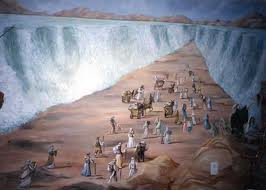
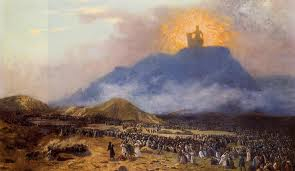
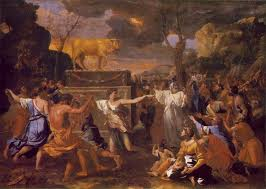
Paintings above in order: (1) Moses Holding Ten Commandments – source unknown; (2) Israel in Egypt by John Poynter; (3) Plagues of Egypt by Josesph Turner; (4) Christ Our Passover by Louie Monteith; (5) Moses parting the Red Sea – source unknown;(6) Moses on Mount Sinai by Jean Leon Gerome; (7) Molten Calf – source unknown; (8) Tabernacle image – source unknown.

“A Kingdom Which Cannot Be Shaken” A Sermon on Hebrews 12:27-29 by Dr. D.M. Lloyd-Jones

[This sermon was preached by Dr. Martyn Lloyd-Jones on 24th May 1978 in Rhymney, Wales, at the induction services of David Norman Jones who now is a minister in Tasmania – It’s hard to believe this sermon was given on this day in May 34 years ago! When you read this sermon you will see that aside from some of the archaic language – Lloyd-Jones spoke ahead of his time, and that his message is just as appropriate and relevant today – well into the 21st century – the Bible contains a timeless message that will be relevant for eternity]

In order that we may remind one another of the ultimate object and purpose of these two gatherings today and the coming together of these two churches under the ministry of our dear friend and brother, I would call your attention to the last three verses in the portion of Scripture that has been read to us.

“And this word, Yet once more, signifies the removing of those things that are shaken, as of things that are made that those things which cannot be shaken may remain. Wherefore we receiving a kingdom which cannot be moved, let us have grace, whereby we may serve God acceptably with reverence and godly fear: For our God is a consuming fire” [Hebrews 12:27-29].

A time of grave and terrible crisis

I need not tell you that we are meeting together tonight in a time of great confusion, a time of grave and terrible crisis. Everybody is aware of this; you cannot read a paper, you cannot listen to a news bulletin without hearing of some added crisis, some new problem, some fresh tragedy. The world is in an alarming state and condition. We are truly in an age of exceptional crisis. But I want to put to you that we are not only in a time and age of crisis, we are living in a time when all of us are being tested, all of us have been sifted and examined and proved. What I mean by that is this, that the state of the world tonight is testing the outlook, the point of view, of every one of us who is in this congregation. indeed of everybody that is in the world. Everybody has got some view of life, even the most thoughtless people, people who scarcely ever think at all, they have got a kind of philosophy and their philosophy is not to think. What is the use of thinking?’ they say. So they have got their point of view, their point of view is ‘Let us eat drink and be merry, for tomorrow we die’. So I am saying that everybody’s point of view, everybody’s attitude towards life, is on trial at the moment.

Questions requiring an answer

Let me show you what I mean. Take this first question: Are you surprised that the world is as it is at this moment?

Are you surprised that we have had two world wars already in this century? Are you surprised at the piling of these horrible armaments? Are you surprised at the confusion, the collapse, of so many institutions at this present time? Does it surprise you? Does it surprise you that in this sophisticated age of ours, in 1978, that the world is in such terrible trouble? I ask my question because there are many people who are very surprised at this; they are amazed at it-and for this reason, that their view of life was that the world is getting better and better. And therefore finding things getting worse and worse, they are confounded, they are surprised, they are amazed and they do not understand it.

So I put that as my first question: Are you surprised at the fact that the world is as it is at this very moment? Or, let me phrase that in a slightly different way: Are you disappointed that the world is as it is? Not only surprised but disappointed, because again there are many people in the world who are grievously disappointed at the present state of affairs. And they are disappointed for this reason, that having adopted the kind of idealistic philosophy, or view of life, which was very popular in the last century – you know that idea that believed in evolution, or progress and development, the view which said that as the result of popular education which came in 1870 and all the marvellous scientific advances and discoveries, more travel, ability to mix with other nations – they were very confident that the twentieth century was going to be the golden century, the crowning century of all the centuries!

Did not Tennyson write about the coming of the parliament of men and the federation of the world, of the days when men would beat their swords into ploughshares and war would be no more? War, we were told – and they taught this, not only the poets but the philosophers and the politicians – war, they said, was due to the fact that people did not know one another. But the moment when they got to know one another as the result of the invention of the steam engine and travel and still more by the coming of the aeroplane, the moment when people got to know one another, they would never fight again, they would realise that we were all brothers. They had forgotten, you see, that Cain and Abel were brothers. They had forgotten all about that, but they were quite sure that as the result of travel and the increase of knowledge and so on and so forth, that the world was going to be paradise-and with William Blake they talked about building the new Jerusalem in England’s green and pleasant land. It was all going to be done by the advance of knowledge and culture, by passing Acts of Parliament and by all the ameliorations that were taking place and were going to take place in social conditions.

Christians who were shaken

Well these men were confident about this. So you see when the First World War came, they were shaken, they were surprised. It was not according to the theory-but they still held on to it. Then when the Second World War came, well they were not only surprised and disappointed, they were aghast. They could not understand it and they were utterly confounded. I can illustrate what I am saying by one man. No man believed so firmly in this idea of development and of progress than the late Mr. H. G. Wells, the popular novelist. He was a great scientific humanist and he really believed that as the result of the advance of knowledge and of culture and of science in particular, that the world really was going to be paradise. So when the Second World War came, he wrote his last book and he gave it a very significant title, Mind At the End of Its Tether. He could not understand it. How was it possible with all our advances and developments that there should be a Second World War in this one century, before the half of the century had passed? So I ask my question to you my friend tonight, Are you disappointed that the world is as it is? Are you astonished and are you amazed at it? Or does it fit in with your philosophy and your outlook and your point of view?

Why Is The World As It is Today?

But let me ask a third question, Do you understand why the world is as it is tonight? Can you explain it? The Christian, the true Christian, is not surprised that the world is as it is and he can understand why it is as it is. Can you? This is a very vital question. You see the trouble is that people refuse to think. They just wring their hands, they say, ‘Is it not terrible!’ But they must explain it, why is it that things are as they are in spite of all our amazing advances and developments in so many realms and spheres. Can you understand it? Can you explain it? If not, there is something wrong with your point of view.

And let me put my last question, Have you any hope at all with regard to the future? Do you see any light anywhere? Is there any message of deliverance? Now I put it to you that if we claim to be thinkers at all, we are bound to face these crucial questions. Here we are in this world with these things happening. Does it tally with what we have always believed, that on which we have pinned our faith?

Now those are the questions I want to consider with you and I want to do so in the light of these verses that I have just read to you. This man was writing to a number of people who were known as Hebrew Christians; that means that they had been brought up as Jews but having heard the Christian Gospel they had left their old religion and the Temple and the ceremonial and the priesthood and they had espoused this new teaching, this new doctrine; they had become Christians. And for a while they were very happy. But then difficulties arose; they were persecuted; they were molested; they were tried grievously in many ways; and the result was that the faith of some of them was being shaken and they were beginning to look back with longing eyes to the old religion of their fathers. And this man writes to them because of that. He says, you are not going back to that! That was only the type, that was only the preliminary, that has been shaken, that has been removed, that was only temporary. Do not go back to the temporary which can be shaken-hold on to the final, the ultimate, that which can never be moved and never be shaken.

A world which will be shaken

But he goes beyond that and he reminds them, and through them he reminds us, that a day is coming when everything in this world that can be shaken is going to be shaken and that we all of us belong either to some kind of kingdom that can be shaken and removed, or we are citizens of a kingdom which cannot be shaken and which can never be moved. And in putting it like that, of course, this man is really giving us a summary of the message of the whole of the Bible from beginning to end. The Bible is a book which calls upon us all to make a decision. It tells us that there are two ways before us in this life and in this world. We can either build upon foundations which can be shaken and removed or else we can build on a foundation which can never be moved. Or its alternative is we can belong to kingdoms that can be shaken and moved or else we can be citizens of this kingdom which can never be moved. Now this is the great message of the Bible and it puts it like this, that all the trouble in the long story of the human race is due to the fact that mankind in its blindness and its folly is misled by the powers of evil, is always making the wrong choice, is holding on to things that can be shaken and rejecting the one thing that can never be shaken and never be moved. And it goes on putting this before us. It says it either has to be God or mammon. You either enter by a strait gate onto a narrow way or you go with the crowd through the wide gate and the broad way that leadeth to destruction. And right the way through it puts the two possibilities before us, shows us the folly of the wrong choice and pleads with us to accept the true, the only way that leads to peace here in this world and a hope of glory for all eternity.

Well now let me put this to you. This is the business of my friend who is going to minister here in Rhymney as well as in Crickhowell. This is the business of all of us worthy of the name of Christian ministers at all – we are here to address people in this age of collapse, this age of confusion, this age in which so many things have been shaken before our eyes, this climactic period through which we are passing. And I want to put it in terms of this biblical message. Man’s ultimate fallacy, as I have said, is that he always chooses to belong to kingdoms that can be shaken and removed. Man is very fond of building kingdoms. The history of mankind, if you like, is a history of men building kingdoms for themselves-refusing the kingdom of God and setting up their own kingdoms, which they think are going to be durable and everlasting and they have done this in many different ways.

The kingdoms of men – in all their variety – come and go

The old way, and it is still true, you find it in the Bible, you find it in secular history, the commonest of all the ways has been that man has tried is to set up military kingdoms, great military kingdoms. You have a number of them described here in the Bible. Think of a great kingdom like the kingdom of Babylon. That was an amazing kingdom, great wealth, great power, great armies and they conquered practically every country and at the head of this great kingdom of Babylon there was a man called Nebuchadnezzar. And he was such a conqueror, such a military genius, that he began to think that he was almost a god. And the people agreed with him. And he set up a great image to himself and commanded his people to bow down and worship. He really believed he was a semi-god if not a god. He had built this great kingdom, you see. But according to the Bible – and this is sheer history – it was not a kingdom that was going to last for ever, as he thought. It began to shake and we are given an account of this mighty dictator in a field one day and his nails had grown into talons and his hair was as long as the hairs of an animal and he was eating grass in a field-humbled by God. This man who had inflated himself to heaven-humbled, his kingdom shaken.

And quite soon it was conquered by another mighty kingdom that came along, called the Medo-Persian kingdom. Now this is biblical and secular history. The Medo-Persian kingdom came along and this again was a mighty kingdom, conquered Babylon, conquered others and it seemed to be invincible and everlasting and people were beginning to worship it.

It did not last very long. Another kingdom came along, the kingdom of Greece and this was an amazing kingdom. The head of this kingdom was a man whom we still know as Alexander the Great and he was of course one of the greatest military geniuses that the world has ever known. He conquered everywhere, conquered Egypt, built Alexandria, named after him; he conquered all the then known and civilised world and he set up this kingdom that really did seem to be indestructible and invincible, great in every respect. But do you know what happened? While he was yet in the thirties, he died and his kingdom was destroyed and divided up. I will never forget reading a book during the last war by a Swiss theologian, on the book of the prophet Daniel. All I remember of the book was this phrase, I have never forgotten it; it was so true, so striking. He said the man whom the world knows as Alexander the Great is known in the Bible as a he-goat. That is the biblical view of him. ‘Great’, says the world: ‘he-goat’ says God, says the Bible. And you and I now read books on the Glory that was Greece and we go and visit the ruins, the kingdom has vanished and has disappeared.

Why? Well another kingdom came up, the kingdom of Rome, the Roman Empire. And again this was one of the most astonishing phenomena that the world has ever seen. You remember how Rome again conquered all the then civilised world; but it was not only great in a military sense but in a legal sense and in every other sense. They came and conquered this country, as they conquered most other countries. Here at last there did seem to be a kingdom that could never be shaken and never removed. And the capital of course was the city of Rome. What did they call Rome? Is it not interesting, they called Rome ‘the Eternal City’? The Eternal City – not for a time – Eternal City. But you remember the story; in a few centuries barbarians, Goths and Vandals from northern Europe came down in hordes; they sacked the Eternal City and they conquered and brought to an end the great Roman Empire.

And so you see it has continued throughout ancient history. Kingdom after kingdom has come up and men have claimed for it that it is everlasting and eternal – suddenly it vanishes and disappears. But, you say, that is ancient history. All right, let us come up to modern times. I am not going to keep you in describing to you great kingdoms in Egypt, the mighty empire that was once governed by Spain and many other mighty kingdoms, mighty empires. Come nearer to our own time. Most of you can still remember a man whose name was Adolf Hitler. He came into power in 1933; what was he going to do? Well, he told us so often – heard him saying it many a time on the wireless – he said he was going to set up the Third Reich which was going to last a thousand years. The Third Reich – and Hitler dominated the world like some Colossus, striding the world like a Colossus. And when we heard he was going to speak on the wireless, we began to tremble – the word of a Hitler, this mighty man with a mighty empire to last a thousand years. How long did it last? Twelve years and Hitler and his empire vanished and disappeared.

But let us be honest, my friends, I suppose most people would say that the greatest empire the world has ever known was the British Empire and this was the empire of which our fathers boasted-that it was the empire on which the sun never set, owning a quarter of the globe. What an empire, the British Empire, on which the sun never sets! Durable, lasting, eternal! Where is it tonight, my friends? There is no such thing as the British Empire. We try to talk feebly about some British Commonwealth of nations but the empire is gone and the man who believed in it most of all, who said that he had not been appointed by destiny to preside over the dissolution of the British Empire, had to do so. The great British Empire has collapsed and vanished before our very eyes. You see the biblical message is being verified. All these kingdoms that men have erected and built up, they have all been shaken and they will all be removed. But that is only one example. This is so important I am going to give you many examples, my friend that we may see the truth of this message.

Take another empire that man has been very fond of building. What is that? Well the empire of the mind, what is called philosophy. What is philosophy? Well it is the love of wisdom – yes, but its idea is this – that what matters most of all is reason. Now you know a hundred years ago the chapels in this town and other towns were full. But then people began to say, Oh, well religion it is sob stuff. It is emotionalism! They meet together, they pull down the blinds, they do not read, they do not think, they are not aware of what is happening in the world. This is all emotionalism, folklore, fairy tale, fantasy. What we need, they said, was reason. They reject revelation, they do not believe in God-reason! We are going to govern the world by reason. And that became very popular towards the middle of the last century. It came over from Germany and it came into this country. Reason, the kingdom of reason. 
What has happened to this?

Now let us face the facts – one of the greatest dangers in this world at this moment is irrationality, which means men and women refusing to think. Do you know where this irrationality has come from? It is most interesting. It started in one of the greatest universities in the United States of America – Harvard University. There was a professor there of the name of Timothy Leary. And Timothy Leary and others began to say the mistake that we have been making is that we have lived too much in the realm of reason and understanding and of mind. We have neglected sensation, we have neglected feel mg and that is where we have been fools and we have brought our world into trouble. He said, we must reason less and less, what we need is experience. How are we to get experience? Well, he said, the quickest way to get experience is take certain drugs and this present wave of drug addiction was started by Professor Timothy Leary in Harvard University in America. There is a revolt against reason. There are students in large numbers saying we must go back to the land, back to a primitive kind of life. Novelists like D H Lawrence thought exactly the same thing. There is a revolt against reason and people are out for sensation. That is why they drink and drug themselves with alcohol and other drugs. That is why they shout and dance in a rhythmical manner with their music. They stop thinking and they have a pleasant feeling. It is one of the major problems in the world at this moment. The kingdom of reason has been shaken.

Let me give you another, it comes under the same category as reason-the kingdom of science. Now I suppose that most people today who are not Christians would give as their reasons for not being Christians that they adopt the scientific attitude and the scientific point of view. They say science says so-and-so, science proves so-and-so-science, the kingdom of science. Men have been very busy erecting this now for two centuries and they were absolutely confident concerning it. You are not going to believe these stories – you must have scientific facts, something that you can really depend upon and live upon. And they were so sure about this that they used the term laws. Now when I was a student, some sixty years ago, we were taught about Newton’s laws, not Newton’s theories but Newton’s laws. Cause and effect, laws of motion, they were absolutes, they were certainties. You cannot name a single great scientist in the world tonight who believes in Newton’s laws. A man called Einstein came along and what did he introduce? Not laws, but a theory of relativity – possibility, probability. Everything is in a state of uncertainty. You see, Newton believed that matter was solid; we know by today that is not; it is energy. It is all energy, it is in constant movement. So you believe now not in certainty and in laws but in possibility and probability. And so these great kingdoms have crashed one after another.

Let me tell you another law that I used to be taught when I was a boy and a young student. We were taught what was called Dalton’s law. What was Dalton’s law? Well, Dalton’s law taught this, that the smallest particle of matter is an atom and that an atom is indivisible. Dalton’s law not his theory – it was a fact, not like this stuff that is in the Bible! No, no, Dalton’s law – smallest particle of matter, the atom and an atom is indivisible. Would to God that Dalton had been right and that the atom was indivisible! You and I have been in the world when they divided the atom, hence the atomic and the hydrogen bombs, hence the possibility of a third World War that will put an end to civilisation and perhaps to the world itself. But they were taught as laws, absolutes, certainties, kingdoms which cannot be moved. They have all been shaken in our own age and generation.

And there are many other kingdoms that I could mention. Another was of course democracy. We were told that the ultimate form of government was democracy. We had got rid of oligarchies, we must get rid of monarchies and so on-and one is in great sympathy with most of these teachings and most of these ideas. Those terrible days of tyranny, of monarchs, of Lords in this country, people with power, money – power, landowners and others. Now, they said, we must get rid of all that. What we need is democracy, government of the people and by the people. This is the ultimate in government, democracy. But somebody said, well what if people do not agree? If you give power to the people what if people do not agree, what happens then? Ah, they said, everybody will respect the rule of law; that is an absolute. Of course if they do not respect the rule of law well then there is going to be a collapse. But everybody, they said, will respect the rule of law – so democracy is going to be the ultimate in society and it is coming in the twentieth century. What of this kingdom? Do you not read constantly of these dictatorships in various parts of the world, some of them on the right, some of them on the left? Democracy is in jeopardy at this very moment, we are in danger of dictatorships in most countries of the world. Democracy as such seems to be breaking down before our eyes.

I must mention one other because it was so popular in this country, the kingdom of industry. The proud boast was not only that the British Empire was a great military empire and kingdom, its greatness really depended upon its industry and its industrial power. The first industrial nation, the great trading nation of the world, the empire of the industry and this was something on which you could bank and on which you could build. This was not the precarious life of the farmer, the agricultural man – industry, it is solid, and we built up our great industry. And we were so sure of it that if we wanted in ordinary conversation to say that something was absolutely safe and sure and certain, what we said was ‘It is as safe as the Bank of England!’ Nothing can be safer. Safe as the Bank of England, safe as the pound sterling. An empire built on the pound sterling and the Bank of England. The pound sterling, what is happening to it? Well, I gather that it is floating at the present time and that the Bank of England has had to borrow money from some sheikhs in the Middle East. Your kingdom which could never be moved, pound sterling, Bank of England, they are shaking they are collapsing-and so it is with every other kingdom.

Even the earth

Wait a minute, says some one, what about the earth round and about us? What about the Beacons, the great mountains and the valleys and the rivers, surely these are durable and certain? Are they? Let off your hydrogen bombs and they will soon have vanished. As the Bible has prophesied centuries ago, ‘the elements shall melt with a fervent heat’ (2 Peter 3:10). Even creation is not durable; everything is being shaken. Man himself who has been worshipping himself, what is he? According to scientists he is nothing but chemistry and physics, he is nothing but a bundle of sensations. All our kingdoms are collapsing before our eyes. They can all be hurt, they can all be moved and yet men bank on them. They laugh at religion, they ignore the Bible, they do not believe in God. These are the kingdoms they believe in and yet they are collapsing before our very eyes. That is the message of the Bible.

But why do they collapse? Sinfulness, finitude and judgment

But why do they collapse? Why is all that I have been saying been so true? And this man tells us. The certainty you see with all these kingdoms is that they are made. ‘And this word, Yet once more, signifieth the removing of those things that are shaken, as of things that are made,’ These are man-made kingdoms and the tragedy of man is that he is too small to be a kingdom builder. Man is finite, he is limited, he is small. This is the final folly of man, that he thinks he knows everything. He thinks he can encompass the whole cosmos with his little mind. How small he is, he is finite, he is limited, he lacks the capacity to see things as a whole. He only sees little sectors of reality. Things that are made-man!

Yes, but even worse than that, according to the Bible, man is not only finite, man is also sinful-and this is what bedevils all his great efforts. Every one of us is sinful. What does that mean? It means that we are selfish. it means that we are self-centred. It means that we are subjects of jealousy and envy and malice and spite and hatred. We want things for ourselves – let the other man get on with it. This is in the heart of man, everything he touches, everything he makes therefore has got the seed of decay in it. That is why our Lord said: ‘Lay not up for yourselves treasures upon earth, where moth and rust doth corrupt, and where thieves break through and steal: But lay up for yourselves treasures in heaven, where neither moth nor rust doth corrupt, and where thieves do not break through nor steal’ [Matthew 6:19-20]. But man keeps on doing this and everything collapses. Why? Moth and rust, this element of evil. You cannot trust anybody. You may think that you have got a man who will fight with you to the end-he will desert you at the very moment that you need him most of all. He is a false friend, he lets you down. You see it in the political parties and everywhere else, they all seem to be carrying a dagger in their hip pockets and they are attacking one another. No man trusts anybody, why? We are all sinners, we are all selfish, we are in no condition to build empires.

But the Bible gives a third and a crowning reason for all this failure and it is this: that God blows upon it. We are living in a universe that we have not made; it is made by God. And God will not give His glory to another. He said so throughout the centuries. And when men rise up and establish their great kingdoms God allows them to go so far and then He suddenly strikes them as He did Nebuchadnezzar and down they go. ‘The wrath of God is revealed from heaven against all ungodliness and unrighteousness of men, who hold down the truth in unrighteousness’ [Romans 1:18]. It is the law and history proves it. Whatever man may do, whatever he may strive to do – it all is shaken and it collapses and disappears. And of course not only is it the Bible that says this, the really great thinkers of every century have seen this and seen it quite clearly.

Take a man like Shakespeare; I do not think Shakespeare was a Christian but he was a great man and he was a deep thinker and he saw this truth that I am putting to you about the fact that all these kingdoms can be shaken. And he put it in those immortal words that he put into the mouth of Prospero, in The Tempest. Here they are-they had been having some kind of revels, some kind of pageantry:

‘Our revels now are ended.
And like the baseless fabric of this vision,
The cloud-capped towers, the gorgeous palaces,
The solemn temples, the great globe itself
Yea, all which it shall inherit, shall dissolve;
And like this insubstantial pageant faded
Leave not a rack behind. We are such stuff
As dreams are made of and our little life
Is rounded with a sleep.’

That is Shakespeare; he had seen it, ‘the cloud capped towers, the gorgeous palaces, the solemn temples, the great globe itself, yea, all which it shall inherit, shall dissolve’ – and we are witnessing it. And he is absolutely right there. He is right until the last statement: ‘We are such stuff as dreams are made of and our little life is rounded with a sleep.’ He thought that death was the end and that is where he is wrong. It is not the end, it is appointed as this man says in chapter nine: ‘it is appointed unto men once to die, but after this the judgment’ [Hebrews 9:27] – God!

Another kingdom based on another word

Very well, there is the great negative message of the Bible, that man will never succeed in building a durable and a lasting and a solid kingdom. These things can all be shaken as we are witnessing it and worse is going to happen. There is one kingdom that cannot be moved, that cannot be shaken. ‘Wherefore we receiving a kingdom which cannot be shaken, let us have grace’. What is this? Here we are now in our proper world. We know not what tomorrow may bring forth. What are we to do? Is there any message? Is there anything that comes anywhere to give me some understanding and a word of hope? There is. What is it, what can I bank on tonight? What should I listen to and hold on to when everything is collapsing round and about me?

This man says, it is a word, ‘this word. Yet once more, He has already 
said: ‘See that ye refuse not him that speaketh’ [Hebrews 12:25]. This man’s message is this, that amidst the babel of voices in our world, there is another word-and the essence of wisdom is to listen to this word. It is the word that was spoken by Jesus Christ and which made him say: ‘Heaven and earth shall pass away, but my words shall not pass away’ [Matthew 24:35]. Or which the Apostle Peter quoted in these words, it is the same thing but in the graphic manner of the Apostle Peter. He tells these Christians that they have become Christians ‘by the word of God, which liveth and abideth forever’ [I Peter 1:23]. Then listen: ‘For all flesh is as grass, and all the glory of man’ – British Empire and every other glory
- ‘all the glory of man as the flower of grass. The grass withereth, and the flower thereof falleth away: But the word of the Lord endureth for ever. And this is the word which by the gospel is preached unto you’ [I Peter 1:24,25]. It is the word I am preaching to you now, it is the word my friend is going to preach, the word, this word.

What is it? Why is this word durable? Why is this word better than the word of the philosophers, the scientists, the politicians, the sociologists, the educationalist? Why is this the only word I should listen to? The answer is, it is the word of the Lord; it is the word of God. My dear friends, are you not tired of the words of men? We have been bombarded with them throughout this century. The promises they have dangled before us, what has happened to them? Are we happy? Are we all at ease? Are we looking forward to a glorious future? The words of men – are you not tired of them? Our business is to invite men and women to listen to the word of God. Why? Well, because God is not a man. We are finite, we are limited, we can put up theories and suppositions and hypotheses and they are falsified and we have nothing-but God, God is from everlasting to everlasting, the great I AM. I am that I am; I am that I shall be; without beginning, without end. The God who at the beginning said, ‘Let there be light and there was light.’ The God who brought these great old mountains and everything into existence and who sustains it by the word of His power. GOD.

Frail as summer ‘s flowers we flourish,
Blows the wind and it is gone,
But while mortals rise and perish,
God endures unchanging on.
We blossom and flourish
Like leaves on the tree;
And wither and perish
But nought changeth Thee.

I have heard some great orators in this present century and we half worshipped them in our folly. And one of them promised us that the First World War was the war to end wars and he was going to give us a land fit for heroes to live in. And the second one said very much the same thing, about some broad uplands on which humanity was going to look for some promised land. The words of men-we have forgotten them, have we not; we have forgotten their words and we are forgetting the men. Like leaves on the tree, they come, they cut a great feather, but they vanish and they go
- but God endures. Unchanging God, the God who spoke to your grandfathers and great-great-grandfathers here in Rhymney, the last century and the one before it. The God of the ages, the God whose history runs through this book and who has been guiding it ever since and who erupts into it, at every moment of crisis saving the possibilities for mankind. It is the Word of God. I am not preaching my own theories, I am submitting myself to this Word. I am expounding this Word, I have not put a single theory of my own before you; it is my business and that of every preacher, not to give you some of my ideas – but to preach this Word until men want what God says about our life – and what does He say?

God the Creator

Well, this Book tells you, this is the word of God. He tells us about God, Himself. As I told you He is the creator, He is the sustainer of everything. Yes, and He made man. Man is not an accident, you know, it is an insult to say that man is a creature that has evolved from the animal. It is not true. The Bible tells me that man has a dignity that makes him the lord of creation. Why? He has been created in the image and the likeness of God. We have an animal part but God has put something of Himself into us. When He came to make man He said, ‘Let us make man in our own image and likeness.’ He gave us reason, understanding, certain faculties and propensities that none of the animals have. And man is able to look on at himself and evaluate himself. Man! Yes and he is a responsible being to God. The popular theory is, as I say, that when a man dies that is the end. He is finished with. No! No! says the Bible. Man is bigger than the universe, he has these qualities and potentialities in him. God has put them there and God holds man responsible and He is going to ask man at the end, ‘What have you done with the soul that I gave you? You may have made a lot of money, you may have garnered a lot of knowledge-what have you done with the soul that part of you that was meant to commune with Me and to be my companion? What have you done with it?’ God is going to ask us-that is the judgment.

God the rule giver

But not only that and we can be certain of this-God not only tells us that He has made us in His own image and likeness and that we are responsible beings, He has told us how to live. Here is the great problem, ‘Why is the world as it is? Why the drunkenness and the immorality and the vice and the dishonesty and the chicanery and the battling? What is the matter, what is the cause of it all? There is a simple answer according to the Bible – that man instead of living according to God’s laws, is living according to His own ideas. But God has told us how to live. Where does He tell us? In what are called the Ten Commandments – if only everybody in the world lived according to the Ten Commandments tonight, our world would be paradise! What are they? Well, we are told that we must start by all submitting to God. We are not gods, that is the trouble in the world, there are too many gods in it. Everyman is a god, everyman sets himself up; he is the authority, he is the god. ‘This is what I say’, he says and he is insubordinate. That is the folly, there is only one God and He has told us that we must live to His glory. ‘And thou shalt love the Lord thy God with all thy heart, and with all thy soul, and with all thy mind, and with all thy strength …. And Thou shalt love thy neighbour as thyself’ [Mark 12:30-31]. And you will never love your neighbour as yourself until you have submitted yourself to God. Then you will see yourself as you are and you will see your neighbour as he is and you will see that you are both failures and you are both helpless and you are both hopeless – and you will love him for the first time, as you love yourself.

But then God goes on and these are the particulars-thou shalt not kill, thou shalt not commit adultery, thou shalt not steal, thou shalt not bear false witness against thy neighbour, thou shalt not covet thy neighbour’s ox, or his ass, or his manservant or his maidservant or his wife (Exodus 20:13-17); Those are the ten commandments – if only everybody lived according to God’s commandments! There would be no infidelity, there would be no promiscuity, there would be no separations, no divorces, no little children breaking their hearts because father and mother have gone their own selfish ways, leaving their little hearts to suffer. There would be an end to that. There would be no theft and dishonesty, there would be no drunkenness, there would be no drug addiction, there would be no atomic bombs, there would be no need of all these conferences to try and produce some precarious peace. There would be peace if only everybody in the world lived as God has told us to live. This Word is still true tonight, that is the way to live.

The Penalties which come with a Broken Law

Then He goes on to say this, that if we do not live according to His commandments – and this is an absolute certainty-if we do not live according to His commandments we shall suffer. ‘The way of transgressors is hard’ [Proverbs 13:15]. ‘There is no peace, saith my God, to the wicked’ [Isaiah 57:21]. And it does not matter how wealthy this wicked man is, how learned he may be – as long as he is wicked he will never know peace. Some of the most miserable restless people in the world tonight are multi-millionaires; these wretched people you read about them in the popular newspapers who get married five, six, seven times – do they know peace, is that the life of the film-star, the pop-star, or your multimillionaire? Oh, the tragedy of these miserable people who think you can buy peace and tranquillity and happiness with money. No, No, God has said that it cannot be done. There is not peace, saith my God, to the wicked. And while the people of this world are wicked there will be wars and rumours of wars. Nations are but individuals writ large and if a man cannot live with his neighbour why do you expect a country to live with its neighbour? God has told us this. These are absolutes, my friends, you cannot get away from them. The world is proving the truth of them tonight. This is God’s Word and there is not peace, saith my God, to the wicked.

God the Judge

Then he goes on, as I have told you already, to say that everyone of us will have to stand before Him in judgment and give an account of the deeds done in the body. ‘That is terrible!’ you say. I say it is a great compliment that God thinks I am such a being that He holds me responsible and accountable and I have to stand before Him – and every one of you will have to stand before Him. And believe me your television will not help you on your deathbed, and your drugs will not help you then, and your drink will not help you then, and your money will not help you then. Your soul will be naked. ‘Naked came I out of my mother’s womb and naked shall I return thither’ [Job 1:21]. We stand stripped before God and He will ask us, ‘What have you done with that precious thing I gave you – the soul?’ There is to be a final judgment upon the whole world of men.

God’s Unshakeable Kingdom

What else does this word tell us? Well thank God it does not leave us at that. If it had left us at that every one of us would be doomed and damned to all eternity. There would be no hope for any one of us – ‘For we have all sinned, and come short of the glory of God’. ‘There is none righteous, no, not one’ [Romans 3:23,10]. Thank God I have a light here, I have a hope here. What is it? Well, it is this that while men in their folly have been vainly trying to build their durable kingdoms and empires, God has been bringing in His kingdom: ‘Wherefore we receiving a kingdom which cannot be moved’, God’s kingdom. This is the way to understand history-forget all about kings and princes and queens and births and marriages and deaths and pomp and ceremony and all the ritual – forget it all! Concentrate on this 
what God has been doing – God has been bringing in His kingdom. Even when man failed at the beginning in the Garden of Eden, Cod came down and He gave him a promise of a kingdom. He said that there is going to be strife between the seed of the woman and the seed of the serpent – but the seed of the woman shall bruise the serpent’s head. God is going to bring order into the disorder, He is going to undo the misery and the folly of man. He is setting up a kingdom.

The Old Testament account is just of God, as this man says in his first chapter, in diverse parts and portions. bits and pieces, bringing in His kingdom to pass. He took hold of a man whose name was Abraham, he was a pagan living in Ur of the Chaldees, and he said, Come out, lam going to turn you into a nation. And from you and your seed all the nations of the world are going to be blessed. That was the origin of the Jews; they are God’s people; while the rest of the world were living in darkness and paganism, these people were given this revelation of the only true and living God. And God said, I am going to make a people of you and I am going to add to it. And He said I am going to send the King of the kingdom into the world amongst men. ‘But when the fulness of the time was come, God sent forth his Son, made of a woman, made under the law, To redeem them that were under the law’ [Galatians 4:4-5]. A babe was born in a stable, not in a king’s palace, in a stable in a place called Bethlehem.

Why was He born in a stable? Because there was no room for them in the inn. Everybody booked their rooms in the hostelries, in the inns and though a poor pregnant woman comes along on the verge of giving birth to a baby, nobody would vacate the room. They would not do it then, they would not do it now! They said, ‘She should have booked her room earlier! Why should I go out!’ The selfishness of mankind. So the babe was born amidst the straw in a stable and the little child was put into a manger because there was no crib. Who is this? This is God’s eternal Son. They called Him Jesus, but He is very God of very God. God has visited and redeemed His people! ‘God so loved the world’ that had rebelled against Him and spat in His face as it were. ‘God so loved the world, that he gave his only begotten Son. that whosoever believeth in him should not perish, but have everlasting life’ [John 3:16]. He is the King of the kingdom and He says so. He heals in the name of the kingdom, He invites people to come into His kingdom. ‘Come unto me’, He says, ‘all ye that labour and are heavy laden, and I will give you rest’ [Matthew 11:28]. And He has and He does and He alone can do so and the whole story of true Christianity is of this kingdom being extended. Men and women in every age and generation being added unto it. The kingdom of God is going on.

There are times like the present when it almost seems to be invisible-but it is still there and when men begin to deliver their obituary orations over the death of the Christian church, God revives her again and on she goes and thousands are added and the kingdom is going on and on and on-and it will go on until it is finally completed and the kingdoms of this world shall have become the kingdoms of our Lord, and of his Christ. (Revelation 11:15). Thank God in spite of all that is happening in this world tonight, and it is black and it is dark, but as certainly as we are here God’s purposes are ever sure and Christ is going to reign over the whole world from shore to shore and pole to pole-and nothing will be able to resist Him. It is an absolute.

I must give you another absolute – there is only one way into this kingdom of God. It is the whole message of this epistle. Only one way. What is it? It is through believing that Jesus of Nazareth is the Son of God. It is by believing that He has taken our sins upon Himself and borne our punishment and thereby reconciled us to God and opened to us the gate of the kingdom, the kingdom of God and the kingdom of heaven. There is no other way. This man says, you foolish people, are you going back to your burnt offerings and sacrifices? Are you still going to believe that the blood of bulls and of goats and the ashes of an heifer can cleanse the conscience from dead works? It is impossible! There is only one, the blood of Jesus Christ His Son. There is only one way, he says in chapter 10, into the holiest of all, it is by the blood of Jesus (v.19). No church can save you. No priest can save you, the virgin Mary cannot save you, no ceremonial can save you. No, No! There is only one way of salvation, only one way to know God and to spend your eternity with Him – it is this – to believe the message concerning His Son, that the babe of Bethlehem is the eternal Son of God and that He died on the cross, not the death of a pacifist, He is the Lamb of God that taketh away the sin of the world. God hath laid on Him the iniquity of us all. He has punished Him instead of us and gives us His righteousness and we are clothed in it and we are children of God and heirs of eternal bliss.

The Only Way

My friends, there is no other way; this is an incomparable gospel. Hinduism will not get you into the kingdom, Confucianism will not, Buddhism will not. These things are coming into this country; none of them will bring you into the kingdom of God. There is only one way. Christ said, I am the light of the world. I am the way, the truth and the life. No man cometh unto the Father but by me. There is none other name under heaven given amongst men whereby we must be saved. It is exclusive, it is God’s own Son. So the world religions are of no value. This and this alone does what it promises to do.

But I must not keep you. This man tells us that if we believe this message and become citizens of the kingdom of God, we will be surrounded by the promises of God. He tells us that God, in order to comfort Abraham, swore an oath. He swore twice over, so that by two immutable things, he might have this certain hope. And we have it, God promises to bless us because we are His children. He won’t until we are; while we rebel against Him He will not bless us. And I describe the state of the world today as being entirely due to the fact that God’s wrath is upon us. In its folly mankind began to say one hundred years ago that we could make a perfect world without God. I believe that what God is saying in this century is this, ‘You say that you can make a perfect world without me! Get on with it! Get on with it!’ and He is withdrawing His restraining influences and He has allowed us to get on with it. And what have we done? Two world wars, atomic bombs, collapse of society at the present time. Oh, my dear friends, until we believe in simplicity this message, we have no right to expect God to bless us. But you become a citizen of His kingdom and you will be surrounded with exceeding great and precious promises. He says in the next chapter, I will never leave thee nor forsake thee-and in the light of that I can say, the Lord is my helper and I will not fear what men shall do unto me. He will be with me in life, He will be with me in death, He will be with me to all eternity.

Very well, what do I do about it all? This man tells us: ‘Wherefore we receiving a kingdom which cannot be moved, let us have grace’, which means this, let us thank Him. Let us thank God that He has not abandoned the world. Why He has not I do not know – I do, it is because His Name is love! I would have abandoned this world long ago, so would you but God is love and it is His world and He has not abandoned it. He sent His only Son into it to teach us, to die for us, to rise for our justification and to lead us on by His Spirit within us. Let us thank Him; let us have grace, which means let us thank Him-and let us serve God acceptably with reverence and godly fear, remembering that our God is a consuming fire.

One or the other – which?

My dear friend you are in some kingdom or other at this moment. Are you in the kingdom of God? If not, you are in one or other of the kingdoms of men. They are already collapsing before your eyes and when you come to die-and we have all got to, every one of us – the National Health Service cannot cure death; we have all got to die. My dear friends, I have got to die. I am older than most of you and I will have to die probably before you but I have got to die and give an account. Those kingdoms of men will have nothing to give you then. H G Wells, as I have quoted, admitted it. Many others have admitted it still more recently. They are getting old and they are failing and their faculties are failing. They no longer have got their good looks, their friends are dying and they are bereft and solitary and hopeless – and they have nothing.

What must I do?

Do you belong to one of those kingdoms? See the unutterable folly of doing so. The whole of history condemns it. Look at this other kingdom, all you have to do is to acknowledge your failure, to acknowledge your desperate need and just as you are without understanding it at first, just to say, ‘I believe, help Thou my unbelief’. Ask God to have mercy upon you and to give you enlightenment and understanding. Ask Him to have pity upon you and He will do so. It is a gospel for anybody-whosoever believeth, it does not postulate any great brain or great wealth or great learning or anything else. The common people heard Him gladly, I read about Jesus Christ. Why? Because He understood them, He sympathized with them, He loved them. He had come into the world, laying aside the insignia of His eternal glory, in order that He might redeem them. This is all He asks of us-and the moment you enter into this kingdom, you will be amazed at the change. Are you ready to say with me
tonight:

My hope is built on nothing less,

Than Jesus’ blood and righteousness;

I dare not trust the sweetest frame,

But wholly lean on Jesus’ Name.

On Christ, the solid Rock, I stand,

All other ground is sinking sand.

When darkness seems to hide His face,

I rest on His unchanging grace;

In every high and stormy gale,

My anchor holds within the veil.

His oath, His cov’nant, and His blood,

Support me in the whelming flood;
When all around my soul gives way,

He only is my hope and stay.

On Christ, the solid Rock, I stand;

All other ground is sinking sand.

Do you know how I look out at life tonight, it is this: ‘Change and decay in all around I see’. I have preached in chapels in Rhymney that are no longer here, the people I knew here when I first came nearly fifty years ago, they have gone. ‘Change and decay in all around I see: Oh Thou who changest not, abide with me.’ And He will, He will be with me in life, in death and He will present me before the presence of God’s glory, with exceeding joy and I look forward to a day that is coming when out of this world and beyond it I shall see Him as He is and be made like unto Him. And I shall dwell with Him in that new heavens and new earth wherein dwelleth righteousness. Make certain my dear friend that you belong to the kingdom of God, which cannot be shaken, which cannot be moved.

Amen

About the Preacher: Dr. David Martyn Lloyd-Jones (1899-1981)[hereafter – DMLJ] was a British evangelical born and brought up within Welsh Calvinistic Methodism, he is most noted for his pastorate and expository preaching career at Westminster Chapel in London.

In addition to his work at Westminster Chapel, he published books and spoke at conferences and, at one point, presided over the Inter-Varsity Fellowship of Students (now known as UCCF). Lloyd-Jones was strongly opposed to the liberal theology that had become a part of many Christian denominations in Wales and England.

DMLJ’s most popular writings are collections of his sermons edited for publication, as typified by his multi-volume series’ on Acts, Romans, Ephesians, 1 John, and Philippians. My favorite writings are his expositions on the Sermon on the Mount; Revival; Joy Unspeakable; Spiritual Depression; and his recently revised 40th Anniversary edition of Preaching and Preachers.

Born in Wales, Lloyd-Jones was schooled in London. He then entered medical training at Saint Bartholomew’s Hospital, better known simply as Bart’s. Bart’s carried the same prestige in the medical community that Oxford did in the intellectual community. Martyn’s career was medicine. He succeeded in his exams so young that he had to wait to take his MD, by which time he was already chief clinical assistant to Sir Thomas Horder, one of the best and most famous doctors of the day. By the age of 26 he also had his MRCP (Member of the Royal College of Physicians).

Although he had considered himself a Christian, the young doctor was soundly converted in 1926. He gave up his medical career in 1927 and returned to Wales to preach and pastor his first church in Sandfields, Aberavon.

In 1935, Lloyd-Jones preached to an assembly at Albert Hall. One of the listeners was 72-year-old Dr. Campbell Morgan, pastor of Westminster Chapel in London. When he heard Martyn Lloyd-Jones, he wanted to have him as his colleague and successor in 1938. But it was not so easy, for there was also a proposal that he be appointed Principal of the Theological College at Bala; and the call of Wales and of training a new generation of ministers for Wales was strong. In the end, however, the call from Westminster Chapel prevailed and the Lloyd-Jones family finally committed to London in April 1939.

After the war, under Lloyd-Jones preaching, the congregation at Westminster Chapel grew quickly. In 1947 the balconies were opened and from 1948 until 1968 when he retired, the congregation averaged perhaps 1500 on Sunday mornings and 2000 on Sunday nights.

In his 68th year, he underwent a major medical operation. Although he fully recovered, he decided to retire from Westminster Chapel. Even in retirement, however, Lloyd-Jones worked as a pastor of pastors an itinerant speaker and evangelist. “The Doctor”, as he became known, was one of the major figureheads of British evangelicalism and his books and published sermons continue to be appreciated by many within the United Kingdom and beyond. DMLJ believed that the greatest need of the church was revival.

Dr. Gleason L. Archer on Does The Bible Testify To It’s Own Inerrancy?

“The Witness of the Bible to its Own Inerrancy” by Dr. Gelason L. Archer

Does the Bible actually assert its own inerrancy as the revealed Word of God? Does it really lay claim to freedom from error in all that it affirms, whether in matters of theology, history, or science? Are proponents of this view truly justified in their insistence on this high degree of perfection in Scripture, or are they actually going beyond what it affirms concerning its own authority? These questions have been raised by those who advocate a lower concept of biblical authority, and it is important for us to settle them as we seek to come to terms with the Bible’s own witness.

Before we launch into an examination of specific passages in Scripture that bear upon this question, it would be well to define as clearly as possible the basic issues involved. Otherwise we may lose sight of the objectives of this type of investigation.

Preliminary Considerations

Inerrancy is attributed only to the original manuscripts of the various books of the Bible; it is not asserted of any specific copies of those books that have been preserved to us. Some early portions of the New Testament have been discovered by archaeology (such as the Rylands Papyrus 457 fragment of John 18, and the Magdalen fragment of Matthew 26), dating from the second century AD., within a century of the original composition of those Gospels. The earliest complete copy of an Old Testament book is still the Dead Sea Scroll of Isaiah (lQIsaa), dating from the mid-second century B.C. There are some Qumran fragments of the Pentateuch that are even earlier, coming from the third or fourth century. All these tend to support the received text of the Hebrew and Greek Scriptures as preserved in the standard scholarly editions (Nestle and Kittel). There is far more textual support for the text of Holy Scripture than there is for any other book handed down to us from ancient times, whether the works of Homer, the Attic tragedians, Plato, Cicero, or Caesar. Nevertheless, these are not the original manuscripts, and minor errors have crept into the text of even these earliest and best copies of the books of the Bible. There are occasional discrepancies in the spelling of names, in the numbers cited in the statistical records, and similar matters. It is the special task of textual criticism to analyze these errors and choose the best of the variant readings according to the standard rules (or “canons”) of this science.

Yet there is an important qualification to be made in regard to the range or degree of error that has crept into our received text of Scripture. That is to say, the extent of deviation from the exact wording of the original manuscripts of the Bible must somehow have been kept within definite limits, so as not to pervert the sense or the teaching of the passage in which it occurs. Otherwise it could not serve as a trustworthy record of God’s redeeming love for mankind or of his will for our salvation. Since the Bible repeatedly affirms that it sets forth the revealed Word of God (“Thus saith the Lord”), rather than the mere conjectures or traditions of men, it must have been preserved in a sufficiently accurate form to achieve its salvific purpose for the benefit of the human race. God is present in Scripture as the omnipotent Lord of history, and as such he could not have allowed his redemptive plan to be thwarted by a seriously defective transmission.

What confirmation do we have that God has in fact maintained that kind of control over the preservation of the manuscripts? The answer is in the critical apparatus appearing in the scholarly editions of the Old and New Testament. Many hundreds of ancient manuscripts have been carefully consulted in drawing up this apparatus, both in the original languages themselves and in the languages into which they were translated (from the third century B.C. to the fifth century AD.). Yet a meticulous examination of all the variant readings appearing in the apparatus shows that no decently attested variant would make the slightest difference in the doctrinal teaching of Scripture if it were substituted for the wording of the approved text. (By “decently attested variant” we, of course, exclude all merely conjectural emendations, with which the apparatus of Kittel’s Biblia Hebraica is needlessly encumbered. We refer only to deviations indicated by actual Hebrew, Greek, Latin, or Syriac manuscripts as over against the Masoretic Text of the Hebrew Bible, or the Nestle edition of the New Testament.)

The same finding can hardly be sustained for any other ancient document preserved to us in multiple copies, whether the Egyptian Book of the Dead, the Behistun Rock inscription of Darius I, or the Middle Kingdom novel known as The Tale of Sinuhe. These all present differences in wording that affect the actual message or teaching of the document. Only of the Bible is it true that such a degree of deviation is not found. How may this be accounted for? It is best accounted for by the supposition that God the Holy Spirit has exercised a restraining influence on the preservation of the original text, keeping it from serious or misleading error of any kind.

So far as the text of the New Testament is concerned, the testimony of Frederick Kenyon is quite conclusive:

Repeated mention of divergent manuscripts and families of texts may perhaps give the impression that the text of the New Testament is abnormally uncertain. Such an impression can best be corrected by an attempt to envisage the early history of the text and its present condition. So far from the New Testament text being in an abnormally unsatisfactory state, it is far better attested than that of any other work of ancient literature. Its problems and difficulties arise not from a deficiency of evidence but from an excess of it. In the case of no work of Greek or Latin literature do we possess manuscripts so plentiful in number or so near the date of composition. Apart from Virgil, of whom we have manuscripts written some three or four hundred years after the poet’s death, the normal position with regard to the great works of classical literature is that our knowledge of their text depends upon a few (or at most a few dozen) manuscripts, of which the earliest may be of the ninth or tenth or eleventh century, but most of the fifteenth. In these conditions it generally happens that scientific criticism has selected one manuscript (usually but not necessarily the oldest) as principal authority, and has based our printed texts on this, with some assistance from conjecture…. In the case of the New Testament … the vellum manuscripts are far earlier and far more numerous; the gap between the earliest of them and the date of composition of the books is smaller; and a larger number of papyri have (especially since the discovery of the Chester Beatty papyri) given us better means of bridging that gap. We are far better equipped to observe the early stages of textual history in the manuscript period in the case of the New Testament than of any other work of ancient literature (Frederick G. Kenyon, Recent Developments in the Textual Criticism of the Greek Bible. New York and London: Oxford University Press, 1933, pp. 74-76).

The Original Manuscripts

The question naturally arises in this connection: If we do not now possess the inerrant original manuscripts, what is the point of arguing that they must have been free from all error? Why do we not simply accept the fact that textual errors have crept into the wording of the Bible as we now have it and try to make the best of it in its imperfect form? Is it not enough for us to maintain that even in that form it can present us with an “infallible rule of faith and practice” (to use the standard phrase of the Westminster Confession of Faith)?

In answer to this, it should be pointed out, first of all, that there is a great difference between a document that was corrupted with error at the start and a document that was free from mistake at its original composition. If the original author was confused, mistaken, or deceitful, then there is little to be gained by employing textual critical methods to get back to an approximation of the original form. The errors and misinformation inhere in the archetype itself and serve only to the disadvantage and hurt of the reader. Only if the original was correct and trustworthy is any useful purpose served by elimination of copyists’ errors. The pursuit of textual criticism itself implies a trustworthy original, the original wording of which has decisive importance.

Second, it should be observed that the controlling influence of an inerrant model is part of our daily experience today, even though none of us has access to that model. In the Bureau of Standards in Washington, D.C., there is preserved a perfect pound, a perfect foot, a perfect quart – all the basic measures of weight, length, and volume, in relation to which all other pound-weights, rulers, quart bottles, and other measures are judged. Very few Americans have ever seen these standard models in Washington with their own eyes. Yet none would contend that we may completely disregard them on the ground that all we ever see are approximate measuring devices.

Third, if mistakes at any level characterized the original manuscripts of the Bible, the effort to discover in them a truly “infallible rule of faith and practice” becomes an exercise in futility. Most of the doctrinal teaching contained in Holy Scripture comes to us in a framework of history and science. For example, the opening statement of the Apostles’ Creed affirms that God the Father Almighty was the creator of the universe, and this certainly involves an unqualified rejection of the theory of mechanistic evolution, which so dominates the thinking of non-Christian scientists today. The subsequent affirmation of the virgin birth of our Lord and Savior Jesus Christ likewise has a definite bearing on scientific theory today, for it is commonly thought that no events can take place in nature that do not constantly recur so as to be subject to scientific observation and analysis. Again, the bodily resurrection of Christ is both a scientific and a historical event, along with its theological importance for the salvation of sinners. Christ’s sufferings and death on the cross under the authority of Pontius Pilate are likewise events in history. Therefore, if the Bible may have erred in its statements concerning history and science (interpreted, of course, in the way the original author intended them) the doctrinal or theological affirmations for which they form the framework must also be subject to error.

Authority of the Old Testament

The Old Testament shows no awareness whatever of any supposed line of distinction between theological doctrine and miraculous events. This is true of the accounts of Moses’ time, concerning both history and science. Psalm 105, composed four or five centuries after the Exodus, heartily reaffirms the historicity of the ten plagues on Egypt as recorded in Exodus 7-12, and renders thanks to the Lord for this display of his power in redeeming Israel from her bondage. Psalm 106 likewise exalts the name of Yahweh for the miraculous parting of the waters of the Red Sea and for the sudden destruction of Dathan and Abiram as they sought to set aside Moses and his revelation. These saving acts of God are referred to as factual episodes in the history of redemption. And so are the battle of Gibeon (which features the prolongation of the day and the destruction of the enemy by a catastrophic hailstorm) and the fall of the walls of Jericho at the sound of a trumpet blast (see Isa. 28:21; 1 Kings 16:34).

Ancient Israel was as sure of the reality of the Red Sea crossing as the apostolic church was of Christ’s death on Calvary. So no matter how rationalists and antisupernaturalists scoff at these episodes as fabulous and nonhistorical, the Hebrew Scriptures themselves affirm them without qualification as actually having taken place on the plane of history.

Much more could be said concerning the testimony of Holy Scripture to its own plenary inspiration. One of the best discussions concerning these matters is to be found in chapter 2 of L. Gaussen’s Theopneustia: The Bible, Its Divine Origin and Inspiration, (L. Gaussen, Theopneustia: The Bible, Its Divine Origin and Inspiration, trans. by David D. Scott. Cincinnati, Boston, and New York: Blanchard, 1859) where he points to innumerable passages in the Old Testament that assert unequivocally that the words of the prophets were the words of God. Not only in the Pentateuch (Exod. 4:30; Deut. 18:21, 22, and the numberless instances in Leviticus) but also throughout the prophets we meet with such affirmations as “The LORD has spoken [the following words],” “The mouth of the LORD has spoken,” “The word of the LORD came to saying” (Josh. 24:2; Isa. 8:11; Jer. 7:l; 11:1; 18:1; 21:1; 26:1;27:1; 30:1,4; 50:1; 51:12; Amos 3:1; passim).

Hosea begins, “The word of the Lord that came to Hosea….” This fullness of inspiration is asserted of the Psalms as well: “Sovereign Lord,… who by the mouth of our father David, thy servant, didst say…” (Acts 4:24-26, quoting Ps. 2:1, 2). So also Peter says of David in connection with Psalm 16:10: “Being therefore a prophet, and knowing that God had sworn with an oath to him that he would set one of his descendants upon his throne, he foresaw and spoke of the resurrection of the Christ, that He was not abandoned to Hades, nor did His flesh see corruption” (Acts. 2:30, 31). Very clearly, then, God is here said to have spoken by the mouth of David, even though the actual speech and inscripturation were done by David himself. Second Peter 1:20 speaks of the Old Testament in general as the “prophecy of Scripture” (prophteia graphs) and clearly affirms that it did not come by the will of man (as if invented or thought up by the human author on his own initiative) but only as the human author was moved by the Holy Spirit and thus produced in his own human words exactly what God intended him to say. These inspired writings were truly the words of God (even though conveyed through the human instrumentality of the prophet) and contained a full and complete magisterial authority.

This authority is constantly recognized by the Gospel writers, who often remarked: “All this took place to fulfill what the Lord had spoken by the Prophet” (Matt. 1:22; cf. 2:5, 15, 23; 13:35; 21:4; 27:9, passim). As Gaussen points out, “Nowhere shall we find a single passage that permits us to detach one single part of it as less divine that all the rest” ( Ibid, p. 67). That is, the distinction between the doctrinal-theological and the historical-scientific drawn by some modern writers on this subject is completely foreign to the attitude of the New Testament authors toward the Old.

Christ’s Unqualified Acceptance of the Old Testament

Jesus of Nazareth clearly assumed the errorlessness of the Old Testament in all its statements and affirmations, even in the realms of history and science. In Matthew 19:4, 5 he affirmed that God himself spoke the words of Genesis 2:24, with reference to the literal, historical Adam and Eve, as he established the ordinance of marriage. In Matthew 23:35 he put the historicity of Abel’s murder by Cain on the same plane of historical factuality as the murder of Zechariah the son of Barachiah. In Matthew 24:38, 39 Jesus clearly accepted the historicity of the universal flood and Noah’s ark: “For as in those days before the flood they were eating and drinking, marrying and giving in marriage, until the day when Noah entered the ark, and they did not know until the flood came and swept them all away….” This record, bearing upon both history and science, has been scornfully rejected by those who trust in the infallible accuracy of modern scientific empiricism.

The same is true of the account of the prophet Jonah’s preservation from drowning through the agency of a great fish that three days later spewed him forth on the shore. Yet Jesus put his crucifixion and resurrection on the same historical plane, saying, “For as Jonah was three days and three nights in the belly of the whale, so will the Son of man be three days and three nights in the heart of the earth” (Matt. 12:40). In the same way, Christ goes on in the very next verse to confirm that the heathen population of Nineveh really did repent at the preaching of Jonah, just as recorded in Jonah 3:7-9. Even though this account has been treated with skepticism by modern scholarship, the New Testament indicates that Jesus regarded it as sober fact.

In the light of these passages, it seems clear that Jesus regarded the Hebrew Bible as completely trustworthy and reliable in all that it affirms in matters of theology, history, and science.

This conclusion carries with it a corollary that renders indefensible the view that the inerrancy of Scripture extends only to its doctrinal teaching. The New Testament teaches that Jesus Christ is the incarnate God. For example, John 1:14 proclaims him the eternal Word who at the Incarnation became flesh and dwelt among men as Jesus of Nazareth. If, then, Jesus was mistaken in regarding the Old Testament as completely trustworthy, reliable, and inerrant in matters of doctrine, history, and science, it must follow that God himself was mistaken about the inerrancy of the Hebrew Scriptures. And the proposition that God was mistaken is surely a theological issue if there ever was one! It turns out, then, that errancy in matters of history and science leads inevitably to errancy in matters (and very important matters!) of theology as well. Once the dike has been breached, it is eventually washed away.

Some have suggested that Jesus was actually aware of the true authorship and date of composition of the various books of the Old Testament, and that he had personal knowledge of the historical and scientific mistakes embedded in the Hebrew Scriptures. Nevertheless, for the sake of more effective teaching in the area of theology or ethics he found it best to accommodate himself to the widely accepted views of his contemporaries. In other words, he pretended that Moses had personally written all the Pentateuch under inspiration, that Adam and Eve were actual historical persons, that Noah’s flood took place exactly as described in Genesis 6-9, that Jonah was swallowed by a great fish and later expelled by it on the shore of the sea – even though he knew these events were not actually true. In order to avoid unimportant “side-issues” of authenticity and accuracy on these secondary levels, he simply went along with public opinion while presenting his doctrinal teaching. This interpretation of Jesus and his treatment of higher critical issues finds special favor in certain liberal Roman Catholic circles.

Yet when subjected to logical scrutiny, it must be recognized that this view is impossible to reconcile with the truthfulness and holiness of God. If Jesus of Nazareth knew that the story of Jonah’s deliverance through the fish was altogether fictitious, he could never have used it as a historical type of the experience of burial and resurrection that he himself was shortly to undergo. This kind of accommodation would have bordered on the duplicity employed by unscrupulous politicians in the heat of an election campaign. But in contrast to this ,Jesus made plain to his hearers that “he who sent me is true, and I declare to the world what I have heard from him” (John 8:26). Again, “I speak of what! have seen with my Father” (John 8:38). The words of Jesus were the words of God, and the God who pronounced judgment on falsehood could not himself have resorted to falsehood in the proclamation of his saving truth.

There is a further serious objection to this theory of accommodation. The four Gospels make plain that Jesus refused to accommodate himself to certain mistaken views current in his own time. Take, for example, his repeated affirmation in the Sermon on the Mount: “You have heard that it was said to the men of old … But I say to you…” (Matt. 5). Or again, the remarkable statements in John 8:24 (“I told you that you would die in your sins,… you will die in your sins unless you believe that I am he”) and John 8:44 (“You are of your father the devil”). Nothing could be farther from accommodation to popular opinion than this. The same is true of his strict position concerning divorce (Matt. 19:9) and allegedly non-binding oaths (Matt. 23:16-22) and his downgrading of the importance of kosher restrictions concerning foods in favor of that which controls the motives and attitudes of the heart (Matt. 15:11-20). Jesus never stooped to accommodation in order to ingratiate himself with his public. As Peter affirmed of him, “He committed no sin; no guile was found on his lips” (1 Peter 2:22).

Inerrancy Essential For Biblical Authority

We are faced with a basic choice in the matter of biblical authority. Either we receive the Scripture as completely reliable and trustworthy in every matter it records, affirms, or teaches, or else it comes to us as a collection of religious writings containing both truth and error.

If it does contain mistakes in the original manuscripts, then it ceases to be unconditionally authoritative. It must be validated and endorsed by our own human judgment before we can accept it as true. It is not sufficient to establish that a matter has been affirmed or taught in Scripture; it may nevertheless be mistaken and at variance with the truth. So human judges must pass on each item of teaching or information contained in the Bible and determine whether it is actually to be received as true. Such judgment presupposes a superior wisdom and spiritual insight competent to correct the errors of the Bible, and if those who would thus judge the veracity of the Bible lack the necessary ingredient of personal inerrancy in judgment, they may come to a false and mistaken judgment – endorsing as true what is actually false, or else condemning as erroneous what is actually correct in Scripture. Thus the objective authority of the Bible is replaced by a subjective intuition or judicial faculty on the part of each believer, and it becomes a matter of mere personal preference how much of Scripture teaching he or she may adopt as binding.

In contrast to the view of the Bible as capable of error in matters of science, history, or doctrine (certainly such doctrine as is contained in a historical or scientific framework), we find that the attitude of Christ and the apostolic authors of the New Testament was one of unqualified acceptance. Christ may have illumined the basic intention of the Ten Commandments by setting forth their spiritual implications (“But I say to you…”), but never did he suggest that any affirmation or teaching in the Old Testament required validation by modern critical scholarship. He clearly presupposed that whatever the Old Testament taught was true because it was the infallible Word of God. It needed no further screening process by human wisdom in order to be verified. “For truly, I say to you,” said Jesus, “till heaven and earth pass away, not an iota, not a dot, will pass from the law [Old Testament] until all is accomplished” (Matt. 5:18). His statement in John 10:35, “The Scripture cannot be broken,” carries the same implication.

Those apostolic authors whom he taught or inspired proclaim the same full authority of all Scripture. Paul says in 2 Timothy 3:16: “All Scripture is inspired by God and profitable for teaching, for reproof, for correction, and for training in righteousness.” In Hebrews 1:1, 2 we read, “God spoke of old to our fathers by the prophets; but in these last days he has spoken to us by a Son.” This asserts the same infallibility for the writings of the Old Testament as for the words of Jesus himself. In 1 Peter 1:10, 11 the apostle states: “The prophets who prophesied of the grace that was to be yours searched and inquired about this salvation; they inquired what person or time was indicated by the Spirit of Christ within them when predicting the sufferings of Christ and the subsequent glory.” This clearly implies that the Holy Spirit was within the Old Testament authors as they composed the books of the Hebrew Scriptures and that he guided them into words of infallible truth sure of fulfillment, even though the human authors themselves may not have fully understood all that these words predicted. Especially instructive is 2 Peter 1:20, 21: “First of all you must understand this, that no prophecy of scripture is a matter of one’s own interpretation, because no prophecy ever came by the impulse of man, but men moved by the Holy Spirit spoke from God.” As they wrote down God’s revelation, the Old Testament authors were supernaturally borne along (like sailing vessels impelled by the wind, pheromenoi) to record God’s truth, which is not to be manipulated or perverted by one’s own personal interpretation or preference. Despite all the imperfections of the human writers of Scripture, the Lord was able to carry them along into his infallible truth without distortion or mistake.

Both Christ and the apostles affirm, then, that what the Bible says, God says. All these passages add up to this: that accuracy inheres in every part of the Bible, so that it is to be received as infallible as to truth and final as to authority. When the Scripture speaks, it speaks as the living, operative Word of God (Heb. 4:l2 – zn and energs), which penetrates to man’s innermost being and sits in judgment on all human philosophies and reasonings with an authority that is absolutely sovereign. This, then, is what the Scriptures teach concerning their own infallibility. Not only are they free from all error; they are also filled with all authority, and they sit in judgment on man and all his intentions and thoughts.

This objective authority of the Bible carries with it an important consequence as to its interpretation. Scripture must never be construed according to a man’s personal preference or bias just to suit his own purposes. It must be carefully and reverently studied with a view to ascertaining what the human biblical author (guided by the divine Author) intended by the words he used. This makes historico-grammatical exegesis an absolute necessity. We fall into misinterpretation when we err in understanding the Hebrew or Greek words that compose the original Scripture itself, supposing them to mean something the ancient writer never intended, simply because the English words of our Bible translations might be so construed. We grievously err in our interpretation when we interpret figurative language literally; we likewise err when we interpret literal language figuratively.

The authority of Scripture requires that in whatever the author meant to say by the words he used, he presents us with the truth of God, without any admixture of error. As such it is binding on our minds and consciences, and we can reject or evade its teaching only at the peril of our souls.

Old Testament Quotations In The New Testament

It has often been observed by careful students of the Bible that a certain number of the Old Testament passages quoted in the New are not quoted with literal exactness. Often this is accounted for by the fact that a completely literal translation of Hebrew does not make clear sense in Greek, and therefore some minor adjustments must be made for the sake of good communication. But there are a few instances where the rewording amounts to a sort of loose paraphrase. Particularly is this true in the case of quotations from the Septuagint (the translation into Greek of the entire Old Testament by Jewish scholars in Alexandria, Egypt, during the third and second centuries B.C.). For the most part, the Septuagint is quite faithful to the Hebrew wording in the Old Testament, but in a small number of instances there are noticeable deviations in the mode of expressing the thought, even though there may be no essential difference in the thought itself.

Some scholars have drawn the conclusion from such deviations that the New Testament authors could not have held to the theory of verbal inspiration; otherwise they would have gone back to the Hebrew text and done a meticulously exact translation of their own as they rendered that text into Greek. It has even been argued that the occasional use of an inexact Septuagint rendering in a New Testament quotation demonstrates a rejection of inerrancy on the part of the apostolic authors themselves. Their inclusion of the Septuagint quotations that contain elements of inexactitude would seem to indicate a cavalier attitude toward the whole matter of inerrancy. On the basis of inference from the phenomena of Scripture itself, it is therefore argued that the Bible makes no claim to inerrancy.

To this line of reasoning we make the following reply. The very reason for using the Septuagint was rooted in the missionary outreach of the evangelists and apostles of the early church. The Septuagint translation of the Old Testament had already found its way into every city of the Roman Empire to which the Jews of the Dispersion had gone. This was virtually the only form of the Old Testament in the hands of Jewish believers outside Palestine, and it was certainly the only form available for gentile converts to the Jewish faith or Christianity. The apostles were propagating a Gospel that presented Jesus Christ as the fulfillment of the messianic promises of the Old Testament. Their audiences through out the Near East and the Mediterranean world were told that they had only to consult the Old Testament to verify the truth of the apostolic claims that Jesus in his person and by his work had fulfilled the promises of God. Had the New Testament authors quoted these promises in any other form than the wording of the Septuagint, they would have engendered uncertainty and doubt in the minds of their hearers. For as they checked their Old Testament, the readers would have noticed the discrepancies at once – minor though they may have been – and they would with one voice have objected, “But that isn’t the way I read it in my Bible!” The apostles and their Jewish co-workers from Palestine may have been well-equipped to do their own original translation from the Hebrew original. But they would have been ill-advised to substitute their own more literal rendering for that form of the Old Testament that was already in the hands of their public. They really had little choice but to keep largely to the Septuagint in all their quotations of the Old Testament.

On the other hand, the special Hebrew-Christian audience to which the evangelist Matthew addressed himself – and even more notably the recipients of the Epistle to the Hebrews – did not require such a constant adherence to the Septuagint as was necessary for a gentile readership. Hence Matthew and Hebrews often quote from the Old Testament in a non-Septuagintal form, normally in a form somewhat closer to the wording of the Hebrew original. And it should also be observed that in some cases, at least, these Greek renderings (whether Septuagintal or not) point to a variant reading in the original form of the text that is better than the one that has come down to us in the standard Hebrew Bible. It should be carefully noted that none of this yields any evidence whatever of carelessness or disregard on the part of the apostles in respect to the exact wording of the original Hebrew. Far from it. In some instances Christ himself based his teaching on a careful exegesis of the exact reading in the Torah. For example, he pointed out in Matthew 22:32 the implications of Exodus 3:6 (“I am the God of Abraham, and the God of Isaac, and the God of Jacob”) on the basis of the present tense implied by the verbless clause in Hebrew. He declared that God would not have spoken of himself as the God of mere corpses moldering in the grave (“He is not God of the dead, but of the living”). Therefore Abraham, Isaac, and Jacob must have been alive and well in the life beyond at the time when God addressed Moses at the burning bush four or five centuries after they had died. Similarly his discussion with the Pharisees concerning the identity of the one referred to as “my lord” in Psalm 110:1 really turned upon the exact terms used in that clause or sentence. He therefore asked them, “If David thus calls him Lord, how is he his son?” (Matt. 22:45). In other words, the Messiah must not only be David’s lineal descendant, but he must also be his divine Lord (kyrios)!

Returning, then, to the apostolic use of the Septuagint, we find that this line of reasoning (that inexact quotations imply a low view of the Bible) is really without foundation. All of us employ standard translations of the Bible in our teaching and preaching, even those of us who are thoroughly conversant with the Greek and Hebrew originals of Scripture. But our use of any translation in English, French, or any other modern language by no means implies that we have abandoned a belief in Scriptural inerrancy, even though some errors of translation appear in every one of’ those modern versions. We use these standard translations in order to teach our readership in terms they can verify from the Bibles they have in their own homes. But most of us are careful to point out to them that the only final authority as to the meaning of Scripture is the wording of the original languages themselves. There is no infallible translation. But this involves no surrender of the conviction that the original manuscripts of Scripture were free from all error. We must therefore conclude that the New Testament use of the Septuagint implies nothing against verbal inspiration or Scriptural inerrancy.

In the light of the foregoing discussion, we are left with no defensible middle ground. No reasonable alternative is left but to reduce the Bible to the status of a mixture of truth and error requiring the validation of its truth by human reason or else to take our stand with Jesus Christ and the apostles in a full acceptance of the infallible, inerrant authority of the original autographs.

Article above adapted from Gleason L. Archer’s Chapter in James Mongomery Boice, ed., The Foundation of Biblical Authority. London & Glasgow: Pickering & Inglis, 1979. pp. 85-99.

About the author – Gleason L. Archer Jr. (1916-2004 – B.A., M.A., Ph.D., Harvard University; B.D., Princeton Theological Seminary; L.L.B., Suffolk Law School) was a biblical scholar, theologian, educator, and author. He served as an assistant pastor of Park Street Church in Boston from 1945 to 1948. He was a Professor at Fuller Theological Seminary for 16 years, teaching New Testament, Greek, Hebrew, and Arabic. From 1965 to 1986 he served as a Professor of Old Testament and Semitics at Trinity Evangelical Divinity School, Deerfield, Illinois. He became an emeritus faculty member in 1989. He also served for many years as a minister of the Evangelical Free Church of America. The remainder of his life was spent researching, writing, and lecturing.

Archer served as one of the 50 original translators of the NASB published in 1971. He also worked on the team which translated the NIV Bible published in 1978. I give this introduction, because many people are not familiar with Archer (unfortunately), but he was a brilliant Christian scholar who could have excelled as a lawyer (his father was the founder and president of Suffolk Law School), and chose to use his exceptional gifts to defend the inerrancy and integrity of the Scriptures over the span of his entire adult life. I would say that along with Bruce Waltke and Walter Kaiser Jr., he was one of the most influential Old Testament Evangelical Scholars at the end of the Twentieth Century. Legend has it, (I have not been able to verify whether this is 100% true or not) that he was so gifted in languages that for fun (and as a challenge) he would study the Bible in a different language every year to continue to grow and develop mentally.

Book Review: The Wisdom of God by Nancy Guthrie

Jesus Only Wise – Jesus in the Wisdom Literature

One of the most exciting things about living in the times in which we are living is the anticipation of the return of Christ and the ushering in of His kingdom. Along with this prophetic reality is the intensification of our study of God’s Word to look for Christ from Genesis to Revelation. According to the author this study is “uniquely designed to help you look into the wonder of the wisdom literature of the Old Testament (covering 10 weeks of studies in Job, Psalms, Proverbs, Ecclesiastes, and Song of Solomon) and see how it prepares us for and points us toward Christ.

This book will help you:

(1) Learn how to study the Bible inductively (each chapter contains questions for personal Bible study);

(2) Understand the Bible and how the different books of the Bible fit together as a whole (each lesson contains a teaching chapter on the core truths of the Biblical Book being studied);

(3) Interact with the central truths of each Wisdom Literature Book and how they relate to the whole Bible (each chapter has a discussion starter and a dozen or so questions of exposition based on the passage of study;

(4) Apply the relevant applications from each passage in your life (each chapter has one or more questions to put the passage into action in one’s life);

(5) Love and worship Jesus Christ (each lesson is loaded with cross references, charts, discussion, and a “Looking Forward” section highlighting Jesus as the central figure, hero, and theme of each passage of study and of the entire Scriptures).

I don’t know of a small group study out there today that has more depth, more of Jesus, is more fun to study and discuss than this new series by Nancy Guthrie. It is simply outstanding in its depth of Biblical exposition, helpful in its applications, and highlights the fact that Jesus is what the Bible and life is all about. It’s about time that someone has put together a series of books designed for serious lay people about, by, and for Christ at the center of all of the Scriptures. If you are looking for a phenomenal Bible study that is theologically deep, practically relevant, and will help you to worship and love Jesus more than ever then this is the Bible study for you!

Note: I was provided with a free copy of this book from the publisher for review and was not required to write a positive review.

About the Author: Life can knock the wind out of you, taking with it your confidence in God. Or at least who you thought he was. Perhaps this explains why those who survive heart-breaking tragedy with their hope intact, and their faith expanded, have the power to inspire us. We want to hear from those people, we want to learn what they’ve learned. This may be why so many people love hearing from Nancy Guthrie. In burying two of her three children, Nancy has endured the kind of loss most of us hope we never have to face. Yet her hope has not dimmed, and her easy laugh has not disappeared.

Those who have watched Nancy and David Guthrie walk through the loss of two infant children, and the millions who have read their story worldwide inTIME Magazine and USA Today, have wondered at their ability to emerge from such sorrow with joy for life and passion for God. In reality, this deep place of pain caused Nancy to dig into the scriptures like she never had before, looking for answers to her questions and a deeper relationship to God. She offered many of the lessons she learned from this sorrowful experience in her 2002 book, Holding On to Hope: A Pathway of Suffering to the Heart of God (Tyndale House Publishers) which has helped thousands of people pursue God in the midst of their suffering. She regularly hears from readers book from all around the world who have been touched by the as the book as it has been translated into numerous languages including German, Danish, Norwegian, Korean and Chinese.

Her second book, The One Year Book of Hope (also Tyndale), a daily devotional for people who are hurting or grieving, released in 2005. The Guthries have seen God continue to use their loss to minister to other people going through loss in a variety of ways, including serving as co-hosts for a new production of the GriefShare video series. GriefShare is a 13-week video curriculum series that is used to facilitate weekly grief groups in more than 4,000 churches nationwide.

Today, Nancy’s energies and passions are focused on her growing Bible teaching ministry, Her newest book comes out of the study of Hebrews she taught for the women at her church in the fall of 2005. Hoping for Something Better: Refusing to Settle for Life as Usual (July 2007, Tyndale House Publishers), provides readers and small groups with a 10-week journey through the book of Hebrews and includes study questions for a weekly discussion.

Nancy’s previous books have received significant media coverage includingUSA Today, Christianity Today, Beliefnet, and stories syndicated nationally by Religion News Service and Associated Press. Nancy has been a guest on radio and television programs such as “FamilyLife Today,” “The Bible Answerman,” “Back to the Bible,” Moody Radio, “Life Today with James Robison,” “The 700 Club,” and many more. Her books have been promoted by international ministries including Focus on the Family, New Life Ministries, Insight for Living, the Christian Research Institute, and Rick Warren’s Ministry Toolbox.

In addition to teaching a weekly Bible class at her church, Nancy speaks regularly at women’s retreats and evangelistic events nationally and internationally including recent events at The Brooklyn Tabernacle, Second Baptist Church of Houston, a Ravi Zacharias International Ministries Conference, and a women’s conference in Scotland. Nancy has worked in the Christian publishing industry for over twenty years as a publicist and special project editor. She currently handles media relations for CBA: The Association for Christian Retail, and the ministry of Anne Graham Lotz.

Nancy and her husband, David, and son, Matt, make their home in Nashville, Tennessee, where they attend Christ Presbyterian Church (Presbyterian Church in America).

Learning Scripture Memory From One Who Mastered The Bible: Dr. John G. Mitchell

I had the privilege of attending Multnomah University (was Multnomah School of the Bible) from 1985-1988. I went there at the recommendation of Luis Palau and was drawn by their motto, “If it’s Bible you want, then you want Multnomah.” One of the highlights for me as a student at Multnomah was taking classes like “Spiritual Life,” and “Acts and Romans” from an old Scottish preacher (and the founder of the school) by the name of Dr. John G. Mitchell. I had never been around a man that was so in love with Jesus, and that loved the Bible like him. I was glad to see the article below by a fellow Multnomah and Talbot alumnus on memorizing Scripture based on advice from Dr. Mitchell. I had the same conversation with Dr. Mitchell that Dr. Berding had as a student. I don’t know that there is any greater need of the moment than the two things that Dr. Mitchell stood for and modeled: a love for Jesus and for his Word. I hope that you will join me in heeding these words of wisdom by one of the greatest men of God who ever walked on this planet (and that’s no exaggeration whatsoever). He was great because he was humbled and awed by the greatness of His God – and he lived to tell others of His Majesty. Dr. Mitchell was very special to me because he not only mastered the Bible, but more importantly, the Bible for God’s glory mastered him. Dr. Berding gives a very helpful strategy for memorizing Scripture based on principles gleaned from Dr. Mitchell in this excellent article. (Dr. Mitchell pictured above). – Dr. David P. Craig

 “The Easiest Way to Memorize the Bible”

One of my professors in college was really old. I can hear everyone asking: “How old was he?” (No, his social security number wasn’t 7 …) Let’s put it this way: he was the founder of the college at which I was studying (Multnomah in Portland, Ore.), and the school was celebrating the half-century mark of its founding while I was there! In fact, Dr. John Mitchell was over the age of 90 when he taught the two classes I took from him. He continued to teach well into his mid-90’s.

Not surprisingly, he was getting forgetful about some things by the time I had him as a teacher, but what he definitely was not forgetting were the Bible verses he had memorized. His ability to recall Bible verses was astounding. I do not know this for a fact, but I would guess that he had all of the New Testament and large sections of the Old Testament committed to memory. All of his students were profoundly impacted by his immersion in the Scriptures.

I only had one opportunity to sit and talk with him while I was a student. I had a single question to ask him that day: “How did you come to memorize so much of the Bible?” he answered, “Well, I never really tried to memorize.” (Oh no, I thought, this isn’t going to be very helpful …) “But before I prepare to preach a series of sermons on a book of the Bible, I first read it aloud *50 times before preaching it.” (OK, this might be helpful.) “Since I preached a lot in my younger years,” (now that is an understatement; read his biography! [Dick Bohrer. Lion of God: A biography of John G. Mitchell, D.D. Portland, OR: Multnomah Bible College, 1994], book cover and Dr. Mitchell pictured on left). “I had lots of opportunities to read passages over and over again.”

Dr. Mitchell’s comments that day were a helpful turning point for me in my own commitment to memorize the Scriptures. I had already tackled some large chunks of the Bible and committed them to memory, but the process of getting there had been rather painful. Rote memory (“look at the verse, cover it with your hand, look into the air and try to quote it by memory, uncover the verse with your hand to see what you missed, fix whatever mistakes you made, try again”) was hard work, and the results were not always satisfying from a long-term, remember-what-you-memorized standpoint.

After that single conversation with Dr. Mitchell, I changed tactics. From then on, before traveling down the “rote road,” I would read the passage I wanted to memorize 50 times out loud with great emphasis. Then – and only then – I would try the rote method.

I learned three things by doing it this way:

(1) I discovered that I had already memorized most of the passage I was trying to learn  before I ever really started to try to memorize it.

(2) I found out that the process of reading a passage over and over again in-and-of itself became a wonderful means of God working his grace in my life. I wasn’t just learning words, I was thinking about where the passage was going. God used it to help me understand the passage better, to think about its implications in my life, and to impact my actions and affections.

(3) I discovered that this process helped immensely in holding in my long-term memory the passages I had memorized. It is a far better process for retention. So, why don’t you try it yourself? Here is a summary of the process.

STEP 1: Begin by selecting a passage of Scripture that takes approximately 15 minutes to read out loud. Here is a short list of New Testament passages that would fall into this category that also would probably yield you a lot of personal spiritual fruit: Matthew 5-7; John 14-17; Romans 6-8; Philippians (all); Colossians (all); 2 Timothy (all); Hebrews 11-13; James (all); 1 Peter (all); 1 John (though this one is tough because of how cyclical it is).

STEP 2: Read your passage through once or twice a day aloud. Keep track of how how many times you have read it through.

STEP 3: Once you have read it aloud 50 times, then try to rote memorize it. Keep working on it faithfully until you can get through the entire passage by memory.

STEP 4: Quote through it at least 25 times without looking to fix it in your memory. An additional step you can take that would ease the process would be to read your passage onto a digital recorder and listen to it whenever you can as you drive, walk, cook or wait for something. Your own recorded voice will work a little better than someone else’s voice, since it will match the intonation of your daily oral readings, but you can use a prerecorded section if you prefer.

I’ll close with this thought: If you started today, red aloud through Philippians once a day for 50 days, spent the following 15 days doing the rote-memory thing, reviewed for another 25 days, you could have all of Philippians memorized in three or four months by only spending a relatively painless 15 minutes a day doing it. Wouldn’t that be amazing?

This column [adapted] above was first published in thegoodbookblog.com on January 28, 2012 & again in the Biola University Magazine, Spring Edition 2012, 39.

About the Author: Ken Berding is a professor of New Testament at Talbot School of Theology and the author of several books, most recently Walking in the Spirit (Crossway, 2011). He holds an M.A from Talbot, and a Ph.D. in hermeneutical and biblical interpretation from Westminster Seminary in Philadelphia.

*Note: Dr. Mitchell told me when I was at Multnomah that he learned this from the great preacher from Westminster Chapel in London – G. Campbell Morgan – the great preacher that preceded and handpicked Dr. David Martyn Lloyd-Jones [DPC])

Why Sola Scriptura is Crucial to Evangelicalism by Dr. R.C. Sproul

“The only source and norm of all Christian knowledge is the Holy Scripture.” This thematic statement introduces De Scriptura Sacra of Heinrich Heppe’s classic work in Reformed dogmatics and provides a succinct expression of the Reformation slogan: Sola Scriptura (Scripture Alone). The two key words that are used to crystallize the sola character of Scripture are source and norm.

The Reformation principle of Sola Scriptura was given the status of the formal cause of the Reformation by Melanchthon and his Lutheran followers. The formal cause was distinguished from the material cause of Sola Fide (by faith alone). Though the chief theological issue of the Reformation was the question of the matter of justification, the controversy touched heavily on the underlying question of authority. As is usually the case in theological controversy, the issue of ultimate authority lurked in the background (though it was by no means hidden or obscure) of Luther’s struggle with Rome over justification. The question of the source of Luther’s doctrine and the normative authority by which it was to be judged was vital to his cause.

Sola Scriptura and Inerrancy

A brief historical recapitulation of the steps that led to Luther’s Sola Scriptura dictum may be helpful. After Luther posted his Ninety-Five Theses in 1517, a series of debates, correspondence, charges, and countercharges ensued, culminating in Luther’s dramatic stand at Worms in April 1521. The two most significant transitional points between the theses of 1517 and the Diet of Worms of 1521 were the debates at Augsburg and Leipzig.

In October 1518 Luther met with Cardinal Cajetan of the Dominicans. Cajetan was acknowledged to be the most learned theologian of the Roman Curia. In the course of their discussions Cajetan was able to elicit from Luther his views on the infallibility of the pope. Luther asserted that the pope could err and claimed that Pope Clement VI’s bull Unigenitus (1343) was contrary to Scripture.

In the summer of 1519 the dramatic encounter between Luther and Johannes von Eck took place at Leipzig. In this exchange Eck elicited from Luther the admission of his belief that not only could the pope err but church councils could and did err as well. It was at Leipzig that Luther made clear his assertion: Scripture alone is the ultimate, divine authority in all matters pertaining to religion.

Gordon Rupp gives the following account:

Luther affirmed that “among the articles of John Huss and the Hussites which were condemned, are many which are truly Christian and evangelical, and which the church universal cannot condemn!” This was sensational! There was a moment of shocked silence, and then an uproar above which could be heard Duke George’s disgusted, “Gad, Sir, that’s the Plague!… ” Eck pressed his advantage home, and Luther, trapped, admitted that since their decrees are also of human law, Councils may err.

So by the time Luther stood before the Diet of Worms, the principle of Sola Scriptura was already well established in his mind and work. Only the Scripture carries absolute normative authority. Why? For Luther the sola of Sola Scriptura was inseparably related to the Scriptures’ unique inerrancy. It was because popes could and did err and because councils could and did err that Luther came to realize the supremacy of Scripture. Luther did not despise church authority nor did he repudiate church councils as having no value. His praise of the Council of Nicea is noteworthy. Luther and the Reformers did not mean by Sola Scriptura that the Bible is the only authority in the church. Rather, they meant that the Bible is the only infallible authority in the church.

Paul Althaus summarizes the train of Luther’s thought by saying:

We may trust unconditionally only in the Word of God and not in the teaching of the fathers; for the teachers of the Church can err and have erred. Scripture never errs. Therefore it alone has unconditional authority. The authority of the theologians of the Church is relative and conditional. Without the authority of the words of Scripture, no one can establish hard and fast statements in the Church.

Thus Althaus sees Luther’s principle of Sola Scriptura arising as a corollary of the inerrancy of Scripture. To be sure, the fact that Scripture is elevated to be the sole authority of the church does not carry with it the necessary inference that it is inerrant. It could be asserted that councils, popes, and the Bible all err and still postulate a theory of Sola Scriptura. Scripture could be considered on a primus inter pares (“first among equals”) basis with ecclesiastical authority, giving it a kind of primacy among errant sources. Or Scripture could be regarded as carrying unique authority solely on the basis of its being the primary historical source of the gospel. But the Reformers’ view of Sola Scriptura was higher than this. The Reformation principle of Sola Scriptura involved inerrancy.

Sola Scriptura, ascribing to the Scriptures a unique authority, must be understood in a normative sense. Not descriptive, but rather normative authority is meant by the formula. The normative character of the Sola Scriptura principle may be seen by a brief survey of sixteenth-century Reformed confessions.

The Theses of Berne (1528): The Church of Christ makes no laws or commandments without God’s Word. Hence all human traditions, which are called ecclesiastical commandments, are binding upon us only in so far as they are based on and commanded by God’s Word (Sec. II).

The Geneva Confession (1536): First we affirm that we desire to follow Scripture alone as a rule of faith and religion, without mixing with it any other things which might be devised by the opinion of men apart from the Word of God, and without wishing to accept for our spiritual government any other doctrine than what is conveyed to us by the same Word without addition or diminution, according to the command of our Lord (Sec. I).

The French Confession of Faith (1559): We believe that the Word contained in these books has proceeded from God, and receives its authority from him alone, and not from men. And inasmuch as it is the rule of all truth, containing all that is necessary for the service of God and for our salvation, it is not lawful for men, nor even for angels, to add to it, to take away from it, or to change it. Whence it follows that no authority, whether of antiquity, or custom, or numbers, or human wisdom, or judgments, or proclamations, or edicts, or decrees, or councils, or visions, or miracles, should be opposed to these Holy Scriptures, but on the contrary, all things should be examined, regulated, and reformed according to them (Art. V).

The Belgic Confession (1561): We receive all these books, and these only, as holy and confirmation of our faith; believing, without any doubt, all things contained in them, not so much because the church receives and approves them as such, but more especially because the Holy Ghost witnessed in our hearts that they are from God, whereof they carry the evidence in themselves (Art. V). Therefore we reject with all our hearts whatsoever doth not agree with this infallible rule (Art. VII).

Second Helvetic Confession (1566): Therefore, we do not admit any other judge than Christ himself, who proclaims by the Holy Scriptures what is true, what is false, what is to be followed, or what is to be avoided (Chap. II).

Uniformly the sixteenth-century confessions elevate the authority of Scripture over any other conceivable authority. Thus, even the testimony of angels is to be judged by the Scriptures. Why? Because, as Luther believed, the Scriptures alone are inerrant. Sola Scriptura as the supreme norm of ecclesiastical authority rests ultimately on the premise of the infallibility of the Word of God.

Extent of the Norm

To what extent does the Sola Scriptura principle of authority apply? We hear statements that declare Scripture to be the “only infallible rule of faith and practice.” Does this limit the scope of biblical infallibility? Among advocates of limited inerrancy we hear the popular notion that the Bible is inerrant or infallible only when it speaks of matters of faith and practice. Matters of history or cosmology may contain error but not matters of faith and practice. Here we see a subtle shift from the Reformation principle. Note the difference in the following propositions:

A. The Bible is the only infallible rule of faith and practice.

B. The Bible is infallible only when it speaks of faith and practice.

In premise A, “faith and practice” are generic terms that describe the Bible. In premise B, “faith and practice” presumably describe only a particular part of the Bible. Premise A affirms that there is but one infallible authority for the church. The proposition sets no content limit on the infallibility of the Scriptures. Premise B gives a reduced canon of that which is infallible; that is, the Bible is infallible only when it speaks of faith and practice. This second premise represents a clear and decisive departure from the Reformation view.

Premise A does not say that the Bible provides information about every area of life, such as mathematics or physics. But it affirms that what he Bible teaches, it teaches infallibly.

The Source of Authority

Heppe’s sola indicates that the Bible is not only the unique and final authority of the church but is also the “only source of all Christian knowledge.” At first glance this statement may seem to suggest that the only source of revelation open to man is that found in Scripture. But that is not the intent of Heppe’s statement, nor is it the intent of the Reformation principle of Sola Scriptura.

Uniformly the Reformers acknowledged general revelation as a source of knowledge of God. The question of whether or not that general revelation yields a bona fide natural theology was and is widely disputed, but there is no serious doubt that the Reformers affirmed a revelation present in nature. Thus the sola does not exclude general revelation but points beyond it to the sufficiency of Scripture as the unique source of written special revelation.

The context of the Sola Scriptura schema with respect to source was the issue (raised over against Rome) regarding the relationship of Scripture and Tradition. Central to the debate was the Council of Trent’s declaration regarding Scripture and Tradition. (Trent was part of the Roman counteroffensive to the Reformation, and Sola Scriptura was not passed over lightly in this counter-offensive.)

In the Fourth Session of the Council of Trent the following decree was formulated: This (Gospel), of old promised through the Prophets in the Holy Scriptures, our Lord Jesus Christ, the Son of God, promulgated first with His own mouth, and then commanded it to be preached by His Apostles to every creature as the source at once of all saving truth and rules of conduct. It also clearly perceives that these truths and rules are contained in the written books and in the unwritten traditions, which, received by the Apostles from the mouth of Christ Himself, or from the Apostles themselves, the Holy Ghost dictating, have come down to us, transmitted as it were from hand to hand. Following then, the examples of the Orthodox fathers, it receives and venerates with a feeling of piety and reverence all the books both of the Old and New Testaments, since one God is the author of both; also the traditions, whether they relate to faith or to morals, as having been dictated either orally by Christ or by the Holy Ghost, and preserved in the Catholic church in unbroken succession.

In this decree the Roman Catholic church apparently affirmed two sources of special revelation—Scripture and the Tradition of the church—although in recent years this “dual source” theory has come into question within the Roman church.

G. C. Berkouwer’s work on Vatican Council II provides a lengthy discussion of current interpretations of the Tridentine formula on Scripture and Tradition. Some scholars argue that Tradition adds no new content to Scripture but merely serves either as a depository in the life of the church or as a formal interpretive tool of the church. A technical point of historical research concerning Trent sheds some interesting light on the matter. In the original draft of the fourth session of Trent the decree read that “the truths … are contained partly [partim] in Scripture and partly [partim] in the unwritten traditions.” But at a decisive point in the Council’s deliberations two priests, Nacchianti and Bonnucio rose in protest against the partim … partim formula. These men protested on the grounds that this view would destroy the uniqueness and sufficiency of Scripture. All we know from that point on is that the words partly … partly were removed from the text and replaced by the word and (et). Did this mean that the Council responded to the protest and perhaps left the relationship between Scripture and Tradition purposely ambiguous? Was the change stylistic, meaning that the Council still maintained two distinct sources of revelation? These questions are the focus of the current debate among Roman theologians.

One thing is certain. The Roman church has interpreted Trent as affirming two sources of special revelation since the sixteenth century. Vatican I spoke of two sources. The papal encyclical Humani Generis spoke of “sources of revelation.” Even Pope John XXIII spoke of Scripture and Tradition in Ad Petri Cathedram.

Not only has the dual-source theory been confirmed both by ecumenical councils and papal encyclicals, but tradition has been appealed to on countless occasions to validate doctrinal formulations that divide Rome and Protestantism. This is particularly true regarding decisions in the area of Mariology.

Over against this dual-source theory stands the sola of Sola Scriptura. Again, the Reformers did not despise the treasury of church tradition. The great councils of Nicea, Ephesus, Chalcedon, and Constantinople receive much honor in Protestant tradition. The Reformers themselves gave tribute to the insights of the church fathers. Calvin’s love for Augustine is apparent throughout the Institutes. Luther’s expertise in the area of Patristics was evident in his debates with Cajetan and Eck. He frequently quotes the fathers as highly respected ecclesiastical authorities. But the difference is this: For the Reformers no church council, synod, classical theologian, or early church father is regarded as infallible. All are open to correction and critique. We have no Doctor Irrefragabilis of Protestantism.

Protestant churches have tended to be confessional in character. Subscription to confessions and creeds has been mandatory for the clergy and parish of many denominations. Confessions have been used as a test of orthodoxy and conformity to the faith and practice of the church. But the confessions are all regarded as reformable. They are considered reformable because they are considered fallible. But the Sola Scriptura principles in its classic application regards the Scripture as irreformable because of its infallibility. Thus the two primary thrusts of Sola Scriptura point to:

1) Scripture’s uniqueness as normative authority and

2) its uniqueness as the source of special revelation. Norm and source are the twin implicates of the Sola Scriptura principle.

Is Sola Scriptura the Essence of Christianity?

In a recent publication on questions of Scripture, Bernard Ramm wrote an essay entitled, “Is ‘Scripture Alone’ the Essence of Christianity?” Using the nineteenth-century German penchant for the quest of the “Wesen” of Christianity as a jumping-off point, Ramm gives a brief history of the liberal-conservative controversy concerning the role of Scripture in the Christian faith. Defining Wesen as “the essence of something, the real spirit or burden of a treatise, the heart of the matter,” he concludes that Scripture is not the Wesen of Christianity. He provides a historical survey to indicate that neither the Reformers nor the strong advocates of inerrancy, A. A. Hodge and B. B. Warfield, believed that Sola Scriptura was the essence of Christianity. Ramm cites numerous quotations from Hodge and Warfield that speak of the Scriptures as being “absolutely infallible,” and “without error of facts or doctrines.” Yet these men affirmed that “Christianity was true independently of any theory of inspiration, and its great doctrines were believable within themselves.”

Ramm goes on to express grave concern about the present debate among evangelicals concerning inerrancy. Here his concern focuses not on the teaching of Hodge and Warfield but on the attitudes of their contemporary disciples who, in Ramm’s opinion, go beyond their forefathers in asserting a particular view of Scripture as being Christianity’s essence. Ramm writes:

From the other writings of Warfield in particular, it would be impossible to say that he identified the Wesen of Christianity with his view of Holy Scripture. He was enough of a historian of theology to avoid saying that. The “inspiration” article was an essay in strategy. However, among current followers of the so-called Warfield position there have been certain shifts away from the original strategic stance of the essay. One’s doctrine of Scripture has become now the first and most important doctrine, one’s theory of the wesen of Christianity, so that all other doctrines have validity now only as they are part of the inerrant Scripture. Thus evangelical teachers, or evangelical schools or evangelical movements, can be judged as to whether or not they are true to the wesen of Christianity by their theory of inspiration. It can be stated even more directly: an evangelical has made a theory of inspiration the wesen of Christianity if he assumes that the most important doctrine in a man’s theology, and most revelatory of the entire range of his theological thought, is his theology of inspiration.

It appears from this statement that the “essence” of Ramm’s concern for the present state of evangelicalism is that one’s doctrine of Scripture is viewed as the essence or wesen of Christianity. This writer can only join hands with Ramm in total agreement with his concern. To make one’s view of Scripture in general or of inspiration in particular the essence of Christianity would be to commit an error of the most severe magnitude. To subordinate the importance of the gospel itself to the importance of our historical source book of it would be to obscure the centrality of Christ. To subordinate Sola Fide to Sola Scriptura would be to misunderstand radically the wesen of the Reformation. Clearly Ramm is correct in taking his stand on this point with Hodge, Warfield, and the Reformers. Who can object to that?

One may be troubled, however, by a portion of Ramm’s stated concern. Who are these “current followers” of Warfield who in fact do maintain that Sola Scriptura is the heart or essence of Christianity? What disciple of Warfield’s has ever maintained that Sola Scriptura is essential to salvation? Ramm provides us with no names or documentary evidence to demonstrate that his deep concern is warranted.

To be sure, strong statements have been made by followers of the Warfield school of the crucial importance of Sola Scriptura and the centrality of biblical authority to all theological disputes. Perhaps these statements have contained some “overkill” in the passion of debate, which is always regrettable. We must be very cautious in our zeal to defend a high view of Scripture not to give the impression that we are talking about an article on which our salvation depends.

We can cite the following statements by advocates of the Warfield school that could be construed as a possible basis for Ramm’s concern. In God’s Inerrant Word, J. I. Packer makes the following assertion:

What Luther thus voiced at Worms shows the essential motivation and concern, theological and religious, of the entire Reformation movement: namely that the Word of God alone must rule, and no Christian man dare do other than allow it to enthrone itself in his conscience and heart.

Here Packer calls the notion of Sola Scriptura “the essential motivation and concern” of the Reformation. In itself this quote certainly suggests that Packer views Sola Scriptura as the essence of the Reformation.

However, in defense of Packer it must be noted that to say Sola Scriptura was the essential motivation of the Reformation movement is not to say that Sola Scriptura is the essence of Christianity. He is speaking here of a historical controversy. That Sola Scriptura was at the heart of the controversy and central to the debate cannot be doubted. To say that Sola Scriptura was an essential motif or concern of the Reformation cannot be doubted. That is was the essential concern may be brought into question; this may be regraded as an overstatement. But again, in fairness to Packer, it must be noted that earlier in his essay he had already indicated that Justification by Faith Alone was the material principle. So he had already maintained that Sola Scriptura was subordinate to Sola Fide in the controversy. In any case, though the word essential is used, there is no hint here that Packer maintains that Sola Scriptura is the essence of Christianity.

In a recent unpublished essay, Richard Lovelace of Gordon-Conwell Theological Seminary cites both Harold Lindsell and Francis Schaeffer as men who have sounded urgent warnings concerning the relationship between inerrancy and evangelicalism. Lovelace cites the following statements of Schaeffer:

There is not use of evangelicalism seeming to get larger and larger, if at the same time appreciable parts … are getting soft at that which is the central core, namely the Scriptures.… We must say most lovingly but clearly: evangelicalism is not consistently evangelical unless there is a line drawn between those who take a full view of Scripture and those who do not.

Again Schaeffer is cited: “Holding to a strong view of Scripture or not holding to it is the watershed of the evangelical world.” In these statements Francis Schaeffer maintains that the Scriptures are:

1) the “central core” of evangelicalism,

2) a mark of “consistent evangelicalism,” and

3) the “watershed of the evangelical world.”

These are strong assertions about the role of Sola Scriptura, but they are made with reference to evangelicalism, not Christianity (though I am sure Schaeffer believes evangelicalism is the purest expression of Christianity to be found). Evangelicalism refers to a historical position or movement. When he speaks of “watersheds,” he is speaking of crucial historical turning points. When he speaks of “consistent” evangelicalism, he implies there may be such a thing as inconsistent evangelicalism.

The troublesome quote of Schaeffer is that one in which he says the Scriptures are “the central core” of evangelicalism. Here “core” is in the singular with the definite article giving it a sola character. Does Schaeffer mean that the Bible is the core of evangelicalism and the gospel is the husk? Is Sola Scriptura the center and Sola Fide at the periphery of evangelicalism? It is hard to think that Schaeffer would make such an assertion. Indeed, one may question if Schaeffer means what he in fact does say here. Had he said, “Scripture is at the core of evangelicalism,” there would be no dispute. But to say it is the core appears an overstatement. Perhaps we have here a slip of the pen, which any of us can and frequently do make.

In similar fashion Harold Lindsell may be quoted: “Is the term ‘evangelical’ broad enough in its meaning to include within it believers in inerrancy and believers in an inerrancy limited to matters of faith and practice?” Lindsell raises the question of whether or not inerrancy of the entire Bible is essential to the term evangelical. The question raised is: If Sola Scriptura in its fullest sense is of the Wesen of evangelicalism, can one who espouses limited inerrancy be genuinely called evangelical? The issue is the meaning of the term evangelical. Does it carry with it the automatic assumption of full inerrancy? Again we must point out the difference between the historical label “evangelical” and what is essential to Christianity.

None of the scholars mentioned have said that adherence to inerrancy or Sola Scriptura is essential to salvation. None have Sola Scriptura as the Wesen of Christianity.

It could be said that the argument of the writer of this chapter is constructed on straw men who “come close” to asserting that Sola Scriptura is the essence of Christianity but who, in the final analysis, shrink for such an assertion. But it is not my purpose to create straw men. It is simply to find some basis for Ramm’s assertion about modern followers of Warfield. Since I have not been able to find any followers of Warfield who assert Sola Scriptura as the Wesen of Christianity, the best I can do is to cite examples of statements that could possibly be misconstrued to assert that. It is probably charity that restrained Ramm from naming those he had in mind. But unfortunately, the absence of names casts a shadow of suspicion over all modern followers of Warfield who hold to full inerrancy.

Though advocates of inerrancy in the full sense of Sola Scriptura do not regard it as being essential to salvation, they do maintain that the principle is crucial to Christianity and to consistent evangelicalism. That in Scripture we have divine revelation is no small matter. That the gospel rests not on human conjecture or relational speculation is of vital importance. But there is no quarrel with Ramm on these points. He summarizes his own position by saying:

1. There is no questioning of the Sola Scriptura in theology. Scripture is the supreme and final authority in theological decision-making.

2. One’s views of revelation, inspiration, and interpretation are important. They do implicate each other. Our discussion rather has been whether a certain view of inspiration could stand as the wesen of Christianity. We have in no manner suggested that matters of revelation, inspiration, and interpretation are unimportant in theology.

Here we delight in agreement with this strong affirmation of the crucial importance of Sola Scriptura.

Strangely, however, Ramm continues his summary by saying, “If the integrity of other evangelicals, evangelical schools, or evangelical movements are assessed by their view of inspiration, then, for them, inspiration has become the wesen of Christianity.” The inference Ramm draws at this point is at once puzzling and astonishing, and perhaps we meet here merely another case of overstatement or a slip of the pen. How would it follow from an assessment of others’ evangelicalism as being consistent or inconsistent according to their view of Scripture that inspiration has become the wesen of Christianity? This inference involves a quantum leap of logic.

If the first two points of Ramm’s summary are correct—that Sola Scriptura is important and that it implicates views of interpretation and theological decision making—why should not a school’s or movement’s integrity (a fully integrated stance) be assessed by this principle? Though Sola Scriptura is not the wesen of Christianity, it is still of crucial importance. If a school or movement softens its view of Scripture, that does not mean it has repudiated the essence of Christianity. But it does mean that a crucial point of doctrine and classical evangelical unity has been compromised. If, as Ramm suggests, one’s view of Scripture is so important, then a weakening of that view should concern us.

The issue of full or limited inerrancy is a serious one among those within the framework of historic evangelicalism. In the past a healthy and energetic spirit of cooperation has existed among evangelicals from various and diverse theological persuasions and ecclesiastical affiliations. Lutherans and Baptists, Calvinists and Arminians, and believers of all sorts have united in evangelical activity. What has been the cohesive force of that unity? In the first instance, there has been a consensus of catholic articles of faith, such as the deity of Christ. In the second instance, a strong point of unity has been the cardinal doctrine of the Protestant Reformation: justification by faith alone. In the last instance, there has been the unifying factor of Sola Scriptura in the sense of full inerrancy. The only “creed” that has bound the Evangelical Theological Society together, for example, has been the affirmation of inerrancy. Now that point of unity is in jeopardy. The essence of Christianity is not the issue. But a vital point of consistent evangelicalism is.

Sola Scriptura and Limited Inerrancy

Is Sola Scriptura compatible with a view of Scripture that limits inerrancy to matters of faith and practice? Theoretically it would seem to be possible if “faith and practice” could be separated from any part of Scripture. So long as biblical teaching regarding faith and practice were held to be normative for the Christian community, there would appear to be no threat to the essence of Christianity. However, certain problems exist with such a view of Scripture that do seriously threaten the essence of Christianity.

The first major problem we encounter with limited inerrancy is the problem of canon reduction. The canon or “norm” of Scripture is reduced de facto to that content relating to faith and practice. This immediately raises the hermeneutical question concerning what parts of Scripture deal with faith. As evangelicals wrestle among themselves in intramural debates, they must keep one eye focused on the liberal world of biblical scholarship, for the principle of the reduction of canon to matters of “faith” is precisely the chief operative in Bultmann’s hermeneutic. Bultmann thinks we must clear away the prescientific and faulty historical “husk” of Scripture to get to the viable kernel of “faith.” Thus, although Bultmann has no inerrant kernel or kerygma to fall back on, his problem of canon reduction remains substantially the same as that of those who limit inerrancy to faith and practice.

Before someone cries foul or cites the informal fallacy of argumentum ad hominem (abusive) or the “guilt by association” fallacy, let this concern be clarified. I am not saying that advocates of limited inerrancy are cryptic or even incipient Bultmannians, but that there is one very significant point of similarity between the two schools: canon reductionism. Evangelical advocates of limited inerrancy are not expected to embrace Bultmann’s mythical view of New Testament supernaturalism. But their method has no inherent safeguard from an arbitrary delimitation of the scope of the biblical canon.

The second serious problem, closely related to the first, is the problem of the relationship of faith and history, perhaps the most serious question of contemporary New Testament scholarship. If we limit the notion of inerrancy to matters of faith and practice, what becomes of biblical history? Is the historical substratum of the gospel negotiable? Are only those portions of the biblical narrative that have a clear bearing on faith inerrant? How do we escape dehistoricizing the gospel and relegating it to a level of supratemporal existential “decision”? We know that the Bible is not an ordinary history book but a book of redemptive history. But is it not also a book of redemptive history? If we exclude the realm of history from the category of inspiration or inerrancy either in whole or in part, do we not inevitably lose the gospel?

The third problem we face with limiting inerrancy to matters of faith and practice is an apologetic one. To those critics outside the fellowship of evangelicals, the notion of “limited inerrancy” appears artificial and contrived. Limited inerrancy gets us off the apologetical hook by making us immune to religious-historical criticism. We can eat our cake and have it too. The gospel is preserved; and our faith and practice remains intact while we admit errors in matters of history and cosmology. We cannot believe the Bible concerning earthly things, but we stake our lives on what it says concerning heavenly things. That approach was totally abrogated by our Lord (John 3:12).

How do we explain and defend the idea that the Bible is divinely superintended in part of its content but not all of it? Which part is inspired? Why only the faith and practice parts? Again, which are the faith and practice parts? Can we not justly be accused of “weaseling” if we adopt such a view? We remove our faith from the arena of historical verification nor falsification. This is a fatal blow for apologetics as the reasoned defense of Christianity.

Finally, we face the problem of the domino theory. Frequently this concern is dismissed out of hand as being so much alarmism. But our doctrine of Scripture is not a child’s game of dominoes. We know instances in which men have abandoned belief in full inerrancy but have remained substantially orthodox in the rest of their theology. We are also aware of the sad instances in which full inerrancy is affirmed yet the substance of theology is corrupt. Inerrancy is no guarantee of biblical orthodoxy. Yet even a cursory view of church history has shown some pattern of correlation between a weakening of biblical authority and serious defection regarding the Wesen of Christianity. The wesen of nineteenth-century liberalism is hardly the gospel evangelicals embrace.

We have already seen, within evangelical circles, a move from limited inerrancy to challenges of matters of faith and practice. When the apostle Paul is depicted as espousing two mutually contradictory views of the role of women in the church, we see a critique of apostolic teaching that does touch directly on the practice of the church. In the hotly disputed issue of homosexuality we see denominational commissions not only supplementing biblical authority with corroborative evidence drawn from modern sources of medical psychological study but also “correcting” the biblical view by such secular authority.The direction of these movements of thought is a matter of grave concern for advocates of full inerrancy.

We face a crisis of authority in the church. It is precisely our faith and our practice that is in question. It is for faith and practice that we defend a fully infallible rule—a total view of Sola Scriptura.

We know some confusion has existed (much unnecessarily) about the meaning of full inerrancy. But with all the problems of definition that plague the concept, we do not think it has died the death of a thousand qualifications.

We are concerned about Sola Scriptura for many reasons. But we affirm it in the final analysis not because it was the view of the Reformers, not because we slavishly revere Hodge and Warfield, not even because we are afraid of dominoes or a difficult apologetic. We defend it and express our deep concern about it because we believe it is the truth. It is a truth we do not want to negotiate. We earnestly desire dialogue with our evangelical brothers and colaborers who differ from us. We want to heal the wounds that controversy so frequently brings. We know our own views are by no means inerrant. But we believe inerrancy is true and is of vital importance to our common cause of the gospel.

Further dialogue within the evangelical world should at least help us clarify what real differences there are among us. Such clarification is important if there is to be any hope of resolving those differences. We do not intend to communicate that a person’s Christian faith stands or falls with his view of Scripture. We do not question the Christian commitment of advocates of limited inerrancy. What we do question is the correctness of their doctrine of Scripture, as the question ours. But we consider this debate, as serious as it is, a debate between members of the household of God. May our Father bring us to unity here as he has in many glorious affirmations of his gospel.

Article above written by Dr. R.C. Sproul. “Sola Scriptura: Crucial to Evangelicalism.” The Foundations of Biblical Authority. James M. Boice, ed. Grand Rapids: Zondervan, 1980.

About the Author: Dr. R.C. Sproul is the founder and chairman of Ligonier Ministries, an international Christian education ministry located near Orlando, Florida. His teaching can be heard on the program Renewing Your Mind, which is broadcast on hundreds of radio outlets in the United States and in 40 countries worldwide. He is the executive editor of Tabletalk Magazine and general editor of The Reformation Study Bible, and the author of more than seventy books (including some of my all time favorites: THE HOLINESS OF GOD; CHOSEN BY GOD; KNOWING SCRIPTURE; WILLING TO BELIEVE; REASON TO BELIEVE; and PLEASING GOD) and scores of articles for national evangelical publications. Dr. Sproul also serves as president of Ligonier Academy of Biblical and Theological Studies and Reformation Bible College. He currently serves as Senior Minister of preaching and teaching at Saint Andrew’s in Sanford, FL

Where is the Best Place to Go When You Need Encouragement and Hope?

“The Encouragement of the Scriptures”

By Dr. James Montgomery Boice

For everything that was written in the past was written to teach us, so that through endurance and the encouragement of the Scriptures we might have hope. – Romans 15:4 (pictured at left – the Alps in Switzerland – James Boice received his Doctorate in Theology in Basel, Switzerland)

A number of years ago a German theologian named Juergen Moltmann wrote a book entitled The Theology of Hope. His point, which meant a great deal to Bible scholars at the time, was that eschatology (the doctrine of the last things) should not be an appendix to Christian theology—something tacked on at the end and perhaps even dispensable to Christian thought—but should be the starting point of everything. He said that it is confidence in what God is going to do in the future that must determine how we think and act now.

I am not sure that is entirely right. I would call the cross of Christ, not eschatology, the center, arguing that we must take our ideas even of the future from the cross. But Moltmann was correct in stressing that hope is important for living well now. To have hope is to look at the future optimistically. So to some extent a person must have hope to live. The Latin word for hope is spes, from which the French derived the noun espoir and the Spanish, esperanza. But put the particle de in front of those words, and the resulting word is despair, literally “without hope.” People who despair do not go on. When John Milton wanted to depict the maximum depth to which Satan fell when he was cast out of heaven, he has him say to the other fallen spirits in hell, “Our final hope is flat despair.”

How can any sane person have hope in the midst of the desperate world in which we live? The frivolous can, because they do not think about the future at all. Thinking people find the future grim. Winston Churchill, one of the most brilliant and influential people of his age, died despairing. His last words were, “There is no hope.”

Our text says that a Christian can have hope and that the way to that sound and steadfast hope is through the Bible.

In The Wizard of Oz, Dorothy and her friends—the scarecrow, the tin man, and the cowardly lion—make their way down a yellow brick road to find their future. Our text likewise gives us a road to hope. That road leads first through teaching, second through patient endurance, and third through encouragement. The text says, “For everything that was written in the past was written to teach us, so that through endurance and the encouragement of the Scriptures we might have hope” (Rom. 15:4).

The Teaching of the Scriptures

The first and most important stop along this important road leading to hope is teaching, because it is through the teaching of the Scriptures that the other elements, endurance and encouragement, come. Christianity is a teaching religion, and our text is the Bible. It is true that those whose minds have been enlightened by the Bible often go on to learn in other areas too. Some of the greatest scholars in the world have been Christians, and many have traced their love of learning to their Christian roots. Moreover, wherever the gospel has gone throughout the world, schools and colleges and other institutions of higher learning have gone with it. Still, Christians maintain that however much a person may come to know in other areas, if he or she does not know what God has revealed about himself and the way of salvation in the Bible, that person is ignorant and remains a great fool.

Paul said of the Gentile Christians at Ephesus, among whom there must have been many learned persons, that before they had been taught about Jesus and had received him as their Savior, they were “excluded from citizenship in Israel and foreigners to the covenants of the promise, without hope and without God in the world” (Eph. 2:12). They may have been educated, but they were ignorant of the things that matter most. After they had been taught and came to faith in Christ, however, they had hope of “the riches of [God’s] glorious inheritance in the saints,” which was future, and “his incomparably great power for us who believe,” which was present (Eph. 1:18–19).

Our text in Romans is about the teaching of the Scriptures and tells us at least three important things about the Bible:

(1) The Bible is from God. When Paul says that everything written in the past “was written to teach us,” he is not saying that when Moses wrote the Pentateuch, the first five books of the Bible, he did so intending that the church in future ages might be blessed by his writings, or that David wrote the psalms so that we might profit by them. His point is that God caused the human writers of the Bible to write as they did, because what he had in mind was the edification and encouragement of his people through the ages, whether or not the human writers understood this.

This also flows from the context. We remember that Paul has just quoted Psalm 69:9, applying it to Jesus Christ, whom he brought forward as an example for our right conduct. Some may object, “How can you imagine that David was writing about Jesus Christ, who was born so many hundred of years after his own age, or that this has anything to do with us?” Paul is answering, in effect, as F. Godet suggests, “If I thus apply this saying of the psalmist to Christ and ourselves, it is because, in general, all Scripture was written to instruct and strengthen us.”

Of course, many other verses say the same thing. Peter wrote, “Above all, you must understand that no prophecy of Scripture came about by the prophet’s own interpretation. For prophecy never had its origin in the will of man, but men spoke from God as they were carried along by the Holy Spirit” (2 Peter 1:20–21).

Similarly, Paul told Timothy, “All Scripture is God-breathed and is useful for teaching, rebuking, correcting and training in righteousness, so that the man of God may be thoroughly equipped for every good work” (2 Tim. 3:16–17). The reason the Scriptures are so valuable is that they are unlike other books written by mere human beings. They are from God; therefore they have the authority and power of God within them. Besides, God has promised to bless them to the ends for which they have been given (Isa. 55:10–11).

(2) Everything in the Bible is for our good and is profitable. The second important teaching about the Scriptures in Romans 15:4 is that all Scripture is for our good and is profitable. In 2 Timothy 3:16, Paul wrote, “All Scripture is God-breathed and is useful.…” In our text he uses the words “everything that was written,” but he means the same thing in both passages.

This is not an endorsement of every piece of ancient literature, as if the words “everything that was written in the past” refer to the writings of the ancient Babylonians, Egyptians, Greeks, or Romans. Paul is not writing about secular literature, but about the writings that are “God-breathed.” Other books may instruct and even charm us wonderfully, but only the Bible gives us a sure ground for hope, since only it speaks with full authority and trustworthiness about what God did to save us from sin and give us eternal life.

Paul’s statement is, however, an endorsement of all of the Bible. That is, he is informing us that “all Scripture … is profitable” and “everything that was written in the past was written to teach us.”

Some critics of the Bible have found things in it that they do not like and have therefore argued either that the Bible is from men only, not from God, or that it is a mixture of the two—some parts being from God and some from man. The parts that are from God are then regarded as authoritative, but the parts said to be from human beings only are discarded as error-prone and nonauthoritative. This is a convenient way of pretending to submit to the Bible’s authority while at the same time avoiding anything in the Bible that is convicting or contrary to the critic’s thought. This is not the Bible’s teaching. It is not historic Christianity. The Bible teaches that everything in it is the true Word of God and that it is binding upon the minds and consciences of all persons. Therefore, if we are being led by God’s Holy Spirit, we will conform our thoughts and actions to whatever we find in his Word.

(3) Nothing in the Bible is without value. Paul’s third point is that not only is everything in the Bible for our good and profitable, but nothing that is in the Bible is without value.

John Calvin was strong in this conviction: “This notable passage shows us that the oracles of God contain nothing vain or unprofitable.… It would be an insult to the Holy Spirit to imagine that he had taught us anything which it is of no advantage to know. Let us also know that all that we learn from Scripture is conducive to the advancement of godliness. Although Paul is speaking of the Old Testament, we are to hold the same view of the writings of the apostles. If the Spirit of Christ is everywhere the same, it is quite certain that he has accommodated his teaching to the edification of his people at the present time by the apostles, as he formerly did by the prophets.”

Patient Endurance

The second checkpoint we must pass along the road to hope is endurance, which some versions of the Scriptures translate patience (King James Version), perseverance (New American Standard Bible) or even patient endurance, since the word involves both passively accepting what we cannot change and actively pressing on in faithful obedience and discipleship. This word (hypomonê) occurs thirty-two times in the New Testament, sixteen times in Paul’s writings, six of which are in Romans.

Is Paul saying that endurance comes from the Bible—that is, from knowing the Bible? I raise that question because a detail of the Greek text provokes it. Paul uses the word for through (dia) twice, once before the word endurance and once before the word encouragement (the New International Version omits it the second time). According to the strictest rules of Greek grammar, that should mean that endurance is separated from encouragement with the result that the words “of the Scriptures” should be attached to encouragement only. In other words, Paul would be saying that it is through our own personal enduring as well as through the encouragement that we have in studying the Bible that we find hope.

Leon Morris is a fine Greek scholar, and he is led to this position by his grammatical sensitivity. “[Paul’s] construction seems to show that only encouragement is here said to derive from the Bible,” he says.

In my judgment this is a place where it may be wrong to read too much into a fine point of grammar. Grammatically Morris is right. But in terms of the flow of thought it is hard to suppose that Paul is not thinking of the role the Scriptures have in producing endurance too. For one thing, he links the two ideas together in verse 5, saying, “May the God who gives endurance and encouragement.… ” Again, in verse 4 both terms follow Paul’s opening words about the use of the Scriptures for teaching: “For everything that was written in the past was written to teach us, so that…” Or again, even apart from what Paul is saying, elsewhere we are taught that endurance comes from reading how God has kept and preserved other believers even in terrible circumstances.

James wrote, “Brothers, as an example of patience in the face of suffering, take the prophets who spoke in the name of the Lord. As you know, we consider blessed those who have persevered. You have heard of Job’s perseverance and have seen what the Lord finally brought about. The Lord is full of compassion and mercy” (James 5:10–11). He is saying that we learn to endure by reading about the way God helped others before us.

Although they recognize the grammatical issue, a large number of other writers nevertheless see the matter as I have outlined it here. Among these are John Murray, Charles Hodge and F. Godet.

Encouragement

The third checkpoint along the road to hope is encouragement, which also comes to us through Scripture. Encouragement (paraklêsis) is found twenty times in Paul’s writings out of twenty-nine occurrences in the whole New Testament. It occurs three times in Romans.

The interesting thing about this word is that it is virtually the same one Jesus used to describe the work of the Holy Spirit among believers, saying, “It is for your good that I am going away. Unless I go away, the Counselor will not come to you; but if I go, I will send him to you” (John 16:7; see 14:26; 15:26), and that the apostle John used to describe the work of Jesus himself: “My dear children, I write this to you so that you will not sin. But if anybody does sin, we have one who speaks to the Father in our defense—Jesus Christ, the Righteous One” (1 John 2:1). The word Counselor and the phrase “one who speaks … in our defense” translate the same Greek word paraklêtos, which is also sometimes translated advocate. The literal meaning is “one who comes alongside of another person to help him or her,” to back the person up or defend him. So together the passages teach that Jesus himself does this for us, the Holy Spirit does it, and the Scriptures do it too. Indeed, it is through the Scriptures that the Holy Spirit chiefly does his work.

The end result of this is hope. In our text the article is present before the word hope (“the hope”), meaning the Christian hope. This is not just optimism that Paul is writing about, not a hope founded on something the world thinks possible. Also, the verb have is in the present tense, meaning that hope is a present possession. As Calvin says, “The particular service of the Scriptures is to raise those who are prepared by patience and strengthened by consolation to the hope of eternal life, and to keep their thoughts fixed upon it.”

An Example from History

But enough analysis! If we are to travel the road of endurance and encouragement to hope by learning from the Scriptures, we should study how it actually works.

There are hundreds of examples of this in the Bible, of course, but let’s examine the familiar story of Joseph. Joseph was the next-to-youngest son of Jacob, and he was favored by his father because he was born of his much-beloved wife Rachel and also perhaps because he was an extraordinary young man. His brothers hated him for his virtue so they threw him into a cistern and then sold him to Midianite traders who were on their way to Egypt. Joseph was just seventeen years old. In Egypt he became a slave of a rich man named Potiphar. Joseph served the man well, and he was placed in charge of his entire household. Then Potiphar’s wife was attracted to Joseph and tried to seduce him. When Joseph refused to sleep with her, the proud, angry woman denounced him falsely to her husband, and Joseph was thrown into prison.

Joseph languished in prison for two years. Once when he had correctly and favorably interpreted the dream of Pharaoh’s cupbearer, predicting that he would be taken from the prison where he too had been confined and restored to his previous position, Joseph asked the man to remember him when he was released and speak a good word to Pharaoh to get him out of prison. But the cupbearer forgot.

The years dragged on. One day God gave a dream to Pharaoh. No one in the palace could interpret it, but the cupbearer remembered Joseph and his ability to interpret dreams and told the king about him. Pharaoh sent for the young man, and Joseph interpreted the dream, predicting seven years of prosperity to be followed by seven years of severe famine. He recommended that the king appoint a wise man to save grain during the good years so that the people would not starve when the years of scarceness came.

You know the story. Pharaoh appointed Joseph to the task. Joseph served well. The land was saved, and in time, when the famine drove Joseph’s wicked brothers to Egypt to buy grain, God used Joseph to bring the brothers to repentance. The family was reconciled, and Jacob moved all of them to Egypt, where the people stayed and prospered for many years.

The climax of this great story comes in the final chapter of Genesis, when Jacob dies and the brothers come to plead with Joseph not to take revenge on them. They had completely misunderstood him. He had no intention of doing any of them any harm. “Don’t be afraid,” he exclaimed. “Am I in the place of God? You intended to harm me, but God intended it for good to accomplish what is now being done, the saving of many lives” (Gen. 50:19–20). The story teaches that God is sovereign even in such terrible circumstances as those that overtook Joseph. And from it we learn to trust God’s sovereignty, endure in hardship, be encouraged, and so grow strong in hope.

I have picked this particular story because of Psalm 105, which refers to it. It may have been written by King David, but whoever the writer was, he was a man who needed encouragement. He found it in Joseph’s story:

Give thanks to the Lord, call on his name; make known among the nations what he has done.…

He [God] called down famine on the land and destroyed all their supplies of food;

and he sent a man before them—Joseph, sold as a slave.

They bruised his feet with shackles, his neck was put in irons,

till what he foretold came to pass, till the word of the Lord proved him true.

The king sent and released him, the ruler of peoples set him free.

He made him master of his household, ruler over all he possessed,

to instruct his princes as he pleased and teach his elders wisdom. – Psalm 105:1, 16–22

This writer clearly knew that “everything that was written in the past was written to teach us, so that through endurance and the encouragement of the Scriptures we might have hope.” Do you know that? If you do, you will study what God has spoken and move ahead boldly for him and with hope.

About the Author: James Montgomery Boice, Th.D., (July 7, 1938 – June 15, 2000) was a Reformed theologian, Bible teacher, and pastor of Tenth Presbyterian Church in Philadelphia from 1968 until his death. He is heard on The Bible Study Hour radio broadcast and was a well known author and speaker in evangelical and Reformed circles. He also served as Chairman of the International Council on Biblical Inerrancy for over ten years and was a founding member of the Alliance of Confessing Evangelicals. He is the author of numerous Bible expositions and one of my favorite Systematic Theologies called Foundations of the Christian Faith. The article above was adapted from James M. Boice. Romans, vol. 4. Grand Rapids: Baker, 1991, 1803-1809).