Tim Keller on The Joy of Knowing Jesus

Sermon: The Joy of Jesus by Dr. Timothy Keller

Series: The Fruit of the Spirit—The Character of Christ—May 3, 1998 on John 16:19–24

Tim Keller preaching image

I’m going to read from John 16:19–24.

19 Jesus saw that they wanted to ask him about this, so he said to them, “Are you asking one another what I meant when I said, ‘In a little while you will see me no more, and then after a little while you will see me’? 20 I tell you the truth, you will weep and mourn while the world rejoices. You will grieve, but your grief will turn to joy. 21 A woman giving birth to a child has pain because her time has come; but when her baby is born she forgets the anguish because of her joy that a child is born into the world.

22 So with you: Now is your time of grief, but I will see you again and you will rejoice, and no one will take away your joy. 23 In that day you will no longer ask me anything. I tell you the truth, my Father will give you whatever you ask in my name. 24 Until now you have not asked for anything in my name. Ask and you will receive, and your joy will be complete.”

We’re doing a series here in the morning that has to do with character change, how we actually change. The premise is moral reformation is not the same thing as spiritual transformation. In moral reformation, you can make changes that aren’t the deep spiritual changes, the habits of the heart. One of my wife’s favorite authors is Judith Martin, “Miss Manners,” and she wrote a book called Miss Manners Rescues Civilization.

There’s one spot in there where she asks, “Where did manners come from?” Of course, she gives her learned opinion along the lines of, “Some caveman learned it paid to restrain and control his impulses through courtesy, manners, and customs. It was worth it to avoid living among people who were perpetually furious.”

Her whole idea is she says, “What are manners? Restraining your impulses, controlling your heart. Otherwise, you’ll just live amongst people who are perpetually furious.” That’s right. Moral reformation is fine. Over the years, people have been honest, people have been generous, and people have been self-controlled, simply so we don’t have to live amongst people who are perpetually furious with us.

But notice what she said. Moral reformation is restraining the heart. It’s controlling the heart. It’s sort of jury-rigging the heart. It’s not really changing the heart. What do I mean by jury-rigging? For example, you want self-control. You’re filled with fear. Use the fear to get self-control. “I’d better change, or people are going to find out.” Use the pride to get self-control. You see, out of self-interest, out of pride, out of fear, we can make these kinds of changes.

I’m not saying there’s anything wrong with them. In fact, the world would be a terrible place without them. But that’s not the same thing as changing the habits of the heart. That’s not the same thing as, instead of restraining the heart, changing the heart so that out of the heart flows, at least with increasing naturalness and freedom, love, joy, peace, patience, generosity, integrity, courage, humility, and self-control. The fruit of the Spirit. Galatians 5.

What’s the difference? We’ve said moral reformation comes by looking at the rules and conforming, but spiritual transformation comes from looking at Jesus Christ and regenerating and transforming. Paul lays it down in 2 Corinthians 3:18. He says, “With unveiled faces we contemplate the glory of the Lord and are transformed from one degree of splendor to the next.”

Spiritual transformation does not come like moral reformation, restraining the heart by looking at the rules and conforming. Spiritual transformation comes from looking at Christ and being melted with spiritual understandings of his person and work. That’s the premise. Boy, that sounds so sweet, doesn’t it? That sounds so beautiful. What in the world does it mean? I know where you are. What does it mean?

That’s what we’re doing in this series. We’re looking at the character of Christ and how that character can come in and produce deep changes in our hearts. Today I want to look at something Jesus says: that he gives us joy. There is a joy Jesus gives. On the night before he died, not only in chapter 16 of John, but also in chapter 14 and in chapter 17, in this very last discourse, the last time Jesus had with his disciples before he died, he’s continually saying, “I have a joy to give you.”

I want to look at this joy. He tells us three things in this passage about this joy. He tells us about the promise of it. It’s real. He tells us something about the structure of it, and he tells us about the growth of it, how it comes. Let’s just take a look at that for a moment. The reality, the promise of this joy, then the structure of it (what it’s made of, it’s nature), and then how it comes to us, how it grows.

1. The promise of it

The reality of it. Here’s what he says. In this passage, Jesus Christ says, “If you come to meet me and you come to know me, you will have a joy that is deep and powerful and is now.” Essentially, he says here, “Joy is inevitable if you meet me.” Right here in the very beginning he talks about this “little while and little while.” Do you see this? Right at the top. He has already said, “In a little while you will grieve; then in a little while you will see me. I tell you the truth, you will weep and mourn, and then in a little while your grief will be turned to joy.”

What is he talking about? Most commentators, though they think there may be some levels of meaning here, say basically he’s talking about the time between his death and his resurrection. He says, “I’m going to die, and you’re going to weep, but when you see me, when you meet me, the resurrected Lord, you’ll rejoice.” You will rejoice. He doesn’t say, “Some of you who are more emotional in temperament will rejoice.” He doesn’t say, “Some of you who have nicer lives will rejoice.” He says, “You all will rejoice.”

The reason it’s important to see what he’s saying here … He’s not saying, “You will see me at the second coming and rejoice.” He is not saying, “You will see me on the last day, you will see me when you die and go to heaven and rejoice.” He says, “When you see me resurrected you’ll rejoice.” Now why is that so important? Those of you who were here on Easter remember this, but those of you who weren’t here, don’t.

In a nutshell, why is it that Jesus Christ’s tomb was lost? Why is it that by AD 120 Christians weren’t even sure where it was anymore? Why is it, when the tomb of every prophet, every religious founder was always venerated …? It was a shrine. It was a place of pilgrimage. How could the Christians have lost the tomb of Jesus?

We said the reason would be that when you have your son, your son’s room, your son’s things, aren’t all that important. There’s nothing special about his room. There’s nothing special about his shoes, about his clothes, if you have your son. But if your son goes away, or your son leaves for a long time, or your son dies, suddenly those things become important.

The reason the tomb didn’t matter to them was that they had him. He wasn’t away. Real Christianity is to meet the risen Lord. It’s not just the apostles who have met the risen Lord. Anyone who’s a Christian doesn’t need to go to the tomb, because you have him. You don’t need a relic. You have him. You have a relationship. There’s a giving and taking of love.

Why is that so important? Because what Jesus is saying here is Christianity does not only promise this incredible joy in the sky, by and by. He doesn’t say, “You’ll see me in heaven and you’ll rejoice. You’ll see me on the last day and rejoice.” He says when you meet the risen Lord you rejoice. He says, “This is it. Everybody, you’ll have this joy. It will come. It has to come.”

In fact, the illustration of the woman … He says, “Joy is like a woman in labor; when her time has come, she has the child.” I’ve watched, very intimately, a woman have children three times, and I know one thing about labor and children. It will come. When it comes, it’s coming. There’s no stopping it. You don’t say, “Well honey, could you hold it until next week so we could have this trip?”

It will come. In fact, you can’t even say, “Honey, could you hold it for five minutes?” When Jesus Christ gives this woman in labor as the illustration of joy, what he is saying is, “If you actually meet me, you will have joy.” You will. It is inevitable. It has to be there. You’re not a Christian without this joy.

The Bible goes over and over. Listen. When I read this stuff, I got so convicted this last week. What the Bible says about joy … I guess, frankly, until I read it, at least in my mind and my heart and my head, I kind of had this idea that joy is optional. You know, “Some of us have harder lives than others. Joy is optional.” It can’t be. Joy will come. It’s like labor. It’s like birth. “When you see me you will rejoice.”

In the New Testament, the very first miracle of Jesus … Remember it? John 2, the wedding feast at Cana. What was the first miracle of Jesus? This is the beginning of his public ministry. When you begin your public ministry, you make sure you do the very thing that gives people the essence of what you’re about. Your first speech, your first ad, your first event … When you’re starting a campaign, you give them the essence.

What did Jesus do when he was trying to get across to people the essence of what he came for? He didn’t raise the dead. He didn’t walk on water. He didn’t heal the sick. He created 150 gallons of incredible wine to move a party to a new level. What was he saying? He was saying, “Have you heard of the myths of Dionysus? Have you heard of the legends of Bacchus and Dionysus? Have you heard about forests dancing and running with wine and dancing and joy? That’s kid stuff compared to what I’m bringing. I am Lord of the feast.” At the beginning of Jesus’ ministry.

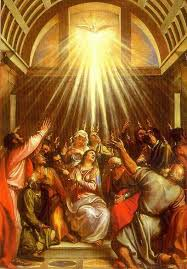
What about the beginning of the church, the day of Pentecost? Jesus goes to heaven, the Spirit comes down, and the New Testament church is inaugurated. Everybody who saw them that day, everybody who saw the fullness of the Spirit … What did they say about them? “These people are drunk.” Yes. That’s Christianity. Not just the beginning of Jesus’ ministry, not just the beginning of the church; the beginning of every Christian life. What does the Bible say about how to become a Christian? What does the Bible say about conversion?

Paul was writing to the Thessalonians, and he said, “You became followers of the Lord.” He’s talking to them about their conversion. “You became followers of the Lord, for you received the message with the joy given by the Holy Spirit.” Do you know what it means to become a Christian? Some of you say, “Well I guess I’m a Christian.” What’s a Christian? You say, “Well, to believe Jesus is the Son of God, to believe he died on the cross, to believe he rose from the dead.”

The devils believe that, and they’re still devils. What’s the difference between a devil and a Christian? The devils know he’s the Son of God. The devils know he died on the cross. The devils know he rose from the dead, but they have no joy in it. The difference between a Christian and a devil is only joy. At the very essence of faith there has to be a kernel of joy, or it’s not faith. Do you see?

The kingdom of God, Jesus says, is like a man who discovers a treasure buried in a field, and when he discovers it, he sells all he has and goes with joy. He sells all that he has and buys that field. The beginning of Jesus’ ministry, the beginning of the church, and the beginning of the Christian life. What’s the kingdom of God? The kingdom of God, Jesus continually says, is a power that descends upon you and sends you out into the world to change the world, to do the will of God, on earth as it is in heaven.

What is that power? How do you know if you’re in the kingdom? Is it the way you dress? Is it the way you look? Is it the way you eat? Ask Saint Paul, and he’ll tell you. Romans 14:17: “The kingdom of God is not meat or drink, but righteousness, peace, and joy in the Holy Spirit.” When you’re right with God, a tidal wave of joy sends you out into the world to change it. That is the power of the Spirit.

Look at the gospel. Do you know what the word gospel means? Euangelion. It means literally the joy news. Jesus Christ is born. What do the angels say? “Behold, I bring glad tidings …” That’s the news. “… of great joy.” The word gospel means joy news. J.R.R. Tolkien in his famous essay “On Fairy-Stories” … Don’t you hate it when somebody says something is famous and you’ve never heard of it? You say, “What am I? Chopped liver?” I’m sorry. I don’t know if it’s famous, but it’s a great one.

J.R.R. Tolkien, in his great essay “On Fairy-Stories,” says there’s a kind of story … There are all kinds of stories, and they move us. He says there’s a kind of story (and he ought to know) that brings us unbelievable joy, whether it’s a movie, or a story we’re reading, or a story we see depicted on the stage, or a story we hear sung about. There are certain stories, he says, that bring us unbelievable joy.

He says these stories always have a certain kind of kernel to them. He says there’s always some incredible hopeless situation, and victory is snatched out of the jaws of defeat. But how? Always through someone who comes in, and whose weakness turns out to be strength, someone whose defeat turns out to be a victory. He says it’s those kinds of stories that just seem to bring us joy. He believed (and I think he’s right) … He called them eucatastrophes.

Do you know what the word eucatastrophe means? The joyful catastrophe, the tragedy that turns out to be a triumph, the sacrifice that turns out to bring joy, the weakness that ends up being strength, the defeat that ends up being victory. He said, however, there’s a Eucatastrophe of the eucatastrophes. There is a Story in all of the stories. He believes there’s a bass string to the human heart, and those stories can kind of make it reverberate a little bit but can’t pluck it. He says there’s only one story that can: the story of the gospel.

All of the other stories are based on that. From the ugly duckling who turns out to be a swan, to Beauty and the Beast, the Beauty who gives up all of her happiness to throw herself in the arms of this Beast and, because of her incredible sacrifice, gets a love and frees this person beyond anything she ever understood. Tolkien says the gospel story is the only story that will pluck that string so the whole heart never stops reverberating and vibrating with joy.

The reason it will reverberate is, of all of the great stories, this is not one more myth pointing to the great reality; this is the reality to which all of the other stories point. It happened. It really happened. There really is a Beauty who kisses the beast. There really is a Hercules who defeats the villain. There really is a hero. There really is Jesus. The word gospel means the joy news. Joy. It’s real. You have to have it. It has to be there.

Let me put it to you this way before I go on. Do you know this? Let me talk to two kinds of people. One of the great things about Redeemer is there are always two kinds of people. Actually, there are three. There are people who say, “I’m a Christian,” and there are people who say, “I’m not a Christian,” and then there are a lot of people who say, “I wish I knew what I was.” That’s it. You’re all there.

For those of you who are Christians, I want to ask a quick question. If this is true, if joy is what it’s all about, if it’s the beginning of Jesus’ ministry, the beginning of the church, and the beginning of Christianity in your heart, it it’s inevitable, if it’s not for the second coming but for now, how can you live with the moroseness that you do? How is it possible?

Remember when Elizabeth was carrying John the Baptist and Mary was carrying Jesus in the womb? Mary gets near Elizabeth, and suddenly she starts. Mary says to Elizabeth, “What happened?” She says, “At the sound of your greeting, the child in my womb leaped for joy.” Psalm 96 says that when Jesus Christ comes back, the trees of the wood will sing for joy. If the trees, if babies in the womb, if anything getting near Jesus leaps for joy, why aren’t we?

Here’s what I have to suggest. When the Bible says, “Rejoice, and again I say rejoice,” when it commands your joy, it cannot be saying, “Force your feelings.” That’s impossible. You can’t anyway. I’ve had people say, “Is the Bible telling me to force my feelings?” The Bible is not going to say, “Two plus two is five.” It’s not going to tell you to do something that’s impossible. What it must mean is this joy is so inevitable that if it’s not flowing through your life, you must be doing something to stop it. You must be.

I know there are times of grief. Joy is like a tree. It doesn’t always blossom. The joy can be growing in wintertime, just like a tree can be growing in wintertime. Joy is not always in blossom time. But here’s what I want to know. What comparatively small thing are you doing to keep you from seeing what you have in Jesus? What comparatively small thing are you so upset about it’s keeping you from seeing what you have in Jesus? You must be doing something. We must be doing something, if all of the things the Bible says are true.

Secondly, for those of you who are not Christians, or you’re not sure you’re Christians, one of the things that keeps you from Christianity has always been … You say, “You know, religion would be good at some time in my life, but right now I’m not bald yet. I’m a size 8. Later on I may need something to help me deal with life. Right now Christianity is interesting, but I like to have fun.” Jesus Christ throws down the gauntlet to you, and I’m going to try too.

If Jesus could make himself visible, he would say, “Look, if you have a real objection, okay. Suffering and evil? That’s a real objection. The injustice done by the church in my name in history? That’s a real objection. But when you tell me, ‘I don’t want to become a Christian because I want to enjoy myself, I want to enjoy life,’ first, that means you don’t even know what you’re rejecting. That has no integrity. Secondly, how could you possibly turn later to something you mustn’t even know about now or you wouldn’t say such a thing? How can you turn to it later? You don’t even know what it is.”

If you know anything about Lord Byron’s history, you’ll know he tried exactly what you’re doing: to have fun. Somewhere near the end of his life, he said, “There’s not a joy the world can give like that it takes away.” He’s right. Christianity is not something that makes you philosophical. It’s joy now.

2. The structure of it

What is the structure of this joy? This joy is very, very different. In a way, Christian joy is like every other kind of joy. You rejoice in that which you find beautiful. What is something you find beautiful? You find beautiful something that doesn’t give you something else but is satisfying in itself, just for what it is.

Some of you might find this weird. When I can’t relax, or if I can’t get to sleep at night and I just want to really get peace … There is a high mountain pass in Northern Wales I have driven over three times in my life. When you get over the top of it, you go down into the most beautiful valley I’ve ever seen in my life. I think of that. I have a couple of pictures of it, but I also have a memory. I think about it.

Maybe you have places like that: a seashore … What gives you joy about that? What does it give you? All it gives you is itself. Joy and beauty … it’s the same thing. Keates said so. The only thing that can always give you joy is something you find beautiful not for what it gives you, but for what it is in itself. Why is the woman so happy that a child is born? Bad parents say, “Oh great, now I can have love in my life.”

If you have a child and the reason you rejoice is you say, “Finally, somebody will love me; somebody I’ll have a relationship with,” you’ll be a lousy parent. You’ll destroy that child, and the child will destroy you. Good parents rejoice in the child for what it is in itself, and as it grows up, you do everything you can just to let the child go off. You’re happy if your son or your daughter is happy. Why? Because that’s real joy. Real joy is you don’t want the thing to give you something else; you just find it beautiful for what it is in itself.

The structure of this joy is so incredibly different, because it tells us the spiritual joy Jesus gives is like the joy of a woman … Take a look. It says she’s in this incredible pain. She’s in this incredible labor. She’s beaten up like nobody can be beaten up. It says suddenly the child is born, and it says literally in the Greek, “She remembers her pain no more.” Notice it doesn’t say her pain is gone. I happen to know. I’ve watched this. When the child is born, her pain is not gone, but she remembers her pain no more.

What does the word remember mean? The Bible says when you become a Christian, God remembers your sin no more. Does that mean he’s not aware of the sin? Does that mean he says, “Did they ever sin?” No. He’s aware of the sin, but the sin doesn’t control the way in which he reacts to me. If he doesn’t remember my sins anymore because I’m in Christ, he’s not controlled by it. He doesn’t focus on it. It hasn’t captured his heart. Love has captured his heart.

Here’s what’s going on. Here’s this woman and she’s all beaten up, but the structure of her joy is not that she’s in denial. She’s not saying, “Well, doctor, I don’t feel a thing. I’m fine. Everything is fine.” She’s not saying that, but she’s furiously and lovingly and joyfully looking at the child, and she forgets her pain. It doesn’t mean she denies it. It doesn’t mean she’s not even hurting. It doesn’t control her. The pain can’t get her down anymore. Not when she has this.

The structure of Christian joy is that you’ve located your greatest joy and your greatest beauty in God. He gives you more joy, and you find him more beautiful than anything else in life. That’s the reason Jonathan Edwards, years ago, could say the difference between a religious person and a Christian is not that one is obedient and one is disobedient. Oh no. He says religious people and real Christians both obey God. They’re both committed to God. In fact, a religious person might look more obedient and committed.

The difference is that only the Christian is attracted to God. The religious person finds God useful, but the Christian finds God beautiful. What does that mean? It means the religious person will obey as long as God answers his prayers, but if God doesn’t answer his prayers, he says, “What good is it to be a Christian?” Some of you have done that. Some of you said years ago, “I worked my fingers to the bone, and I did all these incredible things, and I didn’t get into the law school I wanted to get into, and I’ve never had the career I wanted to do, so I walked away.”

What does that mean? It means your law career was the beauty. It was the satisfying thing. God was a means to an end. God was useful; he wasn’t beautiful to you, so you’ve never tried Christianity. You have a joy that is very different than Christian joy, because Christian joy coexists with suffering. Christian joy coexists with sorrow. She remembers her sorrow no more. It doesn’t mean she isn’t aware of it. It means it doesn’t control her anymore.

Worldly joy has to avoid suffering, worldly joy has to deny suffering, but Christian joy coexists and, in fact, is enhanced by it, because it shows you where true joy is going to be found. The structure of Christian joy is you’ve relocated your beauty, you’ve relocated your joy in God, and now circumstances can’t touch it.

This is, by the way, the reason why Christians should be the least sentimental people in the world. Christians should never be denying their own pain, and Christians should never be denying that the world is painful, and Christians should never be afraid of getting empathetically involved with people who are suffering. Why? Because you have a joy that coexists with that.

The world’s joy says, “I can’t admit how bad things are. I can’t admit how much I’m hurting. I can’t admit how bad the world is.” Christians should be the least sentimental people in the world, because they have a joy that coexists with sorrow. They have a joy that grows deeper … Just like the darker the night, the brighter the stars. Christian joy is like that. It gets brighter when things get darker. Everybody else’s joy just goes out. That’s the structure.

3. The growth of it

Up to now you’re saying, “Okay, that’s fascinating. This incredible joy, you rejoice even in suffering, and it’s a different structure and everything, but I can’t do that. I read these texts, ‘Rejoice, and again I say rejoice.’ I tried to be happy. I can’t do it.” Well, it’s not a matter of trying. When Jesus Christ tells us about this woman … Who is this woman?

The New International Version, the translation I read from, has done us a little bit of a disservice. The New International translation says she’s in all this incredible pain, she’s in all this labor, and then it says … Why? Why is she in all the pain? What does it say? “Because her time has come.” Gee, that’s unfortunate. Literally, the Greek says, “Because her hour has come.”

If you have ever read the gospel of John, you’ll know the word hour has a very technical meaning and has a very focused meaning. It has a very specific meaning. In 7:30; in 8:20; in 13:11; and in chapter 12, I can’t remember quite where; even in chapter 2 … Remember when Mary says, “They have no more wine,” Jesus turns and says, “Woman, it is not my hour”? What is the hour?

Do you know what the hour is in the gospel of John? “It was the sixth hour, and darkness took over, and Jesus Christ cried out, ‘My God, my God, why hast thou forsaken me?’ ” In those days before epidurals and anesthetics, every time a woman gave birth she was in incredible agony, and she was right on the verge of losing her life. Jesus Christ is saying two things to us here.

He is the one in labor, and the first thing he says is, “I went into labor, but the labor pains I endured were my hour.” They were far greater than any woman has ever endured, because they weren’t physical. The only way for a mother to give the baby the joy of life is to take away her own joy at that moment. She has to give away her joy and maybe even give away her life to bring life to the child.

Jesus Christ says, “I gave away a joy to bring joy to you, and the joy I lost and the pain I suffered was my hour. Do you want to know what I threw away for you? Go back and read Proverbs 8. When my Father and I were creating the universe, I danced before the Father, and we delighted in the human race, the men and women we were creating to take part in our joy. Because of your sin, I lost everything. I lost that.

Don’t you say, ‘Oh, how bad could it have been? It was only three hours.’ No, no, no. I suffered something you’ll never understand. That’s why I suffered it, so you wouldn’t understand it. I lost something you will never know. I went into labor. It was my hour. I lost something you will never know. I suffered something you’ll never know. I lost all the joy I had, a joy you never will know, so you could have joy.”

That’s the first thing he’s saying, but do you know the second thing he’s saying? It’s just about as astounding. Not only does the woman show us how Jesus suffered, but the woman shows us why Jesus did it. In Hebrews 12, it says, “For the joy that was set before him, he went to the cross, despising the shame.” For the joy that was set before him. How could that be? What joy was it? What does the woman see? The baby.

Do you know what this means? What did Jesus get out of it? What did Jesus get out of that incredible, infinite experience of agony and torment he went through? Did he get out of it a sense of accomplishment? He didn’t need that. He had that. Did he get out of it the admiration of the Father? He already had that. Did he get out of it self-esteem? He already had that. What didn’t he have? Us. What could he have gotten out of us? Nothing.

What does that mean? He located his joy in us. He wanted us just because we were beautiful to him. It tells us in Isaiah 53, “The results of his suffering he shall see and be satisfied.” He’ll look at us and say it was worth it. How could that be worth it? The only way would be if he has located his joy in us. He has linked his heart to us. He has made us his treasure. He has made us his beauty. The great philosophical minds of the world have noticed that.

Jonathan Edwards says, “… Christ has his delight, most truly and properly, in obtaining [our] salvation, not merely as a means [conducive to his joy and delight], but as what he [actually] rejoices and is satisfied in, most directly and properly. […] ‘As the bridegroom rejoices over the bride, so shall thy God rejoice over thee.’ […] ‘The Lord thy God in the midst of thee is mighty; he will save, he will rejoice over thee with joy; he will [quiet thee with] his love, he will rejoice over thee with singing.’ ”

We are his jewels. We are his treasure. There it is. How can this joy grow? It’s very simple. Actually, in some ways this sets up next week’s sermon, so I hope you can come back. Next week’s sermon is about suffering. The fact is, if you just see somebody say, “Be joyful,” you’ll never do it, but if you see Jesus Christ did this and he made you his joy, that will change you.

If you see him locating his joy in you and making you the ultimate beauty of his life, that means you will be able to finally … It’ll melt you, and you’ll be able to put your joy in him. Then you’ll have that joy with that whole new structure. He’ll become the joy. He’ll become all you want. You just want him. You don’t say, “I want him plus law school.” You say, “I want him.” Then you’ll finally be happy. Then you’ll look at him.

When I look at that valley or when I listen to some great music, that’s what my eyes … Your senses are made for a certain sight. Your eyes are made for certain kinds of visual beauty, and your ears are made for certain kinds of auditory beauty, and your nose is made for olfactory beauty, but your soul is made for this. Do you see him doing it? Are you affected by it?

Don’t you see? This is how all the fruit are connected. You say, “Okay, so that’s how I get joy, but how do I get patience?” Rejoice in his patience for you. “Well okay, how do I get peace?” Rejoice in his wisdom. You’re fearfully and wonderfully made. If you know how to rejoice in what he did for you, at the moment you lack peace or lack patience or lack courage or lack humility or lack self-control … What is self-control? You want a kind of beauty. You want a kind of pleasure. Rejoice in him as the ultimate pleasure.

Let me end this way. For those of you who say, “I don’t know much about this joy,” I’ll tell you how it happens. You never have a birth without labor, and you never have a resurrection without death, and you will never get this incredible joy if you come just for happiness. If you come to Jesus for comfort, you’ll never get it. On the far side of repentance is comfort. On the far side of labor is a birth. On the far side of death is a resurrection. Therefore, you need repentance in order to have this incredible joy.

You say, “What do you mean by repentance?” It’s simply this. If you think Christianity is saving yourself, if you think Christianity is living a good life, if you think Christianity is trying your best to live like Jesus Christ, of course there’s no joy in your life. You’re trying to save yourself. You don’t have the joy of the Holy Ghost, and you never will. Your life is humorless. You’re trying real hard. If you’re willing to say, “I am a sinner, and I deserve to be lost, but look what he has done for me,” that will give you joy. Don’t you see that?

I never get a chance to say this. There are people in New York City I run into relatively often. They’re women who say, “I can’t relate to a Savior in Christianity who’s just a man. I can’t relate to a man. He’s a man. He doesn’t understand. I can’t relate to that, a male Savior. How can I get into Christianity?” Don’t you see? This is the only man who ever gave birth. What does that mean? Of course Jesus was male when he was on earth. Historically he was male. But don’t you see what this is saying?

Jesus is trying to say, “I’m not less than a man; I’m more. The problem is not that I don’t understand what it means to be a woman or what it means to give birth. The problem is you don’t understand my labor over you. That’s your whole problem.” To the degree you understand that, to that degree, even in sorrow, it’ll just push you more into the joy. Even in your troubles, it’ll push you more to the One who is the final and true joy. Do you see? Look to him and be radiant. Let’s pray.

Our Father, we pray that now, as we take the Lord’s Supper, your Son Jesus Christ would become real to us. Help us to see the brokenness being the broken body giving birth to us. The cup poured out is his heart and his lifeblood poured out for us. Help us, as we see him locating his joy in us, doing all this just for us, just because of his love for us, his delight in us, give us that delight in him that will give us that impervious joy that will help us to move out into the world and change the world, because the kingdom of God is not eating and drinking; it’s righteousness, peace, and joy in the Holy Spirit. We pray in Jesus’ name, amen.

About the Preacher

Tim Keller praching w bible image

Timothy Keller is founding pastor of Redeemer Presbyterian Church (PCA) in New York City and the author of numerous books, including Every Good Endeavor, Center Church, Galatians For You, The Meaning of Marriage, The Reason for GodKing’s CrossCounterfeit GodsThe Prodigal God, and Generous Justice.


Dr. James Montgomery Boice on The Sufficiency of the Word of God

The 25th Anniversary Sermon, Delivered at Tenth Presbyterian Church in Philadelphia on May 23, 1993, by Dr. James Montgomery Boice

James Boice Staniding in 10th Prys image

But as for you, continue in what you have learned and have become convinced of, because you know those from whom you learned it, and how from infancy you have known the holy Scriptures, which are able to make you wise for salvation through faith in Christ Jesus— 2 Timothy 3:14, 15.

On a morning like this it is a temptation to reminisce over the quarter century of ministry I have had at Tenth Presbyterian Church. And I would do it, except for the fact that others have been doing it all weekend and in a much more complimentary way than I could myself— at least if I were to be honest. I could reveal a lot of things that the others are not aware of, including the disappointments and failures. But that would spoil things, and it is not what this weekend is about. It is certainly not what a worship service such as this should accomplish.

I remember that when John, the author of Revelation, fell at the feet of the angel of God to worship him, the angel replied, “Do not do it! I am a fellow servant with you and with your brothers who hold to the testimony of Jesus. Worship God!” (Revelation 19:10). So I remind you and myself that this is what we are about this morning.

And I direct you to God’s Word.

Our text is 2 Timothy 3:14,15. “But as for you, continue in what you have learned and have become convinced of, because you know those from whom you learned it, and how from infancy you have known the holy Scriptures, which are able to make you wise for salvation through faith in Christ Jesus.”

The Priority of God’s Word

I want to talk about the most important thing that Tenth Presbyterian Church has stood for over the one hundred sixty-four years of its distinguished history, and that is the priority of the Bible as the Word of God. That priority has been both doctrinal and practical. It is doctrinal because we believe the Bible to be the Word of God, the only infallible rule of faith and practice, and it is practical because we believe the Bible must be the treasure most valued and attended to in the church’s life.

This has been a factor from the very beginning— from the days of Thomas A. McAuley, the first pastor (1829- 1833), and Henry Augustus Boardman, the first minister to serve a long pastorate (1833-1876). But it is best illustrated by an incident from the early days of the ministry of Donald Grey Barnhouse (1927-1960), who had a profound and personal influence on my own idea of what the ministry should be.

A week or two after Barnhouse became pastor of Tenth Church, he entered the pulpit one Sunday morning and opened the great pulpit Bible to a point near the middle, where he then placed his sermon notes, his Bible and a hymn book. As he looked down he noticed that the words on the pages of the Bible were part of a curse upon those nations that do not know God. It occurred to him that he would like to have before him a passage containing words of a great promise.

He opened the Bible to Isaiah 55:10, 11, which says, “As the rain and the snowcome down from heaven, and do not return to it without watering the earth and making it bud and flourish, so that it yields seed for the sower and bread for the eater, So is my word that goes out from my mouth: It will not return to me empty, but will accomplish what I desire and achieve the purpose for which I sent it.”

To his surprise he discovered that for decades his predecessors had apparently done the same thing. The edges of the Bible were worn in half circles curving inward from the bindings at that text, and the pages were torn and mended. As he later observed, those pages “containing the great fifty-fifth chapter of Isaiah and the preceding page with the fifty-third chapter of Isaiah concerning the Lord Jesus Christ as God’s Lamb, give mute evidence that the men who have stood in the pulpit of Tenth Church for more than a century were men of the Living Word and the written Word.” (Donald Grey Barnhouse, “Isaiah 55:11” in Holding Forth the Word: 1927-1952. Manuscript Collection of the Tenth Presbyterian Church).

Later Barnhouse discovered that there was another section of the Bible that was similarly worn. It was the great psalm of the Bible, Psalm 119. Evidently, his predecessors, finding it difficult to keep their notes on the Isaiah pages, looked for another passage that would remind them of the power and priority of God’s Word.

Barnhouse told this story in a memorial booklet marking the twenty-fifth anniversary of his pastorate at Tenth Church, concluding this way: “It is my prayer that no man shall ever stand in this pulpit as long as time shall last who does not desire to have all that he does based upon this Book. For this Book does not contain the Word of God, it is the Word of God. And though we may preach the Word with all the stammering limitations of our human nature, the grace of God does the miracle of the ministry, and though human lips speak the divine Word, and the hearts of the people are refreshed. There is no other explanation for the continuing power of a church that is poorly located, that is without endowment, but which continues to draw men and women to the capacity of its seating arrangements, morning and evening, summer and winter, and which sends its sons and daughters by the score to preach the unsearchable riches of Christ throughout the world.” (Ibid).

The Inerrancy of God’s Word

About ten years into my pastorate, at the end of 1977 and the beginning of 1978, I helped start an organization that was also concerned with the priority of the Word of God but which focused its efforts on the important matter we perceived to be under attack at that time, namely, the Bible’s inerrancy. Our organization was called the International Council on Biblical Inerrancy, and it had within it such outstanding evangelical leaders as Francis Schaeffer, J. I. Packer, A. Wetherell Johnson, R. C. Sproul, John Gerstner, Roger Nicole and many others. It had as its purpose the task of “elucidating, vindicating and applying the doctrine of biblical inerrancy as an essential element for the authority of Scripture and a necessity for the health of the church of God.”

In the 1970s the evangelical church was drifting from its roots, and professors in prominent evangelical institutions were teaching that the Bible contains errors of historical and scientific fact but that it does not matter that it does. We believed that it does matter and tackled this deviation head on.

We held three gatherings of prominent evangelical scholars to hammer out three documents of “affirmation and denial.” They became nearly creedal in some quarters. The first was on inerrancy itself (“The Chicago Statement on Biblical Inerrancy”), the second on principles of interpretation (“The Chicago Statement on Biblical Hermeneutics”), and the third on application (“The Chicago Statement on the Application of the Bible to Contemporary Issues”). We also held two large lay conferences, the first in San Diego in the spring of 1982 and the second in Washington in the fall of 1988.

In the early days we were often asked why inerrancy was important since “it should be enough merely to believe that the Bible is trustworthy in areas of faith and morals.” But it is not that simple. To begin with, the Bible is an historical book and Christianity is an historical religion. So if the Bible errs in matters of historical fact, Christianity itself is affected. One hundred years of German “historical Jesus” research proved that. The scholars involved in this movement wanted to separate the Christ of faith from the Jesus of history, finding out who the true Jesus was. But as Albert Schweitzer proved in his classic study, The Quest for the Historical Jesus, all they succeeded in doing was making Jesus into the scholars’ own images. Rationalists produced a rationalist Jesus, socialists a socialistic Jesus, moralists a moralistic Jesus, and so on. The attempt to have Christianity without its historical base was a failure.

Besides, if part of the Bible is true and part is not, who is to tell us what the true parts are? There are only two answers to that question. Either we must make the decision ourselves, in which case the truth becomes subjective.

The thing that is true becomes merely what appeals to me. Or else, it is the scholar who tells us what we can believe and what we cannot believe. We argued that God has not left us either to our own whims or to the whims of scholars. He has given us a reliable book that we can read and understand ourselves.

The inerrancy of the Bible is what I wrestled with during my seminary years. It is not that I questioned it. Anyone who had been raised with the teaching of Donald Grey Barnhouse and others like him could hardly doubt that God has given us an inerrant revelation. My problem was that my teachers did not believe this, and much of what I was hearing in the classroom was meant to reveal the Bible’s errors so students would not depend on it too deeply. What was a student to do? The professors seemed to have all the facts. How were professors to be challenged when they argued that recent scholarship has shown that the old simplistic views about the Bible being inerrant are no longer valid and we have to admit that the Bible is filled with errors?

As I worked on this I discovered some interesting things. First, the problems imagined to be in the Bible were hardly new problems. For the most part they were known centuries ago, even by such ancient theologians as Saint Augustine and Saint Jerome. They debated problems of apparent contradictions in their correspondence.

I also discovered that results of sound scholarship have not tended to uncover more and more problems, as my professors were suggesting, still less disclose more and more “errors.” Rather they have tended to resolve problems and show that what were once thought to be errors are not errors at all. Let me give some illustrations.

Second Kings 15:29 speaks of a king of Assyria named Tiglath-Pileser. He is said to have conquered the Israelites of the northern kingdom and to have taken many of them into captivity. A generation ago liberal scholars were saying that this king never existed, because they had no independent record of him, and that the fall of the northern kingdom to Assyria was mythology. But then archaeologists excavated Tiglath-Pileser’s capital city and found his name pressed into bricks which read: “I, Tiglath-Pileser, king of Assyria, . . . am a conqueror from the Great Sea which is in the country of Amurru as far as the Great Sea which is in the Nairi country,” that is, the Mediterranean. In other words, archaeologists have found evidence not only of Tiglath-Pileser’s existence, but even of the very campaign 2 Kings describes. The English reader can find accounts of these battles in James B. Prichard’s Ancient Near Eastern Texts Relating to the Old Testament.

Here is another example. A generation ago scholars were saying that Moses could not have written the Pentateuch, the first five books of the Old Testament, because, so the argument went, writing was not known in Moses day. That seemed irrefutable at the time because, if writing was not known in Moses day, Moses could not have known how to write, and if Moses did not know how to write, he could not have written the Pentateuch. But in this case, it was the underlying premise that was wrong. As it turns out, not only was writing known in Moses day, there were actually many written languages. Today we know of at least six different languages from the very area of the world in which Moses led the Israelites for forty years.

My favorite example is a personal one. At the end of 1974 Time magazine ran a cover story entitled “How True Is the Bible?” It surveyed the liberal attacks on the Bible’s reliability and concluded, somewhat as I did after my study of what the evidence in this area has proved, that the credibility of the Bible has actually grown in recent decades. Time wrote,

The breadth, sophistication and diversity of all this biblical investigation are impressive, but it begs a question: Has it made the Bible more credible or less? Literalists who feel the ground move when a verse is challenged would have to say that credibility has suffered. Doubt has been sown, faith is in jeopardy. But believers who expect something else from the Bible may well conclude that its credibility has been enhanced. After more than two centuries of facing the heaviest scientific guns that could be brought to bear, the Bible has survived— and is perhaps the better for the siege. Even on the critics’ own terms— historical fact— the Scriptures seem more acceptable now than they did when the rationalists began the attack (Time, December 30, 1974, p. 41). 

I found it interesting that the Bible was being defended by a secular magazine. But I said to myself, “I’m going to have to wait two weeks to see the letters that come in reaction to this, because I can’t believe that the liberal scholars will ignore it.” Sure enough. Two weeks later there were two strong letters from two of the most prominent critics: Martin Marty, a regular writer for the Christian Century, and Harvey Cox of the Harvard Divinity School. One of them ended— I do not remember which one— “The faith of your Bible believers is the opposite of biblical faith!”

I was offended. I said to myself, “That’s terribly unfair. Time has presented a balanced article. It hasn’t even claimed inerrancy, only historical reliability, and these men can’t even stand to have the Bible called reliable.” I got so angry, I had to stop and pray. I think the Lord answered me by saying, “Don’t worry about it. It’s not bothering me, why should it bother you. Go on and read the magazine.”

So I did. The letters were on page 38, and I read on to page 65, which turned out to be the section on science. On that page there was a report of an archeological expedition in the southern area of the Sinai Peninsula under the direction of a Jewish archeologist named Beno Rothenberg. He had been working at a place called “Solomon’s mines” because an ancient smelting operation had been there, and he wanted to find out if the area had really been worked by Jews, and who had begun it.

Rothenberg discovered that the area had been occupied by Jewish workmen at the time of Solomon. So it may truly have been where Solomon melted down his gold for the temple. But then he pushed back through the strata at the site and discovered that this ancient foundry had been developed originally by the Midianites. Midianites? Time knew that few of its readers would have any idea who the Midianites were. So the writer explained, “. . . the Midianites, a little-known people who dwelled in the area and are identified in Genesis as the first metal workers” (Time, January 13, 1975, p. 65).

At that point I began to understand why the Lord was urging me to go on and read the magazine. Because of all the places where that little bit of Bible verification could have appeared, it was in the very issue in which the liberal scholars were objecting, “The faith of your Bible believers is the opposite of biblical faith.”

The Holy Spirit really does have a sense of humor.

The Sufficiency of God’s Word

I want to say here, however, that important as I believe the matter of inerrancy is— and I do believe it. I believe churches will flounder and die if this is forgotten. Important as this is, I do not think it is the most critical issue about the Bible facing the American church today. The issue I would pinpoint today is the sufficiency of God’s Word.

I would ask the questions: Do we really believe that God has given us what we need in this book? Or do we think we have to supplement the Bible with other man-made things? Do we need sociological techniques to do evangelism? Do we need psychology and psychiatry for Christian growth? Do we need extra-biblical signs or miracles for guidance? Is the Bible’s teaching adequate for achieving social progress and reform?

The reason I believe this is important is that it is possible to believe that the Bible is the inerrant Word of God, the only infallible rule of faith and practice, and yet neglect it and effectually repudiate it just because we think that it is not great enough for today’s tasks and that other things need to be brought in to supplement the revelation. I think this is exactly what many evangelicals and evangelical churches are doing.

Have you ever realized that this is the point of each of the three great passages about Scripture that were read this morning. These three passages (Psalm 19, Matthew 4 and 2 Timothy 3) are probably the three most important passages in the Bible about the nature of the Word of God. The first contrasts it with God’s general revelation. The second shows how Jesus used the Bible to overcome temptation. The third is Paul’s advice to Timothy in view of the terrible times he saw coming. But notice. Each passage stresses that it is the Word of God alone that is sufficient for these challenges.

Psalm 19 speaks of the wonderful revelation of God in nature. But then it continues,

The law of the Lord is perfect, reviving the soul.

The statues of the Lord are trustworthy. making wise the simple.

The precepts of the Lord are right, giving joy to the heart.

The commands of the Lord are radiant, giving light to the eyes.

The fear of the Lord is pure, enduring forever.

The ordinances of the Lord are sure and altogether righteous.

They are more precious than gold, than much pure gold;

They are sweeter than honey, than honey from the comb.

By them is your servant warned, and in keeping them there is great reward. (vv. 7-11)

The revelation of God in nature is wonderful, but it is limited. By contrast, the revelation of God in Scripture is perfect, trustworthy, right, radiant, pure, sure, precious, sweet and rewarding. By what language would it be possible for the psalmist more effectively to emphasize the complete and utter sufficiency of God’s Word?

In Matthew 4 we discover the sufficiency of the Word of God in times of temptation, for it was by quotations from Deuteronomy 8:3; 6:16 and 6:13 that Jesus withstood Satan. Jesus did not reason with Satan without Scripture. He did not resort to supernatural power or ask God for some special sign or intervention. He knew the Bible, stood on it and used it forcefully.

Second Timothy 3 is the same. Paul is warning his young protege against the terrible times coming in the last days. They will be days like ours, in which “people will be lovers of themselves, lovers of money, boastful, proud, abusive, disobedient to their parents, ungrateful, unholy, without love, unforgiving, slanderous, without self-control, brutal, not lovers of the good, treacherous, rash, conceited, lovers of pleasure rather than lovers of God.” And if that is not terrible enough, they will be days in which these vices will be found even in the churches.

For they will be found among those “having a form of godliness but denying its power” (vv. 1-5).

What is Timothy to do when such days come? Surely Paul must have some secret new weapon, some unexpected trick for him to use. No, that is not what we find. Instead of something new, we find Paul recommending what Timothy has had all along— the Word of God— because the Bible is sufficient even for terrible times like these. “But as for you, continue in what you have learned and have become convinced of, because you know those from whom you learned it, and how from infancy you have known the holy Scriptures, which are able to make you wise for salvation through faith in Christ Jesus” (2 Timothy 3:12, 15).

Sufficient in All Areas

But it is not only that the Word of God is sufficient for all times, even times like ours. It is also sufficient in all areas, that is, it is able to do all we need it to do and are commissioned to do as Christians.

Let me list a few of these areas.

1. Evangelism. The Word of God is sufficient for evangelism. Indeed, it is the only thing that works in evangelism. Everything else— captivating music, personal testimonies, emotional appeals, even coming forward to make a commitment to Jesus Christ— all that is at best supplementary. And if it is used or depended upon apart from the faithful preaching and teaching of the Word of God, the “conversions” that result are spurious conversions, which is to say that those who respond do not actually become Christians. They become Christians in name only. The only way the Holy Spirit works to regenerate lost men and women is through the Word of God.

Peter said it: “You have been born again, not of perishable seed, but of imperishable, through the living and enduring word of God” (1 Peter 1:23).

2. Sanctification. I have been preaching on the book of Romans for seven years. I have discovered many interesting things in that time. But the most significant for me has been Paul’s approach to sanctification, which is not at all what we would expect or what many people today desire. When we think of sanctification today, most of us think of either one of two things. Either we think of a method (“Here are three steps to sanctification; do this and you will be holy”), or else we think of an experience (“You need a second work of grace, a baptism of the Holy Spirit,” or something). Paul’s approach is to know the Bible and its teaching about what has been done for us by God in our salvation.

Paul makes this clear in the sixth chapter where he says, “In the same way, count yourselves dead to sin but alive to God in Christ Jesus” (v. 11). This is the first time in the letter that Paul tells his readers to do something, and what they are to do is “count” or “reckon upon” the fact that God has done an irreversible work in their lives as a result of which they have died to sin (the verb is in the past tense, an aorist) and have been made alive to God in Christ Jesus. The only way they can understand what has happened to them is to know the Bible, which teaches them what has happened. But then, because they know it, they are to go on with God, acting on the basis of what has been done. In other words, they cannot go back to being what they were before. They are new creatures in Christ. So the only thing they can do is get on with living the Christian life. There is no way for them to go but forward.

That is the Bible’s approach to sanctification, and it has nothing to do with either a method or an experience. It has everything to do with knowing and living by the sufficient Word of God.

3. Guidance. Not long ago we had Phillip D. Jensen, the minister of St. Matthias Church in Sydney, Australia, with us for the Philadelphia Conferences on Reformed Theology. It was his first time in the United States, and it was my privilege to introduce him to American Christians this way. Mr. Jensen has written a book called The Last Word on Guidance whose sole point is that this “last word on guidance” is the Bible. That is what God has given us to indicate how we are to live and what we are to do to please him. All we need is in the Bible. So if there is something we want or think we need that is not in the Bible— what job we should take, who we should marry, where we should live— it doesn’t matter what we do as long as we are obeying what God teaches about living a godly life.

That doesn’t mean that God does not have a detailed plan for our lives. He does. He has a detailed plan for all things, ordering “whatsoever comes to pass,” as the Westminster Confession of Faith has it. But it does mean that we do not have to know this plan in advance and, indeed, cannot. What we can know and need to know is what God has told us in the Bible.

4. Social reform. The final area in which we need to be reminded that the Word of God is sufficient is for social renewal and reform. We are very concerned about this today and rightly so, because we live in a declining culture and we want to see the lordship of Jesus acknowledged and justice and true righteousness prevail. We want to see the poor relieved of bitter want and suffering. How is this to happen? I want to suggest that what is needed is not more government programs or increased emphasis on social work, but first and above all the teaching and practice of the Word of God.

Geneva under Calvin: A Case Study

I want to close with this important example, what happened in Geneva, Switzerland, in the sixteenth century through the ministry of John Calvin. In August of 1535 the Council of Two Hundred, which governed Geneva, voted to reject Catholicism and align the city with the Protestant Reformation. They had very little idea what that meant. Up to this point the city had been notorious for its riots, gambling, indecent dancing, drunkenness, adultery and other vices. People would literally run around the streets naked, singing indecent songs and blaspheming God. The people expected this state of affairs to continue, even after they had become Protestants, and the Council did not know what to do. The Council passed regulation after regulation designed to restrain vice and remedy the situation. Nothing they tried worked. Public discipline and morals continued their decline.

Calvin came to Geneva in August of 1536, a year after the change. He was practically ignored. He was not even paid the first year. Besides, as everybody knows, his first attempts to preach proved so unpopular that he was dismissed by the Council in early 1538, and went to Strasbourg. Calvin was happy in Strasbourg and had no desire to go back. When the situation got so bad in Geneva that public opinion turned to him again in desperation, he told his friend William Farel, “I should prefer a hundred other deaths than this cross on which I should have to die a thousand times a day.”

Nevertheless, driven by a sense of duty, Calvin returned to Geneva on September 13, 1541.

Calvin had no weapon but the Word of God. From the very first his emphasis had been on Bible teaching, and he returned to it now, picking up his exposition of Scripture at precisely the place he had left it three and a half years earlier. He preached from the Word every day, and under the power of that preaching the city began to change. As the Genevan people acquired knowledge of God’s Word and allowed it to influence their behavior, their city became almost a New Jerusalem from which the gospel spread to the rest of Europe, Great Britain and the New World.

Moreover, this change made other changes possible. One student of this historical period wrote,

Cleanliness was practically unknown in towns of his generation and epidemics were common and numerous. He moved the Council to make permanent regulations for establishing sanitary conditions and supervision of markets. Beggars were prohibited from the streets, but a hospital and poorhouse were provided and well conducted. Calvin labored zealously for the education of all classes and established the famous Academy, whose influence reached all parts of Europe and even to the British Isles. He urged the council to introduce the cloth and silk industry and thus laid the foundation for the temporal wealth of Geneva. This industry . . . proved especially successful in Geneva because Calvin, through the gospel, created within the individual the love of work, honesty, thrift and cooperation. He taught that capital was not an evil thing, but the blessed result of honest labor and that it could be used for the welfare of mankind. Countries under the influence of Calvinism were invariably connected with growing industry and wealth…It is no mere coincidence that religious and political liberty arose in those countries where Calvinism had penetrated most deeply (Marcellus Kik, Church and State: The Story of Two Kingdoms. New York: Thomas Nelson & Sons, 1963, p. 83. See pp. 71-85).

There has probably never been a clearer example of extensive moral and social reform than the transformation of Geneva under John Calvin, and it was accomplished almost entirely by the preaching of God’s Word.

Conclusion

I take you back to 2 Timothy. Paul encouraged Timothy to continue on the path of ministry he has been walking because “from infancy you have known the holy Scriptures, which are able to make you wise for salvation through faith in Christ Jesus.” Why is the Bible able to do that? It is because it is “God-breathed.” That is, it is the very Word of God and therefore carries with it the authority and power of God. Yes, and it is useful too. It is useful for “teaching, rebuking, correcting and training in righteousness, so that the man of God may be thoroughly equipped for every good work” (vv. 14-17).

That is exactly it. That is what we need. It is what everybody needs. And only the Word of God is sufficient for it.

John Piper on How to Pray for a Desolate Church

An Exposition of Daniel 9:1-23

Piper w hands up preaching image

Daniel’s Prayer for His People

In the first year of Darius the son of Ahasuerus, by descent a Mede, who was made king over the realm of the Chaldeans—in the first year of his reign, I, Daniel, perceived in the books the number of years that, according to the word of the Lord to Jeremiah the prophet, must pass before the end of the desolations of Jerusalem, namely, seventy years.

Then I turned my face to the Lord God, seeking him by prayer and pleas for mercy with fasting and sackcloth and ashes. I prayed to the Lord my God and made confession, saying, “O Lord, the great and awesome God, who keeps covenant and steadfast love with those who love him and keep his commandments, we have sinned and done wrong and acted wickedly and rebelled, turning aside from your commandments and rules. We have not listened to your servants the prophets, who spoke in your name to our kings, our princes, and our fathers, and to all the people of the land. To you, O Lord, belongs righteousness, but to us open shame, as at this day, to the men of Judah, to the inhabitants of Jerusalem, and to all Israel, those who are near and those who are far away, in all the lands to which you have driven them, because of the treachery that they have committed against you. To us, O Lord, belongs open shame, to our kings, to our princes, and to our fathers, because we have sinned against you. To the Lord our God belong mercy and forgiveness, for we have rebelled against him and have not obeyed the voice of the Lord our God by walking in his laws, which he set before us by his servants the prophets. 

All Israel has transgressed your law and turned aside, refusing to obey your voice. And the curse and oath that are written in the Law of Moses the servant of God have been poured out upon us, because we have sinned against him. He has confirmed his words, which he spoke against us and against our rulers who ruled us, by bringing upon us a great calamity. For under the whole heaven there has not been done anything like what has been done against Jerusalem. As it is written in the Law of Moses, all this calamity has come upon us; yet we have not entreated the favor of the Lord our God, turning from our iniquities and gaining insight by your truth. Therefore the Lord has kept ready the calamity and has brought it upon us, for the Lord our God is righteous in all the works that he has done, and we have not obeyed his voice. And now, O Lord our God, who brought your people out of the land of Egypt with a mighty hand, and have made a name for yourself, as at this day, we have sinned, we have done wickedly.

“O Lord, according to all your righteous acts, let your anger and your wrath turn away from your city Jerusalem, your holy hill, because for our sins, and for the iniquities of our fathers, Jerusalem and your people have become a byword among all who are around us. Now therefore, O our God, listen to the prayer of your servant and to his pleas for mercy, and for your own sake, O Lord, make your face to shine upon your sanctuary, which is desolate. O my God, incline your ear and hear. Open your eyes and see our desolations, and the city that is called by your name. For we do not present our pleas before you because of our righteousness, but because of your great mercy. O Lord, hear; O Lord, forgive. O Lord, pay attention and act. Delay not, for your own sake, O my God, because your city and your people are called by your name.”

While I was speaking and praying, confessing my sin and the sin of my people Israel, and presenting my plea before the Lord my God for the holy hill of my God, while I was speaking in prayer, the man Gabriel, whom I had seen in the vision at the first, came to me in swift flight at the time of the evening sacrifice. He made me understand, speaking with me and saying, “O Daniel, I have now come out to give you insight and understanding. At the beginning of your pleas for mercy a word went out, and I have come to tell it to you, for you are greatly loved. Therefore consider the word and understand the vision.

The reason I titled this message “How to Pray for a Desolate Church” is that I see much of the Christian church today as desolate. The ruin of Jerusalem and the captivity of Israel in Babylon are pictures of the church today in many places around the world. There are pockets of life and purity and depth and faithfulness and power and zeal around the world. God will never give up on his people and he will get his global purposes done, even if he has to use a remnant to do it.

But much of the Christian movement today has become a desolation of disobedience and disunity and dishonor to the name of Christ. So the way Daniel prays for the desolation of his people is a pointer for how we can pray for the desolation of ours.

Three Aspects of the Desolation of God’s People

Let me mention three aspects of the desolation of God’s people in this text to see if you won’t agree that it sounds like much of the Christian movement today.

1. The People Are Captive to Godless Forces

Two times, verses 11 and 13, Daniel says that this calamity of Babylonian captivity was warned against in the law of Moses. For example, in Deuteronomy 28:36 Moses says that if the people forsake God, “The Lord will bring you . . . to a nation that neither you nor your fathers have known; and there you shall serve other gods.” Now that had come true in Babylon.

In 1520, Martin Luther wrote an essay which he called “The Babylonian Captivity of the Church.” What he meant was that forces and powers that were foreign to Christ and to his Word had captured the mind and heart of the church. She was in bondage to godless forces.

That is the situation in much of the church today. Millions of church-goers today think the way the world thinks. The simple assumptions that govern behavior and choices come more from what is absorbed from our culture than from the Word of God. The church shares the love affair of the world with prosperity and ease and self. Many groups of Christians are just not that different from the spirit of Babylon, even though the Lord says that we are aliens and exiles and that we are not to be conformed to this age. So, like Israel of old, much of God’s church today is captive to godless forces.

2. The People Are Guilty and Ashamed

Daniel spends most of his prayer confessing the sin of the people. For example, verse 5: “We have sinned and done wrong and acted wickedly and rebelled, turning aside from thy commandments.” In other words, we have great guilt before God. And because of this real guilt there is real shame. This is mentioned in verses 7 and 8. The RSV has the phrase “confusion of face”“To us belongs confusion of face.” Literally it means, “To us belongs shame of face.” What we have done is so terrible and so known that our face turns red and we want to cover it and run away. That is the way Daniel felt about the people of God. Their guilt and their shame were great.

Today in the church there is an uneasy conscience. There is the deep sense that we are to be radically different, living on the brink of eternity with counter-cultural values and behaviors of love and justice and risk-taking service that show our citizenship is in heaven. But then, we look in the mirror and we see that the church does not look that way. And the result is a sense of shame based on the real guilt of unbelief and disobedience. So we slink through our days with faces covered, and scarcely anyone knows we are disciples of Jesus.

3. The People Were a Byword Among the Nations

Verse 16b: “Jerusalem and thy people have become a byword among all who are round about us.” “Byword” (in the RSV) means reproach, or object of scorn. It means that the nations look at the defeated and scattered Israelites and they laugh. They mock Israel’s God.

That is the way it is with the Christian church in many places. She has made the name of Jesus an object of scorn by her duplicity—trying to go by the name Christian and yet marching to the drum of the world. So the world sees the name “Christian” as nothing radically different—perhaps a nice way to add a little component of spirituality to the other parts of life that basically stay the same.

So when Daniel prays for the desolations of the people of Israel, I hear a prayer for the desolations of the Christian church—captive to godless forces, guilty and ashamed, and a byword among the nations.

Four Ways to Pray for a Desolate Church

Now how do we pray for such a church?

1. Go to the Bible

First, we pray for a desolate church by beginning where Daniel began. We go to the books.

Verse 2: “In the first year of [Darius’s] reign, I, Daniel, perceived in the books . . . “ The books are the prophet Jeremiah and other biblical books. Prayer begins with the Bible.

George Mueller said that for years he tried to pray without starting in the Bible in the morning. And inevitably his mind wandered. Then he started with the Book, and turned the Book into prayer as he read, and for 40 years he was able to stay focused and powerful in prayer.

Without the Bible in our prayers, they will be just as worldly as the church we are trying to free from worldliness. Daniel’s prayer begins with the Bible and it is saturated with the Bible. Phrase after phrase comes right out of the Scriptures. There are allusions to Leviticus (26:40) and Deuteronomy (28:64) and Exodus (34:6) and Psalms (44:14) and Jeremiah (25:11). The prayer brims with a biblical view of reality, because it brims with the Bible.

What I have seen is that those whose prayers are most saturated with Scripture are generally most fervent and most effective in prayer. And where the mind isn’t brimming with the Bible, the heart is not generally brimming with prayer. This is not my idea. Jesus was pointing to it in John 15:7 when he said, “If you abide in me, and my words abide in you, ask whatever you will, and it shall be done for you” (John 5:7). When he says, “If my words abide in you . . . ,” he means, “If my words saturate your mind . . . if my words shape your way if thinking . . . if my words are memorized and just as likely to come to your mind as advertising jingles . . . then you will pray so as to heal the desolations of the church.”

So the first way to pray for a desolate church is to go to the Book. Saturate your mind with the Bible. Pray the Scripture.

2. Confess Our Sin

The second way to pray for a desolate church is to confess our sin.

About 12 verses of Daniel’s prayer is confession: verses 4–15. This means being truthful about God and about sin.

It means recognizing sin as sin and calling it bad names, not soft names: things like wickedness and rebellion and wrong (v. 5) and treachery and shameful (v. 7) and disobedience (v. 10). It means recognizing God as righteous (v. 7) and great and fearful (v. 4) and merciful and forgiving (v. 9). It means feeling broken and remorseful and guilty (v. 8) before God.

Before God! There is a difference between feeling miserable because sin has made our life miserable and feeling broken because our sin has offended the holiness of God and brought reproach on his name. Daniel’s confession—biblical confession—is God-centered. The issue is not admitting that we have made our life miserable. The issue is admitting that there is something much worse than our misery, namely, the offended holiness and glory of God.

So we pray for a desolate church by going to the Book and by confessing our sins.

3. Remember Past Mercies Knowing God Never Changes

The way to pray for a desolate church is to remember past mercies, and be encouraged that God never changes.

Verse 15: “And now, O Lord our God, who didst bring thy people out of the land of Egypt with a mighty hand . . . “ Daniel knew that the reason God saved Israel from Egypt was not because Israel was so good. Psalm 106:7–8,

Our fathers, when they were in Egypt, did not consider thy wonderful works; they did not remember the abundance of thy steadfast love, but rebelled against the Most High at the Red Sea. Yet he saved them for his name’s sake, that he might make known his mighty power.

Prayer for a desolate church is sustained by the memory of past mercies. Jesus Christ is the same yesterday, today, and forever (Hebrews 13:8). If God saved a rebellious people once at the Red Sea, he can save them again. So when we pray for a desolate church, we can remember brighter days that the church has known, and darker days from which she was saved.

This is why church history is so valuable. There have been bad days before that God had turned around. The papers this week have been full of statistics of America’s downward spiral into violence and corruption. Church history is a great antidote to despair at times like this. For example, to read about the moral decadence and violence of 18th century England before God sent George Whitefield and John Wesley is like reading today’s newspapers. For example,

Only five or six members of parliament even went to church . . . The plague, small pox, and countless diseases we call minor today had no cures . . . Clothing was expensive, so many of the cities’ poor wore rags that were like their bedding, full of lice . . . The penalties for crimes seem barbaric today (hanging for petty thievery) . . . Young boys, and sometimes girls, were bound over to a master for seven years of training. They worked six days a week, every day from dawn to dusk and often beyond . . . If you were unlucky and starving, you might fall foul of the law and be packed off to the stench of New Gate Prison. From there, you might have the chance to go to the New World in a boat loaded with prisoners of all sorts . . . [Drunkenness was rampant] and gin was fed to the babies too, to keep them quiet, with blindness and often death as a result [did you think crack babies were a new thing?] . . . The people’s love of tormenting animals at bull-baitings was equaled only by their delight in a public execution. (“Revival and Revolution,” Christian History 2, pp. 7–8)

All that and more, including a desolate and corrupt and powerless church. Yet God moved with a great awakening. And to add hope upon hope for our prayers, he used two men who could not agree on some significant theological points and one of them was overweight and the other was 5′ 3″ tall and weighed 128 pounds.

We pray for a desolate church by remembering past mercies, past triumphs of grace. We remember that history is not a straight line down any more than it is a straight line up.

4. Appeal to God’s Zeal for the Glory of His Own Name

Finally, we pray for a desolate church by appealing to God’s zeal for the glory of his own name.

Look how the prayer comes to its climax in verses 18b–19: “We do not present our supplications before thee on the ground of our righteousness but on the ground of thy great mercy. O Lord, hear; O Lord, forgive; O Lord, give heed and act; delay not, for thy own sake, O my God, because thy city and thy people are called by thy name.”

The people of God are known by his name. And God has an infinite zeal for his own name. He will not let it be reproached and made a byword indefinitely. That is our deepest confidence. God is committed to God. God is committed with explosive passion to the glory of his name and the truth of his reputation.

So that’s the bottom of our prayer for a desolate church. We are called by your name. We live by your name. Not to us, O Lord, not to us, but to your name give glory. For your name’s sake, O Lord, save. For your name’s sake, revive. For your name’s sake purify and heal and empower your church, O Lord. For we are called by your name.

©2013 Desiring God Foundation. Used by Permission.Permissions: You are permitted and encouraged to reproduce and distribute this material in its entirety or in unaltered excerpts, as long as you do not charge a fee. For Internet posting, please use only unaltered excerpts (not the content in its entirety) and provide a hyperlink to this page. Any exceptions to the above must be approved by Desiring God.Please include the following statement on any distributed copy: By John Piper. ©2013 Desiring God Foundation. Website: desiringGod.org

R.C. Sproul Summarizes The Doctrines of Grace: “T.U.L.I.P”

TULIPS

In a series of blog articles at ligonier.org entitled “TULIP and Reformed Theology,” Dr. R. C. Sproul provided a brief summary of the five points of Calvinism (also known as the Doctrines of Grace) expressed in the acrostic TULIP:

INTRODUCTION

Just a few years before the Pilgrims landed on the shores of New England in the Mayflower, a controversy erupted in the Netherlands and spread throughout Europe and then around the world. It began within the theological faculty of a Dutch institution that was committed to Calvinistic teaching. Some of the professors there began to have second thoughts about issues relating to the doctrines of election and predestination. As this theological controversy spread across the country, it upset the church and theologians of the day. Finally, a synod was convened. Issues were squared away and the views of certain people were rejected, including those of a man by the name of Jacobus Arminius.

The group that led the movement against orthodox Reformed theology was called the Remonstrants. They were called the Remonstrants because they were remonstrating or protesting against certain doctrines within their own theological heritage. There were basically five doctrines that were the core of the controversy. As a result of this debate, these five core theological issues became known in subsequent generations as the “five points of Calvinism.” They are now known through the very popular acrostic TULIP, which is a clever way to sum up the five articles that were in dispute. The five points, as they are stated in order to form the acrostic TULIP, are: total depravity, unconditional election, limited atonement, irresistible grace, and perseverance of the saints.

I mention this historical event because it would be a serious mistake to understand the essence of Reformed theology simply in light of these five doctrines—the Reformed faith involves many other elements of theological and ecclesiastical confession. However, these are the five controversial points of Reformed theology, and they are the ones that are popularly seen as distinctive to this particular confession. Over the next five posts, we are going to spend some time looking at these five points of Calvinism as they are spelled out in the acrostic TULIP.

(1) TOTAL DEPRAVITY

The doctrine of total depravity reflects the Reformed viewpoint of original sin. That term—original sin—is often misunderstood in the popular arena. Some people assume that the term original sin must refer to the first sin—the original transgression that we’ve all copied in many different ways in our own lives, that is, the first sin of Adam and Eve. But that’s not what original sin has referred to historically in the church. Rather, the doctrine of original sin defines the consequences to the human race because of that first sin.

Virtually every church historically that has a creed or a confession has agreed that something very serious happened to the human race as a result of the first sin—that first sin resulted in original sin. That is, as a result of the sin of Adam and Eve, the entire human race fell, and our nature as human beings since the fall has been influenced by the power of evil. As David declared in the Old Testament, “Oh, God, I was born in sin, and in sin did my mother conceive me” (Ps. 51:5). He was not saying that it was sinful for his mother to have borne children; neither was he saying that he had done something evil by being born. Rather, he was acknowledging the human condition of fallenness—that condition that was part of the experience of his parents, a condition that he himself brought into this world. Therefore, original sin has to do with the fallen nature of mankind. The idea is that we are not sinners because we sin, but that we sin because we are sinners.

In the Reformed tradition, total depravity does not mean utter depravity. We often use the term total as a synonym for utter or for completely, so the notion of total depravity conjures up the idea that every human being is as bad as that person could possibly be. You might think of an archfiend of history such as Adolf Hitler and say there was absolutely no redeeming virtue in the man, but I suspect that he had some affection for his mother. As wicked as Hitler was, we can still conceive of ways in which he could have been even more wicked than he actually was. So the idea of total total depravity doesn’t mean that all human beings are as wicked as they can possibly be. It means that the fall was so serious that it affects the whole person. The fallenness that captures and grips our human nature affects our bodies; that’s why we become ill and die. It affects our minds and our thinking; we still have the capacity to think, but the Bible says the mind has become darkened and weakened. The will of man is no longer in its pristine state of moral power. The will, according to the New Testament, is now in bondage. We are enslaved to the evil impulses and desires of our hearts. The body, the mind, the will, the spirit—indeed, the whole person—have been infected by the power of sin.

I like to replace the term total depravity with my favorite designation, which is radical corruption. Ironically, the word radical has its roots in the Latin word for “root,” which is radix, and it can be translated root or core. The term radical has to do with something that permeates to the core of a thing. It’s not something that is tangential or superficial, lying on the surface. The Reformed view is that the effects of the fall extend or penetrate to the core of our being. Even the English word core actually comes from the Latin word cor, which means “heart.” That is, our sin is something that comes from our hearts. In biblical terms, that means it’s from the core or very center of our existence.

So what is required for us to be conformed to the image of Christ is not simply some small adjustments or behavioral modifications, but nothing less than renovation from the inside. We need to be regenerated, to be made over again, to be quickened by the power of the Spirit. The only way in which a person can escape this radical situation is by the Holy Spirit’s changing the core, the heart. However, even that change does not instantly vanquish sin. The complete elimination of sin awaits our glorification in heaven.

(2) UNCONDITIONAL ELECTION

The Reformed view of election, known as unconditional election, means that God does not foresee an action or condition on our part that induces Him to save us. Rather, election rests on God’s sovereign decision to save whomever He is pleased to save.

In the book of Romans, we find a discussion of this difficult concept. Romans 9:10–13 reads: “And not only so, but also when Rebekah had conceived children by one man, our forefather Isaac, though they were not yet born and had done nothing either good or bad—in order that God’s purpose of election might continue, not because of works but because of him who calls—she was told, ‘The older will serve the younger.’ As it is written, ‘Jacob I loved, but Esau I hated.’” Here the Apostle Paul is giving his exposition of the doctrine of election. He deals with it significantly in Romans 8, but here he illustrates his teaching of the doctrine of election by going back into the past of the Jewish people and looking at the circumstances surrounding the birth of twins—Jacob and Esau. In the ancient world, it was customary for the firstborn son to receive the inheritance or the patriarchal blessing. However, in the case of these twins, God reversed the process and gave the blessing not to the elder but to the younger. The point that the Apostle labors here is that God not only makes this decision prior to the twins’ births, He does it without a view to anything they would do, either good or evil, so that the purposes of God might stand. Therefore, our salvation does not rest on us; it rests solely on the gracious, sovereign decision of God.

This doesn’t mean that God will save people whether they come to faith or not. There are conditions that God decrees for salvation, not the least of which is putting one’s personal trust in Christ. However, that is a condition for justification, and the doctrine of election is something else. When we’re talking about unconditional election, we’re talking in a very narrow confine of the doctrine of election itself.

So, then, on what basis does God elect to save certain people? Is it on the basis of some foreseen reaction, response, or activity of the elect? Many people who have a doctrine of election or predestination look at it this way. They believe that in eternity past God looked down through the corridors of time and He knew in advance who would say yes to the offer of the gospel and who would say no. On the basis of this prior knowledge of those who will meet the condition for salvation—that is, expressing faith or belief in Christ—He elects to save them. This is conditional election, which means that God distributes His electing grace on the basis of some foreseen condition that human beings meet themselves.

Unconditional election is another term that I think can be a bit misleading, so I prefer to use the term sovereign election. If God chooses sovereignly to bestow His grace on some sinners and withhold His grace from other sinners, is there any violation of justice in this? Do those who do not receive this gift receive something they do not deserve? Of course not. If God allows these sinners to perish, is He treating them unjustly? Of course not. One group receives grace; the other receives justice. No one receives injustice. Paul anticipates this protest: “Is there injustice on God’s part?” (Rom. 9:14a). He answers it with the most emphatic response he can muster. I prefer the translation, “God forbid” (v. 14b). Then he goes on to amplify this response: “For he says to Moses, ‘I will have mercy on whom I have mercy, and I will have compassion on whom I have compassion’” (v. 15). Here the Apostle is reminding his reader of what Moses declared centuries before; namely, that it is God’s divine right to execute clemency when and where He desires. He says from the beginning, “I will have mercy on whom I will have mercy.” It is not on those who meet some conditions, but on those whom He is pleased to bestow the benefit.

(3) LIMITED ATONEMENT

I think that of all the five points of Calvinism, limited atonement is the most controversial, and the one that engenders perhaps the most confusion and consternation. This doctrine is chiefly concerned about the original purpose, plan, or design of God in sending Christ into the world to die on the cross. Was it the Father’s intent to send His Son to die on the cross to make salvation possible for everyone, but with the possibility that His death would be effective for no one? That is, did God simply send Christ to the cross to make salvation possible, or did God, from all eternity, have a plan of salvation by which, according to the riches of His grace and His eternal election, He designed the atonement to ensure the salvation of His people? Was the atonement limited in its original design?

I prefer not to use the term limited atonement because it is misleading. I rather speak of definite redemption or definite atonement, which communicates that God the Father designed the work of redemption specifically with a view to providing salvation for the elect, and that Christ died for His sheep and laid down His life for those the Father had given to Him.

One of the texts that we often hear used as an objection against the idea of a definite atonement is 2 Peter 3:8–9: “But do not overlook this one fact, beloved, that with the Lord one day is as a thousand years, and a thousand years as one day. The Lord is not slow to fulfill his promise as some count slowness, but is patient toward you, not wishing that any should perish, but that all should reach repentance.” The immediate antecedent of the word any in this passage is the word us, and I think it’s perfectly clear that Peter is saying that God is not willing that any of us should perish, but that all of us should come to salvation. He’s not speaking of all mankind indiscriminately; the us is a reference to the believing people to whom Peter is speaking. I don’t think we want to believe in a God who sends Christ to die on the cross and then crosses His fingers, hoping that someone will take advantage of that atoning death. Our view of God is different. Our view is that the redemption of specific sinners was an eternal plan of God, and this plan and design was perfectly conceived and perfectly executed so that the will of God to save His people is accomplished by the atoning work of Christ.

This does not mean that a limit is placed on the value or the merit of the atonement of Jesus Christ. It’s traditional to say that the atoning work of Christ is sufficient for all. That is, its meritorious value is sufficient to cover the sins of all people, and certainly anyone who puts his or her trust in Jesus Christ will receive the full measure of the benefits of that atonement. It is also important to understand that the gospel is to be preached universally. This is another controversial point, because on the one hand the gospel is offered universally to all who are within earshot of the preaching of it, but it’s not universally offered in the sense that it’s offered to anyone without any conditions. It’s offered to anyone who believes. It’s offered to anyone who repents. Obviously the merit of the atonement of Christ is given to all who believe and to all who repent of their sins.

(4) IRRESISTIBLE GRACE

In historic Reformation thought, the notion is this: regeneration precedes faith. We also believe that regeneration is monergistic. Now that’s a three-dollar word. It means essentially that the divine operation called rebirth or regeneration is the work of God alone. An erg is a unit of labor, a unit of work. The word energy comes from that idea. The prefix mono- means “one.” So monergism means “one working.” It means that the work of regeneration in the human heart is something that God does by His power alone—not by 50 percent His power and 50 percent man’s power, or even 99 percent His power and 1 percent man’s power. It is 100 percent the work of God. He, and He alone, has the power to change the disposition of the soul and the human heart to bring us to faith.

In addition, when He exercises this grace in the soul, He brings about the effect that He intends to bring about. When God created you, He brought you into existence. You didn’t help Him. It was His sovereign work that brought you to life biologically. Likewise, it is His work, and His alone, that brings you into the state of rebirth and of renewed creation. Hence, we call this irresistible grace. It’s grace that works. It’s grace that brings about what God wants it to bring about. If, indeed, we are dead in sins and trespasses, if, indeed, our wills are held captive by the lusts of our flesh and we need to be liberated from our flesh in order to be saved, then in the final analysis, salvation must be something that God does in us and for us, not something that we in any way do for ourselves.

However, the idea of irresistibility conjures up the idea that one cannot possibly offer any resistance to the grace of God. However, the history of the human race is the history of relentless resistance to the sweetness of the grace of God. Irresistible grace does not mean that God’s grace is incapable of being resisted. Indeed, we are capable of resisting God’s grace, and we do resist it. The idea is that God’s grace is so powerful that it has the capacity to overcome our natural resistance to it. It is not that the Holy Spirit drags people kicking and screaming to Christ against their wills. The Holy Spirit changes the inclination and disposition of our wills, so that whereas we were previously unwilling to embrace Christ, now we are willing, and more than willing. Indeed, we aren’t dragged to Christ, we run to Christ, and we embrace Him joyfully because the Spirit has changed our hearts. They are no longer hearts of stone that are impervious to the commands of God and to the invitations of the gospel. God melts the hardness of our hearts when He makes us new creatures. The Holy Spirit resurrects us from spiritual death, so that we come to Christ because we want to come to Christ. The reason we want to come to Christ is because God has already done a work of grace in our souls. Without that work, we would never have any desire to come to Christ. That’s why we say that regeneration precedes faith.

I have a little bit of a problem using the term irresistible grace, not because I don’t believe this classical doctrine, but because it is misleading to many people. Therefore, I prefer the term effectual grace, because the irresistible grace of God effects what God intends it to effect.

(5) PERSEVERANCE OF THE SAINTS

Writing to the Philippians, Paul says, “He who has begun a good work in you will perfect it to the end” (Phil. 1:6). Therein is the promise of God that what He starts in our souls, He intends to finish. So the old axiom in Reformed theology about the perseverance of the saints is this: If you have it—that is, if you have genuine faith and are in a state of saving grace—you will never lose it. If you lose it, you never had it.

We know that many people make professions of faith, then turn away and repudiate or recant those professions. The Apostle John notes that there were those who left the company of the disciples, and he says of them, “Those who went out from us were never really with us” (1 John 2:19). Of course, they were with the disciples in terms of outward appearances before they departed. They had made an outward profession of faith, and Jesus makes it clear that it is possible for a person to do this even when he doesn’t possess what he’s professing. Jesus says, “This people honors Me with their lips, but their heart is far from Me” (Matt. 15:8). Jesus even warns at the end of the Sermon on the Mount that at the last day, many will come to Him, saying: “Lord, Lord, didn’t we do this in your name? Didn’t we do that in your name?” He will send them away, saying: “Depart from Me, you workers of iniquity. I never knew you” (Matthew 7:23). He will not say: “I knew you for a season and then you went sour and betrayed Me. No, you never were part of My invisible church.” The whole purpose of God’s election is to bring His people safely to heaven; therefore, what He starts He promises to finish. He not only initiates the Christian life, but the Holy Spirit is with us as the sanctifier, the convictor, and the helper to ensure our preservation.

I want to stress that this endurance in the faith does not rest on our strength. Even after we’re regenerated, we still lapse into sin, even serious sin. We say that it is possible for a Christian to experience a very serious fall, we talk about backsliding, we talk about moral lapses, and so on. I can’t think of any sin, other than blasphemy against the Holy Spirit, that a truly converted Christian is not capable of committing.

We look, for example, at the model of David in the Old Testament. David was surely a man after God’s own heart. He was certainly a regenerate man. He had the Spirit of God in Him. He had a profound and passionate love for the things of God. Yet this man not only committed adultery but also was involved in a conspiracy to have his lover’s husband killed in war—which was really conspiracy to murder. That’s serious business. Even though we see the serious level of repentance to which David was brought as a result of the words of the prophet Nathan to him, the point is that David fell, and he fell seriously.

The apostle Paul warns us against having a puffed-up view of our own spiritual strength. He says, “Therefore let anyone who thinks that he stands take heed lest he fall” (1 Cor. 10:12). We do fall into very serious activities. The Apostle Peter, even after being forewarned, rejected Christ, swearing that he never knew Him—a public betrayal of Jesus. He committed treason against His Lord. When he was being warned of this eventuality, Peter said it would never happen. Jesus said, “Simon, Simon, Satan would have you and sift you like wheat, but I have prayed for you, so that when you turn, strengthen the brothers” (Luke 22:31). Peter fell, but he returned. He was restored. His fall was for a season. That’s why we say that true Christians can have radical and serious falls but never total and final falls from grace.

I think this little catchphrase, perseverance of the saints, is dangerously misleading. It suggests that the perseverance is something that we do, perhaps in and of ourselves. I believe that saints do persevere in faith, and that those who have been effectually called by God and have been reborn by the power of the Holy Spirit endure to the end. However, they persevere not because they are so diligent in making use of the mercies of God. The only reason we can give why any of us continue on in the faith is because we have been preserved. So I prefer the term the preservation of the saints, because the process by which we are kept in a state of grace is something that is accomplished by God. My confidence in my preservation is not in my ability to persevere. My confidence rests in the power of Christ to sustain me with His grace and by the power of His intercession. He is going to bring us safely home.

About The Author:

Sproul R C image seated with Bible

Dr. R.C. Sproul has been a professor of Apologetics, Philosophy, and Theology at numerous Seminaries. He is the Founder of Ligonier Ministries, President of Reformation Bible College, and the Senior Minister of St. Andrews Presbyterian Church in Sanford, Fl. He has authored over 70 books including the following books on Soteriology: Chosen By God; Willing to Believe; Getting the Gospel Right; What is Reformed Theology?; The Truth of the Cross; Faith Alone; and Grace Unknown.

James Montgomery Boice on “The Return of Jesus Christ”

An Exposition of Matthew 24:29–35

TTOTK Matthew 18-28 Boice

“Immediately after the distress of those days ‘the sun will be darkened, and the moon will not give its light;the stars will fall from the sky, and the heavenly bodies will be shaken.’

“At that time the sign of the Son of Man will appear in the sky, and all the nations of the earth will mourn. They will see the Son of Man coming on the clouds of the sky, with power and great glory. And he will send his angels with a loud trumpet call, and they will gather his elect from the four winds, from one end of the heavens to the other.

“Now learn this lesson from the fig tree: As soon as its twigs get tender and its leaves come out, you know that summer is near. Even so, when you see all these things, you know that it is near, right at the door. I tell you the truth, this generation will certainly not pass away until all these things have happened. Heaven and earth will pass away, but my words will never pass away.”

I do not think there is any great difficulty understanding what Jesus says in the Olivet Discourse up to verse 28 of chapter 24. He has warned the disciples about disruptive world events that will not be signs of his return, and he has predicted the fall of Jerusalem, which, though an exceptionally traumatic event, would be merely another example of the kind of tragedies that will occur throughout history. But the easy part is over. Now we come to the part of the discourse that has given the most trouble to Bible students and commentators.

Was Jesus Mistaken?

The difficulties mostly have to do with timing. Jesus has spoken of the destruction of Jerusalem, which occurred in a.d. 70 by the Roman armies under the command of Titus. But then he continues, “Immediately after the distress of those days ‘the sun will be darkened, and the moon will not give its light; the stars will fall from the sky, and the heavenly bodies will be shaken’ ” (v. 29). This could refer to something in the future, but if that is the case, why did Jesus use the word immediately, as in “immediately after the distress of those days”? Immediately should mean close in time to the destruction of Jerusalem. But if these portents are tied to the destruction of Jerusalem, we must admit candidly that they do not seem to have happened.

Nor is that all. The next verses begin “at that time” and go on to describe how the Son of Man will come in the clouds, with power and great glory, accompanied by the blast of a trumpet and the appearance of angels to gather the elect from the far corners of the earth. Again, that could be future. Most people have assumed it is. But if that is the case, why does Jesus say, “at that time”? And if he meant what he said, that he would return at the time of or soon after the destruction of Jerusalem, what he predicted did not happen.

We have a nearly identical problem in verse 33, where Jesus says, “When you see all these things, you know that it is near, right at the door.” His second coming cannot be the sign of itself. “These things” must refer to things that will precede his return. But what can they be? If they are the tragedies leading up to the fall of Jerusalem, the second coming of the Lord did not follow those events, and Jesus would seem to have been mistaken.

The most apparent and (for some) the worst problem of all is Jesus’ solemn affirmation: “I tell you the truth, this generation will certainly not pass away until all these things have happened” (v. 34). What can “this generation” be but the generation then living? Yet if that is what the words mean, Jesus must have been wrong, since many generations have come and gone since that time and Jesus has still not returned. The acclaimed English philosopher and social critic Bertrand Russell said Jesus’ teaching about his return was one reason why he could not be a Christian. “He certainly thought that his second coming would occur in clouds of glory before the death of all the people who were living at that time,” wrote Russell. But he added, “In that respect, clearly he was not so wise as some other people have been, and he was certainly not superlatively wise.”  (Bertrand Russell, Why I Am Not a Christian: And Other Essays on Religion and Related Subjects, ed. Paul Edwards [New York: Simon & Schuster, 1957], 16–17).

Attempts at a Solution

There are two easy ways to solve these problems, but they have not been accepted by all commentators.

First, we can place all these events together at one point in time and locate that point at the end of history. One advantage of this view is that we can take the time references literally. The fall of Jerusalem, the signs in the sky, and the return of Jesus occur in tight chronological sequence. All are yet future, and the fall of Jerusalem fits events outlined in other biblical books such as Revelation. This is an understanding common among dispensationalists, for whom the distress of Jerusalem is linked to the great tribulation and precedes the battle of Armageddon and the subsequent reign of Jesus Christ on earth for a thousand years, the millennium. In this view, “this generation” refers to the generation living at the time of the final attack on Jerusalem or is understood to mean “this race,” meaning that the Jews will not cease to exist as a race until this happens.

The main reason many people have not been persuaded by this handling of the details of Matthew 24 is that they believe verses 15–22 describe the destruction of Jerusalem by the Romans in a.d. 70. But they also have a problem with “this generation.” Most commentators believe this can hardly mean anything other than the generation living at the time Jesus spoke these words.

The other easy way to solve the problem of the time references in Matthew 24 is to put these events together but to place them in the first Christian century in connection with the fall of Jerusalem to the Romans. In this view, the coming of Christ mentioned in verses 30 and 31 refers to his return in judgment on Jerusalem, and the signs of his coming are understood as Old Testament images of historical but earthshaking events. The “end of the age” (v. 3) means the end of the Jewish age, which is followed by the age of the church. This means that nearly everything in Matthew 24 and 25 is about God’s judgment on Jerusalem, even Jesus’ strong, reiterated warnings to watch and be ready for his return. The same is true for nearly the whole of the Book of Revelation. This view is known as preterism, which means “what has already taken place.” Preterism has been affirmed recently in a guarded way by R. C. Sproul, but it has a history of defenders going back quite a few years. One early proponent is J. Stuart Russell, on whose work Sproul largely depends (R. C. Sproul, The Last Days according to Jesus [Grand Rapids: Baker, 1998]; J. Stuart Russell, The Parousia: A Study of the New Testament Doctrine of Our Lord’s Second Coming [Grand Rapids: Baker, 1983]).

Why hasn’t everyone accepted this view? One obvious reason is that it is difficult to see how Christ’s coming on the clouds, with power and great glory, with the angels gathering his elect from the far corners of the earth, was fulfilled at the time of the destruction of Jerusalem.

There is this problem too—probably the most significant of all. If everything (or nearly everything) in these chapters is about the fall of Jerusalem, then the disciples’ question about the end of the age is not really answered, at least not as almost anyone, including the disciples, would have understood it. The chapters most Christians have always looked to for assurance of the Lord’s return and encouragement to be ready and watch for it are not about the Lord’s future return at all. In fact, Jesus has virtually nothing to say about his second coming. Nor do any of the other biblical writers, including the author of Revelation.

The Flow of the Chapter

How do we solve these difficulties? History suggests that we probably cannot, at least not to everyone’s satisfaction, since disagreements about this chapter have existed throughout church history. But let me try anyway, starting with the flow of thought in the chapter.

Verse 3. As I pointed out in the last study, Matthew 24 begins with the disciples’ two important questions: (1) “When will this happen?” and (2) “What will be the sign of your coming and of the end of the age?” (v. 3). The first question was about the destruction of Jerusalem, which Jesus had predicted, and the second was about his glorious return, which he had also predicted—two events, though the disciples probably held them together in their minds. Jesus began by answering the second: “What will be the sign of your coming and of the end of the age?”

Verses 4–14. The first thing he told them is that there will be many earth-shaking events that might be thought of as signs, but they will not be. The disciples were not to be troubled by them. They will include false messiahs, wars and rumors of wars, famines and earthquakes, persecutions, apostasy, and false prophets. These are “the beginnings of birth pains” (v. 8), but they are not signs of his return. This is because the gospel of the kingdom must be preached in the whole world before the end will come.

Verses 15–22. The next point Jesus makes is that there is going to be one particularly dreadful event, the destruction of Jerusalem, but even this will not be a sign of his return. The disciples should flee the city when they see these things beginning to happen, but this is still not the end.

Verses 23–28. At this point Jesus makes clear that the destruction of Jerusalem is only one example of the bad things that will happen to people in the course of world history. He does so by returning to what he said earlier about false messiahs. They will appear at this time, as at other times. They will not be true messiahs, and the disciples are not to be taken in by them. How will the disciples know that these pretenders are not the true Messiah? By the fact that they will appear in secret (“in the desert” or “in the inner rooms”), while Jesus’ appearance will be sudden, unannounced, and immediately visible to all, just like lightning that flashes suddenly and is seen at once by everyone.

Verses 29–35. This leads to Jesus’ specific teaching about the second coming. There will be signs in the sky, including “the sign of the Son of Man” (whatever that may be), a loud trumpet call, and the work of angels in gathering the elect from the far reaches of the earth. But the point of these “signs” is not that they will precede Jesus’ coming, as if they will be given to enable people to see them and get ready. On the contrary, they will coincide with Christ’s coming and will be sudden. If a person is not ready beforehand, there will be nothing he or she will be able to do when Jesus actually returns. Such a person will be lost.

Verses 36–51. In the last section of the chapter, Jesus stresses the suddenness of his return by a historical reference and several images. His coming will be like the flood in the days of Noah, or like a thief that enters a house at an unexpected time, or a master who suddenly returns home. Jesus’ servants must be ready since “the master of that servant will come on a day when he does not expect him and at an hour he is not aware of” (v. 50).

The Difficult Time References

So far so good. But what about the time references, the problem that has led some commentators to the dispensational or preterist positions? I would argue that these must be fitted to the other statements, namely, that distressful times are not signs of Christ’s second coming and that his coming will be so unexpected that no one, not even the angels in heaven nor Jesus himself, can say when it will be. Let’s take the references one at a time.

1. What do we do with the words “immediately after the distress of those days” (v. 29)? The answer is that “the distress of those days” must refer to all the many distressful times throughout history, though perhaps culminating in a time of unusual distress just prior to the Lord’s return. Certainly the earlier statements about false Christs, false prophets, and apostasy support what other Bible writers have to say about the end of history. In fact, when we read passages such as 2 Peter 3:3–13, we hear deliberate echoes of what Jesus taught in Matthew. And why not? It was from Jesus that Peter and the other writers learned it.

What about the sun being darkened, the moon failing to give light, and the stars falling from heaven? Although preterists rightly point out that this is common Old Testament imagery for any cataclysmic historical event—drawn from texts such as Isaiah 13:9–10; Ezekiel 32:7–8; Joel 2:30, 31; 3:15; Amos 8:9—it is also the case that words such as these occur in New Testament passages where they are clearly associated with Christ’s coming at the end of the age. D. A. Carson cites as examples texts such as Matthew 13:40–41; 16:27; 25:31; 1 Corinthians 15:52; 1 Thessalonians 4:14–17; 2 Thessalonians 1:7; 2:1–8; 2 Peter 3:10–12; Revelation 1:7 (D. A. Carson, “Matthew,” in The Expositor’s Bible Commentary, vol. 8, Matthew, Mark, Luke [Grand Rapids: Zondervan, 1984], 493).

Moreover, in the parallel passage in Luke 21, the reference to the sun, moon, and stars is prefaced by the prediction that “Jerusalem will be trampled on by the Gentiles until the times of the Gentiles are fulfilled” (v. 24). That must refer to the Gentile domination of Jerusalem from the time of its fall until at least the present age. But it is only after this that Jesus says he will appear the second time. Paul expresses similar ideas about the Gentile age in Romans 11:11–25.

2. “At that time the sign of the Son of Man will appear in the sky” (v. 30). I haven’t the faintest idea what the sign of the Son of Man is, nor should I. That is something only those who actually see it will know. But if what I have said about the word immediately is correct, this particular time reference is not difficult. It simply links the actual appearance of Jesus to the astronomical irregularities described in verse 29. At the end of the times of distress, which is all of human history, the sun, moon, and stars will be darkened, and at that time Jesus will appear in heaven with his holy angels. That is when the angels will gather the elect.

3. “When you see all these things” and “this generation will certainly not pass away until all these things have happened” (vv. 33–34). These two references go together because they are part of the same paragraph and occur one right after the other. There is a slight change of tone with verse 32. Jesus has spoken of his sudden return in glory, but now he is giving a lesson for those who will be living in the period between his first coming and his second. They are to learn from the fig tree, which signals summer by developing tender twigs and by putting out leaves. “All these things” are compared to those tender twigs and leaves, which means that the distressful things of verses 2–28 show that the Lord’s return is imminent, which it always is!

What about “this generation”? In this view it really is the generation living at the time Christ spoke these words, because that generation actually did see “all these things.”

(NOTE: There are three ways to understand “this generation.”

(1) It can be the generation then living, which is what I maintain.

(2) It might refer to the Jews or to “this kind of people,” the view of most dispensationalists.

(3) Or it can refer to the generation living at the end of history. John Broadus, like most modern commentators, argues that it must refer to the people living in Jesus’ day, though he still regards verses 29–31 as referring to the final, second coming of Christ. “All the things predicted in vv. 4–31 would occur before or in immediate connection with the destruction of Jerusalem. But like events might again occur in connection with another and greater coming of the Lord, and such seems evidently to be his meaning” (John A. Broadus, Commentary on Matthew [Grand Rapids: Kregel, 1990], 492).

William Hendriksen regards “this generation” as the Jews, and one reason he gives is that “things that will take place” are things spread out over the centuries, such as the preaching of the gospel throughout the whole world. The following section, which clearly describes the final return of Jesus, picks up on the coming in verses 29–31; hence, Jesus must be talking about a generation living at least at that time (William Hendriksen, New Testament Commentary: Exposition of the Gospel according to Matthew [Grand Rapids: Baker, 1985], 868–69).

They knew of many false Christs, heard of wars and rumors of wars, experienced famines and earthquakes, witnessed apostasy, and heard of false prophets. So has every generation since. Therefore, we have all seen everything we need to see or can see prior to Jesus’ return. We have nothing to look forward to except the second coming. The bottom line of this is that we need to be ready, because “no one knows about that day or hour” when the Lord will come (v. 36).

The Lessons to Be Drawn

Let me go back and review the lessons we should draw from the first thirty-five verses of Matthew 24. The coming of Christ and the end of the world are imminent, meaning that they can occur at any moment. Therefore, our present responsibilities must be:

1. To watch out that no one deceives us (vv. 4, 26). Jesus has a great deal to say about deception in this discourse. In fact, having warned against false Christs at the very beginning of the chapter, he returns to this same point after speaking of the fall of Jerusalem, saying, “If anyone says to you, ‘Look, here is the Christ!’ or ‘There he is!’ do not believe it. For false Christs and false prophets will appear and perform great signs and miracles to deceive even the elect—if that were possible” (vv. 23–24). He repeats this again in verse 26, where he warns against expecting to find the Christ “out in the desert” or “in the inner rooms.”

It would be possible to write a history of the church in terms of the errors that have been foisted upon it, sometimes from without but more often from within, and of how believers have either resisted such errors or have been taken in by them. We have deceivers today, but we are warned here not to be fooled by them.

2. To be settled even in times of war or threats of war (v. 6). This warning includes all political and historical events and is a reminder that the city of God is distinct from man’s city and will survive regardless of what happens in the world. We are not to be unduly encouraged by political events, nor unduly frightened by them. Charles Colson once wisely reminded the delegates to one of the Christian Booksellers conventions after the president of the United States had spoken and they were cheering wildly, “We must remember that the kingdom of God does not arrive on Air Force One.”

3. To stand firm to the end (v. 13). We speak of the perseverance of the saints, meaning that God perseveres with his people so that none of those he has elected to salvation will be lost. Jesus taught this clearly in John 10, saying, “My sheep listen to my voice; I know them, and they follow me. I give them eternal life, and they shall never perish; no one can snatch them out of my hand” (vv. 27–28). But while it is true that God perseveres with us, it is also true that we must persevere. That is what Jesus is speaking of here. He is encouraging us to keep on keeping on, since there is no promise of salvation for those who abandon the faith or deny Christ.

The apostle Paul certainly believed in and taught the security of every genuine believer, but he also wrote, “If we endure, we will also reign with him. If we disown him, he will also disown us” (2 Tim. 2:12). Those words seem to have been based on Jesus’ teaching in Matthew 10:32–33.

4. To preach the gospel throughout the world (v. 14). This is the chief task of the church in the present age. The followers of Christ will be persecuted, and the love of many will grow cold. But throughout the ages of church history, however long they may be, Christians must be strong, faithful, and determined in the task of carrying the gospel to the lost. In fact, this is the note on which the Gospel ends. Jesus’ last words to his disciples were, “Therefore go and make disciples of all nations, baptizing them in the name of the Father and of the Son and of the Holy Spirit, and teaching them to obey everything I have commanded you. And surely I am with you always, to the very end of the age” (Matt. 28:19–20).

As we read this chapter, rather than wondering about the specific moment when Jesus will return, we should be asking ourselves if we are ready for it, whenever it might be. The next section of the chapter warns us to be ready precisely because we do not know the time of Jesus’ return.

About the Author

Boice JM in pulpit

James Montgomery Boice, Th.D., (July 7, 1938 – June 15, 2000) was a Reformed theologian, Bible teacher, and pastor of Tenth Presbyterian Church in Philadelphia from 1968 until his death. He is heard on The Bible Study Hour radio broadcast and was a well-known author and speaker in evangelical and Reformed circles. He also served as Chairman of the International Council on Biblical Inerrancy for over ten years and was a founding member of the Alliance of Confessing Evangelicals.James Boice was one of my favorite Bible teachers. Thankfully – many of his books and expositions of Scripture are still in print and more are becoming available. He was one of only a handful of reformed pastor/theologians that was premillennial in his eschatology (Steven J. Lawson, John MacArthur, Erwin W. Lutzer, S. Lewis Johnson, Rodney Stordtz, John Hannah and John Piper also come to mind). The sermon above was adapted from Chapter 56 in The Gospel of Matthew: The Triumph of the King, Matthew 18-28. Grand Rapids: Baker, 2006.

Charles C. Ryrie on The Significance of Pentecost

Pentecost image

By anyone’s standards Pentecost was a significant day. It is the purpose of this article to treat the significant aspects of the day in relation to certain major areas of theological studies.

Significance in Relation to Typology

Typology has suffered a great deal at the hands of both its friends and its enemies, since for many the study of types is still an uncertain science. Some, it is true, have found types in everything, while others in their reaction against this give little or no place for typological studies. My own definition of a type is that it is a divinely purposed illustration which prefigures its corresponding reality. This definition not only covers types which are expressly designated so by the New Testament (e.g., 1 Cor 10) but also allows for types not so designated (e.g., Joseph as a type of Christ). Yet in the definition the phrase “divinely purposed” should guard against an allegorical or pseudo-spiritual interpretation of types which sees chiefly the resemblances between Old Testament events and New Testament truths to the neglect of the historical, geographical, and local parts of those events. While all things are in a sense divinely purposed, not all details in all stories were divinely purposed illustrations of subsequently revealed truth. Pentecost is a good example of this, for although there is a clear type-antitype relationship, not all the details of the Old Testament feast find a corresponding reality in the events recorded in Acts 2.

As the antitype of one of the annual feasts of the Jews Pentecost has significance. This feast (Lev 23:15–21) was characterized by an offering of two loaves marking the close of harvest. The corresponding reality of this ceremony was the joining on the day of Pentecost by the Holy Spirit Jew and Gentile as one loaf in the one body of Christ (1 Cor 12:13). Pentecost is sometimes called the feast of weeks because it fell seven (a week of) weeks after Firstfruits. No date could be set for the observance of Firstfruits, for that depended on the ripening of the grain for harvest. However, when the time did arrive a small amount of grain was gathered, threshed, ground into flour, and presented to the Lord as a token of the harvest yet to be gathered. The corresponding reality is, of course, “Christ the firstfruits” (1 Cor 15:23). The fifty days interval between the two feasts was divinely purposed in the Old Testament type and finds exact correspondence in the New Testament antitype.

Significance in Relation to Theology

The theological significance of Pentecost concerns chiefly the doctrine of the Holy Spirit. The third person of the Trinity, not Peter, played the leading role in the drama of that day; He is the power of Pentecost; and in a very special sense the era which followed is His age. Obviously the Spirit of God has always been present in this world, but He has not always been a resident as one who permanently indwells the church. This was a new relationship which did not obtain even during the days of our Lord’s earthly ministry, for He said to His disciples concerning the Spirit, “He dwelleth with you, and shall be in you” (John 14:17).

The Evidences of His Coming (Acts 2:1-4)

Wind. A sound as of a rushing mighty wind was the first evidence of the Spirit’s coming. It came suddenly so that it could not be attributed to any natural cause, and it came from heaven, which probably refers both to the impression given of its origin and also to its actual supernatural origin. It was not actually wind but rather a roar or reverberation, for verse two  should be literally translated “an echoing sound as of a mighty wind borne violently.” It filled all the house which means that all of the 120 would have experienced the sensation since so many people would of necessity have been scattered throughout the house. This was a fitting evidence of the Spirit’s coming, for the Lord had used this very symbol when He spoke of the things of the Spirit to Nicodemus (John 3:8).

Fire. The audible sign, wind, was followed by a visible one, fire. Actually the tongues which, looked like fire divided themselves over the company, a tongue settling upon the head of each one. This, too, was an appropriate sign for the presence of the Holy Spirit, for fire had long been to the Jews a symbol of the divine presence (Exod 3:2; Deut 5:4). The form of the original text makes one doubt the presence of material fire though the appearance of the tongues was clearly as if they had been composed of fire.

Languages. Finally, each began to speak in a real language which was new to the speaker but which was understood by those from the various lands who were familiar with them. This was the third piece of evidence, and although some have assumed that this miracle was wrought on the ears of the hearers, this certainly forces the plain and natural sense of the narrative. These tongues were evidently real languages (vv. 6–8) which were spoken, and the imperfect tense, “was giving” (v. 4), indicates that they were spoken in turn, one after another.

The Effects of His Coming (Acts 2:5-13)

Baptism. The most important effect of the Spirit’s coming at Pentecost was the placing of men and women into the body of Christ by His baptism. Our Lord spoke of this baptizing work of the Holy Spirit just before His ascension (Acts 1:5), and it is clear from His words that this was a ministry of the Spirit thus far unknown even to those to whom He had said, “Receive ye the Holy Ghost” (John 20:22). If the baptism of the Holy Spirit was not something new to men until the day of Pentecost, then the Lord’s words in Acts 1:5—and especially the future tense of the verb “ye shall be baptized”—mean nothing. Although it is not specifically recorded in Acts 2 that the baptism of the Spirit occurred on the day of Pentecost, it is recorded in Acts 11:15–16 that this happened then, and Peter states there that what happened at Pentecost was the fulfillment of the promise of Acts 1:5. However, it is Paul who explains what this baptism (not to be confused with what is meant in Acts 2:38) accomplishes when he writes, “For by one Spirit are we all baptized into one body, whether we be Jews or Gentiles, whether we be bond or free; and have been made to drink into one Spirit” (1 Cor 12:13). In other words, on the day of Pentecost men were first placed into the body of Christ and that by the baptism of the Holy Spirit. Since the church is the body of Christ (Col 1:18), the church could not have begun until Pentecost. Furthermore, since no reference to the baptism of the Spirit is found in the Old Testament, since all references in the gospels are prophetic, and since in all prophecies of the future kingdom age there is no reference to the Spirit’s baptism, we may conclude that this work of His is peculiar to this dispensation and peculiar to the church (which, it follows, must also be limited to this dispensation) in forming it and uniting the members to the body of Christ forever.

Bewilderment. Certain visible effects of the Spirit’s coming were evident in the crowd which gathered as a result of the phenomena connected with His coming. At first the people (including Eastern or Babylonian Jews, Syrian Jews, Egyptian Jews, Roman Jews, Cretes and Arabians) were amazed. Literally the text says that they stood out of themselves with wide-open astonishment (v. 7). This is a mental reaction showing that their minds were arrested by what they observed. Next they were perplexed (v. 12). This is a strong compound word from an adjective which means impassable and hence the word comes to mean to be wholly and utterly at a loss. This was mental defeat. “The amazement meant that they did not know. The perplexity meant that they knew they did not know.”  Not knowing is always a blow to man’s pride; consequently this crowd, driven to find an answer to what they had seen and heard, replaced their ignorance with criticism (v. 13). These are merely normal reactions of Satanically-blinded minds to which the things of God are foolishness (2 Cor 4:4; 1 Cor 2:14) and should not surprise us if they occur today. The offense of the cross has not ceased.

Its Signficance in Relation to Homiletics

The Sermon (Acts 2:14-36)

Introduction—Explanation. Peter, spokesman for the eleven, seized the opportunity for a witness by answering the charge of drunkenness which had been levelled at the apostles. He thus wisely introduced his sermon by using the local situation, and taking that which was uppermost in his hearers’ thoughts. He formulated his introduction as an explanation of that which they had just seen and heard (v. 15). Strangely enough he did not introduce his message with a story or joke. Nothing in the situation seemed to remind Peter of a certain story, etc. Peter’s mind was full of Scripture, not stories; Peter’s concern was for the people, not pleasantries. The disciples could not be drunk, he told them, for it was only nine o’clock in the morning. Pentecost was a feast day, and the Jews who were engaged in the services of the synagogues of Jerusalem would have abstained from eating and drinking until at least 10 a.m. and more likely noon.

From this categorical denial of the charge of drunkenness Peter passed easily and naturally to the explanation of what the phenomenon was. It was not wine but the Holy Spirit who was causing these things, and to prove this Peter quoted Joel 2:28–32. This is a very definite prophecy of the Holy Spirit’s being poured out when Israel is again established in her own land. The problem here is not one of interpretation but of usage only. Clearly Joel’s prophecy was not fulfilled at Pentecost, for (1) Peter does not use the usual Scriptural formula for fulfilled prophecy as he does in Acts 1:16 (cf. Matt 1:22; 2:17; 4:14 ); (2) the original prophecy of Joel will clearly not be fulfilled until Israel is restored to her land, converted, and enjoying the presence of the Lord in her midst (Joel 2:26–28); (3) the events prophesied by Joel simply did not come to pass. If language means anything Pentecost did not fulfill this prophecy nor did Peter think that it did. The usage need not raise theological questions at all, for the matter is primarily homiletical and any problems should be solved in that light. Peter’s point was that the Holy Spirit and not wine was responsible for what these Jews had seen. He quotes Joel to point out that as Jews who knew the Old Testament Scriptures they should have recognized this as the Spirit’s work. In other words, their own Scriptures should have reminded them that the Spirit was able to do what they had just seen. Why then, someone may ask, did Peter include the words from Joel recorded in Acts 2:19–20? Why did he not stop with verse 18? The answer is simple. Peter not only wanted to show his audience that they should have known from the Scriptures that the Spirit could do what they had seen, but he also wanted to invite them to accept Jesus as their Messiah by using Joel’s invitation “whosoever shall call on the name of the Lord shall be saved” (v. 21). Thus what is recorded in Acts 2:19–20 is simply a connecting link between the two key points in his argument. “The remainder of the quotation from Joel, verses 19, 20, has no bearing on Peter’s argument, but was probably made in order to complete the connection of that which his argument demanded.” (J. W. McGarvey, New Commentary on Acts of Apostles, p. 28).

Theme—Jesus is Messiah. To us today it does not mean much to say that Jesus is Christ or Messiah. To a Jew of that day this was an assertion which required convincing proof, and it was the theme of Peter’s sermon. Peter’s proof is built along very simple lines. First he paints a picture of the Messiah from the Old Testament Scriptures. Then from contemporary facts he presents a picture of Jesus of Nazareth. Finally, he superimposes these two pictures on each other to prove conclusively that Jesus is Messiah. The center of each picture is the resurrection. In verses 22–24  there is a proclamation of the resurrection of Jesus of Nazareth. Then there follows (vv. 25–31) the prediction of resurrection from Psalm 16:8–11 which Peter applies to the Messiah. Finally, the Messiah is identified as Jesus whom they crucified and of whose resurrection they were witnesses. It is important to notice that the truth of Jesus’ resurrection was not challenged but was well attested by the conviction of these thousands of people who were in the very city where it had occurred less than two months before.

Conclusion—Application. Peter now puts it up to his hearers to decide about Jesus, and yet there is really no

choice, so conclusive has been his argument. How gracious of God to appeal once again to the very people who had crucified His Son. The application was personal. Peter did not say “someone” but “ye.”

The Results (Acts 2:37-41)

Conviction. Peter’s sermon brought conviction of heart. The word translated “prick” is a rare one which means to pierce, stun or smite. Outside the Scriptures it is used of horses dinting the earth with their hoofs. In like manner the hearts of his hearers were smitten by Peter’s message as the Spirit of God applied it.

Conversion. To the group of 120 (which included men and women, Acts 1:14) were added 3000 souls (Acts 2:41). They repented or changed their minds, for that is the meaning of repentance. It is not mere sorrow which is related to the emotions, for one can be sorry for sin without being repentant. Neither is it mere mental assent to certain facts, for genuine repentance involves the heart as well.  For the Jews gathered at Pentecost it involved a change of relationship toward Him whom they had considered as merely the carpenter’s son of Nazareth and an imposter by receiving Jesus as Lord and Messiah.

The Spirit of God must always do the work of enlightening and converting, but men are still His method of heralding the message. May our sermons be like Peter’s—doctrinally sound, homiletically excellent, filled with and explanatory of the Word of God, and aimed at those to whom we speak.

Its Significance in Relation to Practical Theology 

In the realm of practical theology two things command attention from among the many events of Pentecost and the days which immediately followed.

The Ordinance of Baptism

To the question “What shall we do?” Peter replied, “Repent and be baptized.” That this refers to the new converts’ being baptized by the Spirit is untenable for several reasons.

(1) It is doubtful that Peter himself and much less probable that his hearers understood yet the truth concerning the baptism of the Spirit even though it did first occur at Pentecost. (2) If this were referring to that automatic ministry of the Spirit then there would be no need for the report of verse 41: “Then they that gladly received his word was baptized.” (3) What would this audience have understood by Peter’s answer? His words meant that they were to submit to a rite performed with water which would be a sign of their identification with this new group. They would have thought immediately of Jewish, proselyte baptism which signified entrance of the proselyte into Judaism (Cf. Alfred Edersheim, The Life and Times of Jesus the Messiah, II, 745–47, for a concise discussion of the baptism of proselytes).

They would have thought of John’s baptism, submission to which meant identification with John’s message in a very definite way; for John was the first person to baptize other people (all proselyte baptisms were self-imposed), which was a striking way to ask people to identify themselves with all that he stood for. They would have realized that they were being asked to identify and associate themselves with this new group who believed Jesus was the Messiah, and Christian baptism at the hands of these disciples signified this association as nothing else could.

(NOTE: The language of verse 41  implies that the 3000 converts were all baptized on the same day. There were numerous pools and reservoirs in Jerusalem which would have provided the facilities for this even by immersion. If all the 120 disciples assisted in administering the ordinance it could easily have been done in a very short time. The magazine Life in its August 14, 1950, issue reported a modern instance where 34 men immersed 3381 converts in 4 hours).

Even today for a Jew it is not his profession of Christianity nor his attendance at Christian services nor his belief in the New Testament but his partaking of water baptism that definitely and finally excludes him from Judaism and sets him off as a Christian. And there is no reason why it should not be the same line of demarcation for all converts to Christianity, signifying the separation from the old life and association with the new.

(NOTE: A. T. Robertson explains well the meaning of the words “unto the remission of your sins” (v. 38), and his words are here quoted lest any misinterpret the words of Peter to teach baptismal regeneration. “In themselves the words can express aim or purpose for that use of eis does exist as in 1 Cor 2:7…. But then another usage exists which is just as good Greek as the use of eis for aim or purpose. It is seen in Matt 10:41…where it cannot be purpose or aim, but rather the basis or ground, on the basis of the name of prophet, righteous man, disciple, because one is, etc. It is seen again in Matt 12:41 about the preaching of Jonah…. They repented because of (or at) the preaching of Jonah. The illustrations of both usages are numerous in the N.T. and the Koine generally…. I understand Peter to be urging baptism on each of them who had already turned (repented) and for it to be done in the name of Jesus Christ on the basis of the forgiveness of sins which they had already received.” [Word Pictures in the New Testament, III, 35–36]).

The Organization of Believers

Its commencement. We have already noted how the church as an organism, the body of Christ, began on the day of Pentecost. But the church as an organization also began that day as the Lord added 3000 souls.

Its continuance. The power of the early church, humanly speaking, was due largely to the facts recorded in Acts 2:42. There was no rapid falling away from the newly-embraced faith. Indeed, just the opposite was true, for membership in the early church involved persevering adherance. They continued in the apostles’ doctrine. “The church is apostolic because it cleaves to the apostles….”  Teaching had always had a prominent place among the Jews, and it is not strange to find the Christian group appearing as a school. The apostles were the first teachers, and the bulk of their teaching we now have in the gospels. It consisted of the facts of the Lord’s life as well as His doctrine and teaching. The church today could well afford to emulate the early church in this. Instead of capitalizing on new converts and exploiting them, we should teach them even if that means keeping them in the background for a while.

Furthermore they continued steadfastly in fellowship, and this is evidently to be understood in the broadest sense of the word, for the text says “the fellowship.” This means partnership with God, partnership with others in the common salvation and in the sharing of material goods. They also continued in the breaking of bread which refers to the Lord’s Supper though not isolated but as the climax of the agapé or love feast. At the very first this was evidently observed daily (v. 46) though afterward it seemed to form the great act of worship on the Lord’s Day (20:7). At least we must say that the early church remembered her Lord with great frequency and with great freedom, for it was observed in homes without distinction between ordained clergy and laity (no service of ordination having yet occurred in the church).

Finally the record says that they continued in prayers. Again the definite article is used with this word and probably indicates definite times for prayer. Further, this is a word that is used exclusively for prayer to God and indicates the offering up of the wishes and desires to God in the frame of mind of devotion.

Its characterization. The early organization was characterized by fear (v. 43), favor (v. 47), and fellowship (vv. 44–46). Fear kept coming on this new group as signs and wonders kept on being done through the apostles (both verbs are in the imperfect tense). This fear was not alarm or dread of injury but a prevailing sense of awe in the manifest presence of the power of God. Favor was also their portion with the people at this time although times changed very quickly. Finally, fellowship in spiritual things demonstrated itself in fellowship of goods and worship. No doubt many of the pilgrims to the feast of Pentecost lingered in Jerusalem after their conversion to learn more of their new faith, and this created a pressing economic need. Providing for them through the sale and distribution of goods was God’s way of meeting this emergency. The necessity for this was probably shortlived though we know that the saints in Jerusalem remained a poor group.

This is the significance of Pentecost—the type fulfilled, the Holy Spirit baptizing men for the first time into the body of Christ, the sermon built on the resurrection and bringing conviction and conversion, and the young church marked off and established in the word and ways of the Lord.

Article adapted from BSac 112:448 (October 1955) pp. 331-340.

About the Author:

Ryrie

Charles Caldwell Ryrie (born 1925) is a Christian writer and theologian. He graduated from Haverford College (B.A.), Dallas Theological Seminary (Th.M., Th.D.) and the University of Edinburgh, Scotland (Ph.D.). For many years he served as professor of systematic theology and dean of doctoral studies at Dallas Theological Seminary and as president and professor at Philadelphia College of Bible, now Philadelphia Biblical University. He is a premillennial dispensationalist, though irenic in his approach. He is also the editor of the popular Ryrie Study Bible.

Finding Jesus in 2 Corinthians

Reading The Bible Through The Jesus Lens in the Book of 2 Corinthians

From Biblical Book to Biblical Hook

How To Read The Bible Through the Jesus Lens IMage

Chart adapted from *Dr. Michael Williams Book

Title for 2 Corinthians

2 Corinthians: Theme

2 Corinthians 2:17

“Self-Giving”

God directs Paul to explain and vindicate his apostolic authority while encouraging the generosity of the Corinthian church.

“Unlike so many, we do not peddle the word of God for profit. On the contrary, in Christ we speak before God with sincerity, as those sent from God.”

Christ-Focus in 2 Corinthians

Implications from 2 Corinthians

Hooks from 2 Corinthians

 Jesus gave Himself completely for the welfare of His people.

 For you know the grace of our Lord Jesus Christ, that though He was rich, yet for your sake He became poor, so that you by His poverty might become rich.

 – 2 Corinthians 8:9

 God will provide for our needs as we give ourselves to others.

 The point is this: whoever sows sparingly will also reap sparingly, and whoever sows bountifully will also reap bountifully.

 Each one must give as he has decided in his heart, not reluctantly or under compulsion, for God loves a cheerful giver.

 And God is able to make all grace abound to you, so that having all sufficiency in all things at all times, you may abound in every good work.

As it is written, “He has distributed freely, he has given to the poor; his righteousness endures forever.”

 – 2 Corinthians 9:6-11

 Is it really better to give than to receive?

 What if giving involves giving up comfort, safety, or even your life? Why would anyone give like that?

 Is it possible for you to give any more than you have already received?

 What have you already received from God?

About the Author:

Michael James Williams image

Michael James Williams in his own words: “After my conversion in the U. S. Navy (in a submarine beneath the North Atlantic!), I entered Columbia Bible College, where I received a B.A. (1985). This was followed by an M.A. in Religion at Westminster Theological Seminary (1987) and a Ph.D. in Biblical Studies at the University of Pennsylvania (1999). In 2000, I was ordained in the Christian Reformed Church, and since 1995 have been teaching at Calvin Theological Seminary. I have also taught courses at Westminster Theological Seminary, the University of Pennsylvania, and brief stints in Limuru, Kenya; Donetsk, Ukraine; and Warsaw, Poland. In addition to articles on Old Testament topics in various reference works and academic journals, and contributing to and editing Mishneh Todah: Studies in Deuteronomy and Its Cultural Environment in Honor of Jeffrey H. Tigay (2009); I have authored Deception in Genesis: A Comprehensive Analysis of a Unique Biblical Phenomenon (2001); The Prophet and His Message: Reading Old Testament Prophecy Today (2003); and, most recently, How to Read the Bible through the Jesus Lens: A Guide to Christ-Focused Reading of Scripture. Grand Rapids, Zondervan (2012). My amazing wife, Dawn, and I enjoy hiking and all things outdoors.”

John Piper on Why He Believes the Bible is the Word of God

Piper J famous quote

Trust the Bible for What? My Convictions About Scripture

4 points from the Bethlehem Baptist Church Elder Affirmation of Faith (PDF):

1. Scripture, the Word of God Written

1.1 We believe that the Bible, consisting of the sixty-six books of the Old and New Testaments, is the infallible Word of God, verbally inspired by God, and without error in the original manuscripts.

1.2 We believe that God’s intentions, revealed in the Bible, are the supreme and final authority in testing all claims about what is true and what is right. In matters not addressed by the Bible, what is true and right is assessed by criteria consistent with the teachings of Scripture.

1.3 We believe God’s intentions are revealed through the intentions of inspired human authors, even when the authors’ intention was to express divine meaning of which they were not fully aware, as, for example, in the case of some Old Testament prophecies. Thus the meaning of Biblical texts is a fixed historical reality, rooted in the historical, unchangeable intentions of its divine and human authors. However, while meaning does not change, the application of that meaning may change in various situations. Nevertheless it is not legitimate to infer a meaning from a Biblical text that is not demonstrably carried by the words which God inspired.

1.4 Therefore, the process of discovering the intention of God in the Bible (which is its fullest meaning) is a humble and careful effort to find in the language of Scripture what the human authors intended to communicate. Limited abilities, traditional biases, personal sin, and cultural assumptions often obscure Biblical texts. Therefore the work of the Holy Spirit is essential for right understanding of the Bible, and prayer for His assistance belongs to a proper effort to understand and apply God’s Word.

Why Does this matter?

1. Many in our day deny the existence of Truth.

Michael Novak (First Things, Sept. 1994, p. 21) Templeton Prize Address

“There is no such thing as truth,” they teach even the little ones. “Truth is bondage. Believe what seems right to you. There are as many truths as there are individuals. Follow your feelings. Do as you please. Get in touch with yourself. Do what feels comfortable.” Those who speak this way prepare the jails of the twenty-first century. They do the work of tyrants.

Once truth is removed as the arbiter between two groups all that is left is power.

2. One trait of secularism is the criticism of the Bible as a mixture of truth and error.

Star Tribune, Oct. 17, 1992 Letter from Minnesota Atheists

One of the few worthwhile statements in the Bible is, “You shall know the truth and the truth shall make you free. . . . Knowledge of the Bible is hindered by the informal censorship imposed by religious leaders who would rather their followers didn’t know what‘s in it—the innumerable contradictions, historical errors, plagiarism, absurdities, meaningless prophecies, myths presented as historical fact, and countless instances of divinely ordered or approved atrocities. . . . It is true that the Bible has some worthwhile material, including entertaining stories, inspirational sentiments and astute observations about human behavior. However, those worthwhile parts could probably be contained in a pamphlet.

3. The competing holy books of other religions are coming increasingly close.

As holy books come near, your own can become relativized and you need to know how you feel about that.

4. One trait of liberal Christianity is the rejection of the infallibility of the Bible and the call to find a canon within the canon.

Ernst Kaesemann, quoted in Gerhard Maier, The End of the Historical Method, (St. Louis: Concordia Pub. House, 1974).

The Scripture which one gives over to itself and to which one . . . gives himself up uncritically without the “principal key” leads not only to a multiplicity of confessions but also to the inability to distinguish between faith and superstition, the Father of Jesus Christ and the idol . . . . Does the New Testament canon establish the unity of the church? . . . No . . . If (the formal canon) establishes also a variety of Christologies which are in part incompatible . . . the canon as such also legitimates more or less all sects and false doctrines (pp. 37-38).

It was common when I was in school to hear things like, “The New Tesament is not the basis of the unity of the church; it is the basis of the disunity of the church,” meaning there are distinct theologies taught in the Bible and you need to pick which will be yours.

5. In every generation there are new creative attacks on the trustworthiness of the Bible.

In our day, Bart Ehrman probably leads the pack in trying to discredit the reliability of the biblical text. His claim is that the New Testament has been corrupted by copyists so badly it can’t be recovered.

His relevant books:

Ehrman and others have also argued that there are other gospels besides our own that show alternative Christianities that are as valid as the traditional one.

For a readable, yet scholarly response to all this, see Darrell Bock, Dethroning Jesus: Exposing Popular Culture’s Quest to Unseat the Biblical Christ.

(See more recommended books on the reliability of Scripture.)

The Bible will stand. No critic will.

6. If it is true, the message of the Bible is the only message of eternal life.

For all the gods of the peoples are idols, But the LORD made the heavens. (Psalm 96:5)

Jesus said to him, “I am the way, and the truth, and the life; no one comes to the Father but through Me.” (John 14:6)

Jesus said therefore to the twelve, “You do not want to go away also, do you?” Simon Peter answered Him, “Lord, to whom shall we go? You have words of eternal life.” (John 6:67-68)

And there is salvation in no one else; for there is no other name under heaven that has been given among men, by which we must be saved. (Acts 4:12)

Whoever denies the Son does not have the Father; the one who confesses the Son has the Father also. (1 John 2:23)

He who has the Son has the life; he who does not have the Son of God does not have the life. (1 John 5:12)

The one who hears you hears me, and the one who rejects you rejects me, and the one who rejects me rejects him who sent me. (Luke 10:16)

7. Building our lives of sacrificial service on a mistake would be pitiable.

It would be tragic to construct our lives around the Bible and then discover the gospel was false.

If we have hoped in Christ in this life only, we are of all men most to be pitied. (1 Corinthians 15:19)

8. The Bible makes claims to inspiration and authority and inerrancy.

From childhood you have been acquainted with the sacred writings which are able to instruct you for salvation through faith in Christ Jesus. All Scripture is inspired by God and profitable for teaching, for reproof, for correction, and for training in righteousness. (2 Timothy 3:15-16)

If it is foolish to build your ministry on the Bible and discover it is not true, it would be even more foolish to not build your ministry on it and find out it is true. If you believe it is true, how could you devote your ministry to doing anything less than explaining and applying this book?

Why do I trust this Bible?

Assumption #1: It is a good idea to ask why trust the Bible and not just to do it gullibly.

Beloved, do not believe every spirit, but test the spirits to see whether they are from God, for many false prophets have gone out into the world. (1 John 4:1)

And Paul went in, as was his custom, and on three Sabbath days he reasoned with them from the Scriptures, 3 explaining and proving that it was necessary for the Christ to suffer and to rise from the dead, and saying, “This Jesus, whom I proclaim to you, is the Christ.” (Acts 17:2-3)

I write these things to you who believe in the name of the Son of God that you may know that you have eternal life. (1 John 5:13)

He presented himself alive to them after his suffering by many proofs, appearing to them during forty days and speaking about the kingdom of God. (Acts 1:3)

Assumption #2: Scholarly defenses of the Scriptures are important for the church, but are not the sure foundation of anyone’s spiritual confidence in the Bible.

That is true for a statistical reason and for a Biblical one:

  • Statistically, almost no one can restate the arguments when the lecture is over.
  • Biblically, the basis of our confidence in God’s word is the spiritual sight of the glory of God in Christ in the gospel, not the mere historical argumentation.

I want to offer a way of knowing and trusting the Bible that is open to all who have access to the Bible, not just historians.

Edwards writes,

By a reasonable conviction, I mean a conviction founded on real evidence, or upon that which is a good reason, or just ground of conviction.

Where does this evidence come from?

The gospel of the blessed God does not go abroad a begging for its evidence, so much as some think

Specifically,

the mind ascends to the truth of the gospel but by one step, and that is its divine glory…. Unless men may come to a reasonable solid persuasion and conviction of the truth of the gospel…by a sight of its glory; it is impossible that those who are illiterate, and unacquainted with history, should have any thorough and effectual conviction of it at all.

5 Reasons I Trust the Bible to Be the Word of God?

1. I have met Jesus in the gospel and his self-authenticating glory has won my admiration and my allegiance and my trust.

I met him in the Gospel. What’s the Gospel?

Now I would remind you, brothers, of the gospel I preached to you, which you received, in which you stand, 2 and by which you are being saved, if you hold fast to the word I preached to you–unless you believed in vain. 3 For I delivered to you as of first importance what I also received: that Christ died for our sins in accordance with the Scriptures, 4 that he was buried, that he was raised on the third day in accordance with the Scriptures. (1 Corinthians 15:1-4)

The gospel is the story of Christ’s life and death for sinners according to the Scriptures and his resurrection and what it achieved and how it is enjoyed and what it leads to ultimately.

When this gospel story is recounted in sufficient fullness, the glory of Christ becomes the ground of or trust in it.

And even if our gospel is veiled, it is veiled only to those who are perishing. 4 In their case the god of this world has blinded the minds of the unbelievers, to keep them from seeing the light of the gospel of the glory of Christ, who is the image of God. 5 For what we proclaim is not ourselves, but Jesus Christ as Lord, with ourselves as your servants for Jesus’ sake. 6 For God, who said, “Let light shine out of darkness,” has shone in our hearts to give the light of the knowledge of the glory of God in the face of Jesus Christ. (2 Corinthians 4:3-6)

Here the mind reaches certainty of Christ in the gospel by the self-authenticating glory that shines through.

Edwards says,

Nothing can be more evident, than that a saving belief of the gospel is here spoken of by the apostle, as arising from the mind being enlightened to behold the divine glory of the things it exhibits.

In other words, the “real evidence” or “just ground” on which saving faith must rest is the Glory of God manifest in the gospel.

God grants us to see “light of the knowledge of the glory of God in the face of Jesus Christ.” There is a spiritual light and it is a real knowledge. It has a real basis, just as the shining of a light is a real basis for seeing the light, though the blind may deny that there is any such thing.

This is the new birth: the opening of the eyes of the blind to see what is really there. This eye-opening removal of blindness and deadness comes by the word of God.

Since you have been born again, not of perishable seed but of imperishable,through the living and abiding word of God; . . . And this word is the good news that was preached to you. (1 Peter 1:2325)

Picture the dead and blind heart. Christ and the cross and sin are boring and foolish and a stumbling block. Then the word of God, the gospel comes empowered by the Spirit and touches the heart. It awakens to see the very thing that the word carries, the news about Jesus Christ.

2. Paul’s witness to Jesus wins my trust.

I turn to Paul as a contemporary witness to Jesus who more than any other witness in the New Testament let’s us see into his own soul and ministry. I do this because I when I need to credit someone I need to know him. Paul’s witness to Jesus wins my trust. He does not sound like a lunatic or a liar. His story rings true. It coheres with the self-authenticating Christ that I met in the gospel.

Paul saw himself as an apostle with authority equal to the Twelve’s.

Paul, an apostle, not sent from men, nor through the agency of man, but through Jesus Christ, and God the Father, who raised Him from the dead. (Galatians 1:1)

And it came about that as he journeyed, he was approaching Damascus, and suddenly a light from heaven flashed around him; 4 and he fell to the ground, and heard a voice saying to him, “Saul, Saul, why are you persecuting Me?” 5 And he said, “Who art Thou, Lord?” And He said, “I am Jesus whom you are persecuting, 6 but rise, and enter the city, and it shall be told you what you must do.” (Acts 9:3-6)

Paul saw his message as taught by the risen Christ and absolute.

For I would have you know, brethren, that the gospel which was preached by me is not according to man. 12 For I neither received it from man, nor was I taught it, but I received it through a revelation of Jesus Christ. (Galatians 1:11-12)

Paul assumed the right as an apostle to command the churches.

Now we command you, brethren, in the name of our Lord Jesus Christ, that you keep aloof from every brother who leads an unruly life and not according to the tradition which you received from us. (2 Thessalonians 3:6)

So then, brethren, stand firm and hold to the traditions which you were taught, whether by word of mouthor by letter from us. (2 Thessalonians 2:15)

The Lord gave him his authority for building up the churches.

For even if I should boast somewhat further about our authority, which the Lord gave for building you up and not for destroying you, I shall not be put to shame. (2 Corinthians 10:8)

For this reason I am writing these things while absent, in order that when present I may not use severity, in accordance with the authority which the Lord gave me, for building up and not for tearing down. (2 Corinthians 13:10)

Paul sees his preached word as God’s word.

And for this reason we also constantly thank God that when you received from us the word of God’s message, you accepted it not as the word of men, but forwhat it really is, the word of God, which also performs its work in you who believe. (1 Thessalonians 2:13)

Paul sees himself as a true apostle over against the “false apostles” (2 Cor. 11:13).

For in no respect was I inferior to the most eminent apostles, even though I am a nobody. 12 The signs of a true apostle were performed among you with all perseverance, by signs and wonders and miracles. (2 Corinthians 12:11-12)

Paul’s authority put him above all professed prophets of his day.

If anyone thinks he is a prophet or spiritual, let him recognize that the things which I write to you are the Lord’s commandment. 38 But if anyone does not recognize this, he is not recognized. (1 Corinthians 14:37-38)

Paul believed his words were “taught by the Spirit.”

Now we have received, not the spirit of the world, but the Spirit who is from God, that we might know the things freely given to us by God, 13 which things we also speak, not in words taught by human wisdom, but in those taught by the Spirit, interpreting spiritual things to spiritual people.14 But a natural man does not accept the things of the Spirit of God; for they are foolishness to him, and he cannot understand them, because they are spiritually appraised. (1 Corinthians 2:12-14)

Peter teaches that Paul’s apostolic writings are Scripture like the Old Testament.

Regard the patience of our Lord to be salvation; just as also our beloved brother Paul, according to the wisdom given him, wrote to you, 16 as also in all his letters, speaking in them of these things, in which are some things hard to understand, which the untaught and unstable distort, as they do also the rest of the Scriptures, to their own destruction. (2 Peter 3:15-16)

3. Christ believed in the inspiration of the Old Testament.

With my knowledge of Christ and his will and his vision of the world expanded by the witness of Paul I turn to the gospels to listen to their witness to Christ and to hear his own words in their witness, and I find there the same self-authenticating Christ who won my allegiance in the gospel and in Paul. And I find that this Christ vindicated his own life and ministry on the basis of the truth and authority of the Old Testament. So through him I yield to the inspiration of the Old Testament and approach it with my heart open to hear God through it.

Jesus believed the Psalmist spoke by the Holy Spirit.

And Jesus answering began to say, as He taught in the temple, “How is it that the scribes say that the Christ is the son of David? 36 David himself said in the Holy Spirit, ‘The Lord said to my Lord, “Sit at my right hand, until I put your enemies beneath your feet.”’” (Mark 12:35)

Jesus believed that what Moses wrote in the law God himself said.

And some Pharisees came to Him, testing Him, and saying, “Is it lawful for a man to divorce his wife for any cause at all?” 4 And He answered and said, “Have you not read, that He who created them from the beginning made them male and female, 5 and said, ‘For this cause a man shall leave his father and mother, and shall cleave to his wife; and the two shall become one flesh’? 6 “Consequently they are no longer two, but one flesh. What therefore God has joined together, let no man separate.” (Matthew 19:3-6)

And the man said, “This is now bone of my bones, And flesh of my flesh; She shall be called Woman, Because she was taken out of Man.” 24 For this cause a man shall leave his father and his mother, and shall cleave to his wife; and they shall become one flesh. 25 And the man and his wife were both naked and were not ashamed. (Genesis 2:23)

Jesus believed that all Scripture would be fulfilled.

Do not think that I came to abolish the Law or the Prophets; I did not come to abolish, but to fulfill. 18 “For truly I say to you, until heaven and earth pass away, not the smallest letter or stroke shall pass away from the Law, until all is accomplished. (Matthew 5:17-18)

Jesus believed that the small affirmations of Scripture cannot be broken

The Jews answered Him, “For a good work we do not stone You, but for blasphemy; and because You, being a man, make Yourself out to be God.” 34 Jesus answered them, “Has it not been written in your Law, ‘I said, you are Gods’? 35 “If he called them gods, to whom the word of God came (and the Scripture cannot be broken), 36 do you say of Him, whom the Father sanctified and sent into the world, ‘You are blaspheming,’ because I said, ‘I am the Son of God’? (John 10:33-36)

Jesus taught that Moses’ writings are to be believed.

“For if you believed Moses, you would believe Me; for he wrote of Me. 47 “But if you do not believe his writings, how will you believe My words?” (John 5:46)

Jesus devoted his life to fulfilling the Scriptures about the Messiah.

Face set toward Jerusalem

And He took the twelve aside and said to them, “Behold, we are going up to Jerusalem, and all things which are written through the prophets about the Son of Man will be accomplished. (Luke 18:31)

Cleansing of the temple

Is it not written, ‘My house shall be called a house of prayer for all the nations’? But you have made it a robbers’ den.” (Mark 11:15-17, compare to Isaiah 56:7)

His ministry is fulfillment of the Old Testament.

And He came to Nazareth. . . . 18 “The Spirit of the Lord is upon me, because he anointed me to preach the gospel to the poor. He has sent me to proclaim the release of the captives, and recovery of sight to the blind, to set free those who are downtrodden, 19 to proclaim the favorable year of the Lord.” 20 And He closed the book, and gave it back to the attendant, and sat down; and the eyes of all in the synagogue were fixed upon Him. 21 And He began to say to them, “Today this Scripture has been fulfilled in your hearing.” (Luke 4:16-21)

The ministry of Jesus and John the Baptist are being played out according to Scripture.

And they asked Him, saying, “Why is it that the scribes say that Elijah must come first?” 12 And He said to them, “Elijah does first come and restore all things. And yet how is it written of the Son of Man that He should suffer many things and be treated with contempt? 13 “But I say to you, that Elijah has indeed come, and they did to him whatever they wished, just as it is written of him.” (Mark 9:11-13)

Jesus saw his betrayal as fulfillment of Scripture.

“For the Son of Man is togo, just as it is written of Him; but woe to that man by whom the Son of Man is betrayed! It would have been good for that man if he had not been born.” (Mark 14:21)

“I do not speak of all of you. I know the ones I have chosen; but it is that the Scripture may be fulfilled, ‘He who eats my bread has lifted up his heel against me.’” (John 3:18)

Jesus saw the disciples abandonment as fulfillment of Scripture.

And Jesus said to them, “You will all fall away, because it is written, ‘I will strike down the shepherd, and the sheep shall be scattered.’” (Mark 14:27)

Jesus saw his arrest as a criminal as fulfillment of Scripture.

“For I tell you, that this which is written must be fulfilled in Me, ‘And he who was numbered with the transgressors’; for that which refers to Me has its fulfillment.”(Luke 22:37)

“Or do you think that I cannot appeal to My Father, and He will at once put at My disposal more than twelve legions of angels? 54 How then shall the Scriptures be fulfilled, that it must happen this way?” (Matthew 26:53)

Jesus taught that we should not be slow to believe all that the Old Testament prophets have spoken: Luke 24:25

And He said to them, “O foolish men and slow of heart to believe in all that the prophets have spoken!

The Holy Spirit attests to the Scriptures’ validity through the Scriptures themselves.

The last two reasons I trust the Bible is the word of God come from the Westminster Larger Catechism:

Question Four: How doth it appear that the Scriptures are the word of God?

Answer: The Scriptures manifest themselves to be the word of God, by their majesty(1) and purity(2); by the consent of all the parts(3), and the scope of the whole, which is to give all glory to God(4); by their light and power to convince and convert sinners, to comfort and build up believers unto salvation.(5) But the Spirit of God, bearing witness by and with the Scriptures in the heart of man, is alone able fully to persuade it that they are the very word of God.(6)

4. What is “the scope of the whole, which is to give all glory to God”?

So Jesus answered them, “My teaching is not mine, but his who sent me. 17 If anyone’s will is to do God’s will, he will know whether the teaching is from God or whether I am speaking on my own authority. 18 The one who speaks on his own authority seeks his own glory; but the one who seeks the glory of him who sent him is true, and in him there is no falsehood. (John 7:16-18)

I do not receive glory from men; 42 but I know you, that you do not have the love of God in yourselves. 43 “I have come in My Father’s name, and you do not receive Me; if another shall come in his own name, you will receive him. 44 “How can you believe, when you receive glory from one another, and you do not seek the glory that is from the one and only God? (John 5:41-44)

From Genesis to Revelation the thrust of the Bible is that God gets the glory, we don’t. “The scope of the whole” is about getting God glory.

And “the scope of the whole” includes natural revelation. My existence in the world confronts me as soon as I am conscious of it with:

  • A Single Originator of all that is.
  • One who is totally self-sufficient with no dependence on anything outside himself to be all that he is.
  • One without beginning or ending or progress from worse to better, and therefore absolute and perfect.
  • One on whom I am dependent moment by moment for all things, none of which I deserve, and who is therefore beneficent.
  • One who is Personal and accounts for transcendent personhood in human beings.
  • One who accounts for the intelligent design manifest in the macro (galaxies) and micro (molecules and cells) universe.
  • One who knows all.
  • One who deserves to be reverenced and admired and looked to for guidance and help.
  • One who sees me as guilty for failure in not rendering him what he deserves, and who thus gives ultimate explanation to universal bad conscience.
  • One who might save me, but would need to do it in a way that overcomes my evil impulse to resist him, and would have to make a way for his honor to be sustained while not punishing me for treason.

There is implicit in our personhood, our conscience, our dependence, and our guilt that God is a personal Being, with moral expectations, whom we have dishonored, and from whom we deserve wrath.

What’s the point of all this in relation to the Westminster Catechism’s question four about how the Scriptures “manifest themselves to be the word of God”?

When the answer says that the Scriptures manifest themselves to be the word of God “by the scope of the whole, which is to give all glory to God,” it is linking up with something in us that we know immediately from our own created existence in the world (unless we supress it as Romans 1:18) — that all glory belongs to God not us, and that we are guilty before him for not giving him this glory, and that the only hope of salvation will be by the initiative of this God to preserve his glory while finding away to forgive our sins.

This is in fact what we find in the whole Bible — the centrality of the glory of God and a history of salvation that makes his glory the center and goal of all things.

Therefore, this is one way that the Scriptures manifest themselves to be the word of God — they present a vision of God and man and salvation that fits with what we know immediately from God’s self-revelation in nature and in our own personhood and conscience.

5. How is the Holy Spirit “able fully to persuade [the heart of man] that [the Scriptures] are the very word of God?

John Calvin on the internal testimony of the Spirit and the problem with relying on the church to decide what is the Word of God:

“A most pernicious error widely prevails that Scripture has only so much weight as is conceded to it by the consent of the church. As if the eternal and inviolable truth of God depended upon the decision of men! . . . Yet, if this is so, what will happen to miserable consciences seeking firm assurance of eternal life if all promises of it consist in and depend solely upon the judgment of men?” (Institutes, I, vii, 1)

The immediate sight of God’s reality in the Word:

“How can we be assured that this has sprung from God unless we have recourse to the decree of the church? — it is as if someone asked: Whence will we learn to distinguish light from darkness, white from black, sweet from bitter? Indeed,Scripture exhibits fully as clear evidence of its own truth as white and black things do of their color, or sweet and bitter things do of their taste.” (Institutes, I, vii, 2)

How then shall we know? The inward testimony of the Spirit.

“The testimony of the Spirit is more excellent than all reason. For as God alone is a fit witness of himself in his word, the Word will not find acceptance in men’s hearts before it is sealed by the inward testimony of the Spirit. The same Spirit therefore who has spoken through the mouths of the prophets must penetrate into our hearts to persuade us that they faithfully proclaimed what had been divinely commanded . . . because until he illumines their minds, they ever waver among many doubts!” (Institutes, I, vii, 4)

Life is the witness to the truth and power of the word.

7 And it is the Spirit who bears witness, because the Spirit is the truth. . . . 9 If we receive the witness of men, the witness of God is greater; for the witness of God is this, that He has borne witness concerning His Son. 10 The one who believes in the Son of God has the witness in himself; the one who does not believe God has made Him a liar, because he has not believed in the witness that God has borne concerning His Son. 11 And the witness is this, that God has given us eternal life, and this life is in His Son. (1 John 5:7-11.)

J. I. Packer’s interpretation of Calvin’s thoughts on the inward witness of the Spirit

“Calvin affirms Scripture to be self-authenticating through the inner witness of the Holy Spirit. What is this ‘inner witness’? Not a special quality of experience, nor a new, private revelation, nor an existential ‘decision’, but a work of enlightenment whereby, through the medium of verbal testimony, the blind eyes of the spirit are opened, and divine realities come to be recognized and embraced for what they are. This recognition Calvin says, is as immediate and unanalysable as the perceiving of a color, or a taste, by physical sense—an event about which no more can be said than that when appropriate stimuli were present it happened, and when it happened we knew it had happened.” (Packer, 166)

Or to use the words of Jesus, “My sheep hear My voice, and I know them, and they follow Me” (John 10:27)

©2013 Desiring God Foundation. Used by Permission.Permissions: You are permitted and encouraged to reproduce and distribute this material in its entirety or in unaltered excerpts, as long as you do not charge a fee. For Internet posting, please use only unaltered excerpts (not the content in its entirety) and provide a hyperlink to this page. Any exceptions to the above must be approved by Desiring God.Please include the following statement on any distributed copy: By John Piper. ©2013 Desiring God Foundation. Website: desiringGod.org

James Montgomery Boice on the Distinction Between the Rapture and the Lord’s Day

Two Great Days: The Day of the Lord and the Day of Christ

What The Bible Has To Say About The Future: Part 3 in a Series of 9 – By Dr. James M. Boice

To the people of the ancient east the stars had great significance. They were the means by which people determined the hours of the night and the seasons of the year. The morning star was particularly important for it heralded the rising of the sun and the coming of a new day. The Lord Jesus Christ is our morning star, according to the book of Revelation (Revelation 22:16). He is coming. The dark night of human history may be long and filled with grim terrors, but the Daystar is coming and with Him the dawning of a new age.

We will consider the importance of this theme in biblical prophecy, to distinguish between two important aspects of Christ’s coming under the descriptive phrases “the day of the Lord” and “the day of Jesus Christ,” and to develop the relevance of the theme of the Lord’s return.

A Prominent Doctrine

It is unfortunate that in our day the second coming of Jesus Christ has faded to a remote and sometimes irrelevant doctrine in the opinion of many persons, even, it seems, within large segments of the evangelical church. That may be true in part because many extravagant, foolish, and utterly unscriptural  teachings have been linked to the doctrine of the Lord’s return. But that has been true of all biblical doctrines at some point of history, and that alone should not deter us from seeking to appreciate a theme which is prominent in the Word of God.

How prominent is this doctrine? In the New Testament 1 verse in 25 deals with the Lord’s return. It is mentioned 318 times in the 260 chapters of the New Testament. It occupies a prominent place in the Old Testament, inasmuch as the greater part of the prophecies concerning the coming of Christ in the Old Testament deal, not with His first advent in which He died as our sin-bearer, but with His second advent in which He is to rule as King. The return of Jesus Christ is mentioned in every one of the New Testament books except Galatians (which deals with a particular problem that had emerged within the churches of Galatia) and the very short books of the New Testament such as 2 and 3 John and Philemon.

The various New Testament writers obviously believed in the Lord’s return. Mark traced the origins  of his belief to the very words of Jesus. The first reference to the return of Jesus in Mark occurs in chapter 8. There is recorded Peter’s great confession of faith – “You are the Christ” – which was in turn the occasion of a greater revelation by Christ of the most important events that were to come in His ministry. First, He foretold His death and resurrection. He spoke of discipleship. Then, at the very end of the chapter, He spoke of His coming again.   Jesus said, “For whoever is ashamed of me and my words in this adulterous and sinful generation, of him will the Son of Man also be ashamed when he comes in the glory of his Father with the holy angels.”

Mark 13, where Jesus outlined what would come in the last days, is also full of this doctrine. Jesus spoke of the horror of the days immediately preceding His return, then added, “And then they will see the Son of Man coming in the clouds with great power and glory. And then he will send out the angels and gather his elect from the four winds, from the ends of the earth to the ends of heaven.” At this point the discourse moved on to teach that the disciples should be watching for this return; Jesus emphasized the point by an illustration: “It is like a man going on a journey, when he leaves home and puts his servants in charge, each with his work, and commands the doorkeeper to stay awake. Therefore stay awake — for you do not know when the master of the house will come, in the evening, or at midnight, or when the rooster crows, or in the morning– lest he come suddenly and find you asleep” (34-36).

Finally, this doctrine is mentioned in the account of Christ’s trial before the Jewish high priest (Mark 14). Jesus answered a question about whether or not He was the Messiah by saying, “I am, and you will see the Son of Man seated at the right hand of Power, and coming with the clouds of heaven” (Mark 14:62). Here are three expressions of the truth of Christ’s return in a book which most scholars consider to be the oldest of the four gospels.

In the other three gospels the same doctrine is prominent. Matthew and Luke repeated most of the sayings about the second coming given by Mark, sometimes with additions and variations, and John added others. For instance, John recorded a number of lengthy farewell discourses given by Jesus just before His crucifixion. In one of these Jesus declared, “Let not your hearts be troubled. Believe in God; believe also in me. In my Father’s house are many rooms. If it were not so, would I have told you that I go to prepare a place for you? And if I go and prepare a place for you, I will come again and will take you to myself, that where I am you may be also” (John 14:1-3). Christ’s return is also referred to in the last chapter of John’s gospel, in the record of Jesus’ conversation with Peter after His resurrection. The reference is incidental to Jesus’ point, but is all the more authentic on that account. Jesus had been encouraging Peter to faithfulness in discipleship, but Peter with his usual impetuosness turned and saw John. He asked Jesus, “Lord, what about this man?’ Jesus said to him, “If it is my will that he remain until I come, what is that to you? You follow me!” (John 21:21-22). John himself then points out that although many of the Christians of his day had interpreted that to mean that John would not die until Christ came back, that was not what Jesus had said. He had said only that even if that were the case, it should not affect Peter’s call to faithful service.

In all four gospels, then, there are unmistakable quotations from Jesus Christ to the effect that He would return to this earth a second time in glory, and these are quoted in such a way that we cannot doubt that the early church believed that these promises were to be fulfilled literally and in detail, possibly within its lifetime.

Paul’s letters are also full of this doctrine. To the church at Thessalonica he wrote, “For the Lord himself will descend from heaven with a cry of command, with the voice of an archangel, and with the sound of the trumpet of God. And the dead in Christ will rise first. Then we who are alive, who are left, will be caught up together with them in the clouds to meet the Lord in the air, and so we will always be with the Lord” (1 Thessalonians 4:16-17). To the Philippians Paul wrote: “But our citizenship is in heaven, and from it we await a Savior, the Lord Jesus Christ, who will transform our lowly body to be like his glorious body, by the power that enables him even to subject all things to himself” (Philippians 3:2–21).

Peter called the return of Jesus Christ our “living hope” (1 Pet. 1:3). Paul called it our “blessed hope” (Titus 2:13), John declared with conviction: “Behold, he is coming with the clouds, and every eye will see him” (Rev. 1:7a). The same author ended the New Testament with the words, “He who testifies to these things says, ‘Surely I am coming soon.’ Amen. Come, Lord Jesus!” (Revelation 22:20).

In these verses and in many others the early Christians expressed their belief in a personal return of Jesus Christ, a return  which would be the first of the unfolding events prophesied in the end time. The return of Jesus would be associated with a time of great wickedness on earth, the resurrection and transformation of their own bodies, an earthly rule of Jesus, and a final concluding judgment upon all men and nations. They comforted themselves with these truths in the midst of persecution or some while attempting to live their lives on a moral plane that would be honoring to the returning One.

The Day of the Lord

In the picture I have just presented, however, two important ideas have been merged. Therefore, to paint the prophetic picture for the end times in clearer detail and to have a basis for understanding some of the most important New Testament prophesies we must distinguish between them.

The first idea is associated with the phrase “the day of the Lord.” This phrase is quite prominent in the Old Testament, but it occurs frequently in the New Testament too, even in the context of some of the passages I have been quoting. This phrase is a technical phrase used initially by the Old Testament prophets to designate a future period of catastrophic judgment. Literally, it the day of Jehovah, the day in which Jehovah will break silence and intervene in history to judge Israel and the Gentile nations. The characteristics of this day can be seen in the following quotations:

“For the LORD of hosts has a day against all that is proud and lofty, against all that is lifted up–and it shall be brought low” (Isaiah 2:12).

“Wail, for the day of the LORD is near; as destruction from the Almighty it will come!…Behold, the day of the LORD comes, cruel, with wrath and fierce anger, to make the land a desolation and to destroy its sinners from it. For the stars of the heavens and their constellations will not give their light; the sun will be dark at its rising, and the moon will not shed its light” (Isaiah 13:6, 9-10).

“Woe to you who desire the day of the LORD! Why would you have the day of the LORD? It is darkness, and not light, as if a man fled from a lion, and a bear met him, or went into the house and leaned his hand against the wall, and a serpent bit him. Is not the day of the LORD darkness, and not light, and gloom with no brightness in it?”  (Amos 5:18-20).

It is obvious from the reference to the darkening of the sun, moon, and stars that this is the event referred to by Jesus in Matthew 24, where Jesus taught that He would exercise judgment. It is also the event of which Peter spoke when he wrote,

“But the day of the Lord will come like a thief, and then the heavens will pass away with a roar, and the heavenly bodies will be burned up and dissolved, and the earth and the works that are done on it will be exposed” (2 Peter 3:10).

In the liturgy of the church this is expressed by the Dies Irae, which means the day of the wrath of God. From an examination of these and other texts (Jer. 46:10; Lam. 2:22; Ezek. 30:3ff.; Joel 1:15; 2:1-11; 3:14-16; Zeph. 1:7-2:3; Zech. 14:1-7; Mal. 4:5) several things are clear.

  • First, the day of the Lord is the day of God’s judgment.
  • Second, the day is still future.
  • Third, it is preceded by a time of great trouble on earth.
  • Fourth, it is followed by the earthly rule of the Messiah.
  • Fifth, it has nothing to do with the church of Jesus Christ, for the church is not in these prophecies and was, in fact, completely unknown to the Old Testament writers who compiled them.

To be sure, as Kenneth S. Wuest, who summarized much of the data in his collection of Word Studies in the Greek New Testament, observed, “Some of the references to the day of the Lord in the Old Testament have a fulfillment in the past, and are precursors of the day of the Lord to follow (Kenneth S. Wuest, Wuest’s Word Studies From the Greek New Testament, vol. 3 [Grand Rapids: Eerdmans, 1966, p. 35]). But that does not alter the fact that the strict fulfillment of most of these prophecies awaits a future day.

That day is coming. The disasters of this life — pestilence, famine, wars, natural catastrophes — are only little judgments which come in the most part from man’s activities. When the day of God’s wrath is revealed, these things will pale by comparison, and no one who is not united to Christ by faith will be able to stand against Him.

No one can be sure of defending himself even from man-made destruction. For instance, there is an extensive military radar network called DEW line (Distant Early Waning), which stretches across the North American Continent. This line of defense has cost the United States billions of dollars. It was designed to limit to a minimum  the breakthrough of Soviet long-range bombers coming to wreak nuclear destruction on the United States; but today it is outmoded by missiles. Man can never defend himself adequately against the possibility of future destruction.

Thus, too, does he stand before God. Man has run away from God, and God has pursued him. God came to die for him in Jesus Christ. God has warned us of judgment — distant warnings and near warnings, early warnings, and late warnings — and He has warned us that He can penetrate any defense which we may try to throw up against Him. Man stands naked before God. The day of judgment is near. If you are not yet a believer, let me encourage you to turn to Christ. Martin Luther looked at this day and wrote for those of his time:

Great God, what do I see and hear!

The end of things created!

The Judge of mankind doth appear

On clouds of glory seated!

The trumpet sounds, the graves restore

The dead which they contained before:

Prepare, my soul, to meet him.

If you are a believer in Christ, let me encourage you to look up and be faithful to Him.

The Day of Christ (The Rapture)

The second major idea is associated with the phrase “the day of Jesus Christ.” That is not the same as “The day of the Lord.” The day of Jesus Christ is a happy day rather than a day of judgment. Moreover, far from warning men to fear it, the New Testament actually speaks of it as an event to be warmly anticipated. Christians are to be ready and watching, and they are to encourage one another because of it.

What is the nature of this day? The clearest answer to this question is in the verses already quoted from Paul’s first letter to the Christians at Thessalonica. They were in sorrow over certain of their number who had died, and Paul wrote to them to comfort them with the thought that they would see their departed friends once again at the day of Jesus Christ. He describes it thus:

“For the Lord himself will descend from heaven with a cry of command, with the voice of an archangel, and with the sound of the trumpet of God. And the dead in Christ will rise first. Then we are alive, who are left, will be caught up together with them in the clouds to meet the Lord in the air, and so we will always be with the Lord” (1 Thessalonians 4:16-17).

Quite obviously, this day does not concern Christ’s earthly rule. It is an aspect of His coming to draw believers out of this world to Himself. He will come in the air and gather His church up to meet Him, first those who have died and then — almost in the same instant — those who are living.

Jesus described this event, also stressing its unexpected and selective nature:

“Then two men will be in the field; one will be taken and one left. Two women will be grinding at the mill; one will be taken and one left. Therefore, stay awake, for you do not know on what day your Lord is coming” (Matthew 24:40-42).

In biblical theology this event is generally called the rapture. It is the first in the whole series of events prophesied for the end times. It is possible that at this point some of this teaching has become confusing. So let me elaborate upon the distinction between the day of Jesus Christ and the day of the Lord by looking at the way the Apostle Paul dealt with a similar confusion in his day.

Wherever he went, Paul apparently preached the full body of Christian doctrine as it had been revealed to him. And that included, quite naturally, the doctrine of the Lord’s imminent return to be followed, after certain events, by God’s judgment. These events  included persecution and great tribulation. We know that this doctrine had been accepted by the church at Thessalonica, for Paul alluded to it in his first letter, reminding the Christians there that they were to be comforted by the doctrine of the Lord’s return in face of the death of their friends. Some time after he had written this letter, however, a time of persecution broke out in the church at Thessalonica. Because the persecution seemed terrible and intense, someone began to teach that the persecutions were those leading to the day of the Lord, with its ultimate judgements, and that the Christians in Thessalonica, therefore, had missed the rapture. The Thessalonians may actually have received a letter purporting to be from Paul which affirmed this idea (2 Thessalonians 2:2).

News of their distress reached Paul, and he immediately wrote to the Thessalonians again, attempting to explain the meaning of their present persecution assuring them that they had not missed the coming again of the Lord Jesus Christ for those who believe in Him. First, he dealt with the meaning of present persecution. This occupies the first chapter. Then, in the second chapter, he begins to deal with the view that Christians might already be going through days of tribulation.

“Now concerning the coming of our Lord Jesus Christ and our being gathered together to him, we ask you, brothers, not to be quickly shaken in mind or alarmed, either by a spirit or a spoken word, or a letter seeming to be from us, to the effect that the day of the Lord has come. Let no one deceive you in any way. For that day will not come, unless the rebellion comes first, and the man of lawlessness is revealed, the son of destruction, who opposes and exalts himself against every so-called god or object of worship, so that he takes his seat in the temple of God, proclaiming to be God. Do you not remember that when I was still with you I told you these things?”  (2 Thessalonians 2:1-5).

Paul’s main points clearly were that the present suffering of the Christians at Thessalonica was not the tribulation prophesied  in the Old Testament and taught by himself, that the final tribulation would not come until after the Christians were caught up to meet the Lord Jesus Christ in the air, therefore, that the coming of Christ rather than the final judgment should be uppermost in the minds of believers.

(Note: There is a view in prophetic theology known at “posttribulationism.” According to this view, the church of Jesus Christ will go through the great tribulation, after which Jesus will return for those believers who are remaining. In reply, it is enough to note that, although the church has gone through periods of great persecution in the past and undoubtedly may go through intense persecutions before Christ’s return, nevertheless, the view of a posttribulation rapture is impossible for the simple reason that it makes meaningless the very argument that Paul was presenting in the Thessalonian letters. Paul was arguing for the imminence of Christ’s return. That is to be a major source of comfort for suffering believers. If Christ will not come until after the great tribulation [that is, a specific time of unusual and intense suffering still in the future], then the return of the Lord is not imminent and tribulation rather than deliverance is what we must anticipate. In view of the Bible’s message we must be careful not to adopt any view which turns our minds from Christ. If anything must occur before we see Christ personally, then the anticipation of that event will turn our eyes from Him to it. We may even guess that Satan will try to turn the believers’ eyes from Christ to events or signs that are supposed to precede Him and we should be warned accordingly).

All these themes will be treated in later articles, but even at this point we need to note the importance of the two events which Paul says must take place before the day of God’s judgment. The second event is the appearance of one whom he calls “the man of lawlessness” (2 Thess. 2:3). This person will attempt to centralize all human worship in himself, and will actually sit in the temple at Jerusalem, claiming that he is God. Since that has not happened, says Paul, the day of the Lord is yet future.

The first event that must take place before the day of the Lord comes is called “the falling away” in the Authorized Version of the Bible (2 Thess. 2:3). This is an unfortunate translation. The basis for this translation lies in the fact that elsewhere in the Bible a time of great apostasy or “falling away” from true Christian doctrine is prophesied for the time preceding the Lord’s return. Although this is true in itself, however, it is not the meaning of the Greek word here. The word apostasia, preceded by the definite article. Apostasia has given us our word “apostasy,” but the word itself simply means “a departure.” In a context where the truth or falsity of doctrine is in view, the word would naturally mean, “a departure from true doctrine” or “apostasy.” But here, where the issue is the past or future coming of Jesus Christ for his saints and where a particular event is specified by the use of the article, the word can mean equally well “the departure of believers to be with Jesus” or “the rapture.”

In Kenneth S. Wuest’s study, referred to earlier, these following additional facts are elaborated. Apostasia occurs in the New Testament only twice. But it is based on the verb aphistemi which occurs fifteen times. Eleven times it is translated “depart,” never “a falling away.” Unfortunately, most of the English versions follow the leading of the Authorized text (The ESV translates apostasia as “rebellion”). But it is significant that in the versions that precede the publication of the King James Bible — those of Tyndale (1534), Coverdale (1535), Cranmer (1539), and the Geneva Bible (1560) — apostasia was translated as “departure,” and the reference was obviously to the much-anticipated rapture of God’s saints.

It is worth pointing out that precisely the same order of events is presented in 1 Thessalonians. Once again the two different days — the day of the Lord and the day of Jesus Christ — are in view, as well as two distinct classes of people. The day of the Lord is a day that should concern unbelievers. Paul speaks of this group as “they” and “them.” The day of Jesus Christ is for believers only. Paul speaks of this class as “us” and “you.”

“For you yourselves are fully aware that the day of the Lord will come like a thief in the night. While people are saying, ‘There is peace and security,’ then sudden destruction will come upon them as labor pains come upon a pregnant woman, and they will not escape. But you are not in darkness, brothers, for that day to surprise you like a thief…So then let us not sleep, as others do, but let us keep awake and be sober…For God has not destined us for wrath, but to obtain salvation through our Lord Jesus Christ” (1 Thessalonians 5:2-4, 6, 9).

Paul’s teaching clearly indicates that the rapture, “the day of Jesus Christ,” must come first. Then will come the unfolding of the other events of prophecy, beginning with a period of great tribulation and continuing though Christ’s return to earth to judge Israel and the nations, the millennium, the final judgment, and a complete transition from the life of this world to the life of eternity.

These are the two greatest days of future world history — the day of Jesus Christ and the day of the Lord. Every man who has ever lived must stand before the Lord Jesus Christ on one of these two days. Which will it be in your case? Will it be the day of the Lord with its judgments? Or will it be the day of Jesus Christ with the joy of seeing Him and the glorification and rewarding of believers? Believers wait only for the coming of Jesus Christ, and they rejoice, knowing that this the next event in the unfolding of God’s prophetic timetable.

A Practical Doctrine

Thus far in our study of the return of Jesus Christ we have dealt with the importance of the doctrine of the New Testament books and with the precise meaning of His return as it is related to the catching away of believers first and to God’s judgment. It would be wrong to stop at this point, however, for we must go on to see that the doctrine of the Lord’s return is practical. In other words, it should have a bearing on our lives.

(1) First of all, the imminent return of the Lord Jesus Christ should be an incentive to godly living. That is the point Jesus Himself made when talking about His return in Matthew 24. The chapter is filled with imperatives: “See that no one leads you astray” (v. 4); “See that you are not alarmed” (v. 6), “flee to the mountains” (v. 16); “pray” (v. 20); “do not believe it” (vv. 23, 26); “learn” (v. 32); “know” (v. 33). Jesus concluded with the warning, “Therefore you also must be ready, for the Son of Man is coming at an hour you do not expect” (Matthew 24:44). The apostle John, who undoubtedly heard the Lord on this occasion, later made the identical point in one of his letters, “Beloved, we are God’s children now, and what we will be has not yet appeared; but we know that when he appears we shall be like him, because we shall see him as he is. And everyone who this hopes in him purifies himself as he is pure” (1 John 3:2-3).

This thought should affect every aspect of your personal life — your prayer life, your choices in the area of ethics and morals, even your social concerns. Lord Shaftesbury, the great English social reformer and a mature Christian, said near the end of his life, “I do not think that in the last forty years I have ever lived one conscious hour that was not influenced by the thought of our Lord’s return.” In his case, the expectation of meeting Jesus was undoubtedly one of the strongest motives behind his social programs.

Are you looking for Christ’s return? In an earlier study of this same subject I once wrote:

If you are motivated by prejudice against other Christians or others in general, whether they are black or white, rich or poor, cultured or culturally naive, or whatever they may be–then the return of Jesus Christ has not made its proper impression on you. If you are contemplating some sin, perhaps a dishonest act in business, perhaps trifling with sex outside marriage, perhaps cheating on your income tax return–then the return of Jesus Christ has not made its proper impression on you. If your life is marked by a contentious, divisive spirit in which you seek to tear down the work of another person instead of building it up–then the return of Jesus Christ has not made its proper impression on you. If you first protect your own interests and neglect to give food, water, or nothing to the needy as we are instructed to do in Christ’s name–then the return of Jesus Christ has not made its proper impression on you (James Montgomery Boice, Philippians: An Expositional Commentary [Grand Rapids: Zondervan, 1971], p. 249).

(2) The second result of a belief in the imminent return of the Lord Jesus Christ should be an effort on our part to comfort Christians who are suffering, particularly those who are suffering the close loss of a friend or relative. We have already seen how the Apostle Paul did this in the case of his friends at Thessalonica. They suffered persecution. They had lost friends through death. Paul wrote to them, reminding them of the blessed hope of Christians. He then observed, “Therefore encourage one another with these words” (1 Thessalonians 4:18).

Dr. R.A. Torrey, a former president of the Bible Institute of Los Angeles (BIOLA) and a great Bible teacher, wrote along the same line: “Time and again in writing those who have lost for a time those whom they love, I have obeyed God’s commandment and used the truth of our Lord’s return to comfort them, and many have told me afterwards how full of comfort this truth has proven when everything else has failed” (R.A. Torrey, The Return of the Lord Jesus [Grand Rapids: Baker, 1966], p. 15). The return of the Lord Jesus Christ is the one doctrine with which God commands us to comfort suffering saints.

(3) Finally, the return of the Lord Jesus Christ should make us more and more energetic in evangelism. If it is true that the Lord is coming, then it is not true, as scoffers say, that all things will “continue as they were from the beginning” (2 Peter 3:4). The end is in sight. The days for evangelism are numbered. Is it not a lesson for our own time that, when the disciples began to ask Jesus Christ for specific details of the time of His coming after His resurrection and before His ascension, He brushed their requests aside and instead reiterated the church’s great commission to evangelize throughout the duration of this age? They were not to look for a precise timetable. They were to go into the world with the Gospel.

He said to them “It is not for you to know times or seasons that the Father has fixed by his own authority. But you will receive power when the Holy Spirit has come upon you, and you will be my witnesses in Jerusalem and in all Judea and Samaria, and to the end of the earth” (Acts 1:7-8).

These were Jesus’ last words on earth. The next words we hear may well be the question: “How well have you carried out my commission?”

James Montgomery Boice, Th.D., (July 7, 1938 – June 15, 2000) was a Reformed theologian, Bible teacher, and pastor of Tenth Presbyterian Church in Philadelphia from 1968 until his death. He is heard on The Bible Study Hour radio broadcast and was a well-known author and speaker in evangelical and Reformed circles. He also served as Chairman of the International Council on Biblical Inerrancy for over ten years and was a founding member of the Alliance of Confessing Evangelicals.James Boice was one of my favorite Bible teachers. Thankfully – many of his books and expositions of Scripture are still in print and more are becoming available. He was one of only a handful of reformed theologians that was premillennial in his eschatology (Steven J. Lawson, John MacArthur, Erwin W. Lutzer, S. Lewis Johnson, Rodney Stordtz, John Hannah and John Piper also come to mind). However, what makes him really unique is that he was not Historic Premillennial – but leaned Dispensational (Held to a pre-tribulation rapture) as well. This article was adapted from Chapter Three in one of the first of James Boice’s plethora of books, and is entitled: The Last and Future World, Grand Rapids, MI.: Zondervan, 1974 (currently out of print). This book is based on 9 sermons that Dr. Boice preached at Tenth Presbyterian Church in Philadelphia in 1972. Though this book was written almost 40 years ago – it is just as relevant as when it was first written since many of the prophecies taught in the Scriptures and addressed by Dr. Boice in this book have yet to be fulfilled. Scripture verses are quoted from the more modern English Standard Version – DPC.


The Jesus Focus in 2 Corinthians

Reading The Bible Through The Jesus Lens in the Book of 2 Corinthians

From Biblical Book to Biblical Hook

Chart adapted from *Dr. Michael Williams Book

How To Read The Bible Through the Jesus Lens IMage

Title for 2 Corinthians

2 Corinthians: Theme

2 Corinthians 2:17

“Self-Giving”

God directs Paul to explain and vindicate his apostolic authority while encouraging the generosity of the Corinthian church.

“Unlike so many, we do not peddle the word of God for profit. On the contrary, in Christ we speak before God with sincerity, as those sent from God.”

Christ-Focus in 2 Corinthians

Implications from 2 Corinthians

Hooks from 2 Corinthians

Jesus gave himself completely for the welfare of his people.


For you know the grace of our Lord Jesus Christ, that though he was rich, yet for your sake he became poor, so that you by his poverty might become rich. – 2 Corinthians 8:9

God will provide for our needs as we give ourselves to others.

The point is this: whoever sows sparingly will also reap sparingly, and whoever sows bountifully will also reap bountifully. Each one must give as he has decided in his heart, not reluctantly or under compulsion, for God loves a cheerful giver. And God is able to make all grace abound to you, so that having all sufficiency in all things at all times, you may abound in every good work. As it is written,

“He has distributed freely, he has given to the poor; his righteousness endures forever.”

He who supplies seed to the sower and bread for food will supply and multiply your seed for sowing and increase the harvest of your righteousness. You will be enriched in every way to be generous in every way, which through us will produce thanksgiving to God. – 2 Corinthians 9:6-11

Is it really better to give than receive?

Which would you rather do?

What if giving involves giving up comfort, safety, or even your life?

Why would anyone give like that?

Is it possible for you to give more than you already have received?

What have you already received from God?

 Michael James Williams image

*Michael James Williams in his own words: “After my conversion in the U. S. Navy (in a submarine beneath the North Atlantic!), I entered Columbia Bible College, where I received a B.A. (1985). This was followed by an M.A. in Religion at Westminster Theological Seminary (1987) and a Ph.D. in Biblical Studies at the University of Pennsylvania (1999). In 2000, I was ordained in the Christian Reformed Church, and since 1995 have been teaching at Calvin Theological Seminary. I have also taught courses at Westminster Theological Seminary, the University of Pennsylvania, and brief stints in Limuru, Kenya; Donetsk, Ukraine; and Warsaw, Poland. In addition to articles on Old Testament topics in various reference works and academic journals, and contributing to and editing “Mishneh Todah: Studies in Deuteronomy and Its Cultural Environment in Honor of Jeffrey H. Tigay” (2009); I have authored “Deception in Genesis: A Comprehensive Analysis of a Unique Biblical Phenomenon” (2001); “The Prophet and His Message: Reading Old Testament Prophecy Today” (2003); and, most recently, “How to Read the Bible through the Jesus Lens: A Guide to Christ-Focused Reading of Scripture” (2012). My amazing wife, Dawn, and I enjoy hiking and all things outdoors.”