God’s Grace Displayed in Every Book of the Bible by Dane Ortlund

The Grace of God in the Bible by Dr. Dane Ortlund

Crosses 3 in sunset image

There is always a danger of squeezing the Bible into a mold we bring to it rather than letting the Bible mold us. And, there could hardly be more diversity within the Protestant canon–diverse genres, historical settings, authors, literary levels, ages of history.

But while the Bible is not uniform, it is unified. The many books of the one Bible are not like the many pennies in the one jar. The pennies in the jar look the same, yet are disconnected; the books of the Bible (like the organs of a body) look different, yet are interconnected. As the past two generations’ recovery of biblical theology has shown time and again, certain motifs course through the Scripture from start to end, tying the whole thing together into a coherent tapestry–kingdom, temple, people of God, creation/new creation, and so on.

Yet underneath and undergirding all of these, it seems to me, is the motif of God’s grace, his favor and love to the undeserving. Don’t we see the grace of God in every book of the Bible? (NT books include the single verse that best crystallizes the point.)

Genesis shows God’s grace to a universally wicked world as he enters into relationship with a sinful family line (Abraham) and promises to bless the world through him.

Exodus shows God’s grace to his enslaved people in bringing them out of Egyptian bondage.

Leviticus shows God’s grace in providing his people with a sacrificial system to atone for their sins.

Numbers shows God’s grace in patiently sustaining his grumbling people in the wilderness and bringing them to the border of the promised land not because of them but in spite of them.

Deuteronomy shows God’s grace in giving the people the new land ‘not because of your righteousness’ (ch. 9).

Joshua shows God’s grace in giving Israel victory after victory in their conquest of the land with neither superior numbers nor superior obedience on Israel’s part.

Judges shows God’s grace in taking sinful, weak Israelites as leaders and using them to purge the land, time and again, of foreign incursion and idolatry.

Ruth shows God’s grace in incorporating a poverty-stricken, desolate, foreign woman into the line of Christ.

1 and 2 Samuel show God’s grace in establishing the throne (forever—2 Sam 7) of an adulterous murderer.

1 and 2 Kings show God’s grace in repeatedly prolonging the exacting of justice and judgment for kingly sin ‘for the sake of’ David. (And remember: by the ancient hermeneutical presupposition of corporate solidarity, by which the one stands for the many and the many for the one, the king represented the people; the people were in their king; as the king went, so went they.)

1 and 2 Chronicles show God’s grace by continually reassuring the returning exiles of God’s self-initiated promises to David and his sons.

Ezra shows God’s grace to Israel in working through the most powerful pagan ruler of the time (Cyrus) to bring his people back home to a rebuilt temple.

Nehemiah shows God’s grace in providing for the rebuilding of the walls of the city that represented the heart of God’s promises to his people.

Esther shows God’s grace in protecting his people from a Persian plot to eradicate them through a string of ‘fortuitous’ events.

Job shows God’s grace in vindicating the sufferer’s cry that his redeemer lives (19:25), who will put all things right in this world or the next.

Psalms shows God’s grace by reminding us of, and leading us in expressing, the hesed (relentless covenant love) God has for his people and the refuge that he is for them.

Proverbs shows us God’s grace by opening up to us a world of wisdom in leading a life of happy godliness.

Ecclesiastes shows God’s grace in its earthy reminder that the good things of life can never be pursued as the ultimate things of life and that it is God who in his mercy satisfies sinners (note 7:20; 8:11).

Song of Songs shows God’s grace and love for his bride by giving us a faint echo of it in the pleasures of faithful human sexuality.

Isaiah shows God’s grace by reassuring us of his presence with and restoration of contrite sinners.

Jeremiah shows God’s grace in promising a new and better covenant, one in which knowledge of God will be universally internalized.

Lamentations shows God’s grace in his unfailing faithfulness in the midst of sadness.

Ezekiel shows God’s grace in the divine heart surgery that cleansingly replaces stony hearts with fleshy ones.

Daniel shows God’s grace in its repeated miraculous preservation of his servants.

Hosea shows God’s grace in a real-live depiction of God’s unstoppable love toward his whoring wife.

Joel shows God’s grace in the promise to pour out his Spirit on all flesh.

Amos shows God’s grace in the Lord’s climactic promise of restoration in spite of rampant corruption.

Obadiah shows God’s grace by promising judgment on Edom, Israel’s oppressor, and restoration of Israel to the land in spite of current Babylonian captivity.

Jonah shows God’s grace toward both immoral Nineveh and moral Jonah, irreligious pagans and a religious prophet, both of whom need and both of whom receive the grace of God.

Micah shows God’s grace in the prophecy’s repeated wonder at God’s strange insistence on ‘pardoning iniquity and passing over transgression’ (7:18).

Nahum shows God’s grace in assuring Israel of good news’ and ‘peace,’ promising that the Assyrians have tormented them for the last time.

Habakkuk shows God’s grace that requires nothing but trusting faith amid insurmountable opposition, freeing us to rejoice in God even in desolation.

Zephaniah shows God’s grace in the Lord’s exultant singing over his recalcitrant yet beloved people.

Haggai shows God’s grace in promising a wayward people that the latter glory of God’s (temple-ing) presence with them will far surpass its former glory.

Zechariah shows God’s grace in the divine pledge to open up a fountain for God’s people to ‘cleanse them from sin and uncleanness’ (13:1).

Malachi shows God’s grace by declaring the Lord’s no-strings-attached love for his people.

Matthew shows God’s grace in fulfilling the Old Testament promises of a coming king. (5:17)

Mark shows God’s grace as this coming king suffers the fate of a common criminal to buy back sinners. (10:45)

Luke shows that God’s grace extends to all the people one would not expect: hookers, the poor, tax collectors, sinners, Gentiles (‘younger sons’). (19:10)

John shows God’s grace in becoming one of us, flesh and blood (1:14), and dying and rising again so that by believing we might have life in his name. (20:31)

Acts shows God’s grace flooding out to all the world–starting in Jerusalem, ending in Rome; starting with Peter, apostle to the Jews, ending with Paul, apostle to the Gentiles. (1:8)

Romans shows God’s grace in Christ to the ungodly (4:5) while they were still sinners (5:8) that washes over both Jew and Gentile.

1 Corinthians shows God’s grace in favoring what is lowly and foolish in the world. (1:27)

2 Corinthians shows God’s grace in channeling his power through weakness rather than strength. (12:9)

Galatians shows God’s grace in justifying both Jew and Gentile by Christ-directed faith rather than self-directed performance. (2:16)

Ephesians shows God’s grace in the divine resolution to unite us to his Son before time began. (1:4)

Philippians shows God’s grace in Christ’s humiliating death on an instrument of torture—for us. (2:8)

Colossians shows God’s grace in nailing to the cross the record of debt that stood against us. (2:14)

1 Thessalonians shows God’s grace in providing the hope-igniting guarantee that Christ will return again. (4:13)

2 Thessalonians shows God’s grace in choosing us before time, that we might withstand Christ’s greatest enemy. (2:13)

1 Timothy shows God’s grace in the radical mercy shown to ‘the chief of sinners.’ (1:15)

2 Timothy shows God’s grace to be that which began (1:9) and that which fuels (2:1) the Christian life.

Titus shows God’s grace in saving us by his own cleansing mercy when we were most mired in sinful passions. (3:5)

Philemon shows God’s grace in transcending socially hierarchical structures with the deeper bond of Christ-won Christian brotherhood. (v. 16)

Hebrews shows God’s grace in giving his Son to be both our sacrifice to atone for us once and for all as well as our high priest to intercede for us forever. (9:12)

James shows us God’s grace by giving to those who have been born again ‘of his own will’ (1:18) ‘wisdom from above’ for meaningful godly living. (3:17)

1 Peter shows God’s grace in securing for us an unfading, imperishable inheritance no matter what we suffer in this life. (1:4)

2 Peter shows God’s grace in guaranteeing the inevitability that one day all will be put right as the evil that has masqueraded as good will be unmasked at the coming Day of the Lord. (3:10)

1 John shows God’s grace in adopting us as his children. (3:1)

2 and 3 John show God’s grace in reminding specific individuals of ‘the truth that abides in us and will be with us forever.’ (2 Jn 2)

Jude shows God’s grace in the Christ who presents us blameless before God in a world rife with moral chaos. (v. 24)

Revelation shows God’s grace in preserving his people through cataclysmic suffering, a preservation founded on the shed blood of the lamb. (12:11)

Adapted from Dane Ortlund: http://dogmadoxa.blogspot.com/search?q=The+Grace+of+God+in+the+Bible September 25, 2010

About Dane Ortlund:

Dane Ortlund

Dane Ortlund serves as Bible Publishing Director at Crossway Books in Wheaton, Illinois. He is the author of A New Inner Relish: Christian Motivation in the Thought of Jonathan Edwards (Christian Focus, 2008) and Defiant Grace: The Surprising Message and Mission of Jesus (Evangelical, 2011). He is a graduate of Covenant Theological Seminary (M.Div., Th.M.) and Wheaton College (B.A., Ph.D.). Dane is married to his college sweetheart, Stacey, and they have three boys. He blogs at Strawberry-Rhubarb Theology.

The Problem of Anxiety by Dr. Tim Keller

praying man on one knee image

Series: Modern Problems; Ancient Solutions

October 24, 1993, Manhattan, N.Y. Based on Psalm 27

“The Problem of Anxiety” by Tim Keller

We’ve been looking at the book of Psalms in the fall, and we’ve been trying to bring them to bear on what we’ve been calling “modern problems,” which, of course, if you can bring the Psalms (a 3,000-year-old book) to bear on them, they’re not that modern, but we always like to flatter ourselves that our problems are worse than anyone else’s. I mean, every age has always felt that way. So I’m pandering to our arrogance and suggesting we do have modern problems (yet which have solutions) that are very ancient. Now let me read to you Psalm 27 in its entirety.

The Lord is my light and my salvation—whom shall I fear? The Lord is the stronghold of my life—of whom shall I be afraid? When evil men advance against me to devour my flesh, when my enemies and my foes attack me, they will stumble and fall. Though an army besiege me, my heart will not fear; though war break out against me, even then will I be confident. One thing I ask of the Lord, this is what I seek: that I may dwell in the house of the Lord all the days of my life, to gaze upon the beauty of the Lord and to seek him in his temple.For in the day of trouble he will keep me safe in his dwelling;he will hide me in the shelter of his tabernacle and set me high upon a rock.Then my head will be exalted above the enemies who surround me; at his tabernacle will I sacrifice with shouts of joy; I will sing and make music to the Lord. Hear my voice when I call, O Lord; be merciful to me and answer me. My heart says of you, “Seek his face!” Your face, Lord, I will seek. Do not hide your face from me, do not turn your servant away in anger; you have been my helper. Do not reject me or forsake me, O God my Savior. 10 Though my father and mother forsake me, the Lord will receive me. 11 Teach me your way, O Lord; lead me in a straight path because of my oppressors. 12 Do not turn me over to the desire of my foes, for false witnesses rise up against me, breathing out violence. 13 I am still confident of this: I will see the goodness of the Lord in the land of the living. 14 Wait for the Lord; be strong and take heartand wait for the Lord.

That’s God’s Word

Now this psalm is all about fear, worry, anxiety, and how the Bible tells us to deal with it. Now when we look at the psalm, we’re going to see a very refreshing realism, even though it’s full of tremendous promises, because the realism is important. I was just reading an author, a man named Ernest Becker, who said, “I think that taking life seriously means something such as this: that whatever man does on this planet has to be done in the lived truth of the terror of creation, of the grotesque, of the rumble of panic underneath everything. Otherwise, it is false.”

He must have lived in New York. There’s always this rumble of panic. It’s really the subway, but you walk along and you feel this rumble of panic, and you say, “Why do I feel so disconcerted?” Then you realize you’re on Park Avenue, and there goes the subway. Ernest Becker is right, and here’s why.

So many of the articles and the books I survey (and I constantly do) … Whenever I see a book in a store or an article in a newspaper or a magazine saying, “How to Overcome Worry” or “How to Overcome Anxiety,” almost always what they essentially say is, “The things you’re worried about may never happen. What a waste of time it is to be worrying about things that may never happen. Instead, visualize a future that is satisfying and focus on that. Visualize that future. Focus on that. Don’t sit around and visualize all the things that could go wrong.”

Is that the way David does it? No. You know, for example, in verse 10, he says, “Though my father and mother forsake me …” Now there is no indication David’s mother and father had actually forsaken him. It says, “Though an entire army was encamped against me …” He doesn’t say, “It has encamped against me …” It says, “Even if it did …” What is David doing? He is doing the opposite of what the articles say. He is actually imagining the worst things that can happen. He is visualizing the worst things that can happen. Why? Because he wants to have a strategy of life, a strategy of dealing with fears and anxieties, that can stand up to anything.

He doesn’t listen to the advice that says, “Maybe none of these things will ever happen, so don’t think about them.” Oh no. As Ernest Becker says, any attitude toward life that minimizes the evil and terror of things is phony. Well, he would have been very happy with Psalm 27. David goes so far as to imagine the worst. The fierce realism of the Bible is seen right here. The Bible says you can have a way of dealing with anger and with anxiety and fear that assumes the worst things may and can happen, that your father and mother forsake you, that an army encamps against you. Think about it! Go ahead. It doesn’t matter, because you can use this on anything.

So what is that strategy? I’ll tell you, whatever it was, we ought to look at it because David had literal enemies, and they had real weapons. They were people who were literally after their lives. Most of you, that’s probably not true. Therefore, if he was able to find a strategy that enabled him to deal with the fears of his life, don’t you think it ought to work for most of us? So let’s see what he says this great strategy is. Actually, it’s all in verse 4.

In verse 3, he says, “I have so much freedom from anxiety and fear that I have enough left over that if an army came up, I’d be okay. I’d be able to handle it.” That’s what he says in verse 3. Then in verse 4 he tells us the secret. There are three verbs: to dwell, to gaze, and to seek. Those are the three. So let’s take a look. How can you have a strategy that will enable you to face any of the anxieties, the stresses of life? I don’t know how you’re doing right now with this, but I know you can improve. Take a look.

1. Dwelling

In verse 4, he says, “One thing I ask of the Lord … that I may dwell in the house of the Lord …” Now what does that mean? What does it mean to dwell in the house of the Lord? Now one of the things you have to think about is David is not thinking so much about a physical spot. First of all, he couldn’t dwell in the house of the Lord literally. You can’t live in a temple. He wasn’t asking for that. Only the Levites could live in there, and nobody could live right there in the Holy of Holies.

What he is actually asking for is to experience the unbroken presence of God, because the thing he is really after is the face of God. The face! “I want to gaze on your beauty. I want to be in your presence.” The house of God or the temple of God was the place where God’s paniym (which is the Hebrew word for face, his presence) dwelt. What David says is, “I want to be always in your presence.” What’s that mean?

Now people always ask this question at this point: “What does that mean? I thought God was present everywhere!” The answer is always best given through an illustration … something like this. You know, Tammy (who was playing the piano) and Steve (on the flute and the sax), you are in their presence, aren’t you? I mean, you’ve already heard them playing. You’re in their presence. Of course. You’ve listened to them and you’re in their presence, and yet nobody can say (yet) that you have met them unless after the service you walk on up and you come up face to face.

Because, you see, your face is the relational gate into your heart. From far away, you can’t have a relationship. You actually have to come up face to face. When you come up to somebody, you can’t look at their kneecap or their shoulder. You have to look in their face if you want to have a personal transaction, a personal interaction, because the face is the place where I see and hear you and the face is the place where you see and hear me. So you have to come face to face.

Now why am I saying that? Last week we said Psalm 19 says the heavens are telling of the glory of God. Psalm 19 says when you go out and see the stars, are you in God’s presence? Sure! The Bible insists you can’t know God personally through nature. It insists on it. Now we looked at that last week in some detail, but let me just put it out again this way. When you come into the presence of a pianist and you listen to her play, as great as it is to be in her presence, you haven’t had a friendship with her by that. You have to come up face to face.

If you want to have a friendship with Henry Ford, you don’t do it by putting your head under a Model T and saying, “Henry? Are you in there, Henry?” To be in the presence of the handiwork, to be in the general presence of someone, is not the same thing as to have a personal relationship. The Bible says, therefore, what David is after here is, “I don’t want to know you distantly. I don’t want to obey you in a general way. I don’t want to have a kind of general inspirational belief in you. I want to know you personally and intimately. That’s what I want.”

That’s the whole secret to a fearless life. Now why? Why? Why does verse 4 answer and explain verse 3? Why would verse 4 be the answer to fear? Here it is. When David says, “The one thing I want is to dwell in your house and gaze on your beauty and seek you in your temple,” that’s the secret right there. Let me put it this way, and then we’ll unpack it. What David is saying is, “My fears are directly proportional to the vulnerability of the things that are my greatest joys. If the thing that is my greatest joy is God, I will live without fear. If my one thing … the thing I most want … is God, I am safe.”

You see, when David says, “I’ll be safe in your dwelling place …” You see it in verse 5. He says, “I’ll be safe in the tabernacle, the tent of God.” David is not thinking physically. He isn’t! He is not so stupid as to think that these people who are after him with their real knives and their real swords, if he runs into the tabernacle, somehow if they come in after him in an Indiana Jones style kind of scene, the ark of the covenant will zap all the bad guys. That’s not what he is thinking.

What he is saying is, “I’m only safe not when I’m physically inside the dwelling of the tabernacle or the temple. I’m only safe when you are the one thing I want most of all. Then I’m safe. Then I’m fearless.” Let me show you how that works. There’s a man over at Drew University named Thomas Oden. He is a great theological teacher, and he is an expert on the early church writers. It’s call patristics, meaning the church fathers. I was reading some of his work on Saint Augustine. Saint Augustine had an amazingly relevant (especially for us today looking at Psalm 27) and intriguing way to understand anxiety.

Augustine said, “Here’s where anxiety comes from. All of us have good things in our lives, and we love them, and we desire them. Good things! Parents and children are good things. A career is a good thing. Romance is a good thing. Sex is a good thing. All sorts of things are good things. We have lots of good things in our lives.” But Augustine says, “When something which is finite becomes …”

In other words, when the good things become the “one thing” we think we have to have in order to be happy, when the good things become the “one thing,” we gaze on them. We seek them. We gaze on their beauty. We adore them, and we believe we cannot receive life joyfully unless we have it. So when good things become “one things,” when good desires become inordinate desires, disproportional-to-their-being desires, Augustine says that’s when anxiety comes.

Why? Because anxiety is like the smoke, and you can follow the smoke down to the fire. The fire is this. Anxiety is always the result of the implosion or the collapse of a false god. “When good things become ‘one things,’ you see, when things that are good to have become things you have to have, when they become the central values of your life, that’s where anxiety comes from,” says Augustine, “because anxiety is always a sign of the collapse of a false god.”

Now let me tell you one of the reasons we squirm with this and one of the reasons some of you may squirm. Some of you may be eaten up with worry and anxiety right now, and you think this is unfair, because you’re worried about a person, or you’re worried about how you’re going to feed your family because of the finances. You’re worried about a lot of things, and they’re good things. See, this is what’s so hard. The things that turn into little idols in our lives are always good things. They were created by God. They’re wonderful. That’s the reason they can slip into the center.

Let me put it this way. A little anxiety is always a very good thing. Remember, there is a place where Paul says, “I have on me the daily anxiety of all the churches.” So a little anxiety shows you’re a caring person, but debilitating anxiety and devastating anxiety shows good things have become “one things.” Now you’re gazing on their beauty and you’re seeking them above all. You think, “Unless I have that, I cannot be happy.” That is what creates debilitating anxiety and fear.

So do you see what David is saying is, “If you’re my ‘one thing,’ if you’re the one thing I require, the one thing I ask for … to gaze on your beauty, to seek you in the temple … I’m fearless?” Because, see, anything but God and his will is subject to the vicissitudes of time and life. Anything but God and his will is vulnerable. Nothing can take God away from you. Nothing can take that away from you. Now you’re fearless. But anything else you set your heart on like this can be taken away. When there’s a threat to it, you go to pieces.

Now David gives us a great example of this. Let’s just use one example. “Though my father and mother forsake me, the Lord will receive me.” Now is there anything wrong with the love between parents and children? Of course not! God invented love between parents and children. God commands love between parents and children. Therefore, for you to want, for example, the love of your parents is something good. For you to want it very deeply is something good. Not only is it something very good; it’s something inevitable that you want it.

Yet what happens if your mother and father forsake you, which of course happens, does it not? What happens? There are people who I’ve talked to, who you’ve talked to (and maybe some of you are), who say, “My mother and father have forsaken me, and I will not be consoled. I will not! I will never forget what they did. I will never forget what they failed to do. I will never be okay. I will always feel worthless. I will always be unhappy!” You just refuse to be consoled. What is that? A good thing (parent love) has become the “one thing,” and you’re gazing at its beauty, and you’re longing for it, and you’re seeking after it. You’re worshiping it in the temple.

As a result, you will be anxious and fearful all of your life. Don’t you see? “If my father and mother forsake me, if my spouse forsakes me, if my career forsakes me, if romance forsakes me, if my looks forsake me, the Lord will receive me. The Lord will receive me!” Unless you get that into your blood, unless you understand the reason we get anxious is because good things become “one things,” and they slide into the center, unless we actually are …

You know, Augustine said anxiety is a very, very helpful thing. It tells you a lot about yourself, because you can always follow your worries to those things which enslave you. You can always follow your worries. Anxiety is always the result of the collapse of a false god, the implosion. Do you understand that? Unless you’re able to get this into your blood you’re going to live a fearful life.

So the question then is … How do we make sure God becomes our “one thing?” How do we do that? I would say the text is actually telling us two ways. The two ways are right there in verse 4. You see, when David says, “There’s only one thing I want,” and then he says, “… to dwell, to gaze, and to seek,” now wait a minute; that’s three things. So what does he mean? He has to mean dwelling and gazing and seeking are basically all the “one thing.” In fact, I think seeking and gazing are actually two ways we dwell in the house. I think seeking and gazing is just a kind of breakdown of what it means to dwell in God’s house.

Do you want to live in his presence? Do you want him to be the “one thing?” Do you want that so you can live a fearless life? The question is … How? You have to gaze on his beauty, and you have to seek him in his temple. Now the reason I think that’s true, by the way, that these two things are the ways in which you dwell in the house (gazing on his beauty and seeking him in the temple) is because the rest of the psalm breaks into two parts.

Starting in verse 8, he says, “Show me your face.” Verses 8 through 10: “Show me your face.” Then verses 11–14 are, “Teach me your way.” Those are the same two things! “Show me your face” is the same thing as gazing on his beauty. “Teach me your way” is the same thing as seeking him. Let me show you these two things. These are the two things you have to do in order to make him your “one thing.”

2. Gazing

First of all, you have to gaze on his beauty. Now if you don’t mind, I’ll just tip my hat to those of you who were here at the end of August because I gave a sermon once on this at the end of August in the evening. When David says, “I’ve come to the temple to gaze on your beauty,” do we think it means a literal vision, something he saw with his physical eyes? I doubt it. Well, I’m not saying David, being a prophet and being a great king and so on, could never have had a vision, but I doubt very much that’s what he is talking about. There’s no indication it means every time he goes in he gets a vision. Oh no!

What does it mean to gaze on his beauty? This is what we’ve called communion with God. This is the difference between knowing about God and knowing God. This is the difference between knowing he is holy and loving and experiencing his holiness and his love. Let me go back to Saint Augustine. Some of you might remember this from two months ago, the sermon in the evening.

Saint Augustine was a great African theologian of the church. He lived in the fourth and fifth century AD. Augustine actually lays out in one of his sets of writings what it really means to actually see God. He says there are three parts: retentio, contemplatio, and dilectio? Remember? Retentio, he says, is finding a truth, getting it out of the Bible. Retentio is the word for retain. You retain it. You distill the truth, and you say, “There it is.” You see it, and you learn it, and you know it.

Augustine stays, “Ah, but you don’t stop there. Oh no! You mustn’t stop there. Once you get that truth, you see God is holy, you see God is wise, you don’t just close your book. You don’t close your notebook and say, ‘Ah, now I know that! I know another attribute of God. I know it!’ Oh no! Now, secondly, you move from retenetio to contemplatio, which means you contemplate or you look at God through the truth. You gaze at God through the truth.”

That means you start to ask yourself questions. “What does this verse tell me about God? What does it show me about God? What does it show me about how marvelous he is, how holy he is, how loving he is? Do I really understand he is holy? Do I really understand it? Am I living it out? What false attitudes and false emotions come when I forget this?” What Augustine means is this is a discipline of the mind in which you’re reaching out and you’re actually saying, “I want to see you.” You stretch every nerve to not see him with the eyes of your eyes but to see him, as Paul says in Ephesians, with the eyes of your heart. You stretch out.

Because we have the Holy Spirit, sometimes to some degree or another, we move to the third of the three phases: dilectio, which means to delight in him. Sometimes we find if we really spend the time seeking to see him, to gaze on his beauty, ideas about him get very real. Ideas about his holiness or his love begin to comfort us, begin to disturb us, begin to thrill us. Now don’t look at me like, “What is all this?” Don’t you remember what Augustine said? Everybody does this with everything but God. We all gaze at the beauty of these good things that have become “one things.”

You know what it means to gaze on the beauty of something. You turn it over in your imagination, the thing you want. It may be a career. It may be a house at the beach. It may be a particular person, and you think what life will be like if you get it. You gaze on the beauty of it. See? You fill your mind with it. You taste it. You rest in it. We do it with everything else but God. Now do it with him! That’s the only way to make the real one thing the “one thing.” Gaze on his beauty. Do you know how to do that? Do you take time to do that? David says unless you do that, you’ll not be dwelling in his house and you’ll have a fearful life.

3. Seeking

He doesn’t just say, “I want to gaze on your beauty,” but, “I want to seek him.” Now the word seek is a very, very specific Hebrew word. It actually means to go and get counsel. So what it means is, “When I come to you, I am trying to find out what your will is, Oh Lord.” He wants to obey. He wants to find out God’s will, and he wants to submit to it.

Boy, this is extremely important. These are the two parts of what it really means to be a Christian. These are the two parts of true religion: gazing on the beauty and seeking God’s will. If you only seek God’s will to obey, to find out what he teaches and disobey it day in and day out, if that’s all you do without gazing on the beauty, it will be all phariseeism and legalism. On the other hand, if you just try to gaze on his beauty, just have this great experience, but you don’t want to find out his will and do daily obedience, well, it won’t work either, and I’ll show you why.

Just think of marriage. A good marriage is a wonderful thing because you can fall in each other’s arms every so often. You see, you gaze on each other’s beauty. You have intimate fellowship, but you can’t walk around all the time in each other’s arms. There’s a life to live. You have to go to work and so on.

Let me tell you what 95 percent of what marriage is: finding out how to serve the other person and how to do for them. Because if you want to experience the other person’s love and yet the other person says, “Hey, would you do this and this and this for me?” and you say, “Oh no. That’s too inconvenient. I don’t like to do that,” if you live like a selfish person, if you don’t learn what the other person’s wishes are, if you don’t serve that other person in the little things day in and day out, it will be the end of intimacy.

Don’t you see? You can’t just live selfishly. You can’t just walk around and do anything you want, not trying to find out how to serve that person, not making sacrifices for that person, not obeying the needs and the wishes of that person and then expect to just jump in bed and have a wonderful, wonderful time of gazing on her beauty or his beauty. If you think that’s going to work, it doesn’t! It never works!

A human being is not a computer. There’s not an entrance sequence that you just poke in and then you get everything you want. In a relationship if you want intimacy, if you want to gaze on the beauty of the other person, if you want to commune with that person in love, you also have to find out that person’s will and do it. That’s just the way it works! What does that mean? I’ll tell you what this means.

A lot of people have wanted desperately to gaze on God’s beauty and get these experiences I’m talking about. You know, I was reading the other day. Here’s a guy who wrote a friend near the end of his life. There was a minister who prayed every day but began to really get a breakthrough, began to gaze on God’s beauty. Almost every week he began to just have these breakthroughs.

He wrote a friend, and he said, “Almost every week, a measure of his great love comes down upon my heart. He has unlocked every compartment of my being and filled and flooded them all with the light of his radiant presence. The inner spot has been touched, and the flintiness of my heart has been melted in the presence of love divine, all love’s excelling.”

What is that? He is in the temple. He is dwelling in the house of the Lord. He is gazing on the beauty, and all of his fears are going. Somebody says, “Ah! I want that so much.” A lot of us go to church just seeking that. A lot of us try to find church that will give us this great sense of highness, that we’ve touched God during the worship services. That’s good. That’s fine, but I’ll tell you this. To gaze on his beauty without seeking his will will never work. You want to gaze on his beauty? There’s a way to do that.

Do you remember blind Bartimaeus? He knew Jesus was going to come by on a certain road, so he pitched his tent there. He just cried out, “Lord, have mercy on me!” Do you want to experience the beauty of God? Do you want to gaze on his beauty? Do you want to have the sense of love these great people I always am reading from their journals have? Do you want that? Of course you want that. Well, how do you get it? You don’t get it by running around trying to get it. You pitch your tent on the road Jesus inevitably will come down, and that road is the road of obedience, seeking him.

There are disciplines to seeking his will. You read the Bible. You pray. You meditate. You take the sacraments at church. Those are the inner disciplines. Then you have the outer disciplines. Be simple in your lifestyle instead of materialistic. Be chaste in your lifestyle instead of impure. Be forgiving in your lifestyle instead of bitter. Have a servant heart instead of an ambitious and selfish heart. These are disciplines. Obey, seek him, and you’ll gaze on his beauty. Otherwise, no.

Okay, you want to dwell in his house? There’s the discipline of gazing on his beauty, and there’s the discipline of seeking his will. Now let me close this way. Some of you are probably finding this a pretty odd thing (gazing on God’s beauty), and you’re thinking, “Well, that’s great. I’d love to have an experience like that. How do I do it?” Here’s how you do it. You have to seek him in his temple. You have to gaze on his beauty in his temple.

Ah, but what is his temple? It says in John 2, Jesus Christ looked at the temple, and he said to the religious leaders, “Tear this temple down, and I will build it up again in three days.” They all looked at him and said, “You’re crazy! It took 40 years to build this temple. You’re going to build it up in three days?” The text tells us he was referring to himself. Jesus is the temple. Now let me explain what I mean.

David gazed at the beauty of God. Now remember we said Augustine says the way you gaze on God is you take certain truths and you look at God through the truths. You look at God through them. So when we’re told David gazed on the beauty of God at the temple, what did that mean? We said he probably didn’t have a vision. It means he went and he watched the temple ritual, and he saw the beauty of God through it. How did that happen?

Well, like this. You know what happened in the temple ritual? Animals were constantly getting slaughtered on the block and sacrificed up to God. David saw the beauty of the Lord, he gazed on the beauty of the Lord, through the sacrifices. How could that happen? Well, when he saw the animals being slain, he saw the beauty of God’s justice and holiness. He said, “Here is a God who requires sin be paid for. Here is a God who is so good and so holy, he cannot count men’s sin. Here’s a God who can’t overlook it. Here’s a God who must deal with evil. What a good God. What a just God. What a holy God.”

On the other hand, when he looked at the sacrifices, he also saw a merciful God. “Here’s a God who wants to deal with our sins so we can still approach him. Here’s a God who wants to forgive us our sins. Here’s a God who wants to find us a way to himself.” Now here’s the point. If David was able to gaze at the beauty of God through the tabernacle and the temple worship, how much more of the beauty of God will we see if we gaze at God through the face of Jesus?

You see, when we look at God today, we don’t have to look at him through a bull being slaughtered on the block. We see the face of a human being, the most loving human being ever, dying for us, suffocating on the cross, his ribs snapping as he suffocates, the blood and the sweat flowing down on his face, looking at us and saying, “You don’t know what you’re doing. I’ve been forsaken for you.”

Now let me tell you something. If David saw so much of the beauty of God in the temple, so much of the beauty of God that it turned him into a great heart so that he could handle an army, how much more of the beauty of God do you think you and I can see if we do what Paul said? What did Paul say? He says, “We are beholding with unveiled faces the light of the glory of God in the face of Jesus Christ.”

That’s what we look at. Gaze on him. Look at him. Look at what he is doing. Look at him dying for you. Gaze on the beauty of God. If the beauty David saw could turn him into someone who could handle an army, what do you think it’s going to turn you into? How much more of the beauty of God can we see? How much more are we going to be able to look at God and say, “You’re my ‘one thing.’ I see your beauty. It fills me up so I’m afraid of nothing anymore. I have the only thing I need?”

This is what it means to seek him. You have to seek the Father. You have to gaze at his beauty through Jesus. It says in John 1:12, “But as many as received him, to them gave he power to become the sons of God …” So if you want him, if you want all the things we’re talking about, it’s not an abstract thing. It’s not a technique. You have to go to God through Jesus. That’s how you gaze on his beauty.

Now, Christian friends, just think about this. There are a number of you who are saying, “Okay, this is very interesting. In fact, this is very moving. This is very powerful, but I’m scared right now about something that’s going to happen on Thursday. That’s four days away. What do I do till then?”

Listen. It’s true the Bible gives you this tremendous solution to anxiety. It says learn to gaze on his beauty and seek him in his temple. Eventually you develop a habit of the heart. You develop a whole orientation toward God. Of course that’s not something that happens really quickly. So the fact of the matter is I can’t give you something that really quickly will overcome all of your anxiety between now and Thursday. The books in the bookstores do. The magazines in the grocery store do.

They give you those little behavior modification grids, and they give you these little rational motive techniques on thought control. They teach you how to turn away from the negative thoughts and put on the positive thoughts. Let me tell you something. The Bible is giving you an antidote to anxiety too, but it’s not a patch. It’s not a Band-Aid. It’s regeneration. It’s a new heart, a new way of life, a new way of doing everything.

So I admit this is something that takes a long time to develop. This is not a quick fix, but you can start right now. You know, “A journey of a thousand miles begins with a single step,” right? You know that cliché? Okay, let’s use it. Do you know what the first step is? Today you can say, “One thing. Finally, Lord God, I’m going to make you the ‘one thing.’ One thing. I’m going to make you my highest priority.

I today determine that gazing on your beauty and seeking you, I can no longer let other things crowd it out of my schedule. I can no longer let other things crowd it out of my energy. I can no longer let other things crowd it out of my creativity. Today you’re the ‘one thing.’ Finally I ditch all other competition. I ditch all other competing concerns. I ditch everything else. I insist on this. I will make time for it. I will do it.” That’s the first step, so do it.

Last of all, let me just give you a quick read of something. In a minute we’re going to sing the hymn that goes, “We rest on Thee, our shield and our defender.” Do you remember several years ago we had a woman here named Betty Elliot who was a missionary? She told us her husband, Jim Elliot, 40 years ago or so now, and six other missionaries decided they were going to go into the jungles of Ecuador and make contact with a very primitive tribe they were going to try to meet, try to live with, try to learn their language, try to give them a written version of their language, bring in literacy and give them a copy of the Bible in their own language.

They were going to do literacy work and Bible translation. They knew it was dangerous, so the night before they were to contact these Indians, they sat around a table, and they sang this hymn together.

We rest on Thee,

Our shield and our defender!

We go not forth alone against the foe;

Strong in Thy strength,

Safe in Thy keeping tender

We rest on Thee,

And in Thy name we go.

Strong in Thy strength,

Safe in Thy keeping tender,

We rest on Thee,

And in Thy name we go.

The next day they were all speared to death by the Indians. Do you remember that story? Elisabeth Elliot, a friend of ours, will say that’s interesting. “We rest on Thee,” they sang. “Strong in Thy strength and safe in Thy keeping.” The next day they were speared. So does it not work? “Of course it works,” she said. They also sang,

Jesus our righteousness,

Our sure foundation,

Our Prince of glory,

And our King of love.

You see, if the one thing that’s non-negotiable in your life, if the one thing you really want, if the one thing you really need, if the one thing is to gaze on the beauty of God, you’re absolutely safe, because the worst thing that could happen to you is a spear gets thrown through your heart (which is exactly what happened), in which case you gaze on the beauty of the Lord in a way you never have before.

Or there was an English missionary named Allen Gardiner. In 1851 he was on his way to South America to start a new mission, and he was shipwrecked on a very remote island. He and his companions tried their very best to stay alive until somebody came to find them, but nobody did. Finally he died, far away from everybody, far away from his loved ones, far away from his family, dying of thirst, dying of hunger. A horrible, horrible way to go.

When they finally discovered his body they found right next to his body was his quiet time notebook, his journal. They opened it up, and they saw on the very last page, he had written out Psalm 34:10. This is what it says: “The young lions do lack, and suffer hunger: but they that seek the Lord shall not want any good thing.” Right underneath it, the last words he penned were, “I am overwhelmed with a sense of the goodness of God.”

Huh? What do you mean, “I am overwhelmed with a sense of the goodness of God?” Why wasn’t he mad? Why wasn’t he angry? Why wasn’t he scared? Because he had the “one thing,” and there was nothing to be afraid of. Don’t you see it’s your only hope? Come and get it. Dwell. Gaze. Seek. Let’s pray.

Father, now we pray everybody in this room might be enabled to say, “The one thing I want is to dwell in your house and gaze on your beauty and seek you in your temple.” Father, for some of us, that’s going to mean actually to get ourselves converted to say that. For a lot of the rest of us, it means we’re going to have to reshuffle our priorities around and realize we’re living like pagans. Many, many good things have become our “one things,” and we’re being just jerked around by them. I pray today you will enable, by the power of your Spirit, to let everybody in this room say, “One thing I ask. One thing only will I seek.” We pray this in Jesus’ name, amen.[1]

 About the Author

Tim Keller seated image

Timothy Keller is founding pastor of Redeemer Presbyterian Church (PCA) in New York City and the author of numerous books, including The Reason for GodKing’s CrossCounterfeit GodsThe Prodigal God, and Generous Justice.


[1] Keller, T. J. (2013). The Timothy Keller Sermon Archive. New York City: Redeemer Presbyterian Church.

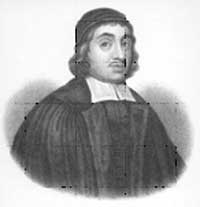
Thomas Watson’s 24 Steps To Serious Bible Study

Thomas Watson

1. Remove hindrances. (a) remove the love of every sin. (b) remove the distracting concerns of this world, especially covetousness [Matthew 13:22, “As for what was sown among thorns, this is the one who hears the word, but the cares of the world and the deceitfulness of riches choke the word, and it proves unfruitful]. (c) Don’t make jokes with and out of Scripture. 

2. Prepare your heart. [1 Samuel 7:3, And Samuel said to all those of the house of Israel, “If you are returning to the Lord with all your heart, then put away the foreign gods and the Ashtaroth from among you and direct your heart to the Lord and serve him only, and he will deliver you out of the hand of the Philistines.”Do this by: (a) collecting your thoughts (b) purging unclean affections and desires (c) not coming to it rashly or carelessly.

3. Read it with reverence, considering that each line is God speaking directly to you.

4. Read the books of the Bible in order.

5. Get a true understanding of Scripture. [Psalm 119:73, “Your hands have made and fashioned me; give me understanding that I may learn your commandments.”] This is best achieved by comparing relevant parts of Scripture with each other.

6. Read with seriousness. [Deuteronomy 32:47, “For it is no empty word for you, but your very life, and by this word you shall live long in the land that you are going over the Jordan to possess.”] The Christian life is to be taken seriously since it requires striving [Luke 13:24, “Strive to enter through the narrow door. For many, I tell you, will seek to enter and will not able.“] and not falling short [Hebrews 4:1, “Therefore, while the promise of entering his rest still stands, let us fear lest any of you should seem to have failed to reach it”].

7. Persevere in remembering what you read. [Psalm 119:52, “When I think of your rules from of old, I take comfort, O LORD “] Don’t let it be stolen from you [Matthew 13:4, 19, “And as he sowed, some fell along the path, and the birds came and devoured them…When anyone hears the word of the kingdom and does not understand it, the evil one comes and snatches away what has been sown in his heart. This is what was sown along the path“]. If it doesn’t stay in your memory it is unlikely to be much benefit to you.

8. Meditate on what you read. [Psalm 119:15, “I will meditate on your precepts and fix my eyes on your ways.“] The Hebrew word for meditate means to be intense in the mind. Meditation without reading is wrong and bound to err, reading without meditation is barren and fruitless. It means to stir the affections, to be warmed by the fire of meditation [Psalm 39:3, “My heart became hot within me. As I mused, the fire burned; then I spoke with my tongue”].

9. Read with a humble heart. Acknowledge that you are unworthy that God should reveal himself to you [James 4:6b, “God opposes the proud, but gives grace to the humble”].

10. Believe it all to be God’s Holy Word. [2 Timothy 3:16, “All Scripture is God-breathed and profitable for teaching, for reproof, for correction, and for training in righteousness”]. We know that no sinner could have written it because of the way it describes sin. No saint could blaspheme God by pretending his own Word was God’s. No angel could have written it of the same reason [Hebrews 4:2, “For good news came to us just as to them, but the message they heard did not benefit them, because they were not united by faith with those who listened”].

11. Prize the Bible highly. [Psalm 119:72, “The law of your mouth is better to me than thousands of gold and silver pieces”]. It is your lifeline; you were born by it [James 1:18, “Of his own will he brought us forth by the word of truth, that we should be a kind of firstfruits of his creatures“]; you need to grow by it [1 Peter 2:2, “Like newborn infants, long for the pure spiritual milk, that by it you may grow up into salvation”].

12. Love the Bible ardently [Psalm 119:72, “The law of your mouth is better to me than thousands of gold and silver pieces”].

13. Come to read it with an honest heart [Luke 8:15, “As for that in the good soil, they are those who, hearing the word, hold it fast in an honest and good heart, and bear fruit with patience”]. (a) Willing to know the entire and complete will of God (b) reading in order to be changed and made better by it [John 17:17, “Sanctify them in the truth; your word is truth”].

14. Apply to yourself everything that you read, take every word as spoken to yourself. Its condemnation of sins as the condemnation of your own sins; the duty that it requires as the duty God would require from you [2 Kings 22:11, “When the king heard the words of the Book of the Law, he tore his clothes.”].

15. Pay close attention to the commands of the Word as much as the promises. Think of how you need direction just as much as you need comfort.

16. Don’t get carried away with the minor details, rather make sure to pay closest attention to the great things [Hosea 8:12, “Were I to write for him my laws by the ten thousands, they would be regarded as a strange thing”].

17. Compare yourself with the Word. How do you compare? Is your heart something of a transcript of it, or not?

18. Pay special attention to those passages that speak to your individual, particular and present situation. e.g. (a) Affliction – [Hebrews 12:7, “It is for discipline that you have to endure. God is treating you as sons. For what son is there whom his father does not discipline?”; Isaiah 27:9, “Therefore by this guilt of Jacob will be atoned for, and this will be the fruit of the removal of his sin: when he makes all the stones of the altars like chalkstones to pieces, no Asherim or incense altars will remain standing.”; John 16:20, “Truly, truly, I say to you, you will weep and lament, but the world will rejoice. You will be sorrowful, but your sorrow will turn into joy.”]; 2 Corinthians 4:17, “For this light momentary affliction is preparing for us an eternal weight of glory beyond all comparison”]. (b) Sense of Christ’s presence and smile withdrawn – Isaiah 54:8, “In overflowing anger for a moment I hid my face from you, but with everlasting love I will have compassion on you,’ says the LORD, your redeemer.”; Isaiah 57:16, “For I will not contend forever, nor will I always be angry; for the spirit would grow faint before me, and the breath of life that I made.”; Psalm 97:11, “Light is sown for the righteous, and joy for the upright in heart”]. (c) Sin – Galatians 5:24, “And those who belong to Christ Jesus have crucified the flesh with its passions and desires.”; James 1:15, “Then desire when it has conceived gives birth to sin, and sin when it is fully grown brings forth death.”; 1 Peter 2:11, “Beloved, I urge you as sojourners and exiles to abstain from the passions of the flesh, which wage war against your soul.”; Proverbs 7:10,14, 22-23, “And behold, the woman meets him, dressed as a prostitute, wily of heart…The mouth of forbidden women is a deep pit; he with whom the LORD is angry will fall into it. Do not rob the poor, because he is poor, or crush the afflicted at the gate, for the LORD will plead their cause and rob life of those who rob them.”  (d) Unbelief – Isaiah 26:3, “You keep him in perfect peace whose mind is stayed on you, because he trusts in you.”; 2 Samuel 22:31, “This God–his way is perfect; the word of the LORD proves true; he is a shield for all those who take refuge in him.”; John 3:15, “that whoever believes in him may have eternal life.”; 1 John 5:10, “Whoever believes in the Son of God has the testimony in himself. Whoever does not believe God has made him a liar, because he has not believed in the testimony that God has borne concerning his Son.”; John 3:36, “Whoever believes in the Son has eternal life; whoever does not obey the Son shall not see life, but the wrath of God remains on him.”

19. Pay special attention to the examples and lives of people in the Bible as living sermons. (a) Punishments – Nebuchadnezzar and Herod (b) mercies and deliverances – Daniel, Jeremiah, the 3 youths in the fiery furnace.

20. Don’t stop reading the Bible until you have your heart warmed. [Psalm 119:93, “I will never forget your precepts, for by them you have given me life.” Let it not only inform you but also inflame you – Jeremiah 23:29, “Is not my word like fire, declares the LORD, and like a hammer that breaks the rock in pieces?”; Luke 24:32, They said to each other, “Did not our hearts burn within us while he talked to us on the road, while he opened to us the Scriptures?”

21. Put into practice what you read. [Psalm 119:66 & 105 “Teach me good judgment and knowledge, for I believe in your commandments…Your word is a lamp to my feet and a light to my path”; Deuteronomy 17:19, “And it shall be with him, and he shall read in it all the days of his life, that he may learn to fear the LORD his God by keeping all the words of this law and these statutes, and doing them.

22. Christ is for us Prophet, Priest and King. Make use of His office as Prophet [Revelation 5:5, “And one of the elders said to me, ‘Weep no more; behold, the Lion of the tribe of Judah, the Root of David, has conquered, so that he can open the scroll and its seven seals.”; John 8:12, Again Jesus spoke to them, saying, “I am the light of the world. Whoever follows me will not walk in darkness, but will have the light of life.”; Psalm 119:102-103, “I do not turn aside from your rules, for you have taught me…How sweet are your words to my taste, sweeter than honey to my mouth!“] Get Christ not only to open the Scriptures up to you, but to open up your mind and understanding [Luke 24:45, “Then he opened their minds to understand the Scriptures“].

23. Make sure to put yourself under a true ministry of the Word, faithfully and thoroughly expounding the Word [Proverbs 8:34, “Blessed is the one who listens to me, watching daily at my gates, waiting beside my doors”]. be earnest and eager waiting on it.

24. Pray that you will profit from reading the Word [Isaiah 48:17, “Thus says the LORD, your Redeemer, the Holy One of Israel: ‘I am the LORD your GOd, who teaches you to profit, who leads you in the way you should go.”; Psalm 119:18, “Open my eyes, that I may behold wondrous things out of your law.”; Nehemiah 9:20, “My soul is consumed with longing for your rules at all times”].

 About Thomas Watson (c. 1620-1686)
Excerpt from Meet the Puritans
by Dr. Joel Beeke and Randall J. Pederson

Thomas Watson was probably born in Yorkshire. He studied at Emmanuel College, Cambridge, earning a Bachelor of Arts degree in 1639 and a Master of Arts degree in 1642. During his time at Cambridge, Watson was a dedicated scholar. After completing his studies, Watson lived for a time with the Puritan family of Lady Mary Vere, the widow of Sir Horace Vere, baron of Tilbury. In 1646, Watson went to St. Stephen’s, Walbrook, London, where he served as lecturer for about ten years, and as rector for another six years, filling the place of Ralph Robinson.

In about 1647, Watson married Abigail Beadle, daughter of John Beadle, an Essex minister of Puritan convictions. They had at least seven children in the next thirteen years; four of them died young.

During the Civil War, Watson began expressing his strong Presbyterian views. He had sympathy for the king, however. He was one of the Presbyterian ministers who went to Oliver Cromwell to protest the execution of Charles I. Along with Christopher Love, William Jenkyn, and others, he was imprisoned in 1651 for his part in a plot to restore the monarchy. Although Love was beheaded, Watson and the others were released after petitioning for mercy. Watson was formally reinstated to his pastorate in Walbrook in 1652.

When the Act of Uniformity passed in 1662, Watson was ejected from his pastorate. He continued to preach in private—in barns, homes, and woods—whenever he had the opportunity. In 1666, after the Great Fire of London, Watson prepared a large room for public worship, welcoming anyone who wished to attend. After the Declaration of Indulgence took effect in 1672, Watson obtained a license for Crosby Hall, Bishopsgate, which belonged to Sir John Langham, a patron of nonconformists. Watson preached there for three years before Stephen Charnock joined him. They ministered together until Charnock’s death in 1680. Watson kept working until his health failed. He then retired to Barnston, in Essex, where he died suddenly in 1686 while engaged in private prayer. He is buried in the same grave as his father-in-law who served as a minister at Barnston.

Watson’s depth of doctrine, clarity of expression, warmth of spirituality, love of application, and gift of illustration enhanced his reputation as a preacher and writer. His books are still widely read today.

Modern Reprints

All Things for Good (BTT; 128 pages; 1988). Watson once said he faced two great difficulties in is ministry: to make the unbeliever sad without grace and to make the believer glad with grace. In this study of Romans 8:28, formerly titled A Divine Cordial (first printed in 1663, one year after two thousand ministers were ejected from the Church of England), Watson encourages God’s people to rejoice. He explains how the best and worst experiences work for good. He writes, “To know that nothing hurts the godly, is a matter of comfort; but to be assured that all things which fall out shall co-operate for their good, that their crosses shall be turned into blessings, that showers of affliction water the withering root of their grace and make it flourish more; this may fill their hearts with joy till they run over.”

If someone asks, “Why do bad things happen to good people?” or “How can I know if I am called by God?,” offer them this book. Its chapters on the love of God, effectual calling, and the purpose of God are especially helpful in understanding Romans 8:28. Chapter 5, on the “tests of love to God,” is particularly searching.

The Art of Divine Contentment (SDG; 133 pages; 2001). Watson’s works are all marked by profound spirituality, terse style, impressive remarks, and practical illustrations. This book, first printed in 1653, is no exception. Based on Philippians 4:11, “I have learned, in whatsoever state I am therewith to be content,” Watson writes, “For my part, I know not any ornament in religion that doth more bespangle a Christian, or glitter in the eye of God and man, than this of contentment. Nor certainly is there any thing wherein all the Christian virtues do work more harmoniously, or shine more transparently, than in this orb. If there is a blessed life before we come to heaven, it is the contented life.”

Godly contentment is a theme missing from many pulpits today. A serious reading of this treatise or Jeremiah Burroughs’s Rare Jewel of Christian Contentment would do much to fill this void.

The Beatitudes (BTT; 307 pages; 1971). First published in 1660, this exposition of Matthew 5:1-12 is rich with instruction. For example, in explaining the blessedness of meekness (5:5), Watson explains meekness towards God as submission to His will and flexibility to His Word. Meekness towards man, he says, involves bearing injuries, forgiving injuries, and recompensing good for evil. In bearing injuries, meekness opposes a hasty spirit, malice, revenge, and speaking evil of others. In forgiving injuries, meekness forgives truly, fully, and often. In recompensing good for evil, Watson says, “To render evil for evil is brutish; to render evil for good is devilish; to render good for evil is Christian.” He offers numerous reasons why Christians should be meek, such as: Jesus Christ is meek; meekness is a great ornament to a Christian; meekness is the way to be like God; meekness argues a noble and excellent spirit; meekness is the best way to conquer and melt the heart of an enemy; meekness contains great promises, for the meek shall inherit the earth; and an un-meek spirit hinders peace. All of this is cogently explained in a mere fifteen pages (pp. 105-119).

A Body of Divinity (BTT; 316 pages; 1998). This book, first published after Watson’s death in 1692, was his magnum opus and became his most famous work. Following the questionand-answer format of the Westminster Shorter Catechism, it offers 176 sermons on the essential teachings of Christianity. It shows the author’s deep understanding of spiritual truths and his ability to make them clear to anyone. Unlike most other systematic theologies, it weds knowledge and piety together, and can be used effectively in daily devotions. It is perhaps the most experiential systematic theology ever written, with the exception of Wilhelmus à Brakel’s The Christian’s Reasonable Service.

The Lord’s Prayer and The Ten Commandments (cf. below) complete Watson’s exposition of the Shorter Catechism. This trilogy on the Shorter Catechism has been reprinted often over the centuries in one or three volumes.

The Duty of Self-Denial and Ten Other Sermons (SDG; 210 pages; 2001). This book includes eight chapters on self-denial, based on Luke 9:23, and ten additional sermons, seven of which have not been reprinted since the seventeenth century. Watson teaches that “self-denial is the first principle of Christianity.” He describes what self-denial is, then demonstrates the Christ-asserting nature of every self-denying act. The additional sermons in this volume are also valuable, particularly those on God as the reward of His people (Gen. 15:1), “kissing” the Son (Ps. 2:12), the comforting rod (Ps. 23:4), and the Judgment Day (Acts 17:31).

The Fight of Faith Crowned (SDG; 191 pages; 1996). This book contains six sermons that had not yet been reprinted in the twentieth century. They include “The Crown of Righteousness” (2 Tim. 4:8), “The Righteous Man’s Weal and the Wicked Man’s Woe” (Isa. 3:10-11), “Time’s Shortness” (a funeral sermon for the Puritan preacher John Wells, based on 1 Cor. 7:29), “The Fight of Faith Crowned” (a funeral sermon for Henry Stubbs, based on 1 Tim. 4:7-8), “A Plea for Alms” (Ps. 112:9), and “The One Thing Necessary” (Phil. 2:12). The last sermon strips away every excuse for not seeking God and pleads that we bow to the demands of the gospel. Watson concludes by explaining six helps for working out one’s salvation: Christ’s strength, diligence, love, humility, hope, and prayer.

Gleanings from Thomas Watson (SDG; 144 pages; 2001). This work offers quotations from Watson’s writings. It sorts them according to fifteen areas of the believer’s walk with Christ, including contentment, persecution, temptation, preaching, prayer, and meditation. Watson had the gift of presenting profound doctrinal truth in vivid images and colorful metaphors that are particularly memorable.

Here are a few samples:

• He who is ashamed of Christ is a shame to Christ.
• Worldly sorrows hasten our funerals.
• They that bear the cross patiently shall wear the crown triumphantly.

The Godly Man’s Picture (BTT; 252 pages; 1992). This work is subtitled Drawn with a Scripture Pencil, or, Some Characteristics of a Man who is Going to Heaven. After explaining the nature of godliness, Watson describes twenty-four marks of a godly man, including “moved by faith,” “fired with love,” “prizes Christ,” “loves the Word,” “is humble,” “is patient,” and “loves the saints.” The concluding chapters offer helps to godliness, advice on how to persevere in godliness, counsel and comfort for the godly, and teaching on the mystical union between Christ and His people.

Harmless as Doves: A Puritan’s View of the Christian Life (CFP; 188 pages; 1994). This book contains ten excellent sermons that provide a biblical picture of practical Christian living. They include “Christian Prudence and Innocency,” “On Becoming A New Creature,” “The Evil Tongue,” “Not Being Weary in Well-Doing,” “On Knowing God and Doing Good,” “Christ All in All,” “The Preciousness of the Soul,” “The Soul’s Malady and Cure,” “The Beauty of Grace,” and “The Trees of Righteousness Blossoming.” These sermons reveal Watson’s colorful and compelling style of preaching. They are experiential and practical and make excellent devotional reading.

Heaven Taken by Storm (SDG; 135 pages; 1992). This is an excellent handbook—perhaps the best ever written—on how to use the various means of grace. Based on Matthew 11:12, Watson describes how the Christian is to take the kingdom of heaven by holy violence through the reading and exposition of Scripture, prayer, meditation, self-examination, conversation, and keeping the Lord’s Day. He explains how the believer is to battle against self, Satan, and the world, and counters objections and hindrances to offering such violence. An appendix to the book includes two additional sermons: “The Happiness of Drawing Near to God” and “How We May Read the Scriptures with Most Spiritual Profit.”

This book helped lead Colonel James Gardiner (1688-1745) as well as many others to conversion. It is an excellent book to give to those who want to start reading the Puritans.

The Lord’s Prayer (BTT; 332 pages; 1994). Originally produced as a companion to A Body of Divinity on the Shorter Catechism, Watson continues the question-and-answer format to explain the petitions of Jesus’ model prayer. In our opinion, this book matches Herman Witsius’s The Lord’s Prayer in usefulness. Witsius’s work is more deliberate and theological, while Watson’s is more devotional and practical.

The Mischief of Sin (SDG; 176 pages; 1994). This is Watson’s most definitive treatment of sin. It includes four parts: “The Mischief of Sin,” “The Desperateness of Sinners,” “An Alarm to Sinners,” and “Hell’s Furnace Heated Hotter.” “The Mystery of the Lord’s Supper” is included in an appendix.

John MacArthur writes, “Thomas Watson’s study of sin is profound, convicting, thought-provoking, and filled with rich spiritual insight. It distills the best attributes of Puritan writing. As devotional as it is doctrinal, as practical as it is biblically sound, and as delightful as it is convicting, this books cuts to the very heart of the biblical issues regarding sin. You cannot read it and remain indifferent toward sin in your own life.”

A Plea for the Godly and Other Sermons (SDG; 480 pages; 1997). This collection containing some of Watson’s best work includes: “Comfort for the Church,” “The Happiness of Drawing Near to God,” “The Tongue, a World of Iniquity,” “The Mystical Temple,” “Christ All in All,” “The Perfume of Love,” “A New Creature,” “The Heavenly Race,” “The Fiery Serpents,” and Watson’s farewell sermon.

The Puritan Pulpit: Thomas Watson (c.1620-1686) (SDG; 233 pages; 2004). This book, the second in the Puritan Pulpit Series, is a collection of ten sermons not found in any other work of Watson’s in print today: “A Christian on Earth Still in Heaven,” “Christ’s Loveliness,” “God’s Anatomy Upon Man’s Heart,” “The Beauty of Grace,” “The Preciousness of the Soul,” “The Saint’s Desire to be with Christ,” “The Saint’s Spiritual Delight,” “The Soul’s Malady and Cure,” “The Tree of Righteousness Blossoming and Bringing Forth Fruit,” and “The Spiritual Watch.” These sermons are vintage Watson—pastoral and easy to understand, rich with illustration and abounding in application.

Religion Our True Interest (BB; 144 pages; 1992). This work consists of Watson’s notes on Malachi 3:16-18. It offers helpful teaching on religious conversation, God-centered thinking, God’s disposition toward His people, and the fear of God, which Watson defines as “reverencing and adoring God’s holiness, and setting ourselves always under His sacred inspection.” Today, we’re sorely in need of such teaching, for too many people who call themselves Christians lack this mark of grace, which Watson calls “the best certificate to show for heaven” though “the fear of God is not our plea, yet [it is] our evidence for heaven.”

The covenant-keeping character of God is evident as Watson explains God’s promise “They shall be mine” from the book of Malachi. Believers belong to God, Watson says, but God and all His riches also belong to believers. God says, “My wisdom shall be yours to teach you, my holiness shall be yours to sanctify you, my mercy shall be yours to save you,” to which Watson responds, “What richer dowry than deity? God is a whole ocean of blessedness. If there is enough in Him to fill the angels, then surely He has enough to fill us.” This book is rich fare for the encouraging, enlightening, and admonishing of believers.

Sermons of Thomas Watson (SDG; 745 pages; 1997). This work was originally titled Discourses on Interesting and Important Subjects, being the Select Works of the Reverend Thomas Watson (2 volumes). With the exception of The Beatitudes, this reprint puts everything in the original two volumes under one cover. It includes “The Christian’s Charter of Privileges,” “The Saint’s Spiritual Delight,” “A Treatise Concerning Meditation,” “The Upright Man’s Character,” and “The Godly Man’s Picture Drawn with a Scripture Pencil.” The treatise on meditation is particularly valuable. Edward Reynolds writes in the introductory epistle: “Meditation is the palate of the soul whereby we taste the goodness of God; the eye of the soul whereby we view the beauties of holiness; the askesis and gymnasia, whereby our spiritual senses are exercised,… it is the key to the wine-cellar, to the banqueting house, to the garden of spices, which letteth us in unto him whom our soul loveth; it is the arm whereby we embrace the promises at a distance, and bring Christ and our souls together.”

The Ten Commandments (BTT; 245 pages; 1998). This third volume that Watson wrote on the Shorter Catechism examines the moral law as a whole as well as each of its commandments. Watson repeatedly shows the various ploys of indwelling sin. In view of the importance of law in Christian living, this is an extremely valuable work.


The 7 Major Bodily Resurrections in the Bible

Jesus' empty tomb and resurrection image

(1) The Bodily Resurrection of Jesus Christ

Now after the Sabbath, toward the dawn of the first day of the week, Mary Magdalene and the other Mary went to see the tomb. And behold, there was a great earthquake, for an angel of the Lord descended from heaven and came and rolled back the stone and sat on it. His appearance was like lightning, and his clothing white as snow. And for fear of him the guards trembled and became like dead men. But the angel said to the women, “Do not be afraid, for I know that you seek Jesus who was crucified. He is not here, for he has risen, as he said. Come, see the place where he lay. Then go quickly and tell his disciples that he has risen from the dead, and behold, he is going before you to Galilee; there you will see him. See, I have told you.” (Matt. 28:1–7)

When the Sabbath was past, Mary Magdalene, Mary the mother of James, and Salome bought spices, so that they might go and anoint him. And very early on the first day of the week, when the sun had risen, they went to the tomb. And they were saying to one another, “Who will roll away the stone for us from the entrance of the tomb?” And looking up, they saw that the stone had been rolled back—it was very large. And entering the tomb, they saw a young man sitting on the right side, dressed in a white robe, and they were alarmed. And he said to them, “Do not be alarmed. You seek Jesus of Nazareth, who was crucified. He has risen; he is not here. See the place where they laid him.But go, tell his disciples and Peter that he is going before you to Galilee. There you will see him, just as he told you.” (Mark 16:1–7)

But on the first day of the week, at early dawn, they went to the tomb, taking the spices they had prepared. And they found the stone rolled away from the tomb, but when they went in they did not find the body of the Lord Jesus. While they were perplexed about this, behold, two men stood by them in dazzling apparel. And as they were frightened and bowed their faces to the ground, the men said to them, “Why do you seek the living among the dead? He is not here, but has risen. Remember how he told you, while he was still in Galilee, that the Son of Man must be delivered into the hands of sinful men and be crucified and on the third day rise.” And they remembered his words (Luke 24:1–8)

Now on the first day of the week Mary Magdalene came to the tomb early, while it was still dark, and saw that the stone had been taken away from the tomb. So she ran and went to Simon Peter and the other disciple, the one whom Jesus loved, and said to them, “They have taken the Lord out of the tomb, and we do not know where they have laid him.” So Peter went out with the other disciple, and they were going toward the tomb. Both of them were running together, but the other disciple outran Peter and reached the tomb first. And stooping to look in, he saw the linen cloths lying there, but he did not go in. Then Simon Peter came, following him, and went into the tomb. He saw the linen cloths lying there, and the face cloth, which had been on Jesus’ head, not lying with the linen cloths but folded up in a place by itself. Then the other disciple, who had reached the tomb first, also went in, and he saw and believed; (John 20:1–8)

God raised him up, loosing the pangs of death, because it was not possible for him to be held by it… and you killed the Author of life, whom God raised from the dead. To this we are witnesses… And with great power the apostles were giving their testimony to the resurrection of the Lord Jesus, and great grace was upon them all… but God raised him on the third day and made him to appear…explaining and proving that it was necessary for the Christ to suffer and to rise from the dead, and saying, “This Jesus, whom I proclaim to you, is the Christ.” (Acts 2:24; 3:15; 4:33; 10:40; 17:3)

and was declared to be the Son of God in power according to the Spirit of holiness by his resurrection from the dead, Jesus Christ our Lord… who was delivered up for our trespasses and raised for our justification… because, if you confess with your mouth that Jesus is Lord and believe in your heart that God raised him from the dead, you will be saved.” (Rom. 1:4; 4:25; 10:9)

For I delivered to you as of first importance what I also received: that Christ died for our sins in accordance with the Scriptures, that he was buried, that he was raised on the third day in accordance with the Scriptures, and that he appeared to Cephas, then to the twelve. Then he appeared to more than five hundred brothers at one time, most of whom are still alive, though some have fallen asleep. Then he appeared to James, then to all the apostles. Last of all, as to one untimely born, he appeared also to me. For I am the least of the apostles, unworthy to be called an apostle, because I persecuted the church of God. (1 Cor. 15:3-9)

That he worked in Christ when he raised him from the dead and seated him at his right hand in the heavenly places (Eph. 1:20)

For since we believe that Jesus died and rose again, even so, through Jesus, God will bring with him those who have fallen asleep. (1 Thess. 4:14)

For Christ also suffered once for sins, the righteous for the unrighteous, that he might bring us to God, being put to death in the flesh but made alive in the spirit. (1 Peter 3:18).

(2) The token resurrection of some saints at the time of the resurrection of Christ

And Jesus cried out again with a loud voice and yielded up his spirit. And behold, the curtain of the temple was torn in two, from top to bottom. And the earth shook, and the rocks were split. The tombs also were opened. And many bodies of the saints who had fallen asleep were raised, and coming out of the tombs after his resurrection they went into the holy city and appeared to many. When the centurion and those who were with him, keeping watch over Jesus, saw the earthquake and what took place, they were filled with awe and said, “Truly this was the Son of God!” (Matt. 27:50–54).

(3) The resurrection at the rapture

Behold! I tell you a mystery. We shall not all sleep, but we shall all be changed, in a moment, in the twinkling of an eye, at the last trumpet. For the trumpet will sound, and the dead will be raised imperishable, and we shall be changed. For this perishable body must put on the imperishable, and this mortal body must put on immortality. When the perishable puts on the imperishable, and the mortal puts on immortality, then shall come to pass the saying that is written:


“Death is swallowed up in victory.” “O death, where is your victory? O death, where is your sting?” The sting of death is sin, and the power of sin is the law. But thanks be to God, who gives us the victory through our Lord Jesus Christ. Therefore, my beloved brothers, be steadfast, immovable, always abounding in the work of the Lord, knowing that in the Lord your labor is not in vain. (1 Cor. 15:51–58)

For since we believe that Jesus died and rose again, even so, through Jesus, God will bring with him those who have fallen asleep. For this we declare to you by a word from the Lord, that we who are alive, who are left until the coming of the Lord, will not precede those who have fallen asleep. For the Lord himself will descend from heaven with a cry of command, with the voice of an archangel, and with the sound of the trumpet of God. And the dead in Christ will rise first. Then we who are alive, who are left, will be caught up together with them in the clouds to meet the Lord in the air, and so we will always be with the Lord. (1 Thess. 4:14–17).

(4) The resurrection of the two witnesses

And I will grant authority to my two witnesses, and they will prophesy for 1,260 days, clothed in sackcloth.” These are the two olive trees and the two lampstands that stand before the Lord of the earth. And if anyone would harm them, fire pours from their mouth and consumes their foes. If anyone would harm them, this is how he is doomed to be killed.They have the power to shut the sky, that no rain may fall during the days of their prophesying, and they have power over the waters to turn them into blood and to strike the earth with every kind of plague, as often as they desire. And when they have finished their testimony, the beast that rises from the bottomless pit will make war on them and conquer them and kill them, and their dead bodies will lie in the street of the great city that symbolically is called Sodom and Egypt, where their Lord was crucified. For three and a half days some from the peoples and tribes and languages and nations will gaze at their dead bodies and refuse to let them be placed in a tomb, and those who dwell on the earth will rejoice over them and make merry and exchange presents, because these two prophets had been a torment to those who dwell on the earth. But after the three and a half days a breath of life from God entered them, and they stood up on their feet, and great fear fell on those who saw them. Then they heard a loud voice from heaven saying to them, “Come up here!” And they went up to heaven in a cloud, and their enemies watched them. And at that hour there was a great earthquake, and a tenth of the city fell. Seven thousand people were killed in the earthquake, and the rest were terrified and gave glory to the God of heaven. (Rev. 11:3–13).

(5) The resurrection of the Old Testament saints

Your dead shall live; their bodies shall rise. You who dwell in the dust, awake and sing for joy! For your dew is a dew of light, and the earth will give birth to the dead. Come, my people, enter your chambers, and shut your doors behind you; hide yourselves for a little while until the fury has passed by. For behold, the Lord is coming out from his place to punish the inhabitants of the earth for their iniquity, and the earth will disclose the blood shed on it, and will no more cover its slain. (Isa. 26:19–21)

Therefore prophesy, and say to them, Thus says the Lord God: Behold, I will open your graves and raise you from your graves, O my people. And I will bring you into the land of Israel. And you shall know that I am the Lord, when I open your graves, and raise you from your graves, O my people. And I will put my Spirit within you, and you shall live, and I will place you in your own land. Then you shall know that I am the Lord; I have spoken, and I will do it, declares the Lord.” (Ezek. 37:12–14)

“At that time shall arise Michael, the great prince who has charge of your people. And there shall be a time of trouble, such as never has been since there was a nation till that time. But at that time your people shall be delivered, everyone whose name shall be found written in the book. And many of those who sleep in the dust of the earth shall awake, some to everlasting life, and some to shame and everlasting contempt. And those who are wise shall shine like the brightness of the sky above; and those who turn many to righteousness, like the stars forever and ever.” (Dan. 12:1–3).

(6) The resurrection of the tribulation saints

Then I saw thrones, and seated on them were those to whom the authority to judge was committed. Also I saw the souls of those who had been beheaded for the testimony of Jesus and for the word of God, and those who had not worshiped the beast or its image and had not received its mark on their foreheads or their hands. They came to life and reigned with Christ for a thousand years. The rest of the dead did not come to life until the thousand years were ended. This is the first resurrection. Blessed and holy is the one who shares in the first resurrection! Over such the second death has no power, but they will be priests of God and of Christ, and they will reign with him for a thousand years. (Rev. 20:4–6).

(7) The resurrection of the wicked dead

Then I saw a great white throne and him who was seated on it. From his presence earth and sky fled away, and no place was found for them. And I saw the dead, great and small, standing before the throne, and books were opened. Then another book was opened, which is the book of life. And the dead were judged by what was written in the books, according to what they had done. And the sea gave up the dead who were in it, Death and Hades gave up the dead who were in them, and they were judged, each one of them, according to what they had done. Then Death and Hades were thrown into the lake of fire. This is the second death, the lake of fire. And if anyone’s name was not found written in the book of life, he was thrown into the lake of fire. (Rev. 20:11–15).

Scriptures taken from ESV. Major Headings adapted from: Walvoord, John F. (2011-09-01). Every Prophecy of the Bible: Clear Explanations for Uncertain Times (p. 452). David C Cook. Kindle Edition.

Why the Incarnation of Jesus Was Necessary by Dr. Gordon Wenham

Christmas Incarnation


The Blood of the Lamb of God by Gordon Wenham


“Without the shedding of blood there is no forgiveness of sins,” says the epistle to the Hebrews (9:22). Most of that epistle is taken up with showing how Christ fulfilled the hopes and aspirations of the Old Testament, especially in regard to the sacrificial system of ancient Israel. But for modern readers who have never seen a sacrifice and do not think in Old Testament categories, this is all double Dutch: What has the killing of animals to do with the forgiveness of sins?

It is explained at length in the book of Leviticus, which begins with a long section setting out just how to offer the different kinds of sacrifice and what each achieves (chap. 1–7). However, we need to start further back than this to understand Leviticus and the basic notion of sacrifice.

Genesis 18 tells how Abraham was visited one day by three men. He had no idea who they were, but being a very hospitable man, Abraham laid on a splendid feast for them. His wife Sarah made a pile of fresh bread, while he offered a tender young calf, which his servants killed and cooked for the visitors. We are not told that he gave them wine, but, doubtless where that was available, it too would be served to important guests. Subsequently Abraham discovered who his visitors were — the Lord and two angels!

Though this episode is not seen as a sacrifice, it does give us an insight into the basic dynamics of sacrifice. At a sacrifice, God is the most important guest: His presence is honored by offering Him those items — meat, bread, and wine — that were served only on very special occasions. Meat eating was a rare luxury in Old Testament times, and doubtless wine was reserved for big occasions too.

Israel’s ancient neighbors saw sacrifices as meals for the gods, but the Old Testament indignantly rejects this idea. It is God who provides food for man (Gen. 1:29), not the other way around. Psalm 50:10, 12 puts it well:

Every beast of the forest is mine,

the cattle on a thousand hills… .

If I were hungry, I would not tell you,

for the world and its fullness are mine.

So what was the point of these massive feasts in front of the tabernacle and later in the temple precincts? The first sacrifices in the Bible are those offered by Cain and Abel. These are mentioned straight after Adam and Eve’s expulsion from the Garden of Eden, where they had enjoyed walking with God in the cool of the day. Excluded from the garden, they were deprived of this privilege of intimacy with God. So one motive for sacrifice suggested by this story is that sacrifice allows man to renew fellowship with God.

But it must be offered in the right spirit. Cain offered only some of the fruit of the ground, whereas Abel “brought of the firstlings of his flock and their fat portions” (Gen. 4:4), that is, the very best bits of his most valued animals. God accepted the latter but not the former. Here we realize one of the most important features of sacrifice: the animals must be young and healthy, not decrepit and elderly. The Passover lamb had to be without blemish and one year old. Repeatedly, the sacrificial laws in Leviticus insist that the animals involved must be “without blemish.” The Cain and Abel story shows what will happen if this is ignored: “they will not be accepted” (Lev. 22:25; see also 19:7; 22:20).

After the fall, an avalanche of sin, especially murder and violence, engulfed the world. God complains that sin is built into man: “every intention of the thoughts of his heart was only evil continually” (Gen. 6:5). “The earth was corrupt in God’s sight, and the earth was filled with violence” (6:11). So God sent the flood to wipe out sinful humanity and start afresh with Noah, the one man “who was righteous, blameless in his generation” (6:9).

When Noah eventually emerged from the ark, his first act was to build an altar and offer sacrifice. One might suppose that this was just an act of thanksgiving for being saved from destruction himself, but the text indicates it achieved much more. “When the Lord smelled the pleasing aroma, the Lord said in heart, ‘I will never again curse the ground because of man, for the intention of man’s heart is evil from his youth’” (8:21). In other words, though man’s evil character has not been changed (see 6:9), God’s attitude to human sin has: He will never again punish the world with a flood. Why? Because of the pleasing aroma of the sacrifices offered by Noah (8:21). Sacrifice according to Genesis 8 thus cools God’s anger at human sin. That animal sacrifices produce a pleasing aroma for God is a frequent refrain in Leviticus 1–7.

But why is animal sacrifice so effective in appeasing God’s wrath? The account of Abraham’s offering of Isaac gives some insight into this. Genesis 22 tells how God tested Abraham by asking him to sacrifice his most precious possession, namely, his only son Isaac. Abraham did not know that this was a test — for him it was deadly earnest. So at the last minute, just as Abraham was about to cut Isaac’s throat, the angel of the Lord told him to stop: “for now I know that you fear God” (22:12). Then Abraham looked up, saw a ram, and offered it up instead of Isaac.

This story shows that if someone is ready to obey God totally, God will accept an animal instead of the worshiper. Isaac was Abraham’s future, and Abraham was willing to give him to God, yet God was satisfied with a ram. Here the doctrine of substitutionary atonement is illustrated for us. It is even clearer in the laws in Leviticus, where an essential feature of every sacrifice is the placing of the worshiper’s hand on the animal’s head. This action declares that the animal is taking the place of the worshiper. The worshiper is giving himself entirely to God by identifying himself with the animal; the animal is dying instead of the worshiper.

In Leviticus 1–7, four different types of animal sacrifice are discussed. The emphasis in these chapters is on how to carry out the different types of sacrifice. We must now focus on the features that distinguish one type of sacrifice from another. The burnt offering (Lev. 1) was unique in that it was the only sacrifice in which the entire animal was burnt on the altar. In this, the total consecration of the worshiper to the service of God was represented. At the same time, it made atonement (Lev. 1:4) for the worshiper. “Make atonement” is more exactly “pay a ransom,” a phrase used elsewhere in the Law, where an offender who might otherwise face the death penalty was let off by the payment of damages (for example, Ex. 21:30).

The peace offering (Lev. 3) was probably the most popular of Old Testament sacrifices, as it was the only one in which the worshiper who donated the animal had a share of the meat (usually, only the priests ate the sacrificial meat). The peace offering could be offered spontaneously as an act of thanksgiving to God, but it might be offered when you made a vow asking for God to do something for you, or when that prayer was answered.

The sin offering (Lev. 4) was peculiar in that some of the animal’s blood was smeared on the altar or sprinkled inside the tabernacle or temple. This blood cleansed the tabernacle from the pollution of sin. Sin does not just make one guilty before God or make Him angry, it also makes places and people unclean and thus unfit for God to dwell in. By smearing blood on the altar or sprinkling the interior of the temple with blood, these objects were cleansed of pollution. At the same time, the sinner who had caused the pollution by his misdeeds was forgiven his sins and cleansed from its pollution. This cleansing made it possible for God to re-enter the temple and indwell the believer.

Finally, there was the guilt offering (Lev. 5:14–6:7), which expressed the idea that certain deeds put us in God’s debt. These sins can only be atoned for by the sacrifice of an expensive ram. Though discussed relatively briefly in Leviticus, the sacrifice is of great importance in Isaiah 53, where the suffering servant is called the guilt offering (v. 10; see the ESV, “offering for sin”), who suffers for our transgressions (vv. 5–6). As this chapter describes most fully the atoning role of Christ, it is central to the New Testament’s understanding of Christ’s death.

The imagery of sacrifice in general pervades the New Testament’s interpretation of the cross. When John the Baptist said “Behold, the lamb of God, who takes away the sin of the world” (John 1:29), he was most likely seeing Christ as the perfect Passover lamb, an image that Paul also uses when he speaks of “Christ, our Passover lamb” (1 Cor. 5:7). He is also seen as the supreme burnt offering, a sacrifice superior to Isaac, an idea alluded to in such well-known passages as John 3:16 and Romans 8:32: “He who did not spare his own Son but gave him up for us all.” Mark 10:45 describes the Son of Man as the ultimate servant, who gave “his life as a ransom for many.” 1 John 1:7 takes up the imagery of the sin offering when he says that “the blood of Jesus his Son cleanses us from all sin.” For the epistle to the Hebrews Jesus is the supreme High Priest, who through His death achieves all the goals to which the Old Testament sacrificial system pointed (see Heb. 9:1–14).

Finally, we should note that the death of Christ does not exhaust the significance of the sacrificial system for the Christian. We too are expected to walk in Christ’s footsteps and share His suffering (1 Peter 2:21–24). So we too are encouraged “to present our bodies as a living sacrifice” (Rom. 12:1). Paul, anticipating his own death, compared it to being “poured out as a drink offering,” that is, like the wine that was poured over the altar with every animal sacrifice (see also Phil. 2:17; 2 Tim. 4:6). In this way the old modes of worship should still inspire our consecration today.


About the Author: Dr. Gordon Wenham is senior professor of Old Testament at the University of Gloucestershire, England, and he served on the translation oversight committee for the English Standard Version Bible.

Article Information: From Tabletalk Magazine, September 1, 2005. © Tabletalk magazine 
Permissions: You are permitted and encouraged to reproduce and distribute this material in any format provided that you do not alter the wording in any way, you do not charge a fee beyond the cost of reproduction, and you do not make more than 500 physical copies. For web posting, a link to this document on our website is preferred (where applicable). If no such link exists, simply link to http://www.ligonier.org/tabletalk. Any exceptions to the above must be formally approved by Tabletalk.

Please include the following statement on any distributed copy: From Ligonier Ministries and R.C. Sproul. © Tabletalk magazine. Website: http://www.ligonier.org/tabletalk. Email: tabletalk@ligonier.org. Toll free: 1-800-435-4343.

Jesus: Our Perfect High Priest by Nancy Guthrie


OYBODJITOT Guthrie 

None of Israel’s high priests ever lived up to what God intended for those he set apart to serve him in his Temple. Aaron sinned by leading the people in false worship. His sons sinned by offering unholy fire on God’s altar. Eli sinned by failing to discipline his sons who were such wicked priests that God struck them both down on the same day. Eventually the priesthood broke down altogether, so that the Old Testament ends with this warning: “The words of a priest’s lips should preserve knowledge of God, and people should go to him for instruction, for the priest is the messenger of the LORD of Heaven’s Armies. But you priests have left God’s paths. Your instructions have caused many to stumble into sin. You have corrupted the covenant I made with the Levites,” says the LORD of Heaven’s Armies. (Malachi 2: 7-8)

While the priesthood was responsible for its sinful failure, it was never meant to last forever, but rather to prepare God’s people for the perfect Priest God would send. Jesus came, not to fit into the earthly system of priestly ministry, but to fulfill and put an end to that human priesthood, and to orient our attention to his ministry on our behalf in heaven. As our perfect High Priest, Jesus ministers in a superior place— not in the Temple, but in heaven itself. “For Christ did not enter into a holy place made with human hands, which was only a copy of the true one in heaven. He entered into heaven itself to appear now before God on our behalf” (Hebrews 9: 24).

Jesus ministers to us with superior righteousness— not external, like a holy set of clothes, but intrinsic to his own holy person. “He is holy and blameless, unstained by sin” (Hebrews 7:26).

Jesus ministers to us with superior sympathy— he “understands our weaknesses, for he faced all of the same testings we do, yet he did not sin” (Hebrews 4:15).

Jesus ministers to us with superior longevity“There were many priests under the old system, for death prevented them from remaining in office. But because Jesus lives forever, his priesthood lasts forever” (Hebrews 7: 23-24).

And Jesus ministers to us, offering a superior sacrifice— not by the repeated sacrifices of animals, but with the once-for-all sacrifice of himself. “With his own blood— not the blood of goats and calves— he entered the Most Holy

Place once for all time and secured our redemption forever” (Hebrews 9:12).

Prayer: Jesus, my merciful and faithful High Priest, you are the kind of priest I need because you are holy and blameless, unstained by sin.

Article adapted from the FABULOUS RESOURCE by Nancy Guthrie (2012-10-08). The One Year Book of Discovering Jesus in the Old Testament (Kindle Locations 7946-7965). Tyndale House Publishers. Kindle Edition.

Guthrie Nancy image

About Nancy Guthrie (In Her Own Words):

“God has been preparing me my whole life for teaching his Word,” says Nancy Guthrie. “He has blessed me with so many sound Bible teachers to sit under–from my days as a college student in Bible classes, to terrific Bible Study Fellowship leaders, gifted pastors — as well as several teachers like Tim Keller and John Piper that I listen to almost daily on my ipod.”

Nancy’s life experience–dealing with the loss of two of her children–has significantly affected her teaching substance and style. “I’ve had to dig into God’s Word in search of answers to hard questions about how he works, and I and that my listeners usually have the same struggles and questions. And while I openly share the deep hurts in my life, I also like to laugh. People who hear me teach say that I’m very real, and that is certainly what I want to be.” “To me, God’s Word is a treasure to be mined,” Nancy says. “The deeper I go in it, the more I see its wisdom, the more it authenticates itself, the more it reveals to me the amazing mystery of God.”

Nancy is the author of six books including Holding on to Hope, The One Year Book of Hope, Hoping for Something Better, Dinner Table Devotions, Hearing Jesus Speak Into Your Sorrow, and When Your Family’s Lost a Loved One (co-written with her husband, David). She is also the editor of several anthologies published by Crossway, collections of great writing by noted classic and contemporary Bible teachers and theologians including Come Thou Long Expected Jesus, Jesus, Keep Me Near the Cross, Be Still My Soul, and O Love That Will Not Let Me Go.

She is currently working on another book for Tyndale’s One Year line that will be One Year of Discovering Jesus in the Old Testament.

Nancy and her husband David live in Nashville, Tennessee while their son, Matt is off to Western Kentucky University.In addition to teaching opportunities at her church, Christ Presbyterian Church in Nashville, Nancy speaks regularly at conferences and events around the country such as the Ravi Zacharias International Ministries Conference, The Brooklyn Tabernacle, Second Baptist Church of Houston, Taylor University, Covenant College, and in countries including Scotland and Colombia.

“The Sinfulness of Sin” on “Cosmic Treason” by R.C. Sproul

TTOTC Sproul

“The sinfulness of sin” sounds like a vacuous redundancy that adds no information to the subject under discussion. However, the necessity of speaking of the sinfulness of sin has been thrust upon us by a culture and even a church that has diminished the significance of sin itself. Sin is communicated in our day in terms of making mistakes or of making poor choices. When I take an examination or a spelling test, if I make a mistake, I miss a particular word. It is one thing to make a mistake. It is another to look at my neighbor’s paper and copy his answers in order to make a good grade. In this case, my mistake has risen to the level of a moral transgression. Though sin may be involved in making mistakes as a result of slothfulness in preparation, nevertheless, the act of cheating takes the exercise to a more serious level. Calling sin “making poor choices” is true, but it is also a euphemism that can discount the severity of the action. The decision to sin is indeed a poor one, but once again, it is more than a mistake. It is an act of moral transgression.

In my book The Truth of the Cross I spend an entire chapter discussing this notion of the sinfulness of sin. I begin that chapter by using the anecdote of my utter incredulity when I received a recent edition of Bartlett’s Familiar Quotations. Though I was happy to receive this free issue, I was puzzled as to why anyone would send it to me. As I leafed through the pages of quotations that included statements from Immanuel Kant, Aristotle, Thomas Aquinas, and others, to my complete astonishment I came upon a quotation from me. That I was quoted in such a learned collection definitely surprised me. I was puzzled by what I could have said that merited inclusion in such an anthology, and the answer was found in a simple statement attributed to me: “Sin is cosmic treason.” What I meant by that statement was that even the slightest sin that a creature commits against his Creator does violence to the Creator’s holiness, His glory, and His righteousness. Every sin, no matter how seemingly insignificant, is an act of rebellion against the sovereign God who reigns and rules over us and as such is an act of treason against the cosmic King.

Cosmic treason is one way to characterize the notion of sin, but when we look at the ways in which the Scriptures describe sin, we see three that stand out in importance. First, sin is a debt; second, it is an expression of enmity; third, it is depicted as a crime. In the first instance, we who are sinners are described by Scripture as debtors who cannot pay their debts. In this sense, we are talking not about financial indebtedness but a moral indebtedness. God has the sovereign right to impose obligations upon His creatures. When we fail to keep these obligations, we are debtors to our Lord. This debt represents a failure to keep a moral obligation.

The second way in which sin is described biblically is as an expression of enmity. In this regard, sin is not restricted merely to an external action that transgresses a divine law. Rather, it represents an internal motive, a motive that is driven by an inherent hostility toward the God of the universe. It is rarely discussed in the church or in the world that the biblical description of human fallenness includes an indictment that we are by nature enemies of God. In our enmity toward Him, we do not want to have Him even in our thinking, and this attitude is one of hostility toward the very fact that God commands us to obey His will. It is because of this concept of enmity that the New Testament so often describes our redemption in terms of reconciliation. One of the necessary conditions for reconciliation is that there must be some previous enmity between at least two parties. This enmity is what is presupposed by the redeeming work of our Mediator, Jesus Christ, who overcomes this dimension of enmity.

The third way in which the Bible speaks of sin is in terms of transgression of law. The Westminster Shorter Catechism answers the fourteenth question, “What is sin?” by the response, “Sin is any want of conformity to, or transgression of, the law of God.” Here we see sin described both in terms of passive and active disobedience. We speak of sins of commission and sins of omission. When we fail to do what God requires, we see this lack of conformity to His will. But not only are we guilty of failing to do what God requires, we also actively do what God prohibits. Thus, sin is a transgression against the law of God.

When people violate the laws of men in a serious way, we speak of their actions not merely as misdemeanors but, in the final analysis, as crimes. In the same regard, our actions of rebellion and transgression of the law of God are not seen by Him as mere misdemeanors; rather, they are felonious. They are criminal in their impact. If we take the reality of sin seriously in our lives, we see that we commit crimes against a holy God and against His kingdom. Our crimes are not virtues; they are vices, and any transgression of a holy God is vicious by definition. It is not until we understand who God is that we gain any real understanding of the seriousness of our sin. Because we live in the midst of sinful people where the standards of human behavior are set by the patterns of the culture around us, we are not moved by the seriousness of our transgressions. We are indeed at ease in Zion. But when God’s character is made clear to us and we are able to measure our actions not in relative terms with respect to other humans but in absolute terms with respect to God, His character, and His law, then we begin to be awakened to the egregious character of our rebellion.

Not until we take God seriously will we ever take sin seriously. But if we acknowledge the righteous character of God, then we, like the saints of old, will cover our mouths with our hands and repent in dust and ashes before Him.

© Tabletalk magazine 
Permissions: You are permitted and encouraged to reproduce and distribute this material in any format provided that you do not alter the wording in any way, you do not charge a fee beyond the cost of reproduction, and you do not make more than 500 physical copies. http://www.ligonier.org/tabletalk. Any exceptions to the above must be formally approved by Tabletalk. Article from May 1, 2008 – Tabletalk Magazine Online.

Please include the following statement on any distributed copy: From Ligonier Ministries and R.C. Sproul. © Tabletalk magazine. Website: http://www.ligonier.org/tabletalk. Email: tabletalk@ligonier.org. Toll free: 1-800-435-4343.

Dr. Tim Keller on “The Christian’s Happiness” – Romans 8:28-30

“And we know that for those who love God all things work together for good, for those who are called according to his purpose. For those whom he foreknew he also predestined to be conformed to the image of his Son, in order that he might be the firstborn among many brothers. And those whom he predestined he also called, and those whom he called he also justified, and those whom he justified he also glorified” (Romans 8:28-30)

Cheer Up Christian: “Your bad things turn out for good, your good things can never be lost, and the best things are yet to come.” – Tim Keller

Introduction

If you’re a Christian, you know that Christianity is supposed to be about joy. You probably also know that you’re supposed to experience joy in spite of circumstances. The Bible clearly teaches that joy is available that should make us happy no matter the circumstances. There’s a joy that the deepest trouble can’t put out and, if properly nourished and nurtured, can even overwhelm the greatest grief.

When Jesus prays to the Father in John 17:13, he prays for us—his followers. He says, I pray that “they may have the full measure of my joy within them.” One chapter before, he says to his disciples, “You will rejoice. and no one will take away your joy” (16:22). That’s pretty amazing! He’s talking to the twelve disciples, men who are going to be persecuted. They’re going to be robbed of everything they own, tortured, and put to death. Yet Jesus promises to give them a joy that will withstand all that. Nothing—not disease or persecution or alienation or loneliness or torture or even death—will be able to take it away.

I often wrestle with that concept. I have to ask myself, “Why do things affect me so much? Why is my joy not relentless?” Sometimes I wonder, “Do we have that kind of impervious joy?” I’m afraid not. I don’t think we understand the nature of this joy.

Romans 8 is all about living in a suffering world marked by brokenness. Paul talks about trouble and persecution and nakedness and poverty and how Christians are supposed to live in a world like that. In 8:28–30 he offers three principles for finding joy in suffering. Paul tells us that if we follow Christ, our bad things turn out for good, our good things cannot be lost, and our best things are yet to come. Those are the reasons for our joy.

Our bad things turn out for good

Verse 28 says: “For those loving him, God works together all things for good.”

There are three implications of this first principle.

First, this verse says that all things happen to Christians. That is, the Christian’s circumstances are no better than anybody else’s. It is extremely important for us to understand this if we’re going to experience relentless and impervious joy. Terrible things happen to people who love God. Many Christians explicitly teach—and most Christians implicitly believe—that if we love and serve God, then we will not have as many bad things happen to us. That’s not true! Horrible things can happen to us, and believing in and loving and serving God will not keep them from happening. All the same things that happen to everybody else will happen to people who love God. “All things” means all things, in this text. In verse 35 Paul says, “What can separate us from the love of Christ? Can trouble, hardship, persecution, famine, poverty, danger, or sword?” Those are terrible things. Paul is saying all the same things that happen to everybody else will happen to us, even if we love God. It’s very important to realize that.

The second implication of this point is that when things work together in your life, it’s because of God. Notice Paul does not say, “Things work together for good.” Things never work together for good on their own. Rather, if anything good happens, it is because God is working it together.

Earlier in Romans 8, Paul discusses how things fall apart because the world is burdened with evil and sin. Things are subject to decay. Everyone will eventually experience the decay of their bodies; that’s the nature of things. The little grains of sand on the beach used to be a mountain. Everything falls apart; things do not come together. This verse tells Christians to get rid of the saccharine, sentimental idea that things ought to go right, that things do go right, and that it’s normal for things to go right. Modern, Western people believe that if things go wrong, we should sue, because things ought to go right. But Christians have to discard that idea completely. Christians have to recognize that if our health remains intact, it is simply because God is holding it up. If people love us, if someone is there to hug us or squeeze our hand, if someone loves us in spite of all our flaws—if someone loves us at all—it’s because God is bringing all things together. God is holding it up. Everything that goes well is a miracle of grace.

The third implication of this principle is the most basic: Although bad things happen, God works them for good. This verse does not promise that those who love God will have better circumstances. Nor does this verse say that bad things are actually good things. Rather, it acknowledges that these are bad things, but it promises that they’re working for good. That means God will work them to good effect in your life.

The story of Jesus standing before the tomb of Lazarus is an endless source of insight for me. As he was about to raise Lazarus from the dead, Jesus was not smiling. He was angry. He was weeping. Why? Because death is a bad thing! Jesus wasn’t thinking, “They think that this is a tragedy, but no harm done! I’m about to raise him from the dead. This looks like a bad thing, but it’s not. It’s really a good thing! It’s a way for me to show my glory. It’s really exciting! I can’t wait!” He wasn’t thinking that. Jesus was weeping at the tomb, because the bad thing he’s about to work for good is bad. The story of Lazarus does not give you a saccharine view of suffering, saying bad things are really blessings in disguise or that every cloud has a silver lining. The Bible never says anything like that! God will give bad things good effects in your life, but they’re still bad. Jesus Christ’s anger at the tomb of Lazarus proves that he hates death. He also hates loneliness, alienation, pain, and suffering. Jesus hates it all so much that he was willing to come into this world and experience it all himself, so that eventually he could destroy it without destroying us.

There’s no saccharine view in the Christian faith. The promise is not that if you love God, good things will happen in your life. The promise is not that if you love God, the bad things really aren’t bad; they’re really good things. The promise is that God will take the bad things, and he’ll work them for good in the totality.

Keep in mind that verse 28 says all things work together for good. That doesn’t mean that when something bad happens, we can decide to give God a week to show us how the situation is going to turn out for good. In fact, don’t wait a month. Don’t wait a year. Don’t wait a decade. The promise isn’t for a month or a year or a decade. The promise is not that we will see how every bad patch in our lives works out for our good. The promise is that God will make sure that all the bad circumstances will work together for your life in its totality.

The best summary of this lesson that anybody has ever come up with is John Newton’s. He said: “Everything is necessary that he [God] sends; nothing can be necessary that he withholds.” What John Newton and Paul are saying is that if God has withheld good things—things that you think are good—they would only be good in the short run. In the long run, they would be terrible. They would be good in the partial but not in the whole. On the other hand, God will only bring bad things into your life—things God knows are bad—in order to cure you of things that can destroy you in the long run. The premise is, the things that really hurt—foolishness, pride, selfishness, hardness of heart, and the belief that you don’t need God—are the only things that can hurt you in the long run. In the short run selfishness and self-deception feel great, but in the long run they will destroy you.

Your joy will be impervious if you hold onto these three principles. Bad things will happen to you. We shouldn’t be shocked or surprised when bad things happen. One of the main reasons a lot of Christians are continually overthrown is not simply because bad things happen to them. At least half of their discouragement and despondency is due to their surprise at the bad things that happen to them. Do you see the distinction? Fifty percent of the reason we get so despondent is that we’re shocked. We say, “This isn’t how it’s supposed to be.” We may say life should be better, but that’s not what the promise is. Or we say we love God, therefore, surely we will have more good circumstances. That’s not the promise either. Until you understand what the promise is, you’re going to be continually shocked and even overthrown.

Our good things can never be lost

The second principle in this passage is that the good things we have cannot be lost. If you’ve been a Christian for any period of time, you know that Romans 8:28 is a very famous verse. People use it all the time. It’s what I call a “blessing box” verse. A blessing box is a collection of verses you rip out of context and recite without concern for what came before and after the verse. It feels good, so you use it. For example, people use Romans 8:28 to assure themselves that when bad things happen, then surely good things will happen. You might think, “I didn’t get into the grad school I wanted to get into, but that’s because there’s a better grad school for me somewhere.” Or, “I didn’t marry the girl or guy I wanted to marry, but that means there’s a better one for me somewhere.” That’s not the promise.

There’s a little word between verses 28 and 29 that indicates the verses go together. The little word is for. “All things work together for good for those who love God and are called according to his purpose, for those he foreknew he also predestined to be conformed into the likeness of his Son.”

God does not promise you better life circumstances if you love him. He promises you a better life. Grad school and marriage are circumstances. We’re talking about a joy that goes beyond circumstances. How dare we interpret verse 28 as a joy that is dependent on those things! Here is an important principle: Jesus Christ did not suffer so that you would not suffer. He suffered so that when you suffer, you’ll become like him. The gospel does not promise you better life circumstances; it promises you a better life.

Romans 8:29 tells us the goal toward which all our circumstances are moving us. Paul uses the word predestined. He’s not introducing the word to confuse you—he doesn’t intend to explain the doctrine of predestination or address the issues that arise when that word is mentioned. He uses this word to comfort us. Something that is predestined is fixed. What Paul means is that if you love God, you can count on a promise that is absolutely fixed, no matter what. That’s all he’s trying to get across.

What is it that is predestined? That we will be conformed to the image of Christ. The Greek word here is morpha, from which we get the word metamorphosis. Paul is saying that God promises to “metamorphosize” us. He promises to change our very inner essence into the very inner essence of Jesus Christ. To be a Christian is to become passionately in love with the character of Jesus. You read about him in the Bible and are amazed by the truth and love you find in his life. You see wisdom and utter conviction. You see incredible courage, brightness, and radiance. The good that God is moving you toward through everything that happens in your life—whether externally good or bad—is your transformation into Christ’s nature. If you love God, everything that happens in your life will mold you, sculpt you, polish you, and shape you into the image of his Son. He is making you like him. He’ll give you Christ’s incredible compassion and courage. God is working everything that happens in your life toward that magnificent goal. It’s predestined. It’s guaranteed.

One of the most astounding things in Romans 8:30 is this: “And those he predestined, he also called; those he called, he also justified; those he justified, he also glorified.” Glorified is in the past tense. Shouldn’t Paul say, “The ones he foreknew he predestined, and justified, and will glorify”? Because the apostle is so absolutely certain that you are bound—that God is going to make you as beautiful as Jesus and give you all these incredible things—he writes of the glorification as an accomplished fact. He talks about it in the past tense because it’s as good as done. God is not going to let anything in life get between you and that goal. You are predestined to be conformed to the image of God’s Son.

In Romans 8:29 Paul calls Christ “the firstborn among many brothers.” That means we are all sons of God. We are all adopted into the family. When Paul alludes to adoption, he’s talking about a practice that was common in the Roman world, but one that’s quite different from the way we think of adoption. In the Roman world, most people who were adopted were adults. When a wealthy man had no heir and didn’t want his estate to be broken up when he died, he would adopt an adult male, usually someone who worked for him whom he trusted. By adopting that adult male, he made him his son. The minute the legal procedure took place, their relationship was changed from formal to intimate, from temporary and conditional to permanent and unconditional. All the debts the man owed before his adoption were wiped out, and he suddenly became rich.

Being completely conformed to the likeness of God’s Son is something that we look forward to in the future, although the transformation is happening now gradually. Being adopted among many brothers is something that we have now. The minute you become a Christian, you have intimacy of relationship. You have an unconditional relationship. You become wealthy, because everything that Jesus Christ has accomplished is transferred to you. You become beautiful and spiritually rich in him.

Some people are put off by Paul’s language of adoption because it’s gender insensitive. They argue, “Wouldn’t it be better to say that we become sons and daughters of God?” It would, but that misses the whole point. Some time ago, a woman helped me understand this. She was raised in a non-Western family from a very traditional culture. There was only one son in the family, and it was understood in her culture that he would receive most of the family’s provisions and honor. In essence, they said, “He’s the son; you’re just a girl.” That’s just the way it was.

One day she was studying a passage on adoption in Paul’s writings. She suddenly realized that the apostle was making a revolutionary claim. Paul lived in a traditional culture just like she did. He was living in a place where daughters were second-class citizens. When Paul said—out of his own traditional culture—that we are all sons in Christ, he was saying that there are no second-class citizens in God’s family. When you give your life to Christ and become a Christian, you receive all the benefits a son enjoys in a traditional culture. As a white male, I’ve never been excluded like that. As a result, I didn’t see the sweetness of this welcome. I didn’t recognize all the beauty of God’s subversive and revolutionary promise that raises us to the highest honor by adopting us as his sons.

Our adoption means we are loved like Christ is loved. We are honored like he is honored—every one of us—no matter what. Your circumstances cannot hinder or threaten that promise. In fact, your bad circumstances will only help you understand and even claim the beauty of that promise. The more you live out who you are in Christ, the more you become like him in actuality. Paul is not promising you better life circumstances; he is promising you a far better life. He’s promising you a life of greatness. He is promising you a life of joy. He’s promising you a life of humility. He’s promising you a life of nobility. He’s promising you a life that goes on forever.

 The best things are yet to come

That brings us to the third point. Why can you be joyful no matter what? Your bad things turn out for good, your good things can never be lost, and the best is yet to come. If you understand what is to come, you can handle anything here. What amazes me is that even Ivan Karamazov, the atheist character in Dostoevsky’s The Brothers Karamazov, understood how knowing what is to come helps a person endure present circumstances. He said:

I believe that suffering will be healed and made up for, that in the world’s finality, at the moment of eternal harmony, something so precious will come to pass that it will suffice for all hearts, for the comforting of all resentments, for the atonement of all the crimes of humanity, of all the blood that’s been shed, that it will make it not just possible to forgive, but to justify all that’s happened.

I don’t want you to think that this talk about glory and about heaven trivializes suffering. In fact, Ivan Karamazov said that this hope is the only worldview that takes our brokenness seriously. Our souls are so great and our suffering is so deep that nothing but this promise can overwhelm it. Glory does not trivialize human brokenness. It’s the only thing that takes it seriously. What else could possibly deal with the hurts of our hearts? Your soul is too great for anything but this. Don’t you know a compliment when you hear it?

 About the Author

Timothy Keller is founding pastor of Redeemer Presbyterian Church (PCA) in New York City and the author of numerous books, including The Reason for God, King’s Cross, Counterfeit Gods, The Prodigal God, and Generous Justice.

The sermon above was adapted from a collection of Sermons in a book entitled “Sunday’s Best” published by Hendrickson Publishers in Peabody, Massachusetts, 2011.


Dr. Darrell L. Bock on 12 Key Events in the Life of Jesus

Who Is Jesus By The Rules? Pointing to the Rule that Matters

It is a unique story that has captivated many over many centuries: Jesus, born on the edge of a large empire in a small village that was far from the center of world activity. In a handful of months his ministry generated a movement that grew to become one of the great expressions of faith and spirituality the globe has seen. That story has been investigated, critiqued, and deconstructed over the centuries; it has led to praise and inspired many, transforming the direction of their lives. Many things have been done in his name— good, bad, and ugly. It all started right here with the events surrounding his life.

Usually when Jesus is handled by the rules, much of what is said and written about him is cast aside, like chaff being shed from the wheat. We have examined why this is the case and have challenged whether this story deserves to be so completely deconstructed. We have taken a different path, but have argued for it using the same corroborative rules others use in studying Jesus. Those rules of historical Jesus study have been applied to twelve significant events or themes. We have examined the reason these accounts can be trusted, as well as the objections raised against them. These are not the only twelve events we could discuss to get at who Jesus was and what he did, but they do constitute central events that together tell a coherent story. We have explored what discussion of the historical Jesus entails and why it is controversial. We have weighed those opinions and attempted to place Jesus in his historical context. Out of that study we can see a unified portrait of a figure claiming to bring with him a fresh reflection of God’s presence. In what he did and said, Jesus presented the promised rule of God and placed himself at the center of its arrival. In those acts, there was a consistent claim of authority displayed that gave all pause— some in embrace, others in rejection. There was no place for a kind of middle ground. Either Jesus brought the kind of era he proclaimed, or he did not.

The twelve events we have studied together tell us a lot about Jesus. The first three events set the table for what Jesus was bringing.

Event 1: Jesus affirmed the ministry of John the Baptist and the claim that the new era of God was approaching, which also brought with it an accountability before God that required a response.

Event 2: He collected twelve key followers around him, symbolizing the restoration of a promise for a community with a rich history of involvement with God.

Event 3: He associated with sinners to demonstrate a place for forgiveness in helping people to find their way back to God. Controversy followed him, because the actions he performed reflected great, unusual claims. What Jesus offered was new and challenged the way things were being done. Jesus was more than a prophet or religious teacher. His claims went beyond simply pointing the way to God. His claims involved a personal level of authority through which God was revealing himself.

Event 4: In claiming to be Lord of the Sabbath, Jesus showed how pausing for a day of sacred reflection was never meant to prevent one from showing mercy or meeting daily needs.

Event 5: By casting out demons, Jesus showed that his message was about more than the politics of Rome. Jesus challenged and faced off against forces that sought to rip out our humanity from within.

Event 6: In accepting with caution Peter’s declaration that he was the Christ (or Messiah), Jesus began to teach that the kingdom he would bring was different than the anticipated raw display of power his disciples had expected. It involved suffering for him and for those who followed his path.

Confirming this different kind of kingdom, in event 7 Jesus rode into Jerusalem on a donkey. There in the central city of his faith he issued a challenge that would lead to his death. This was a kingdom that would not force itself on people. It would just be what it was, walking with faithfulness in the direction that had been set.

Event 8: However, this kingdom is not timid. In the temple action, Jesus affirmed an authority over sacred space and reminded people that life is about more than participation in a bazaar.

Event 9: Sitting at a table with his followers at a final meal, he completed the salvation story of his people. He transformed the deliverance of Passover into a story of how God would use him to deliver. His death would become the opportunity to bring anyone into a fresh connection with God who sought the forgiveness he offered as a sacrifice.

Event 10: Before the Jewish leaders, he predicted a vindication that would exalt him into God’s presence, sharing directly in the divine rule. That testimony sealed his short-term fate and led him to Pilate.

Event 11: There the Roman ruler, using the power of his mighty state, put Jesus to death for sedition. Pilate executed Jesus for claiming to be a king Rome had not appointed. That painful crucifixion was supposed to be the end of the story.

Event 12: However, what Jesus had promised, the empty tomb delivered. Women, who had no business being witnesses, discovered that the dead body they had gone to anoint was gone. Risen and alive, the one who stood at the center of God’s kingdom was vindicated. His claims of kingship, heavenly rooted authority, and God’s kingdom stood firm. Life triumphed over death. The disciples’ grief became conviction. The offer of life had found in him a fresh central focal point— forever. The disciples taught what Jesus had preached. They proclaimed the new promise of God. They shared that life had come in the message and person of Jesus. Resurrection not only meant new life for Jesus, but the offer of new life to the world.

These twelve events belong together. They tell us of a figure who mixed authority and humility. They reveal a power that invites and inspires. They affirm to us that the Jesus of history links to and discloses the Christ of faith. Jesus Christ was sent to reveal the living God and point us into the way of life. That is who Jesus was— and is.

The bridge we discussed in the introduction to this book can be crossed. To cross it leads not only to the historical Jesus but to the cross and the Christ. That bridge points to the anointed one of God who sits at the hub of God’s promise, ready to deliver on God’s promise of forgiveness, enablement, and life to those who seek it. That link takes us into something whose reach extends into heaven. To bring us to this opportunity for life, his followers tell of the events faithfully in every sense of that word. Through these events, Jesus’ followers answer the question Who is Jesus? Our culture has an array of answers and questions about this question, as we have seen. But, as we have also seen, the answer of his followers points to his authority and uniqueness. Using the rules to examine who Jesus is points to the one question that matters: How should we relate to the God Jesus so authoritatively discloses? The disciples told the story this way, because the message about God, Jesus, and us is so life-changing. It is something we can see powerfully only after we link the Jesus of history with the Christ of faith.

About Dr. Darrell L. Bock:

Darrell L. Bock is a New Testament scholar and research professor of New Testament studies at Dallas Theological Seminary in Dallas, Texas, United States. Bock received his PhD from Scotland’s University of Aberdeen. His works include the monograph “Blasphemy and Exaltation” in the collection Judaism and the Final Examination of Jesus, and volumes on Luke in both the Baker Exegetical Commentary on the New Testament and the IVP New Testament Commentary Series. Bock is a past president of the Evangelical Theological Society. He serves as a corresponding editor for Christianity Today, and he has published articles in the Los Angeles Times and The Dallas Morning News.

Darrell L. Bock. Who Is Jesus? Published originally by Simon & Schuster, Inc. and most recently by Howard Books in 2012. The article above was adapted from the Conclusion of the book.

James M. Boice: The Lord Almighty is With Us

“The Lord Almighty is with us; the God of Jacob is our fortress.” – Psalm 46:11

The conclusion and proper application of Psalm 46 is this statement in verse 11. Who is he, this God who is his people’s refuge? The answer is given in the two names of God in this refrain.

First, he is “the Lord Almighty.” The words are literally “the Lord of Hosts (Jehovah Sabaoth).” “Hosts” refers to the armies of Israel, on the one hand, and to the angelic armies of God, on the other. This makes the name especially apt in this psalm, since the psalm is based on a historical deliverance of the people from earthly armies, whatever their origin, and also looks forward to a final deliverance when God will subdue the hostile forces of rebellious man forever. We have a wonderful insight into the power of God’s hosts in the story of Elisha at Dothan. The city of Dothan had been surrounded by the armies of Ben-Hadad of Syria in an attempt to capture Elisha, and they were discovered early in the morning by Elisha’s young servant. When he saw the soldiers and chariots positioned around the city, he rushed back inside and cried out to Elisha, saying, “Oh, my lord, what shall we do?” (2 Kings 6:15). Elisha prayed that God would open the eyes of his servant to see the heavenly hosts protecting him, and when God did, the servant saw that the hills were filled with horses and chariots of fire around Elisha. Elisha reminded his servant that “Those who are with us are greater than those who are with them” (v. 16).

Second, God is the God of Jacob. Jacob was the third of the three Jewish patriarchs and the least outstanding of the three. He was a schemer, as his name implies. It took him a lifetime to learn to trust God. Yet the God of Abraham was his God no less than he was the God of Abraham. This is your God too, if you have come to him through faith in Jesus Christ. And if he is your God, then he is with you at all times, which is what this important couplet says. On the day he died, John Wesley had already nearly lost his voice and could be understood only with difficulty. But at the last with all the strength he could summon, Wesley suddenly called out, “The best of all is, God is with us.” Then, raising his hand slightly and waving it in triumph, he exclaimed again with thrilling effect, “The best of all is, God is with us.” Is the Lord Almighty with you? Is the God of Jacob your refuge? Make sure that he is. The storms of life will come, and the greatest storm of all will be the final judgment. Make Christ your refuge now, while there is still time.

 About Dr. James Montgomery Boice

*Dr. James Montgomery Boice, just 8 weeks after being diagnosed with a fatal liver cancer, died in his sleep on June 15, 2000. The senior pastor of Tenth Presbyterian Church in Philadelphia, he was a world-famous Bible teacher, author, and statesman for Reformed theology. He informed his congregation of 32 years of his condition on May 7, proclaiming his complete confidence in God’s sovereignty and goodness.

In the past 72 years, historic Tenth Presbyterian Church had two senior pastors, Donald Grey Barnhouse and James Montgomery Boice – previous to Dr. Philip Graham Ryken (Currently the President at Wheaton College). Founded in 1828, the church itself predates their tenure by another hundred years. Tenth Presbyterian Church lies in the very heart of the city and today has about 1,200 members.

James Montgomery Boice accepted the position as senior pastor in 1968, and was the teacher of the Bible Study Hour since 1969 and the more recent God’s Word Today broadcast as well. Dr. Boice held degrees from Harvard, Princeton Theological Seminary, and the University of Basel, Switzerland. He had written or contributed to nearly 50 books, including Foundations of the Christian FaithLiving by the Book, and exegetical commentaries on Genesis, Psalms, Acts, and Romans.

He was no less involved in the preserving of the fundamentals of the faith than his predecessor, Dr. Barnhouse. In 1985, Boice assumed the presidency of Evangelical Ministries, Inc., the parent organization of the Bible Study Hour, Bible Study Seminars, Bible Studies magazine, and other teaching ministries. In 1997, Evangelical Ministries merged with Christians United for Reformation and the Alliance of Confessing Evangelicals, taking the latter as the new organization’s name, and Dr. Boice assumed the presidency. In 1997, he was a founding member of, and chaired, the International Council on Biblical Inerrancy.

Of particular concern to Boice was the matter of the church and her relationship to and engagement of society. His recent book, Two Cities, Two Loves, maintains that Christians are citizens of the kingdom of this world and the kingdom of heaven and that they have responsibilities in each. He urged Christians to “participate in secular life rather than merely shoot from the sidelines at secular people.”

His wife, Linda, and three daughters survive Dr. Boice. Characteristic of his ministry was his pushing Christians to commit themselves to staying in one place. He lived what he preached, committing to the church and his downtown neighborhood for 30 years. A gifted pastor and leader, he turned down many attractive opportunities in order to build a sense of permanence and belonging. And he urged his parishioners to do the same. The article above was adapted from Boice’s commentary on the Pslams.