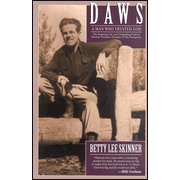
A Short Tribute to Dr. John G. Mitchell by Dr. Joe Aldrich

John Greenwood Mitchell (1892-1990)

“Don’t you folks ever read your Bibles?” He did. Few knew it better, though for John G. Mitchell, knowledge of the Bible was not an end in itself. He like few others went regularly beyond the printers ink to the Prince of Peace. He not only talked incessantly about “loving the Savior,” he did and it showed. If ever hauled into court charged with loving the Lord, he would be convicted immediately.

His eyes would get a far away look in them as he reflected on his early years of ministry as an itinerant evangelist on the Canadian prairies. Saved as a machinist, a tool and die maker, God called him to preach. His first sermon lasted all of three minutes. I can see him walking the prairies, praying all night. God alone knows how many trees, stumps, and stones, were evangelized as he practiced preaching. It was not unusual for him to sit up all night reading and rereading the Bible. God’s Word became such a part of him, he knew it so well, that he’d quote whole sections from memory.

With no financial support, trusting God alone, he’d travel to the most remote communities to tell of his Savior’s love. There were times when he had no other option but to head his little black Ford out toward another preaching point with the gas gauge on empty. He had not money, and the Canadian Depression was at its peak. Fully trusting his Lord to provide all his needs, he’d log mile after mile with no gas in his car. Sometimes appreciative farmers would give him a milk pail full of gasoline to help him on his way.

He’d pull into a tiny town, head for the telephone operator, and pay her a quarter to place a general call to all those who had phones in the area. His booming voice would come on the line and invite them to a revival service, often held in a Grange hall. Compelled to come, they’d hitch up their teams and come from miles around. The service would last several hours. Sometimes there was no light available, and he’d end up preaching in darkness.

Some threatened him. In the town of Radville they nailed the church door shut while he was preaching. Teaching in a remote area of Oregon, he found himself in the midst of a nest of suspicious moonshiners. Fearlessly he preached, and lives and destinies were changed.

Besides being one of the founders of Multnomah School of the Bible, (Now Multnomah University and Biblical Seminary), Dr. Mitchell founded and served as pastor of the Central Bible Church in Portland, Oregon. He was a pioneer radio speaker who was heard live, daily, on area radio stations. In those days there were no tape recorders. He and his organist had to be at the station five evenings of the week. The “Know Your Bible Hour” touched the hearts of countless thousands of listeners.

Dr. Mitchell and my father, Willard Aldrich, served together as partners in ministry for over fifty years. Their devotion to the Lord and to each other provided an outstanding illustration of what it means to dwell together in unity. Also standing with Dr. Mitchell through these decades of ministry was his beloved wife, Mary.

Everywhere he went the Savior was uplifted and people were drawn to Him. Throughout the years, Jesus was the main topic of his conversation. Finally, at ninety-seven years of age, the Lord he’s served so faithfully called him home. What a home coming it must have been! His “Jordy” accent, his knowledge of the Word, and his love for the Lord will not soon be forgotten.

“It is better,” Solomon writes, “To go to a house of mourning than to go to a house of feasting, for death is the destiny of every man, the living should take this to heart” (Ecclesiastes 7:2). And so we should. Spiritual success leaves clues. It is for us who remain to ponder–to reflect upon those who have gone before and to imitate their faith. “Remember your leaders, who spoke the word of God to you. Consider the outcome of their way of life and imitate their faith” (Hebrews 13:7).

– Joseph C. Aldrich, President (deceased)

Multnomah School of the Bible

*Taken from the foreword to An Everlasting Love: A Devotional Study of the Gospel of John by John G. Mitchell with Dick Bohrer, Multnomah Press, 1982.

3 Secrets To Success By Sally Ride, USA Astronaut

3 Keys To Sally Ride’s Success As an Astronaut


(1) Be willing to learn new things.


(2) Be able to assimilate new information quickly.


(3) Be able to get along with and work with other people.


About: Sally Ride


PERSONAL DATA: Born May 26, 1951, in Los Angeles, California. Her mother, Joyce Ride, resides in Pasadena, California. Her father, Dale B. Ride, is deceased. She enjoys tennis (having been an instructor and having achieved national ranking as a junior), running, volleyball, softball & stamp collecting.

EDUCATION: Graduated from Westlake High School, Los Angeles, California, in 1968; received from Stanford University a bachelor of science in Physics and a bachelor of arts in English in 1973, and master of science and doctorate degrees in Physics in 1975 and 1978, respectively.

EXPERIENCE: Dr. Ride was selected as an astronaut candidate by NASA in January 1978. In August 1979, she completed a 1-year training and evaluation period, making her eligible for assignment as a mission specialist on future Space Shuttle flight crews. She subsequently performed as an on-orbit capsule communicator (CAPCOM) on the STS-2 and STS-3 missions.

Dr. Ride was a mission specialist on STS-7, which launched from Kennedy Space Center, Florida, on June 18, 1983. She was accompanied by Captain Robert L. Crippen (spacecraft commander), Captain Frederick H. Hauck (pilot), and fellow mission specialists Colonel John M. Fabian and Dr. Norman E. Thagard. This was the second flight for the Orbiter Challenger and the first mission with a 5-person crew. During the mission, the STS-7 crew deployed satellites for Canada (ANIK C-2) and Indonesia (PALAPA B-1); operated the Canadian-built Remote Manipulator System (RMS) to perform the first deployment and retrieval exercise with the Shuttle Pallet Satellite (SPAS-01); conducted the first formation flying of the orbiter with a free-flying satellite (SPAS-01); carried and operated the first U.S./German cooperative materials science payload (OSTA-2); and operated the Continuous Flow Electrophoresis System (CFES) and the Monodisperse Latex Reactor (MLR) experiments, in addition to activating seven Getaway Specials. Mission duration was 147 hours before landing on a lakebed runway at Edwards Air Force Base, California, on June 24, 1983.

Dr. Ride served as a mission specialist on STS 41-G, which launched from Kennedy Space Center, Florida, on October 5, 1984. This was the largest crew to fly to date and included Captain Robert L. Crippen (spacecraft commander), Captain Jon A. McBride (pilot), fellow mission specialists, Dr. Kathryn D. Sullivan and Commander David C. Leestma, as well as two payloads specialists, Commander Marc Garneau and Mr. Paul Scully-Power. Their 8-day mission deployed the Earth Radiation Budget Satellite, conducted scientific observations of the earth with the OSTS-3 pallet and Large Format Camera, as well as demonstrating potential satellite refueling with an EVA and associated hydrazine transfer. Mission duration was 197 hours and concluded with a landing at Kennedy Space Center, Florida, on October 13, 1984.

In June 1985 Dr. Ride was assigned to the crew of STS 61-M. Mission training was terminated in January 1986 following the Space Shuttle Challenger accident. Dr. Ride served as a member of the Presidential Commission investigating the accident. Upon completion of the investigation she was assigned to NASA Headquarters as Special Assistant to the Administrator for long range and strategic planning.

In 1989, Dr. Ride joined the faculty at UCSD as a Professor of Physics and Director of the University of California’s California Space Institute. In 2001 she founded her own company, Sally Ride Science [http://www.sallyridescience.com] to pursue her long-time passion of motivating girls and young women to pursue careers in science, math and technology. The company creates entertaining science programs and publications for upper elementary and middle school students and their parents and teachers.

Long an advocate for improved science education, Dr. Ride has written five science books for children: To Space and Back; Voyager; The Third Planet; The Mystery of Mars; and Exploring Our Solar System. She has also initiated and directed education projects designed to fuel middle school students’ fascination with science.

Dr. Ride has been a member of the President’s Committee of Advisors on Science and Technology and the National Research Council’s Space Studies Board, and has served on the Boards of the Congressional Office of Technology Assessment, the Carnegie Institution of Washington, and the NCAA Foundation. Dr. Ride is a Fellow of the American Physical Society, a member of the Pacific Council on International Policy, and currently serves on the Boards of the Aerospace Corporation and the California Institute of Technology. She is the only person to have served on the Commissions investigating both the Space Shuttle Challenger and Columbia accidents.

Dr. Ride has received numerous honors and awards. She has been inducted into the National Women’s Hall of Fame and the Astronaut Hall of Fame, and has received the Jefferson Award for Public Service, the von Braun Award, the Lindbergh Eagle, and the NCAA’s Theodore Roosevelt Award. She has also twice been awarded the NASA Space Flight Medal.

From Mecca to Calvary: The Testimony of Thabiti Anyabwile

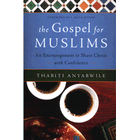
Interview with Thabiti Anyabwile – on his book “The Gospel for Muslims”

 By Matt Svoboda

From the Bible belt, to Islam, to following Jesus, to going into the ministry, and now he has a nationwide stage. Thabiti Anyabwile is a gospel-centered pastor who has preached at the last several Together for the Gospel conferences.  He served under Mark Dever at Capitol Hill Baptist Church in Washington DC before becoming the Senior Pastor at First Baptist Church in Grand Cayman in the Cayman Islands.  I can’t forget to mention that he doesn’t even like the beach!  He has written a few other books, all of which I have read, and I have been greatly blessed by his preaching and writing ministry.

Thabiti Anyabwile has written a book that I have not read, but have ordered it and am very much looking forward to reading. The Gospel for Muslims appears to be a great book for helping Christians to share Christ with confidence to Muslims. I am grateful that Thabiti agreed to do this interview.  Admittedly, I have not really studied Islam or how to share the gospel with Muslims.  This interview and book will be as beneficial for me as anyone. Enjoy the interview below and you can buy the book at the link above:

1) Could you summarize your testimony of how you converted from Islam to Christianity? What were a couple of “milestones” in your process of conversion?

I grew up in small town North Carolina, smack in the middle of the Bible belt.  My family was nominally Christian, attending church at Easter, Christmas, and few times during the year.  The first turning point came for me when I was arrested after my sophomore year in high school.  I’d never been in trouble before; so I did what my big brothers sometimes did when they got in trouble—I went to church.  But sadly, I didn’t have ears to hear the gospel, and I don’t think the gospel was always preached clearly.

So, I went off to college an angry young man.  There, I began friendships with a number of Muslim men.  By my sophomore year in college, I became a practicing Muslim, zealous for Islam.  I practiced Islam through the rest of undergraduate school and a short time after.  The next turning point came near the end of undergraduate school.  During Ramadan, the Muslim month of prayer and fasting, while reading the Qur’an, I was suddenly aware that the Qur’an admitted too much about Jesus on the one hand (virgin birth, miracles, prophet, gospels are signs from God, etc.) but denied too much on the other hand (not the Son of God, not crucified, etc.).  After a year of trying to find satisfactory answers, I finally concluded that the inconsistencies couldn’t be explained.  Islam was false.

About the same time, a casual conversation with co-workers exposed a nagging problem I’d had all along.  We were discussing various people from world history who we respected.  And a co-worker look at the group and said she couldn’t think of anyone more righteous than me.  After my protests, she continued to insist and to list off the reasons why she thought that.  In that conversation I could see that the righteousness she described was all external behaviors.  But inside, I knew my heart was corrupt and sinful, full of unrighteousness.  I knew I didn’t have the kind of righteousness that would satisfy a holy God.

Rather than turn to Christ, I went further in despair.  Around that time, my wife and I found out we were pregnant with what would have been our first child.  We lost the child three months into the pregnancy.  The Lord dealt us a kind blow.  He humbled us.  And in that period of humbling, we heard the preaching of the gospel with faith for the first time.  The preacher, expounding Exodus 32, explained the sinfulness of sin, and I was deeply convicted.  And the preacher held out Jesus Christ, the only Savior, who not only took God’s wrath against sin but also supplied the perfect righteousness we need to satisfy a holy God.  In God’s amazing kindness, my wife and I both came to faith in the Lord that morning.

2) What is the main reason that you wanted to write this book “The Gospel for Muslims?”

I’m often asked by people who know my testimony, “How can we share the gospel with Muslims?”  When they ask this, they’re really asking, “Is there any special knowledge I need or technique that will be effective in evangelizing Muslims?”  But when you think about it, that’s the wrong question.  The question suggests that we lack confidence in the gospel itself to change the hardest hearts or to save our Muslim neighbors.  So, I wrote the book to remind Christians that “the gospel is the power of God unto salvation for everyone who believes, to the Jew first but also to the Gentile,” including the Muslim.  What we need is fresh confidence in Christ and the news of His salvation through His death, burial, resurrection, and coming.  If we know the gospel, we know everything we need to know to see our Muslim friends, coworkers, and neighbors saved from the coming wrath of God, and saved to love and enjoy the Savior forever.

3) What are some common misconceptions that Christians have about Muslims?

There are many.  We sometimes think that every Muslim is a terrorist.  Television images and our own fear have a lot to do with that.  But the chances are overwhelming that our Muslim friend or neighbor is not a terrorist.  They’re people with the same concerns, ambitions, and needs as our non-Muslim neighbors.

Also, many people tend to think that every Muslim has memorized the Qur’an by three years old and is able to give extended and sophisticated explanations of their faith.  But in reality, most Muslims don’t know the Qur’an very well at all.  And Islam itself is not one thing all over the world.  Arab Islam differs significantly from Islam in Indonesia (the largest Muslim country in the world) and North Africa and North America.  You’re more likely to meet a nominal Muslim, much like my nominal Christian family back in NC, than you are to meet a Muslim with the entire Qur’an committed to memory.

But perhaps the biggest myth is that Muslims do not convert.  That simply is not true.  Many, many Muslims are saved by God’s sovereign grace through faith in Christ all the time!  They pay significant costs—losing family, friends and sometimes jobs.  But this is exactly what Jesus tells His followers to expect, and it’s worth it.  As those who already believe, we should expect that the same gospel that saved us will save our Muslim friends.  And we should be ready to help them pay the costs of following our Lord.

4) What are the key passages in Scripture that you use when sharing the gospel with Muslims?  Is there a certain “method” that you use?

I don’t use a certain method in evangelism.  Rather, I concentrate on explaining the gospel clearly, making distinctions in terms so that things like “repentance” and “faith” are seen to be distinct from those things in Islam.  Also, I want to make sure that distinctively Christian realities—like the Trinity, the crucifixion and resurrection, the necessity of turning from sin, abandoning our righteousness, and trusting Jesus alone to save us—are driven home.  I want to make sure my Muslim friend knows that these are personal issues, not just abstract theological issues.  His sin is real.  He has personally offended the holy God of all creation.  His rejection of Jesus means He is abiding in His sin and in God’s wrath.  And unless he repents and trusts Christ, he will suffer eternal judgment.

In my experience, most Muslims are eager to either hear what we think about Jesus, or to try and disprove the gospel.  To do that, they often turn to the gospels themselves.  That puts us on home turf, familiar ground.  Normally, I start where they start and I make sure to read the five verses before and after the verse they usually misquote.  It’s amazing how often the gospel is right there in the context!  So, simply modeling good Bible reading and explaining what’s there tends to “work” as an evangelistic approach.  The Spirit blesses the word.

5) Along with reading your book, how can Christians get trained in order to better share the gospel with Muslims?

There are many good books out there on evangelism.  Continue to read books that encourage in a biblical approach to evangelism.  I’d recommend Mark Dever’s The Gospel and Personal Evangelism and Mack Stiles’ Marks of the Messenger and Speaking of Jesus (which has a video training resource as well).  Those would be wonderful works to study.  Also, reading good books on the gospel itself, including: Greg Gilbert’s What is the Gospel?, and John Murray’s Redemption Accomplished and Applied.

But there’s really no training like actually sharing your faith.  Don’t worry about “having all the answers.”  In the process of sharing and being questioned, God gives us grace and teaches us things we won’t likely learn any other way.  Consider Philemon 6: “I pray that you may be active in sharing your faith, so that you will have a full understanding of every good thing we have in Christ.”  Isn’t it awesome of God to tie our evangelism together with granting us “a full understanding of every good thing we have in Christ”?  The Lord simultaneously reaches the sinner and rewards the evangelist!

6) Are there any “pitfalls” that Christians often fall into when sharing the gospel with Muslims?

There are several, most of them connected with the misconceptions we have of Muslims.  We sometimes give in to the fear of man.  We sometimes find ourselves playing Bible “ping pong,” lobbing verses back and forth in an effort to win an argument.  Sometimes we try to make unpleasant aspects of the gospel more appealing by leaving them out or softening them.  Or, we’re lured into accepting the claims and premises of Islam as though they were true.  All of these can be pitfalls.

7) What are some “things to avoid” when sharing the gospel with Muslims?

I don’t think it’s helpful to get into discussions of politics, to attack the Qur’an or Prophet Muhammad, or to be disrespectful.  When we’re fearful, feeling under-prepared, and lose sight of the fact that we’re trying to win people to the truth that is in Christ, our flesh exerts enormous control and we tend to do things we’d probably be better off avoiding.

Also, it’s important to avoid serving pork products (or having them in your home) if you’re inviting a Muslim friend or neighbor over.  Avoid immodest clothing and cross-gender conversations.  Many Muslims associate Christianity with the decadence and moral decay of the West.  We want to avoid those associations.

Try your best to avoid assumptions, like: they’d never be interested in attending my church.  Actually, your Muslim neighbor or friend may find themselves with freedoms and interests that they couldn’t pursue in other countries.  Don’t assume they’re not interested in the faith and the church.

8) What are some good ways Christians can lovingly engage Muslims in their community?

Love Muslims the way you’d love anyone.  They’re people made in God’s image, and they experience the same burdens, needs, ambitions, and cares as everyone else.  So, in general, simply move toward them in intentional love.  As we pay attention to them, opportunities for specific acts of kindness and love will emerge.

But some general things also come to mind.  Volunteer in an English-as-Second-Language class or group.  Invite them to your home for a meal or to watch a game.  Most internationals will live in the United States without ever entering an American home.  Practice hospitality.  Also, if you both have children, ask them how they and the kids are adjusting to the culture and ways of the U.S.  Invite your Muslim neighbor and their children to participate in a ball game or some other activity you share with your children.  Be something of a cultural broker, empathizing with their struggles and helping them negotiate life in your community.

9) Any final thoughts or advice that you would like to share with Christians who would like to better engage Muslims with the gospel?

Let the gospel do the work!  Be confident in the power of God encased in the gospel.  Get out there are share the good news and trust the Spirit to use you for the glory of Christ!

More About Thabiti Anyabwile: He is the Senior Pastor of First Baptist Church of Grand Cayman in the Grand Cayman Islands and a Council member with The Gospel Coalition. In his own words, “I love the Lord because He first loved me. I love His people because He has given me a new heart. I have received God’s favor in the form of my wife, Kristie. And together we know His blessing through three children. I was once a Muslim, and by God’s grace I have been saved through faith in Jesus Christ. By God’s unfathomable grace I am a preacher of the Gospel of Jesus Christ, in which I hope to serve Him until He returns or calls me home!”

He earned his B. A. and M. S. degrees in psychology from North Carolina State University in Raleigh, NC. Before moving to minister in the Caribbean, he served with Dr. Mark Dever at Capitol Hill Baptist Church in Washington, D.C. He is married to Kristie and they have three children: Afiya, Eden, and Titus. As a native of Lexington, North Carolina, he has an affinity for Western-NC-BBQ. Thabiti writes regularly at Pure Church as part of The Gospel Coalition blog crew. He has also authored several books, The Gospel for Muslims: An Encouragement to Share Christ with Confidence (Thabiti converted to Christianity from Islam); Finding Faithful Elders and Deacons; Ephesians: God’s Big Plan for Christ’s New People; May We Meet in the Heavenly World: The Piety of Lemuel Haynes; What Is A Healthy Church Member?; The Decline of African American Theology: From Biblical Faith to Cultural Captivity; The Faithful Preacher: Recapturing the Vision of Three Pioneering African American Pastors. He has also contributing chapters to the following books: For the Fame of God’s Name: Essays in Honor of John Piper; Holy, Holy, Holy: Proclaiming the Perfections of God; Proclaiming a Cross-Centered Theology; Glory Road: The Journeys of 10 African-Americans into Reformed Christianity; and John Calvin: A Heart for Devotion, Doctrine & Doxology.

The Interview above took place on About the Author: Thabiti Anyabwile is the Senior Pastor of First Baptist Church of Grand Cayman in the Grand Cayman Islands and a Council member with The Gospel Coalition. In his own words, “I love the Lord because He first loved me. I love His people because He has given me a new heart. I have received God’s favor in the form of my wife, Kristie. And together we know His blessing through three children. I was once a Muslim, and by God’s grace I have been saved through faith in Jesus Christ. By God’s unfathomable grace I am a preacher of the Gospel of Jesus Christ, in which I hope to serve Him until He returns or calls me home!”

He earned his B. A. and M. S. degrees in psychology from North Carolina State University in Raleigh, NC. Before moving to minister in the Caribbean, he served with Dr. Mark Dever at Capitol Hill Baptist Church in Washington, D.C. He is married to Kristie and they have three children: Afiya, Eden, and Titus. As a native of Lexington, North Carolina, he has an affinity for Western-NC-BBQ. Thabiti writes regularly at Pure Church as part of The Gospel Coalition blog crew. He has also authored several books, The Gospel for Muslims: An Encouragement to Share Christ with Confidence (Thabiti converted to Christianity from Islam); Finding Faithful Elders and Deacons; Ephesians: God’s Big Plan for Christ’s New People; May We Meet in the Heavenly World: The Piety of Lemuel Haynes; What Is A Healthy Church Member?; The Decline of African American Theology: From Biblical Faith to Cultural Captivity; The Faithful Preacher: Recapturing the Vision of Three Pioneering African American Pastors. He has also contributing chapters to the following books: For the Fame of God’s Name: Essays in Honor of John Piper; Holy, Holy, Holy: Proclaiming the Perfections of God; Proclaiming a Cross-Centered Theology; Glory Road: The Journeys of 10 African-Americans into Reformed Christianity; and John Calvin: A Heart for Devotion, Doctrine & Doxology.

The interview above took place on May 7, 2010 and can be found on SBC Voices: http://sbcvoices.com/interview-thabiti-anyabwile-the-gospel-for-muslims/

Remembering John R.W. Stott on his Birthday – One of The Greatest Evangelicals of Our Time

Remembering John R.W. Stott Who Would Have Been 91 on April 27, 2012

I first met John Stott in 1985 after he had given a message at a Chapel service at what was then called Multnomah School of the Bible (Multnomah University) in Portland, Oregon. After he spoke he stayed for lunch and ate in the cafeteria. I was privileged to sit with him and hear his wisdom for over an hour. I was impressed with his humility, knowledge of the Scriptures, and genuine concern for us students. Two years later I was returning from spending two months in Spain on a missions trip and met up with my parents in London for a few days. While there we went to All Souls Church in London and worshiped there with John Stott delivering a wonderful Christo-centric sermon from Isaiah. Afterwards while waiting in a very long line to greet “Uncle John” he said to me without hesitation, “Hello David, how is your ministry at Multnomah going?” I couldn’t believe that he remembered my name, my ministry (with junior highers at the time), and where I was going to school! Needless to say, I was dumbfounded. I have always held Stott’s commentaries, books, and ministry in high regard – but what I loved most about Stott – was his genuine love for, and ability to shepherd like the Chief Shepherd – not just his local sheep, but around the world. I have taken random samples of tribute from Stott in this short article – many are from memorial services held for him around the globe, and some are from tributes in various venues. May John Stott’s tribe increase! We miss you Uncle John! – Dr. David P. Craig

“He (John Stott) truly was, in some ways, the first person who spoke the word of God to me through his literature and I also heard him in person,” proclaimed Tim Keller, senior pastor of Redeemer Presbyterian Church in New York City and whom Newsweek magazine described as a “C.S. Lewis for the twenty-first century.”

Keller delivered the sermon at John Stott’s U.S. memorial service Friday (Wheaton Bible Church, November, 11, 2011) and shared that Stott’s bestselling book, Basic Christianity (1958), which has sold well over a million copies and has been translated into 25 languages, had a “profound informative influence” on him.

“Therefore, I needed to rethink. I need to do what Hebrews 13:7 says I should do. I need to rethink my life in light of the results of his (Stott’s) life,” recalled Keller about his thinking several months ago when he was invited to speak at Stott’s memorial service.

He is the author of over 50 books translated into 65 languages, and was named by Time magazine in 2005 as one of the “100 most influential people” in the world.

But despite the influence and recognition he received during his life, Stott is remembered for his humbleness and dedication in serving the Lord.

“The greatest gifts in John’s life were not his talents, it was actually his character,” remarked the Rev. Dr. Mark Labberton, a former study assistant of Stott who is now a professor at Fuller Theological Seminary in California.

Keller, who said he read six volumes on the life of John Stott over the past two months, stated that he uncovered five findings about Stott’s life that should make Christians rethink their own life.

First, Christians should be convicted by Stott’s Kingdom vision and zeal for God’s Kingdom.

“Everything I have read, known, and by all accounts, John Stott’s motives were about as pure as a human being’s motives can be,” asserted Keller. “He was not an ambitious man for his own glory. He did not want power. It was obvious he did not want status. He did not want wealth, he gave it away.” 

“But there was something driving him,” said the influential American preacher.

Although Stott was considered the greatest student evangelist of his generation and foresaw the rise of Christianity in the global South before most anyone else, he was not satisfied with his accomplishments.

“Here is my point. Most of the rest of us would be very happy being told you are the best. You are the best preacher, you’re the best of this or that. But he didn’t care about that. He wanted to change the world for Christ,” Keller explained. “I looked at his motives, I looked at his labors, how he spent himself, and how he gave himself. Why wasn’t he ever satisfied? It really was not worldly ambition. He really wanted to really change the world for Christ. We should be convicted by that.”

Stott’s life, according to Keller, should also make Christians reflect on their cultural learning curve in terms of the cultural blinders on their eyes, and believers should be chastened by his leadership controversy. If even a man as gracious as Stott could not avoid controversy and fall-outs with other Christian leaders, people should “realize that it (controversy) is going to happen. If you want to do something for Christ, someone will be mad.”

Keller also found that Stott was a great innovator, including his reinvention of expository preaching, invention of the modern city-centered church, his role as a Christian statesman who uses institutions to further the work of God, and his forcing evangelicals to deal with social justice issues.

Finally, the evangelical scholar, while studying Stott’s life, found that the English clergyman essentially created evangelicalism, which Keller sees as “the greatest center between fundamentalism and liberalism.”

The Rev. Dr. Christopher Wright, the so-called “successor” of Stott and the international director of Langham Partnership in London, remarked that Stott was way ahead of his time.

“From the early stages of his ministry, he reached out to the whole world. Starting here in the United States, his first international trip, and so many other countries … his thinking, his world was global,” said Wright. “Long before the Internet, John Stott had created a world wide web from relationships and friendships and ministries. Long before the iMac, or the iPhone, or the iPad, there was iFrances (Stott’s long-time secretary), reaching out to the world on behalf of John, by letters, faxes, and eventually, through emails… “He always spoke of himself as just an ordinary follower of Jesus. He once said we should not get used to adulation … he never reveled in being famous. I think he would want to be remembered as a disciple of Jesus.”

Dr. Joshua Moody, senior pastor of College Church, recalled Stott saying decades ago to a group of undergraduate students that included himself, “If I had to live life over, I would live for Christ.” After a pause, Stott added, “You know, if I had to live a thousand lives, I would live them all for Christ.” “We come here to honor a man whose preeminent purpose is to honor Christ,” declared the pastor of the host church of the U.S. memorial service for John Stott.

“I’m not certain that John Stott would want people to remember him,” said John Stott Ministries President Benjamin Homan. Those puzzling words about the man described as the architect of the evangelical movement in the 20th century make sense when you talk to more people who knew him. One of the most popular words used to describe Stott, who passed away Wednesday aged 90, is humble.

“Over and over again as people have described their interactions with John Stott, it is one of humility, and one of not pointing people to himself but to Jesus,” Homan said from Colorado. “The ministries that he began were never about promoting his works or his teachings. They have been about drawing the Church’s attention to the work of Christ around the world, how the Church is growing and how it needs to grow in depth and maturity around the world. I think he will be remembered as a global Christian.”

Not only was Stott’s daily routine strict, but his year was structured with a razor-sharp focus on maximizing his effectiveness in various ministries. For 25 years, Stott spent three months in every 12 travelling for international missions, speaking at conferences and preaching around the world. Another three months of each year would be devoted to writing, and six months dedicated to ministry.

“He was extremely disciplined in his personal life and very simple in his habits. He lived in a one bedroom, one living room with a small kitchenette, and that was his life. He did not have any great wealth or style. He was very simple and frugal,” Wright recalled.

His mentor taught him how to engage in ministry publicly as well as in a pastoral capacity while maintaining equal integrity in both.

“I find him to be a man of genuine humility, not just fake humility, but genuine, through and through humility. He was able to mix with what we might call the ‘rich and famous’ on one hand, or with the ‘poorest of poor’ in other parts of the world, and do so with equal integrity and simply be himself.”

Stott died peacefully at 3:15 p.m. local time on July 27, 2011, at his Christian assisted living home at St. Barnabas College in Lingfield, Surrey, England. At his bedside were his niece and close friends, who read 2 Timothy 2 to him, and listened to Handel’s “Messiah” with him in his final moments on earth.

In 2006, Stott broke his hip and had increasingly become incapacitated. Wright said the elderly clergyman did not suffer dementia, but was weak and in pain in the time leading up to his death. Stott will perhaps be best known for being the chief drafter of the 1974 Lausanne Covenant, the evangelical manifesto on evangelism and theology.

He also was the primary author of the Preamble to the 1951 constitution of the World Evangelical Alliance, the world’s largest evangelical organization, now representing some 600 million evangelicals in 128 countries.

“I can’t think of another evangelical theologian who would come close to Stott in both the depth of his diligent scholarship and the breadth of his unifying work in the global body of Christ – especially through the Lausanne Movement,” said Greg Parsons, global director of the U.S. Center for World Mission, in an email.

“It is probably his involvement in guiding and crafting the masterful document known as the Lausanne Covenant that will be the best single thing for which he is known,” remarked Parsons, who was a member of the Statement Working Group at Lausanne III in Cape Town, South Africa, in 2010. Parsons shared that Stott’s talk at the Urbana Student Missions Conference in 1976, titled, “The Loving God is a Missionary God,” became the first chapter of USCWM’s Perspectives reader.

John Robert Walmsley Stott was born to Sir Arnold W. Stott, an accomplished physician and an agnostic, and Emily, a Lutheran who took her youngest son to All Souls Church in Langham Place, London, as a young boy. Stott later became rector of All Souls in 1950, then rector emeritus in 1975.

In 1959, Stott was appointed chaplain to the queen and served in that position until 1991. He retired from public ministry in 2007 at the age of 86, two years after being named by Time magazine as one of the world’s “100 Most Influential People.”
Fond memories of Stott include his passion for bird watching and his affection for chocolates.

John Stott Ministries President Benjamin Homan recalled that the month before Stott passed away, a friend had visited and told Stott that a black bird was outside his window. Stott, who had lost much of his eyesight by then, corrected his friend, saying that it was a nightingale, which he knew from the bird’s chirp.

“John Piper on John Stott – Year One In Heaven”

Today is John Stott’s first birthday in heaven.

Coming toward the end of my (32-year) ministry as Pastor for Preaching and Vision at Bethlehem Baptist Church, I read Alister Chapman’s new biography of John Stott with special interest. I wanted to see how he finished at All Soul’s and how he shaped the rest of his life.

Stott became Rector at All Souls in 1950 at the age of 29. Just shy of 20 years later he told the church council on September 20, 1969 that “he wanted to stand down.” The church was not prospering as it once had. He felt his calling was to “wider responsibilities.”

The council accepted the proposal and 15 months later Michael Baughen took the helm. “Within a few years All Souls was bursting again” (75). But, Chapman observes, “by almost any measure, Stott’s ministry at All Souls was a success” (77).

Stott was still on the ministerial team at All Souls for another five years. When the severance was complete in September, 1975, he wrote, “I find myself pulled and pushed in various directions these days, and need divine wisdom to know how to establish priorities” (Timothy Dudley-Smith, John Stott, A Biography: The Later Years, IVP, 2001, 248).

I found this comforting. It is remarkable how many good things there are to do. And if one is ambitious to live an unwasted life for the glory of Christ, discernment is crucial. Sudden release from decades of familiar pastoral expectations can easily lead to sloth or superficial busy-ness.

Stott’s discovery was that his calling was a remarkable global ministry. “As with Jim Packer, Stott gave himself to Anglican politics but in the end tired of them. Neither had an obvious, appealing role to fill in England. Both were in demand elsewhere. The result was that two of England’s most gifted evangelicals spent most of the end of their careers serving the church beyond England’s shores” (Godly Ambition, 111).

The thesis of Chapman’s book, Godly Ambition: John Stott and the Evangelical Movement (Oxford, 2012), is that Stott “was both a Christian seeking to honor God and a very talented man who believed he had key roles to play in God’s work in the world and wanted to play them. In short, he combined two things that might seem incongruous: godliness and ambition” (8). With that double drive, “few did more than John Stott to shape global Christianity in the twentieth century” (160).

This ambition was as vital to the end of Stott’s days as his mental and physical life would sustain. One reason is that it was biblically grounded. Explaining his own understanding of ambition he said,

Ambitions for God, if they are to be worthy, can never be modest. There is something inherently inappropriate about cherishing small ambitions for God. How can we ever be content that he should acquire just a little more honour in the world?

Christians should be eager to develop their gifts, widen their opportunities, extend their influence and be given promotion in their work — not now to boost their own ego or build their own empire, but rather through everything they do to bring glory to God. (156)

May every one of us, in the transitions of our lives, seek the kind of holy fire that gives both the light of discernment and the heat of ambition. All of it for the glory of God. This is my deep longing as I face whatever future God gives.

In remembering the humble preacher, author, and theologian, here are a few of his lasting words:

“His authority on earth allows us to dare to go to all the nations. His authority in heaven gives us our only hope of success. And His presence with us leaves us with no other choice.”

“The truth is that there are such things as Christian tears, and too few of us ever weep them.”

“Every Christian should be both conservative and radical; conservative in preserving the faith and radical in applying it.”

“I believe that to preach or to expound the scripture is to open up the inspired text with such faithfulness and sensitivity that God’s voice is heard and His people obey Him” (His definition of expository preaching).

“When it comes to preaching – Theology is more important than methodology.”

“The gospel is NOT preached if Christ is not preached.”

“Before we can begin to see the cross as something done for us, we have to see it as something done by us.”

“We should not ask, ‘What is wrong with the world?’ for that diagnosis has already been given. Rather we should ask, “What has happened to salt and light?”

“Social responsibility becomes an aspect not of Christian mission only, but also of Christian conversion. It is impossible to be truly converted to God without being thereby converted to our neighbor.”

“Sin and child of God are incompatible. They may occasionally meet; they cannot live together in harmony.”

“Good conduct arises out of good doctrine.”

“Every powerful movement has had its philosophy which has gripped the mind, fired the imagination and captured the devotion of its adherents.”

“The Christian’s chief operational hazards are depression and discouragement.”

“Faith is a reasoning trust, a trust which reckons thoughtfully and confidently upon the trustworthiness of God.”

“Knowledge is indispensable to Christian life and service. If we do not use the mind that God has given us, we condemn ourselves to spiritual superficiality and cut ourselves off from many of the riches of God’s grace.”

“Christianity is in its very essence a resurrection religion. The concept of the resurrection lies at its heart. If you remove it, Christianity is destroyed.”

“Writing a book or a manifesto, is the nearest a man gets to having a baby.”

“The very first thing which needs to be said about Christian ministers of all kinds is that they are “under” people as their servants rather than “over” them (as their leaders, let alone their lords). Jesus made this absolutely plain. The chief characteristic of Christian leaders, he insisted, is humility not authority, and gentleness not power.”

“We must allow the Word of God to confront us, to disturb our security, to undermine our complacency and to overthrow our patterns of thought and behavior.”

Did You Know? 
Stott daily woke up at 5:00 a.m. to read the Bible and pray for hundreds of people before breakfast. For over 50 years, he would read the entire Bible annually.

Adoniram Judson – The Amazing Story of America’s First Missionary

There are two articles below – one is a brief one that tells the story of Adoniram Judson on this day in history. Hopefully this article will whet your appetite for the mini-biography I’ve included on his life – it’s an amazing story of hardship, perseverance, and God’s providential goodness in the saving of many lives to the glory of God. We desperately need more men like Adoniram Judson in our day and age!

 Series: On This Day in Church History – April 26, 1827 – Adoniram Judson

 “Adoniram Judson, pioneer missionary to Burma, gave up everything for Christ”

Adoniram Judson had buried his only son in Burma and barely survived a horrifying twenty-one-month imprisonment. During the fall of 1826, he was separated from his family for a few months while assisting the English government in negotiations with the Burmese king. Back at the mission station his wife, Ann, became very sick. While preparing to return to her, Judson received the following letter from the mission:

“My Dear Sir: To one who has suffered so much, and with such exemplary fortitude, there needs but little preface to tell a tale of distress. It were cruel indeed to torture you with doubt and suspense. To sum up the unhappy tidings in a few words, Mrs. Judson is no more.”

After receiving this devastating news, Judson wrote to Ann’s mother.

“Dear Mother Hasseltine: this letter, though intended for the whole family, I address particularly to you; for it is a mother’s heart that will be most deeply interested in its melancholy details. I propose to give to you, at different times, some account of my great, irreparable loss, of which you will have heard before receiving this letter.”

He went on to describe the great work Ann had been accomplishing in Amherst, Burma, building a school and taking care of their sick two-year-old, Maria. He described his immense pain at not being able to comfort her during her sudden illness and death. He ended with this outpouring of grief and hope:

I will not trouble you, my dear mother, with an account of my own private feelings – the bitter, heart-rending anguish, which for some days would admit of no mitigation, and the comfort which the Gospel subsequently afforded…Blessed assurance—and let us apply it afresh to our hearts,–that, while I am writing and you perusing these, her spirit is resting and rejoicing in the heavenly paradise,–

Where glories shine, and pleasures roll

That charm, delight, transport the soul;

And every panting wish shall be

Possessed of boundless bliss in Thee.

And there, my dear mother, we shall soon be, uniting and participating in the felicities of heaven with her for whom we now mourn. Amen. Even so, come, Lord Jesus.’

Although Maria seemed to recover after her mother’s death, she died just a few months later. At the age of thirty-nine, Judson found himself alone, his wife and two children buried in Burma. He again wrote to his mother-in-law:

Amherst, April 26, 1827: My little Maria lies by the side of her fond mother. The complaint to which she was subject several months proved incurable. She had the best medical advice; and the kind care of her own mother. But…the work of death went forward, and after the usual process, excruciating to a parent’s heart, she ceased to breathe on the 24th instant, at 3 o’clock P.M., aged two years and three months…The next morning we made her last bed in the small enclosure that surrounds her mother’s loney grave. Together they rest in hope…and together, I trust, their spirits are rejoicing after a short separation of precisely six months.

And I am left alone in the wide world. My own dear family I have buried; one in Rangoon, and two in Amherst. What remains for me but to hold myself in readiness for follow the dear departed to that blessed world.

Where my best friends, my kindred dwell,

Where God, my Savior, reigns.

Reflections and The Rest of the Story on Judson Below this Mini-Biography

If you were to have an experience like Adoniram Judson’s, how do you think you would react? What hope do you have to hold on to?

“If we have hope in Christ only for this life, we are the most miserable people in the world. But the fact is that Christ has been raised from the dead. He has become the first of a great harvest who will be raised to life again.” – 1 Corinthians 15:19-20

Judson, Adoniram (August 9, 1788–April 12, 1850), was the first American foreign missionary. He helped establish the American Board of Commissioners for Foreign Missions, translated the Bible in the language of Burma (1840), and compiled the 2 (1849).

The conversion of Adoniram Judson is recounted:

Adoniram was born in Malden, Massachusetts, in 1788. His father was a Congregationalist pastor … At age sixteen, Adoniram entered Providence College (renamed Brown University shortly after he began his studies). Here he met a young infidel named Jacob Eames. Both he and Adoniram were of quick wit, had a flair for the dramatic, and loved to study. Often they would debate and discuss their future careers, politics, philosophy, and religion late into the evening. Adoniram’s religious arguments grew feeble before the wit and logic of Eames’ atheism, and before his graduation, Adoniram declared himself an atheist.

After commencement, Adoniram went home to his parents and informed them that he was an atheist and planned to taste the pleasures of the world. His father tried to reason with him, and his mother was broken-hearted, but Adoniram would not be deterred. He left for New York City, intending to be a playwright, and although the excitement of his new circumstances drove from his mind the arguments of his father, he could not forget the tears of his mother.

Because of Adoniram’s atheistic beliefs and his rejection of his parents’ standards, God allowed him to fall into the depths of sin. After a year in New York City, Adoniram decided to travel west. The first night he stopped at a small inn. There was one bed left, separated from a dying man by only a curtain.…

But though the night was still, he could not sleep. In the next room beyond the partition he could hear sounds, not very load; footsteps coming and going; a board creaking; low voices; a groan or gasp. These did not disturb him unduly—not even the realization that a man might be dying. Death was a commonplace in Adoniram’s New England. It might come to anyone, at any age. What disturbed him was the thought that the man in the next room might not be prepared for death. Was he himself?…

There was a terror in these fantastically unwinding ideas. But as they presented themselves, another part of himself jeered. Midnight fancies! that part said scornfully. What a skin-deep thing this freethinking philosophy of Adoniram Judson, valedictorian, scholar, teacher, ambitious man, must be! What would the classmates at Brown say to these terrors of the night, who thought of him as bold in thought? Above all what would Eames say—Eames the clear-headed, skeptical, witty, talented? He imagined Eames laughter and felt shame.

When Adoniram woke the sun was streaming in at the window. His apprehensions had vanished with the darkness. He could hardly believe he had given in to such weakness. He dressed quickly and ran downstairs, looking for the innkeeper … He found his host, asked for the bill, and—perhaps noticing the man somber-faced—asked casually whether the young man in the next room was better. “He is dead,” was the answer …

“Did you know who he was?”

“Oh yes, Young man from the college in Providence. Name was Eames, Jacob Eames.”

How he got through the next few hours, Adoniram was never also to remember. Only the words, “Lost, lost, lost,” echoed through his mind. The truth of Scripture struck deep in his heart. He knew then that his father was right. He knew Eames was lost! Lost for eternity!

Adoniram returned home and made the startling announcement to his parents that he was enrolling in Andover Theological College for the fall of 1818. He was not a Christian when he enrolled, but in December, he trusted Christ as his Lord and Savior. In June of the following year, he place himself under his father’s authority and joined the church his father was pastoring.…

In 1809, God planted in him a vision for missions through a book by a British army officer entitled An Account of an Embassy to the Kingdom of Ava. At first he felt a sense of “missionary zeal,” but it soon died away. Later, during a time of meditation and prayer, Adoniram fully committed himself to be obedient to the Great Commission and to “go.”

At Andover Theological Seminary, he became the leader of a missionary movement out of which grew the American Board of Commissioners for Foreign Missions. He was sent to England to seek the financial support of the London Missionary Society. On the way his ship was captured by a French privateer, and he was thrown into a French prison. He eventually escaped and found his way to England, only to be turned down for financial support. His mission was to be entirely American funded.

In February of 1812, Adoniram married Ann (Nancy – pictured on left) Hasseltine. In his letter to her father asking permission to wed, he wrote:

I have now to ask, whether you can consent to part with your daughter early next spring, to see her no more in this world; whether you can consent to her departure, and her subjection to the hardships and sufferings of missionary life, whether you can consent to her exposure to the dangers of the ocean; to the fatal influence of the southern climate of India; to every kind of want and distress; to degradation, insult, persecution, and perhaps a violent death. Can you consent to all this, for the sake of Him who left His heavenly home, and died for her and for you; for the sake of perishing, immortal souls; for the sake of Zion, and the glory of God? Can you consent to all this, in hope of soon meeting your daughter in the world of glory, with the crown of righteousness, brightened with the acclamations of praise which shall redound to her Saviour from heathens saved, through her means, from eternal woe and despair?”

Nancy’s father, impressed with Adoniram’s dedication and character gave his consent. Just two weeks after their marriage, Adoniram and Nancy left for India under the support of the Congregationalist Church.

During the voyage, Adoniram continued a translation of the New Testament from Greek into English, and as he did so he became convinced of the Baptist position. Shortly after their arrival at Serampore he and Nancy were baptized by William Ward, an assistant to missionary William Carey. As a result he felt compelled to resign from the Congregationalists and solicit the American Baptists for support, though as yet they had no missionary society.

They met with immediate resistance from the British East India Company, who would not allow Americans to remain in their territories. The Judson’s then sailed to Java, Penang, Madras, and finally, after weeks of being hounded by the Company they took passage from Madras on the only ship available, and that was bound for Rangoon in Burma.

In 1813, they arrived in Myanmar, where he remained for 30 years. Nancy gave birth to their second child, Roger William Judson, (their first was stillborn during the tumultuous sea voyages). Their joy was short-lived as the boy contracted a tropical disease and died.

The loss of their second child became an opportunity to form an unlikely friendship with the Viceroy of Rangoon and his wife, which in turn gave them some protection from the continual harassment of corrupt Burmese officials.

Learning the language gave way to teaching and translation of the Bible. Nancy started a school to educate Burmese girls. With the arrival of a printer and press, Adoniram began to print tracts and portions of the New Testament in Burmese.

His first breakthrough came when he decided to build a Zayat, a Buddhist-style meditation room, on a main street. This allowed him to hold meetings and teach passers-by in a way that was not foreign to them. He even visited a Buddhist service to learn how the meetings were conducted. His efforts bore fruit and after six years, they had their first convert, Maung Nau.

The conversion of Maung Nau “gave the mission a new impetus” as Christianity no longer was viewed as just a western religion: Rangoon’s idle curiosity about the new religion had been satisfied. The enquirers who came now were genuinely interested in it as a faith for themselves.

Adoniram tried unsuccessfully to petition the despotic Emperor to allow religious freedom, but he would not hear of it. Adoniram continued to preach the Gospel as best he could. News of Judson’s failure with the Emperor led to increased persecution of the believers, yet despite this they remained faithful. Adoniram insisted that converts undergo intense training before he would baptize them, as preparation for persecution.

He avoided direct affronts to the Emperor or the Buddhist religion, and respectfully wore, in the presence of the Emperor, a white robe which would mark him out as a religious teacher, without allowing him to be confused with a Buddhist priest (who wore yellow).

For some time Burma had been raiding East India Company territory because they took the English commander’s refusal to fight as a sign of weakness. This led to the eruption of war and on June 8, 1824, Adoniram and medical missionary Dr. Jonathan Price were falsely accused by Burmese officials as spies and arrested. They were imprisoned twenty-one months in the Death Prison, known for its deplorable conditions. Nancy alone was left outside to get help for the prisoners and petition for their release.

After the British defeated the Burmese, Adoniram and Dr. Price were released and reunited with their families. British General Campbell then held a state dinner for the Burmese officials. When the Burmese saw Adoniram and Nancy seated at the head table, they visibly trembled, as they expected retribution for the horrible way they treated the Judsons during the imprisonment. After speaking with the General in English, Nancy turned and spoke politely to the officials in the Burmese language, telling them they had nothing to fear.

Because of his expertise in the Burmese language, Adoniram was imposed upon to help work out the treaty with the King of Burma. While helping with this translation work, Adoniram received a letter in November of 1826, which read:

My dear sir: To one who has suffered so much and with such exemplary fortitude, there needs but little preface to tell a tale of distress. It were cruel indeed to torture you with doubt and suspense. To sum up the unhappy tidings in a few words—Mrs. Judson is no more.

Shortly after, their daughter Maria, who had been born while Adoniram was in prison, died. A letter was then received from America informing of the death of Adoniram’s father.

Adoniram went into a deep depression, guilt and self-incrimination. He destroyed all correspondence congratulating him on his part in helping the British in the war. He gave away every penny he had. He wrote to Brown University and returned the honorary doctorate they had given him. At one point he withdrew to the edge of the jungle and dug a grave where he would sit and meditate on the meaning of death. He gradually recovered and with renewed determination, completed his translation work.

During an annual festival in Burma, Adoniram wrote that he had distributed:

… nearly ten thousand tracts, giving to none but those who ask. I presume that there have been six thousand applications at the house. Some come two- or three-months’ journey, from the borders of Siam and China—“Sir, we hear that there is an eternal hell. We are afraid of it. Do give us a writing that will tell us how to escape it.” Others come from the frontiers of Kathay, a hundred miles north of Ava—“Sir, we have seen a writing that tells about an eternal God. Are you the man that gives away such writings? If so, pray give us one, for we want to know the truth before we die.” Others come from the interior of the country, where the name of Jesus Christ is a little known—“Are you Jesus Christ’s man? Give us a writing that tells about Jesus Christ.”

It was at this time that he and a colleague George Boardman were instrumental in the conversion of a member of the Karen People, Ko Tha Byu. Ko Tha Byu has come to be known as the Karen Apostle, the virtual founder of Karen Christianity. Recognizing that Christianity was the fulfillment of his people’s own legends his ministry resulted in the conversion of thousands. Within 25 years the were 11,878 baptized Karen believers.

On April 10, 1834, after being alone for eight years, Adoniram married Sarah Hall Boardman, the widow of missionary companion George Boardman who died. On October 4, 1840, after twenty-three years of translation work, Adoniram completed translating the Bible from Hebrew and Greek into the Burmese language.
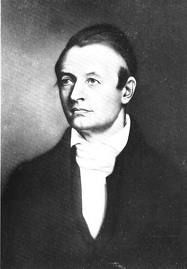
In 1845, he left to visit the United States, and his wife Sarah died during the voyage, being buried on the Island of St. Helena. While in America he met Fanny Forester (known as Emily Chubbuck), a gifted young writer, and they were married on June 2, 1846. On his return to Moulmein (1846; now Mawlamyine) he completed and published his Dictionary, English and Burmese (1849). The dictionary was so well done that it remained the core of all Burmese language translation for over one hundred years.

On April 12, 1850, Adoniram died at the age of sixty-one. Shortly before his death he told his wife, Emily:

Lying here on my bed, when I could not talk, I have had such views of the loving condescension of Christ and the glories of heaven as I believe are seldom granted to mortal man. It is not because I shrink from death that I wish to live; neither is it because the ties that bind me here, though some of them are very sweet, bear any comparison with the drawings I feel at times towards heaven. But a few years would not be missed from my eternity bliss, and I can well afford to spare them, both for your sake and the sake of the poor Burmans. I am not tired of my work, neither am I tired of the world. Yet when Christ calls me home, I shall go with the gladness of a boy bounding away from his school. Perhaps I feel something like the young bride, when she contemplates resigning the pleasant associations of her childhood for a yet dearer home—though only a very little like her, for there is no doubt resting on my future.

In 1845, after speaking at one of the many conferences during his brief stay in the United States, Emily asked him why he had not told any stories from the mission field in his short message. He replied that he had given them a story—“the most thrilling one that can be conceived of.” Emily replied, “But they had heard it before. They wanted something new of a man who had just come from the Antipodes” (the other side of the globe). Revealing his life’s passion, Dr. Judson replied:

Then I am glad they have it to say, that a man coming from the Antipodes had nothing better to tell than the wondrous story of Jesus’ dying love.

At the time of Dr. Adoniram Judson death, there were 7,000 Burmese Christians, 63 churches, 123 missionaries. Throughout the world, there are 2,700 missionaries serving through the missionary societies that Dr. Judson helped establish. The Judson Memorial Church in New York City is named for him (Mini-biography from Logos Great Quotations).

For Further reading on Adoniram Judson: The standard work on Judson is Francis Wayland, A Memoir of the Life and Labors of the Rev. Adoniram Judson, D.D. (2 vols., 1853). See also Edward Judson, The Life of Adoniram Judson (1883); Stacy R. Warburton, Eastward! The Story of Adoniram Judson (1937); and Courtney Anderson, To the Golden Shore: The Life of Adoniram Judson (1956).

Author’s of the First brief article Above: Mike and Sharon Rusten are not only marriage and business partners; they also share a love for history. Mike studied at Princeton (B.A.), the University of Minnesota (M.A.), Westminster Theological Seminary (M.Div.), Trinity Evangelical Divinity School (Th.M.), and New York University (Ph.D.). Sharon studied at Beaver College, Lake Forest College, and the University of Minnesota (B.A.), and together with Mike has attended the American Institute of Holy Land Studies (now Jerusalem University College). The Rustens have two grown children and live in Minnetonka, Minnesota. This article was adapted from the April 25th entry in their wonderful book The One Year Book of Christian History, Carol Stream, IL: Tyndale, 2003.

Also on April 26 in Christian History:

856: Paschasius Radbertus died in this day. He is considered to have been the first person to write a book on the Eucharist called On the Body and Blood of the Lord. Although he did not use the term, he taught transubstantiation, the belief that the substance of the bread and wine literally become, by faith Christ’s body and blood.

1396: St. Stephen of Perm, who converted the heathen Zyrian tribes of the Ural Mountains in Russia, died on this day.

1478: As they were entering church to celebrate Easter mass, two Medici brothers were attacked by the pope’s men, with the pope’s knowledge. The Medici and Pazzi families were quarreling over which would handle the Vatican banking. The pope wanted to drop the Medicis and install his own favorites.

1877: Minnesotans observed a statewide day of prayer to implore God to remove a plague of grasshoppers. Grasshoppers had devastated the land in 1876. The prayer did not seem to work. Warm temperatures over the next two days caused millions of larvae to wiggle to life. But a plunge in temperatures on the fourth day froze and killed all of the newly hatched wigglers.

Adapted from the April 26th entry in This Day In Christian History, edited by A Kenneth Curtis and Daniel Graves, Camp Hill, PA: Christian Publications.

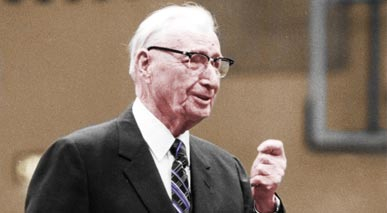
A Tribute To Charles Hodge – One of The Greatest Theologians America Has Ever Produced

Series: On This Day in Christian History – April 24

 “A Gifted Mind and Still Greater Heart”

By Mike and Sharon Rusten

(Princeton University Library – Pictured on left)

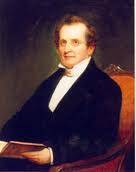
Charles Hodge was born in Philadelphia on December 27, 1797, and raised by his mother because his father died six months after Charles’s birth. A gifted student, Charles entered the College of New Jersey, later Princeton University, in 1812 at the age of fourteen. As a senior he publicly confessed his faith in Christ during a campus revival, where over half of the student body gave their allegiance to Jesus. After entering Princeton Seminary in 1816, he excelled in his studies and graduated at age twenty-two. A year later he became professor of biblical languages at the school and the seminary’s third professor.

Hodge taught at Princeton Seminary for over fifty years and became America’s leading Reformed theologian of the nineteenth century. His three-volume Systematic Theology remains in print today.

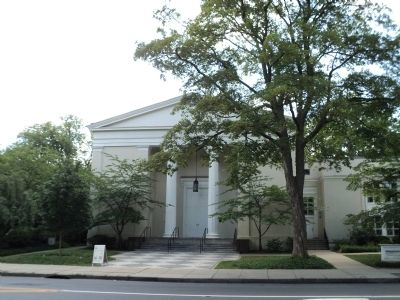
On April 24, 1872, a unique celebration took place in Princeton to honor Charles Hodge for his fifty years of teaching. On that day all the shops in town closed, and people from near and far gathered in the First Presbyterian Church to honor the town’s most distinguished citizen. Present were Charles’ wife, Mary, their eight children, and a large number of grandchildren. Also in attendance were four hundred graduates of the seminary, almost 15 percent of the total alumni of the school. There were presidents and faculty representatives from many other colleges and seminaries as well as officials from virtually every denomination. (1st Presbyterian of Princeton pictured at left – it was built in 1836 and still stands today)

That day Henry Boardman spoke on behalf of the seminary trustees. He pointed out that celebrations for national heroes were not uncommon, but here was “the spontaneous homage paid to a simple teacher of God’s Word and defender of its truth.” Then addressing Dr. Hodge he said:

What honor, beloved Brother, has God put upon you! For fifty years you have been training men to preach the glorious gospel of grace of God to their fellow-sinners. The teacher of teachers, your pupils have become professors in numerous Colleges and Seminaries at home and abroad. Not to speak of one or two thousand pastors, who are exerting an ameliorating influence upon this nation more potent than that of an equal number of men belonging to any other calling, you are helping, through your students, to educate a great body of Christian ministers, not a few of whom are to be employed in laying the foundations of Christianity on pagan lands.

At that time Charles Hodge had personally taught twenty-seven hundred students—no other seminary in the country had even enrolled that many. In his address Boardman pointed out that there were men scattered around the world who honored Hodge for the gifted mind God had given him and who “love him for his still greater heart.”

During the program the seventy-five-year-old Hodge sat on a sofa off to the side of the platform, out of sight of the audience. Almost overcome by emotion after fifteen men had spoken their words of tribute, he came to the lectern to respond: “When I say thank you for all your respect, confidence and love, I am nothing, I am powerless. I can only bow down before you with tearful gratitude, and call on God to bless you, and to reward you a hundred-fold for all your goodness.”

(pictured at left is the altar at the Princeton University Chapel)

That night before retiring, the tired but grateful Hodge summed up the day by writing in his journal: “April 24th. The apex of my life…altogether affording an imposing and most affecting testimony of the unity of faith, and of common love to the same gospel, and to our common God and Savior Jesus Christ.”

Reflection:

Most of us are not gifted teachers like Charles Hodge, but God intends for us to impact the lives of those around us. God placed thousands of students in Hodge’s life. He may place one or two people in your life to disciple. It isn’t the number that matters; it is the faithfulness with which you invest yourself.

“We are telling you about what we ourselves have actually seen and heard, so that you may have fellowship with us. And our fellowship is with the Father and with his Son, Jesus Christ.” – 1 John 1:3

More on Charles Hodge

Charles Hodge [1797-1898], was an American Presbyterian theologian, was ordained in 1821, and taught at Princeton for almost his whole life. In 1825 he founded the Biblical Repository and Princeton Review, and during forty years was its editor, and the principal contributor to its pages. He received the degree of D.D. from Rutgers College in 1834, and that of LL.D. from Washington College, Pennsylvania, in 1864. In 1840 Dr. Hodge was transferred to the chair of didactic theology, retaining still, however, the department of New Testament exegesis, the duties of which he continued to discharge until his death.

“His most important works are his commentaries on Romans (1835), Ephesians (1856), 1 Corinthians (1857), 2 Corinthians (1859), as well as Constitutional History of the Presbyterian Church in the United States (2 vols., 1839-40), Systematic Theology (3 vols., 1871-3), and What is Darwinism? (1874). He was an outstanding defender of Calvinism, and has a claim to be considered one of the best theologians and Bible commentators America has produced.” Charles Hodge was the father of the influential theologian A.A. Hodge.

The Author’s: Mike and Sharon Rusten are not only marriage and business partners; they also share a love for history. Mike studied at Princeton (B.A.), the University of Minnesota (M.A.), Westminster Theological Seminary (M.Div.), Trinity Evangelical Divinity School (Th.M.), and New York University (Ph.D.). Sharon studied at Beaver College, Lake Forest College, and the University of Minnesota (B.A.), and together with Mike has attended the American Institute of Holy Land Studies (now Jerusalem University College). The Rustens have two grown children and live in Minnetonka, Minnesota. This article was adapted from the April 24th entry in their fantastic book The One Year Book of Christian History, Carol Stream, IL: Tyndale, 2003.

St. Anselm on Proving That Which Is Said Cannot Be Proven

Series: On This Day in Christian History – April 21st, 1109

 By A. Kenneth Curtis, Daniel Graves, and Robert J. Morgan

“God’s eternal power and character cannot be seen. But from the beginning of creation, God has shown what these are like by all he has made” (Rom. 1:20). Many miss the majesty of God’s creation, but one boy on the Swiss-Italian border got the message.

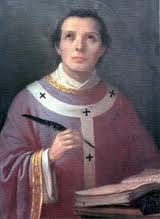
Anselm grew up on the breathtaking St. Bernard. His mother frequently reminded him of the Creator, and Anselm imagined God living among the Alps. In his mid-teens Anselm, quarreling with his father, entered a French monastery where he expanded his knowledge of God through study of Scripture. His keen mind and mature faith led to repeated calls from England, and eventually Anselm crossed the channel to become the archbishop of Canterbury.

Anselm won a name as a reformer because he attempted to end abuses such as the slave trade. He urged the holding of regular synods and, while h was archbishop, enforced clerical celibacy within his see. Through his learning and methodology, he became one of the creators of scholasticism. But his most notable gift to history has become known as the ontological proof for the existence of God.

Can the existence of God be proven? Anselm thought so. Modern philosophers and theologians disagree. However, it is Anselm’s argument, the ontological proof, which remains the slipperiest for modern logic to deal with and is though to be impossible to refute.

Anselm’s argument went something like this: When we discuss the existence of God, we define Him as a perfect being, greater than anything else that can be conceived. If God does not exist, then the name “God” refers to an imaginary being. This makes the definition of “God” contradictory, for to be real, to be living, to have power is greater than to be imaginary. It is clear that the word God cannot be discussed as defined if He does not exist, because He must be conceived as really existing in order for Him to be greater than anything else, for a God who does not exist is not greater than anything else.
In short, no philosopher can legitimately argue that God does not exist if he defines “God” as a perfect being that is greater than any that can be imagined; for to be perfect, God must have real existence. Those who acknowledge that He exists do not have a problem with self-contradiction when they affirm His existence, whereas those who deny His existence do. Since we can indeed raise the question of God’s existence and argue the point, then God must exist.

His life and teaching breathed of Christ. Belief in God, Anselm felt, was rational and logical, not a blind leap of mindless faith. The beauty of creation evidenced God’s existence; and furthermore, the very fact that our minds could imagine and infinite, loving God gave evidence that he existed. Anselm’s famous argument for God’s existence said that if God could exist in our minds, he could exist in reality.

But Anselm’s deepest writings were on the atonement, which he defined as Christ’s blood being a “satisfaction” made to God by the Lord Jesus. Love of Christ’s atonement brought Anselm comfort when he found himself in the crossfire between the pope and English king. The redheaded King William (Rufus the red) was profane and violent. He reputedly arose a worse man every morning, and went to bed a worse man every night. He enjoyed seeing animals and men tortured, while Anselm would go out of his way to save a hare.

As archbishop of Canterbury, the zealous Anselm continually struggled with King William for church rights. As a result of the struggle he was exiled. As a theologian, Anselm was most remembered for his book Why did God Become Man? In it he argued that each of us has run up such a debt of sin that there is no way we can repay God. Christ, as infinite God, has merit enough and plenty to spare for our debts. Anselm argued that we must first believe in order to understand. In modern terms we might say that truth only begins to come clear when one is committed to it: You cannot see around a bend in a trail unless you walk toward it.

I look to the hills! Where will I find my help?

It will come from the LORD,

Who created the heavens and the earth.

The LORD is your protector,

And he won’t go to sleep or let you stumble.

The protector of Israel doesn’t doze or ever get drowsy. – Psalm 121:1-4

On this day April 21, 1109 Anselm died surrounded by friends who placed his body in ashes on the floor. He was probably canonized in 1494, although there is debate as o whether this occurred at all. Anselm will be long remembered for his ontological proof for the existence of God, and his defense of the atonement and deity of Christ.

*Other Significant Events on April 21st in Church History:

1073: Pope Alexander II died. He became the first pope elected under the new electoral system by the college of cardinals.

1142: Peter Abelard died on this day His conceptualism (a way of describing how the mind knows ideas) tried to resolve difference between two schools of philosophy called Nominalism and Realism. But Abelard may better be remembered as the man who seduced his student Heloise than as a thinker who tried to ground theology in reason. He was often accused of heresy, but he remained one f the most popular teachers of his day and was cofounder of schools that were later incorporated into the University of Paris.

1621: William Bradford was chosen governor of Massachusetts when John Carver died.

1855: Dwight L. Moody was converted to Christianity. His Sunday school teacher Edward Kimball, said, “My plea was a very weak one, but I was sincere.” Moody became a powerful evangelist.

*Adapted from the April 21st entries in This Day In Christian History, edited by A Kenneth Curtis and Daniel Graves, Camp Hill, PA: Christian Publications & Robert J. Morgan. On This Day. Nashville: Thomas Nelson, 1997.

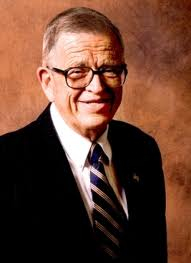
Chuck Colson: A Tribute from “Hatchet Man” to “Humble Humanitarian Man”

Charles “Chuck” Wendell Colson

(Born in Boston, MA, October 16, 1931 – April   21, 2012)

More than 30 years ago, Charles W. Colson was not thinking about reaching out to prison inmates or reforming the U.S. penal system. In fact, as an aide to President Richard Nixon he was “incapable of humanitarian thought,” according to the media of the mid-1970s. Colson was known as the White House “hatchet man,” a man feared by even the most powerful politicos during his four years of service to President Nixon.

When news of Colson’s conversion to Christianity leaked to the press in 1973, the Boston Globe reported, “If Mr. Colson can repent of his sins, there just has to be hope for everybody.” Colson would agree. He admits he was guilty of political “dirty tricks” and willing to do almost anything for the cause of his president and his party.

In 1974, Colson entered a plea of guilty to Watergate-related charges; although not implicated in the Watergate burglary, he voluntarily pleaded guilty to obstruction of justice in the Daniel Ellsberg case. He entered Alabama’s Maxwell Prison in 1974 as a new Christian and as the first member of the Nixon administration to be incarcerated for Watergate-related charges. He served seven months of a one-to-three year sentence before being released.

But Colson never really left prison. Haunted by the desperation and hopelessness he saw behind bars, Colson knew he had to do something to help the men he left behind. In fact, he had a promise to keep. One day, shortly before leaving prison, Colson was going about his business in the prison dorm while some inmates played cards. Suddenly, one of the players, a six-foot-tall prisoner named Archie, bellowed, “Hey, Colson. You’ll be out of here soon. What are you going to do for us?”

Suddenly, the whole room fell silent. All ears were straining to hear the answer. “I’ll help in some way,” replied Colson. “I’ll never forget you guys or this stinking place.”

“Bull!” roared Archie, slamming down the pack of cards on the table. “You all say that. I’ve seen big shots like you come and go. They all say the same things while they’re inside. Then they get out and forget us fast. There ain’t nobody cares about us. Nobody!”

But today, 35 years later, thousands upon thousands of Christian volunteers and churches do care. They care enough to visit prison, mentor prisoners, help their families, and share the Good News of Christ with them.

That’s because in 1976, Colson founded Prison Fellowship®, which, together with churches of all confessions and denominations, has become the world’s largest outreach to prisoners, ex-prisoners, and their families, with ministry taking place in 113 countries around the globe.

Today Prison Fellowship has numerous ways for Christians to join in ministry that is not only transforming prisoners and their families, but also transforming the criminal justice system, our communities, and the culture itself: From in-prison Bible studies and mentoring programs to helping the children of prisoners understand how much God loves them, from advocating for biblically based justice reforms to promoting a biblical worldview.

In reflecting on his time in prison Colson had this to say, “When the frustration of my helplessness seemed greatest, I discovered God’s grace was more than sufficient. And after my imprisonment, I could look back and see how God used my powerlessness for His purpose. What He has chosen for my most significant witness was not my triumphs or victories, but my defeat…my lowest days as Christian (and there were low ones–seven months’ worth of them in prison, to be exact) have been more fulfilling and rewarding than all my days of glory in the White House.”

Colson sensed God’s calling to comment on the culture through the written and spoken word. He has written more than 30 books, which have collectively sold more than five million copies. His autobiographical book Born Again was one of the nation’s best-selling books of all genres in 1976 and was made into a feature-length film.

Colson faced a health scare in 1987 when he had surgery for stomach cancer and a painful recovery. He was in Georgetown University Hospital when he learned that former CIA director William Casey was in the room next to him. As Casey was on his deathbed, Colson pointed to a crucifix and asked if Casey knew what it meant. According to Jonathan Aitken’s biography, Casey grunted in agreement. “Then you know it means that Christ died for your sins,” Colson said. “It’s important for you to know him personally at this time. Would you like to pray?” It was, Colson said later, “the real reason I was in that hospital.”

During his recovery, Colson corresponded with Nixon, where he wrote, “It takes more than Watergate or a little cancer to hold me down. I’ll be back stronger than ever.”

In 1999, Colson and Nancy Pearcey co-authored the groundbreaking book How Now Shall We Live?, challenging Christians to understand biblical faith as an entire worldview–a perspective on all of life. In this book, Colson and Pearcey argue that the great battle of the twenty-first century is a struggle between the spiritual and the secular worldviews.

In one of his recent books, The Faith, Colson issues an urgent call to the Church to recapture its passion for the historical, orthodox truths of Christianity–especially in this age when the Church is besieged on all sides by secularism, radical Islam, and militant atheism.

While Colson was one of the Christian community’s most sought-after speakers, he resolutely refused to establish a speaking fee. Perhaps anticipating criticism of any appearance of self-enrichment by a former Watergate figure, Colson donated all speaking honoraria and book royalties to Prison Fellowship, and accepted the salary of a mid-range ministry executive.

In recognition of his work, Colson received the prestigious Templeton Prize for Progress in Religion in 1993, donating the $1 million prize to Prison Fellowship. And in 2008, Colson was honored by President Bush with the Presidential Citizens Medal for his years of work with prisoners and their families, which Colson accepted on behalf of the volunteers and staff of Prison Fellowship. Colson’s other awards have included the Humanitarian Award, Dominos Pizza Corporation (1991); The Others Award, The Salvation Army (1990); several honorary doctorates from various colleges and universities (1982-2000); and the Outstanding Young Man of Boston, Chamber of Commerce (1960).

Despite his work critiquing the culture, Colson’s heart was ever with the prisoner. He clearly never forgot the promise he made to his fellow inmates during his brief stay in prison: that he would “never forget” those behind bars.

Chuck was a model example of someone who used his experience in prison for good, and better yet, for the saving of many lives and the ultimate glory of God!

*Article adapted from the Prison Fellowship website.

If you would like to know more about this amazing Christian leader – Jonathan Aitken wrote an excellent biography on Colson in 2005, Charles W. Colson: A Life Redeemed published by Random House. Product description: Once one of the most despised men in American, Colson went from being Richard Nixon’s “hatchet man” to becoming a leading evangelical. How was a convicted criminal transformed into a Christian servant? Drawing on Colson’s personal papers, Aitken’s biography takes an unprecedented look at the man who continues to influence politics, religion and prison ministry.

 Here is List of Most of Colson’s Outstanding Books

2011: The Sky Is Not Falling: Living Fearlessly in These Turbulent Times (Worthy Publishing). Product description: Yes, the world is an increasingly godless place. And it’s never been as pronounced as it is in this era of 24-hour news cycles. From nasty political power struggles to raunchy reality TV, everywhere we look there is evidence of our culture’s steep decline. But it’s no time for Christians to cower in fear. In The Sky Is Not Falling, bestselling author Chuck Colson equips readers with the truth about the most difficult cultural and moral issues of our day and brings clarity and sanity to a world that seems to have gone mad. His message is that Christians must be informed of the truth of today’s confusing social and political issues so that we can live with the confidence and certainty that God has the future in his hands. Every concerned Christian needs to arm themselves with the profound insights in The Sky is Not Falling.

2008: The Faith co-authored with Harold Fickett (Zondervan). Product description: Rightly understood and rightly communicated, the Christian faith is one of great joy. It is an invitation to God’s kingdom, where tears are replaced by laughter and longing hearts find their purpose and their home. This is the heart of the gospel: God’s search to reclaim us and love us as his own. But have we truly grasped this? Those of us who have disdained Christianity as a religion of bigotry—have we repudiated the genuine article or merely demonstrated our own prejudice and ignorance? Those of us who are Christians—have we deeply apprehended the mission of Jesus, and do our ways and character faithfully reflect his beauty? From the nature of God, to the human condition, to the work of Jesus, to God’s coming kingdom, and all that lies between, how well do we understand the foundational truths of Christianity and their implications? The Faith is a book for our troubled times and for decades to come, for Christians and non-Christians alike. It is the most important book Chuck Colson and Harold Fickett have ever written: a thought-provoking, soul-searching, and powerful manifesto of the great, historical central truths of Christianity that have sustained believers through the centuries. Brought to immediacy with vivid, true stories, here is what Christianity is really about and why it is a religion of hope, redemption, and beauty.

2008: Gideon’s Torch with Ellen Vaughn (Thomas Nelson). Product description: Gideon’s Torch is his and coauthor Vaughn’s first novel, a political tale steeped in the details of the White House, the Justice Department, and the K Street maneuverings of those seeking power. As Republican president J. Whitney Lowell takes office, a woman walks into a North Dakota abortion clinic and kills a doctor. Watching the polls, Lowell decides to crack down on every antiabortion group nationwide, whether violent or peaceful, and a civil liberties debate quickly erupts. Before Lowell’s tactics can produce a killer, another group steals a National Institute of Health training video containing shots of a brutal third-trimester abortion and manages to uplink the video to the evening news. And before these terrorists can be apprehended, another group stages an Oklahoma City-style bombing on the first of the sinister-seeming Regeneration Centers, which will use fetuses in AIDS research. They botch their escape and are killed, leaving government prosecutors no case except against an alleged accessory, a Maryland preacher named Daniel Seaton. Seaton’s courtroom testimony and death in prison are linked to the tribulations of St. Paul and give the novel a certain mournful elegance. Colson and Vaughn present every warring faction fairly; the portraits of the president and attorney general are particularly sensitive, and the suicide of Lowell’s chief adviser is quite movingly done.

2007: God & Government (Zondervan). Product description: How should Christians live their faith in the public arena? Twenty years ago, the first edition of Chuck Colson’s Kingdoms in Conflict became a bestseller, a must-read for people interested in politics and the relationship between church and state. Now, with a passion for truth and moved by the urgency of the times we live in, Colson has written God and Government, re-voicing his powerful and enduring message for our post-9/11 world. In an era when Christianity is being attacked from every side—books being written charging Christians with being theocrats and trying to impose their views on an unwilling culture—what is the message of the Christian church? What does the Bible say, and what do we learn from history about the proper relationship between faith and culture? Appealing to scripture, reason, and history, this book tackles society’s most pressing and divisive issues. New stories and examples reflect the realities of today, from the clash with radical Islam to the deep division between ‘reds’ and ‘blues.’ In an era of angry finger pointing, Colson furnishes a unique insider’s perspective that can’t be pigeonholed as either ‘religious right’ or ‘religious left.’ Whatever your political or religious stance, this book will give you a different understanding of Christianity. If you’re a Christian, it will help you to both examine and defend your faith. If you’ve been critical of the new religious right, you’ll be shocked at what you learn. Probing both secular and religious values, God and Government critiques each fairly, sides with neither, and offers a hopeful, fair-minded perspective that is sorely needed in today’s hyper-charged atmosphere.

2005: The Good Life co-authored with Harold Fickett (Tyndale). Product description: Sharing from his own life, as well as the stories of others, Chuck Colson exposes the counterfeits of the good life and leads readers to the only true source of meaning and purpose, Jesus Christ. But he does that in an unusual way, allowing powerful stories to illustrate how people have lived out their beliefs in ways that either satisfy or leave them empty. Colson addresses seekers—people looking for the truth. He shows through stories that the truth is knowable and that the truly good life is one that lives within the truth. Through the book, readers get to understand their own stories and find answers to their own search for meaning, purpose, and truth.

2004: The Design Revolution: Answering the Toughest Questions About Intelligent Design with William A. Dembski (Inter Varsity Press). Product description: Winner of a Christianity Today 2005 Book Award! A 2005 Gold Medallion finalist. Is it science? Is it religion? What exactly is the Design Revolution? Today scientists, mathematicians and philosophers in the intelligent design movement are challenging a certain view of science–one that limits its investigations and procedures to purely law-like and mechanical explanations. They charge that there is no scientific reason to exclude the consideration of intelligence, agency and purpose from truly scientific research. In fact, they say, the practice of science often does already include these factors! As the intelligent design movement has gained momentum, questions have naturally arisen to challenge its provocative claims. In this book William A. Dembski rises to the occasion clearly and concisely answering the most vexing questions posed to the intelligent design program. Writing with non-experts in mind, Dembski responds to more than sixty questions asked by experts and non-experts alike who have attended his many public lectures, as well as objections raised in written reviews. The Design Revolution has begun. Its success depends on how well it answers the questions of its detractors. Read this book and you’ll have a good idea of the prospects and challenges facing this revolution in scientific thinking.

2001: Justice That Restores (Tyndale). Product description: America’s justice system is broken. Offenders repeat and return to jail. Chuck Colson shows why the prevailing systems of criminal justice simply don’t work. The book showcases Colson at his best, including personal stories, historical study, and shocking statistics. Bottom line: only a system that is based on a biblical worldview, a system that restores both the offender and the offended, will have any lasting success. This authoritative work is Colson’s legacy statement about criminal justice. These proven principles can reverse the current criminal decline.

1999 & 2000: How Now Shall We Live with Nancy Pearcey and Harold Fickett (Tyndale revised in 2004). Product description: 2000 Gold Medallion Award winner!

Christianity is more than a personal relationship with Jesus Christ. It is also a worldview that answers life’s basic questions and shows us how we should live as a result of those answers. How Now Shall We Live? equips Christians to confront false worldviews and live redemptively in contemporary culture.

1998: Burden of Truth: Defending the Truth in an Age of Unbelief (Tyndale). Product description: Popular author Charles Colson provides practical help for Christians in understanding difficult issues on which their faith collides with the surrounding culture. Burden of Truth covers topics such as medical ethics, education, crime, science, pop culture, family, art, and government. In Burden of Truth Colson spurs Christians on in confronting the deception of the world with the truth of God’s Word.

1996 (Revised in 2004): Being The Body with Ellen Santilli Vaughn (Thomas Nelson). Product description: Charles Colson has been called, “one of the most important social reformers in a generation.” Ten years ago in The Body, Colson turned his prophetic attention to the church and how it might break out of its cultural captivity and reassert its biblical identity. Today the book’s classic truths have not changed. But the world we live in has. Christians in America have had their complacency shattered and their beliefs challenged. Around the world, the clash of worldviews has never been more strident. Before all of us, daily, are the realities of life and death, terror and hope, light and darkness, brokenness and healing. We cannot withdraw to the comfort of our sanctuaries…we must engage. For, if ever there was a time for Christians to be the Body of Christ in the world, it is now. In this new, revised and expanded edition of The Body, Charles Colson revisits the question, “What is the church and what is its relevance to contemporary culture at large?” Provocative and insightful, Being the Body inspires us to rise above a stunted “Jesus and me” faith to a nobler view of something bigger and grander than ourselves–the glorious, holy vision for which God created the church.

1994: A Dangerous Grace with Nancy R. Pearcey. Product description: In his first book of daily readings, Charles Colson shares truths and warnings on timely and timeless subjects ranging from Aristotle and the Apostles to MTV, the arts and evolution. In this daily devotional Colson presents a full year of cutting edge, “think” pieces sure to motivate Christians to action.

1993: A Dance with Deception: Revealing the truth behind the headlines (Word – revised edition – 2004). Product description: Here are more than 150 commentaries on life in America today, transcribed from Charles Colson’s daily radio program “BreakPoint”. Colson pulls no punches in this confrontation between the myths of modern life and the truth of God’s Word.

1993: The Body: Being Light in Darkness with Ellen Santilli Vaughn (Word). See the Revised Being the Body above.

1991: Why America Doesn’t Work with Jack Eckerd (Word). Product description: In this uncompromising bestseller, two veterans of public service and private business reveal how America’s work ethic has been stripped of its true meaning. Readers are then given the critical steps necessary to halt America’s declining work ethic through an infusion of unique programs, hard work, and a renewed sense of integrity. Colson founded the Board of Prison Fellowship Ministries, and Eckerd founded the Eckerd drugstore chain.

1989: Against the Night: Living in the New Dark Ages (Servant). Product description: Ten years ago when Charles Colson’s top-selling Against the Night appeared, he described the demise of Western culture as the “new dark ages.” The book describes in particular the ominous shadows that have engulfed politics, family life and education. Today as we face the new millennium, the book is still pertinent, as the darkness has not lifted. It seems in many ways to have thickened. Against the Night, however, is not pessimistic. It gives Christians hope that as we regain our vision of living in God’s kingdom and being God’s people, we will be a light in the darkness.

1987: Kingdoms in Conflict with Ellen Santilli Vaughn (William Morrow & Co.). See revised and expanded edition: God and Government above.

1983: Loving God (Harper – Revised in 1997 by Zondervan). Product description: In his magnificent classic, Chuck Colson shakes the church from its complacency with a penetrating look at the cost of being Christian. For those who have wondered whether there isn’t more to Christianity than what they have known—and for those who have never considered the question—Loving God points the way to faith’s cutting edge. Here is a compelling, probing look at the cost of discipleship and the meaning of the first and greatest commandment—one that will strum a deeper, truer chord within even as it strips away the trappings of shallow, cultural Christianity. ‘Looking for the complete volume on Christian living? This is it. And the title sums it up. If you desire life deep, rich, and meaningful, then it is simply Loving God.’ Joni Eareckson Tada President, Joni and Friends

1979: Life Sentence (Chosen Books – Revised in 1999). Product description: The sequel to Colson’s bestseller, Born Again, this book reveals how he began a new life and his struggle to begin a new ministry.

1976: Born Again (Chosen Books – Revised by Hendricksen & Chosen in 2008). Product description: In 1974 Charles W. Colson pleaded guilty to Watergate-related offenses and, after a tumultuous investigation, served seven months in prison. In his search for meaning and purpose in the face of the Watergate scandal, Colson penned Born Again. This unforgettable memoir shows a man who, seeking fulfillment in success and power, found it, paradoxically, in national disgrace and prison. In more than three decades since its initial publication, Born Again has brought hope and encouragement to millions. This remarkable story of new life continues to influence lives around the world. This expanded edition includes a brand-new introduction and a new epilogue by Colson, recounting the writing of his bestselling book and detailing some of the ways his background and ministry have brought hope and encouragement to so many.

According To Billy Graham Who Has Touched The Most Lives For Christ?

“DAWS”

“It’s hard for the flesh to think God thoughts. It’s hard to concentrate on spiritual concepts. The brain doesn’t like to think, especially if its on spiritual matters. We like to sit down in a nice, soft chair in a cool breeze and float to heaven on a flowery bed of ease. I’m that way and I know that in life, there are a lot of things that come easy, but getting the Word of God on your heart through memorization isn’t one of them. It’s spiritual. Anything spiritual is work, and my flesh and blood doesn’t like work. But it can be done, and we can do it!” – Dawson Trotman

Mini Biography of Dawson Trotman: The Reverend Billy Graham preached the funeral of Dawson Trotman in 1956 after Trotman died while rescuing a swimmer at an upstate New York lake. “I think Dawson Trotman has personally touched more lives [for Christ’s sake] than anybody that I have ever known,” Graham said. Graham knew Trotman and the ministry he founded—The Navigators—quite well, using material Trotman developed as follow-up instruction for his crusades. The Navigators’ influence has since grown to worldwide proportions with about 3,600 staff representing 60 nationalities working in 101 countries. Trotman founded The Navigators in 1934. He originated its Bible teaching material and led it through its formative years as it expanded from an initial emphasis on discipling military personnel to reaching college students and laymen. At the heart of Trotman and the ministry he founded was and is the discipleship of believers—grounding Christians in the spiritual disciplines of prayer, worship, Bible study, and service. (Billy Graham and Dawson Trotman pictured at right in the 1950’s)

The Conversion: Trotman’s high school years featured impressive credentials. He was class valedictorian, student body president, chairman of the student council, and captain of the basketball team. However, the next several years saw Trotman’s life drift dangerously. He gambled. He drank. He became a noted pool shark. However, a late night encounter with a local policeman was the catalyst for a spiritual encounter with Jesus Christ. Drunk and unable to find his car, Trotman was arrested at an amusement park. Fortunately, the officer saw a deeper problem than alcohol. “Son, do you like this kind of life?” the officer questioned. “Sir, I hate it,” Trotman replied. The policeman returned Trotman’s keys and encouraged him to change his lifestyle. Two days later, Trotman attended a youth gathering at a local church where contests were conducted for Scripture memorization. Given ten verses on salvation, Trotman was the only person in the group who memorized them for the next week’s meeting. Given ten more verses to memorize on spiritual growth for the next week, Trotman quickly grasped them as well. Several weeks later, one of the Scripture verses on salvation flashed through his mind. And it was then that he asked for Christ to change his life. “Oh God,” he said, “whatever it means to receive Jesus, I want to do it right now.”

The Beginning Of Ministry: Trotman spent the next several years engaging in intensive personal evangelism while committing himself to a disciplined life of prayer. As usual, his focus was on the intake and absorption of God’s Word. In 1934, Trotman was asked to visit a sailor, Les Spencer, and share God’s Word with him. Betty Skinner, the author of Trotman’s biography Daws, described the scene: “Parked by a schoolhouse, they were pouring over the Scriptures when a security guard approached and asked what they were doing. ‘Reading the Bible,’ Trotman answered and seized the opportunity to witness . . . Dawson turned from one passage to another to explain the Gospel and answer all the defenses of the hapless guard. “On the way back to the landing [Spencer] said, ‘Boy, I’d give my right arm to know how to use the Word like that.'” It marked the beginning of The Navigators ministry, so named for its nautical origins. Spencer led another to Christ who in turn led still others to salvation. The discipleship ministry of The Navigators was birthed, and the process of winning and discipling men and women for Christ continues throughout the world today.

Memorization And Meditation: Trotman’s conversion experience centered on memorization and meditation on God’s Word. He was a discipler of men because he himself was first discipled by God through the Scriptures. His emphasis on memorizing Scriptures, arranged on topical themes, continues to be part of the core curriculum of The Navigators today. Memorization was not approached in legalistic fashion by Trotman, who understood that God’s Spirit must create the desire and will to mine the treasures of His Word. Regular Scripture memorization and meditation are fundamental to experiencing an abundant Christian life. The psalmist “treasured” God’s Word in his heart (Psalm 119:11) and meditated on the Scriptures “day and night.” (Psalm 1:2) As you write God’s Word on the tablet of your heart, you will find your mind renewed and ready to face temptations, challenges, and adversity from God’s perspective of truth. It is truth that sets you free; and the more Scripture you store in your heart, the more like Christ you will become. Graham summed up Trotman’s life this way: “Dawson loved the Word of God. I think more than anybody else he taught me to love it. He always carried his Bible around and always had it marked. The Word of God was sweetness to him.” 

If you want to read more on Dawson Trotman. Betty Skinner has written a very enjoyable biography on his life entitled “DAWS” – Dawson’s beloved nickname. Product description: From his youth as a liar, gambler, and pool shark to manhood as an indefatigable witness for his Lord Jesus Christ, Dawson Trotman revolutionized the practice of evangelism and founded one of the most widespread and respected Christian organizations in the world today. This moving historical account, drawn from the memories of those whose lives he touched and from the author’s firsthand knowledge, will both encourage you in your faith and inspire you to action. 391 pages, paperback, from Navpress.

“Christmas in April” By Robert J. Morgan & Other Significant Events on This Day In Church History

On This Day in Church History – April 10th

On December 25, 1766 a son was born to an impoverished Welsh shoemaker and his wife. They considered naming him Vasover, but chose instead to name him for the day of his birth. When Christmas Evans was nine his father died in his cobbler stall, awl in hand. His mother farmed out the children, and Christmas went to live with am alcoholic uncle. The boy ran with rough gangs, fighting and drinking and endangering his life. He was unable to read a word.

But then Christmas heard a Welsh evangelist David Davies. He soon gave his life to Christ, and Davies began teaching him by candlelight in a barn at Penyralltfawr. Within a month Christmas was able to read from his Bible, and expressed a desire to preach, and preach he did. Wherever he went—churches, coal minds, open fields—crowds gathered and a spirit of revival swept over the listeners. Unable to afford a horse, he started across Wales by foot, preaching in towns and villages with great effect.

But Christmas Evans eventually lost the joy ministry. His health broke, and he seemed to have used up his spiritual zeal. On April 10, 1802 he climbed into the Welsh mountains, determined to wrestle with God until his passion returned. The struggle lasted for hours, but finally tears began to flow, and Christmas felt the joy of his salvation returning. He made a covenant with God that day, writing down 13 times, initializing each one. The fourth said, “Grant that I may not be left to any foolish act that may occasion my gifts to wither…” And the eighth said, “Grant that I may experience the power of thy word before I deliver it.”

The burly, one-eyed preacher left the mountaintop that day with power that shook Wales and the neighboring island of Anglesea until his death 36 years later. He is called the “Bunyan of Wales.”

Create pure thoughts in me

And make me fruitful again.

Make me as happy as you did when you saved me.

Then I will shout and sing about your power to save. – Psalm 51:10,12a,14b

* Robert J. Morgan is the pastor of Donelson Fellowship in Nashville, Tennessee and the author of the best selling Then Sings My Soul, From This Verse, On This Day, and Red Sea Rules. He conducts Bible conferences, parenting and marriage retreats, and leadership seminars across the country. This article is from the April 10 entry in On This Day, Nashvill, Nelson,1998.

 *Other Significant Events on April 10th in Church History:

419: St. Boniface entered Rome to the cheers of the populace who supported his papacy against antipope Eulalius. Emperor Honorius had to decide between the two claimants.

428: Nestorius was consecrated as the bishop of Constantinople.

1512: The Fifth Lateran Council began, running to March 1517, and declared that the soul is immortal. It also invalidated anti-papal decrees formulated at the Pisa council.

1829: William Booth was born. A Methodist, Booth founded the Salvation Army to reach out to those who were missed by the churches. He worked in the slums, offering breakfasts and other assistance for the needy, often accompanied by brass bands. The Salvation Army observes this day as Founder’s Day.

1868: Brahms’ A German Requiem was first performed. It has been described as music not for the dead but for the living. It is not certain whether Brahms’ was a Christ follower or not – but his music was inspired via his reading of the Scriptures.

1952: Watchman Nee, a Chinese Christian, was arrested. He was well-known in the West for his writings such as Sit, Walk, Stand and The Normal Christian LIfe.

*Adapted from This Day In Christian History, edited by A Kenneth Curtis and Daniel Graves, Camp Hill, PA: Christian Publications.