Preacher: Do You Have A Theology of Preaching?

“A Theology of Preaching”

By Dr. R. Albert Mohler, Jr.,

“Preach the word!” That simple imperative frames the act of preaching as an act of obedience (see 2 Tim. 4:2, NIV). That is where any theology of preaching must begin.

Preaching did not emerge from the church’s experimentation with communication techniques. The church does not preach because preaching is thought to be a good idea or an effective technique. The sermon has not earned its place in Christian worship by proving its utility in comparison with other means of communication or aspects of worship. Rather, we preach because we have been commanded to preach.

Preaching is a commission—a charge. As Paul stated boldly, it is the task of the minister of the gospel to “preach the Word, … in season and out of season” (2 Tim. 4:2,  NIV). Paul begins with the humble acknowledgment that preaching is not a human invention but a gracious creation of God and a central part of His revealed will for the church. Furthermore, preaching is distinctively Christian in its origin and practice. Other religions may include teaching, or even public speech and calls to prayer. However, the preaching act is sui generis, a function of the church established by Jesus Christ.

As John A. Broadus stated: “Preaching is characteristic of Christianity. No other religion has made the regular and frequent assembling of groups of people, to hear religious instruction and exhortation, an integral part of divine worship” (John A. Broadus, On the Preparation and Delivery of Sermons, rev. Vernon L. Stanfield. San Francisco: Harper and Row, 1979, iv.). The importance of preaching is rooted in Scripture and revealed in the unfolding story of the church. The church has never been faithful when it has lacked fidelity in the pulpit. In the words of P. T. Forsyth: “With preaching Christianity stands or falls, because it is the declaration of the gospel” (P. T. Forsyth, Positive Preaching and the Modern Mind. Grand Rapids: Eerdmans, 1964, 5).

The church cannot but preach lest it deny its own identity and abdicate its ordained purpose. Preaching is communication, but not mere communication. It is human speech, but much more than speech. As Ian Pitt-Watson notes, preaching is not even “a kind of speech communication that happens to be about God” (Ian Pitt-Watson, A Primer for Preachers. Grand Rapids: Baker Book House, 1986, 14). Its ground, its goal, and its glory are all located in the sovereign will of God.

The act of preaching brings forth a combination of exposition, testimony, exhortation, and teaching. Still, preaching cannot be reduced to any of these, or even to the sum total of its individual parts combined.

The primary Greek form of the word “preach” (kērusso) reveals its intrinsic rootage in the kerygma—the gospel itself. Preaching is an inescapably theological act, for the preacher dares to speak of God and, in a very real sense, for God. A theology of preaching should take trinitarian form, reflecting the very nature of the self-revealing God. In so doing, it bears witness to the God who speaks, the Son who saves, and the Spirit who illuminates.

The God Who Speaks

True preaching begins with this confession: we preach because God has spoken. That fundamental conviction is the fulcrum of the Christian faith and of Christian preaching. The Creator God of the universe, the omniscient, omnipotent, omnipresent Lord chose of His own sovereign will to reveal Himself to us. Supreme and complete in His holiness, needing in nothing and hidden from our view, God condescended to speak to us—even to reveal Himself to us.

As Carl F. H. Henry suggests, revelation is “a divinely initiated activity, God’s free communication by which He alone turns His personal privacy into a deliberate disclosure of His reality” (Carl F. H. Henry, God, Revelation and Authority, Vol. 2. Waco: Word Books, 1976, 17). In an act of holy graciousness, God gave up His comprehensive privacy that we might know Him. God’s revelation is the radical claim upon which we dare to speak of God—He has spoken!

Our God-talk must therefore begin and end with what God has spoken concerning Himself. Preaching is not the business of speculating about God’s nature, will, or ways, but is bearing witness to what God has spoken concerning Himself. Preaching does not consist of speculation but of exposition.

The preacher dares to speak the Word of truth to a generation which rejects the very notion of objective, public truth. This is not rooted in the preacher’s arrogant claim to have discovered worldly wisdom or to have penetrated the secrets of the universe. To the contrary, the preacher dares to proclaim truth on the basis of God’s sovereign self-disclosure. God has spoken, and He has commanded us to speak of Him.

The Bible bears witness to itself as the written Word of God. This springs from the fact that God has spoken. In the Old Testament alone, the phrases “the Lord said,” “the Lord spoke,” and “the word of the Lord came” appear at least 3,808 times (As cited in Martyn Lloyd-Jones, Authority. London: InterVarsity Press, 1958, 50). This confession brings the preacher face to face with Scripture as divine revelation. The authority of Scripture is none other than the authority of God Himself. As the Reformation formula testifies, “where Scripture speaks, God speaks.” The authority of the preacher is intrinsically rooted in the authority of the Bible as the church’s Book and the unblemished Word of God. Its total truthfulness is a witness to God’s own holiness. We speak because God has spoken, and because He has given us His Word.

As Scripture itself records, God has called the church to speak of Him on the basis of His Word and deeds. All Christian preaching is biblical preaching. That formula is axiomatic. Those who preach from some other authority or text may speak with great effect and attractiveness, but they are preaching “another gospel,” and their words will betray them. Christian preaching is not an easy task. Those who are called to preach bear a heavy duty. As Martin Luther confessed “If I could come down with a good conscience, I would rather be stretched out on a wheel and carry stones than preach one sermon.” Speaking on the basis of what God has spoken is both arduous and glorious.

A theology of preaching begins with the confession that the God who speaks has ultimate claim upon us. He who spoke a word and brought a world into being created us from the dust. God has chosen enlivened dust—and all creation—to bear testimony to His glory.

In preaching, finite, frail, and fault-ridden human beings bear bold witness to the infinite, all-powerful, and perfect Lord. Such an endeavor would smack of unmitigated arrogance and over-reaching were it not for the fact that God Himself has set us to the task. In this light, preaching is not an act of arrogance, but of humility. True preaching is not an exhibition of the brilliance or intellect of the preacher, but an exposition of the wisdom and power of God.

This is possible only when the preacher stands in submission to the text of Scripture. The issue of authority is inescapable. Either the preacher or the text will be the operant authority. A theology of preaching serves to remind those who preach of the danger of confusing our own authority with that of the biblical text. We are called, not only to preach, but to preach the Word.

Acknowledging the God who speaks as Lord is to surrender the preaching event in an act of glad submission. Preaching thus becomes the occasion for the Word of the Lord to break forth anew. This occasion itself represents the divine initiative, for it is God Himself, and not the preacher, who controls His Word.

John Calvin understood this truth when he affirmed that “The Word goeth out of the mouth of God in such a manner that it likewise goeth out of the mouth of men; for God does not speak openly from heaven but employs men as His instruments” (John Calvin, Commentary on Isaiah [55:11], Corpus Reformatorum 37.291, cited in Ronald S. Wallace, “The Preached Word as the Word of God,” in Readings in Calvin’s Theology, ed. Donald McKim. Grand Rapids: Baker Book House, 1984, 231). Calvin understood preaching to be the process by which God uses human instruments to speak what He Himself has spoken. This He accomplishes through the preaching of Scripture under the illumination and testimonium of the Holy Spirit. God uses preachers, Calvin offered, “rather than to thunder at us and drive us away” (John Calvin, Institutes of the Christian Religion, IV.1.5, tr. Floyd Lewis Battles, ed. John T. McNeill, 2 vols. Philadelphia: Westminster Press, 1960, 1018). Further, “it is a singular privilege that He deigns to consecrate to Himself the mouths and toungues [sic] of men in order that His voice may resound in them” (Ibid).

Thus, preaching springs from the truth that God has spoken in word and deed and that He has chosen human vessels to bear witness to Himself and His gospel. We speak because we cannot be silent. We speak because God has spoken.

The Son Who Saves

“In the past,” wrote the author of Hebrews, “God spoke to our forefathers through the prophets at many times and in various ways, but in these last days He has spoken to us by His Son, whom He appointed heir of all things, and through whom He made the universe” (Heb. 1:1–2, NIV). The God who reveals Himself (Deus Revelatus) has spoken supremely and definitively through His Son.

Carl F. H. Henry once stated that only a theology “abreast of divine invasion” could lay claim upon the church. The same holds true for a theology of preaching. All Christian preaching is unabashedly Christological.

Christian preaching points to the incarnation of God in Christ as the stackpole of truth and the core of Christian confession. “God was in Christ, reconciling the world unto Himself” (2 Cor. 5:19). Thus, preaching is itself an act of grace, making clear God’s initiative toward us in Christ. Preaching is one means by which the redeemed bear witness to the Son who saves. That message of divine salvation, the unmerited act of God in Christ, is the criterion by which all preaching is to be judged.

With this in mind, all preaching is understood to be rooted in the incarnation. As the apostle John declared, God spoke to us by means of His Son, the Word, and that Word was made flesh and dwelt among us (1:14). All human speech is rendered mute by the incarnate Word of God. Yet, at the same time, the incarnation allows us to speak of God in the terms He has set for Himself—in the identity of Jesus the Christ.

Preaching is itself incarnational. In the preaching event a human being stands before a congregation of fellow humans to speak the most audacious words ever encountered or uttered by the human species: God has made Himself known in His Son, through whom He has also made provision for our salvation.

As Karl Barth insisted, all preaching must have a thrust. The thrust cannot come from the energy, earnestness, or even the conviction of the preacher. “The sermon,” asserted Barth, “takes its thrust when it begins: The Word became flesh … once and for all, and when account of this is taken in every thought” (Karl Barth, Homiletics, tr. Geoffrey Bromiley and Donald W. Daniels. Louisville: Westminster/John Knox Press, 1991, 52). The power of the sermon does not lie in the domain of the preacher, but in the providence of God. Preaching does not demonstrate the power of the human instrument, but of the biblical message of God’s words and deeds.

Jesus serves as our model, as well as the content of our preaching. As Mark recorded in his Gospel, “Jesus came preaching” (1:14), and His model of preaching as the unflinching forth-telling of God’s gracious salvation is the ultimate standard by which all human preaching is to be judged. Jesus Himself sent His disciples out to preach repentance (Mark 6:12). The church received its charge to “preach the good news to all creation” (Mark 16:15). Preaching is, as Christ made clear, an extension of His own will and work. The church preaches because it has been commanded to do so.

If preaching takes its ground and derives its power from God’s revelation in the Son, then the cross looms as the paramount symbol and event of Christian proclamation. “We preach not ourselves,” pressed Paul, “but Jesus Christ as Lord” (2 Cor. 4:5). That message was centered on the cross as the definitive criterion of preaching. Paul understood that the cross is simultaneously the most divisive and the most unifying event in human history. The preaching of the cross—the proclamation of the substitutionary atonement wrought by the sinless Son of God—“is foolishness to those who are perishing, but to those of us who are being saved, it is the power of God” (1 Cor. 1:18).

Any honest and faithful theology of preaching must acknowledge that charges of foolishness are not incidental to the homiletical task. They are central. Those seeking worldly wisdom or secret signs will be frustrated with what we preach, for the cross is the abolition of both. The Christian preacher dares not speak a message which will appeal to the sign-seekers and wisdom-lovers, “lest the cross of Christ be emptied of its power” (1 Cor. 1:17). As James Denney stated plainly, “No man can give at once the impression that he himself is clever and that Jesus Christ is mighty to save.”

Beyond this, Paul indicated the danger of ideological temptations and the allure of “technique” as threats to the preaching of the gospel. Writing to the church at Corinth, Paul explained: “My message and my preaching were not with wise and persuasive words, but with a demonstration of the Spirit’s power, so that your faith might not rest on men’s wisdom, but on God’s power” (1 Cor. 2:4–5, NIV).

To preach the gospel of the Son who saves is to forfeit all claim or aim to make communication technique or human persuasion the measure of homiletical effectiveness. Preaching is effective when it is faithful. The effect is in the hands of God.

The preacher dares to speak for God, on the basis of what God has spoken concerning Himself and His ways, and that means speaking the word of the cross. That underscores the humility of preaching. As John Piper suggests, the act of preaching is “both a past event of substitution and a present event of execution” (John Piper, The Supremacy of Christ in Preaching. Grand Rapids: Baker Book House, 1990, 35). Only the redeemed, those who know the cross as the power and wisdom of God, understand the glory and the burden of preaching. To the world of unbelief, such words are senseless prattle.

To preach the message of the Son who saves is to spread the world’s most hopeful message. All Christian preaching is resurrection preaching. A theology of preaching includes both a “theology of the cross” and a “theology of glory.” The glory is not the possession of the church, much less the preacher, but of God Himself.

The cross brings the eclipse of all human pretensions and enlightenment, but the empty tomb reveals the radiant sunrise of God’s personal glory. If Christ has not been raised, asserted Paul, “our preaching is useless” (1 Cor. 15:14, NIV). This glimpse of God’s glory does not afford the church or the preacher a sense of triumphalism or self-sufficiency. To the contrary, it points to the sufficiency of God and to the glory only He enjoys—a glory He has shared with us in the person and work of Jesus Christ. The reflection of that revelation is the radiance and glory of preaching.

The Spirit Who Illuminates

The preacher stands before the congregation as the external minister of the Word, but the Holy Spirit works as the internal minister of that same Word. A theology of preaching must take the role of the Spirit into full view, for without an understanding of the work of the Spirit, the task of preaching is robbed of its balance and power.

The neglect of the work of the Spirit is one evidence of the decline of biblical trinitarianism in our midst. Charles H. Spurgeon warned, “You might as well expect to raise the dead by whispering in their ears, as hope to save souls by preaching to them, if it were not for the agency of the Holy Spirit” (Charles H. Spurgeon, New Park Street Pulpit, 5.211). The Spirit performs His work of inspiration, indwelling, regeneration, and sanctification as the inner minister of the Word; it is the Spirit’s ministry of illumination that allows the Word of the Lord to break forth.

Both the preacher and the hearers are dependent upon the illumination granted by the Holy Spirit for any understanding of the text. As Calvin warned, “No one should now hesitate to confess that he is able to understand God’s mysteries only in so far as he is illumined by God’s grace. He who attributes any more understanding to himself is all the more blind because he does not recognize his own blindness” (Calvin, Institutes, II.2.21, 281). This has been the confession of great preachers from the first century to the present, and it will ever remain. Tertullian, for example, called the Spirit his “Vicar” who ministered the Word to himself and his congregation.

The Reformation saw a new acknowledgement of the union of Word and Spirit. This testimonium was understood to be the crucial means by which the Spirit imparted understanding. This trinitarian doctrine produced preaching that was both bold and humble; bold in its content but uttered forth by humble humans who knew their utter dependence upon God.

The same God who called forth human vessels and set them to preach also promised the power of the Spirit. Martyn Lloyd-Jones was aware that preachers often forget this promise:

Seek Him always. But go beyond seeking Him; expect Him. Do you expect anything to happen when you get up to preach in a pulpit? Or do you just say to yourself, “Well, I have prepared my address, I am going to give them this address; some of them will appreciate it and some will not”? Are you expecting it to be the turning point in someone’s life? That is what preaching is meant to do … Seek this power, expect this power, yearn for this power; and when the power comes, yield to Him (Martyn Lloyd-Jones, Preaching and Preachers. Grand Rapids: Zondervan, 1971, 325).

To preach “in the Spirit” is to preach with the acknowledgement that the human instrument has no control over the message—and no control over the Word as it is set loose within the congregation. The Spirit, as John declared, testifies, “because the Spirit is the truth” (1 John 5:6b, NIV).

Conclusion

J. I. Packer defined preaching as “the event of God bringing to an audience a Bible-based, Christ-related, life-impacting message of instruction and direction from Himself through the words of a spokesperson” (J. I. Packer, “Authority in Preaching,” The Gospel in the Modern World, ed. Martyn Eden and David F. Wells. London: InterVarsity Press). That rather comprehensive definition depicts the process of God speaking forth His Word, using human instruments to proclaim His message, and then calling men and women unto Himself. A theological analysis reveals that preaching is deadly business. As Spurgeon confirmed, “Life, death, hell, and worlds unknown may hang on the preaching and hearing of a sermon” (Charles H. Spurgeon, Metropolitan Tabernacle Pulpit 39. London: Alabaster and Passmore, 1862–1917: 170).

The apostle Paul revealed the logic of preaching when he asked, “How, then, can they call upon the one they have not believed in? And how can they believe in the one of whom they have not heard? And how can they hear without someone preaching to them?” (Rom. 10:14, NIV).

The preacher is a commissioned agent whose task is to speak because God has spoken, because the preacher has been entrusted with the telling of the gospel of the Son who saves, and because God has promised the power of the Spirit as the seal and efficacy of the preacher’s calling.

The ground of preaching is none other than the revelation which God has addressed to us in Scripture. The goal of preaching is no more and no less than faithfulness to this calling. The glory of preaching is that God has promised to use preachers and preaching to accomplish His purpose and bring glory unto Himself.

Therefore, a theology of preaching is essentially doxology. The ultimate purpose of the sermon is to glorify God and to reveal a glimpse of His glory to His creation. This is the sum and substance of the preaching task. That God would choose such a means to express His own glory is beyond our understanding; it is rooted in the mystery of the will and wisdom of God.

Yet, God has called out preachers and commanded them to preach. Preaching is not an act the church is called to defend but a ministry preachers are called to perform. Thus, whatever the season, the imperative stands: Preach the Word!


About the Author: R. Albert Mohler Jr. (PhD, Southern Baptist Theological Seminary) serves as the ninth president of Southern Seminary and as the Joseph Emerson Brown Professor of Christian Theology. Considered a leader among American evangelicals by Time and Christianity Today magazines, Dr. Mohler hosts a daily radio program for the Salem Radio Network and also writes a popular daily commentary on moral, cultural, and theological issues. Both can be accessed at http://www.albertmohler.com.

The Article above was adapted from the Handbook of Contemporary Preaching (Chapter One, pp. 13-20) edited by Michael Duduit. Nashville, TN: Broadman and Holman Press, 1992. Dr. Mohler is the author of several excellent books including: He is Not Silent: Preaching in a Postmodern World; Culture Shift: The Battle for the Moral Heart of America; Words From the Fire: Hearing the Voice of God in the 10 Commandments; and The Disappearance of God: Dangerous Beliefs in the New Spiritual Openness.

Dr. John Feinberg on “Why I Still Believe in Christ, in Spite of Evil and Suffering”

The Problem of Evil Is A Problem For Everyone

Probe an atheist or agnostic deeply enough about why they doubt God’s existence, and he or she will likely recount for you the problem of evil. This problem keeps many from faith in God altogether and rattles the faith of even the staunchest believers. It is an intellectual problem that has occupied much of my attention for all of my adult life. Even more, for the last thirteen years, wrestling with the reality of evil has been a personal challenge for me and my family. Things have happened that I must deal with every day for the rest of my life.

Though many religious believers and nonbelievers struggle with this problem, it is especially acute for adherents of a religion such as evangelical Christianity, which believes in an all-powerful and all-loving God. How can a God with those traits allow evil to beset his creatures? If evil is retribution for some horrendous sin, then perhaps its presence in the world is understandable. But even in cases of the most egregious sinners, some punishments seem to exceed the crime by quite a bit. For those who live a godly life, suffering from certain afflictions seems especially unjustified. In light of these things and my own experiences with suffering, you may wonder why I still believe in God at all, let alone remain a Christian. In the pages that follow, I want to explain why, but before I can, I must raise several preliminary items.

Preliminary Considerations

I have argued at length elsewhere that the usual conception of the problem of evil is too simplistic. Traditionally, this problem is portrayed as a dilemma centering on the logical consistency of three propositions: (1) God is all-loving; (2) God is all-powerful; and (3) evil exists in a world created by this God. Philosophers and theologians have assumed that this problem is the only problem of evil and that it confronts equally all theological systems that believe in an omnipotent and all-loving God. I have argued that this is not so, for there are many different problems of evil. I needn’t recount all of them here, but I should distinguish several of them.

First, there is a difference between the strictly intellectual questions that evil raises and the more personal crises of faith it precipitates. Those dealing with the intellectual questions of evil usually question whether evil’s existence is logically consistent with Christian doctrine about God. One could pose such questions in complete abstraction from actual evils being suffered. One could even ask these questions if one didn’t believe there is a God or that evil exists in our world. These are the problems that professional theologians and philosophers write about and debate. There are distinct intellectual questions raised by the existence of any evil, the amounts of evil in our world, the intensity of certain evils, and the apparent purposelessness of some evils. If theists cannot successfully answer such questions, continuing to believe in God (and holding to theologies that cannot solve these problems) seems unwarranted.

In contrast to the intellectual questions is the personal struggle that people have with suffering and affliction. Such experienced evils precipitate a crisis of faith. The afflicted person asks how a God of love can allow this to happen when he or she has faithfully followed God all of his or her life. Since God doesn’t remove the evil, it is difficult to worship him and even more difficult to serve him. Clearly, the relationship this person has with God is strained, and it isn’t likely that it can be restored merely by offering the afflicted information about how the experienced evil is consistent with an all-loving, all-powerful God, let alone simple platitudes about how God knows that this is ultimately for the best.

A further distinction relates to the intellectual problems. In recent decades, philosophers have argued that these questions can be posed in either a logical form or an evidential form. The former is the more traditional way the problem of evil has been conceived. In that case, the critic accuses a theistic system of containing views that collectively contradict one another. If any two of the three key propositions for theism mentioned above are true, the third must be false. Of course, any set of ideas that is internally self-contradictory cannot as a whole be true. Hence, if theistic systems are guilty of this error, they are false and should be abandoned. Since the charge of contradiction means there is no possible way the set of propositions can all be true, the theist needs only to show that there is a possible way for the three central propositions about God and evil to be true. Thus, it hasn’t been shown that the theist contradicts himself.

In recent years, largely because of the work of Alvin Plantinga in elaborating and defending the freewill defense, many atheists as well as theists have agreed that it is possible to hold the three propositions central to theism without contradicting oneself. However, critics have launched the attack on a second front. Even if a theological system isn’t guilty of contradicting itself over its views on God and evil, critics still argue that the mere facts of evil in our world make it unlikely that theism is true. Because instances of evil are seen as evidence against theism, this form of the problem of evil is called the evidential problem. Moreover, because the evidential problem claims that evil makes theism improbable, this form of the problem is also called the probabilistic problem of evil. In contrast to the logical problem of evil, one doesn’t explain why one’s theology is self-consistent. Instead, the theist must explain why, despite the evil in our world, theism isn’t improbable.

As shown elsewhere, the kind of answers appropriate for the logical problem are different from those needed to solve the evidential problem. Due to space limitations, I cannot respond to both forms of the problem in this essay. Since the logical problem is the one with the longest history and is most frequently discussed, I will focus on it. Moreover, the problem most frequently raised throughout the history of this discussion is the problem of moral evil. That question asks why an all-loving and omnipotent God allows moral evil, sin, in our world. Exactly how this problem confronts a given theological system depends on its account of metaphysics and ethics. Before turning to that matter, however, I should pause to clarify the basic strategy that most defenses and theodicies follow when attempting to solve the various intellectual problems of evil in their logical form. It is a fourfold strategy.

Strategy of Defenses and Theodicies

First, for the theist divine omnipotence means that God has power to do all things logically possible for a being with his attributes. Actualizing contradictory states of affairs isn’t logically possible. Moreover, given God’s nature, he can’t sin, catch a cold, fail a test, and so on. But the crucial point in defining omnipotence is to exclude the logically impossible. If a theist believes that God can actualize contradictory states of affairs, then the language used to describe our world (the theist’s theology) will, of course, contain contradictions, but that will in no way prove that his system succumbs to the problem of evil. Hence, in order for the logical problem to be a significant challenge to the theist’s views, the theist must hold that no one, including God, can do the logically contradictory.

Second, the theist appeals to a commonly held moral principle: No one can be held morally accountable for failing to do what they couldn’t do or for doing what they couldn’t fail to do. That is, moral praise or blame can be correctly assessed only to someone who acts freely. In God’s case, if he can’t do something, he can’t be held morally culpable for failing to do it.

Third, the theist offers an explanation as to why God can’t (isn’t free to) both remove moral evil and accomplish some other valuable goal in our world. In other words, when contemplating which world to create, God could have chosen either a world with no moral evil or a world with some other value. According to the theist, God couldn’t have done both conjointly without generating a contradiction. The two options were mutually exclusive. Therefore, God could have done one or the other but not both. Depending on the theology in question, this other value might be creating the best of a possible world, making creatures with libertarian free will, or building the souls of his human creatures so that they grow from mere creaturehood to children of God.

The definition of omnipotence excludes the logically contradictory. God can’t actualize both of these values (removing moral evil and the other value) at the same time. But the ethical principle says that if one can’t do something, one isn’t guilty for failing to do it. It appears, therefore, that God is justified, but not quite. Critics may grant that God couldn’t conjointly remove evil and put some other value in our world, but they may complain that God chose the lesser of the two values for our world, and hence, he still isn’t justified. At that point, the theist adds the final element in the strategy. He argues that the item God put in our world is a value of such great magnitude that it either counterbalances or outweighs the moral evil that accompanies that value. Hence, God has done nothing wrong in creating our world; it is a good world.

Answers to the Logical Problem of Moral Evil

Given this strategy, how might one solve the problem of moral evil in its logical form? As suggested above, the problem confronts each theology differently. There are as many of these problems of moral evil as there are theological systems committed to the ideas that God is all-loving and omnipotent and that evil exists. Each theology has its own account of God and evil, and since the problem in its logical form is about whether the theist’s system contradicts itself, we must first clarify the system’s views on God and evil (i.e., its metaphysic and ethics).

While many distinct theologies fall under the rubric of evangelical Christianity, for our purposes I want to show how a traditional Arminian system and a moderate Calvinistic system (my own) would solve the logical problem of moral evil. Both theologies have the same general metaphysic and account of ethics, which I have elsewhere labeled modified rationalism, though they do differ in their understanding of free will.

Modified rationalism holds that God’s existence is the highest good in and of itself. Hence, by creating a world, God in no way enhances his value, for he is already the supreme value. On the other hand, God is free either to create or not create a world. Creating is a fitting thing for God to do, but not the only fitting thing; a decision to create nothing would in no way have decreased God’s value. In addition, modified rationalists believe that there is an infinite number of contingent, finite, possible worlds. Some are inherently evil, and God had better not create any of them, but more than one of those possible worlds is a good world. God is free either to create one of the good worlds or refrain from creating altogether. Modified rationalists reject the idea of a best possible world. Finally, according to modified rationalism, some things can be known by pure reason alone, whereas others can be known only by revelation. Many forms of evangelical Christianity incorporate a system of modified rationalist metaphysics.

As to ethics, modified rationalist systems hold one of two broad kinds, consequentialism or non-consequentialism. Consequentialist theories determine which acts are right or wrong on the basis of the results of the action. Non-consequentialist theories hold that something other than consequences (e.g., God commands it; therefore, it is our duty) makes an act morally right or wrong. As this relates to the problem of evil, a consequentialist theory says that the world as created had evil in it. However, that produces no moral stain on God, for he will ultimately use evil to maximize good. Non-consequentialism demands that the world as created contained no evil. Evil was introduced instead by the actions of God’s creatures.

Given such a metaphysic and an account of ethics, we can now specify exactly how the logical problem of moral evil would arise for a modified rationalist theology. The problem can be posed as the following question: Is the evil in our world (“evil” as the modified rationalist defines it) such as to refute the claim that our world is one of the good possible worlds God could have created? If the answer is yes, then the theological system is guilty of contradicting itself. On the other hand, if ours is a good world, despite the evil in it, then God’s goodness and power are consistent with the existence of evil.

Modified rationalists defend their theology by pointing to some feature of our world that shows it is one of the good possible worlds God could have created. In line with the four-step strategy already described, the modified rationalist argues that the aspect of our world that makes it a good world also makes it logically impossible for God to remove moral evil. Since he can’t both remove evil and create a world with the positive value to which the theologian points, he isn’t guilty for failing to do so. In what follows, I will present two such defenses to show that modified rationalists can in fact solve this problem in its logical form. One will be a defense a theological Arminian could use, and the other a defense a Calvinist could use.

The Freewill Defense

Perhaps the most frequently used Christian defense is the freewill defense. In contemporary discussions, its ablest defender has been Alvin Plantinga. Though this defense has its detractors, it successfully answers the problem of moral evil that confronts an Arminian theology. Many Calvinists have also invoked the freewill defense, but its notion of free will doesn’t fit Calvinistic systems committed to a strong sense of divine sovereignty.

The freewill defense presupposes a modified rationalist metaphysic and is nonconsequentialist in its ethics. Hence, it holds that God didn’t originate evil—the introduction of sin into our world is entirely due to God’s creatures, human and angelic. These evil deeds weren’t done or caused by God but were performed by the free acts of his creatures.

Some critics complain that even though humans in particular are responsible for sin in our world, God must also bear some responsibility, for he must have foreseen that we would abuse our free will to do evil, and yet he gave it to us anyway. Freewill defenders have a ready reply. For one thing, it is possible that free creatures will use their freedom to choose good, but there are no guarantees with creatures who possess genuine freedom. Good or evil acts must always be possible, and sadly, humans have frequently chosen to do evil. However, God knew when he gave us freedom that we could also use our freedom to do good. God reasoned that it is better to have creatures who do what is right (including love and obey him) freely because they want to, rather than doing right because they are forced or determined to do what is right. Hence, free will is a value of the highest order, one that God was surely right in putting into this world. Free will makes ours a good world, but, of course, if humans are genuinely free, there are no guarantees that they will never use their freedom to sin. God, therefore, cannot both give us free will and guarantee that there will be no sin, and since he can’t do both, he isn’t guilty for failing to do both.

Atheists such as J. L. Mackie aren’t convinced that the freewill defense succeeds. Since Mackie’s objection helps us understand the freewill defense better, it is worth raising. The freewill defense rests on the idea that there are no guarantees that humans will not sin if humans have genuine freedom. Mackie thinks otherwise. It is possible that someone will do moral good on one occasion. Freewill defenders grant this, but Mackie adds that it must also be possible that someone will use his or her free will on every occasion to do moral good. This is also possible, but then Mackie adds that this is possible for all human beings. If so, however, then an omnipotent God should be able to make it the case that all of us always freely choose to do what is morally good. The freewill defense says that if humans are truly free, there are no guarantees that they will do only good. Mackie’s objection says otherwise.

Though the answers to Mackie offered by Plantinga and other freewill defenders are quite intricate, they rest on a fundamental idea that seems difficult to resist. If God makes it the case or brings it about that we do anything, then we don’t do it freely. In essence, this suggests that Mackie’s proposal doesn’t incorporate “real” freedom (or that somehow he has misunderstood what freedom means). We might be inclined to leave the matter, merely thinking that Mackie has incorrectly defined “free will,” but the issue is more subtle than this. The fact is that Mackie’s notion of freedom differs from the freewill defender’s concept.

The concept of freedom espoused by the freewill defense is known as libertarian, contra-causal, or incompatibilistic free will. This notion of freedom holds that genuine free human action is incompatible with causal determinism. Hence, in spite of the direction causal forces point in a given situation, and in spite of how strong or weak the causes are, the agent can always do other than he or she does. The only way to guarantee a particular outcome is to causally determine the agent to do one thing or another. Since determinism rules out libertarian free will, however, no one, including God, can guarantee that someone will do moral good freely. Therefore, assuming that God gave us libertarian free will, without overturning our freedom, he can’t also guarantee that we will never sin. Did God do something wrong in giving us this kind of freedom? Not at all, since we can use it to love and obey him. Further, since nothing moves us to do good but ourselves, we know that our good deeds are what we really want to do. They aren’t forced upon us.

In contrast to libertarian free will, Mackie’s brand of freedom is known as compatibilism or soft deterministic free will. According to this definition of freedom, genuine free human action is compatible with causal conditions that decisively incline the will, so long as those conditions don’t constrain the will. To act without constraint means that one acts in accord with one’s wishes or desires. Acting under constraint means that one acts contrary to one’s wishes. It should be clear now why Mackie thinks God could bring it about that humans freely do good. According to compatibilism, factors decisively incline the will in one direction or another; there can be guarantees about what we do. But as long as we act in agreement with our wishes or desires, our act is free even though causally determined.

Based on the preceding, several things should be clear. First, compatibilism and incompatibilism contradict one another. Second, any theological position that holds that God is absolutely sovereign and exercises that sovereignty to decree and accomplish whatever he wills cannot at the same time hold that our actions are done with libertarian free will. If God exercises his sovereign power to guarantee certain outcomes, then many actions must be causally determined, which rules out libertarian free will. Most typically, Calvinistic theologies hold this strong notion of divine sovereign control over the world.

This discussion of different notions of free will raises another issue, and it is crucial for the logical problem of evil. Since the logical problem is about whether the theist contradicts himself, we must ask what views freewill defenders hold. Do they hold Mackie’s compatibilistic free will? Not at all; they are incompatibilists. But then it should be clear that if one defines freedom as freewill defenders do, Mackie’s objection has broken the ground rules for handling the logical problem of evil. Mackie attributes his notion of freedom to the freewill defense and then accuses it of failing. Indeed, if freewill defenders are compatibilists, their freewill defense doesn’t work for precisely the reason Mackie stated. But since Mackie’s view of freedom isn’t the same as that of the freewill defender, Mackie hasn’t shown that freewill defenders contradict themselves. The message is clear: If one holds incompatibilism and offers the freewill defense as the answer to the logical problem of moral evil, one’s system is logically consistent. The freewill defense solves this problem for systems committed to libertarian free will.

Integrity of Humans Defense

The freewill defense answers the logical problem of moral evil for theologies that incorporate libertarian free will, but what if one’s theology is Calvinistic and/or incorporates compatibilistic free will? My Calvinistic theology presupposes modified rationalism and non-consequentialist ethics. There are three stages to this defense.

I begin by asking what sort of beings God intended to create when he made humans. Here I am referring to the basic abilities and capacities God gave human beings. At a minimum, I believe he intended to create beings with the ability to reason, with emotions, with wills that are compatibilistically free (although freedom isn’t the emphasis of this defense), with desires, with intentions, and with the capacity for bodily movement. God did not intend for individuals to be identical in respect to these capacities. God also intended to make beings who are finite both metaphysically and morally (as to the moral aspect, our finitude doesn’t necessitate doing evil but only that we don’t have God’s infinite moral perfection). Thus, human beings are not superhuman beings or even gods. Moreover, God intended for us to use our capacities to live and function in a world suited to beings like us. Hence, he created our world, which is run according to the natural laws we observe, and he evidently didn’t intend to annihilate what he had created once he created it.

None of these features were removed by the race’s fall into sin, but because of our fall into sin, these capacities don’t function as well as they would have without sin. Likewise, the fall didn’t overturn the basic laws of nature and physics by which our world runs. The fundamental features of humanity and the world are still as God created them.

How do I know this is what God intended? By looking at the sort of being he created when he created us, and by noting that the world in which we live is suited to our capacities. Some might think this same line of thinking could be used to show that God also intended to create moral evil, because it exists. However, that is not so. Moral evil is not something God created. God created substances, including the world and the people in it. God intended for us to act, for he made us capable of acting. But he neither created our actions nor does he perform them. Hence, we cannot say God intended for moral evil to exist. God intended to create and did create agents who can act; he didn’t create their acts (good or evil).

How do we know, though, by looking at what God did that he really intended to do it? Don’t people at times act without fully understanding their intentions? While human beings don’t always know what they intend to do, that is not true of an omniscient being. By seeing what God did, we can be sure what he intended to do.

If humans are the type of creatures I have described, how do they come to do moral evil (sin)? This brings us to the second stage of the defense: consideration of the ultimate source of evil actions. In accord with James 1:13–15, I hold that morally evil actions stem from human desires. Desires in and of themselves aren’t evil, nor do they perform the evil. James says, however, that desires (epithumia) are carried away (exelkomenos) and enticed (deleazomenos) to the point where sin is actually committed (conceived). Many moral philosophers would agree that the point of “conception” is when a person wills to do the act if he or she could. Once that choice is made, it remains only for that person to translate the choice into overt public action.

Morally evil acts, then, ultimately begin with our desires. Desires in and of themselves aren’t evil, but when they are aroused to lead us to disobey God’s prescribed moral norms, then we have sinned. Desires are not the only culprit, however, for will, reason, and emotion, for example, also enter into the process. But James says that individual acts of sin ultimately stem from desires that go astray.

If humans are the sort of creatures described, and if moral evil arises as suggested, what would God have to do to get rid of moral evil? This brings us to the final stage of the defense. Clearly, if removing moral evil is God’s only goal, he can accomplish it. However, my view of divine omnipotence doesn’t allow God to actualize contradictions. Hence, if by removing evil God contradicts some other goal(s) he wants to accomplish, that explains why God can’t remove evil.

It is my contention that if God did what is necessary to remove moral evil from the world, he would (1) contradict his intentions to create human beings and the world as he has, causing us to wonder if he has one or more of the attributes ascribed to him, and/or (2) do something we would not expect or want him to do, because it would produce greater evil than there already is. To see this, let’s consider how God might get rid of moral evil.

Some may think all God needs to do to remove moral evil is arrange affairs so that his compatibilistically free creatures are causally determined to have desires only for good and to choose only good without being constrained at all. For each of us, God should know what it would take, and he should be powerful enough to do it.

However, this isn’t as simple as it sounds. If people are naturally inclined to do what God wants, God may need to do very little rearranging of our world to accomplish this goal. If people are stubborn and resist his will, it may take a great deal more rearranging. God would have to do this for every one of us every time we resist his will. But changes in circumstances for one of us would affect circumstances for others. What might be necessary to get us to do good might disrupt others’ lives, constrain them to do something that serves God’s purposes in regard to us, and perhaps even turn them toward doing evil. Upholding everyone’s freedom may be more difficult than we suppose. It is likely that the free will of many will be abridged as a result of God’s attempts to convince certain people to do good.

There is another reason why it may be more difficult than we think for God to get us to do right. God didn’t create us with an inclination toward sin, but even Adam in ideal surroundings and circumstances sinned. According to biblical teaching, the race inherited from Adam a sin nature that disposes us toward evil. In light of that sin nature, it isn’t likely that a minimal rearranging of events, actions, and circumstances would achieve the goal of getting us to do good without constraining us. God would have to constrain many people in order to rearrange circumstances to convince a few of us to do the right thing without constraining us. Of course, that would contradict compatibilistic free will. We may begin to wonder how wise this God is if he must do all this just to bring it about that his human creatures do good. Why not make a different creature who would be unable to do evil? But, of course, this would contradict God’s decision to make humans, not subhumans or superhumans.

There is yet a further problem with this method of getting rid of evil. It assumes that if God rearranged the world, all of us would draw the right conclusion from our circumstances and do right. Our desires, intentions, emotions, and will would all fall into place as they should without abridging freedom at all. This is most dubious, given our finite minds and wills as well as the sin nature within us that inclines us toward evil.

Perhaps there is a simpler, more direct way for God to get rid of evil. First, he could remove moral evil by doing away with humankind. Not only is this a drastic solution none of us would think acceptable, but it would also contradict his intention to create humans who aren’t annihilated by his further actions.

Second, God could eliminate all objects of desire. Without objects of desire, humans would not be led astray to do moral evil. However, to eradicate all objects of desire, God would have to destroy the world and everything in it.

Since sin ultimately stems from desires, a third way for God to remove moral evil would be to remove human desires. Problems with this solution again are obvious. God intended to create creatures who have desires, but if he removed all human desires, such an act would contradict his intentions about the creature he wanted to create. Moreover, removing desires would also remove the ultimate basis of action so that people wouldn’t act. This would contradict God’s intention to create beings who perform the various actions necessary to remain alive.

Fourth, God could allow us to have desires but never allow them to be aroused to the point at which we would do moral evil. If God chose this option, he could accomplish it in one of two ways. He could perform a miracle to stop our desires whenever they started to run rampant, or he could give us the capacity to have desires that can be aroused only to a certain degree, a degree that would never be or lead to evil.

I shall address the former option when I discuss in general the option of God removing evil by performing a miracle. As for the second option, there are several problems. For one thing, it contradicts God’s intention to create people who aren’t stereotypes of one another. Whenever someone’s desires would be allured in regard to something forbidden, those desires could be enticed only up to a point that would not be or lead to evil. What would be true of one person would be true of all. In every case, we would have to be preprogrammed to squelch the desire before it went too far.

There is another problem with God making us this way. When a desire would start to run amuck, one would have to stop having the desire (or at least not follow it), change desires, and begin a new course of action. A person’s daily routine would be constantly interrupted (if not stopped altogether) and new courses of action implemented only to be interrupted again. Life as we know it would come to a standstill, contradicting God’s intention to create us so as to function in this world.

Perhaps the greatest objection to this option is that for us to function this way God would have to make us superhuman both morally and intellectually. We would have to be willing to squelch our desires whenever they would lead to evil, and we would also need to know when desires would lead to evil so that we could stop them from being overly enticed. To do so, we would need to be more than human. Of course, such a situation would contradict God’s intention to make non-glorified human beings, not superhuman beings.

Fifth, God could remove evil by removing intentions that lead to evil in either of the ways mentioned for handling evil-producing desires (by miracles or by making us so we would never develop intentions that lead to evil). However, this option creates the same problems raised with respect to desires.

Sixth, God could eliminate evil by removing any act of the will that would produce evil. We could will good things freely, but whenever we willed evil, the willing would be eliminated. God could do this either by miraculous intervention or by making us so we would never will evil. However, this option again faces the same objections that confront the desire and intention options.

Seventh, God could eliminate moral evil by stopping our bodily movement whenever we try to carry out evil. He could do this either by a miracle or by making us in such a way that we would stop our bodily movement when it would lead to evil. The same problems result as with the desire, intention, and will options.

If all of these options are problematic, perhaps God could remove evil through miraculous intervention. Several problems beset this method, however. First, if God did this, it would greatly change life as we know it. At any moment, God could miraculously stop desires, intentions, acts of the will, or bodily movements if he knew they would lead to evil. Since we wouldn’t always know when our actions would lead to evil, we wouldn’t always know when to expect God to interfere. We might become too afraid to do, try, or even think anything, realizing that at any moment our movements or thoughts could be eliminated. Under those circumstances, life as we know it would come to a standstill, contradicting God’s desire to create people who live and function in this world.

Second, it is one thing to speak of God miraculously intervening to prevent evil, but it is another to specify exactly what that means. Take bodily movement, for instance. God would probably have to paralyze a person as long as necessary to stop bodily movements that would carry out an evil act. Of course, such an act would alter the nature of life altogether and again contradict God’s intention to make creatures who can live and function in this world.

In addition, it is difficult to imagine what miracle God would have to perform to remove a desire, an intention, or an act of willing that would lead to evil. Would God have to knock us unconscious or take away our memory for as long and as often as needed to remove evil-producing thoughts? Such acts would bring life to a standstill and be inconsistent with God’s intention to make us so that we can live and function in this world.

A final objection to removing evil miraculously is that it would give us reason to question God’s wisdom. Would a wise God go to all the trouble to make human beings as they are and then perform miracles to counteract them when they express that humanness in ways that would produce evil? Of course, had God made us differently so that he wouldn’t have to remove evil by miracles, that would contradict his intention to make the sort of beings he has made. So either God must perform miracles and thereby cause us to question his wisdom, or he must change our nature as human beings. But that would contradict his goal of making humans rather than superhumans or subhumans.

This discussion about what God would have to do to remove moral evil shows that God cannot remove it without contradicting his intentions to make the kind of creatures and world he has made, which would cause us to doubt his wisdom.

Someone may suggest that God could avoid these problems if he made creatures without desires, intentions, will, and bodily movement. This would likely remove moral evil, but it would also remove human beings as we know them. Anyone who thinks there is any worth in being human would find this option unacceptable.

Someone else might suggest that moral evil could be avoided if God made us superhuman. But humans as we know them are a value of the first order. Scripture says humans are created in God’s image (Gen. 1:26–27). When God finished his creative work, he saw that all of it, including human beings, was very good (Gen. 1:31). Psalm 8:5–8 speaks of God crowning us with glory and honor and giving us dominion over his creation. In light of this evaluation by God, who are we to say that human beings as created by God aren’t valuable?

As a modified rationalist, all I need to show is that our world is one of those good possible worlds God could have created. It seems clear that a world with human beings in it is a good world. Neither I nor any other modified rationalist needs to show that our world is the best or even better than some other good world God might have created. We need only show that ours is one of those good worlds God could have created. I have done that by pointing to human beings and arguing that God cannot both create them and remove evil. Hence, I have solved my theology’s logical problem of moral evil.

Can God remove moral evil from our world? I believe he can, if he creates creatures different from human beings. He also can if he creates humans and then removes evil in any of the ways described above. But we have seen the problems that arise if God follows any of those options.

Has God done something wrong in creating human beings? Not at all, when we consider the great value human beings have and the great worth God places on us. We can say that moral evil has come as a concomitant of a world populated with non-glorified human beings. Still, it is one of those good possible worlds God could have created. God is a good God. Our world with human beings demonstrates his goodness.

The Religious Problem of Evil

In the preceding pages, we have seen that it is possible to solve the intellectual problem of moral evil in its logical form and to do so for more than one theology. Because this and other intellectual problems of evil are capable of solution, I see no reason to reject Christianity on the grounds that it succumbs to these intellectual problems. However, that isn’t the end of the story. What about the experience of evil? Is Christianity sufficient to see someone through even the most difficult of trials? Is Christianity religiously bankrupt at a moment of personal crisis?

These questions have confronted me in vivid and unpleasant ways over the last ten to fifteen years. I have been interested in the problem of evil for much of my life, and in various degree programs I wrote theses and dissertations addressing the intellectual problems evil raises for a theist. For many years, I thought the intellectual answers I had constructed would be sufficient for someone in the midst of trials and afflictions. All of that changed for me in 1987 when my wife was diagnosed with Huntington’s disease.

Huntington’s disease is a genetically transmitted disease that attacks both mind and body and involves the premature deterioration of the caudate nucleus of the brain. On the physical side, the symptoms involve a growing inability to control voluntary movements. Among other things, this results in a loss of balance, difficulty in swallowing, slurred speech, and involuntary twitches in various parts of the body. Psychological symptoms can include memory loss, deterioration of attention span and mental function, depression, hallucination, and finally paranoid schizophrenia. The disease develops slowly, but over a period of decades it takes its toll, and it is fatal. In my wife’s case, symptoms first appeared when she was twenty-eight. As bad as this is, however, just as bad is the fact that Huntington’s is controlled by a dominant gene, so each of our children has a 50–50 chance of getting the disease. At the time we received this diagnosis, we already had three children. Since that time, progress has been made in research about this disease, but to date there is still no cure.

When news of this disease came, a host of emotions came with it: bewilderment, a sense of hopelessness and helplessness, a feeling of abandonment, and anger. As a Christian, I knew we aren’t promised exemption from problems and trials, but I never expected something like this. With one diagnosis, a dark cloud had formed above my family that would not dissipate for the rest of our lives. At that point, the problem of evil moved from an intellectual problem that I could calmly reflect on in the solitude of my study to a real-life trauma that has to be confronted every day of my life.

One of the reasons for my confusion over what was happening was the previous thinking and writing I had done about the problem of evil. If anyone should have been ready for this crisis, it was I. But during this time of emotional and spiritual turmoil, none of the intellectual answers proved to be even the least comforting. As I thought about that, I came to an important realization. The religious problem of evil, the crisis of faith precipitated by suffering, at rock bottom is not primarily an intellectual question but an emotional problem. There are, of course, intellectual questions that the sufferer asks, and at an appropriate point in the grieving process when the afflicted is ready to hear the answers, it is appropriate to offer them. However, that point rarely comes during the shock of the terrible news. At that point, the sufferer needs comfort and care, not a dissertation on the logical consistency of God’s existence and evil.

While there are many things one can say and do that won’t help the afflicted cope with trials, other things can and do help. In what follows, I will present what helped in my case, not as a how-to for comforting the afflicted but rather as a personal testimony and explanation of why I am still a Christian in spite of the evil that has befallen my family.

One of the first things that helped came in a conversation with my father. I was bemoaning the fact that this had happened and that I had no idea how I would be able to cope as my wife’s condition became progressively worse. My dad responded, “John, God never promises us tomorrow’s grace for today. He only promises today’s grace, and that is all you need.” Though at the time I wasn’t handling well the reality of my wife’s situation, I hadn’t completely collapsed. More importantly, my wife was still quite capable of functioning. Part of the grace for those early days was finding out the diagnosis at a time when the full burden of my wife’s care didn’t fall on me.

With this reminder from my dad, I began to readjust my focus from imagining what the disease would be like in the future to dealing with it in the present. I began to ask God each morning for the grace I would need to make it through that day. As I saw those prayers answered each day, I became more confident that when things got worse, I would still need only one day’s grace at a time, and it would be there.

At other times during my struggles with this disease, I am reminded that despite what is happening, God has been gracious to us in other ways. First Peter 5:7 tells us to cast our problems on God, because he cares for us. At times it doesn’t seem this is true, but it is. In our case, I realize that despite my wife’s disease, there are other problems that God has kept from us. Some people lose their spouse to cancer or a heart attack or in an automobile accident, but that has not happened to us. God doesn’t owe us such protection, but he has graciously given it to us. That is a sign that he really does care.

There is another realization that is difficult to swallow, but it is true. When tragedy strikes, we often blame God, but God didn’t give my wife this disease. In Romans 5:12, Paul explains that through Adam sin entered the human race, and death resulted from sin. In other words, people die as a consequence of sin. I am not suggesting that this has happened to my wife as recompense for being a horrendous sinner. Rather, we live in a fallen world, and death is a consequence of sin. The particular death that befalls a person doesn’t come from a specific sin he or she commits, but rather from the fact that the human race as a whole has fallen into sin. But if people die because of sin, they must die of something. One of the causes is disease, and some of those diseases are genetically controlled.

So while it is human nature to blame God for what happens, Scripture is clear that these things happen because we live in a fallen, sinful world. If we are going to be angry, our anger should be directed toward sin, not God. Our problem ultimately stems from not seeing the gravity of sin. But when we stand at the graveside of a relative or friend, or when we receive a diagnosis, we begin to see just how serious a matter sin is. The realization that something bad has happened because we live in a fallen world is not likely to comfort the afflicted, but it can help to assuage our anger at God, and it should help us redirect that anger to the proper target.

Some may grant the point about the cause of affliction but still object that an all-loving, all-powerful, all-gracious God should prevent evil from happening. Such a suggestion reflects a misunderstanding of what God’s attributes obligate him to do. Many think that because God is all-loving, he is obligated to do every loving thing possible. His grace obligates him to do every gracious thing possible, and so on. However, this is an incorrect assessment of God’s obligations. In my judgment, it would be very loving for God to make us all multimillionaires, but I can’t think of anything that obligates him to do so. God’s love doesn’t obligate him to do every loving thing possible. Rather, everything he chooses to do (though he isn’t obliged to do everything he can do) must exhibit his attribute of love. As to God’s grace, at most it means that the things he chooses to do will exhibit his grace, but even here we must be careful. Grace as undeserved favor is by definition never owed, so we can hardly demand that God act graciously toward us. The key point is that before we mount a case against God for failing to do what his character requires, we must be sure that we understand what he is obligated to do.

In spite of this point about God’s attributes, I still felt something was amiss. Granted, my wife’s disease resulted from the sinfulness of the human race, and granted, God didn’t owe us exemption from this problem because of his attributes, but still, not everyone has to deal with such a burden, so why should we? It seems God has been unfair in letting this burden fall on us when others escape such problems.

I believe this complaint is at the heart of why many believers and nonbelievers alike turn from God in the midst of affliction and feel justified in doing so. God hasn’t treated them fairly, so he doesn’t deserve their worship and devotion. As I reflected on this matter, several things came to mind. First, as I reflected on God’s fairness or justice, I began to think of my philosophical training about matters of justice. Philosophers often distinguish between distributive and egalitarian justice. Distributive justice gives to each person exactly what they are owed, reward or punishment. Egalitarian justice requires that each person receive exactly the same thing.

With this distinction in hand, I realized the nature of my complaint. I was angry because God gave me something different from what he gave others. Egalitarian justice requires that each of us get the same thing. Others escape such problems, so we should have too. As logical as this sounds, no matter how hard I tried, I couldn’t think of any biblical or nonbiblical principle that requires God to deal with us according to egalitarian justice.

In contrast, Scripture teaches that God functions in his relations with us in accord with distributive justice. Distributive justice is about what we have earned—what we deserve and what is owed to us. If we want God to treat us justly, that means we want what we deserve. But what do we deserve? Given God’s moral governance of our world and the fact that we have broken his laws, we deserve punishment. None of us deserves exemption from problems and punishment for sin, for all of us have sinned against God. We may chafe under this system of moral government, but God as Creator has a right to set things up this way. And given this setup, he has done nothing unjust by not exempting my family from this affliction. If we are speaking in terms of justice, God owes none of us egalitarian justice, and in terms of distributive justice, he owes none of us blessing.

Still, I harbored residual anger toward God. Though I came to see that my desire for egalitarian justice was wrong and that according to distributive justice I didn’t merit exemption from affliction, it seemed unfair that others who don’t deserve exemption from problems have not been asked to bear this burden. Eventually I came to see that my complaint was that God has dealt with others in grace, and I felt that I should get the same grace.

As I pondered such thoughts, however, I came to see how wrong they are. I was demanding grace as though God owed it to me because he gave it to others. But grace is unmerited, undeserved, unearned favor. That is, you get something good that you don’t deserve, haven’t merited, and aren’t owed. Grace is not given to reward good deeds or upright character; it’s not a reward at all. It is given out of the generosity of God’s heart. As unmerited blessing, grace is never owed—that’s why it’s grace and not justice. So God has done nothing wrong if he gives you grace that he doesn’t give me.

One of Jesus’ parables beautifully illustrates this principle. In the parable of the workers in the vineyard (Matt. 20:1–16), a landowner hired workers at various times in the day. Those hired early in the day were promised a denarius for the day’s work. Others were promised only that the owner would do right by them, and still other workers were simply told to go to work. At quitting time, those hired last were paid first. The landowner paid them each a denarius, even though they had been hired a mere hour or two before the end of the day. In fact, he paid every worker a denarius. When the landowner paid those hired first the denarius he had promised, they were angry. They had worked the entire day, but those hired near the end of the day had received the same wage. Their complaint amounted to the following: Somebody got a better deal than I did, and that’s not fair!

The landowner replied that he had not treated them unfairly. They had made a deal, and he had given them exactly what he had promised. Justice says you give people what they earn and what you owe. But if the landowner wanted to be generous with the others, what’s wrong with that? If he wanted to extend them grace, why is that wrong? Whose money (whose grace) is it anyway? The message of the parable is clear: Our standing in the kingdom of heaven depends on God’s grace, and God has a right to give grace and withhold it as he chooses. Never begrudge someone the grace that God gives them, especially when he doesn’t give you the same grace.

Coming to this realization about whether God owed me exemption from this trial was a major breakthrough in my experience. It made me realize that if I were to mount a complaint against God over what he had or hadn’t done, I had no ground for such a case. I had been angry at God without adequate reason. While this realization did not remove the affliction, it made me feel more comfortable with God. After all, he had not caused the affliction, and he didn’t owe me release from it. But he hadn’t abandoned me either. He gives me grace to sustain me through each day. I don’t deserve that either, but it is there!

A final major factor in helping me adjust to what had happened and removing my anger were the many tangible signs of God’s love and care for us. Many people displayed generosity and kindness, showing us that there are people who care and who will help when things grow worse. But why do these people show us this love and concern? I know it is ultimately because God moves them to do so, and hence, we have periodic reminders that God cares for us and loves us.

There is much more to our story and many other things that also helped me cope with this affliction. I would not delude myself into thinking that everyone’s situation is like mine or that what I have said will solve the personal crises of faith others confront. However, much of what I have said touches on very common, human themes, so others may find it helpful.

Though the intellectual problems of evil and the experience of affliction can be major detriments to belief in God, they needn’t be. Of course, one can choose to remain angry at God, but I hope this chapter will help you to see that in the face of the intellectual and personal problems of evil, one need not sacrifice intellect to continue believing in God, nor does one need to hold on to God in blind faith without any explanation as to why afflictions happen and without any comfort or relief of the pain. Undoubtedly, it is easier to write about these things than to live them, but through God’s sustaining grace, it is possible to cope with evils and to do so in ways that are pleasing to God and a positive testimony to others.

About the Author: Dr. John S. Feinberg is Professor of Biblical and Systematic Theology and Chairman of that department at Trinity Evangelical Divinity School. He is the author of several books, including Crossway’s No One Like Him: The Doctrine of God; Ethics for a Brave New World (with Paul D. Feinberg) and The Many Faces of Evil (For a  more thorough treatment of what is covered in this article see this EXCELLENT BOOK – pictured above), and is general editor of Crossway’s Foundations of Evangelical Theology series. The article above was excepted from the book edited by Norman L. Geisler and P.K. Hoffman entitled Why I am a Christian: Leading thinkers explain why they believe (237-254). Grand Rapids: Baker Books, 2006.

What Did Jesus Say About Divorce?

“Jesus’ Teaching on Divorce” in Matthew 5:31-32

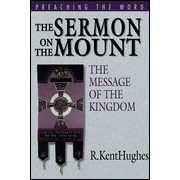
(This excellent sermon has been excerpted from Chapter 14 in R. Kent Hughes excellent book of sermons [pictured below] from  Matthew 5-7 entitled: The Sermon On The Mount: The Message of the KIngdom. Wheaton: Crossway Books, 2001.

A Sermon From R. Kent Hughes

“It was also said, ‘Whoever divorces his wife, let him give her a certificate of divorce.’ But I say to you that everyone who divorces his wife, except on the ground of sexual immorality, makes her commit adultery, and whoever marries a divorced woman commits adultery.” – Matthew 5:31–32

The February 1973 issue of McCall’s magazine carried an article entitled, “Is Anyone Faithful Anymore?” in which the author included the following story. A young wife was at lunch with eleven of her friends, who had been meeting together regularly to study French since their children had been in nursery school. As they conversed, one of the women, the group’s leader, asked, “How many of you have been faithful throughout your marriage?” Only one woman at the table raised her hand. That evening when the young wife told her husband about the conversation, she revealed that she was not the one who had raised her hand. He was shocked and devastated. “But I have been faithful,” she added. “Then why didn’t you raise your hand?” She replied, “I was ashamed.”

Times have changed, have they not? It used to be that most people would go to extremes to hide their infidelity, but today many people are ashamed of their fidelity. We live in a day when some experts speak of “healthy adultery” and the married faithful are less vocal than the unfaithful in promoting their ways.

I think no one would disagree that our contemporary culture is not intrinsically receptive to Biblical teaching regarding sexual relationships, marriage, and divorce. Because of this hostility, some preachers seem reluctant to speak out on these issues. Other ministers hesitate to address these topics because there is major disagreement about divorce in the church. Because there are numerous opinions as to what the Bible means, because the subject is complex, and because contemporary marital relationships are often incredibly tangled mazes, the subject becomes overwhelming. Sadly, we sometimes find it easier to just leave it unaddressed.

Some surveys indicate that eight of ten people are either directly or indirectly affected by divorce. The mere mention of the word divorce is painful to some. Many have been deeply wounded by broken marriages, and a discussion of the subject brings up memories and feelings they would like to forget. For these reasons preachers find little joy in preaching on the subject. But since Jesus brought it up right in the middle of the Sermon on the Mount, the greatest sermon ever preached, he obviously thinks it is an important subject, one we dare not ignore. To see this matter through Jesus’ eyes is good for us as individuals, good for the church, and good for society.

What is to be the Christian’s attitude regarding divorce? Is divorce always forbidden? Or is it sometimes allowable? What is the Christian position amidst the marital tragedy that surrounds us? As we answer these questions, I will try to be sensitive to those who are hurting. But at the same time I will do my best to be Biblical. The bottom line in all of this is, what does God’s Word say?

To understand our Lord’s statements on divorce, we must know something of the controversial social and theological context in which he made them. The controversy centered over the interpretation of a phrase in Deuteronomy 24:1, the stated ground of divorce: “If a man marries a woman who becomes displeasing to him because he finds something indecent about her, and he writes her a certificate of divorce …”

That verse taught that a husband could divorce his wife if he found “something indecent” in her, and that is where the controversy lay. The burning question in Jesus’ day was, what does “something indecent” mean?” Those in the very liberal rabbinical school of Hillel interpreted “indecent” in the widest manner possible. They said a man could divorce his wife if she spoiled his dinner! They also extended “indecent” to mean a wife’s walking around with her hair down, speaking to men in the streets, or speaking disrespectfully of her husband’s parents in his presence. A wrong word about a mother-in-law and a woman could be out on the street! Rabbi Akiba, who was of this school of thought, went even further, saying that the phrase “becomes displeasing to him” (“she find no favor in his eyes,” kjv) meant that a man could divorce his wife if he found a woman who was more beautiful. Such husbands were bigoted and arrogant.

Fortunately, they were opposed by the school of Shammai, which limited “indecent” to offenses of marital impropriety short of adultery. “Indecent” did not refer to adultery, which was punished by execution, but rather suggested other types of sexual misconduct such as shameful exposure.

This conservative-liberal controversy over the meaning of “indecent” as a grounds for divorce was the backdrop of the Pharisees’ coming to Jesus about this matter. Matthew 19:3 describes the situation: “Some Pharisees came to test him. They asked, ‘Is it lawful for a man to divorce his wife for any and every reason?’ ” They were obviously trying to draw Jesus into the long-standing debate and then exploit his response for their own ends. Some even think they were hoping to use Jesus’ answer to get him in trouble with Herod because a negative answer would publicly align him with the point of view that caused John the Baptist to be beheaded. Significantly, Jesus did not begin by directly answering their question but took the conversation back to God’s creation design, giving us the most extensive teaching on divorce in the New Testament.

Jesus’ Teaching on Divorce (Matthew 19:4–12)

Jesus began by stating the ideal:

“Haven’t you read,” he replied, “that at the beginning the Creator ‘made them male and female,’ and said, ‘For this reason a man will leave his father and mother and be united to his wife, and the two will become one flesh’?” (vv. 4, 5)

In the beginning divorce was inconceivable—and impossible. Jesus quoted lines from Genesis 2:23, 24 to emphasize two things. First, the intimacy of the marriage relationship. He says “the two will become one flesh.” There is no other intimacy like it. It is deeper than one’s relationship to one’s own children. When my children were born, there was an amazing bonding that took place when I saw those babies. In the ensuing months and years the bonding increased, and my wife and I are close to our children, interwoven with them. But we are not one flesh with them. The Scripture says that a man becomes “one flesh” with his wife. Marriage is the deepest human relationship.

After intimacy, the emphasis is on permanence. There was no thought of divorce—ever! God’s ideal was, and is, monogamous, intimate, enduring marriage. This is what he approves of. Anything less is a departure from the divine model. And the Fall did not change that ideal. We all know that some things possible before the Fall were not possible afterward. But regarding divorce, God’s standard did not change. We not only see this in the very first book of the Old Testament but also in the very last one:

“Why has God abandoned us?” you cry. I’ll tell you why; it is because the Lord has seen your treachery in divorcing your wives who have been faithful to you through the years, the companions you promised to care for and keep. You were united to your wife by the Lord. In God’s wise plan, when you married, the two of you became one person in his sight. And what does he want? Godly children from your union. Therefore guard your passions! Keep faith with the wife of your youth. For the Lord, the God of Israel, says he hates divorce.… (Malachi 2:14–16, tlb)

God hates divorce! Whenever divorce occurs, it is an aberration. It is something that was not meant to be. All of this talk about “creative divorce” is pseudoscientific and pseudo-liberated baloney. Those who become tired of their marriage because it is solid, predictable, and not very exciting should cast away their fantasies. Besides, there is nothing more boring than evil and its fruit.

The conversation between the Pharisees and Jesus is most enlightening. The Pharisees have alluded to the controversy in Deuteronomy 24, asking if a man may divorce his wife for any reason at all. Jesus has responded by saying divorce is not God’s ideal. Now the Pharisees respond with another reference to Deuteronomy 24: “ ‘Why then,’ they asked, ‘did Moses command that a man give his wife a certificate of divorce and send her away?’ ” (Matthew 19:7). The idea is this: “Moses made provision for divorce in Deuteronomy 24:1. How then can you say it is not part of the ideal?” Note Jesus’ answer in verse 8: “Jesus replied, ‘Moses permitted you to divorce your wives because your hearts were hard. But it was not this way from the beginning.’ ”

Jesus’ answer corrects the Pharisees, for Moses only permitted divorce—he didn’t command it as the Pharisees asserted. What Moses did command was the granting of a divorce certificate for the woman’s protection. Without a certificate she could be subject to exploitation, even recrimination. The certificate also prevented the man from marrying her again. Thus she could not be treated like chattel. Marriage was not something one could walk in and out of. The reason God allowed divorce was the hardness of heart to which the men of Israel had succumbed. It was a divine concession to human weakness—reluctant permission at best!

Understanding this, we come to the very center of Christ’s teaching and the heart of our study—Jesus’ explanation as to when and why divorce is permitted: “And I say to you, whoever divorces his wife, except for immorality, and marries another woman commits adultery” (Matthew 19:9, nasb, emphasis mine).

Here everything rests upon the correct interpretation of the phrase “except for immorality”—and especially the single word, “immorality.” The Greek word here is porneia, from which we derive the English word pornography. The Greek dictionaries tell us that porneia means unchastity, fornication, prostitution, or other kinds of unlawful intercourse. When porneia is applied to married persons, it means marital unfaithfulness, illicit intercourse that may involve adultery, homosexuality, bestiality, and the like. We should note (and this is very important!) that all these offenses were originally punished by death under Mosaic Law. These sins terminated marriage not by divorce but by death. However, by Jesus’ time the Roman occupation of the country and its legal system had made the death sentence very difficult to obtain. Jewish practice had therefore substituted divorce for death. Thus the rabbinical schools of Hillel and Shammai were not discussing whether divorce was permissible for adultery. That was taken for granted by everyone. The point is, Jesus was far stricter than Hillel and Shammai because he superseded the teaching of Deuteronomy 24 and said that the only ground for which one may divorce his or her spouse is marital unfaithfulness. This is the simple, plain meaning of Jesus’ words in verse 9: “And I say to you, whoever divorces his wife, except for immorality, and marries another woman commits adultery.” That is, divorce is allowed if your mate is guilty of marital unfaithfulness. But if you divorce for any other reason and remarry, it is you who commits adultery. This is likewise the meaning of Jesus’ similar statement in the Sermon on the Mount:

“But I tell you that anyone who divorces his wife, except for marital unfaithfulness, causes her to become an adulteress [if she remarries], and anyone who marries the divorced woman [a woman who has been divorced for something short of unchastity] commits adultery.” (Matthew 5:32)

Jesus’ teaching is clear. Some of the interpretations of these texts are unbelievably convoluted, but we must hold to the plain, unadorned sense of the text. Jesus meant what he said!

Some object that these exception clauses don’t jibe with Jesus’ teaching in two other Gospel passages, Mark 10:11, 12 and Luke 16:18, which contain no exception clauses. For instance, Mark records:

He answered, “Anyone who divorces his wife and marries another woman commits adultery against her. And if she divorces her husband and marries another man, she commits adultery.”

No exception clauses! Because of this, some have argued that Mark represents the earlier and pure teaching of Jesus, but Matthew contains a scribal addition of the exception clause and is thus unauthentic. However, we must hold that it is authentic because none of the ancient manuscripts omit it—all of them have it. Why the difference between the Gospels of Matthew and Mark then? John Stott gives the answer:

It seems far more likely that its [the exception clause’s] absence from Mark and Luke is due not to their ignorance of it but to their acceptance of it as something taken for granted. After all, under the Mosaic Law adultery was punishable by death (although the death penalty for this offense seems to have fallen into disuse by the time of Jesus); so nobody would have questioned that marital unfaithfulness was a just ground for divorce.

The Lord Jesus Christ permitted divorce and remarriage on one ground and one ground only—marital unfaithfulness.

But notice that he permitted it—he did not command it. If you learn that your mate has been having an adulterous affair, it does not follow that you have license to seek a divorce. Too often men and women eagerly pounce on the infidelity of their mates as the opportunity to get out of a relationship they wanted to end anyway. It is so easy to minimize one’s own behavior and to maximize the sins of the other party. Many look for a way out instead of a way through the problems. I want to be careful not to minimize the sin of adultery like the man who said to his wife, “I don’t understand why you’re so disturbed. All I did was have an affair.” Yet I believe (this is my personal opinion) that we should not regard a one-time affair in the same way as a mate who persists in his or her adulterous ways and refuses to repent. Jesus’ exception clauses should be viewed like this: No matter how rough things are, regardless of the stress and strain, whatever is said about compatibility and temperament, nothing allows for divorce except unfaithfulness—and even then it is not to be used as an excuse to get out of the relationship.

The Radicalness of Jesus’ Teaching (Matthew 19:10–12)

Jesus’ teaching was radical. He had done away completely with the Mosaic divorce provision (Deuteronomy 24:1). This was revolutionary. The disciples’ response indicates just how radical Jesus’ teaching was: “The disciples said to him, ‘If this is the situation between a husband and wife, it is better not to marry.’ ” They were blown away. If the only ground for divorce was unfaithfulness, if none of the exceptions suggested by Hillel and Shammai were valid, it was better to stay single! The radicalness of what Jesus taught is further underlined in Matthew 5 by its being one of the six statements that begin with variations of “You have heard it said, but I tell you,” demonstrating the superior righteousness of Christ. The point of these statements is: This is the way a righteous person lives! Thus his or her marital relationship is supremely sacred. Nothing can sever it but unrepentant unfaithfulness—and then it is not an excuse for ending the marriage but is the sorrowful ground of divorce.

Such teaching is radical today. It is out of sync with our culture. Today even Christian counselors are recommending divorce and remarriage on grounds that are in opposition to the clear teachings of Christ. The sanctity of marriage has been corrupted by Christ’s own church and his authority flouted. Marriage has been trivialized into a provisional sexual union that dissolves when our puny love gives out. But this is not the way the righteous person approaches marriage. According to Christ, marriage demands total commitment that only death or the most flagrant, ongoing sexual infidelity can bring to an end.

Having seen Christ’s teaching, the question now is, does the Bible say anything else about divorce? The answer is yes.

Jesus’ Teaching and Paul’s (1 Corinthians 7:8–16)

In 1 Corinthians 7:8–16 the Apostle Paul gives consecutive advice, first to the unmarried (vv. 8, 9), then to married believers (vv. 10, 11), and finally to those who have mixed marriages—when one’s spouse is not a believer (vv. 12–16). It is on this final category that we will focus.

Paul begins his teaching by saying in verse 12, “To the rest I say this (I, not the Lord) …” which has been misunderstood by some as meaning that Paul is saying that his teaching is not as authoritative as Christ’s. What he really means, however, is that what he is going to say was not said by Jesus in his earthly ministry but is now being said by Paul as part of his apostolic teaching. “He is saying in effect, ‘I am now going to deal with cases on which the Lord Himself did not give a verdict.’ ” Paul speaks with full apostolic authority. Notice what he says:

To the rest I say this (I, not the Lord): If any brother has a wife who is not a believer and she is willing to live with him, he must not divorce her. And if a woman has a husband who is not a believer and he is willing to live with her, she must not divorce him. (vv. 12, 13)

Paul knew that in Corinth there were many marriages in which either the husband or wife had become a Christian after marriage, thus producing a spiritually mixed marriage. His advice was that the Christian must not leave his or her pagan spouse—it was not permitted. Then in verse 14 he gives the reason:

For the unbelieving husband has been sanctified through his wife, and the unbelieving wife has been sanctified through her believing husband. Otherwise your children would be unclean, but as it is, they are holy.

The reason for staying together is that the unbeliever and the children will be influenced toward Christ by the life of the believer. I find this fascinating because we often think of the believer being corrupted by the unbeliever, and indeed sometimes this happens. But Paul lays down that it is generally otherwise! If you are in an unequal union, take heart! The general thrust is that you and your faith will prevail—though, sadly, not always.

Then in verse 15 we have Paul’s new teaching: “But if the unbeliever leaves, let him do so. A believing man or woman is not bound in such circumstances; God has called us to live in peace.”

The sense is, if the unbeliever deserts and is determined not to come back, let him or her go. The Christian is “not bound in such circumstances,” which means that the believer is free from the marriage because the unbeliever has broken the marriage bond. The result is that the believer is free to divorce and remarry. The consistent use of the word “bound” in this passage and others means “is not bound in marriage.” There is no need to seek some other interpretation. This is the plain sense—this is what it means.

A Summation of Biblical Teaching

So we see that the Bible allows divorce for two reasons—marital unfaithfulness such as adultery and homosexuality, and the desertion of a believer by an unbelieving spouse.

As to the question of remarriage, the Scriptures allow it in three instances.

First, if one’s mate is guilty of sexual immorality and is unwilling to repent and live faithfully with the marriage partner, divorce and remarriage are permissible.

Second, when a believer is deserted by an unbelieving spouse, divorce and remarriage are again permitted.

And third, as an extension of the allowance for divorce and remarriage when deserted by an unbeliever, I personally believe that when someone has been married and divorced before coming to Christ, remarriage is allowed. Second Corinthians 5:17 says, “Therefore, if anyone is in Christ, he is a new creation; the old has gone, the new has come!” “New” here (kainos) means new in quality. “New” means what it says—really new, as contrasted to the old. The same word is used of the “new man” in Ephesians 2:15 and the “new self” in Ephesians 4:24. Not only are believers really new, but Paul says that “the old has gone, the new has come.” A new believer is completely forgiven. I believe that among the old things that have passed away are all sins, including divorce prior to salvation. If it were otherwise, divorce would be the only sin for which Christ did not atone, and that would be inconceivable.

I hope no one misunderstands me, for divorce is not the ideal. It is a divine concession to human weakness. God hates divorce! We must realize that divorce (and remarriage) according to the Biblical guidelines is not sin—though it is due to sin. We must mourn every divorce!

How foreign to the Biblical mind are phrases like “creative divorce” or “the magic of divorce” or the ad that appeared on the back of a TV Guide: “Order your DIVORCE RING BAND today.… Now is the time to celebrate your new beginning.”

We have discussed the issues primarily with the non-offending party in view. What advice is there for the offending party? Here I can do no better than quote the concluding words of Dr. Martyn Lloyd-Jones:

“Have you nothing to say about others?” asks someone. All I would say about them is this, and I say it carefully and advisedly, and almost in fear lest I give even a semblance of a suggestion that I am saying anything that may encourage anyone to sin. But on the basis of the gospel and in the interest of truth I am compelled to say this: Even adultery is not the unforgivable sin. It is a terrible sin, but God forbid that there should be anyone who feels that he or she has sinned himself or herself outside the love of God or outside His kingdom because of adultery. No; if you truly repent and realize the enormity of your sin and cast yourself upon the boundless love and mercy and grace of God, you can be forgiven and I assure you of pardon. But hear the words of our blessed Lord: “Go and sin no more.”

Finally, what do we say to the church, to ourselves?

First, we must resist the permissiveness of our culture and solidly take our stand against divorce or remarriage on any grounds other than those taught in God’s Word.

Next, we must refrain from self-righteous judgmentalism. All of us are adulterers in heart. We must exercise our dealings with those who have fallen, realizing that we are ourselves under Christ’s omniscient dictum: “But I tell you that anyone who looks at a woman lustfully has already committed adultery with her in his heart” (Matthew 5:28).

Finally, toward those who have fallen to or suffered divorce, we must be forgiving, like our Lord. We must not call unclean that which he has called clean (Acts 10:15). We must endeavor to share the suffering of those ravaged by divorce. And lastly, the church should make provision for the remarriage of those who have Biblically divorced.

About The Preacher: Dr. Kent Hughes

Dr. Hughes’s thirty-five years of ministry divides evenly into ten years as a youth pastor, five years as a church planter, and twenty years as senior pastor of College Church in Wheaton, IL. He is the author of more than twenty-five books, among which are Disciplines of a Godly Man and Liberating Ministry From the Success Syndrome. He is in the midst of a life-long project of completing the Preaching the Word commentary series of the entire New Testament, and is the editor of the Old Testament for the same series. College Church is noted for its world-wide missions outreach, because half of its total budget goes to world missions. The Hughes are the parents of four children and fourteen grandchildren.

Education

  • D.D. 1991, Biola University, La Miradad, CA
  • D.Min. 1981, Trinity Evangelical Divinity School, Deerfield, IL
  • M.Div. 1972, Talbot Seminary, La Mirada, CA
  • B.A. 1964, Whittier College, Whittier, CA

Professional Experience

  • 1979 to present: served as Senior Pastor of College Church in Wheaton, noted for its missions program. Presently, the missions budget is approximately 1.6 million annually.
  • 1974-79 founded a new church in the Orange County area of Southern California, and served as an adjunct professor at Talbot Seminary, teaching Greek and homiletics.
  • 1963-74 ministered on the staff of Granada Heights Friends Church, serving for seven years as High School Pastor and three years as Associate pastor and Minster to Collegians.
  • 1960-61 served as Youth for Christ Club Director.

In addition to regular pastoral, administrative and preaching duties at College Church, Pastor Hughes ministers to several outside conferences each year. He is a Staley lecturer, and in addition speaks at spiritual emphasis weeks for many Christian colleges and universities. Pastor and Mrs. Hughes speak regularly at pastors’ conferences.

Pastor Hughes has served on the Board of Americans United for Life (the legal arm of the pro-life movement), the Board of Trustees of World Radio Missionary Fellowship (HCJB), and the board of Operation Mobilization. Presently he is a member of the Board of Crossway Books.

Dr. Hughes is also a Former senior editor of Christianity Today.

Books Published

  • Behold the Lamb, (Exposition of John 1-10), Victor Books, 1984.
  • Behold the Man, (Exposition of John 11-21), Victor Books, 1984.
  • The Christian Wedding Planner, Muzzy/Hughes, Tyndale House, 1984.
  • Blessed Are the Born Again, (The Beatitudes as a checklist for authentic Christianity), Victor Books, 1986.
  • Abba Father: The Lord’s Pattern for Prayer, Crossway Books, 1986.
  • Living on the Cutting Edge: Joshua and the Challenge of Spiritual Leadership, Crossway Books, 1987.
  • Liberating Ministry From the Success Syndrome, Tyndale House, 1988, co-authored with Mrs. Hughes
  • Mastering the Pastoral Role, Paul Cedar, R. Kent Hughes, Ben Patterson, Multnomah, 1991.
  • Disciplines of a Godly Man, Crossway Books, 1991.
  • Disciplines of Grace, Crossway Books, 1993.
  • The Gift, Crossway Books, 1994.
  • Are Evangelicals Born Again?, Crossway Books, 1995.
  • Common Sense Parenting, Tyndale House, 1995, co-authored with Mrs. Hughes.
  • The Saviour, Crossway Books, 1995.
  • 1001 Great Stories & “Quotes”, Tyndale House, 1998

Preaching the Word Series, Crossway Books

  • Colossians and Philemon, The Supremacy of Christ, 1989.
  • Mark, Jesus Servant and Savior, Vol. 1, 1989.
  • Mark, Jesus Servant and Savior, Vol. 2, 1989.
    Note: The Mark volumes were presented the E.C.P.A. Gold Medallion Book Award for the best commentary of 1990.
  • Ephesians, The Mystery of the Body of Christ, 1990.
  • Romans, Righteousness from God, 1991.
  • James, Faith that Works, 1991.
  • Hebrews, An Anchor for the Soul, Vol. 1, 1993.
  • Hebrews, An Anchor for the Soul, Vol. 2, 1993.
  • Acts, The Church Afire, 1996.
  • Luke, That You May Know the Truth, Vol. 1, 1998.
  • Luke, That You May Know the Truth, Vol. 2, 1998.
  • John, That You May Believe, 1999.
  • 1 and 2 Timothy and Titus, Guard the Deposit, with Bryan Chapell, 2000
  • The Sermon on the Mount, The Message of the Kingdom, 2001.

Dr. R.C. Sproul Answers The Question: “Why Don’t We Know God?”

WHY WE DO NOT KNOW GOD

In order to speak to the question, “Why don’t we know God?” we must first grant that we do, in a sense, know God. So we can hardly speak to the question, “Why don’t we?” without making the kind of distinction that Dr. Packer makes. Dr. Packer distinguishes between the different ways in which we may know God. He speaks of the distinction between notitia and cognitio, that is, the difference between an intellectual awareness or mental apprehension of something and a more profound or deep relational knowledge of someone or something.

Obviously, the Bible uses the verb “to know” in at least these two ways and perhaps even more widely. There are different levels, degrees, or ways in which we can know things and persons. That is why the Scriptures say on some occasions that men do not know God, that men are in darkness concerning God, yet on other occasions that men do know God. Unless the Bible is speaking with a forked tongue, or unless we violate radically the Reformed principle of the coherency of Scripture, we have to conclude that the Bible is speaking from different perspectives about different kinds of knowledge. Perhaps we can circumvent the dilemma by making these distinctions. But one thing is certain: no one knows God at the depth to which it is possible to know God. And that is the question with which we must wrestle: Why do we not know God as intimately, deeply, personally and comprehensively as it is possible for us to know him?

Willful Ignorance

The answer to that question does not require an extended dissertation. The reason that we do not know God as intimately, deeply, personally, and comprehensively as we possibly could is because we do not want to know God intimately, deeply and comprehensively. Moreover, even though we may be redeemed, even though we may be “the elite of the elect,” there still remains within us the residual elements of our fallenness. Our natures have been regenerated, but the sin that dwells within us has not been eradicated and will not be, this side of glory. So as long as there remains any disposition within us to sin there is a propensity toward ignorance of the things of God. I would like to focus our attention on a detailed analysis of why men do not know God to the degree that it is possible to know him. The basis for this analysis is the first chapter of Romans, beginning at verse 18.

In the part of the prologue that is found in verses 16, 17 and 18, Paul maintains that he is not ashamed of the gospel, for it is the power of God for salvation to everyone who has faith. Then we find the thematic statement of the Epistle: “For therein [that is, ‘in the gospel’] is the righteousness of God revealed from faith to faith: as it is written, The just shall live by faith.” This is the topic sentence for the whole Epistle: the righteousness of God is revealed through faith. So, in a word, Paul is concerned with revelation. But notice, he begins in verse 18, not with the revelation of God’s mercy, grace, or justification, but with the revelation of God’s wrath: “For the wrath of God is revealed from heaven against all ungodliness and unrighteousness of men.”

What we find here, as always in Scripture, is that God’s wrath is never arbitrary, capricious, irrational or demonic, but that it is always a response to something evil. God’s wrath is revealed against unrighteousness and ungodliness. It is not a wrath revealed against righteousness, godliness or piety, but against unrighteousness and ungodliness. Unrighteousness and ungodliness are general terms—wide-sweeping, wide-encompassing descriptive terms. But we must not stop here, for Paul moves from the general to the particular. He does not leave us to wonder about what particular form of unrighteousness, what specific kind of ungodliness is provoking the wrath of God. Rather, Paul names the child. He mentions it in the second clause of the sentence: “For the wrath of God is revealed from heaven against all ungodliness and unrighteousness of men, who hold [that is, ‘suppress’] the truth in unrighteousness.” The specific provocation of God’s wrath is human suppression of truth.

If you go to different translations of the Bible, you will find a wide variety of English phrases used to translate the last part of verse 18. The old King James Version says, “who hold the truth in unrighteousness.” Some translations say, “hindering the truth.” One translator has preferred to say “repress the truth.”

Let us go back to the old King James Version: “holding the truth in unrighteousness.” That whole phrase seems a bit archaic, does it not? How does one hold truth? Truth is an abstract thing; truth is not quantitative. How can we use tactile, empirical terms to describe truth? We do not hold truth; we hold a wristwatch, or we hold onto something. But there are different ways to hold things. If I hold a wristwatch, that is one kind of holding. If I hold onto a lectern, that is another kind of holding. If I hold my wife, hopefully that is an altogether different kind of holding. What kind of holding does the apostle have in mind here? Well, notice that we can hold something up, or we can hold something down. The verb used here literally means “to hold down, to incarcerate, to hold back,” and it suggests the notion that one must use force to repress a counterforce. The way I like to think of “holding down” is of a giant spring compressed to its point of highest tension. In order to hold that spring in place, one must exert all kinds of counterpressure to keep it compressed; otherwise it will spring up by its own tension and perhaps even injure the one who is seeking to hold it back.

So why is Paul using this verb with respect to truth? He is talking about the human effort that brings the wrath of God upon man. It is man’s active, positive resistance to God’s truth.

Sufficient Revelation

The reason that God is angry is further elucidated in verse 19, where Paul says, “Because that which may be known of God is manifest in them; for God has shown it unto them.” If Paul had merely said, “What could have been known about God was available to man,” that would have been reason enough for God to reveal his wrath against those who did not avail themselves of a divinely given opportunity to know him. That in itself would have been a serious sin against our Creator. But Paul is not simply saying: God has made knowledge of himself available to men and men have never made use of this opportunity. No, he is saying that the knowledge of God which he has revealed to all men has been made plain, not obscure, and that mankind has rejected it.

Let me comment on that with an illustration from the academic world. There are different ways in which you can bring students to a state of knowledge. You can say to them, “Look, we have a course in the Doctrine of God. I am the professor in this course, but I am not going to teach you anything; I am simply going to moderate the course. Each student is responsible to lecture. If you want to know about the Doctrine of God, just go to the library and find those books that have something to say about the Doctrine of God and then come in and give your paper.” That is one way I could do it. Or I could say, “Look, I want you to do heavy research about the Doctrine of God. So I am going to take all the books in the library that deal with the Doctrine of God and put them together in one place on the reserve shelf. I am going to make it easy for you to discover this information.” In other words, I would be facilitating the student’s efforts to learn something about the Doctrine of God. Or, finally, I could go even further. I could put those books on the reserve shelf, and then I could take the student by the hand, march him over to the library, show him where the reserve shelf is, take each book off the shelf, open it up to the first page, and say to him, “Listen to this,” and start to read it.

I think that Paul is getting at something like this last illustration. God does not just make the knowledge available. He shows himself to us, as the apostle says. How thoroughly that knowledge has been received remains a question. But one thing is certain: God has revealed himself to all men with sufficient clarity and with sufficient content as to render men inexcusable. He has presented himself with enough clarity, with enough revelation, to remove the cry of ignorance as a justifying reason for a person’s rejection of him.

Assured Results

Paul goes onto say that when men refuse to honor God and refuse to acknowledge him even though they know he is there, their thinking becomes “foolish” and their minds “darkened.” Have you ever read the works of David Hume? Have you ever read the works of Jean-Paul Sartre? These men are great thinkers. David Hume, I think, is one of the most formidable opponents that the Christian faith has ever had to wrestle with. How can men who have clearly and blatantly denied the existence of God be so scholarly, so knowledgeable, and manifest such high gifts of intelligence? The answer is in this text. Once a man refuses to acknowledge what he knows to be true he can go on to construct magnificent systems of philosophy. He can manifest gifts of intellectual acumen and brilliance. But if he is consistent, if his starting point in the procedure involves an obstinate rejection of what he knows to be true, his system can end only in futility. Imagine the scientist who starts his scientific endeavor by denying what he knows to be the basic facts. The only way such a scientist can arrive at any kind of truth is by a happy inconsistency, by compounding his errors to such a degree that possibly he will be fortunate enough to stumble onto some truth.

The pagan adds insult to injury, Paul continues, for not only does he begin his systematic approach by refusing to acknowledge what he knows to be true and thereby working continuously with a darkened mind but, having done this, he tells the world that he is wise. Paul says, “ … professing themselves to be wise, they became fools.” Sinful man, after he repudiates what he knows to be true, then has the audacity to say to God and to the world, “I am a wise man.” But God says that the wisdom of sinful man is foolishness!

In the Scriptures the designation “fool” is not primarily an intellectual evaluation. When God says that a man is a fool, he is not saying that he is dull-witted. He is not saying that he has a low I.Q. or that he is a poor student. The term “fool” is a judgment of man’s character. It is more of a moral evaluation than an intellectual one. It is the fool who says in his heart, “There is no God.”

Foolishness is in many of the catalogues of serious sins in the New Testament, along with adultery and murder and things like that. Foolishness is a moral refusal to deal honestly with truth.

Undefined Anxiety

We notice next that men’s foolishness of compounded. Claiming to be wise, they became fools, and exchanged “the glory of the incorruptible God” for images resembling mortal man, birds, animals or reptiles. Therefore, “God also gave them up to uncleanness through the lusts of their own hearts, to dishonor their own bodies between themselves, who exchanged the truth of God for a lie, and worshiped and served the creature more than the Creator, who is blessed forever.”

What happens after the truth is held down, after the truth is repressed? Is there a vacuum? No! Immediately an exchange takes place. Substitution occurs.

It is valuable to talk about this in contemporary psychological terms. Johannes Spavink, the Dutch scholar, finds in this text a statement about man’s psychological prejudice. Spavink asks: Why do men repress or suppress things? He says that knowledge which is most likely to be suppressed is knowledge which comes to us in the framework of the traumatic. We try to push down knowledge that frightens us or is unpleasant. We have a kind of psychocybernetic system with which we screen from our conscious mind those things which are unpleasant. But the question I ask you in modern psychological terms is this: Is the memory of a threatening or traumatic experience destroyed by our repression? I do not know of any psychologist or biochemist who would say that those memory notions or images are destroyed. Rather, we bury them or push them down.

So, our present state of consciousness is dark, but the knowledge has not been destroyed. For example, let us say that I have repressed negative feelings about my mother. I am not even conscious of these feelings. But I begin to have undefined anxiety. I begin to worry, and I do not know why I am worried. When I begin to experience restlessness I go to a psychologist to help me work through my anxiety state.

The doctor says, “What’s the matter?”

I say, “I have anxiety.”

“Why do you have anxiety?”

“I don’t know. That’s why I came to see you. I’m worried, and I don’t know why I’m worried. Help me to find out.”

The doctor begins to probe my inner man to see where the injury is and how I can be brought again to health and wholeness. As he goes through my medical history he does not pay attention simply to the words I say. He is also carefully observant of my mannerisms, my gestures, and every kind of symbolic activity with which I am communicating my deepest feelings. Eventually in our discussions he notices that every time he asks me about my mother, or every time I say something about my mother, I twitch my shoulder. So he thinks, “Every time Sproul says something about his mother he has this awful twitch.” He asks, “Do you have any kind of bad feelings about your mother?”

“My mother?” (Twitch) I ask in astonishment. “I don’t feel anything bad about my mother!” (Twitch)

But he knows that somewhere in the past I have had a bad experience with my mother, and he knows that this knowledge has not been destroyed but that it is only exchanged for the gesture. In this way it is (perhaps) still a problem but not quite as threatening as the original experience. In the same way, most people do not say simply, “There is no God”; rather they create a new God, one who is less threatening, less terrifying, less of a problem.

Let me illustrate this. A few years ago I was watching the David Frost show, and he was interviewing Madalyn Murray O’Hair. They began discussing whether or not there is a God, and David Frost suddenly became a great champion of the Christian faith, defending it against O’Hair. The discussion got so out of hand that Frost became angry and decided to determine the controversy by a show of hands. He turned to the studio audience and asked, “How many of you believe in some kind of supreme being, some kind of higher power, something greater than yourselves?” Almost everybody in the audience raised his hand.

I waited breathlessly to see what Madalyn Murray O’Hair would say to that kind of response. She said, “Well, what do you expect from the masses who come to this studio? What do they know? Give them time to catch up with modern knowledge, and this myth will disappear.” That is the tack she took. I thought that if she had been clever she would have said, “Just a minute, Mr. Frost. Let me pose the question.” Then, turning to the audience, she would say something like this. “I know that some of you believe in something higher than yourself, some higher power, some faceless, nameless, contextless, unknown god who makes no claims on your existence, who never stands in judgment over your morality, who does not demand the sacrifice of your life. Anybody can believe in that kind of god. But do you believe in Yahweh, the Lord God of Israel, who thunders from Sinai, ‘You will have no other gods before me’? Do you believe in a god who demands obedience to his perfect law and who calls men to repentance? How many of you believe in a god who makes absolute demands upon your life?” What do you suppose the vote would have been like?

The “Supreme Being,” the “Ground of Being,” “Ultimate Concern”—all these titles are nonthreatening. They have no substance. They represent our most sophisticated efforts at idolatry, in which we exchange the truth of God for a lie, a nonthreatening lie. They speak of a God who never judges us, who never calls us to repentance, a cosmic grandfather who says, “Boys will be boys.” That is the kind of God we have, not only in the secular world but in our churches.

The Immutable God

When I was writing the book Psychology of Atheism, I worked through three great attributes of God: holiness, sovereignty, and omniscience. But then I remembered a sermon I had read years before by Jonathan Edwards entitled, “Man Naturally God’s Enemy.” I wondered what Edwards had to say about why men hate God. So I went back to read that sermon. At the beginning Edwards said, “There are four things about God that make men hate him.” I thought, “Four things? What did I miss?” And I wondered if Edwards had found the same things I had found.

He said, “The first thing that terrifies man is God’s holiness.”

I said, “Aha! I got one right!”

Then he said, “The second thing man hates about God is his omniscience.” By this time my opinion of Edwards as a scholar was rising.

He went on, “The third thing that men hate about God is his sovereignty.” I could hardly believe that I had put my finger on the same things. But what was the fourth one? What had I missed?

I turned the page and read, “Perhaps you are wondering what the fourth one is?” Edwards had stolen the words right out of my mouth. Then I read: “The fourth thing about God that men hate is his immutability.” Immutability? Why would that be so threatening? Why should that bother us? Edwards explained. “Man faces this dilemma: Not only does he know and know clearly that God is holy and omniscient and sovereign, but he knows that God will always be holy, he will always be omniscient, he will always be sovereign. And there is nothing we can possibly do to make him less holy, less omniscient, or less sovereign. These attributes are not open to negotiation. We cannot find God involved in a process of change whereby he can enter into certain mutations to compromise with us.”

From age to age, the hound of heaven brings his light into a world of darkness; but men love the darkness rather than the light because their deeds are evil.

About the Author: Dr. R.C. Sproul is the founder and chairman of Ligonier Ministries, an international Christian education ministry located near Orlando, Florida. His teaching can be heard on the program Renewing Your Mind, which is broadcast on hundreds of radio outlets in the United States and in 40 countries worldwide. He is the executive editor of Tabletalk magazine and general editor of The Reformation Study Bible, and the author of more than seventy books (including some of my all time favorites: The Holiness of God; Chosen By God; Reason to Believe; Essential Truths Of The Christian Faith;  Knowing Scripture; Willing to Believe;  Intimate Marriage; Pleasing God; If There’s A God, Why Are There Atheists?, and Defending The Faith) and scores of articles for national evangelical publications. Dr. Sproul also serves as president of Ligonier Academy of Biblical and Theological Studies and Reformation Bible College. He currently serves as Senior Minister of preaching and teaching at Saint Andrew’s in Sanford, FL.  The article above was adapted from the chapter entitled “Why We Do Not Know God” from the book: Our Sovereign God: Addresses Presented to the Philadelphia Conference on Reformed Theology, 1974-1976. James M. Boice, ed. Grand Rapids: Baker, 1977.

Dr. Gleason L. Archer on Does The Bible Testify To It’s Own Inerrancy?

“The Witness of the Bible to its Own Inerrancy” by Dr. Gelason L. Archer

Does the Bible actually assert its own inerrancy as the revealed Word of God? Does it really lay claim to freedom from error in all that it affirms, whether in matters of theology, history, or science? Are proponents of this view truly justified in their insistence on this high degree of perfection in Scripture, or are they actually going beyond what it affirms concerning its own authority? These questions have been raised by those who advocate a lower concept of biblical authority, and it is important for us to settle them as we seek to come to terms with the Bible’s own witness.

Before we launch into an examination of specific passages in Scripture that bear upon this question, it would be well to define as clearly as possible the basic issues involved. Otherwise we may lose sight of the objectives of this type of investigation.

Preliminary Considerations

Inerrancy is attributed only to the original manuscripts of the various books of the Bible; it is not asserted of any specific copies of those books that have been preserved to us. Some early portions of the New Testament have been discovered by archaeology (such as the Rylands Papyrus 457 fragment of John 18, and the Magdalen fragment of Matthew 26), dating from the second century AD., within a century of the original composition of those Gospels. The earliest complete copy of an Old Testament book is still the Dead Sea Scroll of Isaiah (lQIsaa), dating from the mid-second century B.C. There are some Qumran fragments of the Pentateuch that are even earlier, coming from the third or fourth century. All these tend to support the received text of the Hebrew and Greek Scriptures as preserved in the standard scholarly editions (Nestle and Kittel). There is far more textual support for the text of Holy Scripture than there is for any other book handed down to us from ancient times, whether the works of Homer, the Attic tragedians, Plato, Cicero, or Caesar. Nevertheless, these are not the original manuscripts, and minor errors have crept into the text of even these earliest and best copies of the books of the Bible. There are occasional discrepancies in the spelling of names, in the numbers cited in the statistical records, and similar matters. It is the special task of textual criticism to analyze these errors and choose the best of the variant readings according to the standard rules (or “canons”) of this science.

Yet there is an important qualification to be made in regard to the range or degree of error that has crept into our received text of Scripture. That is to say, the extent of deviation from the exact wording of the original manuscripts of the Bible must somehow have been kept within definite limits, so as not to pervert the sense or the teaching of the passage in which it occurs. Otherwise it could not serve as a trustworthy record of God’s redeeming love for mankind or of his will for our salvation. Since the Bible repeatedly affirms that it sets forth the revealed Word of God (“Thus saith the Lord”), rather than the mere conjectures or traditions of men, it must have been preserved in a sufficiently accurate form to achieve its salvific purpose for the benefit of the human race. God is present in Scripture as the omnipotent Lord of history, and as such he could not have allowed his redemptive plan to be thwarted by a seriously defective transmission.

What confirmation do we have that God has in fact maintained that kind of control over the preservation of the manuscripts? The answer is in the critical apparatus appearing in the scholarly editions of the Old and New Testament. Many hundreds of ancient manuscripts have been carefully consulted in drawing up this apparatus, both in the original languages themselves and in the languages into which they were translated (from the third century B.C. to the fifth century AD.). Yet a meticulous examination of all the variant readings appearing in the apparatus shows that no decently attested variant would make the slightest difference in the doctrinal teaching of Scripture if it were substituted for the wording of the approved text. (By “decently attested variant” we, of course, exclude all merely conjectural emendations, with which the apparatus of Kittel’s Biblia Hebraica is needlessly encumbered. We refer only to deviations indicated by actual Hebrew, Greek, Latin, or Syriac manuscripts as over against the Masoretic Text of the Hebrew Bible, or the Nestle edition of the New Testament.)

The same finding can hardly be sustained for any other ancient document preserved to us in multiple copies, whether the Egyptian Book of the Dead, the Behistun Rock inscription of Darius I, or the Middle Kingdom novel known as The Tale of Sinuhe. These all present differences in wording that affect the actual message or teaching of the document. Only of the Bible is it true that such a degree of deviation is not found. How may this be accounted for? It is best accounted for by the supposition that God the Holy Spirit has exercised a restraining influence on the preservation of the original text, keeping it from serious or misleading error of any kind.

So far as the text of the New Testament is concerned, the testimony of Frederick Kenyon is quite conclusive:

Repeated mention of divergent manuscripts and families of texts may perhaps give the impression that the text of the New Testament is abnormally uncertain. Such an impression can best be corrected by an attempt to envisage the early history of the text and its present condition. So far from the New Testament text being in an abnormally unsatisfactory state, it is far better attested than that of any other work of ancient literature. Its problems and difficulties arise not from a deficiency of evidence but from an excess of it. In the case of no work of Greek or Latin literature do we possess manuscripts so plentiful in number or so near the date of composition. Apart from Virgil, of whom we have manuscripts written some three or four hundred years after the poet’s death, the normal position with regard to the great works of classical literature is that our knowledge of their text depends upon a few (or at most a few dozen) manuscripts, of which the earliest may be of the ninth or tenth or eleventh century, but most of the fifteenth. In these conditions it generally happens that scientific criticism has selected one manuscript (usually but not necessarily the oldest) as principal authority, and has based our printed texts on this, with some assistance from conjecture…. In the case of the New Testament … the vellum manuscripts are far earlier and far more numerous; the gap between the earliest of them and the date of composition of the books is smaller; and a larger number of papyri have (especially since the discovery of the Chester Beatty papyri) given us better means of bridging that gap. We are far better equipped to observe the early stages of textual history in the manuscript period in the case of the New Testament than of any other work of ancient literature (Frederick G. Kenyon, Recent Developments in the Textual Criticism of the Greek Bible. New York and London: Oxford University Press, 1933, pp. 74-76).

The Original Manuscripts

The question naturally arises in this connection: If we do not now possess the inerrant original manuscripts, what is the point of arguing that they must have been free from all error? Why do we not simply accept the fact that textual errors have crept into the wording of the Bible as we now have it and try to make the best of it in its imperfect form? Is it not enough for us to maintain that even in that form it can present us with an “infallible rule of faith and practice” (to use the standard phrase of the Westminster Confession of Faith)?

In answer to this, it should be pointed out, first of all, that there is a great difference between a document that was corrupted with error at the start and a document that was free from mistake at its original composition. If the original author was confused, mistaken, or deceitful, then there is little to be gained by employing textual critical methods to get back to an approximation of the original form. The errors and misinformation inhere in the archetype itself and serve only to the disadvantage and hurt of the reader. Only if the original was correct and trustworthy is any useful purpose served by elimination of copyists’ errors. The pursuit of textual criticism itself implies a trustworthy original, the original wording of which has decisive importance.

Second, it should be observed that the controlling influence of an inerrant model is part of our daily experience today, even though none of us has access to that model. In the Bureau of Standards in Washington, D.C., there is preserved a perfect pound, a perfect foot, a perfect quart – all the basic measures of weight, length, and volume, in relation to which all other pound-weights, rulers, quart bottles, and other measures are judged. Very few Americans have ever seen these standard models in Washington with their own eyes. Yet none would contend that we may completely disregard them on the ground that all we ever see are approximate measuring devices.

Third, if mistakes at any level characterized the original manuscripts of the Bible, the effort to discover in them a truly “infallible rule of faith and practice” becomes an exercise in futility. Most of the doctrinal teaching contained in Holy Scripture comes to us in a framework of history and science. For example, the opening statement of the Apostles’ Creed affirms that God the Father Almighty was the creator of the universe, and this certainly involves an unqualified rejection of the theory of mechanistic evolution, which so dominates the thinking of non-Christian scientists today. The subsequent affirmation of the virgin birth of our Lord and Savior Jesus Christ likewise has a definite bearing on scientific theory today, for it is commonly thought that no events can take place in nature that do not constantly recur so as to be subject to scientific observation and analysis. Again, the bodily resurrection of Christ is both a scientific and a historical event, along with its theological importance for the salvation of sinners. Christ’s sufferings and death on the cross under the authority of Pontius Pilate are likewise events in history. Therefore, if the Bible may have erred in its statements concerning history and science (interpreted, of course, in the way the original author intended them) the doctrinal or theological affirmations for which they form the framework must also be subject to error.

Authority of the Old Testament

The Old Testament shows no awareness whatever of any supposed line of distinction between theological doctrine and miraculous events. This is true of the accounts of Moses’ time, concerning both history and science. Psalm 105, composed four or five centuries after the Exodus, heartily reaffirms the historicity of the ten plagues on Egypt as recorded in Exodus 7-12, and renders thanks to the Lord for this display of his power in redeeming Israel from her bondage. Psalm 106 likewise exalts the name of Yahweh for the miraculous parting of the waters of the Red Sea and for the sudden destruction of Dathan and Abiram as they sought to set aside Moses and his revelation. These saving acts of God are referred to as factual episodes in the history of redemption. And so are the battle of Gibeon (which features the prolongation of the day and the destruction of the enemy by a catastrophic hailstorm) and the fall of the walls of Jericho at the sound of a trumpet blast (see Isa. 28:21; 1 Kings 16:34).

Ancient Israel was as sure of the reality of the Red Sea crossing as the apostolic church was of Christ’s death on Calvary. So no matter how rationalists and antisupernaturalists scoff at these episodes as fabulous and nonhistorical, the Hebrew Scriptures themselves affirm them without qualification as actually having taken place on the plane of history.

Much more could be said concerning the testimony of Holy Scripture to its own plenary inspiration. One of the best discussions concerning these matters is to be found in chapter 2 of L. Gaussen’s Theopneustia: The Bible, Its Divine Origin and Inspiration, (L. Gaussen, Theopneustia: The Bible, Its Divine Origin and Inspiration, trans. by David D. Scott. Cincinnati, Boston, and New York: Blanchard, 1859) where he points to innumerable passages in the Old Testament that assert unequivocally that the words of the prophets were the words of God. Not only in the Pentateuch (Exod. 4:30; Deut. 18:21, 22, and the numberless instances in Leviticus) but also throughout the prophets we meet with such affirmations as “The LORD has spoken [the following words],” “The mouth of the LORD has spoken,” “The word of the LORD came to saying” (Josh. 24:2; Isa. 8:11; Jer. 7:l; 11:1; 18:1; 21:1; 26:1;27:1; 30:1,4; 50:1; 51:12; Amos 3:1; passim).

Hosea begins, “The word of the Lord that came to Hosea….” This fullness of inspiration is asserted of the Psalms as well: “Sovereign Lord,… who by the mouth of our father David, thy servant, didst say…” (Acts 4:24-26, quoting Ps. 2:1, 2). So also Peter says of David in connection with Psalm 16:10: “Being therefore a prophet, and knowing that God had sworn with an oath to him that he would set one of his descendants upon his throne, he foresaw and spoke of the resurrection of the Christ, that He was not abandoned to Hades, nor did His flesh see corruption” (Acts. 2:30, 31). Very clearly, then, God is here said to have spoken by the mouth of David, even though the actual speech and inscripturation were done by David himself. Second Peter 1:20 speaks of the Old Testament in general as the “prophecy of Scripture” (prophteia graphs) and clearly affirms that it did not come by the will of man (as if invented or thought up by the human author on his own initiative) but only as the human author was moved by the Holy Spirit and thus produced in his own human words exactly what God intended him to say. These inspired writings were truly the words of God (even though conveyed through the human instrumentality of the prophet) and contained a full and complete magisterial authority.

This authority is constantly recognized by the Gospel writers, who often remarked: “All this took place to fulfill what the Lord had spoken by the Prophet” (Matt. 1:22; cf. 2:5, 15, 23; 13:35; 21:4; 27:9, passim). As Gaussen points out, “Nowhere shall we find a single passage that permits us to detach one single part of it as less divine that all the rest” ( Ibid, p. 67). That is, the distinction between the doctrinal-theological and the historical-scientific drawn by some modern writers on this subject is completely foreign to the attitude of the New Testament authors toward the Old.

Christ’s Unqualified Acceptance of the Old Testament

Jesus of Nazareth clearly assumed the errorlessness of the Old Testament in all its statements and affirmations, even in the realms of history and science. In Matthew 19:4, 5 he affirmed that God himself spoke the words of Genesis 2:24, with reference to the literal, historical Adam and Eve, as he established the ordinance of marriage. In Matthew 23:35 he put the historicity of Abel’s murder by Cain on the same plane of historical factuality as the murder of Zechariah the son of Barachiah. In Matthew 24:38, 39 Jesus clearly accepted the historicity of the universal flood and Noah’s ark: “For as in those days before the flood they were eating and drinking, marrying and giving in marriage, until the day when Noah entered the ark, and they did not know until the flood came and swept them all away….” This record, bearing upon both history and science, has been scornfully rejected by those who trust in the infallible accuracy of modern scientific empiricism.

The same is true of the account of the prophet Jonah’s preservation from drowning through the agency of a great fish that three days later spewed him forth on the shore. Yet Jesus put his crucifixion and resurrection on the same historical plane, saying, “For as Jonah was three days and three nights in the belly of the whale, so will the Son of man be three days and three nights in the heart of the earth” (Matt. 12:40). In the same way, Christ goes on in the very next verse to confirm that the heathen population of Nineveh really did repent at the preaching of Jonah, just as recorded in Jonah 3:7-9. Even though this account has been treated with skepticism by modern scholarship, the New Testament indicates that Jesus regarded it as sober fact.

In the light of these passages, it seems clear that Jesus regarded the Hebrew Bible as completely trustworthy and reliable in all that it affirms in matters of theology, history, and science.

This conclusion carries with it a corollary that renders indefensible the view that the inerrancy of Scripture extends only to its doctrinal teaching. The New Testament teaches that Jesus Christ is the incarnate God. For example, John 1:14 proclaims him the eternal Word who at the Incarnation became flesh and dwelt among men as Jesus of Nazareth. If, then, Jesus was mistaken in regarding the Old Testament as completely trustworthy, reliable, and inerrant in matters of doctrine, history, and science, it must follow that God himself was mistaken about the inerrancy of the Hebrew Scriptures. And the proposition that God was mistaken is surely a theological issue if there ever was one! It turns out, then, that errancy in matters of history and science leads inevitably to errancy in matters (and very important matters!) of theology as well. Once the dike has been breached, it is eventually washed away.

Some have suggested that Jesus was actually aware of the true authorship and date of composition of the various books of the Old Testament, and that he had personal knowledge of the historical and scientific mistakes embedded in the Hebrew Scriptures. Nevertheless, for the sake of more effective teaching in the area of theology or ethics he found it best to accommodate himself to the widely accepted views of his contemporaries. In other words, he pretended that Moses had personally written all the Pentateuch under inspiration, that Adam and Eve were actual historical persons, that Noah’s flood took place exactly as described in Genesis 6-9, that Jonah was swallowed by a great fish and later expelled by it on the shore of the sea – even though he knew these events were not actually true. In order to avoid unimportant “side-issues” of authenticity and accuracy on these secondary levels, he simply went along with public opinion while presenting his doctrinal teaching. This interpretation of Jesus and his treatment of higher critical issues finds special favor in certain liberal Roman Catholic circles.

Yet when subjected to logical scrutiny, it must be recognized that this view is impossible to reconcile with the truthfulness and holiness of God. If Jesus of Nazareth knew that the story of Jonah’s deliverance through the fish was altogether fictitious, he could never have used it as a historical type of the experience of burial and resurrection that he himself was shortly to undergo. This kind of accommodation would have bordered on the duplicity employed by unscrupulous politicians in the heat of an election campaign. But in contrast to this ,Jesus made plain to his hearers that “he who sent me is true, and I declare to the world what I have heard from him” (John 8:26). Again, “I speak of what! have seen with my Father” (John 8:38). The words of Jesus were the words of God, and the God who pronounced judgment on falsehood could not himself have resorted to falsehood in the proclamation of his saving truth.

There is a further serious objection to this theory of accommodation. The four Gospels make plain that Jesus refused to accommodate himself to certain mistaken views current in his own time. Take, for example, his repeated affirmation in the Sermon on the Mount: “You have heard that it was said to the men of old … But I say to you…” (Matt. 5). Or again, the remarkable statements in John 8:24 (“I told you that you would die in your sins,… you will die in your sins unless you believe that I am he”) and John 8:44 (“You are of your father the devil”). Nothing could be farther from accommodation to popular opinion than this. The same is true of his strict position concerning divorce (Matt. 19:9) and allegedly non-binding oaths (Matt. 23:16-22) and his downgrading of the importance of kosher restrictions concerning foods in favor of that which controls the motives and attitudes of the heart (Matt. 15:11-20). Jesus never stooped to accommodation in order to ingratiate himself with his public. As Peter affirmed of him, “He committed no sin; no guile was found on his lips” (1 Peter 2:22).

Inerrancy Essential For Biblical Authority

We are faced with a basic choice in the matter of biblical authority. Either we receive the Scripture as completely reliable and trustworthy in every matter it records, affirms, or teaches, or else it comes to us as a collection of religious writings containing both truth and error.

If it does contain mistakes in the original manuscripts, then it ceases to be unconditionally authoritative. It must be validated and endorsed by our own human judgment before we can accept it as true. It is not sufficient to establish that a matter has been affirmed or taught in Scripture; it may nevertheless be mistaken and at variance with the truth. So human judges must pass on each item of teaching or information contained in the Bible and determine whether it is actually to be received as true. Such judgment presupposes a superior wisdom and spiritual insight competent to correct the errors of the Bible, and if those who would thus judge the veracity of the Bible lack the necessary ingredient of personal inerrancy in judgment, they may come to a false and mistaken judgment – endorsing as true what is actually false, or else condemning as erroneous what is actually correct in Scripture. Thus the objective authority of the Bible is replaced by a subjective intuition or judicial faculty on the part of each believer, and it becomes a matter of mere personal preference how much of Scripture teaching he or she may adopt as binding.

In contrast to the view of the Bible as capable of error in matters of science, history, or doctrine (certainly such doctrine as is contained in a historical or scientific framework), we find that the attitude of Christ and the apostolic authors of the New Testament was one of unqualified acceptance. Christ may have illumined the basic intention of the Ten Commandments by setting forth their spiritual implications (“But I say to you…”), but never did he suggest that any affirmation or teaching in the Old Testament required validation by modern critical scholarship. He clearly presupposed that whatever the Old Testament taught was true because it was the infallible Word of God. It needed no further screening process by human wisdom in order to be verified. “For truly, I say to you,” said Jesus, “till heaven and earth pass away, not an iota, not a dot, will pass from the law [Old Testament] until all is accomplished” (Matt. 5:18). His statement in John 10:35, “The Scripture cannot be broken,” carries the same implication.

Those apostolic authors whom he taught or inspired proclaim the same full authority of all Scripture. Paul says in 2 Timothy 3:16: “All Scripture is inspired by God and profitable for teaching, for reproof, for correction, and for training in righteousness.” In Hebrews 1:1, 2 we read, “God spoke of old to our fathers by the prophets; but in these last days he has spoken to us by a Son.” This asserts the same infallibility for the writings of the Old Testament as for the words of Jesus himself. In 1 Peter 1:10, 11 the apostle states: “The prophets who prophesied of the grace that was to be yours searched and inquired about this salvation; they inquired what person or time was indicated by the Spirit of Christ within them when predicting the sufferings of Christ and the subsequent glory.” This clearly implies that the Holy Spirit was within the Old Testament authors as they composed the books of the Hebrew Scriptures and that he guided them into words of infallible truth sure of fulfillment, even though the human authors themselves may not have fully understood all that these words predicted. Especially instructive is 2 Peter 1:20, 21: “First of all you must understand this, that no prophecy of scripture is a matter of one’s own interpretation, because no prophecy ever came by the impulse of man, but men moved by the Holy Spirit spoke from God.” As they wrote down God’s revelation, the Old Testament authors were supernaturally borne along (like sailing vessels impelled by the wind, pheromenoi) to record God’s truth, which is not to be manipulated or perverted by one’s own personal interpretation or preference. Despite all the imperfections of the human writers of Scripture, the Lord was able to carry them along into his infallible truth without distortion or mistake.

Both Christ and the apostles affirm, then, that what the Bible says, God says. All these passages add up to this: that accuracy inheres in every part of the Bible, so that it is to be received as infallible as to truth and final as to authority. When the Scripture speaks, it speaks as the living, operative Word of God (Heb. 4:l2 – zn and energs), which penetrates to man’s innermost being and sits in judgment on all human philosophies and reasonings with an authority that is absolutely sovereign. This, then, is what the Scriptures teach concerning their own infallibility. Not only are they free from all error; they are also filled with all authority, and they sit in judgment on man and all his intentions and thoughts.

This objective authority of the Bible carries with it an important consequence as to its interpretation. Scripture must never be construed according to a man’s personal preference or bias just to suit his own purposes. It must be carefully and reverently studied with a view to ascertaining what the human biblical author (guided by the divine Author) intended by the words he used. This makes historico-grammatical exegesis an absolute necessity. We fall into misinterpretation when we err in understanding the Hebrew or Greek words that compose the original Scripture itself, supposing them to mean something the ancient writer never intended, simply because the English words of our Bible translations might be so construed. We grievously err in our interpretation when we interpret figurative language literally; we likewise err when we interpret literal language figuratively.

The authority of Scripture requires that in whatever the author meant to say by the words he used, he presents us with the truth of God, without any admixture of error. As such it is binding on our minds and consciences, and we can reject or evade its teaching only at the peril of our souls.

Old Testament Quotations In The New Testament

It has often been observed by careful students of the Bible that a certain number of the Old Testament passages quoted in the New are not quoted with literal exactness. Often this is accounted for by the fact that a completely literal translation of Hebrew does not make clear sense in Greek, and therefore some minor adjustments must be made for the sake of good communication. But there are a few instances where the rewording amounts to a sort of loose paraphrase. Particularly is this true in the case of quotations from the Septuagint (the translation into Greek of the entire Old Testament by Jewish scholars in Alexandria, Egypt, during the third and second centuries B.C.). For the most part, the Septuagint is quite faithful to the Hebrew wording in the Old Testament, but in a small number of instances there are noticeable deviations in the mode of expressing the thought, even though there may be no essential difference in the thought itself.

Some scholars have drawn the conclusion from such deviations that the New Testament authors could not have held to the theory of verbal inspiration; otherwise they would have gone back to the Hebrew text and done a meticulously exact translation of their own as they rendered that text into Greek. It has even been argued that the occasional use of an inexact Septuagint rendering in a New Testament quotation demonstrates a rejection of inerrancy on the part of the apostolic authors themselves. Their inclusion of the Septuagint quotations that contain elements of inexactitude would seem to indicate a cavalier attitude toward the whole matter of inerrancy. On the basis of inference from the phenomena of Scripture itself, it is therefore argued that the Bible makes no claim to inerrancy.

To this line of reasoning we make the following reply. The very reason for using the Septuagint was rooted in the missionary outreach of the evangelists and apostles of the early church. The Septuagint translation of the Old Testament had already found its way into every city of the Roman Empire to which the Jews of the Dispersion had gone. This was virtually the only form of the Old Testament in the hands of Jewish believers outside Palestine, and it was certainly the only form available for gentile converts to the Jewish faith or Christianity. The apostles were propagating a Gospel that presented Jesus Christ as the fulfillment of the messianic promises of the Old Testament. Their audiences through out the Near East and the Mediterranean world were told that they had only to consult the Old Testament to verify the truth of the apostolic claims that Jesus in his person and by his work had fulfilled the promises of God. Had the New Testament authors quoted these promises in any other form than the wording of the Septuagint, they would have engendered uncertainty and doubt in the minds of their hearers. For as they checked their Old Testament, the readers would have noticed the discrepancies at once – minor though they may have been – and they would with one voice have objected, “But that isn’t the way I read it in my Bible!” The apostles and their Jewish co-workers from Palestine may have been well-equipped to do their own original translation from the Hebrew original. But they would have been ill-advised to substitute their own more literal rendering for that form of the Old Testament that was already in the hands of their public. They really had little choice but to keep largely to the Septuagint in all their quotations of the Old Testament.

On the other hand, the special Hebrew-Christian audience to which the evangelist Matthew addressed himself – and even more notably the recipients of the Epistle to the Hebrews – did not require such a constant adherence to the Septuagint as was necessary for a gentile readership. Hence Matthew and Hebrews often quote from the Old Testament in a non-Septuagintal form, normally in a form somewhat closer to the wording of the Hebrew original. And it should also be observed that in some cases, at least, these Greek renderings (whether Septuagintal or not) point to a variant reading in the original form of the text that is better than the one that has come down to us in the standard Hebrew Bible. It should be carefully noted that none of this yields any evidence whatever of carelessness or disregard on the part of the apostles in respect to the exact wording of the original Hebrew. Far from it. In some instances Christ himself based his teaching on a careful exegesis of the exact reading in the Torah. For example, he pointed out in Matthew 22:32 the implications of Exodus 3:6 (“I am the God of Abraham, and the God of Isaac, and the God of Jacob”) on the basis of the present tense implied by the verbless clause in Hebrew. He declared that God would not have spoken of himself as the God of mere corpses moldering in the grave (“He is not God of the dead, but of the living”). Therefore Abraham, Isaac, and Jacob must have been alive and well in the life beyond at the time when God addressed Moses at the burning bush four or five centuries after they had died. Similarly his discussion with the Pharisees concerning the identity of the one referred to as “my lord” in Psalm 110:1 really turned upon the exact terms used in that clause or sentence. He therefore asked them, “If David thus calls him Lord, how is he his son?” (Matt. 22:45). In other words, the Messiah must not only be David’s lineal descendant, but he must also be his divine Lord (kyrios)!

Returning, then, to the apostolic use of the Septuagint, we find that this line of reasoning (that inexact quotations imply a low view of the Bible) is really without foundation. All of us employ standard translations of the Bible in our teaching and preaching, even those of us who are thoroughly conversant with the Greek and Hebrew originals of Scripture. But our use of any translation in English, French, or any other modern language by no means implies that we have abandoned a belief in Scriptural inerrancy, even though some errors of translation appear in every one of’ those modern versions. We use these standard translations in order to teach our readership in terms they can verify from the Bibles they have in their own homes. But most of us are careful to point out to them that the only final authority as to the meaning of Scripture is the wording of the original languages themselves. There is no infallible translation. But this involves no surrender of the conviction that the original manuscripts of Scripture were free from all error. We must therefore conclude that the New Testament use of the Septuagint implies nothing against verbal inspiration or Scriptural inerrancy.

In the light of the foregoing discussion, we are left with no defensible middle ground. No reasonable alternative is left but to reduce the Bible to the status of a mixture of truth and error requiring the validation of its truth by human reason or else to take our stand with Jesus Christ and the apostles in a full acceptance of the infallible, inerrant authority of the original autographs.

Article above adapted from Gleason L. Archer’s Chapter in James Mongomery Boice, ed., The Foundation of Biblical Authority. London & Glasgow: Pickering & Inglis, 1979. pp. 85-99.

About the author – Gleason L. Archer Jr. (1916-2004 – B.A., M.A., Ph.D., Harvard University; B.D., Princeton Theological Seminary; L.L.B., Suffolk Law School) was a biblical scholar, theologian, educator, and author. He served as an assistant pastor of Park Street Church in Boston from 1945 to 1948. He was a Professor at Fuller Theological Seminary for 16 years, teaching New Testament, Greek, Hebrew, and Arabic. From 1965 to 1986 he served as a Professor of Old Testament and Semitics at Trinity Evangelical Divinity School, Deerfield, Illinois. He became an emeritus faculty member in 1989. He also served for many years as a minister of the Evangelical Free Church of America. The remainder of his life was spent researching, writing, and lecturing.

Archer served as one of the 50 original translators of the NASB published in 1971. He also worked on the team which translated the NIV Bible published in 1978. I give this introduction, because many people are not familiar with Archer (unfortunately), but he was a brilliant Christian scholar who could have excelled as a lawyer (his father was the founder and president of Suffolk Law School), and chose to use his exceptional gifts to defend the inerrancy and integrity of the Scriptures over the span of his entire adult life. I would say that along with Bruce Waltke and Walter Kaiser Jr., he was one of the most influential Old Testament Evangelical Scholars at the end of the Twentieth Century. Legend has it, (I have not been able to verify whether this is 100% true or not) that he was so gifted in languages that for fun (and as a challenge) he would study the Bible in a different language every year to continue to grow and develop mentally.

Is Christianity a Crutch for the Weak? by Dan Story

“Only Jesus Christ Meets Human Needs At Their Deepest Level”

What Crutch and Weak Mean to a Christian

Christianity is a crutch for weak people! Obviously, my definitions of crutch and weak are different from the critic’s. Nowhere in Scripture is a Christian’s faith seen as a crutch in the sense of an escape from the reality of a fallen, suffering world (John 17:15). Likewise, nowhere are Christians portrayed as weaklings. On the other hand, throughout Scripture our faith is seen as a supporting pillar, an anchor, a means to healing broken and damaged lives. Likewise, throughout Scripture, believers are seen as depending on and drawing strength from the person who created and sustains them (2 Cor. 12:9–10) and who offers them life more abundantly (John 10:10). It’s in these senses that Christianity is a crutch and Christians are weak. We gladly accept the power of God to us through His Son Jesus Christ (John 14:16).

Why We Need a Crutch

There are three basic needs all people seek to fulfill in order to have peace of mind.

First, physical needs: food, shelter, rest, warmth, and so on.

Second, emotional or psychological needs: love, acceptance, self-esteem, and many others. These two needs are tangible and easy to identify, and they are fulfilled by either our physical environment or other people. We need food and shelter to live; we get this from our environment. We need love, acceptance, and a feeling of worth to function happily in human society; we get this from human relationships.

Being human also means that we seek to satisfy a third basic need: spiritual fulfillment—peace of mind with regard to a belief in a supernatural Being who can answer life’s most perplexing questions in a relevant and believable way that is consistent with reality. The quest for spiritual peace of mind is a worldwide phenomena and a characteristic of mankind as far back as history and archaeology allow us to investigate. As mentioned earlier, all peoples in every culture exhibit a belief in supernatural beings and seek to live in harmony with them. Cultures that have attempted to suppress this instinctive drive have invariably met with failure. The religious fervor in atheistic communist countries, now that religious freedom is returning, is an open acknowledgment that no society can totally suppress humankind’s spiritual need.

C. S. Lewis and others have argued effectively that every natural desire the family of man exhibits is a manifestation of a real and necessary human need. In the physical realm, we crave food because we are hungry; we crave warmth when we become cold; we crave sexual fulfillment because we are created to enjoy intimate physical relationships. Likewise, in the psychological realm, we desire love because we were created to be loved, self-esteem because we were created of value. In the same manner, we crave spiritual fulfillment because God has placed this desire in us. As fourth-century theologian Augustine said, “Thou [God] hast made us for Thyself, and our heart is restless until it rests in Thee.”

It is logical to assume that if man possesses a natural desire for something in which the world offers no fulfillment, there is something outside the world that will fulfill it. In short, we will have no longings that are unfulfillable, including spiritual longings.

It is crucial at this point to see something very clearly. Of the three innate drives we seek to fulfill, the spiritual drive is the most vital for peace of mind. Let me explain. Physical health does not necessarily lead to peace of mind. The suicide rate among handicapped people is far below the national average. Many handicapped people experience a genuine peace of mind as a result of spiritual fulfillment. Likewise, neither money nor material possessions guarantee peace of mind. Many spirit-filled poor people are vastly more content and happier than many rich people. Nor does emotional fulfillment necessarily lead to peace of mind. The suicide rate among mental-health workers (psychologists, therapists, etc.) is as high as it is in any other profession (some say higher). One would expect that those most knowledgeable in the means of attaining emotional good health would be the ones most likely to achieve it, but that’s not necessarily true. As another example, many thousands of prisoners, isolated from normal social interactions, and after years of living angry, violent, and bitter lives, have come to possess a profound peace of mind and deep spiritual fulfillment by experiencing God’s love and forgiveness.

What’s my point? This: Whereas fulfilling spiritual needs can result in peace of mind in spite of unfulfilled physical or psychological needs, the opposite is not true. Fulfilling physical or psychological needs does not lead to peace of mind without spiritual fulfillment. Regardless of how satisfying one’s life is with regard to good health, material prosperity, and emotional contentment, there exists a longing for something that this earth or human relationships cannot provide: spiritual peace of mind. And only God through Jesus Christ can satisfy that longing.

Two Objections

Before moving on, I want to address two objections that may have surfaced in your mind.

1. “I’m not a religious person, and I don’t go to church. I have peace of mind without religion, so obviously religion is unnecessary in order to have peace of mind.”

I’m not saying no peace of mind can result from good health or emotional stability. Obviously, fulfilling either of these two needs will result in a certain amount of satisfaction or else they would not be real human drives. But this is a much different kind of peace of mind than what one attains through spiritual fulfillment. Peace of mind that relies on good health, financial security, or emotional stability is tenuous and will vanish if these things are threatened. On the other hand, peace of mind founded on spiritual fulfillment will never die because its stability rests on the eternal power of God, not on human strength, success, or earthly objects.

2. “I agree that spiritual peace of mind supersedes all other human drives. But Christianity is not the only religion that offers spiritual fulfillment. Millions of people around the world worship other gods and follow other religions, and they too experience what you call ‘peace of mind.’ ”

This objection contains a degree of truth. Spiritual fulfillment can be achieved in non-Christian religions. But the error here is that other religions are fakes. In other words, as pointed out numerous times throughout this book, they are perversions of religious truth. They are not genuine revelations from God. If Christianity is the only true religion, then Christianity alone will offer eternal peace of mind. False religions can only offer a false sense of security because they do not have the correct answers to life’s bewildering questions, especially to What happens to me when I die?

To see this played out in real life, one needs only to examine religious conversions. Many millions of practitioners of false religions have converted to Christianity. They all acknowledge that Christianity is the only true religion and that what they thought previously was spiritual peace of mind turned out to be spiritual deception. On the other hand, it is very uncommon to see Christians convert to non-Christian religions. It is much more natural to walk from darkness to light than it is to walk from light to darkness (John 8:12). The few non-Christian religions that do boast a constituent of former Christians (such as Mormonism and Jehovah’s Witnesses) all use the Bible as a “holy book” and parallel many of their teachings with Christian doctrine, thereby employing a subtle and deceptive way of enticing Christians into accepting their heretical beliefs.

How Spiritual Fulfillment Works

Christianity offers spiritual fulfillment in two ways.

The Philosophical Approach

I earlier defined spiritual fulfillment as “peace of mind with regard to a belief in a supernatural Being who can answer life’s most perplexing questions in a relevant and believable way that is consistent with reality.” Thus, in the Christian world view, spiritual fulfillment is gaining answers to precisely the same questions that the non-Christian world cannot answer:

•            Who am I? What is my status in relation to the rest of life and the cosmos?

•            Where did I come from? What is the origin of my existence?

•            Why am I here? What purpose do I have for my existence?

•            What happens to me when I die? Is there life after death, and how do I obtain it?

All of these questions are unanswerable by science or philosophy because they involve issues beyond the scientist’s or philosopher’s ability to respond. They are unanswerable by non-Christian religions because they do not have divine revelation. These questions can only be answered by an all-powerful, all-knowing Intelligence who stands above and apart from humanity and yet who loves His creatures so much that He invites them to share in a loving personal relationship with Him. This describes only the God of Scripture. Since God created man, He knows exactly what man needs to achieve eternal and complete happiness.

Christianity is true precisely because it offers answers to life’s great mysteries that are in total harmony and consistency with the world as it exists. Unlike other religions, the Christian world view is coherent and believable; it is not mystical, esoteric, or far-fetched.

The Practical Approach

Christianity is also true because it meets human needs at their deepest level in a pragmatic way. Being a Christian is not always easy, but it promises something no other religion in the world can offer: it replaces the old, beaten self with a new spirit-filled self. Christianity has been the world’s most successful religion not only because it is the true revelation of God but because it makes changes in the inner man. While other religions have rules and regulations to follow, Christianity has a risen Savior that promises a born-again life (John 3:3) if we trust in Him. Jesus assures us that He “came that [we] might have life, and might have it abundantly” (John 10:10, nasv; see Phil. 4:5–7, 19).

Jesus is our crutch because we cannot attain eternal peace and life without Him. Only God has the answers to the questions of life, and only through Jesus Christ can we experience spiritual peace of mind. Prominent theologian J. I. Packer put it like this: “Once you become aware that the main business that you are here for is to know God, most of life’s problems fall into place of their own accord.”

Is Christianity a crutch for weak people? Yes, in the same sense that gasoline is a crutch for an automobile. As Lewis said, Christians “run” on Jesus Christ—not because they are weaklings, but because God’s power becomes our power through acknowledging our dependence on Him. The apostle Paul says it best:

And He has said to me, “My grace is sufficient for you, for power is perfected in weakness.” Most gladly, therefore, I will rather boast about my weaknesses, that the power of Christ may dwell in me. Therefore I am well content with weaknesses, with insults, with distresses, with persecutions, with difficulties, for Christ’s sake; for when I am weak, then I am strong” (2 Cor. 12:9–10, nasv).

Article adapted from Dan Story. Defending Your Faith. Grand Rapids: Kregel, 2004, 223-228.

About the Author in his own words: I was born in Phoenix, Arizona, the youngest of three siblings. From birth to the eighth grade, I lived in two states, six cities, and twelve houses (that I can remember). My wife and I were both nineteen when we married, and we have two children and four grandchildren. We presently live in Ramona, California. My hobbies include hiking, wildlife photography, traveling (especially to national and state parks), and mountain biking. 

I have had two great passions in my life. The first is rooted in one of my earliest childhood memories. At the time, my family lived in Seal Beach, California, and my father owned a mining claim in a remote section of the Tonto National Forest in central Arizona.

When I was four or five years old, I visited the mine with Mom and Dad. I credit that trip into the arid wilderness as the beginning of a lifelong love for nature and all things wild, lonely, and beautiful—an enchantment that has never weakened nor ever departed during all the ensuing years. 

When I became an adult, my love for nature became the focus of my life (other than my family and closest friends) and dominated my recreational and writing activities throughout the 1970s and early 1980s. With my wife, kids, and friends, I camped, backpacked, hiked, and explored numerous wilderness areas throughout the Western United States. My wife and I joined the Sierra Club, volunteered at a wildlife rescue center, and were active in various local environmental undertakings, including promoting California’s “Bottle Bill” and establishing a large open space preserve in San Diego County.

My first published magazine article in 1974 was titled “Helping Children Learn an Ecology Value,” followed by “The Wild Chaparral,” “Clocking the Cuckoo” (about the Roadrunner), and a two and a half year series of “Animal of the Month” articles published in a Sierra Club newspaper. In short, nature was my life and protecting and enjoying it was my passion. 

This changed dramatically after I became a Christian in 1981. My passion soon changed from delight in nature (creation) to worshipping the Creator. Although my enthusiasm and love for nature did not diminish, it was no longer the center of my life. In fact, my thesis for a master’s degree in Christian Apologetics was a 330-page book titled, Environmental Stewardship: A Biblical Approach to Environmental Ethics. After graduating in 1988, however, my focus in writing changed. Instead of defending the wilderness, I took up the case for Jesus Christ and began to write books and booklets, and to teach classes and workshops, on how to defend the Christian faith. 

Today, my ministry focuses primarily on Christian environmentalism (“creation care”). My writing and teaching includes topics on biblical environmental ethics and stewardship, ecological issues, wildlife, and other nature related topics (all from a Christian perspective and often with an apologetic emphasis). 

For a list of the books and articles I have published in the area of Christian apologetics, Christian environmentalism, wildlife and nature, click on “Published Works.” For information on my creation care and apologetic workshops, click on “Workshops.” 
For my credentials and ministry experiences, click on “Credentials.

Senior Pastor – Are You Mentoring Your Associates? by Martin Hawkins

The Role of Mentoring Among Pastors

Perhaps the greatest contribution a senior pastor can make to the assistant position is to consistently disciple and mentor. He should mentor not only the intern who wants to learn how to become a senior pastor, or the intentional associate and unintentional pastor who will need to understand and tangibly fulfill his vision, but also the leadership in the church and the young men and women who will rise up to become disciple makers themselves one day. One of the greatest ways to find an associate who will fit in your church is to spend time mentoring and getting to know the young people with a heart for ministry.

As Paul stated to young Timothy, “And the things which you have heard from me in the presence of many witnesses, these entrust to faithful men, who will be able to teach others also” (2 Tim. 2:2). Good ministry—good leadership—involves multiplying one’s effectiveness through raising up new leaders to proclaim the gospel. The time that it takes to invest in the spiritual growth and training of others will be returned as they become able to carry some of the burden themselves.

Dennis Fields writes, “Training an associate is a learning experience for the senior pastor as well. He strengthens his communication skills as he teaches by word and example. The pastor may have forgotten some of the traits that served to make him successful, but as he imparts his knowledge and experience to the associate, he may rekindle fires of zeal. ‘as Iron sharpens iron; so a man sharpens the countenance of his friend’” (Prov. 27:17).

Senior pastors must make time to disciple their assistants. Some of the proof of Moses’ mentoring skills can be seen in Joshua’s success as he transitioned from assistant to leader. Evidently, in the first chapter of Joshua, Joshua was scared. God told him at least three times in chapter 1 to be strong and of good courage, indicating that Joshua was weak or faint of heart and God needed to encourage him. Perhaps Joshua didn’t feel up to the task. (Remember Moses’ earlier fear and protestations in this same situation?) We can imagine Joshua thinking, I don’t want to follow this man. He was a great leader. How can I measure up?

But Joshua had learned from his mentor. He didn’t question God’s appointment. And God responded favorably by bolstering him with words indicating that He would be in charge and would always be with Joshua.

Because Joshua recognized the magnitude of his responsibility toward God and his people, he came into this job with total dependence on God. He had no choice. And that’s what made him a great leader. He learned from Moses the necessity of depending on God, first as an assistant, yet even more so as the person in charge.

The other characteristic that shows both Moses’ mentoring skills and Joshua’s own leadership skills is Joshua’s understanding of his own design. Although he watched Moses, although he did everything that Moses showed him to do, he never tried to become Moses. And therefore, Joshua became just what God made him. He was the warrior, the military man, when the Israelites needed a warrior. Where Moses had been a theologian of sorts, Joshua was strictly a military man. We don’t see him coming up with much strong theology of any sort except at the end of his tenure when he told the people to make a choice. But “as for me and my house, we will serve the Lord” (Josh. 24:15).

Although Joshua learned from Moses, they were different leaders. Joshua was quiet and reserved. He didn’t seem to get mad at the people for anything or get angry. He just took them through a military campaign. He was the leader whom God wanted for that particular time in Israel’s history.

The Art of Mentoring

The book of Acts gives us a detailed view of how Barnabas and Paul related in the ministry. Because of Paul’s great legacy through Scripture, Barnabas is often dismissed as a minor character in comparison. But, as I mentioned previously, he was an important person who mentored Paul and knew when to step aside to allow God’s plan to take effect.

Special note should be given to the name Barnabas. Known as “the Son of Encouragement,” Barnabas was used by God to befriend Paul, who was looked upon with skepticism by other believers. Paul needed the touch of a leader who could mentor or uphold him after his conversion. Barnabas, the consummate encourager, provided that touch.

For all practical purposes Barnabas became Saul’s mentor. Howard and William Hendricks describe special qualities one must have to be a mentor:

(1) He promotes genuine growth and change. The goal of every mentor should be the emotional, social, and spiritual growth of his protégé or the person he mentors.

(2) A mentor provides a model to follow.

(3) A mentor helps you to reach your goals more efficiently.

(4) A mentor plays a key role in God’s pattern for your growth.

(5) A mentor’s influence benefits others in your life.

Barnabas fulfilled every one of these characteristics as he groomed Paul for the ministry.

When Paul left Damascus for Jerusalem after his conversion, he struggled to reach the disciples. Barnabas did not stand idly by observing, but he found out about Paul, “took hold of him and brought him to the apostles” (Acts 9:27). Barnabas stepped in and mediated the relationship between Paul and the apostles, moving it along to a relationship of trust sooner than Paul could have done by himself. Certainly Paul had a strength that defied all resistance to his preaching the gospel of Christ, but can you imagine how Barnabas’s actions and belief in his sincerity bolstered Paul’s spirit and resolve?

Barnabas seems to have always kept his eyes open for a ministry slot that would fit God’s calling on Paul’s life. After Barnabas had ministered in Antioch and discovered the environment, he didn’t stay and pine for a helper, and he didn’t pray for God to give Paul a similar ministry; instead, he left his post and sought out Paul in Tarsus (Acts 11:25). Barnabas had a special insight into Paul’s strengths, and he helped him to define and refine his gift of teaching by developing those who were in Antioch.

The Holy Spirit validated Barnabas’s insight into Paul’s calling by commissioning Barnabas and Paul to go on the first missionary journey (Acts 13:1–2). During that trip, the leadership transfer occurred. The text begins to refer to Paul as Paul instead of Saul, and it is after Paul’s mighty sermon at Paphos that the text begins to refer to the pair as “Paul and Barnabas” rather than “Barnabas and Paul.” Paul gained top billing. He came into his own senior pastorate role.

Mentoring with Intimacy

Paul learned the importance of mentoring with a personal touch. Soon after splitting from Barnabas, Paul chose to guide young Timothy (Acts 16:1–3).

Throughout his ministry Paul discipled several assistant leaders, yet Scripture shows us in detail the personal touch of his communication with Timothy. In Acts 16:1–3, Paul is introduced to Timothy, who had a unique set of circumstances. Timothy’s mother was Jewish, but his father was Greek. Since Timothy was so well spoken of by the people in the area, Paul insisted that he be circumcised. Paul was intuitive to the Spirit’s leading by seeing in Timothy that he would be used in the gospel ministry. This relationship became more evident as he wrote to Timothy in his epistles known as the Pastoral Epistles.

Paul spoke as a father in 1 Timothy 1:2: “To Timothy, my true child in the faith: Grace, mercy and peace from God the Father and Christ Jesus our Lord.” The term of endearment used here implies that Paul was responsible for mentoring Timothy in his spiritual growth and development. Verse 18 follows with Paul mentoring Timothy and using the term “my son,” which indicated the spiritual leadership role Paul assumed in Timothy’s life. As a father who expected refinement in his son, Paul knew Timothy, a spiritual baby, required this nurturing. Later in the same book, Paul is clear about his intent and lets Timothy know of his desire to be with him.

It is imperative for the future growth of the kingdom of God that senior pastors have a fond affection for young assistants in their congregations. A spiritual model must be seen long before it can be heard. Paul’s model of fatherly affection allowed him to grow Timothy in every area of his personality and character.

In 1 Timothy 1:2, Paul’s intimacy increased. He was in prison, and his words were weighted with a sense of urgency. Paul greeted Timothy as “my beloved son: Grace, mercy and peace from God the Father and Christ Jesus our Lord” (2 Tim. 1:2). In the second chapter he continued, “You therefore, my son, be strong in the grace that is in Christ Jesus” (2 Tim. 2:1). Paul also reaffirmed Timothy by stating, “I am mindful of the sincere faith within you, which first dwelt in your grandmother Lois, and your mother Eunice, and I am sure that it is in you as well” (2 Tim. 1:5).

Senior pastors would do well to be specific yet personal in their affirmation of their assistants. Too often we hear horror stories about the division among staff ministers because of lack of proper personal attention. Paul’s lessons of encouragement, discipleship, fathering, mentoring, teaching, and admonishing is a dynamic model for senior pastors and assistant pastors to study.

I thank God for a relationship with Dr. Evans, my senior pastor, that allowed for my growth in literally every area of my life. Though I am chronologically older, Dr. Evans’s model of leadership inspires me to greater heights in Christ. This can be achieved only through an openness, at times, to be vulnerable with each other. Senior pastors need not stop to talk about it, but let the modeling emerge through daily events. Hospital visits, weddings, communion, funerals, speaking engagements, counseling couples, encouraging singles, Bible study preparation, and many other events provide natural times to mentor assistants. Though laborious, these times are laboratories and are also God’s cameos of what the assistant can do to lighten the load of the senior pastor. Pastors can seize these moments as God-structured times to train and mentor.

Mentoring with Humility

The senior pastor should mentor even the intern who is after his job. Even if a young assistant or a young intern bad-mouths you or says things about you that are not true, you still have the responsibility of making that person effective.

Look at Peter. The fallen one among Jesus’ disciples, Peter took the leadership of the church after the crisis. Even in death, Christ was discipling. And Peter began to espouse God’s plan. Do you see who Christ left at the head? The one who always had his foot in his mouth. He left the one who always appeared to be in the center of controversy. But Jesus recognized Peter’s potential and guided him to it.

Barnabas understood this concept. Following his heated discussion with Paul about John Mark’s dedication, Barnabas chose to leave Paul and take John Mark under his wing. Barnabas’s mentoring duties to Paul had been fulfilled. Now John Mark needed his special touch. Barnabas’s willingness to risk his reputation on the development of a young minister provided for John Mark the needed affirmation to ignite him into the responsibility of the gospel ministry. Once again, Barnabas fulfilled his name—Encourager.

Senior pastors must be able to see what God sees in developing the assistant. There are times when this is the only transmitter God uses to aid in the development of others. Barnabas’s approach to ministry was rare, yet needed. Vision for God’s kingdom must always include the discipling of those closest to you.

A Bountiful Journey

Assistant pastors are often forgotten as God’s people who need special attention. As a senior pastor, you are mentoring and discipling your congregation. You are ministering to your congregation’s needs and arranging for help to be available. Consider whether you are also exhibiting these qualities in how you relate to your staff.

A respondent to a survey about assistant pastors a few years ago wrote:

I believe I am just about in the best case scenario. The relationship and affinity of purpose-driven direction between the senior pastor and myself are paramount to creating this environment we enjoy. We are a perfect match. Second, the congregation’s high view of pastoral leadership has helped the environment. Third, when pastors who are competent leaders, who model biblical servant/ God direct ministry that is backed up by people accepting Christ and discipling people to become fully devoted followers of Christ, Satan will have problems getting a foothold.

The senior pastor should be an example of serving others, realizing that Philippians 2:3–5 requires him to see the quality of the associate’s position before God. Within the local body, most recognize that the senior pastor is often the higher person of authority. But from God’s viewpoint the persons are equal, with differing gifts and responsibilities expressed through serving one another and the congregation. Senior pastors who fail to see assistants as gifted servants will often tilt the vision of the congregation to misunderstand the pastoral support staff. On the other hand, openness about their respective callings can begin the journey of a fruitful relationship

Article excerpted and adapted from Hawkins, M. E., & Sallman, K. The Associate Pastor: Second Chair, Not Second Best. Nashville, TN: Broadman & Holman Publishers, 2005 (110–115).

The Self-Existence of God by A.W. Tozer

Lord of all being! Thou alone canst affirm I AM THAT I AM; yet we who are made in Thine image may each one repeat ”I am,” so confessing that we derive from Thee and that our words are but an echo of Thine own. We acknowledge Thee to be the great Original of which we through Thy goodness are grateful if imperfect copies. We worship Thee, O Father Everlasting. Amen.

”God has no origin,” said Novatian and it is precisely this concept of no-origin which distinguishes That-which-is-God from whatever is not God.

Origin is a word that can apply only to things created. When we think of anything that has origin we are not thinking of God. God is self-existent, while all created things necessarily originated somewhere at some time. Aside from God, nothing is self-caused.

By our effort to discover the origin of things we confess our belief that everything was made by Someone who was made of none. By familiar experience we are taught that everything ”came from” something else. Whatever exists must have had a cause that antedates it and was at least equal to it, since the lesser cannot produce the greater. Any person or thing may be at once both caused and the cause of someone or something else; and so, back to the One who is the cause of all but is Himself caused by none.

The child by his question, ”Where did God come from?” is unwittingly acknowledging his creaturehood. Already the concept of cause and source and origin is firmly fixed in his mind. He knows that everything around him came from something other than itself, and he simply extends that concept upward to God. The little philosopher is thinking in true creature-idiom and, allowing for his lack of basic information, he is reasoning correctly. He must be told that God has no origin, and he will find this hard to grasp since it introduces a category with which he is wholly unfamiliar and contradicts the bent toward origin-seeking so deeply ingrained in all intelligent beings, a bent that impels them to probe ever back and back toward undiscovered beginnings.

To think steadily of that to which the idea of origin cannot apply is not easy, if indeed it is possible at all. Just as under certain conditions a tiny point of light can be seen, not by looking directly, at it but by focusing the eyes slightly to one side, so it is with the idea of the Uncreated. When we try to focus our thought upon One who is pure uncreated being we may, see nothing at all, for He dwelleth in light that no man can approach unto. Only by faith and love are we able to glimpse Him as he passes by our shelter in the cleft of the rock. ”And although this knowledge is very cloudy, vague and general,” says Michael de Molinos, being supernatural, it produces a far more clear and perfect cognition of God than any sensible or particular apprehension that can be formed in this life; since all corporeal and sensible images are immeasurably remote from God.”

The human mind, being created, has an understandable uneasiness about the Uncreated. We do not find it comfortable to allow for the presence of One who is wholly outside of the circle of our familiar knowledge. We tend to be disquieted by the thought of One who does not account to us for His being, who is responsible to no one, who is self-existent, self-dependent and self-sufficient.

Philosophy and science have not always been friendly toward the idea of God, the reason being that they are dedicated to the task of accounting for things and are impatient with anything that refuses to give an account of itself. The philosopher and the scientist will admit that there is much that they do not know; but that is quite another thing from admitting that there is something which they can never know, which indeed they have no technique for discovering.

To admit that there is One who lies beyond us, who exists outside of all our categories, who will not be dismissed with a name, who will not appear before the bar of our reason, nor submit to our curious inquiries: this requires a great deal of humility, more than most of us possess, so we save face by thinking God down to our level, or at least down to where we can manage Him. Yet how He eludes us! For He is everywhere while He is nowhere, for ”where” has to do with matter and space, and God is independent of both. He is unaffected by time or motion, is wholly self-dependent and owes nothing to the worlds His hands have made.

Timeless, spaceless, single, lonely,

Yet sublimely Three,

Thou art grandly, always, only

God is Unity!

Lone in grandeur,

lone in glory,

Who shall tell Thy wondrous story?

Awful Trinity!

– Frederick W. Faber

It is not a cheerful thought that millions of us who live in a land of Bibles, who belong to churches and labor to promote the Christian religion, may yet pass our whole life on this earth without once having thought or tried to think seriously about the being of God. Few of us have let our hearts gaze in wonder at the I AM, the self-existent Self back of which no creature can think. Such thoughts are too painful for us. We prefer to think where it will do more good – about how to build a better mousetrap, for instance, or how to make two blades of grass grow where one grew before. And for this we are now paying a too heavy price in the secularlzation of our religion and the decay of our inner lives.

Perhaps some sincere but puzzled Christian may at this juncture wish to inquire about the practicality of such concepts as I am trying to set forth here. ”What bearing does this have on my life?” he may ask. ”What possible meaning can the self-existence of God have for me and others like me in a world such as this and in times such as these?”

To this I reply that, because we are the handiwork of God, it follows that all our problems and their solutions are theological. Some knowledge of what kind of God it is that operates the universe is indispensable to a sound philosophy of life and a sane outlook on the world scene.

The much-quoted advice of Alexander Pope,

Know then thyself, presume not God to scan:

The proper study of mankind is man,

if followed literally would destroy any possibility of man’s ever knowing himself in any but the most superficial way. We can never know who or what we are till we know at least something of what God is. For this reason the self-existence of God is not a wisp of dry doctrine, academic and remote; it is in fact as near as our breath and as practical as the latest surgical technique.

For reasons known only to Himself, God honored man above all other beings by creating him in His own image. And let it be understood that the divine image in man is not a poetic fancy, not an idea born of religious longing. It is a solid theological fact, taught plainly throughout the Sacred Scriptures and recognized by the Church as a truth necessary to a right understanding of the Christian faith.

Man is a created being, a derived and contingent self, who of himself possesses nothing but is dependent each moment for his existence upon the One who created him after His own likeness. The fact of God is necessary to the fact of man. Think God away and man has no ground of existence.

That God is everything and man nothing is a basic tenet of Christian faith and devotion; and here the teachings of Christianity coincide with those of the more advanced and philosophical religions of the East. Man for all his genius is but an echo of the original Voice, a reflection of the uncreated Light. As a sunbeam perishes when cut off from the sun, so man apart from God would pass back into the void of nothingness from which he first leaped at the creative call.

Not man only, but everything that exists came out of and is dependent upon the continuing creative impulse. ”In the beginning was the Word, and the Word was with God, and the Word was God…. All things were made by him and without him was not any thing made that was made.” That is how John explains it, and with him agrees the apostle Paul: ”For by him were all things created, that are in heaven and that are in earth, visible and invisible, whether they be thrones, or dominions, or principalities, or powers: all things were created by him, and for him; and he is before all things, and by him all things consist.” To this witness the writer to the Hebrews adds his voice, testifying of Christ that He is the brightness of God’s glory and the express image of His Person, and that He upholds all things by the word of His power.

In this utter dependence of all things upon the creative will of God lies the possibility for both holiness and sin. One of the marks of God’s image in man is his ability to exercise moral choice. The teaching of Christianity is that man chose to be independent of God and confirmed his choice by deliberately disobeying a divine command. This act violated the relationship that normally existed between God and His creature; it rejected God as the ground of existence and threw man back upon himself. Thereafter he became not a planet revolving around the central Sun, but a sun in his own right, around which everything else must revolve.

A more positive assertion of selfhood could not be imagined than those words of God to Moses: I AM THAT I AM. Everything God is, everything that is God, is set forth in that unqualified declaration of independent being. Yet in God, self is not sin but the quintessence of all possible goodness, holiness and truth.

The natural man is a sinner because and only because he challenges God’s selfhood in relation to his own. In all else he may willingly accept the sovereignty of God; in his own life he rejects it. For him, God’s dominion ends where his begins. For him, self becomes Self, and in this he unconsciously imitates Lucifer, that fallen son of the morning who said in his heart, ”I will ascend into heaven, I will exalt my throne above the stars of God. . . . I will be like the Most High.”

Yet so subtle is self that scarcely anyone is conscious of its presence. Because man is born a rebel, he is unaware that he is one. His constant assertion of self, as far as he thinks of it at all, appears to him a perfectly normal thing. He is willing to share himself, sometimes even to sacrifice himself for a desired end, but never to dethrone himself. No matter how far down the scale of social acceptance he may slide, he is still in his own eyes a king on a throne, and no one, not even God, can take that throne from him.

Sin has many manifestations but its essence is one. A moral being, created to worship before the throne of God, sits on the throne of his own selfhood and from that elevated position declares, ”I AM.” That is sin in its concentrated essence; yet because it is natural it appears to be good. It is only when in the gospel the soul is brought before the face of the Most Holy One without the protective shield of ignorance that the frightful moral incongruity is brought home to the conscience. In the language of evangelism the man who is thus confronted by the fiery presence of Almighty God is said to be under conviction. Christ referred to this when He said of the Spirit whom He would send to the world, ”And when he is come, he will reprove the world of sin, and of righteousness, and of judgment.”

The earliest fulfilment of these words of Christ was at Pentecost after Peter had preached the first great Christian sermon. ”Now when they heard this, they were pricked in their heart, and said unto Peter and to the rest of the apostles, Men and brethren, what shall we do?” This ”What shall we do?” is the deep heart cry of every man who suddenly realizes that he is a usurper and sits on a stolen throne. However painful, it is precisely this acute moral consternation that produces true repentance and makes a robust Christian after the penitent has been dethroned and has found forgiveness and peace through the gospel.

”Purity of heart is to will one thing,” said Kierkegaard, and we may with equal truth turn this about and declare, ”The essence of sin is to will one thing,” for to set our will against the will of God is to dethrone God and make ourselves supreme in the little kingdom of Mansoul. This is sin at its evil root. Sins may multiply like the sands by the seashore, but they are yet one. Sins are because sin is. This is the rationale behind the much maligned doctrine of natural depravity which holds that the independent man can do nothing but sin and that his good deeds are really not good at all. His best religious works God rejects as He rejected the offering of Cain. Only when he has restored his stolen throne to God are his works acceptable.

The struggle of the Christian man to be good while the bent toward self-assertion still lives within him as a kind of unconscious moral reflex is vividly described by the apostle Paul in the seventh chapter of his Roman Epistle; and his testimony is in full accord with the teaching of the prophets. Eight hundred years before the advent of Christ the prophet Isaiah identified sin as rebellion against the will of God and the assertion of the right of each man to choose for himself the way he shall go. ”All we like sheep have gone astray,” he said, ”we have turned every one to his own way,” and I believe that no more accurate description of sin has ever been given.

The witness of the saints has been in full harmony with prophet and apostle, that an inward principle of self lies at the source of human conduct, turning everything men do into evil. To save us completely Christ must reverse the bent of our nature; He must plant a new principle within us so that our subsequent conduct will spring out of a desire to promote the honor of God and the good of our fellow men. The old self-sins must die, and the only instrument by which they can be slain is the Cross. ”If any man come after me, let him deny himself, and take up his cross, and follow me,” said our Lord, and years later the victorious Paul could say, ”I am crucified with Christ: nevertheless I live; yet not I, but Christ liveth in me.”

My God, shall sin its power maintain

And in my soul defiant live!

‘Tis not enough that Thou forgive,

The cross must rise and self be slain.

O God of love, Thy power disclose:

‘Tis not enough that Christ should rise,

I, too, must seek the brightening skies,

And rise from death, as Christ arose.

– Greek hymn

Article adapted from Chapter 5 of A.W. Tozer’s classic book on the Attributes of God entitled: The Knowledge of the Holy. Harper, many reprints – most recently 2008.

About the Author. Aiden Wilson Tozer was born April 21, 1897, on a small farm among the spiny ridges of Western Pennsylvania. Within a few short years, Tozer, as he preferred to be called, would earn the reputation and title of a “20th-century prophet.”

Able to express his thoughts in a simple but forceful manner, Tozer combined the power of God and the power of words to nourish hungry souls, pierce human hearts, and draw earthbound minds toward God.

When he was 15 years old, Tozer’s family moved to Akron, Ohio. One afternoon as he walked home from his job at Goodyear, he overheard a street preacher say, “If you don’t know how to be saved . . . just call on God.” When he got home, he climbed the narrow stairs to the attic where, heeding the preacher’s advice, Tozer was launched into a lifelong pursuit of God.

In 1919, without formal education, Tozer was called to pastor a small storefront church in Nutter Fort, West Virginia. That humble beginning thrust him and his new wife Ada Cecelia Pfautz, into a 44-year ministry with The Christian and Missionary Alliance.

Thirty-one of those years were spent at Chicago’s Southside Alliance Church. The congregation, captivated by Tozer’s preaching, grew from 80 to 800.

In 1950 Tozer was elected editor of the Alliance Weekly now called Alliance Life. The circulation doubled almost immediately. In the first editorial dated June 3, 1950, he set the tone: “It will cost something to walk slow in the parade of the ages while excited men of time rush about confusing motion with progress. But it will pay in the long run and the true Christian is not much interested in anything short of that.”

Tozer’s forte was his prayer life which often found him walking the aisles of a sanctuary or lying face down on the floor. He noted, “As a man prays, so is he.” To him the worship of God was paramount in his life and ministry. “His preaching as well as his writings were but extensions of his prayer life,” comments Tozer biographer James L. Snyder. An earlier biographer noted, “He spent more time on his knees than at his desk.”

Tozer’s love for words also pervaded his family life. He quizzed his children on what they read and made up bedtime stories for them. “The thing I remember most about my father,” reflects his daughter Rebecca, “was those marvelous stories he would tell.”

Son Wendell, one of six boys born before the arrival of Rebecca, remembers that, “We all would rather be treated to the lilac switch by our mother than to have a talking-to by our dad.”

Tozer’s final years of ministry were spent at Avenue Road Church in Toronto, Canada. On May 12, 1963, his earthly pursuit of God ended when he died of a heart attack at age 66. In a small cemetery in Akron, Ohio, his tombstone bears this simple epitaph: “A Man of God.”

Some wonder why Tozer’s writings are as fresh today as when he was alive. It is because, as one friend commented, “He left the superficial, the obvious and the trivial for others to toss around. . . . [His] books reach deep into the heart.”

His humor, written and spoken, has been compared to that of Will Rogers–honest and homespun. Congregations could one moment be swept by gales of laughter and the next sit in a holy hush.

For almost 50 years, Tozer walked with God. Even though he is gone, he continues to speak, ministering to those who are eager to experience God. As someone put it, “This man makes you want to know and feel God.”

An Excellent Defense of The Rapture by Dr. John MacArthur

But we do not want you to be uninformed, brethren, about those who are asleep, so that you will not grieve as do the rest who have no hope. For if we believe that Jesus died and rose again, even so God will bring with Him those who have fallen asleep in Jesus. For this we say to you by the word of the Lord, that we who are alive and remain until the coming of the Lord, will not precede those who have fallen asleep. For the Lord Himself will descend from heaven with a shout, with the voice of the archangel and with the trumpet of God, and the dead in Christ will rise first. Then we who are alive and remain will be caught up together with them in the clouds to meet the Lord in the air, and so we shall always be with the Lord. Therefore comfort one another with these words.(1 Thessalonians 4:13–18, NASB)

The study of the end times is the consuming passion of many in the church today. Sensational best-selling authors argue that current events fulfill their often dubious interpretations of biblical prophecy. Some claim to have figured out the secret that even Jesus in His Incarnation did not know—the time of the Second Coming (cf. Matt. 24:36). Tragically, some people get so caught up in the study of eschatology that they neglect the basic principles of spiritual growth and evangelism that the Second Coming is designed to motivate.

Of all the end-time events, the Rapture of the church seems to generate the most interest and discussion. The young church at Thessalonica also had questions about that event, so Paul addressed their concerns in this passage. But unlike most modern-day treatises on the subject, Paul’s concern was not just doctrinal, but pastoral. His intent was not to give a detailed description of the Rapture, but to comfort the Thessalonians. The intent of the other two passages in the New Testament that discuss the Rapture (John 14:1–3; 1 Cor. 15:51–58) is also to provide comfort and encouragement for believers, not to fuel their prophetic speculations.

When Paul penned this epistle, the Thessalonians had been in Christ only for a few months. The apostle had taught them about end-time events, such as Christ’s return to gather believers to Himself (e.g., 1:9–10; 2:19; 3:13). They also knew about the Day of the Lord (5:1–3), a time of coming judgment on the ungodly. But some issues about the details of their gathering to Christ troubled them. First, they seem to have been afraid that they had missed the Rapture, since the persecution they were suffering (3:3–4) caused some to fear they were in the Day of the Lord, which they obviously had not expected to experience (2 Thess. 2:1–2). Furthering that misconception were some false teachers, about whom Paul warned in 2 Thessalonians 2:2, “[Do] not be quickly shaken from your composure or be disturbed either by a spirit or a message or a letter as if from us, to the effect that the day of the Lord has come.” But the persecution they were experiencing was not that associated with the Tribulation or the Day of the Lord. It was merely the persecution that all believers can expect (2 Tim. 3:12) and that Paul had warned the Thessalonians about (3:3–4).

The Thessalonians’ fears that they were in the Day of the Lord and thus had missed the Rapture imply that the Rapture precedes the Tribulation. If the Thessalonians knew that the Rapture came at the end of the Tribulation, persecution would not have caused them to fear they had missed it. Instead, that persecution would have been a cause for joy, not concern. If the Day of the Lord had arrived, and the Rapture was after the Tribulation, then that blessed event would have been drawing near.

But of gravest concern to the Thessalonians were those of their number who had died. Would they receive their resurrection bodies at the Rapture, or would they have to wait until after the Tribulation? Would they miss the Rapture altogether? Would they therefore be second-class citizens in heaven? Were their deaths chastisement for their sins (cf. 1 Cor. 11:30)? They loved each other so deeply (cf. 4:9–10) that those thoughts greatly disturbed them. Their concern for those who had died shows that the Thessalonians believed the return of Christ was imminent and could happen in their lifetime. Otherwise, there would have been no reason for their concern. The Thessalonians’ fear that their fellow believers who had died might miss the Rapture also implies that they believed in a pretribulational Rapture. If the Rapture precedes the Tribulation, they might have wondered when believers who died would receive their resurrection bodies. But there would have been no such confusion if the Rapture follows the Tribulation; all believers would then receive their resurrection bodies at the same time. Further, if they had been taught that they would go through the Tribulation, they would not have grieved for those who died, but rather would have been glad to see them spared from that horrible time.

Paul wrote this section of his epistle to alleviate the Thessalonians’ grief and confusion. He was concerned that they not … be uninformed … about those who are asleep and thus grieve as do the rest who have no hope. Since their grief was based on ignorance, Paul comforted them by giving them knowledge.

The phrase we do not want you to be uninformed or its equivalent frequently introduces a new topic in Paul’s epistles (cf. Rom. 1:13; 1 Cor. 10:1; 11:3; 12:1; 2 Cor. 1:8; Phil. 1:12; Col. 2:1). The conjunction but and the affectionate term brethren (cf. (vv. 1, 10; 1:4; 2:1, 9, 14, 17; 3:7; 5:1, 4, 12, 14, 25) emphasize the change in subject and call attention to the new topic’s importance. In this case, Paul introduced not only a new subject but also new revelation he had received “by the word of the Lord” (v. 15).

Since it was their primary concern, Paul first addressed the question of those who are asleep. While koimaō (asleep) can be used of normal sleep (Matt. 28:13; Luke 22:45; Acts 12:6), it more often refers to believers who have died (vv. 13–15; Matt. 27:52; John 11:11; Acts 7:60; 13:36; 1 Cor. 11:30; 15:6, 18, 20, 51; 2 Peter 3:4). In verse 14 those who are asleep are identified as “the dead in Christ.” The present tense participle koimōmenōn (v. 13) refers to those who are continually falling asleep as a regular course of life in the church. They had grown increasingly concerned as their fellow believers continued to die.

It is important to remember that in the New Testament “sleep” applies only to the body, never to the soul. “Soul sleep,” the false teaching that the souls of the dead are in a state of unconscious existence in the afterlife, is foreign to Scripture. In 2 Corinthians 5:8 Paul wrote that he “prefer[red] rather to be absent from the body and to be at home with the Lord,” while in Philippians 1:23 he expressed his “desire to depart and be with Christ, for that is very much better.” Those statements teach that believers go consciously into the Lord’s presence at death, for how could unconsciousness be “very much better” than conscious communion with Jesus Christ in this life? Jesus promised the repentant thief on the cross, “Truly I say to you, today you shall be with Me in Paradise [heaven; cf. 2 Cor. 12:4; Rev. 2:7]” (Luke 23:43). Moses’ and Elijah’s souls were not asleep, since they appeared with Jesus at the Transfiguration (Matt. 17:3), nor are those of the Tribulation martyrs in Revelation 6:9–11, who will be awake and able to speak to God. After death the redeemed go consciously into the presence of the Lord, while the unsaved go into conscious punishment (Luke 16:19–31).

Paul related this information to the Thessalonians so that they would not grieve. There is a normal sorrow that accompanies the death of a loved one, caused by the pain of separation and loneliness. Jesus grieved over the death of Lazarus (John 11:33, 35), and Paul exhorted the Romans to “weep with those who weep” (Rom. 12:15). However, the apostle did not have that kind of grief in mind here, but grief like the rest who have no hope. In Ephesians 2:12 Paul described unbelievers as “having no hope and without God in the world.” There is an awful, terrifying, hopeless finality for unbelievers when a loved one dies, a sorrow unmitigated by any hope of reunion. Commenting on the hopeless despair of unbelievers in the ancient world, William Barclay writes,

In the face of death the pagan world stood in despair. They met it with grim resignation and bleak hopelessness. Aeschylus wrote, “Once a man dies there is no resurrection.” Theocritus wrote, “There is hope for those who are alive, but those who have died are without hope.” Catullus wrote, “When once our brief light sets, there is one perpetual night through which we must sleep.” On their tombstones grim epitaphs were carved. “I was not; I became; I am not; I care not.” (The Letters to the Philippians, Colossians, and Thessalonians, rev. ed. [Louisville: Westminster, 1975], 203)

Even those pagans who believed in life after death did not have that hope confirmed by the Holy Spirit; they merely clung to it without affirmation from God. But Christians do not experience the hopeless grief of nonbelievers, for whom death marks the permanent severing of relationships. Unlike them, Christians never say a final farewell to each other; there will be a “gathering together [of all believers] to Him” (2 Thess. 2:1). Partings in this life are only temporary.

The Thessalonians’ ignorance about the Rapture caused them to grieve. It was to give them hope and to comfort them that Paul discussed that momentous event, giving a fourfold description of it: its pillars, participants, plan, and profit.

The Pillars of the Rapture

For if we believe that Jesus died and rose again, even so God will bring with Him those who have fallen asleep in Jesus. For this we say to you by the word of the Lord,(4:14–15a)

The blessed hope of the Rapture is not based on the shifting sands of philosophical speculation. Nor is it religious mythology, a fable concocted by well-meaning people to comfort those who grieve. The marvelous truth that the Lord Jesus Christ will return to gather believers to Himself is based on three unshakeable pillars: the death of Christ, the resurrection of Christ, and the revelation of Christ.

The Death of Christ

For if we believe that Jesus died(4:14a)

Ifdoes not suggest uncertainty or doubt, but rather logical sequence. Paul says “since,” or “based on the fact that” we believe that Jesus died certain things logically follow. The apostle’s simple statement summarizes all the richness of Christ’s atoning work, which provides the necessary foundation for the gathering of the church. His death satisfied the demands of God’s righteousness, holiness, and justice by paying in full the penalty for believers’ sins. By virtue of Christ’s substitutionary death, when God “made Him who knew no sin to be sin on our behalf, so that we might become the righteousness of God in Him” (2 Cor. 5:21), Christians have been made acceptable to God and thus fit to be gathered into His presence.

Significantly, Paul did not use the metaphor of sleep to refer to Jesus, but says that He died. Jesus experienced the full fury of death in all its dimensions as He “bore our sins in His body on the cross, so that we might die to sin and live to righteousness” (1 Peter 2:24). His death transformed death into sleep for believers. T. E. Wilson notes, “Death has been changed to sleep by the work of Christ. It is an apt metaphor in which the whole concept of death is transformed. ‘Christ made it the name for death in the dialect of the church (Acts 7:60) (Findlay)’ ” (What the Bible Teaches: 1 and 2 Thessalonians [Kilmarnock, Scotland: John Ritchie Ltd., 1983], 45). When believers die, their spirit goes immediately into conscious fellowship with the Lord, while their bodies temporarily sleep in the grave, awaiting the Rapture.

The Resurrection of Christ

and rose again, even so God will bring with Him those who have fallen asleep in Jesus.(4:14b)

The resurrection of Christ indicates that the Father accepted His sacrifice, enabling Him to “be just and the justifier of the one who has faith in Jesus” (Rom. 3:26). Paul taught that truth to the Romans when he wrote that “[Christ] was raised because of our justification” (Rom. 4:25). Christ’s resurrection proves that He conquered sin and death, and became the source of resurrection life for every Christian. I. Howard Marshall writes, “The death of believers does not take place apart from Jesus, and hence Paul can conclude that God will raise them up and bring them into the presence of Jesus at the parousia. God will treat those who died trusting in Jesus in the same way He treated Jesus Himself, namely by resurrecting them” (1 and 2 Thessalonians, The New Century Bible Commentary [Grand Rapids: Eerdmans, 1983], 124).

The phrase even solinks believers’ resurrections inextricably to the resurrection of Christ. In John 14:19 Jesus said, “Because I live, you will live also.” In the most detailed passage on the resurrection in Scripture, Paul wrote that “Christ [is] the first fruits, after that those who are Christ’s at His coming” (1 Cor. 15:23). Earlier in that same epistle, he stated plainly, “Now God has not only raised the Lord, but will also raise us up through His power” (1 Cor. 6:14). In his second inspired letter to the Corinthians, Paul wrote, “He who raised the Lord Jesus will raise us also with Jesus” (2 Cor. 4:14).

To further assuage their fears, Paul reassured believers that God will bring with Him [Jesus] those who have fallen asleep in Jesus. Their fellow believers who died will not miss out on the Rapture but will return with Christ in glory. Some interpret the phrase God will bring to mean that the spirits of dead believers will come from heaven with Christ to meet their resurrected bodies. Others see in it the truth that at the Rapture, God will bring all believers, living and dead, back to heaven with Christ. While the first view is certainly true, the second one seems to be the emphasis of this passage.

What the passage does not teach is that the spirits of dead believers immediately return to earth with Christ for the establishing of the millennial kingdom. That view places the Rapture at the end of the Tribulation and essentially equates it with the Second Coming. It trivializes the Rapture into a meaningless sideshow that serves no purpose. Commenting on the pointlessness of a posttribulational Rapture, Thomas R. Edgar asks,

What can be the purpose for keeping a remnant alive through the tribulation so that some of the church survive and then take them out of their situation and make them the same as those who did not survive? Why keep them for this? [The] explanation that they provide an escort for Jesus does not hold up. Raptured living saints will be exactly the same as resurrected dead saints. Why cannot the dead believers fulfill this purpose? Why keep a remnant alive [through the Tribulation], then Rapture them and accomplish no more than by letting them die? There is no purpose or accomplishment in [such] a Rapture ….

With all the saints of all the ages past and the armies [of angels] in heaven available as escorts and the fact that [raptured] saints provide no different escort than if they had been killed, why permit the church to suffer immensely, most believers [to] be killed, and spare a few for a Rapture which has no apparent purpose, immediately before the [Tribulation] period ends?… Is this the promise? You will suffer, be killed, but I will keep a few alive, and take them out just before the good times come. Such reasoning, of course, calls for some explanation of the apparent lack of purpose for a posttribulational Rapture of any sort.

We can Note the Following:

(1) An unusual, portentous, one-time event such as the Rapture must have a specific purpose. God has purposes for his actions. This purpose must be one that can be accomplished only by such an unusual event as a Rapture of living saints.

(2) This purpose must agree with God’s general principles of operation.

(3) There is little or no apparent reason to Rapture believers when the Lord returns and just prior to setting up the long-awaited kingdom with all of its joyful prospects.

(4) There is good reason to deliver all who are already believers from the tribulation, where they would be special targets of persecution.

(5) To deliver from a period of universal trial and physical destruction such as the tribulation requires a removal from the earth by death or Rapture. Death is not appropriate as a promise in Rev. 3:10.

(6) Deliverance from the tribulation before it starts agrees with God’s previous dealings with Noah and Lot and is directly stated as a principle of God’s action toward believers in 2 Pet. 2:9. (“Robert H. Gundry and Revelation 3:10, ” Grace Theological Journal 3 [Spring 1982], 43–44)

The view that the raptured saints return to earth with Christ also contradicts John 14:1–3:

Do not let your heart be troubled; believe in God, believe also in Me. In My Father’s house are many dwelling places; if it were not so, I would have told you; for I go to prepare a place for you. If I go and prepare a place for you, I will come again and receive you to Myself, that where I am, there you may be also.

The phrases “My Father’s house” and “where I am” clearly refer to heaven (cf. John 7:34). Jesus promised to take believers back to heaven with Him when He returns to gather His people. There has to be a time interval, then, between Christ’s return to gather His people (the Rapture) and His return to earth to establish the millennial kingdom (the Second Coming). During that interval between the Rapture and the Second Coming, the believers’ judgment takes place (1 Cor. 3:11–15; 2 Cor. 5:10); a posttribulational Rapture would leave no time for that event.

The phrase in Jesus is best understood as describing the circumstances in which the departed saints fell asleep. They died in the condition of being related to Jesus Christ. Paul used essentially the same phrase in 1 Corinthians 15:18 when he wrote of those “who have fallen asleep in Christ.”

By demonstrating God’s acceptance of His atoning sacrifice, the resurrection of Christ buttresses the first pillar on which the Rapture is based, the death of Christ.

The Revelation of Christ

For this we say to you by the word of the Lord, (4:15a)

Paul’s teaching on the Rapture was not his own speculation but direct revelation from God. The phrase this we say to you by the word of the Lord has the authoritative tone of an inspired writer revealing what God has disclosed to him. Some argue that the word of the Lord was something Jesus said while He was here on earth. But there are no close parallels to the present passage in any of the Gospels. Nor is there any specific teaching in the Gospels to which Paul could be alluding. Although the Lord talked in the Gospels about a trumpet and the gathering of the elect, the differences between those passages and the present one outweigh the similarities, as Robert L. Thomas notes:

Similarities between this passage in 1 Thessalonians and the gospel accounts include a trumpet (Matt. 24:31), a resurrection (John 11:25, 26), and a gathering of the elect (Matt. 24:31) …. Yet dissimilarities between it and the canonical sayings of Christ far outweigh the resemblances …. Some of the differences between Matthew 24:30, 31 and 1 Thessalonians 4:15–17 are as follows: (1) In Matthew the Son of Man is coming on the clouds, … in 1 Thessalonians ascending believers are in them. (2) In the former the angels gather, in the latter the Son does so personally. (3) In the former nothing is said about resurrection, while in the latter this is the main theme. (4) Matthew records nothing about the order of ascent, which is the principal lesson in Thessalonians. (“1 & 2 Thessalonians,” in Frank E. Gaebelein, ed. The Expositor’s Bible Commentary,vol. 11 [Grand Rapids: Zondervan, 1979], 276–77)

Nor is it likely that Paul is referring to a saying of Jesus not recorded in the Gospels (cf. Acts 20:35); he does not state or imply that he is directly quoting Christ’s words. Further, in 1 Corinthians 15:51 Paul referred to the Rapture as a mystery; that is, a truth formerly hidden but now revealed. That indicates that Jesus did not disclose the details of the Rapture during His earthly ministry. (He referred to the Rapture in John 14:1–3 in a general, nonspecific sense.) Paul’s teaching on the Rapture was new revelation, possibly given by God through a prophet (such as Agabus; Acts 21:11) but more likely directly to Paul himself. The Thessalonians had apparently been informed about the Day of the Lord judgment (5:1–2), but not about the preceding event—the Rapture of the church—until the Holy Spirit through Paul revealed it to them. This was new revelation, unveiled mystery.

The Rapture, then, does not rest on the shaky foundation of whimsical theological speculation, but on the sure foundation of the death, resurrection, and revelation of the Lord Jesus Christ.

The Participants of the Rapture

we who are alive and remain until the coming of the Lord, will not precede those who have fallen asleep.(4:15b)

Two groups of people will participate in the Rapture: those who are alive at the coming of the Lord and those who have fallen asleep. That Paul used the plural pronoun we indicates that he believed the Rapture could happen in his lifetime. He had a proper anticipation of and expectation for the Lord’s return, though unlike many throughout church history, the apostle did not predict a specific time for it. He accepted Christ’s words in Matthew 24:36, “But of that day and hour no one knows, not even the angels of heaven, nor the Son, but the Father alone,” and Acts 1:7, “It is not for you to know times or epochs which the Father has fixed by His own authority.” At the same time, Paul understood the parable of the wise and foolish virgins, which illustrates the foolishness of not being constantly prepared for the Lord’s return (Matt. 25:1–13). The Lord expressed the point of that parable when He declared, “Be on the alert then, for you do not know the day nor the hour” (Matt. 25:13; cf. 24:45–51). Paul thus avoided both common errors regarding Christ’s return; he neither got involved in date setting, nor did he push the return of Christ into the distant, nebulous future.

Several other passages express Paul’s fervent hope and expectation that he himself might be among those who are alive and remain until the coming of the Lord. In Romans 13:11 he wrote, “Do this, knowing the time, that it is already the hour for you to awaken from sleep; for now salvation is nearer to us than when we believed.” The salvation of which he wrote was the redemption of the body (Rom. 8:23) that takes place when Christ returns. In verse 12 Paul added, “The night [of man’s sin and Satan’s rule] is almost gone, and the day [of Christ’s return] is near.” He wrote to the Corinthians, “Now these things happened to them as an example, and they were written for our instruction, upon whom the ends of the ages have come” (1 Cor. 10:11). Paul knew he was in the messianic age, the period between Christ’s first and second comings, the last days of human history. He likely had no idea that they would last as long as they have. Later in that epistle, Paul, as he does here in 1 Thessalonians, includes himself among those who might still be alive at the Rapture: “Behold, I tell you a mystery; we will not all sleep, but we will all be changed, in a moment, in the twinkling of an eye, at the last trumpet; for the trumpet will sound, and the dead will be raised imperishable, and we will be changed” (1 Cor. 15:51–52). As he concluded that letter Paul wrote, “If anyone does not love the Lord, he is to be accursed. Maranatha” (1 Cor. 16:22). Maranatha comes from two Aramaic words that mean “Oh Lord, come!” and expresses Paul’s strong hope that the Lord would return soon. Earlier in this epistle, he commended the Thessalonians for waiting “for His Son from heaven” (1:10). He expressed his desire for them that God “may establish [their] hearts without blame in holiness before our God and Father at the coming of our Lord Jesus with all His saints” (3:13). Pronouncing a final benediction as he concluded this letter, Paul wrote, “Now may the God of peace Himself sanctify you entirely; and may your spirit and soul and body be preserved complete, without blame at the coming of our Lord Jesus Christ” (5:23). The apostle wrote to Titus that he was “looking for the blessed hope and the appearing of the glory of our great God and Savior, Christ Jesus” (Titus 2:13).

On the other hand, Paul fully realized that he might die before the Rapture. In 1 Corinthians 6:14 he acknowledged that he might be among those resurrected at the Rapture: “Now God has not only raised the Lord, but will also raise us up through His power.” He affirmed to the Philippians his desire that “Christ will even now, as always, be exalted in my body, whether by life or by death” (Phil. 1:20). At the end of his life, sensing his imminent death, he wrote to Timothy, “For I am already being poured out as a drink offering, and the time of my departure has come. I have fought the good fight, I have finished the course, I have kept the faith” (2 Tim. 4:6–7). While acknowledging both possibilities, Paul used we because when he wrote, it was still possible for the Lord to return in his lifetime. By so doing, he conveyed to the Thessalonians his own longing for Christ’s imminent return.

Paul lived in constant expectation of Christ’s return. But the apostle nevertheless reassured the Thessalonians that those of their number who had died would not miss the Rapture, which will also include those who have fallen asleep. Moreover, the living will not precede the dead. They will not take precedence over them or gain an advantage over them. Those who die before the Rapture will in no sense be inferior to those who are alive. All Christians will participate in the Rapture.

The Plan of the Rapture

For the Lord Himself will descend from heaven with a shout, with the voice of the archangel and with the trumpet of God, and the dead in Christ will rise first. Then we who are alive and remain will be caught up together with them in the clouds to meet the Lord in the air, and so we shall always be with the Lord.(4:16–17)

Having reassured the Thessalonians that their departed loved ones will not miss out on the Rapture, Paul gave a step-by-step description of that event.

First, the Lord Himself will return for His church. He will not send angels for it, in contrast to the gathering of the elect that takes place at the Second Coming (Mark 13:26–27).

Second, Jesus will descend from heaven, where He has been since His ascension (Acts 1:9–11). Earlier in this epistle, Paul commended the Thessalonians because they were waiting “for His Son from heaven, whom He raised from the dead, that is Jesus” (1:10). At his trial before the Sanhedrin, Stephen cried out, “Behold, I see the heavens opened up and the Son of Man standing at the right hand of God” (Acts 7:56). The writer of Hebrews said of Christ, “When He had made purification of sins, He sat down at the right hand of the Majesty on high” (Heb. 1:3).

Third, when Jesus comes down from heaven, He will do so with a shout. Keleusma(command) has a military ring to it, as if the Commander is calling His troops to fall in. The dead saints in their resurrected bodies will join the raptured living believers in the ranks. The Lord’s shout of command will be similar to His raising of Lazarus, when “He cried out with a loud voice, ‘Lazarus, come forth’” (John 11:43). This is the hour “when the dead will hear the voice of the Son of God, and those who hear will live” (John 5:25). The righteous dead of the church age will be the first to rise—a truth that must have greatly comforted the anxious Thessalonians.

Fourth, the voice of the archangel will sound. There is no definite article in the Greek text, which literally reads, “an archangel.” In Jude 9, the only other passage in Scripture that mentions an archangel, the archangel is Michael. Scripture does not say whether or not he is the only archangel (there were seven archangels according to Jewish tradition). Thus, it is impossible to say who the archangel whose voice will be heard at that Rapture is. Whoever he is, he adds his voice to the Lord’s shout of command.

Fifth, to the Lord’s command and the archangel’s voice will be added the sounding of the trumpet of God (cf. 1 Cor. 15:52). Trumpets were used in Scripture for many reasons. They sounded at Israel’s feasts (Num. 10:10), celebrations (2 Sam. 6:15), and convocations (Lev. 23:24), to sound an alarm in time of war (Num. 10:9) or for any other reason it was necessary to gather a crowd (Num. 10:2; Judg. 6:34) or make an announcement (1 Sam. 13:3; 2 Sam. 15:10; 20:1; 1 Kings 1:34, 39, 41). The trumpet at the Rapture has no connection to the trumpets of judgment in Revelation 8–11. It seems to have a twofold purpose: to assemble God’s people (cf. Ex. 19:16–19) and to signal His deliverance of them (cf. Zech. 1:16; 9:14–16).

Sixth, the dead in Christ will rise first. As noted above, the dead saints will in no way be inferior to those alive at the Rapture. In fact, they will rise first, their glorified bodies joining with their glorified spirits to make them into the image of Christ, as the apostle John wrote: “We know that when He appears, we will be like Him, because we will see Him just as He is” (1 John 3:2). Those who were in Christ in life will be so in death; death cannot separate believers from God (Rom. 8:38): “therefore whether we live or die, we are the Lord’s” (Rom. 14:8).

Finally, those believers who are alive and remain will be caught up together with the dead saints in the clouds to meet the Lord in the air, and so we shall always be with the Lord. Harpazō (caught up) refers to a strong, irresistible, even violent act. In Matthew 11:12 it describes the taking of the kingdom of heaven by force. In John 10:12 it describes a wolf snatching sheep; in John 10:28–29 it speaks of the impossibility of anyone’s snatching believers out of the hands of Jesus Christ and God the Father; in Acts 8:39 it speaks of Philip’s being snatched away from the Ethiopian eunuch; and in 2 Corinthians 12:2, 4 it describes Paul’s being caught up into the third heaven. It is when living believers are caught up that they are transformed and receive their glorified bodies (Phil. 3:21). “In a moment, in the twinkling of an eye” believers “will be changed” (1 Cor. 15:52), rescued from the grasp of Satan, the fallen flesh, the evil world system, and the coming wrath of God.

The time of the Rapture cannot be discerned from this passage alone. But when it is read with other Rapture texts (John 14:3; Rev. 3:10; cf. 1 Cor. 15:51–52; Phil. 3:2–21), and compared to judgment texts (Matt. 13:34–50; 24:29–44; Rev. 19:11–21), it is clear that there is no mention of judgment at all in the Rapture passages, whereas the others major on judgment. It is therefore necessary to conclude that the Rapture occurs at a time other than the judgment.

It is best, then, to separate the two events. That initiates the case for the Rapture to occur imminently, before the elements of judgment described in Scripture as leading up to the Second Coming in judgment.

Again, no solitary text of Scripture makes the entire case for the pretribulation Rapture. However, when one considers all the New Testament evidence, a very compelling case for the pretribulational position emerges, which answers more questions and solves more problems than any other Rapture position. The following arguments present a strong case in favor of the pretribulation Rapture.

First, the earthly kingdom of Christ promised in Revelation 6–18 does not mention the church as being on earth. Because Revelation 1–3 uses the Greek word for church nineteen times, one would reasonably assume that if the church were on earth rather than in heaven in chapters 6–18, they would use “church” with similar frequency, but such is not the case. Therefore, one can assume that the church is not present on the earth during the period of tribulation described in Revelation 6–18 and that therefore the Lord has removed it from the earth and relocated it to heaven by means of the Rapture.

Second, Revelation 19 does not mention a Rapture even though that is where a posttribulational Rapture (if true) would logically occur. Thus, one can conclude that the Rapture will have already occurred.

Third, a posttribulational Rapture renders the Rapture concept itself inconsequential. If God preserves the church during the Tribulation, as posttribulationists assert, then why have a Rapture at all? It makes no sense to Rapture believers from earth to heaven for no apparent purpose other than to return them immediately with Christ to earth. Further, a posttribulational Rapture makes the unique separation of the sheep (believers) from the goats (unbelievers) at the return of Christ in judgment redundant because a posttribulational Rapture would have already accomplished that.

Fourth, if God raptures and glorifies all believers just prior to the inauguration of the millennial kingdom (as a posttribulational Rapture demands), no one would be left to populate and propagate the earthly kingdom of Christ promised to Israel. It is not within the Lord’s plan and purpose to use glorified individuals to propagate the earth during the Millennium. Therefore, the Rapture needs to occur earlier so that after God has raptured all believers, He can save more souls—including Israel’s remnant—during the seven-year Tribulation. Those people can then enter the millennial kingdom in earthly form. The most reasonable possibility for this scenario is the pretribulational Rapture.

Fifth, the New Testament does not warn of an impending tribulation, such as is experienced during Daniel’s seventieth week, for church-age believers. It does warn of error and false prophets (Acts 20:29–30; 2 Peter 2:1; 1 John 4:1–3), against ungodly living (Eph. 4:25–5:7; 1 Thess. 4:3–8; Heb. 12:1), and of present tribulation (1 Thess. 2:14–16; 2 Thess. 1:4; all of 2 Peter). Thus it is incongruous that the New Testament would be silent concerning such a traumatic change as Daniel’s seventieth week if posttribulationism were true.

Sixth, Paul’s instructions here to the Thessalonians demand a pretribulational Rapture because, if Paul were teaching them posttribulationism, one would expect them to rejoice that loved ones were home with the Lord and spared the horrors of the Tribulation. But, in actuality, the Thessalonians grieved. In addition, with a posttribulational teaching one would expect them to sorrow over their own impending trial and inquire about their future doom; however, they expressed no such dread or questioning. Further, one might expect Paul to instruct and exhort them concerning such a supreme test as the Tribulation, but Paul wrote only about the hope of the Rapture.

Seventh, the sequence of events at Christ’s coming following the Tribulation demands a pretribulational Rapture. A comparing and contrasting of Rapture passages with Second Coming passages yields strong indicators that the Rapture could not be posttribulational.

For example:

(a) at the Rapture, Christ gathers His own (vv. 16–17 of the present passage), but at the Second Coming, angels gather the elect (Matt. 24:31);

(b) at the Rapture, resurrection is prominent (vv. 15–16 of the present passage), but regarding the Second Coming, Scripture does not mention the resurrection;

(c) at the Rapture, Christ comes to reward believers (v. 17 of the present passage), but at the Second Coming, Christ comes to judge the earth (Matt. 25:31–46);

(d) at the Rapture, the Lord snatches away true believers from the earth (vv. 15–17 of the present passage), but at the Second Coming, He takes away unbelievers (Matt. 24:37–41);

(e) at the Rapture, unbelievers remain on the earth, whereas at the Second Coming, believers remain on the earth;

(f) concerning the Rapture, Scripture does not mention the establishment of Christ’s kingdom, but at His second coming, Christ sets up His kingdom; and

(g) at the Rapture, believers will receive glorified bodies, whereas at the Second Coming, no one will receive glorified bodies.

Eighth, certain of Jesus’ teachings demand a pretribulational Rapture. For instance, the parable of the wheat and the tares (Matt. 13:24–30) portrays the reapers (angels) removing the tares (unbelievers) from among the wheat (believers) in order to judge the tares, which demonstrates that at the Second Coming, the Lord has unbelievers removed from among believers. However, at the Rapture, He takes believers from among unbelievers. This is also true in the parable of the dragnet (Matt. 13:47–50) and in the discussion of the days of Noah and the description of the nations’ judgment, both in the Olivet Discourse (Matt. 24–25).

Ninth, Revelation 3:10 teaches that the Lord will remove the church prior to the Tribulation. In the Greek, the phrase “I also will keep you from” can mean nothing other than “I will prevent you from entering into.” Jesus Christ will honor the church by preventing it from entering the hour of testing, namely Daniel’s seventieth week, which is about to come upon the entire world. Only a pretribulational Rapture can explain how this will happen.

Thus, the Rapture (being caught up) must be pretribulational, before the wrath of God described in the Tribulation (Rev. 6–19). At the Rapture, living believers will be caught up together with the believers raised from the dead as the church triumphant joins the church militant to become the church glorified. Clouds are often associated in Scripture with divine appearances. When God appeared at Mount Sinai, “The glory of the Lord rested on Mount Sinai, and the cloud covered it for six days” (Ex. 24:16). Clouds marked God’s presence in the tabernacle (Ex. 40:34), the temple (1 Kings 8:10), and at Christ’s transfiguration (Matt. 17:5). At His ascension Christ “was lifted up while they were looking on, and a cloud received Him out of their sight” (Acts 1:9).

Some argue that the word meet suggests meeting a dignitary, king, or famous person and escorting him back to his city. They then argue that after the meeting described in this passage, believers will return to earth with Christ. But such an analogy is arbitrary and assumes a technical meaning for meetnot required by either the word or the context. As noted earlier in this chapter, that explanation also renders the Rapture pointless; why have believers meet Christ in the air and immediately return to earth? Why should they not just meet Him when He gets here? Gleason L. Archer comments, “The most that can be said of such a ‘Rapture’ is that it is a rather secondary sideshow of minimal importance” (Gleason L. Archer, Jr., Paul D. Feinberg, Douglas J. Moo, and Richard Reiter, The Rapture: Pre-, Mid-, or Post-Tribulational? [Grand Rapids: Zondervan, 1984], 215). As was also noted earlier in this chapter, a posttribulational Rapture contradicts the teaching of Christ in John 14:1–3 that He will return to take believers to heaven, not immediately back to earth.

The final step in the plan of the Rapture is the blessed, comforting truth that after Christ returns to gather us (believers) to Himself, we shall always be with the Lord.

The Profit of the Rapture

Therefore comfort one another with these words.(4:18)

The benefit of understanding the Rapture is not to fill the gaps in one’s eschatological scheme. As noted at the beginning of this chapter, Paul’s goal in teaching the Thessalonians about the Rapture was to comfort them. The “God of all comfort” (2 Cor. 1:3) grants to all believers the encouraging comfort of knowing that Christ will one day return for them. At that monumental event, the dead in Christ will be raised, join with the living saints in experiencing a complete transformation of body and soul, and be with God forever. Therefore, there was no need for the Thessalonians to grieve or sorrow over their fellow believers who had died. No wonder Paul calls the return of Christ “the blessed hope” (Titus 2:13).

Article above adapted from the commentary by John MacArthur. 1 & 2 Thessalonians. Chicago: Moody Press, 2002, 123-138.

About the Author: Dr.John MacArthur is the pastor-teacher of Grace Community Church in Sun Valley, California. Grace Church has grown from 450 members in 1969, when MacArthur accepted the pastorate, to over 12,000 today. He is also the president of The Master’s College and Seminary in Newhall, California, a prolific author of more than two dozen books, and the speaker on the worldwide radio broadcast, Grace to You, heard over 700 times daily–every half hour, day and night, somewhere around the world. 

The primary emphasis of MacArthur’s ministry has always been the expository preaching and teaching of God’s Word through a verse-by-verse exposition of the Scripture. His studies pay particular attention to the historical and grammatical aspects of each biblical passage. MacArthur’s recently published book, How to Get the Most from God’s Word, released in conjunction with The MacArthur Study Bible, is designed to fill what he sees as “an increased hunger for the meat of the Word.” He assures the reader that the Bible is trustworthy and that an understanding of Scripture is available to everyone. He then provides guidance on how to study the Bible and how to discern the meaning of Scripture for oneself. Dr. MacArthur explains that the book and the Study Bible have been “in the works for 30 years…the product of 32 hours a week, 52 weeks a year…dedicated to the study of God’s Word.” He asserts that “God’s Word is the only thing that satisfies my appetite, but it also arouses an even deeper hunger for more.”

Among MacArthur’s other books are The MacArthur New Testament Commentary series, The Gospel According to Jesus, The Master’s Plan for the Church, Saved Without a Doubt, The Glory of Heaven, Lord Teach Me to Pray, Unleashing God’s Word in Your Life, Safe in the Arms of God, The Second Coming, Why One Way?, and Truth for Today, and Slave: The Hidden Truth About Your Identity in Christ. His books have been translated into Chinese, Czechoslovakian, French, Finnish, Hungarian, Korean, Polish, Romanian, Spanish, and several Indian languages. Though occasionally viewed by some groups as a controversial figure for strong critiques of freudian psychology, trends in the modern charismatic movement as well as the self-esteem movement, John MacArthur is seen by many as a champion of correcting many of the ills of evangelical Christianity. He is also a champion of helping believers grow stronger in their relationship with God through the committed study of the Word and personal commitment to the local church.
MacArthur spent his first two years of college at Bob Jones University, completed his undergraduate work at Los Angeles Pacific College, and studied for the ministry at Talbot Theological Seminary. John and his wife, Patricia, live in Southern California. They have four grown children — Matt, Marcy, Mark, and Melinda–and eight grandchildren.

R.C. Sproul on Thomas Aquinas – Was He The Most Brilliant of All the Theologians?

Recently I was asked to identify my favorite theologians of all time. I quickly named them: Augustine, Aquinas, Luther, Calvin, and Edwards. Then I was asked to rate them according to their brilliance. Being asked a question such as that is like being asked to compare Babe Ruth with Mickey Mantle, or Johnny Unitas with Dan Marino.

How does one rank the greatest minds of Christendom? Scholars tend to differ in style and scope. The magnitude of their brightness is as the stars in the Big Dipper. Luther was not systematic, yet he gave awesome flashes of insight, powerful vignettes of vision that changed the course of church history. Calvin possessed a systematic mind with the comprehensive grasp of theology that was unprecedented. Augustine was surely the greatest theologian of the first millennium of church history. Though his inconsistencies are well documented, he is distinguished by being one who didn’t have the shoulders of giants to stand on. Rather, his shoulders bore the weight of later giants, and some dwarfs as well.

Though it is fashionable to contrast Aquinas and Augustine as following the disparate paths of Aristotle and Plato, it is vital to remember that Aquinas leaned heavily on Augustine. It is probable that Aquinas quoted Augustine more frequently than he quoted any other theologian. Which theologian did Calvin quote more often than Augustine? None. Luther was an Augustianian monk and Edwards is sometimes referred to as a neo-Augustinian.

The historic debt of all these men to Augustine is so evident that it guarantees a special place to the bishop of Hippo in the gallery of stellar theologians. But who, we ask, was the brightest? Whose mind was most acute, most keen, most penetrating? If the question is posed in this manner, then I am forced into a corner with a two-forked exit. I cannot choose between the two men whose intellects most intimidate me, Edwards and Aquinas. To choose between them is to choose between Plato and Aristotle, of whom it was said that in the realm of philosophy all subsequent work achieved by men like Descartes, Locke, Hume, Kant, Wittgenstein, and others, is but a succession of footnotes.

So who was the most brilliant ever? I don’t know. I know the question cannot be raised without the name of Thomas Aquinas being brought to the fore. And I know that he deserves my salute.

Those individuals whom history honors tend to receive awards or titles never pursued or coveted. Such a man was Aquinas. Of the many titles lavished on him, the D.A. degree stands out in particular. We are familiar with degrees and titles of Doctor of Philosophy, Doctor of Laws, and Doctor of Literature. We have Ph.D.’s, D.D.’s, M.D.’s, and Th.D.’s. But Thomas Aquinas alone bears the title Doctor Angelicus.

That Thomas was to be the Doctor of the Angels was not readily apparent to his school chums. His physique was unlike that of the stereotype theologian. Scholars are supposed to fit the mold of the frail, diminutive recluse, with bodies underdeveloped because of a sedentary life. Not so Thomas Aquinas. He was a big man, portly, suntanned, with a large head. He towered over his companions, no less in his massive physical bulk than in his titanic intellect. His appearance was so ungainly as a youth that he was dubbed “The big dumb ox of Sicily.”

The best estimates of historians set the date of Aquinas’ birth early in the year 1225. He was born in a castle near Naples, of noble parentage. He was the seventh son of Count Landulf of Aquino and Theodora of Theate.

His early years show indications that the hand of Providence was on his life. His predilection for theology was marked in childhood. At the tender age of five, an age when the modern child would be glued to the television set watching “Sesame Street,” Aquinas was placed as an oblate in the abbey of Monte Cassino. There he mused on the nascent questions of ontology that gripped his mind for his entire life.

Thomas’ father had big plans for his precocious son. Deeply embroiled in the political machinations between the Emperor and the princes of the church, Count Landulf sought the title of abbot for his son. Thomas politely but steadfastly refused. He borrowed a page from the life of his Lord and said, “It is better to obey the Father of spirits, in order that we may live, than the parents of our flesh.” Thomas was committed to the service of God through the pursuit of an intellectual life. He was driven by an almost monomaniacal passion to answer the question, “What is God?”

At age fourteen Aquinas left the Benedictine abbey at Monte Cassino and was sent to Naples to study at the Faculty of Arts. There he came under the influence of the Dominicans and entered their order in 1244. His parents were not pleased by this decision and were further agitated when the Dominican General sought to send him to the University of Paris. On the way, Thomas was kidnapped by his own brothers and forced to return home. He was held captive by his own family for a year, during which he refused to abandon his habit and diligently kept the observances of his order every day. His zeal was so contagious that his sister was converted and his mother so impressed that, like the biblical Rebekah, she assisted her son in escaping from a window.

Thomas made his way to Paris where he first came under the tutelage of Albert the Great. Albert (Albertus Magnus) was to Aquinas what Socrates was to Plato. Albert poured his own titanic knowledge into the head of his most able disciple and followed his career with fatherly love. At the death of Saint Thomas, Albert was deeply grieved. Thereafter when Thomas’ name was mentioned in Albert’s presence, Albert would exclaim, “He was the flower and the glory of the world.”

After three years of study in Paris, Albert took Thomas with him to begin a house of studies in Cologne. In 1252 Thomas returned to Paris. In 1256 he received his licentiate to teach in the faculty of theology. In 1259 he went to Italy and taught theology at the studium curiae, attached to the papal court until 1268. In 1268 he returned to Paris to take up the mighty controversy of his day, the controversy with Arab philosophy. In 1274 Pope Gregory X summoned him to assist in the Council of Lyons. On the journey Thomas’s mission was interrupted by the angels. They came to take their Doctor home. At age forty-nine the earthly ministry of the dumb ox of Aquino had ended.

The most familiar title given Thomas Aquinas is that of “Saint.” Though Protestants are likely to use the word “saint” as a synonym for any believer, following the New Testament usage, there are times when the most zealous Protestant will make use of the term to refer to someone who has achieved an extra level of spiritual maturity. In Rome the title is conferred by the church to a highly select few who have achieved a godliness considered above and beyond the call of duty.

When we think of Aquinas, our first thoughts are usually of his extraordinary gifts of scholarship. His was indeed a prodigious intellect, but his greatness at this point should not overshadow the spiritual power of the man. We might conjecture that his canonization was prompted by his intellectual contributions alone, but the record belies such an idea. Thomas was as noteworthy as a spiritual leader as he was for his theological acumen.

Within fifty years of the death of Aquinas the church conducted careful investigations into his personal life and teachings. Strong opposition to Aquinas’ teaching set in early, and insults were hurled against his memory. But on July 18, 1323, at Avignon, Pope John XXII proclaimed Thomas a saint. The Pope said of Aquinas, “Thomas, alone, has illumined the Church more than all the other doctors.”

The modern theologian-philosopher, Jacques Maritain, was jealous to restore a high regard for Aquinas in the twentieth-century church. In his book titled simply St. Thomas Aquinas, Maritain rehearses the traditions of Aquinas’ spiritual power and provides several anecdotes of alleged miracles that surrounded the saint. It was said of Thomas that though he contended fiercely in theological debates, he was able to bear personal attacks with a tranquil humility. Maritain relates the following:

One day a Friar in a jovial mood cries out: “Friar Thomas, come see the flying ox!” Friar Thomas goes over the window. The other laughs. “It is better,” the Saint says to him “to believe that an ox can fly than to think that a religious can lie.”

Witnesses who were summoned to testify at the canonization process of Saint Thomas described him as “soft-spoken, affable, cheerful, and agreeable of countenance, good in soul, generous in his acts; very patient, very prudent; all radiant with charity and tender piety; marvelously compassionate towards the poor.” If we examine these virtues carefully, we see in them a litany of what the New Testament calls the fruit of the Holy Spirit.

Saint Thomas was also a gifted preacher. He would sometimes become so moved during his own preaching that he was forced to pause while he wept. During a Lenten series that he preached in Naples, he had to stop in the middle of his sermon so that the congregation could have time to recover from their weeping.

It is the mystical life of Saint Thomas, however, that has sparked the interest of biographers. Immediately after Thomas’ death, his disciple Reginald returned to Naples and declared:

As long as he was living my Master prevented me from revealing the marvels that I witnessed. He owed his knowledge less to the effort of his mind than to the power of his prayer. Every time he wanted to study, discuss, teach, write or dictate, he first had recourse to the privacy of prayer, weeping before God in order to discover in the truth the divine secrets … he would go to the altar and would stay there weeping many tears and uttering great sobs, then return to his room and continue his writings.

A similar testimony comes from Tocco. He said of Aquinas, “His gift of prayer exceeded every measure; he elevated himself to God as freely as though no burden of flesh held him down. Hardly a day passed that he was not rapt out of his senses.”

Being daily “rapt out one’s senses” is hardly the routine we expect from abstract scholars and philosophers, particularly from someone like Aquinas who was given to the pursuit of logic.

The habit of passionate prayer is crowned by the extraordinary claims of miraculous visitations granted to Saint Thomas. Such incidents raise the eyebrows of Reformed theologians and we mention these accounts with the due reservations of our trade. Maritain recites the following episode as part of the Catholic record of Thomas’ sainthood.

Another time it was the saints who came to help him with his commentary of Isaias. An obscure passage stopped him; for a long time he fasted and prayed to obtain an understanding of it. And behold one night Reginald heard him speaking with someone in his room. When the sound of conversation had ceased, Friar Thomas called him, telling him to light the candle and take the manuscript On Isaias. Then he dictated for an hour, after which he sent Reginald back to bed. But Reginald fell upon his knees: “I will not rise from here until you have told me the name of him or of them with whom you have spoken for such a long time tonight.” Finally Friar Thomas began to weep and, forbidding him in the name of God to reveal the thing during Thomas’ life, confessed that the apostles Peter and Paul had come to instruct him.

Another event occurred in Paris when Thomas was lecturing on the Eucharist. As he went to the altar the brethren suddenly saw Christ standing before him and heard Him speak aloud: “You have written well of the Sacrament of My Body and you have well and truthfully resolved the question which was proposed to you, to the extent that it is possible to have an understanding of it on earth and to ascertain it humanly.”

That sober philosophers like Jacques Maritain report such incidences as simple historical fact is itself testimony to the extraordinary impact Aquinas’ spiritual power had on his contemporaries as well as his future disciples.

One anecdote about St. Thomas is virtually beyond dispute. Toward the end of his life he had a powerful mystical experience that dramatically affected his work. Again we turn to Maritain for his account of it:

Having returned to Italy after Easter of 1272, Friar Thomas took part in the General Chapter of the Order, at Florence, and then he went to Naples again to continue his teaching there. One day, December 6, 1273, while he was celebrating Mass in the chapel of Saint Nicholas, a great change came over him. From that moment he ceased writing and dictating. Was the Summa then, with its thirty-eight treatises, its three thousand articles and ten thousand objections, to remain unfinished? As Reginald was complaining about it, his master said to him, “I can do no more.” But the other was insistent. “Reginald, I can do no more; such things have been revealed to me that all that I have written seems to me as so much straw. Now, I await the end of my life after that of my works.”

After this experience Thomas Aquinas wrote no more. On his final journey he asked to be taken to the monastery of Santa Maria. As he was dying he asked for Viaticum. When he saw the consecrated Host, he threw himself on the floor and cried out:

I receive Thee, Price of my redemption … Viaticum of my pilgrimage, for love of Whom I have studied and watched, toiled, preached, and taught. Never have I said anything against Thee; but if I have done so, it is through ignorance, and I do not persist in my opinions, and if I have done anything wrong, I leave all to the correction of the Roman Church. It is in this obedience to Her that I depart from this life.

There is a strange progression in the achievement of titles of honor and status in the theological world. A freshman student begins his pursuit of knowledge simply with his given name. When he graduates from college, some may now call him “Mister.” When he graduates from seminary and passes his trials for ordination, he is granted the title “Reverend” or “Father.” If he continues his education and achieves a doctorate, he is called “Doctor.” If he is fortunate enough to secure a teaching position on a faculty, he must wait to progress to a full professorship. Then he can preface his name with the coveted title of “Professor.” The irony is this: if he makes it really big and achieves a widespread reputation for his learning, he will achieve the highest honor, that of being known simply by his name. We do not usually speak of Professor Barth or of Doctor Calvin or Professor Kung. The leaders in the field of theology are known by their names. We speak of Barth, Bultmann, Brunner, Kung, Calvin, Luther, Edwards, and Rahner. A man doesn’t seem to make it until his title returns to where he started, with his own name.

There is a special sense in which this strange progression reaches its acme with the titular honor paid to Aquinas. He is known not only by his famous last name, but in the world of theology and philosophy is recognized by his first name. No one speaks of Aquinasism. We talk about Calvinism, Lutheranism, Augustinianism, but with Aquinas it is Thomism. One need merely mention the name “Thomas’ and every scholar of theology knows of whom we speak.

Think of all the Thomases there have been in the world. Think even of the Thomases who have been famous in Christendom. There is “Doubting Thomas,” Thomas a Kempis, Sir Thomas More, and a host of others. But only one theological giant is recognized instantly by the simple mention of the name “Thomas.”

In 1879 a papal encyclical was issued in Rome by Leo XIII that praised the contribution of Thomas Aquinas. Leo declared:

Now far above all other Scholastic Doctors towers Thomas Aquinas, their master and prince. Cajetan says truly of him: “So great was his veneration for the ancient and sacred Doctors that he may be said to have gained a perfect understanding of them all.” Thomas gathered together their doctrines like the scattered limbs of a body, and moulded them into a whole. He arranged them in so wonderful an order, and increased them with such great additions, that rightly and deservedly he is reckoned a singular safeguard and glory of the Catholic Church. His intellect was docile and subtle; his memory was ready and tenacious; his life was most holy; and he loved the truth alone. Greatly enriched as he was with the science of God and the science of man, he is likened to the sun; for he warmed the whole earth with the fire of his holiness, and filled the whole earth with the splendor of his teaching. There is no part of philosophy which he did not handle with acuteness and solidity.

In the Code of Canon Law promulgated by Benedict XV, Catholic school teachers were ordered to “treat in every particular the studies of rational philosophy and theology, and the formation of students in these sciences, according to the method, the doctrine, and the principles of the Angelic Doctor, and to adhere religiously to them.” Here Thomism is elevated to a supreme theological role in the church. Thomas moves beyond the scope of being Doctor Angelicus to the realm of being the Doctor of the Church par excellence, the Common Doctor of the faithful.

What then, is Thomism, the philosophy attached to the name of Aquinas? Is Thomism a philosophy or a theology? Was Thomas himself primarily an apologist or a theologian? Was he a biblical thinker or a speculative scholar who merely warmed over Aristotle and baptized his pagan philosophy? These are some of the questions that are evoked by the sound of Thomas’ name.

The twentieth century has ushered in a revival of interest in Saint Thomas among Roman Catholic scholars. At the same time there has been a deepening cleavage between Roman Catholic Thomists and Evangelical Protestants. As Vatican Council I in 1870 looked to Protestantism as the fountain from which all modern heresies and distortions of truth flow, so modern Evangelicals have looked to the work of Thomas as being the poison that embittered the springs of truth.

The Protestant apologist, Norman Geisler (who at crucial points is pro-Thomas) is fond of quipping that “the new theme song of Evangelicalism is ‘Should Old Aquinas Be Forgot, and Never Brought to Mind.’” On the other hand the late Francis Schaeffer was sharply critical of Saint Thomas, seeing in his work the foundations of secular humanism. He sees in Thomas’ development of natural theology the magna charta of philosophy. With Thomas, philosophy was liberated from the controls of theology and became autonomous. Once philosophy became autonomous, separated and freed from revelation, it was free to take wings and fly off wherever it wished. Since Aquinas let the bird out of the trap, it has flown in the face of the faith. No longer is philosophy regarded as the handmaiden of Queen Theology but as her rival and possibly her destroyer.

Such an evaluation of Aquinas meets with resistance in some quarters of Protestantism. But the debate goes on. I, for one, am persuaded that the Protestant Church owes a profound debt to Saint Thomas and the benefit of a second glance at his contributions. I remind my Evangelical friends that when Saint Thomas defended the place of natural theology, he appealed primarily to the Apostle Paul and to Romans 1 for its classical foundation.

There is a sense in which every Christian owes a profound debt to Saint Thomas. To understand his contribution we must know something of the historical context in which he wrote. To gain a fair reading of any thinker, past or present, we must ask such questions as “What problems was he trying to solve? Why? What were the vibrant issues at stake in his day? What were the dominant controversies?” We know, for example, that throughout church history the development of theology has been prodded in large part by the threat of serious heresies. It was the heretic Marcion who made it necessary for the church to define the canon of sacred scripture. It was the heresy of Arius that provoked the council of Nicaea. It was the distortions of Nestorius and Eutyches that made the Council of Chalcedon necessary. The heat of controversy has been the crucible by which the truth of theology has been made more sharp, more lucid.

The threat to the church that awakened Saint Thomas from his own dogmatic slumber was one of the most serious challenges that Christendom has ever had to endure. Our present condition in the western world makes it a bit difficult to imagine the enormity of the threat. It was the rise and sweeping expansion of Islam that threatened Christianity in the thirteenth century. Our awareness of the threat tends to be limited to the more colorful and adventuresome element of it chronicled in the Crusades. Knights with crosses emblazoned on their chests riding out to free the Holy Land from infidels has a certain romance to it.

Saint Thomas also sought to rescue the Holy Land. Its walls were made of philosophical mortar. His lance was his pen and his coat of armor a monk’s garb. For Thomas the war was a war of ideas, a battle of concepts.

Islamic philosophy had achieved a remarkable synthesis between Islamic religion and the philosophy of Aristotle. The powerful categories of Aristotelian thought became weapons in the arsenal of the two great Arab philosophers, Averroes and Avicenna.

The Islamic philosophers produced a system of thought called “integral Aristotelianism.” One of the key points that flowed out of this was the concept of “double truths.” The double truth theory allowed that certain ideas could, at the same time, be true in philosophy and false in theology. It was a remarkable achievement: the Arab philosophers were able to accomplish what no schoolboy could ever do despite the universal desire of schoolboys to do it—to have their cake and eat it too.

The problem with having one’s cake and eating it too is obvious. If I save my cake, I cannot enjoy the taste of it while I am saving it. But if I eat it, then it is gone. I cannot save what is already gone. Seems simple enough. Philosophers, however, like lawyers, often have astonishing powers of making simple matters extremely complex, to the point that they think they can actually transcend the cake eating-saving dilemma. What’s worse is they often have the rhetorical power to convince other people of their magic.

To translate the double truth notion into modern categories would look something like this: a Christian might try to believe on Sunday that he is a creature created in the image of God by the sovereign purposive act of a Divine Being. The rest of the week he believes that he is a cosmic accident, a grown-up germ that emerged fortuitously from the slime. On Wednesdays, however, he adopts a different standpoint. Wednesday is “Double-Truth Day.” At a prayer meeting on Wednesday, the Christian attempts to believe both viewpoints at the same time. One day a week he devotes himself to intellectual schizophrenia. He tries to believe and to live a contradiction. If he enjoys the game he might shoot for a long weekend of it until he gains the ultimate bliss and security of permanent residence in a lunatic asylum.

Aquinas was concerned not only to protect the Christian church from the attacks of Islam, but to protect mankind from intellectual suicide. He insisted that all truth is coherent. Reality is not ultimately chaotic. What is true in philosophy must also be true in theology. What is true in science must also be true in religion. Truth may be analyzed from different perspectives. Various disciplines may have specialized fields of inquiry, but Aquinas insisted that all truth meets at the top.

This cardinal principle of Aquinas presupposes some rather basic, though vitally important, axioms. It is based upon the prior conclusion that there is a God and that he is the creator of this world. The world is a universe. That is, the world is marked by diversity which finds its ultimate unity in God’s sovereign creation and rule. The word “universe” as well as the term “university” comes from this mongrelized union of the two terms “unity” and “diversity.”

The double truth theory destroys in principle the fundamental notion of a universe. The universe becomes a multiverse with no ultimate harmony or cohesion. Chaos is ultimate. Truth, as an objective commodity, becomes impossible. Here contradiction may be freely embraced at any time, and every day becomes Double-Truth Day.

One of Francis Schaeffers’ most serious charges against Saint Thomas is the allegation that Thomas separated philosophy and theology. The charge is heard from other quarters as well, that Thomas separated nature and grace. Schaeffer’s lament is that, since the work of Aquinas, philosophy has been liberated from her role as handmaiden to the Queen of the Sciences (Theology) and has now become theology’s chief antagonist.

It is the prerogative of the theologian to make fine distinctions. One of the most important distinctions a theologian can ever make is the distinction between a distinction and a separation. (This is the kind of distinction that yields Excedrin headaches.) There is a crucial difference between distinguishing things and separating them. We distinguish between our bodies and our souls. If we separate them, we die. We distinguish between the two natures of Christ. If we separate them, we fall into gross heresy.

To separate philosophy and theology, nature and grace, was the last thing Thomas Aquinas ever sought to do. It was precisely the issue he was combatting. The double-truth theory separates nature and grace. Such a separation was the dragon Aquinas set out to slay. Aquinas was concerned to distinguish philosophy and theology, nature and grace, not to separate them. He came to bury Averroes, not to praise him.

Aquinas maintained consistently that ultimately there is no conflict between nature and grace. His posture was that grace does not destroy nature but fulfills it. What God reveals in the Bible does not cancel out what he reveals in nature. To be sure it adds to the knowledge we can glean from a study of this world, but it does not contradict it.

Thomas taught that there are certain truths that can be discovered in nature that are not found in the Bible. To use a modern example, we cannot discover a blueprint for the circulatory system of the bloodstream in the Bible. Second Chronicles tells us very little about microchip computers. On the other hand, science can never teach us of the Trinity or of God’s plan of redemption. The work of the Holy Spirit in the regeneration of a human soul cannot be detected with a microscope or x-ray machine.

Saint Thomas was simply stating what should be obvious, that we learn some things from nature that we can’t learn from the Bible and we learn some things from the Bible that we cannot learn from nature. The two sources of information can never be ultimately contradictory. If they seem to contradict each other, then a warning buzzer should sound in our heads to alert us that we have made an error somewhere. Either we have misinterpreted nature, or misinterpreted the Bible, or perhaps we have misinterpreted both.

So far, so good. What has really raised the hackles of many modern Evangelicals is what Thomas said next. Thomas insisted that in addition to the specific information one can learn from nature and the information found only in the Bible, there is a field of knowledge that overlaps. There are truths that Saint Thomas called “mixed articles.” The mixed articles refer to truths that can be learned either by nature or by grace.

The most controversial of the mixed articles is the issue of the existence of God. Clearly the Bible teaches that there is a God. Aquinas argues, however, that nature also teaches there is a God. There can be, therefore, a kind of natural theology. Natural theology means that nature yields a knowledge of God.

The question of natural theology and of proofs of God’s existence drawn from nature has been a raging controversy in the twentieth century. We recall, for example, Karl Barth’s rigorous rejection of natural theology in his debate with Emil Brunner. Theology in general and evangelical theology in particular has reacted severely to natural theology, seeing in it an intrusion of Greek philosophy into the household of faith. The dominant approach in our day is that of some variety of fideism. Fideism, which means literally “faithism,” maintains that God can be known only by faith. God’s existence cannot be established by philosophy. Nature yields no theology. The heavens may declare the glory of God, but such glory is never perceived except through the eyeglasses of faith.

Thomas appealed to the Bible for his defense of natural theology. He carefully reminded the Christians of his day that the Bible not only teaches us that there is a God, but that same Bible also teaches us that it is not the only source of that information. The Bible clearly and unambiguously teaches that men in fact not only can know, but do know, that God exists from his self-revelation in nature. Thomas simply reminded the church what the Apostle Paul labored to teach in the first chapter of the Epistle to the Romans.

When the modern Evangelical rejects natural theology in toto and adopts fideism as his standpoint, he becomes guilty of the very thing for which Aquinas is accused; he becomes guilty of separating nature and grace.

What is at stake here? Aquinas understood that fallen men and women will repeatedly seek to use the tools of philosophy and science against the truth of the Bible. However, he refused to surrender nature to the pagan. He refused to negotiate philosophy and science. Fideism is a policy of retreat. It hides behind a fortress of faith while surrendering reason to the pagan. It separates nature and grace in the worst possible way. The church becomes a cultural dropout; it seeks the sanctuary of the Christian ghetto. It seeks to reserve a safe place for the practice of worship, prayer, Bible study, and the like. In the meantime, art, music, literature, science, the university, and philosophy are surrendered to the pagan. If a Christian happens to be laboring in those endeavors, he is politely asked to live by a double-truth standard. Like the scientist who can’t decide whether light is a wave or a particle, he is asked to believe that it is a “wavicle” or to believe that on Monday, Wednesday, and Friday light is a wave; on Tuesday, Thursday, and Saturday it is a particle. (Of course on Sunday it rests.)

We are acutely aware that the church in our day has staggered under the assault of philosophers and scientists. There are few philosophers who see their task as being servants to the truth of God. There are few scientists today who see their task as “thinking God’s thoughts after Him.” Secular universities are not known for their gentle nurturing of Christian faith. The popular music charts do little to promote the kingdom of God. Modern art and literature are not communicating the beauty of holiness. No wonder that the church seeks a safe place of solace far removed from the battleground of culture.

We need an Aquinas. We need a titanic thinker who will not abandon truth for safety. We need men and women who are willing to compete with secularists in defense of Christ and of his truth. In this regard, the dumb ox of Aquino was heroic.

About the Author: Dr. R.C. Sproul is the founder and chairman of Ligonier Ministries, an international Christian education ministry located near Orlando, Florida. His teaching can be heard on the program Renewing Your Mind, which is broadcast on hundreds of radio outlets in the United States and in 40 countries worldwide. He is the executive editor of Tabletalk magazine and general editor of The Reformation Study Bible, and the author of more than seventy books (including some of my all time favorites: The Holiness of God; Chosen By God; Reason to Believe;  Knowing Scripture; Willing to Believe;  Intimate Marriage; Pleasing God; If There’s A God, Why Are There Atheists?, and Defending The Faith) and scores of articles for national evangelical publications. Dr. Sproul also serves as president of Ligonier Academy of Biblical and Theological Studies and Reformation Bible College. He currently serves as Senior Minister of preaching and teaching at Saint Andrew’s in Sanford, FL.  The article above was adapted from the chapter entitled “Thomas Aquinas” in the book Chosen Vessels: Portraits of Ten Outstanding Christian Men. Charles Turner, ed. Ann Arbor, Michigan: Servant Publications, 1985.