COACHING QUESTIONS WITH YOUR DISCIPLE

GOSPEL COACHING WITH A DISCIPLE

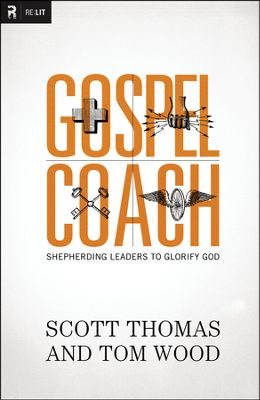
Gospel Coach

PERSONAL LIFE

(1) What are some evidences of grace in your life recently?

(2) What can you tell me about your spouse and family?

(3) How do you relax or what do you do for fun?

(4) How is your spouse doing?

(5) How are you doing as a couple?

(6) Are there any new strains on your relationship that surprised you?

(7) Has your spouse complained about your time together recently?

SPIRITUAL LIFE

(1) How is the condition of your soul?

(2) How would you describe your call to follow Jesus Christ?

(3) What are some of the Christian communities you participate in and how do they encourage your walk with Jesus?

(4) What is God doing in your heart right now?

(5) How have you seen the Holy Spirit produce new fruit in your life?

MISSIONAL LIFE

(1) What opportunities for ministry do you see before you?

(2) What is God calling you to be or do?

(3) What skills or abilities has God-given you that help clarify your calling?

QUESTIONS FOR FEEDING YOUR DISCIPLE

PERSONAL LIFE

(1) What is God teaching you about your role as a husband and father/wife and mother?

(2) What obstacles are you experiencing in your personal life?

(3) How is your health? Are you taking any medications?

(4) What would enhance your relationship with your spouse?

SPIRITUAL LIFE

(1) What information or resources would be helpful to your spiritual growth?

(2) Where have you experienced the most growth lately?

(3) What is the biggest threat to your oneness with Christ?

(4) Where are you most vulnerable to sin?

(5) What sins are you battling?

(6) What compels you to worship God?

MISSIONAL LIFE

(1) When have you had a significant impact on another person?

(2) In what ways are you making disciples?

(3) What are some challenges you are facing in your primary ministry responsibility?

(4) What resources do you need to accomplish your ministry goals?

QUESTIONS FOR LEADING YOUR DISCIPLE

PERSONAL LIFE

(1) How are you leading your family?

(2) What is the greatest need in your personal life (Look for idols, agendas, identity struggles, and selfishness)?

SPIRITUAL LIFE

(1) How is the Lord leading you to respond to Him?

(2) What is the greatest need in your spiritual life (Look for idols, agendas, identity struggles, and selfishness)?

MISSIONAL LIFE

(1) What is the Lord leading you to {pick one} know (head), feel (heart), or do (hands) with regard to ministry?

(2) What is the mission of your ministry?

(3) What is the greatest need of your ministry life?

QUESTIONS FOR PROTECTING YOUR DISCIPLE

PERSONAL LIFE

(1) What challenges do you face personally?

(2) What temptations occur in your personal life?

(3) How are you prone to wander personally (health, finances, time, marriage, etc.)?

SPIRITUAL LIFE

(1) What challenges do you face spiritually?

(2) What temptations occur in your spiritual life?

(3) What kind of priority do you give to Bible reading and prayer in your life?

(4) Where are you prone to wander spiritually?

MISSIONAL LIFE

(1) What challenges do you face missionally?

(2) What temptations occur in your ministry life?

(3) Where are you prone to wander in ministry?

*SOURCE: Adapted from Appendix 4 in Gospel Coach: Shepherding Leaders to Glorify God by Scott Thomas and Tom Wood. Wheaton: Crossway Books, 2013.

BOOK REVIEW: Jerry Sittser’s “A GRACE DISGUISED”

RECOGNIZING GOD’S GRACE IN YOUR LOSS

A Grace Disguised Jerry Sittser

Book Review by David P. Craig

One of the most difficult things to grapple with in life is to lose someone you love deeply. In this book Jerry Sittser shares the gut wrenching story of how he lost his wife, mother, and daughter in a car accident.  What Jerry does well in this book is he walks us through his journey of loss and how God’s grace intermixed in the various contours of his pain. Jerry’s story is our story. We all experience loss – jobs, loved ones, status, youth, health, pets, dreams, and many more. The author not only grapples with his own loss, but also the realities of loss that we all have to wrestle with in life.

What I like about this book is that it doesn’t offer simple steps to dealing with loss. The author helps you identify and grapple with the difficult realities we face in our losses. In the preface to the book Eugene Petterson describes this book as a “companion” for your journey of suffering and loss. That’s the way I felt as I read this book. As a fellow journeymen in the path of suffering I felt like I had a wise companion to walk with me and share with me in my loss.

I highly recommend this book for anyone who is struggling with loss: loss of a loved one, job, or anything that once was precious to us, and is now no more. Jerry helps you to gain God’s perspective in a compassionate and gracious manner. This not a “self-help book,” or an “easy answers book.” The author writes as a fellow struggler of the harsh realities of the tremendous loss he has faced. However, he also recognizes that all human beings have and will suffer loss and that we all desperately need the grace of God to sustain us. He shares helpful stories, insights, and pearls of wisdom to encourage you with your own losses and how to move forward in grace and truth.

As a result of reading this book you will be encouraged to go deep in the multi-faceted realities of your loss and pain, as well as gain a new perspective of how God’s grace is available to help you move forward in your loss. I am grateful for Sittser’s vulnerability, transparency, honesty, and amazing insights into the grace of God. He comes across as a friend, a counselor, and an empathizer. It’s a serious book, because it’s dealing with serious pain. Sittser walks the talk and in the end is a very helpful and gracious guide and companion for your own journey of finding your own disguised grace in your loss.

Book Review: Sam Storm’s “TOUGH TOPICS”

Clarity in the Storm of Controversy

Tough Topics sam storms

Book Review by David P. Craig

Sam Storms has a name that is an oxymoron if there ever was one. His writing is anything but stormy. He writes more like the “calm” before the storm. This is exaclty how he handles difficult questions: calmly, rationally, theologically, and biblically. There’s hardly anyone who will agree wholeheartedly with his answers to the 25 questions raised in this book, but irregardless you will benefit from his skill as an exegete, practical wisdom, pastoral encouragement, theological acumen, and passion for God’s glory exhibited throughout the book. In each chapter he gives ample biblical, theological, and practical support for his answer to each question. He also provides a list of 2-5 recommended resources on each topic at the end of each chapter for those who want to study the topic in greater detail.

The book isn’t divided systematically or topically. Almost all the questions stand alone. If I were to organize the book I would organize the book in the following manner:

(1) Theological Questions – (a) Is the Bible Inerrant?; (b) What is Open Theism? (c) Does God Ever Change His MInd? (d) Could Jesus Have Sinned? (e) Does the Bible Teach the Doctrine of Original Sin? (f) What can We Know about Angles? (g) What Can We Know about Satan? (h) What Can We KNow about Demons?

(2) Exegetical Questions – (a) What Did Jesus Mean When He Said, “Judge Not, that You Be Not Judged?” (b) What is the Blasphemy of the Holy Spirit? (c) Does Hebrews Teach that Christians Can Apostasize? (d) What was Paul’s Thorn in the Flesh?

(3) Practical/Pastoral Questions – (a) Are Those Who Die in Infancy Saved? (b) Will People Be Condemned for Not Believing in Jesus though They’ve Never Heard His Name? (c) Can a Christian Be Demonized? (d) Can Christians Lose Their Salvation? (e) Will There Be Sex in Heaven? (f) What Is Baptism in the Spirit, and When Does It Happen? (g) Should All Christians Speak in Tongues? (h) Is There Healing in the Atonement? (i) Why doesn’t God Always Heal the Sick? (j) What is Legalism? (k) Are Christians Obligated to Tithe? (l) Does Satan Assign Demons to Specific Geopolitical Regions? Are There Territorial Spirits?

Sam Storms has done a wonderful job of tackling each of these questions. I highly recommend this book as a resource that all Christians can use for life. My hope is that this is just the first of a series of more question and answer books to come. As a pastor-theologian Storms is more than qualified to tackle the most difficult of questions in truth, with love, gentleness, and respect.

*I was provided with a copy of this book for review by the publisher and was not required to write a postive review.

DOES DEFINITE ATONEMENT UNDERMINE OUR ZEAL FOR EVANGELISM?

*The Achilles Heel of Reformed Theology?

FROM HEAVEN HE CAME AND SOUGHT HER

The doctrine of definite atonement, known historically as “limited atonement” or “particular redemption”, has always courted controversy. It has been called a grim and textless doctrine, the Achilles heel of Reformed theology (see, for example, Karl Barth and Broughton Knox). Of the many objections to the doctrine, one of the strongest is that definite atonement undermines a zeal for evangelism. If Christ died only for the elect, can we sincerely offer the gospel to everyone?

However, when definite atonement is placed alongside other biblical truths, the question does not follow. Particularity of grace in election or atonement does not mitigate a universal gospel offer.  This is where we should follow Christ’s example.

Biblical Examples

In Matthew 11, Jesus explains that no one knows the Father except the Son and those to whom the Son chooses to reveal him (v. 27). The particularity is explicit. Yet in the very next verse, Jesus gives a universal offer to everyone to come to him and find rest (v. 28). In John 6, Jesus claims that he has come from heaven to do his Father’s will, which is to lose none of those given to him but to raise them up on the last day (v. 39). This is actually the reason why (“For”) whoever comes to him will never be turned away (v. 38). The Father’s will is that “everyone” who looks to the Son and believes will have eternal life (v. 40). Christ’s purpose in coming was particular; the work he performed in his life, death, resurrection, and ascension was particular (cf. John 17); and yet his invitation was universal. It was also sincere.

Did Christ know all those whom the Father had given him as he encountered the many crowds during his ministry? Of course. Did he still sincerely offer himself to everyone in the crowd? Yes. So we should be like Christ in relation to this issue. Calvin put it well: “Since we do not know who belongs to the number of the predestined, and who does not, it befits us so to feel as to wish that all be saved. So it will come about that, whoever we come across, we shall study to make him a sharer of peace.”

Why It Matters

But here’s the take-home value in definite atonement. When we offer Christ to sinners, we aren’t offering them the mere opportunity or possibility of salvation (as those who hold to an unlimited atonement can only do if they are consistent); rather, we offer them a Christ whose first name really means “Savior” (Matt. 1:21). And this is only so because God presented him as a propitiation for sinners—not potentially or possibly or hypothetically, but actually.

Let’s get even more practical. If one believes in definite atonement, can we say to people, “Christ died for you”? What’s interesting is that the phrase “Christ died for you” does not appear in the NT and yet the Apostles turned the world up-side-down with their preaching, as did many “Calvinist” ministers and missionaries: George Whitefield, Jonathan Edwards, Charles Spurgeon, William Carey, David Brainerd—to name but a few. So the efficacy of gospel preaching is not dependent on including the phrase “Christ died for you”. J. I. Packer is most helpful here:

The gospel is not, ‘believe that Christ died for everybody’s sins, and therefore for yours,’ any more than it is, ‘believe that Christ died only for certain people’s sins, and so perhaps not for yours.’ The gospel is, ‘believe on the Lord Jesus Christ, who died for sins, and now offers you Himself as your Saviour.’ This is the message which we need to take to the world. We have no business to ask them to put their faith in any view of the extent of the atonement; our job is to point them to the living Christ, and summon them to trust in Him.

Embracing the Tension

When it comes to definite atonement and evangelism, it’s not either/or but both/and.  Christ made a definite atoning sacrifice for those whom the Father had given to him; and we are commanded to proclaim Christ indiscriminately to all people.

How should we live between these two points of tension? On our knees, as we plead with our Triune God to do for others what he has so graciously done for us.

*SOURCE: http://www.crossway.org/blog/2014/01/does-definite-atonement-undermine-our-zeal-for-evangelism/


Jonathan Gibson (PhD, Cambridge University) is the is author of historical and biblical articles in Themelios and Journal of Biblical Literature, as well as “Obadiah” in the NIV Proclamation Bible, and is a coeditor of From Heaven He Came and Sought Her: Definite Atonement in Historical, Biblical, Theological, and Pastoral Perspective (excerpt).

40 GREAT LEADERSHIP ACCOUNTABILITY QUESTIONS

*By Scott Thomas and Tom Wood

Gospel Coach

The following questions can be used to protect a disciple in his leadership skills and development. Each section can take up to one hour to discuss between a coach and a disciple.

SELF-LEADERSHIP

(1) How are you unique? (calling, gifts, passions, personality, experiences, sin patterns)

(2) How do you stay inspired? How often do you practice this?

(3) How do you apply the gospel to yourself? What is the message in your mind?

(4) What are the rythms of grace in your life? (Scripture, worship, prayer, community, family, time off)

(5) What idols compete for your worship? How do you forsake each idol?

(6) What sinful mental images repeatedly play in your head? How do you take those thoughts captive?

(7) How are you stewarding the gifts you have for the greatest benefit? (time, resources, skills)

INTERPERSONAL LEADERSHIP 

(1) Who understands you best? Other than your family, who are the people with whom you share life together? (2 Timothy 2:2)

(2) Whom do you pray for? What specific petitions are you praying for them?

(3) Who would you like to choose to become one of your influencer friends? What is your plan for making this happen?

(4) How are you telling “truth in love” to the people under your leadership? When do you “spin” something?

(5) How faithful are you in being on time and following through with promises?

(6) Do you say yes and no with clarity so that it builds confidence and trust?

(7) Whom are the people you tend to try to please and why?

(8) How are you discipling each of your children and your spouse (if applicable)?

(9) Who really knows you?

(10) What relationships are broken in your life? What are you doing to bring reconciliation?

ORGANIZATIONAL LEADERSHIP

(1) How has God called you to serve him? How are you fulfilling this calling?

(2) What things nudge you away from following your calling?

(3) What is the most pressing leadership issue you are currently facing?

(4) Do people in your leadership area know with clarity what you expect of them?

(5) What are you doing well in your leadership? What needs your attention?

(6) How do you encourage those you are leading to follow the objectives of your organization?

(7) In what ways do you personify your calling?

(8) What opportunities did you decline for the sake of fulfilling your objectives?

(9) What are the stories that define the culture of your leadership area? How do you capture these stories? How are the stories being shared?

TEAM LEADERSHIP

(1) Who is your team? (roles, styles)

(2) Who is going to replace you?

(3) How do you demonstrate your love for each team member?

(4) What dysfunctions in your team are you addressing?

(5) With whom do you sense the most synergy? How can you maximize this?

(6) With whom do you sense the least synergy? Why? How are you minimizing this?

(7) Whom do you struggle to trust? Why? How do you address issues of distrust with them?

(8) What inspires each team member? (Ask each one, “What aspect of your work brings you the most joy, and what stories do you tend to tell most often?)

(9) How do you empower your team members to exercise their greatest gifts and talents on the team?

PASTORAL LEADERSHIP

(1) What does faithfulness in your calling look like for you?

(2) In which young leaders are you investing your life to develop?

(3) How are you making disciples?

(4) How are you equipping others to serve Jesus’ church more effectively?

(5) How are you living in a missional way?

*SOURCE: Scott Thomas and Tom Wood. Gospel Coach. Grand Rapids: Zondervan, 2013, Appendix 3.

SUNDAY OT SERMON: James Montgomery Boice on Genesis 1:1-2 “VIEWS OF CREATIONISM: SIX-DAY CREATIONISM”

Genesis 1-11 vol 1 Boice

SERIES: GENESIS – PART 8

In the beginning God created the heavens and the earth. Now the earth was formless and empty, darkness was over the surface of the deep, and the Spirit of God was hovering over the waters. – Genesis 1:1-2

In recent years the gap theory of creation, so popuplar with the early fundamentalists, has been replaced by a school of thought known as six-day creationism or flood geology. This theory views the Genesis account as involving six literal days, posits a relatively young earth (maximum age twelve thousand years), and explains the fossil record as having been formed by the great flood in Genesis 6 conceived as having been universal and of immensely destructive proportions. This theory is biblical, but it does not base its interpretation of Genesis on unusual schemes of thought, as the gap theorists do. True, its geology may be unusual (perhaps even forced, as some would claim). But because it is biblical, as well as scientific, creationism deserves the most serious consideration by Christian people.

Two organizations have been effective in advancing the creationists’ viewpoint: the Creation Research Society of Ann Arbor, Michigan, and the Institute for Creation Research of San Diego, California. The first of these was founded in 1963 with Dr. Walter E. Lammerts as its first president. It has a current membership of five hundred scientists, who have the right to vote, and sixteen hundred nonscientists, who do not have the right to vote. The society issues a quarterly journal and in 1970 published a school textbook entitled Biology: A Search for Order in Complexity. It has produced several other volumes. As indicated by the name, the members of the Creation Research Society engage largely in research relating to creation matters.

The second organization has been more active and is therefore better known. It is a division of Christian Heritage College, also of San Diego, and has as its leaders Dr. Duane T. Gish, who serves on the board of directors of the Christian Research Society, and Dr. Henry M. Morris, the institute’s director. This organization sponsors frequent debates on evolution. The results of these debates, sometimes attended by many thousands of people, are printed, along with other items and articles in support of scientific creationism, in a monthly newsletter known as Acts & Facts. In the last ten years the institute has published more than thirty books on creationism, most of them written by Gish and Morris, though the best-known work, The Genesis Flood, was coauthored by Morris and Dr. John C. Whitcomb, former professor of Old Testament at Grace Theological Seminary, Winona Lake, Indiana.

These organizations have offered a powerful challenge to prevailing evolutionary theory and have carried their challenge into the public sphere as evidenced by the California biology textbook controversy, which began in November 1969, and other recent court cases.

The Creationists’ Message

The message of the creationists, whether in debate or in their publications, is that evolution is impossible and that the facts (as we know them) best fit the creationist model.

Here is a lengthy but valuable summation of the creationists’ position from the Whitcomb and Morris volume: “Although there may be considerable latitude of opinion about details, the Biblical record does provide a basic outline of earth history, within which all the scientific data ought to be interpreted. It describes an initial Creation, accomplished by processes which no longer are in operation and which, therefore, cannot possibly be understood in terms of present physical or biological mechanisms. It describes the entrance into this initial Creation of the supervening principle of decay and deterioration: the ‘curse’ pronounced by God on the ‘whole creation,’ resulting from the sin and rebellion of man, the intended master of the terrestrial economy, against his Creator.

“The record of the great Flood plainly asserts that it was so universal and cataclysmic in its cause, scope, and results that it also marked a profound hiatus in terrestrial history. Thus the Creation, the Fall, and the Flood constitute the truly basic facts, to which all the other details of early historical data must be referred…It seems most reasonable to attribute the formations of the crystalline basement rocks, and perhaps some of the Pre-Cambrian non-fossiliferous sedimentaries, to the Creation period, enough later substantially modified by the tectonic upheavals of the Deluge period. The fossil-bearing strata were apparently laid down in large measure during the Flood, with the apparent sequences attributed not to evolution but rather to hydrodynamic selectivity, ecologic habitats, and differential mobility and strength of the various creatures.”

So far as evolution is concerned, Whitcomb and Morris write that “evolution is the great ‘escape mechanism’ of modern man. This is the pervasive philosophic principle by which man either consciously or sub-consciously seeks intellectual justification for escape from personal responsibility to his Creator and escape from the ‘way of the Cross’ as the necessary and sufficient means of his personal redemption. … The decision between alternative theories does not therefore depend only on the scientific data but is ultimately a moral and emotional decision. … We therefore urge the reader to face up to the fact that the actual data of geology can be interpreted in such a way as to harmonize quite effectively with a literal interpretation of the Biblical records and then also to recognize the spiritual implications and consequences of this fact” (John C. Whitcomb and Henry M. Morris, The Geneisis Flood: The Biblical Record and Its Scientific Applications. Philadelphia: P&R, 1961, 327-30).

A Detailed Message

There are several points in this summary that ought to guide us in an evaluation of the theory. First, there is a concern for biblical teaching. More than this, creationists want to make biblical teaching determinative. This is the point at which the summary begins, for it seeks to make an initial creation, the fall, and the flood the three great points around which everything else is to be interpreted.

We have to admit here that the exegetical basis of the creationists is strong. They take the creation account of Genesis as literally as possible, arguing that the Hebrew word for “day” (yom) must refer to an actual twenty-four-hour day unless the context clearly indicates otherwise. They do not deny that yom can refer to an indefinite period, in which case it might be more properly translated “age,” but they consider this usage to be relatively rare. Moreover, even where it does mean an indefinite period, this can hardly be stretched to include the billions of years that uniformitarian geology would assign to periods represented by the “days” of Genesis. Besides, in Genesis 1 the days are each said to have an evening and a morning. Whitcomb and Morris say, “Since God’s revealed Word describes this Creation as taking place in six ‘days’ and since there apparently is no contextual basis for understanding these days in any sort of symbolic sense, it is an act of both faith and reason to accept them, literally, as real days (Ibid, 228).”

The perspicuity of Scripture has bearing here. True, not all Scripture is equally clear, but the creationist would argue that it is very clear at this point. “Suppose the creation did take place in six twenty-four-hour days,” he might say. “How could God possibly tell us that more clearly or directly than by the language we have in Genesis?”

Second, the summary shows the weaknesses and perhaps even the ultimate failure of evolution, the “great escape mechanism” of modern man. Where does evolution fail? In addition to its failure to provide adequate supporting data from the fossil record, which I have already alluded to, Whitcomb and Morris lay particular stress on the problem evolution has with the first and second laws of thermodynamics. The first law of thermodynamics is energy conservation. It says that energy is neither created nor lost. It is simply changed from one form to another. The second law states that in spite of this conservation the energy available for useful work does decrease so that the universe can properly be said to be “running down.” To give just one illustration, the energy of the sun is not being destroyed by the combustion going on on its surface—the energy latent in the sun’s matter is being converted to heat—but the heat largely dissipates into space and becomes useless.

A consequence of this second law is that in any closed system order tends to move in the direction of disorder or disarrangement. Take the example that Robert Kofahl and Kelly Segraves give in their book, The Creation Explanation. They ask us to imagine an orderly pile of ping-pong balls resting at the head of a flight of stairs. For the sake of the illustration they also ask us to imagine that the balls are perfectly resilient so that they are capable of bouncing forever without losing their original energy. Imagine that someone jars the balls so that the pile collapses and the balls begin to roll down over the first step and then bounce on down to the bottom of the stairs and so on around the room. What will happen? The balls will continue bouncing but in increasing disorder. They will not bounce back up into their original position and assemble themselves on the upper step, even though they continue bouncing for billions of years. There is a mathematical possibility of that happening, but it is a practical impossibility, which is to say: It does not happen. Yet evolution would have us believe that the complex order of the universe has come about from just such random happenings (Robert E. Kofahl and Kelly L. Segraves, The Creation Explanation: A Scientific Alternative to Evolution. Wheaton: Harold Shaw Publishers, 1975, 33-35).

Whitcomb and Morris conclude, “The plain facts of the situation, therefore, are that evolution has been simply assumed as the universal principle of change in nature, despite the fact that there is no experimental evidence supporting it and despite the still more amazing fact that universal experience and experimentation have demonstrated this universal principle of change to be its very opposite: namely, that of deterioration” (Whitcomb and Morris, The Genesis Flood, 227).

But if the earth is young (only twelve thousand years or so) and if it is the result of God’s special acts of creation taking place within the short period of only six literal twenty-four-hour days, where did the various strata of the earth’s crust come from? Even more important, where did the various fossil-bearing strata come from? Didn’t these require long periods of time, hundreds of thousands if not billions of years in time, for their formation? The creationists’ answer is that although the strata may have been laid down in various epochs—at the time of the initial creation (by fiat), during the work of the six literal days, or in our own relatively modern period—the significant, fossil-bearing strata are largely the result of the flood.

The idea here is that a flood of worldwide proportions would be immensely destructive. It would require huge amounts of water pushed up from beneath and precipitated from above, presumably by the condensation of a vapor or cloud cover, with cataclysmic effects on the earth’s crust. The amount of water necessary to cover the earth would carry virtually all soil with it into the oceans by erosion, where it would pile up in strata. Various creatures would be buried in those strata, the simpler and smaller on the bottom, the larger and more vigorous on top—hence, the appearance of various ages in which life developed from simpler to more complex forms. After the flood new land masses would have emerged, and some of these newly formed strata would have been exposed.

Creationists believe that their views are reinforced by additional considerations:

1. Present-day conditions are forming very few potential fossil deposits, and most of these are unusual. Nothing comparable to the known fossil beds of ancient times is being formed today, which makes us think that some past catastrophe was necessary to produce them.

2. The facts of geology do not support the view of essentially harmonious strata with the older levels on the bottom and the most recent on the top. There is a tendency in this direction, but the facts reflect a far more unruly situation. A universal flood accounts for these facts more adequately than the theory of lengthy geological ages and slow evolutionary development.

3. The existence of huge fossil deposits containing thousands of large, complex species, such as the mammoth deposits in Siberia, is best explained either by the flood or by the abnormal weather conditions that must have followed it.

After presenting this and other evidence, Kofahl and Segraves conclude, “The foregoing features of the fossil and geological records all seem to be in agreement more with the catastrophic than with the uniformitatrion concept of geological processes of the past. Thus, in this respect, fossils corroborate the structural data given previously and lend themselves readily to the framework of biblical catastrophism.”

How Old is the Earth?

In spite of the careful biblical and scientific research that has accumulated in support of the creationists’ view, there are problems that make the theory wrong to most (including many evangelical) scientists. We conclude by listing the most important.

Data from various disciplines point to a very old earth and an even older universe. Some of the conclusions from this data, as well as some of the data itself, were presented in earlier chapters. There is astronomical data. One line of astronomical data concerns the speed of light. Light travels in a vacuum at a speed of 186,000 miles per second. Therefore, 1) if the speed of light is constant, and 2) the light we observe coming from the stars actually comes from those stars, and 3) if our distance measurements for these stars are substantially accurate, then the universe is at least as old as the light-travel-time coming to us from the most distant objects. The most distant objects we are able to observe are quasars. The travel time for light coming from these objects is more than 10 billion years. Therefore, the age of the universe by this mode of reckoning is at least more than that. A second line of data is based on the apparent expansion of the universe. All parts of the universe are retreating from us and from one another at enormous speeds, the most distant observable galaxies at speeds in excess of 100 million miles per hour. by working backward from their present position and speed to the initial “big bang,” the origin of the universe can be set at between 15 and 20 billion years ago. A third line of astronomical data concerns the nature and normal life of stars. Stars are of various ages, having been formed over the whole history of the universe from 15 to 20 billion years ago until today. Our own Milky Way galaxy is about as old as the universe. Our sun is considerably younger, about 5 to 10 billion years old.

The point of combining this data is that, although it is related in some ways, it is based on different approaches to the problem of age and on different assumptions. Yet it gives a roughly consistent picture. According to these methods, the universe would be about 15 to 20 billion years old, the sun about 5 to 10 billion years old, and our solar system about 5 billion years old.

Second, there is the evidence of radioactive methods of dating earth (or moon) rocks. This method is based on the observation that certain kinds of unstable or radioactive elements decay from an unstable to a stable form at measurable rates. By measuring the amount of the original element and the amount of the derivative or “daughter” element in any given sample, an approximate age of the sample may be given. This is an admittedly uncertain method. Many criticisms have been given. But valid or not, the data it gives points to an earth that is about 4.55 billion years old, which is in line with the astrological evidence. Even allowing for large percentages of error, this is still a long way from an earth that is only a few thousand years old.

Third, there is the evidence of nonradiometric dating. Types of data available in this category are: carbonate deposits, sediments, deposits of evaporites, the development of coral reefs, seafloor spreading, and other matters. These all suggest an earth older than that allowed by the creationist model.

We must say, as we summarize this first problem with the creationist view, that the creationists have given answers to each of these lines of evidence for an old earth and an even older universe. They have spoken of a lack of uniformity of scientific laws in past ages; of a universe created “in motion,” as it were, with light already in progress from a distant point; of radioactive dating methods as unreliable, sometimes giving wildly conflicting data, and so on. But when everything is considered, it seems to many persons (myself included) that the creationists are running against too many lines of more or less independent evidence against their case on behalf of a young earth. Therefore, whatever else may be true about their viewpoint, it is hard to believe that the creation of the earth and universe was recent.

Remaining Problems

A second problem, which bothers most geologists and some other people as well, is the use of the flood to explain the various strata of the earth’s outer crust, particularly those that contain fossils. Let us assume that the flood was universal and immensely destructive. Let us also assume that the flood carried most of the earth’s soil and millions of dead or soon-to-be drowned organisms before it. Let us even assume that the simpler and less mobile organisms were buried first (and are therefore found in the lower layers of sedimentary rocks) and that the larger and more mobile creatures survived longer but were eventually overcome and buried in higher layers of rock. Assuming all of that—and some of it is questionable—how is it that plants, which are not mobile, show the same general distribution from the less complex to the more complex forms, or that fish (which the Bible does not say were killed and need not have been) are nevertheless included in the same general fossil distribution?

L. Duane Thuman raises these questions and asks, “How did the plants survive such a destructive flood and become re-established so quickly that the dove could bring back an olive leaf? A worldwide flood which buried both plants and animals under sediment sometimes thousands of feet deep makes this highly improbable.”

A third and final problem, which we have not discussed up to now but that is very important to the creationists’ view of Genesis 1, is the appearance of age. Since the universe is extremely complex, it gives the impression of having gotten to its present form through changes taking place over a long period of time. For example, a tree possessing hundreds of rings in its trunk gives the impression of its having reached that form by growing taller and thicker bit by bit over a period of many years. But according to the creationists, everything we see (including the original tree) was brought into being within six literal days. Therefore, it was either brought to a mature state extremely quickly, within minutes or hours, or else was created to look as if it had gone through a long and complex history. To Adam, newly created, the Garden of Eden may have seemed to have been around for years, but in reality it had been created for him in a mature form or was quickly brought to a mature form only three days previously. In the same way, say the creationists, the universe does indeed appear to have had a beginning 15 to 20 billion years ago, but it was created in motion and is actually only 10 or 15 thousand years old. The same approach can be applied to the age of rocks, coral reefs, and other apparent evidence for an older earth or universe.

At this point it is possible to ridicule the six-day creationism theory. Some have! But this should not be done too quickly, particularly not by those who believe in the createdness of Adam. How old was Adam when he was created? There is no need to think of him as a baby. From whom would he have come? Presumably he was created fully grown. But if that is so, then it is not impossible to think that God might have created the rest of the universe “fully grown” also, according to the same pattern.

“But that would mean that God is deceiving us,” object some, “and God cannot do that and be good.” Whitcomb and Morris hit this objection head-on, claiming that God cannot be accused of deceit inasmuch as he has given a revelation in the Bible of how things have actually been created. “If God reveals how and when he created the universe and its inhabitants, then to charge God with falsehood in creating ‘apparent age’ is preposterous in the extreme—even blasphemous. It is not God who has lied, but rather man who has called him a liar, through rejection of his revelation of Creation as given in Genesis and verified by the Lord Jesus Christ!”

It is a shrewd point—yet not entirely convincing. Although God may have had to create Adam as a mature individual, and presumably did so, there is no reason to think on that basis that he therefore also needed to do so in other areas. Why would God make the tree look old rather than merely giving it time to grow old? What was the hurry? Or again, even if God did create the magnificent universe we know just thousands of years ago, why make it look as if it is much older? Why make the quasars look 10 billion years old? We cannot even see them. What possible point would such a creation have?

None of this is to suggest that God could not have done things in this fashion if he chose to do so. Nor is it to say that the creationists have not made a very good case for their position. But there are problems and questions, and it is because of these that the quest for an explanation by believing scientists goes on.

What About Science?

There is one last point. The possibility of doing science in our day or any other day is undergirded by the assumption of certain laws of nature, operating in the past and continuing to operate on into the future. But according to the creationists, those laws were not operating or else were entirely different during the period of creation itself, and therefore any scientific investigation of creation is both impossible and illegitimate. Is that what our knowledge of God’s ways leads us to expect? Are we given minds that can reason, only to be told that at the point of creation the data they perceive and the basis on which they would reason are an illusion? If so, it is the end of science, at least in this area, and it may be the end of other thinking also.

If the earth and the universe look old when they actually are not, why should any of our observations be trusted? True, the Bible tells us much, and it can be trusted. But the Bible does not tell us everything. It does not even tell me that I exist. Perhaps I do not. Perhaps appearances in this area too are deceiving. Taken to its extreme, the idea of “apparent age” (or “apparent” anything) leads to skepticism, and we are not to be skeptics. We are to know and know we know—by the Word of God and by that limited but nevertheless extensive and extremely wonderful revelation of God in nature, perceived and understood by reason.

FOR MORE INFORMATION ON THE AGE OF THE EARTH CLICK ON THIS LINK:  http://creation.com/how-old-is-the-earth

About the Preacher

Boice JM in pulpit

James Montgomery Boice, Th.D., (July 7, 1938 – June 15, 2000) was a Reformed theologian, Bible teacher, and pastor of Tenth Presbyterian Church in Philadelphia from 1968 until his death. He is heard on The Bible Study Hour radio broadcast and was a well-known author and speaker in evangelical and Reformed circles. He also served as Chairman of the International Council on Biblical Inerrancy for over ten years and was a founding member of the Alliance of Confessing Evangelicals. James Boice was one of my favorite Bible teachers. Thankfully – many of his books and expositions of Scripture are still in print and more are becoming available. The sermon above was adapted from Chapter 8 in Genesis 1-11: An Expositional Commentaryvol. 1: Creation and Fall. Grand Rapids: Baker, 2006.

Under Dr. Boice’s leadership, Tenth Presbyterian Church became a model for ministry in America’s northeastern inner cities. When he assumed the pastorate of Tenth Church there were 350 people in regular attendance. At his death the church had grown to a regular Sunday attendance in three services of more than 1,200 persons, a total membership of 1,150 persons. Under his leadership, the church established a pre-school for children ages 3-5 (now defunct), a high school known as City Center Academy, a full range of adult fellowship groups and classes, and specialized outreach ministries to international students, women with crisis pregnancies, homosexual and HIV-positive clients, and the homeless. Many of these ministries are now free-standing from the church.

Dr. Boice gave leadership to groups beyond his own organization. For ten years he served as Chairman of the International Council on Biblical Inerrancy, from its founding in 1977 until the completion of its work in 1988. ICBI produced three classic, creedal documents: “The Chicago Statement on Biblical Inerrancy,” “The Chicago Statement on Biblical Hermeneutics” and “The Chicago Statement on the Application of the Bible to Contemporary Issues.” The organization published many books, held regional “Authority of Scripture” seminars across the country, and sponsored the large lay “Congress on the Bible I,” which met in Washington, D.C., in September 1987. He also served on the Board of Bible Study Fellowship.

He founded the Alliance of Confessing Evangelicals (Alliance) in 1994, initially a group of pastors and theologians who were focused on bringing the 20th and now 21st century church to a new reformation. In 1996 this group met and wrote the Cambridge Declaration. Following the Cambridge meetings, the Alliance assumed leadership of the programs and publications formerly under Evangelical Ministries, Inc. (Dr. Boice) and Christians United for Reformation (Horton) in late 1996.

Dr. Boice was a prodigious world traveler. He journeyed to more than thirty countries in most of the world’s continents, and he taught the Bible in such countries as England, France, Canada, Japan, Australia, Guatemala, Korea and Saudi Arabia. He lived in Switzerland for three years while pursuing his doctoral studies.

Dr. Boice held degrees from Harvard University (A.B.), Princeton Theological Seminary (B.D.), the University of Basel, Switzerland (D. Theol.) and the Theological Seminary of the Reformed Episcopal Church (D.D., honorary).

A prolific author, Dr. Boice had contributed nearly forty books on a wide variety of Bible related themes. Most are in the form of expositional commentaries, growing out of his preaching: Psalms (1 volume), Romans (4 volumes), Genesis (3 volumes), Daniel, The Minor Prophets (2 volumes), The Sermon on the Mount, John (5 volumes, reissued in one), Ephesians, Phillippians and The Epistles of John. Many more popular volumes: Hearing God When You Hurt, Mind Renewal in a Mindless Christian Life, Standing on the Rock, The Parables of Jesus, The Christ of Christmas, The Christ of the Open Tomb and Christ’s Call to Discipleship. He also authored Foundations of the Christian Faith a 740-page book of theology for laypersons. Many of these books have been translated into other languages, such as: French, Spanish, German, Japanese, Chinese and Korean.

He was married to Linda Ann Boice (born McNamara), who continues to teach at the high school they co-founded.

Sources: Taken directly from the Aliance of Confessing Evangelicals’ Website

Boice’s Books:

from the Tenth Presbyterian Church website
Books
1970 Witness and Revelation in the Gospel of John (Zondervan)
1971 Philippians: An Expositional Commentary (Zondervan)
1972 The Sermon on the Mount (Zondervan)
1973 How to Live the Christian Life (Moody; originally, How to Live It Up,
Zondervan)
1974 Ordinary Men Called by God (Victor; originally, How God Can Use
Nobodies)
1974 The Last and Future World (Zondervan)
1975-79 The Gospel of John: An Expositional Commentary (5 volumes,
Zondervan; issued in one volume, 1985; 5 volumes, Baker 1999)
1976 “Galatians” in the Expositor’s Bible Commentary (Zondervan)
1977 Can You Run Away from God? (Victor)
1977 Does Inerrancy Matter? (Tyndale)
1977 Our Sovereign God, editor (Baker)
1978 The Foundation of Biblical Authority, editor (Zondervan)
1979 The Epistles of John: An Expositional Commentary (Zondervan)
1979 Making God’s Word Plain, editor (Tenth Presbyterian Church)
1980 Our Savior God: Studies on Man, Christ and the Atonement, editor (Baker)
1982-87 Genesis: An Expositional Commentary (3 volumes, Zondervan)
1983 The Parables of Jesus (Moody)
1983 The Christ of Christmas (Moody)
1983-86 The Minor Prophets: An Expositional Commentary (2 volumes,
Zondervan)
1984 Standing on the Rock (Tyndale). Reissued 1994 (Baker)
1985 The Christ of the Open Tomb (Moody)
1986 Foundations of the Christian Faith (4 volumes in one, InterVarsity
Press; original volumes issued, 1978-81)
1986 Christ’s Call to Discipleship (Moody)
1988 Transforming Our World: A Call to Action, editor (Multnomah)
1988, 98 Ephesians: An Expositional Commentary (Baker)
1989 Daniel: An Expositional Commentary (Zondervan)
1989 Joshua: We Will Serve the Lord (Revell)
1990 Nehemiah: Learning to Lead (Revell)
1992-94 Romans (4 volumes, Baker)
1992 The King Has Come (Christian Focus Publications)
1993 Amazing Grace (Tyndale)
1993 Mind Renewal in a Mindless Age (Baker)
1994-98 Psalms (3 volumes, Baker)
1994 Sure I Believe, So What! (Christian Focus Publications)
1995 Hearing God When You Hurt (Baker)
1996 Two Cities, Two Loves (InterVarsity)
1996 Here We Stand: A Call from Confessing Evangelicals, editor with
Benjamin E. Sasse (Baker)
1997 Living By the Book (Baker)
1997 Acts: An Expositional Commentary (Baker)
1999 The Heart of the Cross, with Philip Graham Ryken (Crossway)
1999 What Makes a Church Evangelical?
2000 Hymns for a Modern Reformation, with Paul S. Jones
2001 Matthew: An Expositional Commentary (2 volumes, Baker)
2001 Whatever Happened to the Gospel of Grace? (Crossway)
2002 The Doctrines of Grace, with Philip Graham Ryken (Crossway)
2002 Jesus on Trial, with Philip Graham Ryken (Crossway)

Chapters

1985 “The Future of Reformed Theology” in David F. Wells, editor,
Reformed Theology in America: A History of Its Modern Development
(Eerdmans)
1986 “The Preacher and Scholarship” in Samuel T. Logan, editor, The
Preacher and Preaching: Reviving the Art in the Twentieth Century
(Presbyterian and Reformed)
1992 “A Better Way: The Power of Word and Spirit” in Michael Scott
Horton, editor, Power Religion: The Selling Out of the Evangelical Church?
(Moody)
1994 “The Sovereignty of God” in John D. Carson and David W. Hall,
editors, To Glorify and Enjoy God: A Commemoration of the 350th
Anniversary of the Westminster Assembly (Banner of Truth Trust)

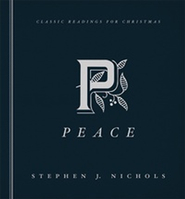
The Real Meaning of Christmas

By Stephen Nichols

One of the most remarkable stories of Christmas comes from one of the darkest moments of modern history. World War I ravaged a continent, leaving destruction and debris in its wake. The human cost, well in the millions, staggers us. But from the midst of this dark conflict comes the story of the Christmas Truce of 1914. The Western Front, only a few months into the war, was a deplorable scene of devastation. Perhaps as if to give the combatants one day to breathe again, a truce was called from Christmas Eve through Christmas Day.

As darkness settled over the front like a blanket, the sound of exploding shells and the rat-tat-tat of gunfire faded. Faint carols, in French or English voices on one side and in German voices on the other, rose to fill the silence of the night.

By morning, soldiers, at first hesitantly, began filing out of the maze of trenches into the dreaded and parched soil of No Man’s Land. There was more singing. Gifts of rations and cigarettes were exchanged. Family photos were passed around. Soccer balls appeared. Up and down the Western Front, soldiers, who only hours before had been locked in deathly combat, now faced off in soccer games.

For one brief but entirely remarkable day, there was peace on earth. Some have called the Christmas Truce of 1914 “the Miracle on the Western Front.”

Anxious to print some good news, The Times of London reported on the events of the Christmas Truce. Soldiers recorded the day in letters home and in diaries. Some of those lines made it to newspapers, while others remained unknown until later brought to light. Here’s one such line from the diary of a German infantryman:

The English brought a soccer ball from the trenches, and pretty soon a lively game ensued. How marvelously wonderful, yet how strange it was. The English officers felt the same way about it. Thus Christmas, the celebration of Love, managed to bring mortal enemies together as friends for a time.

“Friends for a time,” “the celebration of love,” “peace on earth”—this is the meaning of Christmas. But these celebrations, these truces, don’t last. After Christmas Day, the soccer balls and the soldiers went back into the trenches. The Christmas carols subsided and the war carried on. And even though World War I eventually ended, a few decades later, Europe’s countryside and cities became the field of battle once again, as did Africa and the Pacific, during World War II.

Events like the Christmas Truce are worth celebrating. But they lack something. They lack permanence. Such impermanent peace is what we often find in our quest for the real meaning of Christmas. If we are looking for permanent and ultimate goodwill, love, and peace, we must look beyond our gift-giving, get-togethers, and office parties. We must look to no other place than to a manger.

We must look to a baby born not with fanfare, pomp, and circumstance, but to poor parents in desperate times. Joseph and Mary, and the Baby Jesus for that matter, were real historical figures. But in a way, Joseph and Mary extend beyond themselves, beyond their particular place and time. They represent all of us. We are all poor and living in desperate times. Some of us are better than others at camouflaging it. Nevertheless, we are all poor and desperate, so we all need the promise bound up in that baby.

We are in need of a way out of our poverty of soul and the desperate state of our human condition. We find it in this child lying in a manger, who was and is Jesus Christ, the long-promised Messiah, Seed, Redeemer, and King.

The birth of Jesus so many centuries ago might have been a slightly-out-of-the-ordinary birth. Even in ancient times, stalls didn’t typically double as birthing rooms and mangers didn’t typically double as cribs for new-born babies. And that newborn baby was very much out of the ordinary. Of course, in some respects, He was perfectly ordinary. He was a human being, a baby. He got hungry. He got thirsty. He got tired. When He was born, He was wrapped in swaddling clothes—the ancient equivalent of Pampers.

An infant. Helpless, hungry, cold, and tired.

Yet, this child was the Son of God incarnate. He was Immanuel, which translated means “God with us.” According to the Apostle Paul’s account, this infant created all things. This infant created His own manger. And this infant, this King, brings peace on earth, ultimate and permanent peace.

Peace

An excerpt from Peace: Classic Readings for Christmas by Stephen Nichols.

TIM KELLER ON CHRISTMAS AND SUFFERING

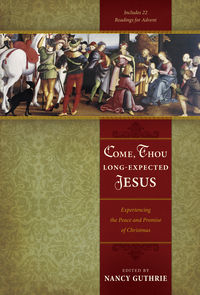
come thou long expected Jesus guthrie

When September 11th happened and New Yorkers started to suffer, you heard two voices. You heard the conventional moralistic voices saying, “When I see you suffer, it tells me about a judging God. You must not be living right, and so God is judging you.” When they see suffering they see a judgmental God. The secular voice said, “When I see people suffering I see God is missing.” When they see suffering, they see an absent, indifferent God.

WHAT CHRISTMAS DOES FOR SUFFERING

But when we see Jesus Christ dying on the cross through an act of violence and injustice, what kind of God do we see then? A condemning God? No, we see a God of love paying for sin. Do we see a missing God? Absolutely not! We see a God who is not remote but involved. We sometimes wonder why God doesn’t just end suffering, but we know that whatever the reason, it isn’t one of indifference or remoteness. God so hates suffering and evil that he was willing to come into it and become enmeshed in it. Dorothy Sayers wrote:

For whatever reason, God chose to make man as he is—limited and suffering and subject to sorrows and death—he [God] had the honesty and the courage to take his own medicine. Whatever game he is playing with his creation, he has kept his own rules and played fair. He can exact nothing from man that he has not exacted from himself. He has himself gone through the whole of human experience, from the trivial irritations of family life and the cramping restrictions of hard work and lack of money to the worst horrors of pain and humiliation, defeat, despair, and death. When he was a man, he played the man. He was born in poverty and died in disgrace, and thought it was worthwhile.

The gift of Christmas gives you a resource—a comfort and consolation—for dealing with suffering, because in it we see God’s willingness to enter this world of suffering to suffer with us and for us. No other religion—whether secularism, Greco-Roman paganism, Eastern religion, Judaism, or Islam—believes God became breakable or suffered or had a body. Eastern religion believes the physical is illusion. Greco-Romans believe the physical is bad. Judaism and Islam don’t believe God would do such a thing as live in the flesh. But Christmas teaches that God is concerned not only with the spiritual, because he is not just a spirit anymore. He has a body. He knows what it’s like to be poor, to be a refugee, to face persecution and hunger, to be beaten and stabbed. He knows what it is like to be dead. Therefore, when we put together the incarnation and the resurrection, we see that God is not just concerned about the spirit, but he also cares about the body. He created the spirit and the body, and he will redeem the spirit and the body.

Christmas shows us that God is not just concerned about spiritual problems but physical problems too. So we can talk about redeeming people from guilt and unbelief, as well as creating safe streets and affordable housing for the poor, in the same breath. because Jesus himself is not just a spirit but also has a body, the gift of Christmas is a passion for justice. There are a lot of people in this world who have a passion for justice and a compassion for the poor but have absolutely no assurance that justice will one day triumph. They just believe that if we work hard enough long enough, we’ll pull ourselves together and bring some justice to this world. For these people, there’s no consolation when things don’t go well. But Christians have not only a passion for justice but also the knowledge that, in the end, justice will triumph. Confidence in the justice of God makes the most realistic passion for justice possible.

WHAT CHRISTMAS DOES FOR THE DESPISED (& THE DESPISER)

Lastly, in the package of Christmas, there’s the ability to reconnect with the part of the human race you despise. Have you ever noticed how women-centric the incarnation and resurrection narratives are? Do you realize that women, not men, are at the very center of these stories? For example, in the story of the resurrection, who was the only person in the world who knew that Jesus Christ had risen from the dead? Mary Magdelene, a former mental patient, is the one Jesus tells to take this news to the world. Everyone else in the whole world learns it from her. Women are the first people to see Jesus risen from the dead.

In the incarnation, the annunciation comes to a woman. God penetrates the world through the womb of a poor, unwed, Jewish, teenage girl. The first theological reflection group trying to wrap their minds around this to figure out what this means and what is going on is Mary and Elizabeth. We know that in those days women had a very, very low status. They were marginalized and oppressed. For example, we know that a woman’s testimony was not admissible in court. Why? Because of prejudice against women.

We say to ourselves, aren’t we glad we’re past all that? Yes, but here’s what we have to realize: God is deliberately working with people the world despises. The very first witnesses to his nativity and resurrection are people whom the world says you can’t trust, people the world looks down on. Because we don’t look down on women today, we don’t look at this part of the story and realize what we’re being told. But here’s what we’re being told: Christmas is the end of snobbishness. Christmas is the end of thinking, “Oh, that kind of person.” You don’t despise women, but you despise somebody. (Oh, yes you do!) you may not be a racist, but you certainly despise racists. You may not be a bigot, but you have certain people about which you think, “They’re the reason for the problems in the world.”

There’s a place in one of Martin Luther’s nativity sermons where he asks something like, “Do know what a stable smells like? You know what that family would have smelled like after the birth when they went out into the city? And if they were standing next to you, how would you have felt about them and regarded them?” He is saying, I want you to see Christ in the neighbor you tend to despise—in the political party you despise, in the race you despise, in the class of people you despise.

Christmas is the end of thinking you are better than someone else, because Christmas is telling you that you could never get to heaven on your own. God had to come to you. It is telling you that people who are saved are not those who have arisen through their own ability to be what God wants them to be. Salvation comes to those who are willing to admit how weak they are.

In Christmas there is a resource for something most of us don’t even feel the need of. We might be able to admit we have trouble being vulnerable or that we need help handling suffering or that we need more passion for justice. But almost nobody says, “What am I going to do about my prejudice and snobbery? I really need help with that.”

Do you remember what an incredible snob you were when you were a teenager? Teenagers generally want nothing to do with people who don’t dress right and look cool. Do you think you ever got over that? You’re not really over that. You just found more socially acceptable ways to express it. You see, teenagers let that aspect of human nature out and don’t realize how stupid they look, and after a while they get rid of it. But really they are just papering over it. There are all kinds of people you look down on and want nothing to do with—and you know it. But in Christmas you have this amazing resource to decimate that—to remove it and take it away.

These are the gifts that come in the package of Christmas— vulnerability for intimacy, strength for suffering, passion for justice, and power over prejudice. And you are blessed if you open this gift and take it into your life. If you do, you’ll be blessed. You’ll be transformed.

SOURCE: This adapted sermon is an excerpt from Come, Thou Long-Expected Jesus: Experiencing the Peace & Promise of Christmas. Edited by Nancy Guthrie, Crossways. Copyright © by Timothy Keller, 2007. 


Tim Keller is the founding pastor of Redeemer Presbyterian Church in Manhattan, which he started in 1989 with his wife, Kathy, and three young sons. For over twenty years he has led a diverse congregation of young professionals that has grown to a weekly attendance of over 5,000.

Tim Challies on How He Writes a Book Review

How I Review a Book

Tim Challies

A question I often receive is this one: “Can you give me some advice on writing a book review?” I’ll be the first to admit that I cannot tell you how to write an academic review or one you would want to submit to a journal. I became a book reviewer rather by trial and error and only through a very informal medium. Even then, I focus almost entirely on popular-level reviews of popular-level books. Having said that, I typically use a loose formula that I think can be helpful and that often resonates with readers.

IDENTIFY

As you write a book review, it is important to ensure you are properly understanding the book and its author. Therefore, the first thing to do is to identify the book’s topic, audience, purpose and and structure. Here are questions to ask and possibly answer in the opening paragraphs.

What is the book about? This is an obvious question and it is usually easy to answer. However, there are times when the author has a little trick up his sleeve and the question is not quite so simple.

Who is this book written for? Who does the author identify as his audience? You will almost always find this in the first few pages.

Why did the author write this book? What does he hope to accomplish through the book? How does he defend the simple fact that he dedicated time to preparing the book? What benefit will there be to you if you read it? Depending on the book’s format or genre, this may come in the form of a thesis statement the author means to prove. Alternatively, it may just be an idea he wishes to explore or a set of facts he wishes to teach.

How has the author structured the book? How does he progress from the first chapter to the last? Some books are heavily dependent upon a specific structure while other books are much less so. The more heavily dependent the book is upon a structure, the more important it is that you describe it.

What is unique about this book? What makes this book different from others and especially from others that deal with a similar topic? The author may make this clear in the book’s opening pages, or it may be something you need to look for on your own. The more books you read on a topic, the more you will be able to identify what sets one book apart from another.

 DISCUSS

How well does the author succeed? Earlier you identified the book’s topic, audience, purpose and structure. Now you will want to tell your readers how well he succeeded in these things. Did he do justice to the topic? Did he write in such a way that this will appeal to his audience? Did he achieve his purpose? Did he follow a clear structure and was that structure helpful?

What strengths did you identify? What are some of the author’s and the book’s most notable strengths? What does he accomplish better than other similar authors and how is his treatment of the topic superior to similar books?

What weaknesses did you identify? It is unfair to only treat a book’s weaknesses, but it is equally unfair to pretend they do not exist. If a book is marked by notable weaknesses that take detract from its readability or the treatment of the topic, make a note of them.

Is it faithful to Scripture? This question is most important to ask when a book interacts with the Bible and claims to interpret Scripture, but is worth asking for any topic. If Scripture speaks to the topic, note whether the book treats the subject in a way that is consistent with the Bible.

How does it compare with other similar books? There is almost no topic that has only a single book written about it, so you do well to compare books to one another. This helps your reader narrow in on the best book on a topic. Does this book make a better case than others before it? Does it update arguments or interact with new facts? When and why should I read this treatment of the subject instead of another one?

What did the book mean to you? There is value in making a book review personal by speaking of what it meant to you. Did it encourage or strengthen you? Did it sadden or infuriate you? Did it bring you moments of joy in a difficult time? Do not neglect the personal touch!

RECOMMEND

Having identified the book’s topic and purpose, and having discussed its strengths and weaknesses, it is time to tell your reader how they can or should respond to it.

Who should read it? Is there anyone who should read the book? Is there a category of person you are convinced ought to read it? If so, serve them by encouraging them to pick up a copy.

Who should not read it? Is there anyone who should not read it? If so, protect them by warning them away from it.

Who might read it? If it is not a book that is not exciting enough to command people to read or bad enough to command them not to read, then suggest some people who may benefit from it.

This is a loose format I follow in many of my reviews and I have found it quite effective in reaching a general audience with an interest in popular-level books. I hope you find it helpful!

*SOURCE: November 27, 2013 @ http://www.challies.com/articles/how-i-review-a-book

ABOUT TIM CHALLIES

Tim blogs at challies.com and is a pastor at Grace Fellowship Church in Toronto, Ontario, and the co-founder of Cruciform Press.

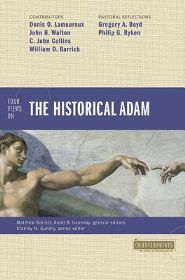
BOOK REVIEW: FOUR VIEWS ON THE HISTORICAL ADAM

In Search of the Historical Adam

Four Views on the Historical Adam

Book Review by David P. Craig

In this counterpoint book the subject of the Historical Adam takes center stage. There are four views presented: (1) No Historical Adam – presented by Denis Lamoureux, Professor of Science and Religion at St. Joseph.s College in the University of Alberta; (2) A Historical Adam: The Archetypal Creation View – presented by John Walton, Professor of Old Testament at Wheaton College; (3) A Historical Adam: Old Earth Creation View – presented by C. John Collins, Professor of Old Testament at Covenant Theological Seminary; and (4) A Historical Adam: Young-Earth View – presented by William D. Barrick, Professor of Old Testament at The Master’s College.

The format of the book is as follows: Each Professor writes on essay addressing three essential questions: (1) What is the biblical case for your viewpoint, and how to you reconcile it with passages and potential interpretations that seem to counter it? (2) In what ways is your view more theologically consistent and coherent than other views? (3) What are the implications your view has for the spiritual life and public witness of the church and individual believers, and how is your view a healthier alternative for both? Upon answering these questions each scholar counters followed by a rejoinder from the presenter. At the end of the book there are two essays representing two different stances on the debate and impact on the Christian faith by Greg Boyd (Senior Pastor at Woodland Hills Church in St. Paul, Minnesota) and Philip Ryken (President of Wheaton College and the former pastor of Tenth Presbyterian in Philadelphia).

I Appreciated the personal testimony of Denis Lamoureux’s pursuit of truth in the fields of science and theology. He has definitely wrestled with and struggled with all the issues at hand – as a non-believer, as well as a believer in Christ. Lemorourex concludes that his view of evolution disallows for belief in the historical Adam that is revealed in the Scriptures. He argues at length that the reality of history conflicts with modern science. He believes that ancient science (the view of the biblical writers) conflicts with modern science and therefore what we have in the Bible is God accommodating inerrant spiritual truths.

In summary “Lamoureux rejects scientific concordism, the idea that God chose to reveal through the Scriptures certain scientific facts and that modern science, properly understood, can be aligned with the Bible. To the contrary, he says the authors of Scripture had an ancient perception of the world, apparent in their belief in a three-tiered universe, their view of the ‘firmament,’ and elsewhere. When it comes to humanity’s biological origins, the biblical authors likewise had a primordial understanding. They held to ‘de novo creation,’ the belief that God created man and everything else directly, immediately, and completely, that is fully mature.”

Lamoureux argues that Adam did not exist, but that Jesus Christ is a historical person who died and rose again for our sins. He attempts to show how modern science has changed his views on interpreting the Bible through understanding distinctions between ancient and modern science, language accommodation, and his rejection of concordism.

I found his essay to be interesting, but unconvincing. I especially struggled with his weak theological explanation of the historical “Adam” from the lips of Jesus and the Apostle Paul in the New Testament. I also struggled with his interpretation of Genesis 1-11 as not being historical. Lastly, I found his interpretation and methodology in arriving at his conclusions insufficient – leaving me with more questions than answers. I agree with C. John Collins assessment of his essay when he writes, “Lamoureux has followed a style of reasoning that is oversimplified, specifically in that he generally poses either/or questions with only two options; he does not consider whether there are alternatives.”

In contrast to Lamoureux, John Walton believes that Adam was a historical person. He believe’s that the primary emphasis of the Bible and Ancient Near Eastern literature is to demonstrate that Adam (and Eve) are archetypal representatives of humanity. He believes that Genesis 2 is not about the biological origins of Adam and Eve. He argues that Adam and Eve may not even be the first humans who came into existence or the parents of all humankind. Walton doesn’t reject or accept evolution, but his view does allow for evolution and an old earth. I found Walton’s essay to be difficult to follow and his discussion of archetypes to be interesting, but not totally sustainable.

C.J. Collins, like Walton, agrees that Adam and Eve were real historical persons. He demonstrates in his essay with great theological precision how a real Adam and Eve are necessary to demonstrate our need of Savior (the second Adam – Jesus) to save us from the sin we inherited as legitimate children of Adam’s race.  He does a wonderful job of showing that the story line of the Scriptures reveals three major truths: (1) Adam and Eve as a pair represent humankind as one family; (2) Adam and Eve were created supernaturally by God; (3) Through Adam and Eve came forth sin. As a result all humanity is guilty before our creator God for our experience as sinners, and in need of redemption from the perfect Adam – the Lord Jesus Christ.

An interesting aspect of Collins’ view of Adam is that he may have been the chieftain of his tribe, i.e., there were perhaps many more people around when Adam and Eve were around. He is also critical of theistic evolution because it fails to account for the special creation of human beings as made in the image of God. He does not believe that a literal twenty-four hour days in Genesis One is required to maintain inerrancy.

Michael Barrick, expounds the most traditional of the four views presented. He argues for the supernatural creation of Adam by God, who is the father of all mankind. Barrick gives the most emphasis of the four views to the significance of Adam in understanding and applying the gospel. He holds to a literal twenty-four days and young earth perspective. He holds to a high view of the Scriptures and believes his view best accounts for the consistent testimony of the biblical authors (Moses and Paul) with Jesus’ teaching. Barrick’s essay argues that when science and the Bible have a conflict – science must always concede for Scripture is inerrant and totally authoritative on all matters it addresses.

In the concluding section of the book Greg Boyd and Phil Ryken (Theologian/Pastors) address the following issues raised by the other essayists by answering the following six questions: Does Adam’s existence or nonexistence (1) affect the rest of the Christian faith and those doctrines Christians have historically affirmed throughout the centuries? (2) shape a Christian worldview, especially the biblical story line from creation, fall, and redemption, to new creation? (3) have an impact on the gospel, or how the gospel is preached and applied, specifically in church? (4) have influence on how we live the Christian life and ‘do church’ as the body of Christ? (5) make a difference in our evangelical witness to a watching world? and (6) What is at stake in this debate for evangelicals in the church today?

Of the four views presented I found myself in the most agreement with Barrick, followed by Collins, then Walton, and lastly by Lamoureux. I think that Barrick’s essay was the easiest to read because it was the essay that took the passages of Genesis at face value – literally. The other three essayists seemed to have to do a lot of hermeneutical gymnastics to make their views work. This is a complicated issue. I appreciated the grace reflected by Lamoureux, Collins, and Walton in particular. Barrick came across more defensive and dogmatic than the other three. At the end of the day, this book deserves a wide reading. It shows the immense complexities of hermeneutics, science, theology, history, and inerrancy. I appreciated what each writer taught me – I gained new knowledge and insights on all five of these topics. I had many questions answered, and yet still have many unanswered questions. My hope is that this book will continue to spark theologians and scientists to work together in the pursuit of truth. I am grateful for the time invested by all the contributors and heartily recommend this book. It is a challenging read, but well-worth the effort.