Deidre Maloney on 10 Tough Truths About Leadership

“The Ten Leadership Lessons We Don’t Talk About”

Truth #1: Politics are Everywhere

(*DPC [see below] – would add stick to the truth and your convictions and seek to be a bridge builder. The apostle Paul sates it this way in Romans 12:18-3:1, “Repay no one evil for evil, but give thought to do what is honorable in the sight of all. If possible, so far as it depends on you, live peaceably with all. Beloved, never avenge yourselves, but leave it to the wrath of God, for it is written, “Vengeance is mine, I will repay, says the Lord.” To the contrary, “if your enemy is hungry, feed him; if he is thirsty, give him something to drink; for by so doing you will heap burning coals on his head.” Do not be overcome by evil, but overcome evil with good. Let every person be subject to the governing authorities. For there is no authority except from God, and those that exist have been instituted by God.”)

 Truth #2: Great Leaders Aren’t Liked Very Much

(DPC – you can’t please all of the people all of the time, only some of the people some of the time – it goes with the territory – some will not like your mission/vision/ some will be jealous and want your job; and some people are just rebels! As Rick Warren often likes to say, “Live for an Audience of One.” Ultimately if you are seeking to please God and uphold the Gospel you will be well pleasing to Him and be benefiting everyone around you. The important thing is that you seek to bring glory and honor to God as the Apostle Paul specifies, “So whether you eat, or drink, or whatever you do, do it all to the glory of God.”– 1 Corinthians 10:31).

 Truth #3: Nobody Will Find You as Interesting as You Do

(DPC – The reality is everyone likes to be encouraged, praised, and appreciated for his or her talents, skills, accomplishments, and so forth. People know if you care more about your own agenda, or if you are genuinely interested in their welfare. In the famous “golden rule” Jesus states, “You shall love the Lord your God with all your heart and with all your soul and with all your strength and with all your mind, and your neighbor as yourself” – Luke 10:27 – Nobody can ever question Jesus’ love for them – as the Apostle John states in his version of the golden rule based on Christ’s death on the cross for our sins, “This is my commandment, that you love one another as I have loved you. Greater love has no one than this, that someone lay down his life for his friends – John 15:12-13).

Truth #4: Every Single Person, Even the Greatest Leader Out There, is Afraid

(DPC – God’s Word says that perfect love; God’s providential dealings; and meditating on and applying His Scriptures help us to overcome fear: “There is no fear in love, but perfect love casts out fear. For fear has to do with punishment, and whoever fears has not been perfected in love… “Fear not, for I have redeemed you; I have called you by name, you are mine. When you pass through the waters, I will be with you; and through the rivers, they shall not overwhelm you; when you walk through fire you shall not be burned, and the flame shall not consume you… This Book of the Law shall not depart from your mouth, but you shall meditate on it day and night, so that you may be careful to do according to all that is written in it. For then you will make your way prosperous, and then you will have good success. Have I not commanded you? Be strong and courageous. Do not be frightened, and do not be dismayed, for the Lord your God is with you wherever you go” [1 John 4:18 to all Disciples of Jesus; Isaiah 43:1a-2, to the people of Israel; and Joshua 1:8-9, God to Moses’ successor – Joshua]).

Truth #5: Someone is Always Watching You

(“But let each one test his own work, and then his reason to boast will be in himself alone and not in his neighbor. For each will have to bear his own load. Let the one who is taught the word share all good things with the one who teaches. Do not be deceived: God is not mocked, for whatever one sows, that will he also reap. For the one who sows to his own flesh will from the flesh reap corruption, but the one who sows to the Spirit will from the Spirit reap eternal life. And let us not grow weary of doing good, for in due season we will reap, if we do not give up. So then, as we have opportunity, let us do good to everyone, and especially to those who are of the household of faith.” – The Apostle Paul in Galatians 6:5-10).

Truth #6: Great Leaders Diligently Protect Their Energy

(The Prophet Isaiah is helpful here: “but they who wait for the Lord shall renew their strength; they shall mount up with wings like eagles; they shall run and not be weary; they shall walk and not faint”– Isaiah 40:31).

Truth #7: Great Leaders Possess Supreme, Undying Confidence

(DPC – I would add: in the Gospel and in the power of the Holy Spirit – as the Apostle Paul says – “Put no confidence in the flesh” – and “it is the power of God unto salvation for everyone who believes”– Philippians 3:3a & Romans 1:16a).

Truth #8: Great Leaders Never, Ever Talk Trash

(DPC – It’s hard to beat what the Apostle Paul says about the power of encouraging words in Ephesians 4:26-29, “Be angry and do not sin; do not let the sun go down on your anger, and give no opportunity to the devil. Let the thief no longer steal, but rather let him labor, doing honest work with his own hands, so that he may have something to share with anyone in need. Let no corrupting talk come out of your mouths, but only such as is good for building up, as fits the occasion, that it may give grace to those who hear.”

And what James says about the power of words: “Not many of you should become teachers, my brothers, for you know that we who teach will be judged with greater strictness. For we all stumble in many ways. And if anyone does not stumble in what he says, he is a perfect man, able also to bridle his whole body. If we put bits into the mouths of horses so that they obey us, we guide their whole bodies as well. Look at the ships also: though they are so large and are driven by strong winds, they are guided by a very small rudder wherever the will of the pilot directs. So also the tongue is a small member, yet it boasts of great things. How great a forest is set ablaze by such a small fire! And the tongue is a fire, a world of unrighteousness. The tongue is set among our members, staining the whole body, setting on fire the entire course of life, and set on fire by hell. For every kind of beast and bird, of reptile and sea creature, can be tamed and has been tamed by mankind, but no human being can tame the tongue. It is a restless evil, full of deadly poison. With it we bless our Lord and Father, and with it we curse people who are made in the likeness of God. From the same mouth come blessing and cursing. My brothers, these things ought not to be so. Does a spring pour forth from the same opening both fresh and salt water? Can a fig tree, my brothers, bear olives, or a grapevine produce figs? Neither can a salt pond yield fresh water.

Who is wise and understanding among you? By his good conduct let him show his works in the meekness of wisdom. But if you have bitter jealousy and selfish ambition in your hearts, do not boast and be false to the truth. This is not the wisdom that comes down from above, but is earthly, unspiritual, demonic. For where jealousy and selfish ambition exist, there will be disorder and every vile practice. But the wisdom from above is first pure, then peaceable, gentle, open to reason, full of mercy and good fruits, impartial and sincere. And a harvest of righteousness is sown in peace by those who make peace” – James 3:1-18).

Truth #9: Great Leaders Know What They Want and Go After it Relentlessly

(DPC – The greatest Person whoever lived – Jesus – focused on one thing: “For the Son of Man did not come to be served, but to give His life as a ransom for many” – Matthew 20:28. In Luke 19:10 Jesus put it this way, “For the Son of Man came to seek and to save the lost.” In John 14:6 Jesus said, “I am the way, the truth, and the life; no one comes to the Father except through me.” In other words, Jesus came to earth and lived the perfect life we could never live in order to give us His righteousness in exchange for our sin, so that we can be saved from the just punishment of our sins before a Holy God, and give us eternal life through repentance and faith in His life, death, burial, and resurrection – His paying the death penalty that we rightly deserved and giving us His righteousness so that we can have a relationship with God forever. Paul summarizes our salvation made possible by Jesus’ mission in this way, “For our sake he made him to be sin who knew no sin, so that in him we might become the righteousness of God” – 2 Corinthians 5:21. The Apostle Peter describes it this way in 1 Peter 2:24 & 3:18, “For Christ also suffered once for sins, the righteous for the unrighteous, that he might bring us to God, being put to death in the flesh but made alive in the spirit, He himself bore our sins in his body on the tree, that we might die to sin and live to righteousness. By his wounds you have been healed”).

The greatest church planter and leader of all time and author of half the New Testament – The Apostle Paul – summed up his mission this way: “But whatever gain I had, I counted as loss for the sake of Christ. Indeed, I count everything as loss because of the surpassing worth of knowing Christ Jesus my Lord. For his sake I have suffered the loss of all things and count them as rubbish, in order that I may gain Christ and be found in him, not having a righteousness of my own that comes from the law, but that which comes through faith in Christ, the righteousness from God that depends on faith—that I may know him and the power of his resurrection, and may share his sufferings, becoming like him in his death, that by any means possible I may attain the resurrection from the dead.

Not that I have already obtained this or am already perfect, but I press on to make it my own, because Christ Jesus has made me his own. Brothers, I do not consider that I have made it my own. But one thing I do: forgetting what lies behind and straining forward to what lies ahead, I press on toward the goal for the prize of the upward call of God in Christ Jesus”).

Truth #10: Great Leaders Insist On Excellent, Pristine Communication

 (DPC – There is a ton of Biblical guidance on communication. Here is a small sampling:

Titus 3:1-7, “Remind them to be submissive to rulers and authorities, to be obedient, to be ready for every good work, to speak evil of no one, to avoid quarreling, to be gentle, and to show perfect courtesy toward all people. For we ourselves were once foolish, disobedient, led astray, slaves to various passions and pleasures, passing our days in malice and envy, hated by others and hating one another. But when the goodness and loving kindness of God our Savior appeared, he saved us, not because of works done by us in righteousness, but according to his own mercy, by the washing of regeneration and renewal of the Holy Spirit, whom he poured out on us richly through Jesus Christ our Savior, so that being justified by his grace we might become heirs according to the hope of eternal life.”

The Apostle Paul in Colossians 4:1-6, “Masters, treat your bondservants justly and fairly, knowing that you also have a Master in heaven. Continue steadfastly in prayer, being watchful in it with thanksgiving. At the same time, pray also for us, that God may open to us a door for the word, to declare the mystery of Christ, on account of which I am in prison—that I may make it clear, which is how I ought to speak. Walk in wisdom toward outsiders, making the best use of the time. Let your speech always be gracious, seasoned with salt, so that you may know how you ought to answer each person.”

James 4:11-12, “Do not speak evil against one another, brothers. The one who speaks against a brother or judges his brother, speaks evil against the law and judges the law. But if you judge the law, you are not a doer of the law but a judge. There is only one lawgiver and judge, he who is able to save and to destroy. But who are you to judge your neighbor?”

1 Thessalonians 5:12-18, “We ask you, brothers, to respect those who labor among you and are over you in the Lord and admonish you, and to esteem them very highly in love because of their work. Be at peace among yourselves. And we urge you, brothers, admonish the idle, encourage the fainthearted, help the weak, be patient with them all. See that no one repays anyone evil for evil, but always seek to do good to one another and to everyone. Rejoice always, pray without ceasing, give thanks in all circumstances; for this is the will of God in Christ Jesus for you.”

1 Peter 4:8-11, “Above all, keep loving one another earnestly, since love covers a multitude of sins. Show hospitality to one another without grumbling. As each has received a gift, use it to serve one another, as good stewards of God’s varied grace:  whoever speaks, as one who speaks oracles of God; whoever serves, as one who serves by the strength that God supplies—in order that in everything God may be glorified through Jesus Christ. To him belong glory and dominion forever and ever. Amen.”)

*DPC – stands for David P. Craig – A Pastoral Life Coach who views everything through the lenses of Scripture and a Christ Centered Perspective. All the Scripture references are from the English Standard Version (ESV). I think her book stands alone and will help any leader – whether non-profit; business; or even in the home. The verses and comments are DPC’s are not to be associated or attributed to Deidre Maloney. Deidra Maloney’s “10 truths” are elaborated on in her new book Tough Truth’s mentioned below.

 About Deidre Maloney:

Deidre is a nationally recognized speaker and author who uses her brand of “mild audacity” to validate and inspire. She passionately runs Momentum LLC, which helps organizations meet their goals…and their leaders sleep better at night. Her first book, The Mission Myth, helps nonprofits meet their missions through better business. Maloney currently resides in San Diego with her husband Jason. You can follow Deidre on twitter @Deidre_Maloney. The 10 leadership lessons listed above are elaborated on in her excellent new 100-page book: Tough Truths: The Ten Leadership Lessons We Don’t Talk About. Business Solutions Press: San Diego, 2012.

Do We Have Souls? Lee Strobel interviews Dr. J.P. Moreland

(The interview below is “heady” stuff – but very important. There is a huge movement of “scientism” in our culture that denies the reality and existence of the soul. One of my favorite teachers when I was at Talbot School of Theology was Dr. J.P. Moreland. What I love about Moreland is that he is a deep thinker and yet he has the ability to explain complex truths in a way that lay people can understand. Like anything Moreland writes or says, this interview will be challenging, enlightening, and clarifying – I hope that you will be able to better understand the reality of the soul and the overwhelming evidence for the existence of God as you read this interview with former atheist – turned Christian – Lee Strobel. Reading this article will exercise your mind and bring joy to your soul, and will be well worth your serious attention – enjoy! David P. Craig)
 

The Evidence of Consciousness: The Enigma of the Mind

When I pulled up to J. P. Moreland’s house on a cool and foggy morning, he was outside with a cup of coffee in his hand, having just walked home from a chat with some neighbors. His graying hair was close-cropped, his mustache neatly trimmed, and he was looking natty in a red tie, blue shirt, and dark slacks. “Good to see you again,” he said as we shook hands. “Come on in.” We walked into his living room, where he settled into a floral-patterned chair and I eased into an adjacent couch. The setting was familiar to me, since I had previously interviewed him on other challenging topics for The Case for Christ and The Case for Faith (See: “The Circumstantial Evidence” in: Lee Strobel, The Case for Christ, 244–57, and “Objection #6: A Loving God Would Never Torture People in Hell,” in: Lee Strobel, The Case for Faith, 169–94).

Both times I found him to have an uncanny ability to discuss abstract issues and technical matters in understandable but accurate language. That’s unusual for a scientist, uncommon for a theologian, and downright rare for a philosopher! Moreland’s science training came at the University of Missouri, where he received a degree in chemistry. He was subsequently awarded the top fellowship for a doctorate in nuclear chemistry at the University of Colorado but declined the honor to pursue a different career path. He then earned a master’s degree in theology at Dallas Theological Seminary and a doctorate in philosophy at the University of Southern California. Moreland developed an early interest in issues relating to human consciousness, returning to that theme time after time in his various books. He has written, edited, or coauthored Christianity and the Nature of Science, Body and Soul, The Life and Death Debate, Beyond Death, Does God Exist? Christian Perspectives on Being Human, The Creation Hypothesis, Scaling the Secular City, Love Your God with All Your Mind, Naturalism: A Critical Analysis, and many other books.

Also, he has authored more than fifty technical articles for Perspectives on Science and Christian Faith, Philosophy and Phenomenological Research, American Philosophical Quarterly, Journal of Psychology and Theology, Metaphilosophy, and a host of other journals. Moreland’s memberships include national scientific, philosophical, and theological societies. Currently, he’s a professor in the highly respected philosophy program at the Talbot School of Theology, where he teaches on numerous topics, including philosophy of mind. As we began our interview, I thought it would be a good idea to get straight on some key definitions—something that’s not always easy when discussing consciousness.

 REGAINING CONSCIOUSNESS

U.S. Supreme Court Justice Potter Stewart once said it may be difficult to define pornography, “but I know it when I see it” (Justice Potter Stewart [concurring], Jacobellis v. Ohio, 378 U.S. 198,1964). Similarly, consciousness can be a challenging concept to describe, even though our own conscious thoughts are quite tangible to ourselves. As J. R. Smythies of the University of Edinburgh put it: “The consciousness of other people may be for me an abstraction, but my own consciousness is for me a reality” (J. R. Smythies, “Some Aspects of Consciousness,” in Arthur Koestler and J. R. Smythies, editors, Beyond Reductionism. London: Hutchinson, 1969, 235, quoted in Arthur C. Custance, The Mysterious Matter of Mind, 35).

“What is consciousness?” Moreland said, echoing the opening question that I had just posed to him. “Well, a simple definition is that consciousness is what you’re aware of when you introspect. When you pay attention to what’s going on inside of you, that’s consciousness.” He looked at me and apparently could see from my expression that I needed a fuller description. “Think of it like this,” he continued. “Suppose you were having an operation on your leg, and suddenly you begin to be aware of people talking about you. Someone says, ‘I think he’s recovering.’ You start to feel an ache in your knee. You say to yourself, ‘Where am I? What’s going on?’ And you start to remember you were operated on. What you’re doing is regaining consciousness. In short, consciousness consists of sensations, thoughts, emotions, desires, beliefs, and free choices that make us alive and aware.”

“What if consciousness didn’t exist in the world?” I asked. “I’ll give you an example,” Moreland replied. “Apples would still be red, but there would be no awareness of red or any sensations of red.” “What about the soul?” I asked. “How would you define that?” “The soul is the ego, the ‘I,’ or the self, and it contains our consciousness. It also animates our body. That’s why when the soul leaves the body, the body becomes a corpse. The soul is immaterial and distinct from the body.” “At least,” I observed, “that’s what the Bible teaches.” “Yes, Christians have understood this for twenty centuries,” he said. “For example, when Jesus was on the cross, he told the thief being crucified next to him that he would be with Jesus immediately after his death and before the final resurrection of his body (Luke 23:43: “Today you will be with me in paradise”).

Jesus described the body and soul as being separate entities when he said, ‘Do not be afraid of those who kill the body but cannot kill the soul’ (Matthew 10:28). The apostle Paul says that “to be absent from the body is to be present with the Lord” (2 Corinthians 5:8).

I was curious about whether belief in the soul is a universal phenomenon. “What about beyond Christianity?” I asked. “Is this concept present in other cultures as well?” “We know that dualism was taught by the ancient Greeks, although, unlike Christians, they believed the body and soul were alien toward each other,” he explained. “In contemporary terms, I’d agree with physicalist Jaegwon Kim, who acknowledged that ‘something like this dualism of personhood, I believe, is common lore shared across most cultures and religious traditions’” (Jaegwon Kim, “Lonely Souls: Causality and Substance Dualism,” in Kevin Corcoran, editor, Soul, Body, and Survival. Ithica, NY: Cornell Univ. Press, 2001).

Still, there are those who deny dualism and instead believe we are solely physical beings who are, as geneticist Francis Crick said, “no more than the behavior of a vast assembly of nerve cells and their associated molecules” (Francis Crick, The Astonishing Hypothesis. New York: Scribner’s, 1994, 3). To explore this issue, I decided to take an unusual approach in my interview with Moreland by asking him to imagine—for just a few minutes—that these physicalists are right.

 WHAT IF PHYSICALISM IS TRUE?

“Let’s face it,” I said, “some people flatly deny that we have an immaterial soul. John Searle said, ‘In my worldview, consciousness is caused by brain processes’ (“What Is Consciousness?” in Closer to Truth).  In other words, they believe consciousness is purely a product of biology. As brain scientist Barry Beyerstein said, just as the kidneys produce urine, the brain produces consciousness” (“Do Brains Make Minds?” on Closer to Truth).

Moreland was listening carefully as I spoke, his head slightly cocked. I continued by saying, “Do me a favor, J. P. —assume for a moment that the physicalists are right. What are the logical implications if physicalism is true?” His eyes widened. “Oh, there would be several key ones,” he replied.

“Give me three,” I said. Moreland was more than willing. “First, if physicalism is true, then consciousness doesn’t really exist, because there would be no such thing as conscious states that must be described from a first-person point of view,” he said. “You see, if everything were matter, then you could capture the entire universe on a graph—you could locate each star, the moon, every mountain, Lee Strobel’s brain, Lee Strobel’s kidneys, and so forth. That’s because if everything is physical, it could be described entirely from a third-person point of view. And yet we know that we have first-person, subjective points of view—so physicalism can’t be true.” Clearly, Moreland was warming up to this exercise.

“The second implication,” he continued, “is that there would be no free will. That’s because matter is completely governed by the laws of nature. Take any physical object,” he said as he glanced out the window, where the fog was breaking up. “For instance, a cloud,” he said. “It’s just a material object, and its movement is completely governed by the laws of air pressure, wind movement, and the like. So if I’m a material object, all of the things I do are fixed by my environment, my genetics, and so forth. “That would mean I’m not really free to make choices. Whatever’s going to happen is already rigged by my makeup and environment. So how could you hold me responsible for my behavior if I wasn’t free to choose how I would act? This is one of the reasons we lost the Vietnam War.” I was following him until that last statement, which seemed oddly incongruous to me. “What has this got to do with Vietnam?” I asked. Moreland explained: “I heard a former advisor to the president say that B. F. Skinner’s behaviorism influenced the Pentagon’s strategy. Skinner believed that we’re just physical objects, so you can condition people, just like you can condition a laboratory animal by applying electric shocks. Keep doing certain things over and over, and you can change behavior. So in Vietnam, we bombed, we came back, we bombed, we came back, we bombed, and so forth. We assumed that after we gave the North Vietnamese shock after shock, pretty soon we could manipulate their behavior. After all, they’re just physical objects responding to stimuli. Eventually they had to give in.” “But they didn’t,” I said. “That’s right. It didn’t work.” “Why?” “Because there was more to the Vietnamese than their physical brains responding to stimuli. They have souls, desires, feelings, and beliefs, and they could make free choices to suffer and to stand firm for their convictions despite our attempt to condition them by our bombing.

“So if the materialists are right, kiss free will good-bye. In their view, we’re just very complicated computers that behave according to the laws of nature and the programming we receive. But, Lee, obviously they’re wrong—we do have free will. We all know that deep down inside. We’re more than just a physical brain.

“Third, if physicalism were true, there would be no disembodied intermediate state. According to Christianity, when we die, our souls leave our bodies and await the later resurrection of our bodies from the dead. We don’t cease to exist when we die. Our souls are living on. “This happens in near-death experiences. People are clinically dead, but sometimes they have a vantage point from above, where they look down at the operating table that their body is on. Sometimes they gain information they couldn’t have known if this were just an illusion happening in their brain. One woman died and she saw a tennis shoe that was on the roof of the hospital. How could she have known this? “If I am just my brain, then existing outside the body is utterly impossible. When people hear of near-death experiences, they don’t think that if they looked up at the hospital ceiling, they’d see a pulsating brain with a couple of eyeballs dangling down, right? When people hear near-death stories, Lee, they are intuitively attributing to that person a soul that could leave the body. And clearly these stories make sense, even if we’re not sure they’re true. We’ve got to be more than our bodies or else these stories would be ludicrous to us.” Moreland seemed to be sidestepping this issue a bit. “How about you personally?” I asked. “Do you think near-death experiences are true?” “We have to be careful with the data and not overstate things, but I do think they provide at least a minimalist case for consciousness surviving death,” he said. “In fact, as far back as 1965, psychologist John Beloff wrote in The Humanist that the evidence of near-death experiences already indicates ‘a dualistic world where mind or spirit has an existence separate from the world of material things.’ He conceded that this could ‘present a challenge to humanism as profound in its own way as that which Darwinian evolution did to Christianity a century ago.’ ” (Cited in David Winter, Hereafter: What Happens after Death? Wheaton, Ill.: Harold Shaw, 1972, 33–34).

Moreland paused before adding one other comment. “Regardless of what anyone thinks about near-death experiences, we do have confirmation that Jesus was put to death and was later seen alive by credible eyewitnesses,” he said. “Not only does this provide powerful historical corroboration that it’s possible to survive after the death of our physical body, but it also gives Jesus great credibility when he teaches that we have both a body and an immaterial spirit” (For a short description of the evidence for the Resurrection, see Gary R. Habermas and J. P. Moreland, Beyond Death, 111–54).

THE INNER AND PRIVATE MIND

At this point, having considered Moreland’s critique of physicalism, I wanted to hear his affirmative case that consciousness and the soul are immaterial entities. “What positive evidence is there that consciousness and the self are not merely a physical process of the brain?” I asked. “We have experimental data, for one thing,” he replied. “For example, neurosurgeon Wilder Penfield electrically stimulated the brains of epilepsy patients and found he could cause them to move their arms or legs, turn their heads or eyes, talk, or swallow. Invariably the patient would respond by saying, ‘I didn’t do that. You did.’ (See: Wilder Penfield, The Mystery of the Mind, 76–77).

According to Penfield, ‘the patient thinks of himself as having an existence separate from his body.’ (Wilder Penfield, “Control of the Mind” Symposium at the University of California Medical Center, San Francisco, 1961, quoted in Arthur Koestler, Ghost in the Machine. London: Hutchinson, 1967, 203).
“No matter how much Penfield probed the cerebral cortex, he said, ‘There is no place . . . where electrical stimulation will cause a patient to believe or to decide.’ (Wilder Penfield, The Mystery of the Mind, 77–78).

That’s because those functions originate in the conscious self, not the brain. “A lot of subsequent research has validated this. When Roger Sperry and his team studied the differences between the brain’s right and left hemispheres, they discovered the mind has a causal power independent of the brain’s activities. This led Sperry to conclude materialism was false (See: Roger W. Sperry, “Changed Concepts of Brain and Consciousness: Some Value Implications,” Zygon, March 1985).

“Another study showed a delay between the time an electric shock was applied to the skin, its reaching the cerebral cortex, and the self-conscious perception of it by the person (Laurence W. Wood, “Recent Brain Research and the Mind-Body Dilemma,” The Asbury Theological Journal, vol. 41, no. 1,1986). This suggests the self is more than just a machine that reacts to stimuli as it receives them. In fact, the data from various research projects are so remarkable that Laurence C. Wood said, ‘many brain scientists have been compelled to postulate the existence of an immaterial mind, even though they may not embrace a belief in an after-life.’””(Ibid).

“What about beyond the laboratory?” I asked. “There are valid philosophical arguments as well,” he said. “For instance, I know that consciousness isn’t a physical phenomenon because there are things that are true of my consciousness that aren’t true of anything physical.” “For instance . . . ,” I said, prompting him further. “For example, some of my thoughts have the attribute of being true. Tragically, some of my thoughts have the attribute of being false—like the Chicago Bears are going to go to the Super Bowl,” he said with a chuckle. “However, none of my brain states are true or false. No scientist can look at the state of my brain and say, ‘Oh, that particular brain state is true and that one’s false.’ So there’s something true of my conscious states that are not true of any of my brain states, and consequently they can’t be the same thing. “Nothing in my brain is about anything. You can’t open up my head and say, ‘You see this electrical pattern in the left hemisphere of J. P. Moreland’s brain? That’s about the Bears.’ Your brain states aren’t about anything, but some of my mental states are. So they’re different.

“Furthermore, my consciousness is inner and private to me. By simply introspecting, I have a way of knowing about what’s happening in my mind that is not available to you, my doctor, or a neuroscientist. A scientist could know more about what’s happening in my brain than I do, but he couldn’t know more about what’s happening in my mind than I do. He has to ask me.” When I asked Moreland for an illustration of this, he said, “Have you heard of Rapid Eye Movement?” “Sure,” I replied. “What does it indicate?” “Dreaming.” “Exactly. How do scientists know that when there is a certain eye movement that people are dreaming? They’ve had to wake people and ask them. Scientists could watch the eyes move and read a printout of what was physically happening in the brain, so they could correlate brain states with eye movements. But they didn’t know what was happening in the mind. Why? Because that’s inner and private. “So the scientist can know about the brain by studying it, but he can’t know about the mind without asking the person to reveal it, because conscious states have the feature of being inner and private, but the brain’s states don’t.”

THE REALITY OF THE SOUL

For centuries, the human soul has enchanted poets, intrigued theologians, challenged philosophers, and dumbfounded scientists. Mystics, like Teresa of Åvila in the sixteenth century, have described it eloquently: “I began to think of the soul as if it were a castle made of a single diamond or of very clear crystal, in which there are many rooms, just as in heaven there are many mansions” (Mark Water, compiler, The New Encyclopedia of Christian Quotations.Grand Rapids, Mich.: Baker, 2000), 972. Teresa’s reference to mansions is an allusion to John 14:2).

Moreland was understandably more precise in analyzing the soul, though unfortunately less poetic. He had already clarified that the soul contains our consciousness. Still, he hadn’t offered any reason to believe that the soul is an actual entity. It was time, I felt, to press him on this
issue. “What makes you think that the soul is real?” I asked.

Moreland replied by saying, “First, we’re aware that we’re different from our consciousness and our body. We know that we’re beings who have consciousness and a body, but we’re not merely the same thing as our conscious life or our physical life. “Let me give you an illustration of how we’re not the same thing as our personality traits, our memories, and our consciousness. I had a student a few years ago whose sister had a terrible accident on her honeymoon. She was knocked unconscious and lost all of her memories and a good bit of her personality. She did not believe she had been married. As she began to recover, they showed her videos of the wedding to convince her that she had actually married her husband. She eventually got to the point where she believed it, and she got remarried to him.

“Now, we all knew this was the same person all along.” This was Jamie’s sister. She was not a different person, though she was behaving differently. But she had totally different memories. She had lost her old memories and she didn’t even have the same personality. What that proves is you can be the same person even if you lose old memories and gain new memories, or you lose some of your old personality traits and gain new personality traits. “Now, if I were just my consciousness, when my consciousness was different, I’d be a different person. But we know that I can be the same person even though my consciousness changes, so I can’t be the same thing as my consciousness. I’ve got to be the ‘self,’ or soul, that contains my consciousness.

“Same with my body. I can’t be the same thing as my body or brain. There was a story on television about an epileptic who underwent an operation in which surgeons removed fifty-three percent of her brain. When she woke up, nobody said, ‘We have forty-seven percent of a person here.’ A person can’t be divided into pieces. You are either a person or you’re not. But your brain and your body can be divided. So that means I can’t be the same thing as my body.”

Those illustrations helped, though I said, “The fact that the soul and consciousness are invisible makes it difficult to conceptualize them.” “Sure, that’s true,” he replied. “My soul and my consciousness are invisible, though my body is visible. That’s another distinction. In fact, I remember the time when my daughter was in the fifth grade and we were having family prayers. She said, ‘Dad, if I could see God, it would help me believe in him.’ I said, ‘Well, honey, the problem isn’t that you’ve never seen God. The problem is that you’ve never seen your mother.’ And her mother was sitting right next to her! “My daughter said, ‘What do you mean, Dad?’ I said, ‘Suppose without hurting your mom, we were able to take her apart cell by cell and peek

inside each one of them. We would never come to a moment where we would say, ‘Look—here’s what Mommy’s thinking about doing the rest of the day.’ Or ‘Hey, this cell contains Mommy’s feelings.’ Or ‘So this is what Mom believes about pro football.’ We couldn’t find Mommy’s thoughts, beliefs, desires, or her feelings. “‘Guess what else we would never find? We’d never find Mommy’s ego or her self. We would never say, ‘Finally, in this particular brain cell, there’s Mommy. There’s her ego, or self.’ That’s because Mommy is a person, and persons are invisible. Mommy’s ego and her conscious life are invisible. Now, she’s small enough to have a body, while God is too big to have a body—so let’s pray!’ “The point is this, Lee: I am a soul, and I have a body. We don’t learn about people by studying their bodies. We learn about people by finding out how they feel, what they think, what they’re passionate about, what their worldview is, and so forth. Staring at their body might tell us whether they like exercise, but that’s not very helpful. That’s why we want to get ‘inside’ people to learn about them. “So my conclusion is that there’s more to me than my conscious life and my body. In fact, I am a ‘self,’ or an ‘I,’ that cannot be seen or touched unless I manifest myself through my behavior or my talk. I have free will because I’m a ‘self,’ or a soul, and I’m not just a brain.”

OF COMPUTERS AND BATS

Moreland’s denial that the brain produces consciousness made me think of the debate over whether future computers can become sentient. I decided to ask him to weigh in on the issue—although his ultimate conclusion was never in doubt. “If a machine can achieve equal or greater brain power as human beings, then some physicalists say the computer would become conscious,” I said. “I assume you would disagree with that.” Moreland chuckled. “One atheist said that when computers reach the point of imitating human behavior, only a racist would deny them full human rights. But of course that’s absurd.

Nobel-winner John Eccles said he’s ‘appalled by the naiveté’ of those who foresee computer sentience. He said there’s ‘no evidence whatsoever for the statement made that, at an adequate level of complexity, computers also would achieve self-consciousness’ (Quoted in Robert W. Augros and George N. Stanciu, The New Story of Science, 170).

“Look, we have to remember that computers have artificial intelligence, not intelligence. And there’s a huge difference. There’s no ‘what it’s like to be a computer.’ A computer has no ‘insides,’ no awareness, no first-person point of view, no insights into problems. A computer doesn’t think, ‘You know what? I now see what this multiplication problem is really like.’ A computer can engage in behavior if it’s wired properly, but you’ve got to remember that consciousness is not the same as behavior. Consciousness is being alive; it’s what causes behavior in really conscious beings. But what causes behavior in a computer is electric circuitry.

“Let me illustrate my point. Suppose we had a computerized bat that we knew absolutely everything about from a physical point of view. We would have exhaustive knowledge of all its circuitry so that we could predict everything this bat would do when it was released into the environment. “Contrast that with a real bat. Suppose we knew everything about the organs inside the bat—its blood system, nervous system, brain, heart, lungs. And suppose that we could predict everything this bat would do when released into the environment. There would still be one thing that we would have no idea about: what it’s like to be a bat. What it’s like to hear, to feel, to experience sound and color. That stuff involves the ‘insides’ of the bat, its point of view. That’s the difference between a conscious, sentient bat and a computerized bat. “So in general, computers might be able to imitate intelligence, but they won’t ever have consciousness. We can’t confuse behavior with what it’s like to be alive, awake, and sentient. A future superintelligent computer might be programmed to say it’s conscious or even behave as if it were conscious, but it can never truly become conscious, because consciousness is an immaterial entity apart from the brain.” Moreland’s choice of a bat for his illustration was an oblique reference to New York University philosopher Thomas Nagel’s famous 1974 essay “What Is it Like to Be a Bat?” (See: Thomas Nagel, “What Is It Like to Be a Bat?” Philosophical Review 83, October, 1974).

Thinking about life from a bat’s perspective prompted me to briefly pursue another line of inquiry on a tangential topic. “What about animals—do they have souls or consciousness?” I asked. “Absolutely,” came his quick answer. “In several places the Bible uses the word ‘soul’ or ‘spirit’ when discussing animals. For example:

Genesis 1:30, “And to every beast of the earth and to every bird of the heavens and to everything that creeps on the earth, everything that has the breath of life, I have given every green plant for food.” And it was so.”

Leviticus 24:18, “Whoever takes an animal’s life shall make it good, life for life.”

Ecclesiastes 3:19, “For what happens to the children of man and what happens to the beasts is the same; as one dies, so dies the other. They all have the same breath, and man has no advantage over the beasts, for all is vanity.”

Revelation 8:9, “A third of the living creatures in the sea died, and a third of the ships were destroyed.”

Animals are not simply machines. They have consciousness and points of view. But the animal soul is much simpler than the human soul. For example, the human soul is capable of free moral action, but I think the animal soul is determined. Also, Augustine said animals have thoughts, but they don’t think about their thinking. And while we have beliefs about our beliefs, animals don’t. “You see, the human soul is vastly more complicated because it’s made in the image of God. So we have self-reflection and self-thinking. And while the human soul survives the death of its body, I don’t think the animal soul outlives its body. I could be wrong, but I think the animal soul ceases to exist at death.” Bad news, it seems, for the bat.

CONSCIOUSNESS AND EVOLUTION

Moreland had made a cogent case for consciousness and the soul being independent of our brain and body. “How does this present a problem for Darwinists?” I asked. Moreland glanced down at some notes he had brought along. “As philosopher Geoffrey Medell said, ‘The emergence of consciousness, then, is a mystery, and one to which materialism fails to provide an answer.’ Atheist Colin McGinn agrees. He asks, ‘How can mere matter originate consciousness? How did evolution convert the water of biological tissue into the wine of consciousness? Consciousness seems like a radical novelty in the universe, not prefigured by the aftereffects of the Big Bang. So how did it contrive to spring into being from what preceded it?’ ”

Moreland looked squarely at me. “Here’s the point: you can’t get something from nothing,” he declared. “It’s as simple as that. If there were no God, then the history of the entire universe, up until the appearance of living creatures, would be a history of dead matter with no consciousness. You would not have any thoughts, beliefs, feelings, sensations, free actions, choices, or purposes. There would be simply one physical event after another physical event, behaving according to the laws of physics and chemistry.”

Moreland stopped for a moment to make sure this picture was vivid in my mind. Then he leaned forward and asked pointedly: “How, then, do you get something totally different—conscious, living, thinking, feeling, believing creatures—from materials that don’t have that? That’s getting something from nothing! And that’s the main problem. “If you apply a physical process to physical matter, you’re going to get a different arrangement of physical materials. For example, if you apply the physical process of heating to a bowl of water, you’re going to get a new product—steam—which is just a more complicated form of water, but it’s still physical. And if the history of the universe is just a story of physical processes being applied to physical materials, you’d end up with increasingly complicated arrangements of physical materials, but you’re not going to get something that’s completely nonphysical. That is a jump of a totally different kind. “At the end of the day, as Phillip Johnson put it, you either have ‘In the beginning were the particles,’ or ‘In the beginning was the Logos,’ which means ‘divine mind.’ If you start with particles, and the history of the universe is just a story about the rearrangement of particles, you may end up with a more complicated arrangement of particles, but you’re still going to have particles. You’re not going to have minds or consciousness.

“However—and this is really important—if you begin with an infinite mind, then you can explain how finite minds could come into existence. That makes sense. What doesn’t make sense—and which many atheistic evolutionists are conceding—is the idea of getting a mind to squirt into existence by starting with brute, dead, mindless matter. That’s why some of them are trying to get rid of consciousness by saying it’s not real and that we’re just computers.” He smiled after that last statement, then added: “However, that’s a pretty difficult position to maintain while you’re conscious!”

THE EMERGENCE OF THE MIND

“Still,” I protested, “some scientists maintain that consciousness is just something that happens as a natural byproduct of our brain’s complexity. They believe that once evolution gave us sufficient brain capacity, consciousness inexorably emerges as a biological process.”

“Let me mention four problems with that,” Moreland insisted. “First, they are no longer treating matter as atheists and naturalists treat matter—namely, as brute stuff that can be completely described by the laws of chemistry and physics. Now they’re attributing spooky, soulish, or mental potentials to matter.” “What do you mean by ‘potentials’?” “They’re saying that prior to this level of complexity, matter contained the potential for mind to emerge—and at the right moment, guess what happened? These potentials were activated and consciousness was sparked into existence.” “What’s wrong with that theory?” “That is no longer naturalism,” he said. “That’s panpsychism.” That was a new term to me. “Pan what?” “Panpsychism,” he repeated. “It’s the view that matter is not just inert physical stuff, but that it also contains proto-mental states in it. Suddenly, they’ve abandoned a strict scientific view of matter and adopted a view that’s closer to theism than to atheism. Now they’re saying that the world began not just with matter, but with stuff that’s mental and physical at the same time. Yet they can’t explain where these pre-emergent mental properties came from in the first place. And this also makes it hard for them to argue against the emergence of God.”

“The emergence of God?” I asked. “What do you mean by that?” “If a finite mind can emerge when matter reaches a certain level of complexity, why couldn’t a far greater mind—God—emerge when millions of brain states reach a greater level of consciousness? You see, they want to stop the process where they want it to stop—at themselves—but you can’t logically draw that line. How can they know that a very large God hasn’t emerged from matter, because, after all, haven’t a lot of people had religious experiences with God?” “That wouldn’t be the God of Christianity,” I pointed out. “Granted,” he replied. “But this is still a problem for atheists.

And there’s a second problem: they would still be stuck with determinism, because if consciousness is just a function of the brain, then I’m my brain, and my brain functions according to the laws of chemistry and physics. To them, the mind is to the brain as smoke is to fire. Fire causes smoke, but smoke doesn’t cause anything. It’s just a byproduct. Thus, they’re locked into determinism.

“Third, if mind emerged from matter without the direction of a superior Intelligence, why should we trust anything from the mind as being rational or true, especially in the area of theoretical thinking? “Let me give you an analogy. Let’s say you had a computer that was programmed by random forces or by nonrational laws without a mind being behind it. Would you trust a printout from that machine? Of course not. Well, same with the mind—and that’s a problem for Darwinists. And by the way, you can’t use evolution as an explanation for why the mind should be considered trustworthy, because theoretical thinking does not contribute to survival value.”

Moreland’s comments reminded me of the famous quote from British evolutionist J. B. S. Haldane: “If my mental processes are determined wholly by the motions of the atoms in my brain, I have no reason to suppose that my beliefs are true . . . and hence I have no reason for supposing my brain to be composed of atoms” (J. B. S. Haldane, “When I am Dead,” in Possible Worlds and Other Essays. London: Chatto and Winduw, 1927, 209, quoted in C. S. Lewis, Miracles. London: Fontana, 1947, 19).

“Here’s the fourth problem,” Moreland went on, “If my mind were just a function of the brain, there would be no unified self. Remember, brain function is spread throughout the brain, so if you cut the brain in half, like the girl who lost fifty-three percent of her brain, then some of that function is lost. Now you’ve got forty-seven percent of a person. Well, nobody believes that. We all know she’s a unified self, because we all know her consciousness and soul are separate entities from her brain.

“There’s one other aspect of this, called the ‘binding problem.’ When you look around the room, you see many things at the same time,” he said, gesturing around at various objects in our field of vision. “You see a table, a couch, a wall, a painting in a frame. Every individual thing has light waves bouncing off of it and they’re striking a different location in your eyeball and sparking electrical activity in a different region of the brain. That means there is no single part of the brain that is activated by all of these experiences. Consequently, if I were simply my physical brain, I would be a crowd of different parts, each having its own awareness of a different piece of my visual field. “But that’s not what happens. I’m a unified ‘I’ that has all of these experiences at the same time. There is something that binds all of these experiences and unifies them into the experience of oneself—me—even though there is no region of the brain that has all these activation sites. That’s because my consciousness and my ‘self’ are separate entities from the brain.”

Moreland was on a roll, but I jumped in anyway. “What about recent brain studies that have shown activity in certain areas of the brain during meditation and prayer?” I asked. “Don’t those demonstrate that there’s a physical basis for these religious experiences, as opposed to an immaterial basis through the soul?” “No, it doesn’t. All it shows is a physical correlation with religious experiences,” he replied. “You’ll have to explain that,” I said. “Well, there’s no question that when I’m praying, smelling a rose, or thinking about something, my brain still exists. It doesn’t pop out of existence when I’m having a conscious life, including prayer. And I would be perfectly happy if scientists were to measure what was going on in my brain while I’m praying, feeling forgiveness, or even thinking about lunch. But remember: just because there is a correlation between two things, that doesn’t mean they’re the same thing. Just because there’s a correlation between fire and smoke, this doesn’t mean smoke is the same as fire.

“Now, sometimes your brain states can cause your conscious states. For example, if you lose brain functioning due to Alzheimer’s disease, or you get hit over the head, you lose some of your mental conscious life. But there’s also evidence that this goes the other way as well. There are data showing that your conscious life can actually reconfigure your brain. “For example, scientists have done studies of the brains of people who worried a lot, and they found that this mental state of worry changed their brain chemistry. They’ve done studies of the brain patterns of little children who were not nurtured and loved, and their patterns are different than children who have warm experiences of love and nurture. So it’s not just the brain that causes things to happen in our conscious life; conscious states can also cause things to happen to the brain. “Consequently, I wouldn’t want to say there’s a physical basis for religious experiences, even though they might be correlated. Sometimes it
could be cause-and-effect from brain to mind, but it could also be cause-and-effect from mind to brain. How do the scientists know it isn’t actually my prayer life that’s causing something to happen in my brain, rather than the other way around?” (For a further critique of “neurotheology,” the idea that the brain is wired for religious experiences, see: Kenneth L. Woodward, “Faith Is More Than a Feeling,” Newsweek, May 7, 2001).

THE RETURN OF OCKHAM’S RAZOR

As we talked about the human mind, mine was drifting back to my first interview with William Lane Craig, during which he brought up a scientific principle called Ockham’s razor. As I listened to Moreland defend the concept of dualism, it dawned on me that Ockham’s razor would argue in the opposite direction—toward the view that only the brain exists—because it says science prefers simpler explanations where possible. It was a challenge I decided to pose to Moreland. “You’re familiar with the scientific principle called Ockham’s razor,” I said to him. As soon as the question left my mouth, Moreland knew where I was headed.

“Yes, it says that we shouldn’t multiply entities beyond what’s needed to explain something. And I assume your objection is that Ockham’s razor would favor a simple alternative, such as the brain accounting for everything, rather than more complicated explanation like the two entities of dualism.” “That’s right,” I said. “Surely this undercuts the case for dualism.” He was ready with an answer. “No, it really doesn’t. Actually, Ockham’s razor favors dualism, and here’s why,” he said. “What’s the intent of Ockham’s razor? The thrust of this principle is that when you’re trying to explain a phenomenon, you should only include the elements that are necessary to explain the phenomenon. And as I’ve demonstrated through scientific evidence and philosophical reasoning, dualism is necessary to explain the phenomenon of consciousness.

Only dualism can account for all of the evidence—and, hence, it does not violate Ockham’s razor.” I wasn’t ready to give up. “But maybe we just don’t have all the evidence yet,” I said. “Maybe your conclusions are premature. Physicalists are confident that the day will come when they’ll be able to explain consciousness solely in physical terms.” Moreland’s reply was adamant: “There will never, ever be a scientific explanation for mind and consciousness.”

His forceful and unequivocal statement startled me. “Why not?” I asked. “Think about how scientists go about explaining things: they show that something had to happen due to antecedent conditions. For example,

when scientists explain why gases behave the way they do, they show that if you hold the volume constant and increase the temperature, the pressure has to increase. That is, when we heat a pressure cooker, the pressure goes up. “When scientists explain that, they don’t just correlate temperature and pressure. They don’t just say that temperature and pressure tend to go together. They try to show why the pressure has got to increase, why it couldn’t have done anything other than that, given the temperature increase. Scientists want to show why something has to happen given the cause; they’re not content simply to correlate things and leave it at that. “And this will never work with consciousness, because the relationship between the mind and the brain is contingent, or dependent.

In other words, the mind is not something that had to happen. One atheist asked, ‘How could a series of physical events, little particles jostling against one another, electric currents rushing to and fro, blossom into conscious experience? Why shouldn’t pain and itches be switched around? Why should any experience emerge when these neurons fire in the brain?’ He’s pointing out that there’s no necessary connection between conscious states and the brain. “So in the future scientists will be able to develop more correlations between conscious states and states of the brain, and that’s wonderful. But my point is this: correlation is not explanation. To explain something scientifically, you’ve got to show why the phenomenon had to happen given the causes. And scientists cannot explain the ‘why’ behind consciousness, because there’s no necessary connection between the brain and consciousness. It didn’t have to happen this way.”

 DEDUCTIONS ABOUT GOD

It’s no wonder that Alvin Plantinga of Notre Dame University, a dualist who is frequently called the greatest living American philosopher, surveyed the current body/mind debate and concluded: “Things don’t look hopeful for Darwinian naturalists” (Quoted in Larry Witham, By Design, 211).

Faced with data and logic that support dualism, and unable to offer a plausible theory for how consciousness could have erupted from mindless matter, atheists are pinning their hopes on some as-yet-undetermined scientific discovery to justify their faith in physicalism. And some aren’t even so sure about that—physicist and atheist Steven Weinberg said scientists may have to “bypass the problem of human consciousness” altogether, because “it may just be too hard for us” (Ibid.,192).

In other words, it’s failing to give them the answers they want. As for Moreland, he agrees with Plantinga’s bleak assessment for atheists. “Darwinian evolution will never be able to explain the origin of consciousness,” he told me. “Perhaps Darwinists can explain how consciousness was shaped in a certain way over time, because the behavior that consciousness caused had survival value. But it can’t explain the origin of consciousness, because it can’t explain how you can get something from nothing.

“In Darwin’s notebooks, he said if there was anything his theory can’t explain, then there would have to be another explanation—a creationist explanation. Well, he can’t explain the origin of mind. He tried to reduce consciousness down to the brain, because he could tell a story about how the brain evolved. But as we’ve discussed, Lee, consciousness cannot be reduced merely to the physical brain. This means the atheist creation story is inadequate and false.

And yet there is an alternative explanation that makes sense of all the evidence: our consciousness came from a greater Consciousness. “You see, the Christian worldview begins with thought and feeling and belief and desire and choice. That is, God is conscious. God has thoughts. He has beliefs, he has desires, he has awareness, he’s alive, he acts with purpose. We start there. And because we start with the mind of God, we don’t have a problem with explaining the origin of our mind.” I asked, “What, then, can we deduce about God from this?” “That he’s rational, that he’s intelligent, that he’s creative, that he’s sentient. And that he’s invisible, because that’s the way conscious beings are. I have no inclination to doubt that this very room is teeming with the presence of God, just because I can’t see or touch or smell or hear him. As I explained earlier, I can’t even see my own wife! I can’t touch, see, smell, or hear the real her.

“One more thing. The existence of my soul gives me a new way to understand how God can be everywhere. That’s because my soul occupies my body without being located in any one part of it. There’s no place in my body where you can say, ‘Here I am.’ My soul is not in the left part of my brain, it’s not in my nose, it’s not in my lungs. My soul is fully present everywhere throughout my body. That’s why if I lose part of my body, I don’t lose part of my soul. “In a similar way, God is fully present everywhere. He isn’t located, say, right outside the planet Mars. God occupies space in the same way the soul occupies the body. If space were somehow cut in half, God wouldn‘t lose half his being. So now I have a new model, based on my own self, for God’s omnipresence. And shouldn’t we expect this? If we were made in the image of God, wouldn’t we expect there to be some parallels between us and God?” I asked, “Do you foresee more scientists coming to the conclusion that the soul, though immaterial, is very real?”

“The answer is yes—if they are willing to open themselves up to nonscientific knowledge,” he replied. “I believe in science; it’s wonderful and gives us some very important information. But there are other ways of knowing things as well. Because, remember, most of the evidence for the reality of consciousness and the soul is from our own first-person awareness of ourselves and has nothing to do with the study of the brain. The study of the brain allows us to correlate the brain with conscious states, but it tells us nothing about what consciousness itself is.”

“But, J. P., aren’t you asking scientists to do the unthinkable—to ignore scientific knowledge?” “No, not at all,” he insisted. “I’m only asking that they become willing to listen to all the evidence and see where it leads—which is what the quest for truth should be about.” “And if they do that?” “They will come to believe in the reality of the soul and the immaterial nature of consciousness. And this could open them up personally to something even more important—to a much larger Mind and a much bigger Consciousness, who in the beginning was the Logos, and who made us in his image.”

COGITO ERGO SUM

A ringing telephone ended our conversation, although I was wrapping up the interview anyway. A colleague was calling to remind Moreland of a faculty meeting. I thanked Moreland for his time and insights, gathered my things, and strolled out to my car. I was just about to start the engine, but instead I let go of the key, leaned back in my seat, and took a few moments (as Moreland would say) to introspect. Interestingly, this very act of introspection intuitively affirmed to me what Moreland’s facts and logic had already established—my ability to ponder, to reason, to speculate, to imagine, and to feel the emotional brunt of the interview showed that my mind surely could not have been the evolutionary byproduct of brute, mindless matter. “Selfhood . . . is not explicable in material or physical terms,” said philosopher Stuart C. Hackett. “The essential spiritual selfhood of man has its only adequate ground in the transcendent spiritual Selfhood of God as Absolute Mind” (Stuart C. Hackett, The Reconstruction of the Christian Revelation Claim. Grand Rapids, Mich.: Baker, 1984, 111).

In other words, I am more than just the sum total of a physical brain and body parts. Rather, I am a soul, and I have a body. I think—therefore, I am. Or as Hackett said: “With modest apology to Descartes: Cogito, ergo Deus est! I think, therefore God is” (Ibid). I found myself wholeheartedly agreeing with philosopher Robert Augros and physicist George Stanciu, who explored the depths of the mind/body controversy and concluded that “physics, neuroscience, and humanistic psychology all converge on the same principle: mind is not reducible to matter.” They added: “The vain expectation that matter might someday account for mind . . . is like the alchemist’s dream of producing gold from lead (Robert W. Augros and George N. Stanciu, The New Story of Science, 168, 171).

I leaned forward and started the car. After months of investigating scientific evidence for God—traveling a total of 26,884 miles, which is the equivalent of making one lap around the Earth at the equator—I had finally reached a critical mass of information. It was time to synthesize and digest what I had learned—and ultimately to come to a conclusion that would have vast and life-changing implications.

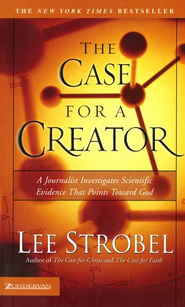
The interview of Lee Strobel (mini-bio below) with Dr. J. P. Moreland (mini-bio below) above is adapted from Chapter 10 in Lee Strobel. The Case for a Creator: A Journalist Investigates Scientific Evidence That Points Toward God. Grand Rapids: Zondervan, 2009.

 FOR FURTHER EVIDENCE

More Resources on This Topic

Cooper, John W. Body, Soul, and Life Everlasting. Grand Rapids, Mich.: Eerdmans, 1989.

Habermas, Gary and J. P. Moreland. Beyond Death. Wheaton, Ill.: Crossway, 1998.

Moreland, J. P. “God and the Argument from Mind.” In Scaling the Secular City. Grand Rapids, Mich.: Baker, 1987.

——. What Is the Soul? Norcross, Ga.: Ravi Zacharias International Ministries, 2002.

——. and Scott B. Rae. Body and Soul. Downer’s Grove, Ill.: InterVarsity, 2000.

Taliaferro, Charles. Consciousness and the Mind of God. Cambridge, England: Cambridge University Press, 1994.

Witham, Larry. “Mind and Brain.” In By Design: Science and the Search for God. San Francisco: Encounter Books, 2003.

About Lee Strobel
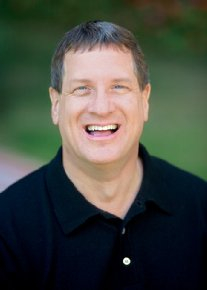
Atheist-turned-Christian Lee Strobel, the former award-winning legal editor of The Chicago Tribune, is a New York Times best-selling author of more than twenty books and has been interviewed on numerous national TV programs, including ABC, Fox, PBS, and CNN.

Described in the Washington Post as “one of the evangelical community’s most popular apologists,” Lee shared the Christian Book of the Year award in 2005 for a curriculum he co-authored with Garry Poole about the movie The Passion of the Christ. He also won Gold Medallions for his books The Case for Christ, The Case for Faith, and the The Case for a Creator, all of which have been made into documentaries distributed by Lionsgate.

His latest books include The Case for the Real Jesus, The Unexpected Adventure (co-authored with Mark Mittelberg) and The Case for Christ Study Bible, which includes hundreds of notes and articles on why Christians believe what they believe. His first novel, a legal thriller called The Ambition, came out in the Spring of 2011.

Lee was educated at the University of Missouri (Bachelor of Journalism degree, 1974) and Yale Law School (Master of Studies in Law degree, 1979). He was a professional journalist for 14 years at The Chicago Tribune and other newspapers, winning Illinois’ top honors for investigative reporting (which he shared with a team he led) and public service journalism from United Press International.

After a nearly two-year investigation of the evidence for Jesus, Lee became a Christian in 1981. He joined the staff of Willow Creek Community Church in South Barrington, IL, in 1987, and later became a teaching pastor there. He joined Saddleback Valley Community Church in Lake Forest, CA, as a teaching pastor in 2000. He left Saddleback’s staff to focus on writing.

Lee’s other books include God’s Outrageous Claims, The Case for Christmas, The Case for Easter, and Surviving a Spiritual Mismatch in Marriage, which he wrote with his wife, Leslie.

For two seasons, Lee was executive producer and host of the weekly national TV program Faith Under Fire.

Lee also is co-author of the Becoming a Contagious Christian course, which has trained more than a million Christians on how to naturally and effectively talk with others about Jesus. His articles have been published in a variety of magazines, including Discipleship Journal, Marriage Partnership, The Christian Research Journal, and Decision. He has appeared on such national radio programs as The Bible Answer Man and Focus on the Family. In addition, he has taught First Amendment law at Roosevelt University.

In recognition of his extensive research for his books, Southern Evangelical Seminary honored Lee with the conferring of a Doctor of Divinity degree in 2007.

Lee and Leslie have been married for 38 years and live in Colorado. Their daughter, Alison, is a novelist and co-author, with her husband Dan, of the children’s book, That’s Where God Is. Lee’s son, Kyle, holds two master’s degrees from the Talbot School of Theology and a PhD in theology from the University of Aberdeen in Scotland. His first book was Metamorpha: Jesus as a Way of Life.

About Dr. J.P. Moreland (in his own words: http://www.jpmoreland.com/about/bio/)


I am the Distinguished Professor of Philosophy at Talbot School of Theology, Biola University in La Mirada, California. I have four earned degrees: a B.S. in chemistry from the University of Missouri, a Th.M. in theology from Dallas Theological Seminary, an M. A. in philosophy from the University of California-Riverside, and a Ph.D. in philosophy from the University of Southern California.

During the course of my life, I have co-planted three churches, spoken and debated on over 175 college campuses around the country, and served with Campus Crusade for Christ for 10 years. For eight years, I served as a bioethicist for PersonaCare Nursing Homes, Inc. headquartered in Baltimore, Maryland.

My ideas have been covered by both popular religious and non-religious outlets, including the New Scientist and PBS’s “Closer to Truth,” Christianity TodayandWORLD magazine. I have authored or co-authored 30 books, including Kingdom Triangle, Scaling the Secular City, Consciousness and the Existence of God, The Recalcitrant Imago Dei, Love Your God With All Your Mind, The God Question, and Body and Soul. I have also published over 70 articles in journals, which include Philosophy and PhenomenologicalResearch,American Philosophical Quarterly, Australasian Journal of Philosophy, Metaphilosophy, Philosophia Christi, andFaith and Philosophy.

Personal Interests

My hobbies are exercising, following the Kansas City Chiefs, and being fixated by really great TV dramas like 24 and Lost. With my dear wife and ministry partner, Hope, we have two married daughters, Ashley and Allison, and as of 2010, four grandchildren! We attend Vineyard Anaheim church and are deeply committed to the body of believers there.

On Who Has Influenced Me

Besides my family and close friends, three people have had the greatest impact on me during my journey with Jesus: Bill Bright, Howard Hendricks, and Dallas Willard. I first came to Christ in 1968, and joined Campus Crusade staff from 1970-75, and 1979-84. I will never forget being in Dr. Bright’s presence during those years. He exuded intimacy with the Lord, he was full of faith, and he lived a holy life. These values were clearly put in place in my life due to his influence. He set a high bar in these areas, and his life gave me a living hope that significant progress in these areas was clearly within reach. Dr. Bright also died a vibrant, victorious death, and as I age, I very much want to do the same in a Christ-honoring way.

I have the honor of studying under Dr. Hendricks during my years at Dallas Theological Seminary (DTS) from 1975-79. I took several courses from him and was in a small discipleship group with Hendricks my last year at DTS. The values I saw in him were radical commitment to Christ, to reading in general and studying scripture in particular, and to the priority of marriage and family. He also had a commitment not to bore people while teaching the Bible and to exhibiting a keen sense of humor. These have all become my values, due in no small measure to Dr. Hendricks.

However as much as Bright and Hendricks have impacted me, the influence of Dallas Willard towers over everyone else. I was honored to have him as my dissertation supervisor at the University of Southern California and Hope and I have counted Dallas and his wife Jane as dear friends and mentors for twenty-five years. Dallas impacted me in his combination of a rigorous intellect with a vibrant walk with Jesus, his fresh, penetrating ideas about the kingdom and how to live in it, and by the reality of God that pours out of his life. I cannot overstate my debt to him. All three were full of humility. It was and is clear that they are about something much bigger than they.

My Dearest Partner, My Wife

My wife, Hope, has been my friend and partner for now 33 years. We were married in 1977. She has the gifts of evangelism, encouragement, helps/mercy. I have never met someone who is consistently happier than she, who loves to care for and serve others, and who exhibits the warmth and kindness of the Holy Spirit. It may sound canned to say this, but it is the truth, namely, that my life and work simply are inconceivable without her love and care all these years. She simply makes my life possible. Or, as I wrote of her in my 1985 book dedication (Universals, Qualities, and Quality-Instances) to her:

Her gracious life truly fits her name and her soul exemplifies that range of qualities that truly wise persons everywhere know as the moral virtues

Well said, I might add! For I experience her unconditional love in an ongoing way. And God made her to be a mother and grandmother par excellence. It is a joy to see how her children honor, respect and love her. My daughters, Ashley and Allison, have turned out to be good, solid people. What impresses me most about both of them is their genuine concern for others and their ability to be good listeners. It isn’t all about them, and this is refreshing these days. Our girls not only love Hope and me, but they actually like us!! They, and their dear husbands, actually like being around us!! As of this writing, I have two grandchildren around three years old (a girl and a boy), a one-month old grandson, and a granddaughter due to be born October 2010. Does it get any better than this?

My Church

My love for the local church was not something that characterized me for much of my Christian life. I was primarily a parachurch guy and I wanted to get the job done, whether or not the local church was part of the solution. I was always committed to a sense of team, but my friendships were the primary source of fellowship for me and Hope within the body of Christ. But the last several years has been transforming.

My relationship with my local church—the Vineyard Anaheim—has shown me how short-sighted my previous vision was. I am fully committed to my local church’s well-being and absolutely love being a part of the fellowship. I have never been a “Lone Ranger Christian”—quite the opposite—but I now see more than ever the centrality of the local church to my intellectual, affective, and relational maturation. I thank God that He brought me to my senses.


Zig Ziglar on The Power of Having a Positive Attitude

“The Power of Attitude”

My friend and associate John Maxwell says, “Never underestimate the power of your attitude. It is the advance man of our true selves. Its roots are inward, but its fruit is outward. It is our best friend, or our worst enemy. It is more honest and more consistent than our words. It has an outward look based on past experiences. It is the thing which draws people to us or repels them. It is never content until it is expressed. It is the librarian of our past; it’s the speaker of our present, and it’s the prophet of our future.”

Many people have stated that attitudes are more important than facts, and research establishes that something like 85 percent of the reason we get jobs and get ahead in those jobs has to do with our attitudes. Unfortunately, among too many of our youth today, when someone speaks of attitude, it’s invariably a reference to a bad one.

Attitude is the key to education. It’s the key to getting along with others and moving ahead in life. The student with a right attitude is more than willing to study to accomplish the objective of passing. A worker with the right attitude will learn to do the job better and proceed cheerfully in doing that job. The husband or wife with the right attitude will handle difficult situations in a much more effective way and enhance the relationship substantially The physician with the right attitude will have a leg up in administering care to patients.

When everything else is equal or if there is any doubt, the coach will always choose the athlete with the best attitude. So will the employer or the man or woman seeking a mate.

Message: Develop a winning attitude.

Article adapted from the always encouraging and optimistic: Zig Ziglar. Something to Smile About: Encouragement and Inspiration for Life’s Ups and Downs.

 About Zig Ziglar:

Zig Ziglar was born in Coffee County, Alabama on November 26, 1926 and was the tenth of 12 children. In 1931, when Ziglar was five years old, his father took a management position at a Mississippi farm, and family moved to Yazoo City, Mississippi, where he spent his early childhood. In 1932, his father died of a stroke, and his younger sister died two days later.

Zigler served in the Navy during World War II (circa 1943-1945). He was in the Navy V-12 College Training Program, attending the University of South Carolina. In 1944 he met his wife Jean, in Jackson, Mississippi; he was 17 and she was 16. They married in late 1946.

Ziglar later worked as a salesman in a succession of companies. In 1968 he became the vice president and training director for the Automotive Performance company, moving to Dallas, Texas.

In 1970, Ziglar went into the business of motivational speaking full-time, with an emphasis on Christian values. Until then, he called himself by his given name, Hilary, but now satarted using his nickname, Zig, instead.

Until 2010 (aged 86) Ziglar traveled around the world taking part in motivational seminars, but has been somewhat limited recently due to a fall down a flight of stairs in 2007 that has impaired his short-term memory and physical abilities.

Through the ups and downs of life Ziglar has maintained his optimism and encouraged thousands of people to be their best in the particular endeavors to which God has called them. Zig Ziglar is one of the most inspirational people on the planet today and is a terrific example of someone who has embraced the struggle of life giving God the glory each step of the way.

 Zig Ziglar’s Encouraging and Attitude Helping Books:

Ziglar, Zig; Ziglar, Tom. Born to Win: Find Your Success Code. Dallas: SUCCESS Media (2012).

Something Else To Smile About: More Encouragement and Inspiration for Life’s Ups and Downs. Nashville: Thomas Nelson (2010).

Ziglar, Zig; Norman, Julie Ziglar. Embrace the Struggle: Living Life on Life’s Terms. New York: Howard Books (2009).

The One-Year Daily Insights with Zig Ziglar. Tyndale House Publishers (2009)

Inspiration 365 Days a Year with Zig Ziglar. SIM (2008)

God’s Way is Still the Best Way. Nashville: Thomas Nelson  (2007).

Better Than Good: Creating a Life You Can’t Wait to Live. Nashville: Thomas Nelson Publishers (2006).

Conversations with My Dog. B&H Books (2005).

The Autobiography of Zig Ziglar. New York: Random House (2004).

Confessions of a Grieving Christian. Nashville: B&H Publishing Group 2004).

Courtship After Marriage: Romance Can Last a Lifetime. Nashville: Thomas Nelson  (2004).

Staying Up, Up, Up in a Down, Down World. Nashville: Thomas Nelson  (2004).

Zig Ziglar’s Life Lifters: Moments of Inspiration for Living Life Better. B&H (2003).

Selling 101: What Every Successful Sales Professional Needs to Know. Nashville: Thomas Nelson Publishers (2003).

Ziglar, Zig and Hayes, John P. Network Marketing For Dummies. Foster City, Calif: IDG Books (2001).

Success for Dummies. Foster City, Calif: IDG Books (1998).

Something to Smile About: Encouragement and Inspiration for Life’s UPS and DOWNS. Nashville: Thomas Nelson (1997).

Great Quotes from Zig Ziglar. Career Press (1997)

Over the Top. Nashville: Thomas Nelson Publishers (1994).

Five Steps to Successful Selling. Nigtingale-Conant Corp. (1987).

Top Performance: How to Develop Excellence in Yourself and Others. New York: Berkley Books (1986).

Raising Positive Kids in a Negative World. Nashville: Oliver Nelson (1985).

Zig Ziglar’s Secrets of Closing the Sale. New York: Berkley Books (1982).

See You at the Top. Gretna: Pelican (1975).

“Where Is Your Faith?” Dr. David Martyn Lloyd-Jones Exposition on Luke 8:22-25

(*Disclaimer: There is much that Lloyd-Jones writes here and elsewhere that is to be commended. However, in this case I wholeheartedly disagree with his view that a Christian should “never be depressed.” Many godly men and women have battled with depression their entire lives – Martin Luther and Charles H. Spurgeon to name two (not to mention – David and Moses in the Bible). I think that certain personalities are prone to depression and some people are clinically depressed and can be helped tremendously with the aid of medication and biblically based counseling. If you are severely depressed and have battled chronic depression I think you would be wise to seek medical attention. I agree with Lloyd-Jones that the Holy Spirit is powerful to help anyone overcome anything, and that all Christians can and should grow in their faith in the Omnipotence, Omniscience, and Omnipresence of God. The reality is that yes, Christians should never sin, but we do; and thanks to the work of the Trinity we are saved by grace and sanctified by grace. Sanctification is a journey of ups and downs and God-willing this sermon will help you to increase your faith – no matter what your doubts and struggles may be! – DPC) 

One day he got into a boat with his disciples, and he said to them, “Let us go across to the other side of the lake.” So they set out, and as they sailed he fell asleep. And a windstorm came down on the lake, and they were filling with water and were in danger. And they went and woke him, saying, “Master, Master, we are perishing!” And he awoke and rebuked the wind and the raging waves, and they ceased, and there was a calm. He said to them, “Where is your faith?” And they were afraid, and they marveled, saying to one another, “Who then is this, that he commands even winds and water, and they obey him?” – Luke 8:22-25

I WANT to call attention particularly to this question which was addressed by our Lord and Savior Jesus Christ to the disciples. He said to them: `Where is your faith?’ Indeed I would call your attention to this entire incident as a part of our consideration of the subject of spiritual depression. We have already considered a number of causes of the condition and this particular incident in the life and ministry of our Lord brings us face to face with yet another cause.

The one that is dealt with here is the whole problem and question of the nature of faith. In other words, there are many Christians who get into difficulty and are unhappy from time to time because they clearly have not understood the nature of faith. `Well’, you may say, `if they have not understood the nature of faith, how can they be Christians?’ The answer is that what makes one a Christian is that one is given the gift of faith. We are given the gift of faith by God through the Holy Spirit and we believe on the Lord Jesus Christ and that saves us; but that does not mean that we have fully understood the nature of faith. So it comes to pass that, while we may be truly Christian and genuinely saved through receiving this gift of faith, we may subsequently get into trouble with our spiritual experience because we have not understood what faith really is. It is given as a gift, but from there on we have to do certain things about it.

Now this very striking incident brings out the vital importance of distinguishing between the original gift of faith and the walk of faith, or the life of faith which comes subsequently. God starts us off in this Christian life and then we have to walk in it. `We walk by faith, not by sight’, is the theme that we are now considering.

Before I come actually to that particular theme, I must say a few words about this great incident in and of itself. Looked at from any standpoint it is a very interesting and important incident. It has a great deal to tell us, for instance, about the Person of our Lord Himself. It brings us face to face with what is described as a paradox, the seeming contradiction in the Person of our Lord Jesus Christ. There He was, weary and tired, so tired, in fact, that He fell asleep. Now this incident is recorded by the three so-called synoptic Gospels, Matthew, Mark and Luke, and it is really important from the standpoint of understanding the Person of the Lord Jesus Christ. Look at Him. There is no doubt about His humanity, He is fatigued, He is tired and weary, so much so that He just falls asleep, and, though the storm has arisen, He still goes on sleeping. He is subject to infirmity, He is a man in the body and flesh like all the rest of us. Ah, yes, but wait a minute. They came to Him and awoke Him saying:

`Master, carest Thou not that we perish?’ Then He arose and rebuked the wind and the raging of the sea, and they ceased and there was a calm-one of the others describes it as `a great calm’. Now it is not surprising that the disciples, seeing all this, wondered and said one to another: `What manner of Man is this! For He commandeth even the winds and water and they obey Him’.

Man, and yet obviously God. He could command the elements, He could silence the wind and stop the raging of the sea. He is the Lord of nature and of creation, He is the Lord of the universe. This is the mystery and the marvel of Jesus Christ-God and Man, two natures in One Person, two natures unmixed yet resident in the same Person.

We must start here, because if we are not clear about that there is no purpose in our going on. If you do not believe in the unique deity of the Lord Jesus Christ, you are not a Christian, whatever else you may be. We are not looking at a good Man only, we are not interested merely in the greatest Teacher the world has ever seen; we are face to face with the fact that God, the Eternal Son, has been in this world and that He took upon Him human nature and dwelt amongst us, a Man amongst men-God-Man. We are face to face with the mystery and the marvel of the Incarnation and of the Virgin Birth. It is all here, and it shines out in all the fullness of its amazing glory. `What manner of Man is this?’ He is more than Man. That is the answer-He is also God.

However, that is not, it seems to me, the special purpose of this particular incident. You get that revelation in other places also, it shines out right through all the Gospels; but the separate particular incidents in which it is seen, generally also have some special and peculiar message of their own to teach us. In this case there can be no doubt that that message is the lesson with regard to the disciples and their condition at this point-it is the great lesson concerning faith and the nature or the character of faith. I do not know what you feel, but I never cease to be grateful to these disciples. I am grateful for the record of every mistake they ever made, and for every blunder they ever committed, because I see myself in them. How grateful we should be to God that we have these Scriptures, how grateful to Him that He has not merely given us the gospel and left it at that. How wonderful it is that we can read accounts like this and see ourselves depicted in them, and how grateful we should be to God that it is a divinely inspired Word which speaks the truth, and shows and pictures every human frailty.

So we find our Lord rebuking these men. He rebukes them because of their alarm, because of their terror, because of their lack of faith. Here they were in the boat with Him, and the storm arose, and soon they were in difficulties. They baled out the water, but the boat was filling up and they could see that in a few moments it was going to sink. They had done everything they could but it did not seem to be of any avail, and what amazed them was that the Master was still sleeping soundly in the stern of the vessel. So they awoke Him and said: `Master, Master, carest Thou not that we perish?’ -are You unconcerned about it all? And He arose, and having rebuked the wind and the sea, He rebuked them.

Now we must be careful to observe this rebuke and to understand what He was saying. In the first place, He was rebuking them for being in such a state at all. `Where is your faith?’ He says. Matthew puts it: `O ye of little faith!’ Here as elsewhere `He marvelled at their unbelief’. He rebuked them for being in that state of agitation and terror and alarm while He was with them in the boat.

That is the first great lesson we have to apply to ourselves and to one another. It is very wrong for a Christian ever to be in such a condition. I do not care what the circumstances may be, the Christian should never be agitated, the Christian should never be beside himself like this, the Christian should never be at his wit’s end, the Christian should never be in a condition in which he has lost control of himself. That is the first lesson, a lesson we have emphasized before because it is an essential part of the New Testament teaching. A Christian should never, like the worldly person, be depressed, agitated, alarmed, frantic, not knowing what to do. It is the typical reaction to trouble of those who are not Christian, that is why it is so wrong to be like that.

The Christian is different from other people, the Christian has something which the non-Christian does not possess, and the ideal for the Christian is that which is stated so perfectly by the Apostle Paul in the fourth chapter of the Epistle to the Philippians : `I have learned, in whatsoever state I am, therewith to be content . . . I can do all things through Christ which strengtheneth me’. That is the Christian position, that is what the Christian is meant to be like. The Christian is never meant to be carried away by his feelings, whatever they are-never. That is always wrong in a Christian. He is always to be controlled, as I hope to show you. The trouble with these men was that they were lacking in self-control. That is why they were miserable, that is why they were unhappy, that is why they were alarmed and agitated, though the Son of God was with them in the boat. I cannot emphasize this point too strongly. I lay it down as a simple proposition that a Christian should never lose self-control, should never be in a state of agitation or terror or alarm, whatever the circumstances. That is obviously our first lesson.

The position of these people was alarming. They were in jeopardy and it looked as if they were going to be drowned the next moment, but our Lord says in effect: `You should not be in that condition. As My followers you have no right to be in such a state even though you are in jeopardy’. That is the first great lesson, and the second is, that what is so wrong about being in this condition is that it implies a lack of trust and of confidence in Him. That is the trouble and that is why it is so reprehensible. That is why He reprimanded these men at that point. He said in effect: `Do you feel like this in spite of the fact that I am with you? Do you not trust Me?’ Mark reports them as saying: `Master, carest Thou not that we perish?’ Now I do not think that they were referring only to themselves or to their own safety. I do not think that they were so self-centred.

I do not think that they simply meant: Don’t You care that we are going to drown? without considering Him at all. I believe they were including Him as well, that they thought they were all going to be drowned. `Master, carest Thou not that we perish?’ But still, this agitation and alarm always carries with it a lack of implicit trust and confidence in Him. It is a lack of faith in His concern for us and in His care for us. It means that we take charge and are going to look after the situation ourselves, feeling either that He does not care, or perhaps that He cannot do.

It means that we take charge and are going to look after the situation ourselves, feeling either that He does not care, or perhaps that He cannot do anything. That is what makes this so terrible, but I wonder whether we always realize it. It seems obvious as we look at it objectively in the case of these disciples; but when you and I are agitated or disturbed and do not know what to do, and are giving the impression of great nervous tension, anybody looking at us is entitled to say : `That person has not much faith in his or her Lord. There does not seem to be much point in being a Christian after all, there is not much value in Christianity as I see it in that person’.

Now during the war we were all subject to these trials in an exceptional way, but even now in days of peace anything that comes across our path and puts us in difficulty, at once shows whether we believe in Him and trust in Him, by our response and reaction to it. There seems to me, therefore, on the very surface to be these two great lessons.

We must never allow ourselves to be agitated and disturbed whatever the circumstances because to do so implies a lack of faith, a lack of trust, a lack of confidence in our blessed Lord and God. However, let us look at the passage in detail, let us now draw some general principles out of the incident and its great teaching.

First of all, in looking at this whole question of faith, let me say a word about what I might call `the trial of faith’. Scripture is full of this idea of the trial of one’s faith. Take the eleventh chapter of the Epistle to the Hebrews. That is, in a sense, nothing but a great exposition of this theme of the trial of faith. Every one of those men was tried. They had been given great promises and they had accepted them, and then everything seemed to go wrong. It is true of all of them. Think of the trial of a man like Noah, the trial of a man like Abraham, the trials that men like Jacob and especially Moses had to endure. God gives the gift of faith and then the faith is tried.

Peter, in his First Epistle in the first chapter, says exactly the same thing. He says : `Though ye are in heaviness for a season’ because of certain circumstances, the object of that is `that the trial of your faith which is more precious than of gold that perisheth, though it be tried with fire, might be found unto praise and honor and glory at the appearing of Jesus Christ’. That is the theme of all the Scriptures. You find it in the history of the Patriarchs and of all the Old Testament saints, you find it running through the New Testament. Indeed, it is peculiarly the theme of the last book of the Bible, the Book of Revelation.

Let us then be clear about this. We must start by understanding that we may well find ourselves in a position in which our faith is going to be tried. Storms and trials are allowed by God. If we are living the Christian life, or trying to live the Christian life, at the moment, on the assumption that it means just come to Christ and you will never have any more worry in the whole of your life, we are harboring a terrible fallacy. In fact it is a delusion and it is not true. Our faith will be tried, and James goes so far as to say: `Count it all joy when ye fall into divers temptations (trials)’ (James 1:2). God permits storms, He permits difficulties, He permits the wind to blow and the billows to roll, and everything may seem to be going wrong and we ourselves to be in jeopardy. We must learn and realize that God does not take His people and lead them into some kind of Elysium in which they are protected from all `the slings and arrows of outrageous fortune’. Not at all, we are living in the same world as everybody else. Indeed, the Apostle Paul seems to go further than that.

He tells the Philippians: `Unto you it is given in the behalf of Christ, not only to believe on Him, but also to suffer for His sake’ (Philippians 1. 29). `In the world’, says our Lord, `ye shall have tribulation but be of good cheer; I have overcome the world’ (John 16:33) `Be of good cheer’-yes, but remember that you will have the tribulation. Paul and Barnabas going on their missionary journey visited the churches and warned them, `that we must through much tribulation enter into the Kingdom of God’ (Acts 14:22).

We must start by realizing that `to be forewarned is to be forearmed’ in this matter. If we have a magical conception of the Christian life, we are certain to find ourselves in trouble, because, when difficulties come, we shall be tempted to ask: `Why is this allowed?’ And we should never ask such a question. If we but realized this fundamental truth, we never would ask it. Our Lord goes to sleep and allows the storm to come. The position may indeed become quite desperate and we may appear to be in danger of our lives. Everything may seem to be against us, yet-well here it is, a Christian poet has said it for us:

`When all things seem against us To drive us to despair’ .. .

But it does not drive him to despair because he goes on to say:

`We know one gate is open One ear will hear our prayer’.

But things may be desperate: `All things seem against us, to drive us to despair’. Let us then be prepared for that. Yes, but we must go further. While all this is happening to us, our Lord appears to be utterly unconcerned about us. That is where the real trial of faith comes in. The wind and the billows were bad enough and the water coming into the ship. That was terrible, but the thing that to them was most terrible of all was His apparent unconcern. Still sleeping and not apparently caring. `Master, carest Thou not that we perish?’ He appears to be unconcerned, unconcerned about us, unconcerned about Himself, unconcerned about His cause, unconcerned about His Kingdom.

Just imagine the feelings of these men. They had followed Him and listened to His teaching about the coming of the Kingdom, they had seen His miracles and were expecting marvelous things to happen; and now it looked as if everything was going to come to an end in shipwreck and drowning. What an anti-climax and all because of His unconcern! We must be very young indeed in the Christian life if we do not know something about this. Do we not all know something of this position of trial and difficulty, yes, and of a feeling that God somehow does not seem to care? He does not do anything about it. `Why does He allow me, a Christian, to suffer at the hands of a non-Christian?’ says many a person. `Why does He allow things to go wrong with me and not with the other person?’ `Why is that man successful while I am unsuccessful? Why does not God do something about it?’ How often do Christian people ask such questions. They have asked it about the whole state of the Church today. `Why does He not send revival? Why does He allow these rationalists and atheists to take the ascendancy? Why does He not break in and do something, and revive His work?’ How often we are tempted to say such things, exactly as these disciples in the boat were!

The fact that God permits these things and that He often appears to be quite unconcerned about it all really constitutes what I am describing as the trial of faith. Those are the conditions in which our faith is tried and tested, and God allows it all, God permits it all. James even tells us to `count it all joy’ when these things happen to us. This is a great subject-the trial of faith. We do not talk much about it these days, do we? But if we went back to the seventeenth or eighteenth century we would find that it was then a very familiar theme. I suppose that in many ways it was the central theme of the Puritans. It was certainly prominent later on in the evangelical awakening of the eighteenth century. The trial of man’s faith and how to overcome these things, the walk of faith, and the life of faith, was their constant theme.

Let us now go on to the second question–What is the nature of faith, the character of faith? This is above everything the particular message of this incident and I feel that it is brought out especially clearly in this record of it in the Gospel according to St. Luke. That is why I am taking the incident from that particular Gospel and emphasizing the way in which our Lord puts the question: `Where is your faith?’ There is the key to the whole problem. You observe our Lord’s question. It seems to imply that He knows perfectly well that they have faith. The question He asks them is: `Where is it? You have got faith, but where is it at this moment? It ought to be here, where is it?’ Now that gives us the key to the understanding of the nature of faith.

Let me first of all put it negatively. Faith, obviously, is not a mere matter of feeling. It cannot be, because one’s feelings in this kind of condition can be very changeable. A Christian is not meant to be dejected when everything goes wrong. He is told to `rejoice’. Feelings belong to happiness alone, rejoicing takes in something much bigger than feelings; and if faith were a matter of feelings only, then when things go wrong and feelings change, faith will go. But faith is not a matter of feelings only, faith takes up the whole man including his mind, his intellect and his understanding. It is a response to truth, as we shall see.

The second thing is still more important. Faith is not something that acts automatically, faith is not something that acts magically. This, I think, is the blunder of which we have all, at some time or another, been guilty. We seem to think that faith is something that acts automatically. Many people, it seems to me, conceive of faith as if it were something similar to those thermostats which you have in connection with a heating apparatus, you set your thermostat at a given level, you want to maintain the temperature at a certain point and it acts automatically. If the temperature is tending to rise above that, the thermostat comes into operation and brings it down; if you use your hot water and the temperature is lowered, the thermostat comes into operation and sends it up, etc. You do not have to do anything about it, the thermostat acts automatically and it brings the temperature back to the desired level automatically. Now there are many people who seem to think that faith acts like that. They assume that it does not matter what happens to them, that faith will operate and all will be well. Faith, however, is not something that acts magically or automatically. If it did, these men would never have been in trouble, faith would have come into operation and they would have been calm and quiet and all would have been well. But faith is not like that and those are utter fallacies with respect to it.

What is faith? Let us look at it positively. The principle taught here is that faith is an activity, it is something that has to be exercised. It does not come into operation itself, you and I have to put it into operation. It is a form of activity.

Now let me divide that up a little. Faith is something you and I have to bring into operation. That is exactly what our Lord said to these men. He said: `Where is your faith?’ which means, `Why are you not taking your faith and applying it to this position?’ You see, it was because they did not do so, because they did not put their faith into operation, that the disciples had become unhappy and were in this state of consternation. How then does one put faith into operation? What do I mean by saying that faith is something we have to apply? I can divide my answer in this way. The first thing I must do when I find myself in a difficult position is to refuse to allow myself to be controlled by the situation. A negative, you see. These men were in the boat, the Master was asleep and the billows were rolling, the water was coming in, and they could not bale it out fast enough. It looked as if they were going to sink, and their trouble was that they were controlled by that situation. They should have applied their faith and taken charge of it, and said: `No, we are not going to panic’. They should have started in that way, but they did not do so. They allowed the position to control them.

Faith is a refusal to panic. Do you like that sort of definition of faith? Does that seem to be too earthly and not sufficiently spiritual? It is of the very essence of faith. Faith is a refusal to panic, come what may. Browning, I think had that idea when he defined faith like this: `With me, faith means perpetual unbelief kept quiet, like the snake ‘neath Michael’s foot’. Here is Michael and there is the snake beneath his foot, and he just keeps it quiet under the pressure of his foot. Faith is unbelief kept quiet, kept down. That is what these men did not do, they allowed this situation to grip them, they became panicky. Faith, however, is a refusal to allow that. It says: `I am not going to be controlled by these circumstances-I am in control’. So you take charge of yourself, and pull yourself up, you control yourself. You do not let yourself go, you assert yourself.

That is the first thing, but it does not stop at that. That is not enough, because that may be nothing but resignation. That is not the whole of faith. Having taken that first step, having pulled yourself up, you then remind yourself of what you believe and what you know. That again is something these foolish disciples did not do. If only they had stopped a moment and said:

`Now then what about it? Is it possible that we are going to drown with Him in the boat? Is there anything He cannot do? We have seen His miracles, He turned the water into wine, He can heal the blind and the lame, He can even raise the dead, is it likely that He is going to allow us and Himself to be drowned in this way? Impossible! In any case He loves us, He cares for us, He has told us that the very hairs of our head are all numbered!’ That is the way in which faith reasons. It says: `All right, I see the waves and the billows but’-it always puts up this `but’. That is faith, it holds on to truth and reasons from what it knows to be fact. That is the way to apply faith.

These men did not do that and that is why they became agitated and panic stricken. And you and I will become panic stricken and agitated if we fail to do the same. Whatever the circumstances, therefore, stand, wait for a moment. Say: `I admit it all, but–‘ But what? But God! but the Lord Jesus Christ! But what? The whole of my salvation! That is what faith does. All things may seem to be against me `to drive me to despair’, I do not understand what is happening; but I know this, I know that God has so loved me that He sent His only begotten Son into this world for me, I know that while I was an enemy, God sent His only Son to die on the Cross on Calvary’s Hill for me. He has done that for me while I was an enemy, a rebellious alien. I know that the Son of God `loved me and gave Himself for me’. I know that at the cost of His life’s blood I have salvation and that I am a child of God and an heir to everlasting bliss. I know that. Very well, then, I know this, that `if when we were enemies, we were reconciled to God by the death of His Son, much more, being reconciled, we shall be saved by His life’ (Romans 5:10). It is inevitable logic, and faith argues like that. Faith reminds itself of what the Scripture calls ‘the exceeding great and precious promises’.

Faith says: ‘I cannot believe that He who has brought me so far is going to let me down at this point. It is impossible, it would be inconsistent with the character of God’. So faith, having refused to be controlled by circumstances, reminds itself of what it believes and what it knows.

And then the next step is that faith applies all that to the particular situation. Again, that was something these men did not do, and that is why our Lord puts it to them in this way: `Where is your faith?’ –`You have got it, why don’t you apply it, why don’t you bring all you know to bear on this situation, why don’t you focus it on this particular problem?’ That is the next step in the application of faith. Whatever your circumstances at this moment, bring all you know to be true of your relationship to God to bear upon it. Then you will know full well that He will never allow anything to happen to you that is harmful. `All things work together for good to them that love God.‘ Not a hair of your head shall be harmed, He loves you with an everlasting love.

I do not suggest that you will be able to understand everything that is happening. You may not have a full explanation of it; but you will know for certain that God is not unconcerned. That is impossible. The One who has done the greatest thing of all for you, must be concerned about you in everything, and though the clouds are thick and you cannot see His face, you know He is there. `Behind a frowning providence He hides a smiling face.’ Now hold on to that. You say that you do not see His smile. I agree that these earthborn clouds prevent my seeing Him, but He is there and He will never allow anything finally harmful to take place. Nothing can happen to you but what He allows, I do not care what it may be, some great disappointment, perhaps, or it may be an illness, it may be a tragedy of some sort, I do not know what it is, but you can be certain of this, that God permits that thing to happen to you because it is ultimately for your good. `Now no chastening for the present seemeth to be joyous, but grievous; nevertheless afterward it yieldeth the peaceable fruit of righteousness’ (Hebrews 12:11).

That is the way faith works. But you and I have to exercise it. It does not come into operation automatically. You have to focus your faith on to events and say: `All right, but I know this about God, and because that is true I am going to apply it to this situation. This, therefore, cannot be what I think it is, it must have some other explanation’. And you end by seeing that it is God’s gracious purpose for you, and having applied your faith, you then hold on. You just refuse to be moved. The enemy will come and attack you, the water will seem to be pouring into the boat, but you say: `It is all right, let the worst come to the worst’. You stand on your faith. You say to yourself: `I believe this, I am resting on this, I am certain of this and though I do not understand what is happening to me I am holding on to this!’

That brings me to my final word, which is my third principle –the value of even the weakest or smallest faith. We have looked at the trial of faith, we have looked at the nature of faith, let me say a closing word on the value of even the weakest and smallest faith. However poor and small and however incomplete the faith of these disciples was on this occasion, they at any rate had a sufficient amount of faith to make them do the right thing in the end. They went to Him. Having been agitated and distressed and alarmed and exhausted, they went to Him. They still had some kind of feeling that He could do something about it, and so they woke Him and said: `Master, are you not going to do something about it?’ That is very poor faith you may say, very weak faith, but it is faith, thank God. And even faith `like a grain of mustard seed’ is valuable because it takes us to Him. And when you do go to Him this is what you will find. He will be disappointed with you and He will not conceal that. He will rebuke you, He will say: `Why did you not reason it out, why did you not apply your faith, why do you appear agitated before that worldly person, why do you behave as if you were not a Christian at all, why didn’t you apply your faith as you should have done? I would have been so pleased if I could have watched you standing like a man in the midst of the hurricane or stormy why didn’t you?’ He will let us know that He is disappointed in us and He will rebuke us; but, blessed be His Name, He will nevertheless still receive us. He does not drive us away. He did not drive these disciples away, He received them and He will receive us. Yes, and He will not only receive us, He will bless us and He will give us peace. `He rebuked the wind and the sea and there was a great calm.’ He produced the condition they were so anxious to enjoy, in spite of their lack of faith. Such is the gracious Lord that you and I believe in and follow. Though He is disappointed in us often and though He rebukes us, He will never neglect us; He will receive us, He will bless us, He will give us peace, indeed He will do for us what He did for these men.

With this peace He gave them a still greater conception of Himself than they had had before. They marveled, and were full of amazement at His wonderful power. He, as it were, threw that into the bargain on top of all the blessings. If you find yourself in this position of trial and trouble and testing, take it as a wonderful opportunity of proving your faith, of showing your faith, of manifesting your faith and bringing glory to His great and Holy Name. But if you should fail to do that, if you should apparently be too weak to apply your faith, if you are being so besieged and attacked by the devil and by hell and by the world, well, then, I say, just fly to Him at once and He will receive you and will bless you, He will give you deliverance, He will give you peace. But remember always that faith is an activity, it is something that has to be applied. `Where is your faith?’ Let us make certain that it is always at the place and at the point of need and of testing.

The Article/Sermon above was adapted from Chapter 10 in the Classic book of Sermons by Dr. David Martyn Lloyd-Jones. Spiritual Depression: It’s Causes and Cure. Grand Rapids: Eerdmans, 1965.

 About the Preacher:

Dr. David Martyn Lloyd-Jones (1899-1981) [hereafter – DMLJ] was a British evangelical born and brought up within Welsh Calvinistic Methodism, he is most noted for his pastorate and expository preaching career at Westminster Chapel in London.

In addition to his work at Westminster Chapel, he published books and spoke at conferences and, at one point, presided over the Inter-Varsity Fellowship of Students (now known as UCCF). Lloyd-Jones was strongly opposed to the liberal theology that had become a part of many Christian denominations in Wales and England.

DMLJ’s most popular writings are collections of his sermons edited for publication, as typified by his multi-volume series’ on Acts, Romans, Ephesians, 1 John, and Philippians. My favorite writings are his expositions on the Sermon on the Mount; Revival; Joy Unspeakable; Spiritual Depression; and his recently revised 40th Anniversary edition of Preaching and Preachers.

Born in Wales, Lloyd-Jones was schooled in London. He then entered medical training at Saint Bartholomew’s Hospital, better known simply as Bart’s. Bart’s carried the same prestige in the medical community that Oxford did in the intellectual community. Martyn’s career was medicine. He succeeded in his exams so young that he had to wait to take his MD, by which time he was already chief clinical assistant to Sir Thomas Horder, one of the best and most famous doctors of the day. By the age of 26 he also had his MRCP (Member of the Royal College of Physicians).

Although he had considered himself a Christian, the young doctor was soundly converted in 1926. He gave up his medical career in 1927 and returned to Wales to preach and pastor his first church in Sandfields, Aberavon.

In 1935, Lloyd-Jones preached to an assembly at Albert Hall. One of the listeners was 72-year-old Dr. Campbell Morgan, pastor of Westminster Chapel in London. When he heard Martyn Lloyd-Jones, he wanted to have him as his colleague and successor in 1938. But it was not so easy, for there was also a proposal that he be appointed Principal of the Theological College at Bala; and the call of Wales and of training a new generation of ministers for Wales was strong. In the end, however, the call from Westminster Chapel prevailed and the Lloyd-Jones family finally committed to London in April 1939.

After the war, under Lloyd-Jones preaching, the congregation at Westminster Chapel grew quickly. In 1947 the balconies were opened and from 1948 until 1968 when he retired, the congregation averaged perhaps 1500 on Sunday mornings and 2000 on Sunday nights.

In his 68th year, he underwent a major medical operation. Although he fully recovered, he decided to retire from Westminster Chapel. Even in retirement, however, Lloyd-Jones worked as a pastor of pastors an itinerant speaker and evangelist. “The Doctor”, as he became known, was one of the major figureheads of British evangelicalism and his books and published sermons continue to be appreciated by many within the United Kingdom and beyond. DMLJ believed that the greatest need of the church was revival.

Zig Ziglar on Having a Mature Attitude Amidst Difficult Challenges

“The Best News”


There are many different attitudes. Roberto De Vincenzo, a golfer from Argentina, beautifully displayed one of the best ones many years ago when he won the Masters golf tournament but was denied the coveted green jacket.

I say he won it because he had the lowest score at the end of four days. But his playing partner who kept the score had inadvertently written that he had made a five in on one of the holes when in reality he had made a four.

De Vincenzo signed the card, and when an incorrect card is signed, the player is disqualified. He had not cheated, but the rules stood. What was his reaction when he learned he was disqualified? Did he blame his playing partner? No, he said he made a stupid mistake. He accepted full responsibility himself. Now what kind of man is he?

Some time later he won another tournament. After they gave him the check, he spent a great deal of time in the dressing room. He was in no particular hurry. When he got out to the parking lot, it was empty except for a young woman. She approached him saying she didn’t have a job, her sick baby was at the point of death, and she didn’t have the money to pay the hospital or the doctors. De Vincenzo signed his tournament winnings over to the young woman and went on his way.

The next week he was in a country club. One of the PGA officials told him he had been a victim of fraud—that the woman didn’t have a baby and was not even married. De Vincenzo said, “You mean there is not a sick baby at all?” The official said, “That’s right.” De Vincenzo said, “You have just given me the best news I’ve heard all year.”

Where’s your heart? What’s your attitude? How would you have felt under those circumstances? Who had the greater problem—the golfer or the young woman? I think it is obvious isn’t it? How many of you think De Vincenzo really brooded the rest of his life over that woman who had beaten him out of that check? I don’t think he gave it another thought. He was truly glad that there had not been an ill child. Now that takes compassion, it takes heart, but it also takes wisdom.

When is maturity in attitude reached? Is attitude a head thing, a heart thing, or both? Maturity in attitude is reached when you fully understand what you can change and what you can’t change, and you respond accordingly. De Vincenzo couldn’t change the figures on his score card retrieve the money he had signed over to the lying woman. Fussing and fuming would not change the reality of either mistake. He chose to accept what had happened and move forward. By doing so he saved his partner any further embarrassment and grief over the mistake. He showed everyone who witnessed the other incident his true character and was not made to look like a naïve fool by an official who was all too proud to have the scoop.

People with a good heart are exposed most readily in times of stress and ill fortune. De Vincenzo was more interested in the needs of his golfing partner and the wlfare of a baby than he was in claiming to have been wronged. A heart like his, one that is honest, expects the best and holds no malice. It is developed over a lifetime.

Roberto De Vincenzo at some point decided he was responsible for his circumstances in life, that he had control over how he responded to disappointment, and that a good attitude and a trusting heart offered many more rewards than their counterparts. Make the same decisions for yourself and relax into a more fulfilling life.

 Message! 

It’s not what happens to you; it’s how you handle it that will determine whether you are happy or miserable.

 About Zig Ziglar:

Zig Ziglar was born in Coffee County, Alabama on November 26, 1926 and was the tenth of 12 children. In 1931, when Ziglar was five years old, his father took a management position at a Mississippi farm, and family moved to Yazoo City, Mississippi, where he spent his early childhood. In 1932, his father died of a stroke, and his younger sister died two days later.

Zigler served in the Navy during World War II (circa 1943-1945). He was in the Navy V-12 College Training Program, attending the University of South Carolina. In 1944 he met his wife Jean, in Jackson, Mississippi; he was 17 and she was 16. They married in late 1946.

Ziglar later worked as a salesman in a succession of companies. In 1968 he became the vice president and training director for the Automotive Performance company, moving to Dallas, Texas.

In 1970, Ziglar went into the business of motivational speaking full-time, with an emphasis on Christian values. Until then, he called himself by his given name, Hilary, but now satarted using his nickname, Zig, instead.

Until 2010 (aged 86) Ziglar traveled around the world taking part in motivational seminars, but has been somewhat limited recently due to a fall down a flight of stairs in 2007 that has impaired his short-term memory and physical abilities.

Through the ups and downs of life Ziglar has maintained his optimism and encouraged thousands of people to be their best in the particular endeavors to which God has called them. Zig Ziglar is one of the most inspirational people on the planet today and is a terrific example of someone who has embraced the struggle of life giving God the glory each step of the way.

The article above was adapted from Chapter 5 in the very encouraging book by Zig Ziglar entitled Zig Ziglar’s Life Lifters: Moments of Inspiration for Living Life Better. Nashville, TN.: B&H, 2003.

 Zig Ziglar’s Books:

Ziglar, Zig; Ziglar, Tom. Born to Win: Find Your Success Code. Dallas: SUCCESS Media (2012).

Something Else To Smile About: More Encouragement and Inspiration for Life’s Ups and Downs. Nashville: Thomas Nelson (2010).

Ziglar, Zig; Norman, Julie Ziglar. Embrace the Struggle: Living Life on Life’s Terms. New York: Howard Books (2009).

The One-Year Daily Insights with Zig Ziglar. Tyndale House Publishers (2009)

Inspiration 365 Days a Year with Zig Ziglar. SIM (2008)

God’s Way is Still the Best Way. Nashville: Thomas Nelson  (2007).

Better Than Good: Creating a Life You Can’t Wait to Live. Nashville: Thomas Nelson Publishers (2006).

Conversations with My Dog. B&H Books (2005).

The Autobiography of Zig Ziglar. New York: Random House (2004).

Confessions of a Grieving Christian. Nashville: B&H Publishing Group 2004).

Courtship After Marriage: Romance Can Last a Lifetime. Nashville: Thomas Nelson  (2004).

Staying Up, Up, Up in a Down, Down World. Nashville: Thomas Nelson  (2004).

Zig Ziglar’s Life Lifters: Moments of Inspiration for Living Life Better. B&H (2003).

Selling 101: What Every Successful Sales Professional Needs to Know. Nashville: Thomas Nelson Publishers (2003).

Ziglar, Zig and Hayes, John P. Network Marketing For Dummies. Foster City, Calif: IDG Books (2001).

Success for Dummies. Foster City, Calif: IDG Books (1998).

Something to Smile About: Encouragement and Inspiration for Life’s UPS and DOWNS. Nashville: Thomas Nelson (1997).

Great Quotes from Zig Ziglar. Career Press (1997)

Over the Top. Nashville: Thomas Nelson Publishers (1994).

Five Steps to Successful Selling. Nigtingale-Conant Corp. (1987).

Top Performance: How to Develop Excellence in Yourself and Others. New York: Berkley Books (1986).

Raising Positive Kids in a Negative World. Nashville: Oliver Nelson (1985).

Zig Ziglar’s Secrets of Closing the Sale. New York: Berkley Books (1982).

See You at the Top. Gretna: Pelican (1975).

 About Golfer Roberto De Vincenzo

The world will always remember Roberto De Vicenzo for what he lost, not for what he won-for that careless mistake he made at the 1968 Masters, signing an incorrect scorecard that had him making a par and not a birdie on the 17th hole that Sunday afternoon-and, thus, his uttering of the immortal golf quote, “What a stupid I am.” Yet there is so much more to De Vicenzo’s career and the contributions he made to golf around the world than what occurred in the scorer’s tent at Augusta National that should not overshadow the man’s legacy. Roberto De Vicenzo won more than 230 golf tournaments, including the 1967 Open Championship at Hoylake, where he held off the Sunday charges of Jack Nicklaus and Gary Player to become, at 44, the oldest winner of the world’s oldest golf championship.

Facing success and catastrophe and treating those twin imposters the same inspired British golf writer Peter Dobereiner to use the Rudyard Kipling quote when giving De Vicenzo his due. In Dobereiner’s words, “By that standard, De Vicenzo is a giant of a man because he faced the greatest triumph and the most devastating disaster which the game of golf can provide.” The United States Golf Association and the Golf Writers Association of America agreed, presenting De Vicenzo with the Bob Jones and William Richardson Awards, respectively, in 1970.

All the trophies he captured didn’t mean as much to De Vicenzo as the friends he made traveling the globe. He won national opens in Belgium, Brazil, Chile, Colombia, Holland, France, Germany, Jamaica, Mexico, Panama, Peru, Spain, Uruguay, Venezuela and Argentina, a country he represented 17 times in the World Cup. Essayist Jack Whitaker once said that if golf were war, Roberto would have conquered more countries than Alexander the Great. But golf was not war to De Vicenzo. And that is what made him so loved.

Born in Buenos Aires April 14, 1923, De Vicenzo learned the game as a caddy’s assistant. He turned professional at age 15 and won his first of nine Argentine Open titles six years later. Three-time Open Championship winner Henry Cotton once said there were very few professionals in the business who would not take the play through the green of Argentine golfing master Roberto De Vicenzo, and his game never left him. At 51 he won the PGA Seniors’ Championship and in 1980, at age 57, the inaugural U.S. Senior Open.

He believed in hard practice, routinely hitting 400 balls a day and maintaining a slow pace. “If you hurry,” he would say, “then nothing seems to go right.” He’d visualize a shot, pick a club and hit. His method was simple to watch, and it held up under pressure.

It did that final round at the Masters in 1968. What’s lost behind that staggering mistake made by fellow competitor Tommy Aaron and signed for by De Vicenzo is that Roberto shot what has been called one of the greatest rounds in major championship history. He took only 65 strokes around Augusta National that day, including a bogey at the 18th, on his 45th birthday. His 31 on the front side started with an eagle 2 at the first and tied the course record. It should have been good enough to tie Bob Goalby and set up a playoff which, had he won, would have given Roberto De Vicenzo both the Open Championship and Masters titles at the same time.

Dr. Erwin W. Lutzer on The Literal Millennial Kingdom Reign of Christ on Earth

“The King Reins in His Kingdom” 

The messianic Kingdom on earth is a vindication of God’s creative activity…. The triumph of God over the satanic dominion of this planet is necessary for the glory of God. If there were no messianic age, if God simply picked up the redeemed remnant and took them to heaven, then we would have to conclude that God was unable to complete what he began. —William S. LaSor

He shall judge between the nations, and shall decide disputes for many peoples; and they shall beat their swords into plowshares, and their spears into pruning hooks; nation shall not lift up sword against nation, neither shall they learn war anymore. – Isaiah 2:4

When we pray “Thy kingdom come,” what are we praying for? What did Jesus have in mind when He asked us to pray for His coming kingdom, and how would we recognize this kingdom if it were to appear? And what would our role be in it?

The idea of utopia exists in every human heart. Every generation has looked forward to an idyllic time when men and women live in peace and prosperity. This has been the goal of every civilization, every political philosophy, and every sincere Christian. Thomas More invented the word utopia in 1516 when he wrote a book by that title, but the vision of a time of harmony and freedom was in existence long before then.

The Bible describes a future utopia, but one very different from worldly descriptions that have come to us throughout history. The biblical vision includes the intervention of God, namely, the coming of Christ to earth to personally establish His kingdom. History has proven conclusively that man cannot bring in any form of utopia because sin permeates human nature. Selfishness, dishonesty, and distrust make the possibility of any such a golden age impossible. But when Jesus returns, the King of Kings will do what man cannot. And, incredibly, we as believers will be given a part to play in this new world order.

Thankfully, God will complete what He began. The devil will not have the last word on this planet. The very place where Satan was given authority to rule will eventually be ruled by Jesus Christ. God subjected the rule of this world to Adam who dropped the scepter, and God let Satan pick it up.

And so, the second Adam—that is, Jesus—will reverse this sequence of events and claim the title to rule in triumph. “You made him a little lower than the angels; you crowned him with glory and honor and put everything under his feet” (Hebrews 2:7–8). In putting everything under Him, God left nothing that is not subject to Him. Yet at present we do not see everything “subject to him” (v. 8). Yes, eventually all things will again be subject to man, specifically the one man named Jesus. Where Satan won a victory, Jesus will triumph.

 OLD TESTAMENT PREDICTIONS OF THE COMING KINGDOM

The prediction of a coming kingdom on earth ruled by Christ was clearly revealed to David. God gave him this startling revelation saying that he would have a son who would build a temple, and who would be disciplined when he did evil. But there was much more to this prediction: “When your days are over and you rest with your fathers, I will raise up your offspring to succeed you, who will come from your own body, and I will establish his kingdom. He is the one who will build a house for my Name, and I will establish the throne of his kingdom forever” (2 Samuel 7: 12–13). Solomon fulfilled the first part of that verse, but most assuredly, the throne of his kingdom was not established forever. That word house means “genealogy” and the word kingdom means “territory” in Israel where David ruled.

Has this promise ever been fulfilled? I think not. David certainly did not rule “forever.” God was speaking about a kingdom that would transcend David’s and Solomon’s era, and He predicted a coming king who would rule forever.

As further proof that this promise was not fulfilled in Old Testament times, we are again reminded that the angel Gabriel said to Mary, “You will be with child and give birth to a son, and you are to give him the name Jesus. He will be great and will be called the Son of the Most High. The Lord God will give him the throne of his father David, and he will reign over the house of Jacob forever; his kingdom will never end” (Luke 1:31–33). Has Jesus ever ruled over the house of David and over the tribe of Jacob? Certainly we must agree He has never ruled from Jerusalem and the territory over which David ruled. Clearly, this is a reference to the coming kingdom age.

In the Old Testament prophets there are many chapters devoted to the idea of a utopia where God’s special king rules, and we have descriptions of a kingdom, the likes of which we have never seen. For example, Isaiah 2:2–4 says:

In the last days the mountain of the Lord’s temple will be established as the chief among the mountains; it will be raised above the hills, and all nations will stream to it. Many peoples will come and say, “Come, let us go up to the mountain of the Lord, to the house of the God of Jacob. He will teach us his ways, so that we may walk in his paths.” The law will go out from Zion, the word of the Lord from Jerusalem. He will judge between the nations and will settle disputes for many peoples. They will beat their swords into plowshares and their spears into pruning hooks. Nation will not take up sword against nation, nor will they train for war anymore.

If you visit the United Nations building in New York and then walk cross the street to the plaza, you will see a wall with an inscription of only the last half of verse 4, which reads, “And they shall beat their swords into plowshares, their spears into pruning hooks; nation shall not lift up sword against nation, neither shall they learn war anymore.” Why wasn’t the first part of the verse included in this inscription? Obviously, it is because the first part of the verse predicts that Messiah shall usher in this rule (judge) and bring peace to the nations. The point to be made is that the United Nations thinks it can accomplish the heady goal of peace without Christ’s intervention and help.

Tellingly, on the wall there is no chapter and verse given for this quotation, but under it is simply the name Isaiah. The wall itself is called the “Isaiah Wall,” but there is no hint that his prophecy necessitates the coming of Messiah in order for it to be fulfilled. Quite possibly the architects did not give the reference in Isaiah, lest someone look it up in the Bible and discover that it was a Messianic passage! The United Nations may be doing many good things, but trust me, their agenda does not include establishing peace on earth under the authority of Jesus! Let’s consider another similar prediction of Isaiah:

And he will delight in the fear of the Lord. He will not judge by what he sees with his eyes, or decide by what he hears with his ears; but with righteousness he will judge the needy, with justice he will give decisions for the poor of the earth. He will strike the earth with the rod of his mouth; with the breath of his lips he will slay the wicked. Righteousness will be his belt and faithfulness the sash around his waist. The wolf will live with the lamb, the leopard will lie down with the goat, the calf and the lion and the yearling together; and a little child will lead them. (11:3–6)

The phrases, “the wolf will live with the lamb” and the “leopard will lie down with the goat” remind us that we are not yet in the era of the millennial kingdom. Today if a wolf were to lie down with the lamb, when the wolf got up we would discover that the lamb is missing! Isaiah is speaking about the rule of Jesus on earth in the coming kingdom. Peace will come—but only Christ can bring it to earth.

 WHO’S IN AND WHO’S OUT?

Who will qualify to enter into this kingdom? All those who pass the test at “The judgment of the nations” discussed by Jesus in Matthew 25. To quote the words of Jesus, “When the Son of Man comes in his glory, and all the angels with him, he will sit on his throne in heavenly glory. All the nations will be gathered before him, and he will separate the people one from another as a shepherd separates the sheep from the goats. He will put the sheep on his right and the goats on his left” (vv. 31–33).

We should note in passing that this text is further proof of the pretribulation rapture of the church. If the rapture and the glorious appearing happened simultaneously, there would be no need to have a judgment of the “sheep and the goats.” That separation would have already occurred when all believers were caught up into the clouds to meet King Jesus. The only plausible explanation is that there is a period of time between the rapture and the glorious return when people do come to trust in Messiah Jesus. Thus this judgment does not take place at the rapture, but rather it takes place after the tribulation just before the millennium.

The imagery of sheep and goats would have been familiar to the first-century listeners. Sheep and goats, I’m told, don’t get along well. Sheep are usually quite docile whereas goats are very unruly, so in this context, the sheep enter the kingdom and the goats are cast out. Jesus explains the terms of the judgment: Then the King will say to those on his right, “Come, you who are blessed by my Father; take your inheritance, the kingdom prepared for you since the creation of the world. For I was hungry and you gave me something to eat, I was thirsty and you gave me something to drink, I was a stranger and you invited me in, I needed clothes and you clothed me, I was sick and you looked after me, I was in prison and you came to visit me.” (Matthew 25:34-36)

Has Jesus changed the terms of salvation? Is He now teaching that we are saved by our deeds of kindness to the poor and those who are imprisoned? After all, He commends those who fed the hungry and visited the oppressed in prison and invites these to enter the kingdom, whereas those who neglected these good works go into everlasting destruction. “Then he will say to those on his left, ‘Depart from me, you who are cursed, into the eternal fire prepared for the devil and his angels’” (v. 41).

There is a better explanation for these verses than to say that deeds of kindness save us. Remember that during the tribulation period the faithful do not take the mark of the beast, whether Jew or Gentile. These people will endure persecution; they will be jailed, and many killed. The Jews especially

The Jews especially will be targeted for persecution and martyrdom. The righteous Gentiles will want to support their fellow brethren, the Jews, and will do whatever is needed to stand in solidarity with the Jewish people. These Gentiles will have proved their loyalty to Christ by the way they treated His “brothers” (v. 40). Their sacrificial kindness is not the root of their faith, but the fruit of their faith.

The bottom line is that only believers will enter into the kingdom that is about to be established. Both Jews and Gentiles who refused the mark of the beast will be found worthy to enter the kingdom and hear words of welcome from Jesus. As for the others, “They will go away to eternal punishment, but the righteous to eternal life” (v. 46).

 WHAT WILL WE FIND IN THE KINGDOM?

What are some of the characteristics of this kingdom? One of them is most assuredly that Jesus rules. “I have installed my King on Zion, my holy hill” (Psalm 2:6). During this kingdom age the curse will be partially lifted, but not totally. “Never again will there be in it an infant who lives but a few days, or an old man who does not live out his years; he who dies at a hundred will be thought a mere youth; he who fails to reach a hundred will be considered accursed” (Isaiah 65:20). The point is that if you die at the age of a hundred in the kingdom, you’re dying young; whereas today to die at the age of a hundred is to die very old. In the kingdom there will be health and longevity, but death itself will not be avoided. These predictions do not depict heaven as some interpreters allege. In heaven all people will have eternal, indestructible bodies that will not die; whereas in the kingdom, people live in natural bodies and die.

At Christmas one of our favorite carols is “Joy to the World.” Most of us only know the first stanza, “Joy to the world, the Lord is come! Let earth receive her King.” But when you read through stanzas two through four, you find a beautiful description of the millennial reign of Jesus. The third stanza reads, “No more let sins and sorrows grow, nor thorns infest the ground.” Verse four includes, “He rules the world with truth and grace, and makes the nations prove the glories of His righteousness, and wonder of His love.”

Today Jesus is not making the nations “prove” anything. Look carefully at a crop growing in a field and you will see plenty of weeds; perhaps even thorns will be infesting the ground. Read the newspapers and you will soon discover that no one is ruling the world with “truth and grace.”

So when we sing this carol, we should realize that the author, Isaac Watts, was not only thinking about the first coming of Jesus in Bethlehem but also His second coming when He will redeem the earth.

 SATAN IS THROWN INTO THE ABYSS

Read this critical passage that sheds additional light on the nature and length of the kingdom reign. Note especially the binding of Satan and the time frame:

And I saw an angel coming down out of heaven, having the key to the Abyss and holding in his hand a great chain. He seized the dragon, that ancient serpent, who is the devil, or Satan, and bound him for a thousand years. He threw him into the Abyss, and locked and sealed it over him, to keep him from deceiving the nations anymore until the thousand years were ended. After that, he must be set free for a short time (Revelation 20:1–3).

Satan is thrown into the Abyss, a holding place for evil spirits which for now will include Satan. Recall that demons asked Jesus to not cast them into the abyss. The lake of fire still awaits these evil creatures; for now they are being held for judgment. In being confined here, Satan is not yet being punished, but he is simply prevented from deceiving the nations. As the millennial kingdom is about to begin, Jesus in effect says to an angel, “I have a job for you to do. I’m going to empower you so that you can bind Satan with a chain and throw him into the pit.” The chain is probably symbolic, but the point is that this angel has the key (authority) to open the Abyss and throw the devil into this bottomless pit. All that the angel has to do is say, “Satan, I am under God’s authority. Come over here. We have a place for you. You’re going to be incarcerated for a thousand years. Get into the pit right now!” We salute the absolute authority of Jesus and His angels over Satan! An unnamed angel, acting under divine authority can bind the evil one and put him away for a thousand years! So much for his vaunted pride and power.

Six times in this chapter we read the phrase “a thousand years.” Have you ever wondered where the idea arose that the kingdom is going to last a thousand years? It is based on this chapter which repeatedly mentions this length of time—hence the term millennium (meaning a thousand years). And if you believe as I do that Jesus will return in glory before the millennium, you are a premillennialist. There is another popular view called amillennialism, which teaches there will be no millennial reign as such. These Bible teachers tend to spiritualize the Old Testament promises regarding the kingdom and believe that the church (not Israel) will inherit these promises. They assume that the “throne of David” is actually Jesus ruling in heaven rather than on earth. Certainly David would have never understood God’s promise in that way. And when the angel said to Mary that her son would inherit the throne of his father David, and “reign over the house of Jacob forever” she certainly could never have imagined that this was to be fulfilled in heaven and not on earth.

 BELIEVERS RULE WITH CHRIST

During this millennium, Satan is bound and believers rule with Christ: “I saw thrones on which were seated those who had been given authority to judge” (v. 4). Who will rule with Jesus in the millennial kingdom? I believe there will be four different categories of people.

First, there will be the Old Testament saints. Daniel predicted that His holy ones were going to be ruling with him (7:27). This will include Abraham, Moses, David, and a whole host of other unnamed people saved in ancient times who will join in the rule with Christ during the millennial kingdom. I expect that Enoch who walked with God before the flood will also be raised to enter the kingdom.

Second, the apostles certainly will be ruling with Jesus. He gave them this special promise: “Jesus said to them, ‘I tell you the truth, at the renewal of all things, when the Son of Man sits on his glorious throne, you who have followed me will also sit on twelve thrones, judging the twelve tribes of Israel’” (Matthew 19:28). We know that the eleven apostles will certainly rule with Christ.

And, lest you think we will be left out, the good news is that all present believers will also rule with Jesus. Paul writes, “If we endure, we will also reign with him” (2 Timothy 2:12). Jesus said to the churches of the book of Revelation, “He who overcomes, to him I shall grant to sit with me on my throne, even as I overcame and sat with my father on his throne.” It also says in Revelation 5:10 that “You have made them to be a kingdom and priests to serve our God, and they will reign on the earth.” We will be sitting with Jesus and carrying out the responsibilities that He gives us.

Finally, there is a fourth category: those believers who accepted Christ during the tribulation period and then either died a natural death or were martyred for their faith—these will be resurrected to reign with Christ. “I saw the souls of those who had been beheaded because of their testimony for Jesus and because of the word of God…. They came to life and reigned with Christ a thousand years…. This is the first resurrection” (Revelation 20:4–5). So, these saints join the others who will reign with Christ in the kingdom.

A point of clarification: When you read the above passage, just note that the word this in the phrase, “this is the first resurrection” actually refers back to the martyrs in verse 4 and does not include the dead who will be raised after the millennium to face judgment. In other words, the phrase, “The rest of the dead did not come to life until the thousand years were ended” (v. 5) is actually a parenthesis.

So, in John’s mind, there are basically two resurrections. All those who participate in the “first resurrection” are believers: these include Jesus who was the first to be raised, then also the saints who were raised at the rapture, and now we can add to these those who died as martyrs in the tribulation period. And at some later period, there no doubt will be a resurrection of those who die in the millennium as believers. Obviously, the “first resurrection” is not just a one-time event but includes several resurrections. No wonder he writes “blessed and holy are those who have participated in the first resurrection.”

The “second resurrection” is the resurrection of the unrighteous, those who will appear at the great white throne judgment. “The rest of the dead did not come to life until the thousand years were ended” (v. 5). These belong to the second resurrection, that is, the resurrection of those who will experience the “second death.” The bottom line is that at one time or another all who die will be raised, either to everlasting life or everlasting damnation. All human beings will be eternal beings; all will have indestructible bodies, either enjoying eternal bliss or suffering eternal damnation.

Are you troubled when you realize that in the millennial kingdom, those who have their eternal/resurrected bodies will be ruling over people who still have their earthly bodies? This interaction between the two kinds of people should not trouble us. After His resurrection, Jesus was able to interact with His disciples, and although in a glorified body, He ate fish with them (Luke 24:40–43; John 21:11–13). So, while it is difficult for us to imagine what life will be like in an entirely different sphere, we can trust the promises of God. We will rule with Christ in the kingdom and apparently intermingle with those who still struggle with the challenges of an earthly existence.

THERE IS A FINAL REBELLION

Incredibly, at the end of the millennium, Satan is released and foments a rebellion against God. “When the thousand years are over, Satan will be released from his prison and will go out to deceive the nations in the four corners of the earth—Gog and Magog—to gather them for battle” (Revelation 20:7–8). Gog and Magog are sometimes used generally to refer to nations that are rebellious against God.

How could this rebellion happen in a peaceful environment under the leadership of Christ? Does this mean that believers can lose their eternal salvation and end in rebellion against Christ? A better explanation is that these people, the “sheep” who enter the millennial kingdom in their earthly bodies, will have children, and those children will grow up and some of them will trust King Jesus and others won’t. Given their sin nature, they will be given the opportunity to express their opposition to Christ. This brief rebellion will be the final proof that human nature, even with Satan bound, will express itself in self-will and sustained rebellion. We don’t need the devil to help us do evil, though he is glad to oblige.

As a contingent of rebels in this final battle arrives near the city of Jerusalem, God ends their foolishness by sending fire from heaven to destroy His enemies. Satan is then thrown into the lake of fire where the Beast and the false prophet already are, and “they will be tormented day and night for ever and ever” (v. 10). Never again will there be a rebellion on Planet Earth. The millennial kingdom is coming to an end, and a new era is about to begin.

 THE KINGDOM BECOMES ETERNAL

What next? With the era of the millennium now over, Paul tells us what happens: “Then the end will come, when he hands over the kingdom to God the Father after he has destroyed all dominion, authority and power” (1 Cointhians 15:24). In eternity past, God the Father in effect saidto God the Son, “I’m going to give You a people to redeem.” These are referred to as the elect; Jesus referred to them as “those you have given me.” (See His repeated use of this phrase in John 17.) Jesus then comes and redeems His people by dying for them; He wins a massive victory over Satan, proving His superiority over all rivals. And, having completed His mission, and with all enemies now under His feet, He now triumphantly submits the kingdom to God the Father. And what does the Father do? Apparently the Father, deeply gratified by the Son’s obedience, returns the kingdom back to the Son, because we are told that Jesus will rule forever and ever, “The kingdom of the world has become the kingdom of our Lord and of his Christ, and he will reign for ever and ever” (Revelation 11:15).

Perhaps it is better to say that God the Father and God the Son will share the eternal throne in Trinitarian glory and splendor. And we will be invited to join them and participate in this unimaginable honor. And to think, at this point in our experience, eternity will hardly have begun.

 STRENGTH FOR TOMORROW

It is easy for us to read about the millennial kingdom, but it is quite different for us to grasp its reality. And, how can these truths transform us today? All of the Bible is relevant for us, and this is no exception. We must prepare for our distant future with the same diligence with which we plan for retirement, only more so.

First, let us remember what we learned about rewards. If we are faithful, we will be generously rewarded with a more honorable position in the kingdom. In a parable (Luke 19:11–27), Jesus indicated that there were differences of levels of faithfulness and therefore different levels of reward. In summary, after giving each servant a mina (about three month’s wages), the king returned for an accounting: “The first one came and said, ‘Sir your mina has earned ten more.’ ‘Well done, my good servant!’ the master replied. ‘Because you have been trustworthy in a very small matter, take charge often cities’” (vv. 16–17).

Then as the parable continues, the man whose mina made five more was put in charge of five cities. But the unfaithful servant, who hid his mina and refused to invest it, had his taken away from him and it was given to the servant whose mina had made ten minas. “I will judge you by your own words, you wicked servant! … Take his mina away from him and give it to the one who has ten minas” (vv. 22, 24). The point is that if you are faithful in this life you will be rewarded with special honors in the next. To live for one’s self after Jesus has given His life for us is an insult to our Savior that will not go unnoticed.

Don’t take it for granted that in the kingdom and the eternity that follows you will have the same honors as everyone else. The way we live in this life affects our position in the kingdom and, for that matter, all of eternity. Let us repent of our lack of passion in serving Christ. A victor at an ancient Greek Olympic game is said to have been asked, “Spartan, what will you gain by this victory?” He replied, “Sir, I shall have the honor to fight on the front line for my king.” That determination should be ours as we fight for the King of Kings.

There is a second lesson, and that is the incorrigible nature of evil. A thousand years of incarceration do not change Satan’s nature. He will come out of the Abyss just as evil and with just as much intent to fight against God as he had before he enters. He was probably even more enraged, because an evil being (or, for that matter, an evil person) doesn’t change simply because he/she has been defeated. Hell is perfectly just for Satan who both will not and cannot repent of his rebellion against God. And those individuals who harden their own hearts and follow him will receive the same fate.

We’ve also seen that the children of human beings, though living under the authority of Jesus, will also rebel. In effect they will say, “Who is Jesus to rule over us? Yes, we took that field trip to Jerusalem. We saw that He is reigning there, and we see His far-reaching authority, but why should He be the one to choose what mansion we get to live in? We don’t want Him to reign over us. We’d rather be free in hell than servants in the millennium!”

Think about this: As indicated, some of the children who grow up in the millennial kingdom will be “gospel hardened,” as the saying goes. Living under the rule of Jesus, they will have heard it all and seen it all. They will reject His offer of eternal life in favor of their own rebellious ways. We must beware that we are not like them. “Today, if you hear his voice, do not harden your hearts…. See to it, brothers, that none of you has a sinful, unbelieving heart that turns away from the living God” (Hebrews 3:7–8, 12).

Things are not always what they appear to be. Satan, freed from his abyss, anxious to fight against Jesus one more time, will receive a whiff of satisfaction when he is released and foments a last rebellion against God. He will try to recruit as many as he can to join him in this last revolt against Jesus. But he and his accomplices will be defeated by Jesus using simply “the breath of his mouth.” One breath and it will all be over. Let us never forget that time is short and eternity is long.

 About the Author:

Since 1980, Erwin W. Lutzer has served as senior pastor of the world-famous Moody Church in Chicago, where he provides leadership to Chicago pastors. Dr. Lutzer earned his B.Th. from Winnipeg Bible College, a Th.M. from Dallas Theological Seminary, an M.A. in philosophy from Loyola University, an LL.D. from Simon Greenleaf School of Law, and a D.D. from Western Conservative Baptist Seminary.

Dr. Lutzer is a featured radio speaker on the Moody Broadcasting Network and the author of numerous books, including 10 Lies About God: And the Truths That Shatter Deception; The Vanishing Power of Death, Cries from the Cross, the best-selling One Minute Before You Die and Hitler’s Cross, which received the Evangelical Christian Publishers Association (EPCA) Gold Medallion Book Award. He speaks both nationally and internationally at Bible conferences and tours and has led tours of the cities of the Protestant Reformation in Europe. The article above was adapted from the excellent and practical book on the End Times and Prophecy in Erwin W. Lutzer with Dillon Burroughs. The King is Coming: Preparing to Meet Jesus. Chicago: Moody Publishers. 2012 (Chapter 8).

Chuck Swindoll on Memorizing Scripture: 7 Tips

7 Tips on Scripture Memorization

I know of no other single practice in the Christian life more rewarding, practically speaking than memorizing Scripture. That’s right. No other single discipline is more useful and rewarding than this. No other single exercise pays greater spiritual dividends! Your prayer life will be strengthened. Your witnessing will be sharper and more effective. Your counseling will be in demand. Your attitudes and outlook will begin to change. Your mind will become alert and observant. Your confidence and assurance will be enhanced. Your faith will be solidified.

God’s Word is filled with exhortations to implant His truth in our hearts. David says that a young man can keep his way pure by treasuring God’s Word in his heart.

Psalm 37:31, “The law of his God is in his heart; his steps do not slip.”

Psalm 119:9-11, “How can a young man keep his way pure? By guarding it according to your word. With my whole heart I seek you; let me not wander from your commandments! I have stored up your word in my heart, that I might not sin against you.”

Solomon refers to this in Proverbs 4:4, “Let your heart hold fast my words; keep my commandments, and live.”

The words “hold fast” come from a single Hebrew term, meaning “to grasp, seize, lay hold of.” Scripture memory gives you a firm grasp of the Word—and allows the Word to get a firm grasp of you! Solomon also mentions writing the Word “on the tablet of your heart” and having Scriptures kept within you so “they may be on your lips” (Proverbs 7:3 & 22:18).

Now, I know you’ve been challenged to do this before. But is it happening? Perhaps you have procrastinated because you have mental blocks against it. Maybe you tried, but you either did not see the value or could not get beyond the method that was demanded by some memory program—little cards, booklets, check-up techniques, hearers, etc. Perhaps that seemed elementary and insulted your intelligence, I understand.

Okay…forget the methods…but don’t throw the baby out with the bath water. Take your Bible, turn to a passage that’s been especially helpful…and commit that passage to memory—all on your own. Don’t learn just isolated verses here and there. Bite off whole chunks of Scripture. That way you can get the flow of thought God had in mind.

Here are seven things I have found helpful:

(1)  Choose a time when your mind is free from outside distractions…perhaps soon after getting up in the morning.

(2)  Learn the reference by repeating it every time you say the verse(s). Numbers are more difficult to remember than words.

(3)  Read each verse through several times—both whisper and aloud. Hearing yourself say the words help cement them into your mind.

(4)  Break the passage into its natural phrases. Learn the reference and then the first phrase. Then repeat the reference and first phrase as you go to the second phrase. Continue adding phrases one by one.

(5)  Learn a little bit perfectly rather than a great deal poorly. Do not go on to the next verse until you can say the previous one(s) perfectly, without a glance at your Bible.

(6)  Review the verse(s) immediately after you have gone through this process. Twenty to thirty minutes later, repeat what you’ve memorized. Before the day has ended has ended, firmly fix the verse(s) in your mind by going over it fifteen to twenty times. (You can do this as you drive or do your job.)

(7)  Use the verse(s) orally as soon as possible. After all, the purpose of Scripture memory is a practical one, not academic. Use the verses in conversation, in correspondence, in teaching, in counseling, in everyday opportunities. Relate what you’ve learned to your daily situation. You’ll be thrilled with the results.

Article above adapted from Charles R. Swindoll. Growing Strong In The Seasons of Life. Portland, OR.: Multnomah Books, 1983, pp. 53-54.

About The Author:

Charles R. Swindoll has devoted his life to the clear, practical teaching and application of God’s Word and His grace. A pastor at heart, Chuck has served as senior pastor to congregations in Texas, Massachusetts, and California. Since 1998, he has served as the senior pastor-teacher of Stonebriar Community Church in Frisco, Texas, but Chuck’s listening audience extends far beyond a local church body. As a leading program in Christian broadcasting since 1979, Insight for Living airs in major Christian radio markets around the world, reaching people groups in languages they can understand. Chuck’s extensive writing ministry has also served the body of Christ worldwide and his leadership as president and now chancellor of Dallas Theological Seminary has helped prepare and equip a new generation for ministry. Chuck and Cynthia, his partner in life and ministry, have four grown children and ten grandchildren.

Chuck’s prolific writing ministry has blessed the body of Christ for over thirty years. Beginning with You and Your Child in 1977, Chuck has contributed more than seventy titles to a worldwide reading audience. His most popular books in the Christian Bookseller’s Association include: Strengthening Your Grip, Improving Your Serve, Dropping Your Guard, Living on the Ragged Edge, Living Above the Level of Mediocrity, The Grace Awakening, Simple Faith, Laugh Again, The Finishing Touch, Intimacy with the Almighty, Suddenly One Morning, The Mystery of God’s Will, Wisdom for the Way, The Darkness and the Dawn, A Life Well Lived, and the Great Lives from God’s Word series, which includes Joseph, David, Esther, Moses, Elijah, Paul, Job, Jesus: The Greatest Life of All, and his most recent addition, The Church Awakening: An Urgent Call for Renewal. As a writer, Chuck has received the following awards: Gold Medallion Lifetime Achievement Award, Evangelical Press Association, 1997 and Twelve Gold Medallion Awards.

Book Review By Dr. David P. Craig: Robert Murray McCheyne: Life Is An Adventure by Irene Howat

The Grace of the Gospel Fleshed Out in the Life of Robert Murray McCheyne

In Acts 20:22-24 the apostle Paul exclaimed that he was going into affliction and yet he would testify to the gospel of God’s grace in his life, “And now, behold, I am going to Jerusalem, constrained by the Spirit, not knowing what will happen to me there, except that the Holy Spirit testifies to me in every city that imprisonment and afflictions await me. But I do not account my life of any value nor as precious to myself, if only I may finish my course and the ministry that I received from the Lord Jesus, to testify to the gospel of the grace.”

In this account of R.M. McCheyne’s brief life (he didn’t even live to see his 30th birthday): Howat does a good job showing the times in which McCheyne ministered in Dundee, Scotland – the early 1800’s. They were hard times. There was a lot of suffering, poverty, and death. They were also times where God was faithful to McCheyne’s ministry of visitation and preaching the gospel. While away in Israel – then Palestine – researching the potential missions and ministry with the Jews – revival broke out in Dundee and beyond.

McCheyne’s life is a great inspiration to those who would do ministry especially among the poor, the sick, the dying. Howat briefly writes about some of the things he is famous for: his holiness, the love for his people he shepherded, and his faithfulness in preaching God’s Word despite much personal suffering that led to his own young death. One legacy that still remains for almost 200 years now – are McCheyne’s Daily Bible readings (still used today by the likes of John Piper and D.A. Carson) that he wrote for his own people to read through the Bible in a year.

McCheyne’s life in this book is much like those of biblical characters portrayed in the Bible: Joseph, Daniel, Paul, and our Lord Jesus. It was a life of great difficulty, sacrifice, and suffering – and used mightily for the purposes of God. I think the book is a good reminder of the fact that someone that is very heavenly minded can be of earthly good. MCCheyne brought tastes of heaven to his people through his life lived out in the gospel with words and actions that spoke clearly and loudly. McCheyne was a model of compassion and grace – mercy and action in total dependence on God.

*Note – this book is designed for children to read, but is still a wonderful book for adults!

**This book was given to me by the publisher and I was not required to write a favorable review.

Warren W. Wiersbe on Our Great God of Comfort in Trying Times – An Exposition of Isaiah 40-48

“How Great Thou Art”

“In your time we have the opportunity to move not only toward the rich society and the powerful society but upward to the Great Society.” President Lyndon B. Johnson spoke those words at the University of Michigan on May 22, 1964. Reading them nearly three decades later, I asked myself, “I wonder how the Jewish captives in Babylon would have responded to what the President said?”

A rich society? They were refugees whose land and holy city were in ruins.

A powerful society? Without king or army, they were weak and helpless before the nations around them.

A great society? They had been guilty of great rebellion against God and had suffered great humiliation and chastening. They faced a great challenge but lacked great human resources.

That is why the prophet told them to get their eyes off themselves and look by faith to the great God who loved them and promised to do great things for them. “Be not afraid!” he admonished them. “Behold your God!” (40:9)

Years ago, one of my radio listeners sent me a motto that has often encouraged me: “Look at others, and be distressed. Look at yourself, and be depressed. Look to God, and you’ll be blessed!” This may not be a great piece of literature, but it certainly contains great practical theology. When the outlook is bleak, we need the uplook. “Lift up your eyes on high, and behold who hath created these things … for He is strong in power” (v. 26).

When, like Israel of old, you face a difficult task and an impossible tomorrow, do what they did and remind yourself of the greatness of God. In these eight chapters, the prophet describes the greatness of God in three different areas of life.

 (1)  God is greater than our circumstances (Isa. 40:1–31)

The circumstances behind us (Isa. 40:1–11). As the remnant in Babylon looked back, they saw failure and sin; and they needed encouragement. Four voices are heard, each of them with a special message for these needy people.

(1) The voice of pardon (vv. 1–2). The nation had sinned greatly against the Lord, with their idolatry, injustice, immorality, and insensitivity to His messengers (Jer. 7). But they were still His people, and He loved them. Though He would chasten them, He would not forsake them. “Speak tenderly” means “speak to the heart,” and “warfare” means “severe trials.” “Double” does not suggest that God’s chastenings are unfair, for He is merciful even in His punishments (Ezra 9:13). God chastened them in an equivalent measure to what they had done (Jer. 16:18). We should not sin; but if we do, God is waiting to pardon (1 John 1:5–2:2).

(2) The voice of providence (vv. 3–5). The Jews had a rough road ahead of them as they returned to rebuild Jerusalem and the temple, but the Lord would go before them to open the way. The picture here is of an ambassador repairing the roads and removing obstacles, preparing the way for the coming of a king. The image of the highway is frequent in Isaiah’s prophecy (see 11:16). Of course, the ultimate fulfillment here is in the ministry of John the Baptist as he prepared the way for the ministry of Jesus (Matt. 3:1–6). Spiritually speaking, Israel was in the wilderness when Jesus came; but when He came, God’s glory came (John 1:14). The way back may not be easy; but if we are trusting God, it will be easier.

(3) The voice of promise (vv. 6–8). “All flesh is grass!” Assyria was gone, and now Babylon was gone. Like the grass, nations and their leaders fulfill their purposes and then fade away, but the Word of God abides forever (Pss. 37:1–2; 90:1–6; 103:15–18; 1 Peter 1:24–25.) As they began their long journey home, Israel could depend on God’s promises. Perhaps they were especially claiming 2 Chronicles 6:36–39.

(4) The voice of peace (vv. 9–11). Now the nation itself comes out of the valley and climbs the mountaintop to declare God’s victory over the enemy. To “bring good tidings” means “to preach the Good News.” The good news in that day was the defeat of Babylon and the release of the captive Jews (52:7–9). The Good News today is the defeat of sin and Satan by Jesus Christ and the salvation of all who will trust in Him (61:1–3; Luke 4:18–19). God’s arm is a mighty arm for winning the battle (Isa. 40:10), but it is also a loving arm for carrying His weary lambs (v. 11). “We are coming home!” would certainly be good news to the devastated cities of Judah (1:7; 36:1; 37:26).

The circumstances before us (Isa. 40:12–26). The Jews were few in number, only a remnant, and facing a long and difficult journey. The victories of Assyria, Babylon, and Persia made it look as though the false gods of the Gentiles were stronger than the God of Israel; but Isaiah reminded them of the greatness of Jehovah. When you behold the greatness of God, then you will see everything else in life in its proper perspective.

God is greater than anything on earth (vv. 12–20) or anything in heaven (vv. 21–26). Creation shows His wisdom, power, and immensity. He is greater than the nations and their gods. He founded the earth and sits on the throne of heaven, and nothing is equal to our God, let alone greater than our God. The next time you are tempted to think that the world is bigger than God, remember the “drop of a bucket” (v. 15) and the “grasshoppers” (v. 22; see Num. 13:33). And if you ever feel so small that you wonder if God really cares about you personally, remember that He knows the name of every star (Isa. 40:26) and your name as well! (See John 10:3, 27.) The same God who numbers and names the stars can heal your broken heart (Ps. 147:3–4).

Someone has defined “circumstances” as “those nasty things you see when you get your eyes off of God.” If you look at God through your circumstances, He will seem small and very far away; but if by faith you look at your circumstances through God, He will draw very near and reveal His greatness to you.

The circumstances within us (Isa. 40:27–31). Instead of praising the Lord, the nation was complaining to Him that He acted as though He did not know their situation or have any concern for their problems (v. 27; 49:14). Instead of seeing the open door, the Jews saw only the long road before them; and they complained that they did not have strength for the journey. God was asking them to do the impossible.

But God knows how we feel and what we fear, and He is adequate to meet our every need. We can never obey God in our own strength, but we can always trust Him to provide the strength we need (Phil. 4:13). If we trust ourselves, we will faint and fall; but if we wait on the Lord by faith, we will receive strength for the journey. The word “wait” does not suggest that we sit around and do nothing. It means “to hope,” to look to God for all that we need (Isa. 26:3; 30:15). This involves meditating on His character and His promises, praying, and seeking to glorify Him.

The word “renew” means “to exchange,” as taking off old clothes and putting on new. We exchange our weakness for His power (2 Cor. 12:1–10). As we wait before Him, God enables us to soar when there is a crisis, to run when the challenges are many, and to walk faithfully in the day-by-day demands of life. It is much harder to walk in the ordinary pressures of life than to fly like the eagle in a time of crisis.

“I can plod,” said William Carey, the father of modern missions. “That is my only genius. I can persevere in any definite pursuit. To this I owe everything.” The journey of a thousand miles begins with one step. The greatest heroes of faith are not always those who seem to be soaring; often it is they who are patiently plodding. As we wait on the Lord, He enables us not only to fly higher and run faster, but also to walk longer. Blessed are the plodders, for they eventually arrive at their destination!

(2) God is greater than our fears (Isa. 41:1–44:28)

In this section of the book, the Lord seven times says “Fear not!” to His people (41:10, 13, 14; 43:1, 5; 44:2, 8); and He says “Fear not!” to us today. As the Jewish remnant faced the challenge of the long journey home and the difficult task of rebuilding, they could think of many causes for fear. But there was one big reason not to be afraid: The Lord was with them and would give them success.

God seeks to calm their fears by assuring them that He is going before them and working on their behalf. The Lord explains a wonderful truth: He has three servants in His employ who will accomplish His will: Cyrus, king of Persia (41:1–7); the nation of Israel (vv. 8–29; 43:1–44:27); and the Messiah (42:1–25).

God’s servant Cyrus (Isa. 41:1–7). God convenes the court and asks the nations to present their case against Him, if they can. At least seventeen times in his prophecy, Isaiah writes about “the islands” (KJV) or “the coastlands” (NIV), referring to the most distant places from the holy land (11:11; 24:15; 41:1, 5; 42:4, 10, 12). “Produce your cause,” He challenges these nations (41:21); “present your case” (NIV).

God is not afraid of the nations because He is greater than the nations (40:12–17); He controls their rise and fall. He announced that He would raise up a ruler named Cyrus, who would do His righteous work on earth by defeating other nations for the sake of His people Israel. Cyrus would be a shepherd (44:28), anointed by God (45:1), a ravenous bird that could not be stopped (46:11). “He treads on rulers as if they were mortar, as if he were a potter treading the clay” (41:25, NIV).

Isaiah called Cyrus by name over a century before he was born (590?-529); and while Isaiah nowhere calls Cyrus “God’s servant,” Cyrus did serve the Lord by fulfilling God’s purposes on earth. God handed the nations over to Cyrus and helped him conquer great kings (45:1–4). The enemy was blown away like chaff and dust because the eternal God was leading the army.

As Cyrus moved across the territory east and north of the holy land (41:25), the nations were afraid and turned to their idols for help. With keen satire, Isaiah describes various workmen helping each other manufacture a god who cannot help them! After all, when the God of heaven is in charge of the conquest, how can men or gods oppose Him?

Cyrus may have thought that he was accomplishing his own plans, but actually he was doing the pleasure of the Lord (44:28). By defeating Babylon, Cyrus made it possible for the Jewish captives to be released and allowed to return to their land to rebuild Jerusalem and the temple (Ezra 1:1–4). “I have raised him up in righteousness, and I will direct all his ways; he shall build My city, and he shall let go My captives” (Isa. 45:13).

Sometimes we forget that God can use even unconverted world leaders for the good of His people and the progress of His work. He raised up Pharaoh in Egypt that He might demonstrate His power (Rom. 9:17), and He even used wicked Herod and cowardly Pontius Pilate to accomplish His plan in the crucifixion of Christ (Acts 4:24–28). “The king’s heart is in the hand of the Lord, like the rivers of water; He turns it wherever He wishes” (Prov. 21:1, NKJV).

God’s servant Israel (Isa. 41:8–29; 43:1–44:28) The prophet presents four pictures to encourage the people. In contrast to the fear experienced by the Gentile nations is the confidence shown by Israel, God’s chosen servant (41:8–13), because God was working on their behalf. In spite of their past rebellion, Israel was not cast away by the Lord. The Jewish captives did not need to fear either Cyrus or Babylon, because Cyrus was working for God, and Babylon would be no more. As you read this paragraph, you sense God’s love for His people and His desire to encourage them to trust Him for the future.

The title “My servant” is an honorable one; it was given to great leaders like Moses (Num. 12:7), David (2 Sam. 3:18), the prophets (Jer. 7:25), and Messiah (Isa. 42:1). But is there any honor in being called a “worm”? (41:14–16) “Servant” defined what they were by God’s grace and calling, but “worm” described what they were in themselves. Imagine a worm getting teeth and threshing mountains into dust like chaff! As the nation marched ahead by faith, every mountain and hill would be made low (40:4); and the Lord would turn mountains into molehills!

From the pictures of a servant and a worm, Isaiah turned to the picture of a desert becoming a garden (41:17–20). The image reminds us of Israel’s wanderings in the wilderness and God’s provision for their every need. Water and trees are important possessions in the East, and God will supply both to His people. Certainly Isaiah was also looking beyond the return from Babylon to the future kingdom when “the desert shall rejoice and blossom like the rose” (35:1).

The final picture is that of the courtroom (41:21–29). “Produce your cause!” means “Present your case!” God challenged the idols of the nations to prove that they were really gods. Did any of their predictions come true? What have they predicted about the future? Did they announce that Cyrus would appear on the scene or that Jerusalem would be restored? “No one told of this, no one foretold it, no one heard any words from you,” taunted the Lord (v. 26, NIV). Not only were the idols unable to make any valid predictions, but they were not even able to speak! The judgment of the court was correct: “See, they are all false! Their deeds amount to nothing; their images are but wind and confusion” (v. 29, NIV).

The theme of “Israel God’s servant” is continued in Isaiah 43–44 with an emphasis on God the Redeemer of Israel (43:1–7). (Note also v. 14; 44:6, 22–24.) The word translated “redeem” or “Redeemer” is the Hebrew word for “a kinsman redeemer,” a near relative who could free family members and their property from bondage by paying their debts for them. (See Lev. 25:23–28 and the Book of Ruth.) God gave Egypt, Ethiopia (Cush), and Seba to Cyrus as a ransom payment to redeem Israel from Babylon, because Israel was so precious to Him. And He gave His own Son as a ransom for lost sinners (Matt. 20:28; 1 Tim. 2:6).

Israel is God’s servant in the world and also God’s witness to the world (Isa. 43:8–13). This is another courtroom scene where God challenges the idols. “Let them bring in their witnesses!” says the Judge; but, of course, the idols are helpless and speechless. Twice the Lord says to Israel, “You are My witnesses” (vv. 10, 12, NKJV), for it is in the history of Israel that God has revealed Himself to the world. Frederick the Great asked the Marquis D’Argens, “Can you give me one single irrefutable proof of God?” The Marquis replied, “Yes, your majesty, the Jews.”

Along with Israel’s new freedom and new witness, Isaiah writes about Israel’s new “exodus” (vv. 14–28). Just as God led His people out of Egypt and through the Red Sea (Ex. 12–15), so He will lead them out of Babylon and through the terrible wilderness to their home in the holy land. Just as He defeated Pharaoh’s army (14:28; 15:4), so He will defeat Israel’s enemies, and snuff them out “like a wick” (Isa. 43:17, NIV).

When God forgives and restores His people, He wants them to forget the failures of the past, witness for Him in the present, and claim His promises for the future (vv. 18–21). Why should we remember that which God has forgotten? (v. 25) He forgave them, not because they brought Him sacrifices—for they had no altar in Babylon—but purely because of His mercy and grace.

God chose Israel and redeemed them, but He also formed them for Himself (44:1–20). In this chapter, Isaiah contrasts God’s forming of Israel (vv. 1–8) and the Gentiles forming their own gods (vv. 9–20). “I have formed thee” is a special theme in chapters 43–44 (43:1, 7, 21; 44:2, 24). Because God formed them, chose them, and redeemed them, they had nothing to fear. He will pour water on the land and His Spirit on the people (59:21; Ezek. 34:26; Joel 2:28–29; John 7:37–39), and both will prosper to the glory of the Lord. The final fulfillment of this will be in the future Kingdom Age when Messiah reigns.

Isaiah 44:9–20 show the folly of idolatry and should be compared with Psalm 115. Those who defend idols and worship them are just like them: blind and ignorant and nothing. God made people in His own image, and now they are making gods in their own image! Part of the tree becomes a god, and the rest of the tree becomes fuel for the fire. The worshiper is “feeding on ashes” and deriving no benefit at all from the worship experience.

But God formed Israel (Isa. 44:21, 24), forgave His people their sins (v. 22; see 43:25), and is glorified in them (44:23). He speaks to His people and is faithful to keep His Word (v. 26). May we never take for granted the privilege we have of knowing and worshiping the true and living God!

God’s Servant Messiah (Isa. 42). Isaiah 42:1–7 is the first of four “Servant Songs” in Isaiah, referring to God’s Servant, the Messiah. The others are 49:1–6; 50:1–11; and 52:13–53:12. Contrast “Behold, they [the idols] are all vanity” (41:29) with “Behold My Servant” (42:1). Matthew 12:14–21 applies these words to the earthly ministry of Jesus Christ. He could have destroyed His enemies (the reed and flax), but He was patient and merciful. The Father delights in His Son, (Matt. 3:17; 17:5).

It is through the ministry of the Servant that God will accomplish His great plan of salvation for this world. God chose Him, God upheld Him, and God enabled Him to succeed in His mission. Because of the death and resurrection of Jesus Christ, one day there will be a glorious kingdom; and God will “bring justice to the nations” (Isa. 42:1, NIV). Jesus Christ is “the light of the world” (John 8:12), and that includes the Gentiles (Isa. 42:6; Acts 13:47–48; Luke 1:79). Isaiah 42:7 refers to the nation’s deliverance from Babylon (29:18; 32:3; 35:5) as well as to the sinner’s deliverance from condemnation (61:1–3; Luke 4:18–19).

The closing section (Isa. 42:10–25) describes a singing nation (vv. 10–12), giving praise to the Lord, and a silent God who breaks that silence to become a shouting conqueror (vv. 13–17). God is long-suffering toward sinners; but when He begins to work, He wastes no time! The “servant” in verses 18–25 is Israel, blind to their own sins and deaf to God’s voice (6:9–10); yet the Lord graciously forgave them and led them out of bondage. Now God says to the Babylonians, “Send them back!” (42:22, NIV)

How sad it is when God disciplines us and we do not understand what He is doing or take it to heart (v. 25). Israel’s Captivity in Babylon cured the nation of their idolatry, but it did not create within them a desire to please God and glorify Him.

 (3) God is greater than our enemies (Isa. 45:1–48:22)

These chapters deal with the overthrow of Babylon, and one of the major themes is, “I am the Lord, and there is none else” (45:5–6, 14, 18, 21–22; 46:9). Jehovah again reveals Himself as the true and living God in contrast to the dumb and dead idols.

The conqueror described (Isa. 45:1–25). Just as prophets, priests, and kings were anointed for service, so Cyrus was anointed by God to perform his special service for Israel’s sake. In this sense, Cyrus was a “messiah,” an “anointed one.” God called him by name over a century before he was born! Cyrus was the human instrument for the conquest, but it was Jehovah God who gave the victories. Anyone who opposed Cyrus was arguing with God, and that was like the clay commanding the potter or the child ordering the parents (vv. 9–10). God raised up Cyrus to do His specific will (v. 13), and nothing would prevent him from succeeding.

Note the emphasis on salvation. The idols cannot save Babylon (v. 20), but God is the Savior of Israel (vv. 15, 17). He is “a just God and a Savior” (v. 21), and He offers salvation to the whole world (v. 22). It was this verse that brought the light of salvation to Charles Haddon Spurgeon when he was a youth seeking the Lord.

The false gods disgraced (Isa. 46:1–13). Bel was the Babylonian sun god, and Nebo was his son, the god of writing and learning. But both of them together could not stop Cyrus! As the Babylonians fled from the enemy, they had to carry their gods; but their gods went into captivity with the prisoners of war! God assures His people that He will carry them from the womb to the tomb. Verse 4 is the basis for a stanza for the familiar song “How Firm a Foundation” that is usually omitted from our hymnals:

E’en down to old age, all My people shall prove,

My sovereign, eternal unchangeable love;

And then when grey hairs shall their temples adorn,

Like lambs they shall still in My bosom be borne. – (Richard Keen)

How comforting it is to know that our God cares for us before we are born (Ps. 139:13–16), when we get old, and each moment in between!

The city destroyed (Isa. 47:1–15). Babylon, the proud queen, is now a humbled slave. “I will continue forever—the eternal queen!” she boasted (v. 7, NIV). But in a moment, the judgment for her sins caught up with her; and she became a widow. Neither her idols nor her occult practices (vv. 12–14) were able to warn her or prepare her for her destruction. But God knew that Babylon would fall, because He planned it ages ago! He called Cyrus, who swooped down on Babylon like a bird of prey. Babylon showed no mercy to the Jews, and God judged them accordingly.

The Jewish remnant delivered (Isa. 48:1–22). The Jews had become comfortable and complacent in their Captivity and did not want to leave. They had followed the counsel of Jeremiah (Jer. 29:4–7) and had houses, gardens, and families; and it would not be easy for them to pack up and go to the holy land. But that was where they belonged and where God had a work for them to do. God told them that they were hypocritical in using His name and identifying with His city but not obeying His will (Isa. 48:1–2). They were stubborn (v. 4) and were not excited about the new things God was doing for them.

Had they obeyed the Lord in the first place, they would have experienced peace and not war (vv. 18–19), but it was not too late. He had put them into the furnace to refine them and prepare them for their future work (v. 10). “Go forth from Babylon; flee from the Chaldeans!” was God’s command (v. 20; see Jer. 50:8; 51:6, 45; Rev. 18:4). God would go before them and prepare the way, and they had nothing to fear.

One would think that the Jews would have been eager to leave their “prison” and return to their land to see God do new and great things for them. They had grown accustomed to the security of bondage and had forgotten the challenges of freedom. The church today can easily grow complacent with its comfort and affluence. God may have to put us into the furnace to remind us that we are here to be servants and not consumers or spectators.

About the Author: Warren W. Wiersbe is the Distinguished Professor of Preaching at Grand Rapids Baptist Seminary, Warren Wiersbe is the author of more than 100 books. Billy Graham calls him “one of the greatest Bible expositors of our generation.” The article above adapted from Warren W. Wiersbe. Be Comforted (Isaiah). David C. Cook, 2009.

Stephen W. Brown on Overcoming Discouragement

“The Demon of Discouragement”

Charles Spurgeon often dealt with the problem of discouragement. He told his students:

“One crushing stroke has sometimes laid the minister very low. The brother most relied upon becomes a traitor. Judas lifts up his heel against the man who trusted him, and the preacher’s heart for the moment fails him. . . . Strife, also, and division, and slander, and foolish censures, have often laid holy men prostrate, and made them go ‘as with a sword in their bones.’ Hard words wound some delicate minds very keenly…. By experience the soul is hardened to the rough blows which are inevitable in our warfare; but at first these things utterly stagger us, and send us to our homes wrapped in a horror of great darkness….

“When troubles multiply, and discouragements follow each other in long succession, like Job’s messengers, then, too, amid the perturbation of soul occasioned by evil tidings, despondency despoils the heart of all its peace. Constant dropping wears away stones, and the bravest minds feel the fret of repeated afflictions. If a scanty cupboard is rendered a severer trial by the sickness of a wife or the loss of a child, and if ungenerous remarks of hearers are followed by the opposition of deacons and the coolness of members, then, like Jacob, we are apt to cry, ‘All these things are against me’… Accumulated distresses increase each other’s weight; they play into each other’s hands, and like bands of robbers, ruthlessly destroy our comfort. Wave upon wave is severe work for the strongest swimmer. The place where two seas meet strains the most seaworthy keel. If there were regulated pause between the buffetings of adversity, the spirit would stand prepared; but when they come suddenly and heavily, like the battering of great hailstones, the pilgrim may well be amazed. The last ounce is laid upon us, what wonder if we for awhile are ready to give up the ghost!” (Charles H. Spurgeon. Lectures to My Students. London: Marshall, Morgan & Scott, 1969, 161-162).

Spurgeon, of course, was talking to ministers, but everyone can identify with his comments. One of the great problems with broken ropes is the inevitable discouragement which follows. How does one deal with the demon of discouragement? Let’s talk about it.

The Great Cloud of Witnesses

One of the keys to dealing with discouragement is found in Hebrews 12:1-3:

Therefore, since we are surrounded by so great a cloud of witnesses, let us also lay aside every weight, and sin which clings so closely, and let us run with endurance the race that is set before us, looking to Jesus, the founder and perfecter of our faith, who for the joy that was set before him endured the cross, despising the shame, and is seated at the right hand of the throne of God. Consider him who endured from sinners such hostility against himself, so that you may not grow weary or fainthearted.

The writer of Hebrews first suggests that we are surrounded by witnesses. The eleventh chapter of Hebrews lists a number of Old Testament characters who endured great suffering and who persevered through faith. Talk about broken ropes! The writer ends that chapter talking about people of God who were mocked and beaten, who were stoned, imprisoned, sawn in half, and who had no homes (see Heb. 11:36-39).

The twelfth chapter of Hebrews opens by saying that we are surrounded by a cloud of witnesses; that is, “You are not by yourself. If your rope has broken, look at the broken ropes of others who have gone on to successfully complete their race. Be encouraged by them.”

The apostle Paul wrote the Christians in Corinth about the trials he and his friends had experienced-trials so great that they “despaired even of life” (2 Cor. 1:8). I wouldn’t wish that kind of hurt on anyone, but I’m glad Paul went through it. It makes me feel better about my own discouragement.

Discouragement, you see, is almost always marked by a feeling of aloneness. You feel that no one could possibly understand, no one could possibly have had the kind of troubles you have, no one could possibly be as discouraged as you are at the moment. It helps sometimes to remember that others have indeed shared the occasion of suffering.

An old spiritual says, “When I’ve done the best I can and my friends misunderstand, / Thou Who know-est all about me, stand by me.” But, you see, all of your friends don’t misunderstand. You just think they do. Discouragement is a part of living.

In the early part of the sixteenth century a man by the name of Thomas Bilney became convinced of the need for the Bible in the lives of believers. Because he was vocal about those convictions, he was burned at the stake in Norwich, England, in 1531. His story is not uncommon. Many people have burned at the stake because of their convictions.

Standing in the crowd on the day Bilney was executed was a young man named Hugh Latimer. A graduate of Cambridge, Latimer was so influenced by the life and death of Bilney that he committed his life to the propagation of Bilney’s faith. Later, Latimer became a bishop of the church. When “Bloody” Mary came to the throne, Hugh Latimer was among those who were tortured and killed. While he was burning at the stake, he turned to a fellow bishop and friend being executed with him and said, “Be of good comfort, Master Ridley. We shall this day light such a candle by God’s grace in England as, I trust, shall never be put out.”

I think of Bilney and Latimer when I get discouraged. They are a few of the witnesses who minister to me when my rope has broken. I have also asked God to give me enough grace to “keep on trucking” so that I may be a witness to others whose rope has broken.

The Demon of Guilt

The passage quoted from Hebrews 12 not only suggests that we have company, but also reminds us that we have been forgiven. The writer says, “Let us lay aside every weight, and the sin which so easily ensnares us.” I don’t know about you, but when I’m discouraged, the first thing I do is evaluate my sin-and I find a whole lot. Guilt, you see, is part of the demonic element in discouragement. How do you lay aside the weight and sin? You do it with confession, resting in the promise that “if we confess our sins, He is faithful and just to forgive us our sins and to cleanse us from all unrighteousness” (1 John 1:9). Discouragement hardly ever grows in the soil of forgiveness.

When I was in high school, a group of my friends and I had an all-night party. About three in the morning someone suggested that we go swimming in the pool of an exclusive club and hotel in town. It was very dark when we climbed the fence and approached the pool. We were having a good time until one of my friends jumped off the high diving board, sitting on an inner tube. When he hit the water, it sounded like a shotgun blast. Before we knew what was happening the lights started going on in the hotel, and the night watchman came out of his office with his gun and a flashlight. We ran.

As I was climbing over the fence and running to the car, I looked back over my shoulder to see my friend-the one who had jumped off the high diving board-trying to climb the fence holding on to the inner tube. “Bill,” I yelled back, “drop the inner tube or the sucker’s going to get you!”

Guilt is like that inner tube. If your rope has broken, you already have enough trouble without adding guilt to the pile. You’ve already seen that there is no absolute correlation between your sin and your broken ropes. So, don’t forget to throw away the inner tube. Examine your life, accept your forgiveness, and don’t keep carrying around the inner tube of guilt.

Power to Endure

The author of Hebrews says that we are empowered to endure our broken ropes by “looking unto Jesus, the author and finisher of our faith, who for the joy that was set before Him endured the cross, despising the shame, and has sat down at the right hand of the throne of God” (Heb.12:2). Hopelessness is the twin sister of discouragement. No Christian need ever feel hopeless, because we have the choice of looking to

Jesus rather than at our circumstances. Do you remember when Jesus told Peter to walk on the waves? At first the disciples thought Jesus was a ghost, but Jesus quickly told them who He was and settled their fears. Peter, evidently, still had some doubt that Jesus was who He said He was, so he made a simple request:

“Lord, if it is You, command me to come to You on the water.” So He said, “Come.” And when Peter had come down out of the boat, he walked on the water to go to Jesus. But when he saw that the wind was boisterous, he was afraid; and beginning to sink he cried out, saying, “Lord, save me!” And immediately Jesus stretched out His hand and caught him, and said to him, “O you of little faith, why did you doubt?” And when they got into the boat, the wind ceased. – Matthew 14:28-32

Peter’s problem was that he began to look at the waves instead of at Jesus. I don’t know about you, but if the waves had been big, I would have looked at them too. When waves are big, the danger is real, and we think about them to the exclusion of anything else. Some broken ropes are so devastating, it’s hard to look at anything except the broken rope. When you’re going through a divorce, when you have cancer, when you’re losing your children, others may easily say look at Jesus, but it’s very hard to do.

All of that granted, there is still a difference when Jesus is with us. Looking to Jesus may not be easy, and we can’t ignore the waves altogether. However, the point of Peter’s experience was not to show that waves exist or how big they get but to show that Jesus was there. He was there for Peter, and He is there for us.

One of the many nice things about my wife, Anna, is that she always puts little notes in and around the clothes I pack when I leave home for a speaking engagement. Anna knows that I get nervous in academic settings (I ran away from kindergarten, and I struggled through the next twenty years of education) and that I have a great desire to do well and to have people like me and a great fear of failure. As I was dressing before a lecture I was to give at Denver Seminary, I found a note in my shoe: “Just remember that nothing is going to happen today that Jesus can’t handle. ” That note reminded me about the One who owns me and for whom I speak. Because Anna helped me to focus on Jesus instead of myself and the situation, I felt a lot better.

“But  you don’t understand,” you are saying. “My broken rope is a lot more than a little fear about speaking in a seminary. I am really going through a very difficult time. I’m so discouraged that I don’t think I can go on.”

Let me tell you something: The principle is the same
no matter what the circumstances. Either Jesus is there or He isn’t. Either Jesus does have something to do with your situation or He doesn’t. If He doesn’t, you have a whole lot bigger problem than discouragement. But the Scripture is clear about His involvement: “And we know that all things work together for good to those who love God, to those who are called according to His purpose” (Romans 8:28). Focus on Him. It can make a big difference.

I want to remind you of four important items we often forget when we’re discouraged.

(1) Remember the Past

First, don’t forget the past. The past is the informer of the present. Not everything said by Job’s friends was wrong. A case in point is Bildad’s first speech to job:

“For inquire, please, of the former age, And consider the things discovered by their fathers; For we are but of yesterday, and know nothing, Because our days on earth are a shadow. Will they not teach you and tell you, And utter words from their heart?” (Job 8:8-10)

When you look at the history of God’s people, you see God’s faithfulness and love. When you look to your own past, you can also see God’s faithfulness and love.

God has been building memorials in your life from the time you were born. What’s a memorial? It’s a memory of times when God has been faithful. If He was faithful in the past, He won’t stop being faithful now or in the future.

If I had been standing on the side of the boat, watching Peter go under the waves, I would have shouted to him, “Hey Peter! You were walking. You were really walking on the water before you got so overwhelmed by the waves. You aren’t going to drown. Jesus won’t let you.” If I could have gotten Peter’s attention, maybe he would have climbed back up on the wave and ridden it to Jesus. Of course, he didn’t. That’s why Jesus reached down and pulled him out.

I’ll bet Peter recorded in his memory those waves and Jesus’ faithfulness on that day. I’ll bet Peter thought about it the rest of his life.

I keep a diary. I must admit that I don’t write in it very often. In fact, I don’t write in it unless one of my ropes has broken. The diary records not my life but those places in my life when I was hurt and discouraged. When I think I’ve finally gotten into a hole from which I will never escape, I get out the diary and read about the other times when I thought I was in the same place. Then, I remember that I got out of the hole. It may have hurt, but by God’s grace I got out of the hole. God always says to me on those occasions of diary reading, “Child, if I was faithful then, I will be faithful now.”

(2) Remember the Facts

Second, when you are discouraged, don’t forget the facts. Paul instructed the people at Ephesus how to stand in the midst of a

spiritual battle: “Therefore take up the whole armor of God, that you may be able to withstand in the evil day, and having done all, to stand. Stand therefore, having girded your waist with truth” (Eph. 6:13-14). Please note that Paul said we need to depend on truth for support; facts are the reality, not our feelings about the facts. One of the marks of discouragement is the “feeling” that God has gone away-that you aren’t important and that you’ve been kidding yourself about your relationship with Him. I heard the story of a man whose wife left him, children disowned him, and business failed. As he was walking down the street, he was hit by an automobile and left bruised and battered, a number of bones broken. In his agony he called out to God, “Why me? What have I done to deserve all of this?” He thought he heard a voice from heaven saying, “Sam, you haven’t done anything wrong. There is just something about you that ticks me off.” Discouragement can make you believe that you’ve offended God. Is that true? Of course not. God doesn’t act in that kind of capricious manner. How do I know that? Because the Bible is clear on the subject. When you were a teenager did you go to one of those Christian camps where there was a closing campfire? If you did, you’ll remember how you took a pine cone or a stick, which represented your sin, and you threw it in the fire. If you were like me, you then told God that from that point on you were going to be obedient and different. You were going to be God’s person. Those are good experiences, and I don’t want to say anything against them. But you can easily make promises of obedience sitting by a campfire in the mountains, with all your friends singing hymns about Jesus. When you come back home and your mother wants you to carry out the garbage, though, the promises aren’t so easy to keep. It took me a long time to recognize that feelings are changeable and a decision made on the basis of feelings, even a good one, probably would change. There is, of course, nothing wrong with decisions based on feelings except that those kinds of decisions hardly ever last unless they are reinforced with facts. If you are encouraged by certain feelings, you will be discouraged by others. If you are encouraged by facts, no matter how discouraged you become, the facts won’t change.

Someone has said, “Never doubt in the dark what God has taught you in the light.” That’s good advice. Some of my friends find great comfort in prayer and studying the Scriptures when they are going through a difficult time, but that isn’t the way it works for me. When my rope breaks, the Scriptures seem as dry as dust and my prayers never seem to get any further than my front teeth. I study the Scriptures and pray when
things are going reasonably well. Then, when the darkness comes, I remember the truth I discovered in the light, and I hang on to that with everything I’ve got.

In your dealing with discouragement, knowing Bible doctrine is essential because it gives you eternal truths, facts that are constant in spite of what your feelings are at any particular moment. Sometimes I don’t feel like a Christian; sometimes I feel that God could not possibly be a God of love; sometimes I feel that there could not possibly be any meaning in my broken rope; sometimes I feel that God has cast me aside and that my life has been wasted. But, you see, feelings are just that—feelings. They have no reality of their own. That is why I remember in the dark the truth that I learned in the light.

(3) Remember the Process

Third, when your rope is broken and you are discouraged, don’t forget that God works out His purpose in the process. The psalmist wrote: The steps of a good man are ordered by the LORD, And He delights in his way. Though he fall, he shall not be utterly cast down; For the LORD upholds him with His hand” (Psalm 37:23-24).

Let me tell you a secret. When you’re up, you think you’ll never be down, and when you’re down, you think you’ll never be up. But in the process of living you will go through times of success and joy and times of failure and discouragement.

In New England folks have a saying about the weather: If you don’t like it, just wait a couple of minutes and it will change. Discouragement is like that. It comes and it goes, so you need not assume that a state of discouragement, or encouragement for that matter, is permanent. When God decides that your broken rope has accomplished its purpose, He will fix the rope, and the discouragement will be fixed too.

My brother, Ron, spent a summer with us on Cape Cod to make some money to pay for his college education. He started out as a waiter because someone had told him that, with the big tips, he would make as much as two or three thousand dollars. That job lasted about two days. After numerous botched orders, broken plates, and angry customers, both Ron and his employer decided that Ron was not cut out to be a waiter. He then got a construction job. The construction contract ran out and he was laid off.

He came into my study one day and said, “Brother, this whole summer was a mistake. I should have stayed at home” I tried to encourage him, but in fact, I agreed with him. The summer hadn’t turned out the way either one of us had expected. But when I got home for dinner that evening, Ron was in a much better mood. I figured that he had found another job, but that wasn’t the case.

“Steve,” he told me, “I got to thinking this afternoon and decided that my life could change in the next five minutes. Why get discouraged?” He was right. The next day he got a job as a ranger on a golf course, and it was one of the best summer jobs he ever had.

Ron understood something we all ought to remember: the only thing that doesn’t change is the fact that change happens. Remember, every day the world rolls over on top of someone who was just sitting on top of it.

Let me repeat one of my favorite axioms: You can stand almost anything if you know it isn’t permanent. As a pastor, I am constantly amazed at the resilience of God’s people. The worst tragedy bringing the most terrible depression eventually dissipates
through the power of God’s grace. It doesn’t always fade quickly or easily, but it does fade away. Just accept your discouragement now as a part of God’s purpose, and be still until the light of understanding and grace shines.

(4) Look to the Future

Finally, when your rope has broken and you are discouraged, don’t forget the future. Paul wrote about what we can look forward to as believers:

Behold, I tell you a mystery: We shall not all sleep, but we shall all be changed-in a moment, in the twinkling of an eye, at the last trumpet. For the trumpet will sound, and the dead will be raised incorruptible, and we shall be changed. For this corruptible must put on incorruption, and this mortal must put on immortality …. then shall be brought to pass the saying that is written: “Death is swallowed up in victory” (I Corinthians 15:51-54).

Richard Wurmbrand, who has dealt often with broken ropes, is a voice of hope in the midst of discouragement. He spent some fourteen years in communist prisons and is an example of a follower of Christ who, with hope and love, survived the worst that one man could do to another.

Wurmbrand, discussing the atheism of communism, spoke of the hope we have for the future. He suggested that if someone were to speak to an embryo, he or she might say that there was a wonderful life beyond the womb. If the embryo should answer the way an atheist would, it would say, “Don’t bother me with this kind of religious superstition. This is my world, and it’s the only one I know. I cannot see beyond it, and it is pure opiate to suggest that there is anything beyond.”

“But suppose,” Wurmbrand wrote,

this embryo could think with greater discernment than our academicians. It would say to itself: “Eyes develop in my head. To what purpose? There is nothing to see. Legs grow. I do not even have room to stretch them. Why should they grow? And why do arms and hands grow? I have to keep them folded over my breast. They embarrass me and my mother. My whole development in the womb is senseless unless there follows a life with light and color and many objects for my eyes to see. The place in which I’ll spend this other life must be large and varied. I will have to run in it. Therefore my legs grow. It will be a life of work and struggle. Therefore I grow arms and fists, which are of no use here”  (Richard Wurmbrand. My Answer to Moscow Atheists. New Rochelle: Arlington House, 1975, 156-157).

Broken ropes and the accompanying discouragement remind us that this life isn’t the way it ought to be. Thirst may not prove there is water, and hunger may not prove there is food. But thirst and hunger are very good indicators that there is something somewhere to fulfill those needs, something for resolution and completion, pointing to the future and to a promise.

“Let not your heart be troubled; you believe in God, believe also in Me. In My Father’s house are many mansions; if it were not so, I would have told you. I go to prepare a place for you” (John 14:1-2). When your rope is broken and you are discouraged, remember the memorials God has given you in the past and look to the future with the confidence that He has prepared a place for you.

About the Author:

Dr. Steve Brown is one of the most sought after preachers and conference speakers in the country. Having had extensive radio experience before entering the ministry, he is now heard weekdays on the national radio program, Key Life, and one minute feature, “Think Spots”. Steve also hosts a weekly radio talk show, “Steve Brown, Etc.”. He served as the senior pastor of Key Biscayne Presbyterian Church for 17 years before joining the Reformed Theological Seminary (RTS) faculty as Professor of Preaching. After teaching full time for almost two decades at RTS, Dr. Brown retired and is Emeritus Professor of Preaching but remains an Adjunct Professor of Preaching teaching occasional classes each year.

Dr. Brown is the author of many (16 and counting) books and also serves on the Board of the National Religious Broadcasters and Harvest USA (He earned his B.A. from High Point College; an S.T.B. from Boston University School of Theology; and an Litt.D. from King College). Steve is one of my favorite writers and speakers because he is authentic, a great story-teller, is a theologian in disguise, and really knows how to address the realities of how sinful humans can experience the amazing grace of God. The article above was adapted from Chapter 8 in his excellent book on surviving and thriving in a tough world: When Your Rope Breaks: Christ-centered advice on how to go on living—when making it through another day is the hardest thing in the world. Nashville: Thomas Nelson, 1988.

He Has Authored These Outstanding Books:

Three Free Sins: God’s Not Mad at You. New York: Simon and Schuster/ Howard Books, 2012.

A Scandalous Freedom. New York: Simon and Schuster/ Howard Books, 2009.

What Was I Thinking? Things I’ve learned Since I Knew It All. New York: Simon and Schuster/ Howard Books, 2006.

Follow the Wind: Our Lord, the Holy Spirit. Grand Rapids: Baker, 1999.

Approaching God: How to Pray. New York: Howard, 1996.

Living Free: How to Live a Life of Radical Freedom and Infectious Joy. Grand Rapids: Baker, 1994.

Born Free: How to Find Radical Freedom and Infectious Joy in an Authentic Faith. Grand Rapids: Baker, 1993.

How To Talk So People Will Listen. Grand Rapids: Baker, 1993.

If Jesus Has Come: Thoughts on the Incarnation for Skeptics, Christians and Skeptical Christians by a Former Skeptic. Grand Rapids: Baker, 1992.

Jumping Hurdles, Hitting Glitches, Overcoming Setbacks. Colorado Springs: NavPress, 1992.

No More Mr. Nice Guy! Saying Goodbye to “Doormat” Christianity. Nashville: Thomas Nelson, 1991.

When Being Good Isn’t Good Enough. Nashville: Thomas Nelson, 1990.

Welcome to the Family: A Handbook for Living the Christian Life. Old Tappan, New Jersey: Fleming H. Revell, 1990.

When Your Rope Breaks: Christ-centered advice on how to go on living—when making it through another day is the hardest thing in the world. Nashville: Thomas Nelson, 1988.

Heirs with the Prince. Nashville: Thomas Nelson, 1985.

If God is in Charge: Thoughts On The Nature of God For Skeptics, Christians, and Skeptical Christians. Grand Rapids: Baker 1983.