John Piper on What Is the Christian Gospel?

“Exploring What Makes the “Good News” Good News”

The gospel is not just a sequence of steps (say, the “Four Laws” of Campus Crusade or the “Six Biblical Truths” of Quest for Joy). Those are essential. But what makes the gospel “good news” is that it connects a person with the “unsearchable riches of Christ.”

There is nothing in itself that makes “forgiveness of sins” good news. Whether being forgiven is good news depends on what it leads to. You could walk out of a courtroom innocent of a crime and get killed on the street. Forgiveness may or may not lead to joy. Even escaping hell is not in itself the good news we long for—not if we find heaven to be massively boring.

Nor is justification in itself good news. Where does it lead? That is the question. Whether justification will be good news depends on the award we receive because of our imputed righteousness. What do we receive because we are counted righteous in Christ? The answer is fellowship with Jesus.

Forgiveness of sins and justification are good news because they remove obstacles to the only lasting, all-satisfying source of joy: Jesus Christ. Jesus Christ is not merely the means of our rescue from damnation; he is the goal of our salvation. If he is not satisfying to be with, there is no salvation. He is not merely the rope that pulls us from the threatening waves; he is the solid beach under our feet, and the air in our lungs, and the beat of our heart, and the warm sun on our skin, and the song in our ears, and the arms of our beloved.

This is why the New Testament often defines the gospel as, simply, Christ. The gospel is the “gospel of Christ” (Romans 15:19; 1 Corinthians 9:12; 2 Corinthians 2:12; 9:13; 10:14; Galatians 1:7; Philippians 1:27; etc.). Or, more specifically, the gospel is “the gospel of the glory of Christ” (2 Corinthians 4:4). And even more wonderfully, perhaps, Paul says that the preaching of the gospel is the preaching of “the unsearchable riches of Christ” (Ephesians 3:8).

Therefore to believe the gospel is not only to accept the awesome truths that

1) God is holy,

2) we are hopeless sinners,

3) Christ died and rose again for sinners, and

4) this great salvation is enjoyed by faith in Christ—but believing the gospel is also to treasure Jesus Christ as your unsearchable riches.

What makes the gospel Gospel [good news] is that it brings a person into the everlasting and ever-increasing joy of Jesus Christ.

The words Jesus will speak when we come to heaven are: “Enter into the joy of your Master” (Matthew 25:21). The prayer he prayed for us ended on this note: “Father, I desire that they also, whom you have given me, may be with me where I am, to see my glory” (John 17:24). The glory he wants us to see is the “unsearchable riches of Christ.” It is “the immeasurable riches of [God’s] grace in kindness toward us in Christ Jesus” (Ephesians 2:7).

The superlatives “unsearchable” and “immeasurable” mean that there will be no end to our discovery and enjoyment. There will be no boredom. Every day will bring forth new and stunning things about Christ which will cause yesterday’s wonder to be seen in new light, so that not only will there be new sights of glory every day, but the accumulated glory will become more glorious with every new revelation.

The gospel is the good news that the everlasting and ever-increasing joy of the never-boring, ever-satisfying Christ is ours freely and eternally by faith in the sin-forgiving death and hope-giving resurrection of Jesus Christ.

May God give you “strength to comprehend with all the saints what is the breadth and length and height and depth, and to know the love of Christ that surpasses knowledge” (Ephesians 3:18–19).

About the Author: John Piper was the Pastor for Preaching at Bethlehem Baptist Church in Minneapolis, Minnesota for over 30 years. He grew up in Greenville, South Carolina, and studied at Wheaton College, where he first sensed God’s call to enter the ministry. He went on to earn degrees from Fuller Theological Seminary (B.D.) and the University of Munich (D.theol.). For six years he taught Biblical Studies at Bethel College in St. Paul, Minnesota, and in 1980 accepted the call to serve as pastor at Bethlehem. John is the author of more than 40 books, including Desiring God, The Pleasures of God, Recovering Biblical Manhood and Womanhood, What Jesus Demands from the World, and Don’t Waste Your Life. He is the founder of Desiring God Ministries, and is currently transitioning from the pastorate into speaking and writing full time with DGM. DesiringGod.org provides a huge selection of God-centered resources from the prolific ministry of John Piper with free sermons, books, conference teachings, and articles like this one. The excerpt above is from his book Taste and See: Savoring the Supremacy of God in All of Life. Sisters, Or.: Multnomah Publishers, 2005, 406-407.

John MacArthur’s Recommended First 750 Books For an Expositor of God’s Word

The First 750 Books for an Expositor’s Library

After the previous discussion of the importance of a solid library for an expository preacher, it seems appropriate to include a suggested list of materials and thereby identify a model library for one who has this goal. The works listed here are only suggestions. Each person will need to adapt the list to fit his own needs. “Books are like clothes: what fits one person’s needs and style may not fit another person’s at all.” Also, this list is limited to a basic collection in the fields of biblical studies and theology, and does not identify other items that an expositor may wish to acquire. The expositor should acquire a number of important items on current biblical and theological issues to assist him in his study and keep himself current. The purpose of this list is to assist a new generation of aspiring expository preachers in gathering a collection of tools for this worthy task. It includes books which have or will stand the test of time and tries to avoid items based on current theological speculation.

The list has a wider purpose, however. It is for a wide spectrum of readers who are seeking to assemble a well-rounded library. Serious expositors should consider the entire list as a model library. A reasonable goal is to acquire the 750 volumes in ten years. The first items to purchase have been marked with an asterisk (*). These same ones can serve as a basic list for a serious layman or devoted pastor who wishes to accumulate fewer than the proposed 750 for assistance in Bible study. The following are clarifications regarding the list:

1.   Some of the volumes listed under individual commentaries are parts of sets that are also included in the list. They have not been counted twice.

2.   When entire sets are recommended, it is understood that individual volumes within each set are of uneven quality because of a variety of authors. The expositor should sometimes buy selectively from sets with this in mind. In other cases, he should own entire sets so that he has resources on the whole Bible.

3.   The expositor may choose to wait to purchase commentaries on individual books of the Bible until he needs them. He should remember, however, that books are in and out of print and that he may not always have the time or be in the right place to secure good materials. The key to building a good library is a good “want list” carefully pursued over a period of time. Books tend to show up when least expected and often cannot be found when needed! They are often cheaper when the need for them is not so urgent.

4.   The list can also be used as a study guide for those with access to a theological library. It can also be modified and made suitable as a basis for a church library in biblical studies.

I. Bibliographic Tools

Badke, William B. The Survivor’s Guide to Library Research. Zondervan, 1990.

*Barber, Cyril J. The Minister’s Library. Moody, 1985–. 2 vols. plus supplements.

*Barker, Kenneth L., Bruce K. Waltke, Roy B. Zuck. Bibliography for Old Testament Exegesis and Exposition. Dallas Theological Seminary, 1979.

Bollier, John A. The Literature of Theology: A Guide for Students and Pastors. Westminster, 1979.

*Carson, D. A. New Testament Commentary Survey. Baker, 1986.

Childs, Brevard S. Old Testament Books for Pastor and Teacher. Westminster, 1977.

Kiehl, Erich H. Building Your Biblical Studies Library. Concordia, 1988.

Martin, Ralph P. New Testament Books for Pastor and Teacher. Westminster, 1984.

*Rosscup, James E. Commentaries for Biblical Expositors. Author, 1983.

Spurgeon, Charles H. Commenting and Commentaries. Banner of Truth, 1969.

*Wiersbe, Warren W. A Basic Library for Bible Students. Baker, 1981.

II. Bibles

American Standard Version. Nelson, 1901.

The Amplified Bible. Zondervan, 1965.

*King James Version (or Authorized Version). Various publishers.

The Living Bible, Paraphrased. Tyndale, 1971.

*New American Standard Bible. Lockman, 1977.

New English Bible. Oxford/Cambridge, 1970.

*New International Version. Zondervan, 1978.

New King James Version. Nelson, 1982.

New Century Version. Word, 1991.

The New Scofield Reference Bible. Oxford, 1967.

The New Testament in Modern English. Macmillan, 1973.

The NIV Study Bible. Zondervan, 1985.

*Ryrie Study Bible. Moody, 1978.

The Scofield Reference Bible. Oxford, 1917.

III. Biblical Texts

*Aland, Kurt. The Greek New Testament. 3d ed. UBS, 1983.

———. The Text of the New Testament. Eerdmans, 1987.

*Biblia Hebraica Stuttgartensia. Ed. by Karl Elliger and Wilhelm Rudolph; Deutsche Biblestiftung, 1984.

*Bruce, F. F. The Books and the Parchments. Revell, 1984.

*———. The Canon of the Scripture. InterVarsity, 1988.

———. History of the English Bible in English. 3d ed. Revell, 1978.

Greenlee, J. Harold. Introduction to New Testament Textual Criticism. Eerdmans, 1964.

*Harris, R. Laird. Inspiration and Canonicity of the Bible. Zondervan, 1969.

Lewis, Jack P. The English Bible From KJV to NIV, A History of Evaluation. Baker, 1982.

Metzger, Bruce M. The Canon of the New Testament. Oxford, 1987.

———. The Text of the New Testament: Its Transmission, Corruption, and Restoration. Oxford, 1968.

*———. A Textual Commentary on the Greek New Testament. UBS, 1971.

*Nestle-Aland. Novum Testamentum Graece. 26th ed. Deutsche Bibelstiftung, 1979.

*Rahlfs, Alfred. Septuaginta. Wuerttembergische, 1962.

Roberts, B. J. The Old Testament Text and Versions. Wales, 1951.

Swete, Henry B. An Introduction to the Old Testament in Greek. KTAV, 1968.

Wurthwein, Ernst. The Text of the Old Testament. Eerdmans, 1979.

IV. Old Testament Tools

*Armstrong, Terry A., Douglas L. Busby, and Cyril F. Carr. A Reader’s Hebrew and English Lexicon of the Old Testament. Zondervan, 1989.

Botterweck, G. Johannes, and Helmer Ringgren, eds. Theological Dictionary of the Old Testament. Vols. 1–. Eerdmans, 1974–.

*Brown, Francis, Samuel R. Driver, and Charles A. Briggs. A Hebrew and English Lexicon of the Old Testament. Oxford, 1907.

Einspahr, Bruce. Index to Brown, Driver, and Briggs Hebrew Lexicon. Moody, 1977.

*The Englishmen’s Hebrew and Chaldee Concordance of the Old Testament. Zondervan, 1970.

*Even-Shoshan, Abraham. A New Concordance of the Old Testament. Baker, 1989.

Girdlestone, Robert Baker. Synonyms of The Old Testament. Eerdmans.

*Harris, R. Laird, Gleason L. Archer, and Bruce K. Waltke, eds. Theological Wordbook of the Old Testament. 2 vols. Moody, 1980.

Hatch, Edwin, and Henry A. Redpath. A Concordance to the Septuagint and the Other Greek Versions of the Old Testament. 2 vols. Akademische, 1955.

*Holladay, William. A Concise Hebrew and Aramaic Lexicon of the Old Testament. Eerdmans, 1971.

Koehler, Ludwig, and Walter Baumgartner. Lexicon in Verteris Testament Libros. 2 vols. Brill, 1958.

Liddell, Henry G., and Robert Scott. A Greek English Lexicon. 9th ed., rev. by. H. S. Jones and R. McKenzie. Oxford, 1968.

*Owens, John Joseph. Analytical Key to the Old Testament. 4 vols. Baker, 1989–.

Seow, C. L. A Grammar for Biblical Hebrew. Abingdon, 1987.

Unger, Merrill F., and William White. Nelson’s Expository Dictionary of the Old Testament. Nelson, 1980.

Waltke, Bruce K. An Intermediate Hebrew Grammar. Eisenbrauns, 1984.

Waltke, Bruce K., and M. O’Connor. An Introduction to Biblical Hebrew Syntax. Eisenbrauns, 1990.

*Weingreen, Jacob. Practical Grammar for Classical Hebrew. Oxford, 1959.

Wilson, William. Old Testament Word Studies. Kregel, 1978.

V. New Testament Tools

*Abbot-Smith, George. A Manual Greek Lexicon of the New Testament. T. & T. Clark, 1936.

Alsop, John R., ed. An Index to the Revised Bauer-Arndt-Gingrich Greek Lexicon. 2d ed. by F. Wilbur Gingrich and Frederick W. Danker. Zondervan, 1981.

Balz, Horst, and Gerhard Schneider, eds. Exegetical Dictionary of the New Testament. Eerdmans, 1978.

Barclay, William. New Testament Words. Westminster, 1974.

*Bauer, Walter, W. F. Arndt, F. W. Gingrich, and F. W. Danker. A Greek-English Lexicon of the New Testament and Other Early Christian Literature. 2d ed. University of Chicago, 1979.

Blass, F. W., A. Debrunner, and Robert W. Funk. A Grammar of New Testament and Other Early Christian Literature. University of Chicago, 1961.

Bromiley, Geoffrey. Theological Dictionary of the New Testament. Ed. by Gerhard Kittel and Gerhard Friedrich. Trans. by Geoffrey W. Bromiley. Abridged in 1 vol. Eerdmans, 1985.

*Brown, Colin, ed. The New International Dictionary of New Testament Theology. 4 vols. Zondervan, 1975–86.

Burton, Ernest DeWitt. Syntax of the Moods and Tenses in New Testament Greek. T. & T. Clark, 1898.

Cremer, Hermann. Biblico-Theological Lexicon of New Testament Greek. 4th ed. T. & T. Clark, 1962.

Dana, H. E., and Julius R. Mantey. A Manual Grammar of the Greek New Testament. Macmillan, 1955.

Gingrich, F. W. A Shorter Lexicon of the Greek Testament. 2d ed. Rev. by Frederick W. Danker. University of Chicago, 1983.

Hanna, Robert. A Grammatical Aid to the Greek New Testament. Baker, 1983.

Kittel, Gerhard, and Gerhard Friedrich. The Theological Dictionary of the New Testament. Trans. by Geoffrey Bromiley. 10 vols. Eerdmans, 1964–76.

Liddell, H. G., and R. Scott, A Greek-English Lexicon. 8th ed. Clarendon, 1897.

*Machen, J. Gresham. New Testament Greek for Beginners. Macmillan, 1923.

Moule, C. F. D. An Idiom Book of the New Testament Greek. Cambridge, 1963.

Moulton, James Hope. A Grammar of New Testament Greek. 4 vols. T. & T. Clark, 1908–.

——— and George Milligan. The Vocabulary of the Greek New Testament Illustrated from the Papyri and Other Non-Literary Sources. Hodder and Stoughton, 1952.

Moulton, William, and A. S. Geden. A Concordance to the Greek Testament. 5th ed. Rev. by H. K. Moulton. T. & T. Clark, 1978.

Richards, Lawrence O. Expository Dictionary of Bible Words. Zondervan, 1985.

*Rienecker, Fritz. A Linguistic Key to the Greek New Testament. Zondervan, 1980.

Robertson, A. T. A Grammar of the Greek New Testament in the Light of Historical Research. Broadman, 1923.

Smith, J. B. Greek-English Concordance to the New Testament. Herald, 1955.

*Thayer, Joseph H. Greek-English Lexicon of the New Testament. Zondervan, 1962.

Trench, Richard Chenevix. Synonyms of the New Testament. Eerdmans, 1953.

Turner, Nigel. Christian Words. Nelson, 1981.

———. Grammatical Insights into the New Testament. T. & T. Clark, 1977.

*Vine, W. E., Merrill F. Unger, and William White. An Expository Dictionary of Biblical Words. Nelson, 1984.

*Wingram, George V. The Englishman’s Greek Concordance of the New Testament. 9th ed. Zondervan, 1970.

Zerwick, Max, and Mary Grosvenor. A Grammatical Analysis of the Greek New Testament. Biblical Institute, 1981.

VI. Hermeneutics and Exegesis

Ferguson, Duncan S. Biblical Hermeneutics, an Introduction. John Knox, 1986.

Kaiser, Walter C., Jr. Toward an Exegetical Theology. Baker, 1981.

Mickelsen, A. Berkeley. Interpreting the Bible. Eerdmans, 1963.

*Ramm, Bernard. Protestant Biblical Interpretation. Baker, 1970.

Sproul, R. C. Knowing Scripture. InterVarsity, 1977.

*Tan, Paul Lee. The Interpretation of Prophecy. BMH, 1974.

*Terry, Milton S. Biblical Hermeneutics. Zondervan, 1974.

*Thomas, Robert L. Introduction to Exegesis. Author, 1987.

Traina, Robert A. Methodical Bible Study. Author, 1952.

Virkler, Henry A. Hermeneutics, Principles and Processes of Biblical Interpretation. Baker, 1981

VII. General Reference Works

*Bromiley, Geoffrey W., ed. The International Standard Bible Encyclopedia. 4 vols. Eerdmans, 1979–88.

Buttrick, George A., and K. Crim, eds. The Interpreter’s Dictionary of the Bible. 5 vols. Abingdon, 1962–76.

Douglas, J. D., ed. The New Bible Dictionary. 2nd ed. Tyndale, 1982.

——— and E. E. Cairns, eds. The New International Dictionary of the Christian Church. Zondervan, 1978.

———, ed. New 20th-Century Encyclopedia of Religious Knowledge. Baker, 1990.

Elwell, Walter A., ed. Encyclopedia of the Bible. 2 vols. Baker, 1988.

*———, ed. Evangelical Dictionary of Theology. Baker, 1984.

Ferguson, Sinclair B., David F. Wright, and J. I. Packer. New Dictionary of Theology. InterVarsity, 1988.

Harrison, R. K. Encyclopedia of Biblical and Christian Ethics. Nelson, 1987.

Hastings, James, ed. Dictionary of the Apostolic Church. 2 vols. T. & T. Clark, 1915.

———. Dictionary of the Bible. 5 vols. T. & T. Clark, 1898.

———. Dictionary of Christ and the Gospels. T. & T. Clark, 1906.

McClintock, John, and James Strong, eds. Cyclopedia of Biblical Theological, and Ecclesiastical Literature. 12 vols. Baker, 1981.

*Orr, James, ed. International Standard Bible Encyclopedia. 5 vols. Eerdmans, 1939.

Reid, Daniel G. Dictionary of Christianity in America. InterVarsity, 1990.

*Tenney, Merrill C., ed. The Zondervan Pictorial Encyclopedia of the Bible. 5 vols. 1975.

*Unger, Merrill F. The New Unger’s Bible Dictionary. Rev. and updated edition. Ed. by R. K. Harrison. Moody, 1988.

VIII. Concordances

Anderson, Ken. The Contemporary Concordance of Bible Topics. Victor, 1984.

Elder, F., ed. Concordance to the New English Bible: New Testament. Zondervan, 1964.

Goodrick, Edward, and John Kohlenberger III. The NIV Complete Concordance. Zondervan, 1981.

———. The NIV Exhaustive Concordance. Zondervan, 1990.

Hill, Andrew E., comp. Baker’s Handbook of Bible Lists. Baker, 1981.

*Monser, Harold E. Topical Index and Digest of the Bible. Baker, 1983.

*Nave, Orville J., ed. Nave’s Topical Bible. Nelson, 1979.

The Phrase Concordance of the Bible. Nelson, 1986.

*Strong, James. Exhaustive Concordance of the Bible. Abingdon, 1980.

*Thomas, Robert L., ed. New American Standard Exhaustive Concordance of the Bible. Holman, 1981.

*Torrey, R. A. The Treasury of Scripture Knowledge. Bagster, n.d.

*———. The New Topical Textbook. Revell, n.d.

*Young, Robert., ed. Analytial Concordance to the Bible. Rev. ed. Nelson, 1980.

IX. Works on Archaeology, Geography, and History

Aharoni, Yohanan. The Land of the Bible: A Historical Geography of the Bible. Westminster, 1979.

*———. The Macmillan Bible Atlas. Macmillan, 1977.

Baly, Denis. The Geography of the Bible. New and rev. ed. Harper, 1974.

Barrett, C. K. The New Testament Background: Selected Documents. S.P.C.K., 1958.

Beitzel, Barry J. The Moody Atlas of Bible Lands. Moody, 1985.

Blaiklock, E. M., and R. K. Harrison, eds. The New International Dictionary of Biblical Archaeology. Zondervan, 1983.

Bouquet, A. C. Everyday Life in New Testament Times. Scribner, 1953.

Bruce, F. F. Israel and the Nations. Eerdmans, 1963.

*———. New Testament History. Doubleday, 1971.

*Edersheim, Alfred. Bible History. 2 vols. Eerdmans, 1954.

*———. The Life and Times of Jesus the Messiah. 2 vols. Eerdmans, 1954.

*Gower, Ralph. The New Manners and Customs of Bible Times. Moody, 1987.

Harrison, Roland K., ed. Major Cities of the Biblical World. Nelson, 1985.

*———. Old Testament Times. Eerdmans, 1990.

Heaton, E. W. Everyday Life in Old Testament Times. Scribner’s, 1956.

Jeremias, Joachim. Jerusalem in the Times of Jesus. Fortress, 1969.

Josephus, Flavius. Complete Works. Kregel, 1960.

Lohse, Eduard. The New Testament Environment. Abingdon, 1976.

Merrill, Eugene H. Kingdom of Priests. Baker, 1987.

Metzger, Bruce Manning. The New Testament, Its Background, Growth, and Content. Abingdon, 1965.

Miller, Madeleine S., and J. Lane. Harper’s Encyclopedia of Bible Life. Rev. by Boyce M. Bennett and David Scott. Harper, 1978.

*Pfeiffer, Charles F. The Biblical World. Baker, 1966.

*———. Old Testament History. Baker, 1973.

*——— and Howard F. Vos. The Wycliffe Historical Geography of Bible Lands. Moody, 1967.

Reicke, Bo. The New Testament Era. Fortress, 1968.

Schultz, Samuel J. The Old Testament Speaks. 3d ed. Harper, 1980.

*Tenney, Merrill C. New Testament Times. Eerdmans, 1965.

Thompson, J. A. The Bible and Archaeology. Eerdmans, 1972.

*———. Handbook of Life in Bible Times. InterVarsity, 1986.

Vos, Howard F. Archaeology in Biblical Lands. Moody, 1987.

Wood, Leon. Israel’s United Monarchy. Baker, 1979.

———. The Prophets of Israel. Baker, 1979.

*———. A Survey of Israel’s History. Rev. by David O’Brien. Zondervan, 1986.

Yamauchi, Edwin M. Pre-Christian Gnosticism. 2d ed. Baker, 1983.

X. Survey and Introduction

*Alexander, David, and Pat Alexander. Eerdman’s Handbook to the Bible. Eerdmans, 1973.

Andrews, Samuel J. The Life of Our Lord Upon the Earth. Zondervan, 1954.

*Archer, Gleason L. A Survey of Old Testament Introduction. Rev. ed. Moody, 1974.

*Bruce, A. B. The Training of the Twelve. Zondervan, 1963.

Bruce, F. F. The Letters of Paul and Expanded Paraphrase. Eerdmans, 1965.

———. Paul: Apostle of the Heart Set Free. Eerdmans, 1977.

Bullock, C. Hassell. An Introduction to the Old Testament Poetic Books. Moody, 1988.

Conybeare, W. J., and J. S. Howsen. The Life and Epistles of Saint Paul. Eerdmans, 1954.

Craigie, Peter C. The Old Testament, Its Background, Growth, and Content. Abingdon, 1986.

*Culver, Robert D. The Life of Christ. Baker, 1976.

Farrar, Frederic W. The Life of Christ. 2 vols. Cassell, 1874.

———. The Life and Work of St. Paul. 2 vols. Cassell, 1879.

Foakes Jackson, F. J., and Kirsopp Lake. The Beginnings of Christianity. 5 vols. Macmillan, 1920.

*Freeman, Hobart E. An Introduction to the Old Testament Prophets. Moody, 1968.

*Gromacki, Robert. New Testament Survey. Baker, 1974.

*Gundry, Robert H. A Survey of the New Testament. Zondervan, 1981.

Guthrie, Donald. The Apostles. Zondervan, 1975.

———. Jesus the Messiah. Zondervan, 1972.

*———. New Testament Introduction. Rev. ed. InterVarsity, 1990.

*Harrison, Everett F. Introduction to the New Testament. Eerdmans, 1964.

Harrison, Roland K. Introduction to the Old Testament. Eerdmans, 1969.

*Hiebert, D. Edmond. An Introduction to the New Testament. 3 vols. Moody, 1975–77.

Kaiser, Walter C. Classical Evangelical Essays in Old Testament Interpretation. Baker, 1972.

Kidner, Derek. An Introduction to Wisdom Literature, The Wisdom of Proverbs, Job, and Ecclesiastes. InterVarsity, 1985.

Kistemaker, Simon. The Parables of Jesus. Baker, 1980.

*LaSor, William Sanford, David Hubbard, and Frederic Bush. Old Testament Survey. Eerdmans, 1982.

Morgan, G. Campell. The Crises of the Christ. Revell, n.d.

———. The Parables and Metaphors of Our Lord. Revell, n.d.

———. The Teaching of Christ. Revell, n.d.

Pentecost, J. Dwight. The Words and Works of Jesus Christ. Zondervan, 1981.

Ramsay, William. The Church in the Roman Empire. Baker, 1954.

———. The Cities of Saint Paul. Baker, 1960.

———. Saint Paul the Traveler and Roman Citizen. Baker, 1949.

Robertson, A. T. A Harmony of the Gospels for Students of the Life of Christ. Harper, 1950.

Schultz, Samuel J. The Old Testament Speaks. Harper, 1970.

Scroggie, William Graham. A Guide to the Gospels. Revell, 1948.

*———. Know Your Bible. Pickering, 1940.

———. The Unfolding Drama of Redemption. Zondervan, 1970.

Shepard, J. W. The Life and Letter of Saint Paul. Eerdmans, 1950.

*Tenney, Merrill C. New Testament Survey. Rev. by Walter M. Dunnett. Eerdmans, 1985.

*Thomas, Robert L., and Stanley N. Gundry. A Harmony of the Gospels with Explanations and Essays. Harper, 1978.

———. The NIV Harmony of the Gospels. Harper, 1988.

Trench, R. C. Notes on the Parables. Pickering, 1953.

Unger, Merrill F. Introductory Guide to the Old Testament. Zondervan, 1951.

*———. Unger’s Guide to the Bible. Tyndale, 1974.

Young, Edward J. An Introduction to the Old Testament. Eerdmans, 1960.

XI. Theological Works

*Berkhof, L. Systematic Theology. Eerdmans, 1941.

Bruce, F. F. New Testament Development of Old Testament Themes. Eerdmans, 1968.

Buswell, James Oliver. A Systematic Theology of the Christian Religion. Zondervan, 1962.

Chafer, Lewis Sperry. Systematic Theology. 8 vols. Dallas Seminary, 1947.

*Erickson, Millard J. Christian Theology. 3 vols. Baker, 1983–85.

Feinberg, Charles L. Millennialism: The Two Major Views. 3d ed. Moody, 1980.

Gill, John. Body of Divinity. Lassetter, 1965.

Guthrie, Donald. New Testament Theology. InterVarsity, 1981.

Hodge, Charles. Systematic Theology. 3 vols. Clarke, 1960.

*Kaiser, Walter C. Toward an Exegetical Theology: Biblical Exegesis for Preaching and Teaching. Baker, 1981.

———. Old Testament Theology. Zondervan, 1978.

*McClain, Alva J. The Greatness of the Kingdom. Moody, 1959.

Murray, John. Collected Writings of John Murray. 4 vols. Banner of Truth, 1976–82.

Oehler, Gustav Friedrich. Theology of the Old Testament. Funk and Wagnalls, 1884.

Packer, J. I., ed. The Best in Theology. Vol. 1 of multi-volume series. Christianity Today, 1987–.

Payne, J. Barton. Encyclopedia of Biblical Prophecy. Harper, 1973.

*Pentecost, J. Dwight. Things to Come: A Study in Biblical Eschatology. Zondervan, 1958.

Ridderbos, Herman. Paul: An Outline of His Theology. Eerdmans, 1975.

Ryrie, Charles C. Biblical Theology of the New Testament. Moody, 1959.

Shedd, William G. T. Dogmatic Theology. 3 vols. Zondervan, (reprint) n.d..

Vos, Gerhardus. Biblical Theology. Eerdmans, 1948.

Warfield, Benjamin B. Biblical and Theological Studies. Presbyterian and Reformed, 1968.

———. Selected Shorter Writings of Benjamin B. Warfield. 2 vols. Presbyterian and Reformed, 1970.

XII. One-Volume Commentaries

Guthrie, Donald, J. A. Motyer, A. M. Stibbs, and D. J. Wiseman, eds. The New Bible Commentary: Revised. 3d ed. Eerdmans, 1970.

*Harrison, E. F., and Charles F. Pfeiffer. The Wycliffe Bible Commentary. Moody, 1962.

XIII. Commentary Sets

*Alford, Henry. The Greek Testament. 4 vols. Moody, 1958.

Barclay, William F. The Daily Bible Series. Rev. ed. 18 vols. Westminster, 1975.

Barker, Kenneth L. The Wycliffe Exegetical Commentary. 56 vols. when complete. Moody, 1988–.

Bruce, F. F., ed. New International Commentary on the New Testament. 20 vols. so far. Eerdmans.

Calvin, John. Calvin’s Commentaries. 22 vols. Baker, 1981.

*Gaebelein, Frank E., general ed. The Expositor’s Bible Commentary. 12 vols. when complete. Zondervan, 1978–.

Harrison, R. K., ed. New International Commentary on the Old Testament. 15 vols. so far. Eerdmans.

*Hendriksen, William, and Simon J. Kistemaker. New Testament Commentary. 12 vols. so far. Baker, 1954–.

*Henry, Matthew. Matthew Henry’s Commentary on the Whole Bible. 6 vols. Revell, n.d.

Hubbard, David, and Glenn W. Barker. Word Biblical Commentary. 52 vols. when complete. Word.

*Keil, C. F., and F. Delitzsch. Biblical Commentary on the Old Testament. 11 vols. Eerdmans, 1968.

Lange, John Peter. Commentary on the Holy Scriptures, Critical, Doctrinal and Homiletical. 12 vols. Zondervan, 1960.

Lenski, R. C. H. Interpretation of the New Testament. 12 vols. Augsburg, 1943.

*MacArthur, John. The MacArthur New Testament Commentary. Moody, 1983–.

Meyer, H. A. W. Critical and Exegetical Handbook to the New Testament. 11 vols. Funk and Wagnalls, 1884.

*Morris, Leon, ed. Tyndale New Testament Commentaries. Various eds. 20 vols. InterVarsity.

*Nicoll, William Robertson. The Expositor’s Greek New Testament. 5 vols. Eerdmans, 1970.

Perowne, J. J. S., gen ed. Cambridge Bible for Schools and Colleges. 60 vols. Cambridge, 1880–.

*Robertson, A. T. Word Pictures in the New Testament. 6 vols. Broadman, 1930.

Vincent, Marvin R. Word Studies in the New Testament. 4 vols. Eerdmans, 1946.

*Walvoord, John F., and Roy B. Zuck. The Bible Knowledge Commentary. 2 vols. Victor, 1983.

*Wiseman, D. J., ed. The Tyndale Old Testament Commentaries. 21 vols. so far. InterVarsity.

Wuest, Kenneth S. Wuest’s Word Studies From the Greek New Testament. 3 vols. Eerdmans, 1973.

XIV. Individual Book Commentaries

Genesis

*Davis, John J. Paradise to Prison. Baker, 1976.

Leupold, H. C. Exposition of Genesis. Baker, 1963.

Stigers, Harold G. A Commentary on Genesis. Zondervan, 1976.

Exodus

Bush, George. Notes, Critical and Practical on the Book of Exodus. 2 vols. Klock and Klock, 1976.

Childs, Brevard. The Book of Exodus: A Critical, Theological Commentary. Westminster, 1974.

*Davis, John J. Moses and the Gods of Egypt. 2d ed. Baker, 1986.

Leviticus

Bonar, Andrew. A Commentary on the Book of Leviticus. Zondervan, 1959.

Bush, George. Notes, Critical and Practical on the Book of Leviticus. Klock and Klock, 1976.

*Wenham, Gordon J. The Book of Leviticus. New International Commentary on the Old Testament. Eerdmans, 1979.

Numbers

Bush, George. Notes, Critical and Practical on the Book of Numbers. Klock and Klock, 1976.

Gray, George G. A Critical and Exegetical Commentary on Numbers. International Critical Commentary. T. & T. Clark, 1912.

*Harrison, R. K. The Wycliffe Exegetical Commentary: Numbers. Moody, 1990.

Deuteronomy

*Craigie, Peter C. The Book of Deuteronomy. New International Critical Commentary on the Old Testament. Eerdmans, 1976.

Driver, S. R. A Critical and Exegetical Commentary on Deuteronomy. International Critical Commentary. T. & T. Clark, 1902.

Reider, Joseph. The Holy Scriptures: Deuteronomy. Jewish Publication Society, 1937.

Joshua

Davis, John J. Conquest and Crisis. Baker, 1969.

Pink, Arthur. Gleanings in Joshua. Moody, 1964.

*Woudstra, Marten H. The Book of Joshua. New International Commentary on the Old Testament. Eerdmans, 1981.

Judges

Bush, George. Notes, Critical and Practical on the Book of Judges. Klock and Klock, 1976.

Moore, George F. A Critical and Exegetical Commentary on Judges. International Critical Commentary. T. & T. Clark, 1901.

*Wood, Leon J. Distressing Days of the Judges. Zondervan, 1975.

Ruth

Atkinson, David. The Message of Ruth. InterVarsity, 1983.

Barber, Cyril J. Ruth: An Expositional Commentary. Moody, 1983.

*Hubbard, Robert L. The Book of Ruth. New International Commentary on the Old Testament. Eerdmans, 1988.

Morris, Leon. Ruth, an Introduction and Commentary. Tyndale Old Testament Commentaries. InterVarsity, 1968.

1 & 2 Samuel

Anderson, A. A. Word Biblical Commentary: II Samuel. Word, 1989.

*Davis, John J., and John C. Whitcomb. A History of Israel: From Conquest to Exile. Baker, 1980.

Gordon, Robert P. I & II Samuel: A Commentary. Zondervan, 1986.

Keil, C. F., and F. Delitzsch. Biblical Commentary on the Books of Samuel. Eerdmans, 1971.

Klein, Ralph W. Word Biblical Commentary: I Samuel. Word, 1983.

1 & 2 Kings

DeVries, Simon J. Word Biblical Commentary: I Kings. Word, 1985.

Hobbs, T. R. Word Biblical Commentary: II Kings. Word, 1985.

*Keil, C. F. Biblical Commentary on the Old Testament: The Books of the Kings. Eerdmans, 1971.

Montgomery, James A. The Book of Kings. International Critical Commentary; T. & T. Clark, 1951.

Newsome, James D., ed. A Synoptic Harmony of Samuel, Kings and Chronicles. Baker, 1986.

1 & 2 Chronicles

Braun, Roddy. Word Biblical Commentary: I Chronicles. Word, 1986.

Dillard, Raymond B. Word Biblical Commentary: II Chronicles. Word, 1987.

*Keil, C. F. Biblical Commentary on the Old Testament: The Book of the Chronicles. Eerdmans, 1971.

Wilcock, Michael. The Message of Chronicles. InterVarsity, 1987.

Ezra, Nehemiah, and Esther

Barber, Cyril J. Nehemiah and the Dynamics of Effective Leadership. Loizeaux, 1976.

Cassel, Paulus. An Explanatory Commentary on Esther. Edinburg, 1881.

Keil, C. F. The Books of Ezra, Nehemiah, and Esther. Eerdmans, 1970.

*Kidner, Derek. Ezra and Nehemiah, An Introduction and Commentary. Tyndale Old Testament Commentaries; InterVarsity, 1979.

*Whitcomb, John C. Esther: Triumph of God’s Sovereignty. Moody, 1979.

Williamson, H. G. M. Word Biblical Commentary: Ezra, Nehemiah. Word, 1985.

Job

*Anderson, Francis I. Job. Tyndale Old Testament Commentaries; InterVarsity, 1976.

Delitzsch, Franz. Biblical Commentary on the Book of Job. 2 vols. Eerdmans, 1970.

Dhorme, Edouard. A Commentary on the Book of Job. Nelson, 1967.

Psalms

Alexander, J. A. The Psalms Translated and Explained. Zondervan, n.d.

Leupold, H. C. Exposition on the Psalms. Baker, 1969.

Scroggie, W. Graham. The Psalms. Pickering, 1965.

*Spurgeon, C. H. The Treasury of David. 3 vols. Zondervan, 1966.

Proverbs

*Alden, Robert L. Proverbs. Baker, 1983.

Bridges, Charles. A Commentary on Proverbs. Banner of Truth, 1968.

Delitzsch, Franz. Biblical Commentary on the Proverbs of Solomon. 2 vols. Eerdmans, 1970.

McKane, William. Proverbs. Old Testament Library; Westminster, 1970.

Ecclesiastes

Eaton, Michael. Ecclesiastes: An Introduction and Commentary. InterVarsity, 1983.

*Kaiser, Walter C. Ecclesiastes: Total Life. Moody, 1979.

Leupold, H. C. Exposition of Ecclesiastes. Baker, 1952.

Song of Solomon

Burrowes, George. A Commentrary on The Song of Solomon. Banner of Truth, 1973.

*Carr, G. Lloyd. The Song of Solomon. InterVarsity, 1984.

Durham, James. The Song of Solomon. Banner of Truth, 1982.

Isaiah

Alexander, Joseph A. Isaiah, Translated and Explained. Zondervan, 1974.

Morgan, G. Campbell. The Prophecy of Isaiah. The Analyzed Bible. 2 vols. Hodder and Stoughton, 1910.

*Young, Edward J. The Book of Isaiah. 3 vols. Eerdmans, 1965–72.

Jeremiah

*Feinberg, Charles L. Jeremiah, A Commentary. Zondervan, 1982.

Laetsch, Theodore. Jeremiah. Concordia, 1952.

Morgan, G. Campbell. Studies in the Prophecy of Jeremiah. Revell, 1969.

Lamentations

*Harrison, R. K. Jeremiah and Lamentations. Tyndale Old Testament Commentaries; InterVarsity, 1973.

Jensen, Irving L. Jeremiah and Lamentations. Moody, 1974.

Kaiser, Walter C., Jr. A Biblical Approach to Personal Suffering. Moody, 1982.

Ezekiel

*Feinberg, Charles L. The Prophecy of Ezekiel. Moody, 1969.

Keil, Carl Friedrich. Biblical Commentary on the Prophecies of Ezekiel. 2 vols. Eerdmans, 1970.

Taylor, John B. Ezekiel, An Introduction and Commentary. Tyndale Old Testament Commentaries; InterVarsity, 1969.

Daniel

*Walvoord, John F. Daniel, The Key to Prophetic Revelation. Moody, 1971.

Wood, Leon J. Commentary on Daniel. Zondervan, 1972.

Young, Edward J. The Messianic Prophecies of Daniel. Eerdmans, 1954.

Minor Prophets

*Feinberg, Charles L. The Minor Prophets. Moody, 1976.

Keil, C. F., and Franz Delitzsch. The Twelve Minor Prophets. 2 vols. Eerdmans, 1961.

Laetsch, Theodore. The Minor Prophets. Concordia, 1956.

Pusey, E. B. The Minor Prophets, a Commentary. Baker, 1956.

Matthew

Broadus, John A. Commentary on the Gospel of Matthew. American Baptist, 1886.

Hendriksen, William. The Gospel of Matthew. Baker, 1973.

MacArthur, John F., Jr. The MacArthur New Testament Commentary: Matthew. 4 vols. Moody, 1985–89.

Morgan, G. Campbell. The Gospel According to Matthew. Revell, n.d.

*Toussaint, Stanley D. Behold the King, A Study of Matthew. Multnomah, 1980.

Mark

Hendriksen, William. The Gospel of Mark. Baker, 1975.

*Hiebert, D. Edmond. Mark, A Portrait of the Servant. Moody, 1974.

Morgan, G. C. The Gospel According to Mark. Revell, n.d.

Swete, Henry Barclay. The Gospel According to Saint Mark. Eerdmans, 1952.

Luke

Hendriksen, William. The Gospel of Luke. Baker, 1978.

Morgan, G. Campbell. The Gospel According to Luke. Revell, n.d.

*Morris, Leon. The Gospel According to St. Luke. Tyndale New Testament Commentaries; Eerdmans, 1974.

Plummer, Alfred. A Critical and Exegetical Commentary on the Gospel According to St. Luke. International Critical Commentary; T. & T. Clark, 1922.

John

Hendriksen, William. Exposition of the Gospel According to John. Baker, 1961.

Morgan, G. Campell. The Gospel According to John. Revell, n.d..

*Morris, Leon. Commentary on the Gospel of John. New International Commentary on the New Testament; Eerdmans, 1970.

Westcott, B. F. The Gospel According to Saint John. Eerdmans, 1950.

Acts

Bruce, F. F. The Book of Acts. New International Commentary on the New Testament; Eerdmans, 1956.

*Harrison, Everett F. Acts: The Expanding Church. Moody, 1976.

Kistemaker, Simon J. New Testament Commentary, Exposition of the Acts of the Apostles. Baker, 1990.

Morgan, G. Campbell. The Acts of the Apostles. Revell, n.d.

Romans

*Cranfield, C. E. B. A Critical and Exegetical Commentary on the Epistle to the Romans. 2 vols. International Critical Commentary; T. & T. Clark, 1975–77.

Lloyd-Jones, D. Martyn. Romans. 6 vols. Zondervan, 1971–76.

MacArthur, John F., Jr. The MacArthur New Testament Commentary: Romans. Multi-volume. Moody, 1991–.

McClain, Alva J. Romans, the Gospel of God’s Grace. Moody, 1973.

Murray, John. The Epistle to the Romans. New International Commentary on the New Testament; Eerdmans, 1968.

1 Corinthians

*Fee, Gordon D. The First Epistle to the Corinthians. New International Commentary on the New Testament; Eerdmans, 1987.

Godet, Franz. Commentary on the First Epistle to the Corinthians. Zondervan, 1957.

MacArthur, John F., Jr. The MacArthur New Testament Commentary: 1 Corinthians. Moody, 1984.

Robertson, Archibald, and A. Plummer. A Critical and Exegetical Commentary on the First Epistle to the Corinthians. International Critical Commentary; T. & T. Clark, 1914.

2 Corinthians

*Hughes, Philip E. Commentary on the Second Epistle to the Corinthians. New International Commentary on the New Testament; Eerdmans, 1962.

Kent, Homer A. A Heart Opened Wide: Studies in II Corinthians. Baker, 1982.

Plummer, Alfred. A Critical and Exegetical Commentary on the Second Epistle to the Corinthians. International Critical Commentary; T. & T. Clark, 1915.

Galatians

Bruce, F. F. The Epistle to the Galatians, A Commentary on the Greek Text. Eerdmans, 1982.

*Kent, Homer A., Jr. The Freedom of God’s Sons: Studies in Galatians. Baker, 1976.

Lightfoot, Joseph Barber. The Epistle of St. Paul to the Galatians. Zondervan, 1966.

MacArthur, John F., Jr. The MacArthur New Testament Commentary: Galatians. Moody, 1987.

Ephesians

*Bruce, F. F. The Epistles to the Colossians, to Philemon, and to the Ephesians. New International Commentary on the New Testament; Eerdmans, 1984.

Hendriksen, William. Epistle to the Ephesians. Baker, 1966.

Lloyd-Jones, D. Martyn. Expositions on Ephesians. 8 vols. Baker, 1972–82.

MacArthur, John F., Jr. The MacArthur New Testament Commentary: Ephesians. Moody, 1986.

Salmond, S. D. F. “The Epistle to the Ephesians.” Vol 3. in Expositor’s Greek Testament. Eerdmans, 1970.

Philippians

Hendriksen, William. A Commentary on the Epistle to the Philippians. Baker, 1962.

*Lightfoot, Joseph B. Commentary on the Epistle of St. Paul Philippians. Zondervan, 1953.

Vincent, Marvin R. A Critical and Exegetical Commentary on the Epistles to the Philippians and to Philemon. International Critical Commentary; T. & T. Clark, 1897.

Colossians

*Bruce, F. F. The Epistles to the Colossians, to Philemon, and to the Ephesians. New International Commentary on the New Testament; Eerdmans, 1984.

Hendriksen, William. Exposition of Colossians and Philemon. Baker, 1964.

Lightfoot, Joseph Barber. St. Paul’s Epistles to the Colossians and to Philemon. Zondervan, 1959.

Philemon

See Philippians and Colossians listings, above.

1 & 2 Thessalonians

Hendriksen, William. Exposition of I and II Thessalonians. Baker, 1955.

Hiebert, D. Edmond. The Thessalonian Epistles. Moody, 1971.

Morris, Leon. The First and Second Epistles to the Thessalonians. New International Commentary on the New Testament; Eerdmans, 1959.

*Thomas, Robert L. “1, 2 Thessalonians.” Vol. 11 in Expositor’s Bible Commentary. Zondervan, 1978.

1 & 2 Timothy, Titus

Fairbairn, Patrick. Commentary on the Pastoral Epistles. Zondervan, 1956.

Hendriksen, William. Exposition of The Pastoral Epistles. Baker, 1957.

*Kent, Homer A. The Pastoral Epistles. Moody, 1982.

Simpson, E. K. The Pastoral Epistles. Tyndale, 1954.

Hebrews

Bruce, F. F. The Epistles to the Hebrews. New International Commentary on the New Testament. Rev. ed. Eerdmans, 1990.

Hughes, Philip Edgcumbe. A Commentary on the Epistle to the Hebrews. Eerdmans, 1977.

*Kent, Homer A. The Epistle to the Hebrews. Baker, 1972.

MacArthur, John F., Jr. The MacArthur New Testament Commentary: Hebrews. Moody, 1983.

Westcott, Brooke Foss. The Epistle to the Hebrews. Eerdmans, 1970.

James

Adamson, James B. The Epistle of James. New International Commentary on the New Testament; Eerdmans, 1976.

———. James, the Man and His Message. Eerdmans, 1989.

*Hiebert, D. Edmond. The Epistle of James, Tests of a Living Faith. Moody, 1979.

Mayor, Joseph Bickersteth. The Epistle of St. James. Zondervan, 1954.

1 Peter

*Hiebert, David Edmond. First Peter. Moody, 1984.

Kistemaker, Simon J. Exposition of the Epistles of Peter and of the Epistle of Jude. Baker, 1987.

Selwin, Edward Gordon. First Epistle of Saint Peter. Macmillan, 1961.

2 Peter, Jude

*Hiebert, David Edmond. Second Peter and Jude. Unusual Publications, 1989.

Kistemaker, Simon J. Exposition of the Epistles of Peter and of the Epistle of Jude. Baker, 1987.

Lawlor, George Lawrence. The Epistle of Jude, a Translation and Exposition. Presbyterian and Reformed, 1972.

Mayor, James B. The Epistle of St. Jude and the Second Epistle of St. Peter. Macmillan, 1907.

1, 2, 3 John

Candlish, Robert Smith. The First Epistle of John. Zondervan, n.d.

Findlay, George G. Fellowship in the Life Eternal. Eerdmans, 1955.

*Kistemaker, Simon J. Exposition of the Epistle of James and the Epistles of John. Baker, 1986.

Westcott, Brooke Foss. The Epistles of Saint John. Eerdmans, 1966.

Revelation

Beckwith, Isbon T. The Apocalypse of John. Macmillan, 1919.

*Swete, Henry Barclay. The Apocalypse of St. John. Eerdmans.

Thomas, Robert L. Revelation 1–7, An Exegetical Commentary. Vol. 1 of 2 vols. Moody, 1992.

Walvoord, John F. The Revelation of Jesus Christ. Moody, 1966.

The Book recommendations above from John MacArthur. Rediscovering Expository Preaching. Dallas: Word, 1997, 108-208.

About the Author: Dr. John MacArthur is the pastor-teacher of Grace Community Church in Sun Valley, California. Grace Church has grown from 450 members in 1969, when MacArthur accepted the pastorate, to over 12,000 today. He is also the president of The Master’s College and Seminary in Newhall, California, a prolific author of more than two dozen books, and the speaker on the worldwide radio broadcast, Grace to You, heard over 700 times daily–every half hour, day and night, somewhere around the world. 

The primary emphasis of MacArthur’s ministry has always been the expository preaching and teaching of God’s Word through a verse-by-verse exposition of the Scripture. His studies pay particular attention to the historical and grammatical aspects of each biblical passage. MacArthur’s recently published book, How to Get the Most from God’s Word, released in conjunction with The MacArthur Study Bible, is designed to fill what he sees as “an increased hunger for the meat of the Word.” He assures the reader that the Bible is trustworthy and that an understanding of Scripture is available to everyone. He then provides guidance on how to study the Bible and how to discern the meaning of Scripture for oneself. Dr. MacArthur explains that the book and the Study Bible have been “in the works for 30 years…the product of 32 hours a week, 52 weeks a year…dedicated to the study of God’s Word.” He asserts that “God’s Word is the only thing that satisfies my appetite, but it also arouses an even deeper hunger for more.”

Among MacArthur’s other books are The MacArthur New Testament Commentary seriesThe Gospel According to JesusThe Master’s Plan for the ChurchSaved Without a DoubtThe Glory of HeavenLord Teach Me to PrayUnleashing God’s Word in Your LifeSafe in the Arms of GodThe Second ComingWhy One Way?, and Truth for Today, and Slave: The Hidden Truth About Your Identity in Christ. His books have been translated into Chinese, Czechoslovakian, French, Finnish, Hungarian, Korean, Polish, Romanian, Spanish, and several Indian languages. Though occasionally viewed by some groups as a controversial figure for strong critiques of freudian psychology, trends in the modern charismatic movement as well as the self-esteem movement, John MacArthur is seen by many as a champion of correcting many of the ills of evangelical Christianity. He is also a champion of helping believers grow stronger in their relationship with God through the committed study of the Word and personal commitment to the local church.
MacArthur spent his first two years of college at Bob Jones University, completed his undergraduate work at Los Angeles Pacific College, and studied for the ministry at Talbot Theological Seminary. John and his wife, Patricia, live in Southern California. They have four grown children — Matt, Marcy, Mark, and Melinda–and eight grandchildren.

3 Secrets To Success By Sally Ride, USA Astronaut

3 Keys To Sally Ride’s Success As an Astronaut


(1) Be willing to learn new things.


(2) Be able to assimilate new information quickly.


(3) Be able to get along with and work with other people.


About: Sally Ride


PERSONAL DATA: Born May 26, 1951, in Los Angeles, California. Her mother, Joyce Ride, resides in Pasadena, California. Her father, Dale B. Ride, is deceased. She enjoys tennis (having been an instructor and having achieved national ranking as a junior), running, volleyball, softball & stamp collecting.

EDUCATION: Graduated from Westlake High School, Los Angeles, California, in 1968; received from Stanford University a bachelor of science in Physics and a bachelor of arts in English in 1973, and master of science and doctorate degrees in Physics in 1975 and 1978, respectively.

EXPERIENCE: Dr. Ride was selected as an astronaut candidate by NASA in January 1978. In August 1979, she completed a 1-year training and evaluation period, making her eligible for assignment as a mission specialist on future Space Shuttle flight crews. She subsequently performed as an on-orbit capsule communicator (CAPCOM) on the STS-2 and STS-3 missions.

Dr. Ride was a mission specialist on STS-7, which launched from Kennedy Space Center, Florida, on June 18, 1983. She was accompanied by Captain Robert L. Crippen (spacecraft commander), Captain Frederick H. Hauck (pilot), and fellow mission specialists Colonel John M. Fabian and Dr. Norman E. Thagard. This was the second flight for the Orbiter Challenger and the first mission with a 5-person crew. During the mission, the STS-7 crew deployed satellites for Canada (ANIK C-2) and Indonesia (PALAPA B-1); operated the Canadian-built Remote Manipulator System (RMS) to perform the first deployment and retrieval exercise with the Shuttle Pallet Satellite (SPAS-01); conducted the first formation flying of the orbiter with a free-flying satellite (SPAS-01); carried and operated the first U.S./German cooperative materials science payload (OSTA-2); and operated the Continuous Flow Electrophoresis System (CFES) and the Monodisperse Latex Reactor (MLR) experiments, in addition to activating seven Getaway Specials. Mission duration was 147 hours before landing on a lakebed runway at Edwards Air Force Base, California, on June 24, 1983.

Dr. Ride served as a mission specialist on STS 41-G, which launched from Kennedy Space Center, Florida, on October 5, 1984. This was the largest crew to fly to date and included Captain Robert L. Crippen (spacecraft commander), Captain Jon A. McBride (pilot), fellow mission specialists, Dr. Kathryn D. Sullivan and Commander David C. Leestma, as well as two payloads specialists, Commander Marc Garneau and Mr. Paul Scully-Power. Their 8-day mission deployed the Earth Radiation Budget Satellite, conducted scientific observations of the earth with the OSTS-3 pallet and Large Format Camera, as well as demonstrating potential satellite refueling with an EVA and associated hydrazine transfer. Mission duration was 197 hours and concluded with a landing at Kennedy Space Center, Florida, on October 13, 1984.

In June 1985 Dr. Ride was assigned to the crew of STS 61-M. Mission training was terminated in January 1986 following the Space Shuttle Challenger accident. Dr. Ride served as a member of the Presidential Commission investigating the accident. Upon completion of the investigation she was assigned to NASA Headquarters as Special Assistant to the Administrator for long range and strategic planning.

In 1989, Dr. Ride joined the faculty at UCSD as a Professor of Physics and Director of the University of California’s California Space Institute. In 2001 she founded her own company, Sally Ride Science [http://www.sallyridescience.com] to pursue her long-time passion of motivating girls and young women to pursue careers in science, math and technology. The company creates entertaining science programs and publications for upper elementary and middle school students and their parents and teachers.

Long an advocate for improved science education, Dr. Ride has written five science books for children: To Space and Back; Voyager; The Third Planet; The Mystery of Mars; and Exploring Our Solar System. She has also initiated and directed education projects designed to fuel middle school students’ fascination with science.

Dr. Ride has been a member of the President’s Committee of Advisors on Science and Technology and the National Research Council’s Space Studies Board, and has served on the Boards of the Congressional Office of Technology Assessment, the Carnegie Institution of Washington, and the NCAA Foundation. Dr. Ride is a Fellow of the American Physical Society, a member of the Pacific Council on International Policy, and currently serves on the Boards of the Aerospace Corporation and the California Institute of Technology. She is the only person to have served on the Commissions investigating both the Space Shuttle Challenger and Columbia accidents.

Dr. Ride has received numerous honors and awards. She has been inducted into the National Women’s Hall of Fame and the Astronaut Hall of Fame, and has received the Jefferson Award for Public Service, the von Braun Award, the Lindbergh Eagle, and the NCAA’s Theodore Roosevelt Award. She has also twice been awarded the NASA Space Flight Medal.

Book Review: God’s Names By Sally Michael

The Real Hero of the Story

The influence of John Piper in the late 20th and early 21st century has been incalculable for the good of the resurgence of the centrality of Christ and the glory of God – in a culture and church that has been centered on humanity.

Finally, the co-founder of Children Desiring God – Sally Michael – is making her curriculum available in book-form for parents and young people. Sally is the Minister for Program Development and Resources in the Family Discipleship Department at Bethlehem Baptist Church (Where John Piper has pastored for the past 30 years), in Minneapolis, Minnesota.

Traditionally (in the past 100 years) curriculum and books for children have focused on mankind being the hero’s of the biblical stories – “Dare to be a Daniel,” or “Be a Ruth in your generation.” What Children Desiring God resources have done is make theology – the Triune God – in the Person of the Father, Son, and Holy Spirit the rightful heroes of each story in the Bible. The Bible is a book about God, not us. It’s about our need for Him, not His need for us. It’s a book that shows that History is His-story, not ours.

This book honing in on God’s character and nature revealed through His names is relational, interactive, understandable, theological, applicational, and encourages prayer, Bible study and worship in each lesson. There are 26 short lessons that are packed with God at the center of it all.

If you want your children to be God-focused, and others oriented, then look no further than this book. I hope that more books from Children Desiring God are coming soon. In a man-centered culture and church, it is absolutely essential that we get back to the core teaching of the Bible – the centrality of Christ, the Gospel, and God at the center of all things.

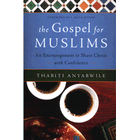
From Mecca to Calvary: The Testimony of Thabiti Anyabwile

Interview with Thabiti Anyabwile – on his book “The Gospel for Muslims”

 By Matt Svoboda

From the Bible belt, to Islam, to following Jesus, to going into the ministry, and now he has a nationwide stage. Thabiti Anyabwile is a gospel-centered pastor who has preached at the last several Together for the Gospel conferences.  He served under Mark Dever at Capitol Hill Baptist Church in Washington DC before becoming the Senior Pastor at First Baptist Church in Grand Cayman in the Cayman Islands.  I can’t forget to mention that he doesn’t even like the beach!  He has written a few other books, all of which I have read, and I have been greatly blessed by his preaching and writing ministry.

Thabiti Anyabwile has written a book that I have not read, but have ordered it and am very much looking forward to reading. The Gospel for Muslims appears to be a great book for helping Christians to share Christ with confidence to Muslims. I am grateful that Thabiti agreed to do this interview.  Admittedly, I have not really studied Islam or how to share the gospel with Muslims.  This interview and book will be as beneficial for me as anyone. Enjoy the interview below and you can buy the book at the link above:

1) Could you summarize your testimony of how you converted from Islam to Christianity? What were a couple of “milestones” in your process of conversion?

I grew up in small town North Carolina, smack in the middle of the Bible belt.  My family was nominally Christian, attending church at Easter, Christmas, and few times during the year.  The first turning point came for me when I was arrested after my sophomore year in high school.  I’d never been in trouble before; so I did what my big brothers sometimes did when they got in trouble—I went to church.  But sadly, I didn’t have ears to hear the gospel, and I don’t think the gospel was always preached clearly.

So, I went off to college an angry young man.  There, I began friendships with a number of Muslim men.  By my sophomore year in college, I became a practicing Muslim, zealous for Islam.  I practiced Islam through the rest of undergraduate school and a short time after.  The next turning point came near the end of undergraduate school.  During Ramadan, the Muslim month of prayer and fasting, while reading the Qur’an, I was suddenly aware that the Qur’an admitted too much about Jesus on the one hand (virgin birth, miracles, prophet, gospels are signs from God, etc.) but denied too much on the other hand (not the Son of God, not crucified, etc.).  After a year of trying to find satisfactory answers, I finally concluded that the inconsistencies couldn’t be explained.  Islam was false.

About the same time, a casual conversation with co-workers exposed a nagging problem I’d had all along.  We were discussing various people from world history who we respected.  And a co-worker look at the group and said she couldn’t think of anyone more righteous than me.  After my protests, she continued to insist and to list off the reasons why she thought that.  In that conversation I could see that the righteousness she described was all external behaviors.  But inside, I knew my heart was corrupt and sinful, full of unrighteousness.  I knew I didn’t have the kind of righteousness that would satisfy a holy God.

Rather than turn to Christ, I went further in despair.  Around that time, my wife and I found out we were pregnant with what would have been our first child.  We lost the child three months into the pregnancy.  The Lord dealt us a kind blow.  He humbled us.  And in that period of humbling, we heard the preaching of the gospel with faith for the first time.  The preacher, expounding Exodus 32, explained the sinfulness of sin, and I was deeply convicted.  And the preacher held out Jesus Christ, the only Savior, who not only took God’s wrath against sin but also supplied the perfect righteousness we need to satisfy a holy God.  In God’s amazing kindness, my wife and I both came to faith in the Lord that morning.

2) What is the main reason that you wanted to write this book “The Gospel for Muslims?”

I’m often asked by people who know my testimony, “How can we share the gospel with Muslims?”  When they ask this, they’re really asking, “Is there any special knowledge I need or technique that will be effective in evangelizing Muslims?”  But when you think about it, that’s the wrong question.  The question suggests that we lack confidence in the gospel itself to change the hardest hearts or to save our Muslim neighbors.  So, I wrote the book to remind Christians that “the gospel is the power of God unto salvation for everyone who believes, to the Jew first but also to the Gentile,” including the Muslim.  What we need is fresh confidence in Christ and the news of His salvation through His death, burial, resurrection, and coming.  If we know the gospel, we know everything we need to know to see our Muslim friends, coworkers, and neighbors saved from the coming wrath of God, and saved to love and enjoy the Savior forever.

3) What are some common misconceptions that Christians have about Muslims?

There are many.  We sometimes think that every Muslim is a terrorist.  Television images and our own fear have a lot to do with that.  But the chances are overwhelming that our Muslim friend or neighbor is not a terrorist.  They’re people with the same concerns, ambitions, and needs as our non-Muslim neighbors.

Also, many people tend to think that every Muslim has memorized the Qur’an by three years old and is able to give extended and sophisticated explanations of their faith.  But in reality, most Muslims don’t know the Qur’an very well at all.  And Islam itself is not one thing all over the world.  Arab Islam differs significantly from Islam in Indonesia (the largest Muslim country in the world) and North Africa and North America.  You’re more likely to meet a nominal Muslim, much like my nominal Christian family back in NC, than you are to meet a Muslim with the entire Qur’an committed to memory.

But perhaps the biggest myth is that Muslims do not convert.  That simply is not true.  Many, many Muslims are saved by God’s sovereign grace through faith in Christ all the time!  They pay significant costs—losing family, friends and sometimes jobs.  But this is exactly what Jesus tells His followers to expect, and it’s worth it.  As those who already believe, we should expect that the same gospel that saved us will save our Muslim friends.  And we should be ready to help them pay the costs of following our Lord.

4) What are the key passages in Scripture that you use when sharing the gospel with Muslims?  Is there a certain “method” that you use?

I don’t use a certain method in evangelism.  Rather, I concentrate on explaining the gospel clearly, making distinctions in terms so that things like “repentance” and “faith” are seen to be distinct from those things in Islam.  Also, I want to make sure that distinctively Christian realities—like the Trinity, the crucifixion and resurrection, the necessity of turning from sin, abandoning our righteousness, and trusting Jesus alone to save us—are driven home.  I want to make sure my Muslim friend knows that these are personal issues, not just abstract theological issues.  His sin is real.  He has personally offended the holy God of all creation.  His rejection of Jesus means He is abiding in His sin and in God’s wrath.  And unless he repents and trusts Christ, he will suffer eternal judgment.

In my experience, most Muslims are eager to either hear what we think about Jesus, or to try and disprove the gospel.  To do that, they often turn to the gospels themselves.  That puts us on home turf, familiar ground.  Normally, I start where they start and I make sure to read the five verses before and after the verse they usually misquote.  It’s amazing how often the gospel is right there in the context!  So, simply modeling good Bible reading and explaining what’s there tends to “work” as an evangelistic approach.  The Spirit blesses the word.

5) Along with reading your book, how can Christians get trained in order to better share the gospel with Muslims?

There are many good books out there on evangelism.  Continue to read books that encourage in a biblical approach to evangelism.  I’d recommend Mark Dever’s The Gospel and Personal Evangelism and Mack Stiles’ Marks of the Messenger and Speaking of Jesus (which has a video training resource as well).  Those would be wonderful works to study.  Also, reading good books on the gospel itself, including: Greg Gilbert’s What is the Gospel?, and John Murray’s Redemption Accomplished and Applied.

But there’s really no training like actually sharing your faith.  Don’t worry about “having all the answers.”  In the process of sharing and being questioned, God gives us grace and teaches us things we won’t likely learn any other way.  Consider Philemon 6: “I pray that you may be active in sharing your faith, so that you will have a full understanding of every good thing we have in Christ.”  Isn’t it awesome of God to tie our evangelism together with granting us “a full understanding of every good thing we have in Christ”?  The Lord simultaneously reaches the sinner and rewards the evangelist!

6) Are there any “pitfalls” that Christians often fall into when sharing the gospel with Muslims?

There are several, most of them connected with the misconceptions we have of Muslims.  We sometimes give in to the fear of man.  We sometimes find ourselves playing Bible “ping pong,” lobbing verses back and forth in an effort to win an argument.  Sometimes we try to make unpleasant aspects of the gospel more appealing by leaving them out or softening them.  Or, we’re lured into accepting the claims and premises of Islam as though they were true.  All of these can be pitfalls.

7) What are some “things to avoid” when sharing the gospel with Muslims?

I don’t think it’s helpful to get into discussions of politics, to attack the Qur’an or Prophet Muhammad, or to be disrespectful.  When we’re fearful, feeling under-prepared, and lose sight of the fact that we’re trying to win people to the truth that is in Christ, our flesh exerts enormous control and we tend to do things we’d probably be better off avoiding.

Also, it’s important to avoid serving pork products (or having them in your home) if you’re inviting a Muslim friend or neighbor over.  Avoid immodest clothing and cross-gender conversations.  Many Muslims associate Christianity with the decadence and moral decay of the West.  We want to avoid those associations.

Try your best to avoid assumptions, like: they’d never be interested in attending my church.  Actually, your Muslim neighbor or friend may find themselves with freedoms and interests that they couldn’t pursue in other countries.  Don’t assume they’re not interested in the faith and the church.

8) What are some good ways Christians can lovingly engage Muslims in their community?

Love Muslims the way you’d love anyone.  They’re people made in God’s image, and they experience the same burdens, needs, ambitions, and cares as everyone else.  So, in general, simply move toward them in intentional love.  As we pay attention to them, opportunities for specific acts of kindness and love will emerge.

But some general things also come to mind.  Volunteer in an English-as-Second-Language class or group.  Invite them to your home for a meal or to watch a game.  Most internationals will live in the United States without ever entering an American home.  Practice hospitality.  Also, if you both have children, ask them how they and the kids are adjusting to the culture and ways of the U.S.  Invite your Muslim neighbor and their children to participate in a ball game or some other activity you share with your children.  Be something of a cultural broker, empathizing with their struggles and helping them negotiate life in your community.

9) Any final thoughts or advice that you would like to share with Christians who would like to better engage Muslims with the gospel?

Let the gospel do the work!  Be confident in the power of God encased in the gospel.  Get out there are share the good news and trust the Spirit to use you for the glory of Christ!

More About Thabiti Anyabwile: He is the Senior Pastor of First Baptist Church of Grand Cayman in the Grand Cayman Islands and a Council member with The Gospel Coalition. In his own words, “I love the Lord because He first loved me. I love His people because He has given me a new heart. I have received God’s favor in the form of my wife, Kristie. And together we know His blessing through three children. I was once a Muslim, and by God’s grace I have been saved through faith in Jesus Christ. By God’s unfathomable grace I am a preacher of the Gospel of Jesus Christ, in which I hope to serve Him until He returns or calls me home!”

He earned his B. A. and M. S. degrees in psychology from North Carolina State University in Raleigh, NC. Before moving to minister in the Caribbean, he served with Dr. Mark Dever at Capitol Hill Baptist Church in Washington, D.C. He is married to Kristie and they have three children: Afiya, Eden, and Titus. As a native of Lexington, North Carolina, he has an affinity for Western-NC-BBQ. Thabiti writes regularly at Pure Church as part of The Gospel Coalition blog crew. He has also authored several books, The Gospel for Muslims: An Encouragement to Share Christ with Confidence (Thabiti converted to Christianity from Islam); Finding Faithful Elders and Deacons; Ephesians: God’s Big Plan for Christ’s New People; May We Meet in the Heavenly World: The Piety of Lemuel Haynes; What Is A Healthy Church Member?; The Decline of African American Theology: From Biblical Faith to Cultural Captivity; The Faithful Preacher: Recapturing the Vision of Three Pioneering African American Pastors. He has also contributing chapters to the following books: For the Fame of God’s Name: Essays in Honor of John Piper; Holy, Holy, Holy: Proclaiming the Perfections of God; Proclaiming a Cross-Centered Theology; Glory Road: The Journeys of 10 African-Americans into Reformed Christianity; and John Calvin: A Heart for Devotion, Doctrine & Doxology.

The Interview above took place on About the Author: Thabiti Anyabwile is the Senior Pastor of First Baptist Church of Grand Cayman in the Grand Cayman Islands and a Council member with The Gospel Coalition. In his own words, “I love the Lord because He first loved me. I love His people because He has given me a new heart. I have received God’s favor in the form of my wife, Kristie. And together we know His blessing through three children. I was once a Muslim, and by God’s grace I have been saved through faith in Jesus Christ. By God’s unfathomable grace I am a preacher of the Gospel of Jesus Christ, in which I hope to serve Him until He returns or calls me home!”

He earned his B. A. and M. S. degrees in psychology from North Carolina State University in Raleigh, NC. Before moving to minister in the Caribbean, he served with Dr. Mark Dever at Capitol Hill Baptist Church in Washington, D.C. He is married to Kristie and they have three children: Afiya, Eden, and Titus. As a native of Lexington, North Carolina, he has an affinity for Western-NC-BBQ. Thabiti writes regularly at Pure Church as part of The Gospel Coalition blog crew. He has also authored several books, The Gospel for Muslims: An Encouragement to Share Christ with Confidence (Thabiti converted to Christianity from Islam); Finding Faithful Elders and Deacons; Ephesians: God’s Big Plan for Christ’s New People; May We Meet in the Heavenly World: The Piety of Lemuel Haynes; What Is A Healthy Church Member?; The Decline of African American Theology: From Biblical Faith to Cultural Captivity; The Faithful Preacher: Recapturing the Vision of Three Pioneering African American Pastors. He has also contributing chapters to the following books: For the Fame of God’s Name: Essays in Honor of John Piper; Holy, Holy, Holy: Proclaiming the Perfections of God; Proclaiming a Cross-Centered Theology; Glory Road: The Journeys of 10 African-Americans into Reformed Christianity; and John Calvin: A Heart for Devotion, Doctrine & Doxology.

The interview above took place on May 7, 2010 and can be found on SBC Voices: http://sbcvoices.com/interview-thabiti-anyabwile-the-gospel-for-muslims/

Warren W. Wiersbe on How To Pray Effectively: 5 Principles from John 17

Today, May 3rd, 2012 is the National Day of Prayer. On this day I’m posting an excellent excerpt from a book on how to pray from Dr. Warren W. Wiersbe. He bases this book on the “real Lord’s prayer.” What we have traditionally called “The Lord’s Prayer” in Matthew 6 is the way Jesus taught his disciples to pray. However, in John 17 we get a glimpse into the prayer life of Jesus on His way to the cross and back to glory with the Father. The best way we can learn about prayer, is to do a careful study of John 17, and see firsthand how, what, and why Jesus prayed. Without further ado – enjoy Wiersbe’s observations about our Lord’s famous prayer from John chapter 17.

These things Jesus spoke; and lifting up His eyes to heaven, He said. ’’Father, the hour has come; glorify Thy Son, that the Son may glorify Thee.” – John 17:1

“Lord, teach us to pray!”

This request from one of the disciples (Luke 11:1) gave evidence of real spiritual insight. We must learn how to pray. While praying is as natural to the Christian as breathing is to a mammal, even breathing must be studied and practiced if it is to be correct. Singers and public speakers work on their breathing so that they get the most out of their voice and don’t injure it. The fact that we have been praying since childhood is no guarantee that we really know how to pray effectively.

John 17:1 Gives us some Guidelines to Follow for Effective Praying:

(1) Posture is not important

Was our Lord kneeling or standing when he offered this prayer? We don’t know. All we do know is that He lifted up His eyes to heaven (see John 11:41). Most people bow their heads and close their eyes when they pray, but Jesus lifted His head and focused His eyes on heaven. Many people fold their hands when they pray, but I don’t find this practice anywhere in Scripture. In fact, the Jews were accustomed to lifting up their hands, open to God, expecting to receive something! (Note 1 Kings 8:22; Nehemiah 8:6; Psalm 28:2; and 1 Timothy 2:8.)

Many different prayer postures are recorded in the Bible, and all of them are acceptable. Some people bowed their knees when they prayed (Genesis 24:52; 2 Chronicles 20:18; Ephesians 3:14). When Jesus prayed in Gethsemane, He began by bowing His knees (Luke 22:41); He then fell on His face as He talked to the Father (Matthew 26:39). It was Daniel’s practice to kneel when he prayed (Daniel 6:10), but King David sat when he talked to God about the promised kingdom (2 Samuel 7:18). Abraham stood when he interceded for Sodom (Genesis 18:22). So there are many postures for prayer.

The important thing is the posture of the heart. It is much easier to bow the knees than to bow the heart in submission to God. While the outward posture can be evidence of the inward spiritual attitude, it is not always so. Again, the important thing is the posture of the heart.

(2) We Pray to the Father

The biblical pattern for prayer is to the Father, in the name of the Son, in the power of the Spirit. Jesus addressed His Father six times in this prayer. (Some people say “Father” or “Lord” with every sentence that they pray. This is a bad habit that should be cured.) Four times He simply said “Father”; the other two times, He called Him “Holy Father” and “righteous Father” (verses 11 and 25). From this, I gather that it is not wrong for us to use suitable adjectives when we address our Father in heaven. However, we must be careful to mean what we say and not overdo it.

We address the Father, of course, because prayer is based on sonship. In what we traditionally call “The Lord’s Prayer” (Matthew 6:9-13), Jesus taught His disciples to pray, “Our Father….” Jesus never prayed “Our Father.” We noted in chapter 1 that Jesus had a different relationship to the Father because He is the eternal Son of God. He said, “I ascend to My Father and your Father, and My God and your God” (John 20:17).

We hear people addressing their prayers to the Son and even to the Holy Spirit. Is this wrong? When Stephen gave his life for Christ, he saw Jesus in heaven and addressed his prayer to him: “Lord Jesus, receive my spirit!” (Acts 7:59). I know of no prayer in the Bible addressed to the Holy Spirit. Since our prayers are addressed to God, and since Father and Son and Holy Spirit are all in the Godhead, technically we can address our prayers to each of them. However, the biblical pattern seems to be that we pray to the Father, in the name of the Son, and through the power of the Spirit.

Nowhere in this prayer does our Lord mention the Holy Spirit. He had in His Upper Room discourse taught the disciples about the Holy Spirit (John 14:16,17, 26; 15:26; 16:7-13). Jude 20 instructs us to pray “in the Holy Spirit,” which seems to relate to Romans 8:26, 27, verses that every serious prayer warrior should ponder. We cannot expect God to answer unless we pray in His will (1 John 5:14, 15). We discover the will of God primarily through the Word of God (Colossians 1:9, 10), and it is one of the ministries of the Spirit to teach us from the Word (John 16:13, 14).

The fact that prayer is based on sonship suggests that the Father is obligated to listen when His children call. In fact, it is more than an obligation: it is the Father’s delight when His children fellowship with Him and share their needs. “If you then, being evil, know how to give good gifts to your children, how much more shall your Father who is in heaven give what is good to those who ask Him!” (Matthew 7:11). The Father’s heart reaches out in love to His own, and He longs to share good things with them. And the better we know our Father, the easier it is to pray in His will.

(3) We must be Yielded to the Father’s Will

A storm passed over the Florida coast and left a great deal of wreckage behind. The next day, as the men were cleaning up their little town, one man said, “I’m not ashamed to admit that I prayed during that storm last night.” One of his friends replied, “Yes, I’m sure the Lord heard many new voices last night.”

Prayer is not like those little red boxes we see in buildings and occasionally on street corners, marked USE ONLY IN EMERGENCY. I enjoy sharing good things with my children, but if they only spoke to me when they were in trouble or in need of something, our relationship would quickly deteriorate. Unless we do the will of God, our living will negate our praying.

“Father, the hour has come….” What hour? The hour for which He had come into the world. The hour when He would die on the cross, be buried, rise again, and finish the great work of redemption. You may trace this “hour” in John’s Gospel.

John 2:4 – Woman, what have I to do with you? My hour has not yet come.

John 7:30 – They were seeking therefore to seize Him; and no man laid his hand on Him, because His hour had not yet come.

John 8:20 – These words He spoke in the treasury, as He taught in the temple; and no one seized Him, because His hour had not yet come.

John 12:23 – And Jesus answered them, saying, “The hour has come for the Son of Man to be glorified.”

John 13:1 – Now before the Feast of the Passover, Jesus knowing that His hour had come that He should depart out of this world to the Father, having loved His own who were in the world, He loved them to the end.

John 17:1- Father, the hour has come….

I think it was Phillips Brooks who said, “The purpose of prayer is not to get man’s will done in heaven, but to get God’s will done on earth.” If we want to pray in the will of God, then we must live in the will of God. Prayer is not something that we do; it is something that we are. It is the highest and deepest expression of the inner person.

It is this profound relationship between practice and prayer that helps us understand such promises as Psalm 37:4: “Delight yourself in the Lord; and He will give you the desires of your heart.” A superficial reading of this promise would lead you to believe that God is a doting Father who plays favorites with those who pamper Him. But that is not what this promise says. If we delight in the Lord, and seek to please Him in everything, then something is going to happen to our own desires. His desires become our desires. We start to say with our Lord, “My food is to do the will of Him who sent Me, and to accomplish His work” (John 4:34). Our praying, then, is simply the reflection of God’s desires in our own heart.

There is a price to pay when we sincerely pray in the will of God. Jesus was about to receive the cup from His Father’s hand (John 18:10, 11). The Father had prepared the cup, and the hour had come. But Jesus was not afraid. Peter tried to protect the Master, but Jesus rebuked him. “The cup which the Father has given Me, shall I not drink it?” (John 18:11). We need never fear the will of God; and, if we are in the will of God, we need never fear the answers He gives to our prayers. If a son asks for bread, will he receive a stone? If he asks for a fish, will his father give him a snake?

Living in the will of God makes it possible for us to “pray without ceasing” (1 Thessalonians 5:17). This command obviously doesn’t mean that we are to go around mumbling prayers. Our real praying is expressed by the desires of our heart. If our lips frame requests that are different from the desires in our heart, then we are praying hypocritically. God does not hear words; He sees hearts. So, when we live in the will of God, the desires of our heart should become more and more godly; and these desires are really prayers that constantly ascend to the Lord.

Jesus lived on a divine timetable. When He told His disciples He was going back to Judea to help Mary and Martha and Lazarus, the disciples protested. “Rabbi, the Jews were just now seeking to stone You, and are You going there again?” What was our Lord’s reply? “Are there not twelve hours in the day?” (John 11:8, 9). He knew that He was safe in the Father’s will, and that they could not kill Him until His hour had come.

God in his mercy can and does answer “emergency prayers,” but He prefers that we be in constant communion with Him. (In fact, if we seek to live in His will, we will have fewer emergencies!) If prayer is an interruption to our lives, then something is wrong.

The fact that we sustain an attitude of prayer does not mean we avoid regular times of prayer. It is the regular occasion of prayer that makes possible the constant attitude of prayer. We do not enjoy Thanksgiving dinners or holiday feasts at every meal; but we are able to enjoy those special times because we have eaten our regular meals three times a day. We begin the day with prayer; we pray at mealtime; we lift prayers to God during the day as the Spirit prompts us; we close the day in prayer. Like our breathing, our praying becomes so much a part of our lives that we are often not conscious of it.

(4) The Glory of God should be our Primary Concern

“Father, the hour has come; glorify Thy Son, that the Son may glorify Thee.”

The word glory is used in one form or another eight times in this prayer. What does it mean?

In the Old Testament, the Hebrew word translated “glory” means “weight, that which is important and honorable.” (Paul’s phrase “an eternal weight of glory” in 2 Corinthians 4:17 carries this idea.) In the New Testament, the Greek word translated “glory” means “opinion, fame.” Theologians tell us that the “glory of God” is the sum total of all that He is, the manifestation of His character. The glory of God is not an attribute of God, but rather is an attribute of all His attributes! He is glorious in wisdom and power, glorious in His mighty works, and glorious in the grace He bestows upon us.

You have probably noticed that “The Lord’s Prayer” teaches us to put God’s concerns before our own. We pray “Hallowed be Thy Name, Thy kingdom come, Thy will be done” before we bring up our own needs-daily bread, forgiveness, and protection from sin. When our praying centers on the glory of God, we see our needs and requests in proper perspective. Matters that seemed so important have a tendency to shrink to their proper size when measured by the glory of God.

Whatever we pray about, in the will of God and for the glory of God, will be granted by our heavenly Father. When we are available to bring glory to God “on the earth” (verse 4), then God is available to provide what we need.

Was Jesus praying selfishly when He said, “Glorify Thy Son”? No, he was not. To begin with, He had shared that glory with the Father “before the world was” (verse 5). When He came to earth in His body of flesh, He veiled that glory. Peter, James, and John saw it on the Mount of Transfiguration (John 1:14; Matthew 17:1-8), but it was not revealed to anyone else. When our Lord asked the Father to glorify Him, He was only requesting the return of that which was already His.

But something more is involved. The glorification of Jesus Christ meant the completion of the great work of salvation. In this prayer, Jesus spoke as though His work on the cross were already finished. “I glorified Thee on the earth, having accomplished the work which Thou hast given me to do” (verse 4). If Jesus Christ had not been glorified, there could be no salvation for sinners today. The Holy Spirit would not have been given. There would be no church, no New Testament, no Christian life. While our Lord did pray for Himself, it was not a selfish prayer; for He also had us in mind.

And, after all, it cost Him His life on the cross for this prayer to be answered. By no stretch of the imagination could you call it selfish.

God answered the prayer of His Son. “The God of Abraham, Isaac, and Jacob, the God of our fathers, has glorified His servant Jesus…” (Acts 3:13). In Peter 1:21 we are told that the Father “raised Him from the dead and gave Him glory….” There is a glorified Man in heaven today! In Jesus Christ, deity and humanity share glory. This assures us that one day we shall share God’s glory, for “we shall be like Him, because we shall see Him just as He is” (1 John 3:2).

Jesus Christ has already given His church the glory (verse 22). The tense of the verb in Romans 8:30 has always astounded me: “…whom He justified, these He also glorified.” We are just as much glorified as we are justified, but the glory has not yet been revealed. All of creation, now travailing because of sin, is eagerly awaiting “the revealing of the sons of God” (Romans 8:19); for only then will creation be set free to enjoy “the freedom of the glory of the children of God” (Romans 8:21).

“If God answers this request,” we should ask ourselves, “will it bring Him glory? And what will this answer look like when Jesus comes again?” I have discovered that testing my prayers by the glory of God is a good way to detect requests that are selfish and short-sighted.

(5) We must Pray in Faith

Suppose the Master had looked at His situation through human eyes alone. Could He have prayed as He did? No; it would have been impossible.

Suppose He looked back on His years of ministry and evaluated that ministry from a human point of view. It would have looked like failure. He had very few followers, and His own nation had rejected Him. Humanly speaking, His work had failed. Yet He prayed, “I glorified Thee on the earth, having accomplished the work which Thou hast given me to do” (verse 4). By faith, He would be that “grain of wheat” planted in the ground, and He would produce much fruit (John 12:24).

Or, suppose He had looked around. What would He have seen? A small band of men, all of whom would fail Him in one way or another. Peter would deny Him three times. At that very hour, Judas was bargaining with the Jewish council and selling the Master like a common slave. Peter, James, and John would go to sleep in the Garden when they should be encouraging their Lord. And all of the men would forsake Him and flee.

Yet by faith, Jesus prayed, “I have been glorified in them” (verse 10). By faith, He prayed for them as they would be sent into the world to share the Gospel message. In spite of their past failures, these men would succeed! “I do not ask in behalf of these alone,” He said to the Father, “but for those also who believe in Me through their word” (verse 20). These weak men would invade a world that hated them and bring many to the feet of the Savior. Jesus saw all of this by faith.

If our Lord had looked ahead, He would have seen arrest, conviction, and death on a cross. Humanly speaking, it was defeat; but by faith, He saw it as it really was-victory! He said to Andrew and Philip, “The hour has come for the Son of Man to be glorified” (John 12:23). Glorified! We would have said, crucified. But he looked beyond the cross to the glory that would come. “Who for the joy set before Him endured the cross, despising the shame, and has sat down at the right hand of the throne of God” (Hebrews 12:2).

When we pray by faith, we start seeing things from the divine perspective. Faith enables us to see the invisible. Faith treats as present and accomplished that which God will do in the future. “For we walk by faith, not by sight” (2 Corinthians 5:7).

In my own prayer life, God is constantly seeking to bring me back to these fundamentals. It is easy for me to get detoured by some external thing, and my Father has to remind me that effective praying must come from the heart. I must repeatedly examine my relationship to the Father to make sure I am in His will, and that I want to be in His will. (“Doing the will of God from the heart,” Ephesians 6:6.) I must examine my motives: Am I praying so that the Father will be glorified or so that I might have my own comfortable way? Am I praying by faith, basing my requests on His Word?

Perhaps all of this seems to make praying appear very complex and difficult. Really, it is not. True prayer is the by-product of our personal “love relationship” with the Father.

“He who has My commandments and keeps them, he it is who loves Me; and he who loves Me shall be loved by My Father, and I will love him, and will disclose Myself to him” (John 14:21).

About the Author: Warren W. Wiersbe is the Distinguished Professor of Preaching at Grand Rapids Baptist Seminary, Warren Wiersbe is the author of more than 100 books. Billy Graham calls him “one of the greatest Bible expositors of our generation.” The article above was adapted from Warren W. Wiersbe. Prayer: Basic Training. Wheaton, IL: Tyndale, 1988, 23-32.

Where is the Best Place to Go When You Need Encouragement and Hope?

“The Encouragement of the Scriptures”

By Dr. James Montgomery Boice

For everything that was written in the past was written to teach us, so that through endurance and the encouragement of the Scriptures we might have hope. – Romans 15:4 (pictured at left – the Alps in Switzerland – James Boice received his Doctorate in Theology in Basel, Switzerland)

A number of years ago a German theologian named Juergen Moltmann wrote a book entitled The Theology of Hope. His point, which meant a great deal to Bible scholars at the time, was that eschatology (the doctrine of the last things) should not be an appendix to Christian theology—something tacked on at the end and perhaps even dispensable to Christian thought—but should be the starting point of everything. He said that it is confidence in what God is going to do in the future that must determine how we think and act now.

I am not sure that is entirely right. I would call the cross of Christ, not eschatology, the center, arguing that we must take our ideas even of the future from the cross. But Moltmann was correct in stressing that hope is important for living well now. To have hope is to look at the future optimistically. So to some extent a person must have hope to live. The Latin word for hope is spes, from which the French derived the noun espoir and the Spanish, esperanza. But put the particle de in front of those words, and the resulting word is despair, literally “without hope.” People who despair do not go on. When John Milton wanted to depict the maximum depth to which Satan fell when he was cast out of heaven, he has him say to the other fallen spirits in hell, “Our final hope is flat despair.”

How can any sane person have hope in the midst of the desperate world in which we live? The frivolous can, because they do not think about the future at all. Thinking people find the future grim. Winston Churchill, one of the most brilliant and influential people of his age, died despairing. His last words were, “There is no hope.”

Our text says that a Christian can have hope and that the way to that sound and steadfast hope is through the Bible.

In The Wizard of Oz, Dorothy and her friends—the scarecrow, the tin man, and the cowardly lion—make their way down a yellow brick road to find their future. Our text likewise gives us a road to hope. That road leads first through teaching, second through patient endurance, and third through encouragement. The text says, “For everything that was written in the past was written to teach us, so that through endurance and the encouragement of the Scriptures we might have hope” (Rom. 15:4).

The Teaching of the Scriptures

The first and most important stop along this important road leading to hope is teaching, because it is through the teaching of the Scriptures that the other elements, endurance and encouragement, come. Christianity is a teaching religion, and our text is the Bible. It is true that those whose minds have been enlightened by the Bible often go on to learn in other areas too. Some of the greatest scholars in the world have been Christians, and many have traced their love of learning to their Christian roots. Moreover, wherever the gospel has gone throughout the world, schools and colleges and other institutions of higher learning have gone with it. Still, Christians maintain that however much a person may come to know in other areas, if he or she does not know what God has revealed about himself and the way of salvation in the Bible, that person is ignorant and remains a great fool.

Paul said of the Gentile Christians at Ephesus, among whom there must have been many learned persons, that before they had been taught about Jesus and had received him as their Savior, they were “excluded from citizenship in Israel and foreigners to the covenants of the promise, without hope and without God in the world” (Eph. 2:12). They may have been educated, but they were ignorant of the things that matter most. After they had been taught and came to faith in Christ, however, they had hope of “the riches of [God’s] glorious inheritance in the saints,” which was future, and “his incomparably great power for us who believe,” which was present (Eph. 1:18–19).

Our text in Romans is about the teaching of the Scriptures and tells us at least three important things about the Bible:

(1) The Bible is from God. When Paul says that everything written in the past “was written to teach us,” he is not saying that when Moses wrote the Pentateuch, the first five books of the Bible, he did so intending that the church in future ages might be blessed by his writings, or that David wrote the psalms so that we might profit by them. His point is that God caused the human writers of the Bible to write as they did, because what he had in mind was the edification and encouragement of his people through the ages, whether or not the human writers understood this.

This also flows from the context. We remember that Paul has just quoted Psalm 69:9, applying it to Jesus Christ, whom he brought forward as an example for our right conduct. Some may object, “How can you imagine that David was writing about Jesus Christ, who was born so many hundred of years after his own age, or that this has anything to do with us?” Paul is answering, in effect, as F. Godet suggests, “If I thus apply this saying of the psalmist to Christ and ourselves, it is because, in general, all Scripture was written to instruct and strengthen us.”

Of course, many other verses say the same thing. Peter wrote, “Above all, you must understand that no prophecy of Scripture came about by the prophet’s own interpretation. For prophecy never had its origin in the will of man, but men spoke from God as they were carried along by the Holy Spirit” (2 Peter 1:20–21).

Similarly, Paul told Timothy, “All Scripture is God-breathed and is useful for teaching, rebuking, correcting and training in righteousness, so that the man of God may be thoroughly equipped for every good work” (2 Tim. 3:16–17). The reason the Scriptures are so valuable is that they are unlike other books written by mere human beings. They are from God; therefore they have the authority and power of God within them. Besides, God has promised to bless them to the ends for which they have been given (Isa. 55:10–11).

(2) Everything in the Bible is for our good and is profitable. The second important teaching about the Scriptures in Romans 15:4 is that all Scripture is for our good and is profitable. In 2 Timothy 3:16, Paul wrote, “All Scripture is God-breathed and is useful.…” In our text he uses the words “everything that was written,” but he means the same thing in both passages.

This is not an endorsement of every piece of ancient literature, as if the words “everything that was written in the past” refer to the writings of the ancient Babylonians, Egyptians, Greeks, or Romans. Paul is not writing about secular literature, but about the writings that are “God-breathed.” Other books may instruct and even charm us wonderfully, but only the Bible gives us a sure ground for hope, since only it speaks with full authority and trustworthiness about what God did to save us from sin and give us eternal life.

Paul’s statement is, however, an endorsement of all of the Bible. That is, he is informing us that “all Scripture … is profitable” and “everything that was written in the past was written to teach us.”

Some critics of the Bible have found things in it that they do not like and have therefore argued either that the Bible is from men only, not from God, or that it is a mixture of the two—some parts being from God and some from man. The parts that are from God are then regarded as authoritative, but the parts said to be from human beings only are discarded as error-prone and nonauthoritative. This is a convenient way of pretending to submit to the Bible’s authority while at the same time avoiding anything in the Bible that is convicting or contrary to the critic’s thought. This is not the Bible’s teaching. It is not historic Christianity. The Bible teaches that everything in it is the true Word of God and that it is binding upon the minds and consciences of all persons. Therefore, if we are being led by God’s Holy Spirit, we will conform our thoughts and actions to whatever we find in his Word.

(3) Nothing in the Bible is without value. Paul’s third point is that not only is everything in the Bible for our good and profitable, but nothing that is in the Bible is without value.

John Calvin was strong in this conviction: “This notable passage shows us that the oracles of God contain nothing vain or unprofitable.… It would be an insult to the Holy Spirit to imagine that he had taught us anything which it is of no advantage to know. Let us also know that all that we learn from Scripture is conducive to the advancement of godliness. Although Paul is speaking of the Old Testament, we are to hold the same view of the writings of the apostles. If the Spirit of Christ is everywhere the same, it is quite certain that he has accommodated his teaching to the edification of his people at the present time by the apostles, as he formerly did by the prophets.”

Patient Endurance

The second checkpoint we must pass along the road to hope is endurance, which some versions of the Scriptures translate patience (King James Version), perseverance (New American Standard Bible) or even patient endurance, since the word involves both passively accepting what we cannot change and actively pressing on in faithful obedience and discipleship. This word (hypomonê) occurs thirty-two times in the New Testament, sixteen times in Paul’s writings, six of which are in Romans.

Is Paul saying that endurance comes from the Bible—that is, from knowing the Bible? I raise that question because a detail of the Greek text provokes it. Paul uses the word for through (dia) twice, once before the word endurance and once before the word encouragement (the New International Version omits it the second time). According to the strictest rules of Greek grammar, that should mean that endurance is separated from encouragement with the result that the words “of the Scriptures” should be attached to encouragement only. In other words, Paul would be saying that it is through our own personal enduring as well as through the encouragement that we have in studying the Bible that we find hope.

Leon Morris is a fine Greek scholar, and he is led to this position by his grammatical sensitivity. “[Paul’s] construction seems to show that only encouragement is here said to derive from the Bible,” he says.

In my judgment this is a place where it may be wrong to read too much into a fine point of grammar. Grammatically Morris is right. But in terms of the flow of thought it is hard to suppose that Paul is not thinking of the role the Scriptures have in producing endurance too. For one thing, he links the two ideas together in verse 5, saying, “May the God who gives endurance and encouragement.… ” Again, in verse 4 both terms follow Paul’s opening words about the use of the Scriptures for teaching: “For everything that was written in the past was written to teach us, so that…” Or again, even apart from what Paul is saying, elsewhere we are taught that endurance comes from reading how God has kept and preserved other believers even in terrible circumstances.

James wrote, “Brothers, as an example of patience in the face of suffering, take the prophets who spoke in the name of the Lord. As you know, we consider blessed those who have persevered. You have heard of Job’s perseverance and have seen what the Lord finally brought about. The Lord is full of compassion and mercy” (James 5:10–11). He is saying that we learn to endure by reading about the way God helped others before us.

Although they recognize the grammatical issue, a large number of other writers nevertheless see the matter as I have outlined it here. Among these are John Murray, Charles Hodge and F. Godet.

Encouragement

The third checkpoint along the road to hope is encouragement, which also comes to us through Scripture. Encouragement (paraklêsis) is found twenty times in Paul’s writings out of twenty-nine occurrences in the whole New Testament. It occurs three times in Romans.

The interesting thing about this word is that it is virtually the same one Jesus used to describe the work of the Holy Spirit among believers, saying, “It is for your good that I am going away. Unless I go away, the Counselor will not come to you; but if I go, I will send him to you” (John 16:7; see 14:26; 15:26), and that the apostle John used to describe the work of Jesus himself: “My dear children, I write this to you so that you will not sin. But if anybody does sin, we have one who speaks to the Father in our defense—Jesus Christ, the Righteous One” (1 John 2:1). The word Counselor and the phrase “one who speaks … in our defense” translate the same Greek word paraklêtos, which is also sometimes translated advocate. The literal meaning is “one who comes alongside of another person to help him or her,” to back the person up or defend him. So together the passages teach that Jesus himself does this for us, the Holy Spirit does it, and the Scriptures do it too. Indeed, it is through the Scriptures that the Holy Spirit chiefly does his work.

The end result of this is hope. In our text the article is present before the word hope (“the hope”), meaning the Christian hope. This is not just optimism that Paul is writing about, not a hope founded on something the world thinks possible. Also, the verb have is in the present tense, meaning that hope is a present possession. As Calvin says, “The particular service of the Scriptures is to raise those who are prepared by patience and strengthened by consolation to the hope of eternal life, and to keep their thoughts fixed upon it.”

An Example from History

But enough analysis! If we are to travel the road of endurance and encouragement to hope by learning from the Scriptures, we should study how it actually works.

There are hundreds of examples of this in the Bible, of course, but let’s examine the familiar story of Joseph. Joseph was the next-to-youngest son of Jacob, and he was favored by his father because he was born of his much-beloved wife Rachel and also perhaps because he was an extraordinary young man. His brothers hated him for his virtue so they threw him into a cistern and then sold him to Midianite traders who were on their way to Egypt. Joseph was just seventeen years old. In Egypt he became a slave of a rich man named Potiphar. Joseph served the man well, and he was placed in charge of his entire household. Then Potiphar’s wife was attracted to Joseph and tried to seduce him. When Joseph refused to sleep with her, the proud, angry woman denounced him falsely to her husband, and Joseph was thrown into prison.

Joseph languished in prison for two years. Once when he had correctly and favorably interpreted the dream of Pharaoh’s cupbearer, predicting that he would be taken from the prison where he too had been confined and restored to his previous position, Joseph asked the man to remember him when he was released and speak a good word to Pharaoh to get him out of prison. But the cupbearer forgot.

The years dragged on. One day God gave a dream to Pharaoh. No one in the palace could interpret it, but the cupbearer remembered Joseph and his ability to interpret dreams and told the king about him. Pharaoh sent for the young man, and Joseph interpreted the dream, predicting seven years of prosperity to be followed by seven years of severe famine. He recommended that the king appoint a wise man to save grain during the good years so that the people would not starve when the years of scarceness came.

You know the story. Pharaoh appointed Joseph to the task. Joseph served well. The land was saved, and in time, when the famine drove Joseph’s wicked brothers to Egypt to buy grain, God used Joseph to bring the brothers to repentance. The family was reconciled, and Jacob moved all of them to Egypt, where the people stayed and prospered for many years.

The climax of this great story comes in the final chapter of Genesis, when Jacob dies and the brothers come to plead with Joseph not to take revenge on them. They had completely misunderstood him. He had no intention of doing any of them any harm. “Don’t be afraid,” he exclaimed. “Am I in the place of God? You intended to harm me, but God intended it for good to accomplish what is now being done, the saving of many lives” (Gen. 50:19–20). The story teaches that God is sovereign even in such terrible circumstances as those that overtook Joseph. And from it we learn to trust God’s sovereignty, endure in hardship, be encouraged, and so grow strong in hope.

I have picked this particular story because of Psalm 105, which refers to it. It may have been written by King David, but whoever the writer was, he was a man who needed encouragement. He found it in Joseph’s story:

Give thanks to the Lord, call on his name; make known among the nations what he has done.…

He [God] called down famine on the land and destroyed all their supplies of food;

and he sent a man before them—Joseph, sold as a slave.

They bruised his feet with shackles, his neck was put in irons,

till what he foretold came to pass, till the word of the Lord proved him true.

The king sent and released him, the ruler of peoples set him free.

He made him master of his household, ruler over all he possessed,

to instruct his princes as he pleased and teach his elders wisdom. – Psalm 105:1, 16–22

This writer clearly knew that “everything that was written in the past was written to teach us, so that through endurance and the encouragement of the Scriptures we might have hope.” Do you know that? If you do, you will study what God has spoken and move ahead boldly for him and with hope.

About the Author: James Montgomery Boice, Th.D., (July 7, 1938 – June 15, 2000) was a Reformed theologian, Bible teacher, and pastor of Tenth Presbyterian Church in Philadelphia from 1968 until his death. He is heard on The Bible Study Hour radio broadcast and was a well known author and speaker in evangelical and Reformed circles. He also served as Chairman of the International Council on Biblical Inerrancy for over ten years and was a founding member of the Alliance of Confessing Evangelicals. He is the author of numerous Bible expositions and one of my favorite Systematic Theologies called Foundations of the Christian Faith. The article above was adapted from James M. Boice. Romans, vol. 4. Grand Rapids: Baker, 1991, 1803-1809).

Remembering John R.W. Stott on his Birthday – One of The Greatest Evangelicals of Our Time

Remembering John R.W. Stott Who Would Have Been 91 on April 27, 2012

I first met John Stott in 1985 after he had given a message at a Chapel service at what was then called Multnomah School of the Bible (Multnomah University) in Portland, Oregon. After he spoke he stayed for lunch and ate in the cafeteria. I was privileged to sit with him and hear his wisdom for over an hour. I was impressed with his humility, knowledge of the Scriptures, and genuine concern for us students. Two years later I was returning from spending two months in Spain on a missions trip and met up with my parents in London for a few days. While there we went to All Souls Church in London and worshiped there with John Stott delivering a wonderful Christo-centric sermon from Isaiah. Afterwards while waiting in a very long line to greet “Uncle John” he said to me without hesitation, “Hello David, how is your ministry at Multnomah going?” I couldn’t believe that he remembered my name, my ministry (with junior highers at the time), and where I was going to school! Needless to say, I was dumbfounded. I have always held Stott’s commentaries, books, and ministry in high regard – but what I loved most about Stott – was his genuine love for, and ability to shepherd like the Chief Shepherd – not just his local sheep, but around the world. I have taken random samples of tribute from Stott in this short article – many are from memorial services held for him around the globe, and some are from tributes in various venues. May John Stott’s tribe increase! We miss you Uncle John! – Dr. David P. Craig

“He (John Stott) truly was, in some ways, the first person who spoke the word of God to me through his literature and I also heard him in person,” proclaimed Tim Keller, senior pastor of Redeemer Presbyterian Church in New York City and whom Newsweek magazine described as a “C.S. Lewis for the twenty-first century.”

Keller delivered the sermon at John Stott’s U.S. memorial service Friday (Wheaton Bible Church, November, 11, 2011) and shared that Stott’s bestselling book, Basic Christianity (1958), which has sold well over a million copies and has been translated into 25 languages, had a “profound informative influence” on him.

“Therefore, I needed to rethink. I need to do what Hebrews 13:7 says I should do. I need to rethink my life in light of the results of his (Stott’s) life,” recalled Keller about his thinking several months ago when he was invited to speak at Stott’s memorial service.

He is the author of over 50 books translated into 65 languages, and was named by Time magazine in 2005 as one of the “100 most influential people” in the world.

But despite the influence and recognition he received during his life, Stott is remembered for his humbleness and dedication in serving the Lord.

“The greatest gifts in John’s life were not his talents, it was actually his character,” remarked the Rev. Dr. Mark Labberton, a former study assistant of Stott who is now a professor at Fuller Theological Seminary in California.

Keller, who said he read six volumes on the life of John Stott over the past two months, stated that he uncovered five findings about Stott’s life that should make Christians rethink their own life.

First, Christians should be convicted by Stott’s Kingdom vision and zeal for God’s Kingdom.

“Everything I have read, known, and by all accounts, John Stott’s motives were about as pure as a human being’s motives can be,” asserted Keller. “He was not an ambitious man for his own glory. He did not want power. It was obvious he did not want status. He did not want wealth, he gave it away.” 

“But there was something driving him,” said the influential American preacher.

Although Stott was considered the greatest student evangelist of his generation and foresaw the rise of Christianity in the global South before most anyone else, he was not satisfied with his accomplishments.

“Here is my point. Most of the rest of us would be very happy being told you are the best. You are the best preacher, you’re the best of this or that. But he didn’t care about that. He wanted to change the world for Christ,” Keller explained. “I looked at his motives, I looked at his labors, how he spent himself, and how he gave himself. Why wasn’t he ever satisfied? It really was not worldly ambition. He really wanted to really change the world for Christ. We should be convicted by that.”

Stott’s life, according to Keller, should also make Christians reflect on their cultural learning curve in terms of the cultural blinders on their eyes, and believers should be chastened by his leadership controversy. If even a man as gracious as Stott could not avoid controversy and fall-outs with other Christian leaders, people should “realize that it (controversy) is going to happen. If you want to do something for Christ, someone will be mad.”

Keller also found that Stott was a great innovator, including his reinvention of expository preaching, invention of the modern city-centered church, his role as a Christian statesman who uses institutions to further the work of God, and his forcing evangelicals to deal with social justice issues.

Finally, the evangelical scholar, while studying Stott’s life, found that the English clergyman essentially created evangelicalism, which Keller sees as “the greatest center between fundamentalism and liberalism.”

The Rev. Dr. Christopher Wright, the so-called “successor” of Stott and the international director of Langham Partnership in London, remarked that Stott was way ahead of his time.

“From the early stages of his ministry, he reached out to the whole world. Starting here in the United States, his first international trip, and so many other countries … his thinking, his world was global,” said Wright. “Long before the Internet, John Stott had created a world wide web from relationships and friendships and ministries. Long before the iMac, or the iPhone, or the iPad, there was iFrances (Stott’s long-time secretary), reaching out to the world on behalf of John, by letters, faxes, and eventually, through emails… “He always spoke of himself as just an ordinary follower of Jesus. He once said we should not get used to adulation … he never reveled in being famous. I think he would want to be remembered as a disciple of Jesus.”

Dr. Joshua Moody, senior pastor of College Church, recalled Stott saying decades ago to a group of undergraduate students that included himself, “If I had to live life over, I would live for Christ.” After a pause, Stott added, “You know, if I had to live a thousand lives, I would live them all for Christ.” “We come here to honor a man whose preeminent purpose is to honor Christ,” declared the pastor of the host church of the U.S. memorial service for John Stott.

“I’m not certain that John Stott would want people to remember him,” said John Stott Ministries President Benjamin Homan. Those puzzling words about the man described as the architect of the evangelical movement in the 20th century make sense when you talk to more people who knew him. One of the most popular words used to describe Stott, who passed away Wednesday aged 90, is humble.

“Over and over again as people have described their interactions with John Stott, it is one of humility, and one of not pointing people to himself but to Jesus,” Homan said from Colorado. “The ministries that he began were never about promoting his works or his teachings. They have been about drawing the Church’s attention to the work of Christ around the world, how the Church is growing and how it needs to grow in depth and maturity around the world. I think he will be remembered as a global Christian.”

Not only was Stott’s daily routine strict, but his year was structured with a razor-sharp focus on maximizing his effectiveness in various ministries. For 25 years, Stott spent three months in every 12 travelling for international missions, speaking at conferences and preaching around the world. Another three months of each year would be devoted to writing, and six months dedicated to ministry.

“He was extremely disciplined in his personal life and very simple in his habits. He lived in a one bedroom, one living room with a small kitchenette, and that was his life. He did not have any great wealth or style. He was very simple and frugal,” Wright recalled.

His mentor taught him how to engage in ministry publicly as well as in a pastoral capacity while maintaining equal integrity in both.

“I find him to be a man of genuine humility, not just fake humility, but genuine, through and through humility. He was able to mix with what we might call the ‘rich and famous’ on one hand, or with the ‘poorest of poor’ in other parts of the world, and do so with equal integrity and simply be himself.”

Stott died peacefully at 3:15 p.m. local time on July 27, 2011, at his Christian assisted living home at St. Barnabas College in Lingfield, Surrey, England. At his bedside were his niece and close friends, who read 2 Timothy 2 to him, and listened to Handel’s “Messiah” with him in his final moments on earth.

In 2006, Stott broke his hip and had increasingly become incapacitated. Wright said the elderly clergyman did not suffer dementia, but was weak and in pain in the time leading up to his death. Stott will perhaps be best known for being the chief drafter of the 1974 Lausanne Covenant, the evangelical manifesto on evangelism and theology.

He also was the primary author of the Preamble to the 1951 constitution of the World Evangelical Alliance, the world’s largest evangelical organization, now representing some 600 million evangelicals in 128 countries.

“I can’t think of another evangelical theologian who would come close to Stott in both the depth of his diligent scholarship and the breadth of his unifying work in the global body of Christ – especially through the Lausanne Movement,” said Greg Parsons, global director of the U.S. Center for World Mission, in an email.

“It is probably his involvement in guiding and crafting the masterful document known as the Lausanne Covenant that will be the best single thing for which he is known,” remarked Parsons, who was a member of the Statement Working Group at Lausanne III in Cape Town, South Africa, in 2010. Parsons shared that Stott’s talk at the Urbana Student Missions Conference in 1976, titled, “The Loving God is a Missionary God,” became the first chapter of USCWM’s Perspectives reader.

John Robert Walmsley Stott was born to Sir Arnold W. Stott, an accomplished physician and an agnostic, and Emily, a Lutheran who took her youngest son to All Souls Church in Langham Place, London, as a young boy. Stott later became rector of All Souls in 1950, then rector emeritus in 1975.

In 1959, Stott was appointed chaplain to the queen and served in that position until 1991. He retired from public ministry in 2007 at the age of 86, two years after being named by Time magazine as one of the world’s “100 Most Influential People.”
Fond memories of Stott include his passion for bird watching and his affection for chocolates.

John Stott Ministries President Benjamin Homan recalled that the month before Stott passed away, a friend had visited and told Stott that a black bird was outside his window. Stott, who had lost much of his eyesight by then, corrected his friend, saying that it was a nightingale, which he knew from the bird’s chirp.

“John Piper on John Stott – Year One In Heaven”

Today is John Stott’s first birthday in heaven.

Coming toward the end of my (32-year) ministry as Pastor for Preaching and Vision at Bethlehem Baptist Church, I read Alister Chapman’s new biography of John Stott with special interest. I wanted to see how he finished at All Soul’s and how he shaped the rest of his life.

Stott became Rector at All Souls in 1950 at the age of 29. Just shy of 20 years later he told the church council on September 20, 1969 that “he wanted to stand down.” The church was not prospering as it once had. He felt his calling was to “wider responsibilities.”

The council accepted the proposal and 15 months later Michael Baughen took the helm. “Within a few years All Souls was bursting again” (75). But, Chapman observes, “by almost any measure, Stott’s ministry at All Souls was a success” (77).

Stott was still on the ministerial team at All Souls for another five years. When the severance was complete in September, 1975, he wrote, “I find myself pulled and pushed in various directions these days, and need divine wisdom to know how to establish priorities” (Timothy Dudley-Smith, John Stott, A Biography: The Later Years, IVP, 2001, 248).

I found this comforting. It is remarkable how many good things there are to do. And if one is ambitious to live an unwasted life for the glory of Christ, discernment is crucial. Sudden release from decades of familiar pastoral expectations can easily lead to sloth or superficial busy-ness.

Stott’s discovery was that his calling was a remarkable global ministry. “As with Jim Packer, Stott gave himself to Anglican politics but in the end tired of them. Neither had an obvious, appealing role to fill in England. Both were in demand elsewhere. The result was that two of England’s most gifted evangelicals spent most of the end of their careers serving the church beyond England’s shores” (Godly Ambition, 111).

The thesis of Chapman’s book, Godly Ambition: John Stott and the Evangelical Movement (Oxford, 2012), is that Stott “was both a Christian seeking to honor God and a very talented man who believed he had key roles to play in God’s work in the world and wanted to play them. In short, he combined two things that might seem incongruous: godliness and ambition” (8). With that double drive, “few did more than John Stott to shape global Christianity in the twentieth century” (160).

This ambition was as vital to the end of Stott’s days as his mental and physical life would sustain. One reason is that it was biblically grounded. Explaining his own understanding of ambition he said,

Ambitions for God, if they are to be worthy, can never be modest. There is something inherently inappropriate about cherishing small ambitions for God. How can we ever be content that he should acquire just a little more honour in the world?

Christians should be eager to develop their gifts, widen their opportunities, extend their influence and be given promotion in their work — not now to boost their own ego or build their own empire, but rather through everything they do to bring glory to God. (156)

May every one of us, in the transitions of our lives, seek the kind of holy fire that gives both the light of discernment and the heat of ambition. All of it for the glory of God. This is my deep longing as I face whatever future God gives.

In remembering the humble preacher, author, and theologian, here are a few of his lasting words:

“His authority on earth allows us to dare to go to all the nations. His authority in heaven gives us our only hope of success. And His presence with us leaves us with no other choice.”

“The truth is that there are such things as Christian tears, and too few of us ever weep them.”

“Every Christian should be both conservative and radical; conservative in preserving the faith and radical in applying it.”

“I believe that to preach or to expound the scripture is to open up the inspired text with such faithfulness and sensitivity that God’s voice is heard and His people obey Him” (His definition of expository preaching).

“When it comes to preaching – Theology is more important than methodology.”

“The gospel is NOT preached if Christ is not preached.”

“Before we can begin to see the cross as something done for us, we have to see it as something done by us.”

“We should not ask, ‘What is wrong with the world?’ for that diagnosis has already been given. Rather we should ask, “What has happened to salt and light?”

“Social responsibility becomes an aspect not of Christian mission only, but also of Christian conversion. It is impossible to be truly converted to God without being thereby converted to our neighbor.”

“Sin and child of God are incompatible. They may occasionally meet; they cannot live together in harmony.”

“Good conduct arises out of good doctrine.”

“Every powerful movement has had its philosophy which has gripped the mind, fired the imagination and captured the devotion of its adherents.”

“The Christian’s chief operational hazards are depression and discouragement.”

“Faith is a reasoning trust, a trust which reckons thoughtfully and confidently upon the trustworthiness of God.”

“Knowledge is indispensable to Christian life and service. If we do not use the mind that God has given us, we condemn ourselves to spiritual superficiality and cut ourselves off from many of the riches of God’s grace.”

“Christianity is in its very essence a resurrection religion. The concept of the resurrection lies at its heart. If you remove it, Christianity is destroyed.”

“Writing a book or a manifesto, is the nearest a man gets to having a baby.”

“The very first thing which needs to be said about Christian ministers of all kinds is that they are “under” people as their servants rather than “over” them (as their leaders, let alone their lords). Jesus made this absolutely plain. The chief characteristic of Christian leaders, he insisted, is humility not authority, and gentleness not power.”

“We must allow the Word of God to confront us, to disturb our security, to undermine our complacency and to overthrow our patterns of thought and behavior.”

Did You Know? 
Stott daily woke up at 5:00 a.m. to read the Bible and pray for hundreds of people before breakfast. For over 50 years, he would read the entire Bible annually.

Is The Bible Trustworthy For All of Life? By Dr. R.C. Sproul

One of the biggest issues of our day revolves around the trustworthiness and the authority of the Scriptures for all of life – private and public. This is a classic sermon by one of the most influential theologians living today. Though given in the late 70’s during the beginning stages of the development of the International Council of Biblical Inerrancy – it is just as pertinent, relevant, and needed today. R.C. teaches with absolute clarity and expositional and theological precision that the Scriptures are indeed authoritative and sufficient for all of life and practice privately and publicly. Enjoy this wonderful sermon by Dr. R.C. Sproul.

Now the serpent was more crafty than any other beast of the field that the LORD God had made. He said to the woman, “Did God actually say, (“hath God said” in KJV) ‘You shall not eat of any tree in the garden’?” – Genesis 3:1

“Hath God Said?” By Dr. R.C. Sproul

I think that we are all not only aware, but in many cases painfully aware, of the continued academic, technical, and intellectual difficulties that we face when we make an affirmation of the inerrancy of Holy Scripture. I trust that we have not been bathed in obscurantism to a degree that makes us ignorant of the avalanche of criticism that has been directed toward the church’s classic position over the last two hundred years. And I hope that we recognize that much of that criticism may not be lightly dismissed. To do so, of course, would not be wise.

I think we are aware that it is our duty and the urgent need of the Christian community of our day, not to rest merely on the splendid statements of our fathers in defense of the authority of Scripture. Surely our generation is called to face the new issues that have been raised in academic circles. What I am saying simply is this: that there exist problems of an academic and intellectual nature with respect to the confessions that we are so bold to make. But that’s not what I am concerned to focus our attention on this morning.

For in addition to these questions of an intellectual nature, which at times indeed may be excruciating, there are other facets to this question that must never be overlooked. There is an emotional dimension. There is a psychological dimension. There is a theological, or perhaps what we may call a religious dimension that touches the heart of this issue.

As you recall a few months ago, I had the privilege in behalf of the International Council on Biblical Inerrancy to be involved in dialogue with a group of very respected theologians and biblical scholars in this country. It was a behind-closed-door session of question and discussion, clarification of our position, vis-à-vis theirs. The discussions went for an intense period of seven hours. And at no time during that discussion did it become one of vituperative or vitriolic exchange. It was a sanguine atmosphere and the discussion was carried on in the spirit of cordiality. But it was intensely academic in nature, and I believe that we were all weary at the end of it. What I recall was that after the discussions were over and we were moving to the parking lot, one of the elder statesmen of the other group who has been a friend and colleague of mine for years came up to me, not in a paternalistic way, but in a genuine fatherly gesture. He put his arm around me and said, “R.C., why do you get so exercised over this question? Why are you devoting so much of your time to the question of biblical inerrancy? Why can’t we leave that aside and move on the real issues of reaching the fallen people of this generation?”

I’m sure that this man’s primary concern was precisely that we get on with the business of the work of the church and of Christ and not be paralyzed by internal disputes and debates about matters like these. He was expressing genuine concern over my particular career as a teacher. And he was almost weeping as he raised that question.

As I stepped out of the academic and intellectual atmosphere that had characterized the previous hours and looked at him, I answered his question as emotionally as he asked it. And I said, “I can’t help it. Scriptures are my life. I am not a second generation Christian. I came to Jesus Christ from the streets, and that’s what brought me into the kingdom of God, the words from this Book. I love it. The contents, the message broke through the recalcitrance of my pagan heart and brought me into the kingdom of God and showed me the loveliness and sweetness of Christ.”

And then in a statement of perhaps characteristic belligerence, I said to him, “No one will ever take this Book from me.” And I had to admit candidly that I am somewhat prejudiced and emotionally involved in this question. I raised this point with him. “I understand,” I said, “the difficulties that criticism has raised, and I know that many feel that as a matter of intellectual integrity they must set aside this doctrine, that they cannot cling to it merely for emotional or sentimental reasons. I must agree with the integrity of that.” But I said to him, “What I would like to see when that happens, is that our Christian brothers and scholars who have abandoned this point lay it down with tears. And I haven’t seen that.”

I would think that if we came to the conclusion that this point of the faith of our fathers indicates an error of our tradition, and that we must abandon inerrancy, that if we did, in fact, come to that conclusion, that we would do it with tears, rather than in the attitude or spirit we have seen in some circles. I don’t see this in evangelical circles, but in some circles there seems to be a certain delight and glee in finding difficulties in the text of Scripture. At that point it becomes religious, moral, and I think that we are facing the problem not only of the academic but the problem of enormous pressure to conform to contemporary drifts of opinion. Many have said quite candidly, “It is not expedient for us to take such a stand in this day and age.”

Again another candid and private conversation I had with a pastor for whom I have great respect and love. He said, “R.C., I am not a scholar. I am not an academician. I am not a trained and skilled apologist. I am a pastor and my concerns are pastoral in nature. Now, R.C., in my heart I believe in the inerrancy of Scripture, but I simply cannot defend it. I do not have the tools, the erudition necessary in this sophisticated era to make a good defense. And so I prefer not to stand for the doctrine.” It was only a few months later that this pastor was asked in a public situation, “Do you, sir, affirm the inerrancy of Scripture?” and his response publicly was, “I do not.”

Now it’s possible that the man changed his mind in the intervening months between our private conversation and his public statement. But I am also recognizing the real possibility that the intimidation that he was experiencing was more than he could bear in his humanity. And who of us has not had to face that kind of pressure? Who of us has not succumbed to it at one point or another in our lives? We have sinned and do sin, my brothers and sisters, and we must be careful in this concern that we not give the idea that we are the ones who maintain a pristine purity of Christian life and obedience, while others have easily and quickly capitulated and negotiated the faith of Jesus Christ. We all have participated at one time or another in such capitulation.

We are often put to the test, and the test of our faith is very infrequently couched in terms of strict theological affirmation such as, “Do you believe in God?” We all confess that we believe in God, but the point at which we negotiate is a different question. “Do you believe God?” That’s the issue. And that’s where the point of testing is focused in our day. Now the idea of a test at the point of believing God is nothing new. And it’s not an experience that we are facing as a first generation of the tested, but rather to God that is the test of fidelity.

Let me say it another way. The two greatest tests in the history of mankind focus the term of the test precisely on the point of whether or not the ones being tested believed God. I am referring, of course, to the test of our original parents in paradise and the test of our Redeemer in the wilderness. And I would like to direct your attention in the time that is remaining to an examination again of the terms and the circumstances and the outcome of those two critically important moments of test.

Let’s look at the third chapter of Genesis. It begins with three words that appear to be innocuous in the text, but which the late E. J. Young throws into bold relief in his commentary as having interesting and significant import. Those three words are, “Now the serpent … ” E. J. Young rhapsodizes on the significance of those three words as they introduce the third chapter of Genesis. Everything that has preceded those three words is a majestic statement of God’s acts of creation. Everything is so positive and so lovely and so good and so true about God and his created order, until that note of dissonance is introduced into biblical history.

“Now the serpent … ” It sort of suggests that something sinister and negative is about to be unfolded. And the words continue, “Now the serpent was more subtle than any of the other of the wild beasts of the field that God had created.” This draws attention to the subtlety or craftiness of the creature being introduced. We read that this subtle serpent comes and speaks to the woman and asks what appears to be at the outset a harmless question, a request for information.

“Did God say, ‘You shall not eat of any of the trees in the garden’?” The question again in the ancient version is, “Hath God said, ‘You shall not eat of any of the trees in the garden’?” It’s a very, very interesting question. You might wonder why the serpent raised the question in the first place. Was he just saying in “Columbo” fashion, “There’s just one thing that I’m not quite sure about; do you mind if I ask you a personal question? Let’s see if I have it right here. Did God say that you shall not eat of any of the trees of the garden? Is that what he said? Just wanted to get the record straight.” Perhaps Adam and Eve were to assume that the serpent was doing a job of recording the facts for posterity.

I don’t think that’s what it was about here. But before I suggest what it was about, let me indicate another alternative. Do you think that the serpent did not know what God had said? Do you think that the serpent was ignorant of the terms of the probationary test that God had put before his creatures? I think the serpent knew very well what God had said. But listen to the subtlety of the question. “Hath God said, ‘You shall not eat of any of the trees of the garden’?” What’s the suggestion there? Satan knew very well that was not the case. They say, “No. In fact, God said we could eat freely of all the trees of the garden, but one. And that one, of course, he said if we touched, we would surely die.”

Existentialist Jean Paul Sartre in the twentieth century has made it a matter of evangelistic zeal to maintain that unless man is utterly and completely autonomous, he is not, in fact, free. Sartre gives one of the most fascinating and clever arguments against the existence of God I have ever read. Traditionally we have argued, if there is man, and we have to explain and account for his creation, then there must be a God. Sartre turns that around; he says, “If man is, God cannot be. Because intrinsic to our notion of humanity is the concept of human subjectivity and freedom. And if there is a God to whom we are ultimately accountable and responsible, a God who has sovereignty over us, then we do not have autonomy. If we do not have autonomy, we do not have freedom. If we do not have freedom, we do not have subjectivity. If we do not have subjectivity, we do not have humanity.” Ergo. “Since we do have these things, there is no God.”

The point is very subtle; unless you are utterly and completely free you are not free at all, and Satan is raising that very point here. “Hath God said, ‘You shall not eat of any of the trees of the garden’?” Every one of us has encountered this question of freedom in our own lives, particularly those of us who are parents. My daughter comes and asks, “Daddy, can I go to this rock concert in Pittsburgh on Friday night?” I say, “I’m sorry, honey, I have to say, ‘No.’” And what do you suppose her response is? “You never let me do anything!” Put that one restriction there and the natural reaction is, “I’m not free at all.” Unless I can have total freedom, absolute autonomy, I’m not really free; and that’s the subtlety of the serpent that is being repeated again and again and again, even down to this very day.

But the test shifts from matters of subtlety to a direct contradiction and denial of what God in fact had said. Now the serpent leaves his “Columbo” methodology, becomes very straightforward, and says, “You shall not die, but you shall be as gods.” I say that because so frequently I have heard it said that the initial slogan of humanism was the famous statement from Protagoras: Homo neusura—Man, the measure. Man is the measure of all things. No, my friends, the irony of history is that humanism’s slogan does not begin with Protagoras; it begins with the serpent in Genesis who said, “You shall be as gods.” An irony of ironies: the father of humanism was not even human.

Now it becomes a test of whom to believe. God says, “You’ll die.” The serpent says, “You will not die.” Today some have said that’s all right; they contradict but contradiction is the hallmark of truth. We say contradiction is the hallmark of the lie. Imagine the theory that contradiction is the hallmark of truth in this situation. Adam and Eve are wrestling with the dialectic. “God says, ‘You will die,’ whatever that means. This one says “we will not die.”

“Now that’s a contradiction,” says Adam. “And contradiction’s a hallmark of truth, so this serpent must be the ambassador of the truth. And if God is the truth, then this must be God’s ambassador who is now abrogating and setting aside the earlier prohibition. So let’s go to the tree. It looks sweet; it’s delightful; let’s help ourselves.” The issue in the Fall was the issue of believing God’s Word.

Now let’s go to the New Testament to the new Adam, and to the work that he performs immediately following his baptism. We read, “Jesus, full of the Holy Spirit, returned from the Jordan and was driven (or led) by the Spirit into the wilderness.” Now, before we consider the content of the test of Jesus, let’s take a moment to examine the scenario in terms of the differences between the temptation of the second Adam and the conditions under which the first Adam received his test.

The first Adam was subjected to a test of righteousness and obedience in the midst of a lush garden, a garden that provided for him all of the resources and benefits that he required to sustain his bodily needs. In fact, if I understand the test correctly, he was in a gourmet’s paradise. Whatever he wanted to eat was there, readily available to him.

But the circumstance and the context of the test of Jesus was that of a fast. Not a three-day fast, but a forty-day fast during which Jesus ate nothing.

Jesus is not in paradise, but he was driven into the wilderness, outside the camp into the outer darkness into that desert place, which to be sure in one sense is the traditional meeting place between God and his people; yet at the same time, it symbolizes that threatening, ominous state of fear and solitude. Solitude is quite significant for our consideration, because the test that is given to Adam and Eve is given to them in the context of a supportive community, indeed the most supportive community that God has ever instituted, namely that of marriage. When Adam underwent a test, he had at least the support of a helpmate that was suitable for him, who stood next to him, shoulder to shoulder. And as the evil one came to seduce them, to cause them to negotiate and compromise their loyalty and devotion to God, they had each other for mutual consolation and support. But Jesus was alone.

Again I take you back to the original account of creation where in every aspect of creation, after God does his work, he pronounces a benediction: “That’s good.” And yet the first malediction of biblical history comes when God sees something that is not good.

It is not good that man should be alone. God understands the anguish that is involved with one who is sentenced to solitude. Kierkegaard is eloquent on this point when he discusses the problem of existential solitude, pointing out that one of the worst punitive measures we can enact against a criminal is to place him in a situation of solitary confinement. Yes, indeed, there are moments when we crave our privacy, and even Jesus at times sought the respite of solitude, but how many of us could stand it for day after day after day? And then have to face temptation when we are alone.

But when we as Christians come together and sing together and work together, I feel a sense of encouragement welling up, a challenge to stand firm where I might, if left to myself, be quite willing to compromise my faith. And most of the sins of which we are most deeply ashamed are done in secret, things we would keep from the scrutiny and the knowledge of the community. There is a sense in which solitude gives us a certain freedom to do things that we might not do publicly.

This is not the sense in which Jesus is saying, “OK. I’ve just come out of the Jordan River and here publicly John the Baptist has sung the Agnus Dei. He has declared me to be the Lamb of God who taketh away the sins of the world. He said such marvelous things: that he is not worthy to untie my shoe laces. And now I’m being put to the test in front of the public.” In that situation it would be difficult for Jesus to compromise. But now, it’s off in the wilderness, by himself, no wife, no support system, utterly alone, no one there to offer restraints in terms of public opinion, and along comes that same serpent. And the point is not so much the contrast, but the similarity.

But … the issue is precisely the same. I have heard sermons on this many, many times, and I hear the text frequently read like this, “If you are the Son of God, change these stones into bread.” The preacher focuses on the agony and anguish of Jesus’ hunger, which, indeed, must have been great, but I think the point is in the beginning of this thing. “If you are the Son of God, change the stones into bread.” Jesus is not confronted with the statement by Satan, “Jesus, since you are the Son of God, go ahead and change the stones into bread,” or “Because you are the Son of God, go ahead and change the stones into bread.” But he says, “If you are the Son of God.”

Ah, there’s that subtlety again. What were the last words, as far as we know from the biblical record, that Jesus had heard from the mouth of God? When he came up out of the Jordan River after his baptism, the heavens opened and the dove descended and a voice was heard saying, “This is my beloved Son.” God had declared it. He had made an utterance to the effect that Jesus of Nazareth was his son. Now I suspect that if God, in this day, in this room, opened up the heavens and spoke to us directly and immediately, not through the medium of human authorship of the Scriptures or anything like that, but directly and immediately, and said, “This Book is the inerrant Word of God,” the debates would be over.

But it wasn’t over with Christ, because Satan came and said, “If you are the Son of God.” I wonder. I don’t want to be a heretic here and maybe wander to the rim of heresy to even ask the question, but I wonder if during that ordeal that Jesus suffered, the thought may have come into his mind, “If I am the Son of God, why am I going through this hunger? I am happy to do it, Lord, I’ll hold out to the end, and I won’t play with the stones; I won’t eat; I won’t break the fast. I’ll do all those things, but this seems to be a very strange way for the Son of God to have to live.” But that’s the way Satan comes on. “If you are the Son of God.” He is suddenly suggesting that maybe what God said at Jesus’ baptism was not altogether true.

But Jesus responded quite differently from Adam and Eve. He said, “Satan, it is written.” (I think it has been demonstrated once and for all that this has the force of a technical formula, by which the biblical authors are referring to sacred Scripture.) “It is written, ‘Man shall not live by bread alone, but by every Word that proceedeth forth from the mouth of God.’ Satan, the Bible says that I am not to live merely by bread. Now I am hungry. I would love to have a piece of bread. There is nothing I would like better than a piece of bread. but I don’t live by bread alone, and you’ve forgotten that it is my duty to live by every word that proceeds from the mouth of God.”

Our doctrine of inspiration confesses that the words of Scripture proceed ultimately from the mouth of God. We grant the mediation of human authorship and all the qualifications that are made, but we are speaking in terms of inspiration of the origin of this Word, as having been breathed out by God. And it is my duty, says the Lord, to live by that Word. Now let’s look at Luke’s version of the temptation rather than Matthew’s—the progression is different. (It’s one of those problems we have to deal with.) “And the devil took him up, and showed him all the kingdoms of the world in a moment of time, and said to him, ‘To you I will give all this authority and their glory; for it has been delivered to me, and I give it to whom I will. If you, then, will worship me, it shall all be yours’” (Luke 4:5–7).

The devil is saying: “I know the Father has promised you a blessing, if you go through your humiliation. You probably have some idea that exultation is at the end of the road, that all glory and power and dominion will be yours. But you have to go the via dolorosa, and this would make it so much easier, so much more expedient for you, since the end is the same. What difference does it make what means we use to get there? I can give you the same thing that God can give you: the kingdom. I can give you a kingdom here and all you have to do is genuflect ever so slightly. Bow one knee, that’s all; we are out here in the wilderness and nobody’s going to see you. John the Baptist will never know it. The multitudes who are to hear your sermon on the mount will have no report of it. Just one slight action of homage and it’s yours.”

And Jesus said, “That sounds so easy. But there’s something you have overlooked. You’ll have to excuse me, Satan, if I tend to be a bit rigid on this point, but it is written, it is written. You see, Satan, it says here, ‘you shall worship the Lord your God and him only shall you serve.’”

And Satan says, “That’s all right, you can still serve him. I’m not asking you to quit serving God; I am just asking you momentarily to give me a little homage. Why can’t you serve us both? Oh, I guess I didn’t read that text right, did I? ‘Him only shall you serve.’”

“Satan, I can’t serve two masters, and what you’ve asked me to do is to choose this day whom I will serve, and the choice is clear. I go by what is written.”

Satan responds, “But that was written so long ago. Is it really relevant to this live situation in which you are finding yourself today? Come on, certainly, Jesus, you have been a victim of the errors of your day and you are restricted by your human knowledge and living on the basis of Midrashic tradition and the like; certainly we don’t have to enforce that ancient prohibition that wasn’t written by Moses in the first place.”

Now very shortly Satan began to get the idea that this tactic was not working, so his subtlety became even more intense. “And he took him to Jerusalem, and set him on the pinnacle of the temple” (v. 9). For you see, Satan perceived that Jesus was a very religious man. So he took him out of that isolated circumstance of the wilderness, out of the arena of profanity, and brought him into the temple’s dominion itself. Indeed, to the pinnacle of the temple. It was comfortable, his Father’s house. And then Satan says again, “If you are the Son of God, throw yourself down from here, for it is written … OK, Jesus, you have come after me all the time with this ‘It-is-written’ stuff, so let me give it back to you. I read the Bible too. I know what it says. Now look.” Now it becomes a question of hermeneutics. “It is written,” says Satan, “‘He will give his angels charge of you, to guard you,’ and ‘On their hands they will bear you up, lest you strike your foot against a stone’” (vv. 10, 11).

Jesus said, “I know what’s in that Book. But does it not also say, ‘You shall not tempt the Lord your God’? And, Satan, we must not set Scripture against Scripture.”

What’s Jesus saying here? He is saying that the Scripture prohibits us from putting God to a test of fidelity. “God has said as you have pointed out, Satan, that he will give his angels charge over me. Now at the present time I can look all around the temple and I can go back to the wilderness and look behind every bush, and I have to confess I haven’t seen an angel in the whole forty days I have been here. I know that God says that he will give his angels charge, and I haven’t seen any. So you want me really to see if God meant what he said. You want me to see if God’s Word is trustworthy for this particular life situation I am in. You want me to jump off the temple and see if the angels catch me in their arms. Well, you see, there is something that you don’t understand, Satan. What’s going on here is not a test of God, but God is testing me.”

Some have interpreted this text to suggest that Jesus is saying that Satan is inappropriate in testing Jesus, as touching his divine nature. And this is cryptically a confession of Jesus’ deity by Jesus himself, saying, “You should not tempt the Lord your God, and since you are here tempting, or testing me, you are doing something that is quite diabolical which is your nature, namely: to suggest that I as the Lord God incarnate, may be tempted.” I don’t think that is the point at all in the context. Remember that this test is being done to Christ as the second Adam. Jesus is representing man. I don’t want to divide the two natures obviously, but I think that we can safely distinguish them at times, and here Jesus is saying, “I have no right touching my humanity, as one undergoing a test, as the second Adam, to turn that test around and throw it in God’s lap. Why should God be put to the test? Has not the whole redemptive history demonstrated again and again that our God is a God of truth? Our God never violates his covenant. Our God never breaks his Word. The question of loyalty is not one that we can raise about God. The question that history raises is the loyalty of man. I am the one who is to be tested, not the Father. So go away, with your distorted applications of Scripture.”

And we read that, “Satan departed from him until he could find a more opportune or convenient moment.”

I want to conclude with one more contrast between them. Jesus believed God’s Word indicating that he was the Son of God. Jesus believed God that angels would be given charge over him. Now we read in the Scriptures in Matthew’s account that as soon as Satan departed, what happened? The angels appeared and embraced Jesus. They nourished his broken, mutilated physical body that had gone through this struggle and trial. I suggest that Jesus’ physical appearance by the end of that forty days must have resembled that of a Mahatma Gandhi after a hunger strike. He must have experienced the ravages of the lack of food on his frame, and the angels came and embraced him and nourished him and applauded his triumph.

What happened when the tempter left the original Adam? There we read that the serpent left, and “God came back into the garden.” Before, when our parents heard the voice, they walked in the cool of the evening. They were delighted and their souls were thrilled. They couldn’t wait to go up and speak and have direct and intimate fellowship with God, but after their test, God came into their presence, and they fled and hid. They were naked; they were aware of their nakedness. They were ashamed. They were embarrassed to be in the presence of God because they had denied God.

Do you remember Peter standing outside of the judgment hall where his test came? Even after he had been warned as to what was at hand and prepared for it, when the test came, not by the princes of the church or the accrediting educational institutions … but some washerwoman came up and said, “Do you know the man?” not only did Peter say, “I don’t know the man,” but he began to swear he didn’t know him.

And just as Jesus was being led from one of the places of judgment, as they were escorting him under arrest, the Scriptures tell us, “His eyes fell upon Peter.” He didn’t say anything. He just looked at him. That was the most painful moment of Peter’s life, when he looked into the eyes of Christ, who even at that moment was going to deliver himself to the forces of hell rather than betray his Father. And Jesus looked at him and knew that Peter had failed the test.

“Do you believe God?” This must never be seen as a purely academic question. This is a matter that touches our faith in Jesus Christ. Faith, not in the sense of assent, but faith in the sense of fidelity. Do we live, or do we not live by every word that proceeds forth from the mouth of God?

I am weak, and you are weak. We are all too susceptible to subtle pressures and temptations to compromise on this point. But it is a real test. And it requires in our lives nothing less than a dependence on the grace of God from moment to moment and a clear recognition that we understand that our feet are of clay and that our frames are of dust and that we must cling tenaciously to that grace that God has given us. If left to ourselves, there would be no perseverance. And not only do we need the grace of God, but part of that grace and its outworking in this world is the support of the Christian brotherhood, the fellowship of the church, the communion of the saints. We are told again and again in Scripture, “Encourage one another.” What we need in this hour is not simply knowledge and erudition, but I am convinced what we need is moral courage. And so I ask you to encourage me and to encourage each other and to encourage the church and even the world that God’s Word is true.

Article adapted from R.C. Sproul’s chapter entitled “Hath God Said? Genesis 3:1” in the book Can We Trust the Bible? Earl D. Radmacher, ed. Wheaton: Tyndale, 1979.


About the Author: Dr. R.C. Sproul is the founder and chairman of Ligonier Ministries, an international Christian education ministry located near Orlando, Florida. His teaching can be heard on the program Renewing Your Mind, which is broadcast on hundreds of radio outlets in the United States and in 40 countries worldwide. He is the executive editor of Tabletalk Magazine and general editor of The Reformation Study Bible, and the author of more than seventy books (including some of my all time favorites: THE HOLINESS OF GOD; CHOSEN BY GOD; KNOWING SCRIPTURE; WILLING TO BELIEVE; REASON TO BELIEVE; and PLEASING GOD) and scores of articles for national evangelical publications. Dr. Sproul also serves as president of Ligonier Academy of Biblical and Theological Studies and Reformation Bible College. He currently serves as senior minister of preaching and teaching at Saint Andrew’s in Sanford, FL.

Adoniram Judson – The Amazing Story of America’s First Missionary

There are two articles below – one is a brief one that tells the story of Adoniram Judson on this day in history. Hopefully this article will whet your appetite for the mini-biography I’ve included on his life – it’s an amazing story of hardship, perseverance, and God’s providential goodness in the saving of many lives to the glory of God. We desperately need more men like Adoniram Judson in our day and age!

 Series: On This Day in Church History – April 26, 1827 – Adoniram Judson

 “Adoniram Judson, pioneer missionary to Burma, gave up everything for Christ”

Adoniram Judson had buried his only son in Burma and barely survived a horrifying twenty-one-month imprisonment. During the fall of 1826, he was separated from his family for a few months while assisting the English government in negotiations with the Burmese king. Back at the mission station his wife, Ann, became very sick. While preparing to return to her, Judson received the following letter from the mission:

“My Dear Sir: To one who has suffered so much, and with such exemplary fortitude, there needs but little preface to tell a tale of distress. It were cruel indeed to torture you with doubt and suspense. To sum up the unhappy tidings in a few words, Mrs. Judson is no more.”

After receiving this devastating news, Judson wrote to Ann’s mother.

“Dear Mother Hasseltine: this letter, though intended for the whole family, I address particularly to you; for it is a mother’s heart that will be most deeply interested in its melancholy details. I propose to give to you, at different times, some account of my great, irreparable loss, of which you will have heard before receiving this letter.”

He went on to describe the great work Ann had been accomplishing in Amherst, Burma, building a school and taking care of their sick two-year-old, Maria. He described his immense pain at not being able to comfort her during her sudden illness and death. He ended with this outpouring of grief and hope:

I will not trouble you, my dear mother, with an account of my own private feelings – the bitter, heart-rending anguish, which for some days would admit of no mitigation, and the comfort which the Gospel subsequently afforded…Blessed assurance—and let us apply it afresh to our hearts,–that, while I am writing and you perusing these, her spirit is resting and rejoicing in the heavenly paradise,–

Where glories shine, and pleasures roll

That charm, delight, transport the soul;

And every panting wish shall be

Possessed of boundless bliss in Thee.

And there, my dear mother, we shall soon be, uniting and participating in the felicities of heaven with her for whom we now mourn. Amen. Even so, come, Lord Jesus.’

Although Maria seemed to recover after her mother’s death, she died just a few months later. At the age of thirty-nine, Judson found himself alone, his wife and two children buried in Burma. He again wrote to his mother-in-law:

Amherst, April 26, 1827: My little Maria lies by the side of her fond mother. The complaint to which she was subject several months proved incurable. She had the best medical advice; and the kind care of her own mother. But…the work of death went forward, and after the usual process, excruciating to a parent’s heart, she ceased to breathe on the 24th instant, at 3 o’clock P.M., aged two years and three months…The next morning we made her last bed in the small enclosure that surrounds her mother’s loney grave. Together they rest in hope…and together, I trust, their spirits are rejoicing after a short separation of precisely six months.

And I am left alone in the wide world. My own dear family I have buried; one in Rangoon, and two in Amherst. What remains for me but to hold myself in readiness for follow the dear departed to that blessed world.

Where my best friends, my kindred dwell,

Where God, my Savior, reigns.

Reflections and The Rest of the Story on Judson Below this Mini-Biography

If you were to have an experience like Adoniram Judson’s, how do you think you would react? What hope do you have to hold on to?

“If we have hope in Christ only for this life, we are the most miserable people in the world. But the fact is that Christ has been raised from the dead. He has become the first of a great harvest who will be raised to life again.” – 1 Corinthians 15:19-20

Judson, Adoniram (August 9, 1788–April 12, 1850), was the first American foreign missionary. He helped establish the American Board of Commissioners for Foreign Missions, translated the Bible in the language of Burma (1840), and compiled the 2 (1849).

The conversion of Adoniram Judson is recounted:

Adoniram was born in Malden, Massachusetts, in 1788. His father was a Congregationalist pastor … At age sixteen, Adoniram entered Providence College (renamed Brown University shortly after he began his studies). Here he met a young infidel named Jacob Eames. Both he and Adoniram were of quick wit, had a flair for the dramatic, and loved to study. Often they would debate and discuss their future careers, politics, philosophy, and religion late into the evening. Adoniram’s religious arguments grew feeble before the wit and logic of Eames’ atheism, and before his graduation, Adoniram declared himself an atheist.

After commencement, Adoniram went home to his parents and informed them that he was an atheist and planned to taste the pleasures of the world. His father tried to reason with him, and his mother was broken-hearted, but Adoniram would not be deterred. He left for New York City, intending to be a playwright, and although the excitement of his new circumstances drove from his mind the arguments of his father, he could not forget the tears of his mother.

Because of Adoniram’s atheistic beliefs and his rejection of his parents’ standards, God allowed him to fall into the depths of sin. After a year in New York City, Adoniram decided to travel west. The first night he stopped at a small inn. There was one bed left, separated from a dying man by only a curtain.…

But though the night was still, he could not sleep. In the next room beyond the partition he could hear sounds, not very load; footsteps coming and going; a board creaking; low voices; a groan or gasp. These did not disturb him unduly—not even the realization that a man might be dying. Death was a commonplace in Adoniram’s New England. It might come to anyone, at any age. What disturbed him was the thought that the man in the next room might not be prepared for death. Was he himself?…

There was a terror in these fantastically unwinding ideas. But as they presented themselves, another part of himself jeered. Midnight fancies! that part said scornfully. What a skin-deep thing this freethinking philosophy of Adoniram Judson, valedictorian, scholar, teacher, ambitious man, must be! What would the classmates at Brown say to these terrors of the night, who thought of him as bold in thought? Above all what would Eames say—Eames the clear-headed, skeptical, witty, talented? He imagined Eames laughter and felt shame.

When Adoniram woke the sun was streaming in at the window. His apprehensions had vanished with the darkness. He could hardly believe he had given in to such weakness. He dressed quickly and ran downstairs, looking for the innkeeper … He found his host, asked for the bill, and—perhaps noticing the man somber-faced—asked casually whether the young man in the next room was better. “He is dead,” was the answer …

“Did you know who he was?”

“Oh yes, Young man from the college in Providence. Name was Eames, Jacob Eames.”

How he got through the next few hours, Adoniram was never also to remember. Only the words, “Lost, lost, lost,” echoed through his mind. The truth of Scripture struck deep in his heart. He knew then that his father was right. He knew Eames was lost! Lost for eternity!

Adoniram returned home and made the startling announcement to his parents that he was enrolling in Andover Theological College for the fall of 1818. He was not a Christian when he enrolled, but in December, he trusted Christ as his Lord and Savior. In June of the following year, he place himself under his father’s authority and joined the church his father was pastoring.…

In 1809, God planted in him a vision for missions through a book by a British army officer entitled An Account of an Embassy to the Kingdom of Ava. At first he felt a sense of “missionary zeal,” but it soon died away. Later, during a time of meditation and prayer, Adoniram fully committed himself to be obedient to the Great Commission and to “go.”

At Andover Theological Seminary, he became the leader of a missionary movement out of which grew the American Board of Commissioners for Foreign Missions. He was sent to England to seek the financial support of the London Missionary Society. On the way his ship was captured by a French privateer, and he was thrown into a French prison. He eventually escaped and found his way to England, only to be turned down for financial support. His mission was to be entirely American funded.

In February of 1812, Adoniram married Ann (Nancy – pictured on left) Hasseltine. In his letter to her father asking permission to wed, he wrote:

I have now to ask, whether you can consent to part with your daughter early next spring, to see her no more in this world; whether you can consent to her departure, and her subjection to the hardships and sufferings of missionary life, whether you can consent to her exposure to the dangers of the ocean; to the fatal influence of the southern climate of India; to every kind of want and distress; to degradation, insult, persecution, and perhaps a violent death. Can you consent to all this, for the sake of Him who left His heavenly home, and died for her and for you; for the sake of perishing, immortal souls; for the sake of Zion, and the glory of God? Can you consent to all this, in hope of soon meeting your daughter in the world of glory, with the crown of righteousness, brightened with the acclamations of praise which shall redound to her Saviour from heathens saved, through her means, from eternal woe and despair?”

Nancy’s father, impressed with Adoniram’s dedication and character gave his consent. Just two weeks after their marriage, Adoniram and Nancy left for India under the support of the Congregationalist Church.

During the voyage, Adoniram continued a translation of the New Testament from Greek into English, and as he did so he became convinced of the Baptist position. Shortly after their arrival at Serampore he and Nancy were baptized by William Ward, an assistant to missionary William Carey. As a result he felt compelled to resign from the Congregationalists and solicit the American Baptists for support, though as yet they had no missionary society.

They met with immediate resistance from the British East India Company, who would not allow Americans to remain in their territories. The Judson’s then sailed to Java, Penang, Madras, and finally, after weeks of being hounded by the Company they took passage from Madras on the only ship available, and that was bound for Rangoon in Burma.

In 1813, they arrived in Myanmar, where he remained for 30 years. Nancy gave birth to their second child, Roger William Judson, (their first was stillborn during the tumultuous sea voyages). Their joy was short-lived as the boy contracted a tropical disease and died.

The loss of their second child became an opportunity to form an unlikely friendship with the Viceroy of Rangoon and his wife, which in turn gave them some protection from the continual harassment of corrupt Burmese officials.

Learning the language gave way to teaching and translation of the Bible. Nancy started a school to educate Burmese girls. With the arrival of a printer and press, Adoniram began to print tracts and portions of the New Testament in Burmese.

His first breakthrough came when he decided to build a Zayat, a Buddhist-style meditation room, on a main street. This allowed him to hold meetings and teach passers-by in a way that was not foreign to them. He even visited a Buddhist service to learn how the meetings were conducted. His efforts bore fruit and after six years, they had their first convert, Maung Nau.

The conversion of Maung Nau “gave the mission a new impetus” as Christianity no longer was viewed as just a western religion: Rangoon’s idle curiosity about the new religion had been satisfied. The enquirers who came now were genuinely interested in it as a faith for themselves.

Adoniram tried unsuccessfully to petition the despotic Emperor to allow religious freedom, but he would not hear of it. Adoniram continued to preach the Gospel as best he could. News of Judson’s failure with the Emperor led to increased persecution of the believers, yet despite this they remained faithful. Adoniram insisted that converts undergo intense training before he would baptize them, as preparation for persecution.

He avoided direct affronts to the Emperor or the Buddhist religion, and respectfully wore, in the presence of the Emperor, a white robe which would mark him out as a religious teacher, without allowing him to be confused with a Buddhist priest (who wore yellow).

For some time Burma had been raiding East India Company territory because they took the English commander’s refusal to fight as a sign of weakness. This led to the eruption of war and on June 8, 1824, Adoniram and medical missionary Dr. Jonathan Price were falsely accused by Burmese officials as spies and arrested. They were imprisoned twenty-one months in the Death Prison, known for its deplorable conditions. Nancy alone was left outside to get help for the prisoners and petition for their release.

After the British defeated the Burmese, Adoniram and Dr. Price were released and reunited with their families. British General Campbell then held a state dinner for the Burmese officials. When the Burmese saw Adoniram and Nancy seated at the head table, they visibly trembled, as they expected retribution for the horrible way they treated the Judsons during the imprisonment. After speaking with the General in English, Nancy turned and spoke politely to the officials in the Burmese language, telling them they had nothing to fear.

Because of his expertise in the Burmese language, Adoniram was imposed upon to help work out the treaty with the King of Burma. While helping with this translation work, Adoniram received a letter in November of 1826, which read:

My dear sir: To one who has suffered so much and with such exemplary fortitude, there needs but little preface to tell a tale of distress. It were cruel indeed to torture you with doubt and suspense. To sum up the unhappy tidings in a few words—Mrs. Judson is no more.

Shortly after, their daughter Maria, who had been born while Adoniram was in prison, died. A letter was then received from America informing of the death of Adoniram’s father.

Adoniram went into a deep depression, guilt and self-incrimination. He destroyed all correspondence congratulating him on his part in helping the British in the war. He gave away every penny he had. He wrote to Brown University and returned the honorary doctorate they had given him. At one point he withdrew to the edge of the jungle and dug a grave where he would sit and meditate on the meaning of death. He gradually recovered and with renewed determination, completed his translation work.

During an annual festival in Burma, Adoniram wrote that he had distributed:

… nearly ten thousand tracts, giving to none but those who ask. I presume that there have been six thousand applications at the house. Some come two- or three-months’ journey, from the borders of Siam and China—“Sir, we hear that there is an eternal hell. We are afraid of it. Do give us a writing that will tell us how to escape it.” Others come from the frontiers of Kathay, a hundred miles north of Ava—“Sir, we have seen a writing that tells about an eternal God. Are you the man that gives away such writings? If so, pray give us one, for we want to know the truth before we die.” Others come from the interior of the country, where the name of Jesus Christ is a little known—“Are you Jesus Christ’s man? Give us a writing that tells about Jesus Christ.”

It was at this time that he and a colleague George Boardman were instrumental in the conversion of a member of the Karen People, Ko Tha Byu. Ko Tha Byu has come to be known as the Karen Apostle, the virtual founder of Karen Christianity. Recognizing that Christianity was the fulfillment of his people’s own legends his ministry resulted in the conversion of thousands. Within 25 years the were 11,878 baptized Karen believers.

On April 10, 1834, after being alone for eight years, Adoniram married Sarah Hall Boardman, the widow of missionary companion George Boardman who died. On October 4, 1840, after twenty-three years of translation work, Adoniram completed translating the Bible from Hebrew and Greek into the Burmese language.

In 1845, he left to visit the United States, and his wife Sarah died during the voyage, being buried on the Island of St. Helena. While in America he met Fanny Forester (known as Emily Chubbuck), a gifted young writer, and they were married on June 2, 1846. On his return to Moulmein (1846; now Mawlamyine) he completed and published his Dictionary, English and Burmese (1849). The dictionary was so well done that it remained the core of all Burmese language translation for over one hundred years.

On April 12, 1850, Adoniram died at the age of sixty-one. Shortly before his death he told his wife, Emily:

Lying here on my bed, when I could not talk, I have had such views of the loving condescension of Christ and the glories of heaven as I believe are seldom granted to mortal man. It is not because I shrink from death that I wish to live; neither is it because the ties that bind me here, though some of them are very sweet, bear any comparison with the drawings I feel at times towards heaven. But a few years would not be missed from my eternity bliss, and I can well afford to spare them, both for your sake and the sake of the poor Burmans. I am not tired of my work, neither am I tired of the world. Yet when Christ calls me home, I shall go with the gladness of a boy bounding away from his school. Perhaps I feel something like the young bride, when she contemplates resigning the pleasant associations of her childhood for a yet dearer home—though only a very little like her, for there is no doubt resting on my future.

In 1845, after speaking at one of the many conferences during his brief stay in the United States, Emily asked him why he had not told any stories from the mission field in his short message. He replied that he had given them a story—“the most thrilling one that can be conceived of.” Emily replied, “But they had heard it before. They wanted something new of a man who had just come from the Antipodes” (the other side of the globe). Revealing his life’s passion, Dr. Judson replied:

Then I am glad they have it to say, that a man coming from the Antipodes had nothing better to tell than the wondrous story of Jesus’ dying love.

At the time of Dr. Adoniram Judson death, there were 7,000 Burmese Christians, 63 churches, 123 missionaries. Throughout the world, there are 2,700 missionaries serving through the missionary societies that Dr. Judson helped establish. The Judson Memorial Church in New York City is named for him (Mini-biography from Logos Great Quotations).

For Further reading on Adoniram Judson: The standard work on Judson is Francis Wayland, A Memoir of the Life and Labors of the Rev. Adoniram Judson, D.D. (2 vols., 1853). See also Edward Judson, The Life of Adoniram Judson (1883); Stacy R. Warburton, Eastward! The Story of Adoniram Judson (1937); and Courtney Anderson, To the Golden Shore: The Life of Adoniram Judson (1956).

Author’s of the First brief article Above: Mike and Sharon Rusten are not only marriage and business partners; they also share a love for history. Mike studied at Princeton (B.A.), the University of Minnesota (M.A.), Westminster Theological Seminary (M.Div.), Trinity Evangelical Divinity School (Th.M.), and New York University (Ph.D.). Sharon studied at Beaver College, Lake Forest College, and the University of Minnesota (B.A.), and together with Mike has attended the American Institute of Holy Land Studies (now Jerusalem University College). The Rustens have two grown children and live in Minnetonka, Minnesota. This article was adapted from the April 25th entry in their wonderful book The One Year Book of Christian History, Carol Stream, IL: Tyndale, 2003.

Also on April 26 in Christian History:

856: Paschasius Radbertus died in this day. He is considered to have been the first person to write a book on the Eucharist called On the Body and Blood of the Lord. Although he did not use the term, he taught transubstantiation, the belief that the substance of the bread and wine literally become, by faith Christ’s body and blood.

1396: St. Stephen of Perm, who converted the heathen Zyrian tribes of the Ural Mountains in Russia, died on this day.

1478: As they were entering church to celebrate Easter mass, two Medici brothers were attacked by the pope’s men, with the pope’s knowledge. The Medici and Pazzi families were quarreling over which would handle the Vatican banking. The pope wanted to drop the Medicis and install his own favorites.

1877: Minnesotans observed a statewide day of prayer to implore God to remove a plague of grasshoppers. Grasshoppers had devastated the land in 1876. The prayer did not seem to work. Warm temperatures over the next two days caused millions of larvae to wiggle to life. But a plunge in temperatures on the fourth day froze and killed all of the newly hatched wigglers.

Adapted from the April 26th entry in This Day In Christian History, edited by A Kenneth Curtis and Daniel Graves, Camp Hill, PA: Christian Publications.