How a Rabbi Found Peace: Personal Testimony of Dr. Max Wertheimer

Born of orthodox Jewish parents, my earliest childhood impression was of my parents rising in the morning very early in order to spend a long time reading the Hebrew prayers. Even in the cold winter, before fires were kindled for their physical comfort, they carried on faithfully these early devotions. Insofar as their knowledge of God was concerned, they were a devout and God-fearing couple.

From the age of five to fifteen my training was in a Jewish school, in orthodox Judaism. A scholarly Hebrew instructed me in the five books of Moses. I went to the Gymnasium for my classical training and later was apprenticed to a manufacturer, doing office work. My associates at that time led me into the sinful pleasures of the world, and although I attended synagogue and read my Hebrew prayers on the Sabbath, I drifted from the faith of my fathers.

A parental decision to send me to America to pursue my classical education brought me to Hebrew Union College in Cincinnati, Ohio. I graduated in seven years, having meanwhile taken my degrees in letters and Hebrew literature, and four years later my Master’s degree. We studied the Old Testament, translated it from Hebrew into the vernacular, went through Jewish history from beginning to the present day, and learned the oral laws.

After finishing the rabbinical course we were publicly ordained and inducted into the rabbinical office. My first call was to Dayton, Ohio, where I officiated as rabbi for ten years, during which I made many friends and received many tokens of love which I treasure highly. In my Friday evening lectures I spoke on social, industrial and economic questions, monotheism, ethical culture, the moral systems of the Jews, etc. In the Saturday morning addresses I took weekly sections of the Pentateuch, followed by a corresponding section of the prophets. On Sunday I taught Sunday School from eight in the morning until five in the evening, with one hour intermission for dinner.

In 1895, a series of meetings was held in the Christian Church of Dayton, with various denominational pastors giving addresses on their religion. I stood proudly before that audience of professing Christians and told them why I was a Jew and would not believe in their Christ as my Messiah and Savior. I gloried in Reform Judaism that acknowledged no need of an atoning sacrifice for sin, a religion of ethics which quieted qualms of conscience through a smug self-righteousness. In the audience sat an humble aged woman, a devout Christian, who was deeply stirred as she listened. “O God,” she prayed, “bring Dr. Wertheimer to realize his utter need of that Savior he so boastingly rejects. Bring him if necessary to the very depths in order that he may know his need of my Lord Jesus Christ.”

What unforeseen forces were brought into action as a result of that unknown woman’s heart-cry! How perfectly satisfied with life I was that day: I had a young, attractive, accomplished wife, was rabbi of the B’nai Yeshorun Synagogue, had a beautiful home, a comfortable income, a place of prominence in the community, had become an honorary member of the ministerial association, was a member of the Present-Day Club, served as chaplain in the Masonic lodge, and was a popular speaker before women’s clubs, schools, civic organizations, etc. Had you visited my library at that time you would have found a wide range of reading. I had every book Bob Ingersoll wrote, read them, and corresponded with the author. I was an oft-invited guest speaker in every denominational church in the city. I was satisfied with life! My wife and I enjoyed the musical treats, we had a large home, two servants, and a beautiful baby boy and daughter, Rose.

Suddenly there came a change! My wife was taken seriously ill, and in spite of many physicians and specialists, she died, leaving me a distraught widower with two little children. After the funeral I put Rose in the care of my mother-in-law, advertised for a housekeeper for myself and boy, and found myself the most miserable of men. I could not sleep. I walked the streets, striving to forget the void, the vacancy in my heart and life. My dreams of a successful career and serene domestic life were all shattered. Where was comfort to be found? The heavens were brass when I called on the God of my fathers! How could I speak as a rabbi words of comfort to others when my own sorrow had brought me to despair? I investigated Spiritism but found it utter fallacy. I attended meetings and read the literature of Theosophy and Christian Science, only to find it futile and hopeless. My experience was comparable to Job’s when he cried, “My days are swifter than a weaver’s shuttle, and are spent without hope” (Job 7:6). The tenth year of my rabbinical office drew to its close. I decided not to accept re-election, and resigned. I wanted to think over things! I would study! Where is the spirit and soul of one who was such a gifted pianist, who gave charm to life, who made existence so sweet? What had become of all the faculties, the intents and purposes of that active, keen mind? I turned to my Bible!

I studied about Judaism, but it answered no questions, satisfied no craving of my heart. Then I began reading the New Testament and comparing it with the Old Testament. Many passages were read, pondered, meditated upon. One made a definite impression: the fifty-third chapter of Isaiah, eleventh verse, last clause: “By his knowledge shall my righteous servant justify many; for he shall bear their iniquities” (Isaiah 53:11). Here was the only mention of that phrase “My righteous servant” I could find. It is found nowhere else in the Word of God, in either testament. We have “David my servant,” “Isaiah my servant,” “Daniel my servant,” but here it is “my righteous servant.” I said to myself: “Who is that righteous servant? To whom does the prophet refer?” I argued, “Whoever that ‘righteous servant’ of Jehovah is, of one thing I am sure: he is not Israel, because the prophet declares Israel to be a sinful nation, a people laden with iniquity, a leprous nation. The righteous servant of Jehovah must be One Who is holy. If it isn’t Israel, who could it be?” I decided it must be Isaiah. But in Isaiah 6 I found it could never be the prophet, for he confesses himself to be a guilty sinner and a man of unclean lips in God’s sight. “My righteous servant.” Who could it be? Then I began to study the context of the fifty-third chapter and in Isaiah 50:6 I found, “I gave my back to the smiters.” I pondered that: Who gave his back to the smiters? In the beginning of the chapter it says, “Thus saith Jehovah.” Jehovah is the only speaker in the chapter. Jehovah gave His back to the smiters? Had God a back? When and why was it smitten? Who smote it? Further I read: “Who gave his cheeks to them that plucked off the hair.” And still further: “I hid not my face from shame and spitting.” What did all this mean? Who had been so abused? When? Why? Did Jehovah have all these human characteristics?

I studied more and more various prophetic utterances. In Psalm 110:1 it is written: “The LORD said unto my Lord, Sit thou at my right hand, until I make thine enemies thy footstool.” Here was David himself, speaking of his own seed and calling Him “Lord.” How did He get up there? Why didn’t God specify? Why didn’t He speak so plainly to Israel that every Jew could understand?

In confusion I decided to begin at the first chapter of Isaiah and read the book through. I was stopped at the ninth: “For unto us a child is born, unto us a son is given: and the government shall be upon his shoulder: and his name shall be called Wonderful, Counsellor, The mighty God, The everlasting Father, The Prince of Peace” (Isaiah 9:6). Here was a most incomprehensible thing!

I was faced with the doctrine of the trinity. We Jews have a popular monotheistic slogan: “Sh’ma Yisroel, Adonai Eloheynu, Adonai echod” (Hear, O Israel, the LORD our God is one LORD, Deuteronomy 6:4). The word echod means one. Upon that word the doctrine of unity of Jehovah is rooted and grounded, the entire philosophy of Judaism is based. Taught by the rabbis for ages, that word echod means absolute unity. Now I could not believe it; my teaching was wrong! I began to study the word and I discovered it meant not absolute unity but composite unity. Let me illustrate: Adam and Eve became one flesh; the Hebrew for one flesh is bosor echod, a composite unity. Moses sent twelve spies into Canaan, and they returned bearing a gigantic bunch of grapes. That cluster of grapes is called in Hebrew eschol-echod. With hundreds of grapes on the stem it could not have been an absolute unity; they are called in Hebrew “one cluster,” composite unity. There was wickedness committed in Gibeah of Benjamin which disgraced Jehovah and His name and character. The other tribes were indignant and “all the people arose as one man.” That is what I want you to see: at that time the men of Israel, beside Benjamin, were 400,000 men of war, yet they were “knit together as one man” (in Hebrew: ish echod). Here again composite unity: thousands acted as one! These and other Scriptures showed conclusively that echod cannot be an absolute unity.

God revealed Himself to Abraham as Almighty (El Shaddai). The first letter of this word is schin; it has three strokes joined as one. This letter is on the top of the phylacteries and on the casing of the door posts. Jews have always taken this letter as symbolical of the godhead because it had three strokes (one for each Person in the trinity), joined together as one to show unity. But another question troubled me: if He Who was on the cross was truly an incarnation of Jehovah, then who was in heaven? I turned to the eighteenth of Genesis. Abraham had three visitors; two angels, and the third he addressed fourteen times as Jehovah. Later, two went away, but the third said to Abraham: “Shall I hide from Abraham that which I shall do? I am going down to Sodom and Gommorah to see whether or not they have done altogether according to the report which has come to me. If not, I will know I am going to destroy the cities.” Abraham interceded for them, the Lord went His way, and Abraham went home. Now here is the point: We find Jehovah inspecting the moral condition of Sodom and Gomorrah and refusing to spare them because not even ten righteous citizens could be found within their borders. But in this same chapter we have this statement: “Then Jehovah rained upon Sodom and upon Gomorrah brimstone and fire from Jehovah out of heaven.” How and why could there be two Jehovahs, one walking the streets of Sodom and another in heavenly places? It must be one omnipresent Jehovah! Then if that were true, He could be simultaneously both in heaven and with and in Jesus on the cross.

Another problem succeeded it: “Why is the name Jesus never mentioned in the Hebrew Scriptures?” I studied this question. Imagine my surprise when I found that 275 years before Christ, King Ptolemy Philadelphus summoned men from Palestine and bade them translate the Hebrew Scriptures into Greek vernacular. They took the Pentateuch first and when they came to the name “Joshua” they translated it the book of “Yesous,” written with a circumflex over it to show there had been a suppression of Hebrew that could not be expressed in Greek. When Joshua went into Canaan with the other eleven spies he was called “Yehoshua” (Jehovah is the Savior). That is exactly what the word “Jesus” means.

I could hold out in unbelief no longer; I was convinced of the truth of God as it is in Christ Jesus. I cried, “Lord, I believe that Thou as Jehovah Yesous hast made the atonement for me. I believe that Jehovah Yesous died for me! I believe Thou hast made provision for me! I believe Thou hast the ability and power! From henceforth I will publicly confess Yeshua as my Savior and Lord!” Thus after months of searching I was convinced that Jesus was the righteous servant of Jehovah—Jehovah-tsidkenu, “The LORD our righteousness!”

On March 30, 1904, I publicly confessed Christ in the Central Baptist Church, and having been licensed to preach, doors readily opened to me. I was persuaded to enter Southern Baptist Seminary in Louisville, Kentucky, from which I graduated after a year of study. Mr. Icenbarger, at my request, called a council of Dayton Association of ministers, and 35 Baptist pastors assembled in Central Church questioned me relative to my personal faith and doctrine. My ordination took place that evening, and my first call came from Ada, Ohio, where I served as pastor for five years. From there the New Covenant Mission in Pittsburgh, of which Maurice Ruben was founder and superintendent for many years, called me to be their pastor-evangelist. After two and a half years of this ministry I was convinced that God was calling me to a wider sphere in preaching the Gospel to both Jew and Gentile, depending upon the Lord for the support of myself and family. In 1913 we returned to Ada, the little flock over which I had been under-shepherd for five years being very dear to our hearts.

I started out in Bible teaching, and God was ever faithful. Were I to write of all the manifestations of His goodness and grace, it would fill a book. Critical operations, publication of my books, supplying all our needs—He never failed to care and provide. In Christ I have found my only abiding comfort for every sorrow.

As a rabbi I had yearned to give the bereaved some hope on which to lean, but how could I give that which I did not possess? I gave sympathy, but in times of heart-aching grief and tragedy, sympathy is of little comfort. But to the heartbroken how satisfying and glorious are the words of our Lord Jesus Christ, “I am the resurrection, and the life: he that believeth in me, though he were dead, yet shall he live” (John 11:25). And again, “Verily, verily, I say unto you, He that heareth my word, and believeth on him that sent me, hath [possesses now] everlasting life, and shall not come into condemnation; but is passed from death unto life” (John 5:24).

There is but one eternal life. There is but one source of eternal life; that is God’s Son. What a great and glorious message we, His redeemed ones, are commissioned to deliver today!

*Max Wertheimer (1863-1941) was born in the province of Baden, Germany, to an Orthodox Jewish family. He received a strictly Jewish education, and beginning the age of five was required to study the Torah in Hebrew with Rashi’s commentary as well as parts of the Talmud. He eventually immigrated to the United States to Buffalo, New York, where he met the rabbi of the local synagogue who was instrumental in his attending Hebrew Union College (HUC) in the fall of 1882.
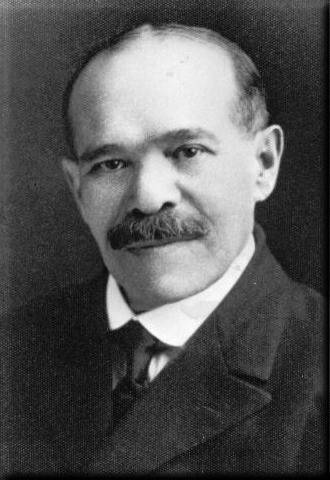
Wertheimer became an outstanding student, finishing the eight year program in only seven years. He also won the favor of the president who took the young man under his wing. Wertheimer graduated with his doctorate from Cincinnati University in 1887 and from the rabbinical seminary in 1889. Following graduation he became the rabbi of Bnai Yeshurun Temple in Dayton, Ohio – the first American-trained rabbi of the congregation, where he served for 10 years.

Dr. Wertheimer’s reputation as a lecturer, teacher, and preacher led him to be frequently called upon to speak in literary societies and in schools. As a distinguished rabbi he also addressed Christian gatherings of various denominations, including some Roman Catholic institutions. In short, he was loved and esteemed not only by Jews, but also by Christians.

Despite his success, however, Rabbi Wertheimer was still searching for something he felt was missing. He often locked himself in his library studying and praying to HaShem for light. As he searched the Scriptures his thoughts were repeatedly directed to Isaiah 53. Again and again his attention focused on the central figure of the chapter—“the righteous servant.”

On March 30, 1904, Dr. Wertheimer publicly confessed his faith in Yeshua and for the remainder of his life traveled around the country as a speaker and teacher.

Patrick: Missionary to Ireland by George Grant

A small body of Christian believers has faithfully maintained a century-long Gospel legacy in the heart of the teeming city of Jakarta. Planted by Dutch missionaries during the colonial era, the Reformed Chapel has gracefully shown forth the love of Christ to the world’s largest Muslim nation in both word and deed. Though many of the members of the congregation had only recently been oppressed, tyrannized, and sent fleeing from their family homes on the island of Sumatra, they responded quickly to the tsunami disaster that swept many of their former persecutors into a horror of death, destruction, and loss. They have collected money for relief. They have sent doctors, nurses, technicians, and engineers to help. They have mobilized whatever help they could possibly muster. They have been quick in such a time of need to care for men and women they knew to be their enemies — and the enemies of God.

That is the Gospel in action. It is the very essence of the missionary impulse. It always has been. It always will be. It was the sort of thing that Patrick of Ireland would have understood only too well. Indeed, it was in fact, the story of his life.

Patrick was a younger contemporary of Augustine of Hippo and Martin of Tours — the fifth century heroes of the faith who laid the foundations for the great civilization of Christendom. He was apparently born into a patrician Roman family in one of the little Christian towns near present day Glasglow — either Bonavern or Belhaven. Although his pious parents, Calphurnius and Conchessa, nurtured him in the Christian faith, he later confessed that he much preferred the passing pleasures of sin. One day while playing by the sea as a teen, marauding pirates captured Patrick and sold him into slavery to a petty Celtic tribal king, named Milchu. During the next six years of captivity he suffered great adversity, hunger, nakedness, loneliness, and sorrow while tending his master’s flocks in the valley of the Braid and on the slopes of the Slemish.

It was amidst such dire straits that Patrick began to remember the Word of God his mother had taught him. Regretting his past life of selfish pleasure-seeking, he turned to Christ as his Savior. Of his conversion he later wrote, “I was sixteen years old and knew not the true God and was carried away captive; but in that strange land the Lord opened my unbelieving eyes, and although late I called my sins to mind, and was converted with my whole heart to the Lord my God, who regarded my low estate, had pity on my youth and ignorance, and consoled me as a father consoles his children. Every day I used to look after sheep and I used to pray often during the day, the love of God and a holy fear of Him increased more and more in me. My faith began to grow and my spirit was ardently stirred. Often, I would pray as many as a hundred times in a single day — and nearly as many at night. Even when I was staying out in the woods or on the mountain, I would rise before dawn for prayer, in snow and frost and rain. I felt no ill effect and there was no slackness in me. As I now realize, it was because the Spirit was maturing and preparing me for a work yet to come.”

Amazingly, Patrick came to love the very people who humiliated him, abused him, and taunted him. He yearned for them to know the blessed peace he had found in the Gospel of Christ. Eventually rescued through a remarkable turn of events, Patrick returned to his family in Britain. But his heart increasingly dwelt upon the fierce Celtic peoples he had come to know so well. He was stunned to realize that he actually longed to return to Ireland and share the Gospel with them.

Though his parents were grieved to see him leave home once again, they reluctantly supported his efforts to gain theological training on the continent. His classical education had been interrupted by his captivity, so he was far behind his peers academically. But what he lacked in knowledge, he made up for in zeal. Before long he had secured a warrant to evangelize his former captors.

Thus, Patrick returned to Ireland. He preached to the pagan tribes in the Irish language he had learned as a slave. His willingness to take the Gospel to the least likely and the least lovely people imaginable was met with extraordinary success. And that success would continue for over the course of nearly half a century of evangelization, church planting, and social reform. He would later write that God’s grace had so blessed his efforts that “many thousands were born again unto God.” Indeed, according to the early-church chronicler W. D. Killen: “There can be no reasonable doubt that Patrick preached the Gospel, that he was a most zealous and efficient evangelist, and that he is entitled to be called the Apostle of Ireland” (Ecclesiastical History of Ireland, London, 1875).

We know that the kingdom of heaven belongs to “those who have been persecuted for the sake of righteousness” (Matt. 5:10) and that great “blessings” and “rewards” eventually await those who have been “insulted,” “slandered,” and “sore vexed” who nevertheless persevere in their high callings (Matt. 5:12–13). We know that often it is in “afflictions, hardships, calamities, beatings, imprisonments, tumults, labors, sleeplessness, and hunger” (2 Cor. 6:4–5) that our real mettle is proven. Nevertheless, we often forget that these things are not simply to be endured. They actually frame our greatest calling. They lay the foundations for our most effective ministries. It is when, like Patrick, we come to love God’s enemies and ours that we are set free for great effectiveness.

Jesus said, “Bless those who curse you, do good to those who hate you and pray for those who persecute you (Matt. 5:44); and again, “Love your enemies, do good to those who hate you.” (Luke 6:27). Therein is the missionary impulse. Patrick’s life, like that of those selfless believers in Jakarta, provides us with a stunning reminder of that remarkable Gospel paradox.

*Dr. George Grant is senior minister of Parish Presbyterian Church in Franklin, Tennessee, and director of the King’s Meadow Study Center.  This article first appeared in Tabletalk, August 2005.

Book Review: Am I Called? By David T. Harvey

Great Handbook For Helping You Confirm Your Calling to the Pastoral Ministry

 Dave Harvey has done a great service to the church-at-large- as well as for individual Christian men who are wondering whether or not God is calling them to serve the church in full time pastoral ministry. I finally have a book that I can hand out without any reservations to those who come to me and ask, “How can I know for certain that I have been called by God into the pastorate?”

In three parts: a) Approaching the Call; b) Diagnosing the Call; and c) Waiting, Harvey mines theological, and exegetically based advice with a plethora of helpful bullet points, questions to ask, evaluations, and practical steps to take as one wrestles with and pursues God’s vocational calling to the pastorate.

I especially appreciated how Harvey focused on applying the gospel to an individuals life and how he addressed key issues like character development, service and affirmation from the local church, and the importance of working with a plurality of leaders in the context of a local church – alongside the necessary theological training.

One of the highlights for me was reading the biographical stories at the end of each chapter on the pastoral calling in the lives of some well known and unknown pastors of history: Thomas Scott, Charles Simeon, Lemuel Haynes, Martin Luther, David Martyn Lloyd-Jones, James Montgomery Boice, Charles Haddon Spurgeon, John Bunyan, and John Newton.

I highly recommend this book for young men who are wondering if they are called, those pastors who are struggling with their calling, and pastors and elders who are looking to invest in young men to develop as future pastors and church planters in the context of planting gospel driven churches around the globe.

Book Review: Loving the Way Jesus Loves by Phil Ryken

Jesus’ Loves Like No One Else – Perfectly! 

One of the biggest battles that we all face (if we are honest with ourselves) is that we are incurably selfish, self-absorbed, and idolatrous at the very core of our hearts. In Paul’s letter to the Corinthians he addresses this core reality that leads to all the problems or symptoms affecting the church due to this foundational problem – a lack of love for God and for one another. Phil Ryken has written a very convicting, and yet practically helpful book that exegetes from the context of 1 Corinthians 13 (Biblical Exegesis) but also walks you through the Gospels (giving a Biblical theology of love) and demonstrates how Jesus exemplifies the genuine love that is being described in Corinthians.

The reason that this book and applying this book and the Bible is so challenging is captured well by Ryken mid-way through the book where he writes:

“Unfortunately, many of our attitudes and actions are exactly the opposite of what they ought to be, and as a result, our hearts are constricted. This is one of the reasons why 1 Corinthians 13 is such a challenge for us. All of the things it tells us that love does are almost impossible for us to do, whereas all of the things it tells us that love never does are things we do all the time. This is because we love ourselves more than we love other people or even God.”

Ryken brilliantly and helpfully shows how Jesus does what we can’t do – love perfectly like Him. He shows how each aspect of love in 1 Corinthians 13 (e.g., patience, kindness, not envious, etc.,) is modeled from the Gospels in the life, death, resurrection, and future coming of Christ and how we can be receivers and reciprocators of this kind of love. Though the book is very convicting, it is also very encouraging because it demonstrates that in the gospel – even when we fail to love like Him – he never fails to love us in the deep ways described in 1 Corinthians 13.

I highly recommend this book in order to come to a deeper understanding of godly love, Christ’s love for us, and how to grow more in your love for God and others. Ryken has given us a Biblical Theology of love manifested in Christ, and reiterated in Paul’s letter to the church at Corinth – something we desperately need to apply in today’s church as well. One of the great features of the book is that it contains a very thorough study guide in the back of the book for discipleship or small group discussion.

*I received a free copy of this book by Crossway Publishers and was not required to write a positive review.

Book Review: Three Candles by Will Corcoran

The Amazing Power of Love

 This book is primarily about the author growing up with tremendous verbal and physical abuse from his parents, and the lessons he learns as an adult about love from his son “Henry” who is living with an incurable disease. In reading the book you go through all kinds of emotions – sadness, anger, joy and laughter. The chapters alternate between the authors’ life as a child and as an adult. I think the main theme of the book isn’t about abuse, or an incurable disease. The main theme of the book is about choosing to live with love and a positive attitude and to make the most of your opportunities in life no matter what the obstacles happen to be.

The author is a wonderful writer – he is authentic and transparent and his prose flows effortlessly. He “hooks” you immediately and the only thing that kept me from reading the book in one day (I read it in two days) was the tug on your emotions. He is tackling weighty real life stuff. There is tremendous evil encountered in this book – countered equally by amazing benevolence. In the end you will be encouraged by the story. It will make you appreciate your life and inspire you to make the best of your situation. You will say if, “Will or Henry can survive and thrive with what they have been through then so can I.” It will fortify you for life and motivate you to boldly love those around you with words and actions.

In the end of the book Will gives some examples of how he has been able to keep going with the obstacles in his life. Will and Henry, his granny, his wife, and his other children are an inspiration. I wouldn’t doubt that this book will end up getting picked up by a major movie producer – it should. It would make for a very good movie, because good movies come from heroic stories. This is a heroic story that involves faith, hope, and love – and as the Bible says in 1 Corinthians 13, “The greatest of these is love.” This is a great story ultimately about love – the most powerful thing in the universe outside of God himself, but only made possible because God is love.

Book Review – Three Free Sins: God’s Not Mad At You by Steve Brown

Why It’s Bad Trying So Hard To Be Good

I’m pretty sure I’ve read every book that Steve Brown has written and I love them all. So I was anxiously anticipating this new book with the “scandalous” title. Steve Brown is NOT a proponent of “cheap grace,” he understands justification by faith alone as well, or perhaps better than most theologians do. Steve Brown writes with his characteristic blend of humor and authentic seriousness about living the abundant life that Jesus came to bring us by helping the reader understand and apply two important truths related to the gospel stated by the late Jack Miller as follows:

“(1) Cheer up…you’re a lot worse than you think you are, and

(2) cheer up…God’s grace is a lot bigger than you think it is.”

These two truths are developed eloquently and cogently throughout the book. In typical Brown-like fashion this book is full of biblical principles, powerful illustrations, and practical examples that will help you become less of a self-righteous Pharisee, and more like Jesus – full of joy, freedom, laughter, and basking in grace and truth.

Some of the specific issues Brown addresses in this book are as follows: perfectionism, self-righteousness, legalism, anger, repentance, unity in the body of Christ, pride and humility, religiosity, honesty, freedom, grace, and truth.

In the very last chapter he specifically answers some of the questions he gets due to his many books, sermons, and speaking on freedom and grace through justification by faith alone in Jesus Christ:

(1) Are you crazy?

(2) Why do you persist in irritating everybody? Free sins? That’s outrageous! Why don’t you write and teach in a normal way?

(3) There are a lot of examples in the Bible that show God’s wrath, and yet you say that God isn’t angry at his people. Are you sure you haven’t gotten it wrong?

(4) What’s hermeneutics? (Brown relates this to question 3 above)

(5) Okay, but what about obedience?

(6) Is holiness and sanctification irrelevant?

(7) What about discipline? You very conveniently avoid Hebrews 12:7. It says in case you don’t know, “It is for discipline that you have to endure. God is treating you as sons. For what son is there whom his father does not discipline?

(8) You don’t seem to care much for excellence nor do you have a very high view of human nature. Don’t you think you’ve gone a bit too far?

(9) Okay, but where do you draw the line?

(10) What about right and wrong? You don’t seem to care about that.

(11) What about being missional? If Christians buy into what you’ve taught, won’t people stop going on the mission field, feeding the poor, and caring for those in need?

(12) Aren’t you a bit pessimistic about human beings?

(13) Doesn’t that lead to “wormology” and a bad self-image?

(14) What if you’re wrong?

As usual (when reading a Brown offering), I read this book and felt the full gamut of emotions – I laughed, and cried, got mad (not at Steve Brown) – but at myself and other Christians – for our self-righteous stupidity, and most of all praised God for His amazing grace and patience with the world, and especially with me! There is solid theological and practical food for the head, heart, and hands all over the place in this book. Once again, I was struck by God’s amazing grace to save a wretch like me. And once again I’m glad for all of humanity that I’m NOT God – and that Jesus is – and that He is my Savior – His righteousness in exchange for all of my many sins – covered by the Blood of the Lamb for all eternity by the sheer grace of God.

Book Review – Heralds of the King: Christ-Centered Sermons in the Tradition of Edmund P. Clowney, Edited by Dennis E. Johnson

Sermons that Manifest the Centrality of the Person, Work, and Presence of Christ

 One of my greatest concerns in the times in which we are living is seeing more pastors, theologians, and the rank and file Christian allowing cultural pressures to influence them more than the influence of Christ from the Scriptures. As I am currently looking for a church to become a part of I am astounded by how many “protestant” pastors can preach a sermon that neither begins or ends with Christ. As a matter of fact, most of the sermons I’m hearing could be preached by a non-Christian, and in what even passes for “church” God doesn’t even have to show up at all.

I would urge, plead, and even pay preachers to read this book. What people need – including Christians – is more of Jesus – His death, life, teachings, work as Prophet, Priest, and King – in short His person and work. Jesus said that all of the Scriptures pointed to Him (that means all of the Old Testament and New Testament, see John 5 and Luke 24).

In this book we have some excellent examples of former students of Dr. Edmund P. Clowney who preach in the Christ-centered mold. The book has a good balance in that it incorporates sermons from the Law, the Prophets, the Psalms, and Several New Covenant genres. Before each sermon begins there is a brief tribute to Edmund Clowney demonstrating how he influenced the preacher in his pursuit of personally loving Christ and preaching sermons that show us the Savior’s Person and work on our behalf.

In Part 1: “The Law” we have the following sermons –

“Living in the Gap” based on Genesis 17:1-14 by Joseph V. Novenson

“The Girl Nobody Wanted” based on Genesis 29:15-35 by Tim Keller (this is my favorite sermon in the book – it is a masterpiece on how to preach Christ from the Old Testament and how to apply it to our lives in the 21st century)

“Lord and Servant” from Genesis 43 by Brian Vos

“Rock of Ages” based on Exodus 17:1-7 by Julius J. Kim

In Part 2: “The Prophets” we have these sermons –

“Surprising Love:” on 2 Samuel 9 by Charles D. Drew

“Thorns and Fir Trees” based on Isaiah 55:13 by the late Harvie M. Conn

“No Condemnation” from Zechariah 3 by Iain M. Duguid

In Part 3: “The Psalms” we have only one sermon (I would have liked to have had at least two or three from this large section of Scripture including “Lament” and “Praise” genres) –

“Beauty in the Sand” by William Edgar based on Psalm 90

Part 4: “The New Covenant” we have the following sermons –

From Luke 1:5-25 “When God Promises the Impossible” by Dennis E. Johnson

“Soul-Ravishing Sightings” based on Luke 9:28-36 by Joseph F. Ryan

Arturo G. Azurdia III preaches the final sermon in the book based on Hebrews 1:1-3 entitled “The Greatness of God’s Ultimate Word.”

I highly recommend this book for all preachers, and for those who listen to preachers and love Jesus. I would encourage you if you are reading this review, to ask your pastor if he has read this book, and if not, to get him a copy – to encourage him in preaching in a more Christ-centered manner. Christ-centered preaching is hard work. However, when you hear it, or do it – you sense the presence of God in a powerful way. When I started preaching in Christ-centered manner it was as if a huge millstone was taken off my back. I think most preachers want to please God and help their flock from God’s Word – but they have not been well trained in Biblical Theology, or in Christo-centric preaching.

Edmund Clowney and all the preachers represented in this book are preaching to give glory to God and to let their hearers experience Jesus in worship. I think most preachers today are preaching to be liked, and meet felt needs – but no one can meet our needs like Jesus – and what we need more than anything is what these preachers do in this book – lead us to worshipping Jesus!

I constantly find myself when listening to modern preachers asking the question, “Where’s Jesus in this message?” Edmund Clowney always asked, “Where is my Savior?” His primary concern was always to reveal the presence of Christ in all of the Scriptures – since this is what Jesus mandated. I believe that if you ask these questions of yourself, or your preacher and Jesus is nowhere to be found, then it is not “Christian” preaching. What we desperately need today is to hear Jesus speaking to us from the Word of God by the voice of his heralds. All the preachers in this book do a wonderful job of leading us to the presence of Jesus and to worshipping Him.

Other Books that I would recommend to help you in Christo-centric preaching are:

Edmund P. Clowney’s: “Preaching Christ in All of Scripture;” “The Unfolding Mystery: Discovering Christ in the Old Testament;” and “How Jesus Transforms The Ten Commandments.”

Alec Motyer’s “Look to the Rock: An Old Testament Background to Our Understanding of Christ.”

All of Tim Keller’s books (e.g. “King’s Cross” based on his expositions on the Gospel of Mark). And anything by Sidney Greidanus (e.g., “Preaching Christ from the Old Testament”), or Graeme Goldsworthy (e.g.,“Preaching the Whole Bible as Christian Scripture”).

I hope that this movement of Christ-centered preaching continues to spread, and grow and bring about a new reformation of the gospel, and the desperately needed revival that is needed around the globe.

Book Review: Still – Notes On A Mid-Faith Crisis by Lauren F. Winner

Would Be Much More Helpful if Centered on Christ, and Not on Self

Every once in a while I randomly pick a book simply because the topic intrigues me. As a Christian pastor and professional life coach, one of the issues I specialize in is helping Christians transition into what’s been termed as the “new normal.” In other words, what used to be normal in one’s life is gone and lost forever, and for some it becomes a very serious conundrum. What do I do now that I lost my job? My marriage? My kids? My health? My money? And the list and litany of life changing questions demand answers and solutions.

I was hoping that this book would be helpful to me – as a pastor who is transitioning myself – from being a senior pastor – to a life coach; from having five kids at home – to being an empty nester; from having a very comfortable life – to one that is very financially uncertain. As well as a help to those I counsel, disciple, and coach in transition.

The book was interesting, transparent and authentic, well written, worth reading, but in the final analysis – unhelpful and leaves you without the hope that we are offered in Jesus Christ. The most disappointing thing to me was the that the writer never really arrives at answers, nor the hope, and help of the gospel that is found in Jesus Christ. She finds her “answers” in the community of faith, poetry, daily meanderings to varied places, and various encounters with strangers.

Winner drew me in to her world and when I finished the book I wanted to help her. Instead of helping me, I was drawn to come alongside her as a friend, counselor, pastor, and coach. Her understanding of what it means to have a relationship with Jesus appears to be much like that of a teenager trying to get into the “cool” group of peers. I believe that Lauren is sincere, smart, a very talented writer, but she appears to be directionless and lost – and a lost person who has no directions – is ill equipped to genuinely help people who are “lost and directionless.”

I can sympathize and empathize with Winner. I like her – I think we would be good friends. I think she would make a good listener, and empathizer herself. What’s missing is her own security in Christ, in the truth, in the authority of God’s Word, and in the gospel.

The book I would recommend that Winner and anyone else reading this review would devour on the topic Winner addresses is Paul David Tripp’s book “Lost in the Middle: Midlife and the Grace of God.” Whether you are in mid-life or mid-faith crises, Tripp’s book wonderfully articulates the realities of sin, redemption, reconciliation, and redemption in such a way that you can find real grace, hope, and solutions by putting your trust in Jesus Christ and in Him alone for your salvation, and sanctification – resulting in significance, present and eternal security, and life long solutions – for the “new normals” of your life.

Booklet Review: Four Views of the End Times by Timothy Paul Jones

Comprehensive and Concise Primer on End Time Events

 There are so many differing views and interpretations related to Biblical prophecy and the end times. Dr. Jones has provided a great service to the church by providing a clear, short, and very complete guide to the key Bible passages, definition of terms, key views, and the strengths and insights on four of the most popular views on the end times: Dispensational Premillennialism, Historical Premillennialism, Amillennialism, and Postmillennialism and objectively gives the answers the following questions for each view:

What does this view emphasize?

What does this view teach according to the main proponents (historically and modern) of the view?

What Scriptures are used to support this view?

When has this particular view been popular in church history?

Who are the most prominent Biblical Scholars (past and current) who hold to this particular view?

How does this particular view interpret the book of Revelation?

There is also a printable PDF available that charts each particular view, as well as a concluding section that answers how each of the four views answer the following crucial questions related to the end times:

Will Jesus return physically?

When will Jesus return?

Do the rapture and second coming occur at the same time?

Will there be a great tribulation?

Will Christians suffer during the tribulation?

Will there be a literal 1,000-year millennium?

Who is saved during the millennial period?

When was this particular view most held historically?

If you are looking for an objective, concise, and comprehensive overview of the end time views – this is a great place to start. I especially recommend this little booklet for people who have never studied “eschatology” (the study of the end times) before. It will be a good objective guide for you to see the “big picture” and then be able to hone in on more specific studies related to eschatology when you see the major players (scholars) that hole to the particular views, so you can do more study on your own.

Book Review – Jan Karon’s Mitford Years: The First Five Novels

Finally – All Together in One Volume!

 I first read this series of books about a decade ago while I was (at that time) a solo pastor in a setting much like the central character in the series – “Father Tim.” Father Tim is the beloved rector of an Episcopal church in the small town of Mitford. In the series you are introduced to wonderful characters that you will recognize with different names from your own life. It’s sort of a “Pollyanna” type setting that will bring you to joy, laughter, sadness, and tears, and will take you on a journey where you are whisked into the arms of your loving Savior.

I would say that this is definitely my favorite series of novels by far. Jan Karon has a way of writing that takes your imagination away into Mitford and allows you to experience the stories as if you were really there. I recommend that you read this series while on vacation if possible, but if you can’t get away – you will feel like you are on vacation when you read this series. I think that Karon has a very good grasp of grace and redemption and conveys these great theological truths in the characters of these books in a wonderful way. Reading Karon will enlarge your view of God’s love, and how He sovereignly works in the lives of individuals to carry out His purposes. You will have a greater appreciation of the “church” and an enlarged worldview of all things theological via reading these books.

The best compliment I can give of Karon’s Mitford series is that in reading them you will be relaxed by her stories. She has a way of writing that calms and takes away your anxiety. You are truly able to bask in the realities of a world that truly is controlled by a loving God – even when you don’t see or understand it. These books are filled with stories that soothe the soul and bring hope into how you can make a difference in the lives of those around you for the sake of Christ and His glory.