Book Review: Preaching Christ in All of Scripture By Edmund P. Clowney

How To Preach Sermons Leading You to Worship Jesus

I was trained in an Evangelical University and Seminary where I had an excellent Biblical education and training in Systematic Theology. After being a preaching pastor for about five years I realized that the best preachers I was admiring had been trained in Biblical Theology and so I enrolled in the Doctor of Ministry preaching program at Westminster Theological Seminary in Escondido, California.

I vividly remember one of my professors talking about how the story of David and Goliath wasn’t just about “David and Goliath” but pointed to the greater David – Jesus. It’s taken me years to learn how to preach Christ and not just moralistic sermons. However, one of the masters of preaching Christ from all of the Bible is Edmund P. Clowney. As a matter of fact a lot of preachers today are excited about the teaching ministry of Tim Keller in New York – who really learned most of what he knows (that’s what he will tell you) from the author of the sermons of this book – Dr. Edmund Clowney.

One of the first things I learned about at WTS was Redemptive Historical Preaching – which essentially follows the “big story line” of the Bible with an eye on Jesus and His Person and redemptive work in history. In my opinion, what Clowney does teaches and models in this book is the greatest need of the 21st century – getting back to preaching Christ from all of Scripture.

If you are a pastor who like me – has had trouble with “getting to Christ” from the passage – especially in the Old Testament – you will find some great examples of how to do this from the various genres in the Old and New Testaments from a brilliant and humble preacher who knew the Bible and the “big story” well.

Edmund Clowney’s book is an outstanding contribution in helping preachers do what the prophets and the apostles did – preach Christ. Clowney begins with a chapter demonstrating how all of the Scriptures point to Christ – and he makes a wonderful case for this reality. In the second chapter he gives his methodology for “preparing a sermon that presents Christ.”

The remaining chapters are sample sermons from different genres in the Old and New Testaments showing the application of the principles articulated in the first two chapters. The sermons are as follows:

“Sharing the Father’s Welcome” based on Luke 15:11-32

“See What It Costs” based on Genesis 22:1-19

“When God Came Down” based on Genesis 28:10-22

“The Champion’s Strange Victory” based on Genesis 32

“Can God Be Among Us?” based on Exodus 34:1-9

“Meet the Captain” based on Joshua 5:13-15

“Surprised by Devotion” based on 2 Samuel 23:13-17

“The Lord of the Manger”

“Jesus Preaches Liberty” based on Luke 4:16-22

“The Cry of the God-Forsaken Savior” based on Psalm 22:1

“Our International Anthem” based on Psalm 936:3

“Jesus Christ and the Lostness of Man”

“Hearing Is Believing: The Lord of the Word”

As of the writing of this review you can still hear Edmund P. Clowney and Tim Keller co- teach a class for free called “Preaching Christ in a Postmodern World.” It has 37 lectures and question and answers sessions from RTS and covers the full gamut of issues related to Christ–centered preaching. I highly recommend that you download this course and listen to it until you get it. It will make a huge difference in your teaching and preaching – and you will see real life change in yourself and your hearers as a result.

If you are a preacher, or teacher of the Bible you will definitely benefit from this book. More importantly, I hope that you will be influenced and impacted by this book so that your sermons and Bible lessons will be filled with Christ, lead to Christ, and bring glory to Christ in a way that articulates with passion and excitement – the greatest story ever told. I have been blessed in my own worship of Christ, understanding of Christo-centric preaching, and have become a better preacher and teacher as a result – going from teaching moralistically to Biblically and thus leading others to worship Christ the Lord.

Book Review – F.F. Bruce: A Life by Tim Grass

Possibly the Most Influential New Testament Scholar of the 20th Century

Shortly after being “called” to the ministry at the age of seventeen I remember talking with a Christian bookstore owner and asked him, “of all these books in the store – which authors would you recommend?” He answered quickly and without hesitation, “Anything by F.F. Bruce, you simply can’t go wrong with F.F. Bruce.” That short little conversation took place in 1985, just five years before Professor Bruce went home to be with the Lord. Since then, I’ve gone on to purchase 40 of Bruce’s 50 published books (25 are still in print as of this review).

In reading F.F. Bruce’s books I always found him to be clear, textually illuminating, and always helping me in understanding the context and cultural factors elucidating my interpretation of the text. In reading this book the author highlights three aspects of Bruce’s life: his influence on the worldwide Brethren movement, his academic achievements, and his overall influence in the evangelical movement – especially as a world class scholar who was respected by liberals and conservatives alike.

It is very likely that my forefathers on my paternal side came in contact or ran in similar circles with F.F. Bruce’s family who were very heavily involved in ministry and missions throughout Scotland. My grandfather was a Plymouth Brethren “faith missionary” who grew up in Scotland, immigrated to Belfast in Ireland, and then was a life long missionary in Argentina. I personally have never been involved in an “assembly” as they call their gatherings – but have had the opportunity to speak at their gatherings on several occasions in Argentina.

One of the things I am personally grateful for is the Brethren’s focus on reading, studying, memorizing, and teaching the Scriptures. I believe that Grass brings this out early in the book and it was Bruce’s knowledge of, and love for the Scriptures that made him such an outstanding Biblical scholar. One of the things I will be eternally grateful for is that the love for the Scriptures that the Brethren have passed down from generation to generation. Peter Bruce passed down to his son this advice that served him well for his entire life, “never accept anything offered in the way of the Christian faith unless you see it clearly for yourself in the Scriptures.”

Bruce was known not for being a theologian, but a classicist, linguist, and biblical scholar. He was a prolific author, editor, and reviewer of over 2,000 books – mostly technical. He was the doctoral advisor to some of the finest scholars of the 20th century on into the 21st century.

In reading this book there were three primary lessons I learned from F.F. Bruce.

He was what former student Ward Gasque (and great NT scholar in his own right) called an “unhyphenated evangelical.” Even though he was brought up, and involved in Brethren Assemblies he did not tow-the-line in any particular system or practice. He was leery of buying into any system of theology. He was more concerned with being “biblical” in getting at the sense of the author’s original and cultural intent. Tim Grass writes, “The issues which, for Bruce, were non-negotiable may be summarized as the reliability of the New Testament, the person and work of Christ, the Christian life as one of forgiveness and liberty as befits those who are being led by the Spirit, and the right and duty of every believer to use whatever gifts God has given them.”

F.F. Bruce was very charitable, gentle, and respected those he disagreed with, and those who disagreed with him. He seemed to be genuinely humble, teachable, and diplomatic (in a loving sense, not in a political sense). Therefore, as a result of reading about Bruce, in my own reviews, teaching, writing, I will seek to see the positive side more than the negative side of things. He was a bridge builder in his involvement in the Brethren church, among fellow professors, and in the academic arena.

I love what J.I. Packer had to say about Bruce, “No Christian was ever more free of narrow bigotry, prejudice and eccentricity in the views he held and the way he held them; no man ever did more to demonstrate how evangelical faith and total academic integrity may walk hand in hand.”

F.F. Bruce was passionate about the gospel and for people to read about, hear about, and discover Jesus and for them to have a personal relationship with him. He would spend countless hours answering questions, replying to letters, and speaking, writing, and teaching at every possible opportunity to talk about Jesus. Even though he spoke in a monotone, and often read his lectures and sermons, he had a deep passion to communicate the gospel. From Bruce, we learn to focus on what we can do, not what we can’t do for the sake of Christ. He was a tireless worker as an editor, writer, speaker, involved in the lives of his students, and in the academic world for the cause of Christ.

Lastly, as person, Laurel Gasque (a well respected cultural historian) described Bruce as “the most genuinely free person I have ever known.” I think this is what most stood out to me about F.F. Bruce in this biography. He was brilliant, prolific, and well respected. However, he saw himself as a common man and would do anything that was asked of him by others. He seemed to have had a tremendous amount of confidence in God’s sovereignty and that no little assignment or task was beneath his dignity for him to always do his best.

I am grateful for my heritage and for men like F.F. Bruce who have served the Lord well with his mind and soul. I hope that many young Bible scholars, pastors, and missionaries will be inspired by his life and work. Many consider his biography on the Apostle “Paul: The Heart of the Apostle Set Free” to be his Magnum Opus. He truly was like the Paul the Apostle in so many ways – tireless in his work and love for the churches, expounding on and writing for the cause of the gospel, and at home with students, academics, intellectuals, and lay people. And yet he did all this with great joy and with much freedom – unfettered by anything other than a desire to please his Lord and Savior.

I close this review/tribute with the words of Robert Mounce, who sums up why he believes Bruce was so influential:

“It is evident…that Bruce lays before us no new and innovative perspectives. Concern for historical accuracy coupled with a high view of the Biblical text inevitably restricts the role of the imagination, that prime mover in theological and higher critical ‘breakthroughs.’ Bruce’s lasting contribution to Pauline studies is his careful and informed treatment of the life and the letters of Paul in their historical, social, religious and cultural setting. The fact that his interpretations are traditional has no bearing on the question of their value for Biblical study. We are indebted to F.F. Bruce for his lifelong commitment to a balanced and biblical interpretation of the life and thought of the apostle Paul.”

I am indebted to Tim Grass for this labor of love on F.F. Bruce. I am grateful to have learned more about my own heritage as a beneficiary of the Brethren movement, as an evangelical, and as a lover of the Word, a teacher in the church, and an evangelist with a pastor’s heart for the sake of Christ.

Book Review: Mere Apologetics by Alister E. McGrath

An Outstanding Primer on Apologetics to Post Moderns

What C.S. Lewis’ “Mere Christianity” was to “Moderns” this book is a very helpful primer in how to communicate and build foundational bridges of truth leading to the gospel in a postmodern context. Tim Keller’s book “The Reason for God” would be the 21st equivalent of Lewis’ aforementioned book – addressing post moderns, rather than moderns. In McGrath’s book we have a bridge building handbook of sorts in how to show post moderns that the Christian ship is safe to board and sail in troubled waters and land on islands of truth in this journey of life.

Dr. McGrath shows how apologetics has changed over the years, what remains the same, and what we can learn from the biblical and historical apologists as they have cogently articulated the faith in their own cultural milieus, as we seek to reach post moderns in the 21st century with the unchanging gospel. He makes an excellent case for the fact that we need many approaches as we address the differing mind-sets of those we encounter with the gospel – just as Jesus, Paul, Peter, Jonathan Edwards, and C.S. Lewis did in their times. He then gives numerous examples from our own times in how we can dialogue and build bridges with the “new atheists” and others to pave a way for the gospel.

Throughout the book McGrath weaves in and out of discussions applying the benefits of apologetics as a precursor to evangelism. Perhaps the best description of this aspect of the book is noted in chapter five where he writes, “Yet conversion is ultimately the task of evangelism. Apologetics is about preparing the way for such conversion by showing that it makes sense to believe in God. It’s about clearing away rubble and debris in the path of evangelism. We may not be able to prove—in the absolute sense of the word—that there is a God. But we can certainly show that it is entirely reasonable to believe that such a God exists, in that it makes more sense of life, history, and experience than anything else—and then we can invite someone to respond to this loving God and trust this God’s promises.”

McGrath has written cogently, concisely, and lovingly in this outstanding handbook of how we can build bridges with our hearers to pave a way for the gospel, and how we can do this successfully where God has placed us in an ever changing world of ideas, with a never changing gospel. I highly recommend this book as a resource that Christian apologists can benefit from for years to come with an amazing array of helpful examples of how to tackle the issues of our day defensively, offensively, and most importantly with gentleness and respect so that it may benefit our hearers and give them a reason for our hope in Christ.

Book Review: Perspectives On Our Struggle With Sin: 3 Views Of Romans 7 edited by Terry L. Wilder (contributors: Stephen J. Chester, Grant R. Osborne, Mark A. Seifrid, and Chad O. Brand)

Intense Exegesis For Serious Students of The Bible

One of the most difficult passages to interpret in the New Testament is found in Romans chapter 7. Was Paul writing about the experience of all Jews and Gentiles in their struggle with sin? Was it descriptive of his battle of sin in the past as an unbelieving Jew from his current perspective as a Christian looking backward? Or was he simply describing his own current struggle with sin? The answer to these questions and many others are addressed in this helpful book.

D. S. Dockery has stated the importance of a correct interpretation of this passage of Scripture in this manner, “Since the passage is located at the heart of Paul’s explanation of the outworking of one’s salvation, the view which is adopted will have a tremendous impact upon one’s theology of the Christian life.” In other words, what this book grapples with is not just at the periphery of the Christian life, but at the center. A proper understanding of our struggle with sin entails our views of justification (the doctrine upon which Christianity stands or falls – according to Martin Luther) and sanctification – which cannot be properly understood and applied without understanding our justification rightly. Therefore, what the writers of this book tackle involve “high stakes.”

The strength of this book lies in the fact that it allows the reader to consider the various views that have been carefully articulated by the biblical scholars exegesis of the passage, and from these views evaluate which argument entails the most strengths/pros and least weaknesses/cons. Scholars who have each done advanced studies on the book of Romans present the three views.

Grant R. Osborne teaches at Trinity Evangelical Divinity School in Deerfield, Illinois. He argues the point that in verses 7 to 13 Paul is describing himself as an unregenerate Jew and then in verses 14 to 25 as a regenerate follower of Christ. He holds that the believer in Christ wants to do what is right, but often fails due to the ongoing battle with the flesh in its war against sin.

Stephen J. Chester is a professor at North Park Theological Seminary in Chicago, Illinois. His view – seemed to me the most complicated of the three – is that Paul is writing in Romans 7 of his pre-conversion experiences with sin in retrospect now as a follower of Christ. He points out that Paul’s references in the passage are historical presents, which point to past experiences with sin.

Mark A. Seifrid is a professor at the Southern Baptist Seminary in Louisville, Kentucky. Mark expresses the view that Paul refers in the passage to both regenerate and the unregenerate and vacillates between these two as human beings that are being confronted with the reality of the law. Mark articulates the reality that Paul is focusing on how our failure to obey the law confronts us with our need of Christ’s righteousness to be imputed to us by faith in His fulfilling the just requirements of the law on our behalf.

In the final analysis I agree with Osborne who states in the introduction to his essay, “A general consensus never has been and never will be reached on its meaning, for simply too many viable options seem to fit the context of Romans 5-8. All of the options presented in this work fit the data, and it would be arrogant to try to claim that only my view can be correct. This text is another of the many biblical passages where we simply have to admit that we will not know the true meaning until we get to heaven—and then Paul can tell us what he meant!”

Of all the views/perspective books I’ve read – so far, this was the most challenging. The discussions are very technical (especially in their usage of the Greek language – and theological depth). All the scholars have definitely done their homework and have given much food for thought. In my opinion I thought Seifrid’s argument was the most persuasive, followed by Osborne, and then Chester. I must say that I learned a lot from each of the contributors and they all did an excellent job on the passage. I will definitely be consulting this book again if I ever teach through Romans again (I preached through Romans for two years about a decade ago).

No matter which view you currently have on this passage, or even if you don’t have a view – you will learn much from this book and it will be well worth your effort. I highly recommend this book for serious students of the Bible, teaching and preaching pastors, and scholars who desire to have a better understanding of this difficult passage. It can’t help but equip you more in your understanding of the law, sin, justification, sanctification, and in elevating your view of what Christ has done for you in His life, death, and resurrection on our behalf. Chad Brand’s concluding chapter was excellent tying in the practical ramifications of this passage and the contributions in the book for practically dealing with sin, salvation, and sanctification in the new covenant community.

Book Review: The Cross Is Not Enough by Ross Clifford & Philip Johnson

The Cross Only Has Meaning Because of the Empty Tomb

 As a pastor for over twenty-four years now, I am amazed at how fresh and new and exciting the depths of my understanding of the gospel keep getting – largely due to books like this one. This insightful book offers a very refreshing and much needed look at the necessity of a paradigm shift in our thinking through the lenses of the resurrection rather than through the cross as the appropriate symbol of the church in today’s world. In this book the authors make the very effective case that the resurrection is the lynchpin upon which Christianity stands or falls: without it – there is no atonement for sin, no justification by faith alone, no empowerment for living a holistic life, and no basis for ethics, spiritual growth, human rights, and missions.

One of the most important contributions this book makes is how they cogently and with convincing evidences show how a theology of the resurrection was in the thoughts and heart of the worldview of the most missional Christian of all time – the apostle Paul. The authors also demonstrate how resurrection theology is present in all of Biblical revelation. This book is not so much a case for the evidence of the resurrection, but a case for the necessity and reality of our belief and application of the ramifications of the resurrection for all of life.

I immensely enjoyed this book and will be adding it to an increasing list of books that I will be reading on a yearly basis to remind me of the importance of the resurrection lenses through which I should be seeing all of life each and every day – until Jesus returns – of course, made possible because of His literal bodily resurrection from the dead. As a result of my reading of this book I believe and feel even more empowered and equipped to live out and share the past, present, and future realities of the gospel consisting of the death, burial, resurrection, and return of Jesus Christ the Lord.

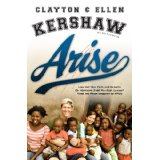
Book Review – Arise: Live Out Your Dreams on Whatever Field You Find Yourself by Clayton and Ellen Kershaw and Ann Higginbottom

The Kershaw ABC’s

I primarily got this book on a whim because I love baseball – especially the Dodgers –and enjoyed watching Clayton Kershaw work his way into the pitching Triple Crown and a CY Young award during the 2011. I enjoyed this book more than I thought I would – to be honest I didn’t expect much depth from a couple that are half my age – in their early twenties. In this book Clayton and Ellen show that they are wise beyond their years, and totally committed to Jesus Christ as their Savior and Lord and to making a huge difference in the lives of people whether on a baseball field or in a field in Africa.

I was pleasantly surprised by what I’ll call the Kershaw ABC’s:

A is for Africa – The book goes back in forth alternating between Ellen and Clayton (there are more chapters written by Clayton) talking about the dreams (goals) that they had as teenagers and how God was at the center of these dreams and how they came to be a reality in each of their lives. Ellen talks of her various trips to Zambia to work with children there and how together in marriage God has allowed them to visit Africa and combine God’s love and gospel message to help children. I found Ellen’s depth in her relationship with Christ to be inspirational and encouraging – and enjoyed what she wrote as much as what Clayton wrote.

B is for Baseball – Clayton walks you through his little league, minor league, and Dodgers career thus far. Any baseball fan will really enjoy what he has to say in these sections – especially the amazing Cy Young performance he had last year with the Dodgers. There is a great story in the book where Clayton talks about a teacher’s advice to him on following his dream in 9th grade to be a pro ball player, “I do want you to understand the odds, Clayton. They are one in a million. But the important thing is that you see yourself as the one. Don’t think about the million. Visualize yourself being the one who makes it. You are the one. Be the one.”

C is for Christ – There is a huge emphasis in this book on what it means to have a personal relationship with our Maker through Jesus Christ, and how to grow, benefit from, and be used in this world by having your identity in Christ and thus giving Him glory. Clayton desires to be known as a “Christian who plays baseball, not as a baseball playing Christian.”

Clayton and Ellen clearly articulate the gospel and how to have a relationship with Jesus Christ by grace through faith in Him:

Clayton, “We are saved through faith in Christ alone. Our words and actions should flow out of a heart that has been changed by the Lord. We can’t earn God’s grace by doing good things. That wouldn’t be grace. Grace means getting something that we really don’t deserve. It’s a relief to remember that God’s grace doesn’t depend on us or on our ability to live a perfect life. Thankfully, it depends on Jesus, who lived a perfect life for us and died in our place.”

Ellen, talking about the father and son in Jesus’ parable in Luke 15, “Rather than punish his son, the father absorbs his son’s guilt and shame so that his son can receive the gift of his love. That’s exactly what Jesus did for us in dying for our sins…When my social life was shaken in middle school, God graciously drew me to Himself…By God’s grace, I have a heart for Africa. By God’s grace, Clayton can throw a baseball. We’re hopeful that we can spend a lifetime figuring out what those two things mean and how to live them out for God’s glory.”

I would say that the target audience of this book is primarily high schoolers, college students, and young people in their twenties. As they say early on in the book, “We want a generation of young people to arise—to hope and believe that their lives are full of purpose.” However, I think anyone who loves the poor and hurting children of the world, baseball, and especially Jesus Christ will really enjoy and benefit from this book. I would especially encourage young people to read this book and emulate the Kershaw’s as they follow Jesus Christ. If you are Christian parent, youth pastor, pastor, or coach I highly recommend that you give this book to a young person in your life – it can be a great motivator for them to follow their dreams and reach them for the sake of Christ and His glory in the world.

Book Review: Real Marriage by Mark and Grace Driscoll

As Real and Raw As It Gets: Review By Dr. David P. Craig

At the outset, there is no doubt about it; this book is going to be controversial. However, before I spend the rest of this review focused on the controversy that will ensue, I think that there is a ton of good advice, encouragement, and — take it from a pastor that’s been married for twenty years with five kids myself (ironically like Mark) – they make marriage as real as it gets, the ups and downs, the agonies and ecstasies, and the thrills of victory with the help of Jesus at the center of it all.

We live in a culture where we are bombarded with sexual images, discussions, and details that sometimes feel like a barrage from which we can never get away from – and I don’t think we will encounter less, but an increasingly greater exposure to all things related to sex. Many pastors and theologians will attack this book in particular for the issues the Driscoll’s discuss. They are very open and honestly discuss and tackle a lot of the questions that never get asked “in church.” However, in my experience as a pastor and life coach I am grateful that the Driscoll’s address the reality of the times in which we are living. No sexual rock is left unturned – but dealt with thoughtfully, theologically, and forthrightly.

I think one of the reasons for so much open talk about sex is the fact that the Driscoll’s minister to literally thousands of men and women in their early twenties – and it happens to be a very hot topic in their context.

Perhaps the best contribution of this book is how the Driscoll’s turned a marriage on the rocks into a marriage on the Rock – built on the solid foundation that is our Lord and Savior Jesus Christ through repentance and faith. Too many partners have the “grass is greener on the other side” mentality. The Driscoll’s demonstrate that all things are possible with God’s guidance and wisdom and especially with Christ at the center of a marriage. Mark states this very important truth, “There are no loving marriages apart from repentance and forgiveness. Marriage either gets bitter or better.” They show how a difficult and broken marriage can be repaired, restored, resurrected, renewed, and rejuvenated by the amazing grace of God through the Lord Jesus Christ. The good news is that it’s never to late to repent and change with God’s help.

I would hesitate to recommend this book to just anyone. Mark and Grace’s style may be too open, vulnerable, and transparent for some people. Also, some of their advise is definitely in the extra/non-biblical category. You will encounter the “reality” of marriage from “real” people who are seeking to do things God’s way for the long haul. If you are “old school” and squeamish about frank talk on sex – I would encourage you to just skip chapter 10. I am grateful that they are willing to be authentic and transparent in addressing issues in such a sexualized culture as ours – especially in a church (Mars Hill) with so many young people asking the questions they are addressing. Whether you agree with what they say in chapter 10 or not – it’s important that you read this in context of the whole book.

If you are a pastor, counselor, or life coach and reading this review I would ask that you read the book first and prayerfully decide whether you would recommend it or not. I will use some its contents in my own marriage and in helping others – again there is a lot of good stuff in this book – a lot of practical applications. There are some things that I agree wholeheartedly with, and others that I do not. I would encourage you also to read Tim Challies’ review on his blog, and Albert Mohler’s review on his blog to see some specific warnings and examples of why this book needs to be taken with a grain of salt – as they say.

There are simply too many other good books on marriage that I can recommend without a single caveat or reservation that are out there: Tim Keller’s “The Meaning of Marriage,” R.C. Sproul’s “The Intimate Marriage”, “Love and Respect” by Emmerson Eggerichs, and also “What Did You Expect?” by Paul Tripp, “Sacred Marriage” by Gary Thomas, “Marriage Matters” by Winston T. Smith, and “When Sinners Say ‘I Do'” by Dave Harvey would all be books that I would recommend wholeheartedly as books that are biblically and theologically right on – without all the controversy.

However, don’t let some of the “chaff” of this book (and the negative reviews that are sure to come) keep you from enjoying and benefiting from the multitude of wheat (that which is beneficial and practical) contained in the pages of this book. I think chapter 11 with its plethora of ideas, questions, and principles for discussion are more than worth the price of the book. I am grateful for Mark and Grace’s ministry in their home, for the sake of Christ’s Church, and their commitment to tackle all things related to the gospel through the lenses of Scripture, their own experiences, and with a passion for Jesus Christ.

Book Review: Defending Inerrancy Norman L. Gesiler and William C. Roach

A Rock in a Sea of Pluralism

We live in a culture where cultural preferences continue to overtake the foundational beliefs of the scholars who train the leaders of our country and churches. Many scholars are feeding our institutions, churches, and future leaders with doubts about the truth, authority, and sufficiency of the Bible. This book is a tour de force dealing with the history, challenges, and practical ramifications of whether or not the Bible is indeed God’s Word and thus true for all faith and practice for all time.

One of the most beneficial aspects of this book is how the authors address modern attacks on the Scriptures by the likes of Clark Pinnock, Bart Ehrman, Peter Enns, and others. Also, the last six chapters on the nature of God, truth, language, hermeneutics, incarnation, and answering objections to inerrancy are outstanding.

Living in a sea of doubt, confusion, and cultural preference does not mean that we should succumb to the anti-supernaturalistic bias of our culture, but Geisler and Roach cogently demonstrate that God doesn’t change, and neither does His authoritative inspired Words from Genesis to Revelation. I highly recommend this book to fortify your faith via the plethora of evidence there is for God’s revelation to man – and thus the most important place we can go for truth resulting in faith and practice for all mankind. God’s Word like the Word Incarnate is the Rock we need to believe and stand firm on in a stormy sea of cultural change. As the great hymn says, “On Christ the solid rock I stand, all other ground is sinking sand.”

Our reason for living, purpose in life, how to know God personally, and all the greatest issues and answers of our time are contained in the Bible – we have reason to believe – and evidences galore that the Bible is absolutely true and contains the message of hope that the world needs to desperately hear about Jesus Christ – who is Savior and Lord.

The Bible is not one voice among many – it is the one voice through which all others must be filtered. Thank you Norm and William for giving us such an excellent book on the Book of Books.

Book Review: Continuity and Discontinuity edited by John S. Feinberg

Great Discussion of the Relationship Between the Old and New Testaments

This book contains various perspectives from leading theologians on issues related to that which continues and discontinues from the Old Testament into the New Testament.

Half of the contributors in this book would consider themselves “Covenant Theologians” – including contributions from O. Palmer Robertson, Willem VanGemeren, Knox Chamblin, Bruce K. Waltke, Fred H. Klooster,  Martin H. Woudstra, and Sam Storms. The other half would lean dispensational or in the discontinuity camp – including essays from John S. Feinberg, Paul D. Feinberg, Robert L. Saucy, Walter C. Kaiser, Allen P. Ross, and Douglas J. Moo.

The book is a tribute to S. Lewis Johnson– long time Bible teacher at Dallas Theological Seminary and Teaching pastor at Believer’s Chapel in Dallas, Texas (he went to be with the Lord on January 28, 2004). The beginning of the book and ending of the book contain some well written tributes from Sam Storms and John Sproule to Johnson and expound upon his outstanding attributes as a scholar, exegete of God’s Word, pastor, mentor, friend, and southern gentlemen – he was born in Birmingham, Alabama.

After a wonderful historical essay on the debate of continuity and discontinuity by Rodney Peterson the format of the book addresses issues related to six key areas: 1) Theological Systems and the Testaments; 2) Hermeneutics and the Testaments; 3) Salvation and the Testaments; 4) The Law and the Testaments; 5) The People of God and the Testaments; and 6) Kingdom Promises and the Testaments. Each of these six topics contains an essay from a continuity perspective followed by an essay from a discontinuity perspective.

Here are some of the issues addressed in the book:

Are Christians to see ethical dilemmas such as capital punishment and abortion enforced today?

Are Israel and the Church one or distinct today?

How do believers relate to the Old Testament law in practice today?

One of the points that became increasingly clear to me as I read this book was that the more one moves in the discontinuity direction, the more dispensational he is likely to become, and the more one moves in the direction of continuity, the more covenantal he will become.

This book is simply outstanding. It’s not an easy read – but well worth the effort. In my experience most people from both sides of the continuity/discontinuity continuum have a lot to learn from one another and this book helps people in either camp come closer to the center in balancing how to effectively understand and interpret the two Testaments of the Scriptures. I highly recommend this book to help you become a more effective interpreter of the Scriptures and lover of Jesus Christ at the center of it all.


Book Review: God Has an App for That by Dudley C. Rutherford

Great Practical Applications from the Book of James

This is the first book I’ve read by Dudley Rutherford and I enjoyed how he kept me hooked with good illustrations for living out the book of James. He moved very quickly to practical applications from the book of James in addressing 8 key areas in the Christian life:

1)    Turning stress into joy – James 1:1-12

2)    Overcoming temptation – James 1:13-27

3)    Breaking down walls that divide – James 2:1-12

4)    Resuscitating a dying faith – James 2:14-26

5)    Curbing your profanity – James 3:1-12

6)    Restoring a broken heart – James 4:1-12

7)    Prioritizing your investments – James 4:13-17

8)    Healing your afflictions – James 5:1-19

If you are looking for a technical commentary on James – this is not it. However, if you are looking for some good practical ways to live out the Christian life this book is full of ideas and principles to apply in “living out your faith.” I read the Kindle version and one of the nice features in this book is that it has “apps” that you can click on like you have on a smart phone to be able to go to videos, articles, and even an app for reading the Bible for a year.

I sort of felt like I was reading the gospel of Mark in reading this book – very fast paced and full of action. I think young people and new believers in the faith will especially enjoy this book.