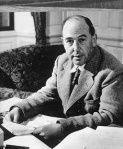
Is Jesus Christ – Lord, Liar, or a Lunatic? by *C.S. Lewis

This Famous Quote is Taken from The Book “Mere Christianity” – It is perhaps the most famous quote on Jesus outside of the Bible! 

“I am trying here to prevent anyone saying the really foolish thing that people often say about Him: ‘I’m ready to accept Jesus as a great moral teacher, but I don’t accept His claim to be God.’ That is the one thing we must not say. A man who was merely a man and said the sort of things Jesus said would not be a great moral teacher. He would be either a lunatic — on a level with the man who says he is a poached egg — or else he would be the Devil of Hell. You must make your choice. Either this man was, and is, the Son of God: or else a madman or something worse. You can shut Him up for a fool, you can spit at Him and kill Him as a demon; or you can fall at His feet and call Him Lord and God. But let us not come with any patronising nonsense about His being a great human teacher. He has not left that open to us. He did not intend to.” – C.S. Lewis

ABOUT CLIVE STAPLES LEWIS

*”Paging through 40 years of Christianity Today . . . one author’s books indisputably affected American evangelicals during this period more than any other. And that author was neither American nor quintessentially evangelical . . . C.S. Lewis.” (Christianity Today 9/16/96). Lewis had an enormous impact on more than a generation of readers who sought “practical wisdom, digestible theology, wit, verve, logic, and imagination.”

Clive Staples (“Jack”) Lewis was born in Belfast, Northern Ireland, on November 29, 1898. Raised in a bookish home, Lewis and his older brother, Warren, were more at home in the world of ideas of the past, than with the real world of the 20th century. Coping with the tragedy of his mother’s death when he was 10, Jack sought refuge in composing stories and studying. The rest of his life might have been a sad search for the security he felt as a child before his mother’s death, if not for the joy he experienced in his conversion to Christianity in September of 1931. After long conversations with J.R.R. Tolkien (a devout Catholic), Lewis records in his spiritual autobiography, Surprised by Joy (1950), “When we [Warren and Jack] set out [by motorcycle to the Whipsnade Zoo] I did not believe that Jesus Christ was the Son of God, and when we reached the zoo I did.”

In 1933, he published his first theological work, The Pilgrim’s Regress, a lively allegory detailing his flight from skepticism to faith and a parody of John Bunyan’s The Pilgrim’s Progress. In a varied and comprehensive career, C.S. Lewis wrote with three very different voices. There was Lewis, the distinguished Oxbridge literary scholar and critic; Lewis, the highly acclaimed author of science fiction and children’s literature; and Lewis, the popular writer and broadcaster of Christian apologetics. Although his most notable critical and commercial success is certainly his seven-volume Chronicles of Narnia, published between 1950 and 1956, he is at his most articulate, and winsome in his theological works: The Problem of Pain (1940), a defense of pain — and the doctrine of hell — as evidence of an ordered universe; and The Screwtape Letters (1942), a senior devil’s correspondence with a junior devil who is fighting Christ the Enemy for the soul of an unsuspecting believer.

During World War II, he emerged as a religious broadcaster and became famous as the “apostle to skeptics.” Mere Christianity is a compilation of his wartime radio essays defending and explaining the Christian faith. C.S. Lewis died on November 22, 1963, a week before his 65th birthday and on the same day President John F. Kennedy was assassinated. His grave is in the yard of Holy Trinity Church in Headington Quarry, Oxford. The headstone bears the inscription from Shakespeare, “Men must endure their going hence.” All who read, both evangelical and skeptic, are richer for Jack Lewis having come.

The “Jesus Focus” in the Book of Ruth

 Reading The Bible Through The Jesus Lens in Ruth

From Biblical Book to Biblical Hook

Charts adapted from Dr. Michael Williams Book

Title for Ruth

Ruth: Theme

Ruth 4:14-15

“Empty to Full”

God uses Ruth and Boaz to fill Naomi’s emptiness by providing her with food and a son.

Then the women aid to Naomi, “Blessed be the LORD, who has not left you this day without a redeemer, and may his name be renowned in Israel! He shall be to you a restorer of life and a nourisher of your old age, for your daughter-in-law who loves you, who is more to you than seven sons, has given birth to him.” 

Christ-Focus in Ruth

Implications from Ruth

Hooks from Ruth

God became flesh in order to be our guardian-redeemer and provide us with fullness of life.

 “The thief comes only to steal and kill and destroy. I came that they may have life and have it abundantly.”

 – John 10:10

We can embrace the fullness of life in Christ.

 (14) For this reason I bow my knees before the Father, (15) from whom every family in heaven and on earth is named, (16) that according to the riches of his glory he may grant you to be strengthened with power through his Spirit in your inner being, (17) so that Christ may dwell in your hearts through faith—that you, being rooted and grounded in love, (18) may have strength to comprehend with all the saints what is the breadth and length and height and depth, (19) and to know the love of Christ that surpasses knowledge, that you may be filled with all the fullness of God. (20) Now to him who is able to do far more abundantly than all that we ask or think, according to the power at work within us, (21) to him be glory in the church and in Christ Jesus throughout all generations, forever and ever. Amen

 – Ephesians 3:14-21

Are the things you are relying on for fulfillment only leaving you empty instead?

 Do you really believe that other people would know how to meet your deepest needs and desires better than the One who created you?

 Isn’t it time for you to choose fullness over emptiness?

 Is your Christ-card maxed out?

 Are you cashing in on all the fullness of life in Christ?

 Do you know the contentment that God wants for you whatever your circumstances may be?

 How could you raise your credit limit?

The “Jesus Focus” in the Book of Judges

 Reading The Bible Through The Jesus Lens in Judges

From Biblical Book to Biblical Hook

Chart adapted from Dr. Michael Williams Book

Judges Title

Judges: Theme

Judges 2:16-17

 “Rebellion and Rescue”

 God raises up judges to rescue His errant people from the consequences of their rebellion.

 “Then the LORD raised up judges, who saved them out of the hand of those who plundered them. Yet they did not listen to their judges, for they whored after other gods and bowed down to them. They soon turned aside from the way in which their fathers had walked, who had obeyed the commandments of the LORD, and they did not do so.”

Christ-Focus in Judges

Implications from Judges

Hooks from Judges

 God raised up Christ, the ultimate judge, to rescue us from our sin and it’s consequences.

 “O death, where is your victory? O death, where is your sting?.”

 The sting of death is sin, and the power of sin is the law.

 But thanks be to God, who gives us the victory through our Lord Jesus Christ.”

 – 1 Corinthians 15:55-57

 By the power of the Spirit of Christ, we may count ourselves dead to sin but alive to God in Christ Jesus.

 “So you also must consider yourselves dead to sin and alive to God in Christ Jesus.

 Let not sin therefore reign in your mortal body, to make you obey its passions.

 Do not present your members to sin as instruments for unrighteousness, but present yourselves to God as instruments for righteousness.

 For sin will have no dominion over you, since you are not under law but under grace.”

 – Romans 6:11-14

 Are you overcoming the world, or do you feel like the world is overcoming you?

 What aspects of life do you believe are richer outside of your relationship to God?

 What might you be relying on for victory instead of Christ?

 In what areas are you most in need of divine rescue?

 To what temptations are you particularly drawn?

 How can you realize God’s deliverance over these?

 What steps can you take preventing you from relapsing?

The “Jesus Focus” in the Book of Joshua

 Reading The Bible Through The Jesus Lens in Joshua

From Biblical Book to Biblical Hook

Charts adapted from Dr. Michael Williams Book

Joshua Title

Joshua: Theme

Joshua 11:23

 “Victorious Rest”

 God uses Joshua to lead his people to victorious rest in the Promised Land

 “So Joshua took the whole land, according to all that the LORD had spoken to Moses. And Joshua gave it for an inheritance to Israel according to their tribal allotments. And the land had rest from war.” 

Christ-Focus in Joshua

Implications from Joshua

Hooks from Joshua

 Christ brings His people victory over the challenges of this life.

“I have said these things to you, that in me you may have peace. In the world you will have tribulation. But take heart; I have overcome the world.”


 – John 16:33

 We may now serve God confidently in the power of the Spirit of the one who fulfills the law, without fear of the penalty of the law.

 “Blessed be the God and Father of our Lord Jesus Christ!

According to his great mercy, he has caused us to be born again to a living hope through the resurrection of Jesus Christ from the dead, to an inheritance that is imperishable, undefiled, and unfading, kept in heaven for you, who by God’s power are being guarded through faith for a salvation ready to be revealed in the last time.”

 – 1 Peter 1:3-5

 What battles are you fighting today?

 Did Jesus have battles to fight?

 Where do you look for strength?

 How do you keep your focus on Jesus who is the only one who can bring about victory for you?

 What counts as victory?

 Is the rest you seek the same as that of those who don’t know God?

 How do you know when you have the rest that God intends for you?

The “Jesus Focus” in the Book of Deuteronomy

Reading The Bible Through The Jesus Lens in Deuteronomy

From Biblical Book to Biblical Hook

Charts adapted from Dr. Michael Williams Book

Deuteronomy Title

Deuteronomy: Theme

Deuteronomy 10:12-13

 “Instruction”

 God gives Moses instructions for the second generation of Israel regarding faithful living in the Promised land.

 “And now, Israel, what does the LORD your God require of you, but to fear the LORD your God, to walk in all his ways, to love him, to serve the LORD your God with all your heart and with all your soul, and to keep the commandments and statutes of the LORD, which I am commanding you today for your God?” 

Christ-Focus in Deuteronomy

Implications from Deuteronomy

Hooks from Deuteronomy

Christ perfectly fulfills the law, and so secures our relationship with God.

“Do not think that I have come to abolish the Law or the Prophets; I have not come to abolish them but to fulfill them.”

 – Matthew 5:17

We may now serve God confidently in the power of the Spirit of the one who fulfills the law, without fear of the penalty of the law.

“Likewise, my brothers, you also have died to the law through the body of Christ, so that you may belong to another, to him who has been raised from the dead, in order that we may bear fruit for God. For while we were living in the flesh, our sinful passions, aroused by the law, were at work in our members to bear fruit for death. But now we are released from the law, having died to that which held us captive, so that we serve in the new way of the Spirit and not in the old way of written code.”

– Romans 7:4-6

What drives your relationship with God, fear or gratitude?

Do you want to know your Creator better, or are you just trying to avoid His anger?

Do you view God’s instructions as restrictive or freeing?

How does your view of God affect your answer to the the question?

Who would know best how a human being should live in order to experience life most fully?

Whose effort secures your relationship with God?

Where does the Spirit of Christ dwell?

The “Jesus Focus” in the Book of Numbers

Reading The Bible Through The Jesus Lens in Numbers

From Biblical Book to Biblical Hook

Charts adapted from Dr. Michael Williams Book

Numbers Title

Numbers: Theme

Numbers 14:18

 “Promised Rest”

 God chastens His disobedient people but reaffirms His intent to bring them into the Promised Land.

 “The LORD is slow to anger and abounding in steadfast love, forgiving iniquity and transgression, but he will by no means clear the guilty, visiting the iniquity of the fathers on the children, to the third and fourth generation.” 

Christ-Focus in Numbers

Implications from Numbers

Hooks from Numbers

Because Christ bore the penalty for our sin, we may enter into God’s promised rest.

“For we who have believed enter that rest, as he has said, ‘As I swore in my wrath, ‘They shall not enter my rest,’ although his works were finished from the foundation of the world.” – Hebrews 4:3

We must let God’s discipline guide us to the peace and rest he intends for us.

“And have you forgotten the exhortation that addresses you as sons? ‘My son, do not regard lightly the discipline of the Lord, nor be weary when reproved by him. For the Lord disciplines the one he loves, and chastises every son whom he receives.’ It is for discipline that you have to endure. God is treating you as sons. For what son is there whom his father does not discipline? If you are left without discipline, in which all have participated, then you are illegitimate children and not sons. Besides this, we have had earthly fathers who disciplined us and we respected them. Shall we not much more be subject to the Father of spirits and live? For they disciplined us for a short time as it seemed best to them, but he disciplines us for our good, that we may share his holiness. For the moment all discipline seems painful rather than pleasant, but later it yields the peaceful fruit of righteousness to those who have been trained by it.” – Hebrews 12:5-11

In what ways have you already begun to know God’s rest?

How would you explain this rest to someone else?

Can others see in you a peace, security, and fulfillment in life that they don’t have?

Do you see these things in other believers?

What is keeping you from knowing God’s rest more fully?

What are the biggest challenges in your life that threaten to cause you to forget how great God is?

Where have you turned for rest and fulfillment in life instead of to God?

Are you satisfied with the results of doing that?

The “Jesus Focus” In the Book of Leviticus

Reading The Bible Through The Jesus Lens in Leviticus

From Biblical Book to Biblical Hook

Charts adapted from Dr. Michael Williams Book

Leviticus Title

Leviticus: Theme

Leviticus 20:26

 Life in God’s Presence

 “God instructs His people how to live in His presence”

 “You shall be holy to me, for I the LORD am holy and have separated you from the peoples, that you should be mine.”

Christ-Focus in Leviticus

Implications from Leviticus

Hooks from Leviticus

The holiness of Christ admits us into God’s holy presence.

“He has no need, like those high priests, to offer sacrifices daily, first for his own sins and then for those of the people, since he did this once for all when he offered up himself .” – Hebrews 7:27

We must grow in grace and knowledge of our Lord and Savior Jesus Christ as we live in God’s presence.

“Since all these things are thus to be dissolved, what sort of people ought you to be in lives of holiness and godliness, waiting for and hastening the coming of the day of God, because of which the heavens will be set on fire and dissolved, and the heavenly bodies will melt as they burn!

But according to his promise we are waiting for new heavens and a new earth in which righteousness dwells. Therefore, beloved, since you are waiting for these, be diligent to be found in him without spot or blemish, and at peace. And count the patience of our Lord as salvation, just as our beloved brother Paul also wrote to you according to the wisdom given him, as he does in all his letters when he speaks in them of these matters.

There are some things in them that are hard to understand, which the ignorant and unstable twist to their own destruction, as they do the other Scriptures. You therefore, beloved, knowing this beforehand, take care that you are not carried away with the error of lawless people and lose your own stability.

But grow in the grace and knowledge of our Lord and Savior Jesus Christ. To him be the glory both now and to the day of eternity. Amen.”

– 2 Peter 3:11-18

Are you cultivating a life of holiness?

 What practices in your life remind you of your special relationship with God and His special purposes for you?

 How are the purposes of the various sacrifices in Leviticus realized in your own experience?

 How are they realized in the life of your community of faith?

 What does such a life look like today?

 How would anyone recognize that you are set apart to God and His purposes for you?

 Do you recognize those things?

The “Jesus Focus” in The Book of Exodus

Reading The Bible Through The Jesus Lens in Exodus

From Biblical Book to Biblical Hook

Charts adapted from Dr. Michael Williams Book

Exodus Title

Exodus: Theme

Exodus 29:46

 “Deliverance into Presence”

 God delivers His people from slavery into His presence.

 “And they shall know that I am the LORD their God, who brought them out of the land of Egypt that I might dwell among them. I am the LORD their God.” 

Christ-Focus in Exodus

Implications from Exodus

Hooks from Exodus

In Christ, God delivers His people from slavery to sin into fellowship with Him.

“So I find it to be a law that when I want to do right, evil lies close at hand. For I delight in the law of God, in my inner being, but I see in my members another law waging war against the law of my mind and making me captive to the law of sin that dwells in my members. Wretched man that I am! Who will deliver me from this body of death? Thanks be to God through Jesus Christ our Lord! So then, I myself serve the law of God with my mind, but with my flesh I serve the law of sin.” – Romans 7:21-25

We can trust in God’s saving power to deliver us from sin’s grip and into His saving presence.

“Since, therefore, we have now been justified by his blood, much more shall we be saved by him from the wrath of God. For if while we were enemies we were reconciled to God by the death of his Son, much more, now that we are reconciled, shall we be saved by his life.” – Romans 5:9-10

Does the fact that you are a Christian feel like a burden (something to be delivered from) or deliverance?

 Are your eyes open to the wonders of the presence of God into which you have been brought, or are you still focused on the features of your life in captivity?

 What could you do to change your perspective? What could you do to help others to change their perspective?

 Do you feel like you’re in the grip of God, or of sin?

 On whose strength are you relying to free yourself from sin’s power?

 What can you do to make others aware of the freedom from their captivity to sin and its horrible effects that is available to them in Christ? Can they see evidence of that freedom in you?

 What can you do to make others aware of the rich life of fellowship with God himself that is available to them in Christ?

 Can they see evidence of that rich life of fellowship with God in you?

The “Jesus Focus” in the Book of Genesis

Reading The Bible Through The Jesus Lens in Genesis

From Biblical Book to Biblical Hook

Charts adapted from Dr. Michael Williams Book

Genesis Title

Genesis: Theme

Genesis 12:2-3

 “Separation from Blessing”

 God separates out one through whom He would bless all nations

 (2) And I will make you a great nation, and I will bless you and make your name great, so that you will be a blessing. (3) I will bless those who bless you, and him who dishonors you I will curse, and in you all the families of the earth shall be blessed.” 

Christ-Focus in Genesis

Implications from Genesis

Hooks from Genesis

Christ is the one through whom God would bless the nations.

“And there is salvation in no one else, for there is no other name under heaven given among men by which we must be saved.”

– Acts 4:12

As Christ’s ambassadors, we are “separated out” with the task of blessing others with the good news of God’s salvation in Jesus Christ.

“All this is from God, who through Christ reconciled us to himself and gave us the ministry of reconciliation;

that is, in Christ God was reconciling the world to himself, not counting their trespasses against them, and entrusting to us the message of reconciliation.

Therefore, we are ambassadors fof Christ, God making his appeal through us. We implore you on behalf of Christ, be reconciled to God.”

– 2 Corinthians 5:18-20

In what ways has God equipped you to be a blessing to other people?

 What can you do to make yourself a clearer message of Jesus Christ to those around you?

 Do people avoid you, or do they find in you some evidence of Christ’s life, which has a character and quality they desire for themselves?

 Are you able to tell them about the source of this life in a clear way?

 Do your words and life communicate something good and attractive to unbelievers, or something no one would want?

 Are you aware how you come across to others?

 Can you identify areas in your life that hinder your service as Christ’s ambassador?

 Are you willing to tackle these areas with the strength God provides you?

A Summary of the Bible (Biblical Theology) by Dr. Bruce K. Waltke

Creation by Word – Genesis 1 and 2

In the beginning God created everything that exists. He made Adam and Eve and placed them in the Garden of Eden. God spoke to them and gave them certain tasks in the world. For food he allowed them the fruit of all the trees in the garden except one. He warned them that they would die if they ate of that one tree.

The Fall – Genesis 3

The snake persuaded Eve to disobey God and to eat the forbidden fruit. She gave some to Adam and he ate also. Then God spoke to them in judgment, and sent them out of the garden into a world that came under the same judgment.

First Revelation of Redemption – Genesis 4–11

 Outside Eden, Cain and Abel were born to Adam and Eve. Cain murdered Abel and Eve bore another son, Seth. Eventually the human race became so wicked that God determined to destroy every living thing with a flood. Noah and his family were saved by building a great boat at God’s command. The human race began again with Noah and his three sons with their families. Sometime after the flood a still unified human race attempted a godless act to assert its power in the building of a high tower. God thwarted these plans by scattering the people and confusing their language.

Abraham Our Father – Genesis 12–50

Sometime in the early second millennium BC God called Abraham out of Mesopotamia to Canaan. He promised to give this land to Abraham’s descendants and to bless them as his people. Abraham went, and many years later he had a son, Isaac. Isaac in rum had two sons, Esau and Jacob. The promises of God were established with Jacob and his descendants. He had twelve sons, and in time they all went to live in Egypt because of famine in Canaan.

Exodus: Our Pattern of Redemption – Exodus 1–15

In time the descendants of Jacob living in Egypt multiplied to become a very large number of people. The Egyptians no longer regarded them with friendliness and made them slaves. God appointed Moses to be the one who would lead Israel out of Egypt to the promised land of Canaan. When the moment came for Moses to demand the freedom of his people, the Pharaoh refused to let them go. Though Moses worked ten miracle–plagues which brought hardship, destruction, and death to the Egyptians. Finally, Pharaoh let Israel go, but then pursued them and trapped them at the Red Sea (or Sea of Reeds). The God opened a way in the sea for Israel to cross on dry land, but closed the water over the Egyptian army, destroying it.

New Life: Gift and Task – Exodus 16–40; Leviticus

After their release from Egypt, Moses led the Israelites to Mount Sinai. There God gave them his law which they were commanded to keep. At one point Moses held a covenant renewal ceremony in which the covenant arrangement was sealed in blood. However, while Moses was away on the mountain, the people persuaded Aaron to fashion a golden calf. Thus they showed their inclination to forsake the covenant and to engage in idolatry. God also commanded the building of the tabernacle and gave all the rules of sacrificial worship by which Israel might approach him.

The Temptation in the Wilderness – Numbers; Deuteronomy

After giving the law to the Israelites at Sinai, God directed them to go in and take possession of the promised land. Fearing the inhabitants of Canaan, they refused to do so, thus showing lack of confidence in the promises of God. The whole adult generation that had come out of Egypt, with the exception of Joshua and Caleb, was condemned to wander and die in the desert. Israel was forbidden to dispossess its kinsfolk, the nation of Edom, Moab, and Ammon, but was given victory over other nations that opposed it. Finally, forty years after leaving Egypt, Israel arrived in the Moabite territory on the east side of the Jordan. Here Moses prepared the people for their possession of Canaan, and commissioned Joshua as their new leader.

Into the Good Land – Joshua; Judges; Ruth

Under Joshua’s leadership the Israelites crossed the Jordan and began the task of driving out the inhabitants of Canaan. After the conquest the land was divided between the tribes, each being allotted its own region. Only the tribe of Levi was without an inheritance of land because of its special priestly relationship to God. There remained pockets of Canaanites in the land and, from time to time, these threatened Israel’s hold on their new possession. From the one–man leaderships of Moses and Joshua, the nation moved into a period of relative instability during which judges exercised some measure of control over the affairs of the people.

God’s Rule in God’s Land –1 and 2 Samuel; 1 Kings 1–10; 1&2 Chronicles 1–9

Samuel became judge and prophet in all Israel at a time when the Philistines threatened the freedom of the nation. An earlier movement for kingship was received and the demand put to a reluctant Samuel. The first king, Saul, had a promising start to his reign but eventually showed himself unsuitable as the ruler of the covenant people. While Saul still reigned, David was anointed to succeed him. Because of Saul’s jealousy David became an outcast, but when Saul died in battle David returned and became king (about 1000 BC).

Due to his success Israel became a powerful and stable nation. He established a central sanctuary at Jerusalem, and created a professional bureaucracy and permanent army. David’s son Solomon succeeded him (about 961 BC) and the prosperity of Israel continued. The building of the temple at Jerusalem was one of Solomon’s most notable achievements.

 The Fading Shadow – 1 Kings 11–22; 2 Kings

Solomon allowed political considerations and personal ambitions to sour his relationship with God, and this in turn had a bad effect on the life of Israel. Solomon’s son began an oppressive rule which led to the rebellion of the northern tribes and the division of the kingdom. Although there were some political and religious high points, both kingdoms went into decline, A new breed of prophets warned against the direction of national life, but matters went from bad to worse. In 722 BC the northern kingdom of Israel fell to the power of the Assyrian empire. Then, in 586 BC the southern kingdom of Judah was devastated by the Babylonians. Jerusalem and its temple were destroyed, and a large part of the population was deported to Babylon.

There Is a New Creation- Jeremiah; Ezekiel; Daniel; Esther

The prophets of Israel warned of the doom that would befall the nation. When the first exiles were taken to Babylon in 597 BC, Ezekiel was among them. Both prophets ministered to the exiles. Life for the Jews (the people of Judah) in Babylon was not all bad, and in time many prospered. The books of Jeremiah and Ezekiel indicate a certain normality to the experience, while Daniel and Esther highlight some of the difficulties and suffering experienced in an alien and oppressive culture.

The Second Exodus – Ezra; Nehemiah; Haggai

In 539 BC Babylon fell to the Medo–Persian empire. The following year, Cyrus the king allowed the Jews to return home and to set up a Jewish state within the Persian empire. Great difficulty was experienced in re–establishing the nation. There was local opposition to the rebuilding of Jerusalem and the temple. Many of the Jews did not return but stayed on in the land of their exile. In the latter part of the fourth century BC, Alexander the Great conquered the Persian empire. The Jews entered a long and difficult period in which Greek culture and religion challenged their trust in God’s covenant promises. In 63 BC Pompey conquered Palestine and the Jews found themselves a province of the Roman empire.

The New Creation for Us – Matthew; Mark; Luke; John

The province of Judea, the homeland of the Jews, came under Roman rule in 63 BC. During the reign of Caesar Augustus, Jesus was born at Bethlehem, probably about the year 4 BC. John, known as the Baptist, prepared the way for the ministry of Jesus. This ministry of preaching, teaching, and healing began with Jesus’ baptism and lasted about three years. Growing conflict with the Jews and their religious leaders led eventually to Jesus being sentenced to death by the Roman governor, Pontius Pilate. He was executed by the Romans just outside Jerusalem, but rose from death two days afterward and appealed to his followers on a number of occasions. After a period with them, Jesus was taken up to heaven.

The New Creation in Us Initiated – Acts

After Jesus had ascended, his disciples waited in Jerusalem. On the day of Pentecost the Holy Spirit came upon them and they began the task of proclaiming Jesus. As the missionary implications of the gospel became clearer to the first Christians, the local proclamation was extended to world evangelization. The apostle Paul took the gospel to Asia Minor and Greece, establishing many churches as he went. Eventually a church flourished at the heart of the empire of Rome.

 The New Creation in Us Now – New Testament Epistles

As the gospel made inroads into pagan societies it encountered many philosophies and non–Christian ideas which challenged the apostolic message. The New Testament epistles shows that the kind of pressures to adopt pagan ideas that had existed for the people of God in Old Testament times were also a constant threat to the churches. The real danger to Christian teaching was not so much in direct attacks upon it, but rather in the subtle distortion of Christian ideas. Among the troublemakers were the Judaizers who added Jewish law–keeping to the gospel. The Gnostics also undermined the gospel with elements of Greek philosophy and religion.

The New Creation Consummated – The New Testament

God is Lord over history and therefore, when he so desires, he can cause the events of the future to be recorded. All section of the New Testament contain references to things which have not yet happened, the most significant being the return of Christ and the consummation of the kingdom of God. No clues to the actual chronology are given, but it is certain that Christ will return to judge the living and the dead. The old creation will be undone and the new creation will take its place.

Bruce K. Waltke (PhD, Dallas Theological Seminary; PhD, Harvard Divinity School), acknowledged to be one of the outstanding contemporary Old Testament scholars, is professor of Old Testament at Reformed Theological Seminary in Orlando, Florida, and professor emeritus of biblical studies at Regent College in Vancouver. He has authored and coauthored numerous books, commentaries, and articles, and contributed to dictionaries and encyclopedias.

*Note – one of the highlights of my education was taking a one-week intensive doctoral class with Bruce Waltke at Westminster Theological Seminary on the Book of Proverbs. Dr. Waltke is a humble scholar with a brilliant mind and a deep love for Christ and His Word.