April 30th In Christian History – Galerius & Two Brave Missionary Nurses

Series: On This Day In Christian History

 Significant Events on This Day:

418: Pelagians were banished from Rome by imperial edict as great threat to peace, apparently for teaching that men can save themselves.

1532: James Bainham, a Lollard (a follower of the teachings of John Wycliffe) barrister (lawyer), was burned at the stake in Smithfield. He had been tied to a tree and whipped by Sir Thomas More, recanted his faith, was fined and then withdrew his recantation.

1658: Marguerite Bourgeoys established the first uncloistered Catholic missionary community in the new world at Ville Marie, Canada.

1854: James Montgomery (pictured left), who for many years was Scotland’s sole Moravian pastor, died on this day. Twice he went to prison for expressing his social views too freely in his newspaper, the Sheffield Iris. He was the author of many hymns, and he helped win acceptance for hymn singing in the Anglican Church. His best-known hymn was the Christmas carol “Angels from the Realms of Glory.”


“Galerius Issues a Toleration Edict as He Dies”

Sometimes when a person stares into the face of eternity, he becomes more religious or makes moral changes, perhaps hoping to influence his future beyond the grave. This may have been the case with Roman Emperor Galerius when he issued an Edict of Toleration on this day, April 30, in 311.

Galerius, the son of a Greek shepherd who became a Roman soldier, rose in power and authority to become a junior ruler under Diocletian. It was Galerius who instigated Emperor Diocletian’s persecution of Christians in 303 by convincing Diocletian that Christians were dangerous enemies of the empire.

Galerius himself issued an edict in 304 requiring everyone in the empire to sacrifice to the gods of the empire on pain of death or forced labor. Leading churchman were imprisoned, precious Bible manuscripts were destroyed and hundreds of Christians were executed as a result of his edict.

When Diocletian abdicated, Galerius became senior emperor in 305. He continued his cruel persecution, which was so widespread and intense that it became known as the Great Persecution. However, Christianity simply would not go away. Even Galerius recognized the impossibility of snuffing out the illegal religion.

Then he became ill. A Christian writer named Lactantius said that Galerius’s body rotted and was eaten by maggots while he writhed in agony. Evidently Galerius’s conscience connected his persecution of Christians with his miserable condition. He apparently saw his illness as judgment from the Christian God, for from his sickbed he issued an edict of Toleration that mentioned only Christians.

The edict began by justifying the murders that had been committed under his original edict:

Amongst our other measures for the advantage of the Empire, we have hitherto endeavored to bring all things into conformity with the ancient laws and public order of the Romans. We have been especially anxious that even the Christians, who have abandoned the religion of their ancestors, should return to reason.

Nothing that some Christians had betrayed their faith out of fear while others endured torture, Galerius decided illogically that:

We, with our wonted clemency, have judged it wise and permit a pardon even to these men and permit them once more to become Christians and reestablish their places of meeting.

Galerius (his image on an ancient Roman coin at left) added:

It should be the duty of the Christians, in view of our clemency [mercy], to pray to their god for our welfare, for that of the Empire, and for their own, so that the Empire may remain intact in all its parts, and that they themselves may live safely in their habitations.

Prayer seems to be the point of the proclamation. Galerius wanted Christian prayers. Did he hope for a miracle? Is so, he was disappointed. He died a week after issuing the edict.

His successor, Emperor Maximinus, tried to counteract the edict but did not succeed to any great extent during his short reign. The Great Persecution of Christians had ended.

Author’s of the Above Article: A. Kenneth Curtis and Daniel Gravesedited This Day In Christian History. Camp Hill, PA: Christian Publications Inc., 2005. The article above was adapted from the entry for April 30th.

A Kenneth Curtis, Ph.D, is president of the Christian History Institute and the founding editor of Christian History magazine. He has written and produced several award winning historical films for Gateway Films/Vision Video’s Church history collection. He is also coauthor of 100 Most Important Dates in Christian History and From Christ to Constantine: The Trial and Testimony of the Early Church. He and his wife, Dorothy, reside in eastern Pennsylvania.

Daniel Graves is the Webmaster for the Christian History Institute and holds a master’s degree in library science from Western Michigan University. He is the author of Doctors Who Followed Christ and Scientists of Faith. Dan and wife, Pala reside in Jackson, Michigan.


“The Tempest”

During its first three centuries, the Church met persecution in sporadic intervals around the empire. But nothing compared with the tempest that befell it during the days of Roman emperor Diocletian. Diocletian, seizing power in a coup, appointed fellow-soldier Maximian as co-emperor and two other men as assistants, Constantius and Galerius. The four ruled the empire, east and west, conservatively and with a philosophy of “traditional values.”

“Traditional values” for ancient Rome excluded Christianity. Though Diocletian himself seemed tolerant at first of Christians (his wife and daughter were believers), Galerius was strongly anti-Christian. His military prowess and battlefield victories gave him increasing influence. Slowly and methodically he painted Christians as enemies. He pushed through a series of persecutions against Christians, beginning with the destruction of a church in Nicomedia on February 23, 303. In rapid fire, several edicts were issued against the Church, the last and worst being published on April 30, 304.
No one can describe the carnage. Christians were dismissed from their positions, their civil rights suspended. Church buildings were set afire. Copies of the Scriptures were burned in the marketplaces. Pastors and church leaders were caught and executed, many by lions in the Coliseum. In Phrygia one whole community was wiped out. Other Christians were thrown into squalid prisons or sent to dreaded mines. All former persecutions were forgotten in the horror of this last and greatest storm.

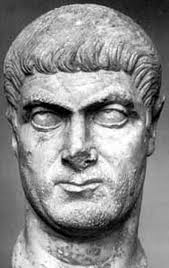
But the empire gradually grew sick of the killing. Executioners were exhausted, and even the lions, it is said, grew tired of Christian flesh. Galerius, meanwhile, found he was dying of a disease commonly known as “being eaten with worms.” On April 30, 311, anniversary of the earlier edict, he issued another in which he suspended persecution against Christians if they would pray for his recovery. From a thousand prisons, mines, and labor camps, the scarred warriors of Christ streamed home (ancient statue of Gelerius pictured left).

Many of them no doubt prayed for Galerius, but he didn’t recover. Some five days after he signed the edict the worms finished their work.

Herod … sat down on his throne and made a speech. The people shouted, “You speak more like a god than a man!” At once an angel from the Lord struck him down because he took the honor that belonged to God. Later, Herod was eaten by worms and died. God’s message kept spreading. – Acts 12:21b-24

About the Author: Robert J. Morgan, is the pastor of Donelson Fellowship in Nashville, Tennessee and the author of the best-selling Then Sings My Soul, From This Verse, Red Sea Rules, and On This Day – this article was adapted from the April 30th entry in this excellent book. He conducts Bible conferences, parenting and marriage retreats, and leadership seminars across the country.


“Minka and Margaret: They Were Political Casualties”

Thailand was a difficult place to be a missionary in 1974. The Vietnam War had spilled over into Laos, Cambodia, and northern Thailand. In southern Thailand there was ongoing conflict between the military and Muslim liberation groups that wanted independent for Thailand’s predominantly Muslim provinces. Malaysia, having a majority Muslim population, was supporting the Muslim rebels. The tense religious and political climate made missionary work difficult and dangerous.

Minka Hanscamp, a six-foot-tall Dutch woman who had grown up in Java as the daughter of missionaries, and Margaret Morgan, a nurse from a Welsh mining village, were missionary nurses with Overseas Missionary Fellowship (OMF). They had worked tirelessly in southern Thailand for sixteen and nine years respectively. They both had a special burden for those with leprosy. Their ministry involved cutting away rotten flesh, treating ulcerated sores that emitted a horrible stench, and washing many leprous feet (Margaret and Minka pictured left c. 1970).

Every two weeks the women held a leprosy clinic in the town of Pujud. On April 20, 1974, Minka’s sixteenth anniversary at OMF, she and Margaret were lured away from Pujud by strangers who insisted they come with them to the mountains to treat some sick patients needing help.

On April 30, 1974, Ian Murray, the OMF representative for Thailand, received two devastating letters. One was a letter from Minka and Margaret suggesting they had been kidnapped by “jungle people” but were well and “still praising.” The second letter was from their captors. It demanded a half-million-dollar ransom. The kidnappers also demanded that an official letter be sent from OMF to the nation of Israel in support of Palestinian rights. OMF’s policies did not allow them to comply with either demand. If they paid a ransom, every missionary would become more susceptible to abduction. It was also against OMF policy to become involved in political issues.

Instead Ian Murray met with Thai officials and representatives of the kidnappers, attempting to secure the release of Minka and Margaret. The meeting was unsuccessful. Violence in the area escalated over the next few days between Muslim separatists and the military. The Muslim gang that held the women issued a statement saying that they were not against OMF but against American and British support of Israel. The women would not be released unless the “Christian world stop and support to Israel against the Palestinian people.”

The crisis received international attention and prayer, but the letters from the women soon stopped. Rumors of their executions spread but were not confirmed.

Finally in March 1975 a Malaysian man confessed that he had shot both missionaries in the head. The chief of the Muslim gang had decided that the women had to be killed in order to keep the respect of his underlings in the rebel movement. The man said that the nurses were calm when they were told they were going to die, saying only, “Give us a little time to read and pray.” Although the Christian world hoped the story wasn’t true, it was confirmed when two skeletons that physically matched the women were found in the jungle. They had been shot in the head five or six months earlier.

On May 15 hundreds attended their funeral, not only Christians but Buddhists and Muslims as well. Many were shocked and saddened by the violent murders of the women who had come to help them. One man testified at the funeral that he had been a former bandit killer but had become a Christian after Minka had tenderly placed his ulcerated foot on her lap as she treated it. Following the funeral, native pastors and missionaries received more inquiries about the Christian faith than ever before. 

Reflection

 Can you imagine yourself ministering to lepers as Minka and Margaret did?

Are there areas of Christian ministry that you suspect you should participate in but are outside your comfort zone?

“Heal the sick, raise the dead, cure those with leprosy, and cast out demons, Give as freely as you have received.” – Matthew 10:8


Author’s of the Article Above: Mike and Sharon Rusten are not only marriage and business partners; they also share a love for history. Mike studied at Princeton (B.A.), the University of Minnesota (M.A.), Westminster Theological Seminary (M.Div.), Trinity Evangelical Divinity School (Th.M.), and New York University (Ph.D.). Sharon studied at Beaver College, Lake Forest College, and the University of Minnesota (B.A.), and together with Mike has attended the American Institute of Holy Land Studies (now Jerusalem University College). The Rustens have two grown children and live in Minnetonka, Minnesota. This article was adapted from the April 30th entry in their wonderful book The One Year Book of Christian History, Carol Stream, IL: Tyndale, 2003.

 

April 29 In Christian History – Jesus as a Youth; Joan of Arc; & Catherine of Siena

Series: On This Day In Christian History

 Significant Events on This Day:

1380: Catherine of Sienna, Dominican tertiary and mystic, died in Rome. She had a strong influence on world events through correspondence with the notables of her day.

1525: Fray Pedro died. He was a mentor to Las Casas, the “Father of the Indians.”

1607: The first Anglican Church was established in the American Colonies, at Cape Henry, Virginia.

1882: John Nelson Darby died in Bournemouth, England. He was a founder of the Plymouth Brethren movement and exerted a strong, worldwide influence on dispensationalism and proponent of a pre-tribulational rapture. In the United States, many of Darby’s ideas were popularized in the notes of the Scofield Bible.

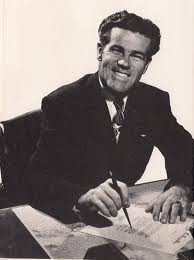
1933: Dawson Trotman (pictured at right) began his work with Navy men. The work led to the formation of the Navigators, a discipleship organization.

1945: Five hundred Greek Catholic clergymen at Lwow, Poland, were surrounded by police and arrested. Many were shot.

“Joan of Arc Turns Tide of French-English War”

Throughout much of the fourteenth and fifteenth centuries, the English fought the French in an attempt to claim France as their own. The English had the upper hand Until Joan of Arc appeared.

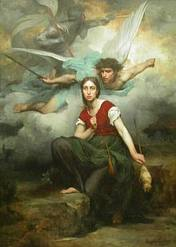
Joan was a simple and pious peasant girl who wove and spun. She began to see heavenly beings and hear their voices, which told her that deliverance would come to France through her. The voices sent her to the nearest French bastion, but when she appeared before him her pleas were ignored. Eventually, Joan convinced local authorities that she was for real. One thing led to another and she ended up picking the disguised dauphin out of a crowd of courtiers. She also made prophecies, which were recorded in a letter written from Lyons on April 22, 1429. Those prophecies came true.

One of her predictions was that she would save besieged Orleans, and area that was crucial to the defense of France. On April 29 in 1429, a rapid march brought Joan of Arc, accompanied by French forces, to the city of Orleans. It was the turning point of the Hundred Years’ War. The English retreated the next day, but as it was Sunday, Joan forbid the French to pursue them. Within a few days, the English garrisons around Orleans had all been captured. Joan was wounded in the fighting, which was also as she had predicted.

Charles, the irresolute dauphin, had to be coaxed into action. Joan convinced him to undertake various moves, which he did halfheartedly. A dramatic French victory at Pasay opened the way for Charles to retake Reims. Again Joan had difficulty convincing him to take the logical step of having himself crowned, but he finally acquiesced. Then she knelt before him and called him king.

The voices told her that she had less than a year left for her work. Those succeeding months proved to be frustrating for her. The king and his advisors lacked the boldness to pursue the advantages Joan had gained for the French. A feeble attempt to retake Paris failed. Not long afterward, Joan was captured by the English, who brought charge of witchcraft against her. Determined to find grounds for executing her, they had a group of high-powered theologians browbeat her and did not allow her any legal counsel.

As could be expected with such a stacked trial, Joan was convicted of practicing witchcraft. In a moment when her terror overcame her, she recanted with the caveat that she did so only as far as it was God’s will. Her persecutors soon entrapped her with accusations.

Quickly she regained her courage and did not waver again, even when brought to the stake. She asked that a crucifix be held before her face and called upon the name of Jesus as long as her breath remained in her.

Subsequent inquiries exonerated her and the pope officially canonized her as a saint in 1920.

Author’s of the Above Article: A. Kenneth Curtis and Daniel Graves edited This Day In Christian History. Camp Hill, PA: Christian Publications Inc., 2005. The article above was adapted from the entry for April 29.

A. Kenneth Curtis, Ph.D, is president of the Christian History Institute and the founding editor of Christian History magazine. He has written and produced several award winning historical films for Gateway Films/Vision Video’s Church history collection. He is also coauthor of 100 Most Important Dates in Christian History and From Christ to Constantine: The Trial and Testimony of the Early Church. He and his wife, Dorothy, reside in eastern Pennsylvania.

Daniel Graves is the Webmaster for the Christian History Institute and holds a master’s degree in library science from Western Michigan University. He is the author of Doctors Who Followed Christ and Scientists of Faith. Dan and wife, Pala reside in Jackson, Michigan.

“Death by Exhaustion”

Giacomo Benincasa, dyer of fabrics in Siena, Italy, named his twenty-third child Catherine. Their house sat on a hillside, the basement containing dye rooms. Atop the hill sat the church of St. Dominic over which, when Catherine was seven, she saw a vision of Jesus. From that day she yearned to serve Christ.

At age 12 she so resisted her father’s pressure to marry that he said, May God preserve us, dearest daughter, from trying to set ourselves against the will of God. We have long seen that it was no childish whim of thine, and now we know clearly that it is the Spirit of God. He gave her a room near his dye quarters, and there Catherine made herself a chapel.

Catherine’s personality burned like a knife, and she soon inserted herself without invitation into community and church affairs, becoming the most outspoken Italian woman of the Middle Ages. She railed against the death sentence of a young man convicted of criticizing the government, and she accompanied him to his execution, snapping up his decapitated head and arousing public protest. She cared for prisoners. When the Black Death swept Italy, Catherine was everywhere giving aid.

Catherine fumed and stormed about corruption in the Church. She denounced materialism and immorality in the monasteries. “Those who should be the temples of God,” she wrote, “are the stables of swine.” She fired letters like missiles, keeping three secretaries busy at a time. She told Pope Gregory it would be better for him to resign than to founder, and “Do not be a boy, but a man!” She negotiated peace treaties. She was instrumental in moving the papacy from France back to Rome.

It’s no wonder that, on April 29, 1380 she died at age 32 of exhaustion from these and other labors. Her last words: “Dear children, let not my death sadden you; rather rejoice that I am leaving a place of many suffering to be united forever with my most sweet and loving Bridegroom.”

Next to St. Francis, Catherine of Siena is the most celebrated of the Italian saints.

About the Author: Robert J. Morgan, is the pastor of Donelson Fellowship in Nashville, Tennessee and the author of the best-selling Then Sings My Soul, From This Verse, , Red Sea Rules, and On This Day – this article was adapted from the April 29th entry in this excellent book. He conducts Bible conferences, parenting and marriage retreats, and leadership seminars across the country.


“Jesus: The Child Who Knew More Than His Parents”

Every year Jesus’ parents went to Jerusalem for the Passover festival. Every Jewish male was required to attend, but women who loved God came as well. It was a difficult eighty-mile trip from Nazareth, but Passover was the highlight of the year. Since highway robbers were a known danger, pilgrims on their way to Jerusalem usually traveled together in caravans for protection. Mary and Joseph traveled with a large group of friends and relatives.

When Jesus was twelve years old, the Passover was on April 29, A.D. 9, and the whole family attended the festival as usual. This was a highly significant period in Jesus’ life because at the age of thirteen Jewish boys were considered to be responsible for themselves before God. The year prior to this was filled with intense instruction (see Darrel L. Bock. Luke. BECNT. Grand Rapids: Baker, 1994. 1:259-75). *Note: The custom of the bar mitzvah came after the time of Jesus.

After the celebration was over, Mary and Joseph started home for Nazareth with their large group of fellow pilgrims. Without their knowledge, Jesus stayed behind in Jerusalem. His parents did not miss him at first because they assumed he was friends elsewhere in their caravan. But when they stopped for the evening, they could not find him, and realized he was missing. So they returned to Jerusalem to search for him. Three days later they finally found him in the temple, sitting among the religious leaders, engaged in a question-and-answer session with them.

But Mary and Joseph were angry at what they perceived as his disobedience. They were relieved to find him but were understandably upset. Mary said, “Son! Why have you done this to us? Your father and I have been frantic, searching for you everywhere.”

Jesus answered her, “But why did you need to search? You should have known that I would be in my Father’s house.”

In Jesus’ Greco-Roman world, house or household was not only a designation of location but also of authority. Jesus was aligning himself with his heavenly Father’s house even if it meant disrupting his relationship with his earthly parents. This was a foreshadowing of the pattern for the rest of his life. Mary and Joseph did not understand what he meant. They could not comprehend Jesus’ understanding of who he was. But Mary stored all these things in her heart.

Then, as an obedient twelve-year-old, Jesus returned to Nazareth with his parents and lived under their authority (Luke 2:41-52).

 Reflection

Mary and Joseph were probably the very first persons to wrestle with the question of who Jesus was. Before his birth an angel had told Joseph that Mary’s son would “save his people from their sins” (Matthew 1:21) and had told Mary her son “would be very great and [would] be called the Son of the Most High” (Luke 1:32). Yet Mary and Joseph did not completely understand the angels’ messages. These were the things that Mary pondered in her heart. We, too, must answer the question, Who is Jesus? What is your answer?

“So the baby born to you will be holy, and he will be called the Son of God.” – Luke 1:35

Author’s of the Article Above: Mike and Sharon Rusten are not only marriage and business partners; they also share a love for history. Mike studied at Princeton (B.A.), the University of Minnesota (M.A.), Westminster Theological Seminary (M.Div.), Trinity Evangelical Divinity School (Th.M.), and New York University (Ph.D.). Sharon studied at Beaver College, Lake Forest College, and the University of Minnesota (B.A.), and together with Mike has attended the American Institute of Holy Land Studies (now Jerusalem University College). The Rustens have two grown children and live in Minnetonka, Minnesota. This article was adapted from the April 29th entry in their wonderful book The One Year Book of Christian History, Carol Stream, IL: Tyndale, 2003.
What Will Jerusalem Be Like in the Future?

“The Glorious Temple” – Back To The Future – April 28, 573 B.C.

 By Mike and Sharon Rusten

Ezekiel was a priest and prophet who had been taken into captivity in Jerusalem and brought to Babylon in 597 B.C. by King Nebuchadnezzar. In Babylon Ezekiel had seen a vision in which the glory of God departed from the temple in Jerusalem before it was destroyed (Ezekiel 10:1-22). Then in 586 B.C. King Nebuchadnezzar destroyed the temple in Jerusalem in and took most of the remaining residents captive to Babylon.

Ezekiel encouraged his fellow exiles with six messages proclaiming the hope of their restoration to Israel (33:21-39:29). Some of these prophecies looked beyond their return from Babylon to their return from exile throughout the world before the final consummation of history. For example, God says through Ezekiel: “I will gather you up from all the nations and bring you home again to your land. Then I will sprinkle clean water on you, and you will be clean. Your faith will be washed away, and you will no longer worship idols. And I will give you a new heart with new and right desires, and I will put a new spirit in you. I will take out your stony heart of sin and give you a new, obedient heart. And I will put my Spirit in you so you will obey my laws and do whatever I command” (36:24-27).

The prophet Zechariah gives more details about this future time when God will put his Spirit in the Jewish people. The Lord says through him, “I will pour out a spirit of grace and prayer on the family of David and on all the people of Jerusalem. They will look on me whom they have pierced and mourn for him as for an only son” (Zechariah 12:10). The book of Revelation quotes this verse from Zechariah and applies it to Jesus’ second coming: “Look! He comes with the clouds of heaven. And everyone will see him—even those who pierced him. And all the nations of the earth will weep because of him” (Revelation 1:7). In other words, when Jesus returns, the Jews living on earth at that time will literally “look on [Jesus] whom they have pierced and mourn for him as for an only son.” This is when God gives them his Holy Spirit and they are converted, receiving “a new obedient heart” (Ezekiel 36:26). The apostle Paul writes: “So all Israel will be saved. Do you remember what the prophets said about this? A Deliverer will come from Jerusalem, and he will turn Israel from all ungodliness. And then I will keep my covenant with them and take away their sins” (Romans 11:26-27).

Since King Solomon’s time when the Jewish people were under God’s blessing, they had a Temple in Jerusalem in which to worship. This will again be true in the millennial age following the second coming of Christ.

Then on April 28, 573 B.C., God took Ezekiel from Babylon back to Jerusalem by means of a vision in which he showed him the final glorious temple that is to come. More important, just as Ezekiel had had a vision of God’s glory leaving the temple in his day, now he sees the glory of the Lord returning to the future temple: “Suddenly, the glory of the God of Israel appeared from the east…And the glory of the Lord came into the Temple through the east gate-way…And the glory of the Lord filled the Temple…And the Lord said to me, “Son of man, this is the place of my throne’” (Ezekiel 43:2-7).

Reflection

Does it surprise you that Israel will be converted to Christ in the future and will again have a temple in Jerusalem filled with the glory of the Lord?

It is easy to accept Bible prophecies that have already been fulfilled and ignore those that are still in the future. But these future prophecies will be fulfilled just as surely as the earlier ones.

Author’s of the Article Above: Mike and Sharon Rusten are not only marriage and business partners; they also share a love for history. Mike studied at Princeton (B.A.), the University of Minnesota (M.A.), Westminster Theological Seminary (M.Div.), Trinity Evangelical Divinity School (Th.M.), and New York University (Ph.D.). Sharon studied at Beaver College, Lake Forest College, and the University of Minnesota (B.A.), and together with Mike has attended the American Institute of Holy Land Studies (now Jerusalem University College). They have two grown children and live in Minnetonka, Minnesota. This article was adapted from the April 28th entry in their fascinating book The One Year Book of Christian History, Carol Stream, IL: Tyndale, 2003.

The Bounty Bible – April 28, 1789

Series: On This Day In Christian History

The English ship Bounty, commanded by Lieutenant William Bligh, journeyed to the South Pacific in 1787 to collect plants of the breadfruit tree. Sailors signed on gladly, considering the voyage a trip to paradise. Having no second-in-command, Captain Bligh appointed his young friend Fletcher Christian to the post. The Bounty stayed in Tahiti six months, and the sailors, led by happy-go-lucky Fletcher Christian, enjoyed paradise to the full. When time came for departure, some of the men wanted to stay behind with their island girls. Three men, trying to desert, were flogged. The mood on ship darkened, and on April 28, 1789 Fletcher Christian staged the most famous mutiny in history. Bligh and his supporters were set adrift in an overloaded lifeboat (which they miraculously navigated 3,700 miles to Timor).

The mutineers aboard the Bounty began quarreling about what to do next. Christian returned to Tahiti where he left some of the mutineers, kidnapped some women, took some slaves, and traveled 1,000 miles to uninhabited Pitcairn Island. There the little group quickly unraveled. They distilled whiskey from a native plant. Drunkenness and fighting marked their colony. Disease and murder eventually took the lives of all the men except for one, Alexander Smith, who found himself the only man on the island, surrounded by an assortment of women and children.

Then an amazing change occurred. Smith found the Bounty’s neglected Bible. As he read it, he took its message to heart, then began instructing the little community. He taught the colonists the Scriptures and helped them obey its instructions. The message of Christ so transformed their lives that 20 years later, in 1808, when the Topaz landed on the island, it found a happy society of Christians, living in prosperity and peace, free from crime, disease, murder—and mutiny. Later, the Bible fell into the hands of a visiting whaler who brought it to America. In 1950 it was returned to the island. It now resides on display in the church in Pitcairn as a monument to its transforming message (The Bounty Bible pictured at left – Article adapted from the April 28th entry in Robert J. Morgan. On This Day: 365 Amazing and Inspiring Stories about Saints, Martyrs & Heroes. Nashville: Thomas Nelson Publishers, 2000.

Also On This Day In Christian History:

1553: The Nestorians chose Sullaqa, superior of the monastery of Rabban Hormizd, to reunite them with the Catholic Church. He made his profession of the Nestorians’ intent to Rome on this day.

1841: The Roman Catholic missionary Pierre Chanel died a martyr in Tonga, where he had gone despite strong Protestant resistance. He was working on an island that had been unreached by Protestants.

1872: Francis Havergal wrote her hymn “Lord Speak to Me that I May Speak” in Winterdyne, England. It first appeared in a leaflet with the title “A Worker’s Prayer.”

1911: Thousands of Genevans demonstated for five hours against a religiously inspired ban on gambling. A shocked Karl Barth was appalled at their mindless slogans and came out in support of the ban.

1955: Christian and Missionary Alliance pilot Albert Lewis died when his seaplane crashed in the pass leading into the Baliem Valley in Irian Jaya (the known as Nederlands, New Guinea). Ten thousand souls came to Christ, owing in part to Lewis’ supportive ministry.

Adapted from the April 28th entry in This Day In Christian History, edited by A Kenneth Curtis and Daniel Graves, Camp Hill, PA: Christian Publications.

Remembering John R.W. Stott on his Birthday – One of The Greatest Evangelicals of Our Time

Remembering John R.W. Stott Who Would Have Been 91 on April 27, 2012

I first met John Stott in 1985 after he had given a message at a Chapel service at what was then called Multnomah School of the Bible (Multnomah University) in Portland, Oregon. After he spoke he stayed for lunch and ate in the cafeteria. I was privileged to sit with him and hear his wisdom for over an hour. I was impressed with his humility, knowledge of the Scriptures, and genuine concern for us students. Two years later I was returning from spending two months in Spain on a missions trip and met up with my parents in London for a few days. While there we went to All Souls Church in London and worshiped there with John Stott delivering a wonderful Christo-centric sermon from Isaiah. Afterwards while waiting in a very long line to greet “Uncle John” he said to me without hesitation, “Hello David, how is your ministry at Multnomah going?” I couldn’t believe that he remembered my name, my ministry (with junior highers at the time), and where I was going to school! Needless to say, I was dumbfounded. I have always held Stott’s commentaries, books, and ministry in high regard – but what I loved most about Stott – was his genuine love for, and ability to shepherd like the Chief Shepherd – not just his local sheep, but around the world. I have taken random samples of tribute from Stott in this short article – many are from memorial services held for him around the globe, and some are from tributes in various venues. May John Stott’s tribe increase! We miss you Uncle John! – Dr. David P. Craig

“He (John Stott) truly was, in some ways, the first person who spoke the word of God to me through his literature and I also heard him in person,” proclaimed Tim Keller, senior pastor of Redeemer Presbyterian Church in New York City and whom Newsweek magazine described as a “C.S. Lewis for the twenty-first century.”

Keller delivered the sermon at John Stott’s U.S. memorial service Friday (Wheaton Bible Church, November, 11, 2011) and shared that Stott’s bestselling book, Basic Christianity (1958), which has sold well over a million copies and has been translated into 25 languages, had a “profound informative influence” on him.

“Therefore, I needed to rethink. I need to do what Hebrews 13:7 says I should do. I need to rethink my life in light of the results of his (Stott’s) life,” recalled Keller about his thinking several months ago when he was invited to speak at Stott’s memorial service.

He is the author of over 50 books translated into 65 languages, and was named by Time magazine in 2005 as one of the “100 most influential people” in the world.

But despite the influence and recognition he received during his life, Stott is remembered for his humbleness and dedication in serving the Lord.

“The greatest gifts in John’s life were not his talents, it was actually his character,” remarked the Rev. Dr. Mark Labberton, a former study assistant of Stott who is now a professor at Fuller Theological Seminary in California.

Keller, who said he read six volumes on the life of John Stott over the past two months, stated that he uncovered five findings about Stott’s life that should make Christians rethink their own life.

First, Christians should be convicted by Stott’s Kingdom vision and zeal for God’s Kingdom.

“Everything I have read, known, and by all accounts, John Stott’s motives were about as pure as a human being’s motives can be,” asserted Keller. “He was not an ambitious man for his own glory. He did not want power. It was obvious he did not want status. He did not want wealth, he gave it away.” 

“But there was something driving him,” said the influential American preacher.

Although Stott was considered the greatest student evangelist of his generation and foresaw the rise of Christianity in the global South before most anyone else, he was not satisfied with his accomplishments.

“Here is my point. Most of the rest of us would be very happy being told you are the best. You are the best preacher, you’re the best of this or that. But he didn’t care about that. He wanted to change the world for Christ,” Keller explained. “I looked at his motives, I looked at his labors, how he spent himself, and how he gave himself. Why wasn’t he ever satisfied? It really was not worldly ambition. He really wanted to really change the world for Christ. We should be convicted by that.”

Stott’s life, according to Keller, should also make Christians reflect on their cultural learning curve in terms of the cultural blinders on their eyes, and believers should be chastened by his leadership controversy. If even a man as gracious as Stott could not avoid controversy and fall-outs with other Christian leaders, people should “realize that it (controversy) is going to happen. If you want to do something for Christ, someone will be mad.”

Keller also found that Stott was a great innovator, including his reinvention of expository preaching, invention of the modern city-centered church, his role as a Christian statesman who uses institutions to further the work of God, and his forcing evangelicals to deal with social justice issues.

Finally, the evangelical scholar, while studying Stott’s life, found that the English clergyman essentially created evangelicalism, which Keller sees as “the greatest center between fundamentalism and liberalism.”

The Rev. Dr. Christopher Wright, the so-called “successor” of Stott and the international director of Langham Partnership in London, remarked that Stott was way ahead of his time.

“From the early stages of his ministry, he reached out to the whole world. Starting here in the United States, his first international trip, and so many other countries … his thinking, his world was global,” said Wright. “Long before the Internet, John Stott had created a world wide web from relationships and friendships and ministries. Long before the iMac, or the iPhone, or the iPad, there was iFrances (Stott’s long-time secretary), reaching out to the world on behalf of John, by letters, faxes, and eventually, through emails… “He always spoke of himself as just an ordinary follower of Jesus. He once said we should not get used to adulation … he never reveled in being famous. I think he would want to be remembered as a disciple of Jesus.”

Dr. Joshua Moody, senior pastor of College Church, recalled Stott saying decades ago to a group of undergraduate students that included himself, “If I had to live life over, I would live for Christ.” After a pause, Stott added, “You know, if I had to live a thousand lives, I would live them all for Christ.” “We come here to honor a man whose preeminent purpose is to honor Christ,” declared the pastor of the host church of the U.S. memorial service for John Stott.

“I’m not certain that John Stott would want people to remember him,” said John Stott Ministries President Benjamin Homan. Those puzzling words about the man described as the architect of the evangelical movement in the 20th century make sense when you talk to more people who knew him. One of the most popular words used to describe Stott, who passed away Wednesday aged 90, is humble.

“Over and over again as people have described their interactions with John Stott, it is one of humility, and one of not pointing people to himself but to Jesus,” Homan said from Colorado. “The ministries that he began were never about promoting his works or his teachings. They have been about drawing the Church’s attention to the work of Christ around the world, how the Church is growing and how it needs to grow in depth and maturity around the world. I think he will be remembered as a global Christian.”

Not only was Stott’s daily routine strict, but his year was structured with a razor-sharp focus on maximizing his effectiveness in various ministries. For 25 years, Stott spent three months in every 12 travelling for international missions, speaking at conferences and preaching around the world. Another three months of each year would be devoted to writing, and six months dedicated to ministry.

“He was extremely disciplined in his personal life and very simple in his habits. He lived in a one bedroom, one living room with a small kitchenette, and that was his life. He did not have any great wealth or style. He was very simple and frugal,” Wright recalled.

His mentor taught him how to engage in ministry publicly as well as in a pastoral capacity while maintaining equal integrity in both.

“I find him to be a man of genuine humility, not just fake humility, but genuine, through and through humility. He was able to mix with what we might call the ‘rich and famous’ on one hand, or with the ‘poorest of poor’ in other parts of the world, and do so with equal integrity and simply be himself.”

Stott died peacefully at 3:15 p.m. local time on July 27, 2011, at his Christian assisted living home at St. Barnabas College in Lingfield, Surrey, England. At his bedside were his niece and close friends, who read 2 Timothy 2 to him, and listened to Handel’s “Messiah” with him in his final moments on earth.

In 2006, Stott broke his hip and had increasingly become incapacitated. Wright said the elderly clergyman did not suffer dementia, but was weak and in pain in the time leading up to his death. Stott will perhaps be best known for being the chief drafter of the 1974 Lausanne Covenant, the evangelical manifesto on evangelism and theology.

He also was the primary author of the Preamble to the 1951 constitution of the World Evangelical Alliance, the world’s largest evangelical organization, now representing some 600 million evangelicals in 128 countries.

“I can’t think of another evangelical theologian who would come close to Stott in both the depth of his diligent scholarship and the breadth of his unifying work in the global body of Christ – especially through the Lausanne Movement,” said Greg Parsons, global director of the U.S. Center for World Mission, in an email.

“It is probably his involvement in guiding and crafting the masterful document known as the Lausanne Covenant that will be the best single thing for which he is known,” remarked Parsons, who was a member of the Statement Working Group at Lausanne III in Cape Town, South Africa, in 2010. Parsons shared that Stott’s talk at the Urbana Student Missions Conference in 1976, titled, “The Loving God is a Missionary God,” became the first chapter of USCWM’s Perspectives reader.

John Robert Walmsley Stott was born to Sir Arnold W. Stott, an accomplished physician and an agnostic, and Emily, a Lutheran who took her youngest son to All Souls Church in Langham Place, London, as a young boy. Stott later became rector of All Souls in 1950, then rector emeritus in 1975.

In 1959, Stott was appointed chaplain to the queen and served in that position until 1991. He retired from public ministry in 2007 at the age of 86, two years after being named by Time magazine as one of the world’s “100 Most Influential People.”
Fond memories of Stott include his passion for bird watching and his affection for chocolates.

John Stott Ministries President Benjamin Homan recalled that the month before Stott passed away, a friend had visited and told Stott that a black bird was outside his window. Stott, who had lost much of his eyesight by then, corrected his friend, saying that it was a nightingale, which he knew from the bird’s chirp.

“John Piper on John Stott – Year One In Heaven”

Today is John Stott’s first birthday in heaven.

Coming toward the end of my (32-year) ministry as Pastor for Preaching and Vision at Bethlehem Baptist Church, I read Alister Chapman’s new biography of John Stott with special interest. I wanted to see how he finished at All Soul’s and how he shaped the rest of his life.

Stott became Rector at All Souls in 1950 at the age of 29. Just shy of 20 years later he told the church council on September 20, 1969 that “he wanted to stand down.” The church was not prospering as it once had. He felt his calling was to “wider responsibilities.”

The council accepted the proposal and 15 months later Michael Baughen took the helm. “Within a few years All Souls was bursting again” (75). But, Chapman observes, “by almost any measure, Stott’s ministry at All Souls was a success” (77).

Stott was still on the ministerial team at All Souls for another five years. When the severance was complete in September, 1975, he wrote, “I find myself pulled and pushed in various directions these days, and need divine wisdom to know how to establish priorities” (Timothy Dudley-Smith, John Stott, A Biography: The Later Years, IVP, 2001, 248).

I found this comforting. It is remarkable how many good things there are to do. And if one is ambitious to live an unwasted life for the glory of Christ, discernment is crucial. Sudden release from decades of familiar pastoral expectations can easily lead to sloth or superficial busy-ness.

Stott’s discovery was that his calling was a remarkable global ministry. “As with Jim Packer, Stott gave himself to Anglican politics but in the end tired of them. Neither had an obvious, appealing role to fill in England. Both were in demand elsewhere. The result was that two of England’s most gifted evangelicals spent most of the end of their careers serving the church beyond England’s shores” (Godly Ambition, 111).

The thesis of Chapman’s book, Godly Ambition: John Stott and the Evangelical Movement (Oxford, 2012), is that Stott “was both a Christian seeking to honor God and a very talented man who believed he had key roles to play in God’s work in the world and wanted to play them. In short, he combined two things that might seem incongruous: godliness and ambition” (8). With that double drive, “few did more than John Stott to shape global Christianity in the twentieth century” (160).

This ambition was as vital to the end of Stott’s days as his mental and physical life would sustain. One reason is that it was biblically grounded. Explaining his own understanding of ambition he said,

Ambitions for God, if they are to be worthy, can never be modest. There is something inherently inappropriate about cherishing small ambitions for God. How can we ever be content that he should acquire just a little more honour in the world?

Christians should be eager to develop their gifts, widen their opportunities, extend their influence and be given promotion in their work — not now to boost their own ego or build their own empire, but rather through everything they do to bring glory to God. (156)

May every one of us, in the transitions of our lives, seek the kind of holy fire that gives both the light of discernment and the heat of ambition. All of it for the glory of God. This is my deep longing as I face whatever future God gives.

In remembering the humble preacher, author, and theologian, here are a few of his lasting words:

“His authority on earth allows us to dare to go to all the nations. His authority in heaven gives us our only hope of success. And His presence with us leaves us with no other choice.”

“The truth is that there are such things as Christian tears, and too few of us ever weep them.”

“Every Christian should be both conservative and radical; conservative in preserving the faith and radical in applying it.”

“I believe that to preach or to expound the scripture is to open up the inspired text with such faithfulness and sensitivity that God’s voice is heard and His people obey Him” (His definition of expository preaching).

“When it comes to preaching – Theology is more important than methodology.”

“The gospel is NOT preached if Christ is not preached.”

“Before we can begin to see the cross as something done for us, we have to see it as something done by us.”

“We should not ask, ‘What is wrong with the world?’ for that diagnosis has already been given. Rather we should ask, “What has happened to salt and light?”

“Social responsibility becomes an aspect not of Christian mission only, but also of Christian conversion. It is impossible to be truly converted to God without being thereby converted to our neighbor.”

“Sin and child of God are incompatible. They may occasionally meet; they cannot live together in harmony.”

“Good conduct arises out of good doctrine.”

“Every powerful movement has had its philosophy which has gripped the mind, fired the imagination and captured the devotion of its adherents.”

“The Christian’s chief operational hazards are depression and discouragement.”

“Faith is a reasoning trust, a trust which reckons thoughtfully and confidently upon the trustworthiness of God.”

“Knowledge is indispensable to Christian life and service. If we do not use the mind that God has given us, we condemn ourselves to spiritual superficiality and cut ourselves off from many of the riches of God’s grace.”

“Christianity is in its very essence a resurrection religion. The concept of the resurrection lies at its heart. If you remove it, Christianity is destroyed.”

“Writing a book or a manifesto, is the nearest a man gets to having a baby.”

“The very first thing which needs to be said about Christian ministers of all kinds is that they are “under” people as their servants rather than “over” them (as their leaders, let alone their lords). Jesus made this absolutely plain. The chief characteristic of Christian leaders, he insisted, is humility not authority, and gentleness not power.”

“We must allow the Word of God to confront us, to disturb our security, to undermine our complacency and to overthrow our patterns of thought and behavior.”

Did You Know? 
Stott daily woke up at 5:00 a.m. to read the Bible and pray for hundreds of people before breakfast. For over 50 years, he would read the entire Bible annually.

Two Men, Two Martyrs on April 27 in Christian History

April 27 belongs to two martyrs. They never knew one another, never met, and indeed, lived centuries apart. One was married on this day, then killed shortly afterward. The other marks this as the day of his death. The latter was a Christian named Pollio in the town of Gibalea (modern Vinkovce, Hungary [pictured at left]).

On April 27, 304 he was hauled before a judge who demanded his name. “Pollio,” he said.

“Are you a Christian?”

“Yes.”

“What office do you hold?” Pollio replied that he was chief of the readers in his church, one whose duty it was to read God’s Word to the congregation. For that offense, Pollio was promptly burned to death.

Sixteen hundred years later, another Christian named Roy Orpin, a New Zealander, considered missionary service. He had been deeply moved by the martyrdom of John and Betty Stam in China. He went to Thailand, and there, on April 27, 1961, married an Englishwoman named Gillian. She was also a missionary in that country. At the reception the two sang a duet, the hymn “Calvary.”

The couple moved into a shanty in a Thai village and spent their first year of marriage amid growing danger. Violence was escalating in Southeast Asia. Gillian became pregnant, and Roy became afraid. “I had no peace,” he wrote friends, “until I remembered 2 Corinthians 10:5.” Gillian moved to a regional town having a missionary hospital while Roy stayed in the village of Bitter Bamboo to work with a small band of Christians. Suddenly three robbers appeared, demanded his valuables, and shot him.

He was taken to a government hospital, and Gillian rushed to his side. He lingered four days. His dying wish was for his wife to join him in singing a favorite hymn. The two lovers raised faltering voices and sang, “Jesus! I am resting, resting / In the joy of what Thou art; / I am finding out the greatness / Of thy loving heart.” Then Roy, age 26, passed away. They had been married less than 13 months.

We live in this world, but we don’t act like its people or fight our battles with the weapons of this world. Instead, we use God’s power that can destroy fortresses. We destroy arguments and every bit of pride that keeps anyone from knowing God. We capture people’s thoughts and make them obey Christ. 2 Corinthians 10:3-5 (Morgan, R. J. (2000). On this day : 365 amazing and inspiring stories about saints, martyrs & heroes (electronic ed.). Nashville: Thomas Nelson Publishers).

Also On This Day in Christian History

✶ On April 27, 1537, Geneva’s first Protestant catechism was published, based on Calvin’s “Institutes.”

✶ On April 27, 1564, leaders of Geneva tearfully gathered around the deathbed of John Calvin, who told them: “This I beg of you, again and again, that you will be pleased to excuse me for having performed so little in public and private, compared with what I ought to have done.”

✶ On April 27, 1667, John Milton, 58, sold the copyright to his religious epic Paradise Lost for ten English pounds (less than $30).

✶ Moravian missionary Peter Bohler, who was instrumental in the conversion of Methodist founder and evangelist, John Wesley, died on this day in 1775.

✶ The modern state of Israel was officially recognized by the British Government on April 27, 1950 (Morgan, R. J. (2002). Nelson’s annual preacher’s sourcebook : 2003 edition (electronic ed.) (122). Nashville: Thomas Nelson Publishers).

Adoniram Judson – The Amazing Story of America’s First Missionary

There are two articles below – one is a brief one that tells the story of Adoniram Judson on this day in history. Hopefully this article will whet your appetite for the mini-biography I’ve included on his life – it’s an amazing story of hardship, perseverance, and God’s providential goodness in the saving of many lives to the glory of God. We desperately need more men like Adoniram Judson in our day and age!

 Series: On This Day in Church History – April 26, 1827 – Adoniram Judson

 “Adoniram Judson, pioneer missionary to Burma, gave up everything for Christ”

Adoniram Judson had buried his only son in Burma and barely survived a horrifying twenty-one-month imprisonment. During the fall of 1826, he was separated from his family for a few months while assisting the English government in negotiations with the Burmese king. Back at the mission station his wife, Ann, became very sick. While preparing to return to her, Judson received the following letter from the mission:

“My Dear Sir: To one who has suffered so much, and with such exemplary fortitude, there needs but little preface to tell a tale of distress. It were cruel indeed to torture you with doubt and suspense. To sum up the unhappy tidings in a few words, Mrs. Judson is no more.”

After receiving this devastating news, Judson wrote to Ann’s mother.

“Dear Mother Hasseltine: this letter, though intended for the whole family, I address particularly to you; for it is a mother’s heart that will be most deeply interested in its melancholy details. I propose to give to you, at different times, some account of my great, irreparable loss, of which you will have heard before receiving this letter.”

He went on to describe the great work Ann had been accomplishing in Amherst, Burma, building a school and taking care of their sick two-year-old, Maria. He described his immense pain at not being able to comfort her during her sudden illness and death. He ended with this outpouring of grief and hope:

I will not trouble you, my dear mother, with an account of my own private feelings – the bitter, heart-rending anguish, which for some days would admit of no mitigation, and the comfort which the Gospel subsequently afforded…Blessed assurance—and let us apply it afresh to our hearts,–that, while I am writing and you perusing these, her spirit is resting and rejoicing in the heavenly paradise,–

Where glories shine, and pleasures roll

That charm, delight, transport the soul;

And every panting wish shall be

Possessed of boundless bliss in Thee.

And there, my dear mother, we shall soon be, uniting and participating in the felicities of heaven with her for whom we now mourn. Amen. Even so, come, Lord Jesus.’

Although Maria seemed to recover after her mother’s death, she died just a few months later. At the age of thirty-nine, Judson found himself alone, his wife and two children buried in Burma. He again wrote to his mother-in-law:

Amherst, April 26, 1827: My little Maria lies by the side of her fond mother. The complaint to which she was subject several months proved incurable. She had the best medical advice; and the kind care of her own mother. But…the work of death went forward, and after the usual process, excruciating to a parent’s heart, she ceased to breathe on the 24th instant, at 3 o’clock P.M., aged two years and three months…The next morning we made her last bed in the small enclosure that surrounds her mother’s loney grave. Together they rest in hope…and together, I trust, their spirits are rejoicing after a short separation of precisely six months.

And I am left alone in the wide world. My own dear family I have buried; one in Rangoon, and two in Amherst. What remains for me but to hold myself in readiness for follow the dear departed to that blessed world.

Where my best friends, my kindred dwell,

Where God, my Savior, reigns.

Reflections and The Rest of the Story on Judson Below this Mini-Biography

If you were to have an experience like Adoniram Judson’s, how do you think you would react? What hope do you have to hold on to?

“If we have hope in Christ only for this life, we are the most miserable people in the world. But the fact is that Christ has been raised from the dead. He has become the first of a great harvest who will be raised to life again.” – 1 Corinthians 15:19-20

Judson, Adoniram (August 9, 1788–April 12, 1850), was the first American foreign missionary. He helped establish the American Board of Commissioners for Foreign Missions, translated the Bible in the language of Burma (1840), and compiled the 2 (1849).

The conversion of Adoniram Judson is recounted:

Adoniram was born in Malden, Massachusetts, in 1788. His father was a Congregationalist pastor … At age sixteen, Adoniram entered Providence College (renamed Brown University shortly after he began his studies). Here he met a young infidel named Jacob Eames. Both he and Adoniram were of quick wit, had a flair for the dramatic, and loved to study. Often they would debate and discuss their future careers, politics, philosophy, and religion late into the evening. Adoniram’s religious arguments grew feeble before the wit and logic of Eames’ atheism, and before his graduation, Adoniram declared himself an atheist.

After commencement, Adoniram went home to his parents and informed them that he was an atheist and planned to taste the pleasures of the world. His father tried to reason with him, and his mother was broken-hearted, but Adoniram would not be deterred. He left for New York City, intending to be a playwright, and although the excitement of his new circumstances drove from his mind the arguments of his father, he could not forget the tears of his mother.

Because of Adoniram’s atheistic beliefs and his rejection of his parents’ standards, God allowed him to fall into the depths of sin. After a year in New York City, Adoniram decided to travel west. The first night he stopped at a small inn. There was one bed left, separated from a dying man by only a curtain.…

But though the night was still, he could not sleep. In the next room beyond the partition he could hear sounds, not very load; footsteps coming and going; a board creaking; low voices; a groan or gasp. These did not disturb him unduly—not even the realization that a man might be dying. Death was a commonplace in Adoniram’s New England. It might come to anyone, at any age. What disturbed him was the thought that the man in the next room might not be prepared for death. Was he himself?…

There was a terror in these fantastically unwinding ideas. But as they presented themselves, another part of himself jeered. Midnight fancies! that part said scornfully. What a skin-deep thing this freethinking philosophy of Adoniram Judson, valedictorian, scholar, teacher, ambitious man, must be! What would the classmates at Brown say to these terrors of the night, who thought of him as bold in thought? Above all what would Eames say—Eames the clear-headed, skeptical, witty, talented? He imagined Eames laughter and felt shame.

When Adoniram woke the sun was streaming in at the window. His apprehensions had vanished with the darkness. He could hardly believe he had given in to such weakness. He dressed quickly and ran downstairs, looking for the innkeeper … He found his host, asked for the bill, and—perhaps noticing the man somber-faced—asked casually whether the young man in the next room was better. “He is dead,” was the answer …

“Did you know who he was?”

“Oh yes, Young man from the college in Providence. Name was Eames, Jacob Eames.”

How he got through the next few hours, Adoniram was never also to remember. Only the words, “Lost, lost, lost,” echoed through his mind. The truth of Scripture struck deep in his heart. He knew then that his father was right. He knew Eames was lost! Lost for eternity!

Adoniram returned home and made the startling announcement to his parents that he was enrolling in Andover Theological College for the fall of 1818. He was not a Christian when he enrolled, but in December, he trusted Christ as his Lord and Savior. In June of the following year, he place himself under his father’s authority and joined the church his father was pastoring.…

In 1809, God planted in him a vision for missions through a book by a British army officer entitled An Account of an Embassy to the Kingdom of Ava. At first he felt a sense of “missionary zeal,” but it soon died away. Later, during a time of meditation and prayer, Adoniram fully committed himself to be obedient to the Great Commission and to “go.”

At Andover Theological Seminary, he became the leader of a missionary movement out of which grew the American Board of Commissioners for Foreign Missions. He was sent to England to seek the financial support of the London Missionary Society. On the way his ship was captured by a French privateer, and he was thrown into a French prison. He eventually escaped and found his way to England, only to be turned down for financial support. His mission was to be entirely American funded.

In February of 1812, Adoniram married Ann (Nancy – pictured on left) Hasseltine. In his letter to her father asking permission to wed, he wrote:

I have now to ask, whether you can consent to part with your daughter early next spring, to see her no more in this world; whether you can consent to her departure, and her subjection to the hardships and sufferings of missionary life, whether you can consent to her exposure to the dangers of the ocean; to the fatal influence of the southern climate of India; to every kind of want and distress; to degradation, insult, persecution, and perhaps a violent death. Can you consent to all this, for the sake of Him who left His heavenly home, and died for her and for you; for the sake of perishing, immortal souls; for the sake of Zion, and the glory of God? Can you consent to all this, in hope of soon meeting your daughter in the world of glory, with the crown of righteousness, brightened with the acclamations of praise which shall redound to her Saviour from heathens saved, through her means, from eternal woe and despair?”

Nancy’s father, impressed with Adoniram’s dedication and character gave his consent. Just two weeks after their marriage, Adoniram and Nancy left for India under the support of the Congregationalist Church.

During the voyage, Adoniram continued a translation of the New Testament from Greek into English, and as he did so he became convinced of the Baptist position. Shortly after their arrival at Serampore he and Nancy were baptized by William Ward, an assistant to missionary William Carey. As a result he felt compelled to resign from the Congregationalists and solicit the American Baptists for support, though as yet they had no missionary society.

They met with immediate resistance from the British East India Company, who would not allow Americans to remain in their territories. The Judson’s then sailed to Java, Penang, Madras, and finally, after weeks of being hounded by the Company they took passage from Madras on the only ship available, and that was bound for Rangoon in Burma.

In 1813, they arrived in Myanmar, where he remained for 30 years. Nancy gave birth to their second child, Roger William Judson, (their first was stillborn during the tumultuous sea voyages). Their joy was short-lived as the boy contracted a tropical disease and died.

The loss of their second child became an opportunity to form an unlikely friendship with the Viceroy of Rangoon and his wife, which in turn gave them some protection from the continual harassment of corrupt Burmese officials.

Learning the language gave way to teaching and translation of the Bible. Nancy started a school to educate Burmese girls. With the arrival of a printer and press, Adoniram began to print tracts and portions of the New Testament in Burmese.

His first breakthrough came when he decided to build a Zayat, a Buddhist-style meditation room, on a main street. This allowed him to hold meetings and teach passers-by in a way that was not foreign to them. He even visited a Buddhist service to learn how the meetings were conducted. His efforts bore fruit and after six years, they had their first convert, Maung Nau.

The conversion of Maung Nau “gave the mission a new impetus” as Christianity no longer was viewed as just a western religion: Rangoon’s idle curiosity about the new religion had been satisfied. The enquirers who came now were genuinely interested in it as a faith for themselves.

Adoniram tried unsuccessfully to petition the despotic Emperor to allow religious freedom, but he would not hear of it. Adoniram continued to preach the Gospel as best he could. News of Judson’s failure with the Emperor led to increased persecution of the believers, yet despite this they remained faithful. Adoniram insisted that converts undergo intense training before he would baptize them, as preparation for persecution.

He avoided direct affronts to the Emperor or the Buddhist religion, and respectfully wore, in the presence of the Emperor, a white robe which would mark him out as a religious teacher, without allowing him to be confused with a Buddhist priest (who wore yellow).

For some time Burma had been raiding East India Company territory because they took the English commander’s refusal to fight as a sign of weakness. This led to the eruption of war and on June 8, 1824, Adoniram and medical missionary Dr. Jonathan Price were falsely accused by Burmese officials as spies and arrested. They were imprisoned twenty-one months in the Death Prison, known for its deplorable conditions. Nancy alone was left outside to get help for the prisoners and petition for their release.

After the British defeated the Burmese, Adoniram and Dr. Price were released and reunited with their families. British General Campbell then held a state dinner for the Burmese officials. When the Burmese saw Adoniram and Nancy seated at the head table, they visibly trembled, as they expected retribution for the horrible way they treated the Judsons during the imprisonment. After speaking with the General in English, Nancy turned and spoke politely to the officials in the Burmese language, telling them they had nothing to fear.

Because of his expertise in the Burmese language, Adoniram was imposed upon to help work out the treaty with the King of Burma. While helping with this translation work, Adoniram received a letter in November of 1826, which read:

My dear sir: To one who has suffered so much and with such exemplary fortitude, there needs but little preface to tell a tale of distress. It were cruel indeed to torture you with doubt and suspense. To sum up the unhappy tidings in a few words—Mrs. Judson is no more.

Shortly after, their daughter Maria, who had been born while Adoniram was in prison, died. A letter was then received from America informing of the death of Adoniram’s father.

Adoniram went into a deep depression, guilt and self-incrimination. He destroyed all correspondence congratulating him on his part in helping the British in the war. He gave away every penny he had. He wrote to Brown University and returned the honorary doctorate they had given him. At one point he withdrew to the edge of the jungle and dug a grave where he would sit and meditate on the meaning of death. He gradually recovered and with renewed determination, completed his translation work.

During an annual festival in Burma, Adoniram wrote that he had distributed:

… nearly ten thousand tracts, giving to none but those who ask. I presume that there have been six thousand applications at the house. Some come two- or three-months’ journey, from the borders of Siam and China—“Sir, we hear that there is an eternal hell. We are afraid of it. Do give us a writing that will tell us how to escape it.” Others come from the frontiers of Kathay, a hundred miles north of Ava—“Sir, we have seen a writing that tells about an eternal God. Are you the man that gives away such writings? If so, pray give us one, for we want to know the truth before we die.” Others come from the interior of the country, where the name of Jesus Christ is a little known—“Are you Jesus Christ’s man? Give us a writing that tells about Jesus Christ.”

It was at this time that he and a colleague George Boardman were instrumental in the conversion of a member of the Karen People, Ko Tha Byu. Ko Tha Byu has come to be known as the Karen Apostle, the virtual founder of Karen Christianity. Recognizing that Christianity was the fulfillment of his people’s own legends his ministry resulted in the conversion of thousands. Within 25 years the were 11,878 baptized Karen believers.

On April 10, 1834, after being alone for eight years, Adoniram married Sarah Hall Boardman, the widow of missionary companion George Boardman who died. On October 4, 1840, after twenty-three years of translation work, Adoniram completed translating the Bible from Hebrew and Greek into the Burmese language.

In 1845, he left to visit the United States, and his wife Sarah died during the voyage, being buried on the Island of St. Helena. While in America he met Fanny Forester (known as Emily Chubbuck), a gifted young writer, and they were married on June 2, 1846. On his return to Moulmein (1846; now Mawlamyine) he completed and published his Dictionary, English and Burmese (1849). The dictionary was so well done that it remained the core of all Burmese language translation for over one hundred years.

On April 12, 1850, Adoniram died at the age of sixty-one. Shortly before his death he told his wife, Emily:

Lying here on my bed, when I could not talk, I have had such views of the loving condescension of Christ and the glories of heaven as I believe are seldom granted to mortal man. It is not because I shrink from death that I wish to live; neither is it because the ties that bind me here, though some of them are very sweet, bear any comparison with the drawings I feel at times towards heaven. But a few years would not be missed from my eternity bliss, and I can well afford to spare them, both for your sake and the sake of the poor Burmans. I am not tired of my work, neither am I tired of the world. Yet when Christ calls me home, I shall go with the gladness of a boy bounding away from his school. Perhaps I feel something like the young bride, when she contemplates resigning the pleasant associations of her childhood for a yet dearer home—though only a very little like her, for there is no doubt resting on my future.

In 1845, after speaking at one of the many conferences during his brief stay in the United States, Emily asked him why he had not told any stories from the mission field in his short message. He replied that he had given them a story—“the most thrilling one that can be conceived of.” Emily replied, “But they had heard it before. They wanted something new of a man who had just come from the Antipodes” (the other side of the globe). Revealing his life’s passion, Dr. Judson replied:

Then I am glad they have it to say, that a man coming from the Antipodes had nothing better to tell than the wondrous story of Jesus’ dying love.

At the time of Dr. Adoniram Judson death, there were 7,000 Burmese Christians, 63 churches, 123 missionaries. Throughout the world, there are 2,700 missionaries serving through the missionary societies that Dr. Judson helped establish. The Judson Memorial Church in New York City is named for him (Mini-biography from Logos Great Quotations).

For Further reading on Adoniram Judson: The standard work on Judson is Francis Wayland, A Memoir of the Life and Labors of the Rev. Adoniram Judson, D.D. (2 vols., 1853). See also Edward Judson, The Life of Adoniram Judson (1883); Stacy R. Warburton, Eastward! The Story of Adoniram Judson (1937); and Courtney Anderson, To the Golden Shore: The Life of Adoniram Judson (1956).

Author’s of the First brief article Above: Mike and Sharon Rusten are not only marriage and business partners; they also share a love for history. Mike studied at Princeton (B.A.), the University of Minnesota (M.A.), Westminster Theological Seminary (M.Div.), Trinity Evangelical Divinity School (Th.M.), and New York University (Ph.D.). Sharon studied at Beaver College, Lake Forest College, and the University of Minnesota (B.A.), and together with Mike has attended the American Institute of Holy Land Studies (now Jerusalem University College). The Rustens have two grown children and live in Minnetonka, Minnesota. This article was adapted from the April 25th entry in their wonderful book The One Year Book of Christian History, Carol Stream, IL: Tyndale, 2003.

Also on April 26 in Christian History:

856: Paschasius Radbertus died in this day. He is considered to have been the first person to write a book on the Eucharist called On the Body and Blood of the Lord. Although he did not use the term, he taught transubstantiation, the belief that the substance of the bread and wine literally become, by faith Christ’s body and blood.

1396: St. Stephen of Perm, who converted the heathen Zyrian tribes of the Ural Mountains in Russia, died on this day.

1478: As they were entering church to celebrate Easter mass, two Medici brothers were attacked by the pope’s men, with the pope’s knowledge. The Medici and Pazzi families were quarreling over which would handle the Vatican banking. The pope wanted to drop the Medicis and install his own favorites.

1877: Minnesotans observed a statewide day of prayer to implore God to remove a plague of grasshoppers. Grasshoppers had devastated the land in 1876. The prayer did not seem to work. Warm temperatures over the next two days caused millions of larvae to wiggle to life. But a plunge in temperatures on the fourth day froze and killed all of the newly hatched wigglers.

Adapted from the April 26th entry in This Day In Christian History, edited by A Kenneth Curtis and Daniel Graves, Camp Hill, PA: Christian Publications.

John Calvin’s Last Will & Testament – On April 25, 1564

Series: On This Day in Church History

 He Was The Great Theologian of the Reformation – By Mike and Sharon Rusten

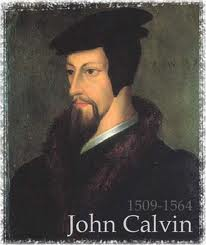
We know his John Calvin, but he was born Jean Cauvin on July 10, 1509, in Picarcy, France. He studied in Paris and was converted in 1533. He later wrote, “God drew me from obscure and lowly beginnings and conferred on me the most honorable office of herald and minister of the gospel…What happened first was that by an unexpected conversion he tamed to teachableness a mind too stubborn for its years.” Three years later at age twenty-six, he wrote the first edition of his Institutes of the Christian Religion, probably the most influential systematic theology of all time.

In 1536 he left Catholic France to avoid persecution and went to Geneva. Except for an interlude of three years, he remained in Geneva until his death.

John Calvin was the leader of the French Reformation, the father of the theology called Calvinism, and the founder of the Reformed churches of the world. He lived modestly, never owned his own home, had few possessions, and refused salary increases. Plagued with ill health, he nevertheless preached an average of five sermons a week and wrote commentaries on nearly every book of the Bible. When his associates were concerned for his health and encouraged him to rest, he shot back: “What! Would you have the Lord find me idle while he comes?”

During the last few months of his life, he slowed down but refused to give up. He was carried to the church to preach his last sermon on February 6, 1564. Two months later, on April 25, 1564, feeling it was time to make his will, he called Peter Chenalat, notary of Geneva, to his home and dictated to him:

In the name of the Lord, Amen. I, John Calvin, minister of the Word of God in this Church of Geneva, being afflicted and oppressed with various diseases…give thanks to God, that taking mercy on me, whom He had created and placed in this world…And I testify and declare, that it is my intention to spend what yet remains of my life in the same faith and religion which He has delivered to me by His gospel…With my whole soul I embrace the mercy which He has exercised towards me through Jesus Christ, atoning for my sins…that under His shadow I may be able to stand at the judgment seat. I likewise declare, that…I have endeavored, both in my sermons and also in my writings and commentaries, to preach His Word purely and chastely, and faithfully to interpret His sacred Scriptures…I also testify and declare, that…with the enemies of the gospel, I have acted candidly and sincerely in defending the truth. But woe is me!…I confess I have failed innumerable times to execute my office properly, and had not He, of His boundless goodness, assisted me, all that zeal had been fleeting and vain…As God is the Father of mercy, He will show Himself such a Father to me, who acknowledge myself to be a miserable sinner.

The second half of the will is devoted to distribution of the “slender patrimony which God has bestowed upon me” to various family members and friends. In the next month he quickly declined and died on May 27, 1564, shortly before his fifty-fifth birthday.

John Calvin worked tirelessly, almost up to his death, literally using up his life in the service of his Savior.”

Reflection

John Calvin’s legacy was much more than the few possessions he left to family and friends. His real legacy was the Reformed faith and the Reformed churches of the world.

When you depart this life, what will you leave behind?

In addition to your material possessions, what will be the primary contributions you will have made?

What will you leave to your family and friends?

“I have fought a good fight, I have finished the race, and I have remained faithful.” – 2 Timothy 4:7

Author’s of the Article Above: Mike and Sharon Rusten are not only marriage and business partners; they also share a love for history. Mike studied at Princeton (B.A.), the University of Minnesota (M.A.), Westminster Theological Seminary (M.Div.), Trinity Evangelical Divinity School (Th.M.), and New York University (Ph.D.). Sharon studied at Beaver College, Lake Forest College, and the University of Minnesota (B.A.), and together with Mike has attended the American Institute of Holy Land Studies (now Jerusalem University College). The Rustens have two grown children and live in Minnetonka, Minnesota. This article was adapted from the April 25th entry in their wonderful book The One Year Book of Christian History, Carol Stream, IL: Tyndale, 2003.

St. Augustine Was Baptized On This Day – April 25 in 387

Series: On This Day in Christian History – “Raised to New Life”

 By A. Kenneth Curtis and Daniel Graves

“And we were baptized and all anxiety for our past life vanished away.” With these joyous words Augustine recorded his entrance into the church on this day in 387.

It had taken Augustine thirty-three years to get to the public confession of Christ that was represented by his baptism. He was born in North Africa in 354 to a Christian mother and a pagan father. He became a student in Carthage at twelve years of age. At sixteen, he began to teach grammar.

While he was young, he became promiscuous. He tells in his famous Autobiography that he boasted of sins he had not had the opportunity to commit, rather than seem to have fallen behind his peers.

His mother, Monica, was determined to see him converted. He was equally determined to have pleasures. He took a mistress, and she bore him a son, whom they named Adeodatus, which means “gift of God.” For awhile Augustine resented the lad but soon became inseparable from him.

When he was twenty-nine, Augustine’s restless spirit drove him to Italy. His mother decided to accompany him so that her prayers might be reinforced by her presence. But Augustine gave her the slip, sailing away while she knelt praying in a chapel.

In Rome he taught rhetoric for a year, but was cheated of his fees. And so he looked for a more fertile field of labor and settled on Milan. His mother caught up with him and prevailed upon him to attend the church of St. Ambrose. Augustine found that Christian singing moved him deeply, and in spite of himself he began to drift toward his mother’s faith. He found the writings of the Apostle Paul deeply stirring and more satisfying than the cool abstractions of philosophy. He wrestled with deep conviction but was unable to yield himself to God because of his strong attachment to the flesh.

Finally he reached a day when his inner struggles were too great to bear. He tried reading Scripture but abandoned the effort. Unable to act on the truth he knew, he began to weep and threw himself behind a fig tree. “How long, O Lord,” he cried. And his heart answered “Why not now?” A child’s sing song voice came clearly to him, repeating over and over, “Take it and read it.” It seemed a message from God. Augustine snatched up the Bible and read Paul’s words:

“Let us behave decently…not in orgies and drunkenness, not in sexual immorality and debauchery, not in dissension and jealousy. Rather, clothe yourselves with the Lord Jesus Christ, and do not think about how to gratify the desires of the flesh” (Romans 13:13-14).

Faith flooded upon him. He immediately thrust aside the sins of the flesh that had held him in bondage. “But faith would not let me be at ease about my past sins, since these had not yet been forgiven me by means of your baptism.” He entered the water and was relieved.

After his mother’s death, Augustine returned to Africa, where he founded a monastery and became the bishop of Hippo and a brilliant and prolific theologian. More than any other man, his imprint was stamped upon the medieval Church.

Other Significant Events on April 25th in Church History:

799: Pope St. Leo III’s eyes were stabbed and his tongue torn out in a conspiracy by the nephews of an earlier pope. He recovered and crowned Charlemagne emperor.

974: Ratherius, who raised a ruckus to end clergy marriages, died on this day.

1475: A young Savonarola left home and walked to Bologna, taking the family Bible with him. He became a monk and later a reformer. He was eventually martyred for his faith.

1800: William Cowper, a depressed but original poet and hymn writer, died. He is remembered for his friendship with ex-slaver John Newton and for his hymn “There is a Fountain Filled with Blood.”

1879: Joseph Barber Lightfoot, considered the greatest biblical scholar of his day, was consecrated as bishop of Durham. He was a godly man and became one of the greatest bishops of the day.

1911: A rare Gutenberg Bible sold for $50,000, the equivalent of at least $500,000 today.

Adapted from the April 25th entry in This Day In Christian History, edited by A Kenneth Curtis and Daniel Graves, Camp Hill, PA: Christian Publications

Ratherius – The Combative Bishop

Series: On This Day in Church History

April 25, 975 – By R.J. Morgan

 No generation is without its Christian heroes, but they were scarce in the tenth century. Ratherius might have been one but for his headstrong style. He was brilliant and religious, but opinionated and envious.

Ratherius was born near Verona, Italy. He excelled in school and eventually became a monk. In 931 he was consecrated Bishop of Verona. His tenure was turbulent, for he railed against the sins of the clergy. “The cohabitation of clergy with women,” he wrote, “is so customary, so public, that they think it lawful.” It wasn’t just immoral relationships that Ratherius had in mind, but wedded ones. He was merciless on priests who married, calling their unions “adulteries.”

The concept of a celibate clergy reaches early into church history. In the Eastern Church, the early councils approved marriage for clergymen. But the Western Church wasn’t so sure. At the Council of Nicaea, an idea arose for ministers to leave their wives and devote themselves to the single life. The scheme was rejected, but a few years later Pope Siricius ordered celibacy for priests. Later, Pope Leo decreed that if a married man entered the ministry, he was not to “put away” his wife, but to live with her “as brother and sister.”

The issue was being vigorously debated during the days of Ratherius, and the Bishop of Verona knew what he believed—that the single life allows full devotion to Christ. But his aggressive stance on that and other issues provoked backlash. He was deposed and imprisoned for two years, during which time, being without books, he wrote one entitled The Combat. He escaped to Southern France and supported himself by tutoring rich children. Being restored to his bishopric, he was soon deposed again. This time he became abbot of Alna, but he argued with his monks about the Eucharist. They sighed with relief when he returned a third time to Verona. Once again he was exiled, returning to the abbotship of Alna. He stayed there awhile then moved to other positions here and there before dying on April 25, 974.

Love each other as brothers and sisters and honor others more than you do yourself. Never give up. Eagerly follow the Holy Spirit and serve the Lord. Let your hope make you glad. Be patient in time of trouble and never stop praying. And do your best to live at peace with everyone. Romans 12:10-12,18

Adapted from the April 25 entry Robert J. Morgan. On This Day. Nashville: Thomas Nelson, 1997.