The Gospel Brings About Reformation By Dr. Philip Ryken

Series: On This Day in Christian History

 Martin Luther at the Diet of Worms – April 17, 1521 – By *Dr. Philip Ryken

It is customary to date the beginning of the Protestant Reformation to October 31, 1517, the day on which a young German monk and Bible scholar named Martin Luther nailed his famous “Ninety-five Theses” to the door of Wittenburg.

Luther’s document attacked the common Roman Catholic practice of allowing people to reduce the punishment for their sin by buying indulgences. His “ninety-five-Theses” also gave the first inkling of his major personal and theological breakthrough: the doctrine of justification by faith alone (If you’re not familiar with them, I have posted Luther’s 95 Theses on this website under the Category Church History).

Luther needed a breakthrough because he had long been troubled by his sins. How could an unrighteous man like himself serve a righteous God? As he later wrote:

“Though I lived as a monk without reproach, I felt that I was a sinner before God with an extremely disturbed conscience. I could not believe that he was placated by my satisfaction. I did not love, yes, I hated the righteous God who punishes sinners, and secretly, if not blasphemously, certainly murmuring greatly, I was angry with God” (Luther’s Works, eds. Jaroslav Pelikan [vols. 1-30] and Helmut T. Lehmann [vols. 31-55], Minneapolis: Fortress and Concordia, 1955-76, 34:336-37).

What especially troubled Luther was Paul’s announcement at the beginning of his epistle to Romans: “In the gospel a righteousness from God is revealed, a righteousness that is by faith from first to last” (Rom. 1:17). This verse was a terror to Luther because the only righteousness he ever heard of was the kind that destroyed sinners like himself.

Then Luther had his breakthrough:

At last, by the mercy of God, meditating day and night, I gave heed to the context of the words, namely, “In it the righteousness of God is revealed, as it is written, ‘He who through faith is righteous shall live.’” There I began to understand that the righteousness of God is that which the righteous lives by a gift of God, namely by faith. And this is the meaning: the righteousness of God is revealed by the gospel, namely, the passive righteousness with which a merciful God justifies us by faith, as it is written, “He who’s faith is righteous shall live.” Here I felt that I was altogether born again and had entered paradise itself through open gates (Luther’s Works, 34:336-37).

That was the beginning of the Reformation, but only the beginning. Luther soon attracted the attention of the pope, not so much for his doctrine of justification as for his criticism of the church. But during the next several years it would still have been possible for the church to have been reformed without being divided. It was not until the Diet of Worms (“Diet” here is a meeting – not the process of losing weight) that the break between the Reformers and the Catholics became final, which is why that meeting, which took place on April 17, 1521, was the most significant event in the church history of the sixteenth century.

Luther had been summoned to Worms by the Holy Roman Emperor himself, Charles V. When the Reformer entered the imperial chamber, he found his writings spread out on the table. These were the writings the emperor wanted Luther to recant, declaring publicly that everything he had ever written about the gospel and the church was mistaken.

Luther hardly knew what to say. Some of his works were devotional writings which no one would wish to recant. Others contained criticisms of the Roman Catholic church which no one could deny. Yet Luther was aware that some of his other writings contained harsh criticisms he perhaps ought to recant. But this he would only do on one condition, namely, that someone exposes his errors “by the writings of the prophets and the evangelists.” “Once I have been taught,” Luther went on to say, “I shall be quite ready to renounce every error, and I shall be the first to cast my books into the fire.”

This was hardly the answer the emperor and his counselors were looking for, especially since they did not have the theological expertise to refute Luther themselves. Again they pressed him to repudiate his doctrine. Finally, Luther spoke his famous words:

Unless I am convinced by the testimony of the Scriptures or by clear reason (for I do not trust either in the pope or in councils alone, since it is well-known that they have often erred and contradicted themselves), I am bound by the Scriptures I have quoted and my conscience is captive to the Word of God. I cannot and I will not retract anything, since it is neither safe nor right to go against conscience. God help me. Amen. Here I stand, I cannot do otherwise (For the full account of Luther’s trial, see Luther’s Works 32:103-31).

With these words, Luther staked all his theological claims on the second great principle of the Reformation: Scripture alone (sola scriptura). For the churches of the Reformation, the Bible and the Bible alone was the final authority for Christian faith and practice.

When Luther refused to place the authority of the church on par with the authority of Scripture, he was taking a stand that would end up dividing the church. And rightly so! The church can only be the church when it preaches the gospel of salvation by grace alone through faith alone in Christ alone, as is taught in Scripture alone.

The great doctrines of the Reformation are as badly needed today as they were in the sixteenth century. Pope John Paul II announced that would grant an indulgence to anyone who made a pilgrimage to Israel in the year 2000. This is just one example of the way the Roman Catholic Church still encourages its members to pay for their sins by doing good works. For this and many other reasons, the world still needs to hear the voice of Martin Luther, who wrote the following paraphrase of Psalm 130:

From trouble deep I cry to thee,

Lord God, hear thou my crying;

Thy gracious ear, oh, turn to me,

Open it to my sighing.

For if thou mean’st to look upon

The wrong and evil that is done,

Who, Lord, can stand before thee?

With thee counts nothing but grace

To cover all our failing.

The best life cannot win the race,

Good works are unavailing.

Before thee no one glory can,

And so must tremble every man,

And live by thy grace only (Luther’s Works 53:223).

About the Author: *Philip Graham Ryken (D.Phil., University of Oxford) is the 8th president of Wheaton College and, prior to that, served as senior minister at Philadelphia’s historic Tenth Presbyterian Church. He has written several books for Crossway, and has lectured and taught at universities and seminaries worldwide. Dr. Ryken and his wife, Lisa, live in Wheaton and have five children. The article above is adapted from Chapter 41 in his book He Speaks To Me Everywhere, Phillipsburg, New Jersey: P&R Publishing, 2004. Historical details of this article were drawn chiefly from Mark A. Noll, Turning Points: Decisive Moments in the History of Christianity, Grand Rapids: Baker, 1997, 151-74; among the best biographies of Martin Luther is Roland H. Bainton, Here I Stand: A Life of Martin Luther, New York: Abingdon, 1950.

*Significant Events on April 17th in Church History:

326: St. Alexander died. He was appointed to the patriarchate of Alexandria instead of Arius, who denied Christ’s divinity. Alexander was kind to Arius, even while supporting Athanasius, the defender of the Trinity.

341: Simeon, bishop of Seleucia, Ktesiphon (located south of Baghdad), was executed for refusing to levy an extra war tax on his church people. He was one of many Persian martyrs.

858: Pope Benedict III died. Emperors Lothaire and Louis II had confirmed Anastasius in his place, but popular protest brought Benedict back.

1640: Robert Torkillus of Sweden became the first Lutheran pastor to arrive in the American colonies when they landed in Delaware.

1713: William Law was suspended from his pulpit for nonconformist views. He is famed as the author of A Serious Call to a Devout and Holy Life and a later book entitled The Power of the Spirit.

1912: The International Conference of the Negro began. Although not explicitly Christian, out of it came a renewed interest to reach Africa for Christ.

*Adapted from This Day In Christian History, edited by A Kenneth Curtis and Daniel Graves, Camp Hill, PA: Christian Publications.

The 95 Theses of Martin Luther & What It Led To – The Diet of Worms

Introduction by Mike and Sharon Rusten*

THE DIET OF WORMS: It wasn’t some kind of crazy fad diet

During the early 1500’s Europe was in a great state of flux. A revived interest in pre-Christian Greek and Roman culture launched the Renaissance, which celebrated  humanism and somewhat undermined contemporary Christian culture. Another threat to contemporary Christian culture came from within the church in the form pf the outspoken Martin Luther, a professor at the University of Wittenburg in Germany. He was becoming known for his bold criticism of the Roman Catholic Church and his forthright convictions regarding justification by faith, papal authority, and the sacraments. The Reformation had begun when Luther nailed his Ninety-five Theses to the door of the Wittenberg Cathedral in 1517 (All 95 Theses are written below after this introduction). The Theses consisted of ninety-five distinct propositions arguing against the supreme power of the pope, the greed within the church, and the abuse of indulgences. As a result, the Roman Catholic Church excommunicated Luther rather than to diminish it.

Because of Luther’s great popularity, Charles V, emperor of the Holy Roman Empire, agreed to hear his arguments at a diet, a meeting of the empire parliament, which was scheduled for the spring of 1521 in Worms, Germany. Church representatives wanted Luther arrested and condemned to death as a heretic without a trial. However, Luther was promised that he would be protected and given a lawful trial at the diet.

At 4:00 p.m. on April 17, 1521, Luther arrived triumphantly in Worms. It was a dramatic contrast: Luther, a simple monk, standing before the powerful sovereign of the Holy Roman Empire. When he was immediately confronted with a pile of his books and asked whether he acknowledged their authorship, he quietly responded, “The books are all mine.” They pressed him further, asking whether he would stand by them or recant anything in them. Luther was shocked because he had been promised a hearing of his beliefs, not a demand for recantation. Luther replied, “This touches God and his Word. This affects the salvation of souls. Of this Christ said, ‘He who denies me before men, him will I deny before me time to think it over.” After some deliberation, even though they felt he didn’t deserve it. Luther was granted a one-day delay.

Martin Luther spent the evening in prayer, carefully preparing his response. At 6:00 p.m. the following day he gave his famous answer:

Unless I am convinced by the testimony of the Scriptures or by clear reason (for I do not trust either in the pope or in councils alone, since it is well-known that they have often erred and contradicted themselves), I am bound by the Scriptures I have quoted and my conscience is captive to the Word of God. I cannot and I will not retract anything, since it is neither safe nor right to go against conscience. God help me. Amen. Here I stand, I cannot do otherwise.”

These famous words reverberated throughout the Reformation, inspiring many others to take their stand as well.

For Reflection:

 God called upon Martin Luther to take a stand before the emperor of the Holy Roman Empire. Where might God call upon you to stand up for your convictions?

What can you do to prepare yourself for those eventualities?

“I assure you of this: If anyone acknowledges me publicly here on earth, I, the Son of Man, will openly acknowledge that person in the presence of God’s angels. But if anyone denies me here on earth, I will deny that person before God’s angels.” – Luke 12:8-9

Disputation on the Power and Efficacy of Indulgences

Commonly Known as The 95 Theses

(which he nailed to the Wittenburg Church Door for debate on October 31, 1517)

(1) When our Lord and Master, Jesus Christ, said “Repent”, He called for the entire life of believers to be one of repentance.

(2) The word cannot be properly understood as referring to the sacrament of penance, i.e. confession and satisfaction, as administered by the clergy.

(3) Yet its meaning is not restricted to repentance in one’s heart; for such repentance is null unless it produces outward signs in various mortifications of the flesh.

(4) As long as hatred of self abides (i.e. true inward repentance) the penalty of sin abides, viz., until we enter the kingdom of heaven.

(5) The pope has neither the will nor the power to remit any penalties beyond those imposed either at his own discretion or by canon law.

(6) The pope himself cannot remit guilt, but only declare and confirm that it has been remitted by God; or, at most, he can remit it in cases reserved to his discretion. Except for these cases, the guilt remains untouched.

(7) God never remits guilt to anyone without, at the same time, making him humbly submissive to the priest, His representative.

(8) The penitential canons apply only to men who are still alive, and, according to the canons themselves, none applies to the dead.

(9) Accordingly, the Holy Spirit, acting in the person of the pope, manifests grace to us, by the fact that the papal regulations always cease to apply at death, or in any hard case.

(10) It is a wrongful act, due to ignorance, when priests retain the canonical penalties on the dead in purgatory.

(11) When canonical penalties were changed and made to apply to purgatory, surely it would seem that tares were sown while the bishops were asleep.

(12) In former days, the canonical penalties were imposed, not after, but before absolution was pronounced; and were intended to be tests of true contrition.

(13) Death puts an end to all the claims of the Church; even the dying are already dead to the canon laws, and are no longer bound by them.

(14) Defective piety or love in a dying person is necessarily accompanied by great fear, which is greatest where the piety or love is least.

(15) This fear or horror is sufficient in itself, whatever else might be said, to constitute the pain of purgatory, since it approaches very closely to the horror of despair.

(16) There seems to be the same difference between hell, purgatory, and heaven as between despair, uncertainty, and assurance.

(17) Of a truth, the pains of souls in purgatory ought to be abated, and charity ought to be proportionately increased.

(18) Moreover, it does not seem proved, on any grounds of reason or Scripture, that these souls are outside the state of merit, or unable to grow in grace.

(19) Nor does it seem proved to be always the case that they are certain and assured of salvation, even if we are very certain ourselves.

(20) Therefore the pope, in speaking of the plenary remission of all penalties, does not mean “all” in the strict sense, but only those imposed by himself.

(21) Hence those who preach indulgences are in error when they say that a man is absolved and saved from every penalty by the pope’s indulgences.

(22) Indeed, he cannot remit to souls in purgatory any penalty which canon law declares should be suffered in the present life.

(23) If plenary remission could be granted to anyone at all, it would be only in the cases of the most perfect, i.e. to very few.

(24) It must therefore be the case that the major part of the people are deceived by that indiscriminate and high-sounding promise of relief from penalty.

(25) The same power as the pope exercises in general over purgatory is exercised in particular by every single bishop in his bishopric and priest in his parish.

(26) The pope does excellently when he grants remission to the souls in purgatory on account of intercessions made on their behalf, and not by the power of the keys (which he cannot exercise for them).

(27) There is no divine authority for preaching that the soul flies out of the purgatory immediately the money clinks in the bottom of the chest.

(28) It is certainly possible that when the money clinks in the bottom of the chest avarice and greed increase; but when the church offers intercession, all depends in the will of God.

(29) Who knows whether all souls in purgatory wish to be redeemed in view of what is said of St. Severinus and St. Pascal? (Note: Paschal I, pope 817-24. The legend is that he and Severinus were willing to endure the pains of purgatory for the benefit of the faithful).

(30) No one is sure of the reality of his own contrition, much less of receiving plenary forgiveness.

(31) One who bona fide buys indulgence is a rare as a bona fide penitent man, i.e. very rare indeed.

(32) All those who believe themselves certain of their own salvation by means of letters of indulgence, will be eternally damned, together with their teachers.

(33) We should be most carefully on our guard against those who say that the papal indulgences are an inestimable divine gift, and that a man is reconciled to God by them.

(34) For the grace conveyed by these indulgences relates simply to the penalties of the sacramental “satisfactions” decreed merely by man.

(35) It is not in accordance with Christian doctrines to preach and teach that those who buy off souls, or purchase confessional licenses, have no need to repent of their own sins.

(36) Any Christian whatsoever, who is truly repentant, enjoys plenary remission from penalty and guilt, and this is given him without letters of indulgence.

(37) Any true Christian whatsoever, living or dead, participates in all the benefits of Christ and the Church; and this participation is granted to him by God without letters of indulgence.

(38) Yet the pope’s remission and dispensation are in no way to be despised, for, as already said, they proclaim the divine remission.

(39) It is very difficult, even for the most learned theologians, to extol to the people the great bounty contained in the indulgences, while, at the same time, praising contrition as a virtue.

(40) A truly contrite sinner seeks out, and loves to pay, the penalties of his sins; whereas the very multitude of indulgences dulls men’s consciences, and tends to make them hate the penalties.

(41) Papal indulgences should only be preached with caution, lest people gain a wrong understanding, and think that they are preferable to other good works: those of love.

(42) Christians should be taught that the pope does not at all intend that the purchase of indulgences should be understood as at all comparable with the works of mercy.

(43) Christians should be taught that one who gives to the poor, or lends to the needy, does a better action than if he purchases indulgences.

(44) Because, by works of love, love grows and a man becomes a better man; whereas, by indulgences, he does not become a better man, but only escapes certain penalties.

(45) Christians should be taught that he who sees a needy person, but passes him by although he gives money for indulgences, gains no benefit from the pope’s pardon, but only incurs the wrath of God.

(46) Christians should be taught that, unless they have more than they need, they are bound to retain what is only necessary for the upkeep of their home, and should in no way squander it on indulgences.

(47) Christians should be taught that they purchase indulgences voluntarily, and are not under obligation to do so.

(48) Christians should be taught that, in granting indulgences, the pope has more need, and more desire, for devout prayer on his own behalf than for ready money.

(49) Christians should be taught that the pope’s indulgences are useful only if one does not rely on them, but most harmful if one loses the fear of God through them.

(50) Christians should be taught that, if the pope knew the exactions of the indulgence-preachers, he would rather the church of St. Peter were reduced to ashes than be built with the skin, flesh, and bones of the sheep.

(51) Christians should be taught that the pope would be willing, as he ought if necessity should arise, to sell the church of St. Peter, and give, too, his own money to many of those from whom the pardon-merchants conjure money.

(52) It is vain to rely on salvation by letters of indulgence, even if the commissary, or indeed the pope himself, were to pledge his own soul for their validity.

(53) Those are enemies of Christ and the pope who forbid the word of God to be preached at all in some churches, in order that indulgences may be preached in others.

(54) The word of God suffers injury if, in the same sermon, an equal or longer time is devoted to indulgences than to that word.

(55) The pope cannot help taking the view that if indulgences (very small matters) are celebrated by one bell, one pageant, or one ceremony, the gospel (a very great matter) should be preached to the accompaniment of a hundred bells, a hundred processions, a hundred ceremonies.

(56) The treasures of the church, out of which the pope dispenses indulgences, are not sufficiently spoken of or known among the people of Christ.

(57) That these treasures are not temporal are clear from the fact that many of the merchants do not grant them freely, but only collect them.

(58) Nor are they the merits of Christ and the saints, because, even apart from the pope, these merits are always working grace in the inner man, and working the cross, death, and hell in the outer man.

(59) St. Laurence said that the poor were the treasures of the church, but he used the term in accordance with the custom of his own time.

(60) We do not speak rashly in saying that the treasures of the church are the keys of the church, and are bestowed by the merits of Christ.

(61) For it is clear that the power of the pope suffices, by itself, for the remission of penalties and reserved cases.

(62) The true treasure of the church is the Holy gospel of the glory and the grace of God.

(63) It is right to regard this treasure as most odious, for it makes the first to be the last.

(64) On the other hand, the treasure of indulgences is most acceptable, for it makes the last to be the first.

(65) Therefore the treasures of the gospel are nets which, in former times, they used to fish for men of wealth.

(66) The treasures of the indulgences are the nets which to-day they use to fish for the wealth of men.

(67) The indulgences, which the merchants extol as the greatest of favours, are seen to be, in fact, a favourite means for money-getting.

(68) Nevertheless, they are not to be compared with the grace of God and the compassion shown in the Cross.

(69) Bishops and curates, in duty bound, must receive the commissaries of the papal indulgences with all reverence.

(70) But they are under a much greater obligation to watch closely and attend carefully lest these men preach their own fancies instead of what the pope commissioned.

(71) Let him be anathema and accursed who denies the apostolic character of the indulgences.

(72) On the other hand, let him be blessed who is on his guard against the wantonness and license of the pardon-merchant’s words.

(73) In the same way, the pope rightly excommunicates those who make any plans to the detriment of the trade in indulgences.

(74) It is much more in keeping with his views to excommunicate those who use the pretext of indulgences to plot anything to the detriment of holy love and truth.

(75) It is foolish to think that papal indulgences have so much power that they can absolve a man even if he has done the impossible and violated the mother of God.

(76) We assert the contrary, and say that the pope’s pardons are not able to remove the least venial of sins as far as their guilt is concerned.

(77) When it is said that not even St. Peter, if he were now pope, could grant a greater grace, it is blasphemy against St. Peter and the pope.

(78) We assert the contrary, and say that he, and any pope whatever, possesses greater graces, viz., the gospel, spiritual powers, gifts of healing, etc., as is declared in I Corinthians 12 [:28].

(79) It is blasphemy to say that the insignia of the cross with the papal arms are of equal value to the cross on which Christ died.

(80) The bishops, curates, and theologians, who permit assertions of that kind to be made to the people without let or hindrance, will have to answer for it.

(81) This unbridled preaching of indulgences makes it difficult for learned men to guard the respect due to the pope against false accusations, or at least from the keen criticisms of the laity.

(82) They ask, e.g.: Why does not the pope liberate everyone from purgatory for the sake of love (a most holy thing) and because of the supreme necessity of their souls? This would be morally the best of all reasons. Meanwhile he redeems innumerable souls for money, a most perishable thing, with which to build St. Peter’s church, a very minor purpose.

(83) Again: Why should funeral and anniversary masses for the dead continue to be said? And why does not the pope repay, or permit to be repaid, the benefactions instituted for these purposes, since it is wrong to pray for those souls who are now redeemed?

(84) Again: Surely this is a new sort of compassion, on the part of God and the pope, when an impious man, an enemy of God, is allowed to pay money to redeem a devout soul, a friend of God; while yet that devout and beloved soul is not allowed to be redeemed without payment, for love’s sake, and just because of its need of redemption.

(85) Again: Why are the penitential canon laws, which in fact, if not in practice, have long been obsolete and dead in themselves,—why are they, to-day, still used in imposing fines in money, through the granting of indulgences, as if all the penitential canons were fully operative?

(86) Again: since the pope’s income to-day is larger than that of the wealthiest of wealthy men, why does he not build this one church of St. Peter with his own money, rather than with the money of indigent believers?

(87) Again: What does the pope remit or dispense to people who, by their perfect repentance, have a right to plenary remission or dispensation?

(88) Again: Surely a greater good could be done to the church if the pope were to bestow these remissions and dispensations, not once, as now, but a hundred times a day, for the benefit of any believer whatever.

(89) What the pope seeks by indulgences is not money, but rather the salvation of souls; why then does he suspend the letters and indulgences formerly conceded, and still as efficacious as ever?

(90) These questions are serious matters of conscience to the laity. To suppress them by force alone, and not to refute them by giving reasons, is to expose the church and the pope to the ridicule of their enemies, and to make Christian people unhappy.

(91) If therefore, indulgences were preached in accordance with the spirit and mind of the pope, all these difficulties would be easily overcome, and indeed, cease to exist.

(92) Away, then, with those prophets who say to Christ’s people, “Peace, peace,” where in there is no peace.

(93) Hail, hail to all those prophets who say to Christ’s people, “The cross, the cross,” where there is no cross.

(94) Christians should be exhorted to be zealous to follow Christ, their Head, through penalties, deaths, and hells.

(95) And let them thus be more confident of entering heaven through many tribulations rather than through a false assurance of peace.

*Mike and Sharon Rusten are not only marriage and business partners; they also share a love for history. Mike studied at Princeton (B.A.), the University of Minnesota (M.A.), Westminster Theological Seminary (M.Div.), Trinity Evangelical Divinity School (Th.M.), and New York University (Ph.D.). Sharon studied at Beaver College, Lake Forest College, and the University of Minnesota (B.A.), and together with Mike has attended the American Institute of Holy Land Studies (now Jerusalem University College). The Rustens have two grown children and live in Minnetonka, Minnesota. This article was adapted from the April 14 entry in their wonderful book The One Year Book of Christian History, Carol Stream, IL: Tyndale, 2003.

The Godly Heritage of John Gibson Paton

On This Day in Christian History – April 16th – By Mike and Sharon Rusten*

“Don’t make your children angry by the way you treat them. Rather, bring them up with the discipline and instruction approved by the Lord. – Ephesians 6:4

John Gibson Paton was born in a Christian home near Dumfries, Scotland, in 1824. From an early age he had a special awareness of a closet in the three-room cottage, where he lived with his parents and ten brothers and sisters. He described it thus:

The closet was…the Sanctuary of that cottage home. Thither daily, and oftentimes a day…we saw our father retire, and “shut the door”; and we children got to understand by a sort of spiritual instinct…that prayers were being poured out there for us…We knew whence came that happy light as of a new-born smile that always was dawning on my father’s face: it was a reflection from the Divine Presence, in the consciousness of which he lived…My soul would wander back to those early scenes, and, hearing still the echoes of those cries to God, would hurl back all doubt with the victorious appeal, “He walked with God, why may not I?”

Before the age of twelve, Paton had begun learning his father’s trade of making stockings, but he had already given his “soul to God, and was resolved to aim at being a Missionary of the Cross, or a Minister of the Gospel.”

Paton applied for a position as a tract distributor, which included one year of training at the Free Church Normal Seminary in Glasgow. When it was time to leave for Glasgow, his father walked with him for the first six miles of the journey. Paton recalled:

His counsels and tears and heavenly conversation on that parting journey are in my heart as if it had been yesterday…For the last half-mile or so we walked on together in almost unbroken silence…His lips kept moving in silent prayers for me…on reaching the appointed parting-place, he grasped my hand firmly for a minute in silence, and then solemnly and affectionately, said: “God bless you, my son! Your father’s God prosper you, and keep you from all evil!”

Unable to say more, his lips kept moving in silent prayers; in tears we embraced, and parted…I was soon out of sight. But my heart was too full, so I darted into the side of the road and wept for a time.

Then, rising up cautiously, I climbed the dyke to see if he yet stood where I had left him; and just at that moment I caught a glimpse of him climbing the dyke and looking out for me! He did not see me, and after he had gazed eagerly in my direction, he got down [and] set his gaze toward home…I watched through blinding tears, till his form faded from my gaze; and then, hastening on my way, vowed deeply and oft, by the help of God, to live and act so as never to grieve or dishonor such a father and mother he gave me.

After ten years of city mission work and theological studies, on April 16, 1858, Paton and his wife left Glasgow to do mission work in the New Hebrides (present-day Vanuatu), where he became the pioneer missionary to the island of Tanna. Within a year his wife died in childbirth, and his newborn son was quick to follow. Paton left the Island in 1862 to raise funds and more recruits, returning in 1866 to island of Aniwa. There during the next fifteen years of ministry most of the island’s inhabitants (who were cannibals) put their faith in Jesus.

The heritage Paton received from his father lived on, as three generations of his family served until 1970.

 For Reflection:

In what ways did John Paton’s father influence his life? If you are a parent, how are you influencing your children’s lives? If you are not a parent, what can you do to influence the children and youth around you?

*Mike and Sharon Rusten are not only marriage and business partners; they also share a love for history. Mike studied at Princeton (B.A.), the University of Minnesota (M.A.), Westminster Theological Seminary (M.Div.), Trinity Evangelical Divinity School (Th.M.), and New York University (Ph.D.). Sharon studied at Beaver College, Lake Forest College, and the University of Minnesota (B.A.), and together with Mike has attended the American Institute of Holy Land Studies (now Jerusalem University College). The Rustens have two grown children and live in Minnetonka, Minnesota. This article was adapted from the April 14 entry in their wonderful book The One Year Book of Christian History, Carol Stream, IL: Tyndale, 2003.

John Harper – The Unsung Hero of The Titanic – April 15, 1912

Series: On This Day in Christian History

 “John Harper’s Last Words as the Titanic Sank”

John Harper was born in Scotland in 1872 to a Christian family. When he was presented with the message of John 3:16 at the age of thirteen, he believed in Jesus and received everlasting life. When he was eighteen, he had a powerful vision of the cross of Christ. At that moment he committed his life to bringing the message of the cross to others. The very next day he began to preach in his village, urging all his hearers to be reconciled to God. He made every street corner his pulpit.

His desire to win souls to Christ was unmatched, becoming his all-consuming purpose. An evangelist friend, W.D. Dunn, recalled often seeing Harper lying on his face before God, pleading with him to “give me souls, or I die,” sobbing as if his heart would break.

At the age of thirty-two he had a near-drowning experience when he was caught on a leaky ship in the Mediterranean. He said of the experience, “The fear of death did not for one minute disturb me. I believed that sudden death would be sudden glory.”

In 1911 he spent three months preaching at Moody Memorial Church in Chicago during a revival and received an enthusiastic response. He was asked to return for three months of meetings beginning in April 1912. Originally scheduled to sail on the Lusitania, he sailed on the Titanic after a schedule change.

When he informed his church of intent to return to Chicago, a parishioner begged him not to go, saying that he had been praying and felt strongly that something ominous would happen if he went. He pleaded with Harper but to no avail. Harper felt there was a divine purpose for his trip, and Harper went ahead with his plans. The night before the ship sank, Harper was seen leading a man to Christ on the deck. Afterward, he looked to the west, and seeing a glint of red in the sunset he said, “It will be beautiful in the morning.”

The clear April night sky was filled with sparkling stars as the largest and finest steamship in the world sped through the calm waters of the icy North Atlantic. Many of the passengers had gone to bed, but some were still in the lounges, enjoying the Titanic’s many luxuries. No one was alarmed by the slight jar felt around 11:15 p.m., but many noticed when they no longer felt the vibration of the engines.

The crew of the Titanic had ignored iceberg warnings and had the ship steaming full speed ahead. Suddenly, the great vessel struck a large iceberg, which ripped the ship’s side open. Within fifteen minutes the captain realized the danger of the situation, and he had the wireless operator put out a call for assistance. Lifeboats were quickly made ready, and women and children were ordered to get to them first (Christian culture had stamped the ideas of chivalry into men, making them willing to give up their lives for women and children). There were twelve honeymooning couples aboard the ship. Though all of the new wives were saved, only one of the husbands survived.

The captain ordered the band to play to keep up the spirits of the passengers. It began playing a ragtime tune, but the musicians soon changed to playing hymns.

There were only twenty lifeboats on the huge ocean liner—barely enough for one-third of the passengers and crew. Not even all of them could be lowered. All eighty-five of the ship’s engineers continued to work to keep the ship afloat as long as possible. At the end, many people knelt together in prayer until the waters covered them.

Throughout the mournful evacuation, as loved ones were tearfully separated, the band continued to play. There is some dispute about what they played that night. Several people in the lifeboats heard “Nearer, My God, to Thee.”

One of the passengers traveling on the ship was evangelist John Harper. He put his six-year-old daughter into a lifeboat and then ran through the ship warning others of the danger and talking to them about the eternal destiny of their souls. When he was finally forced to jump into the icy water, he clung to a piece of wreckage and asked another man, “Are you saved?” When the man answered “no,” Harper said to him, “Believe on the Lord Jesus Christ and you will be saved” (quoting Acts 16:31). The man did not respond, and they lost sight of each other. Harper asked the same question again, urging the man to believe in Jesus, and received the same answer again. Harper then slipped beneath the water, never to resurface. The man did put his faith in Jesus Christ and was later rescued by a lifeboat. He testified that he was John Harper’s last convert.

When the Titanic sank early in the morning on this day in 1912, Harper was among the 1,522 people who died. The band went down with the ship. The last hymn they played was “Autumn,” which concludes with this prayer:

Hold me up in mighty waters

Keep my eyes on things above

Righteousness, divine Atonement,

Peace, and everlasting Love.

After the sinking of the ship, relatives and friends of the passengers gathered outside the White Star office in Liverpool, England. As news came in about the passengers, names were placed on one of two lists, “Known to Be Saved” or “Known to be Lost.” The voyage had begun with three classes of passengers, but now it was reduced to only two—saved or lost. John Harper’s name was placed on the list for those “Known to Be Lost,” but it was on the “Saved” list in heaven.

For Reflection:

John Harper faced death heroically and without fear because he never lost sight of his passionate purpose in life—to win souls for Christ. Imagine those last horrifying moments aboard the Titanic. If you had been there, what do you think you would have done?

“Perfect love expels all fear…” -1 John 4:18


*Significant Events on April 15th in Church History:

1729: Johann Sebastian Bach produced his St. Matthew Passion for its first and only performance during his lifetime (unless it was also performed in 1727 as some scholars think). The piece is considered his greatest work, possibly the pinnacle of Baroque music because it fused spirituality and art. Even Nietzche praised it for having the power to convey the gospel afresh to one who had forgotten it.

1950: Thirty-six leading members of religious orders in Hungary sent a protest letter to their government for abuses done to their orders.

1958: Dayuma, An Auca woman, was baptized. Her people had killed the missionaries who came to bring them the gospel.

1983: Corrie Ten Boom died on this day, her ninety-first. She protected Jews from the Nazis and was incarcerated in a concentration camp. After the war, she became an internationally known evangelist.

*Adapted from the April 15th entries in This Day In Christian History, edited by A Kenneth Curtis and Daniel Graves, Camp Hill, PA: Christian Publications. And Mike and Sharon Rusten, The One Year Book of Christian History, Carol Stream, IL: Tyndale, 2003.

Andrew Duncan’s Last Will And Testament – My How Times Have Changed!

On This Day in Christian History – April 14th – By Mike and Sharon Rusten

“Don’t worry about having enough food or drink or clothing. Why be like the pagans who are so deeply concerned about these things? Your heavenly Father already knows all your needs, and he will give you all you need from day to day if you live for him and make the Kingdom of God your primary concern.” – Matthew 6:31-33

Andrew Duncan was ordained to the Presbyterian ministry in Scotland in 1597, a difficult time to be a Presbyterian. In 1603 James I of England began a campaign to place Anglican bishops over the Church of Scotland, which was Presbyterian. In 1605 Duncan and five other prominent Presbyterian ministers were arrested for defying the king by attending a general assembly of the Church of Scotland in Aberdeen. They were imprisoned for fourteen months and then banished to France. After about six years Duncan was allowed to return to his church in Scotland but soon fell in disfavor again, suffering multiple imprisonments and finally exile.

Once while living in lonely exile, Duncan and his family ran out of food. With his wife in and children in tears, Duncan prayed and then told them that God would provide. After his family went to bed that night, a stranger came to the house and gave Duncan a sack of food for the family. He left without giving his name. Duncan brought the sack to his wife saying, “See what a good Master I serve.”

Andrew Duncan and his family suffered great hardships for their faith, but Duncan remained steadfast. Nearing the end of his life, he wrote his last will and testament:

“I, Andrew Duncan,…set down the declaration of my latter will, concerning these things, which God hath lent me in this world; in manner following,–First, as touching myself, body and soul; my soul I leave to Christ Jesus, who gave it, and when it was lost, redeemed it, that He may send His holy angels to transport it to the bosom of Abraham, there to enjoy all happiness and contentment; and as for this frail body, I commend it to the grave, there to sleep and rest, as in a sweet bed, until the day of refreshment, when it shall be reunited to the soul, and shall be set down at the table with the holy patriarchs, prophets, and apostles; yea, shall be placed on the throne with Christ, and get the crown of glory on my head. As for the children whom God hath given me, for which I thank His Majesty, I leave them to His providence, to be governed and cared for by Him, beseeching Him to be the tutor, curator, and agent, in all their adoes, yea, and a father; and that He would lead them by His gracious Spirit, through this evil world; that they may be profitable instruments…holding their course to heaven, and comforting themselves with the glorious and fair-to-look-on heritage, which Christ hath conquered for them, and all that love Him. Under God, I leave John Duncan, my eldest son, to be tutor to my youngest daughter, Bessie Duncan, his youngest sister, to take a care of her, and to see that all turns go right, touching her person and gear. My executors I leave my three sons, John, William, and David Duncan, to do my turns after me, and to put in practice my directions; requesting them to be good and comfortable to their sisters, but chiefly to the two that are at home, as they would have God’s blessing and mine. As concerning my temporal goods, the baggage and blathrie of the earth, as I have gotten them in the world off God’s liberal hand, so I leave them behind me in the world; giving most humble and hearty thanks unto my heavenly Father for so long and comfortable loan of the same.” – 14th April, 1626

 For Reflection:

How do you regard your possessions? Do you see them as something you own, or do you see yourself as a steward of what God has entrusted to you?

*Mike and Sharon Rusten are not only marriage and business partners; they also share a love for history. Mike studied at Princeton (B.A.), the University of Minnesota (M.A.), Westminster Theological Seminary (M.Div.), Trinity Evangelical Divinity School (Th.M.), and New York University (Ph.D.). Sharon studied at Beaver College, Lake Forest College, and the University of Minnesota (B.A.), and together with Mike has attended the American Institute of Holy Land Studies (now Jerusalem University College). The Rustens have two grown children and live in Minnetonka, Minnesota. This article was adapted from the April 14 entry in their wonderful book The One Year Book of Christian History, Carol Stream, IL: Tyndale, 2003.

*Significant Events on April 14th in Church History:

1521: After landing in the Philippines, Spanish explorer Ferdinand Magellan began giving instruction and baptism to more than 800 Filipinos.

1570: The Consensus of Sendomir unified the Lutherans, Calvinists, and Moravians of Poland.

1950: Mitsuo Fuchida, the Japanese commander who led the World War II attack on Pearl Harbor, converted to Christianity.

1950: Agreement was reached between the Catholic Church and the Communist government of Poland. The agreement included nineteen articles and a protocol.

1951: Bishop Francis X. Ford was arrested by the Chinese Communists as they cracked down on the Church. Accused of espionage and the recruitment of resistance forces, he was executed a few months later. Many other Catholics were arrested this time as well.

*Adapted from This Day In Christian History, edited by A Kenneth Curtis and Daniel Graves, Camp Hill, PA: Christian Publications.

Evan Roberts’ – “4 Point Sermon” that Sparked the Last Great Revival

The Last Widespread Revival in America Over 100 Years Ago*

 By Dr. Walter C. Kaiser Jr.

Just over one hundred years ago, a college student in Wales named Evan Roberts, aged twenty-six, obtained permission to leave college to return to his home village of Lougher to preach his first sermon. Seventeen people showed up to listen to his four points (Evan Roberts – pictured on left at the age of 26):

(1) Confess any known sin to God and put away any wrong done to others;

(2) Put away any doubtful habit;

(3) Obey the Holy Spirit promptly; and

(4) Confess Christ openly.

No one could have predicted the nationwide impact that event would have. J. Edwin Orr related that “within three months a hundred thousand converts had been added to the churches of Wales. Five years later a book debunking the revival was published and the main point made by the scholarly author was that of the 100,000 added to the churches, only 80,000 remained after five years (DPC – I’ll take that kind of conversion growth any day! – see J. Edwin Orr, Campus Aflame, Glendale, Calif.: Regal, 1971, 101).

That same revival jumped the ocean and spread to America’s shores and was the last major revival we have seen since 1905.

“Will you not revive us again, that your people may rejoice in you?” – Psalm 85:6

*Walter C. Kaiser Jr. (PhD, Brandeis University) is the distinguished professor emeritus of Old Testament and president emeritus of Gordon-Conwell Theological Seminary in South Hamilton, Massachusetts. Dr. Kaiser has written over 40 books, including Toward an Exegetical Theology: Biblical Exegesis for Preaching and Teaching; A History of Israel; The Messiah in the Old Testament; Recovering the Unity of the Bible; The Promise-Plan of God; Preaching and Teaching The Last Things; and coauthored (with Moises Silva) An Introduction to Biblical Hermeneutics. Dr. Kaiser and his wife, Marge, currently reside at Kerith Farm in Cedar Grove, Wisconsin. Dr. Kaiser’s website is www.walterckaiserjr.com. This article is adapted from the Preface in his outstanding book Revive Us Again, Nashville, B&H, 1999.

On April 13, 1742 The World First Heard Handel’s Masterpiece – “Messiah”

 On This Day in Church History – April 13th

At twelve noon on this day in 1742, the world first heard the lovely strains of the overture of the most famous oratorio ever written. There has not been a year since then that George Frederick Handel’s Messiah, with its memorable arias and majestic choruses, has not been performed in a concert hall somewhere.

The performance took place in Dublin, in the Fishamble Street Musick Hall (Original spellingentrance today pictured at right). Dubliners received it with enthusiasm. The Dublin Gazette wrote, “The best judges allowed it to be the most finished piece of music,” and “Words are wanting to express the exquisite delight it afforded.” Two years later, annual performances were established in Dublin. London, however, did not receive the oratorio as readily. Because of criticism, it did not catch on in the capital until 1749.

Handel had turned to oratorios, most of them on religious themes, only after he could not make go of opera with his English audiences. Messiah was special even within the genre of oratorio. Handel deliberately wrote it so that it could be performed by as few as four singers with strings, continuo (bass line played by keyboard or stringed instrument), two drums and two trumpets.

The idea was to produce a work that could be staged almost anywhere. This was a great boon to Handel, who was often near destitution. A piece like Messiah, which could be performed by small ensembles, offered more than the usual number of opportunities to raise desperately needed cash.

Charles Jennens pulled together the text of Messiah from fragments of Scripture relating to Christ. The power of the Scriptures comes by laying them forth almost as translated (he used more than one translation where it suited his purpose), joining them so that they built on and clarified one another without comment. Old and New Testament passages that belonged together were put side-by-side.

Where Jennens modified passages, he did so to make them scan better and to keep the texts in the third person throughout. Handel, who claimed to know the Bible as well as any bishop, made a few alterations himself. Jennens, a devout Anglican, intended through his lebretto to challenge the Deists, who denied Christ’s divinity: “And His name shall be called, Wonderful, Counselor, the Mighty God, the Everlasting Father, the Prince of Peace.”

He certainly succeeded in presenting the challenge, for Messiah portrays Christ as son of God, the fulfillment of prophecy, Savior of the world and coming King.  John Newton (author of the hymn “Amazing Grace”), slaver turned Anglican clergyman, preached fifty sermons on the text. Although Newton preached his series as a rebuke to those who glorified the music to those who glorified the music above God’s Word, he said the piece covered all the principle truths of the gospel. That Jennens fused the words together without once backtracking or repeating a passage demonstrates a great deal of perfectionism.

Handel brought the whole to a magnificent completion, writing the work in twenty-three fervent days despite already suffered a stroke. The music often rises to great loveliness and power. Passion builds until the climactic Hallelujah chorus: “Hallelujah, Hallelujah, for the Lord God Omnipotent reigneth.” Of the chorus, Handel said in his broken English, “I did think I did see all heaven before me and the great God Himself!” [DPC – If only modern composers could say the same of their music!]


 *Significant Events on April 13th in Church History:

 799: Paulus Diaconis, a monk, died. Diaconis was called to Charlemagne’s court, where he complied a book of homilies from the Church fathers that received wide circulation throughout the empire. He prepared an accurate and useful history of the Lombards and wrote other historical works.

1055: Victor II, a reform-minded pope, was enthroned. Holy Roman Emperor Henry II opposed his friend’s election because he didn’t want to lose Victor as a counselor.

1059: In an attempt to normalize papal elections, Pope Nicholas II issued a decree limiting elections to cardinals.

1598: King Henry IV, whose mother, Jeanne d’ Albret, was a prominent French Protestant (Huguenot), issued an edict in Nantes granting toleration to the Huguenots.

1829: In an Emancipation Act, the English Parliament granted freedom of religion to Roman Catholics after 200 years of suppression. Within a few weeks, a Catholic was elected to Parliament.

1950: Monasteries and convents in Czechoslovakia were attacked by communists this night and their monks and nuns were carted off.

1986: Pope John Paul II visited a synagogue in Rome as a goodwill gesture toward Jews. His visit was the first recorded incident of a pope visiting a Jewish house of worship.

*Adapted from This Day In Christian History, edited by A Kenneth Curtis and Daniel Graves, Camp Hill, PA: Christian Publications.

Who Was John Calvin’s Mentor? By Robert J. Morgan

On This Day in Church History – April 12th

Few assume greatness by themselves. Behind the scenes often lies an older mentor, watching with pride. John Calvin exists as a hero in church history because of Guillaume Farel.

Farel was a traveling evangelist in France, full of fire and fury. He was likened to Elijah and was called the “scourge of priests.” He considered the pope the Antichrist and viewed the Mass as nothing but idolatry. Priests wishing him dead, carried weapons under their cloaks to assassinate him. After one attempt on his life, he whirled around and faced the priest who had fired the errant bullet, “I am not afraid of your shots,” he roared.

He was small, sunburned, fiery, and powerful. His sermons were canon blasts, and his oratory captivated the nation. He often said too much, and one friend cautioned him, “Your mission is to evangelize, not to curse.”

On April 12, 1523 Farel was forbidden to preach in France. He fled to Switzerland and wandered from town to town, turning stumps and stones into pulpits. When he entered Geneva, the city fathers and priests tried to make him leave. “Who invited you?” They demanded. Farel replied:

I have been baptized in the name of the Father, the Son, and the Holy Ghost, and am not of the devil. I go about preaching Christ, who died for our sins and rose for our justification. Whoever believes in him will be saved; unbelievers will be lost. I am bound to preach to all who will hear. I am ready to dispute with you, to give account of my faith and ministry. Elijah said to King Ahab, “It is thou, and not I, who disturbest Israel.” So I say, it is you and yours, who trouble the world by your traditions, your human inventions, and your dissolute lives.

He was ridiculed, beaten, shot at, and abused. But he wouldn’t give up on Geneva. Several years later when young John Calvin came passing through. Farel spotted him and gave him a place top minister—and, as it turns out, a place in church history.

Ahab went to meet Elijah, and when he saw him, Ahab shouted, “There you are, the biggest troublemaker in Israel!” Elijah answered, “You’re the troublemaker—not me! You and your family have disobeyed the LORD’s commands by worshiping Baal.” – 1 Kings 18:16b-18

*Robert J. Morgan is the pastor of Donelson Fellowship in Nashville, Tennessee and the author of the best selling Then Sings My Soul, From This Verse, and Red Sea Rules. He conducts Bible conferences, parenting and marriage retreats, and leadership seminars across the country. This article was adapted from the April 11 entry in his book On This Day, Nashville: Thomas Nelson, 1997.

 *Significant Events on April 12th in Church History:

352: Pope St. Julius died on this day. He was a staunch defender of Athanasius of Alexandria, and once gave him asylum when the Arians drove him into exile.

366: Pope Liberius died. It is said he was restored from exile by swearing to a heretical Arian creed. Under threat, he also agreed to allow Athanasius of Alexandria to be deposed.

1204: In three days of looting, the Fourth Crusade sacked the Christian city of Constantinople. The attack ended any hope of reunifying eastern and western Christendom.

1850: Adoniram Judson, Baptist Missionary pioneer to Burma, died on this day. He translated the Bible into Burmese. At his death, he was on a voyage in an attempt to regain his health and overcome depression that made him doubt his salvation.

1978: Two hundred Makarere Church people were arrested in Uganda under Idi Amin’s cruel regime.

*Adapted from This Day In Christian History, edited by A Kenneth Curtis and Daniel Graves, Camp Hill, PA: Christian Publications.

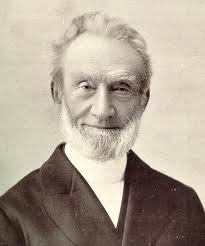
George Mueller the Man with 50,000 Answers to Prayer By Robert J. Morgan

On This Day in Church History – April 11th

George Mueller, born into a German tax collector’s family, was often in trouble. He learned at an early age to steal and gamble and drink. As a teenager he learned how to he learned how to stay in expensive hotels, then sneak out without paying the bill. But at length he was caught and jailed. Prison did him little good, for upon release he continued his crime spree until, on a Saturday night in 1825, he met Jesus Christ.

Mueller married and settled down in Bristol, England, growing daily in faith and developing a burden for the homeless children running wild and ragged through the streets. At a public meeting in Bristol on December 9, 1835, he presented a plan for an orphanage. Several contributions came in. Mueller rented Number 6 Wilson Street, and on April 11, 1836 the doors of the orphanage opened. Twenty-six children were immediately taken in. A second house opened, then a third.

From the beginning Mueller refused to ask for funds or even speak of his ministries financial needs. He believed in praying earnestly and trusting the Lord to provide. And the Lord did provide, though sometimes at the last moment. The best known story involves a morning when the plates and bowls and cups were set on the tables, but there was no food or milk. The children sat waiting for breakfast while Mueller led in prayer for their daily bread. A knock at the door sounded. It was the baker. “Mr. Mueller,” he said, “I couldn’t sleep last night. Somehow I felt you didn’t have bread for breakfast, so I got up at 2 a.m. and baked some fresh bread.” A second knock sounded. The milkman had broken down right in front of the orphanage, and he wanted to give the children his milk so could empty his wagon and repair it.

Such stories became the norm for Mueller’s work. During the course of his 93 years, Mueller housed more than 10,000 orphans, “prayed in” millions of dollars, traveled to scores of countries preaching the gospel, and recorded 50,000 answers to prayer in his journals.

* Robert J. Morgan is the pastor of Donelson Fellowship in Nashville, Tennessee and the author of the best selling Then Sings My Soul, From This Verse, , and Red Sea Rules. He conducts Bible conferences, parenting and marriage retreats, and leadership seminars across the country. This article was adapted from the April 11 entry in his book On This Day, Nashville: Thomas Nelson, 1997.

*Significant Events on April 11th in Church History:

626: Hilde of Whitby was baptized. She was one of England’s most influential women of the Middle Ages. She founded the Whitby Monastery, discovered the early English poet Caedmon and trained five bishops.

1079: Stanislaus, the bishop of Krakow, Poland, was martyred. King Boleslaw II called him a traitor. Stanislaus had excommunicated the evil king, nicknamed “the cruel.”

1567: Thomas Aquinas was elevated to the status of “doctor of the church.” He was arguably the greatest Christian Philosopher of the Middle Ages.

1836: George Muller opened his first orphanage in Bristol, England. He took in twenty-six waifs. Forty years later, his orphanages housed 2,000 children. Their needs were not met by public appeals, but through private prayer – Amazing!

1861: Sarah Doremus, became the first president of the Women’s Union Missionary Society of America for Heathen Lands. She would be known as the “Mother of Missions.”

*Adapted from This Day In Christian History, edited by A Kenneth Curtis and Daniel Graves, Camp Hill, PA: Christian Publications.

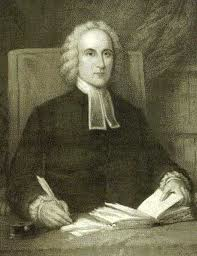
Jonathan Edwards Resolutions Modernized By Dennis Griffith

Revised Resolutions of Jonathan Edwards

January 1, 2012 By *Dennis Griffith

As a young man – a teenager, really – Jonathan Edwards set down on paper a series of thoughts and practices to help cultivate growth in grace.  (See 2 Peter 3.18)  Edwards then re-read this list at least once a week to keep his mind focused and renewed.  The result: A man of humble godliness, who was to become a significant spark used to ignite one of the greatest revivals known to history.  Even many unbelieving scholars admit Edwards may have been the greatest mind to be born on the North American continent.

The Resolutions of Jonathan Edwards are still a practical and beneficial tool for spiritual cultivation.  But one problem for many is that the early 18th Century language makes it sometimes difficult to grasp what Edwards wrote.   I have taken it upon myself to attempt to translate Edwards’ meaning in hopes that some might use these resolutions who might otherwise feel discouraged by the archaic words.  And while I admit that there are a few of these resolutions that I cannot embrace, I will leave it to each individual to pick out anything that might seem worthy for adoption among his/her own personal resolutions.

***

Aware that I am unable to do anything without God’s help, I do pray that, by his grace, he will enable me to keep these Resolutions, so far as they are in line with his will, and that they will honor Christ.

NOTE: Remember to read over these Resolutions once a week.

1. Resolved:  I will DO whatever I think will be most to God’s glory; and my own good, profit and pleasure, for as long as I live. I will do all these things without any consideration of the time they take.  Resolved: to do whatever I understand to be my duty and will provide the most good and benefit to mankind in general. Resolved to do this, whatever difficulties I encounter, and no matter how many I experience or how severe they may be.

2. Resolved: I will continually endeavor to find new ways to practice and promote the things from Resolution 1.

3. Resolved: If ever – really, whenever – I fail & fall and/or grow weary & dull; whenever I begin to neglect the keeping of any part of these Resolutions; I will repent of everything I can remember that I have violated or neglected, …as soon as I come to my senses again.

4. Resolved: Never to do anything, whether physically or spiritually, except what glorifies God.  In fact, I resolve not only to this commitment, but I resolve not to even grieve and gripe about these things, …if I can avoid it.

5. Resolved: Never lose one moment of time; but seize the time to use it in the most profitable way I possibly can.

6. Resolved: To live with all my might, …while I do live.

7. Resolved: Never to do anything which I would be afraid to do if it were the last hour of my life.

8. Resolved: To act, in all respects, both in speaking and doing, as if nobody had ever been as sinful as I am; and when I encounter sin in others, I will feel (at least in my own mind& heart) as if I had committed the same sins, or had the same weaknesses or failings as others.  I will use the knowledge of their failings to promote nothing but humility – even shame – in myself. I will use awareness of their sinfulness and weakness only as an occasion to confess my own sins and misery to God.

9. Resolved: To think much, on all occasions, about my own dying, and of the common things which are involved with and surround death.

10. Resolved: When I feel pain, to think of the pains of martyrdom – both of Jesus and of Believers around the world; and remind myself of the reality of hell.

11. Resolved:  When I think of any theological question to be resolved, I will immediately do whatever I can to solve it, … if circumstances don’t hinder.

12. Resolved: If I find myself taking delight in any gratification of pride or vanity, or on any other such empty virtue, I will immediately discard this gratification.

13. Resolved: To be endeavoring to discover worthy objects of charity and liberality.

14. Resolved: Never to do anything out of revenge.

15. Resolved: Never to suffer the least emotions of anger about irrational beings.

16. Resolved: Never to speak evil of anyone, except if it is necessary for some real good.

17. Resolved: I will live in such a way, as I will wish I had done when I come to die.

18. Resolved: To live, at all times, in those ways I think are best in me during my most spiritual moments and seasons – those times when I have clearest understanding of the gospel and awareness of the World that is to come.

19. Resolved: Never to do anything, which I would be afraid to do if I expected it would not be more than an hour before I would hear the last trump sound.  (i.e. when Jesus returns.)

20. Resolved: To maintain the wisest and healthiest practices in my eating and drinking.

21. Resolved: Never to do anything, which if I saw another do, I would consider a just reason to despise him for, or to think in any way lesser of him.

22. Resolved: To endeavor to obtain for myself as much happiness in the world to come as I possibly can.  To accomplish this I will use all the strength, power, vigor, and vehemence – even violence – I am capable of, or can bring myself to exert, in any way that can be thought of.

23. Resolved: Frequently take some deliberate action – something out of the ordinary – and do it for the glory of God. Then I will trace my intention back and try to discern my real and deepest motive: What did I really desire out of it? If I find that my truest motive was not for God’s glory, then I consider it as a breach of the 4th Resolution. (See Above)

24. Resolved: Whenever I do any conspicuously evil action, I will trace it back till I come to the original cause; and then I will carefully endeavor BOTH 1) to do so no more AND 2) to fight and pray with all my might against the source of the original impulse.

25. Resolved: To examine carefully, and constantly, what that one thing in me is that causes me to doubt of the love of God, even the least little bit; and then to direct all my forces against it.

26. Resolved: To oust away anything I find that diminishes my assurance of God’s love and grace.

27. Resolved: Never intentionally omit or neglect anything, except if such an omission would be for the glory of God. NOTE to Self: frequently examine anything I have omitted.

28. Resolved: To study the Scriptures so steadily, and so constantly, and so frequently, that it becomes evident – even obvious – to myself that my knowledge of them has grown.

29. Resolved: Never consider something a prayer, nor to let pass for a prayer, any petition that when making I cannot actually hope that God will answer; nor offer as a confession anything which I cannot hope God will accept.

30. Resolved: To strive to my utmost every week to be brought to a higher spiritual place, and to a greater experience of grace, than I was the week before.

31. Resolved: Never to say anything at all against anybody; except when to do so is perfectly consistent with the highest standards of Christian honor and love to mankind; and except when it is consistent with the sense of greatest humility and awareness of my own faults and failings. Then, whenever I have said anything against anyone, I will examine my words against the strictest test of the Golden Rule.

32. Resolved: To be strictly and firmly faithful to whatever God entrusts to me.  My hope is that the saying in Proverbs 20.6,  “A faithful man who can find?” may not be found to be even partly true of me.

33. Resolved: Always do whatever I can towards making, maintaining, establishing and preserving peace, whenever it can be, but without over-balancing the value peace to such a degree that it becomes a detriment in other respects.

34. Resolved: When telling stories, never to speak anything but the pure and simple truth.

35. Resolved: Whenever I so much as question whether I have done my duty, to a point that my peace and tranquility is disturbed, I will stop and question myself until my concern is resolved.

36. Resolved: Never to speak evil of anyone, except I have some particular good purpose for doing so.

37. Resolved: To inquire every night, as I am going to bed, where I may have been negligent, what sin I have committed, and how I have denied myself. I will also do this at the end of every week, month, and year.

38. Resolved: Never to speak anything that is ridiculous, trivial, or otherwise inappropriate on the Lord’s Day or Sabbath evening.

39. Resolved: Never to do anything when the lawfulness is questionable. And then afterward, resolve to consider and examine whether or not whatever I have just done is truly lawful and/or whether whatever I have refrained from doing would have actually been permissible.

40. Resolved: To inquire every night, before I go to bed, whether I have acted in the best way I possibly could, with respect to eating and drinking.

41. Resolved: To ask myself at the end of every day, week, month and year, where I could have possibly done better in any respect.

42. Resolved: To frequently renew my dedication to God, which was first made at my baptism and which I solemnly renewed when I was received into the communion of the church; and which I have now solemnly re-made this [DATE] day of [MONTH], [YEAR].

43. Resolved: Never, from this day until the day I die, act as if I were in any way my own, but entirely and altogether belong to God, and then live in a way agreeable to this reality.

44- Resolved: That nothing other than the gospel shall have any influence at all on any of my actions; and that no action shall be, even in the very least circumstance, anything other than gospel declares, demands, and implies.

45. Resolved: Never to allow any pleasure or grief, joy or sorrow, nor any affection at all, nor any degree of affection, nor any circumstance, but what advances the gospel.

46. Resolved: Never allow the least measure of any fretting or uneasiness about my father or mother. Resolved to never allow the effects of disappointment in them, or frustrations with them, to even in the very least alter what I say to them or about them, or any activity in reaction to them.  Let me be careful about this, not only about my parents, but also with respect to any of our family.

47. Resolved: To endeavor to my utmost to deny whatever is not most agreeable to a good, and universally sweet and benevolent, quiet, peace able, contented, easy, compassionate, generous, humble, meek, modest, submissive, obliging, diligent and industrious, charitable, even, patient, moderate, forgiving, sincere temper; and to do at all times what such a temper would lead me to. Examine strictly every week, whether I have done so. Sabbath morning. May 5,1723.

48. Resolved: With the utmost niceness and diligence, and with the strictest scrutiny, constantly be looking into the state condition of my soul, so that I may know whether or not I have truly an interest in Christ at any given time. I will do this so that, when I come to my end in death, I will not have neglected to repent of anything I have found.

49. Resolved: That Neglect never shall be, if I can help it.

50. Resolved: I will act in such a way as I think I will judge to have been best and most prudent, when I have come into the future world – Heaven.

51. Resolved: That I will act in every respect, as I think I would wish I had done, if in the end for some reason I would have be damned.

52. I frequently hear persons in old age say how they would live, if they were to live their lives over again, so… Resolved: That I will live just as I can imagine I shall wish I had done, supposing I live to old age.

53. Resolved: To improve every opportunity, when I am in the best and happiest frame of mind, to cast and venture my soul on the Lord Jesus Christ, to trust and confide in him, and consecrate myself wholly to him; that from this I may have assurance of my eternal safety, knowing that my confidence is in my Redeemer.

54. Resolved: Whenever I hear anything spoken in a conversation of any person, if I think what is said of that person would be praiseworthy in me, I will endeavor to imitate it.

55. Resolved: To endeavor to my utmost to act as I can imagine I would if I had already seen all the happiness of heaven, as well as the torments of hell.

56. Resolved: Never to give up, nor even slacken up, in my fight with my own corruptions, no matter how successful or unsuccessful I may be.

57. Resolved: When I fear misfortunes and adversities, to examine whether I have done all I am expected to do, and resolve to do everything I am able to do.  Once I have done all that God requires of me, I will accept whatever comes my way, and accept that it is just as God’s Providence has ordered it.  I will, as far as I can, be concerned about nothing but my own duty and my own sin.

58. Resolved: Not only to refrain from an air of dislike, fretfulness, and anger in conversations, but also to exhibit an air of love, cheerfulness and graciousness.

59. Resolved: Whenever I am most conscious of feelings of ill nature, bad attitude, and/or anger, I will strive then the most to feel and act good naturedly.  At such times I know I may feel that to exhibit good nature might seem in some respects to be to my own immediate disadvantage, but I will nevertheless act in a way that is gracious, realizing that to do otherwise would be imprudent at other times (i.e. times when I am not feeling so irked).

60. Resolved: Whenever my feelings begin to appear in the least out of sorts, when I am conscious of the least uneasiness within my own heart and/or soul, or the least irregularity in my behavior, I will immediately subject myself to the strictest examination. (i.e. Psalm 42.11)

61. Resolved:  I will not give way to that apathy and listlessness which I find artificially eases and relaxes my mind from being fully and fixedly set on God’s Grace. Whatever excuses I may have for it, whatever my listlessness inclines me to do, or rather whatever it inclines me to neglect doing, I will realize that it would actually be best for me to do these things.

62. Resolved: Never to do anything but what God, by the Law of Love, requires me to do. And then, according to Ephesians 6.6-8, I must do it willingly and cheerfully as to the Lord, and not for man.  I must remember that whatever good thing any man has or does he has first received from God; and that whenever a man is compelled by faith to act with love and charity toward others, especially those in need, that we do it as if to/for the Lord.

63. On the hypothetical supposition that at any one time there was never to be but ONE individual in the world who was a genuine and complete Christian, who in all respects always demonstrated the Faith shining in its truest luster, and appearing excellent and lovely, from whatever angle and under whatever circumstance this Faith is viewed… Resolved: To act just as I would do, if I strove with all my strength, to be that ONE; and to live as if that ONE should live in my time and place.

64. Resolved: Whenever I experience those “groanings which cannot be uttered” (Romans 8.26), of which the Apostle speaks, and those “longings” that consume our souls, of which the Psalmist speaks (Psalm 119:20), I will embrace them with everything I have within me. And I will not be weary of earnestly endeavoring to express my desires, nor of the repetitions so often necessary to express them and benefit from them.

65. Resolved: To exercise myself in all my life long, with the greatest openness I am capable of, to declare my ways to God, and lay open my soul to him: all my sins, temptations, difficulties, sorrows, fears, hopes, desires; and every thing in every circumstance. (See Dr. Manton‘s 27th Sermon on Psalm 119.)

66. Resolved:  I will endeavor always to keep a gracious demeanor, and air of acting and speaking in all places and in all companies, except if it should so happen that faithfulness requires otherwise.

67. Resolved: After afflictions, to inquire in what ways I am now the better for having experienced them. What good have I received by them? What benefits and insights do I now have because of them?

68. Resolved: To confess honestly to myself all that I find in myself – whether weakness or sin. And if it something that concerns my spiritual health, I will also confess the whole case to God, and implore him for all needed help.

69. Resolved: Always to do that which I will wish I had done whenever I see others do it.

70. Let there be something of benevolence, in all that I speak.

*Article Adapted from the excellent Blog: “Grace and Peace” http://wdennisgriffith.wordpress.com/2012/01/01/revised-resolutions-of-jonathan-edwards/. Dennis Griffith lives in Bristol, Tennessee with his wife Carolyn, their three children: Andrew, Matthew and Rebekah; and Ike, their Great Dane.  Dennis also has the privilege of serving as pastor of Walnut Hill Presbyterian Church and chaplain to the Bristol White Sox, the Appalachian League affiliate of the Chicago White Sox. In addition Dennis is a contributing columnist for the Bristol Herald Courier.