“Christmas in April” By Robert J. Morgan & Other Significant Events on This Day In Church History

On This Day in Church History – April 10th

On December 25, 1766 a son was born to an impoverished Welsh shoemaker and his wife. They considered naming him Vasover, but chose instead to name him for the day of his birth. When Christmas Evans was nine his father died in his cobbler stall, awl in hand. His mother farmed out the children, and Christmas went to live with am alcoholic uncle. The boy ran with rough gangs, fighting and drinking and endangering his life. He was unable to read a word.

But then Christmas heard a Welsh evangelist David Davies. He soon gave his life to Christ, and Davies began teaching him by candlelight in a barn at Penyralltfawr. Within a month Christmas was able to read from his Bible, and expressed a desire to preach, and preach he did. Wherever he went—churches, coal minds, open fields—crowds gathered and a spirit of revival swept over the listeners. Unable to afford a horse, he started across Wales by foot, preaching in towns and villages with great effect.

But Christmas Evans eventually lost the joy ministry. His health broke, and he seemed to have used up his spiritual zeal. On April 10, 1802 he climbed into the Welsh mountains, determined to wrestle with God until his passion returned. The struggle lasted for hours, but finally tears began to flow, and Christmas felt the joy of his salvation returning. He made a covenant with God that day, writing down 13 times, initializing each one. The fourth said, “Grant that I may not be left to any foolish act that may occasion my gifts to wither…” And the eighth said, “Grant that I may experience the power of thy word before I deliver it.”

The burly, one-eyed preacher left the mountaintop that day with power that shook Wales and the neighboring island of Anglesea until his death 36 years later. He is called the “Bunyan of Wales.”

Create pure thoughts in me

And make me fruitful again.

Make me as happy as you did when you saved me.

Then I will shout and sing about your power to save. – Psalm 51:10,12a,14b

* Robert J. Morgan is the pastor of Donelson Fellowship in Nashville, Tennessee and the author of the best selling Then Sings My Soul, From This Verse, On This Day, and Red Sea Rules. He conducts Bible conferences, parenting and marriage retreats, and leadership seminars across the country. This article is from the April 10 entry in On This Day, Nashvill, Nelson,1998.

 *Other Significant Events on April 10th in Church History:

419: St. Boniface entered Rome to the cheers of the populace who supported his papacy against antipope Eulalius. Emperor Honorius had to decide between the two claimants.

428: Nestorius was consecrated as the bishop of Constantinople.

1512: The Fifth Lateran Council began, running to March 1517, and declared that the soul is immortal. It also invalidated anti-papal decrees formulated at the Pisa council.

1829: William Booth was born. A Methodist, Booth founded the Salvation Army to reach out to those who were missed by the churches. He worked in the slums, offering breakfasts and other assistance for the needy, often accompanied by brass bands. The Salvation Army observes this day as Founder’s Day.

1868: Brahms’ A German Requiem was first performed. It has been described as music not for the dead but for the living. It is not certain whether Brahms’ was a Christ follower or not – but his music was inspired via his reading of the Scriptures.

1952: Watchman Nee, a Chinese Christian, was arrested. He was well-known in the West for his writings such as Sit, Walk, Stand and The Normal Christian LIfe.

*Adapted from This Day In Christian History, edited by A Kenneth Curtis and Daniel Graves, Camp Hill, PA: Christian Publications.

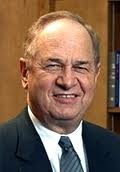
Book Review: Preaching and Teaching the Last Things by Walter Kaiser

Walter Kaiser is a gifted Old Testament scholar who has the keen ability to be able to communicate well among lay people and scholars alike. In this new offering Dr. Kaiser does not disappoint. This book is especially geared toward pastors, but is also extremely helpful for all those who teach and desire to understand the Old Testament and it’s connections to the New Testament and the ultimate promise plan of God.

Dr. Kaiser lands somewhere between a “covenant” and “dispensational” theologian – in my opinion he is very balanced and makes an excellent case for each passage he exegetes. He definitely leans dispensational – taking passages and promises to Israel literally unless there is a textual indicator deeming otherwise.

The book is composed of six parts – covering different aspects of the end times. Each of these parts contains two or three passages of Scripture, and is broken down in this way:

1)   A discussion of the topic.

2)   Specific exegetical and sermonic helps for the specific passage being taught including: the text; title; focal point; homiletical key word; interrogative question; and teaching aim.

3)   A teaching outline for the passage.

4)   An exegetical discussion of the passage.

5)   Practical conclusions based on a thorough exegesis of the passage.

Here are the topics that Kaiser addresses in the book with thorough exegetical and insightful precision:

Part 1: The Individual and General Eschatology of the Old Testament

  1. Life and Death in the Old Testament (Psalm 49:1-20)
  2. The resurrection of Mortals in the Old Testament (Job 19:21-27)

Part 2: The Nation of Israel in Old Testament Eschatology

  1. The Everlasting Promises made to Israel (Jeremiah 32:27-44)
  2. The Future Resurrection and Reunification of the Nation (Ezekiel 37:1-28)
  3. The Future Return of Israel to the Land of Promise (Zechariah 10:2-12)

Part 3: The New Davidic King and the City of the great King in the Old Testament

  1. The Branch of the Lord and the New Zion (Isaiah 2:2-5; 4:2-6)
  2. The Extent of Messiah’s Rule and Reign (Psalm 72:1-17)

Part 4: The Day of the Lord and the Beginning of the Nations’ Struggle with Israel

  1. The Arrival of the Day of the Lord (Joel 2:28-3:21)
  2. God and Magog (Ezekiel 38-39)

Part 5: The Events of the Last Seven Years and the Arrival of the Western Confederacy

10. The Seventy Weeks of Daniel (Daniel 9:24-27)

11. The New Coming Third Temple in Jerusalem (Ezekiel 40:1-41:26; 43:1-11)

12. The Coming Antichrist (Daniel 11:36-45)

13. The Battle of Armageddon (Zechariah 14:1-21)

Part 6: The Coming Millennial Rule of Christ and the Arrival of the Eternal State

14. The Millennial Rule and Reign of God (Isaiah 24:1-23)

15. The New Creation (Isaiah 65:17-25; 66:18-24)

I think this book is a welcome addition to any Bible student’s collection – especially due to the neglect of roughly 20-25% of the Bible being of a prophetic nature. Those of us who teach and preach God’s Word are required to teach the “whole counsel of God.” My only complaint is that I would have liked to have seen him draw more parallels in the passages to Christ and how the gospel applies to believers in the here and now – and not solely in the past or future (read Tim Keller or Paul Tripp for excellence in this matter). Overall, I think it’s an excellent resource with wise insights into God’s Word and how His promise plan will ultimately be fulfilled.

*Walter C. Kaiser Jr. (PhD, Brandeis University) is the distinguished professor emeritus of Old Testament and president emeritus of Gordon-Conwell Theological Seminary in South Hamilton, Massachusetts. Dr. Kaiser has written over 40 books, including Toward an Exegetical Theology: Biblical Exegesis for Preaching and Teaching; A History of Israel; The Messiah in the Old Testament; Recovering the Unity of the Bible; The Promise-Plan of God; Preaching and Teaching The Last Things; and coauthored (with Moises Silva) An Introduction to Biblical Hermeneutics. Dr. Kaiser and his wife, Marge, currently reside at Kerith Farm in Cedar Grove, Wisconsin. Dr. Kaiser’s website: www.walterckaiserjr.com

Book Review: Historical Theology by Gregg R. Allison

*Dr. Gregg R. Allison has made a very useful and practical contribution to the study of historical theology – especially for those familiar with Wayne Grudem’s “Systematic Theology.” Gregg writes clearly and cogently for those of us who desire to go deeper into the historical foundations, development, and significance of each major doctrine of the Bible.

 Allison gives us eight solid reasons for studying Historical Theology:

1)    “helping [those who study it to] distinguish orthodoxy from heresy.”

2)    “it provides sound biblical interpretations and theological formulations.”

3)    “it presents stellar examples of faith, love, courage, hope, obedience, and mercy.”

4)    “to protect against the individualism that is rampant today among Christians.”

5)    “it not only helps the church understand the historical development of its beliefs, but enables it to express those beliefs in contemporary form.”

6)    “it encourages the church to focus on the essentials, that is, to major on those areas that have been emphasized repeatedly throughout the history of the church.”

7)    “it gives the church hope by providing assurance that Jesus is fulfilling his promise to his people.”

8)    “finally, as beneficiaries of the heritage of doctrinal development sovereignly overseen by Jesus Christ, the church of today is privileged to enjoy a sense of belonging to the church of the past.”

This book is simply a marvelous plethora of useful information on the development of theology gathered in one place, synthesized masterfully by Allison for those who want to know how theology has come to us by the greatest theological minds in history. The author follows the same outline of Wayne Grudem’s “Systematic Theology,” (also available from Zondervan), and thus it makes this resource an excellent companion of Grudem’s outstanding work. I highly recommend both of these resources to be used together for anyone who desires to know what we believe and how the greatest God-centered theologians of history have developed the sound theology needed to transform lives and culture today in the 21st century.


*Dr. Greg Allison in his own words: I am Professor of Christian Theology at The Southern Baptist Theological Seminary where, in addition to teaching the three core theology courses, I teach electives on the doctrine of Scripture, the doctrine of humanity (with a focus on human embodiment), the doctrine of the church, historical theology, and Roman Catholic theology. I do occasional teaching for the Institute of Biblical Studies and Re:train. I am also secretary for the Evangelical Theological Society and serve on the editorial committee as book review editor (in the areas of theology, history, philosophy, etc.) and referee (for articles).

I was born and raised in Chicago, which means I am a Bears fan, Bulls fan, Blackhawks fan, and Cubs fan (and hate the White Sox). I have a B.S. in biology, a M.Div., and the Ph.D. in Systematic Theology. Beside teaching and writing, I enjoy reading, sports, music, and the outdoors. I swim a mile five times a week to keep healthy.

My wife Nora and I were married in 1976 and have three grown children: Lauren is married to Troy, lives in the Seattle area, and has two kids (Caleb and Alia) with another on the way; Hanell is married to Mike, lives in Louisville, and has two kids (Annelie and Hudson); Luke is a senior at Union University majoring in math and secondary education with a minor in Church history.

Some unusual tidbits about me: while in high school I designed the offical seal of my city (Riverdale, Ill.); my wife and I had a private audience with Pope John Paul II (along with 9,998 other invited guests); we lived in Rome and the Italian-speaking part of Switzerland for a total of seven years.