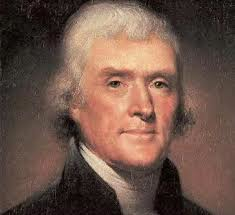
Thomas Jefferson’s 10 Commandments of Responsibility

Responsibility:

 (1) Never put off till tomorrow what you can do today.

 (2) Never trouble another for what you can do yourself.

 (3) Never spend your money before you have it.

 (4) Never buy what you do not want because it is cheap.

 (5) Pride costs us more than hunger, thirst, and cold.

 (6) We never repent of having eaten too little.

 (7) Nothing is troublesome that we do willingly.

 (8) How much pain have cost us the evils which have never happened.

 (9) Take things always by their smooth handle.

 (10) When angry, count to ten before you speak; if very angry, a hundred.

 – Thomas Jefferson was the Third President of the United States

10 Danger Signs of Stress

YOU MAY BE UNDER TOO MUCH STRESS IF YOU…

Find yourself irritable or impatient with things you normally tolerate.

Have difficulty getting to sleep and feel exhausted when you are awake.

Sense you are one step away from falling apart.

Suffer from frequent headaches or stomach pains.

Get distracted easily and have trouble concentrating.

Talk more negatively than usual.

Become forgetful and absentminded.

Don’t laugh as much as you used to.

Use alcohol, prescription drugs, or food to help you relax.

Postpone what is truly important, to accomplish what isn’t that important.

– Carol Clifford, PH.D. (Psychology)


Book Review: The 7% Solution by John H. Graves

How To Develop A Strategic Plan for Income in Your Later Years

I’d never heard of John H. Graves before reading this book, but I will be highly recommending this book to my clients from now on as a Life Coach. One of the seven key areas of life that all people need advice in is how to handle personal finances. As a matter of fact, I was doing a conference overseas and had to counsel an accountant for a major corporation who knew how to keep the books for a multi-million dollar company but her own personal debt was mounting out of control. I truly wish I could have handed her this book two years ago – it has everything you need to develop more confidence and have less stress in the financial arena of your life.

The proper handling and investing of money is a huge issue that makes or breaks many marriages, the quality of life, and high stress factors, which can lead to dangerous addictions, and various diseases of all shapes and forms. Enter in this book.

At the outset Graves’ assures the reader that no matter what the economy looks life, and no matter how bleak the future looks among various prognosticators, it is up to us to take control of our finances. The reality is that no one will care for your financial needs, and know what you will need in your latter years more than you do.

The big idea of this book to show you a myriad of ways – with a plethora of helpful examples, illustrations, and various strategies – to develop an investment portfolio in your retirement years that will net you a 7% distribution of income. In reading this book you will learn:

(1) How to determine the amount of income needed during retirement.

(2) How to identify different sources of income in retirement (the pros and cons of each)

(3) How to evaluate, select, monitor, and manage a variety of investments, from the most simple, to the more complex.

In layman’s terms Graves shows you how to get a clear picture of what you will need in your retirement years by explaining clearly, concisely, cogently, and coherently the following:

Helping you to develop a worksheet that will lay out the reality of your current financial situation and where that will take you. This will help you practical realize whether or not you are heading in the right direction towards the “7% solution” in your retirement years. You will be able to discern and determine where the strengths and weaknesses in your portfolio lie and what adjustments can be made to get the desired results.

(1) How to gather your expense and income data for retirement.

(2) Responsibilities of a financial advisor (what they actually do); versus your own responsibilities.

(3) How to pick stocks for the long term – with a focus on the importance of getting value.

(4) How bonds work – how to determine bonds with good value.

(5) An overview of low maintenance investments.

(6) An examination of annuities and how they fit into an income-producing retirement portfolio.

(7) Looking beyond cookie-cutter portfolios – how limited partnertships and business development companies can fit into your portfolio.

(8) How REIT’s, real estate, proceeds from sale of a business, and structured settlements can add sources of income to your portfolio.

(9) Proven strategies for designing your 7% portfolio.

(10) How to manage your portfolio during the accumulation and distribution stages.

(11) How to reduce your tax burden.

(12) Getting the most from your retirement years. How to develop a trust, and various ways you can give back to your church, synagogue, or community.

This is truly a great book for understanding strategic portfolio depth, sources of income, decreasing debt, and alleviating the stress of retirement, by being responsible, strategic, and intentionally proactive in developing a plan that works for you and providing for your family in your latter years. No matter what age you are, income level you have achieved, or your goals for the future are – the 7% solution will work for you.

About the Author: John Graves, ChFC, CLU has spent 26 years advising people how to become
better stewards of their resources. As an indepedent financial advisor, he focuses on designing and maintaing clients’ portfolios consistent with their needs, rather than some market paradigm. John is a Chartered Life Underwriter and Chartered Financial Consultant through The American College in Bryn, Mawr Pennsylvania.
He has traveled extensively, with more than 80 countries’ stamps in his passport. His avocation is adventure. He has sailed to Hawaii several times as well as across the Atlantic and throughout the Mediterranean and Caribbean. He has trekked the Andes, the Sahara, the Taklamakan, the Serengeti, and the Namib.
In his previous career, John was a chef. He does enjoy a fine meal with a nice Bordeaux or Montalcino.
John agrees with Benjamin Graham that the search for value is far more interesting than a brief joy ride in the markets. His passion is sharing knowledge with others so that they, too, might embrace all that life has to offer.

11 Hints For A Happy Friendship

The following tips are from Life’s Little Handbook of Wisdom written by Bruce & Cheryl Bickel and Stan and Karin Jantz. DayMaker, 2010.

(1) Make friends even if you don’t think you need them.

(2) Seek out quiet people. They have a lot to say, if you say something first.

(3) Don’t establish a friendship based on mutual dislikes.

(4) Call if you’re running late.

(5) Look people in the eye when you talk to them.

(6) Be one who says positive things about others.

(7) Learn to tell a good story.

(8) Ask other people about themselves.

(9) Be happy for others in their good fortune.

(10) Make sure your caring includes doing.

(11) Know when to say goodbye.

Your Destiny: 5 Things To Keep an Eye On

“Destiny” is from Frank Outlaw as cited in “The Best of Bits and Pieces” by Robert Gilbert.


Watch your thoughts; they become words.


Watch your words; they become actions.


Watch your actions; they become habits.


Watch your habits; they become character.


Watch your character; it becomes your destiny.

3 Secrets To Success By Sally Ride, USA Astronaut

3 Keys To Sally Ride’s Success As an Astronaut


(1) Be willing to learn new things.


(2) Be able to assimilate new information quickly.


(3) Be able to get along with and work with other people.


About: Sally Ride


PERSONAL DATA: Born May 26, 1951, in Los Angeles, California. Her mother, Joyce Ride, resides in Pasadena, California. Her father, Dale B. Ride, is deceased. She enjoys tennis (having been an instructor and having achieved national ranking as a junior), running, volleyball, softball & stamp collecting.

EDUCATION: Graduated from Westlake High School, Los Angeles, California, in 1968; received from Stanford University a bachelor of science in Physics and a bachelor of arts in English in 1973, and master of science and doctorate degrees in Physics in 1975 and 1978, respectively.

EXPERIENCE: Dr. Ride was selected as an astronaut candidate by NASA in January 1978. In August 1979, she completed a 1-year training and evaluation period, making her eligible for assignment as a mission specialist on future Space Shuttle flight crews. She subsequently performed as an on-orbit capsule communicator (CAPCOM) on the STS-2 and STS-3 missions.

Dr. Ride was a mission specialist on STS-7, which launched from Kennedy Space Center, Florida, on June 18, 1983. She was accompanied by Captain Robert L. Crippen (spacecraft commander), Captain Frederick H. Hauck (pilot), and fellow mission specialists Colonel John M. Fabian and Dr. Norman E. Thagard. This was the second flight for the Orbiter Challenger and the first mission with a 5-person crew. During the mission, the STS-7 crew deployed satellites for Canada (ANIK C-2) and Indonesia (PALAPA B-1); operated the Canadian-built Remote Manipulator System (RMS) to perform the first deployment and retrieval exercise with the Shuttle Pallet Satellite (SPAS-01); conducted the first formation flying of the orbiter with a free-flying satellite (SPAS-01); carried and operated the first U.S./German cooperative materials science payload (OSTA-2); and operated the Continuous Flow Electrophoresis System (CFES) and the Monodisperse Latex Reactor (MLR) experiments, in addition to activating seven Getaway Specials. Mission duration was 147 hours before landing on a lakebed runway at Edwards Air Force Base, California, on June 24, 1983.

Dr. Ride served as a mission specialist on STS 41-G, which launched from Kennedy Space Center, Florida, on October 5, 1984. This was the largest crew to fly to date and included Captain Robert L. Crippen (spacecraft commander), Captain Jon A. McBride (pilot), fellow mission specialists, Dr. Kathryn D. Sullivan and Commander David C. Leestma, as well as two payloads specialists, Commander Marc Garneau and Mr. Paul Scully-Power. Their 8-day mission deployed the Earth Radiation Budget Satellite, conducted scientific observations of the earth with the OSTS-3 pallet and Large Format Camera, as well as demonstrating potential satellite refueling with an EVA and associated hydrazine transfer. Mission duration was 197 hours and concluded with a landing at Kennedy Space Center, Florida, on October 13, 1984.

In June 1985 Dr. Ride was assigned to the crew of STS 61-M. Mission training was terminated in January 1986 following the Space Shuttle Challenger accident. Dr. Ride served as a member of the Presidential Commission investigating the accident. Upon completion of the investigation she was assigned to NASA Headquarters as Special Assistant to the Administrator for long range and strategic planning.

In 1989, Dr. Ride joined the faculty at UCSD as a Professor of Physics and Director of the University of California’s California Space Institute. In 2001 she founded her own company, Sally Ride Science [http://www.sallyridescience.com] to pursue her long-time passion of motivating girls and young women to pursue careers in science, math and technology. The company creates entertaining science programs and publications for upper elementary and middle school students and their parents and teachers.

Long an advocate for improved science education, Dr. Ride has written five science books for children: To Space and Back; Voyager; The Third Planet; The Mystery of Mars; and Exploring Our Solar System. She has also initiated and directed education projects designed to fuel middle school students’ fascination with science.

Dr. Ride has been a member of the President’s Committee of Advisors on Science and Technology and the National Research Council’s Space Studies Board, and has served on the Boards of the Congressional Office of Technology Assessment, the Carnegie Institution of Washington, and the NCAA Foundation. Dr. Ride is a Fellow of the American Physical Society, a member of the Pacific Council on International Policy, and currently serves on the Boards of the Aerospace Corporation and the California Institute of Technology. She is the only person to have served on the Commissions investigating both the Space Shuttle Challenger and Columbia accidents.

Dr. Ride has received numerous honors and awards. She has been inducted into the National Women’s Hall of Fame and the Astronaut Hall of Fame, and has received the Jefferson Award for Public Service, the von Braun Award, the Lindbergh Eagle, and the NCAA’s Theodore Roosevelt Award. She has also twice been awarded the NASA Space Flight Medal.

You Are NOT a NOBODY! By Chuck Swindoll

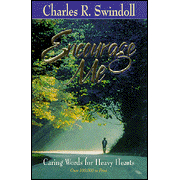
One of the realities that motivates me more than anything as I seek to teach, make disciples, counsel, coach, and live out the gospel is that those I invest in will surpass me for the purposes of Christ in this world. Here is an excellent article by Charles R. Swindoll that can be found in several books he’s written – this article is from his book Encourage Me. Zondervan: Grand Rapids, 1993. When you wonder whether history will be different because of your service for Christ, remember these words. You may have the next John Stott, R.C. Sproul, John Piper, Ann Graham Lotz, Kay Arthur, or Elizabeth Elliott in your Sunday school class, small group, or they may even be your neighbors! – Dr. David P. Craig

You are YOU. There is only one YOU. And YOU are important. Want to start feeling better? Really desire to dispel discouragement? I can say it all in three words” start being YOU.

Pull a sheet of scratch paper out of your memory bank and see how well you do with the following questions.

Who taught Martin Luther his theology and inspired his translation of the New Testament?

Who visited Dwight L. Moody at a shoe store and spoke to him about Christ?

Who worked alongside and encouraged Harry Ironside as his associate pastor?

Who was the wife of Charles Haddon Spurgeon?

Who was the elderly woman who prayed faithfully for Billy Graham for over twenty years?

Who financed William Carey’s ministry in India?

Who refreshed the apostle Paul in that Roman dungeon as he wrote his last letter to Timothy?

Who helped Charles Wesley to get underway as a composer of hymns?

Who found the Dead Sea Scrolls?

Who personally taught G. Campbell Morgan, the peerless expositor,” his techniques in the pulpit?

Who followed Hudson Taylor and gave the China Inland Mission its remarkable vision and direction?

Who discipled George Muller and snatched him as a young man from a sinful lifestyle?

Who were the parents of the godly and gifted prophet Daniel?

Okay, how did you do? Over fifty percent? Maybe twenty-five percent? Not quite that good? Before you excuse your inability to answer the questions by calling the quiz “trivia,” better stop and think. Had it not been for those unknown people—those “nobodies”—a huge chunk of church history would be missing. And a lot of lives would have been untouched.

Nobodies.

What a necessary band of men and women…servants of the King…yet nameless in the kingdom! Men and women who, with silent heroism, yet faithful diligence, relinquish the limelight and live in the shade of public figures.

What was it Jim Elliot, the martyred messenger of the gospel to the Aucas, once called missionaries? Something like a bunch of nobodies trying to exalt Somebody. But don’t mistake anonymous for unnecessary. Otherwise, the whole Body gets crippled…even paralyzed…or, at best, terribly dizzy as the majority of the members within the Body become diseased with self-pity and discouragement. Face it, friend, the Head of the Body calls the shots. It is His prerogative to publicize some and hide others. Don’t ask me why He chooses who He chooses.

If it’s His desire to use you as a Melanchthon rather than a Luther…or a Kimball rather than a Moody…or an Onesiphores rather than a Paul…or a Hoste rather than a Taylor, relax!

Better than that, give God praise! You’re among that elite group mentioned in 1 Corinthians 12 as:

…some of the parts that seem weakest and least important are really the most necessary…so God has put the body together in such a way that extra honor and care are given to those parts that might otherwise seem less important (vv.22, 24, TLB).

If it weren’t for the heroic “nobodies,” we wouldn’t have top-notch officers to give a church its leadership. Or quality sound when everyone shows up to worship. Or janitors who clean when everyone is long gone. Or communities to provided dozens of services beyond the scenes. Of mission volunteers who staff offices as home or work in obscurity

overseas with only a handful of people.

Nobodies…exalting Somebody.

Are you one? Listen to me! It’s the “nobodies” Somebody chooses so carefully. And when He has selected you for that role, He does not consider you a nobody.

Be encouraged!

“For God is not unjust so as to overlook your work and the love that you have shown for his name in serving the saints, as you still do” (Hebrews 6:10).

About the Author: Dr. Charles R. Swindoll is senior pastor of Stonebriar Community Church, chancellor of Dallas Theological Seminary, and the Bible teacher on the internationally syndicated radio program Insight for Living. He has written more than thirty best-selling books, including STRENGTHENING YOUR GRIP, IMPROVING YOUR SERVE, THE CHRISTIAN LIFE, COME BEFORE WINTER, GROWING STRONG IN THE SEASONS OF LIFE, STRESS FRACTURES, HOPE AGAIN,  LAUGH AGAIN, THE GRACE AWAKENING, the million-selling GREAT LIVES FROM GOD’S WORD series; and his newest offering SAYING IT WELL. Chuck and his wife, Cynthia, live in Frisco, Texas.

The 10 Commandments of Human Relations By Robert G. Lee

(1) Speak to people. There is nothing as nice as a cheerful word of greeting.

(2) Smile at people. It takes seventy-two muscles to frown, only fourteen to smile.

(3) Call people by name. The sweetest music to anyone’s ears is the sound of his or her name.

(4) Be friendly and helpful. If you would have friends, be friendly.

(5) Be cordial. Speak and act as if everything you do is a genuine pleasure.

(6) Be genuinely interested in people. You can like almost anybody if you try.

(7) Be generous with praise—cautious with criticism.

(8) Be considerate with the feelings of others. There are usually three sides to a controversy; yours, the other fellow’s and the right one.

(9) Be alert to give service. What counts most in life is what we do for others.

(10) Add to this a good sense of humor, a big dose of patience and a dash of humility, and you will be rewarded many-fold.


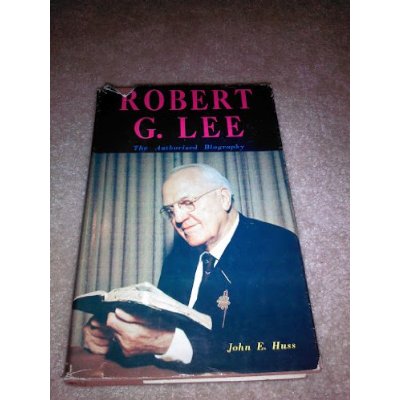
About the Author: Robert G. Lee, (1886-1978), Southern Baptist minister and leader, was born in Post Mill, South Carolina, the son of a devout Baptist sharecropper and his wife.  Despite the family’s poverty Lee was able to attend Furman Prep School and after spending time working on the Panama Canal to earn enough money, attended Furman College, where he graduated with a B.A. degree in 1913.  Believing he was called to preach, he refused an offer to take a position teaching Latin at Furman and accepted a position at a small church in Saluda, SC.  Lee quickly gained a reputation for his pulpiteering and moved on in a progression of successively larger churches until accepting the pastorate of Bellevue Baptist Church in Memphis, TN in 1927.  He spent the next 33 years at Bellevue, during which Sunday morning attendance grew from a more-than-respectable 2,000 to nearly 10,000 per week.  During his time at the church Lee earned a national reputation as a master preacher, publishing over fifty volumes of his sermons and delivering his most famous sermon, “Payday, Someday”, nearly 1,300 times to audiences around the world.  Lee served five years as the president of the Tennessee Baptist Convention and three years (1948-1950) as president of the Southern Baptist Convention.  Although a Southern Baptist loyalist, Lee was well-respected both within post-war evangelical networks and the separatist ranks of the fundamentalist movement.

For further reading, see John E. Huss, Robert G. Lee: The Authorized Biography (Zondervan, 1967).

The Connection Between Words and Character in the Book of Proverbs By Gordon Cheng

The Connection Between Words and Character in the Book of Proverbs

Chart Adapted From *Gordon Cheng

WORDS USED FOR HARM, SPOKEN BY

PEOPLE WITH FOOLISH CHARACTER

WORDS USED FOR GOOD, SPOKEN BY

PEOPLE OF GOOD CHARACTER

Adulterers use words as traps for fools

(Proverbs 7:10-21)

“The teaching of the wise is a fountain of life” (Proverbs 13:14)

“When words are many, transgression is not lacking” (Proverbs10:19)

“The heart of the righteous ponders how to answer” (Proverbs 15:28)

“The words of the wicked lie in wait for blood” (Proverbs 12:6)

“…the mouth of the upright delivers them” (Proverbs 12:6)

“There is one whose rash words are like sword thrusts” (Proverbs 12:18)

“…the tongue of the wise brings healing” (Proverbs 12:18)

“The words of a whisperer are like delicious morsels; they go down into the inner parts of the body” (Proverbs 18:8)

“Gracious words are like a honeycomb, sweetness to the soul and health to the body” (Proverbs 16:24)

“Do you see a man who is hasty in his words? There is more hope for a fool than for him” (Proverbs 29:20)

“Whoever restrains his words has knowledge.” (Proverbs 17:10-27)

 Chart Adapted from the fantastic book by Gordon Cheng. Encouragement: How Words Change Lives. Kingsford, Australia: Matthias Media, 2006, 19-20.

About *Gordon Cheng: He is the author of the popular course, Six Steps to Encouragement. He is married to Fiona and has three daughters. He has studied in psychology and theology, and worked with university students and as a minister to several parishes in Melbourne and Sydney, Australia. He is interested in choral and pian music, writing letters to newspapers, and reading church history.

3 Principles To Remember Concerning Trials By George Sweeting

“Count it all joy, my brothers, when you meet trials of various kinds, for you know that the testing of your faith produces steadfastness. And let steadfastness have its full effect, that you may be perfect and complete, lacking in nothing.” – James 1:2-4

“When you pass through the waters, I will be with you; and through the rivers, they shall not overwhelm you; when you walk through fire you shall not be burned, and the flame shall not consume you. For I am the LORD your God, the Holy One of Israel, your Savior.” – Isaiah 43:2-3a

“In this you rejoice, though now for a little while, if necessary, you have been grieved by various trials, so that the tested genuineness of your faith–more precious than gold that perishes though it is tested by fire–may be found to result in praise and glory and honor at the revelation of Jesus Christ.” – 1 Peter 1:6-7

(1) Trials are a common experience of all of us. No one is immune. Trials are a part of living.

(2) Trials are transitory. Greek scholar C.B. Williams translates 1 Peter 1:6 this way: “In such a hope keep on rejoicing, although for a little while you must be sorrow-stricken with various trials.” Trials, though difficult, are “for a little while.”

(3) Trials are lessons that shouldn’t be wasted. Though not enjoyable or necessarily good in themselves, trials constitute a divine work for our ultimate good. Jesus never promised an easy journey, but He did promise a safe landing.

“God incarnate is the end of fear; and the heart that realizes that He is in the midst…will be quiet in the middle of alarm.” – F.B. Meyer

“Adversities do not make a man frail. They show what sort of man he is.” – Thomas A Kempis

“Sometimes your medicine bottle has on it, “Shake well before using.” That is what God has to do with some of His people. He has to shake them well before they are ever usable.” – Vance Havner

“We are always on the anvil; by trials God is shaping us for higher things.” H. W. Beecher

“Pressure produces! As we face the pressures of life, let it not just be a passive acceptance, but rather a positive cooperation with God’s purpose for our lives.” – George Sweeting


About the author: DR. GEORGE SWEETING is a former president and chancellor of the Moody Bible Institute He received a diploma from Moody Bible Institute, his B.A. from Gordon College, and his Doctor of Divinity from Gordon-Conwell Theological Seminary. Dr. Sweeting has served as a pastor in several churches, including Grace Church, Madison Avenue Baptist Church, and The Moody Church and also spent nine years traveling the world as an evangelist. Dr. Sweeting has written numerous books, including The Joys of Successful Aging, Too Soon to Quit, Lessons from the Life of Moody, and Don’t Doubt in the Dark. He is the host of the radio program Climbing Higher and a former columnist for Moody Magazine. The above three points were adapted from one of his sermons on the purpose of trials in a Christian’s life.