According To Billy Graham Who Has Touched The Most Lives For Christ?

“DAWS”

“It’s hard for the flesh to think God thoughts. It’s hard to concentrate on spiritual concepts. The brain doesn’t like to think, especially if its on spiritual matters. We like to sit down in a nice, soft chair in a cool breeze and float to heaven on a flowery bed of ease. I’m that way and I know that in life, there are a lot of things that come easy, but getting the Word of God on your heart through memorization isn’t one of them. It’s spiritual. Anything spiritual is work, and my flesh and blood doesn’t like work. But it can be done, and we can do it!” – Dawson Trotman

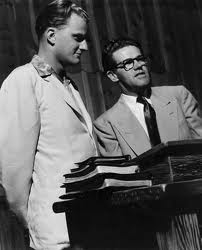
Mini Biography of Dawson Trotman: The Reverend Billy Graham preached the funeral of Dawson Trotman in 1956 after Trotman died while rescuing a swimmer at an upstate New York lake. “I think Dawson Trotman has personally touched more lives [for Christ’s sake] than anybody that I have ever known,” Graham said. Graham knew Trotman and the ministry he founded—The Navigators—quite well, using material Trotman developed as follow-up instruction for his crusades. The Navigators’ influence has since grown to worldwide proportions with about 3,600 staff representing 60 nationalities working in 101 countries. Trotman founded The Navigators in 1934. He originated its Bible teaching material and led it through its formative years as it expanded from an initial emphasis on discipling military personnel to reaching college students and laymen. At the heart of Trotman and the ministry he founded was and is the discipleship of believers—grounding Christians in the spiritual disciplines of prayer, worship, Bible study, and service. (Billy Graham and Dawson Trotman pictured at right in the 1950’s)
The Conversion: Trotman’s high school years featured impressive credentials. He was class valedictorian, student body president, chairman of the student council, and captain of the basketball team. However, the next several years saw Trotman’s life drift dangerously. He gambled. He drank. He became a noted pool shark. However, a late night encounter with a local policeman was the catalyst for a spiritual encounter with Jesus Christ. Drunk and unable to find his car, Trotman was arrested at an amusement park. Fortunately, the officer saw a deeper problem than alcohol. “Son, do you like this kind of life?” the officer questioned. “Sir, I hate it,” Trotman replied. The policeman returned Trotman’s keys and encouraged him to change his lifestyle. Two days later, Trotman attended a youth gathering at a local church where contests were conducted for Scripture memorization. Given ten verses on salvation, Trotman was the only person in the group who memorized them for the next week’s meeting. Given ten more verses to memorize on spiritual growth for the next week, Trotman quickly grasped them as well. Several weeks later, one of the Scripture verses on salvation flashed through his mind. And it was then that he asked for Christ to change his life. “Oh God,” he said, “whatever it means to receive Jesus, I want to do it right now.”

The Beginning Of Ministry: Trotman spent the next several years engaging in intensive personal evangelism while committing himself to a disciplined life of prayer. As usual, his focus was on the intake and absorption of God’s Word. In 1934, Trotman was asked to visit a sailor, Les Spencer, and share God’s Word with him. Betty Skinner, the author of Trotman’s biography Daws, described the scene: “Parked by a schoolhouse, they were pouring over the Scriptures when a security guard approached and asked what they were doing. ‘Reading the Bible,’ Trotman answered and seized the opportunity to witness . . . Dawson turned from one passage to another to explain the Gospel and answer all the defenses of the hapless guard. “On the way back to the landing [Spencer] said, ‘Boy, I’d give my right arm to know how to use the Word like that.'” It marked the beginning of The Navigators ministry, so named for its nautical origins. Spencer led another to Christ who in turn led still others to salvation. The discipleship ministry of The Navigators was birthed, and the process of winning and discipling men and women for Christ continues throughout the world today.

Memorization And Meditation: Trotman’s conversion experience centered on memorization and meditation on God’s Word. He was a discipler of men because he himself was first discipled by God through the Scriptures. His emphasis on memorizing Scriptures, arranged on topical themes, continues to be part of the core curriculum of The Navigators today. Memorization was not approached in legalistic fashion by Trotman, who understood that God’s Spirit must create the desire and will to mine the treasures of His Word. Regular Scripture memorization and meditation are fundamental to experiencing an abundant Christian life. The psalmist “treasured” God’s Word in his heart (Psalm 119:11) and meditated on the Scriptures “day and night.” (Psalm 1:2) As you write God’s Word on the tablet of your heart, you will find your mind renewed and ready to face temptations, challenges, and adversity from God’s perspective of truth. It is truth that sets you free; and the more Scripture you store in your heart, the more like Christ you will become. Graham summed up Trotman’s life this way: “Dawson loved the Word of God. I think more than anybody else he taught me to love it. He always carried his Bible around and always had it marked. The Word of God was sweetness to him.” 

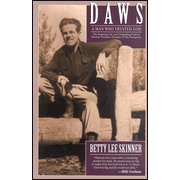
If you want to read more on Dawson Trotman. Betty Skinner has written a very enjoyable biography on his life entitled “DAWS” – Dawson’s beloved nickname. Product description: From his youth as a liar, gambler, and pool shark to manhood as an indefatigable witness for his Lord Jesus Christ, Dawson Trotman revolutionized the practice of evangelism and founded one of the most widespread and respected Christian organizations in the world today. This moving historical account, drawn from the memories of those whose lives he touched and from the author’s firsthand knowledge, will both encourage you in your faith and inspire you to action. 391 pages, paperback, from Navpress.
What is the Difference Between Discipleship & Mentoring? By Ted Engstrom

“A discipler is one who helps an understudy (1) give up his own will for the will of God the Father, (2) live daily a life of spiritual sacrifice for the glory of Christ, and (3) strive to be consistently obedient to the commands of his Master. A mentor, on the other hand, provides modeling, close supervision on special projects, individualized help in many areas—discipline, encouragement, correction, confrontation, and a calling to accountability.” – Ted Engstrom (The Fine Art of Mentoring, recently re-published by Wipf and Stock Publishers, 2008 )

Dr. Ted W. Engstrom (1916-2006) dedicated his life to effective Christian ministry leadership. His 60 years of Christian service include careers as Christian book editor at Zondervan, president of Youth for Christ International, president of World Vision, and author of more than 50 books. He was a board member for dozens of Christian organizations and assisted religious and political leaders in 136 other countries where he stood as a model of godly leadership.

The Discipleship Process by Glenn C. Daman

Going From Conversion To Completion in Christ in the Discipleship Process:

(Adapted from Glenn C. Daman’s Shepherding the Small Church, Grand Rapids, MI: Kregel, 2008, p. 170)

STAGE 1 – INFANT

STAGE 2 – MATURE

STAGE 3 – LEADER

Scripture Reading Doctrine & Theology Leadership Skills
Prayer Bible Study Skills Mentoring Relationships
Obedience Conduct Personal Vision
Fellowship Service Encourage Others
Service Disciple Infants Disciple the Mature
Stewardship Shedding the Horizontal Vertically Focused

What is Biblical Mentoring? By David P. Craig

Mentoring: What it is and Why it’s Practice is Crucial

Mentoring is a relational experience in which one person empowers another by sharing God-given resources.” – Paul Stanley & J.R. Clinton

Discipling is a relational process in which a more experienced follower of Christ shares with a newer believer the commitment, understanding, and basic skills necessary to know and obey Jesus as Lord.” – Paul Stanley & J.R. Clinton

“A discipler is one who helps an understudy (1) give up his own will for the will of God the Father, (2) live daily a life of spiritual sacrifice for the glory of Christ, and (3) strive to be consistently obedient to the commands of his Master. A mentor, on the other hand, provides modeling, close supervision on special projects, individualized help in many areas—discipline, encouragement, correction, confrontation, and a calling to accountability.” – Ted Engstrom (The Fine Art of Mentoring)

Mentoring is a process of opening our lives to others, of sharing our lives with others; a process of living for the next generation.” – Ron Lee Davis

“If you are planting for a year, plant grain.

If you are planting for a decade, plant trees.

If you are planting for a century, plant people.” – Old Chinese Proverb

  • More time spent with fewer people equals greater lasting impact for God. – Principle of Mentoring from the Life of Jesus
  • Some Biblical Examples of Mentoring: Moses mentored Joshua, Naomi mentored her daughter-in-law, Ruth, Ezra mentored Nehemiah, Elijah mentored Elisha, Elizabeth mentored her cousin Mary. Barnabas mentored Paul and John Mark, Paul mentored his spiritual son Timothy. Paul also mentored Priscilla and Aquila, who in turn mentored Apollos.

Mentor #1 – Who Is Your Paul or Elizabeth?

  • Do you have a spiritual mentor who is pouring his/her life into you the way Paul poured his life into Timothy or Elizabeth poured her life into her cousin Mary?
  • Do you have someone you can go to for wise counsel?
  • Do you have someone who is a godly example for you and a model worth imitating?
  • Do you have someone who lives out biblical values and spiritual maturity?
  • Do you have someone with solid skills that can help you improve where you are weak?

THE JOB DESCRIPTION OF A MENTOR

(Adapted from Ron Lee Davis, Mentoring, pp. 50-51, unfortunately out of print)

A willingness to spend the time it takes to build an intensely bonded relationship with the learner.

A commitment to believing in the potential and future of the learner; to telling the learner what kind of exciting future you see ahead for him or her; to visualizing and verbalizing the possibilities of his or her life.

A willingness to be vulnerable and transparent before the learner, willing to share not only strengths and successes, but also weaknesses, failures, brokenness, and sins.

A willingness to be honest yet affirming in confronting the learner’s errors, faults, and areas of immaturity.

A commitment to standing by the learner through trials—even trials that are self-inflicted as a result of ignorance or error.

A commitment to helping the learner set goals for his or her spiritual life, career, or ministry, and to helping the learner dream his or her dream.

A willingness to objectively evaluate the learner’s progress toward his or her goal.

Above all, a commitment to faithfully put into practice all that one teaches the learner.

“Be what you would have your pupils to be.” – Thomas Carlyle

“A mentor is not a person who can do the work better than his followers. He is a person who can get his followers to do the work better than he can.” – Fred Smith

“In truth, the deepest dimensions of the Christian life cannot simply be taught in a classroom or a book. They must be heard, seen, studied intently, handled, lived, and experienced in order to be proven and assimilated.” – Ron Lee Davis

Mentor #2 – Who is Your Barnabas?

  • Do you have someone in your life to encourage you?
  • Do you have someone to believe in you, support you, and guide you?

Encouragement: “is the kind of expression that helps someone want to be a better Christian, even when life is rough.” – Dr. Larry Crabb

“A person is never more like Christ than when full of compassion for those who are down, needy, discouraged, or forgotten.” – Chuck Swindoll

Lessons From Barnabas:

1)    He was generous with his finances (Acts 4:32-37).

2)    He reached out to Paul when everyone else was skeptical about him (Acts 9:26-31 & 11:25-30).

3)    He spent time with Mark when he had failed (Acts 15:36-39)

The Results of Barnabas’ Encouragement:  If it were not for Barnabas we would not have Paul’s epistles nor Mark’s gospel; nor the rapid spread of the gospel.

 Four Key’s to Barnabas’ Life (Acts 11:24):

1)    He was a man of integrity.

2)    He was a man full of the Holy Spirit (John 14:16-17, 26).

3)    He was a man full of faith.

4)    He was teachable. (Acts 13:43, 50)

#3 Mentoree – Who is Your Timothy or Mary?

  • Do you have someone in whom to invest your own life?
  • If married, you should look at your spouse, children, or grandchildren as “Timothy’s” or “Mary’s,” but is there anyone outside your family in whom you are investing?
  • You then, my child, be strengthened by the grace that is in Christ Jesus, and what you have heard from me in the presence of many witnesses entrust to faithful men who will be able to teach others. –  2 Tim. 2:1-2

 What Mentoring is in a Nutshell?

Relational – The you in v.2 above refers to Timothy and the me refers to the Apostle Paul. People learn how to better love and follow Jesus in the context of a focused friendship.

Personal – The basics that Timothy learned from Paul were mediated through his unique personality, gifting, and style.

Theologically Grounded – Paul is faithfully delivering what he himself received from many witnesses or marturon (“martyrs”). In the first century a martyr denoted a public witness to the truth. The meaning of the word martyr into its present meaning is evidence that Christian truth-telling could be terminally costly. In the Greek the word entrust means making a secure run to the bank to deposit a treasure.

Intentional – All of us are involved in hundreds of unintentional relationships. However, in the case of Paul and Timothy we see a relationship that was established for a specific purpose.

Transformational – Mentoring involves study; reflection; action; and receptivity.

Reproducible who will be able to teach others.

 The Power of Multiplication

(adapted from Keith Philips, The Making of a Disciple, p. 23)

Year                        Evangelist                        Discipler

1                        365                                     2

2                        730                                    4

3                        1095                                    8

4                        1460                                    16

5                        1825                                    32

6                        2190                                    64

7                        2555                                    128

8                        2920                                    256

9                        3285                                    512

10                        3650                                    1,024

11                        4015                                    2,048

12                        4380                                    4,096

13                        4745                                    8,192

14                        5110                                    16,384

15                        5475                                    32,768

16                        5840                                    65,536


*Keith’s chart compares the numeric difference between one person coming to Christ a day and one person a year being discipled to maturity. Catch the vision and start making disciples now!

Book Review: Gospel-Centered Discipleship by Jonathan K. Dodson

Brilliantly Integrating the Gospel in all of Life

In 2009 I took a core group of leaders with me from San Diego to Dallas, Texas for an Acts 29 Boot Camp. The highlight for all of us while we were there was hearing Jonathan Dodson give a Biblical Theology on the Person and Work on the Holy Spirit from the Old and New Testament. I knew great things were going to come from this man’s life upon hearing him speak.

I hope that this will be the first of many books that Dodson writes integrating the gospel with all of life. What he does in this book in a very cogent manner is demonstrate the strengths and weaknesses in “traditional” discipleship and shows how the gospel should not be bifurcated, but central to the pre-Christian and post-Christian’s understanding of discipleship. He makes a great case for the “Great Commission” becoming the “Gospel Commission” and shows how repentance and faith in the context of community are constants in the gospel-graced disciple of Christ.

Tackling discipleship biblically, theologically, and practically Dodson has given pastors, church planters, and all kinds of Christians a wonderful handbook for understanding biblical discipleship, and how to practically live out the gospel in the context of community.

The best part of this book is how it exalts the gospel of Christ by pointing to a grace based discipleship that doesn’t err toward the extremes of self-righteousness, nor of antinomianism, but simply living out one’s new identity in Christ. According to Dodson, discipleship is our identity in Christ and everything else we are is related to our distinct roles as a disciples of Christ.

Our new identity in Christ has three distinct aspects that are developed in the book: rationality, relationship, and being missional. He also demonstrates that we must not err on the side of being only vertical (pietistic), nor horizontally oriented (missional). We must seek to diagonally balance the vertical and horizontal aspects of our identity in Christ — the head, heart, and hands aspects of discipleship in the context of community.

I highly recommend this book as one that will increase your understanding of, and application of the gospel – no matter how long you’ve been a Christian. It is one of the best books on discipleship to come out in a long time.

*Jonathan K. Dodson (M. Div; Th.M, Gordon-Conwell Theological Seminary) serves as a pastor of Austin City Life in Austin, Texas. He has written articles in numerous blogs and journals such as The Resurgence, The Journal of Biblical Counseling, and Boundless. Dodson has discipled men and women abroad and at home for almost two decades, taking great delight in communicating the gospel and seeing Christ formed in others.

What Does A Biblical Disciple Look LIke?

*11 Characteristics of A Biblical Disciple by Francis M. Cosgrove

(1) A disciple is a learner – open and teachable. – Proverbs 9:8-10; Matthew 4:19; John 6:60-66.

(2) A disciple puts Christ first in all areas of life. – Matthew 6:9-13,24,33; Luke 9:23; John 13:13; 2 Corinthians 5:15.

(3) A disciple is committed to a life of purity and is taking steps to separate from sin. – 1 Corinthians 6:19-20; Ephesians 4:22-5:5; Colossians 3:5-10; 1 Thessalonians 4:3-7; Titus 2:12-14.

(4) A disciple has a daily devotional time and is developing in his or her prayer life. – Psalm 27:4; 42:1-2; Mark 1:35; Luke 11:1-4; 1 Thessalonians 5:17-18; James 1:5-7; 5:16.

(5) A disciple demonstrates faithfulness and a desire to learn and apply the Word of God through hearing it preached and taught, reading it frequently, Bible study, Scripture memory, and meditation on the Scriptures. – John 8:31; Acts 2:42; 17:11; Colossians 3:16; 2 Timothy 2:15

(6) A disciple has a heart for witnessing, gives his or her testimony clearly, and presents the gospel regularly with increasing skill. – Matt.28:18-20; Acts 1:8; 5:42; 14:21-23; 22:14-15; Rom.1:16; 1 Cor.15:3-4; 1 Thessalonians 2:4.

(7) A disciple attends church regularly to worship God, to have his or her spiritual needs met, and to make a contribution to the body of believers. – Ps.122:1; Acts 16:5; 1 Cor.12:12-27; Col.1:15-18; Heb.10:25

(8) A disciple fellowships regularly with other believers, displaying love and unity. – John 17:22-26; Acts 2:44-47; 4:31-33; Ephesians 4:1-3; Hebrews 10:24; 1 John 1:1-3

(9) A disciple demonstrates a servant heart by helping in practical ways. – Mark 10:42-45; Acts 6:1-4; 2 Corinthians 12:15; Philippians 2:25-30; 1 Thessalonians 2:8-9

(10) A disciple gives regularly and honors God with his or her finances. – Haggai 1:6-9; Malachi 3:10-11; 1 Corinthians 16:1-2; 2 Corinthians 8-9; Philemon 14

(11) A disciple demonstrates the fruit of the Spirit by an attractive relationship with Christ and those he or she relates with. – Acts 16:1-2; 1 Corinthians 13:4-7; Galatians 5:22-23; 1 Peter 2:18-23; 2 Peter 1:5-8

*Adapted from Essentials of Discipleship by Francis M. Cosgrove, pp. 15-16

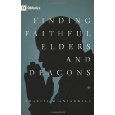
Book Review: Finding Faithful Elders and Deacons by Thabiti M. Anyabwile

A Useful Primer For Biblical Leadership in the Church

 In this book experienced pastor Thabiti Anyabwile writes three sections on how to find deacons, elders, and specify what their roles are in the church. Pastor Anyabwile gives the pertinent biblical requirements for deacons and elders, and gives numerous helps on biblical qualifications, traits to watch for, and questions and observations for examining whether or not those under consideration are wise choices for the respective offices of elder and deacon.

I think the best way to use this book is to use it as Thabiti Anyabwile intended it to be used:

 “First, use it prayerfully. Pray for pastors and elders as they shepherd and serve the sheep. Pray for more men to be raised up in the congregation for this important work. Pray that the Lord would pour out his grace on those serving these tasks. Pray that the members of the church would show genuine appreciation, love, and care for their shepherds. Pray that all the men in the church would grow in the qualities that elders should possess. Pray that men would have a godly desire to give their lives in serving the body of Christ as servant-leaders.

Second, use this book practically. The book does not delve into a lot of detailed argumentation, hoping instead to make application easily and quickly. I want the book to help in actually doing something—identifying and training elders—not just considering something. Put the suggestions into practice, and improve them with the experience and wisdom that come from your particular church setting and other faithful leaders.

Finally, use the book pedagogically. That is, use it to teach and instruct. Perhaps a church needs to select its first elders after a period of planning and study. Pastors may wish to use these brief chapters to ‘flesh out’ for the average church member which qualities the congregation as a whole needs to be looking and praying for in their prospective elders. Examination and pastoral search committees may find similar help.”

Take it from my own experience in over twenty years of pastoring – you want to get all the help you can in the wise selection of, praying for, training of, and role implementation of your elders and deacons – because the church will ultimately rise to great heights or fall to low depths based on the quality, character, and biblical execution of it’s leaders.

I highly recommend this book for church planters, existing leadership teams, solo pastors, deacons, and elders. It serves as a concise handbook that you can use to strengthen your existing leadership, develop future leaders, and most certainly add health and value to Christ’s church as you seek to be a good steward of its most valuable resources.

Book Review: The Essential Commandment by Greg Ogden

Another Winner by Greg Ogden to Help You Make Multiplying Disciples

 I finished reading Ogden’s 3rd workbook for making disciples this morning and I’m really excited about how God will use this book in building up His church through the multiplication of disciples around the world. The focus in this discipleship resource is on what it means to practically love God and others by studying, discussing, and applying the many principles gleaned from God’s Word related to what we call the “great commandment.”

Ogden has done an exceptional job (once again) of writing a discipleship workbook that is based on specific Bible passages, non-wordy, provides deep food for thought, and giving great insights and discussion questions along the way. I have used the two previous workbooks by Ogden and found that they work best in groups of three or four people.

Each Chapter in this book provides a: 1) Core truth – “the nugget around which each lesson is built;” 2) Memory Verse – “so that God’s viewpoint on the topic at hand becomes our own;” 3) Inductive Bible Study – “The place to discover reality from the only perspective that counts is the Bible;” 4) Reading – “Each lesson concludes with a teaching printed in the guide. This reading is intended to provide a contemporary discussion of the eternal core truth that will challenge our lifestyle and stimulate our thinking. The follow-up questions will make the learning concrete.”

I can’t recommend this workbook highly enough. Ogden is an expert at making disciples and knows how to get groups thinking, talking, praying, and serving together – resulting in what the church is supposed to be all about – making multiplying disciples. He has done a great service to the church by adding to his two previous works in this series (Discipleship Essentials, and Leadership Essentials). I hope that many will buy this book and use it repeatedly with triads and quads so that we continue to obey the great commandment and the great commission together for God’s glory.

A Great Visual of The Power of Making Multiplying Disciples

 The Power of Multiplication

(adapted from Keith Philips, The Making of a Disciple, p. 23)

Year                Evangelist                   Discipler

1                      365                              2

2                      730                              4

3                      1095                            8

4                      1460                            16

5                      1825                            32

6                      2190                            64

7                      2555                            128

8                      2920                            256

9                      3285                            512

10                    3650                            1,024

11                    4015                            2,048

12                    4380                            4,096

13                    4745                            8,192

14                    5110                            16,384

15                    5475                            32,768

16                    5840                            65,536


*Keith’s chart compares the numeric difference between one person coming to Christ a day and one person a year being discipled to maturity. Catch the vision and start making disciples now!

Book Review: Conformed to His Image: Biblical and Practical Approaches to Spiritual Formation by Kenneth Boa

Excellent Resource to Help You in Your Pursuit of Becoming More LIke Jesus

 According to the apostle Paul the goal of the Christian life is that we would be “conformed to the image of his Son (Rom. 8:29).” I have used this book several times now in classes at my church on developing in the spiritual disciplines in the context of community. This book has it all – good theology; historical theology; and excellent study questions and applications throughout. I have used this book along with Grudem’s Systematic Theology, Allison’s Historical Theology, and Ogden’s books on discipleship to try to balance the mentoring and discipleship process of making theologically culturally penetrating disciples of Christ.

Kenneth Boa’s prayer in is that a result of reading this book you will:

–    develop a greater appreciation for the unique way God has made you;

–    become aware of a wider array of options for your spiritual journey;

–    get out of a possible spiritual rut;

–    desire to experiment with other facets of the faith

–    appreciate the manifold legacy that has been bequeathed to us by those who have gone before us;

–    expand your horizons and be encouraged to move out of your comfort zone

–    have instilled in you a greater passion for Christ and a greater desire to participate in his loving purposes for your life.

Does Boa succeed in the above? A resounding “yes.” I have used this book one on one; in small groups of 7-14 people; and larger groups of 20-40 people. In every case the book has proven to be effective in helping all involved to grow in Christ like qualities, and behavior. Boa has masterfully written a very practical theology of the spiritual disciplines by comparing these disciplines to facets of the gem that we are ultimately becoming in Christ:

Facet #1 – Relational Spirituality: Loving God Completely, Ourselves Correctly, and Others Compassionately.

Facet#2 – Paradigm Spirituality: Cultivating an Eternal versus a Temporal Perspective

Facet #3 – Disciplined Spirituality: Engaging in the Historical Disciplines

Facet #4 – Exchanged Life Spirituality: Grasping Our True Identity in Christ

Facet #5 – Motivated Spirituality: A Set of Biblical Incentives

Facet #6 – Devotional Spirituality: Falling in Love with God

Facet #7 – Holistic Spirituality: Every Component of Life under the Lordship of Christ

Facet #8 – Process Spirituality: Process versus Product, Being versus Doing

Facet #9 – Spirit-Filled Spirituality: Walking in the Power of the Spirit

Facet #10 – Warfare Spirituality: The World, the Flesh, and the Devil

Facet #11 – Nurturing Spirituality: A Lifestyle of Evangelism and Discipleship

Facet #12 – Corporate Spirituality: Encouragement, Accountability, and Worship

This book is written as a textbook – it is well organized with outlines, introductions, charts, and each chapter closes with questions for discussion and personal application. I think it is one of the most helpful books out there in bridging the typical gaps between books that consider the multi-dimensional aspects of what it means to be human and made and conformed to the image of Christ. Boa weaves biblical theology, human personalities, psychology, etc., to help us see our blind spots and how we can keep chiseling away at what is not like Christ, so we can become the multi-faceted gems that God is working in us to become – through His working and our responsibly working to become like Jesus (Eph. 2:10 and Philippians 2:12-13). I Highly recommend this book – it’s definitely a resource you will use for the rest of your life – individually and corporately.