Dr. Ken Boa on The Importance of Teamwork in Ministry

The Importance of Teamwork

Perhaps brief would be the best word to describe a good kettledrum solo. Even the best musicians in the world would have a difficult time coaxing variety out of the huge mother of all percussion instruments. A flute or trumpet makes for much more pleasing and melodious sounds. Still, there are few solo instruments that can sustain our interests for long periods of time. We tend to think of instruments like the guitar or the piano because they can play more than one note at a time.

The long-term attraction of a good orchestra is not its solos, but its symphony. Music is most moving when it blends and balances the voices of many individual players. Mix a melodious violin with the thunderous boom of a tuba, add the melancholy cello and the warm French horn – and the minutes turn into hours without our even noticing. Such individually diverse instruments come together to make a sound like no other and sweep us along with them into another place.

This same principle that brings success in the concert hall holds true in the kitchen as well. A good chef mixes ingredients like flour, raw eggs or lard – things that by themselves are unappealing; but properly blended, they become mouth-watering dishes.

Likewise, a great leader must know how to bring together diverse elements and create a productive group. Few skills are more important in leadership than the ability to build a team. A mark of a great leader is how many great people will join his or her lineup. The greatest king of Israel, David, had a team comprised of “mighty men”:

These are the names of David’s mighty men:

Josheb-Basshebeth, a Tahkemonite, was chief of the Three; he raised his speak against eight hundred men, whom he killed in one encounter.

Next to him was Eleazar son of Dodai the Ahohite. As one of the three mighty men, he was with David when they taunted the Philistines gathered at Pas Dammim for battle. Then the men of Israel retreated, but he stood his ground and struck down the Philistines till his hand grew tired and froze to the sword. The Lord brought about a great victory that day. The troops returned to Eleazar, but only to strip the dead.

Next to him was Shammah son of Agee the Hararite. When the Philistines banded together at a place where there was a field full of lentils, Israel’s troops fled from them. But Shammah took his stand in the middle of the field. He defended it and struck the Philistines down, and the Lord brought about a great victory. – 2 Samuel 23:8-12

Because David attempted mighty things, only the mighty could keep up with him. Those who could not keep pace could not join the team.

You Can’t Do It Alone

Don Bennett was on top of the world. He was wealthier than most of us will ever imagine. He owned a ranch, a ski chalet and an eight-bedroom waterfront home on Seattle’s Mercer Island. And then everything changed. On a beautiful sunny day in August of 1972, Don was boating with his children when he fell overboard and the propeller of the boat ran over both of his legs. He nearly bled to death but managed to survive. His left leg took 480 stitches to close. His right leg was gone completely above the knee.

To make matters even worse, while he was in the hospital recovering, his business fell to pieces. Don felt like he had lost everything – except his determination. Amazingly, Don taught himself to ski again. Eventually, he would teach other amputees to ski on one leg. He started another business, Video Training Center, which listed such clients as Boeing and Weyerhauser. He started kayaking, and it was then that he began to dream of climbing mountains again.

Don had climbed Mt. Rainer in 1970. He decided to do it again, but he knew he couldn’t do it alone. He hopped five miles a day on his crutches. With a team of four others, he made it within 400 feet from the top before they were forced off by whiteout conditions and screaming winds. Four months later, he was training again with his team captain. They trained together for another year before returning to the mountain. He climbed for five days, 14 hours a day, sometimes hopping, sometimes crawling up the incline on one leg, and on July 15, 1982, Don Bennet touched the summit at 14,410 feet. He was the first amputee to climb Mt. Rainer.

When asked about the most important lesson he learned during the entire ordeal, his response was simple: “You can’t do it on your own.” He described how during one very difficult trek across an ice field his daughter stayed at his side and with each hop told him, “You can do it, Dad. You’re the best dad in the world. You can do it, Dad.” He told his interviewers that there was no way he would quit hopping to the top with his daughter yelling words of love and encouragement in his ear.1

You can’t do it alone. That makes a lot of sense! Few, if any, truly outstanding accomplishments can be achieved alone. That’s a fact that most of us are aware of. But what is not immediately obvious is that not just anyone can help. Don Bennett did not recruit his helpers in a nursing home. He built a team of people who wanted to climb a 14,410-foot peak and, perhaps more importantly, who could climb a 14,410-foot peak. One who attempts mighty feats had better be capable of recruiting a mighty team of willing and able participants.

King David did just that. His was one of the most celebrated teams in the entire Old Testament. This group was the all-star team of his battle-hardened warriors, celebrated for their valiant efforts. These men were ready, willing and able to step into the battle and lay their lives on the line for the man they knew was God’s chosen leader.

Several things stand out as we consider how David pulled his team together.

First, he spent time with them in battle. These men were welded to David by the hot fires of battle. His inner circle consisted of those men who had fought alongside him. Men, more so than women, tend to be seriously bonded together by shared experiences. It is especially true that as men struggle together and endure fierce opposition they are most tightly knit. Men who train for battle as a unit understand that they are their brother’s keeper. No one fights a battle alone; they move and succeed or fail as a unit. David knew these men and their capabilities, because he had seen what they could do with his own eyes.

Second, knowing that they were willing to make sacrifices for him, David made sure that they knew he was willing to do the same for them. When three of his mighty men risked their lives to obtain drinking water for him during a battle, David refused to drink it, choosing instead to pour it out onto the ground:

During harvest time, three of the thirty chief men came down to David at the cave of Adullam, while a band of Philistines was encamped in the Valley of Rephaim. At that time David was in the stronghold, and the Philistine garrison was at Bethlehem. David longed for water and said, “Oh, that someone would get me a drink of water from the well near the gate of Bethlehem!” So the three mighty men broke through the Philistine lines, drew water from the well near the gate of Bethlehem and carried it back to David. But he refused to drink it; instead, he poured it out before the Lord. “Far be it from me, O Lord, to do this!” he said. “Is it not the blood of men who went at the risk of their lives?” And David would not drink it. – 2 Samuel 23:13-17

Such were the exploits of the three mighty men.

This was by no means intended to degrade their act. Rather, David meant to dignify it. He poured the water out before the Lord almost as a drink offering. His act of sacrifice communicated a depth of devotion and love that had to have impressed those warriors.

Third, they celebrated victory together. Time and again David and his mighty men faced seemingly insurmountable odds and saw God deliver them. Through these amazing victories, David and his mighty men began to experience the truth that the Apostle Paul would later share with the church in Rome: “If God is for us, who can be against us?” (Romans 8:31b). Knowing that God would be faithful to deliver his anointed leader from dangerous circumstances, afforded these men great confidence in the battles they faced.

Finally, David honored his friends. These men were well known throughout the land as “David’s Mighty Men.” That phrase served as a banner that set them apart as extraordinary. They weren’t merely known as mighty men; they were David’s mighty men. A group’s strong sense of identity allows them to stand firm in the face of mounting pressure. As we read this account, one thing becomes clear: David knew he couldn’t do it alone.

The early church had this same mindset. In Acts 2:42-47, we read that the body of Christ viewed itself as a synergistic team:

They devoted themselves to the apostles’ teaching and to the fellowship, to the breaking of bread and to prayer. Everyone was filled with awe, and many wonders and miraculous signs were done by the apostles. All the believers were together and had everything in common. Selling their possessions and goods, they gave to anyone as he had need. Every day they continued to meet together in the temple courts. They broke bread in their homes and ate together with glad and sincere hearts, praising God and enjoying the favor of all the people. And the Lord added to their number daily those who were being saved.

There was a tangible sense of teamwork in the early church. These Christ-followers shared their possessions, met together regularly and ate “glad and sincere hearts.” Notice that Luke uses the word “devoted” to describe the early Christians. This is one of his favorite words in the book of Acts. Its roots are found in the idea of a steadfast pledge or a binding promise. Not only were these believers devoted to God, they were devoted to one another.

Teamwork and the Trinity

Strong teams functioning at their best reflect similarities to the relationship that exists within the divine Trinity. Scripture records the work of the divine trinity in the creation of the cosmos (see Genesis 1:1-2; John 1:1-3; Colossians 1:15-17). Thus, when a team works together in an other-centered manner, it mirrors, albeit dimly, the creativity and mutual regard that is derived from God himself. As Gilbert Bilezikian has written, “Whatever community exists as a result of God’s creation, it is only a reflection of an eternal reality that is intrinsic to the being of God.”2

The three persons of the Godhead are never independent but always work together in concert. One needn’t read very far in the Bible to discover this. In the very first verse (Genesis 1:1), we are introduced to God as the initiator and designer of all creation. The second verse describes the Spirit of God hovering over the created world. Notice that the Spirit does not construct the created world; he merely hovers over it – suggesting the role of protector or overseer. Finally, in the third verse, we find the Word of God as the executor of God’s will – the agent of creation.3

This perfect and harmonious interaction, though obvious from the beginning of the Bible, was especially evident in how God made it possible for people who were formerly alienated from him to be transformed into his beloved children (Ephesians 1:3-14). This passage, which in the original language of the Bible is actually one long run-on sentence, beautifully extols the work of each member of the Trinity in God’s scheme of redemption, work which corresponds to what we have just seen in the first three verses of Genesis 1.

Paul first spoke of the work of the Father in accomplishing our salvation:

Praise be to the God and Father of our Lord Jesus Christ, who has blessed us in the heavenly realms with every spiritual blessing in Christ. For he chose us in him before the creation of the world to be holy and blameless in his sight. In love, he predestined us to be adopted as his sons through Jesus Christ, in accordance with his pleasure and will – to the praise of his glorious grace, which he has freely given us in the One he loves. – Ephesians 1:3-6

The Father chose us before the creation of the world and sent his Son into the world so that through him we could be adopted into his family. He planned all this out very carefully and initiated it at just the right time. God the Father is the initiator and designer of our salvation.

Second, the apostle focused on the work of the Son:

In him we have redemption through his blood, the forgiveness of sins, in accordance with the riches of God’s grace that he lavished on us with all wisdom and understanding. And he made known to us the mystery of his will according to his good pleasure, which he purposed in Christ, to be put into effect when the times will have reached their fulfillment – to bring all things in heaven and on earth together under one head, even Christ.

In him we were also chosen, having been predestined according to the plan of him who works out everything in conformity with the purpose of his will, in order that we, who were the first to hope in Christ, might be for the praise of his glory. – vv. 7-12

The Son makes the Father’s plan a reality. In his incarnation, he becomes the God-man, the mediator between God and man. His blood sacrifice on our behalf paid the penalty for our sins so that we could enjoy forgiveness and lay hold of God’s purpose for our lives. God the Son is the agent of our salvation.

Third, the work of the Holy Spirit seals and guarantees our spiritual inheritance:

And you also were included in Christ when you heard the word of truth, the gospel of your salvation. Having believed, you were marked in him with a seal, the promised Holy Spirit, who is a deposit guaranteeing our inheritance until the redemption of those who are God’s possession – to the praise of his glory. – vv. 13-14

The Holy Spirit applies the righteousness of Christ to all those who are in Christ. He has anointed us, holding us as a pledge until we see Christ face-to-face. The Spirit of God is the protector of our salvation.

Thus, the Father initiated salvation, the Son accomplished it and the Holy Spirit makes it real in our lives. At the end of each of these three sections the phrase “to the praise of his glory” appears. All three are to be praised for their work in bringing us to salvation. The Father, Son and Holy Spirit perform distinct roles, but they work together in perfect harmony and agreement.

There is much talk about how to build unity among diverse people. If we go back to the analogy of an orchestra, you may recall how that orchestra tunes itself before the performance. The oboist plays the concert pitch (an A above middle C [440 Hz.]), then the first violinist plays the A, and the other instruments tune to that pitch. What follows can only be described as a bizarre cacophony at first, as you hear them make that strange sound only an orchestra can make. But once it’s calmed down, they’re all tuned to one another by tuning to the same instrument.

Jesus Christ is our guiding instrument. His incarnation sounded the concert pitch for all of us. As we yield to the transforming power of the Holy Spirit, we find our own instruments coming more and more into the same key as Jesus. As a byproduct of this, we find that we are all in tune with one another as well.

The Power of Synergy

A team is capable of accomplishing things that no individual, no matter how multi-talented, could do alone. Let’s take a little quiz. Don’t worry, there is only one question: If two horses can pull 9,000 pounds, how many pounds can four horses pull?

Here’s a hint: it’s not 9,000 pounds. In fact, it’s not 18,000 pounds. Believe it or not, four horses can pull more than 30,000 pounds! If that doesn’t compute, it’s because you don’t understand the concept of synergism.

Synergy is the energy or force that is generated through the working together of various parts or processes. Synergism can be defined as the interaction of elements that, when combined, produce an effect that is greater than the sum of the individual parts. Synergy is a joint action that increases the effectiveness of each member of a team. To function well, a team must be committed to a common vision and purpose, and it must be willing to work in unity for the improvement of the whole rather than the advancement of any one member.

From a large pool of disciples who were following him, Jesus designated only 12 men who would become his apostles. This was such a significant decision that the Lord prayed all night to prepare for it: “One of those days Jesus went out to a mountainside to pray, and spent the night praying to God. When morning came, he called his disciples to him and chose twelve of them, whom he also designated apostles” (Luke 6:12-13). Mark 3:14 adds that Jesus appointed these 12 apostles “that they might be with him and that he might send them out.”

Jesus knew that this was the team that would be with him for the rest of his ministry, and he was prepared to pour himself unreservedly into their lives. He would still teach the crowds, but in private sessions he now begins to pour out his plans and his character into these 12 men. Even in the midst of his greatest popularity, Jesus realized that the way to turn the world upside-down is to invest heavily in a few.

Nearly 2,000 years later, we are here to attest to that fact that it worked. Eleven of these 12 men became the foundation of the church, built on the cornerstone of Christ (Ephesians 2:19-20). Jesus’ actions, the unshakable reality of the resurrection and the indwelling power of the Holy Spirit turned a group of men who were characterized by confusion, infighting and self-interest into a genuinely synergistic team with (and this is perhaps the greatest miracle of all time) an authentic fondness for one another.

Today the church, the body of Christ on earth, is not an organization but an organism that manifests both unity and diversity. We’re each a part of something; there are to be no spiritual loners in God’s family. We are people who journey along the way with other people to whom we’re called into a covenant of relationship. When we come to God, helpless and battered, nothing in our hands, and receive his gift of forgiveness and salvation, we are buying into a package deal. God says, “If you love me, you must love my people as well.”

We live in an individualistic culture, but we are called to be people in relationship. We are not called to be the persons of God but the people of God.

One phrase that is easily overlooked in all this is the first part of verse 14: Jesus set these men apart “that they might be with him.” Before they were sent out to engage the world in ministry, they were called to a personal experience with Jesus. Wisely, Christ never wants anyone to talk about Christianity like a salesman but as a witness, someone who has experienced firsthand what he is talking about. There is something about a person who has been with Jesus that is distinctive.

Most of us would agree: being alive when Jesus comes would be optimal. We pray, with the saints throughout the ages, “Maranatha! Even so, come Lord Jesus.” However, is anyone of us willing to be presumptuous and assume that we will be alive when he comes? Can we be so certain that his return will come during our own lifetime?

It is wise for us to see how we can invest into other people so that the things we have learned, the things we value, the things we have built our lives around will live on after we are gone. A prudent mind is always building succession. A prudent mind is always mentoring another who will rise to positions of leadership in the future. An old folk parable says that a wise man is willing to plant shade trees even though he knows he will never enjoy the shade. He’s planting them for his children and his children’s children.

We see a great example of the relationship between synergy, mentoring and teambuilding in sports. Many of the great coaches of our era once played for and coached under the great coaches of yesteryear. In the 2002 World Series, the Anaheim Angels squared off against the San Francisco Giants. Remarkably, both teams were managed by former teammates Mike Scioscia and Dusty Baker. Both men are among the finest managers in professional baseball, and they will tell you the wonderful experience it was to play for the legendary Tommy Lasorda. Byron Scott coached the New Jersey Nets to back-to-back NBA finals. He directly attributes much of his success to playing under the tutelage of Pat Riley. As the coach of the San Francisco Forty-Niners, Bill Walsh revolutionized the game of football with his “West Coast Offense.” At least seven of those who were his assistant coaches have now been head coaches in the National Football League.

A Team of Specialists

Teams are comprised of positional specialists. These individuals have been recruited on the basis of individual ability and expected contribution. But they aren’t a solid team until their individual strengths combine to produce an outcome which no single member alone could have produced. High performance teams are tough to build. So we look to the Master Teacher for a demonstration of how to recruit and mold a world-class team.

Jesus formed the most important team ever assembled. This team was developed to continue his work on earth (Acts 1:8-9). Luke recorded the continuing story of the apostles in the book of Acts. The church they led exploded out of Jerusalem, around the world and across nearly 2,000 years of history. Mark 2:14-17 recounts a seemingly insignificant event – the calling of Matthew, also known as Levi:

As [Jesus] walked along, he saw Levi son of Alphaeus sitting at the tax collector’s booth. “Follow me,” Jesus told him, and Levi got up and followed him.

While Jesus was having dinner at Levi’s house, many tax collectors and “sinners” were eating with him and his disciples, for there were many who followed him. When the teachers of the law who were Pharisees saw him eating with the “sinners” and tax collectors, they asked his disciples: “Why does he eat with tax collectors and ‘sinners’?”

On hearing this, Jesus said to them, “It is not the healthy who need a doctor, but the sick. I have not come to call the righteous, but sinners.”

Levi may seem like an arbitrary choice, but as we saw earlier, Jesus spent all night in prayer before making his choices. In other words, he chose Matthew intentionally, because he wanted to show us something. By choosing a tax collector, Jesus demonstrated two important principles of team building.

First, he recruited specific people for specific reasons. Teams are made up of players. Players have positions. They are expected to contribute something they do well – ideally better than anyone else on the team.

Second, Jesus recruited an “odd” player. He began with a group of Galileans – working men, mostly fishermen, all with strong Jewish backgrounds. Then he inexplicably added Matthew, a tax collector and hated publican, to the mix. As far as the apostles go, this was the most unlikely candidate. As a tax collector, he would have been violently opposed by orthodox Judaism. In fact, the Hebrew word for tax collector (mokhes) seems to have as its root meaning “oppression” and “injustice.” The Jews simply hated this oppressive system of Roman taxation. They hated the high percentage of taxes. They hated the sheer number of taxes: Polls, bridges, roads, harbors, income, town, grain, wine, fish, fruit, etc. They hated how their money was spent on immoral and idolatrous activities. But most of all, they hated what Roman taxation represented: Roman domination of the people of God.

Consequently, any Jew who worked for the Roman “IRS” was viewed as a traitor of the worst sort. Matthew is therefore ostracized from all forms of Jewish life, especially their synagogue services. J.W. Shepard notes, “His money was considered tainted and defiled anyone who accepted it. He could not serve as a witness. The rabbis had no word of help for the publican, because they expected him by external conformity to the law to be justified before God.”4

Interestingly, as the writer of the first Gospel, we learn more from Matthew about Old Testament prophecies and Jewish traditions than from any other writer. Reading his book we would think that he was a Jew’s Jew. What are we to make of this? Perhaps Matthew longed for his Jewish roots and yet was hard-pressed by his job security. Likely in solitude he studied the Scriptures, coming to independent conclusions and an individual hope of the Messiah. We should learn from Matthew that those on the sidelines who look so antagonistic might just be the greatest members of our team.

As Jesus passed by, he looked at Levi. Most people would have tried to ignore the tax man or sneak past him. Jesus was different. He met Levi eyeball-to-eyeball and called him to immediate discipleship.

Matthew responded immediately and radically. Likely Levi was familiar with Jesus. The Sea of Galilee, especially this shore near Capernaum, is Jesus’ “headquarters.” Undoubtedly he had heard Jesus preach. He may even have witnessed Jesus’ call to the four fishermen. Certainly he had collected plenty of taxes from them, especially after the great miraculous catch (Luke 5:4-7). Though the text is a bit confusing on this point, Matthew probably closed up shop and then settled accounts with the Roman authorities over him. To do less would have been irresponsible and even dangerous, thus jeopardizing the ministry of Jesus.

It is one thing for four fishermen to leave their private business in the hands of their father. They always had the option to return. In fact, after the resurrection, the apostles returned to Galilee and spent their time fishing as they waited for Jesus. However, Levi’s situation was different. He had not other options. He was a small member of a large corporate structure. There were eager young publicans itching to sit in his lucrative seat. When he left, he knew he was leaving for good.

In addition to Matthew the tax collector, Jesus also recruited Simon the Zealot, who was at the opposite end of the political spectrum from Matthew. Jesus taught his team of individuals to understand, appreciate and love each other. Jesus molded his team into a tightly-knit unit. But he recruited each of them on the basis of their individual strengths. He recruited people who would contribute to the other members of the team and to the team’s overall objectives.

Teams, by their nature, require specialists. Specialists often differ in personality and views. Team members combine their strengths to help one another to grow and to change their world. Such a diversified team may be tougher to lead – but then training lions is more exciting than feeding goldfish!

Trusting Your Team

Every competent leader knows the importance of building a team. But how is this accomplished? Once again, Jesus provides us with an example:

When Jesus came to the region of Caesarea Philippi, he asked his disciples, “Who do people say the Son of Man is?” 

They replied, “Some say John the Baptist; others say Elijah; and still others Jeremiah or one of the prophets.” 

“But what about you?” he asked. “Who do you say I am?”

Simon Peter answered, “You are the Christ, the Son of the living God.”

Jesus replied, “Blessed are you, Simon son of Jonah, for this was not revealed to you by man, but by my Father in heaven. And I tell you that you are Peter, and on this rock I will build my church, and the gates of Hades will not overcome it. I will give you the keys to the kingdom of heaven; whatever you bind will be bound in heaven, and whatever you loose on earth will be loosed in heaven.” Then he warned his disciples not to tell anyone that he was the Christ. – Matthew 16:13-20

There’s one factor that may be more important to effective leadership than leadership qualities or extensive training. According to Jon R. Katzenbach and Douglas K. Smith, effective leaders, “simply need to believe in their purpose and their people.”5 Katzenbach and Smith contend that the stronger this belief, the more it will enable leaders to instinctively strike the right balance between action and patience as they work to build effective teams.

Nobody illustrated this principle more effectively than Jesus. When Jesus asked Peter, “Who do you say I am?”, he wasn’t engaging the fisherman in an intellectual exercise. If Peter was to lead the church, he would have to have a grasp on the identity of Christ and his purpose. Peter didn’t blink an eyelid before answering. He boldly declared that Jesus was “the Christ, the Son of the living God.” When Peter confessed that Jesus was the “Christ,” he exhibited an understanding of the Lord’s purpose. He was the Christ, the Messiah, the Savior. He had come to save all who would trust in him.

Jesus responded not only by affirming Peter’s God-given insight, but also by expressing his confidence in the disciple’s future role in leading the church. While theologians may debate about the exact meaning of Jesus’ words, one thing is clear: Jesus entrusted Peter with a key leadership role. And that step was crucial to the future development of the team of men and women who were to storm the Roman Empire with the gospel.

1Adapted from James M. Kouzes and Barry A. Posner, The Leadership Challenge: How to Keep Getting Extraordinary Things Done in Organizations (San Francisco: Jossey-Bass, 1995).

2Gilbert Bilezikian, Community 101: Reclaiming the Local Church as Community of Oneness (Grand Rapids: Zondervan, 1997), p. 16.

3Adapted from Bilekizian, Community 101, pp. 16-17.

4J. W. Shepard, The Christ of the Gospels (Grand Rapids: Eerdmans, 1939), p. 143.

5John R. Katzenbach and Douglas K. Smith, The Wisdom of Teams: Creating the High-Performance Organization (Boston: Harvard Business School Press, 1993), pp. 138-139.

Book Review: Change Your Life Not Your Wife – Marriage Saving Advice for Success Driven People by Tony Ferretti and Peter J. Weiss

Good Solutions to Common Marriage Problems By Dr. David P. Craig

Tony Ferretti and Peter J. Weiss have combined their efforts to write a very readable and practically helpful handbook on marriage for success driven people. Early into the book the author’s write their thesis: “The power failure syndrome happens because the same traits that propel people to the top in business cause turmoil in their personal lives.”

I’ve witnessed this reality time and time again as a pastor and life coach. It’s mind boggling to me how many men and women are successful in their careers and woefully unsuccessful in their relationships at home with their spouse and children. The bulk of this book is designed to counteract this trend by honing in on four key areas in a marriage: 1) Working toward the marriage you want to have – it does take work; 2) Achieving balance between your career and your relationships; 3) Establishing an ease in your relationships; and 4) All you need to do is change yourself!

The main aspects of deteriorization in a marriage result from trying to bring two personalities together; having differing expectations; and being unable to talk through conflict resolution. This results in conflicts growing, frustration being built; chronic anger being developed; resentments being formed and intensified; and ultimately detachment and crisis.

The author’s give many real life examples of how marriages deteriorate, as well as steps that can be taken in order to avert a crisis, and even develop a successful and happy marriage. They talk about relational killers, and give wonderful advice in the areas of communication and nurturing your marriage. I recommend this book as a good guidebook for couples to detect their emotional and character blind spots. They have provided many practical questions, assessments, and strategies throughout the book.

The one weakness of the book relates to not addressing the worldview of the couple. For example – My wife and I are Christians and thus share the same Biblical values, goals, purposes, objectives, etc. So in our roles as a husband and wife, as well as in our parenting, and balancing all aspects of life we have the same worldview foundation. I think the danger of this book is that it focuses too much on behavioral changes (symptoms – fruit) without getting at the cause or the foundations of behavior (cause/sin/idolatry/selfishness/root of all problems).

Therefore, my recommendation would be to read this book along with a marriage book that has a good basis and foundation for marriage like R.C. Sproul’s “The Intimate Marriage,” or Tim Keller’s “The Meaning of Marriage.” Overall, it’s well written, full of practical help, and recommended for pre and post married couples of all ages.

About the Author’s of Change Your Life, Not Your Wife:

Dr. Tony Ferretti is a licensed psychologist who has helped clients recognize the addictive nature of power, control, and “success” for over twenty years. A Ph.D. graduate of the University of Southern Mississippi, he’s appeared on Dr. Phil and hosted his own popular radio talk show, “Talk to Tony.”

Dr. Peter Weiss is a physician and healthcare executive with a passion for helping others to health and wellness. A graduate of Washington University in St. Louis, Dr. Weiss currently serves as an executive for the Adventist Health System in Orlando, Florida.

Senior Pastor – Are You Mentoring Your Associates? by Martin Hawkins

The Role of Mentoring Among Pastors

Perhaps the greatest contribution a senior pastor can make to the assistant position is to consistently disciple and mentor. He should mentor not only the intern who wants to learn how to become a senior pastor, or the intentional associate and unintentional pastor who will need to understand and tangibly fulfill his vision, but also the leadership in the church and the young men and women who will rise up to become disciple makers themselves one day. One of the greatest ways to find an associate who will fit in your church is to spend time mentoring and getting to know the young people with a heart for ministry.

As Paul stated to young Timothy, “And the things which you have heard from me in the presence of many witnesses, these entrust to faithful men, who will be able to teach others also” (2 Tim. 2:2). Good ministry—good leadership—involves multiplying one’s effectiveness through raising up new leaders to proclaim the gospel. The time that it takes to invest in the spiritual growth and training of others will be returned as they become able to carry some of the burden themselves.

Dennis Fields writes, “Training an associate is a learning experience for the senior pastor as well. He strengthens his communication skills as he teaches by word and example. The pastor may have forgotten some of the traits that served to make him successful, but as he imparts his knowledge and experience to the associate, he may rekindle fires of zeal. ‘as Iron sharpens iron; so a man sharpens the countenance of his friend’” (Prov. 27:17).

Senior pastors must make time to disciple their assistants. Some of the proof of Moses’ mentoring skills can be seen in Joshua’s success as he transitioned from assistant to leader. Evidently, in the first chapter of Joshua, Joshua was scared. God told him at least three times in chapter 1 to be strong and of good courage, indicating that Joshua was weak or faint of heart and God needed to encourage him. Perhaps Joshua didn’t feel up to the task. (Remember Moses’ earlier fear and protestations in this same situation?) We can imagine Joshua thinking, I don’t want to follow this man. He was a great leader. How can I measure up?

But Joshua had learned from his mentor. He didn’t question God’s appointment. And God responded favorably by bolstering him with words indicating that He would be in charge and would always be with Joshua.

Because Joshua recognized the magnitude of his responsibility toward God and his people, he came into this job with total dependence on God. He had no choice. And that’s what made him a great leader. He learned from Moses the necessity of depending on God, first as an assistant, yet even more so as the person in charge.

The other characteristic that shows both Moses’ mentoring skills and Joshua’s own leadership skills is Joshua’s understanding of his own design. Although he watched Moses, although he did everything that Moses showed him to do, he never tried to become Moses. And therefore, Joshua became just what God made him. He was the warrior, the military man, when the Israelites needed a warrior. Where Moses had been a theologian of sorts, Joshua was strictly a military man. We don’t see him coming up with much strong theology of any sort except at the end of his tenure when he told the people to make a choice. But “as for me and my house, we will serve the Lord” (Josh. 24:15).

Although Joshua learned from Moses, they were different leaders. Joshua was quiet and reserved. He didn’t seem to get mad at the people for anything or get angry. He just took them through a military campaign. He was the leader whom God wanted for that particular time in Israel’s history.

The Art of Mentoring

The book of Acts gives us a detailed view of how Barnabas and Paul related in the ministry. Because of Paul’s great legacy through Scripture, Barnabas is often dismissed as a minor character in comparison. But, as I mentioned previously, he was an important person who mentored Paul and knew when to step aside to allow God’s plan to take effect.

Special note should be given to the name Barnabas. Known as “the Son of Encouragement,” Barnabas was used by God to befriend Paul, who was looked upon with skepticism by other believers. Paul needed the touch of a leader who could mentor or uphold him after his conversion. Barnabas, the consummate encourager, provided that touch.

For all practical purposes Barnabas became Saul’s mentor. Howard and William Hendricks describe special qualities one must have to be a mentor:

(1) He promotes genuine growth and change. The goal of every mentor should be the emotional, social, and spiritual growth of his protégé or the person he mentors.

(2) A mentor provides a model to follow.

(3) A mentor helps you to reach your goals more efficiently.

(4) A mentor plays a key role in God’s pattern for your growth.

(5) A mentor’s influence benefits others in your life.

Barnabas fulfilled every one of these characteristics as he groomed Paul for the ministry.

When Paul left Damascus for Jerusalem after his conversion, he struggled to reach the disciples. Barnabas did not stand idly by observing, but he found out about Paul, “took hold of him and brought him to the apostles” (Acts 9:27). Barnabas stepped in and mediated the relationship between Paul and the apostles, moving it along to a relationship of trust sooner than Paul could have done by himself. Certainly Paul had a strength that defied all resistance to his preaching the gospel of Christ, but can you imagine how Barnabas’s actions and belief in his sincerity bolstered Paul’s spirit and resolve?

Barnabas seems to have always kept his eyes open for a ministry slot that would fit God’s calling on Paul’s life. After Barnabas had ministered in Antioch and discovered the environment, he didn’t stay and pine for a helper, and he didn’t pray for God to give Paul a similar ministry; instead, he left his post and sought out Paul in Tarsus (Acts 11:25). Barnabas had a special insight into Paul’s strengths, and he helped him to define and refine his gift of teaching by developing those who were in Antioch.

The Holy Spirit validated Barnabas’s insight into Paul’s calling by commissioning Barnabas and Paul to go on the first missionary journey (Acts 13:1–2). During that trip, the leadership transfer occurred. The text begins to refer to Paul as Paul instead of Saul, and it is after Paul’s mighty sermon at Paphos that the text begins to refer to the pair as “Paul and Barnabas” rather than “Barnabas and Paul.” Paul gained top billing. He came into his own senior pastorate role.

Mentoring with Intimacy

Paul learned the importance of mentoring with a personal touch. Soon after splitting from Barnabas, Paul chose to guide young Timothy (Acts 16:1–3).

Throughout his ministry Paul discipled several assistant leaders, yet Scripture shows us in detail the personal touch of his communication with Timothy. In Acts 16:1–3, Paul is introduced to Timothy, who had a unique set of circumstances. Timothy’s mother was Jewish, but his father was Greek. Since Timothy was so well spoken of by the people in the area, Paul insisted that he be circumcised. Paul was intuitive to the Spirit’s leading by seeing in Timothy that he would be used in the gospel ministry. This relationship became more evident as he wrote to Timothy in his epistles known as the Pastoral Epistles.

Paul spoke as a father in 1 Timothy 1:2: “To Timothy, my true child in the faith: Grace, mercy and peace from God the Father and Christ Jesus our Lord.” The term of endearment used here implies that Paul was responsible for mentoring Timothy in his spiritual growth and development. Verse 18 follows with Paul mentoring Timothy and using the term “my son,” which indicated the spiritual leadership role Paul assumed in Timothy’s life. As a father who expected refinement in his son, Paul knew Timothy, a spiritual baby, required this nurturing. Later in the same book, Paul is clear about his intent and lets Timothy know of his desire to be with him.

It is imperative for the future growth of the kingdom of God that senior pastors have a fond affection for young assistants in their congregations. A spiritual model must be seen long before it can be heard. Paul’s model of fatherly affection allowed him to grow Timothy in every area of his personality and character.

In 1 Timothy 1:2, Paul’s intimacy increased. He was in prison, and his words were weighted with a sense of urgency. Paul greeted Timothy as “my beloved son: Grace, mercy and peace from God the Father and Christ Jesus our Lord” (2 Tim. 1:2). In the second chapter he continued, “You therefore, my son, be strong in the grace that is in Christ Jesus” (2 Tim. 2:1). Paul also reaffirmed Timothy by stating, “I am mindful of the sincere faith within you, which first dwelt in your grandmother Lois, and your mother Eunice, and I am sure that it is in you as well” (2 Tim. 1:5).

Senior pastors would do well to be specific yet personal in their affirmation of their assistants. Too often we hear horror stories about the division among staff ministers because of lack of proper personal attention. Paul’s lessons of encouragement, discipleship, fathering, mentoring, teaching, and admonishing is a dynamic model for senior pastors and assistant pastors to study.

I thank God for a relationship with Dr. Evans, my senior pastor, that allowed for my growth in literally every area of my life. Though I am chronologically older, Dr. Evans’s model of leadership inspires me to greater heights in Christ. This can be achieved only through an openness, at times, to be vulnerable with each other. Senior pastors need not stop to talk about it, but let the modeling emerge through daily events. Hospital visits, weddings, communion, funerals, speaking engagements, counseling couples, encouraging singles, Bible study preparation, and many other events provide natural times to mentor assistants. Though laborious, these times are laboratories and are also God’s cameos of what the assistant can do to lighten the load of the senior pastor. Pastors can seize these moments as God-structured times to train and mentor.

Mentoring with Humility

The senior pastor should mentor even the intern who is after his job. Even if a young assistant or a young intern bad-mouths you or says things about you that are not true, you still have the responsibility of making that person effective.

Look at Peter. The fallen one among Jesus’ disciples, Peter took the leadership of the church after the crisis. Even in death, Christ was discipling. And Peter began to espouse God’s plan. Do you see who Christ left at the head? The one who always had his foot in his mouth. He left the one who always appeared to be in the center of controversy. But Jesus recognized Peter’s potential and guided him to it.

Barnabas understood this concept. Following his heated discussion with Paul about John Mark’s dedication, Barnabas chose to leave Paul and take John Mark under his wing. Barnabas’s mentoring duties to Paul had been fulfilled. Now John Mark needed his special touch. Barnabas’s willingness to risk his reputation on the development of a young minister provided for John Mark the needed affirmation to ignite him into the responsibility of the gospel ministry. Once again, Barnabas fulfilled his name—Encourager.

Senior pastors must be able to see what God sees in developing the assistant. There are times when this is the only transmitter God uses to aid in the development of others. Barnabas’s approach to ministry was rare, yet needed. Vision for God’s kingdom must always include the discipling of those closest to you.

A Bountiful Journey

Assistant pastors are often forgotten as God’s people who need special attention. As a senior pastor, you are mentoring and discipling your congregation. You are ministering to your congregation’s needs and arranging for help to be available. Consider whether you are also exhibiting these qualities in how you relate to your staff.

A respondent to a survey about assistant pastors a few years ago wrote:

I believe I am just about in the best case scenario. The relationship and affinity of purpose-driven direction between the senior pastor and myself are paramount to creating this environment we enjoy. We are a perfect match. Second, the congregation’s high view of pastoral leadership has helped the environment. Third, when pastors who are competent leaders, who model biblical servant/ God direct ministry that is backed up by people accepting Christ and discipling people to become fully devoted followers of Christ, Satan will have problems getting a foothold.

The senior pastor should be an example of serving others, realizing that Philippians 2:3–5 requires him to see the quality of the associate’s position before God. Within the local body, most recognize that the senior pastor is often the higher person of authority. But from God’s viewpoint the persons are equal, with differing gifts and responsibilities expressed through serving one another and the congregation. Senior pastors who fail to see assistants as gifted servants will often tilt the vision of the congregation to misunderstand the pastoral support staff. On the other hand, openness about their respective callings can begin the journey of a fruitful relationship

Article excerpted and adapted from Hawkins, M. E., & Sallman, K. The Associate Pastor: Second Chair, Not Second Best. Nashville, TN: Broadman & Holman Publishers, 2005 (110–115).

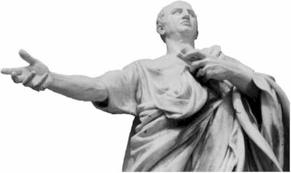
6 Destructive Mistakes People Make: Observed by Cicero

(1)  The delusion that personal gain is made by crushing others.

(2)  The tendency to worry about things that cannot be changed or corrected.

(3)  Insisting that a thing is impossible because we cannot accomplish it.

(4)  Refusing to set aside trivial preferences.

(5)  Neglecting development and refinement of the mind, and not acquiring the habit of reading and studying.

(6)  Attempting to compel others to believe and live as we do.

Marcus Tullius Cicero was born in 106 B.C. in Arpino, Italy and died on December 7, 43 B.C. He was a statesmen, philosopher, and orator.

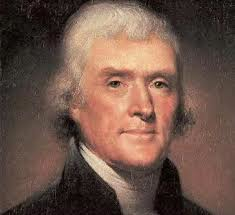
Thomas Jefferson’s 10 Commandments of Responsibility

Responsibility:

 (1) Never put off till tomorrow what you can do today.

 (2) Never trouble another for what you can do yourself.

 (3) Never spend your money before you have it.

 (4) Never buy what you do not want because it is cheap.

 (5) Pride costs us more than hunger, thirst, and cold.

 (6) We never repent of having eaten too little.

 (7) Nothing is troublesome that we do willingly.

 (8) How much pain have cost us the evils which have never happened.

 (9) Take things always by their smooth handle.

 (10) When angry, count to ten before you speak; if very angry, a hundred.

 – Thomas Jefferson was the Third President of the United States

Dr. Ted Engstrom on 4 Steps to Effective Mentoring

“Leadership is both something you are and something you do. A mentor is not a person who can do the work better than his followers; he is a person who can get his followers to do the work better than he can.” – Fred Smith

“We loved you so much that we delighted to share with you not only the gospel of God but our lives as well…” – 1 Thessalonians 2:8

(1) Select a mentoree whose philosophy of life you share. Our greatest mentors are those who are also our models.

(2) Choose a person with potential you genuinely believe in. Some of the nation’s greatest athletes have come from tiny schools that receive no publicity. All those ball players needed was for scouts to recognize the potential that great coaching could bring out. The secret of mentoring in any field is to help a person get to where he or she is willing to go.

(3) Evaluate a mentoree’s progress constantly. An honest mentor will be objective. If necessary, he or she will encourage the person to stay on course, to seek another direction, or even to enter into a relationship with another mentor.

(4) Be committed, serious, and available to mentorees. New York Philharmonic Conductor Zubin Mehta said of the young pianist: “I cannot teach him how to play, for he knows what the composer wanted to say; I simply help him say it.”

Dr. Ted W. Engstrom (1916-2006) led several major evangelical institutions – including World Vision, Zondervan Publishing House, Youth For Christ International, and Azusa Pacific University. He wrote or co-authored over 50 books and specialized in mentoring and developing leaders. “His ability to integrate the gospel with everyday life was absolutely inspiring,” said Dean R. Hirsch, head of World Vision International. “Dr. Ted made work and faith walk together.” The excerpt above was adapted from his book The Fine Art of Mentoring, Eugene, OR: Wipf and Stock Publishers, 1989, 24.

THE 10 COMMANDMENTS OF MENTORING by John C. Crosby

(1) Thou shalt not play God.

(2) Thou shalt not play Teacher.

(3) Thou shalt not play Mother or Father.

(4) Thou shalt not lie with your body.

(5) Active listening is the holy time and thou shalt practice it every session.

(6) Thou shalt not be judgmental.

(7) Thou shalt not lose heart because of repeated disappointments.

(8) Thou shalt practice empathy, not sympathy.

(9) Thou shalt not believe that thou can move mountains.

(10) Thou shalt not envy thy neighbor’s protégé, nor thy neighbor’s success.

– John C. Crosby is the Executive Director of the Greater Philadelphia Chapter of The Uncommon Individual Foundation

Is The Gospel Assumed or Explicit in Your Life?

*The Gospel Assumed or Explicit? By Josh Patterson

Is the gospel assumed in your relationships? Or, is the gospel explicit? I have been thinking about this distinction for a few days now. Those who live life under the banner of an assumed gospel simply navigate the waters of life with an underlying foundation that is personal and meaningful. An assumed gospel often means that a person deeply values the gospel and tries to live life according to the gospel.

The issue with an assumed gospel is that it is often too personal and, therefore, becomes private. The person who lives under the assumption of the gospel often knows how it relates to their life, but nobody else does. Their kids never see how the gospel affects decisions, arguments, finances, etc. Their neighbors never hear of the hope within. Their co-workers are left to wonder about what makes them different. Those who live under the assumed gospel often find it awkward to bring it up and talk about the work of Christ. Why? Because they never bring it up and learn to articulate the implications of Christ’s work and their life.

On the contrary, those who are explicit about the gospel in their relationships have a different effect. By living out the gospel and speaking about the gospel and working through the gospel (verbally), they are helping to connect the dots for those around them. Their kids hear how the gospel relates to the family finances or time or relationships or arguments. Their neighbors hear about the hope within. Co-workers are privy to the reality that this person is not simply a moral guy/girl, but one who is forgiven and transformed by the death and resurrection of Christ.

I want to encourage you to begin, and with some of you, continue to make the gospel explicit in your relationships. Don’t waste life by living an assumed gospel; rather, flesh it out and connect the dots for yourself and those around you. Talk with your spouse about how Christ’s Person and work relates to everything. Pass this on to your kids. Mention Christ. Talk about Christ. Point to Christ. Relate to Christ. Oftentimes where the gospel is assumed, it is quickly lost.

*Josh Patterson is the Executive Pastor at the Village Church in Flower Mound, Texas. This article is from the Appendix in The Explicit Gospel by Matt Chandler, and is from the August 4, 2009 posting from the web site: http://fm.thevillagechurch.net/blog/pastors/?p=308.

How Christian Coaching Can Help You? By Dr. Gary R. Collins

After being a senior pastor for over twenty years and now being a full-time “Pastoral Life Coach” I’m often asked by people – “What is life coaching and how is it different from counseling?” I don’t think I’ve come across a better answer for this than that of *Gary R. Collins in Appendix C in his fantastic book Christian Coaching, published by NavPress, Colorado Springs: 2009. Gary Collins describes almost perfectly what I seek to do with those I coach:

COACHING FACTS

 What is coaching?

The first time it was ever used, the word coach described a horse-drawn vehicle—a stagecoach that would get people from where they were to where they wanted to be. A modern bus does the same thing, and often these vehicles are called coaches. Most often today, coaches are people who help athletes and teams more from one place to another that is better and where they want to be. Even Tiger Woods has a coach to help his game of golf.

But coaches also help musicians, public speakers, and actors, who rely on coaching to improve their skills, overcome obstacles, remain focused, and get to be where they want to be. Coaching is very popular in business and corporate settings around the world where “executive coaches” help managers and other business leaders deal with change, develop new management styles, make wise decisions, become more effective, cope with their hyperactive lifestyles, and deal with stress.

Executive coaches work with people in business to help them move from where they are to levels where they are more competent, fulfilled, and self-confident than they would have been otherwise.

In summary, coaches guide people from where they are toward the greater competence and fulfillment they desire. Christian coaching is the art and practice of working with a person or group in the process of moving from where they are to where God wants them to be {My [DPC] own definition is similar, “Christian Coaching is taking a person from where they are to where God wants them to be in reflecting the image of Christ.”}.

Why would anybody want a coach?

 Coaching helps people who want to:

  • Get unstuck

  • Build their confidence

  • Expand their vision for the future

  • Fulfill their dreams

  • Unlock their potential

  • Increase their skills

  • Move through transitions

  • Take practical steps toward their goals

How does coaching differ from counseling? 

  • Unlike counseling or therapy, coaching is less threatening, less about problem solving, more about helping people reach their potential.

  • Coaching is not for people who need therapy to overcome painful influences from the past; coaches help people build vision and move toward the future.

  • Coaching is not about looking back; it’s about looking ahead.

  • Coaching is not about healing; it’s about growing.

  • Coaching focuses less on overcoming weaknesses and more on building skills and strengths.

  • Usually coaching is less formal than the counselor/counselee relationship; more often it is a partnership between two equals, one of whom has experiences, perspectives, skills, or knowledge that can be useful to the other.

What do coaches do to help others? 

Coaches stimulate better skills. Good coaching helps people anticipate what they could become, overcome self-defeating habits or insecurities, manage relationships, develop new competencies, and build effective ways to keep improving.

Coaches stimulate vision. Many individuals and churches have no clear vision. They keep doing what they have done for years, without much change and with little expectation that things will ever be different. Coaches work with individuals and organizations (including churches) as they think beyond the present, more clearly envision the future, and plan how to get there.

Coaches help people grow through life transitions. Whenever we encounter major changes in our lives—such as a new job, a promotion, a move, the death of a loved one, the launch of a new career, or retirement—we face uncertainty and the need to readjust. Experienced coaches better enable people to reassess their life goals, find new career options, change lifestyles, get training, reevaluate their finances, or find information so they can make wise decisions.

Coaches guide Christians in their spiritual journeys. Many believers understand the basics of the faith and aren’t looking to be discipled. But they need focused time with somebody who has been on the spiritual road longer, who models Christlikeness, can point out the barriers to growth, and can guide the journey.

Coaches speak the truth in love. Good coaches know that sometimes the best way to help is by refusing to ignore harmful behavior patterns. Instead, coaches nudge people to deal with attitudes and behavior that should be faced and changed.

What happens in coaching?

Coaching is a relationship that most often is client centered and goal directed. Every coaching situation is unique, but usually coaches will begin by exploring the issues that the person wants to change. In what areas does he or she want to grow? Sometimes the person wants to be a better leader, better self-manager, or someone with a clearer perspective about where to go in the future. Christians in coaching may seek to determine where God appears to be leading them to go.

There is also the need for better awareness of where the person is at present. What are his or her strengths, weaknesses, abilities, interests, passions, spiritual gifts, values, worldviews, and hopes? Often the coach will use assessment tools to enable people to learn more about themselves.

Then comes vision. Coaches might assist people, organizations, or churches in formulating life-vision or life-mission statements. Coaches might ask, for example, “Considering your gifts, abilities, driving passions, and unique God-given personality, what is your life mission?” It takes time to answer a question like that, but without a clear vision, people, churches, organizations, and even governments tend to drift with no direction.

At some time, coaches will help people set goals and plan ways to reach these goals.

When obstacles get in the way, coaches challenge, encourage, and give accountability so the person can get past the obstacles and experience success. A coach can help you remove the blinders, allowing you to see what you may not recognize and give support as you move forward. A Christian coach is there for you, prayerfully listening to your concerns and asking questions that will give you clarity on your situation, get you past your own blocks, realize your God-given potential, and challenge you to be your best.

{DPC I’d like to add my two cents about the coaching I do – I love coaching it allows me to focus on the specific needs of individuals and organizations and intentionally help them become Christ focused and thus more strategic and effective in that which truly satisfies and will last forever. The primary means I use to help people in coaching is by helping individuals develop what I call a ‘Vertical Life Plan.” A VLP is a personalized goal plan to integrate all of life holistically centered in and around Jesus as your Leader, and you as a devoted follower of Him as your Savior and Lord.  If you are interested in personal or organizational life coaching I’d love to hear how I can serve you – Dr. David P Craig – I can best be reached at: LifeCoach4God@gmail.com}

*Gary R. Collins is a licensed clinical psychologist with a Ph.D. in clinical psychology from Purdue University. He is the author of numerous articles and over 50 books, including Christian Counseling: A Comprehensive Guide, The Biblical Basis of Christian Counseling, and Christian Coaching: Helping Others Turn Potential into Reality. Gary was general editor of the thirty-volume Resources for Christian Counseling series of professional counseling books mostly published in the 1980s, the Word Christian Counseling Library of cassette tapes, and the twelve-volume Contemporary Christian Counseling series of books that appeared in the early 1990’s.

In December 2001 NavPress published Gary’s book Christian Coaching, a book that has been revised, expanded, updated, and published in 2009. The third edition of Christian Counseling (revised, expanded and completely updated) was published by Thomas Nelson publishers in 2007, followed by an accompanying Casebook of Christian Counseling, also published by Nelson.

Gary Collins grew up in Canada and graduated from McMaster University in Hamilton, Ontario and the University of Toronto before taking a year of study at the University of London. His first teaching occurred during that year as he taught courses for the University of Maryland in Germany and England. Gary spent several years in the Royal Canadian Navy Reserve before moving to the United States to study clinical psychology at Purdue University. He took his clinical psychology internship at the University of Oregon Medical School Hospitals (now University of Oregon Health Sciences University) in Portland and subsequently enrolled at Western Seminary for a year of theological study.

At Western he met his wife Julie. They were married in 1964 and moved to Minnesota where Gary taught psychology at Bethel College in St. Paul. Their two daughters, Lynn and Jan were born in Minnesota. After a year on the faculty of Conwell School of Theology in Philadelphia, the Collins family moved to Illinois where Gary taught psychology and counseling at Trinity Evangelical Divinity School. For much of that time he was department chairman.

In 1991, Gary assumed responsibility for co-leading the fledgling American Association of Christian Counselors. In the seven years that followed, Gary was AACC Executive Director and later the organization’s first President. During that time AACC grew from about 700 paid members to more than 15,000. In addition to these duties, Gary founded Christian Counseling Today, the official AACC magazine which he edited for several years. In October, 1998 Gary Collins resigned from his responsibilities with AACC so he could devote more time to developing Christian counseling and Christian coaching worldwide. In addition to his other responsibilities, he currently holds a position as Distinguished Professor of Coaching and Leadership at Richmont Graduate University (formerly Psychological Studies Institute) in Atlanta and Chattanooga. In addition he is Distinguished Visiting Professor in the School of Psychology and Counseling at Regent University in Virginia where he consults with the faculty and annually teaches an accredited on-line doctoral course in coaching.

Gary has accepted invitations to speak in more than fifty countries and he continues to travel overseas and within North America to give lectures and lead workshops on Christian counseling, leadership, and Christian coaching. Gary also has a small coaching practice, writes the weekly Gary R. Collins Newsletter, and mentors a number of young, emergent leaders. He is active in a local fitness center, is blessed with boundless energy and good health, and has no plans to retire. Gary and Julie Collins live in northern Illinois, not far from their two daughters, their son-in-law, and their grandson Colin Angus McAlister.

26 Excellent Self Evaluation Questions By Gordon MacDonald

Accountability Questions For You and Your Mentoree/Disciple

 (Adapted from *Gordon MacDonald, Restoring Joy to Your Inner World, Inspiration Press, p. 573)

“Chances are that you have a physical once a year or every two years. I recommend that you also have a “spiritual” once a year as well. Your soul care is just as important as your body care! This is an excellent list of questions to help care for your soul.” – Dr. David P. Craig

(1) Where are you right now in your relationship with God?

(2) What have you read in the Bible in the last week?

(3) What has God been saying to you in this?

(4) Where do you find yourself resisting God these days?

(5) What specific things do you find yourself praying for regarding others?

(6) What specific things do you find yourself praying for yourself?

(7) What specific tasks are facing you that you consider incomplete?

(8) What habits are intimidating you at present?

(9) What have you read in the secular press this week?

(10) What general reading have you been doing?

(11) What have you done to play this week?

(12) How are you doing with your spouse/kids?

(13) If I were to ask your spouse about your state of mind, spirit, etc., what would he/she say?

(14) Are you sensing any spiritual attacks from the enemy this week? Today?

(15) If Satan were to try to invalidate you as a servant of God, where or how would he attack you?

(16) What is the state of your sexual life (temptation, fantasy, etc)?

(17) Where are you at financially (Do you have control, debts, etc)?

(18) Are there any unresolved conflicts (ailing relatives, stress, disputes) in your circle of relationships right now (family, friends those among whom we’re supposed to feel safe)?

(19) When was the last time you spent time with a friend of the same gender?

(20) What kind of time have you spent with a non-Christian this past week?

(21) What challenges do you expect to face in the coming month?

(22) What are your fears at the present time (letting family down, bodies letting us down, etc)?

(23) Are you sleeping well?

(24) What three things are you most thankful for?

(25) Do you like yourself at this point of your pilgrimage?

(26) What are you greatest confusions about your relationship with God?


*Gordon MacDonald has been a pastor and author for over forty years. For many years he pastored Grace Chapel in Lexington, Massachusetts and continues to serve as Pastor Emeritus. He has also provided leadership to influential ministries such as Intervarsity Christian Fellowship, which he served as President for three years, and World Relief, which he currently serves as Chairman. Gordon’s best-selling books include Ordering Your Private World, Mid-Course Correction and, most recently, A Resilient Life. He also writes and serves as Editor-at-Large for Christianity Today’s Leadership Journal. When not writing, leading or speaking at conferences, Gordon and his wife Gail can be found hiking the trails of New England.